Biodiversity is the variability of life on Earth. It can be measured on various levels. There is for example genetic variability, species diversity, ecosystem diversity and phylogenetic diversity. Diversity is not distributed evenly on Earth.
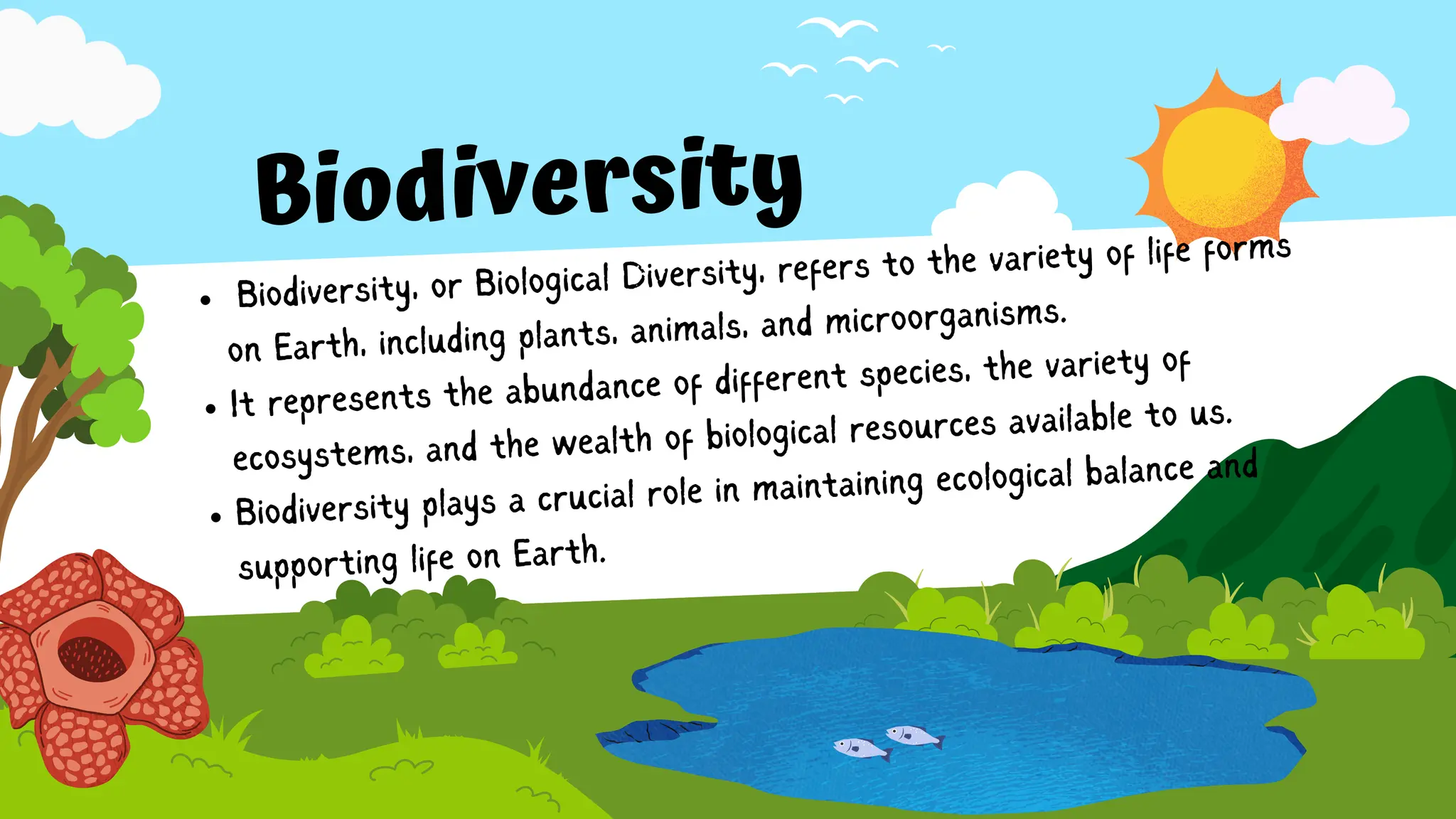
Biodiversity
Biodiversity, or BiologicalDiversity, refers to the variety of life forms
on Earth, including plants, animals, and microorganisms.
It represents the abundance of different species, the variety of
ecosystems, and the wealth of biological resources available to us.
Biodiversity plays a crucial role in maintaining ecological balance and
supporting life on Earth.
3.
Biodiversity has threeessential elements:
Biodiversity
Genetic Diversity
Ecosystem Diversity
Species Diversity
4.
Genetic Diversity
• Refersto the variety of genetic information within a species.
• Found in animals, plants, and microorganisms.
• Species with high genetic diversity are more adaptable to
environmental changes and have better survival rates.
• Low genetic diversity can lead to vulnerability to diseases and
climate changes.
5.
Ecosystem Diversity
• Refersto the different ecosystems or biomes
present in various geographical regions.
• Ecosystems vary due to environmental
conditions such as climate and topography.
6.
• Refers tothe variety of species within an ecosystem.
Further classified into:
Species Diversity
• Species Richness
• Species Abundance
• Taxonomic Diversity (Phylogenetic
Diversity)
7.
Importance of Biodiversity
•Essential for maintaining ecosystems and ensuring a
sustainable supply of goods and services.
• Conserving biodiversity helps preserve natural resources,
provides economic and social benefits, and enhances aesthetic
value.
8.
Functions of Biodiversity
1.MaintainsBalance Ecosystem
2.Provision of Biological Resources
3.Social Benefits
4.Human Supply
5.Human Health
6.Industrial Resources
7.Economic Benefits
8.Ecosystem Continuity
9.Ecological Balance
9.
Biodiversity Loss andConservation
• The earth is experiencing rapid biodiversity
loss.
• Human activities such as industrialization,
population growth, and urbanization are major
causes.
10.
Causes of BiodiversityLoss
1.Habitat Destruction
2.Climate Change
3.Over-harvesting
4.Human overpopulation
5.Invasive Species
6.Pollution
7.Over-exploitation of natural resources
8.Hybridization or gene-swapping
11.
Consequences of BiodiversityLoss
1. Decrease in plant production
2. Less resistance to environmental
disturbances such as droughts
3. Increased variability in ecosystem
processes
12.
Methods for Biodiversity
Conservation
•Areas with higher species diversity have a more stable
environment.
• Humans rely on plants, animals, and microbes for
survival.
• Conservation ensures sustainability of natural
resources.
13.
Strategies for Biodiversity
Conservation
1.Conserve food crops, timber plants, livestock, microbes,
and agricultural animals.
2. Identify and protect economically important organisms.
3. Preserve unique ecosystems first.
4. Utilize resources efficiently.
5. Prevent poaching and illegal hunting.
14.
Strategies for BiodiversityConservation
6. Develop reserves and protected areas.
7. Reduce pollution levels.
8. Prohibit deforestation
9. Enforce environmental laws
10.Conserve endangered species and their habitats.
15.
Strategies for Biodiversity
Conservation
11.Raise public awareness about biodiversity importance.
12. Prevent tree cutting.
13. Ban hunting of animals.
14. Use natural resources efficiently.
15. Establish protected areas with no human interference.
16.
Ethical Value forEvery Form of Life in the Environment
•Every organism in an ecosystem is unique and deserves respect.
•All living beings have an inherent right to exist, regardless of their value to
humans.
•Present generations have a responsibility to protect all life forms for future
generations.
•Biodiversity conservation promotes environmental ethics and sustainability.