SOLID WASTE
MANAGEMENT
Group 6
GE MST-Environment
Studies
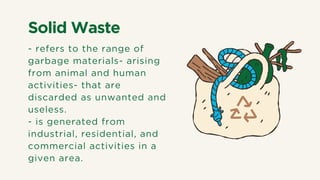
Solid Waste
- refers to the range of
garbage materials- arising
from animal and human
activities- that are
discarded as unwanted and
useless.
- is generated from
industrial, residential, and
commercial activities in a
given area.
Categories of Waste
1. Organic waste
2. Combustibles
3. Non-combustibles
4. Toxic waste
5. Recyclables
6. Ashes or Dust
7. Construction waste
8. Hazardous waste
9. Dead animals
10. Bulky waste
11. Soiled waste
Effects of Poor Solid
Waste Management
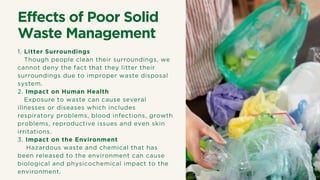
1. Litter Surroundings
Though people clean their surroundings, we
cannot deny the fact that they litter their
surroundings due to improper waste disposal
system.
2. Impact on Human Health
Exposure to waste can cause several
illnesses or diseases which includes
respiratory problems, blood infections, growth
problems, reproductive issues and even skin
irritations.
3. Impact on the Environment
Hazardous waste and chemical that has
been released to the environment can cause
biological and physicochemical impact to the
environment.
4. Disease-causing Pests
Due to improper waste disposal
decomposition of biodegradable waste
produces foul smell and become a
breeding ground for disease-causing
insects.
5. Soil and Groundwater Pollution
The improper disposal of toxic materials
and chemicals may be the source of
pollution of groundwater.
6. Emission of Toxic Gases
Improper disposal of hazardous waste
may cause the emission of toxic gases
which may cause vanous diseases including
cancer.
7. Impact on Land and Aquatic
Animals Improper disposal of garbage
also affects land and aquatic animals which
would lead to poisoning.
Solid Waste
Management
- refers to the collecting, treating, and
disposing of solid material that is discarded.
• Improper disposal of municipal solid waste
can create unsanitary conditions, and these
conditions in turn can lead to pollution of
the environment and to outbreaks of vector-
borne disease that is, diseases spread by
rodents and insects.
• The tasks of solid waste management
present complex technical challenges. They
also pose a wide variety of administrative,
economic, and social problems that must be
managed and solved.
• Solid waste management reduces and
eliminates impacts on human health and
environment. The sources of solid waste
indude residential, commercial,
institutional, and industrial activities.
• Certain types of wastes that cause
immediate danger to exposed individuals
or environments are classified as
hazardous.
• Garbage is mostly decomposable food
waste; rubbish is mostly dry material such
as glass, paper, doth, or wood.
• Garbage is highly putrescible or
decomposable, whereas rubbish is not.
Methods of Solid
Waste Management
1. 2.
Efficient
management of
sanitary landfills.
Incineration
A process which
involves burning of
solid waste at high
temperatures until
turned into ashes.
3.
Don't forget the
3R's
Re-use, Reduce,
and Recycle.
4.
Composting
A biological process
in which micro-
organisms convert
degradable organic
waste into humus.
5.
Pyrolysis
A method where solid
wastes are chemically
decomposed by heat
without the presence of
oxygen.
THANK
YOU VERY
MUCH!

Solid Waste Management report from group 6pdf

  • 1.
    SOLID WASTE MANAGEMENT Group 6 GEMST-Environment Studies
  • 2.
    Solid Waste - refersto the range of garbage materials- arising from animal and human activities- that are discarded as unwanted and useless. - is generated from industrial, residential, and commercial activities in a given area.
  • 3.
    Categories of Waste 1.Organic waste 2. Combustibles 3. Non-combustibles 4. Toxic waste 5. Recyclables 6. Ashes or Dust 7. Construction waste 8. Hazardous waste 9. Dead animals 10. Bulky waste 11. Soiled waste
  • 4.
    Effects of PoorSolid Waste Management 1. Litter Surroundings Though people clean their surroundings, we cannot deny the fact that they litter their surroundings due to improper waste disposal system. 2. Impact on Human Health Exposure to waste can cause several illnesses or diseases which includes respiratory problems, blood infections, growth problems, reproductive issues and even skin irritations. 3. Impact on the Environment Hazardous waste and chemical that has been released to the environment can cause biological and physicochemical impact to the environment.
  • 5.
    4. Disease-causing Pests Dueto improper waste disposal decomposition of biodegradable waste produces foul smell and become a breeding ground for disease-causing insects. 5. Soil and Groundwater Pollution The improper disposal of toxic materials and chemicals may be the source of pollution of groundwater. 6. Emission of Toxic Gases Improper disposal of hazardous waste may cause the emission of toxic gases which may cause vanous diseases including cancer. 7. Impact on Land and Aquatic Animals Improper disposal of garbage also affects land and aquatic animals which would lead to poisoning.
  • 6.
    Solid Waste Management - refersto the collecting, treating, and disposing of solid material that is discarded. • Improper disposal of municipal solid waste can create unsanitary conditions, and these conditions in turn can lead to pollution of the environment and to outbreaks of vector- borne disease that is, diseases spread by rodents and insects. • The tasks of solid waste management present complex technical challenges. They also pose a wide variety of administrative, economic, and social problems that must be managed and solved.
  • 7.
    • Solid wastemanagement reduces and eliminates impacts on human health and environment. The sources of solid waste indude residential, commercial, institutional, and industrial activities. • Certain types of wastes that cause immediate danger to exposed individuals or environments are classified as hazardous. • Garbage is mostly decomposable food waste; rubbish is mostly dry material such as glass, paper, doth, or wood. • Garbage is highly putrescible or decomposable, whereas rubbish is not.
  • 8.
    Methods of Solid WasteManagement 1. 2. Efficient management of sanitary landfills. Incineration A process which involves burning of solid waste at high temperatures until turned into ashes. 3. Don't forget the 3R's Re-use, Reduce, and Recycle. 4. Composting A biological process in which micro- organisms convert degradable organic waste into humus.
  • 9.
    5. Pyrolysis A method wheresolid wastes are chemically decomposed by heat without the presence of oxygen.
  • 10.