1
Ms. Reda Mahmoud
Primary English
Coordinator
2
Bloom Taxonomy &
SMART objectives
3
Starter
K W L
4
5
Bloom's Taxonomy
was created in 1956 under the leadership
of educational psychologist Dr
Benjamin Bloom in order to promote
higher forms of thinking in education, such
as analyzing and evaluating concepts,
processes, procedures, and principles,
rather than just remembering facts (rote
learning).
6
What is the importance of bloom’s
verbs at the top of your lesson?
 Using verbs and actions allows
educators to encourage success
through each level of thinking
and accurately measure
learning.
7
The Three Domains of Learning
 Cognitive: mental skills (knowledge)
 Affective: growth in feelings or
emotional areas (attitude or self)
 Psychomotor: physical skills (skills)
8
Bloom’s Taxonomy Cognitive Domain
 The Cognitive Process
Dimension represents a
continuum of increasing
cognitive complexity—from
lower order thinking skills to
higher order thinking skills.
9
10
The Cognitive Processes dimension — categories
& cognitive processes
Bloom’s Taxonomy
Action verbs
11
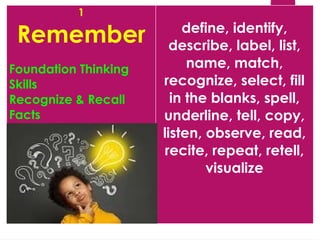
1
Remember
Foundation Thinking
Skills
Recognize & Recall
Facts
define, identify,
describe, label, list,
name, match,
recognize, select, fill
in the blanks, spell,
underline, tell, copy,
listen, observe, read,
recite, repeat, retell,
visualize
12
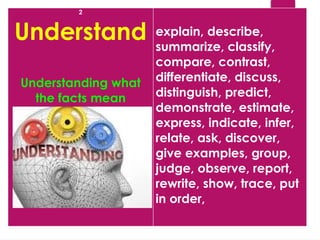
2
Understand
Understanding what
the facts mean
explain, describe,
summarize, classify,
compare, contrast,
differentiate, discuss,
distinguish, predict,
demonstrate, estimate,
express, indicate, infer,
relate, ask, discover,
give examples, group,
judge, observe, report,
rewrite, show, trace, put
in order,
13
3
Apply
Applying the facts,
rules, concepts &
ideas
solve, apply, illustrate,
modify, use, calculate,
change, choose, relate,
show, sketch, draw,
complete, construct,
conclude, dramatize,
paint, prepare, produce,
act, chart, collect,
compute, determine,
develop, list, practice,
predict
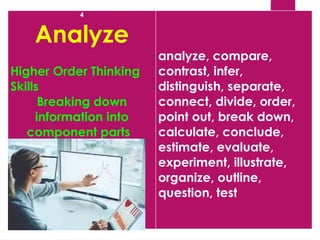
4
Analyze
Higher Order Thinking
Skills
Breaking down
information into
component parts
analyze, compare,
contrast, infer,
distinguish, separate,
connect, divide, order,
point out, break down,
calculate, conclude,
estimate, evaluate,
experiment, illustrate,
organize, outline,
question, test
15
5
Evaluate
Judging the value of
information or ideas
criticize, evaluate,
choose, decide, judge,
justify, rank, rate, select,
support, conclude,
estimate, grade,
measure, test,
distinguish, weigh,
argue, score, predict,
find errors
6
Create
Combining parts to
make a new whole
change, combine,
compose, construct,
create, design,
formulate, generate,
plan, invent, predict,
pretend, produce,
rearrange, reconstruct,
reorganize, revise,
suggest, suppose,
visualize, write,
hypothesize, role-play,
arrange, make
What is meant by SMART
objectives?
18

BLOOM TAXONOMY and Smart Objectives, Teaching Process

  • 1.
  • 2.
  • 3.
  • 4.
  • 5.
    5 Bloom's Taxonomy was createdin 1956 under the leadership of educational psychologist Dr Benjamin Bloom in order to promote higher forms of thinking in education, such as analyzing and evaluating concepts, processes, procedures, and principles, rather than just remembering facts (rote learning).
  • 6.
    6 What is theimportance of bloom’s verbs at the top of your lesson?  Using verbs and actions allows educators to encourage success through each level of thinking and accurately measure learning.
  • 7.
    7 The Three Domainsof Learning  Cognitive: mental skills (knowledge)  Affective: growth in feelings or emotional areas (attitude or self)  Psychomotor: physical skills (skills)
  • 8.
    8 Bloom’s Taxonomy CognitiveDomain  The Cognitive Process Dimension represents a continuum of increasing cognitive complexity—from lower order thinking skills to higher order thinking skills.
  • 9.
  • 10.
    10 The Cognitive Processesdimension — categories & cognitive processes Bloom’s Taxonomy Action verbs
  • 11.
    11 1 Remember Foundation Thinking Skills Recognize &Recall Facts define, identify, describe, label, list, name, match, recognize, select, fill in the blanks, spell, underline, tell, copy, listen, observe, read, recite, repeat, retell, visualize
  • 12.
    12 2 Understand Understanding what the factsmean explain, describe, summarize, classify, compare, contrast, differentiate, discuss, distinguish, predict, demonstrate, estimate, express, indicate, infer, relate, ask, discover, give examples, group, judge, observe, report, rewrite, show, trace, put in order,
  • 13.
    13 3 Apply Applying the facts, rules,concepts & ideas solve, apply, illustrate, modify, use, calculate, change, choose, relate, show, sketch, draw, complete, construct, conclude, dramatize, paint, prepare, produce, act, chart, collect, compute, determine, develop, list, practice, predict
  • 14.
    4 Analyze Higher Order Thinking Skills Breakingdown information into component parts analyze, compare, contrast, infer, distinguish, separate, connect, divide, order, point out, break down, calculate, conclude, estimate, evaluate, experiment, illustrate, organize, outline, question, test
  • 15.
    15 5 Evaluate Judging the valueof information or ideas criticize, evaluate, choose, decide, judge, justify, rank, rate, select, support, conclude, estimate, grade, measure, test, distinguish, weigh, argue, score, predict, find errors
  • 16.
    6 Create Combining parts to makea new whole change, combine, compose, construct, create, design, formulate, generate, plan, invent, predict, pretend, produce, rearrange, reconstruct, reorganize, revise, suggest, suppose, visualize, write, hypothesize, role-play, arrange, make
  • 17.
    What is meantby SMART objectives?
  • 18.