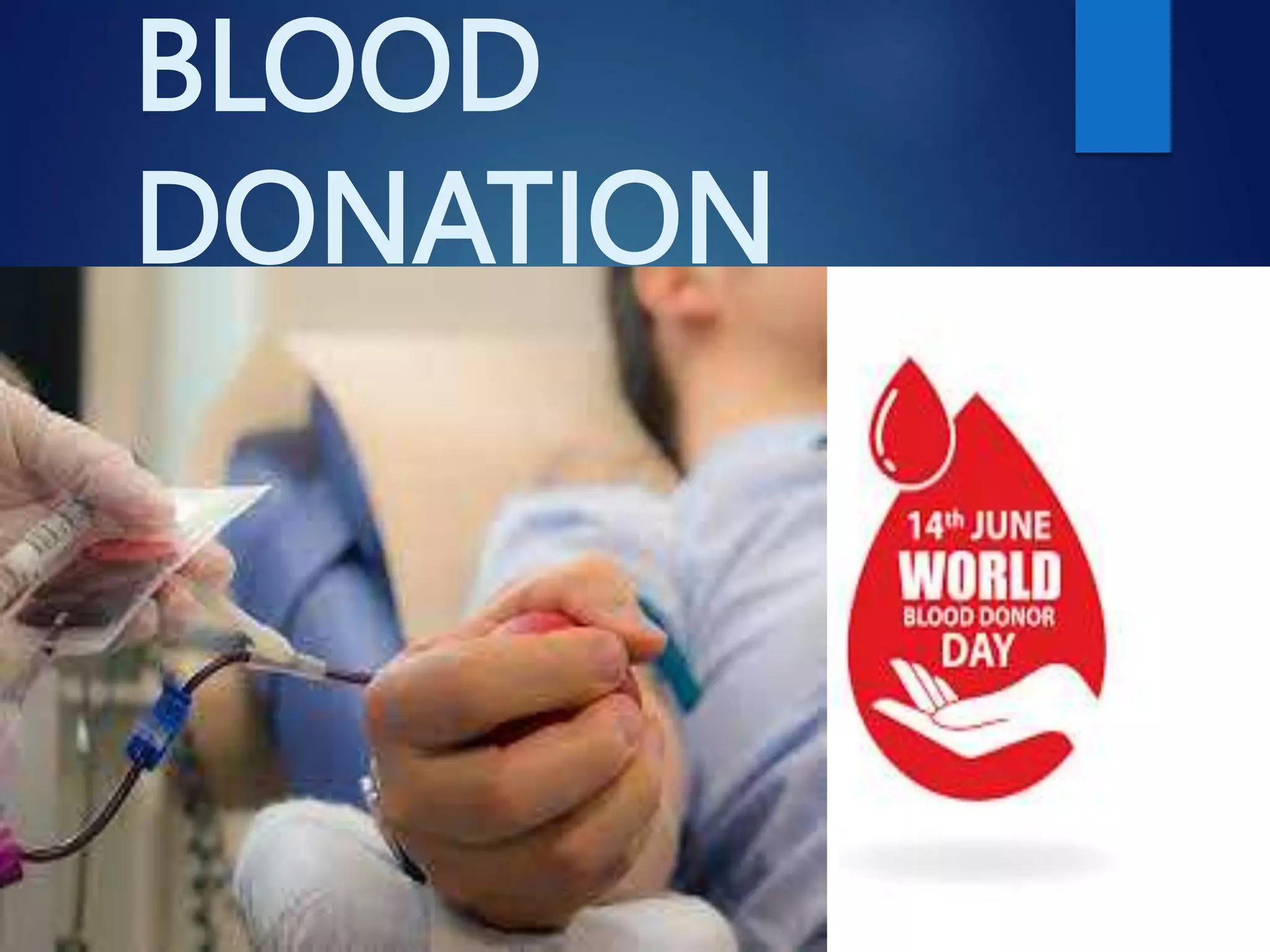
BLOOD
DONATION
DID YOU KNOW
 Every 3 seconds someone needs a blood transfusions.
 Your donation means 450 ml blood can save as many as three lives.
 Even with all of today’s technology, there is no substitute for blood.
 Blood is the most precious gift that anyone can give to another
person.
 Someone has to give blood in order for someone to receive blood.
 More than 38000 blood donations are needed every day.
 The blood type most often requested by hospitals is type O.
 People with O-ve type blood are universal donors. Their blood can be
given to people of all blood types.
 More than 1 million new people are diagnosed with cancer each year.
Many of them will need blood, sometimes daily during their
chemotherapy treatment.
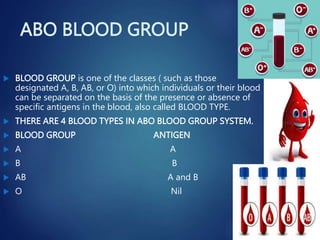
ABO BLOOD GROUP
 BLOOD GROUP is one of the classes ( such as those
designated A, B, AB, or O) into which individuals or their blood
can be separated on the basis of the presence or absence of
specific antigens in the blood, also called BLOOD TYPE.
 THERE ARE 4 BLOOD TYPES IN ABO BLOOD GROUP SYSTEM.
 BLOOD GROUP ANTIGEN
 A A
 B B
 AB A and B
 O Nil
ABO BLOOD GROUP SYSTEM
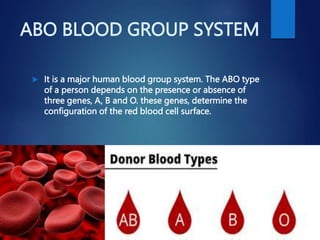
 It is a major human blood group system. The ABO type
of a person depends on the presence or absence of
three genes, A, B and O. these genes, determine the
configuration of the red blood cell surface.
THE RHESUS (Rh) FACTOR
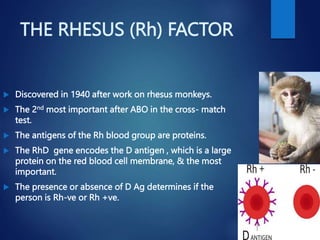
 Discovered in 1940 after work on rhesus monkeys.
 The 2nd most important after ABO in the cross- match
test.
 The antigens of the Rh blood group are proteins.
 The RhD gene encodes the D antigen , which is a large
protein on the red blood cell membrane, & the most
important.
 The presence or absence of D Ag determines if the
person is Rh-ve or Rh +ve.
INTRODUCTION
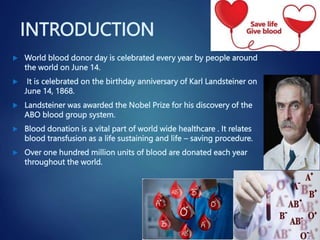
 World blood donor day is celebrated every year by people around
the world on June 14.
 It is celebrated on the birthday anniversary of Karl Landsteiner on
June 14, 1868.
 Landsteiner was awarded the Nobel Prize for his discovery of the
ABO blood group system.
 Blood donation is a vital part of world wide healthcare . It relates
blood transfusion as a life sustaining and life – saving procedure.
 Over one hundred million units of blood are donated each year
throughout the world.
DEFINITION
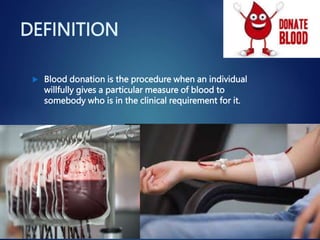
 Blood donation is the procedure when an individual
willfully gives a particular measure of blood to
somebody who is in the clinical requirement for it.
WHO CAN GIVE BLOOD
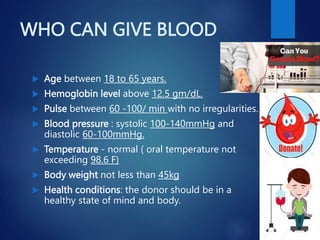
 Age between 18 to 65 years.
 Hemoglobin level above 12.5 gm/dL.
 Pulse between 60 -100/ min with no irregularities.
 Blood pressure : systolic 100-140mmHg and
diastolic 60-100mmHg.
 Temperature - normal ( oral temperature not
exceeding 98.6 F)
 Body weight not less than 45kg
 Health conditions: the donor should be in a
healthy state of mind and body.
BEST IRON RICH FOODS, VITAMNS TO
INCREASE HEMOGLOBIN, BLOOD PLATLETS
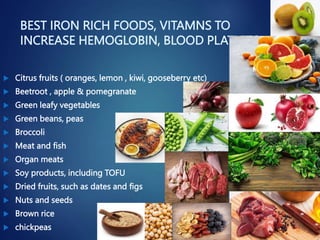
 Citrus fruits ( oranges, lemon , kiwi, gooseberry etc)
 Beetroot , apple & pomegranate
 Green leafy vegetables
 Green beans, peas
 Broccoli
 Meat and fish
 Organ meats
 Soy products, including TOFU
 Dried fruits, such as dates and figs
 Nuts and seeds
 Brown rice
 chickpeas
HOW FREQUENTLY YOU
CAN DONATE BLOOD
 males every 3 months.
 females every 4 months.
WHO CANNOT GIVE BLOOD
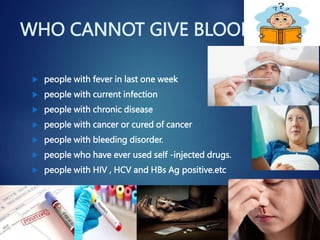
 people with fever in last one week
 people with current infection
 people with chronic disease
 people with cancer or cured of cancer
 people with bleeding disorder.
 people who have ever used self -injected drugs.
 people with HIV , HCV and HBs Ag positive.etc
REASONS TO DONATE
BLOOD
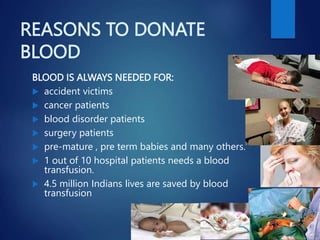
BLOOD IS ALWAYS NEEDED FOR:
 accident victims
 cancer patients
 blood disorder patients
 surgery patients
 pre-mature , pre term babies and many others.
 1 out of 10 hospital patients needs a blood
transfusion.
 4.5 million Indians lives are saved by blood
transfusion
BENEFITS OF BLOOD
DONATION
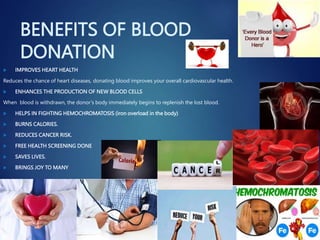
 IMPROVES HEART HEALTH
Reduces the chance of heart diseases, donating blood improves your overall cardiovascular health.
 ENHANCES THE PRODUCTION OF NEW BLOOD CELLS
When blood is withdrawn, the donor’s body immediately begins to replenish the lost blood.
 HELPS IN FIGHTING HEMOCHROMATOSIS (iron overload in the body)
 BURNS CALORIES.
 REDUCES CANCER RISK.
 FREE HEALTH SCREENING DONE
 SAVES LIVES.
 BRINGS JOY TO MANY
THANK YOU

BLOOD DONATION.pptx

  • 1.
  • 3.
    DID YOU KNOW Every 3 seconds someone needs a blood transfusions.  Your donation means 450 ml blood can save as many as three lives.  Even with all of today’s technology, there is no substitute for blood.  Blood is the most precious gift that anyone can give to another person.  Someone has to give blood in order for someone to receive blood.  More than 38000 blood donations are needed every day.  The blood type most often requested by hospitals is type O.  People with O-ve type blood are universal donors. Their blood can be given to people of all blood types.  More than 1 million new people are diagnosed with cancer each year. Many of them will need blood, sometimes daily during their chemotherapy treatment.
  • 4.
    ABO BLOOD GROUP BLOOD GROUP is one of the classes ( such as those designated A, B, AB, or O) into which individuals or their blood can be separated on the basis of the presence or absence of specific antigens in the blood, also called BLOOD TYPE.  THERE ARE 4 BLOOD TYPES IN ABO BLOOD GROUP SYSTEM.  BLOOD GROUP ANTIGEN  A A  B B  AB A and B  O Nil
  • 5.
    ABO BLOOD GROUPSYSTEM  It is a major human blood group system. The ABO type of a person depends on the presence or absence of three genes, A, B and O. these genes, determine the configuration of the red blood cell surface.
  • 6.
    THE RHESUS (Rh)FACTOR  Discovered in 1940 after work on rhesus monkeys.  The 2nd most important after ABO in the cross- match test.  The antigens of the Rh blood group are proteins.  The RhD gene encodes the D antigen , which is a large protein on the red blood cell membrane, & the most important.  The presence or absence of D Ag determines if the person is Rh-ve or Rh +ve.
  • 7.
    INTRODUCTION  World blooddonor day is celebrated every year by people around the world on June 14.  It is celebrated on the birthday anniversary of Karl Landsteiner on June 14, 1868.  Landsteiner was awarded the Nobel Prize for his discovery of the ABO blood group system.  Blood donation is a vital part of world wide healthcare . It relates blood transfusion as a life sustaining and life – saving procedure.  Over one hundred million units of blood are donated each year throughout the world.
  • 8.
    DEFINITION  Blood donationis the procedure when an individual willfully gives a particular measure of blood to somebody who is in the clinical requirement for it.
  • 9.
    WHO CAN GIVEBLOOD  Age between 18 to 65 years.  Hemoglobin level above 12.5 gm/dL.  Pulse between 60 -100/ min with no irregularities.  Blood pressure : systolic 100-140mmHg and diastolic 60-100mmHg.  Temperature - normal ( oral temperature not exceeding 98.6 F)  Body weight not less than 45kg  Health conditions: the donor should be in a healthy state of mind and body.
  • 10.
    BEST IRON RICHFOODS, VITAMNS TO INCREASE HEMOGLOBIN, BLOOD PLATLETS  Citrus fruits ( oranges, lemon , kiwi, gooseberry etc)  Beetroot , apple & pomegranate  Green leafy vegetables  Green beans, peas  Broccoli  Meat and fish  Organ meats  Soy products, including TOFU  Dried fruits, such as dates and figs  Nuts and seeds  Brown rice  chickpeas
  • 11.
    HOW FREQUENTLY YOU CANDONATE BLOOD  males every 3 months.  females every 4 months.
  • 12.
    WHO CANNOT GIVEBLOOD  people with fever in last one week  people with current infection  people with chronic disease  people with cancer or cured of cancer  people with bleeding disorder.  people who have ever used self -injected drugs.  people with HIV , HCV and HBs Ag positive.etc
  • 13.
    REASONS TO DONATE BLOOD BLOODIS ALWAYS NEEDED FOR:  accident victims  cancer patients  blood disorder patients  surgery patients  pre-mature , pre term babies and many others.  1 out of 10 hospital patients needs a blood transfusion.  4.5 million Indians lives are saved by blood transfusion
  • 14.
    BENEFITS OF BLOOD DONATION IMPROVES HEART HEALTH Reduces the chance of heart diseases, donating blood improves your overall cardiovascular health.  ENHANCES THE PRODUCTION OF NEW BLOOD CELLS When blood is withdrawn, the donor’s body immediately begins to replenish the lost blood.  HELPS IN FIGHTING HEMOCHROMATOSIS (iron overload in the body)  BURNS CALORIES.  REDUCES CANCER RISK.  FREE HEALTH SCREENING DONE  SAVES LIVES.  BRINGS JOY TO MANY
  • 17.