Blockchain: Revolutionizing
Industries and Transforming
Transactions

Blockchain technology, initially introduced as the underlying technology for the
cryptocurrency Bitcoin, has evolved into a transformative force with far-reaching
implications across various industries. In this article, we will delve into the intricacies of it,
exploring its fundamental concepts, its impact on diverse sectors, and the potential it holds
for shaping the future of transactions and data management.
Understanding Blockchain: A Decentralized Revolution
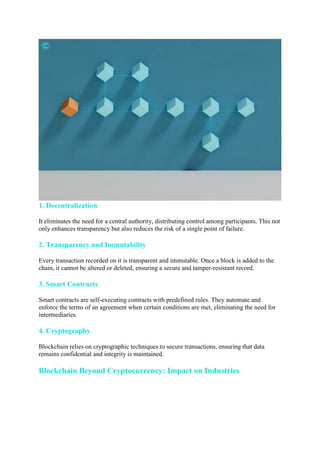
At its core, blockchain is a decentralized, distributed ledger that records transactions across a
network of computers. Unlike traditional centralized systems, where a single entity has
control over the ledger, it operates on a peer-to-peer network, allowing each participant
(node) to have a copy of the entire ledger. This decentralized structure brings forth several
key features that define the essence of it.
1. Decentralization
It eliminates the need for a central authority, distributing control among participants. This not
only enhances transparency but also reduces the risk of a single point of failure.
2. Transparency and Immutability
Every transaction recorded on it is transparent and immutable. Once a block is added to the
chain, it cannot be altered or deleted, ensuring a secure and tamper-resistant record.
3. Smart Contracts
Smart contracts are self-executing contracts with predefined rules. They automate and
enforce the terms of an agreement when certain conditions are met, eliminating the need for
intermediaries.
4. Cryptography
Blockchain relies on cryptographic techniques to secure transactions, ensuring that data
remains confidential and integrity is maintained.
Blockchain Beyond Cryptocurrency: Impact on Industries
1. Finance and Banking
it has disrupted the financial landscape by offering efficient and secure alternatives to
traditional banking systems. Cryptocurrencies like Bitcoin and Ethereum enable borderless
transactions, reducing costs and increasing financial inclusion. Additionally, blockchain
streamlines processes such as cross-border payments, asset tokenization, and trade finance.
2. Supply Chain Management
The transparency and traceability offered by blockchain are invaluable in supply chain
management. Recording every step in the production and distribution of goods minimizes
fraud, reduces errors, and ensures the authenticity of products. This is particularly crucial in
industries like food and pharmaceuticals, where traceability is paramount.
3. Healthcare
In healthcare, it ensures the secure and interoperable sharing of patient data among different
entities. Patients gain control over their health records, and healthcare providers can access
accurate and up-to-date information. This not only enhances patient care but also mitigates
the risk of data breaches.
4. Real Estate
Real estate transactions involve numerous intermediaries and complex processes. Blockchain
simplifies this by enabling transparent and secure property transactions through smart
contracts. Property titles, ownership records, and transactions become easily accessible,
reducing fraud and speeding up the transfer process.
5. Education
Academic credentials can be subject to fraud, and verifying them can be time-consuming. it
allows for the creation of decentralized and tamper-proof educational records. Students have
control over their credentials, and employers can easily verify their qualifications.
6. Legal and Governance
Smart contracts automate legal agreements, making the execution of contracts more efficient
and secure. In governance, blockchain can enhance transparency in voting systems, reduce
electoral fraud, and streamline administrative processes.
Challenges and Future Trends
While it holds immense potential, it is not without challenges. Scalability, interoperability,
and regulatory concerns are among the hurdles that need to be addressed for widespread
adoption. As the technology matures, several trends are shaping the future of it.
1. Integration with Emerging Technologies
It is increasingly being integrated with other emerging technologies like artificial intelligence
and the Internet of Things (IoT). This convergence enhances the capabilities of it, creating
more robust and versatile solutions.
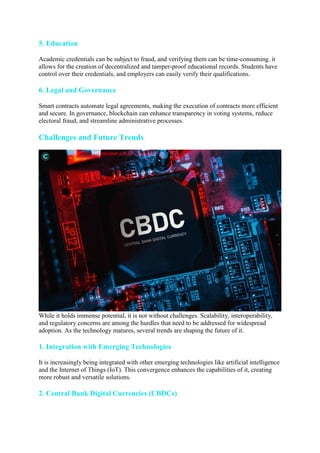
2. Central Bank Digital Currencies (CBDCs)
Central banks worldwide are exploring the implementation of CBDCs using blockchain
technology. These digital currencies aim to provide a secure and efficient medium of
exchange, potentially reshaping the global financial landscape.
3. NFTs and Digital Assets
Non-fungible tokens (NFTs), representing ownership of unique digital assets, have gained
popularity. From digital art to virtual real estate, NFTs leverage it to establish ownership and
provenance in the digital realm.
4. Sustainability and Green Blockchain
The energy consumption of certain blockchain networks, particularly those using proof-of-
work consensus mechanisms, has raised concerns about environmental impact. Innovations
such as proof-of-stake and efforts towards sustainable practices aim to address these
concerns.
Conclusion: The Ongoing Blockchain Revolution
As we navigate the intricate landscape of blockchain technology, it becomes evident that its
impact extends far beyond its cryptocurrency origins. The decentralized nature, transparency,
and security inherent in it offer solutions to age-old challenges across various sectors. From
transforming financial transactions to revolutionizing supply chains and enhancing data
security, it continues to shape the way we conduct business and interact in the digital age. As
technology evolves and overcomes its challenges, the ongoing blockchain revolution
promises a future where trust, security, and efficiency redefine the foundations of our
interconnected world.
Also Read: Artificial Intelligence: Shaping the Future of Technology

Blockchain: Revolutionizing Industries and Transforming Transactions

  • 1.
    Blockchain: Revolutionizing Industries andTransforming Transactions  Blockchain technology, initially introduced as the underlying technology for the cryptocurrency Bitcoin, has evolved into a transformative force with far-reaching implications across various industries. In this article, we will delve into the intricacies of it, exploring its fundamental concepts, its impact on diverse sectors, and the potential it holds for shaping the future of transactions and data management. Understanding Blockchain: A Decentralized Revolution At its core, blockchain is a decentralized, distributed ledger that records transactions across a network of computers. Unlike traditional centralized systems, where a single entity has control over the ledger, it operates on a peer-to-peer network, allowing each participant (node) to have a copy of the entire ledger. This decentralized structure brings forth several key features that define the essence of it.
  • 2.
    1. Decentralization It eliminatesthe need for a central authority, distributing control among participants. This not only enhances transparency but also reduces the risk of a single point of failure. 2. Transparency and Immutability Every transaction recorded on it is transparent and immutable. Once a block is added to the chain, it cannot be altered or deleted, ensuring a secure and tamper-resistant record. 3. Smart Contracts Smart contracts are self-executing contracts with predefined rules. They automate and enforce the terms of an agreement when certain conditions are met, eliminating the need for intermediaries. 4. Cryptography Blockchain relies on cryptographic techniques to secure transactions, ensuring that data remains confidential and integrity is maintained. Blockchain Beyond Cryptocurrency: Impact on Industries
  • 3.
    1. Finance andBanking it has disrupted the financial landscape by offering efficient and secure alternatives to traditional banking systems. Cryptocurrencies like Bitcoin and Ethereum enable borderless transactions, reducing costs and increasing financial inclusion. Additionally, blockchain streamlines processes such as cross-border payments, asset tokenization, and trade finance. 2. Supply Chain Management The transparency and traceability offered by blockchain are invaluable in supply chain management. Recording every step in the production and distribution of goods minimizes fraud, reduces errors, and ensures the authenticity of products. This is particularly crucial in industries like food and pharmaceuticals, where traceability is paramount. 3. Healthcare In healthcare, it ensures the secure and interoperable sharing of patient data among different entities. Patients gain control over their health records, and healthcare providers can access accurate and up-to-date information. This not only enhances patient care but also mitigates the risk of data breaches. 4. Real Estate Real estate transactions involve numerous intermediaries and complex processes. Blockchain simplifies this by enabling transparent and secure property transactions through smart contracts. Property titles, ownership records, and transactions become easily accessible, reducing fraud and speeding up the transfer process.
  • 4.
    5. Education Academic credentialscan be subject to fraud, and verifying them can be time-consuming. it allows for the creation of decentralized and tamper-proof educational records. Students have control over their credentials, and employers can easily verify their qualifications. 6. Legal and Governance Smart contracts automate legal agreements, making the execution of contracts more efficient and secure. In governance, blockchain can enhance transparency in voting systems, reduce electoral fraud, and streamline administrative processes. Challenges and Future Trends While it holds immense potential, it is not without challenges. Scalability, interoperability, and regulatory concerns are among the hurdles that need to be addressed for widespread adoption. As the technology matures, several trends are shaping the future of it. 1. Integration with Emerging Technologies It is increasingly being integrated with other emerging technologies like artificial intelligence and the Internet of Things (IoT). This convergence enhances the capabilities of it, creating more robust and versatile solutions. 2. Central Bank Digital Currencies (CBDCs)
  • 5.
    Central banks worldwideare exploring the implementation of CBDCs using blockchain technology. These digital currencies aim to provide a secure and efficient medium of exchange, potentially reshaping the global financial landscape. 3. NFTs and Digital Assets Non-fungible tokens (NFTs), representing ownership of unique digital assets, have gained popularity. From digital art to virtual real estate, NFTs leverage it to establish ownership and provenance in the digital realm. 4. Sustainability and Green Blockchain The energy consumption of certain blockchain networks, particularly those using proof-of- work consensus mechanisms, has raised concerns about environmental impact. Innovations such as proof-of-stake and efforts towards sustainable practices aim to address these concerns. Conclusion: The Ongoing Blockchain Revolution As we navigate the intricate landscape of blockchain technology, it becomes evident that its impact extends far beyond its cryptocurrency origins. The decentralized nature, transparency, and security inherent in it offer solutions to age-old challenges across various sectors. From transforming financial transactions to revolutionizing supply chains and enhancing data security, it continues to shape the way we conduct business and interact in the digital age. As technology evolves and overcomes its challenges, the ongoing blockchain revolution promises a future where trust, security, and efficiency redefine the foundations of our interconnected world. Also Read: Artificial Intelligence: Shaping the Future of Technology