Personalizing Learning
via Blended learning
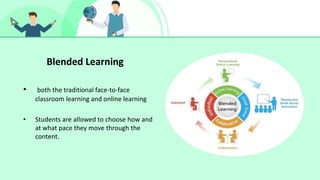
Blended Learning
• both the traditional face-to-face
classroom learning and online learning
• Students are allowed to choose how and
at what pace they move through the
content.
Blended Learning
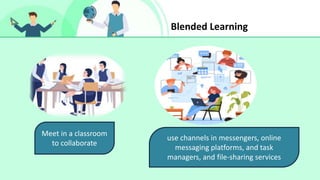
Meet in a classroom
to collaborate
use channels in messengers, online
messaging platforms, and task
managers, and file-sharing services
Blended Learning
Classroom
Learning
Online
Learning
Blended
Learning
 Motivation
 One-to-one
feedback
 Personal time and
counselling
 Progress tracking
 Assessments and
practice activities
 Self-study
 Self-direction
 Self-tracking and
control
 Online assessments
 Group chats and
online discussions
Adaptive Learning
• is a teaching method that takes
advantage of interactive devices.
• uses technology to collects data from
students’ responses, assessment and
provide feedback in order to make the
necessary improvements.
Examples of Adaptive Learning
• Online courses
Examples of Adaptive Learning
• Learning Management System (LMS)
Examples of Adaptive Learning
• Educational software and applications
Challenges with Blended Learning
• Dependence on Technology – uninterrupted access to the
electronic/media devices
• Dependence on the Learner
for course completion –if not guided properly, the learning
may not be effective
• Expensive – Blended learning is supported
heavily by the e-learning content
and media devices like computers,
laptops, smart phones, data and wi-fi
connections.

blended learning.pptx

  • 1.
  • 2.
    Blended Learning • boththe traditional face-to-face classroom learning and online learning • Students are allowed to choose how and at what pace they move through the content.
  • 3.
    Blended Learning Meet ina classroom to collaborate use channels in messengers, online messaging platforms, and task managers, and file-sharing services
  • 4.
    Blended Learning Classroom Learning Online Learning Blended Learning  Motivation One-to-one feedback  Personal time and counselling  Progress tracking  Assessments and practice activities  Self-study  Self-direction  Self-tracking and control  Online assessments  Group chats and online discussions
  • 5.
    Adaptive Learning • isa teaching method that takes advantage of interactive devices. • uses technology to collects data from students’ responses, assessment and provide feedback in order to make the necessary improvements.
  • 6.
    Examples of AdaptiveLearning • Online courses
  • 7.
    Examples of AdaptiveLearning • Learning Management System (LMS)
  • 8.
    Examples of AdaptiveLearning • Educational software and applications
  • 10.
    Challenges with BlendedLearning • Dependence on Technology – uninterrupted access to the electronic/media devices • Dependence on the Learner for course completion –if not guided properly, the learning may not be effective • Expensive – Blended learning is supported heavily by the e-learning content and media devices like computers, laptops, smart phones, data and wi-fi connections.