Blended Learning
The best of both worlds
What is it?
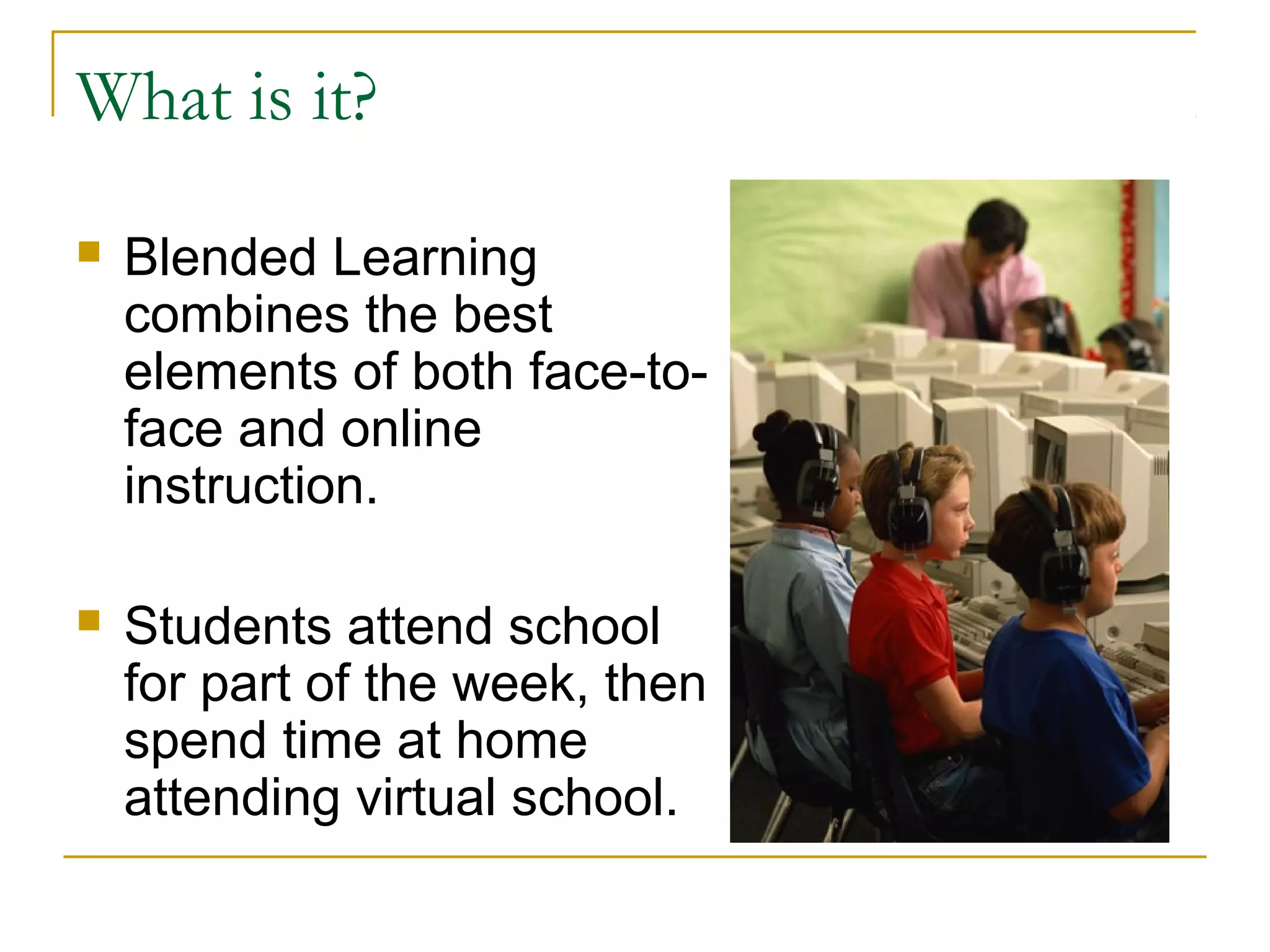
 Blended Learning
combines the best
elements of both face-to-
face and online
instruction.
 Students attend school
for part of the week, then
spend time at home
attending virtual school.
Benefits to On-Line Learning
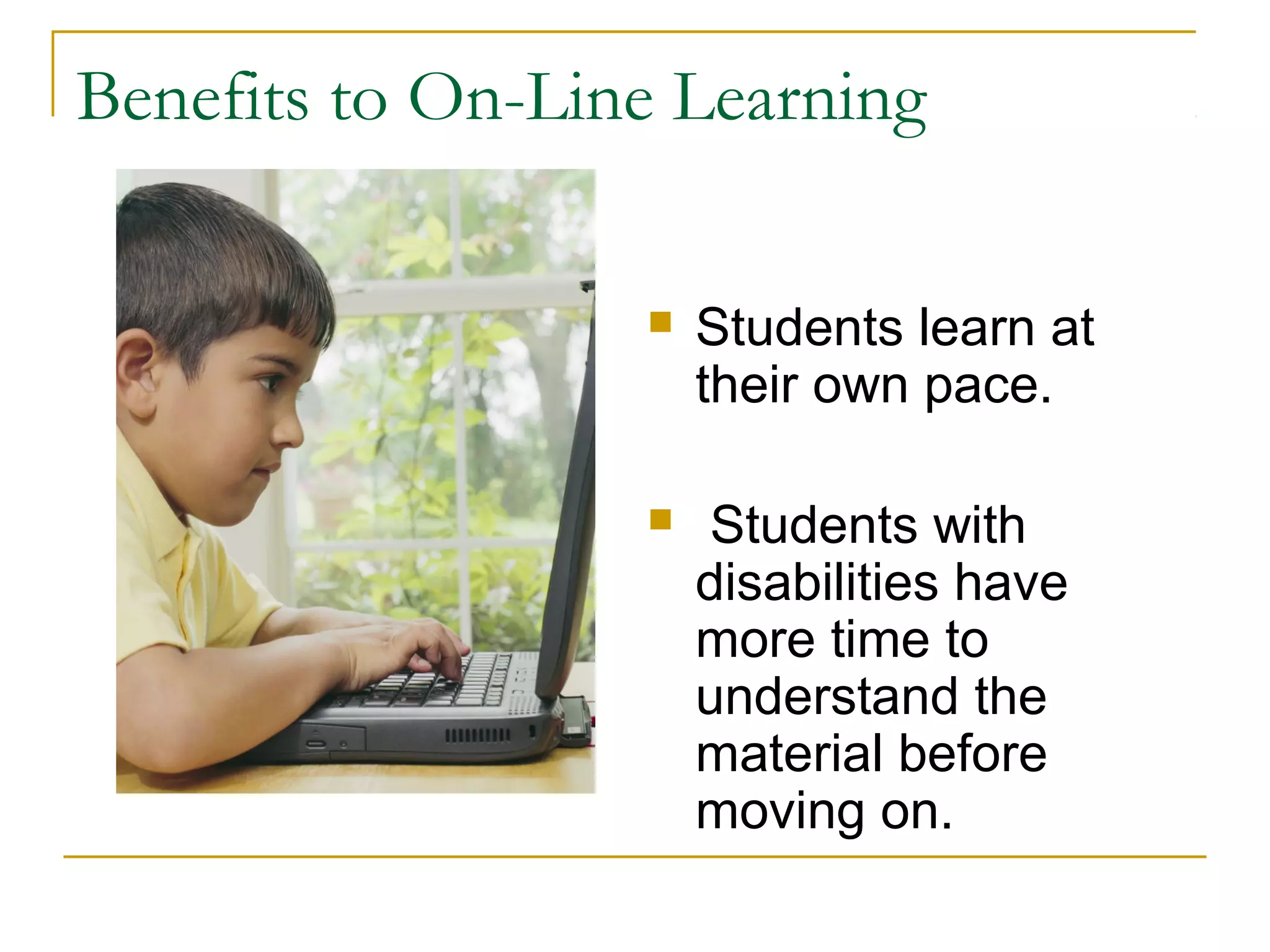
 Students learn at
their own pace.
 Students with
disabilities have
more time to
understand the
material before
moving on.
Benefits to On-Line Learning cont…
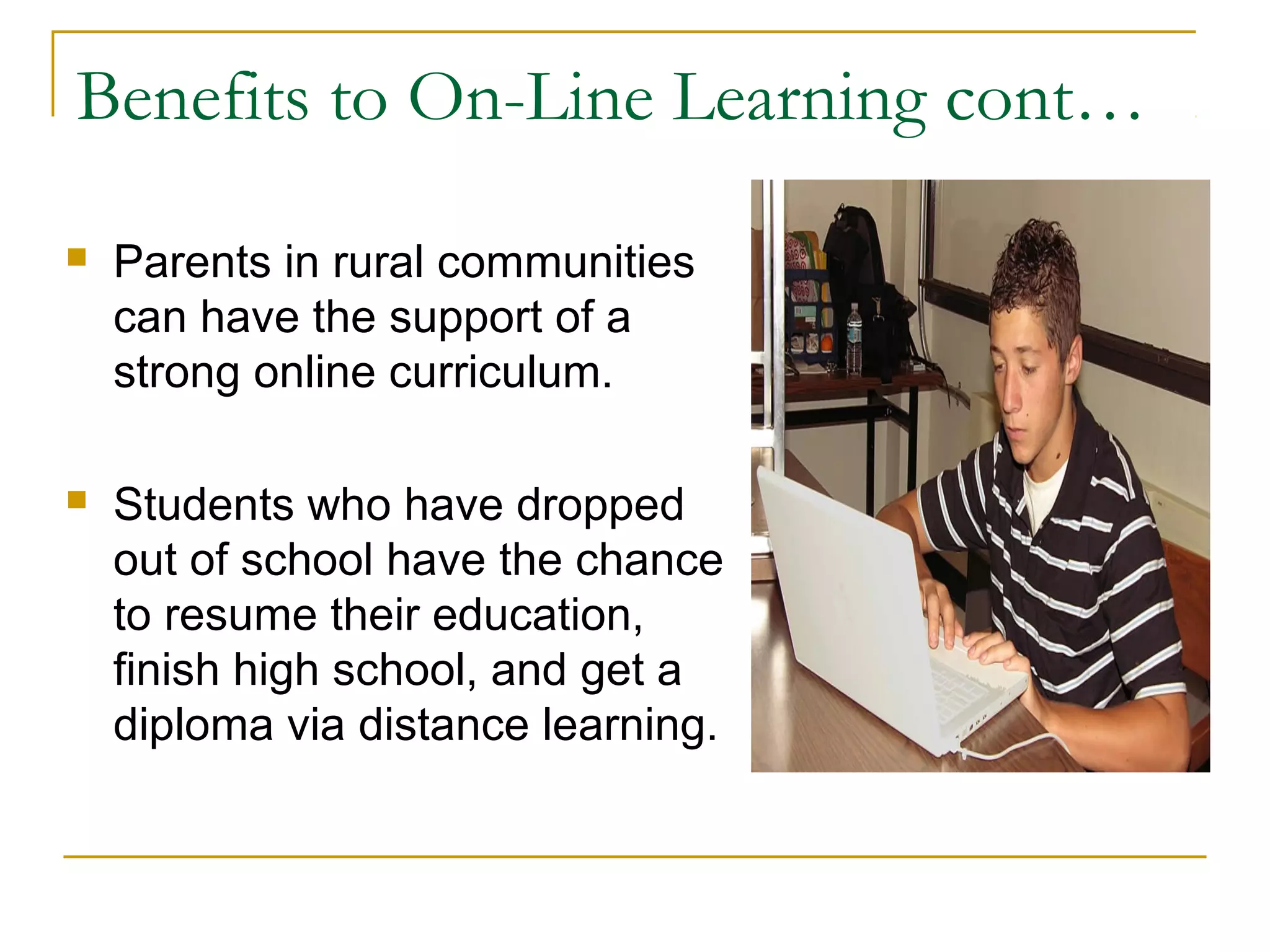
 Parents in rural communities
can have the support of a
strong online curriculum.
 Students who have dropped
out of school have the chance
to resume their education,
finish high school, and get a
diploma via distance learning.
Benefits to Traditional Learning
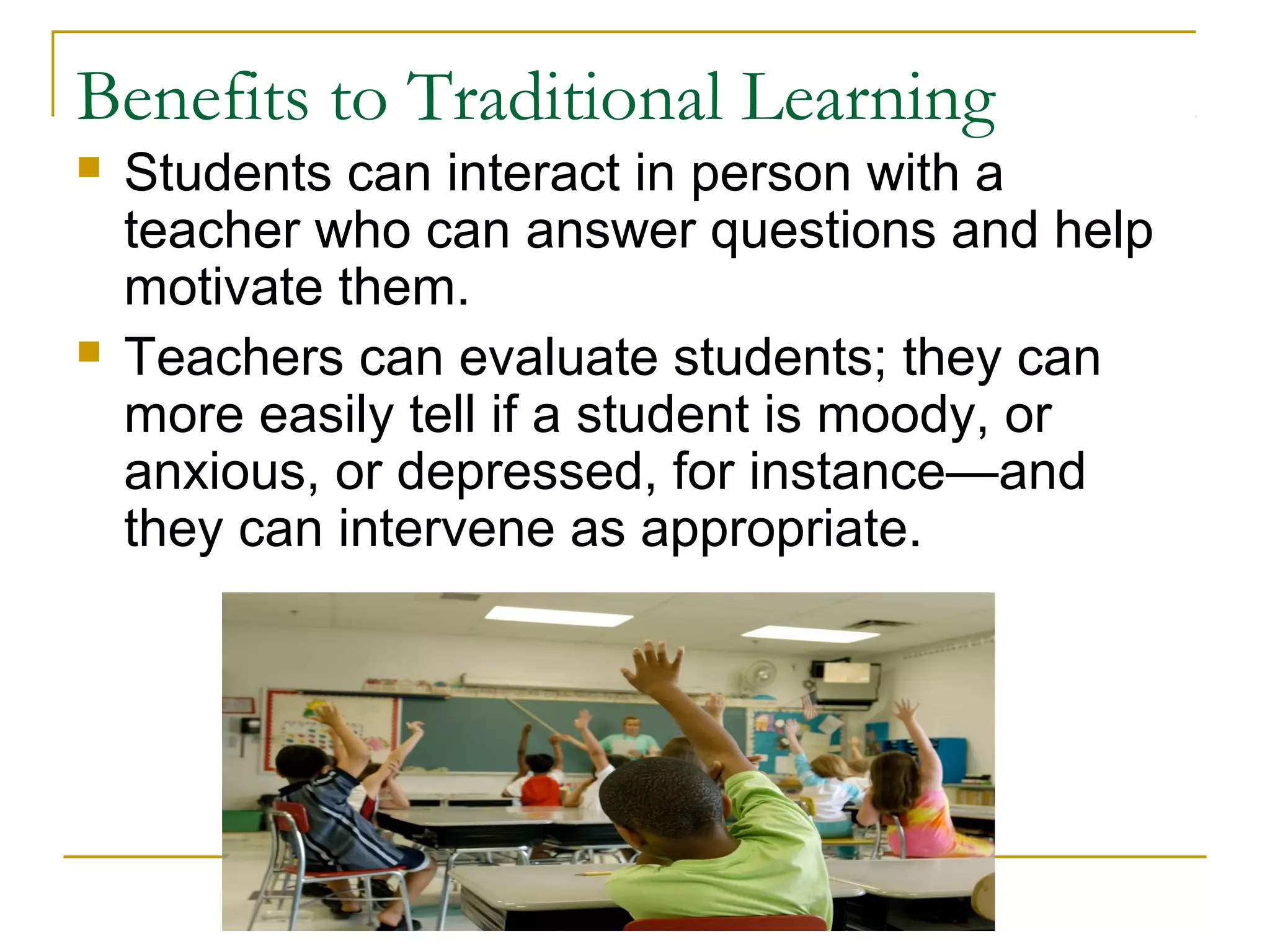
 Students can interact in person with a
teacher who can answer questions and help
motivate them.
 Teachers can evaluate students; they can
more easily tell if a student is moody, or
anxious, or depressed, for instance—and
they can intervene as appropriate.
Benefits to Traditional Learning cont..
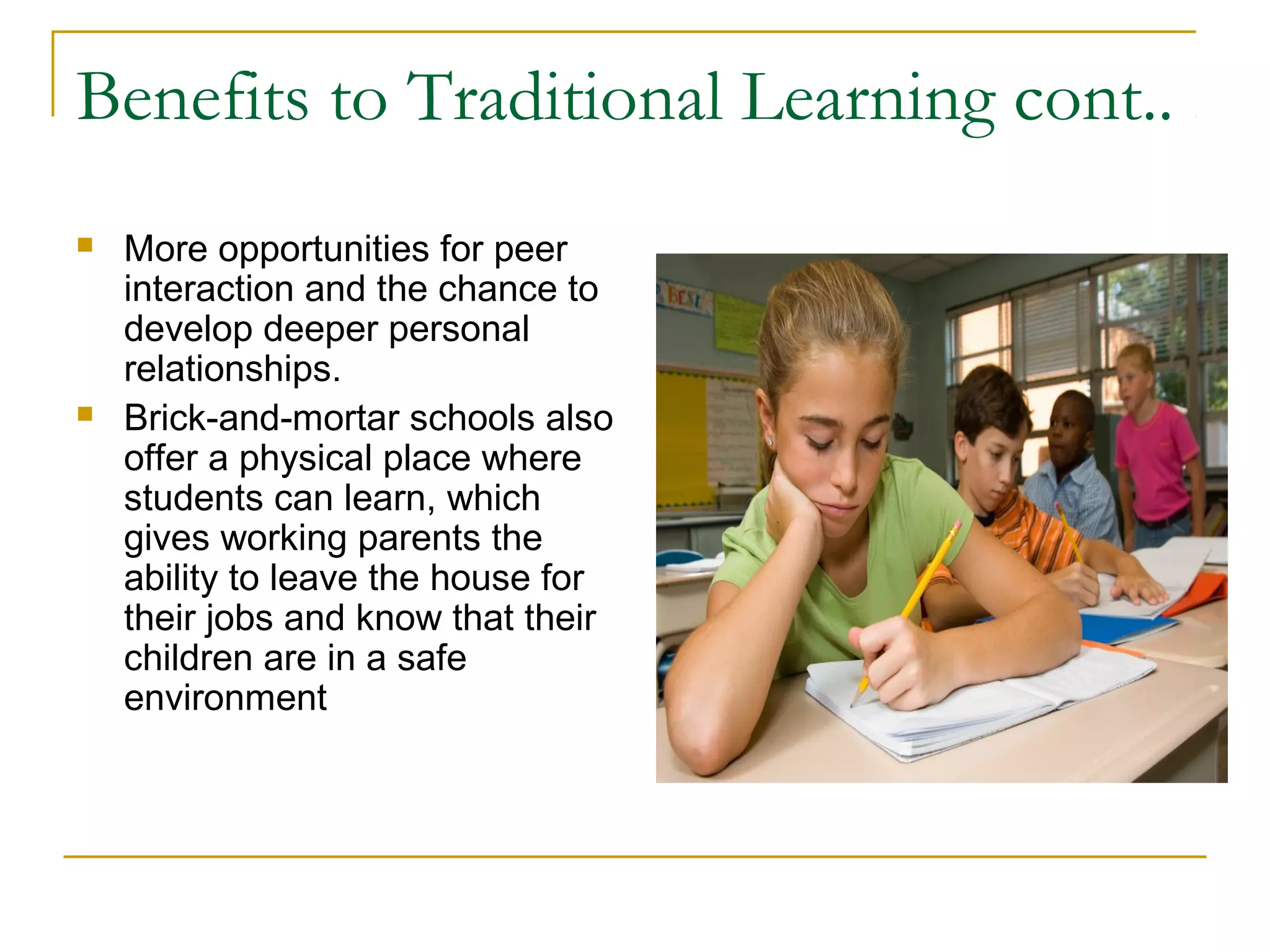
 More opportunities for peer
interaction and the chance to
develop deeper personal
relationships.
 Brick-and-mortar schools also
offer a physical place where
students can learn, which
gives working parents the
ability to leave the house for
their jobs and know that their
children are in a safe
environment
Blended Learning
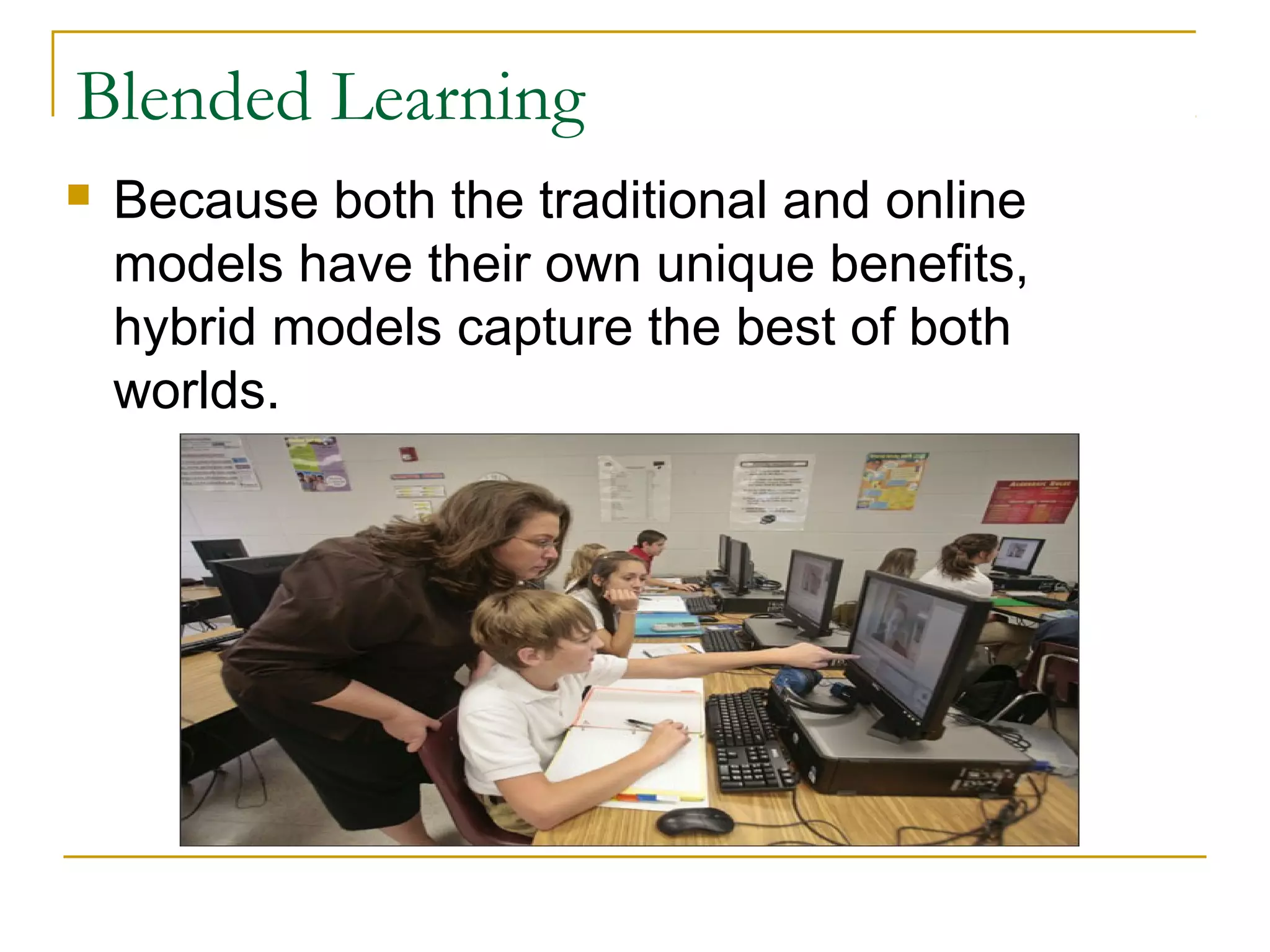
 Because both the traditional and online
models have their own unique benefits,
hybrid models capture the best of both
worlds.
5 different approaches to Blended
Learning – Full Time Learning
Students are enrolled full-time in the virtual
school, but one day a week they attend
school for two-and-a-quarter hours in a
physical building.
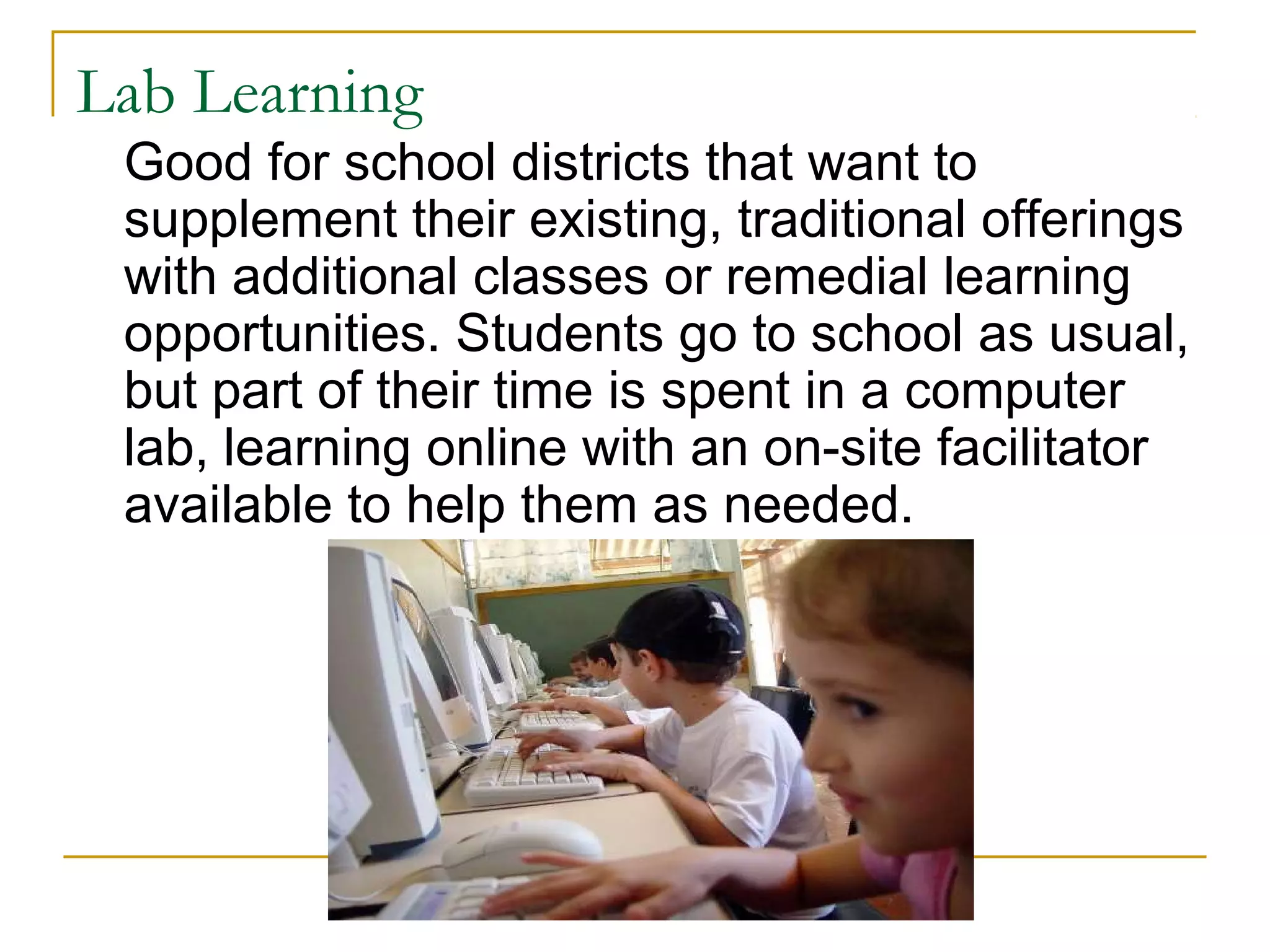
Lab Learning
Good for school districts that want to
supplement their existing, traditional offerings
with additional classes or remedial learning
opportunities. Students go to school as usual,
but part of their time is spent in a computer
lab, learning online with an on-site facilitator
available to help them as needed.
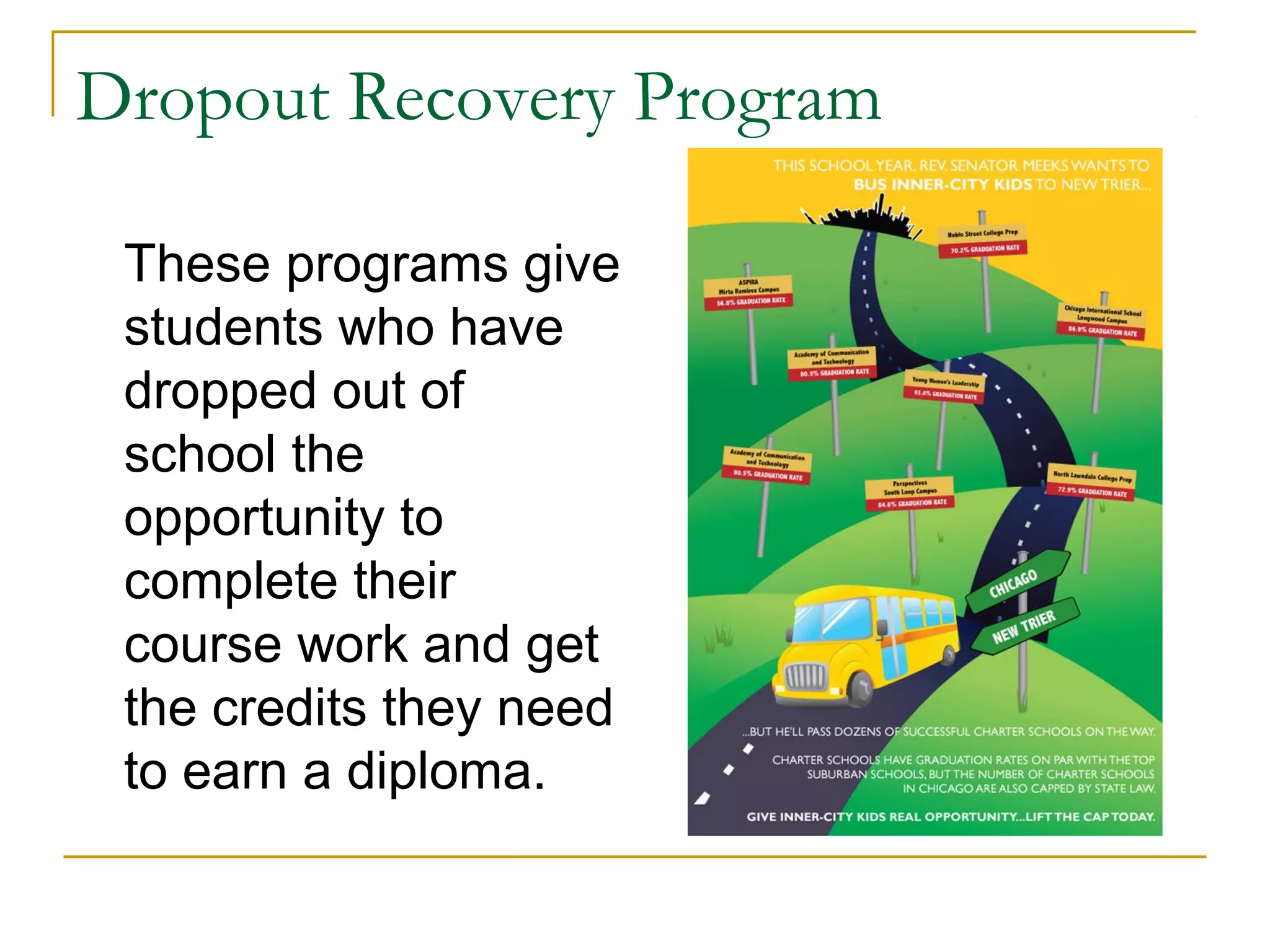
Dropout Recovery Program
These programs give
students who have
dropped out of
school the
opportunity to
complete their
course work and get
the credits they need
to earn a diploma.
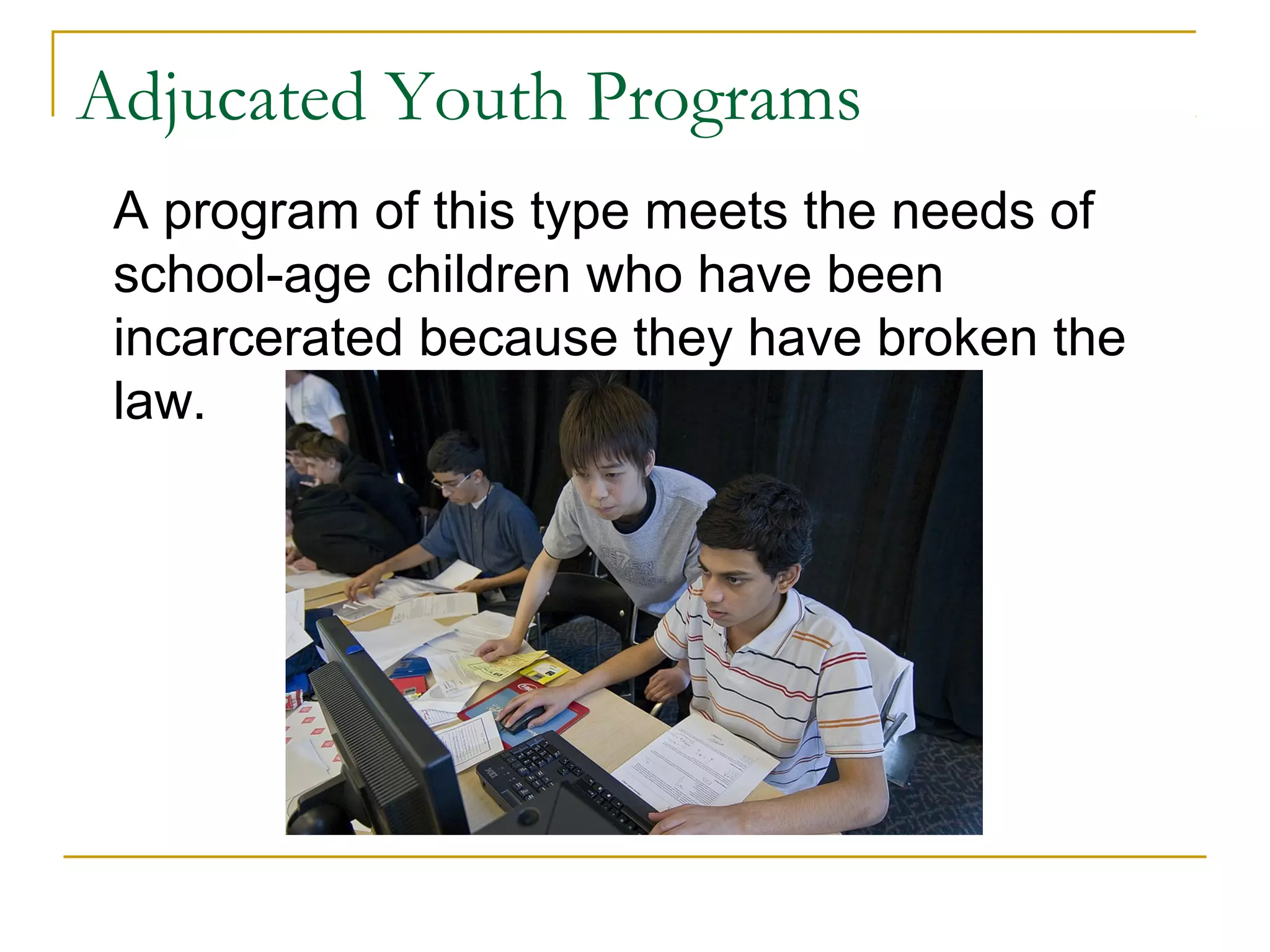
Adjucated Youth Programs
A program of this type meets the needs of
school-age children who have been
incarcerated because they have broken the
law.
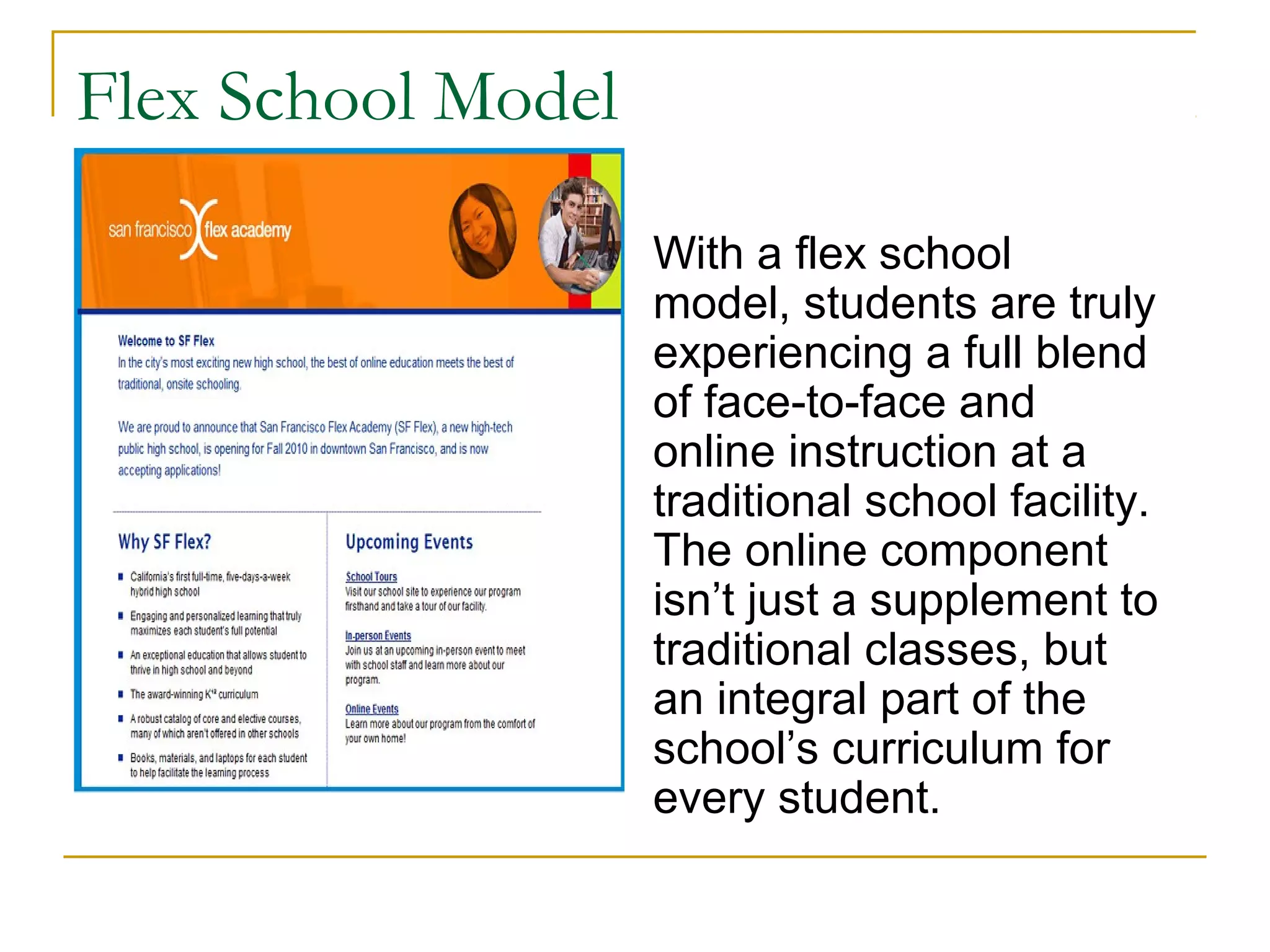
Flex School Model
With a flex school
model, students are truly
experiencing a full blend
of face-to-face and
online instruction at a
traditional school facility.
The online component
isn’t just a supplement to
traditional classes, but
an integral part of the
school’s curriculum for
every student.

Blended learning

  • 1.
  • 2.
    What is it? Blended Learning combines the best elements of both face-to- face and online instruction.  Students attend school for part of the week, then spend time at home attending virtual school.
  • 3.
    Benefits to On-LineLearning  Students learn at their own pace.  Students with disabilities have more time to understand the material before moving on.
  • 4.
    Benefits to On-LineLearning cont…  Parents in rural communities can have the support of a strong online curriculum.  Students who have dropped out of school have the chance to resume their education, finish high school, and get a diploma via distance learning.
  • 5.
    Benefits to TraditionalLearning  Students can interact in person with a teacher who can answer questions and help motivate them.  Teachers can evaluate students; they can more easily tell if a student is moody, or anxious, or depressed, for instance—and they can intervene as appropriate.
  • 6.
    Benefits to TraditionalLearning cont..  More opportunities for peer interaction and the chance to develop deeper personal relationships.  Brick-and-mortar schools also offer a physical place where students can learn, which gives working parents the ability to leave the house for their jobs and know that their children are in a safe environment
  • 7.
    Blended Learning  Becauseboth the traditional and online models have their own unique benefits, hybrid models capture the best of both worlds.
  • 8.
    5 different approachesto Blended Learning – Full Time Learning Students are enrolled full-time in the virtual school, but one day a week they attend school for two-and-a-quarter hours in a physical building.
  • 9.
    Lab Learning Good forschool districts that want to supplement their existing, traditional offerings with additional classes or remedial learning opportunities. Students go to school as usual, but part of their time is spent in a computer lab, learning online with an on-site facilitator available to help them as needed.
  • 10.
    Dropout Recovery Program Theseprograms give students who have dropped out of school the opportunity to complete their course work and get the credits they need to earn a diploma.
  • 11.
    Adjucated Youth Programs Aprogram of this type meets the needs of school-age children who have been incarcerated because they have broken the law.
  • 12.
    Flex School Model Witha flex school model, students are truly experiencing a full blend of face-to-face and online instruction at a traditional school facility. The online component isn’t just a supplement to traditional classes, but an integral part of the school’s curriculum for every student.