Enhancing the
Quality of ImmPort
Data
Barry Smith
ImmPort Science Meeting, February 27, 2014
With thanks to Anna Maria Masci
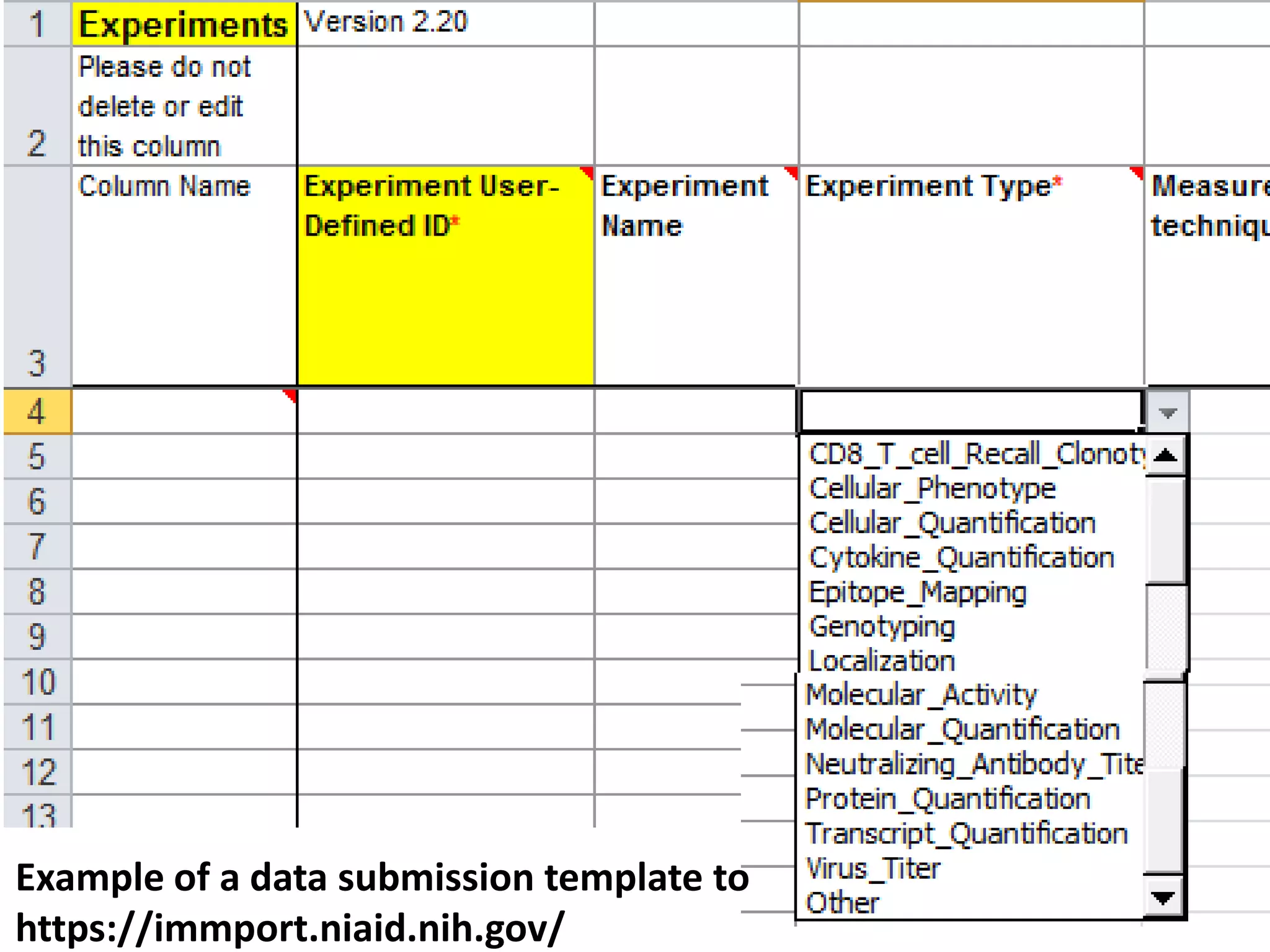
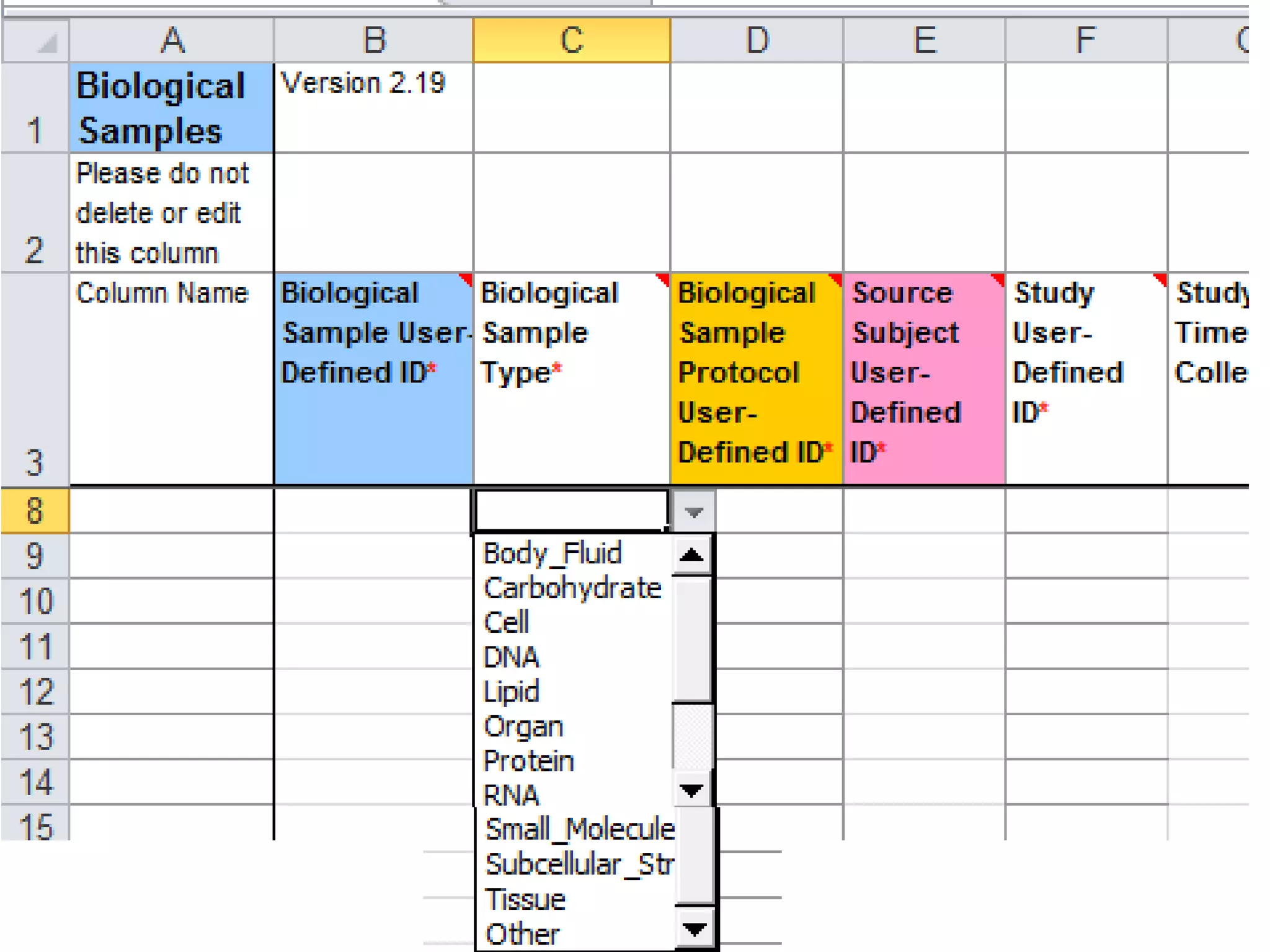
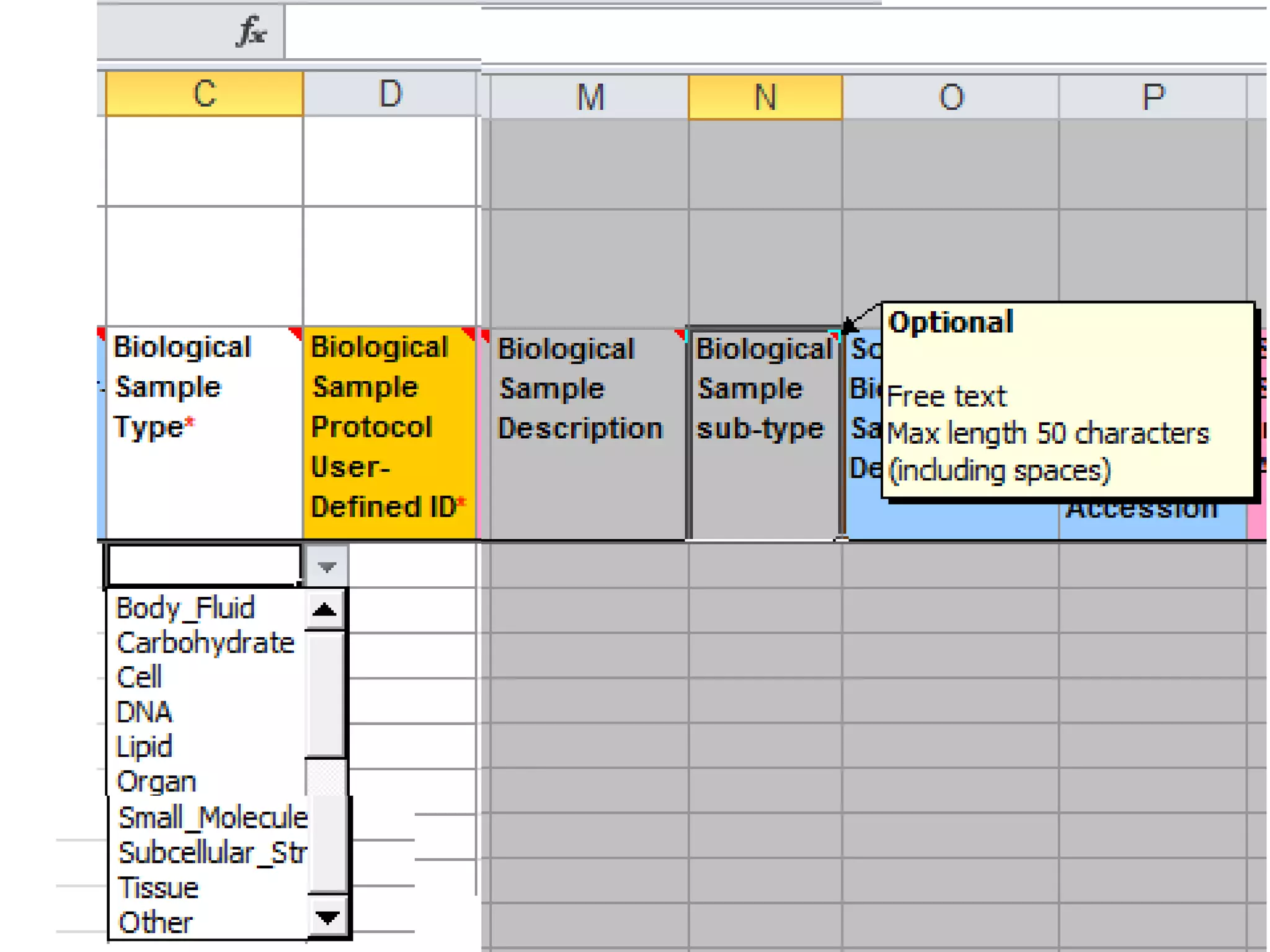
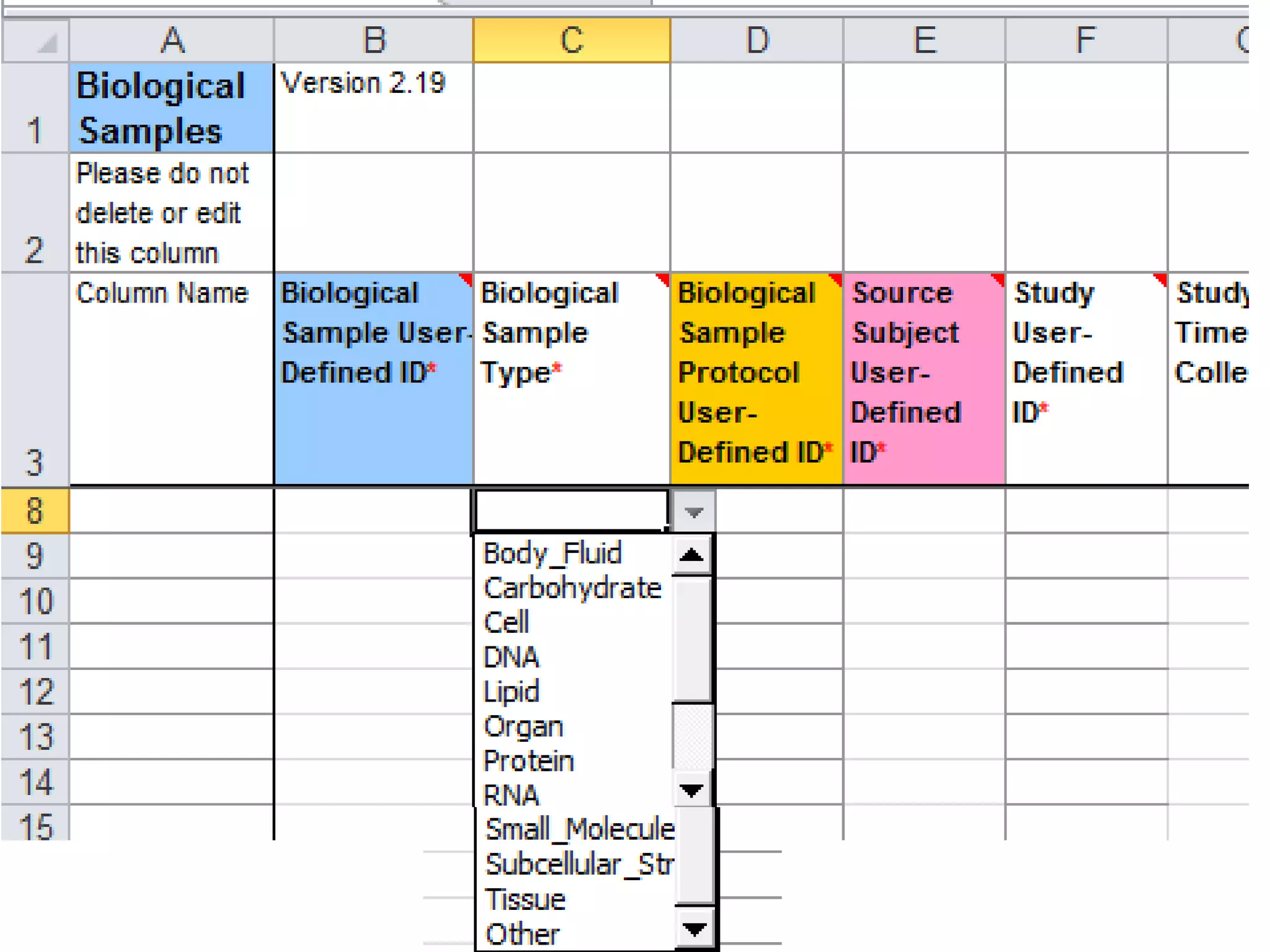
Example of a data submission template to
https://immport.niaid.nih.gov/
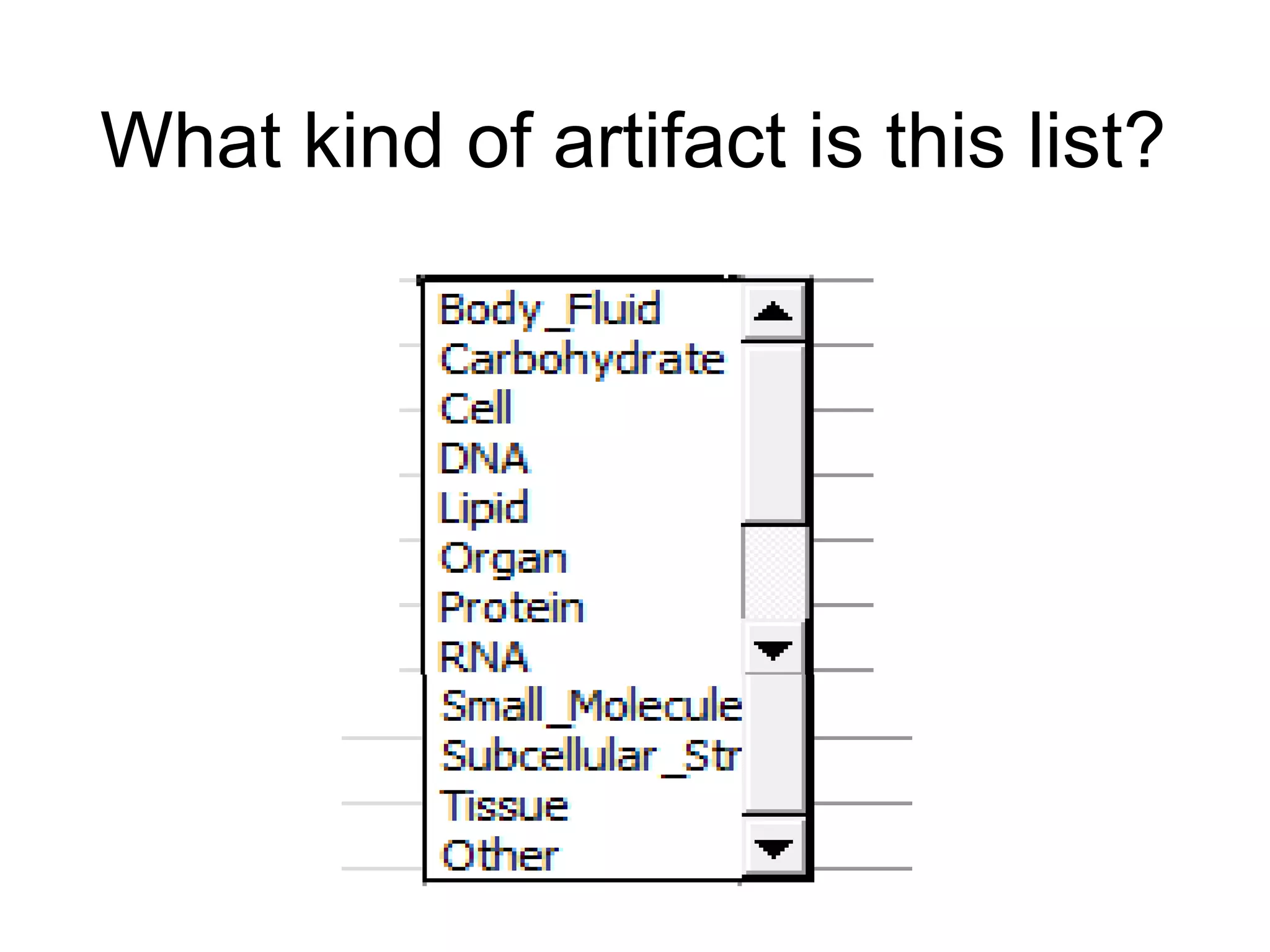
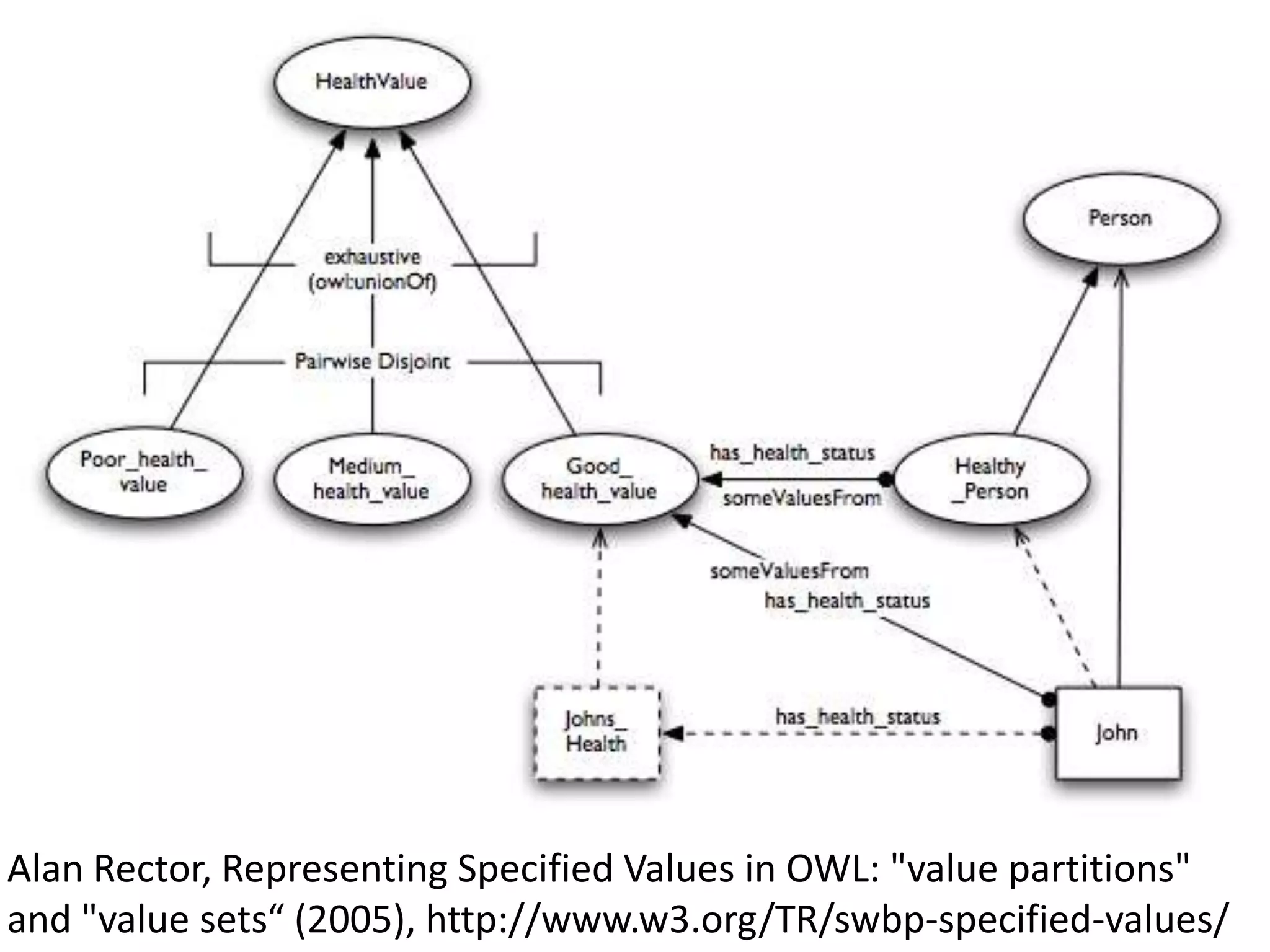
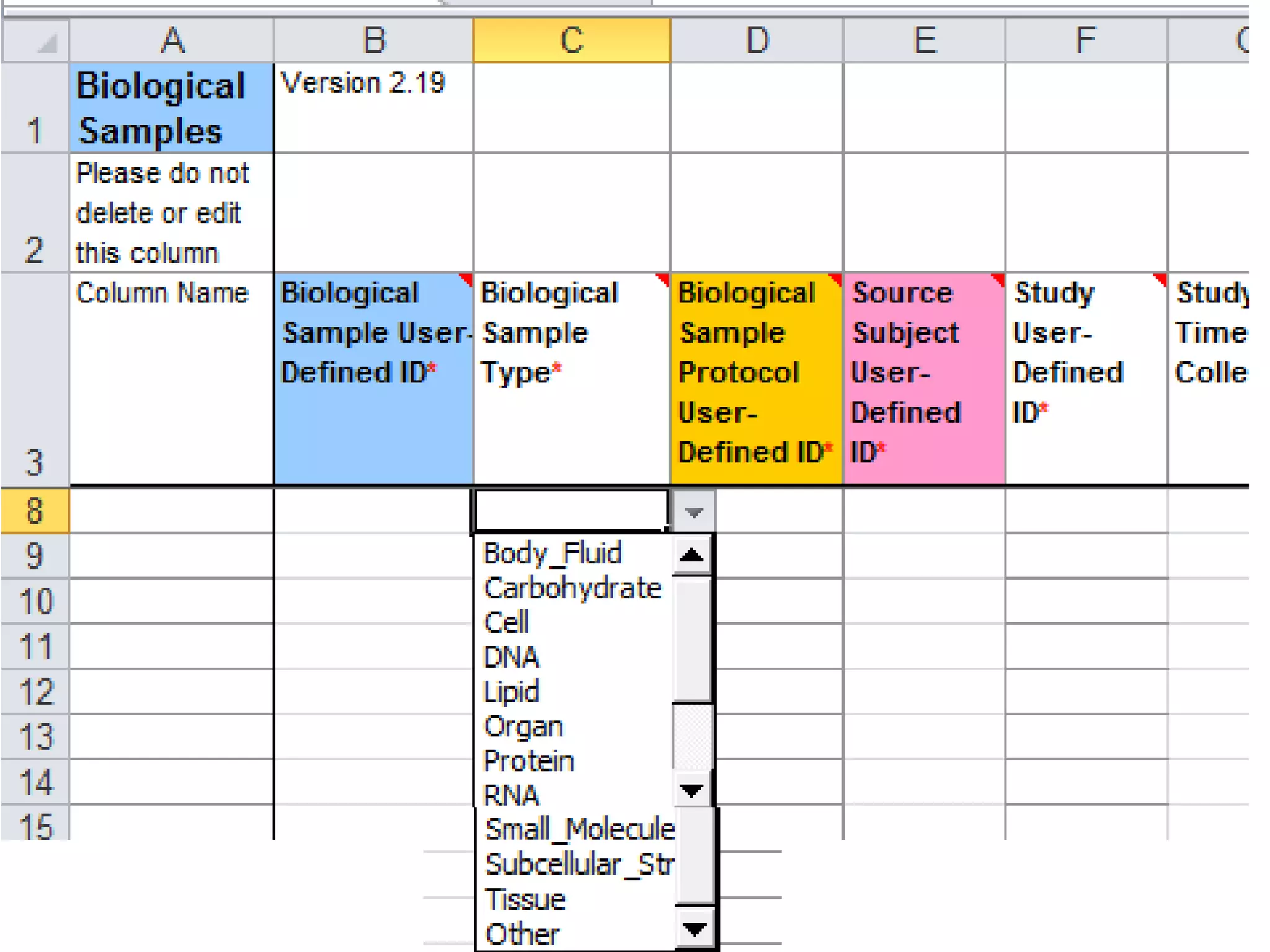
What kind of artifact is this list?
Alan Rector, Representing Specified Values in OWL: "value partitions"
and "value sets“ (2005), http://www.w3.org/TR/swbp-specified-values/
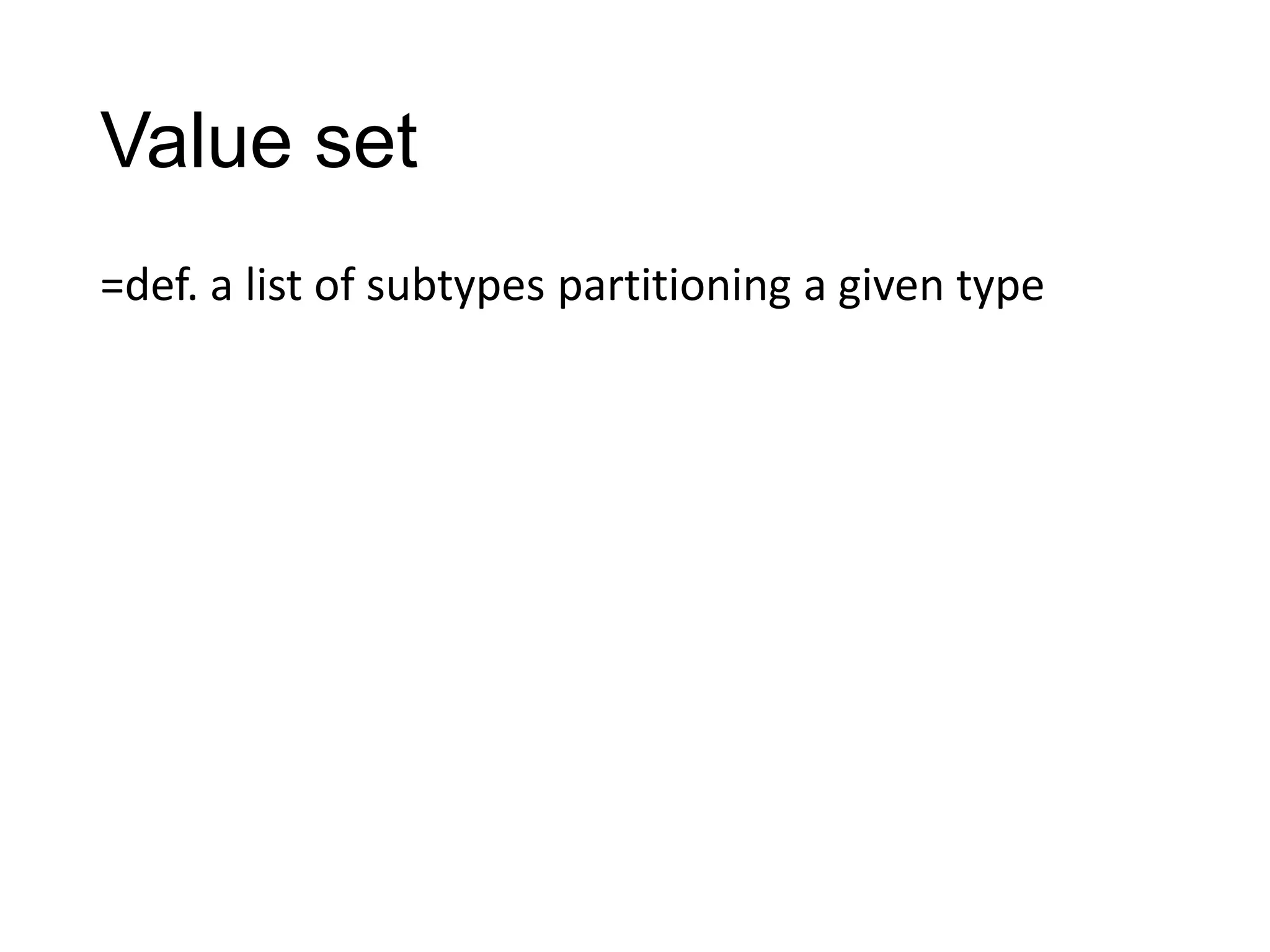
Value set
=def. a list of subtypes partitioning a given type
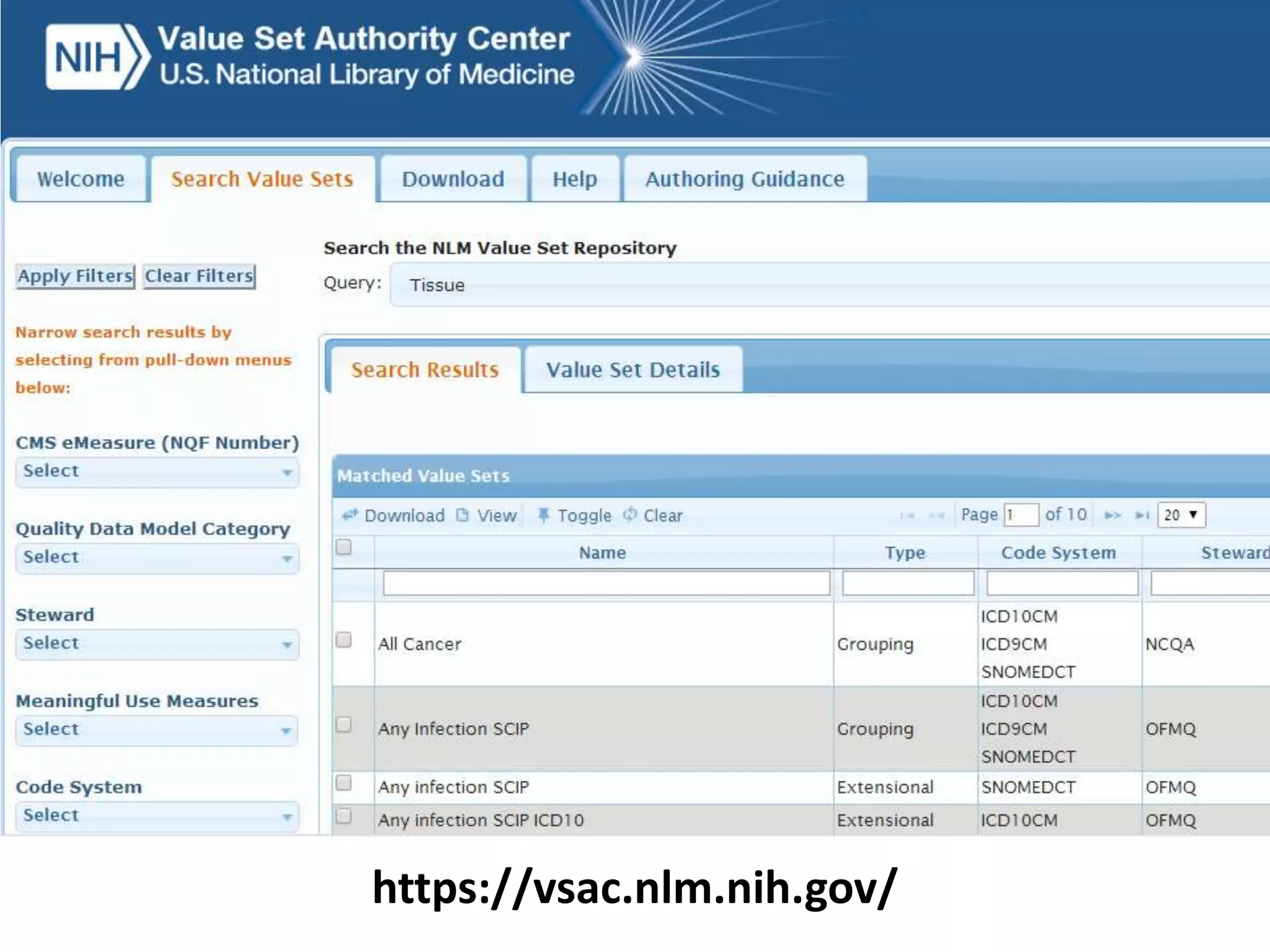
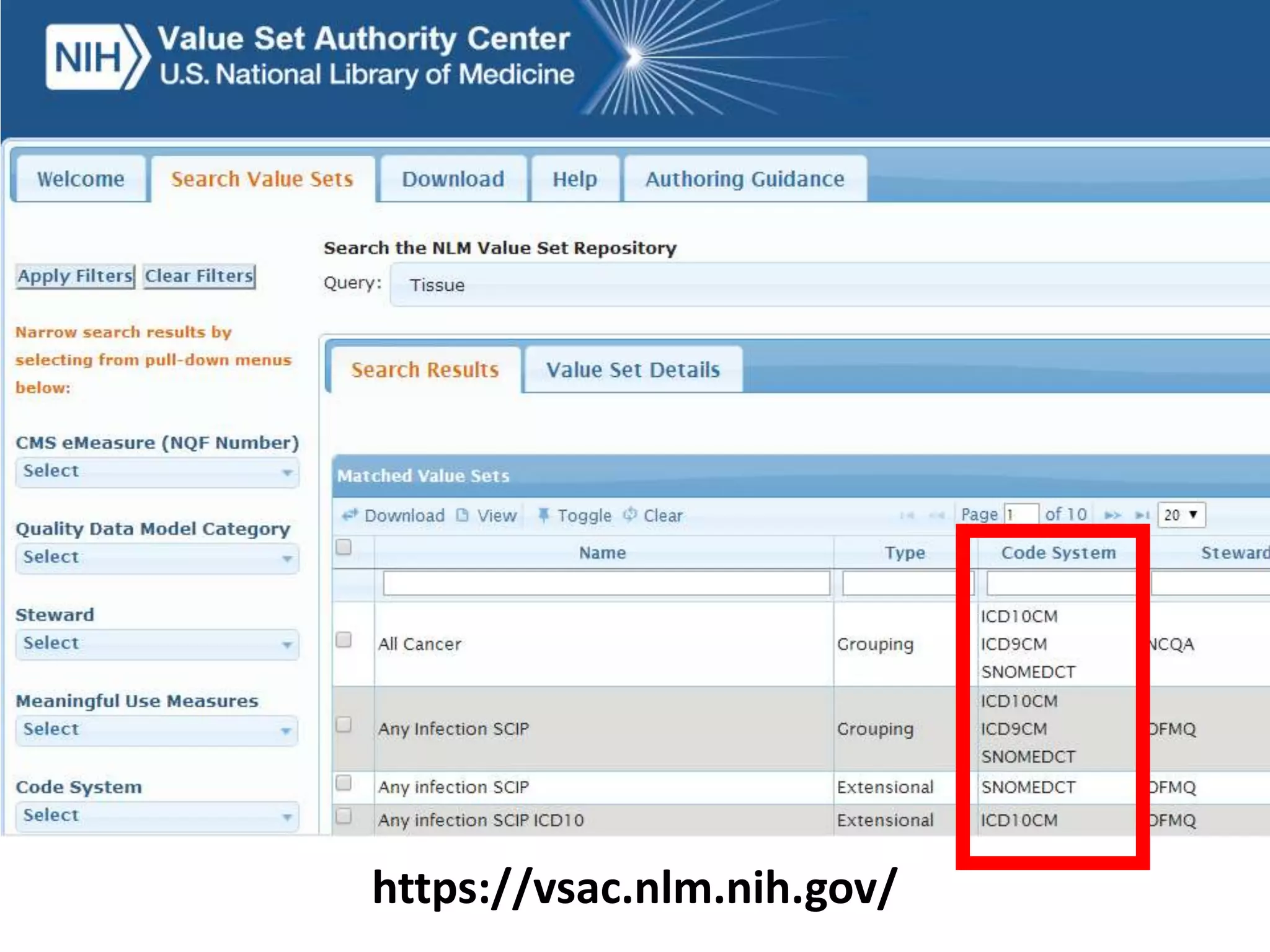
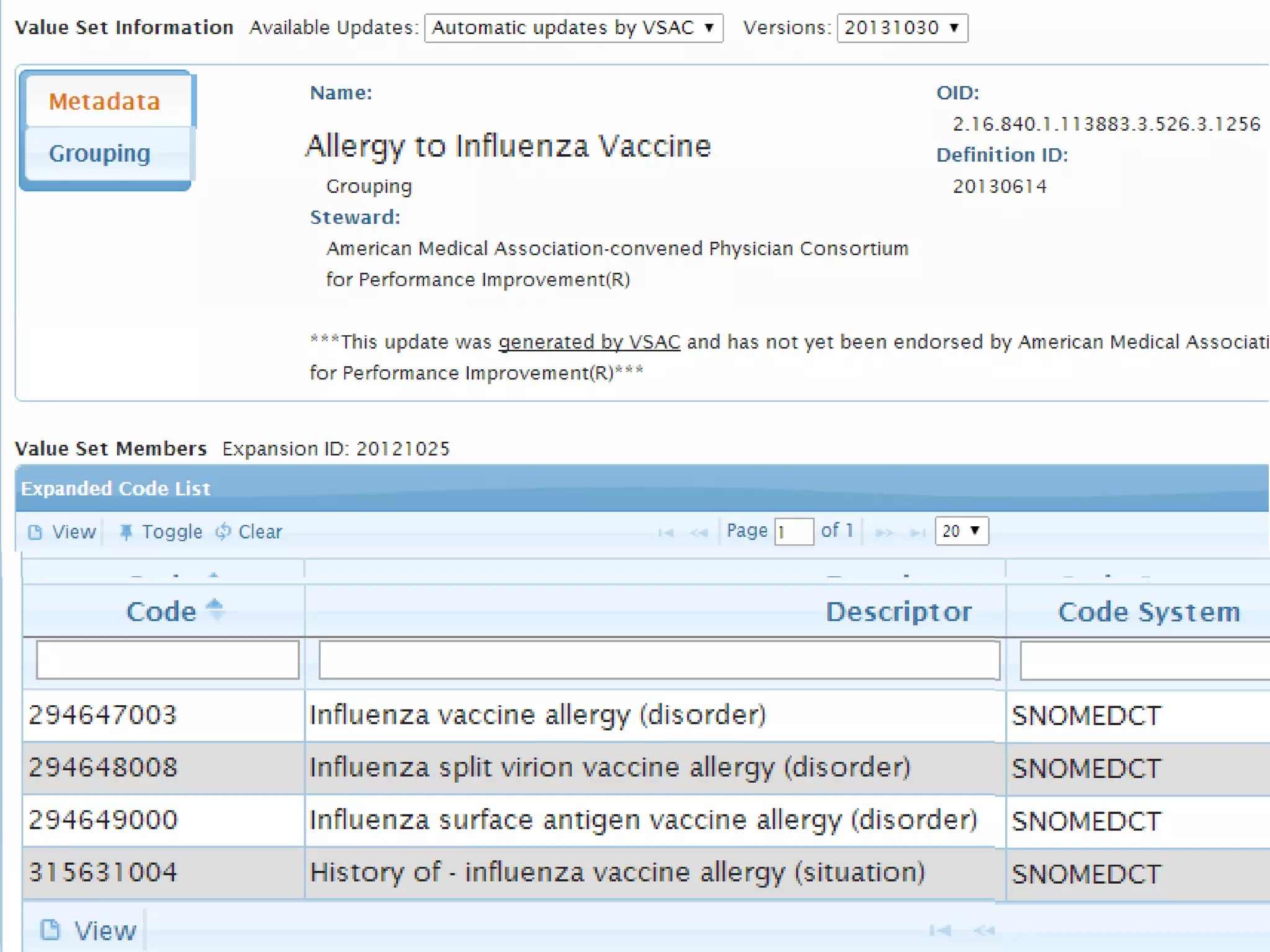
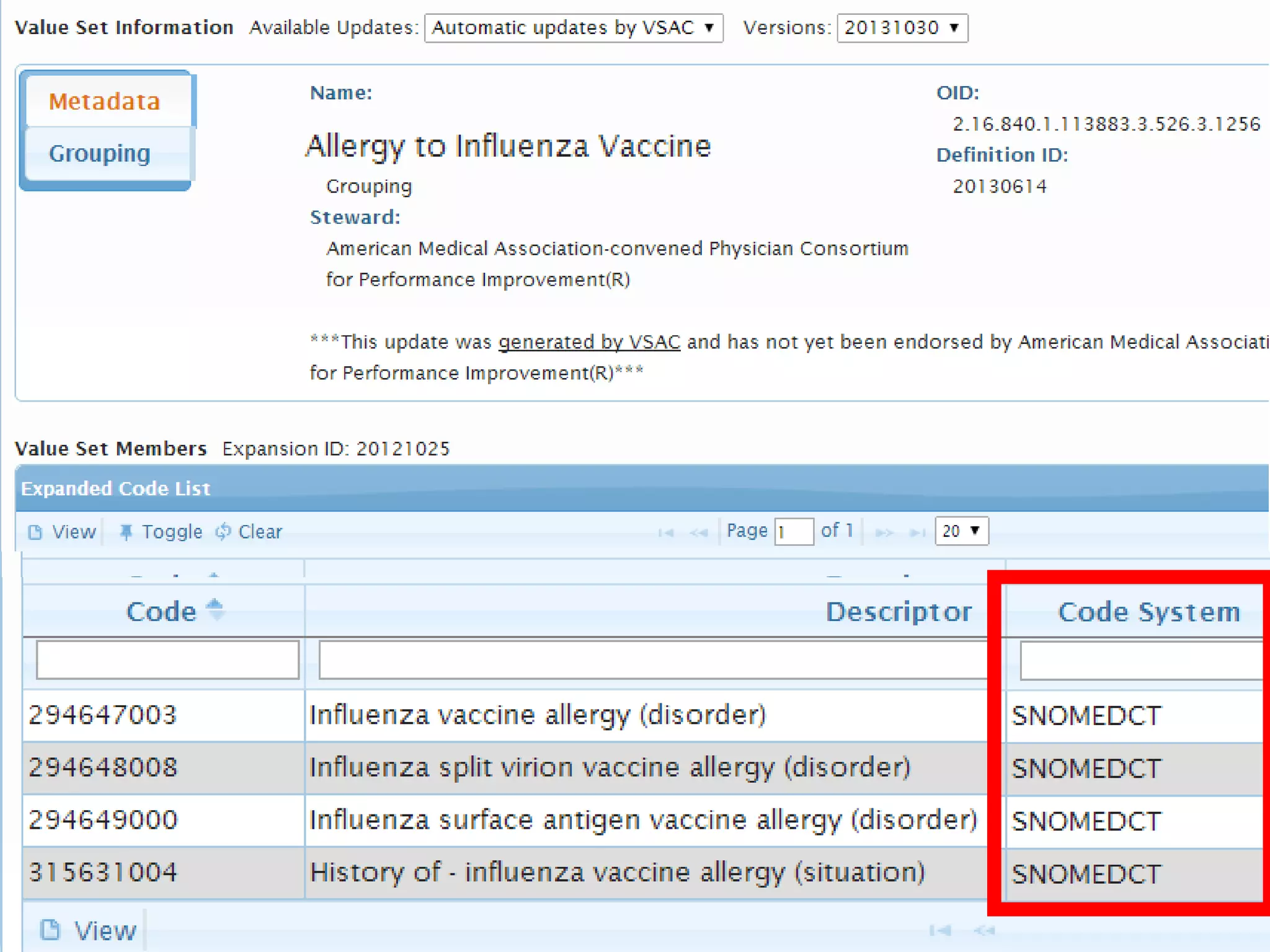
https://vsac.nlm.nih.gov/
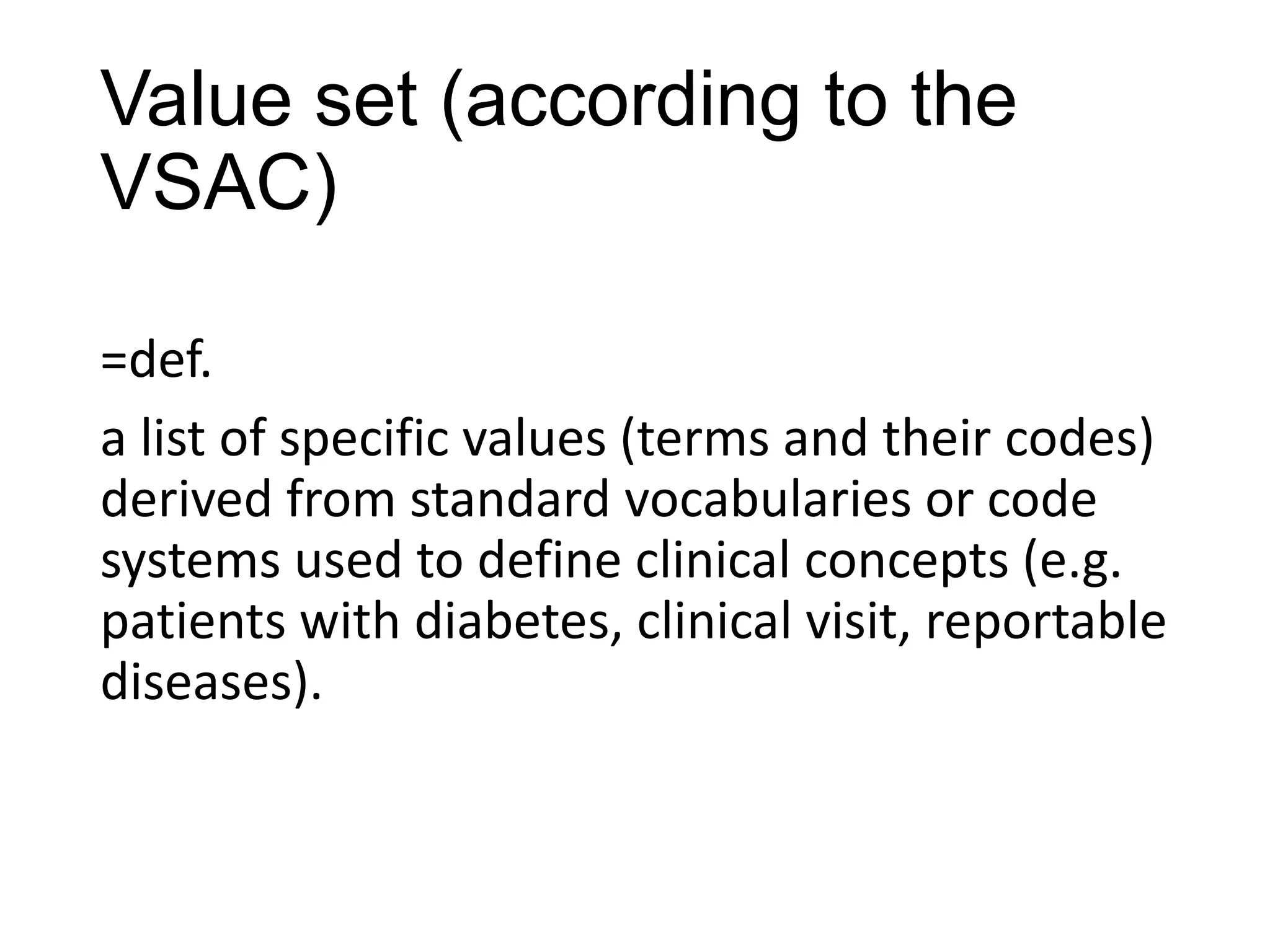
Value set (according to the
VSAC)
=def.
a list of specific values (terms and their codes)
derived from standard vocabularies or code
systems used to define clinical concepts (e.g.
patients with diabetes, clinical visit, reportable
diseases).
https://vsac.nlm.nih.gov/
For VSAC each value set
involves:
• natural language noun phrases from a controlled
vocabulary (can in principle vary between
communities / disciplines)
• official name for code system / ontology / version
• alphanumeric IDs
• URLs
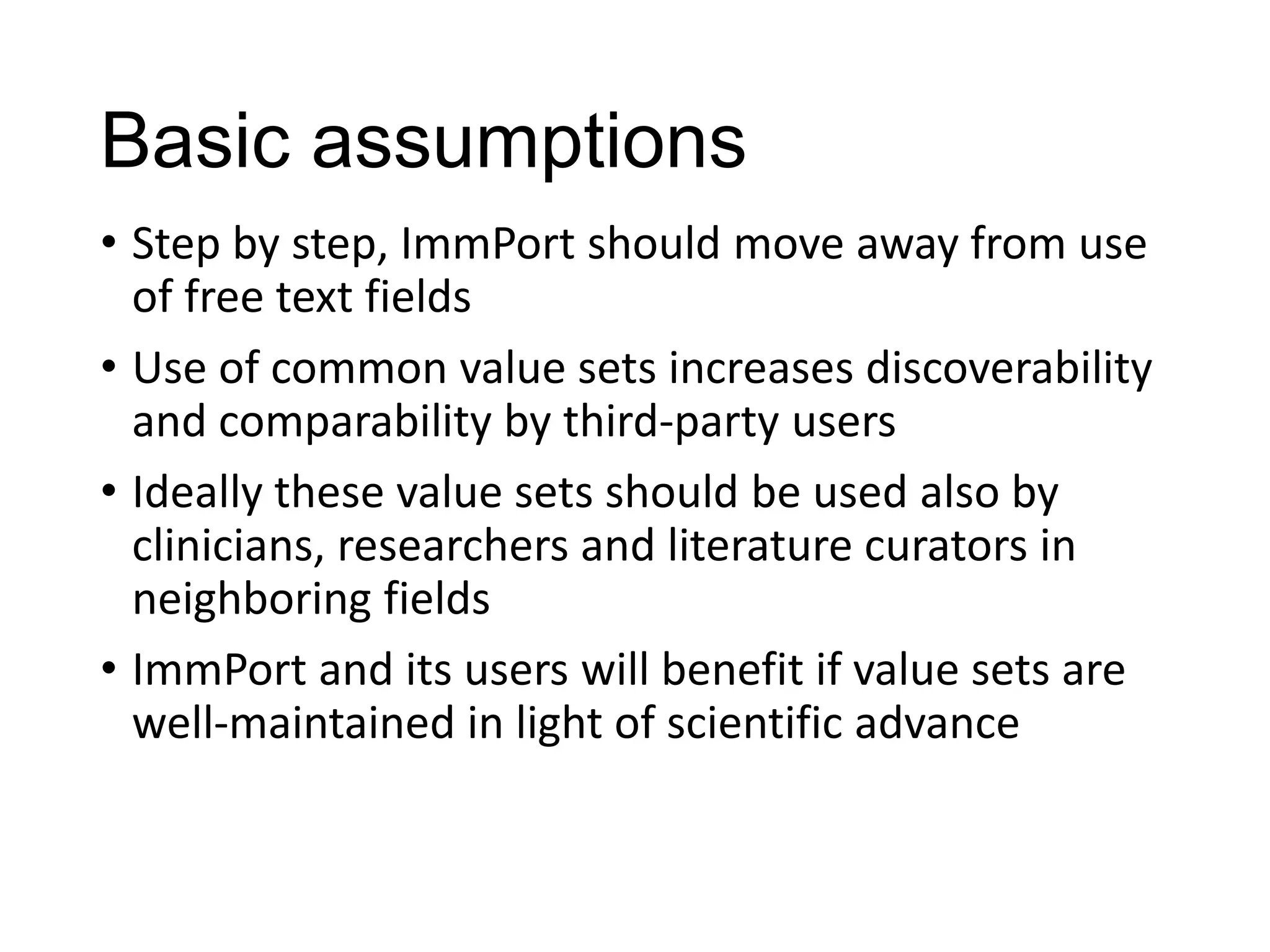
Basic assumptions
• Step by step, ImmPort should move away from use
of free text fields
• Use of common value sets increases discoverability
and comparability by third-party users
• Ideally these value sets should be used also by
clinicians, researchers and literature curators in
neighboring fields
• ImmPort and its users will benefit if value sets are
well-maintained in light of scientific advance
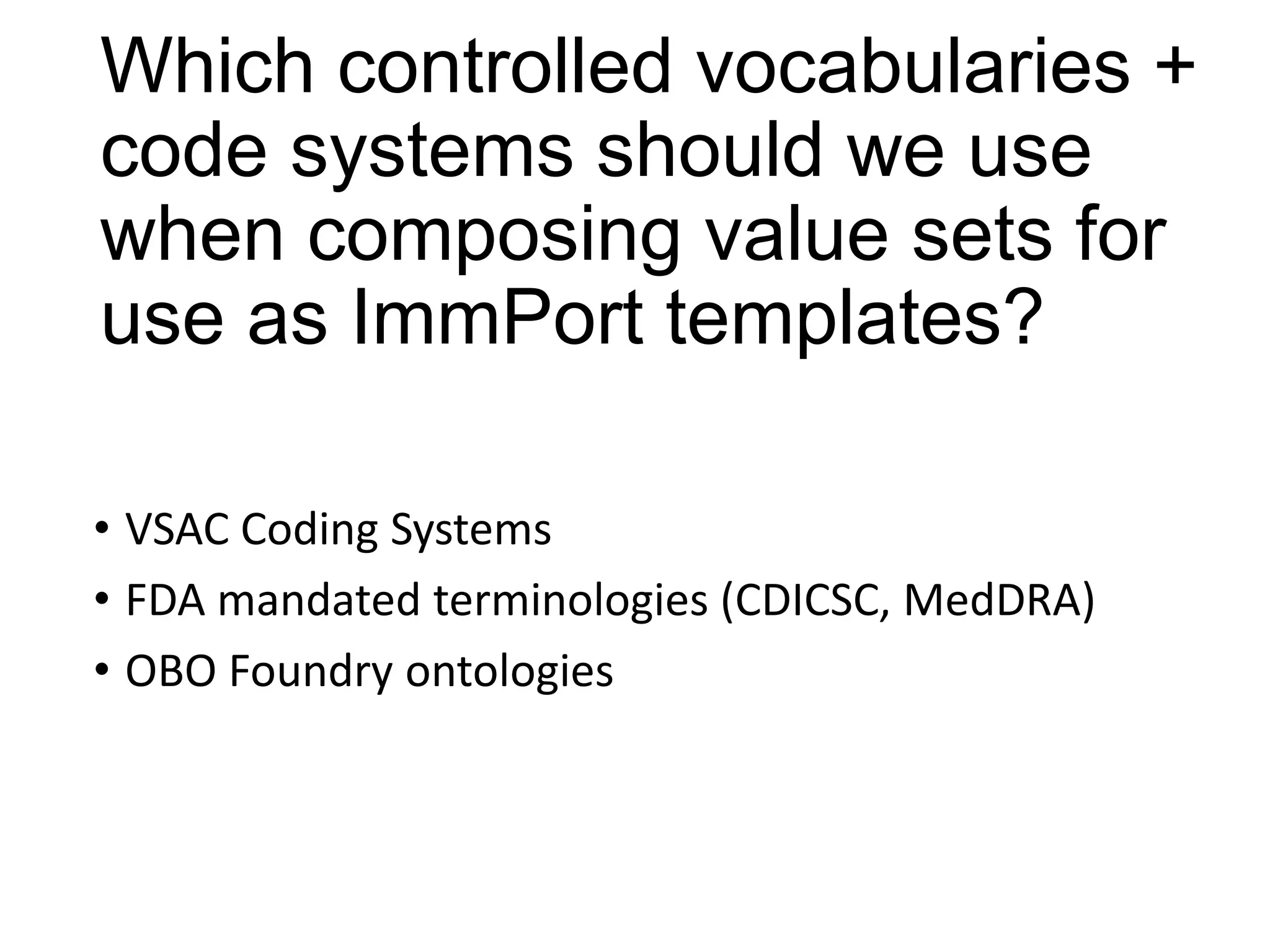
Which controlled vocabularies +
code systems should we use
when composing value sets for
use as ImmPort templates?
• VSAC Coding Systems
• FDA mandated terminologies (CDICSC, MedDRA)
• OBO Foundry ontologies
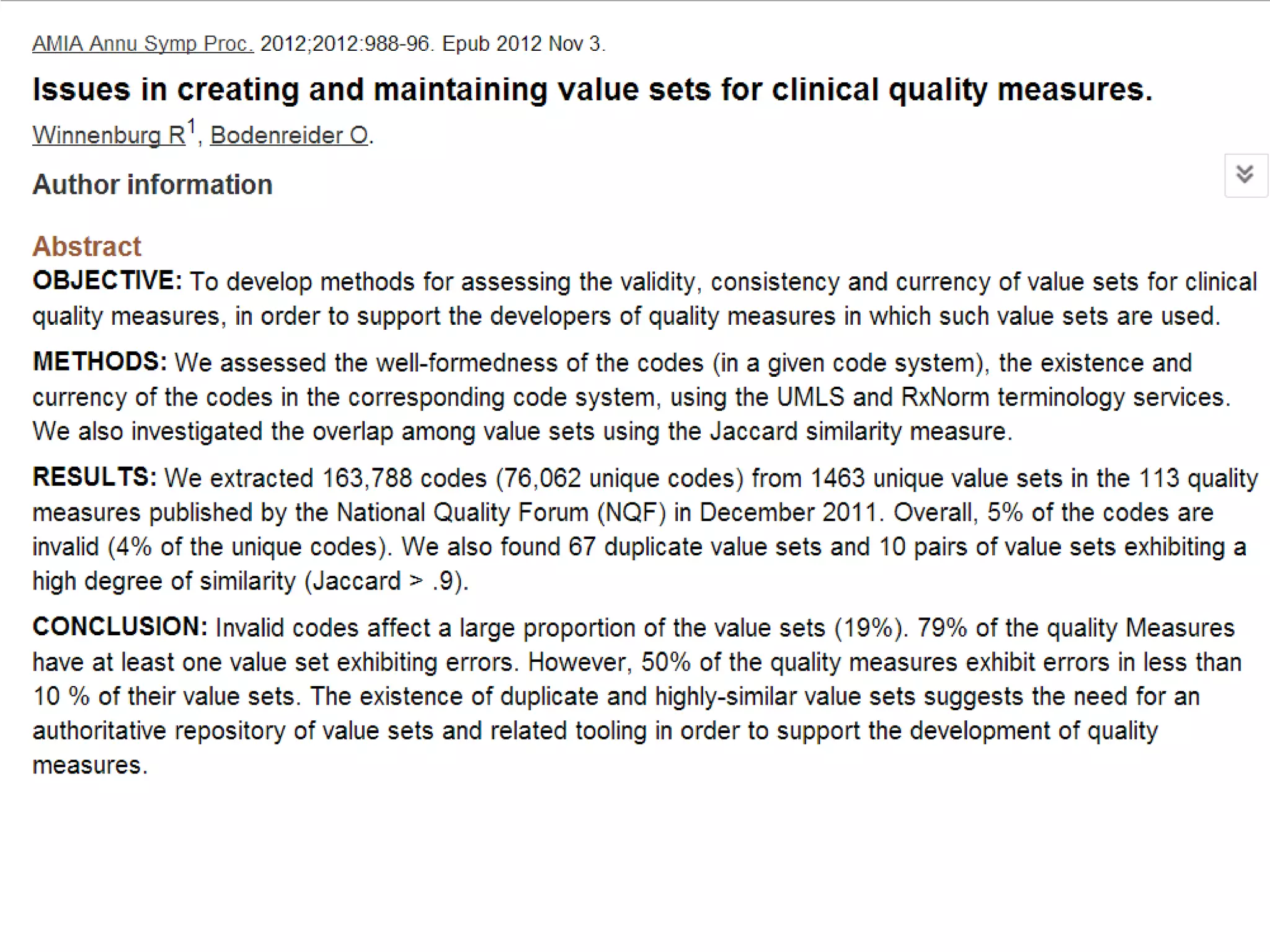
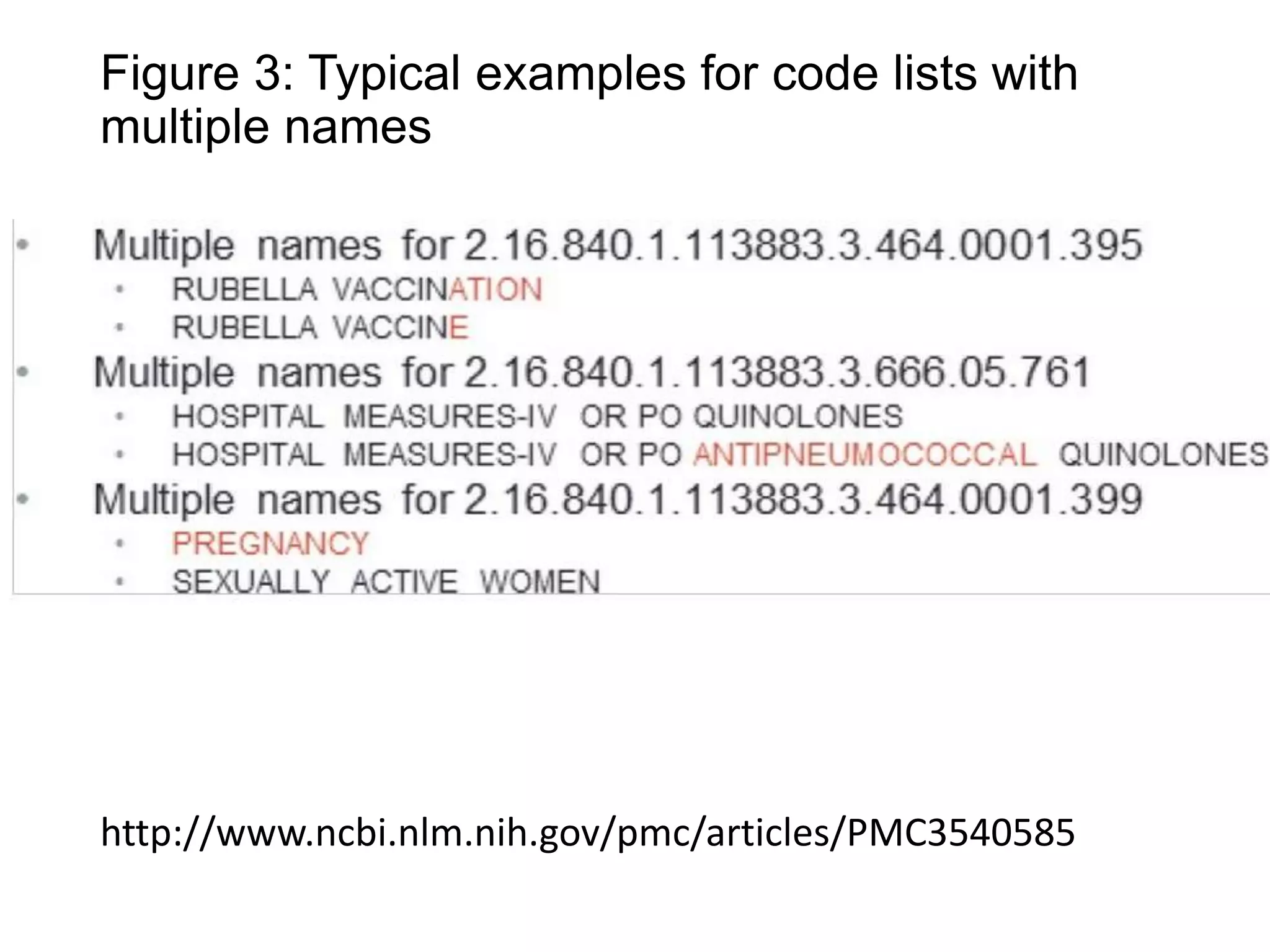
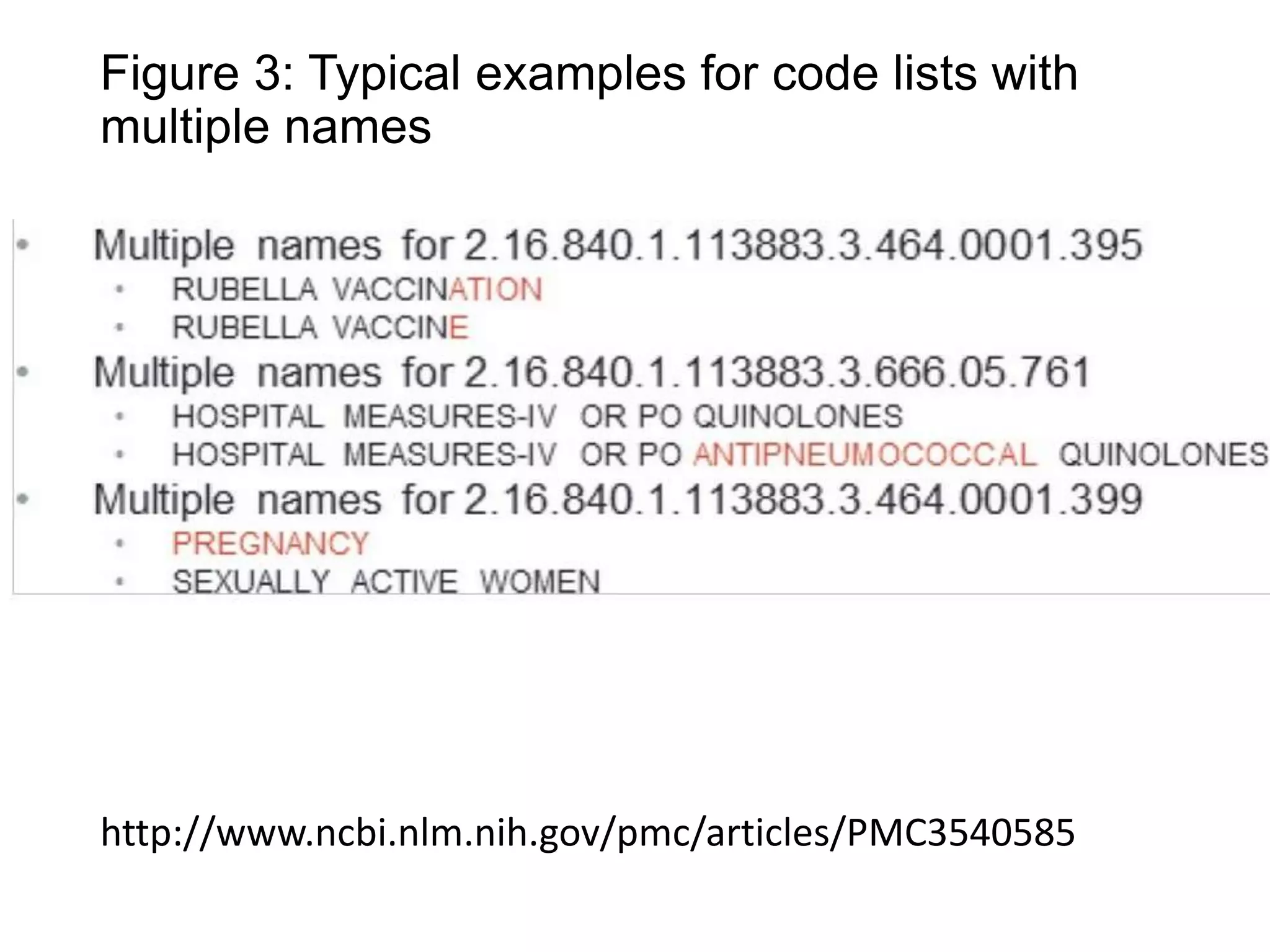
Figure 3: Typical examples for code lists with
multiple names

http://www.ncbi.nlm.nih.gov/pmc/articles/PMC3540585
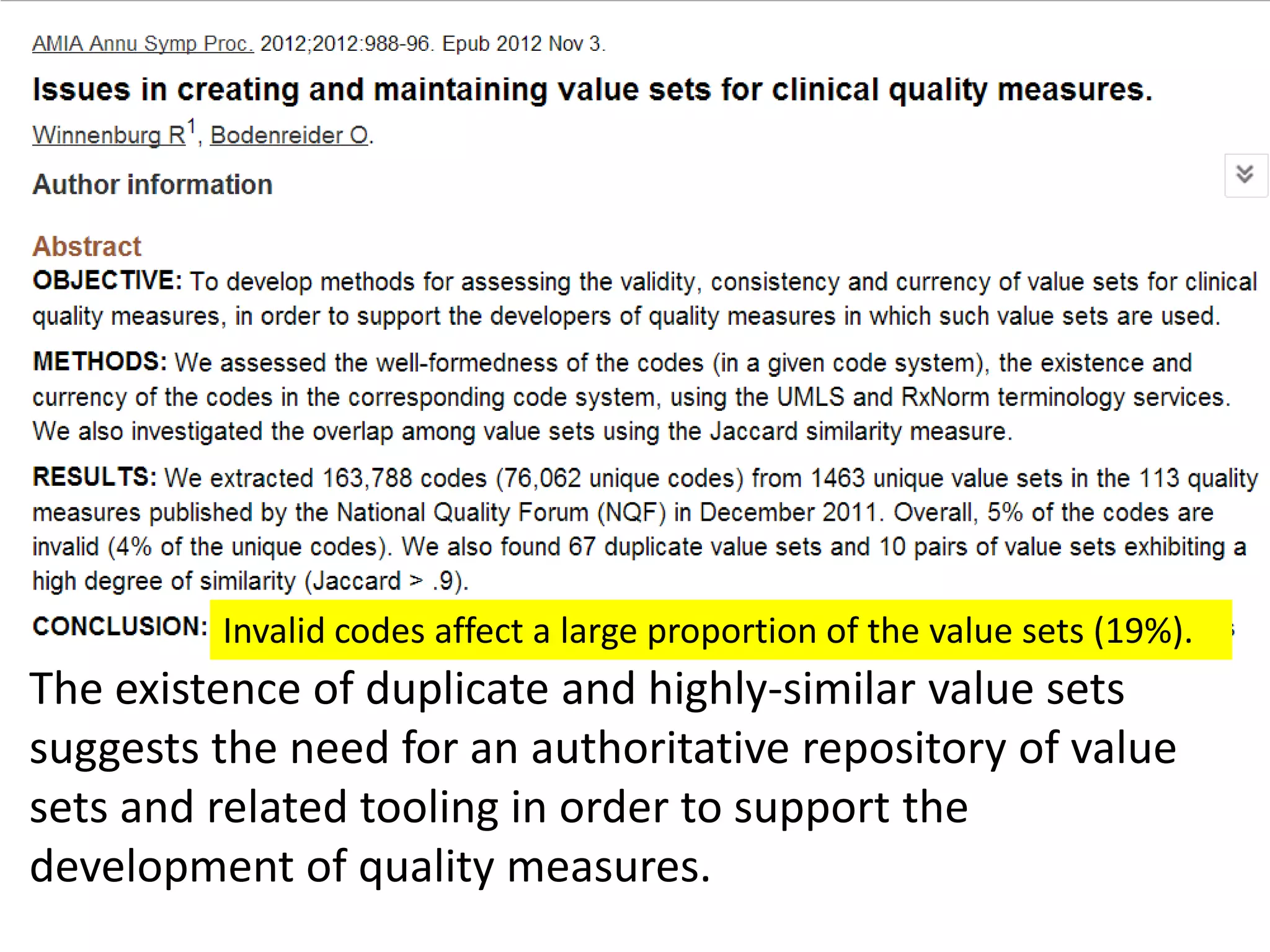
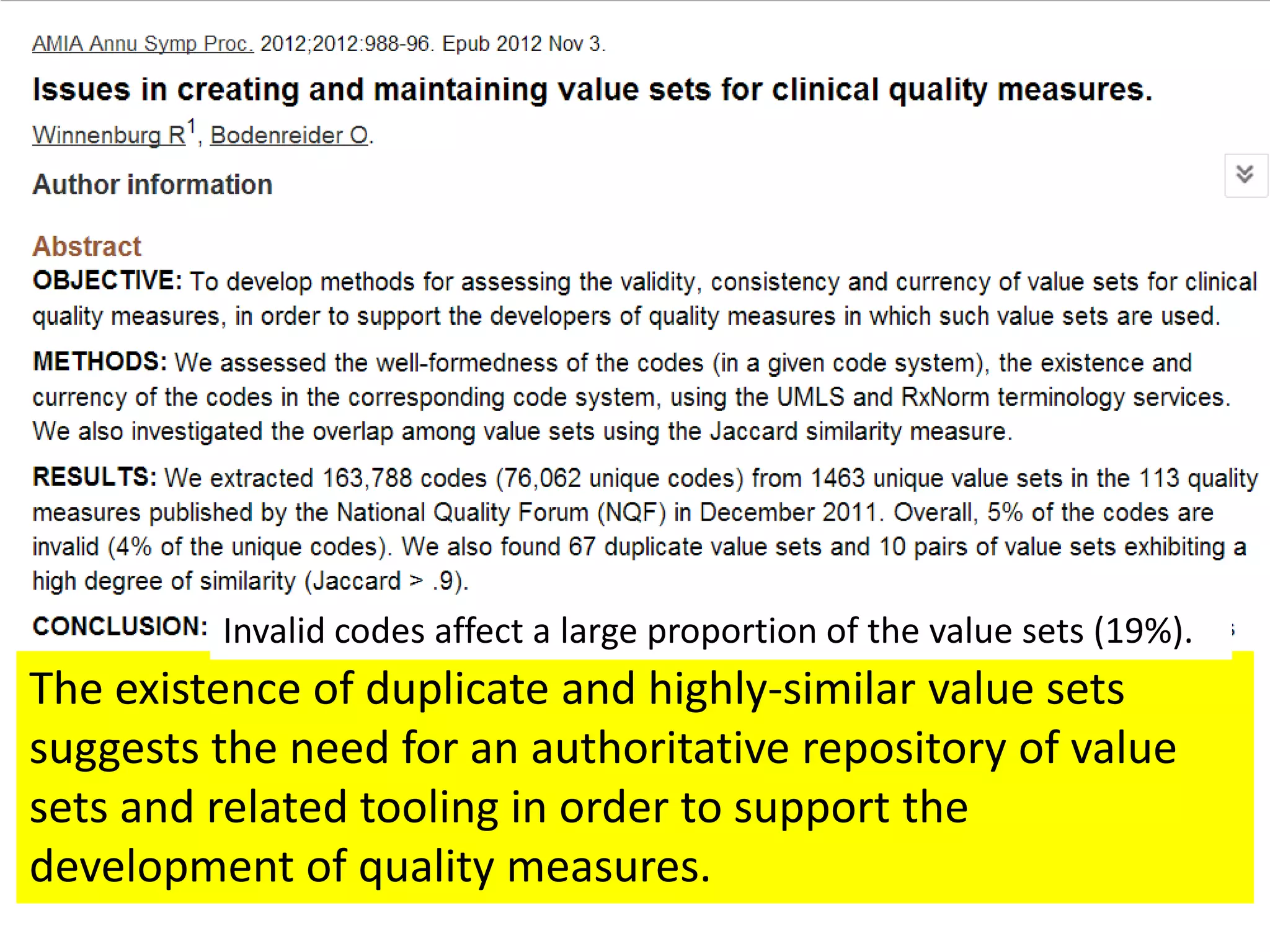
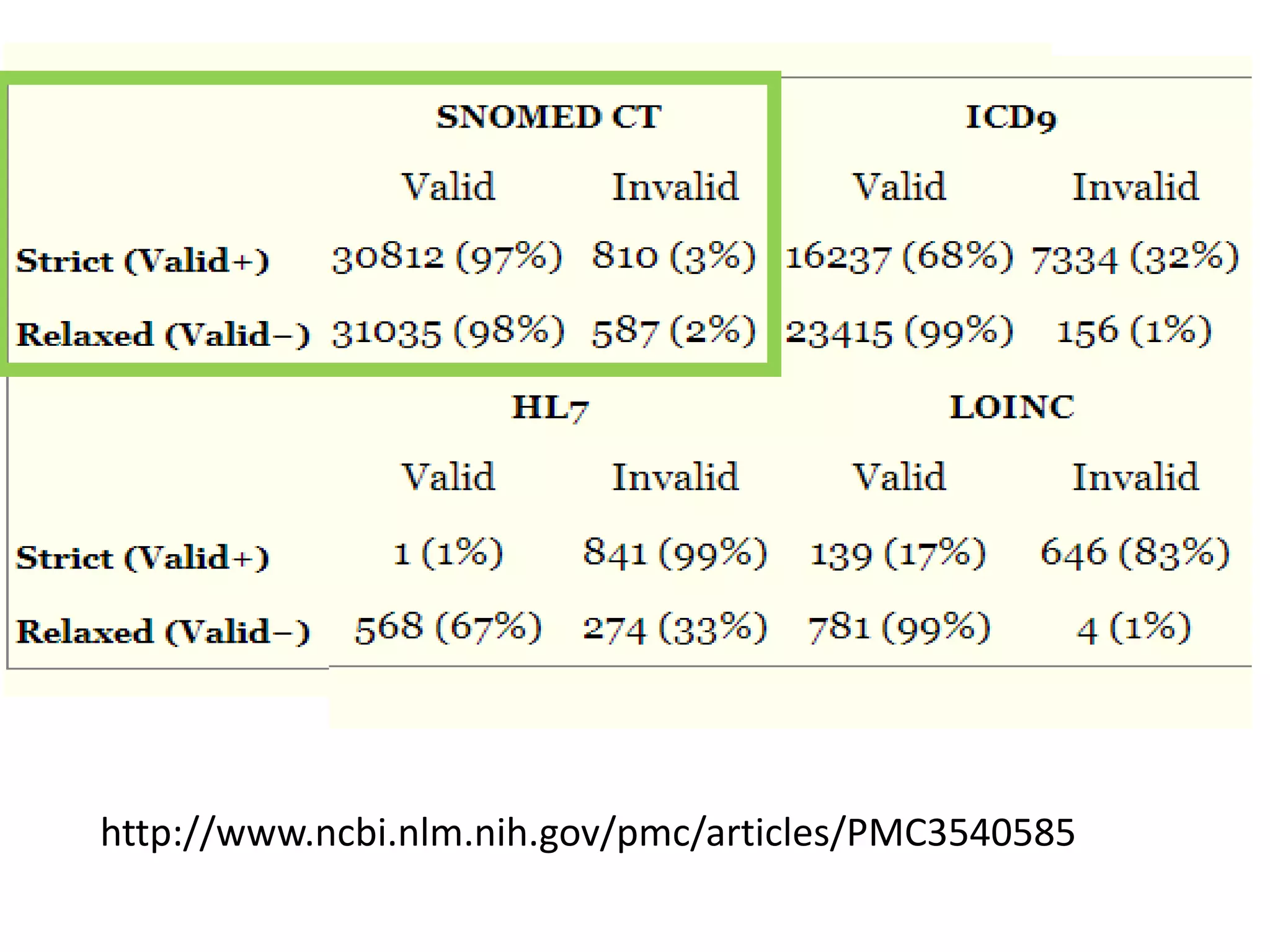
Invalid codes affect a large proportion of the value sets (19%).

The existence of duplicate and highly-similar value sets
suggests the need for an authoritative repository of value
sets and related tooling in order to support the
development of quality measures.
Invalid codes affect a large proportion of the value sets (19%).

The existence of duplicate and highly-similar value sets
suggests the need for an authoritative repository of value
sets and related tooling in order to support the
development of quality measures.
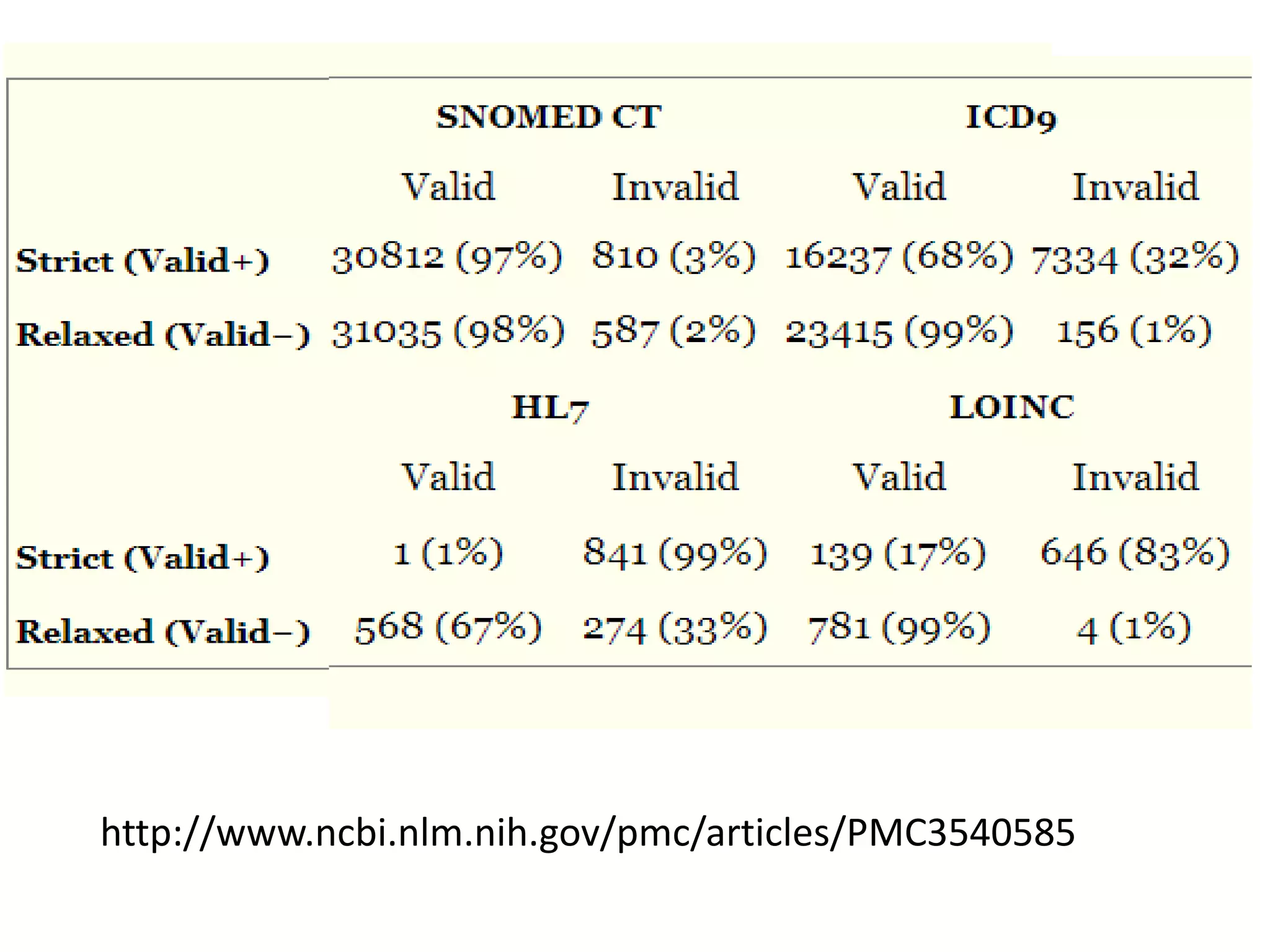
http://www.ncbi.nlm.nih.gov/pmc/articles/PMC3540585
Figure 3: Typical examples for code lists with
multiple names

http://www.ncbi.nlm.nih.gov/pmc/articles/PMC3540585
Should (can) ImmPort adopt
SNOMED CT as a source for
value sets?
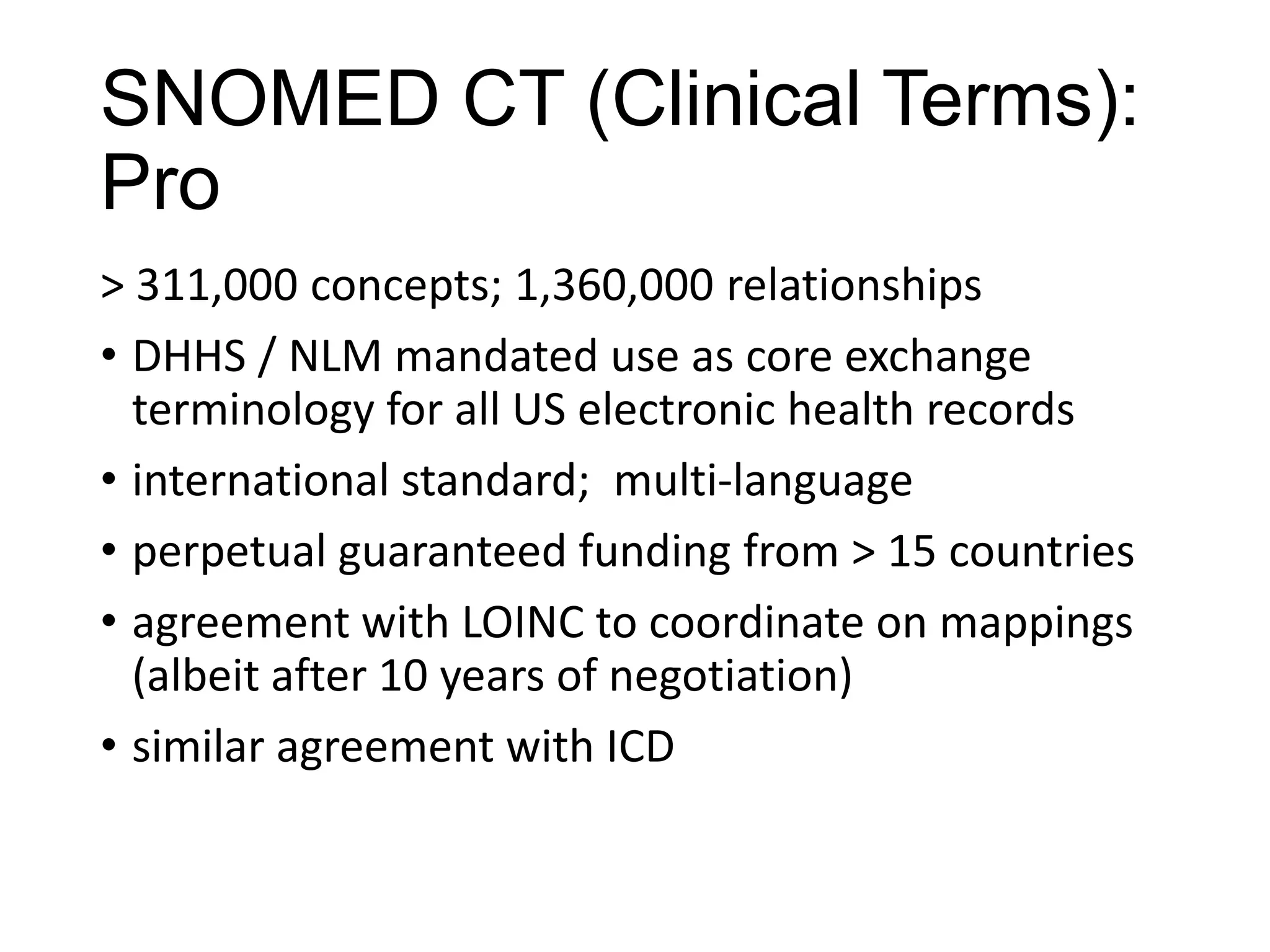
SNOMED CT (Clinical Terms):
Pro
> 311,000 concepts; 1,360,000 relationships
• DHHS / NLM mandated use as core exchange
terminology for all US electronic health records
• international standard; multi-language
• perpetual guaranteed funding from > 15 countries
• agreement with LOINC to coordinate on mappings
(albeit after 10 years of negotiation)
• similar agreement with ICD
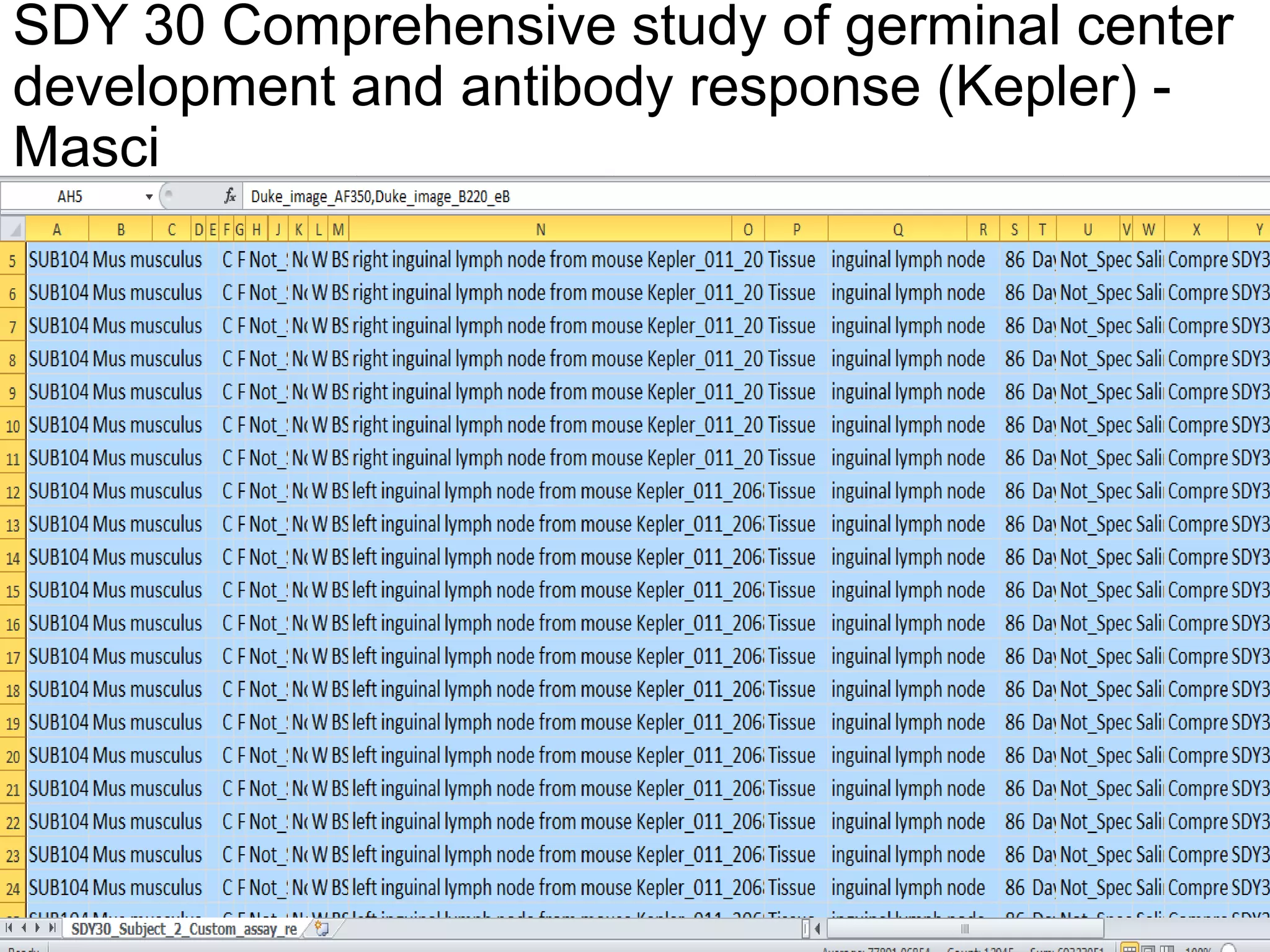
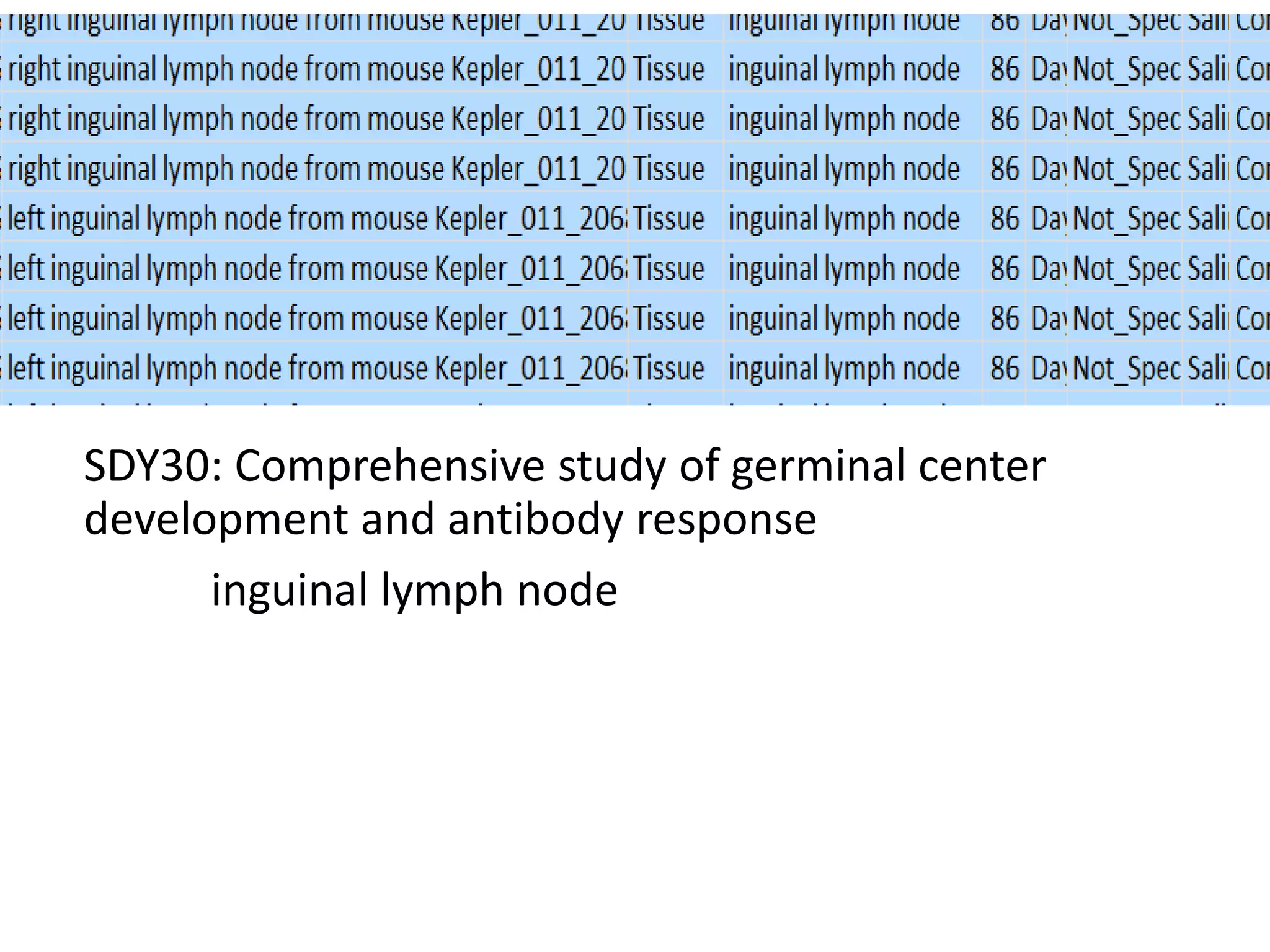
SDY 30 Comprehensive study of germinal center
development and antibody response (Kepler) Masci
Hypothesis

SDY30: Comprehensive study of germinal center
development and antibody response
inguinal lymph node
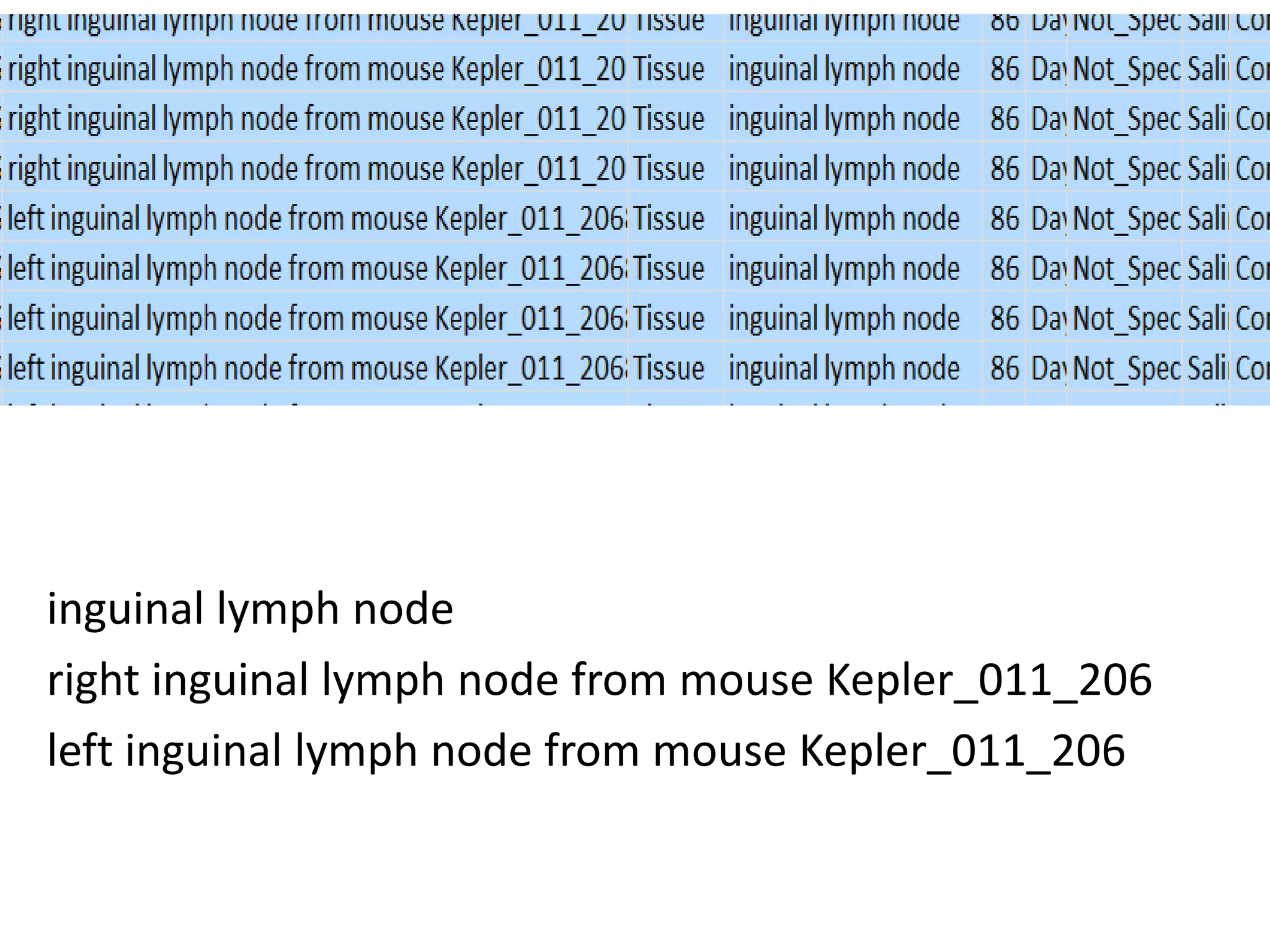
Hypothesis

inguinal lymph node
right inguinal lymph node from mouse Kepler_011_206
left inguinal lymph node from mouse Kepler_011_206
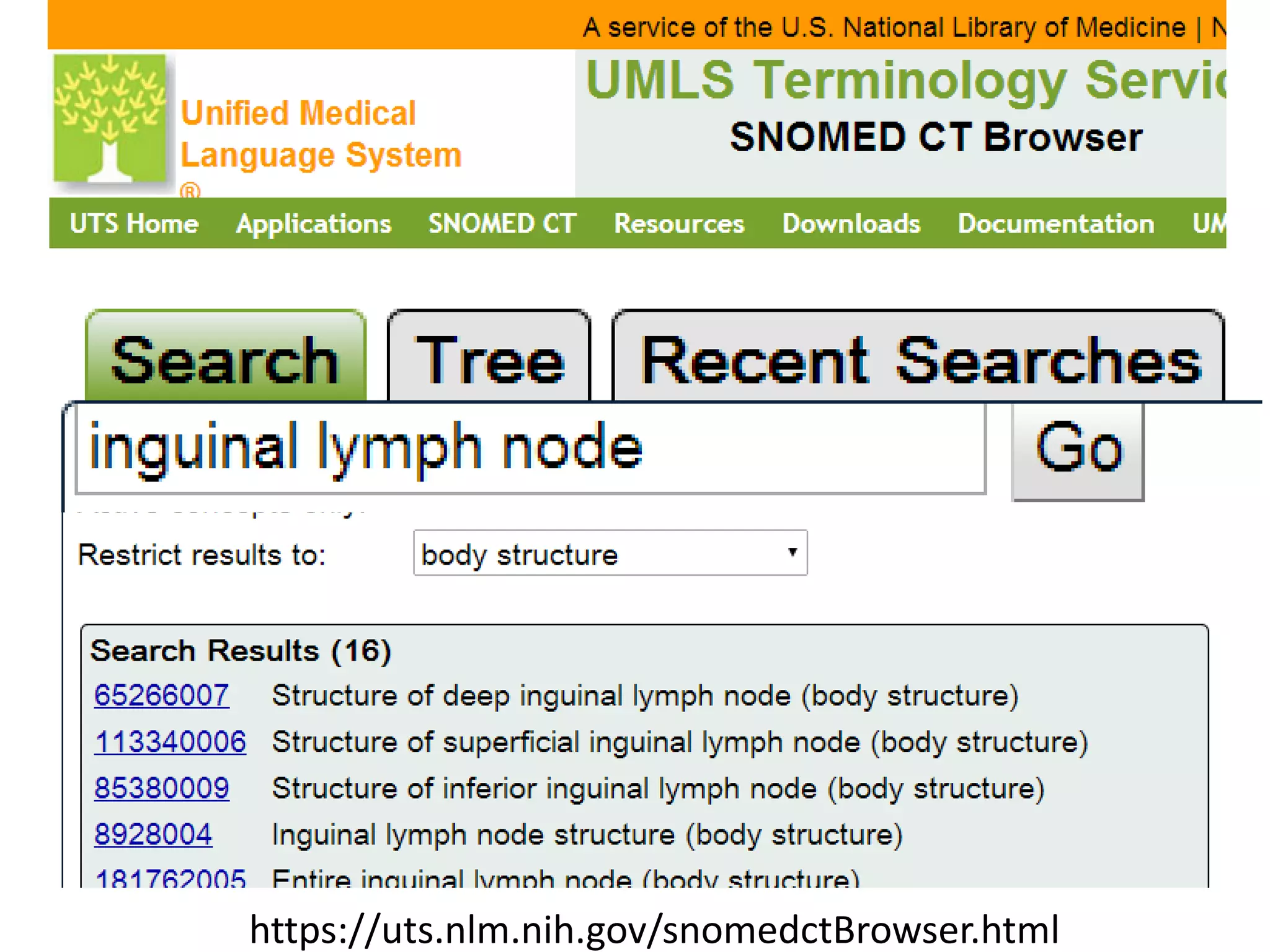
https://uts.nlm.nih.gov/snomedctBrowser.html
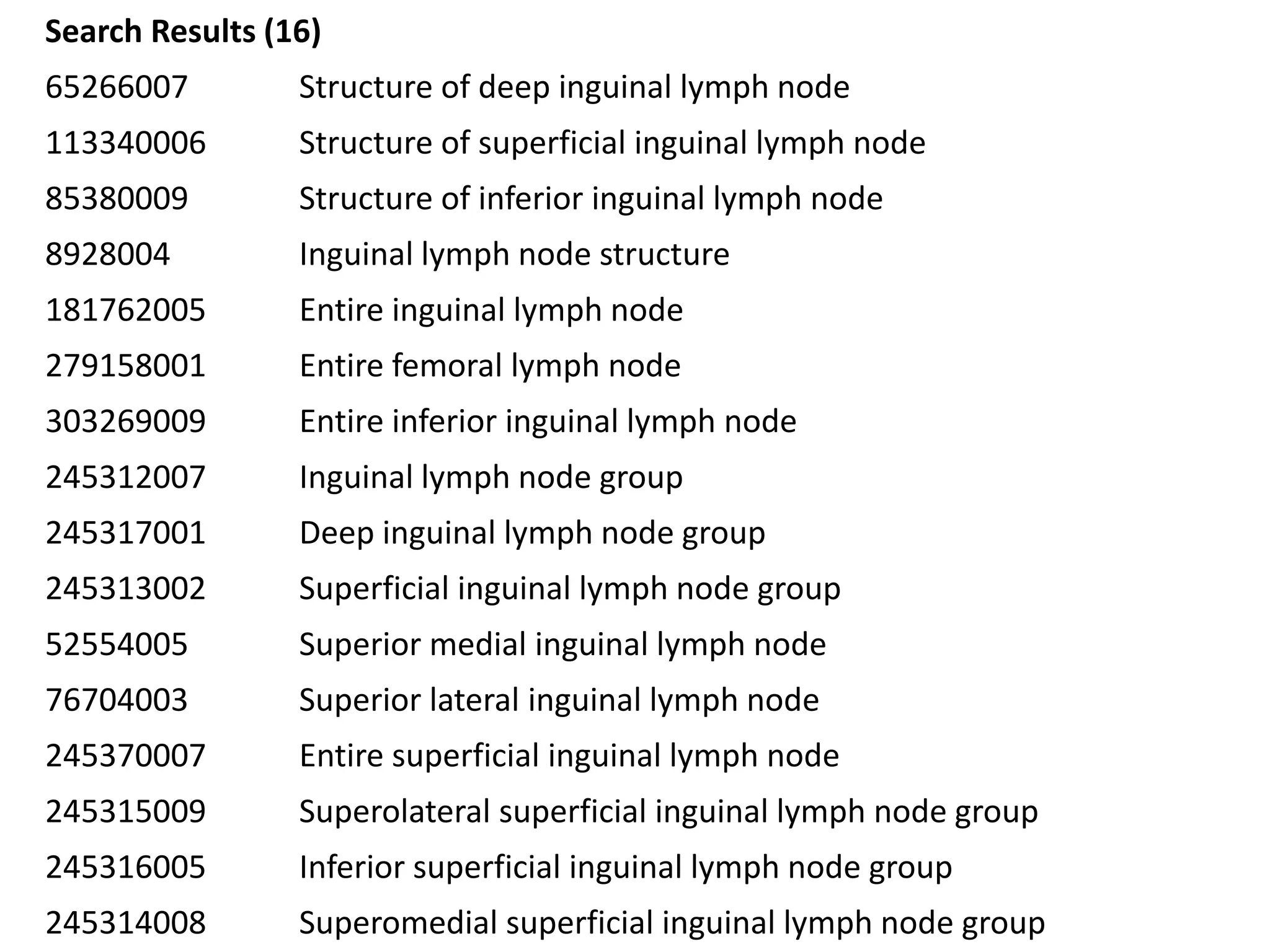
Search Results (16)
65266007

Structure of deep inguinal lymph node

113340006

Structure of superficial inguinal lymph node

85380009

Structure of inferior inguinal lymph node

8928004

Inguinal lymph node structure

181762005

Entire inguinal lymph node

279158001

Entire femoral lymph node

303269009

Entire inferior inguinal lymph node

245312007

Inguinal lymph node group

245317001

Deep inguinal lymph node group

245313002

Superficial inguinal lymph node group

52554005

Superior medial inguinal lymph node

76704003

Superior lateral inguinal lymph node

245370007

Entire superficial inguinal lymph node

245315009

Superolateral superficial inguinal lymph node group

245316005

Inferior superficial inguinal lymph node group

245314008

Superomedial superficial inguinal lymph node group
Search Results (16)
8928004
Inguinal lymph node structure
181762005
Entire inguinal lymph node
245312007
Inguinal lymph node group
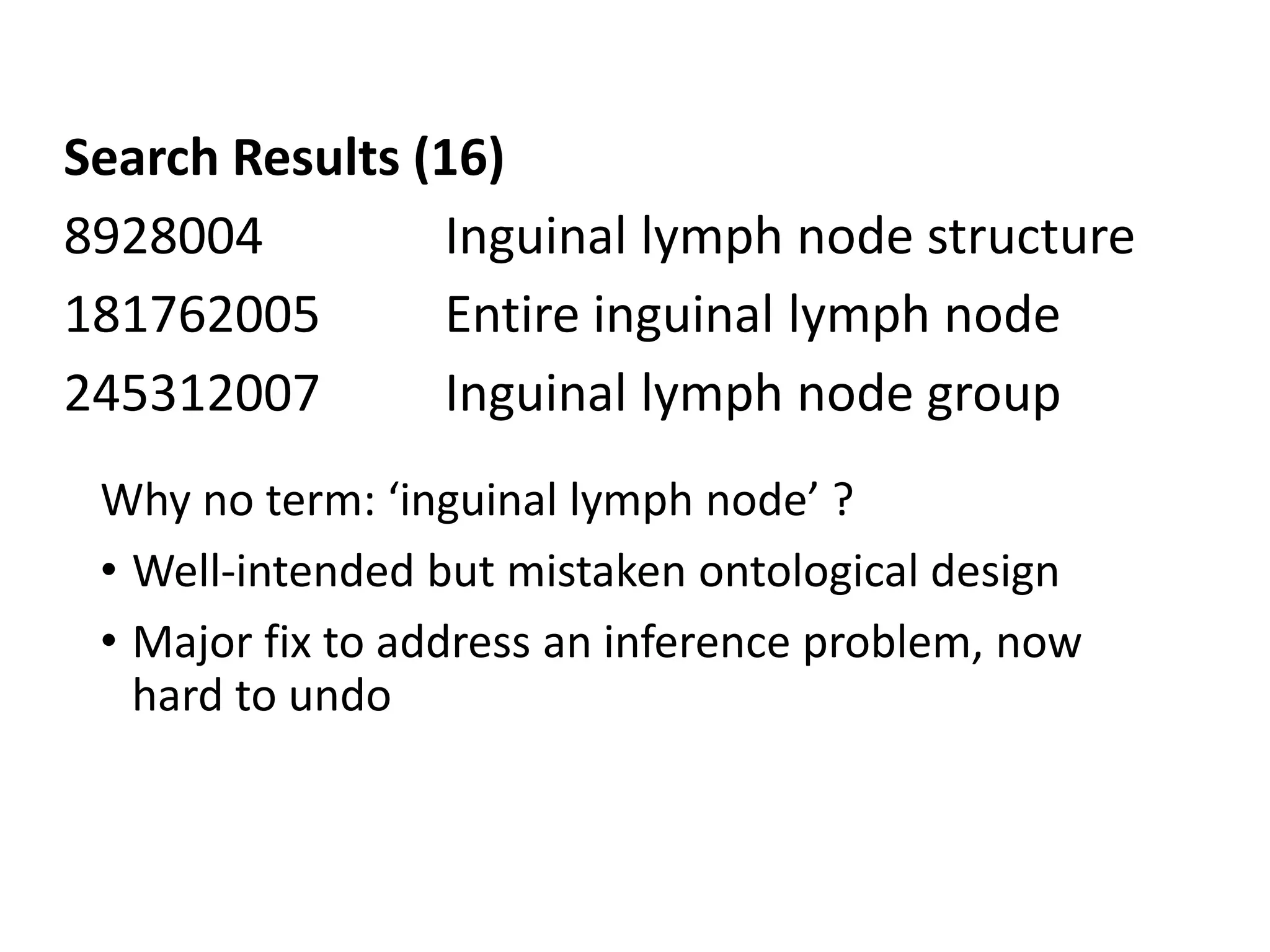
Why no term: ‘inguinal lymph node’ ?
• Well-intended but mistaken ontological design
• Major fix to address an inference problem, now
hard to undo
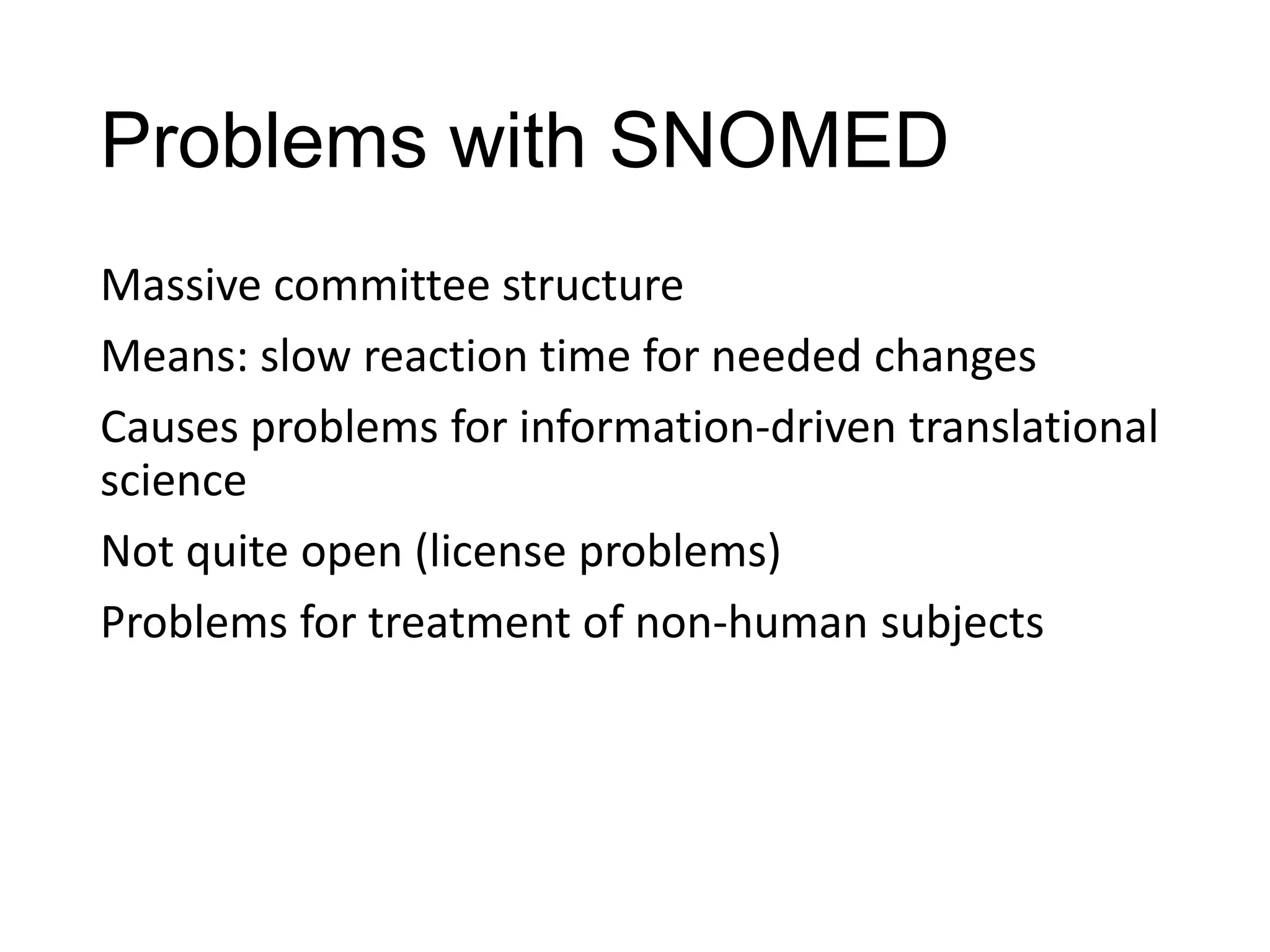
Problems with SNOMED
Massive committee structure
Means: slow reaction time for needed changes
Causes problems for information-driven translational
science
Not quite open (license problems)
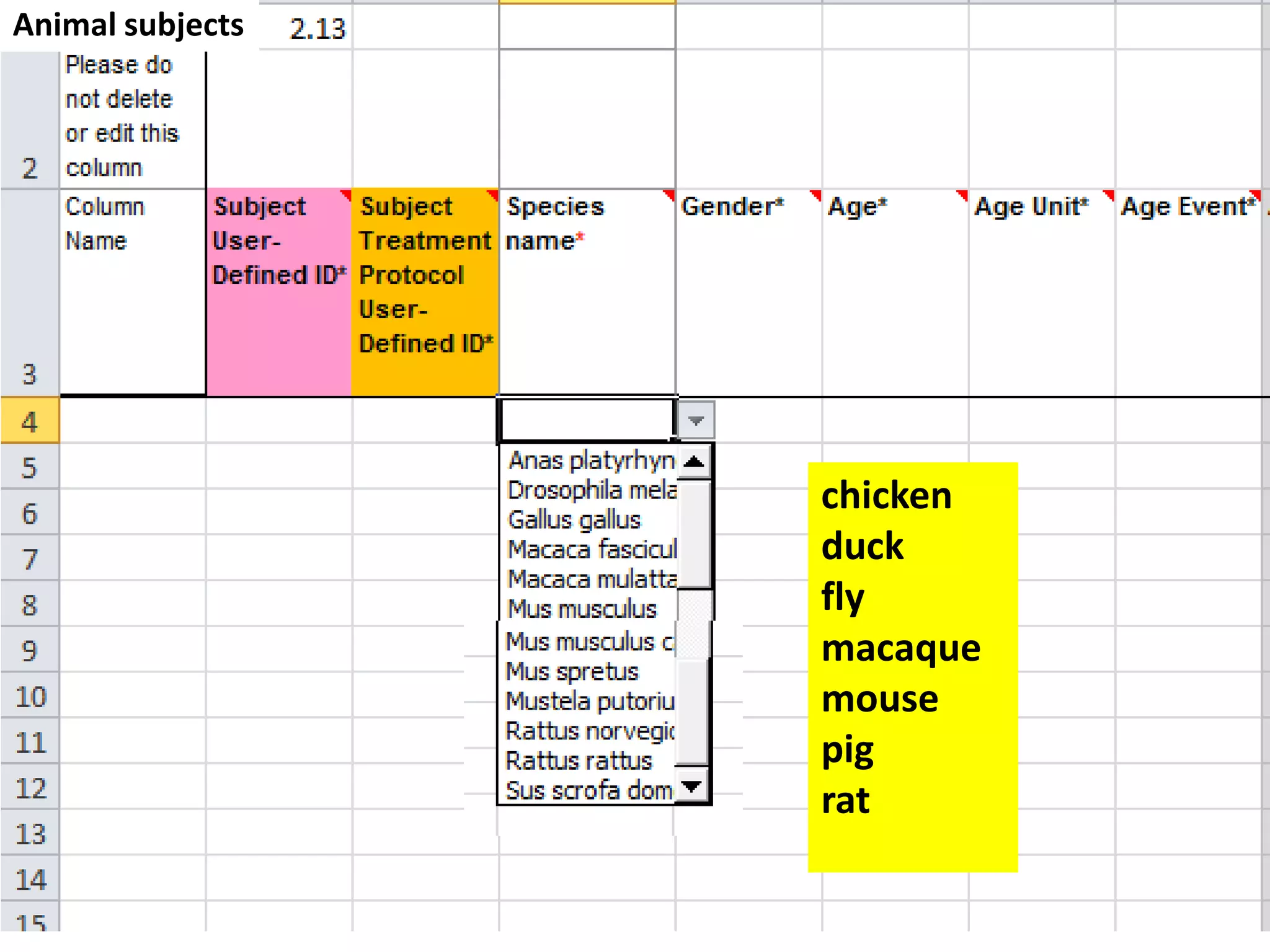
Problems for treatment of non-human subjects
Animal subjects

chicken
duck
fly
macaque
mouse
pig
rat
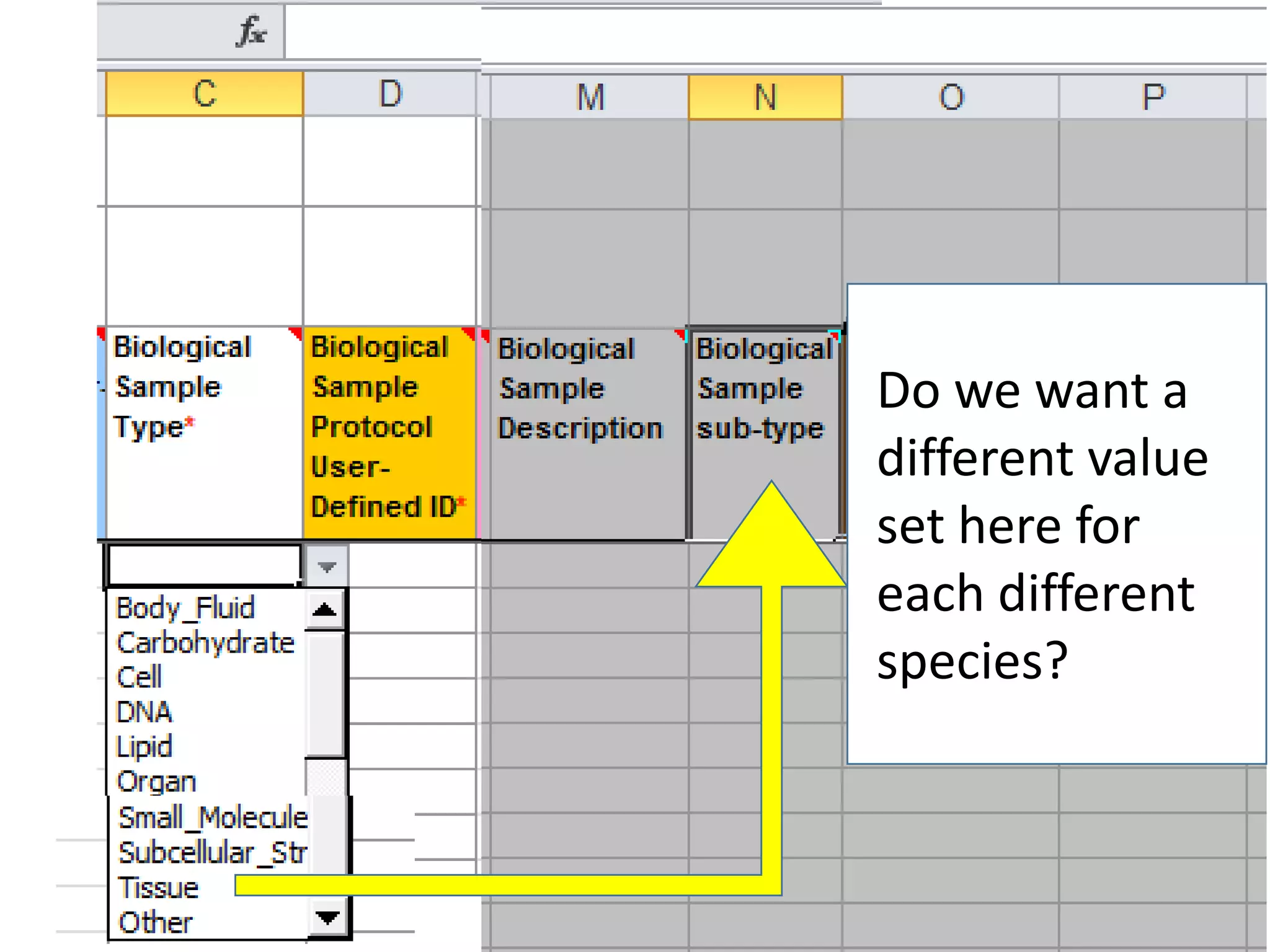
Do we want a
different value
set here for
each different
species?
Whatever answer we give to
questions like this, we should
never abandon considerations
of feasibility
1. What can NG cope with?
2. What can the data processing software cope
with?
Note: only small selections from big lists will be
needed
3. What can data providers cope with?
Action item under 3.: Explore potential of LIMS
system-generated mappings
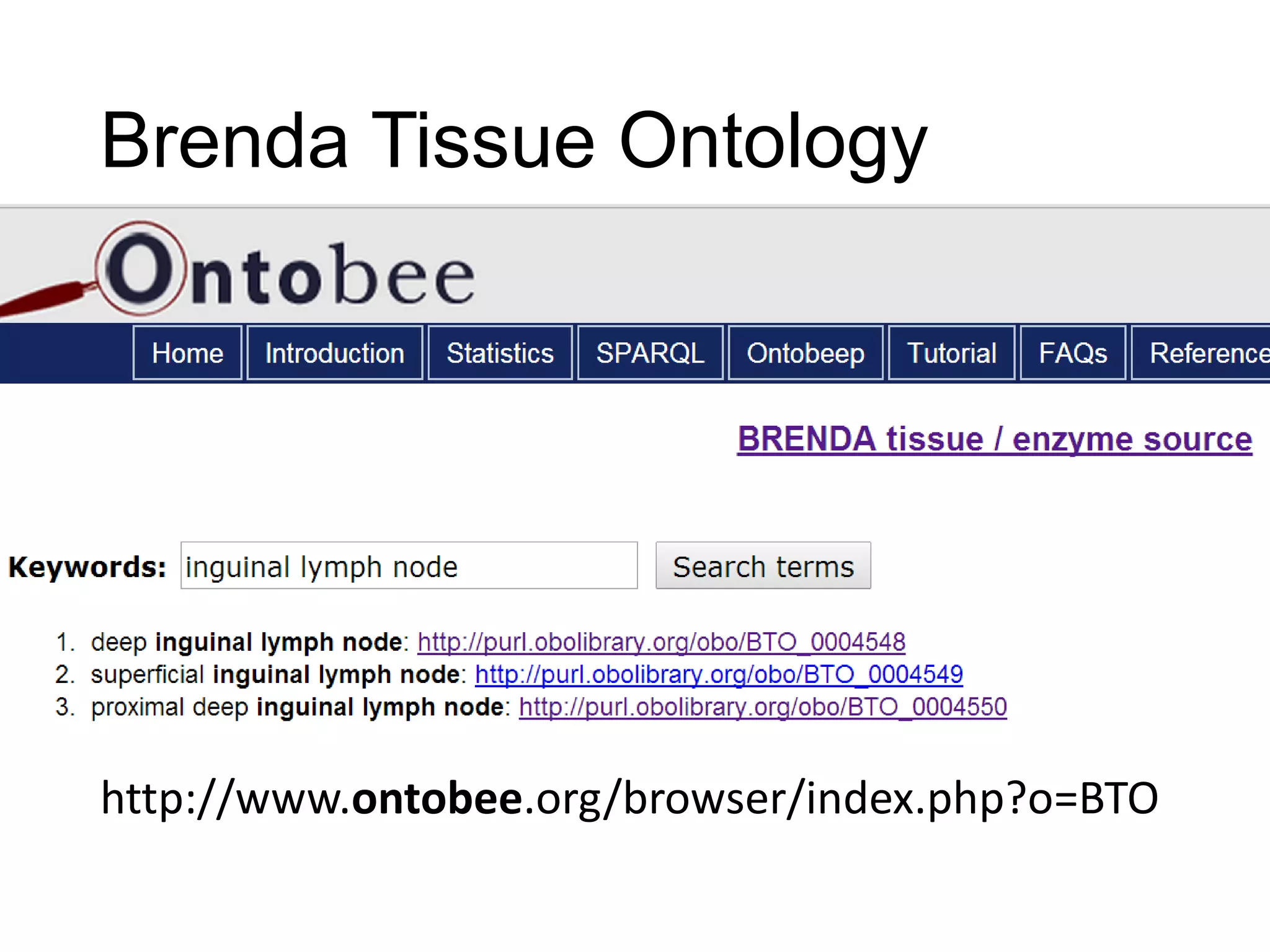
Brenda Tissue Ontology

http://www.ontobee.org/browser/index.php?o=BTO
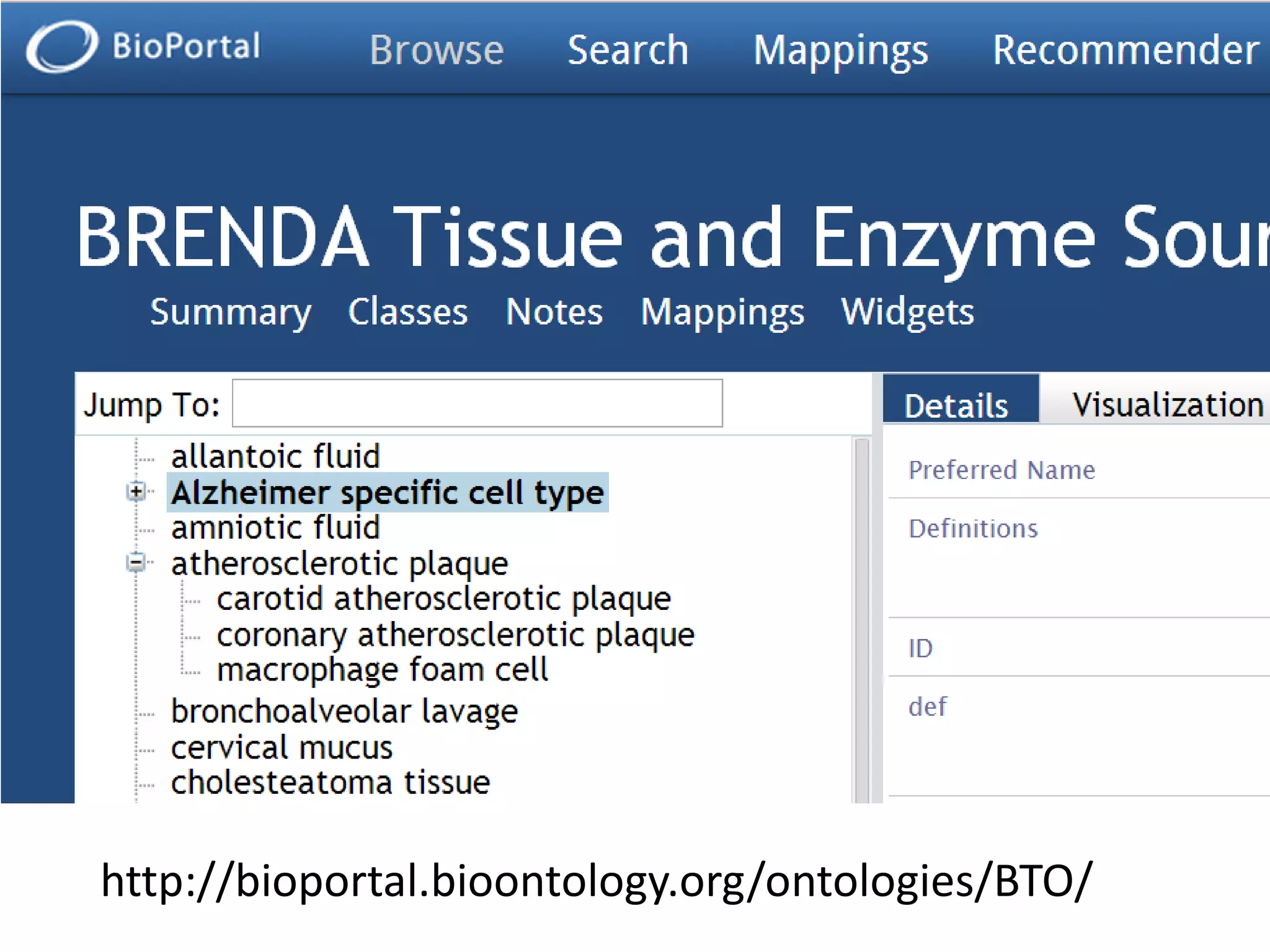
http://bioportal.bioontology.org/ontologies/BTO/
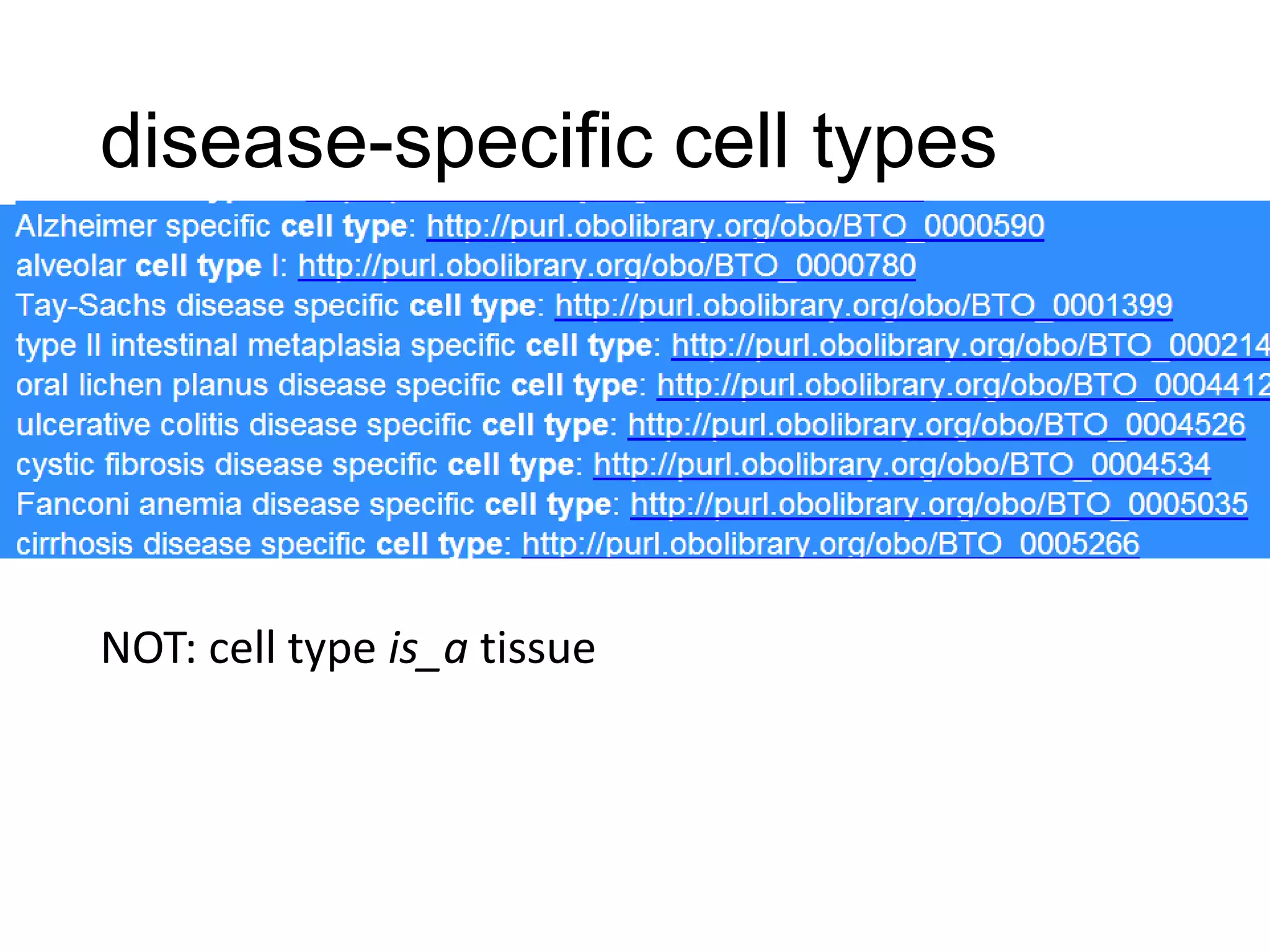
disease-specific cell types

NOT: cell type is_a tissue
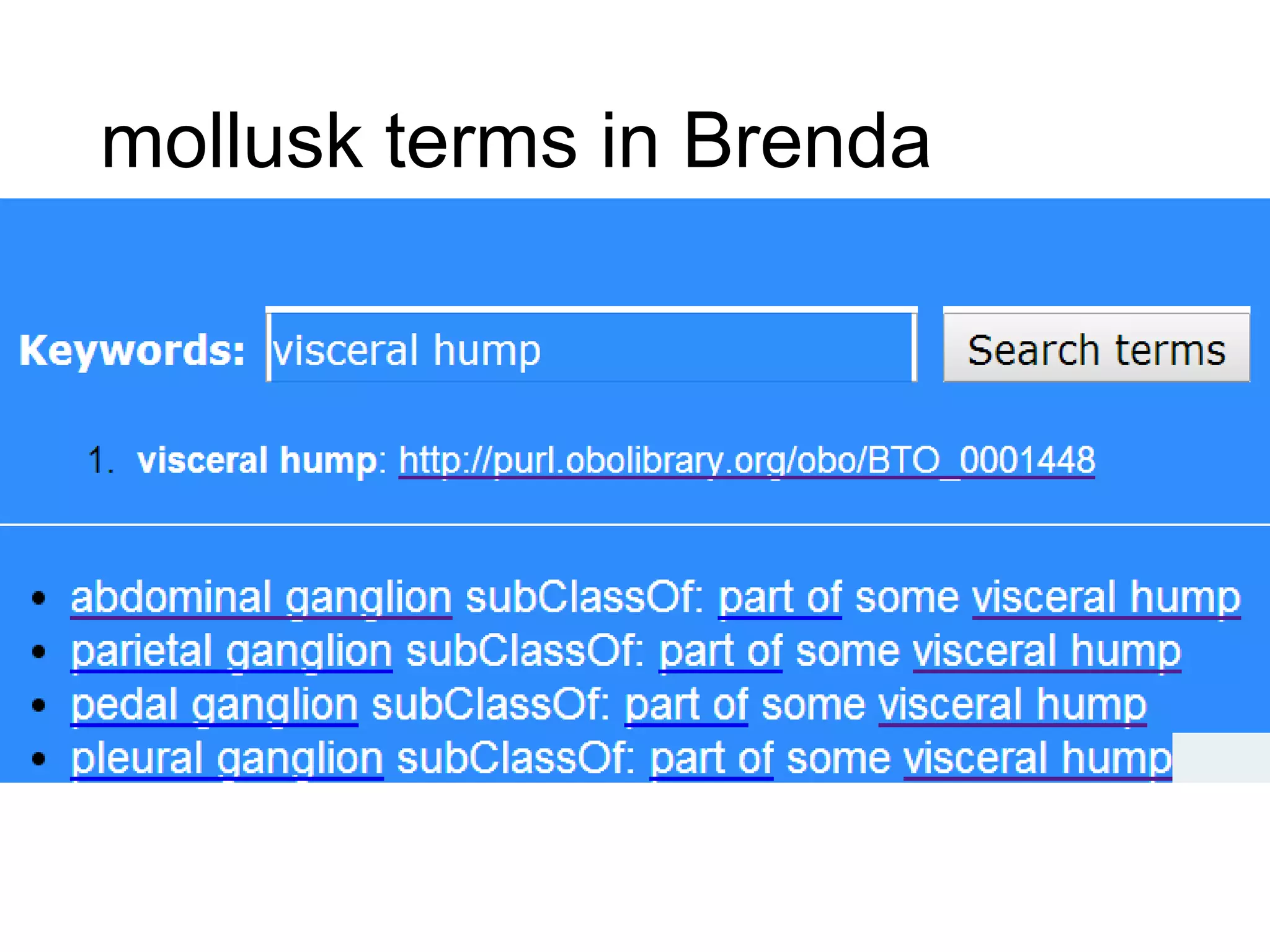
mollusk terms in Brenda
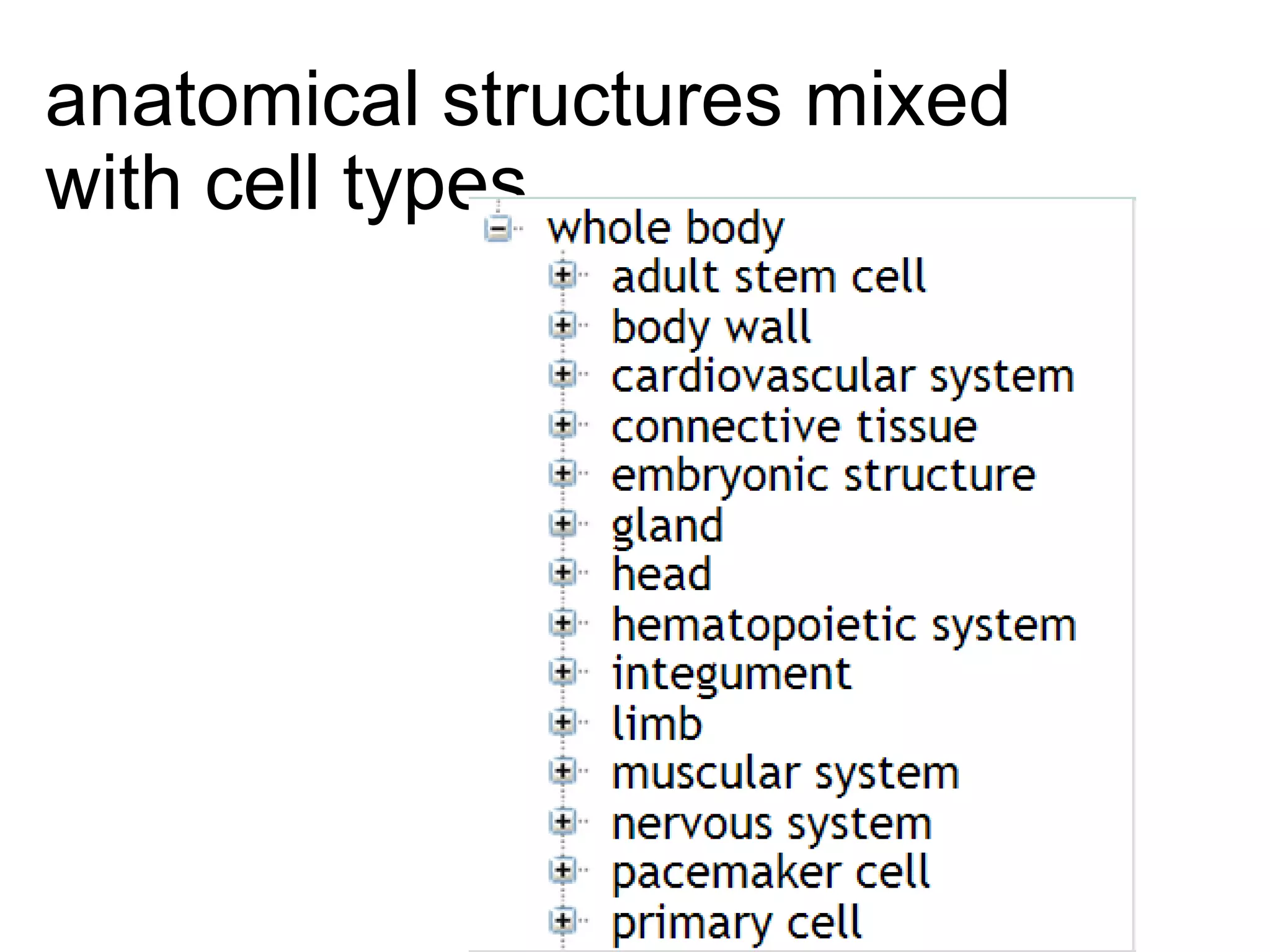
anatomical structures mixed
with cell types
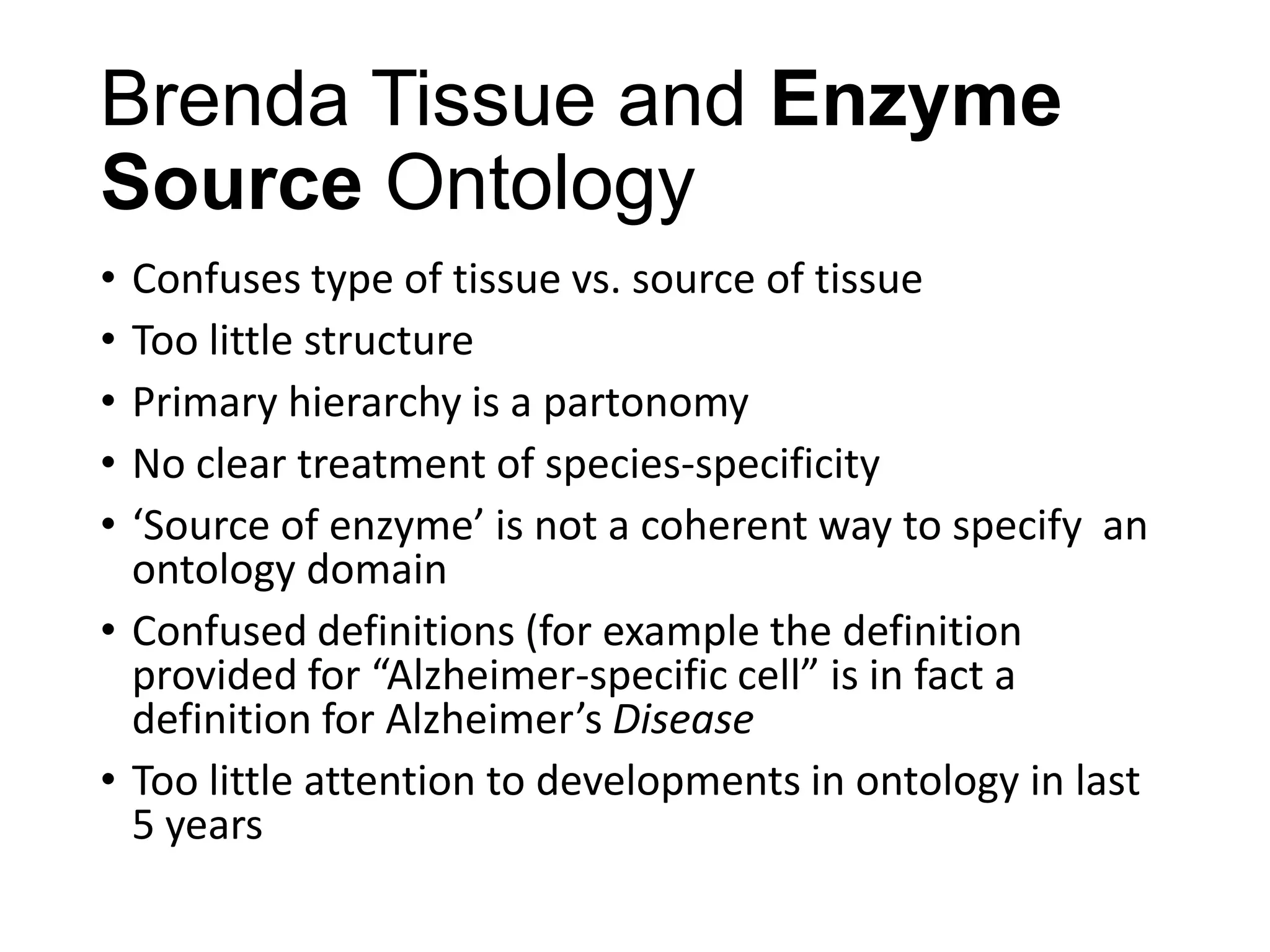
Brenda Tissue and Enzyme
Source Ontology
•
•
•
•
•

Confuses type of tissue vs. source of tissue
Too little structure
Primary hierarchy is a partonomy
No clear treatment of species-specificity
‘Source of enzyme’ is not a coherent way to specify an
ontology domain
• Confused definitions (for example the definition
provided for “Alzheimer-specific cell” is in fact a
definition for Alzheimer’s Disease
• Too little attention to developments in ontology in last
5 years
Action item
Explore alternatives to Brenda for Tissue Subtypes,
including
Foundational Model of Anatomy Ontology
Uberon
broadly compatible with OBO Foundry principles
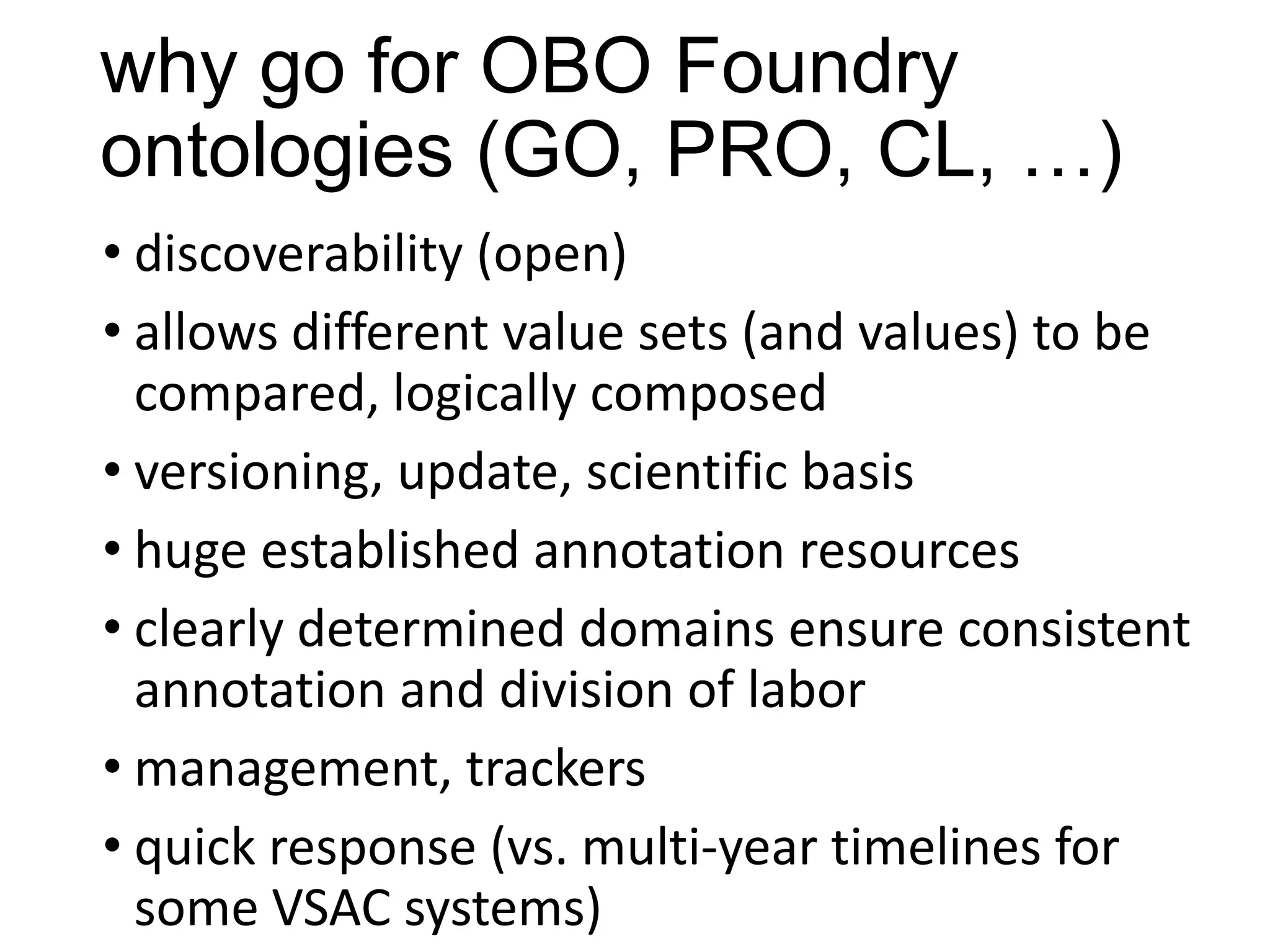
why go for OBO Foundry
ontologies (GO, PRO, CL, …)
• discoverability (open)
• allows different value sets (and values) to be
compared, logically composed
• versioning, update, scientific basis
• huge established annotation resources
• clearly determined domains ensure consistent
annotation and division of labor
• management, trackers
• quick response (vs. multi-year timelines for
some VSAC systems)
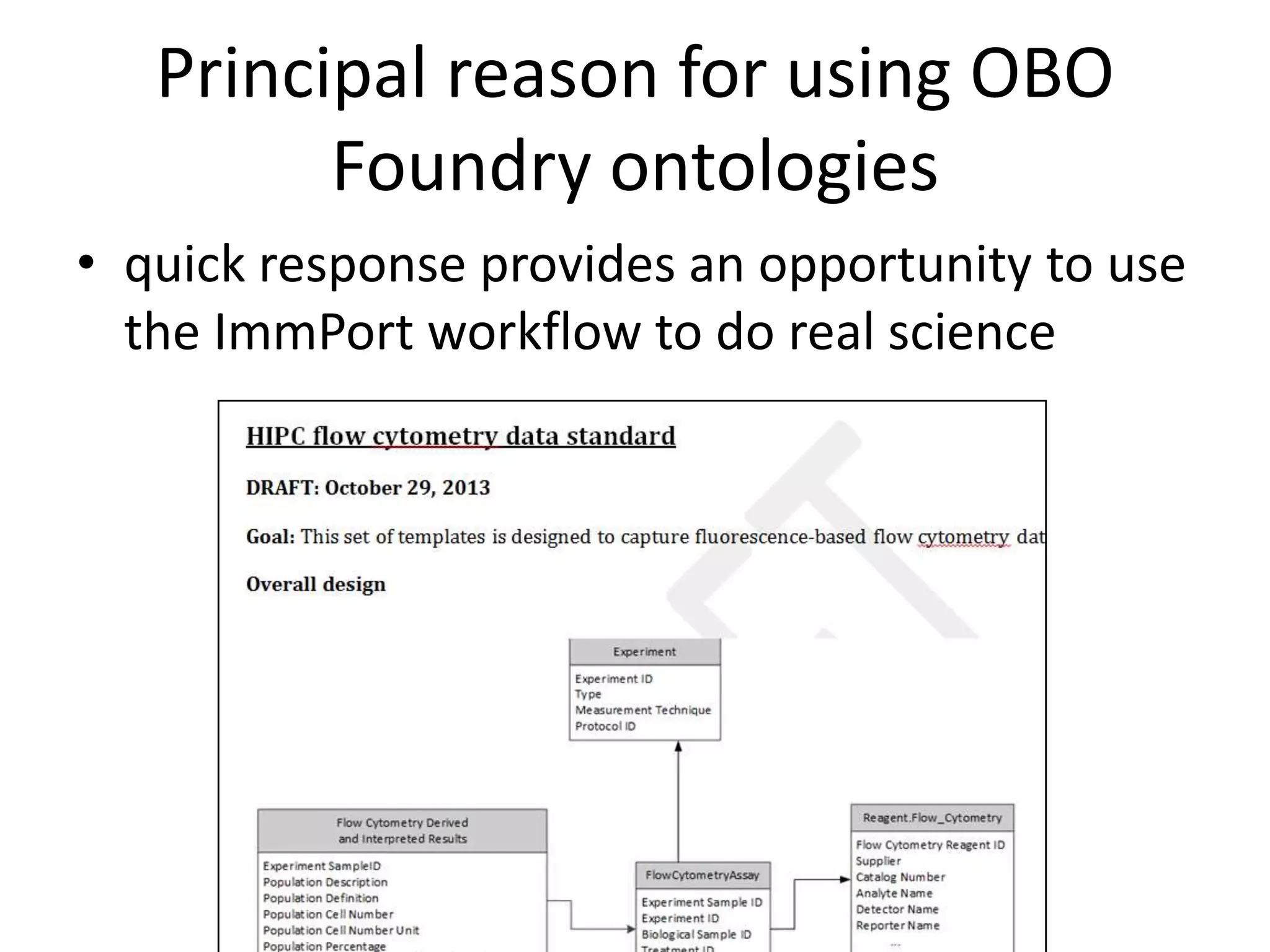
Principal reason for using OBO
Foundry ontologies
• quick response provides an opportunity to use
the ImmPort workflow to do real science
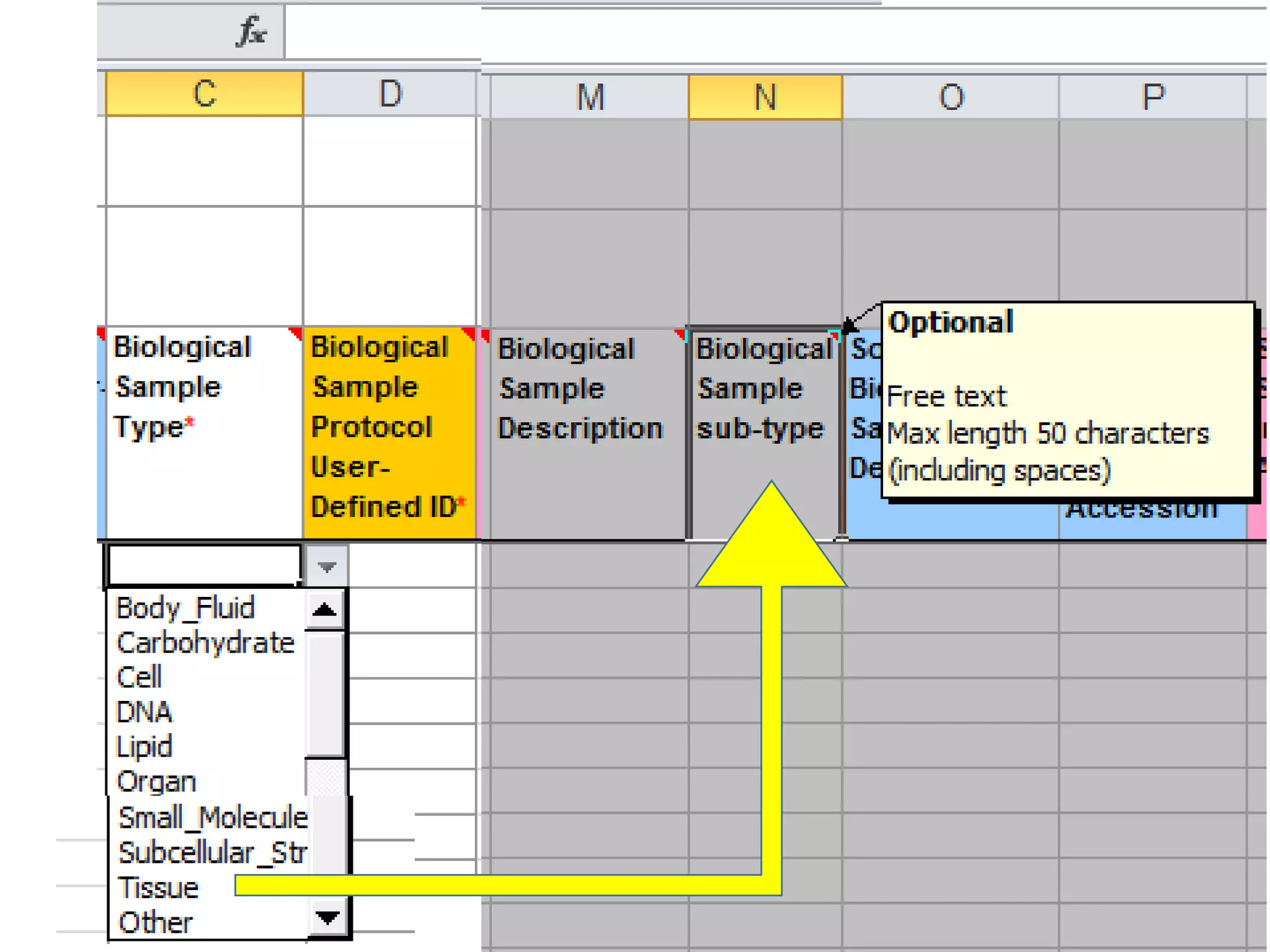
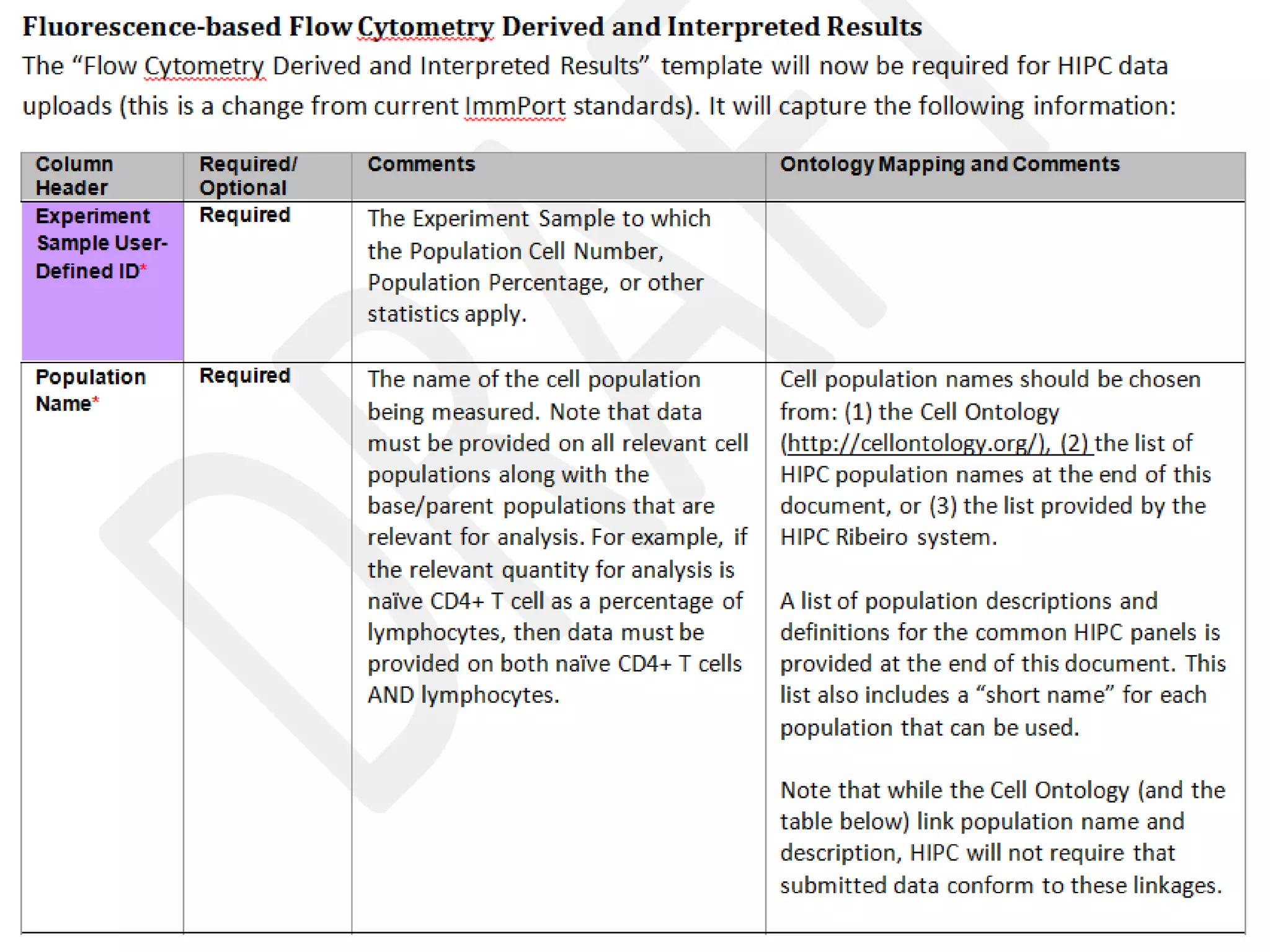
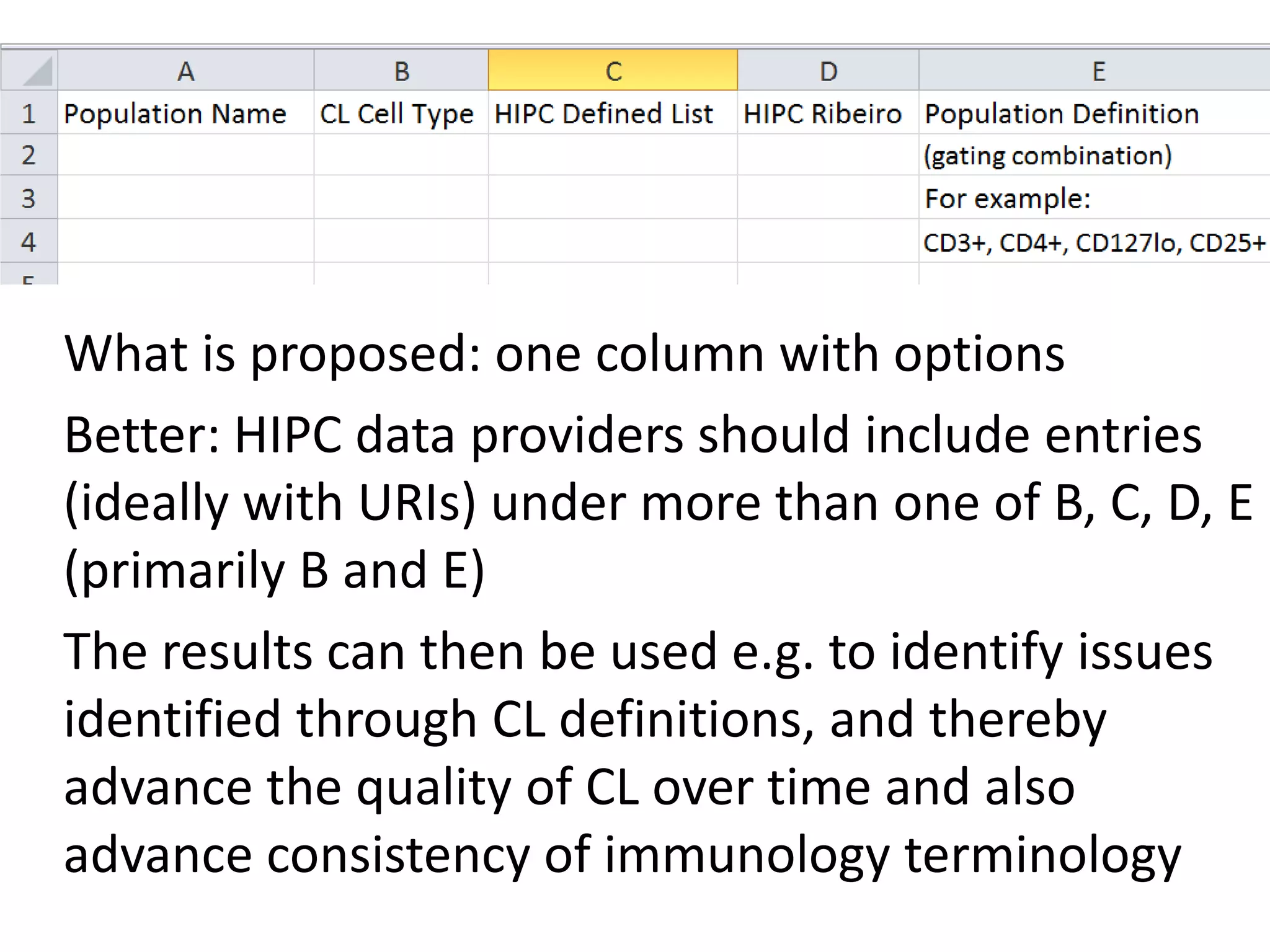
What is proposed: one column with options
Better: HIPC data providers should include entries
(ideally with URIs) under more than one of B, C, D, E
(primarily B and E)
The results can then be used e.g. to identify issues
identified through CL definitions, and thereby
advance the quality of CL over time and also
advance consistency of immunology terminology
More action items
• Evaluate SNOMED CT as a potential source for
the Subject Phenotype template
• Evaluate the VSAC Value Set Authoring Tool
(released in October 2013)
• Explore developing facility such as
http://neurocommons.org/page/Ontological_term_broker

to scoop up the terms used in free text fields
for review regarding submission to value sets:
replace ‘Other’ in existing templates with a
‘request for new term’ submission field
Yet more action items
• Create catalog of all templates we have
• Allow template-focused search across all
studies
• Prioritize templates that need to be created
• Prioritize existing templates that need work
• Explore LIMS collaborations to allow
automatic input into templates

Enhancing the Quality of ImmPort Data

  • 1.
    Enhancing the Quality ofImmPort Data Barry Smith ImmPort Science Meeting, February 27, 2014 With thanks to Anna Maria Masci
  • 2.
    Example of adata submission template to https://immport.niaid.nih.gov/
  • 4.
    What kind ofartifact is this list?
  • 5.
    Alan Rector, RepresentingSpecified Values in OWL: "value partitions" and "value sets“ (2005), http://www.w3.org/TR/swbp-specified-values/
  • 6.
    Value set =def. alist of subtypes partitioning a given type
  • 7.
  • 8.
    Value set (accordingto the VSAC) =def. a list of specific values (terms and their codes) derived from standard vocabularies or code systems used to define clinical concepts (e.g. patients with diabetes, clinical visit, reportable diseases).
  • 9.
  • 12.
    For VSAC eachvalue set involves: • natural language noun phrases from a controlled vocabulary (can in principle vary between communities / disciplines) • official name for code system / ontology / version • alphanumeric IDs • URLs
  • 14.
    Basic assumptions • Stepby step, ImmPort should move away from use of free text fields • Use of common value sets increases discoverability and comparability by third-party users • Ideally these value sets should be used also by clinicians, researchers and literature curators in neighboring fields • ImmPort and its users will benefit if value sets are well-maintained in light of scientific advance
  • 15.
    Which controlled vocabularies+ code systems should we use when composing value sets for use as ImmPort templates? • VSAC Coding Systems • FDA mandated terminologies (CDICSC, MedDRA) • OBO Foundry ontologies
  • 17.
    Figure 3: Typicalexamples for code lists with multiple names http://www.ncbi.nlm.nih.gov/pmc/articles/PMC3540585
  • 18.
    Invalid codes affecta large proportion of the value sets (19%). The existence of duplicate and highly-similar value sets suggests the need for an authoritative repository of value sets and related tooling in order to support the development of quality measures.
  • 19.
    Invalid codes affecta large proportion of the value sets (19%). The existence of duplicate and highly-similar value sets suggests the need for an authoritative repository of value sets and related tooling in order to support the development of quality measures.
  • 20.
  • 21.
    Figure 3: Typicalexamples for code lists with multiple names http://www.ncbi.nlm.nih.gov/pmc/articles/PMC3540585
  • 22.
  • 23.
    Should (can) ImmPortadopt SNOMED CT as a source for value sets?
  • 24.
    SNOMED CT (ClinicalTerms): Pro > 311,000 concepts; 1,360,000 relationships • DHHS / NLM mandated use as core exchange terminology for all US electronic health records • international standard; multi-language • perpetual guaranteed funding from > 15 countries • agreement with LOINC to coordinate on mappings (albeit after 10 years of negotiation) • similar agreement with ICD
  • 28.
    SDY 30 Comprehensivestudy of germinal center development and antibody response (Kepler) Masci
  • 29.
    Hypothesis SDY30: Comprehensive studyof germinal center development and antibody response inguinal lymph node
  • 30.
    Hypothesis inguinal lymph node rightinguinal lymph node from mouse Kepler_011_206 left inguinal lymph node from mouse Kepler_011_206
  • 31.
  • 32.
    Search Results (16) 65266007 Structureof deep inguinal lymph node 113340006 Structure of superficial inguinal lymph node 85380009 Structure of inferior inguinal lymph node 8928004 Inguinal lymph node structure 181762005 Entire inguinal lymph node 279158001 Entire femoral lymph node 303269009 Entire inferior inguinal lymph node 245312007 Inguinal lymph node group 245317001 Deep inguinal lymph node group 245313002 Superficial inguinal lymph node group 52554005 Superior medial inguinal lymph node 76704003 Superior lateral inguinal lymph node 245370007 Entire superficial inguinal lymph node 245315009 Superolateral superficial inguinal lymph node group 245316005 Inferior superficial inguinal lymph node group 245314008 Superomedial superficial inguinal lymph node group
  • 33.
    Search Results (16) 8928004 Inguinallymph node structure 181762005 Entire inguinal lymph node 245312007 Inguinal lymph node group Why no term: ‘inguinal lymph node’ ? • Well-intended but mistaken ontological design • Major fix to address an inference problem, now hard to undo
  • 34.
    Problems with SNOMED Massivecommittee structure Means: slow reaction time for needed changes Causes problems for information-driven translational science Not quite open (license problems) Problems for treatment of non-human subjects
  • 35.
  • 36.
    Do we wanta different value set here for each different species?
  • 37.
    Whatever answer wegive to questions like this, we should never abandon considerations of feasibility 1. What can NG cope with? 2. What can the data processing software cope with? Note: only small selections from big lists will be needed 3. What can data providers cope with? Action item under 3.: Explore potential of LIMS system-generated mappings
  • 38.
  • 39.
  • 40.
    disease-specific cell types NOT:cell type is_a tissue
  • 41.
  • 42.
  • 43.
    Brenda Tissue andEnzyme Source Ontology • • • • • Confuses type of tissue vs. source of tissue Too little structure Primary hierarchy is a partonomy No clear treatment of species-specificity ‘Source of enzyme’ is not a coherent way to specify an ontology domain • Confused definitions (for example the definition provided for “Alzheimer-specific cell” is in fact a definition for Alzheimer’s Disease • Too little attention to developments in ontology in last 5 years
  • 44.
    Action item Explore alternativesto Brenda for Tissue Subtypes, including Foundational Model of Anatomy Ontology Uberon broadly compatible with OBO Foundry principles
  • 45.
    why go forOBO Foundry ontologies (GO, PRO, CL, …) • discoverability (open) • allows different value sets (and values) to be compared, logically composed • versioning, update, scientific basis • huge established annotation resources • clearly determined domains ensure consistent annotation and division of labor • management, trackers • quick response (vs. multi-year timelines for some VSAC systems)
  • 46.
    Principal reason forusing OBO Foundry ontologies • quick response provides an opportunity to use the ImmPort workflow to do real science
  • 48.
    What is proposed:one column with options Better: HIPC data providers should include entries (ideally with URIs) under more than one of B, C, D, E (primarily B and E) The results can then be used e.g. to identify issues identified through CL definitions, and thereby advance the quality of CL over time and also advance consistency of immunology terminology
  • 49.
    More action items •Evaluate SNOMED CT as a potential source for the Subject Phenotype template • Evaluate the VSAC Value Set Authoring Tool (released in October 2013) • Explore developing facility such as http://neurocommons.org/page/Ontological_term_broker to scoop up the terms used in free text fields for review regarding submission to value sets: replace ‘Other’ in existing templates with a ‘request for new term’ submission field
  • 50.
    Yet more actionitems • Create catalog of all templates we have • Allow template-focused search across all studies • Prioritize templates that need to be created • Prioritize existing templates that need work • Explore LIMS collaborations to allow automatic input into templates

Editor's Notes

  • #43 http://bioportal.bioontology.org/ontologies/BTO