Physics is fundamental to
understanding how X-ray
machines work, which are
essential for diagnosing dental
issues such as cavities, impacted
teeth, and bone structure. Dentists
use X-ray physics to capture detailed
images safely and accurately.
X-ray imaging
Ultrasonic devices use high-frequency
sound waves for cleaning teeth and
removing dental plaque and calculus.
Physics principles related to wave
propagation and the generation of
mechanical vibrations are applied in
the design and operation of these
instruments. Since the term “sonic”
refers to sound waves in the region of
16 Hz up to 20 kHz.
Ultrasonic Devices
All lasers work by delivering energy in
the form of light. Dental lasers are used
for various procedures, including
cavity preparation, soft tissue surgery,
and teeth whitening. The physics of
laser technology, such as the interaction
of laser light with tissue and the concept
of laser tissue ablation, is vital in
achieving precise and minimally
invasive dental treatments.
Dental Lasers
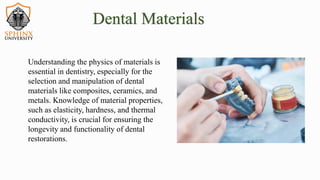
Understanding the physics of materials is
essential in dentistry, especially for the
selection and manipulation of dental
materials like composites, ceramics, and
metals. Knowledge of material properties,
such as elasticity, hardness, and thermal
conductivity, is crucial for ensuring the
longevity and functionality of dental
restorations.
Dental Materials
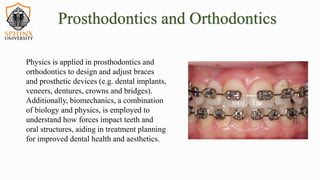
Physics is applied in prosthodontics and
orthodontics to design and adjust braces
and prosthetic devices (e.g. dental implants,
veneers, dentures, crowns and bridges).
Additionally, biomechanics, a combination
of biology and physics, is employed to
understand how forces impact teeth and
oral structures, aiding in treatment planning
for improved dental health and aesthetics.
Prosthodontics and Orthodontics
Thanks

Biophysics Applications in Dentistry

  • 2.
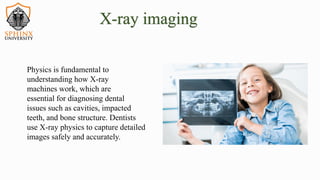
    Physics is fundamentalto understanding how X-ray machines work, which are essential for diagnosing dental issues such as cavities, impacted teeth, and bone structure. Dentists use X-ray physics to capture detailed images safely and accurately. X-ray imaging
  • 3.
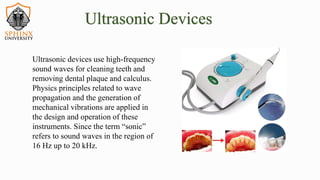
    Ultrasonic devices usehigh-frequency sound waves for cleaning teeth and removing dental plaque and calculus. Physics principles related to wave propagation and the generation of mechanical vibrations are applied in the design and operation of these instruments. Since the term “sonic” refers to sound waves in the region of 16 Hz up to 20 kHz. Ultrasonic Devices
  • 4.
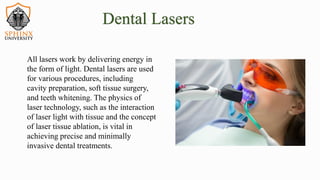
    All lasers workby delivering energy in the form of light. Dental lasers are used for various procedures, including cavity preparation, soft tissue surgery, and teeth whitening. The physics of laser technology, such as the interaction of laser light with tissue and the concept of laser tissue ablation, is vital in achieving precise and minimally invasive dental treatments. Dental Lasers
  • 5.
    Understanding the physicsof materials is essential in dentistry, especially for the selection and manipulation of dental materials like composites, ceramics, and metals. Knowledge of material properties, such as elasticity, hardness, and thermal conductivity, is crucial for ensuring the longevity and functionality of dental restorations. Dental Materials
  • 6.
    Physics is appliedin prosthodontics and orthodontics to design and adjust braces and prosthetic devices (e.g. dental implants, veneers, dentures, crowns and bridges). Additionally, biomechanics, a combination of biology and physics, is employed to understand how forces impact teeth and oral structures, aiding in treatment planning for improved dental health and aesthetics. Prosthodontics and Orthodontics
  • 7.