Partners:
- The Donetsk national medical university
Department of Histology, Cytology and Embryology
Department of Internal Medicine
Department of Medical Biophysics, Medical Equipment and Clinical Informatics

- Rheumatologic Clinic

- Institute of Urgent and Recovery Surgery
Laboratory of Fundamental Research
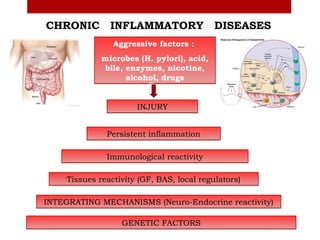
CHRONIC         INFLAMMATORY                DISEASES
                 Aggressive factors :
              microbes (H. pylori), acid,
              bile, enzymes, nicotine,
                    alcohol, drugs


                       INJURY


               Persistent inflammation

               Immunological reactivity

     Tissues reactivity (GF, BAS, local regulators)

INTEGRATING MECHANISMS (Neuro-Endocrine reactivity)

                   GENETIC FACTORS
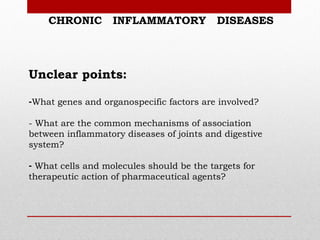
CHRONIC        INFLAMMATORY            DISEASES


Unclear points:

-What genes and organospecific factors are involved?

- What are the common mechanisms of association
between inflammatory diseases of joints and digestive
system?

- What cells and molecules should be the targets for
therapeutic action of pharmaceutical agents?
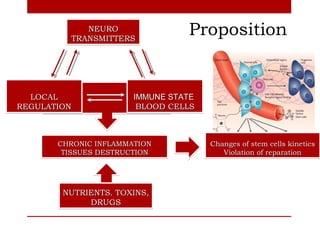
NEURO
         TRANSMITTERS
                                 Proposition


  LOCAL                IMMUNE STATE
REGULATION              BLOOD CELLS


       CHRONIC INFLAMMATION           Changes of stem cells kinetics
        TISSUES DESTRUCTION              Violation of reparation


        NUTRIENTS. TOXINS,
             DRUGS
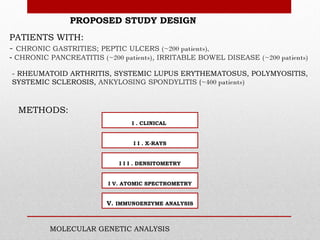
PROPOSED STUDY DESIGN
PATIENTS WITH:
- CHRONIC GASTRITIES; PEPTIC ULCERS (~200 patients),
- CHRONIC PANCREATITIS (~200 patients), IRRITABLE BOWEL DISEASE (~200 patients)

- RHEUMATOID ARTHRITIS, SYSTEMIC LUPUS ERYTHEMATOSUS, POLYMYOSITIS,
SYSTEMIC SCLEROSIS, ANKYLOSING SPONDYLITIS (~400 patients)


  METHODS:
                                 I . CLINICAL


                                 I I . X-RAYS


                             I I I . DENSITOMETRY


                          I V. ATOMIC SPECTROMETRY


                         V. IMMUNOENZYME ANALYSIS


          MOLECULAR GENETIC ANALYSIS
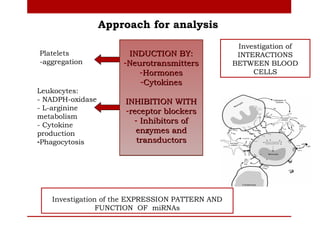
Approach for analysis
                                                  Investigation of
Platelets              INDUCTION BY:              INTERACTIONS
-aggregation          -Neurotransmitters         BETWEEN BLOOD
                          -Hormones                   CELLS
                          -Cytokines
Leukocytes:
- NADPH-oxidase       INHIBITION WITH
- L-arginine          -receptor blockers
metabolism
- Cytokine
                        - Inhibitors of
production               enzymes and
-Phagocytosis            transductors


   Investigation of the EXPRESSION PATTERN AND
                FUNCTION OF miRNAs
EXPEXTED RESULTS

1. Key factors of reactivity which are associated with chronic
   inflammatory diseases

2. Informative criteria for early diagnostics and prognosis of
  chronic inflammatory diseases

3. Understanding of mechanisms of immune response regulation
  - for development of ways of immunomodulation.

4. Estimation of expression and role of miRNA in the MSCs will
   certify or revoke their therapeutic use for the control of
   autoimmunity.
THANK YOU FOR ATTANTION

Biomarkers3

  • 1.
    Partners: - The Donetsknational medical university Department of Histology, Cytology and Embryology Department of Internal Medicine Department of Medical Biophysics, Medical Equipment and Clinical Informatics - Rheumatologic Clinic - Institute of Urgent and Recovery Surgery Laboratory of Fundamental Research
  • 2.
    CHRONIC INFLAMMATORY DISEASES Aggressive factors : microbes (H. pylori), acid, bile, enzymes, nicotine, alcohol, drugs INJURY Persistent inflammation Immunological reactivity Tissues reactivity (GF, BAS, local regulators) INTEGRATING MECHANISMS (Neuro-Endocrine reactivity) GENETIC FACTORS
  • 3.
    CHRONIC INFLAMMATORY DISEASES Unclear points: -What genes and organospecific factors are involved? - What are the common mechanisms of association between inflammatory diseases of joints and digestive system? - What cells and molecules should be the targets for therapeutic action of pharmaceutical agents?
  • 4.
    NEURO TRANSMITTERS Proposition LOCAL IMMUNE STATE REGULATION BLOOD CELLS CHRONIC INFLAMMATION Changes of stem cells kinetics TISSUES DESTRUCTION Violation of reparation NUTRIENTS. TOXINS, DRUGS
  • 5.
    PROPOSED STUDY DESIGN PATIENTSWITH: - CHRONIC GASTRITIES; PEPTIC ULCERS (~200 patients), - CHRONIC PANCREATITIS (~200 patients), IRRITABLE BOWEL DISEASE (~200 patients) - RHEUMATOID ARTHRITIS, SYSTEMIC LUPUS ERYTHEMATOSUS, POLYMYOSITIS, SYSTEMIC SCLEROSIS, ANKYLOSING SPONDYLITIS (~400 patients) METHODS: I . CLINICAL I I . X-RAYS I I I . DENSITOMETRY I V. ATOMIC SPECTROMETRY V. IMMUNOENZYME ANALYSIS MOLECULAR GENETIC ANALYSIS
  • 6.
    Approach for analysis Investigation of Platelets INDUCTION BY: INTERACTIONS -aggregation -Neurotransmitters BETWEEN BLOOD -Hormones CELLS -Cytokines Leukocytes: - NADPH-oxidase INHIBITION WITH - L-arginine -receptor blockers metabolism - Cytokine - Inhibitors of production enzymes and -Phagocytosis transductors Investigation of the EXPRESSION PATTERN AND FUNCTION OF miRNAs
  • 7.
    EXPEXTED RESULTS 1. Keyfactors of reactivity which are associated with chronic inflammatory diseases 2. Informative criteria for early diagnostics and prognosis of chronic inflammatory diseases 3. Understanding of mechanisms of immune response regulation - for development of ways of immunomodulation. 4. Estimation of expression and role of miRNA in the MSCs will certify or revoke their therapeutic use for the control of autoimmunity.
  • 8.
    THANK YOU FORATTANTION

Editor's Notes

  • #4 A chronic inflammatory diseases of joints and digestive system are characterized by persistent inflammation. In many cases, a genetic component has been identified which can put people at risk of developing particular chronic inflammatory diseases, and in some cases, multiple genes can be involved. Patients develop a chronic inflammatory disease because the immune system has an inappropriate response to something it has been exposed to
  • #5 Main idea – to find key (node) links between NS, ES, IS
  • #9 The successful project will have to contribute to the understanding of pathogenesis of systemic autoimmune diseases and regulation of immune response genes. This knowledge will have to be translated to the possibility of the use of MSCs for rheumatic diseases, thereby certifying or revoking their therapeutic use for the control of autoimmunity