BACHELOR OF SCIENCE BIOTECHNOLOGY (HONS.)
BIOINFORMATICS (BIO6413)
CHAPTER 2: Data Bases
2
DATABASES
1. Data Storage: They store vast amounts of biological data, including
genomic sequences, protein structures, gene expressions, and more,
providing a centralized repository accessible to researchers
worldwide.
2. Data Retrieval: Researchers can retrieve specific information quickly
and efficiently, saving time and resources. These databases often
have user-friendly interfaces, allowing users to search and access data
easily.
3. Analysis and Interpretation: They provide tools and resources for
analyzing complex biological data, allowing researchers to compare
sequences, predict protein structures, perform statistical analyses,
and extract meaningful insights from the data.
4. Knowledge Integration: These databases integrate information from
various sources, facilitating the combination of diverse datasets for
comprehensive analyses. This integration aids in understanding
biological systems and interactions.
3
DATABASES
5. Support for Research: Bioinformatics databases are invaluable for
hypothesis generation, experimental design, and validation of
research findings. They provide a foundation for conducting
experiments and testing hypotheses.
6. Community Collaboration: They promote collaboration among
researchers by providing a platform to share data, tools, and findings,
fostering a collaborative environment in the scientific community.
4
DATABASES
Generalized (DNA, proteins and carbohydrates, 3D-structures)
Specialized (EST, STS, SNP, RNA, genomes, protein families,
pathways, microarray data ...)
5
OVERVIEW OF DATABASES
1. Database indexing and specification of search terms
(retrieval, follow-up, analysis)
2. Archives (databases on: nucleic acid sequences, genome,
protein sequences, structures, proteomics, expression,
pathways)
3. Gateways to Archives (NCBI, Entrez, PubMed, ExPasy,
Swiss-Prot, SRS, PIR, Ensembl)
6
Generalized DNA, protein
and carbohydrate databases
Primary sequence databases
EMBL (European Molecular Biology Laboratory
nucleotide sequence database at EBI, Hinxton, UK)
GenBank (at National Center for Biotechnology
information, NCBI, Bethesda, MD, USA)
DDBJ (DNA Data Bank Japan at CIB , Mishima, Japan)
7
NCBI: National Center for
Biotechnology information
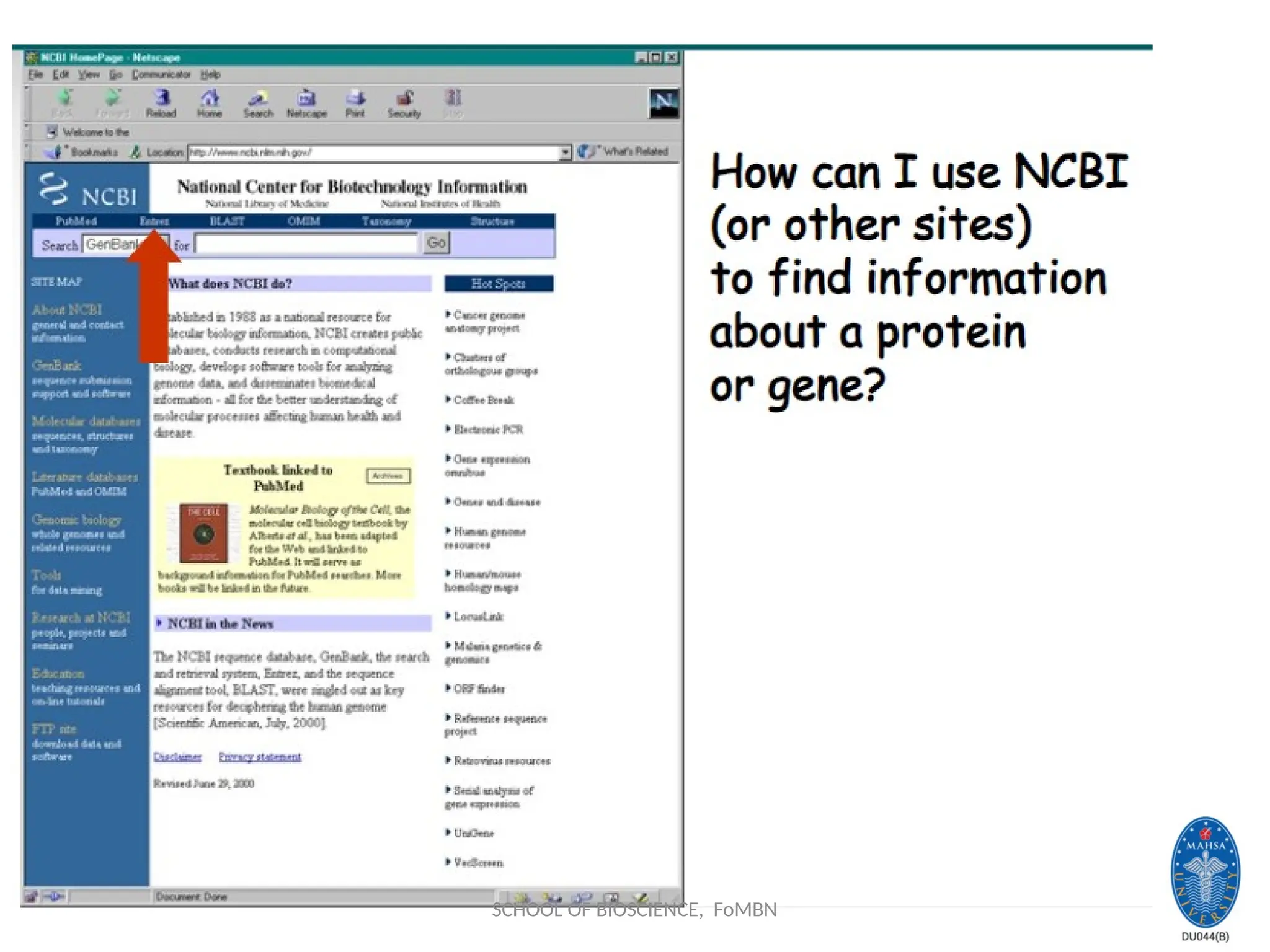
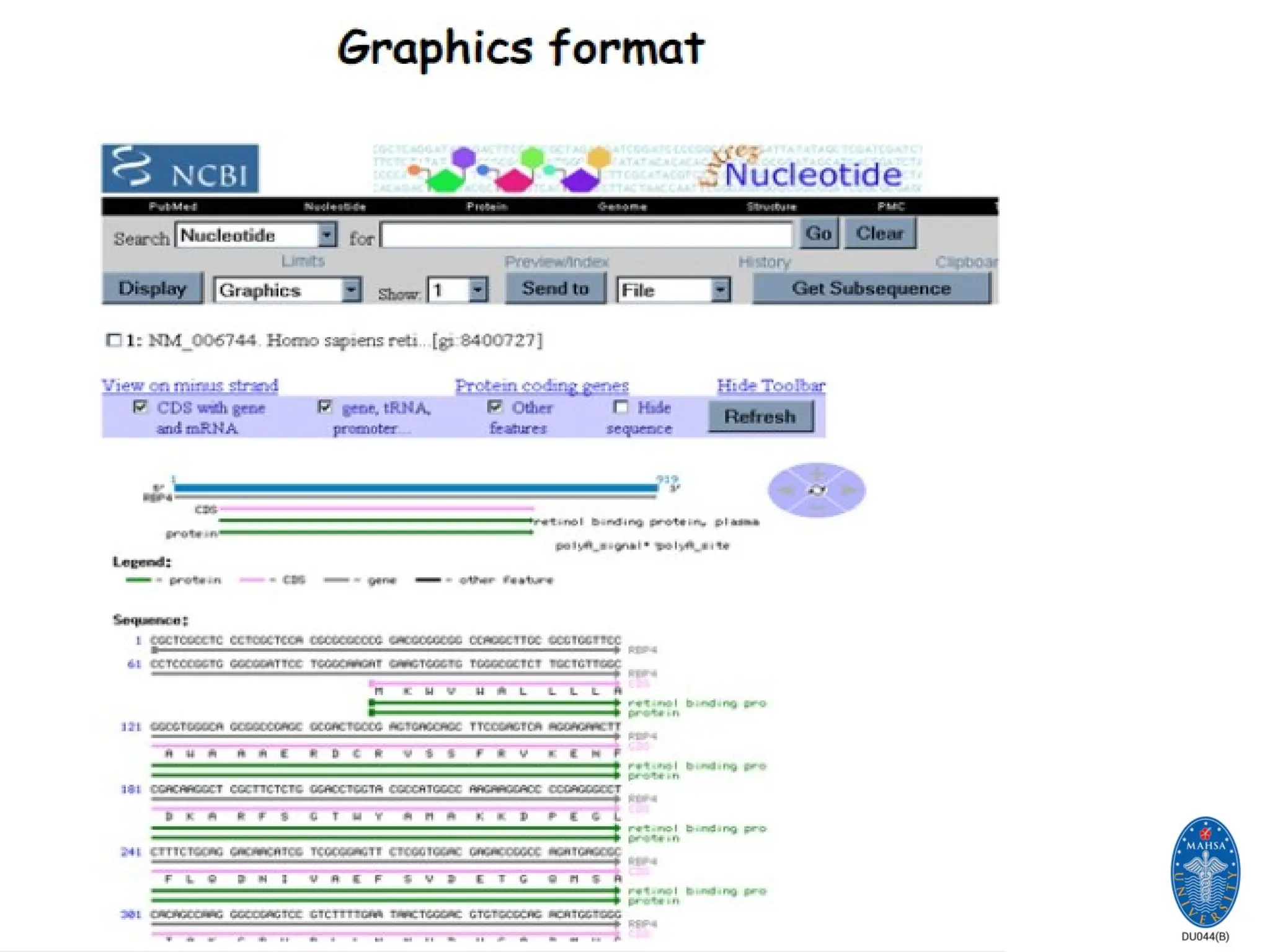
Established in 1988 as a national resource for molecular biology
information, NCBI creates public databases, conducts research
in computational biology, develops software tools for analyzing
genome data, and disseminates biomedical information - all for
the better understanding of molecular processes affecting
human health and disease.
SCHOOL OF BIOSCIENCE, FoMBN
19
The EMBL Nucleotide Sequence Database (also known as EMBL-Bank)
constitutes Europe's primary nucleotide sequence resource. Main
sources for DNA and RNA sequences are direct submissions from
individual researchers, genome sequencing projects and patent
applications.
20
EBI: European
Bioinformatics Institute
The European Bioinformatics Institute (EBI) is a non-profit academic organisation
that forms part of the European Molecular Biology Laboratory (EMBL).
The EBI is a centre for research and services in bioinformatics. The Institute manages
databases of biological data including nucleic acid, protein sequences and
macromolecular structures.
Our mission
To provide freely available data and bioinformatics services to all facets of the
scientific community in ways that promote scientific progress
To contribute to the advancement of biology through basic investigator-driven
research in bioinformatics
To provide advanced bioinformatics training to scientists at all levels, from PhD
students to independent investigators
To help disseminate cutting-edge technologies to industry
21
What is DDBJ
DDBJ (DNA Data Bank of Japan) began DNA data bank activities in earnest in 1986 at
the National Institute of Genetics (NIG).
DDBJ has been functioning as the international nucleotide sequence database in
collaboration with EBI/EMBL and NCBI/GenBank.
DNA sequence records the organismic evolution more directly than other biological
materials and ,thus, is invaluable not only for research in life sciences, but also human
welfare in general. The databases are, so to speak, a common treasure of human
beings. With this in mind, we make the databases online accessible to anyone in the
world
SCHOOL OF BIOSCIENCE, FoMBN
23
The ExPASy (Expert Protein Analysis System) proteomics server
of the Swiss Institute of Bioinformatics (SIB) is dedicated to the
analysis of protein sequences and structures as well as 2-D PAGE
ExPASy Proteomics Server
(SWISS-PROT)
24
Generalized DNA, protein
and carbohydrate databases
Protein sequence databases
SWISS-PROT (Swiss Institute of Bioinformatics, SIB, Geneva, CH)
TrEMBL (=Translated EMBL: computer annotated protein sequence database at
EBI, UK)
PIR-PSD (PIR-International Protein Sequence Database, annotated protein
database by PIR, MIPS and JIPID at NBRF, Georgetown University, USA)
UniProt (Joined data from Swiss-Prot, TrEMBL and PIR)
UniRef (UniProt NREF (Non-redundant REFerence) database at EBI, UK)
IPI (International Protein Index; human, rat and mouse proteome database at
EBI, UK)
25
Generalized DNA, protein
and carbohydrate databases
Carbohydrate databases
CarbBank (Former complex carbohydrate structure database, CCSD,
discontinued!)
3D structure databases
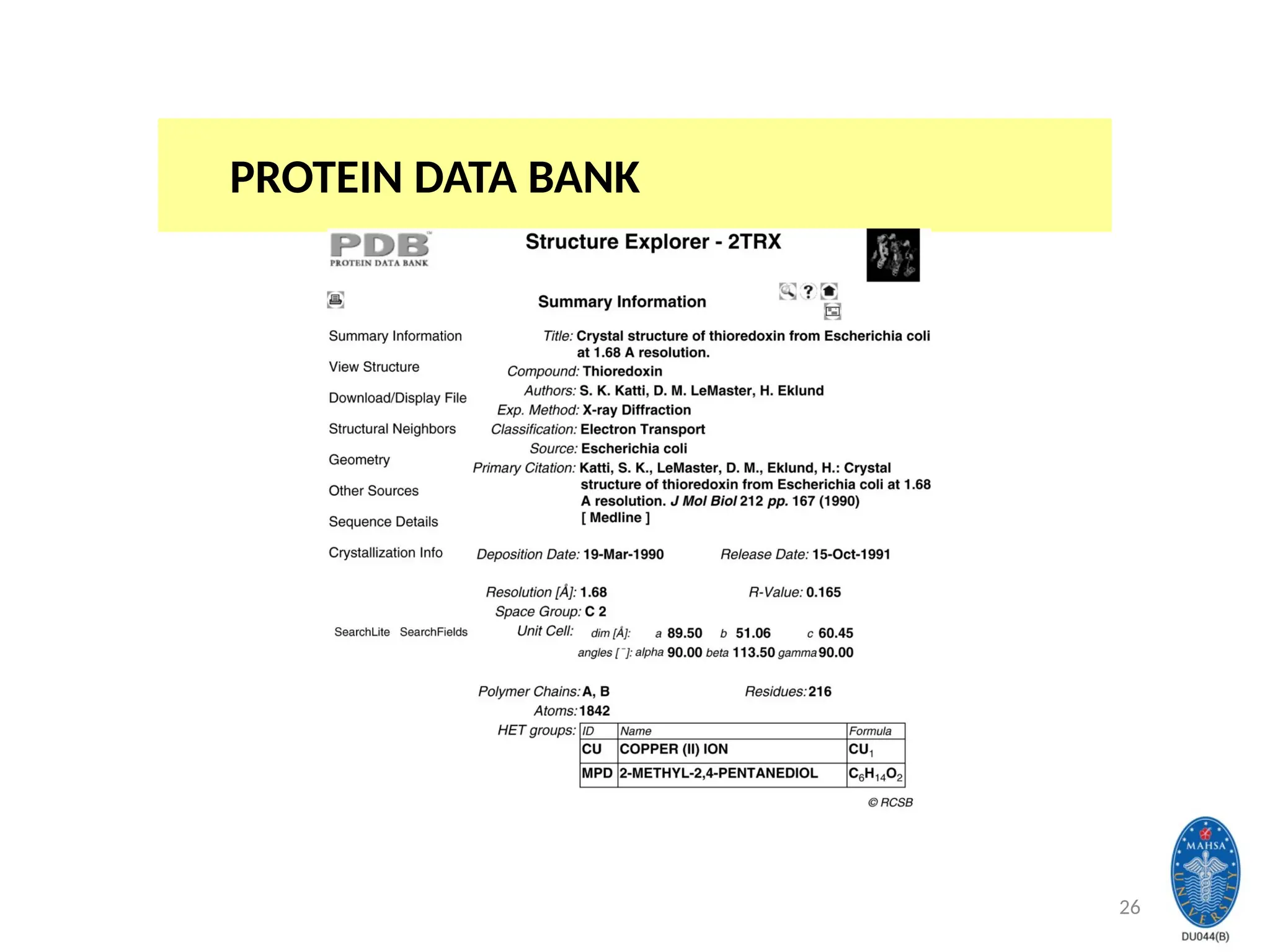
PDB (Protein Data Bank cured by RCSB, USA)
EBI-MSD (Macromolecular Structure Database at EBI, UK )
NDB (Nucleic Acid structure Datatabase at Rutgers State University of New
Jersey , USA)
26
PROTEIN DATA BANK
27
DATABASE SEARCH
Text-based (SRS, Entrez ...)
Sequence-based (sequence similarity search) (BLAST, FASTA...)
Motif-based (ScanProsite, eMOTIF)
Structure-based (structure similarity search) (VAST, DALI...)
Mass-based protein search (ProteinProspector, PeptIdent, Prowl …)
28
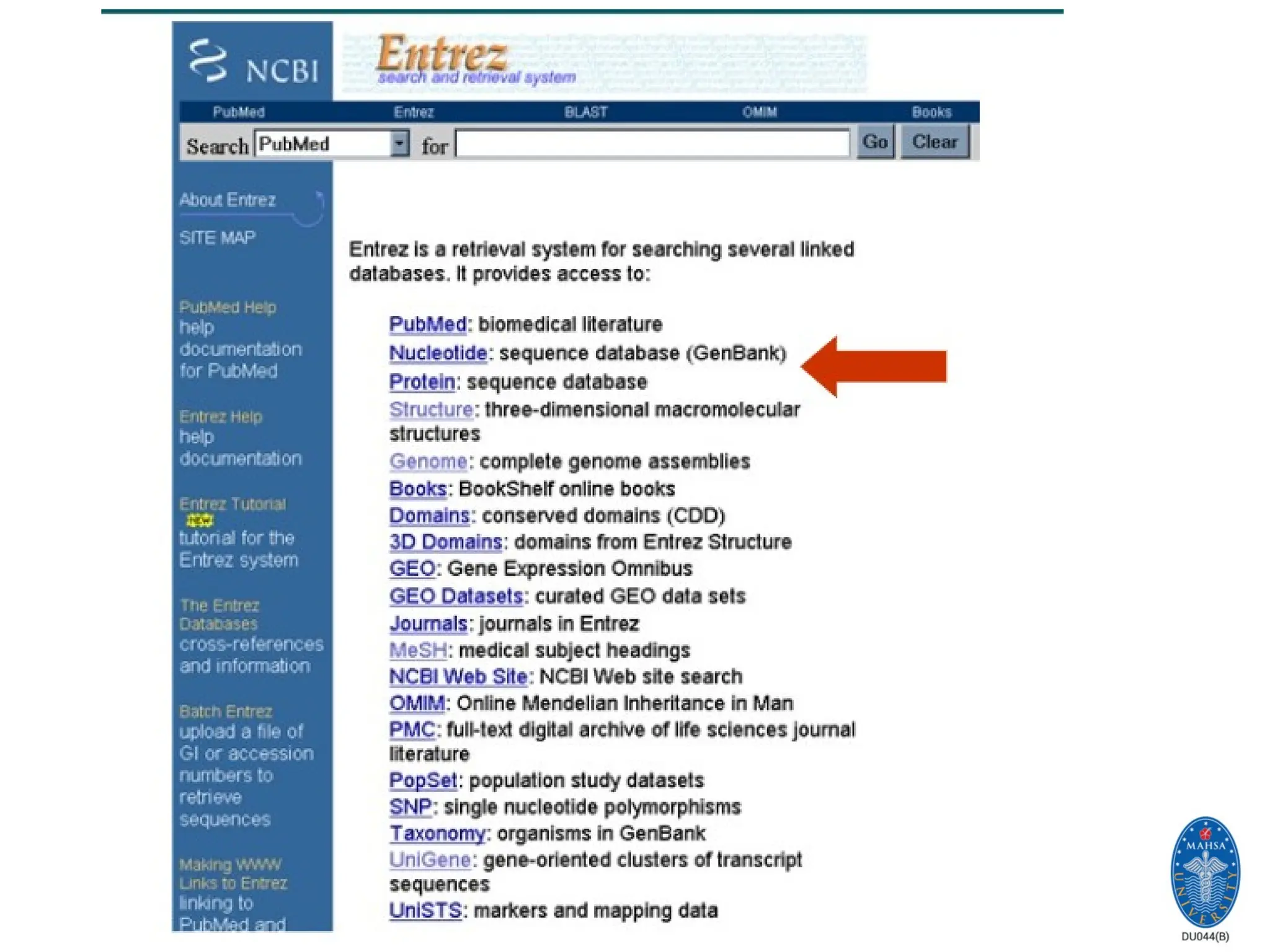
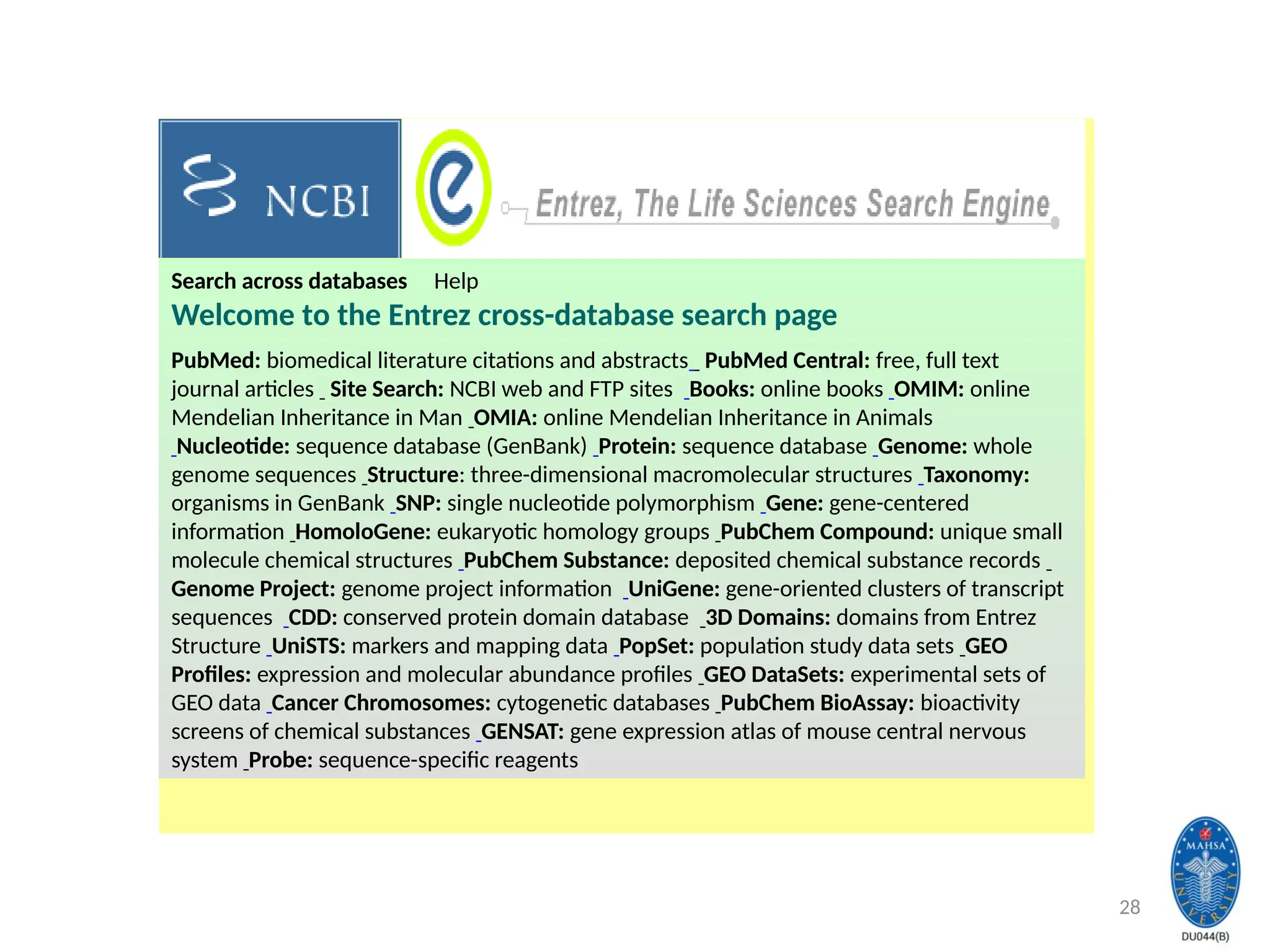
Search across databases Help
Welcome to the Entrez cross-database search page
PubMed: biomedical literature citations and abstracts PubMed Central: free, full text
journal articles Site Search: NCBI web and FTP sites Books: online books OMIM: online
Mendelian Inheritance in Man OMIA: online Mendelian Inheritance in Animals
Nucleotide: sequence database (GenBank) Protein: sequence database Genome: whole
genome sequences Structure: three-dimensional macromolecular structures Taxonomy:
organisms in GenBank SNP: single nucleotide polymorphism Gene: gene-centered
information HomoloGene: eukaryotic homology groups PubChem Compound: unique small
molecule chemical structures PubChem Substance: deposited chemical substance records
Genome Project: genome project information UniGene: gene-oriented clusters of transcript
sequences CDD: conserved protein domain database 3D Domains: domains from Entrez
Structure UniSTS: markers and mapping data PopSet: population study data sets GEO
Profiles: expression and molecular abundance profiles GEO DataSets: experimental sets of
GEO data Cancer Chromosomes: cytogenetic databases PubChem BioAssay: bioactivity
screens of chemical substances GENSAT: gene expression atlas of mouse central nervous
system Probe: sequence-specific reagents
29
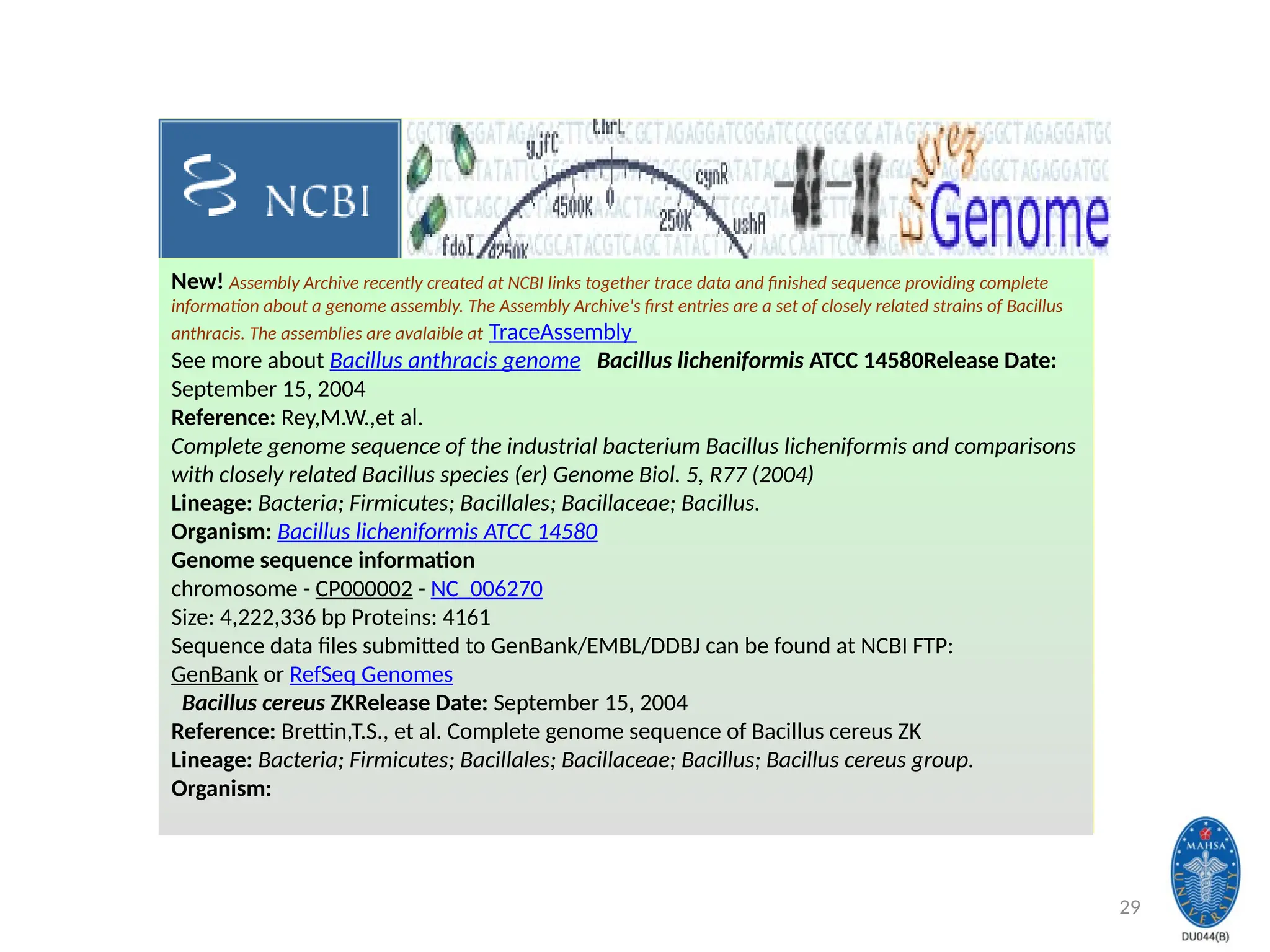
New! Assembly Archive recently created at NCBI links together trace data and finished sequence providing complete
information about a genome assembly. The Assembly Archive's first entries are a set of closely related strains of Bacillus
anthracis. The assemblies are avalaible at TraceAssembly
See more about Bacillus anthracis genome Bacillus licheniformis ATCC 14580Release Date:
September 15, 2004
Reference: Rey,M.W.,et al.
Complete genome sequence of the industrial bacterium Bacillus licheniformis and comparisons
with closely related Bacillus species (er) Genome Biol. 5, R77 (2004)
Lineage: Bacteria; Firmicutes; Bacillales; Bacillaceae; Bacillus.
Organism: Bacillus licheniformis ATCC 14580
Genome sequence information
chromosome - CP000002 - NC_006270
Size: 4,222,336 bp Proteins: 4161
Sequence data files submitted to GenBank/EMBL/DDBJ can be found at NCBI FTP:
GenBank or RefSeq Genomes
Bacillus cereus ZKRelease Date: September 15, 2004
Reference: Brettin,T.S., et al. Complete genome sequence of Bacillus cereus ZK
Lineage: Bacteria; Firmicutes; Bacillales; Bacillaceae; Bacillus; Bacillus cereus group.
Organism:
30
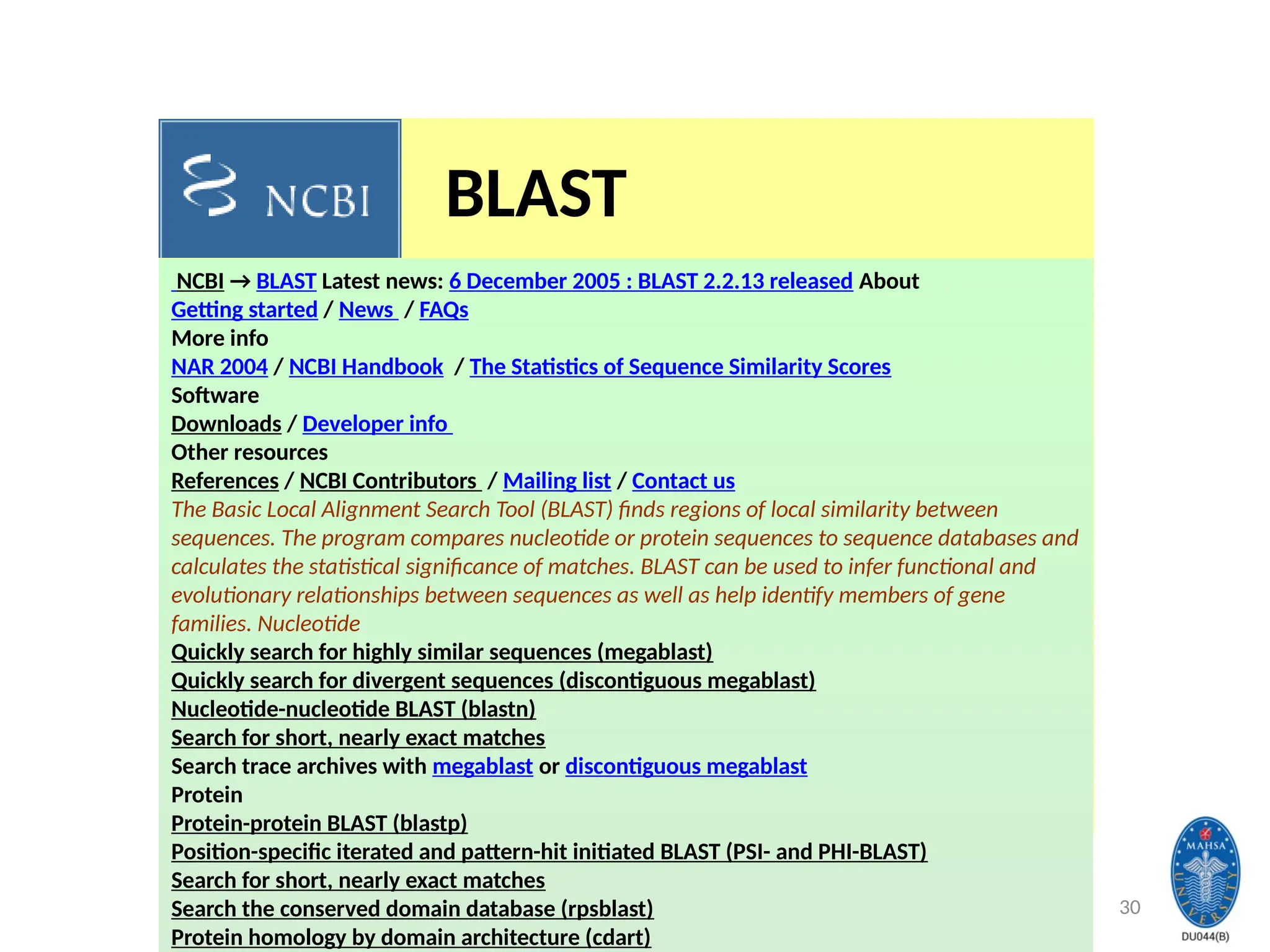
NCBI → BLAST Latest news: 6 December 2005 : BLAST 2.2.13 released About
Getting started / News / FAQs
More info
NAR 2004 / NCBI Handbook / The Statistics of Sequence Similarity Scores
Software
Downloads / Developer info
Other resources
References / NCBI Contributors / Mailing list / Contact us
The Basic Local Alignment Search Tool (BLAST) finds regions of local similarity between
sequences. The program compares nucleotide or protein sequences to sequence databases and
calculates the statistical significance of matches. BLAST can be used to infer functional and
evolutionary relationships between sequences as well as help identify members of gene
families. Nucleotide
Quickly search for highly similar sequences (megablast)
Quickly search for divergent sequences (discontiguous megablast)
Nucleotide-nucleotide BLAST (blastn)
Search for short, nearly exact matches
Search trace archives with megablast or discontiguous megablast
Protein
Protein-protein BLAST (blastp)
Position-specific iterated and pattern-hit initiated BLAST (PSI- and PHI-BLAST)
Search for short, nearly exact matches
Search the conserved domain database (rpsblast)
Protein homology by domain architecture (cdart)
BLAST
31
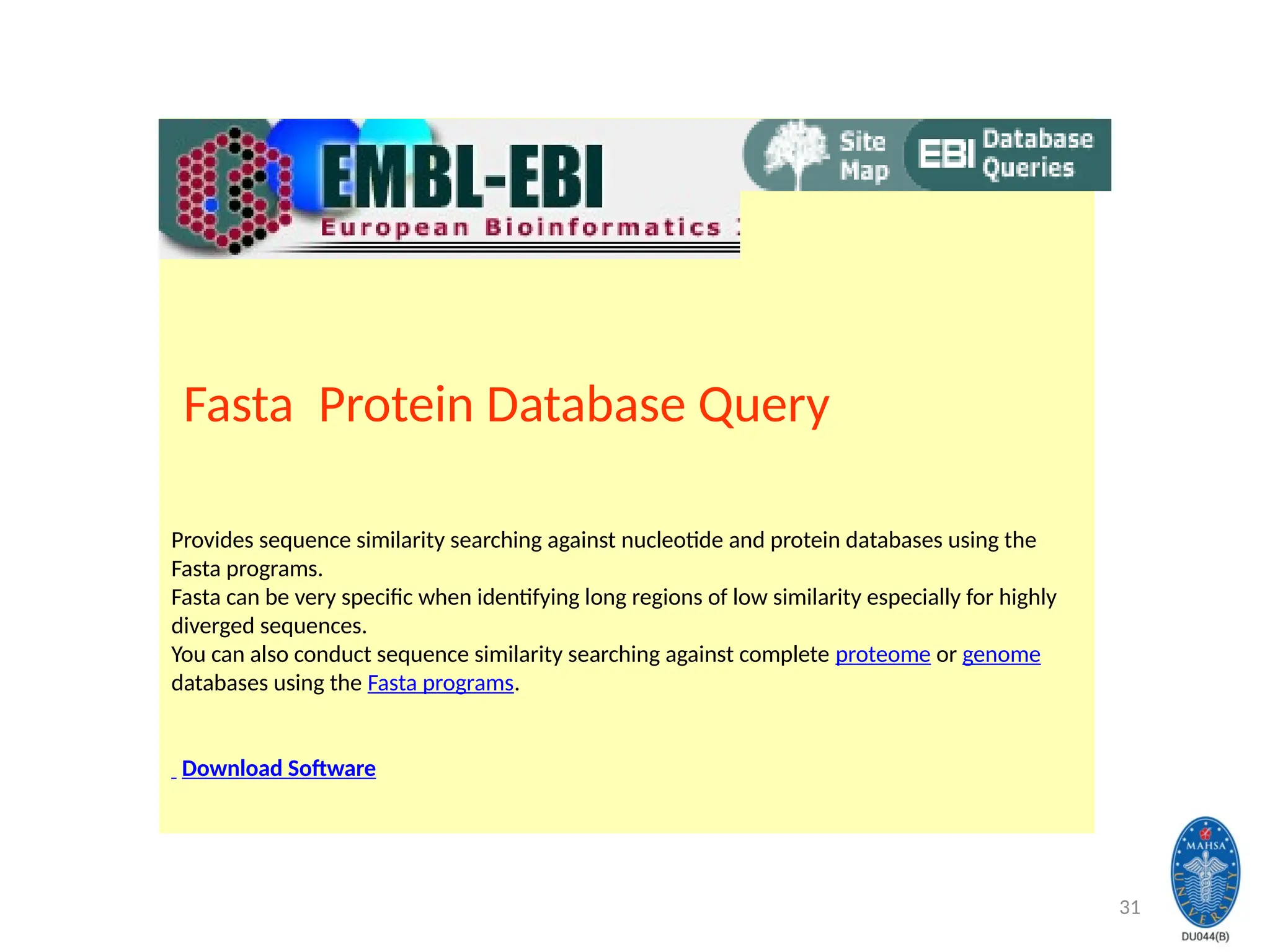
Fasta Protein Database Query
Provides sequence similarity searching against nucleotide and protein databases using the
Fasta programs.
Fasta can be very specific when identifying long regions of low similarity especially for highly
diverged sequences.
You can also conduct sequence similarity searching against complete proteome or genome
databases using the Fasta programs.
Download Software
32
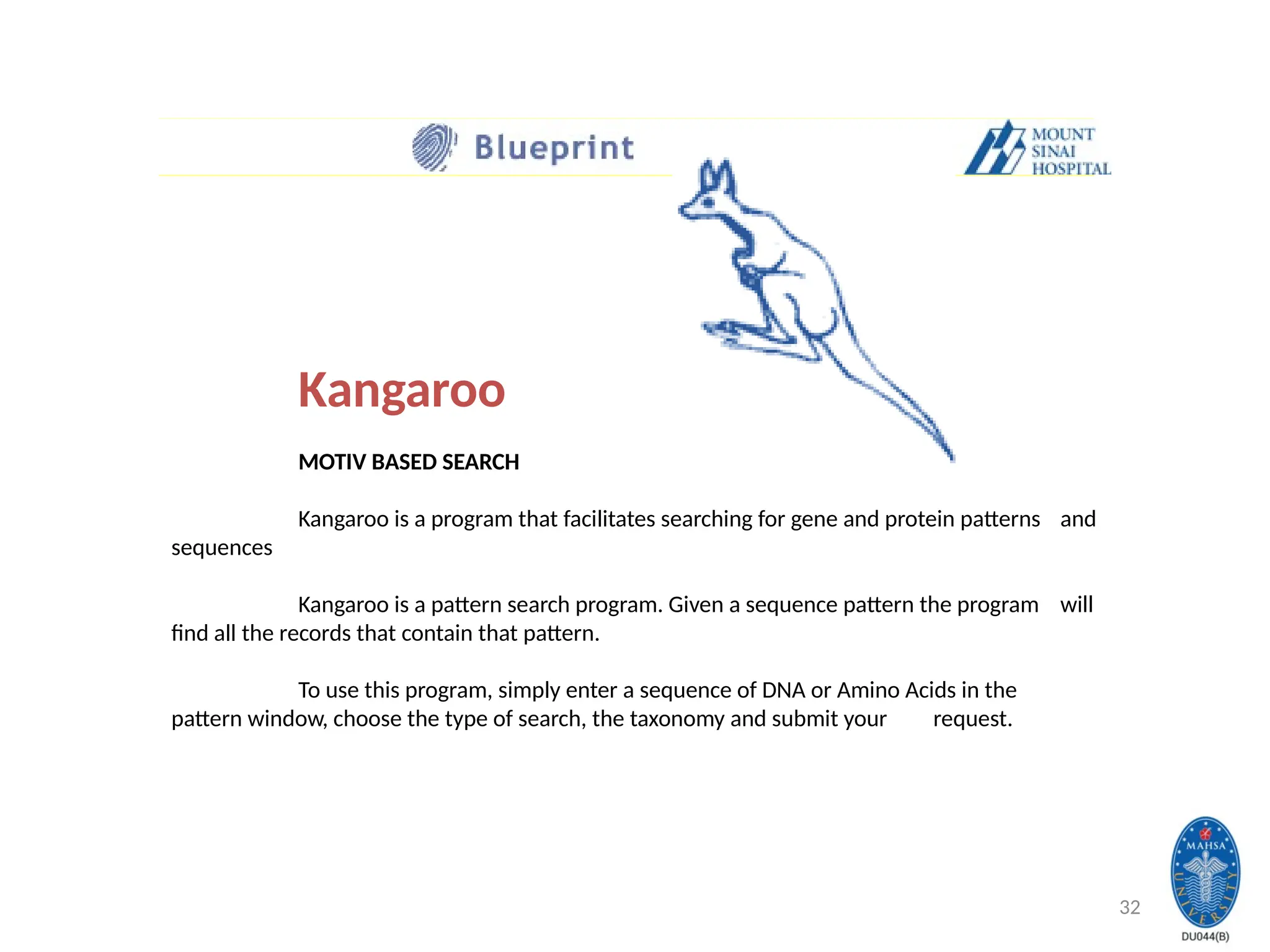
Kangaroo
MOTIV BASED SEARCH
Kangaroo is a program that facilitates searching for gene and protein patterns and
sequences
Kangaroo is a pattern search program. Given a sequence pattern the program will
find all the records that contain that pattern.
To use this program, simply enter a sequence of DNA or Amino Acids in the
pattern window, choose the type of search, the taxonomy and submit your request.
33
ANALYSIS TOOLS
DNA sequence analysis tools
RNA analysis tools
Protein sequence and structure analysis tools (primary, secondary, tertiary structure)
Tools for protein Function assignment
Phylogeny
Microarray analysis tools
34
MISCELLANEOUS
Literature search
Patent search
Bioinformatics centers and servers
Links to other collections of bioinformatics resources
Medical resources
Bioethics
Protocols
Software
(Bio)chemie
Educational resources
SCHOOL OF BIOSCIENCE, FoMBN
References :
Sebastian Bassi, 2018,Python for Bioinformatics.
Max Kuhn, Kjell Johnson, 2018,Applied Predictive Modeling
Pavel Pevzner, Ron Shamir, 2011,Bioinformatics for Biologists.
D. Higgins, Willie Taylor, 2015,Sequence, Structure and Databanks: A Practical Approach,
Bioinformatics
Biological databasesBiological databases

  • 1.
    BACHELOR OF SCIENCEBIOTECHNOLOGY (HONS.) BIOINFORMATICS (BIO6413) CHAPTER 2: Data Bases
  • 2.
    2 DATABASES 1. Data Storage:They store vast amounts of biological data, including genomic sequences, protein structures, gene expressions, and more, providing a centralized repository accessible to researchers worldwide. 2. Data Retrieval: Researchers can retrieve specific information quickly and efficiently, saving time and resources. These databases often have user-friendly interfaces, allowing users to search and access data easily. 3. Analysis and Interpretation: They provide tools and resources for analyzing complex biological data, allowing researchers to compare sequences, predict protein structures, perform statistical analyses, and extract meaningful insights from the data. 4. Knowledge Integration: These databases integrate information from various sources, facilitating the combination of diverse datasets for comprehensive analyses. This integration aids in understanding biological systems and interactions.
  • 3.
    3 DATABASES 5. Support forResearch: Bioinformatics databases are invaluable for hypothesis generation, experimental design, and validation of research findings. They provide a foundation for conducting experiments and testing hypotheses. 6. Community Collaboration: They promote collaboration among researchers by providing a platform to share data, tools, and findings, fostering a collaborative environment in the scientific community.
  • 4.
    4 DATABASES Generalized (DNA, proteinsand carbohydrates, 3D-structures) Specialized (EST, STS, SNP, RNA, genomes, protein families, pathways, microarray data ...)
  • 5.
    5 OVERVIEW OF DATABASES 1.Database indexing and specification of search terms (retrieval, follow-up, analysis) 2. Archives (databases on: nucleic acid sequences, genome, protein sequences, structures, proteomics, expression, pathways) 3. Gateways to Archives (NCBI, Entrez, PubMed, ExPasy, Swiss-Prot, SRS, PIR, Ensembl)
  • 6.
    6 Generalized DNA, protein andcarbohydrate databases Primary sequence databases EMBL (European Molecular Biology Laboratory nucleotide sequence database at EBI, Hinxton, UK) GenBank (at National Center for Biotechnology information, NCBI, Bethesda, MD, USA) DDBJ (DNA Data Bank Japan at CIB , Mishima, Japan)
  • 7.
    7 NCBI: National Centerfor Biotechnology information Established in 1988 as a national resource for molecular biology information, NCBI creates public databases, conducts research in computational biology, develops software tools for analyzing genome data, and disseminates biomedical information - all for the better understanding of molecular processes affecting human health and disease.
  • 8.
  • 9.
  • 10.
  • 11.
  • 12.
  • 13.
  • 14.
  • 15.
  • 16.
  • 17.
  • 18.
  • 19.
    19 The EMBL NucleotideSequence Database (also known as EMBL-Bank) constitutes Europe's primary nucleotide sequence resource. Main sources for DNA and RNA sequences are direct submissions from individual researchers, genome sequencing projects and patent applications.
  • 20.
    20 EBI: European Bioinformatics Institute TheEuropean Bioinformatics Institute (EBI) is a non-profit academic organisation that forms part of the European Molecular Biology Laboratory (EMBL). The EBI is a centre for research and services in bioinformatics. The Institute manages databases of biological data including nucleic acid, protein sequences and macromolecular structures. Our mission To provide freely available data and bioinformatics services to all facets of the scientific community in ways that promote scientific progress To contribute to the advancement of biology through basic investigator-driven research in bioinformatics To provide advanced bioinformatics training to scientists at all levels, from PhD students to independent investigators To help disseminate cutting-edge technologies to industry
  • 21.
    21 What is DDBJ DDBJ(DNA Data Bank of Japan) began DNA data bank activities in earnest in 1986 at the National Institute of Genetics (NIG). DDBJ has been functioning as the international nucleotide sequence database in collaboration with EBI/EMBL and NCBI/GenBank. DNA sequence records the organismic evolution more directly than other biological materials and ,thus, is invaluable not only for research in life sciences, but also human welfare in general. The databases are, so to speak, a common treasure of human beings. With this in mind, we make the databases online accessible to anyone in the world
  • 22.
  • 23.
    23 The ExPASy (ExpertProtein Analysis System) proteomics server of the Swiss Institute of Bioinformatics (SIB) is dedicated to the analysis of protein sequences and structures as well as 2-D PAGE ExPASy Proteomics Server (SWISS-PROT)
  • 24.
    24 Generalized DNA, protein andcarbohydrate databases Protein sequence databases SWISS-PROT (Swiss Institute of Bioinformatics, SIB, Geneva, CH) TrEMBL (=Translated EMBL: computer annotated protein sequence database at EBI, UK) PIR-PSD (PIR-International Protein Sequence Database, annotated protein database by PIR, MIPS and JIPID at NBRF, Georgetown University, USA) UniProt (Joined data from Swiss-Prot, TrEMBL and PIR) UniRef (UniProt NREF (Non-redundant REFerence) database at EBI, UK) IPI (International Protein Index; human, rat and mouse proteome database at EBI, UK)
  • 25.
    25 Generalized DNA, protein andcarbohydrate databases Carbohydrate databases CarbBank (Former complex carbohydrate structure database, CCSD, discontinued!) 3D structure databases PDB (Protein Data Bank cured by RCSB, USA) EBI-MSD (Macromolecular Structure Database at EBI, UK ) NDB (Nucleic Acid structure Datatabase at Rutgers State University of New Jersey , USA)
  • 26.
  • 27.
    27 DATABASE SEARCH Text-based (SRS,Entrez ...) Sequence-based (sequence similarity search) (BLAST, FASTA...) Motif-based (ScanProsite, eMOTIF) Structure-based (structure similarity search) (VAST, DALI...) Mass-based protein search (ProteinProspector, PeptIdent, Prowl …)
  • 28.
    28 Search across databasesHelp Welcome to the Entrez cross-database search page PubMed: biomedical literature citations and abstracts PubMed Central: free, full text journal articles Site Search: NCBI web and FTP sites Books: online books OMIM: online Mendelian Inheritance in Man OMIA: online Mendelian Inheritance in Animals Nucleotide: sequence database (GenBank) Protein: sequence database Genome: whole genome sequences Structure: three-dimensional macromolecular structures Taxonomy: organisms in GenBank SNP: single nucleotide polymorphism Gene: gene-centered information HomoloGene: eukaryotic homology groups PubChem Compound: unique small molecule chemical structures PubChem Substance: deposited chemical substance records Genome Project: genome project information UniGene: gene-oriented clusters of transcript sequences CDD: conserved protein domain database 3D Domains: domains from Entrez Structure UniSTS: markers and mapping data PopSet: population study data sets GEO Profiles: expression and molecular abundance profiles GEO DataSets: experimental sets of GEO data Cancer Chromosomes: cytogenetic databases PubChem BioAssay: bioactivity screens of chemical substances GENSAT: gene expression atlas of mouse central nervous system Probe: sequence-specific reagents
  • 29.
    29 New! Assembly Archiverecently created at NCBI links together trace data and finished sequence providing complete information about a genome assembly. The Assembly Archive's first entries are a set of closely related strains of Bacillus anthracis. The assemblies are avalaible at TraceAssembly See more about Bacillus anthracis genome Bacillus licheniformis ATCC 14580Release Date: September 15, 2004 Reference: Rey,M.W.,et al. Complete genome sequence of the industrial bacterium Bacillus licheniformis and comparisons with closely related Bacillus species (er) Genome Biol. 5, R77 (2004) Lineage: Bacteria; Firmicutes; Bacillales; Bacillaceae; Bacillus. Organism: Bacillus licheniformis ATCC 14580 Genome sequence information chromosome - CP000002 - NC_006270 Size: 4,222,336 bp Proteins: 4161 Sequence data files submitted to GenBank/EMBL/DDBJ can be found at NCBI FTP: GenBank or RefSeq Genomes Bacillus cereus ZKRelease Date: September 15, 2004 Reference: Brettin,T.S., et al. Complete genome sequence of Bacillus cereus ZK Lineage: Bacteria; Firmicutes; Bacillales; Bacillaceae; Bacillus; Bacillus cereus group. Organism:
  • 30.
    30 NCBI → BLASTLatest news: 6 December 2005 : BLAST 2.2.13 released About Getting started / News / FAQs More info NAR 2004 / NCBI Handbook / The Statistics of Sequence Similarity Scores Software Downloads / Developer info Other resources References / NCBI Contributors / Mailing list / Contact us The Basic Local Alignment Search Tool (BLAST) finds regions of local similarity between sequences. The program compares nucleotide or protein sequences to sequence databases and calculates the statistical significance of matches. BLAST can be used to infer functional and evolutionary relationships between sequences as well as help identify members of gene families. Nucleotide Quickly search for highly similar sequences (megablast) Quickly search for divergent sequences (discontiguous megablast) Nucleotide-nucleotide BLAST (blastn) Search for short, nearly exact matches Search trace archives with megablast or discontiguous megablast Protein Protein-protein BLAST (blastp) Position-specific iterated and pattern-hit initiated BLAST (PSI- and PHI-BLAST) Search for short, nearly exact matches Search the conserved domain database (rpsblast) Protein homology by domain architecture (cdart) BLAST
  • 31.
    31 Fasta Protein DatabaseQuery Provides sequence similarity searching against nucleotide and protein databases using the Fasta programs. Fasta can be very specific when identifying long regions of low similarity especially for highly diverged sequences. You can also conduct sequence similarity searching against complete proteome or genome databases using the Fasta programs. Download Software
  • 32.
    32 Kangaroo MOTIV BASED SEARCH Kangaroois a program that facilitates searching for gene and protein patterns and sequences Kangaroo is a pattern search program. Given a sequence pattern the program will find all the records that contain that pattern. To use this program, simply enter a sequence of DNA or Amino Acids in the pattern window, choose the type of search, the taxonomy and submit your request.
  • 33.
    33 ANALYSIS TOOLS DNA sequenceanalysis tools RNA analysis tools Protein sequence and structure analysis tools (primary, secondary, tertiary structure) Tools for protein Function assignment Phylogeny Microarray analysis tools
  • 34.
    34 MISCELLANEOUS Literature search Patent search Bioinformaticscenters and servers Links to other collections of bioinformatics resources Medical resources Bioethics Protocols Software (Bio)chemie Educational resources
  • 35.
  • 36.
  • 37.
  • 38.
  • 39.
    References : Sebastian Bassi,2018,Python for Bioinformatics. Max Kuhn, Kjell Johnson, 2018,Applied Predictive Modeling Pavel Pevzner, Ron Shamir, 2011,Bioinformatics for Biologists. D. Higgins, Willie Taylor, 2015,Sequence, Structure and Databanks: A Practical Approach, Bioinformatics