BIO110: INTRO TO SPAS
Pool & Spa University
SPAS V. POOLS
➤ Spas, or hot tubs, are sometimes thought of as miniature pools in the way they
operate. However, this comparison is lacking, as the chemistry and care of a hot tub
has its own quirks and peculiarities.
➤ Advantages:
➤ Ability to easily drain when issues arise
➤ Smaller chemical treatments
➤ Generally less expensive to operate
➤ Unlikely to get algae
➤ Disadvantages:
➤ More volatile pH
➤ More volatile sanitizer, resulting in more frequent sanitizer additions
➤ Better breeding ground for bacteria and other contaminants
➤ Bathers place a higher demand on the system compared to pools
SPECIAL CONSIDERATIONS
➤ Much like a pool, a spa requires continuous sanitation and routine
oxidation. Sanitation in particular is critical to protecting bathers
from waterborne illnesses; testing sanitizer levels should happen at
least once a week, but more often is preferable.
➤ Oxidation should happen at least once a week if the system is not in
use. This is similar to pools. However, a spa with consistent usage
will more than likely need to be shocked more than once a week.
Shocking after each use is a good habit to establish to keep water
clear and clean.
➤ When adding sanitizer or oxidizer to a spa, it’s important to have
the cover completely off. The spa cover is one of the most important
elements in retaining heat in a spa, and the gases produced by spa
chemicals can damage the cover and reduce its lifespan.
THE NEED TO DRAIN
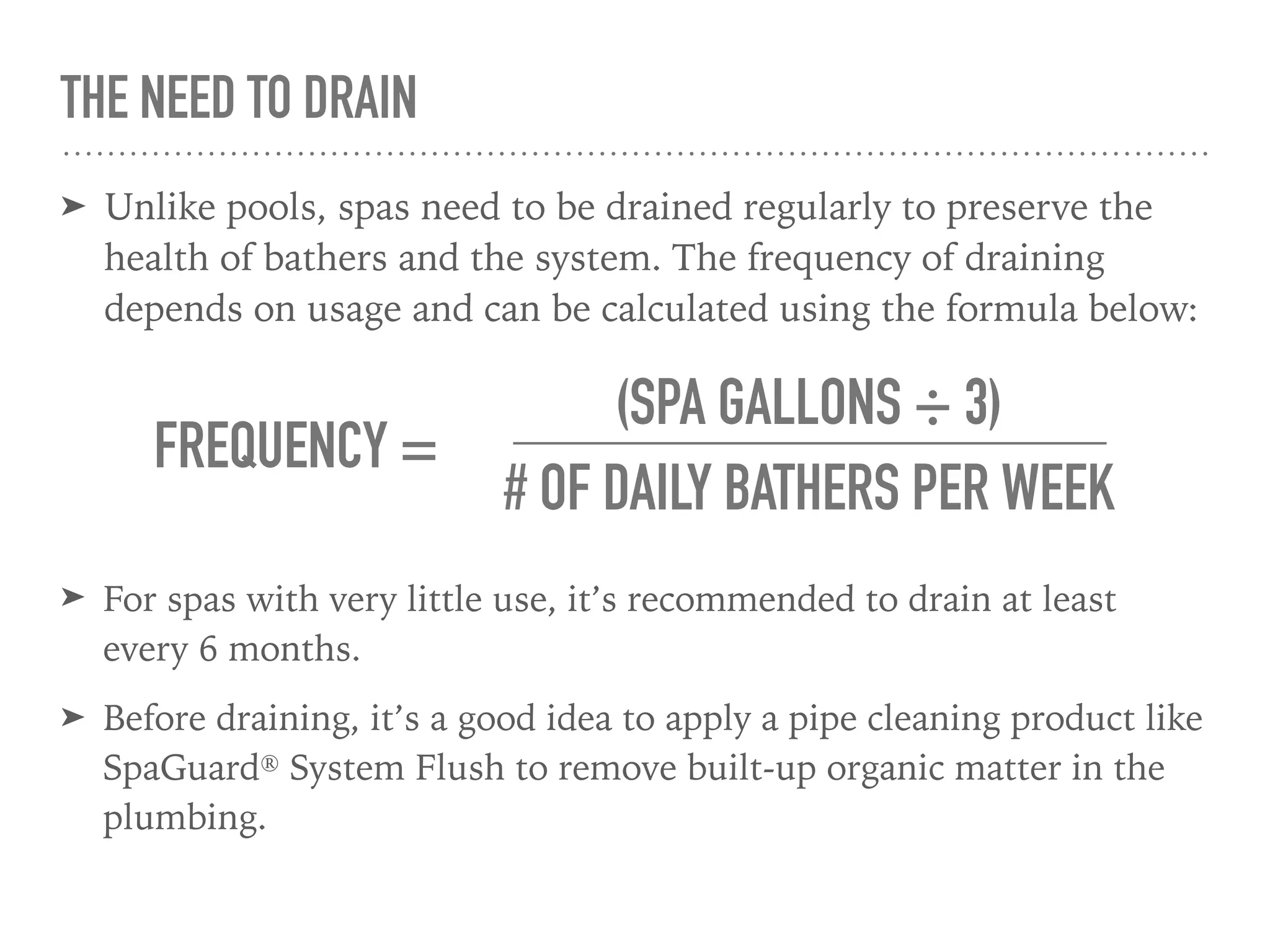
➤ Unlike pools, spas need to be drained regularly to preserve the
health of bathers and the system. The frequency of draining
depends on usage and can be calculated using the formula below:
FREQUENCY =
# OF DAILY BATHERS PER WEEK
(SPA GALLONS ÷ 3)
➤ For spas with very little use, it’s recommended to drain at least
every 6 months.
➤ Before draining, it’s a good idea to apply a pipe cleaning product like
SpaGuard® System Flush to remove built-up organic matter in the
plumbing.
CONGRATULATIONS!
You have completed the activity!

BIO110: Intro to Spas

  • 1.
    BIO110: INTRO TOSPAS Pool & Spa University
  • 2.
    SPAS V. POOLS ➤Spas, or hot tubs, are sometimes thought of as miniature pools in the way they operate. However, this comparison is lacking, as the chemistry and care of a hot tub has its own quirks and peculiarities. ➤ Advantages: ➤ Ability to easily drain when issues arise ➤ Smaller chemical treatments ➤ Generally less expensive to operate ➤ Unlikely to get algae ➤ Disadvantages: ➤ More volatile pH ➤ More volatile sanitizer, resulting in more frequent sanitizer additions ➤ Better breeding ground for bacteria and other contaminants ➤ Bathers place a higher demand on the system compared to pools
  • 3.
    SPECIAL CONSIDERATIONS ➤ Muchlike a pool, a spa requires continuous sanitation and routine oxidation. Sanitation in particular is critical to protecting bathers from waterborne illnesses; testing sanitizer levels should happen at least once a week, but more often is preferable. ➤ Oxidation should happen at least once a week if the system is not in use. This is similar to pools. However, a spa with consistent usage will more than likely need to be shocked more than once a week. Shocking after each use is a good habit to establish to keep water clear and clean. ➤ When adding sanitizer or oxidizer to a spa, it’s important to have the cover completely off. The spa cover is one of the most important elements in retaining heat in a spa, and the gases produced by spa chemicals can damage the cover and reduce its lifespan.
  • 4.
    THE NEED TODRAIN ➤ Unlike pools, spas need to be drained regularly to preserve the health of bathers and the system. The frequency of draining depends on usage and can be calculated using the formula below: FREQUENCY = # OF DAILY BATHERS PER WEEK (SPA GALLONS ÷ 3) ➤ For spas with very little use, it’s recommended to drain at least every 6 months. ➤ Before draining, it’s a good idea to apply a pipe cleaning product like SpaGuard® System Flush to remove built-up organic matter in the plumbing.
  • 5.