Searching for Scholarly Sources
Biology Symposium
Do Now!
• Go to m.socrative.com
• Join Room Number 795231
• Answer the question: What do you know about
peer-reviewed sources?
–
–
–
–
–

Who writes them? Who reads them?
How are articles accepted for publication?
What common features are you likely to see?
What else are peer-reviewed articles called?
How can you tell if your source is a peer-reviewed
article?
Agenda
• Defining peer-reviewed sources (review!)
• Searching for peer-reviewed sources
– Recommended databases
– Keyword searching
– Interlibrary loan

• Reading peer-reviewed sources
Defining Scholarly Articles
• Written by experts for experts, evaluated by
other experts who specialize in the same
scholarly area (“peers”) for validity and quality
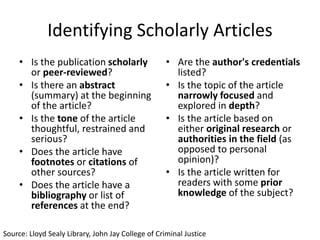
Identifying Scholarly Articles
• Is the publication scholarly
or peer-reviewed?
• Is there an abstract
(summary) at the beginning
of the article?
• Is the tone of the article
thoughtful, restrained and
serious?
• Does the article have
footnotes or citations of
other sources?
• Does the article have a
bibliography or list of
references at the end?

• Are the author's credentials
listed?
• Is the topic of the article
narrowly focused and
explored in depth?
• Is the article based on
either original research or
authorities in the field (as
opposed to personal
opinion)?
• Is the article written for
readers with some prior
knowledge of the subject?

Source: Lloyd Sealy Library, John Jay College of Criminal Justice
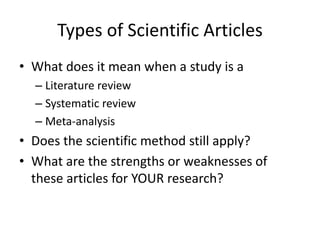
Types of Scientific Articles
• What does it mean when a study is a
– Literature review
– Systematic review
– Meta-analysis

• Does the scientific method still apply?
• What are the strengths or weaknesses of
these articles for YOUR research?
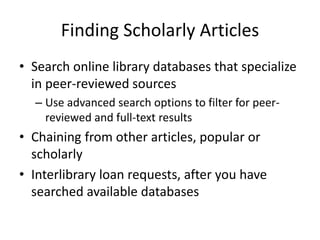
Finding Scholarly Articles
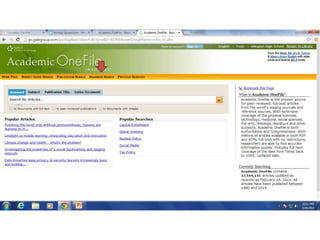
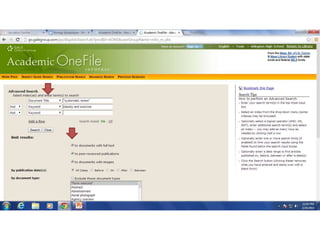
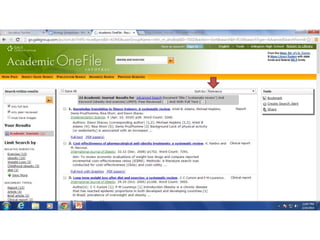
• Search online library databases that specialize
in peer-reviewed sources
– Use advanced search options to filter for peerreviewed and full-text results

• Chaining from other articles, popular or
scholarly
• Interlibrary loan requests, after you have
searched available databases
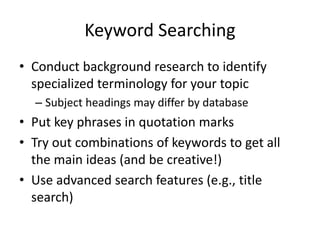
Keyword Searching
• Conduct background research to identify
specialized terminology for your topic
– Subject headings may differ by database

• Put key phrases in quotation marks
• Try out combinations of keywords to get all
the main ideas (and be creative!)
• Use advanced search features (e.g., title
search)
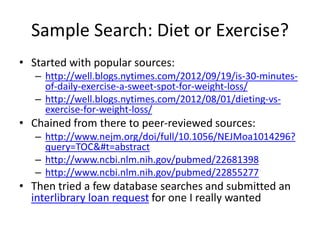
Sample Search: Diet or Exercise?
• Started with popular sources:
– http://well.blogs.nytimes.com/2012/09/19/is-30-minutesof-daily-exercise-a-sweet-spot-for-weight-loss/
– http://well.blogs.nytimes.com/2012/08/01/dieting-vsexercise-for-weight-loss/

• Chained from there to peer-reviewed sources:
– http://www.nejm.org/doi/full/10.1056/NEJMoa1014296?
query=TOC&#t=abstract
– http://www.ncbi.nlm.nih.gov/pubmed/22681398
– http://www.ncbi.nlm.nih.gov/pubmed/22855277

• Then tried a few database searches and submitted an
interlibrary loan request for one I really wanted
Reading Scholarly Articles
• Read background information first
– Scholarly articles are written for people with prior
knowledge, so go get some!

• Focus on key sections
– Abstract, introduction and discussion, figures

• Make sure you’re ready to commit
• Read hard articles in hard copy
• Ask for help when you need it

Bio Symposium - Searching Scholarly Sources

  • 1.
    Searching for ScholarlySources Biology Symposium
  • 2.
    Do Now! • Goto m.socrative.com • Join Room Number 795231 • Answer the question: What do you know about peer-reviewed sources? – – – – – Who writes them? Who reads them? How are articles accepted for publication? What common features are you likely to see? What else are peer-reviewed articles called? How can you tell if your source is a peer-reviewed article?
  • 3.
    Agenda • Defining peer-reviewedsources (review!) • Searching for peer-reviewed sources – Recommended databases – Keyword searching – Interlibrary loan • Reading peer-reviewed sources
  • 5.
    Defining Scholarly Articles •Written by experts for experts, evaluated by other experts who specialize in the same scholarly area (“peers”) for validity and quality
  • 6.
    Identifying Scholarly Articles •Is the publication scholarly or peer-reviewed? • Is there an abstract (summary) at the beginning of the article? • Is the tone of the article thoughtful, restrained and serious? • Does the article have footnotes or citations of other sources? • Does the article have a bibliography or list of references at the end? • Are the author's credentials listed? • Is the topic of the article narrowly focused and explored in depth? • Is the article based on either original research or authorities in the field (as opposed to personal opinion)? • Is the article written for readers with some prior knowledge of the subject? Source: Lloyd Sealy Library, John Jay College of Criminal Justice
  • 7.
    Types of ScientificArticles • What does it mean when a study is a – Literature review – Systematic review – Meta-analysis • Does the scientific method still apply? • What are the strengths or weaknesses of these articles for YOUR research?
  • 8.
    Finding Scholarly Articles •Search online library databases that specialize in peer-reviewed sources – Use advanced search options to filter for peerreviewed and full-text results • Chaining from other articles, popular or scholarly • Interlibrary loan requests, after you have searched available databases
  • 9.
    Keyword Searching • Conductbackground research to identify specialized terminology for your topic – Subject headings may differ by database • Put key phrases in quotation marks • Try out combinations of keywords to get all the main ideas (and be creative!) • Use advanced search features (e.g., title search)
  • 10.
    Sample Search: Dietor Exercise? • Started with popular sources: – http://well.blogs.nytimes.com/2012/09/19/is-30-minutesof-daily-exercise-a-sweet-spot-for-weight-loss/ – http://well.blogs.nytimes.com/2012/08/01/dieting-vsexercise-for-weight-loss/ • Chained from there to peer-reviewed sources: – http://www.nejm.org/doi/full/10.1056/NEJMoa1014296? query=TOC&#t=abstract – http://www.ncbi.nlm.nih.gov/pubmed/22681398 – http://www.ncbi.nlm.nih.gov/pubmed/22855277 • Then tried a few database searches and submitted an interlibrary loan request for one I really wanted
  • 14.
    Reading Scholarly Articles •Read background information first – Scholarly articles are written for people with prior knowledge, so go get some! • Focus on key sections – Abstract, introduction and discussion, figures • Make sure you’re ready to commit • Read hard articles in hard copy • Ask for help when you need it

Editor's Notes

  • #6 Note: Many poster sessions become articles or presentations. Also it’s not like you turn in your paper and you’re done. There’s a revision process. I was published in a peer-reviewed journal for English teachers and got feedback and had to revise, even after the paper was accepted.
  • #8 Graham’s classes only.