A brief look at Web 2.0 Brought to you by  Time Warner Cable Business Class Twitter use #TWCBC
This presentation is brought to you by
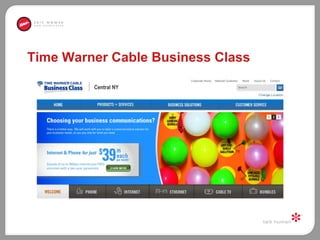
Time Warner Cable Business Class
This is me
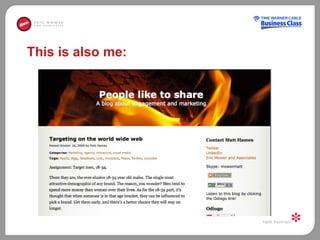
This is also me:
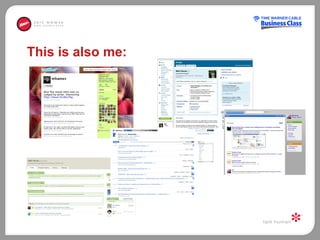
This is also me:
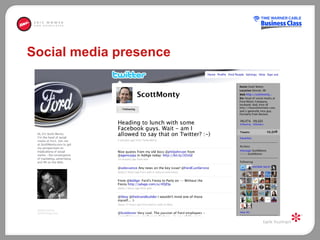
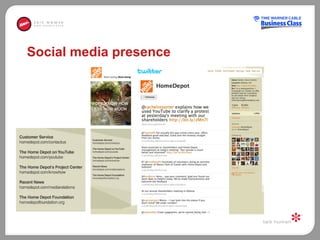
Social media presence I’m going to talk about social media for your business But first, personal versus professional
Social media presence
Personal vs Professional Use these tools personally because playing with them helps  If you know why someone might use Twitter, then you’ll better understand how to use it for your business
THE INTERNET
Web 1.0 – a little history The web was information-based when it started (and many of us put up online brochures) Websites weren’t often updated Nor did they really have goals And geography didn’t matter as much It was a monologue approach to a dialogue medium.
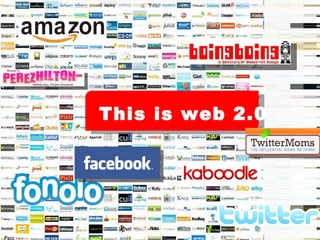
This is web 2.0
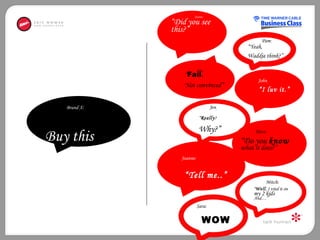
Buy this “ Did you see this?” “ Yeah,  Waddja think?” “ Fail . Not convinced” “ I luv it.” “ Really ? Why?”  “ Do you  know   what it does?” “ Tell me..” “ Well , I tried it on  my 2 kids  And…”  Pam: Joanne: Abby: Jen : John : Dave: Joanne: Mitch: Sara: WOW Brand X:
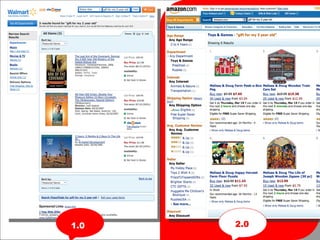
1.0 2.0
Web 2.0 Web 2.0 is a community (O’Reilly Media). It isn’t a message to a consumer, it’s a consumer interaction. Instead of a website (updated by someone you pay) Big or small brands can have a digital presence. Where they can have a real conversations.  With other real people.  Easily.
Web 2.0 Wikipedia has 4,000,000 articles.  YouTube has more than 1,000,000,000 videos.  There are perhaps as many as 200,000,000 blogs.  If people are online, chances are they are using a social network.
Web 2.0 Again, so what?  People trust the recommendations of other consumers more than they trust our ads.  And they realize that they can use social media sites to get opinions, voice opinions, and get recommendations about your brand.  Without marketers.
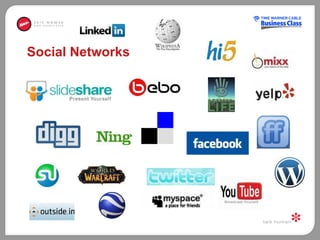
Social Networks
What is a social network? Were you impressed by all the logos?  Obviously logos are only part of the story  Before we dive deeper into these logos, we should think about what’s different here.
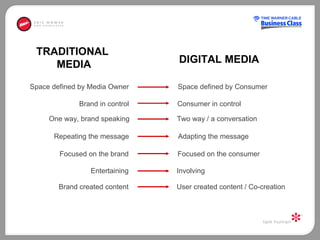
TRADITIONAL  MEDIA DIGITAL MEDIA One way, brand speaking Two way / a conversation Focused on the brand Focused on the consumer Brand in control Consumer in control Repeating the message Adapting the message Entertaining Involving Brand created content User created content / Co-creation Space defined by Media Owner Space defined by Consumer
Web 2.0 The tools of Web 2.0 exist because people like to share  2 nd  Law of Social Networking…people will share twice as much this year as they shared in the previous year People use social media sites to get opinions, voice opinions, and get recommendations
Why does Web 2.0 matter? People trust the recommendations of other consumers more than they trust our ads.  They use social media sites to get opinions, voice opinions, and get recommendations about your company.  With or without you.  On that happy note, lets dive in.
A DEEPER DIVE
Social Networks
#1 Facebook Facebook is one of the best known social networks. With 300 million members and 250,000 new users a day The fastest growing segment is 25+  50% of all Canadians have a profile! Source: http://www.facebook.com/press/info.php?statistics
Facebook Facebook is based on the premise of connecting people who they already know.  It especially works locally
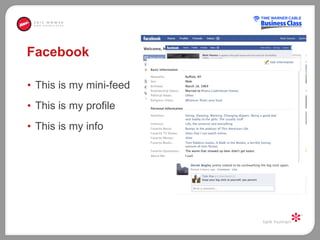
Facebook This is my mini-feed This is my profile This is my info
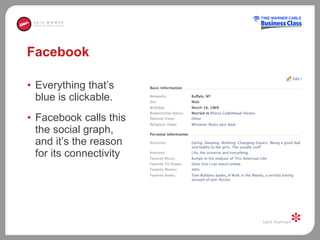
Facebook Everything that’s blue is clickable. Facebook calls this the social graph, and it’s the reason for its connectivity
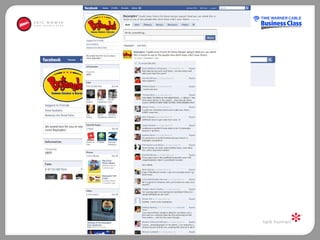
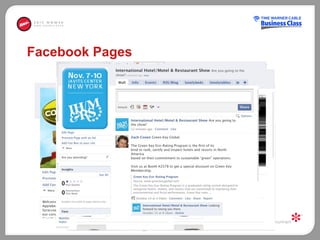
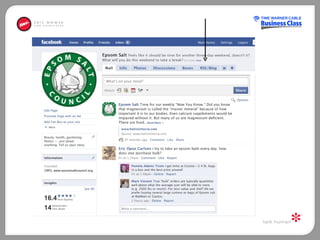
Facebook Page Facebook offers brands a tool called Pages. Pages are a free presence on Facebook for people to engage with a brand.  Here are some examples:
 
Facebook Pages
 
LinkedIn is a business social network. LinkedIn is the business social network. It’s fast-becoming one of the best ways to get jobs and connect to people in your category.  It’s a worldwide networking tool that isn’t based on geography.
 
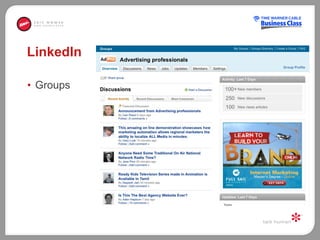
LinkedIn Groups
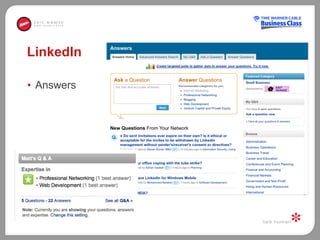
LinkedIn Answers
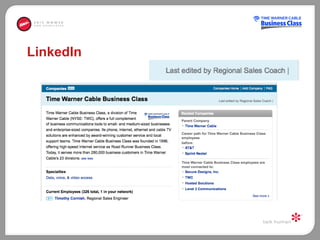
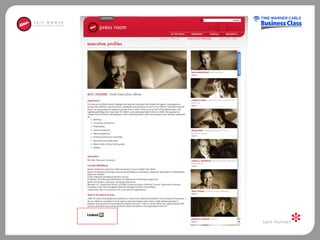
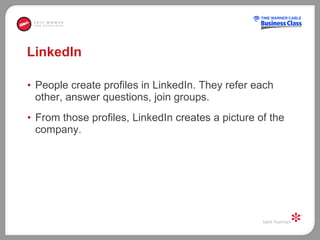
LinkedIn  People create profiles in LinkedIn. They refer each other, answer questions, join groups.  From those profiles, LinkedIn creates a picture of the company.
LinkedIn
LinkedIn LinkedIn: 67% of users saying they use their profile to “make new business or professional contacts” If you’re on LinkedIn, it uses profile data to create the business profile.  Source: Pew Internet & American Life Project Survey December ‘08
 
Twitter Twitter is a micro-blogging platform that lets people update their networks on the minutia of life. In 140 characters or less Twitter is an excellent way to interact with both of your target markets.
Twitter There are a lot of brands that are part of the everyday life of people.   jrrera: Skipping class to go to a Robert Kiyosaki seminar in downtown Binghamton. Sweeeeeet
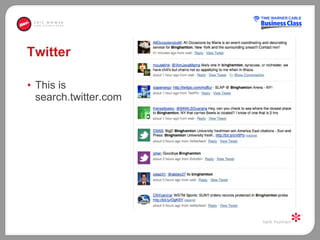
Twitter If your brand is part of people’s lives, then it can be part of their twitter life. Visit search.twitter.com and see. At worst, a search for Binghamton will show you the community of people you could attract.
Twitter This is search.twitter.com
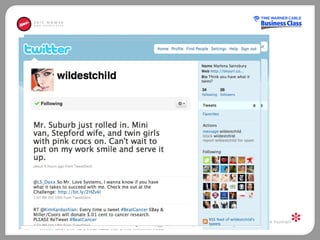
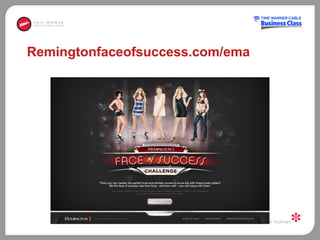
Twitter  We created Twitter pages for Remington
Remingtonfaceofsuccess.com/ema
To recap A few ways to think of Twitter:  A way to pull people in.  A way to get your keywords. A way to create characters
Gottawannaneeda We have a client called Bojangles’ Instead of registering Twitter.com/bojangles we registered Twitter.com/gottawannaneeda.  Because the tag line is Gottawannaneedagettahava Bojangles.  So it makes people think about what we’re all about instead of just who we are.
We’ve used Twitter This is what one of the people said after an interaction:  “ this is probably the greatest day of my life. it’s advertising genius really. I’ve never felt closer to a company in all my life.”
Delicious
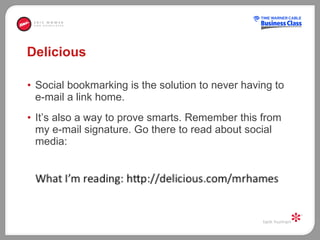
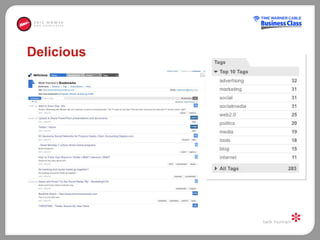
Delicious Social bookmarking is the solution to never having to e-mail a link home.  It’s also a way to prove smarts. Remember this from my e-mail signature. Go there to read about social media:
Delicious
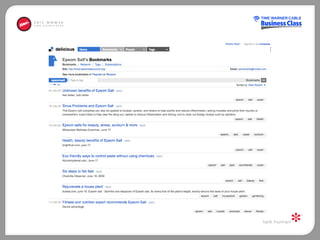
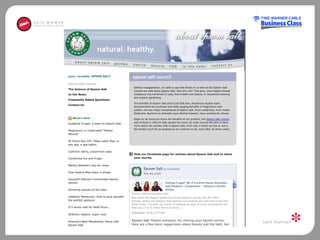
Delicious But consider how this can work for your website.  This can be the dynamically updated what’s new section of a website.


How it’s done A non-programmer from EMA has a Google alert for Epsom Salt. Google alerts are free, and send him an e-mail (alert) when Epsom Salt is mentioned.  He saves the alert to his Epsom Salt Delicious page and it’s automatically updated on the Epsom Salt What’s New page.
Wikipedia
Wikipedia  People sign on. People interact. People police the place, checking updates, etc. People take pride in the place. That’s the essence of a an online world. Or network.
Wikipedia  Is your company there? Should it be?  Wikipedia is one of the highest things that pops up in Organic Google Search.  BTW, it’s Wikipedia’s official policy that you or your agents can’t update or create your own Wikipedia page. Offer a customer a free big ticket item to get in there. Or hire an ad agency that understand their way around Wikipedia.
Yelp
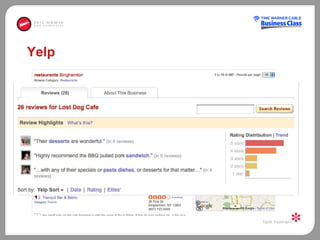
Yelp Yelp is a local search engine.  Searching for your company on Yelp in Binghamton.  If it’s there, read reviews by people.  If it’s not, ask your best customers to review it. Make a sign at the register: “Like our business? Review it on Yelp.com.”
Yelp
Yelp “ But what if someone says something bad?”  What if someone writes that your service was bad. Your food was bad. Your handiwork was bad.  Wouldn’t you want to know and address it?  Isn’t this a great chance to respond?  Control your part, and the reviews will be good.
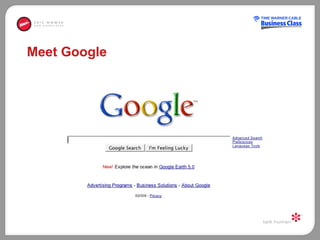
Meet Google
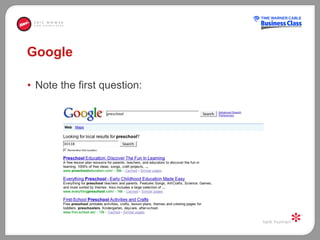
Google is a tool You type something in, and it returns to you the most relevant thing for you.  Every day, they spend millions trying to make it work better.  The path to purchase almost always starts online.  Many of your potential customers might start there.
Google Note the first question:
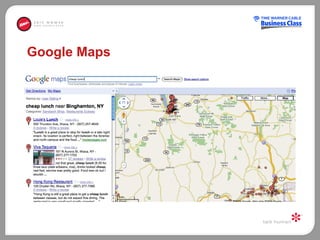
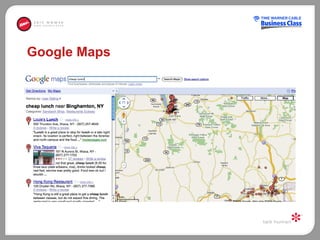
Google and Maps Maps are a legitimate return for many of the Google searches people do in Western New York.  Honest dry cleaner.  Cheap lunch. Business Internet.
Social Search Search is evolving back to where it started.  Yahoo.com started as a people search engine. Google came along and didn’t take the people out of it, but gave our links all the juice.  With the ability to connect and review, we’re getting back to social search. Someone can go to Twitter, Yelp, Facebook, Wikipedia and even Google and ask their networks about a particular thing.
Google Maps
Google Maps So lets take a look at how this works.
Google Maps
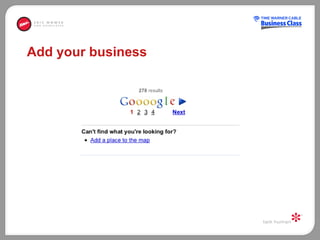
Add your business
Your website This is slide 80. The slide about your website.  If you have one, keep it.  Add analytics.  Don’t let it be an online brochure  Instead, link to Yelp reviews. Show off your Twitter feed. Promote your Facebook page. Turn your site into your social hub.
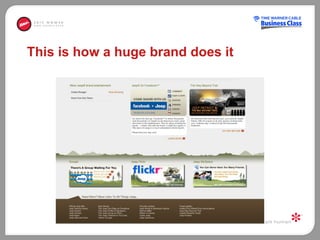
This is how a huge brand does it
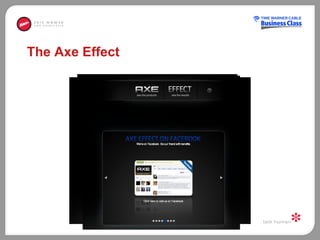
The Axe Effect
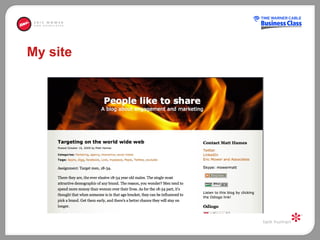
My site
So what now?  Good question. I suggested you:  Set goals.  Start a Facebook page. Just to play with its interaction.  Search Twitter.  Create a LinkedIn Profile.  Check Yelp. Check maps.google.com. Do a deep search on Google
So what now?  Encourage content.  Find content, good or bad.  Amplify the good. Address the bad. If someone complains online, it’s your chance to sell like crazy.
So what now?  Create a digital presence for your brand that’s optimized for local communities looking to search for you.
The change from social media This presentation isn’t about the tools. It’s about the shift that is taking place in the marketplace.  When brands can reach out to a customer who was just venting, you can sense the change.  People realize it’s easy for brands to listen. And when they realize it’s easy, they will expect us to listen.
The change from social media Which brings up ROI.  What if the ROI is the Risk of Ignoring?  Maybe nothing. But the act of listening and responding means a brand is prepared.
So what now?  Then, develop a strategy to get involved.  Because more and more people are already getting involved.  With, or without you.
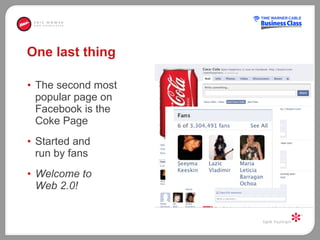
One last thing The second most  popular page on  Facebook is the  Coke Page Started and  run by fans Welcome to  Web 2.0!
Questions ?

Binghamton Public

  • 1.
    A brief lookat Web 2.0 Brought to you by Time Warner Cable Business Class Twitter use #TWCBC
  • 2.
    This presentation isbrought to you by
  • 3.
    Time Warner CableBusiness Class
  • 4.
  • 5.
  • 6.
  • 7.
    Social media presenceI’m going to talk about social media for your business But first, personal versus professional
  • 8.
  • 9.
  • 10.
    Personal vs ProfessionalUse these tools personally because playing with them helps If you know why someone might use Twitter, then you’ll better understand how to use it for your business
  • 11.
  • 12.
    Web 1.0 –a little history The web was information-based when it started (and many of us put up online brochures) Websites weren’t often updated Nor did they really have goals And geography didn’t matter as much It was a monologue approach to a dialogue medium.
  • 13.
  • 14.
    Buy this “Did you see this?” “ Yeah, Waddja think?” “ Fail . Not convinced” “ I luv it.” “ Really ? Why?” “ Do you know what it does?” “ Tell me..” “ Well , I tried it on my 2 kids And…” Pam: Joanne: Abby: Jen : John : Dave: Joanne: Mitch: Sara: WOW Brand X:
  • 15.
  • 16.
    Web 2.0 Web2.0 is a community (O’Reilly Media). It isn’t a message to a consumer, it’s a consumer interaction. Instead of a website (updated by someone you pay) Big or small brands can have a digital presence. Where they can have a real conversations. With other real people. Easily.
  • 17.
    Web 2.0 Wikipediahas 4,000,000 articles. YouTube has more than 1,000,000,000 videos. There are perhaps as many as 200,000,000 blogs. If people are online, chances are they are using a social network.
  • 18.
    Web 2.0 Again,so what? People trust the recommendations of other consumers more than they trust our ads. And they realize that they can use social media sites to get opinions, voice opinions, and get recommendations about your brand. Without marketers.
  • 19.
  • 20.
    What is asocial network? Were you impressed by all the logos? Obviously logos are only part of the story Before we dive deeper into these logos, we should think about what’s different here.
  • 21.
    TRADITIONAL MEDIADIGITAL MEDIA One way, brand speaking Two way / a conversation Focused on the brand Focused on the consumer Brand in control Consumer in control Repeating the message Adapting the message Entertaining Involving Brand created content User created content / Co-creation Space defined by Media Owner Space defined by Consumer
  • 22.
    Web 2.0 Thetools of Web 2.0 exist because people like to share 2 nd Law of Social Networking…people will share twice as much this year as they shared in the previous year People use social media sites to get opinions, voice opinions, and get recommendations
  • 23.
    Why does Web2.0 matter? People trust the recommendations of other consumers more than they trust our ads. They use social media sites to get opinions, voice opinions, and get recommendations about your company. With or without you. On that happy note, lets dive in.
  • 24.
  • 25.
  • 26.
    #1 Facebook Facebookis one of the best known social networks. With 300 million members and 250,000 new users a day The fastest growing segment is 25+ 50% of all Canadians have a profile! Source: http://www.facebook.com/press/info.php?statistics
  • 27.
    Facebook Facebook isbased on the premise of connecting people who they already know. It especially works locally
  • 28.
    Facebook This ismy mini-feed This is my profile This is my info
  • 29.
    Facebook Everything that’sblue is clickable. Facebook calls this the social graph, and it’s the reason for its connectivity
  • 30.
    Facebook Page Facebookoffers brands a tool called Pages. Pages are a free presence on Facebook for people to engage with a brand. Here are some examples:
  • 31.
  • 32.
  • 33.
  • 34.
    LinkedIn is abusiness social network. LinkedIn is the business social network. It’s fast-becoming one of the best ways to get jobs and connect to people in your category. It’s a worldwide networking tool that isn’t based on geography.
  • 35.
  • 36.
  • 37.
  • 38.
    LinkedIn Peoplecreate profiles in LinkedIn. They refer each other, answer questions, join groups. From those profiles, LinkedIn creates a picture of the company.
  • 39.
  • 40.
    LinkedIn LinkedIn: 67%of users saying they use their profile to “make new business or professional contacts” If you’re on LinkedIn, it uses profile data to create the business profile. Source: Pew Internet & American Life Project Survey December ‘08
  • 41.
  • 42.
    Twitter Twitter isa micro-blogging platform that lets people update their networks on the minutia of life. In 140 characters or less Twitter is an excellent way to interact with both of your target markets.
  • 43.
    Twitter There area lot of brands that are part of the everyday life of people. jrrera: Skipping class to go to a Robert Kiyosaki seminar in downtown Binghamton. Sweeeeeet
  • 44.
    Twitter If yourbrand is part of people’s lives, then it can be part of their twitter life. Visit search.twitter.com and see. At worst, a search for Binghamton will show you the community of people you could attract.
  • 45.
    Twitter This issearch.twitter.com
  • 46.
    Twitter Wecreated Twitter pages for Remington
  • 47.
  • 48.
    To recap Afew ways to think of Twitter: A way to pull people in. A way to get your keywords. A way to create characters
  • 49.
    Gottawannaneeda We havea client called Bojangles’ Instead of registering Twitter.com/bojangles we registered Twitter.com/gottawannaneeda. Because the tag line is Gottawannaneedagettahava Bojangles. So it makes people think about what we’re all about instead of just who we are.
  • 50.
    We’ve used TwitterThis is what one of the people said after an interaction: “ this is probably the greatest day of my life. it’s advertising genius really. I’ve never felt closer to a company in all my life.”
  • 51.
  • 52.
    Delicious Social bookmarkingis the solution to never having to e-mail a link home. It’s also a way to prove smarts. Remember this from my e-mail signature. Go there to read about social media:
  • 53.
  • 54.
    Delicious But considerhow this can work for your website. This can be the dynamically updated what’s new section of a website.
  • 55.
  • 56.
  • 57.
  • 58.
    How it’s doneA non-programmer from EMA has a Google alert for Epsom Salt. Google alerts are free, and send him an e-mail (alert) when Epsom Salt is mentioned. He saves the alert to his Epsom Salt Delicious page and it’s automatically updated on the Epsom Salt What’s New page.
  • 59.
  • 60.
    Wikipedia Peoplesign on. People interact. People police the place, checking updates, etc. People take pride in the place. That’s the essence of a an online world. Or network.
  • 61.
    Wikipedia Isyour company there? Should it be? Wikipedia is one of the highest things that pops up in Organic Google Search. BTW, it’s Wikipedia’s official policy that you or your agents can’t update or create your own Wikipedia page. Offer a customer a free big ticket item to get in there. Or hire an ad agency that understand their way around Wikipedia.
  • 62.
  • 63.
    Yelp Yelp isa local search engine. Searching for your company on Yelp in Binghamton. If it’s there, read reviews by people. If it’s not, ask your best customers to review it. Make a sign at the register: “Like our business? Review it on Yelp.com.”
  • 64.
  • 65.
    Yelp “ Butwhat if someone says something bad?” What if someone writes that your service was bad. Your food was bad. Your handiwork was bad. Wouldn’t you want to know and address it? Isn’t this a great chance to respond? Control your part, and the reviews will be good.
  • 66.
  • 67.
    Google is atool You type something in, and it returns to you the most relevant thing for you. Every day, they spend millions trying to make it work better. The path to purchase almost always starts online. Many of your potential customers might start there.
  • 68.
    Google Note thefirst question:
  • 69.
    Google and MapsMaps are a legitimate return for many of the Google searches people do in Western New York. Honest dry cleaner. Cheap lunch. Business Internet.
  • 70.
    Social Search Searchis evolving back to where it started. Yahoo.com started as a people search engine. Google came along and didn’t take the people out of it, but gave our links all the juice. With the ability to connect and review, we’re getting back to social search. Someone can go to Twitter, Yelp, Facebook, Wikipedia and even Google and ask their networks about a particular thing.
  • 71.
  • 72.
    Google Maps Solets take a look at how this works.
  • 73.
  • 74.
  • 75.
    Your website Thisis slide 80. The slide about your website. If you have one, keep it. Add analytics. Don’t let it be an online brochure Instead, link to Yelp reviews. Show off your Twitter feed. Promote your Facebook page. Turn your site into your social hub.
  • 76.
    This is howa huge brand does it
  • 77.
  • 78.
  • 79.
    So what now? Good question. I suggested you: Set goals. Start a Facebook page. Just to play with its interaction. Search Twitter. Create a LinkedIn Profile. Check Yelp. Check maps.google.com. Do a deep search on Google
  • 80.
    So what now? Encourage content. Find content, good or bad. Amplify the good. Address the bad. If someone complains online, it’s your chance to sell like crazy.
  • 81.
    So what now? Create a digital presence for your brand that’s optimized for local communities looking to search for you.
  • 82.
    The change fromsocial media This presentation isn’t about the tools. It’s about the shift that is taking place in the marketplace. When brands can reach out to a customer who was just venting, you can sense the change. People realize it’s easy for brands to listen. And when they realize it’s easy, they will expect us to listen.
  • 83.
    The change fromsocial media Which brings up ROI. What if the ROI is the Risk of Ignoring? Maybe nothing. But the act of listening and responding means a brand is prepared.
  • 84.
    So what now? Then, develop a strategy to get involved. Because more and more people are already getting involved. With, or without you.
  • 85.
    One last thingThe second most popular page on Facebook is the Coke Page Started and run by fans Welcome to Web 2.0!
  • 86.

Editor's Notes

  • #37 Think about Joes Pizza versus Pizza Hut