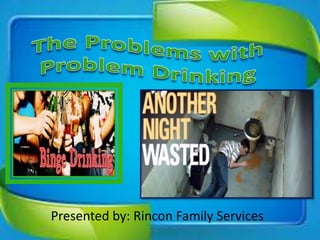
Presented by: Rincon Family Services
A pattern of drinking that brings a
person’s blood alcohol concentration
(BAC) to 0.08 grams percent or
above. This typically happens when
men consume 5 or more drinks, and
when women consume 4 or more
drinks, in about 2 hours.
• 1 in 6 adults binge drink about
4x/month (Consuming about 8
drinks per binge)
• About 92% of U.S. adults who
excessively drink, report binge
drinking in the past 30 days
• 70% of binge drinking episodes
involve adults 26+ years
• Prevalence of binge drinking among
men is 2x the prevalence among
women
• Binge drinkers are 14x more likely
to report alcohol-impaired driving
than non-binge drinkers
• About 90% of the alcohol consumed
by youth under 21, is in the form of
binge drinking
• More than ½ the alcohol consumed
by adults in the U.S. is in the form of
binge drinks
• Binge drinking influences the ability to make smart decisions and promotes risk taking and
violence.
• Poor decisions such as those involving short-term rewards coupled with long-term losses
are made.
• There are many high-risk activities that might seem like fun when you’re drunk but can
have serious consequences.
• More likely to engage in high-risk drinking that may result in hospitalization; use illicit
drugs; drive dangerously; behave violently; and, engage in unwanted or dangerous sexual
activity. Drinking too much may encourage you to start fights about things that might not
seem important the next day.
• People who binge drink may experience embarrassment over behavior, unwanted and/or
risky sexual behavior (pregnancy, STD, etc.), a criminal record, injury or a serious vehicle
accident.
• Problems have been associated with mental skills such planning for the future, abstract
reasoning, inhibiting or delaying responses, doing two things at once and shifting between
activities.
• Alcohol lowers inhibitions, and some people are more likely to make poor decisions such
as saying or doing inappropriate things, texting or calling people you shouldn’t, posting
pictures or videos on a social networking site that really don’t need to be broadcasted,
• Problem Drinker:
– May be physical dependency or may go days or weeks without alcohol, but
drink a lot at one time.
– Developed pattern of drinking excessive amounts of alcohol in one sitting
• Social Drinker:
– Drink alcohol responsibly in
a safe way
– Drink moderately by consuming reasonable amounts
in responsible situations
– Doesn’t develop a pattern of drinking over a period of
time and doesn’t drink too much at one time
• Short-term memory loss and forgetting events
that occurred while drinking.
• Activity: assume the role of someone who has
been binge drinking. The rest of the group will
read a sign describing a specific behavior that one
of you displayed while you were drinking. Treat
the volunteer according to the role he/she has
assumed. Give hints about events that occurred,
without being obvious or directly stating what
happened.
• Binge drinking more
often than not results in
negative emotions.
What are some negative
emotions you have
experienced while
excessively drinking?
• Negative emotions can
range from guilt, shame,
embarrassment,
remorse, etc.
Unintentional injuries (car crash, fall, burn,
drowning)
Intentional injuries (firearm injuries,
sexual assault, domestic violence)
Alcohol poisoning
Sexually transmitted diseases
Unintended pregnancy
High blood pressure, stroke, other
cardiovascular diseases
Liver disease
Neurological damage
Sexual dysfunction
• What are some events that may
involve alcohol? What are some
irresponsible ways to handle those
events? What is a responsible way
to handle them?
• Activity: Develop a safety plan for
people attending a gathering that
may involve alcohol. What is the
event? Where is it taking place?
Who is attending? Describe:
– Preventive strategies to avoid
problems
– Potential problems that may
occur
– A plan of action for responding
to difficult situations
Binge drinking2
Binge drinking2
Binge drinking2
Binge drinking2

Binge drinking2

  • 1.
    Presented by: RinconFamily Services
  • 2.
    A pattern ofdrinking that brings a person’s blood alcohol concentration (BAC) to 0.08 grams percent or above. This typically happens when men consume 5 or more drinks, and when women consume 4 or more drinks, in about 2 hours.
  • 3.
    • 1 in6 adults binge drink about 4x/month (Consuming about 8 drinks per binge) • About 92% of U.S. adults who excessively drink, report binge drinking in the past 30 days • 70% of binge drinking episodes involve adults 26+ years • Prevalence of binge drinking among men is 2x the prevalence among women • Binge drinkers are 14x more likely to report alcohol-impaired driving than non-binge drinkers • About 90% of the alcohol consumed by youth under 21, is in the form of binge drinking • More than ½ the alcohol consumed by adults in the U.S. is in the form of binge drinks
  • 4.
    • Binge drinkinginfluences the ability to make smart decisions and promotes risk taking and violence. • Poor decisions such as those involving short-term rewards coupled with long-term losses are made. • There are many high-risk activities that might seem like fun when you’re drunk but can have serious consequences. • More likely to engage in high-risk drinking that may result in hospitalization; use illicit drugs; drive dangerously; behave violently; and, engage in unwanted or dangerous sexual activity. Drinking too much may encourage you to start fights about things that might not seem important the next day. • People who binge drink may experience embarrassment over behavior, unwanted and/or risky sexual behavior (pregnancy, STD, etc.), a criminal record, injury or a serious vehicle accident. • Problems have been associated with mental skills such planning for the future, abstract reasoning, inhibiting or delaying responses, doing two things at once and shifting between activities. • Alcohol lowers inhibitions, and some people are more likely to make poor decisions such as saying or doing inappropriate things, texting or calling people you shouldn’t, posting pictures or videos on a social networking site that really don’t need to be broadcasted,
  • 5.
    • Problem Drinker: –May be physical dependency or may go days or weeks without alcohol, but drink a lot at one time. – Developed pattern of drinking excessive amounts of alcohol in one sitting • Social Drinker: – Drink alcohol responsibly in a safe way – Drink moderately by consuming reasonable amounts in responsible situations – Doesn’t develop a pattern of drinking over a period of time and doesn’t drink too much at one time
  • 7.
    • Short-term memoryloss and forgetting events that occurred while drinking. • Activity: assume the role of someone who has been binge drinking. The rest of the group will read a sign describing a specific behavior that one of you displayed while you were drinking. Treat the volunteer according to the role he/she has assumed. Give hints about events that occurred, without being obvious or directly stating what happened.
  • 8.
    • Binge drinkingmore often than not results in negative emotions. What are some negative emotions you have experienced while excessively drinking? • Negative emotions can range from guilt, shame, embarrassment, remorse, etc. Unintentional injuries (car crash, fall, burn, drowning) Intentional injuries (firearm injuries, sexual assault, domestic violence) Alcohol poisoning Sexually transmitted diseases Unintended pregnancy High blood pressure, stroke, other cardiovascular diseases Liver disease Neurological damage Sexual dysfunction
  • 10.
    • What aresome events that may involve alcohol? What are some irresponsible ways to handle those events? What is a responsible way to handle them? • Activity: Develop a safety plan for people attending a gathering that may involve alcohol. What is the event? Where is it taking place? Who is attending? Describe: – Preventive strategies to avoid problems – Potential problems that may occur – A plan of action for responding to difficult situations