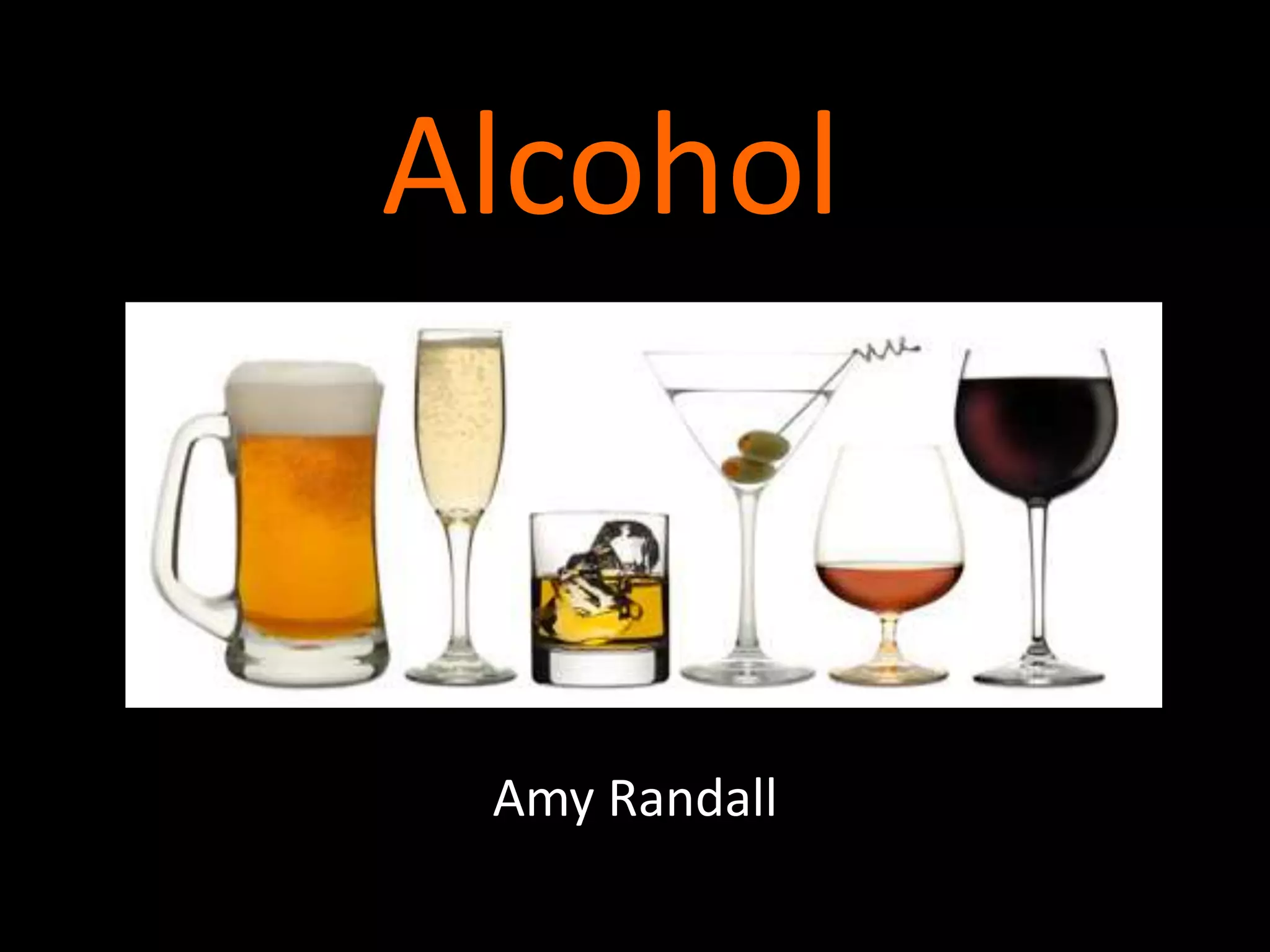
Alcohol 
Amy Randall
“People drink to socialize, celebrate, and 
relax. Alcohol often has a strong effect on 
people – and throughout history, we’ve 
struggled to understand and manage alcohol’s 
power.” 
– National Institute on Alcohol Abuse and Alcoholism
What is Alcohol? 
• It is an intoxicating ingredient found in beer, 
wine, and liquor 
• It is produced by the fermentation of yeast, 
sugars, and starches 
• It is a central nervous system depressant 
• It is rapidly absorbed from the stomach and small 
intestine into the bloodstream
What Happens When You Drink? 
• Alcohol enters your bloodstream as soon as you take your 
first sip 
• Its immediate effects can appear within about 10 minutes 
• As you drink, your blood alcohol concentration (BAC) levels 
increase 
– BAC- (the amount of alcohol present in your bloodstream) 
• The higher your BAC, the more impaired you become by 
alcohol’s effects
Effects of Alcohol 
• Impairs brain function and motor skills 
• Reduced inhibitions 
• Slurred speech 
• Motor impairment 
• Confusion 
• Memory problems 
• Concentration problems 
• Coma 
• Breathing problems 
• Death 
• Can have serious negative effects on a fetus
Effects Depend on: 
• How much you drink 
• How often you drink 
• Your age 
• Your health status 
• Your family history
Risks Associated With Drinking Alcohol 
• Car crashes and other accidents 
• Risky behavior 
• Violent behavior 
• Suicide and homicide
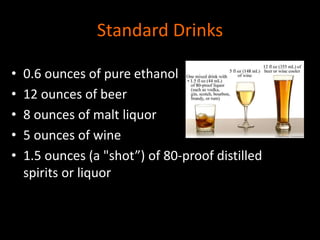
Standard Drinks 
• 0.6 ounces of pure ethanol 
• 12 ounces of beer 
• 8 ounces of malt liquor 
• 5 ounces of wine 
• 1.5 ounces (a "shot”) of 80-proof distilled 
spirits or liquor
Alcohol Addiction 
• A diagnosable disease characterized by a 
strong craving for alcohol, and/or continued 
use despite harm or personal injury 
• A pattern of drinking that results in harm to 
one's health, interpersonal relationships, or 
ability to work
Prevalence of Drinking 
• 87.6% of people ages 18 or older reported that they 
drank alcohol at some point in their lifetime 
• 71% reported that they drank in the past year 
• 56.3% reported that they drank in the past month
Prevalence of Binge/Heavy Drinking 
• 24.6% of people ages 18 or older reported that they 
engaged in binge drinking in the past month 
• 7.1% reported that they engaged in heavy drinking in 
the past month
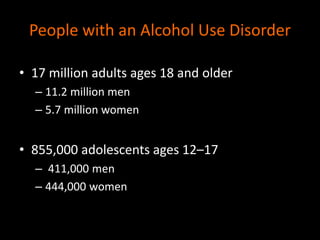
People with an Alcohol Use Disorder 
• 17 million adults ages 18 and older 
– 11.2 million men 
– 5.7 million women 
• 855,000 adolescents ages 12–17 
– 411,000 men 
– 444,000 women
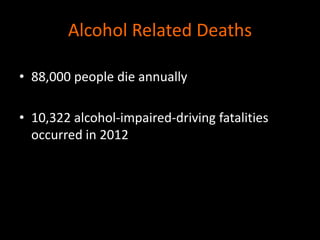
Alcohol Related Deaths 
• 88,000 people die annually 
• 10,322 alcohol-impaired-driving fatalities 
occurred in 2012
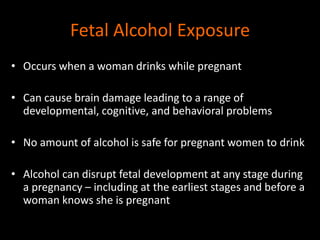
Fetal Alcohol Exposure 
• Occurs when a woman drinks while pregnant 
• Can cause brain damage leading to a range of 
developmental, cognitive, and behavioral problems 
• No amount of alcohol is safe for pregnant women to drink 
• Alcohol can disrupt fetal development at any stage during 
a pregnancy – including at the earliest stages and before a 
woman knows she is pregnant
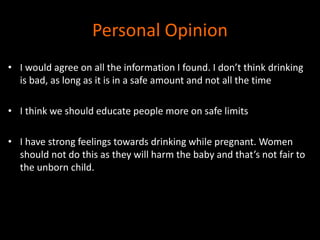
Personal Opinion 
• I would agree on all the information I found. I don’t think drinking 
is bad, as long as it is in a safe amount and not all the time 
• I think we should educate people more on safe limits 
• I have strong feelings towards drinking while pregnant. Women 
should not do this as they will harm the baby and that’s not fair to 
the unborn child.
Relevance to Practice 
If you drink over the “safe limits” often, it will 
increase your risk of developing an addiction. In 
the class we are talking about addictions and 
how they can be harmful to you and those 
around you.
Discussion Question 
1. Do you think most people drink with the 
intentions to get drunk? 
1. Many college age students drink. If they 
don’t, would you consider them “uncool?”
References 
Alcohol. (n.d.). National Institute on Drug Abuse. Retrieved 
September 12, 2014, from http://www.drugabuse.gov/drugs-abuse/ 
alcohol 
Overview of Alcohol Consumption. (n.d.). National Institute on 
Alcohol Abuse and Alcoholism (NIAAA). Retrieved September 12, 
2014, from http://www.niaaa.nih.gov/alcohol-health/overview-alcohol- 
consumption

Alcohol teachback

  • 1.
  • 2.
    “People drink tosocialize, celebrate, and relax. Alcohol often has a strong effect on people – and throughout history, we’ve struggled to understand and manage alcohol’s power.” – National Institute on Alcohol Abuse and Alcoholism
  • 3.
    What is Alcohol? • It is an intoxicating ingredient found in beer, wine, and liquor • It is produced by the fermentation of yeast, sugars, and starches • It is a central nervous system depressant • It is rapidly absorbed from the stomach and small intestine into the bloodstream
  • 4.
    What Happens WhenYou Drink? • Alcohol enters your bloodstream as soon as you take your first sip • Its immediate effects can appear within about 10 minutes • As you drink, your blood alcohol concentration (BAC) levels increase – BAC- (the amount of alcohol present in your bloodstream) • The higher your BAC, the more impaired you become by alcohol’s effects
  • 5.
    Effects of Alcohol • Impairs brain function and motor skills • Reduced inhibitions • Slurred speech • Motor impairment • Confusion • Memory problems • Concentration problems • Coma • Breathing problems • Death • Can have serious negative effects on a fetus
  • 6.
    Effects Depend on: • How much you drink • How often you drink • Your age • Your health status • Your family history
  • 7.
    Risks Associated WithDrinking Alcohol • Car crashes and other accidents • Risky behavior • Violent behavior • Suicide and homicide
  • 8.
    Standard Drinks •0.6 ounces of pure ethanol • 12 ounces of beer • 8 ounces of malt liquor • 5 ounces of wine • 1.5 ounces (a "shot”) of 80-proof distilled spirits or liquor
  • 9.
    Alcohol Addiction •A diagnosable disease characterized by a strong craving for alcohol, and/or continued use despite harm or personal injury • A pattern of drinking that results in harm to one's health, interpersonal relationships, or ability to work
  • 10.
    Prevalence of Drinking • 87.6% of people ages 18 or older reported that they drank alcohol at some point in their lifetime • 71% reported that they drank in the past year • 56.3% reported that they drank in the past month
  • 11.
    Prevalence of Binge/HeavyDrinking • 24.6% of people ages 18 or older reported that they engaged in binge drinking in the past month • 7.1% reported that they engaged in heavy drinking in the past month
  • 12.
    People with anAlcohol Use Disorder • 17 million adults ages 18 and older – 11.2 million men – 5.7 million women • 855,000 adolescents ages 12–17 – 411,000 men – 444,000 women
  • 13.
    Alcohol Related Deaths • 88,000 people die annually • 10,322 alcohol-impaired-driving fatalities occurred in 2012
  • 14.
    Fetal Alcohol Exposure • Occurs when a woman drinks while pregnant • Can cause brain damage leading to a range of developmental, cognitive, and behavioral problems • No amount of alcohol is safe for pregnant women to drink • Alcohol can disrupt fetal development at any stage during a pregnancy – including at the earliest stages and before a woman knows she is pregnant
  • 15.
    Personal Opinion •I would agree on all the information I found. I don’t think drinking is bad, as long as it is in a safe amount and not all the time • I think we should educate people more on safe limits • I have strong feelings towards drinking while pregnant. Women should not do this as they will harm the baby and that’s not fair to the unborn child.
  • 16.
    Relevance to Practice If you drink over the “safe limits” often, it will increase your risk of developing an addiction. In the class we are talking about addictions and how they can be harmful to you and those around you.
  • 17.
    Discussion Question 1.Do you think most people drink with the intentions to get drunk? 1. Many college age students drink. If they don’t, would you consider them “uncool?”
  • 18.
    References Alcohol. (n.d.).National Institute on Drug Abuse. Retrieved September 12, 2014, from http://www.drugabuse.gov/drugs-abuse/ alcohol Overview of Alcohol Consumption. (n.d.). National Institute on Alcohol Abuse and Alcoholism (NIAAA). Retrieved September 12, 2014, from http://www.niaaa.nih.gov/alcohol-health/overview-alcohol- consumption