DFC Updates and
Explanatory Reports
in GAM 13

Bill Hutchison, Ph.D., P.E., P.G.
TAGD Quarterly Meeting
February 25, 2014
Topics
• GMA 13 background
– Geography
– Groundwater Availability Model
– Initial DFC

• Activities to date
• Overview of draft explanatory report
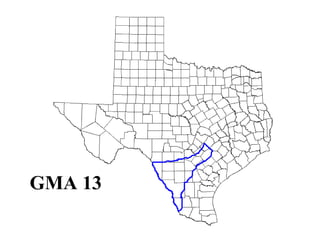
GMA 13
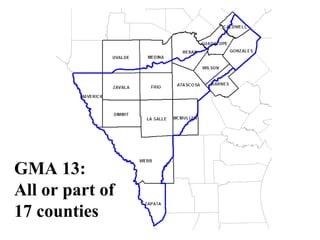
GMA 13:
All or part of
17 counties
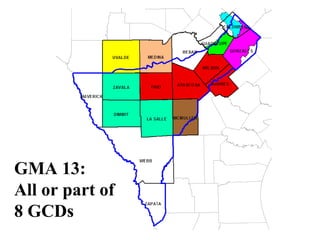
GMA 13:
All or part of
8 GCDs
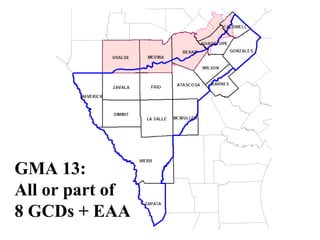
GMA 13:
All or part of
8 GCDs + EAA
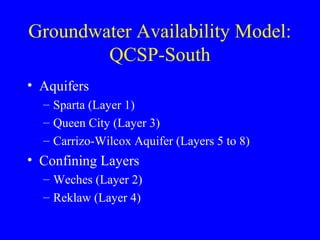
Groundwater Availability Model:
QCSP-South
• Aquifers
– Sparta (Layer 1)
– Queen City (Layer 3)
– Carrizo-Wilcox Aquifer (Layers 5 to 8)

• Confining Layers
– Weches (Layer 2)
– Reklaw (Layer 4)
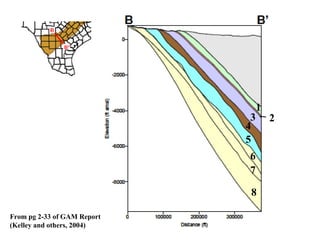
3
4
5

1

6
7
8
From pg 2-33 of GAM Report
(Kelley and others, 2004)

2
Carrizo-Wilcox, Queen City and
Sparta Aquifers
• GMA 13 Adopted DFC on April 9, 2010
• DFC establishment relied on results from
several model simulations
– DFC expressed as GMA-wide average (23 ft)
– Scenario 4 of GAM Run 09-034
• 61 year simulation
• Assumed a starting point in 2000
Summary of Activities:
Fall 2012 to Date
• Comparison of actual data with current
DFC (Task 0)
• Extended GAM with updated pumping
estimates from 2000 to 2011
• Updated future pumping
• Completed alternative simulations
• Completed draft of explanatory report
Summary of Activities:
Fall 2012 to Date
• Comparison of actual data with current
DFC (Task 0)
• Extended GAM with updated pumping
estimates from 2000 to 2011
• Updated future pumping
• Completed alternative simulations
• Completed draft of explanatory report
Comparison of Actual Data with
Current DFC (Task 0)
• Initial task to assess current DFC
• Address issues regarding use of “average”
drawdown as DFCs
• Key element of “Factor 1” (Aquifer Uses
and Conditions)
DFC and GAM Run
• How to compare actual data to DFC?
• How to compare actual data to results from
an “idealized” model run?
• How to compare “average” drawdown over
entire GMA (23 ft) with individual well
measurements?
Point-by-Point Comparison
• Comparisons at discrete locations
• Extract predicted groundwater levels/
drawdown from model files
• Compare to actual monitoring data
• Limited use of averaging
6,956 Wells in GMA 13 in the
TWDB Database
• 1,844 wells with screen top and bottom
• 748 are completed in exactly one GAM
layer
• 92 have 10 or more groundwater elevation
measurements with at least one after 2000
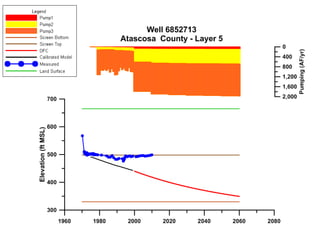
Hydrographs for 92 Wells
•
•
•
•
•
•
•

Presented in Task 0 report
Pumping (in immediate area of the well)
Land surface elevation
Screen top and bottom elevation
Actual groundwater elevation
Calibrated model groundwater elevation
Simulated groundwater elevation (DFC run)
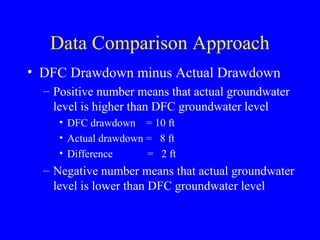
Data Comparison Approach
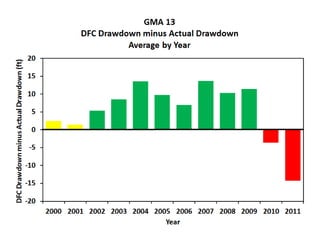
• DFC Drawdown minus Actual Drawdown
– Positive number means that actual groundwater
level is higher than DFC groundwater level
• DFC drawdown = 10 ft
• Actual drawdown = 8 ft
• Difference
= 2 ft

– Negative number means that actual groundwater
level is lower than DFC groundwater level
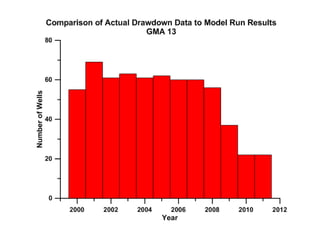
Data Comparison
• Well-by-well drawdown comparison
requires:
– Groundwater elevation measurement in late
1999/early 2000
– Groundwater elevation measurement in year of
interest

• Task 0 report contains maps, tables, and
graphs for the GMA and for each County
• Only one GMA-level example shown here
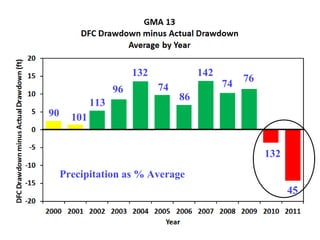
142

132
96
90

113

74

74

76

86

101
132
Precipitation as % Average
45
Observations
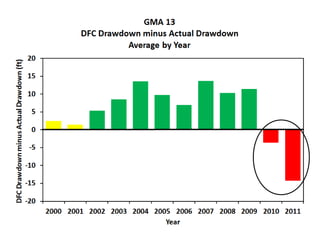
• Actual drawdown less than DFC drawdown
– In most counties and in most years, MAG was
much higher than actual pumping

• Exception in 2010 and 2011
– Increased use due to drought?
– Increase use due to hydraulic fracturing water
use?
– Decreased recharge due to drought?
Summary of Activities:
Fall 2012 to Date
• Comparison of actual data with current
DFC (Task 0)
• Extended GAM with updated pumping
estimates from 2000 to 2011
• Updated future pumping
• Completed alternative simulations
• Completed draft of explanatory report
Updated Pumping
2000 to 2011
• More accurate pumping estimates
– Based on TWDB Water Use Survey and GCD
input

• Provides ability to use end of 2011 as
starting point for any drawdown based DFC
Pumping Updates for
2000 to 2011
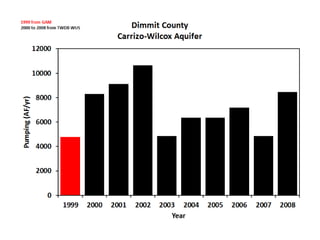
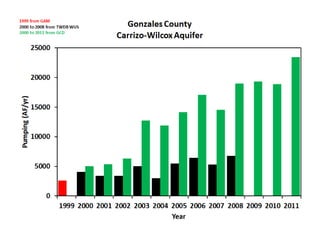
• WUS and GCD estimates were used as
starting point
– Included updated well locations in Gonzales
and Caldwell Counties

• “Calibrated” annual pumping on a countyaquifer basis based on groundwater
elevation data from TWDB database
• Technical memorandum will be provided to
TWDB
Summary of Activities:
Fall 2012 to Date
• Comparison of actual data with current
DFC (Task 0)
• Extended GAM with updated pumping
estimates from 2000 to 2011
• Updated future pumping
• Completed alternative simulations
• Completed draft of explanatory report
Future Pumping Estimates
(2012 to 2070)
• “Factor 2” (Water Supply Needs and Water
Management Strategies)
– TWDB MAG report associated with 2010 DFCs
– DB12 data from TWDB (Sources, Demands,
Water Management Strategies)
– Oil and Gas Water Use Estimates (BEG study)
– SAWS input (email of June 27, 2013)
– GCD input
Summary of Activities:
Fall 2012 to Date
• Comparison of actual data with current
DFC (Task 0)
• Extended GAM with updated pumping
estimates from 2000 to 2011
• Updated future pumping
• Completed alternative simulations
• Completed draft of explanatory report
Alternative Simulations
• 59-year simulations (2012 to 2070)
• Use 2011 conditions as starting point
– Based on model update that covered 2000 to
2011
– Developed “Base Case” that included current
MAG and input from SAWS, GCDs
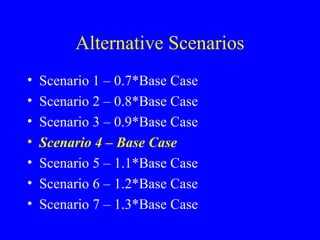
Alternative Scenarios
•
•
•
•
•
•
•

Scenario 1 – 0.7*Base Case
Scenario 2 – 0.8*Base Case
Scenario 3 – 0.9*Base Case
Scenario 4 – Base Case
Scenario 5 – 1.1*Base Case
Scenario 6 – 1.2*Base Case
Scenario 7 – 1.3*Base Case
Simulation Output
• Average Drawdown (Maps, Tables,
Graphs)
–
–
–
–
–
–

GMA
County
GCD
Aquifer
County-Aquifer
GCD-Aquifer
Other Simulation Outputs
• Maps, Tables and Graphs
– Storage change
– Outcrop vs. confined drawdown or storage

• Individual well summaries
– Groundwater elevation
– Drawdown (from 2011)
– Height of water above (or below) top of screen
Status of GAM Simulations
• Scenarios 1 to 7 presented to GMA 13 on
October 9, 2013
• Requested input regarding changes by
December 31, 2013
– Two GCDs requested modifications to future
pumping
• Gonzales UWCD
• Guadalupe County GCD
Status of GAM Simulations
• Made changes and completed Scenario 8
– Presented preliminary results to Guadalupe on
February 13, 2014

• Complete summary report before next
GMA 13 meeting (March 13, 2014)
• Discuss results at GMA 13 meeting
– Accept as basis for proposed DFC
– Make additional revisions

• Discuss level of detail of DFC expression
Summary of Activities:
Fall 2012 to Date
• Comparison of actual data with current
DFC (Task 0)
• Extended GAM with updated pumping
estimates from 2000 to 2011
• Updated future pumping
• Completed alternative simulations
• Completed draft of explanatory report
Explanatory Report
• Statute requires that GMA 13 consider the
nine factors (and the balancing) prior to
adopting a “proposed” DFC
• An “explanatory” report is required when
submitting “final” DFC to TWDB, and
must include documentation of these factors
– “Explanatory” report not required for
“proposed” DFC
GMA 13 Approach
• “Preliminary” explanatory report
– Document factor review for “proposed” DFC
– Useful documentation for GCDs during public
review period after “proposed” DFC is adopted
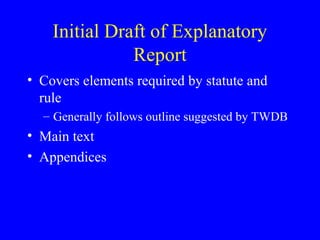
Initial Draft of Explanatory
Report
• Covers elements required by statute and
rule
– Generally follows outline suggested by TWDB
• Main text
• Appendices
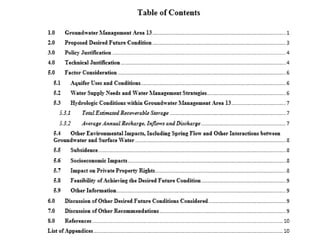
1.0 Groundwater Management
Area 13
• Overview of GMA 13 Geography and
GCDs
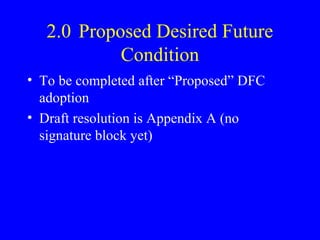
2.0 Proposed Desired Future
Condition
• To be completed after “Proposed” DFC
adoption
• Draft resolution is Appendix A (no
signature block yet)
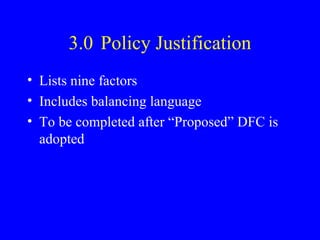
3.0 Policy Justification
• Lists nine factors
• Includes balancing language
• To be completed after “Proposed” DFC is
adopted
4.0 Technical Justification
• Discusses GAM used and its limitations
5.0 Factor Consideration
• Discussion of nine factors required by

statute
5.1 Aquifer Uses and Conditions
• Pumping estimates (Appendix B)
– 1999 Pumping from GAM
– 2000 to 2008 TWDB Water Use Survey
estimates
– Gonzales UWCD estimates
– Plum Creek CD estimates

• Also references and includes Task 0 report
as Appendix C
5.2 Water Supply Needs and
Water Management Strategies
• Included in Appendix D
– DB12 data from TWDB (Sources, Demands,
Water Management Strategies)
– Oil and Gas Water Use Estimates (BEG study)
– SAWS input (email of June 27, 2013)
– GCD input
– TWDB MAG report associated with 2010
DFCs
5.3 Hydrologic Conditions
• 5.3.1 – Storage (from TWDB)
– Included as Appendix E

• 5.3.2 – Recharge, Inflows and Discharge
(Appendix F)
– Table of Average Historic Water Budget (from
February 19, 2010 GMA 13 meeting) with a
column for proposed DFC (pending GMA 13
action)
– More detailed water budget data from GAM
Run 09-034
5.4 Other Environmental Impacts
• Spring flow and groundwater-surface water
interactions
• Covered in water budget discussion in
Section 5.3.2 and data in Appendix F
5.5 Subsidence
• Not applicable
5.6 Socioeconomic Impacts
• State Water Plan strategies are an important
foundation for this DFC
• Included Region K, L, and M
socioeconomic reports completed by
TWDB in 2010 in Appendix G
– Assesses impacts of not meeting water needs
5.7 Impact on Private Property
Rights
• Balancing discussion
– Existing well impacts vs. impacts to property
owners who “conserved” groundwater

• Will include maps of well specific impacts
based on Task 0 wells
– Feet of water above/below top of screen
– Feet of water above/below bottom of screen
5.8 Feasibility of Achieving DFC
• Monitoring discussion
• Recommendation for analyses similar to
Task 0 evaluation
• Discussion on updates every five years
5.9 Other Information
• Included James Bene paper and
presentation to GMA 13 as Appendix H
• Include comparison of model output to
simple Darcian approach forwarded by Bill
Klempt
6.0 Discussion of Other DFCs
Considered
• To be completed
• Drawn from alternative simulations
7.0 Discussion of Other
Recommendations
• To be completed once public hearings are
held (i.e. part of final explanatory report)
8.0 References
• References cited in report
Appendices
•
•
•
•
•
•
•
•

A – DFC Resolution
B – Historic use Estimates
C – Task 0 report
D – Various future pumping projections
E – TWDB storage report
F – Water budget estimates
G – Socioeconomic reports
H – Other information
TWDB Review
• TWDB staff developed a checklist of
required elements
• Initiated a review of the draft
• All elements were found in draft
(10/25/2013 email)
Summary
• GMA 13 has reviewed and compared
current DFC and actual data (resulted in
extended GAM – pumping through 2011)
• GMA 13 has considered the relevant factors
to “propose” a new DFC
• GMA 13 has completed alternative GAM
simulations (more to be completed?)
• GMA 13 is reviewing draft of explanatory
report
• Next GMA 13 meeting is March 13, 2014
Questions?

Bill Hutchison
512-745-0599
billhutch@texasgw.com

DFC Updates and Explanatory Reports in GMA 13, Bill Hutchison

  • 1.
    DFC Updates and ExplanatoryReports in GAM 13 Bill Hutchison, Ph.D., P.E., P.G. TAGD Quarterly Meeting February 25, 2014
  • 2.
    Topics • GMA 13background – Geography – Groundwater Availability Model – Initial DFC • Activities to date • Overview of draft explanatory report
  • 3.
  • 4.
    GMA 13: All orpart of 17 counties
  • 5.
    GMA 13: All orpart of 8 GCDs
  • 6.
    GMA 13: All orpart of 8 GCDs + EAA
  • 7.
    Groundwater Availability Model: QCSP-South •Aquifers – Sparta (Layer 1) – Queen City (Layer 3) – Carrizo-Wilcox Aquifer (Layers 5 to 8) • Confining Layers – Weches (Layer 2) – Reklaw (Layer 4)
  • 8.
    3 4 5 1 6 7 8 From pg 2-33of GAM Report (Kelley and others, 2004) 2
  • 10.
    Carrizo-Wilcox, Queen Cityand Sparta Aquifers • GMA 13 Adopted DFC on April 9, 2010 • DFC establishment relied on results from several model simulations – DFC expressed as GMA-wide average (23 ft) – Scenario 4 of GAM Run 09-034 • 61 year simulation • Assumed a starting point in 2000
  • 11.
    Summary of Activities: Fall2012 to Date • Comparison of actual data with current DFC (Task 0) • Extended GAM with updated pumping estimates from 2000 to 2011 • Updated future pumping • Completed alternative simulations • Completed draft of explanatory report
  • 12.
    Summary of Activities: Fall2012 to Date • Comparison of actual data with current DFC (Task 0) • Extended GAM with updated pumping estimates from 2000 to 2011 • Updated future pumping • Completed alternative simulations • Completed draft of explanatory report
  • 13.
    Comparison of ActualData with Current DFC (Task 0) • Initial task to assess current DFC • Address issues regarding use of “average” drawdown as DFCs • Key element of “Factor 1” (Aquifer Uses and Conditions)
  • 14.
    DFC and GAMRun • How to compare actual data to DFC? • How to compare actual data to results from an “idealized” model run? • How to compare “average” drawdown over entire GMA (23 ft) with individual well measurements?
  • 15.
    Point-by-Point Comparison • Comparisonsat discrete locations • Extract predicted groundwater levels/ drawdown from model files • Compare to actual monitoring data • Limited use of averaging
  • 16.
    6,956 Wells inGMA 13 in the TWDB Database • 1,844 wells with screen top and bottom • 748 are completed in exactly one GAM layer • 92 have 10 or more groundwater elevation measurements with at least one after 2000
  • 17.
    Hydrographs for 92Wells • • • • • • • Presented in Task 0 report Pumping (in immediate area of the well) Land surface elevation Screen top and bottom elevation Actual groundwater elevation Calibrated model groundwater elevation Simulated groundwater elevation (DFC run)
  • 20.
    Data Comparison Approach •DFC Drawdown minus Actual Drawdown – Positive number means that actual groundwater level is higher than DFC groundwater level • DFC drawdown = 10 ft • Actual drawdown = 8 ft • Difference = 2 ft – Negative number means that actual groundwater level is lower than DFC groundwater level
  • 21.
    Data Comparison • Well-by-welldrawdown comparison requires: – Groundwater elevation measurement in late 1999/early 2000 – Groundwater elevation measurement in year of interest • Task 0 report contains maps, tables, and graphs for the GMA and for each County • Only one GMA-level example shown here
  • 25.
  • 26.
    Observations • Actual drawdownless than DFC drawdown – In most counties and in most years, MAG was much higher than actual pumping • Exception in 2010 and 2011 – Increased use due to drought? – Increase use due to hydraulic fracturing water use? – Decreased recharge due to drought?
  • 27.
    Summary of Activities: Fall2012 to Date • Comparison of actual data with current DFC (Task 0) • Extended GAM with updated pumping estimates from 2000 to 2011 • Updated future pumping • Completed alternative simulations • Completed draft of explanatory report
  • 28.
    Updated Pumping 2000 to2011 • More accurate pumping estimates – Based on TWDB Water Use Survey and GCD input • Provides ability to use end of 2011 as starting point for any drawdown based DFC
  • 31.
    Pumping Updates for 2000to 2011 • WUS and GCD estimates were used as starting point – Included updated well locations in Gonzales and Caldwell Counties • “Calibrated” annual pumping on a countyaquifer basis based on groundwater elevation data from TWDB database • Technical memorandum will be provided to TWDB
  • 32.
    Summary of Activities: Fall2012 to Date • Comparison of actual data with current DFC (Task 0) • Extended GAM with updated pumping estimates from 2000 to 2011 • Updated future pumping • Completed alternative simulations • Completed draft of explanatory report
  • 33.
    Future Pumping Estimates (2012to 2070) • “Factor 2” (Water Supply Needs and Water Management Strategies) – TWDB MAG report associated with 2010 DFCs – DB12 data from TWDB (Sources, Demands, Water Management Strategies) – Oil and Gas Water Use Estimates (BEG study) – SAWS input (email of June 27, 2013) – GCD input
  • 34.
    Summary of Activities: Fall2012 to Date • Comparison of actual data with current DFC (Task 0) • Extended GAM with updated pumping estimates from 2000 to 2011 • Updated future pumping • Completed alternative simulations • Completed draft of explanatory report
  • 35.
    Alternative Simulations • 59-yearsimulations (2012 to 2070) • Use 2011 conditions as starting point – Based on model update that covered 2000 to 2011 – Developed “Base Case” that included current MAG and input from SAWS, GCDs
  • 36.
    Alternative Scenarios • • • • • • • Scenario 1– 0.7*Base Case Scenario 2 – 0.8*Base Case Scenario 3 – 0.9*Base Case Scenario 4 – Base Case Scenario 5 – 1.1*Base Case Scenario 6 – 1.2*Base Case Scenario 7 – 1.3*Base Case
  • 37.
    Simulation Output • AverageDrawdown (Maps, Tables, Graphs) – – – – – – GMA County GCD Aquifer County-Aquifer GCD-Aquifer
  • 39.
    Other Simulation Outputs •Maps, Tables and Graphs – Storage change – Outcrop vs. confined drawdown or storage • Individual well summaries – Groundwater elevation – Drawdown (from 2011) – Height of water above (or below) top of screen
  • 40.
    Status of GAMSimulations • Scenarios 1 to 7 presented to GMA 13 on October 9, 2013 • Requested input regarding changes by December 31, 2013 – Two GCDs requested modifications to future pumping • Gonzales UWCD • Guadalupe County GCD
  • 41.
    Status of GAMSimulations • Made changes and completed Scenario 8 – Presented preliminary results to Guadalupe on February 13, 2014 • Complete summary report before next GMA 13 meeting (March 13, 2014) • Discuss results at GMA 13 meeting – Accept as basis for proposed DFC – Make additional revisions • Discuss level of detail of DFC expression
  • 42.
    Summary of Activities: Fall2012 to Date • Comparison of actual data with current DFC (Task 0) • Extended GAM with updated pumping estimates from 2000 to 2011 • Updated future pumping • Completed alternative simulations • Completed draft of explanatory report
  • 43.
    Explanatory Report • Statuterequires that GMA 13 consider the nine factors (and the balancing) prior to adopting a “proposed” DFC • An “explanatory” report is required when submitting “final” DFC to TWDB, and must include documentation of these factors – “Explanatory” report not required for “proposed” DFC
  • 44.
    GMA 13 Approach •“Preliminary” explanatory report – Document factor review for “proposed” DFC – Useful documentation for GCDs during public review period after “proposed” DFC is adopted
  • 45.
    Initial Draft ofExplanatory Report • Covers elements required by statute and rule – Generally follows outline suggested by TWDB • Main text • Appendices
  • 47.
    1.0 Groundwater Management Area13 • Overview of GMA 13 Geography and GCDs
  • 48.
    2.0 Proposed DesiredFuture Condition • To be completed after “Proposed” DFC adoption • Draft resolution is Appendix A (no signature block yet)
  • 49.
    3.0 Policy Justification •Lists nine factors • Includes balancing language • To be completed after “Proposed” DFC is adopted
  • 50.
    4.0 Technical Justification •Discusses GAM used and its limitations
  • 51.
    5.0 Factor Consideration •Discussion of nine factors required by statute
  • 52.
    5.1 Aquifer Usesand Conditions • Pumping estimates (Appendix B) – 1999 Pumping from GAM – 2000 to 2008 TWDB Water Use Survey estimates – Gonzales UWCD estimates – Plum Creek CD estimates • Also references and includes Task 0 report as Appendix C
  • 53.
    5.2 Water SupplyNeeds and Water Management Strategies • Included in Appendix D – DB12 data from TWDB (Sources, Demands, Water Management Strategies) – Oil and Gas Water Use Estimates (BEG study) – SAWS input (email of June 27, 2013) – GCD input – TWDB MAG report associated with 2010 DFCs
  • 54.
    5.3 Hydrologic Conditions •5.3.1 – Storage (from TWDB) – Included as Appendix E • 5.3.2 – Recharge, Inflows and Discharge (Appendix F) – Table of Average Historic Water Budget (from February 19, 2010 GMA 13 meeting) with a column for proposed DFC (pending GMA 13 action) – More detailed water budget data from GAM Run 09-034
  • 55.
    5.4 Other EnvironmentalImpacts • Spring flow and groundwater-surface water interactions • Covered in water budget discussion in Section 5.3.2 and data in Appendix F
  • 56.
  • 57.
    5.6 Socioeconomic Impacts •State Water Plan strategies are an important foundation for this DFC • Included Region K, L, and M socioeconomic reports completed by TWDB in 2010 in Appendix G – Assesses impacts of not meeting water needs
  • 58.
    5.7 Impact onPrivate Property Rights • Balancing discussion – Existing well impacts vs. impacts to property owners who “conserved” groundwater • Will include maps of well specific impacts based on Task 0 wells – Feet of water above/below top of screen – Feet of water above/below bottom of screen
  • 59.
    5.8 Feasibility ofAchieving DFC • Monitoring discussion • Recommendation for analyses similar to Task 0 evaluation • Discussion on updates every five years
  • 60.
    5.9 Other Information •Included James Bene paper and presentation to GMA 13 as Appendix H • Include comparison of model output to simple Darcian approach forwarded by Bill Klempt
  • 61.
    6.0 Discussion ofOther DFCs Considered • To be completed • Drawn from alternative simulations
  • 62.
    7.0 Discussion ofOther Recommendations • To be completed once public hearings are held (i.e. part of final explanatory report)
  • 63.
  • 64.
    Appendices • • • • • • • • A – DFCResolution B – Historic use Estimates C – Task 0 report D – Various future pumping projections E – TWDB storage report F – Water budget estimates G – Socioeconomic reports H – Other information
  • 65.
    TWDB Review • TWDBstaff developed a checklist of required elements • Initiated a review of the draft • All elements were found in draft (10/25/2013 email)
  • 66.
    Summary • GMA 13has reviewed and compared current DFC and actual data (resulted in extended GAM – pumping through 2011) • GMA 13 has considered the relevant factors to “propose” a new DFC • GMA 13 has completed alternative GAM simulations (more to be completed?) • GMA 13 is reviewing draft of explanatory report • Next GMA 13 meeting is March 13, 2014
  • 67.