Bloomberg Intelligence
India’s Budget: Petroleum Impact
India’s budget due Feb. 28 may include details on how to refocus
the country’s energy subsidies. This may help reduce the budget
deficit while also freeing up funds for India firms to invest in oil
and gas exploration and much-needed infrastructure.
The government, trying to sell state assets to cut the deficit, may
have to address investor concerns regarding subsidy allocations
and natural-gas prices. Investors will be watching for evidence that
Modi’s planned reforms are achievable.
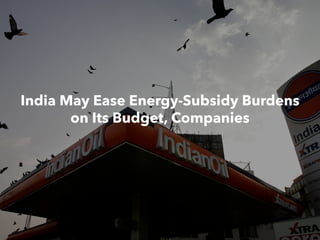
India May Ease Energy-Subsidy Burdens
on Its Budget, Companies
Lower subsidies on retail fuel in India, which amounted to about
2% of GDP in 2014, would allow the government to channel some
of the savings to investments in infrastructure. India also plans to
reduce the budget deficit from almost 4.9% of GDP in the fiscal
year ending in March to 3.6% in the next year.
Upstream companies such as ONGC and Oil India paid about
48% of the subsidies. They could use funds now allocated to retail
payouts on more productive upstream exploration.
Companies Impacted
ONGC and Oil India paid out 48% of the nation’s fuel subsidies
in fiscal year 2014 via sales of discounted crude to oil-marketing
companies such as BPCL, HPCL and India Oil.
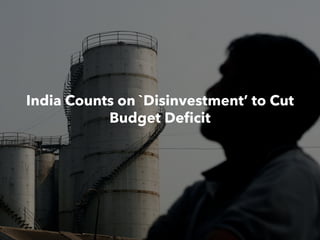
India Counts on `Disinvestment’ to Cut
Budget Deficit
India may sell 430 billion rupees ($6.9 billion) of state-owned
assets for the year ending in March, according to the Business
Standard. By winding down ownership of state assets, India aims
to cut its deficit to 3.6% of GDP by the end of the current fiscal
year from 5.6% as of March 2014.
The government, which retains at least a 51% stake in all state
offerings, has set disinvestment targets each year since 1991.
India’s inefficiencies and high levels of state control have limited
investor appetite for the stakes.
Companies Impacted
ONGC and Indian Oil are among state energy companies up for
sale in the coming years.
Next India Budget Gives Reality Check
for Modi’s Planned Reforms
Confidence in Indian Prime Minister Narendra Modi’s energy
reforms may be tested against the coming budget. Optimism
about his reforms helped drive price-to-book values for the BSE
Oil & Gas Index from a low 1.1x in 2013 to a three-year high of 1.6x
in 2014.
Building on those valuations will require evidence that reforms
are in place, such as easing of fuel subsidies. While declining oil
prices have reduced sector valuations, they have also given Modi
more room to push for changes.
Companies Impacted
Oil India, Indian Oil, ONGC and Gail are government-controlled
oil and gas companies that will be directly affected by sector
reforms outlined in this year’s budget.
Bloomberg Intelligence offers valuable industry and company data,
interactive charting and written analysis with government and credit
insights from a team of independent experts, giving trading and
investment professionals deep insight into where crucial industries stand
today and where they may be heading next.

Bloomberg Intelligence: India Budget: Petroleum Impact

  • 1.
  • 2.
    India’s budget dueFeb. 28 may include details on how to refocus the country’s energy subsidies. This may help reduce the budget deficit while also freeing up funds for India firms to invest in oil and gas exploration and much-needed infrastructure. The government, trying to sell state assets to cut the deficit, may have to address investor concerns regarding subsidy allocations and natural-gas prices. Investors will be watching for evidence that Modi’s planned reforms are achievable.
  • 3.
    India May EaseEnergy-Subsidy Burdens on Its Budget, Companies
  • 4.
    Lower subsidies onretail fuel in India, which amounted to about 2% of GDP in 2014, would allow the government to channel some of the savings to investments in infrastructure. India also plans to reduce the budget deficit from almost 4.9% of GDP in the fiscal year ending in March to 3.6% in the next year. Upstream companies such as ONGC and Oil India paid about 48% of the subsidies. They could use funds now allocated to retail payouts on more productive upstream exploration.
  • 5.
    Companies Impacted ONGC andOil India paid out 48% of the nation’s fuel subsidies in fiscal year 2014 via sales of discounted crude to oil-marketing companies such as BPCL, HPCL and India Oil.
  • 6.
    India Counts on`Disinvestment’ to Cut Budget Deficit
  • 7.
    India may sell430 billion rupees ($6.9 billion) of state-owned assets for the year ending in March, according to the Business Standard. By winding down ownership of state assets, India aims to cut its deficit to 3.6% of GDP by the end of the current fiscal year from 5.6% as of March 2014. The government, which retains at least a 51% stake in all state offerings, has set disinvestment targets each year since 1991. India’s inefficiencies and high levels of state control have limited investor appetite for the stakes.
  • 8.
    Companies Impacted ONGC andIndian Oil are among state energy companies up for sale in the coming years.
  • 9.
    Next India BudgetGives Reality Check for Modi’s Planned Reforms
  • 10.
    Confidence in IndianPrime Minister Narendra Modi’s energy reforms may be tested against the coming budget. Optimism about his reforms helped drive price-to-book values for the BSE Oil & Gas Index from a low 1.1x in 2013 to a three-year high of 1.6x in 2014. Building on those valuations will require evidence that reforms are in place, such as easing of fuel subsidies. While declining oil prices have reduced sector valuations, they have also given Modi more room to push for changes.
  • 11.
    Companies Impacted Oil India,Indian Oil, ONGC and Gail are government-controlled oil and gas companies that will be directly affected by sector reforms outlined in this year’s budget.
  • 12.
    Bloomberg Intelligence offersvaluable industry and company data, interactive charting and written analysis with government and credit insights from a team of independent experts, giving trading and investment professionals deep insight into where crucial industries stand today and where they may be heading next.