Dissecting the E&P rally:
Tailwinds not helping all
Vincent G Piazza and Peter Pulikkan
Bloomberg Intelligence analysts
Asset concentration among E&Ps favored over diversification
E&Ps with concentrated assets have been favored this year over
their globally diversified peers. In liquid equity markets with
breadth and depth, such as the U.S., investors have been free to
pursue specific exposures without excess friction costs.
A diversified conglomerate, at times perceived as a remnant of
a less-efficient model in a less-liquid market, may have assets in
multiple regions and politically sensitive or hostile jurisdictions,
creating analytical complexity.
Appalachia peers lag gas and S&P, yet rice energy runs ahead
EQT and Range Resources, among the leading peers exposed
to Marcellus natural gas, have lagged behind both the
commodity and the broader equity market in the past 12 months.
Southwestern Energy, the group’s worst performer, recently
entered the play through acquisitions, adding debt to its balance
sheet.
The company also maintains a legacy exposure in the mature
Fayetteville Shale. Even with infrastructure bottlenecks arresting
the pace of Cabot’s output growth, its equity performance trails
only Rice.
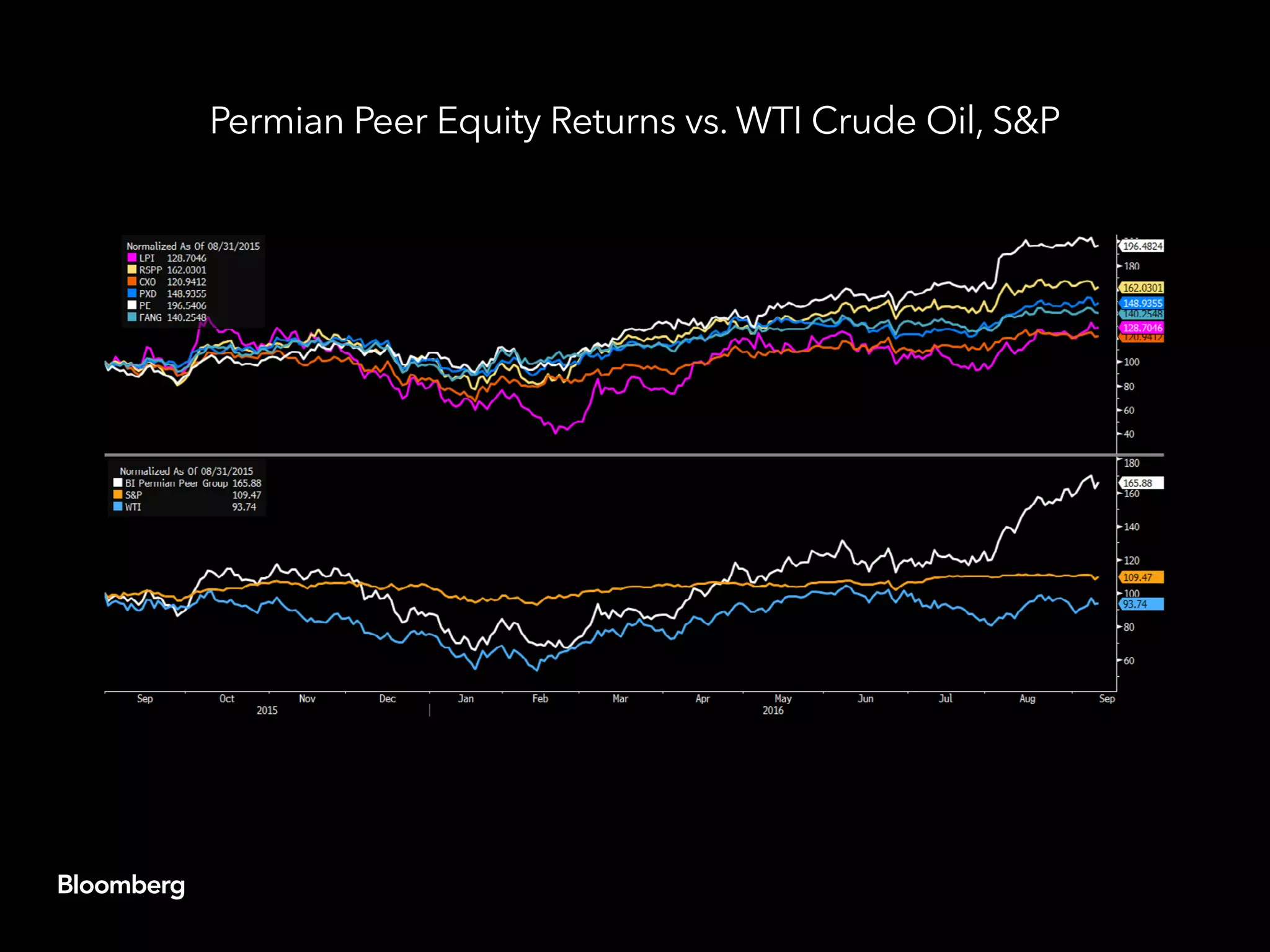
Permian-exposed equities outperform competing basins, oil prices
The outperformance of Permian Basin-exposed E&Ps has been driven
by drilling success across the Midland and Delaware sub-basins.
Acreage prices in the Permian, a legacy play drilled since the 1920s,
have risen due to strong delineation of the region’s multiple stacked
horizons, or zones, through deployment of unconventional drilling
technology.
The Permian’s lower costs and embedded infrastructure, relative to
more recent oil-prone plays, have encouraged private-equity firms to
fund teams experienced in the basin.
Permian Peer Equity Returns vs. WTI Crude Oil, S&P
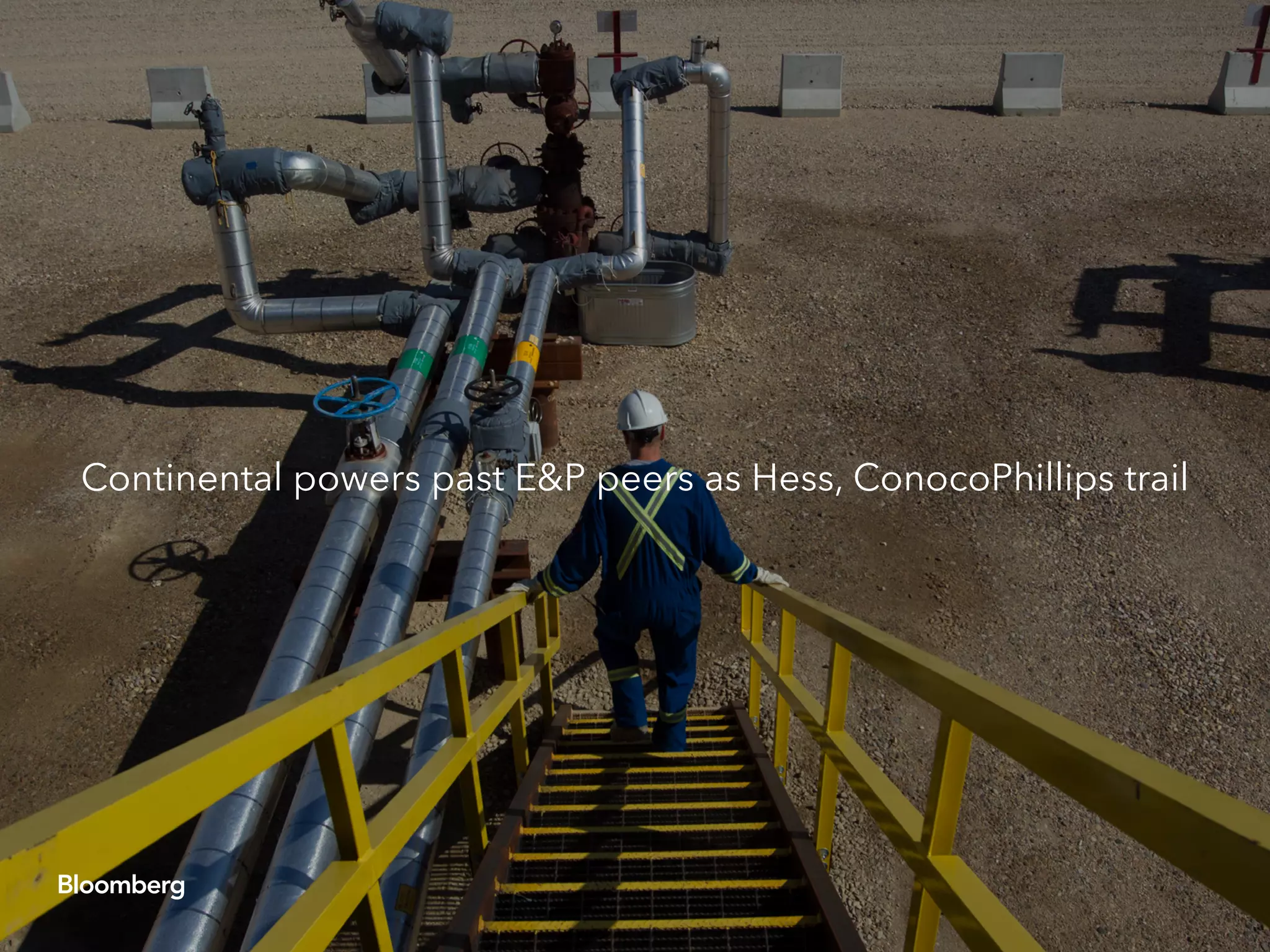
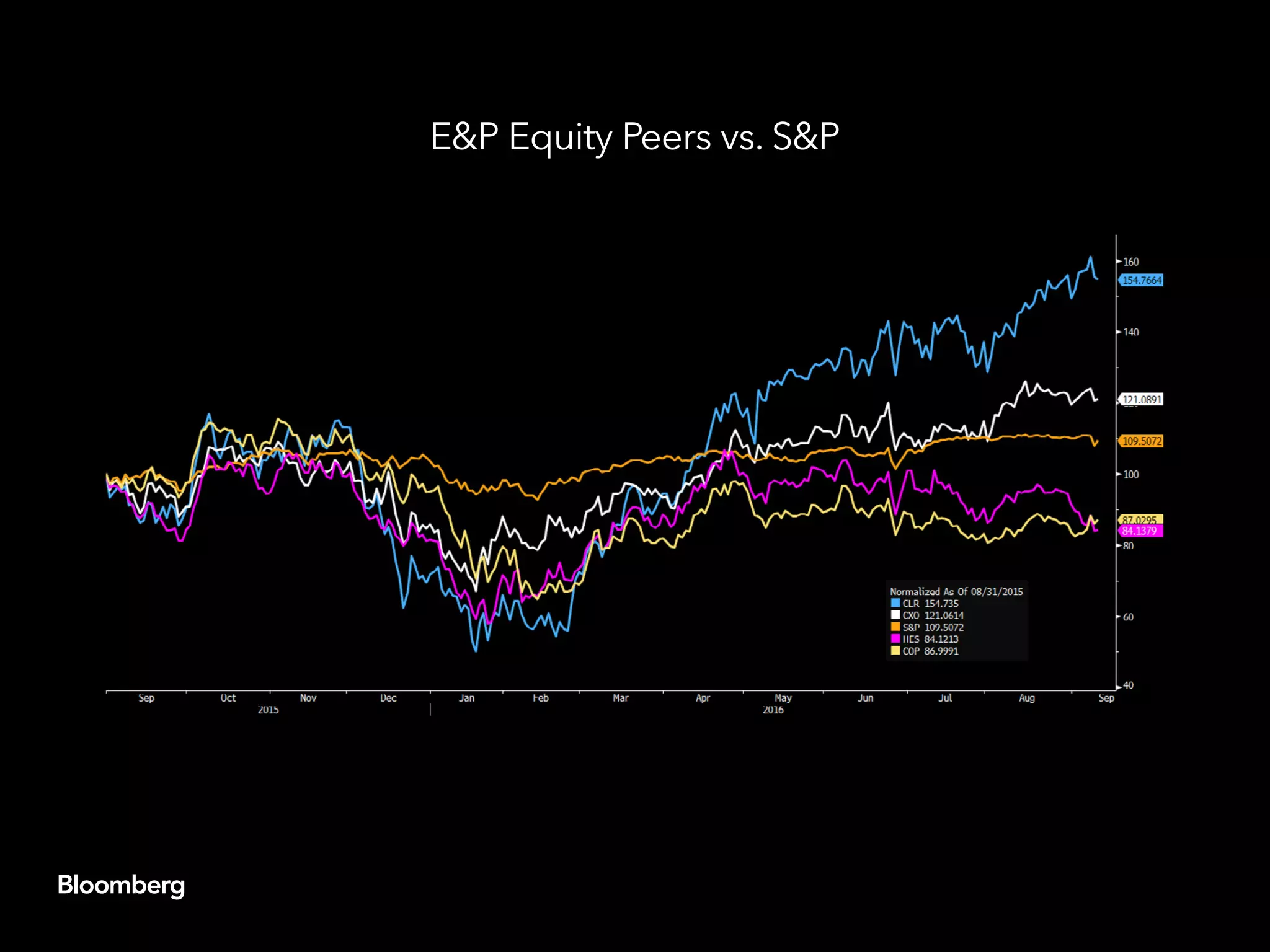
Continental powers past E&P peers as Hess, ConocoPhillips trail
Continental, a leader in the Williston Basin, is more exposed to
volatile energy prices due to its lack of hedging. This has boosted
its performance relative to peers, as its shares followed the powerful
oil rally from the 1Q bottom. Beating closely managed guidance has
traditionally underpinned Concho’s steady success.
Diversified players Hess and ConocoPhillips have lagged behind,
primarily due to uneven operational performance and a lack of asset
concentration, which has tended to cloud the investment case.
E&P Equity Peers vs. S&P
Multinational E&Ps’ diverse holdings cloud investment narrative
Broad diversification and exposure to sensitive, opaque regions
across the globe may explain the underperformance of some
larger E&Ps, relative to peers with more concentrated exposure to
recognized and better-understood U.S. onshore plays.
Having longer-lived, capital-intensive deepwater offshore projects in
politically sensitive or hostile regions can further cloud the investment
case. More importantly, investors in liquid markets are free to recreate
desired exposures, making conglomerates less appealing
Diversified E&P Equity Performance vs. Peers & S&P
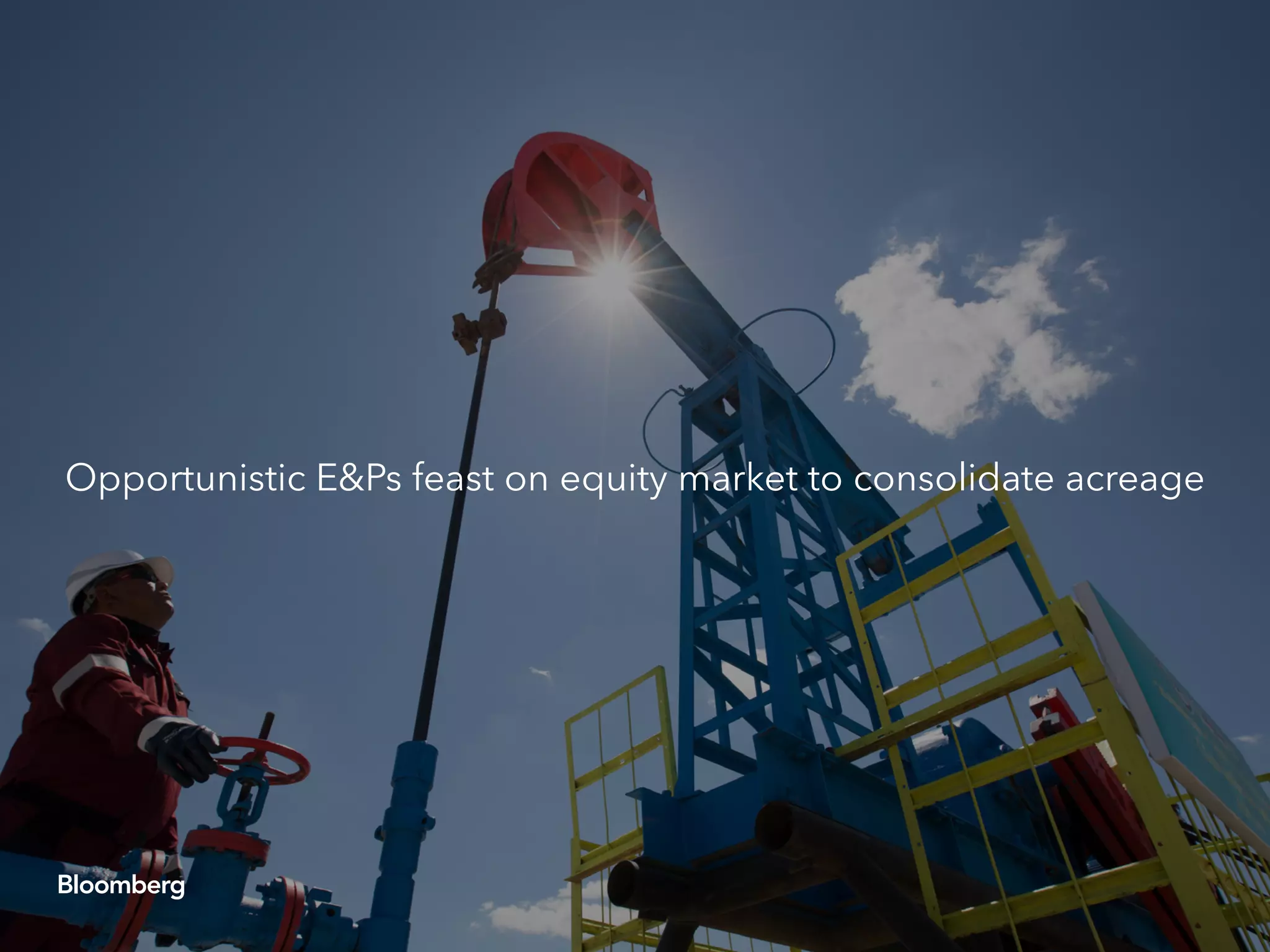
Opportunistic E&Ps feast on equity market to consolidate acreage
The rally in crude oil benchmarks, after an ominous start to 2016,
pulled E&P shares higher on expectations that supply-and-demand
imbalances would narrow. Equity offerings have fortified balance
sheets and protected drilling programs, while also allowing publicly
traded E&Ps to add to their concentrated asset positions.
Upstream players have purchased acreage, reserves and output from
private operators or other E&Ps by arbitraging elevated valuations.
This has acted as a catalyst, driving up acreage prices.
E&P Equity Offerings in 2016 & Performance
Bloomberg Intelligence offers valuable insight and company data,
interactive charting and written analysis with government, credit
insights from a team of independent experts, giving trading and
investment professionals deep insight into where crucial industries
start today and where they may be heading next.

Dissecting the E&P rally: Tailwinds not helping at all

  • 1.
    Dissecting the E&Prally: Tailwinds not helping all Vincent G Piazza and Peter Pulikkan Bloomberg Intelligence analysts
  • 2.
    Asset concentration amongE&Ps favored over diversification
  • 3.
    E&Ps with concentratedassets have been favored this year over their globally diversified peers. In liquid equity markets with breadth and depth, such as the U.S., investors have been free to pursue specific exposures without excess friction costs. A diversified conglomerate, at times perceived as a remnant of a less-efficient model in a less-liquid market, may have assets in multiple regions and politically sensitive or hostile jurisdictions, creating analytical complexity.
  • 4.
    Appalachia peers laggas and S&P, yet rice energy runs ahead
  • 5.
    EQT and RangeResources, among the leading peers exposed to Marcellus natural gas, have lagged behind both the commodity and the broader equity market in the past 12 months. Southwestern Energy, the group’s worst performer, recently entered the play through acquisitions, adding debt to its balance sheet. The company also maintains a legacy exposure in the mature Fayetteville Shale. Even with infrastructure bottlenecks arresting the pace of Cabot’s output growth, its equity performance trails only Rice.
  • 6.
    Permian-exposed equities outperformcompeting basins, oil prices
  • 7.
    The outperformance ofPermian Basin-exposed E&Ps has been driven by drilling success across the Midland and Delaware sub-basins. Acreage prices in the Permian, a legacy play drilled since the 1920s, have risen due to strong delineation of the region’s multiple stacked horizons, or zones, through deployment of unconventional drilling technology. The Permian’s lower costs and embedded infrastructure, relative to more recent oil-prone plays, have encouraged private-equity firms to fund teams experienced in the basin.
  • 8.
    Permian Peer EquityReturns vs. WTI Crude Oil, S&P
  • 9.
    Continental powers pastE&P peers as Hess, ConocoPhillips trail
  • 10.
    Continental, a leaderin the Williston Basin, is more exposed to volatile energy prices due to its lack of hedging. This has boosted its performance relative to peers, as its shares followed the powerful oil rally from the 1Q bottom. Beating closely managed guidance has traditionally underpinned Concho’s steady success. Diversified players Hess and ConocoPhillips have lagged behind, primarily due to uneven operational performance and a lack of asset concentration, which has tended to cloud the investment case.
  • 11.
  • 12.
    Multinational E&Ps’ diverseholdings cloud investment narrative
  • 13.
    Broad diversification andexposure to sensitive, opaque regions across the globe may explain the underperformance of some larger E&Ps, relative to peers with more concentrated exposure to recognized and better-understood U.S. onshore plays. Having longer-lived, capital-intensive deepwater offshore projects in politically sensitive or hostile regions can further cloud the investment case. More importantly, investors in liquid markets are free to recreate desired exposures, making conglomerates less appealing
  • 14.
    Diversified E&P EquityPerformance vs. Peers & S&P
  • 15.
    Opportunistic E&Ps feaston equity market to consolidate acreage
  • 16.
    The rally incrude oil benchmarks, after an ominous start to 2016, pulled E&P shares higher on expectations that supply-and-demand imbalances would narrow. Equity offerings have fortified balance sheets and protected drilling programs, while also allowing publicly traded E&Ps to add to their concentrated asset positions. Upstream players have purchased acreage, reserves and output from private operators or other E&Ps by arbitraging elevated valuations. This has acted as a catalyst, driving up acreage prices.
  • 17.
    E&P Equity Offeringsin 2016 & Performance
  • 18.
    Bloomberg Intelligence offersvaluable insight and company data, interactive charting and written analysis with government, credit insights from a team of independent experts, giving trading and investment professionals deep insight into where crucial industries start today and where they may be heading next.