Global metals & mining 2017 outlook
Kenneth W Hoffman, Zhou Zhang, Eily Ong
Bloomberg Intelligence analysts
Global base metals 2017 outlook
The base metals with the biggest price gains in 2016 have
been the ones that underwent sizable production cuts in 2015,
especially zinc. In 2017, zinc is expected to have the biggest
increase in supply, while copper will see significantly less.
The declining value of the yuan against the U.S. dollar, which
makes metals more expensive inside China, will affect demand.
The expanding use of electric cars may, for the first time, have a
significant impact on metals such as nickel.
Mining companies have responded to weak metal prices partly
by shutting mines, as occurred with zinc and to a smaller extent
copper and nickel. The industry also cut capital spending on new
mines, which could weaken supply growth.
Battery technology may drive the future of lead
Lead has performed in the middle of the base-metal pack, rising
22% in 2016 after a 3.5% drop in 2015. Prices have been stronger
in 2H after a volatile 1H, with expectation of a tightening market
pushing prices higher.
China, the world’s largest lead producer and consumer, accounts
for 40% of both global totals. Longer-term issues plague lead,
such as a decline in Chinese demand for lead-acid batteries as the
e-bike sector switches to lithium/nickel batteries.
Zinc mine closings may leave persistent deficit
Zinc has soared 58% this year, making it the best-performing base
metal. Demand has been supported by strong global auto sales and
a resurgence of Chinese construction. “
Bloomberg Intelligence’s model shows a base-case deficit of 1 million
metric tons through 2018, assuming 2% annual demand growth
and the continuation of announced mine projects. The model also
assumes shuttered zinc mines don’t restart, though higher prices may
bring the metal back onto the market.
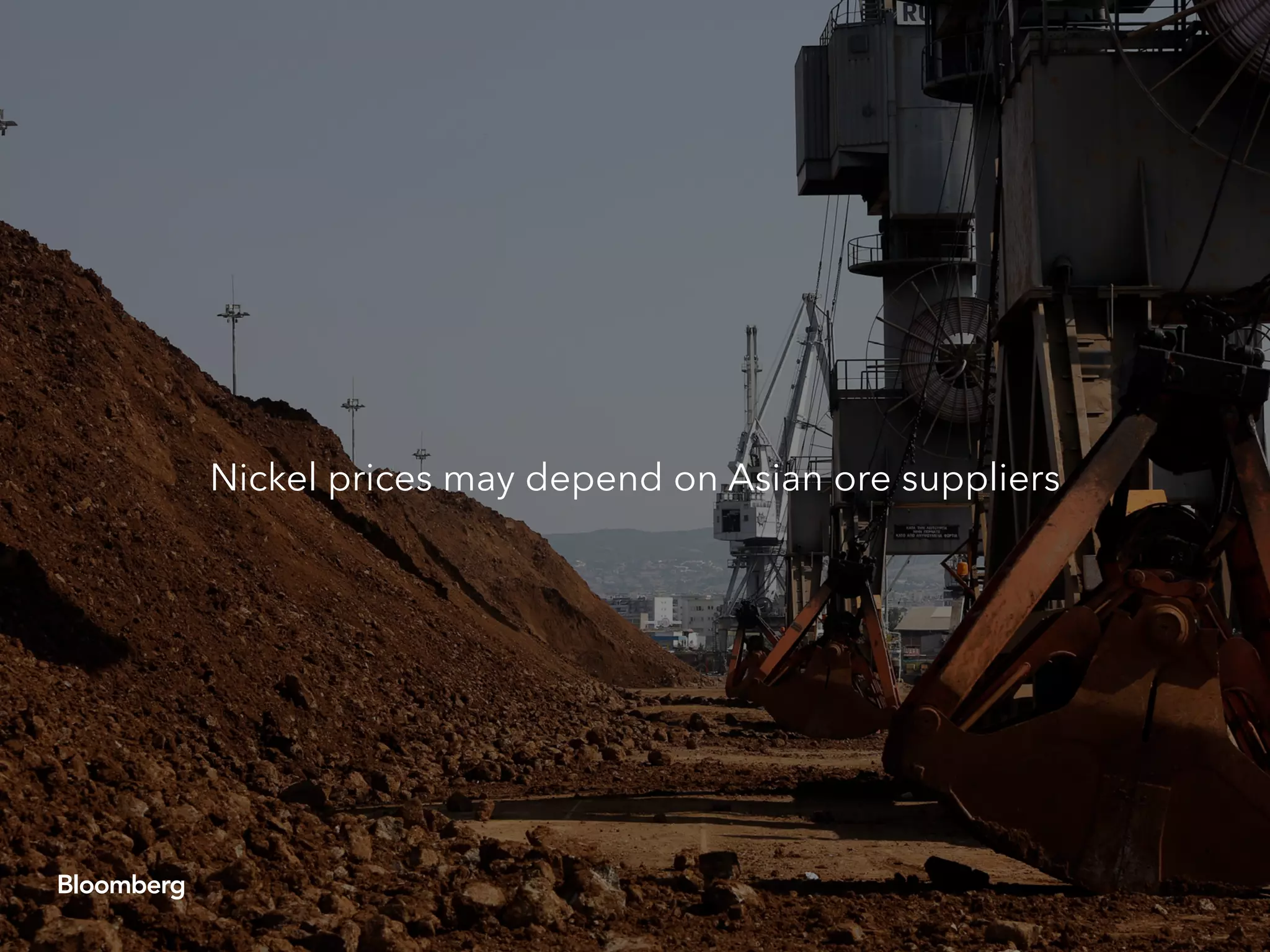
Nickel prices may depend on Asian ore suppliers
After nickel markets rebounded in 2016, the actions of two Asian
suppliers of the metal may drive pricing in 2017. Indonesia has
indicated it may relax its ban on nickel ore exports, which took effect
2014, while the Philippines said it may shut most of its nickel mines.
Nickel prices have been volatile in 2016, soaring to $11,575 a metric
ton in November after touching a 13-year low of $7,700 in February.
The metal has gained 28% for the year, yet remains at less than half
the 2011 peak of $29,300.
Copper prices surging, may have finally bottomed
Copper’s recent price surge follows massive moves in metallurgical
coal, iron ore and zinc. All base metals are now up double digits on
the year. Traders appear to have been anticipating the move, with
combined futures open interest in copper on the LME and CME
surging to an all-time high.
The market may be anticipating that global demand, led by China
and perhaps an infrastructure boom in the U.S. pushed by President-
elect Donald Trump, will lead to tightness in metal demand.
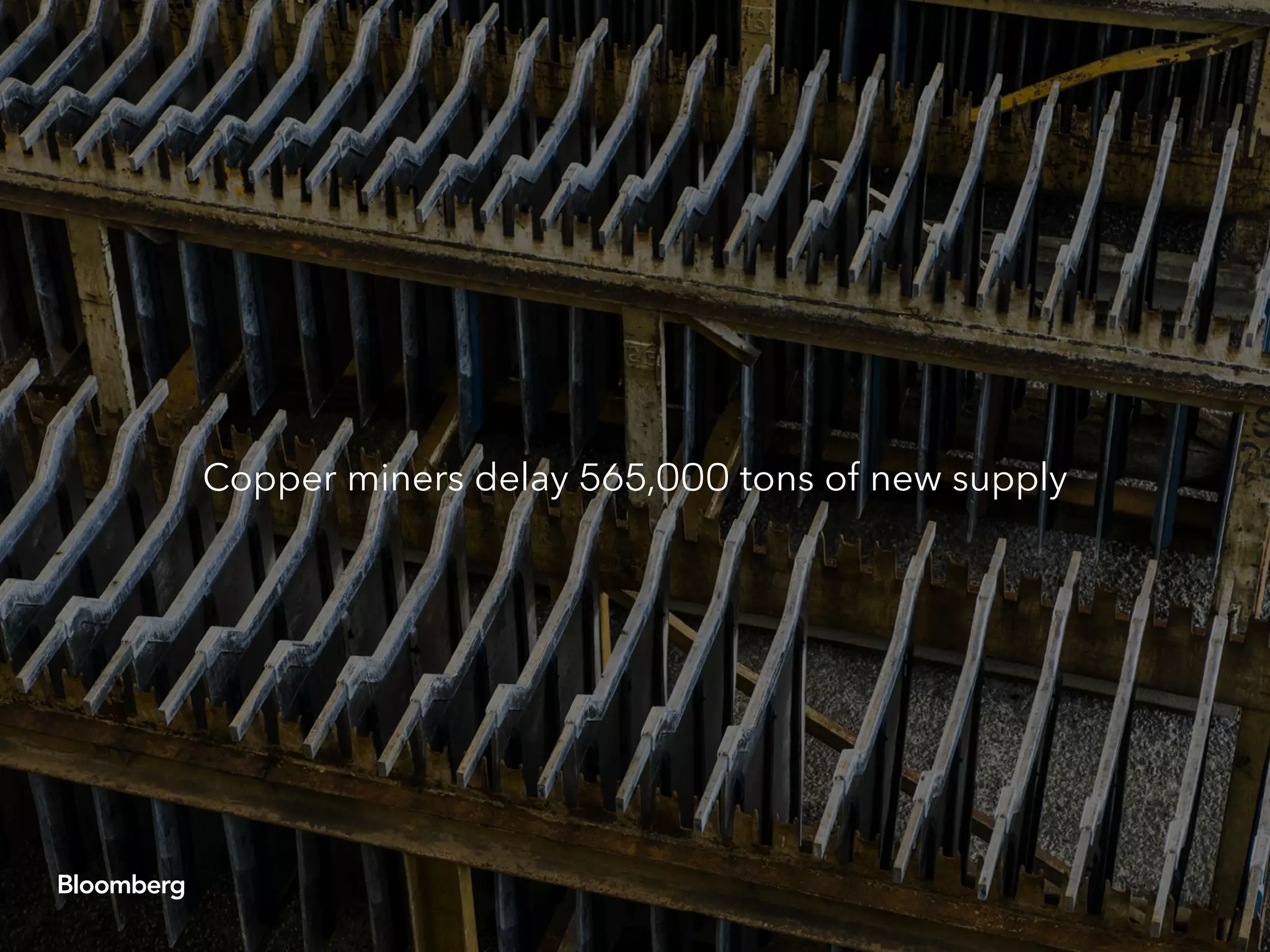
Copper miners delay 565,000 tons of new supply
Delays in several copper projects since March have pushed back
565,000 metric tons of new supply, according to Bloomberg
Intelligence analysis. In 2017 alone, 62,000 fewer tons will come to
market than previously expected.
Global copper demand may continue to grow at a moderate pace
as China, which accounted for 45% of global demand in 2015,
transitions toward an economy driven by domestic consumer
spending rather than government infrastructure investment.
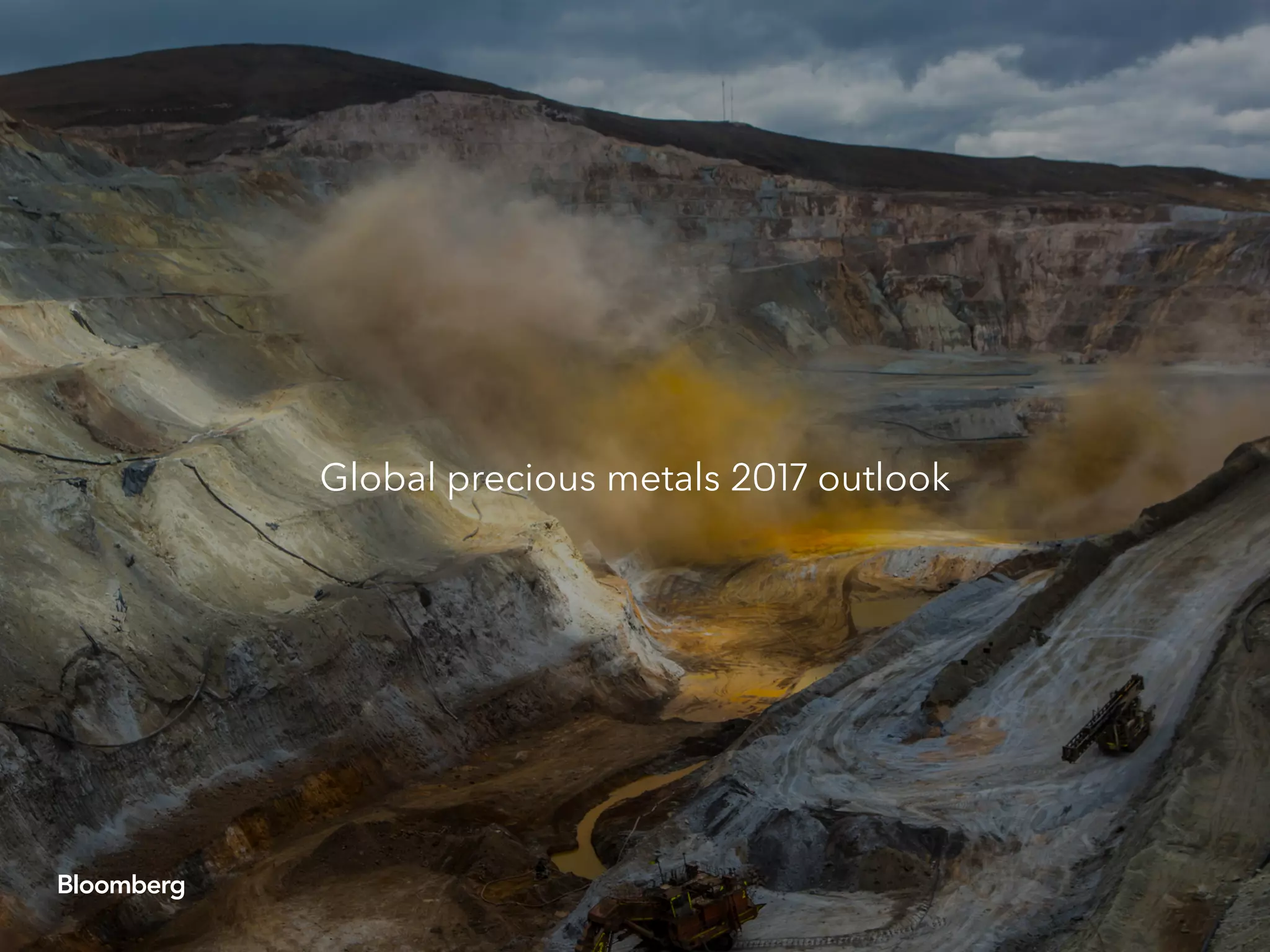
Global precious metals 2017 outlook
The tailwinds behind precious metals that supported prices in
2016 will only grow in 2017. The risk of inflation, which is a positive
for precious metals, continues to increase as global money supply
expands.
Precious metal output may remain constrained as producers run into
high costs and low grades. Mining currencies strengthened in 2016,
sending operational costs higher. Anti-globalization sentiment could
hurt the U.S. dollar, the global currency, which helps gold.
Strong growth in the U.S. as well as a surge in U.S. interest rates could
help the dollar’s value, hurting the precious metals complex.
Trump victory changes metals markets overnight
Donald Trump’s victory in the U.S. presidential election is rippling
through global metals markets and may have a long-term impact.
A U.S. pullback from international relations could damage the dollar
and boost prices for gold and other precious metals.
Trump also has talked about tearing up trade agreements, a negative
for metals, while investing in massive infrastructure projects, which
would boost demand for copper, zinc and steel.
Until Trump’s policies become clearer,markets are in a guessing game.
Platinum metals demand may decline
Global net demand for platinum, palladium and rhodium is likely
to rise on higher autocatalysts consumption in 2016 due to tighter
emissions legislation, based on Johnson Matthey data. Supply is
forecast to slide, with the exception of palladium, driven by lower
South African output.
EuropeisovertakingChinaastheworld’stopplatinumconsumerthisyear,
butthemetalmaymoveintosurplusin2017onlowerusebyEuropean
automakers,more recycling and weaker Chinese jewelry buying.
Silver’s core demand drivers are industrial, solar
The pace of silver investment will, like other financial markets,
be determined by the Federal Reserve’s next interest-rate move.
Yet industrial applications, at 53%, continued to be the largest
contributor to the metal’s demand in 2015, and are likely to
retain their dominance in the silver market this year, based on BI
calculations using Metals Focus data. The silver price will play a
crucial role in the metal’s future demand, as the industrial applications
increase continues, particularly in solar consumption.
Bloomberg Intelligence offers valuable insight and company data,
interactive charting and written analysis with government, credit
insights from a team of independent experts, giving trading and
investment professionals deep insight into where crucial industries
start today and where they may be heading next.

Global metals & mining 2017 outlook

  • 1.
    Global metals &mining 2017 outlook Kenneth W Hoffman, Zhou Zhang, Eily Ong Bloomberg Intelligence analysts
  • 2.
    Global base metals2017 outlook
  • 3.
    The base metalswith the biggest price gains in 2016 have been the ones that underwent sizable production cuts in 2015, especially zinc. In 2017, zinc is expected to have the biggest increase in supply, while copper will see significantly less. The declining value of the yuan against the U.S. dollar, which makes metals more expensive inside China, will affect demand. The expanding use of electric cars may, for the first time, have a significant impact on metals such as nickel. Mining companies have responded to weak metal prices partly by shutting mines, as occurred with zinc and to a smaller extent copper and nickel. The industry also cut capital spending on new mines, which could weaken supply growth.
  • 4.
    Battery technology maydrive the future of lead
  • 5.
    Lead has performedin the middle of the base-metal pack, rising 22% in 2016 after a 3.5% drop in 2015. Prices have been stronger in 2H after a volatile 1H, with expectation of a tightening market pushing prices higher. China, the world’s largest lead producer and consumer, accounts for 40% of both global totals. Longer-term issues plague lead, such as a decline in Chinese demand for lead-acid batteries as the e-bike sector switches to lithium/nickel batteries.
  • 6.
    Zinc mine closingsmay leave persistent deficit
  • 7.
    Zinc has soared58% this year, making it the best-performing base metal. Demand has been supported by strong global auto sales and a resurgence of Chinese construction. “ Bloomberg Intelligence’s model shows a base-case deficit of 1 million metric tons through 2018, assuming 2% annual demand growth and the continuation of announced mine projects. The model also assumes shuttered zinc mines don’t restart, though higher prices may bring the metal back onto the market.
  • 8.
    Nickel prices maydepend on Asian ore suppliers
  • 9.
    After nickel marketsrebounded in 2016, the actions of two Asian suppliers of the metal may drive pricing in 2017. Indonesia has indicated it may relax its ban on nickel ore exports, which took effect 2014, while the Philippines said it may shut most of its nickel mines. Nickel prices have been volatile in 2016, soaring to $11,575 a metric ton in November after touching a 13-year low of $7,700 in February. The metal has gained 28% for the year, yet remains at less than half the 2011 peak of $29,300.
  • 10.
    Copper prices surging,may have finally bottomed
  • 11.
    Copper’s recent pricesurge follows massive moves in metallurgical coal, iron ore and zinc. All base metals are now up double digits on the year. Traders appear to have been anticipating the move, with combined futures open interest in copper on the LME and CME surging to an all-time high. The market may be anticipating that global demand, led by China and perhaps an infrastructure boom in the U.S. pushed by President- elect Donald Trump, will lead to tightness in metal demand.
  • 12.
    Copper miners delay565,000 tons of new supply
  • 13.
    Delays in severalcopper projects since March have pushed back 565,000 metric tons of new supply, according to Bloomberg Intelligence analysis. In 2017 alone, 62,000 fewer tons will come to market than previously expected. Global copper demand may continue to grow at a moderate pace as China, which accounted for 45% of global demand in 2015, transitions toward an economy driven by domestic consumer spending rather than government infrastructure investment.
  • 14.
  • 15.
    The tailwinds behindprecious metals that supported prices in 2016 will only grow in 2017. The risk of inflation, which is a positive for precious metals, continues to increase as global money supply expands. Precious metal output may remain constrained as producers run into high costs and low grades. Mining currencies strengthened in 2016, sending operational costs higher. Anti-globalization sentiment could hurt the U.S. dollar, the global currency, which helps gold. Strong growth in the U.S. as well as a surge in U.S. interest rates could help the dollar’s value, hurting the precious metals complex.
  • 16.
    Trump victory changesmetals markets overnight
  • 17.
    Donald Trump’s victoryin the U.S. presidential election is rippling through global metals markets and may have a long-term impact. A U.S. pullback from international relations could damage the dollar and boost prices for gold and other precious metals. Trump also has talked about tearing up trade agreements, a negative for metals, while investing in massive infrastructure projects, which would boost demand for copper, zinc and steel. Until Trump’s policies become clearer,markets are in a guessing game.
  • 18.
  • 19.
    Global net demandfor platinum, palladium and rhodium is likely to rise on higher autocatalysts consumption in 2016 due to tighter emissions legislation, based on Johnson Matthey data. Supply is forecast to slide, with the exception of palladium, driven by lower South African output. EuropeisovertakingChinaastheworld’stopplatinumconsumerthisyear, butthemetalmaymoveintosurplusin2017onlowerusebyEuropean automakers,more recycling and weaker Chinese jewelry buying.
  • 20.
    Silver’s core demanddrivers are industrial, solar
  • 21.
    The pace ofsilver investment will, like other financial markets, be determined by the Federal Reserve’s next interest-rate move. Yet industrial applications, at 53%, continued to be the largest contributor to the metal’s demand in 2015, and are likely to retain their dominance in the silver market this year, based on BI calculations using Metals Focus data. The silver price will play a crucial role in the metal’s future demand, as the industrial applications increase continues, particularly in solar consumption.
  • 22.
    Bloomberg Intelligence offersvaluable insight and company data, interactive charting and written analysis with government, credit insights from a team of independent experts, giving trading and investment professionals deep insight into where crucial industries start today and where they may be heading next.