(Beyond)
Combining Text and Tables
for qualitative and quantitative research
Ulbe Bosma
Adina Nerghes
Rombert Stapel
Richard Zijdeman
Marieke van Erp
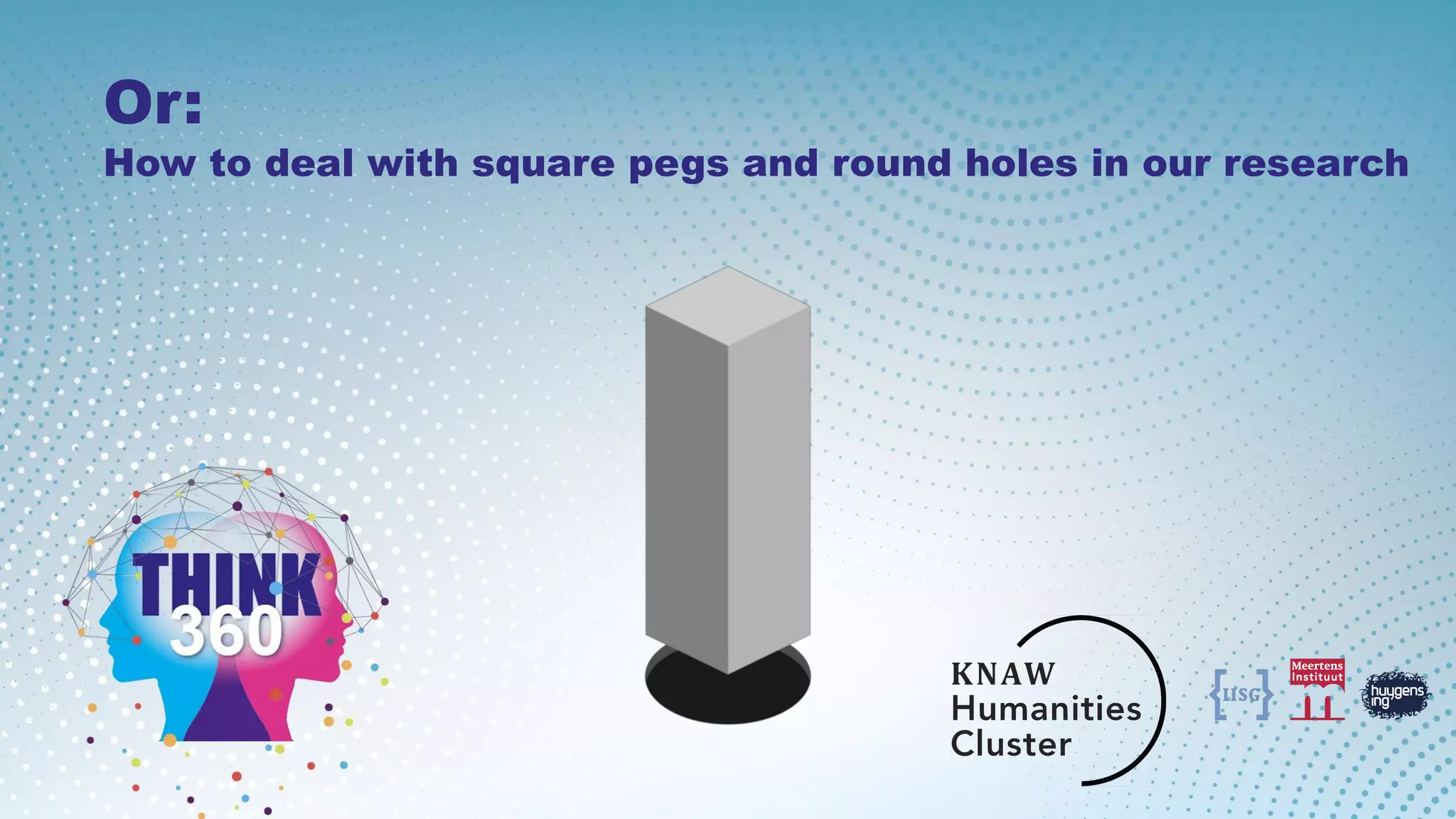
Or:
How to deal with square pegs and round holes in our research
Introduction
Digitisation and interdisciplinary collaborations:
• Benefits
• Obstacles
• Conditions
Examples KNAW Humanities Cluster and CLARIAH
Break out groups: How does digitisation affect your research
practice and environment?
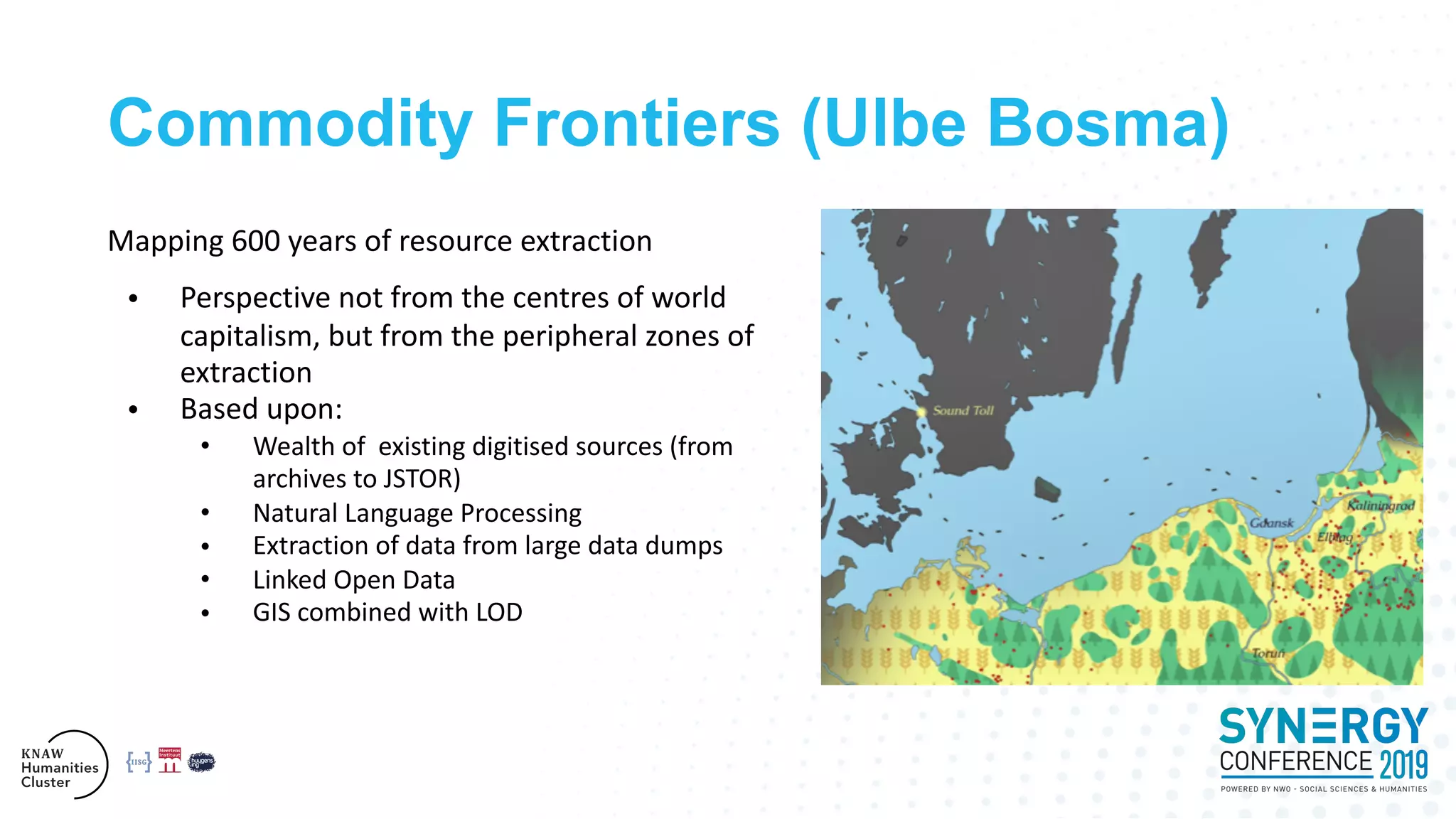
Commodity Frontiers (Ulbe Bosma)
Mapping 600 years of resource extraction
• Perspective not from the centres of world
capitalism, but from the peripheral zones of
extraction
• Based upon:
• Wealth of existing digitised sources (from
archives to JSTOR)
• Natural Language Processing
• Extraction of data from large data dumps
• Linked Open Data
• GIS combined with LOD
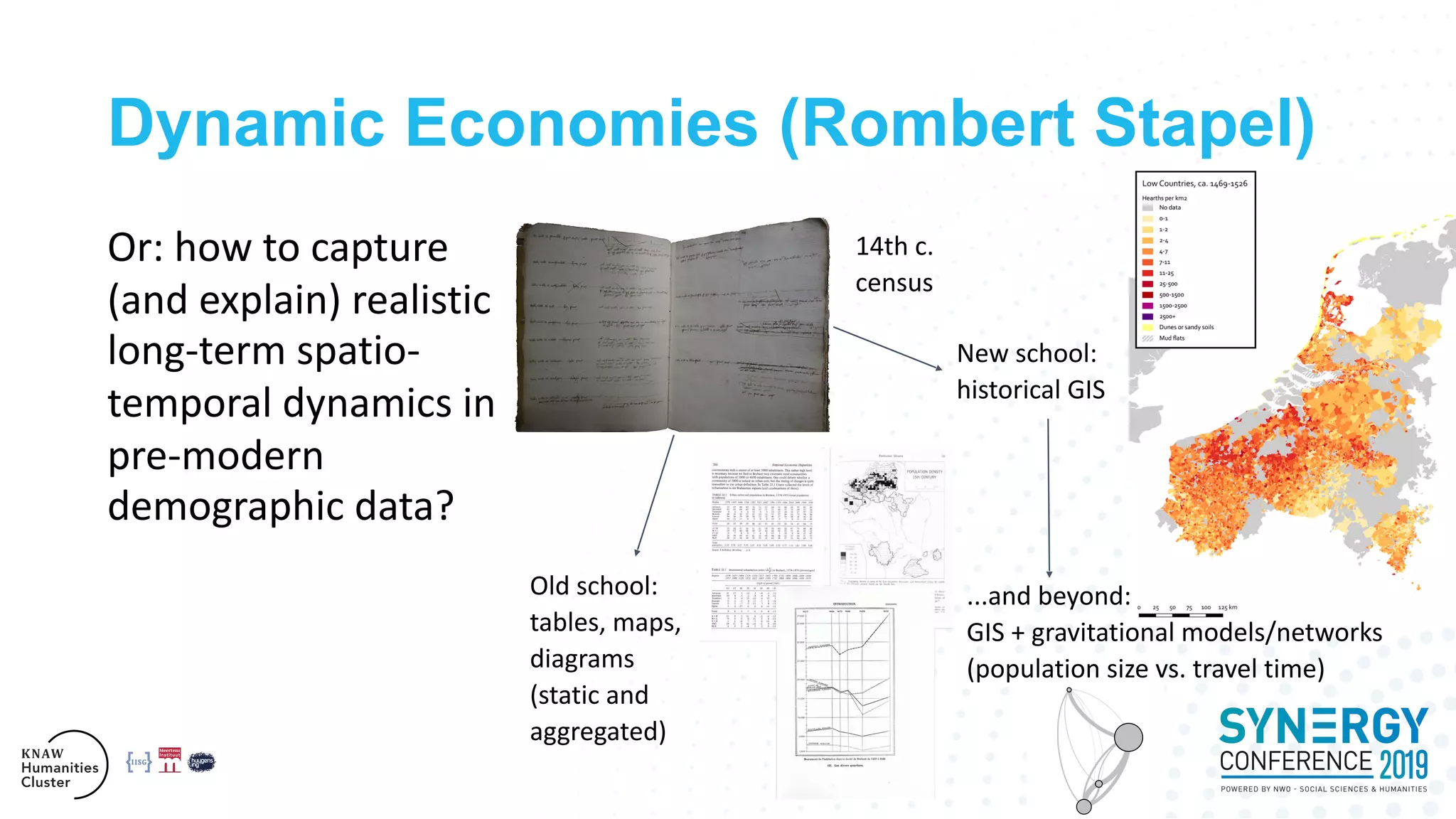
Dynamic Economies (Rombert Stapel)
Or: how to capture
(and explain) realistic
long-term spatio-
temporal dynamics in
pre-modern
demographic data?
14th c.
census
Old school:
tables, maps,
diagrams
(static and
aggregated)
New school:
historical GIS
...and beyond:
GIS + gravitational models/networks
(population size vs. travel time)
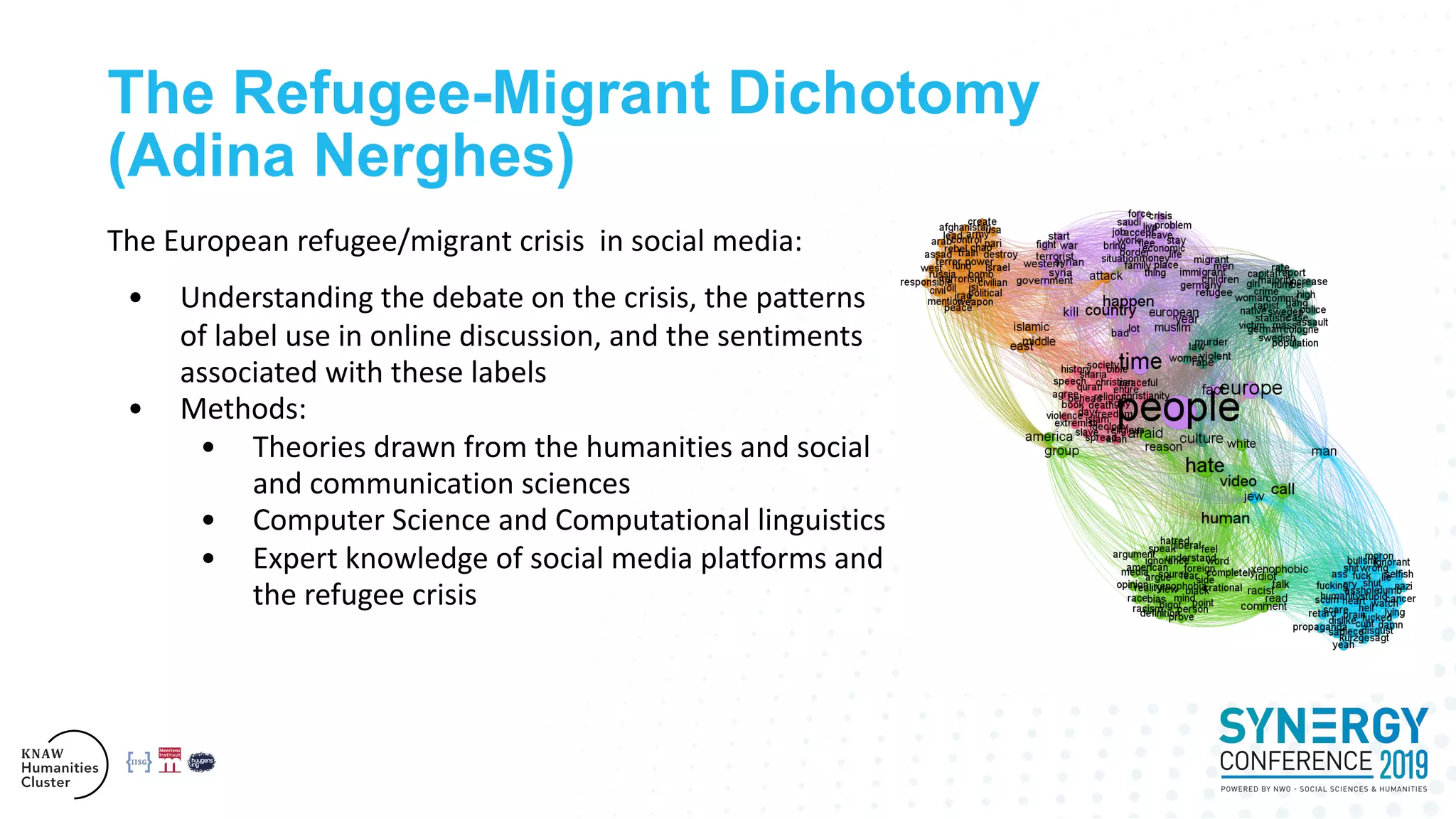
The Refugee-Migrant Dichotomy
(Adina Nerghes)
The European refugee/migrant crisis in social media:
• Understanding the debate on the crisis, the patterns
of label use in online discussion, and the sentiments
associated with these labels
• Methods:
• Theories drawn from the humanities and social
and communication sciences
• Computer Science and Computational linguistics
• Expert knowledge of social media platforms and
the refugee crisis
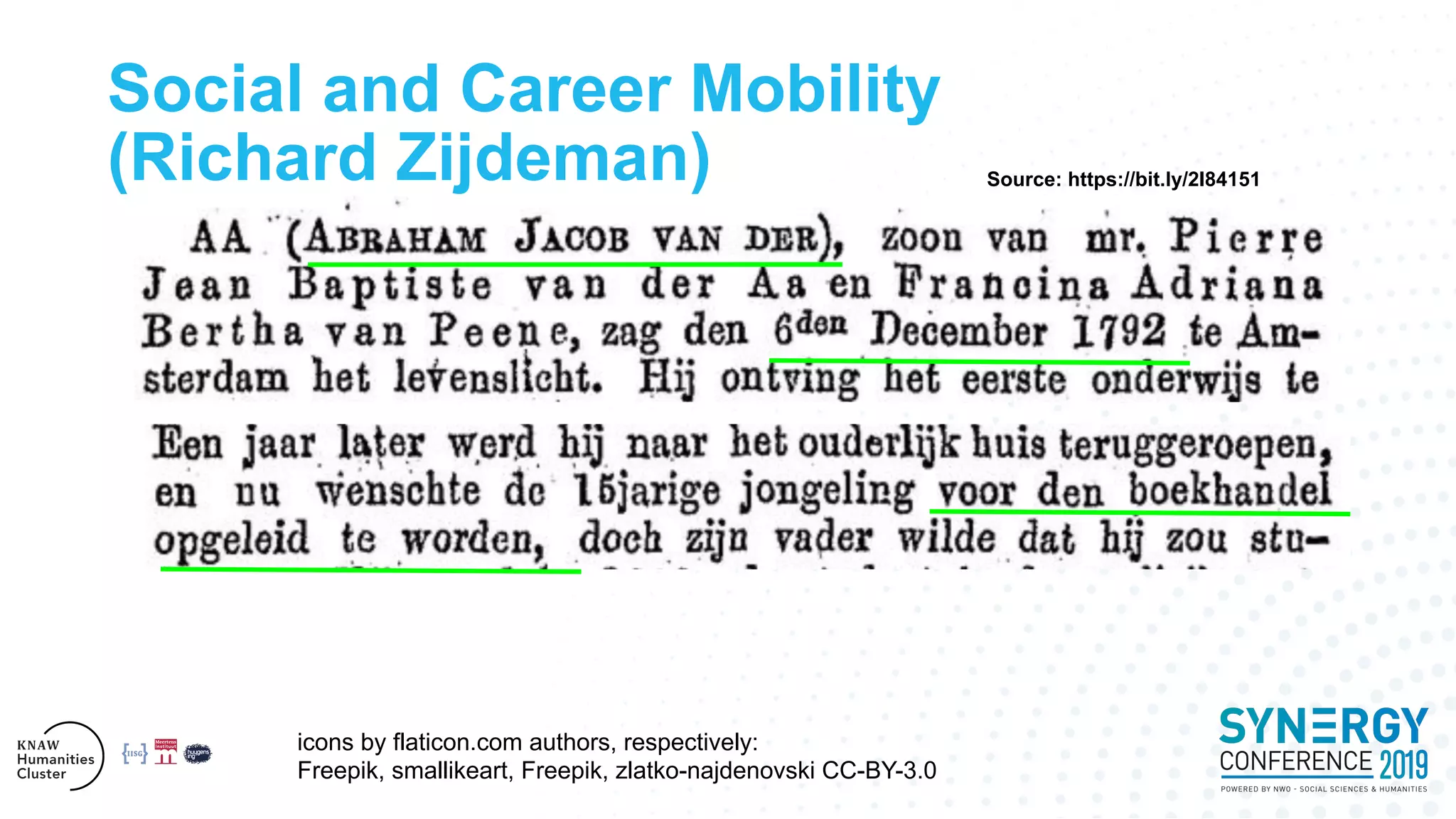
Social and Career Mobility
(Richard Zijdeman)
icons by flaticon.com authors, respectively:
Freepik, smallikeart, Freepik, zlatko-najdenovski CC-BY-3.0
Source: https://bit.ly/2I84151
Break-out Groups (20 minutes)
Quick intro: name + discipline + affiliation + two sentences
about your data/problem/use case
1. What can digital humanities contribute to questions of
economic disparity, migration, environmental degradation,
and social mobility?
2. What is good (digital) research in this field?
3. How can we facilitate good (interdisciplinary) research?
4. What is the greatest bottleneck that needs to be solved
now?
Report back / Plenary Discussion
Wrap-up
What’s next?
● Summary of today’s session
● Leave your email address if you want to stay in touch
https://huc.knaw.nl

(Beyond) Combining Text and Tables for qualitative and quantitative research

  • 1.
    (Beyond) Combining Text andTables for qualitative and quantitative research Ulbe Bosma Adina Nerghes Rombert Stapel Richard Zijdeman Marieke van Erp
  • 2.
    Or: How to dealwith square pegs and round holes in our research
  • 3.
    Introduction Digitisation and interdisciplinarycollaborations: • Benefits • Obstacles • Conditions Examples KNAW Humanities Cluster and CLARIAH Break out groups: How does digitisation affect your research practice and environment?
  • 4.
    Commodity Frontiers (UlbeBosma) Mapping 600 years of resource extraction • Perspective not from the centres of world capitalism, but from the peripheral zones of extraction • Based upon: • Wealth of existing digitised sources (from archives to JSTOR) • Natural Language Processing • Extraction of data from large data dumps • Linked Open Data • GIS combined with LOD
  • 5.
    Dynamic Economies (RombertStapel) Or: how to capture (and explain) realistic long-term spatio- temporal dynamics in pre-modern demographic data? 14th c. census Old school: tables, maps, diagrams (static and aggregated) New school: historical GIS ...and beyond: GIS + gravitational models/networks (population size vs. travel time)
  • 6.
    The Refugee-Migrant Dichotomy (AdinaNerghes) The European refugee/migrant crisis in social media: • Understanding the debate on the crisis, the patterns of label use in online discussion, and the sentiments associated with these labels • Methods: • Theories drawn from the humanities and social and communication sciences • Computer Science and Computational linguistics • Expert knowledge of social media platforms and the refugee crisis
  • 7.
    Social and CareerMobility (Richard Zijdeman) icons by flaticon.com authors, respectively: Freepik, smallikeart, Freepik, zlatko-najdenovski CC-BY-3.0 Source: https://bit.ly/2I84151
  • 8.
    Break-out Groups (20minutes) Quick intro: name + discipline + affiliation + two sentences about your data/problem/use case 1. What can digital humanities contribute to questions of economic disparity, migration, environmental degradation, and social mobility? 2. What is good (digital) research in this field? 3. How can we facilitate good (interdisciplinary) research? 4. What is the greatest bottleneck that needs to be solved now?
  • 9.
    Report back /Plenary Discussion
  • 10.
    Wrap-up What’s next? ● Summaryof today’s session ● Leave your email address if you want to stay in touch https://huc.knaw.nl