PR E V I O U S
Back
Best Practices In Software Development Life Cycle
(SDLC)
April 27, 2024
Leave a Reply
Your email address will not be published. Required fields are marked *
Comment *
Name *
Email *
Save my name and email in this browser for the next time I comment.
Post Comment
Categories
Popular Recent
GitHub Vs GitLab | What Are The
Major Difference?
September 27, 2023
A Comprehensive Guide to
Angular Version History
July 26, 2023
Basics of Java Microservices:
Frameworks, Examples & Use
Cases
July 20, 2023
Digitalization has become the latest hype in the current situation, encouraging every industry to incorporate
the same. In this process, software plays the focal role. Consequently, a significant focus shifts to software
development to make them more reliable and less time-consuming. So, the Software Development Life Cycle
comes into the picture to make the software development process easy, reliable, and time-saving. This is the
methodology that streamlines the entire software development process to develop effective software. So,
without any further ado, let’s unveil the curtain on the intricacies of the SDLC process.
 Table of content
What is Software Development Life Cycle (SDLC)?​
Importance of The SDLC​
Which process can lead to an ideal Software Development Life Cycle (SDLC)?​
–Planning
–Design
–Implement
–Test
–Deployment
–Maintain
What are SDLC models?​
–Waterfall
–Iterative
–Spiral
–Agile
How to ensure best practice in SDLC​
Conclusion
FAQs
WhatisSoftwareDevelopmentLifeCycle(SDLC)?
As mentioned earlier, the SDLC is a process that can also be identified as a lifecycle for the software. This life
cycle ensures that the entire task is relevantly cost-effective to get the process done in a minimal amount
within a minimum time. Moreover, it ensures the maintenance of the quality of the software, which can
mitigate the customer’s requirements in the first place. This article will discuss the nitty gritty of the Software
Development Life Cycle, going ahead.
ImportanceofTheSDLC
With the growing requirements of the software, the challenges are also popping up. In the diversity of the
digital world, the requirements vary, and so do the technologies, creating barriers to the smooth development
of software. In such circumstances, the SDLC helps develop a systematic life cycle by producing a framework
to ensure smooth processing and minimize risk factors. Following are some of the crucial benefits of the
SDLC:
Increased transparency of the development process for all the involved stakeholders by making the
process more visible.
The framework includes estimation, planning, and scheduling to identify areas for improvement and store
points.
It also effectively demonstrates risk management procedures and approximate costs.
In the end, it finalizes the proper execution process while ensuring the client’s satisfaction with their
asked deliverables.
WhichprocesscanleadtoanidealSoftwareDevelopmentLife
Cycle(SDLC)?
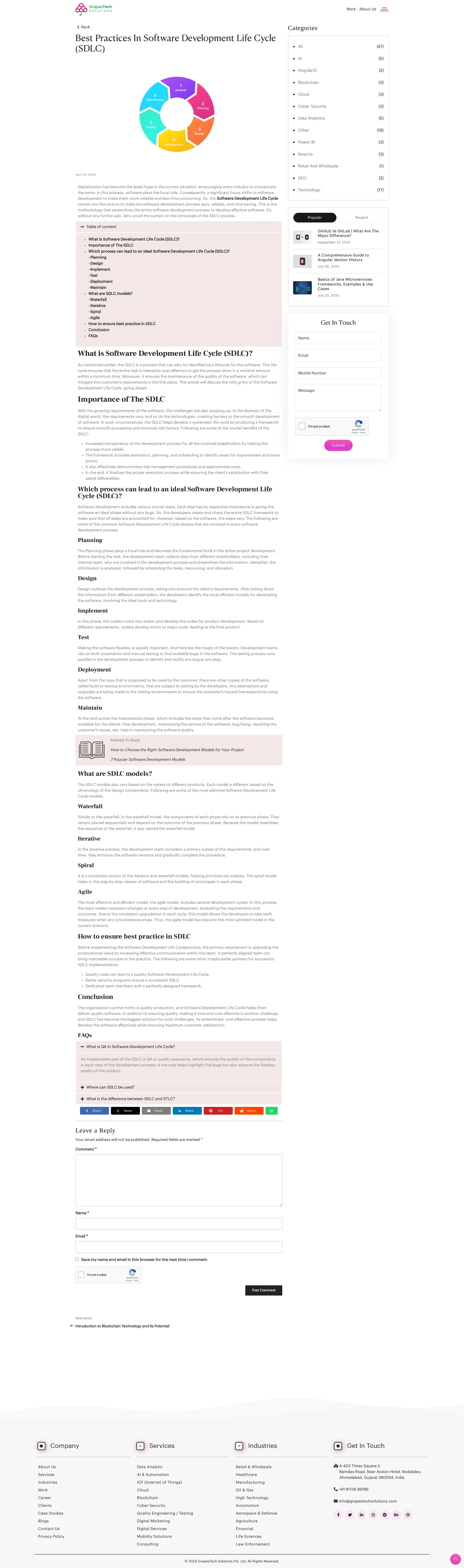
Software development includes various crucial steps. Each step has its respective importance in giving the
software an ideal shape without any bugs. So, the developers create and check the entire SDLC framework to
make sure that all steps are accounted for. However, based on the software, the steps vary. The following are
some of the common Software Development Life Cycle phases that are involved in every software
development process.
Planning
The Planning phase plays a focal role and becomes the fundamental brick in the entire project development.
Before starting the task, the development team collects data from different stakeholders, including their
internal team, who are involved in the development process and streamlines the information. Hereafter, the
information is analyzed, followed by scheduling the tasks, resourcing, and allocation.
Design
Design outlines the development process, taking into account the client’s requirements. After jotting down
the information from different stakeholders, the developers identify the most efficient models for developing
the software, involving the ideal tools and technology.
Implement
In this phase, the coders come into action and develop the codes for product development. Based on
different requirements, coders develop minor to major code, leading to the final product.
Test
Making the software flawless is equally important. And here lies the magic of the testers. Development teams
rely on both automation and manual testing to find available bugs in the software. The testing process runs
parallel to the development process to identify and rectify any bug at any step.
Deployment
Apart from the copy that is supposed to be used by the customer, there are other copies of the software,
called build or testing environments, that are subject to testing by the developers. Any alternations and
upgrades are being made to the testing environments to ensure the customer’s hazard-free experience using
the software.
Maintain
At the end comes the maintenance phase, which includes the steps that come after the software becomes
available for the clients. Post development, maintaining the service of the software, bug fixing, resolving the
customer’s issues, etc. help in maintaining the software quality.
Related To Read
How to Choose the Right Software Development Models for Your Project
7 Popular Software Development Models
WhatareSDLCmodels?
The SDLC models also vary based on the variety of different products. Each model is different based on the
chronology of the design components. Following are some of the most admired Software Development Life
Cycle models.
Waterfall
Similar to the waterfall, in the waterfall model, the components of each phase rely on its previous phase. They
remain placed sequentially and depend on the outcome of the previous phase. Because the model resembles
the sequence of the waterfall, it was named the waterfall model.
Iterative
In the iterative process, the development team considers a primary subset of the requirements, and over
time, they enhance the software versions and gradually complete the procedure.
Spiral
It is a combined version of the iterative and waterfall models, helping prioritize risk analysis. The spiral model
helps in the step-by-step release of software and the building of prototypes in each phase.
Agile
The most effective and efficient model, the agile model, includes several development cycles. In this process,
the team makes necessary changes at every step of development, evaluating the requirements and
outcomes. Due to the consistent upgradation in each cycle, this model allows the developers to take swift
measures when any circumstance arises. Thus, the agile model has become the most admired model in the
current scenario.
HowtoensurebestpracticeinSDLC
Before implementing the Software Development Life Cyclepractice, the primary requirement is upgrading the
corporational value by increasing effective communication within the team. A perfectly aligned team can
bring noticeable success in the practice. The following are some other irreplaceable pointers for successful
SDLC implementation.
Quality code can lead to a quality Software Development Life Cycle.
Better security programs ensure a successful SDLC.
Dedicated team members with a perfectly designed framework.
Conclusion
The organization’s prime motto is quality production, and Software Development Life Cycle helps them
deliver quality software. In addition to ensuring quality, making it time and cost-effective is another challenge,
and SDLC has become the biggest solution for such challenges. Its streamlined, cost-effective process helps
develop the software effectively while ensuring maximum customer satisfaction.
FAQs



What is QA in Software Development Life Cycle?
An irreplaceable part of the SDLC is QA or quality assurance, which ensures the quality of the components
in each step of the development process. It not only helps highlight the bugs but also ensures the flawless
quality of the product.
Where can SDLC be used?
What is the difference between SDLC and STLC?
Share Tweet Email Share Pin Share
reCAPTCHA
I'm not a robot
Privacy - Terms
Introduction to Blockchain Technology and Its Potential
(5)
AI
(47)
All
(2)
AngularJS
(3)
Blockchain
(3)
Cloud
(3)
Cyber Security
(5)
Data Analytics
(18)
Other
(3)
Power BI
(3)
ReactJs
(1)
Retail And Wholesale
(2)
SEO
(17)
Technology
About Us
Services
Industries
Work
Career
Clients
Case Studies
Blogs
Contact Us
Privacy Policy
Data Analytic
AI & Automation
IOT (Internet of Things)
Cloud
Blockchain
Cyber Security
Quality Engineering / Testing
Digital Marketing
Digital Services
Mobility Solutions
Consulting
Retail & Wholesale
Healthcare
Manufacturing
Oil & Gas
High Technology
Automotive
Aerospace & Defense
Agriculture
Financial
Life Sciences
Law Enforcement
 A-403 Times Square II,
Ramdas-Road, Near Avalon Hotel, Bodakdev,
Ahmedabad, Gujarat 380054, India
 +91 91736 99766
 info@grapestechsolutions.com
© 2024 GrapesTech Solutions Pvt. Ltd. All Rights Reserved.
 Company  Services  Industries  Get In Touch
Get In Touch
Submit
Name
Email
MobileNumber
Message
reCAPTCHA
I'm not a robot
Privacy - Terms
      
Work About Us

Best Practices In Software Development Life Cycle (SDLC)

  • 1.
    PR E VI O U S Back Best Practices In Software Development Life Cycle (SDLC) April 27, 2024 Leave a Reply Your email address will not be published. Required fields are marked * Comment * Name * Email * Save my name and email in this browser for the next time I comment. Post Comment Categories Popular Recent GitHub Vs GitLab | What Are The Major Difference? September 27, 2023 A Comprehensive Guide to Angular Version History July 26, 2023 Basics of Java Microservices: Frameworks, Examples & Use Cases July 20, 2023 Digitalization has become the latest hype in the current situation, encouraging every industry to incorporate the same. In this process, software plays the focal role. Consequently, a significant focus shifts to software development to make them more reliable and less time-consuming. So, the Software Development Life Cycle comes into the picture to make the software development process easy, reliable, and time-saving. This is the methodology that streamlines the entire software development process to develop effective software. So, without any further ado, let’s unveil the curtain on the intricacies of the SDLC process.  Table of content What is Software Development Life Cycle (SDLC)?​ Importance of The SDLC​ Which process can lead to an ideal Software Development Life Cycle (SDLC)?​ –Planning –Design –Implement –Test –Deployment –Maintain What are SDLC models?​ –Waterfall –Iterative –Spiral –Agile How to ensure best practice in SDLC​ Conclusion FAQs WhatisSoftwareDevelopmentLifeCycle(SDLC)? As mentioned earlier, the SDLC is a process that can also be identified as a lifecycle for the software. This life cycle ensures that the entire task is relevantly cost-effective to get the process done in a minimal amount within a minimum time. Moreover, it ensures the maintenance of the quality of the software, which can mitigate the customer’s requirements in the first place. This article will discuss the nitty gritty of the Software Development Life Cycle, going ahead. ImportanceofTheSDLC With the growing requirements of the software, the challenges are also popping up. In the diversity of the digital world, the requirements vary, and so do the technologies, creating barriers to the smooth development of software. In such circumstances, the SDLC helps develop a systematic life cycle by producing a framework to ensure smooth processing and minimize risk factors. Following are some of the crucial benefits of the SDLC: Increased transparency of the development process for all the involved stakeholders by making the process more visible. The framework includes estimation, planning, and scheduling to identify areas for improvement and store points. It also effectively demonstrates risk management procedures and approximate costs. In the end, it finalizes the proper execution process while ensuring the client’s satisfaction with their asked deliverables. WhichprocesscanleadtoanidealSoftwareDevelopmentLife Cycle(SDLC)? Software development includes various crucial steps. Each step has its respective importance in giving the software an ideal shape without any bugs. So, the developers create and check the entire SDLC framework to make sure that all steps are accounted for. However, based on the software, the steps vary. The following are some of the common Software Development Life Cycle phases that are involved in every software development process. Planning The Planning phase plays a focal role and becomes the fundamental brick in the entire project development. Before starting the task, the development team collects data from different stakeholders, including their internal team, who are involved in the development process and streamlines the information. Hereafter, the information is analyzed, followed by scheduling the tasks, resourcing, and allocation. Design Design outlines the development process, taking into account the client’s requirements. After jotting down the information from different stakeholders, the developers identify the most efficient models for developing the software, involving the ideal tools and technology. Implement In this phase, the coders come into action and develop the codes for product development. Based on different requirements, coders develop minor to major code, leading to the final product. Test Making the software flawless is equally important. And here lies the magic of the testers. Development teams rely on both automation and manual testing to find available bugs in the software. The testing process runs parallel to the development process to identify and rectify any bug at any step. Deployment Apart from the copy that is supposed to be used by the customer, there are other copies of the software, called build or testing environments, that are subject to testing by the developers. Any alternations and upgrades are being made to the testing environments to ensure the customer’s hazard-free experience using the software. Maintain At the end comes the maintenance phase, which includes the steps that come after the software becomes available for the clients. Post development, maintaining the service of the software, bug fixing, resolving the customer’s issues, etc. help in maintaining the software quality. Related To Read How to Choose the Right Software Development Models for Your Project 7 Popular Software Development Models WhatareSDLCmodels? The SDLC models also vary based on the variety of different products. Each model is different based on the chronology of the design components. Following are some of the most admired Software Development Life Cycle models. Waterfall Similar to the waterfall, in the waterfall model, the components of each phase rely on its previous phase. They remain placed sequentially and depend on the outcome of the previous phase. Because the model resembles the sequence of the waterfall, it was named the waterfall model. Iterative In the iterative process, the development team considers a primary subset of the requirements, and over time, they enhance the software versions and gradually complete the procedure. Spiral It is a combined version of the iterative and waterfall models, helping prioritize risk analysis. The spiral model helps in the step-by-step release of software and the building of prototypes in each phase. Agile The most effective and efficient model, the agile model, includes several development cycles. In this process, the team makes necessary changes at every step of development, evaluating the requirements and outcomes. Due to the consistent upgradation in each cycle, this model allows the developers to take swift measures when any circumstance arises. Thus, the agile model has become the most admired model in the current scenario. HowtoensurebestpracticeinSDLC Before implementing the Software Development Life Cyclepractice, the primary requirement is upgrading the corporational value by increasing effective communication within the team. A perfectly aligned team can bring noticeable success in the practice. The following are some other irreplaceable pointers for successful SDLC implementation. Quality code can lead to a quality Software Development Life Cycle. Better security programs ensure a successful SDLC. Dedicated team members with a perfectly designed framework. Conclusion The organization’s prime motto is quality production, and Software Development Life Cycle helps them deliver quality software. In addition to ensuring quality, making it time and cost-effective is another challenge, and SDLC has become the biggest solution for such challenges. Its streamlined, cost-effective process helps develop the software effectively while ensuring maximum customer satisfaction. FAQs    What is QA in Software Development Life Cycle? An irreplaceable part of the SDLC is QA or quality assurance, which ensures the quality of the components in each step of the development process. It not only helps highlight the bugs but also ensures the flawless quality of the product. Where can SDLC be used? What is the difference between SDLC and STLC? Share Tweet Email Share Pin Share reCAPTCHA I'm not a robot Privacy - Terms Introduction to Blockchain Technology and Its Potential (5) AI (47) All (2) AngularJS (3) Blockchain (3) Cloud (3) Cyber Security (5) Data Analytics (18) Other (3) Power BI (3) ReactJs (1) Retail And Wholesale (2) SEO (17) Technology About Us Services Industries Work Career Clients Case Studies Blogs Contact Us Privacy Policy Data Analytic AI & Automation IOT (Internet of Things) Cloud Blockchain Cyber Security Quality Engineering / Testing Digital Marketing Digital Services Mobility Solutions Consulting Retail & Wholesale Healthcare Manufacturing Oil & Gas High Technology Automotive Aerospace & Defense Agriculture Financial Life Sciences Law Enforcement  A-403 Times Square II, Ramdas-Road, Near Avalon Hotel, Bodakdev, Ahmedabad, Gujarat 380054, India  +91 91736 99766  info@grapestechsolutions.com © 2024 GrapesTech Solutions Pvt. Ltd. All Rights Reserved.  Company  Services  Industries  Get In Touch Get In Touch Submit Name Email MobileNumber Message reCAPTCHA I'm not a robot Privacy - Terms        Work About Us