BENCHMARKING
Benchmarking
 It is the process of comparing and
measuring an organization’s operations or
its internal processes against those of a
best-in-class performer from inside or
outside its industry.
 It is finding the secrets of success of any
given function or process so that a
company can learn from the information
and improve on it.
Key points about Benchmarking
 It is popular improvement tool
 It is concern with processes and practice
 It is respected means that require change
 It between consenting firm that may or may not
be a competitor.
 It compares your processes or practice with the
target company.
 The goal of benchmarking is to find “Secrets of
Success”.
 It is equally beneficial for both large and small
businesses.
Types of
Benchmarking
Types of benchmarking
 Competitive benchmarking:
 In which a competitors operation is studied from a
distance without the cooperation of the target firm.
 The aim is to learn something that can help to
improve process or product quality.
 Cooperative Benchmarking:
 In which key processes are the focus for thorough
improvement.
 This involves a cooperative effort by two firms
Benchmarking
Process
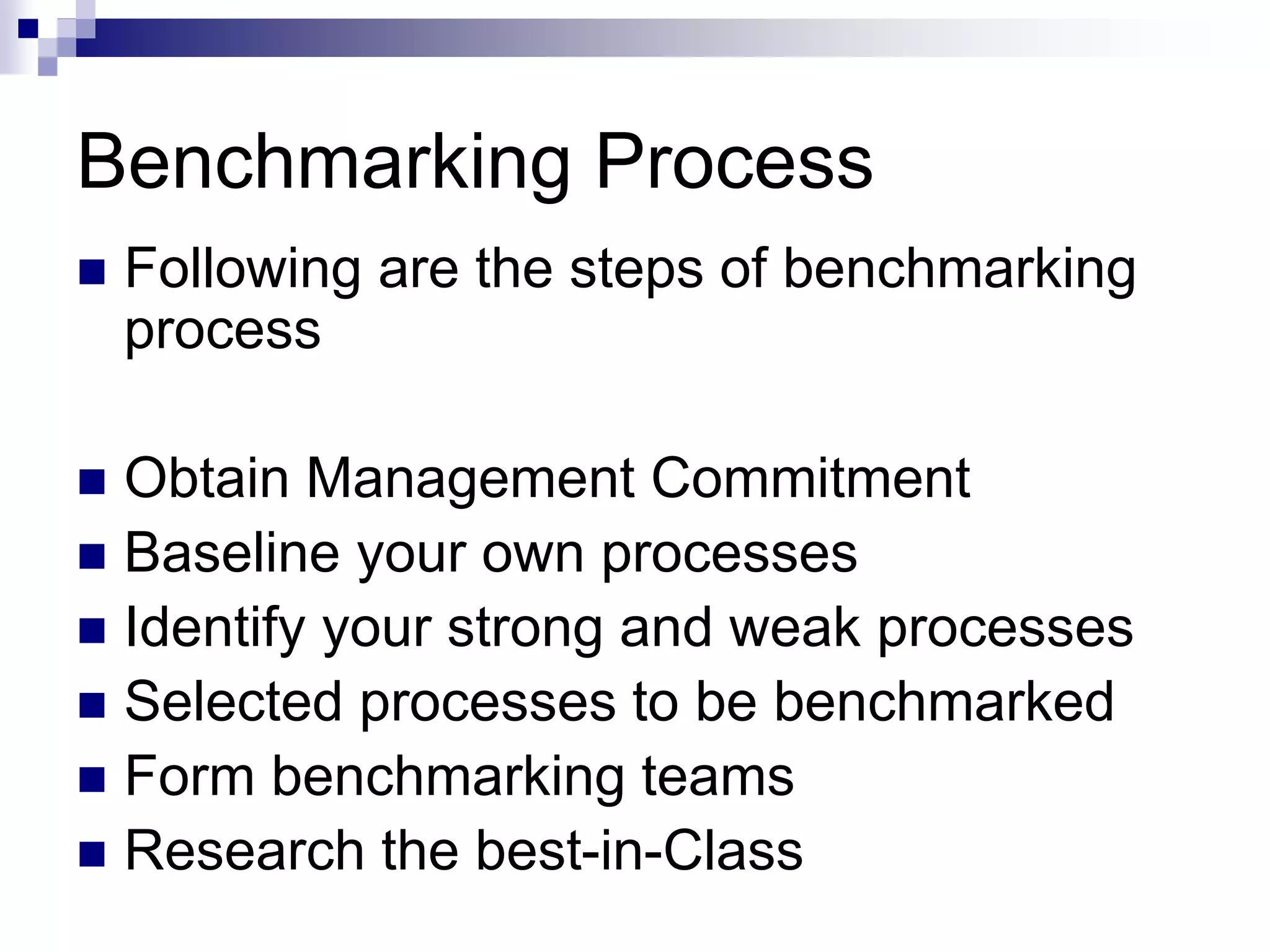
Benchmarking Process
 Following are the steps of benchmarking
process
 Obtain Management Commitment
 Baseline your own processes
 Identify your strong and weak processes
 Selected processes to be benchmarked
 Form benchmarking teams
 Research the best-in-Class
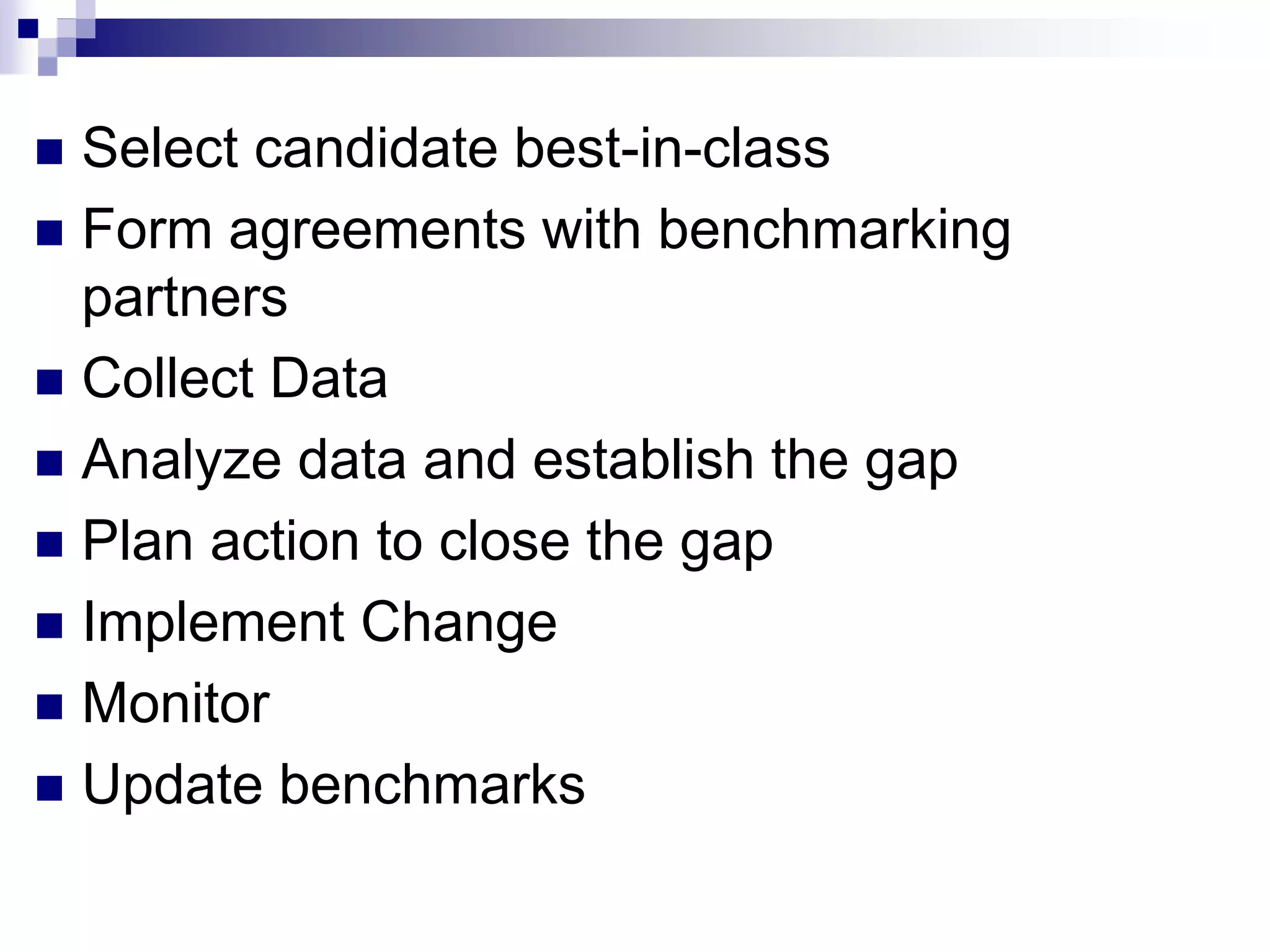
 Select candidate best-in-class
 Form agreements with benchmarking
partners
 Collect Data
 Analyze data and establish the gap
 Plan action to close the gap
 Implement Change
 Monitor
 Update benchmarks
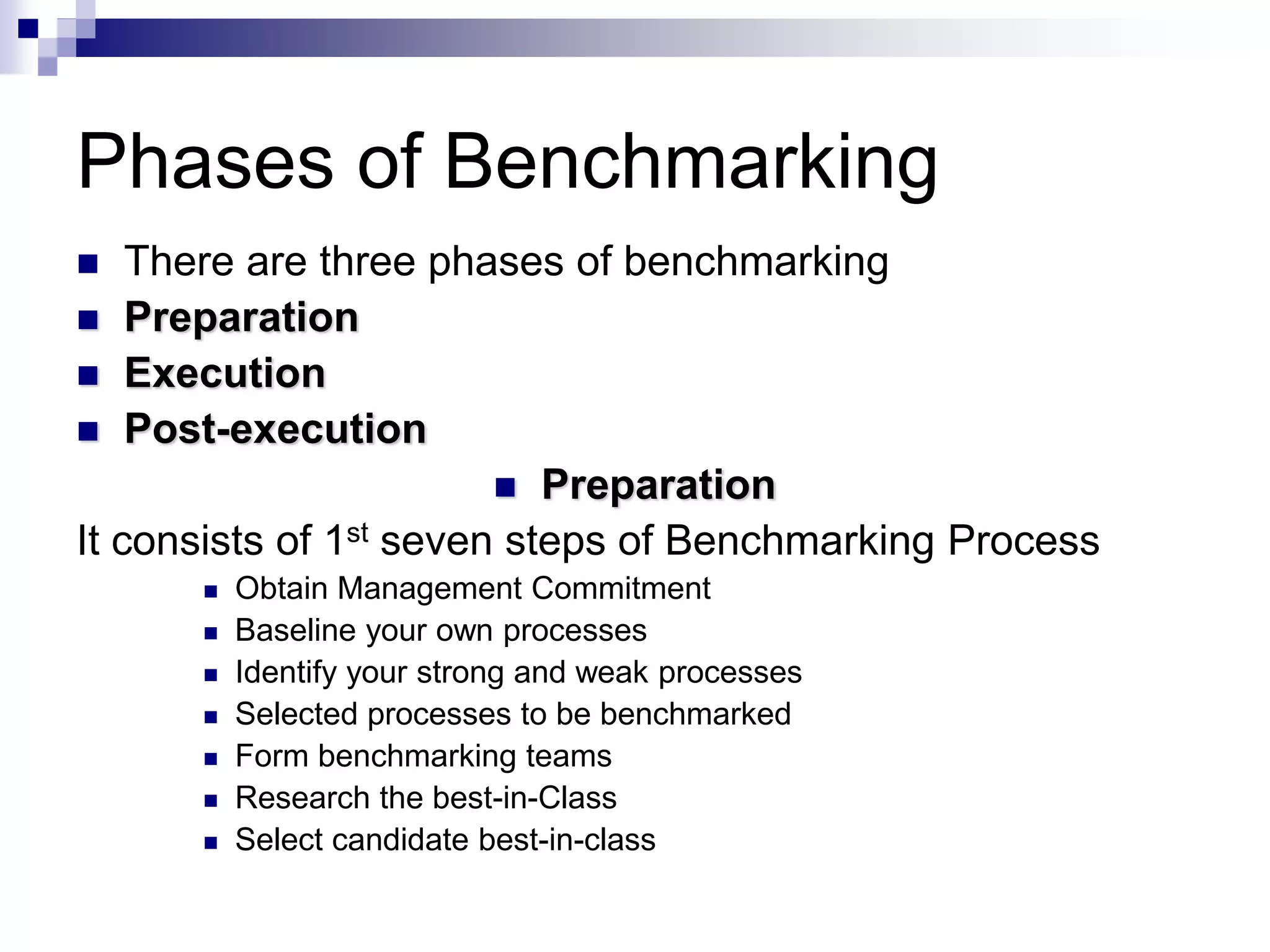
Phases of Benchmarking
 There are three phases of benchmarking
 Preparation
 Execution
 Post-execution
 Preparation
It consists of 1st seven steps of Benchmarking Process
 Obtain Management Commitment
 Baseline your own processes
 Identify your strong and weak processes
 Selected processes to be benchmarked
 Form benchmarking teams
 Research the best-in-Class
 Select candidate best-in-class
 Execution:
 Form agreements with benchmarking partners
 Collect Data
 Analyze data and establish the gap
 Plan action to close the gap
 Implement Change
 Post-execution
 Monitor
 Update benchmarks
Role of management
in Benchmarking
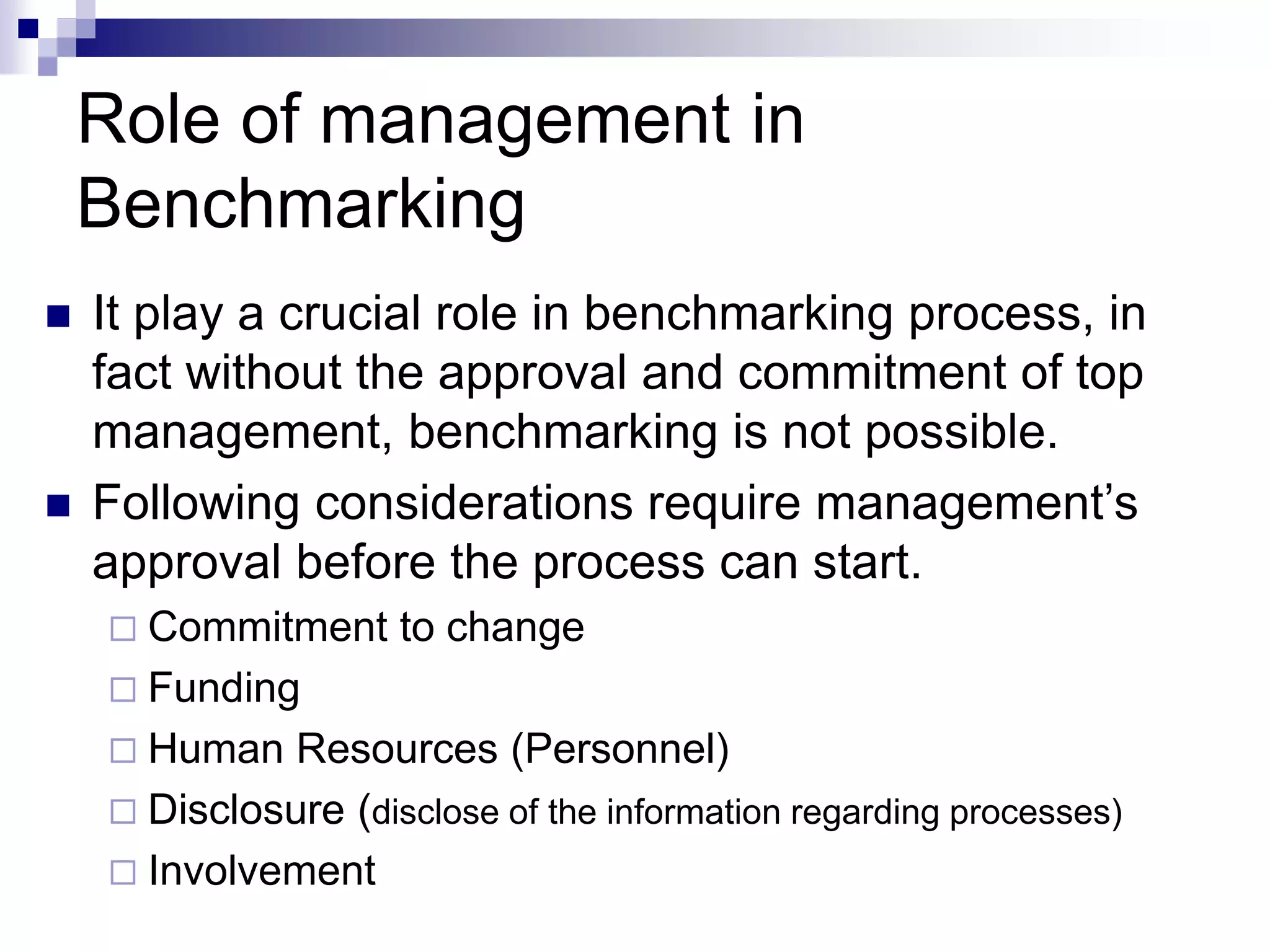
Role of management in
Benchmarking
 It play a crucial role in benchmarking process, in
fact without the approval and commitment of top
management, benchmarking is not possible.
 Following considerations require management’s
approval before the process can start.
 Commitment to change
 Funding
 Human Resources (Personnel)
 Disclosure (disclose of the information regarding processes)
 Involvement
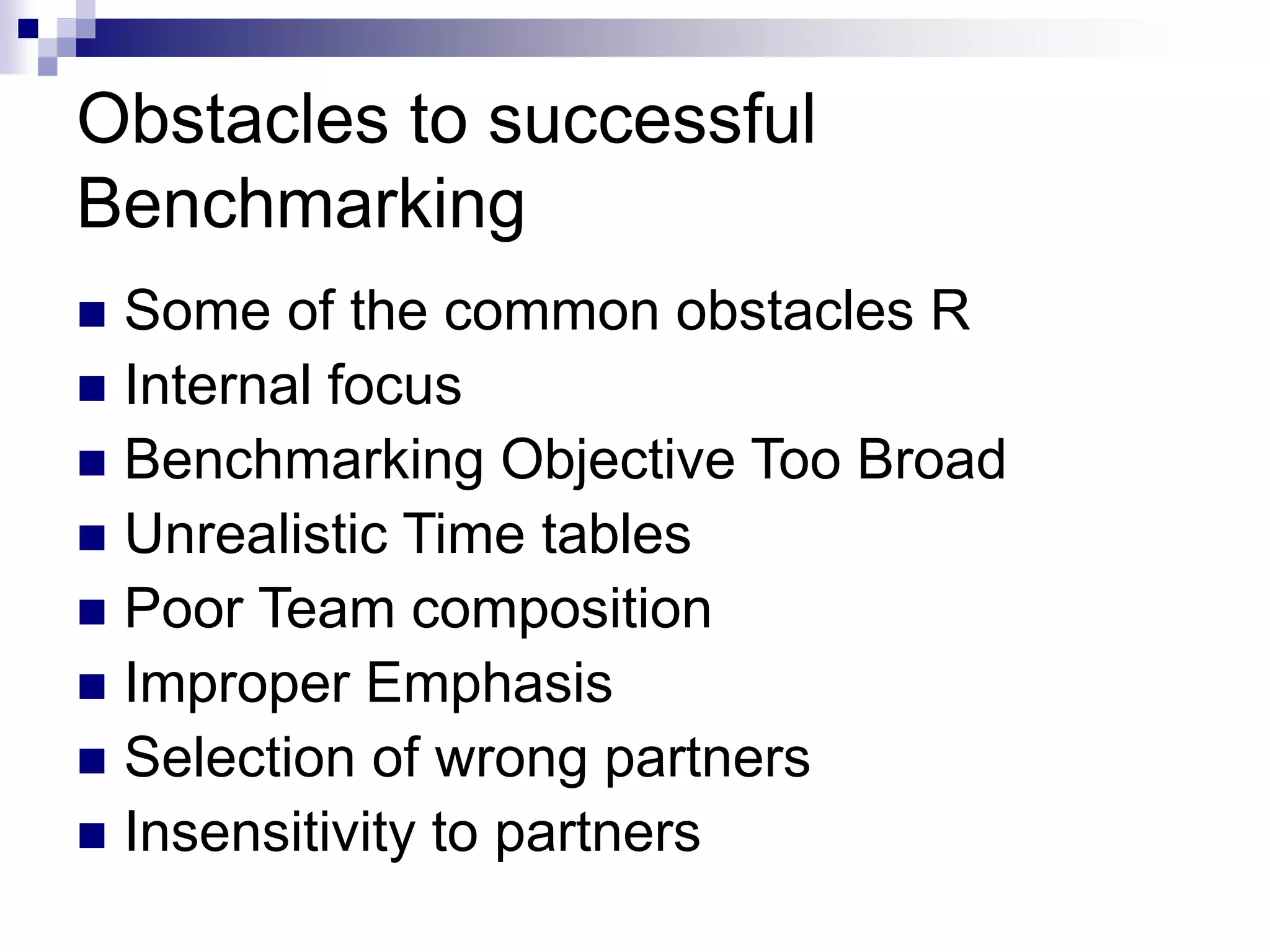
Obstacles to successful
Benchmarking
 Some of the common obstacles R
 Internal focus
 Benchmarking Objective Too Broad
 Unrealistic Time tables
 Poor Team composition
 Improper Emphasis
 Selection of wrong partners
 Insensitivity to partners

Benchmarking.ppt

  • 1.
  • 2.
    Benchmarking  It isthe process of comparing and measuring an organization’s operations or its internal processes against those of a best-in-class performer from inside or outside its industry.  It is finding the secrets of success of any given function or process so that a company can learn from the information and improve on it.
  • 3.
    Key points aboutBenchmarking  It is popular improvement tool  It is concern with processes and practice  It is respected means that require change  It between consenting firm that may or may not be a competitor.  It compares your processes or practice with the target company.  The goal of benchmarking is to find “Secrets of Success”.  It is equally beneficial for both large and small businesses.
  • 4.
  • 5.
    Types of benchmarking Competitive benchmarking:  In which a competitors operation is studied from a distance without the cooperation of the target firm.  The aim is to learn something that can help to improve process or product quality.  Cooperative Benchmarking:  In which key processes are the focus for thorough improvement.  This involves a cooperative effort by two firms
  • 6.
  • 7.
    Benchmarking Process  Followingare the steps of benchmarking process  Obtain Management Commitment  Baseline your own processes  Identify your strong and weak processes  Selected processes to be benchmarked  Form benchmarking teams  Research the best-in-Class
  • 8.
     Select candidatebest-in-class  Form agreements with benchmarking partners  Collect Data  Analyze data and establish the gap  Plan action to close the gap  Implement Change  Monitor  Update benchmarks
  • 9.
    Phases of Benchmarking There are three phases of benchmarking  Preparation  Execution  Post-execution  Preparation It consists of 1st seven steps of Benchmarking Process  Obtain Management Commitment  Baseline your own processes  Identify your strong and weak processes  Selected processes to be benchmarked  Form benchmarking teams  Research the best-in-Class  Select candidate best-in-class
  • 10.
     Execution:  Formagreements with benchmarking partners  Collect Data  Analyze data and establish the gap  Plan action to close the gap  Implement Change  Post-execution  Monitor  Update benchmarks
  • 11.
  • 12.
    Role of managementin Benchmarking  It play a crucial role in benchmarking process, in fact without the approval and commitment of top management, benchmarking is not possible.  Following considerations require management’s approval before the process can start.  Commitment to change  Funding  Human Resources (Personnel)  Disclosure (disclose of the information regarding processes)  Involvement
  • 13.
    Obstacles to successful Benchmarking Some of the common obstacles R  Internal focus  Benchmarking Objective Too Broad  Unrealistic Time tables  Poor Team composition  Improper Emphasis  Selection of wrong partners  Insensitivity to partners