



Quality in Healthcare Update
Rubén J. Nazario, M.D.
Medical Director
October 2016
Agenda
• Industry Background and Overview
• Accrediting Entities
• Quality Program Overview
− Federal Programs
− Local Programs
• Risk Adjustment Overview
• Quality Documentation
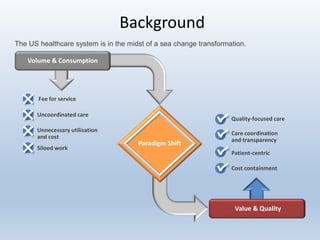
Background
Paradigm Shift
Volume & Consumption
Value & Quality
Quality-focused care
Care coordination
and transparency
Patient-centric
Cost containment
The US healthcare system is in the midst of a sea change transformation.
Fee for service
Uncoordinated care
Unnecessary utilization
and cost
Siloed work
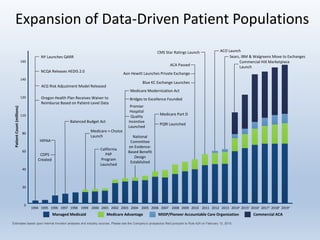
Expansion of Data-Driven Patient Populations
Oregon Health Plan Receives Waiver to
Reimburse Based on Patient-Level Data
ACG Risk Adjustment Model Released
NCQA Releases HEDIS 2.0
NY Launches QARR
HIPAA
CDPS
Created
Balanced Budget Act
Medicare Modernization Act
Medicare Part D
CMS Star Ratings Launch
160
140
120
110
80
60
40
20
0
1994 1995 1996 1997 1998 1999 2000 2001 2002 2003 2004 2005 2006 2007 2008 2009 2010 2011 2012 2013 2014 2015 2016 2017 2018 2019
ACA Passed
Managed Medicaid Medicare Advantage MSSP/Pioneer Accountable Care Organization Commercial ACA
PatientCount(millions)
Aon Hewitt Launches Private Exchange
Blue KC Exchange Launches
Bridges to Excellence Founded
PQRI Launched
Premier
Hospital
Quality
Incentive
Launched
National
Committee
on Evidence-
Based Benefit
Design
Established
California
P4P
Program
Launched
ACO Launch
Commercial HIX Marketplace
Launch
Sears, IBM & Walgreens Move to Exchanges
Medicare + Choice
Launch
E E E E E E
Estimates based upon internal Inovalon analyses and industry sources. Please see the Company’s prospectus filed pursuant to Rule 424 on February 12, 2015.
Overview
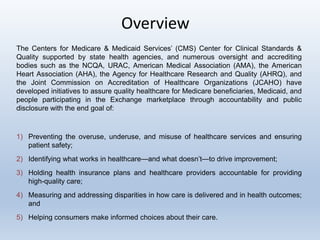
The Centers for Medicare & Medicaid Services’ (CMS) Center for Clinical Standards &
Quality supported by state health agencies, and numerous oversight and accrediting
bodies such as the NCQA, URAC, American Medical Association (AMA), the American
Heart Association (AHA), the Agency for Healthcare Research and Quality (AHRQ), and
the Joint Commission on Accreditation of Healthcare Organizations (JCAHO) have
developed initiatives to assure quality healthcare for Medicare beneficiaries, Medicaid, and
people participating in the Exchange marketplace through accountability and public
disclosure with the end goal of:
1) Preventing the overuse, underuse, and misuse of healthcare services and ensuring
patient safety;
2) Identifying what works in healthcare—and what doesn’t—to drive improvement;
3) Holding health insurance plans and healthcare providers accountable for providing
high-quality care;
4) Measuring and addressing disparities in how care is delivered and in health outcomes;
and
5) Helping consumers make informed choices about their care.
Benefits
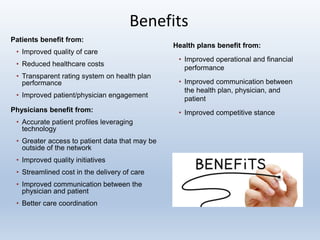
Patients benefit from:
• Improved quality of care
• Reduced healthcare costs
• Transparent rating system on health plan
performance
• Improved patient/physician engagement
Physicians benefit from:
• Accurate patient profiles leveraging
technology
• Greater access to patient data that may be
outside of the network
• Improved quality initiatives
• Streamlined cost in the delivery of care
• Improved communication between the
physician and patient
• Better care coordination
Health plans benefit from:
• Improved operational and financial
performance
• Improved communication between
the health plan, physician, and
patient
• Improved competitive stance
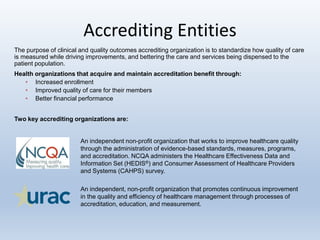
Accrediting Entities
An independent non-profit organization that works to improve healthcare quality
through the administration of evidence-based standards, measures, programs,
and accreditation. NCQA administers the Healthcare Effectiveness Data and
Information Set (HEDIS®) and Consumer Assessment of Healthcare Providers
and Systems (CAHPS) survey.
An independent, non-profit organization that promotes continuous improvement
in the quality and efficiency of healthcare management through processes of
accreditation, education, and measurement.
The purpose of clinical and quality outcomes accrediting organization is to standardize how quality of care
is measured while driving improvements, and bettering the care and services being dispensed to the
patient population.
Health organizations that acquire and maintain accreditation benefit through:
• Increased enrollment
• Improved quality of care for their members
• Better financial performance
Two key accrediting organizations are:
8
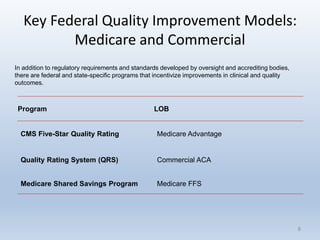
Key Federal Quality Improvement Models:
Medicare and Commercial
Program LOB
CMS Five-Star Quality Rating Medicare Advantage
Quality Rating System (QRS) Commercial ACA
Medicare Shared Savings Program Medicare FFS
In addition to regulatory requirements and standards developed by oversight and accrediting bodies,
there are federal and state-specific programs that incentivize improvements in clinical and quality
outcomes.
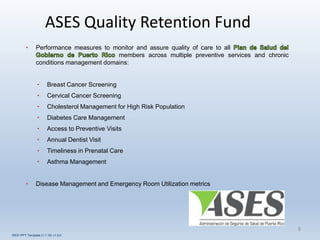
ASES Quality Retention Fund
• Performance measures to monitor and assure quality of care to all
members across multiple preventive services and chronic
conditions management domains:
• Breast Cancer Screening
• Cervical Cancer Screening
• Cholesterol Management for High Risk Population
• Diabetes Care Management
• Access to Preventive Visits
• Annual Dentist Visit
• Timeliness in Prenatal Care
• Asthma Management
• Disease Management and Emergency Room Utilization metrics
9
INOV PPT Template (1.1.16) v1.0.0
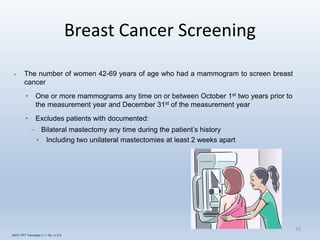
Breast Cancer Screening
10
• The number of women 42-69 years of age who had a mammogram to screen breast
cancer
• One or more mammograms any time on or between October 1st two years prior to
the measurement year and December 31st of the measurement year
• Excludes patients with documented:
– Bilateral mastectomy any time during the patient’s history
• Including two unilateral mastectomies at least 2 weeks apart
INOV PPT Template (1.1.16) v1.0.0
Cervical Cancer Screening
11
• The number of women 24-64 years of age who receive one or more Pap Tests to
screen for cervical cancer using either:
• Cervical cytology during the measurement year, or the two years prior
• Cervical cytology/HPV co-testing during the measurement year or four years prior
– Document when the cervical pathology and/or the HPV test was performed, and
the results or findings
• Exclusion:
– Hysterectomy with no residual cervix , cervical agenesis, or acquired absence of
the cervix
INOV PPT Template (1.1.16) v1.0.0
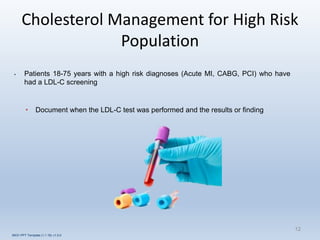
Cholesterol Management for High Risk
Population
12
• Patients 18-75 years with a high risk diagnoses (Acute MI, CABG, PCI) who have
had a LDL-C screening
• Document when the LDL-C test was performed and the results or finding
INOV PPT Template (1.1.16) v1.0.0
Diabetes Care Management
13
Members 18-75 years of age with Diabetes (Type 1 or 2) who had each of the following screening
tests:
• Hemoglobin A1c
• Eye exam
– Retinal or dilated eye exam by optometrist or ophthalmologist in the measurement year
– A negative retinal or dilated eye exam in the year prior to the measurement year
• LDL-C
• Nephropathy screening:
– Microalbumin (24 hour urine, timed urine, spot urine, microalbumin/creatinine ratio, 24 hour
protein, random protein/creatinine ratio)
– Diagnosis of nephropathy by nephrologist
– Renal transplant
– Documentation of chronic kidney disease, including acute renal failure, ESRD, and diabetic
nephropathy
– Positive urine macroalbumin test
INOV PPT Template (1.1.16) v1.0.0
Early and Periodic Screening Diagnosis and
Treatment (EPSDT)
14
Members under 21 years old , based on age stages:
• Preventive visit (well child)
• Inmunizations
• Developmental screening
• Counseling for nutrition and physical activity, BMI percentile
• Dental care
• Hearing and vision screening
INOV PPT Template (1.1.16) v1.0.0
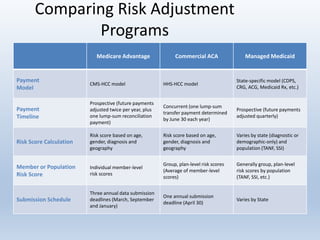
Medicare Advantage Commercial ACA Managed Medicaid
Payment
Model
CMS-HCC model HHS-HCC model
State-specific model (CDPS,
CRG, ACG, Medicaid Rx, etc.)
Payment
Timeline
Prospective (future payments
adjusted twice per year, plus
one lump-sum reconciliation
payment)
Concurrent (one lump-sum
transfer payment determined
by June 30 each year)
Prospective (future payments
adjusted quarterly)
Risk Score Calculation
Risk score based on age,
gender, diagnosis and
geography
Risk score based on age,
gender, diagnosis and
geography
Varies by state (diagnostic or
demographic-only) and
population (TANF, SSI)
Member or Population
Risk Score
Individual member-level
risk scores
Group, plan-level risk scores
(Average of member-level
scores)
Generally group, plan-level
risk scores by population
(TANF, SSI, etc.)
Submission Schedule
Three annual data submission
deadlines (March, September
and January)
One annual submission
deadline (April 30)
Varies by State
Comparing Risk Adjustment
Programs
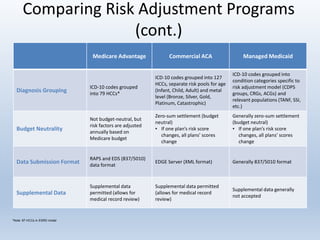
Medicare Advantage Commercial ACA Managed Medicaid
Diagnosis Grouping
ICD-10 codes grouped
into 79 HCCs*
ICD-10 codes grouped into 127
HCCs, separate risk pools for age
(Infant, Child, Adult) and metal
level (Bronze, Silver, Gold,
Platinum, Catastrophic)
ICD-10 codes grouped into
condition categories specific to
risk adjustment model (CDPS
groups, CRGs, ACGs) and
relevant populations (TANF, SSI,
etc.)
Budget Neutrality
Not budget-neutral, but
risk factors are adjusted
annually based on
Medicare budget
Zero-sum settlement (budget
neutral)
• If one plan’s risk score
changes, all plans’ scores
change
Generally zero-sum settlement
(budget neutral)
• If one plan’s risk score
changes, all plans’ scores
change
Data Submission Format
RAPS and EDS (837/5010)
data format
EDGE Server (XML format) Generally 837/5010 format
Supplemental Data
Supplemental data
permitted (allows for
medical record review)
Supplemental data permitted
(allows for medical record
review)
Supplemental data generally
not accepted
Comparing Risk Adjustment Programs
(cont.)
*Note: 87 HCCs in ESRD model
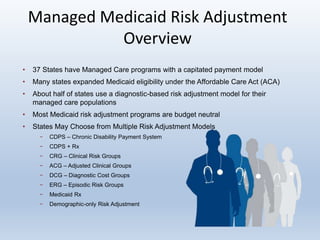
Managed Medicaid Risk Adjustment
Overview
• 37 States have Managed Care programs with a capitated payment model
• Many states expanded Medicaid eligibility under the Affordable Care Act (ACA)
• About half of states use a diagnostic-based risk adjustment model for their
managed care populations
• Most Medicaid risk adjustment programs are budget neutral
• States May Choose from Multiple Risk Adjustment Models
− CDPS – Chronic Disability Payment System
− CDPS + Rx
− CRG – Clinical Risk Groups
− ACG – Adjusted Clinical Groups
− DCG – Diagnostic Cost Groups
− ERG – Episodic Risk Groups
− Medicaid Rx
− Demographic-only Risk Adjustment
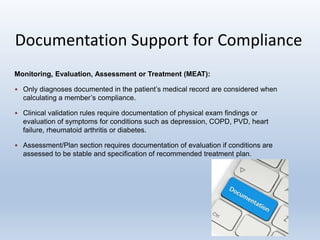
Monitoring, Evaluation, Assessment or Treatment (MEAT):
• Only diagnoses documented in the patient’s medical record are considered when
calculating a member’s compliance.
• Clinical validation rules require documentation of physical exam findings or
evaluation of symptoms for conditions such as depression, COPD, PVD, heart
failure, rheumatoid arthritis or diabetes.
• Assessment/Plan section requires documentation of evaluation if conditions are
assessed to be stable and specification of recommended treatment plan.
Documentation Support for Compliance
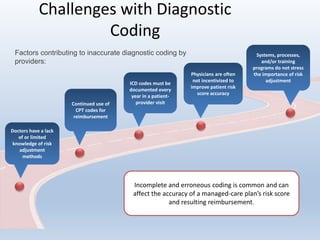
Challenges with Diagnostic
Coding
Doctors have a lack
of or limited
knowledge of risk
adjustment
methods
ICD codes must be
documented every
year in a patient-
provider visit
Physicians are often
not incentivized to
improve patient risk
score accuracy
Systems, processes,
and/or training
programs do not stress
the importance of risk
adjustment
Continued use of
CPT codes for
reimbursement
Incomplete and erroneous coding is common and can
affect the accuracy of a managed-care plan’s risk score
and resulting reimbursement.
Factors contributing to inaccurate diagnostic coding by
providers:
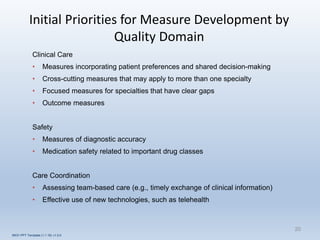
Initial Priorities for Measure Development by
Quality Domain
Clinical Care
• Measures incorporating patient preferences and shared decision-making
• Cross-cutting measures that may apply to more than one specialty
• Focused measures for specialties that have clear gaps
• Outcome measures
Safety
• Measures of diagnostic accuracy
• Medication safety related to important drug classes
Care Coordination
• Assessing team-based care (e.g., timely exchange of clinical information)
• Effective use of new technologies, such as telehealth
20
INOV PPT Template (1.1.16) v1.0.0
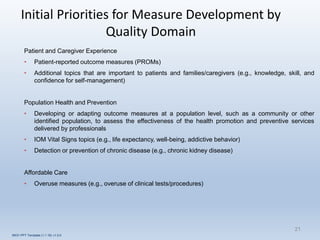
Initial Priorities for Measure Development by
Quality Domain
Patient and Caregiver Experience
• Patient-reported outcome measures (PROMs)
• Additional topics that are important to patients and families/caregivers (e.g., knowledge, skill, and
confidence for self-management)
Population Health and Prevention
• Developing or adapting outcome measures at a population level, such as a community or other
identified population, to assess the effectiveness of the health promotion and preventive services
delivered by professionals
• IOM Vital Signs topics (e.g., life expectancy, well-being, addictive behavior)
• Detection or prevention of chronic disease (e.g., chronic kidney disease)
Affordable Care
• Overuse measures (e.g., overuse of clinical tests/procedures)
21
INOV PPT Template (1.1.16) v1.0.0
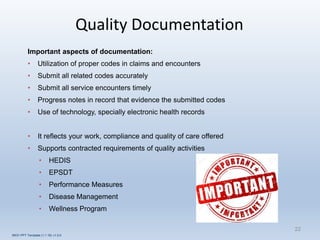
Quality Documentation
Important aspects of documentation:
• Utilization of proper codes in claims and encounters
• Submit all related codes accurately
• Submit all service encounters timely
• Progress notes in record that evidence the submitted codes
• Use of technology, specially electronic health records
• It reflects your work, compliance and quality of care offered
• Supports contracted requirements of quality activities
• HEDIS
• EPSDT
• Performance Measures
• Disease Management
• Wellness Program
22
INOV PPT Template (1.1.16) v1.0.0
Questions
23
INOV PPT Template (1.1.16) v1.0.0

Benchmarking Quality

  • 1.
    Quality in HealthcareUpdate Rubén J. Nazario, M.D. Medical Director October 2016
  • 2.
    Agenda • Industry Backgroundand Overview • Accrediting Entities • Quality Program Overview − Federal Programs − Local Programs • Risk Adjustment Overview • Quality Documentation
  • 3.
    Background Paradigm Shift Volume &Consumption Value & Quality Quality-focused care Care coordination and transparency Patient-centric Cost containment The US healthcare system is in the midst of a sea change transformation. Fee for service Uncoordinated care Unnecessary utilization and cost Siloed work
  • 4.
    Expansion of Data-DrivenPatient Populations Oregon Health Plan Receives Waiver to Reimburse Based on Patient-Level Data ACG Risk Adjustment Model Released NCQA Releases HEDIS 2.0 NY Launches QARR HIPAA CDPS Created Balanced Budget Act Medicare Modernization Act Medicare Part D CMS Star Ratings Launch 160 140 120 110 80 60 40 20 0 1994 1995 1996 1997 1998 1999 2000 2001 2002 2003 2004 2005 2006 2007 2008 2009 2010 2011 2012 2013 2014 2015 2016 2017 2018 2019 ACA Passed Managed Medicaid Medicare Advantage MSSP/Pioneer Accountable Care Organization Commercial ACA PatientCount(millions) Aon Hewitt Launches Private Exchange Blue KC Exchange Launches Bridges to Excellence Founded PQRI Launched Premier Hospital Quality Incentive Launched National Committee on Evidence- Based Benefit Design Established California P4P Program Launched ACO Launch Commercial HIX Marketplace Launch Sears, IBM & Walgreens Move to Exchanges Medicare + Choice Launch E E E E E E Estimates based upon internal Inovalon analyses and industry sources. Please see the Company’s prospectus filed pursuant to Rule 424 on February 12, 2015.
  • 5.
    Overview The Centers forMedicare & Medicaid Services’ (CMS) Center for Clinical Standards & Quality supported by state health agencies, and numerous oversight and accrediting bodies such as the NCQA, URAC, American Medical Association (AMA), the American Heart Association (AHA), the Agency for Healthcare Research and Quality (AHRQ), and the Joint Commission on Accreditation of Healthcare Organizations (JCAHO) have developed initiatives to assure quality healthcare for Medicare beneficiaries, Medicaid, and people participating in the Exchange marketplace through accountability and public disclosure with the end goal of: 1) Preventing the overuse, underuse, and misuse of healthcare services and ensuring patient safety; 2) Identifying what works in healthcare—and what doesn’t—to drive improvement; 3) Holding health insurance plans and healthcare providers accountable for providing high-quality care; 4) Measuring and addressing disparities in how care is delivered and in health outcomes; and 5) Helping consumers make informed choices about their care.
  • 6.
    Benefits Patients benefit from: •Improved quality of care • Reduced healthcare costs • Transparent rating system on health plan performance • Improved patient/physician engagement Physicians benefit from: • Accurate patient profiles leveraging technology • Greater access to patient data that may be outside of the network • Improved quality initiatives • Streamlined cost in the delivery of care • Improved communication between the physician and patient • Better care coordination Health plans benefit from: • Improved operational and financial performance • Improved communication between the health plan, physician, and patient • Improved competitive stance
  • 7.
    Accrediting Entities An independentnon-profit organization that works to improve healthcare quality through the administration of evidence-based standards, measures, programs, and accreditation. NCQA administers the Healthcare Effectiveness Data and Information Set (HEDIS®) and Consumer Assessment of Healthcare Providers and Systems (CAHPS) survey. An independent, non-profit organization that promotes continuous improvement in the quality and efficiency of healthcare management through processes of accreditation, education, and measurement. The purpose of clinical and quality outcomes accrediting organization is to standardize how quality of care is measured while driving improvements, and bettering the care and services being dispensed to the patient population. Health organizations that acquire and maintain accreditation benefit through: • Increased enrollment • Improved quality of care for their members • Better financial performance Two key accrediting organizations are:
  • 8.
    8 Key Federal QualityImprovement Models: Medicare and Commercial Program LOB CMS Five-Star Quality Rating Medicare Advantage Quality Rating System (QRS) Commercial ACA Medicare Shared Savings Program Medicare FFS In addition to regulatory requirements and standards developed by oversight and accrediting bodies, there are federal and state-specific programs that incentivize improvements in clinical and quality outcomes.
  • 9.
    ASES Quality RetentionFund • Performance measures to monitor and assure quality of care to all members across multiple preventive services and chronic conditions management domains: • Breast Cancer Screening • Cervical Cancer Screening • Cholesterol Management for High Risk Population • Diabetes Care Management • Access to Preventive Visits • Annual Dentist Visit • Timeliness in Prenatal Care • Asthma Management • Disease Management and Emergency Room Utilization metrics 9 INOV PPT Template (1.1.16) v1.0.0
  • 10.
    Breast Cancer Screening 10 •The number of women 42-69 years of age who had a mammogram to screen breast cancer • One or more mammograms any time on or between October 1st two years prior to the measurement year and December 31st of the measurement year • Excludes patients with documented: – Bilateral mastectomy any time during the patient’s history • Including two unilateral mastectomies at least 2 weeks apart INOV PPT Template (1.1.16) v1.0.0
  • 11.
    Cervical Cancer Screening 11 •The number of women 24-64 years of age who receive one or more Pap Tests to screen for cervical cancer using either: • Cervical cytology during the measurement year, or the two years prior • Cervical cytology/HPV co-testing during the measurement year or four years prior – Document when the cervical pathology and/or the HPV test was performed, and the results or findings • Exclusion: – Hysterectomy with no residual cervix , cervical agenesis, or acquired absence of the cervix INOV PPT Template (1.1.16) v1.0.0
  • 12.
    Cholesterol Management forHigh Risk Population 12 • Patients 18-75 years with a high risk diagnoses (Acute MI, CABG, PCI) who have had a LDL-C screening • Document when the LDL-C test was performed and the results or finding INOV PPT Template (1.1.16) v1.0.0
  • 13.
    Diabetes Care Management 13 Members18-75 years of age with Diabetes (Type 1 or 2) who had each of the following screening tests: • Hemoglobin A1c • Eye exam – Retinal or dilated eye exam by optometrist or ophthalmologist in the measurement year – A negative retinal or dilated eye exam in the year prior to the measurement year • LDL-C • Nephropathy screening: – Microalbumin (24 hour urine, timed urine, spot urine, microalbumin/creatinine ratio, 24 hour protein, random protein/creatinine ratio) – Diagnosis of nephropathy by nephrologist – Renal transplant – Documentation of chronic kidney disease, including acute renal failure, ESRD, and diabetic nephropathy – Positive urine macroalbumin test INOV PPT Template (1.1.16) v1.0.0
  • 14.
    Early and PeriodicScreening Diagnosis and Treatment (EPSDT) 14 Members under 21 years old , based on age stages: • Preventive visit (well child) • Inmunizations • Developmental screening • Counseling for nutrition and physical activity, BMI percentile • Dental care • Hearing and vision screening INOV PPT Template (1.1.16) v1.0.0
  • 15.
    Medicare Advantage CommercialACA Managed Medicaid Payment Model CMS-HCC model HHS-HCC model State-specific model (CDPS, CRG, ACG, Medicaid Rx, etc.) Payment Timeline Prospective (future payments adjusted twice per year, plus one lump-sum reconciliation payment) Concurrent (one lump-sum transfer payment determined by June 30 each year) Prospective (future payments adjusted quarterly) Risk Score Calculation Risk score based on age, gender, diagnosis and geography Risk score based on age, gender, diagnosis and geography Varies by state (diagnostic or demographic-only) and population (TANF, SSI) Member or Population Risk Score Individual member-level risk scores Group, plan-level risk scores (Average of member-level scores) Generally group, plan-level risk scores by population (TANF, SSI, etc.) Submission Schedule Three annual data submission deadlines (March, September and January) One annual submission deadline (April 30) Varies by State Comparing Risk Adjustment Programs
  • 16.
    Medicare Advantage CommercialACA Managed Medicaid Diagnosis Grouping ICD-10 codes grouped into 79 HCCs* ICD-10 codes grouped into 127 HCCs, separate risk pools for age (Infant, Child, Adult) and metal level (Bronze, Silver, Gold, Platinum, Catastrophic) ICD-10 codes grouped into condition categories specific to risk adjustment model (CDPS groups, CRGs, ACGs) and relevant populations (TANF, SSI, etc.) Budget Neutrality Not budget-neutral, but risk factors are adjusted annually based on Medicare budget Zero-sum settlement (budget neutral) • If one plan’s risk score changes, all plans’ scores change Generally zero-sum settlement (budget neutral) • If one plan’s risk score changes, all plans’ scores change Data Submission Format RAPS and EDS (837/5010) data format EDGE Server (XML format) Generally 837/5010 format Supplemental Data Supplemental data permitted (allows for medical record review) Supplemental data permitted (allows for medical record review) Supplemental data generally not accepted Comparing Risk Adjustment Programs (cont.) *Note: 87 HCCs in ESRD model
  • 17.
    Managed Medicaid RiskAdjustment Overview • 37 States have Managed Care programs with a capitated payment model • Many states expanded Medicaid eligibility under the Affordable Care Act (ACA) • About half of states use a diagnostic-based risk adjustment model for their managed care populations • Most Medicaid risk adjustment programs are budget neutral • States May Choose from Multiple Risk Adjustment Models − CDPS – Chronic Disability Payment System − CDPS + Rx − CRG – Clinical Risk Groups − ACG – Adjusted Clinical Groups − DCG – Diagnostic Cost Groups − ERG – Episodic Risk Groups − Medicaid Rx − Demographic-only Risk Adjustment
  • 18.
    Monitoring, Evaluation, Assessmentor Treatment (MEAT): • Only diagnoses documented in the patient’s medical record are considered when calculating a member’s compliance. • Clinical validation rules require documentation of physical exam findings or evaluation of symptoms for conditions such as depression, COPD, PVD, heart failure, rheumatoid arthritis or diabetes. • Assessment/Plan section requires documentation of evaluation if conditions are assessed to be stable and specification of recommended treatment plan. Documentation Support for Compliance
  • 19.
    Challenges with Diagnostic Coding Doctorshave a lack of or limited knowledge of risk adjustment methods ICD codes must be documented every year in a patient- provider visit Physicians are often not incentivized to improve patient risk score accuracy Systems, processes, and/or training programs do not stress the importance of risk adjustment Continued use of CPT codes for reimbursement Incomplete and erroneous coding is common and can affect the accuracy of a managed-care plan’s risk score and resulting reimbursement. Factors contributing to inaccurate diagnostic coding by providers:
  • 20.
    Initial Priorities forMeasure Development by Quality Domain Clinical Care • Measures incorporating patient preferences and shared decision-making • Cross-cutting measures that may apply to more than one specialty • Focused measures for specialties that have clear gaps • Outcome measures Safety • Measures of diagnostic accuracy • Medication safety related to important drug classes Care Coordination • Assessing team-based care (e.g., timely exchange of clinical information) • Effective use of new technologies, such as telehealth 20 INOV PPT Template (1.1.16) v1.0.0
  • 21.
    Initial Priorities forMeasure Development by Quality Domain Patient and Caregiver Experience • Patient-reported outcome measures (PROMs) • Additional topics that are important to patients and families/caregivers (e.g., knowledge, skill, and confidence for self-management) Population Health and Prevention • Developing or adapting outcome measures at a population level, such as a community or other identified population, to assess the effectiveness of the health promotion and preventive services delivered by professionals • IOM Vital Signs topics (e.g., life expectancy, well-being, addictive behavior) • Detection or prevention of chronic disease (e.g., chronic kidney disease) Affordable Care • Overuse measures (e.g., overuse of clinical tests/procedures) 21 INOV PPT Template (1.1.16) v1.0.0
  • 22.
    Quality Documentation Important aspectsof documentation: • Utilization of proper codes in claims and encounters • Submit all related codes accurately • Submit all service encounters timely • Progress notes in record that evidence the submitted codes • Use of technology, specially electronic health records • It reflects your work, compliance and quality of care offered • Supports contracted requirements of quality activities • HEDIS • EPSDT • Performance Measures • Disease Management • Wellness Program 22 INOV PPT Template (1.1.16) v1.0.0
  • 23.

Editor's Notes

  • #4 For decades quality has been the center of focus for the healthcare industry, but has also provided significant challenges: Care coordination Cost and utilization Disparate data Technology and reporting Patient insight As result the healthcare industry is undergoing a sea change transformation from volume and consumption to value and quality. Government and state entities have put programs in place to support and incentivize quality-focused initiatives that: Improve patient health Avoid costly mistakes and readmissions Increase financial outcomes
  • #5 …and throughout the years as quality of care has gained importance, so has the need for increased data for the patient population that’s being served
  • #6 CMS’ center for clinical standards and quality coupled with a host of quality care oversight organizations and agencies are working together to devise a standardized plan on how to measure and evaluate the quality care for health entities throughout the U.S. with the goal of Preventing the overuse, underuse, and misuse of health care services and ensuring patient safety; Identifying what works in healthcare—and what doesn’t—to drive improvement; Holding health insurance plans and health care providers accountable for providing high-quality care; Measuring and addressing disparities in how care is delivered and in health outcomes; and Helping consumers make informed choices about their care.
  • #7 Standardizing the quality of care that’s being dispensed, health plans, physicians and the like can look forward to (ramble off some of the bullet points)
  • #8 For instance NCQA which blah, blah, blah, blah And URAC, which blah, blah, blah Obtaining accreditation and maintaining certifications leads to increased enrollment, improved quality of care for their members, and ultimately better financial performance.
  • #9 URAC Client contracting with Inovalon (01/11/2016 – 02/29/2016) Inovalon Project Kick off and Implementation with URAC Clients (03/15/2016 – 05/13/2016) Test Data Load and processing - Data from URAC Client to Inovalon (optional step for those that have test/mock data prepared; 05/16/2016 – 06/15/2016) Initial data load and processing - Data from URAC Client to Inovalon (07/01/2016 – 07/15/2016) Preliminary rate production - Rates from Inovalon to URAC Client (07/15/2016 – 07/29/2016) URAC Clients work with Inovalon to perform data updates and corrections (08/01/2016 - 09/30/2016) URAC Clients complete all audit related remedial actions Final Data Due by URAC Clients to Inovalon (post data refresh, if required) Final Rate Production by Inovalon (09/30/2016 – 10/15/2016) Final rate submission from Inovalon to URAC Client and URAC
  • #16 Highlight: Budget neutrality Supplemental data limitations
  • #17 Highlight: Budget neutrality Supplemental data limitations
  • #20 CMS developed and manages the Hierarchical Condition Category (HCC) methodology to evaluate the risk adjusted disease burden for Medicare ACOs, Medicare Advantage and Commercial ACA health plans. State Medicaid authorities use a variety use a variety of similar risk adjustment methodologies for their managed Medicaid plans, including CDPS, CRG and others. These logical groupings of diagnoses designate a reimbursement for accurate patient disease burden. Doctors are typically not experts in coding accurate disease burden for risk adjustment….after all, they didn’t go to medical school to become expert coders, rather they focus on providing great care to their patients. Therefore, incomplete and erroneous coding is common and can affect the accuracy of the patient risk score.