Bellman-
Ford
algorithm
Bellman-Ford algorithm
• The Bellman-Ford algorithm is an extension of Dijkstra’s
algorithm which calculates the shortest distance from the source
point to all of the vertices.
• While Dijkstra’s algorithm just works for edges with positive
distances, the Bellman-Ford algorithm works for negative distances as
well.
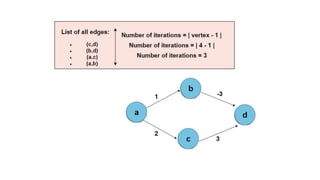
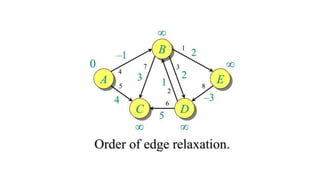
• List down all the edges of the graph. This can be done easily if the graph is represented
by an adjacency list.
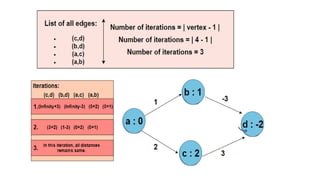
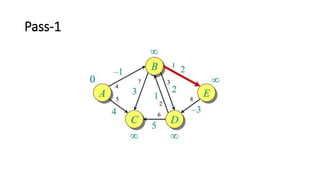
• Calculate the number of iterations with “V - 1”. The number of iterations will be equal to
the number of vertices because the shortest distance to an edge can be adjusted V - 1
times at maximum.
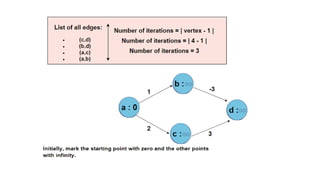
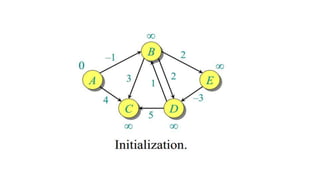
• Start with an arbitrary vertex and assign it the minimum distance of zero. All other nodes
should be assigned infinity since we are exaggerating the actual distances.
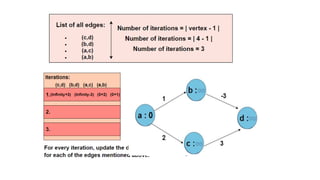
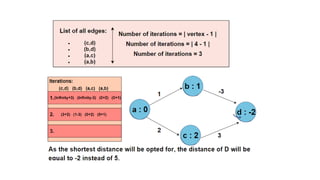
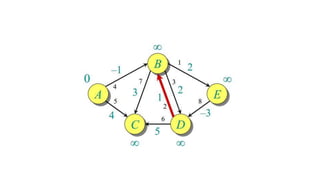
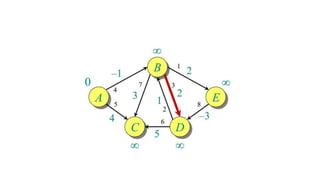
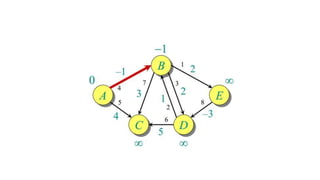
• In each iteration, update the distance for each edge if the new distance is smaller than
the one assigned before. The distance to each node will be the cumulative distance from
the starting node to this particular node.
• We need to consider all the iterations to make sure that all ​possible paths are
considered. If we do this, we will end up with the shortest distance.
Algorithm
Uses of the Bellman-Ford algorithm
The Bellman-Ford algorithm has several real-world use cases,
including:
• Finding negative weight cycles.
• Calculating the smallest possible heat gain/loss in a chemical
reaction.
• Finding the most efficient way to convert currencies.
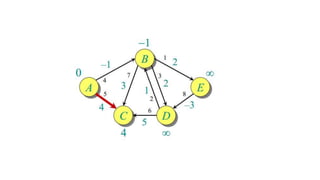
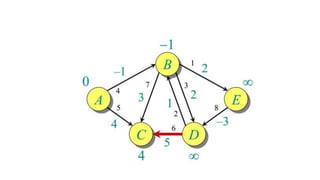
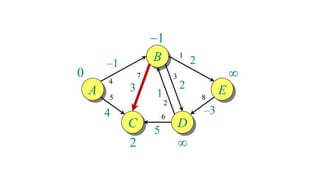
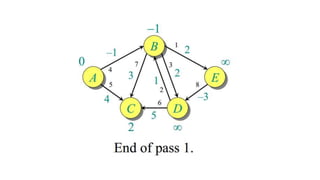
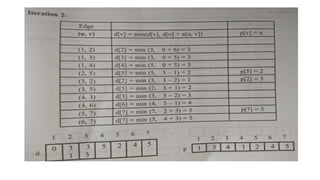
Pass-1
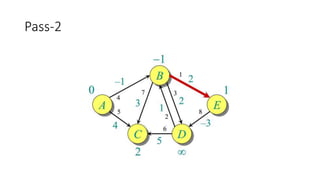
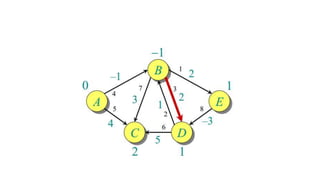
Pass-2
Weight of the graph is equal to the weight of
its edges.
So, weight = 3 + 2 + (-6) = -1
Negative value, so we have a negative cycle
Bellman-Ford algorithm.pptx which a very usefull ppt to learn this algorithm

Bellman-Ford algorithm.pptx which a very usefull ppt to learn this algorithm

  • 1.
  • 2.
    Bellman-Ford algorithm • TheBellman-Ford algorithm is an extension of Dijkstra’s algorithm which calculates the shortest distance from the source point to all of the vertices. • While Dijkstra’s algorithm just works for edges with positive distances, the Bellman-Ford algorithm works for negative distances as well.
  • 3.
    • List downall the edges of the graph. This can be done easily if the graph is represented by an adjacency list. • Calculate the number of iterations with “V - 1”. The number of iterations will be equal to the number of vertices because the shortest distance to an edge can be adjusted V - 1 times at maximum. • Start with an arbitrary vertex and assign it the minimum distance of zero. All other nodes should be assigned infinity since we are exaggerating the actual distances. • In each iteration, update the distance for each edge if the new distance is smaller than the one assigned before. The distance to each node will be the cumulative distance from the starting node to this particular node. • We need to consider all the iterations to make sure that all ​possible paths are considered. If we do this, we will end up with the shortest distance. Algorithm
  • 4.
    Uses of theBellman-Ford algorithm The Bellman-Ford algorithm has several real-world use cases, including: • Finding negative weight cycles. • Calculating the smallest possible heat gain/loss in a chemical reaction. • Finding the most efficient way to convert currencies.
  • 14.
  • 23.
  • 30.
    Weight of thegraph is equal to the weight of its edges. So, weight = 3 + 2 + (-6) = -1 Negative value, so we have a negative cycle