CA1 RED4348
• Chosen Text National-guard
Before During and After Reading
for Non-Fiction
Debra McKay
Before Reading
1. Activate Prior Knowledge
2. Vocabulary
3. Predictions
4. Preview
5. Test/Quiz
Activate Prior Knowledge
Lets turn on our minds.
This is what we already know about what
we are going to read.
Vocabulary
Review new vocabulary so that readers
can guess less. Do not leave them
lost and confused.
Predictions
Go on a picture walk and make predictions
on what might happen.
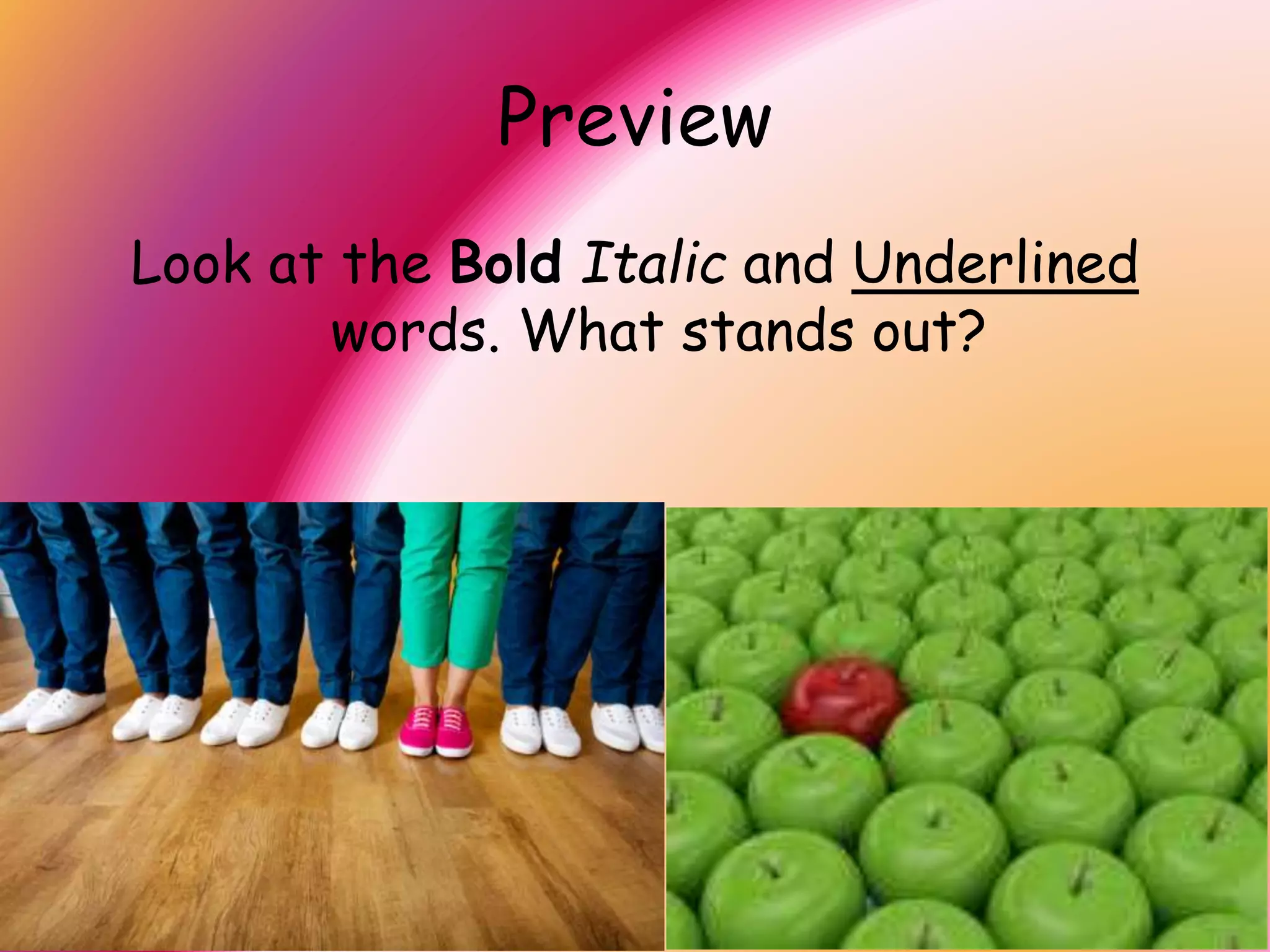
Preview
Look at the Bold Italic and Underlined
words. What stands out?
Test/Quiz
Preview the test or quiz.
what needs to be learned?
Applied
1. Activate prior knowledge by asking what
students know about the US military.
2. Vocabulary list: scoured, natural disasters,
etc.
3. Predictions- ask what they think it will be
about.
4. Preview-just looking at the pages numbers
stand out.
5. Test/Quiz – Look at the quiz.
During Reading
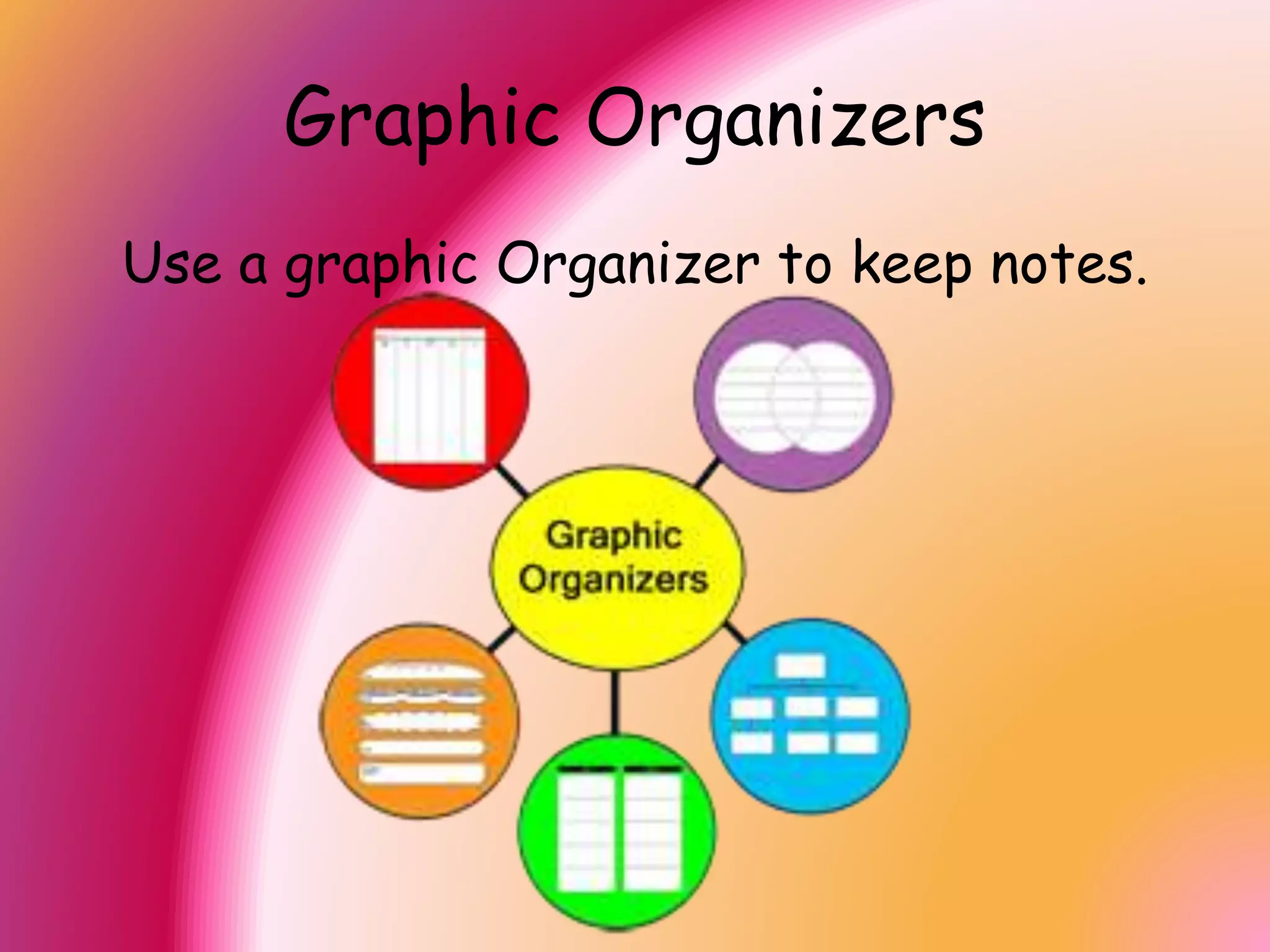
1. Graphic Organizers
2. Visualize
3. Self Question
4. Verify Importance
5. Make Connections
Graphic Organizers
Use a graphic Organizer to keep notes.
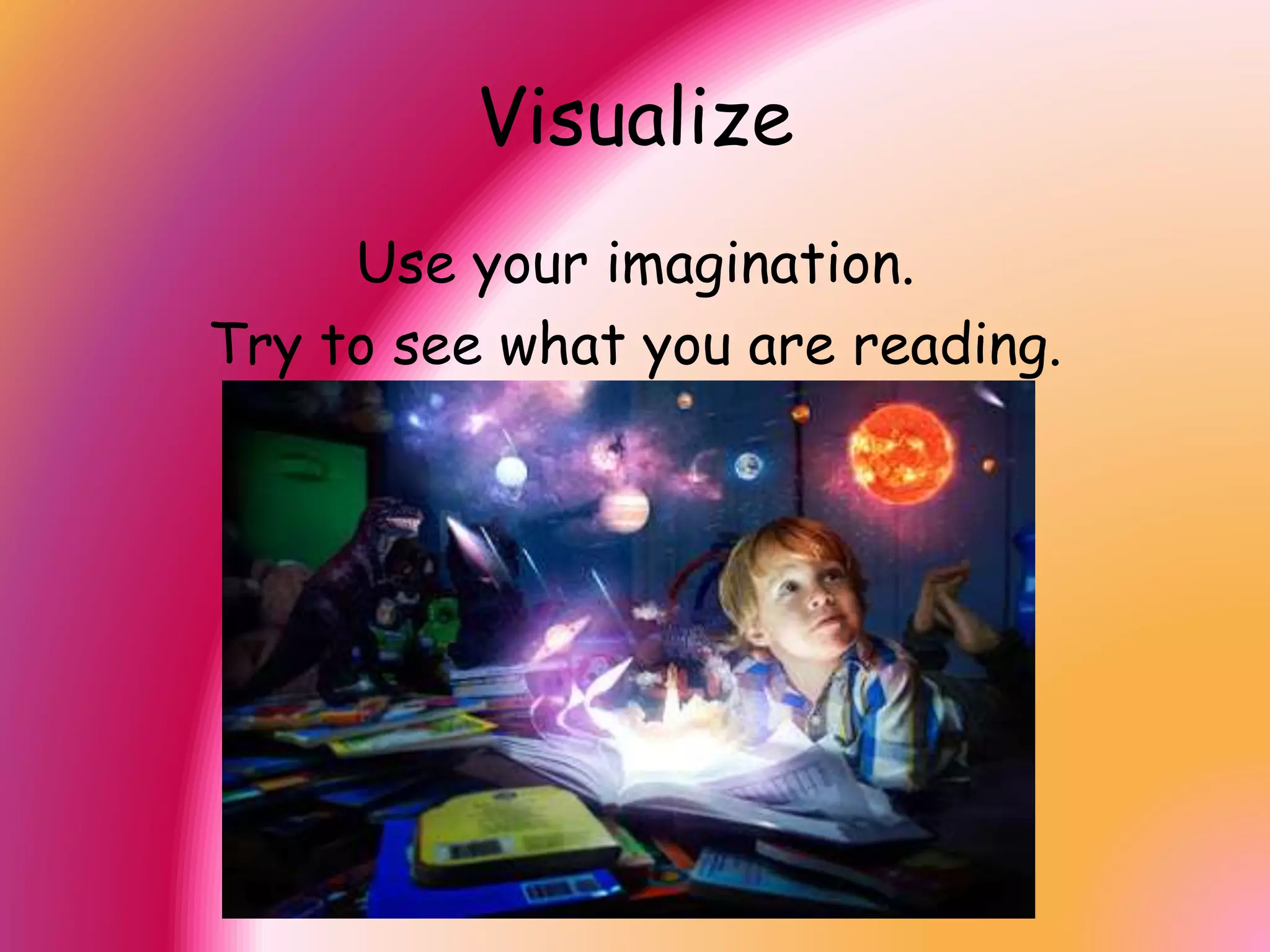
Visualize
Use your imagination.
Try to see what you are reading.
Self Question
Ask yourself about what you are reading.
Do I understand this?
What was that section about?
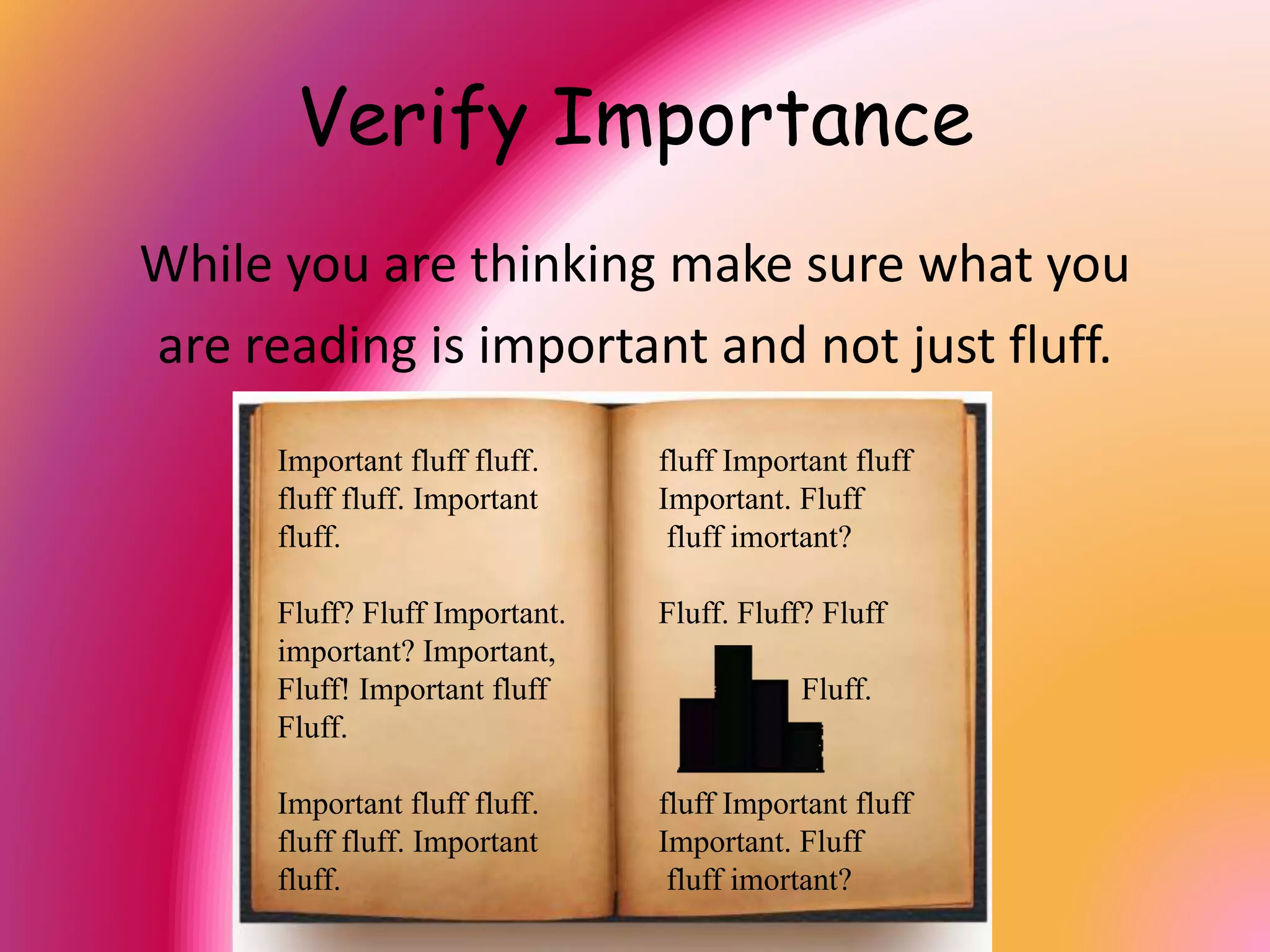
Verify Importance
While you are thinking make sure what you
are reading is important and not just fluff.
Important fluff fluff. fluff Important fluff
fluff fluff. Important Important. Fluff
fluff. fluff imortant?
Fluff? Fluff Important. Fluff. Fluff? Fluff
important? Important,
Fluff! Important fluff Fluff.
Fluff.
Important fluff fluff. fluff Important fluff
fluff fluff. Important Important. Fluff
fluff. fluff imortant?
Make Connections
Have you seen or heard of what you are
reading in real life.
=Real Life
Applied
1. Use graphic organizer to get key points.
2. Visualize flooding.
3. Think aloud “Do I understand this?”
4. Think aloud “There were not many
dates on the quiz they may not be as
important.
5. Think aloud about being through a
hurricane.
After Reading
1. Exit Slip
2. Oral Report
3. Group Discussion
4. Outline
5. Reread
Exit Slip
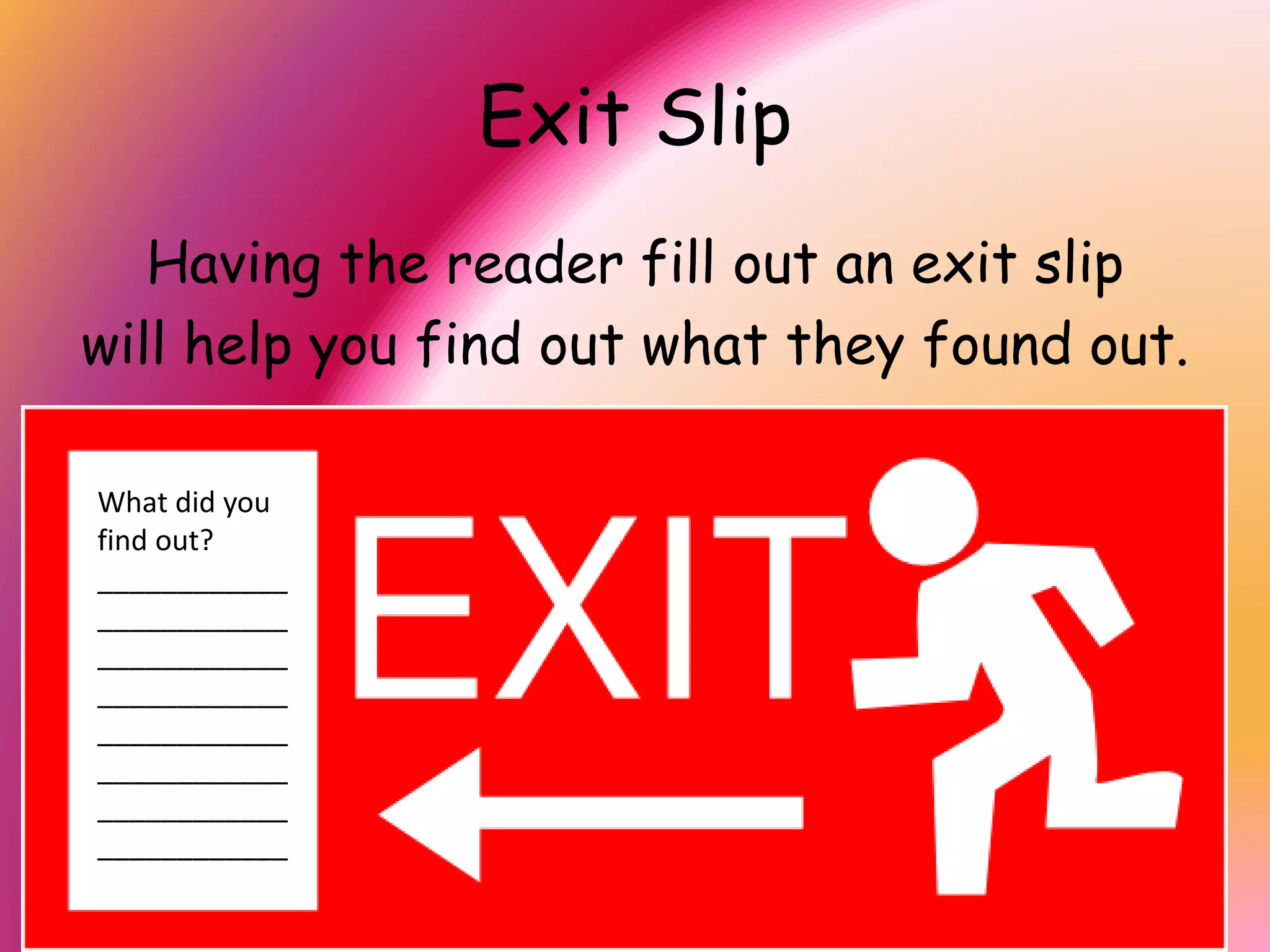
Having the reader fill out an exit slip
will help you find out what they found out.
What did you
find out?
____________
____________
____________
____________
____________
____________
____________
____________
Oral Report
If there is class time talk to
readers individually or in groups
to see what they remember.
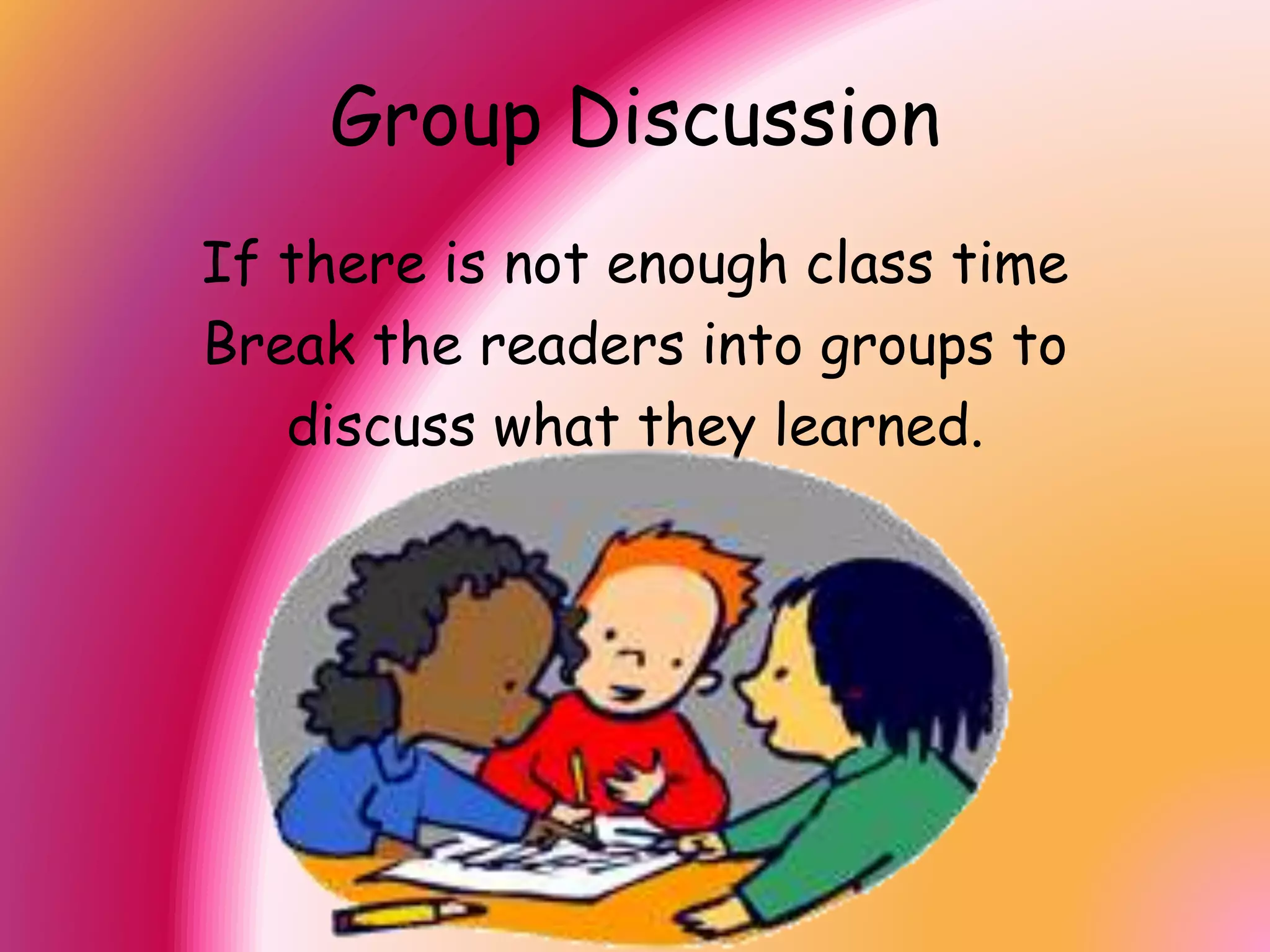
Group Discussion
If there is not enough class time
Break the readers into groups to
discuss what they learned.
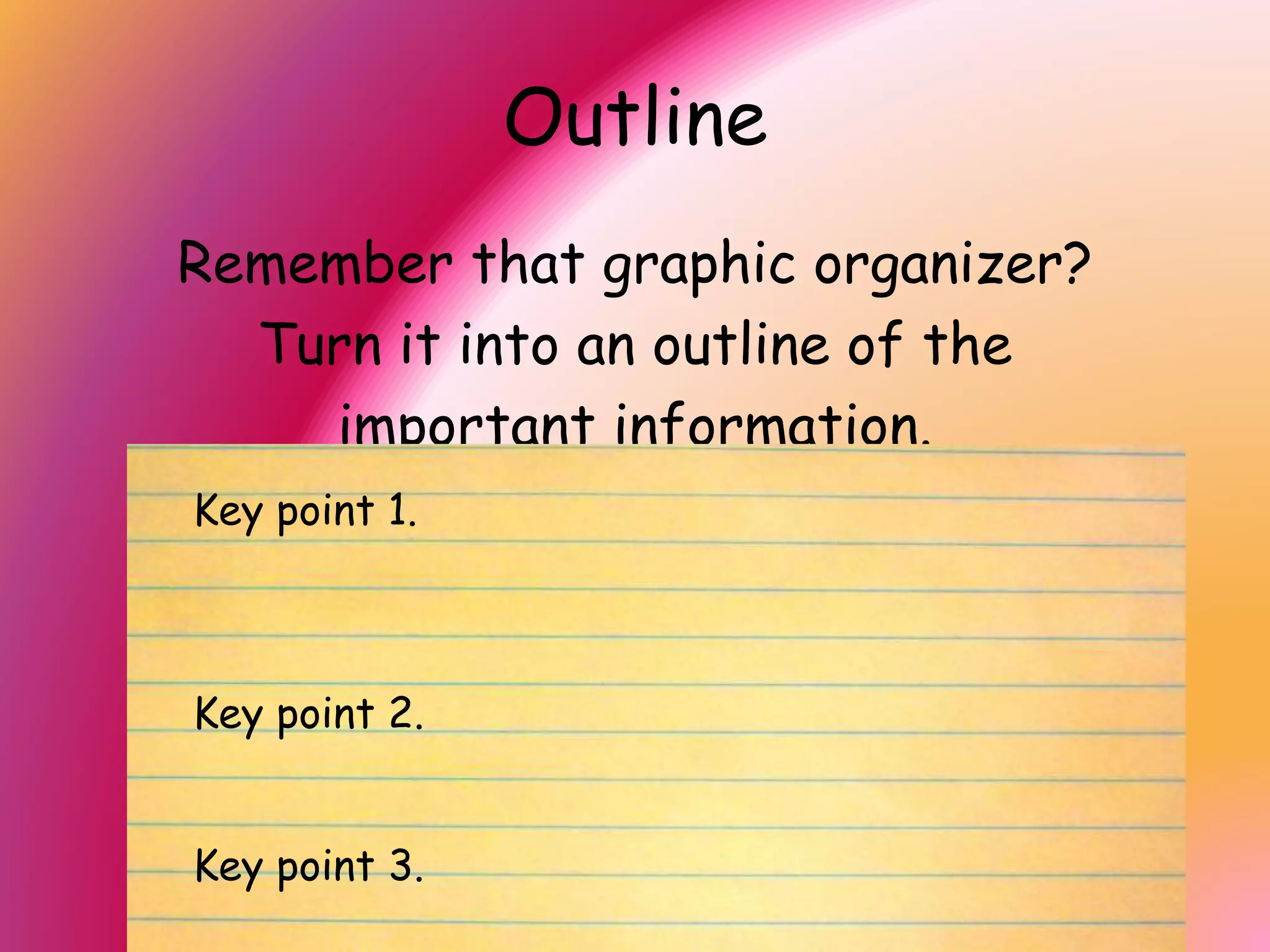
Outline
Remember that graphic organizer?
Turn it into an outline of the
important information.
Key point 1.
Key point 2.
Key point 3.
Reread
If the reader missed something important
the first time let them know it is okay and
a good idea to reread.
Applied
1. Give student an exit slip with to find out
what they remember.
2. Talk one on one if possible about the story.
3. Have students discuss story in small groups.
4. Turn the graphic organizer into an outline.
5. Let students know it is okay to reread.
Effective Reading
All of these things make effective
thinkers and readers.
Sources
http://www.readworks.org/passages/national-
guard

Before during and after reading

  • 1.
    CA1 RED4348 • ChosenText National-guard
  • 2.
    Before During andAfter Reading for Non-Fiction Debra McKay
  • 3.
    Before Reading 1. ActivatePrior Knowledge 2. Vocabulary 3. Predictions 4. Preview 5. Test/Quiz
  • 4.
    Activate Prior Knowledge Letsturn on our minds. This is what we already know about what we are going to read.
  • 5.
    Vocabulary Review new vocabularyso that readers can guess less. Do not leave them lost and confused.
  • 6.
    Predictions Go on apicture walk and make predictions on what might happen.
  • 7.
    Preview Look at theBold Italic and Underlined words. What stands out?
  • 8.
    Test/Quiz Preview the testor quiz. what needs to be learned?
  • 9.
    Applied 1. Activate priorknowledge by asking what students know about the US military. 2. Vocabulary list: scoured, natural disasters, etc. 3. Predictions- ask what they think it will be about. 4. Preview-just looking at the pages numbers stand out. 5. Test/Quiz – Look at the quiz.
  • 10.
    During Reading 1. GraphicOrganizers 2. Visualize 3. Self Question 4. Verify Importance 5. Make Connections
  • 11.
    Graphic Organizers Use agraphic Organizer to keep notes.
  • 12.
    Visualize Use your imagination. Tryto see what you are reading.
  • 13.
    Self Question Ask yourselfabout what you are reading. Do I understand this? What was that section about?
  • 14.
    Verify Importance While youare thinking make sure what you are reading is important and not just fluff. Important fluff fluff. fluff Important fluff fluff fluff. Important Important. Fluff fluff. fluff imortant? Fluff? Fluff Important. Fluff. Fluff? Fluff important? Important, Fluff! Important fluff Fluff. Fluff. Important fluff fluff. fluff Important fluff fluff fluff. Important Important. Fluff fluff. fluff imortant?
  • 15.
    Make Connections Have youseen or heard of what you are reading in real life. =Real Life
  • 16.
    Applied 1. Use graphicorganizer to get key points. 2. Visualize flooding. 3. Think aloud “Do I understand this?” 4. Think aloud “There were not many dates on the quiz they may not be as important. 5. Think aloud about being through a hurricane.
  • 17.
    After Reading 1. ExitSlip 2. Oral Report 3. Group Discussion 4. Outline 5. Reread
  • 18.
    Exit Slip Having thereader fill out an exit slip will help you find out what they found out. What did you find out? ____________ ____________ ____________ ____________ ____________ ____________ ____________ ____________
  • 19.
    Oral Report If thereis class time talk to readers individually or in groups to see what they remember.
  • 20.
    Group Discussion If thereis not enough class time Break the readers into groups to discuss what they learned.
  • 21.
    Outline Remember that graphicorganizer? Turn it into an outline of the important information. Key point 1. Key point 2. Key point 3.
  • 22.
    Reread If the readermissed something important the first time let them know it is okay and a good idea to reread.
  • 23.
    Applied 1. Give studentan exit slip with to find out what they remember. 2. Talk one on one if possible about the story. 3. Have students discuss story in small groups. 4. Turn the graphic organizer into an outline. 5. Let students know it is okay to reread.
  • 24.
    Effective Reading All ofthese things make effective thinkers and readers.
  • 25.