Be one of the 10%
How to have a successful startup
Part 2
Alice Sowerby + Steve Clark
@SowerbyAlice + @ResourceSteve
Session outcomes
● Understand why the BMC is useful in (lean) startups
● Understand importance of
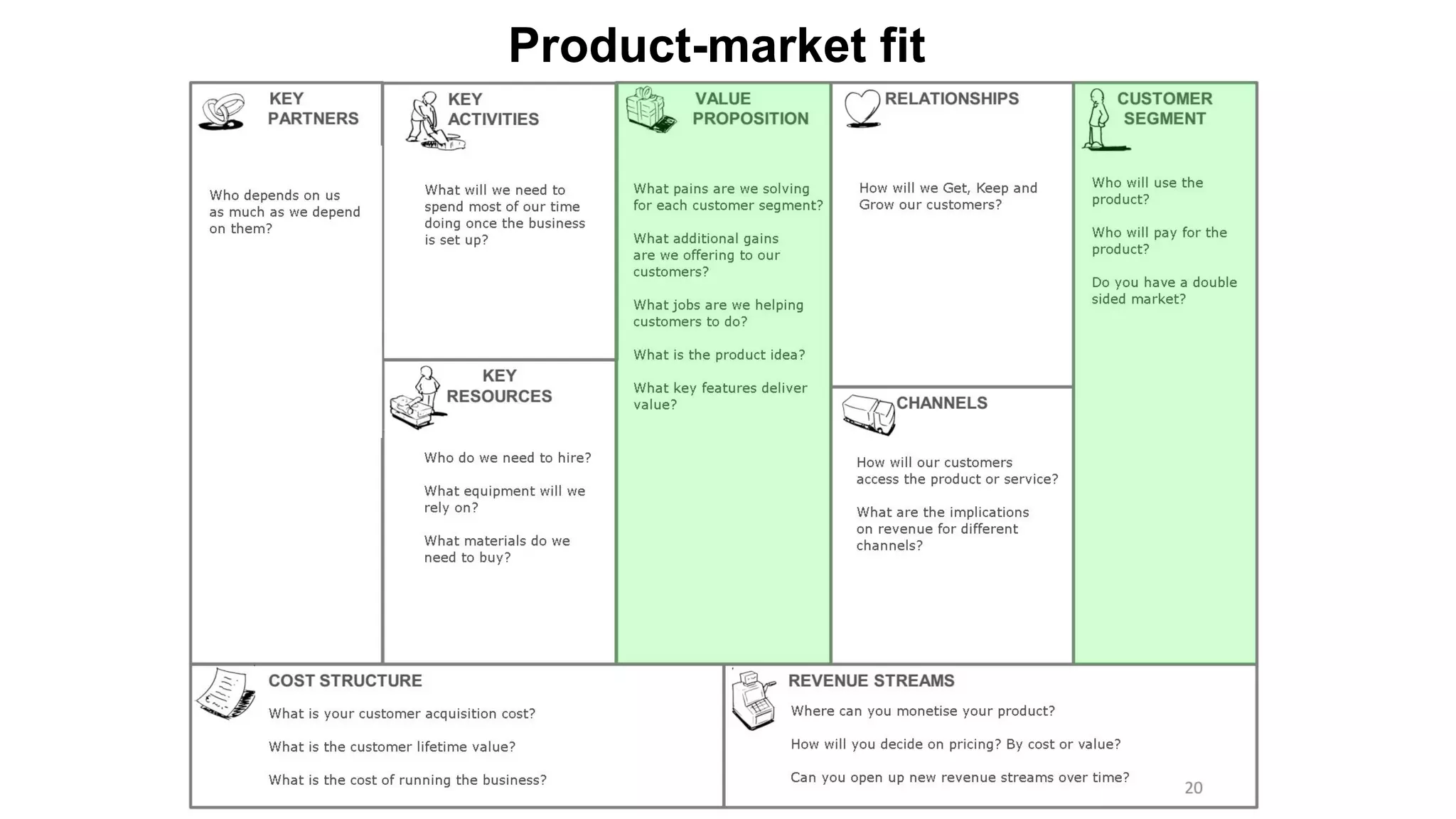
1) Finding product-market fit
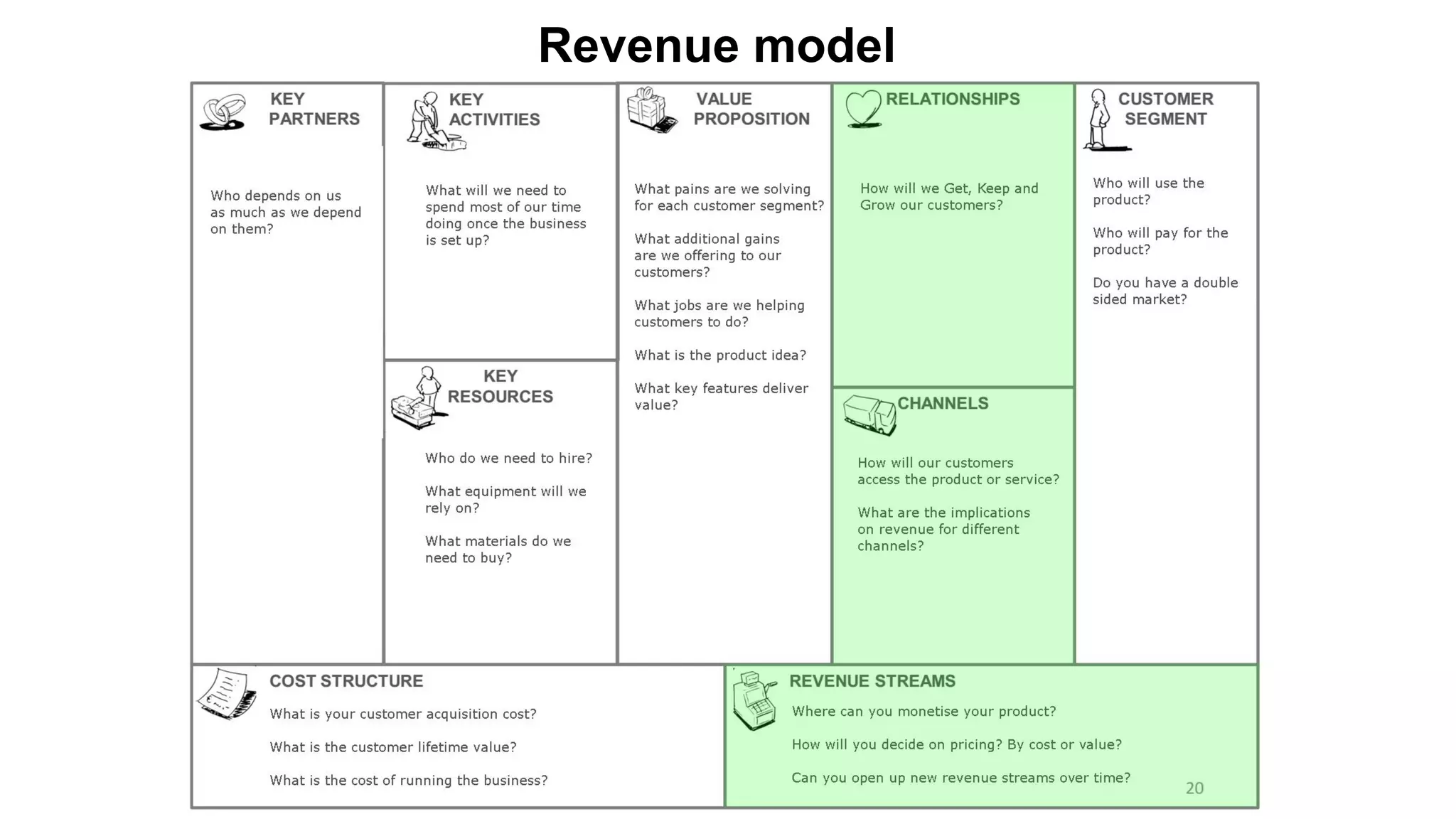
2) Planning early for monetisation and value capture
3) Understanding what to do yourself and when to buy or partner
● Knowing some key techniques to validate your BMC
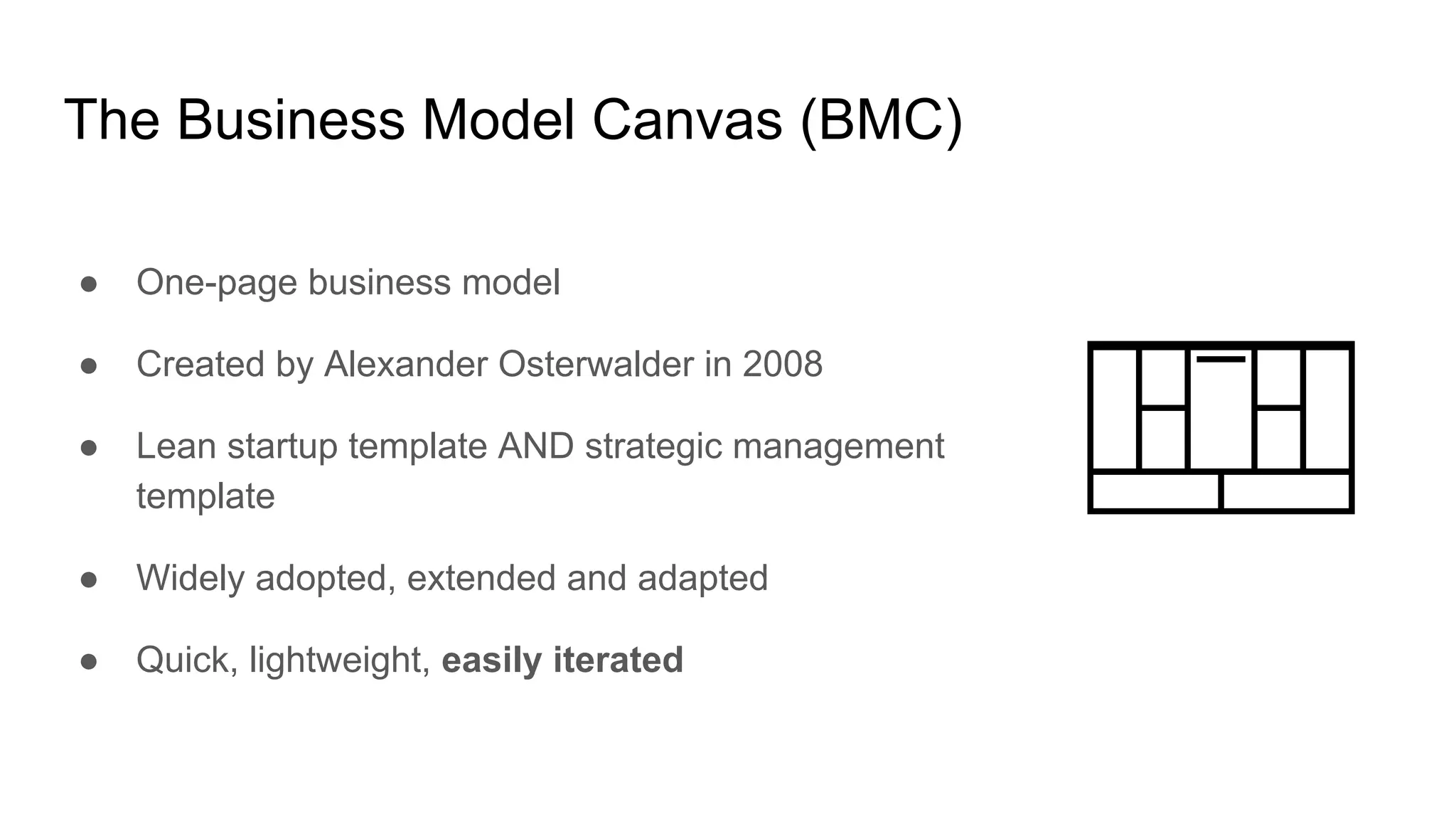
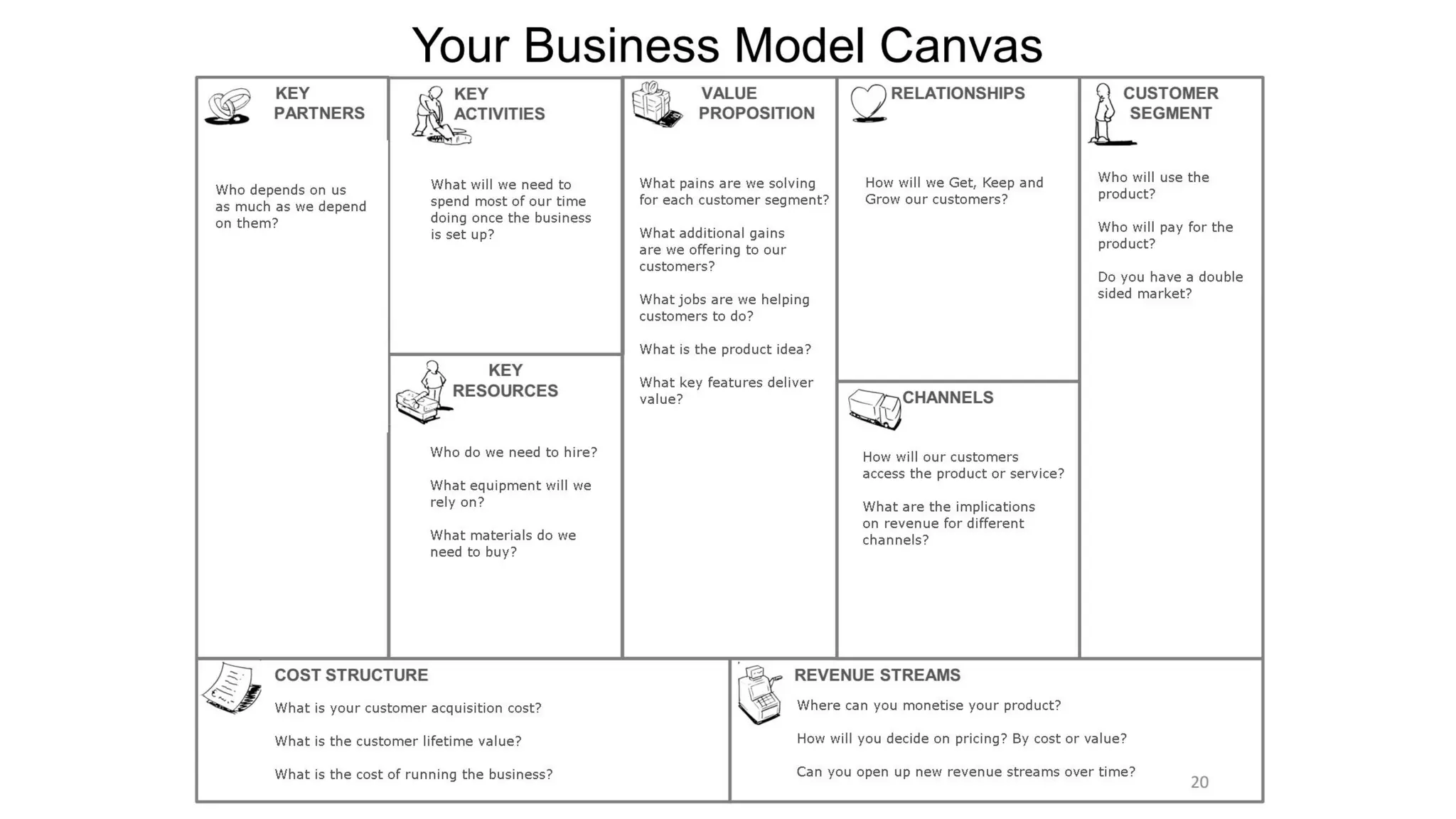
The Business Model Canvas (BMC)
● One-page business model
● Created by Alexander Osterwalder in 2008
● Lean startup template AND strategic management
template
● Widely adopted, extended and adapted
● Quick, lightweight, easily iterated
Techniques to use with the BMC
Product-market fit
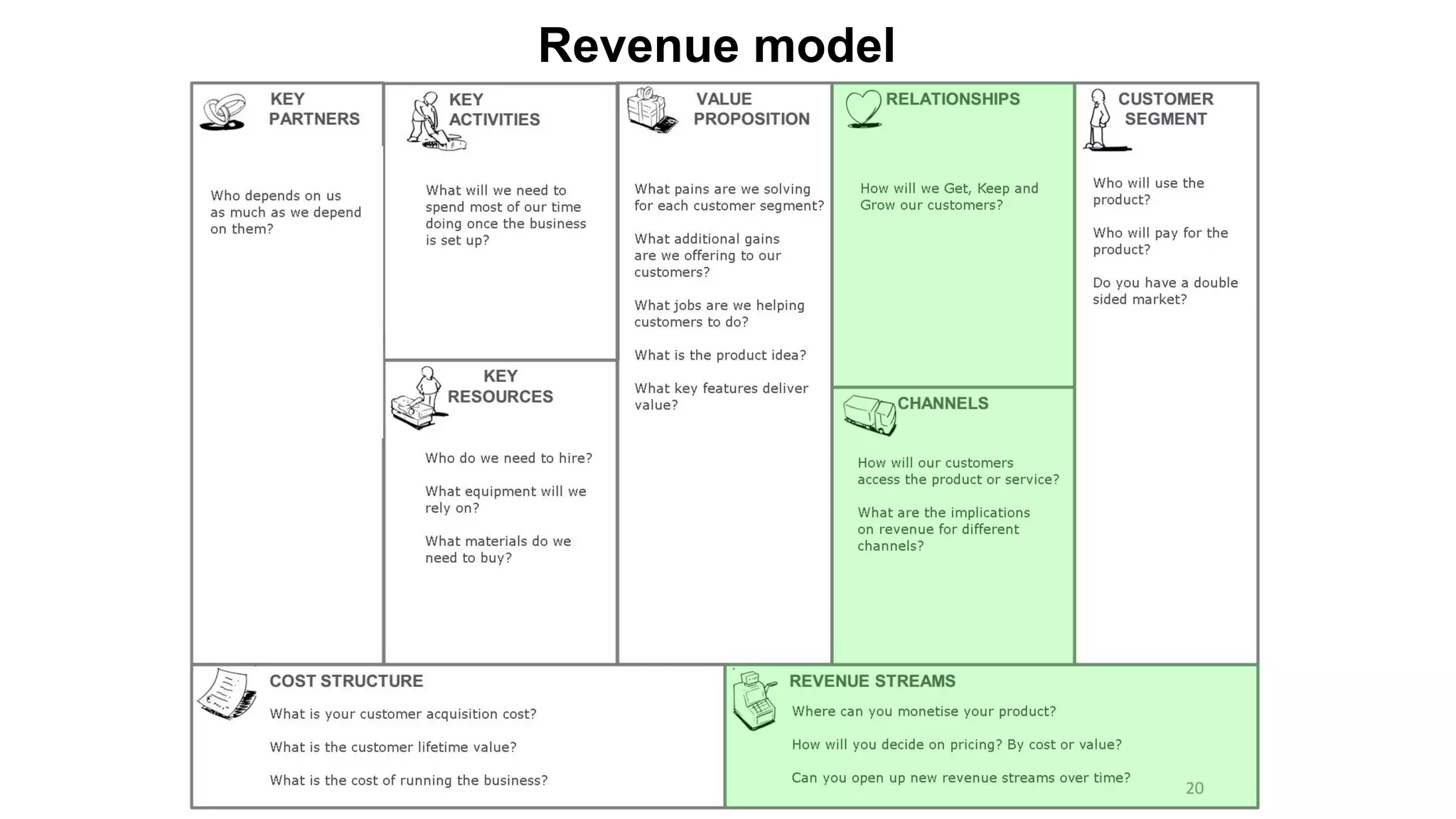
Revenue model
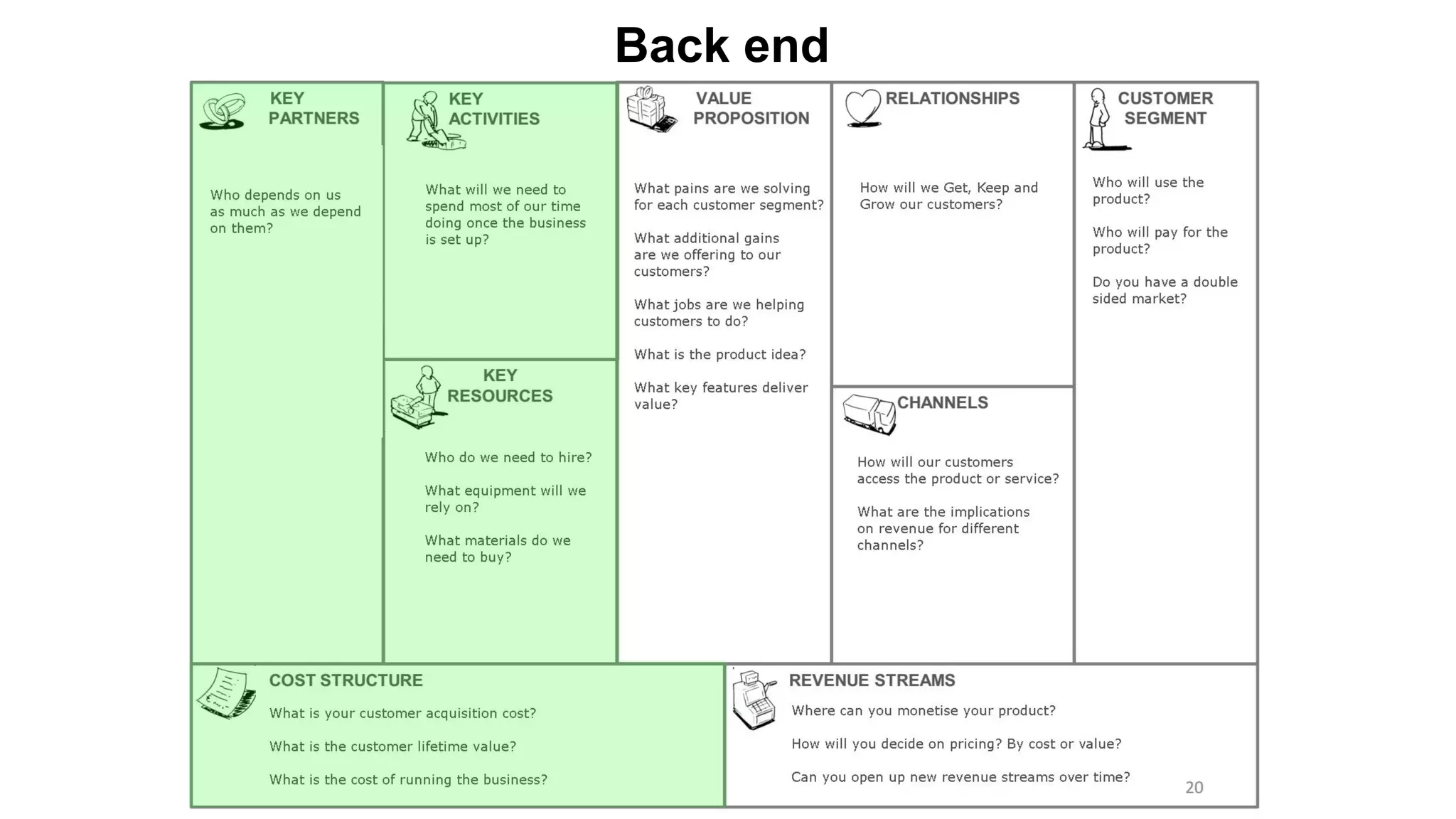
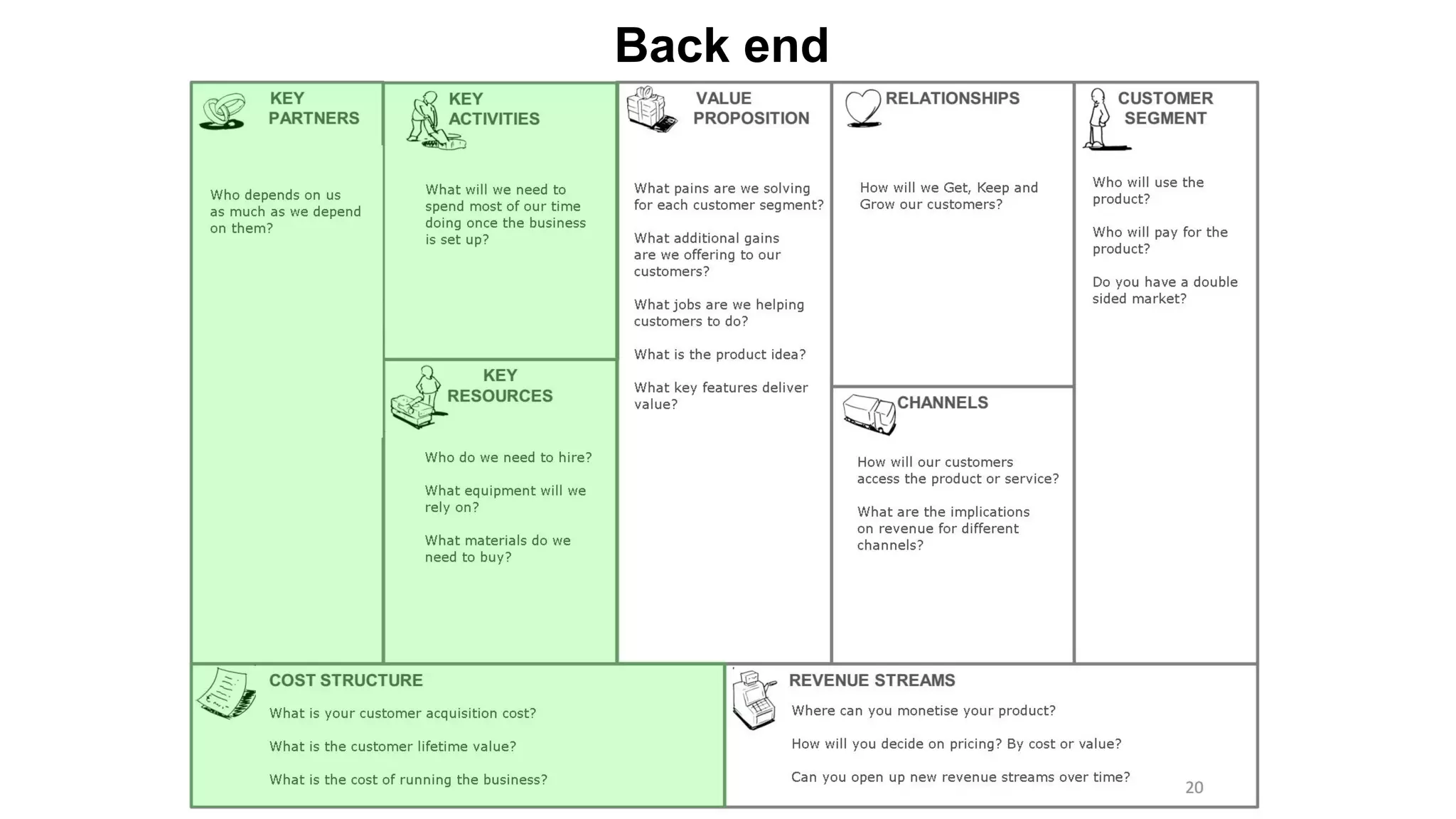
Back end
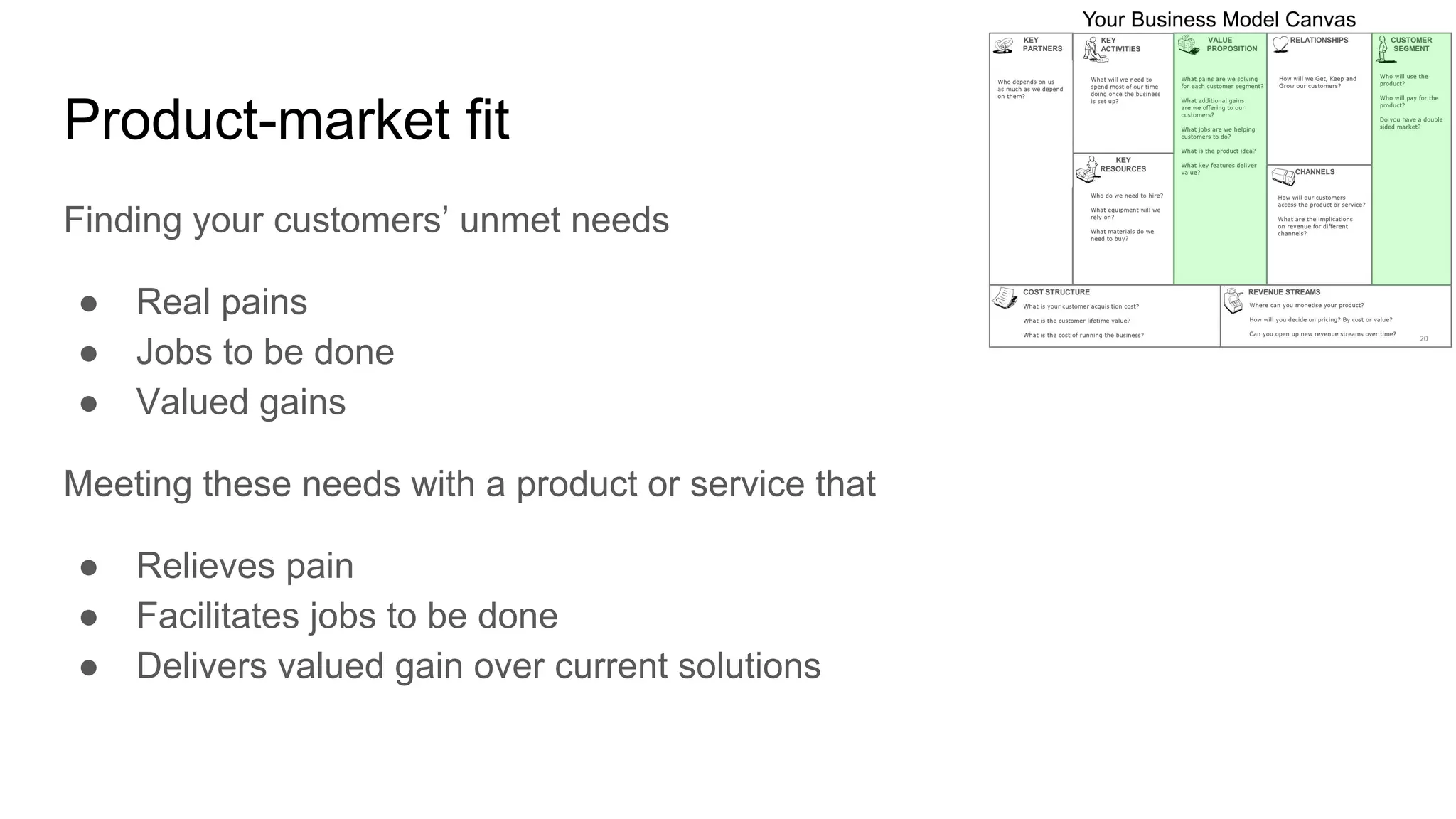
Product-market fit
Finding your customers’ unmet needs
● Real pains
● Jobs to be done
● Valued gains
Meeting these needs with a product or service that
● Relieves pain
● Facilitates jobs to be done
● Delivers valued gain over current solutions
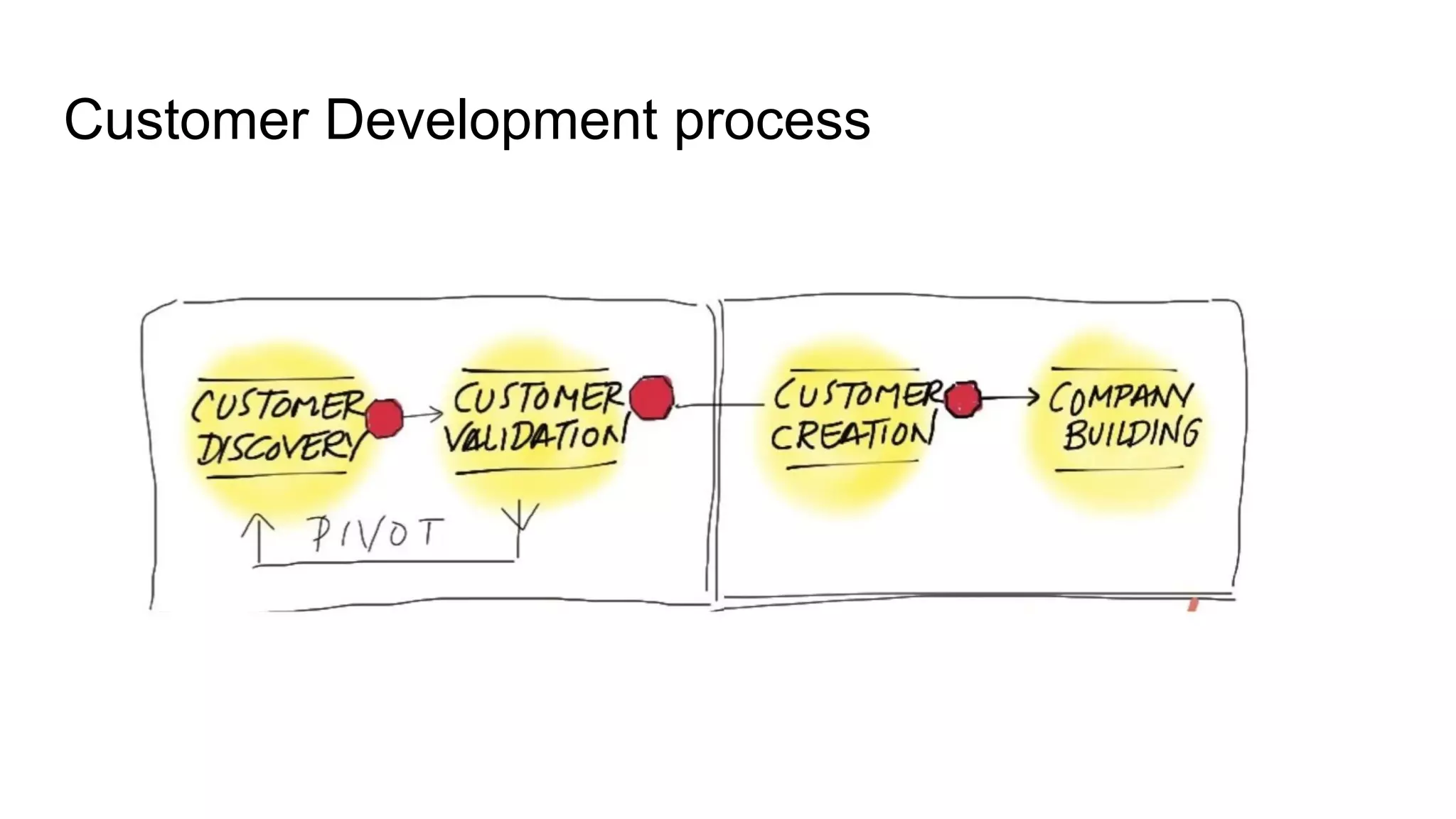
Customer Development process
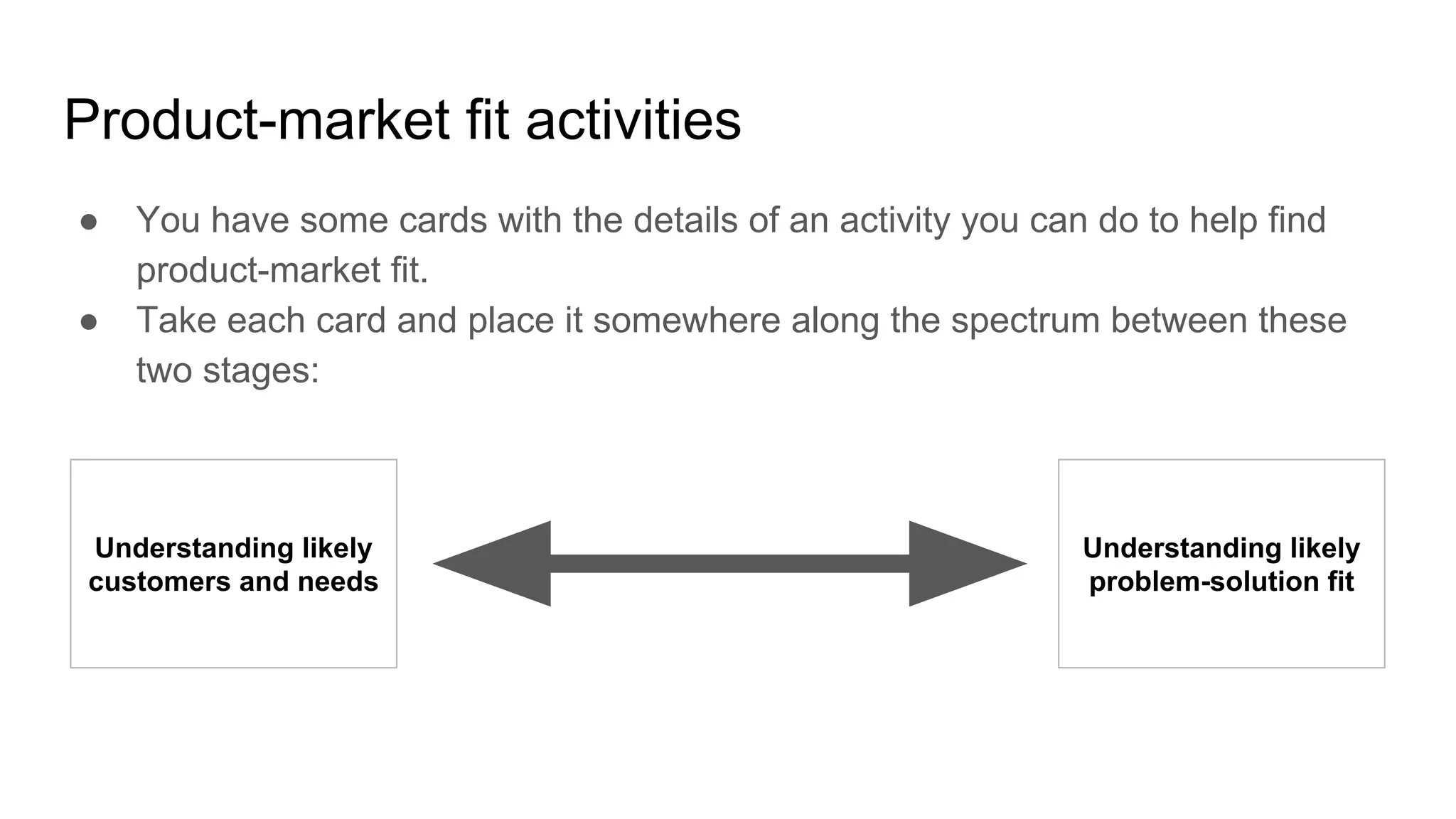
Product-market fit activities
● You have some cards with the details of an activity you can do to help find
product-market fit.
● Take each card and place it somewhere along the spectrum between these
two stages:
Understanding likely
customers and needs
Understanding likely
problem-solution fit
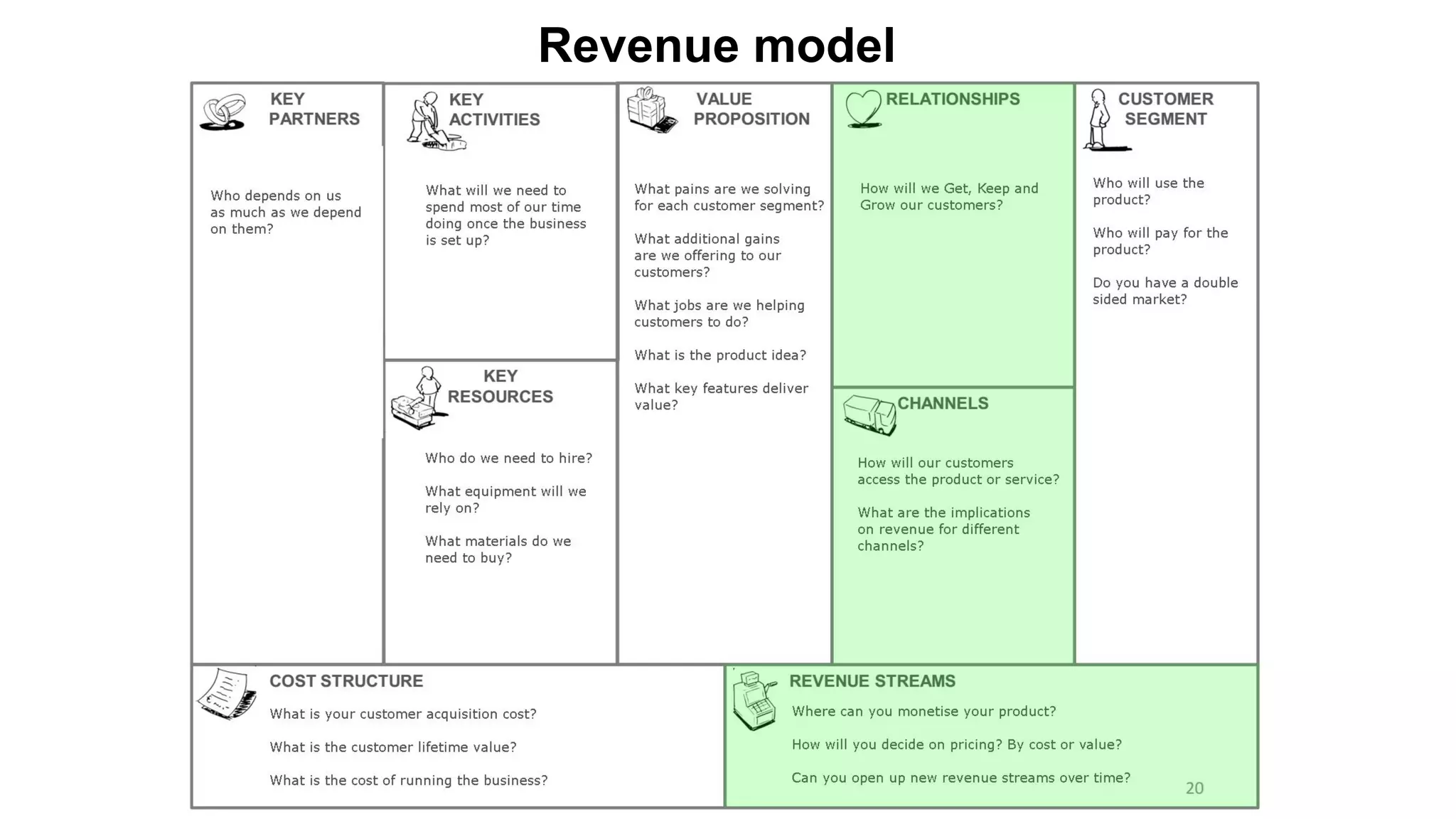
Revenue model
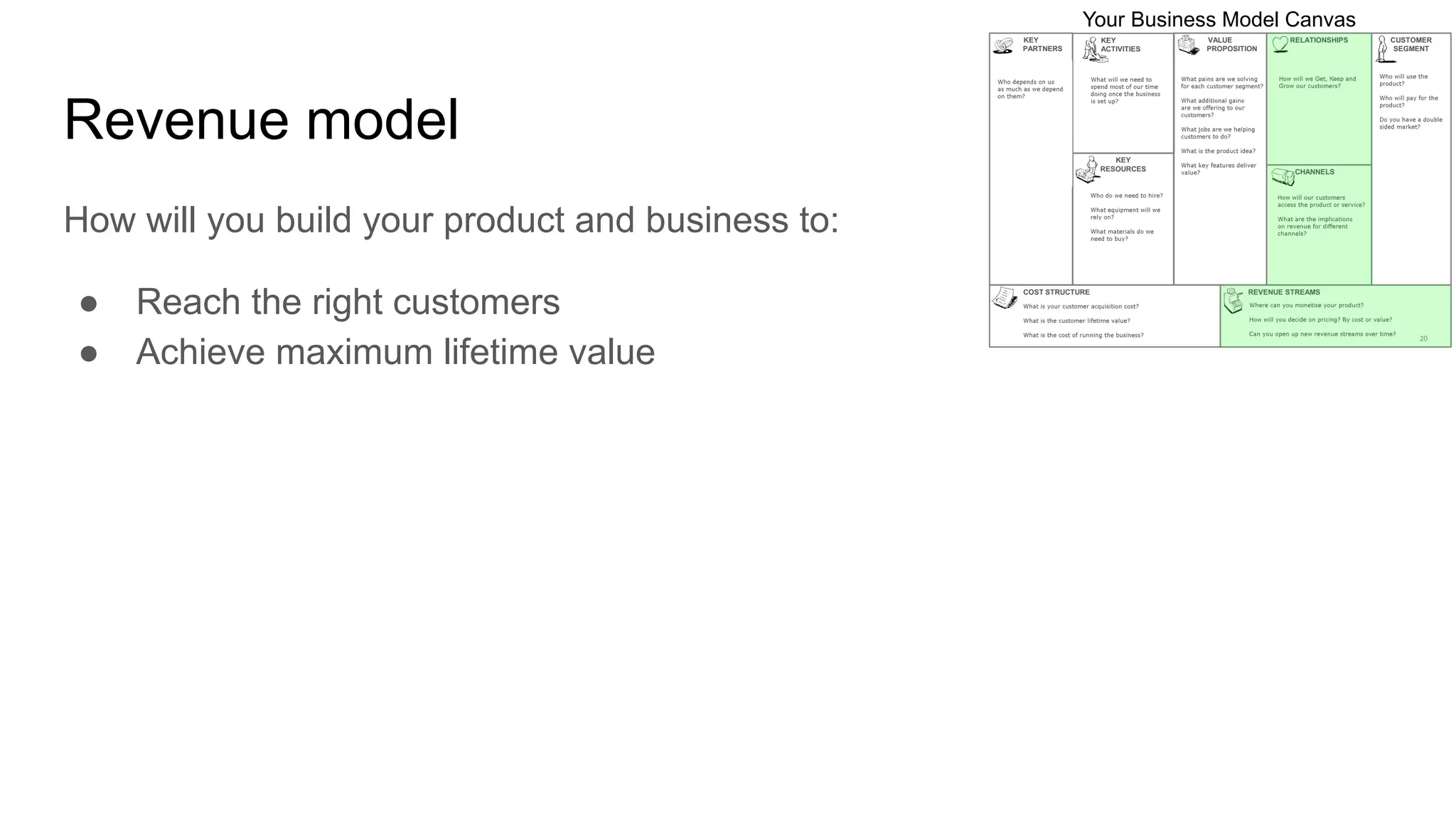
Revenue model
How will you build your product and business to:
● Reach the right customers
● Achieve maximum lifetime value
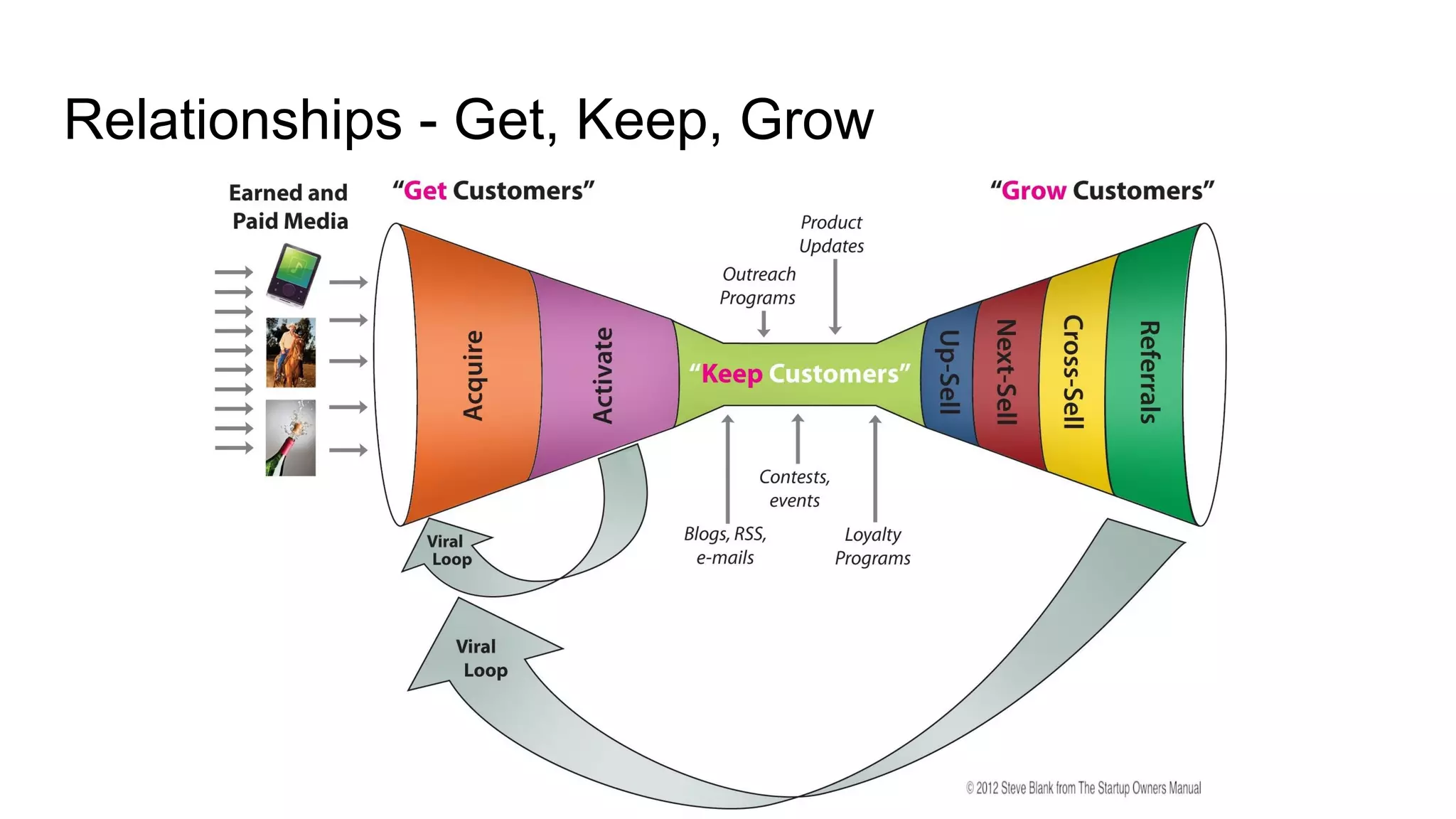
Relationships - Get, Keep, Grow
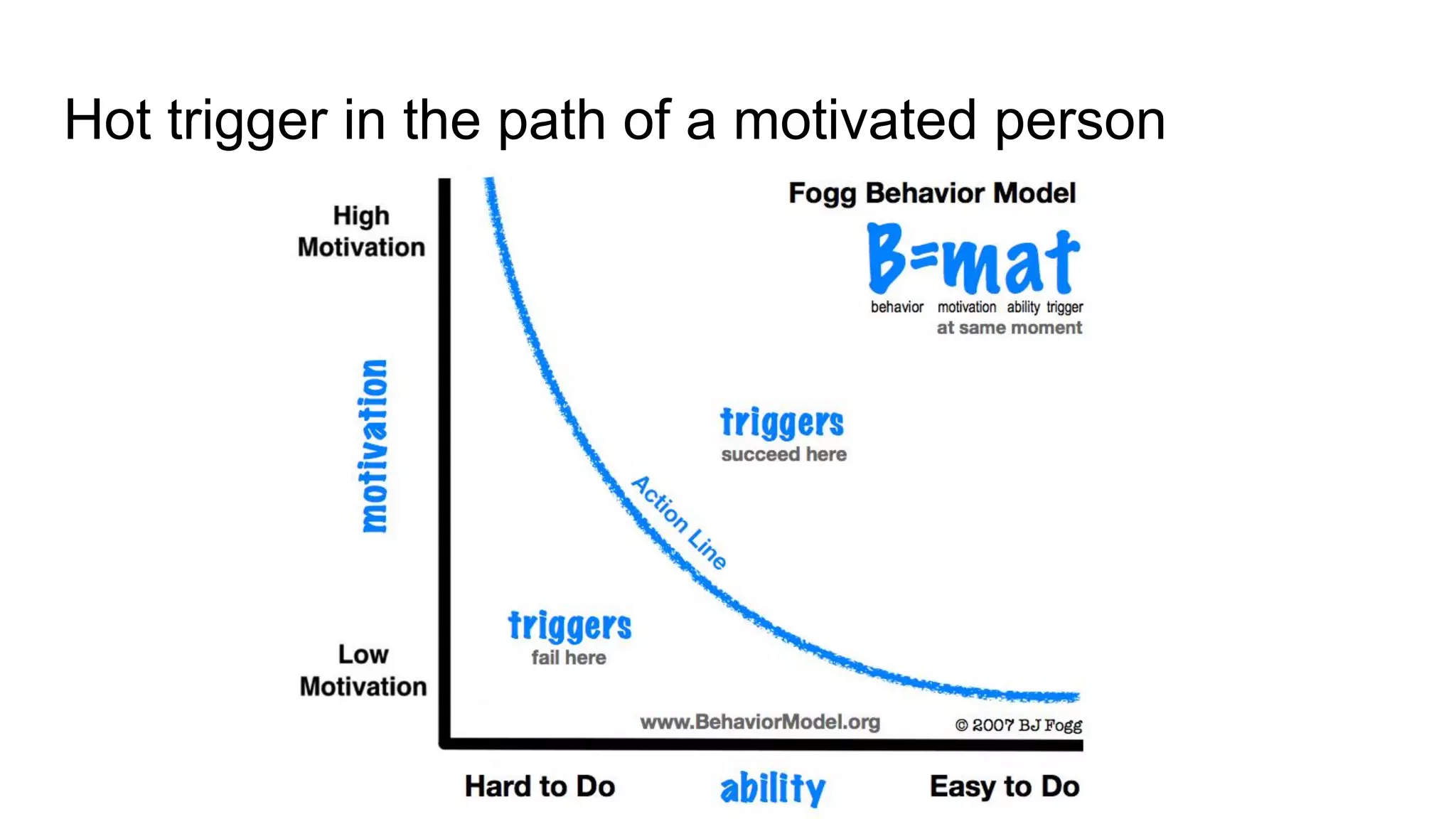
Hot trigger in the path of a motivated person
Revenue model
Channel Economics
Some channel types
● Direct
● Indirect
● Reseller
● OEM
Costs to consider per channel
● Cost of goods
● R&D
● Selling costs + channel fees
● General and admin
● Discounts
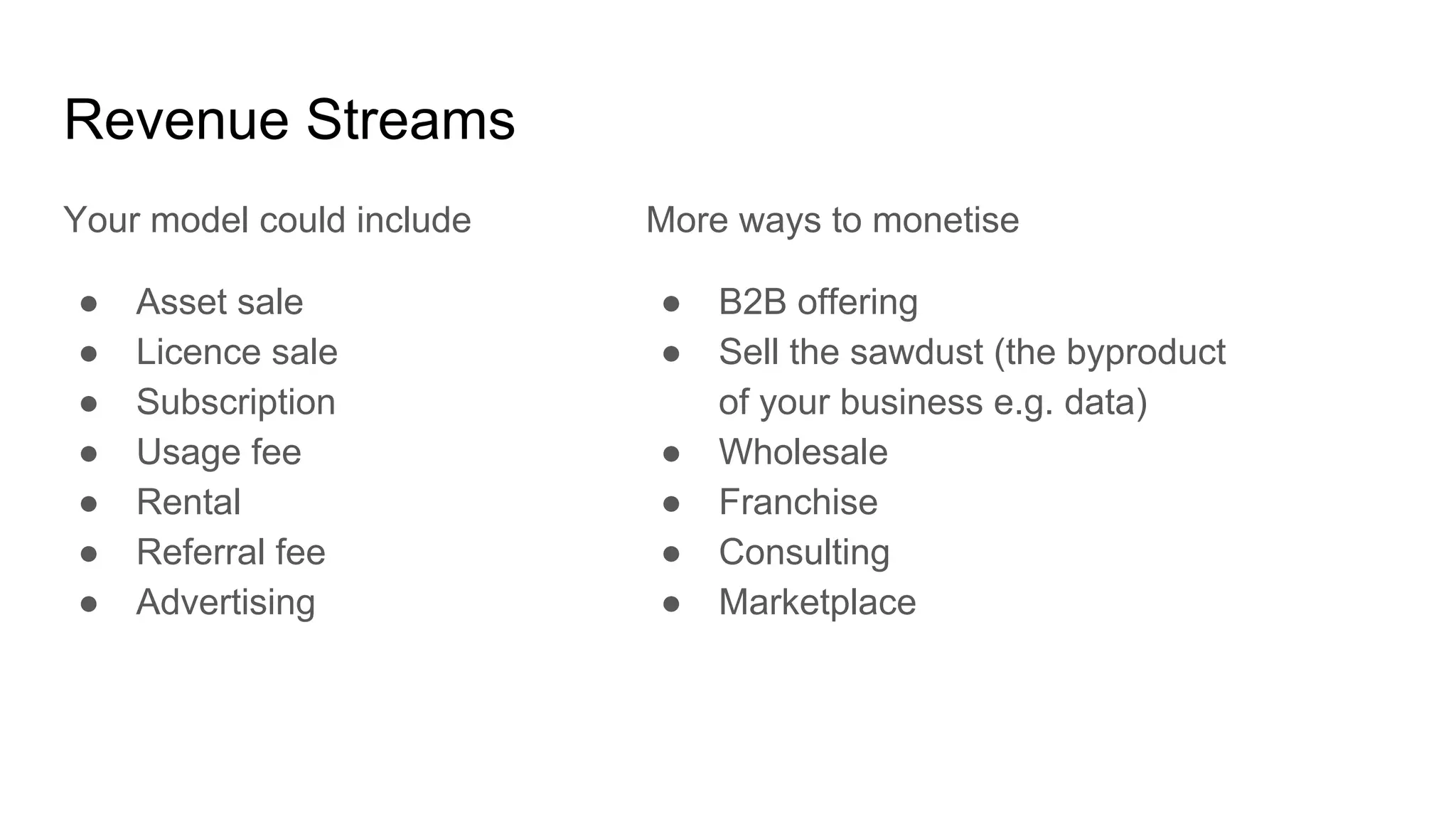
Revenue Streams
Your model could include
● Asset sale
● Licence sale
● Subscription
● Usage fee
● Rental
● Referral fee
● Advertising
More ways to monetise
● B2B offering
● Sell the sawdust (the byproduct
of your business e.g. data)
● Wholesale
● Franchise
● Consulting
● Marketplace
Back end
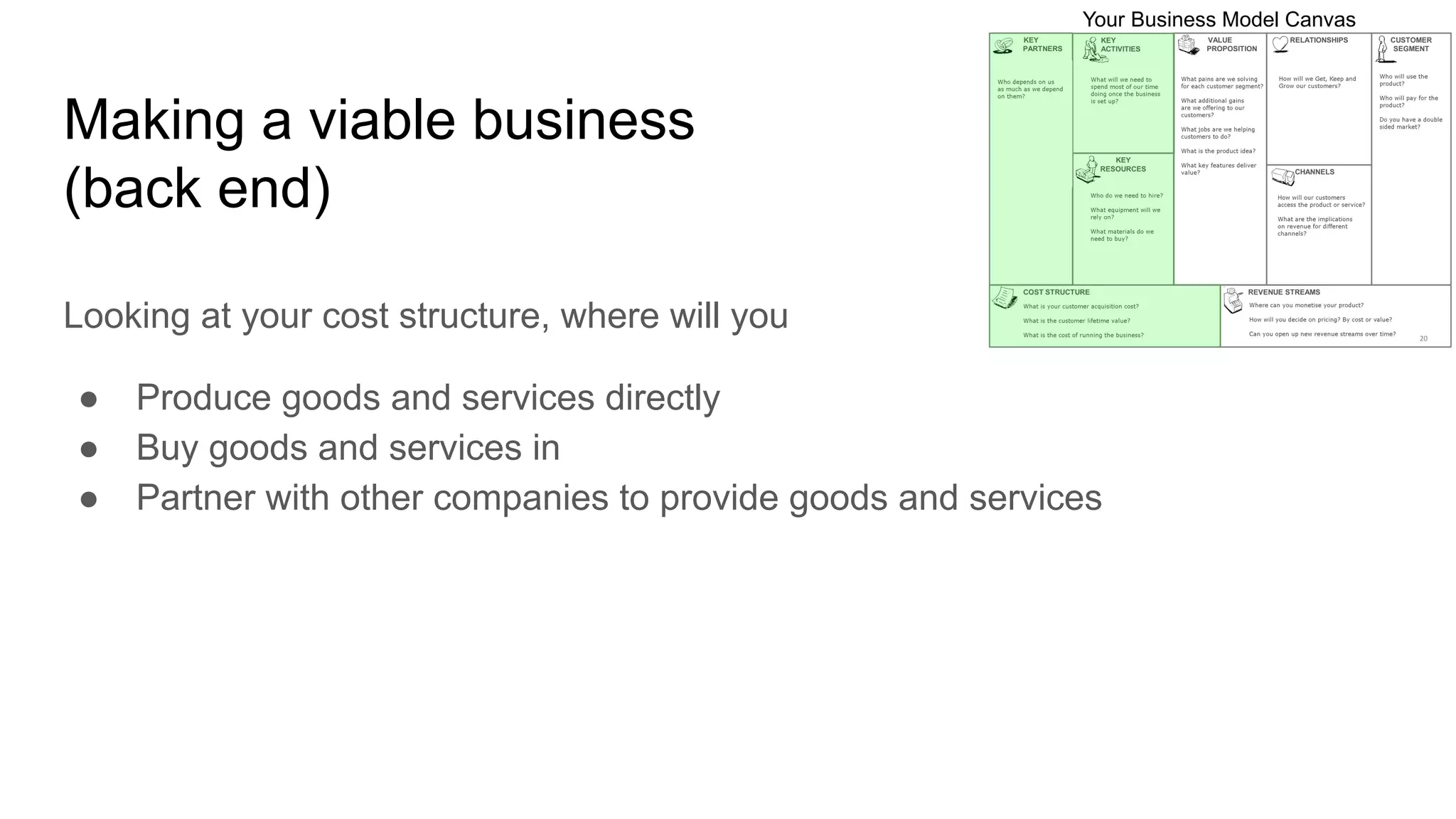
Making a viable business
(back end)
Looking at your cost structure, where will you
● Produce goods and services directly
● Buy goods and services in
● Partner with other companies to provide goods and services
Your
email
address!
Get the workshop materials and further reading list
Pop your email address on a Post-it note and we will
send you all the materials, answers to the questions
we captured and a list of further reading.
Join us at meetup.com → Ecopreneurs
Be one of the 10%
How to have a successful startup
Part 2
Alice Sowerby + Steve Clark
@SowerbyAlice + @ResourceSteve

Be one of the 10%: How to have a successful startup - Part 2

  • 1.
    Be one ofthe 10% How to have a successful startup Part 2 Alice Sowerby + Steve Clark @SowerbyAlice + @ResourceSteve
  • 2.
    Session outcomes ● Understandwhy the BMC is useful in (lean) startups ● Understand importance of 1) Finding product-market fit 2) Planning early for monetisation and value capture 3) Understanding what to do yourself and when to buy or partner ● Knowing some key techniques to validate your BMC
  • 4.
    The Business ModelCanvas (BMC) ● One-page business model ● Created by Alexander Osterwalder in 2008 ● Lean startup template AND strategic management template ● Widely adopted, extended and adapted ● Quick, lightweight, easily iterated
  • 6.
    Techniques to usewith the BMC
  • 7.
  • 8.
  • 9.
  • 10.
    Product-market fit Finding yourcustomers’ unmet needs ● Real pains ● Jobs to be done ● Valued gains Meeting these needs with a product or service that ● Relieves pain ● Facilitates jobs to be done ● Delivers valued gain over current solutions
  • 11.
  • 12.
    Product-market fit activities ●You have some cards with the details of an activity you can do to help find product-market fit. ● Take each card and place it somewhere along the spectrum between these two stages: Understanding likely customers and needs Understanding likely problem-solution fit
  • 13.
  • 14.
    Revenue model How willyou build your product and business to: ● Reach the right customers ● Achieve maximum lifetime value
  • 15.
  • 16.
    Hot trigger inthe path of a motivated person
  • 17.
  • 18.
    Channel Economics Some channeltypes ● Direct ● Indirect ● Reseller ● OEM Costs to consider per channel ● Cost of goods ● R&D ● Selling costs + channel fees ● General and admin ● Discounts
  • 19.
    Revenue Streams Your modelcould include ● Asset sale ● Licence sale ● Subscription ● Usage fee ● Rental ● Referral fee ● Advertising More ways to monetise ● B2B offering ● Sell the sawdust (the byproduct of your business e.g. data) ● Wholesale ● Franchise ● Consulting ● Marketplace
  • 20.
  • 21.
    Making a viablebusiness (back end) Looking at your cost structure, where will you ● Produce goods and services directly ● Buy goods and services in ● Partner with other companies to provide goods and services
  • 23.
    Your email address! Get the workshopmaterials and further reading list Pop your email address on a Post-it note and we will send you all the materials, answers to the questions we captured and a list of further reading. Join us at meetup.com → Ecopreneurs
  • 24.
    Be one ofthe 10% How to have a successful startup Part 2 Alice Sowerby + Steve Clark @SowerbyAlice + @ResourceSteve