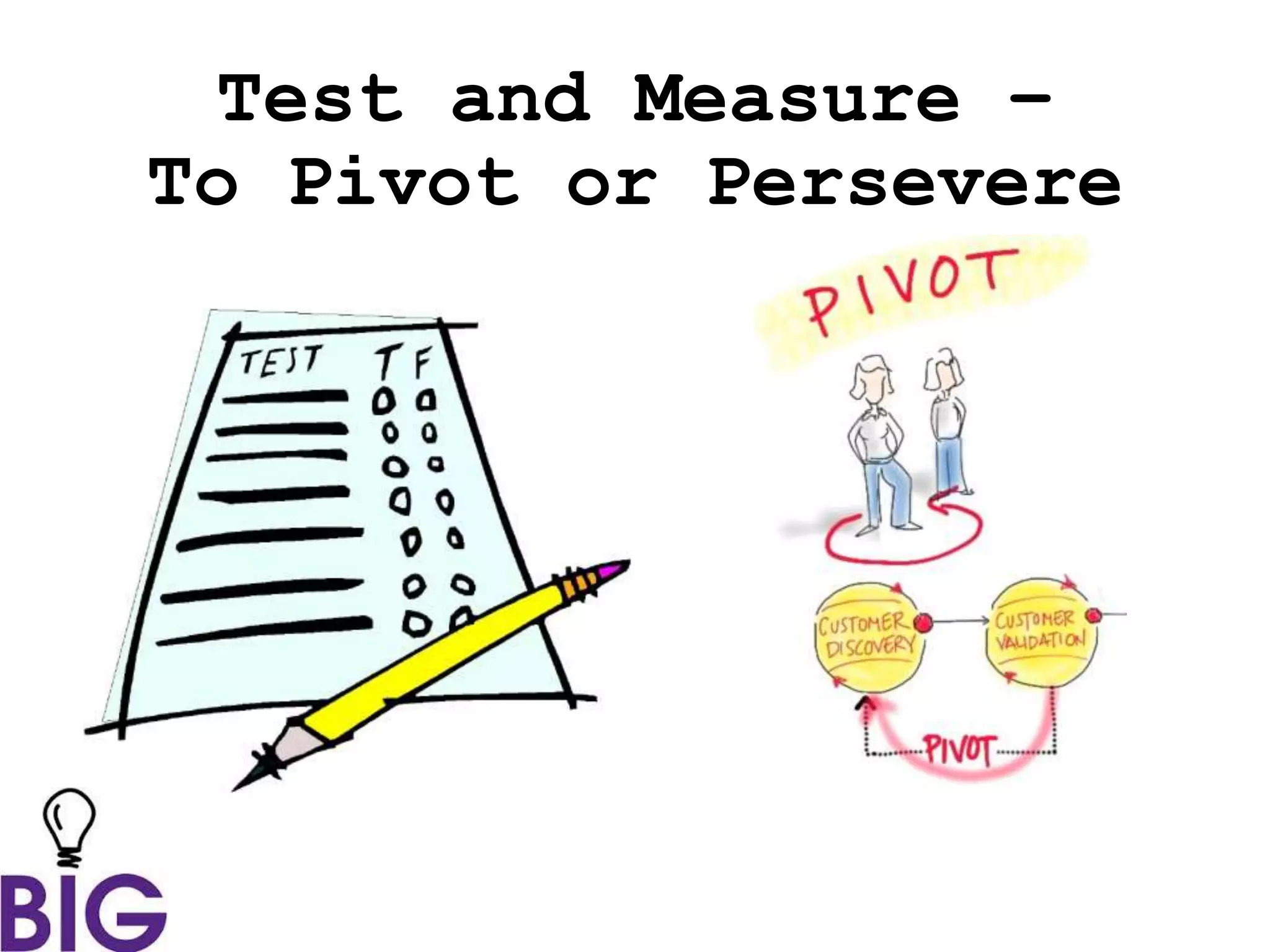






Test and Measure –
To Pivot or Persevere
The goals of the
Bootcamp
• At the end of the six months to have
worked through the principles of the
book
• To apply many of them to real world
situations that apply to our own
businesses
• To embed some functions into your
activity that give you a cutting
edge
This book is for:
• Start-ups
• Stale businesses on the cusp of
adopting new ideas
• Existing businesses struggling with
growing pains
• Anyone who wants to learn about how
to develop their business
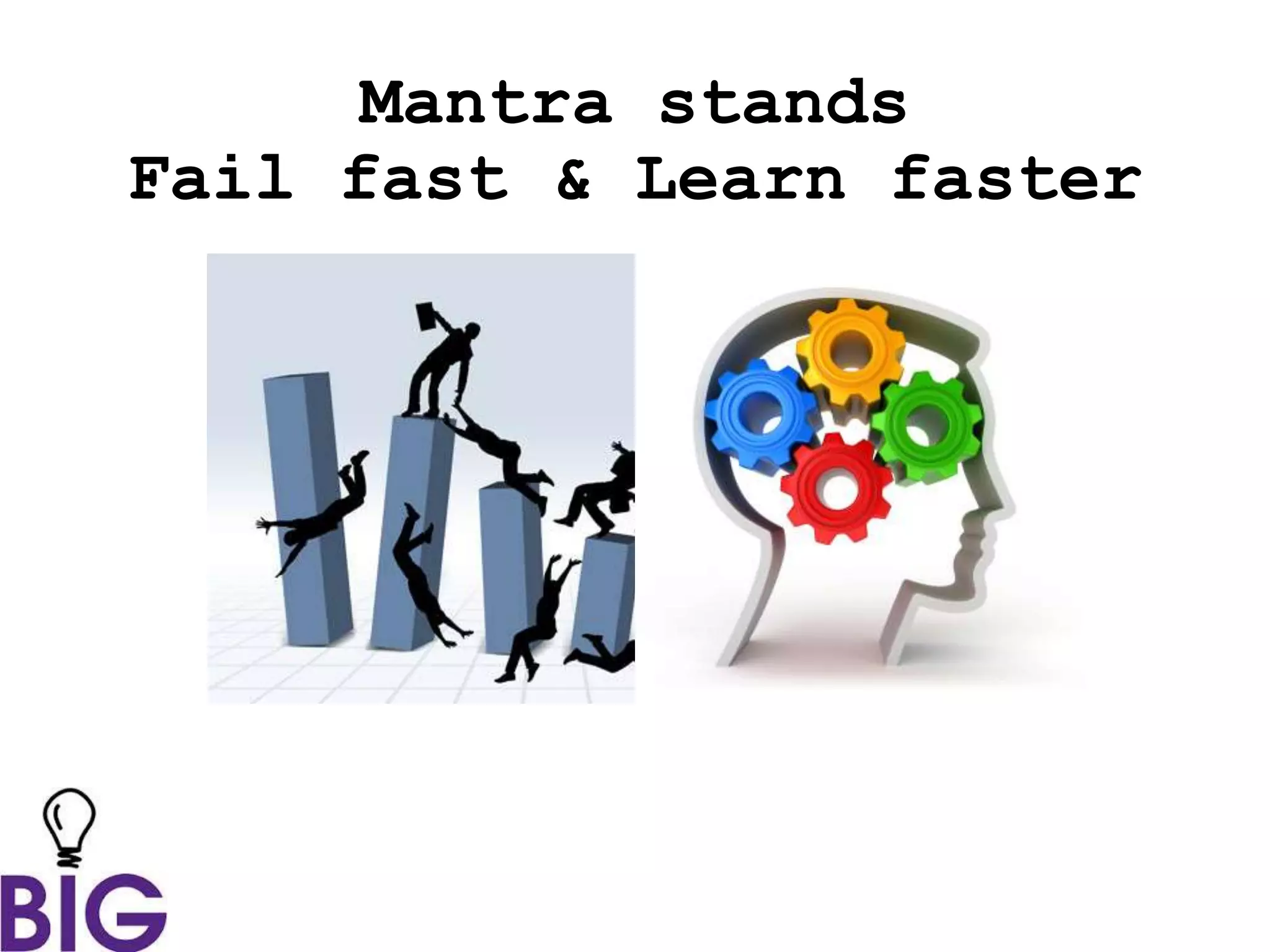
Mantra stands
Fail fast & Learn faster
Let’s Refresh ourselves on
some of what we have covered
• Most businesses fail because they build something
that no-one wants
• Failing fast means we preserve more capital and can
pivot more
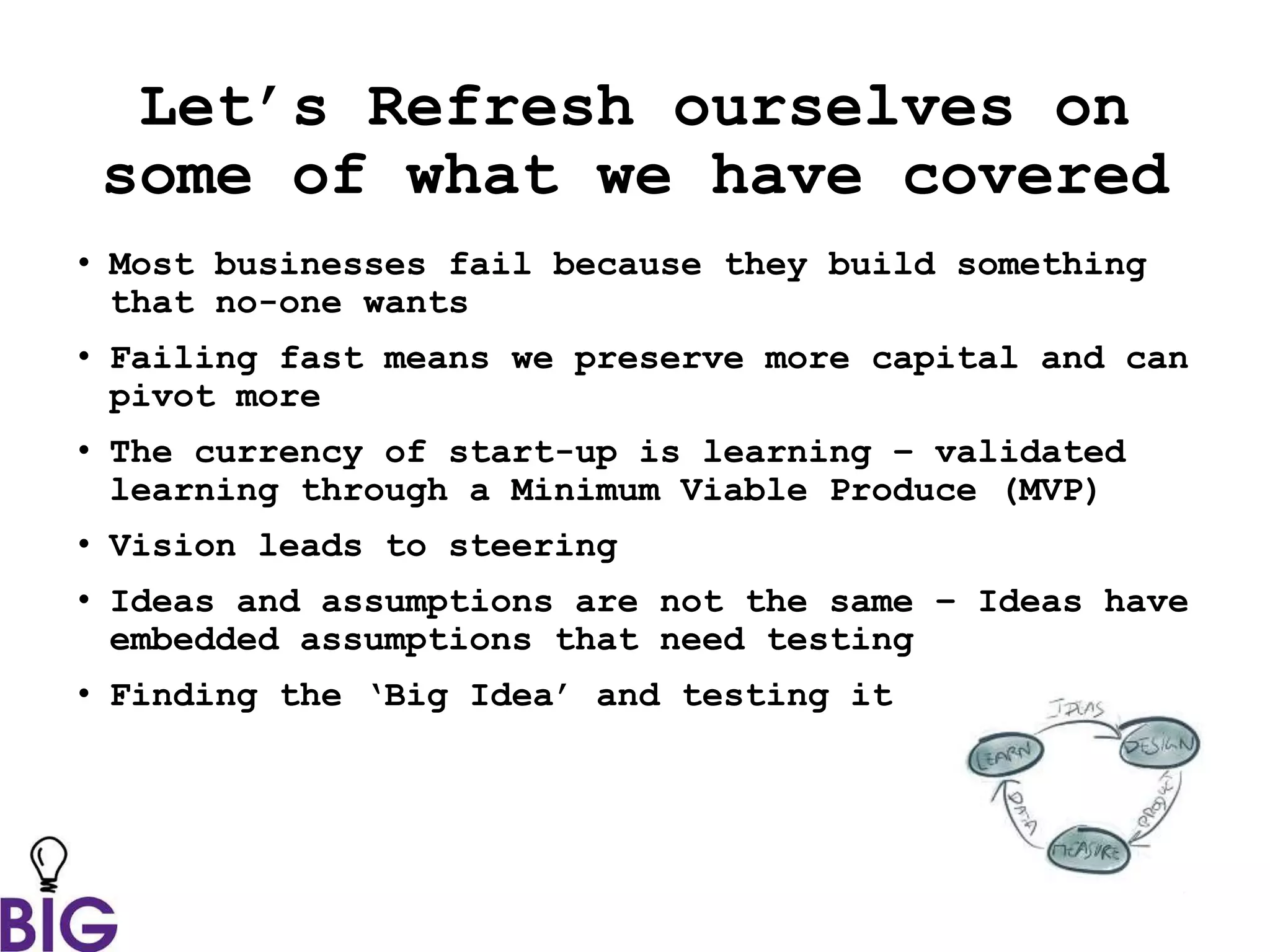
• The currency of start-up is learning – validated
learning through a Minimum Viable Produce (MVP)
• Vision leads to steering
• Ideas and assumptions are not the same – Ideas have
embedded assumptions that need testing
• Finding the ‘Big Idea’ and testing it
The Goal this Morning
To go away with a set of tools and
thinking to help you to decide if
you should ‘pivot’ or ‘persevere’
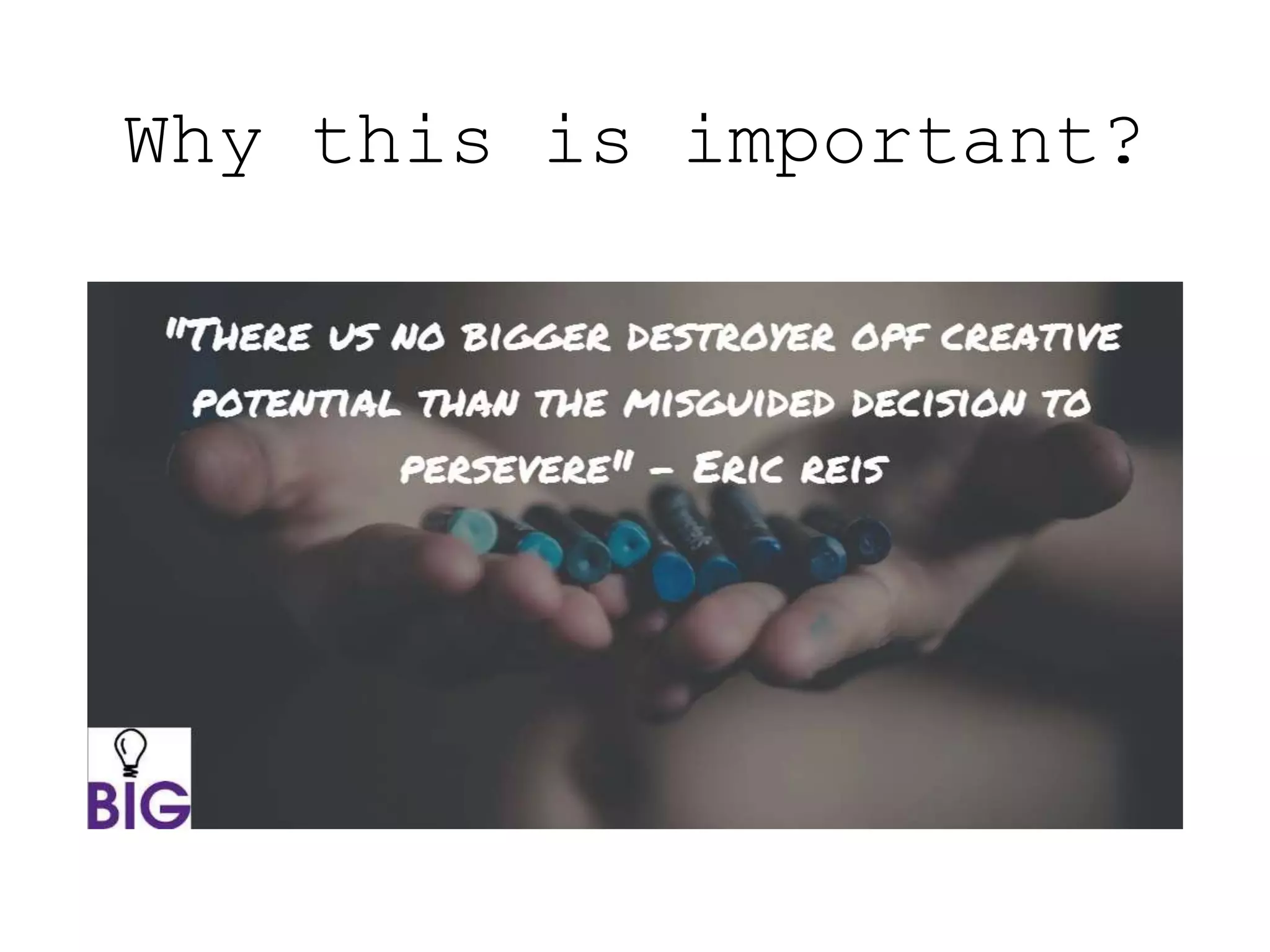
Why this is important?
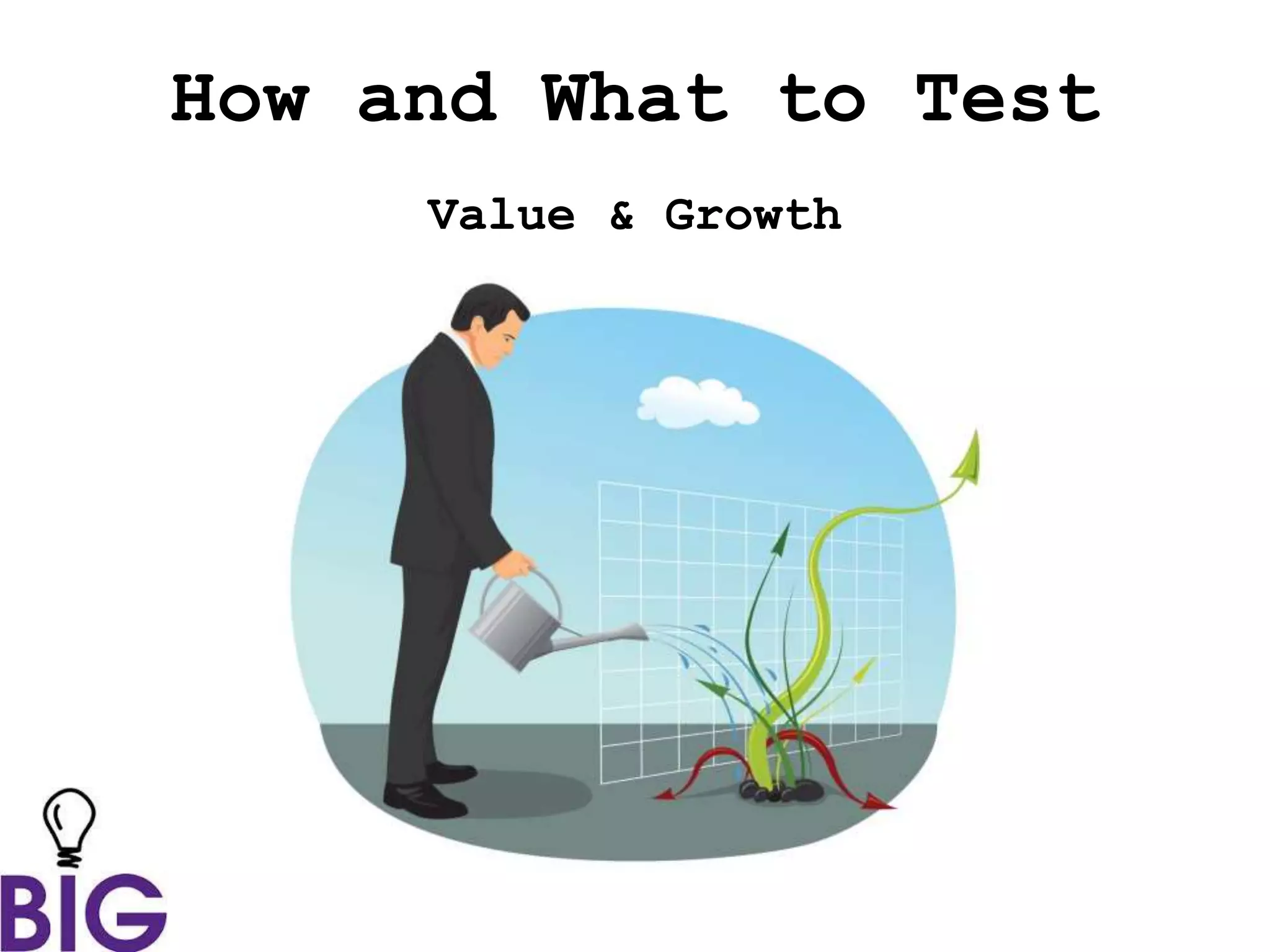
How and What to Test
Value & Growth
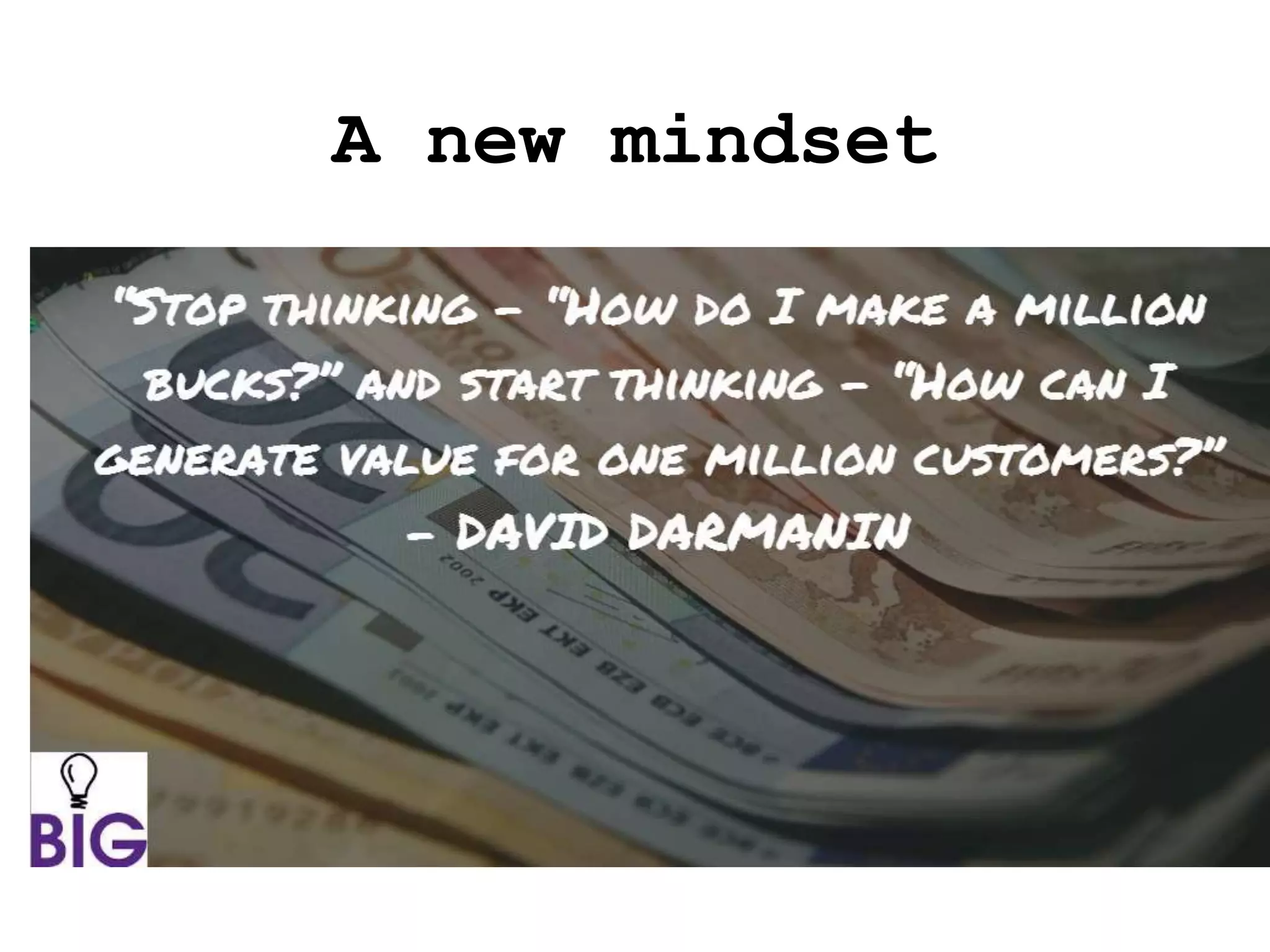
A new mindset
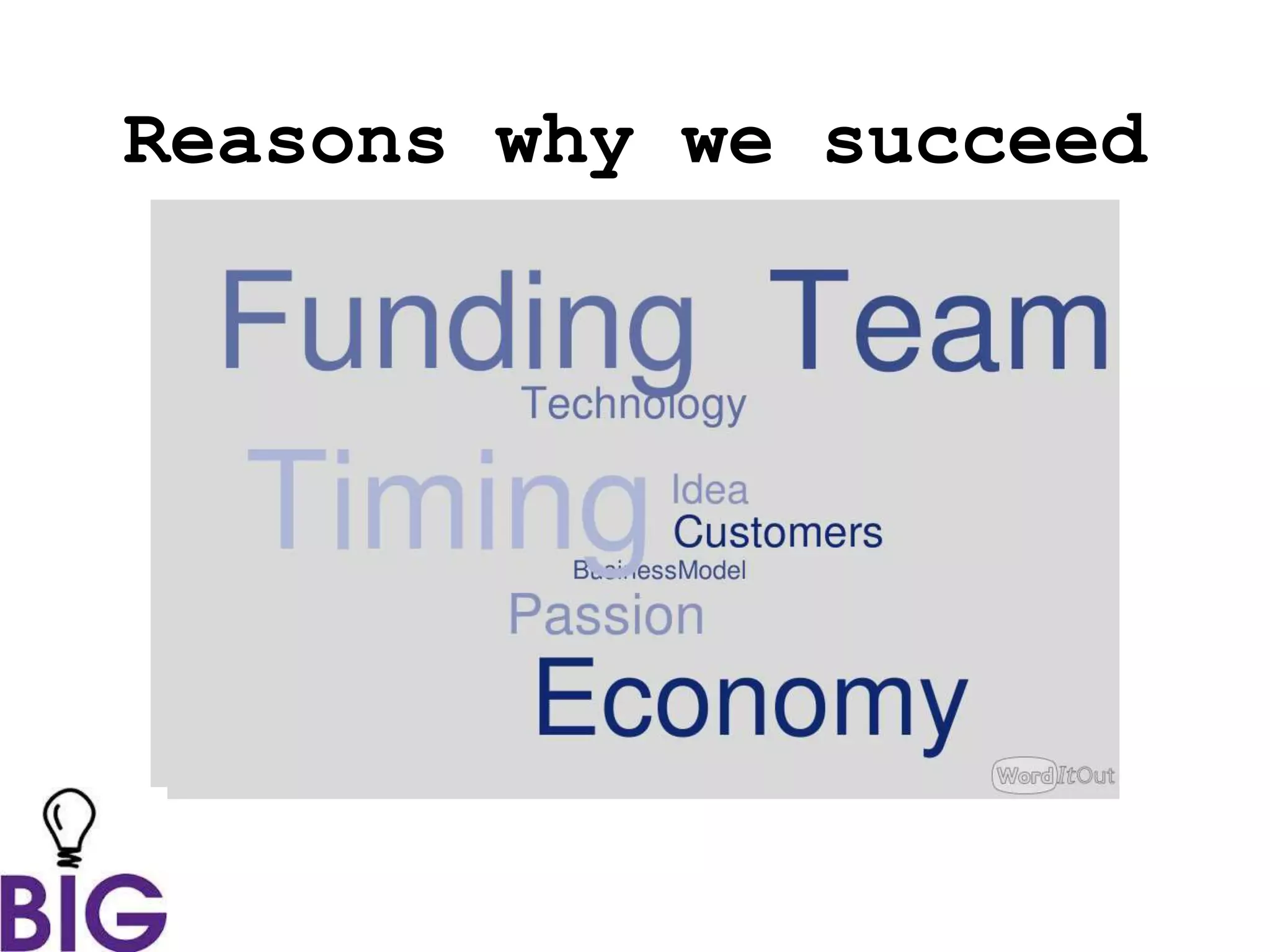
Reasons why we succeed
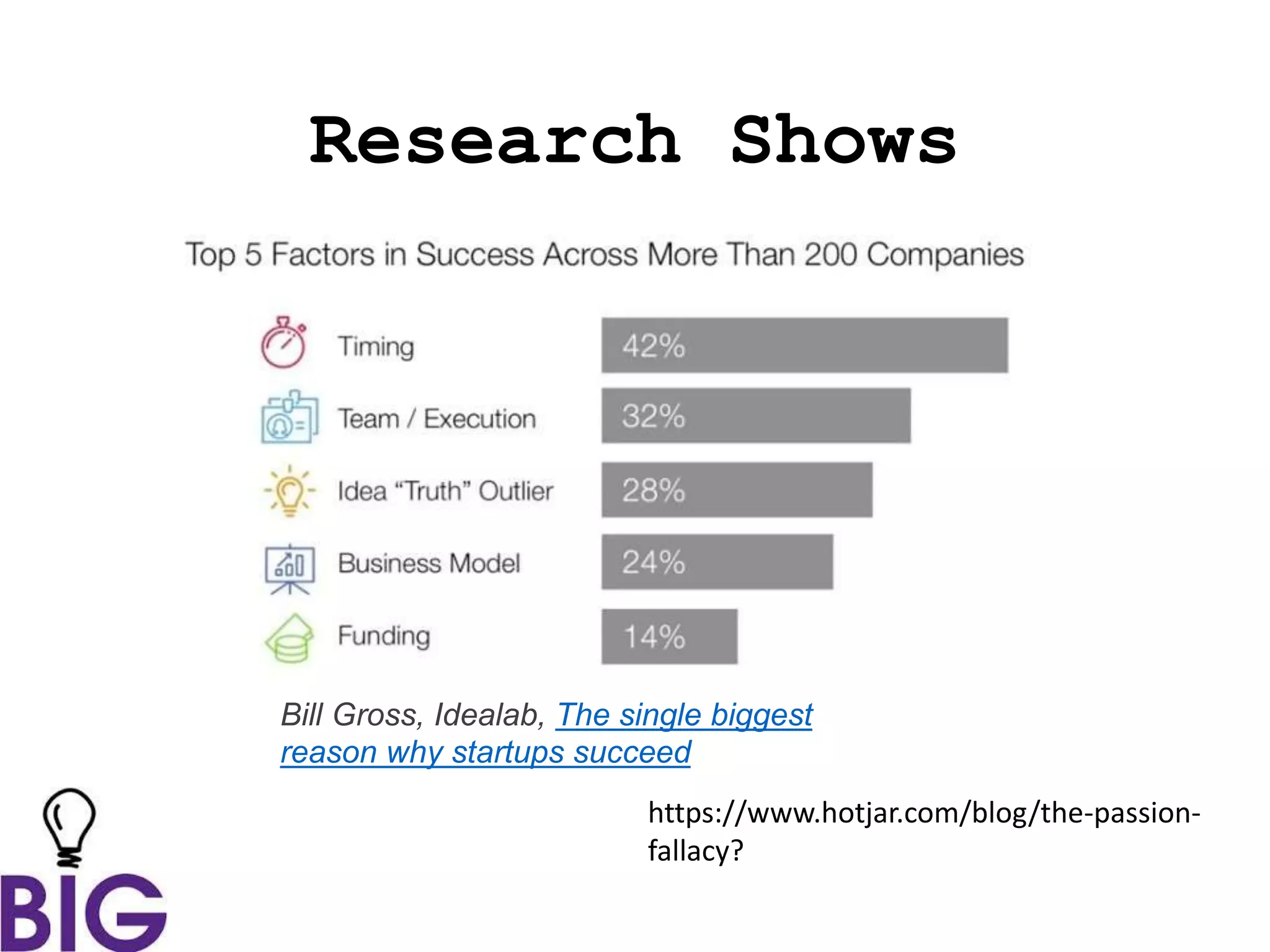
Research Shows
Bill Gross, Idealab, The single biggest
reason why startups succeed
https://www.hotjar.com/blog/the-passion-
fallacy?
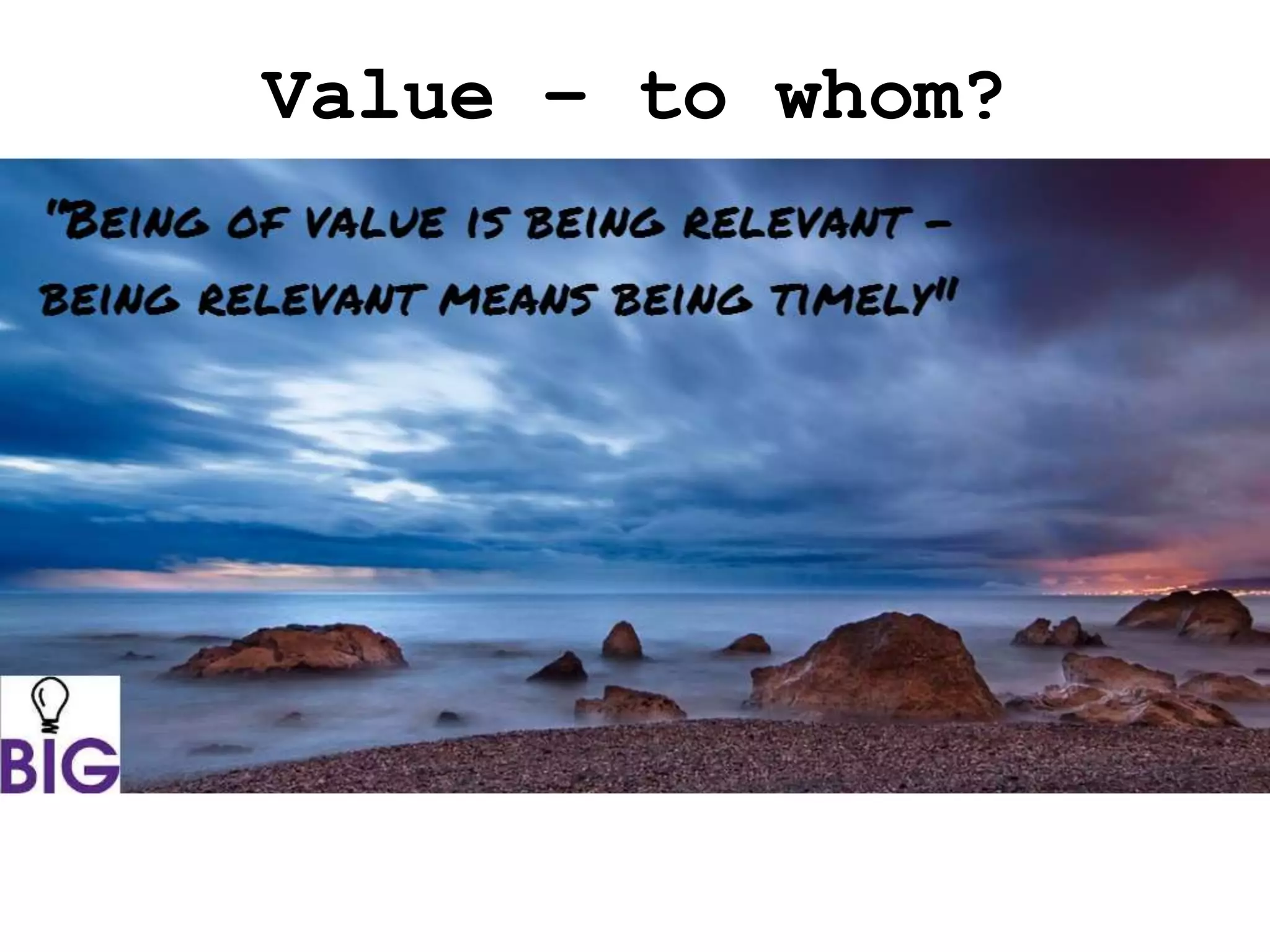
Value – to whom?
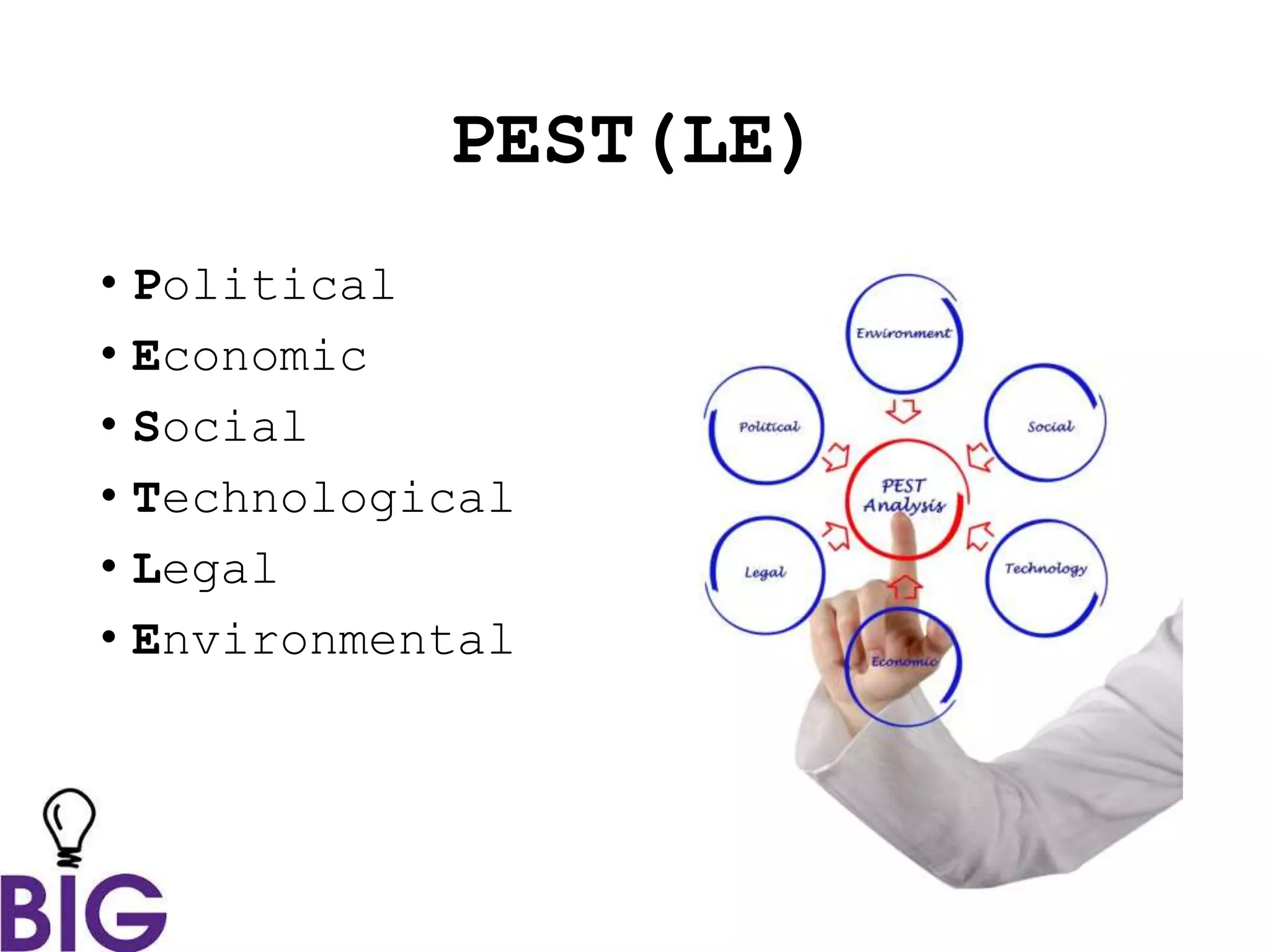
PEST(LE)
• Political
• Economic
• Social
• Technological
• Legal
• Environmental
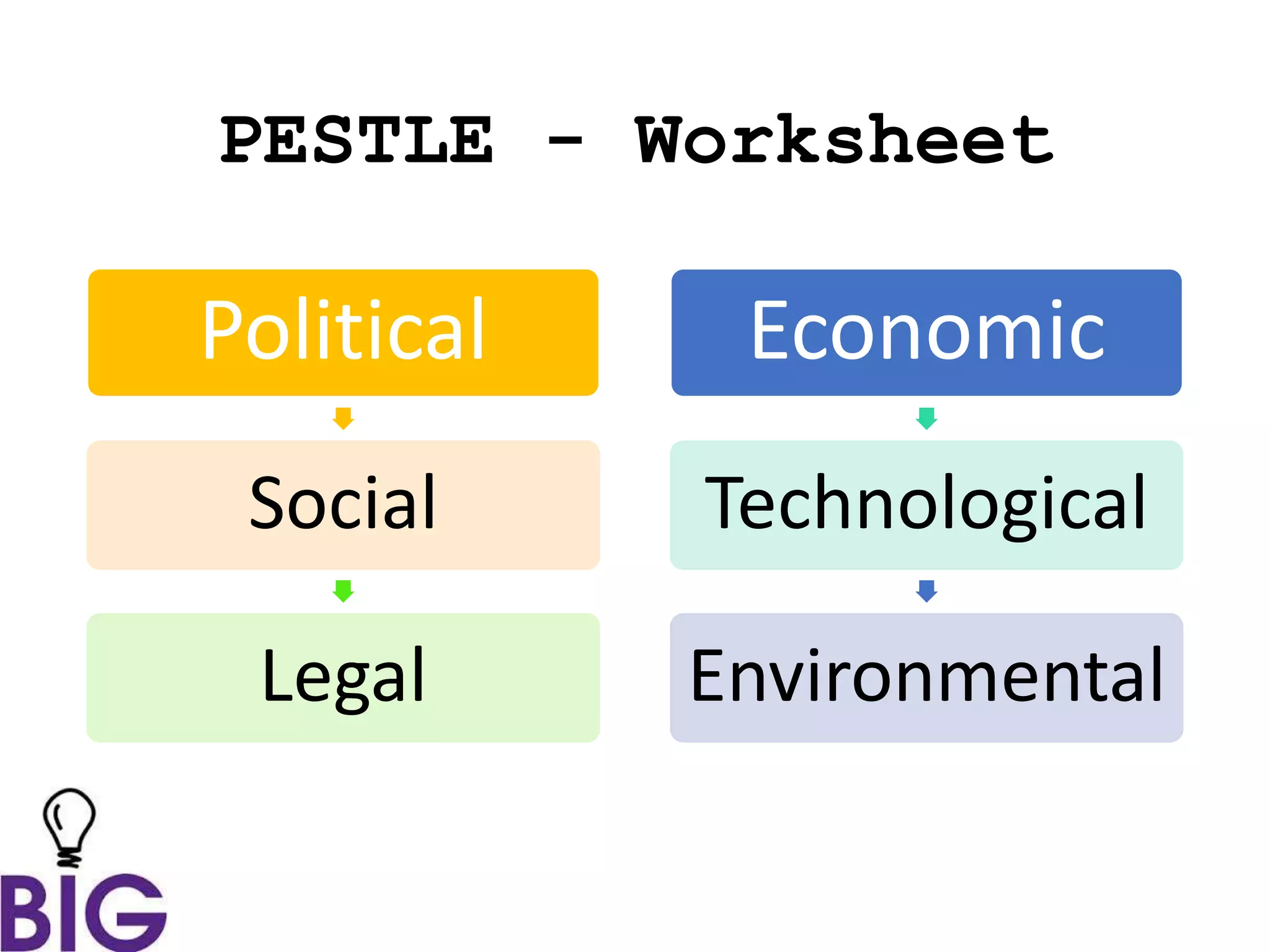
PESTLE - Worksheet
Political
Social
Legal
Economic
Technological
Environmental
TIMING
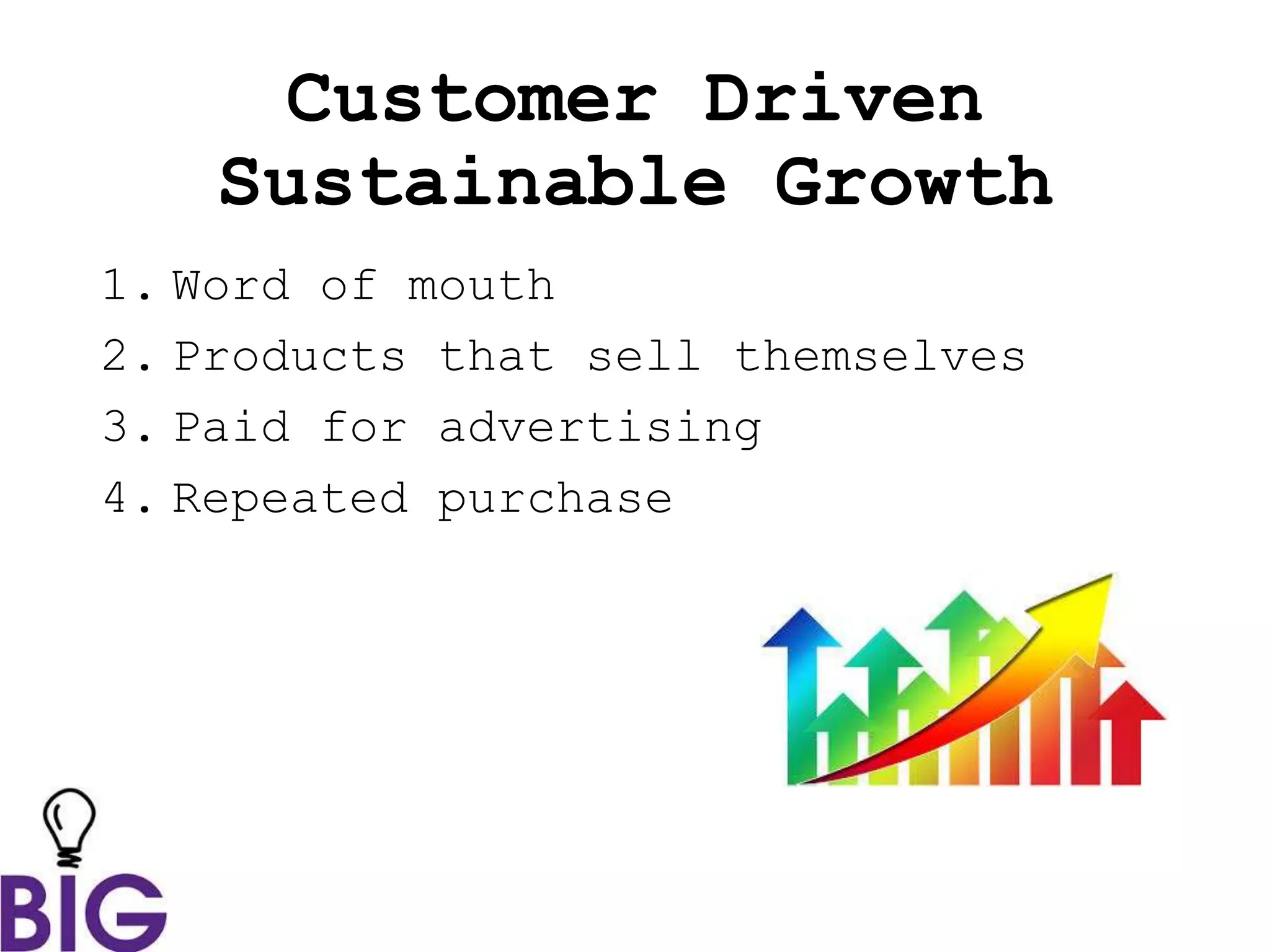
Customer Driven
Sustainable Growth
1. Word of mouth
2. Products that sell themselves
3. Paid for advertising
4. Repeated purchase
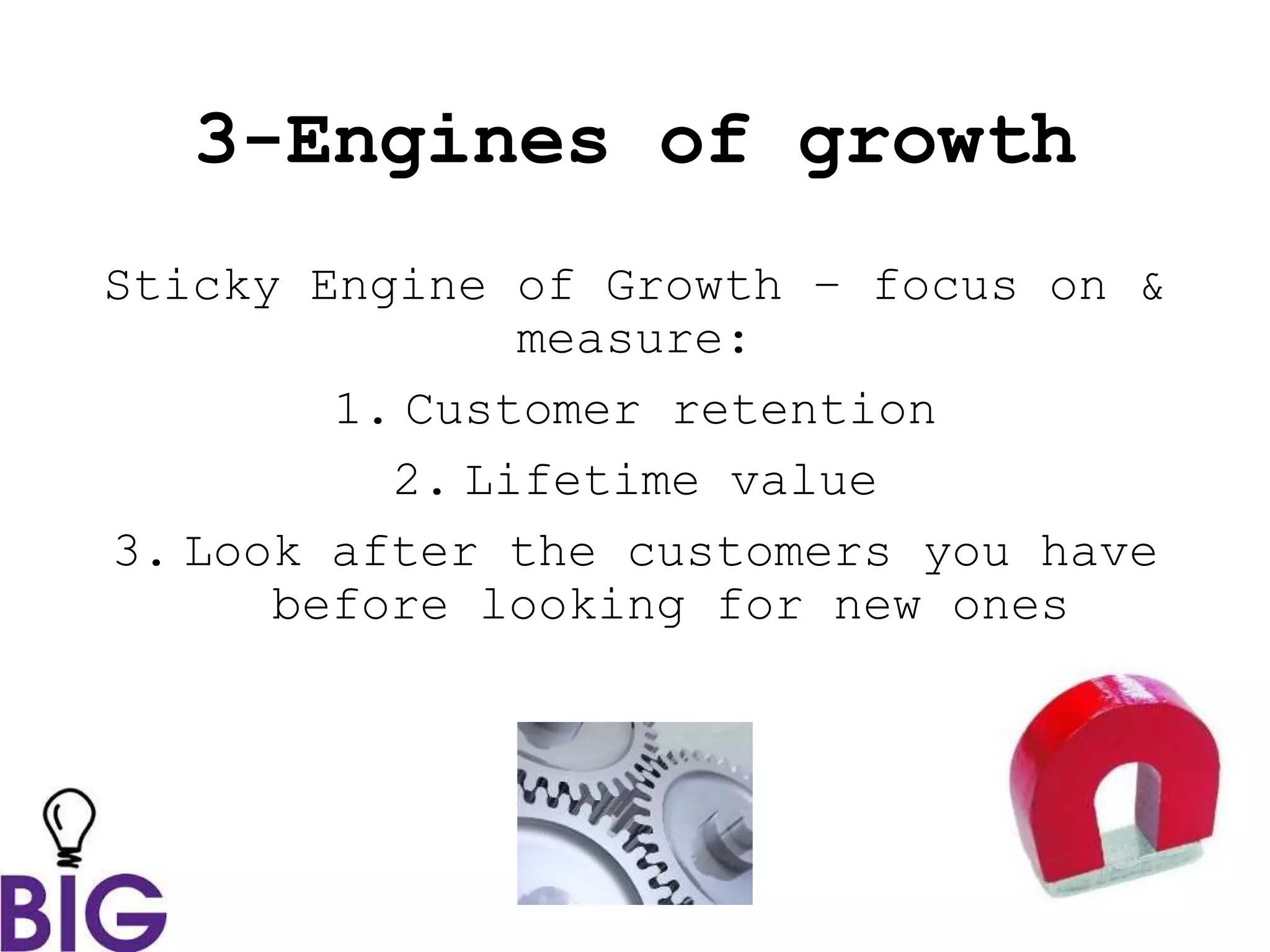
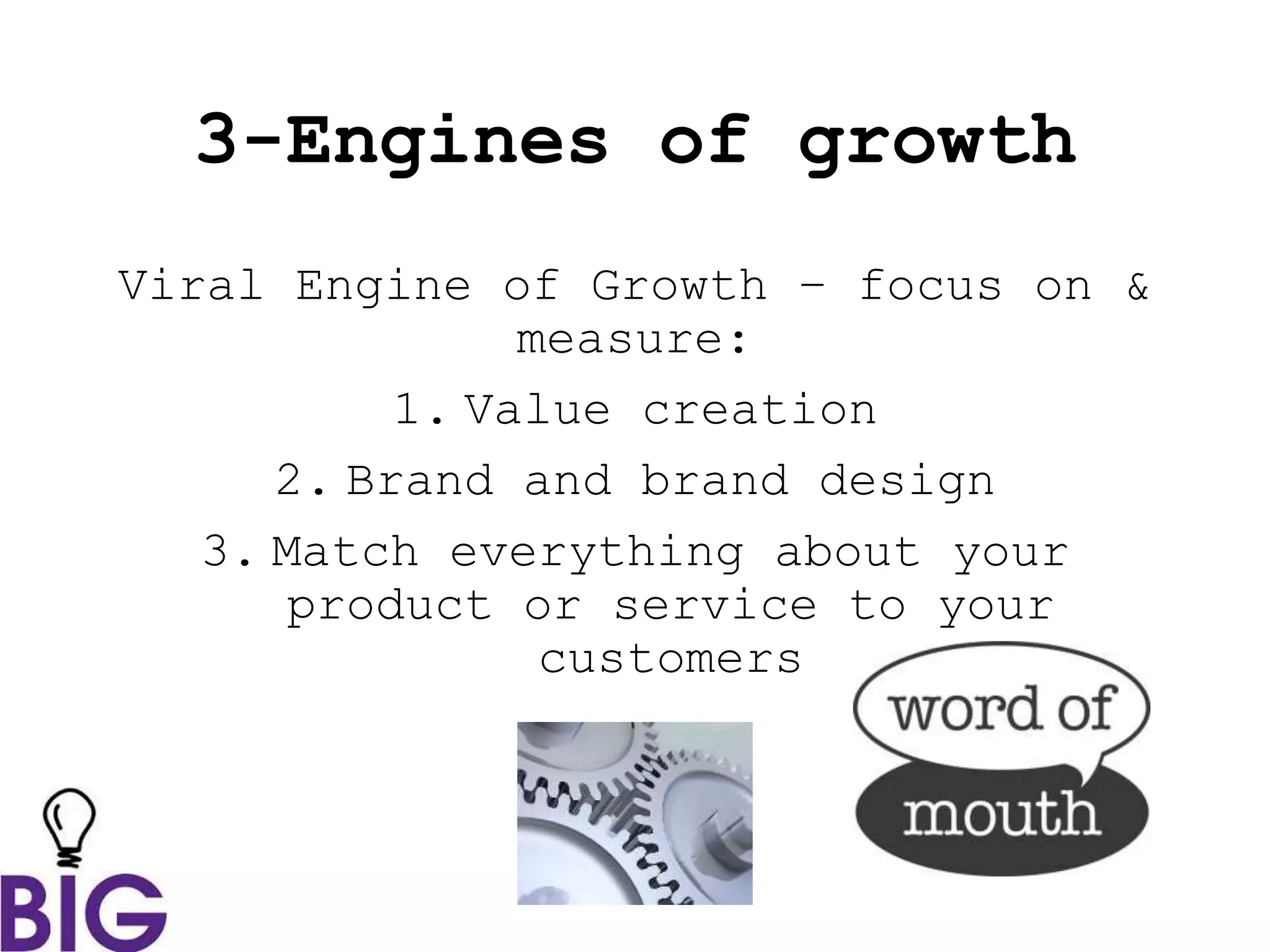
3-Engines of growth
Sticky Engine of Growth – focus on &
measure:
1. Customer retention
2. Lifetime value
3. Look after the customers you have
before looking for new ones
Viral Engine of Growth – focus on &
measure:
1. Value creation
2. Brand and brand design
3. Match everything about your
product or service to your
customers
3-Engines of growth
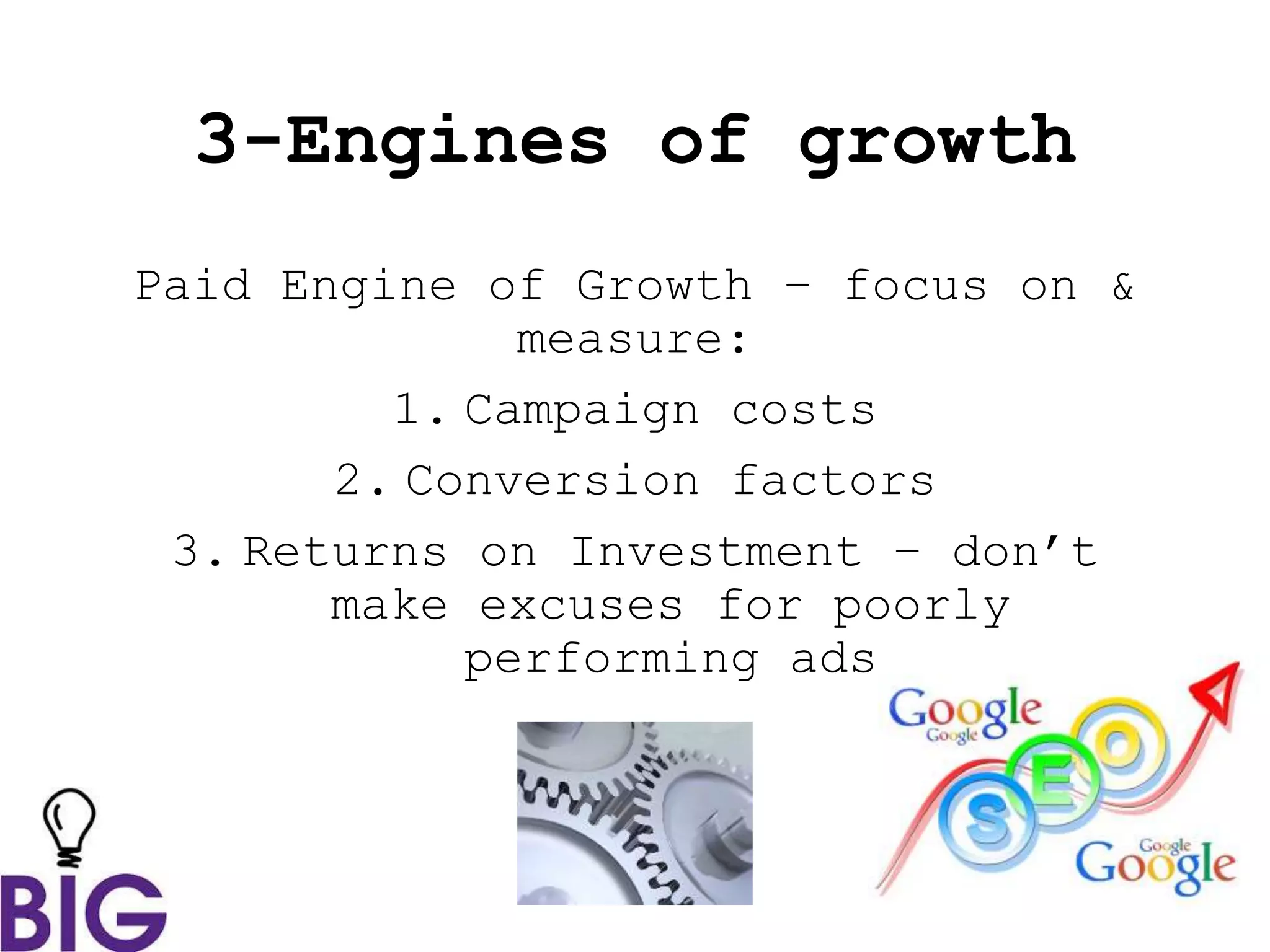
3-Engines of growth
Paid Engine of Growth – focus on &
measure:
1. Campaign costs
2. Conversion factors
3. Returns on Investment – don’t
make excuses for poorly
performing ads
What is your current
engine?
Take 5 minutes and look at the
worksheet
Think about your current engine of
growth – does it match the
aspirations of the business?
If you could change it – how would
you?
Make some notes and think about
some tactics
Lift-off or Fail
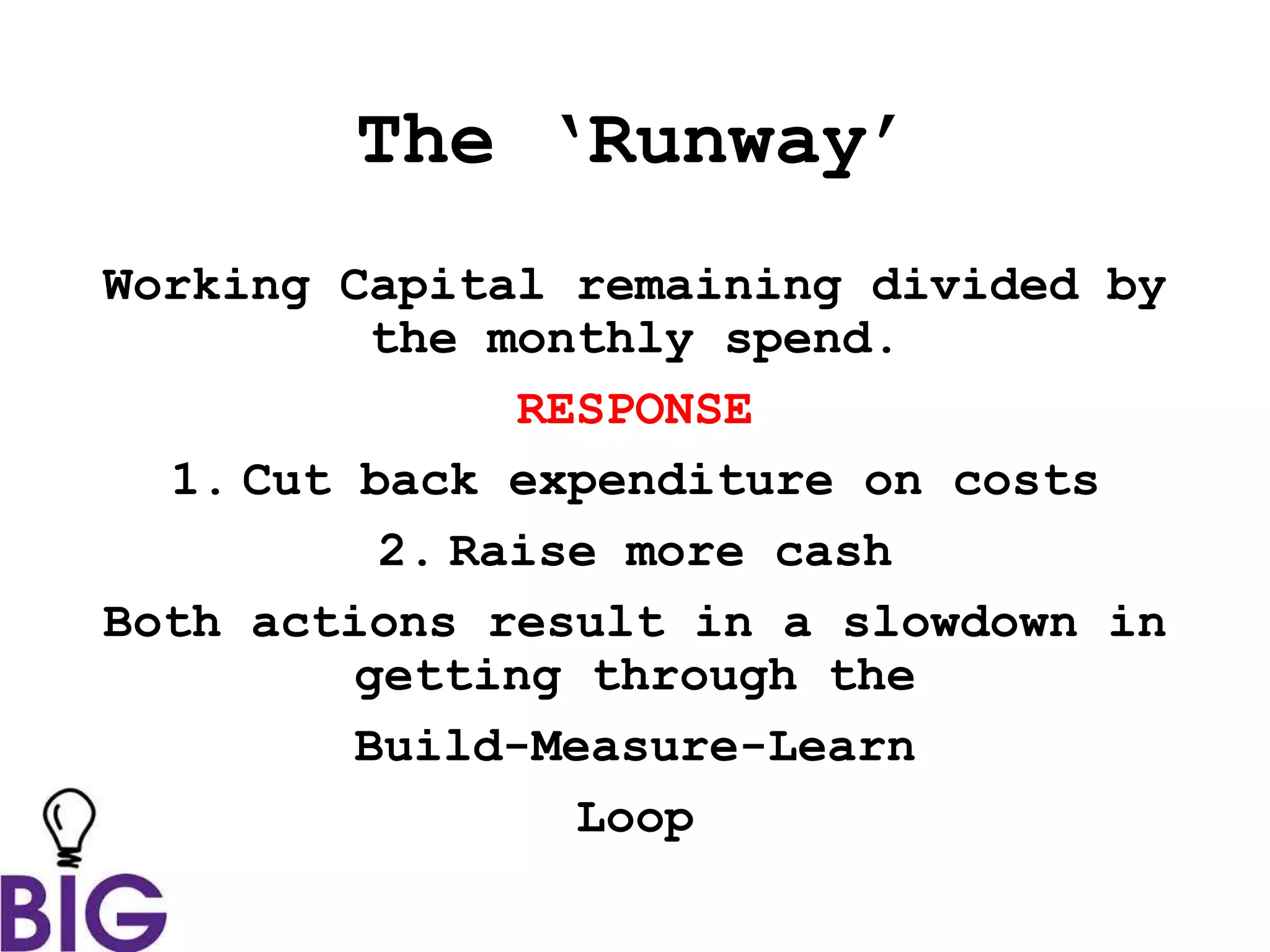
The ‘Runway’
Working Capital remaining divided by
the monthly spend.
RESPONSE
1. Cut back expenditure on costs
2. Raise more cash
Both actions result in a slowdown in
getting through the
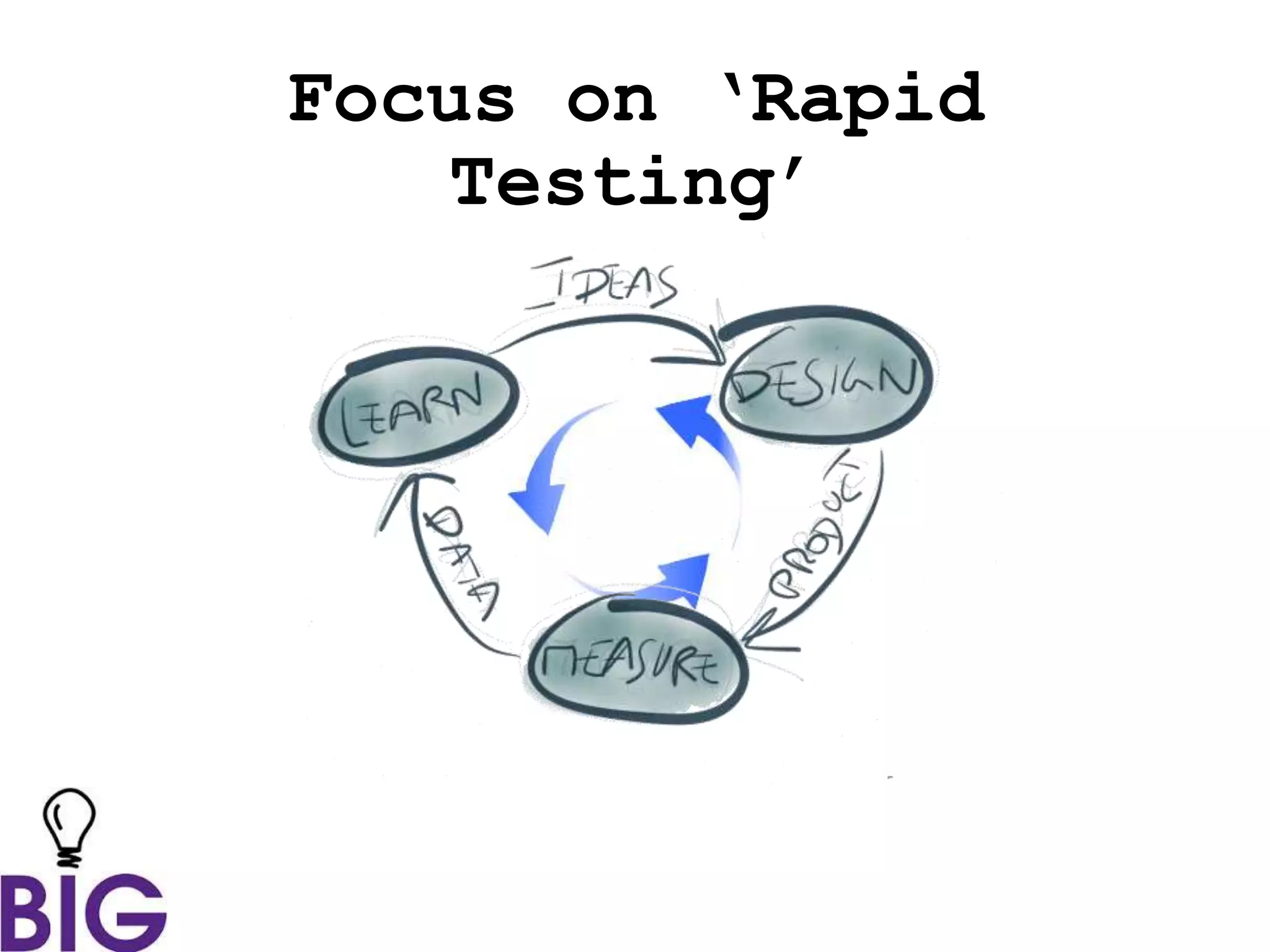
Build-Measure-Learn
Loop
Focus on ‘Rapid
Testing’
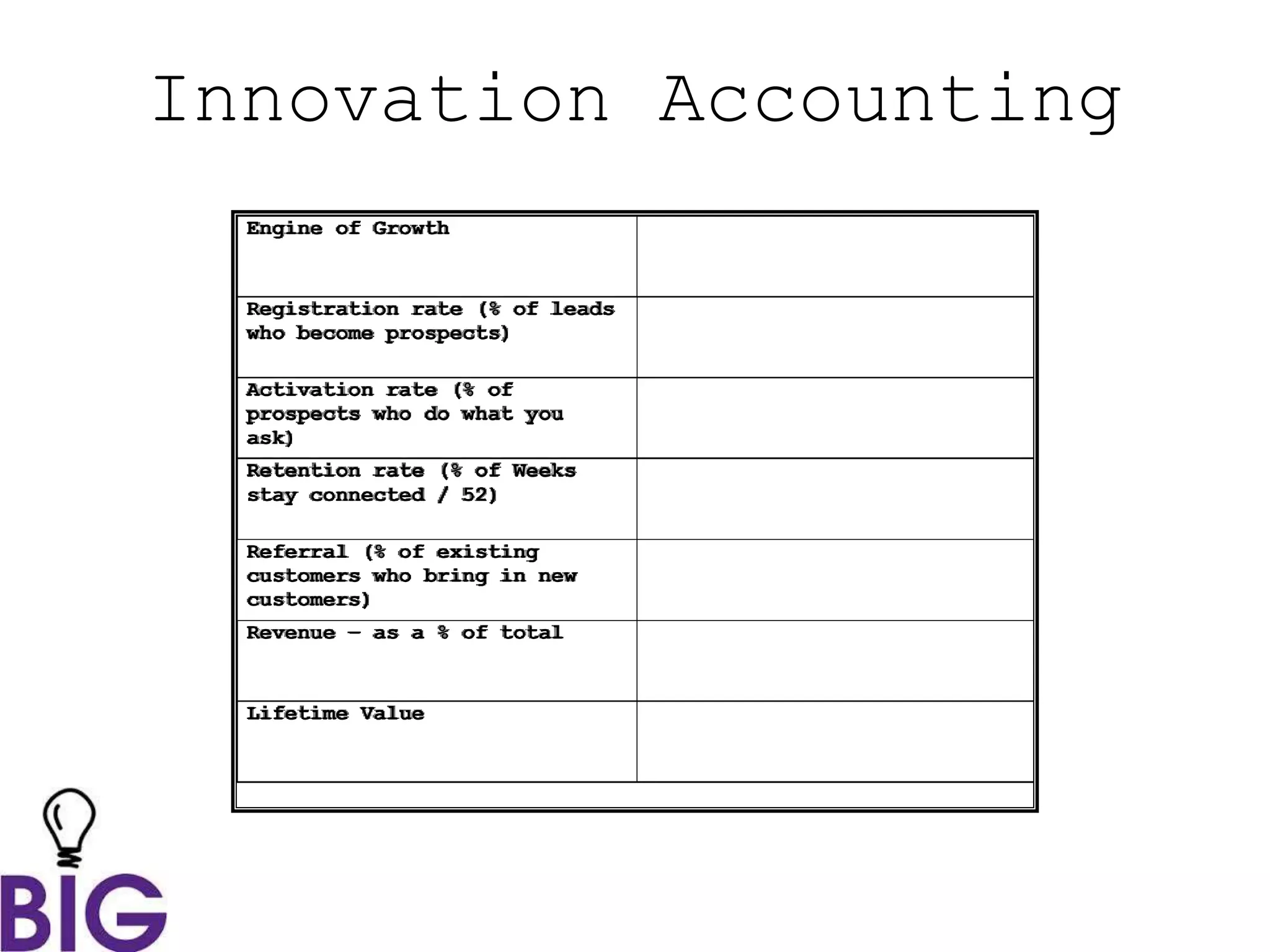
Innovation Accounting
Engine of Growth
Registration rate (% of leads
who become prospects)
Activation rate (% of
prospects who do what you
ask)
Retention rate (% of Weeks
stay connected / 52)
Referral (% of existing
customers who bring in new
customers)
Revenue – as a % of total
Lifetime Value
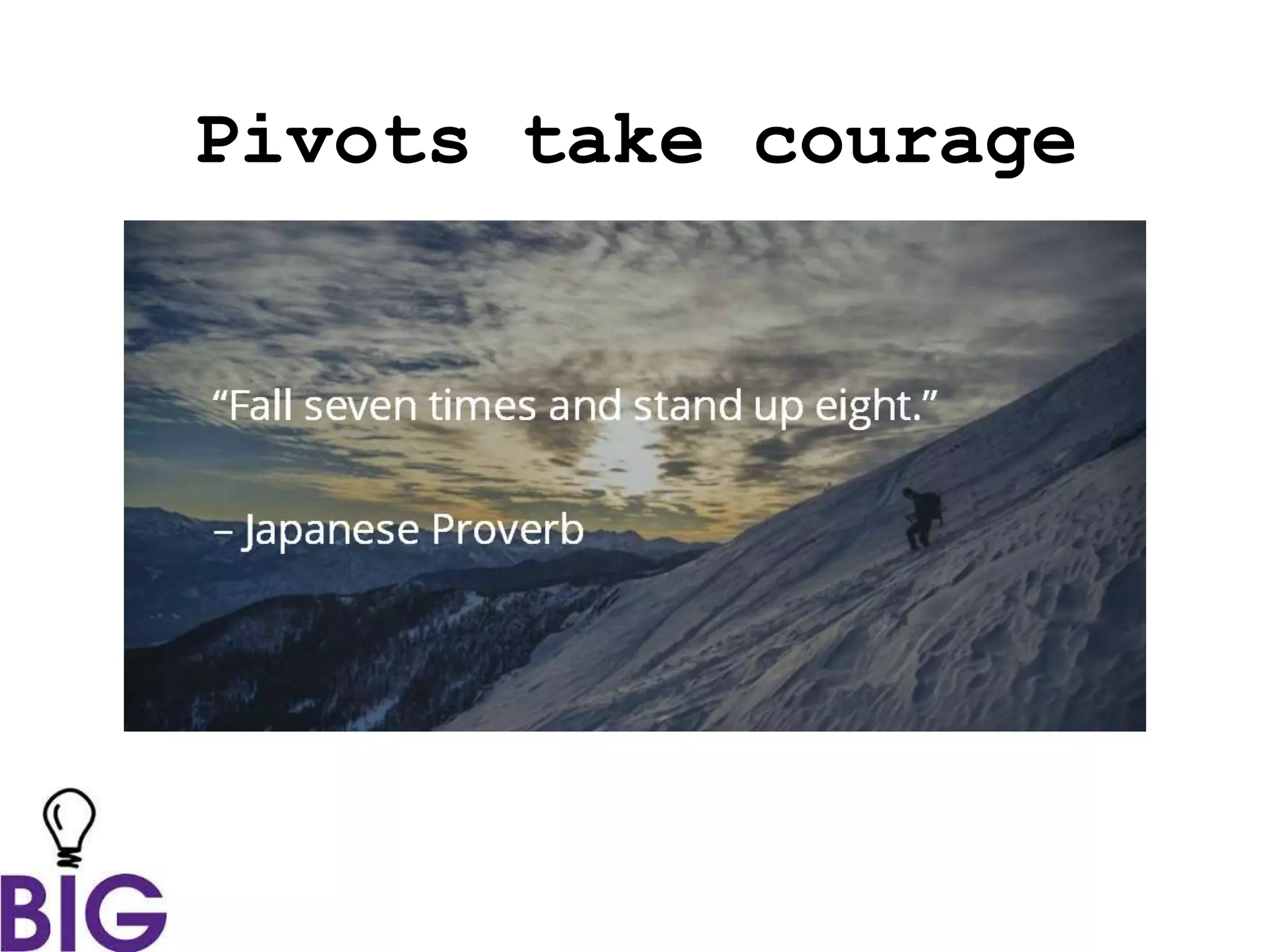
Pivots take courage
Why?
Is your business on the
right road?
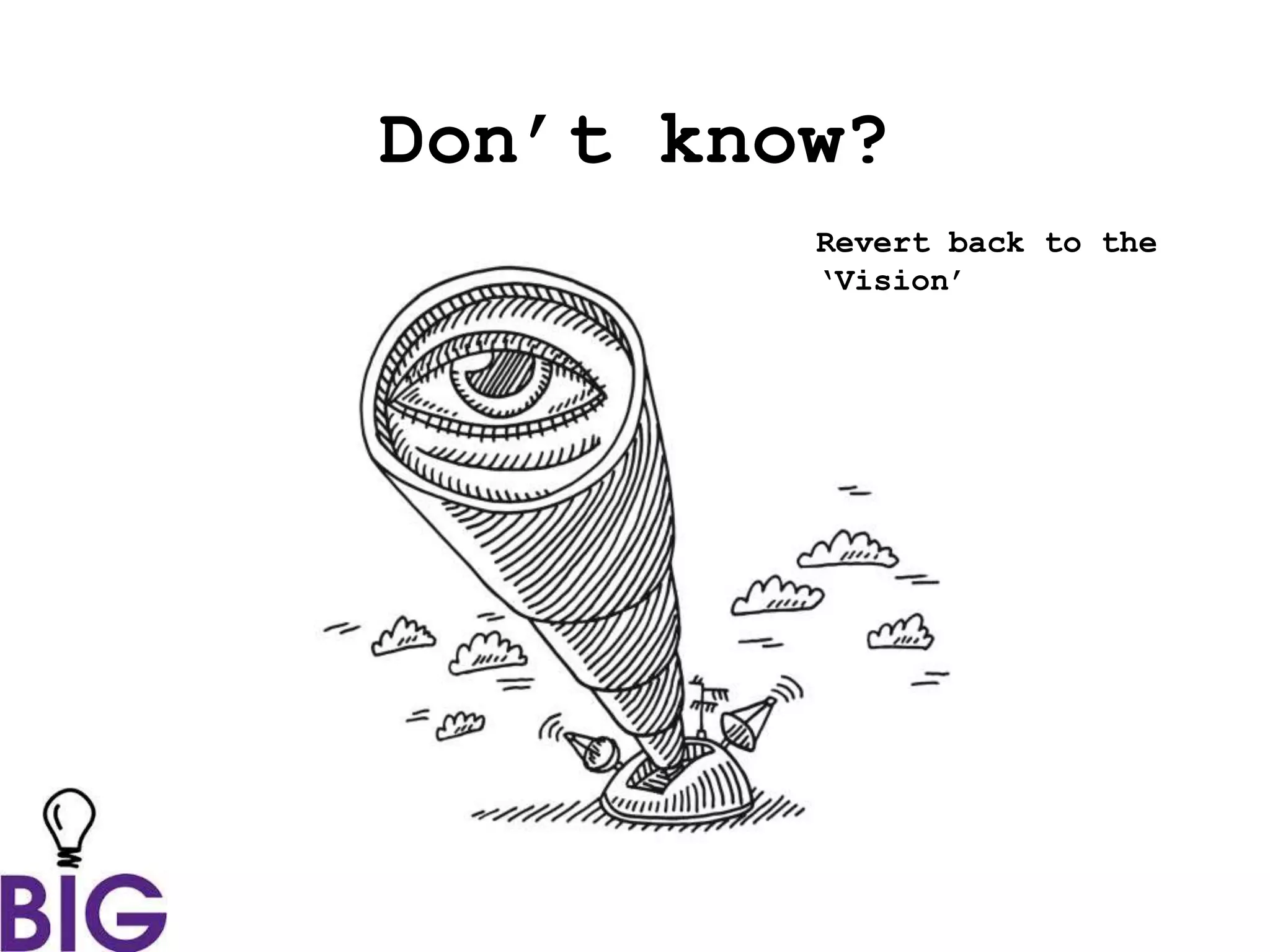
Don’t know?
Revert back to the
‘Vision’
PIVOT
Place one foot on the
ground for stability –
then turn!
Types of Pivot
1. Zoom-in: A single feature becomes
the whole product. Niche and
specialise
2. Zoom-out: A single feature cannot
sustain a whole product. Whole
product now becomes a single
feature
3. Customer segment: change of
customer in that the segment you
originally targeted are not the
ones you are serving
Types of Pivot
(cont.)
4. Customer need: the original
problem we were solving is now
less of an issue – so we develop
5. Platform: apps become websites
and vice-versa
6. Business architecture: high
margin – low volume becomes low
margin – high volume or vice-
versa
Types of Pivot
(cont.)
7. Value capture: a change in the
revenue stream. A movement away
from the exchange to long term
access
8. Engine of growth: a change in the
marketing strategy that moves us
from retention to viral
9. Sales Channel: a change in the
route to market. We stop selling
through an agent an go direct to
the customer
Types of Pivot
(cont.)
10.Technology: sustaining innovation
by switching the old methods in
with the new ways. A new CRM
system, an upgraded website etc.
3 Reasons why we don’t
‘Pivot’
1. Vanity metrics – numbers that
simply confirm what we believe to
be true and of value
2. Lack of a clear hypothesis for
testing. We have growth,
customers seem happy etc.
3. Fear that the vision we have
shared might be wrong
3-signs we should
‘Pivot’
1. Gut instinct – you fess-up to
that nagging doubt in the back of
your mind
2. A lack of ‘traction’ – customers
who don’t engage, don’t enthuse
and resist paying
3. Overwhelming interest in one
feature – and not the rest
Finally
To come
08 Nov 2016 – Root cause
analysis – The 5-Whys
13 Dec 2016 – The accelerate
through innovation
Any Questions?
Back on the 8th of November

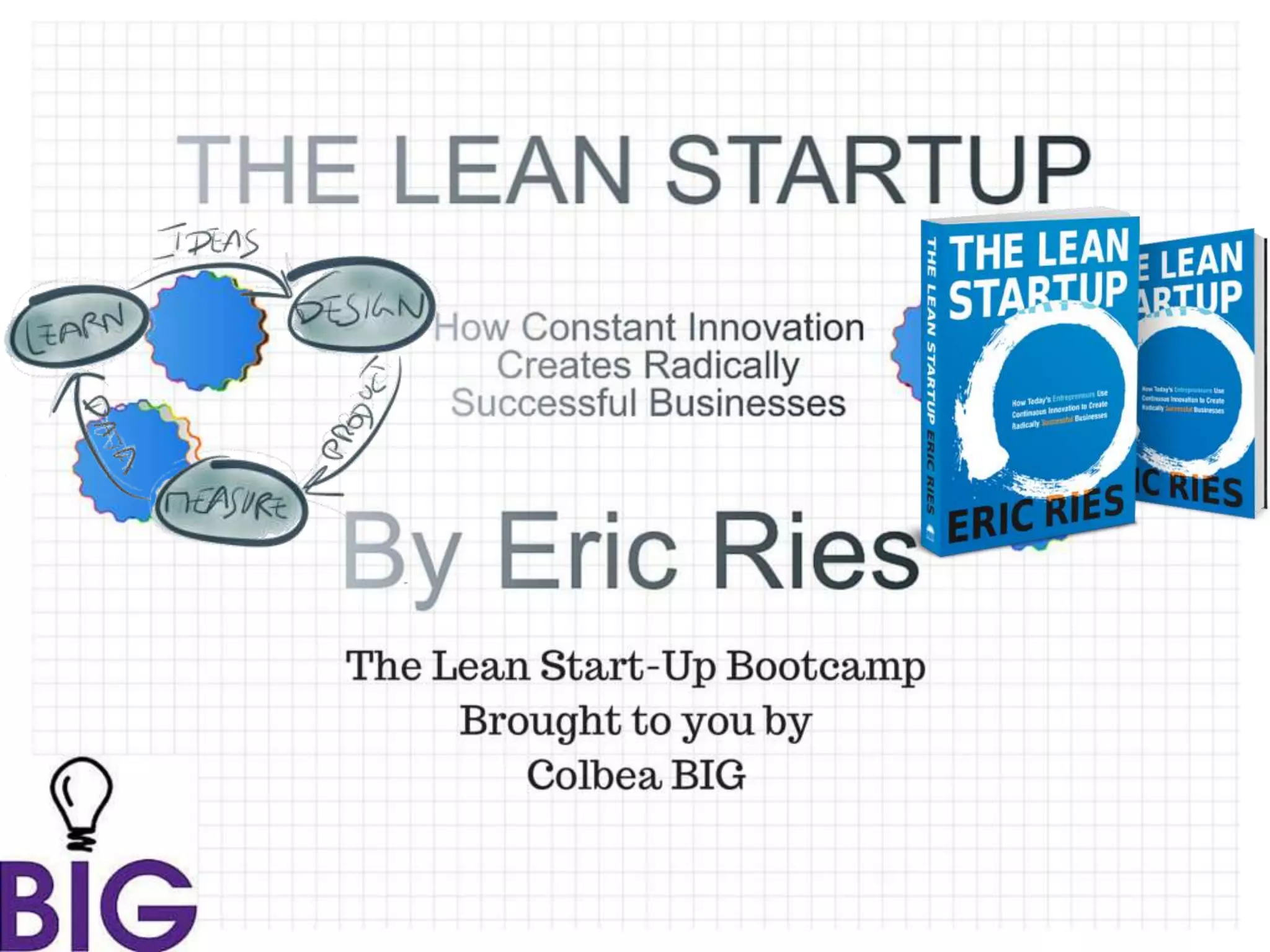
Lean start up bootcamp 4 measure test pivot or perservere

  • 2.
    Test and Measure– To Pivot or Persevere
  • 3.
    The goals ofthe Bootcamp • At the end of the six months to have worked through the principles of the book • To apply many of them to real world situations that apply to our own businesses • To embed some functions into your activity that give you a cutting edge
  • 4.
    This book isfor: • Start-ups • Stale businesses on the cusp of adopting new ideas • Existing businesses struggling with growing pains • Anyone who wants to learn about how to develop their business
  • 5.
  • 6.
    Let’s Refresh ourselveson some of what we have covered • Most businesses fail because they build something that no-one wants • Failing fast means we preserve more capital and can pivot more • The currency of start-up is learning – validated learning through a Minimum Viable Produce (MVP) • Vision leads to steering • Ideas and assumptions are not the same – Ideas have embedded assumptions that need testing • Finding the ‘Big Idea’ and testing it
  • 7.
    The Goal thisMorning To go away with a set of tools and thinking to help you to decide if you should ‘pivot’ or ‘persevere’
  • 8.
    Why this isimportant?
  • 9.
    How and Whatto Test Value & Growth
  • 10.
  • 11.
  • 12.
    Research Shows Bill Gross,Idealab, The single biggest reason why startups succeed https://www.hotjar.com/blog/the-passion- fallacy?
  • 13.
  • 14.
    PEST(LE) • Political • Economic •Social • Technological • Legal • Environmental
  • 15.
  • 16.
  • 17.
    Customer Driven Sustainable Growth 1.Word of mouth 2. Products that sell themselves 3. Paid for advertising 4. Repeated purchase
  • 18.
    3-Engines of growth StickyEngine of Growth – focus on & measure: 1. Customer retention 2. Lifetime value 3. Look after the customers you have before looking for new ones
  • 19.
    Viral Engine ofGrowth – focus on & measure: 1. Value creation 2. Brand and brand design 3. Match everything about your product or service to your customers 3-Engines of growth
  • 20.
    3-Engines of growth PaidEngine of Growth – focus on & measure: 1. Campaign costs 2. Conversion factors 3. Returns on Investment – don’t make excuses for poorly performing ads
  • 21.
    What is yourcurrent engine? Take 5 minutes and look at the worksheet Think about your current engine of growth – does it match the aspirations of the business? If you could change it – how would you? Make some notes and think about some tactics
  • 22.
  • 23.
    The ‘Runway’ Working Capitalremaining divided by the monthly spend. RESPONSE 1. Cut back expenditure on costs 2. Raise more cash Both actions result in a slowdown in getting through the Build-Measure-Learn Loop
  • 24.
  • 25.
    Innovation Accounting Engine ofGrowth Registration rate (% of leads who become prospects) Activation rate (% of prospects who do what you ask) Retention rate (% of Weeks stay connected / 52) Referral (% of existing customers who bring in new customers) Revenue – as a % of total Lifetime Value
  • 26.
  • 27.
    Why? Is your businesson the right road?
  • 28.
    Don’t know? Revert backto the ‘Vision’
  • 29.
    PIVOT Place one footon the ground for stability – then turn!
  • 30.
    Types of Pivot 1.Zoom-in: A single feature becomes the whole product. Niche and specialise 2. Zoom-out: A single feature cannot sustain a whole product. Whole product now becomes a single feature 3. Customer segment: change of customer in that the segment you originally targeted are not the ones you are serving
  • 31.
    Types of Pivot (cont.) 4.Customer need: the original problem we were solving is now less of an issue – so we develop 5. Platform: apps become websites and vice-versa 6. Business architecture: high margin – low volume becomes low margin – high volume or vice- versa
  • 32.
    Types of Pivot (cont.) 7.Value capture: a change in the revenue stream. A movement away from the exchange to long term access 8. Engine of growth: a change in the marketing strategy that moves us from retention to viral 9. Sales Channel: a change in the route to market. We stop selling through an agent an go direct to the customer
  • 33.
    Types of Pivot (cont.) 10.Technology:sustaining innovation by switching the old methods in with the new ways. A new CRM system, an upgraded website etc.
  • 34.
    3 Reasons whywe don’t ‘Pivot’ 1. Vanity metrics – numbers that simply confirm what we believe to be true and of value 2. Lack of a clear hypothesis for testing. We have growth, customers seem happy etc. 3. Fear that the vision we have shared might be wrong
  • 35.
    3-signs we should ‘Pivot’ 1.Gut instinct – you fess-up to that nagging doubt in the back of your mind 2. A lack of ‘traction’ – customers who don’t engage, don’t enthuse and resist paying 3. Overwhelming interest in one feature – and not the rest
  • 36.
  • 37.
    To come 08 Nov2016 – Root cause analysis – The 5-Whys 13 Dec 2016 – The accelerate through innovation
  • 38.
    Any Questions? Back onthe 8th of November