PIPE HEAT EXCHANGER
TyWilliams
BE 4120
Introduction/Objective
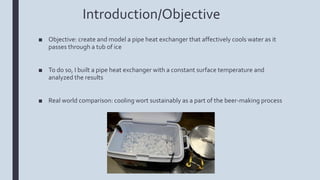
■ Objective: create and model a pipe heat exchanger that affectively cools water as it
passes through a tub of ice
■ To do so, I built a pipe heat exchanger with a constant surface temperature and
analyzed the results
■ Real world comparison: cooling wort sustainably as a part of the beer-making process
Materials
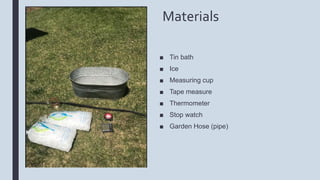
■ Tin bath
■ Ice
■ Measuring cup
■ Tape measure
■ Thermometer
■ Stop watch
■ Garden Hose (pipe)
Parameters
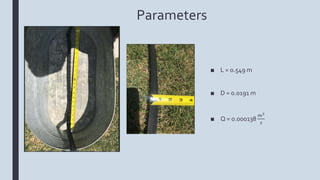
■ L = 0.549 m
■ D = 0.0191 m
■ Q = 0.000138
𝑚3
𝑠
Energy Balance
■ Governing Equations
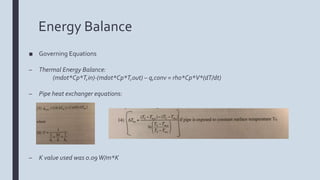
– Thermal Energy Balance:
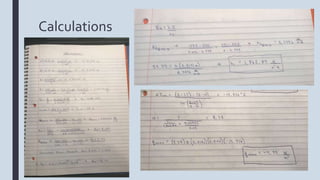
(mdot*Cp*T,in)-(mdot*Cp*T,out) – q,conv = rho*Cp*V*(dT/dt)
– Pipe heat exchanger equations:
– K value used was 0.09W/m*K
Procedure
1. Fill a 500 ml glass with water and time it to establish a defined volumetric flow rate
(Q) for the experiment
2. Use the thermometer to measure the temperature of the water before any contact
with ice
3. Fill a bucket with ice and measure the surface temperature of the hose
4. Allow the hose to sit in the ice for roughly 10 minutes to acclimate to the chilled
temperature
5. Run water through the pipe heat exchanger and measure the output temperature
values
Results
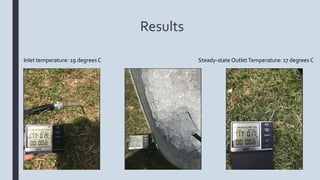
Steady-state OutletTemperature: 17 degrees CInlet temperature: 19 degrees C
Results
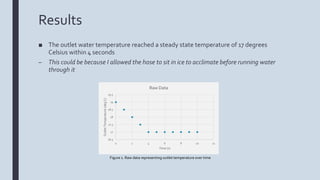
■ The outlet water temperature reached a steady state temperature of 17 degrees
Celsius within 4 seconds
– This could be because I allowed the hose to sit in ice to acclimate before running water
through it
16.5
17
17.5
18
18.5
19
19.5
0 2 4 6 8 10 12
OutletTemperature(degC)
Time (s)
Raw Data
Figure 1. Raw data representing outlet temperature over time
Results
■ Holding all other things constant, mass flow rate can be decreased to achieve different
desired outlet temperatures
0.000
0.050
0.100
0.150
0.200
0.250
0 5 10 15 20
MassFlowRate[kg/s]
Outlet Temperature (deg C)
Required Mass Flow Rates to Reach
DesiredTemperatures
InletTemperature (deg C) Desired OutletTemperature (deg C) Mass Flow Rate Required (kg/s)
19 18 0.235
19 17 0.117
19 16 0.078
19 15 0.059
19 14 0.047
19 13 0.039
19 12 0.034
19 11 0.029
19 10 0.026
19 9 0.023
19 8 0.021
19 7 0.020
19 6 0.018
19 5 0.017
19 4 0.016
Figure 2. Mass Flow Rate vs.Temperature
Table 1. Mass flow rates required for desired outlet temperatures
Analysis
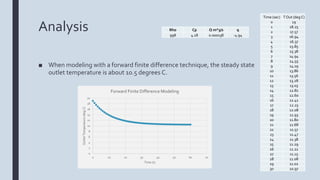
■ When modeling with a forward finite difference technique, the steady state
outlet temperature is about 10.5 degrees C.
0
2
4
6
8
10
12
14
16
18
20
0 10 20 30 40 50 60 70
OutletTemperature(degC)
Time (s)
Forward Finite Difference Modeling
Time (sec) T Out (deg C)
0 19
1 18.25
2 17.57
3 16.94
4 16.37
5 15.85
6 15.38
7 14.94
8 14.55
9 14.19
10 13.86
11 13.56
12 13.28
13 13.03
14 12.81
15 12.60
16 12.41
17 12.23
18 12.08
19 11.93
20 11.80
21 11.68
22 11.57
23 11.47
24 11.38
25 11.29
26 11.22
27 11.15
28 11.08
29 11.02
30 10.97
Rho Cp Q m^3/s q
998 4.18 0.000138 -4.94
Conclusion
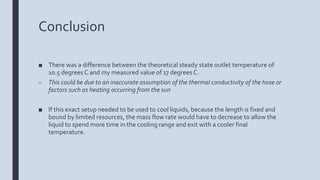
■ There was a difference between the theoretical steady state outlet temperature of
10.5 degrees C and my measured value of 17 degrees C.
– This could be due to an inaccurate assumption of the thermal conductivity of the hose or
factors such as heating occurring from the sun
■ If this exact setup needed to be used to cool liquids, because the length is fixed and
bound by limited resources, the mass flow rate would have to decrease to allow the
liquid to spend more time in the cooling range and exit with a cooler final
temperature.
Conclusion
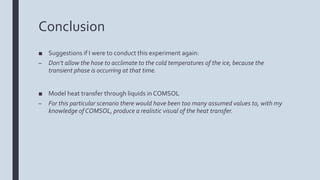
■ Suggestions if I were to conduct this experiment again:
– Don’t allow the hose to acclimate to the cold temperatures of the ice, because the
transient phase is occurring at that time.
■ Model heat transfer through liquids in COMSOL
– For this particular scenario there would have been too many assumed values to, with my
knowledge of COMSOL, produce a realistic visual of the heat transfer.
Calculations
References
■ https://www.youtube.com/watch?v=3S5Ehgh2EaU
■ https://www.electronics-cooling.com/2001/11/the-thermal-conductivity-of-rubbers-
elastomers/
■ Drapcho,C. 2020. Unpublished Notes, BE 4120, Clemson University, Clemson SC.

Be 4120 presentation

  • 1.
  • 2.
    Introduction/Objective ■ Objective: createand model a pipe heat exchanger that affectively cools water as it passes through a tub of ice ■ To do so, I built a pipe heat exchanger with a constant surface temperature and analyzed the results ■ Real world comparison: cooling wort sustainably as a part of the beer-making process
  • 3.
    Materials ■ Tin bath ■Ice ■ Measuring cup ■ Tape measure ■ Thermometer ■ Stop watch ■ Garden Hose (pipe)
  • 4.
    Parameters ■ L =0.549 m ■ D = 0.0191 m ■ Q = 0.000138 𝑚3 𝑠
  • 5.
    Energy Balance ■ GoverningEquations – Thermal Energy Balance: (mdot*Cp*T,in)-(mdot*Cp*T,out) – q,conv = rho*Cp*V*(dT/dt) – Pipe heat exchanger equations: – K value used was 0.09W/m*K
  • 6.
    Procedure 1. Fill a500 ml glass with water and time it to establish a defined volumetric flow rate (Q) for the experiment 2. Use the thermometer to measure the temperature of the water before any contact with ice 3. Fill a bucket with ice and measure the surface temperature of the hose 4. Allow the hose to sit in the ice for roughly 10 minutes to acclimate to the chilled temperature 5. Run water through the pipe heat exchanger and measure the output temperature values
  • 7.
    Results Steady-state OutletTemperature: 17degrees CInlet temperature: 19 degrees C
  • 8.
    Results ■ The outletwater temperature reached a steady state temperature of 17 degrees Celsius within 4 seconds – This could be because I allowed the hose to sit in ice to acclimate before running water through it 16.5 17 17.5 18 18.5 19 19.5 0 2 4 6 8 10 12 OutletTemperature(degC) Time (s) Raw Data Figure 1. Raw data representing outlet temperature over time
  • 9.
    Results ■ Holding allother things constant, mass flow rate can be decreased to achieve different desired outlet temperatures 0.000 0.050 0.100 0.150 0.200 0.250 0 5 10 15 20 MassFlowRate[kg/s] Outlet Temperature (deg C) Required Mass Flow Rates to Reach DesiredTemperatures InletTemperature (deg C) Desired OutletTemperature (deg C) Mass Flow Rate Required (kg/s) 19 18 0.235 19 17 0.117 19 16 0.078 19 15 0.059 19 14 0.047 19 13 0.039 19 12 0.034 19 11 0.029 19 10 0.026 19 9 0.023 19 8 0.021 19 7 0.020 19 6 0.018 19 5 0.017 19 4 0.016 Figure 2. Mass Flow Rate vs.Temperature Table 1. Mass flow rates required for desired outlet temperatures
  • 10.
    Analysis ■ When modelingwith a forward finite difference technique, the steady state outlet temperature is about 10.5 degrees C. 0 2 4 6 8 10 12 14 16 18 20 0 10 20 30 40 50 60 70 OutletTemperature(degC) Time (s) Forward Finite Difference Modeling Time (sec) T Out (deg C) 0 19 1 18.25 2 17.57 3 16.94 4 16.37 5 15.85 6 15.38 7 14.94 8 14.55 9 14.19 10 13.86 11 13.56 12 13.28 13 13.03 14 12.81 15 12.60 16 12.41 17 12.23 18 12.08 19 11.93 20 11.80 21 11.68 22 11.57 23 11.47 24 11.38 25 11.29 26 11.22 27 11.15 28 11.08 29 11.02 30 10.97 Rho Cp Q m^3/s q 998 4.18 0.000138 -4.94
  • 11.
    Conclusion ■ There wasa difference between the theoretical steady state outlet temperature of 10.5 degrees C and my measured value of 17 degrees C. – This could be due to an inaccurate assumption of the thermal conductivity of the hose or factors such as heating occurring from the sun ■ If this exact setup needed to be used to cool liquids, because the length is fixed and bound by limited resources, the mass flow rate would have to decrease to allow the liquid to spend more time in the cooling range and exit with a cooler final temperature.
  • 12.
    Conclusion ■ Suggestions ifI were to conduct this experiment again: – Don’t allow the hose to acclimate to the cold temperatures of the ice, because the transient phase is occurring at that time. ■ Model heat transfer through liquids in COMSOL – For this particular scenario there would have been too many assumed values to, with my knowledge of COMSOL, produce a realistic visual of the heat transfer.
  • 13.
  • 14.