Brussels 2015-06-15
Climate analysis & Big data
Rasmus E. Benestad
Abdelkader Mezghani, & Kajsa M. Parding
esd for retrieving, processing, dissecting, analysing, and visualisation
How do I find useful climate
information
in large volumes of data?
Information & Data & Knowledge
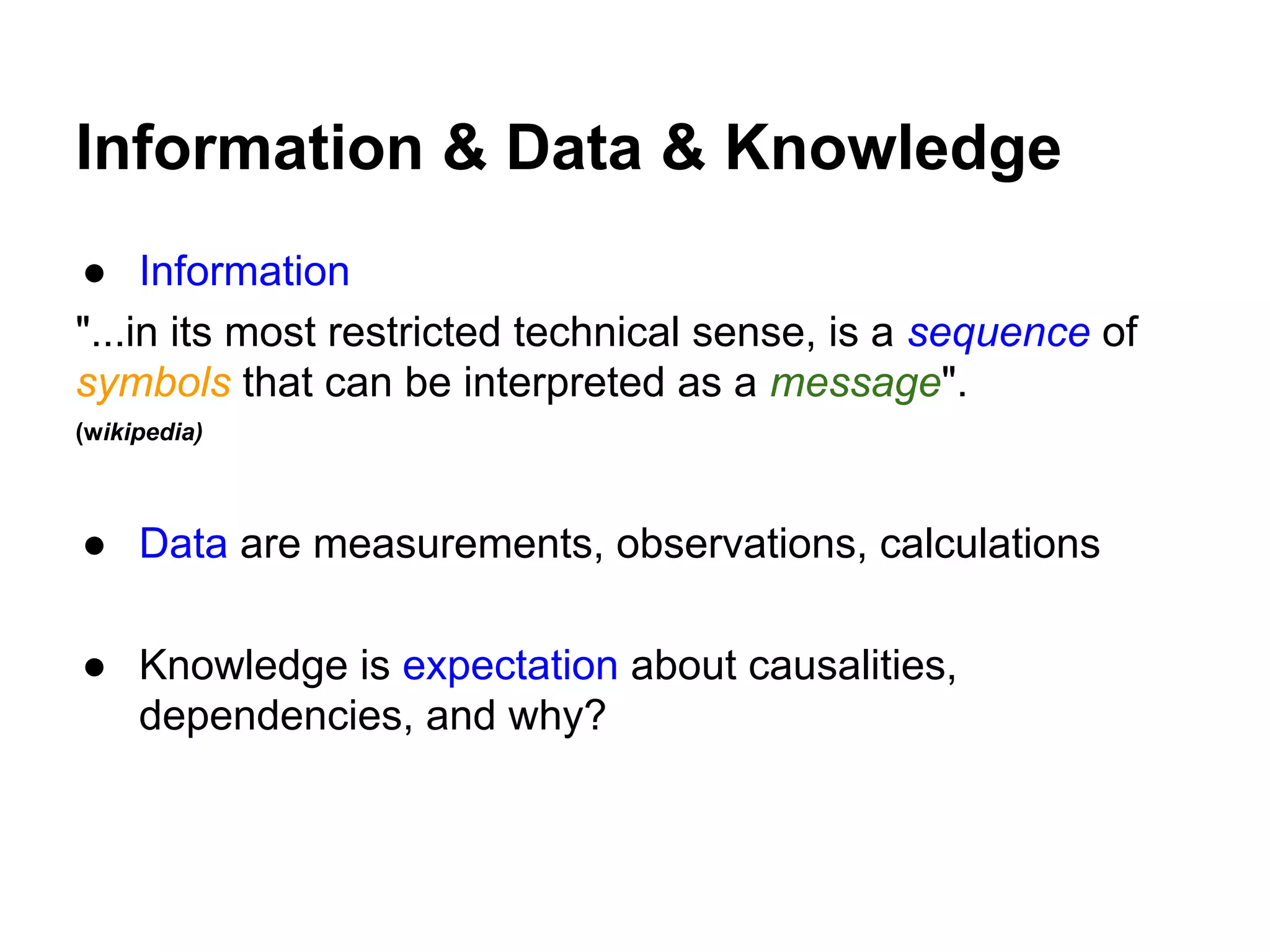
● Information
"...in its most restricted technical sense, is a sequence of
symbols that can be interpreted as a message".
(wikipedia)
● Data are measurements, observations, calculations
● Knowledge is expectation about causalities,
dependencies, and why?
Norwegian Meteorological Institute
The ultimate objective is to
find the answers.
The data is the source and
the means finding answers.
Analytical tools designed for
data analysis/statistics.
What is the question?
Big data - simple algorithms
Fast “distillation” of information
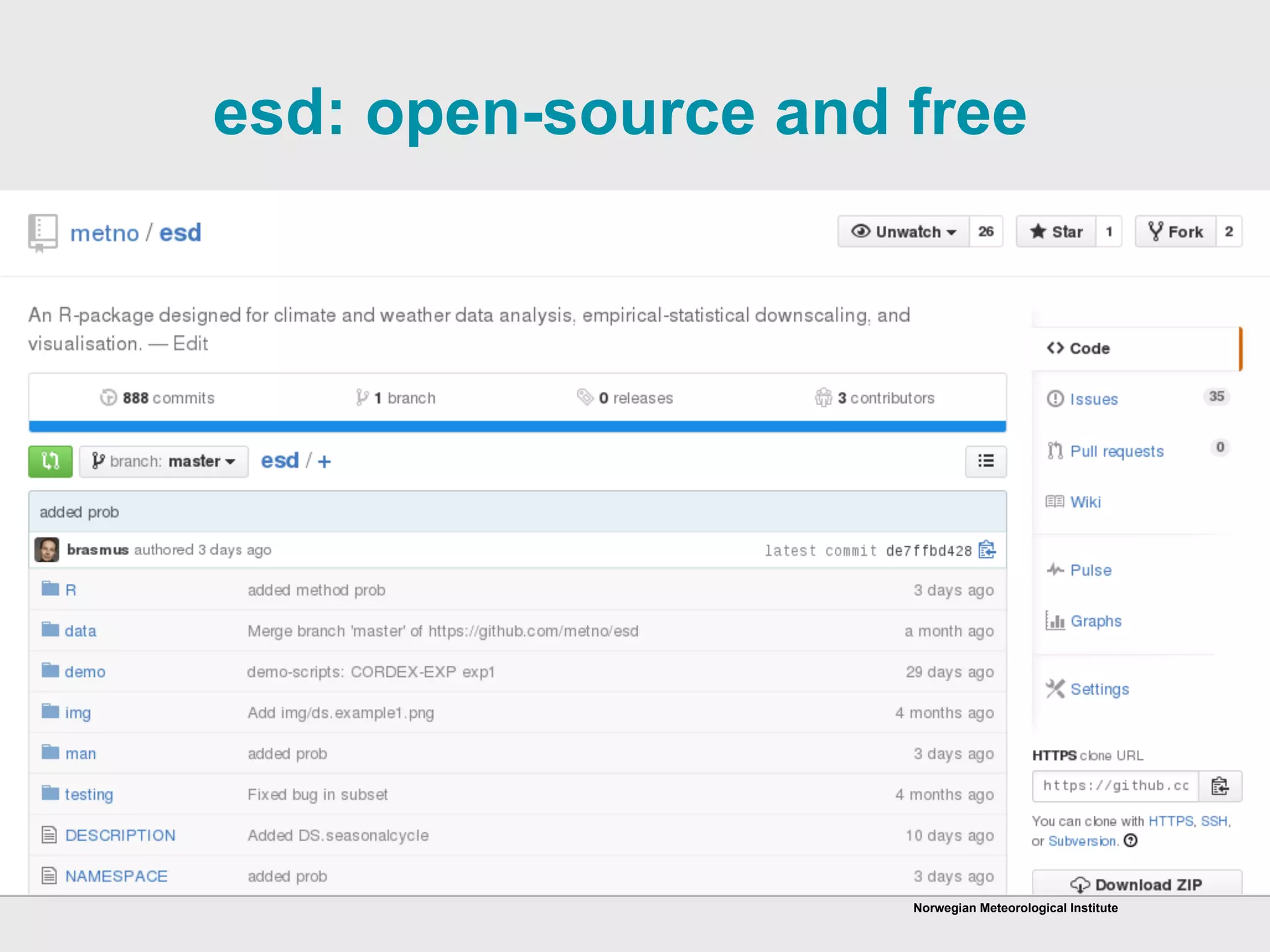
Open source tool ‘esd’
http://github.com/metno/esd
Norwegian Meteorological Institute
esd: open-source and free
Data access
Source of information
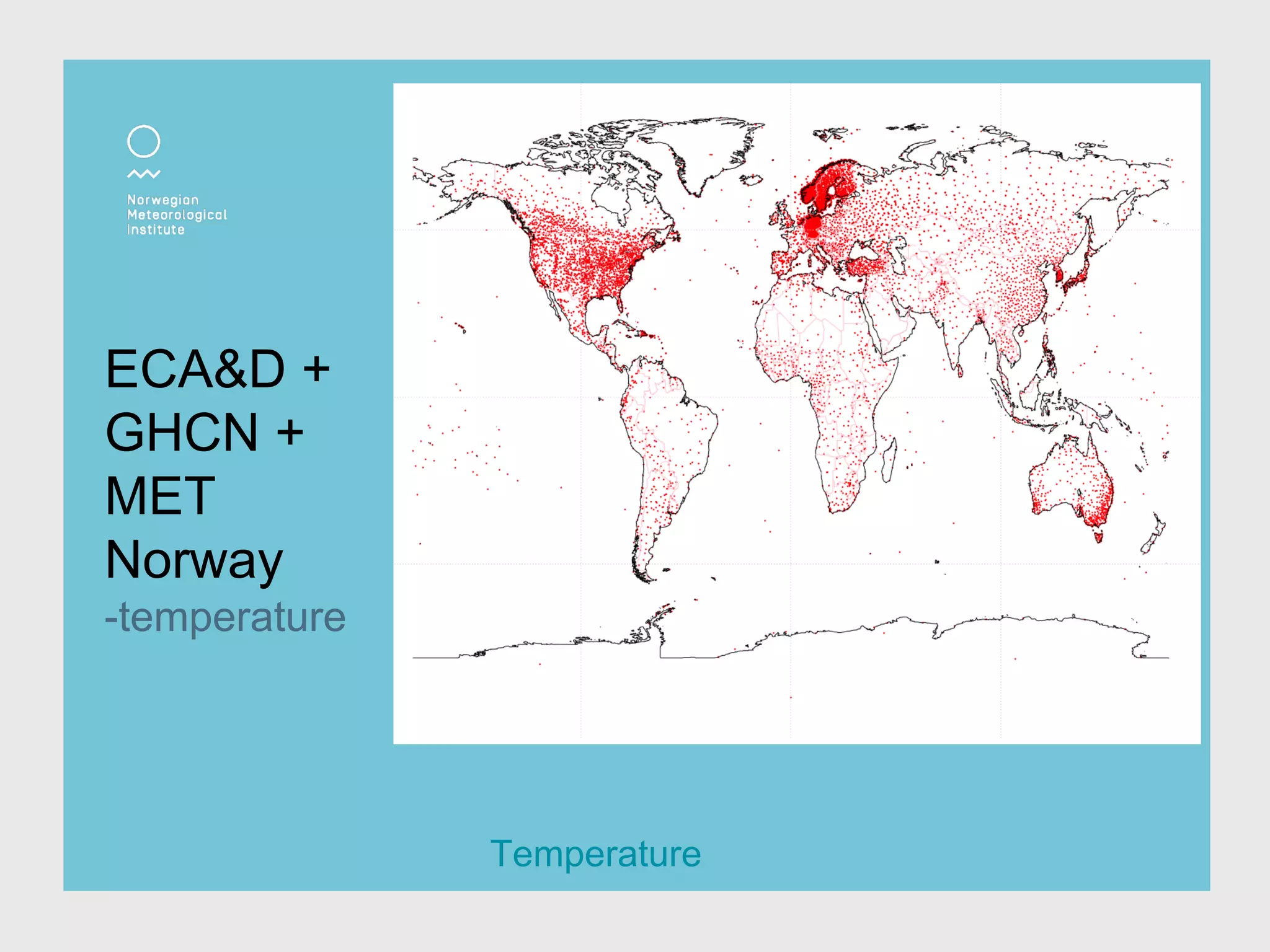
Temperature
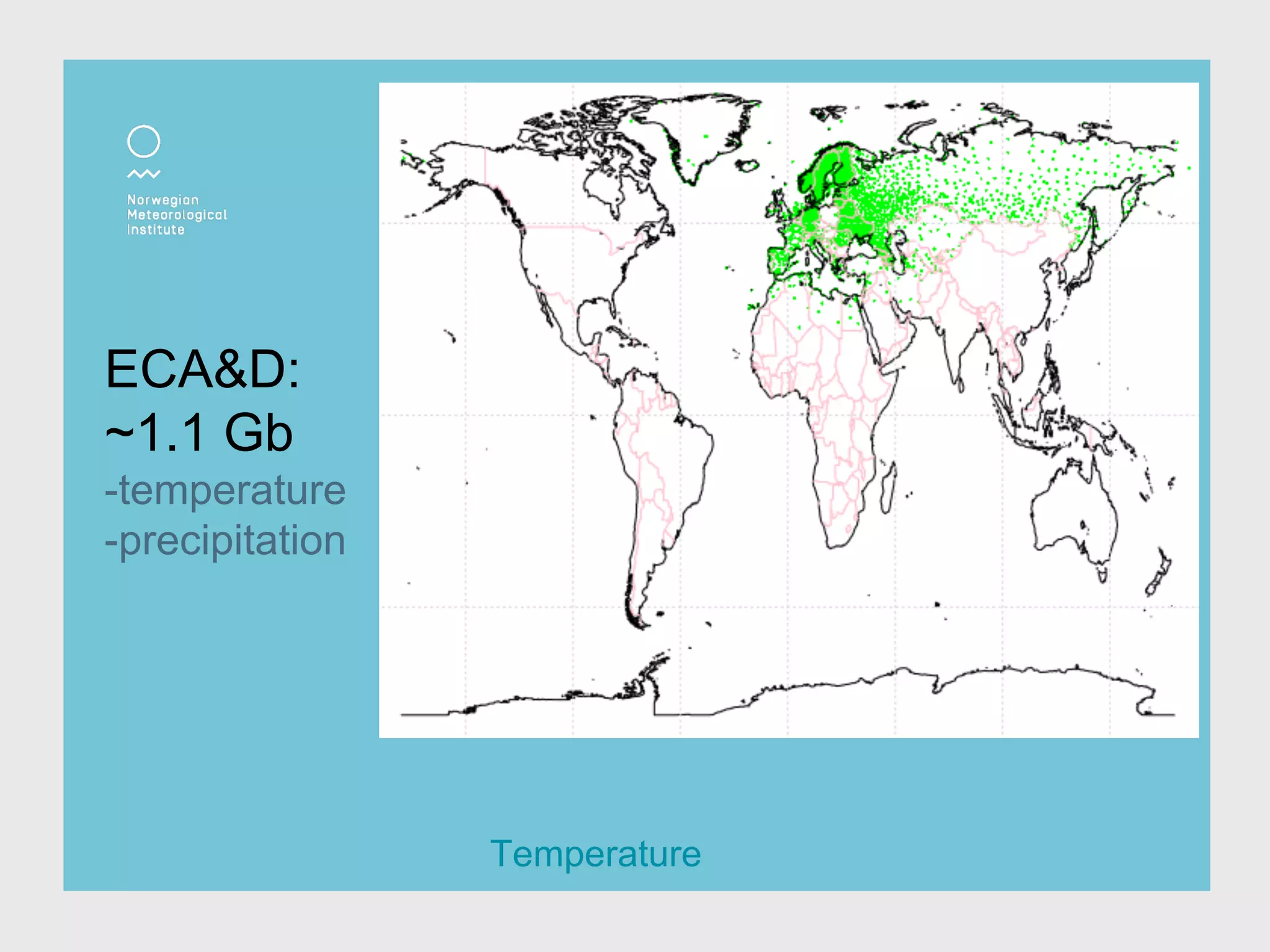
ECA&D:
~1.1 Gb
-temperature
-precipitation
Temperature
ECA&D +
GHCN +
MET
Norway
-temperature
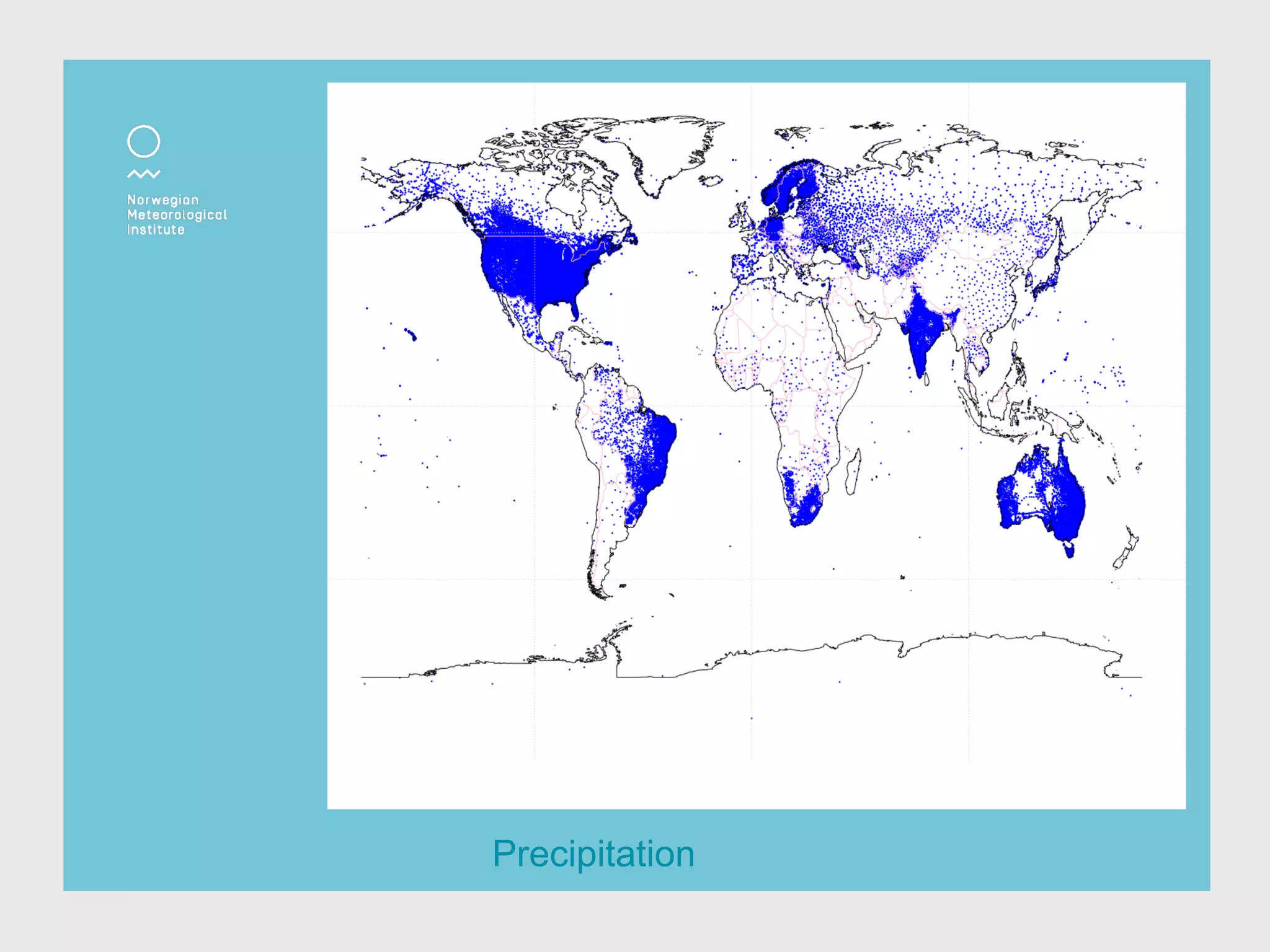
Precipitation
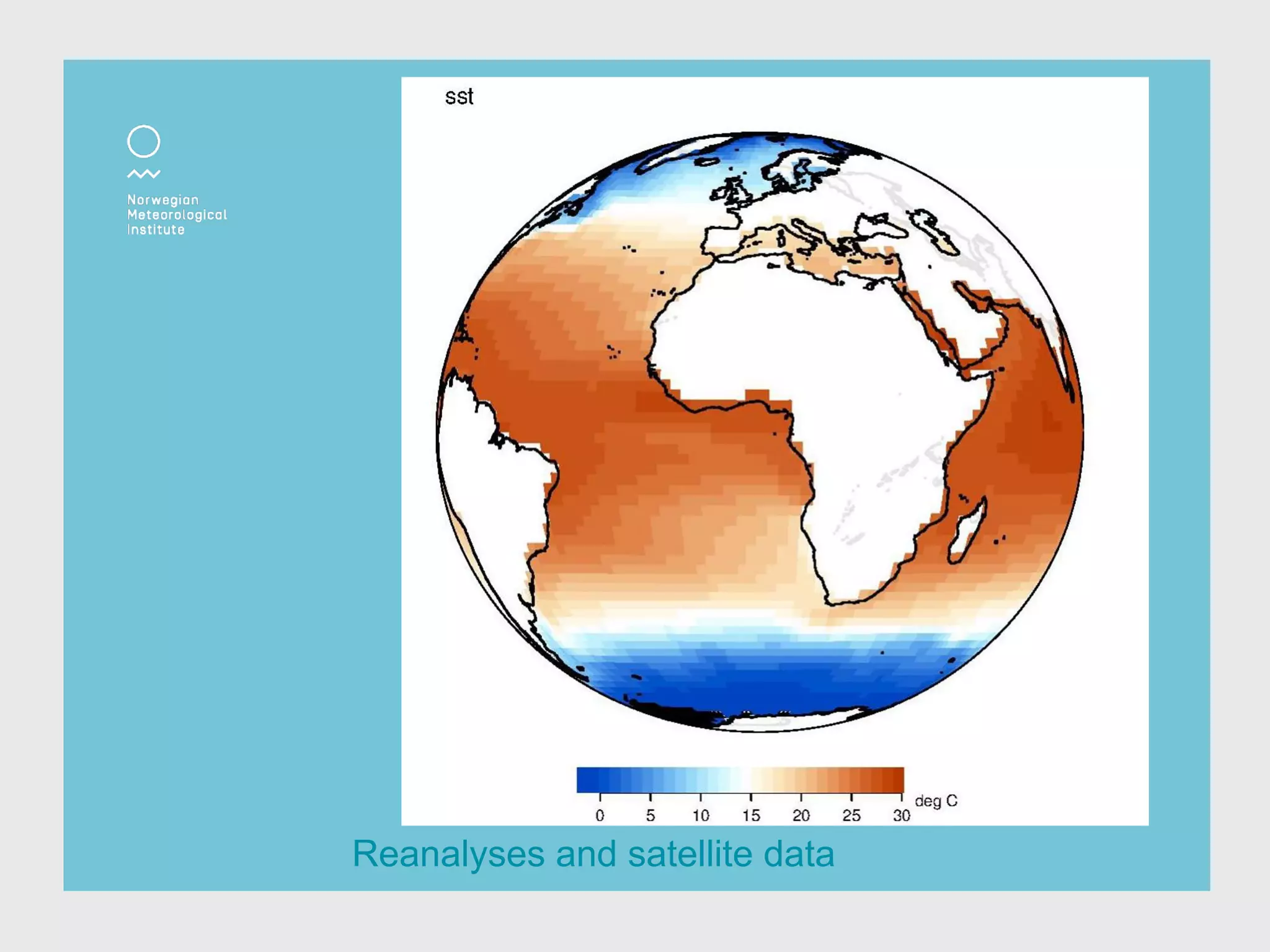
Reanalyses and satellite data
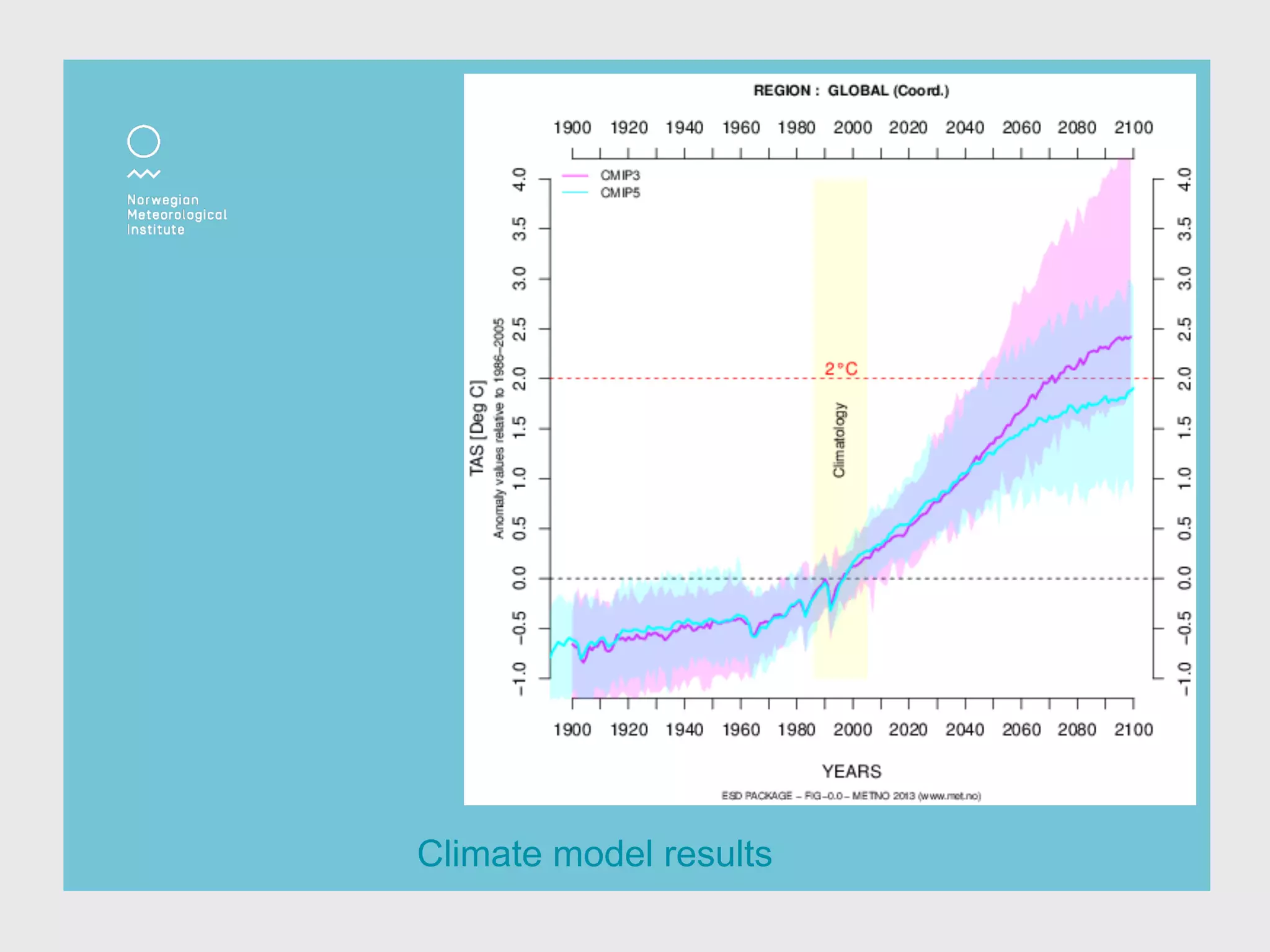
Climate model results
Norwegian Meteorological Institute
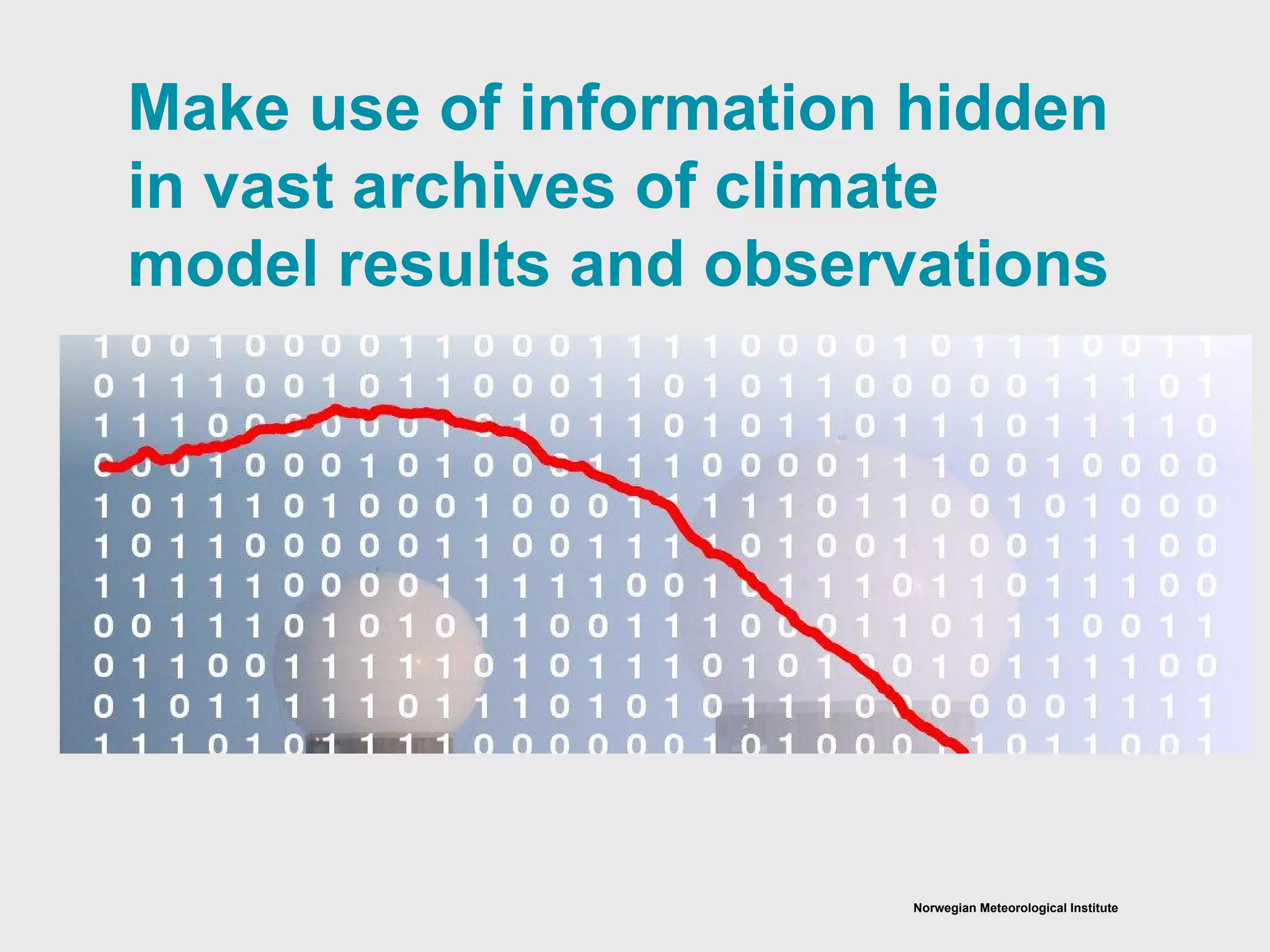
Make use of information hidden
in vast archives of climate
model results and observations
Example
Extracting information embedded in global climate models
and observations
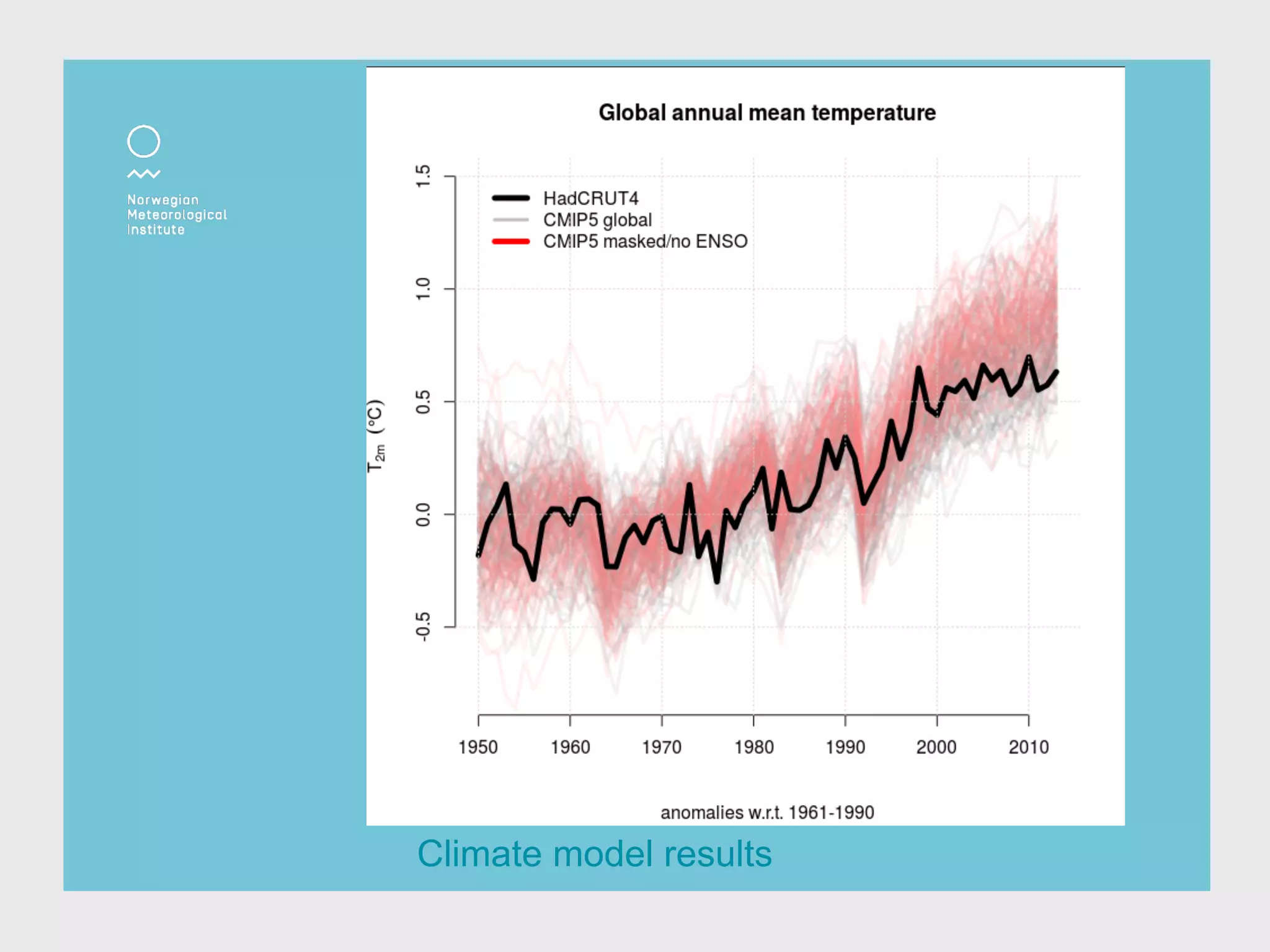
Climate model results
Norwegian Meteorological Institute
What is hidden behind the results?
Norwegian Meteorological Institute
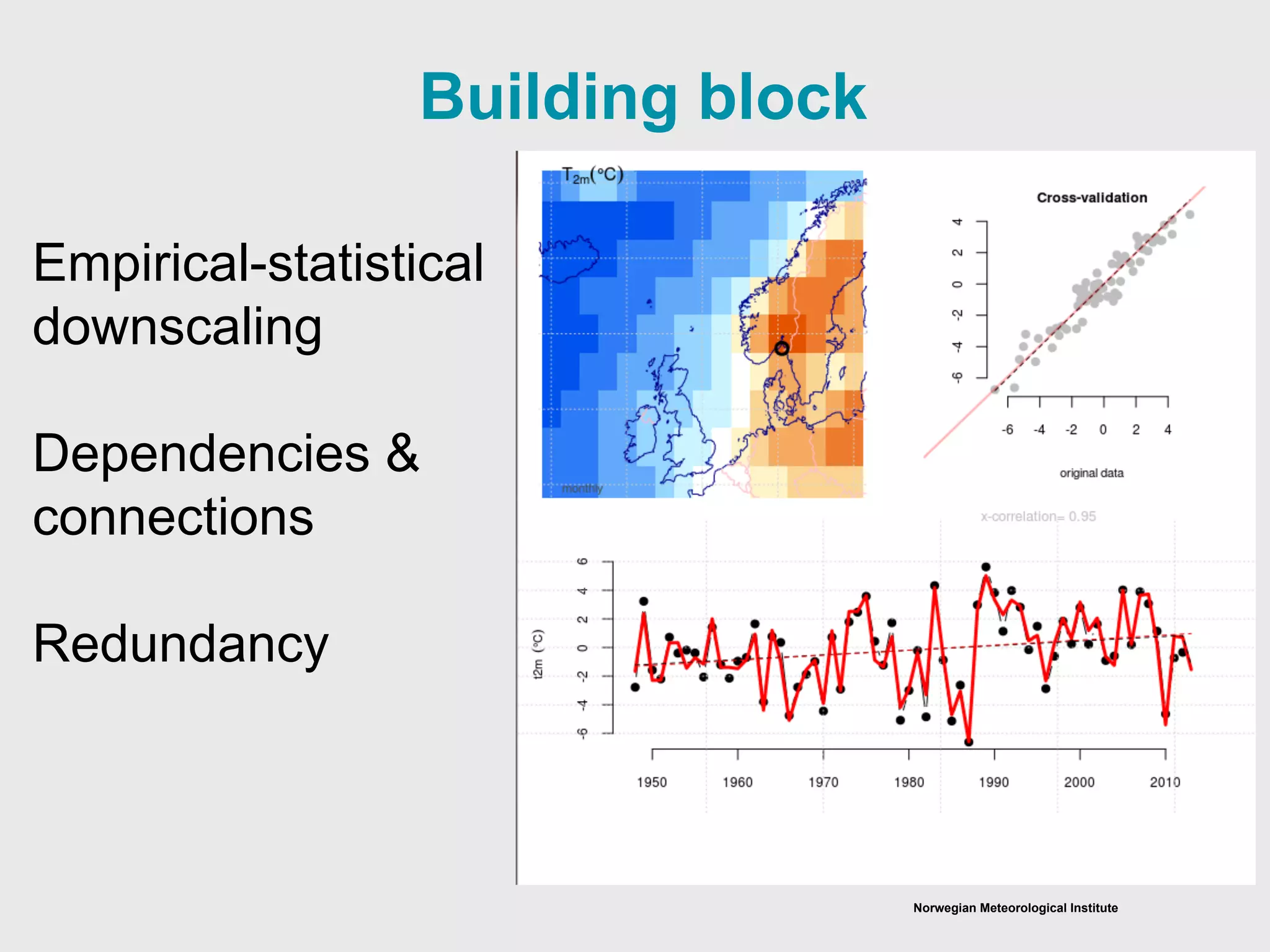
Building block
Empirical-statistical
downscaling
Dependencies &
connections
Redundancy
Norwegian Meteorological Institute
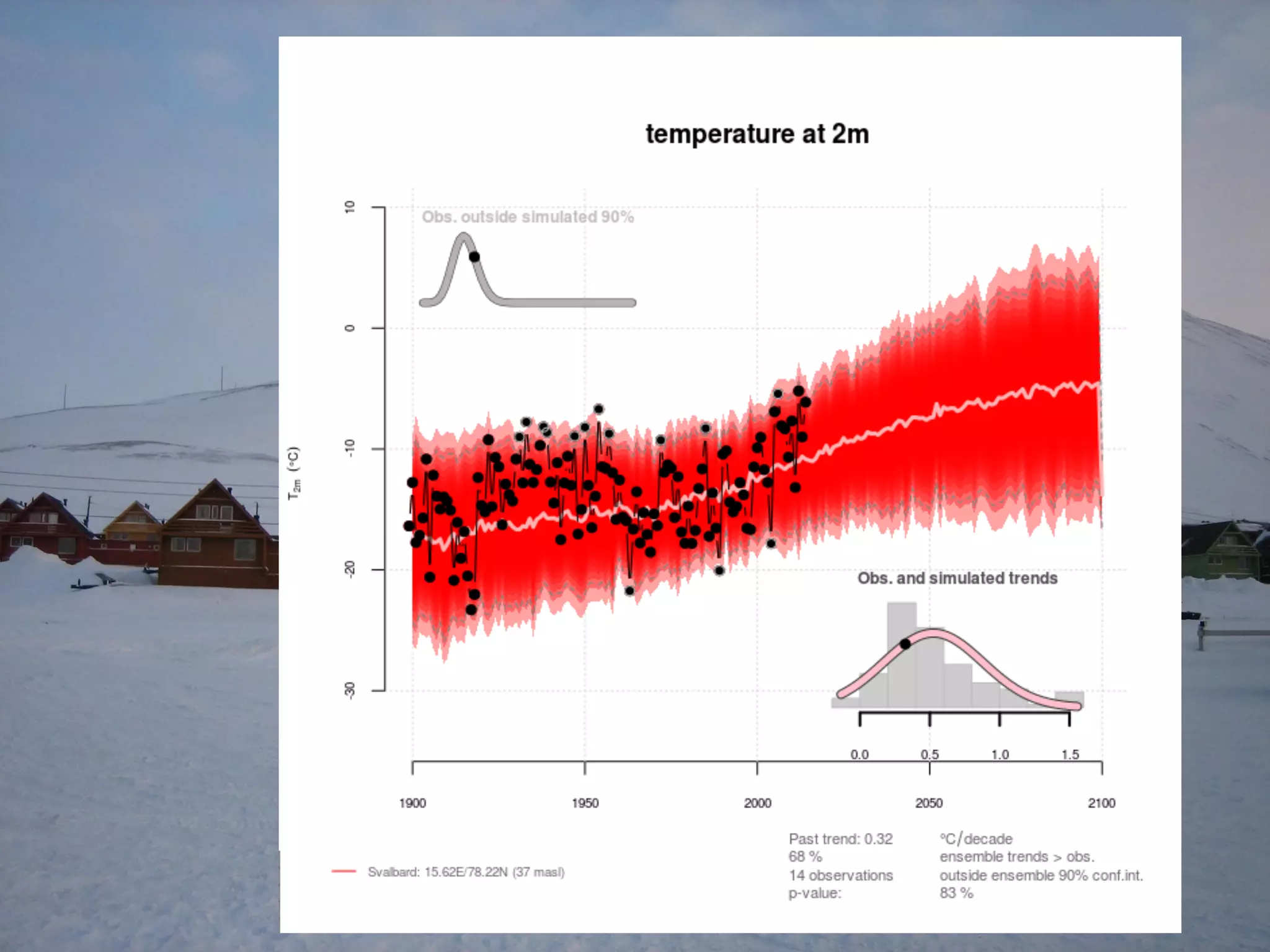
Extension of the results to regions
Norwegian Meteorological Institute
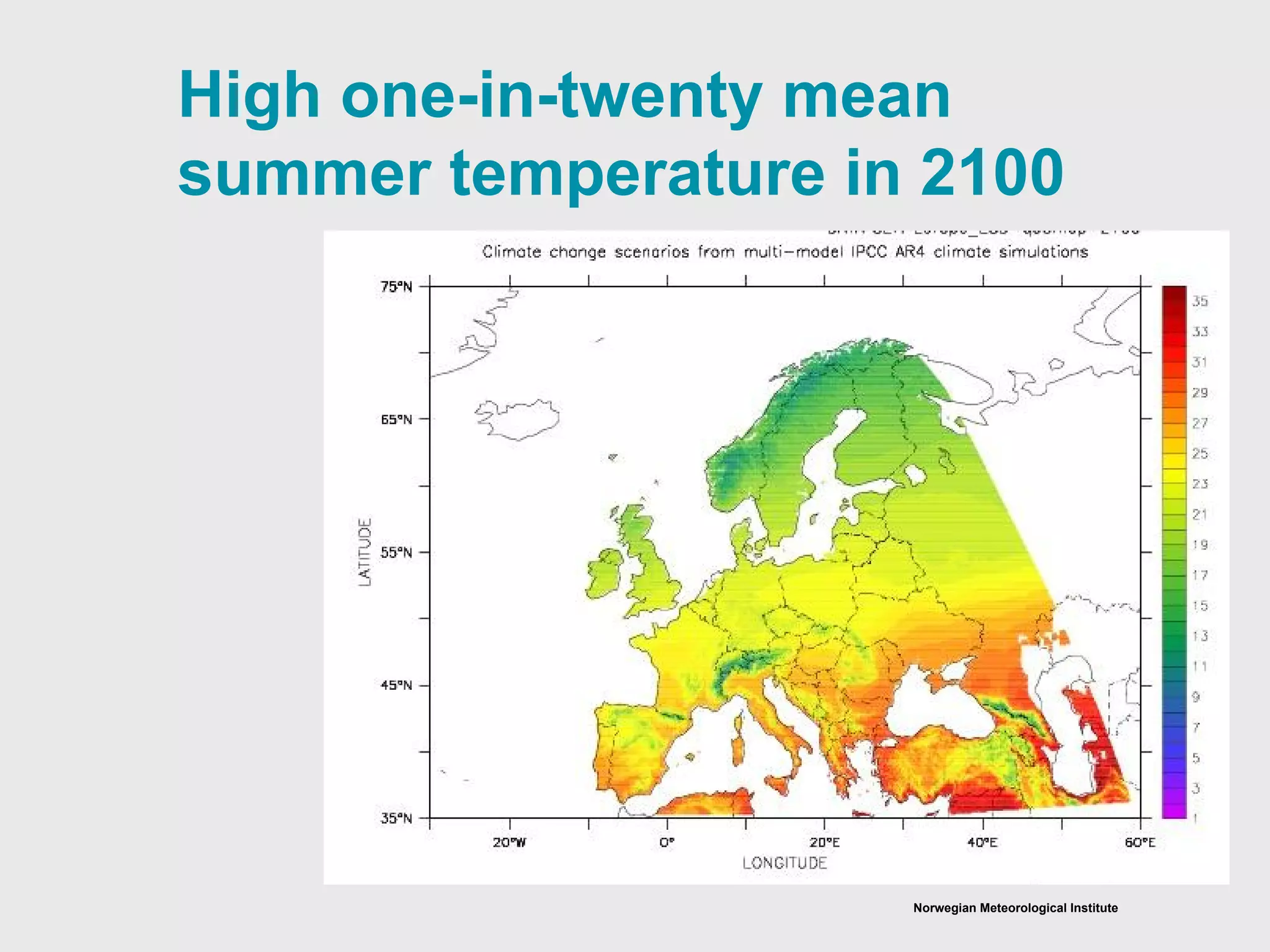
High one-in-twenty mean
summer temperature in 2100
Infographics
Exposing different aspects
Different sides to information
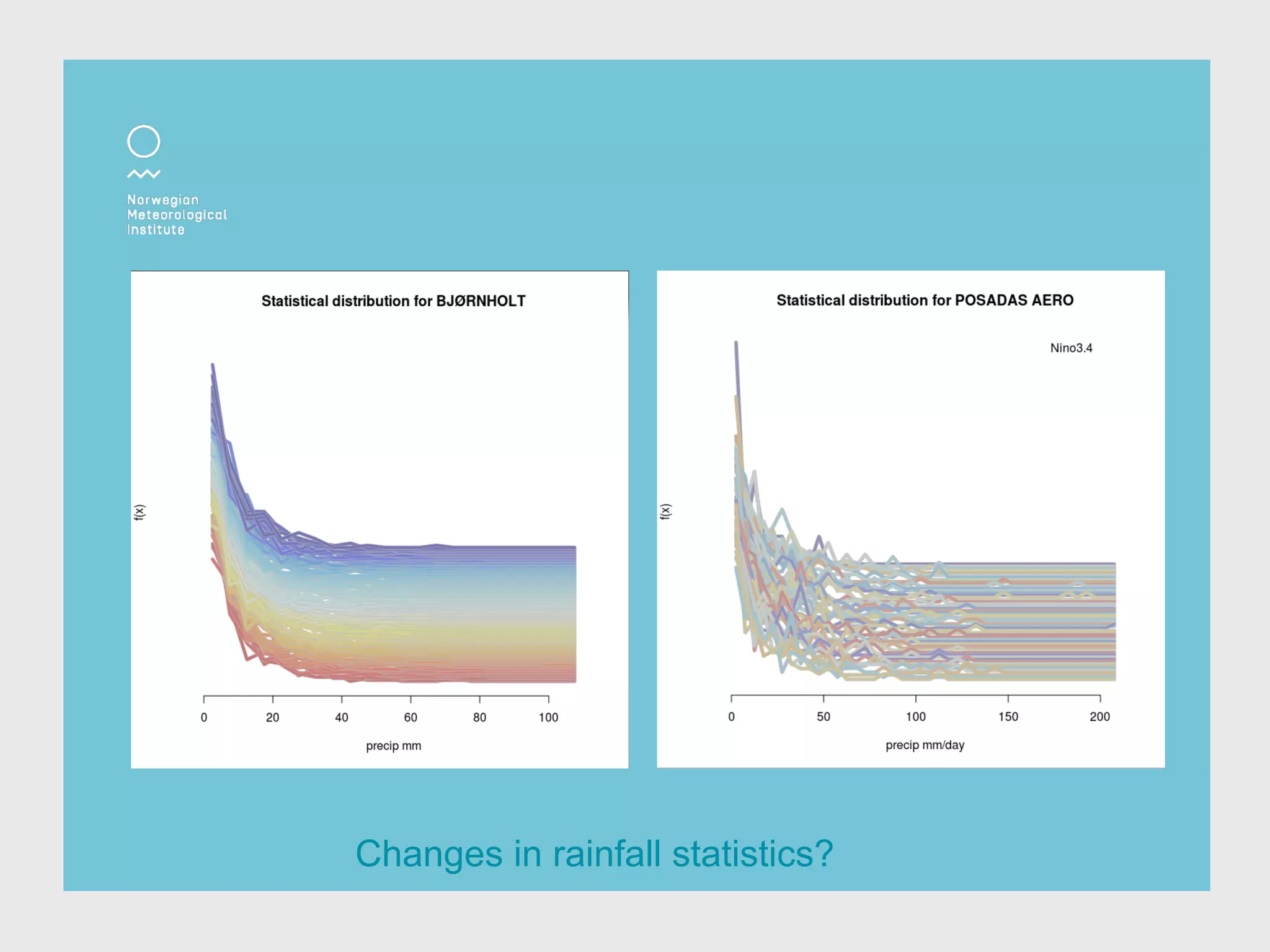
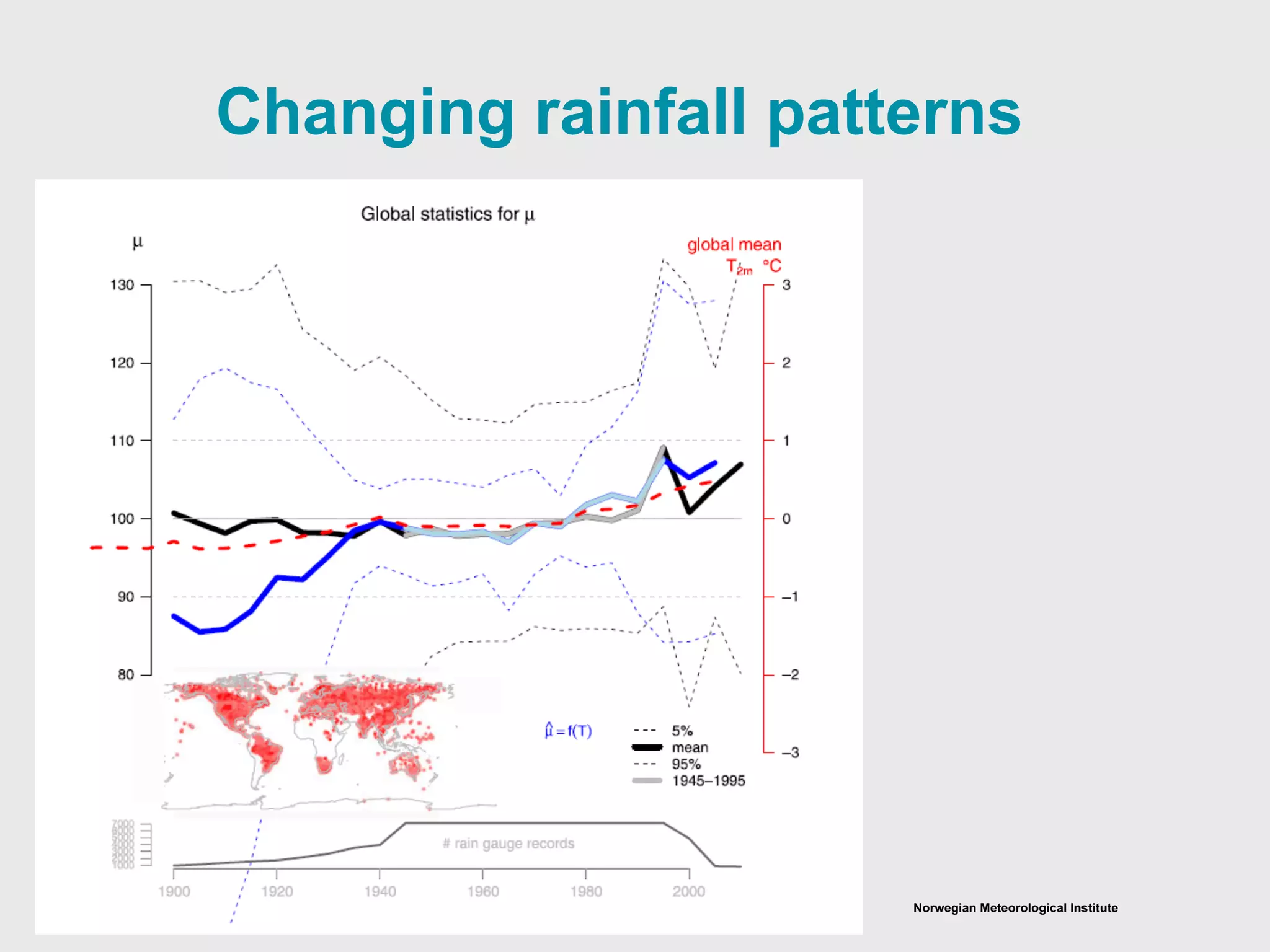
Changes in rainfall statistics?
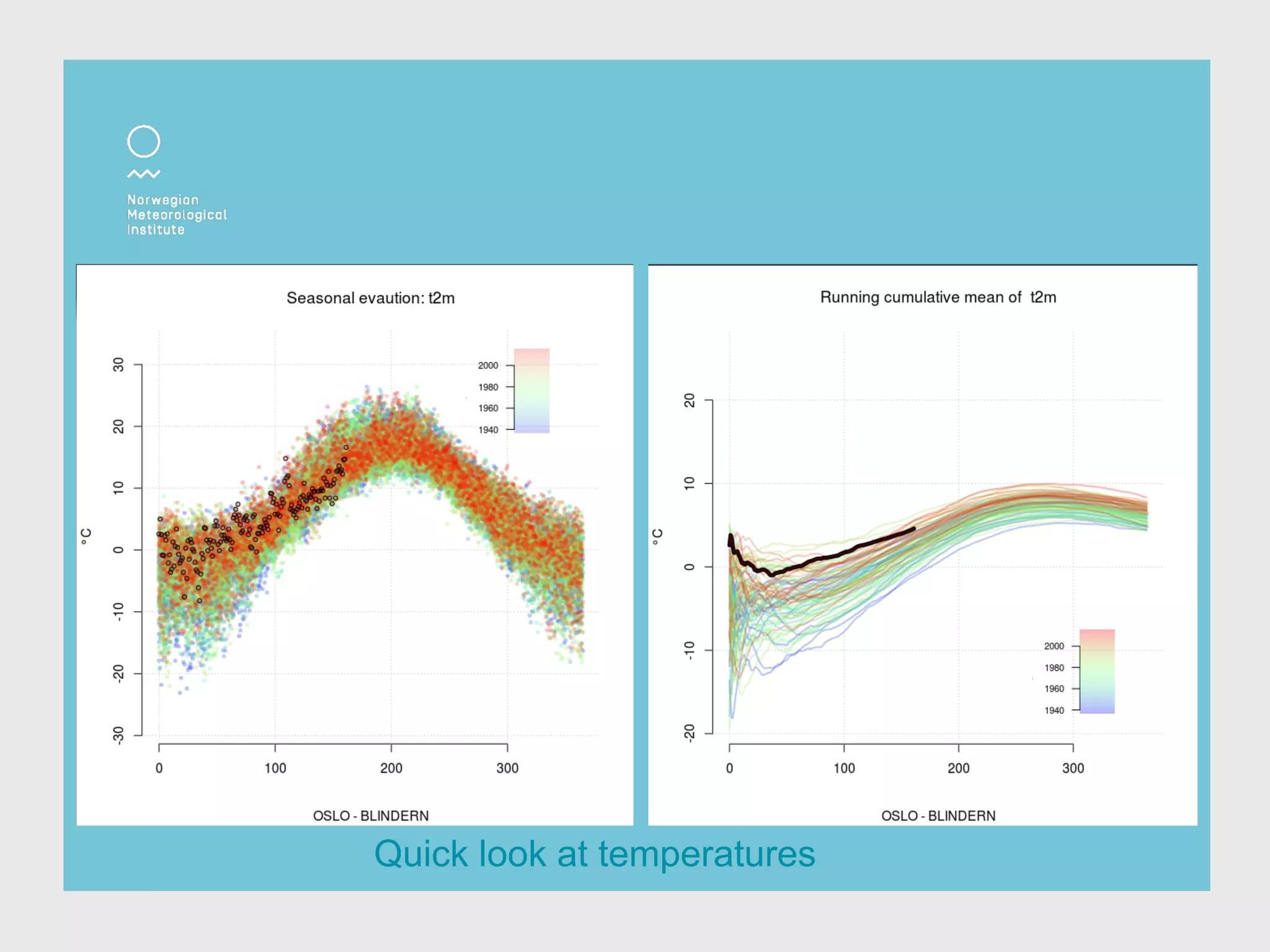
Quick look at temperatures
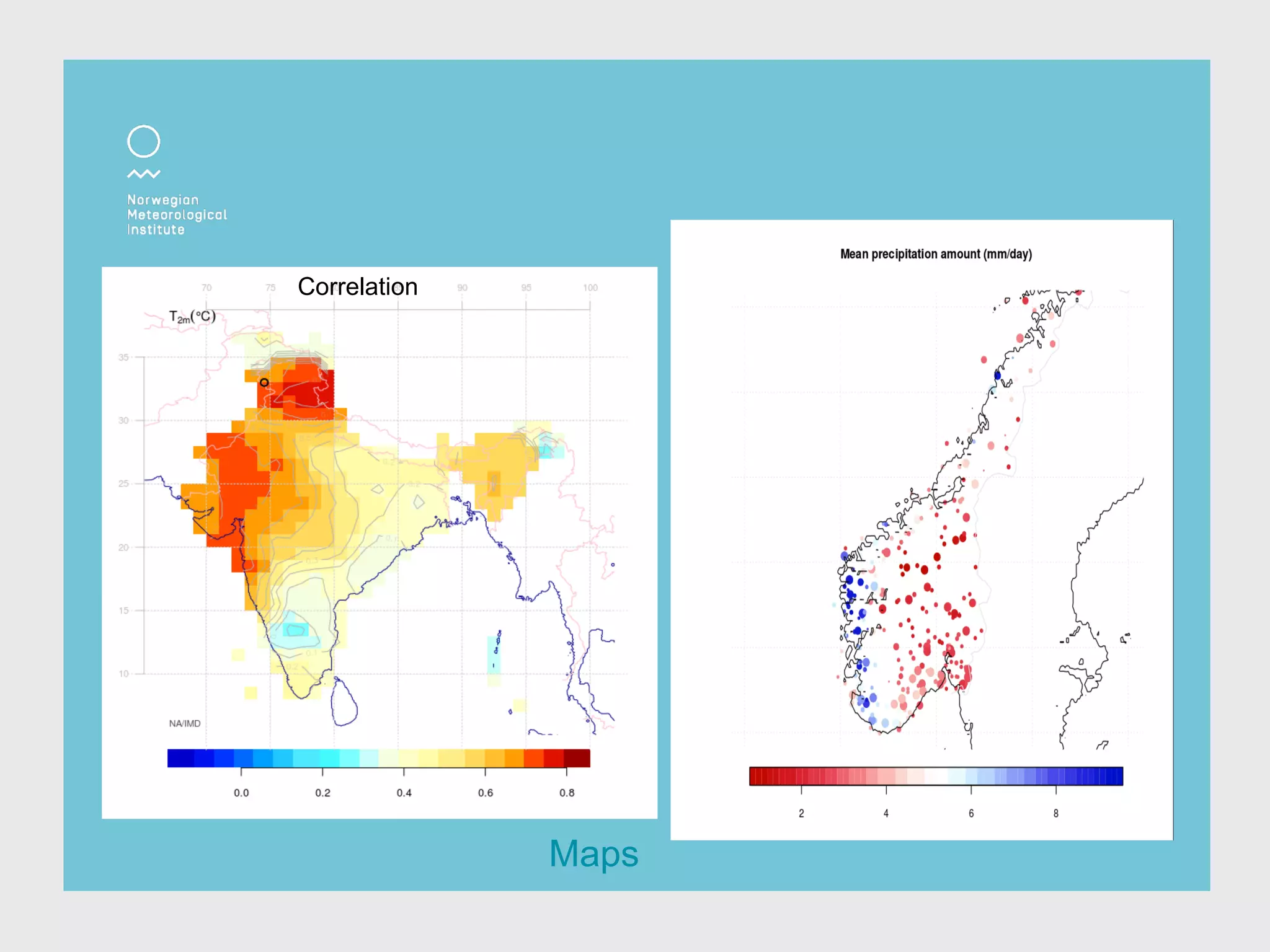
Maps
Correlation
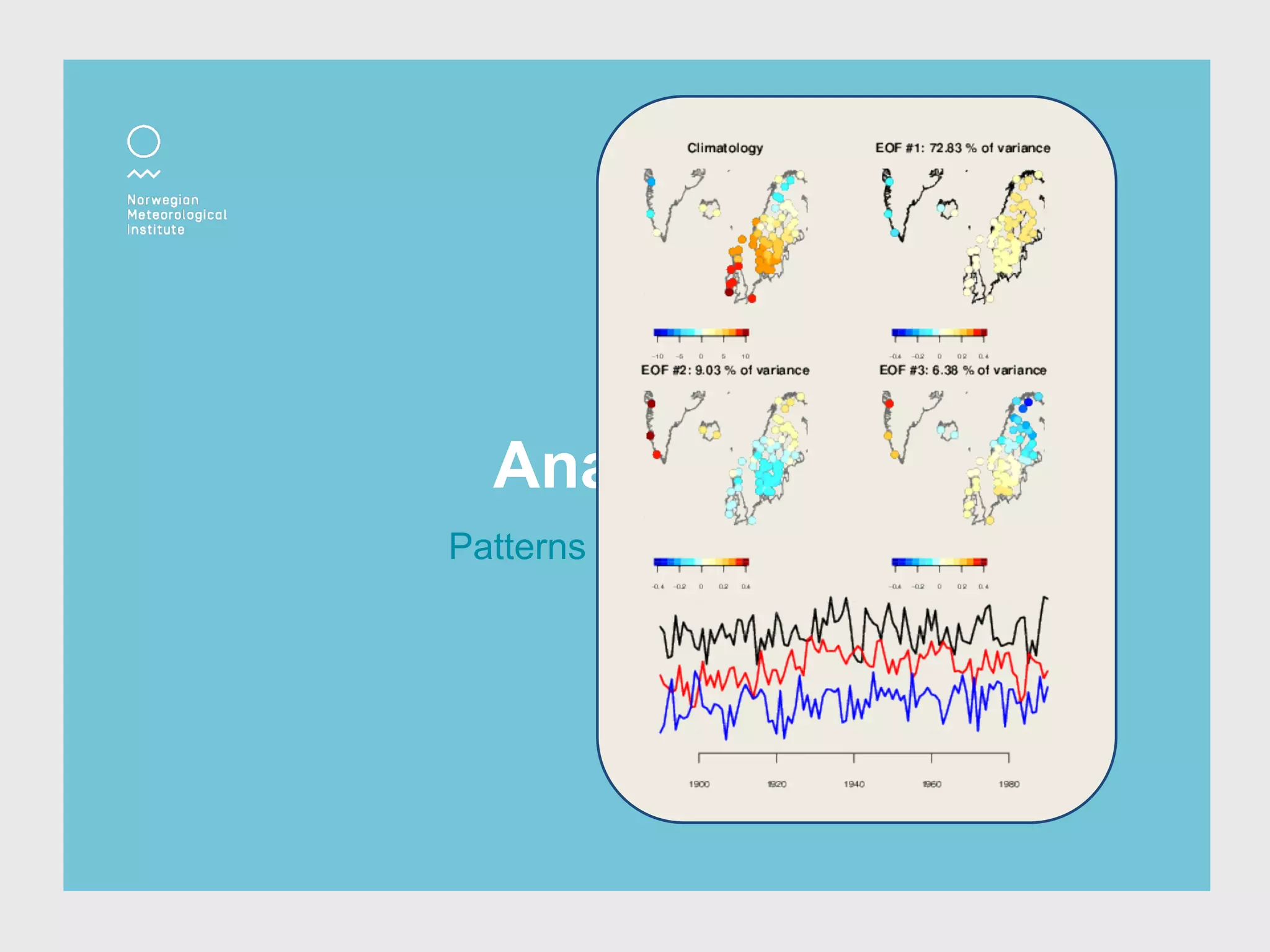
Analysis
Patterns of behaviour
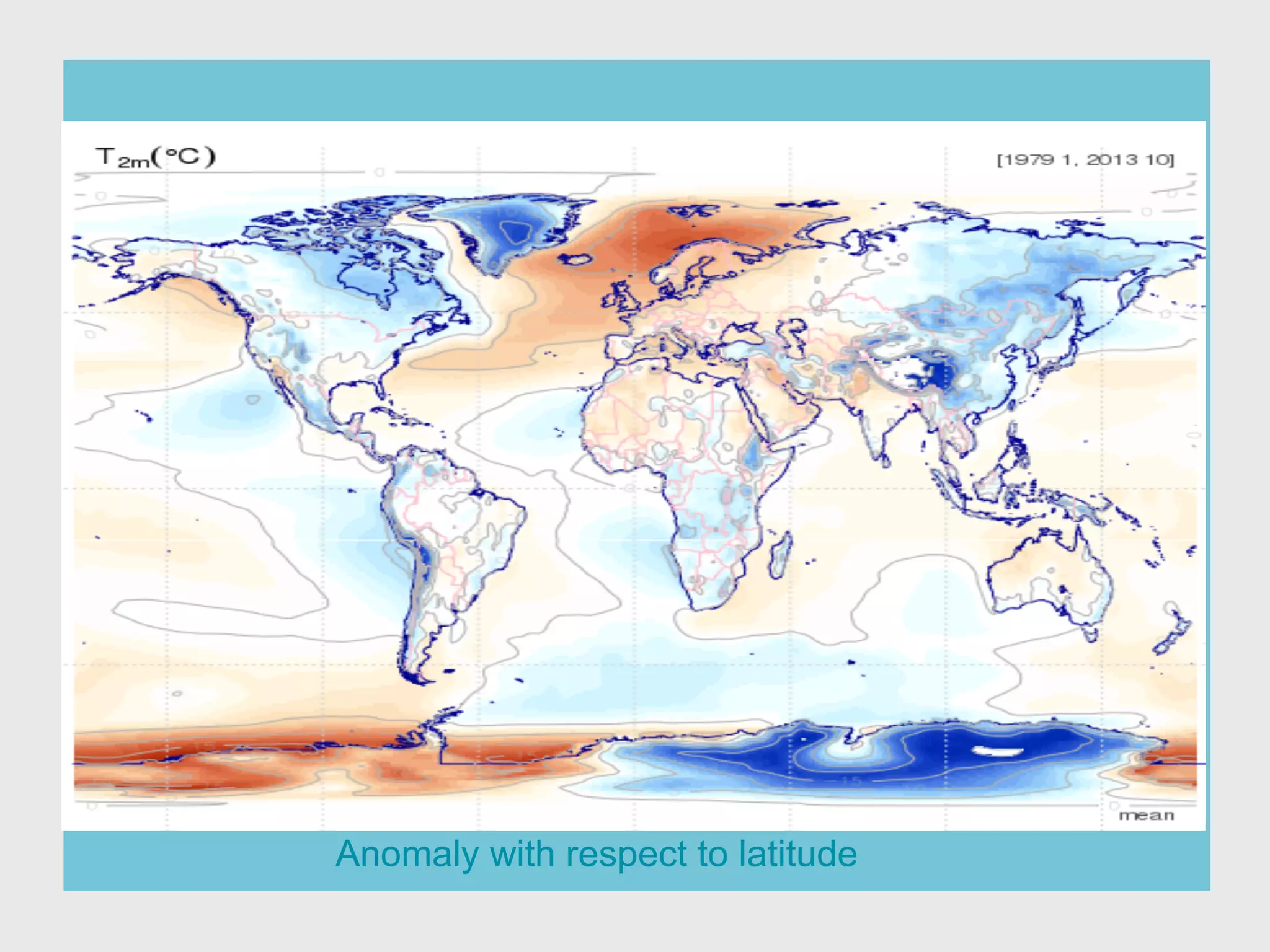
Anomaly with respect to latitude
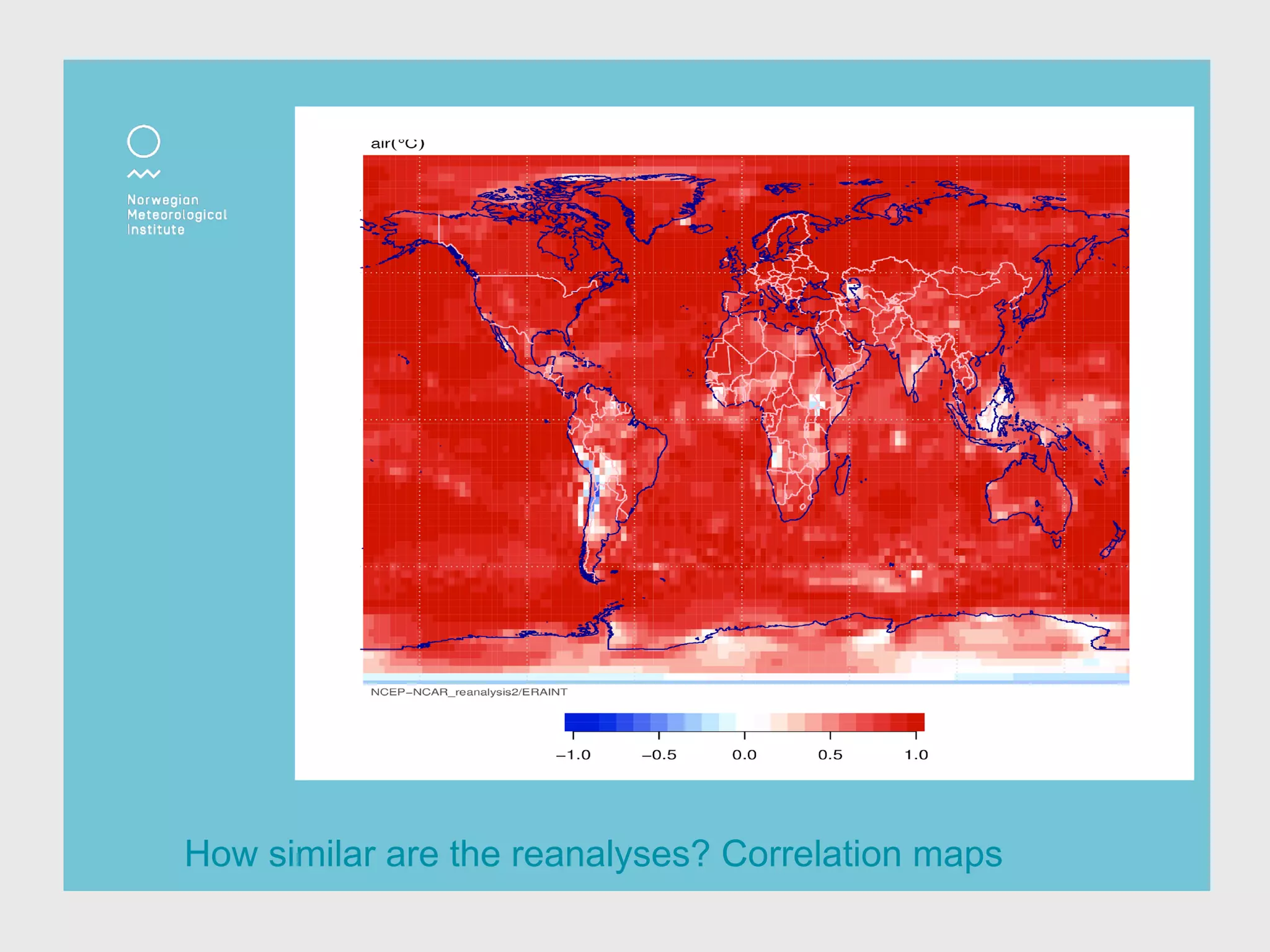
How similar are the reanalyses? Correlation maps
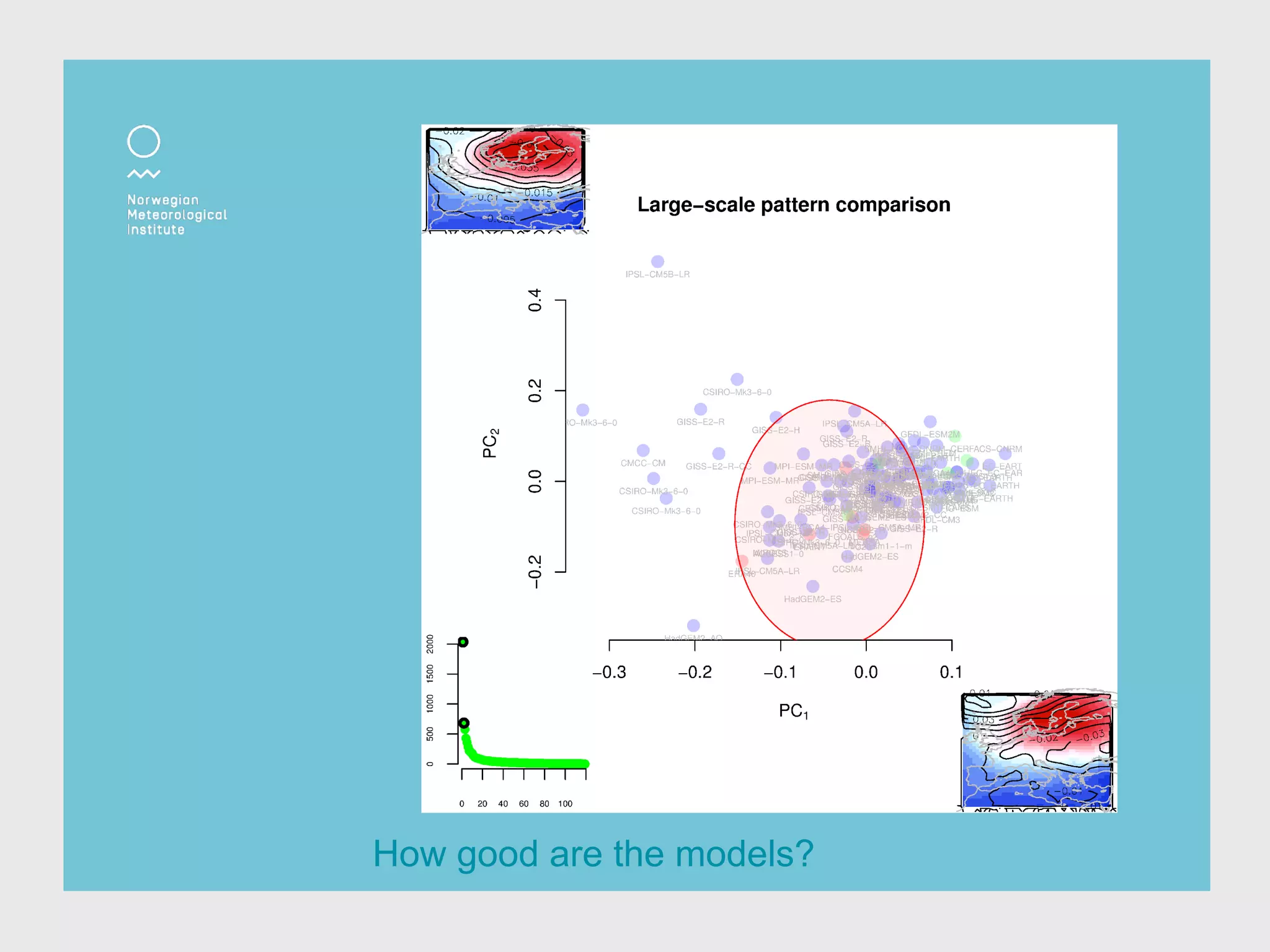
How good are the models?
Using mathematics to make
sense of the data
Is there a change in the precipitation?
Norwegian Meteorological Institute
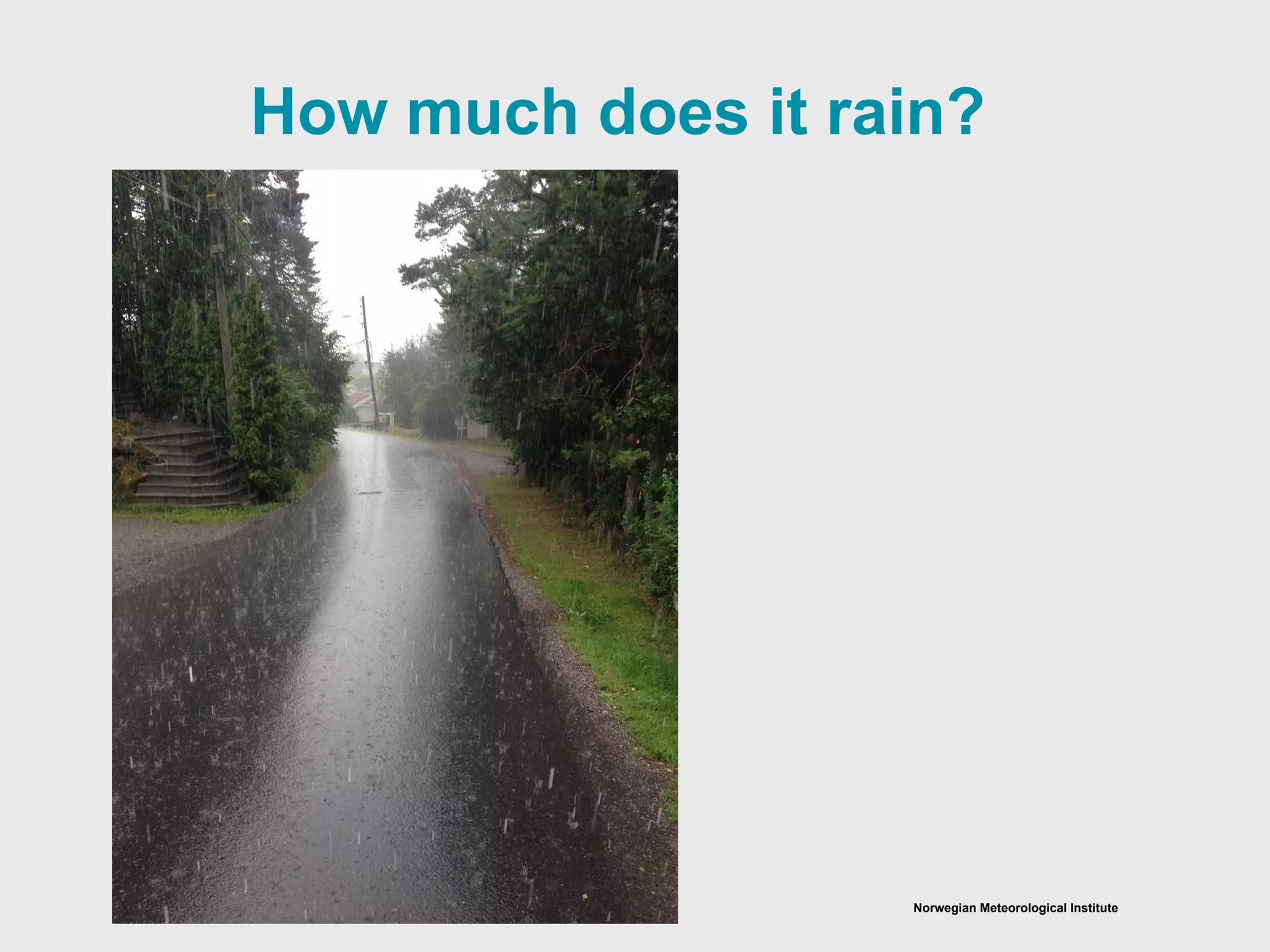
How much does it rain?
Norwegian Meteorological Institute
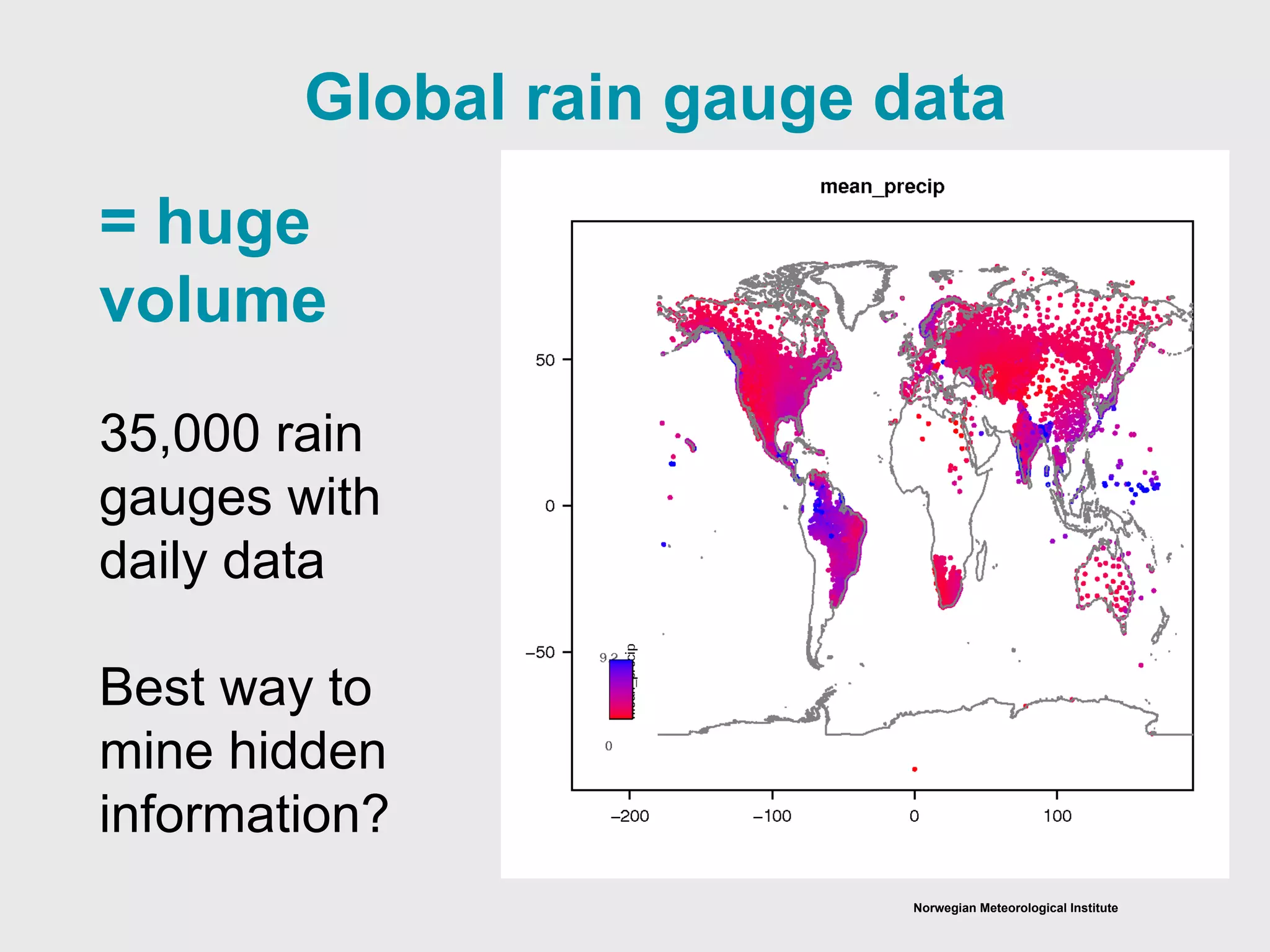
Global rain gauge data
= huge
volume
35,000 rain
gauges with
daily data
Best way to
mine hidden
information?
Norwegian Meteorological Institute
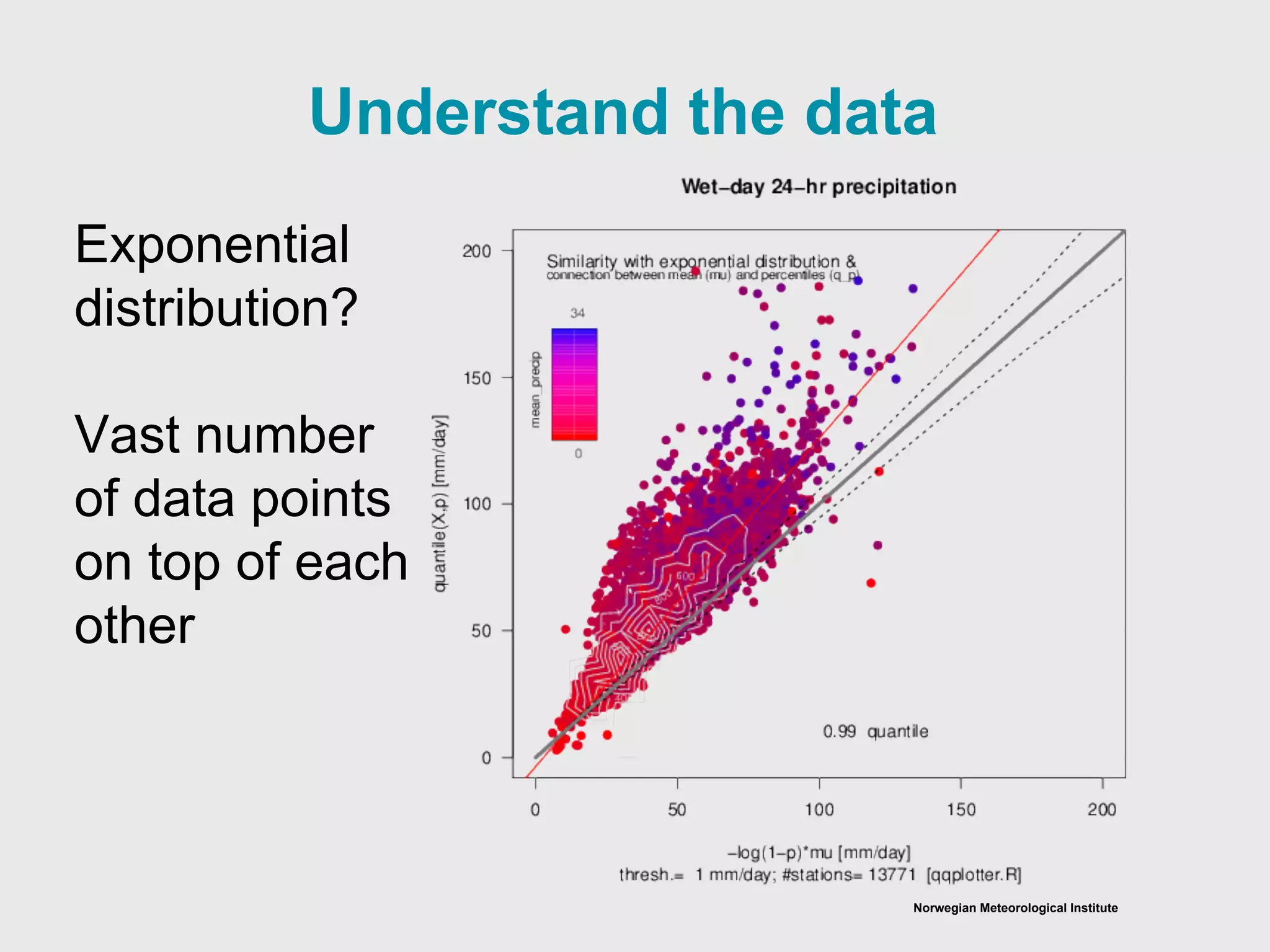
Understand the data
Exponential
distribution?
Vast number
of data points
on top of each
other
Norwegian Meteorological Institute
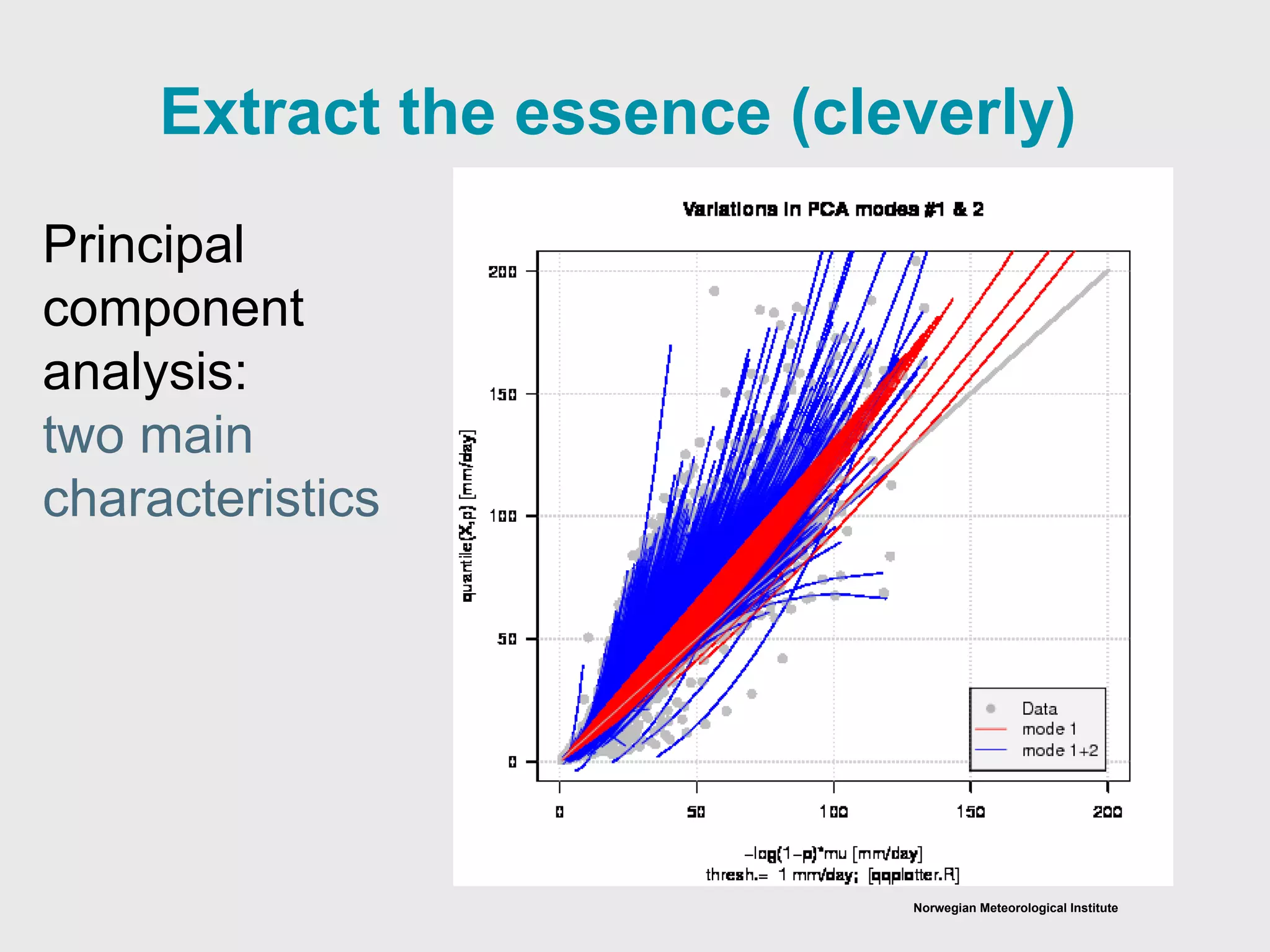
Extract the essence (cleverly)
Principal
component
analysis:
two main
characteristics
Norwegian Meteorological Institute
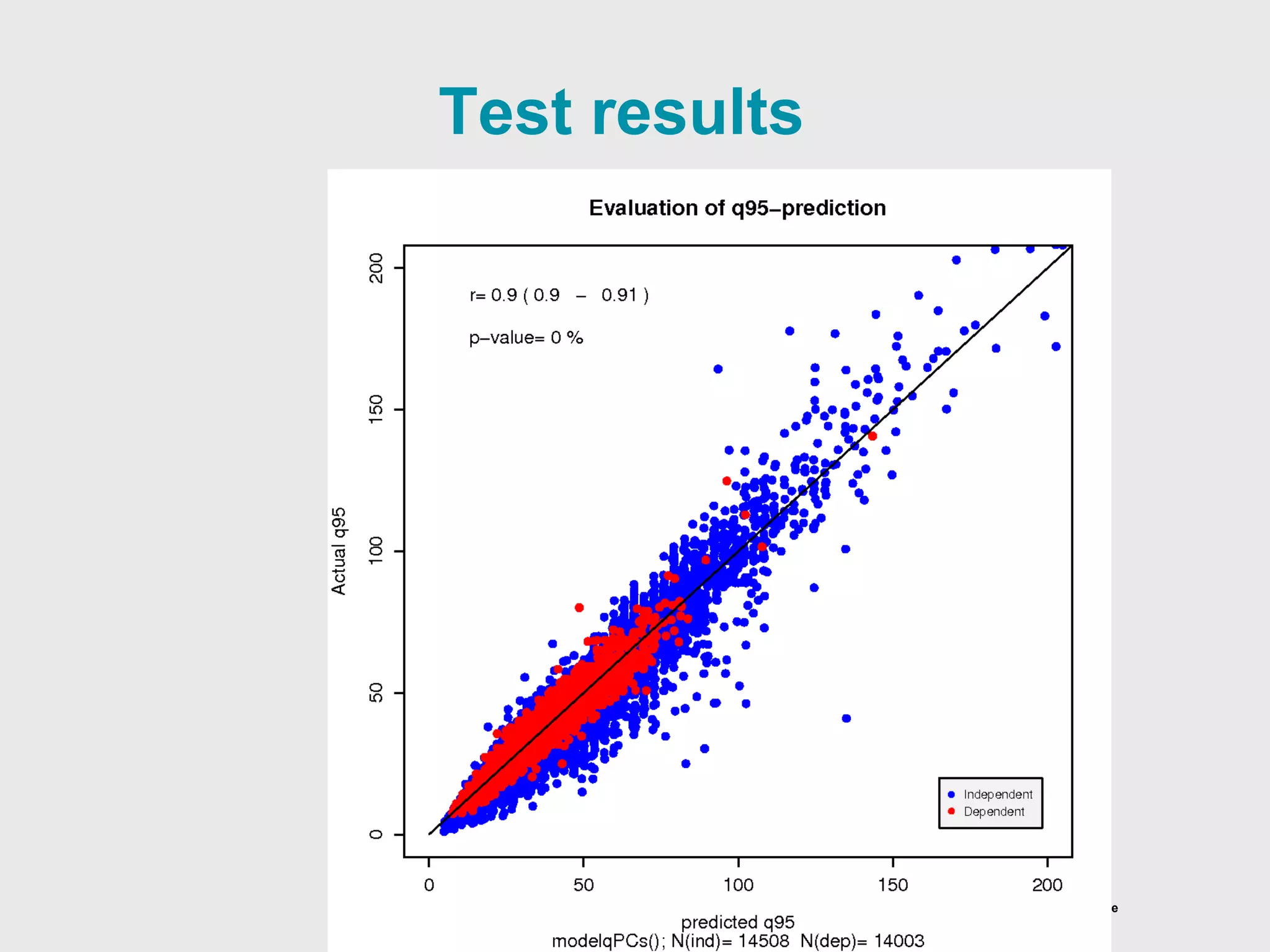
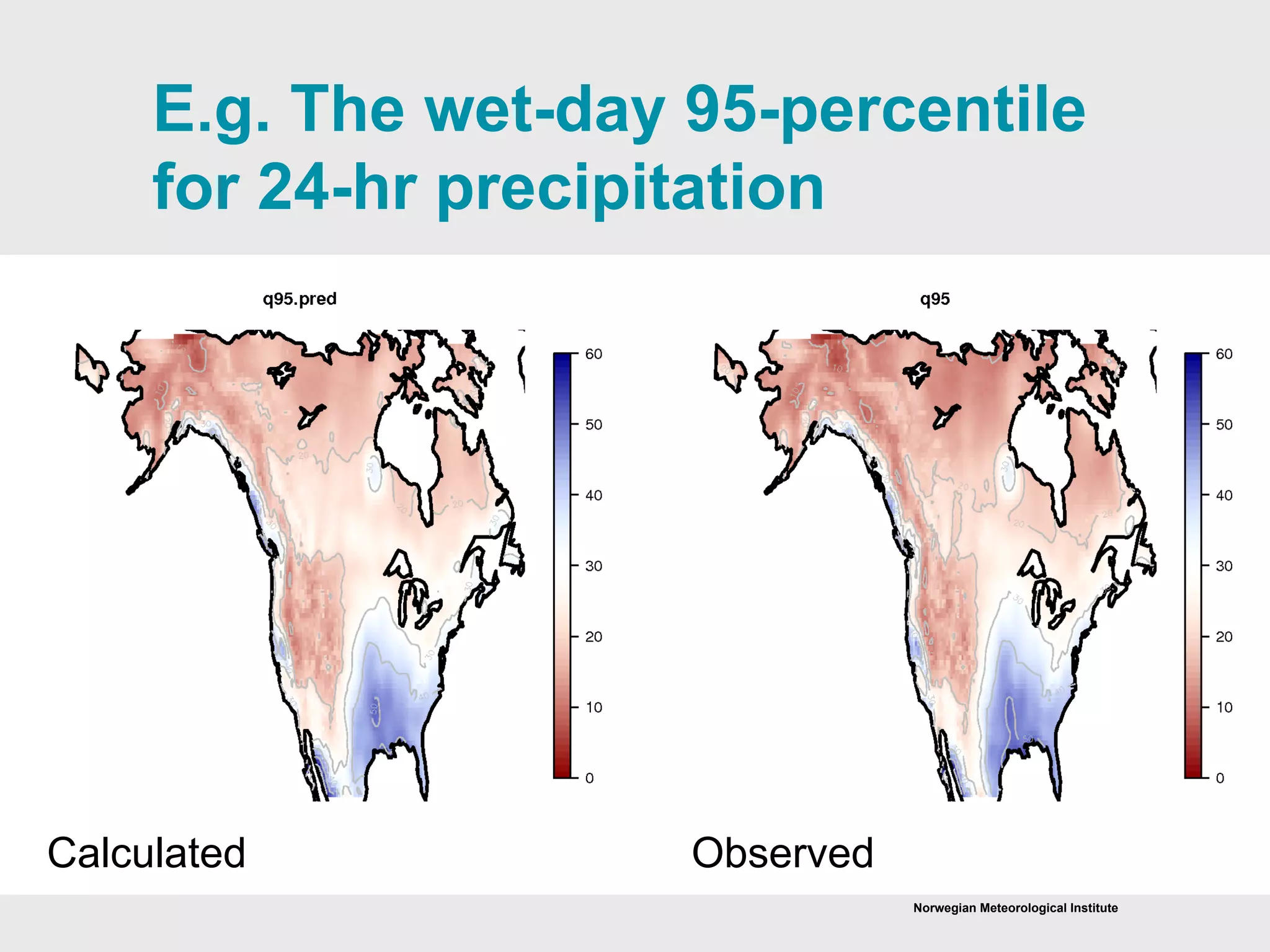
E.g. The wet-day 95-percentile
for 24-hr precipitation
Calculated Observed
Norwegian Meteorological Institute
Test results
Norwegian Meteorological Institute
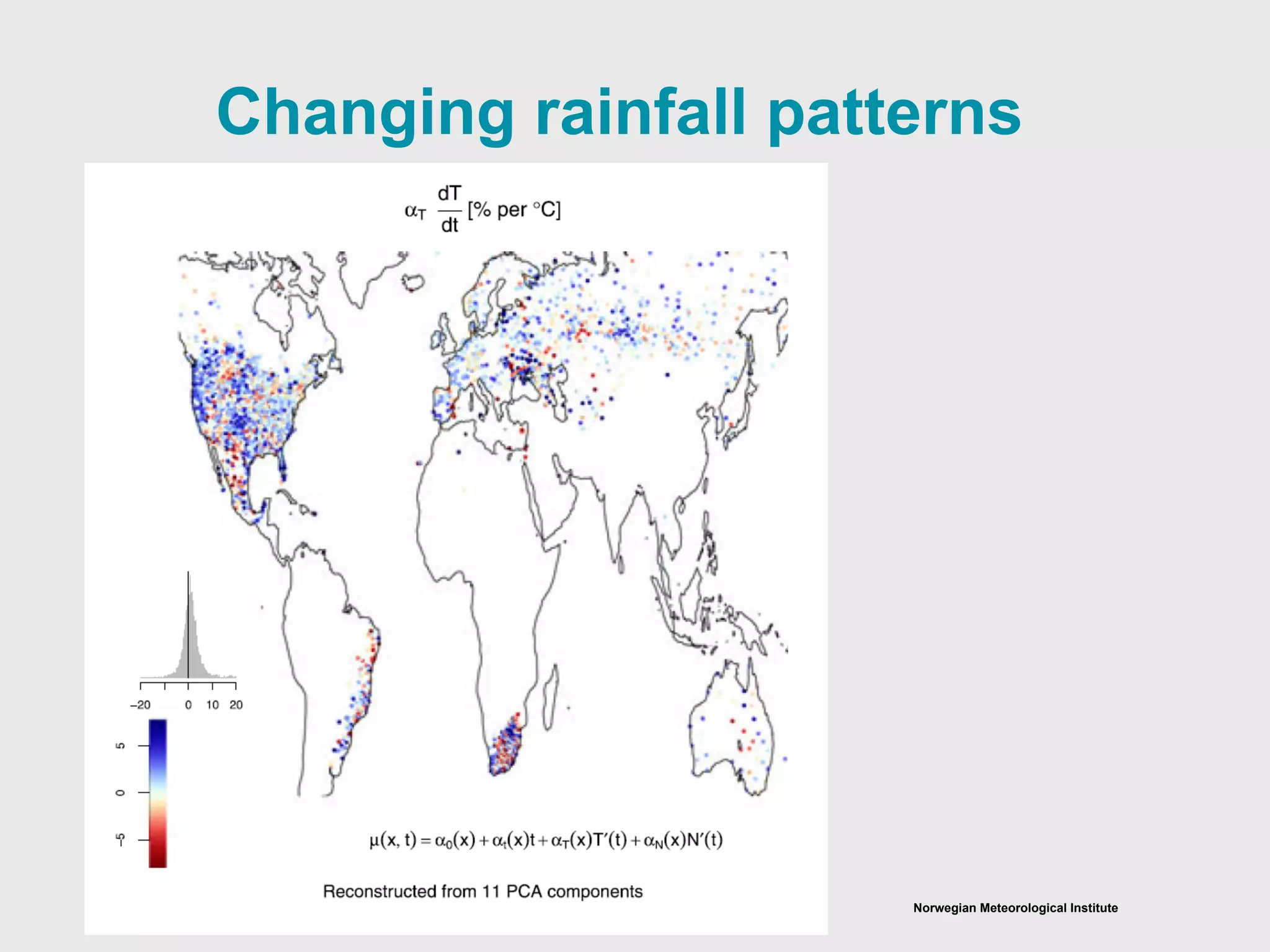
Changing rainfall patterns
Norwegian Meteorological Institute
Changing rainfall patterns
Norwegian Meteorological Institute
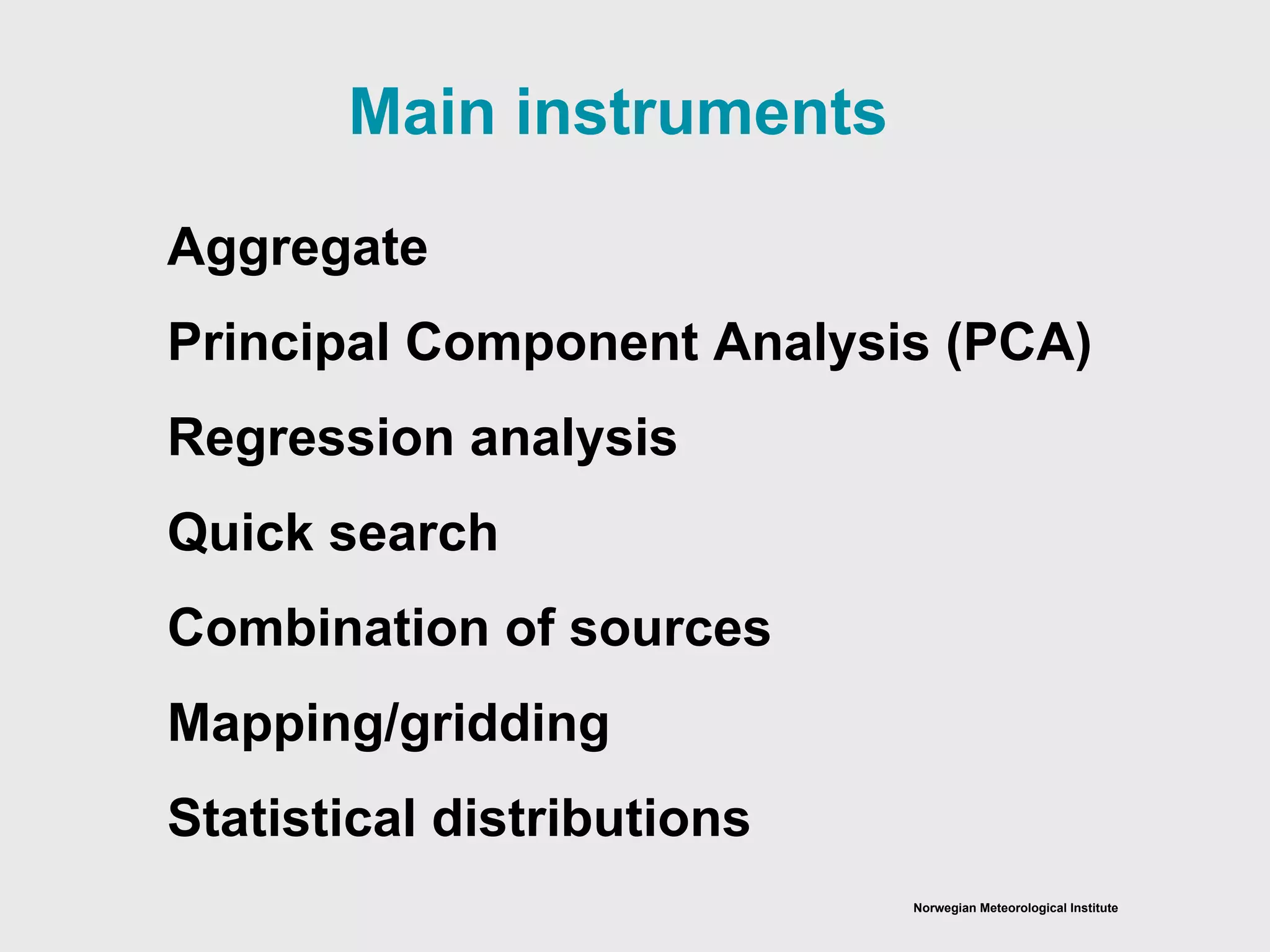
Aggregate
Principal Component Analysis (PCA)
Regression analysis
Quick search
Combination of sources
Mapping/gridding
Statistical distributions
Main instruments
Norwegian Meteorological Institute
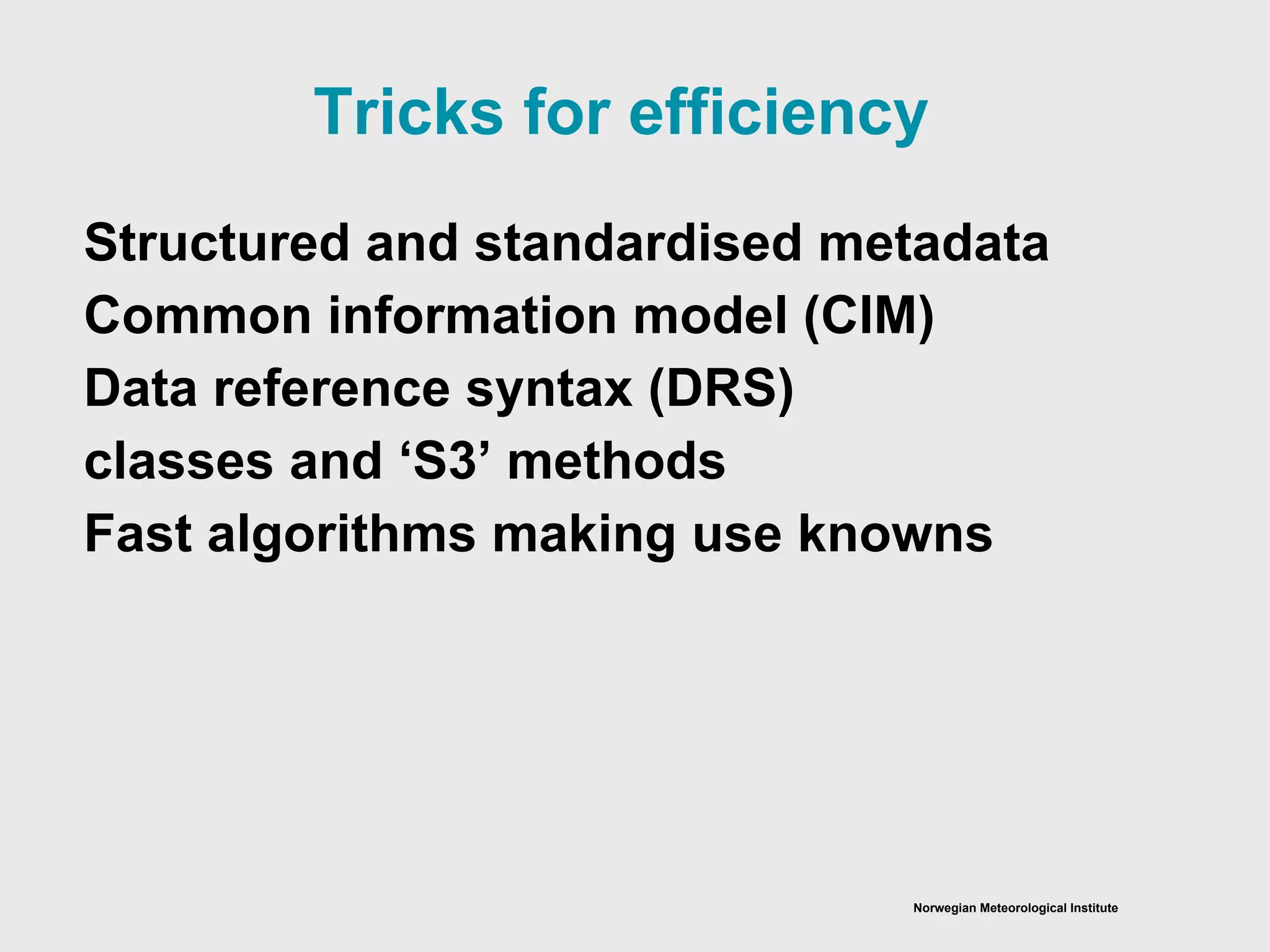
Tricks for efficiency
Structured and standardised metadata
Common information model (CIM)
Data reference syntax (DRS)
classes and ‘S3’ methods
Fast algorithms making use knowns
Norwegian Meteorological Institute
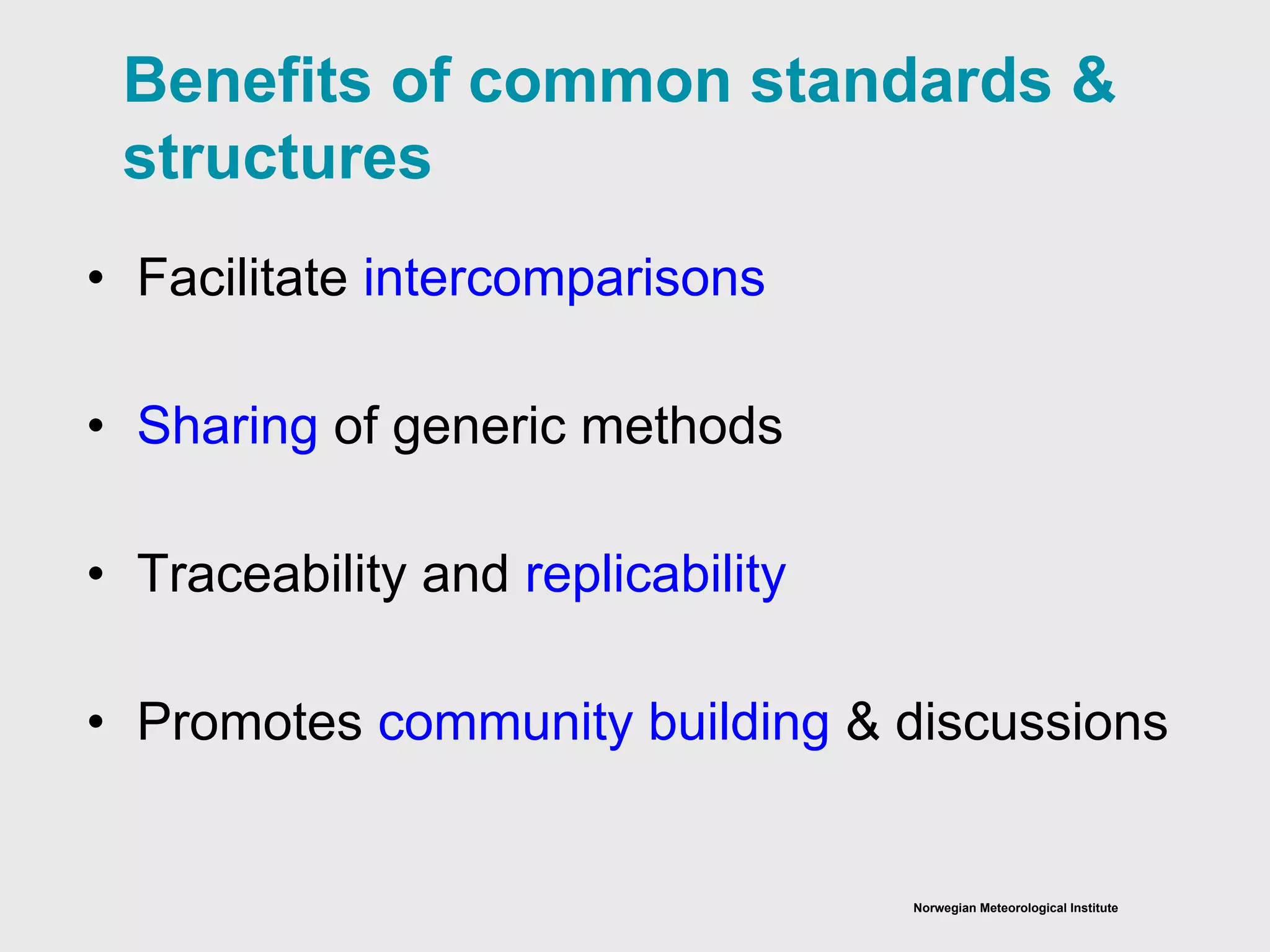
• Facilitate intercomparisons
• Sharing of generic methods
• Traceability and replicability
• Promotes community building & discussions
Benefits of common standards &
structures
Norwegian Meteorological Institute
Summary
●esd - “easy and simple data” or empirical-
statistical downscaling
●Statistics - information from the data
●Aim to address specific questions
Meteorologisk institutt
Thanks for your attention!

BDE ESD Tool - Big Data Met NORWAY Rasmus Benestad