BBA-1st Semester
Unit-1 Lecture 4
Faculty Name- Prof. Rashmi Mangla
 Scope of Business, business as a system,
of Business
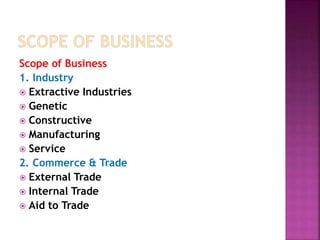
Scope of Business
1. Industry
 Extractive Industries
 Genetic
 Constructive
 Manufacturing
 Service
2. Commerce & Trade
 External Trade
 Internal Trade
 Aid to Trade
1. Industry
 The word “Industry” refers to the business
activities which are concerned with the
extraction and production or manufacturing of
products.
 The product formed by an industry is either
used by the consumers or again by the industry.
If the product is used by the consumer it is
called consumers’ goods such as clothes.
 If the product is used again by the industry it is
called the producer’s goods or capital goods. In a
case when a product produced by the industry is
further processed into finished products for
other purposes they are called intermediate
goods. e.g. plastic.
Types of Industry:
 On the basis activity industry is further classified into
various types are as under:-
 Extractive Industries
 Extractive industries are those industries which
extract, raise or fabricate raw materials from above or
beneath surface of the earth. i.e. Mining, fisheries
forestry, agriculture.
 Genetic Industries
 Those industries which are engaged in reproducing and
multiplying certain species of animals and plants and
selling them in the market for profit are named as
genetic industries. i.e. Cattle breeding farms, poultry
farms, plant nurseries.
 Constructive Industries
 Constructive industries as the name signifies are
engaged in the construction of building, canals,
brides, dams, roads etc.
 Manufacturing Industries
 Manufacturing industries are those which are
concerned of converting raw material or semi
finished products into finished products. E.g. Shoes
Company, Textiles Mills.
 Service Industries
 Service industries are usually engaged in the
manufacturing of intangible goods which cannot be
seen or touched by naked eye. The service of
professionals such as doctors, lawyers is examples of
service industries.
2. Commerce
 The second element that comes in the scope
of business is Commerce. It is a very
important component of business and is
concerned with the buying and selling of
goods. It includes all the activities which are
connected to the transfer of goods from the
place of production to the ultimate
consumers. The whole ranges of commerce
activities are classified are as under:-
1. Trade
The process of buying and selling goods is called Trade. It is the process of
exchanging goods and services amongst the buyers and sellers and both of
them earn profits. Trade can be classified into two types; internal and
external.
 Internal . Trade: The process of buying and selling goods within a country
is called internal trade. The internal trade can be either wholesale trade
or retail trade.
 Wholesale Trade: In wholesale trade, the goods are purchased in bulk
from the producers and sell them to the retailers. These retailers then
sell these goods to the final consumers.
 Retail Trade: In the retail trade, the retailer sells goods and services to
the final consumers.
 External Trade: The process of buying and selling goods between the two
countries is called external trade. The external trade has two types;
import trade and export trade.
2. Aid to Trade
The activities which help in the purchase of goods and services are called
aids to trade. The aids which are compulsory for the development of the
trade are as follows:-
(i) Transport
The different ways of transport help in carrying goods from the places of
production to centers of utilization e.g. Railways, ships, airlines etc.
(ii) Insurance
 Insurance is very essential aid to trade. The risk of damage of goods due
to fire, flood, earthquake or other causes us covered by insurance.
(iii) Warehousing
 Warehousing is a kind of storeroom. Nowadays most of the goods are
produce in anticipation of demand. They are stored in safe places and are
released as and when demanded in the market. Warehousing thus helps in
overcoming the barrier of time and creates time utility.

 (iv) Banking
The commercial banks play a vital role in financing the
different trade activities. They are funding the traders for
stock holding and transportation of goods. They also
support the buyers and sellers of goods in receiving and
making payments, both at the national and worldwide
level. The credit facility in the form of cash credit,
overdrafts and loans is provided to the traders.
 (v) Advertisement
Selling of goods is the most difficult problem for the
producer. Advertisement regarding the product through
newspapers, magazines, radio and television has greatly
helped the consumers in choosing the goods of their taste.
So advertisements play a vital role in increasing sale of
goods.

 A business system is designed to connect all
of an organization’s intricate parts and
interrelated steps to work together for the
achievement of the business strategy.
 Creating effective business systems means
unifying the efforts of problem solving and
decision making in the organization.
 The business as system means making
policies and strategies to direct peoples
efforts in the same direction.
 The following are main objectives of creating
business systems in the organization-
 Improving Performance
 Meeting Customer’s Expectations .
 Consistent Results
 Employee Engagement
 Reduce Cost and Increase Profits

BBA, SEM 1, BO , Unit 1, lecture 4 PPT.pptx

  • 1.
    BBA-1st Semester Unit-1 Lecture4 Faculty Name- Prof. Rashmi Mangla
  • 2.
     Scope ofBusiness, business as a system,
  • 3.
  • 4.
    Scope of Business 1.Industry  Extractive Industries  Genetic  Constructive  Manufacturing  Service 2. Commerce & Trade  External Trade  Internal Trade  Aid to Trade
  • 5.
    1. Industry  Theword “Industry” refers to the business activities which are concerned with the extraction and production or manufacturing of products.  The product formed by an industry is either used by the consumers or again by the industry. If the product is used by the consumer it is called consumers’ goods such as clothes.  If the product is used again by the industry it is called the producer’s goods or capital goods. In a case when a product produced by the industry is further processed into finished products for other purposes they are called intermediate goods. e.g. plastic.
  • 6.
    Types of Industry: On the basis activity industry is further classified into various types are as under:-  Extractive Industries  Extractive industries are those industries which extract, raise or fabricate raw materials from above or beneath surface of the earth. i.e. Mining, fisheries forestry, agriculture.  Genetic Industries  Those industries which are engaged in reproducing and multiplying certain species of animals and plants and selling them in the market for profit are named as genetic industries. i.e. Cattle breeding farms, poultry farms, plant nurseries.
  • 7.
     Constructive Industries Constructive industries as the name signifies are engaged in the construction of building, canals, brides, dams, roads etc.  Manufacturing Industries  Manufacturing industries are those which are concerned of converting raw material or semi finished products into finished products. E.g. Shoes Company, Textiles Mills.  Service Industries  Service industries are usually engaged in the manufacturing of intangible goods which cannot be seen or touched by naked eye. The service of professionals such as doctors, lawyers is examples of service industries.
  • 8.
    2. Commerce  Thesecond element that comes in the scope of business is Commerce. It is a very important component of business and is concerned with the buying and selling of goods. It includes all the activities which are connected to the transfer of goods from the place of production to the ultimate consumers. The whole ranges of commerce activities are classified are as under:-
  • 9.
    1. Trade The processof buying and selling goods is called Trade. It is the process of exchanging goods and services amongst the buyers and sellers and both of them earn profits. Trade can be classified into two types; internal and external.  Internal . Trade: The process of buying and selling goods within a country is called internal trade. The internal trade can be either wholesale trade or retail trade.  Wholesale Trade: In wholesale trade, the goods are purchased in bulk from the producers and sell them to the retailers. These retailers then sell these goods to the final consumers.  Retail Trade: In the retail trade, the retailer sells goods and services to the final consumers.  External Trade: The process of buying and selling goods between the two countries is called external trade. The external trade has two types; import trade and export trade.
  • 10.
    2. Aid toTrade The activities which help in the purchase of goods and services are called aids to trade. The aids which are compulsory for the development of the trade are as follows:- (i) Transport The different ways of transport help in carrying goods from the places of production to centers of utilization e.g. Railways, ships, airlines etc. (ii) Insurance  Insurance is very essential aid to trade. The risk of damage of goods due to fire, flood, earthquake or other causes us covered by insurance. (iii) Warehousing  Warehousing is a kind of storeroom. Nowadays most of the goods are produce in anticipation of demand. They are stored in safe places and are released as and when demanded in the market. Warehousing thus helps in overcoming the barrier of time and creates time utility. 
  • 11.
     (iv) Banking Thecommercial banks play a vital role in financing the different trade activities. They are funding the traders for stock holding and transportation of goods. They also support the buyers and sellers of goods in receiving and making payments, both at the national and worldwide level. The credit facility in the form of cash credit, overdrafts and loans is provided to the traders.  (v) Advertisement Selling of goods is the most difficult problem for the producer. Advertisement regarding the product through newspapers, magazines, radio and television has greatly helped the consumers in choosing the goods of their taste. So advertisements play a vital role in increasing sale of goods. 
  • 12.
     A businesssystem is designed to connect all of an organization’s intricate parts and interrelated steps to work together for the achievement of the business strategy.  Creating effective business systems means unifying the efforts of problem solving and decision making in the organization.  The business as system means making policies and strategies to direct peoples efforts in the same direction.
  • 13.
     The followingare main objectives of creating business systems in the organization-  Improving Performance  Meeting Customer’s Expectations .  Consistent Results  Employee Engagement  Reduce Cost and Increase Profits