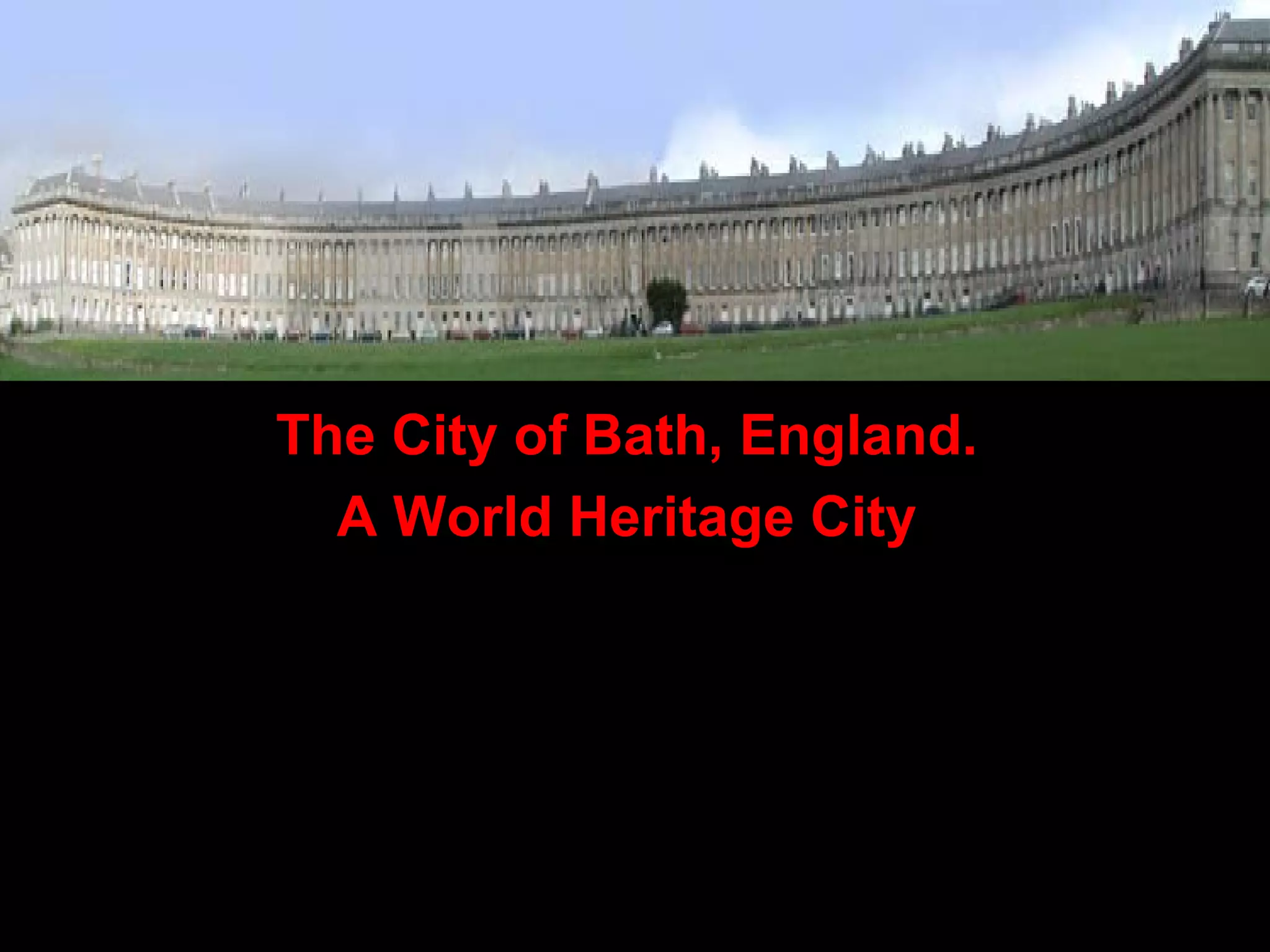
The City of Bath, England.
A World Heritage City
One of the greatest examples of Georgian architecture.
The Royal Crescent is a residential road of 30
houses laid out in a crecent (media luna).
It was built between 1767 and 1774
There are 114 columns in total
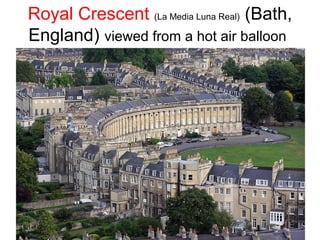
Royal Crescent (La Media Luna Real) (Bath,
England) viewed from a hot air balloon
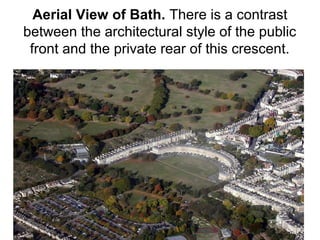
Aerial View of Bath. There is a contrast
between the architectural style of the public
front and the private rear of this crescent.
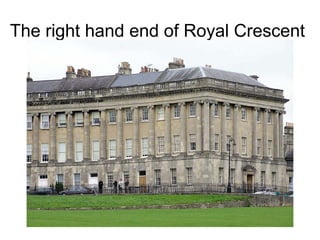
The right hand end of Royal Crescent
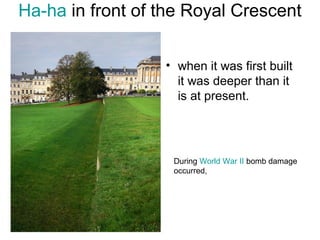
Ha-ha in front of the Royal Crescent
• when it was first built
it was deeper than it
is at present.
During World War II bomb damage
occurred,
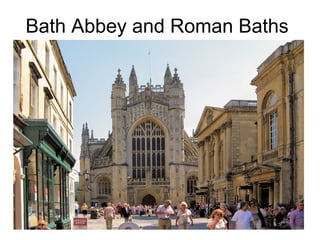
Bath Abbey and Roman Baths
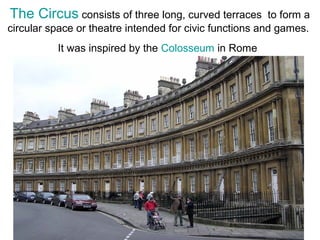
The Circus consists of three long, curved terraces to form a
circular space or theatre intended for civic functions and games.
It was inspired by the Colosseum in Rome
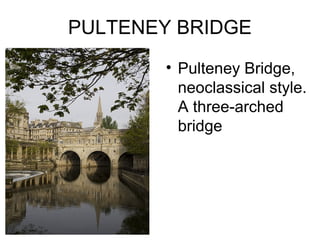
PULTENEY BRIDGE
• Pulteney Bridge,
neoclassical style.
A three-arched
bridge
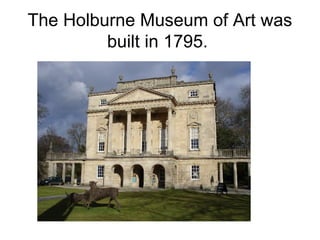
The Holburne Museum of Art was
built in 1795.
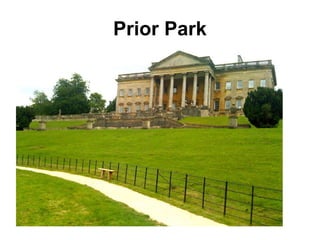
Prior Park
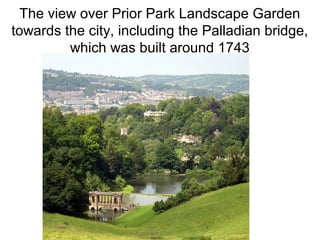
The view over Prior Park Landscape Garden
towards the city, including the Palladian bridge,
which was built around 1743
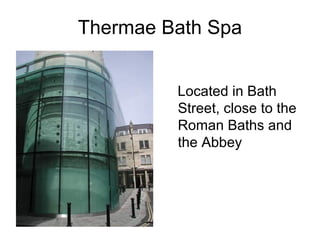
Thermae Bath Spa
Located in Bath
Street, close to the
Roman Baths and
the Abbey
• Bath is a city in the county of Somerset in
the south west of England. It is situated 13
miles (21 km) south-east of Bristol.
• The population of the city is 83,992.
• It was granted city status by Queen
Elizabeth I in 1590.
• The city became part of Avon when that
county was created in 1974.
• Since 1996, when Avon was abolished, Bath
has been the principal centre of Bath and
North East Somerset
• The houses have been home to various
notable people for over 200 years.

Bath

  • 1.
    The City ofBath, England. A World Heritage City One of the greatest examples of Georgian architecture. The Royal Crescent is a residential road of 30 houses laid out in a crecent (media luna). It was built between 1767 and 1774 There are 114 columns in total
  • 2.
    Royal Crescent (LaMedia Luna Real) (Bath, England) viewed from a hot air balloon
  • 3.
    Aerial View ofBath. There is a contrast between the architectural style of the public front and the private rear of this crescent.
  • 4.
    The right handend of Royal Crescent
  • 5.
    Ha-ha in frontof the Royal Crescent • when it was first built it was deeper than it is at present. During World War II bomb damage occurred,
  • 6.
    Bath Abbey andRoman Baths
  • 7.
    The Circus consistsof three long, curved terraces to form a circular space or theatre intended for civic functions and games. It was inspired by the Colosseum in Rome
  • 8.
    PULTENEY BRIDGE • PulteneyBridge, neoclassical style. A three-arched bridge
  • 9.
    The Holburne Museumof Art was built in 1795.
  • 10.
  • 11.
    The view overPrior Park Landscape Garden towards the city, including the Palladian bridge, which was built around 1743
  • 12.
    Thermae Bath Spa Locatedin Bath Street, close to the Roman Baths and the Abbey
  • 13.
    • Bath isa city in the county of Somerset in the south west of England. It is situated 13 miles (21 km) south-east of Bristol. • The population of the city is 83,992. • It was granted city status by Queen Elizabeth I in 1590. • The city became part of Avon when that county was created in 1974. • Since 1996, when Avon was abolished, Bath has been the principal centre of Bath and North East Somerset • The houses have been home to various notable people for over 200 years.