Download to read offline












![Statistical power
Power = The chance that you reject H0 when H0 is false
(i.e., you [correctly] conclude that there is a treatment
effect when there really is a treatment effect).
53](https://image.slidesharecdn.com/basicsofstatistics-221022130809-a1ea5508/85/Basics-of-Statistics-pptx-53-320.jpg)


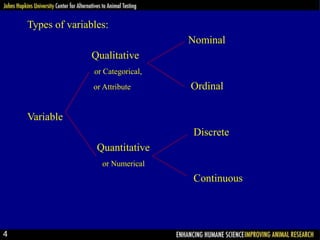
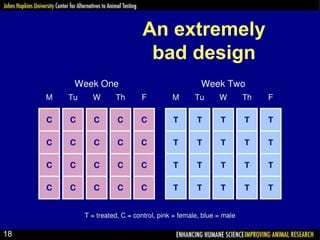
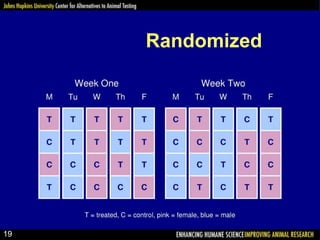
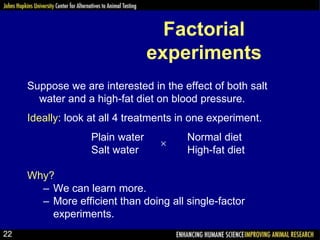
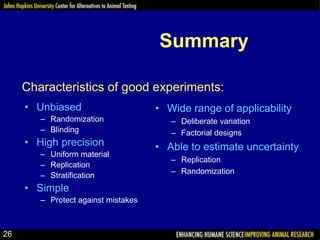
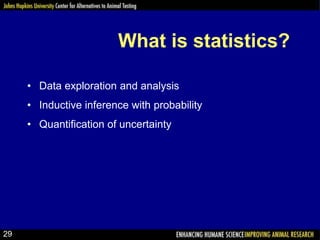
This document provides an overview of key concepts in experimental design and statistics. It discusses variables, statistical tests, types of statistics, basic experimental design principles, and sample size determination. The key points are: 1. Experimental design should be unbiased through randomization, blinding, and inclusion of controls. It aims for high precision through uniform samples, replication, and stratification. 2. Statistics can be descriptive or inferential. Descriptive statistics summarize data, while inferential statistics make generalizations from samples to populations through hypothesis testing, confidence intervals, and significance testing. 3. Sample size is determined based on desired power to detect a minimum clinically meaningful effect size given available resources. Larger samples increase power but come


