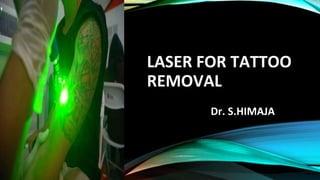
LASER FOR TATTOO
REMOVAL
Dr. S.HIMAJA
Introduction
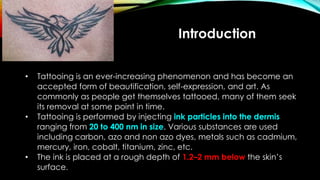
• Tattooing is an ever-increasing phenomenon and has become an
accepted form of beautification, self-expression, and art. As
commonly as people get themselves tattooed, many of them seek
its removal at some point in time.
• Tattooing is performed by injecting ink particles into the dermis
ranging from 20 to 400 nm in size. Various substances are used
including carbon, azo and non azo dyes, metals such as cadmium,
mercury, iron, cobalt, titanium, zinc, etc.
• The ink is placed at a rough depth of 1.2–2 mm below the skin’s
surface.
Types of tattoos
1. Amateur tattoos
2. Professional tattoos
3. Cosmetic tattoos
4. Traumatic tattoos
5. Medical tattoos
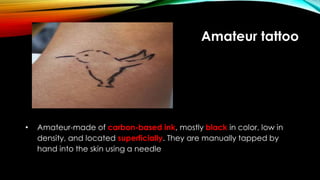
Amateur tattoo
• Amateur-made of carbon-based ink, mostly black in color, low in
density, and located superficially. They are manually tapped by
hand into the skin using a needle
Professional
tattoo
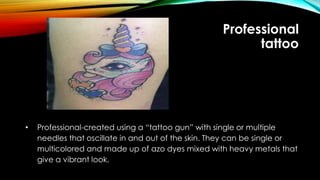
• Professional-created using a “tattoo gun” with single or multiple
needles that oscillate in and out of the skin. They can be single or
multicolored and made up of azo dyes mixed with heavy metals that
give a vibrant look.
Cosmetic tattoo
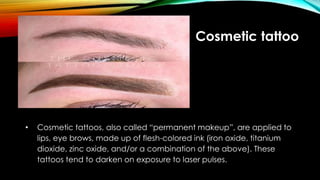
• Cosmetic tattoos, also called “permanent makeup”, are applied to
lips, eye brows, made up of flesh-colored ink (iron oxide, titanium
dioxide, zinc oxide, and/or a combination of the above). These
tattoos tend to darken on exposure to laser pulses.
Traumatic tattoo
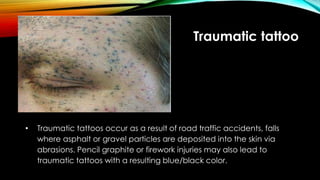
• Traumatic tattoos occur as a result of road traffic accidents, falls
where asphalt or gravel particles are deposited into the skin via
abrasions. Pencil graphite or firework injuries may also lead to
traumatic tattoos with a resulting blue/black color.
Medical tattoo
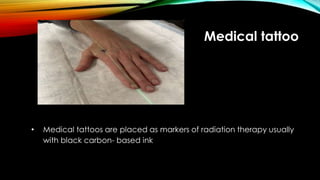
• Medical tattoos are placed as markers of radiation therapy usually
with black carbon- based ink
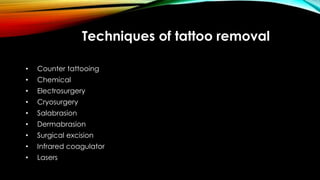
Techniques of tattoo removal
• Counter tattooing
• Chemical
• Electrosurgery
• Cryosurgery
• Salabrasion
• Dermabrasion
• Surgical excision
• Infrared coagulator
• Lasers
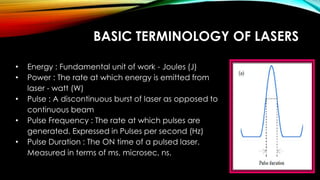
BASIC TERMINOLOGY OF LASERS
• Energy : Fundamental unit of work - Joules (J)
• Power : The rate at which energy is emitted from
laser - watt (W)
• Pulse : A discontinuous burst of laser as opposed to
continuous beam
• Pulse Frequency : The rate at which pulses are
generated. Expressed in Pulses per second (Hz)
• Pulse Duration : The ON time of a pulsed laser.
Measured in terms of ms, microsec, ns.
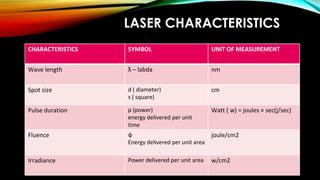
LASER CHARACTERISTICS
CHARACTERISTICS SYMBOL UNIT OF MEASUREMENT
Wave length ƛ – labda nm
Spot size d ( diameter)
s ( square)
cm
Pulse duration p (power)
energy delivered per unit
time
Watt ( w) = joules × sec(j/sec)
Fluence ɸ
Energy delivered per unit area
joule/cm2
Irradiance Power delivered per unit area w/cm2
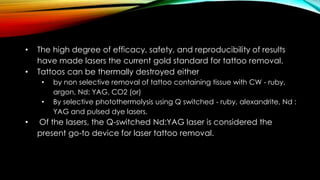
• The high degree of efficacy, safety, and reproducibility of results
have made lasers the current gold standard for tattoo removal.
• Tattoos can be thermally destroyed either
• by non selective removal of tattoo containing tissue with CW - ruby,
argon, Nd: YAG, CO2 (or)
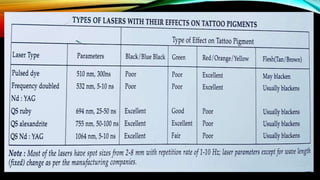
• By selective photothermolysis using Q switched - ruby, alexandrite, Nd :
YAG and pulsed dye lasers.
• Of the lasers, the Q-switched Nd:YAG laser is considered the
present go-to device for laser tattoo removal.
Mechanism of action of Q-Switched Lasers
• Q-switching is a method for obtaining energetic pulses from lasers
by modulating the intracavity losses—the so-called Q factor of the
laser resonator.
• The technique is mainly applied for generating nanosecond pulses
of high energy and peak power with solid-state bulk lasers.
• Q-switched lasers work on the principle of
• selective photothermolysis and
• an additional photoacoustic effect producing shock waves that cause
the explosion of a target.
• Very high energy, to the tune of 300 megawatts, is delivered in a
very short period of time (5–100 ns) which leads to rapid thermal
expansion.
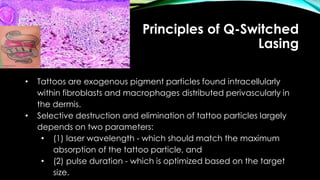
Principles of Q-Switched
Lasing
• Tattoos are exogenous pigment particles found intracellularly
within fibroblasts and macrophages distributed perivascularly in
the dermis.
• Selective destruction and elimination of tattoo particles largely
depends on two parameters:
• (1) laser wavelength - which should match the maximum
absorption of the tattoo particle, and
• (2) pulse duration - which is optimized based on the target
size.
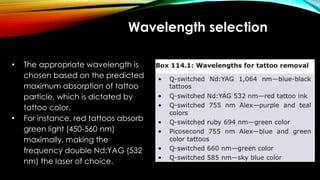
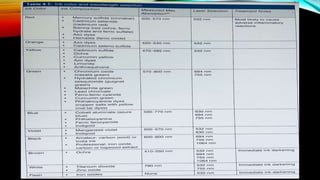
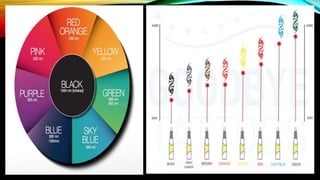
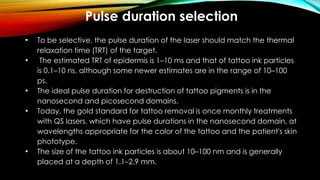
Wavelength selection
• The appropriate wavelength is
chosen based on the predicted
maximum absorption of tattoo
particle, which is dictated by
tattoo color.
• For instance, red tattoos absorb
green light (450-560 nm)
maximally, making the
frequency double Nd:YAG (532
nm) the laser of choice.
Pulse duration selection
• To be selective, the pulse duration of the laser should match the thermal
relaxation time (TRT) of the target.
• The estimated TRT of epidermis is 1–10 ms and that of tattoo ink particles
is 0.1–10 ns, although some newer estimates are in the range of 10–100
ps.
• The ideal pulse duration for destruction of tattoo pigments is in the
nanosecond and picosecond domains.
• Today, the gold standard for tattoo removal is once monthly treatments
with QS lasers, which have pulse durations in the nanosecond domain, at
wavelengths appropriate for the color of the tattoo and the patient's skin
phototype.
• The size of the tattoo ink particles is about 10–100 nm and is generally
placed at a depth of 1.1–2.9 mm.
• Q-switched laser delivers energy in an ultrashort duration, typically in
a nanosecond range, with very high peak power.
• This energy is then selectively absorbed by tattoo ink because of its
preferential wavelength and TRT.
• The surface temperature of the ink particles can rise to thousands of
degrees but this energy profile rapidly collapses into a shock wave.
• This shock wave then propagates throughout the local tissue (the
dermis) causing brittle structures (tattoo pigment) to fragment and
leads to vibrational damage to cellular structures and rupture the
targets such as melanosomes and ink particles.
• The rapid heating of melanosomes converts cytoplasmic water into
steam, which results in intracytoplasmic vacuole formation which
leads to immediate whitening.
• Frosting prevents further penetration of the laser into the skin
• An audible popping sound is heard during the procedure due to the
photoacoustic effect.
• The ruptured fragments are cleared by tissue macrophages either to
the lymphatic channels or to the regional lymph nodes. Some
fragments may be eliminated transepidermally accounting for tattoo
lightening.
CONTRAINDICATIONS
Absolute contraindications
• Associated photoaggravated skin diseases and medical illness, for
example, systemic lupus erythematosus.
• Treatment area with active cutaneous infections, for example,
herpes labialis, staphylococcal infections.
• Unstable vitiligo and psoriasis for risk of Koebnerization of the treated
area.
• Tattoo granuloma
Relative contraindications
• Keloid and keloidal tendencies.
• Patient on isotretinoin
• History of herpes simplex for increased risk of reactivation
• Patient who is not cooperative or has unrealistic expectations.
• Pregnancy or nursing.
• Body dysmorphic disorder.
• Photosensitizing medication such as tetracyclines, thiazides.
• Gold therapy (used for the treatment of arthritis).
• Livedo reticularis (can be exacerbated with heat exposure by laser).
• Erythema ab igne.
• Seizure disorder.
• Melanoma or suspected melanoma in the treatment area
Patient selection and counselling
• A general medical history, current medical conditions, and
medications, allergies, past surgeries, including bleeding tendencies
and wound healing (response of previous skin injuries whether they
heal with hyperpigmentation or hypopigmentation, response to
previous laser sessions if taken) should be obtained.
• Thorough counseling of the patient and an informed, written consent
completes the baseline step required for initiating therapy.
• Serial photographs should be taken at successive visits.
• Ideally, the photographs should be taken with the same or similar
camera equipment and settings, i.e., distance, uniform light, and
background.
Pre Operative Preparation
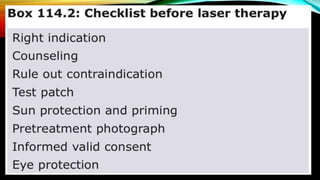
Test patch
• A test patch helps to determine the treatment parameters for an
individual. It is also helpful in medicolegal situations.
• In particular, it is advisable for all beginning practitioners to perform
laser test spots in all patients prior to treating an entire lesion since skin
type and color do not always perfectly predict the response to
treatment.
• Even seasoned experts may need to perform small spot tests,
particularly where the response to treatment cannot be judged
properly.
• Always evaluate the patient 4–8 weeks after the test spots
Sun protection
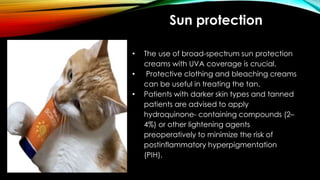
• The use of broad-spectrum sun protection
creams with UVA coverage is crucial.
• Protective clothing and bleaching creams
can be useful in treating the tan.
• Patients with darker skin types and tanned
patients are advised to apply
hydroquinone- containing compounds (2–
4%) or other lightening agents
preoperatively to minimize the risk of
postinflammatory hyperpigmentation
(PIH).
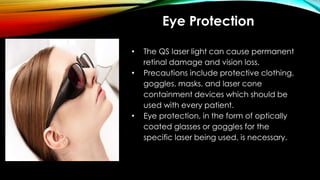
Eye Protection
• The QS laser light can cause permanent
retinal damage and vision loss.
• Precautions include protective clothing,
goggles, masks, and laser cone
containment devices which should be
used with every patient.
• Eye protection, in the form of optically
coated glasses or goggles for the
specific laser being used, is necessary.
LASER PROCEDURE
Anesthesia
• The Q-switched laser treatment usually does not require anesthesia.
• However, if a large area needs to be treated, a topical eutectic
mixture of local anesthetic (EMLA) should be applied under occlusion
1–2 hours before the procedure.
Fluence
• It is always preferable to begin with the lowest energy fluence that
produces a visible response.
• Fluence may be increased if the response is suboptimal.
• If epidermal debris is significant, the fluence should be lowered
Spot Size
• For dermal lesions and tattoos, the spot size that elicits immediate
brisk whitening on laser irradiation should be selected.
• Larger spot sizes allow deeper penetration and produce less tissue
splatter.
• The exact spot size selection will depend on the laser system being
used, the type and size of the tattoo, and the wavelength.
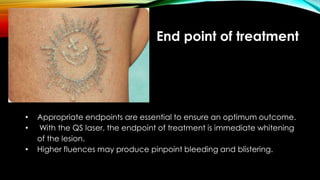
End point of treatment
• Appropriate endpoints are essential to ensure an optimum outcome.
• With the QS laser, the endpoint of treatment is immediate whitening
of the lesion.
• Higher fluences may produce pinpoint bleeding and blistering.
Laser technique
• After choosing the correct spot size and energy fluence (J/cm2), laser
treatment is performed with the handpiece held perpendicular to the
lesion
• The entire area is covered with minimal overlap (up to 10%).
• QS laser treatment will produce an immediate whitening of the lesion.
• A popping sound is heard with each laser shot as the cells containing
melanin or ink particles explode.
• The area is cooled with ice packs or air cooling (e.g., Zimmer) just before
and after laser pulses to avoid a buildup of heat and prevent collateral
tissue damage.
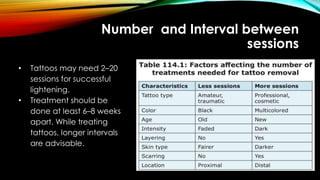
Number and Interval between
sessions
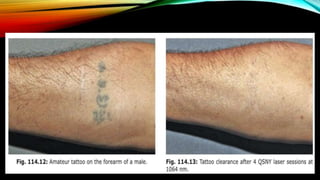
• Tattoos may need 2–20
sessions for successful
lightening.
• Treatment should be
done at least 6–8 weeks
apart. While treating
tattoos, longer intervals
are advisable.
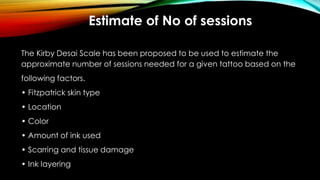
Estimate of No of sessions
The Kirby Desai Scale has been proposed to be used to estimate the
approximate number of sessions needed for a given tattoo based on the
following factors.
• Fitzpatrick skin type
• Location
• Color
• Amount of ink used
• Scarring and tissue damage
• Ink layering
Limitations of conventional
technique
• A long, total duration of treatment (interval of 6–8 weeks between
treatments),
• Ink retention despite multiple sessions (which could be due to wrong or
ineffective choice of wavelength for multicolored tattoos, poor
technique, insufficient interval between sessions, etc.)
• Ghosting (shadow or outline of the residual tattoo),
• Complications such as
• hyper- and hypopigmentation,
• blistering,
• scarring
NEWER TECHNIQUES FOR LASER
TATTOO REMOVAL
New Techniques
• R20 technique
• R0 technique
• Combining fractional lasers with Q-switched lasers
R20 Method
• Tattoo removal in a single laser session is based on the method of
repeated exposure.
• Four treatment passes are done with an interval of 20 minutes
between passes.
• After removing the EMLA cream and cleaning the area, the first pass
is made with the QS Nd:YAG laser at 1,064 nm wavelength. There is
immediate whitening of the treated area.
• Upon waiting for 20 minutes following the first pass, the gas bubbles
are cleared due to the absorption of the gases so that the next laser
pass can be delivered.
• This allows further bombardment of the tattoo particles with the QS
Nd:YAG laser pulses.
• Energy is constant as the first pass or can be lowered by 10–20%.
• Atotaloffoursuchpasses are made. The tattoo clears well after this over
time.
• Based on the response, another R20 session can be done after an interval
of 6–8 weeks.
LIMITATIONS :
• Long waiting time
• Sometimes, multiple sessions may also cannot eliminate ink completely.
• Although reported safe in type 1–4 skin, the overall incidence of blistering,
scarring, and pigmentary alterations can be more in pigmented skin.
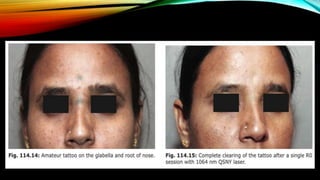
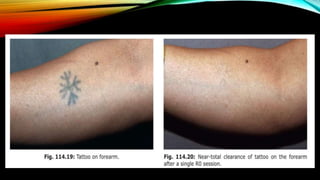
R0 Method
• Repeated exposure on the same day
without a waiting period can be
performed by applying perfluorodecalin
(PFD) (a perfluorocarbon compound,
commercially available as “Zero-W”®)
immediately after lasing.
• This compound dissolves the gas bubbles
formed upon initial laser exposure.
• This allows an immediate next pass to be
performed without the waiting time of 20
minutes as in R20 technique.
Combining Lasers
• Monotherapy with Q-switched laser is often effective for tattoo removal
but combining Q-switched laser with an ablative or nonablative laser
may yield faster clearing, a minimal number of sessions, and reduced
side effects
• Marini et al proposed a combination of fractional Er:YAG (erbium-doped
yttrium aluminum garnet) laser skin conditioning followed by Q-switched
Nd:YAG laser for laser tattoo removal.

• In their two-step technique, they used a fractional Er:YAG laser to drill
micro holes into the skin followed by Q-switched laser treatment.
• According to the authors, this fractional Er:YAG laser conditioning
protects the skin from damages at higher fluences by allowing the
escape of gases through these micro holes and thus relieving the internal
pressure generated by Q-switched laser treatment.
• This also aided in repeating the next pass after 20 minutes. They
concluded that this procedure led to a 30% reduction in the number of
sessions.
Post Operative Instructions
• Broad-spectrum sunscreens with good UVA/UVB coverage are
recommended before and throughout the treatment period
• The treated area appears abraded and inflamed immediately after laser
treatment. Apply ice packs till the burning sensation subsides, followed by
a layer of antibiotic, such as mupirocin, and then cover with gauze.
• Oral antibiotics may be used, if considered essential, but are not
mandatory. Anti Inflammatory agents may be needed while treating
large lesions.
• Patients should be instructed to avoid sun exposure and cosmetics on the
treated area
• Patients are instructed to apply an antibiotic or petrolatum ointment for
about a week after the procedure
• Postprocedure bleaching agents can be used but only after the crust
subsides.
COMPLICATIONS
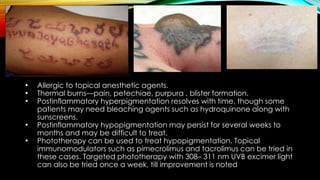
• Allergic to topical anesthetic agents.
• Thermal burns—pain, petechiae, purpura , blister formation.
• Postinflammatory hyperpigmentation resolves with time, though some
patients may need bleaching agents such as hydroquinone along with
sunscreens.
• Postinflammatory hypopigmentation may persist for several weeks to
months and may be difficult to treat.
• Phototherapy can be used to treat hypopigmentation. Topical
immunomodulators such as pimecrolimus and tacrolimus can be tried in
these cases. Targeted phototherapy with 308– 311 nm UVB excimer light
can also be tried once a week, till improvement is noted
• Textural changes and scarring - Darkening of tattoo pigment,
especially flesh- colored cosmetic tattoos. Red tattoos can turn
black, and if it occurs, it is difficult to treat
• localized allergic reactions can occur in tattoos, with almost any
color ink and can result in urticaria and granulomatous reactions.
• Mercury- containing red ink is the most common cause of allergic
tattoo reactions
• Cadmium in yellow ink is known to cause photoallergic reactions
• After QS laser treatment, the ink particles may get further mobilized,
and trigger a severe allergic response
• Anaphylactic reactions are extremely rare but should be kept in
mind
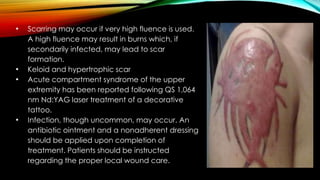
• Scarring may occur if very high fluence is used.
A high fluence may result in burns which, if
secondarily infected, may lead to scar
formation.
• Keloid and hypertrophic scar
• Acute compartment syndrome of the upper
extremity has been reported following QS 1,064
nm Nd:YAG laser treatment of a decorative
tattoo.
• Infection, though uncommon, may occur. An
antibiotic ointment and a nonadherent dressing
should be applied upon completion of
treatment. Patients should be instructed
regarding the proper local wound care.
Laser for tattoo removal.pptx

Laser for tattoo removal.pptx

  • 1.
  • 2.
    Introduction • Tattooing isan ever-increasing phenomenon and has become an accepted form of beautification, self-expression, and art. As commonly as people get themselves tattooed, many of them seek its removal at some point in time. • Tattooing is performed by injecting ink particles into the dermis ranging from 20 to 400 nm in size. Various substances are used including carbon, azo and non azo dyes, metals such as cadmium, mercury, iron, cobalt, titanium, zinc, etc. • The ink is placed at a rough depth of 1.2–2 mm below the skin’s surface.
  • 3.
    Types of tattoos 1.Amateur tattoos 2. Professional tattoos 3. Cosmetic tattoos 4. Traumatic tattoos 5. Medical tattoos
  • 4.
    Amateur tattoo • Amateur-madeof carbon-based ink, mostly black in color, low in density, and located superficially. They are manually tapped by hand into the skin using a needle
  • 5.
    Professional tattoo • Professional-created usinga “tattoo gun” with single or multiple needles that oscillate in and out of the skin. They can be single or multicolored and made up of azo dyes mixed with heavy metals that give a vibrant look.
  • 6.
    Cosmetic tattoo • Cosmetictattoos, also called “permanent makeup”, are applied to lips, eye brows, made up of flesh-colored ink (iron oxide, titanium dioxide, zinc oxide, and/or a combination of the above). These tattoos tend to darken on exposure to laser pulses.
  • 7.
    Traumatic tattoo • Traumatictattoos occur as a result of road traffic accidents, falls where asphalt or gravel particles are deposited into the skin via abrasions. Pencil graphite or firework injuries may also lead to traumatic tattoos with a resulting blue/black color.
  • 8.
    Medical tattoo • Medicaltattoos are placed as markers of radiation therapy usually with black carbon- based ink
  • 9.
    Techniques of tattooremoval • Counter tattooing • Chemical • Electrosurgery • Cryosurgery • Salabrasion • Dermabrasion • Surgical excision • Infrared coagulator • Lasers
  • 10.
    BASIC TERMINOLOGY OFLASERS • Energy : Fundamental unit of work - Joules (J) • Power : The rate at which energy is emitted from laser - watt (W) • Pulse : A discontinuous burst of laser as opposed to continuous beam • Pulse Frequency : The rate at which pulses are generated. Expressed in Pulses per second (Hz) • Pulse Duration : The ON time of a pulsed laser. Measured in terms of ms, microsec, ns.
  • 11.
    LASER CHARACTERISTICS CHARACTERISTICS SYMBOLUNIT OF MEASUREMENT Wave length ƛ – labda nm Spot size d ( diameter) s ( square) cm Pulse duration p (power) energy delivered per unit time Watt ( w) = joules × sec(j/sec) Fluence ɸ Energy delivered per unit area joule/cm2 Irradiance Power delivered per unit area w/cm2
  • 12.
    • The highdegree of efficacy, safety, and reproducibility of results have made lasers the current gold standard for tattoo removal. • Tattoos can be thermally destroyed either • by non selective removal of tattoo containing tissue with CW - ruby, argon, Nd: YAG, CO2 (or) • By selective photothermolysis using Q switched - ruby, alexandrite, Nd : YAG and pulsed dye lasers. • Of the lasers, the Q-switched Nd:YAG laser is considered the present go-to device for laser tattoo removal.
  • 13.
    Mechanism of actionof Q-Switched Lasers • Q-switching is a method for obtaining energetic pulses from lasers by modulating the intracavity losses—the so-called Q factor of the laser resonator. • The technique is mainly applied for generating nanosecond pulses of high energy and peak power with solid-state bulk lasers. • Q-switched lasers work on the principle of • selective photothermolysis and • an additional photoacoustic effect producing shock waves that cause the explosion of a target. • Very high energy, to the tune of 300 megawatts, is delivered in a very short period of time (5–100 ns) which leads to rapid thermal expansion.
  • 14.
    Principles of Q-Switched Lasing •Tattoos are exogenous pigment particles found intracellularly within fibroblasts and macrophages distributed perivascularly in the dermis. • Selective destruction and elimination of tattoo particles largely depends on two parameters: • (1) laser wavelength - which should match the maximum absorption of the tattoo particle, and • (2) pulse duration - which is optimized based on the target size.
  • 15.
    Wavelength selection • Theappropriate wavelength is chosen based on the predicted maximum absorption of tattoo particle, which is dictated by tattoo color. • For instance, red tattoos absorb green light (450-560 nm) maximally, making the frequency double Nd:YAG (532 nm) the laser of choice.
  • 18.
    Pulse duration selection •To be selective, the pulse duration of the laser should match the thermal relaxation time (TRT) of the target. • The estimated TRT of epidermis is 1–10 ms and that of tattoo ink particles is 0.1–10 ns, although some newer estimates are in the range of 10–100 ps. • The ideal pulse duration for destruction of tattoo pigments is in the nanosecond and picosecond domains. • Today, the gold standard for tattoo removal is once monthly treatments with QS lasers, which have pulse durations in the nanosecond domain, at wavelengths appropriate for the color of the tattoo and the patient's skin phototype. • The size of the tattoo ink particles is about 10–100 nm and is generally placed at a depth of 1.1–2.9 mm.
  • 20.
    • Q-switched laserdelivers energy in an ultrashort duration, typically in a nanosecond range, with very high peak power. • This energy is then selectively absorbed by tattoo ink because of its preferential wavelength and TRT. • The surface temperature of the ink particles can rise to thousands of degrees but this energy profile rapidly collapses into a shock wave. • This shock wave then propagates throughout the local tissue (the dermis) causing brittle structures (tattoo pigment) to fragment and leads to vibrational damage to cellular structures and rupture the targets such as melanosomes and ink particles.
  • 21.
    • The rapidheating of melanosomes converts cytoplasmic water into steam, which results in intracytoplasmic vacuole formation which leads to immediate whitening. • Frosting prevents further penetration of the laser into the skin • An audible popping sound is heard during the procedure due to the photoacoustic effect. • The ruptured fragments are cleared by tissue macrophages either to the lymphatic channels or to the regional lymph nodes. Some fragments may be eliminated transepidermally accounting for tattoo lightening.
  • 22.
  • 23.
    Absolute contraindications • Associatedphotoaggravated skin diseases and medical illness, for example, systemic lupus erythematosus. • Treatment area with active cutaneous infections, for example, herpes labialis, staphylococcal infections. • Unstable vitiligo and psoriasis for risk of Koebnerization of the treated area. • Tattoo granuloma
  • 24.
    Relative contraindications • Keloidand keloidal tendencies. • Patient on isotretinoin • History of herpes simplex for increased risk of reactivation • Patient who is not cooperative or has unrealistic expectations. • Pregnancy or nursing. • Body dysmorphic disorder. • Photosensitizing medication such as tetracyclines, thiazides. • Gold therapy (used for the treatment of arthritis). • Livedo reticularis (can be exacerbated with heat exposure by laser). • Erythema ab igne. • Seizure disorder. • Melanoma or suspected melanoma in the treatment area
  • 25.
    Patient selection andcounselling • A general medical history, current medical conditions, and medications, allergies, past surgeries, including bleeding tendencies and wound healing (response of previous skin injuries whether they heal with hyperpigmentation or hypopigmentation, response to previous laser sessions if taken) should be obtained. • Thorough counseling of the patient and an informed, written consent completes the baseline step required for initiating therapy. • Serial photographs should be taken at successive visits. • Ideally, the photographs should be taken with the same or similar camera equipment and settings, i.e., distance, uniform light, and background.
  • 26.
  • 27.
    Test patch • Atest patch helps to determine the treatment parameters for an individual. It is also helpful in medicolegal situations. • In particular, it is advisable for all beginning practitioners to perform laser test spots in all patients prior to treating an entire lesion since skin type and color do not always perfectly predict the response to treatment. • Even seasoned experts may need to perform small spot tests, particularly where the response to treatment cannot be judged properly. • Always evaluate the patient 4–8 weeks after the test spots
  • 28.
    Sun protection • Theuse of broad-spectrum sun protection creams with UVA coverage is crucial. • Protective clothing and bleaching creams can be useful in treating the tan. • Patients with darker skin types and tanned patients are advised to apply hydroquinone- containing compounds (2– 4%) or other lightening agents preoperatively to minimize the risk of postinflammatory hyperpigmentation (PIH).
  • 29.
    Eye Protection • TheQS laser light can cause permanent retinal damage and vision loss. • Precautions include protective clothing, goggles, masks, and laser cone containment devices which should be used with every patient. • Eye protection, in the form of optically coated glasses or goggles for the specific laser being used, is necessary.
  • 31.
  • 32.
    Anesthesia • The Q-switchedlaser treatment usually does not require anesthesia. • However, if a large area needs to be treated, a topical eutectic mixture of local anesthetic (EMLA) should be applied under occlusion 1–2 hours before the procedure.
  • 33.
    Fluence • It isalways preferable to begin with the lowest energy fluence that produces a visible response. • Fluence may be increased if the response is suboptimal. • If epidermal debris is significant, the fluence should be lowered
  • 34.
    Spot Size • Fordermal lesions and tattoos, the spot size that elicits immediate brisk whitening on laser irradiation should be selected. • Larger spot sizes allow deeper penetration and produce less tissue splatter. • The exact spot size selection will depend on the laser system being used, the type and size of the tattoo, and the wavelength.
  • 35.
    End point oftreatment • Appropriate endpoints are essential to ensure an optimum outcome. • With the QS laser, the endpoint of treatment is immediate whitening of the lesion. • Higher fluences may produce pinpoint bleeding and blistering.
  • 36.
    Laser technique • Afterchoosing the correct spot size and energy fluence (J/cm2), laser treatment is performed with the handpiece held perpendicular to the lesion • The entire area is covered with minimal overlap (up to 10%). • QS laser treatment will produce an immediate whitening of the lesion. • A popping sound is heard with each laser shot as the cells containing melanin or ink particles explode. • The area is cooled with ice packs or air cooling (e.g., Zimmer) just before and after laser pulses to avoid a buildup of heat and prevent collateral tissue damage.
  • 37.
    Number and Intervalbetween sessions • Tattoos may need 2–20 sessions for successful lightening. • Treatment should be done at least 6–8 weeks apart. While treating tattoos, longer intervals are advisable.
  • 38.
    Estimate of Noof sessions The Kirby Desai Scale has been proposed to be used to estimate the approximate number of sessions needed for a given tattoo based on the following factors. • Fitzpatrick skin type • Location • Color • Amount of ink used • Scarring and tissue damage • Ink layering
  • 39.
    Limitations of conventional technique •A long, total duration of treatment (interval of 6–8 weeks between treatments), • Ink retention despite multiple sessions (which could be due to wrong or ineffective choice of wavelength for multicolored tattoos, poor technique, insufficient interval between sessions, etc.) • Ghosting (shadow or outline of the residual tattoo), • Complications such as • hyper- and hypopigmentation, • blistering, • scarring
  • 40.
    NEWER TECHNIQUES FORLASER TATTOO REMOVAL
  • 41.
    New Techniques • R20technique • R0 technique • Combining fractional lasers with Q-switched lasers
  • 42.
    R20 Method • Tattooremoval in a single laser session is based on the method of repeated exposure. • Four treatment passes are done with an interval of 20 minutes between passes. • After removing the EMLA cream and cleaning the area, the first pass is made with the QS Nd:YAG laser at 1,064 nm wavelength. There is immediate whitening of the treated area. • Upon waiting for 20 minutes following the first pass, the gas bubbles are cleared due to the absorption of the gases so that the next laser pass can be delivered.
  • 43.
    • This allowsfurther bombardment of the tattoo particles with the QS Nd:YAG laser pulses. • Energy is constant as the first pass or can be lowered by 10–20%. • Atotaloffoursuchpasses are made. The tattoo clears well after this over time. • Based on the response, another R20 session can be done after an interval of 6–8 weeks. LIMITATIONS : • Long waiting time • Sometimes, multiple sessions may also cannot eliminate ink completely. • Although reported safe in type 1–4 skin, the overall incidence of blistering, scarring, and pigmentary alterations can be more in pigmented skin.
  • 44.
    R0 Method • Repeatedexposure on the same day without a waiting period can be performed by applying perfluorodecalin (PFD) (a perfluorocarbon compound, commercially available as “Zero-W”®) immediately after lasing. • This compound dissolves the gas bubbles formed upon initial laser exposure. • This allows an immediate next pass to be performed without the waiting time of 20 minutes as in R20 technique.
  • 45.
    Combining Lasers • Monotherapywith Q-switched laser is often effective for tattoo removal but combining Q-switched laser with an ablative or nonablative laser may yield faster clearing, a minimal number of sessions, and reduced side effects • Marini et al proposed a combination of fractional Er:YAG (erbium-doped yttrium aluminum garnet) laser skin conditioning followed by Q-switched Nd:YAG laser for laser tattoo removal. • In their two-step technique, they used a fractional Er:YAG laser to drill micro holes into the skin followed by Q-switched laser treatment. • According to the authors, this fractional Er:YAG laser conditioning protects the skin from damages at higher fluences by allowing the escape of gases through these micro holes and thus relieving the internal pressure generated by Q-switched laser treatment. • This also aided in repeating the next pass after 20 minutes. They concluded that this procedure led to a 30% reduction in the number of sessions.
  • 46.
  • 47.
    • Broad-spectrum sunscreenswith good UVA/UVB coverage are recommended before and throughout the treatment period • The treated area appears abraded and inflamed immediately after laser treatment. Apply ice packs till the burning sensation subsides, followed by a layer of antibiotic, such as mupirocin, and then cover with gauze. • Oral antibiotics may be used, if considered essential, but are not mandatory. Anti Inflammatory agents may be needed while treating large lesions. • Patients should be instructed to avoid sun exposure and cosmetics on the treated area • Patients are instructed to apply an antibiotic or petrolatum ointment for about a week after the procedure • Postprocedure bleaching agents can be used but only after the crust subsides.
  • 48.
  • 49.
    • Allergic totopical anesthetic agents. • Thermal burns—pain, petechiae, purpura , blister formation. • Postinflammatory hyperpigmentation resolves with time, though some patients may need bleaching agents such as hydroquinone along with sunscreens. • Postinflammatory hypopigmentation may persist for several weeks to months and may be difficult to treat. • Phototherapy can be used to treat hypopigmentation. Topical immunomodulators such as pimecrolimus and tacrolimus can be tried in these cases. Targeted phototherapy with 308– 311 nm UVB excimer light can also be tried once a week, till improvement is noted
  • 50.
    • Textural changesand scarring - Darkening of tattoo pigment, especially flesh- colored cosmetic tattoos. Red tattoos can turn black, and if it occurs, it is difficult to treat • localized allergic reactions can occur in tattoos, with almost any color ink and can result in urticaria and granulomatous reactions. • Mercury- containing red ink is the most common cause of allergic tattoo reactions • Cadmium in yellow ink is known to cause photoallergic reactions • After QS laser treatment, the ink particles may get further mobilized, and trigger a severe allergic response • Anaphylactic reactions are extremely rare but should be kept in mind
  • 51.
    • Scarring mayoccur if very high fluence is used. A high fluence may result in burns which, if secondarily infected, may lead to scar formation. • Keloid and hypertrophic scar • Acute compartment syndrome of the upper extremity has been reported following QS 1,064 nm Nd:YAG laser treatment of a decorative tattoo. • Infection, though uncommon, may occur. An antibiotic ointment and a nonadherent dressing should be applied upon completion of treatment. Patients should be instructed regarding the proper local wound care.