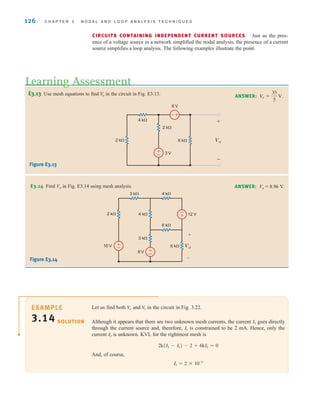
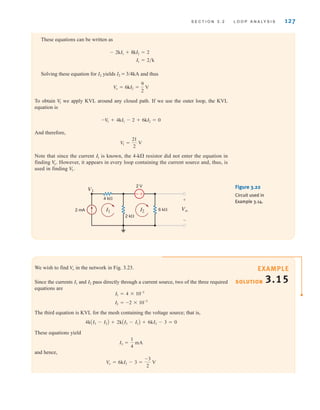
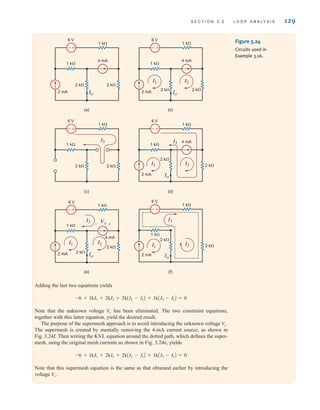
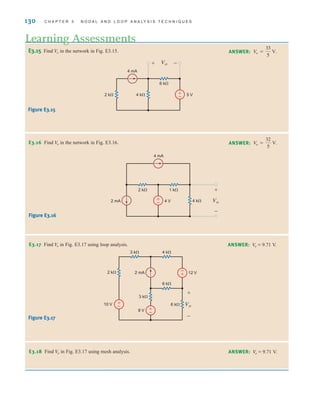
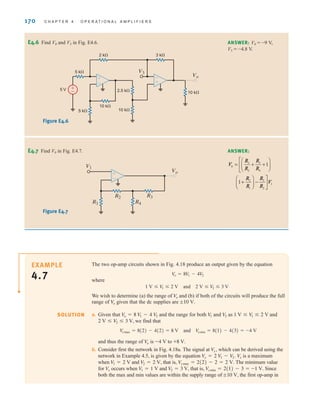
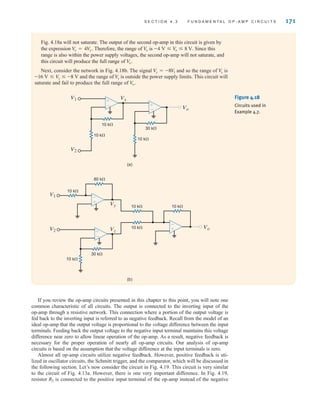
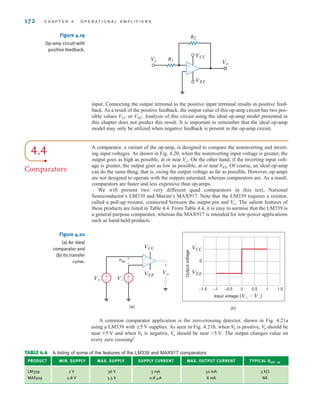
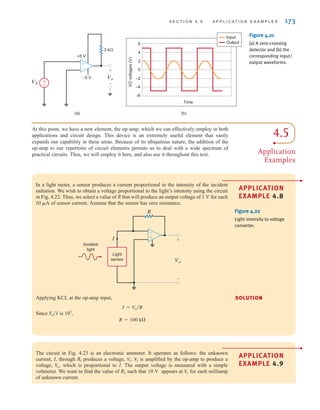
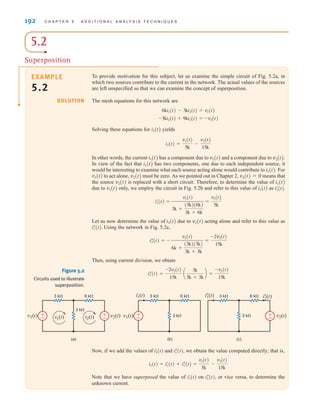
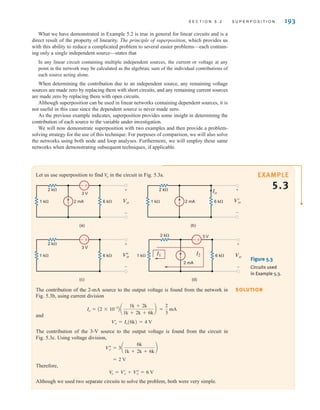
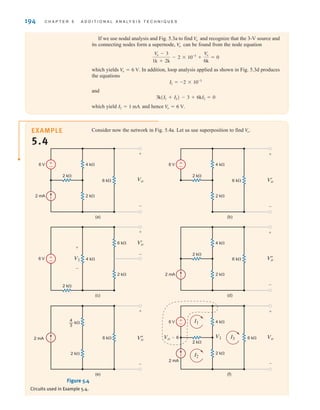
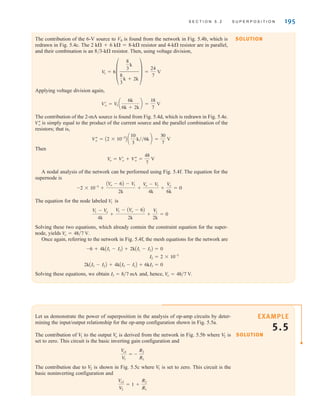
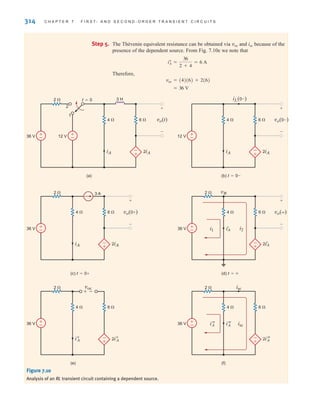
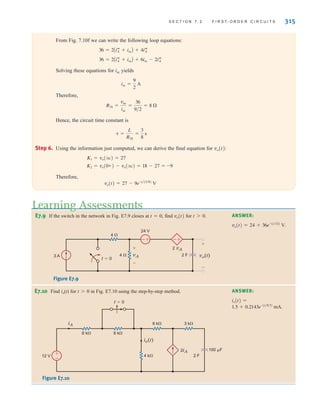
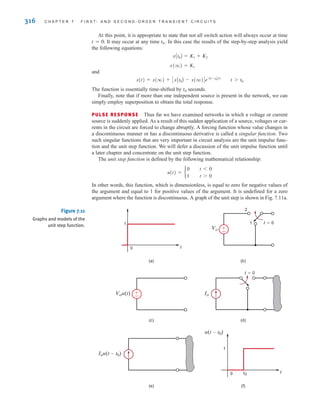
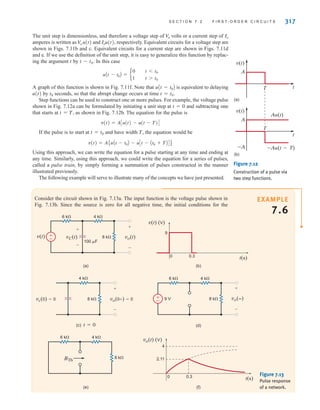
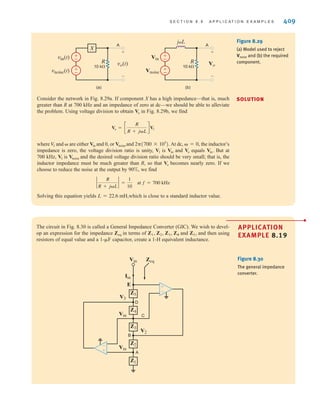
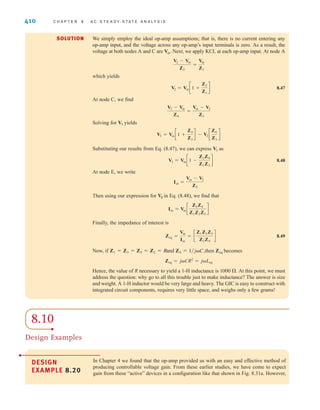
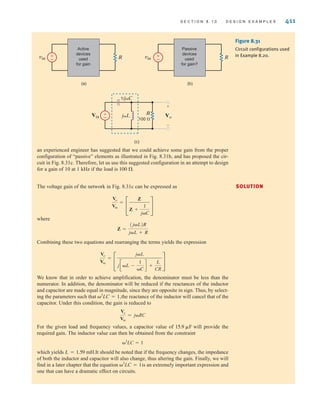
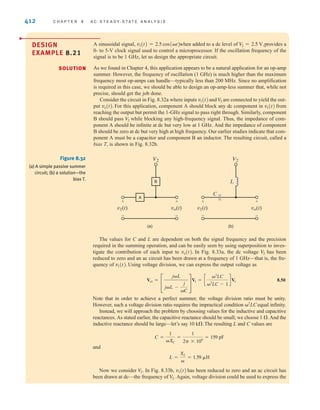
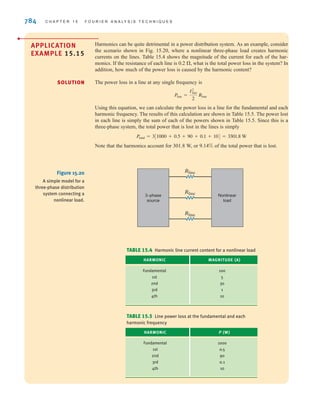
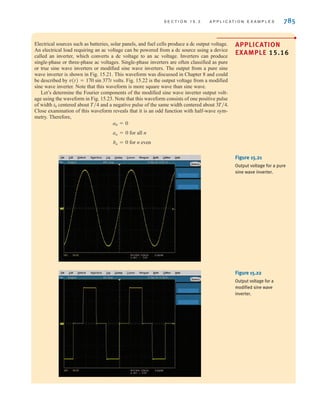
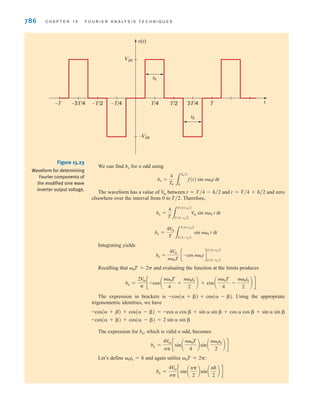
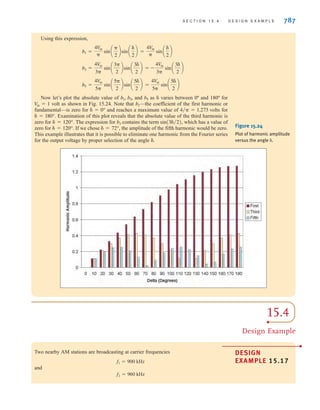
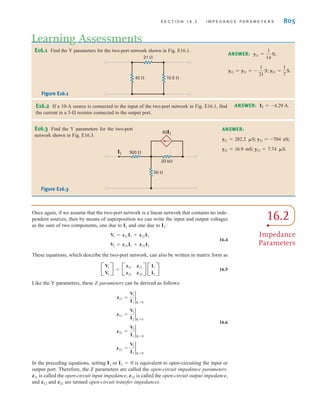
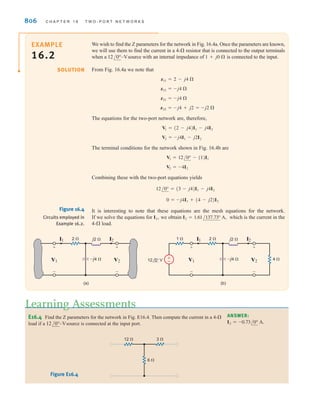
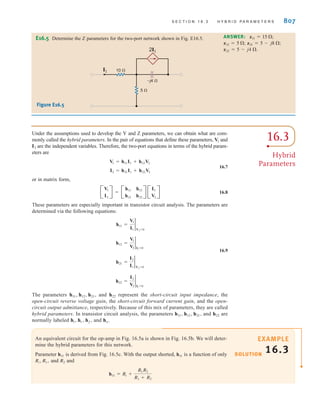
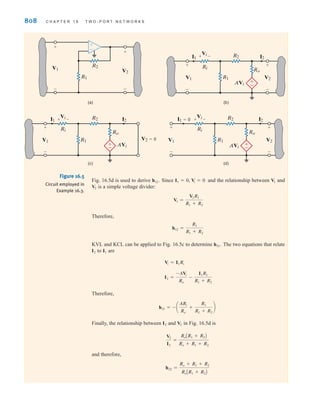
This page intentionally left blank
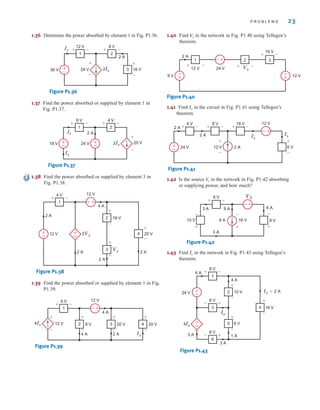
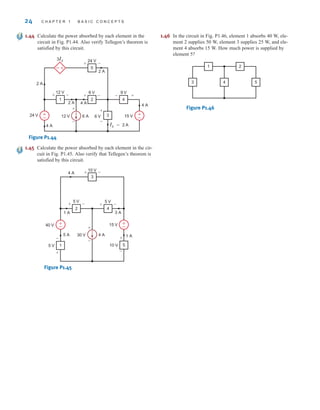
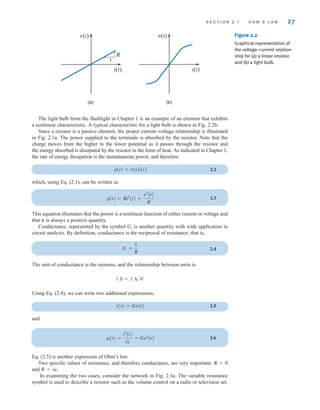
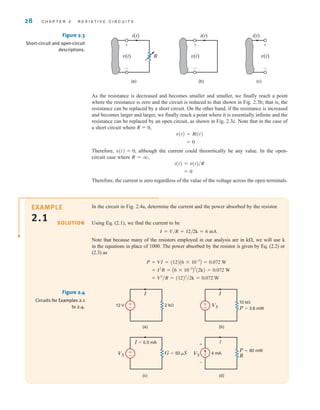
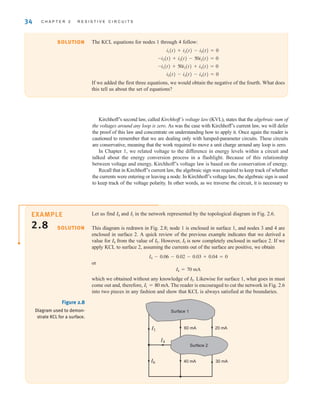
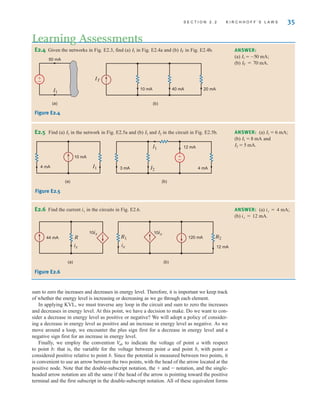
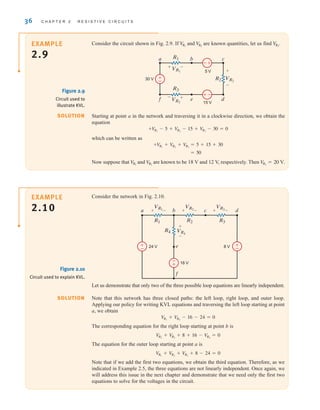
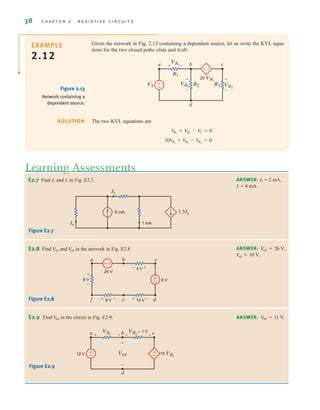
ZZZZLOHSOXVFRP
:LOH3/86/HDUQ0RUH
:LOH3/86LVDQLQQRYDWLYHUHVHDUFKEDVHGRQOLQHHQYLURQPHQWIRU
HIIHFWLYHWHDFKLQJDQGOHDUQLQJ
:LOH3/86
«PRWLYDWHVVWXGHQWVZLWK
FRQÀGHQFHERRVWLQJ
IHHGEDFNDQGSURRIRI
SURJUHVV
«VXSSRUWVLQVWUXFWRUVZLWK
UHOLDEOHUHVRXUFHVWKDW
UHLQIRUFHFRXUVHJRDOV
LQVLGHDQGRXWVLGHRI
WKHFODVVURRP
,QFOXGHV
,QWHUDFWLYH
7H[WERRN	
5HVRXUFHV
accessible, affordable,
active learning
irwin_fm_i-xxii-hr.qxd 3-09-2010 15:50 Page i
$//7+(+(/35(6285(6$1'3(5621$/6833257
28$1'285678'(1761(('
7HFKQLFDO6XSSRUW
)$4VRQOLQHFKDW
DQGSKRQHVXSSRUW
ZZZZLOHSOXVFRPVXSSRUW
6WXGHQWVXSSRUWIURPDQ
H[SHULHQFHGVWXGHQWXVHU
RXU:LOH3/86$FFRXQW0DQDJHU
3HUVRQDOWUDLQLQJDQG
LPSOHPHQWDWLRQVXSSRUW
ROODERUDWHZLWKRXUFROOHDJXHV
ILQGDPHQWRUDWWHQGYLUWXDODQGOLYH
HYHQWVDQGYLHZUHVRXUFHV
ZZZ:KHUH)DFXOWRQQHFWFRP
3UHORDGHGUHDGWRXVH
DVVLJQPHQWVDQGSUHVHQWDWLRQV
UHDWHGEVXEMHFWPDWWHUH[SHUWV
0LQXWH7XWRULDOVDQGDOO
RIWKHUHVRXUFHVRX	RXU
VWXGHQWVQHHGWRJHWVWDUWHG
ZZZZLOHSOXVFRPUHVRXUFHV
irwin_fm_i-xxii-hr.qxd 3-09-2010 15:50 Page ii
BASIC ENGINEERING
CIRCUIT ANALYSIS
irwin_fm_i-xxii-hr.qxd 3-09-2010 15:50 Page iii
This page intentionally left blank
BASIC ENGINEERING
CIRCUIT ANALYSIS
Tenth Edition
J. DAVID IRWIN
Auburn University
R. MARK NELMS
Auburn University
John Wiley  Sons, Inc.
irwin_fm_i-xxii-hr.qxd 3-09-2010 15:50 Page v
Vice President and Executive Publisher Don Fowley
Associate Publisher Dan Sayre
Production Manager Dorothy Sinclair
Senior Production Editor Valerie A. Vargas
Marketing Manager Christopher Ruel
Creative Director Harry Nolan
Senior Designer Kevin Murphy
Production Management Services Furino Production
Senior Illustration Editor Anna Melhorn
Senior Photo Editor Lisa Gee
Editorial Assistant Katie Singleton
Executive Media Editor Thomas Kulesa
Cover Photo provided courtesy of Tesla Motors, Inc.
This book was set in 10/12 Times by Prepare and printed and bound by Courier-Kendallville. The cover was
printed by Courier-Kendallville.
Copyright © 2011, 2008, 2005
John Wiley  Sons, Inc. All rights reserved. No part of this publication may be reproduced, stored in a retrieval
system or transmitted in any form or by any means, electronic, mechanical, photocopying, recording, scanning or
otherwise, except as permitted under Sections 107 or 108 of the 1976 United States Copyright Act, without either
the prior written permission of the Publisher, or authorization through payment of the appropriate per-copy fee to
the Copyright Clearance Center, Inc. 222 Rosewood Drive, Danvers, MA 01923, website www.copyright.com.
Requests to the Publisher for permission should be addressed to the Permissions Department, John Wiley  Sons,
Inc., 111 River Street, Hoboken, NJ 07030-5774, (201)748-6011, fax (201)748-6008, website
http://www.wiley.com/go/permissions.
Founded in 1807, John Wiley  Sons, Inc. has been a valued source of knowledge and understanding for more
than 200 years, helping people around the world meet their needs and fulfill their aspirations. Our company is built
on a foundation of principles that include responsibility to the communities we serve and where we live and work.
In 2008, we launched a Corporate Citizenship Initiative, a global effort to address the environmental, social,
economic, and ethical challenges we face in our business. Among the issues we are addressing are carbon impact,
paper specifications and procurement, ethical conduct within our business and among our vendors, and community
and charitable support. For more information, please visit our website: www.wiley.com/go/citizenship.
Evaluation copies are provided to qualified academics and professionals for review purposes only, for use in their
courses during the next academic year. These copies are licensed and may not be sold or transferred to a third
party. Upon completion of the review period, please return the evaluation copy to Wiley. Return instructions and a
free of charge return shipping label are available at www.wiley.com/go/returnlabel. Outside of the United States,
please contact your local representative.
ISBN-13 978-0-470-63322-9
Printed in the United States of America
10 9 8 7 6 5 4 3 2 1
irwin_fm_i-xxii-hr.qxd 3-09-2010 15:50 Page vi
To my loving family:
Edie
Geri, Bruno, Andrew and Ryan
John, Julie, John David and Abi
Laura
To my parents:
Robert and Elizabeth Nelms
irwin_fm_i-xxii-hr.qxd 3-09-2010 15:50 Page vii
This page intentionally left blank
BRIEF CONTENTS
CHAPTER 1 Basic Concepts 1
CHAPTER 2 Resistive Circuits 25
CHAPTER 3 Nodal and Loop Analysis Techniques 102
CHAPTER 4 Operational Amplifiers 156
CHAPTER 5 Additional Analysis Techniques 189
CHAPTER 6 Capacitance and Inductance 245
CHAPTER 7 First- and Second-Order Transient Circuits 296
CHAPTER 8 AC Steady-State Analysis 369
CHAPTER 9 Steady-State Power Analysis 435
CHAPTER 10 Magnetically Coupled Networks 491
CHAPTER 11 Polyphase Circuits 541
CHAPTER 12 Variable-Frequency Network Performance 577
CHAPTER 13 The Laplace Transform 667
CHAPTER 14 Application of the Laplace Transform
to Circuit Analysis 695
CHAPTER 15 Fourier Analysis Techniques 751
CHAPTER 16 Two-Port Networks 801
irwin_fm_i-xxii-hr.qxd 3-09-2010 15:50 Page ix
This page intentionally left blank
Preface xiii
CHAPTER
1
BASIC CONCEPTS 1
1.1 System of Units 2
1.2 Basic Quantities 2
1.3 Circuit Elements 8
Summary 17
Problems 17
CHAPTER
2
RESISTIVE CIRCUITS 25
2.1 Ohm’s Law 26
2.2 Kirchhoff’s Laws 31
2.3 Single-Loop Circuits 39
2.4 Single-Node-Pair Circuits 46
2.5 Series and Parallel Resistor Combinations 51
2.6 Circuits with Series-Parallel
Combinations of Resistors 55
2.7 Wye 
Delta Transformations 61
2.8 Circuits with Dependent Sources 64
2.9 Resistor Technologies for
Electronic Manufacturing 69
2.10 Application Examples 72
2.11 Design Examples 75
Summary 81
Problems 82
CHAPTER
3
NODAL AND LOOP
ANALYSIS TECHNIQUES 102
3.1 Nodal Analysis 102
3.2 Loop Analysis 122
3.3 Application Example 137
3.4 Design Example 139
Summary 139
Problems 140
CHAPTER
4
OPERATIONAL AMPLIFIERS 156
4.1 Introduction 157
4.2 Op-Amp Models 157
4.3 Fundamental Op-Amp Circuits 163
4.4 Comparators 172
4.5 Application Examples 173
4.6 Design Examples 176
Summary 179
Problems 180
CHAPTER
5
ADDITIONAL ANALYSIS TECHNIQUES 189
5.1 Introduction 190
5.2 Superposition 192
5.3 Thévenin’s and Norton’s Theorems 198
CONTENTS
irwin_fm_i-xxii-hr.qxd 3-09-2010 15:50 Page xi
xii C O N T E N T S
5.4 Maximum Power Transfer 216
5.5 Application Example 220
5.6 Design Examples 221
Summary 227
Problems 227
CHAPTER
6
CAPACITANCE AND INDUCTANCE 245
6.1 Capacitors 246
6.2 Inductors 254
6.3 Capacitor and Inductor Combinations 264
6.4 RC Operational Amplifier Circuits 272
6.5 Application Examples 274
6.6 Design Examples 279
Summary 280
Problems 281
CHAPTER
7
FIRST- AND SECOND-ORDER
TRANSIENT CIRCUITS 296
7.1 Introduction 297
7.2 First-Order Circuits 298
7.3 Second-Order Circuits 319
7.4 Application Examples 333
7.5 Design Examples 343
Summary 351
Problems 351
CHAPTER
8
AC STEADY-STATE ANALYSIS 369
8.1 Sinusoids 370
8.2 Sinusoidal and Complex Forcing Functions 373
8.3 Phasors 377
8.4 Phasor Relationships for Circuit Elements 379
8.5 Impedance and Admittance 383
8.6 Phasor Diagrams 390
8.7 Basic Analysis Using Kirchhoff’s Laws 393
8.8 Analysis Techniques 396
8.9 Application Examples 408
8.10 Design Examples 410
Summary 413
Problems 414
CHAPTER
9
STEADY-STATE POWER ANALYSIS 435
9.1 Instantaneous Power 436
9.2 Average Power 437
9.3 Maximum Average Power Transfer 442
9.4 Effective or rms Values 447
9.5 The Power Factor 450
9.6 Complex Power 452
9.7 Power Factor Correction 457
9.8 Single-Phase Three-Wire Circuits 461
9.9 Safety Considerations 464
9.10 Application Examples 472
9.11 Design Examples 476
Summary 478
Problems 478
CHAPTER
10
MAGNETICALLY COUPLED NETWORKS 491
10.1 Mutual Inductance 492
10.2 Energy Analysis 503
10.3 The Ideal Transformer 506
10.4 Safety Considerations 515
10.5 Application Examples 516
10.6 Design Examples 521
Summary 525
Problems 526
CHAPTER
11
POLYPHASE CIRCUITS 541
11.1 Three-Phase Circuits 542
11.2 Three-Phase Connections 547
11.3 Source/Load Connections 548
11.4 Power Relationships 557
11.5 Power Factor Correction 561
irwin_fm_i-xxii-hr.qxd 3-09-2010 15:50 Page xii
C O N T E N T S xiii
11.6 Application Examples 562
11.7 Design Examples 566
Summary 570
Problems 570
CHAPTER
12
VARIABLE-FREQUENCY
NETWORK PERFORMANCE 577
12.1 Variable Frequency-Response Analysis 578
12.2 Sinusoidal Frequency Analysis 586
12.3 Resonant Circuits 597
12.4 Scaling 619
12.5 Filter Networks 620
12.6 Application Examples 645
12.7 Design Examples 649
Summary 655
Problems 656
CHAPTER
13
THE LAPLACE TRANSFORM 667
13.1 Definition 668
13.2 Two Important Singularity Functions 669
13.3 Transform Pairs 671
13.4 Properties of the Transform 673
13.5 Performing the Inverse Transform 676
13.6 Convolution Integral 681
13.7 Initial-Value and Final-Value Theorems 685
13.8 Application Examples 687
Summary 689
Problems 689
CHAPTER
14
APPLICATION OF THE LAPLACE
TRANSFORM TO CIRCUIT ANALYSIS 695
14.1 Laplace Circuit Solutions 696
14.2 Circuit Element Models 697
14.3 Analysis Techniques 699
14.4 Transfer Function 712
14.5 Pole-Zero Plot/Bode Plot Connection 724
14.6 Steady-State Response 727
14.7 Application Examples 729
14.8 Design Examples 731
Summary 738
Problems 738
CHAPTER
15
FOURIER ANALYSIS TECHNIQUES 751
15.1 Fourier Series 752
15.2 Fourier Transform 773
15.3 Application Examples 780
15.4 Design Example 787
Summary 793
Problems 794
CHAPTER
16
TWO-PORT NETWORKS 801
16.1 Admittance Parameters 802
16.2 Impedance Parameters 805
16.3 Hybrid Parameters 807
16.4 Transmission Parameters 809
16.5 Parameter Conversions 811
16.6 Interconnection of Two-Ports 811
16.7 Application Examples 815
16.8 Design Example 819
Summary 821
Problems 821
APPENDIX
COMPLEX NUMBERS 829
Index 834
irwin_fm_i-xxii-hr2.qxd 6-09-2010 14:10 Page xiii
This page intentionally left blank
PREFACE
Circuit analysis is not only fundamental to the entire breadth of electrical and computer
engineering—the concepts studied here extend far beyond those boundaries. For this reason
it remains the starting point for many future engineers who wish to work in this field. The text
and all the supplementary materials associated with it will aid you in reaching this goal. We
strongly recommend while you are here to read the Preface closely and view all the resources
available to you as a learner. And one last piece of advice, learning requires practice and rep-
etition, take every opportunity to work one more problem or study one more hour than you
planned. In the end, you’ll be thankful you did.
To the Student
To the
Instructor
Highlights of the
Tenth Edition
The Tenth Edition has been prepared based on a careful examination of feedback received
from instructors and students. The revisions and changes made should appeal to a wide vari-

ety of instructors. We are aware of significant changes taking place in the way this material
is being taught and learned. Consequently, the authors and the publisher have created a for-
midable array of traditional and non-traditional learning resources to meet the needs of stu-
dents and teachers of modern circuit analysis.
• A four-color design is employed to enhance and clarify both text and illustrations. This
sharply improves the pedagogical presentation, particularly with complex illustrations.
For example, see Figure 2.5 on page 31.
• New chapter previews provide motivation for studying the material in the chapter. See
page 25 for a chapter preview sample. Learning objectives for each chapter have been
updated and appear as part of the new chapter openers.
• End of chapter homework problems have been substantially revised and augmented.
There are now approximately 1400 problems in the Tenth Edition, of which over 400
are new! Multiple-choice Fundamentals of Engineering (FE) Exam problems also
appear at the end of each chapter.
• Practical applications have been added for nearly every topic in the text. Since these are
items students will naturally encounter on a regular basis, they serve to answer ques-
tions such as, “Why is this important?” or “How am I going to use what I learn from
this course?” For a typical example application, see page 333.
irwin_fm_i-xxii-hr.qxd 3-09-2010 15:50 Page xv
• Problem Solving videos have been created showing students step-by-step how to solve
all Learning Assessment problems within each chapter. This is a special feature that
should significantly enhance the learning experience for each subsection in a chapter.
The problem-solving videos (PSVs) are now also available for the Apple iPod.
• In order to provide maximum flexibility, online supplements contain solutions to exam-
ples in the book using MATLAB, PSPICE or MultiSim. The worked examples can be
supplied to students as digital files, or one or more of them can be incorporated into
custom print editions of the text, depending upon the instructor’s preference.
• Problem-Solving Strategies have been retained in the Tenth Edition. They are utilized
as a guide for the solutions contained in the PSVs.
• The WileyPLUS resources have been greatly updated and expanded, with additional
algorithmic problems, problem-solving videos and much more. New Reading Quiz
questions give instructors the opportunity to track student reading and measure their
comprehension. New Math Skills Assessments provide faculty with tools to assess stu-
dents’ mastery of essential mathematical concepts. Not only can faculty measure their
students’ math comprehension at the beginning of the term, they also now have
resources to which they can direct students to help them reinforce areas where they
need to upgrade their skills.
xvi P R E F A C E
Organization This text is suitable for a one-semester, a two-semester or a three-quarter course sequence.
The first seven chapters are concerned with the analysis of dc circuits. An introduction to
operational amplifiers is presented in Chapter 4. This chapter may be omitted without any
loss of continuity; a few examples and homework problems in later chapters must be skipped.
Chapters 8–12 are focused on the analysis of ac circuits beginning with the analysis of single-
frequency circuits (single-phase and three-phase) and ending with variable-frequency circuit
operation. Calculation of power in single-phase and three-phase ac circuits is also presented.
The important topics of the Laplace transform, Fourier transform, and two-port networks are
covered in Chapters 13–16.
The organization of the text provides instructors maximum flexibility in designing their
courses. One instructor may choose to cover the first seven chapters in a single semester,
while another may omit Chapter 4 and cover Chapters 1–3 and 5–8. Other instructors have
chosen to cover Chapters 1–3, 5–6, and sections 7.1 and 7.2 and then cover Chapters 8 and
9. The remaining chapters can be covered in a second semester course.
The pedagogy of this text is rich and varied. It includes print and media and much thought
has been put into integrating its use. To gain the most from this pedagogy, please review the
following elements commonly available in most chapters of this book.
Learning Objectives are provided at the outset of each chapter. This tabular list tells the
reader what is important and what will be gained from studying the material in the chapter.
Examples are the mainstay of any circuit analysis text and numerous examples have always
been a trademark of this textbook. These examples provide a more graduated level of pres-
entation with simple, medium and challenging examples. Besides regular examples, numer-
ous Design Examples and Application Examples are found throughout the text. See for
example, page 343.
Hints can often be found in the page margins. They facilitate understanding and serve as
reminders of key issues. See for example, page 6.
Text Pedagogy
irwin_fm_i-xxii-hr.qxd 3-09-2010 15:50 Page xvi
Learning Assessments are a critical learning tool in this text. These exercises test the cumu-
lative concepts to that point in a given section or sections. Not only is the answer provided,
but a problem-solving video accompanies each of these exercises, demonstrating the solution
in step-by-step detail. The student who masters these is ready to move forward. See for
example, page 7.
Problem-Solving Strategies are step-by-step problem-solving techniques that many stu-
dents find particularly useful. They answer the frequently asked question, “where do I
begin?” Nearly every chapter has one or more of these strategies, which are a kind of sum-
mation on problem-solving for concepts presented. See for example, page 121.
The Problems have been greatly revised for the 10th Edition. This edition has over 400 new
problems of varying depth and level. Any instructor will find numerous problems appropri-
ate for any level class. There are approximately 1400 problems in the 10th Edition! Included
with the Problems are FE Exam Problems for each chapter. If you plan on taking the FE
Exam, these problems closely match problems you will typically find on the FE Exam.
Circuit Simulation and Analysis Software represents a fundamental part of engineering
circuit design today. Software such as PSPICE®, MultiSim® and MATLAB® allow engi-
neers to design and simulate circuits quickly and efficiently. As an enhancement with enor-
mous flexibility, all three of these software packages can be employed in the 10th edition. In
each case, online supplements are available that contain the solutions to numerous examples
in each of these software programs. Instructors can opt to make this material available online
or as part of a customized print edition, making this software an integral and effective part of
the presentation of course material.
The rich collection of material that is provided for this edition offers a distinctive and
helpful way for exploring the book’s examples and exercises from a variety of simulation
techniques.
P R E F A C E xvii
WileyPLUS
WileyPLUS is an innovative, research-based, online environment for effective teaching and
learning.
WHAT DO STUDENTS RECEIVE WITH WILEYPLUS?
A Research-based Design. WileyPLUS provides an online environment that integrates rele-
vant resources, including the entire digital textbook, in an easy-to-navigate framework that
helps students study more effectively.
• WileyPLUS adds structure by organizing textbook content into smaller, more manage-
able “chunks”.
• Related media, examples, and sample practice items reinforce the learning objectives.
• Innovative features such as calendars, visual progress tracking and self-evaluation tools
improve time management and strengthen areas of weakness.
One-on-one Engagement. With WileyPLUS, students receive 24/7 access to resources that
promote positive learning outcomes. Students engage with related examples (in various
media) and sample practice items, including:
• FE Exam Questions
• Reading Quiz Questions
• Circuit Solutions
• Learning Assessments
• Math Skills Assessments
irwin_fm_i-xxii-hr.qxd 3-09-2010 15:50 Page xvii
Measurable Outcomes. Throughout each study session, students can assess their progress and
gain immediate feedback. WileyPLUS provides precise reporting of strengths and weak-
nesses, as well as individualized quizzes, so that students are confident they are spending
their time on the right things. With WileyPLUS, students always know the exact outcome of
their efforts.
WHAT DO INSTRUCTORS RECEIVE WITH WILEYPLUS? WileyPLUS provides
reliable, customizable resources that reinforce course goals inside and outside of the class-
room as well as visibility into individual student progress. Pre-created materials and activi-
ties help instructors optimize their time.
Customizable Course Plan: WileyPLUS comes with a pre-created Course Plan designed by
a subject matter expert uniquely for this course. Simple drag-and-drop tools make it easy to
assign the course plan as-is or modify it to reflect your course syllabus.
Pre-created Activity Types include:
• Questions
• Readings and Resources
• Presentation
• Print Tests
• Concept Mastery
Course Materials and Assessment Content:
• Lecture Notes
• PowerPoint Slides
• Image Gallery
• Instructor’s Manual
• Gradable Reading Assignment Questions (embedded with online text)
• Question Assignments: all end-of-chapter problems coded algorithmically with hints, links
to text, whiteboard/show work feature and instructor controlled problem solving help.
Gradebook: WileyPLUS provides instant access to reports on trends in class performance,
student use of course materials and progress towards learning objectives, helping inform
decisions and drive classroom discussions.
WileyPLUS. Learn more at www.wileyplus.com.
Powered by proven technology and built on a foundation of cognitive research, WileyPLUS
has enriched the education of millions of students, in over 20 countries around the world.
xviii P R E F A C E
Supplements The supplements list is extensive and provides instructors and students with a wealth of tra-
ditional and modern resources to match different learning needs.
Problem-Solving Videos are offered again in the 10th Edition in an iPod-compatible format.
The videos provide step-by-step solutions to Learning Assessments. Videos for Learning
Assessments will follow directly after a chapter feature called Problem-Solving Strategy.
Students who have used these videos with past editions have found them to be very helpful.
The Solutions Manual for the 10th Edition has been completely redone, checked and dou-
ble-checked for accuracy. Although it is hand-written to avoid typesetting errors, it is the
most accurate solutions manual ever created for this textbook. Qualified instructors who
adopt the text for classroom use can download it off Wiley’s Instructor’s Companion Site.
irwin_fm_i-xxii-hr.qxd 3-09-2010 15:50 Page xviii
PowerPoint Lecture Slides are an especially valuable supplementary aid for some instruc-
tors. While most publishers make only figures available, these slides are true lecture tools that
summarize the key learning points for each chapter and are easily editable in PowerPoint.
The slides are available for download from Wiley’s Instructor Companion Site for qualified
adopters.
P R E F A C E xix
Acknowledgments
Over the more than two decades that this text has been in existence, we estimate more than
one thousand instructors have used our book in teaching circuit analysis to hundreds of thou-
sand of students. As authors there is no greater reward than having your work used by so
many. We are grateful for the confidence shown in our text and for the numerous evaluations
and suggestions from professors and their students over the years. This feedback has helped
us continuously improve the presentation. For this Tenth edition, we especially thank Jim
Rowland from the University of Kansas for his assistance with the chapter openers and
Stephen Haddock with Auburn University for his assistance with PSPICE®, MultiSim® and
MATLAB® supplemental materials. The authors also wish to express a special thanks to
Sandy Johnson for her diligence and dedication in the preparation of this 10th edition.
We were fortunate to have an outstanding group of faculty who has participated in reviews,
surveys and focus groups for this edition. They are:
Jorge Aravena, Louisiana State University
James Conrad, University of North Carolina, Charlotte
Paul King, Vanderbilt University
Gordon Lee, San Diego State University
Tokunbo Ogunfunmi, Santa Clara University
Michael Polis, Oakland University
The preparation of this book and the materials that support it have been handled with both
enthusiasm and great care. The combined wisdom and leadership of our colleagues at Wiley
has resulted in a tremendous team effort that has addressed every aspect of the presentation.
This team included the following individuals:
Executive Publisher, Don Fowley
Associate Publisher, Dan Sayre
Executive Media Editor, Tom Kulesa
Executive Marketing Manager, Chris Ruel
Senior Production Editor, Valerie Vargas
Senior Designer, Kevin Murphy
Production Manager, Dorothy Sinclair
Senior Photo Editor, Lisa Gee
Media Editor, Lauren Sapira
Editorial Assistant, Katie Singelton
Each member of this team played a vital role in preparing the package that is the Tenth
Edition of Basic Engineering Circuit Analysis. We are most appreciative of their many
contributions.
As in the past, we are most pleased to acknowledge the support that has been provided
by numerous individuals to earlier editions of this book. Our Auburn colleagues who have
helped are:
Thomas A. Baginski
Travis Blalock
Henry Cobb
irwin_fm_i-xxii-hr.qxd 3-09-2010 15:50 Page xix
Bill Dillard
Zhi Ding
Kevin Driscoll
E. R. Graf
L. L. Grigsby
Charles A. Gross
Stephen Haddock
David C. Hill
M. A. Honnell
R. C. Jaeger
Keith Jones
Betty Kelley
Ray Kirby
Matthew Langford
Aleck Leedy
George Lindsey
Jo Ann Loden
James L. Lowry
David Mack
Paulo R. Marino
M. S. Morse
Sung-Won Park
John Parr
Monty Rickles
C. L. Rogers
Tom Shumpert
Les Simonton
James Trivltayakhum
Susan Williamson
Jacinda Woodward
Many of our friends throughout the United States, some of whom are now retired, have also
made numerous suggestions for improving the book:
David Anderson, University of Iowa
Jorge Aravena, Louisiana State University
Les Axelrod, Illinois Institute of Technology
Richard Baker, UCLA
Charles F. Bunting, Oklahoma State University
John Choma, University of Southern California
David Conner, University of Alabama at Birmingham
James L. Dodd, Mississippi State University
Kevin Donahue, University of Kentucky
John Durkin, University of Akron
Prasad Enjeti, Texas AM University
Earl D. Eyman, University of Iowa
Arvin Grabel, Northeastern University
Paul Gray, University of Wisconsin-Platteville
Ashok Goel, Michigan Technological University
Walter Green, University of Tennessee
Paul Greiling, UCLA
Mohammad Habli, University of New Orleans
John Hadjilogiou, Florida Institute of Technology
Yasser Hegazy, University of Waterloo
Keith Holbert, Arizona State University
xx P R E F A C E
irwin_fm_i-xxii-hr.qxd 3-09-2010 15:50 Page xx
Aileen Honka, The MOSIS Service- USC Inf. Sciences Institute
Marty Kaliski, Cal Poly, San Luis Obispo
Muhammad A. Khaliq, Minnesota State University
Ralph Kinney, LSU
Robert Krueger, University of Wisconsin
K. S. P. Kumar, University of Minnesota
Jung Young Lee, UC Berkeley student
Aleck Leedy, Murray State University
Hongbin Li, Stevens Institute of Technology
James Luster, Snow College
Erik Luther, National Instruments
Ian McCausland, University of Toronto
Arthur C. Moeller, Marquette University
Darryl Morrell, Arizona State University
M. Paul Murray, Mississippi State University
Burks Oakley II, University of Illinois at Champaign-Urbana
John O’Malley, University of Florida
Arnost Neugroschel, University of Florida
William R. Parkhurst, Wichita State University
Peyton Peebles, University of Florida
Jian Peng, Southeast Missouri State University
Clifford Pollock, Cornell University
George Prans, Manhattan College
Mark Rabalais, Louisiana State University
Tom Robbins, National Instruments
Armando Rodriguez, Arizona State University
James Rowland, University of Kansas
Robert N. Sackett, Normandale Community College
Richard Sanford, Clarkson University
Peddapullaiah Sannuti, Rutgers University
Ronald Schulz, Cleveland State University
M. E. Shafeei, Penn State University at Harrisburg
Martha Sloan, Michigan Technological University
Scott F. Smith, Boise State University
Karen M. St. Germaine, University of Nebraska
Janusz Strazyk, Ohio University
Gene Stuffle, Idaho State University
Thomas M. Sullivan, Carnegie Mellon University
Saad Tabet, Florida State University
Val Tareski, North Dakota State University
Thomas Thomas, University of South Alabama
Leonard J. Tung, Florida AM University/Florida State University
Marian Tzolov, Lock Haven University
Darrell Vines, Texas Tech University
Carl Wells, Washington State University
Seth Wolpert, University of Maine
Finally, Dave Irwin wishes to express his deep appreciation to his wife, Edie, who has been
most supportive of our efforts in this book. Mark Nelms would like to thank his parents,
Robert and Elizabeth, for their support and encouragement.
J. David Irwin and R. Mark Nelms
P R E F A C E xxi
irwin_fm_i-xxii-hr.qxd 3-09-2010 15:50 Page xxi
This page intentionally left blank
CHAPTER
BASIC CONCEPTS
1
Courtesy NASA, 2009
THE LEARNING GOALS
FOR THIS CHAPTER ARE:
■ Review the SI system of units and standard prefixes
■ Know the definitions of basic electrical
quantities: voltage, current, and power
■ Know the symbols for and definitions of
independent and dependent sources
■ Be able to calculate the power absorbed by a circuit
element using the passive sign convention
H
Hubble Space Telescope If you were asked to identify the
top engineering achievements that depend on currents, volt-
ages, and power in electrical systems, would NASA’s Hubble
Space Telescope make your list? It should. Launched over 20
years ago into an orbit 375 miles above the Earth’s surface,
the Hubble Telescope avoids distorting effects of the atmos-
phere and gives significant new data about the universe. It
features multiple channels having many intricate electrical
systems that detect different wavelengths of light and
enables us to examine our solar system as well as remote
galaxies. The success of the Hubble Space Telescope program
has led to other NASA plans. In February 2010, the Solar
Dynamics Observatory was launched to aid in studying our
sun’s dynamic processes including high resolution measure-
ments of solar flares; it is the first mission of NASA’s Living
with a Star program.
Sophisticated as it is, the power of the Hubble Space
Telescope is rooted in the fundamental concepts you will begin
to study in this chapter—charge, current, voltage, power, and
batteries. These core principles are the fundamental building
blocks of your understanding of electrical engineering and your
ability to analyze and design more complicated electrical sys-
tems. Just as the Hubble has led to even greater innovations,
we cannot imagine today what else may lie ahead for you.
1
irwin01_001-024hr.qxd 30-06-2010 13:16 Page 1
2 C H A P T E R 1 B A S I C C O N C E P T S
1.1
System of Units
The system of units we employ is the international system of units, the Système International
des Unités, which is normally referred to as the SI standard system. This system, which is
composed of the basic units meter (m), kilogram (kg), second (s), ampere (A), kelvin (K),
and candela (cd), is defined in all modern physics texts and therefore will not be defined here.
However, we will discuss the units in some detail as we encounter them in our subsequent
analyses.
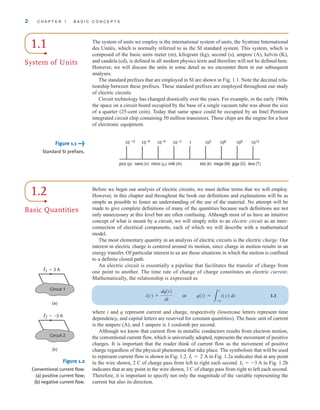
The standard prefixes that are employed in SI are shown in Fig. 1.1. Note the decimal rela-
tionship between these prefixes. These standard prefixes are employed throughout our study
of electric circuits.
Circuit technology has changed drastically over the years. For example, in the early 1960s
the space on a circuit board occupied by the base of a single vacuum tube was about the size
of a quarter (25-cent coin). Today that same space could be occupied by an Intel Pentium
integrated circuit chip containing 50 million transistors. These chips are the engine for a host
of electronic equipment.
Figure 1.1 
Standard SI prefixes.
10–12
pico (p) nano (n) micro (␮) milli (m) kilo (k) mega (M) giga (G) tera (T)
10–9
10–6
10–3
1 103
106
109
1012
1.2
Basic Quantities
Before we begin our analysis of electric circuits, we must define terms that we will employ.
However, in this chapter and throughout the book our definitions and explanations will be as
simple as possible to foster an understanding of the use of the material. No attempt will be
made to give complete definitions of many of the quantities because such definitions are not
only unnecessary at this level but are often confusing. Although most of us have an intuitive
concept of what is meant by a circuit, we will simply refer to an electric circuit as an inter-
connection of electrical components, each of which we will describe with a mathematical
model.
The most elementary quantity in an analysis of electric circuits is the electric charge. Our
interest in electric charge is centered around its motion, since charge in motion results in an
energy transfer. Of particular interest to us are those situations in which the motion is confined
to a definite closed path.
An electric circuit is essentially a pipeline that facilitates the transfer of charge from
one point to another. The time rate of change of charge constitutes an electric current.
Mathematically, the relationship is expressed as
1.1
where i and q represent current and charge, respectively (lowercase letters represent time
dependency, and capital letters are reserved for constant quantities). The basic unit of current
is the ampere (A), and 1 ampere is 1 coulomb per second.
Although we know that current flow in metallic conductors results from electron motion,
the conventional current flow, which is universally adopted, represents the movement of positive
charges. It is important that the reader think of current flow as the movement of positive
charge regardless of the physical phenomena that take place. The symbolism that will be used
to represent current flow is shown in Fig. 1.2. in Fig. 1.2a indicates that at any point
in the wire shown, 2 C of charge pass from left to right each second. in Fig. 1.2b
indicates that at any point in the wire shown, 3 C of charge pass from right to left each second.
Therefore, it is important to specify not only the magnitude of the variable representing the
current but also its direction.
I2 = -3 A
I1 = 2 A
i(t) =
dq(t)
dt
or q(t) =
3
t
-q
i(x) dx
I1=2 A
I2=–3 A
(a)
(b)
Circuit 1
Circuit 2
Figure 1.2
Conventional current flow:
(a) positive current flow;
(b) negative current flow.
irwin01_001-024hr.qxd 30-06-2010 13:16 Page 2
The two types of current that we encounter often in our daily lives, alternating current (ac)
and direct current (dc), are shown as a function of time in Fig. 1.3. Alternating current is the
common current found in every household and is used to run the refrigerator, stove, washing
machine, and so on. Batteries, which are used in automobiles and flashlights, are one source
of direct current. In addition to these two types of currents, which have a wide variety of uses,
we can generate many other types of currents. We will examine some of these other types
later in the book. In the meantime, it is interesting to note that the magnitude of currents in
elements familiar to us ranges from soup to nuts, as shown in Fig. 1.4.
We have indicated that charges in motion yield an energy transfer. Now we define the
voltage (also called the electromotive force, or potential) between two points in a circuit as the
difference in energy level of a unit charge located at each of the two points. Voltage is very sim-
ilar to a gravitational force. Think about a bowling ball being dropped from a ladder into a tank
of water. As soon as the ball is released, the force of gravity pulls it toward the bottom of the
tank. The potential energy of the bowling ball decreases as it approaches the bottom. The grav-
itational force is pushing the bowling ball through the water. Think of the bowling ball as a
charge and the voltage as the force pushing the charge through a circuit. Charges in motion
represent a current, so the motion of the bowling ball could be thought of as a current. The
water in the tank will resist the motion of the bowling ball. The motion of charges in an elec-
tric circuit will be impeded or resisted as well. We will introduce the concept of resistance in
Chapter 2 to describe this effect.
Work or energy, w(t) or W, is measured in joules (J); 1 joule is 1 newton meter (N⭈m).
Hence, voltage [v(t) or V] is measured in volts (V) and 1 volt is 1 joule per coulomb; that is,
1 volt=1 joule per coulomb=1 newton meter per coulomb. If a unit positive charge is
moved between two points, the energy required to move it is the difference in energy level
between the two points and is the defined voltage. It is extremely important that the variables
used to represent voltage between two points be defined in such a way that the solution will
let us interpret which point is at the higher potential with respect to the other.
S E C T I O N 1 . 2 B A S I C Q U A N T I T I E S 3
Figure 1.3
Two common types
of current: (a) alternating
current (ac); (b) direct
current (dc).
i(t)
t t
i(t)
(a) (b)
Figure 1.4
Typical current magnitudes.
Lightning bolt
Large industrial motor current
Typical household appliance current
Causes ventricular fibrillation in humans
Human threshold of sensation
Integrated circuit (IC) memory cell current
Synaptic current (brain cell)
106
104
102
100
10–2
10–4
10–6
10–8
10–10
10–12
10–14
Current
in
amperes
(A)
irwin01_001-024hr.qxd 30-06-2010 13:16 Page 3
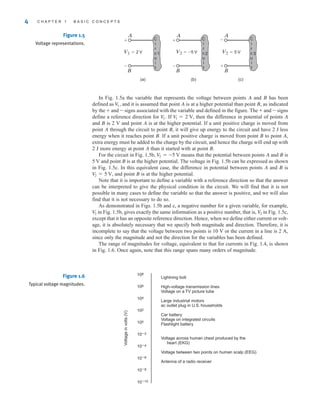
In Fig. 1.5a the variable that represents the voltage between points A and B has been
defined as and it is assumed that point A is at a higher potential than point B, as indicated
by the ± and – signs associated with the variable and defined in the figure. The ± and – signs
define a reference direction for If then the difference in potential of points A
and B is 2 V and point A is at the higher potential. If a unit positive charge is moved from
point A through the circuit to point B, it will give up energy to the circuit and have 2 J less
energy when it reaches point B. If a unit positive charge is moved from point B to point A,
extra energy must be added to the charge by the circuit, and hence the charge will end up with
2 J more energy at point A than it started with at point B.
For the circuit in Fig. 1.5b, means that the potential between points A and B is
5 V and point B is at the higher potential. The voltage in Fig. 1.5b can be expressed as shown
in Fig. 1.5c. In this equivalent case, the difference in potential between points A and B is
and point B is at the higher potential.
Note that it is important to define a variable with a reference direction so that the answer
can be interpreted to give the physical condition in the circuit. We will find that it is not
possible in many cases to define the variable so that the answer is positive, and we will also
find that it is not necessary to do so.
As demonstrated in Figs. 1.5b and c, a negative number for a given variable, for example,
in Fig. 1.5b, gives exactly the same information as a positive number, that is, in Fig. 1.5c,
except that it has an opposite reference direction. Hence, when we define either current or volt-
age, it is absolutely necessary that we specify both magnitude and direction. Therefore, it is
incomplete to say that the voltage between two points is 10 V or the current in a line is 2 A,
since only the magnitude and not the direction for the variables has been defined.
The range of magnitudes for voltage, equivalent to that for currents in Fig. 1.4, is shown
in Fig. 1.6. Once again, note that this range spans many orders of magnitude.
V2
V
2
V
2 = 5 V,
V
2 = -5 V
V
1 = 2 V,
V1.
V
1,
4 C H A P T E R 1 B A S I C C O N C E P T S
Figure 1.5
Voltage representations.
+
–
+
–
–
+
V1=2 V V2=–5 V V2=5 V
A
C
i
r
c
u
i
t
1
C
i
r
c
u
i
t
2
C
i
r
c
u
i
t
3
A A
B
(a) (b) (c)
B B
Figure 1.6
Typical voltage magnitudes.
Lightning bolt
High-voltage transmission lines
Voltage on a TV picture tube
Large industrial motors
ac outlet plug in U.S. households
Car battery
Voltage on integrated circuits
Flashlight battery
Voltage across human chest produced by the
heart (EKG)
Voltage between two points on human scalp (EEG)
Antenna of a radio receiver
108
106
104
102
100
10–2
10–4
10–6
10–8
10–10
Voltage
in
volts
(V)
irwin01_001-024hr.qxd 30-06-2010 13:16 Page 4
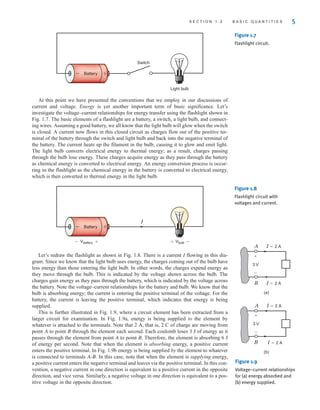
At this point we have presented the conventions that we employ in our discussions of
current and voltage. Energy is yet another important term of basic significance. Let’s
investigate the voltage–current relationships for energy transfer using the flashlight shown in
Fig. 1.7. The basic elements of a flashlight are a battery, a switch, a light bulb, and connect-
ing wires. Assuming a good battery, we all know that the light bulb will glow when the switch
is closed. A current now flows in this closed circuit as charges flow out of the positive ter-
minal of the battery through the switch and light bulb and back into the negative terminal of
the battery. The current heats up the filament in the bulb, causing it to glow and emit light.
The light bulb converts electrical energy to thermal energy; as a result, charges passing
through the bulb lose energy. These charges acquire energy as they pass through the battery
as chemical energy is converted to electrical energy. An energy conversion process is occur-
ring in the flashlight as the chemical energy in the battery is converted to electrical energy,
which is then converted to thermal energy in the light bulb.
S E C T I O N 1 . 2 B A S I C Q U A N T I T I E S 5
Battery
Switch
Light bulb
+
–
Figure 1.7
Flashlight circuit.
Figure 1.8
Flashlight circuit with
voltages and current.
Battery +
–
I
Vbulb –
+
Vbattery +
–
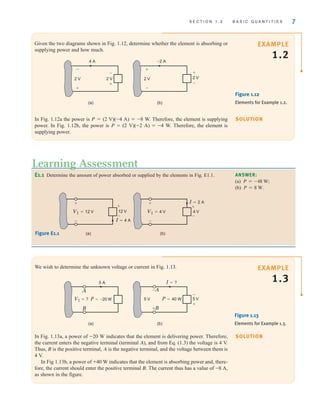
Let’s redraw the flashlight as shown in Fig. 1.8. There is a current I flowing in this dia-
gram. Since we know that the light bulb uses energy, the charges coming out of the bulb have
less energy than those entering the light bulb. In other words, the charges expend energy as
they move through the bulb. This is indicated by the voltage shown across the bulb. The
charges gain energy as they pass through the battery, which is indicated by the voltage across
the battery. Note the voltage–current relationships for the battery and bulb. We know that the
bulb is absorbing energy; the current is entering the positive terminal of the voltage. For the
battery, the current is leaving the positive terminal, which indicates that energy is being
supplied.
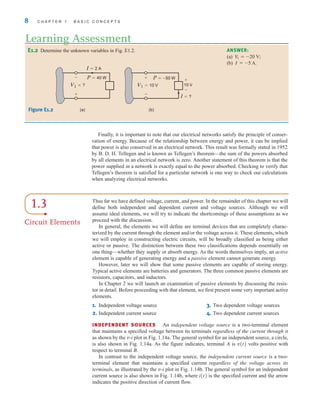
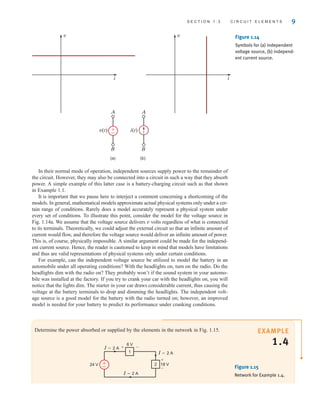
This is further illustrated in Fig. 1.9, where a circuit element has been extracted from a
larger circuit for examination. In Fig. 1.9a, energy is being supplied to the element by
whatever is attached to the terminals. Note that 2 A, that is, 2 C of charge are moving from
point A to point B through the element each second. Each coulomb loses 3 J of energy as it
passes through the element from point A to point B. Therefore, the element is absorbing 6 J
of energy per second. Note that when the element is absorbing energy, a positive current
enters the positive terminal. In Fig. 1.9b energy is being supplied by the element to whatever
is connected to terminals A-B. In this case, note that when the element is supplying energy,
a positive current enters the negative terminal and leaves via the positive terminal. In this con-
vention, a negative current in one direction is equivalent to a positive current in the opposite
direction, and vice versa. Similarly, a negative voltage in one direction is equivalent to a pos-
itive voltage in the opposite direction.
3 V
3 V
I=2 A
A
I=2 A
I=2 A
B
I=2 A
A
B
(a)
(b)
+
–
+
–
Figure 1.9
Voltage–current relationships
for (a) energy absorbed and
(b) energy supplied.
irwin01_001-024hr.qxd 30-06-2010 13:16 Page 5
6 C H A P T E R 1 B A S I C C O N C E P T S
Suppose that your car will not start. To determine whether the battery is faulty, you turn on
the light switch and find that the lights are very dim, indicating a weak battery. You borrow
a friend’s car and a set of jumper cables. However, how do you connect his car’s battery to
yours? What do you want his battery to do?
Essentially, his car’s battery must supply energy to yours, and therefore it should be
connected in the manner shown in Fig. 1.10. Note that the positive current leaves the posi-
tive terminal of the good battery (supplying energy) and enters the positive terminal of the
weak battery (absorbing energy). Note that the same connections are used when charging a
battery.
EXAMPLE
1.1
SOLUTION
I
I
Good
battery
Weak
battery
+ – + –
Figure 1.10
Diagram for Example 1.1.
In practical applications there are often considerations other than simply the electrical
relations (e.g., safety). Such is the case with jump-starting an automobile. Automobile
batteries produce explosive gases that can be ignited accidentally, causing severe physical
injury. Be safe—follow the procedure described in your auto owner’s manual.
We have defined voltage in joules per coulomb as the energy required to move a positive
charge of 1 C through an element. If we assume that we are dealing with a differential amount
of charge and energy, then
1.2
Multiplying this quantity by the current in the element yields
1.3
which is the time rate of change of energy or power measured in joules per second, or watts
(W). Since, in general, both v and i are functions of time, p is also a time-varying quantity.
Therefore, the change in energy from time to time can be found by integrating Eq. (1.3);
that is,
1.4
At this point, let us summarize our sign convention for power. To determine the sign of
any of the quantities involved, the variables for the current and voltage should be arranged as
shown in Fig. 1.11. The variable for the voltage v(t) is defined as the voltage across the ele-
ment with the positive reference at the same terminal that the current variable i(t) is entering.
This convention is called the passive sign convention and will be so noted in the remainder
of this book. The product of v and i, with their attendant signs, will determine the magnitude
and sign of the power. If the sign of the power is positive, power is being absorbed by the ele-
ment; if the sign is negative, power is being supplied by the element.
¢w =
3
t2
t1
p dt =
3
t2
t1
vi dt
t2
t1
vi =
dw
dq
a
dq
dt
b =
dw
dt
= p
v =
dw
dq
i(t)
v(t)
+
–
The passive sign convention
is used to determine whether
power is being absorbed or
supplied.
[ h i n t ]
Figure 1.11
Sign convention for power.
irwin01_001-024hr.qxd 30-06-2010 13:16 Page 6
S E C T I O N 1 . 2 B A S I C Q U A N T I T I E S 7
SOLUTION
EXAMPLE
1.2
Given the two diagrams shown in Fig. 1.12, determine whether the element is absorbing or
supplying power and how much.
2 V
+
–
2 V
4 A
2 V
(a)
–
–
+
+
–2 A
2 V
(b)
+
–
Figure 1.12
Elements for Example 1.2.
In Fig. 1.12a the power is P=(2 V)(–4 A)=–8 W. Therefore, the element is supplying
power. In Fig. 1.12b, the power is P=(2 V)(–2 A)=–4 W. Therefore, the element is
supplying power.
SOLUTION
EXAMPLE
1.3
We wish to determine the unknown voltage or current in Fig. 1.13.
In Fig. 1.13a, a power of –20 W indicates that the element is delivering power. Therefore,
the current enters the negative terminal (terminal A), and from Eq. (1.3) the voltage is 4 V.
Thus, B is the positive terminal, A is the negative terminal, and the voltage between them is
4 V.
In Fig 1.13b, a power of ±40 W indicates that the element is absorbing power and, there-
fore, the current should enter the positive terminal B. The current thus has a value of –8 A,
as shown in the figure.
E1.1 Determine the amount of power absorbed or supplied by the elements in Fig. E1.1.
Learning Assessment
ANSWER:
(a)
(b) .
P = 8 W
P = -48 W;
12 V
I=4 A
I=2 A
V1=12 V
+
–
+
–
(a)
+
–
4 V
V1=4 V
+
–
(b)
Figure E1.1
(a) (b)
5 A
A
B
V1=? P=–20 W 5 V
–A
±B
P=40 W
5 V
I=?
–
+
Figure 1.13
Elements for Example 1.3.
irwin01_001-024hr.qxd 30-06-2010 13:16 Page 7
Finally, it is important to note that our electrical networks satisfy the principle of conser-
vation of energy. Because of the relationship between energy and power, it can be implied
that power is also conserved in an electrical network. This result was formally stated in 1952
by B. D. H. Tellegen and is known as Tellegen’s theorem—the sum of the powers absorbed
by all elements in an electrical network is zero. Another statement of this theorem is that the
power supplied in a network is exactly equal to the power absorbed. Checking to verify that
Tellegen’s theorem is satisfied for a particular network is one way to check our calculations
when analyzing electrical networks.
8 C H A P T E R 1 B A S I C C O N C E P T S
E1.2 Determine the unknown variables in Fig. E1.2.
Learning Assessment
ANSWER:
(a)
(b) .
I = -5 A
V
1 = -20 V;
I=?
V1=10 V
+
–
+
–
10 V
P=–50 W
I=2 A
V1=?
–
+
P=40 W
(a) (b)
Figure E1.2
1.3
Circuit Elements
Thus far we have defined voltage, current, and power. In the remainder of this chapter we will
define both independent and dependent current and voltage sources. Although we will
assume ideal elements, we will try to indicate the shortcomings of these assumptions as we
proceed with the discussion.
In general, the elements we will define are terminal devices that are completely charac-
terized by the current through the element and/or the voltage across it. These elements, which
we will employ in constructing electric circuits, will be broadly classified as being either
active or passive. The distinction between these two classifications depends essentially on
one thing—whether they supply or absorb energy. As the words themselves imply, an active
element is capable of generating energy and a passive element cannot generate energy.
However, later we will show that some passive elements are capable of storing energy.
Typical active elements are batteries and generators. The three common passive elements are
resistors, capacitors, and inductors.
In Chapter 2 we will launch an examination of passive elements by discussing the resis-
tor in detail. Before proceeding with that element, we first present some very important active
elements.
1. Independent voltage source 3. Two dependent voltage sources
2. Independent current source 4. Two dependent current sources
INDEPENDENT SOURCES An independent voltage source is a two-terminal element
that maintains a specified voltage between its terminals regardless of the current through it
as shown by the v-i plot in Fig. 1.14a. The general symbol for an independent source, a circle,
is also shown in Fig. 1.14a. As the figure indicates, terminal A is v(t) volts positive with
respect to terminal B.
In contrast to the independent voltage source, the independent current source is a two-
terminal element that maintains a specified current regardless of the voltage across its
terminals, as illustrated by the v-i plot in Fig. 1.14b. The general symbol for an independent
current source is also shown in Fig. 1.14b, where i(t) is the specified current and the arrow
indicates the positive direction of current flow.
irwin01_001-024hr.qxd 30-06-2010 13:16 Page 8
In their normal mode of operation, independent sources supply power to the remainder of
the circuit. However, they may also be connected into a circuit in such a way that they absorb
power. A simple example of this latter case is a battery-charging circuit such as that shown
in Example 1.1.
It is important that we pause here to interject a comment concerning a shortcoming of the
models. In general, mathematical models approximate actual physical systems only under a cer-
tain range of conditions. Rarely does a model accurately represent a physical system under
every set of conditions. To illustrate this point, consider the model for the voltage source in
Fig. 1.14a. We assume that the voltage source delivers v volts regardless of what is connected
to its terminals. Theoretically, we could adjust the external circuit so that an infinite amount of
current would flow, and therefore the voltage source would deliver an infinite amount of power.
This is, of course, physically impossible. A similar argument could be made for the independ-
ent current source. Hence, the reader is cautioned to keep in mind that models have limitations
and thus are valid representations of physical systems only under certain conditions.
For example, can the independent voltage source be utilized to model the battery in an
automobile under all operating conditions? With the headlights on, turn on the radio. Do the
headlights dim with the radio on? They probably won’t if the sound system in your automo-
bile was installed at the factory. If you try to crank your car with the headlights on, you will
notice that the lights dim. The starter in your car draws considerable current, thus causing the
voltage at the battery terminals to drop and dimming the headlights. The independent volt-
age source is a good model for the battery with the radio turned on; however, an improved
model is needed for your battery to predict its performance under cranking conditions.
S E C T I O N 1 . 3 C I R C U I T E L E M E N T S 9
A
B
A
B
v(t)
v
i
i(t)
(a) (b)
v
i
+
–
Figure 1.14
Symbols for (a) independent
voltage source, (b) independ-
ent current source.
EXAMPLE
1.4
Determine the power absorbed or supplied by the elements in the network in Fig. 1.15.
24 V 18 V
I=2 A
I=2 A
I=2 A
+
+
–
–
6 V
2
1
+
– Figure 1.15
Network for Example 1.4.
irwin01_001-024hr.qxd 30-06-2010 13:16 Page 9
DEPENDENT SOURCES In contrast to the independent sources, which produce a
particular voltage or current completely unaffected by what is happening in the remainder of
the circuit, dependent sources generate a voltage or current that is determined by a voltage or
current at a specified location in the circuit. These sources are very important because they
are an integral part of the mathematical models used to describe the behavior of many elec-
tronic circuit elements.
For example, metal-oxide-semiconductor field-effect transistors (MOSFETs) and bipolar
transistors, both of which are commonly found in a host of electronic equipment, are mod-
eled with dependent sources, and therefore the analysis of electronic circuits involves the use
of these controlled elements.
In contrast to the circle used to represent independent sources, a diamond is used to
represent a dependent or controlled source. Fig. 1.16 illustrates the four types of dependent
sources. The input terminals on the left represent the voltage or current that controls the
dependent source, and the output terminals on the right represent the output current or volt-
age of the controlled source. Note that in Figs. 1.16a and d, the quantities ␮ and ␤ are dimen-
sionless constants because we are transforming voltage to voltage and current to current. This
is not the case in Figs. 1.16b and c; hence, when we employ these elements a short time later,
we must describe the units of the factors r and g.
10 C H A P T E R 1 B A S I C C O N C E P T S
The current flow is out of the positive terminal of the 24-V source, and therefore this
element is supplying (2)(24)=48 W of power. The current is into the positive terminals
of elements 1 and 2, and therefore elements 1 and 2 are absorbing (2)(6)=12 W and
(2)(18)=36 W, respectively. Note that the power supplied is equal to the power
absorbed.
SOLUTION
+
–
+
–
v=␮vS
+
–
+
–
(a) (b)
vS
vS i=gvS
v=riS
i=␤iS
iS
(c) (d)
iS
Figure 1.16
Four different types of
dependent sources.
Elements that are
connected in series have
the same current.
[ h i n t ]
E1.3 Find the power that is absorbed or supplied by the elements in Fig. E1.3.
Learning Assessment
ANSWER: Current source
supplies 36 W, element
1 absorbs 54 W, and
element 2 supplies 18 W.
Figure E1.3
12 V 6 V
I=3 A
3 A
I=3 A
+
+
–
–
+
–
18 V
2
1
irwin01_001-024hr.qxd 30-06-2010 13:16 Page 10
S E C T I O N 1 . 3 C I R C U I T E L E M E N T S 11
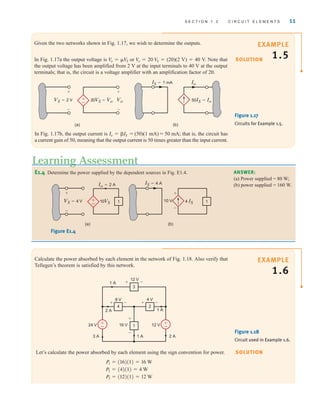
In Fig. 1.17b, the output current is = (50)(1 mA) = 50 mA; that is, the circuit has
a current gain of 50, meaning that the output current is 50 times greater than the input current.
Io = ␤IS
Io
Vo
VS=2 V 20VS=Vo
+
–
+
–
50IS=Io
IS=1 mA
(a) (b)
+
–
Figure 1.17
Circuits for Example 1.5.
E1.4 Determine the power supplied by the dependent sources in Fig. E1.4.
Learning Assessment
ANSWER:
(a) Power supplied = 80 W;
(b) power supplied = 160 W.
Figure E1.4
10VS
+
–
4 IS
IS=4 A
1 1
±
–
Io=2 A
VS=4 V
(a) (b)
10 V
+
–
SOLUTION
EXAMPLE
1.6
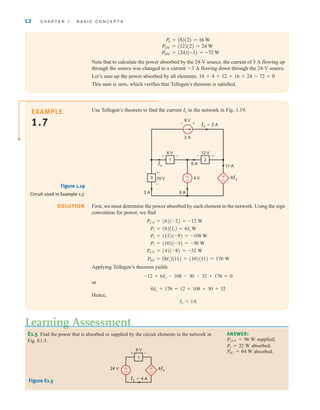
Calculate the power absorbed by each element in the network of Fig. 1.18. Also verify that
Tellegen’s theorem is satisfied by this network.
Figure 1.18
Circuit used in Example 1.6.
+
-
8 V
4
24 V
3 A
+ -
+ -
1 A 2 A
16 V
3
1
2 A
12 V
1 A
4 V
2
+ -
±
– 12 V
1 A
±
–
Let’s calculate the power absorbed by each element using the sign convention for power.
P3 = (12)(1) = 12 W
P2 = (4)(1) = 4 W
P1 = (16)(1) = 16 W
Given the two networks shown in Fig. 1.17, we wish to determine the outputs.
In Fig. 1.17a the output voltage is or =(20)(2 V)=40 V. Note that
the output voltage has been amplified from 2 V at the input terminals to 40 V at the output
terminals; that is, the circuit is a voltage amplifier with an amplification factor of 20.
V
o = 20 VS
V
o = ␮V
S SOLUTION
EXAMPLE
1.5
irwin01_001-024hr.qxd 30-06-2010 13:16 Page 11
12 C H A P T E R 1 B A S I C C O N C E P T S
Note that to calculate the power absorbed by the 24-V source, the current of 3 A flowing up
through the source was changed to a current ⫺3 A flowing down through the 24-V source.
Let’s sum up the power absorbed by all elements: 16 ⫹ 4 ⫹ 12 ⫹ 16 ⫹ 24 ⫺ 72 ⫽ 0
This sum is zero, which verifies that Tellegen’s theorem is satisfied.
P24V = (24)(-3) = -72 W
P12V = (12)(2) = 24 W
P4 = (8)(2) = 16 W
EXAMPLE
1.7
SOLUTION
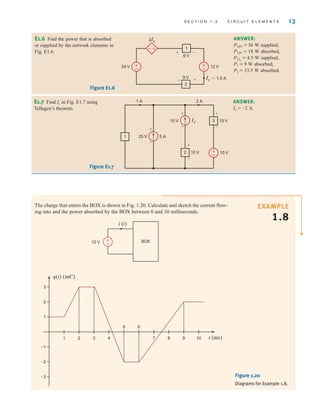
Use Tellegen’s theorem to find the current in the network in Fig. 1.19.
Io
3 ±
–
1 2
±
–
Ix=2 A
8Ix
2 A
8 A
9 A
11 A
3 A
10 V 4 V
6 V
12 V
6 V
+
+
+
+
–
–
–
–
Io
Figure 1.19
Circuit used in Example 1.7.
First, we must determine the power absorbed by each element in the network. Using the sign
convention for power, we find
Applying Tellegen’s theorem yields
or
Hence,
Io = 1A
6Io + 176 = 12 + 108 + 30 + 32
-12 + 6Io - 108 - 30 - 32 + 176 = 0
PDS = A8IxB(11) = (16)(11) = 176 W
P4 V = (4)(-8) = -32 W
P3 = (10)(-3) = -30 W
P2 = (12)(-9) = -108 W
P1 = (6)AIoB = 6Io W
P2 A = (6)(-2) = -12 W
E1.5 Find the power that is absorbed or supplied by the circuit elements in the network in
Fig. E1.5.
Learning Assessment
ANSWER:
supplied;
absorbed;
absorbed.
P4Ix
= 64 W
P1 = 32 W
P24 V = 96 W
Figure E1.5
8 V
Ix=4 A
4Ix
24 V
+ –
±
–
1
±
–
irwin01_001-024hr.qxd 30-06-2010 13:16 Page 12
S E C T I O N 1 . 3 C I R C U I T E L E M E N T S 13
E1.6 Find the power that is absorbed
or supplied by the network elements in
Fig. E1.6.
ANSWER:
P24V = 36 W supplied,
P12V = 18 W absorbed,
P21x
= 4.5 W supplied,
P1 = 9 W absorbed,
P2 = 13.5 W absorbed.
1
2
+
–
24 V +
– 12 V
9 V
6 V
+ –
2Ix
–
+
Ix=1.5 A
– +
E1.7 Find Ix in Fig. E1.7 using
Tellegen’s theorem.
ANSWER:
Ix = -2 A.
3
1
2 +
–
15 V
15 V
2 A
1 A
5 A
10 V
10 V
25 V
Ix
+
–
+
–
+
–
+
–
EXAMPLE
1.8
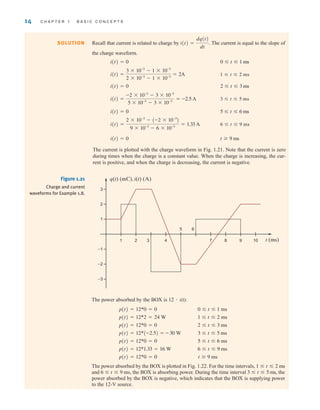
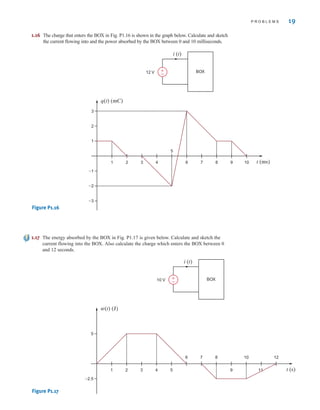
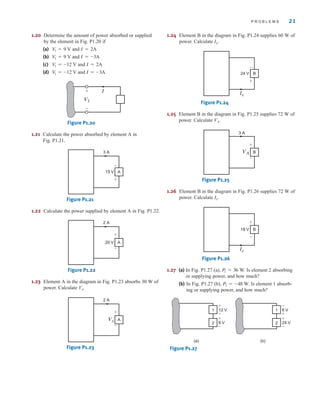
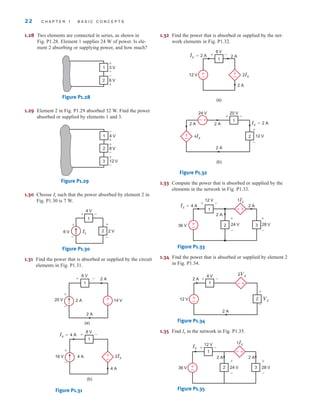
The charge that enters the BOX is shown in Fig. 1.20. Calculate and sketch the current flow-
ing into and the power absorbed by the BOX between 0 and 10 milliseconds.
12 V BOX
±
–
i (t)
q(t) (mC)
t (ms)
1
2
3
–2
–3
–1
1 2 3 4
5 6
7 8 9 10
Figure 1.20
Diagrams for Example 1.8.
Figure E1.6
Figure E1.7
irwin01_001-024hr.qxd 30-06-2010 13:16 Page 13
14 C H A P T E R 1 B A S I C C O N C E P T S
SOLUTION Recall that current is related to charge by . The current is equal to the slope of
the charge waveform.
i(t) =
dq(t)
dt
The current is plotted with the charge waveform in Fig. 1.21. Note that the current is zero
during times when the charge is a constant value. When the charge is increasing, the cur-
rent is positive, and when the charge is decreasing, the current is negative.
t ⱖ 9 ms
i(t) = 0
6 ⱕ t ⱕ 9 ms
i(t) =
2 * 10-3
- (-2 * 10-3
)
9 * 10-3
- 6 * 10-3 = 1.33 A
5 ⱕ t ⱕ 6 ms
i(t) = 0
3 ⱕ t ⱕ 5 ms
i(t) =
-2 * 10-3
- 3 * 10-3
5 * 10-3
- 3 * 10-3 = -2.5 A
2 ⱕ t ⱕ 3 ms
i(t) = 0
1 ⱕ t ⱕ 2 ms
i(t) =
3 * 10-3
- 1 * 10-3
2 * 10-3
- 1 * 10-3 = 2A
0 ⱕ t ⱕ 1 ms
i(t) = 0
q(t) (mC), i(t) (A)
t (ms)
1
2
3
–2
–3
–1
1 2 3 4
5 6
7 8 9 10
Figure 1.21
Charge and current
waveforms for Example 1.8.
The power absorbed by the BOX is 12 i(t).
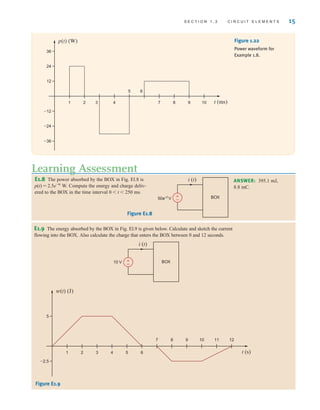
The power absorbed by the BOX is plotted in Fig. 1.22. For the time intervals,
and ms, the BOX is absorbing power. During the time interval , the
power absorbed by the BOX is negative, which indicates that the BOX is supplying power
to the 12-V source.
3 ⱕ t ⱕ 5 ms
6 ⱕ t ⱕ 9
1 ⱕ t ⱕ 2 ms
p(t) = 12*0 = 0 t ⱖ 9 ms
p(t) = 12*1.33 = 16 W 6 ⱕ t ⱕ 9 ms
p(t) = 12*0 = 0 5 ⱕ t ⱕ 6 ms
p(t) = 12*(-2.5) = - 30 W 3 ⱕ t ⱕ 5 ms
p(t) = 12*0 = 0 2 ⱕ t ⱕ 3 ms
p(t) = 12*2 = 24 W 1 ⱕ t ⱕ 2 ms
p(t) = 12*0 = 0 0 ⱕ t ⱕ 1 ms
⭈
irwin01_001-024hr.qxd 30-06-2010 13:16 Page 14
S E C T I O N 1 . 3 C I R C U I T E L E M E N T S 15
Figure 1.22
Power waveform for
Example 1.8.
p(t) (W)
t (ms)
12
24
36
–24
–36
–12
1 2 3 4
5 6
7 8 9 10
E1.8 The power absorbed by the BOX in Fig. El.8 is
p(t) = 2.5e-4t
W. Compute the energy and charge deliv-
ered to the BOX in the time interval 0 6 t 6 250 ms.
ANSWER: 395.1 mJ,
8.8 mC.
Learning Assessment
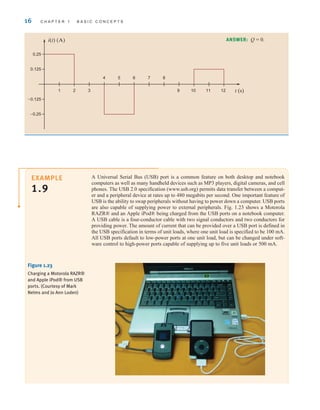
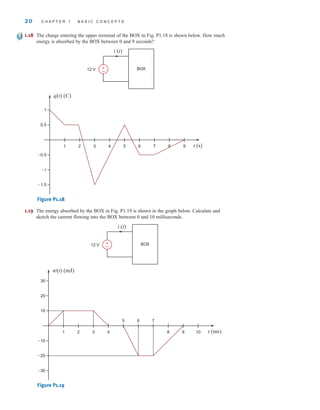
E1.9 The energy absorbed by the BOX in Fig. El.9 is given below. Calculate and sketch the current
flowing into the BOX. Also calculate the charge that enters the BOX between 0 and 12 seconds.
50e–t
V BOX
+
–
i (t)
10 V BOX
+
–
i (t)
w(t) (J)
t (s)
5
–2.5
1 2 3 4 5 6
7 8 9 10 11 12
Figure E1.8
Figure E1.9
irwin01_001-024hr.qxd 30-06-2010 13:16 Page 15
16 C H A P T E R 1 B A S I C C O N C E P T S
EXAMPLE
1.9
A Universal Serial Bus (USB) port is a common feature on both desktop and notebook
computers as well as many handheld devices such as MP3 players, digital cameras, and cell
phones. The USB 2.0 specification (www.usb.org) permits data transfer between a comput-
er and a peripheral device at rates up to 480 megabits per second. One important feature of
USB is the ability to swap peripherals without having to power down a computer. USB ports
are also capable of supplying power to external peripherals. Fig. 1.23 shows a Motorola
RAZR® and an Apple iPod® being charged from the USB ports on a notebook computer.
A USB cable is a four-conductor cable with two signal conductors and two conductors for
providing power. The amount of current that can be provided over a USB port is defined in
the USB specification in terms of unit loads, where one unit load is specified to be 100 mA.
All USB ports default to low-power ports at one unit load, but can be changed under soft-
ware control to high-power ports capable of supplying up to five unit loads or 500 mA.
Figure 1.23
Charging a Motorola RAZR®
and Apple iPod® from USB
ports. (Courtesy of Mark
Nelms and Jo Ann Loden)
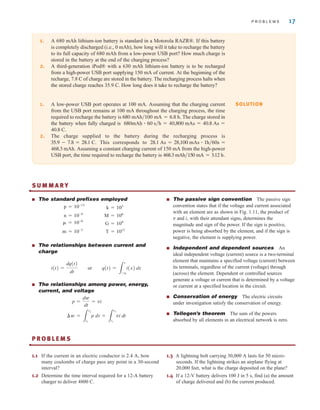
t (s)
1 2 3
4 5 6 7 8
9 10 11 12
i(t) (A)
0.125
0.25
–0.25
–0.125
ANSWER: Q = 0.
irwin01_001-024hr.qxd 30-06-2010 13:16 Page 16
P R O B L E M S 17
1. A 680 mAh lithium-ion battery is standard in a Motorola RAZR®. If this battery
is completely discharged (i.e., 0 mAh), how long will it take to recharge the battery
to its full capacity of 680 mAh from a low-power USB port? How much charge is
stored in the battery at the end of the charging process?
2. A third-generation iPod® with a 630 mAh lithium-ion battery is to be recharged
from a high-power USB port supplying 150 mA of current. At the beginning of the
recharge, 7.8 C of charge are stored in the battery. The recharging process halts when
the stored charge reaches 35.9 C. How long does it take to recharge the battery?
1. A low-power USB port operates at 100 mA. Assuming that the charging current
from the USB port remains at 100 mA throughout the charging process, the time
required to recharge the battery is . The charge stored in
the battery when fully charged is
.
2. The charge supplied to the battery during the recharging process is
. This corresponds to
. Assuming a constant charging current of 150 mA from the high-power
USB port, the time required to recharge the battery is 468.3 mAh兾150 mA = 3.12 h.
468.3 mAh
28.1 As = 28,100 mAs ⴢ 1h兾60s =
35.9 - 7.8 = 28.1 C
40.8 C
680mAh ⴢ 60 s兾h = 40,800 mAs = 40.8 As =
680 mAh兾100 mA = 6.8 h
SOLUTION
S U M M A R Y
•
■ The standard prefixes employed
■ The relationships between current and
charge
■ The relationships among power, energy,
current, and voltage
■ The passive sign convention The passive sign
convention states that if the voltage and current associated
with an element are as shown in Fig. 1.11, the product of
v and i, with their attendant signs, determines the
magnitude and sign of the power. If the sign is positive,
power is being absorbed by the element, and if the sign is
negative, the element is supplying power.
■ Independent and dependent sources An
ideal independent voltage (current) source is a two-terminal
element that maintains a specified voltage (current) between
its terminals, regardless of the current (voltage) through
(across) the element. Dependent or controlled sources
generate a voltage or current that is determined by a voltage
or current at a specified location in the circuit.
■ Conservation of energy The electric circuits
under investigation satisfy the conservation of energy.
■ Tellegen’s theorem The sum of the powers
absorbed by all elements in an electrical network is zero.
¢w =
3
t2
t1
p dt =
3
t2
t1
vi dt
p =
dw
dt
= vi
i(t) =
dq(t)
dt
or q(t) =
3
t
-q
i(x) dx
T = 1012
m = 10-3
G = 109
␮ = 10-6
M = 106
n = 10-9
k = 103
p = 10-12
P R O B L E M S
•
1.1 If the current in an electric conductor is 2.4 A, how
many coulombs of charge pass any point in a 30-second
interval?
1.2 Determine the time interval required for a 12-A battery
charger to deliver 4800 C.
1.3 A lightning bolt carrying 30,000 A lasts for 50 micro-
seconds. If the lightning strikes an airplane flying at
20,000 feet, what is the charge deposited on the plane?
1.4 If a 12-V battery delivers 100 J in 5 s, find (a) the amount
of charge delivered and (b) the current produced.
irwin01_001-024hr.qxd 30-06-2010 13:16 Page 17
18 C H A P T E R 1 B A S I C C O N C E P T S
1.5 The current in a conductor is 1.5 A. How many coulombs of
charge pass any point in a time interval of 1.5 minutes?
1.6 If 60 C of charge pass through an electric conductor in
30 seconds, determine the current in the conductor.
1.7 Determine the number of coulombs of charge produced by
a 12-A battery charger in an hour.
1.8 Five coulombs of charge pass through the element in
Fig. P1.8 from point A to point B. If the energy absorbed by
the element is 120 J, determine the voltage across the
element.
Figure P1.8
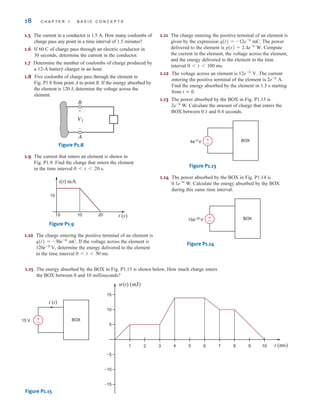
1.9 The current that enters an element is shown in
Fig. P1.9. Find the charge that enters the element
in the time interval
Figure P1.9
1.10 The charge entering the positive terminal of an element is
mC. If the voltage across the element is
, determine the energy delivered to the element
in the time interval 0 6 t 6 50 ms.
120e-2t
V
q(t) = -30e-4t
i(t) mA
t (s)
0
10
10 20
0 6 t 6 20 s.
B
A
+
-
V1
1.11 The charge entering the positive terminal of an element is
given by the expression . The power
delivered to the element is . Compute
the current in the element, the voltage across the element,
and the energy delivered to the element in the time
interval
1.12 The voltage across an element is . The current
entering the positive terminal of the element is .
Find the energy absorbed by the element in 1.5 s starting
from t ⫽
⫽ 0.
1.13 The power absorbed by the BOX in Fig. P1.13 is
2e-2t
W. Calculate the amount of charge that enters the
BOX between 0.1 and 0.4 seconds.
Figure P1.13
1.14 The power absorbed by the BOX in Fig. P1.14 is
0.1e-4t
W. Calculate the energy absorbed by the BOX
during this same time interval.
Figure P1.14
10e–2t
V BOX
+
–
4e–t
V BOX
+
–
2e-2t
A
12e-2t
V
0 6 t 6 100 ms.
p(t) = 2.4e-3t
W
q(t) = -12e-2t
mC
w(t) (mJ)
t (ms)
5
10
15
–10
–15
–5
1 2 3 4 5 6 7 8 9 10
15 V BOX
+
–
i (t)
1.15 The energy absorbed by the BOX in Fig. P1.15 is shown below. How much charge enters
the BOX between 0 and 10 milliseconds?
Figure P1.15
irwin01_001-024hr.qxd 30-06-2010 13:16 Page 18
P R O B L E M S 19
1.16 The charge that enters the BOX in Fig. P1.16 is shown in the graph below. Calculate and sketch
the current flowing into and the power absorbed by the BOX between 0 and 10 milliseconds.
12 V BOX
+
–
i (t)
q(t) (mC)
t (ms)
1
2
3
–2
–3
–1
1 2 3 4
5
6 7 8 9 10
1.17 The energy absorbed by the BOX in Fig. P1.17 is given below. Calculate and sketch the
current flowing into the BOX. Also calculate the charge which enters the BOX between 0
and 12 seconds.
10 V BOX
+
–
i (t)
w(t) (J)
t (s)
5
–2.5
1 2 3 4 5
6 7 8
9
10
11
12
Figure P1.16
Figure P1.17
irwin01_001-024hr.qxd 30-06-2010 13:16 Page 19
20 C H A P T E R 1 B A S I C C O N C E P T S
1.18 The charge entering the upper terminal of the BOX in Fig. P1.18 is shown below. How much
energy is absorbed by the BOX between 0 and 9 seconds?
Figure P1.18
1.19 The energy absorbed by the BOX in Fig. P1.19 is shown in the graph below. Calculate and
sketch the current flowing into the BOX between 0 and 10 milliseconds.
Figure P1.19
12 V BOX
+
–
i (t)
w(t) (mJ)
t (ms)
10
20
30
–20
–30
–10
1 2 3 4
5 6 7
8 9 10
12 V BOX
+
–
i (t)
q(t) (C)
t (s)
0.5
1
–1
–1.5
–0.5
1 2 3 4 5 6 7 8 9
irwin01_001-024hr.qxd 30-06-2010 13:16 Page 20
P R O B L E M S 21
1.20 Determine the amount of power absorbed or supplied
by the element in Fig. P1.20 if
(a)
(b)
(c)
(d)
Figure P1.20
1.21 Calculate the power absorbed by element A in
Fig. P1.21.
Figure P1.21
1.22 Calculate the power supplied by element A in Fig. P1.22.
Figure P1.22
1.23 Element A in the diagram in Fig. P1.23 absorbs 30 W of
power. Calculate Vx.
Figure P1.23
A
2 A
Vx
–
+
A
20 V
2 A
–
+
A
15 V
3 A
–
+
+
-
V1
I
V
1 = -12 V and I = -3A
V
1 = -12 V and I = 2A
V
1 = 9 V and I = -3A
V
1 = 9 V and I = 2A
1.24 Element B in the diagram in Fig. P1.24 supplies 60 W of
power. Calculate Ix.
Figure P1.24
1.25 Element B in the diagram in Fig. P1.25 supplies 72 W of
power. Calculate VA.
Figure P1.25
1.26 Element B in the diagram in Fig. P1.26 supplies 72 W of
power. Calculate Ix.
Figure P1.26
1.27 (a) In Fig. P1.27 (a), W. Is element 2 absorbing
or supplying power, and how much?
(b) In Fig. P1.27 (b), W. Is element 1 absorb-
ing or supplying power, and how much?
Figure P1.27
(a) (b)
12 V
–
+
6 V
-
+
6 V
+
-
24 V
-
+
1
2
1
2
P2 = -48
P1 = 36
B
18 V
Ix
–
+
B
3 A
VA
–
+
B
24 V
Ix
–
+
irwin01_001-024hr.qxd 30-06-2010 13:16 Page 21
22 C H A P T E R 1 B A S I C C O N C E P T S
1.28 Two elements are connected in series, as shown in
Fig. P1.28. Element 1 supplies 24 W of power. Is ele-
ment 2 absorbing or supplying power, and how much?
Figure P1.28
1.29 Element 2 in Fig. P1.29 absorbed 32 W. Find the power
absorbed or supplied by elements 1 and 3.
Figure P1.29
1.30 Choose such that the power absorbed by element 2 in
Fig. P1.30 is 7 W.
Figure P1.30
1.31 Find the power that is absorbed or supplied by the circuit
elements in Fig. P1.31.
Figure P1.31
16 V 4 A
1
4 A
+
-
-
+
8 V
+
-
Ix=4 A
2Ix
(b)
20 V 2 A
2 A
1
14 V
+
-
-
+
6 V
2 A
+
-
(a)
4 V
Is
6 V 2 V
+
+
–
–
+
–
1
2
Is
8 V
–
+
12 V
-
+
2
4 V
+
-
1
3
3 V
–
+
6 V
+
-
1
2
1.32 Find the power that is absorbed or supplied by the net-
work elements in Fig. P1.32.
Figure P1.32
1.33 Compute the power that is absorbed or supplied by the
elements in the network in Fig. P1.33.
Figure P1.33
1.34 Find the power that is absorbed or supplied by element 2
in Fig. P1.34.
Figure P1.34
1.35 Find Ix in the network in Fig. P1.35.
Figure P1.35
1
12 V
28 V
36 V
Ix
2 A
+ –
1Ix
–
+
3
+
–
+
–
2 A
2 24 V
+
–
1
4 V
12 V
2 A
2 A
+ –
2Vx
–
+
2 Vx
+
–
+
–
Ix=4 A
36 V
2 A
2 A
1Ix
2 3
1 – ±
12 V
+ -
28 V
+
-
24 V
+
-
±
–
(a)
Ix=2 A 2 A
2 A
2Ix
1
8 V
12 V
+ -
(b)
Ix=2 A
2 A 2 A
2 A
4Ix 2 12 V
+
-
1
20 V
24 V
+ -
±
–
±
–
–±
±
–
irwin01_001-024hr.qxd 30-06-2010 13:16 Page 22
P R O B L E M S 23
1.36 Determine the power absorbed by element 1 in Fig. P1.36.
Figure P1.36
1.37 Find the power absorbed or supplied by element 1 in
Fig. P1.37.
Figure P1.37
1.38 Find the power absorbed or supplied by element 3 in
Fig. P1.38.
Figure P1.38
1.39 Find the power absorbed or supplied by element 1 in Fig.
P1.39.
Figure P1.39
1
4 V
+ –
4Ix
Ix
+
–
3 20 V
+
–
4 20 V
+
–
2 8 V
12 V
4 A
4 A
2 A
12 V
+
–
+
–
1
4 V
+ –
+
–
+
–
+
–
2 16 V
4 A
2 A
2 A 2 A
12 V
12 V
+
–
3 Vx
2Vx
+
–
4 20 V
+
–
2 A
1
6 V
18 V
Ix
Ix
+ –
2
4 V
+ –
20 V
+
– 24 V +
–
2 A
2Ix
+
–
1
12 V
16 V
36 V
Ix + –
2
8 V
+ –
2Ix 3
+
–
+
–
2 A
24 V
+
–
1.40 Find in the network in Fig. P1.40 using Tellegen’s
theorem.
Figure P1.40
1.41 Find in the circuit in Fig. P1.41 using Tellegen’s
theorem.
Figure P1.41
1.42 Is the source in the network in Fig. P1.42 absorbing
or supplying power, and how much?
Figure P1.42
1.43 Find in the network in Fig. P1.43 using Tellegen’s
theorem.
Figure P1.43
Ix=2 A
Io
4Ix
+
4
5
2
±
–
6
3
1
6 V
-
+
-
8 V
8 V
+ -
16 V
24 V
3 A
3 A
6 A
4 A
1 A
+
-
10 V
+
-
6 V
+
-
±
–
Io
3 A 9 A
3 A
VS
+
-
8 V
6 A
-
+
10 V 9 A 16 V
-
+
6 V
+ -
+
-
V
s
Ix
Ix
2 A
18 V 12 V
+ -
8 V
+ -
4 V
+ -
6 V
2 A
24 V 2 A
+
-
12 V
+
-
±
–
–±
Ix
Vx
+ -
3
2
1
+ -
+ -
24 V
12 V
16 V
2 A
12 V
9 V -
+
-
+
+
-
V
x
irwin01_001-024hr.qxd 30-06-2010 13:16 Page 23
24 C H A P T E R 1 B A S I C C O N C E P T S
1.44 Calculate the power absorbed by each element in the
circuit in Fig. P1.44. Also verify Tellegen’s theorem is
satisfied by this circuit.
Figure P1.44
1.45 Calculate the power absorbed by each element in the cir-
cuit in Fig. P1.45. Also verify that Tellegen’s theorem is
satisfied by this circuit.
Figure P1.45
5
30 V
40 V
1
5 V
+ –
2
1 A
5 A
+
–
+
–
4 A
4 A
3 A
1 A
15 V
4
5 V
+ –
+
–
5 V
-
+
10 V
+
–
3
10 V
+ –
5
24 V
+ –
12 V
+ –
3Ix
–
+
1 2
2 A
2 A
4 A
6 A
4 A
12 V
4
9 V
24 V +
–
3 15 V
6 V
+
–
+
–
- +
6 V
+ –
4 A
2 A
Ix = 2 A
+
–
1.46 In the circuit in Fig. P1.46, element 1 absorbs 40 W, ele-
ment 2 supplies 50 W, element 3 supplies 25 W, and ele-
ment 4 absorbs 15 W. How much power is supplied by
element 5?
Figure P1.46
5
4
3
1 2
irwin01_001-024hr.qxd 30-06-2010 13:16 Page 24
CHAPTER
RESISTIVE CIRCUITS
25
Courtesy of Tesla Motors
THE LEARNING GOALS FOR THIS
CHAPTER ARE:
■ Be able to use Ohm’s law to solve electric circuits
■ Be able to apply Kirchhoff’s current law and
Kirchhoff’s voltage law to solve electric circuits
■ Know how to analyze single-loop and single-
node-pair circuits
■ Know how to combine resistors in series and
parallel
■ Be able to use voltage and current division to
solve simple electric circuits
■ Understand when and how to apply wye-delta
transformations in the analysis of electric circuits
■ Know how to analyze electric circuits contain-
ing dependent sources
T
Tesla Roadster Green technologies come in many colors.
The 2010 Tesla Roadster, for example, comes in Fusion Red,
Arctic White, Racing Green and Electric Blue, to name a few.
An environmentally friendly sports car that seats two, this
convertible has rocket acceleration and hugs the road like a
dream; it’s the world’s first high-performance electric car.
The Roadster contains over 6,800 safe, rechargeable lithium-
ion batteries that weigh about 1,000 pounds in total. It is
twice as efficient as hybrid cars that combine a gasoline
engine and an electric motor to provide propulsion, but its
fantastic performance comes at a cost of over $100,000.
Choosing between an all-electric vehicle and a hybrid
requires trade-offs on a wide range of criteria: performance,
cost, efficiency, effects on the environment, safety, and relia-
bility. Handling qualities may be highly important to some,
cost and efficiency to others.
As a student of circuit analysis, you will make trade-offs in
choosing between methods of analysis for different circuit
topologies. This chapter describes fundamental laws that
apply to all circuits regardless of their complexity. Ohm’s law
governs the most common relationship between voltage and
current for circuits that are linear. Circuits having a single
power source with resistances having the same currents and
others having the same voltage will be analyzed using the
series-parallel method. You’ll learn more techniques in the
chapters that follow, as you begin to master the same princi-
ples used by the designers of the Tesla Roadster.
2
irwin02_025-100hr.qxd 30-06-2010 13:14 Page 25
26 C H A P T E R 2 R E S I S T I V E C I R C U I T S
2.1
Ohm’s Law
Ohm’s law is named for the German physicist Georg Simon Ohm, who is credited with
establishing the voltage–current relationship for resistance. As a result of his pioneering
work, the unit of resistance bears his name.
Ohm’s law states that the voltage across a resistance is directly proportional to the current
flowing through it. The resistance, measured in ohms, is the constant of proportionality
between the voltage and current.
A circuit element whose electrical characteristic is primarily resistive is called a resistor
and is represented by the symbol shown in Fig. 2.1a. A resistor is a physical device that can
be purchased in certain standard values in an electronic parts store. These resistors, which
find use in a variety of electrical applications, are normally carbon composition or wire-
wound. In addition, resistors can be fabricated using thick oxide or thin metal films for use
in hybrid circuits, or they can be diffused in semiconductor integrated circuits. Some typical
discrete resistors are shown in Fig. 2.1b.
The mathematical relationship of Ohm’s law is illustrated by the equation
v(t)=R i(t), where R ⭌ 0 2.1
or equivalently, by the voltage–current characteristic shown in Fig. 2.2a. Note carefully the
relationship between the polarity of the voltage and the direction of the current. In addition,
note that we have tacitly assumed that the resistor has a constant value and therefore that the
voltage–current characteristic is linear.
The symbol ⍀ is used to represent ohms, and therefore,
1 ⍀=1 V/A
Although in our analysis we will always assume that the resistors are linear and are thus
described by a straight-line characteristic that passes through the origin, it is important that
readers realize that some very useful and practical elements do exist that exhibit a nonlinear
resistance characteristic; that is, the voltage–current relationship is not a straight line.
R
i(t)
v(t)
+
–
(a) (b)
Figure 2.1
(a) Symbol for a resistor;
(b) some practical devices.
(1), (2), and (3) are high-
power resistors. (4) and (5)
are high-wattage fixed
resistors. (6) is a high-
precision resistor. (7)–(12)
are fixed resistors with
different power ratings.
(Photo courtesy of Mark
Nelms and Jo Ann Loden)
The passive sign convention
will be employed in
conjunction with Ohm’s law.
[ h i n t ]
irwin02_025-100hr.qxd 22-07-2010 15:03 Page 26
i(t)
(a) (b)
v(t)
R
1
v(t)
i(t)
Figure 2.2
Graphical representation of
the voltage–current relation-
ship for (a) a linear resistor
and (b) a light bulb.
The light bulb from the flashlight in Chapter 1 is an example of an element that exhibits
a nonlinear characteristic. A typical characteristic for a light bulb is shown in Fig. 2.2b.
Since a resistor is a passive element, the proper current–voltage relationship is illustrated
in Fig. 2.1a. The power supplied to the terminals is absorbed by the resistor. Note that the
charge moves from the higher to the lower potential as it passes through the resistor and
the energy absorbed is dissipated by the resistor in the form of heat. As indicated in Chapter 1,
the rate of energy dissipation is the instantaneous power, and therefore
p(t)=v(t)i(t) 2.2
which, using Eq. (2.1), can be written as
2.3
This equation illustrates that the power is a nonlinear function of either current or voltage and
that it is always a positive quantity.
Conductance, represented by the symbol G, is another quantity with wide application in
circuit analysis. By definition, conductance is the reciprocal of resistance; that is,
2.4
The unit of conductance is the siemens, and the relationship between units is
1 S=1 A/V
Using Eq. (2.4), we can write two additional expressions,
i(t)=Gv(t) 2.5
and
2.6
Eq. (2.5) is another expression of Ohm’s law.
Two specific values of resistance, and therefore conductance, are very important: R=0
and R=q.
In examining the two cases, consider the network in Fig. 2.3a. The variable resistance
symbol is used to describe a resistor such as the volume control on a radio or television set.
p(t) =
i2
(t)
G
= Gv2
(t)
G =
1
R
p(t) = Ri2
(t) =
v2
(t)
R
S E C T I O N 2 . 1 O H M ’ S L A W 27
irwin02_025-100hr.qxd 30-06-2010 13:14 Page 27
As the resistance is decreased and becomes smaller and smaller, we finally reach a point
where the resistance is zero and the circuit is reduced to that shown in Fig. 2.3b; that is, the
resistance can be replaced by a short circuit. On the other hand, if the resistance is increased
and becomes larger and larger, we finally reach a point where it is essentially infinite and the
resistance can be replaced by an open circuit, as shown in Fig. 2.3c. Note that in the case of
a short circuit where R  0,
Therefore, although the current could theoretically be any value. In the open-
circuit case where
Therefore, the current is zero regardless of the value of the voltage across the open terminals.
= 0
i(t) = v(t)兾R
R = q,
v(t) = 0,
= 0
v(t) = Ri(t)
28 C H A P T E R 2 R E S I S T I V E C I R C U I T S
R
(a) (b) (c)
i(t) i(t) i(t)
+
–
v(t)
+
–
v(t)
+
–
v(t)
Figure 2.3
Short-circuit and open-circuit
descriptions.
In the circuit in Fig. 2.4a, determine the current and the power absorbed by the resistor.
Using Eq. (2.1), we find the current to be
I=V/R=12/2k=6 mA
Note that because many of the resistors employed in our analysis are in k, we will use k
in the equations in place of 1000. The power absorbed by the resistor is given by Eq. (2.2) or
(2.3) as
= V2
兾R = (12)2
兾2k = 0.072 W
= I2
R = A6 * 10-3
B
2
(2k) = 0.072 W
P = VI = (12)A6 * 10-3
B = 0.072 W
SOLUTION
VS
VS VS R
P=80 mW
I=0.5 mA
4 mA
P=3.6 mW
G=50 S
(a) (b)
(c) (d)
I I
I
12 V
10 k
2 k
+
-
±
–
±
–
±
–
Figure 2.4
Circuits for Examples 2.1
to 2.4.
EXAMPLE
2.1
irwin02_025-100hr.qxd 30-06-2010 13:14 Page 28
S E C T I O N 2 . 1 O H M ’ S L A W 29
SOLUTION
EXAMPLE
2.2
The power absorbed by the 10-k resistor in Fig. 2.4b is 3.6 mW. Determine the voltage
and the current in the circuit.
Using the power relationship, we can determine either of the unknowns:
and
Furthermore, once is determined, I could be obtained by Ohm’s law, and likewise once
I is known, then Ohm’s law could be used to derive the value of . Note carefully that the
equations for power involve the terms and . Therefore, and
also satisfy the mathematical equations and, in this case, the direction of both the voltage and
current is reversed.
VS = -6 V
I = -0.6 mA
V2
S
I2
V
S
V
S
I = 0.6 mA
I2
= (3.6 * 10-3
)兾10k
I2
R = P
VS = 6 V
V2
S = (3.6 * 10-3
)(10k)
V2
S兾R = P
SOLUTION
EXAMPLE
2.3
Given the circuit in Fig. 2.4c, we wish to find the value of the voltage source and the power
absorbed by the resistance.
The voltage is
The power absorbed is then
Or we could simply note that
and therefore
and the power could be determined using P = I2
R = V2
S兾R = VS I.
VS = IR = (0.5 * 10-3
)(20k) = 10 V
R = 1兾G = 20 k
P = I2
兾G = (0.5 * 10-3
)2
兾(50 * 10-6
) = 5 mW
VS = I兾G = (0.5 * 10-3
)兾(50 * 10-6
) = 10 V
SOLUTION
EXAMPLE
2.4
Given the network in Fig. 2.4d, we wish to find R and
Using the power relationship, we find that
The voltage can now be derived using Ohm’s law as
The voltage could also be obtained from the remaining power relationships in Eqs. (2.2)
and (2.3).
V
S = IR = A4 * 10-3
B(5k) = 20 V
R = P兾I2
= A80 * 10-3
B兾A4 * 10-3
B
2
= 5 k
V
S.
irwin02_025-100hr.qxd 30-06-2010 13:14 Page 29
Before leaving this initial discussion of circuits containing sources and a single resistor,
it is important to note a phenomenon that we will find to be true in circuits containing many
sources and resistors. The presence of a voltage source between a pair of terminals tells us
precisely what the voltage is between the two terminals regardless of what is happening in
the balance of the network. What we do not know is the current in the voltage source.
We must apply circuit analysis to the entire network to determine this current. Likewise, the
presence of a current source connected between two terminals specifies the exact value of
the current through the source between the terminals. What we do not know is the value
of the voltage across the current source. This value must be calculated by applying circuit
analysis to the entire network. Furthermore, it is worth emphasizing that when applying
Ohm’s law, the relationship specifies a relationship between the voltage directly
across a resistor R and the current that is present in this resistor. Ohm’s law does not apply
when the voltage is present in one part of the network and the current exists in another. This
is a common mistake made by students who try to apply to a resistor R in the
middle of the network while using a V at some other location in the network.
V = IR
V = IR
30 C H A P T E R 2 R E S I S T I V E C I R C U I T S
E2.1 Given the circuits in Fig. E2.1, find (a) the current I and the power absorbed by the resis-
tor in Fig. E2.1a, and (b) the voltage across the current source and the power supplied by the
source in Fig. E2.1b.
ANSWER: (a) I  0.3 mA,
P  3.6 mW;
(b)
P  2.16 mW.
V
S = 3.6 V,
E2.2 Given the circuits in Fig. E2.2, find (a) R and in the circuit in Fig. E2.2a, and (b) find
I and R in the circuit in Fig. E2.2b.
V
S ANSWER: (a) R=10 k,
(b) I=20.8 mA,
R=576 .
VS = 4 V;
VS 0.6 mA
40 k 6 k
+
(b)
(a)
12 V
–
I
±
–
Figure E2.1
(b)
(a)
VS
R
R
P=1.6 mW P=0.25 W
12 V
0.4 mA
+
–
I
±
–
Figure E2.2
Learning Assessments
E2.3 The power absorbed by Gx in Fig. E2.3 is 50 mW. Find Gx. ANSWER: Gx=500 S.
Gx
10 V ±
–
Figure E2.3
irwin02_025-100hr.qxd 30-06-2010 13:14 Page 30
in Fig. 2.5a will be used to describe the terms node, loop, and branch. A node is simply a
point of connection of two or more circuit elements. The reader is cautioned to note that,
although one node can be spread out with perfect conductors, it is still only one node. This
is illustrated in Fig. 2.5b, where the circuit has been redrawn. Node 5 consists of the entire
bottom connector of the circuit.
If we start at some point in the circuit and move along perfect conductors in any direction
until we encounter a circuit element, the total path we cover represents a single node.
Therefore, we can assume that a node is one end of a circuit element together with all the per-
fect conductors that are attached to it. Examining the circuit, we note that there are numerous
paths through it. A loop is simply any closed path through the circuit in which no node
is encountered more than once. For example, starting from node 1, one loop would contain the
elements and i1; another loop would contain and i1; and so on.
However, the path and i1 is not a loop because we have encountered node 3
twice. Finally, a branch is a portion of a circuit containing only a single element and the nodes
at each end of the element. The circuit in Fig. 2.5 contains eight branches.
Given the previous definitions, we are now in a position to consider Kirchhoff’s laws,
named after German scientist Gustav Robert Kirchhoff. These two laws are quite simple but
extremely important. We will not attempt to prove them because the proofs are beyond our
current level of understanding. However, we will demonstrate their usefulness and attempt to
make the reader proficient in their use. The first law is Kirchhoff’s current law (KCL), which
states that the algebraic sum of the currents entering any node is zero. In mathematical form
the law appears as
2.7
a
N
j=1
ij(t) = 0
R1, v1, R5, v2, R3,
R2, v1, v2, R4,
R1, v2, R4,
S E C T I O N 2 . 2 K I R C H H O F F ’ S L A W S 31
i1(t)
v2(t)
v1(t)
R1
R2
R5
R4
R3
(a)
R2
i1(t)
i2(t) i3(t)
i5(t)
v1(t)
v2(t)
i7(t)
i4(t)
i6(t)
i8(t)
R1
R4 R5
(b)
1
4
5
2
3
R3
–
±
±
–
±
–
–
±
Figure 2.5
Circuit used to illustrate KCL.
KCL is an extremely important
and useful law.
[ h i n t ]
2.2
Kirchhoff’s Laws
The circuits we have considered previously have all contained a single resistor, and we have
analyzed them using Ohm’s law. At this point we begin to expand our capabilities to handle
more complicated networks that result from an interconnection of two or more of these sim-
ple elements. We will assume that the interconnection is performed by electrical conductors
(wires) that have zero resistance—that is, perfect conductors. Because the wires have zero
resistance, the energy in the circuit is in essence lumped in each element, and we employ the
term lumped-parameter circuit to describe the network.
To aid us in our discussion, we will define a number of terms that will be employed
throughout our analysis. As will be our approach throughout this text, we will use examples
to illustrate the concepts and define the appropriate terms. For example, the circuit shown
irwin02_025-100hr.qxd 30-06-2010 13:14 Page 31
where ij(t) is the jth current entering the node through branch j and N is the number of
branches connected to the node. To understand the use of this law, consider node 3 shown in
Fig. 2.5. Applying Kirchhoff’s current law to this node yields
i2(t)-i4(t)+i5(t)-i7(t)=0
We have assumed that the algebraic signs of the currents entering the node are positive and,
therefore, that the signs of the currents leaving the node are negative.
If we multiply the foregoing equation by –1, we obtain the expression
–i2(t)+i4(t)-i5(t)+i7(t)=0
which simply states that the algebraic sum of the currents leaving a node is zero. Alternatively,
we can write the equation as
i2(t)+i5(t)=i4(t)+i7(t)
which states that the sum of the currents entering a node is equal to the sum of the currents
leaving the node. Both of these italicized expressions are alternative forms of Kirchhoff’s
current law.
Once again it must be emphasized that the latter statement means that the sum of the
variables that have been defined entering the node is equal to the sum of the variables that have
been defined leaving the node, not the actual currents. For example, ij(t) may be defined enter-
ing the node, but if its actual value is negative, there will be positive charge leaving the node.
Note carefully that Kirchhoff’s current law states that the algebraic sum of the currents
either entering or leaving a node must be zero. We now begin to see why we stated in
Chapter 1 that it is critically important to specify both the magnitude and the direction of a cur-
rent. Recall that current is charge in motion. Based on our background in physics, charges can-
not be stored at a node. In other words, if we have a number of charges entering a node, then
an equal number must be leaving that same node. Kirchhoff’s current law is based on this prin-
ciple of conservation of charge.
Finally, it is possible to generalize Kirchhoff’s current law to include a closed surface. By
a closed surface we mean some set of elements completely contained within the surface that
are interconnected. Since the current entering each element within the surface is equal to that
leaving the element (i.e., the element stores no net charge), it follows that the current enter-
ing an interconnection of elements is equal to that leaving the interconnection. Therefore,
Kirchhoff’s current law can also be stated as follows: The algebraic sum of the currents
entering any closed surface is zero.
32 C H A P T E R 2 R E S I S T I V E C I R C U I T S
Let us write KCL for every node in the network in Fig. 2.5, assuming that the currents
leaving the node are positive.
The KCL equations for nodes 1 through 5 are
Note carefully that if we add the first four equations, we obtain the fifth equation. What
does this tell us? Recall that this means that this set of equations is not linearly independent.
We can show that the first four equations are, however, linearly independent. Store this idea
in memory because it will become very important when we learn how to write the equations
necessary to solve for all the currents and voltages in a network in the following chapter.
-i6(t) - i7(t) + i8(t) = 0
-i3(t) + i5(t) - i8(t) = 0
-i2(t) + i4(t) - i5(t) + i7(t) = 0
i1(t) - i4(t) + i6(t) = 0
-i1(t) + i2(t) + i3(t) = 0
EXAMPLE
2.5
SOLUTION
irwin02_025-100hr.qxd 30-06-2010 13:14 Page 32
S E C T I O N 2 . 2 K I R C H H O F F ’ S L A W S 33
The network in Fig. 2.5 is represented by the topological diagram shown in Fig. 2.6. We
wish to find the unknown currents in the network.
1
2
3
4
5
I5
I4
I1
I6 30 mA
20 mA
40 mA
60 mA
SOLUTION
Assuming the currents leaving the node are positive, the KCL equations for nodes 1 through
4 are
The first equation yields and the last equation yields Knowing , we can immediately
obtain from the third equation. Then the values of and yield the value of from the
second equation. The results are and
As indicated earlier, dependent or controlled sources are very important because we
encounter them when analyzing circuits containing active elements such as transistors. The
following example presents a circuit containing a current-controlled current source.
I6 = -10 mA.
I5 = 50 mA,
I4 = 70 mA,
I1 = 80 mA,
I6
I4
I1
I4
I5
I5.
I1
-0.02 + I5 - 0.03 = 0
-0.06 + I4 - I5 + 0.04 = 0
I1 - I4 + I6 = 0
-I1 + 0.06 + 0.02 = 0
EXAMPLE
2.7
Let us write the KCL equations for the circuit shown in Fig. 2.7.
1
2
3
4
R1
R2
R3 R4
i2(t)
50i2(t)
i1(t)
v1(t)
i5(t) i3(t) i4(t)
±
–
Figure 2.7
Circuit containing a
dependent current source.
EXAMPLE
2.6
Figure 2.6
Topological diagram for the
circuit in Fig. 2.5.
irwin02_025-100hr.qxd 30-06-2010 13:14 Page 33
34 C H A P T E R 2 R E S I S T I V E C I R C U I T S
Let us find and in the network represented by the topological diagram in Fig. 2.6.
This diagram is redrawn in Fig. 2.8; node 1 is enclosed in surface 1, and nodes 3 and 4 are
enclosed in surface 2. A quick review of the previous example indicates that we derived a
value for from the value of However, is now completely enclosed in surface 2. If we
apply KCL to surface 2, assuming the currents out of the surface are positive, we obtain
or
which we obtained without any knowledge of Likewise for surface 1, what goes in must
come out and, therefore, The reader is encouraged to cut the network in Fig. 2.6
into two pieces in any fashion and show that KCL is always satisfied at the boundaries.
I1 = 80 mA.
I5.
I4 = 70 mA
I4 - 0.06 - 0.02 - 0.03 + 0.04 = 0
I5
I5.
I4
I1
I4
SOLUTION
I1
I6
I4
60 mA 20 mA
40 mA 30 mA
Surface 1
Surface 2
Figure 2.8
Diagram used to demon-
strate KCL for a surface.
Kirchhoff’s second law, called Kirchhoff’s voltage law (KVL), states that the algebraic sum of
the voltages around any loop is zero. As was the case with Kirchhoff’s current law, we will defer
the proof of this law and concentrate on understanding how to apply it. Once again the reader is
cautioned to remember that we are dealing only with lumped-parameter circuits. These circuits
are conservative, meaning that the work required to move a unit charge around any loop is zero.
In Chapter 1, we related voltage to the difference in energy levels within a circuit and
talked about the energy conversion process in a flashlight. Because of this relationship
between voltage and energy, Kirchhoff’s voltage law is based on the conservation of energy.
Recall that in Kirchhoff’s current law, the algebraic sign was required to keep track of whether
the currents were entering or leaving a node. In Kirchhoff’s voltage law, the algebraic sign is used
to keep track of the voltage polarity. In other words, as we traverse the circuit, it is necessary to
The KCL equations for nodes 1 through 4 follow:
If we added the first three equations, we would obtain the negative of the fourth. What does
this tell us about the set of equations?
i5(t) - i3(t) - i4(t) = 0
-i1(t) + 50i2(t) + i4(t) = 0
-i2(t) + i3(t) - 50i2(t) = 0
i1(t) + i2(t) - i5(t) = 0
SOLUTION
EXAMPLE
2.8
irwin02_025-100hr.qxd 30-06-2010 13:14 Page 34
sum to zero the increases and decreases in energy level. Therefore, it is important we keep track
of whether the energy level is increasing or decreasing as we go through each element.
In applying KVL, we must traverse any loop in the circuit and sum to zero the increases
and decreases in energy level. At this point, we have a decision to make. Do we want to con-
sider a decrease in energy level as positive or negative? We will adopt a policy of consider-
ing a decrease in energy level as positive and an increase in energy level as negative. As we
move around a loop, we encounter the plus sign first for a decrease in energy level and a
negative sign first for an increase in energy level.
Finally, we employ the convention to indicate the voltage of point a with respect
to point b: that is, the variable for the voltage between point a and point b, with point a
considered positive relative to point b. Since the potential is measured between two points, it
is convenient to use an arrow between the two points, with the head of the arrow located at the
positive node. Note that the double-subscript notation, the ± and – notation, and the single-
headed arrow notation are all the same if the head of the arrow is pointing toward the positive
terminal and the first subscript in the double-subscript notation. All of these equivalent forms
V
ab
S E C T I O N 2 . 2 K I R C H H O F F ’ S L A W S 35
E2.4 Given the networks in Fig. E2.3, find (a) in Fig. E2.4a and (b) in Fig. E2.4b.
IT
I1 ANSWER:
(a)
(b) IT = 70 mA.
I1 = -50 mA;
ANSWER: (a)
(b) and
I2 = 5 mA.
I1 = 8 mA
I1 = 6 mA;
ANSWER: (a) ix=4 mA;
(b) ix=12 mA.
(a)
50 mA
I1
IT
10 mA 40 mA 20 mA
(b)
±
–
Figure E2.4
I1
4 mA
10 mA
(a)
I1
I2
12 mA
4 mA
3 mA
(b)
±
–
E2.5 Find (a) in the network in Fig. E2.5a and (b) and in the circuit in Fig. E2.5b.
I2
I1
I1
E2.6 Find the current ix in the circuits in Fig. E2.6.
Figure E2.5
(a) (b)
R
44 mA
ix
10ix
R1 R2
12 mA
120 mA
ix
10ix
Figure E2.6
Learning Assessments
irwin02_025-100hr.qxd 30-06-2010 13:14 Page 35
36 C H A P T E R 2 R E S I S T I V E C I R C U I T S
Consider the network in Fig. 2.10.
EXAMPLE
2.10
SOLUTION
Figure 2.10
Circuit used to explain KVL.
e
f
a b c d
VR3
VR4
VR2
VR1
R1
R4
R2 R3
24 V
16 V
8 V
+ – +
+
–
– + –
-
+
±
–
±
–
Let us demonstrate that only two of the three possible loop equations are linearly independent.
Note that this network has three closed paths: the left loop, right loop, and outer loop.
Applying our policy for writing KVL equations and traversing the left loop starting at point
a, we obtain
The corresponding equation for the right loop starting at point b is
The equation for the outer loop starting at point a is
Note that if we add the first two equations, we obtain the third equation. Therefore, as we
indicated in Example 2.5, the three equations are not linearly independent. Once again, we
will address this issue in the next chapter and demonstrate that we need only the first two
equations to solve for the voltages in the circuit.
V
R1
+ V
R2
+ V
R3
+ 8 - 24 = 0
V
R2
+ V
R3
+ 8 + 16 - V
R4
= 0
V
R1
+ V
R4
- 16 - 24 = 0
Consider the circuit shown in Fig. 2.9. If and are known quantities, let us find V
R3
.
V
R2
V
R1
R1
VR1
VR2
VR3
R2
a
5 V
30 V
15 V
b
f e
c
d
+
+
+
–
–
–
R3
+
-
–
±
±
–
Starting at point a in the network and traversing it in a clockwise direction, we obtain the
equation
which can be written as
Now suppose that and are known to be 18 V and 12 V, respectively. Then V
R3
= 20 V.
V
R2
V
R1
= 50
+V
R1
+ V
R2
+ V
R3
= 5 + 15 + 30
+V
R1
- 5 + V
R2
- 15 + V
R3
- 30 = 0
SOLUTION
EXAMPLE
2.9
Figure 2.9
Circuit used to
illustrate KVL.
irwin02_025-100hr.qxd 30-06-2010 13:14 Page 36
for labeling voltages are shown in Fig. 2.11. The usefulness of the arrow notation stems from
the fact that we may want to label the voltage between two points that are far apart in a
network. In this case, the other notations are often confusing.
In general, the mathematical representation of Kirchhoff’s voltage law is
2.8
where vj(t) is the voltage across the jth branch (with the proper reference direction) in a loop
containing N voltages. This expression is analogous to Eq. (2.7) for Kirchhoff’s current law.
a
N
j=1
vj(t) = 0
S E C T I O N 2 . 2 K I R C H H O F F ’ S L A W S 37
1 1
(a)
Vx=Vab
a
b
+
–
1
a
b
+
–
1
Vx=Vo
+
–
Vx=Vo
+
–
Vo
(b)
Vx=Vab=Vo
(d)
Vo
+
–
Vo
+
–
(c)
Vo
Figure 2.11
Equivalent forms for labeling
voltage.
SOLUTION
EXAMPLE
2.11
Consider the network in Fig. 2.12a. Let us apply KVL to determine the voltage between two
points. Specifically, in terms of the double-subscript notation, let us find and V
ec.
V
ae
The circuit is redrawn in Fig. 2.12b. Since points a and e as well as e and c are not physi-
cally close, the arrow notation is very useful. Our approach to determining the unknown
voltage is to apply KVL with the unknown voltage in the closed path. Therefore, to deter-
mine we can use the path aefa or abcdea. The equations for the two paths in which
is the only unknown are
and
Note that both equations yield Even before calculating we could calculate
using the path cdec or cefabc. However, since is now known, we can also use the path
ceabc. KVL for each of these paths is
and
Each of these equations yields V
ec = -10 V.
-V
ec - V
ae + 16 - 12 = 0
-V
ec + 10 - 24 + 16 - 12 = 0
4 + 6 + V
ec = 0
V
ae
V
ec
V
ae,
V
ae = 14 V.
16 - 12 + 4 + 6 - V
ae = 0
Vae + 10 - 24 = 0
V
ae
V
ae
Vae Vec
(a) (b)
R1
R4 R3
R2
24 V
16 V
6 V
10 V
+ +
–
–
–
+
+
–
12 V
4 V
f d
b
e
a c
24 V
16 V
6 V
10 V
+ +
–
–
–
+
+
–
12 V
4 V
f d
b
e
a c
±
–
+
-
±
–
+
-
Figure 2.12
Network used in
Example 2.11.
KVL is an extremely important
and useful law.
[ h i n t ]
irwin02_025-100hr.qxd 30-06-2010 13:14 Page 37
38 C H A P T E R 2 R E S I S T I V E C I R C U I T S
The two KVL equations are
20V
R1
+ V
R3
- V
R2
= 0
V
R1
+ V
R2
- V
S = 0
SOLUTION
E2.8 Find and in the network in Fig. E2.8.
Veb
V
ad ANSWER:
V
eb = 10 V.
V
ad = 26 V,
12 V
4 V
24 V
8 V
6 V
f e d
a b c
+
+ – +
+
–
–
–
6 V
±
–
–
±
E2.9 Find in the circuit in Fig. E2.9.
V
bd ANSWER: Vbd = 11 V.
±
–
Vbd
VR1
VR2
= 1 V
12 V 10 VR1
a b c
d
+
–
+ +
– –
±
–
Figure E2.8
Figure E2.9
E2.7 Find IX and I1 in Fig. E2.7. ANSWER: IX = 2 mA,
I1 = 4 mA.
1 mA
6 mA
Ix
1.5Ix
I1
Figure E2.7
Given the network in Fig. 2.13 containing a dependent source, let us write the KVL equa-
tions for the two closed paths abda and bcdb.
±–
a b
d
c
VR1
VS VR3
20 VR1
VR2
R1
R2 R3
+
+
–
+
–
–
±
–
EXAMPLE
2.12
Figure 2.13
Network containing a
dependent source.
Learning Assessments
irwin02_025-100hr.qxd 30-06-2010 13:14 Page 38
S E C T I O N 2 . 3 S I N G L E - L O O P C I R C U I T S 39
Before proceeding with the analysis of simple circuits, it is extremely important that we
emphasize a subtle but very critical point. Ohm’s law as defined by the equation V=IR
refers to the relationship between the voltage and current as defined in Fig. 2.14a. If the direc-
tion of either the current or the voltage, but not both, is reversed, the relationship between the
current and the voltage would be V=–IR. In a similar manner, given the circuit in
Fig. 2.14b, if the polarity of the voltage between the terminals A and B is specified as shown,
then the direction of the current I is from point B through R to point A. Likewise, in
Fig. 2.14c, if the direction of the current is specified as shown, then the polarity of the voltage
must be such that point D is at a higher potential than point C and, therefore, the arrow rep-
resenting the voltage V is from point C to point D.
The subtleties associated
with Ohm’s law, as described
here, are important and must
be adhered to in order to
ensure that the variables
have the proper sign.
[ h i n t ]
(a) (b) (c)
V
I
R
A
B
+
–
V
I
R
A
B
-
+
V
I
R
C D
Figure 2.14
Circuits used to explain
Ohm’s law.
2.3
Single-Loop
Circuits
VOLTAGE DIVISION At this point we can begin to apply the laws presented earlier to the
analysis of simple circuits. To begin, we examine what is perhaps the simplest circuit—a
single closed path, or loop, of elements.
Applying KCL to every node in a single-loop circuit reveals that the same current flows
through all elements. We say that these elements are connected in series because they carry
the same current. We will apply Kirchhoff’s voltage law and Ohm’s law to the circuit to
determine various quantities in the circuit.
Our approach will be to begin with a simple circuit and then generalize the analysis to more
complicated ones. The circuit shown in Fig. 2.15 will serve as a basis for discussion. This cir-
cuit consists of an independent voltage source that is in series with two resistors. We have
assumed that the current flows in a clockwise direction. If this assumption is correct, the
solution of the equations that yields the current will produce a positive value. If the current is
actually flowing in the opposite direction, the value of the current variable will simply be
negative, indicating that the current is flowing in a direction opposite to that assumed. We have
also made voltage polarity assignments for and These assignments have been made
using the convention employed in our discussion of Ohm’s law and our choice for the direc-
tion of i(t)—that is, the convention shown in Fig. 2.14a.
Applying Kirchhoff’s voltage law to this circuit yields
or
However, from Ohm’s law we know that
Therefore,
v(t)=R1i(t)+R2i(t)
Solving the equation for i(t) yields
2.9
i(t) =
v(t)
R1 + R2
vR2
= R2i(t)
vR1
= R1i(t)
v(t) = vR1
+ vR2
-v(t) + vR1
+ vR2
= 0
vR2
.
vR1
±
–
vR1
vR2
R1
R2
v(t)
i(t)
+
–
+
–
Figure 2.15
Single-loop circuit.
irwin02_025-100hr.qxd 30-06-2010 13:14 Page 39
Knowing the current, we can now apply Ohm’s law to determine the voltage across each
resistor:
2.10
Similarly,
2.11
Though simple, Eqs. (2.10) and (2.11) are very important because they describe the oper-
ation of what is called a voltage divider. In other words, the source voltage v(t) is divided
between the resistors and in direct proportion to their resistances.
In essence, if we are interested in the voltage across the resistor we bypass the calcu-
lation of the current i(t) and simply multiply the input voltage v(t) by the ratio
As illustrated in Eq. (2.10), we are using the current in the calculation, but not explicitly.
Note that the equations satisfy Kirchhoff’s voltage law, since
-v(t) +
R1
R1 + R2
v(t) +
R2
R1 + R2
v(t) = 0
R1
R1 + R2
R1,
R2
R1
vR2
=
R2
R1 + R2
v(t)
=
R1
R1 + R2
v(t)
= R1 c
v(t)
R1 + R2
d
vR1
= R1i(t)
40 C H A P T E R 2 R E S I S T I V E C I R C U I T S
Consider the circuit shown in Fig. 2.16. The circuit is identical to Fig. 2.15 except that
is a variable resistor such as the volume control for a radio or television set. Suppose that
and R2 = 30 k.
R1 = 90 k,
V
S = 9 V,
R1
EXAMPLE
2.13
SOLUTION
VS
V2
R1
I
R2
+
–
±
–
Figure 2.16
Voltage-divider circuit.
Let us examine the change in both the voltage across and the power absorbed in this
resistor as is changed from 90 k to 15 k.
Since this is a voltage-divider circuit, the voltage can be obtained directly as
= 2.25 V
= c
30k
90k + 30k
d (9)
V2 = c
R2
R1 + R2
d V
S
V
2
R1
R2
The manner in which voltage
divides between two
series resistors.
[ h i n t ]
irwin02_025-100hr.qxd 30-06-2010 13:14 Page 40
Let us now demonstrate the practical utility of this simple voltage-divider network.
S E C T I O N 2 . 3 S I N G L E - L O O P C I R C U I T S 41
SOLUTION
EXAMPLE
2.14
Consider the circuit in Fig. 2.17a, which is an approximation of a high-voltage dc transmis-
sion facility. We have assumed that the bottom portion of the transmission line is a perfect
conductor and will justify this assumption in the next chapter. The load can be represented by
a resistor of value 183.5 . Therefore, the equivalent circuit of this network is shown in
Fig. 2.17b.
Figure 2.17
A high-voltage dc
transmission facility.
(a) (b)
400-mile transmission line
Line resistance is 0.04125 /mile
Perfect conductor
Load
400 kV
2 kA
Vload
16.5 
183.5 
400 kV
2 kA
+
–
±
–
±
–
Let us determine both the power delivered to the load and the power losses in the line.
Using voltage division, the load voltage is
= 367 kV
V
load = c
183.5
183.5 + 16.5
d 400k
Now suppose that the variable resistor is changed from 90 k to 15 k. Then
The direct voltage-divider calculation is equivalent to determining the current I and
then using Ohm’s law to find Note that the larger voltage is across the larger resist-
ance. This voltage-divider concept and the simple circuit we have employed to describe it
are very useful because, as will be shown later, more complicated circuits can be reduced
to this form.
Finally, let us determine the instantaneous power absorbed by the resistor under the
two conditions and For the case the power absorbed
by is
In the second case
The current in the first case is 75 A, and in the second case it is 200 A. Since the
power absorbed is a function of the square of the current, the power absorbed in the two
cases is quite different.
= 1.2 mW
P2 = a
9
45k
b
2
(30k)
= 0.169 mW
P2 = I2
R2 = a
9
120k
b
2
(30k)
R2
R1 = 90 k,
R1 = 15 k.
R1 = 90 k
R2
V
2.
= 6 V
V
2 = c
30k
30k + 15k
d 9
irwin02_025-100hr.qxd 30-06-2010 13:14 Page 41
42 C H A P T E R 2 R E S I S T I V E C I R C U I T S
(a) (b)
R1
R2
i(t)
v(t)
vR1
vR2
R2
R1
v1(t)
v2(t)
i(t)
v3(t)
v4(t)
v5(t)
+
+
–
–
-
+
–
±
±
–
-
+
+
-
±
–
Figure 2.18
Equivalent circuits with
multiple sources.
The input power is 800 MW and the power transmitted to the load is
Therefore, the power loss in the transmission line is
Since P=VI, suppose now that the utility company supplied power at 200 kV and 4 kA. What
effect would this have on our transmission network? Without making a single calculation, we
know that because power is proportional to the square of the current, there would be a large
increase in the power loss in the line and, therefore, the efficiency of the facility would decrease
substantially. That is why, in general, we transmit power at high voltage and low current.
= 66 MW
Pline = Pin - Pload = I2
Rline
= 734 MW
Pload = I2
Rload
MULTIPLE-SOURCE/RESISTOR NETWORKS At this point we wish to extend our
analysis to include a multiplicity of voltage sources and resistors. For example, consider the
circuit shown in Fig. 2.18a. Here we have assumed that the current flows in a clockwise
direction, and we have defined the variable i(t) accordingly. This may or may not be the
case, depending on the value of the various voltage sources. Kirchhoff’s voltage law for this
circuit is
or, using Ohm’s law,
which can be written as
where
so that under the preceding definitions, Fig. 2.18a is equivalent to Fig. 2.18b. In other words,
the sum of several voltage sources in series can be replaced by one source whose value is the
algebraic sum of the individual sources. This analysis can, of course, be generalized to a cir-
cuit with N series sources.
v(t) = v1(t) + v3(t) - Cv2(t) + v4(t) + v5(t)D
AR1 + R2Bi(t) = v(t)
AR1 + R2Bi(t) = v1(t) - v2(t) + v3(t) - v4(t) - v5(t)
+vR1
+ v2(t) - v3(t) + vR2
+ v4(t) + v5(t) - v1(t) = 0
irwin02_025-100hr.qxd 30-06-2010 13:14 Page 42
S E C T I O N 2 . 3 S I N G L E - L O O P C I R C U I T S 43
Now consider the circuit with N resistors in series, as shown in Fig. 2.19a. Applying
Kirchhoff’s voltage law to this circuit yields
and therefore,
v(t)=RSi(t) 2.12
where
2.13
and hence,
2.14
Note also that for any resistor in the circuit, the voltage across is given by the expression
2.15
which is the voltage-division property for multiple resistors in series.
Equation (2.13) illustrates that the equivalent resistance of N resistors in series is simply
the sum of the individual resistances. Thus, using Eq. (2.13), we can draw the circuit in
Fig. 2.19b as an equivalent circuit for the one in Fig. 2.19a.
vRi
=
Ri
RS
v(t)
Ri
Ri
i(t) =
v(t)
RS
RS = R1 + R2 + p + RN
= R1i(t) + R2i(t) + p + RNi(t)
v(t) = vR1
+ vR2
+ p + vRN
(a) (b)
+ -
vR1
+
-vRN
RN
+ -
vR2 + -
+
-
vR3
vR4
R4
R3
R2
R1
R5 RS=R1+R2+R3+…+RN
+
-
vR5
i(t)
i(t)
v(t)
v(t)
±
–
±
–
Figure 2.19
Equivalent circuits.
EXAMPLE
2.15
Given the circuit in Fig. 2.20a, let us find I, and the power absorbed by the 30-k
resistor. Finally, let us use voltage division to find V
bc.
V
bd,
Figure 2.20
Circuit used in Example 2.15.
±
–
±
–
±
–
I
12 V
6 V
30 k
10 k 20 k
e d
a b c
6 V
b
(b)
(a)
c
40 k
20 k
irwin02_025-100hr.qxd 30-06-2010 13:14 Page 43
44 C H A P T E R 2 R E S I S T I V E C I R C U I T S
Knowing the load voltage and load resistance, we can obtain the line current using
Ohm’s law:
The voltage drop across the line is
= 41.66 kV
V
line = (IL)(Rline)
= 2.083 kA
IL = 458.3k兾220
SOLUTION
Rline
Rload Vload=458.3 kV
IL
VS 220 
20  +
-
±
–
Figure 2.21
Circuit used in
Example 2.16.
EXAMPLE
2.16
A dc transmission facility is modeled by the approximate circuit shown in Fig. 2.21. If the
load voltage is known to be we wish to find the voltage at the sending end
of the line and the power loss in the line.
V
load = 458.3 kV,
KVL for the network yields the equation
Therefore, the magnitude of the current is 0.1 mA, but its direction is opposite to that
assumed.
The voltage can be calculated using either of the closed paths abdea or bcdb. The
equations for both cases are
and
Using I=–0.1 mA in either equation yields Finally, the power absorbed by the
30-k resistor is
Now from the standpoint of determining the voltage we can simply add the sources
since they are in series, add the remaining resistors since they are in series, and reduce the
network to that shown in Fig. 2.20b. Then
= -2 V
Vbc =
20k
20k + 40k
(-6)
V
bc,
P = I2
R = 0.3 mW
V
bd = 10 V.
20kI + 12 - V
bd = 0
10kI + V
bd + 30kI - 6 = 0
V
bd
I = -0.1 mA
60kI = -6
10kI + 20kI + 12 + 30kI - 6 = 0
SOLUTION
irwin02_025-100hr.qxd 30-06-2010 13:14 Page 44
S E C T I O N 2 . 3 S I N G L E - L O O P C I R C U I T S 45
Step 1. Define a current i(t). We know from KCL that there is only one current for a
single-loop circuit. This current is assumed to be flowing either clockwise or
counterclockwise around the loop.
Step 2. Using Ohm’s law, define a voltage across each resistor in terms of the defined
current.
Step 3. Apply KVL to the single-loop circuit.
Step 4. Solve the single KVL equation for the current i(t). If i(t) is positive, the current
is flowing in the direction assumed; if not, then the current is actually flowing
in the opposite direction.
Single-Loop Circuits
E2.10 Find I and in the circuit in Fig. E2.10.
V
bd ANSWER: I  0.05 mA
and .
V
bd = 10 V
E2.11 In the network in Fig. E2.11, if is 3 V, find VS.
V
ad
ANSWER: V
S = 9 V.
I
6 V
12 V
40 k
80 k
a b c
d
–
±
±
–
Figure E2.10
–
±
VS
20 k
25 k
15 k
a b c
d
Figure E2.11
Learning Assessments
Problem-Solving Strategy
Now, using KVL,
Note that since the network is simply a voltage-divider circuit, we could obtain immediately
from our knowledge of , , and . That is,
and is the only unknown in this equation.
The power absorbed by the line is
= 86.79 MW
Pline = I2
LRline
V
S
V
load = c
Rload
Rload + Rline
dV
S
V
load
Rload
Rline
V
S
= 500 kV
VS = V
line + V
load
irwin02_025-100hr.qxd 30-06-2010 13:14 Page 45
where
2.16
2.17
Therefore, the equivalent resistance of two resistors connected in parallel is equal to the
product of their resistances divided by their sum. Note also that this equivalent resistance
is always less than either or Hence, by connecting resistors in parallel we reduce the
overall resistance. In the special case when the equivalent resistance is equal to half
of the value of the individual resistors.
The manner in which the current i(t) from the source divides between the two branches
is called current division and can be found from the preceding expressions. For example,
2.18
=
R1R2
R1 + R2
i(t)
v(t) = Rpi(t)
R1 = R2,
R2.
R1
Rp
Rp =
R1R2
R1 + R2
1
Rp
=
1
R1
+
1
R2
46 C H A P T E R 2 R E S I S T I V E C I R C U I T S
The parallel resistance
equation.
[ h i n t ]
CURRENT DIVISION An important circuit is the single-node-pair circuit. If we apply KVL to
every loop in a single-node-pair circuit, we discover that all of the elements have the same volt-
age across them and, therefore, are said to be connected in parallel. We will, however, apply
Kirchhoff’s current law and Ohm’s law to determine various unknown quantities in the circuit.
Following our approach with the single-loop circuit, we will begin with the simplest case
and then generalize our analysis. Consider the circuit shown in Fig. 2.22. Here we have an
independent current source in parallel with two resistors.
R2
R1 v(t)
i(t)
i1(t) i2(t)
+
–
Figure 2.22
Simple parallel circuit.
Since all of the circuit elements are in parallel, the voltage v(t) appears across each of
them. Furthermore, an examination of the circuit indicates that the current i(t) is into the
upper node of the circuit and the currents i1(t) and i2(t) are out of the node. Since KCL
essentially states that what goes in must come out, the question we must answer is how i1(t)
and i2(t) divide the input current i(t).
Applying Kirchhoff’s current law to the upper node, we obtain
i(t)=i1(t)+i2(t)
and, employing Ohm’s law, we have
=
v(t)
Rp
= a
1
R1
+
1
R2
bv(t)
i(t) =
v(t)
R1
+
v(t)
R2
2.4
Single-Node-Pair
Circuits
irwin02_025-100hr.qxd 30-06-2010 13:14 Page 46
S E C T I O N 2 . 4 S I N G L E - N O D E - P A I R C I R C U I T S 47
The manner in which
current divides between
two parallel resistors.
[ h i n t ]
Given the network in Fig. 2.23a, let us find and
First, it is important to recognize that the current source feeds two parallel paths. To empha-
size this point, the circuit is redrawn as shown in Fig. 2.23b. Applying current division,
we obtain
and
Note that the larger current flows through the smaller resistor, and vice versa. In addition,
note that if the resistances of the two paths are equal, the current will divide equally between
them. KCL is satisfied since I1+I2=0.9 mA.
The voltage can be derived using Ohm’s law as
The problem can also be approached in the following manner. The total resistance seen by
the current source is 40 k, that is, 60 k in parallel with the series combination of 40 k
and 80 k, as shown in Fig. 2.23c. The voltage across the current source is then
Now that is known, we can apply voltage division to find Vo:
= 24 V
= a
80k
120k
b36
V
o = a
80k
80k + 40k
bV
1
V
1
= 36 V
V
1 = A0.9 * 10-3
B40k
= 24 V
V
o = 80kI2
V
o
= 0.3 mA
I2 = c
60k
60k + (40k + 80k)
d A0.9 * 10-3
B
= 0.6 mA
I1 = c
40k + 80k
60k + (40k + 80k)
d A0.9 * 10-3
B
Vo.
I1, I2,
and
2.19
and
2.20
Eqs. (2.19) and (2.20) are mathematical statements of the current-division rule.
=
R1
R1 + R2
i(t)
i2(t) =
v(t)
R2
i1(t) =
R2
R1 + R2
i(t)
i1(t) =
v(t)
R1
SOLUTION
EXAMPLE
2.17
irwin02_025-100hr.qxd 30-06-2010 13:14 Page 47
48 C H A P T E R 2 R E S I S T I V E C I R C U I T S
ANSWER:
and
P40 k = 5.76 W.
I2 = -4 mA,
I1 = 12 mA,
E2.12 Find the currents and and the power absorbed by the 40-k resistor in the network
in Fig. E2.12.
I2
I1
I1 I2
40 k 120 k
16 mA
Figure E2.12
Learning Assessment
(a) (b) (c)
40 k
0.9 mA V1
+
–
Vo
I2
I1
60 k 80 k
40 k
0.9 mA
+
–
V1
+
–
I1
I2
80 k
40 k
60 k
Vo
+
–
0.9 mA
V1
+
–
Figure 2.23
Circuits used in Example 2.17.
A typical car stereo consists of a 2-W audio amplifier and two speakers represented by
the diagram shown in Fig. 2.24a. The output circuit of the audio amplifier is in essence a
430-mA current source, and each speaker has a resistance of 4 . Let us determine the
power absorbed by the speakers.
The audio system can be modeled as shown in Fig. 2.24b. Since the speakers are both 4-
devices, the current will split evenly between them, and the power absorbed by each speaker is
= 184.9 mW
= A215 * 10-3
B
2
(4)
P = I2
R
(a) (b)
Audio
amplifier
430 mA 4  4 
Figure 2.24
Circuits used in
Example 2.18.
SOLUTION
EXAMPLE
2.18
irwin02_025-100hr.qxd 30-06-2010 13:14 Page 48
MULTIPLE-SOURCE/RESISTOR NETWORKS Let us now extend our analysis to
include a multiplicity of current sources and resistors in parallel. For example, consider the cir-
cuit shown in Fig. 2.25a. We have assumed that the upper node is v(t) volts positive with respect
to the lower node. Applying Kirchhoff’s current law to the upper node yields
i1(t)-i2(t)-i3(t)+i4(t)-i5(t)-i6(t)=0
or
i1(t)-i3(t)+i4(t)-i6(t)=i2(t)+i5(t)
The terms on the left side of the equation all represent sources that can be combined
algebraically into a single source; that is,
io(t)=i1(t)-i3(t)+i4(t)-i6(t)
which effectively reduces the circuit in Fig. 2.25a to that in Fig. 2.25b. We could, of course,
generalize this analysis to a circuit with N current sources. Using Ohm’s law, we can express
the currents on the right side of the equation in terms of the voltage and individual resistances
so that the KCL equation reduces to
Now consider the circuit with N resistors in parallel, as shown in Fig. 2.26a. Applying
Kirchhoff’s current law to the upper node yields
io(t) = a
1
R1
+
1
R2
bv(t)
S E C T I O N 2 . 4 S I N G L E - N O D E - P A I R C I R C U I T S 49
(a)
R1 R2
i1(t) i3(t) i4(t) i6(t)
i2(t) i5(t)
v(t)
+
–
(b)
R1 R2
io(t) v(t)
+
–
Figure 2.25
Equivalent circuits.
(a) (b)
Rp
v(t)
io(t)
+
–
RN
R1 R2
v(t) io(t)
i1(t) i2(t) iN(t)
+
–
Figure 2.26
Equivalent circuits.
2.21
or
2.22
where
2.23
1
Rp
= a
N
i=1
1
Ri
io(t) =
v(t)
Rp
= a
1
R1
+
1
R2
+ p +
1
RN
bv(t)
io(t) = i1(t) + i2(t) + p + iN(t)
irwin02_025-100hr.qxd 30-06-2010 13:14 Page 49
50 C H A P T E R 2 R E S I S T I V E C I R C U I T S
Step 1. Define a voltage v(t) between the two nodes in this circuit. We know from
KVL that there is only one voltage for a single-node-pair circuit. A polarity is
assigned to the voltage such that one of the nodes is assumed to be at a higher
potential than the other node, which we will call the reference node.
Step 2. Using Ohm’s law, define a current flowing through each resistor in terms of the
defined voltage.
Step 3. Apply KCL at one of the two nodes in the circuit.
Step 4. Solve the single KCL equation for v(t). If v(t) is positive, then the
reference node is actually at a lower potential than the other node; if not,
the reference node is actually at a higher potential than the other node
Single-Node-Pair
Circuits
Problem-Solving Strategy
Given the circuit in Fig. 2.27a, we wish to find the current in the 12-k load resistor.
To simplify the network in Fig. 2.27a, we add the current sources algebraically and combine
the parallel resistors in the following manner:
Using these values we can reduce the circuit in Fig. 2.27a to that in Fig. 2.27b. Now,
applying current division, we obtain
= -0.25 mA
IL = - c
4k
4k + 12k
d A1 * 10-3
B
Rp = 4 k
1
Rp
=
1
18k
+
1
9k
+
1
12k
IL
18 k 9 k 12 k RL=12 k 4 k 12 k
1 mA
1 mA
2 mA
4 mA
IL
(a) (b)
Figure 2.27
Circuits used
in Example 2.19.
so that as far as the source is concerned, Fig. 2.26a can be reduced to an equivalent circuit,
as shown in Fig. 2.26b.
The current division for any branch can be calculated using Ohm’s law and the preceding
equations. For example, for the jth branch in the network of Fig. 2.26a,
Using Eq. (2.22), we obtain
2.24
which defines the current-division rule for the general case.
ij(t) =
Rp
Rj
io(t)
ij(t) =
v(t)
Rj
SOLUTION
EXAMPLE
2.19
irwin02_025-100hr.qxd 30-06-2010 13:14 Page 50
S E C T I O N 2 . 5 S E R I E S A N D P A R A L L E L R E S I S T O R C O M B I N A T I O N S 51
E2.13 Find the power absorbed by the 6-kΩ resistor in the network in Fig. E2.13.
6 mA
4 mA
4 k 6 k 12 k
ANSWER: P  2.67 mW.
Figure E2.13
Learning Assessment
2.5
Series and
Parallel Resistor
Combinations
We have shown in our earlier developments that the equivalent resistance of N resistors in
series is
2.25
and the equivalent resistance of N resistors in parallel is found from
2.26
Let us now examine some combinations of these two cases.
1
Rp
=
1
R1
+
1
R2
+ p +
1
RN
RS = R1 + R2 + p + RN
We wish to determine the resistance at terminals A-B in the network in Fig. 2.28a.
Starting at the opposite end of the network from the terminals and combining resistors as
shown in the sequence of circuits in Fig. 2.28, we find that the equivalent resistance at the
terminals is 5 k.
SOLUTION
EXAMPLE
2.20
RAB
A
B
(a)
9 k 2 k
1 k
2 k 2 k 10 k
6 k 6 k
6 k
4 k RAB
A
B
9 k
2 k 2 k
6 k
6 k
4 k
(b)
12 k=10 k+
(6 k in parallel
with 3 k)
RAB
A
B
(c)
9 k
2 k
6 k
4 k
6 k=2 k+
(6 k in parallel
with 12 k)
RAB
A
B
(d)
2 k
4 k
12 k=9 k+
(6 k in parallel
with 6 k)
RAB
A
B
2 k
(e)
3 k=(4 k in parallel with 12 k)
Figure 2.28
Simplification of a resistance
network.
irwin02_025-100hr.qxd 30-06-2010 13:14 Page 51
52 C H A P T E R 2 R E S I S T I V E C I R C U I T S
When trying to determine the equivalent resistance at a pair of terminals of a network com-
posed of an interconnection of numerous resistors, it is recommended that the analysis
begin at the end of the network opposite the terminals. Two or more resistors are combined
to form a single resistor, thus simplifying the network by reducing the number of compo-
nents as the analysis continues in a steady progression toward the terminals. The simplifi-
cation involves the following:
Step 1. Resistors in series. Resistors R1 and R2 are in series if they are connected end
to end with one common node and carry exactly the same current. They can
then be combined into a single resistor RS, where RS=R1+R2.
Step 2. Resistors in parallel. Resistors R1 and R2 are in parallel if they are connected to
the same two nodes and have exactly the same voltage across their terminals. They
can then be combined into a single resistor Rp, where
These two combinations are used repeatedly, as needed, to reduce the network to a
single resistor at the pair of terminals.
Rp = R1R2兾AR1 + R2B.
Simplifying Resistor
Combinations
E2.15 Find the equivalent resistance at the terminals A-B in the circuit in Fig. E2.15. ANSWER: RAB  3 k.
RAB
A
B
4 k 4 k
3 k
12 k 8 k
6 k
Figure E2.15
Learning Assessment
Problem-Solving Strategy
E2.16 Find RAB in Fig. E2.16. ANSWER: RAB  12 k.
4 k
A
B
3 k 2 k
4 k 4 k 2 k
8 k
12 k
6 k 2 k
RAB
Figure E2.16
E2.14 Find the equivalent resistance at the terminals A-B in the network in Fig. E2.14.
A
B
6 k 3 k
18 k
10 k
6 k
RAB
Figure E2.14
ANSWER: RAB  22 k.
Learning Assessment
irwin02_025-100hr.qxd 30-06-2010 13:14 Page 52
S E C T I O N 2 . 5 S E R I E S A N D P A R A L L E L R E S I S T O R C O M B I N A T I O N S 53
A standard dc current-limiting power supply shown in Fig. 2.29a provides 0–18 V at 3 A to
a load. The voltage drop, across a resistor, R, is used as a current-sensing device, fed
back to the power supply and used to limit the current I. That is, if the load is adjusted so
that the current tries to exceed 3 A, the power supply will act to limit the current to that
value. The feedback voltage, should typically not exceed 600 mV.
If we have a box of standard 0.1- , 5-W resistors, let us determine the configuration of
these resistors that will provide when the current is 3 A.
VR = 600 mV
Æ
V
R ,
V
R,
(a) (b) (c)
0.1 
0.1 
dc
power
supply
R
I
Load
0 A
0 A
All resistors
0.1 
VR
+
+
-
-
R
R
Figure 2.29
Circuits used in
Example 2.21.
SOLUTION
Using Ohm’s law, the value of R should be
Therefore, two 0.1- resistors connected in series, as shown in Fig. 2.29b, will provide the
proper feedback voltage. Suppose, however, that the power supply current is to be limited
to 9 A. The resistance required in this case to produce is
We must now determine how to interconnect the 0.1- resistor to obtain .
Since the desired resistance is less than the components available (i.e., 0.1- ), we must
connect the resistors in some type of parallel configuration. Since all the resistors are of
equal value, note that three of them connected in parallel would provide a resistance of
one-third their value, or . Then two such combinations connected in series, as
shown in Fig. 2.29c, would produce the proper resistance.
0.0333 
Æ
R = 0.0667 
Æ
= 0.0667 
R =
0.6
9
V
R = 600 mV
= 0.2 
=
0.6
3
R =
V
R
I
EXAMPLE
2.21
irwin02_025-100hr.qxd 30-06-2010 13:14 Page 53
54 C H A P T E R 2 R E S I S T I V E C I R C U I T S
TABLE 2.1 Standard resistor values for 5% and 10% tolerances (values available with a 10%
tolerance shown in boldface)
1.0 10 100 1.0k 10k 100k 1.0M 10M
1.1 11 110 1.1k 11k 110k 1.1M 11M
1.2 12 120 1.2k 12k 120k 1.2M 12M
1.3 13 130 1.3k 13k 130k 1.3M 13M
1.5 15 150 1.5k 15k 150k 1.5M 15M
1.6 16 160 1.6k 16k 160k 1.6M 16M
1.8 18 180 1.8k 18k 180k 1.8M 18M
2.0 20 200 2.0k 20k 200k 2.0M 20M
2.2 22 220 2.2k 22k 220k 2.2M 22M
2.4 24 240 2.4k 24k 240k 2.4M
2.7 27 270 2.7k 27k 270k 2.7M
3.0 30 300 3.0k 30k 300k 3.0M
3.3 33 330 3.3k 33k 330k 3.3M
3.6 36 360 3.6k 36k 360k 3.6M
3.9 39 390 3.9k 39k 390k 3.9M
4.3 43 430 4.3k 43k 430k 4.3M
4.7 47 470 4.7k 47k 470k 4.7M
5.1 51 510 5.1k 51k 510k 5.1M
5.6 56 560 5.6k 56k 560k 5.6M
6.2 62 620 6.2k 62k 620k 6.2M
6.8 68 680 6.8k 68k 680k 6.8M
7.5 75 750 7.5k 75k 750k 7.5M
8.2 82 820 8.2k 82k 820k 8.2M
9.1 91 910 9.1k 91k 910k 9.1M
RESISTOR SPECIFICATIONS Some important parameters that are used to specify
resistors are the resistor’s value, tolerance, and power rating. The tolerance specifications for
resistors are typically 5% and 10%. A listing of standard resistor values with their specified
tolerances is shown in Table 2.1.
The power rating for a resistor specifies the maximum power that can be dissipated by the
resistor. Some typical power ratings for resistors are and so forth,
up to very high values for high-power applications. Thus, in selecting a resistor for some par-
ticular application, one important selection criterion is the expected power dissipation.
1兾4 W, 1兾2 W, 1 W, 2 W,
Finally, we must check to ensure that the configurations in Figs. 2.29b and c have not
exceeded the power rating of the resistors. In the first case, the current is present
in each of the two series resistors. Therefore, the power absorbed in each resistor is
which is well within the 5-W rating of the resistors.
In the second case, the current The resistor configuration for R in this case is a
series combination of two sets of three parallel resistors of equal value. Using current
division, we know that the current I will split equally among the three parallel paths and,
hence, the current in each resistor will be 3 A. Therefore, once again, the power absorbed
by each resistor is within its power rating.
I = 9 A.
= 0.9 W
= (3)2
(0.1)
P = I2
R
I = 3 A
irwin02_025-100hr.qxd 30-06-2010 13:14 Page 54
Given the network in Fig. 2.30, we wish to find the range for both the current and power
dissipation in the resistor if R is a 2.7-k resistor with a tolerance of 10%.
Using the equations I=V/R=10/R and , the minimum and maxi-
mum values for the resistor, current, and power are outlined next.
Minimum resistor value=R(1-0.1)=0.9 R=2.43 k
Maximum resistor value=R(1+0.1)=1.1 R=2.97 k
Minimum current value=10/2970=3.37 mA
Maximum current value=10/2430=4.12 mA
Minimum power value=100/2970=33.7 mW
Maximum power value=100/2430=41.2 mW
Thus, the ranges for the current and power are 3.37 mA to 4.12 mA and 33.7 mW to
41.2 mW, respectively.
P = V2
兾R = 100兾R
S E C T I O N 2 . 6 C I R C U I T S W I T H S E R I E S - P A R A L L E L C O M B I N A T I O N S O F R E S I S T O R S 55
I
10 V R
±
–
Figure 2.30
Circuit used in Example 2.22.
Given the network shown in Fig. 2.31: (a) find the required value for the resistor R; (b) use
Table 2.1 to select a standard 10% tolerance resistor for R; (c) using the resistor selected in
(b), determine the voltage across the 3.9-k resistor; (d) calculate the percent error in the
voltage if the standard resistor selected in (b) is used; and (e) determine the power rat-
ing for this standard component.
V
1,
SOLUTION
a. Using KVL, the voltage across R is 19 V. Then using Ohm’s law, the current in the loop is
I=5/3.9k=1.282 mA
The required value of R is then
R=19/0.001282=14.82 k
b. As shown in Table 2.1, the nearest standard 10% tolerance resistor is 15 k.
c. Using the standard 15-k resistor, the actual current in the circuit is
I=24/18.9k=1.2698 mA
and the voltage across the 3.9-k resistor is
V=IR=(0.0012698)(3.9k)=4.952 V
d. The percent error involved in using the standard resistor is
% Error=(4.952-5)/5*100=–0.96%
e. The power absorbed by the resistor R is then
Therefore, even a quarter-watt resistor is adequate in this application.
P = IR = (0.0012698)2
(15k) = 24.2 mW
24 V
R
V1=5 V
+
–
3.9 k
±
–
Figure 2.31
Circuit used in Example 2.23.
2.6
Circuits with
Series-Parallel
Combinations
of Resistors
At this point we have learned many techniques that are fundamental to circuit analysis.
Now we wish to apply them and show how they can be used in concert to analyze circuits.
We will illustrate their application through a number of examples that will be treated in
some detail.
SOLUTION
EXAMPLE
2.22
EXAMPLE
2.23
irwin02_025-100hr.qxd 30-06-2010 13:14 Page 55
56 C H A P T E R 2 R E S I S T I V E C I R C U I T S
To begin our analysis of the network, we start at the right end of the circuit and combine the
resistors to determine the total resistance seen by the 12-V source. This will allow us to cal-
culate the current Then employing KVL, KCL, Ohm’s law, and/or voltage and current
division, we will be able to calculate all currents and voltages in the network.
At the right end of the circuit, the 9-k and 3-k resistors are in series and, thus, can be
combined into one equivalent 12-k resistor. This resistor is in parallel with the 4-k resis-
tor, and their combination yields an equivalent 3-k resistor, shown at the right edge of the
circuit in Fig. 2.32b. In Fig. 2.32b the two 3-k resistors are in series, and their combina-
tion is in parallel with the 6-k resistor. Combining all three resistances yields the circuit
shown in Fig. 2.32c.
Applying Kirchhoff’s voltage law to the circuit in Fig. 2.32c yields
can be calculated from Ohm’s law as
or, using Kirchhoff’s voltage law,
Knowing and we can now determine all currents and voltages in Fig. 2.32b. Since
the current can be found using Ohm’s law as
=
1
2
mA
I2 =
3
6k
I2
V
a = 3 V,
V
a,
I1
= 3 V
= 12 - 9
V
a = 12 - 9kI1
= 3 V
Va = I1(3k)
Va
I1 = 1 mA
I1(9k + 3k) = 12
I1.
SOLUTION
We wish to find all the currents and voltages labeled in the ladder network shown in
Fig. 2.32a.
Figure 2.32
Analysis of a ladder network.
(a) (b)
Va Vb Vc
I1
I1
I3 I5
I2
I1 I3
I4
12 V 3 k
4 k
6 k
9 k
3 k
9 k
+
–
+
+
– + –
–
+
–
+
–
+
–
+
–
Va Vb
I1 I3
I2
12 V 3 k
6 k
3 k
9 k
+
–
+
–
(d)
(c)
12 V
12 V
9 V
3 V
+
–
Va 6 k 4 k
3 k
3 k
9 k
9 k
9 k
3 k
1 mA
— mA
1
2
— mA
1
2
— V
3
2
— V
3
2
+ –
— mA
1
8
— mA
3
8
— V
3
8
— V
9
8
I5
±
–
±
–
±
–
±
–
EXAMPLE
2.24
irwin02_025-100hr.qxd 30-06-2010 13:14 Page 56
S E C T I O N 2 . 6 C I R C U I T S W I T H S E R I E S - P A R A L L E L C O M B I N A T I O N S O F R E S I S T O R S 57
Then, using Kirchhoff’s current law, we have
Note that the could also be calculated using Ohm’s law:
Applying Kirchhoff’s voltage law to the right-hand loop in Fig. 2.32b yields
or, since is equal to the voltage drop across the 3-k resistor, we could use Ohm’s law as
We are now in a position to calculate the final unknown currents and voltages in Fig. 2.32a.
Knowing we can calculate using Ohm’s law as
Then, from Kirchhoff’s current law, we have
We could also have calculated using the current-division rule. For example,
=
1
8
mA
I5 =
4k
4k + (9k + 3k)
I3
I5
I5 =
1
8
mA
1
2
* 10-3
=
3
8
* 10-3
+ I5
I3 = I4 + I5
=
3
8
mA
I4 =
3
2
4k
V
b = 4kI4
I4
V
b,
=
3
2
V
V
b = 3kI3
V
b
V
b =
3
2
V
3 - V
b =
3
2
V
a - V
b = 3kI3
=
1
2
mA
I3 =
3
6k
V
a = (3k + 3k)I3
I3
I3 =
1
2
mA
1 * 10-3
=
1
2
* 10-3
+ I3
I1 = I2 + I3
irwin02_025-100hr.qxd 30-06-2010 13:14 Page 57
58 C H A P T E R 2 R E S I S T I V E C I R C U I T S
Given the circuit in Fig. 2.33 and let us find the source voltage
If then from Ohm’s law, can now be used to calculate
Kirchhoff’s current law applied at node y yields
Then, from Ohm’s law, we have
Since is now known, I5 can be obtained:
Applying Kirchhoff’s current law at node x yields
Now KVL applied to any closed path containing will yield the value of this input source.
For example, if the path is the outer loop, KVL yields
Since and
V
o = 36 V
I5 = 1.5 mA,
I1 = 3 mA
-Vo + 6kI1 + 3kI5 + 1kI5 + 4kI1 = 0
V
o
= 3 mA
I1 = I2 + I5
= 1.5 mA
I5 =
V
a + V
b
3k + 1k
V
a + V
b
= 3 V
V
a = A1.5 * 10-3
B(2k)
= 1.5 mA
I2 = I3 + I4
I3 = 1 mA.
V
b
V
b = 3 V.
I4 = 1兾2 mA,
V
o.
I4 = 1兾2 mA,
SOLUTION
EXAMPLE
2.25
Finally, can be computed as
can also be found using voltage division (i.e., the voltage will be divided between the
9-k and 3-k resistors). Therefore,
Note that Kirchhoff’s current law is satisfied at every node and Kirchhoff’s voltage law
is satisfied around every loop, as shown in Fig. 2.32d.
=
3
8
V
V
c = c
3k
3k + 9k
dV
b
V
b
V
c
=
3
8
V
V
c = I5(3k)
V
c
The following example is, in essence, the reverse of the previous example in that we
are given the current in some branch in the network and are asked to find the value of the
input source.
irwin02_025-100hr.qxd 30-06-2010 13:14 Page 58
S E C T I O N 2 . 6 C I R C U I T S W I T H S E R I E S - P A R A L L E L C O M B I N A T I O N S O F R E S I S T O R S 59
Step 1. Systematically reduce the resistive network so that the resistance seen by the
source is represented by a single resistor.
Step 2. Determine the source current for a voltage source or the source voltage if a
current source is present.
Step 3. Expand the network, retracing the simplification steps, and apply Ohm’s law,
KVL, KCL, voltage division, and current division to determine all currents and
voltages in the network.
Problem-Solving Strategy
Analyzing Circuits
Containing a
Single Source and
a Series-Parallel
Interconnection
of Resistors
Vb
Va
Vo
I1 I5
I2
I3 I4
6 k 3 k
2 k
1 k
6 k
3 k
4 k z
y
x
+
–
–
+
±
–
Figure 2.33
Example circuit for analysis.
If we had selected the path containing the source and the points x, y, and z, we would obtain
Once again, this equation yields
Vo = 36 V
-Vo + 6kI1 + V
a + V
b + 4kI1 = 0
E2.17 Find in the network in Fig. E2.17.
V
o ANSWER: V
o = 2 V.
E2.18 Find in the circuit in Fig. E2.18.
V
S ANSWER: V
S = 9 V.
Vo
12 V
20 k 40 k
30 k 20 k
+
–
±
–
Figure E2.17
VS
20 k
60 k
0.1 mA
120 k
±
–
Figure E2.18
Learning Assessments
irwin02_025-100hr.qxd 30-06-2010 13:14 Page 59
60 C H A P T E R 2 R E S I S T I V E C I R C U I T S
E2.21 Find I0 in Fig. E2.21. ANSWER: I0=- 4 mA.
E2.22 Find Vo, V1, and V2 in Fig. E2.22. ANSWER: Vo=3.33 V,
V1=- 4 V, V2=4 V.
9 mA
12 k
3 k 6 k
4 k
I0
Figure E2.21
V2
+
–
V1
+
–
Vo
+
–
+
–
10 k
10 k 12 k 8 k
20 k 3 k 4 k
4 k
5 k 16 V
Figure E2.22
E2.20 Find V1 in Fig. E2.20. ANSWER: V1=12 V.
25 mA 15 mA
3 k
6 k
6 k
V1
–
+
Figure E2.20
E2.19 Find in the circuit in Fig. E2.19.
IS ANSWER: IS = 0.3 mA.
3 V
IS
90 k
60 k 30 k
+
–
Figure E2.19
irwin02_025-100hr.qxd 30-06-2010 13:14 Page 60
Consider the networks shown in Fig. 2.35. Note that the resistors in Fig. 2.35a form a
 (delta) and the resistors in Fig. 2.35b form a Y (wye). If both of these configurations are
connected at only three terminals a, b, and c, it would be very advantageous if an equivalence
could be established between them. It is, in fact, possible to relate the resistances of one net-
work to those of the other such that their terminal characteristics are the same. This relation-
ship between the two network configurations is called the Y- transformation.
The transformation that relates the resistances R1, R2, and R3 to the resistances Ra, Rb, and
Rc is derived as follows. For the two networks to be equivalent at each corresponding pair of
terminals, it is necessary that the resistance at the corresponding terminals be equal (e.g., the
resistance at terminals a and b with c open-circuited must be the same for both networks).
S E C T I O N 2 . 7 W Y E ∆ D E L T A T R A N S F O R M A T I O N S 61
I1
R1
R3
R2
R4
R6
R5
V1 ±
–
Figure 2.34
Network used to illustrate the
need for the wye ∆ delta
transformation.
R3
R2
Ra
Rc Rb
R1
a
c b
b
c
a
(a) (b)
Figure 2.35
Delta and wye resistance
networks.
2.7
Wye ∆ Delta
Transformations
To provide motivation for this topic, consider the circuit in Fig. 2.34. Note that this network has
essentially the same number of elements as contained in our recent examples. However, when
we attempt to reduce the circuit to an equivalent network containing the source and an equiv-
alent resistor R, we find that nowhere is a resistor in series or parallel with another. Therefore,
we cannot attack the problem directly using the techniques that we have learned thus far. We
can, however, replace one portion of the network with an equivalent circuit, and this conversion
will permit us, with ease, to reduce the combination of resistors to a single equivalent resist-
ance. This conversion is called the wye-to-delta or delta-to-wye transformation.
V
1
E2.23 Find V0 and V1 in Fig. E2.23. ANSWER: V0 = -60 V,
V1 = 10 V.
V1
–
+
Vo
+
–
4 k
10 k 6 k
12 k
4 k
20 mA
Figure E2.23
irwin02_025-100hr.qxd 30-06-2010 13:14 Page 61
62 C H A P T E R 2 R E S I S T I V E C I R C U I T S
Therefore, if we equate the resistances for each corresponding set of terminals, we obtain
the following equations:
2.27
Solving this set of equations for Ra, Rb, and Rc yields
2.28
Similarly, if we solve Eq. (2.27) for R1, R2, and R3, we obtain
2.29
Equations (2.28) and (2.29) are general relationships and apply to any set of resistances
connected in a Y or . For the balanced case where Ra=Rb=Rc and R1=R2=R3, the
equations above reduce to
2.30
and
2.31
It is important to note that it is not necessary to memorize the formulas in Eqs. (2.28)
and (2.29). Close inspection of these equations and Fig. 2.35 illustrates a definite pattern
to the relationships between the two configurations. For example, the resistance
connected to point a in the wye (i.e., Ra) is equal to the product of the two resistors in
the  that are connected to point a divided by the sum of all the resistances in the delta.
Rb and Rc are determined in a similar manner. Similarly, there are geometrical patterns
associated with the equations for calculating the resistors in the delta as a function of
those in the wye.
Let us now examine the use of the delta ∆ wye transformation in the solution of a
network problem.
R¢ = 3RY
RY =
1
3
R¢
R3 =
RaRb + RbRc + RaRc
Ra
R2 =
RaRb + RbRc + RaRc
Rc
R1 =
RaRb + RbRc + RaRc
Rb
Rc =
R1R3
R1 + R2 + R3
Rb =
R2R3
R1 + R2 + R3
Ra =
R1R2
R1 + R2 + R3
Rca = Rc + Ra =
R1AR2 + R3B
R1 + R2 + R3
Rbc = Rb + Rc =
R3AR1 + R2B
R3 + R1 + R2
Rab = Ra + Rb =
R2AR1 + R3B
R2 + R1 + R3
irwin02_025-100hr.qxd 30-06-2010 13:14 Page 62
S E C T I O N 2 . 7 W Y E ∆ D E L T A T R A N S F O R M A T I O N S 63
SOLUTION
EXAMPLE
2.26
Given the network in Fig. 2.36a, let us find the source current IS.
Figure 2.36
Circuits used in
Example 2.26.
12 k 18 k
9 k
6 k
3 k
2 k
4 k 9 k
12 V
6 k
4 k
IS IS
12 V
(a) (b)
±
–
±
–
Note that none of the resistors in the circuit are in series or parallel. However, careful
examination of the network indicates that the 12k-, 6k-, and 18k-ohm resistors, as well as the
4k-, 6k-, and 9k-ohm resistors each form a delta that can be converted to a wye. Furthermore,
the 12k-, 6k-, and 4k-ohm resistors, as well as the 18k-, 6k-, and 9k-ohm resistors, each form
a wye that can be converted to a delta. Any one of these conversions will lead to a solution.
We will perform a delta-to-wye transformation on the 12k-, 6k-, and 18k-ohm resistors,
which leads to the circuit in Fig. 2.36b. The 2k- and 4k-ohm resistors, like the 3k- and 9k-ohm
resistors, are in series and their parallel combination yields a 4k-ohm resistor. Thus, the
source current is
= 1.2 mA
IS = 12兾(6k + 4k)
E2.24 Determine the total resistance in the circuit in Fig. E2.24.
RT ANSWER: RT = 34 k.
E2.25 Find in the network in Fig. E2.25.
V
o ANSWER: V
o = 24 V.
18 k
36 k
54 k
3 k
2 k
6 k
18 k
RT
Figure E2.24
12 k
12 k Vo
12 k
12 k
12 k
4 mA
+
–
Figure E2.25
Learning Assessments
irwin02_025-100hr.qxd 30-06-2010 13:14 Page 63
64 C H A P T E R 2 R E S I S T I V E C I R C U I T S
Step 1. When writing the KVL and/or KCL equations for the network, treat the
dependent source as though it were an independent source.
Step 2. Write the equation that specifies the relationship of the dependent source to the
controlling parameter.
Step 3. Solve the equations for the unknowns. Be sure that the number of linearly inde-
pendent equations matches the number of unknowns.
The following four examples will each illustrate one of the four types of dependent
sources: current-controlled voltage source, current-controlled current source, voltage-
controlled voltage source, and voltage-controlled current source.
Circuits with
Dependent Sources
Problem-Solving Strategy
E2.26 Find I1 in Fig. E2.26. ANSWER: I1=-1.2 A.
12 
18 
18 
18 
3 A
6 
I1
Figure E2.26
2.8
Circuits with
Dependent
Sources
In Chapter 1 we outlined the different kinds of dependent sources. These controlled sources
are extremely important because they are used to model physical devices such as npn and pnp
bipolar junction transistors (BJTs) and field-effect transistors (FETs) that are either metal-
oxide-semiconductor field-effect transistors (MOSFETs) or insulated-gate field-effect tran-
sistors (IGFETs). These basic structures are, in turn, used to make analog and digital devices.
A typical analog device is an operational amplifier (op-amp). This device is presented in
Chapter 4. Typical digital devices are random access memories (RAMs), read-only memo-
ries (ROMs), and microprocessors. We will now show how to solve simple one-loop and
one-node circuits that contain these dependent sources. Although the following examples are
fairly simple, they will serve to illustrate the basic concepts.
Let us determine the voltage in the circuit in Fig. 2.37.
V
o
Figure 2.37
Circuit used in
Example 2.27.
-
+
+
–
I1 3 k
5 k
12 V
Va=2000 I1
Vo
±
–
EXAMPLE
2.27
irwin02_025-100hr.qxd 30-06-2010 13:14 Page 64
S E C T I O N 2 . 8 C I R C U I T S W I T H D E P E N D E N T S O U R C E S 65
The network in Fig. 2.39 contains a voltage-controlled voltage source. We wish to find in
this circuit.
V
o
Figure 2.39
Circuit used in
Example 2.29.
±
–
+
-
Vo
+
–
I 3 k
1 k
12 V
2Vo
SOLUTION
Applying KVL, we obtain
where
and the units of the multiplier, 2000, are ohms. Solving these equations yields
Then
= 10 V
V
o = (5 k)I1
I1 = 2 mA
VA = 2000I1
-12 + 3kI1 - V
A + 5kI1 = 0
SOLUTION
EXAMPLE
2.28
Given the circuit in Fig. 2.38 containing a current-controlled current source, let us find the
voltage V
o.
Figure 2.38
Circuit used in
Example 2.28.
Vo
VS
4 Io
Io
4 k
3 k
2 k
10 mA
+
–
+
–
Applying KCL at the top node, we obtain
where
Substituting this expression for the controlled source into the KCL equation yields
Solving this equation for we obtain
The voltage can now be obtained using a simple voltage divider; that is,
= 8 V
V
o = c
4k
2k + 4k
dV
S
V
o
V
S = 12 V
V
S,
10-2
+
V
S
6k
+
V
S
3k
-
4V
S
3k
= 0
Io =
VS
3k
10 * 10-3
+
VS
2k + 4k
+
V
S
3k
- 4Io = 0
EXAMPLE
2.29
irwin02_025-100hr.qxd 30-06-2010 13:14 Page 65
66 C H A P T E R 2 R E S I S T I V E C I R C U I T S
SOLUTION Applying KVL to this network yields
where
Hence, the KVL equation can be written as
or
I=2 mA
Therefore,
= 2 V
V
o = 1kI
-12 + 3kI + 2kI + 1kI = 0
V
o = 1kI
-12 + 3kI + 2V
o + 1kI = 0
An equivalent circuit for a FET common-source amplifier or BJT common-emitter
amplifier can be modeled by the circuit shown in Fig. 2.40a. We wish to determine an
expression for the gain of the amplifier, which is the ratio of the output voltage to the
input voltage.
EXAMPLE
2.30
R1
R3 R4 R5
(a)
i1(t)
vi(t) gm vg(t) vo(t)
+
–
R2
vg(t)
+
–
R1
RL
(b)
i1(t)
vi(t) gm vg(t) vo(t)
+
–
R2
vg(t)
+
–
±
–
±
–
Figure 2.40
Example circuit containing a
voltage-controlled current
source.
Note that although this circuit, which contains a voltage-controlled current source, appears to
be somewhat complicated, we are actually in a position now to solve it with techniques we
have studied up to this point. The loop on the left, or input to the amplifier, is essentially
detached from the output portion of the amplifier on the right. The voltage across is vg(t),
which controls the dependent current source.
To simplify the analysis, let us replace the resistors and with such that
Then the circuit reduces to that shown in Fig. 2.40b. Applying Kirchhoff’s voltage law to
the input portion of the amplifier yields
vi(t) = i1(t)AR1 + R2B
1
RL
=
1
R3
+
1
R4
+
1
R5
RL
R5
R4,
R3,
R2
SOLUTION
irwin02_025-100hr.qxd 30-06-2010 13:14 Page 66
S E C T I O N 2 . 8 C I R C U I T S W I T H D E P E N D E N T S O U R C E S 67
and
vg(t)=i1(t)R2
Solving these equations for vg(t) yields
From the output circuit, note that the voltage vo(t) is given by the expression
vo(t)=–gmvg(t)RL
Combining this equation with the preceding one yields
Therefore, the amplifier gain, which is the ratio of the output voltage to the input voltage,
is given by
Reasonable values for the circuit parameters in Fig. 2.40a are
and Hence, the gain of the amplifier under
these conditions is
Thus, the magnitude of the gain is 165.29.
= -165.29
vo(t)
vi(t)
=
-(0.04)(4.545)A103
B(1)A103
B
(1.1)A103
B
R4 = R5 = 10 k.
R3 = 50 k,
gm = 0.04 S,
R2 = 1 k,
R1 = 100 ,
vo(t)
vi(t)
= -
gmRLR2
R1 + R2
vo(t) =
-gmRLR2
R1 + R2
vi(t)
vg(t) =
R2
R1 + R2
vi(t)
At this point it is perhaps helpful to point out again that when analyzing circuits with
dependent sources, we first treat the dependent source as though it were an independent source
when we write a Kirchhoff’s current or voltage law equation. Once the equation is written,
we then write the controlling equation that specifies the relationship of the dependent source
to the unknown variable. For instance, the first equation in Example 2.28 treats the dependent
source like an independent source. The second equation in the example specifies the relation-
ship of the dependent source to the voltage, which is the unknown in the first equation.
E2.27 Find in the circuit in Fig. E2.27.
V
o ANSWER: V
o = 12 V.
±
–
Vo
VA
I 2VA
4 k
8 k
6 V
+
–
+ –
±
–
Figure E2.27
Learning Assessments
irwin02_025-100hr.qxd 30-06-2010 13:14 Page 67
68 C H A P T E R 2 R E S I S T I V E C I R C U I T S
E2.28 Find in the network in Fig. E2.28.
V
o ANSWER: V
o = 8 V.
Vo
VS
Vo
2 mA
2000
2 k⍀
1 k⍀
6 k⍀
+
–
+
–
—
Figure E2.28
E2.29 Find VA in Fig. E2.29. ANSWER: VA = -12 V.
E2.30 Find V1 in Fig. E2.30. ANSWER: V1 = -32/3 V.
10 k⍀ 5 k⍀
36 V
12 V
5 k⍀
VA
Vx
2Vx
+
+
–
–
+
–
+
–
+
–
Figure E2.29
4 k⍀
8 k⍀
50 V
18 V
8 k⍀
V1
Vx
0.5 Vx
+
+
–
–
–
+
+
–
+
–
Figure E2.30
E2.31 Find 1x in Fig. E2.31. ANSWER: Ix = -1.5 mA.
10 mA 3 mA
2 k⍀ 5 k⍀ 10 k⍀
2Ix
Ix
Figure E2.31
E2.32 Find Vo in Fig. E2.32. ANSWER: Vo = 16 V.
6 mA 6 k⍀
4 k⍀ 0.5Ix
Ix
12 k⍀ Vo
+
–
Figure E2.32
irwin02_025-100hr.qxd 30-06-2010 13:14 Page 68
S E C T I O N 2 . 9 R E S I S T O R T E C H N O L O G I E S F O R E L E C T R O N I C M A N U F A C T U R I N G 69
E2.33 If the power supplied by the 3-A current source in Fig. E2.33 is 12 W, find VS and the
power supplied by the 10-V source.
ANSWER: VS = 42
V, -30 W.
3 A
10 V
6 ⍀
4 ⍀
3 ⍀ 4 ⍀
Vs 5 ⍀
+
–
+
–
Figure E2.33
2.9
Resistor
Technologies
for Electronic
Manufacturing
In addition to the resistors shown in Fig 2.1, three types are employed in the modern elec-
tronics industry: thick-film, thin-film, and silicon-diffused resistors.
THICK-FILM RESISTORS Thick-film resistor components are found on all modern
surface mount technology (SMT) printed circuit boards. They come in a variety of shapes,
sizes, and values. A table of standard sizes for thick-film chip resistors is shown in Table 2.2,
and some examples of surface mount thick-film ceramic resistors can be seen in Fig. 2.41.
Thick-film resistors are considered “low-tech,” when compared with thin-film and sili-
con-diffused components, because they are manufactured using a screen printing process
similar to that used with T-shirts. The screens utilized in thick-film manufacturing use a much
finer mesh and are typically made of stainless steel for a longer lifetime. The paste used in
screen printing resistors consists of a mixture of ruthenium oxides ( ) and glass.
RuO2
TABLE 2.2 Thick-film chip resistor standard sizes
SIZE CODE SIZE (MILS) POWER RATING (WATTS)
0201
0402
0603
0805
1206
2010
2512 1
250 * 120
1兾2
200 * 100
1兾4
120 * 60
1兾8
80 * 50
1兾10
60 * 30
1兾16
40 * 20
1兾20
20 * 10
Chip Resistors Chip Capacitors
Figure 2.41
A printed circuit board show-
ing surface mount thick-film
ceramic resistors. (Courtesy
of Mike Palmer)
irwin02_025-100hr.qxd 30-06-2010 13:14 Page 69
70 C H A P T E R 2 R E S I S T I V E C I R C U I T S
Figure 2.42
Thick-film chip resistor
cross-section.
Electrode (Inner)
Electrode
(Between)
Electrode (Outer)
Thick film
resistive element
Alumina
substrate
Protective
coating
Once the paste is screen printed, it is fired at temperatures around causing the
organic binders to vaporize and to allow the glass to melt and bind the metal and glass filler
to the substrate. The substrates are typically alumina ceramic. After firing, conductors
are screen printed and fired to form the contacts used to solder the resistors. A second layer
of glass is screen printed and fired to seal and protect the resistor. A cross-section of a typi-
cal thick-film resistor is shown in Fig. 2.42. Notice that the conductors are “wrapped” around
the substrate to allow them to be soldered from the bottom or top and allow the solder to
“wic” up the side to form a more reliable mechanical and electrical contact.
Thick-film resistors have typical “as fired” tolerances of These
wide tolerances are due to the fact that the screen printing process does not afford good geom-
etry transfer or consistent thickness. To obtain a better tolerance (i.e.,
the resistors can be trimmed with a YAG laser to remove a portion of the resistor and change
its value. The resistor is constantly measured during the cutting process to make sure the
resistance is within the specified tolerance.
THIN-FILM RESISTORS Thin-film resistors are fabricated by depositing a thin layer
(hundreds of angstroms, where one angstrom is one ten-billionth of a meter) of Tantalum
Nitride (TaN) or Nichrome (NiCr) onto a silicon or highly polished alumina ceramic sub-
strate. Using a photolithography process, the metal film is patterned and etched to form the
resistor structure. Thin-film metals have a limited resistivity (the reciprocal of conductivity—
a measure of a material’s ability to carry an electric current). This low resistivity limits the
practical range of thin-film resistors due to the large areas required. Both TaN and NiCr have
similar characteristics, but TaN is more chemically and thermally resistant and will hold up
better to harsh environments. Sputtered metal thin films are continuous and virtually defect
free, which makes them very stable, low-noise components that have negligible nonlinearity
when compared with the more porous thick-film materials.
Thin-film resistors are available in standard SMT packages, but are also available as wire-
bondable chips that can be directly patterned onto integrated circuits. A cross-sectional draw-
ing of the thin-film chip on ceramic or silicon is shown in Fig 2.43. Because of the addition-
al sophistication involved in fabrication, thin-film resistors are more expensive than thick-
film resistors. However, they have a number of important characteristics that make them the
preferred devices for a number of microwave applications. Like thick-film resistors, these
components can also be laser-trimmed to obtain a desired value within a specified tolerance.
Since the sputtered metal film is extremely thin, the power requirement for the laser is very
low, which in turn ensures that there will be minimal micro-cracking and therefore an
increased level of stability.
SILICON-DIFFUSED RESISTORS Silicon-diffused resistors are part of virtually all
integrated circuits (ICs). They are passive devices that are implemented to support or enhance
the capabilities of active devices, such as transistors and diodes. Both passive and active
devices are manufactured at the same time using the same technology (e.g., CMOS—com-
plementary metal-oxide semiconductor). The resistors are made by diffusing a dopant, such
as boron or phosphorus, into a silicon substrate at high temperature. This process is very
+兾- 0.5% to +兾- 1.0%),
+兾- 10% to +兾- 20%.
95%
850°C,
irwin02_025-100hr.qxd 30-06-2010 13:14 Page 70
S E C T I O N 2 . 9 R E S I S T O R T E C H N O L O G I E S F O R E L E C T R O N I C M A N U F A C T U R I N G 71
Protective Coat Epoxy
High Purity Alumina
Substrate
Sputtered Resistive
Metal Film
Terminations (Nickel
 Solder Plating)
Electrode Thin Film
Figure 2.43
Thin-film chip resistor
cross-section.
expensive and is the reason silicon-diffused resistors cost more than thin- or thick-film resis-
tors. A photo of an integrated silicon resistor is shown in Fig. 2.44. Notice that the resistor is
completely integrated within a larger circuit, because it is not economically feasible to make
discrete silicon-diffused resistors. Table 2.3 compares some of the characteristics of thick-
film, thin-film, and silicon-diffused resistors.
Silicon resistors have a resistance range on the order of 5–6k ohms/sq. The term “ohms per
square” means a dimensionless square area of resistive material, having an ohmic value equal
Diffused
Resistors
Figure 2.44
Silicon-diffused resistors.
irwin02_025-100hr.qxd 30-06-2010 13:14 Page 71
72 C H A P T E R 2 R E S I S T I V E C I R C U I T S
TABLE 2.3 Characteristics of resistor types
CHARACTERISTIC THICK-FILM THIN-FILM SILICON-DIFFUSED
Sheet resistance
Sheet tolerance (as fired) / / /
Sheet tolerance (final) / /
Relative cost Low High Higher
N兾A
1%
1%
2%
10%
20%
5 - 6k ohms兾sq
25 - 300 ohms兾sq
5 - 500k ohms兾sq
to the sheet resistivity of the material. For example, a 10-ohm sheet resistivity material would
constitute a 10-ohm resistor whether the material was 1 mil by 1 mil or 1 inch by 1 inch.
Dividing the length of the resistor by its width yields the number of squares, and multiplying
the number of squares by the sheet resistance yields the resistance value. The total resistance
values are limited because of the high cost of silicon area, and there are other circuit design
techniques for implementing high-valued resistors through the judicious use of transistors.
These devices suffer from large changes in value over temperature and some resistance change
with applied voltage. As a result of these poor characteristics, thin-film resistors mounted on
the surface of the silicon are used in place of diffused resistors in critical applications.
APPLICATION
EXAMPLE 2.31
The eyes (heating elements) of an electric range are frequently made of resistive nichrome
strips. Operation of the eye is quite simple. A current is passed through the heating element
causing it to dissipate power in the form of heat. Also, a four-position selector switch,
shown in Fig. 2.45, controls the power (heat) output. In this case the eye consists of two
nichrome strips modeled by the resistors and where
1. How should positions A, B, C, and D be labeled with regard to high, medium, low, and
off settings?
2. If we desire that high and medium correspond to 2000 W and 1200 W power dissipa-
tion, respectively, what are the values of and
3. What is the power dissipation at the low setting?
Position A is the off setting since no current flows to the heater elements. In position B, cur-
rent flows through only, while in position C current flows through only. Since
more power will be dissipated when the switch is at position C. Thus, position C is the medi-
um setting, B is the low setting, and, by elimination, position D is the high setting.
When the switch is at the medium setting, only dissipates power, and we can write as
or
R1 = 44.08 
R1 =
V2
S
P1
=
2302
1200
R1
R1
R1 6 R2,
R1
R2
R2?
R1
R1 6 R2.
R2,
R1
•
SOLUTION
2.10
Application
Examples
Throughout this book we endeavor to present a wide variety of examples that demonstrate the
usefulness of the material under discussion in a practical environment. To enhance our
presentation of the practical aspects of circuit analysis and design, we have dedicated sections,
such as this one, in most chapters for the specific purpose of presenting additional application-
oriented examples.
irwin02_025-100hr.qxd 30-06-2010 13:14 Page 72
S E C T I O N 2 . 1 0 A P P L I C A T I O N E X A M P L E S 73
On the high setting, 2000 W of total power is delivered to and Since dissipates 1200 W,
must dissipate the remaining 800 W. Therefore, is
or
Finally, at the low setting, only is connected to the voltage source; thus, the power dissi-
pation at this setting is 800 W.
R2
R2 = 66.13 
R2 =
V2
S
P2
=
2302
800
R2
R2
R1
R2.
R1
±
–
A
B
D
C
R1
R2
VS=230 V
Figure 2.45
Simple resistive heater
selector circuit.
Have you ever cranked your car with the headlights on? While the starter kicked the engine,
you probably saw the headlights dim then return to normal brightness once the engine was
running on its own. Can we create a model to predict this phenomenon?
•
APPLICATION
EXAMPLE 2.32
Yes, we can. Consider the conceptual circuit in Fig. 2.46a and the model circuit in
Fig. 2.46b, which isolates just the battery, headlights, and starter. Note the resistor
It is included to model several power loss mechanisms that can occur between the battery
and the loads, that is, the headlights and starter. First, there are the chemical processes with-
in the battery itself which are not 100% efficient. Second, there are the electrical connec-
tions at both the battery posts and the loads. Third, the wiring itself has some resistance,
although this is usually so small that it is negligible. The sum of these losses is modeled by
and we expect the value of to be small. A reasonable value is
Next we address the starter. When energized, a typical automobile starter will draw
between 90 and 120 A. We will use 100 A as a typical number. Finally, the headlights will
draw much less current—perhaps only 1 A. Now we have values to use in our model
circuit.
25 m.
Rbatt
Rbatt,
Rbatt.
SOLUTION
12 V
12 V
Vbatt
Istart
Rbatt VL
IHL
+ -
Headlights
Headlight
switch
Ignition
switch
(a) (b)
±
–
Figure 2.46
A conceptual (a) model and
(b) circuit for examining the
effect of starter current on
headlight intensity.
irwin02_025-100hr.qxd 30-06-2010 13:14 Page 73
74 C H A P T E R 2 R E S I S T I V E C I R C U I T S
Assume first that the starter is off. By applying KCL at the node labeled we find that
the voltage applied to the headlights can be written as
Substituting our model values into this equation yields —very close to 12 V.
Now we energize the starter and apply KCL again:
Now the voltage across the headlights is only 9.25 V. No wonder the headlights dim!
How would corrosion or loose connections on the battery posts change the situation? In this
case, we would expect the quality of the connection from battery to load to deteriorate,
increasing and compounding the headlight dimming issue.
Rbatt
V
L = V
batt - AIHL + IstartBRbatt
V
L = 11.75 V
V
L = V
batt - IHLRbatt
V
L,
A Wheatstone bridge circuit is an accurate device for measuring resistance. This circuit,
shown in Fig. 2.47, is used to measure the unknown resistor The center leg of the cir-
cuit contains a galvanometer, which is a very sensitive device that can be used to measure
current in the microamp range. When the unknown resistor is connected to the bridge, is
adjusted until the current in the galvanometer is zero, at which point the bridge is balanced.
In this balanced condition
so that
Rx = a
R2
R1
bR3
R1
R3
=
R2
Rx
R3
Rx.
APPLICATION
EXAMPLE 2.33
•
Figure 2.47
The Wheatstone bridge
circuit.
R1 R2
I2
R3
I1
I3
IG Ix
Rx
G
Using the balance equation for the bridge, the value of at no load is
R3 = a
R1
R2
bRx
R3
SOLUTION
Engineers also use this bridge circuit to measure strain in solid material. For example, a
system used to determine the weight of a truck is shown in Fig. 2.48a. The platform is sup-
ported by cylinders on which strain gauges are mounted. The strain gauges, which measure
strain when the cylinder deflects under load, are connected to a Wheatstone bridge as shown
in Fig. 2.48b. The strain gauge has a resistance of under no-load conditions and
changes value under load. The variable resistor in the bridge is a calibrated precision device.
Weight is determined in the following manner. The required to balance the bridge
represents the strain, which when multiplied by the modulus of elasticity yields the
stress. The stress multiplied by the cross-sectional area of the cylinder produces the
load, which is used to determine weight.
Let us determine the value of under no load when the bridge is balanced and its value
when the resistance of the strain gauge changes to under load.
120.24 
R3
¢
¢
¢
¢
¢R3
120 
irwin02_025-100hr.qxd 30-06-2010 13:14 Page 74
S E C T I O N 2 . 1 1 D E S I G N E X A M P L E S 75
Under load, the value of is
Therefore, the ¢R3 is
= 0.2182 
¢R3 = 109.3091 - 109.0909
= 109.3091 
R3 = a
100
110
b(120.24)
R3
= 109.0909 
= a
100
110
b(120)
Figure 2.48
Diagrams used in
Example 2.33.
R2=110 ⍀
R1=100 ⍀
R3
Strain gauge
Rx
G
(a)
(b)
Strain gauge
Platform
2.11
Design Examples
Most of this text is concerned with circuit analysis; that is, given a circuit in which all the
components are specified, analysis involves finding such things as the voltage across some
element or the current through another. Furthermore, the solution of an analysis problem is
generally unique. In contrast, design involves determining the circuit configuration that will
meet certain specifications. In addition, the solution is generally not unique in that there may
be many ways to satisfy the circuit/performance specifications. It is also possible that there
is no solution that will meet the design criteria.
In addition to meeting certain technical specifications, designs normally must also meet
other criteria, such as economic, environmental, and safety constraints. For example, if a cir-
cuit design that meets the technical specifications is either too expensive or unsafe, it is not
viable regardless of its technical merit.
At this point, the number of elements that we can employ in circuit design is limited prima-
rily to the linear resistor and the active elements we have presented. However, as we progress
through the text we will introduce a number of other elements (for example, the op-amp,
capacitor, and inductor), which will significantly enhance our design capability.
We begin our discussion of circuit design by considering a couple of simple examples that
demonstrate the selection of specific components to meet certain circuit specifications.
irwin02_025-100hr.qxd 30-06-2010 13:14 Page 75
76 C H A P T E R 2 R E S I S T I V E C I R C U I T S
DESIGN
EXAMPLE 2.34
•
An electronics hobbyist who has built his own stereo amplifier wants to add a back-lit dis-
play panel to his creation for that professional look. His panel design requires seven light
bulbs—two operate at and five at Luckily, his stereo design already
has a quality 12-V dc supply; however, there is no 9-V supply. Rather than building a new
dc power supply, let us use the inexpensive circuit shown in Fig. 2.49a to design a 12-V to
9-V converter with the restriction that the variation in be no more than In particu-
lar, we must determine the necessary values of and
First, lamps and have no effect on Second, when lamps are on, they each
have an equivalent resistance of
As long as remains fairly constant, the lamp resistance will also be fairly constant. Thus,
the requisite model circuit for our design is shown in Fig. 2.49b. The voltage will be at
its maximum value of when are all off. In this case and are
in series, and can be expressed by simple voltage division as
V
2 = 9.45 = 12c
R2
R1 + R2
d
V
2
R2
R1
L3–L7
9 + 5% = 9.45 V
V
2
V
2
Req =
V
2
I
=
9
0.005
= 1.8 k
L3–L7
V
2.
L2
L1
R2.
R1
;5%.
V
2
9 V兾5 mA.
12 V兾15 mA
SOLUTION
±
–
12 V
L3
L1
R2 V2
R1
L2 L4 L5 L6 L7
+
-
12 V
1.8 k⍀ 1.8 k⍀ 1.8 k⍀ 1.8 k⍀ 1.8 k⍀
R2 V2
R1
+
-
(a)
(b)
±
–
Figure 2.49
12-V to 9-V converter circuit
for powering panel lighting.
irwin02_025-100hr.qxd 30-06-2010 13:14 Page 76
S E C T I O N 2 . 1 1 D E S I G N E X A M P L E S 77
Rearranging the equation yields
A second expression involving and can be developed by considering the case when
are all on, which causes to reach its minimum value of 9–5%, or 8.55 V. Now, the
effective resistance of the lamps is five 1.8- resistors in parallel, or The corre-
sponding expression for is
which can be rewritten in the form
Substituting the value determined for into the preceding equation yields
or
and so for
R2 = 178.3 
R2
R1 = 48.1 
R1 = 360[1.4 - 1 - 0.27]
R1兾R2
360R1
R2
+ 360 + R1
360
=
12
8.55
= 1.4
V2 = 8.55 = 12c
R2兾兾360
R1 + AR2兾兾360B
d
V
2
360 .
k
V
2
L3–L7
R2
R1
R1
R2
= 0.27
•
DESIGN
EXAMPLE 2.35
•
DESIGN
EXAMPLE 2.35
SOLUTION
Let’s design a circuit that produces a 5-V output from a 12-V input. We will arbitrarily fix
the power consumed by the circuit at 240 mW. Finally, we will choose the best possible
standard resistor values from Table 2.1 and calculate the percent error in the output voltage
that results from that choice.
The simple voltage divider, shown in Fig. 2.50, is ideally suited for this application. We
know that is given by
which can be written as
Since all of the circuit’s power is supplied by the 12-V source, the total power is given by
Using the second equation to eliminate we find that has a lower limit of
Substituting these results into the second equation yields the lower limit of that is
Thus, we find that a significant portion of Table 2.1 is not applicable to this design.
However, determining the best pair of resistor values is primarily a trial-and-error operation
R1 = R2 c
V
in
V
o
- 1d  350 
R1,
R2 
V
oV
in
P
=
(5)(12)
0.24
= 250 
R2
R1,
P =
V2
in
R1 + R2
	 0.24
R1 = R2 c
V
in
V
o
- 1d
V
o = V
in c
R2
R1 + R2
d
V
o
R1
12 V
R2 Vo=5 V
+
-
±
–
Figure 2.50
A simple voltage divider
irwin02_025-100hr.qxd 30-06-2010 13:14 Page 77
78 C H A P T E R 2 R E S I S T I V E C I R C U I T S
TABLE 2.4 Spreadsheet calculations for simple voltage divider
A B C D E
1 R2 R1 theor R1 Vo Pabs
2 300 420 430 4.932 0.197
3 330 462 470 4.950 0.180
4 360 504 510 4.966 0.166
5 390 546 560 4.926 0.152
6 430 602 620 4.914 0.137
7 470 658 680 4.904 0.125
8 510 714 750 4.857 0.114
9 560 784 750 5.130 0.110
10 620 868 910 4.863 0.094
11 680 952 910 5.132 0.091
12 750 1050 1000 5.143 0.082
13 820 1148 1100 5.125 0.075
14 910 1274 1300 4.941 0.065
15 1000 1400 1300 5.217 0.063
16 1100 1540 1500 5.077 0.055
17 1200 1680 1600 5.143 0.051
18 1300 1820 1800 5.032 0.046
19 1500 2100 2000 5.143 0.041
20 1600 2240 2200 5.053 0.038
21 1800 2520 2400 5.143 0.034
22 2000 2800 2700 5.106 0.031
23 2200 3080 3000 5.077 0.028
24 2400 3360 3300 5.053 0.025
that can be enhanced by using an Excel spreadsheet as shown in Table 2.4. Standard resis-
tor values from Table 2.1 were entered into Column A of the spreadsheet for Using the
equation above, theoretical values for were calculated using A standard
resistor value was selected from Table 2.1 for based on the theoretical calculation in
Column B. was calculated using the simple voltage-divider equation, and the power
absorbed by and was calculated in Column E.
Note that a number of combinations of and satisfy the power constraint for this
circuit. The power absorbed decreases as and increase. Let’s select and
, because this combination yields an output voltage of that is closest
to the desired value of The resulting error in the output voltage can be determined from
the expression
It should be noted, however, that these resistor values are nominal, that is, typical values.
To find the worst-case error, we must consider that each resistor as purchased may be as much
as off the nominal value. In this application, since is already greater than the target of
5 V, the worst-case scenario occurs when increases even further, that is, is 5% too low
and is 5% too high . The resulting output voltage is 5.32 V, which yields
a percent error of 6.4%. Of course, most resistor values are closer to the nominal value than
to the guaranteed maximum/minimum values. However, if we intend to build this circuit with
a guaranteed tight output error such as 5% we should use resistors with lower tolerances.
How much lower should the tolerances be? Our first equation can be altered to yield the
worst-case output voltage by adding a tolerance, , to and subtracting the tolerance from
Let’s choose a worst-case output voltage of , that is, a 5% error:
V0max = 5.25 V
R1.
R2
¢
(1365 )
R2
(1710 )
R1
V0
V0
;5%
Percent error = c
5.032 - 5
5
d100% = 0.64%
5 V.
5.032 V
R2 = 1300 
R1 = 1800 
R2
R1
R2
R1
R2
R1
V0
R1
R1 = 1.4ⴢR2.
R1
R2.
irwin02_025-100hr.qxd 30-06-2010 13:14 Page 78
S E C T I O N 2 . 1 1 D E S I G N E X A M P L E S 79
The resulting value of is 0.037, or 3.7%. Standard resistors are available in tolerances of
10, 5, 2, and 1%. Tighter tolerances are available but very expensive. Thus, based on nom-
inal values of and , we should utilize 2% resistors to ensure an output volt-
age error less than 5%.
1800 
1300 
¢
12c
1300(1 + ¢)
1800(1 - ¢) + 1300(1 + ¢)
d
V
0max = 5.25 = Vin c
R2(1 + ¢)
R1(1 - ¢) + R2(1 + ¢)
d =
•
DESIGN
EXAMPLE 2.36
SOLUTION
In factory instrumentation, process parameters such as pressure and flowrate are measured,
converted to electrical signals, and sent some distance to an electronic controller. The con-
troller then decides what actions should be taken. One of the main concerns in these sys-
tems is the physical distance between the sensor and the controller. An industry standard
format for encoding the measurement value is called the 4–20 mA standard, where the
parameter range is linearly distributed from 4 to 20 mA. For example, a 100 psi pressure
sensor would output 4 mA if the pressure were 0 psi, 20 mA at 100 psi, and 12 mA at 50 psi.
But most instrumentation is based on voltages between 0 and 5 V, not on currents.
Therefore, let us design a current-to-voltage converter that will output 5 V when the cur-
rent signal is 20 mA.
The circuit in Fig. 2.51a is a very accurate model of our situation. The wiring from the sen-
sor unit to the controller has some resistance, If the sensor output were a voltage pro-
portional to pressure, the voltage drop in the line would cause measurement error even if the
sensor output were an ideal source of voltage. But, since the data are contained in the cur-
rent value, does not affect the accuracy at the controller as long as the sensor acts as
an ideal current source.
As for the current-to-voltage converter, it is extremely simple—a resistor. For 5 V at
20 mA, we employ Ohm’s law to find
The resulting converter is added to the system in Fig. 2.51b, where we tacitly assume that
the controller does not load the remaining portion of the circuit.
Note that the model indicates that the distance between the sensor and controller could
be infinite. Intuitively, this situation would appear to be unreasonable, and it is. Losses that
would take place over distance can be accounted for by using a more accurate model of the
sensor, as shown in Fig. 2.52. The effect of this new sensor model can be seen from the
equations that describe this new network. The model equations are
IS =
VS
RS
+
V
S
Rwire + 250
R =
5
0.02
= 250 
Rwire
Rwire.
I to V
converter
Sensor
model
Controller
Rwire
(a)
Sensor
model
Controller
Rwire
(b)
250 ⍀
Figure 2.51
The 4- to 20-mA control
loop (a) block diagram,
(b) with the current-to-
voltage converter.
irwin02_025-100hr.qxd 30-06-2010 13:14 Page 79
80 C H A P T E R 2 R E S I S T I V E C I R C U I T S
and
Combining these equations yields
Thus, we see that it is the size of relative to that determines the
accuracy of the signal at the controller. Therefore, we want as large as possible. Both the
maximum sensor output voltage and output resistance, are specified by the sensor man-
ufacturer.
We will revisit this current-to-voltage converter in Chapter 4.
RS,
RS
(Rwire + 250 )
RS
Isignal
IS
=
1
1 +
Rwire + 250
RS
Isignal =
V
S
Rwire + 250
Improved
sensor
model
Controller
Rwire
Isignal
250 ⍀
IS RS
VS
Figure 2.52
A more accurate model
for the 4- to 20-mA
control loop.
The network in Fig. 2.53 is an equivalent circuit for a transistor amplifier used in a stereo
preamplifier. The input circuitry, consisting of a 2-mV source in series with a 500- resis-
tor, models the output of a compact disk player. The dependent source, Rin, and Ro model
the transistor, which amplifies the signal and then sends it to the power amplifier. The
10-k load resistor models the input to the power amplifier that actually drives the
speakers. We must design a transistor amplifier as shown in Fig. 2.53 that will provide an
overall gain of –200. In practice we do not actually vary the device parameters to achieve
the desired gain; rather, we select a transistor from the manufacturer’s data books that will
satisfy the required specification. The model parameters for three different transistors are
listed as follows:
DESIGN
EXAMPLE 2.37
•
SOLUTION
Manufacturer’s transistor parameter values
Part Number Rin (k ) Ro (k ) gm (mA/V)
1 1.0 50 50
2 2.0 75 30
3 8.0 80 20
⍀
⍀
Design the amplifier by choosing the transistor that produces the most accurate gain.
What is the percent error of your choice?
The output voltage can be written
V
o = -gmVARo兾兾RLB
irwin02_025-100hr.qxd 30-06-2010 13:14 Page 80
S U M M A R Y 81
Using voltage division at the input to find V,
Combining these two expressions, we can solve for the gain:
Using the parameter values for the three transistors, we find that the best alternative is tran-
sistor number 2, which has a gain error of
Percent error = a
211.8 - 200
200
b * 100% = 5.9%
AV =
V
o
V
S
= -gm a
Rin
Rin + RS
b ARo兾兾RLB
V = V
S a
Rin
Rin + RS
b
±
–
RS=500 ⍀
VS=2 mV Rin gm V Ro Vo
RL=10 k⍀
+
-
V
+
-
Figure 2.53
Transistor amplifier circuit
model.
S U M M A R Y
•
■ Ohm’s law V = IR
■ The passive sign convention with Ohm’s
law The current enters the resistor terminal with the
positive voltage reference.
■ Kirchhoff’s current law (KCL) The algebraic
sum of the currents leaving (entering) a node is zero.
■ Kirchhoff’s voltage law (KVL) The algebraic
sum of the voltages around any closed path is zero.
■ Solving a single-loop circuit Determine the loop
current by applying KVL and Ohm’s law.
■ Solving a single-node-pair circuit Determine
the voltage between the pair of nodes by applying KCL and
Ohm’s law.
■ The voltage-division rule The voltage is divided
between two series resistors in direct proportion to their
resistance.
■ The current-division rule The current is divided
between two parallel resistors in reverse proportion to their
resistance.
■ The equivalent resistance of a network of
resistors Combine resistors in series by adding their
resistances. Combine resistors in parallel by adding their
conductances. The wye-to-delta and delta-to-wye
transformations are also an aid in reducing the complexity
of a network.
■ Short circuit Zero resistance, zero voltage;
the current in the short is determined by the rest
of the circuit.
■ Open circuit Zero conductance, zero current; the
voltage across the open terminals is determined by the rest
of the circuit.
irwin02_025-100hr.qxd 30-06-2010 13:14 Page 81
82 C H A P T E R 2 R E S I S T I V E C I R C U I T S
P R O B L E M S
•
2.1 Determine the current and power dissipated in the resistor
in Fig. P2.1.
9 V ±
– 12 ⍀
Figure P2.1
0.5 S
2 ⍀
12 V ±
–
2 A 12 ⍀
Figure P2.2
Figure P2.3
2.4 Given the circuit in Fig. P2.4, find the voltage across each
resistor and the power dissipated in each.
6 A
5 ⍀
0.25 S
Figure P2.4
2 mA Rx
12 mA Gx
Figure P2.5
Figure P2.6
2.2 Determine the current and power dissipated in the
resistors in Fig. P2.2.
2.3 Determine the voltage across the resistor in Fig. P2.3 and
the power dissipated.
2.5 In the network in Fig. P2.5, the power absorbed by is
20 mW. Find .
Rx
Rx
2.6 In the network in Fig. P2.6, the power absorbed by is
20 mW. Find .
Gx
Gx
2.7 A model for a standard two D-cell flashlight is shown in
Fig. P2.7. Find the power dissipated in the lamp.
1-⍀ lamp
1.5 V
1.5 V
2.8 An automobile uses two halogen headlights connected as
shown in Fig. P2.8. Determine the power supplied by the
battery if each headlight draws 3 A of current.
Figure P2.8
12 V
+ -
Figure P2.7
2.9 Many years ago a string of Christmas tree lights was man-
ufactured in the form shown in Fig. P2.9a. Today the
lights are manufactured as shown in Fig. P2.9b. Is there a
good reason for this change?
Figure P2.9
(a)
(b)
irwin02_025-100hr.qxd 30-06-2010 13:15 Page 82
P R O B L E M S 83
2.10 Find in the network in Fig. P2.10.
Figure P2.10
2.11 Find in the network in Fig. P2.11.
Figure P2.11
2.12 Find and in the network in Fig. P2.12.
Figure P2.12
2.13 Find in the circuit in Fig. P2.13.
Figure P2.13
2.14 Find in the network in Fig. P2.14.
Figure P2.14
12 mA
4 mA
2Ix 3Ix
Ix
Ix
4 mA
2 mA
12 mA
I1
±
–
I1
2 mA
8 mA
4 mA
I1
±
–
I2
I2
I1
2 mA
6 mA
I1
±
–
I1
20 mA
6 mA
4 mA
I1
I1
2.15 Determine in the circuit in Fig. P2.15.
Figure P2.15
6 k⍀ 2 k⍀ 3 k⍀
6 mA 3 mA
Ix IL
3 Ix
IL
2.16 Find and in the circuit in Fig. P2.16.
Figure P2.16
2.17 Find in the network in Fig. P2.17.
Figure P2.17
2 mA
4 mA
2Ix
Ix I1
I1
5 mA
2 mA
4 mA
3 mA
Io
I1
–
±
±
–
I1
Io
irwin02_025-100hr.qxd 30-06-2010 13:15 Page 83
84 C H A P T E R 2 R E S I S T I V E C I R C U I T S
2.18 Find , , and in the network in Fig. P2.18.
Figure P2.18
2.19 Find in the circuit in Fig. P2.19.
Figure P2.19
2.20 Find in the network in Fig. P2.20.
Figure P2.20
2.21 Find I1, I2, and I3 in the network in Fig. P2.21.
Figure P2.21
2.22 In the network in Fig. P2.22, Find I1, I2 and I3 and show
that KCL is satisfied at the boundary.
Figure P2.22
2.23 Find in the circuit in Fig. P2.23.
Figure P2.23
2.24 Find in the network in Fig. P2.24.
Figure P2.24
2.25 Find and in the circuit in Fig. P2.25.
Figure P2.25
+
-
a b c d
e
f
g
2 V
-
+
3 V
+
-
1 V
- +
1 V
+ -
2 V
12 V 3 V
- +
–
±
V
ec
V
fb
a b c
e d
4 V 12 V
3 V 2 V +
+ -
-
3 V -
+
±
–
±
–
V
ad
a b c
d
–
±
12 V
4 V
6 V
2 V
+
+
-
-
±
–
V
bd
I3
I2
I1
4 mA
4 mA
2 mA
1 mA
2Ix
I2
I3
I1
12 mA
4 mA
2Ix
Ix
2Ix
I1
6 mA
4 mA
6 mA
Ix
I1
4 mA
12 mA
4Ix
Ix I1
I1
4 mA
3 mA
2 mA
12 mA
Ix
Iy
Iz
–±
Iz
Iy
Ix
irwin02_025-100hr.qxd 30-06-2010 13:15 Page 84
P R O B L E M S 85
2.26 Find and in the circuit in Fig. P2.26.
Figure P2.26
2.27 Given the circuit diagram in Fig. P2.27, find the
following voltages: , , , , , , , , ,
and .
Figure P2.27
2.28 Find Vx and Vy in the circuit in Fig. P2.28.
Figure P2.28
2.29 Find Vx and Vy in the circuit in Fig. P2.29.
Figure P2.29
2.30 Find V1, V2 and V3 in the network in Fig. P2.30.
Figure P2.30
2.31 Find in the network in Fig. P2.31.
Figure P2.31
2.32 Find in the circuit in Fig. P2.32.
Figure P2.32
+
-
±
–
+ –
2 Ix Vx
+
– Vx
Vo
12 ⍀
4 ⍀
12 V
Ix
+
-
V
o
±
–
-
+
+ –
+
–
4 Vx
2 VA
Vx
VA
+
–
Vo
4 ⍀ 2 ⍀
12 V
-
+
V
o
6 V
4 V
6 V
+
–
Vx 2Vx
+
–
V1
+
–
V3
+
–
+
–
+
–
+
–
V2 +
–
12 V 4 V
6 V
+
–
+
–
Vx +
–
+
–
Vy
+
–
12 V
4 V
6 V
6 V
+
–
+
– +
–
Vx
+
–
Vy
+
–
+
–
+
-
16 V
+
-
8 V
+
-
14 V
+
-
20 V
+ +
- -
8 V 12 V
+ +
- -
12 V 4 V
g h i
a b c
d e f
V
dc
V
fb
V
hf
V
ai
V
ac
V
fa
V
di
V
gc
V
bh
V
da
a b c
f
e
d
12 V 6 V
4 V +
-
±
–
±
–
–
±
9 V
5 V
-
+
6 V
+
-
V
cf
V
ae
irwin02_025-100hr.qxd 30-06-2010 13:15 Page 85
2.33 The 10-V source absorbs 2.5 mW of power. Calculate
Vba and the power absorbed by the dependent voltage
source in Fig. P2.33.
Figure P2.33
2.34 Find V1, V2, and V3 in the network in Fig. P2.34.
Figure P2.34
2.35 The 10-V source in Fig. P.2.35 is supplying 50 W.
Determine R1.
Figure P2.35
2.36 Find V1 and V2 in Fig. P2.36.
Figure P2.36
2.37 Find in the network in Fig. P2.37.
Figure P2.37
2.38 Find in the circuit in Fig. P2.38.
Figure P2.38
2.39 Find in the network in Fig. P2.39.
Figure P2.39
2.40 Find and the power supplied by the 15-V source in
the circuit in Fig. P2.40.
Figure P2.40
8 k⍀
5 k⍀
6 k⍀
2 k⍀
4 k⍀
10 V
15 V
25 V
Vx ±
–
–±
–
±
V
x
6 V
9 V
3 ⍀
2 ⍀
6 ⍀
4 ⍀
a
b
–
±
–±
V
ab
8 V
24 V
6 V
4 k⍀ 6 k⍀
±
–
±
–
–
±
+
-
Vx
V
x
a b c
d
4 V
12 V
3 k⍀ 1 k⍀
±
–
±
–
V
bd
5 ⍀
5 ⍀
10 ⍀ V1
2 A
+
-
V2
+
-
10 V R1 4R1
+
–
6 V
4 V
+
–
12 V +
–
V1 4Vx
+
–
Vx
+
–
V3
+
–
-
+
+
–
V2 +
–
Vba
+
-
-
+
2 k⍀ a
b
3 k⍀
10 k⍀
2 Vx
Vx
20 V
5 k⍀
10 V
-
+
±
–
86 C H A P T E R 2 R E S I S T I V E C I R C U I T S
irwin02_025-100hr.qxd 30-06-2010 13:15 Page 86
2.41 Find in the network in Fig. P2.41.
Figure P2.41
2.42 Find the power supplied by each source, including the
dependent source, in Fig. P2.42.
Figure P2.42
2.43 Find the power absorbed by the dependent voltage
source in the circuit in Fig. P2.43.
Figure P2.43
2.44 Find the power absorbed by the dependent source in the
circuit in Fig. P2.44.
Figure P2.44
2.45 The 100-V source in the circuit in Fig. P2.45 is
supplying 200 W. Solve for V2.
Figure P2.45
2.46 Find the value of V2 in Fig. P2.46 such that V1 = 0.
Figure P2.46
2.47 Find in the network in Fig. P2.47.
Figure P2.47
2.48 Find in the network in Fig. P2.48.
Figure P2.48
2.49 Find the power supplied by each source in the circuit in
Fig. P2.49.
Figure P2.49
1 k⍀ 2 k⍀ 5 k⍀
4 mA 2 mA
6 k⍀ 12 k⍀ 12 k⍀
12 mA
Io
Io
6 k⍀ 3 k⍀
2 k⍀
12 mA
Io
Io
20 V +
–
+
–
V1
+
–
V2
10 ⍀ 20 ⍀
100 V +
–
+
–
V2
30 ⍀
20 ⍀
5 ⍀
40 ⍀
5 ⍀
10 k⍀
4 k⍀
2000 Ix
10 k⍀
6 k⍀
20 V
60 V
±
–
±
–
–
±
Ix
3 k⍀
10 k⍀
2 Vx
5 k⍀
10 k⍀
2 k⍀
10 V
20 V
Vx
±–
±
–
±
–
15 V +
–
10 k⍀
3 k⍀ 1 k⍀
5 k⍀
+
– 3 Vx
Vx
3 mA
±
–
Vx
Vx
4
10 k⍀ 5 k⍀
25 V V1
-
-
+
+
±
–
V
1
P R O B L E M S 87
irwin02_025-100hr.qxd 30-06-2010 13:15 Page 87
2.50 Find the current in the circuit in Fig. P2.50.
Figure P2.50
2.51 Find in the network in Fig. P2.51.
Figure P2.51
2.52 Find in the network in Fig. P2.52.
Figure P2.52
2.53 Determine in the circuit in Fig. P2.53.
Figure P2.53
Ix
V1
IL
6 k⍀ 2 k⍀ 3 k⍀
6 mA 3 mA
3 Ix
+
-
IL
Io
4 ⍀
5 A
8 ⍀
6 k⍀
Vx
3 Vx
+
-
Io
6 k⍀
12 k⍀
4 k⍀
3 k⍀
12 mA
Io
Io
1 k⍀ 2 k⍀ 5 k⍀
4 k⍀ 7 mA 3 mA
IA
IA
2.54 Find the power absorbed by the dependent source in the network in Fig. P2.54.
Figure P2.54
2.55 Find in the circuit in Fig. P2.55.
Figure P2.55
2.56 Find in the network in Fig. P2.56.
Figure P2.56
6 k⍀
2 k⍀
3 k⍀
4 k⍀
1 k⍀
A
B
RAB
RAB
RAB
2 k⍀
2 k⍀
4 k⍀
12 k⍀
2 k⍀
9 k⍀
A
B
RAB
1 k⍀
2 VA
4 k⍀ 2 k⍀ 5 k⍀
3 mA
VA
+
-
88 C H A P T E R 2 R E S I S T I V E C I R C U I T S
irwin02_025-100hr.qxd 30-06-2010 13:15 Page 88
2.57 Find in the circuit in Fig. P2.57.
Figure P2.57
2.58 Find in the network in Fig. P2.58.
Figure P2.58
2.59 Find in the circuit in Fig. P2.59.
Figure P2.59
2.60 Find in the network in Fig. P2.60.
Figure P2.60
2.61 Find in the circuit in Fig. P2.61.
Figure P2.61
2.62 Find in the network in Fig. P2.62.
Figure P2.62
2.63 Find the equivalent resistance in the network in
Fig. P2.63.
Figure P2.63
Req
12 ⍀
12 ⍀ 12 ⍀
12 ⍀
12 ⍀ 12 ⍀
12 ⍀
Req
A
B
14 ⍀
6 ⍀
12 ⍀
6 ⍀
6 ⍀
9 ⍀
6 ⍀
6 ⍀
6 ⍀
RAB
RAB
A
B
12 ⍀
6 ⍀
12 ⍀ 6 ⍀ 6 ⍀
9 ⍀
9 ⍀ 9 ⍀
RAB
RAB
A
B
2 ⍀
12 ⍀
6 ⍀
3 ⍀
3 ⍀
2 ⍀
4 ⍀
RAB
RAB
10 ⍀
6 ⍀
4 ⍀ 12 ⍀
2 ⍀ 6 ⍀
A
B
RAB
RAB
2 ⍀
4 ⍀ 6 ⍀
8 ⍀ 10 ⍀
A
B
RAB
RAB
RAB
1 k⍀
1 k⍀
2 k⍀
2 k⍀
2 k⍀
2 k⍀
1 k⍀
2 k⍀
2 k⍀
A
B
RAB
P R O B L E M S 89
irwin02_025-100hr.qxd 30-06-2010 13:15 Page 89
2.64 Find the equivalent resistance looking in at terminals a-b in the circuit in Fig. P2.64.
Figure P2.64
4 ⍀
4 ⍀ 6 ⍀
6 ⍀
8 ⍀
8 ⍀
10 ⍀
12 ⍀
20 ⍀
18 ⍀
8 ⍀
a
8 ⍀
5 ⍀
4 ⍀
12 ⍀ 10 ⍀
10 ⍀
8 ⍀
8 ⍀
9 ⍀
b
90 C H A P T E R 2 R E S I S T I V E C I R C U I T S
2.65 Given the resistor configuration shown in Fig. P2.65,
find the equivalent resistance between the following sets
of terminals: (1) a and b, (2) b and c, (3) a and c, (4) d
and e, (5) a and e, (6) c and d, (7) a and d, (8) c and e,
(9) b and d, and (10) b and e.
Figure P2.65
2.66 Seventeen possible equivalent resistance values may
be obtained using three resistors. Determine the
seventeen different values if you are given resistors
with standard values: 47 , 33 , and 15 .
2.67 Find and in the circuit in Fig. P2.67.
Figure P2.67
2.68 Find and in the circuit in Fig. P2.68.
Figure P2.68
6 V 12 k⍀ 4 k⍀
2 k⍀
I1
Vo
+
-
±
–
V
0
I1
12 V 6 k⍀ 4 k⍀
8 k⍀
2 k⍀
I1
Vo
+
-
±
–
V
0
I1


4 ⍀ 4 ⍀
10 ⍀
12 ⍀
a
5 ⍀ 5 ⍀
b
c
d
e
irwin02_025-100hr.qxd 30-06-2010 13:15 Page 90
2.69 Find and in the circuit in Fig. P2.69.
Figure P2.69
2.70 Find and in the network in Fig. P2.70.
Figure P2.70
2.71 Find in the network in Fig. P2.71.
Figure P2.71
2.72 Determine in the circuit in Fig. P2.72.
Figure P2.72
2.73 Determine in the network in Fig. P2.73.
Figure P2.73
2.74 Calculate in Fig. P2.74.
Figure P2.74
2.75 Calculate VAB in Fig. P2.75.
Figure P2.75
2.76 Calculate and V1 in Fig. P2.76.
Figure P2.76
2.77 Calculate VAB in Fig. P2.77.
Figure P2.77
A B
12 k⍀ 2 k⍀
4 k⍀
6 k⍀
8 k⍀ 6 k⍀
VAB
18 V
+
–
6 A V1
a b
15 ⍀ 6 ⍀ 4 ⍀
6 ⍀
2 ⍀ 4 ⍀
4 ⍀
Vab
V
ab
2 A
A
B
6 ⍀
4 ⍀
2 ⍀
4 ⍀ 4 ⍀ 2 ⍀
4 ⍀ 2 ⍀
6 ⍀
VAB
a
b
20 ⍀ 12 ⍀
20 ⍀ 18 ⍀
15 ⍀
30 ⍀
8 ⍀
75 V +
–
Vab
V
ab
18 mA 3 k⍀
5 k⍀
1 k⍀
30 mA
+
-
Vo
V
o
Io
12 V
2 k⍀
6 k⍀
4 k⍀
4 k⍀ 16 k⍀
12 k⍀
-
+
Io
12 mA 12 k⍀ 12 k⍀ 12 k⍀
6 k⍀
Io
Io
10 k⍀ 8 k⍀
16 k⍀
15 V
IA
V1
+
-
±
–
IA
V1
±
–
4 ⍀ 3 ⍀
1 ⍀
2 ⍀
2 ⍀ 5 ⍀
20 V
Vab
+
+
-
-
a b
c
d
Vdc
V
dc
V
ab
P R O B L E M S 91
irwin02_025-100hr.qxd 30-06-2010 13:15 Page 91
92 C H A P T E R 2 R E S I S T I V E C I R C U I T S
2.78 Calculate VAB and I1 in Fig. P2.78.
Figure P2.78
2.79 Calculate VAB and I1 in Fig. P2.79.
Figure P2.79
2.80 Find in Fig. P2.80.
Figure P2.80
2.81 If in the network in Fig. P2.81, find
Figure P2.81
2.82 If mA in the circuit in Fig. P2.82, find
Figure P2.82
2.83 If mA in the circuit in Fig. P2.83, find
Figure P2.83
2.84 Find the value of in the network in Fig. P2.84 such
that the power supplied by the current source is 0.
Figure P2.84
2.85 In the network in Fig. P2.85, Find .
Figure P2.85
2.86 Find the value of in the network in Fig. P2.86 such
that
Figure P2.86
±
–
+
-
8 V
2 ⍀
4 ⍀ 2 ⍀
2 ⍀
2 ⍀
V1
V1
Va
+
-
±
–
V
a = 0.
V1
3 k⍀
2 k⍀
7 k⍀ 2 k⍀
1 k⍀
IS Vo
+
-
IS
V
o = 6 V.
±
–
±
–
2 ⍀
3 ⍀
6 ⍀
8 ⍀
18 V 3 A VS
V
S
Io
VS 12 k⍀
3 k⍀
6 k⍀
1 k⍀
±
–
V
S.
Io = 2
IS 4 k⍀ 2 k⍀
Io = 5 mA
IS.
Io = 5
Vo = 4 V
VS
+
-
4 k⍀
8 k⍀
±
–
V
S.
V
o = 4 V
100 k⍀
20 k⍀
50 k⍀
30 k⍀
100 V +
– Vab +
–
V
ab
A
B
6 k⍀ 8 k⍀
3 k⍀
2 k⍀
8 k⍀
6 k⍀
6 k⍀
7 k⍀
VAB
I1
40 V +
–
A B
10 k⍀ 6 k⍀
12 k⍀
3 k⍀
4 k⍀
6 k⍀
5 k⍀
8 k⍀ 4 k⍀
VAB
40 V
+
–
I1
irwin02_025-100hr.qxd 30-06-2010 13:15 Page 92
P R O B L E M S 93
2.87 If in the circuit in Fig. P2.87, find
Figure P2.87
2.88 In the network in Fig. P2.88, Find
Figure P2.88
2.89 Given that in the network in Fig. P2.89,
find
Figure P2.89
2.90 If VR = 15 V, find VX in Fig. P2.90.
Figure P2.90
2.91 If V2 = 4 V in Fig. P2.91, calculate Vx.
Figure P2.91
2.92 Find the value of IA in the network in Fig. P2.92.
Figure P2.92
2.93 Find the value of IA in the circuit in Fig. P2.93.
Figure P2.93
+
–
IA
Vo = 12 V
4 ⍀
4 ⍀
4 ⍀
6 ⍀
4 V
-
+
+
–
IA
12 V
4 V
+
–
2 ⍀
2 ⍀
2 ⍀ 2 ⍀
+
–
5 ⍀ 2 ⍀
2 ⍀
15 ⍀
3 ⍀
16 ⍀ 2 ⍀
4 ⍀
24 V
+
–
Vx
2 I1
V2
+
–
I1
+
–
+
–
4 ⍀
5 ⍀
4 ⍀ 3 ⍀
2 A
3 A
8 V
4 ⍀
VR
Vx
+
–
–
±
+
-
12 k⍀
3 k⍀
6 V
3 k⍀
1 k⍀
2 k⍀
Vo=4 V
VS
+
-
2 mA
V
S.
V
o = 4 V
±
–
4 k⍀
4 k⍀
6 k⍀ 3 k⍀
1 k⍀
2 k⍀
VS
V1
+ -
V
S.
V
1 = 12 V.
6 k⍀ 3 k⍀
4 k⍀
V1 = 5 V
+ -
IS
IS.
V
1 = 5 V
irwin02_025-100hr.qxd 30-06-2010 13:15 Page 93
94 C H A P T E R 2 R E S I S T I V E C I R C U I T S
2.94 Find in value of the current source IA in the network in
Fig. P2.94.
Figure P2.94
2.95 Given Vo = 12 V, find the value of IA in the circuit in
Fig. P2.95.
Figure P2.95
2.96 Find the value of in the network in Fig. P2.96, such
that the 5-A current source supplies 50 W.
Figure P2.96
2.97 The 5-A current source in Fig. P2.97 supplies 150 W.
Calculate VA.
Figure P2.97
2.98 Given mA in the circuit in Fig. P2.98, find .
Figure P2.98
2.99 Given mA in the network in Fig. P2.99,
find .
Figure P2.99
2.100 Given in the network in Fig. P2.100, find .
Figure P2.100
1 k⍀
6 V
IA
1 k⍀
12 V
1 k⍀
1 k⍀
2 k⍀ Vo=4 V
+
-
±
–
–
±
IA
V
o
±
–
+
-
VA
1 k⍀
Io
6 V
6 mA
1 k⍀
1 k⍀
2 k⍀ 2 k⍀
V
A
Io = 2
±
6 V 1 k⍀
1 k⍀
Io
6 V
IA
1 k⍀
2 k⍀
2 k⍀
±
–
–
IA
Io = 2
15 ⍀ 5 ⍀
5 ⍀
4 ⍀
2 ⍀
2 ⍀
25 V
5 A
+
-
VA
–
±
±
–
–
±
2 ⍀ 2 ⍀
2 ⍀
5 V
4 ⍀
4 ⍀
Vx
5 A
V
x
+
–
2 ⍀
4 ⍀ 4 ⍀
9 ⍀ 4 ⍀
7 ⍀
2 A
IA
+
–
12 V
+
– Vo
Ix
2 Ix
+
–
+
–
2 ⍀
2 ⍀ 2 ⍀
3 ⍀ 4 ⍀
2 ⍀
6 V
2 A
4 V
+
– 6 V
IA
irwin02_025-100hr.qxd 30-06-2010 13:15 Page 94
2.101 Find the value of in the circuit in Fig. P2.101 such
that the power supplied by the 5-A source is 60 W.
Figure P2.101
2.102 The 3-A current source in Fig. P2.102 is absorbing
12 W. Determine R.
Figure P2.102
2.103 If the power supplied by the 50-V source in Fig. P2.103
is 100 W, find R.
Figure P2.103
2.104 Given that , find and in the circuit in
Fig. P2.104.
Figure P2.104
2.105 Find the power absorbed by the network in Fig. P2.105.
Figure P2.105
2.106 Find the value of in the network in Fig. P2.106
such that the power supplied by the 3-A source
is 20 W.
Figure P2.106
2.107 Find the power supplied by the 24-V source in the
circuit in Fig. P2.107.
Figure P2.107
–
±
12 k⍀
12 k⍀
12 k⍀
12 k⍀
24 V
12 k⍀ 12 k⍀
glx
2 ⍀
1 ⍀
2 ⍀
2 ⍀
3 A
Ix
g
–
±
12 k⍀
2 k⍀
6 k⍀
18 k⍀
6 k⍀
21 V
16 V
8 V
V1
1 k⍀ 2 k⍀ 2 k⍀
6 k⍀
4 k⍀
4 mA
5 mA
RB
VA
+
+
-
-
–±
–
±
RB
V
A
V
1 = 4 V
2 A
50 V +
–
5 ⍀ 2 ⍀
R
R
2 ⍀
1 ⍀
3 A
12 V +
–
–
±
Vx
1 ⍀
1 ⍀
3 A
4 ⍀
2 ⍀ 5 A
5 V 2 ⍀
±
–
V
x
P R O B L E M S 95
irwin02_025-100hr.qxd 30-06-2010 13:15 Page 95
96 C H A P T E R 2 R E S I S T I V E C I R C U I T S
2.108 Find in the circuit in Fig. P2.108.
Figure P2.108
2.109 Find in the circuit in Fig. P2.109.
Figure P2.109
2.110 Determine the value of in the network in Fig. P2.110.
Figure P2.110
2.111 Find in the circuit in Fig. P2.111.
Figure P2.111
2.112 Find in the network in Fig. P2.112.
Figure P2.112
2.113 Find Io in the circuit in Fig. P2.113.
Figure P2.113
2.114 Find Io in the circuit in Fig. P2.114.
Figure P2.114
2.115 Find Vo in the circuit in Fig. P2.115.
Figure P2.115
2Iy
Vo
6 A
Vx
Iy
2 ⍀
1 ⍀
–
+
2 ⍀
Vx
2
2 Vx
Vx
Io
Vo
2 A
2 ⍀
1 ⍀
4 A
–
+
2Ix
Ix
Io
6 A
Vo
2 ⍀ 1 ⍀
+
-
I
24 V
2 k⍀
4 k⍀
2 Vo
Vo
+
-
±
–
V
o
-
+
IS
12 V
3 k⍀
5 k⍀
2000 IS
Vo
+
-
±
–
V
o
-
+
6 k⍀
4 k⍀
18 k⍀
12 k⍀
6 k⍀
12 V ±
–
Vo
V
o
±
–
2 ⍀
12 ⍀
12 ⍀ 4 ⍀
3 ⍀
5 ⍀
36 V
18 ⍀
9 ⍀
Io
Io
12 ⍀
8 ⍀
12 ⍀
14 ⍀
12 ⍀
24 V
Io
±
–
Io
irwin02_025-100hr.qxd 30-06-2010 13:15 Page 96
P R O B L E M S 97
2.116 Find Vx in the network in Fig. P2.116.
Figure P2.116
2.117 Find Vo in the network in Fig. P2.117.
Figure P2.117
2.118 Find , , and in the circuit in Fig. P2.118.
.
Figure P2.118
2.119 Find in the network in Fig. P2.119.
Figure P2.119
Io
8 ⍀
4 ⍀ Vx
6 ⍀ 5 A 3 Vx
+
-
Io
±
–
8 ⍀ 24 V
2 A
4 I1
I2
I1
I3
±
–
I3
I2
I1
6 A
2Vy
Vo
Vy
4Vx
2 ⍀
2 ⍀
–
+
Vx
1 ⍀
2 ⍀
–
+
Ix
Vx
6 ⍀
6 ⍀
3 ⍀
3 ⍀
2 ⍀
1 ⍀
4 A
+
–
2Ix
Vo
2.120 A typical transistor amplifier is shown in Fig. P2.120. Find the amplifier gain G (i.e., the ratio
of the output voltage to the input voltage).
Figure P2.120
2.121 Find the value of in the network in Fig. P2.121, such that the power supplied by the 6-A source is 108 W.
Figure P2.121
6 A
6 ⍀ 3 ⍀
6 ⍀ 12 ⍀
4 ⍀
kIo
Io
k
-
+
VS=250 mV
100 ⍀
300 ⍀
4 k⍀
4*105 Ib
5 k⍀ 500 ⍀ Vo
+
-
Ib
±
–
irwin02_025-100hr.qxd 30-06-2010 13:15 Page 97
98 C H A P T E R 2 R E S I S T I V E C I R C U I T S
2.122 Find the power supplied by the dependent current
source in Fig. P2.122.
Figure P2.122
2.123 If the power absorbed by the 10-V source in
Fig. P2.123 is 40 W, calculate IS.
Figure P2.123
2.124 The power supplied by the 2-A current source in
Fig. P2.124 is 50 W, calculate k.
Figure P2.124
2.125 Given the circuit in Fig. P2.125, solve for the value
of k.
Figure P2.125
kV2 3 mA
50 V
V2 –
+
+
–
9 k⍀
18 k⍀
10 k⍀
30 k⍀
30 k⍀
50 V 2 A
+
-
kI1
2 ⍀
5 ⍀ 2 ⍀
4 ⍀
5 ⍀ I1
0.6Vx 10 V
+
–
+
-
Vx
Is
6 ⍀
10 ⍀ 15 ⍀
4 ⍀ 5 ⍀
+
-
10 ⍀
10 ⍀
5 ⍀ 0.4Vx
2 A Vx
–
+
TY P I C A L P R O B L E M S F O U N D O N T H E F E E X A M
2FE-1 What is the power generated by the source in the
network in Fig. 2PFE-1?
a.
b.
c.
d.
Figure 2PFE-1
6 k⍀
120 V
5 k⍀
18 k⍀
4 k⍀ 6 k⍀
12 k⍀
±
–
2.4 W
3.6 W
1.2 W
2.8 W
2FE-2 Find in the circuit in Fig. 2PFE-2.
a.
b.
c.
d.
Figure 2PFE-2
5 ⍀
15 ⍀
10 ⍀
10 ⍀
a
b
4 A
Vab
-10 V
15 V
10 V
-5 V
V
ab
irwin02_025-100hr.qxd 30-06-2010 13:15 Page 98
T Y P I C A L P R O B L E M S F O U N D O N T H E F E E X A M 99
2FE-3 If in the circuit in Fig. 2PFE-3,
what is ?
a.
b.
c.
d.
Figure 2PFE-3
2FE-4 Find the equivalent resistance of the circuit in
Fig. 2PFE-4 at the terminals A-B.
a.
b.
c.
d.
Figure 2PFE-4
2FE-5 The 100 V source is absorbing of power in the
network in Fig. 2PFE-5. What is R?
a.
b.
c.
d.
Figure 2PFE-5
2FE-6 Find the power supplied by the source in the cir-
cuit in Fig. 2PFE-6.
a.
b.
c.
d.
Figure 2PFE-6
2FE-7 What is the current in the circuit in Fig. 2PFE-7?
a.
b.
c.
d.
Figure 2PFE-7
2FE-8 Find the voltage in the network in Fig. 2PFE-8.
a.
b.
c.
d.
Figure 2PFE-8
24 mA
3 k⍀
1 k⍀ 2 k⍀
6 k⍀
6 k⍀
12 k⍀
Vo
+
-
12 V
36 V
10 V
24 V
V
o
12 V
6 k⍀
3 k⍀ 4 k⍀
12 k⍀
3 k⍀ 6 k⍀
6 k⍀
Io
-
+
-0.22 mA
2.75 mA
-1.25 mA
0.84 mA
Io
50 ⍀
100 ⍀
25 ⍀
20 ⍀ 40 V
100 V
3 A
±
–
±
–
184 W
212 W
232 W
120 W
40 V
10 ⍀
10 ⍀
100 V
200 V
5 A
R
±
–
±
–
15.12 
19.25 
9.42 
17.27 
50 W
RAB
12 k⍀
6 k⍀
6 k⍀
4 k⍀
12 k⍀
12 k⍀
12 k⍀
A
B
20 k
8 k
12 k
4 k
2 ⍀
4 ⍀
8 ⍀ R2
Req
18 
8 
20 
12 
R2
Req = 10.8 
irwin02_025-100hr.qxd 30-06-2010 13:15 Page 99
100 C H A P T E R 2 R E S I S T I V E C I R C U I T S
2FE-9 What is the voltage in the circuit in Fig. 2PFE-9?
a.
b.
c.
d.
Figure 2PFE-9
2FE-10 Find the current in Fig. 2PFE-10.
a.
b.
c.
d.
Figure 2PFE-10
1 ⍀ 1 ⍀
10 ⍀
8 ⍀
3 ⍀
2 ⍀
12 V
Ix
±
–
8兾3 A
3兾2 A
5兾3 A
1兾2 A
Ix
2 ⍀ 3 ⍀
1 ⍀
4 A
2 A Vo
+
-
12 V
5 V
8 V
2 V
V
o
irwin02_025-100hr.qxd 30-06-2010 13:15 Page 100
CHAPTER
NODAL AND LOOP
ANALYSIS TECHNIQUES
Courtesy of UPI/Ed Turner/Boeing/NewsCom
THE LEARNING GOALS FOR THIS
CHAPTER ARE:
■ Be able to calculate all currents and voltages in
circuits that contain multiple nodes and loops
■ Learn to employ Kirchhoff’s current law (KCL) to
perform a nodal analysis to determine all the node
voltages in a circuit
■ Learn to employ Kirchhoff’s voltage law (KVL) to
perform a loop analysis to determine all the loop
currents in a network
■ Be able to ascertain which of the two analysis
techniques should be utilized to solve a particular
problem
B
3
Boeing Dreamliner Truly a dream come true, the Boeing 787
Dreamliner brings big-jet ranges to mid-size airplanes. A pleasure
for both cross-country and intercontinental commercial travelers,
this super-efficient airplane can carry 210 to 330 passengers on
long-range flights from nearly 3,000 miles to over 9,000 miles.
Featuring composite materials, it boasts unmatched efficiency,
requiring 20% less fuel than its competitors. In various design
stages for nearly six years, the final assembly plant opened in
2007 in Washington State and first flight occurred in late 2009.
Inside its efficient hull lies state of the art electronics.
Based on an open architecture, the Dreamliner has health-
monitoring systems that allow the airplane to self-monitor and
report maintenance requirements to ground computer systems.
A wireless broadband link sends this real-time diagnostic data
to technicians on the ground. The goal is safer operations
with predicted mechanical problems and shorter repair times.
An active gust alleviation system that automatically adjusts
wing flaps using sensor data of turbulence at the aircraft’s
nose improves flight control.
The design of the Dreamliner is based on fundamental laws
that lead to algorithms most efficiently implemented on comput-
ers. The two basic circuit analysis techniques described in this
chapter follow this same pattern. Nodal analysis is based on bal-
ancing currents coming into and out of nodes in the circuits. Mesh
or loop analysis is based on balancing voltage increases and
drops around closed paths in the circuits. Both methods clearly
follow the fundamental laws introduced in Chapter 2. Unlike a
branch-by-branch analysis that yields large numbers of simple
equations, these two methods use network topology to provide a
minimum number of equations. Just as the Dreamliner outstrips
its predecessors in efficiency and range, these all-encompassing
techniques can easily handle more complex linear circuits.
irwin03_101-155hr2.qxd 28-07-2010 11:31 Page 101
102 C H A P T E R 3 N O D A L A N D L O O P A N A LY S I S T E C H N I Q U E S
±
–
1
2 3
4
5
Va=3 V
I1 I3 I5
I2 I4
12 V 6 k⍀ 4 k⍀ 3 k⍀
9 k⍀ 9 k⍀
3 k⍀ +
–
+
–
+
–
VS V1
+ -
V3
+ -
V5
+ -
Vb=— V
3
2 Vc=— V
3
8
Figure 3.1
Circuit with known node
voltages.
3.1
Nodal Analysis
In a nodal analysis, the variables in the circuit are selected to be the node voltages. The node
voltages are defined with respect to a common point in the circuit. One node is selected as
the reference node, and all other node voltages are defined with respect to that node. Quite
often this node is the one to which the largest number of branches are connected. It is com-
monly called ground because it is said to be at ground-zero potential, and it sometimes rep-
resents the chassis or ground line in a practical circuit.
We will select our variables as being positive with respect to the reference node. If one or
more of the node voltages are actually negative with respect to the reference node, the analy-
sis will indicate it.
In order to understand the value of knowing all the node voltages in a network, we consider
once again the network in Fig. 2.32, which is redrawn in Fig. 3.1. The voltages, and
are all measured with respect to the bottom node, which is selected as the reference and
labeled with the ground symbol . Therefore, the voltage at node 1 is with respect
to the reference node 5; the voltage at node 2 is with respect to the reference node 5,
and so on. Now note carefully that once these node voltages are known, we can immediately cal-
culate any branch current or the power supplied or absorbed by any element, since we know the
voltage across every element in the network. For example, the voltage across the leftmost
9-k resistor is the difference in potential between the two ends of the
resistor; that is,
This equation is really nothing more than an application of KVL around the leftmost loop; that is,
In a similar manner, we find that
and
Then the currents in the resistors are
In addition,
since the reference node 5 is at zero potential.
I4 =
V
b - 0
4k
I2 =
V
a - 0
6k
I5 =
V
5
9k
=
V
b - V
c
9k
I3 =
V3
3k
=
V
a - V
b
3k
I1 =
V
1
9k
=
V
S - V
a
9k
V5 = V
b - V
c
V
3 = V
a - V
b
-V
S + V
1 + V
a = 0
= 9 V
= 12 - 3
V
1 = V
S - V
a
V
1
V
a = 3 V
V
S = 12 V
V
c,
V
b,
V
a,
V
S,
irwin03_101-155hr.qxd 30-06-2010 13:12 Page 102
Thus, as a general rule, if we know the node voltages in a circuit, we can calculate the
current through any resistive element using Ohm’s law; that is,
3.1
as illustrated in Fig. 3.2.
Now that we have demonstrated the value of knowing all the node voltages in a network,
let us determine the manner in which to calculate them. In a nodal analysis, we employ KCL
equations in such a way that the variables contained in these equations are the unknown node
voltages of the network. As we have indicated, one of the nodes in an N-node circuit is
selected as the reference node, and the voltages at all the remaining nonreference nodes
are measured with respect to this reference node. Using network topology, it can be shown that
exactly linearly independent KCL equations are required to determine the
unknown node voltages. Therefore, theoretically once one of the nodes in an N-node circuit
has been selected as the reference node, our task is reduced to identifying the remaining
nonreference nodes and writing one KCL equation at each of them.
In a multiple-node circuit, this process results in a set of linearly independent
simultaneous equations in which the variables are the unknown node voltages. To
help solidify this idea, consider once again Example 2.5. Note that in this circuit only four
(i.e., any four) of the five KCL equations, one of which is written for each node in this five-
node network, are linearly independent. Furthermore, many of the branch currents in this
example (those not contained in a source) can be written in terms of the node voltages as
illustrated in Fig. 3.2 and expressed in Eq. (3.1). It is in this manner, as we will illustrate in
the sections that follow, that the KCL equations contain the unknown node voltages.
It is instructive to treat nodal analysis by examining several different types of circuits and
illustrating the salient features of each. We begin with the simplest case. However, as a
prelude to our discussion of the details of nodal analysis, experience indicates that it is worth-
while to digress for a moment to ensure that the concept of node voltage is clearly understood.
At the outset it is important to specify a reference. For example, to state that the voltage
at node A is 12 V means nothing unless we provide the reference point; that is, the voltage
at node A is 12 V with respect to what? The circuit in Fig. 3.3 illustrates a portion of a
network containing three nodes, one of which is the reference node.
N - 1
N - 1
N - 1
N - 1
N - 1
N - 1
i =
vm - vN
R
S E C T I O N 3 . 1 N O D A L A N A LY S I S 103
Node m R
i
Node N
+
-
+
-
vN
vm
Figure 3.2
Circuit used to illustrate
Ohm’s law in a multiple-node
network.
1 2
3
R1
R2
R3
V1=4 V V2=–2 V Figure 3.3
An illustration of node
voltages.
irwin03_101-155hr.qxd 30-06-2010 13:12 Page 103
The voltage is the voltage at node 1 with respect to the reference node 3.
Similarly, the voltage is the voltage at node 2 with respect to node 3. In addition,
however, the voltage at node 1 with respect to node 2 is ±6 V, and the voltage at node 2 with
respect to node 1 is -6 V. Furthermore, since the current will flow from the node of higher
potential to the node of lower potential, the current in is from top to bottom, the current
in is from left to right, and the current in is from bottom to top.
These concepts have important ramifications in our daily lives. If a man were hanging in
midair with one hand on one line and one hand on another and the dc line voltage of each
line was exactly the same, the voltage across his heart would be zero and he would be safe.
If, however, he let go of one line and let his feet touch the ground, the dc line voltage would
then exist from his hand to his foot with his heart in the middle. He would probably be dead
the instant his foot hit the ground.
In the town where we live, a young man tried to retrieve his parakeet that had escaped its
cage and was outside sitting on a power line. He stood on a metal ladder and with a metal
pole reached for the parakeet; when the metal pole touched the power line, the man was killed
instantly. Electric power is vital to our standard of living, but it is also very dangerous. The
material in this book does not qualify you to handle it safely. Therefore, always be extreme-
ly careful around electric circuits.
Now as we begin our discussion of nodal analysis, our approach will be to begin with sim-
ple cases and proceed in a systematic manner to those that are more challenging. Numerous
examples will be the vehicle used to demonstrate each facet of this approach. Finally, at the
end of this section, we will outline a strategy for attacking any circuit using nodal analysis.
CIRCUITS CONTAINING ONLY INDEPENDENT CURRENT SOURCES Consider
the network shown in Fig. 3.4. Note that this network contains three nodes, and thus we know
that exactly linearly independent KCL equations will be required to
determine the unknown node voltages. First, we select the bottom node as the
reference node, and then the voltage at the two remaining nodes labeled and will be
measured with respect to this node.
The branch currents are assumed to flow in the directions indicated in the figures. If one
or more of the branch currents are actually flowing in a direction opposite to that assumed,
the analysis will simply produce a branch current that is negative.
Applying KCL at node 1 yields
Using Ohm’s law (i=Gv) and noting that the reference node is at zero potential, we obtain
or
KCL at node 2 yields
or
which can be expressed as
-G2v1 + AG2 + G3Bv2 = -iB
-G2Av1 - v2B + iB + G3Av2 - 0B = 0
-i2 + iB + i3 = 0
AG1 + G2Bv1 - G2v2 = iA
-iA + G1Av1 - 0B + G2Av1 - v2B = 0
-iA + i1 + i2 = 0
v2
v1
N - 1 = 2
N - 1 = 3 - 1 = 2
R3
R2
R1
V
2 = -2 V
V
1 = 4 V
104 C H A P T E R 3 N O D A L A N D L O O P A N A LY S I S T E C H N I Q U E S
Employing the passive sign
convention.
[ h i n t ]
1 2
3
R1 R3
R2
iB
i3
i1
i2
iA
v1 v2
Figure 3.4
A three-node circuit.
irwin03_101-155hr.qxd 30-06-2010 13:12 Page 104
Therefore, the two equations for the two unknown node voltages and are
3.2
Note that the analysis has produced two simultaneous equations in the unknowns and
They can be solved using any convenient technique, and modern calculators and personal
computers are very efficient tools for this application.
In what follows, we will demonstrate three techniques for solving linearly independent
simultaneous equations: Gaussian elimination, matrix analysis, and the MATLAB mathe-
matical software package. A brief refresher that illustrates the use of both Gaussian elimina-
tion and matrix analysis in the solution of these equations is provided in the Problem-Solving
Companion for this text. Use of the MATLAB software is straightforward, and we will
demonstrate its use as we encounter the application.
The KCL equations at nodes 1 and 2 produced two linearly independent simultaneous
equations:
The KCL equation for the third node (reference) is
Note that if we add the first two equations, we obtain the third. Furthermore, any two of the
equations can be used to derive the remaining equation. Therefore, in this N = 3 node circuit,
only N - 1 = 2 of the equations are linearly independent and required to determine the
N - 1 = 2 unknown node voltages.
Note that a nodal analysis employs KCL in conjunction with Ohm’s law. Once the direction of
the branch currents has been assumed, then Ohm’s law, as illustrated by Fig. 3.2 and expressed by
Eq. (3.1), is used to express the branch currents in terms of the unknown node voltages. We can
assume the currents to be in any direction. However, once we assume a particular direction, we
must be very careful to write the currents correctly in terms of the node voltages using Ohm’s law.
+iA - i1 - iB - i3 = 0
-i2 + iB + i3 = 0
-iA + i1 + i2 = 0
v2.
v1
-G2v1 + AG2 + G3Bv2 = -iB
AG1 + G2Bv1 - G2v2 = iA
v2
v1
S E C T I O N 3 . 1 N O D A L A N A LY S I S 105
Suppose that the network in Fig. 3.4 has the following parameters:
, and Let us determine all node voltages
and branch currents.
For purposes of illustration we will solve this problem using Gaussian elimination, matrix
analysis, and MATLAB. Using the parameter values Eq. (3.2) becomes
where we employ capital letters because the voltages are constant. The equations can be
written as
Using Gaussian elimination, we solve the first equation for in terms of :
V
1 = V
2 a
2
3
b + 4
V2
V1
-
V1
6k
+
V2
3k
= -4 * 10-3
V1
4k
-
V2
6k
= 1 * 10-3
-V
1 c
1
6k
d + V
2 c
1
6k
+
1
6k
d = -4 * 10-3
V
1 c
1
12k
+
1
6k
d - V
2 c
1
6k
d = 1 * 10-3
R3 = 6 k.
R1 = 12 k, R2 = 6 k, IB = 4 mA
IA = 1 mA,
SOLUTION
EXAMPLE
3.1
irwin03_101-155hr.qxd 30-06-2010 13:12 Page 105
106 C H A P T E R 3 N O D A L A N D L O O P A N A LY S I S T E C H N I Q U E S
This value is then substituted into the second equation to yield
or
This value for is now substituted back into the equation for in terms of which yields
The circuit equations can also be solved using matrix analysis. The general form of the
matrix equation is
GV = I
where in this case
and
The solution to the matrix equation is
and therefore,
To calculate the inverse of G, we need the adjoint and the determinant. The adjoint is
and the determinant is
Therefore,
= B
-6
-15
R
= 18k2
D
1
3k2
-
4
6k2
1
6k2
-
1
k2
T
B
V
1
V
2
R = 18k2
D
1
3k
1
6k
1
6k
1
4k
T B
1 * 10-3
-4 * 10-3 R
=
1
18k2
∑G∑ = a
1
3k
b a
1
4k
b - a
-1
6k
b a
-1
6k
b
Adj G = D
1
3k
1
6k
1
6k
1
4k
T
B
V
1
V
2
R = D
1
4k
-1
6k
-1
6k
1
3k
T
-1
B
1 * 10-3
-4 * 10-3 R
V = G-1
I
I = B
1 * 10-3
-4 * 10-3 R
G = D
1
4k
-
1
6k
-
1
6k
1
3k
T, V = B
V
1
V
2
R,
= -6 V
V
1 =
2
3
V2 + 4
V2,
V1
V2
V
2 = -15 V
-1
6k
a
2
3
V2 + 4 b +
V2
3k
= -4 * 10-3
irwin03_101-155hr.qxd 30-06-2010 13:12 Page 106
S E C T I O N 3 . 1 N O D A L A N A LY S I S 107
Knowing the node voltages, we can determine all the currents using Ohm’s law:
and
Fig. 3.5 illustrates the results of all the calculations. Note that KCL is satisfied at every node.
I3 =
V2
6k
=
-15
6k
= -
5
2
mA
I2 =
V1 - V2
6k
=
-6 - (-15)
6k
=
3
2
mA
I1 =
V1
R1
=
-6
12k
= -
1
2
mA
6 k⍀
6 k⍀
1 mA 4 mA
12 k⍀
V1=–6 V V2=–15 V
1
2
— mA
3
2
— mA
5
2
— mA
Figure 3.5
Circuit used in Example 3.1
1 2 3
v1 v2 v3
R1
R2 R5
R3
R4
i2
i4
i1
i5
i3
iA iB
Figure 3.6
A four-node circuit.
Let us now examine the circuit in Fig. 3.6. The current directions are assumed as shown
in the figure.
We note that this network has four nodes. The node at the bottom of the circuit is select-
ed as the reference node and labeled with the ground symbol. Since N = 4, N - 1 = 3 linearly
independent KCL equations will be required to determine the three unknown nonreference
node voltages labeled and .
At node 1, KCL yields
or
At node 2, KCL yields
or
-v1
1
R2
+ v2 a
1
R2
+
1
R4
+
1
R5
b - v3
1
R5
= 0
-
v1 - v2
R2
+
v2
R4
-
v3 - v2
R5
= 0
-i2 + i4 - i5 = 0
v1 a
1
R1
+
1
R2
+
1
R3
b - v2
1
R2
- v3
1
R3
= iA
v1
R1
- iA +
v1 - v2
R2
-
v3 - v1
R3
= 0
i1 - iA + i2 - i3 = 0
v3
v2,
v1,
irwin03_101-155hr.qxd 30-06-2010 13:12 Page 107
At node 3, the equation is
or
Grouping the node equations together, we obtain
3.3
Note that our analysis has produced three simultaneous equations in the three unknown node
voltages and The equations can also be written in matrix form as
3.4
At this point it is important that we note the symmetrical form of the equations that
describe the two previous networks. Eqs. (3.2) and (3.3) exhibit the same type of symmetri-
cal form. The G matrix for each network is a symmetrical matrix. This symmetry is not acci-
dental. The node equations for networks containing only resistors and independent current
sources can always be written in this symmetrical form. We can take advantage of this fact
and learn to write the equations by inspection. Note in the first equation of (3.2) that the coef-
ficient of is the sum of all the conductances connected to node 1 and the coefficient of
is the negative of the conductances connected between node 1 and node 2. The right-hand
side of the equation is the sum of the currents entering node 1 through current sources. This
equation is KCL at node 1. In the second equation in (3.2), the coefficient of is the sum of
all the conductances connected to node 2, the coefficient of is the negative of the conduc-
tance connected between node 2 and node 1, and the right-hand side of the equation is the
sum of the currents entering node 2 through current sources. This equation is KCL at node
2. Similarly, in the first equation in (3.3) the coefficient of is the sum of the conductances
connected to node 1, the coefficient of is the negative of the conductance connected
between node 1 and node 2, the coefficient of is the negative of the conductance con-
nected between node 1 and node 3, and the right-hand side of the equation is the sum of the
currents entering node 1 through current sources. The other two equations in (3.3) are
obtained in a similar manner. In general, if KCL is applied to node j with node voltage
the coefficient of is the sum of all the conductances connected to node j and the coeffi-
cients of the other node voltages are the negative of the sum of the con-
ductances connected directly between these nodes and node j. The right-hand side of the
equation is equal to the sum of the currents entering the node via current sources.
Therefore, the left-hand side of the equation represents the sum of the currents leaving
node j and the right-hand side of the equation represents the currents entering node j.
Ae.g., vj-1, vj+1B
vj
vj,
v3
v2
v1
v1
v2
v2
v1
C
iA
0
-iB
S
=
C
v1
v2
v3
S
F
1
R1
+
1
R2
+
1
R3
-
1
R2
-
1
R3
-
1
R2
1
R2
+
1
R4
+
1
R5
-
1
R5
-
1
R3
-
1
R5
1
R3
+
1
R5
V
v3.
v2,
v1,
-v1
1
R3
- v2
1
R5
+ v3 a
1
R3
+
1
R5
b = -iB
-v1
1
R2
+ v2 a
1
R2
+
1
R4
+
1
R5
b - v3
1
R5
= 0
v1 a
1
R1
+
1
R2
+
1
R3
b - v2
1
R2
- v3
1
R3
= iA
-v1
1
R3
- v2
1
R5
+ v3 a
1
R3
+
1
R5
b = -iB
v3 - v1
R3
+
v3 - v2
R5
+ iB = 0
i3 + i5 + iB = 0
108 C H A P T E R 3 N O D A L A N D L O O P A N A LY S I S T E C H N I Q U E S
irwin03_101-155hr.qxd 30-06-2010 13:12 Page 108
S E C T I O N 3 . 1 N O D A L A N A LY S I S 109
Let us apply what we have just learned to write the equations for the network in Fig. 3.7 by
inspection. Then given the following parameters, we will determine the node voltages using
MATLAB: and iB = 2 mA.
iA = 4 mA,
R5 = 1 k,
R3 = R4 = 4 k,
R1 = R2 = 2 k,
EXAMPLE
3.2
v2
v3
v1
R2 R3 R5
R1
R4
iB
iA
Figure 3.7
Circuit used in Example 3.2.
The equations are
which can also be written directly in matrix form as
Both the equations and the G matrix exhibit the symmetry that will always be present in cir-
cuits that contain only resistors and current sources.
If the component values are now used, the matrix equation becomes
=
or
=
This equation is in the form of Gv = i. Therefore, v = G-1
i. Performing this operation yields
the following voltages:
v1 = -4.3636 V
v2 = 3.6364 V
v3 = -0.7273 V
C
-0.004
0.002
0
S
C
v1
v2
v3
S
C
0.001
0
-0.0005
0
0.0005
-0.00025
-0.0005
-0.00025
0.00175
S
C
-0.004
0.002
0
S
C
v1
v2
v3
S
F
1
2k
+
1
2k
0
-
1
2k
0
1
4k
+
1
4k
-
1
4k
-
1
2k
-
1
4k
1
2k
+
1
4k
+
1
1k
V
C
-iA
iA - iB
0
S
=
C
v1
v2
v3
S
F
1
R1
+
1
R2
0
-
1
R1
0
1
R3
+
1
R4
-
1
R4
-
1
R1
-
1
R4
1
R1
+
1
R4
+
1
R5
V
-v1 a
1
R1
b - v2 a
1
R4
b + v3 a
1
R1
+
1
R4
+
1
R5
b = 0
-v1(0) + v2 a
1
R3
+
1
R4
b - v3 a
1
R4
b = iA - iB
v1 a
1
R1
+
1
R2
b - v2(0) - v3 a
1
R1
b = -iA
SOLUTION
irwin03_101-155hr.qxd 30-06-2010 13:12 Page 109
CIRCUITS CONTAINING DEPENDENT CURRENT SOURCES The presence of a
dependent source may destroy the symmetrical form of the nodal equations that define the
circuit. Consider the circuit shown in Fig. 3.8, which contains a current-controlled current
source. The KCL equations for the nonreference nodes are
and
where Simplifying the equations, we obtain
io = v2兾R3.
v2 - v1
R2
+ io - iA = 0
io +
v1
R1
+
v1 - v2
R2
= 0
110 C H A P T E R 3 N O D A L A N D L O O P A N A LY S I S T E C H N I Q U E S
E3.1 Write the node equations for the circuit in Fig. E3.1.
Learning Assessments
ANSWER:
-1
12k
V1 +
1
4k
V2 = -2 * 10-3
.
1
4k
V1 -
1
12k
V2 = 4 * 10-3
,
E3.2 Find all the node voltages in the network in Fig. E3.2 using MATLAB. ANSWER:
V3 = 3.1429 V.
V2 = 2.000 V,
V
1 = 5.4286 V,
4 mA
V1 V2
12 k⍀
6 k⍀ 6 k⍀ 2 mA
Figure E3.1
V1 V3
V2
2 k⍀ 4 k⍀
1 k⍀
1 k⍀ 2 mA
4 mA
2 mA
6 k⍀
3 k⍀ 6 k⍀
8 mA 1 k⍀
2 k⍀
Vo
+
–
Figure E3.2
E3.3 Use nodal analysis to find Vo in Fig. E3.3. ANSWER: Vo = 2.79 V.
Figure E3.3
irwin03_101-155hr.qxd 30-06-2010 13:12 Page 110
S E C T I O N 3 . 1 N O D A L A N A LY S I S 111
v1 v2
R2
R1 R3
io
iA
␤io
Figure 3.8
Circuit with a dependent
source.
Let us determine the node voltages for the network in Fig. 3.8, given the following parameters:
Using these values with the equations for the network yields
Solving these equations using any convenient method yields and
We can check these answers by determining the branch currents in the net-
work and then using that information to test KCL at the nodes. For example, the current
from top to bottom through is
Similarly, the current from right to left through is
All the results are shown in Fig. 3.9. Note that KCL is satisfied at every node.
I2 =
V2 - V1
R2
=
12兾5 - (-24兾5)
6k
=
6
5k
A
R2
Io =
V2
R3
=
12兾5
3k
=
4
5k
A
R3
V2 = 12兾5 V.
V1 = -24兾5 V
-
1
6k
V1 +
1
2k
V2 = 2 * 10-3
1
4k
V1 +
1
2k
V2 = 0
R3 = 3 k
R1 = 12 k
iA = 2 mA
R2 = 6 k
 = 2
6 k⍀
12 k⍀ 3 k⍀
V1=— V
–24
5
I2=— A
6
5k
2Io=— A
8
5k
V2=— V
12
5
I1=— A
–2
5k
Io=— A
4
5k
10
5k
— A
Figure 3.9
Circuit used in
Example 3.3.
EXAMPLE
3.3
SOLUTION
or in matrix form
=
Note that the presence of the dependent source has destroyed the symmetrical nature of the
node equations.
B
0
iA
R
B
v1
v2
R
B
AG1 + G2B
-G2
-G2 - G3B
AG2 + G3B
R
-G2v1 + AG2 + G3Bv2 = iA
AG1 + G2Bv1 - AG2 - G3Bv2 = 0
irwin03_101-155hr.qxd 30-06-2010 13:12 Page 111
112 C H A P T E R 3 N O D A L A N D L O O P A N A LY S I S T E C H N I Q U E S
Let us determine the set of linearly independent equations that when solved will yield the
node voltages in the network in Fig. 3.10. Then given the following component values, we
will compute the node voltages using MATLAB:
and  = 2.
iB = 4 mA,
iA = 2 mA,
R4 = 4 k,
R2 = R3 = 2 k,
R1 = 1 k,
EXAMPLE
3.4
Applying KCL at each of the nonreference nodes yields the equations
where Simplifying these equations, we obtain
Given the component values, the equations become
=
or
=
Once again, the circuit equations resulting from a nodal analysis or in the form Gv = i, and
the results obtained from perfoming the operation v = G-1
i are
v1 = 11.9940 V
v2 = 15.9910 V
v3 = 15.9940 V
C
0.002
-0.002
0.004
S
C
v1
v2
v3
S
C
0.0015
-0.001
0
-0.001
2.0015
-0.0005
0
-2.0005
0.00075
S
C
0.002
-0.002
0.004
S
C
v1
v2
v3
S
F
1
1k
+
1
2k
-
1
k
0
-
1
k
1
k
+ 2 +
1
2k
-
1
2k
0
- a2 +
1
2k
b
1
2k
+
1
4k
V
-G2v2 + AG2 + G4Bv3 = iB
-G1v1 + AG1 +  + G2Bv2 - A + G2Bv3 = -iA
AG1 + G3Bv1 - G1v2 = iA
vx = v2 - v3.
G2Av3 - v2B + G4v3 - iB = 0
iA + G1Av2 - v1B + vx + G2Av2 - v3B = 0
G3 v1 + G1Av1 - v2B - iA = 0
R2
R1
R3 R4
iA
iB
v2 v3
vx
v1 + -
␣vx
Figure 3.10
Circuit containing a
voltage-controlled
current source.
irwin03_101-155hr.qxd 30-06-2010 13:12 Page 112
S E C T I O N 3 . 1 N O D A L A N A LY S I S 113
E3.4 Find the node voltages in the circuit in Fig. E3.4.
Learning Assessments
ANSWER:
V2 = -8 V.
V
1 = 16 V,
E3.5 Find the voltage in the network in Fig. E3.5.
Vo ANSWER: Vo = 4 V.
4 mA
10 k⍀
10 k⍀
10 k⍀
Io
2Io
V1 V2
Figure E3.4
3 k⍀
2 mA 12 k⍀ 12 k⍀ Vo
+
-
Vx
6000
—
Vx
Figure E3.5
2 mA
6 k⍀
3 k⍀ 6 k⍀
2IA 1 k⍀
2 k⍀
Vo
+
–
IA
E3.6 Find in Fig. E3.6 using nodal analysis.
V
o ANSWER: = 0.952 V.
Vo
Figure E3.6
CIRCUITS CONTAINING INDEPENDENT VOLTAGE SOURCES As is our practice,
in our discussion of this topic we will proceed from the simplest case to more complicated
cases. The simplest case is that in which an independent voltage source is connected to the
reference node. The following example illustrates this case.
Consider the circuit shown in Fig. 3.11a. Let us determine all node voltages and branch currents.
This network has three nonreference nodes with labeled node voltages and Based
on our previous discussions, we would assume that in order to find all the node voltages we
would need to write a KCL equation at each of the nonreference nodes. The resulting three
linearly independent simultaneous equations would produce the unknown node voltages.
However, note that and are known quantities because an independent voltage source is
connected directly between the nonreference node and each of these nodes. Therefore,
and Furthermore, note that the current through the 9-kΩ resistor is
from left to right. We do not know or the current in the remain-
ing resistors. However, since only one node voltage is unknown, a single-node equation will
produce it. Applying KCL to this center node yields
V2
[12 - (-6)]兾9k = 2 mA
V3 = -6 V.
V1 = 12 V
V3
V1
V3.
V2,
V1, SOLUTION
EXAMPLE
3.5
irwin03_101-155hr.qxd 30-06-2010 13:12 Page 113
114 C H A P T E R 3 N O D A L A N D L O O P A N A LY S I S T E C H N I Q U E S
or
from which we obtain
Once all the node voltages are known, Ohm’s law can be used to find the branch currents
shown in Fig. 3.11b. The diagram illustrates that KCL is satisfied at every node.
Note that the presence of the voltage sources in this example has simplified the analysis,
since two of the three linear independent equations are and We will
find that as a general rule, whenever voltage sources are present between nodes, the node
voltage equations that describe the network will be simpler.
V3 = -6 V.
V1 = 12 V
V2 =
3
2
V
V2 - 12
12k
+
V2
6k
+
V2 - (-6)
12k
= 0
V2 - V1
12k
+
V2 - 0
6k
+
V2 - V3
12k
= 0
-
+
±
–
±
–
V3
V1
V2
12 k⍀ 12 k⍀
9 k⍀
6 k⍀ 6 V
12 V
(a)
-
+
12 k⍀ 12 k⍀
9 k⍀
6 k⍀ 6 V
12 V
(b)
3
2
— V
2
k
— A
7
8k
— A
23
8k
— A
1
4k
— A
21
8k
— A
5
8k
— A
+12 V –6 V
Figure 3.11
Circuit used in
Example 3.5.
E3.7 Use nodal analysis to find the current in the network in Fig. E3.7.
Io
Learning Assessment
ANSWER: Io =
3
4
mA.
±
–
±
–
Vo
Io
6 k⍀ 6 k⍀
6 V 3 k⍀ 3 V
2 mA
6 k⍀
3 k⍀
6 k⍀
8 mA
12 V
1 k⍀
2 k⍀
Vo
+
–
±
–
Figure E3.7
Any time an independent
voltage source is connected
between the reference node
and a nonreference node,
the nonreference node volt-
age is known.
[ h i n t ]
E3.8 Find V0 in Fig. E3.8 using nodal analysis. ANSWER: V0 = 3.89 V.
Figure E3.8
irwin03_101-155hr.qxd 30-06-2010 13:12 Page 114
S E C T I O N 3 . 1 N O D A L A N A LY S I S 115
Next let us consider the case in which an independent voltage source is connected between
two nonreference nodes.
Suppose we wish to find the currents in the two resistors in the circuit of Fig. 3.12a.
If we try to attack this problem in a brute-force manner, we immediately encounter a prob-
lem. Thus far, branch currents were either known source values or could be expressed as
the branch voltage divided by the branch resistance. However, the branch current through
the 6-V source is certainly not known and cannot be directly expressed using Ohm’s law.
We can, of course, give this current a name and write the KCL equations at the two non-
reference nodes in terms of this current. However, this approach is no panacea because this
technique will result in two linearly independent simultaneous equations in terms of three
unknowns—that is, the two node voltages and the current in the voltage source.
To solve this dilemma, we recall that N-1 linearly independent equations are required to
determine the N-1 nonreference node voltages in an N-node circuit. Since our network has
three nodes, we need two linearly independent equations. Now note that if somehow one of
the node voltages is known, we immediately know the other; that is, if is known, then
If is known, then Therefore, the difference in potential
between the two nodes is constrained by the voltage source and, hence,
This constraint equation is one of the two linearly independent equations needed to deter-
mine the node voltages.
Next consider the network in Fig. 3.12b, in which the 6-V source is completely enclosed
within the dashed surface. The constraint equation governs this dashed portion of the net-
work. The remaining equation is obtained by applying KCL to this dashed surface, which
is commonly called a supernode. Recall that in Chapter 2 we demonstrated that KCL must
hold for a surface, and this technique eliminates the problem of dealing with a current
through a voltage source. KCL for the supernode is
Solving these equations yields and and, hence, and
A quick check indicates that KCL is satisfied at every node.
Note that applying KCL at the reference node yields the same equation as shown above.
The student may feel that the application of KCL at the reference node saves one from
having to deal with supernodes. Recall that we do not apply KCL at any node—even the ref-
erence node—that contains an independent voltage source. This idea can be illustrated with
the circuit in the next example.
I2 = 1兾3 mA.
I1 = 5兾3 mA
V2 = 4 V
V1 = 10 V
-6 * 10-3
+
V1
6k
+
V2
12k
+ 4 * 10-3
= 0
V1 - V2 = 6
V1 = V2 + 6.
V2
V2 = V1 - 6.
V1
SOLUTION
EXAMPLE
3.6
–
±
6 mA
4 mA
6 k⍀ 12 k⍀
V1 V2
6 V
–
±
6 mA
4 mA
6 k⍀ 12 k⍀
V1 V2
6 V
I1 I2
(a) (b)
Figure 3.12
Circuits used in Example 3.6.
irwin03_101-155hr.qxd 30-06-2010 13:12 Page 115
116 C H A P T E R 3 N O D A L A N D L O O P A N A LY S I S T E C H N I Q U E S
Let us determine the current in the network in Fig. 3.13a.
Examining the network, we note that node voltages and are known and the node volt-
ages and are constrained by the equation
The network is redrawn in Fig. 3.13b.
V
1 - V
3 = 12
V
3
V
1
V
4
V
2
Io
SOLUTION
-
+
±
–
±
–
Io
12 V
12 V
6 V
2 k⍀ 2 k⍀
2 k⍀
1 k⍀
1 k⍀
V2 V3 V4
V1
-
+
±
–
±
–
Io
12 V
12 V
6 V
2 k⍀ 2 k⍀
2 k⍀
1 k⍀
1 k⍀
V3
V3+12
(a) (b)
Since we want to find the current (in the supernode containing and ) is writ-
ten as . The KCL equation at the supernode is then
Solving the equation for yields
can then be computed immediately as
Io =
-
6
7
2k
= -
3
7
mA
Io
V3 = -
6
7
V
V3
V
3 - (-6)
1k
+
V
3 - 12
1k
+
V
3
2k
= 0
V
3 + 12 - (-6)
2k
+
V
3 + 12 - 12
2k
+
V3 + 12
V3
V1
Io, V1
E3.9 Use nodal analysis to find in the network in Fig. E3.9.
Io
Learning Assessment
ANSWER: Io = 3.8 mA.
±
-
±
-
±
-
6 V 4 V
12 V
1 k⍀ 2 k⍀
2 k⍀
2 k⍀
V1 V2 V3 V4
Io
Figure E3.9
Figure 3.13
Example circuit with
supernodes.
EXAMPLE
3.7
irwin03_101-155hr.qxd 30-06-2010 13:12 Page 116
S E C T I O N 3 . 1 N O D A L A N A LY S I S 117
CIRCUITS CONTAINING DEPENDENT VOLTAGE SOURCES As the following
examples will indicate, networks containing dependent (controlled) sources are treated in the
same manner as described earlier.
We wish to find in the network in Fig. 3.14.
Since the dependent voltage source is connected between the node labeled and the
reference node,
KCL at the node labeled is
where
Solving these equations yields and Therefore,
= 4 mA
Io =
V1 - V2
2k
V
1 = 16 V.
V2 = 8 V
Ix =
V2
1k
V2 - V1
2k
-
4
k
+
V2
1k
= 0
V
2
V1 = 2kIx
V
1
Io
SOLUTION
EXAMPLE
3.8
E3.10 Find Vo in Fig. E3.10 using nodal analysis. ANSWER: Vo = 5.6 V.
Figure E3.10
2 mA
3 k⍀ 6 k⍀
8 mA
12 V
1 k⍀
2 k⍀
Vo
+
–
+
–
±
–
2 kIx
V1 V2
Io Ix
2 k⍀
2 k⍀
1 k⍀
4 mA
Figure 3.14
Circuits used in
Example 3.8.
irwin03_101-155hr.qxd 30-06-2010 13:12 Page 117
118 C H A P T E R 3 N O D A L A N D L O O P A N A LY S I S T E C H N I Q U E S
Let us find the current in the network in Fig. 3.15.
This circuit contains both an independent voltage source and a voltage-controlled voltage
source. Note that and a supernode exists between the nodes labeled
and
Applying KCL to the supernode, we obtain
where the constraint equation for the supernode is
The final equation is
Solving these equations, we find that
and, hence,
Io =
V1
12k
=
3
8
mA
V1 =
9
2
V
V3 = 6
V1 - V2 = 2Vx
V1 - V3
6k
+
V1
12k
+
V2
6k
+
V2 - V3
12k
= 0
V2.
V1
V2 = Vx,
V3 = 6 V,
Io
SOLUTION
Finally, let us consider two additional circuits that, for purposes of comparison, we will
examine using more than one method.
±
–
±–
6 k⍀
12 k⍀
12 k⍀ 6 V
6 k⍀
Io
V1 V3
Vx
V2
2Vx
+
-
Figure 3.15
Circuit used in
Example 3.9.
Let us find in the network in Fig. 3.16a. Note that the circuit contains two voltage
sources, one of which is a controlled source, and two independent current sources. The
circuit is redrawn in Fig. 3.16b in order to label the nodes and identify the supernode sur-
rounding the controlled source. Because of the presence of the independent voltage
source, the voltage at node 4 is known to be 4 V. We will use this knowledge in writing
the node equations for the network.
V
o
EXAMPLE
3.10
EXAMPLE
3.9
irwin03_101-155hr.qxd 30-06-2010 13:12 Page 118
S E C T I O N 3 . 1 N O D A L A N A LY S I S 119
Since the network has five nodes, four linear independent equations are sufficient to
determine all the node voltages. Within the supernode, the defining equation is
where
and thus
Furthermore, we know that one additional equation is
Thus, given these two equations, only two more equations are needed in order to solve for
the unknown node voltages. These additional equations result from applying KCL at the
supernode and at the node labeled The equations are
Combining the equations yields the two equations
Solving these equations, we obtain
V
o = 3V
x - V
3 = 1 V
V
x = 2 V and V
3 = 5 V
-4Vx + 2V3 = 2
8Vx - 2V3 = 6
V3 - 3Vx
1k
+
V3 - Vx
1k
=
2
k
-
2
k
+
Vx
1k
+
V
x - V
3
1k
+
3V
x - V
3
1k
+
3V
x - 4
1k
= 0
V
3.
V
4 = 4
V1 = 3V
x
V
2 = V
x
V
1 - V
2 = 2V
x
±
–
±
–
1 k⍀
1 k⍀
4 V
1 k⍀
1 k⍀ Vo
+
-
+
-
2Vx
Vx
+
-
Vx
2 mA
2 mA
(a)
±
–
±
–
1 k⍀
1 k⍀
4 V
1 k⍀
1 k⍀
Vo
+
-
2Vx
V3
V2
V1
V4
2
k
— A
2
k
— A
(b)
Figure 3.16
Circuit used in Example 3.10.
EXAMPLE
3.11
We wish to find in the network in Fig. 3.17a. Note that this circuit contains three voltage
sources, one of which is a controlled source and another is a controlled current source.
Because two of the voltage sources are connected to the reference node, one node voltage
is known directly and one is specified by the dependent source. Furthermore, the difference
in voltage between two nodes is defined by the 6-V independent source.
Io
irwin03_101-155hr.qxd 30-06-2010 13:12 Page 119
120 C H A P T E R 3 N O D A L A N D L O O P A N A LY S I S T E C H N I Q U E S
The network is redrawn in Fig. 3.17b in order to label the nodes and identify the supernode.
Since the network has six nodes, five linear independent equations are needed to determine the
unknown node voltages.
The two equations for the supernode are
The three remaining equations are
The equations for the control parameters are
Combining these equations yields the following set of equations:
Solving these equations by any convenient means yields
Then, since is The reader is encouraged to verify that
KCL is satisfied at every node.
-48 mA.
Io
V
3 = 2V
x, V
3 = -100 V.
V
5 = -48 V
V
4 = -32 V
V
1 = -38 V
-3V4 + 2V5 = 0
V1 - V4 = -6
-2V1 + 5V4 - V5 = -36
Ix =
V4
1k
Vx = V1 - 12
V5 - V4
1k
+
V5
1k
= 2Ix
V
3 = 2V
x
V
2 = 12
V1 - 12
1k
+
V1 - V3
1k
+ 2Ix +
V4 - V3
1k
+
V4
1k
+
V4 - V5
1k
= 0
V1 - V4 = -6
-
+
±
–
±
–
1 k⍀ 1 k⍀
1 k⍀
1 k⍀
1 k⍀
1 k⍀
12 V
1 k⍀
6 V
Ix
2Vx
2Ix
Io
Vx
+
-
-
+
±
–
±
–
1 k⍀ 1 k⍀
1 k⍀ 1 k⍀
1 k⍀
1 k⍀
12 V
1 k⍀
6 V
Ix
V1
V3
V2 V5
V4
2Ix
2Vx
Io
Vx
+
-
(a) (b)
Figure 3.17
Circuit used in Example 3.11.
irwin03_101-155hr.qxd 30-06-2010 13:12 Page 120
S E C T I O N 3 . 1 N O D A L A N A LY S I S 121
Step 1. Determine the number of nodes in the circuit. Select one node as the reference
node. Assign a node voltage between each nonreference node and the reference
node. All node voltages are assumed positive with respect to the reference node.
For an N-node circuit, there are node voltages. As a result,
linearly independent equations must be written to solve for the node voltages.
Step 2. Write a constraint equation for each voltage source—independent or dependent—
in the circuit in terms of the assigned node voltages using KVL. Each
constraint equation represents one of the necessary linearly independent
equations, and voltage sources yield linearly independent equations. For
each dependent voltage source, express the controlling variable for that source
in terms of the node voltages.
A voltage source—independent or dependent—may be connected between a
nonreference node and the reference node or between two nonreference nodes.
A supernode is formed by a voltage source and its two connecting nonrefer-
ence nodes.
Step 3. Use KCL to formulate the remaining linearly independent equa-
tions. First, apply KCL at each nonreference node not connected to a voltage
source. Second, apply KCL at each supernode. Treat dependent current sources
like independent current sources when formulating the KCL equations. For
each dependent current source, express the controlling variable in terms of the
node voltages.
N - 1 - Nv
Nv
Nv
N - 1
N - 1
Problem-Solving Strategy
Nodal Analysis
E3.11 Use nodal analysis to find in the circuit in Fig. E3.11.
Io
Learning Assessment
ANSWER: Io =
4
3
mA.
-
+
4 mA
V1 V2
2 k⍀ 2 mA 2 k⍀
2000 Ix
Ix Io
2 mA
3 k⍀ 6 k⍀
8 mA
4kIx
Ix
1 k⍀
2 k⍀
Vo
+
–
+–
Figure E3.11
E3.12 Find Vo in Fig. E3.12 using nodal analysis. ANSWER: Vo = 6.29 V.
Figure E3.12
irwin03_101-155hr.qxd 30-06-2010 13:12 Page 121
All the circuits we will examine in this text will be planar, which simply means that we
can draw the circuit on a sheet of paper in such a way that no conductor crosses another con-
ductor. If a circuit is planar, the loops are more easily identified. For example, recall in
Chapter 2 that we found that a single equation was sufficient to determine the current in a cir-
cuit containing a single loop. If the circuit contains N independent loops, we will show (and
the general topological formula can be used for verification) that N independent
simultaneous equations will be required to describe the network.
Our approach to loop analysis will mirror the approach used in nodal analysis (i.e., we will
begin with simple cases and systematically proceed to those that are more difficult). Then at
the end of this section we will outline a general strategy for employing loop analysis.
CIRCUITS CONTAINING ONLY INDEPENDENT VOLTAGE SOURCES To begin
our analysis, consider the circuit shown in Fig. 3.19. We note that this network has seven branch-
es and six nodes, and thus the number of linearly independent KVL equations necessary to
determine all currents in the circuit is Since two linearly
independent KVL equations are required, we identify two independent loops, A-B-E-F-A and
B-C-D-E-B. We now define a new set of current variables called loop currents, which can be
used to find the physical currents in the circuit. Let us assume that current flows in the first
loop and that current flows in the second loop. Then the branch current flowing from B to E
i2
i1
B - N + 1 = 7 - 6 + 1 = 2.
B - N + 1
i8(t) = -iD(t)
i7(t) = iC(t) - iD(t)
i6(t) = -iC(t)
i5(t) = iB(t) - iD(t)
i4(t) = iA(t) - iC(t)
i3(t) = iB(t)
i2(t) = iA(t) - iB(t)
i1(t) = iA(t)
122 C H A P T E R 3 N O D A L A N D L O O P A N A LY S I S T E C H N I Q U E S
±
–
1
4
2
5
3
iB(t)
iA(t)
iC(t)
iD(t)
i1(t)
i2(t) i3(t)
i5(t)
i4(t)
i6(t) i7(t)
v2(t)
v1(t)
i8(t)
R2
R5
R4
R3
R1
–
±
Figure 3.18
Figure 2.5 redrawn with
loop currents.
3.2
Loop Analysis
We found that in a nodal analysis the unknown parameters are the node voltages and
KCL was employed to determine them. Once these node voltages have been calculated, all
the branch currents in the network can easily be determined using Ohm’s law. In contrast to
this approach, a loop analysis uses KVL to determine a set of loop currents in the circuit.
Once these loop currents are known, Ohm’s law can be used to calculate any voltages in the
network. Via network topology we can show that, in general, there are exactly
linearly independent KVL equations for any network, where B is the number of branches in
the circuit and N is the number of nodes. For example, if we once again examine the circuit
in Fig. 2.5, we find that there are eight branches and five nodes. Thus, the number of lin-
early independent KVL equations necessary to determine all currents in the network is
The network in Fig. 2.5 is redrawn as shown in Fig. 3.18
with 4 loop currents labeled as shown. The branch currents are then determined as
B - N + 1 = 8 - 5 + 1 = 4.
B - N + 1
irwin03_101-155hr.qxd 30-06-2010 13:12 Page 122
through is The directions of the currents have been assumed. As was the case in the
nodal analysis, if the actual currents are not in the direction indicated, the values calculated will
be negative.
Applying KVL to the first loop yields
KVL applied to loop 2 yields
where
Substituting these values into the two KVL equations produces the two simultaneous
equations required to determine the two loop currents; that is,
or in matrix form
At this point, it is important to define what is called a mesh. A mesh is a special kind of loop
that does not contain any loops within it. Therefore, as we traverse the path of a mesh, we do not
encircle any circuit elements. For example, the network in Fig. 3.19 contains two meshes defined
by the paths A-B-E-F-A and B-C-D-E-B. The path A-B-C-D-E-F-A is a loop, but it is not a mesh.
Since the majority of our analysis in this section will involve writing KVL equations for meshes,
we will refer to the currents as mesh currents and the analysis as a mesh analysis.
B
R1 + R2 + R3
-R3
-R3
R3 + R4 + R5
R B
i1
i2
R = B
vS1
-vS2
R
-i1AR3B + i2AR3 + R4 + R5B = -vS2
i1AR1 + R2 + R3B - i2AR3B = vS1
v1 = i1R1, v2 = i1R2, v3 = Ai1 - i2BR3, v4 = i2R4, and v5 = i2R5.
+vS2 + v4 + v5 - v3 = 0
+v1 + v3 + v2 - vS1 = 0
i1 - i2.
R3
S E C T I O N 3 . 2 L O O P A N A LY S I S 123
The equations employ the
passive sign convention.
[ h i n t ]
±
–
–
±
A B C
F E D
vS1
v1
v2
vS2
v5
v4
R4
v3
R3
R1
R2 R5
i1 i2
+
-
+
+
-
-
- + - +
Figure 3.19
A two-loop circuit.
SOLUTION
EXAMPLE
3.12
Consider the network in Fig. 3.20a. We wish to find the current
We will begin the analysis by writing mesh equations. Note that there are no + and - signs
on the resistors. However, they are not needed, since we will apply Ohm’s law to each resis-
tive element as we write the KVL equations. The equation for the first mesh is
The KVL equation for the second mesh is
where
Solving the two simultaneous equations yields and Therefore,
All the voltages and currents in the network are shown in Fig. 3.20b. Recall
from nodal analysis that once the node voltages were determined, we could check our analy-
sis using KCL at the nodes. In this case, we know the branch currents and can use KVL around
any closed path to check our results. For example, applying KVL to the outer loop yields
0 = 0
-12 +
15
2
+
3
2
+ 3 = 0
Io = 3兾4 mA.
I2 = 1兾2 mA.
I1 = 5兾4 mA
Io = I1 - I2.
6kAI2 - I1B + 3kI2 + 3 = 0
-12 + 6kI1 + 6kAI1 - I2B = 0
Io.
irwin03_101-155hr.qxd 30-06-2010 13:12 Page 123
124 C H A P T E R 3 N O D A L A N D L O O P A N A LY S I S T E C H N I Q U E S
Since we want to calculate the current we could use loop analysis, as shown in
Fig. 3.20c. Note that the loop current passes through the center leg of the network and,
therefore, The two loop equations in this case are
and
Solving these equations yields and Since the current in the
12-V source is these results agree with the mesh analysis.
Finally, for purposes of comparison, let us find using nodal analysis. The presence of
the two voltage sources would indicate that this is a viable approach. Applying KCL at the
top center node, we obtain
and hence,
and then
Note that in this case we had to solve only one equation instead of two.
Io =
Vo
6k
=
3
4
mA
Vo =
9
2
V
Vo - 12
6k
+
Vo
6k
+
Vo - 3
3k
= 0
Io
I1 + I2 = 5兾4 mA,
I2 = 1兾2 mA.
I1 = 3兾4 mA
-12 + 6kAI1 + I2B + 3kI2 + 3 = 0
-12 + 6kAI1 + I2B + 6kI1 = 0
I1 = Io.
I1
Io,
±
–
±
–
Vo
Io
3 k⍀
6 k⍀
6 k⍀
12 V 3 V
I1 I2
(a)
±
–
±
–
Vo
3 k⍀
6 k⍀
6 k⍀
12 V 3 V
(b)
5
4
— mA
1
2
— mA
3
4
— mA
9
2
— mA
15
2
— V
+
+
-
3
2
— V
+ -
-
±
–
±
–
Vo
Io
I1 I2
3 k⍀
6 k⍀
6 k⍀
12 V 3 V
(c)
Figure 3.20
Circuits used in
Example 3.12.
Once again we are compelled to note the symmetrical form of the mesh equations that
describe the circuit in Fig. 3.19. Note that the coefficient matrix for this circuit is symmetrical.
Since this symmetry is generally exhibited by networks containing resistors and inde-
pendent voltage sources, we can learn to write the mesh equations by inspection. In the first
equation, the coefficient of is the sum of the resistances through which mesh current 1
flows, and the coefficient of is the negative of the sum of the resistances common to mesh
current 1 and mesh current 2. The right-hand side of the equation is the algebraic sum of the
voltage sources in mesh 1. The sign of the voltage source is positive if it aids the assumed
direction of the current flow and negative if it opposes the assumed flow. The first equation
is KVL for mesh 1. In the second equation, the coefficient of is the sum of all the
i2
i2
i1
irwin03_101-155hr.qxd 30-06-2010 13:12 Page 124
S E C T I O N 3 . 2 L O O P A N A LY S I S 125
SOLUTION
EXAMPLE
3.13
Let us write the mesh equations by inspection for the network in Fig. 3.21. Then we will
use MATLAB to solve for the mesh currents.
The three linearly independent simultaneous equations are
or in matrix form
Note the symmetrical form of the equations. The general form of the matrix equation is
RI = V
and the solution of this matrix equation is
Performing the indicated operation yields the following loop currents:
i1 = -0.6757 mA
i2 = 0.4685 mA
i3 = -0.1261 mA
I = R-1
V
C
10k
0
-6k
0
12k
-3k
-6k
-3k
21k
S C
I1
I2
I3
S = C
-6
6
0
S
-(6k)I1 - (3k)I2 + (3k + 6k + 12k)I3 = 0
-(0)I1 + (9k + 3k)I2 - (3k)I3 = 6
(4k + 6k)I1 - (0)I2 - (6k)I3 = -6
+
-
4 k⍀
6 k⍀
3 k⍀
12 k⍀
9 k⍀
6 V
I1
I2 I3
Figure 3.21
Circuit used in
Example 3.13.
resistances in mesh 2, the coefficient of is the negative of the sum of the resistances com-
mon to mesh 1 and mesh 2, and the right-hand side of the equation is the algebraic sum of
the voltage sources in mesh 2. In general, if we assume all of the mesh currents to be in the
same direction (clockwise or counterclockwise), then if KVL is applied to mesh j with mesh
current the coefficient of is the sum of the resistances in mesh j and the coefficients of
the other mesh currents are the negatives of the resistances common to these
meshes and mesh j. The right-hand side of the equation is equal to the algebraic sum of the
voltage sources in mesh j. These voltage sources have a positive sign if they aid the current
flow and a negative sign if they oppose it.
ij
Ae.g., ij-1, ij+1B
ij
ij,
i1
irwin03_101-155hr.qxd 30-06-2010 13:12 Page 125
126 C H A P T E R 3 N O D A L A N D L O O P A N A LY S I S T E C H N I Q U E S
E3.13 Use mesh equations to find in the circuit in Fig. E3.13.
Vo
Learning Assessment
ANSWER: Vo =
33
5
V.
±
–
+
-
4 k⍀
2 k⍀
2 k⍀
6 k⍀ Vo
3 V
6 V
+
-
2 k⍀
10 V
8 V
12 V
4 k⍀
3 k⍀
3 k⍀
4 k⍀
6 k⍀
6 k⍀ Vo
+
–
+
– +
–
-
+
Figure E3.13
Let us find both and in the circuit in Fig. 3.22.
Although it appears that there are two unknown mesh currents, the current goes directly
through the current source and, therefore, is constrained to be 2 mA. Hence, only the
current is unknown. KVL for the rightmost mesh is
And, of course,
I1 = 2 * 10-3
2k(I2 - I1) - 2 + 6kI2 = 0
I2
I1
I1
V
1
Vo
SOLUTION
E3.14 Find Vo in Fig. E3.14 using mesh analysis. ANSWER: Vo = 8.96 V.
Figure E3.14
CIRCUITS CONTAINING INDEPENDENT CURRENT SOURCES Just as the pres-
ence of a voltage source in a network simplified the nodal analysis, the presence of a current
source simplifies a loop analysis. The following examples illustrate the point.
EXAMPLE
3.14
irwin03_101-155hr.qxd 30-06-2010 13:12 Page 126
S E C T I O N 3 . 2 L O O P A N A LY S I S 127
These equations can be written as
Solving these equation for I2 yields I2 = 3/4kA and thus
To obtain we apply KVL around any closed path. If we use the outer loop, the KVL
equation is
And therefore,
Note that since the current is known, the resistor did not enter the equation in
finding However, it appears in every loop containing the current source and, thus, is
used in finding V
1.
V
o.
4-k
I1
V
1 =
21
2
V
-V
1 + 4kI1 - 2 + 6kI2 = 0
V
1
V
o = 6kI2 =
9
2
V
I1 = 2兾k
- 2kI1 + 8kI2 = 2
2 mA
2 V
2 k⍀
4 k⍀
6 k⍀
V1
I1 I2 Vo
+
-
+
-
Figure 3.22
Circuit used in
Example 3.14.
SOLUTION
EXAMPLE
3.15
We wish to find in the network in Fig. 3.23.
Since the currents and pass directly through a current source, two of the three required
equations are
The third equation is KVL for the mesh containing the voltage source; that is,
These equations yield
and hence,
Vo = 6kI3 - 3 =
-3
2
V
I3 =
1
4
mA
4kAI3 - I2B + 2kAI3 - I1B + 6kI3 - 3 = 0
I2 = -2 * 10-3
I1 = 4 * 10-3
I2
I1
Vo
irwin03_101-155hr.qxd 30-06-2010 13:12 Page 127
128 C H A P T E R 3 N O D A L A N D L O O P A N A LY S I S T E C H N I Q U E S
-
+
4 mA
2 mA 3 V
2 k⍀
4 k⍀
6 k⍀
4 k⍀
Vo
+
-
I3
I1
I2
Figure 3.23
Circuit used in
Example 3.15.
What we have demonstrated in the previous example is the general approach for dealing
with independent current sources when writing KVL equations; that is, use one loop through
each current source. The number of “window panes” in the network tells us how many equa-
tions we need. Additional KVL equations are written to cover the remaining circuit elements
in the network. The following example illustrates this approach.
Let us find in the network in Fig. 3.24a.
First, we select two loop currents and such that passes directly through the 2-mA
source, and passes directly through the 4-mA source, as shown in Fig. 3.24b. Therefore,
two of our three linearly independent equations are
The remaining loop current must pass through the circuit elements not covered by the two
previous equations and cannot, of course, pass through the current sources. The path for this
remaining loop current can be obtained by open-circuiting the current sources, as shown in
Fig. 3.24c. When all currents are labeled on the original circuit, the KVL equation for this
last loop, as shown in Fig. 3.24d, is
Solving the equations yields
and therefore,
Next consider the supermesh technique. In this case the three mesh currents are specified
as shown in Fig. 3.24e, and since the voltage across the 4-mA current source is unknown,
it is assumed to be The mesh currents constrained by the current sources are
The KVL equations for meshes 2 and 3, respectively, are
-6 + 1kI3 + V
x + 1kAI3 - I1B = 0
2kI2 + 2kAI2 - I1B - V
x = 0
I2 - I3 = 4 * 10-3
I1 = 2 * 10-3
Vx.
Io = I1 - I2 - I3 =
-4
3
mA
I3 =
-2
3
mA
-6 + 1kI3 + 2kAI2 + I3B + 2kAI3 + I2 - I1B + 1kAI3 - I1B = 0
I3
I2 = 4 * 10-3
I1 = 2 * 10-3
I2
I1
I2
I1
Io
SOLUTION
In this case the 4-mA current
source is located on the
boundary between two mesh-
es. Thus, we will demonstrate
two techniques for dealing
with this type of situtation.
One is a special loop tech-
nique, and the other is known
as the supermesh approach.
[ h i n t ]
EXAMPLE
3.16
irwin03_101-155hr.qxd 30-06-2010 13:12 Page 128
S E C T I O N 3 . 2 L O O P A N A LY S I S 129
Adding the last two equations yields
Note that the unknown voltage has been eliminated. The two constraint equations,
together with this latter equation, yield the desired result.
The purpose of the supermesh approach is to avoid introducing the unknown voltage
The supermesh is created by mentally removing the 4-mA current source, as shown in
Fig. 3.24f. Then writing the KVL equation around the dotted path, which defines the super-
mesh, using the original mesh currents as shown in Fig. 3.24e, yields
Note that this supermesh equation is the same as that obtained earlier by introducing the
voltage Vx.
-6 + 1kI3 + 2kI2 + 2kAI2 - I1B + 1kAI3 - I1B = 0
Vx.
Vx
-6 + 1kI3 + 2kI2 + 2kAI2 - I1B + 1kAI3 - I1B = 0
+
-
6 V
1 k⍀
2 k⍀
2 k⍀
1 k⍀
4 mA
2 mA Io
(a)
+
-
6 V
1 k⍀
2 k⍀
2 k⍀
1 k⍀
4 mA
2 mA Io
(e)
+
-
6 V
1 k⍀
2 k⍀
2 k⍀
1 k⍀
4 mA
2 mA Io
(b)
I1 I2
6 V
1 k⍀
2 k⍀
2 k⍀
1 k⍀
(c)
6 V
1 k⍀
2 k⍀
2 k⍀
1 k⍀
4 mA
2 mA Io
(d)
I1 I2
I3
I3
+
-
6 V
1 k⍀
2 k⍀
2 k⍀
1 k⍀
2 mA Io
(f)
I1
I2
I1 I2
I3
I3 Vx+
-
+
- +
-
Figure 3.24
Circuits used in
Example 3.16.
irwin03_101-155hr.qxd 30-06-2010 13:12 Page 129
130 C H A P T E R 3 N O D A L A N D L O O P A N A LY S I S T E C H N I Q U E S
E3.15 Find in the network in Fig. E3.15.
Vo
Learning Assessments
ANSWER: Vo =
33
5
V.
E3.16 Find in the network in Fig. E3.16.
V
o ANSWER: Vo =
32
5
V.
±
–
2 k⍀ 4 k⍀
6 k⍀
4 mA
5 V
Vo
+ -
Figure E3.15
±
–
1 k⍀
4 k⍀ Vo
2 k⍀
2 mA
4 mA
4 V
+
-
Figure E3.16
E3.17 Find in Fig. E3.17 using loop analysis.
V
o ANSWER: = 9.71 V.
Vo
Figure E3.17
E3.18 Find in Fig. E3.17 using mesh analysis.
V
o ANSWER: = 9.71 V.
Vo
2 k⍀
10 V
8 V
12 V
2 mA
3 k⍀
3 k⍀
4 k⍀
6 k⍀
6 k⍀ Vo
+
–
+
– +
–
-
+
irwin03_101-155hr.qxd 30-06-2010 13:12 Page 130
CIRCUITS CONTAINING DEPENDENT SOURCES We deal with circuits containing
dependent sources just as we have in the past. First, we treat the dependent source as though
it were an independent source when writing the KVL equations. Then we write the control-
ling equation for the dependent source. The following examples illustrate the point.
S E C T I O N 3 . 2 L O O P A N A LY S I S 131
Let us find in the circuit in Fig. 3.25, which contains a voltage-controlled voltage source.
The equations for the loop currents shown in the figure are
where
These equations can be combined to produce
These equations can be placed in the form RI = V, where
-2000 2000 i1 0
R = I = V =
-6000 8000 i2 3
The solution is I = R-1
V, and this operation yields
i1 = 1.5 mA
i2 = 1.5 mA
and therefore,
For comparison, we will also solve the problem using nodal analysis. The presence of the
voltage sources indicates that this method could be simpler. Treating the 3-V source and its
connecting nodes as a supernode and writing the KCL equation for this supernode yields
where
These equations also yield .
V
o = 9 V
Vo = Vx + 3
Vx - 2V
x
2k
+
V
x
4k
+
V
x + 3
6k
= 0
V
o = 6kI2 = 9 V
- 6kI1 + 8kI2 = 3
- 2kI1 + 2kI2 = 0
V
x = 4kI1
- 2V
x + 2k(I1 + I2) - 3 + 6kI2 = 0
- 2V
x + 2k(I1 + I2) + 4kI1 = 0
Vo
±
–
+
-
3 V
Vx
2 k⍀
4 k⍀ 6 k⍀ Vo
2 Vx
I1
I2
+
-
Figure 3.25
Circuit used in
Example 3.17.
SOLUTION
EXAMPLE
3.17
irwin03_101-155hr.qxd 30-06-2010 13:12 Page 131
132 C H A P T E R 3 N O D A L A N D L O O P A N A LY S I S T E C H N I Q U E S
Let us find in the circuit in Fig. 3.26, which contains a voltage-controlled current source.
The currents and are drawn through the current sources. Therefore, two of the equations
needed are
The KVL equation for the third mesh is
where
Combining these equations yields
The equations can be expressed in matrix form as IR = V, where
-1 2 0 i1 0
R = 0 1 0 I = i2 and V = 0.002
-2000 0 8000 i3 3
Performing the operation I = R-1
V, produces the currents
i1 = 4.0 mA
i2 = 2.0 mA
i3 = 1.375 mA
And hence, .
V
o = 8.25 V
- 2kI2 + 8kI3 = 3
I2 = 2兾k
- I1 + 2I2 = 0
V
x = 4k (I1 - I2)
- 3 + 2k(I3 - I1) + 6kI3 = 0
I2 = 2 * 10-3
I1 =
V
x
2000
I2
I1
Vo
±
–
Vx
I1
I3
4 k⍀
6 k⍀
2 mA
2 k⍀
3 V
Vx
2000
—
Vo
+
-
I2
+
-
Figure 3.26
Circuit used in
Example 3.18.
The network in Fig. 3.27 contains both a current-controlled voltage source and a voltage-
controlled current source. Let us use MATLAB to determine the loop currents.
The equations for the loop currents shown in the figure are
1kAI4 - I3B + 1kAI4 - I2B + 12 = 0
-1kIx + 2kAI3 - I1B + 1kAI3 - I4B = 0
I2 =
V
x
2k
I1 =
4
k
SOLUTION
SOLUTION
EXAMPLE
3.18
EXAMPLE
3.19
irwin03_101-155hr.qxd 30-06-2010 13:12 Page 132
S E C T I O N 3 . 2 L O O P A N A LY S I S 133
where
Combining these equations yields
In matrix form the equations are
=
The equations are in the form RI = V, and the solution to I = R-1
V is
i1 = 4.0 mA
i2 = 6.0 mA
i3 = -2.0 mA
i4 = -1.0 mA
E
4
k
0
8
12
U
D
I1
I2
I3
I4
T
D
1
1
0
0
0
1
1k
1k
0
-1
3k
1k
0
0
-2k
-2k
T
1kI2 + 1kI3 - 2kI4 = 12
1kI2 + 3kI3 - 2kI4 = 8
I1 + I2 - I3 = 0
I1 =
4
k
Ix = I4 - I2
Vx = 2kAI3 - I1B
±
–
±
–
4 mA
2 k⍀
1 k⍀
2 k⍀ 1 k⍀
12 V
Ix
Vx
I4
1kIx
I1
I3
I2
Vx
2k
—
+ -
Figure 3.27
Circuit used in
Example 3.19.
At this point we will again examine the circuit in Example 3.10 and analyze it using loop
equations. Recall that because the network has two voltage sources, the nodal analysis was
somewhat simplified. In a similar manner, the presence of the current sources should
simplify a loop analysis.
Clearly, the network has four loops, and thus four linearly independent equations are
required to determine the loop currents. The network is redrawn in Fig. 3.28 where the loop cur-
rents are specified. Note that we have drawn one current through each of the independent cur-
rent sources. This choice of currents simplifies the analysis since two of the four equations are
I3 = -2兾k
I1 = 2兾k
EXAMPLE
3.20
irwin03_101-155hr.qxd 30-06-2010 13:12 Page 133
±
–
-
+
±
–
1 k⍀
12 V
1 k⍀ 6 V
1 k⍀ 1 k⍀ 1 k⍀
1 k⍀
1 k⍀
Ix Io
2Vx
2Ix
Vx
+
-
I1 I2 I3
I6
I5
I4
Figure 3.29
Circuit used in
Example 3.21.
134 C H A P T E R 3 N O D A L A N D L O O P A N A LY S I S T E C H N I Q U E S
±
–
±
–
2Vx Vo
Vx
+
-
+
-
1 k⍀
1 k⍀
1 k⍀ 1 k⍀
4 V
2
k
— A
2
k
— A I1
I2
I4
I3
Figure 3.28
Circuit used in
Example 3.20.
Let us once again consider Example 3.11. In this case we will examine the network using
loop analysis. Although there are four sources, two of which are dependent, only one of
them is a current source. Thus, from the outset we expect that a loop analysis will be more
difficult than a nodal analysis. Clearly, the circuit contains six loops. Thus, six linearly inde-
pendent equations are needed to solve for all the unknown currents.
The network is redrawn in Fig. 3.29 where the loops are specified. The six KVL equa-
tions that describe the network are
I3 = 2Ix
1kAI2 - I1B - 6 + 1kAI2 - I5B = 0
1kI1 + 1kAI1 - I2B + 1kAI1 - I4B = 0
EXAMPLE
3.21
The two remaining KVL equations for loop currents and are
where
Substituting the equations for and into the two KVL equations yields
Solving these equations for and , we obtain
and thus
Vo = 1V
I2 = 1 mA
I4 = 2 mA
I4
I2
4kI4 = 8
2kI2 + 2kI4 = 6
I3
I1
V
x = 1k(I1 - I3 - I4)
(I4 + I3 - I1)1k - 2V
x + 1kI4 + 4 = 0
-2V
x + 1kI2 + (I2 - I3)1k = 0
I4
I2
irwin03_101-155hr.qxd 30-06-2010 13:12 Page 134
And the control variables for the two dependent sources are
Substituting the control parameters into the six KVL equations yields
which can be written in matrix form as
The solution to the matrix equations RI = V is
i1 = 50.0 mA
i2 = -12.0 mA
i3 = -64.0 mA
i4 = 162.0 mA
i5 = -80.0 mA
i6 = -48.0 mA
F
3
-1
0
-3
2
0
-1
2
0
0
-1
0
0
0
1
0
0
0
-1
0
0
1
0
0
0
-1
-2
0
2
-3
0
0
2
0
-1
5
V F
I1
I2
I3
I4
I5
Io
V = F
0
6兾k
0
12兾k
0
0
V
3I1
-I1
0
-3I1
2I1
0
-I2
+2I2
0
0
-I2
0
0
0
I3
0
0
0
-I4
0
0
+I4
0
0
0
-I5
-2I5
0
+2I5
-3I5
0
0
+2Io
0
-Io
+5Io
=
=
=
=
=
=
0
6兾k
0
12兾k
0
0
Ix = I5 - Io
V
x = -1kI1
1kAIo - I5B + 1kAIo - I3B + 1kIo = 0
-2V
x + 1kAI5 - I2B + 1kAI5 - IoB = 0
-12 + 1kAI4 - I1B + 2V
x = 0
S E C T I O N 3 . 2 L O O P A N A LY S I S 135
As a final point, it is very important to examine the circuit carefully before selecting an
analysis approach. One method could be much simpler than another, and a little time invested
up front may save a lot of time in the long run. For an N-node circuit, N - 1 linearly inde-
pendent equations must be formulated to solve for N - 1 node voltages. An N-loop circuit
requires the formulation of N linearly independent equations. One consideration in the selec-
tion of a method should be the number of linearly independent equations that must be for-
mulated. The same circuit was solved in Example 3.10 using nodal analysis and in Example
3.20 using loop analysis. The circuit in Fig. 3.16 has four unknown node voltages. As a result,
four linearly independent equations are required. Because there are two voltage sources, two
constraint equations are needed. It was pointed out in Example 3.20 that this same circuit has
four loops which requires four linearly independent equations. The two current sources
produce two constraint equations.
The effort required to solve this circuit using either nodal or loop analysis is similar.
However, this is not true for many circuits. Consider the circuit in Fig. 3.30. This circuit has
eight loops. Selection of the loop currents such that only one loop current flows through the
independent current source leaves us with seven unknown loop currents. Since this circuit has
seven nodes, there are six node voltages, and we must formulate six linearly independent
irwin03_101-155hr.qxd 30-06-2010 13:12 Page 135
136 C H A P T E R 3 N O D A L A N D L O O P A N A LY S I S T E C H N I Q U E S
±
–
±
–
±
–
±
–
2 ⍀
4 ⍀ 4 ⍀ 3 ⍀ 6 ⍀
2 ⍀ 2 ⍀ 2 ⍀ 2 ⍀
20 V 20 V
2 A 16 V 12 V
Figure 3.30
A circuit utilized in a
discussion of the selection
of an analysis technique.
Step 1. Determine the number of independent loops in the circuit. Assign a loop cur-
rent to each independent loop. For an N-loop circuit, there are N-loop currents.
As a result, N linearly independent equations must be written to solve for the
loop currents.
If current sources are present in the circuit, either of two techniques can be
employed. In the first case, one loop current is selected to pass through one
of the current sources. The remaining loop currents are determined by open-
circuiting the current sources in the circuit and using this modified circuit to
select them. In the second case, a current is assigned to each mesh in the circuit.
Step 2. Write a constraint equation for each current source—independent or dependent—
in the circuit in terms of the assigned loop current using KCL. Each constraint
equation represents one of the necessary linearly independent equations, and
current sources yield linearly independent equations. For each dependent
current source, express the controlling variable for that source in terms of the
loop currents.
Step 3. Use KVL to formulate the remaining linearly independent equations.
Treat dependent voltage sources like independent voltage sources when formu-
lating the KVL equations. For each dependent voltage source, express the
controlling variable in terms of the loop currents.
N - NI
NI
NI
Problem-Solving Strategy
Loop Analysis
E3.19 Use mesh analysis to find in the circuit in Fig. E3.19.
Vo ANSWER: Vo = 12 V.
±
–
+
-
2 k⍀
12 V
4 k⍀ 2 k⍀ Vo
+
-
2000Ix
Ix
Figure E3.19
equations. By judicious selection of the bottom node as the reference node, four of the node
voltages are known, leaving just two unknown node voltages—the node voltage across the
current source and the node voltage across the 3- and 6- resistors. Applying KCL at these
two nodes yields two equations that can be solved for the two unknown node voltages. Even
with the use of a modern calculator or a computer program such as MATLAB, the solution
of two simultaneous equations requires less effort than the solution of the seven simultane-
ous equations that the loop analysis would require.
Learning Assessments
irwin03_101-155hr.qxd 30-06-2010 13:12 Page 136
S E C T I O N 3 . 3 A P P L I C A T I O N E X A M P L E 137
E3.20 Use loop analysis to solve the network in Example 3.5 and compare the time and effort
involved in the two solution techniques.
E3.21 Use nodal analysis to solve the circuit in Example 3.15 and compare the time and effort
involved in the two solution strategies.
3.3
Application
Example
APPLICATION
EXAMPLE 3.22
•
A conceptual circuit for manually setting the speed of a dc electric motor is shown in
Fig. 3.31a. The resistors and are inside a component called a potentiometer, or pot,
which is nothing more than an adjustable resistor, for example, a volume control. Turning
the knob changes the ratio but the total resistance, is
Rpot = R1 + R2,
a = R2兾(R1 + R2),
R2
R1
E3.22 Find Vo in Fig. E3.22 using mesh analysis. ANSWER: Vo = 6.97 V.
Figure E3.22
E3.23 Find Vo in Fig. E3.23 using mesh analysis. ANSWER: Vo = 9 V.
Figure E3.23
2 k⍀
10 V
0.5Vx
12 V
3 k⍀
3 k⍀
4 k⍀
4 k⍀
6 k⍀
6 k⍀ Vo
Vx
+
+
–
–
+
–
+
–
-
+
2 k⍀
10 V
8 V
12 V
3 k⍀
3 k⍀
4 k⍀
6 k⍀
6 k⍀ Vo
0.5Ix
Ix
+
–
+
–
+
–
-
+
irwin03_101-155hr.qxd 30-06-2010 13:12 Page 137
138 C H A P T E R 3 N O D A L A N D L O O P A N A LY S I S T E C H N I Q U E S
unchanged. In this way the pot forms a voltage divider that sets the voltage The
power amplifier output, is four times Power amplifiers can output the high cur-
rents needed to drive the motor. Finally, the dc motor speed is proportional to that is,
the speed in rpm is some constant k times Without knowing the details of the power
amplifier, can we analyze this system? In particular, can we develop a relationship between
rpm and a?
V.
V
M;
V
speed.
V
M,
V
speed.
SOLUTION
µ
µ
(a)
(b)
±
–
Vspeed
+
-
Vspeed
Power amp
model
+
-
VM
+
-
Power
amp
dc
motor
␣=1
␣=0
VM/Vspeed=4
VM
+
-
+
-
4Vspeed
5 V Rpot
R1
R2
␣=1
␣=0
5 V Rpot
R1
R2
Figure 3.31
(a) A simple dc motor
driver and (b) the circuit
model used to analyze it.
Since the power amplifier output voltage is proportional to its input, we can model the
amplifier as a simple dependent source. The resulting circuit diagram is shown in
Fig. 3.31b. Now we can easily develop a relationship between motor speed and the pot posi-
tion, The equations that govern the operation of the motor, power amplifier, and the volt-
age divider are
Combining these relationships to eliminate yields a relationship between motor speed
and that is, If, for example, the motor constant is then
This relationship specifies that the motor speed is proportional to the pot knob position.
Since the maximum value of is 1, the motor speed ranges from 0 to 1000 rpm.
Note that in our model, the power amplifier, modeled by the dependent source, can
deliver any current the motor requires. Of course, this is not possible, but it does demon-
strate some of the tradeoffs we experience in modeling. By choosing a simple model, we
were able to develop the required relationship quickly. However, other characteristics of an
actual power amplifier have been omitted in this model.
a
rpm = 1000a
50 rpm兾V,
KM
rpm = 20a.
a,
V
speed
R2 = aRpot R1 = (1 - a)Rpot
V
speed = 5
R2
R1 + R2
= 5c
R2
Rpot
d = 5a
VM = 4V
speed
speed (rpm) = KMV
M
a.
irwin03_101-155hr.qxd 30-06-2010 13:12 Page 138
S U M M A R Y 139
An 8-V source is to be used in conjunction with two standard resistors to design a voltage
divider that will output 5 V when connected to a load. While keeping the consumed
power as low as possible, we wish to minimize the error between the actual output and the
required 5 volts.
The divider can be modeled as shown in Fig. 3.32. Applying KCL at the output node yields
the equation
Using the specified parameters for the input voltage, desired output voltage, and the current
source, we obtain
By trial and error, we find that excellent values for the two standard resistors are
and Large resistor values are used to minimize power consump-
tion. With this selection of resistors the output voltage is 5.11 V, which is a percent error of
only 2.15%.
R2 = 27 k.
R1 = 10 k
R1 =
3R2
5 + (100)R2
V
S - V
o
R1
=
V
o
R2
+ Io
100-A
SOLUTION
±
–
R1
R2 Vo
Io
100 ␮A
VS
8 V
+
-
Figure 3.32
A simple voltage-divider
circuit with a 100-A load.
S U M M A R Y
Nodal Analysis for an N-node Circuit
■ Determine the number of nodes in the circuit. Select one
node as the reference node. Assign a node voltage between
each nonreference node and the reference node. All node
voltages are assumed positive with respect to the reference
node. For an N-node circuit, there are N  1 node voltages.
As a result, N  1 linearly independent equations must be
written to solve for the node voltages.
■ Write a constraint equation for each voltage source—
independent or dependent—in the circuit in terms of the
assigned node voltages using KVL. Each constraint
equation represents one of the necessary linearly independent
equations, and voltage sources yield linearly
independent equations. For each dependent voltage source,
express the controlling variable for that source in terms of
the node voltages.
A voltage source—independent or dependent—may be
connected between a nonreference node and the reference
node or between two nonreference nodes. A supernode is
formed by a voltage source and its two connecting nonrefer-
ence nodes.
■ Use KCL to formulate the remaining linearly
independent equations. First, apply KCL at each nonrefer-
ence node not connected to a voltage source. Second, apply
KCL at each supernode. Treat dependent current sources like
independent current sources when formulating the KCL
equations. For each dependent current source, express the
controlling variable in terms of the node voltages.
Loop Analysis for an N-loop Circuit
■ Determine the number of independent loops in the circuit.
Assign a loop current to each independent loop. For an
N-loop circuit, there are N-loop currents. As a result,
N - 1 - Nv
Nv
Nv
•
3.4
Design Example
DESIGN
EXAMPLE 3.23
•
irwin03_101-155hr.qxd 30-06-2010 13:12 Page 139
140 C H A P T E R 3 N O D A L A N D L O O P A N A LY S I S T E C H N I Q U E S
N linearly independent equations must be written to solve
for the loop currents.
■ If current sources are present in the circuit, either of two
techniques can be employed. In the first case, one loop cur-
rent is selected to pass through one of the current sources.
The remaining loop currents are determined by open-
circuiting the current sources in the circuit and using this
modified circuit to select them. In the second case, a current
is assigned to each mesh in the circuit.
■ Write a constraint equation for each current source—
independent or dependent—in the circuit in terms of the
assigned loop currents using KCL. Each constraint equation
represents one of the necessary linearly independent equa-
tions, and current sources yield linearly independent
equations. For each dependent current source, express the
controlling variable for that source in terms of the loop
currents.
■ Use KVL to formulate the remaining linearly inde-
pendent equations. Treat dependent voltage sources like
independent voltage sources when formulating the KVL
equations. For each dependent voltage source, express the
controlling variable in terms of the loop currents.
N - NI
NI
NI
P R O B L E M S
•
3.1 Find I1 in the circuit in Fig. P3.1.
2 mA
4 mA
4 mA
3 k⍀ 4 k⍀
I1
Figure P3.1
3.2 Find I1 in the network in Fig. P3.2.
6 mA
12 k⍀ 4 k⍀
6 k⍀ 4 k⍀
I1
Figure P3.2
6 mA
3 k⍀
4 mA 2 mA
1 k⍀
2 k⍀
Io
Figure P3.3
3 k⍀ V1 2 k⍀
2 k⍀
2 k⍀
6 mA
4 mA
+
-
3.4 Use nodal analysis to find V1 in the circuit in Fig P3.4.
Figure P3.4
3.5 Find V1 and V2 in the circuit in Fig. P3.5 using nodal
analysis.
3 k⍀ 6 k⍀
6 k⍀
4 k⍀
6 mA
4 mA V1
+
-
V2
+
-
Figure P3.5
3.6 Use nodal analysis to find both V1 and Vo in the
circuit in Fig 3.6.
6 k⍀ 1 k⍀ Vo
3 k⍀
6 k⍀
2 mA
2 k⍀
V2
V1
12 mA
+
-
Figure P3.6
3.3 Find Io in the circuit in Fig. P3.3.
irwin03_101-155hr.qxd 30-06-2010 13:12 Page 140
P R O B L E M S 141
3.7 Find Io in the circuit in Fig. P3.7 using nodal analysis.
1 k⍀
4 mA
6 mA
2 k⍀
2 k⍀
Io
Figure P3.7
3.8 Find in the network in Fig. P3.8 using nodal analysis.
Io
2 mA
4 mA
6 mA
1 k⍀ 1 k⍀
2 k⍀
Io
Figure P3.8
3.9 Find in the circuit in Fig. P3.9.
Io
2 mA
6 mA
1 k⍀
2 k⍀
2 k⍀
Io
4 mA
Figure P3.9
3.10 Find Io in the circuit in Fig. P3.10 using nodal analysis.
2 k⍀
6 k⍀
3 k⍀
8 k⍀
2 mA
1 mA
Io
Figure P3.10
3.11 Use nodal analysis to find Io in the network in
Fig. P3.11.
4 k⍀
2 k⍀
4 k⍀
12 k⍀
2 mA
4 mA
6 mA
Io
Figure P3.11
3.12 Find in the network in Fig. P3.12 using nodal
analysis.
Vo
12 V 6 V
6 k⍀
12 k⍀
6 k⍀
Vo
+ -
±
–
±
–
Figure P3.12
3.13 Find in the circuit in Fig. P3.13 using nodal
analysis.
Vo
12 V
1 k⍀
+
–
1 k⍀ 1 k⍀
2 k⍀ 2 k⍀
Vo
+
–
Figure P3.13
irwin03_101-155hr.qxd 30-06-2010 13:12 Page 141
142 C H A P T E R 3 N O D A L A N D L O O P A N A LY S I S T E C H N I Q U E S
3.15 Find Io in the network in Fig. P3.15 using nodal
analysis.
1 k⍀
1 k⍀ 2 k⍀
4 mA 2 mA
6 V
Io
-
+
Figure P3.15
3.16 Find in the circuit in Fig. P3.16 using nodal analysis.
Io
2 k⍀
2 k⍀ 1 k⍀
2 mA 6 V
Io
12 V +
–
-
+
Figure P3.16
3.17 Find Vo in the circuit in Fig. P3.17 using nodal analysis.
2 k⍀ 4 mA
12 V
1 k⍀
2 k⍀
1 k⍀
Vo
+
–
+
–
Figure P3.17
3.18 Find in the circuit in Fig. P3.18 using nodal analysis.
Vo
2 mA
12 V +
–
2 k⍀
1 k⍀
2 k⍀
1 k⍀
Vo
+
–
Figure P3.18
3.19 Find in the circuit in Fig. P3.19 using nodal analysis.
Io
2 mA
12 V +
–
1 k⍀
2 k⍀
2 k⍀
1 k⍀
Io
Figure P3.19
3.20 Find Vo in the network in Fig. P3.20 using nodal
analysis.
4 mA
+
–
Vo
+
–
1 k⍀
2 k⍀
12 V
2 k⍀
1 k⍀
Figure P3.20
3.14 Use nodal analysis to find in the circuit in Fig. P3.14.
Vo
2 k⍀ 4 k⍀
2 k⍀ Vo
+
-
2 mA
12 V ±
–
Figure P3.14
irwin03_101-155hr.qxd 30-06-2010 13:12 Page 142
P R O B L E M S 143
3.21 Find in the circuit in Fig. P3.21 using nodal analysis.
V
o
4 mA Vo
+
–
2 k⍀
1 k⍀
1 k⍀
12 V
2 k⍀
-
+
Figure P3.21
3.22 Find in the network in Fig. P3.22 using nodal
analysis.
V
o
4 mA
+
–
Vo
+
–
2 k⍀
2 k⍀
12 V
+
–
4 V
2 k⍀
Figure P3.22
3.23 Find in the circuit in Fig. P3.23 using nodal analysis.
Io
12 V
6 V
+
–
+
–
2 k⍀
1 k⍀
2 k⍀
1 k⍀
Io
Figure P3.23
3.24 Find in the circuit in Fig. P3.24 using nodal analysis.
Io
12 V
1 k⍀
6 V
1 k⍀
2 k⍀
4 V
+
–
Io
-
+
+
-
Figure P3.24
3.25 Use nodal analysis to solve for the node voltages in the
circuit in Fig. P3.25. Also calculate the power supplied
by the 2-mA current source.
12 V
12 k⍀
24 V
6 k⍀ 4 k⍀
2 mA -
+
+
-
Figure P3.25
3.26 Use nodal analysis to determine the node voltages
defined in the circuit in Fig. P3.26.
3 mA
5 mA
12 V
+
–
24 V
2 S 1 S
0.5 S
0.5 S
V1
V2
V3
V4
-
+
Figure P3.26
irwin03_101-155hr.qxd 30-06-2010 13:12 Page 143
144 C H A P T E R 3 N O D A L A N D L O O P A N A LY S I S T E C H N I Q U E S
3.30 Use nodal analysis to find in the circuit in Fig. P3.30.
Vo
3.28 Use nodal analysis to find in the network in
Fig. P3.28.
Vo
2 k⍀
2 k⍀ 1 k⍀
1 k⍀
12 V
1 k⍀
1 k⍀
Vo
+
-
±
– 2 mA
Figure P3.28
3.29 Use nodal analysis to find in the circuit in Fig. P3.29.
Vo
+
-
2 k⍀ 2 mA
±
– 6 V
Vo
2 k⍀
1 k⍀
1 k⍀
4 mA 12 V
1 k⍀
1 k⍀
+
-
Figure P3.29
Vo
+
-
6 k⍀ 6 k⍀
6 k⍀
6 k⍀
6 k⍀
12 V
–
±
Figure P3.30
3.31 Find in the network in Fig. P3.31.
V
o
-
+
-
+
2 k⍀
4 V
±
– 12 V
±
– 6 V
Vo
2 k⍀
1 k⍀
1 k⍀
2 k⍀
2 V
1 k⍀
+
-
Figure P3.31
3.32 Find Io in the network in Fig. P3.32 using nodal analysis.
1 k⍀ 1 k⍀
2 k⍀
Io
12 V
+
–
+
– 2 Vx
Vx
+ –
Figure P3.32
3.33 Find Io in the network in Fig. P3.33 using nodal analysis.
1 k⍀ 1 k⍀ Io
Ix
12 V
+
– +
– 4 Ix
2 mA
Figure P3.33
3.34 Find in the network in Fig. P3.34 using nodal
analysis.
V
o
1 k⍀
1 k⍀
2 k⍀ 2 k⍀
Vo
+
–
+
– 2 Vo 2 mA
Figure P3.34
3.27 Use nodal analysis to solve for the node voltages in the
circuit in Fig. P3.27. Also calculate the power supplied
by the 2-mA current source.
2 mA
16 V
+
–
8 V
+
–
12 V
+
–
4 k⍀
4 k⍀
2 k⍀
2 k⍀
Figure P3.27
irwin03_101-155hr.qxd 30-06-2010 13:12 Page 144
P R O B L E M S 145
3.35 Find in the circuit in Fig. P3.35 using nodal
analysis.
V
o
1 k⍀
1 k⍀
1 k⍀
1 k⍀ Vo
+
–
Ix
12 V
+
–
4 Ix
Figure P3.35
3.36 Find in the network in Fig. P3.36 using nodal
analysis.
V
o
12 V +
–
1 k⍀
1 k⍀
1 k⍀ 1 k⍀
Vo
+
–
2 Io Io
Figure P3.36
3.37 Find Io in the network in Fig. P3.37 using nodal
analysis.
6 V
+
–
1 k⍀ 1 k⍀
Vx
+
–
Io
1 k⍀
+
–
4 Vx
2 mA
Figure P3.37
3.38 Find Io in the network in Fig. P3.38 using nodal
analysis.
6 V
1 k⍀
1 k⍀
Vx
+ –
Io
1 k⍀
2 Vx
2 mA
+
–
+
–
Figure P3.38
3.39 Find in the network in Fig. P3.39 using nodal
analysis.
V
o
Vo
+
–
2 Ix
12 V
1 k⍀
1 k⍀
Ix
1 k⍀
2 mA
+
–
Figure P3.39
3.40 Use nodal analysis to find Vo in the circuit in
Fig. P3.40.
Vo
4 Ix
12 V
1 k⍀ 1 k⍀
1 k⍀
Ix
2 mA
+
–
Vx
+
–
+
–
2 Vx
Figure P3.40
3.41 Use nodal analysis to find in the circuit in
Fig. P3.41.
Vo
4 mA
6 V
+
–
+
– 2 Vx Vx
+
–
Vo
+
–
Figure P3.41
irwin03_101-155hr.qxd 30-06-2010 13:12 Page 145
3.42 Use nodal analysis to find Vo in the network in
Fig. P3.42.
3.45 Find Io in the circuit in Fig. P3.45 using nodal
analysis.
4 mA
12 V
+
–
+
– 2 Vx Vx
+
–
Vo
+
–
2 mA
1 k⍀ 1 k⍀ 1 k⍀
1 k⍀ 1 k⍀
Figure P3.42
3.43 Use nodal analysis to find Vo in the circuit in
Fig. P3.43.
12 V
+
–
+
–
2 Vx
Vx
+
–
Vo
+
–
4 mA 2 mA 1 k⍀ 1 k⍀
1 k⍀
1 k⍀
1 k⍀
Figure P3.43
3.44 Use nodal analysis to find Io in the circuit in Fig. P3.44.
2 mA
6 V
+
–
V1
V2
V3
4 Ix
1 k⍀ 1 k⍀
1 k⍀
Io
Ix
1 k⍀
Vx
+ –
+
–
2 Vx
Figure P3.44
12 k⍀
12 k⍀
12 k⍀
12 mA 4Ix
Io
Ix
Figure P3.45
3.46 Find Vo in the circuit in Fig. P3.46.
2 k⍀
1 k⍀
1 k⍀ Vo
2 mA
1 k⍀
+
-
Vx
+
-
2Vx
1000
—
Figure P3.46
3.47 Use nodal analysis to find in the circuit in Fig. P3.47.
In addition, find all branch currents and check your
answers using KCL at every node.
Vo
-
+
-
+
2 k⍀
12 k⍀
4 k⍀
2 mA Vo
6 V 4 k⍀
+
-
2000Ix
Ix
Figure P3.47
146 C H A P T E R 3 N O D A L A N D L O O P A N A LY S I S T E C H N I Q U E S
3.48 Determine Vo in the network in Fig. P3.48 using nodal
analysis.
-
+
2 mA
1 k⍀ Vo
1 k⍀
Ix
1 k⍀
1 k⍀
1 k⍀
2Ix
12 V
+
-
Figure P3.48
irwin03_101-155hr3.qxd 2-08-2010 16:37 Page 146
P R O B L E M S 147
3.49 Use nodal analysis to find V1, V2, V3, and V4 in the
circuit in Fig. P3.49.
1 ⍀
8 ⍀
6 ⍀
4 ⍀
10 ⍀
12 V
V1
V2
V4
2 VA
V3
VA
3 A
±
–
±
–
± –
4 A
Figure P3.49
3.50 Use nodal analysis to determine the node voltages defined
in the circuit in Fig. P3.50.
5 A
12 V
+
–
V5
V4
V1
V2
V3
4 IA
9 ⍀
6 ⍀
3 ⍀
7 ⍀
IA
12 ⍀
VA
+
–
+
–
2 VA
Figure P3.50
3.51 Use nodal analysis to determine the node voltages defined
in the circuit in Fig. P3.51.
12 V
+
–
2 Ix
Vx
+
–
+
– 0.5 Vx
V2
V1
V4
V5
V3
5 ⍀ 3 A
4 ⍀
6 ⍀
3 k⍀
8 ⍀
Ix
Figure P3.51
3.52 Use nodal analysis to determine the node voltages defined
in the circuit in Fig. P3.52.
3 A 4 A
5 ⍀ 3 ⍀
8 ⍀ 4 ⍀
6 ⍀
12 V +
–
+
–
3Ix
Ix
2Vx
V1 V2 V3
Vx
+
–
V4
Figure P3.52
3.53 Find Io in the network in Fig. P3.53 using mesh analysis.
-
+
±
–
6 V 24 V
6 k⍀
4 k⍀
6 k⍀
Io
Figure P3.53
3.54 Find Io in the circuit in Fig. P3.54.
±
–
±
–
4 k⍀ 4 k⍀
2 k⍀
2 k⍀
6 V
24 V Io
Figure P3.54
3.55 Find in the network in Fig. P3.55 using mesh analysis.
V
o
-
± +
-
4 k⍀ Vo
4 k⍀
4 V 12 V
4 k⍀
+
-
Figure P3.55
irwin03_101-155hr.qxd 30-06-2010 13:12 Page 147
148 C H A P T E R 3 N O D A L A N D L O O P A N A LY S I S T E C H N I Q U E S
3.58 Find in the circuit in Fig. P3.58 using mesh analysis.
V
o
3.56 Find Io in the circuit in Fig. P3.56.
-
±
3 V
Io
±
– 3 V
±
–
6 k⍀
6 k⍀
12 k⍀
12 k⍀
6 V
Figure P3.56
3.57 Use mesh analysis to find the power dissipated in the
6-k resistor in Fig. P3.57.
2 k⍀
2 k⍀
8 k⍀
4 k⍀
4 k⍀
6 k⍀
12 V
+
– 16 V
+
–
8 V
+
–
Figure P3.57
±
–
Vo
6 V
1 k⍀
1 k⍀ 12 V 2 k⍀
1 k⍀
+
-
-
±
Figure P3.58
3.59 Use loop analysis to find in the network in Fig. P3.59.
Vo
–±
1 k⍀ 2 mA 1 k⍀ Vo
2 k⍀
2 k⍀
12 V
+
-
Figure P3.59
3.60 Use mesh analysis to find Vo in the network in
Fig. P3.60.
±
–
12 V
3 k⍀
6 k⍀ 2 mA Vo
2 k⍀ +
-
Figure P3.60
3.61 Find in the network in Fig. P3.61 using loop analysis.
V
o
1 k⍀
2 k⍀
2 k⍀
1 k⍀
2 k⍀
6 V 4 mA
6 mA
+
–
Vo
+ –
Figure P3.61
3.62 Find in the circuit in Fig. P3.62 using loop analysis.
V
o
2 mA
4 mA 6 V
2 k⍀ 1 k⍀
1 k⍀
+
–
Vo
+
–
Figure P3.62
3.63 Find in the circuit in Fig. P3.63 using loop analysis.
Io
2 mA
2 k⍀ 1 k⍀
2 k⍀
4 mA 6 V
+
–
Io
Figure P3.63
irwin03_101-155hr.qxd 30-06-2010 13:12 Page 148
P R O B L E M S 149
3.69 Use loop analysis to find Vo in the circuit in Fig. P3.69.
-
+
6 mA
12 k⍀
12 k⍀
6 k⍀
2 mA
12 V
Vo
+ -
Figure P3.69
3.64 Find in the network in Fig. P3.64 using loop analysis.
Io
2 mA
2 k⍀ 1 k⍀
2 k⍀
1 k⍀ 4 mA
Io
Figure P3.64
3.65 Find Vo in the network in Fig. P3.65 using loop analysis.
Vo
+
–
2 k⍀ 1 k⍀
2 k⍀
4 mA
2 mA
4 V
6 V
1 k⍀
–
+
–
+
Figure P3.65
3.66 Find in the circuit in Fig. P3.66 using loop analysis.
V
o
Vo
+
–
2 k⍀ 2 k⍀
4 mA
6 mA
6 V
4 V
1 k⍀
1 k⍀
–
+
–
+
Figure P3.66
3.67 Find Io in the network in Fig. P3.67 using loop analysis.
–
±
1 k⍀
1 k⍀
1 k⍀ 1 k⍀ 6 mA
12 V
Io
Figure P3.67
3.68 Find in the network in Fig. P3.68 using loop analysis.
Io
-
+ 6 k⍀
5 mA
6 k⍀ 6 k⍀
6 k⍀
6 V
Io
Figure P3.68
3.70 Using loop analysis, find Vo in the network in
Fig. P3.70.
–
±
2 k⍀
1 k⍀ Vo
2 k⍀ 1 k⍀
6 V
4 mA
12 V
1 k⍀
+
-
+
-
Figure P3.70
3.71 Find Io in the circuit in Fig. P3.71.
+
-
6 k⍀ 2 k⍀
2 k⍀
2 mA
1 mA
2 k⍀
4 k⍀
Io
6 V
Figure P3.71
irwin03_101-155hr.qxd 30-06-2010 13:12 Page 149
150 C H A P T E R 3 N O D A L A N D L O O P A N A LY S I S T E C H N I Q U E S
3.72 Use loop analysis to find Io in the network in Fig. P3.72.
1 k⍀ 1 k⍀
1 k⍀ 2 mA
4 mA
1 k⍀
1 k⍀
1 k⍀
Io
12 V +
-
Figure P3.72
3.73 Find in the circuit in Fig. P3.73 using loop analysis.
Io
2 mA
6 mA
6 V
1 k⍀ 1 k⍀
2 k⍀
1 k⍀
1 k⍀
4 mA +
–
Io
Figure P3.73
3.74 Find in the network in Fig. P3.74 using loop analysis.
Io
6 mA
2 k⍀
1 k⍀ 1 k⍀
1 k⍀
2 mA
4 mA
12 V
6 V
+
– +
–
Io
Figure P3.74
3.75 Find Vo in the circuit in Fig. P3.75 using loop analysis.
2 k⍀
1 k⍀
2 k⍀
1 k⍀ 1 k⍀
2 mA 4 mA
4 mA
6 V
2 mA
4 V
+
–
+
–
Vo
+ –
Figure P3.75
3.76 Using loop analysis, find Io in the circuit in Fig. P3.76.
+
-
4 mA
2 mA
1 k⍀ 1 k⍀
12 V
1 k⍀
1 k⍀
1 k⍀
1 k⍀
1 k⍀
1 k⍀
Io
Figure P3.76
3.77 Find the mesh currents in the network in Fig. P3.77.
+
-
1 k⍀
1 k⍀
1 k⍀
2 mA
2 k⍀
2 k⍀
2 k⍀
12 V
+
-
6 V
I3 I4
1 k⍀
I1 I2
I5
Figure P3.77
3.78 Use loop analysis to find in the network in Fig. P3.78.
V
o
4 k⍀
2 k⍀ 2 k⍀ Vo
12 V
2 Ix
+
-
Ix
+
-
Figure P3.78
3.79 Find Vo in the circuit in Fig. P3.73 using nodal analysis.
±
–
-
±
1 k⍀
1 k⍀
2 k⍀ Vo
12 V
+
-
Vo
2
—
Figure P3.79
irwin03_101-155hr.qxd 30-06-2010 13:12 Page 150
3.82 Find Io in the network in Fig. P3.82.
±–
2 k⍀
2 k⍀
4 k⍀ 12 k⍀ 12 mA
4000Ix
Ix Io
Figure P3.82
3.83 Find in the circuit in Fig. P3.83 using loop analysis.
V
o
+
-
1 k⍀
Ix 1 k⍀
1 k⍀
1 k⍀ Vo
12 V
+
-
Ix
Figure P3.83
3.84 Find in the network in Fig. P3.84 using nodal
analysis.
V
o
-
+
10 k⍀
10 k⍀ Vo
4 mA
4000Ix 10 k⍀
Ix
+
-
Figure P3.84
3.85 Find Io in the circuit in Fig. P3.85 using loop analysis.
2 Ix
1 k⍀ 1 k⍀
2 k⍀ 2 mA
Ix
Io
6 V +
–
Figure P3.85
3.86. Use mesh analysis to find in the circuit in
Fig. P3.86.
V
o
±–
6 mA
6 Vx
8 k⍀
12 k⍀
4 k⍀
12 k⍀ Vo
+
-
Vx
+
-
Figure P3.86
3.87 Using mesh analysis, find in the circuit in Fig. P3.87.
Vo
4 k⍀
4 k⍀
Vx
6 mA
Vo
+
-
2 k⍀
4 k⍀
+
-
Vx
4000
—
Figure P3.87
3.81 Find the power supplied by the 2-A current source in the
network in Fig. P3.81 using loop analysis.
+
-
4 ⍀
5 ⍀ 2 A
2Ix
Ix
10 V 4 ⍀
Figure P3.81
P R O B L E M S 151
3.80 Use nodal analysis to find Vo in Fig. P3.80.
3 mA 10 k⍀ 10 k⍀ Vo
2Ix
Ix
+
-
Figure P3.80
irwin03_101-155hr.qxd 30-06-2010 13:12 Page 151
152 C H A P T E R 3 N O D A L A N D L O O P A N A LY S I S T E C H N I Q U E S
3.94 Use loop analysis to find Io in the circuit in Fig. P3.94.
2 Ix
2 Vx
1 k⍀
1 k⍀
1 k⍀
Ix
Io
6 V +
–
Vx
+ –
+
–
Figure P3.94
3.88 Find in the network in Fig. P3.88 .
V
o
1 k⍀
1 k⍀
1 k⍀
1 k⍀
4 mA
12 mA Vo
Vx
+
- +
-
1 k⍀
1 k⍀
Vx
1000
—
Figure P3.88
3.89 Using loop analysis, find in the circuit in Fig. P3.89.
V
o
1 k⍀ Vo
2 mA
1 k⍀
2 k⍀ 1 k⍀
2 k⍀
+
-
12 V
+
-
Vx
+
-
-
+
2Vx
Figure P3.89
3.90 Using loop analysis, find in the circuit in Fig. P3.90.
V
o
-
+
2 mA
1 k⍀ Vo
1 k⍀
Ix
1 k⍀
1 k⍀
1 k⍀
2Ix
12 V
+
-
Figure P3.90
3.91 Using loop analysis, find in the network in Fig. P3.91.
V
o
±
–
+
-
4 mA
2 k⍀
1 k⍀ Vo
12 V
1 k⍀
1 k⍀
1 k⍀
2Vo
+
-
Figure P3.91
3.92 Using loop analysis, find in the circuit in Fig. P3.92.
V
o
-
+ +
-
1 k⍀
Vx
2 k⍀ 2 k⍀ Vo
12 V
2Vx
1 k⍀
1 k⍀
2 k⍀
1 k⍀
1 k⍀
4 mA
+
-
+
-
Figure P3.92
3.93 Using loop analysis, find Io in the network in Fig. P3.93.
±
–
-
+
1 k⍀ 1 k⍀
1 k⍀
1 k⍀
1 k⍀
1 k⍀
12 V
1 k⍀
2Vx
Ix
Vx
2Ix
Io
2 mA
+
-
Figure P3.93
irwin03_101-155hr.qxd 30-06-2010 13:12 Page 152
P R O B L E M S 153
3.97 Find Vo in the circuit in Fig. P3.97 using loop analysis.
3.95 Find Ix in the circuit in Fig. P3.95 using loop analysis.
Vx
2 k⍀
2 mA
1 k⍀
1 k⍀
Ix
Vx
+ –
+
–
Ix
Figure P3.95
3.96 Find Io in the circuit in Fig. P3.96 using loop analysis.
2 Vx
1 k⍀
2 mA
1 k⍀
2 k⍀
1 k⍀
Io
Ix
Vx
+ –
+
–
2 Ix
6 V
+
–
Figure P3.96
2 mA
1 k⍀
1 k⍀
2 k⍀
2 k⍀
1 k⍀
Ix
Vx
Vo
+
+
–
–
2 Vx
+–
2 Ix
4 mA
Figure P3.97
3.98 Solve for the mesh currents defined in the circuit in
Fig. P3.98.
2 A
1 ⍀
2 ⍀
8 ⍀
2 ⍀ 4 ⍀
VA
– +
5 ⍀
3IA
2V
A
I4
+
–
9 V +
– I2
I1
I3
IA
Figure P3.98
3.100 Solve for the mesh currents defined in the circuit in
Fig. P3.100.
8 ⍀
7 ⍀ 2 ⍀ 4 ⍀
2Vx
20 V
10 V
+
– I1 I2 I3
I4
5 A
2 ⍀
Vx
– +
+
–
Figure P3.100
3.99 Solve for the mesh currents defined in the circuit in
Fig. P3.99.
5 ⍀ 3 ⍀
4 ⍀
2 ⍀
7 ⍀
2 ⍀ 4 ⍀
Vx
+
–
8 ⍀
3Ix
+
–
2V
x +
– 12 V
+
–
I4
I3
I1 I2
Ix
Figure P3.99
irwin03_101-155hr.qxd 30-06-2010 13:12 Page 153
154 C H A P T E R 3 N O D A L A N D L O O P A N A LY S I S T E C H N I Q U E S
3.101 Using loop analysis, find Io in the circuit in Fig. P3.101.
±
–
±
–
1 k⍀
1 k⍀
1 k⍀
6 mA
1 k⍀
1 k⍀
1 k⍀
1 k⍀
Io
Vx
2Ix
2Vx
Ix
+
-
12 V
Figure P3.101
3.102 Use mesh analysis to determine the power delivered
by the indepenent 3-V source in the network in
Fig. P3.102.
±
–
±
–
100 ⍀
40 mA
200 ⍀
100 ⍀
600 ⍀
Vx
300 ⍀
6 Vx
3 V
+
-
Figure P3.102
3.103 Use mesh analysis to find the power delivered by the
current-control voltage source in the circuit in
Fig. P3.103.
-
+
32 ⍀
6 ⍀ Vx 3 A 6 ⍀
1 ⍀
15 Ix
Ix
Vx
8
—
-
+
Figure P3.103
3.104 Use both nodal and loop analyses to determine Io in the
circuit in Fig. P3.104.
±
–
-
+
1 k⍀ 1 k⍀
1 k⍀
1 k⍀
1 k⍀
1 k⍀
12 V
1 k⍀
2Vx
Ix
Vx
2Ix
Io
2 mA
+
-
Figure P3.104
3.106 Find Io in the network in Fig. P3.106 using nodal
analysis.
±
–
±
–
1 k⍀
1 k⍀
1 k⍀
6 mA
1 k⍀
1 k⍀
1 k⍀
1 k⍀
Io
Vx
2Ix
2Vx
Ix
+
-
12 V
Figure P3.106
3.105 Use both nodal and loop analyses to find Vo in the
circuit in Fig. P3.105.
-
+ +
-
1 k⍀
Vx
2 k⍀ 2 k⍀ Vo
12 V
2Vx
1 k⍀
1 k⍀
2 k⍀
1 k⍀
1 k⍀
4 mA
+
-
+
-
Figure P3.105
irwin03_101-155hr.qxd 30-06-2010 13:12 Page 154
T Y P I C A L P R O B L E M S F O U N D O N T H E F E E X A M 155
TY P I C A L P R O B L E M S F O U N D O N T H E F E E X A M
•
3FE-1 Find in the circuit in Fig. 3PFE-1.
V
o
-
+
±
–
Vx
+
-
Vo
2 ⍀
6 ⍀
2 ⍀
1 ⍀
12 V 6 V
±
–
–±
4 ⍀
3 ⍀
12 V
6 ⍀ 2 A 2Vx
Vx
Ix
+
-
±
–
12 V 6 ⍀
4 ⍀
12 ⍀
2I1
Vx
I1
+
-
2 ⍀
4 ⍀
12 V
4 ⍀ 4 ⍀
Ix 2Ix
Vo
Vx
+
-
2 ⍀
1 ⍀
3 ⍀ 15 V
4 A
V1
8 A
10 V
±
–
–±
Figure 3PFE-1
a. 3.33 V
b. 8.25 V
c. 9.33 V
d. 2.25 V
a. 8.2 W
b. 15.3 W
c. 4.4 W
d. 13.5 W
a. 3.28 V
b. 4.14 V
c. 6.43 V
d. 2.25 V
a. 7 V
b. 5 V
c. 2 V
d. 4 V
a. 20 A
b. 12 A
c. 7 A
d. 14 A
3FE-2 Determine the power dissipated in the 6-ohm resistor in
the network in Fig. 3PFE-2.
Figure 3PFE-2
3FE-3 Find the current in the 4-ohm resistor in the circuit in
Fig. 3PFE-3.
Ix
Figure 3PFE-3
3FE-4 Determine the voltage in the circuit in
Fig. 3PFE-4.
V
o
Figure 3PFE-4
3FE-5 What is the voltage in the circuit in Fig. 3PFE-5?
V
1
Figure 3PFE-5
irwin03_101-155hr.qxd 30-06-2010 13:12 Page 155
156
OPERATIONAL AMPLIFIERS
Courtesy of NewsCom
R
Robotic Surgery Robotic-assisted surgery may well be the
most significant story in medical circles since the Jarvik artifi-
cial heart hit the headlines years ago. Using small surgical
cuts, this minimally invasive procedure leads to faster recov-
ery and less pain, bleeding, and risk of infection. You can
expect to leave the hospital after an overnight stay and walk
within a day following kidney or bladder removal, once con-
sidered major surgeries. Robotic-assisted techniques have
even been extended to certain heart surgeries.
Robotics allows surgeons to work at a console only a few
feet away from the operating table, remotely manipulating
robotic arms at the bedside. The primary advantage is
reducing the impact of hand tremors on surgical instruments.
Combining computers and robotics also lets surgeons run
practice sessions beforehand on computer simulations,
further increasing their accuracy in a field where precision is
literally a matter of life or death.
In this chapter, you will study the operational amplifier,
or op-amp, a key building block in robotics. Nodal analysis
and Ohm’s law are all that you need to analyze this basic
electronic component. An active device that receives external
power, the op-amp appears in common configurations for
inverting, amplifying, and summing voltage signals. The
op-amp also provides design separation for cascaded stages.
Surgeons at the forefront of healthcare rely on electronic
designers for pioneering tools. With the op-amp at your
command, you can begin to create designs that could prove
to be life-savers.
4
THE LEARNING GOALS FOR THIS
CHAPTER ARE:
■ Learn how to model the op-amp device
■ Learn how to analyze a variety of circuits that employ
op-amps
■ Understand the use of op-amps in a number of
practical applications
CHAPTER
irwin04-156-188hr.qxd 9-07-2010 14:17 Page 156
S E C T I O N 4 . 2 O P - A M P M O D E L S 157
How can we, understanding only sources and resistors, hope to comprehend the perform-
ance of the op-amp? The answer lies in modeling. When the bells and whistles are
removed, an op-amp is just a really good voltage amplifier. In other words, the output volt-
age is a scaled replica of the input voltage. Modern op-amps are such good amplifiers that
it is easy to create an accurate, first-order model. As mentioned earlier, the op-amp is very
popular and is used extensively in circuit design at all levels. We should not be surprised
to find that op-amps are available for every application—low voltage, high voltage, micro-
power, high speed, high current, and so forth. Fortunately, the topology of our model is
independent of these issues.
We start with the general-purpose LM324 quad (four in a pack) op-amp from National
Semiconductor, shown in the upper right corner of Fig. 4.1a. The pinout for the LM324 is shown
in Fig. 4.2 for a DIP (Dual Inline Pack) style package with dimensions in inches. Recognizing
there are four identical op-amps in the package, we will focus on amplifier 1. Pins 3 and 2 are the
input pins, and and are called the noninverting and inverting inputs, respectively.
The output is at pin 1. A relationship exists between the output and input voltages,
4.1
V
o = Ao(IN+ - IN-)
IN 1-,
IN 1+
4.1
Introduction
It can be argued that the operational amplifier, or op-amp as it is commonly known, is the single
most important integrated circuit for analog circuit design. It is a versatile interconnection of
transistors and resistors that vastly expands our capabilities in circuit design, from engine con-
trol systems to cellular phones. Early op-amps were built of vacuum tubes, making them bulky
and power hungry. The invention of the transistor at Bell Labs in 1947 allowed engineers to cre-
ate op-amps that were much smaller and more efficient. Still, the op-amp itself consisted of indi-
vidual transistors and resistors interconnected on a printed circuit board (PCB). When the man-
ufacturing process for integrated circuits (ICs) was developed around 1970, engineers could
finally put all of the op-amp transistors and resistors onto a single IC chip. Today, it is common
to find as many as four high-quality op-amps on a single IC for as little as $0.40. A sample of
commercial op-amps is shown in Fig. 4.1.
Why are they called operational amplifiers? Originally, the op-amp was designed to
perform mathematical operations such as addition, subtraction, differentiation, and integra-
tion. By adding simple networks to the op-amp, we can create these “building blocks” as well
as voltage scaling, current-to-voltage conversion, and myriad more complex applications.
(a) (b)
4.2
Op-Amp Models
Figure 4.1
A selection of op-amps. On the left (a) is a discrete op-amp assembled on a printed circuit board (PCB). On the right,
top-down, a LM324 DIP, LMC6492 DIP, and MAX4240 in a SO-5 package (small outline/5 pins). The APEX PA03 with its lid
removed (b) showing individual transistors and resistors. (Left, Courtesy of Mark Nelms and Jo Ann Loden; right, Courtesy
of Milt Perrin, Apex Microtechnology Corp.)
irwin04-156-188hr.qxd 9-07-2010 14:17 Page 157
158 C H A P T E R 4 O P E R A T I O N A L A M P L I F I E R S
0.3
0.78
(a) (b)
0.1 0.06
0.04
4
OUT 1 IN 1– IN 1+ VCC IN 2– IN 2+ OUT 2
1 2 3 4 5 6 7
IN 4– IN 4+ VEE IN 3– IN 3+ IN 3
OUT 4
14 13 12 11 10 9 8
–
±
–
±3
±
–2
±
–
1
Figure 4.2
The pinout (a) and
dimensional diagram
(b) of the LM324 quad
op-amp. Note the pin pitch
(distance pin-to-pin)
is 0.1 inches—standard
for DIP packages.
Figure 4.3
Schematics showing the
power supply connections
and ground location for
(a) dual-supply and
(b) single-supply
implementations.
VCC
IN+
out
IN–
IN+
IN–
VCC
VEE
VCC
VEE VEE
VCC
±
–
±
–
(b)
(a)
where all voltages are measured with respect to ground and is the gain of the op-amp.
(The location of the ground terminal will be discussed shortly.) From Eq. (4.1), we see that
when increases, so will However, if increases, then will decrease—hence the
names noninverting and inverting inputs. We mentioned earlier that op-amps are very good
voltage amplifiers. How good? Typical values for are between 10,000 and 1,000,000!
Amplification requires power that is provided by the dc voltage sources connected to pins
4 and 11, called and respectively. Fig. 4.3 shows how the power supplies, or rails,
are connected for both dual- and single-supply applications and defines the ground node to
which all input and output voltages are referenced. Traditionally, is a positive dc voltage
with respect to ground, and is either a negative voltage or ground itself. Actual values for
these power supplies can vary widely depending on the application, from as little as one volt
up to several hundred.
How can we model the op-amp? A dependent voltage source can produce What about
the currents into and out of the op-amp terminals (pins 3, 2, and 1)? Fortunately for us, the
currents are fairly proportional to the pin voltages. That sounds like Ohm’s law. So, we model
the I-V performance with two resistors, one at the input terminals and another at the
output The circuit in Fig. 4.4 brings everything together.
(Ro).
(Ri)
V
o!
V
EE
V
CC
V
EE,
V
CC
Ao
V
o
IN-
V
o.
IN+
Ao
Figure 4.4
A simple model for the gain
characteristics of an op-amp.
±
–
Ri
Ro
Aovin
vo(t)
vin(t)
IN+(t)
+
+
-
+
-
IN–(t)
+
-
-
irwin04-156-188hr.qxd 9-07-2010 14:17 Page 158
S E C T I O N 4 . 2 O P - A M P M O D E L S 159
What values can we expect for and We can reason through this issue with the
help of Fig. 4.5 where we have drawn an equivalent for the circuitry that drives the input
nodes and we have modeled the circuitry connected to the output with a single resistor,
Since the op-amp is supposed to be a great voltage amplifier, let’s write an equation for the
overall gain of the circuit Using voltage division at the input and again at the output,
we quickly produce the expression
To maximize the gain regardless of the values of and we make the voltage divi-
sion ratios as close to unity as possible. The ideal scenario requires that be infinity, be
infinity, and be zero, yielding a large overall gain of Table 4.1 shows the actual
values of and for a sampling of commercial op-amps intended for very different
applications. While and are not ideal, they do have the correct tendencies.
The power supplies affect performance in two ways. First, each op-amp has minimum
and maximum supply ranges over which the op-amp is guaranteed to function. Second,
for proper operation, the input and output voltages are limited to no more than the sup-
ply voltages.* If the inputs/output can reach within a few dozen millivolts of the supplies,
then the inputs/output are called rail-to-rail. Otherwise, the inputs/output voltage
limits are more severe—usually a volt or so away from the supply values. Combining the
model in Fig. 4.4, the values in Table 4.1, and these I/O limitations, we can produce the
graph in Fig. 4.6 showing the output–input relation for each op-amp in Table 4.1. From
the graph we see that LMC6492 and MAX4240 have rail-to-rail outputs while the LM324
and PA03 do not.
Ro
Ao, Ri,
Ro
Ao, Ri,
Ao.
Ro
Ri
Ao
RL,
RTh1
V
o
V
S
= c
Ri
Ri + RTh1
dAo c
RL
Ro + RL
d
V
o兾V
S.
RL.
Ro?
Ao, Ri,
Figure 4.5
A network that depicts an
op-amp circuit. and
model the driving circuit,
while the load is modeled by
. The circuit in Fig. 4.4 is
the op-amp model.
RL
RTh1
VS
±
–
±
–
VS Ri RL
Ro
RTh1
Aovin
vo(t)
vin(t)
+
-
+
-
*Op-amps are available that have input and/or output voltage ranges beyond the supply rails. However, these devices
constitute a very small percentage of the op-amp market and will not be discussed here.
TABLE 4.1 A list of commercial op-amps and their model values
MANUFACTURER PART NO. (V/V) ( ) ( ) COMMENTS
⍀
Ro
M⍀
Ri
Ao
†
Rail-to-rail is a trademark of Motorola Corporation. This feature is discussed further in the following paragraphs.
National LM324 100,000 1.0 20 General purpose, up to  16 V
supplies, very inexpensive
National LMC6492 50,000 107
150 Low voltage, rail-to-rail inputs
and outputs†
Maxim MAX4240 20,000 45 160 Micro-power (1.8 V supply
@ 10 A), rail-to-rail inputs
and outputs
Apex PA03 125,000 105
2 High-voltage,  75 V and high-
output current capability, 30 A.
That’s 2 kW!
irwin04-156-188hr.qxd 9-07-2010 14:17 Page 159
160 C H A P T E R 4 O P E R A T I O N A L A M P L I F I E R S
Figure 4.6
Transfer plots for the
op-amps listed in
Table 4.1. The supply
voltages are listed in
the plot legends. Note
that the LMC6492 and
MAX4240 have rail-to-
rail output voltages
(output voltage range
extends to power sup-
ply values), while the
LM324 and PA03 do
not.
15
10
5
0
–5
–10
–15
–20
–250 –200 –150 –100
Input voltage, vin (␮V)
Output
voltage,
v
o
(V)
–50 0 50 100 150 200 250
LM324@+/– 15 V
LMC6492@+/– 5 V
MAX4240@+/– 1.5 V
80
60
40
20
0
–20
–40
–60
–80
–1.0 –0.8 –0.6 –0.4
Input voltage, vin (mV)
Output
voltage,
v
o
(V)
–0.2 0.0 0.2 0.4 0.6 0.8 1.0
LM324@+/– 15 V
PA03@+/– 75 V
LMC6492@+/– 5 V
MAX4240@+/– 1.5 V
The input and output signals for an op-amp circuit are shown in Fig. 4.7. We wish to deter-
mine (a) if the op-amp circuit is linear and (b) the circuit’s gain.
a. We know that if the circuit is linear, the output must be linearly related, that is,
proportional, to the input. An examination of the input and output waveforms in Fig. 4.7
clearly indicates that in the region to 2.5 and 4 to 6 ms the output is constant
while the input is changing. In this case, the op-amp circuit is in saturation and therefore
not linear.
b. In the region where the output is proportional to the input, that is, to 1 ms, the
input changes by 1 V and the output changes by 3.3 V. Therefore, the circuit’s gain is 3.3.
t = 0
t = 1.25
Voltage (V)
Input
Input
Output
Output
t (ms)
1
–1
–3
–4
–2
3
2
0
1 3
2 4 5 6 7
Figure 4.7
An op-amp input–output
characteristic.
SOLUTION
EXAMPLE
4.1
Even though the op-amp can function within the minimum and maximum supply volt-
ages, because of the circuit configuration, an increase in the input voltage may not yield a
corresponding increase in the output voltage. In this case, the op-amp is said to be in satura-
tion. The following example addresses this issue.
irwin04-156-188hr.qxd 9-07-2010 14:17 Page 160
S E C T I O N 4 . 2 O P - A M P M O D E L S 161
To introduce the performance of the op-amp in a practical circuit, consider the network in
Fig. 4.8a called a unity gain buffer. Notice that the op-amp schematic symbol includes the power
supplies. Substituting the model in Fig. 4.4 yields the circuit in Fig. 4.8b, containing just resis-
tors and dependent sources, which we can easily analyze. Writing loop equations, we have
Solving for the gain, we find
For we have
And, if is indeed
The origin of the name unity gain buffer should be apparent. Table 4.2 shows the actual gain
values for using the op-amps listed in Table 4.1. Notice how close the gain is to unity
and how small the input voltage and current are. These results lead us to simplify the op-amp in
Fig. 4.4 significantly. We introduce the ideal op-amp model, where and are infinite and
is zero. This produces two important results for analyzing op-amp circuitry, listed in Table 4.3.
Ro
Ri
Ao
V
S = 1 V
V
o
V
S
L 1
W 1,
Ao
V
o
V
S
L
1
1 +
1
Ao
Ro V Ri,
V
o
V
S
=
1
1 +
Ri
Ro + AoRi
V
o兾V
S,
V
in = IRi
V
out = IRo + AoV
in
V
S = IRi + IRo + AoV
in
(a) (b)
±
–
±
–
VS
VCC
VEE
+
-
±
–
±
–
Ro
Ri
AoVin
VS
Vin
+
-
Vo
I
+
-
Vo
Figure 4.8
Circuit (a) and model (b) for
the unity gain buffer.
v+
∞
i+
v– i–
±
–
Figure 4.9
Ideal model for an opera-
tional amplifier. Model
parameters:
.
i+ = i- = 0, v+ = v-
From Table 4.3 we find that the ideal model for the op-amp is reduced to that shown in
Fig. 4.9. The important characteristics of the model are as follows: (1) since is extremely
large, the input currents to the op-amp are approximately zero (i.e., ); and (2) if the
output voltage is to remain bounded, then as the gain becomes very large and approaches infin-
ity, the voltage across the input terminals must simultaneously become infinitesimally small so
that as (i.e., or ). The difference between these
input voltages is often called the error signal for the op-amp (i.e., ).
v+ - v- = ve
v+ = v-
v+ - v- = 0
v+ - v- S 0
Ao S q,
i+ L i- L 0
Ri
TABLE 4.3 Consequences of the ideal op-amp
model on input terminal values
MODEL ASSUMPTION TERMINAL RESULT
I兾V
TABLE 4.2 Unity gain buffer performance
for the op-amps listed in Table 4.1
OP-AMP BUFFER GAIN Vin(mV) ( )
pA
I
LM324 0.999990 9.9999 9.9998
LMC6492 0.999980 19.999 1.9999  106
MAX4240 0.999950 49.998 1.1111
PA03 0.999992 7.9999 7.9999  105
input voltage
input current S 0 A
Ri S q
S 0 V
Ao S q
irwin04-156-188hr.qxd 9-07-2010 14:17 Page 161
The ground terminal shown on the op-amp is necessary for signal current return, and
it guarantees that Kirchhoff’s current law is satisfied at both the op-amp and the ground node
in the circuit.
In summary, then, our ideal model for the op-amp is simply stated by the following conditions:
4.2
These simple conditions are extremely important because they form the basis of our analysis
of op-amp circuits.
Let’s use the ideal model to reexamine the unity gain buffer, drawn again in Fig. 4.10,
where the input voltage and currents are shown as zero. Given that is zero, the voltage at
both op-amp inputs is Since the inverting input is physically connected to the output, is
also —unity gain!
Armed with the ideal op-amp model, let’s change the circuit in Fig. 4.10
slightly as shown in Fig. 4.11 where and are an equivalent for the cir-
cuit driving the buffer and models the circuitry connected to the output.
There are three main points here. First, the gain is still unity. Second, the op-
amp requires no current from the driving circuit. Third, the output current
comes from the power supplies, through the op-amp and out of
the output pin. In other words, the load current comes from the power sup-
plies, which have plenty of current output capacity, rather than the driving cir-
cuit, which may have very little. This isolation of current is called buffering.
An obvious question at this point is this: if why not just connect
to via two parallel connection wires; why do we need to place an op-
amp between them? The answer to this question is fundamental and provides
us with some insight that will aid us in circuit analysis and design.
Consider the circuit shown in Fig. 4.12a. In this case is not equal to
because of the voltage drop across :
However, in Fig. 4.12b, the input current to the op-amp is zero and, therefore, appears at
the op-amp input. Since the gain of the op-amp configuration is 1, In Fig. 4.12a the
resistive network’s interaction with the source caused the voltage to be less than In other
words, the resistive network loads the source voltage. However, in Fig. 4.12b the
op-amp isolates the source from the resistive network; therefore, the voltage follower is
referred to as a buffer amplifier because it can be used to isolate one circuit from another. The
energy supplied to the resistive network in the first case must come from the source where-
as in the second case it comes from the power supplies that supply the amplifier, and little or
no energy is drawn from VS.
V
S,
V
S.
V
o
V
o = V
S.
V
S
V
o = V
S - IRS
RS
V
S
V
o
V
o
V
S
V
o = V
S,
(Io = V
o兾RL)
RL
RS
V
S
V
S
V
o
V
S.
V
in
v+ = v-
i+ = i- = 0
162 C H A P T E R 4 O P E R A T I O N A L A M P L I F I E R S
Figure 4.10
An ideal op-amp configured
as a unity gain buffer.
0 A +
Vin
0 A-
±
–
VS
VS
0 V
Vo
+
-
+
-
+
-
±
–
Figure 4.11
A unity gain buffer with
a load resistor.
0 A
0 A
1 k⍀
±
–
VS
RS
RL
VEE
VCC
Vo
Io
VS
0 V
+
-
+
-
+
-
±
–
Figure 4.12
Illustration of the isolation capability of a voltage follower.
RS
VS VS
RS
Vo
I I
Resistive
network
Resistive
network
+
-
Vo
+
-
±
–
±
–
±
–
(a) (b)
irwin04-156-188hr.qxd 9-07-2010 14:17 Page 162
S E C T I O N 4 . 3 F U N D A M E N T A L O P - A M P C I R C U I T S 163
EXAMPLE
4.2
SOLUTION
As a general rule, when analyzing op-amp circuits we write nodal equations at the op-amp
input terminals, using the ideal op-amp model conditions. Thus, the technique is straight-
forward and simple to implement.
4.3
Fundamental
Op-Amp Circuits
Let us determine the gain of the basic inverting op-amp configuration shown in Fig. 4.13a
using both the nonideal and ideal op-amp models.
Figure 4.13
Op-amp circuit.
±
–
v1 vo
R1 R2
Ri
Ro
Ave
ve
-
+
vS vo
+
-
±
–
±
–
Ri
Ro
A(v+-v–)
=Ave
ve
+
-
+
-
v+
v–
+
-
vo
+
-
±
–
R2
R1
Ri
Ro
A(v+-v–)
v+
v–
vS vo
+
-
±
–
±
–
v+
i+
i–
v–
A
(a) (b)
(c) (d)
(e)
±
–
±
–
R1
R2
vo
vS
+
-
b
A
a c
d
b
a
c
d
b
a
c
d
b
c
d
Our model for the op-amp is shown generically in Fig. 4.13b and specifically in terms of the
parameters and in Fig. 4.13c. If the model is inserted in the network in Fig. 4.13a,
we obtain the circuit shown in Fig. 4.13d, which can be redrawn as shown in Fig. 4.13e.
Ro
Ri, A,
irwin04-156-188hr.qxd 9-07-2010 14:17 Page 163
164 C H A P T E R 4 O P E R A T I O N A L A M P L I F I E R S
The node equations for the network are
where The equations can be written in matrix form as
Solving for the node voltages, we obtain
where
Hence,
which can be written as
If we now employ typical values for the circuit parameters (e.g.,
and ), the voltage gain of the network is
However, the ideal op-amp has infinite gain. Therefore, if we take the limit of the gain equa-
tion as we obtain
Note that the ideal op-amp yielded a result accurate to within four significant digits of that
obtained from an exact solution of a typical op-amp model. These results are easily repeated
for the vast array of useful op-amp circuits.
We now analyze the network in Fig. 4.13a using the ideal op-amp model. In this model,
v+ = v-
i+ = i- = 0
lim
AS q
a
vo
vS
b = -
R2
R1
= -5.000
A S q,
vo
vS
= -4.9996994 L -5.000
R2 = 5 k
R1 = 1 k,
Ro = 10 ,
Ri = 108
,
A = 105
,
vo
vS
=
-AR2兾R1B
1 - c a
1
R1
+
1
Ri
+
1
R2
b a
1
R2
+
1
Ro
bna
1
R2
b a
1
R2
-
A
Ro
b d
vo =
a
1
R2
-
A
Ro
b a
vS
R1
b
a
1
R1
+
1
Ri
+
1
R2
b a
1
R2
+
1
Ro
b - a
1
R2
b a
1
R2
-
A
Ro
b
¢ = a
1
R1
+
1
Ri
+
1
R2
b a
1
R2
+
1
Ro
b - a
1
R2
b a
1
R2
-
A
Ro
b
B
v1
vo
R =
1
¢
D
1
R2
+
1
Ro
1
R2
-
A
Ro
1
R2
1
R1
+
1
Ri
+
1
Ro
T C
vS
R1
0
S
D
1
R1
+
1
Ri
+
1
R2
- a
1
R2
-
A
Ro
b
- a
1
R2
b
1
R2
+
1
Ro
T B
v1
vo
R = C
vS
R1
0
S
ve = -v1.
vo - v1
R2
+
vo - Ave
Ro
= 0
v1 - vS
R1
+
v1
Ri
+
v1 - vo
R2
= 0
irwin04-156-188hr.qxd 9-07-2010 14:17 Page 164
S E C T I O N 4 . 3 F U N D A M E N T A L O P - A M P C I R C U I T S 165
As shown in Fig. 4.13a, and, therefore, If we now write a node equation at
the negative terminal of the op-amp, we obtain
or
and we have immediately obtained the results derived previously.
Notice that the gain is a simple resistor ratio. This fact makes the amplifier very versatile in
that we can control the gain accurately and alter its value by changing only one resistor. Also,
the gain is essentially independent of op-amp parameters. Since the precise values of
and are sensitive to such factors as temperature, radiation, and age, their elimination results
in a gain that is stable regardless of the immediate environment. Since it is much easier to
employ the ideal op-amp model rather than the nonideal model, unless otherwise stated we will
use the ideal op-amp assumptions to analyze circuits that contain operational amplifiers.
Ro
Ao, Ri,
vo
vS
= -
R2
R1
vS - 0
R1
+
vo - 0
R2
= 0
v- = 0.
v+ = 0
Step 1. Use the ideal op-amp model:
● ●
Step 2. Apply nodal analysis to the resulting circuit.
Step 3. Solve nodal equations to express the output voltage in terms of the op-amp
input signals.
v+ = v-
i+ = i- = 0
Ao = q, Ri = q, Ro = 0. Op-Amp Circuits
Problem-Solving Strategy
EXAMPLE
4.3
SOLUTION
Let us now determine the gain of the basic noninverting op-amp configuration shown in Fig. 4.14.
Figure 4.14
The non-
inverting op-amp
configuration.
RI
RF
vin
vo
±
–
Once again, we employ the ideal op-amp model conditions, that is, and
Using the fact that and the KCL equation at the negative terminal of the
op-amp is
or
Thus,
Note the similarity of this case to the inverting op-amp configuration in the previous exam-
ple. We find that the gain in this configuration is also controlled by a simple resistor ratio
but is not inverted; that is, the gain ratio is positive.
vo
vin
= 1 +
RF
RI
vin a
1
RI
+
1
RF
b =
vo
RF
vin
RI
=
vo - vin
RF
v- = vin,
i- = 0
i- = i+.
v- = v+
irwin04-156-188hr.qxd 9-07-2010 14:17 Page 165
166 C H A P T E R 4 O P E R A T I O N A L A M P L I F I E R S
Gain error in an amplifier is defined as
We wish to show that for a standard noninverting configuration with finite gain the gain
error is
where
The standard noninverting configuration and its equivalent circuit are shown in Fig. 4.15a
and b, respectively. The circuit equations for the network in Fig. 4.15b are
The expression that relates the input and output is
and thus the actual gain is
Recall that the ideal gain for this circuit is Therefore, the gain
error is
which, when simplified, yields
GE =
-100%
1 + Ao
GE = £
Ao
1 + Ao
-
1

1兾
§100%
(R1 + R2)兾R1 = 1兾.
vo
vS
=
Ao
1 + Ao
vS = vo c
1
Ao
+ d = vo c
1 + Ao
Ao
d
vS = vin + v1, vin =
vo
Ao
and v1 =
R1
R1 + R2
vo = vo
 = R1兾(R1 + R2).
GE =
-100%
1 + Ao
Ao,
GE = c
actual gain - ideal gain
ideal gain
d * 100%
The remaining examples, though slightly more complicated, are analyzed in exactly the
same manner as those outlined above.
Figure 4.15
Circuits used in Example 4.4.
(a) (b)
R1
R2
vS
vo
v1
R1
vS
R2
Aovin
vo
±
–
vin
+
-
±
–
SOLUTION
EXAMPLE
4.4
irwin04-156-188hr.qxd 9-07-2010 14:17 Page 166
S E C T I O N 4 . 3 F U N D A M E N T A L O P - A M P C I R C U I T S 167
Consider the op-amp circuit shown in Fig. 4.16. Let us determine an expression for the
output voltage.
The node equation at the inverting terminal is
At the noninverting terminal KCL yields
However, and Substituting these values into the two preceding equa-
tions yields
and
Solving these two equations for vo results in the expression
Note that if and the expression reduces to
Therefore, this op-amp can be employed to subtract two input voltages.
vo =
R2
R1
Av2 - v1B
R3 = R1,
R4 = R2
vo =
R2
R1
a1 +
R1
R2
b
R4
R3 + R4
v2 -
R2
R1
v1
v2 - v-
R3
=
v-
R4
v1 - v-
R1
+
vo - v-
R2
= 0
v+ = v-.
i+ = i- = 0
v2 - v+
R3
=
v+
R4
+ i+
v1 - v-
R1
+
vo - v-
R2
= i-
vo
v+
v– i–
i+
+
-
v1
+
-
v2
+
-
R2
R3
R4
R1
–
±
Figure 4.16
Differential amplifier
operational
amplifier circuit.
The circuit shown in Fig. 4.17a is a precision differential voltage-gain device. It is used to
provide a single-ended input for an analog-to-digital converter. We wish to derive an expres-
sion for the output of the circuit in terms of the two inputs.
To accomplish this, we draw the equivalent circuit shown in Fig. 4.17b. Recall that the volt-
age across the input terminals of the op-amp is approximately zero and the currents into the
op-amp input terminals are approximately zero. Note that we can write node equations for
node voltages v1 and v2 in terms of vo and va. Since we are interested in an expression for
EXAMPLE
4.5
SOLUTION
EXAMPLE
4.6
SOLUTION
irwin04-156-188hr.qxd 9-07-2010 14:17 Page 167
168 C H A P T E R 4 O P E R A T I O N A L A M P L I F I E R S
vo in terms of the voltages v1 and v2, we simply eliminate the va terms from the two node
equations. The node equations are
Combining the two equations to eliminate va, and then writing vo in terms of v1 and v2, yields
vo = Av1 - v2B a1 +
R2
R1
+
2R2
RG
b
v2 - va
R1
+
v2 - v1
RG
+
v2
R2
= 0
v1 - vo
R2
+
v1 - va
R1
+
v1 - v2
RG
= 0
va
vo
v1
v1
v2
v2
R2
R2
RG
R1
R1
(a) (b)
va
vo
v1
v2
R2
R2
RG
R1
i1=0
i2=0
R1
±
–
±
–
Figure 4.17
Instrumentation amplifier
circuit.
E4.1 Find in the network in Fig. E4.1.
Io
Learning Assessments
ANSWER: Io = 8.4 mA.
Figure E4.1
Vo
Io
12 V ±
–
12 k⍀
10 k⍀
2 k⍀
±
–
irwin04-156-188hr.qxd 9-07-2010 14:17 Page 168
S E C T I O N 4 . 3 F U N D A M E N T A L O P - A M P C I R C U I T S 169
E4.2 Determine the gain of the op-amp circuit in Fig. E4.2.
E4.3 Determine both the gain and the output voltage of the op-amp configuration shown in
Fig. E4.3.
ANSWER:
V
o
V
S
= 1 +
R2
R1
.
ANSWER:
gain = 101.
V
o = 0.101 V;
VS Vo
+
-
±
–
R2
R1
±
–
Figure E4.2
Vo
1 k⍀
100 k⍀
1 mV
+
-
±
–
±
–
Figure E4.3
E4.4 Find I1, I2, I3, and I4 in Fig. E4.4.
E4.5 Find V0 in terms of V1 and V2 in Fig. E4.5. If V1 = V2 = 4 V, find V0. If the op-amp
power supplies are 15 V and V2 = 2 V, what is the allowable range of V1?
ANSWER:
I1 = 0, I2 = 1.25 mA,
I3 = -0.5 mA, I4 = 0.75 mA.
ANSWER: V0 = -2 V1 +
3.5 V2, 6 V, -4 V 
V1 	 11 V.
1 mA
5 k⍀
5 k⍀
Vo
I3
I4
I1
I2
10 k⍀
10 k⍀
±
–
Figure E4.4
V1
V2
5 k⍀
4 k⍀
10 k⍀
10 k⍀
±
–
4 k⍀
7 k⍀
Vo
Figure E4.5
(continues on the next page)
irwin04-156-188hr.qxd 9-07-2010 14:17 Page 169
170 C H A P T E R 4 O P E R A T I O N A L A M P L I F I E R S
The two op-amp circuits shown in Fig. 4.18 produce an output given by the equation
where
We wish to determine (a) the range of and (b) if both of the circuits will produce the full
range of given that the dc supplies are
a. Given that and the range for both and as and
we find that
and thus the range of is to
b. Consider first the network in Fig. 4.18a. The signal at which can be derived using the
network in Example 4.5, is given by the equation is a maximum
when and that is, The minimum value
for occurs when and that is, Since
both the max and min values are within the supply range of the first op-amp in
;10 V,
V
xmin = 2(1) - 3 = -1 V.
V
2 = 3 V,
V
1 = 1 V
V
x
V
xmax = 2(2) - 2 = 2 V.
V
2 = 2 V,
V
1 = 2 V
Vx
V
x = 2 V
1 - V
2.
Vx,
+8 V.
-4 V
V
o
V
omax = 8(2) - 4(2) = 8 V and V
omin = 8(1) - 4(3) = -4 V
2 V  V
2  3 V,
1 V  V
1  2 V
V
2
V
1
V
o = 8 V
1 - 4 V
2
;10 V.
V
o
V
o
1 V  V
1  2 V and 2 V  V
2  3 V
V
o = 8V
1 - 4V
2
E4.6 Find V0 and V3 in Fig. E4.6. ANSWER: V0 = -9 V,
V3 = -4.8 V.
V3
3 k⍀
10 k⍀
±
–
±
–
2.5 k⍀
10 k⍀
5 V
5 k⍀
5 k⍀
2 k⍀
10 k⍀
Vo
+
–
Figure E4.6
E4.7 Find V0 in Fig. E4.7. ANSWER:
R2
R1 R4
R3
Vo
V1
±
–
Figure E4.7
SOLUTION
EXAMPLE
4.7
V
R
R
R
R
R
R
R
R
V
0
3
2
3
4
2
1
3
2
1
1
1
= + +
⎛
⎝
⎜
⎞
⎠
⎟
⎡
⎣
⎢
+
⎛
⎝
⎜
⎞
⎠
⎟ −
⎤
⎦
⎥
irwin04-156-188hr.qxd 9-07-2010 14:17 Page 170
S E C T I O N 4 . 3 F U N D A M E N T A L O P - A M P C I R C U I T S 171
Fig. 4.18a will not saturate. The output of the second op-amp in this circuit is given by
the expression Therefore, the range of is Since this
range is also within the power supply voltages, the second op-amp will not saturate, and
this circuit will produce the full range of
Next, consider the network in Fig. 4.18b. The signal and so the range of is
and the range of is outside the power supply limits. This circuit will
saturate and fail to produce the full range of V
o.
V
y
-16 V  V
y  -8 V
V
y
V
y = -8V
1
V
o.
-4 V  V
o  8 V.
V
o
V
o = 4V
x.
Figure 4.18
Circuits used in
Example 4.7.
(a)
(b)
±
– Vo
Vx
V1
V2
10 k⍀
10 k⍀
30 k⍀
10 k⍀
±
–
–
±
Vo
V2
V1
Vy
Vz
±
–
10 k⍀
10 k⍀
10 k⍀
10 k⍀
10 k⍀
80 k⍀
30 k⍀
–
±
If you review the op-amp circuits presented in this chapter to this point, you will note one
common characteristic of all circuits. The output is connected to the inverting input of the
op-amp through a resistive network. This connection where a portion of the output voltage is
fed back to the inverting input is referred to as negative feedback. Recall from the model of an
ideal op-amp that the output voltage is proportional to the voltage difference between the input
terminals. Feeding back the output voltage to the negative input terminal maintains this voltage
difference near zero to allow linear operation of the op-amp. As a result, negative feedback is
necessary for the proper operation of nearly all op-amp circuits. Our analysis of op-amp
circuits is based on the assumption that the voltage difference at the input terminals is zero.
Almost all op-amp circuits utilize negative feedback. However, positive feedback is uti-
lized in oscillator circuits, the Schmitt trigger, and the comparator, which will be discussed in
the following section. Let’s now consider the circuit in Fig. 4.19. This circuit is very similar
to the circuit of Fig. 4.13a. However, there is one very important difference. In Fig. 4.19,
resistor R2 is connected to the positive input terminal of the op-amp instead of the negative
irwin04-156-188hr.qxd 9-07-2010 14:17 Page 171
input. Connecting the output terminal to the positive input terminal results in positive feed-
back. As a result of the positive feedback, the output value of this op-amp circuit has two pos-
sible values VCC or VEE. Analysis of this circuit using the ideal op-amp model presented in
this chapter does not predict this result. It is important to remember that the ideal op-amp
model may only be utilized when negative feedback is present in the op-amp circuit.
172 C H A P T E R 4 O P E R A T I O N A L A M P L I F I E R S
Figure 4.19
Op-amp circuit with
positive feedback.
+
-
Vo
Vs
VEE
VCC
R2
R1
(a)
Vo
vin
VEE
V–
V+
VCC
±
–
±
–
±
–
+
-
+
-
(b)
Input voltage (V+-V–)
VEE
VCC
0
–1.5 –1 –0.5 0 0.5 1 1.5
Output
voltage
A common comparator application is the zero-crossing detector, shown in Fig. 4.21a
using a LM339 with supplies. As seen in Fig. 4.21b, when is positive, should be
near and when is negative, should be near The output changes value on
every zero crossing!
-5 V.
V
o
V
S
+5 V
V
o
V
S
;5 V
4.4
Comparators
A comparator, a variant of the op-amp, is designed to compare the noninverting and invert-
ing input voltages. As shown in Fig. 4.20, when the noninverting input voltage is greater, the
output goes as high as possible, at or near . On the other hand, if the inverting input volt-
age is greater, the output goes as low as possible, at or near . Of course, an ideal op-amp
can do the same thing, that is, swing the output voltage as far as possible. However, op-amps
are not designed to operate with the outputs saturated, whereas comparators are. As a result,
comparators are faster and less expensive than op-amps.
We will present two very different quad comparators in this text, National
Semiconductor’s LM339 and Maxim’s MAX917. Note that the LM339 requires a resistor,
called a pull-up resistor, connected between the output pin and . The salient features of
these products are listed in Table 4.4. From Table 4.4, it is easy to surmise that the LM339 is
a general-purpose comparator, whereas the MAX917 is intended for low-power applications
such as hand-held products.
V
cc
V
EE
V
cc
TABLE 4.4 A listing of some of the features of the LM339 and MAX917 comparators
PRODUCT MIN. SUPPLY MAX. SUPPLY SUPPLY CURRENT MAX. OUTPUT CURRENT TYPICAL Rpull-up
LM339 2 V 36 V 3 mA 50 mA
MAX919 2.8 V 5.5 V 0.8 A 8 mA NA
3 k
Figure 4.20
(a) An ideal
comparator and
(b) its transfer
curve.
irwin04-156-188hr.qxd 9-07-2010 14:17 Page 172
S E C T I O N 4 . 5 A P P L I C A T I O N E X A M P L E S 173
(a) (b)
Vo
–5 V
3 k⍀
+5 V
+
-
±
–
Time
4
6
0
I/O
voltages
(V)
2
–2
–4
–6
Input
Output
VS ±
–
Figure 4.21
(a) A zero-crossing
detector and (b) the
corresponding input/
output waveforms.
In a light meter, a sensor produces a current proportional to the intensity of the incident
radiation. We wish to obtain a voltage proportional to the light’s intensity using the circuit
in Fig. 4.22. Thus, we select a value of R that will produce an output voltage of 1 V for each
of sensor current. Assume that the sensor has zero resistance.
10 A
R
I
Vo
Light
sensor
Incident
light
–
± +
-
Figure 4.22
Light intensity to voltage
converter.
Applying KCL at the op-amp input,
Since is 105
,
R = 100 k
V
o兾I
I = Vo兾R
4.5
Application
Examples
At this point, we have a new element, the op-amp, which we can effectively employ in both
applications and circuit design. This device is an extremely useful element that vastly
expands our capability in these areas. Because of its ubiquitous nature, the addition of the
op-amp to our repertoire of circuit elements permits us to deal with a wide spectrum of
practical circuits. Thus, we will employ it here, and also use it throughout this text.
The circuit in Fig. 4.23 is an electronic ammeter. It operates as follows: the unknown
current, I, through RI produces a voltage, is amplified by the op-amp to produce a
voltage, which is proportional to I. The output voltage is measured with a simple
voltmeter. We want to find the value of R2 such that 10 V appears at for each milliamp
of unknown current.
V
o
V
o,
V
I
V
I.
SOLUTION
APPLICATION
EXAMPLE 4.8
•
APPLICATION
EXAMPLE 4.9
•
irwin04-156-188hr.qxd 9-07-2010 14:17 Page 173
174 C H A P T E R 4 O P E R A T I O N A L A M P L I F I E R S
Since the current into the op-amp terminal is zero, the relationship between and I is
The relationship between the input and output voltages is
or, solving the equation for we obtain
Using the required ratio of 104
and resistor values from Fig. 4.23, we can find that
R2 = 9 k
V
o兾I
V
o
I
= RI a1 +
R2
R1
b
V
o兾I,
V
o = V
I a1 +
R2
R1
b
V
I = IRI
V
I
+
Vo
±
–
+
+
-
VI
I
Unknown
current
+
-
-
Voltmeter
RI=1 k⍀
R1=1 k⍀
R2
Figure 4.23
Electronic ammeter.
SOLUTION
Let us return to the dc motor control example in Chapter 3 (Example 3.22). We want to
define the form of the power amplifier that reads the speed control signal, , and outputs
the dc motor voltage with sufficient current to drive the motor as shown in Fig. 4.24. Let us
make our selection under the condition that the total power dissipation in the amplifier
should not exceed 100 mW.
From Table 4.1 we find that the only op-amp with sufficient output voltage—that is, a max-
imum output voltage of —for this application is the PA03 from APEX. Since
the required gain is we can employ the standard noninverting amplifier configuration
shown in Fig. 4.25. If the PA03 is assumed to be ideal, then
There are, of course, an infinite number of solutions that will satisfy this equation.
V
M = V
speed c1 +
RB
RA
d = 4V
speed
+4,
(4)(5) = 20 V
V
speed
VM
+
–
Vspeed
+
–
VM/Vspeed=4
5 V Rpot
R1 ␣=1
␣=0
R2
Power
amp
dc
motor
Figure 4.24
The dc motor
example from
Chapter 3.
SOLUTION
APPLICATION
EXAMPLE 4.10
irwin04-156-188hr.qxd 9-07-2010 14:17 Page 174
S E C T I O N 4 . 5 A P P L I C A T I O N E X A M P L E S 175
VM
+
–
Vspeed
+
–
±
–
5 V
R1
R2
RB
RA
Figure 4.25
The power amplifier
configuration using the
PA03 op-amp.
In order to select reasonable values, we should consider the possibility of high currents
in and when is at its peak value of 20 V. Assuming that for the PA03 is much
greater than the currents in and essentially determine the total power dissipated.
The total power dissipated in and is
Since the total power should not exceed 100 mW, we can use resistors—an inexpen-
sive industry standard—with room to spare. With this power specification, we find that
Also, since
then Combining this result with the power specification yields and
Both are standard 5% tolerance values.
RB = 3 k.
RA = 1 k
RB = 3 RA.
1 +
RB
RA
= 4
RA + RB =
V2
M
Ptotal
=
400
0.1
= 4000
1兾4 W
Ptotal =
V2
M
RA + RB

202
RA + RB
=
400
RA + RB
RB
RA
RA
RB
RA,
Rin
V
M
RB
RA
An instrumentation amplifier of the form shown in Fig. 4.26 has been suggested. This
amplifier should have high-input resistance, achieve a voltage gain of 10,
employ the MAX4240 op-amp listed in Table 4.1, and operate from two 1.5 V AA cell bat-
teries in series. Let us analyze this circuit, select the resistor values, and explore the validity
of this configuration.
V
o兾(V
1 - V
2)
+
–
+
–
Vy
Vx
V1 +
–
Vo
V2
±
–
3 V
3 V
Differential amplifier
3 V
R1
R
1.5 V
1.5 V
A
B
R2
RA
RA RB=RA
RB=RA
3 V
±
–
±
–
Figure 4.26
An instrumentation
amplifier using the
MAX4240 op-amp.
APPLICATION
EXAMPLE 4.11
•
irwin04-156-188hr.qxd 9-07-2010 14:17 Page 175
As indicated, the op-amp on the right side of the circuit is connected in the traditional
differential amplifier configuration. Example 4.5 indicates that the voltage gain for this
portion of the network is
And if the equation reduces to
If we can find a relationship between and and then an expression for the over-
all voltage can be written. Applying KCL at node A yields
or
In a similar manner, at node B we obtain
or
By combining these equations, the output voltage can be expressed as
If the resistors are selected such that then the voltage gain is
For a gain of we set To maintain low power, we will use fairly large values
for these resistors. We somewhat arbitrarily choose and
We can use resistors in the differential amplifier stage as well.
Note that the voltage gain of the instrumentation amplifier is essentially the same as
that of a generic differential amplifier. So why add the cost of two more op-amps? In this
configuration the inputs and are directly connected to op-amp input terminals; there-
fore, the input resistance of the intrumentation amplifier is extremely large. From Table 4.1
we see that for the MAX4240 is This is not the case in the traditional differen-
tial amplifier where the external resistor can significantly decrease the input resistance.
45 M.
Rin
V
2
V
1
100 k
R1 = R2 = 450 k.
R = 100 k
R1 = 4.5 R.
+10,
V
o
V
1 - V
2
= 1 +
2R1
R
R1 = R2,
V
o = V
x - V
y = V
1 c1 +
R1
R
d - V
2 c
R1
R
d + V
1 c
R2
R
d - V
2 c1 +
R2
R
d
V
y = -V
1 c
R2
R
d + V
2 c1 +
R2
R
d
V
1 - V
2
R
=
V
2 - V
y
R2
V
x = V
1 c1 +
R1
R
d - V
2 c
R1
R
d
V
1 - V
2
R
=
V
x - V
1
R1
V
y,
V
x
V
1, V
2,
V
o = V
x - V
y
RA = RB,
V
o = (V
x - V
y)c
RB
RA
d
176 C H A P T E R 4 O P E R A T I O N A L A M P L I F I E R S
SOLUTION
4.6
Design Examples
We are asked to construct an amplifier that will reduce a very large input voltage (i.e.,
ranges between ) to a small output voltage in the range Using only two resis-
tors, we wish to design the best possible amplifier.
5 V.
;680 V
V
in
DESIGN
EXAMPLE 4.12
irwin04-156-188hr.qxd 9-07-2010 14:17 Page 176
S E C T I O N 4 . 6 D E S I G N E X A M P L E S 177
±
–
Vo
+
-
R2
Vin
R1
I
–
±
Figure 4.27
A standard inverting
amplifier stage.
Since we must reduce to the use of an inverting amplifier seems to be appro-
priate. The input/output relationship for the circuit shown in Fig. 4.27 is
Since the circuit must reduce the voltage, must be much larger than By trial and
error, one excellent choice for the resistor pair, selected from the standard Table 2.1, is
and For the resulting output voltage is 5.037 V,
resulting in a percent error of only 0.74%.
V
in = 680 V,
R2 = 200 .
R1 = 27 k
R2.
R1
V
o
V
in
= -
R2
R1
-5 V,
+680 V
There is a requirement to design a noninverting op-amp configuration with two resistors
under the following conditions: the gain must be the input range is and the total
power consumed by the resistors must be less than 100 mW.
For the standard noninverting configuration in Fig. 4.28a, the gain is
For a gain of 10, we find If and then the gain require-
ment is met exactly. Obviously, a number of other choices can be made, from the standard
Table 2.1, with a ratio. The power limitation can be formalized by referring to
Fig. 4.28b where the maximum input voltage (2 V) is applied. The total power dissipated by
the resistors is
The minimum value for is 400 .
R1
PR =
22
R1
+
(20 - 2)2
R2
=
4
R1
+
324
9R1
6 0.1
3兾27
R2 = 27 k,
R1 = 3 k
R2兾R1 = 9.
V
o
V
in
= 1 +
R2
R1
;2 V,
+10,
(a) (b)
Vo
+
-
R2
R1
±
–
Vin Vo=20 V
+
-
R2
R1
±
–
2 V
2 V
±
–
±
–
Figure 4.28
The noninverting op-amp
configuration employed in
Example 4.13.
SOLUTION
SOLUTION
DESIGN
EXAMPLE 4.13
•
irwin04-156-188hr.qxd 9-07-2010 14:17 Page 177
178 C H A P T E R 4 O P E R A T I O N A L A M P L I F I E R S
We wish to design a weighted-summer circuit that will produce the output
The design specifications call for use of one op-amp and no more than three resistors.
Furthermore, we wish to minimize power while using resistors no larger than
A standard weighted-summer configuration is shown in Fig. 4.29. Our problem is reduced
to finding values for the three resistors in the network.
Using KCL, we can write
where
Combining these relationships yields
Therefore, we require
From these requirements, we see that the largest resistor is and that R is the smallest.
Also, note that the ratio can be expressed as Finally, to minimize power, we
should use the largest possible resistor values. Based on this information, the best resis-
tor values are and which yield the desired per-
formance exactly.
R2 = 2.7 k,
R1 = 300 ,
R = 270 ,
27兾30.
R兾R1
R2
R
R1
= 0.9 and
R
R2
= 0.1
V
o = - c
R
R1
dV
1 - c
R
R2
dV
2
I1 =
V1
R1
and I2 =
V2
R2
I1 + I2 = -
V
o
R
10 k.
V
o = -0.9V
1 - 0.1V
2
Vo
+
-
R1
I1
I2
R2
V2
V1
R
±
–
±
–
–
±
Figure 4.29
A standard weighted-
summer configuration.
SOLUTION
SOLUTION
In Example 2.36, a 250- resistor was used to convert a current in the 4- to 20-mA range
to a voltage such that a 20-mA input produced a 5-V output. In this case, the minimum cur-
rent (4 mA) produces a resistor voltage of 1 V. Unfortunately, many control systems oper-
ate on a 0- to 5-V range rather than a 1- to 5-V range. Let us design a new converter that will
output 0 V at 4 mA and 5 V at 20 mA.
The simple resistor circuit we designed in Example 2.36 is a good start. However, the volt-
age span is only 4 V rather than the required 5 V, and the minimum value is not zero. These

DESIGN
EXAMPLE 4.14
DESIGN
EXAMPLE 4.15
irwin04-156-188hr.qxd 9-07-2010 14:17 Page 178
S U M M A R Y 179
facts imply that a new resistor value is needed and the output voltage should be shifted
down so that the minimum is zero. We begin by computing the necessary resistor value:
The resistor voltage will now range from to , or 1.25 to 6.25 V.
We must now design a circuit that shifts these voltage levels so that the range is 0 to 5 V.
One possible option for the level shifter circuit is the differential amplifier shown in
Fig. 4.30. Recall that the output voltage of this device is
Since we have already chosen R for a voltage span of 5 V, the gain of the amplifier should
be 1 (i.e., ). Clearly, the value of the required shift voltage is 1.25 V. However, we
can verify this value by inserting the minimum values into this last equation
and find
There is one caveat to this design. We don’t want the converter resistor, R, to affect
the differential amplifier, or vice versa. This means that the vast majority of the
4–20 mA current should flow entirely through R and not through the differential ampli-
fier resistors. If we choose and this requirement will be met. Therefore,
we might select so that their resistance values are more than 300
times that of R.
R1 = R2 = 100 k
R2 W R,
R1
V
shift = (312.5)(0.004) = 1.25 V
0 = [(312.5)(0.004) - V
shift]
R2
R1
R1 = R2
V
o = (V
I - V
shift)
R2
R1
(0.02)(312.5)
(0.004)(312.5)
R =
V
max - V
min
Imax - Imin
=
5 - 0
0.02 - 0.004
= 312.5 
VI
Vshift
+
-
Vo
+
-
R2
R2
R1
R1
R
4–20 mA
Differential amplifier with shifter
±
–
–
±
Figure 4.30
A 4–20 mA to 0–5 V
converter circuit.
S U M M A R Y
■ Op-amps are characterized by
High-input resistance
Low-output resistance
Very high gain
■ The ideal op-amp is modeled using
■ Op-amp problems are typically analyzed by writing node
equations at the op-amp input terminals
■ The output of a comparator is dependent on the difference
in voltage at the input terminals
v+ = v-
i+ = i- = 0
•
irwin04-156-188hr.qxd 9-07-2010 14:17 Page 179
180 C H A P T E R 4 O P E R A T I O N A L A M P L I F I E R S
P R O B L E M S
•
4.1 An amplifier has a gain of 15 and the input waveform
shown in Fig. P4.1. Draw the output waveform.
Figure P4.1
4.2 An amplifier has a gain of and the output waveform
shown in Fig. P4.2. Sketch the input waveform.
Figure P4.2
4.3 An op-amp based amplifier has supply voltages of
and a gain of 20.
(a) Sketch the input waveform from the output waveform
in Fig. P4.3.
(b) Double the amplitude of your results in (a) and
sketch the new output waveform.
Figure P4.3
4.4 For an ideal op-amp, the voltage gain and input resistance
are infinite while the output resistance is zero. What are the
consequences for
(a) the op-amp’s input voltage?
(b) the op-amp’s input currents?
(c) the op-amp’s output current?
4.5 Revisit your answers in Problem 4.4 under the following
nonideal scenarios.
(a)
(b)
(c)
4.6 Revisit the exact analysis of the inverting configuration in
Section 4.3.
(a) Find an expression for the gain if
(b) Plot the ratio of the gain in (a) to the ideal gain versus
for for an ideal gain of
(c) From your plot, does the actual gain approach the
ideal value as increases or decreases?
(d) From your plot, what is the minimum value of if
the actual gain is within 5% of the ideal case?
4.7 Revisit the exact analysis of the inverting amplifier in
Section 4.3.
(a) Find an expression for the voltage gain if
(b) For and plot the ratio of the
actual gain to the ideal gain for and
(c) From your plot, does the ratio approach unity as
increases or decreases?
(d) From your plot in (b), what is the minimum value of
if the gain ratio is to be at least 0.98?
Rin
Rin
1 k  Rin  100 k.
Ao = 1000
R1 = 3 k,
R2 = 27 k
Ao Z q.
Rout = 0,
Rin Z q,
Ao
Ao
-10.
1  Ao  1000
Ao
Ao Z q.
Rout = 0,
Rin = q,
Ao = q.
Rout = 0,
Rin Z q,
Ao = q.
Rout 7 0,
Rin = q,
Ao Z q.
Rout = 0,
Rin = q,
vo(V)
t (ms)
1
3
2
–3
–2
–1
0
25 50 75 100 125
;5 V
vo(V)
t (ms)
2
5
6
10
12
4
–12
–8
–6
–4
–2
–10
0
1 2 3 4 5 6 7 8 9
-5
vin(mV)
t (s)
50
–100
–150
–50
150
100
0
0.5 1 1.5 2.0
irwin04-156-188hr.qxd 9-07-2010 14:17 Page 180
P R O B L E M S 181
4.8 An op-amp based amplifier has supplies and a gain
of Over what input range is the amplifier linear?
4.9 Assuming an ideal op-amp, determine the voltage gain of the
circuit in Fig. P4.9.
Figure P4.9
4.10 Assuming an ideal op-amp, determine the voltage gain of
the circuit in Fig. P4.10.
Figure P4.10
4.11 Assuming an ideal op-amp in Fig. P4.11, determine the
value of RX that will produce a voltage gain of 26.
Figure P4.11
4.12 Assuming an ideal op-amp, find the voltage gain of the
network in Fig. P4.12.
Figure P4.12
4.13 Assuming an ideal op-amp in Fig. P4.13, determine the
output voltage Vo.
Figure P4.13
4.14 Determine the gain of the amplifier in Fig. P4.14. What
is the value of
R2=20 kΩ
R1=3.3 kΩ
Vin=2 V
Figure P4.14
4.15 For the amplifier in Fig. P4.15, find the gain and
R2=20 kΩ
R1=3.3 kΩ
VS=2 V
Figure P4.15
4.16 Using the ideal op-amp assumptions, determine the
values of and in Fig. P4.16.
Figure P4.16
11 V
1 k⍀
10 k⍀
I1
Vo
±
–
I1
V
o
Vo
VS
Io
R2
R1
±
–
Io.
Vo
Io
Vin
R2
R1
±
–
Io?
2 k⍀
4 k⍀
1 k⍀
6 V
2 V
–
±
Vo
+
-
±
– ±
–
9 k⍀
150 ⍀
100 ⍀
18 k⍀
–
±
vo
+
-
v1
+
-
±
–
vo
+
-
v1
+
-
4 k⍀
RX
vo
v1
+
-
+
-
4 k⍀
2 k⍀
200 k⍀
±
–
20 k⍀
1 k⍀
–
±
vo
v1
+
-
±
–
-80.
;18 V
irwin04-156-188hr.qxd 9-07-2010 14:17 Page 181
182 C H A P T E R 4 O P E R A T I O N A L A M P L I F I E R S
4.17 Using the ideal op-amp assumptions, determine
and in Fig. P4.17.
Figure P4.17
4.18 In a useful application, the amplifier drives a load. The
circuit in Fig. P4.18 models this scenario.
(a) Sketch the gain for
(b) Sketch for if
(c) Repeat (b) if
(d) What is the minimum value of if must be less
than 100 mA for
(e) What is the current if is Repeat for
R2=27 kΩ
R1=3 kΩ
Figure P4.18
4.19 The op-amp in the amplifier in Fig. P4.19 operates with
supplies and can output no more than 200 mA.
What is the maximum gain allowable for the amplifier if
the maximum value of is 1 V?
R1+R2=10 kΩ
Figure P4.19
4.20 For the amplifier in Fig. P4.20, the maximum value of
is 2 V and the op-amp can deliver no more than
100 mA.
(a) If supplies are used, what is the maximum
allowable value of
(b) Repeat for supplies.
(c) Discuss the impact of the supplies on the maximum
allowable gain.
RL=10 kΩ
R1=100 kΩ
Figure P4.20
4.21 For the circuit in Fig. P4.21,
(a) find in terms of and
(b) If and find
(c) If the op-amp supplies are and
what is the allowable range of
Figure P4.21
4.22 Find in the circuit in Fig. P4.22, assuming that the
op-amp is ideal.
Figure P4.22
4.23 The network in Fig. P4.23 is a current-to-voltage
converter or transconductance amplifier. Find
for this network.
Figure P4.23
iS
1 ⍀
vo
+
-
-
+
vo兾iS
±
– Vo
+
-
1 V
1 k⍀ 5 k⍀
-
+
V
o
Vo
V1
V2
2 k⍀
2 k⍀
1 k⍀
±
–
V
2?
V1 = 4 V,
;12 V,
V
o.
V
2 = 6 V,
V1 = 2 V
V2.
V
1
V
o
VS
Vo
R2
R1 RL
±
–
;3 V
R2?
;10 V
V
S
VS Vo
R2
RL 50 ⍀
R1
±
–
V
S
;15 V
VS
Io
IS
Vo
R2
R1
RL
±
–
RL = 10 k.
100 ?
RL
IS
∑V
S∑ 6 0.5 V?
∑Io∑
RL
V
S = 1.0 V.
V
S = 0.1 V.
10   RL  q
Io
10   RL  q.
V
o兾V
S
1 mA
R1 I2
I1
R2
Vo
I3
–
±
I3
I1, I2,
irwin04-156-188hr.qxd 9-07-2010 14:17 Page 182
P R O B L E M S 183
4.24 Calculate the transfer function for the network
shown in Fig. P4.24.
Figure P4.24
4.25 Determine the relationship between and in the
circuit shown in Fig. P4.25.
Figure P4.25
4.26 Find in the network in Fig. P4.26 and explain what
effect has on the output.
Figure P4.26
4.27 Determine the expression for in the network in
Fig. P4.27.
Figure P4.27
4.28 Show that the output of the circuit in Fig. P4.28 is
Figure P4.28
4.29 Find in the network in Fig. P4.29.
Figure P4.29
4.30 Find the voltage gain of the op-amp circuit shown in
Fig. P4.30.
Figure P4.30
4.31 Determine the relationship between and in the
circuit in Fig. P4.31.
Figure P4.31
RI
RF
vo
R2
R1
vin ±
–
vin
vo
±
–
V1
20 k⍀
80 k⍀ 24 k⍀ Vo
1 k⍀
+
-
±
–
±
–
±
–
R1
1 ⍀
5 V
4 ⍀
4 V
Vo
+
-
-
+
V
o
R3
R2
R1
R4
Vo
V2
V1 ±
–
V
o = c1 +
R2
R1
dV
1 -
R2
R1
V
2
-
+
vA
vB
R1
R2
vo
vo
±
–
2 ⍀
2 V
10 ⍀
10 ⍀ R1
Vo
+
-
-
+
R1
V
o
RF
RI
io
v1 -
+
io
v1
io
v1
RI
RF
±
–
io兾v1
irwin04-156-188hr.qxd 9-07-2010 14:17 Page 183
184 C H A P T E R 4 O P E R A T I O N A L A M P L I F I E R S
4.32 In the network in Fig. P4.32, derive the expression for
in terms of the inputs and
Figure P4.32
4.33 For the circuit in Fig. P4.33, find the value of that
produces a voltage gain of 10.
Figure P4.33
4.34 Find in the circuit in Fig. P4.34.
Figure P4.34
4.35 Find in the circuit in Fig. P4.35.
Figure P4.35
4.36 Determine the expression for the output voltage, of
the inverting-summer circuit shown in Fig. P4.36.
Figure P4.36
4.37 Determine the output voltage, of the noninverting
averaging circuit shown in Fig. P4.37.
Figure P4.37
4.38 Find the input/output relationship for the current
amplifier shown in Fig. P4.38.
Figure P4.38
4.39 Find in the circuit in Fig. P4.39.
Figure P4.39
±
–
80 k⍀
40 k⍀
40 k⍀
Vo
20 k⍀
10 k⍀
5 V
+
-
-
+
-
+
V
o
RL
RF
RI
io
iin
±
–
-
+
RF
RI
vo
R1
v1
v2
v3
R2
R3
±
–
vo,
RF
vo
R1
v1
v2
v3
R2
R3
-
+
vo,
±
–
-
+
±
–
±
–
40 k⍀
30 k⍀
100 k⍀
12 V
10 V
9 V
10 k⍀
20 k⍀
20 k⍀
6 V
Vo
+
-
-
+
V
o
±
–
±
–
40 k⍀
5 k⍀
5 k⍀
5 V
4 V 20 k⍀
Vo
+
-
-
+
V
o
±
–
V1
R1
18 k⍀ Vo
+
-
±
–
R1
v1
R1
R2
RI
RF
vo
v2
-
+
v2.
v1
vo
irwin04-156-188hr.qxd 9-07-2010 14:17 Page 184
P R O B L E M S 185
4.40 Find in the circuit in Fig. P4.40.
Figure P4.40
4.41 Find the expression for in the differential amplifier
circuit shown in Fig. P4.41.
Figure P4.41
4.42 Find in the circuit in Fig. P4.42.
Figure P4.42
4.43 Find the output voltage, in the circuit in Fig. P4.43.
Figure P4.43
v1
v2
R3
R3
R4
R4
R1
R2
R2
–
±
+
-
–
±
vo,
vo
v1
R2 R3
R4
R1
–
±
vo
vo
v2
v1
R1
R1
RF
R1
R1
–
±
–
±
vo
vo
v2
v1
R2
R2
R1
R1
–
±
±
–
vo
4.44 The electronic ammeter in Example 4.9 has been modified and is shown in Fig. P4.44. The selector switch allows the user to
change the range of the meter. Using values for and from Example 4.9, find the values of and that will yield a
10-V output when the current being measured is 100 mA and 10 mA, respectively.
RB
RA
R2
R1
Figure P4.44
Vo
±
–
+
+
-
I
Unknown
current
Selector
switch
-
Voltmeter
R1=1 k⍀
RC=1 k⍀
RB
RA
R2=9 k⍀
irwin04-156-188hr.qxd 9-07-2010 14:17 Page 185
186 C H A P T E R 4 O P E R A T I O N A L A M P L I F I E R S
4.45 Given a box of 10- resistors and an op-amp, design a
circuit that will have an output voltage of
4.46 Design an op-amp circuit that has a gain of using
resistors no smaller than
4.47 Design a two-stage op-amp network that has a gain
of while drawing no current into its input
terminal. Use no resistors smaller than
4.48 Design an op-amp circuit that has the following
input/output relationship:
4.49 A voltage waveform with a maximum value of
200 mV must be amplified to a maximum of 10 V
and inverted. However, the circuit that produces the
waveform can provide no more than Design
the required amplifier.
4.50 An amplifier with a gain of is needed. Using
resistor values from Table 2.1, design the amplifier.
Use as few resistors as possible.
4.51 Design an op-amp-based circuit to produce the
function
4.52 Design an op-amp-based circuit to produce the
function
4.53 Show that the circuit in Fig. P4.53 can produce the
output
only for
Figure P4.53
Vo
V1
V2
R1
R2
R3
R4
±
–
0  K1  K2 + 1.
V
o = K1V
1 - K2V
2
V
o = 5 V
1 - 7 V
2
V
o = 5 V
1 - 4 V
2

 ; 1%
100 A.
Vo = -5 V
1 + 0.5 V
2
1 k.
-50,000
1 k.
-50
V
o = -2V
1 - 4V
2
k
irwin04-156-188hr.qxd 9-07-2010 14:17 Page 186
T Y P I C A L P R O B L E M S F O U N D O N T H E F E E X A M 187
TY P I C A L P R O B L E M S F O U N D O N T H E F E E X A M
•
4PFE-1 Given the summing amplifier shown in Fig. 4PFE-1, select the values of that will produce an output voltage of –3 V.
a. 4.42 k b. 6.33 k
c. 3.6 k d. 5.14 k
Figure 4PFE-1
4PFE-2 Determine the output voltage of the summing op-amp circuit shown in Fig. 4PFE-2.
a. 6 V b. 18 V
c. 9 V d. 10 V
Figure 4PFE-2
4PFE-3 What is the output voltage in Fig. 4PFE-3?
a. 5 V b. 6 V
c. 4 V d. 7 V
Figure 4PFE-3
+
-
±
–
±
–
2 ⍀
3 ⍀
4 ⍀
6 V
2 V
Vo
+
-
V
o
12 k⍀
6 k⍀
6 k⍀
36 k⍀
18 k⍀
±
–
–
± 1 V
2 V
3 V
Vo
+
-
12 k⍀
±
–
–
±
–
±
V
o
4 V
2 V
4 k⍀
12 k⍀
R2
Vo
+
-
±
–
–
±
–
±
R2
irwin04-156-188hr.qxd 9-07-2010 14:17 Page 187
188 C H A P T E R 4 O P E R A T I O N A L A M P L I F I E R S
Vin
R1 = 5 k⍀
+
-
Rf
Vo
+
-
2 k⍀
2 k⍀
1 k⍀
8 k⍀
6 k⍀
5 V
+
-
+
-
±
–
Vo
Figure 4PFE-4 Figure 4PFE-5
4PFE-4 What value of in the op-amp circuit of Fig. 4PFE-4
is required to produce a voltage gain of 50?
a. 135 k
b. 210 k
c. 180 k
d. 245 k
Rf 4PFE-5 What is the voltage in the circuit in Fig. 4PFE-5?
a. 3 V
b. 6 V
c. 8 V
d. 5 V
Vo
irwin04-156-188hr.qxd 9-07-2010 14:17 Page 188
CHAPTER
ADDITIONAL ANALYSIS
TECHNIQUES
189
Courtesy egdigital/iStockphoto
THE LEARNING GOALS
FOR THIS CHAPTER ARE:
■ Understand the concepts of linearity and equivalence
■ Know how to analyze electric circuits using the principle of
superposition
■ Be able to calculate a Thévenin equivalent circuit for a
linear circuit
■ Be able to calculate a Norton equivalent circuit for a linear
circuit
■ Understand when and how to use a source transformation
■ Be able to use the maximum power transfer theorem
M
Monitoring Devices Devices that monitor traffic flow on inter-
state roadways help reduce congestion near cities. For improved
traffic control, monitoring devices flash your speed as you
approach, warning you when you are over the limit and persuad-
ing you to slow down. Such devices are useful in construction
zones where reduced speeds are required to protect workers.
Electric circuits have similar tools: current-monitoring
devices that detect excessive currents and disconnect compo-
nents that would be damaged if power limitations are exceed-
ed. These circuit breakers in homes or office buildings have
cutoff features that can be reset to restore service.
Measuring and regulating current flow in a circuit is as
important as ensuring traffic flows freely. In this chapter, we
use the superposition concept to calculate currents flowing in
an electric circuit due to multiple sources. We form a simple
equivalent circuit for parts of circuits that remain fixed,
enabling a focus only on components to be changed for differ-
ent operating conditions. Once you’ve mastered these con-
cepts you’ll be better prepared to design circuits that keep the
current flowing under the legal limit.
5
irwin05-189-244hr2.qxd 22-07-2010 9:47 Page 189
5.1
Introduction
Before introducing additional analysis techniques, let us review some of the topics we have
used either explicitly or implicitly in our analyses thus far.
EQUIVALENCE Table 5.1 is a short compendium of some of the equivalent circuits that
have been employed in our analyses. This listing serves as a quick review as we begin to look
at other techniques that can be used to find a specific voltage or current somewhere in a net-
work and provide additional insight into the network’s operation. In addition to the forms list-
ed in the table, it is important to note that a series connection of current sources or a parallel
connection of voltage sources is forbidden unless the sources are pointing in the same direc-
tion and have exactly the same values.
R1
R2
R1+R2
V1
V2
V1-V2
±
–
-
+
±
–
I1-I2
I2
I1
R2
R
R1
R1 R2
R1+R2
—
Io=IS
R
IS
Vo=VS
VS
+
-
±
–
TABLE 5.1 Equivalent circuit forms
190 C H A P T E R 5 A D D I T I O N A L A N A LY S I S T E C H N I Q U E S
LINEARITY All the circuits we have analyzed thus far have been linear circuits, which are
described by a set of linear algebraic equations. Most of the circuits we will analyze in the
remainder of the book will also be linear circuits, and any deviation from this type of network
will be specifically identified as such.
Linearity requires both additivity and homogeneity (scaling). It can be shown that the cir-
cuits that we are examining satisfy this important property. The following example illustrates
one way in which this property can be used.
irwin05-189-244hr2.qxd 22-07-2010 9:47 Page 190
S E C T I O N 5 . 1 I N T R O D U C T I O N 191
For the circuit shown in Fig. 5.1, we wish to determine the output voltage However,
rather than approach the problem in a straightforward manner and calculate then then
and so on, we will use linearity and simply assume that the output voltage is
This assumption will yield a value for the source voltage. We will then use the actual value
of the source voltage and linearity to compute the actual value of
If we assume that , then
can then be calculated as
Hence,
Now, applying KCL,
Then
Therefore, the assumption that produced a source voltage of 6 V. However, since
the actual source voltage is 12 V, the actual output voltage is 1 V(12兾6) = 2 V.
V
out = 1 V
= 6 V
V
o = 2kIo + V
1
Io = I1 + I2 = 1.5 mA
I1 =
V1
3k
= 1 mA
= 3 V
V
1 = 4kI2 + V
2
V
1
I2 =
V2
2k
= 0.5 mA
V
out = V
2 = 1 V
V
out˚.
Vout = 1 V.
I2˚,
I1˚,
Io˚,
V
out˚.
±
–
12 V
2 k⍀ 4 k⍀
3 k⍀ 2 k⍀ Vout
+
-
I2
I1
Io I2 V2
V1
Vo Figure 5.1
Circuit used
in Example 5.1.
E5.1 Use linearity and the assumption that to compute the correct current in the
circuit in Fig. E5.1 if I = 6 mA.
Io
Io = 1 mA
Figure E5.1
Learning Assessment
ANSWER: .
Io = 3 mA
4 k⍀ 2 k⍀
8 k⍀ 6 k⍀ 3 k⍀
I Io
SOLUTION
EXAMPLE
5.1
ANSWER: Vo  5/3 V.
E5.2 Find V0 in Fig. E5.2 using linearity and the assumption that Vo  1 V.
Figure E5.2
V0
4 k⍀
4 k⍀
6 k⍀
3 k⍀
20 V
+
–
8 k⍀
12 k⍀
4 k⍀
2 k⍀
+
–
irwin05-189-244hr2.qxd 22-07-2010 9:47 Page 191
192 C H A P T E R 5 A D D I T I O N A L A N A LY S I S T E C H N I Q U E S
5.2
Superposition
To provide motivation for this subject, let us examine the simple circuit of Fig. 5.2a, in
which two sources contribute to the current in the network. The actual values of the sources
are left unspecified so that we can examine the concept of superposition.
The mesh equations for this network are
Solving these equations for i1(t) yields
In other words, the current i1(t) has a component due to v1(t) and a component due to v2(t).
In view of the fact that i1(t) has two components, one due to each independent source, it
would be interesting to examine what each source acting alone would contribute to i1(t). For
v1(t) to act alone, v2(t) must be zero. As we pointed out in Chapter 2, v2(t)=0 means that
the source v2(t) is replaced with a short circuit. Therefore, to determine the value of i1(t)
due to v1(t) only, we employ the circuit in Fig. 5.2b and refer to this value of i1(t) as
Let us now determine the value of i1(t) due to v2(t) acting alone and refer to this value as
Using the network in Fig. 5.2c,
Then, using current division, we obtain
=
-v2(t)
15k
ifl
1(t) =
-2v2(t)
15k
a
3k
3k + 3k
b
ifl
2(t) = -
v2(t)
6k +
(3k)(3k)
3k + 3k
=
-2v2(t)
15k
ifl
1(t).
=
v1(t)
5k
iœ
1(t) =
v1(t)
3k +
(3k)(6k)
3k + 6k
iœ
1(t).
i1(t) =
v1(t)
5k
-
v2(t)
15k
-3ki1(t) + 9ki2(t) = -v2(t)
6ki1(t) - 3ki2(t) = v1(t)
EXAMPLE
5.2
SOLUTION
Now, if we add the values of and we obtain the value computed directly; that is,
Note that we have superposed the value of on or vice versa, to determine the
unknown current.
ifl
1(t),
iœ
1(t)
=
v1(t)
5k
-
v2(t)
15k
i1(t) = iœ
1(t) + ifl
1(t)
ifl
1(t),
iœ
1(t)
Figure 5.2
Circuits used to illustrate
superposition.
±
–
±
–
3 k⍀
3 k⍀
v1(t) v2(t)
i1(t) i2(t)
6 k⍀
(a)
±
–
3 k⍀
3 k⍀
v1(t)
i'
1(t) 6 k⍀
(b)
v2(t)
±
–
3 k⍀
3 k⍀
i
1(t) i
2(t)
6 k⍀
(c)
irwin05-189-244hr2.qxd 22-07-2010 9:47 Page 192
S E C T I O N 5 . 2 S U P E R P O S I T I O N 193
Let us use superposition to find in the circuit in Fig. 5.3a.
V
o
+
-
1 k⍀ 6 k⍀ Vo
2 mA
2 k⍀
3 V
+
–
(a)
+
-
1 k⍀ 6 k⍀ V
o
2 k⍀
3 V
+
–
(c)
1 k⍀ 6 k⍀ V'
o
Io
2 mA
2 k⍀ +
–
(b)
+
-
1 k⍀ 6 k⍀ Vo
2 k⍀ 3 V
+
–
(d)
2 mA
I1 I2
Figure 5.3
Circuits used
in Example 5.3.
The contribution of the 2-mA source to the output voltage is found from the network in
Fig. 5.3b, using current division
and
The contribution of the 3-V source to the output voltage is found from the circuit in
Fig. 5.3c. Using voltage division,
Therefore,
Although we used two separate circuits to solve the problem, both were very simple.
V
o = Vœ
o + Vfl
o = 6 V
= 2 V
Vfl
o = 3a
6k
1k + 2k + 6k
b
Vœ
o = Io(6k) = 4 V
=
2
3
mA
Io = A2 * 10-3
B a
1k + 2k
1k + 2k + 6k
b
SOLUTION
EXAMPLE
5.3
What we have demonstrated in Example 5.2 is true in general for linear circuits and is a
direct result of the property of linearity. The principle of superposition, which provides us
with this ability to reduce a complicated problem to several easier problems—each contain-
ing only a single independent source—states that
In any linear circuit containing multiple independent sources, the current or voltage at any
point in the network may be calculated as the algebraic sum of the individual contributions of
each source acting alone.
When determining the contribution due to an independent source, any remaining voltage
sources are made zero by replacing them with short circuits, and any remaining current sources
are made zero by replacing them with open circuits.
Although superposition can be used in linear networks containing dependent sources, it is
not useful in this case since the dependent source is never made zero.
As the previous example indicates, superposition provides some insight in determining the
contribution of each source to the variable under investigation.
We will now demonstrate superposition with two examples and then provide a problem-
solving strategy for the use of this technique. For purposes of comparison, we will also solve
the networks using both node and loop analyses. Furthermore, we will employ these same
networks when demonstrating subsequent techniques, if applicable.
irwin05-189-244hr2.qxd 22-07-2010 9:47 Page 193
194 C H A P T E R 5 A D D I T I O N A L A N A LY S I S T E C H N I Q U E S
Consider now the network in Fig. 5.4a. Let us use superposition to find V
o˚.
EXAMPLE
5.4
±
–
6 V
2 k⍀
2 k⍀
2 k⍀
6 k⍀ Vo
2 mA
2 mA
4 k⍀
+
–
±
–
±
–
6 V
2 k⍀
2 k⍀
6 k⍀ V'
o
4 k⍀
+
–
(a) (b)
6 V
2 k⍀
4 k⍀
V'
o
V1
6 k⍀
+
– 2 k⍀
2 k⍀
6 k⍀ V
o
4 k⍀
+
–
(c) (d)
±
–
+
–
2 mA
2 mA V
o
+
–
6 V
2 k⍀
2 k⍀
6 k⍀ Vo
Vo-6
4 k⍀
+
–
(e) (f)
4
3
— k⍀
2 k⍀
6 k⍀ V1
I2
I1
I3
Figure 5.4
Circuits used in Example 5.4.
If we use nodal analysis and Fig. 5.3a to find and recognize that the 3-V source and
its connecting nodes form a supernode, can be found from the node equation
which yields . In addition, loop analysis applied as shown in Fig. 5.3d produces
the equations
and
which yield and hence V
o = 6 V.
I2 = 1 mA
3k(I1 + I2) - 3 + 6kI2 = 0
I1 = -2 * 10-3
V
o = 6 V
V
o - 3
1k + 2k
- 2 * 10-3
+
V
o
6k
= 0
V
o
V
o
irwin05-189-244hr2.qxd 22-07-2010 9:47 Page 194
S E C T I O N 5 . 2 S U P E R P O S I T I O N 195
The contribution of the 6-V source to V0 is found from the network in Fig. 5.4b, which is
redrawn in Fig. 5.4c. The 2 k+6 k=8-k resistor and 4-k resistor are in parallel,
and their combination is an 8/3-k resistor. Then, using voltage division,
Applying voltage division again,
The contribution of the 2-mA source is found from Fig. 5.4d, which is redrawn in Fig. 5.4e.
is simply equal to the product of the current source and the parallel combination of the
resistors; that is,
Then
A nodal analysis of the network can be performed using Fig. 5.4f. The equation for the
supernode is
The equation for the node labeled is
Solving these two equations, which already contain the constraint equation for the super-
node, yields
Once again, referring to the network in Fig. 5.4f, the mesh equations for the network are
Solving these equations, we obtain and, hence, V
o = 48兾7 V.
I3 = 8兾7 mA
2kAI3 - I2B + 4kAI3 - I1B + 6kI3 = 0
I2 = 2 * 10-3
-6 + 4kAI1 - I3B + 2kAI1 - I2B = 0
V
o = 48兾7 V.
V1 - V
o
4k
+
V
1 - AV
o - 6B
2k
+
V
1
2k
= 0
V
1
-2 * 10-3
+
AV
o - 6B - V
1
2k
+
V
o - V
1
4k
+
V
o
6k
= 0
V
o = Vœ
o + Vfl
o =
48
7
V
Vfl
o = A2 * 10-3
B a
10
3
k兾兾6k b =
30
7
V
Vfl
o
Vœ
o = V
1 a
6k
6k + 2k
b =
18
7
V
V
1 = 6±
8
3
k
8
3
k + 2k
≤ =
24
7
V
Let us demonstrate the power of superposition in the analysis of op-amp circuits by deter-
mining the input/output relationship for the op-amp configuration shown in Fig. 5.5a.
The contribution of to the output is derived from the network in Fig. 5.5b where is
set to zero. This circuit is the basic inverting gain configuration and
The contribution due to is shown in Fig. 5.5c where is set to zero. This circuit is the
basic noninverting configuration and
V
o2
V
2
= 1 +
R2
R1
V
1
V
2
V
o1
V
1
= -
R2
R1
V
2
V
o
V
1
SOLUTION
SOLUTION
EXAMPLE
5.5
irwin05-189-244hr2.qxd 22-07-2010 9:47 Page 195
196 C H A P T E R 5 A D D I T I O N A L A N A LY S I S T E C H N I Q U E S
Therefore, using superposition,
Thus, in this case, we have used what we learned in Chapter 4, via superposition, to imme-
diately derive the input/output relationship for the network in Fig. 5.5a.
V
o = c1 +
R2
R1
dV
2 - c
R2
R1
dV
1
-
+
±
–
±
–
R2
R1
V1 V2
Vo
+
–
(a)
R2
-
+
±
–
R2
R1
V1 Vo1
+
–
(b)
+
-
±
–
V2
R1
R2
Vo2
+
–
(c)
Figure 5.5
(a) A superposition
example circuit; (b) the
circuit with set to zero;
(c) the circuit with set
to zero.
V1
V2
Step 1. In a network containing multiple independent sources, each source can be
applied independently with the remaining sources turned off.
Step 2. To turn off a voltage source, replace it with a short circuit, and to turn off a
current source, replace it with an open circuit.
Step 3. When the individual sources are applied to the circuit, all the circuit laws
and techniques we have learned, or will soon learn, can be applied to obtain a
solution.
Step 4. The results obtained by applying each source independently are then added
together algebraically to obtain a solution.
Applying
Superposition
Problem-Solving Strategy
Superposition can be applied to a circuit with any number of dependent and independent
sources. In fact, superposition can be applied to such a network in a variety of ways. For
example, a circuit with three independent sources can be solved using each source acting
alone, as we have just demonstrated, or we could use two at a time and sum the result with
irwin05-189-244hr2.qxd 22-07-2010 9:47 Page 196
S E C T I O N 5 . 2 S U P E R P O S I T I O N 197
that obtained from the third acting alone. In addition, the independent sources do not have to
assume their actual value or zero. However, it is mandatory that the sum of the different
values chosen add to the total value of the source.
Superposition is a fundamental property of linear equations and, therefore, can be applied
to any effect that is linearly related to its cause. In this regard it is important to point out that
although superposition applies to the current and voltage in a linear circuit, it cannot be used
to determine power because power is a nonlinear function.
E5.3 Compute in circuit in Fig. E5.3 using superposition.
Vo
Figure E5.3
Learning Assessment
ANSWER: V
o =
4
3
V.
±
–
2 mA
12 V 2 k⍀
4 k⍀
3 k⍀
Vo
+
–
E5.4 Find V0 in Fig. E5.4 using superposition.
Figure E5.4
ANSWER: V0  5.6 V.
2 k⍀
12 V
3 k⍀ 1 k⍀
6 k⍀ Vo
+
–
8 mA
2 mA
+
–
E5.5 Find I0 in Fig. E5.5 using superposition.
Figure E5.5
ANSWER: I0  2/3 mA.
12 V
2 mA
4 k⍀
4 k⍀
2 k⍀
2 k⍀
6 mA
6 k⍀
+
–
Io
irwin05-189-244hr2.qxd 22-07-2010 9:47 Page 197
198 C H A P T E R 5 A D D I T I O N A L A N A LY S I S T E C H N I Q U E S
Figure 5.6
Concepts used to develop Thévenin’s theorem.
A
B
vo
(b)
(a)
+
–
i A
B
(c)
i
Circuit
A
(linear)
Original
circuit
Circuit
B
Circuit
A
(linear)
vo
±
–
5.3
Thévenin’s
and Norton’s
Theorems
Thus far we have presented a number of techniques for circuit analysis. At this point we will
add two theorems to our collection of tools that will prove to be extremely useful. The theo-
rems are named after their authors, M. L. Thévenin, a French engineer, and E. L. Norton, a
scientist formerly with Bell Telephone Laboratories.
Suppose that we are given a circuit and that we wish to find the current, voltage, or power
that is delivered to some resistor of the network, which we will call the load. Thévenin’s
theorem tells us that we can replace the entire network, exclusive of the load, by an equiva-
lent circuit that contains only an independent voltage source in series with a resistor in such
a way that the current–voltage relationship at the load is unchanged. Norton’s theorem
is identical to the preceding statement except that the equivalent circuit is an independent cur-
rent source in parallel with a resistor.
Note that this is a very important result. It tells us that if we examine any network from a
pair of terminals, we know that with respect to those terminals, the entire network is equiva-
lent to a simple circuit consisting of an independent voltage source in series with a resistor or
an independent current source in parallel with a resistor.
In developing the theorems, we will assume that the circuit shown in Fig. 5.6a can be split
into two parts, as shown in Fig. 5.6b. In general, circuit B is the load and may be linear or
nonlinear. Circuit A is the balance of the original network exclusive of the load and must be
linear. As such, circuit A may contain independent sources, dependent sources and resistors,
or any other linear element. We require, however, that a dependent source and its control vari-
able appear in the same circuit.
Circuit A delivers a current i to circuit B and produces a voltage across the input terminals
of circuit B. From the standpoint of the terminal relations of circuit A, we can replace circuit B
by a voltage source of volts (with the proper polarity), as shown in Fig. 5.6c. Since the
terminal voltage is unchanged and circuit A is unchanged, the terminal current i is unchanged.
Now, applying the principle of superposition to the network shown in Fig. 5.6c, the total cur-
rent i shown in the figure is the sum of the currents caused by all the sources in circuit A and
the source that we have just added. Therefore, via superposition the current i can be written
5.1
where is the current due to with all independent sources in circuit A made zero (i.e.,
voltage sources replaced by short circuits and current sources replaced by open circuits),
and is the short-circuit current due to all sources in circuit A with replaced by a
short circuit.
The terms and are related by the equation
5.2
where is the equivalent resistance looking back into circuit A from terminals A-B with all
independent sources in circuit A made zero.
RTh
io =
-vo
RTh
vo
io
vo
isc
vo
io
i = io + isc
vo
vo
vo
irwin05-189-244hr2.qxd 22-07-2010 9:47 Page 198
S E C T I O N 5 . 3 T H É V E N I N ’ S A N D N O R T O N ’ S T H E O R E M S 199
Substituting Eq. (5.2) into Eq. (5.1) yields
5.3
This is a general relationship and, therefore, must hold for any specific condition at terminals
A-B. As a specific case, suppose that the terminals are open-circuited. For this condition,
i=0 and is equal to the open-circuit voltage Thus, Eq. (5.3) becomes
5.4
Hence,
5.5
This equation states that the open-circuit voltage is equal to the short-circuit current times the
equivalent resistance looking back into circuit A with all independent sources made zero. We
refer to as the Thévenin equivalent resistance.
Substituting Eq. (5.5) into Eq. (5.3) yields
or
5.6
Let us now examine the circuits that are described by these equations. The circuit repre-
sented by Eq. (5.6) is shown in Fig. 5.7a. The fact that this circuit is equivalent at terminals
A-B to circuit A in Fig. 5.6 is a statement of Thévenin’s theorem. The circuit represented by
Eq. (5.3) is shown in Fig. 5.7b. The fact that this circuit is equivalent at terminals A-B to
circuit A in Fig. 5.6 is a statement of Norton’s theorem.
Having demonstrated that there is an inherent relationship between the Thévenin equiva-
lent circuit and the Norton equivalent circuit, we now proceed to apply these two important
and useful theorems. The manner in which these theorems are applied depends on the struc-
ture of the original network under investigation. For example, if only independent sources are
present, we can calculate the open-circuit voltage or short-circuit current and the Thévenin
equivalent resistance. However, if dependent sources are also present, the Thévenin equiva-
lent will be determined by calculating and since this is normally the best approach for
determining in a network containing dependent sources. Finally, if circuit A contains no
independent sources, then both and will necessarily be zero. (Why?) Thus, we cannot
determine since the ratio is indeterminate. We must look for another approach.
Notice that if then the equivalent circuit is merely the unknown resistance If we
apply an external source to circuit A—a test source —and determine the current, which
it˚,
vt
RTh˚.
voc = 0,
RTh by voc兾isc˚,
isc
voc
RTh
isc˚,
voc
vo = voc - RTh˚i
i =
-vo
RTh
+
voc
RTh
RTh
voc = RTh˚isc
i = 0 =
-voc
RTh
+ isc
voc˚.
vo
i = -
vo
RTh
+ isc
±
–
A
B
vo
oc
(a)
+
–
i
Circuit
B
A
B
vo
(b)
+
–
i
Circuit
B
RTh
isc
RTh Figure 5.7
(a) Thévenin and (b) Norton
equivalent circuits.
irwin05-189-244hr2.qxd 22-07-2010 9:47 Page 199
200 C H A P T E R 5 A D D I T I O N A L A N A LY S I S T E C H N I Q U E S
flows into circuit A from then can be determined from Although the
numerical value of need not be specified, we could let and then
Alternatively, we could use a current source as a test source and let then
Before we begin our analysis of several examples that will demonstrate the utility of these
theorems, remember that these theorems, in addition to being another approach, often permit
us to solve several small problems rather than one large one. They allow us to replace a net-
work, no matter how large, at a pair of terminals with a Thévenin or Norton equivalent cir-
cuit. In fact, we could represent the entire U.S. power grid at a pair of terminals with one of
the equivalent circuits. Once this is done, we can quickly analyze the effect of different loads
on a network. Thus, these theorems provide us with additional insight into the operation of a
specific network.
CIRCUITS CONTAINING ONLY INDEPENDENT SOURCES
vt = (1)RTh˚.
it = 1 A;
RTh = 1兾it˚.
vt = 1 V
vt
RTh = vt兾it˚.
RTh
vt˚,
Let us use Thévenin’s and Norton’s theorems to find in the network in Example 5.3.
The circuit is redrawn in Fig. 5.8a. To determine the Thévenin equivalent, we break the network
at the 6-k load as shown in Fig. 5.8b. KVL indicates that the open-circuit voltage, is equal
to 3 V plus the voltage which is the voltage across the current source. The 2 mA from the
current source flows through the two resistors (where else could it possibly go!) and, therefore,
Therefore, By making both sources zero, we
can find the Thévenin equivalent resistance, using the circuit in Fig. 5.8c. Obviously,
Now our Thévenin equivalent circuit, consisting of and is connected back
to the original terminals of the load, as shown in Fig. 5.8d. Using a simple voltage divider, we
find that
To determine the Norton equivalent circuit at the terminals of the load, we must find the
short-circuit current as shown in Fig. 5.8e. Note that the short circuit causes the 3-V source
to be directly across (i.e., in parallel with) the resistors and the current source. Therefore,
Then, using KCL, We have already determined ,
and, therefore, connecting the Norton equivalent to the load results in the circuit in Fig. 5.8f.
Hence, is equal to the source current multiplied by the parallel resistor combination,
which is 6 V.
V
o
RTh
Isc = 3 mA.
I1 = 3兾(1k + 2k) = 1 mA.
V
o = 6 V.
RTh˚,
V
oc
RTh = 3 k.
RTh˚,
V
oc = 9 V.
V
1 = A2 * 10-3
B(1k + 2k) = 6 V.
V
1˚,
Voc˚,
V
o
–±
(a) (b) (c)
2 k⍀ 2 k⍀
2 k⍀
1 k⍀ 1 k⍀ 1 k⍀
6 k⍀ Vo
3 V 3 V
2 mA 2 mA
+
–
Voc RTh
+
–
V1
+
–
–±
(f)
3 mA
3 k⍀ 6 k⍀ Vo
+
–
(d) (e)
3 k⍀ 2 k⍀
9 V 1 k⍀
Vo
3 V
6 k⍀
2 mA
+
–
Isc
I1
±
–
–±
Figure 5.8
Circuits used in
Example 5.6.
SOLUTION
EXAMPLE
5.6
irwin05-189-244hr2.qxd 22-07-2010 9:47 Page 200
S E C T I O N 5 . 3 T H É V E N I N ’ S A N D N O R T O N ’ S T H E O R E M S 201
Consider for a moment some salient features of this example. Note that in applying the theorems
there is no point in breaking the network to the left of the 3-V source, since the resistors in
parallel with the current source are already a Norton equivalent. Furthermore, once the network
has been simplified using a Thévenin or Norton equivalent, we simply have a new network with
which we can apply the theorems again. The following example illustrates this approach.
Let us use Thévenin’s theorem to find in the network in Fig. 5.9a.
If we break the network to the left of the current source, the open-circuit voltage is as
shown in Fig. 5.9b. Since there is no current in the 2-k resistor and therefore no voltage
across it, is equal to the voltage across the 6-k resistor, which can be determined by
voltage division as
The Thévenin equivalent resistance, is found from Fig. 5.9c as
Connecting this Thévenin equivalent back to the original network produces the circuit
shown in Fig. 5.9d. We can now apply Thévenin’s theorem again, and this time we break
the network to the right of the current source as shown in Fig. 5.9e. In this case is
V
oc2
= A2 * 10-3
B(4k) + 8 = 16 V
V
oc2
RTh1
= 2k +
(3k)(6k)
3k + 6k
= 4 k
RTh1
˚,
V
oc1
= 12a
6k
6k + 3k
b = 8 V
V
oc1
V
oc1
V
o
RTh1
(d)
8 V
2 mA
8 k
4 k
4 k
Vo
+
–
(c)
2 mA
3 k
6 k
2 k
±
–
(f)
4 k
RTh2
(e)
4 k
8 V Voc2
+
–
±
–
(g)
16 V 8 k
4 k
4 k
Vo
+
–
±
–
(a)
2 k
3 k 4 k
8 k
6 k
12 V Vo
2 mA
+
–
±
–
(b)
3 k 2 k
6 k
12 V Voc1
+
–
±
–
Figure 5.9
Circuits used in Example 5.7.
SOLUTION
EXAMPLE
5.7
irwin05-189-244hr2.qxd 22-07-2010 9:47 Page 201
202 C H A P T E R 5 A D D I T I O N A L A N A LY S I S T E C H N I Q U E S
and obtained from Fig. 5.9f is 4 k. Connecting this Thévenin equivalent to the
remainder of the network produces the circuit shown in Fig. 5.9g. Simple voltage division
applied to this final network yields Norton’s theorem can be applied in a similar
manner to solve this network; however, we save that solution as an exercise.
V
o = 8 V.
RTh2
It is instructive to examine the use of Thévenin’s and Norton’s theorems in the solution of
the network in Fig. 5.4a, which is redrawn in Fig. 5.10a.
If we break the network at the 6-k load, the open-circuit voltage is found from Fig. 5.10b.
The equations for the mesh currents are
and
from which we easily obtain Then, using KVL, is
is derived from Fig. 5.10c and is
Attaching the Thévenin equivalent to the load produces the network in Fig. 5.10d. Then
using voltage division, we obtain
In applying Norton’s theorem to this problem, we must find the short-circuit current
shown in Fig. 5.10e. At this point the quick-thinking reader stops immediately! Three mesh
equations applied to the original circuit will immediately lead to the solution, but the three
mesh equations in the circuit in Fig. 5.10e will provide only part of the answer, specifi-
cally the short-circuit current. Sometimes the use of the theorems is more complicated than
a straightforward attack using node or loop analysis. This would appear to be one of those
situations. Interestingly, it is not. We can find from the network in Fig. 5.10e without using
the mesh equations. The technique is simple, but a little tricky, and so we ignore it at this time.
Having said all these things, let us now finish what we have started. The mesh equations for
the network in Fig. 5.10e are
2k˚AIsc - 2 * 10-3
B + 4k˚AIsc - I1B = 0
-6 + 4k˚AI1 - IscB + 2k˚AI1 - 2 * 10-3
B = 0
Isc
=
48
7
V
Vo =
32
3 °
6k
6k +
10
3
k
¢
RTh = (2k兾兾4k) + 2k =
10
3
k
RTh
=
32
3
V
= 4k a
5
3
* 10-3
b + 2kA2 * 10-3
B
V
oc = 4kI1 + 2kI2
V
oc
I1 = 5兾3 mA.
I2 = 2 * 10-3
-6 + 4kI1 + 2kAI1 - I2B = 0
SOLUTION
EXAMPLE
5.8
irwin05-189-244hr2.qxd 22-07-2010 9:47 Page 202
S E C T I O N 5 . 3 T H É V E N I N ’ S A N D N O R T O N ’ S T H E O R E M S 203
where we have incorporated the fact that Solving these equations yields
has already been determined in the Thévenin analysis. Connecting the
Norton equivalent to the load results in the circuit in Fig. 5.10f. Solving this circuit yields
V
o = 48兾7 V.
RTh
Isc = 16兾5 mA.
I2 = 2 * 10-3
A.
2 mA
Vo
+
–
2 k
4 k
2 k
6 k
–
±
6 V
(a)
2 mA
Voc
+
–
2 k
4 k
2 k
±
–
6 V I1
I2
(b)
2 mA
Isc
2 k
4 k
2 k
±
–
6 V I1
I2
(e) (f)
Vo
+
–
6 k
— k
10
3
— mA
16
5
RTh
2 k
4 k
2 k
(c) (d)
±
– Vo
+
–
6 k
— V
32
3
— k
10
3
Figure 5.10
Circuits used in Example 5.8.
irwin05-189-244hr2.qxd 22-07-2010 9:47 Page 203
204 C H A P T E R 5 A D D I T I O N A L A N A LY S I S T E C H N I Q U E S
E5.8 Find Vo in Fig. E5.8 using Thévenin’s theorem.
Figure E5.8
ANSWER: V0  3.88 V.
2 k
6 k
3 k 1 k
6 k
Vo
+
–
8 mA
12 V
2 mA
+
–
E5.9 Find I0 in Fig. E5.9 using Norton’s theorem.
Figure E5.9
ANSWER: I0  0.857 mA.
3 k
2 k
3 k
6 k
2 mA
12 V
8 V
6 k
-
+
4 k
10 V
-
+
-
+
I0
E5.6 Use Thévenin’s theorem to find in the network in Fig. E5.6.
V
o
Learning Assessments
ANSWER: Vo  3V.
E5.7 Find Vo in the circuit in Fig. E5.6 using both Thévenin’s and Norton’s theorems. When
deriving the Norton equivalent circuit, break the network to the left of the 4-k resistor. Why?
Vo
+
–
6 k
3 k
12 V
4 k
±
–
-
+
2 k
6 V
Figure E5.6
ANSWER: V
o =
4
3
V.
irwin05-189-244hr4.qxd 12-08-2010 14:56 Page 204
S E C T I O N 5 . 3 T H É V E N I N ’ S A N D N O R T O N ’ S T H E O R E M S 205
Solving the equations for yields Knowing we can compute the cur-
rents and Their values are
Therefore,
and
=
14
15
k
RTh =
1
Io
=
15
14
mA
Io = I1 + I2 + I3
I3 =
1
2k
=
1
2
mA
I2 =
1 - 2V
x
1k
=
1
7
mA
I1 =
Vx
1k
=
3
7
mA
I3˚.
I1˚, I2˚,
V
x˚,
V
x = 3兾7 V.
V
x
CIRCUITS CONTAINING ONLY DEPENDENT SOURCES As we have stated earlier,
the Thévenin or Norton equivalent of a network containing only dependent sources is
The following examples will serve to illustrate how to determine this Thévenin equivalent
resistance.
RTh˚.
We wish to determine the Thévenin equivalent of the network in Fig. 5.11a at the terminals
A-B.
2 k 1 k A
B
1 k
2Vx
Vx
1 k 2 k
±
–
+
–
(a)
2 k 1 k A
B
1 k
2Vx
Vx
1 k 1 V
2 k
±
–
+
–
(b)
±
–
±
–
I1
I3
Io
V1
I2
Figure 5.11
Networks employed in Example 5.9.
Our approach to this problem will be to apply a 1-V source at the terminals as shown in
Fig. 5.11b and then compute the current Io and RTh  1/Io.
The equations for the network in Fig. 5.11b are as follows. KVL around the outer loop
specifies that
V1  Vx  1
The KCL equation at the node labeled is
V
1
1k
+
V
1 - 2V
x
2k
+
V
1 - 1
1k
= 0
V
1
SOLUTION
EXAMPLE
5.9
irwin05-189-244hr2.qxd 22-07-2010 9:47 Page 205
206 C H A P T E R 5 A D D I T I O N A L A N A LY S I S T E C H N I Q U E S
Let us determine at the terminals A-B for the network in Fig. 5.12a.
Our approach to this problem will be to apply a 1-mA current source at the terminals A-B and
compute the terminal voltage as shown in Fig. 5.12b. Then
The node equations for the network are
and
Solving these equations yields
and hence,
=
10
7
k
RTh =
V
2
1 * 10-3
V
2 =
10
7
V
Ix =
V
1
1k
V
2 - V
1
3k
+
V2
2k
= 1 * 10-3
V
1 - 2000Ix
2k
+
V
1
1k
+
V
1 - V
2
3k
= 0
RTh = V
2兾0.001.
V
2
RTh
SOLUTION
2 k 3 k
2 k 3 k A
B
2000Ix
V1 V2
1 k
1 mA
2 k
±
–
(b)
Ix
2000Ix
Ix
A
B
1 k 2 k
±
–
(a)
Figure 5.12
Networks used
in Example 5.10.
CIRCUITS CONTAINING BOTH INDEPENDENT AND DEPENDENT SOURCES In
these types of circuits we must calculate both the open-circuit voltage and short-circuit cur-
rent to calculate the Thévenin equivalent resistance. Furthermore, we must remember that we
cannot split the dependent source and its controlling variable when we break the network to
find the Thévenin or Norton equivalent.
We now illustrate this technique with a circuit containing a current-controlled voltage source.
Let us use Thévenin’s theorem to find in the network in Fig. 5.13a.
To begin, we break the network at points A-B. Could we break it just to the right of the 12-V
source? No! Why? The open-circuit voltage is calculated from the network in Fig. 5.13b.
Note that we now use the source because this circuit is different from that in
Fig. 5.13a. KCL for the supernode around the 12-V source is
AV
oc + 12B - A-2000Iœ
xB
1k
+
V
oc + 12
2k
+
V
oc
2k
= 0
2000Ix
œ
V
o
SOLUTION
EXAMPLE
5.10
EXAMPLE
5.11
irwin05-189-244hr2.qxd 22-07-2010 9:47 Page 206
S E C T I O N 5 . 3 T H É V E N I N ’ S A N D N O R T O N ’ S T H E O R E M S 207
where
yielding .
can be calculated from the circuit in Fig. 5.13c. Note that the presence of the short
circuit forces to zero and, therefore, the network is reduced to that shown in Fig. 5.13d.
Therefore,
Then
Connecting the Thévenin equivalent circuit to the remainder of the network at terminals
A-B produces the circuit in Fig. 5.13e. At this point, simple voltage division yields
Vo = (-6)
°
1k
1k + 1k +
1
3
k
¢
=
-18
7
V
RTh =
V
oc
Isc
=
1
3
k
Isc =
-12
2
3
k
= -18 mA
Ifl
x
Isc
V
oc = -6 V
Iœ
x =
V
oc
2k
A
B
(a)
1 k
12 V
1 k
A
B
2000Ix 2 k
2 k 1 k Vo
-
+
Ix
–
±
+
–
1 k
12 V
2000I'
x 2 k
2 k Voc
-
+
(b)
–
±
I'
x
+
–
A
B
1 k
12 V
2000I
x 2 k
2 k Isc
-
+
(c)
I
x
–
±
A
B
2 k
1 k Isc
(d)
12 V
–
±
Vo
+
–
A
B
6 V 1 k
1 k
(e)
-
+
— k
1
3
Figure 5.13
Circuits used
in Example 5.11.
irwin05-189-244hr2.qxd 22-07-2010 9:47 Page 207
208 C H A P T E R 5 A D D I T I O N A L A N A LY S I S T E C H N I Q U E S
Let us find in the network in Fig. 5.14a using Thévenin’s theorem.
is determined from the network in Fig. 5.14b. Note that
and
Solving these equations yields and, hence,
is derived from the circuit in Fig. 5.14c. Note that if we collapse the short circuit, the net-
work is reduced to that in Fig. 5.14d. Although we have temporarily lost sight of we can
Isc˚,
Isc
Voc = 2kI1 + 3 = 11 V
I1 = 4 mA
Vœ
x = 4ka
Vœ
x
2k
- 2 * 10-3
b
I2 = 2 mA
I1 =
Vœ
x
2k
V
oc
V
o
(a) (b)
4 k
6 k
2 k
3 V
Vo
2 mA
+
–
±
–
Vx
2000
Vx
– +
4 k
2 k
3 V
Voc
2 mA
+
–
±
–
V'
x
2000
V'
x
I1
– +
I2
(c)
4 k
2 k
3 V
Isc
2 mA ±
–
V
x
2000
V
x I3
– +
(d)
-
+
I3
2 mA
4 k
2 k 3 V
V
x
2000
—
—
—
—
V
x
– +
Vo
+
–
(e)
+
- 6 k
2 k
11 V
Figure 5.14
Circuits used
in Example 5.12.
SOLUTION
EXAMPLE
5.12
irwin05-189-244hr2.qxd 22-07-2010 9:47 Page 208
S E C T I O N 5 . 3 T H É V E N I N ’ S A N D N O R T O N ’ S T H E O R E M S 209
easily find the branch currents and they, in turn, will yield KCL at the node at the bot-
tom left of the network is
or
Then since
as shown in Fig. 5.14c,
Then
Connecting the Thévenin equivalent circuit to the remainder of the original network pro-
duces the circuit in Fig. 5.14e. Simple voltage division yields
=
33
4
V
V
o = 11a
6k
2k + 6k
b
RTh =
V
oc
Isc
= 2 k
=
11
2
mA
Isc =
Vfl
x
2000
+ I3
I3 =
3
2k
=
3
2
mA
Vfl
x = 8 V
Vfl
x
4k
=
Vfl
x
2000
- 2 * 10-3
Isc˚.
We will now reexamine a problem that was solved earlier using both nodal and loop analy-
ses. The circuit used in Examples 3.10 and 3.20 is redrawn in Fig. 5.15a. Since a depend-
ent source is present, we will have to find the open-circuit voltage and the short-circuit
current in order to employ Thévenin’s theorem to determine the output voltage
As we begin the analysis, we note that the circuit can be somewhat simplified by first form-
ing a Thévenin equivalent for the leftmost and rightmost branches. Note that these two
branches are in parallel and neither branch contains the control variable. Thus, we can sim-
plify the network by reducing these two branches to one via a Thévenin equivalent. For the
circuit shown in Fig. 5.15b, the open-circuit voltage is
And the Thévenin equivalent resistance at the terminals, obtained by looking into the ter-
minals with the sources made zero, is
The resultant Thévenin equivalent circuit is now connected to the remaining portion of the
circuit producing the network in Fig. 5.15c.
Now we break the network shown in Fig. 5.15c at the output terminals to determine the
open-circuit voltage as shown in Fig. 5.15d. Because of the presence of the voltage
sources, we will use a nodal analysis to find the open-circuit voltage with the help of a
supernode. The node equations for this network are
V
1 - 6
1k
+
V1 - 2Vœ
x
1k
=
2
k
V
1 = 3Vœ
x
V
oc2
RTh1
= 1 k
Voc1
=
2
k
(1k) + 4 = 6 V
V
o˚.
SOLUTION
EXAMPLE
5.13
irwin05-189-244hr2.qxd 22-07-2010 9:47 Page 209
210 C H A P T E R 5 A D D I T I O N A L A N A LY S I S T E C H N I Q U E S
(a)
1 k
1 k 1 k
4 V
1 k ±
–
2Vx
Vx
+
–
Vo
+
–
— A
2
k
— A
2
k
(b)
1 k
4 V
±
–
Voc1
+
–
— A
2
k
6 V ±
–
(c)
1 k
1 k
1 k
1 k
2Vx
Vx
+
–
Vo
+
–
— A
2
k
±
–
±
–
6 V ±
–
(d)
1 k
1 k
1 k
2V'
x
V'
x
+
–
— A
2
k
±
–
Voc2
V1
+
–
1 k
1 k
2 V Vo
+
–
±
–
(g)
6 V ±
–
(e)
1 k
1 k
1 k
2V
x
V
x
+
–
— A
2
k
±
–
Isc2
(f)
0 A
6 V 2 V 6 V
6 V
2
k
— A
2
k
— A
Isc2
=— A
2
k
2
k
— A
4
k
— A
Figure 5.15
Circuits used in Example 5.13.
irwin05-189-244hr2.qxd 22-07-2010 9:47 Page 210
S E C T I O N 5 . 3 T H É V E N I N ’ S A N D N O R T O N ’ S T H E O R E M S 211
and thus and Then, the open-circuit voltage, obtained using the KVL
equation
is
The short-circuit current is derived from the network shown in Fig. 5.15e. Once again we
employ the supernode, and the network equations are
The node voltages obtained from these equations are and The line
diagram shown in Fig. 5.15f displays the node voltages and the resultant branch currents.
(Node voltages are shown in the circles, and branch currents are identified with arrows.)
The node voltages and resistors are used to compute the resistor currents, while the remain-
ing currents are derived by KCL. As indicated, the short-circuit current is
Then, the Thévenin equivalent resistance is
The Thévenin equivalent circuit now consists of a 2-V source in series with a resistor.
Connecting this Thévenin equivalent circuit to the load resistor yields the network shown in
Fig. 5.15g. A simple voltage divider indicates that Vo = 1 V.
1-
k
RTh2
=
Voc2
Isc2
= 1 k
Isc2
= 2 mA
V
2 = 6 V.
Vfl
x = 2 V
V
2 - 6
1k
+
V
2 - 2Vfl
x
1k
=
2
k
V2 = 3Vfl
x
Voc2
= 2 V
-2Vœ
x + Voc2
+
2
k
(1k) = 0
V
1 = 6 V.
Vœ
x = 2 V
Step 1. Remove the load and find the voltage across the open-circuit terminals, All
the circuit analysis techniques presented here can be used to compute this voltage.
Step 2. Determine the Thévenin equivalent resistance of the network at the open
terminals with the load removed. Three different types of circuits may be
encountered in determining the resistance,
(a) If the circuit contains only independent sources, they are made zero by
replacing the voltage sources with short circuits and the current sources with
open circuits. is then found by computing the resistance of the purely
resistive network at the open terminals.
(b) If the circuit contains only dependent sources, an independent voltage
or current source is applied at the open terminals and the corresponding
current or voltage at these terminals is measured. The voltage/current ratio
at the terminals is the Thévenin equivalent resistance. Since there is no
energy source, the open-circuit voltage is zero in this case.
(c) If the circuit contains both independent and dependent sources, the
open-circuit terminals are shorted and the short-circuit current between
these terminals is determined. The ratio of the open-circuit voltage to the
short-circuit current is the resistance
Step 3. If the load is now connected to the Thévenin equivalent circuit, consisting of
in series with the desired solution can be obtained.
The problem-solving strategy for Norton’s theorem is essentially the same as that for
Thévenin’s theorem with the exception that we are dealing with the short-circuit current
instead of the open-circuit voltage.
RTh˚,
V
oc
RTh˚.
RTh
RTh˚.
V
oc˚. Applying Thévenin’s
Theorem
Problem-Solving Strategy
irwin05-189-244hr2.qxd 22-07-2010 9:47 Page 211
212 C H A P T E R 5 A D D I T I O N A L A N A LY S I S T E C H N I Q U E S
E5.10 Find in the circuit in Fig. E5.10 using Thévenin’s theorem.
V
o
Learning Assessment
ANSWER: V
o =
36
13
V.
-
+
Vo
6 k⍀
4 k⍀
4 k⍀
12 V
+
–
±
–
Vx
2
—
Vx
+ –
Figure E5.10
E5.11 Find in Fig. E5.11 using Thévenin’s theorem.
V
o
Figure E5.11
ANSWER: V0 ⫽ 6.29 V.
2 k⍀
3 k⍀ 1 k⍀
6 k⍀ Vo
IX
4 kIx
+
–
8 mA
2 mA
-
+
E5.13 Find the Thévenin equivalent of the network at terminals A ⫺ B in Fig. E5.13.
Figure E5.13
ANSWER: RTh ⫽ 1619 ⍀.
A
B
3 k⍀
2 k⍀ 2 k⍀
1 k⍀
Vx +
–
Vx
2000
—
E5.12 Use Thévenin’s theorem to find the power supplied by the 12-V source in Fig. E5.12.
Figure E5.12
ANSWER: 8.73 mW.
2 k⍀
6 k⍀
3 k⍀ 1 k⍀
6 k⍀
8 mA
12 V
2 mA
+
–
irwin05-189-244hr2.qxd 22-07-2010 15:11 Page 212
S E C T I O N 5 . 3 T H É V E N I N ’ S A N D N O R T O N ’ S T H E O R E M S 213
Having examined the use of Thévenin’s and Norton’s theorems in a variety of different
types of circuits, it is instructive to look at yet one other aspect of these theorems that we find
useful in circuit analysis and design. This additional aspect can be gleaned from the Thévenin
equivalent and Norton equivalent circuits.
The relationships specified in Fig. 5.7 and Eq. (5.5) have special significance because they
represent what is called a source transformation or source exchange. What these relationships
tell us is that if we have embedded within a network a current source i in parallel with a resistor
R, we can replace this combination with a voltage source of value v=iR in series with the
resistor R. The reverse is also true; that is, a voltage source v in series with a resistor R can
be replaced with a current source of value i=v/R in parallel with the resistor R. Parameters
within the circuit (e.g., an output voltage) are unchanged under these transformations.
We must emphasize that the two equivalent circuits in Fig. 5.7 are equivalent only at the
two external nodes. For example, if we disconnect circuit B from both networks in Fig. 5.7,
the equivalent circuit in Fig. 5.7b dissipates power, but the one in Fig. 5.7a does not.
We will now demonstrate how to find in the circuit in Fig. 5.16a using the repeated appli-
cation of source transformation.
If we begin at the left end of the network in Fig. 5.16a, the series combination of the 12-V
source and 3-k resistor is converted to a 4-mA current source in parallel with the 3-k
resistor. If we combine this 3-k resistor with the 6-k resistor, we obtain the circuit in
Fig. 5.16b. Note that at this point we have eliminated one circuit element. Continuing the
reduction, we convert the 4-mA source and 2-k resistor into an 8-V source in series with
this same 2-k resistor. The two 2-k resistors that are in series are now combined to
produce the network in Fig. 5.16c. If we now convert the combination of the 8-V source and
4-k resistor into a 2-mA source in parallel with the 4-k resistor and combine the result-
ing current source with the other 2-mA source, we arrive at the circuit shown in Fig. 5.16d.
At this point, we can simply apply current division to the two parallel resistance paths and
obtain
and hence,
The reader is encouraged to consider the ramifications of working this problem using any
of the other techniques we have presented.
Vo = A1 * 10-3
B(8k) = 8 V
Io = A4 * 10-3
B a
4k
4k + 4k + 8k
b = 1 mA
Vo
±
– Vo
+
–
8 k
8 V 2 mA
4 k 4 k
(c)
Io
Vo
+
–
8 k
4 k
4 mA
4 k
(d)
±
– Vo
+
–
2 k
6 k 8 k
12 V 2 mA
3 k 4 k
(a)
Vo
+
–
2 k
2 k 8 k
2 mA
4 mA
4 k
(b)
Figure 5.16
Circuits used in
Example 5.14.
SOLUTION
EXAMPLE
5.14
irwin05-189-244hr2.qxd 22-07-2010 9:47 Page 213
214 C H A P T E R 5 A D D I T I O N A L A N A LY S I S T E C H N I Q U E S
At this point let us pause for a moment and reflect on what we have learned; that is, let us
compare the use of node or loop analysis with that of the theorems discussed in this chapter.
When we examine a network for analysis, one of the first things we should do is count the
number of nodes and loops. Next we consider the number of sources. For example, are there
a number of voltage sources or current sources present in the network? All these data, together
with the information that we expect to glean from the network, give a basis for selecting the
simplest approach. With the current level of computational power available to us, we can solve
the node or loop equations that define the network in a flash.
With regard to the theorems, we have found that in some cases the theorems do not neces-
sarily simplify the problem and a straightforward attack using node or loop analysis is as good
an approach as any. This is a valid point provided that we are simply looking for some partic-
ular voltage or current. However, the real value of the theorems is the insight and understand-
ing that they provide about the physical nature of the network. For example, superposition
tells us what each source contributes to the quantity under investigation. However, a computer
solution of the node or loop equations does not tell us the effect of changing certain parameter
values in the circuit. It does not help us understand the concept of loading a network or the ram-
ifications of interconnecting networks or the idea of matching a network for maximum power
transfer. The theorems help us to understand the effect of using a transducer at the input of an
amplifier with a given input resistance. They help us explain the effect of a load, such as a
speaker, at the output of an amplifier. We derive none of this information from a node or loop
analysis. In fact, as a simple example, suppose that a network at a specific pair of terminals has
a Thévenin equivalent circuit consisting of a voltage source in series with a 2-k resistor. If we
connect a 2- resistor to the network at these terminals, the voltage across the 2- resistor will
be essentially nothing. This result is fairly obvious using the Thévenin theorem approach; how-
ever, a node or loop analysis gives us no clue as to why we have obtained this result.
We have studied networks containing only dependent sources. This is a very important
topic because all electronic devices, such as transistors, are modeled in this fashion. Motors
in power systems are also modeled in this way. We use these amplification devices for many
different purposes, such as speed control for automobiles.
In addition, it is interesting to note that when we employ source transformation as we did
in Example 5.14, we are simply converting back and forth between a Thévenin equivalent cir-
cuit and a Norton equivalent circuit.
Note that this systematic, sometimes tedious, transformation allows us to reduce the net-
work methodically to a simpler equivalent form with respect to some other circuit element.
However, we should also realize that this technique is worthless for circuits of the form
shown in Fig. 5.4. Furthermore, although applicable to networks containing dependent
sources, it is not as useful as other techniques, and care must be taken not to transform the
part of the circuit that contains the control variable.
E5.14 Find in the circuit in Fig. E5.3 using source exchange.
V
o
Learning Assessment
ANSWER: Vo =
4
3
V.
E5.15 Find the Io in Fig. E5.15 using source transformations.
Figure E5.15
2 k
6 k
3 k 1 k
6 k
8 mA 4 mA
12 V +
–
Io
ANSWER: Io  1.94 mA.
irwin05-189-244hr2.qxd 22-07-2010 9:47 Page 214
S E C T I O N 5 . 3 T H É V E N I N ’ S A N D N O R T O N ’ S T H E O R E M S 215
Finally, we have a powerful tool at our disposal that can be used to provide additional
insight and understanding for both circuit analysis and design. That tool is Microsoft Excel,
and it permits us to study the effects, on a network, of varying specific parameters. The fol-
lowing example will illustrate the simplicity of this approach.
SOLUTION
EXAMPLE
5.15
We wish to use Microsoft Excel to plot the Thévenin equivalent parameters and for
the circuit in Fig. 5.17 over the range 0 to 10 k.
Rx
RTh
V
oc
–
± -
+
Voc
+
-
12 V
6 V
4 k Rx
RTh Figure 5.17
Circuit used in
Example 5.15.
The Thévenin resistance is easily found by replacing the voltage sources with short
circuits. The result is
5.7
where and are in k. Superposition can be used effectively to find If the 12-V
source is replaced by a short circuit
Applying this same procedure for the 6-V source yields
and the total open-circuit voltage is
5.8
In Excel we wish to (1) vary between 0 and 10 k, (2) calculate and at each
value, and (3) plot and versus We begin by opening Excel and entering column
headings as shown in Fig. 5.18a. Next, we enter a zero in the first cell of the column at col-
umn-row location A4. To automatically fill the column with values, go to the Edit menu and
select Fill/Series to open the window shown in Fig. 5.18b, which has already been edited
appropriately for 101 data points. The result is a series of values from 0 to 10 k in 100 
steps. To enter Eq. (5.8), go to location B4 (right under the heading). Enter the following
text and do not forget the equal sign:
=12-6*A4/(A4+4)
This is Eq. (5.8) with replaced by the first value for which is at column-row location
A4. Similarly for enter the following expression at C4.
=4*A4/(A4+4)
To replicate the expression in cell B4 for all values, select cell B4, grab the lower right
corner of the cell, hold and drag down to cell B104, and release. Repeat for by replicating
cell C4.
To plot the data, first drag the cursor across all cells between A4 and C104. Next, from
the Insert menu, select Chart. We recommend strongly that you choose the XY (Scatter)
RTh
Rx
RTh˚,
Rx˚,
Rx
V
oc
Rx
Rx
Rx˚.
RTh
V
oc
Rx
V
oc
RTh
Rx
V
oc = 12 - 6c
Rx
Rx + 4
d
V
oc2
= 12
Voc1
= -6c
Rx
Rx + 4
d
V
oc˚.
RTh
Rx
RTh = 4兾兾Rx =
4Rx
4 + Rx
irwin05-189-244hr2.qxd 22-07-2010 9:47 Page 215
216 C H A P T E R 5 A D D I T I O N A L A N A LY S I S T E C H N I Q U E S
chart type. Excel will take you step by step through the basic formatting of your chart,
which, after some manipulations, might look similar to the chart in Fig. 5.18c.
5.4
Maximum Power
Transfer
In circuit analysis we are sometimes interested in determining the maximum power that can be
delivered to a load. By employing Thévenin’s theorem, we can determine the maximum power
that a circuit can supply and the manner in which to adjust the load to effect maximum power
transfer.
Suppose that we are given the circuit shown in Fig. 5.19. The power that is delivered to
the load is given by the expression
We want to determine the value of that maximizes this quantity. Hence, we differentiate
this expression with respect to and equate the derivative to zero:
which yields
In other words, maximum power transfer takes place when the load resistance
Although this is a very important result, we have derived it using the simple network in
Fig. 5.19. However, we should recall that v and R in Fig. 5.19 could represent the Thévenin
equivalent circuit for any linear network
RL = R.
RL = R
dPload
dRL
=
AR + RLB
2
v˚2
- 2v˚2
RLAR + RLB
AR + RLB4
= 0
RL
RL
= a
v
R + RL
b
2
RL
Pload = i2
RL
v RL
R
i
±
–
Figure 5.19
Equivalent circuit for
examining maximum power
transfer.
(a)
(b)
(c)
V
oc
(V)
R
Th
(kΩ)
0 2.5 5
7.5 10
R (kΩ)
0
2.5
5
7.5
10
12.5
15
0
0.5
1
1.5
2
2.5
3
Voc
RTh
Figure 5.18
(a) The Excel spreadsheet for Example 5.15 showing the
desired column headings. (b) The Fill/Series window edited
for varying Rx and (c) the final plot of Voc and RTh.
irwin05-189-244hr2.qxd 22-07-2010 9:47 Page 216
S E C T I O N 5 . 4 M A X I M U M P O W E R T R A N S F E R 217
Let us find the value of for maximum power transfer in the network in Fig. 5.20a and the
maximum power that can be transferred to this load.
To begin, we derive the Thévenin equivalent circuit for the network exclusive of the load.
can be calculated from the circuit in Fig. 5.20b. The mesh equations for the network are
Solving these equations yields and, hence,
shown in Fig. 5.20c, is 6 k; therefore, for maximum power trans-
fer. The maximum power transferred to the load in Fig. 5.20d is
PL = a
10
12k
b
2
(6k) =
25
6
mW
RL = RTh = 6 k
RTh˚,
= 10 V
V
oc = 4kI1 + 6kI2
I2 = 1兾3 mA
3kAI2 - I1B + 6kI2 + 3 = 0
I1 = 2 * 10-3
V
oc
RL
±
–
(a)
±
–
(b)
Voc
+ –
RL
4 k 6 k
3 k
3 V
2 mA
4 k 6 k
3 k 3 V
2 mA
I1 I2
(c) (d)
RTh
RL=6 k
4 k 6 k
6 k
10 V
3 k
–
±
Figure 5.20
Circuits used in
Example 5.16.
SOLUTION
EXAMPLE
5.16
Let us find for maximum power transfer and the maximum power transferred to this load
in the circuit in Fig. 5.21a.
We wish to reduce the network to the form shown in Fig. 5.19. We could form the Thévenin
equivalent circuit by breaking the network at the load. However, close examination of the net-
work indicates that our analysis will be simpler if we break the network to the left of the 4-k
resistor. When we do this, however, we must realize that for maximum power transfer
can be calculated from the network in Fig. 5.21b. Forming a supernode
around the dependent source and its connecting nodes, the KCL equation for this supernode is
V
oc - 2000Iœ
x
1k + 3k
+ (-4 * 10-3
) +
V
oc
2k
= 0
Voc
RL = RTh + 4 k.
RL
SOLUTION
EXAMPLE
5.17
irwin05-189-244hr2.qxd 22-07-2010 9:47 Page 217
218 C H A P T E R 5 A D D I T I O N A L A N A LY S I S T E C H N I Q U E S
E5.16 Given the circuit in Fig. E5.16, find for maximum power transfer and the maximum
power transferred.
RL
Learning Assessment
ANSWER:
PL =
2
3
mW.
RL = 6 k;
+
-
6 V
6 k 12 k
2 k
RL
Figure E5.16
2 k RL
4 mA
1 k 4 k
3 k
2000 Ix
(a)
–
+
Ix
Isc
4 mA
1 k
3 k
(d)
8 V
2 k 4 k
RL=6 k
(e)
+
–
2 k Isc
4 mA
1 k
3 k
2000 Ix
(c)
–
+
Ix
Voc
+
–
2 k
(b)
4 mA
1 k
3 k
2000 I'x
–
+
I'x
Figure 5.21
Circuits used in
Example 5.17.
where
These equations yield Voc  8 V. The short-circuit current can be found from the network in
Fig. 5.21c. It is here that we find the advantage of breaking the network to the left of the 4-k
resistor. The short circuit shorts the 2-k resistor and, therefore, Hence, the circuit
is reduced to that in Fig. 5.21d, where clearly Then
Connecting the Thévenin equivalent to the remainder of the original circuit produces the
network in Fig. 5.21e. For maximum power transfer and the
maximum power transferred is
PL = a
8
12k
b
2
(6k) =
8
3
mW
RL = RTh + 4 k = 6 k,
RTh =
V
oc
Isc
= 2 k
Isc = 4 mA.
Ifl
x = 0.
Iœ
x =
V
oc
2k
irwin05-189-244hr2.qxd 22-07-2010 9:47 Page 218
S E C T I O N 5 . 4 M A X I M U M P O W E R T R A N S F E R 219
Given the network in Fig. 5.22 with and let us graphically examine a
variety of aspects of maximum power transfer by plotting the parameters and
the efficiency as a function of the resistor ratio
The parameters to be plotted can be determined by simple circuit analysis techniques. By
voltage division
From Ohm’s law
The input and output powers are
Pin = IV
in =
V2
in
R1 + R2
=
25
2 + R2
˚˚Pout = IV
out = R2 c
V
in
R1 + R2
d
2
= R2 c
5
2 + R2
d
2
I =
Vin
R1 + R2
=
5
2 + R2
Vout = c
R2
R1 + R2
dVin = c
R2
2 + R2
d(5)
R2兾R1˚.
= Pout兾Pin
V
out˚, I, Pout˚, Pin
R1 = 2 ,
Vin = 5 V
R2 Vout
+
–
R1=2 
Vin=5 V
I
±
–
Figure 5.22
Circuit used in maximum
power transfer analysis.
E5.17 Find RL for maximum transfer and the maximum power transferred to RL in Fig E5.17.
Figure E5.17
ANSWER: 14/9 k,
2/7 mW.
2 k RL
2 mA
12 V
3 k 4 k
+
–
E5.18 Find RL for maximum transfer and the maximum power transferred to RL in Fig E5.18.
Figure E5.18
ANSWER: 24/13 k,
27/26 mW.
4 k
4 k
12 V 6 k
+
– RL
Vx
2
Vx
+ –
+
–
EXAMPLE
5.18
SOLUTION
irwin05-189-244hr2.qxd 22-07-2010 9:47 Page 219
220 C H A P T E R 5 A D D I T I O N A L A N A LY S I S T E C H N I Q U E S
Finally, the efficiency is
The resulting plots of the various parameters are shown in Fig. 5.23 for ranging from
to Note that as increases, increases toward (5 V) as dictated by volt-
age division. Also, the current decreases in accordance with Ohm’s law. Thus, for small val-
ues of is small, and when is large, I is small. As a result, the output power (the
product of these two parameters) has a maximum at as predicted by maximum
power transfer theory.
Maximum power does not correspond to maximum output voltage, current, or efficien-
cy. In fact, at maximum power transfer, the efficiency is always 0.5, or 50%. If you are an
electric utility supplying energy to your customers, do you want to operate at maximum
power transfer? The answer to this question is an obvious “No” because the efficiency is
only 50%. The utility would only be able to charge its customers for one-half of the energy
produced. It is not uncommon for a large electric utility to spend billions of dollars every
year to produce electricity. The electric utility is more interested in operating at maximum
efficiency.
R2兾R1 = 1
R2
V
out
R2˚,
V
in
V
out
R2
10R1˚.
0.1R1
R2
efficiency =
Pout
Pin
=
R2
R1 + R2
=
R2
2 + R2
0
1
2
3
4
5
0 2 4 6 8 10
R2/R1
Vout
Pout
Pout/Pin
Current
Max.
Power
Transfer
Parameters
(V,
A,
W)
Figure 5.23
Maximum power transfer
parameter plots for the
network in Fig. 5.22. (The
units for voltage, current,
and power have volts,
amperes, and watts,
respectively.)
APPLICATION
EXAMPLE 5.19
On Monday afternoon, Connie suddenly remembers that she has a term paper due Tuesday
morning. When she sits at her computer to start typing, she discovers that the computer
mouse doesn’t work. After disassembly and some inspection, she finds that the mouse con-
tains a printed circuit board that is powered by a 5-V supply contained inside the computer
case. Furthermore, the board is found to contain several resistors, some op-amps, and one
unidentifiable device, which is connected directly to the computer’s 5-V supply as shown in
Fig. 5.24a. Using a voltmeter to measure the node voltages, Connie confirms that all resis-
5.5
Application
Example
irwin05-189-244hr2.qxd 22-07-2010 9:47 Page 220
5.6
Design Examples
S E C T I O N 5 . 6 D E S I G N E X A M P L E S 221
tors and op-amps are functioning properly and the power supply voltage reaches the mouse
board. However, without knowing the mystery device’s function within the circuit, she can-
not determine its condition. A phone call to the manufacturer reveals that the device is
indeed linear but is also proprietary. With some persuasion, the manufacturer’s representa-
tive agrees that if Connie can find the Thévenin equivalent circuit for the element at nodes
A-B with the computer on, he will tell her if it is functioning properly. Armed with a single
1-k resistor and a voltmeter, Connie attacks the problem.
To find the Thévenin equivalent for the unknown device, together with the 5-V source,
Connie first isolates nodes A and B from the rest of the devices on the board to measure the
open-circuit voltage. The resulting voltmeter reading is VAB  2.4 V. Thus, the Thévenin
equivalent voltage is 2.4 V. Then she connects the 1-k resistor at nodes A-B as shown in
Fig. 5.24b. The voltmeter reading is now Using voltage division to express
in terms of and in Fig. 5.24b yields the expression
0.8 = V
Th a
1k
1k + RTh
b
Rtest
RTh,
V
Th˚,
VAB
V
AB = 0.8 V.
±
–
Unknown
element
V=5 V
A
B
(a)
±
–
A
B
RTh
VTh Rtest=1 k VAB=0.8 V
(b)
±
–
A
B
RTh=2 k
VTh=2.4 V
(c)
Figure 5.24
Network used in
Example 5.19.
Solving the equations for we obtain
Therefore, the unknown device and the 5-V source can be represented at the terminals A-B
by the Thévenin equivalent circuit shown in Fig. 5.24c. When Connie phones the manufac-
turer with the data, the representative informs her that the device has indeed failed.
RTh = 2.0 k
RTh˚,
We often find that in the use of electronic equipment, there is a need to adjust some quan-
tity such as voltage, frequency, contrast, or the like. For very accurate adjustments, it is most
convenient if coarse and fine-tuning can be separately adjusted. Therefore, let us design a
circuit in which two inputs (i.e., coarse and fine voltages) are combined to produce a new
voltage of the form
Because the equation to be realized is the sum of two terms, the solution appears to be an
excellent application for superposition. Since the gain factors in the equation (i.e., 1/2 and 1/20)
Vtune = c
1
2
dVcoarse + c
1
20
dVfine
SOLUTION
SOLUTION
DESIGN
EXAMPLE 5.20
irwin05-189-244hr2.qxd 22-07-2010 9:47 Page 221
222 C H A P T E R 5 A D D I T I O N A L A N A LY S I S T E C H N I Q U E S
are both less than one, a voltage divider with two inputs would appear to be a logical choice.
A typical circuit for this application is shown in Fig. 5.25a. The two superposition subcircuits
are shown in Figs. 5.25b and c. Employing voltage division in the network in Fig. 5.25b
yields
and therefore,
In a similar manner, we find that
which requires that
R2 = 19AR兾兾R1B
Vtune_F
Vfine
= c
R兾兾R1
AR兾兾R1B + R2
d =
1
20
R兾兾R2 = R1
Vtune_C
Vcoarse
= c
R兾兾R2
AR兾兾R2B + R1
d =
1
2
±
–
±
–
R1 R2
R Vtune
Vcoarse
Vcoarse Vfine
+
-
(a)
±
–
R1
R2
R
Vtune_C
+
-
(b)
Vfine
±
–
R2
R1 R Vtune_F
+
-
(c)
Figure 5.25
(a) The coarse/fine adjust-
ment circuit, (b) with Vfine
set to zero and (c) with
Vcoarse set to zero.
Note that the two constraint equations for the resistors have three unknowns— and
Thus, we must choose one resistor value and then solve for the two remaining values.
If we arbitrarily select then and This completes the
design of the circuit. This example indicates that superposition is not only a useful analysis
tool but provides insight into the design of new circuits.
R2 = 9 k.
R1 = 900 
R = 1 k,
R2˚.
R, R1,
Coaxial cable is often used in very-high-frequency systems. For example, it is commonly
used for signal transmission with cable television. In these systems resistance matching, the
kind we use for maximum power transfer, is critical. In the laboratory, a common apparatus
used in high-frequency research and development is the attenuator pad. The attenuator pad
is basically a voltage divider, but the equivalent resistance at both its input ports is careful-
ly designed for resistance matching. Given the network in Fig. 5.26 in which a source, mod-
eled by and drives an attenuator pad, which is connected to an equivalent load.
(50 ),
RS
V
S
DESIGN
EXAMPLE 5.21
•
±
–
R2
RS
50 
R2
R1
VS Vout
RL
50 
+
-
Attenuator pad
RTh-in RTh-out
Figure 5.26
The model circuit for the
attenuator pad design.
irwin05-189-244hr2.qxd 22-07-2010 9:47 Page 222
S E C T I O N 5 . 6 D E S I G N E X A M P L E S 223
Let us design the pad so that it has an equivalent resistance of and divides (i.e., atten-
uates) the input voltage by a factor of 10.
Since the attenuator or “T-Network” must have an equivalent resistance of we require
that and be Since these Thévenin resistance values are the same and the
circuit is symmetric, we can use the label twice to indicate that those resistors will be
the same value.
Since the equations are identical, we refer to both Thévenin equivalent resistance parame-
ters simply as The Thévenin equivalent voltage, can be easily derived from the cir-
cuit in Fig. 5.27 a using voltage division.
VTh = VS c
R1
R1 + R2 + 50
d
V
Th˚,
RTh˚.
RTh-
out = R2 + CR1兾兾AR2 + 50BD = 50
RTh-
in = R2 + CR1兾兾AR2 + 50BD = 50
R2
50 .
RTh-
out
RTh-
in
50 ,
50 
±
–
VTh
+
-
+
-
VTh
R1
RTh
RTh
R2
R2
50 
RS
VS
±
– Vout
RL
50 
(a) (b)
Figure 5.27
(a) The circuit used in
finding VTh and (b) the
resulting model.
From the Thévenin equivalent circuit in Fig. 5.27b, we find
Combining these equations yields the attenuation from to
The Thévenin equivalent resistance equation and this attenuation equation provide us
with two equations in the two unknowns and Solving these equations yields
and For precise resistance matching, these resistors must be
very accurate.
With such low resistor values, the power dissipation can become significant as is
increased. For example, if and the power dissipated in the resis-
tor connected to the input source is 333 mW. To keep the temperature of that resistor at rea-
sonable levels, the power rating of that resistor should be at least 0.5 W.
R2
V
S = 10 V, Vout = 1 V
V
S
R2 = 33.33 .
R1 = 20.83 
R2˚.
R1
Vout
VS
= c
Vout
VTh
d c
VTh
VS
d =
1
2
c
R1
R1 + R2 + 50
d =
1
10
V
out
V
S
Vout = VTh c
50
RTh + 50
d =
VTh
2
Let us design a circuit that will realize the following equation:
An examination of this equation indicates that we need to add two terms, one of which is
from a voltage source and the other from a current source. Since the terms have negative
signs, it would appear that the use of an inverting op-amp stage would be useful. Thus, one
possible circuit for this application appears to be that shown in Fig. 5.28.
Vo = -3VS - 2000IS
SOLUTION
•
DESIGN
EXAMPLE 5.22
SOLUTION
irwin05-189-244hr2.qxd 22-07-2010 9:47 Page 223
224 C H A P T E R 5 A D D I T I O N A L A N A LY S I S T E C H N I Q U E S
The Norton equivalent circuit at the terminals A-B will provide a composite view of the
op-amp’s input. Superposition can also be used in conjunction with the Norton equivalent
to simplify the analysis. Using the network in Fig. 5.29a, we can determine the contribution
of to the short-circuit current, which we call
Isc1
=
VS
R1
Isc1
.
Isc˚,
V
S
±
–
-
+
Vo
+
-
B
R2
R1
VS
IS
A
±
–
A
R1 R1
VS IS
Isc1
B
A
Isc2
B
(a)
A
R1
RTh
B
(c)
(b)
Figure 5.28
Circuit used in
Example 5.25.
Figure 5.29
Circuits used in deriving a
Norton equivalent circuit.
In a similar manner, using Fig. 5.29b, we find that the contribution of to the short-circuit
current is
Employing superposition, the sum of these two currents yields the actual short-circuit current
The Thévenin equivalent resistance at nodes A-B is obtained from the network in Fig. 5.29c as
The equivalent circuit is now redrawn in Fig. 5.30 where we have employed the ideal op-
amp conditions (i.e., ), and the current into the op-amp terminals is zero. Since
is directly across the current in this resistor is also zero. Hence, all the current will
flow through producing the voltage
A comparison of this equation with the design requirement specifies that
which yields Combining a 1- and a 2- resistor in parallel will yield the
necessary exactly.
667 
k
k 
R1 = 667 .
R2
R1
= 3 and R2 = 2000 
Vo = -R2 c
VS
R1
+ IS d = -
R2
R1
VS - IS˚R2
R2˚,
Isc
RTh˚,
Vin
V
in = 0
RTh = R1
Isc =
VS
R1
+ IS
Isc2
= IS
IS
irwin05-189-244hr2.qxd 22-07-2010 9:47 Page 224
S E C T I O N 5 . 6 D E S I G N E X A M P L E S 225
-
+
Vo
+
+
-
-
R2
0 A
0 A
Isc
Isc
RTh
Vin=0 V
Figure 5.30
The required circuit
containing the Norton
equivalent.
Fans are frequently needed to keep electronic circuits cool. They vary in size, power require-
ment, input voltage, and air-flow rate. In a particular application, three fans are connected in
parallel to a 24-V source as shown in Fig. 5.31. A number of tests were run on this configura-
tion, and it was found that the air flow, fan current, and input voltage are related by the follow-
ing equations:
where represents the air-flow rate in cubic feet per minute, is the fan voltage in volts,
and is the fan current in amperes. Note that fan current is related to fan speed, which in
turn is related to air flow. A popular and inexpensive method for monitoring currents in appli-
cations where high accuracy is not critical involves placing a low-value sense resistor in
series with the fan to “sense” the current by measuring the sense-resistor’s voltage.
IF
V
F
FCFM
FCFM = 200IF V
F = 100IF
SOLUTION
DESIGN
EXAMPLE 5.23
±
– VF
IF
24 V
+
-
Figure 5.31
A trio of 24-V fans.
We wish to design a circuit that will measure the air flow in this three-fan system.
Specifically, we want to
a. determine the value of the sense resistor, placed in series with each fan, such that its
voltage is 2% of the nominal 24-V fan voltage, and specify a particular 1% component
that can be obtained from the Digikey Corporation (Website: www.digikey.com).
b. design an op-amp circuit that will produce an output voltage proportional to total air
flow, in which 1 V corresponds to 50 CFM.
The fan’s voltage–current relationship specifies that each fan has a resistance of
Since the voltage across the sense resistor should be 2% of 24 V, or 0.48 V, the fan current,
derived from the network in Fig. 5.32, is
and the required value of the sense resistor is
Rsense =
0.48
0.2352
= 2.04 
IF =
24 - 0.48
100
= 235.2 mA
100 .
irwin05-189-244hr2.qxd 22-07-2010 9:47 Page 225
226 C H A P T E R 5 A D D I T I O N A L A N A LY S I S T E C H N I Q U E S
The power dissipation in this component is only
And thus a standard 1/4 W 2- resistor will satisfy the specifications.
The op-amp circuit must be capable of adding the air-flow contributions of all three fans
and scaling the result such that 1 V corresponds to 50 CFM. A summing op-amp circuit
would appear to be a logical choice in this situation, and thus we select the circuit shown in
Fig. 5.33 where the second stage is simply an inverter that corrects for the negative sign result-
ing from the summer output. In order to determine the summer’s gain, we calculate the
volts/CFM at the sense resistors. For a single fan, the air flow is
And the volts per CFM at the input to the summer are
Hence, the gain of the summer op-amp must be
This is a gain close to 2, and therefore we will use resistors that produce a 2:1 ratio, that is,
very close to 1.96. At this point, one additional consideration must be addressed. Note that
the resistors at the summer input are essentially connected in parallel with the sense resistors.
To ensure that all the fan current flows in the sense resistors, we select very large values for
the op-amp resistors. Let us choose and then R4 = 200 k.
R1 = R2 = R3 = 100 k
Vo
Vsense
=
1 V兾50 CFM
0.0102 V兾CFM
= 1.96 V兾V
0.48 V
47.04 CFM
= 0.0102 V兾CFM
FCFM = 200IF = 47.04 CFM

Psense = I2
F˚Rsense = 0.11 W
±
–
24 V
VF
IF
100 
+
-
Vsense
0.48 V
Rsense
+
-
Figure 5.32
The equivalent circuit
for one fan and its sense
resistor.
±
–
VF
IF
24 V
+
-
Vsense
Rsense
+
-
Vo
+
-
-
+ -
+
R1
R2
R3
R4
R5
R6
Figure 5.33
The complete air-flow
measurement system.
Finally, the values for and can be somewhat arbitrary, as long as they are equal. If we
select a value of then only two different resistor values are needed for the entire
op-amp circuit.
100 k,
R6
R5
irwin05-189-244hr2.qxd 22-07-2010 9:47 Page 226
2 k⍀
2 k⍀
2 k⍀
2 k⍀
Is=12 mA
2 k⍀ Vo
+
–
P R O B L E M S 227
S U M M A R Y
■ Linearity: This property requires both additivity and
homogeneity. Using this property, we can determine the
voltage or current somewhere in a network by assuming
a specific value for the variable and then determining what
source value is required to produce it. The ratio of the
specified source value to that computed from the assumed
value of the variable, together with the assumed value of
the variable, can be used to obtain a solution.
■ In a linear network containing multiple independent
sources, the principle of superposition allows us to compute
any current or voltage in the network as the algebraic sum
of the individual contributions of each source acting alone.
■ Superposition is a linear property and does not apply to
nonlinear functions such as power.
■ Using Thévenin’s theorem, we can replace some portion of
a network at a pair of terminals with a voltage source in
series with a resistor is the open-circuit voltage at
the terminals, and is the Thévenin equivalent resistance
obtained by looking into the terminals with all independent
sources made zero.
■ Using Norton’s theorem, we can replace some portion of a
network at a pair of terminals with a current source in
parallel with a resistor is the short-circuit current at
the terminals, and is the Thévenin equivalent resistance.
■ Source transformation permits us to replace a voltage
source V in series with a resistance R by a current source
I ⫽ V/R in parallel with the resistance R. The reverse is also
true. This is an interchange relationship between Thévenin
and Norton equivalent circuits.
■ Maximum power transfer can be achieved by selecting
the load to be equal to found by looking into the
network from the load terminals.
RTh
RL
RTh
Isc
RTh˚.
Isc
RTh
V
oc
RTh˚.
V
oc
•
P R O B L E M S
•
5.1 Use linearity and the assumption that Vo ⫽ 1 V to find
the actual value of Vo in Fig. P5.1.
4 k⍀
2 k⍀
4 k⍀
3 k⍀
6 k⍀
6 k⍀
Io
Vs =24 V
+
–
2 k⍀ 2 k⍀
4 k⍀
2 k⍀
2 k⍀
2 k⍀
Io
12 mA
5.4 Find in the circuit in Fig. P5.4 using linearity and the
assumption that
Figure P5.4
5.5 Find in the network in Fig. P5.5 using linearity and the
assumption that
Figure P5.5
5.6 Find in the network in Fig. P5.6 using
superposition.
Figure P5.6
6 k⍀ 3 k⍀
3 k⍀
Io
2 mA
2 k⍀
6 V
+
–
Io
3 k⍀ 3 k⍀ 3 k⍀
6 k⍀
3 k⍀
3 k⍀
8 V 3 k⍀
I3
I3
Vo
I1 I2
V2 V4
+
–
–
–
+
–
+
+
V
o = 1 V.
V
o
12 k⍀
4 k⍀ 4 k⍀ 4 k⍀
4 k⍀ 2 k⍀
Io
4 mA
Io = 1 mA.
Io
Figure P5.1
5.2 Using linearity and the assumption that Io ⫽ 1 mA, find
the actual value of Io in the network use Fig. P5.2.
5.3 Find in the network in Fig. P5.3 using linearity and the
assumption that Io = 1 mA.
Io
Figure P5.2
Figure P5.3
irwin05-189-244hr4.qxd 3-09-2010 15:54 Page 227
228 C H A P T E R 5 A D D I T I O N A L A N A LY S I S T E C H N I Q U E S
6 k 6 k
6 k
Io
6 mA
6 k
12 V
+
–
Figure P5.7
3 k 8 k
2 k
Vo
2 mA
6 k
12 V
+
–
+ –
Figure P5.8
4 k
2 k
6 k 8 k
4 k
Vo
6 mA 4 mA
+ –
Figure P5.9
5.7 In the network in Fig. P5.7 find using
superposition.
Io
5.8 Find in the network in Fig. P5.8 using superposition.
V
o
5.9 Find Vo in the network in Fig. P.5.9 using superposition.
5.12 Find Vo in the circuit in Fig. P5.12 using superposition.
5.13 Find Vo in the circuit in Fig. P5.13 using superposition.
2 k
2 k 2 k 2 k
6 mA
12 V
Vo
+ –
+
–
Figure P5.12
5.14 Find Io in the circuit in Fig. P5.14 using superposition.
2 k
4 k
4 k
2 k 2 k
4 mA
6 mA
Vo
+
–
Figure P5.13
5.15 Find Vo in the circuit in Fig. P5.15 using superposition.
6 k
6 k
6 k 6 k
6 mA
12 V +
–
Io
Figure P5.14
6 k
6 k
12 V
6 mA
Vo
+
–
6 k
6 k
+
–
Figure P5.15
5.10 Find Vo in the network in Fig. P5.10 using superposition.
6 k
6 k 12 V
6 k 6 k
6 k
Vo
6 mA
+ –
+
–
Figure P5.10
5.11 Find Io in the network in Fig. P5.11 using superposition.
2 k
2 k
4 k 4 k
6 mA
12 V +
–
Io
Figure P5.11
irwin05-189-244hr2.qxd 22-07-2010 9:47 Page 228
P R O B L E M S 229
5.16 Find Io in the circuit in Fig. P5.16 using superposition.
6 k
6 k
6 k
6 k
6 mA
12 V 6 V
+
– +
–
Io
Figure P5.16
5.17 Use superposition to find Io in the circuit in Fig. P5.17.
6 mA
6 k 6 k
6 k 6 k
12 mA
12 V +
–
Io
Figure P5.17
5.18 Use superposition to find Io in the network in Fig. P5.18.
6 k
6 mA 4 mA
6 k 6 k
6 k
Io
Figure P5.18
5.19 Use superposition to find Vo in the circuit in Fig. P5.19.
3 k
12 V 6 V
3 k 3 k
3 k
+
–
+
–
Vo
+
–
Figure P5.19
5.20 Use superposition to find Vo in the network in Fig. P5.20.
6 k
6 k
12 V 6 V
6 mA
6 k
6 k 6 k
+
–
+
–
Vo
+
–
Figure P5.20
5.21 Use superposition to find Io in the circuit in Fig. P5.21.
6 k
6 k 6 k
12 V
6 mA 4 mA
6 k
12 k
+
–
Io
Figure P5.21
5.22 Use superposition to find Io in the network in Fig. P5.22.
4 k
6 V
12 V 6 mA
3 k
6 k
+
–
+
–
Io
Figure P5.22
5.23 Use superposition to find Vo in the circuit in Fig. P5.23.
12 V 6 mA
3 k
3 k 3 k
3 k
+
–
Vo
+
–
Figure P5.23
irwin05-189-244hr2.qxd 22-07-2010 9:47 Page 229
230 C H A P T E R 5 A D D I T I O N A L A N A LY S I S T E C H N I Q U E S
5.30 Use superposition to find in the circuit in Fig. P5.30.
Io
5.28 Find in the circuit in Fig. P5.28 using superposition.
V
o
5.29 Use superposition to find in the network in Fig. P5.29.
Io
–
+ +
–
2 k 1 k
2 k 1 k
1 k
6 V
12 V
4 mA
Vo
+
–
Figure P5.28
4 mA
6 mA
2 k
4 k
2 mA
12 k
Io
4 k
Figure P5.29
5.31 Use superposition to find in the circuit in Fig. P5.31.
Io
6 V
12 V
6 k
2 k
12 V 4 k
3 k
2 mA
+
–
Io
–
+
–
+
Figure P5.30
Io
2 k
3 k
4 mA
12 V
2 mA
4 k
6 k
6 k
–
+
Figure P5.31
5.24 Find VA in Fig. P5.24 using superposition.
2 k 4 k 2 k
2 k
10 mA
2 mA
5 k
10 V +
–
VA
+
–
Figure P5.24
5.25 Find I1 in Fig. P5.25 using superposition.
I1
12 V 16 V
8 V
4 k
8 k
2 k
4 k
6 k
2 k
–
+
–
+
–
+
Figure P5.25
5.26 Use superposition to calculate Ix in Fig. P5.26.
Ix
12 V 24 V
12 k
4 k
2 mA
6 k
–
+
–
+
Figure P5.26
5.27 Calculate Vo in Fig. P5.27 using superposition.
6 k
6 mA
4 k 10 k
10 k
2 k
12 V 18 V
+
–
+
–
Vo
+ –
Figure P5.27
irwin05-189-244hr2.qxd 22-07-2010 9:47 Page 230
5.33 Use Thévenin’s theorem to find Io in the circuit using
Fig. P5.33.
5.35 Use Thévenin’s theorem to find Vo in the circuit in
Fig. P5.35.
P R O B L E M S 231
3 k 3 k
4 k
6 k 6 k
6 mA
6 V +
–
Vo
+
–
Figure P5.35
5.32 Use Thévenin’s theorem to find in the network in
Fig. P5.32.
V
o
Vo
+
–
4 k
2 k 2 k
12 V
6 V
–
+ –+
Figure P5.32
5.36 Use Thévenin’s theorem to find Io in the network in
Fig. P5.36.
2 k
1 k 1 k
4 mA
6 mA
2 mA
Io
Figure P5.36
2 k
2 k
4 k 4 k
6 mA
12 V +
–
Io
Figure P5.33
5.34 Use Thévenin’s theorem to find Vo in the circuit using
Fig. P5.34.
2 k
2 k 2 k 2 k
6 mA
12 V
Vo
+ –
+
–
Figure P5.34
5.37 Find Io in the network in Fig. P5.37 using Thevenin’s
theorem.
1 k
1 k 2 k
4 mA 2 mA
6 V
+
–
Io
Figure P5.37
5.38 Find Vo in the circuit in Fig. P5.38 using Thévenin’s
theorem.
2 k
2 k
1 k
1 k
4 mA
12 V
Vo
+
–
+
–
Figure P5.38
5.39 Find Vo in the circuit in Fig. P5.39 using Thévenin’s
theorem.
12 V
2 mA
2 k
1 k
1 k
2 k
+
–
Vo
+
–
Figure P5.39
irwin05-189-244hr2.qxd 22-07-2010 9:47 Page 231
232 C H A P T E R 5 A D D I T I O N A L A N A LY S I S T E C H N I Q U E S
5.40 Find Io in the circuit in Fig. P5.40 using Thévenin’s
theorem.
5.44 Calculate Ix in Fig. P5.44 using Thévenin’s theorem.
5.41 Find Vo in the network in Fig. P5.41 using Thévenin’s
theorem.
5.42 Find Io in the network in Fig. P5.42 using Thévenin’s
theorem.
5.43 Use Thévenin’s theorem to find Io in Fig. P5.43.
12 V
4 mA
1 k
1 k
2 k
2 k Vo
+
–
+
–
Figure P5.41
6 V
12 V
2 k
1 k
1 k
2 k
+
– +
–
Io
Figure P5.42
5.45 Find in the network in Fig. P5.45 using Thévenin’s
theorem.
Io
I0
12 V 8 V 16 V
4 k
2 mA
4 k
2 k
2 k
–
+
–
+
–
+
Figure P5.43
Ix
12 V 24 V
12 k
2 mA
4 k
6 k
–
+
–
+
Figure P5.44
Io
6 V 2 mA
1 k
1 mA 1 k
1 k
–
+
Figure P5.45
12 V
2 mA
2 k
1 k
2 k
1 k
+
–
Io
Figure P5.40
irwin05-189-244hr2.qxd 22-07-2010 9:47 Page 232
P R O B L E M S 233
5.46 Find Vo in the network in Fig. P5.46 using Thévenin’s
theorem.
1 mA 2 mA
2 mA 6 V
0.5 k
0.5 k
1 k
1 k
Vo
+ –
+
–
Figure P5.46
5.47 Use Thévenin’s theorem to find in the network in
Fig. P5.47.
Io
2 mA
2 mA
24 V 2 k
4 k
6 k
3 k
Io
+
–
Figure P5.47
5.48 Use Thévenin’s theorem to find in the circuit in
Fig. P5.48.
Io
5.49 Given the linear circuit in Fig. P5.49, it is known that
when a 2-kΩ load is connected to the terminals A–B, the
load current is 10 mA. If a 10-kΩ load is connected to
the terminals, the load current is 6 mA. Find the current
in a 20-kΩ load.
5.50 If an 8-kΩ load is connected to the terminals of the
network in Fig. P5.50,  16 Ω. If a 2-kΩ load is
connected to the terminals, . Find if a
20-kΩ load is connected to the terminals.
V
AB
V
AB = 8 V
V
AB
2 mA 1 mA 3 k
4 k
4 k
6 k
6 k
6 k
18 V
Io
–
+
Figure P5.48
RTh
Voc
A
B
±
–
Figure P5.49
A
B
Linear
circuit
Figure P5.50
5.51 Find in the network in Fig. P5.51 using Norton’s
theorem.
Io
12 V 3 k 1 mA 3 k
3 k
6 k
Io
±
–
Figure P5.51
5.52 Use Norton’s theorem to find Io in the circuit in
Fig. P5.52.
2 k 4 mA
12 V
4 k
4 k
2 k
2 k
Io
–
+
Figure P5.52
irwin05-189-244hr2.qxd 22-07-2010 9:47 Page 233
234 C H A P T E R 5 A D D I T I O N A L A N A LY S I S T E C H N I Q U E S
5.55 Use Norton’s theorem to find in the circuit in
Fig. P5.55.
Io
1 k 1 k 1 k
2 V
4 V
4 k
2 mA
+
–
Io
–
+
Figure P5.55
5.57 Use Norton’s theorem to find Io in the network in
Fig. P5.57.
5.58 Use Norton’s theorem to find in the circuit in
Fig. P5.58.
Io
2 mA
2 mA
24 V 2 k
4 k
6 k
3 k
Io
+
–
Figure P5.57
2 mA 1 mA 3 k
4 k
4 k
6 k
6 k
6 k
18 V
Io
–
+
Figure P5.58
5.56 Find in the circuit in Fig. P5.56 using Norton’s
theorem.
V
o
–
+ +
–
2 k 1 k
2 k 1 k
1 k
6 V
12 V
4 mA
Vo
+
–
Figure P5.56
2 k
2 mA
2 k
4 k
4 k
24 V +
– Vo
+
–
Figure P5.54
5.54 Use Norton’s theorem to find Vo in the network
in Fig. P5.54.
5.59 Find in the network in Fig. P5.59 using Thévenin’s
theorem.
V
o
5.60 Use Thévenin’s theorem to find in the circuit in
Fig. P5.60.
V
o
Vo
+
–
2 VA
4 k
2 k
12 V 4 k
+
–
+
–
VA
+ –
Figure P5.59
2 Ix
Ix
Vo
+
–
6 V
2 k
1 k
1 k
–
+
Figure P5.60
2 k
2 k 4 k
6 k 3 k
12 V
Io
+
–
Figure P5.53
5.53 Find Io in the network in Fig. P5.53 using Norton’s
theorem.
irwin05-189-244hr2.qxd 22-07-2010 9:47 Page 234
P R O B L E M S 235
5.62 Use Thévenin’s theorem to find Vo in the circuit in
Fig. P5.62.
5.61 Use Thévenin’s theorem to find in the circuit in
Fig. P5.61.
Io
8 k⍀
12 V
12 k⍀
4 k⍀ 2 Vx
Io
4 k⍀
2 k⍀
+
–
+
– Vx
+
–
Figure P5.61
2 Ix
1 k⍀
1 k⍀
1 k⍀
1 k⍀
12 V
Vo
+
–
Ix
–
+
Figure P5.62
5.64 Find in the network in Fig. P5.64 using Thévenin’s
theorem.
V
o
5.65 Use Norton’s theorem to find in the network in
Fig. P5.65.
V
o
3 V 1 mA
1000 Ix
Ix
6 k⍀ 1 k⍀
2 k⍀ 2 k⍀
+
–
Vo
+
–
–
+
Figure P5.64
2000 Ix
4 k⍀
6 k⍀
2 k⍀ 4 k⍀
6 V 3 mA Vo
+
–
Ix
+
–
+
–
Figure P5.65
5.66 Find in the circuit in Fig. P5.66 using Thévenin’s
theorem.
V
o
6 V 12 V
Vx
1000
–––––
4 k⍀
4 k⍀ 2 k⍀
2 k⍀
Vx
+
–
Vo
+ –
+
–
+
–
Figure P5.66
5.67 Find Vo in the network in Fig. P5.67 using Thévenin’s
theorem.
12 V 2 mA
1 k⍀
1 k⍀ 2 Ix
1 k⍀
+
–
Vo
+
–
Ix
Figure P5.67
5.68 Use Thévenin’s theorem to find Vo in the circuit in
Fig. P5.68.
4 mA
6 V
–
+
+
–
2 Vx Vo
+
–
Vx
+
–
1 k⍀
1 k⍀ 1 k⍀
Figure P5.68
5.63 Find Io in the circuit in Fig. P5.63 using Thévenin’s
theorem.
12 V
Io
1 k⍀
1 k⍀
2 Vx
2 k⍀
+
–
Vx
+ –
–
+
Figure P5.63
irwin05-189-244hr4.qxd 3-09-2010 15:56 Page 235
236 C H A P T E R 5 A D D I T I O N A L A N A LY S I S T E C H N I Q U E S
5.74 Find in the network in Fig. P5.74 using Thévenin’s
theorem.
V
o
5.73 Find in the circuit in Fig. P5.73 using Thévenin’s
theorem.
V
o
1 k⍀
1 k⍀
1 k⍀ 1 k⍀
1 k⍀
2 mA
12 V
Ix
Vo
+
–
2 Ix
+
–
Figure P5.73
1 k⍀
2 k⍀
2 mA
2 k⍀
1 k⍀
12 V Vo
+
–
Vx
2 Vx
+
–
+
– +
–
1 k⍀
Figure P5.74
5.70 Use Thévenin’s theorem to find Vo in the network in
Fig. P5.70.
3 k⍀
1 k⍀
3 k⍀
1 mA
Vo
+
–
2 k⍀
Vx
4000
––––
Vx
+
–
Figure P5.71
5.72 Find in the network in Fig. P5.72 using Thévenin’s
theorem.
Io
Io
1 k⍀
2 k⍀
1 k⍀
1 k⍀
1 k⍀
4 V 2 V
+
–
+
–
+
–
Vx
2 Vx
+
–
Figure P5.72
5.69 Use Thévenin’s theorem to find Vo in the circuit in
Fig. P5.69.
4 mA
2 mA
12 V
–
+
+
–
2 Vx Vo
+
–
Vx
+
–
1 k⍀ 1 k⍀ 1 k⍀
1 k⍀
1 k⍀
Figure P5.69
4 mA 2 mA
12 V
–+
+
–
2 Vx
Vo
+
–
Vx
+
–
1 k⍀
1 k⍀ 1 k⍀
1 k⍀ 1 k⍀
Figure P5.70
5.71 Find in the network in Fig. P5.71 using Norton’s
theorem.
V
o
5.75 Find in the network of Fig. P5.75 using Thévenin’s
theorem.
V
o
1 k⍀
1 k⍀
1 k⍀
1 k⍀
2 k⍀
2 k⍀ 1 k⍀
1 mA
4 mA
Vo
Vx
+
–
2 Vx
1000
–––––
– +
Figure P5.75
irwin05-189-244hr3.qxd 2-08-2010 16:41 Page 236
P R O B L E M S 237
5.76 Use Thévenin’s theorem to find I2 in the circuit in
Fig. P5.76.
12  5 A
6 
7 
9 
3 
12 V
VA 2VA
+
–
+
–
+
–
I2
IA
4IA
Figure P5.76
5.77 Use Thévenin’s theorem to find Vo in the circuit in
Fig. P5.77.
1  2 A
8  5 
2 
2  4 
9 V
2VA
VA +
–
+
–
+
–
IA
3IA Vo
+
–
Figure P5.77
5.78 Use Thévenin’s theorem to find in the network in
Fig. P5.78.
Io
1 k
1 k
1 k
2 k
Vx
2 Vx
2 V
6 V
Io
+
–
+
–
+
–
+
–
1 k
Figure P5.78
5.79 Use Thévenin’s theorem to find in the network
in Fig. P5.79.
V
o
2 mA
1 k
1 k 1 k
1 k 1 k 1 k
4 V 6 V Vo
+
–
Ix
2 Ix
+
–
+
–
Figure P5.79
5.80 Find the Thévenin equivalent of the network in
Fig. P5.80 at the terminals .
A-
B
2 k
1 k
1 k 1 k
Vx
1000
A
B
Vx
+
–
Figure P5.80
5.81 Find the Thévenin equivalent of the network in
Fig. P5.81 at the terminals .
A-
B
1 k
2 k
2 k
1 k
Ix
1000 Ix
+
– A
B
Figure p5.81
5.82 Find the Thévenin equivalent circuit of the network in
Fig. P5.82 at the terminals A–B.
12 
6 
7 
9 
3  5 
VA 2 VA
+
–
+
–
IA
4 IA
A B
Figure P5.82
irwin05-189-244hr2.qxd 22-07-2010 9:47 Page 237
238 C H A P T E R 5 A D D I T I O N A L A N A LY S I S T E C H N I Q U E S
5.83 Find the Thévenin equivalent of the network below at the
terminals A-B in Fig. P5.83.
1 k⍀ 1 k⍀ 1 k⍀
1 k⍀ A
B
2 Ix
Ix
Figure P5.83
4 k⍀
12 k⍀
6 k⍀
2 mA
6 V
24 V
Vo
+
-
+
–
–
+
Figure P5.85
5.85 Use source transformation to find in the network
in Fig. P5.85.
V
o
3 k⍀
9 k⍀
3 k⍀
4 k⍀
12 k⍀
6 k⍀
4 mA
6 V
+
–
Io
Figure P5.86
4 k⍀
3 k⍀
6 k⍀ 2 k⍀
12 V
6 V Vo
+
–
+
–
+
–
Figure P5.87
5.86 Find in the network in Fig. P5.86 using source
transformation.
Io
5.87 Find in the network in Fig. P5.87 using source
transformation.
V
o
2 k⍀
6 k⍀
4 k⍀
2 k⍀ 3 V
2 mA
6 V
Io
+
–
–+
Figure P5.88
4 k⍀
3 k⍀
3 k⍀
3 k⍀ 12 k⍀ 12 k⍀
2 mA 6 V
+
–
Vo
+ –
Figure P5.89
5.89 Find in the network in Fig. P5.89 using source
transformation.
V
o
5.88 Use source transformation to find in the network in
Fig. P5.88.
Io
5.84 Find Io in the network in Fig. P5.84 using Thévenin’s
theorem.
6 V 2 mA
2Vx
Vx
+ –
+
–
+
–
Io
Ix
4Ix
1 k⍀ 1 k⍀
1 k⍀
1 k⍀
Figure P5.84
5.90 Find in the network in Fig. P5.90 using source
transformation.
Io
4 k⍀
3 k⍀
12 k⍀
3 k⍀ 2 mA 12 V
4 mA
4 mA
+
–
Io
Figure P5.90
irwin05-189-244hr4.qxd 3-09-2010 15:58 Page 238
P R O B L E M S 239
5.92 Use source exchange to find Io in the network in
Fig. P5.92.
20 mA 6 k
3 k
4 k
6 V
8 V
Io
6 k
3 k
12 k
–
+
–
+
Figure P5.92
5.95 Use source exchange to find Io in the circuit in Fig. P5.95.
2 mA
6 k
2 k
12 k 12 k
1 k 1 k
6 V
8 V
24 V
2 k
2 k
2 k
Io
–
+
+
–
+
–
Figure P5.95
5.93 Use a combination of Y–Δ transformation source trans-
formation to find Io in the circuit in Fig. P5.93.
2 mA
6 k
4 k
4 k 3 k
6 k
6 k
6 k
4 k
4 k
6 k
6 V
6 V
Io
–
+
–
+
Figure P5.93
5.94 Find Vo in the network in Fig. P5.94 using source
exchange.
V0
2 mA
2 k
1 k
6 k
12 V
12 V 4 mA
6 k 2 k
2 k
2 k
2 k
+
–
+
–
+
–
Figure P5.94
6 k
6 k 3 k
4 k
3 k
3 k
3 k
2 mA
6 V
12 V
+
–
Io
+
–
Figure P5.91
5.91 Find in the circuit in Fig. P5.91 using source
transformation.
Io
5.96 Use source exchange to find Io in the network in
Fig. P5.96.
2 mA
4 k 8 k
4 k 8 k
2 k 3 k 2 k
2 k
4 V 12 V
8 k
6 k 12 k
12 k
I0
+
– +
–
Figure P5.96
irwin05-189-244hr2.qxd 22-07-2010 9:47 Page 239
240 C H A P T E R 5 A D D I T I O N A L A N A LY S I S T E C H N I Q U E S
2 mA
1 mA
3 k
8 k
6 k
Io
2 k
Figure P5.100
Io
2 k
3 k
4 mA
12 V
2 mA
4 k
6 k
6 k
–
+
Figure P5.101
5.100 Using source transformation, find in the circuit in
Fig. P5.100.
Io
5.101 Use source transformation to find in the circuit
in Fig. P5.101.
Io
4 mA
6 mA
2 k
4 k
2 mA
12 k
Io
4 k
Figure P5.102
5.102 Using source transformation, find in the
network in Fig. P5.102.
Io
6 k 6 k
3 k
3 k
6 k
12 k
2 mA
12 V +
–
Io
Figure P5.98
5.98 Use source transformation to find in the network
in Fig. P5.98.
Io
2 k
8 k
6 k
3 k 4 k
12 V
2 mA
+
– Vo
+
–
Figure P5.99
5.99 Using source transformation, find in the circuit
in Fig. P5.99.
V
o
5.97 Use source exchange to find Io in the network in
Fig. P5.97.
4 mA
2 mA
3 k
2 k
2 k
2 k
2 k
2 k
3 k
4 k 3 k
3 k
12 V 6 V
6 k
6 k
4 k
4 k 6 k
I0
+
–
+
–
Figure P5.97
irwin05-189-244hr2.qxd 22-07-2010 9:47 Page 240
P R O B L E M S 241
6 k
2 k 6 V
12 V
2 mA
4 k
3 k
12 V
+
–
+
–
Io
–
+
Figure P5.103
2 mA 1 mA 3 k
4 k
4 k
6 k
6 k
6 k
18 V
Io
–
+
Figure P5.104
2 mA
2 mA
24 V 2 k
4 k
6 k
3 k
Io
+
–
Figure P5.105
5.103 Use source transformation to find in the circuit in
Fig. P5.103.
Io
5.104 Use source transformation to find in the circuit in
Fig. P5.104.
Io
5.105 Using source transformation, find in the circuit in
Fig. P5.105.
Io
RL
2 k 2 k
2 k 2 k
12 V
+
–
Figure P5.106
5.106 Find in the network in Fig. P5.106 in order to
achieve maximum power transfer.
RL
5.108 Find for maximum power transfer and the
maximum power that can be transferred to the load in
Fig. P5.108.
RL
5.107 In the network in Fig. P5.107 find for maximum
power transfer and the maximum power transferred to
this load.
RL
RL
2 k 4 mA 4 k
1 k 2 k
Figure P5.107
RL
2 mA
6 V
2 k
6 k
3 k
+
–
Figure P5.108
5.109 Calculate the maximum power that can be transferred
to RL in Fig. P5.109.
RL
6 k
2 k
3 mA
10 k
10 k
6V 9 V
+
– +
–
Figure P5.109
5.110 Find the value of RL in Fig. P5.110 for maximum power
transfer and the maximum power that can be dissipated
in RL.
2 k
2 k
4 k
4 k
6 k
12 V
8 V
6 V
RL
+
–
+
–
+
–
Figure P5.110
irwin05-189-244hr2.qxd 22-07-2010 9:47 Page 241
242 C H A P T E R 5 A D D I T I O N A L A N A LY S I S T E C H N I Q U E S
5.114 Find the value of in the network in Fig. P5.114 for
maximum power transfer.
RL
5.115 Find the value of RL in Fig. P5.115 for maximum power
transfer and the maximum power that can be transferred
to RL.
RL
4 Vx
4 ⍀
2 A
2 ⍀
4 ⍀
+
–
Vx
+ –
Figure P5.114
8 ⍀ 4 ⍀
2 A
– +
12 V
VA
2VA
RL
+
–
+
–
Figure P5.115
4 k⍀
6 k⍀
12 V
4 k⍀
2 mA
Ix
2Ix
RL
+
–
Figure P5.117
5 ⍀
10 ⍀
12 V
5 ⍀
Ix
2Ix
RL
+
–
+
–
Figure P5.116
Vx
RL
0.5Vx
+
–
6 k⍀
12 V
3 k⍀
3 mA 2 k⍀
+
–
+
–
Figure P5.118
5.116 Find the value of Rl in Fig. P5.116 for maximum power
transfer and the maximum power that can be dissipated
in RL.
5.117 Find the value of RL in Fig. P5.117 for maximum power
transfer. In addition, calculate the power dissipated in
RL under these conditions.
5.118 Find the value of RL in Fig. P5.118 for maximum
power transfer. In addition, calculate the power dissi-
pated in RL under these conditions.
5.112 Determine the value of in the network in Fig.
P5.112 for maximum power transfer.
RL
5.113 Find for maximum power transfer and the
maximum power that can be transferred to the load
in Fig. P5.113.
RL
5.111 Determine the value of RL in Fig. P5.111 for maximum
power transfer. In addition, calculate the power dissipat-
ed in RL under these conditions.
15 ⍀
20 ⍀
20 ⍀
30 V 20 V
10 ⍀
4 A
RL
+
–
+
–
Figure P5.111
RL
100I
I
12 V
5 k⍀
5 k⍀
+
–
Figure P5.112
4 Vx
1000
RL
–––––
3 k⍀
2 k⍀
1 k⍀
Vx
+
–
1 mA
Figure P5.113
irwin05-189-244hr2.qxd 22-07-2010 15:16 Page 242
P R O B L E M S 243
Figure P5.119
2 k
2 k 2 k
4 k
1 mA
RL
Vx
+
–
2000
Vx
Figure P5.120
5.120 Find for maximum power transfer and the
maximum power that can be transferred in the network
in Fig. P5.120.
RL
2 
VA
8 
9 V
2 VA
RL
2 A
IA
3 IA
1 
2  4 
–
+
±
–
±
–
Figure P5.121
5.121 Find the value of RL in Fig. P5.121 for maximum power
transfer and the maximum power that can be dissipated
in RL.
5.119 Calculate the maximum power that can be transferred
to in the circuit in Fig. P5.119.
RL
5.122 Solve the remaining problems using computational
methods. Find in the network in Fig. P5.122.
Io
Io
6 k
6 k 6 k
6 mA
12 V 6 k
–
+
Figure P5.122
5.123 Find in the network in Fig. P5.123.
V
o
Vo
+
–
24 V
6 k
2 mA 4 k
12 k
6 V
–
+
–
+
Figure P5.123
4 
4 
4 
4 
20 V
100 V +
–
+
–
4 Vx
+
–
RL
Vx
+
–
5.125 Find in the network in Fig. P5.125.
V
o
5.124 Find in the circuit in Fig. P5.124.
Io
Io
1 k
2 Vx
2 k
12 V
2 mA
1 k 1 k
2 k
–
+
Vx
+
–
+
– Vo
+
–
Figure P5.125
2 mA 1 mA
6 k
18 V
6 k
6 k
Io
3 k
4 k
4 k
–
+
Figure P5.124
irwin05-189-244hr2.qxd 22-07-2010 9:47 Page 243
244 C H A P T E R 5 A D D I T I O N A L A N A LY S I S T E C H N I Q U E S
5PFE-1 Determine the maximum power that can be delivered
to the load in the network in Fig. 5PFE-1.
a. 2 mW
b. 10 mW
c. 4 mW
d. 8 mW
RL
RL
1 k 1 k 1 k
2 k
12 V 4 mA
±
–
Figure 5PFE-1
•
5PFE-2 Find the value of the load in the network in
Fig. 5PFE-2 that will achieve maximum power transfer,
and determine that value of the maximum power.
a. 22.5 mW
b. 80.4 mW
c. 64.3 mW
d. 121.5 mW
RL
RL 2Vx
2 k 1 k
12 V ±
–
±
–
Vx
+ -
Figure 5PFE-2
RL
Ix
2Ix
3  12 
12 
12 V ±
–
Figure 5PFE-3
5PFE-3 Find the value of in the network in Fig. 5PFE-3
for maximum power transfer to this load.
a. 12.92 Ω
b. 8.22 Ω
c. 6.78 Ω
d. 10.53 Ω
RL
±
–
3  4  2 
2 
10 A 20 V
I
Figure 5PFE-4
5PFE-4 What is the current I in Fig. 5PFE-4?
a. 8 A
b. −4 A
c. 0 A
d. 4 A
±
– 2 
4  3 
12 A
a
b
12 V Voc RL
+
-
Figure 5PFE-5
5PFE-5 What is the open-circuit voltage at terminals a and
b of the circuit in Fig. 5PFE-5?
a. 8 V
b. 12 V
c. 4 V
d. 10 V
V
oc
TY P I C A L P R O B L E M S F O U N D O N T H E F E E X A M
irwin05-189-244hr2.qxd 22-07-2010 9:47 Page 244
A
CHAPTER
CAPACITANCE
AND INDUCTANCE
245
THE LEARNING GOALS
FOR THIS CHAPTER ARE:
■ Know how to use circuit models for inductors
and capacitors to calculate voltage, current,
and power
■ Be able to calculate stored energy for capacitors
and inductors
■ Understand the concepts of continuity of current
for an inductor and continuity of voltage for a
capacitor
■ Be able to calculate voltages and currents for
capacitors and inductors in electric circuits with
dc sources
■ Know how to combine capacitors and inductors
in series and parallel
Airport Scanners To be searched or not to be searched is
never the question. Air travelers demand security in the
skies and today’s technology makes it possible with just a
15-to-30 second body scan instead of an intrusive pat-down
that can take two to four minutes. Over 99% of airline pas-
sengers in major airports across the nation choose to use
body scanners when faced with the option. Scanners can
spot plastic and ceramic weapons and explosives that
evade metal detectors and could eventually replace metal
detectors at the nation’s 2,000 airport checkpoints.
Most travelers say they welcome any measure that
enhances safety, even if it means giving up some privacy.
Today’s new body scanners depend on millimeter wave tech-
nology or backscatter x-ray technology. The first produces an
image that resembles a fuzzy photo negative; the second a
chalk etching. Millimeter wave technology emits 10,000
times less radio frequency than a cell phone. Backscatter
technology uses high-energy x-rays as it moves through
clothing and other materials. In both cases, images used for
security are not retained but destroyed immediately.
This chapter introduces two new circuit elements:
capacitors and inductors that store energy in electric and
magnetic fields. Voltage and current relationships for
these components do not follow Ohm’s law but instead
connect voltages and currents to their derivatives and
integrals. Capacitors and inductors are central to the
study of alternating current circuits. They are also key
components in making body scanners work. The circuit
designs behind effective full-body scanners help make
everyone safer in the skies. What a feeling.
6
Courtesy of UPI/Brian Kersey/NewsCom
irwin06-245-295hr.qxd 9-07-2010 14:27 Page 245
6.1
Capacitors
A capacitor is a circuit element that consists of two conducting surfaces separated by a non-
conducting, or dielectric, material. A simplified capacitor and its electrical symbol are shown
in Fig. 6.1.
There are many different kinds of capacitors, and they are categorized by the type of
dielectric material used between the conducting plates. Although any good insulator can
serve as a dielectric, each type has characteristics that make it more suitable for particular
applications.
For general applications in electronic circuits (e.g., coupling between stages of amplifica-
tion), the dielectric material may be paper impregnated with oil or wax, mylar, polystyrene,
mica, glass, or ceramic.
Ceramic dielectric capacitors constructed of barium titanates have a large
capacitance-to-volume ratio because of their high dielectric constant. Mica, glass, and ceram-
ic dielectric capacitors will operate satisfactorily at high frequencies.
Aluminum electrolytic capacitors, which consist of a pair of aluminum plates separated
by a moistened borax paste electrolyte, can provide high values of capacitance in small vol-
umes. They are typically used for filtering, bypassing, and coupling, and in power supplies
and motor-starting applications. Tantalum electrolytic capacitors have lower losses and more
stable characteristics than those of aluminum electrolytic capacitors. Fig. 6.2 shows a variety
of typical discrete capacitors.
In addition to these capacitors, which we deliberately insert in a network for specific
applications, stray capacitance is present any time there is a difference in potential between
two conducting materials separated by a dielectric. Because this stray capacitance can cause
246 C H A P T E R 6 C A P A C I T A N C E A N D I N D U C T A N C E
Figure 6.2
Some typical capacitors.
(Courtesy of Mark Nelms and
Jo Ann Loden)
d
Dielectric
(a)
C
q(t)
v(t)
(b)
+
+
-
-
i=—
dq
dt
A
Figure 6.1
A capacitor and its
electrical symbol.
Note the use of the passive
sign convention.
[ h i n t ]
irwin06-245-295hr.qxd 9-07-2010 14:27 Page 246
S E C T I O N 6 . 1 C A P A C I T O R S 247
unwanted coupling between circuits, extreme care must be exercised in the layout of elec-
tronic systems on printed circuit boards.
Capacitance is measured in coulombs per volt or farads. The unit farad (F) is named after
Michael Faraday, a famous English physicist. Capacitors may be fixed or variable and typi-
cally range from thousands of microfarads (␮F) to a few picofarads (pF).
Capacitor technology, initially driven by the modern interest in electric vehicles, is rapidly
changing, however. For example, the capacitor on the left in the photograph in Fig. 6.3 is a
double-layer capacitor, which is rated at 2.5 V and 100 F. An aluminum electrolytic
capacitor, rated at 25 V and is shown on the right in this photograph. The elec-
trolytic capacitor can store 21.25 joules (J). The double-layer
capacitor can store Let’s connect ten of the 100-F capacitors in
series for an equivalent 25-V capacitor. The energy stored in this equivalent capacitor is
3125 J. We would need to connect 147 electrolytic capacitors in parallel to store that much
energy.
It is interesting to calculate the dimensions of a simple equivalent capacitor consisting of two
parallel plates each of area A, separated by a distance d as shown in Fig. 6.1. We learned in
basic physics that the capacitance of two parallel plates of area A, separated by distance d, is
where ´o, the permitivity of free space, is F/m. If we assume the plates are sep-
arated by a distance in air of the thickness of one sheet of oil-impregnated paper, which is
about m, then
and since 1 square mile is equal to square meters, the area is
A≠443 square miles
which is the area of a medium-sized city! It would now seem that the double-layer capacitor
in the photograph is much more impressive than it originally appeared. This capacitor is actu-
ally constructed using a high surface area material such as powdered carbon which is adhered
to a metal foil. There are literally millions of pieces of carbon employed to obtain the
required surface area.
Suppose now that a source is connected to the capacitor shown in Fig. 6.1; then positive
charges will be transferred to one plate and negative charges to the other. The charge on the
capacitor is proportional to the voltage across it such that
q=Cv 6.1
where C is the proportionality factor known as the capacitance of the element in farads.
The charge differential between the plates creates an electric field that stores energy.
Because of the presence of the dielectric, the conduction current that flows in the wires that
connect the capacitor to the remainder of the circuit cannot flow internally between the
plates. However, via electromagnetic field theory it can be shown that this conduction cur-
rent is equal to the displacement current that flows between the plates of the capacitor and is
present any time that an electric field or voltage varies with time.
Our primary interest is in the current–voltage terminal characteristics of the capacitor.
Since the current is
i =
dq
dt
2.59 * 106
A = 1.148 * 109
m2
100 F =
A8.85 * 10-12
BA
1.016 * 10-4
1.016 * 10-4
8.85 * 10-12
C =
eoA
d
0.5 * 100 * 2.52
= 312.5 J.
0.5 * 6.8 * 10-2
* 252
=
68,000 ␮F, Figure 6.3
A 100-F double-layer
capacitor and a 68,000-␮F
electrolytic capacitor.
(Courtesy of Mark Nelms and
Jo Ann Loden)
irwin06-245-295hr.qxd 9-07-2010 14:27 Page 247
248 C H A P T E R 6 C A P A C I T A N C E A N D I N D U C T A N C E
then for a capacitor
which for constant capacitance is
6.2
Eq. (6.2) can be rewritten as
Now integrating this expression from t=–q to some time t and assuming v(–q)=0
yields
6.3
where v(t) indicates the time dependence of the voltage. Eq. (6.3) can be expressed as two
integrals, so that
6.4
where is the voltage due to the charge that accumulates on the capacitor from time
t=–q to time t=t0.
The energy stored in the capacitor can be derived from the power that is delivered to the
element. This power is given by the expression
6.5
and hence the energy stored in the electric field is
6.6
since v(t=–q)=0. The expression for the energy can also be written using Eq. (6.1) as
6.7
Eqs. (6.6) and (6.7) represent the energy stored by the capacitor, which, in turn, is equal to
the work done by the source to charge the capacitor.
Now let’s consider the case of a dc voltage applied across a capacitor. From Eq. (6.2), we
see that the current flowing through the capacitor is directly proportional to the time rate of
change of the voltage across the capacitor. A dc voltage does not vary with time, so the cur-
rent flowing through the capacitor is zero. We can say that a capacitor is “an open circuit to
wC(t) =
1
2
q2
(t)
C
=
1
2
Cv2
(t) J
= C
3
v(t)
v(-q)
v(x)dv(x) =
1
2
Cv2
(x)2
v(t)
v(-q)
wC(t) =
3
t
-q
Cv(x)
dv(x)
dx
dx = C
3
t
-q
v(x)
dv(x)
dx
dx
p(t) = v(t)i(t) = Cv(t)
dv(t)
dt
vAt0B
= v(t0) +
1
C 3
t
t0
i(x)dx
v(t) =
1
C 3
t0
-q
i(x)dx +
1
C 3
t
t0
i(x)dx
v(t) =
1
C 3
t
-q
i(x)dx
dv =
1
C
i dt
i = C
dv
dt
i =
d
dt
(Cv)
irwin06-245-295hr.qxd 9-07-2010 14:27 Page 248
S E C T I O N 6 . 1 C A P A C I T O R S 249
If the charge accumulated on two parallel conductors charged to 12 V is 600 pC, what is the
capacitance of the parallel conductors?
Using Eq. (6.1), we find that
C =
Q
V
=
(600)A10-12
B
12
= 50 pF
SOLUTION
EXAMPLE
6.1
dc” or “blocks dc.” Capacitors are often utilized to remove or filter out an unwanted dc volt-
age. In analyzing a circuit containing dc voltage sources and capacitors, we can replace the
capacitors with an open circuit and calculate voltages and currents in the circuit using our
many analysis tools.
Note that the power absorbed by a capacitor, given by Eq. (6.5), is directly proportional to
the time rate of change of the voltage across the capacitor. What if we had an instantaneous
change in the capacitor voltage? This would correspond to and infinite power.
In Chapter 1, we ruled out the possibility of any sources of infinite power. Since we only have
finite power sources, the voltage across a capacitor cannot change instantaneously. This will
be a particularly helpful idea in the next chapter when we encounter circuits containing
switches. This idea of “continuity of voltage” for a capacitor tells us that the voltage across
the capacitor just after a switch moves is the same as the voltage across the capacitor just
before that switch moves.
The polarity of the voltage across a capacitor being charged is shown in Fig. 6.1b. In the
ideal case, the capacitor will hold the charge for an indefinite period of time, if the source is
removed. If at some later time an energy-absorbing device (e.g., a flash bulb) is connected
across the capacitor, a discharge current will flow from the capacitor and, therefore, the
capacitor will supply its stored energy to the device.
dv兾dt = q
The voltage across a 5-␮F capacitor has the waveform shown in Fig. 6.4a. Determine the
current waveform.
Note that
= 0 8 ms ⱕ t
=
-24
2 * 10-3
t + 96 6 ⱕ t 6 8 ms
v(t) =
24
6 * 10-3
t 0 ⱕ t ⱕ 6 ms
Figure 6.4
Voltage and current wave-
forms for a
5-␮F capacitor.
SOLUTION
EXAMPLE
6.2
20
i(t) (mA)
–60
0 6 t (ms)
8
(b)
v(t) (V)
24 V
0 6 8 t (ms)
(a)
irwin06-245-295hr.qxd 9-07-2010 14:27 Page 249
250 C H A P T E R 6 C A P A C I T A N C E A N D I N D U C T A N C E
Determine the energy stored in the electric field of the capacitor in Example 6.2 at t=6 ms.
Using Eq. (6.6), we have
At t=6 ms,
= 1440 ␮J
w(6 ms) =
1
2
A5 * 10-6
B(24)2
w(t) =
1
2
Cv2
(t)
EXAMPLE
6.3
The current in an initially uncharged 4-␮F capacitor is shown in Fig. 6.5a. Let us derive the
waveforms for the voltage, power, and energy and compute the energy stored in the electric
field of the capacitor at t=2 ms.
The equations for the current waveform in the specific time intervals are
Since v(0)=0, the equation for v(t) in the time interval 0 ⱕ t ⱕ 2 ms is
and hence,
v(2 ms) = 103
A2 * 10-3
B
2
= 4 mV
v(t) =
1
(4)A10-6
B 3
t
0
8A10-3
Bx dx = 103
t2
= 0 4 ms 6 t
= -8 * 10-6
2 ms ⱕ t ⱕ 4 ms
i(t) =
16 * 10-6
t
2 * 10-3
0 ⱕ t ⱕ 2 ms
EXAMPLE
6.4
Using Eq. (6.2), we find that
and
Therefore, the current waveform is as shown in Fig. 6.4b and i(t)=0 for t8 ms.
i(t) = 0 8 ms ⱕ t
= -60 mA 6 ⱕ t 6 8 ms
i(t) = 5 * 10-6
A-12 * 103
B 6 ⱕ t ⱕ 8 ms
= 20 mA 0 ⱕ t ⱕ 6 ms
= 5 * 10-6
A4 * 103
B 0 ⱕ t ⱕ 6 ms
i(t) = C
dv(t)
dt
SOLUTION
SOLUTION
E6.1 A 10-µF capacitor has an accumulated charge of 500 nC. Determine the voltage across the
capacitor.
Learning Assessment
ANSWER: 0.05 V.
irwin06-245-295hr.qxd 9-07-2010 14:27 Page 250
S E C T I O N 6 . 1 C A P A C I T O R S 251
In the time interval 2 ms ⱕ t ⱕ 4 ms,
The waveform for the voltage is shown in Fig. 6.5b.
Since the power is p(t)=v(t)i(t), the expression for the power in the time interval
0 ⱕ t ⱕ 2 ms is p(t)=8t3
. In the time interval 2 ms ⱕ t ⱕ 4 ms, the equation for the
power is
The power waveform is shown in Fig. 6.5c. Note that during the time interval 0 ⱕ t ⱕ 2 ms,
the capacitor is absorbing energy and during the interval 2 ms ⱕ t ⱕ 4 ms, it is delivering
energy.
The energy is given by the expression
w(t) =
3
t
t0
p(x)dx + wAt0B
= 16A10-6
Bt - 64A10-9
B
p(t) = -(8)A10-6
BA-2t + 8 * 10-3
B
= -2t + 8 * 10-3
v(t) =
1
(4)A10-6
B 3
t
2A10-3
B
- A8BA10-6
Bdx + A4BA10-3
B
0
Time
(ms)
Current (A)
–10
–5
5
10
15
0.5 1 1.5 2.5 3 3.5
(a)
2 4
Time
(ms)
Voltage (mV)
0
0.5
1
1.5
3
3.5
0.5 1 1.5 2 2.5 3 3.5 4
2
2.5
4
(b)
Time
(ms)
Energy (pJ)
0
0.5 1 1.5 2 2.5 3 3.5 4
5
10
15
20
25
30
35
(d)
Time
(ms)
Power (nW)
0
50
2.5 3 4
3.5
60
40
30
20
10
–10
–20
–30
(c)
0.5 1 1.5
2
Figure 6.5
Waveforms used in
Example 6.4.
irwin06-245-295hr.qxd 9-07-2010 14:27 Page 251
252 C H A P T E R 6 C A P A C I T A N C E A N D I N D U C T A N C E
E6.2 The voltage across a 2-␮F capacitor is shown in Fig. E6.2. Determine the waveform for the
capacitor current.
Figure E6.2
Learning Assessments
ANSWER:
v(t) (V)
12
0 1 2 3 4 t (ms)
5 6
12
i(t) (mA)
–6
0 1 3 4 t (ms)
5
2
6
E6.3 Compute the energy stored in the electric field of the capacitor in Learning Assessment
E6.2 at t=2 ms.
ANSWER: w=144 ␮J.
In the time interval 0 ⱕ t ⱕ 2 ms,
Hence,
w(2 ms)=32 pJ
In the time interval 2 ⱕ t ⱕ 4 ms,
From this expression we find that w(2 ms)=32 pJ and w(4 ms)=0. The energy wave-
form is shown in Fig. 6.5d.
= A8 * 10-6
Bt2
- A64 * 10-9
Bt + 128 * 10-12
= CA8 * 10-6
Bx2
- A64 * 10-9
BxD
t
2*10-3 + 32 * 10-12
w(t) =
3
t
2*10-3
CA16 * 10-6
Bx - A64 * 10-9
BD dx + 32 * 10-12
w(t) =
3
t
0
8x3
dx = 2t4
E6.4 The voltage across a 5-␮F capacitor is shown in Fig. E6.4. Find the waveform for the
current in the capacitor. How much energy is stored in the capacitor at t=4 ms.
Figure E6.4
10
5
–5
v(t) (V)
t (ms)
1 2 3 4 5 6
7
8
9
10
irwin06-245-295hr.qxd 9-07-2010 14:27 Page 252
S E C T I O N 6 . 1 C A P A C I T O R S 253
ANSWER: 312.5 nJ.
ANSWER: 250 ␮J.
Figure E6.5
t (ms)
–25
25
1 2 3
4
5 6
7
8 9 10
i(t) (mA)
t (ms)
–10
10
1
2
3
4
5 6 7 8 9 10
i(t) (␮A)
t (ms)
–15
–5
–35
15
1 2 3 4 5 6 7
8
9 10
v(t) (V)
E6.5 The waveform for the current in a 1-nF capacitor is Fig. E6.5. If the capacitor has an initial
voltage of –5V, determine the waveform for the capacitor voltage. How much energy is stored in
the capacitor at t=6 ms?
irwin06-245-295hr.qxd 9-07-2010 14:27 Page 253
254 C H A P T E R 6 C A P A C I T A N C E A N D I N D U C T A N C E
Figure 6.6
Two inductors and their
electrical symbol
Figure 6.7
Some typical inductors.
(Courtesy of Mark Nelms
and Jo Ann Loden)
6.2
Inductors
An inductor is a circuit element that consists of a conducting wire usually in the form of a coil.
Two typical inductors and their electrical symbol are shown in Fig. 6.6. Inductors are typically
categorized by the type of core on which they are wound. For example, the core material may
be air or any nonmagnetic material, iron, or ferrite. Inductors made with air or nonmagnetic
materials are widely used in radio, television, and filter circuits. Iron-core inductors are used in
electrical power supplies and filters. Ferrite-core inductors are widely used in high-frequency
applications. Note that in contrast to the magnetic core that confines the flux, as shown in
Fig. 6.6b, the flux lines for nonmagnetic inductors extend beyond the inductor itself, as illus-
trated in Fig. 6.6a. Like stray capacitance, stray inductance can result from any element carry-
ing current surrounded by flux linkages. Fig. 6.7 shows a variety of typical inductors.
From a historical standpoint, developments that led to the mathematical model we employ
to represent the inductor are as follows. It was first shown that a current-carrying conductor
would produce a magnetic field. It was later found that the magnetic field and the current that
produced it were linearly related. Finally, it was shown that a changing magnetic field pro-
duced a voltage that was proportional to the time rate of change of the current that produced
the magnetic field; that is,
6.8
The constant of proportionality L is called the inductance and is measured in the unit henry,
named after the American inventor Joseph Henry, who discovered the relationship. As seen
in Eq. (6.8), 1 henry (H) is dimensionally equal to 1 volt-second per ampere.
Following the development of the mathematical equations for the capacitor, we find that
the expression for the current in an inductor is
6.9
i(t) =
1
L 3
t
-q
v(x)dx
v(t) = L
di(t)
dt
v(t)
(a)
+
-
i(t)
(b) (c)
i(t)
v(t)
+
-
i(t)
Flux lines
Flux lines
L
irwin06-245-295hr.qxd 9-07-2010 14:27 Page 254
S E C T I O N 6 . 2 I N D U C T O R S 255
which can also be written as
6.10
The power delivered to the inductor can be used to derive the energy stored in the element.
This power is equal to
6.11
Therefore, the energy stored in the magnetic field is
Following the development of Eq. (6.6), we obtain
6.12
Now let’s consider the case of a dc current flowing through an inductor. From Eq. (6.8),
we see that the voltage across the inductor is directly proportional to the time rate of change
of the current flowing through the inductor. A dc current does not vary with time, so the volt-
age across the inductor is zero. We can say that an inductor is “a short circuit to dc.” In ana-
lyzing a circuit containing dc sources and inductors, we can replace any inductors with short
circuits and calculate voltages and currents in the circuit using our many analysis tools.
Note from Eq. (6.11) that an instantaneous change in inductor current would require infi-
nite power. Since we don’t have any infinite power sources, the current flowing through an
inductor cannot change instantaneously. This will be a particularly helpful idea in the next
chapter when we encounter circuits containing switches. This idea of “continuity of current”
for an inductor tells us that the current flowing through an inductor just after a switch moves
is the same as the current flowing through an inductor just before that switch moves.
wL(t) =
1
2
Li2
(t) J
wL(t) =
3
t
-q
cL
di(x)
dx
di(x)dx
= cL
di(t)
dt
di(t)
p(t) = v(t)i(t)
i(t) = iAt0B +
1
L 3
t
t0
v(x)dx
EXAMPLE
6.5
Find the total energy stored in the circuit of Fig. 6.8a.
±
–
6 ⍀ 3 ⍀
9 V 6 ⍀
3 A
C1=20 ␮F C2=50 ␮F
L2=4 mH
L1=2 mH
(a)
±
–
6 ⍀ 3 ⍀
9 V 6 ⍀
3 A
A
(b)
IL1 IL2
VC2
+
-
VC1
+
-
Figure 6.8
Circuits used in
Example 6.5.
irwin06-245-295hr.qxd 9-07-2010 14:27 Page 255
256 C H A P T E R 6 C A P A C I T A N C E A N D I N D U C T A N C E
The inductor, like the resistor and capacitor, is a passive element. The polarity of the volt-
age across the inductor is shown in Fig. 6.6.
Practical inductors typically range from a few microhenrys to tens of henrys. From a cir-
cuit design standpoint it is important to note that inductors cannot be easily fabricated on an
integrated circuit chip, and therefore chip designs typically employ only active electronic
devices, resistors, and capacitors that can be easily fabricated in microcircuit form.
This circuit has only dc sources. Based on our earlier discussions about capacitors and induc-
tors and constant sources, we can replace the capacitors with open circuits and the inductors
with short circuits. The resulting circuit is shown in Fig. 6.8b.
This resistive circuit can now be solved using any of the techniques we have learned in
earlier chapters. If we apply KCL at node A, we get
Applying KVL around the outside of the circuit yields
Solving these equations yields and The voltages and can
be calculated from the currents:
The total energy stored in the circuit is the sum of the energy stored in the two inductors
and two capacitors:
The total stored energy is 13.46 mJ.
wC2 =
1
2
A50 * 10-6
B(10.8)2
= 2.92 mJ
wC1 =
1
2
A20 * 10-6
B(16.2)2
= 2.62 mJ
wL2 =
1
2
A4 * 10-3
B(1.8)2
= 6.48 mJ
wL1 =
1
2
A2 * 10-3
B(-1.2)2
= 1.44 mJ
V
C2 = 6IL2 = 6(1.8) = 10.8 V
V
C1 = -6IL1 + 9 = 16.2 V
V
C2
V
C1
IL2 = 1.8 A.
IL1 = -1.2 A
6IL1 + 3IL2 + 6IL2 = 9
IL2 = IL1 + 3
EXAMPLE
6.6
SOLUTION
The current in a 10-mH inductor has the waveform shown in Fig. 6.9a. Determine the
voltage waveform.
Using Eq. (6.8) and noting that
and
i(t)=0 4 mst
i(t) =
-20 * 10-3
t
2 * 10-3
+ 40 * 10-3
2 ⱕ t ⱕ 4 ms
i(t) =
20 * 10-3
t
2 * 10-3
0 ⱕ t ⱕ 2 ms
(b)
i(t) (mA)
20
2 4 t (ms)
(a)
t (ms)
100
v(t) (mV)
–100
2 4
Figure 6.9
Current and voltage wave-
forms for a 10-mH inductor.
SOLUTION
irwin06-245-295hr.qxd 9-07-2010 14:27 Page 256
S E C T I O N 6 . 2 I N D U C T O R S 257
we find that
and
and v(t)=0 for t4 ms. Therefore, the voltage waveform is shown in Fig. 6.9b.
= -100 mV
v(t) = A10 * 10-3
B
-20 * 10-3
2 * 10-3
2 ⱕ t ⱕ 4 ms
= 100 mV
v(t) = A10 * 10-3
B
20 * 10-3
2 * 10-3
0 ⱕ t ⱕ 2 ms
The current in a 2-mH inductor is
i(t)=2 sin377t A
Determine the voltage across the inductor and the energy stored in the inductor.
From Eq. (6.8), we have
and from Eq. (6.12),
= 0.004 sin2
377t J
=
1
2
A2 * 10-3
B(2 sin 377t)2
wL(t) =
1
2
Li2
(t)
= 1.508 cos 377t V
= A2 * 10-3
B
d
dt
(2 sin377t)
v(t) = L
di(t)
dt
The voltage across a 200-mH inductor is given by the expression
Let us derive the waveforms for the current, energy, and power.
The waveform for the voltage is shown in Fig. 6.10a. The current is derived from Eq. (6.10) as
= 0 t 6 0
= 5te-3t
mA t ⱖ 0
= 5e
e-3x
-3
2
t
0
- 3c-
e-3x
9
(3x + 1)d
t
0
f
= 5e
3
t
0
e-3x
dx - 3
3
t
0
xe-3x
dxf
i(t) =
103
200 3
t
0
(1 - 3x)e-3x
dx
= 0 t 6 0
v(t) = (1 - 3t)e-3t
mV t ⱖ 0
SOLUTION
EXAMPLE
6.7
SOLUTION
EXAMPLE
6.8
irwin06-245-295hr.qxd 9-07-2010 14:27 Page 257
258 C H A P T E R 6 C A P A C I T A N C E A N D I N D U C T A N C E
A plot of the current waveform is shown in Fig. 6.10b.
The power is given by the expression
The equation for the power is plotted in Fig. 6.10c.
The expression for the energy is
This equation is plotted in Fig. 6.10d.
= 0 t 6 0
= 2.5t2
e-6t
␮J t ⱖ 0
w(t) =
1
2
Li2
(t)
= 0 t 6 0
= 5t(1 - 3t)e-6t
␮W t ⱖ 0
p(t) = v(t)i(t)
1.0
0.8
0.6
0.4
0.2
0
–0.2
1.5 2 2.5 3 3.5 Time (s)
Time (s)
Voltage (mV)
0.5 1
0
0.5 1 1.5 2 2.5 3 3.5
Time (s)
Current (mA)
0.7
0.6
0.5
0.4
0.3
0.2
0.1
–0.1
2.5 Time (s)
Power (W)
0.2
0.15
0.1
0.05
0
–0.05
0.5
1
1.5 2
2.5
Energy (nJ)
35
25
20
15
5
10
30
0.5 1 1.5 2
40
0
(a) (b)
(c) (d)
Figure 6.10
Waveforms used in
Example 6.8.
irwin06-245-295hr.qxd 9-07-2010 14:27 Page 258
S E C T I O N 6 . 2 I N D U C T O R S 259
E6.8 The current in a 2-H inductor is shown in Fig. E6.8. Find the waveform for the inductor
voltage. How much energy is stored in the inductor at t=3 ms?
Figure E6.8
ANSWER: 25 ␮J.
t (ms)
–5
–10
5
1
2
3 5
4
6
7 8 10
9 11 12
i(t) (mA)
t (ms)
–5
–3.33
10
1
2
3 5
4 6
7 8 10
9
11
12
v(t) (V)
E6.6 The current in a 5-mH inductor has the waveform shown in Fig. E6.6. Compute the
waveform for the inductor voltage.
Learning Assessments
ANSWER:
E6.7 Compute the energy stored in the magnetic field of the inductor in Learning Assesment
E6.6 at t=1.5 ms.
i(t) (mA)
10
20
0 1 2 3 4
t (ms)
t (ms)
100
v(t) (mV)
–50
0 1 2 3 4
Figure E6.6
ANSWER: W=562.5 nJ.
irwin06-245-295hr.qxd 9-07-2010 14:27 Page 259
260 C H A P T E R 6 C A P A C I T A N C E A N D I N D U C T A N C E
E6.9 The voltage across a 0.1-H inductor is shown in Fig. E6.9. Compute the waveform for the
current in the inductor if i(0)=0.1A. How much energy is stored in the inductor at t=7 ms?
Figure E6.9
E6.10 Find the energy stored in the capacitor and inductor in Fig. E6.10.
Figure E6.10
ANSWER: 1.125 mJ.
t (ms)
–10
–5
5
10
1
2
3
4
5
6
7 8
9
10
v(t) (V)
t (ms)
–0.1
–0.25
0.2
0.1
1 2 3 4 5 6
7
8 9 10
i(t) (A)
1 H
10 nF
12 V
3 k⍀
6 k⍀
8 mA
2 mA
2 k⍀
+
-
ANSWER: 0.72 ␮J, 0.5 ␮J.
irwin06-245-295hr.qxd 22-07-2010 15:18 Page 260
S E C T I O N 6 . 2 I N D U C T O R S 261
CAPACITOR AND INDUCTOR SPECIFICATIONS There are a couple of important parame-
ters that are used to specify capacitors and inductors. In the case of capacitors, the capac-
itance value, working voltage, and tolerance are issues that must be considered in their
application. Standard capacitor values range from a few pF to about 50 mF. Capacitors
larger than 1 F are available but will not be discussed here. Table 6.1 is a list of standard
capacitor values, which are typically given in picofarads or microfarads. Although both
smaller and larger ratings are available, the standard working voltage, or dc voltage rat-
ing, is typically between 6.3 V and 500 V. Manufacturers specify this working voltage
since it is critical to keep the applied voltage below the breakdown point of the dielec-
tric. Tolerance is an adjunct to the capacitance value and is usually listed as a percent-
age of the nominal value. Standard tolerance values are ; 5%, ; 10%, and ; 20%.
Occasionally, tolerances for single-digit pF capacitors are listed in pF. For example,
5 pF ; 0.25 pF.
The two principal inductor specifications are inductance and resistance. Standard com-
mercial inductances range from about 1 nH to around 100 mH. Larger inductances can, of
course, be custom built for a price. Table 6.2 lists the standard inductor values. The current
rating for inductors typically extends from a few dozen mA’s to about 1 A. Tolerances are
typically 5% or 10% of the specified value.
TABLE 6.1 Standard capacitor values
pF pF pF pF ␮F ␮F ␮F ␮F ␮F ␮F ␮F
1 10 100 1000 0.010 0.10 1.0 10 100 1000 10,000
12 120 1200 0.012 0.12 1.2 12 120 1200 12,000
1.5 15 150 1500 0.015 0.15 1.5 15 150 1500 15,000
18 180 1800 0.018 0.18 1.8 18 180 1800 18,000
2 20 200 2000 0.020 0.20 2.0 20 200 2000 20,000
22 220 2200 0.022 0.22 2.2 22 220 2200 22,000
27 270 2700 0.027 0.27 2.7 27 270 2700 27,000
3 33 330 3300 0.033 0.33 3.3 33 330 3300 33,000
4 39 390 3900 0.039 0.39 3.9 39 390 3900 39,000
5 47 470 4700 0.047 0.47 4.7 47 470 4700 47,000
6 51 510 5100 0.051 0.51 5.1 51 510 5100 51,000
7 56 560 5600 0.056 0.56 5.6 56 560 5600 56,000
8 68 680 6800 0.068 0.68 6.8 68 680 6800 68,000
9 82 820 8200 0.082 0.82 8.2 82 820 8200 82,000
TABLE 6.2 Standard inductor values
nH nH nH ␮H ␮H ␮H mH mH mH
1 10 100 1.0 10 100 1.0 10 100
1.2 12 120 1.2 12 120 1.2 12
1.5 15 150 1.5 15 150 1.5 15
1.8 18 180 1.8 18 180 1.8 18
2 20 200 2.0 20 200 2.0 20
2.2 22 220 2.2 22 220 2.2 22
2.7 27 270 2.7 27 270 2.7 27
3 33 330 3.3 33 330 3.3 33
4 39 390 3.9 39 390 3.9 39
5 47 470 4.7 47 470 4.7 47
6 51 510 5.1 51 510 5.1 51
7 56 560 5.6 56 560 5.6 56
8 68 680 6.8 68 680 6.8 68
9 82 820 8.2 82 820 8.2 82
irwin06-245-295hr.qxd 9-07-2010 14:27 Page 261
262 C H A P T E R 6 C A P A C I T A N C E A N D I N D U C T A N C E
The capacitor in Fig. 6.11a is a 100-nF capacitor with a tolerance of 20%. If the voltage
waveform is as shown in Fig. 6.11b, let us graph the current waveform for the minimum and
maximum capacitor values.
The maximum capacitor value is 1.2C=120 nF, and the minimum capacitor value is
0.8C=80 nF. The maximum and minimum capacitor currents, obtained from the equation
are shown in Fig. 6.11c.
i(t) = C
dv(t)
dt
SOLUTION
EXAMPLE
6.10
We wish to find the possible range of capacitance values for a 51-mF capacitor that has a
tolerance of 20%.
The minimum capacitor value is 0.8C=40.8 mF, and the maximum capacitor value is
1.2C=61.2 mF.
SOLUTION
EXAMPLE
6.9
As indicated in Chapter 2, wire-wound resistors are simply coils of wire, and therefore it
is only logical that inductors will have some resistance. The major difference between wire-
wound resistors and inductors is the wire material. High-resistance materials such as
Nichrome are used in resistors, and low-resistance copper is used in inductors. The resistance
of the copper wire is dependent on the length and diameter of the wire. Table 6.3 lists the
American Wire Gauge (AWG) standard wire diameters and the resulting resistance per foot
for copper wire.
TABLE 6.3 Resistance per foot of solid copper wire
AWG No. Diameter (in.) m⍀/ft
12 0.0808 1.59
14 0.0641 2.54
16 0.0508 4.06
18 0.0400 6.50
20 0.0320 10.4
22 0.0253 16.5
24 0.0201 26.2
26 0.0159 41.6
28 0.0126 66.2
30 0.0100 105
32 0.0080 167
34 0.0063 267
36 0.0049 428
38 0.0039 684
40 0.0031 1094
irwin06-245-295hr.qxd 9-07-2010 14:27 Page 262
S E C T I O N 6 . 2 I N D U C T O R S 263
(a) (b)
v(t)
(
V
)
0 1 2 3 4 5 6 7
Time (␮s)
–4
–3
–2
–1
0
1
2
3
4
(c)
Voltage
(V)
Current
(mA)
0 1 2 3 4 5 6 7
Time (␮s)
–4
–3
–2
–1
0
1
2
3
4
–800
–600
–400
–200
0
200
400
600
800
v(t)
i(t) at Cmin
i(t) at Cmax
±
–
v(t)
i(t)
C
Figure 6.11
Circuit and graphs used
in Example 6.10.
The inductor in Fig. 6.12a is a 100-␮H inductor with a tolerance of 10%. If the current
waveform is as shown in Fig. 6.12b, let us graph the voltage waveform for the minimum
and maximum inductor values.
The maximum inductor value is 1.1L=110 ␮H, and the minimum inductor value is
0.9L = 90 ␮H. The maximum and minimum inductor voltages, obtained from the equation
are shown in Fig. 6.12c.
v(t) = L
di(t)
dt
SOLUTION
EXAMPLE
6.11
irwin06-245-295hr.qxd 9-07-2010 14:27 Page 263
264 C H A P T E R 6 C A P A C I T A N C E A N D I N D U C T A N C E
SERIES CAPACITORS If a number of capacitors are connected in series, their equiva-
lent capacitance can be calculated using KVL. Consider the circuit shown in Fig. 6.13a. For
this circuit
v(t)=v1(t)+v2(t)+v3(t)+p+vN(t) 6.13
but
6.14
vi(t) =
1
Ci 3
t
t0
i(t)dt + viAt0B
(c)
i(t)
(
mA
)
v(t)
(
V
)
0 10 20 30 40 50 60
Time (␮s)
–150
–100
–50
0
50
100
150
–4
–3
–2
–1
0
1
2
i(t)
v(t) at Lmin
v(t) at Lmax
(b)
i(t)
(
mA
)
0 10 20 30 40 50 60
Time (␮s)
–150
–100
–50
0
50
100
150
(a)
v(t)
i(t) L
+
-
Figure 6.12
Circuit and graphs
used in Example 6.11.
6.3
Capacitor
and Inductor
Combinations
(a)
v1(t)
vN(t)
CN
CS
C1 C2 C3
v(t)
i(t) + -
- +
+
-
v2(t)
+ -
v3(t)
+ -
(b)
v(t)
i(t)
+
-
Figure 6.13
Equivalent circuit for
N series-connected
capacitors.
irwin06-245-295hr.qxd 9-07-2010 14:27 Page 264
S E C T I O N 6 . 3 C A P A C I T O R A N D I N D U C T O R C O M B I N A T I O N S 265
Determine the equivalent capacitance and the initial voltage for the circuit shown in Fig. 6.14.
Note that these capacitors must have been charged before they were connected in series or
else the charge of each would be equal and the voltages would be in the same direction.
The equivalent capacitance is
where all capacitance values are in microfarads.
Therefore, CS=1 ␮F and, as seen from the figure, Note that the total
energy stored in the circuit is
However, the energy recoverable at the terminals is
= 4.5 ␮J
=
1
2
C1 * 10-6
(-3)2
D
wCAt0B =
1
2
CSv2
(t)
= 31 ␮J
wAt0B =
1
2
C2 * 10-6
(2)2
+ 3 * 10-6
(-4)2
+ 6 * 10-6
(-1)2
D
vAt0B = -3 V.
1
CS
=
1
2
+
1
3
+
1
6
SOLUTION
EXAMPLE
6.12
Therefore, Eq. (6.13) can be written as follows using Eq. (6.14):
6.15
6.16
where
and
6.17
Thus, the circuit in Fig. 6.13b is equivalent to that in Fig. 6.13a under the conditions stated
previously.
It is also important to note that since the same current flows in each of the series capaci-
tors, each capacitor gains the same charge in the same time period. The voltage across each
capacitor will depend on this charge and the capacitance of the element.
1
CS
= a
N
i=1
1
Ci
=
1
C1
+
1
C2
+ p +
1
CN
vAt0B = a
N
i=1
viAt0B
=
1
CS 3
t
t0
i(t)dt + vAt0B
v(t) = a a
N
i=1
1
Ci
b
3
t
t0
i(t)dt + a
N
i=1
viAt0B
4 V
3 ␮F
2 ␮F
6 ␮F
v(t)
+
+
-
-
2 V
+ -
1 V
+ -
Figure 6.14
Circuit containing multiple
capacitors with initial
voltages.
Capacitors in series combine
like resistors in parallel.
[ h i n t ]
irwin06-245-295hr.qxd 9-07-2010 14:27 Page 265
266 C H A P T E R 6 C A P A C I T A N C E A N D I N D U C T A N C E
Two previously uncharged capacitors are connected in series and then charged with a 12-V
source. One capacitor is 30 ␮F and the other is unknown. If the voltage across the 30-␮F
capacitor is 8 V, find the capacitance of the unknown capacitor.
The charge on the 30-␮F capacitor is
Q=CV=(30 ␮F)(8 V)=240 ␮C
Since the same current flows in each of the series capacitors, each capacitor gains the same
charge in the same time period:
C =
Q
V
=
240 ␮C
4V
= 60 ␮F
SOLUTION
EXAMPLE
6.13
PARALLEL CAPACITORS To determine the equivalent capacitance of N capacitors
connected in parallel, we employ KCL. As can be seen from Fig. 6.15a,
6.18
6.19
where
Cp=C1+C2+C3+p+CN 6.20
= Cp
dv(t)
dt
= a a
N
i=1
Ci b
dv(t)
dt
= C1
dv(t)
dt
+ C2
dv(t)
dt
+ C3
dv(t)
dt
+ p + CN
dv(t)
dt
i(t) = i1(t) + i2(t) + i3(t) + p + iN(t)
v(t)
+
-
i1(t)
i(t)
v(t)
+
-
i(t)
C1 C2 C3 CN
i2(t) i3(t) iN(t)
(a) (b)
Cp
Figure 6.15
Equivalent circuit for
N capacitors connected
in parallel.
Determine the equivalent capacitance at terminals A-B of the circuit shown in Fig. 6.16.
Cp = 15 ␮F
SOLUTION
EXAMPLE
6.14
v(t)
+
-
A
B
4 ␮F 6 ␮F 2 ␮F 3 ␮F
Figure 6.16
Circuit containing
multiple capacitors
in parallel.
Capacitors in parallel combine
like resistors in series.
[ h i n t ]
irwin06-245-295hr.qxd 9-07-2010 14:27 Page 266
S E C T I O N 6 . 3 C A P A C I T O R A N D I N D U C T O R C O M B I N A T I O N S 267
E6.11 Two initially uncharged capacitors are connected as shown in Fig. E6.11. After a period
of time, the voltage reaches the value shown. Determine the value of C1.
Learning Assessments
ANSWER: C1=4 ␮F.
E6.12 Compute the equivalent capacitance of the network in Fig. E6.12. ANSWER: Ceq=1.5 ␮F.
24 V
6 V
+
-
+
-
12 ␮F
C1
Figure E6.11
Ceq
3 ␮F
2 ␮F 4 ␮F
2 ␮F
3 ␮F
12 ␮F
Figure E6.12
E6.13 Determine CT in Fig. E6.13. ANSWER: 1.667 ␮F.
CT
5 ␮F 2 ␮F
8 ␮F
6 ␮F
3 ␮F 6 ␮F
10 ␮F
6 ␮F
A
B
6 ␮F
4 ␮F
Figure E6.13
SERIES INDUCTORS If N inductors are connected in series, the equivalent inductance
of the combination can be determined as follows. Referring to Fig. 6.17a and using KVL, we
see that
v(t)=v1(t)+v2(t)+v3(t)+p+vN(t) 6.21
and therefore,
6.22
6.23
= LS
di(t)
dt
= a a
N
i=1
Li b
di(t)
dt
v(t) = L1
di(t)
dt
+ L2
di(t)
dt
+ L3
di(t)
dt
+ p + LN
di(t)
dt
irwin06-245-295hr.qxd 9-07-2010 14:27 Page 267
268 C H A P T E R 6 C A P A C I T A N C E A N D I N D U C T A N C E
where
6.24
Therefore, under this condition the network in Fig. 6.17b is equivalent to that in Fig. 6.17a.
LS = a
N
i=1
Li = L1 + L2 + p + LN
v(t)
L1
LN
L2 L3
+
+
-
-
i(t) v1(t)
- +
vN(t)
+ -
v2(t) + -
v3(t)
v(t) LS
+
-
i(t)
(a) (b)
Figure 6.17
Equivalent circuit
for N series-connected
inductors.
Find the equivalent inductance of the circuit shown in Fig. 6.18.
The equivalent inductance of the circuit shown in Fig. 6.18 is
LS=1H+2H+4H
=7H
SOLUTION
EXAMPLE
6.15
v(t) 4 H
1 H 2 H
+
-
Figure 6.18
Circuit containing
multiple inductors.
PARALLEL INDUCTORS Consider the circuit shown in Fig. 6.19a, which contains N
parallel inductors. Using KCL, we can write
i(t)=i1(t)+i2(t)+i3(t)+p+iN(t) 6.25
However,
6.26
Substituting this expression into Eq. (6.25) yields
6.27
6.28
=
1
Lp 3
t
t0
v(x)dx + iAt0B
i(t) = a a
N
j=1
1
Lj
b
3
t
t0
v(x)dx + a
N
j=1
ijAt0B
ij(t) =
1
Lj 3
t
t0
v(x)dx + ijAt0B
Inductors in series combine
like resistors in series.
[ h i n t ]
irwin06-245-295hr.qxd 9-07-2010 14:27 Page 268
S E C T I O N 6 . 3 C A P A C I T O R A N D I N D U C T O R C O M B I N A T I O N S 269
Determine the equivalent inductance and the initial current for the circuit shown in
Fig. 6.20.
The equivalent inductance is
where all inductance values are in millihenrys:
Lp=2 mH
and the initial current is iAt0B = -1 A.
1
Lp
=
1
12
+
1
6
+
1
4
SOLUTION
EXAMPLE
6.16
where
6.29
and is equal to the current in Lp at t=t0. Thus, the circuit in Fig. 6.19b is equivalent to
that in Fig. 6.19a under the conditions stated previously.
iAt0B
1
Lp
=
1
L1
+
1
L2
+
1
L3
+ p +
1
LN
v(t)
+
-
i1(t)
i(t)
L1
i2(t)
L2
i3(t) iN(t)
L3 LN
v(t)
+
-
i(t)
Lp
(a) (b)
Figure 6.19
Equivalent circuits for
N inductors connected
in parallel.
v(t)
+
-
3 A
i(t)
12 mH
6 A
6 mH
2 A
4 mH
Figure 6.20
Circuit containing
multiple inductors with
initial currents.
The previous material indicates that capacitors combine like conductances, whereas
inductances combine like resistances.
E6.14 Determine the equivalent inductance of the network in Fig. E6.14 if all inductors
are 6 mH.
Learning Assessment
ANSWER: 9.429 mH.
Leq
Figure E6.14
Inductors in parallel combine
like resistors in parallel.
[ h i n t ]
irwin06-245-295hr.qxd 9-07-2010 14:27 Page 269
270 C H A P T E R 6 C A P A C I T A N C E A N D I N D U C T A N C E
E6.15 Find LT in Fig. E6.15. ANSWER: 5 mH.
LT
2 mH 6 mH 4 mH
12 mH
A
B
2 mH 4 mH 5 mH
2 mH 3 mH 2 mH
Figure E6.15
CHIP CAPACITORS In Chapter 2, we briefly discussed the resistors that are used in mod-
ern electronic manufacturing. An example of these surface mount devices was shown in
Fig. 2.41, together with some typical chip capacitors. As we will indicate in the material that
follows, modern electronics employs primarily resistors and capacitors and avoids the use of
inductors when possible.
Surface-mounted chip capacitors account for the majority of capacitors used in electron-
ics assembly today. These capacitors have a large range of sizes, from as small as 10 mils on
a side up to 250 mils on a side. All ceramic chip capacitors consist of a ceramic dielectric
layer between metal plates. The properties of the ceramic and metal layers determine the type
of capacitor, its capacitance, and reliability. A cut-away view of a standard chip capacitor is
shown in Fig. 6.21. The inner metal electrodes are alternately connected to the opposing sides
of the chip where metal terminators are added. These terminators not only make connection
to the inner electrodes, but also provide a solder base for attaching these chips to printed
Ceramic dielectric
Inner electrodes (Ni/Cu)
Tin
Nickel
Copper
Figure 6.21
Cross section of a
multilayer ceramic chip
capacitor.
circuit boards. The number of alternating layers, the spacing between them, along with the
dielectric constant of the ceramic material, will determine the capacitance value.
We indicated earlier that resistors are normally manufactured in standard sizes with
specific power ratings. Chip capacitors are also manufactured in this manner, and Table 6.4
provides a partial listing of these devices.
The standard sizes of chip capacitors are shown in Table 6.4.
irwin06-245-295hr.qxd 9-07-2010 14:27 Page 270
S E C T I O N 6 . 3 C A P A C I T O R A N D I N D U C T O R C O M B I N A T I O N S 271
TABLE 6.4 Ceramic chip capacitor standard sizes
Size Code Size (Mils) Power Rating (Watts)
0201 20 ⫻ 10 1/20
0402 40 ⫻ 20 1/16
0603 60 ⫻ 30 1/10
0805 80 ⫻ 50 1/8
1206 120 ⫻ 60 1/4
2010 200 ⫻ 100 1/2
2512 250 ⫻ 120 1
CHIP INDUCTORS A chip inductor consists of a miniature ceramic substrate with either
a wire wrapped around it or a thin film deposited and patterned to form a coil. They can be
encapsulated or molded with a material to protect the wire from the elements or left unpro-
tected. Chip inductors are supplied in a variety of types and values, with three typical con-
figurations that conform to the standard “chip” package widely utilized in the printed circuit
board (PCB) industry.
The first type is the precision chip inductor where copper is deposited onto the ceramic
and patterned to form a coil, as shown in Fig. 6.22.
Copper (Cu)
Termination Base
Etched
Copper
Coil
Alumina
Substrate
3 µm
Tin (Sn)
Outerplating
2 µm
Nickel (Ni)
Barrier
Figure 6.22
Precision chip inductor cross section.
Terminal
Electrode
Internal
Medium
Ferrite
E
W
L
T
Figure 6.23
Ferrite chip inductor cross section
The second type is a ferrite chip inductor, which uses a series of coil patterns stacked
between ferrite layers to form a multiplayer coil as shown in Fig. 6.23.
The third type is a wire-wound open frame in which a wire is wound around a ceramic
substrate to form the inductor coil. The completed structure is shown in Fig. 6.24.
Each of these configurations displays different characteristics, with the wire-wound type
providing the highest inductance values (10 nH⫺4.7 uH)—and reasonable tolerances
The ferrite chip inductor gives a wide range of values (47 nH⫺33 uH) but has tol-
erances in the 5% range. The precision chip inductor has low inductance values
(1⫺100 nH) but very good tolerances (⫹/⫺0.1 nH).
(1–2%).
B
K
C
E
A
F
F
G
D
Figure 6.24
Wire-wound chip inductor
cross section
irwin06-245-295hr.qxd 9-07-2010 14:27 Page 271
272 C H A P T E R 6 C A P A C I T A N C E A N D I N D U C T A N C E
6.4
RC Operational
Amplifier Circuits
Two very important RC op-amp circuits are the differentiator and the integrator. These cir-
cuits are derived from the circuit for an inverting op-amp by replacing the resistors R1 and
R2, respectively, by a capacitor. Consider, for example, the circuit shown in Fig. 6.25a. The
circuit equations are
However, v–=0 and i–=0. Therefore,
6.30
vo(t) = -R2C1
dv1(t)
dt
C1
d
dt
Av1 - v-B +
vo - v-
R2
= i-
v–
±
–
R2
C1
v1(t)
v– i–
v± i±
vo
+
-
(a)
±
–
C2
R1
v1(t)
i–
v± i±
vo
+
-
(b)
-
+
-
+
Figure 6.25
Differentiator and integrator
operational amplifier circuits.
Thus, the output of the op-amp circuit is proportional to the derivative of the input.
The circuit equations for the op-amp configuration in Fig. 6.25b are
but since v–=0 and i–=0, the equation reduces to
or
6.31
If the capacitor is initially discharged, then vo(0)=0; hence,
6.32
Thus, the output voltage of the op-amp circuit is proportional to the integral of the input
voltage.
vo(t) =
-1
R1C2 3
t
0
v1(x)dx
=
-1
R1C2 3
t
0
v1(x)dx + vo(0)
vo(t) =
-1
R1C2 3
t
-q
v1(x)dx
v1
R1
= -C2
dvo
dt
v1 - v-
R1
+ C2
d
dt
Avo - v-B = i-
The properties of the ideal
op-amp are v⫹ ⫽ v⫺ and
i⫹ ⫽ i⫺ ⫽ 0.
[ h i n t ]
irwin06-245-295hr.qxd 9-07-2010 14:27 Page 272
S E C T I O N 6 . 4 R C O P E R A T I O N A L A M P L I F I E R C I R C U I T S 273
The waveform in Fig. 6.26a is applied at the input of the differentiator circuit shown in
Fig. 6.25a. If R2=1 k⍀ and C1=2 ␮F, determine the waveform at the output of the
op-amp.
Using Eq. (6.30), we find that the op-amp output is
dv1(t)/dt=(2)103
for 0 ⱕ t5 ms, and therefore,
vo(t)=–4 V 0 ⱕ t5 ms
dv1(t)/dt=–(2)103
for 5 ⱕ t10 ms, and therefore,
vo(t)=4 V 5 ⱕ t10 ms
Hence, the output waveform of the differentiator is shown in Fig. 6.26b.
= -(2)10-3
dv1(t)
dt
vo(t) = -R2C1
dv1(t)
dt
SOLUTION
EXAMPLE
6.17
v1(t) (V)
10
t (ms)
0 5 10 0 5 10 t (ms)
+4
–4
vo(t) (V)
(a) (b)
Figure 6.26
Input and output waveforms
for a differentiator circuit.
If the integrator shown in Fig. 6.25b has the parameters R1=5 k⍀ and C2=0.2 ␮F, deter-
mine the waveform at the op-amp output if the input waveform is given as in Fig. 6.27a and
the capacitor is initially discharged.
The integrator output is given by the expression
which with the given circuit parameters is
In the interval 0 ⱕ t0.1 s, v1(t)=20 mV. Hence,
At t=0.1 s, vo(t)=–2 V. In the interval from 0.1 to 0.2 s, the integrator produces a pos-
itive slope output of 20t from vo(0.1)=–2 V to vo(0.2)=0 V. This waveform from t=0
to t=0.2 s is repeated in the interval t=0.2 to t=0.4 s, and therefore, the output wave-
form is shown in Fig. 6.27b.
= -20t
vo(t) = -103
(20)10-3
t 0 ⱕ t 6 0.1 s
vo(t) = -103
3
t
0
v1(x)dx
vo(t) =
-1
R1C2 3
t
0
v1(x)dx
SOLUTION
EXAMPLE
6.18
irwin06-245-295hr.qxd 9-07-2010 14:27 Page 273
274 C H A P T E R 6 C A P A C I T A N C E A N D I N D U C T A N C E
t (s)
vo(t) (V)
0 0.1 0.2 0.3 0.4
–2
(b)
t (s)
20
v1(t) (mV)
–20
0 0.1 0.2 0.3 0.4
(a) Figure 6.27
Input and output waveforms
for an integrator circuit.
E6.16 The waveform in Fig. E6.16 is applied to the input
terminals of the op-amp differentiator circuit. Determine the
differentiator output waveform if the op-amp circuit parameters
are C1=2 F and R2=2 ⍀.
Learning Assessment
ANSWER:
v1(t) (V)
6
0 1 2 3 4
t (s)
vo(t) (V)
1 2
3 4
24
–24
t (s)
Figure E6.16
6.5
Application
Examples
APPLICATION
EXAMPLE 6.19
In integrated circuits, wires carrying high-speed signals are closely spaced as shown by the
micrograph in Fig. 6.28. As a result, a signal on one conductor can “mysteriously” appear
on a different conductor. This phenomenon is called crosstalk. Let us examine this condi-
tion and propose some methods for reducing it.
irwin06-245-295hr.qxd 9-07-2010 14:27 Page 274
S E C T I O N 6 . 5 A P P L I C A T I O N E X A M P L E S 275
The origin of crosstalk is capacitance. In particular, it is undesired capacitance, often called
parasitic capacitance, that exists between wires that are closely spaced. The simple model
in Fig. 6.29 can be used to investigate crosstalk between two long parallel wires. A signal
is applied to wire 1. Capacitances and are the parasitic capacitances of the conductors
with respect to ground, while is the capacitance between the conductors. Recall that we
introduced the capacitor as two closely spaced conducting plates. If we stretch those plates
into thin wires, certainly the geometry of the conductors would change and thus the amount
of capacitance. However, we should still expect some capacitance between the wires.
C12
C2
C1
Figure 6.28
SEM Image (Tom Way/
Ginger Conly. Courtesy of
International Business
Machines Corporation.
Unauthorized use not
permitted.)
±
–
v1(t)
v2(t)
i12(t) i2(t)
C1 C2
C12
1
Wire
2
Wire Figure 6.29
A simple model for
investigating crosstalk.
In order to quantify the level of crosstalk, we want to know how much of the voltage on
wire 1 appears on wire 2. A nodal analysis at wire 2 yields
Solving for we find that
Integrating both sides of this equation yields
v2(t) = c
C12
C12 + C2
dv1(t)
dv2(t)
dt
= c
C12
C12 + C2
d
dv1(t)
dt
dv2(t)兾dt,
i12(t) = C12 c
dv1(t)
dt
-
dv2(t)
dt
d = i2(t) = C2 c
dv2(t)
dt
d
SOLUTION
irwin06-245-295hr.qxd 9-07-2010 14:27 Page 275
276 C H A P T E R 6 C A P A C I T A N C E A N D I N D U C T A N C E
Note that it is a simple capacitance ratio that determines how effectively is “coupled”
into wire 2. Clearly, ensuring that is much less than is the key to controlling
crosstalk. How is this done? First, we can make as small as possible by increasing the
spacing between wires. Second, we can increase by putting it closer to the ground
wiring. Unfortunately, the first option takes up more real estate, and the second one slows
down the voltage signals in wire 1. At this point, we seem to have a typical engineering
tradeoff: to improve one criterion, that is, decreased crosstalk, we must sacrifice another,
space or speed. One way to address the space issue would be to insert a ground connection
between the signal-carrying wires as shown in Fig. 6.30. However, any advantage achieved
with grounded wires must be traded off against the increase in space, since inserting
grounded wires between adjacent conductors would nearly double the width consumed
without them.
C2
C12
C2
C12
v1(t)
Redrawing the circuit in Fig. 6.31 immediately indicates that wires 1 and 2 are now elec-
trically isolated and there should be no crosstalk whatsoever—a situation that is highly
unlikely. Thus, we are prompted to ask the question, “Is our model accurate enough to
model crosstalk?” A more accurate model for the crosstalk reduction scheme is shown in
Fig. 6.32 where the capacitance between signal wires 1 and 2 is no longer ignored. Once
again, we will determine the amount of crosstalk by examining the ratio
Employing nodal analysis at wire 2 in the circuit in Fig. 6.33 yields
i12(t) = C12 c
dv1(t)
dt
-
dv2(t)
dt
d = i2(t) = AC2 + C2GB c
dv2(t)
dt
d
v2(t)兾v1(t).
Solving for we obtain
Integrating both sides of this equation yields
Note that this result is very similar to our earlier result with the addition of the term.
Two benefits in this situation reduce crosstalk. First, is smaller because adding the
ground wire moves wires 1 and 2 farther apart. Second, makes the denominator of
the crosstalk equation bigger. If we assume that and that has been halved by the
extra spacing, we can expect the crosstalk to be reduced by a factor of roughly 4.
C12
C2G = C2
C2G
C12
C2G
v2(t) = c
C12
C12 + C2 + C2G
dv1(t)
dv2(t)
dt
= c
C12
C12 + C2 + C2G
d
dv1(t)
dt
dv2(t)兾dt,
±
–
v1(t) v2(t)
C1 C2
C1G C2G
Wire
1
Wire
2
Ground
wire
+
-
Figure 6.30
Use of a ground wire in the
crosstalk model.
±
–
v1(t) v2(t)
C1
C2
C2G
C1G
Wire
1
Wire
2
Ground
wire
+
-
Figure 6.31
Electrical isolation using
a ground wire in crosstalk
model.
irwin06-245-295hr.qxd 9-07-2010 14:27 Page 276
S E C T I O N 6 . 5 A P P L I C A T I O N E X A M P L E S 277
An excellent example of capacitor operation is the memory inside a personal computer. This
memory, called dynamic random access memory (DRAM), contains as many as 4 billion
data storage sites called cells (circa 2007). Expect this number to roughly double every
2 years for the next decade or two. Let us examine in some detail the operation of a single
DRAM cell.
Fig. 6.34a shows a simple model for a DRAM cell. Data are stored on the cell capacitor in
true/false (or 1/0) format, where a large-capacitor voltage represents a true condition and a
±
–
v1(t) v2(t)
C1
C12
C2
C1G C2G
Wire
1
Wire
2
Ground
wire
+
-
Figure 6.32
A more accurate
crosstalk model.
±
–
v1(t)
C1G
C1
C12
Wire
1
Wire
2
C2
i2(t)
v2(t)
C2G
i12(t)
+
-
Figure 6.33
A redrawn version of
the more accurate
crosstalk model.
APPLICATION
EXAMPLE 6.20
Cout
450 fF
Ccell
50 fF
3 V
VI/O
To
sense
amps
Cout
450 fF
Ileak
50 pA
Ccell
50 fF vcell(t)
VI/O
+
-
Ileak
50 pA
Ccell
50 fF vcell(t)
+
-
+
-
1.5 V
+
-
(a) (b) (c)
Figure 6.34
A simple circuit model
showing (a) the DRAM
memory cell, (b) the effect
of charge leakage from the
cell capacitor, and (c) cell
conditions at the beginning
of a read operation.
low voltage represents a false condition. The switch closes to allow access from the proces-
sor to the DRAM cell. Current source is an unintentional, or parasitic, current that mod-
els charge leakage from the capacitor. Another parasitic model element is the capacitance,
Cout, the capacitance of the wiring connected to the output side of the cell. Both Ileak and Cout
have enormous impacts on DRAM performance and design.
Consider storing a true condition in the cell. A high voltage of 3.0 V is applied at node
I/O and the switch is closed, causing the voltage on Ccell to quickly rise to 3.0 V. We open
Ileak
SOLUTION
irwin06-245-295hr.qxd 9-07-2010 14:27 Page 277
278 C H A P T E R 6 C A P A C I T A N C E A N D I N D U C T A N C E
the switch and the data are stored. During the store operation the charge, energy, and number
of electrons, n, used are
Q=CV=A50*10–15
B(3)=150 fC
n=Q/q=150*10–15
/A1.6*10–19
B=937,500 electrons
Once data are written, the switch opens and the capacitor begins to discharge through Ileak.
A measure of DRAM quality is the time required for the data voltage to drop by half, from
3.0 V to 1.5 V. Let us call this time tH. For the capacitor, we know
where, from Fig. 6.34b, icell(t)=–Ileak. Performing the integral yields
We know that at t=0, vcell=3 V. Thus, K=3 and the cell voltage is
6.33
Substituting t=tH and vcellAtHB=1.5 V into Eq. (6.33) and solving for tH yields
tH=15 ms. Thus, the cell data are gone in only a few milliseconds! The solution is rewrit-
ing the data before it can disappear. This technique, called refresh, is a must for all DRAM
using this one-transistor cell.
To see the effect of Cout, consider reading a fully charged Avcell=3.0 VB true condition.
The I/O line is usually precharged to half the data voltage. In this example, that would be
1.5 V as seen in Fig. 6.34c. To isolate the effect of Cout, we have removed Next, the
switch is closed. What happens next is best viewed as a conservation of charge. Just before
the switch closes, the total stored charge in the circuit is
When the switch closes, the capacitor voltages are the same (let us call it ) and the total
charge is unchanged:
QT=825 fC= Cout+ Ccell= A450*10–15
+50*10–15
B
and
Thus, the change in voltage at during the read operation is only 0.15 V. A very sensitive
amplifier is required to quickly detect such a small change. In DRAMs, these amplifiers are
called sense amps. How can vcell change instantaneously when the switch closes? It cannot. In
an actual DRAM cell, a transistor, which has a small equivalent resistance, acts as the switch.
The resulting RC time constant is very small, indicating a very fast circuit. Recall that we are
not analyzing the cell’s speed—only the final voltage value, As long as the power lost in the
switch is small compared to the capacitor energy, we can be comfortable in neglecting the
switch resistance. By the way, if a false condition (zero volts) were read from the cell, then
would drop from its precharged value of 1.5 V to 1.35 V—a negative change of 0.15 V. This
symmetric voltage change is the reason for precharging the I/O node to half the data voltage.
Review the effects of and Cout. You will find that eliminating them would greatly simplify
the refresh requirement and improve the voltage swing at node I/O when reading data. DRAM
designers earn a very good living trying to do just that.
Ileak
V
o
V
o.
V
I兾O
V
o = 1.65 V
Vo
V
o
V
o
V
o
QT = (1.5)(450 * 10-15
) + (3)(50 * 10-15
) = 825 fC
QT = Qout + Qcell = V
I兾OCout + V
cell Ccell
Ileak.B
A
vcell(t) = 3 -
Ileak
Ccell
t V
vcell(t) =
1
Ccell 3
A-IleakB dt = -
Ileak
Ccell
t + K
vcell(t) =
1
Ccell 3
icell dt V
W =
1
2
CV2
= (0.5)A50 * 10-15
BA32
B = 225 fJ
irwin06-245-295hr.qxd 9-07-2010 14:27 Page 278
S E C T I O N 6 . 6 D E S I G N E X A M P L E S 279
6.6
Design Examples
DESIGN
EXAMPLE 6.21
We have all undoubtedly experienced a loss of electrical power in our office or our home.
When this happens, even for a second, we typically find that we have to reset all of our dig-
ital alarm clocks. Let’s assume that such a clock’s internal digital hardware requires a current
of 1 mA at a typical voltage level of 3.0 V, but the hardware will function properly down to
2.4 V. Under these assumptions, we wish to design a circuit that will “hold” the voltage level
for a short duration, for example, 1 second.
We know that the voltage across a capacitor cannot change instantaneously, and hence its use
appears to be viable in this situation. Thus, we model this problem using the circuit in
Fig. 6.35 where the capacitor is employed to hold the voltage and the 1-mA source represents
the 1-mA load.
As the circuit indicates, when the power fails, the capacitor must provide all the power for
the digital hardware. The load, represented by the current source, will discharge the capaci-
tor linearly in accordance with the expression
After 1 second, should be at least 2.4 V, that is, the minimum functioning voltage, and
hence
Solving this equation for C yields
Thus, from the standard capacitor values in Table 6.1, connecting three capacitors in
parallel produces . Although three capacitors in parallel will satisfy the
design requirements, this solution may require more space than is available. An alternate
solution involves the use of “double-layer capacitors” or what are known as Supercaps.
A Web search of this topic will indicate that a company by the name of Elna America, Inc.
is a major supplier of double-layer capacitors. An investigation of their product listing
indicates that their DCK series of small coin-shaped supercaps is a possible alternative in this
situation. In particular, the DCK3R3224 supercap is a 220-mF capacitor rated at 3.3 V with
a diameter of 7 mm, or about 1/4 inch, and a thickness of 2.1 mm. Since only one of these
items is required, this is a very compact solution from a space standpoint. However, there is
yet another factor of importance and that is cost. To minimize cost, we may need to look for
yet another alternate solution.
560-␮F
1680 ␮F
560-␮F
C = 1670 ␮F
2.4 = 3.0 -
1
C 3
1
o
(0.001) dt
v(t)
v(t) = 3.0 -
1
C 3
i(t) dt
Opens on
power outages
3 V C
1-mA
load
±
–
Figure 6.35
A simple model for a
power outage ride-
through circuit.
SOLUTION
irwin06-245-295hr.qxd 9-07-2010 14:27 Page 279
280 C H A P T E R 6 C A P A C I T A N C E A N D I N D U C T A N C E
DESIGN
EXAMPLE 6.22
Let us design an op-amp circuit in which the relationship between the output voltage and
two inputs is
In order to satisfy the output voltage equation, we must add two inputs, one of which must
be integrated. Thus, the design equation calls for an integrator and a summer as shown in
Fig. 6.36.
Using the known equations for both the integrator and summer, we can express the out-
put voltage as
vo(t) = -v2(t)c
R4
R3
d - c
R4
R2
d e-
1
R1C 3
v1(t) dtf =
R4
R1R2C 3
v1(t) dt - c
R4
R3
dv2(t)
vo(t) = 5
3
v1(t) dt - 2v2(t)
If we now compare this equation to our design requirement, we find that the following
equalities must hold:
Note that we have five variables and two constraint equations. Thus, we have some flexi-
bility in our choice of components. First, we select a value that is neither large
nor small. If we arbitrarily select then must be and furthermore
If our third choice is then If we employ standard op-amps with
supply voltages of approximately then all currents will be less than 1 mA, which are
reasonable values.
;10 V,
R2 = 20 k⍀.
R1 = 100 k⍀,
R1R2 = 2 * 109
10 k⍀
R3
R4 = 20 k⍀,
C = 2 ␮F,
R4
R1R2C
= 5
R4
R3
= 2
R1
R2
R3
v1(t)
R4
C
+
-
-
v2(t)
+
-
-
vo(t)
+
-
-
+
-
+
Figure 6.36
Op-amp circuit with
integrator and summer.
S U M M A R Y
■ The important (dual) relationships for capacitors and
inductors are as follows:
■ The passive sign convention is used with capacitors and
inductors.
■ In dc steady state, a capacitor looks like an open circuit and
an inductor looks like a short circuit.
wL(t) =
1
2
Li2
(t)
wC(t) =
1
2
Cv2
(t)
p(t) = Li(t)
di(t)
dt
p(t) = Cv(t)
dv(t)
dt
i(t) =
1
L 3
t
-q
v(x) dx
v(t) =
1
C 3
t
-q
i(x)dx
v(t) = L
di(t)
dt
i(t) = C
dv(t)
dt
q = Cv
•
SOLUTION
irwin06-245-295hr.qxd 9-07-2010 14:27 Page 280
P R O B L E M S 281
6.1 An uncharged 100-␮F capacitor is charged by a constant
current of 1 mA. Find the voltage across the capacitor
after 4 s.
6.2 A 12-␮F capacitor has an accumulated charge of 480 ␮C.
Determine the voltage across the capacitor.
6.3 A capacitor has an accumulated charge of 600 ␮C with
5 V across it. What is the value of capacitance?
6.4 A 25-␮F capacitor initially charged to ⫺10 V is charged
by a constant current of 2.5 ␮A. Find the voltage across
the capacitor after min.
6.5 The energy that is stored in a 25-␮F capacitor is w(t) ⫽
12 sin2
377t. Find the current in the capacitor.
6.6 A capacitor is charged by a constant current of 2 mA and
results in a voltage increase of 12 V in a 10-s interval.
What is the value of the capacitance?
6.7 The current in a 100-␮F capacitor is shown in Fig. P6.7.
Determine the waveform for the voltage across the capaci-
tor if it is initially uncharged.
21
2
■ The voltage across a capacitor and the current flowing
through an inductor cannot change instantaneously.
■ Leakage resistance is present in practical capacitors.
■ When capacitors are interconnected, their equivalent
capacitance is determined as follows: capacitors in
series combine like resistors in parallel, and capacitors in
parallel combine like resistors in series.
■ When inductors are interconnected, their equivalent
inductance is determined as follows: inductors in series
combine like resistors in series, and inductors in
parallel combine like resistors in parallel.
■ RC operational amplifier circuits can be used to differentiate
or integrate an electrical signal.
P R O B L E M S
•
Figure P6.7
i(t) (mA)
t (ms)
10
0 1 2
6.8 The voltage across a 10-␮F capacitor is shown in
Fig. P6.8. Determine the waveform for the current in the
capacitor.
Figure P6.8
t (ms)
2
0
4
6
4 8 12 16
v(t) V
6.9 The voltage across a 20-␮F capacitor is shown in
Fig. P6.9. Determine the waveform for the current in the
capacitor.
Figure P6.9
6.10 Derive the waveform for the current in a 50-␮F capacitor
in the voltage across the capacitor as shown in Fig. P6.10.
Figure P6.10
6.11 If the voltage waveform across a 100-␮F capacitor is
shown in Fig. P6.11, determine the waveform for the
current.
Figure P6.11
t (ms)
5
10
5 10 15 20
v(t) (V)
t (ms)
4
8
4 8 12
v(t) (V)
t (ms)
5
10
6
0 10 20
v(t) V
irwin06-245-295hr.qxd 9-07-2010 14:27 Page 281
282 C H A P T E R 6 C A P A C I T A N C E A N D I N D U C T A N C E
6.15 The voltage across a 2-F capacitor is given by the
waveform in Fig. P6.15. Find the waveform for the
current in the capacitor.
Figure P6.15
6.16 The voltage across a 2-␮F capacitor is given by the
waveform in Fig. P6.16. Compute the current waveform.
Figure P6.16
6.17 Draw the waveform for the current in a 24-␮F capacitor
when the capacitor voltage is as described in Fig. P6.17.
Figure P6.17
6.18 The voltage across a 10-␮F capacitor is given by the
waveform in Fig. P6.18. Plot the waveform for the
capacitor current.
Figure P6.18
v(t) (V)
–12
12
5 10
t (ms)
v(t) (V)
t (␮s)
0
100
6
–4
160
60
v(t) (V)
t (ms)
2 3 6
–12
vC(t) (V)
t (s)
0 10 20 30 40 50
+12
–12
6.12 The voltage waveform across a 100-␮F capacitor is
shown in Fig. P6.12. Derive the waveform for the
current.
Figure P6.12
6.13 The current flowing through a 5-␮F capacitor is shown
in Fig. P6.13. Find the energy stored in the capacitor at
t=1.4 ms, t=3.3 ms, t=4.3 ms, t=6.7 ms, and
t=8.5 ms.
Figure P6.13
6.14 The voltage across a 25-␮F capacitor is shown in
Fig. P6.14. Determine the current waveform.
Figure P6.14
v(t) (V)
t (ms)
0
0.2 0.4 0.6
0.8 1.0
20
–20
1.2
+
-
i(t) vc(t) 5 ␮F
10
15
5
–5
i(t) (mA)
t (ms)
1 2 3
4
5
6 7
8
t (ms)
4
8
12
10
0 15 20 25 30 35 40
v(t) V
irwin06-245-295hr.qxd 9-07-2010 14:27 Page 282
P R O B L E M S 283
6.19 The waveform for the current in a 50-␮F capacitor is
shown in Fig. P6.19. Determine the waveform for the
capacitor voltage.
Figure P6.19
i(t) (mA)
0 t (ms)
10
10 20 30 40
6.21 The waveform for the voltage across 100-␮F capacitor shown Fig. 6.21a is given in Fig. 6.21b. Determine the following
quantities: (a) the energy stored in the capacitor at ms, (b) the energy stored in the capacitor at ms, (c)
at ms, (d) at ms, and (e) at ms.
Figure P6.21
v(t) (V)
t (ms)
5
15
–5
1 2 3
4 5
6 7 8
(b)
v(t) 100 µF
ic(t)
±
–
(a)
t = 7.5
ic(t)
t = 4.75
ic(t)
t = 1.5
ic(t)
t = 5.5
t = 2.5
6.22 The current in an inductor changed from 0 to 200 mA in
4 ms and induces a voltage of 100 mV. What is the value
of the inductor?
6.23 The current in a 100-mH inductor is
Find (a) the voltage across the inductor and (b) the
expression for the energy stored in the element.
6.24 If the current flows through a 2-H
inductor, find the energy stored at
6.25 The current in a 25-mH inductor is given by the
expressions
Find (a) the voltage across the inductor and (b) the
expression for the energy stored in it.
6.26 Given the data in the previous problem, find the
voltage across the inductor and the energy stored in it
after 1 s.
t 7 0
i(t) = 10(1 - e-t
) mA
t 6 0
i(t) = 0
t = 2s.
i(t) = 1.5t A
i(t) = 2 sin 377t A.
6.20 The waveform for the current in a 50-␮F initially
uncharged capacitor is shown in Fig. P6.20. Determine
the waveform for the capacitor’s voltage.
Figure P6.20
i(t) (mA)
t (ms)
0
0
10
–10
10 20 30 40 50
6.27 The voltage across a 2-H inductor is given by the wave-
form shown in Fig. P6.27. Find the waveform for the
current in the inductor.
Figure P6.27
6.28 The voltage across a 4-H inductor is given by the
waveform shown in Fig. P6.28. Find the waveform
for the current in the inductor.
Figure P6.28
v(t) (mV)
0 t (ms)
2.4
10 20 30 40 50
v(t) = 0, t 6 0.
0 2 4 6
v(t) (V)
t (s)
5
–5
irwin06-245-295hr.qxd 9-07-2010 14:27 Page 283
284 C H A P T E R 6 C A P A C I T A N C E A N D I N D U C T A N C E
6.29 The current in a 30-mH inductor is shown in Fig. P6.29.
Derive the waveform for the inductor voltage.
Figure P6.29
6.30 The current waveform in a 40-mH inductor is shown in
Fig. P6.30. Derive the waveform for the inductor
voltage.
Figure P6.30
6.31 If the current in a 60-mH inductor is given by the wave-
form in Fig. P6.31, compute the waveform for the
inductor voltage.
Figure P6.31
i(t) (mA)
t (ms)
2
4
6
8
2 4 6 8 10
i(t) (mA)
t (ms)
5
10
15
20
2 4 6 8 10 12
i(t) (mA)
t (ms)
60
120
10 20 30 40 50 60 70
6.32 The current in a 200-mH inductor is shown in
Fig. P6.32. Determine the waveform for the inductor
voltage.
Figure P6.32
6.33 The waveform for the current flowing through a 0.5-H
inductor is shown in the plot in Fig. P6.33. Accurately
sketch the inductor voltage versus time. Determine the
following quantities: (a) the energy stored in the induc-
tor at t=1.7 ms, (b) the energy stored in the inductor at
t=4.2 ms, and (c) the power absorbed by the inductor
at t=1.2 ms, t=2.8 ms, and t=5.3 ms.
Figure P6.33
6.34 The current in a 10-mH inductor is shown in Fig. P6.34.
Determine the waveform for the voltage across the
inductor.
Figure P6.34
i(t) (mA)
t (ms)
0
–12
1 2 3 4 5 6
+
-
i(t) vL(t) 0.5 H
t (ms)
5
10
–5
–10
1 2 3
4
5 6
i(t) (mA)
t (ms)
20
40
60
–20
–40
2 4 6 8
10 12 14 16
i(t) (mA)
irwin06-245-295hr.qxd 9-07-2010 14:27 Page 284
P R O B L E M S 285
6.35 The current in a 50-mH inductor is given in Fig. P6.35.
Sketch the inductor voltage.
Figure P6.35
6.36 The current in a 50-mH inductor is shown in Fig. P6.36.
Find the voltage across the inductor.
Figure P6.36
6.37 Draw the waveform for the voltage across a 24-mH
inductor when the inductor current is given by the wave-
form shown in Fig. P6.37.
Figure P6.37
6.38 The current in a 4-mH inductor is given by the waveform
in Fig. P6.38. Plot the voltage across the inductor.
Figure P6.38
0.5 1.0
i(t) (mA)
t (ms)
0.12
i(t) (A)
t (s)
0.3
0.6
1.1
8
4
–2
0.9
i(t) (mA)
t (ms)
0
–20
+10
20 40 60 80
70
i(t) (mA)
0 t (ms)
2
4
–100
6 8 10
100
6.39 Find the possible capacitance range of the following
capacitors.
(a) with a tolerance of 10%.
(b) with a tolerance of 20%.
(c) with a tolerance of 20%.
6.40 Find the possible inductance range of the following
inductors.
(a) with a tolerance of 10%.
(b) with a tolerance of 5%.
(c) with a tolerance of 10%.
6.41 The capacitor in Fig. P6.41a is 51 nF with a tolerance of
10%. Given the voltage waveform in Fig. 6.41b, graph
the current for the minimum and maximum capaci-
tor values.
Figure P6.41
(a)
±
– C
i(t)
v(t)
(b)
v(t)
(
V
)
0 1 2 3 4 5 6 7
Time (ms)
–60
–40
–20
0
20
40
60
i(t)
68 ␮H
2.0 nH
10 mH
39 ␮F
120 pF
0.0068 ␮F
irwin06-245-295hr.qxd 9-07-2010 14:27 Page 285
286 C H A P T E R 6 C A P A C I T A N C E A N D I N D U C T A N C E
6.42 The inductor in Fig. P6.42a is 4.7 with a tolerance
of 20%. Given the current waveform in Fig. 6.42b, graph
the voltage for the minimum and maximum induc-
tor values.
Figure P6.42
6.43 If the total energy stored in the circuit in Fig. P6.43 is
80 mJ, what is the value of L?
Figure P6.43
6.44 Find the value of C if the energy stored in the capacitor
in Fig. P6.44 equals the energy stored in the inductor.
Figure P6.44
200 ⍀
100 ⍀
0.1 H
C
12 V ±
–
200 ⍀
L
80 ␮F 50 ⍀
1 A
L
i(t)
(a)
(b)
i(t)
(
mA
)
0 10 20 30 40 60 70 80
50
Time (ms)
–15
–10
–5
0
5
10
15
±
–
v(t)
v(t)
␮H 6.45 Given the network in Fig. P6.45, find the power dissi-
pated in the resistor and the energy stored in the
capacitor.
Figure P6.45
6.46 Calculate the energy stored in the inductor in the circuit
shown in Fig. P6.46.
Figure P6.46
6.47 Calculate the energy stored in both the inductor and the
capacitor shown in Fig. P6.47.
Figure P6.47
6.48 Given a 1-, 3-, and capacitor, can they be intercon-
nected to obtain an equivalent capacitor?
6.49 Find the total capacitance of the network in
Fig. P6.49.
Figure P6.49
4 ␮F
1 ␮F
2 ␮F 3 ␮F
12 ␮F
CT
CT
2-␮F
4-␮F
10 ⍀
0.005 F 0.5 H
15 ⍀ 15 ⍀
25 V +
–
5 k⍀ 4 k⍀
1 k⍀
6 k⍀
200 mH 7 kV
20 V
+
–
2 F
4 ⍀
3 ⍀ 3 H
2 H
6 ⍀ 6 A
12 V ±
–
3-⍀
irwin06-245-295hr.qxd 9-07-2010 14:27 Page 286
P R O B L E M S 287
6.50 Find the total capacitance CT of the network in
Fig. P6.50.
Figure P6.50
6.51 Find CT in the network shown in Fig. P6.51.
Figure P6.51
6.52 Find CT in the circuit in Fig. P6.52.
Figure P6.52
6.53 Determine the value of CT in the circuit in Fig. P6.53.
Figure P6.53
5 ␮F
6 ␮F
6 ␮F
12 ␮F
11 ␮F
9 ␮F
3 ␮F
CT
16 ␮F
5 ␮F
3 ␮F
5 ␮F
1 ␮F
4 ␮F
CT
6 ␮F
6 ␮F
4 ␮F
8 ␮F
3 ␮F
12 ␮F
CT
4 ␮F
6 ␮F
3 ␮F
3 ␮F
6 ␮F
CT
6.54 Find CT in the network in Fig. P6.54.
Figure P6.54
6.55 Determine CT in the circuit in Fig. P6.55 if all
capacitors in the network are 6 ␮F.
Figure P6.55
6.56 Find CT in the circuit in Fig. P6.56 if all capacitors
are 6 ␮F.
Figure P6.56
CT
CT
CT
3 ␮F
3 ␮F
4 ␮F
3 ␮F
12 ␮F
6 ␮F
irwin06-245-295hr.qxd 9-07-2010 14:27 Page 287
288 C H A P T E R 6 C A P A C I T A N C E A N D I N D U C T A N C E
6.57 Determine the value of CT in the circuit in Fig. P6.57 if
all capacitors are 12 ␮F.
Figure P6.57
6.58 If the total capacitance of the network in Fig. P6.58 is
10␮F, find the value of CT.
Figure P6.58
6.59 In the network in Fig. 6.59, if CT = 4 ␮F, find the
value of C.
Figure P6.59
6.60 Find the value of C in Fig. 6.60.
Figure P6.60
CT ⫽ 4 ␮F
C
12 ␮F
10 ␮F 2 ␮F
3 ␮F
CT ⫽ 4 ␮F C
4 ␮F
2 ␮F
12 ␮F
CT ⫽ 10 ␮F
C
12 ␮F 6 ␮F
4 ␮F
CT
6.61 If Ceq = 4 ␮F in the circuit in Fig. P6.61, calculate C.
Figure P6.61
6.62 Find the total capacitance shown in the network in
Fig. P6.62.
Figure P6.62
6.63 In the network in Fig. P6.63, find the capacitance if
(a) the switch is open and (b) the switch is closed.
Figure P6.63
6 ␮F
12 ␮F
12 ␮F
6 ␮F
3 ␮F
6 ␮F
CT
CT
CT 2 ␮F
4 ␮F
2 ␮F
4 ␮F
8 ␮F
6 ␮F
12 ␮F
CT
Ceq C
6 ␮F
7 ␮F
irwin06-245-295hr.qxd 9-07-2010 14:27 Page 288
P R O B L E M S 289
6.64 Select the value of C to produce the desired total
capacitance of in the circuit in
Fig. P6.64.
Figure P6.64
6.65 Select the value of C to produce the desired total
capacitance of in the circuit in
Fig. P6.65.
Figure P6.65
6.66 The two capacitors in Fig. P6.66 were charged and then
connected as shown. Determine the equivalent capaci-
tance, the initial voltage at the terminals, and the total
energy stored in the network.
Figure P6.66
2 V
6 V 12 ␮F
4 ␮F
-
+
+
-
1 ␮F
1 ␮F
1 ␮F
2 ␮F
C
C
CT
CT = 1 ␮F
8 ␮F
CT=10 ␮F
16 ␮F
C
CT = 10 ␮F
6.67 The two capacitors shown in Fig. P6.67 have been
connected for some time and have reached their present
values. Find
Figure P6.67
6.68 The three capacitors shown in Fig. P6.68 have been
connected for some time and have reached their present
values. Find and
Figure P6.68
6.69 Determine the inductance at terminals A-B in the
network in Fig. P6.69.
Figure P6.69
A
B
2 mH
3 mH 4 mH
1 mH
2 mH
12 mH
4 mH
V1
V2
8 ␮F
4 ␮F
12 V
+
-
+
-
+
-
V
2.
V1
16 V
Vo 12 ␮F
4 ␮F
+
-
+
-
V
0.
irwin06-245-295hr.qxd 9-07-2010 14:27 Page 289
290 C H A P T E R 6 C A P A C I T A N C E A N D I N D U C T A N C E
6.70 Find the total inductance at the terminals of the network
in Fig. P6.70.
Figure P6.70
6.71 Find LT in the circuit in Fig. P6.71.
Figure P6.71
6.72 Find LT in the circuit in Fig. P6.72.
Figure P6.72
LT 2 ␮H
4 ␮H
12 ␮H
5 ␮H
6 ␮H
3 ␮H
LT
3 ␮H
2 ␮H 4 ␮H
7 ␮H
5 ␮H 6 ␮H
12 mH
6 mH
2 mH
4 mH
LT
12 mH
6.73 Find LT in the circuit in Fig. P6.73. All inductors
are 12 ␮H.
Figure P6.73
6.74 Find LT in the circuit in Fig. P6.74.
Figure P6.74
6.75 Find LT in the circuit in Fig. P6.75.
Figure P6.75
LT
2 ␮H
9 ␮H 3 ␮H 12 ␮H
6 ␮H
4 ␮H 6 ␮H 4 ␮H
8 ␮H 4 ␮H
12 ␮H
3 ␮H
LT
5 ␮H
8 ␮H
12 ␮H 6 ␮H
6 ␮H
12 ␮H
2 ␮H
1 ␮H
4 ␮H
4 ␮H
LT
irwin06-245-295hr.qxd 9-07-2010 14:27 Page 290
P R O B L E M S 291
6.76 If the total inductance, LT, in the network in Fig. P6.76 is
5 ␮H, find the value of L.
Figure P6.76
LT ⫽ 5 ␮H
L
2 ␮H
6 ␮H
1 ␮H
1 ␮H
10 ␮H
3 ␮H
3 ␮H
6.77 If the total inductance, LT, of the network in Fig. P6.77 is
6 ␮H, find the value of L.
Figure P6.77
6.78 Find in the network in Fig. P6.78 (a) with the switch
open and (b) with the switch closed. All inductors are
12 mH.
Figure P6.78
LT
LT
LT ⫽ 4 ␮H
L
2 ␮H 8 ␮H
18 ␮H 9 ␮H
3 ␮H
4 ␮H
4 ␮H
1 ␮H
6.79 Given the network shown in Fig. P6.79, find (a) the
equivalent inductance at terminals A-B with
terminals C-D short circuited, and (b) the equivalent
inductance at terminals C-D with terminals A-B open
circuited.
Figure P6.79
6.80 Find the value of L in the network in Fig. P6.80 so that
the total inductance, LT, will be 2 mH.
Figure P6.80
6.81 A 20-mH inductor and a 12-mH inductor are connected
in series with a 1-A current source. Find (a) the equiva-
lent inductance and (b) the total energy stored.
6.82 If the capacitors shown in Fig. P6.82 have been
connected for some time and have reached. Their pres-
ent values, determine (a) the voltage V0 and (b) the total
energy stored in the capacitors.
Figure P6.82
3 ␮F
6 ␮F
12 V
+ -
Vo
4 mH
L
2 mH
6 mH
LT
12 mH
5 mH
20 mH
A C
B D
6 mH
irwin06-245-295hr.qxd 9-07-2010 14:27 Page 291
292 C H A P T E R 6 C A P A C I T A N C E A N D I N D U C T A N C E
6.83 If the capacitors in the circuit in Fig. P6.83 have been
connected for some time and have reached their present
values, calculate (a) the voltage V1 and (b) the total
energy stored in the capacitors.
Figure P6.83
6.84 If the capacitors shown in Fig. P6.84 have been
connected for some time and the voltage has reached its
present value, determine (a) the voltages V1 and V2 and
(b) the total energy stored in the capacitors.
Figure P6.84
6.85 If the capacitors shown in Fig. P6.85 have been
connected for some time and the voltage has reached its
present value, find (a) the voltages V1 and V2 and (b) the
total energy stored in the capacitors.
Figure P6.85
6 ␮F
18 V
3 ␮F
+
-
+
-
+
-
V1
V2
4 ␮F
24 V
12 ␮F
+
-
+
-
+
-
V1
V2
12 ␮F
6 ␮F
+
-
+
-
V1
6 V
6.86 If the capacitors in the circuit in Fig. P6.86 have been
connected for some time and have reached their present
values, (a) calculate the voltages V1 and V2 and
(b) determine the total energy stored in the capacitors.
Figure P6.86
6.87 For the network in Fig. P6.87
and Find .
Figure P6.87
6.88 If the input to the network shown in Fig. P6.88a is given
by the waveform in Fig. P.6.88b, determine the output
waveform v0(t) if v0(0)=0.
Figure P6.88
vi (t)
t (s)
2
1
–1
–2
1
2 3 4 5 7
6
(b)
vi(t)
+
-
vo(t)
+
-
+
-
40 k⍀
100 k⍀
(a)
±
–
±
–
-
+ +
-
vS2
(t)
vS1
(t)
1 ␮F
10 k⍀
20 k⍀
vo(t)
v0(t)
vS2
(t) = 40 cos 377t V.
vS1
(t) = 80 cos 377t V
10 ␮F
3 ␮F
9 ␮F
+
-
+
-
V1
V2
36 V
+
-
irwin06-245-295hr.qxd 9-07-2010 14:27 Page 292
P R O B L E M S 293
6.89 The input to the network shown in Fig. P6.89a is shown
in Fig. P6.89b. Derive the waveform for the output
voltage v0(t) if v0(0)=0.
Figure P6.89
6.90 Show that the circuit shown in Fig. P6.90 acts like a dif-
ferentiator with an output voltage of vo(t) = -RC
Assume an ideal op-amp.
Figure P6.90
vi(t)
+
-
vo(t)
+
-
-
+
R
C
dv0(t)
dt
vi (t)
t (s)
3
–1
1 2
3 4
(b)
vi(t)
+
-
vo(t)
+
-
-
+
20 k⍀
200 ␮F
(a)
6.91 Sketch the output voltage of the network in Fig. P6.91a
if the input is given by the waveform in Fig. 6.91b.
Figure P6.91
6.92 Sketch the output voltage of the network in Fig. P6.92a
if the input is given by the waveform in Fig. P6.92b.
Figure P6.92
vi (t) (V)
t (ms)
2
1
3
1 2 3 4 5 7
6
(b)
vi(t)
+
-
vo(t)
+
-
-
+
2 µF
4 k⍀
(a)
(b)
vi (t) (V)
t
3
1
2
2 4 6 8
vi(t)
+
-
vo(t)
+
-
-
+
1 µF
2 k⍀
(a)
irwin06-245-295hr.qxd 9-07-2010 14:27 Page 293
294 C H A P T E R 6 C A P A C I T A N C E A N D I N D U C T A N C E
6.93 Given the network in Fig. P6.93a,
(a) Determine the equation for the closed-loop gain
.
(b) Sketch the magnitude of the closed-loop gain as a func-
tion of frequency if R1=1 k⍀, R2=10 k⍀, and
C=2 ␮F.
Figure P6.93
vi(t)
+
-
vo(t)
+
-
-
+
R1
R2
C
|G| = 2
v0
vi
2
6.94 An integrator is required that has the following
performance:
where the capacitor values must be greater than 10 nF
and the resistor values must be greater than .
(a) Design the integrator.
(b) If ⫾10-V supplies are used, what are the maximum
and minimum values of ?
(c) Suppose ⫽ 1 V. What is the rate of change of ?
v0
vs
v0
10 k⍀
v0 (t) = 106
3
vs dt
6PFE-1 Given three capacitors with values and
6-␮F, can the capacitors be interconnected so that the
combination is an equivalent capacitor?
a. Yes. The capacitors should be connected as shown.
b. Yes. The capacitors should be connected as
shown.
c. Yes. The capacitors should be connected as shown.
d. No. An equivalent capacitance of is not pos-
sible with the given capacitors.
3 ␮F
2 µF 4 µF 6 µF Ceq
2 µF
4 µF
6 µF Ceq
2 µF 4 µF
6 µF
Ceq
3-␮F
2-␮F, 4-␮F, 6PFE-2 The current pulse shown in Fig. 6PFE-2 is applied
to a 1-␮F capacitor. What is the energy stored in the
electric field of the capacitor?
a.
b.
c.
d.
Figure 6PFE-2
6
0 1
i(t) (A)
t (␮s)
w(t) = •
0 J, t ⱕ 0
30 * 106
t J, 0 6 t ⱕ 1 ␮s
30 ␮J, t 7 1 ␮s
w(t) = •
0 J, t ⱕ 0
18 * 106
t2
J, 0 6 t ⱕ 1 ␮s
18 ␮J, t 7 1 ␮s
w(t) = •
0 J, t ⱕ 0
6 * 106
t J, 0 6 t ⱕ 1 ␮s
6 ␮J, t 7 1 ␮s
w(t) = •
0 J, t ⱕ 0
10 * 106
t2
J, 0 6 t ⱕ 1 ␮s
10 ␮J, t 7 1 ␮s
•
TY P I C A L P R O B L E M S F O U N D O N T H E F E E X A M
irwin06-245-295hr.qxd 9-07-2010 14:27 Page 294
T Y P I C A L P R O B L E M S F O U N D O N T H E F E E X A M 295
6PFE-3 The two capacitors shown in Fig. 6FE-3 have
been connected for some time and have reached
their present values. Determine the unknown
capacitor
a.
b.
c.
d.
Figure 6PFE-3
6PFE-4 What is the equivalent inductance of the network in
Fig. 6PFE-4?
a. 9.5 mH b. 2.5 mH
c. 6.5 mH d. 3.5 mH
Figure 6PFE-4
9 mH
6 mH
3 mH
3 mH
2 mH
12 mH
Leq
24 V
8 V 60 ␮F
Cx
+ +
-
-
90 ␮F
10 ␮F
30 ␮F
20 ␮F
Cx.
6PFE-5 The current source in the circuit in Fig. 6PFE-5 has
the following operating characteristics:
What is the voltage across the 10-mH inductor
expressed as a function of time?
a.
b.
c.
d.
Figure 6PFE-5
v(t)
L
i(t)
+
-
v(t) = e
0 V, t 6 0
-2te-2t
V, t 7 0
v(t) = e
0 V, t 6 0
-0.2te-2t
+ 0.4e-2t
V, t 7 0
v(t) = e
0 V, t 6 0
2e-2t
+ 4te-2t
V, t 7 0
v(t) = e
0 V, t 6 0
0.2e-2t
- 4te-2t
V, t 7 0
i(t) = e
0 A, t 6 0
20te-2t
A, t 7 0
irwin06-245-295hr.qxd 9-07-2010 14:27 Page 295
296
E.S.A./SIPA/NewsCom
THE LEARNING GOALS FOR THIS
CHAPTER ARE:
■ Be able to calculate initial values for inductor cur-
rents and capacitor voltages in transient circuits
■ Know how to calculate voltages and currents in first-
order transient circuits
■ Know how to calculate voltages and currents in
second-order transient circuits
FIRST- AND SECOND-ORDER
TRANSIENT CIRCUITS
S
Sea Ice Measurements Data clearly demonstrate an ongoing
rise in global temperature. NASA’s Goddard Institute for Space
Studies has reported that we have just experienced the warmest
decade (2000 to 2009) on record. Measuring the environmental
impact of this change – and deciding how to respond to it – is a
major challenge facing scientists and policymakers today and
will be for years to come.
Electronic devices are essential to efforts to measure impacts
such as the reduction in polar ice. Polar ice regulates global cli-
mate because it reflects about 80% of the incoming sunlight.
Radar altimetry data from satellites is being used to measure the
effect of warming on polar glaciers. Low-flying aircraft making
repeated runs across Arctic, Antarctic, and Greenland ice beds are
using radar backscatter to map transitions in sea ice thickness.
Sea ice growth and melt measurements from radar during all
summer-to-winter seasons confirm that the ice is disappearing.
This chapter describes voltage and current transitions in cir-
cuits resulting from switching of constant-level sources from one
value to another. Capacitors, inductors, and resistors are con-
nected in series or parallel, modeling transitions for simple to
more complex circuits. Extending to a square-wave pulse voltage
source demonstrates multiple switching dynamics. The transi-
tions in circuit voltages and currents that you will study in this
chapter are principles that you can see applied in a wide array of
devices. While some seem mundane, others, such as those that
measure sea ice, have a major impact on our future.
7 CHAPTER
irwin07_296-368hr.qxd 28-07-2010 11:34 Page 296
S E C T I O N 7 . 1 I N T R O D U C T I O N 297
7.1
Introduction
In this chapter we perform what is normally referred to as a transient analysis. We begin our
analysis with first-order circuits—that is, those that contain only a single storage element.
When only a single storage element is present in the network, the network can be described
by a first-order differential equation.
Our analysis involves an examination and description of the behavior of a circuit as a func-
tion of time after a sudden change in the network occurs due to switches opening or closing.
Because of the presence of one or more storage elements, the circuit response to a sudden
change will go through a transition period prior to settling down to a steady-state value. It is
this transition period that we will examine carefully in our transient analysis.
One of the important parameters that we will examine in our transient analysis is the cir-
cuit’s time constant. This is a very important network parameter because it tells us how fast
the circuit will respond to changes. We can contrast two very different systems to obtain a
feel for the parameter. For example, consider the model for a room air-conditioning system
and the model for a single-transistor stage of amplification in a computer chip. If we change
the setting for the air conditioner from 70 degrees to 60 degrees, the unit will come on and
the room will begin to cool. However, the temperature measured by a thermometer in the
room will fall very slowly and, thus, the time required to reach the desired temperature is
long. However, if we send a trigger signal to a transistor to change state, the action may take
only a few nanoseconds. These two systems will have vastly different time constants.
Our analysis of first-order circuits begins with the presentation of two techniques for per-
forming a transient analysis: the differential equation approach, in which a differential equation
is written and solved for each network, and a step-by-step approach, which takes advantage of
the known form of the solution in every case. In the second-order case, both an inductor and
a capacitor are present simultaneously, and the network is described by a second-order
differential equation. Although the RLC circuits are more complicated than the first-order sin-
gle storage circuits, we will follow a development similar to that used in the first-order case.
Our presentation will deal only with very simple circuits, since the analysis can quickly
become complicated for networks that contain more than one loop or one nonreference node.
Furthermore, we will demonstrate a much simpler method for handling these circuits when
we cover the Laplace transform later in this book. We will analyze several networks in which
the parameters have been chosen to illustrate the different types of circuit response. Finally,
a number of application-oriented examples are presented and discussed.
We begin our discussion by recalling that in Chapter 6 we found that capacitors and induc-
tors were capable of storing electric energy. In the case of a charged capacitor, the energy is
stored in the electric field that exists between the positively and negatively charged plates.
This stored energy can be released if a circuit is somehow connected across the capacitor that
provides a path through which the negative charges move to the positive charges. As we
know, this movement of charge constitutes a current. The rate at which the energy is
discharged is a direct function of the parameters in the circuit that is connected across the
capacitor’s plates.
As an example, consider the flash circuit in a camera. Recall that the operation of the flash
circuit, from a user standpoint, involves depressing the push button on the camera that trig-
gers both the shutter and the flash and then waiting a few seconds before repeating the
process to take the next picture. This operation can be modeled using the circuit in Fig. 7.1a.
The voltage source and resistor model the batteries that power the camera and flash. The
capacitor models the energy storage, the switch models the push button, and finally the resis-
tor R models the xenon flash lamp. Thus, if the capacitor is charged, when the switch is
closed, the capacitor voltage drops and energy is released through the xenon lamp, produc-
ing the flash. In practice this energy release takes about a millisecond, and the discharge
time is a function of the elements in the circuit. When the push button is released and the
switch is then opened, the battery begins to recharge the capacitor. Once again, the time
required to charge the capacitor is a function of the circuit elements. The discharge and
charge cycles are graphically illustrated in Fig. 7.1b. Although the discharge time is very
fast, it is not instantaneous. To provide further insight into this phenomenon, consider what
RS
irwin07_296-368hr.qxd 28-07-2010 11:34 Page 297
we might call a free-body diagram of the right half of the network in Fig. 7.1a, as shown
in Fig. 7.1c (that is, a charged capacitor that is discharged through a resistor). When the
switch is closed, KCL for the circuit is
or
In the next section we will demonstrate that the solution of this equation is
Note that this function is a decaying exponential and the rate at which it decays is a function
of the values of R and C. The product RC is a very important parameter, and we will give it
a special name in the following discussions.
vC(t) = V
o e-t兾RC
dvC(t)
dt
+
1
RC
vC(t) = 0
C
dvC(t)
dt
+
vC(t)
R
= 0
298 C H A P T E R 7 F I R S T- A N D S E C O N D - O R D E R T R A N S I E N T C I R C U I T S
Discharge
time
Charge
time
Vo
(b)
vC(t)
t
RS
R
[(R) Xenon lamp]
VS
C
(a)
vC(t)
+
-
(c)
vC(t) R
C
+
-
Figure 7.1
Diagrams used to
describe a camera’s
flash circuit.
7.2
First-Order
Circuits
GENERAL FORM OF THE RESPONSE EQUATIONS In our study of first-order tran-
sient circuits we will show that the solution of these circuits (i.e., finding a voltage or cur-
rent) requires us to solve a first-order differential equation of the form
7.1
Although a number of techniques may be used for solving an equation of this type, we will
obtain a general solution that we will then employ in two different approaches to transient
analysis.
A fundamental theorem of differential equations states that if is any solution
to Eq. (7.1), and is any solution to the homogeneous equation
7.2
dx(t)
dt
+ ax(t) = 0
x(t) = xc(t)
x(t) = xp(t)
dx(t)
dt
+ ax(t) = f(t)
irwin07_296-368hr.qxd 28-07-2010 11:34 Page 298
S E C T I O N 7 . 2 F I R S T- O R D E R C I R C U I T S 299
then
7.3
is a solution to the original Eq. (7.1). The term is called the particular integral solu-
tion, or forced response, and is called the complementary solution, or natural response.
At the present time we confine ourselves to the situation in which f(t)=A (i.e., some
constant). The general solution of the differential equation then consists of two parts that are
obtained by solving the two equations
7.4
7.5
Since the right-hand side of Eq. (7.4) is a constant, it is reasonable to assume that the solu-
tion must also be a constant. Therefore, we assume that
7.6
Substituting this constant into Eq. (7.4) yields
7.7
Examining Eq. (7.5), we note that
7.8
This equation is equivalent to
Hence,
and therefore,
7.9
Thus, a solution of Eq. (7.1) is
7.10
The constant can be found if the value of the independent variable x(t) is known at one
instant of time.
Eq. (7.10) can be expressed in general in the form
7.11
Once the solution in Eq. (7.11) is obtained, certain elements of the equation are given
names that are commonly employed in electrical engineering. For example, the term is
referred to as the steady-state solution: the value of the variable x(t) as t S q when the
second term becomes negligible. The constant ␶ is called the time constant of the circuit.
Note that the second term in Eq. (7.11) is a decaying exponential that has a value, if
of K2 for t=0 and a value of 0 for t=q. The rate at which this exponential decays is deter-
mined by the time constant ␶. A graphical picture of this effect is shown in Fig. 7.2a. As can
be seen from the figure, the value of has fallen from to a value of in one
time constant, a drop of 63.2%. In two time constants the value of has fallen to 0.135K2,
xc(t)
0.368K2
K2
xc(t)
␶ 7 0,
K1
x(t) = K1 + K2e-t兾␶
K2
=
A
a
+ K2e-at
x(t) = xp(t) + xc(t)
xc(t) = K2e-at
lnxc(t) = -at + c
d
dt
Clnxc(t)D = -a
dxc(t)兾dt
xc(t)
= -a
K1 =
A
a
xp(t) = K1
xp(t)
dxc(t)
dt
+ axc(t) = 0
dxp(t)
dt
+ axp(t) = A
xc(t)
xp(t)
x(t) = xp(t) + xc(t)
irwin07_296-368hr.qxd 28-07-2010 11:34 Page 299
a drop of 63.2% from the value at time This means that the gap between a point on
the curve and the final value of the curve is closed by 63.2% each time constant. Finally, after
five time constants, which is less than 1%.
An interesting property of the exponential function shown in Fig. 7.2a is that the initial
slope of the curve intersects the time axis at a value of In fact, we can take any point
on the curve, not just the initial value, and find the time constant by finding the time required
to close the gap by 63.2%. Finally, the difference between a small time constant (i.e., fast
response) and a large time constant (i.e., slow response) is shown in Fig. 7.2b. These curves
indicate that if the circuit has a small time constant, it settles down quickly to a steady-state
value. Conversely, if the time constant is large, more time is required for the circuit to settle
down or reach steady state. In any case, note that the circuit response essentially reaches
steady state within five time constants (i.e., 5␶).
Note that the previous discussion has been very general in that no particular form of the
circuit has been assumed—except that it results in a first-order differential equation.
ANALYSIS TECHNIQUES
The Differential Equation Approach Eq. (7.11) defines the general form of the solu-
tion of first-order transient circuits; that is, it represents the solution of the differential equa-
tion that describes an unknown current or voltage anywhere in the network. One of the ways
that we can arrive at this solution is to solve the equations that describe the network behav-
ior using what is often called the state-variable approach. In this technique we write the
equation for the voltage across the capacitor and/or the equation for the current through
the inductor. Recall from Chapter 6 that these quantities cannot change instantaneously. Let
us first illustrate this technique in the general sense and then examine two specific examples.
Consider the circuit shown in Fig. 7.3a. At time the switch closes. The KCL equa-
tion that describes the capacitor voltage for time is
or
dv(t)
dt
+
v(t)
RC
=
V
S
RC
C
dv(t)
dt
+
v(t) - V
S
R
= 0
t 7 0
t = 0,
t = ␶.
xc(t) = 0.0067K2,
t = ␶.
300 C H A P T E R 7 F I R S T- A N D S E C O N D - O R D E R T R A N S I E N T C I R C U I T S
K2
t
0.368K2
0
0.632 GG
 2 3 4

xc(t)=K2e–t/
(a)
t
0
0.2
0.4
0.6
0.8
1.0
1 2 3 4
e–t/
=4 s
=0.5 s
(b)
Figure 7.2
Time-constant illustrations.
irwin07_296-368hr.qxd 28-07-2010 11:34 Page 300
S E C T I O N 7 . 2 F I R S T- O R D E R C I R C U I T S 301
From our previous development, we assume that the solution of this first-order differential
equation is of the form
Substituting this solution into the differential equation yields
Equating the constant and exponential terms, we obtain
Therefore,
where is the steady-state value and RC is the network’s time constant. is determined by
the initial condition of the capacitor. For example, if the capacitor is initially uncharged (that
is, the voltage across the capacitor is zero at ), then
or
Hence, the complete solution for the voltage v(t) is
The circuit in Fig. 7.3b can be examined in a similar manner. The KVL equation that
describes the inductor current for is
A development identical to that just used yields
where is the steady-state value and L/R is the circuit’s time constant. If there is no
initial current in the inductor, then at
and
K2 =
-V
S
R
0 =
V
S
R
+ K2
t = 0
V
S兾R
i(t) =
V
S
R
+ K2e
-a
R
Lbt
L
di(t)
dt
+ Ri(t) = V
S
t 7 0
v(t) = V
S - V
Se-t兾RC
K2 = -V
S
0 = V
S + K2
t = 0
K2
V
S
v(t) = V
S + K2e-t兾RC
␶ = RC
K1 = V
S
-
K2
␶
e-t兾␶
+
K1
RC
+
K2
RC
e-t兾␶
=
V
S
RC
v(t) = K1 + K2e-t兾␶
Figure 7.3
(a) RC circuit, (b) RL circuit,
(c) plot of the capacitor
voltage in (a) and resistor
voltage in (b).
±
–
t=0 v(t)
R
C
VS
(a)
±
–
t=0
i(t)
R
L
VS
(b)
t
(c)
VS
v(t), vR(t)
vR(t)-
+
irwin07_296-368hr.qxd 28-07-2010 11:34 Page 301
Hence,
is the complete solution. Note that if we wish to calculate the voltage across the resistor, then
Therefore, we find that the voltage across the capacitor in the RC circuit and the voltage
across the resistor in the RL circuit have the same general form. A plot of these functions is
shown in Fig. 7.3c.
= V
S
A1 - e
-
R
L t
B
vR(t) = Ri(t)
i(t) =
VS
R
-
VS
R
e
-
R
L t
302 C H A P T E R 7 F I R S T- A N D S E C O N D - O R D E R T R A N S I E N T C I R C U I T S
Consider the circuit shown in Fig. 7.4a. Assuming that the switch has been in position 1 for
a long time, at time t=0 the switch is moved to position 2. We wish to calculate the cur-
rent i(t) for .
t 7 0
(d)
(a)
(c)
(b) t=0–
i(t) (mA)
t
±
–
R1
VS
R2
v(t) i(t)
C
t=0
6 k
3 k
100 F
12 V
±
–
R1
R2
v(t) i(t)
C
12 V
±
– vC(0–)
6 k
3 k
12 V
+
-
4
—
3
1
2
Figure 7.4
Analysis of RC circuits.
At the capacitor is fully charged and conducts no current since the capacitor acts
like an open circuit to dc. The initial voltage across the capacitor can be found using volt-
age division. As shown in Fig. 7.4b,
The network for is shown in Fig. 7.4c. The KCL equation for the voltage across the
capacitor is
Using the component values, the equation becomes
dv(t)
dt
+ 5v(t) = 0
v(t)
R1
+ C
dv(t)
dt
+
v(t)
R2
= 0
t 7 0
vC(0-) = 12a
3k
6k + 3k
b = 4 V
t = 0-
SOLUTION
EXAMPLE
7.1
irwin07_296-368hr.qxd 28-07-2010 11:34 Page 302
S E C T I O N 7 . 2 F I R S T- O R D E R C I R C U I T S 303
The form of the solution to this homogeneous equation is
If we substitute this solution into the differential equation, we find that Thus,
Using the initial condition we find that the complete solution is
Then i(t) is simply
or
i(t) =
4
3
e-t兾0.2
mA
i(t) =
v(t)
R2
v(t) = 4e-t兾0.2
V
vC(0-) = vC(0+) = 4 V,
v(t) = K2e-t兾0.2
V
␶ = 0.2 s.
v(t) = K2e-t兾␶
SOLUTION
EXAMPLE
7.2
The switch in the network in Fig. 7.5a opens at t=0. Let us find the output voltage
for
At the circuit is in steady state and the inductor acts like a short circuit. The initial
current through the inductor can be found in many ways; however, we will form a
Thévenin equivalent for the part of the network to the left of the inductor, as shown in
Fig. 7.5b. From this network we find that and In addition, RTh=1 ⍀.
Hence, obtained from Fig. 7.5c is
The network for is shown in Fig. 7.5d. Note that the 4-V independent source and
the 2-ohm resistor in series with it no longer have any impact on the resulting circuit. The
KVL equation for the circuit is
which with the component values reduces to
The solution to this equation is of the form
which when substituted into the differential equation yields
Therefore,
Evaluating this function at the initial condition, which is
we find that
K2 =
-5
3
iL(0-) = iL(0+) = i(0) = 4兾3 A
i(t) = A3 + K2e-2t
B A
␶ = 1兾2
K1 = 3
i(t) = K1 + K2e-t兾␶
di(t)
dt
+ 2i(t) = 6
-V
S1
+ R1i(t) + L
di(t)
dt
+ R3i(t) = 0
t 7 0
iL(0-) = 4兾3 A.
iL(0-)
V
oc = 4 V.
I1 = 4 A
t = 0-
t 7 0.
vo(t)
irwin07_296-368hr.qxd 28-07-2010 11:34 Page 303
304 C H A P T E R 7 F I R S T- A N D S E C O N D - O R D E R T R A N S I E N T C I R C U I T S
Hence,
and then
A plot of the voltage vo(t) is shown in Fig. 7.5e.
vo(t) = 6 -
10
3
e-2t
V
i(t) = a3 -
5
3
e-2t
b A
(c)
4 V
1 
2  vo(0–)
iL(0–)
+
-
±
–
(b)
12 V
4 V
2 
2 
Voc
I1
+
-
±
–
±
–
(a)
R1 L
12 V
4 V
t=0
2 
R2
VS1
VS2
2 
R3 2 
2 H
±
–
±
–
vo(t)
+
-
(e)
6
t
vo(t) (V)
(d)
R1 L
12 V
4 V
2 
VS1
2 
R3 2 
2 H
±
–
±
–
vo(t)
i(t)
+
-
8
—
3
Figure 7.5
Analysis of an RL circuit.
irwin07_296-368hr.qxd 28-07-2010 11:34 Page 304
S E C T I O N 7 . 2 F I R S T- O R D E R C I R C U I T S 305
E7.1 Find for in the circuit shown in Fig. E7.1.
t 7 0
vC(t)
Learning Assessments
ANSWER:
vC(t) = 8e-t兾0.6
V.
±
–
12 V vc(t)
3 k 4 k
t=0
2 k
100 F
+
-
vo(t)
+
-
Figure E7.1
±
–
12 V
12 
2 H
i2(t)
i1(t)
6 
t=0
Figure E7.3
E7.3 In the circuit shown in Fig. E7.3, the switch opens at . Find for t 7 0.
i1(t)
t = 0 ANSWER:
i1(t) = 1e-9t
A.
E7.2 Use the differential equation approach to find vo(t) for t0 in Fig. E7.2. Plot the
response.
ANSWER: vo(t)=
12-5e-t/0.015
V.
+
–
9 V 2 mA
vo(t)
6 k
6 k
t=0
6 k
2.5 F
+
-
Figure E7.2
E7.4 Use the differential equation approach to find i(t) for t0 in Fig. E7.4. ANSWER: i(t)=
-2+6e-t/5⫻10-6
mA.
+
–
2 k 2 k
12 V
6 V
6 mH
i(t)
3 k
t = 0
+
-
Figure E7.4
irwin07_296-368hr.qxd 28-07-2010 11:34 Page 305
The Step-by-Step Approach In the previous analysis technique, we derived the differ-
ential equation for the capacitor voltage or inductor current, solved the differential equation,
and used the solution to find the unknown variable in the network. In the very methodical
technique that we will now describe, we will use the fact that Eq. (7.11) is the form of the
solution and we will employ circuit analysis to determine the constants and ␶.
From Eq. (7.11) we note that as t S q, and Therefore, if the circuit
is solved for the variable x(t) in steady state (i.e., t S q) with the capacitor replaced by an
open circuit [v is constant and therefore ] or the inductor replaced by a
short circuit [i is constant and therefore ], then the variable
Note that since the capacitor or inductor has been removed, the circuit is a dc circuit with
constant sources and resistors, and therefore only dc analysis is required in the steady-state
solution.
The constant in Eq. (7.11) can also be obtained via the solution of a dc circuit in which
a capacitor is replaced by a voltage source or an inductor is replaced by a current source. The
value of the voltage source for the capacitor or the current source for the inductor is a known
value at one instant of time. In general, we will use the initial condition value since it is gen-
erally the one known, but the value at any instant could be used. This value can be obtained
in numerous ways and is often specified as input data in a statement of the problem. However,
a more likely situation is one in which a switch is thrown in the circuit and the initial value
of the capacitor voltage or inductor current is determined from the previous circuit (i.e., the
circuit before the switch is thrown). It is normally assumed that the previous circuit has
reached steady state, and therefore the voltage across the capacitor or the current through the
inductor can be found in exactly the same manner as was used to find
Finally, the value of the time constant can be found by determining the Thévenin equiva-
lent resistance at the terminals of the storage element. Then for an RC circuit, and
for an RL circuit.
Let us now reiterate this procedure in a step-by-step fashion.
␶ = L兾RTh
␶ = RThC
K1.
K2
x(t) = K1.
v = L(di兾dt) = 0
i = C(dv兾dt) = 0
x(t) = K1.
e-at
S 0
K1, K2,
306 C H A P T E R 7 F I R S T- A N D S E C O N D - O R D E R T R A N S I E N T C I R C U I T S
Step 1. We assume a solution for the variable x(t) of the form
Step 2. Assuming that the original circuit has reached steady state before a switch was
thrown (thereby producing a new circuit), draw this previous circuit with the
capacitor replaced by an open circuit or the inductor replaced by a short circuit.
Solve for the voltage across the capacitor, or the current through the
inductor, prior to switch action.
Step 3. Recall from Chapter 6 that voltage across a capacitor and the current flowing
through an inductor cannot change in zero time. Draw the circuit valid for
with the switches in their new positions. Replace a capacitor with a
voltage source or an inductor with a current source of value
Solve for the initial value of the variable
Step 4. Assuming that steady state has been reached after the switches are thrown,
draw the equivalent circuit, valid for by replacing the capacitor by
an open circuit or the inductor by a short circuit. Solve for the steady-state
value of the variable
Step 5. Since the time constant for all voltages and currents in the circuit will be the
same, it can be obtained by reducing the entire circuit to a simple series circuit
containing a voltage source, resistor, and a storage element (i.e., capacitor or
inductor) by forming a simple Thévenin equivalent circuit at the terminals of
x(t)|t75␶ ⬟ x(q)
t 7 5␶,
x(0+).
iL(0+) = iL(0-).
vC(0+) = vC(0-)
t = 0+
iL(0-),
vC(0-),
x(t) = K1 + K2e-t兾␶
.
Problem-Solving Strategy
Using the Step-by-
Step Approach
irwin07_296-368hr.qxd 28-07-2010 11:34 Page 306
S E C T I O N 7 . 2 F I R S T- O R D E R C I R C U I T S 307
the storage element. This Thévenin equivalent circuit is obtained by looking
into the circuit from the terminals of the storage element. The time constant for
a circuit containing a capacitor is and for a circuit containing an
inductor it is
Step 6. Using the results of steps 3, 4, and 5, we can evaluate the constants in step 1 as
Therefore, and hence the solution is
Keep in mind that this solution form applies only to a first-order circuit having
dc sources. If the sources are not dc, the forced response will be different.
Generally, the forced response is of the same form as the forcing functions
(sources) and their derivatives.
x(t) = x(q) + [x(0+) - x(q)]e-t兾␶
K1 = x(q), K2 = x(0+) - x(q),
x(q) = K1
x(0+) = K1 + K2
␶ = L兾RTh.
␶ = RTh C,
Consider the circuit shown in Fig. 7.6a. The circuit is in steady state prior to time t=0,
when the switch is closed. Let us calculate the current i(t) for
Step 1. i(t) is of the form
Step 2. The initial voltage across the capacitor is calculated from Fig. 7.6b as
Step 3. The new circuit, valid only for is shown in Fig. 7.6c. The value of the
voltage source that replaces the capacitor is Hence,
Step 4. The equivalent circuit, valid for is shown in Fig. 7.6d. The current i(q)
caused by the 36-V source is
Step 5. The Thévenin equivalent resistance, obtained by looking into the open-circuit
terminals of the capacitor in Fig. 7.6e, is
Therefore, the circuit time constant is
= 0.15 s
= a
3
2
b A103
B(100)A10-6
B
␶ = RThC
RTh =
(2k)(6k)
2k + 6k
=
3
2
k⍀
=
9
2
mA
i(q) =
36
2k + 6k
t 7 5␶,
=
16
3
mA
i(0+) =
32
6k
vC(0-) = vC(0+) = 32 V.
t = 0+,
= 32 V
vC(0-) = 36 - (2)(2)
K1 + K2e-t兾␶
.
t 7 0.
SOLUTION
EXAMPLE
7.3
irwin07_296-368hr.qxd 28-07-2010 11:34 Page 307
308 C H A P T E R 7 F I R S T- A N D S E C O N D - O R D E R T R A N S I E N T C I R C U I T S
Step 6.
Therefore,
The plot is shown in Fig. 7.7 and can be compared to the sketch in Fig. 7.6f. Examination
of Fig. 7.6f indicates once again that although the voltage across the capacitor is continu-
ous at t=0, the current i(t) in the 6-k⍀ resistor jumps at t=0 from 2 mA to
and finally decays to 4 1兾2 mA.
5 1兾3 mA,
i(t) =
36
8
+
5
6
e-t兾0.15
mA
=
5
6
mA
=
16
3
-
9
2
K2 = i(0+) - i(q) = i(0+) - K1
K1 = i(q) =
9
2
mA
(d) t=∞
(a) (b) t=0–
(c) t=0±
(f)
0 0.1 0.2 0.3
2
0.4 t(s)
i(t) (mA)
(e)
36 V 12 V
2 k 6 k 4 k
i(∞)
±
–
±
–
12 V
36 V
2 k 6 k 4 k
i(0–)
vC(0–)
+
-
±
–
±
–
t=0
12 V
36 V
2 k 6 k
100 F
4 k
i(t)
±
–
±
–
36 V 32 V 12 V
2 k 6 k 4 k
i(0±)
±
–
±
–
±
–
RTh
2 k 6 k 4 k 16
—
3
9
—
2
Figure 7.6 Analysis of an RC transient circuit with a constant forcing function.
irwin07_296-368hr.qxd 28-07-2010 11:34 Page 308
S E C T I O N 7 . 2 F I R S T- O R D E R C I R C U I T S 309
Figure 7.7
Plot for Example 7.3.
The circuit shown in Fig. 7.8a is assumed to have been in a steady-state condition prior to
switch closure at t=0. We wish to calculate the voltage v(t) for .
Step 1. v(t) is of the form
Step 2. In Fig. 7.8b we see that
Step 3. The new circuit, valid only for is shown in Fig. 7.8c, which is equiva-
lent to the circuit shown in Fig. 7.8d. The value of the current source that
replaces the inductor is . The node voltage can
be determined from the circuit in Fig. 7.8d using a single-node equation, and
is equal to the difference between the source voltage and The
equation for is
or
v1(0+) =
20
3
V
v1(0+) - 24
4
+
v1(0+)
6
+
8
3
+
v1(0+)
12
= 0
v1(0+)
v1(0+).
v(0+)
v1(0+)
iL(0-) = iL(0+) = 8兾3A
t = 0+,
=
8
3
A
iL(0-) =
24
4 +
(6)(3)
6 + 3
a
6
6 + 3
b
K1 + K2e-t兾␶
.
t 7 0
SOLUTION
EXAMPLE
7.4
irwin07_296-368hr.qxd 28-07-2010 11:34 Page 309
310 C H A P T E R 7 F I R S T- A N D S E C O N D - O R D E R T R A N S I E N T C I R C U I T S
(a) (b) t=0–
(c) t=0± (d) t=0±
(e) t=∞ (f)
24
17.33
16
0 1 2 3 5
4
v(t) (V)
t (s)
(g)
v(t)
+ -
t=0
iL(0–)
12 
1 
4 
6  2  2 
24 V
12 
1 
4 
6 
24 V
4 H
±
–
±
–
v(0±)
+ - v(0±) v1(0±)
+ -
2  12 
1 
2 
12 k
1 
4  4 
6  6 
24 V 24 V
±
–
±
–
RTh
12  12 
1  1 
4 
v(∞)
+ -
4 
2 
6  2 
6 
24 V ±
–
8
3
— A
— A
8
3
Figure 7.8 Analysis of an RL transient circuit with a constant forcing function.
irwin07_296-368hr.qxd 28-07-2010 11:34 Page 310
S E C T I O N 7 . 2 F I R S T- O R D E R C I R C U I T S 311
Then
Step 4. The equivalent circuit for the steady-state condition after switch closure is given
in Fig. 7.8e. Note that the 6-, 12-, 1-, and 2-⍀ resistors are shorted, and there-
fore v(q)=24 V.
Step 5. The Thévenin equivalent resistance is found by looking into the circuit from the
inductor terminals. This circuit is shown in Fig. 7.8f. Note carefully that RTh is
equal to the 4-, 6-, and 12-⍀ resistors in parallel. Therefore, RTh=2 ⍀, and the
circuit time constant is
Step 6. From the previous analysis we find that
and hence that
From Fig. 7.8b we see that the value of v(t) before switch closure is 16 V. This
value jumps to 17.33 V at t=0.
A plot of this function for t0 is shown in Fig. 7.9.
v(t) = 24 -
20
3
e-t兾2
V
K2 = v(0+) - v(q) = -
20
3
K1 = v(q) = 24
␶ =
L
RTh
=
4
2
= 2 s
=
52
3
V
v(0+) = 24 - v1(0+)
Figure 7.9
Plot for
Example 7.4.
irwin07_296-368hr.qxd 28-07-2010 11:34 Page 311
312 C H A P T E R 7 F I R S T- A N D S E C O N D - O R D E R T R A N S I E N T C I R C U I T S
E7.5 Consider the network in Fig. E7.5. The switch opens at . Find for .
t 7 0
vo(t)
t = 0
Learning Assessments
ANSWER:
vo(t) =
24
5
+
1
5
e-(5兾8)t
V.
±
–
12 V
8 V
2 F
2  2 
2 
1 
t=0
±
–
vo(t)
+
-
Figure E7.5
E7.6 Consider the network in Fig. E7.6. If the switch opens at , find the output voltage
for .
t 7 0
vo(t)
t = 0 ANSWER:
vo(t) = 6 -
10
3
e-2t
V.
±
–
12 V
4 V
2  2 
2  2 H
t=0
-
+
vo(t)
+
-
Figure E7.6
E7.7 Find v0(t) for t0 in Fig. E7.7 using the step-by-step method. ANSWER:
vo(t)=-3.33e-t/0.06
V.
+
–
+
–
24 V
12 V
5 F
6 
3 
6 
4 k
4 k
t=0
vo(t)
+
-
Figure E7.7
irwin07_296-368hr.qxd 28-07-2010 11:34 Page 312
S E C T I O N 7 . 2 F I R S T- O R D E R C I R C U I T S 313
The circuit shown in Fig. 7.10a has reached steady state with the switch in position 1. At
time t=0 the switch moves from position 1 to position 2. We want to calculate vo(t) for
t0.
Step 1. vo(t) is of the form
Step 2. Using the circuit in Fig. 7.10b, we can calculate
Then
Step 3. The new circuit, valid only for is shown in Fig. 7.10c. The value of the
current source that replaces the inductor is Because of
the current source
Step 4. The equivalent circuit, for the steady-state condition after switch closure, is
given in Fig. 7.10d. Using the voltages and currents defined in the figure, we
can compute vo(q) in a variety of ways. For example, using node equations we
can find vo(q) from
or, using loop equations,
Using either approach, we find that vo(q)=27 V.
vo(q) = 6i2
36 = 2Ai1 + i2B + 6i2 - 2i1
36 = 2Ai1 + i2B + 4i1
vo(q) = vB + 2iœ
A
iœ
A =
vB
4
vB - 36
2
+
vB
4
+
vB + 2iœ
A
6
= 0
vo(0+) = (3)(6) = 18 V
iL(0-) = iL(0+) = 3 A.
t = 0+,
iL(0-) =
12 + 2iA
6
=
18
6
= 3 A
iA =
12
4
= 3 A
iL(0-)
K1 + K2e-t兾␶
.
E7.8 Find i0(t) for t0 Fig. E7.8 using the step-by-step method. ANSWER:
i0(t)=2.1-0.6e-t/0.001
A.
+
–
100 mH
12 V
3 A
io(t)
6 
4  3 
3 
t=0
Figure E7.8
SOLUTION
EXAMPLE
7.5
irwin07_296-368hr.qxd 28-07-2010 11:34 Page 313
314 C H A P T E R 7 F I R S T- A N D S E C O N D - O R D E R T R A N S I E N T C I R C U I T S
Step 5. The Thévenin equivalent resistance can be obtained via voc and isc because of the
presence of the dependent source. From Fig. 7.10e we note that
Therefore,
= 36 V
voc = (4)(6) + 2(6)
ifl
A =
36
2 + 4
= 6 A
±
–
36 V ±
–
12 V
2  3 H
t=0
6 
4 
2iA
iA
vo(t)
-
+
+
-
2
1
(a)
±
–
12 V
6 
4 
2iA
iA
vo(0–)
iL(0–)
-
+
+
-
(b) t=0–
±
–
36 V
6 
4 
3 A
2 
2iA
iA
vo(0±)
-
+
+
-
(c) t=0±
±
–
36 V
6 
4 
2  vB
2i'
A
i'
A
i1
vo(∞)
-
+
+
-
(d) t=
±
–
36 V
6 
4 
2  voc
2i
A
i
A
-
+
(e)
±
–
36 V
6 
4 
2 
2iA
'
iA
' isc
isc
iA
'
-
+
(f)
+–
i2
Figure 7.10
Analysis of an RL transient circuit containing a dependent source.
irwin07_296-368hr.qxd 28-07-2010 11:34 Page 314
S E C T I O N 7 . 2 F I R S T- O R D E R C I R C U I T S 315
From Fig. 7.10f we can write the following loop equations:
Solving these equations for isc yields
Therefore,
Hence, the circuit time constant is
Step 6. Using the information just computed, we can derive the final equation for vo(t):
Therefore,
vo(t) = 27 - 9e-t兾(3兾8)
V
K2 = vo(0+) - vo(q) = 18 - 27 = -9
K1 = vo(q) = 27
␶ =
L
RTh
=
3
8
s
RTh =
voc
isc
=
36
9兾2
= 8 ⍀
isc =
9
2
A
36 = 2AiÔ
A + iscB + 6isc - 2iÔ
A
36 = 2AiÔ
A + iscB + 4iÔ
A
E7.9 If the switch in the network in Fig. E7.9 closes at , find for .
t 7 0
vo(t)
t = 0 ANSWER:
vo(t) = 24 + 36e-(t兾12)
V.
+
- -
+
vo(t)
+
-
3 A
t=0
4 
24 V
4  2 F
vA
2 vA
+
-
Figure E7.9
Learning Assessments
E7.10 Find io(t) for t0 in Fig. E7.10 using the step-by-step method. ANSWER:
1.5 + 0.2143e-(t兾0.7)
mA.
io(t) =
12 V
6 k 6 k
6 k 3 k
4 k 2 F
t=0
io(t)
iA
2iA
+
-
100 F
Figure E7.10
irwin07_296-368hr.qxd 28-07-2010 11:34 Page 315
316 C H A P T E R 7 F I R S T- A N D S E C O N D - O R D E R T R A N S I E N T C I R C U I T S
At this point, it is appropriate to state that not all switch action will always occur at time
t=0. It may occur at any time t0. In this case the results of the step-by-step analysis yield
the following equations:
and
The function is essentially time-shifted by t0 seconds.
Finally, note that if more than one independent source is present in the network, we can
simply employ superposition to obtain the total response.
PULSE RESPONSE Thus far we have examined networks in which a voltage or current
source is suddenly applied. As a result of this sudden application of a source, voltages or cur-
rents in the circuit are forced to change abruptly. A forcing function whose value changes in
a discontinuous manner or has a discontinuous derivative is called a singular function. Two
such singular functions that are very important in circuit analysis are the unit impulse func-
tion and the unit step function. We will defer a discussion of the unit impulse function until
a later chapter and concentrate on the unit step function.
The unit step function is defined by the following mathematical relationship:
In other words, this function, which is dimensionless, is equal to zero for negative values of
the argument and equal to 1 for positive values of the argument. It is undefined for a zero
argument where the function is discontinuous. A graph of the unit step is shown in Fig. 7.11a.
u(t) = b
0
1
t 6 0
t 7 0
x(t) = x(q) + CxAt0B - x(q)De-At-t0B兾␶
t 7 t0
x(q) = K1
xAt0B = K1 + K2
(a) (b)
(c) (d)
(e) (f)
t
1
0
t=0
1
2
±
–
Vo
u(t-t0)
t0 t
0
1
Iou(t-t0)
±
–
Vou(t)
t=0
Io
Figure 7.11
Graphs and models of the
unit step function.
irwin07_296-368hr.qxd 28-07-2010 11:34 Page 316
S E C T I O N 7 . 2 F I R S T- O R D E R C I R C U I T S 317
The unit step is dimensionless, and therefore a voltage step of volts or a current step of Io
amperes is written as and respectively. Equivalent circuits for a voltage step are
shown in Figs. 7.11b and c. Equivalent circuits for a current step are shown in Figs. 7.11d
and e. If we use the definition of the unit step, it is easy to generalize this function by replac-
ing the argument t by t-t0. In this case
A graph of this function is shown in Fig. 7.11f. Note that is equivalent to delaying
u(t) by t0 seconds, so that the abrupt change occurs at time t=t0.
Step functions can be used to construct one or more pulses. For example, the voltage pulse
shown in Fig. 7.12a can be formulated by initiating a unit step at t=0 and subtracting one
that starts at t=T, as shown in Fig. 7.12b. The equation for the pulse is
If the pulse is to start at t=t0 and have width T, the equation would be
Using this approach, we can write the equation for a pulse starting at any time and ending at
any time. Similarly, using this approach, we could write the equation for a series of pulses,
called a pulse train, by simply forming a summation of pulses constructed in the manner
illustrated previously.
The following example will serve to illustrate many of the concepts we have just presented.
v(t) = AEuAt - t0B - uCt - At0 + TB D F
v(t) = ACu(t) - u(t - T)D
uAt - t0B
uAt - t0B = b
0
1
t 6 t0
t 7 t0
Iou(t),
V
o u(t)
V
o
t
t
T
T
A
(a)
(b)
v(t)
A
Au(t)
–Au(t-T)
–A
v(t)
Figure 7.12
Construction of a pulse via
two step functions.
Consider the circuit shown in Fig. 7.13a. The input function is the voltage pulse shown in
Fig. 7.13b. Since the source is zero for all negative time, the initial conditions for the
(b)
(a)
9
0 0.3
v(t) (V)
t(s)
vC(t)
v(t)
6 k
100 F
8 k
4 k
±
–
+
-
vo(t)
+
-
(c) t=0 (d)
8 k
4 k
vo(0±)=0
vc(0)=0
+
-
8 k
9 V
6 k 4 k
±
– vo(∞)
+
-
(e) (f)
4
2.11
0 0.3
vo(t) (V)
t(s)
8 k
6 k 4 k
RTh
Figure 7.13
Pulse response
of a network.
EXAMPLE
7.6
irwin07_296-368hr.qxd 28-07-2010 11:34 Page 317
318 C H A P T E R 7 F I R S T- A N D S E C O N D - O R D E R T R A N S I E N T C I R C U I T S
SOLUTION
network are zero i.e., The response vo(t) for is due to the
application of the constant source at t=0 and is not influenced by any source changes that
will occur later. At the forcing function becomes zero, and therefore vo(t) for
is the source-free or natural response of the network.
Let us determine the expression for the voltage vo(t).
Since the output voltage vo(t) is a voltage division of the capacitor voltage, and the initial volt-
age across the capacitor is zero, we know that as shown in Fig. 7.13c.
If no changes were made in the source after t=0, the steady-state value of vo(t) Ci.e.,
vo(q)D due to the application of the unit step at t=0 would be
as shown in Fig. 7.13d.
The Thévenin equivalent resistance is
as illustrated in Fig. 7.13e.
Therefore, the circuit time constant ␶ is
Therefore, the response vo(t) for the period 0t0.3 s is
0t0.3 s
The capacitor voltage can be calculated by realizing that using voltage division,
Therefore,
Since the capacitor voltage is continuous,
and therefore,
Since the source is zero for the final value for vo(t) as is zero. Therefore,
the expression for vo(t) for is
t0.3 s
The term indicates that the exponential decay starts at t=0.3 s. The complete
solution can be written by means of superposition as
vo(t) = 4A1 - e-t兾0.4
Bu(t) - 4A1 - e-(t-0.3)兾0.4
Bu(t - 0.3) V
e-(t-0.3)兾0.4
vo(t) = 2.11e-(t-0.3)兾0.4
V
t 7 0.3 s
t S q
t 7 0.3 s,
= 2.11 V
= 4A1 - e-0.3兾0.4
B
vo(0.3+) =
2
3
vC(0.3-)
vC(0.3-) = vC(0.3+)
vC(t) =
3
2
A4 - 4e-t兾0.4
B V
vo(t) = 2兾3 vC(t).
vo(t) = 4 - 4e-t兾0.4
V
= 0.4 s
= (4)A103
B(100)A10-6
B
␶ = RThC
= 4 k⍀
RTh =
(6k)(12k)
6k + 12k
= 4 V
vo(q) =
9
6k + 4k + 8k
(8k)
vo(0+) = 0,
t 7 0.3 s
t = 0.3 s
0 6 t 6 0.3 s
vC(0-) = 0D.
C
irwin07_296-368hr.qxd 28-07-2010 11:34 Page 318
S E C T I O N 7 . 3 S E C O N D - O R D E R C I R C U I T S 319
THE BASIC CIRCUIT EQUATION To begin our development, let us consider the two
basic RLC circuits shown in Fig. 7.14. We assume that energy may be initially stored in both
the inductor and capacitor. The node equation for the parallel RLC circuit is
Similarly, the loop equation for the series RLC circuit is
Ri +
1
C 3
t
t0
i(x) dx + vC At0B + L
di
dt
= vS(t)
v
R
+
1
L 3
t
t0
v(x) dx + iLAt0B + C
dv
dt
= iS(t)
or, equivalently, the complete solution is
which in mathematical form is
Note that the term Cu(t)-u(t-0.3)D acts like a gating function that captures only the
part of the step response that exists in the time interval 0t0.3 s. The output as a func-
tion of time is shown in Fig. 7.13f.
2.11e-(t-0.3)兾0.4
u(t - 0.3) V
vo(t) = 4A1 - e-t兾0.4
BCu(t) - u(t - 0.3)D +
vo(t) = •
0 t 6 0
4A1 - e-t兾0.4
B V 0 6 t 6 0.3 s
2.11e-(t-0.3)兾0.4
V 0.3 s 6 t
¶
E7.11 The voltage source in the network in Fig. E7.11a is shown in Fig. E7.11b. The initial
current in the inductor must be zero. (Why?) Determine the output voltage vo(t) for t 7 0.
ANSWER: for
for 0 ⬉ t ⬉ 1 s, and
for 1 st.
3.11e-(3兾2)(t-1)
V
t 6 0, 4A1 - e-(3兾2)t
B V
vo(t) = 0
(a) (b)
12
0 1
v(t) (V)
t(s)
v(t)
2 
2 
2 H
±
– 2  vo(t)
+
-
Figure E7.11
iS(t)
iL(t0)
R L C
v(t)
vS(t)
i(t) R
L
±
–
(a) (b)
vC(t0)
C
+ -
Figure 7.14 Parallel and series RLC circuits.
Learning Assessments
7.3
Second-Order
Circuits
irwin07_296-368hr.qxd 28-07-2010 11:34 Page 319
320 C H A P T E R 7 F I R S T- A N D S E C O N D - O R D E R T R A N S I E N T C I R C U I T S
Note that the equation for the node voltage in the parallel circuit is of the same form as that
for the loop current in the series circuit. Therefore, the solution of these two circuits is
dependent on solving one equation. If the two preceding equations are differentiated with
respect to time, we obtain
and
Since both circuits lead to a second-order differential equation with constant coefficients, we
will concentrate our analysis on this type of equation.
THE RESPONSE EQUATIONS In concert with our development of the solution of a
first-order differential equation that results from the analysis of either an RL or an RC circuit
as outlined earlier, we will now employ the same approach here to obtain the solution of a
second-order differential equation that results from the analysis of RLC circuits. As a general
rule, for this case we are confronted with an equation of the form
7.12
Once again we use the fact that if x(t)=xp(t) is a solution to Eq. (7.12), and if x(t)=xc(t)
is a solution to the homogeneous equation
then
is a solution to the original Eq. (7.12). If we again confine ourselves to a constant forcing
function Ci.e., f(t)=AD, the development at the beginning of this chapter shows that the
solution of Eq. (7.12) will be of the form
7.13
Let us now turn our attention to the solution of the homogeneous equation
where a1 and a2 are constants. For simplicity we will rewrite the equation in the form
7.14
where we have made the following simple substitutions for the constants and
Following the development of a solution for the first-order homogeneous differential
equation earlier in this chapter, the solution of Eq. (7.14) must be a function whose first- and
second-order derivatives have the same form, so that the left-hand side of Eq. (7.14) will
become identically zero for all t. Again we assume that
Substituting this expression into Eq. (7.14) yields
s2
Kest
+ 2␨␻0sKest
+ ␻2
0Kest
= 0
x(t) = Kest
a2 = ␻2
0.
a1 = 2␨␻0
d2
x(t)
dt2
+ 2␨␻0
dx(t)
dt
+ ␻2
0x(t) = 0
d2
x(t)
dt2
+ a1
dx(t)
dt
+ a2x(t) = 0
x(t) =
A
a2
+ xc(t)
x(t) = xp(t) + xc(t)
d2
x(t)
dt2
+ a1
dx(t)
dt
+ a2x(t) = 0
d2
x(t)
dt2
+ a1
dx(t)
dt
+ a2x(t) = f(t)
L
d2
i
dt2
+ R
di
dt
+
i
C
=
dvS
dt
C
d2
v
dt2
+
1
R
dv
dt
+
v
L
=
diS
dt
irwin07_296-368hr.qxd 28-07-2010 11:34 Page 320
S E C T I O N 7 . 3 S E C O N D - O R D E R C I R C U I T S 321
Dividing both sides of the equation by Kest
yields
7.15
This equation is commonly called the characteristic equation; ␨ is called the exponential
damping ratio, and ␻0 is referred to as the undamped natural frequency. The importance of
this terminology will become clear as we proceed with the development. If this equation is
satisfied, our assumed solution is correct. Employing the quadratic formula, we
find that Eq. (7.15) is satisfied if
7.16
Therefore, two values of s, s1 and s2, satisfy Eq. (7.15):
7.17
In general, then, the complementary solution of Eq. (7.14) is of the form
7.18
and are constants that can be evaluated via the initial conditions x(0) and
For example, since
then
and
Hence, x(0) and produce two simultaneous equations, which when solved yield
the constants K1 and K2.
Close examination of Eqs. (7.17) and (7.18) indicates that the form of the solution of
the homogeneous equation is dependent on the value ␨. For example, if ␨1, the roots
of the characteristic equation, s1 and s2, also called the natural frequencies because they
determine the natural (unforced) response of the network, are real and unequal; if ␨1,
the roots are complex numbers; and finally, if ␨=1, the roots are real and equal.
Let us now consider the three distinct forms of the unforced response—that is, the
response due to an initial capacitor voltage or initial inductor current.
Case 1, ␨1 This case is commonly called overdamped. The natural frequencies s1 and
s2 are real and unequal; therefore, the natural response of the network described by the
second-order differential equation is of the form
7.19
where K1 and K2 are found from the initial conditions. This indicates that the natural response
is the sum of two decaying exponentials.
xc(t) = K1e-A␨␻0 -␻0 2␨2
-1Bt
+ K2e-A␨␻0 +␻0 2␨2
-1Bt
dx(0)兾dt
dx(t)
dt
2
t=0
=
dx(0)
dt
= s1K1 + s2K2
x(0) = K1 + K2
x(t) = K1es1t
+ K2es2t
dx(0)兾dt.
K2
K1
xc(t) = K1es1t
+ K2es2t
s2 = -␨␻0 - ␻0 2␨2
- 1
s1 = -␨␻0 + ␻0 2␨2
- 1
= -␨␻0 ; ␻0 2␨2
- 1
s =
-2␨␻0 ; 24␨2
␻2
0 - 4␻2
0
2
x(t) = Kest
s2
+ 2␨␻0s + ␻2
0 = 0
irwin07_296-368hr.qxd 28-07-2010 11:34 Page 321
Case 2, ␨1 This case is called underdamped. Since ␨1, the roots of the characteristic
equation given in Eq. (7.17) can be written as
where , and Thus, the natural frequencies are com-
plex numbers (briefly discussed in the Appendix). The natural response is then of the form
7.20
where A1 and A2, like K1 and K2, are constants, which are evaluated using the initial condi-
tions x(0) and This illustrates that the natural response is an exponentially damped
oscillatory response.
Case 3, ␨=1 This case, called critically damped, results in
In the case where the characteristic equation has repeated roots, the general solution is of the form
7.21
where B1 and B2 are constants derived from the initial conditions.
It is informative to sketch the natural response for the three cases we have discussed: over-
damped, Eq. (7.19); underdamped, Eq. (7.20); and critically damped, Eq. (7.21). Figure 7.15
graphically illustrates the three cases for the situations in which xc(0)=0. Note that the
critically damped response peaks and decays faster than the overdamped response. The
underdamped response is an exponentially damped sinusoid whose rate of decay is
dependent on the factor ␨. Actually, the terms define what is called the envelope of
the response, and the damped oscillations (i.e., the oscillations of decreasing amplitude)
exhibited by the waveform in Fig. 7.15b are called ringing.
; e-␨␻0t
xc(t) = B1e-␨␻0t
+ B2te-␨␻0t
s1 = s2 = -␨␻0
dx(0)兾dt.
xc(t) = e-␨␻0t
AA1 cos ␻0 21 - ␨2
t + A2 sin ␻0 21 - ␨2
tB
␻d = ␻0 21 - ␨2
.
j = 1-1, ␴ = ␨␻0
s2 = -␨␻0 - j␻0 21 - ␨2
= -␴ - j␻d
s1 = -␨␻0 + j␻0 21 - ␨2
= -␴ + j␻d
322 C H A P T E R 7 F I R S T- A N D S E C O N D - O R D E R T R A N S I E N T C I R C U I T S
t
Underdamped
e–t
(b)
Critically
damped Overdamped
xc(t)
xc(t)
(a)
t
Figure 7.15
Comparison of overdamped,
critically damped, and under-
damped responses.
E7.12 A parallel RLC circuit has the following circuit parameters: R=1 ⍀, L=2 H, and
C=2 F. Compute the damping ratio and the undamped natural frequency of this network.
ANSWER:
␻0 = 0.5 rad兾s.
␨ = 0.5;
E7.13 A series RLC circuit consists of R=2 ⍀, L=1 H, and a capacitor. Determine the type
of response exhibited by the network if (a) (b) C=1 F, and (c) C=2 F.
C = 1兾2F,
ANSWER:
(a) underdamped;
(b) critically damped;
(c) overdamped.
Learning Assessments
THE NETWORK RESPONSE We will now analyze a number of simple RLC networks
that contain both nonzero initial conditions and constant forcing functions. Circuits that
exhibit overdamped, underdamped, and critically damped responses will be considered.
irwin07_296-368hr.qxd 28-07-2010 11:34 Page 322
S E C T I O N 7 . 3 S E C O N D - O R D E R C I R C U I T S 323
EXAMPLE
7.7
The following examples will demonstrate the analysis techniques.
Step 1. Write the differential equation that describes the circuit.
Step 2. Derive the characteristic equation, which can be written in the form
where ␨ is the damping ratio and ␻0 is the undamped
natural frequency.
Step 3. The two roots of the characteristic equation will determine the type of
response. If the roots are real and unequal (i.e., ␨1), the network response is
overdamped. If the roots are real and equal (i.e., ␨=1), the network response
is critically damped. If the roots are complex (i.e., ␨1), the network
response is underdamped.
Step 4. The damping condition and corresponding response for the aforementioned
three cases outlined are as follows:
Overdamped:
Critically damped:
Underdamped: where and
Step 5. Two initial conditions, either given or derived, are required to obtain the two
unknown coefficients in the response equation.
␻d = ␻0 21 - ␨2
␴ = ␨␻0,
x(t) = e-␴t
AA1 cos␻dt + A2 sin␻dtB,
x(t) = B1e-␨␻0t
+ B2te-␨␻0t
x(t) = K1e-A␨␻0 -␻0 2␨2
-1Bt
+ K2e-A␨␻0 +␻0 2␨2
-1Bt
s2
+ 2␨␻0s + ␻2
0 = 0,
Problem-Solving Strategy
Second-Order
Transient Circuits
Consider the parallel RLC circuit shown in Fig. 7.16. The second-order differential equation
that describes the voltage v(t) is
d2
v
dt2
+
1
RC
dv
dt
+
v
LC
= 0
A comparison of this equation with Eqs. (7.14) and (7.15) indicates that for the parallel RLC
circuit the damping term is 1/2 RC and the undamped natural frequency is If
the circuit parameters are R=2 ⍀, and L=5 H, the equation
becomes
Let us assume that the initial conditions on the storage elements are iL(0)=-1 A and
vC(0)=4 V. Let us find the node voltage v(t) and the inductor current.
The characteristic equation for the network is
and the roots are
s2 = -0.5
s1 = -2
s2
+ 2.5s + 1 = 0
d2
v
dt2
+ 2.5
dv
dt
+ v = 0
C = 1兾5 F,
1兾1LC.
R L
iL(0)
v(t)
C vC(0)
+
-
Figure 7.16
Parallel RLC circuit.
SOLUTION
irwin07_296-368hr.qxd 28-07-2010 11:34 Page 323
Since the roots are real and unequal, the circuit is overdamped, and v(t) is of the form
The initial conditions are now employed to determine the constants K1 and K2. Since
v(t)=vC(t),
The second equation needed to determine K1 and K2 is normally obtained from the expression
However, the second initial condition is not If this were the case, we would simply
evaluate the equation at t=0. This would produce a second equation in the unknowns K1 and
K2. We can, however, circumvent this problem by noting that the node equation for the cir-
cuit can be written as
or
At t=0,
However, since
then when t=0
This equation, together with the equation
produces the constants and . Therefore, the final equation for the voltage is
Note that the voltage equation satisfies the initial condition v(0)=4 V. The response curve
for this voltage v(t) is shown in Fig. 7.17.
v(t) = 2e-2t
+ 2e-0.5t
V
K2 = 2
K1 = 2
4 = K1 + K2
-5 = -2K1 - 0.5K2
dv(t)
dt
= -2K1e-2t
- 0.5K2e-0.5t
= -5
= -2.5(4) - 5(-1)
dv(0)
dt
=
-1
RC
v(0) -
1
C
iL(0)
dv(t)
dt
=
-1
RC
v(t) -
iL(t)
C
C
dv(t)
dt
+
v(t)
R
+ iL(t) = 0
dv(0)兾dt.
dv(t)
dt
= -2K1e-2t
- 0.5K2e-0.5t
vC(0) = v(0) = 4 = K1 + K2
v(t) = K1e-2t
+ K2e-0.5t
324 C H A P T E R 7 F I R S T- A N D S E C O N D - O R D E R T R A N S I E N T C I R C U I T S
t(s)
v(t) (V)
4.8
4.2
3.6
3.0
2.4
1.8
1.2
0.6
0.0
0.0 0.3 0.6 0.9 1.2 1.5 1.8 2.1 2.4 2.7 3.0
Figure 7.17
Overdamped response.
irwin07_296-368hr.qxd 28-07-2010 11:34 Page 324
S E C T I O N 7 . 3 S E C O N D - O R D E R C I R C U I T S 325
The inductor current is related to v(t) by the equation
Substituting our expression for v(t) yields
or
Note that in comparison with the RL and RC circuits, the response of this RLC circuit is
controlled by two time constants. The first term has a time constant of and the sec-
ond term has a time constant of 2 s.
1兾2 s,
iL(t) = -
1
5
e-2t
-
4
5
e-0.5t
A
iL(t) =
1
5 3
C2e-2t
+ 2e-0.5t
D dt
iL(t) =
1
L 3
v(t) dt
The series RLC circuit shown in Fig. 7.18 has the following parameters: C=0.04 F,
L=1 H, R=6 ⍀, iL(0)=4 A, and vC(0)=-4 V. The equation for the current in the
circuit is given by the expression
A comparison of this equation with Eqs. (7.14) and (7.15) illustrates that for a series RLC
circuit the damping term is R/2L and the undamped natural frequency is
Substituting the circuit element values into the preceding equation yields
Let us determine the expression for both the current and the capacitor voltage.
The characteristic equation is then
and the roots are
Since the roots are complex, the circuit is underdamped, and the expression for i(t) is
Using the initial conditions, we find that
i(0)=4=K1
i(t) = K1e-3t
cos4t + K2e-3t
sin 4t
s2 = -3 - j4
s1 = -3 + j4
s2 + 6s + 25 = 0
d2
i
dt2
+ 6
di
dt
+ 25i = 0
1兾1LC.
d2
i
dt2
+
R
L
di
dt
+
i
LC
= 0
EXAMPLE
7.8
SOLUTION
R
L
i(t)
C vC(0)
+
-
iL(0) Figure 7.18
Series RLC circuit.
irwin07_296-368hr.qxd 28-07-2010 11:34 Page 325
and
and thus
Although we do not know we can find it via KVL. From the circuit we note that
or
Therefore,
and since K1=4, K2=–2, the expression then for i(t) is
Note that this expression satisfies the initial condition i(0)=4. The voltage across the
capacitor could be determined via KVL using this current:
or
Substituting the preceding expression for i(t) into this equation yields
Note that this expression satisfies the initial condition vC(0)=–4 V.
A plot of the function is shown in Fig. 7.1.9:
vC(t) = -4e-3t
cos 4t + 22e-3t
sin 4t V
vC(t) = -Ri(t) - L
di(t)
dt
Ri(t) + L
di(t)
dt
+ vC(t) = 0
i(t) = 4e-3t
cos 4t - 2e-3t
sin 4t A
-3K1 + 4K2 = -20
= -20
= -
6
1
(4) +
4
1
di(0)
dt
= -
R
L
i(0) -
vC(0)
L
Ri(0) + L
di(0)
dt
+ vC(0) = 0
di(0)兾dt,
di(0)
dt
= -3K1 + 4K2
+ 4K2e-3t
cos4t - 3K2e-3t
sin 4t
di
dt
= -4K1e-3t
sin 4t - 3K1e-3t
cos4t
326 C H A P T E R 7 F I R S T- A N D S E C O N D - O R D E R T R A N S I E N T C I R C U I T S
v(t) (V)
t(s)
10.0
8.0
6.0
4.0
2.0
0
–2.0
–4.0
0.0 0.3 0.6 0.9 1.2 1.5 1.8 2.1 2.4 2.7 3.0
Figure 7.19
Underdamped response.
irwin07_296-368hr.qxd 28-07-2010 11:34 Page 326
S E C T I O N 7 . 3 S E C O N D - O R D E R C I R C U I T S 327
Let us examine the circuit in Fig. 7.20, which is slightly more complicated than the two we
have already considered.
The two equations that describe the network are
Substituting the second equation into the first yields
If the circuit parameters and initial conditions are
the differential equation becomes
We wish to find expressions for the current i(t) and the voltage v(t).
The characteristic equation is then
and hence the roots are
Since the roots are real and equal, the circuit is critically damped. The term v(t) is then
given by the expression
Since v(t)=vC(t),
v(0) = vC(0) = 1 = K1
v(t) = K1e-3t
+ K2te-3t
s2 = -3
s1 = -3
s2
+ 6s + 9 = 0
d2
v
dt2
+ 6
dv
dt
+ 9v = 0
R2 = 8 ⍀ L = 2 H iL(0) =
1
2
A
R1 = 10 ⍀ C =
1
8
F vC(0) = 1 V
d2
v
dt2
+ a
1
R2C
+
R1
L
b
dv
dt
+
R1 + R2
R2LC
v = 0
i(t) = C
dv(t)
dt
+
v(t)
R2
L
di(t)
dt
+ R1i(t) + v(t) = 0
EXAMPLE
7.9
SOLUTION
Figure 7.20
Series-parallel
RLC circuit.
+
+
-
-
vC(0) C v(t)
iL(0) L
i(t)
R1
R2
irwin07_296-368hr.qxd 28-07-2010 11:34 Page 327
328 C H A P T E R 7 F I R S T- A N D S E C O N D - O R D E R T R A N S I E N T C I R C U I T S
In addition,
However,
Setting these two expressions equal to one another and evaluating the resultant equation at
t=0 yields
K1=1, K2=6, and the expression for v(t) is
Note that the expression satisfies the initial condition v(0)=1.
The current i(t) can be determined from the nodal analysis equation at v(t):
Substituting v(t) from the preceding equation, we find
or
If this expression for the current is employed in the circuit equation,
we obtain
which is identical to the expression derived earlier.
A plot of this critically damped function is shown in Fig. 7.21.
v(t) = e-3t
+ 6te-3t
V
v(t) = -L
di(t)
dt
- R1i(t)
i(t) =
1
2
e-3t
-
3
2
te-3t
A
i(t) =
1
8
C-3e-3t
+ 6e-3t
- 18te-3t
D +
1
8
Ce-3t
+ 6te-3t
D
i(t) = C
dv(t)
dt
+
v(t)
R2
v(t) = e-3t
+ 6te-3t
V
3 = -3K1 + K2
1兾2
1兾8
-
1
1
= -3K1 + K2
dv(t)
dt
=
i(t)
C
-
v(t)
R2C
dv(t)
dt
= -3K1e-3t
+ K2e-3t
- 3K2te-3t
t(s)
v(t) (V)
1.4
1.2
1.0
0.8
0.6
0.4
0.2
0.0
–0.2
0.0 0.3 0.6 0.9 1.2 1.5 1.8 2.1 2.4 2.7 3.0
Figure 7.21
Critically damped
response.
irwin07_296-368hr.qxd 28-07-2010 11:34 Page 328
S E C T I O N 7 . 3 S E C O N D - O R D E R C I R C U I T S 329
E7.14 The switch in the network in Fig. E7.14 opens at t=0. Find i(t) for t0. ANSWER:
i(t) = -2e-t兾2
+ 4e-t
A.
E7.15 The switch in the network in Fig. E7.15 moves from position 1 to position 2 at t=0.
Find vo(t) for t0.
ANSWER:
vo(t) = 2Ae-t
- 3e-3t
B V.
1 F
3 
6 
12 V
i(t)
t=0 2 H
±
–
Figure E7.14
vo(t)
t=0
2 A
2 
+
-
— H
1
2
— F
2
3
2
1
Figure E7.15
Learning Assessments
E7.16 Find vC(t) for t0 in Fig. E7.16. ANSWER: vC(t)=-2e–2t
cos t-1.5e–2t
sin t+24 V.
0.25 H
0.8 F
12 V
24 V
t=0
1 
VS2
5 
+
–
+
–
vc(t)
- +
Figure E7.16
EXAMPLE
7.10
Consider the circuit shown in Fig. 7.22. This circuit is the same as the one analyzed in
Example 7.8, except that a constant forcing function is present. The circuit parameters
are the same as those used in Example 7.8:
R = 6 ⍀
L = 1 H vC(0) = -4 V
C = 0.04 F iL(0) = 4 A
irwin07_296-368hr.qxd 28-07-2010 11:34 Page 329
330 C H A P T E R 7 F I R S T- A N D S E C O N D - O R D E R T R A N S I E N T C I R C U I T S
Figure 7.22
Series RLC circuit with a step
function input.
±
–
12u(t) V
R iL(0)
L
C vC (0)
+
-
SOLUTION
We want to find an expression for vC(t) for t0.
From our earlier mathematical development we know that the general solution of this
problem will consist of a particular solution plus a complementary solution. From Example
7.8 we know that the complementary solution is of the form
The particular solution is a constant, since the input is a constant and therefore the general
solution is
An examination of the circuit shows that in the steady state, the final value of is 12 V,
since in the steady-state condition, the inductor is a short circuit and the capacitor is an open
circuit. Thus, . The steady-state value could also be immediately calculated from
the differential equation. The form of the general solution is then
The initial conditions can now be used to evaluate the constants and :
Since the derivative of a constant is zero, the results of Example 7.8 show that
and since Therefore, the general solution for vC(t) is
Note that this equation satisfies the initial condition vC(0)=–4 and the final condition
vC(q)=12 V.
vC(t) = 12 - 16e-3t
cos4t + 13e-3t
sin4t V
K3 = -16, K4 = 13.
dvC(0)
dt
=
i(0)
C
= 100 = -3K3 + 4K4
-16 = K3
vC(0) = -4 = K3 + 12
K4
K3
vC(t) = K3e-3t
cos4t + K4e-3t
sin4t + 12
K5 = 12
vC(t)
vC(t) = K3e-3t
cos 4t + K4e-3t
sin 4t + K5
K3e-3t
cos 4t + K4e-3t
sin 4t.
Let us examine the circuit shown in Fig. 7.23. A close examination of this circuit will
indicate that it is identical to that shown in Example 7.9 except that a constant forcing func-
tion is present. We assume the circuit is in steady state at The equations that
describe the circuit for are
Combining these equations, we obtain
If the circuit parameters are and the differen-
tial equation for the output voltage reduces to
d2
v(t)
dt2
+ 7
dv(t)
dt
+ 12v(t) = 48
C = 1兾4F,
L = 2 H,
R2 = 2 ⍀,
R1 = 10 ⍀,
d2
v(t)
dt2
+ a
1
R2C
+
R1
L
b
dv(t)
dt
+
R1 + R2
R2LC
v(t) =
24
LC
i(t) = C
dv(t)
dt
+
v(t)
R2
L
di(t)
dt
+ R1i(t) + v(t) = 24
t 7 0
t = 0-.
EXAMPLE
7.11
irwin07_296-368hr.qxd 28-07-2010 11:34 Page 330
S E C T I O N 7 . 3 S E C O N D - O R D E R C I R C U I T S 331
±
–
±
–
v(t)
i(t)
+
+
-
-
24 V
12 V
t=0
L
C R2
iL(0)
vC(0)
R1
Figure 7.23
Series-parallel RLC circuit
with a constant forcing
function.
Let us determine the output voltage
The characteristic equation is
and hence the roots are
The circuit response is overdamped, and therefore the general solution is of the form
The steady-state value of the voltage, can be computed from Fig. 7.24a. Note that
The initial conditions can be calculated from Figs. 7.24b and c, which are valid at and
respectively. Note that and, hence, from the response equation
Fig. 7.24c illustrates that From the response equation we see that
dv(0)
dt
= -3K1 - 4K2
i(0+) = 1.
-2 = K1 + K2
v(0+) = 2 V = K1 + K2 + 4
v(0+) = 2 V
t = 0+,
t = 0-
v(q) = 4 V = K3
K3,
v(t) = K1e-3t
+ K2e-4t
+ K3
s2 = -4
s1 = -3
s2
+ 7s + 12 = 0
v(t).
(c) t=0+
±
–
±
–
24 V 2 
2 V
i(0±)
iC(0±)
v(0±)=2 V
i(0±)=1 A
10 
+
-
(a) t=∞
±
–
24 V 2 
10 
i(∞)=2 A
v(∞)=4 V
+
-
(b) t=0–
12 V
10 
2 
i(0–)=1 A
v(0–)=2 V
vC(0–)=2 V
+
-
±
–
+
-
Figure 7.24 Equivalent circuits at , , and for the circuit in Fig. 7.23.
t = 0+
t = 0-
t = q
irwin07_296-368hr.qxd 28-07-2010 11:34 Page 331
332 C H A P T E R 7 F I R S T- A N D S E C O N D - O R D E R T R A N S I E N T C I R C U I T S
and since
then
Solving the two equations for and yields and Therefore, the general
solution for the voltage response is
Note that this equation satisfies both the initial and final values of v(t).
v(t) = 4 - 8e-3t
+ 6e-4t
V
K2 = 6.
K1 = -8
K2
K1
0 = -3K1 - 4K2
= 0
= 4 - 4
dv(0)
dt
=
i(0)
C
-
v(0)
R2C
E7.17 The switch in the network in Fig. E7.17 moves from position 1 to position 2 at t=0.
Compute io(t) for t0 and use this current to determine vo(t) for t0.
ANSWER:
vo(t)=12+18io(t) V.
io(t) = -
11
6
e-3t
+
14
6
e-6t
A;
±
–
±
–
±
–
24 V
4 V 12 V
io(t)
vo(t)
+
-
— F
1
36
2
1
t=0
2 H
6 
18 
Figure E7.17
Learning Assessments
E7.18 Find i(t) for t0 in Fig. E7.18. ANSWER: i(t)=0.4144e–17.07t
– 2.414e–2.93t
+3 A.
10 V
20 V
2 H
t=0
10 
10 
+
–
+
– 0.01F
i(t)
Figure E7.18
irwin07_296-368hr.qxd 28-07-2010 11:34 Page 332
S E C T I O N 7 . 4 A P P L I C A T I O N E X A M P L E S 333
There are a wide variety of applications for transient circuits. The following examples
demonstrate some of them. 7.4
Application
Examples
Let us return to the camera flash circuit, redrawn in Fig. 7.25, which was discussed in the
introduction of this chapter. The Xenon flash has the following specifications:
For this particular application, a time constant of 1 ms is required during flash time. In addi-
tion, to minimize the physical size of the circuit, the resistor must dissipate no more than
100-mW peak power. We want to determine values for and Furthermore, we
wish to determine the recharge time, the flash bulb’s voltage, current, power, and total energy
dissipated during the flash.
R1.
VS, CF,
R1
Equivalent resistance: 80 ⍀
Voltage required for successful flash: b
minimum 50 V
maximum 70 V
±
–
RB
R1
VS
CF
vB(t)
iB(t)
+
-
+
-
vCF(t)
Figure 7.25
A model for a camera flash
charging circuit.
We begin by selecting the source voltage, Since the capacitor is applied directly to the
Xenon bulb during flash, and since at least 50 V is required to flash, we should set higher
than 50 V. We will somewhat arbitrarily split the difference in the bulb’s required voltage
range and select 60 V for
Now we consider the time constant during the flash time. From Fig. 7.25, during flash,
the time constant is simply
7.22
Given and we find
Next, we turn to the value of At the beginning of the charge time, the capacitor volt-
age is zero and both the current and power in are at their maximum values. Setting the
power to the maximum allowed value of 100 mW, we can write
7.23
and find that The recharge time is the time required for the capacitor to
charge from zero up to at least 50 V. At that point the flash can be successfully dis-
charged. We will define as the point at which the switch moves from the bulb back
to At the capacitor voltage is zero, and at the capacitor voltage is 60 V;
the time constant is simply The resulting equation for the capacitor voltage during
recharge is
7.24
At Substituting this and the values of and into Eq. (7.24)
yields a charge time of —just less than a second. As a point of interest, let us
tcharge = 806 ms
CF
R1
t = tcharge, vCF(t) = 50 V.
vCF(t) = K1 + K2e-t兾␶
= 60 - 60e-t兾R1CF
V
R1CF.
t = q,
t = 0,
R1.
t = 0
R1 = 36 k⍀.
PRmax =
V2
S
R1
=
3600
R1
= 0.1
R1
R1.
CF = 12.5 ␮F.
RB = 80 ⍀,
tF = 1 ms
␶F = RBCF
V
S.
V
S
V
S. SOLUTION
APPLICATION
EXAMPLE 7.12
•
irwin07_296-368hr.qxd 28-07-2010 11:34 Page 333
334 C H A P T E R 7 F I R S T- A N D S E C O N D - O R D E R T R A N S I E N T C I R C U I T S
reconsider our choice for What happens if is decreased to only 51 V? First, from
Eq. (7.23), changes to Second, from Eq. (7.24), the charge time increases only
slightly to 1.28 s. Therefore, it appears that selection of will not have much effect on the
flash unit’s performance, and thus there exists some flexibility in the design.
Finally, we consider the waveforms for the flash bulb itself. The bulb and capacitor volt-
age are the same during flash and are given by the decaying exponential function
7.25
where the time constant is defined in Eq. (7.22), and we have assumed that the capacitor is
allowed to charge fully to (i.e., 60 V). Since the bulb’s equivalent resistance is the
bulb current must be
7.26
As always, the power is the v-i product.
7.27
Finally, the total energy consumed by the bulb during flash is only
7.28
wB(t) =
3
q
0
pB(t) dt =
3
q
0
45e-2000t
dt =
45
2000
e-2000t 2
0
q
=
45
2000
= 22.5 mJ
pB(t) = vB(t)iB(t) = 45e-2000t
W
iB(t) =
60e-1000t
80
= 750e-1000t
mA
80 ⍀,
V
S
vB(t) = 60e-1000t
V
V
S
26.01 k⍀.
R1
V
S
V
S.
One very popular application for inductors is storing energy in the present for release in the
future. This energy is in the form of a magnetic field, and current is required to maintain the
field. In an analogous situation, the capacitor stores energy in an electric field, and a volt-
age across the capacitor is required to maintain it. As an application of the inductor’s energy
storage capability, let us consider the high-voltage pulse generator circuit shown in
Fig. 7.26. This circuit is capable of producing high-voltage pulses from a small dc voltage.
Let’s see if this circuit can produce an output voltage peak of 500 V every 2 ms, that is,
500 times per second.
SOLUTION
±
– vo(t)
5 V
Vin i(t)
L
R
100 
1 mH
pos.
1
pos.
2
-
+
Figure 7.26
A simple high-voltage pulse
generator.
At the heart of this circuit is a single-pole, double-throw switch—that is, a single switch
(single-pole) with two electrically connected positions (double-throw), 1 and 2. As shown
in Fig. 7.27a, when in position 1, the inductor current grows linearly in accordance with
the equation
Then the switch moves from position 1 to position 2 at time The peak inductor
current is
While at position 1, the resistor is isolated electrically, and therefore its voltage is zero.
ip(t) =
V
inT1
L
T1.
i(t) =
1
L 3
T1
0
V
in dt
APPLICATION
EXAMPLE 7.13
irwin07_296-368hr.qxd 28-07-2010 11:34 Page 334
S E C T I O N 7 . 4 A P P L I C A T I O N E X A M P L E S 335
At time when the switch is in position 2, as shown in Fig. 7.27b, the inductor
current flows into the resistor producing the voltage
At this point, we know that the form of the voltage in the time interval is
And The initial value of in the time interval is K since at time the
exponential term is 1. According to the design specifications, this initial value is 500 and
therefore
Since this voltage is created by the peak inductor current flowing in R,
and thus is 1 ms and is 5 A.
The equation for the voltage in the time interval or is
At the end of the 2-ms period, that is, at the voltage is or essentially zero.
The complete waveform for the voltage is shown in Fig. 7.28.
It is instructive at this point to consider the ratings of the various components used in this
pulse generator circuit. First, 500 V is a rather high voltage, and thus each component’s
voltage rating should be at least 600 V in order to provide some safety margin. Second, the
inductor’s peak current rating should be at least 6 A. Finally, at peak current, the power
losses in the resistor are 2500 W! This resistor will have to be physically large to handle this
power load without getting too hot. Fortunately, the resistor power is pulsed rather than con-
tinuous; thus, a lower power rated resistor will work fine, perhaps 500 W. In later chapters
we will address the issue of power in much more detail.
500e-100
t = 2 ms,
vo(t - 1 ms) = 500e-100,000(t-1 ms)
V
t 7 1 ms,
t 7 T1,
IP
T1
K = 500 = AV
inT1RB兾L = 5T1(100)兾10-3
IP
K = 500.
T1
t 7 T1
vo(t)
␶ = L兾R.
vo(t) = Ke-(t-T1)兾␶
t 7 T1
t 7 T1,
vo(t),
voAt - T1B = iAt - T1BR t 7 T1
t 7 T1,
±
– vo(t)
5 V
Vin i(t)
L
R
100 
1 mH
-
+
(a)
±
– vo(t)
i(t)
5 V
Vin
L
R
100 
1 mH
-
+
(b)
Output
Voltage
(V)
0 10 20 30 40 50
Time (ms)
0
100
600
200
300
400
500
Figure 7.28
The output voltage of the
pulse generator.
Figure 7.27 (a) Pulse generator with switch in position 1. Inductor is energized. (b) Switch in
position 2. As energy is drained from the inductor, the voltage and current decay toward zero.
irwin07_296-368hr.qxd 28-07-2010 11:34 Page 335
336 C H A P T E R 7 F I R S T- A N D S E C O N D - O R D E R T R A N S I E N T C I R C U I T S
APPLICATION
EXAMPLE 7.14
A heart pacemaker circuit is shown in Fig. 7.29. An SCR (silicon-controlled rectifier) is a
solid-state device that has two distinct modes of operation. When the voltage across the
SCR is increasing but less than 5 V, the SCR behaves like an open circuit, as shown in
Fig. 7.30a. Once the voltage across the SCR reaches 5 V, the device functions like a current
source, as shown in Fig. 7.30b. This behavior will continue as long as the SCR voltage
remains above 0.2 V. At this voltage, the SCR shuts off and again becomes an open circuit.
Assume that at t=0, vC(t) is 0 V and the 1-␮F capacitor begins to charge toward the
6-V source voltage. Find the resistor value such that vC(t) will equal 5 V (the SCR firing
voltage) at 1 s. At t=1 s, the SCR fires and begins discharging the capacitor. Find the time
required for vC(t) to drop from 5 V to 0.2 V. Finally, plot vC(t) for the three cycles.
SOLUTION
R
C
vC(t) SCR
1 F
V=6 V
+
-
Figure 7.29
Heart pacemaker equivalent
circuit.
For t1 s, the equivalent circuit for the pacemaker is shown in Fig. 7.31. As indicated
earlier, the capacitor voltage has the form
A voltage of 0.2 V occurs at
whereas a voltage of 5 V occurs at
We desire that Therefore,
and
and R = 569 k⍀
RC = 0.569 s
t2 - t1 = 1.758RC = 1 s
t2 - t1 = 1 s.
t2 = 1.792RC
t1 = 0.034RC
vC(t) = 6 - 6e-t兾RC
V
SCR SCR I=50 A
(a) (b)
Figure 7.30
Equivalent circuits for
an SCR.
V=6 V
1 F
R
C
vC(t)
+
-
Figure 7.31
Pacemaker equivalent
network during capacitor
charge cycle.
irwin07_296-368hr.qxd 28-07-2010 11:34 Page 336
S E C T I O N 7 . 4 A P P L I C A T I O N E X A M P L E S 337
At t=1 s the SCR fires and the pacemaker is modeled by the circuit in Fig. 7.32. The form
of the discharge waveform is
The term (t-1) appears in the exponential to shift the function 1 s, since during that time
the capacitor was charging. Just after the SCR fires at vC(t) is still 5 V, whereas at
t=q, vC(t)=6-IR. Therefore,
and
Our solution, then, is of the form
Let T be the time beyond 1 s necessary for v(t) to drop to 0.2 V. We write
Substituting for I, R, and C, we find
The output waveform is shown in Fig. 7.33.
T = 0.11 s
vC(T + 1) = 6 - IR + (IR - 1)e-T兾RC
= 0.2
vC(t) = 6 - IR + (IR - 1)e-(t-1)兾RC
K1 = 6 - IR
K1 + K2 = 5
t = 1+
s,
v(t) = K1 + K2e-(t-1)兾RC
I=50 A
V=6 V
1 F
R
C
vC(t)
+
-
Figure 7.32
Pacemaker equivalent
network during capacitor
discharge cycle.
t(s)
v(t) (V)
6
4
2
0
0 1 2 3 4
Figure 7.33
Heart pacemaker output
voltage waveform.
Consider the simple RL circuit, shown in Fig. 7.34, which forms the basis for essentially
every dc power supply in the world. The switch opens at and R have been chosen
simply to create a 1-A current in the inductor prior to switching. Let us find the peak volt-
age across the inductor and across the switch.
VS
t = 0.
APPLICATION
EXAMPLE 7.15
•
irwin07_296-368hr.qxd 28-07-2010 11:34 Page 337
338 C H A P T E R 7 F I R S T- A N D S E C O N D - O R D E R T R A N S I E N T C I R C U I T S
We begin the analysis with an expression for the inductor current. At the inductor cur-
rent is 1 A. At the current is 0. The time constant is simply but when the switch
is open, R is infinite and the time constant is zero! As a result, the inductor current is
7.29
where ␣ is infinite. The resulting inductor voltage is
7.30
At the peak inductor voltage is negative infinity! This voltage level is caused by the
attempt to disrupt the inductor current instantaneously, driving through the roof.
Employing KVL, the peak switch voltage must be positive infinity (give or take the supply
voltage). This phenomenon is called inductive kick, and it is the nemesis of power supply
designers.
Given this situation, we naturally look for a way to reduce this excessive voltage and,
more importantly, predict and control it. Let’s look at what we have and what we know. We
have a transient voltage that grows very quickly without bound. We also have an initial cur-
rent in the inductor that must go somewhere. We know that capacitor voltages cannot
change quickly and resistors consume energy. Therefore, let’s put an RC network around
the switch, as shown in Fig. 7.35, and examine the performance that results from this
change.
di兾dt
t = 0,
vL(t) = L
diL(t)
dt
= -␣e-␣t
iL(t) = 1e-␣t
A
L兾R,
t = q,
t = 0,
SOLUTION
±
–
R
1 
t=0
iL(t)
L
100 H
vswitch
VS
1 V
+
-
+
-
vL(t)
Figure 7.34
The switched inductor
network at the heart of
modern power supplies.
±
–
R
1 
t=0
iL(t)
vL(t)
L
C
R
100 H
vswitch
VS
1 V
+
-
+
-
Figure 7.35
Conversion of a switched
inductor circuit to an RLC
network in an attempt to
control inductive kick.
The addition of the RC network yields a series circuit. We need the characteristic equa-
tion of this series RLC network when the switch is open. From Eq. (7.15), we know that the
characteristic equation for the series RLC circuit is
7.31
To retain some switching speed, we will somewhat arbitrarily choose a critically damped
system where and This choice for should allow the system to sta-
bilize in a few microseconds. From Eq. (7.31) we can now write expressions for C and R.
7.32
Solving these equations yields the parameter values and Now we
can focus on the peak switch voltage. When the switch opens, the inductor current, set at
1 A by the dc source and the 1- resistor, flows through the RC circuit. Since the capacitor
was previously discharged by the closed switch, its voltage cannot change immediately and
⍀
R = 199 ⍀.
C = 10 nF
␻2
0 = 1012
=
1
LC
=
1
10-4
C
2␨␻0 = 2 * 106
=
R + 1
L
=
R + 1
10-4
␻0
␻0 = 106
rad兾s.
␨ = 1
s2
+ 2␨␻0s + ␻2
0 = s2
+ c
R + 1
L
ds +
1
LC
= 0
irwin07_296-368hr.qxd 28-07-2010 11:34 Page 338
S E C T I O N 7 . 4 A P P L I C A T I O N E X A M P L E S 339
its voltage remains zero for an instant. The resistor voltage is simply where is the
initial inductor current. Given our and R values, the resistor voltage just after opening the
switch is 199 V. The switch voltage is then just the sum of the capacitor and resistor volt-
ages (i.e., 199 V). This is a tremendous improvement over the first scenario!
A plot of the switch voltage, shown in Fig. 7.36, clearly agrees with our analysis. This
plot illustrates the effectiveness of the RC network in reducing the inductive kick generated
by opening the switch. Note that the switch voltage is controlled at a 199-V peak value and
the system is critically damped; that is, there is little or no overshoot, having stabilized in
less than Because of its importance, this R-C network is called a snubber and is the
engineer’s solution of choice for controlling inductive kick.
5 ␮s.
IL
IL
ILR
Output
Voltage
(V)
0 10 20 30 40 50
Time (ms)
0
100
600
200
200
200
200
Figure 7.36
Plot of the switch voltage
when the snubber circuit
is employed to reduce
inductive kick.
APPLICATION
EXAMPLE 7.16
One of the most common and necessary subcircuits that appears in a wide variety of elec-
tronic systems—for example, stereos, TVs, radios, and computers—is a quality dc voltage
source or power supply. The standard wall socket supplies an alternating current (ac) volt-
age waveform shown in Fig. 7.37a, and the conversion of this voltage to a desired dc level
is done as illustrated in Fig. 7.37b. The ac waveform is converted to a quasi-dc voltage by
an inexpensive ac–dc converter whose output contains remnants of the ac input and is
unregulated. A higher quality dc output is created by a switching dc–dc converter. Of the
several versions of dc–dc converters, we will focus on a topology called the boost con-
verter, shown in Fig. 7.38. Let us develop an equation relating the output voltage to the
switching characteristics.
(a) (b)
AC
voltage
waveform
Time
AC–DC
converter
DC–DC
switching
power
supply
Vo
+
-
Vin
+
-
Figure 7.37
(a) The ac voltage waveform
at a standard wall outlet
and (b) a block diagram of a
modern dc power supply.
•
irwin07_296-368hr.qxd 28-07-2010 11:34 Page 339
340 C H A P T E R 7 F I R S T- A N D S E C O N D - O R D E R T R A N S I E N T C I R C U I T S
Consider the boost converter in Fig. 7.38a, where switch 1 (S1) is closed and S2 is open for
a time interval ton. This isolates the inductor from the capacitor, creating two subcircuits that
can be analyzed independently. Note that during ton the inductor current and stored energy
are increasing while at the output node, the capacitor voltage discharges exponentially into
the load. If the capacitor’s time constant (␶=RC) is large, then the output voltage will
decrease slowly. Thus, during ton energy is stored in the inductor and the capacitor provides
energy to the load.
Next, we change both switch positions so that S1 is open and S2 is closed for a time
interval toff , as seen in Fig. 7.38b. Since the inductor current cannot change
instantaneously, current flows into the capacitor and the load, recharging the capacitor.
During toff the energy that was added to the inductor during ton is used to recharge the
capacitor and drive the load. When toff has elapsed, the cycle is repeated.
Note that the energy added to the inductor during ton must go to the capacitor and load
during toff; otherwise, the inductor energy would increase to the point that the inductor
would fail. This requires that the energy stored in the inductor must be the same at the end
of each switching cycle. Recalling that the inductor energy is related to the current by
we can state that the inductor current must also be the same at the end of each switching
cycle, as shown in Fig. 7.39. The inductor current during ton and toff can be written as
7.33
where I0 is the initial current at the beginning of each switching cycle. If the inductor
current is the same at the beginning and end of each switching cycle, then the integrals in
Eq. (7.33) must sum to zero. Or
V
inton = AV
o - V
inBtoff = AV
o - V
inBAT - tonB
ton 6 t 6 toff
c
V
in - V
o
L
dtoff + I0
iL(t) =
1
L 3
ton +toff
ton
vL(t) dt =
1
L 3
ton +toff
ton
AV
in - V
oB dt =
0 6 t 6 ton
iL(t) =
1
L 3
ton
0
vL(t) dt =
1
L 3
ton
0
V
in dt = c
V
in
L
dton + I0
w(t) =
1
2
Li2
(t)
SOLUTION
S1
S2
C
(a)
(b)
R
iL(t)
vL(t)
Vo
Vin
+
+
-
-
S1
S2
C R
iL(t)
vL(t)
Vo
Vin
+
+
-
-
Figure 7.38
The boost converter with
switch settings for time
intervals (a) ton and (b) toff.
irwin07_296-368hr.qxd 28-07-2010 11:34 Page 340
S E C T I O N 7 . 4 A P P L I C A T I O N E X A M P L E S 341
iL(t)
I0
Vin
Vin-Vo
ton toff
T 2T 3T
0
vL(t)
Figure 7.39
Waveform sketches for the
inductor voltage and
current.
0 20 40 60 80 100
Duty cycle (percent)
0
5
10
15
20
25
30
V
o
/
V
in
Figure 7.40
Effect of duty cycle on
boost converter gain.
where T is the period Solving for yields
where D is the duty cycle Thus, by controlling the duty cycle, we control the
output voltage. Since D is always a positive fraction, is always bigger than —thus
the name boost converter. A plot of versus duty cycle is shown in Fig. 7.40.
V
o兾V
in
V
in
V
o
AD = ton兾TB.
V
in c
1
A1 - ton兾TB
d = V
in c
1
1 - D
d
V
o = V
in c
T
T - ton
d = V
in c
1
AT - tonB兾T
d =
Vo
AT = ton + toffB.
APPLICATION
EXAMPLE 7.17
An experimental schematic for a railgun is shown in Fig. 7.41. With switch Sw-2 open,
switch Sw-1 is closed and the power supply charges the capacitor bank to 10 kV. Then
switch Sw-1 is opened. The railgun is fired by closing switch Sw-2. When the capacitor dis-
charges, the current causes the foil at the end of the gun to explode, creating a hot plasma
that accelerates down the tube. The voltage drop in vaporizing the foil is negligible, and,
therefore, more than 95% of the energy remains available for accelerating the plasma. The
current flow establishes a magnetic field, and the force on the plasma caused by the mag-
netic field, which is proportional to the square of the current at any instant of time, acceler-
ates the plasma. A higher initial voltage will result in more acceleration.
The circuit diagram for the discharge circuit is shown in Fig. 7.42. The resistance of the
bus (a heavy conductor) includes the resistance of the switch. The resistance of the foil and
resultant plasma is negligible; therefore, the current flowing between the upper and lower con-
ductors is dependent on the remaining circuit components in the closed path, as specified in
Fig. 7.41.
•
irwin07_296-368hr.qxd 28-07-2010 11:34 Page 341
342 C H A P T E R 7 F I R S T- A N D S E C O N D - O R D E R T R A N S I E N T C I R C U I T S
The differential equation for the natural response of the current is
Let us use the characteristic equation to describe the current waveform.
Using the circuit values, the characteristic equation is
and the roots of the equation are
and hence the network is underdamped.
The roots of the characteristic equation illustrate that the damped resonant frequency is
Therefore,
and the period of the waveform is
An actual plot of the current is shown in Fig. 7.43, and this plot verifies that the period of
the damped response is indeed 8.5 ␮s.
T =
1
fd
= 8.5 ␮s
fd = 118 kHz
␻d = 740 krad兾s
s1 , s2 = (-18.75 ; j74) * 104
s2
+ 37.5 * 104
s + 58.3 * 1010
= 0
d2
i(t)
dt2
+
Rbus
Lbus
di(t)
dt
+
i(t)
LbusC
= 0
SOLUTION
Upper conductor
Insulator
Lower conductor
Foil
Charging
resistor
Sw–1 Sw–2
Capacitor
bank
53.6 F
Power
supply
10 kV
100 kW
Figure 7.41
Experimental schematic
for a railgun.
Sw-2
Rbus=12 m
C=53.6 F Rfoil
i(t)
Lbus=32 nH
10 kV
+
-
Figure 7.42
Railgun discharge circuit.
Time (microsecond)
Current
(kA)
–200
–100
0
100
200
300
0 10 20 30
Figure 7.43
Load current with a capacitor
bank charged to 10 kV.
irwin07_296-368hr.qxd 28-07-2010 11:34 Page 342
S E C T I O N 7 . 5 D E S I G N E X A M P L E S 343
We wish to design an efficient electric heater that operates from a 24-V dc source and
creates heat by driving a 1- resistive heating element. For the temperature range of inter-
est, the power absorbed by the heating element should be between 100 and 400 W. An expe-
rienced engineer has suggested that two quite different techniques be examined as possible
solutions: a simple voltage divider and a switched inductor circuit.
In the first case, the required network is shown in Fig. 7.44. The variable resistance element
is called a rheostat. Potentiometers are variable resistors that are intended for low power
(i.e., less than 1 W) operation. Rheostats, on the other hand, are devices used at much higher
power levels.
We know from previous work that the heating element voltage is
7.34
Changing will change the voltage across, and the power dissipated by, the heating ele-
ment. The power can be expressed as
7.35
By substituting the maximum and minimum values of the output power into Eq. (7.35), we
can determine the range of resistance required for the rheostat:
7.36
So, a 2- rheostat should work just fine. But what about the efficiency of our design?
How much power is lost in the rheostat? The rheostat power can be expressed as
7.37
We know from our studies of maximum power transfer that the value of that causes
maximum power loss, and thus the worst-case efficiency for the circuit, occurs when
Obviously, the resistances consume the same power, and the efficiency
is only 50%.
Now that we understand the capability of this voltage-divider technique, let’s explore the
alternative solution. At this point, it would at least appear that the use of a switched induc-
tor is a viable alternative since this element consumes no power. So, if we could set up a
current in an inductor, switch it into the heating element, and repeat this operation fast
enough, the heating element would respond to the average power delivered to it and main-
tain a constant temperature.
Consider the circuit in Fig. 7.45, where the switch moves back and forth, energizing the
inductor with current, and then directing that current to the heating element. Let’s examine
this concept to determine its effectiveness. We begin by assuming that the inductor current
Radj = Rhe = 1 ⍀.
Radj
Padj =
AV
S - V
oB
2
Radj
= V2
S
Radj
ARhe + RadjB
2
⍀
Radj, max =
C
V2
SRhe
Po, min
- Rhe =
C
(242
)(1)
100
- 1 = 1.4 ⍀
Radj,min =
C
V2
SRhe
Po,max
- Rhe =
C
(242
)(1)
400
- 1 = 0.2 ⍀
Po =
V2
o
Rhe
= V2
S
Rhe
ARhe + RadjB
2
Radj
V
o = V
S
Rhe
Rhe + Radj
⍀
DESIGN
EXAMPLE 7.18
SOLUTION
±
–
+
-
Vo
Rhe
Radj
1 
VS
24 V
Figure 7.44
A simple circuit for varying
the temperature of a
heating element.
7.5
Design Examples
•
irwin07_296-368hr.qxd 28-07-2010 11:34 Page 343
344 C H A P T E R 7 F I R S T- A N D S E C O N D - O R D E R T R A N S I E N T C I R C U I T S
is zero and the switch has just moved to position 1. The inductor current will begin to grow
linearly in accordance with the fundamental equation
7.38
Note that is the slope of the linear growth. Since is set at 24 V, we can control the
slope with our selection for L. The inductor current increases until the switch moves at time
, at which point the peak current is
7.39
This inductor current will discharge exponentially through the heating element according to
the equation
7.40
where is zero when the switch moves to position 2 and If the switch is main-
tained in position 2 for about 5 time constants, the inductor current will essentially reach
zero and the switch can return to position 1 under the initial condition—zero inductor
current. A sketch of the inductor current over a single switching cycle is shown in
Fig. 7.46. Repeated switching cycles will transfer power to the heating element. If the
switching period is much shorter than the element’s thermal time constant—a measure of
how quickly the element heats up—then the element’s temperature will be determined by
the average power. This is a concept we don’t understand at this point. However, we will
present Average Power in Chapter 9, and this example provides at least some motivation
for its examination. Nevertheless, we should recognize two things: the load current is just
the exponential decaying portion of the inductor current, and the initial value of that expo-
nential is , as defined in Eq. (7.39). Increasing will increase the element’s power
and temperature. As Eq. (7.39) indicates, this is easily done by controlling It is impossi-
ble to proceed with the design until we can accurately predict the average power at the load.
t1!
Ipeak
Ipeak
␶ = L兾Rhe.
t¿
iLAt¿B = Ipeake-t¿兾␶
Ipeak =
V
S
L
t1
t = t1
V
S
V
S兾L
iL(t) =
1
L 3
vL(t) dt =
1
L 3
V
S dt =
V
S
L
t
±
–
iL(t)
L
VS
vo(t)
Rhe
pos.
1
pos.
2
1 
24 V
-
+
Figure 7.45
A switched inductor solution
to varying the heating
element’s temperature.
Time
VS /L
Ipeak
Inductor
current
t1
Figure 7.46
A single switching cycle for
the inductor-based solution.
The value of Ipeak is directly
proportional to t1.
irwin07_296-368hr.qxd 28-07-2010 11:34 Page 344
S E C T I O N 7 . 5 D E S I G N E X A M P L E S 345
Returning to our original concern, have we improved the efficiency at all? Note that there
are no power-consuming components in our new circuit other than the heating element
itself. Therefore, ignoring resistance in the inductor and the switch, we find that our solu-
tion is 100% efficient! In actuality, efficiencies approaching 95% are attainable. This is a
drastic improvement over the other alternative, which employs a rheostat.
Consider the circuit in Fig. 7.47a, where a dc power supply, typically fed from a wall out-
let, is modeled as a dc voltage source in series with a resistor The load draws a constant
current and is modeled as a current source. We wish to design the simplest possible circuit
that will isolate the load device from disturbances in the power supply voltage. In effect, our
task is to improve the performance of the power supply at very little additional cost.
A standard solution to this problem involves the use of a capacitor , as shown in
Fig. 7.47b. The two voltage sources and the single-pole double-throw switch model the
input disturbance sketched in Fig. 7.47c. Engineers call a decoupling capacitor since
it decouples disturbances in the input voltage from the output voltage. In typical elec-
tronic circuits, we find liberal use of these decoupling capacitors. Thus, our task is to
develop a design equation for in terms of and Our result will
be applicable to any scenario that can be modeled by the circuit in Fig. 7.47b.
t¿.
RS, V
S, V
o, ¢V
S, ¢V
o,
CD
CD
CD
RS.
DESIGN
EXAMPLE 7.19
±
–
±
–
vo(t)
VS
RS
VS+ΔVS
IL
t=0
t=t'
+
-
±
–
±
–
vo(t)
CD
RS
VS
IL
VS+ΔVS
t=0
t=t'
+
-
(c)
(a) (b)
Vo+ΔVo
VS+ΔVS
Vo
VS
0 t'
t
Figure 7.47 (a) A simple dc circuit that models disturbances in the source voltage.
(b) The use of a decoupling capacitor to reduce disturbances in the load voltage. (c) Definitions
of the input and output voltage disturbances.
The voltage across can be expressed in the standard form as
7.41
Equivalent circuits for and are shown in Fig. 7.48a and b, respectively. At
these two time extremes we find
7.42
To determine the time constant’s equivalent resistance, we return to the circuit in
Fig. 7.48b, reduce all independent sources to zero, and view the resulting circuit from the
capacitor’s terminals. It is easy to see that the time constant is simply Thus,
7.43
vo(t) = V
S + ¢V
S - ILRS - ¢V
Se-t兾RSCD
RSCD.
vo(q) = K1 = V
S + ¢V
S - ILRS
vo(0) = K1 + K2 = V
S - ILRS
t = q
t = 0
vo(t) = K1 + K2e-t兾␶
CD SOLUTION
•
irwin07_296-368hr.qxd 28-07-2010 11:34 Page 345
346 C H A P T E R 7 F I R S T- A N D S E C O N D - O R D E R T R A N S I E N T C I R C U I T S
At exactly the output voltage is its original value, plus Substituting this
condition into Eq. (7.43) yields
which can be reduced to the expression
7.44
Notice that the value of depends not on the input and output voltages, but rather on the
changes in those voltages! This makes Eq. (7.44) very versatile indeed. A simple algebraic
manipulation of Eq. (7.44) yields the design equation for CD:
7.45
Examining this expression, we see that is directly related to and inversely related to
If doubles or if is halved, then will double as well. This result is not very sur-
prising. The dependence on the voltage changes is more complex. Let us isolate this term
and express it as
7.46
Figure 7.49 shows a plot of this term versus the ratio Note that for very small
(i.e., a large degree of decoupling), this term is very large. Since this term is multi-
plied with in Eq. (7.45), we find that the price for excellent decoupling is a very large
capacitance.
t¿
¢V
o
¢V
o兾¢V
S.
f =
1
ln c
¢V
S
¢V
S - ¢V
o
d
=
1
ln c
1
1 - ¢V
o兾¢V
S
d
=
-1
ln c1 -
¢V
o
¢V
S
d
CD
RS
t¿
RS.
t¿
CD
CD =
t¿
RS ln c
¢V
S
¢V
S - ¢V
o
d
CD
¢V
S - ¢V
o = ¢V
Se-t¿兾RSCD
voAt¿B = V
S - ILRS + ¢V
o = V
S + ¢V
S - ILRS - ¢V
Se-t¿兾RSCD
¢V
o.
V
o(0)
t = t¿,
±
–
RS
IL
CD
VS-ILRS VS+ VS
VS
+
-
+
-
±
–
RS
IL
CD
VS+VS-ILRS
+
-
vo(t)
+
-
vo(t)
(a) (b)
Logarithmic
term,
f
0 0.25 0.5 0.75 1
ΔVo /ΔVS
0
25
50
75
100
Figure 7.49
A plot of the function f
versus .
¢Vo 兾¢VS
Figure 7.48 The circuit in Fig. 7.47b at just after the switch has moved. (b) The same circuit at .
t = q
t = 0
irwin07_296-368hr.qxd 28-07-2010 11:34 Page 346
S E C T I O N 7 . 5 D E S I G N E X A M P L E S 347
Finally, as an example, consider the scenario in which is 5 V, is and the input
disturbance is characterized by and If the output changes are to be
limited to only 0.2 V, the required capacitance would be Such a capacitor
rated for operation at up to 16 V costs less than $0.20 and should be slightly smaller than a
peanut MM.
This very simple, but very important, application demonstrates how an engineer can
apply his or her basic circuit analysis skills to attack and describe a practical application in
such a way that the result is broadly applicable. Remember, the key to this entire exercise
is the creation of a circuit model for the decoupling scenario.
CD = 112.0 ␮F.
t¿ = 0.5 ms.
¢VS = 1 V
20 ⍀,
RS
V
S
The network in Fig. 7.50 models an automobile ignition system. The voltage source
represents the standard 12-V battery. The inductor is the ignition coil, which is magneti-
cally coupled to the starter (not shown). The inductor’s internal resistance is modeled by
the resistor, and the switch is the keyed ignition switch. Initially, the switch connects the
ignition circuitry to the battery, and thus the capacitor is charged to 12 V. To start the
motor, we close the switch, thereby discharging the capacitor through the inductor.
Assuming that optimum starter operation requires an overdamped response for iL(t) that
reaches at least 1 A within 100 ms after switching and remains above 1 A for between 1
and 1.5 s, let us find a value for the capacitor that will produce such a current waveform.
In addition, let us plot the response, including the time interval just prior to moving the
switch, and verify our design.
DESIGN
EXAMPLE 7.20
SOLUTION
t=0
VS=12 V
Switch
vC(t)
iL(t)
L=200 mH
R=4 
C
+ -
Figure 7.50
Circuit model for
ignition system.
Before the switch is moved at t=0, the capacitor looks like an open circuit, and the induc-
tor acts like a short circuit. Thus,
After switching, the circuit is a series RLC unforced network described by the characteris-
tic equation
with roots at s=–s1 and –s2. The characteristic equation is of the form
Comparing the two expressions, we see that
and
1
LC
= s1s2
R
L
= s1 + s2 = 20
As + s1BAs + s2B = s2
+ As1 + s2Bs + s1s2 = 0
s2
+
R
L
s +
1
LC
= 0
iLA0-
B = iLA0+
B = 0 A and vCA0-
B = vCA0+
B = 12 V
irwin07_296-368hr.qxd 28-07-2010 11:34 Page 347
348 C H A P T E R 7 F I R S T- A N D S E C O N D - O R D E R T R A N S I E N T C I R C U I T S
Since the network must be overdamped, the inductor current is of the form
Just after switching,
or
Also, at the inductor voltage equals the capacitor voltage because iL=0 and there-
fore iLR=0. Thus, we can write
or
At this point, let us arbitrarily choose s1=3 and s2=17, which satisfies the condition
s1+s2=20, and furthermore,
Hence, iL(t) is
Figure 7.51a shows a plot of iL(t). At 100 ms, the current has increased to 2.39 A, which
meets the initial magnitude specifications. However, 1 second later, at t=1.1 s, iL(t) has
fallen to only 0.16 A—well below the magnitude-over-time requirement. Simply put, the
current falls too quickly. To make an informed estimate for s1 and s2, let us investigate the
effect the roots exhibit on the current waveform when s2s1.
Since s2s1, the exponential associated with s2 will decay to zero faster than that asso-
ciated with s1. This causes iL(t) to rise—the larger the value of s2, the faster the rise. After
seconds have elapsed, the exponential associated with s2 is approximately zero and
iL(t) decreases exponentially with a time constant of ␶=1/s1. Thus, to slow the fall of
5A1兾s2B
iL(t) = 4.29Ce-3t
- e-17t
D A
C =
1
Ls1s2
=
1
(0.2)(3)(17)
= 98 mF
K1 =
60
s2 - s1
=
60
14
= 4.29
K1 =
60
s2 - s1
vLA0+
B = L
diLA0+
B
dt
1 - s1K1 + s2K1 =
12
L
t = 0+
,
K2 = -K1
iLA0+
B = K1 + K2 = 0
iL(t) = K1e-s1t
+ K2e-s2t
3.0 A
2.0 A
1.0 A
0.0 A
0.5 s 1.0 s 1.5 s 2.0 s 2.5 s 3.0 s
Time
3.5 s 4.0 s
3.0 A
2.0 A
1.0 A
0.0 A
–0.0 s –0.0 s
0.5 s 1.0 s 1.5 s 2.0 s 2.5 s 2.9 s
Time
iL(t) iL(t)
(b)
(a)
Figure 7.51 Ignition current as a function of time.
irwin07_296-368hr.qxd 28-07-2010 11:34 Page 348
S E C T I O N 7 . 5 D E S I G N E X A M P L E S 349
iL(t), we should reduce s1. Hence, let us choose s1=1. Since s1+s2 must equal 20,
s2=19. Under these conditions
and
Thus, the current is
which is shown in Fig. 7.51b. At 100 ms the current is 2.52 A. Also, at t=1.1 s, the cur-
rent is 1.11 A—above the 1-A requirement. Therefore, the choice of C=263 mF meets all
starter specifications.
iL(t) = 3.33Ce-t
- e-19t
D A
K1 =
60
s2 - s1
=
60
18
= 3.33
C =
1
Ls1s2
=
1
(0.2)(1)(19)
= 263 mF
A defibrillator is a device that is used to stop heart fibrillations—erratic uncoordinated
quivering of the heart muscle fibers—by delivering an electric shock to the heart. The Lown
defibrillator was developed by Dr. Bernard Lown in 1962. Its key feature, shown in Fig. 7.52a,
is its voltage waveform. A simplified circuit diagram that is capable of producing the Lown
waveform is shown in Fig. 7.52b. Let us find the necessary values for the inductor and
capacitor.
DESIGN
EXAMPLE 7.21
SOLUTION
(b)
3000
0 5 10
Time (milliseconds)
vo(t) (V)
(a)
vo(t)
VS
6000 V
R=50 
patient
C
i(t)
L
t=0
+
-
Figure 7.52 Lown defibrillator waveform and simplified circuit. Reprinted with permission from John
Wiley  Sons, Inc., Introduction to Biomedical Equipment Technology.
Since the Lown waveform is oscillatory in nature, we know that the circuit is underdamped
and the voltage applied to the patient is of the form
where
and
␻o =
1
1LC
␻ = ␻o 21 - ␨2
␨␻o =
R
2L
vo(t) = K1e-␨␻ot
sin[␻t]
(␨ 6 1)
•
irwin07_296-368hr.qxd 28-07-2010 11:34 Page 349
350 C H A P T E R 7 F I R S T- A N D S E C O N D - O R D E R T R A N S I E N T C I R C U I T S
for the series RLC circuit. From Fig. 7.52a, we see that the period of the sine function is
Thus, we have one expression involving and
A second expression can be obtained by solving for the ratio of at to that at
At these two instants of time, the sine function is equal to and respectively.
Using values from Fig. 7.52a, we can write
or
Given the necessary inductor value is
Using our expression for
or
Solving for the capacitor value, we find
Let us verify our design using the circuit shown in Fig. 7.53a. The output voltage plot shown
in Fig. 7.53b matches the Lown waveform in Fig. 7.52a; thus, we can consider the design
to be a success.
While this solution is viable, it is not the only one. Like many design problems, there are
often various ways to satisfy the design specifications.
C = 31.0 ␮F
= (200␲)2
=
1
LC
- (497.0)2
␻2
= (200␲)2
= ␻o
2
- (␨␻o)2
␻,
L = 50.3 mH
R = 50 ⍀,
␨␻o = 497.0
vo(t兾4)
-vo(3T兾4)
=
K1e-␨␻o(T兾4)
K1e-␨␻o(3T兾4)
= e␨␻o(T兾2)
L
3000
250
= 12
-1,
+1
t = 3T兾4.
t = T兾4
vo(t)
␻ =
2␲
T
= ␻o 21 - ␨2
= 200␲ rad兾s
␨
␻o
T = 10 ms
–1.0 kV
0 kV
1.0 kV
2.0 kV
3.0 kV
4.0 kV
0s 2 ms 4 ms 6 ms 8 ms 10 ms
Time
vo(t)
(b)
(a)
vo(t)
i(t)
vC(t)=
5000 V
R=50 
L=50.3 mH
C=31 F
+
-
+
-
Figure 7.53
Circuit and output
plot for the Lown
defibrillator.
irwin07_296-368hr.qxd 28-07-2010 11:34 Page 350
P R O B L E M S 351
S U M M A R Y
First-Order Circuits
■ An RC or RL transient circuit is said to be first order if it
contains only a single capacitor or single inductor. The
voltage or current anywhere in the network can be obtained
by solving a first-order differential equation.
■ The form of a first-order differential equation with a con-
stant forcing function is
and the solution is
where A␶ is referred to as the steady-state solution and ␶ is
called the time constant.
■ The function decays to a value that is less than 1% of
its initial value after a period of 5␶. Therefore, the time
constant, ␶, determines the time required for the circuit to
reach steady state.
■ The time constant for an RC circuit is RThC and for an RL
circuit is L/RTh, where RTh is the Thévenin equivalent
resistance looking into the circuit at the terminals of the
storage element (i.e., capacitor or inductor).
■ The two approaches proposed for solving first-order
transient circuits are the differential equation approach and
the step-by-step method. In the former case, the differential
equation that describes the dynamic behavior of the circuit
is solved to determine the desired solution. In the latter
case, the initial conditions and the steady-state value of the
voltage across the capacitor or current in the inductor are
used in conjunction with the circuit’s time constant and the
known form of the desired variable to obtain a solution.
■ The response of a first-order transient circuit to an input
pulse can be obtained by treating the pulse as a combina-
tion of two step-function inputs.
Second-Order Circuits
■ The voltage or current in an RLC transient circuit can be
described by a constant coefficient differential equation
of the form
where f(t) is the network forcing function.
■ The characteristic equation for a second-order circuit is
where ␨ is the damping ratio and
␻0 is the undamped natural frequency.
■ If the two roots of the characteristic equation are
■ real and unequal, then ␨1 and the network response is
overdamped
■ real and equal, then ␨=1 and the network response is
critically damped
■ complex conjugates, then ␨1 and the network
response is underdamped
■ The three types of damping together with the corresponding
network response are as follows:
1. Overdamped:
2. Critically damped:
3. Underdamped:
where and
■ Two initial conditions are required to derive the two
unknown coefficients in the network response equations.
␻d = ␻0 21 - ␨2
␴ = ␨␻0
x(t) = e-␴t
AA1 cos␻dt + A2 sin ␻dtB,
x(t) = B1e-␨␻0t
+ B2te-␨␻0t
x(t) = K1e-A␨␻0 -␻0 2␨2
-1Bt
+ K2e-A␨␻0 +␻0 2␨2
-1Bt
s2
+ 2␨␻0s + ␻2
0 = 0,
d2
x(t)
dt2
+ 2␨␻0
dx(t)
dt
+ ␻2
0x(t) = f(t)
e-t兾␶
x(t) = A␶ + K2e-t兾␶
dx(t)
dt
+
x(t)
␶
= A
•
P R O B L E M S
•
7.1 Use the differential equation approach to find for
in the network in Fig. P7.1.
Figure P7.1
7.2 Use the differential equation approach to find for
in the network in Fig. P7.2.
Figure P7.2
t=0
1 k
4 k
2 k 2 k 300 F
4 mA
io(t)
t 7 0
io(t)
t = 0
2 H
12 V
6 
6 
±
–
i(t)
t 7 0
i(t)
irwin07_296-368hr.qxd 28-07-2010 11:34 Page 351
352 C H A P T E R 7 F I R S T- A N D S E C O N D - O R D E R T R A N S I E N T C I R C U I T S
7.3 Use the differential equation approach to find
for in the circuit in Fig. P7.3 and plot the
response including the time interval just prior to
switch action.
Figure P7.3
7.4 Use the differential equation approach to find for
in the circuit in Fig. P7.4.
Figure P7.4
7.5 Use the differential equation approach to find for
in the circuit in Fig. P7.5.
Figure P7.5
7.6 Use the differential equation approach to find for
in the circuit in Fig. P7.6 and plot the response including
the time interval just prior to closing the switch.
Figure P7.6
7.7 Use the differential equation approach to find for
in the circuit in Fig. P7.7 and plot the response
including the time interval just prior to opening the
switch.
Figure P7.7
7.8 Use the differential equation approach to find for
in the circuit in Fig. P7.8 and plot the response
including the time interval just prior to closing
the switch.
Figure P7.8
7.9 Use the differential equation approach to find for
in the circuit in Fig. P7.9 and plot the response
including the time interval just prior to opening the
switch.
Figure P7.9
7.10 In the network in Fig. P7.10, find for using
the differential equation approach.
Figure P7.10
6 
2 H 4  12 
2 A
t=0
io(t)
t 7 0
io(t)
12 V
100 F
6 k
6 k
6 k
t=0
vo(t)
+
-
±
–
t 7 0
vo(t)
±
–
t=0
12 k 6 k
6 k
12 k
200 F
6 V
io(t)
t 7 0
io(t)
+
-
3 k 4 k
12 V
4 k
12 k
12 k
8 k
t=0
50 F
io(t)
t 7 0
io(t)
±
–
t=0
4 k
2 k 4 k
2 k
100 F
6 V vC(t)
+
-
t 7 0
vC(t)
±
–
vC(t) 100 F
4 k
9 k
3 k 6 V
t=0
+
-
t 7 0
vC(t)
±
–
vC(t)
+
-
100 F
6 k
3 k
12 V
t=0
t 7 0
vC(t)
±
–
t=0 12 k 2 k
4 k
100 F
6 V vo(t)
+
-
t 7 0
vo(t)
irwin07_296-368hr.qxd 28-07-2010 11:34 Page 352
P R O B L E M S 353
7.11 Use the differential equation approach to find for
in the circuit in Fig. P7.11 and plot the response,
including the time interval just prior to opening the
switch.
Figure P7.11
7.12 Use the differential equation approach to find for
in the circuit in Fig. P7.12 and plot the response,
including the time interval just prior to opening the
switch.
Figure P7.12
7.13 Use the differential equation approach to find for
in the circuit in Fig. P7.13 and plot the response,
including the time interval just prior to opening the
switch.
Figure P7.13
7.14 Using the differential equation approach, find for
in the circuit in Fig. P7.14 and plot the response,
including the time interval just prior to opening the
switch.
Figure P7.14
7.15 Use the step-by-step technique to find for in
the network in Fig. P7.15.
Figure P7.15
7.16 Use the step-by-step method to find for in the
circuit in Fig. P7.16.
Figure P7.16
7.17 Find vo(t) for t0 in the network in Fig. P7.17.
Figure P7.17
6 mA
4 k
4 k 4 k
4 k
t=0
100 F
vo(t)
+
-
t=0
6 k
2 k
io(t)
12 V
2 H
–
±
t 7 0
io(t)
12 V 6 k
4 k
2 k
200 F
t=0
io(t)
±
–
t 7 0
io(t)
±
–
+
-
t=0
4 
2 H
12 
6 V
6 
12 V
io(t)
t 7 0
io(t)
t=0
5 mA 1 k 2 k 1 k
1 mH
2 k
5 k 1 k
i(t)
t 7 0
i(t)
+
-
±
–
vo(t)
8 k
4 k
12 V
12 k
6 V
100 F
+
-
t=0
t 7 0
vo(t)
+
-
12  6  6 
6 V
2 H
3 
iL(t)
t=0
t 7 0
iL(t)
irwin07_296-368hr.qxd 28-07-2010 11:34 Page 353
354 C H A P T E R 7 F I R S T- A N D S E C O N D - O R D E R T R A N S I E N T C I R C U I T S
7.18 Find vo(t) for t0 in the network in Fig. P7.18.
Figure P7.18
7.19 Use the step-by-step method to find for in the
circuit in Fig. P7.19.
Figure P7.19
7.20 Use the step-by-step method to find for in
the circuit in Fig. P7.20.
Figure P7.20
7.21 Find vo(t) for t0 in the circuit in Fig. P7.21.
Figure P7.21
7.22 Find vo(t) for t0 in the circuit in Fig. P7.22.
Figure P7.22
7.23 Find vo(t) for t0 in the circuit in Fig. P7.23.
Figure P7.23
7.24 Find vo(t) for t0 in the network in Fig. P7.24.
Figure P7.24
7.25 Use the step-by-step technique to find for in
the network in Fig. P7.25.
Figure P7.25
7.26 Use the step-by-step method to find for in
the network in Fig. P7.26.
Figure P7.26
7.27 Find io(t) for t0 in the circuit in Fig. P7.27.
Figure P7.27
t=0
4 VA
6 V
1 k
1 k
2 k
150 F
+
-
+
io(t)
-
t=0
12 mA 6 k
6 k
100 F
vo(t)
+
-
t 7 0
vo(t)
–
±
200 F
4 k
4 k
4 k 4 k
12 V
t=0
io(t)
t 7 0
io(t)
12 k
6 k
6 V
t=0
50 F
4 k
8 k
vo(t)
+
-
+
-
12 V
4 k
2 k
2 k
8 k
t=0
100 F
1 k
3 k
vo(t)
+
-
+
-
12 mA
3 k
9 k 2 k
t=0
60 F 6 k
4 k
vo(t)
+
-
6 k 6 k
4 mA
6 k 80 F
t=0 vo(t)
+
-
t=0
12 mA
12 k 12 k
6 k
200 F
io(t)
t 7 0
io(t)
2 H
t=0
6  24 V
io(t)
±
–
6 
t 7 0
io(t)
6 k
6 k
3 k 6 k
12 mA
6 k
t=0
vo(t)
50 F
irwin07_296-368hr.qxd 28-07-2010 11:34 Page 354
P R O B L E M S 355
7.28 Find io(t) for t0 in the circuit in Fig. P7.28.
Figure P7.28
7.29 Find io(t) for t0 in the circuit in Fig. P7.29.
Figure P7.29
7.30 Find io(t) for t0 in the network in Fig. P7.30.
Figure P7.30
7.31 Find io(t) for t0 in the circuit in Fig. P7.31.
Figure P7.31
7.32 Use the step-by-step method to find for in
the network in Fig. P7.32.
Figure P7.32
7.33 Find for in the network in Fig. P7.33 using
the step-by-step method.
Figure P7.33
7.34 Find for in the network in Fig. P7.34 using
the step-by-step method.
Figure P7.34
±
–
±
–
t=0
2 k
2 k
4 k 4 k
24 V
50 F
12 V
+
-
vo(t)
t 7 0
vo(t)
±
–
vC(t) 100 F
2 k
2 k 2 k
12 V
t=0
+
-
t 7 0
vc(t)
t=0
2 
2 
4 
12 V
12 V vo(t)
+
-
±
–
±
–
— H
1
3
t 7 0
vo(t)
4 k
2 k
6 mA
150 F
10 k t=0
io(t)
6 k
6 V
6 k
6 k
t=0
50 F
io(t)
+
-
8 k
4 k
4 mA
4 k
t=0
120 F
it (t)
2 k
2 k
2 k
6 V
+
–
t=0
100 F
io(t)
irwin07_296-368hr.qxd 28-07-2010 11:34 Page 355
356 C H A P T E R 7 F I R S T- A N D S E C O N D - O R D E R T R A N S I E N T C I R C U I T S
7.37 Find for in the network in Fig. P7.37 using the
step-by-step technique.
Figure P7.37
t=0
24 V 2 k
4 k
4 k 4 k 200 F
±
– vo(t)
+
-
t 7 0
vo(t)
7.35 Find for in the circuit in Fig. P7.35 using the
step-by-step method.
Figure P7.35
t=0
6 
3  6 
4 
2 H
6 A
vo(t)
+
-
t 7 0
vo(t) 7.38 Find for in the circuit in Fig. P7.38
using the step-by-step method.
Figure P7.38
-
+
4 k 4 k
12 V
8 k 50 F
+
-
vo(t)
t=0
t 7 0
vo(t)
7.36 Use the step-by-step method to find for in the
circuit in Fig. P7.36.
Figure P7.36
t=0
24 V 2 k
4 k
4 k 4 k 200 F
±
–
io(t)
t 7 0
io(t)
7.39 The switch in the circuit in Fig. P7.39 is opened at
t=0. Find i(t) for t0.
Figure P7.39
–
+
+
–
i(t)
2 
9 V
3 
4 
6 V
0.5 H
t=0
7.41 The switch in Fig. P7.41 closes at t=0. Find vo(t) for t0.
Figure P7.41
120 F
9 k
4 mA
6 V 4 k vo(t)
+
-
6 k
3 k
t=0
+
-
7.40 The switch in the circuit in Fig. P7.40 is moved at
t=0. Find io(t) for t0.
Figure P7.40
4 k 4 k
t=0
3 k
4 k
io(t)
1 k
18 V
100 F
+
-
irwin07_296-368hr.qxd 28-07-2010 11:34 Page 356
P R O B L E M S 357
7.42 The switch in the circuit in Fig. P7.42 has been closed for
a long time and is opened at t=0. Find i(t) for t0.
Figure P7.42
7.43 The switch in the circuit in Fig. P7.43 has been closed for
a long time and is moved at t=0. Find io(t) for t0.
Figure P7.43
7.44 The switch in the circuit in Fig. P7.44 has been in posi-
tion A for a long time and is moved to position B
at t=0. Calculate vo(t) for t0.
Figure P7.44
7.45 The switch in the circuit in Fig. P7.45 has been closed for a
long time and is opened at t=0. Determine vC(t) for t0.
Figure P7.45
7.46 Find for in the network in Fig. P7.46 using
the step-by-step method.
Figure P7.46
7.47 Use the step-by-step method to find for in the
network in Fig. P7.47.
Figure P7.47
7.48 Find vo(t) for t0 in the network in Fig. P7.48.
Figure P7.48
7.49 Find vo(t) for t0 in the network in Fig. P7.49.
Figure P7.49
9 k⍀
6 k⍀ 4 k⍀
8 k⍀
4 V
200 ␮F
t=0
vo(t)
+
-
+
-
+
-
8 k⍀
4 k⍀
6 k⍀
6 V
60 ␮F
80 ␮F
t=0
vo(t)
+
-
+
-
6 k⍀ 6 k⍀
12 V
6 k⍀
50 ␮F
t=0
io(t)
t 7 0
io(t)
2 k⍀
2 k⍀
2 k⍀
2 k⍀
4 k⍀
t=0
12 V
200 ␮F
+
-
io(t)
t 7 0
io(t)
vC(t)
+
-
20 ␮F
t=0 2 k⍀
30 V
18 V
5 k⍀ 5 k⍀
10 k⍀
3 k⍀
+
-
+
-
1 k⍀
24 V 12 V
A
B
5 k⍀ 3 k⍀
+
-
+
-
t=0
vo(t)
+
-
10 ␮F
2/3 H
2 k⍀
5 mA
5 k⍀
t=0
5 k⍀
5 k⍀
10 V
+
-
io(t)
0.3 H
t=0
2 k⍀
2 k⍀
30 V
10 V
1 k⍀ 1 k⍀
+
-
+
-
i(t)
irwin07_296-368hr3.qxd 2-09-2010 12:13 Page 357
358 C H A P T E R 7 F I R S T- A N D S E C O N D - O R D E R T R A N S I E N T C I R C U I T S
7.50 Find vo(t) for t0 in the network in fig. P7.50.
Figure P7.50
7.51 Determine vo(t) for t0 in the network in Fig. P7.51
Figure P7.51
7.52 Find vo(t) for t0 in the circuit in Fig. P7.52.
Figure P7.52
7.53 Find vo(t) for t0 in the network in Fig. P7.53.
Figure P7.53
7.54 Find vo(t) for t0 in the network in Fig. P7.54.
Figure P7.54
7.55 Use the step-by-step technique to find for in
the circuit in Fig. P7.55.
Figure P7.55
7.56 Use the step-by-step technique to find for in
the network in Fig. P7.56.
Figure P7.56
7.57 Find for in the network in Fig. P7.57 using
the step-by-step technique.
Figure P7.57
t=0
2 
2 
3 
6 
12 V
2 H
vo(t)
+
-
±
–
t 7 0
vo(t)
4 k 2 k
2 k
2 k 2 k
12 k
t=0
100 F
4 mA
4 V
io(t)
±
–
t 7 0
io(t)
+
- 12 V
6 k
6 k
6 k
6 k
t=0
50 F
-
+
vo(t)
t 7 0
vo(t)
2 k 3 k
3 k
2 k
4 k
1 k
6 V
12 V
200 F
vo(t)
+
-
t=0
+
-
+
-
6 k 3 k
4 k
12 k
6 mA
150 F vo(t)
+
-
t=0
t=0
2 k
3 k
4 k 1 k
4 k
12 V
6 V
100 F
vo(t)
+
-
+
-
+
-
6 k
5 k
1 k
3 k
12 V
6 V
200 F
vo(t)
+
-
t=0
+
-
+
-
6 k 12 k
3 k
3 k
6 k
12 V 160 F vo(t)
+
-
t=0
+
-
irwin07_296-368hr.qxd 28-07-2010 11:34 Page 358
P R O B L E M S 359
7.58 Find io(t) for t0 in the network in Fig. P7.58.
Figure P7.58
7.59 Find for in the circuit in Fig. P7.59 using
the step-by-step method.
Figure P7.59
7.60 Find for in the circuit in Fig. P7.60 using
the step-by-step method.
Figure P7.60
7.61 Find for in the circuit in Fig. P7.61 using the
step-by-step method.
Figure P7.61
7.62 Find vo(t) for t0 in the circuit in Fig. P7.62.
Figure P7.62
7.63 Find io(t) for t0 in the network in Fig. P7.63.
Figure P7.63
7.64 Find vo(t) for t0 in the circuit in Fig. P7.64.
Figure P7.64
7.65 Find io(t) for t0 in the circuit in Fig. P7.65.
Figure P7.65
6 V
2 H
+
-
t=0
io(t)
4 ⍀ 2 ⍀
6 ⍀
6 ⍀ 0.1 H
12 V
6 ⍀
6 ⍀
vo(t)
+
-
+
-
t=0
t=0
12 V 6 V
12 ⍀
6 ⍀ 3 ⍀
0.2 H
io(t)
+
– +
-
1 k⍀
1 k⍀
1 k⍀ 4 mA
1 k⍀
1 k⍀
6 V
200 ␮F vo(t)
+
-
t=0
+
-
t=0
i(t)
6 ⍀ 6 ⍀
105 V
12 ⍀
10 ⍀ 15 ⍀
1 H
±
–
t 7 0
i(t)
t=0 t=0
0.5 H
6 ⍀
–30 V 30 V
2 ⍀ 2 ⍀
2 ⍀
5 ⍀
i(t)
±
–
±
–
t 7 0
i(t)
t=0
10 ⍀ 10 ⍀
5 ⍀
5 ⍀
6 A
20 ⍀
0.5 F
5 ⍀
vC(t)
- +
t 7 0
vc(t)
1 k⍀ 4 k⍀
2 k⍀
3 k⍀ t=0
150 ␮F
6 V
io(t)
+
-
irwin07_296-368hr2.qxd 2-08-2010 16:43 Page 359
360 C H A P T E R 7 F I R S T- A N D S E C O N D - O R D E R T R A N S I E N T C I R C U I T S
7.66 Find io(t) for t0 in the network in Fig. P7.66.
Figure P7.66
7.67 Find io(t) for t0 in the circuit in Fig. P7.67.
Figure P7.67
7.68 Find vo(t) for t0 in the network in Fig. P7.68.
Figure P7.68
3 A 6  2  24 A
2 
3  +
–
1 H
t=0
vo(t)
-
+
6 V 12  2  2 A
6 
4 
+
–
2 H
io(t)
t=0
12 V 6  4 A 4 
3  2 
+
–
1 H
io(t)
t=0
7.69 Find io(t) for t0 in the circuit in Fig.P7.69.
Figure P7.69
7.70 Use the step-by-step method to find for in
the network in Fig. P7.70.
Figure P7.70
7.71 Use the step-by-step method to find for in
the network in Fig. P7.71.
Figure P7.71
7.72 Find for in the circuit in Fig. P7.72 using the
step-by-step method.
Figure P7.72
10 V 2 H
4 A 2 
12 
t=0
5v1(t)
v1(t)
iL(t)
±
–
±–
+
-
t 7 0
iL(t)
6 k 2 k
4 k
6 F 6 F
6 F
12 V
t=0
±
–
vo(t)
+
-
t 7 0
vo(t)
3 H
2 H
3 A
12 V
4 
4 
6  12 
t=0
io(t)
±
–
t 7 0
io(t)
t=0
1 H 3 
2 
6  6 
6 
12 V
io(t)
+
–
irwin07_296-368hr.qxd 28-07-2010 11:34 Page 360
P R O B L E M S 361
7.73 Find for in the network in Fig. P7.73 using
the step-by-step method.
Figure P7.73
7.74 Use the step-by-step technique to find for in
the network in Fig. P7.74.
Figure P7.74
7.75 Determine the equation for the voltage for in
Fig. P7.75a when subjected to the input pulse shown in
Fig. P7.75b.
Figure P7.75
7.76 The current source in the network in Fig. P7.76a is
defined in Fig. P7.76b. The initial voltage across the
capacitor must be zero. (Why?) Determine the current
for .
Figure P7.76
7.77 The voltage shown in Fig. P7.77a is given by the
graph shown in Fig. P7.77b. If , answer the fol-
lowing questions:
(a) How much energy is stored in the inductor at
(b) How much power is supplied by the source at
(c) What is (d) How much power is absorbed
by the inductor at
Figure P7.77
v(t) 2 
i(t)
iL(t)
2 H
±
–
t(s)
v(t)
10 V
–10 V
2
5
(a)
(b)
t = 3 s?
i(t = 6 s)?
t = 4 s?
t = 3 s?
iL(0) = 0
v(t)
2  2 F
2 
(a)
(b)
2 
io(t)
i(t)
i(t) (A)
t (s)
6
4.5
0
t 7 0
io(t)
2 k
6 k
3 k
200 F
(a)
(b)
v(t) (V)
t (s)
12
1
0
±
–
vo(t)
v(t)
+
-
t 7 0
vo(t)
3 k 3 k
6 k
2 k
2000 iA
iA
24 V
6 V
200 F
t=0
vo(t)
+
-
±
–
–±
±
–
t 7 0
vo(t)
2 k
2 k
10 mA
2 k 2 k
2 mH 2iA
t=0
io(t)
iA
t 7 0
io(t)
irwin07_296-368hr.qxd 28-07-2010 11:34 Page 361
362 C H A P T E R 7 F I R S T- A N D S E C O N D - O R D E R T R A N S I E N T C I R C U I T S
7.78 Find the output voltage in the network
in Fig. P7.78 if the input voltage is
Figure P7.78
7.79 Given that and in
the circuit in Fig. P7.79, find .
Figure P7.79
7.80 In the network in Fig. P7.80, find for . If
calculate .
Figure P7.80
7.81 In the circuit in Fig. P7.81, for
. Find for
Figure P7.81
7.82 The switch in the circuit in Fig. P7.82 is closed at . If
, determine , and .
Figure P7.82
7.83 The switch in the circuit in Fig. P7.83 has been closed
for a long time and is opened at . If
, find , and .
Figure P7.83
7.84 Given that for in the
circuit in Fig. P7.84, find and L.
Figure P7.84
7.85 Given that for in
the network in Fig. P7.85, find the following:
(a)
(b)
(c) the capacitance C.
Figure P7.85
vC(t)
i(t)
C
2 
4 
+ -
±
– 40e–tu(t) V
vc(t = 1 s),
vc(0),
t 7 0
i(t) = 13.33e-t
- 8.33e-0.5t
A
i(t)
L
t=0
R1
±
–
R2
20 V
R1, R2,
t 7 0
i(t) = 2.5 + 1.5e-4t
A
vC(t)
R2
R1
2 A C
t=0
+
-
C
R1, R2
vC(t) = 20 - 8e-0.05t
V
t = 0
4 
t=0
i2(t)
i1(t)
3 H
2 H vR(t)
+
-
i1(t = q)
i2(0+), vR(0+)
i1(0-) = 2 A
t = 0
25  100 
t=0
L
vR(t)
+
-
t 7 0.
vR(t)
t 6 0
vR(t) = 100e-400t
V
0.6 F
0.3 F
i(t)
vC1(t)
vC2(t)
10e–5tu(t) V
+ -
+
-
±
–
vC2(0-)
vC1(0-) = -10 V,
t 7 0
i(t)
4 
2 F 4 F
t=0
i(t)
vC1(t)
+
-
vC2(t)
+
-
i(0+)
vC2(0-) = 20 V
vC1(0-) = -10 V
100 k
1 F
±
–
vi(t) vo(t)
+
-
vi(t) = 5(u(t) - u(t - 0.05))V.
vo(t)
irwin07_296-368hr.qxd 28-07-2010 11:34 Page 362
P R O B L E M S 363
7.86 The differential equation that describes the current
in a network is
Find
(a) the characteristic equation of the network,
(b) the network’s natural frequencies
(c) the expression for
7.87 The voltage in a network is defined by the equation
Find
(a) the characteristic equation of the network
(b) the circuit’s natural frequencies
(c) the expression for .
7.88 The voltage in a network is defined by the equation
Find
(a) the characteristic equation of the network.
(b) the circuit’s natural frequencies.
(c) the expression for
7.89 A parallel RLC circuit contains a resistor and
an inductor . Select the value of the capacitor so
that the circuit is critically damped.
7.90 A series RLC circuit contains a resistor of and
a capacitor F. Select the value of the inductor
so that the circuit is critically damped.
7.91 In the critically damped circuit shown in Fig. P7.91, the
initial conditions on the storage elements are
and . Determine the voltage .
Figure P7.91
7.92 For the underdamped circuit shown in Fig. P7.92,
determine the voltage if the initial conditions on the
storage elements are and .
Figure P7.92
7.93 Find for in the circuit in Fig. P7.93.
Figure P7.93
7.94 Find for in the circuit in Fig. P7.94 if
.
Figure P7.94
7.95 Find for in the circuit in Fig. P7.95 and plot
the response, including the time interval just prior to
closing the switch.
Figure P7.95
2 
10 
12 V 1 H
1
400
t=0
±
–
vo(t)
+
-
— F
t 7 0
vo(t)
100 mH
1 k
1 F
12 V
t=0
±
– vC(t)
+
-
vC(0) = 0
t 7 0
vC(t)
8 
1 A 0.04 F
iL(t)
t=0
1 H
vC(t)
+
-
t 7 0
vC(t)
iL(0)
vC(0)
2 H 5 
v(t)
+
-
+
-
1
40
— F
vC(0) = 10 V
iL(0) = 1 A
v(t)
iL(0)
0.01 F 4 H
10 
v(t)
+
-
vC (0)
+
-
v(t)
vC(0) = 5 V
iL(0) = 2 A
C = 1兾2
R = 2 ⍀
L = 2H
R = 1 ⍀
v1(t).
d2
v1(t)
dt2
+ 2c
dv1(t)
dt
d + 5v1(t) = 0
v1(t)
v1(t)
d2
v1(t)
dt2
+ 4
dv1(t)
dt
+ 5v1(t) = 0
v1(t)
io(t).
d2
io(t)
dt2
+ 6
dio(t)
dt
+ 4io(t) = 0
io(t)
irwin07_296-368hr.qxd 28-07-2010 11:34 Page 363
364 C H A P T E R 7 F I R S T- A N D S E C O N D - O R D E R T R A N S I E N T C I R C U I T S
7.98 Find for in the circuit in Fig. P7.98 and plot the response, including the time
interval just prior to closing the switch.
Figure P7.98
8 
6 
4 
1.5 A 1 
— F
1
25
t=0
vo(t)
+
-
— H
1
8
— H
1
8
t 7 0
vo(t)
7.96 The switch in the circuit in Fig. P7.96 has been closed for
a long time and is opened at Find for
Figure P7.96
7.97 The switch in the circuit in Fig P7.97 has been closed for a
long time and is opened at Find for .
Figure P7.97
1.5 
6 
0.1 F
1.25 H
12 V
6 V
t=0
i(t)
±
–
±
–
t 7 0
i(t)
t = 0.
5 
5 
5 
1 H
0.04 F
20 V
10 V
t=0
i(t)
±
–
–
±
t 7 0.
i(t)
t = 0.
7.99 In the circuit shown in Fig. P7.99, find .
Figure P7.99
7.100 Find for in the circuit in Fig. P7.100 and
plot the response, including the time interval just prior
to moving the switch.
Figure P7.100
7.101 Find for in the circuit in Fig. P7.101 and
plot the response, including the time interval just prior
to moving the switch.
Figure P7.101
7.102 Find for in the network in Fig. P7.102 and
plot the response, including the time interval just prior
to moving the switch.
Figure P7.102
10 k
100 mH
10 k 5 k
2 k
100 V
t=0
10 F
±
– vo(t)
+
-
t 7 0
vo(t)
6 k
1 k
2.5 mH
3 mA
6 k 4 k
12 V
8 k
t=0
±
–
vo(t)
+
-
— nF
2
15
t 7 0
vo(t)
4 k 1 k
2.5 mA
1 mH
t=0
0.05 nF
t 7 0
vo(t)
8 V
t=0
±
– v(t)
+
-
—
12
5
H
—
1
12
F
2 
v(t) 7 0
irwin07_296-368hr.qxd 28-07-2010 11:34 Page 364
P R O B L E M S 365
7.107 Given the network in Fig. P7.107, plot over a
10-s interval starting at , using a 100-ms step size.
Figure P7.107
5 k
10 k
20 k
10 mH
6 V
12 V
+
-
vo(t)
t=0
±
–
±
–
50 F
t = 0
vo(t)
7.106 Given the network in Fig. P7.106 to plot over a 10-s interval starting at ,
using a 100-ms step size.
Figure P7.106
4 
2 
6  2 A
2 H
12 V
2 
1 F
+
-
vo(t)
t=0
±
–
t = 0
vo(t)
7.103 Find for in the circuit in Fig. P7.103 and
plot the response, including the time interval just prior
to moving the switch.
Figure P7.103
7.104 Design a parallel RLC circuit with that has
the characteristic equation
7.105 Design a parallel RLC circuit with that has
the characteristic equation
s2
+ 4 * 107
s + 4 * 1014
= 0
R ⭌ 1 k⍀
s2
+ 4 * 107
s + 3 * 1014
= 0
R ⭌ 1 k⍀
6.25 nF
2 k
1 k
t = 0
1 mH
vo(t)
±
±
–
–
12 V
t 7 0
vo(t)
7.108 Given the network in Fig. P7.108a and the input volt-
age shown in Fig. P7.108b, plot the voltage
over the interval s, using a 20-ms step
size.
Figure P7.108
1M
2 mH
100 k
0.1 F
(a)
(b)
vin(t) V
t(s)
10
1
0
±
–
vo(t)
vin(t)
+
-
0 ⱕ t ⱕ 4
vo(t)
Solve the remaining problems using computational methods.
irwin07_296-368hr.qxd 28-07-2010 11:34 Page 365
366 C H A P T E R 7 F I R S T- A N D S E C O N D - O R D E R T R A N S I E N T C I R C U I T S
7.109 Given the network in Fig. P7.109a, and the input voltage shown in Fig. P7.109b, plot
over the interval s, using a 100-ms step size.
Figure P7.109
vo(t)
+
-
2 
2 
2 
1 F 1 
1 H 4 
2 A
vin(t)
±
–
(a)
(b)
vin(t) V
t (s)
10
1
0
0 ⱕ t ⱕ 10
vo(t)
7.110 Given the network in Fig. P7.110a and the input in Fig. P 7.110b, plot in the inter-
val s, using a 20-ms step size.
Figure P7.110
vo(t)
vs(t)
10 k
5 k +
-
10 k
10 mH
±
–
100 F
(a)
(b)
vs(t) V
t (s)
10
1 2 3 4
0
0 ⱕ t ⱕ 4
vo(t)
irwin07_296-368hr.qxd 28-07-2010 11:34 Page 366
T Y P I C A L P R O B L E M S F O U N D O N T H E F E E X A M 367
TY P I C A L P R O B L E M S F O U N D O N T H E F E E X A M
•
7PFE-1 In the circuit in Fig. 7PFE-1, the switch, which has been closed for a long time, opens
at . Find the value of the capacitor voltage at .
a.
b.
c.
d.
Figure 7PFE-1
7PFE-2 In the network in Fig. 7PFE-2, the switch closes at . Find at .
a.
b.
c.
d.
Figure 7PFE-2
7PFE-3 Assume that the switch in the network Fig. 7PFE-3 has been closed for some time. At
the switch opens. Determine the time required for the capacitor voltage to decay to
one-half of its initially charged value.
a.
b.
c.
d.
Figure 7PFE-3
12 k
6 k
12 V 100 F
t=0
±
– vC(t)
+
-
0.143 s
0.235 s
0.625 s
0.416 s
t = 0
12 k 4 k
12 k
12 V 100 F
t=0
±
– vo(t)
+
-
3.79 V
4.25 V
1.57 V
5.62 V
t = 1s
v0(t)
t = 0
8 k 6 k
6 k
6 k
12 V 100 F
t=0
±
– vC(t)
+
-
0.462 V
0.264 V
0.756 V
0.936 V
t = 2s
vc(t)
t = 0
irwin07_296-368hr.qxd 28-07-2010 11:34 Page 367
368 C H A P T E R 7 F I R S T- A N D S E C O N D - O R D E R T R A N S I E N T C I R C U I T S
7PFE-4 Find the inductor current for in the circuit in Fig. 7PFE-4.
a.
b.
c.
d.
Figure 7PFE-4
7PFE-5 Find the inductor current for in the circuit in Fig. 7PFE-5.
a.
b.
c.
d.
Figure 7PFE-5
3 H
4 
4 
2 
3 
±
–
12 V
iL(t)
t = 0
iL(t) = 2.4 + 0.6e-5t兾3
A, t 7 0
iL(t) = 0.4 + 0.2e-4t兾3
A, t 7 0
iL(t) = 1.2 + 0.4e-5t兾3
A, t 7 0
iL(t) = 1.4 + 0.4e-4t兾3
A, t 7 0
t 7 0
iL(t)
±
–
2 
2  2 
10 V 4 H
iL(t)
t = 0
1 A
iL(t) = 3 - e-2t兾3
A, t 7 0
iL(t) = 6 - e-t兾6
A, t 7 0
iL(t) = 1 + 2e-2t兾3
A, t 7 0
iL(t) = 3 - 2e-t兾6
A, t 7 0
t 7 0
iL(t)
irwin07_296-368hr.qxd 28-07-2010 11:34 Page 368
CHAPTER
AC STEADY-STATE
ANALYSIS
369
THE LEARNING GOALS FOR THIS
CHAPTER ARE:
■ Understand the basic characteristics of sinusoidal
functions
■ Be able to perform phasor and inverse phasor
transformations and draw phasor diagrams
■ Know how to calculate impedance and admittance
for our basic circuit elements: R, L, C
■ Be able to combine impedances and admittances
in series and parallel
■ Be able to draw the frequency-domain circuit for a
given circuit with a sinusoidal source
■ Know how to apply our circuit analysis techniques to
frequency-domain circuits
S
Smart Power Grids What makes a power grid smart? It takes a
two-way communication between the electric power generator and
the consumer. For providers, a smart grid gives rapid information
about power quality and alerts them when blackouts occur. For
consumers, it promotes the efficient use of electricity by letting
them know the time of day when power is more available and less
expensive. The aim of the smart power grid is to interconnect the
nation within this decade in an efficient power distribution system
that includes conventional and large-scale renewable power
sources. Real-time pricing is expected to become commonplace.
Smart power grids allocate available power to meet higher pri-
orities. Wireless sensors, software, and microprocessors are key
components in this intelligent digital network. As demand for elec-
tricity continues to increase, a smarter grid that provides electricity
more efficiently also helps in the fight against global warming.
This chapter introduces ac signals—alternating voltages and
currents—which is the form of electricity that the power grid deliv-
ers to the end user. Your background in differential equations,
needed in the last chapter, will again become highly important in
finding steady-state voltages and currents for linear circuits having
power sources described by cosine waveforms. A compact nota-
tion called phasors will be introduced, and you will perform calcu-
lations involving complex numbers. Remarkably, dc circuit analysis
techniques that you studied earlier can now be applied directly
using phasors for ac circuit analysis. Ac circuits can be analyzed
using every basic method—nodal, mesh, superposition, and others.
8
TebNad/iStockphoto
irwin08_369-434hr.qxd 28-07-2010 12:03 Page 369
8.1
Sinusoids
Let us begin our discussion of sinusoidal functions by considering the sine wave
8.1
where x(t) could represent either v(t) or i(t). XM is the amplitude, maximum value, or peak
value;  is the radian or angular frequency; and t is the argument of the sine function. A
plot of the function in Eq. (8.1) as a function of its argument is shown in Fig. 8.1a. Obviously,
the function repeats itself every 2 radians. This condition is described mathematically as
, or in general for period T, as
8.2
meaning that the function has the same value at time t+T as it does at time t.
xC(t + T)D = x(t)
x(t + 2) = x(t)
x(t) = XM sint
370 C H A P T E R 8 A C S T E A D Y- S T A T E A N A LY S I S
The waveform can also be plotted as a function of time, as shown in Fig. 8.1b. Note that
this function goes through one period every T seconds. In other words, in 1 second it goes
through 1/T periods or cycles. The number of cycles per second, called Hertz, is the
frequency f, where
8.3
Now since as shown in Fig. 8.1a, we find that
8.4
which is, of course, the general relationship among period in seconds, frequency in Hertz,
and radian frequency.
Now that we have discussed some of the basic properties of a sine wave, let us consider
the following general expression for a sinusoidal function:
8.5
In this case is the argument of the sine function, and  is called the phase angle.
A plot of this function is shown in Fig. 8.2, together with the original function in Eq. (8.1)
for comparison. Because of the presence of the phase angle, any point on the waveform
occurs  radians earlier in time than the corresponding point on the wave-
form Therefore, we say that lags by radians. In the
more general situation, if
and
x2(t) = XM2
sin(t + )
x1(t) = XM1
sin(t + )

XM sin(t + )
XM sin t
XM sin t.
XM sin(t + )
(t + )
x(t) = XM sin(t + )
 =
2
T
= 2f
T = 2,
f =
1
T
–XM
XM
–XM
XM
x(t)


—
2
——
2
3
2 t
(a)
x(t)
T
——
4
——
4
3T
T t
(b)
T
—
2
Figure 8.1
Plots of a sine wave as a
function of both and t.
t
The relationship between
frequency and period
[ h i n t ]
The relationship between
frequency, period, and radian
frequency
[ h i n t ]
Phase lag defined
[ h i n t ]
In phase and out of phase
defined
[ h i n t ]
irwin08_369-434hr.qxd 28-07-2010 12:03 Page 370
S E C T I O N 8 . 1 S I N U S O I D S 371
then leads by - radians and lags by - radians. If =, the
waveforms are identical and the functions are said to be in phase. If the functions are
out of phase.
The phase angle is normally expressed in degrees rather than radians. Therefore, at this
point we will simply state that we will use the two forms interchangeably; that is,
8.6
Rigorously speaking, since t is in radians, the phase angle should be as well. However, it is
common practice and convenient to use degrees for phase; therefore, that will be our practice
in this text.
In addition, it should be noted that adding to the argument integer multiples of either 2
radians or 360° does not change the original function. This can easily be shown mathemati-
cally but is visibly evident when examining the waveform, as shown in Fig. 8.2.
Although our discussion has centered on the sine function, we could just as easily have
used the cosine function, since the two waveforms differ only by a phase angle; that is,
8.7
8.8
We are often interested in the phase difference between two sinusoidal functions. Three
conditions must be satisfied before we can determine the phase difference: (1) the
frequency of both sinusoids must be the same, (2) the amplitude of both sinusoids must be
positive, and (3) both sinusoids must be written as sine waves or cosine waves. Once
in this format, the phase angle between the functions can be computed as outlined
previously. Two other trigonometric identities that normally prove useful in phase angle
determination are
8.9
8.10
Finally, the angle-sum and angle-difference relationships for sines and cosines may be
useful in the manipulation of sinusoidal functions. These relations are
8.11
cos( - ) = cos cos + sin sin
sin( - ) = sin cos - cos sin 
cos( + ) = cos cos - sin sin
sin( + ) = sin cos + cos sin 
-sin(t) = sin(t ; 180°)
-cos(t) = cos(t ; 180°)
sint = cos at -

2
b
cost = sin at +

2
b
x(t) = XM sin at +

2
b = XM sin(t + 90°)
 Z ,
x1(t)
x2(t)
x2(t)
x1(t)
x(t)

2 t
XM sin (t+)
XM sin t

Figure 8.2
Graphical illustration of
leading
by  radians.
XM sint
XM sin˚(t + )
Phase lead graphically
illustrated
[ h i n t ]
A very important point
[ h i n t ]
Some trigonometric identities
that are useful in phase angle
calculations
[ h i n t ]
irwin08_369-434hr.qxd 28-07-2010 12:03 Page 371
372 C H A P T E R 8 A C S T E A D Y- S T A T E A N A LY S I S
We wish to plot the waveforms for the following functions:
a.
b. and
c.
Figure 8.3a shows a plot of the function v(t) = 1 cos t. Figure 8.3b is a plot of the function
Figure 8.3c is a plot of the function Note that
since
this waveform is 180° out of phase with the waveform in Fig. 8.3b; that is,
and Fig. 8.3c is the negative of Fig. 8.3b. Finally, since
the function
this function is identical to that shown in Fig. 8.3b.
v(t) = 1 cos(t - 315°) = 1 cos(t - 315° + 360°) = 1 cos(t + 45°)
cos(t + 225°) = -cos(t + 45°),
v(t) = 1 cos(t + 225°) = 1 cos(t + 45° + 180°)
v(t) = 1cos(t + 225°).
v(t) = 1cos(t + 45°).
v(t) = 1 cos(t - 315°).
v(t) = 1 cos(t + 225°),
v(t) = 1 cos(t + 45°),
EXAMPLE
8.1
SOLUTION
Figure 8.3
Cosine waveforms with
various phase angles.
1
45° t
–45° 135° 225° 315°
(c)
1
v(t)
90° t
180° 270°360°
(a)
1
v(t) v(t)
45°
t
–45°
135°
225°315°
(b)
Determine the frequency and the phase angle between the two voltages
and v2(t) =
The frequency in Hertz (Hz) is given by the expression
Using Eq. (8.9), can be written as
Then employing Eq. (8.7), we obtain
Now that both voltages of the same frequency are expressed as sine waves with positive
amplitudes, the phase angle between and is 60°-(–60°)=120°; that is,
leads by 120° or lags by 120°.
v1(t)
v2(t)
v2(t)
v1(t)
v2(t)
v1(t)
6 sin(t + 300°) V = 6 sin(t - 60°) V
v2(t) = -6 cos(t + 30°) = 6 cos(t + 210°) V
v2(t)
f =

2
=
1000
2
= 159.2 Hz
-6 cos(1000t + 30°) V.
12 sin(1000t + 60°) V
v1(t) =
EXAMPLE
8.2
SOLUTION
irwin08_369-434hr.qxd 28-07-2010 12:03 Page 372
S E C T I O N 8 . 2 S I N U S O I D A L A N D C O M P L E X F O R C I N G F U N C T I O N S 373
Consider the circuit in Fig. 8.5. Let us derive the expression for the current.
SOLUTION
EXAMPLE
8.3
E8.1 Given the voltage determine the frequency of the volt-
age in Hertz and the phase angle in degrees.
v(t) = 120 cos(314t + 兾4) V,
Learning Assessments
ANSWER: f=50 Hz;
=45°.
E8.2 Three branch currents in a network are known to be
Determine the phase angles by which leads and leads i3(t).
i1(t)
i2(t)
i1(t)
i3(t) = -0.25 sin(377t + 60°) A
i2(t) = 0.5 cos(377t + 10°) A
i1(t) = 2 sin(377t + 45°) A
ANSWER: leads
by –55°; leads by 165°.
i3
i1
i2
i1
8.2
Sinusoidal and
Complex Forcing
Functions
Figure 8.4
Current response to an
applied voltage in an
electrical network.
±
–
Linear
electrical
network
i(t)
v(t)
±
–
i(t)
v(t)=VM cos t L
R
The KVL equation for this circuit is
L
di(t)
dt
+ Ri(t) = V
M cost
In the preceding chapters we applied a constant forcing function to a network and found that
the steady-state response was also constant.
In a similar manner, if we apply a sinusoidal forcing function to a linear network, the
steady-state voltages and currents in the network will also be sinusoidal. This should also be
clear from the KVL and KCL equations. For example, if one branch voltage is a sinusoid of
some frequency, the other branch voltages must be sinusoids of the same frequency if KVL
is to apply around any closed path. This means, of course, that the forced solutions of the dif-
ferential equations that describe a network with a sinusoidal forcing function are sinusoidal
functions of time. For example, if we assume that our input function is a voltage v(t) and our
output response is a current i(t), as shown in Fig. 8.4, then if i(t) will
be of the form The critical point here is that we know the form of the
output response, and therefore the solution involves simply determining the values of the two
parameters B and .
i(t) = B sin˚(t + ).
v(t) = A sin˚(t + ),
Figure 8.5
A simple RL circuit.
irwin08_369-434hr.qxd 28-07-2010 12:03 Page 373
374 C H A P T E R 8 A C S T E A D Y- S T A T E A N A LY S I S
Since the input forcing function is we assume that the forced response component
of the current i(t) is of the form
which can be written using Eq. (8.11) as
Note that this is, as we observed in Chapter 7, of the form of the forcing function
and its derivative Substituting this form for i(t) into the preceding differential
equation yields
Evaluating the indicated derivative produces
By equating coefficients of the sine and cosine functions, we obtain
that is, two simultaneous equations in the unknowns and Solving these two equations
for and yields
Therefore,
which, using the last identity in Eq. (8.11), can be written as
where A and  are determined as follows:
Hence,
tan  =
A sin
A cos
= -
L
R
A sin  =
-LVM
R2
+ 2
L2
A cos  =
RV
M
R2
+ 2
L2
i(t) = A cos(t + )
i(t) =
RV
M
R2
+ 2
L2
cos t +
LV
M
R2
+ 2
L2
sin t
A2 =
LV
M
R2
+ 2
L2
A1 =
RV
M
R2
+ 2
L2
A2
A1
A2.
A1
A1R + A2L = V
M
-A1L + A2R = 0
-A1L sin t + A2L cost + RA1 cos t + RA2 sin t = V
M cos t
+ RAA1 cost + A2 sintB = V
M cos t
L
d
dt
AA1 cost + A2 sin tB
sint.
cost
= A1 cost + A2 sin t
i(t) = A cos cost - A sin  sint
i(t) = A cos(t + )
V
M cost,
irwin08_369-434hr.qxd 28-07-2010 12:03 Page 374
S E C T I O N 8 . 2 S I N U S O I D A L A N D C O M P L E X F O R C I N G F U N C T I O N S 375
and therefore,
and since
Hence, the final expression for i(t) is
The preceding analysis indicates that  is zero if L=0 and hence i(t) is in phase with
v(t). If R=0, =–90°, and the current lags the voltage by 90°. If L and R are both
present, the current lags the voltage by some angle between 0° and 90°.
i(t) =
VM
2R2
+ 2
L2
cos at - tan-1 L
R
b
A =
V
M
2R2
+ 2
L2
=
V2
M
R2
+ 2
L2
A2
=
R2
V2
M
AR2
+ 2
L2
B
2
+
(L)2
V2
M
AR2
+ 2
L2
B
2
(A cos )2
+ (A sin )2
= A2
Acos2
 + sin2
B = A2
 = -tan-1 L
R
This example illustrates an important point: solving even a simple one-loop circuit contain-
ing one resistor and one inductor is very complicated compared to the solution of a single-
loop circuit containing only two resistors. Imagine for a moment how laborious it would be
to solve a more complicated circuit using the procedure employed in Example 8.3. To
circumvent this approach, we will establish a correspondence between sinusoidal time
functions and complex numbers. We will then show that this relationship leads to a set of
algebraic equations for currents and voltages in a network (e.g., loop currents or node
voltages) in which the coefficients of the variables are complex numbers. Hence, once again
we will find that determining the currents or voltages in a circuit can be accomplished by
solving a set of algebraic equations; however, in this case, their solution is complicated by
the fact that variables in the equations have complex, rather than real, coefficients.
The vehicle we will employ to establish a relationship between time-varying sinusoidal
functions and complex numbers is Euler’s equation, which for our purposes is written as
8.12
This complex function has a real part and an imaginary part:
8.13
where Re(ⴢ) and Im(ⴢ) represent the real part and the imaginary part, respectively, of the func-
tion in the parentheses.
Now suppose that we select as our forcing function in Fig. 8.4 the nonrealizable voltage
8.14
which because of Euler’s identity can be written as
8.15
v(t) = V
M cost + jV
M sin t
v(t) = V
Mejt
Recall that j = 1-1.
ImAejt
B = sint
ReAejt
B = cost
ejt
= cost + j sin t
irwin08_369-434hr.qxd 28-07-2010 12:03 Page 375
376 C H A P T E R 8 A C S T E A D Y- S T A T E A N A LY S I S
The real and imaginary parts of this function are each realizable. We think of this complex
forcing function as two forcing functions, a real one and an imaginary one, and as a consequence
of linearity, the principle of superposition applies and thus the current response can be written as
8.16
where is the response due to and is the response
due to This expression for the current containing both a real and an imaginary
term can be written via Euler’s equation as
8.17
Because of the preceding relationships, we find that rather than apply the forcing function
and calculate the response we can apply the complex forcing
function and calculate the response the real part of which is the desired
response Although this procedure may initially appear to be more compli-
cated, it is not. It is through this technique that we will convert the differential equation to an
algebraic equation that is much easier to solve.
IM cos(t + ).
IMej(t+)
,
V
Mejt
IM cos(t + ),
V
M cost
i(t) = IMej(t+)
jV
M sint.
jIM sin(t + )
V
M cost
IM cos(t + )
i(t) = IM cos(t + ) + jIM sin(t + )
Once again, let us determine the current in the RL circuit examined in Example 8.3.
However, rather than apply , we will apply
The forced response will be of the form
where only and  are unknown. Substituting v(t) and i(t) into the differential equation
for the circuit, we obtain
Taking the indicated derivative, we obtain
Dividing each term of the equation by the common factor yields
which is an algebraic equation with complex coefficients. This equation can be written as
Converting the right-hand side of the equation to exponential or polar form produces the
equation
(A quick refresher on complex numbers is given in the Appendix for readers who need to
sharpen their skills in this area.) The preceding form clearly indicates that the magnitude
and phase of the resulting current are
and
 = -tan-1 L
R
IM =
V
M
2R2
+ 2
L2
IMej
=
V
M
2R2
+ 2
L2
ejC-tan-1
(L兾R)D
IMej
=
V
M
R + jL
RIMej
+ jLIMej
= V
M
ejt
RIMej(t+)
+ jLIMej(t+)
= V
Mejt
RIMej(t+)
+ L
d
dt
AIMej(t+)
B = V
Mejt
IM
i(t) = IMej(t+)
V
Mejt
.
VM cost
EXAMPLE
8.4 SOLUTION
Summary of complex number
relationships:
1
ej
= e-j
y = r sin
x = r cos
 = tan-1
y
x
r = 2x2
+ y2
x + jy = rej
[ h i n t ]
irwin08_369-434hr.qxd 28-07-2010 12:03 Page 376
S E C T I O N 8 . 3 P H A S O R S 377
However, since our actual forcing function was rather than our actual
response is the real part of the complex response:
Note that this is identical to the response obtained in the previous example by solving the
differential equation for the current i(t).
=
V
M
2R2
+ 2
L2
cos at - tan-1 L
R
b
i(t) = IM cos(t + )
V
Mejt
,
V
M cost
8.3
Phasors
Once again let us assume that the forcing function for a linear network is of the form
Then every steady-state voltage or current in the network will have the same form and the
same frequency ; for example, a current i(t) will be of the form
As we proceed in our subsequent circuit analyses, we will simply note the frequency and
then drop the factor since it is common to every term in the describing equations.
Dropping the term indicates that every voltage or current can be fully described by a mag-
nitude and phase. For example, a voltage v(t) can be written in exponential form as
8.18
or as a complex number
8.19
Since we are working with a complex forcing function, the real part of which is the
desired answer, and each term in the equation will contain we can drop Re(ⴢ) and
and work only with the complex number This complex representation is commonly
called a phasor. As a distinguishing feature, phasors will be written in boldface type. In
a completely identical manner a voltage and a
current = are written in phasor notation as
and respectively. Note that it is common practice to express pha-
sors with positive magnitudes.
I = IM /,
V = V
M /
ReCIMej(t+)
D
i(t) = IM cos (t + )
v(t) = V
M cos(t + ) = ReCV
Mej(t+)
D
V
M /.
ejt
ejt
,
v(t) = ReAV
M / ejt
B
v(t) = V
M cos(t + ) = ReCV
Mej(t+)
D
ejt
ejt
i(t) = IMej(t+)
.
v(t) = V
Mejt
If and
, then
in phasor notation
and
I = IM /
V = VM /
i(t) = IM cos(t + )
v(t) = VM cos(t + )
[ h i n t ]
Again, we consider the RL circuit in Example 8.3. Let us use phasors to determine the
expression for the current.
The differential equation is
The forcing function can be replaced by a complex forcing function that is written as
with phasor Similarly, the forced response component of the current
i(t) can be replaced by a complex function that is written as with phasor
From our previous discussions we recall that the solution of the differential equation is
the real part of this current.
I = IM /.
Iejt
V = V
M /0°.
Vejt
L
di(t)
dt
+ Ri(t) = VM cost
SOLUTION
EXAMPLE
8.5
irwin08_369-434hr.qxd 28-07-2010 12:03 Page 377
378 C H A P T E R 8 A C S T E A D Y- S T A T E A N A LY S I S
Using the complex forcing function, we find that the differential equation becomes
Note that is a common factor and, as we have already indicated, can be eliminated, leaving
the phasors; that is,
Therefore,
Thus,
which once again is the function we obtained earlier.
i(t) =
VM
2R2
+ 2
L2
cos at - tan-1 L
R
b
I =
V
R + jL
= IM / =
V
M
2R2
+ 2
L2 ^-tan-1 L
R
jLI + RI = V
ejt
jLIejt
+ RIejt
= Vejt
L
d
dt
AIejt
B + RIejt
= Vejt
The differential equation is
reduced to a phasor equation.
[ h i n t ]
We define relations between phasors after the term has been eliminated as “phasor, or
frequency domain, analysis.” Thus, we have transformed a set of differential equations with
sinusoidal forcing functions in the time domain into a set of algebraic equations containing
complex numbers in the frequency domain. In effect, we are now faced with solving a set of
algebraic equations for the unknown phasors. The phasors are then simply
transformed back to the time domain to yield the solution of the original set of differential
equations. In addition, we note that the solution of sinusoidal steady-state circuits would be
relatively simple if we could write the phasor equation directly from the circuit description.
In Section 8.4 we will lay the groundwork for doing just that.
Note that in our discussions we have tacitly assumed that sinusoidal functions would be rep-
resented as phasors with a phase angle based on a cosine function. Therefore, if sine functions
are used, we will simply employ the relationship in Eq. (8.7) to obtain the proper phase angle.
In summary, while v(t) represents a voltage in the time domain, the phasor V represents
the voltage in the frequency domain. The phasor contains only magnitude and phase infor-
mation, and the frequency is implicit in this representation. The transformation from the time
domain to the frequency domain, as well as the reverse transformation, is shown in Table 8.1.
Recall that the phase angle is based on a cosine function and, therefore, if a sine function is
involved, a 90° shift factor must be employed, as shown in the table.
ejt
TABLE 8.1 Phasor representation
A/; - 90°
A sin(t ; )
A/;
A cos(t ; )
Step 1. Using phasors, transform a set of differential equations in the time domain into
a set of algebraic equations in the frequency domain.
Step 2. Solve the algebraic equations for the unknown phasors.
Step 3. Transform the now-known phasors back to the time domain.
Phasor Analysis
Problem-Solving Strategy
TIME DOMAIN FREQUENCY DOMAIN
irwin08_369-434hr.qxd 28-07-2010 12:03 Page 378
S E C T I O N 8 . 4 P H A S O R R E L A T I O N S H I P S F O R C I R C U I T E L E M E N T S 379
E8.3 Convert the following voltage functions to phasors.
v2(t) = 18 sin(2513t + 4.2°) V
v1(t) = 12 cos(377t - 425°) V
Learning Assessments
ANSWER:
V2 = 18/-85.8° V.
V1 = 12/-425° V;
E8.4 Convert the following phasors to the time domain if the frequency is 400 Hz.
V2 = 12/-60° V
V1 = 10/20° V
ANSWER:
v2(t) = 12 cos(800t - 60°) V.
v1(t) = 10 cos(800t + 20°) V;
However, if a network contains only sine sources, there is no need to perform the 90° shift.
We simply perform the normal phasor analysis, and then the imaginary part of the time-
varying complex solution is the desired response. Simply put, cosine sources generate a
cosine response, and sine sources generate a sine response.
As we proceed in our development of the techniques required to analyze circuits in the sinu-
soidal steady state, we are now in a position to establish the phasor relationships between
voltage and current for the three passive elements R, L, and C.
In the case of a resistor as shown in Fig. 8.6a, the voltage–current relationship is known to be
8.20
Applying the complex voltage results in the complex current and there-
fore Eq. (8.20) becomes
which reduces to
8.21
Equation (8.21) can be written in phasor form as
8.22
where
From Eq. (8.21) we see that and thus the current and voltage for this circuit are in phase.
Historically, complex numbers have been represented as points on a graph in which the
x-axis represents the real axis and the y-axis the imaginary axis. The line segment connect-
ing the origin with the point provides a convenient representation of the magnitude and angle
when the complex number is written in a polar form. A review of the Appendix will indicate
how these complex numbers or line segments can be added, subtracted, and so on. Since
phasors are complex numbers, it is convenient to represent the phasor voltage and current
graphically as line segments. A plot of the line segments representing the phasors is called a
phasor diagram. This pictorial representation of phasors provides immediate information on
the relative magnitude of one phasor with another, the angle between two phasors, and the
relative position of one phasor with respect to another (i.e., leading or lagging). A phasor
diagram and the sinusoidal waveforms for the resistor are shown in Figs. 8.6c and d, res-
pectively. A phasor diagram will be drawn for each of the other circuit elements in the
remainder of this section.
v = i
V = V
Mejv
= V
M /v and I = IMeji
= IM/i
V = RI
V
Mejv
= RIMeji
V
MejAt+vB
= RIMejAt+iB
IMejAt+iB
,
V
MejAt+vB
v(t) = Ri(t)
8.4
Phasor
Relationships for
Circuit Elements
Current and voltage are in
phase.
[ h i n t ]
irwin08_369-434hr.qxd 28-07-2010 12:03 Page 379
380 C H A P T E R 8 A C S T E A D Y- S T A T E A N A LY S I S
EXAMPLE
8.6 SOLUTION
If the voltage is applied to a 6- resistor as shown in
Fig. 8.6a, we wish to determine the resultant current.
Since the phasor voltage is
the phasor current from Eq. (8.22) is
which in the time domain is
i(t) = 4 cos(377t + 75°) A
I =
24/75°
6
= 4/75° A
V = 24/75° V
v(t) = 24 cos(377t + 75°) V
Figure 8.6
Voltage–current relationships
for a resistor.
(a) (b)
(c) (d)
Im
Re
I
V
v=i v=i
v, i
v
i
t
v(t)=i(t) R
i(t)
R
+
-
V=RI
I
R
+
-
E8.5 The current in a 4- resistor is known to be Express the voltage
across the resistor as a time function if the frequency of the current is 4 kHz.
I = 12/60° A.
Learning Assessment
ANSWER:
v(t) = 48 cos(8000t + 60°) V.
The voltage–current relationship for an inductor, as shown in Fig. 8.7a, is
8.23
Substituting the complex voltage and current into this equation yields
which reduces to
8.24
V
Mejv
= jLIMeji
V
MejAt+vB
= L
d
dt
IMejAt+iB
v(t) = L
di(t)
dt
irwin08_369-434hr.qxd 28-07-2010 12:03 Page 380
S E C T I O N 8 . 4 P H A S O R R E L A T I O N S H I P S F O R C I R C U I T E L E M E N T S 381
The voltage is applied to a 20-mH inductor as shown in
Fig. 8.7a. Find the resultant current.
The phasor current is
or
i(t) = 1.59 cos(377t - 70°) A
= 1.59/-70° A
=
12/20°
(377)(20 * 10-3
)/90°
I =
V
jL
=
12/20°
L/90°
v(t) = 12 cos(377t + 20°) V
SOLUTION
EXAMPLE
8.7
Figure 8.7
Voltage–current relationships
for an inductor.
(a) (b)
(c) (d)
v(t), i(t)
t
v(t) i(t)
Im
Re
I
v=i +90°
i
90°
V
v(t)=L
di(t)
dt
–––
i(t)
L
+
-
V=jLI
I
+
-
L
Equation (8.24) in phasor notation is
8.25
Note that the differential equation in the time domain (8.23) has been converted to an alge-
braic equation with complex coefficients in the frequency domain. This relationship is
shown in Fig. 8.7b. Since the imaginary operator , Eq. (8.24)
can be written as
8.26
Therefore, the voltage and current are 90° out of phase, and in particular the voltage leads the
current by 90° or the current lags the voltage by 90°. The phasor diagram and the sinusoidal
waveforms for the inductor circuit are shown in Figs. 8.7c and d, respectively.
V
Mejv
= LIMejAi +90°B
j = 1ej90°
= 1/90° = 1-1
V = jLI
The derivative process yields
a frequency-dependent
function.
[ h i n t ]
The voltage leads the current
or the current lags the
voltage.
[ h i n t ]
Applying
x1 /1
x2 /2
=
x1
x2
/1 - 2
V = jLI
[ h i n t ]
irwin08_369-434hr.qxd 28-07-2010 12:03 Page 381
382 C H A P T E R 8 A C S T E A D Y- S T A T E A N A LY S I S
E8.6 The current in a 0.05-H inductor is If the frequency of the cur-
rent is 60 Hz, determine the voltage across the inductor.
I = 4/-30° A.
Learning Assessment
The voltage–current relationship for our last passive element, the capacitor, as shown in
Fig. 8.8a, is
8.27
Once again employing the complex voltage and current, we obtain
which reduces to
8.28
In phasor notation this equation becomes
8.29
Eq. (8.27), a differential equation in the time domain, has been transformed into Eq. (8.29),
an algebraic equation with complex coefficients in the frequency domain. The phasor rela-
tionship is shown in Fig. 8.8b. Substituting into Eq. (8.28) yields
8.30
Note that the voltage and current are 90° out of phase. Eq. (8.30) states that the current
leads the voltage by 90° or the voltage lags the current by 90°. The phasor diagram and the
sinusoidal waveforms for the capacitor circuit are shown in Figs. 8.8c and d, respectively.
IMeji
= CV
MejAv +90°B
j = 1ej90°
I = jCV
IMeji
= jCV
Mejv
IMejAt+iB
= C
d
dt
V
MejAt+vB
i(t) = C
dv(t)
dt
Figure 8.8
Voltage–current relationships
for a capacitor.
90°
(a) (b)
(c) (d)
i=v +90°
Im
Re
V
v
I
v(t)
i(t)
v(t), i(t)
t
v(t)
i(t)=C
dv(t)
dt
–––
C
+
-
V
I=jCV
+
-
C
The current leads the voltage
or the voltage lags the
current.
[ h i n t ]
ANSWER:
vL(t) = 75.4 cos(377t + 60°) V.
irwin08_369-434hr.qxd 28-07-2010 12:03 Page 382
8.5
Impedance and
Admittance
We have examined each of the circuit elements in the frequency domain on an individual
basis. We now wish to treat these passive circuit elements in a more general fashion. We
define the two-terminal input impedance Z, also referred to as the driving point impedance,
in exactly the same manner in which we defined resistance earlier. Later we will examine
another type of impedance, called transfer impedance.
Impedance is defined as the ratio of the phasor voltage V to the phasor current I:
8.31
at the two terminals of the element related to one another by the passive sign convention, as
illustrated in Fig. 8.9. Since V and I are complex, the impedance Z is complex and
8.32
Since Z is the ratio of V to I, the units of Z are ohms. Thus, impedance in an ac circuit is
analogous to resistance in a dc circuit. In rectangular form, impedance is expressed as
8.33
where is the real, or resistive, component and is the imaginary, or reactive,
component. In general, we simply refer to R as the resistance and X as the reactance. It is
X()
R()
Z() = R() + jX()
Z =
V
M /v
IM /i
=
V
M
IM
/v - i = Z/z
Z =
V
I
S E C T I O N 8 . 5 I M P E D A N C E A N D A D M I T T A N C E 383
The voltage is applied to a 100-	F capacitor as shown in
Fig. 8.8a. Find the current.
The resultant phasor current is
Therefore, the current written as a time function is
i(t) = 3.14 cos(314t + 105°) A
= 3.14/105° A
= (314)A100 * 10-6
/90°BA100/15°B
I = jCA100/15° B
v(t) = 100 cos(314t + 15°) V
SOLUTION
EXAMPLE
8.8
Applying I = jCV
[ h i n t ]
E8.7 The current in a 150-	F capacitor is If the frequency of the
current is 60 Hz, determine the voltage across the capacitor.
I = 3.6/-145° A.
Learning Assessment
ANSWER:
.
vC(t) = 63.66 cos(377t - 235°) V
±
– Z z
IM i
VM v
ac
circuit
Figure 8.9
General impedance
relationship.
irwin08_369-434hr.qxd 28-07-2010 12:03 Page 383
384 C H A P T E R 8 A C S T E A D Y- S T A T E A N A LY S I S
important to note that R and X are real functions of  and therefore Z() is frequency
dependent. Equation (8.33) clearly indicates that Z is a complex number; however, it is not a
phasor, since phasors denote sinusoidal functions.
Equations (8.32) and (8.33) indicate that
8.34
Therefore,
8.35
where
X = Z sin z
R = Z cosz
z = tan-1 X
R
Z = 2R2
+ X2
Z/z = R + jX
TABLE 8.2 Passive element impedance
PASSIVE ELEMENT IMPEDANCE
R
L
C Z =
1
jC
= jXC = -
1
C
/90°, XC = -
1
C
Z = jL = jXL = L/90°, XL = L
Z = R
KCL and KVL are both valid in the frequency domain. We can use this fact, as was done
in Chapter 2 for resistors, to show that impedances can be combined using the same rules that
we established for resistor combinations. That is, if are connected in
series, the equivalent impedance is
8.36
and if are connected in parallel, the equivalent impedance is given by
8.37
1
Zp
=
1
Z1
+
1
Z2
+
1
Z3
+ p +
1
Zn
Z1, Z2, Z3, p , Zn
Zs = Z1 + Z2 + Z3 + p + Zn
Zs
Z1, Z2, Z3, p , Zn
Determine the equivalent impedance of the network shown in Fig. 8.10 if the frequency
is f=60 Hz. Then compute the current i(t) if the voltage source is
Finally, calculate the equivalent impedance if the frequency is
f=400 Hz.
v(t) = 50 cos(t + 30°) V.
EXAMPLE
8.9
For the individual passive elements the impedance is as shown in Table 8.2. However, just
as it was advantageous to know how to determine the equivalent resistance in dc circuits, we
want to learn how to determine the equivalent impedance in ac circuits.
irwin08_369-434hr.qxd 28-07-2010 12:03 Page 384
S E C T I O N 8 . 5 I M P E D A N C E A N D A D M I T T A N C E 385
The impedances of the individual elements at 60 Hz are
Since the elements are in series,
The current in the circuit is given by
or in the time domain,
If the frequency is 400 Hz, the impedance of each element is
The total impedance is then
At the frequency f=60 Hz, the reactance of the circuit is capacitive; that is, if the imped-
ance is written as R+jX, X0. However, at f=400 Hz the reactance is inductive
since X0.
Z = 25 + j42.31 = 49.14/59.42° 
ZC =
-j
C
= -j7.96 
ZL = jL = j50.27 
ZR = 25 
i(t) = 0.96 cos(377t + 91.22°) A.
I =
V
Z
=
50/30°
25 - j45.51
=
50/30°
51.93/-61.22°
= 0.96/91.22° A
= 25 - j45.51 
Z = ZR + ZL + ZC
ZC =
-j
C
=
-j
(2 * 60)A50 * 10-6
B
= -j53.05 
ZL = jL = j(2 * 60)A20 * 10-3
B = j7.54 
ZR = 25 
Figure 8.10
Series ac circuit.
±
–
v(t)
i(t)
L=20 mH
R=25 
C=50 F
Step 1. Express v(t) as a phasor and determine the impedance of each passive element.
Step 2. Combine impedances and solve for the phasor I.
Step 3. Convert the phasor I to i(t).
Basic AC Analysis
Problem-Solving Strategy
SOLUTION
irwin08_369-434hr.qxd 28-07-2010 12:03 Page 385
386 C H A P T E R 8 A C S T E A D Y- S T A T E A N A LY S I S
E8.8 Find the current i(t) in the network in Fig. E8.8.
Learning Assessment
ANSWER:
i(t) = 3.88 cos(377t - 39.2°) A.
±
–
v(t)=120 sin
(377t+60°) V
i(t)
40 mH
20 
50 F
Figure E8.8
Technique for taking the
reciprocal:
=
R - jX
R2
+ X2
1
R + jX
=
R - jX
(R + jX)(R - jX)
[ h i n t ]
Another quantity that is very useful in the analysis of ac circuits is the two-terminal input
admittance, which is the reciprocal of impedance; that is,
8.38
The units of Y are siemens, and this quantity is analogous to conductance in resistive dc
circuits. Since Z is a complex number, Y is also a complex number.
8.39
which is written in rectangular form as
8.40
where G and B are called conductance and susceptance, respectively. Because of the relation-
ship between Y and Z, we can express the components of one quantity as a function of the
components of the other. From the expression
8.41
we can show that
8.42
and in a similar manner, we can show that
8.43
It is very important to note that in general R and G are not reciprocals of one another. The
same is true for X and B. The purely resistive case is an exception. In the purely reactive case,
the quantities are negative reciprocals of one another.
The admittance of the individual passive elements are
8.44
YC = jC = C/90°
YL =
1
jL
= -
1
L
/90°
YR =
1
R
= G
R =
G
G2
+ B2
, X =
-B
G2
+ B2
G =
R
R2
+ X2
, B =
-X
R2
+ X2
G + jB =
1
R + jX
Y = G + jB
Y = Y
M /y
Y =
1
Z
=
I
V
irwin08_369-434hr.qxd 28-07-2010 12:03 Page 386
S E C T I O N 8 . 5 I M P E D A N C E A N D A D M I T T A N C E 387
Calculate the equivalent admittance for the network in Fig. 8.11 and use it to determine
the current I if VS = 60/45° V.
Yp
SOLUTION
EXAMPLE
8.10
Once again, since KCL and KVL are valid in the frequency domain, we can show, using
the same approach outlined in Chapter 2 for conductance in resistive circuits, that the rules
for combining admittances are the same as those for combining conductances; that is, if
are connected in parallel, the equivalent admittance is
8.45
and if are connected in series, the equivalent admittance is
8.46
1
YS
=
1
Y1
+
1
Y2
+ p +
1
Yn
Y1, Y2, p , Yn
Yp = Y1 + Y2 + p + Yn
Y1, Y2, Y3, p , Yn
Figure 8.11
Example parallel
circuit.
±
–
VS Yp ZR=2  ZL=j4 
I
From Fig. 8.11 we note that
Therefore,
and hence,
= 33.5/18.43° A
= a
1
2
- j
1
4
b A60/45°B
I = YpVS
Yp =
1
2
- j
1
4
S
YL =
1
ZL
=
-j
4
S
YR =
1
ZR
=
1
2
S
Admittances add in
parallel.
[ h i n t ]
E8.9 Find the current I in the network in Fig. E8.9.
Learning Assessments
ANSWER: I = 9.01/53.7°A.
±
– ZR=2  ZR=4 
ZL=j2  ZC=–j1 
I
V=10 20° V
Figure E8.9
irwin08_369-434hr.qxd 28-07-2010 12:03 Page 387
388 C H A P T E R 8 A C S T E A D Y- S T A T E A N A LY S I S
As a prelude to our analysis of more general ac circuits, let us examine the techniques for
computing the impedance or admittance of circuits in which numerous passive elements are
interconnected. The following example illustrates that our technique is analogous to our
earlier computations of equivalent resistance.
Consider the network shown in Fig. 8.12a. The impedance of each element is given in the
figure. We wish to calculate the equivalent impedance of the network at terminals A–B.
Zeq
EXAMPLE
8.11
The equivalent impedance could be calculated in a variety of ways; we could use only
impedances, or only admittances, or a combination of the two. We will use the latter. We begin
by noting that the circuit in Fig. 8.12a can be represented by the circuit in Fig. 8.12b.
Note that
Therefore,
Now
and hence,
= 0.20 + j0.10 S
=
1
4 - j2
Y34 =
1
Z34
= 4 - j2 
= (4 + j2) + (-j4)
Z34 = Z3 + Z4
Z4 = -j4 
= j
1
4
S
=
1
j4
+
1
-j2
Y4 = YL + YC
Zeq
Figure 8.12 Example circuit for determining equivalent impedance in two steps.
(a) (b)
1 
2 
j6 
Zeq
Zeq
Z1 Z3
Z2 Z4
j4  –j2 
–j2 
–j2 
A
B B
A
j2 
4 
SOLUTION
irwin08_369-434hr.qxd 28-07-2010 12:03 Page 388
S E C T I O N 8 . 5 I M P E D A N C E A N D A D M I T T A N C E 389
Since
then
The reader should carefully note our approach: we are adding impedances in series and
adding admittances in parallel.
From we can compute as
Now
and then
Therefore,
= 3.8 + j0.6 
= 0.8 - j0.4 + 3 + j1
Zeq = Z1 + Z234
= 0.8 - j0.4 
Z1 =
1
1 + j
1
2
= 1 + j
1
2
S
=
1
1
+
1
-j2
Y1 = YR + YC
= 3 + j1 
=
1
0.30 - j0.10
Z234 =
1
Y234
Z234
Y234
= 0.30 - j0.10 S
Y234 = Y2 + Y34
= 0.10 - j0.20 S
Y2 =
1
2 + j4
= 2 + j4 
Z2 = 2 + j6 - j2
Step 1. Add the admittances of elements in parallel.
Step 2. Add the impedances of elements in series.
Step 3. Convert back and forth between admittance
and impedance in order to combine neighboring elements.
Combining
Impedances and
Admittances
Problem-Solving Strategy
irwin08_369-434hr.qxd 28-07-2010 12:03 Page 389
390 C H A P T E R 8 A C S T E A D Y- S T A T E A N A LY S I S
Let us sketch the phasor diagram for the network shown in Fig. 8.13.
EXAMPLE
8.12
Impedance and admittance are functions of frequency, and therefore their values change as
the frequency changes. These changes in Z and Y have a resultant effect on the
current–voltage relationships in a network. This impact of changes in frequency on circuit
parameters can be easily seen via a phasor diagram. The following examples will serve to
illustrate these points.
E8.10 Compute the impedance in the network in Fig. E8.10.
ZT
Learning Assessments
ANSWER:
ZT = 3.38 + j1.08 .
E8.11 Find Z in Fig. E8.11. ANSWER:
Z = 1.95 + j0.29 .
ZT
2  –j4 
j2 
j6 
2 
4 
Figure E8.10
Figure E8.11
8.6
Phasor Diagrams
R
IS
IR
V
IL IC
jL 1
jC
—
Figure 8.13
Example parallel circuit.
SOLUTION The pertinent variables are labeled on the figure. For convenience in forming a phasor diagram,
we select V as a reference phasor and arbitrarily assign it a 0° phase angle. We will, therefore,
measure all currents with respect to this phasor. We suffer no loss of generality by assigning V
a 0° phase angle, since if it is actually 30°, for example, we will simply rotate the entire
phasor diagram by 30° because all the currents are measured with respect to this phasor.
At the upper node in the circuit KCL is
IS = IR + IL + IC =
V
R
+
V
jL
+
V
1兾jC
Z
j3 
j2 
–j3 
–j3 
4 
5

4 
3 
2 
irwin08_369-434hr.qxd 28-07-2010 12:03 Page 390
S E C T I O N 8 . 6 P H A S O R D I A G R A M S 391
Since then
The phasor diagram that illustrates the phase relationship between V, IR , IL and IC is shown
in Fig. 8.14a. For small values of  such that the magnitude of IL is greater than that of IC,
the phasor diagram for the currents is shown in Fig. 8.14b. In the case of large values of
—that is, those for which IC is greater than IL—the phasor diagram for the currents is
shown in Fig. 8.14c. Note that as  increases, the phasor moves from to along a
locus of points specified by the dashed line shown in Fig. 8.14d.
Note that is in phase with V when or, in other words, when L=1/C.
Hence, the node voltage V is in phase with the current source when
This can also be seen from the KCL equation
I = c
1
R
+ jaC -
1
L
b dV
 =
1
1LC
IS
IC = IL
IS
ISn
IS1
IS
IS =
V
M /0°
R
+
V
M /-90°
L
+ V
MC/90°
V = V
M /0°,
Figure 8.14
Phasor diagrams for the
circuit in Fig. 8.13.
(c) (d)
(a) (b)
V
IC
IL
IR
V
ISn
ISf
IS2
IS1
IR
V
IC
IL
IC+IL
IS
IR
V
IC
IL
IR
IS
IL+IC
From a graphical standpoint,
phasors can be manipulated
like vectors.
[ h i n t ]
Let us determine the phasor diagram for the series circuit shown in Fig. 8.15a.
KVL for this circuit is of the form
= IR + LI/90° +
I
C
/-90°
VS = VR + VL + VC
SOLUTION
EXAMPLE
8.13
irwin08_369-434hr.qxd 28-07-2010 12:03 Page 391
392 C H A P T E R 8 A C S T E A D Y- S T A T E A N A LY S I S
E8.12 Draw a phasor diagram to illustrate all currents and voltages
for the network in Fig. E8.12.
Learning Assessments
ANSWER:
If we select I as a reference phasor so that then if the phasor
diagram will be of the form shown in Fig. 8.15b. Specifically, if =377 rad/s (i.e.,
f=60 Hz), then L=6 and 1/C=2. Under these conditions, the phasor diagram is as
shown in Fig. 8.15c. If, however, we select as reference with, for example,
then
and the entire phasor diagram, as shown in Figs. 8.15b and c, is rotated 45°, as shown in
Fig. 8.15d.
= 3/45° A
=
1212 /90°
422/45°
I =
V
Z
=
1212 /90°
4 + j6 - j2
vS(t) = 12 12 cos(377t + 90°) V
VS
LIM 7 IM兾C,
I = IM /0°,
Figure 8.15
Series circuit and certain
specific phasor diagrams
(plots are not drawn
to scale).
(a) (b)
VL
VC
VS
VR I
VL+VC
(c)
I
VL+VC
VR=4IM 0°
VL=6IM/90°
VC=2IM –90°
45°
VS
(d)
I
VL+VC
45°
45°
VS
VL
VR
VC
VL
VS
VR
VC
±
–
R=4
I
L=15.92 mH
C=1326 F
+ -
- +
+
-
I2
I1
–j4 
2  V
+
-
I=4 45° A
I2=1.79 A
I1=3.58 A
108° 45°
18.43°
I=4 A
V=7.16 V
Figure E8.12
irwin08_369-434hr.qxd 28-07-2010 12:03 Page 392
S E C T I O N 8 . 7 B A S I C A N A LY S I S U S I N G K I R C H H O F F ' S L A W S 393
At this point, it is important for the reader to understand that in our manipulation of algebraic
phasor equations with complex coefficients we will, for the sake of simplicity, normally carry
only two digits to the right of the decimal point. In doing so, we will introduce round-off errors
in our calculations. Nowhere are these errors more evident than when two or more approaches
are used to solve the same problem, as is done in the following example.
We have shown that Kirchhoff’s laws apply in the frequency domain, and therefore they can
be used to compute steady-state voltages and currents in ac circuits. This approach involves
expressing these voltages and currents as phasors, and once this is done, the ac steady-state
analysis employing phasor equations is performed in an identical fashion to that used in the
dc analysis of resistive circuits. Complex number algebra is the tool that is used for the math-
ematical manipulation of the phasor equations, which, of course, have complex coefficients.
We will begin by illustrating that the techniques we have applied in the solution of dc resis-
tive circuits are valid in ac circuit analysis also—the only difference being that in steady-state
ac circuit analysis the algebraic phasor equations have complex coefficients.
● For relatively simple circuits (e.g., those with a single source), use
● Ohm’s law for ac analysis—that is,
● The rules for combining and
● KCL and KVL
● Current and voltage division
● For more complicated circuits with multiple sources, use
● Nodal analysis
● Loop or mesh analysis
● Superposition
● Source exchange
● Thévenin’s and Norton’s theorems
Yp
Zs
V = IZ
AC Steady-State
Analysis
Problem-Solving Strategy
8.7
Basic Analysis
Using Kirchhoff’s
Laws
E8.13 Find the value of C such that v(t) and i(t) are in phase in Fig. E8.13. ANSWER: C = 400 µF
Figure E8.13
4  10 mH
C
v(t)
i(t)
+
-
irwin08_369-434hr.qxd 28-07-2010 12:03 Page 393
394 C H A P T E R 8 A C S T E A D Y- S T A T E A N A LY S I S
We wish to calculate all the voltages and currents in the circuit shown in Fig. 8.16a.
Our approach will be as follows. We will calculate the total impedance seen by the source
Then we will use this to determine Knowing we can compute using KVL.
Knowing we can compute and and so on.
The total impedance seen by the source is
= 9.61/30.94° 
= 4 + 4.24 + j4.94
= 4 +
24 + j48
8 + j2
Zeq = 4 +
(j6)(8 - j4)
j6 + 8 - j4
VS
I3,
I2
V1,
V1
I1,
I1.
VS.
Technique
1. Compute
2. Determine
Then and
Current and voltage
division are also applicable.
I3 =
V1
Z3
I2 =
V1
Z2
V1 = Vs - I1Z1
I1.
[ h i n t ]
I1
I1
V1
VS
VS
I2 I3
+
-
±
–
±
–
Z1
Z2 Z3
Figure 8.16 (a) Example ac circuit, (b) phasor diagram for the currents
(plots are not drawn to scale).
V2
+
-
V1
+
-
I1 I3
I2
±
–
I3
I1
I2
(b)
(a)
29.06°
–11.58°
105°
VS=24 60° V
4  8 
j6  –j4 
Then
can be determined using KVL:
Note that could also be computed via voltage division:
which from our previous calculation is
V1 =
VS
(j6)(8 - j4)
j6 + 8 - j4
4 +
(j6)(8 - j4)
j6 + 8 - 4
V
V1
= 16.26/78.43° V
= 3.26 + j15.93
= 24/60° - 10/29.06°
V1 = VS - 4I1
V1
= 2.5/29.06° A
I1 =
VS
Zeq
=
24/60°
9.61/30.94°
EXAMPLE
8.14 SOLUTION
irwin08_369-434hr.qxd 28-07-2010 12:03 Page 394
S E C T I O N 8 . 7 B A S I C A N A LY S I S U S I N G K I R C H H O F F ' S L A W S 395
Knowing we can calculate both and :
and
Note that and could have been calculated by current division. For example, could
be determined by
Finally, can be computed as
This value could also have been computed by voltage division. The phasor diagram for the
currents and is shown in Fig. 8.16b and is an illustration of KCL.
Finally, the reader is encouraged to work the problem in reverse; that is, given find
Note that if is known, can be computed immediately using the capacitor imped-
ance. Then yields Knowing we can find Then and so on.
Note that this analysis, which is the subject of Learning Assessment E8.12, involves simply
a repeated application of Ohm’s law, KCL, and KVL.
I2 + I3 = I1,
I2.
V1
V1.
V2 + I3(8)
I3
V2
VS.
V2,
I3
I1, I2,
= 7.28/15° V
V2 = I3(-j4)
V2
= 2.71/-11.55° A
=
A2.5/29.06°BA8.94/-26.57°B
8 + j2
I2 =
I1(8 - j4)
8 - j4 + j6
I2
I3
I2
= 1.82/105° A
I3 =
V1
8 - j4
= 2.71/-11.58° A
I2 =
V1
j6
=
16.26/78.43°
6/90°
I3
I2
V1,
= 16.26/78.42° V
V1 =
A24/60°BA6.51/49.36°B
9.61/30.94°
Learning Assessments
Figure E8.14
E8.14 Find vA(t) in Fig. E8.14. ANSWER: vA(t)=
95.83 cos(50t+24.1°) V.
vA(t)
+
-
2 
5 
+
–
+
–
0.05 H
0.1 H
0.01 F
0.005 F
60 cos (50t+20°) V 100 cos 50t V
irwin08_369-434hr.qxd 28-07-2010 12:03 Page 395
396 C H A P T E R 8 A C S T E A D Y- S T A T E A N A LY S I S
E8.15 Find in Fig. E8.15.
Vo
ANSWER:
Vo = 2.98/-153.43° V.
Figure E8.15
Figure E8.16
E8.16 In the network in Fig. E8.16, is known to be Compute .
VS
8/45° V.
Vo ANSWER:
VS = 17.89/-18.43° V.
±
–
VS V1
I2
I3
I1
2 
2 
j2  Vo
–j2  +
+
-
-
In this section we revisit the circuit analysis methods that were successfully applied earlier
to dc circuits and illustrate their applicability to ac steady-state analysis. The vehicle we
employ to present these techniques is examples in which all the theorems, together with
nodal analysis and loop analysis, are used to obtain a solution.
Let us determine the current in the network in Fig. 8.17a using nodal analysis, loop analy-
sis, superposition, source exchange, Thévenin’s theorem, and Norton’s theorem.
1. Nodal Analysis We begin with a nodal analysis of the network. The KCL equation
for the supernode that includes the voltage source is
V1
1 + j
- 2/0° +
V2
1
+
V2
1 - j
= 0
Io
EXAMPLE
8.15
8.8
Analysis
Techniques
SOLUTION
Summing the current, leaving
the supernode. Outbound
currents have a positive sign.
[ h i n t ]
4  2 
Vo
+
-
–j 2
–j 2 j 2
2 0° A
irwin08_369-434hr.qxd 28-07-2010 12:03 Page 396
S E C T I O N 8 . 8 A N A LY S I S T E C H N I Q U E S 397
and the associated KVL constraint equation is
Solving for in the second equation and using this value in the first equation yields
or
Solving for we obtain
Therefore,
2. Loop Analysis The network in Fig. 8.17b is used to perform a loop analysis. Note
that one loop current is selected that passes through the independent current source.
The three loop equations are
Combining the first two equations yields
The third loop equation can be simplified to the form
Solving this last equation for and substituting the value into the previous equa-
tion yields
or
I3 =
-10 + 6j
4
I3 c
-4 + 2j
1 - j
+ 1 - jd = 8 + 2j
I2
I2(1 - j) + I3(2 - j) = 0
I2(2) + I3(1 - j) = 8 + 2j
1I3 + 1AI2 + I3B - j1AI2 + I3B = 0
1AI1 + I2B + j1AI1 + I2B - 6/0° + 1AI2 + I3B - j1AI2 + I3B = 0
I1 = -2/0°
Io =
4 + j
1 + j
= a
5
2
-
3
2
jb A
V2 = a
4 + j
1 + j
b V
V2,
V2 c
1
1 + j
+ 1 +
1
1 - j
d =
6 + 2 + 2j
1 + j
V2 - 6/0°
1 + j
- 2/0° + V2 +
V2
1 - j
= 0
V1
V1 + 6/0° = V2
Figure 8.17 Circuits used
in Example 8.15 for node
and loop analysis.
+
-
j1 
–j1 
1 
1 
V1 V2
Io
1 
2 0° A
6 0° V
+
-
j1 
–j1 
1 
1 
Io
I3
I2
1 
2 0° A
6 0° V
I1
(b)
(a)
Just as in a dc analysis, the
loop equations assume that a
decrease in potential level
is 
 and an increase is .
[ h i n t ]
irwin08_369-434hr.qxd 28-07-2010 12:03 Page 397
398 C H A P T E R 8 A C S T E A D Y- S T A T E A N A LY S I S
Figure 8.18
Circuits used in Example
8.15 for a superposition
analysis.
j1 
–j1 
1 
1 
I'
o
1 
2 0° A 2 0° A
(a)
1 
I'
o
Z'
(b)
j1 
–j1 
1 
1 
I
o
V
1
1 
6 0° V
+
-
+
-
(c)
and finally
3. Superposition In using superposition, we apply one independent source at a time.
The network in which the current source acts alone is shown in Fig. 8.18a. By combining
the two parallel impedances on each end of the network, we obtain the circuit in
Fig. 8.18b, where
Therefore, using current division,
The circuit in which the voltage source acts alone is shown in Fig. 8.18c. The voltage
obtained using voltage division is
and hence,
Then
4. Source Exchange As a first step in the source exchange approach, we exchange the
current source and parallel impedance for a voltage source in series with the imped-
ance, as shown in Fig. 8.19a.
Io = Iœ
o + Ifl
o = 1 +
6
4
(1 - j) = a
5
2
-
3
2
jb A
Ifl
0 =
6
4
(1 - j) A
=
6(1 - j)
4
V
Vfl
1 =
(6/0°)c
1(1 - j)
1 + 1 - j
d
1 + j + c
1(1 - j)
1 + 1 - j
d
Vfl
1
Iœ
o = 1/0° A
Z¿ =
(1 + j)(1 - j)
(1 + j) + (1 - j)
= 1 
Io = -I3 = a
5
2
-
3
2
jb A
In applying superposition in
this case, each source is
applied independently, and
the results are added to
obtain the solution.
[ h i n t ]
irwin08_369-434hr.qxd 28-07-2010 12:03 Page 398
S E C T I O N 8 . 8 A N A LY S I S T E C H N I Q U E S 399
j1 
1 
–j1 
2(1+j) V 1 
Io
1 
6 0° V
+
-
(a)
±
–
–j1 
(b)
1 
1 
1 
j1 
Io
6+2(1+j)
1+j
— A
c c
1 
Io
Z
(c)
— A
8+2j
1+j
c c
Figure 8.19
Circuits used in
Example 8.15
for a source
exchange
analysis.
In source exchange, a voltage
source in series with an
impedance can be exchanged
for a current source in parallel
with the impedance and vice
versa. Repeated application
systematically reduces the
number of circuit elements.
[ h i n t ]
In this Thévenin analysis,
1. Remove the 1- load and
find the voltage across the
open terminals, .
2. Determine the impedance
ZTh at the open terminals
with all sources made zero.
3. Construct the following
circuit and determine .
Io
Voc
[ h i n t ]
±
–
ZTh
Voc 1 
Io
Adding the two voltage sources and transforming them and the series impedance
into a current source in parallel with that impedance are shown in Fig. 8.19b.
Combining the two impedances that are in parallel with the 1- resistor produces
the network in Fig. 8.19c, where
Therefore, using current division,
5. Thévenin Analysis In applying Thévenin’s theorem to the circuit in Fig. 8.17a, we
first find the open-circuit voltage, as shown in Fig. 8.20a. To simplify the analysis,
we perform a source exchange on the left end of the network, which results in the
circuit in Fig. 8.20b. Now using voltage division,
or
The Thévenin equivalent impedance, obtained at the open-circuit terminals when
the current source is replaced with an open circuit and the voltage source is replaced
with a short circuit is shown in Fig. 8.20c and calculated to be
ZTh =
(1 + j)(1 - j)
1 + j + 1 - j
= 1 
ZTh,
Voc = (5 - 3j) V
Voc = [6 + 2(1 + j)]c
1 - j
1 - j + 1 + j
d
Voc,
= a
5
2
-
3
2
jb A
Io = a
8 + 2j
1 + j
b a
1
2
b =
4 + j
1 + j
Z =
(1 + j)(1 - j)
1 + j + 1 - j
= 1 
irwin08_369-434hr.qxd 28-07-2010 12:03 Page 399
400 C H A P T E R 8 A C S T E A D Y- S T A T E A N A LY S I S
Figure 8.20
Circuits used in Example
8.15 for a Thévenin analysis.
1  ZTh
j1 
–j1 
1 
(c)
±
–
ZTh=1 
Voc=(5-3j) V 1 
(d)
Io
+
-
6 0° V
2 0° A
Voc
j1 
–j1 
1 
1 
+
-
(a) (b)
+
-
6 0° V
Voc
j1 
–j1 
2(1+j) V
1 
1 
+
-
±
–
In this Norton analysis,
1. Remove the 1- load and
find the current through
the short-circuited termi-
nals.
2. Determine the impedance
ZTh at the open load
terminals with all sources
made zero.
3. Construct the following
circuit and determine .
Io
Isc
[ h i n t ]
1 
Io
Isc ZTh
Figure 8.21
Circuits used in Example
8.15 for a Norton analysis.
+
-
6 0° V
2 0° A
Isc
j1 
–j1 
1 
I1
1 
(a)
ZTh=1 
1 
(b)
Io
Isc= — A
8+2j
1+j
r
r
Connecting the Thévenin equivalent circuit to the 1- resistor containing in the
original network yields the circuit in Fig. 8.20d. The current is then
6. Norton Analysis Finally, in applying Norton’s theorem to the circuit in Fig. 8.17a,
we calculate the short-circuit current, using the network in Fig. 8.21a. Note that
because of the short circuit, the voltage source is directly across the impedance in the
left-most branch. Therefore,
Then, using KCL,
= a
8 + 2j
1 + j
b A
Isc = I1 + 2/0° = 2 +
6
1 + j
I1 =
6/0°
1 + j
Isc,
Io = a
5
2
-
3
2
jb A
Io
Io
irwin08_369-434hr.qxd 28-07-2010 12:03 Page 400
S E C T I O N 8 . 8 A N A LY S I S T E C H N I Q U E S 401
Let us determine the voltage in the circuit in Fig. 8.22a. In this example we will use node
equations, loop equations, Thévenin’s theorem, and Norton’s theorem. We will omit the
techniques of superposition and source transformation. Why?
1. Nodal Analysis To perform a nodal analysis, we label the node voltages and identify the
supernode as shown in Fig. 8.22b. The constraint equation for the supernode is
V3 + 12/0° = V1
Vo
The Thévenin equivalent impedance, ZTh, is known to be 1  and, therefore, connect-
ing the Norton equivalent to the 1- resistor containing yields the network in
Fig. 8.21b. Using current division, we find that
= a
5
2
-
3
2
jb A
Io =
1
2
a
8 + 2j
1 + j
b
Io
Figure 8.22 Circuits
used in Example 8.16
for nodal and loop
analysis.
±
–
–j 1
j1  1 
1 
1 
2Ix
Ix
Vo
+
-
4 0° A
12 0° V
(a)
±
–
–j 1
j1  1 
1 
1 
2Ix
Ix
V1
V3
V2
Vo
+
-
4 0° A
12 0° V
(b)
±
–
–j 1
j1 
1 
1 
1 
2Ix
Ix
I1
Vo
+
-
4 0° A
12 0° V
(c)
I3 I4
I2
SOLUTION
EXAMPLE
8.16
Let us now consider an example containing a dependent source
irwin08_369-434hr.qxd 28-07-2010 12:03 Page 401
402 C H A P T E R 8 A C S T E A D Y- S T A T E A N A LY S I S
and the KCL equations for the nodes of the network are
At this point we can solve the foregoing equations using a matrix analysis or, for exam-
ple, substitute the first and last equations into the remaining two equations, which yields
Solving these equations for yields
2. Loop Analysis The mesh currents for the network are defined in Fig. 8.22c. The
constraint equations for the circuit are
The KVL equations for mesh 1 and mesh 4 are
Note that if the constraint equations are substituted into the second KVL equation, the
only unknown in the equation is This substitution yields
and hence,
3. Thévenin’s Theorem In applying Thévenin’s theorem, we will find the open-circuit
voltage and then determine the Thévenin equivalent impedance using a test source at the
open-circuit terminals. We could determine the Thévenin equivalent impedance by calcu-
lating the short-circuit current; however, we will determine this current when we apply
Norton’s theorem.
The open-circuit voltage is determined from the network in Fig. 8.23a. Note that
and since flows through the inductor, the open-circuit voltage is
To determine the Thévenin equivalent impedance, we turn off the independent sources,
apply a test voltage source to the output terminals, and compute the current leaving the
test source. As shown in Fig. 8.23b, since flows in the test source, KCL requires
Ifl
x
= -4 + j8 V
Voc = -1A4/0°B + j1A2Iœ
xB
Voc
2Iœ
x
Iœ
x = 4/0° A
Vo = +4/143.13° V
I4 = +4/143.13° A
I4.
j1AI4 - I3B + 1AI4 - I2B + 1I4 = 0
-j1I1 + 1AI1 - I3B = -12/0°
I3 = 2Ix = 2I4 + 8/0°
Ix = I4 - I2 = I4 + 4/0°
I2 = -4/0°
= +4/143.13° V
Vo =
-(8 + j4)
1 + j2
Vo
-(4 + j2)Vo + (1 + j)V2 = 12 + j16
3Vo - (1 + j)V2 = -(4 + j12)
4/0° +
Vo - V3
1
+
Vo
1
= 0
V2 - V1
-j1
+
V2 - V3
1
- 2 a
V3 - Vo
1
b = 0
V1 - V2
-j1
+
V3 - V2
1
- 4/0° +
V3 - Vo
1
+
V3
j1
= 0
How does the presence of a
dependent source affect
superposition and source
exchange?
[ h i n t ]
irwin08_369-434hr.qxd 28-07-2010 12:03 Page 402
S E C T I O N 8 . 8 A N A LY S I S T E C H N I Q U E S 403
that the current in the inductor be also. KVL around the mesh containing the test
source indicates that
Therefore,
Then
If the Thévenin equivalent network is now connected to the load, as shown in
Fig. 8.23c, the output voltage is found to be
4. Norton’s Theorem In using Norton’s theorem, we will find the short-circuit current
from the network in Fig. 8.24a. Once again, using the supernode, the constraint and
KCL equations are
IÔ
x =
V3
1
V1 - V2
-j1
+
V3 - V2
1
- 4/0° +
V3
j1
+ IÔ
x = 0
V2 - V1
-j1
+
V2 - V3
1
- 2IÔ
x = 0
V3 + 12/0° = V1
= +4/143.13° V
Vo =
-4 + 8j
2 - j1
(1)
Vo
= 1 - j 
ZTh =
Vtest
-Ifl
x
Ifl
x =
-Vtest
1 - j
j1Ifl
x - 1Ifl
x - Vtest = 0
Ifl
x
Figure 8.23
Circuits used in Example
8.16 when applying
Thévenin’s theorem.
(c)
±
–
±
–
–j1 
j1 
1 
1 
2Ix
I'
x
Voc
+
-
4 0° A
12 0° V
(a)
–j 1
j1 
1 
1 
2Ix
I
x
I
x
Vtest
(b)
±
–
1 
1 
–j1 
–4+j8 V Vo
+
-
irwin08_369-434hr.qxd 28-07-2010 12:03 Page 403
404 C H A P T E R 8 A C S T E A D Y- S T A T E A N A LY S I S
Figure 8.24 Circuits used in Example 8.16 when applying Norton’s theorem.
±
–
–j 1
j1 
1 
1 
2I'
x
I'
x
Isc
V1
V3
V2
4 0° A
12 0° V
(a) (b)
— A
–(8+j4)
1+j
Vo
1 
1 
–j1  Io
+
-
Substituting the first and last equations into the remaining equations yields
Solving these equations for yields
The KCL equation at the right-most node in the network in Fig. 8.24a is
Solving for we obtain
The Thévenin equivalent impedance was found earlier to be
Using the Norton equivalent network, the original network is reduced to that shown in
Fig. 8.24b. The voltage is then
= +4/+143.13° V
= -4c
3 - j
3 + j
d
Vo =
-(8 + j4)
1 + j
c
(1)(1 - j)
1 + 1 - j
d
Vo
ZTh = 1 - j 
Isc =
-(8 + j4)
1 + j
A
Isc,
IÔ
x = 4/0° + Isc
IÔ
x =
-4
1 + j
A
IÔ
x
-(1 + j)V2 + (2)IÔ
x = 4 - j12
(1 + j)V2 - (3 + j)IÔ
x = j12
irwin08_369-434hr.qxd 28-07-2010 12:03 Page 404
S E C T I O N 8 . 8 A N A LY S I S T E C H N I Q U E S 405
E8.17 Use nodal analysis to find in the network in Fig. E8.17.
Vo
Learning Assessments
ANSWER:
Vo = 2.12/75° V.
±
– Vo
+
-
2 
1  1 
–j1 
j2 
12 30° V
Figure E8.17
E8.18 Find I1 in Fig. E8.18 using nodal analysis. ANSWER:
I1 = 0.7781/-161.9° A.
3 10° A
+
–
+
–
3  4 
–j2 
j3 
j2 
6 0° V
12 0° V
I1
Figure E8.18
E8.19 Find Vx in Fig. E8.19 using (a) nodal analysis and (b) mesh analysis. ANSWER:
Vx = 17.4/-21.62° V.
4 
4 
–j2
j4 
j2 
3 
Vx
-
+
10 0° V
24 0° V
+
–
+
–
Figure E8.19
E8.20 Use (a) mesh equations and (b) Thévenin’s theorem to find Vo in the network in the
network in Fig. E8.20.
ANSWER:
Vo = 10.88/36° V.
±
– Vo
I1
+
-
2 
2 
–j2 
j2 
24 0° V
2 90° A
I2
Figure E8.20
irwin08_369-434hr.qxd 28-07-2010 12:03 Page 405
406 C H A P T E R 8 A C S T E A D Y- S T A T E A N A LY S I S
E8.21 Find Vo in Fig. E8.21 using mesh analysis. ANSWER:
Vo = 1.4654 /-12.34° V.
24 0° V
6 
4 
j4  3 
4 
–j2 
j2 
2 VA
+
–
+
–
Vo
+
–
VA
+
–
Figure E8.21
E8.22 Find I1 in Fig. E8.18 using superposition ANSWER:
I1 = 0.7781 /-161.9° V.
3 10° A
+
–
+
–
3  4 
–j2 
j3 
j2 
6 0° V
12 0° V
I1
Figure E8.22
E8.23 Use (a) superposition, (b) source transformation, and (c) Norton’s theorem to find
Vo in the network in Fig. E8.23.
ANSWER: Vo = 12/90° V.
Figure E8.23
±
– Vo
+
-
2 
2 
–j2 
j2 
24 0° V
12 0° V
-
+
irwin08_369-434hr.qxd 28-07-2010 12:03 Page 406
S E C T I O N 8 . 8 A N A LY S I S T E C H N I Q U E S 407
E8.24 Find Vo in Figure E8.24 using Thevenin’s theorem. ANSWER:
Vo = 1.4654/-12.34° V.
24 0° V
6 
4 
j4  3 
4 
–j2 
j2 
2 VA
+
–
+
–
Vo
+
–
VA
+
–
Figure E8.24
Let’s solve for the current in the circuit in Fig. 8.25. At first glance, this appears to be
a simple single-loop circuit. A more detailed observation reveals that the two sources oper-
ate at different frequencies. The radian frequency for the source on the left is
while the source on the right operates at a radian frequency of If we draw a
frequency-domain circuit, which frequency do we use? How can we solve this problem?
Recall that the principle of superposition tells us that we can analyze the circuit with each
source operating alone. The circuit responses to each source acting alone are then added
together to give us the response with both sources active. Let’s use the principle of super-
position to solve this problem. First, calculate the response from the source on the left
using the circuit shown in Fig. 8.26a. Now we can draw a frequency-domain circuit for
 = 10 rad兾s.
i¿(t)
20 rad兾s.
10 rad兾s,
i(t)
SOLUTION
EXAMPLE
8.17
Figure 8.25
Circuit used in Example
8.17.
±
–
±
–
i(t)
10  1 H
100 cos 10t V 50 cos (20t-10°) V
Then Therefore,
The response due to the source on the right can be determined using the circuit in
Fig. 8.27. Note that is defined in the opposite direction to in the original circuit. The
frequency-domain circuit for is also shown in Fig. 8.27b.
The current Therefore,
The current can now be calculated as
2.24 cos(20t - 73.43°) A.
7.07 cos(10t - 45°) -
=
i¿(t) - i–(t)
i(t)
i–(t) = 2.24 cos(20t - 73.43°) A.
I– =
50/-10°
10 + j20
= 2.24/-73.43° A.
 = 20 rad兾s
i(t)
i–(t)
i¿(t) = 7.07 cos(10t - 45°) A.
I¿ =
100/0°
10 + j10
= 7.07/-45° A.
irwin08_369-434hr.qxd 28-07-2010 12:03 Page 407
408 C H A P T E R 8 A C S T E A D Y- S T A T E A N A LY S I S
Figure 8.26 Circuits used to illustrate superposition.
±
–
i'(t)
10  1 H
100 cos 10t V
(a)
±
–
10  j10 
100 0° V
I'
(b)
±
–
±
–
i(t)
10  1 H
50 cos (20t-10°) V
(a)
10  j20  I
(b)
50 –10° V
Figure 8.27 Circuits used to illustrate superposition.
8.9
Application
Examples
APPLICATION
EXAMPLE 8.18
The network in Fig. 8.28 models an unfortunate situation that is all too common. Node A,
which is the voltage at the output of a temperature sensor, has “picked-up” a high-
frequency voltage, caused by a nearby AM radio station. The noise frequency is
700 kHz. In this particular scenario, the sensor voltage, like temperature, tends to vary
slowly. Our task then is to modify the circuit to reduce the noise at the output without dis-
turbing the desired signal, vin(t).
vnoise(t),
vin(t)
Figure 8.28
Modeling radio frequency
noise pickup.
±
–
vo(t)
vin(t)
vnoise(t)
R
A
10 k
+
-
±
–
irwin08_369-434hr.qxd 28-07-2010 12:03 Page 408
S E C T I O N 8 . 9 A P P L I C A T I O N E X A M P L E S 409
Consider the network in Fig. 8.29a. If component X has a high impedance—that is, much
greater than R at 700 kHz and an impedance of zero at dc—we should be able to alleviate
the problem. Using voltage division to obtain in Fig. 8.29b, we find
where and are either and 0, or and At dc, the inductor’s
impedance is zero, the voltage division ratio is unity, is and equals But at
700 kHz, is and the desired voltage division ratio should be very small; that is, the
inductor impedance must be much greater than R, so that becomes nearly zero. If we
choose to reduce the noise at the output by 90%, we find
Solving this equation yields which is close to a standard inductor value.
L = 22.6 mH,
`
R
R + jL
` =
1
10
at f = 700 kHz
Vo
Vnoise
V1
Vin.
Vo
Vin
V1
 = 0,
2(700 * 103
).
Vnoise
Vin

V
1
Vo = c
R
R + jL
dV1
Vo
±
–
±
–
vo(t)
vin(t)
vnoise(t)
R
A
10 k
+
-
X
(a)
±
–
±
–
Vo
Vin
Vnoise
R
A
10 k
jL
+
-
(b)
Figure 8.29
(a) Model used to reject
and (b) the required
component.
Vnoise
SOLUTION
APPLICATION
EXAMPLE 8.19
The circuit in Fig. 8.30 is called a General Impedance Converter (GIC). We wish to devel-
op an expression for the impedance in terms of , and and then using
resistors of equal value and a 1- capacitor, create a 1-H equivalent inductance.
	F
Z5,
Z1, Z2, Z3, Z4
Zeq
Figure 8.30
The general impedance
converter.
Z5
Z4
Z3
A
B
C
D
Vin
Vin
Vin
V3
Zeq
V2
Iin
E
Z2
Z1
±
–
-
+
irwin08_369-434hr.qxd 28-07-2010 12:03 Page 409
410 C H A P T E R 8 A C S T E A D Y- S T A T E A N A LY S I S
We simply employ the ideal op-amp assumptions; that is, there is no current entering any
op-amp input, and the voltage across any op-amp’s input terminals is zero. As a result, the
voltage at both nodes A and C are Next, we apply KCL at each op-amp input. At node A
which yields
8.47
At node C, we find
Solving for yields
Substituting our results from Eq. (8.47), we can express as
8.48
At node E, we write
Then using our expression for in Eq. (8.48), we find that
Finally, the impedance of interest is
8.49
Now, if and then becomes
Hence, the value of R necessary to yield a 1-H inductance is At this point, we must
address the question: why go to all this trouble just to make inductance? The answer is size
and weight. A 1-H inductor would be very large and heavy. The GIC is easy to construct with
integrated circuit components, requires very little space, and weighs only a few grams!
1000 .
Zeq = jCR2
= jLeq
Zeq
Z4 = 1兾jC,
Z1 = Z3 = Z5 = Z2 = R
Zeq =
Vin
Iin
= c
Z1Z3Z5
Z2Z4
d
Iin = Vin c
Z2Z4
Z1Z3Z5
d
V3
Iin =
Vin - V3
Z5
V3 = Vin c1 -
Z2Z4
Z1Z3
d
V3
V3 = Vin c1 +
Z4
Z3
d - V2 c
Z4
Z3
d
V3
V3 - Vin
Z4
=
Vin - V2
Z3
V2 = Vin c1 +
Z2
Z1
d
V2 - Vin
Z2
=
Vin
Z1
Vin.
SOLUTION
8.10
Design Examples
DESIGN
EXAMPLE 8.20
In Chapter 4 we found that the op-amp provided us with an easy and effective method of
producing controllable voltage gain. From these earlier studies, we have come to expect
gain from these “active” devices in a configuration like that shown in Fig. 8.31a. However,
irwin08_369-434hr.qxd 28-07-2010 12:03 Page 410
S E C T I O N 8 . 1 0 D E S I G N E X A M P L E S 411
an experienced engineer has suggested that we could achieve some gain from the proper
configuration of “passive” elements as illustrated in Fig. 8.31b, and has proposed the cir-
cuit in Fig. 8.31c. Therefore, let us use this suggested configuration in an attempt to design
for a gain of 10 at 1 kHz if the load is
The voltage gain of the network in Fig. 8.31c can be expressed as
where
Combining these two equations and rearranging the terms yields the expression
We know that in order to achieve amplification, the denominator must be less than the
numerator. In addition, the denominator will be reduced if the reactances of the inductor
and capacitor are made equal in magnitude, since they are opposite in sign. Thus, by select-
ing the parameters such that the reactance of the inductor will cancel that of the
capacitor. Under this condition, the gain is reduced to
For the given load and frequency values, a capacitor value of will provide the
required gain. The inductor value can then be obtained from the constraint
which yields It should be noted that if the frequency changes, the impedance
of both the inductor and capacitor will also change, thus altering the gain. Finally, we will
find in a later chapter that the equation is an extremely important expression and
one that can have a dramatic effect on circuits.
2
LC = 1
L = 1.59 mH.
2
LC = 1
15.9 	F
Vo
Vin
= jRC
2
LC = 1,
Vo
Vin
=
£
jL
jcL -
1
C
d +
L
CR
§
Z =
(jL)R
jL + R
Vo
Vin
=
£
Z
Z +
1
jC
§
100 .
Figure 8.31
Circuit configurations used
in Example 8.20.
±
– R
(a)
±
– R
(b)
±
–
Vin
vin
vin
R
100 
(c)
Vo
jL
1/jC
+
-
Passive
devices
used
for gain?
Active
devices
used
for gain
SOLUTION
irwin08_369-434hr.qxd 28-07-2010 12:03 Page 411
412 C H A P T E R 8 A C S T E A D Y- S T A T E A N A LY S I S
DESIGN
EXAMPLE 8.21
A sinusoidal signal, when added to a dc level of provides a
0- to 5-V clock signal used to control a microprocessor. If the oscillation frequency of the
signal is to be 1 GHz, let us design the appropriate circuit.
As we found in Chapter 4, this application appears to be a natural application for an op-amp
summer. However, the frequency of oscillation (1 GHz) is much higher than the maximum
frequency most op-amps can handle—typically less than 200 MHz. Since no amplification
is required in this case, we should be able to design an op-amp-less summer that, while not
precise, should get the job done.
Consider the circuit in Fig. 8.32a where inputs and are connected to yield the out-
put For this application, component A should block any dc component in from
reaching the output but permit the 1-GHz signal to pass right through. Similarly, component
B should pass while blocking any high-frequency signal. Thus, the impedance of com-
ponent A should be infinite at dc but very low at 1 GHz. And the impedance of component
B should be zero at dc but very high at high frequency. Our earlier studies indicate that com-
ponent A must be a capacitor and component B an inductor. The resulting circuit, called a
bias T, is shown in Fig. 8.32b.
V
2
v1(t)
vo(t).
V2
v1(t)
V
2 = 2.5 V,
v1(t) = 2.5 cos(t)
Figure 8.32
(a) A simple passive summer
circuit; (b) a solution—the
bias T.
A
B
v1(t)
V2 V2
+
-
vo(t)
+
-
(a)
v1(t)
L
C
+
-
vo(t)
+
-
(b)
The values for C and L are dependent on both the signal frequency and the precision
required in the summing operation, and can be easily seen by using superposition to inves-
tigate the contribution of each input to In Fig. 8.33a, the dc voltage has been
reduced to zero and an ac circuit has been drawn at a frequency of 1 GHz—that is, the fre-
quency of Using voltage division, we can express the output voltage as
8.50
Note that in order to achieve a perfect summer, the voltage division ratio must be unity.
However, such a voltage division ratio requires the impractical condition equal infinity.
Instead, we will approach the problem by choosing values for the inductive and capacitive
reactances. As stated earlier, the capacitive reactance should be small; we choose And the
inductive reactance should be large—let’s say The resulting L and C values are
and
Now we consider In Fig. 8.33b, has been reduced to zero and an ac circuit has
been drawn at dc—the frequency of Again, voltage division could be used to express the
V2.
v1(t)
V
2.
L =
XL

= 1.59 	H
C =
1
XC
=
1
2 * 109
= 159 pF
10 k.
1 .
2
LC
Vo1 =
£
jL
jL -
j
C
§
V1 = c
2
LC
2
LC - 1
dV1
v1(t).
V
2
vo(t).
SOLUTION
irwin08_369-434hr.qxd 28-07-2010 12:03 Page 412
S U M M A R Y 413
Figure 8.33
Exploring the bias-T
by steady-state
ac superposition
with (a) and
(b) v1(t) = 0
V2 = 0
(a)
1/jC
1/j(0)C
j(0)L
jL Vo1
V1
+
+
-
Vo2
V2
+
-
-
(b)
output voltage. However, we see that the impedances of the capacitor and inductor are
infinity and unity, respectfully. As a result, the output is exactly equal to , regardless of
the values of C and L! Thus, the output voltage consists of two voltages—one at dc and the
other at 1 GHz. The dc component is just From Eq. (8.50), the ac component
at 1 GHz is
Back in the time domain, the output voltage is, to three significant digits,
vo(t) = 2.5 + 2.5 cos C2A109
BtD V
Vo1 = c
j10,000
j10,000 - j1
d2.5/0° = 2.50025/0° V
V
2 = 2.5 V.
V
2
S U M M A R Y
■ The sinusoidal function definition The
sinusoidal function has an
amplitude of XM, a radian frequency of , a period of
and a phase angle of .
■ The phase lead and phase lag definitions If
and
leads by radians and lags by
radians.
■ The phasor definition The sinusoidal voltage
can be written in exponential form
as and in phasor form as
■ The phase relationship in and for
elements R, L, and C If and represent the
phase angles of the voltage across and the current through a
circuit element, then if the element is a resistor,
lags by 90° if the element is an inductor, leads
by 90° if the element is a capacitor.
■ The impedances of R, L, and C Impedance, Z,
is defined as the ratio of the phasor voltage, V, to the phasor
current, I, where Z=R for a resistor, Z for an
inductor, and Z for a capacitor.
■ The phasor diagrams Phasor diagrams can be used
to display the magnitude and phase relationships of various
voltages and currents in a network.
Frequency-domain analysis
1. Represent all voltages, and all currents,
as phasors and represent all passive elements by their
impedance or admittance.
2. Solve for the unknown phasors in the frequency ()
domain.
3. Transform the now-known phasors back to the time
domain.
■ Solution techniques for ac steady-state
problems
Ohm’s law
KCL and KVL
Nodal and loop analysis
Superposition and source exchange
Thévenin’s theorem
Norton’s theorem
ij(t),
vi(t),
= 1兾jC
= jL
v
i
v
i
i = v
i
v
␪i
␪V
V = V
M /.
v(t) = ReCV
Mej(t+)
D
v(t) = V
M cos(t + )
 - 
x1(t)
x2(t)
 - 
x2(t)
x1(t)
x2(t) = XM2
sin(t + ),
x1(t) = XM1
sin(t + )
2兾,
x(t) = XM sin(t + )
•
irwin08_369-434hr.qxd 28-07-2010 12:03 Page 413
414 C H A P T E R 8 A C S T E A D Y- S T A T E A N A LY S I S
8.1 Given i(t)
5 cos (400t  120
) A, determine the period
of the current and the frequency in Hertz.
8.2 Determine the relative phase relationship of the two
waves
8.3 Given the following voltage and current:
Determine the phase relationship between and
8.4 Determine the phase angles by which leads and
leads , where
8.5 Calculate the current in the capacitor shown in Fig. P8.5 if
the voltage input is
(a)
(b)
Give the answers in both the time and frequency domains.
Figure P8.5
8.6 Find the frequency-domain impedance, Z, as shown in
Fig. P8.6.
Figure P8.6
Z 3  j4 
v(t)
i(t)
C=1 F
+
-
v2(t) = 12 sin (377t + 60°) V.
v1(t) = 10 cos (377t - 30°) V.
i2(t) = -0.1 sin (377t + 45°) A
i1(t) = 0.05 cos (377t - 20°) A
v1(t) = 4 sin (377t + 25°) V
i2(t)
v1(t)
i1(t)
v1(t)
v(t).
i(t)
v(t) = 10 cos (377t + 30°) V
i(t) = 5 sin (377t - 20°) V
v2(t) = 10 cos (377t + 90°) V
v1(t) = 10 cos (377t - 30°) V
8.7 Find the impedance, Z, shown in Fig. P8.7 at a
frequency of 60 Hz.
Figure P8.7
8.8 Find the equivalent admittance for the circuit in Fig. P8.8,
if = 10 radians/second.
Figure P8.8
8.9 Find the equivalent impedance for the circuit in Fig. P8.9.
Figure P8.9
Zeq
8 
j10 
j5 
4 
10 
–j2 
–j8 
0.01 F
0.2 H
0.1 H
8 
5 
4 
Yeq
◊
1 
2 
10 mH
10 µF
Z
P R O B L E M S
•
irwin08_369-434hr.qxd 28-07-2010 12:03 Page 414
P R O B L E M S 415
8.10 Find the frequency-domain impedance, Z, shown in
Fig. P8.10.
Figure P8.10
8.11 Find Z in the network in Fig. P8.11.
Figure P8.11
8.12 Find the impedance, Z, shown in Fig. P8.12 at a
frequency of 400 Hz.
Figure P8.12
8.13 Find the impedance, Z, shown in Fig. P8.13 at a
frequency of 60 Hz.
Figure P8.13
Z 10 mH 500 F
4 
2 
Z 1  10 F
2 
10 mH
1 
2 
2  2 
–1j 
j2 
j2 
Z
Z
–j1 
–j2 
1 
j2 
2 
8.14 Find the frequency-domain impedance, Z, shown in
Fig. P8.14.
Figure P8.14
8.15 In the circuit shown in Fig. P8.15, determine the value of
the inductance such that the current is in phase with the
source voltage.
Figure P8.15
8.16 Find the value of C in the circuit shown in Fig. P8.16 so
that Z is purely resistive at a frequency of 60 Hz.
Figure P8.16
8.17 Find the value of the capacitance, C, shown in the circuit
in Fig. P8.17 so that i(t) will be in phase with the source
voltage.
Figure P8.17
40 mH
±
–
v(t) = 60
cos (250t+30°) V
8  15 
C
i(t)
Z C
1  5 mH
±
–
12 cos (1000t+75°) V
100 F
4 
L
Z
1 
4 
2 
j2 
j4 
j2 
j1 
–j1 
6 
irwin08_369-434hr.qxd 28-07-2010 12:03 Page 415
416 C H A P T E R 8 A C S T E A D Y- S T A T E A N A LY S I S
8.18 The impedance of the network in Fig. P8.18 is found to
be purely real at What is the value of C?
Figure P8.18
8.19 Find the frequency at which the circuit shown in
Fig. P8.19 is purely resistive.
Figure P8.19
8.20 At  rad/s, the equivalent admittance for the
circuit in Fig. P8.20 is . Calculate values
for R and C
Figure P8.20
8.21 The admittance of the box in Fig. P8.21 is
at 500 rad/s. What is the impedance at 300 rad/s?
Figure P8.21
8.22 The impedance of the box in Fig. P8.22 is at
1000 rad/s. What is the impedance at 1300 rad/s?
Figure P8.22
Z
5 + j4 
Y
0.1 + j0.2 S
R
C
Y
0.1 + j0.2 S
= 100
5 mH 1 mF
1 
Z
6 
10 mH
C
Z
f = 400 Hz.
8.23 In the diagram in Fig. P8.23, v(t)=50 cos(10t+10°) V
and i(t)=25 cos(10t+41°) A. Is the impedance of the
BOX inductive or capacitive? Explain your answer.
Figure P8.23
8.24 Determine the value of in Fig. 8.24 such that the peak
value of i(t) is 2 A.
Figure P8.24
8.25 In the diagram in Fig. P8.25 when v(t)=5 cos 500t V,
i(t)=0.4 cos(500t-30°) A. Calculate i(t) if v(t)=
5 cos 1000t V.
Figure P8.25
8.26 Draw the frequency-domain network and calculate
in the circuit shown in Fig. P8.26 if is 200 cos
mA, is 100 sin mA, and
Also, use a phasor diagram to
determine
Figure P8.26
vS(t)
30 
250 nF
i2(t)
i1(t) ±
–
vo(t)
vC(t)
+
-
-
+
vC(t).
vS(t) = 10 sin(105
t) V.
(105
t + 90°)
i2(t)
(105
t + 60°)
i1(t)
vo(t)
+
–
Linear
circuit
i(t)
v(t)
+
–
v(t) = 25 cos t V 0.002 F
10 
i(t)

+
– Box
i(t)
v(t)
irwin08_369-434hr.qxd 28-07-2010 12:03 Page 416
P R O B L E M S 417
8.27 Find vx(t) and vR(t) in the circuit in Fig. P8.27 if
v(t)=50 cos10t V.
Figure P8.27
8.28 Calculate vC(t) in Fig. P8.28.
Figure P8.28
4 
10 
5 
7 
0.05 H
0.04 H
100 cos 100t V
1000 µF vC (t)
+ +
–
–
0.2 H
3 
2 H 20  0.01 F
5 
+
–
v(t)
vR(t)
vx(t)
+
+
–
–
8.31 Calculate v1(t) if i1(t)=7 cos 100t A and i2(t)=3cos(100t+45º) in Fig. P8.31.
Figure P8.31
8.32 Calculate vo(t) in Fig. P8.32.
Figure P8.32
3 
5 
4 
6 
2 H 2 
1 H
0.05 F
50 cos 5t V 0.2 F
+
–
vo(t)
+
–
10  5 
50 mH 1000 F
i1(t) i2(t) v2(t)
+
–
8.29 Find io(t) in the circuit in Fig. P8.29 if v(t)=50 cos 100t V.
Figure P8.29
8.30 Find v0(t) and io(t) in Fig. P8.30.
Figure P8.30
6 
5 
8 
3 H
2 H
0.05 F
25 cos 2t V
0.1 F
io(t)
+
–
vo(t)
+
–
4  6 
5 
3 
20 mH
50 mH
2000 µF
1000 µF
io(t)
v(t) +
–
irwin08_369-434hr.qxd 28-07-2010 12:03 Page 417
418 C H A P T E R 8 A C S T E A D Y- S T A T E A N A LY S I S
8.33 Calculate vx(t) in the circuit in Fig. 8.33 if v(t)=50 cos(10t-30°) V.
Figure P8.33
8.34 Calculate i1(t), i2(t), and vx(t) in Fig. P8.34.
Figure P8.34
8.35 Calculate i1(t) and i2(t) in Fig. P8.35.
Figure P8.35
8.36 Find in the circuit in Fig. P8.36.
Figure P8.36
10 
5 
±
–
±
–
0.1 H
0.2 H
0.005 F
100 cos 40t V 40 cos (40t-30°) V
vx(t)
+
-
vx(t)
5 
10 
0.5 H
4 
50 cos 10t V 0.05 F 0.4 H
0.025 F
+
–
vx(t)
0.75 vx(t)
+
–
i1(t)
i2(t)
±
–
5 
10 
0.5 H
4 
50 cos 10t V 0.05 F 0.4 H 0.025 F
+
– vx(t)
+
–
i1(t)
i2(t)
5 
0.2 H 0.8 H
0.025 F
0.025 F
2  2 
v(t) vx(t)
+
–
+
–
irwin08_369-434hr.qxd 28-07-2010 12:03 Page 418
8.37 Find in the network in Fig. P8.37.
Figure P8.37
8.38 Find and in the circuit in Fig. P8.38.
Figure P8.38
2  0.2 H
0.02 F v1(t)
+
-
v2(t)
+
-
4 cos10t A 2 cos(10t+15°) A
12 cos(10t-25°) V
v2(t)
v1(t)
±
–
5 
10  0.1 H
0.2 H
0.008 F
50 cos 25t V
vx(t)
+ -
2vx(t)
vo(t)
±
–
vo(t)
P R O B L E M S 419
8.39 Find the voltage V shown in Fig. P8.39.
Figure P8.39
8.40 Find the voltage shown in Fig. P8.40.
Figure P8.40
8.41 Find the frequency-domain voltage shown in
Fig. P8.41.
Figure P8.41
8.42 Find in the network in Fig. P8.42.
Figure P8.42
8.43 Find in the network in Fig. P8.43.
Figure P8.43
8.44 Given the network in Fig. P8.44, determine the value of
if .
Figure P8.44
Vo
VS
2  j2 
2 
–j1 
+
-
V1
+
-
±
–
VS = 24/0°V
Vo
2 60° A 100 30° V
j40 
30 
Vo
+
-
±
–
Vo
2 
2 
j1 
–j1 
4 
-
+ Vo
+
-
12 0° V
Vo
Vo
1 
5 30° A
15  –j12 
+
-
Vo
10 30° V
2 
–j12 
j10 
±
– Vo
+
-
Vo
V
100 0° V
1 
–j1 
±
–
+
-
irwin08_369-434hr.qxd 28-07-2010 12:03 Page 419
8.45 If , find in Fig. P8.45.
Figure P8.45
8.46 Find in the network in Fig. P8.46, if .
Figure P8.46
8.47 In the network in Fig. P8.47, is known to be
Find Z.
Figure P8.47
8.48 In the network in Fig. P8.48, . Find .
Figure P8.48
1 ⍀
1 ⍀
1 ⍀
j1 ⍀ –j1 ⍀
1 ⍀
Io
Ix
±
–
2 0° A
12 0° V
Ix
Io = 4 /0° A
2 ⍀ –j1 ⍀
1 ⍀
±
–
12 0° V Z Vo
+
-
4/45° V.
Vo
V1
VS
j1 ⍀
2 ⍀
2 ⍀
1 ⍀ –j1 ⍀
–j1 ⍀
+
-
+
-
V1 = 4 /0° V
VS
–j2 ⍀
2 ⍀
j1 ⍀ 1 ⍀
IS
V1
Io
+
-
Io
V1 = 4/0° V
420 C H A P T E R 8 A C S T E A D Y- S T A T E A N A LY S I S
8.49 If in the circuit in Fig. P8.49, find .
Figure P8.49
8.50 If in the network in Fig. P8.50, find
Figure P8.50
8.51 Using nodal analysis, find in the circuit in Fig. P8.51.
Figure P8.51
8.52 Use nodal analysis to find in the circuit in Fig. P8.52.
Figure P8.52
Io
V
±
–
±
– 6 0° V
4 0° A
12 0° V
2 ⍀
2 ⍀
–j1 ⍀
j2 ⍀
Io
Io
V1 V2
±
– 4 0° A
2 0° A
12 0° V
1 ⍀
1 ⍀ 1 ⍀
–j1 ⍀
Io
1 ⍀ 1 ⍀
1 ⍀
1 ⍀
1 ⍀
j1 ⍀
–j1 ⍀
1 ⍀
Io
Ix
R2
1 ⍀
±
–
2 0° A
12 0° V
Ix.
Io = 4 /0° A
1 ⍀
1 ⍀
1 ⍀
j1 ⍀ –j1 ⍀ 1 ⍀
Io
Ix
1 ⍀
±
– 2 0° A
12 0° V
±
– 4 0° V
Ix
Io = 4 /0° A
irwin08_369-434hr2.qxd 2-08-2010 16:44 Page 420
P R O B L E M S 421
8.53 Find in the network in Fig. P8.53 using nodal analysis.
Figure P8.53
8.54 Use the supernode technique to find in the circuit in Fig. P8.54.
Figure P8.54
8.55 Use nodal analysis to find in the circuit in Fig. P8.55.
Figure P8.55
6 0° V
2 0° A
12 0° V
1 
1 
1  –j1  j2 
–
± –±
Vo
+
-
Vo
12 0° V
2 
2 
1 
–j1 
j2  –j2 
Io
+
-
Io
2 0° A 4 0° V
12 0° V
2 
2  1 
V
–j1 
j2 
Vo
+
-
±
–
±
–
Vo
8.56 Find in the circuit in Fig. P8.56 using nodal analysis.
Figure P8.56
8.57 Use nodal analysis to find in the circuit in Fig. P8.57.
Figure P8.57
6 0° V 4 0° A
2 0° A
12 0° V
j1 
–j1  1 
1 
1 
1 
Io
±
–
–
±
Io
2 0° A
6 0° V
12 0° V
2  2  1 
–j2 
j1 
Io
±
–
±
–
Io
irwin08_369-434hr.qxd 28-07-2010 12:03 Page 421
8.58 Use nodal analysis to find in the circuit in Fig. P8.58.
Figure P8.58
8.59 Use nodal analysis to find in the network in Fig. P8.59.
Figure P8.59
8.60 Use nodal analysis to find in the circuit in Fig. P8.60.
Figure P8.60
8.61 Use nodal analysis to find in the circuit in Fig. P8.61.
Figure P8.61
1 
1 
+
–
2 0° A
6 0° V
+
-
Vo
–j1 
4 Ix
Ix
Vo
Vo
+
–
Vx
4 Vx
+
–
+
–
1 
1 
1 
–j1 
+
–
4 V
Vo
4 V
4 Vo
j 
Vo
+
–
+
–
+
–
1 
1 
1 
Vo
4 Vo
4 V
1 
–j  Vo
+
–
+
–
+
–
1 
1 
Vo
422 C H A P T E R 8 A C S T E A D Y- S T A T E A N A LY S I S
8.62 Use nodal analysis to find in the network in Fig. 8.62.
Figure P8.62
8.63 Use nodal analysis to find in the circuit in Fig. P8.63.
Figure P8.63
8.64 Use nodal analysis to find in the circuit in Fig. P8.64.
Figure P8.64
8.65 Use nodal analysis to find in the circuit in Fig. P8.65.
Figure P8.65
4 0° V
1  1 
–j1 
+
–
Vx
1 
1 
+
–
Ix
+
–
2 Vx
4 Ix
Io
Io
6 0° V 2 0° A
4 0° A
1 
–j1 
+
–
Vx
1 
1 
+
–
Vo
+
–
+
–
4 Vx
Vo
6 0° V
1 
1 
1 
1 
–j1 
+
–
Vx
+
–
Vo
Ix
+ –
4 Ix
+
–
2 Vx
Vo
6 0° V
2 0° A
1 
1  1 
1 
–j1 
+
–
+
–
Vx
+
–
Vo
+
–
4 Vx
Vo
irwin08_369-434hr.qxd 28-07-2010 12:03 Page 422
P R O B L E M S 423
8.66 Use nodal analysis to find in the circuit in Fig. P8.66.
Figure P8.66
8.67 Find the voltage across the inductor in the circuit shown
in Fig. P8.67 using nodal analysis.
Figure P8.67
8.68 Use mesh analysis to find in the circuit shown in
Fig. P8.68.
Figure P8.68
8.69 Use mesh analysis to find in the circuit shown in
Fig. P8.69.
Figure P8.69
12 0° V 4 90° A
2 
4  j2 
–j4 
I1
Vo
+
-
±
–
I2
Vo
6 0° V
12 45° V
2 
–j1 
j2 
I1
–±
Vo
+
-
±
–
I2
Vo
10 30° V 4 
–j2 
j1  2Ix
V1 V2
Ix
±
–
12 0° V
1 
1  –j1 
j1 
2Vx
–
±
Vo
+
-
Vx
+
-
Vx 8.70 Use loop analysis to find in the circuit in Fig. P8.70.
Figure P8.70
6 0° V
4 0° A
1  1 
–j1 
+
–
1 
Vo
+
–
Vo
8.71 Use loop analysis, to find Vo in the circuit in Fig. P8.71.
Figure P8.71
6 0° V
4 0° A
1  1 
1 
–j1 
+
–
1 
Vo
+
–
8.72 Using loop analysis, find in the network in Fig. P8.72.
Figure P8.72
8.73 Find in the circuit in Fig. P8.73 using mesh analysis.
Figure P8.73
2 0° A
6 0° V
4 0° A
–j1 
–
±
2 
1 
2 
j2 
Vo
+
-
Vo
2 0° A
4 0° A
12 0°V
–j2  2 
Io
2 
j1 
+
-
Io
irwin08_369-434hr.qxd 28-07-2010 12:03 Page 423
8.74 Use mesh analysis to find in the circuit in Fig. P8.74.
Figure P8.74
8.75 Use loop analysis to find in the network in Fig. P8.75.
Figure P8.75
8.76 Find in the network in Fig. P8.76.
Figure P8.76
8.77 Determine in the circuit in Fig. P8.77.
Figure P8.77
8.78 Find in the network in Fig. P8.78.
Figure P8.78
8.79 Use loop analysis to find in the network in Fig. P8.79.
Figure P8.79
8.80 Use loop analysis to find in the circuit in Fig. P8.80.
Figure P8.80
8.81 Use loop analysis to find in the network in Fig. P8.81.
Figure P8.81
6 V
4 Ix
1 
1 
–j1 
+
–
1 
Vo
Ix
+
–
Vo
4 V
4 Ix
1 
–j1 
+
–
1 
Vo
Ix
+
–
1 
Vo
6 0° V
4 0° A
2 0° A
1 
1 
–j1 
+
–
1 
Vx
Vx
+
–
Vo
+
–
+
–
Vo
4 0° A
1 
1 
j1 
–j1 
2Ix
Ix
Vo
+
-
Vo
±
–
6 0° A 12 0° V
1 
2  2 
–j1 
j2  Vo
+
-
Vo
-
+
±
–
2 0° A
16 0° V
12 0° V
2 
2 
–j1 
j1 
Vo
+
-
Vo
2 0° A
4 30° A
1 
1 
1 
1 
2Vx Vx
Io
+
-
–j1 
±
–
Io
2 0° A
6 0° A 4 0°A
–j2 
2  2 
1 
j1 
Vo
+
-
Vo
424 C H A P T E R 8 A C S T E A D Y- S T A T E A N A LY S I S
irwin08_369-434hr.qxd 28-07-2010 12:03 Page 424
P R O B L E M S 425
8.82 Use loop analysis to find in the circuit in Fig. P8.82.
Figure P8.82
8.83 Use loop analysis to find in the circuit in Fig. P8.59.
8.84 Use loop analysis to find in the network in Fig. P8.63.
8.85 Use superposition to find in the network in Fig. P8.85.
Figure P8.85
8.86 Use superposition to determine in the circuit in
Fig. 8.86.
Figure P8.86
8.87 Using superposition, find in the circuit in Fig. P8.87.
Figure P8.87
2 0° A
6 0° V
2 
1  –j1 
j2 
±
–
Vo
+
-
Vo
6 0° A
6 0° V
1 
1 
–j1  j1 
Vo
+
-
-
+
Vo
12 0° V
4 0° A
1 
1 
–j1 
–±
Vo
+
-
Vo
Vo
Vo
6 V
4 Ix
1 
1 
–j1  +
–
1 
Vo
Ix
+
–
Vo 8.88 Find in the network in Fig. P8.88 using superposition.
Figure P8.88
8.89 Find in the network in Fig. P8.89 using superposition.
Figure P8.89
8.90 Use superposition to find in the circuit in Fig. P8.90.
Figure P8.90
8.91 Use superposition to find in the network in Fig. 8.91.
Figure P8.91
–j1  4 0° A
1 
1 
1 
Vo
+
–
6 0° V
+
-
Vo
6 0° V
2 0° A 4 0° A
1 
–j1 
j1 
+
–
1 
1 
Vo
+
–
Vo
4 0° A
16 0° V 2 
2 
1 
–j2 
j3 
Vo
+
-
+
-
Vo
2 0° A 12 0° V
2 
2 
–j2  j4 
–±
Vo
+
-
Vo
irwin08_369-434hr.qxd 28-07-2010 12:03 Page 425
426 C H A P T E R 8 A C S T E A D Y- S T A T E A N A LY S I S
8.92 Use superposition to find in the circuit in Fig. P8.92.
Figure P8.92
8.93 Use source exchange to find the current in the net-
work in Fig. P8.93.
Figure P8.93
2 0° A
12 0° V
2 ⍀
2 ⍀
Io
–j1 ⍀
1 ⍀
4 0° A
+
-
Io
6 0° V
4 0° A
1 ⍀ 1 ⍀
–j1 ⍀
+
–
1 ⍀
Vo
+
–
Vo 8.94 Use source transformation to determine in the net-
work in Fig. P8.94.
Figure P8.94
8.95 Use source exchange to determine in the network in
Fig. P8.95.
Figure P8.95
–±
Vo
+
-
6 0° V
2 0° A
12 0° V 2 ⍀
1 ⍀
–j1 ⍀
+
-
Vo
Io
V2
V1
±
–
2 0° A
4 0° A
12 0° V
1 ⍀
1 ⍀ 1 ⍀
–j1 ⍀
Io
8.96 Use source transformation to determine in the network in Fig. P8.96.
Figure P8.96
6 0° V
4 0° A
12 0° V
j2 ⍀
2 ⍀
2 ⍀
–j1 ⍀
±
–
±
–
Io
V
Io
8.97 Use source transformation to find in the circuit in
Fig. P8.97.
Figure P8.97
8.98 Use source transformation to find in the circuit in
Fig. P8.98.
Figure P8.98
1 ⍀
1 ⍀
2 ⍀
2 ⍀
5 ⍀ Vo
+
-
+
-
+
-
4 0° V
2 0° A
6 0° V
–j2 ⍀
Vo
-
12 0° V
1 ⍀ 1 ⍀
12 ⍀
–j2 ⍀ Vo
+
+
-
2 0° R
Vo
irwin08_369-434hr2.qxd 2-08-2010 16:44 Page 426
P R O B L E M S 427
8.99 Use source transformation to find in the circuit in Fig. P8.99.
Figure P8.99
12 
1 
6 
3 
+
-
+
-
6 0° V
2 0° A
4 0° A
8 0° V
–j3  4 
Io
Io
8.100 Use source transformation to find in the network in
Fig. P8.100.
Figure P8.100
8.101 Use Thevenin’s theorem to find in the circuit in
Fig. P8.101.
Figure P8.101
8.102 Apply Thévenin’s theorem twice to find in the cir-
cuit in Fig. P8.102.
Figure P8.102
8.103 Use Thévenin’s theorem to find in the network in
Fig. P8.103.
Figure P8.103
8.104 Use Thévenin’s theorem to determine in the circuit
in Fig. P8.104.
Figure P8.104
4 0° A
2 0° A
6 0° V
1  1 
1 
+
-
Io
–j2 
Io
12 0° V
2 
2 
–j2 
4 
+
-
4 0° A
Io
Io
6 0° V
1 
1 
j1 
–j1 
1 
2 
+
- Vo
+
-
Vo
12 0° V 4 90° A
2 
4  j2 
–j4 
I1
Vo
+
-
±
–
I2
Vo
3 
2 
2 
2 
+
-
4 0° A
2 0° A
10 0° V
–j1 
Io
Io
irwin08_369-434hr.qxd 28-07-2010 12:03 Page 427
428 C H A P T E R 8 A C S T E A D Y- S T A T E A N A LY S I S
8.107 Use Thévenin’s theorem to find in the network in Fig. P8.107.
Figure P8.107
8.108 Use Thévenin’s theorem to find in the network in Fig. P8.108.
Figure P8.108
1 
1 
–j1 
1 
1 
4 0° V
6 0° V
2 0° A 2 0° A
-
+
-
+
Io
Io
1 
1 
1 
–j1  Vo
+
-
4 0° V
6 0° V
2 0° A
-
+
-
+
Vo
8.105 Use Thévenin’s theorem to find in the circuit
in Fig. P8.105.
Figure P8.105
–j1  4 0° A
1 
1 
1 
Vo
+
-
6 0° V
+
-
Vo 8.106 Use Thévenin’s theorem to find in the network in
Fig. P8.106.
Figure P8.106
1 
1 
1 
2 
+
-
6 0° V
4 0° A
–j1 
Vo
+
-
Vo
8.109 Use Thévenin’s theorem to find in the network in
Fig. P8.109.
Figure P8.109
8.110 Given the network in Fig. P8.110, find the Thévenin’s
equivalent of the network at terminals A–B.
Figure P8.110
V2
V1 V3
1 
j1 
1  A
B
–j1 
±
–
-
+
±
–
6 0° V
4 0° V
12 0° V
6 0° A
4 0° A
4 0° A
1 
j2 
–j1 
1 
2  Vo
+
-
Vo
irwin08_369-434hr.qxd 28-07-2010 12:03 Page 428
P R O B L E M S 429
8.111 Find in the network in Fig. P8.111 using Thévenin’s
theorem.
Figure P8.111
8.112 Find the Thévenin’s equivalent for the network in
Fig. P8.112 at terminals A–B.
Figure P8.112
8.113 Find in the circuit in Fig. P8.113 using Norton’s
theorem.
Figure P8.113
8.114 Find in the network in Fig. P8.114 using Norton’s
theorem.
Figure P8.114
8.115 Use Norton’s theorem to find in the circuit
in Fig. P8.103.
8.116 Use Norton’s theorem to find in the circuit in
Fig. P8.104.
8.117 Use Norton’s theorem to find in the network in
Fig. P8.105.
8.118 Use Norton’s theorem to find in the circuit in
Fig. P8.107.
8.119 Use Norton’s theorem to find in the circuit in
Fig. P8.108.
8.120 Use Norton’s theorem to find in the network in
Fig. P8.120.
Figure P8.120
8.121 Find using Norton’s theorem for the circuit in
Fig. P8.121.
Figure P8.121
8.122 Use Norton’s theorem to find in the circuit in
Fig. P8.122.
Figure P8.122
8.123 Use Norton’s theorem to find in the circuit
in Fig. P8.61.
Vo
+
–
1 
1 
–j1 
2 
1 
Ix
4 Ix 2 0° A
4 0° A Vo
Vo
4 0° V 8 0° V
j1 
Vx
2Vx
1 
1 
1 
–j1 
±
–
±
–
+ -
±
– Vo
+
-
Vo
4 0° A
j1  2Vx 1 
1 
1 
–j1 
Vo
+
-
Vx
+
-
Vo
Io
Vo
Vo
Io
Io
6 45° A 2 0° A
j1 
Io
2 
–j2 
Io
–±
Vx
+
-
11.3 45° V
2 0° A j4  –j3 
10 
Vx
2Vx
Vx
4 0° A
1 
–j1 
j1 
A
B
+
-
12 0° V
1 
1 
j1 
–j1  Vo
2Vx
+
-
Vx
+
-
–
±
Vo
irwin08_369-434hr.qxd 28-07-2010 12:03 Page 429
8.124 Use source transformation to find in the circuit in
Fig. P8.124.
Figure P8.124
8.125 Calculate the Thévenin equivalent impedance in the
circuit shown in Fig. P8.125.
Figure P8.125
8.126 Find the Thévenin equivalent for the network in
Fig. P8.126 at terminals A–B.
Figure P8.126
8.127 Find the Thévenin equivalent of the network in
Fig. P8.127 at terminals .
Figure P8.127
Solve the remaining problems using computational methods.
8.128 Apply Norton’s theorem to find in the network in
Fig. P.8.128.
Figure P8.128
8.129 Find in the circuit in Fig. P8.129.
Figure P8.129
8.130 Find the node voltages in the network in Fig. P8.130.
Figure P8.130
8.131 Determine in the network in Fig. P8.131.
Figure P8.131
6 0° V
2 0° A
j1 
1  1 
1  1 
1 
–j1 
12 30° V
±
–
+
-
Vo
+
-
Vo
2 0° A
12 0° V
j1 
2 
2 
1 
1 
1 
–j1 
–j2 
±
–
6 0° V
12 0° V
j1 
1  1 
1 
1  1 
–j1 
2 0° A
±
–
–
±
Vo
+
-
Vo
4 0° A
6 0° V
j1 
1 
1 
1 
1 
–j1 
±
–
Vo
+
-
Vo
1  1 
3 
–j1 
j1 
Vx
+ -
2Vx
±
–
A
B
A–B
1 
±
–
–j1 
j1 
2Ix
A
B
Ix
3  –j3 
4 Ix
Ix
ZTh
-
+
ZTh
Vo
+
-
12 0° V
2 0° A
12 
–j2 
6 
+
–
6 
Vo
430 C H A P T E R 8 A C S T E A D Y- S T A T E A N A LY S I S
irwin08_369-434hr.qxd 28-07-2010 12:03 Page 430
P R O B L E M S 431
8.132 Use Thévenin’s theorem, to determine in the network
in Fig. P8.132.
Figure P8.132
8.133 Find in the network in Fig. P8.133.
Figure P8.133
8.134 Use both nodal analysis and loop analysis to find in
the network in Fig. P8.134.
Figure P8.134
8.135 Given the circuit in Fig. P8.135, at what frequency
are the magnitudes of and equal?
Figure P8.135
8.136 If the network in Fig. P8.136 operates at ,
find the current .
Figure P8.136
8.137 The network in Fig. P8.137 operates at .
Find the voltage .
Figure P8.137
8.138 Find in the network in Fig. P8.138.
Figure P8.138
8.139 Find in the network in Fig. P8.139.
Figure P8.139
4 0° V
6 0° V
1 
1 
1 
j1  1 
1 
1 
–j1 
2Ix
Ix Io
-
+
±
–
Io
2 0° A
6 0° V 12 0° V
4 0° A
1 
1 
1 
1 
1 
–j1 
j1 
Io
–
± –±
Io
Vo
+
-
12 0° V
2 0° A
1 
1 
2 
2 
j2 
–j1 
±
–
Vo
f = 60 Hz
12 0° V
6 0° V
1 
1 
2 
2 
j1 
–j2 
±
–
±
–
Io
Io
f = 400 Hz
150 
R2
R1
100 F
100 
100 mH
vin(t)
iC(t)
iL(t)
5 cos(t) V
C
L
±
–
iL(t)
iC(t)
2 0° A
12 0° V
1 
1 
1 
1 
Vx
1 
–j1 
j1 
2Ix
2Vx
Io
Ix
±
–
–±
+
-
Io
4 0° A
12 0° V j1 
1 
1  1 
Io
1  1 
–j1 
2 0° A
±
– 6 0° V
±
–
Io
4 0° A
12 0° V j1 
1 
1  1 
Io
1 
1 
–j1 
2 0° A
±
– 6 0° V
±
–
Io
irwin08_369-434hr.qxd 28-07-2010 12:03 Page 431
8.140 Determine in the network in Fig. P8.140.
Figure P8.140
8.141 Find in the circuit in Fig. P8.141.
Figure P8.141
2 0° A
12 0° V
6 0° V
1 
1  1 
1 
1 
–j1 
j1 
2Ix
Ix
Io
±
–
±
–
Io
2 0° A
12 0° V
1 
1  1 
1 
1 
1 
–j1 
j1 
+
-
Vx
2Vx
Io
+
-
-
+
Io
432 C H A P T E R 8 A C S T E A D Y- S T A T E A N A LY S I S
8.142 Find in the network in Fig. P8.142.
Figure P8.142
8.143 The network in Fig. P8.143 operates at 60 Hz. Find the currents and .
Figure P8.143
8.144 Find in the network in Fig. P8.144.
Figure P8.144
8.145 The network in Fig. P8.145 operates at 60 Hz. Find the currents and .
Figure P8.145
10 
–j5.305 
j18.85 
±
–
12 0° V
Ix
2 Ix
Io
Ix
Io
vo(t)
+
-
4 k
50F
2 mH
±
–
2ix
ix
16 cos (377t+45°) V
vo(t)
10 
–j5.305 
j18.85 
±
–
12 0° V
Ix
2 Ix
Io
Ix
Io
vo(t)
+
-
4 k
50F
2 mH
±
–
2ix
ix
16 cos (377t+45°) V
vo(t)
irwin08_369-434hr.qxd 28-07-2010 12:03 Page 432
T Y P I C A L P R O B L E M S F O U N D O N T H E F E E X A M 433
8PFE-1 Find Vo in the network in Fig. 8PFE-1.
a.
b.
c.
d.
Figure 8PFE-1
8PFE-2 Find Vo in the circuit in Fig. 8PFE-2.
a.
b.
c.
d.
Figure 8PFE-2
8PFE-3 Find Vo in the network in Fig. 8PFE-3.
a.
b.
c.
d.
Figure 8PFE-3
12 0° V
j2 
–j1 
2 
4  Vo
2Vo
+
-
±
–
±
–
10.42⬔30° V
16.96⬔45° V
2.06⬔20.84° V
8.24⬔-30.96° V
12 0° V 2 0° A
–j1 
1 
2Ix
2 
Vo
Ix
+
-
±
–
18.3⬔12.32° V
30.8⬔8.97° V
20.1⬔4.63° V
25.4⬔10.25° V
Vo
+
-
12 0° V
2 0° A
–j1 
j1 
1 
2 
–±
5.06⬔-71.6° V
3.02⬔24.3° V
7.16⬔-26.6° V
4.62⬔30.4° V
TY P I C A L P R O B L E M S F O U N D O N T H E F E E X A M
•
irwin08_369-434hr.qxd 28-07-2010 12:03 Page 433
434 C H A P T E R 8 A C S T E A D Y- S T A T E A N A LY S I S
8PFE-4 Determine the midband (where the coupling capacitors can be ignored) gain of
the single-stage transistor amplifier shown in Fig. 8PFE-4.
a. 110.25
b. 133.33
c. 26.67
d. 95.75
Figure 8PFE-4
8PFE-5 What is the current Io in the circuit in Fig. 8PFE-5?
a.
b.
c.
d.
Figure 8PFE-5
±
–
3 
1 
1 
Io
6 0° V
–j1 
j3 
5.23⬔40.15° A
1.48⬔32.92° A
2.75⬔21.43° A
6.32⬔30.31° A
Vo
+
-
1 k
5 k 6 k
40*10
–3
Vx
12 k
Vx
VS
+
-
±
–
irwin08_369-434hr.qxd 28-07-2010 12:03 Page 434
CHAPTER
STEADY-STATE
POWER ANALYSIS
435
S
Solar mirror arrays Enough solar energy strikes Earth every
day to power our homes and businesses for almost 30 years.
However, today’s solar power systems are able to capture only
a miniscule fraction of that energy. The ongoing challenge in
the solar power industry is to develop collection technologies
that convert more of the sun’s energy into usable power.
Three technologies that strive to capture solar power
more efficiently are parabolic troughs, tower systems, and
dish/engine systems. Trough systems use mirrors to multiply
the sun’s energy from 30 to 60 times its normal intensity
to a receiver pipe containing synthetic oil at the focal line.
Power towers focus thousands of mirrors onto a receiver at
the top of the tower. Solar Two near Barstow, CA is the
world’s largest solar power tower. Dish/engine systems use a
mirrored array to give 30% conversion efficiencies—higher
than other solar technology. Aligning this mirror’s direction
using feedback control can maximize the effective sun’s rays
seen by the mirrors, even on cloudy days.
This chapter is aimed at filling a gap in your study of
circuit analysis: finding the average power supplied or
absorbed by each element in ac circuits. This average real
power is the product of effective values of sinusoidal voltages
and currents—as expected—but also a power factor that
depends on their phase differences. Leading and lagging
power factors are discussed, and complex power is intro-
duced as a common term in power distribution. Whatever the
generation source, ac power can be delivered more efficiently
by improving the power factor. Getting a handle on power
factors is far from an academic exercise; it is central to under-
standing how to wring more power out of the sun.
9
THE LEARNING GOALS FOR THIS
CHAPTER ARE:
■ Know how to calculate instantaneous and average power in
ac circuits
■ Be able to calculate the maximum average power transfer for
a load in an ac circuit
■ Know how to calculate the effective or rms value for a
periodic waveform
■ Know how to calculate real power, reactive power, complex
power, and power factor in ac circuits
■ Understand how to correct the power factor in ac circuits
■ Understand the importance of safety and the
consequences of ignoring it when working with power
Mlenny Photography/Alexander Hafemann/
iStockphoto
irwin09_435-490hr.qxd 28-07-2010 12:00 Page 435
EXAMPLE
9.1
SOLUTION
9.1
Instantaneous
Power
By employing the sign convention adopted in the earlier chapters, we can compute the instan-
taneous power supplied or absorbed by any device as the product of the instantaneous volt-
age across the device and the instantaneous current through it.
Consider the circuit shown in Fig. 9.1. In general, the steady-state voltage and current for
the network can be written as
9.1
9.2
The instantaneous power is then
9.3
Employing the following trigonometric identity,
9.4
we find that the instantaneous power can be written as
9.5
Note that the instantaneous power consists of two terms. The first term is a constant (i.e., it
is time independent), and the second term is a cosine wave of twice the excitation frequency.
We will examine this equation in more detail in Section 9.2.
p(t) =
V
MIM
2
CcosA␪v - ␪iB + cosA2␻t + ␪v + ␪iBD
cos␾1 cos␾2 =
1
2
CcosA␾1 - ␾2B + cosA␾1 + ␾2BD
= V
MIM cosA␻t + ␪vB cosA␻t + ␪iB
p(t) = v(t)i(t)
i(t) = IM cosA␻t + ␪iB
v(t) = V
M cosA␻t + ␪vB
436 C H A P T E R 9 S T E A D Y- S T A T E P O W E R A N A LY S I S
±
– Z
v(t)
i(t)
Figure 9.1
Simple ac network.
The circuit in Fig. 9.1 has the following parameters: and
We wish to determine equations for the current and the instantaneous power
as a function of time and plot these functions with the voltage on a single graph for
comparison.
Since
then
From Eq. (9.5),
A plot of this function, together with plots of the voltage and current, is shown in Fig. 9.2.
As can be seen in this figure, the instantaneous power has a dc or constant term and a sec-
ond term whose frequency is twice that of the voltage or current.
= 3.46 + 4 cos(2␻t + 90°) W
p(t) = 4[cos(30°) + cos(2␻t + 90°)]
i(t) = 2 cos(␻t + 30°) A
= 2/30° A
I =
4/60°
2/30°
Z = 2/30° ⍀.
v(t) = 4 cos(␻t + 60°) V
Note that p(t) contains a dc
term and a cosine wave with
twice the frequency of v(t)
and i(t).
[ h i n t ]
irwin09_435-490hr.qxd 28-07-2010 12:00 Page 436
S E C T I O N 9 . 2 A V E R A G E P O W E R 437
8.0
6.0
4.0
2.0
0.0
–2.0
–4.0
–6.0
–8.0
p(t)
i(t)
v(t)
0.000 0.003 0.006 0.009 0.012 0.015 0.018 0.021 0.024 0.027 0.030
t(s)
Figure 9.2
Plots of v(t), i(t), and p(t) for
the circuit in Example 9.1
using f ⫽ 60 Hz.
The average value of any periodic waveform (e.g., a sinusoidal function) can be computed by
integrating the function over a complete period and dividing this result by the period. Therefore,
if the voltage and current are given by Eqs. (9.1) and (9.2), respectively, the average power is
9.6
where is arbitrary, is the period of the voltage or current, and P is measured in
watts. Actually, we may average the waveform over any integral number of periods so that
Eq. (9.6) can also be written as
9.7
where n is a positive integer.
Employing Eq. (9.5) for the expression in (9.6), we obtain
9.8
We could, of course, plod through the indicated integration; however, with a little forethought
we can determine the result by inspection. The first term is independent of t, and therefore a con-
stant in the integration. Integrating the constant over the period and dividing by the period simply
results in the original constant. The second term is a cosine wave. It is well known that the aver-
age value of a cosine wave over one complete period or an integral number of periods is zero, and
therefore the second term in Eq. (9.8) vanishes. In view of this discussion, Eq. (9.8) reduces to
9.9
Note that since the argument for the cosine function can be either
or In addition, note that is the angle of the circuit impedance as
shown in Fig. 9.1. Therefore, for a purely resistive circuit,
9.10
P =
1
2
V
MIM
␪v - ␪i
␪i - ␪v.
␪v - ␪i
cos(-␪) = cos(␪),
P =
1
2
V
MIM cosA␪v - ␪iB
P =
1
T 3
t0 +T
t0
V
MIM
2
Ccos(␪v - ␪i) + cos(2␻t + ␪v + ␪i)D dt
P =
1
nT 3
t0 +nT
t0
V
MIM cos(␻t + ␪v) cos(␻t + ␪i) dt
T = 2␲兾␻
t0
=
1
T 3
t0 +T
t0
V
MIM cosA␻t + ␪vB cosA␻t + ␪iB dt
P =
1
T 3
t0 +T
t0
p(t) dt
9.2
Average Power
A frequently used equation
for calculating the average
power.
[ h i n t ]
irwin09_435-490hr.qxd 28-07-2010 12:00 Page 437
EXAMPLE
9.2
SOLUTION
and for a purely reactive circuit,
Because purely reactive impedances absorb no average power, they are often called lossless
elements. The purely reactive network operates in a mode in which it stores energy over one
part of the period and releases it over another.
= 0
P =
1
2
V
MIM cos(90°)
438 C H A P T E R 9 S T E A D Y- S T A T E P O W E R A N A LY S I S
We wish to determine the average power absorbed by the impedance shown in Fig. 9.3.
±
–
10 60° V
I
2 ⍀
j2 ⍀
Figure 9.3
Example RL circuit.
From the figure we note that
Therefore,
Hence,
Since the inductor absorbs no power, we can employ Eq. (9.10), provided that in that
equation is the voltage across the resistor. Using voltage division, we obtain
and therefore,
In addition, using Ohm’s law, we could also employ the expressions
or
where once again we must be careful that the and in these equations refer to the
voltage across the resistor and the current through it, respectively.
IM
V
M
P =
1
2
I2
MR
P =
1
2
V2
M
R
= 12.5 W
P =
1
2
(7.07)(3.53)
VR =
A10/60°B(2)
2 + j2
= 7.07/15° V
V
M
= 12.5 W
=
1
2
(10)(3.53) cos(60° - 15°)
P =
1
2
V
MIM cos(␪v - ␪i)
IM = 3.53 A and ␪i = 15°
I =
V
Z
=
VM /␪v
2 + j2
=
10/60°
2.83/45°
= 3.53/15° A
irwin09_435-490hr.qxd 28-07-2010 12:00 Page 438
S E C T I O N 9 . 2 A V E R A G E P O W E R 439
For the circuit shown in Fig. 9.4, we wish to determine both the total average power
absorbed and the total average power supplied.
±
–
12 45°V
I I2
I1
–j1 ⍀
2 ⍀
4 ⍀
V Figure 9.4
Example circuit for
illustrating a power
balance.
From the figure we note that
and therefore,
The average power absorbed in the 4-⍀ resistor is
The average power absorbed in the 2-⍀ resistor is
Therefore, the total average power absorbed is
Note that we could have calculated the power absorbed in the 2-⍀ resistor using
if we had first calculated the voltage across the 2-⍀ resistor.
The total average power supplied by the source is
Thus, the total average power supplied is, of course, equal to the total average power absorbed.
= 46.7 W
=
1
2
(12)(8.15) cos(45° - 62.10°)
PS =
1
2
V
MIM cos(␪v - ␪i)
1兾2V2
M兾R
PA = 18 + 28.7 = 46.7 W
P2 =
1
2
I2
MR =
1
2
(5.34)2
(2) = 28.7 W
P4 =
1
2
V
MIM =
1
2
(12)(3) = 18 W
= 8.15/62.10° A
= 3/45° + 5.36/71.57°
I = I1 + I2
I2 =
12/45°
2 - j1
=
12/45°
2.24/-26.57°
= 5.36/71.57° A
I1 =
12/45°
4
= 3/45° A
EXAMPLE
9.3
SOLUTION
irwin09_435-490hr.qxd 28-07-2010 12:00 Page 439
440 C H A P T E R 9 S T E A D Y- S T A T E P O W E R A N A LY S I S
When determining average power, if more than one source is present in a network, we can use
any of our network analysis techniques to find the necessary voltage and/or current to compute
the power. However, we must remember that in general we cannot apply superposition to power.
E9.1 Find the average power absorbed by each resistor in the network in Fig. E9.1.
Learning Assessments
ANSWER:
P4⍀ = 7.20 W.
P2⍀ = 7.20 W;
E9.2 Given the network in Fig. E9.2, find the average power absorbed by each passive circuit
element and the total average power supplied by the current source.
ANSWER:
PCS = 90.50 W.
PL = 0;
P4⍀ = 33.96 W;
P3⍀ = 56.60 W;
±
–
2 ⍀
4 ⍀ –j4 ⍀
12 60° V
Figure E9.1
3 ⍀
4 ⍀
j2 ⍀
10 30° A
Figure E9.2
Superposition is not
applicable to power. Why?
[ h i n t ]
E9.3 Find the power supplied and the power absorbed by each element in Fig. E9.3.
–j2 ⍀ –j2 ⍀
2 ⍀
4 ⍀
j2 ⍀
2 0° A
Figure E9.3
EXAMPLE
9.4
SOLUTION
Consider the network shown in Fig. 9.5. We wish to determine the total average power
absorbed and supplied by each element.
From the figure we note that
and
The power absorbed by the 2-⍀ resistor is
P2 =
1
2
V
MIM =
1
2
(12)(6) = 36 W
I3 =
12/30° - 6/0°
j1
=
4.39 + j6
j1
= 7.44/-36.21° A
I2 =
12/30°
2
= 6/30° A
ANSWER: PC = 0 W;
PL = 0 W; P4⍀ = 1.78 W;
P2⍀ = 2.22 W; PCS = -4 W.
irwin09_435-490hr.qxd 28-07-2010 12:00 Page 440
S E C T I O N 9 . 2 A V E R A G E P O W E R 441
±
–
±
–
2 ⍀
j1 ⍀
I1 I3
I2
12 30° V 6 0° V
Figure 9.5
Example RL circuit with
two sources.
Under the following condition:
if P ⫽ IV is positive, power is
being absorbed.
If P ⫽ IV is negative, power is
being generated.
±
–
I
V
[ h i n t ]
According to the direction of I3, the source is absorbing power. The power it
absorbs is given by
At this point an obvious question arises: how do we know whether the source is
supplying power to the remainder of the network or absorbing it? The answer to this question
is actually straightforward. If we employ our passive sign convention that was adopted in the
earlier chapters—that is, if the current reference direction enters the positive terminal of
the source and the answer is positive—the source is absorbing power. If the answer is negative,
the source is supplying power to the remainder of the circuit. A generator sign convention could
have been used, and under this condition the interpretation of the sign of the answer would be
reversed. Note that once the sign convention is adopted and used, the sign for average power
will be negative only if the angle difference is greater than 90°
To obtain the power supplied to the network, we compute I1 as
Therefore, the power supplied by the source using the generator sign convention is
and hence the power absorbed is equal to the power supplied.
= 54 W
PS =
1
2
(12)(11.29) cos(30° + 7.10°)
12/30°-V
= 11.29/-7.10° A
= 6/30° + 7.44/-36.21°
I1 = I2 + I3
Ai.e., @␪v - ␪i @ 7 90°B.
6/0°-V
= 18 W
=
1
2
(6)(7.44) cos[0° - (-36.21°)]
P6/0° =
1
2
V
MIM cos(␪v - ␪i)
6/0°-V
E9.4 Determine the total average power absorbed and supplied by each element in the network
in Fig. E9.4.
Learning Assessments
ANSWER:
PC = 0.
P4⍀ = 49.6 W;
PVS = 19.8 W;
PCS = -69.4 W;
±
–
12 0° A 4 30° V
–j2 ⍀
4 ⍀
Figure E9.4
irwin09_435-490hr.qxd 28-07-2010 12:00 Page 441
442 C H A P T E R 9 S T E A D Y- S T A T E P O W E R A N A LY S I S
E9.5 Given the network in Fig. E9.5, determine the total average power absorbed or supplied
by each element.
ANSWER:
PL = 0.
P4⍀ = 27.7 W;
P2⍀ = 22.2 W;
P12/0° = 5.5 W;
P24/0° = -55.4 W;
±
–
±
–
24 0° V
12 0° V
j2 ⍀
4 ⍀
2 ⍀
Figure E9.5
E9.6 Determine the average power absorbed by the 4-⍀ and 3-⍀ resistors in Fig. E9.6. ANSWER: P4⍀ = 9.86 W;
P3⍀ = 0.91 W.
j3 ⍀
4 ⍀
3 ⍀
–j2 ⍀
j2 ⍀
12 0° V
6 0° V
3 10° A
+
-
+
-
Figure E9.6
9.3
Maximum
Average Power
Transfer
In our study of resistive networks, we addressed the problem of maximum power transfer
to a resistive load. We showed that if the network excluding the load was represented by a
Thévenin equivalent circuit, maximum power transfer would result if the value of the load
resistor was equal to the Thévenin equivalent resistance We will now reex-
amine this issue within the present context to determine the load impedance for the network
shown in Fig. 9.6 that will result in maximum average power being absorbed by the load
impedance ZL.
The equation for average power at the load is
9.11
The phasor current and voltage at the load are given by the expressions
9.12
9.13
where
9.14
and
9.15
ZL = RL + jXL
ZTh = RTh + jXTh
VL =
VocZL
ZTh + ZL
IL =
Voc
ZTh + ZL
PL =
1
2
V
LIL cosA␪vL
- ␪iL
B
Ai.e., RL = RThB.
±
–
ZTh
ac circuit
Voc ZL
IL
VL
+
-
Figure 9.6
Circuit used to examine
maximum average power
transfer.
irwin09_435-490hr.qxd 28-07-2010 12:00 Page 442
S E C T I O N 9 . 3 M A X I M U M A V E R A G E P O W E R T R A N S F E R 443
The magnitude of the phasor current and voltage are given by the expressions
9.16
9.17
The phase angles for the phasor current and voltage are contained in the quantity
Note also that and, in addition,
9.18
Substituting Eqs. (9.16) to (9.18) into Eq. (9.11) yields
9.19
which could, of course, be obtained directly from Eq. (9.16) using Once again,
a little forethought will save us some work. From the standpoint of maximizing is a
constant. The quantity absorbs no power, and therefore any nonzero value of this
quantity only serves to reduce Hence, we can eliminate this term by selecting XL = -XTh.
Our problem then reduces to maximizing
9.20
However, this is the same quantity we maximized in the purely resistive case by selecting
Therefore, for maximum average power transfer to the load shown in Fig. 9.6, ZL
should be chosen so that
9.21
Finally, if the load impedance is purely resistive the condition for maxi-
mum average power transfer can be derived via the expression
where is the expression in Eq. (9.19) with XL=0. The value of that maximizes
under the condition XL=0 is
9.22
RL = 2R2
Th + X2
Th
PL
RL
PL
dPL
dRL
= 0
Ai.e., XL = 0B,
ZL = RL + jXL = RTh - jXTh = Z*
Th
RL = RTh.
PL =
1
2
V2
ocRL
ARL + RThB
2
PL.
AXTh + XLB
V
oc
PL,
PL = 1
2 I2
LRL.
PL =
1
2
V2
ocRL
ARTh + RLB
2
+ AXTh + XLB
2
cos␪ZL
=
RL
AR2
L + X2
LB
1兾2
␪vL
- ␪iL
= ␪ZL
A␪vL
- ␪iL
B.
V
L =
V
ocAR2
L + X2
LB
1兾2
CARTh + RLB
2
+ AXTh + XLB
2
D1兾2
IL =
Voc
CARTh + RLB
2
+ AXTh + XLB
2
D1兾2
This impedance-matching
concept is an important
issue in the design of
high-speed computer chips
and motherboards. For
today’s high-speed chips with
internal clocks running
at about 3 GHz and
motherboards with a bus
speed above 1 GHz,
impedance matching is nec-
essary in order to obtain the
required speed for signal
propagation. Although this
high-speed transmission line
is based on a distributed
circuit (discussed later in
electrical engineering
courses), the impedance-
matching technique for the
transmission line is the
same as that of the lumped
parameter circuit for
maximum average power
transfer.
[ h i n t ]
Step 1. Remove the load ZL and find the Thévenin equivalent for the remainder of the
circuit.
Step 2. Construct the circuit shown in Fig. 9.6.
Step 3. Select and then and the maximum
average power transfer =
1
2
I2
LRTh = V2
oc兾8 RTh.
IL = Voc兾2 RTh
ZL = Z*
Th = RTh - jXTh,
Problem-Solving Strategy
Maximum Average
Power Transfer
irwin09_435-490hr.qxd 28-07-2010 12:00 Page 443
444 C H A P T E R 9 S T E A D Y- S T A T E P O W E R A N A LY S I S
In this Thévenin analysis,
1. Remove ZL and find the
voltage across the open
terminals, Voc .
2. Determine the impedance
ZTh at the open terminals
with all independent
sources made zero.
3. Construct the following
circuit and determine I and
PL.
[ h i n t ]
±
–
ZTh
I
Voc ZTh
*
(a) (b)
(c)
ZL
j1 ⍀
2 ⍀ 4 ⍀
4 0° A
j1 ⍀
2 ⍀ 4 ⍀
4 0° A
ZTh
j1 ⍀
2 ⍀ 4 ⍀
Voc
+
-
Figure 9.7
Circuits for illustrating
maximum average
power transfer.
EXAMPLE
9.5
SOLUTION
Given the circuit in Fig. 9.7a, we wish to find the value of ZL for maximum average power
transfer. In addition, we wish to find the value of the maximum average power delivered to
the load.
To solve the problem, we form a Thévenin equivalent at the load. The circuit in Fig. 9.7b is
used to compute the open-circuit voltage
The Thévenin equivalent impedance can be derived from the circuit in Fig. 9.7c. As shown
in the figure,
Therefore, ZL for maximum average power transfer is
With ZL as given previously, the current in the load is
Therefore, the maximum average power transferred to the load is
PL =
1
2
I2
MRL =
1
2
(1.87)2
(1.41) = 2.47 W
I =
5.26/-9.46°
2.82
= 1.87/-9.46° A
ZL = 1.41 - j0.43 ⍀
ZTh =
4(2 + j1)
6 + j1
= 1.41 + j0.43 ⍀
Voc =
4/0° (2)
6 + j1
(4) = 5.26/-9.46° V
EXAMPLE
9.6
SOLUTION
For the circuit shown in Fig. 9.8a, we wish to find the value of ZL for maximum average
power transfer. In addition, let us determine the value of the maximum average power deliv-
ered to the load.
We will first reduce the circuit, with the exception of the load, to a Thévenin equivalent circuit.
The open-circuit voltage can be computed from Fig. 9.8b. The equations for the circuit are
Vœ
x = -2I1
Vœ
x + 4 = (2 + j4)I1
irwin09_435-490hr.qxd 28-07-2010 12:00 Page 444
S E C T I O N 9 . 3 M A X I M U M A V E R A G E P O W E R T R A N S F E R 445
When there is a dependent
source, both Voc and Isc must
be found and ZTh computed
from the equation
ZTh =
Voc
Isc
[ h i n t ]
Solving for I1, we obtain
The open-circuit voltage is then
The short-circuit current can be derived from Fig. 9.8c. The equations for this circuit are
Solving these equations for Isc yields
The Thévenin equivalent impedance is then
Therefore, for maximum average power transfer the load impedance should be
The current in this load ZL is then
Hence, the maximum average power transferred to the load is
= 1.25 W
PL =
1
2
(1.58)2
(1)
IL =
Voc
ZTh + ZL
=
-3 - j1
2
= 1.58/-161.57° A
ZL = 1 + j1 ⍀
ZTh =
Voc
Isc
=
3 + j1
1 + j2
= 1 - j1 ⍀
Isc = -(1 + j2) A
Vfl
x = -2AI - IscB
-4 = -2I + (2 - j2)Isc
Vfl
x + 4 = (2 + j4)I - 2Isc
= +3.16/-161.57° V
= -3 - j1
= 22/-45° - 4/0°
Voc = 2I1 - 4/0°
I1 =
1/-45°
12
(a)
4 0° V
j4 ⍀
2 ⍀
–j2 ⍀
±
– ZL
±
–
Vx
Vx
-
+
(b)
4 0° V
j4 ⍀
2 ⍀
–j2 ⍀
±
–
±
–
I1
V'
x Voc
+
-
V'
x
(c)
4 0° V
j4 ⍀ –j2 ⍀
±
–
±
–
Isc
I
V
x
2 ⍀
V
x
-
+
-
+
Figure 9.8
Circuits for illustrating maximum average power transfer.
irwin09_435-490hr.qxd 28-07-2010 12:00 Page 445
446 C H A P T E R 9 S T E A D Y- S T A T E P O W E R A N A LY S I S
E9.7 Given the network in Fig. E9.7, find ZL for maximum average power transfer and the
maximum average power transferred to the load.
Learning Assessments
ANSWER: ZL = 1 + j1 ⍀;
PL = 45 W.
–±
ZL
24 0° V
12 0° V
–j2 ⍀
j2 ⍀
2 ⍀
–
±
Figure E9.7
E9.8 Find ZL for maximum average power transfer and the maximum average power trans-
ferred to the load in the network in Fig. E9.8.
ANSWER: ZL = 2 - j2 ⍀;
PL = 45 W.
+
-
ZL
12 0° V
+
-
24 0° V
–j2 ⍀
j2 ⍀
2 ⍀
Figure E9.8
E9.9 Determine ZL for maximum average power transfer and the value of the maximum aver-
age power transferred to ZL in Fig. E9.9.
ANSWER:
ZL = 4.79 - j1.68⍀;
PL = 14.26 W.
ZL
j3 ⍀
4 ⍀
3 ⍀ j2 ⍀
12 0° V
6 0° V
3 10° A
+
-
+
-
Figure E9.9
E9.10 Find ZL for maximum average power transfer and the value of the maximum average
power transferred to ZL in Fig. E9.10.
ANSWER:
ZL = 5.67 - j 2.2 ⍀;
PL = 9.29 W.
ZL
j3 ⍀
4 ⍀
3 ⍀ j2 ⍀
2 Ix
Ix
6 0° V
3 10° A
+
-
+
–
Figure E9.1o
irwin09_435-490hr.qxd 28-07-2010 12:00 Page 446
S E C T I O N 9 . 4 E F F E C T I V E O R R M S V A L U E S 447
In the preceding sections of this chapter, we have shown that the average power absorbed by
a resistive load is directly dependent on the type, or types, of sources that are delivering power
to the load. For example, if the source was dc, the average power absorbed was I2
R, and if the
source was sinusoidal, the average power was Although these two types of wave-
forms are extremely important, they are by no means the only waveforms we will encounter
in circuit analysis. Therefore, a technique by which we can compare the effectiveness of dif-
ferent sources in delivering power to a resistive load would be quite useful.
To accomplish this comparison, we define what is called the effective value of a periodic
waveform, representing either voltage or current. Although either quantity could be used, we
will employ current in the definition. Hence, we define the effective value of a periodic cur-
rent as a constant or dc value, which as current would deliver the same average power to a
resistor R. Let us call the constant current Then the average power delivered to a resistor
as a result of this current is
Similarly, the average power delivered to a resistor by a periodic current i(t) is
Equating these two expressions, we find that
9.23
Note that this effective value is found by first determining the square of the current, then
computing the average or mean value, and finally taking the square root. Thus, in “reading”
the mathematical Eq. (9.23), we are determining the root mean square, which we abbreviate
as rms, and therefore is called
Since dc is a constant, the rms value of dc is simply the constant value. Let us now deter-
mine the rms value of other waveforms. The most important waveform is the sinusoid, and
therefore, we address this particular one in the following example.
Irms.
Ieff
Ieff =
C
1
T 3
t0 +T
t0
i2
(t) dt
P =
1
T 3
t0 +T
t0
i2
(t)R dt
P = I2
effR
Ieff.
1兾2I2
MR.
9.4
Effective or rms
Values
EXAMPLE
9.7
SOLUTION
We wish to compute the rms value of the waveform i(t) = cos (␻t-␪), which has a
period of T=2␲/␻.
Substituting these expressions into Eq. (9.23) yields
Using the trigonometric identity
we find that the preceding equation can be expressed as
Since we know that the average or mean value of a cosine wave is zero,
9.24
= IM c
␻
2␲
a
t
2
b 2
2␲兾␻
0
d
1兾2
=
IM
12
Irms = IM a
␻
2␲ 3
2␲兾␻
0
1
2
dtb
1兾2
Irms = IM e
␻
2␲ 3
2␲兾␻
0
c
1
2
+
1
2
cos(2␻t - 2␪)d dtf
1兾2
cos2
␾ =
1
2
+
1
2
cos 2␾
Irms = c
1
T 3
T
0
I2
M cos2
(␻t - ␪) dtd
1兾2
IM
irwin09_435-490hr.qxd 28-07-2010 12:00 Page 447
448 C H A P T E R 9 S T E A D Y- S T A T E P O W E R A N A LY S I S
Therefore, the rms value of a sinusoid is equal to the maximum value divided by
Hence, a sinusoidal current with a maximum value of delivers the same average power
to a resistor R as a dc current with a value of Recall that earlier a phasor X was
defined as for a sinusoidal wave of the form This phasor can also
be represented as if the units are given in rms. For example, rms is
equivalent to 170/30° V.
120/30° V
XM兾12/␪
XM cos(␻t + ␪).
XM /␪
IM兾12.
IM
12.
On using the rms values for voltage and current, the average power can be written, in
general, as
9.25
The power absorbed by a resistor R is
9.26
In dealing with voltages and currents in numerous electrical applications, it is important to
know whether the values quoted are maximum, average, rms, or what. We are familiar with
the 120-V ac electrical outlets in our home. In this case, the 120 V is the rms value of the volt-
age in our home. The maximum or peak value of this voltage is The voltage
at our electrical outlets could be written as The maximum or peak value must
be given if we write the voltage in this form. There should be no question in our minds that
this is the peak value. It is common practice to specify the voltage rating of ac electrical
devices in terms of the rms voltage. For example, if you examine an incandescent light bulb,
you will see a voltage rating of 120 V, which is the rms value. For now we will add an rms to
our voltages and currents to indicate that we are using rms values in our calculations.
170 cos377t V.
12012 = 170 V.
P = I2
rmsR =
V2
rms
R
P = V
rmsIrms cosA␪v - ␪iB
EXAMPLE
9.8
SOLUTION
Determine the rms value of the current waveform in Fig. 9.9 and use this value to compute
the average power delivered to a 2-⍀ resistor through which this current is flowing.
The current waveform is periodic with a period of T=4 s. The rms value is
The average power delivered to a 2-⍀ resistor with this current is
P = I2
rmsR = (4)2
(2) = 32 W
= 4 A
= c
1
4
a16t2
2
0
+ 16t2
4
2
b d
1兾2
Irms = e
1
4
c
3
2
0
(4)2
dt +
3
4
2
(-4)2
dtd f
1兾2
t(s)
–2
4
–4
0 2 4 6
Current (A)
i(t)
Figure 9.9
Waveform used to
illustrate rms values.
irwin09_435-490hr.qxd 28-07-2010 12:00 Page 448
S E C T I O N 9 . 4 E F F E C T I V E O R R M S V A L U E S 449
EXAMPLE
9.9
SOLUTION
Learning Assessments
i(t) (A)
t(s)
0 2 4 6 8 10 12
2
4
Figure E9.11
We wish to compute the rms value of the voltage waveform shown in Fig. 9.10.
The waveform is periodic with period T= 3 s. The equation for the voltage in the time frame
0 ⱕ t ⱕ 3 s is
The rms value is
= 1.89 V
= c
1
3
a
16t3
3
2
1
0
+ a64t -
64t2
2
+
16t3
3
b 2
3
2
b d
1兾2
V
rms = e
1
3
c
3
1
0
(4t)2
dt +
3
2
1
(0)2
dt +
3
3
2
(8 - 4t)2
dtd f
1兾2
v(t) = c
4t V
0 V
-4t + 8 V
0 6 t ⱕ 1 s
1 6 t ⱕ 2 s
2 6 t ⱕ 3 s
t(s)
0 1 2 3 4 5
4
–4
v(t) (V) Figure 9.10
Waveform used to
illustrate rms values.
E9.11 The current waveform in Fig. E9.11 is flowing through a 4- resistor. Compute the
average power delivered to the resistor.
Æ ANSWER: P = 32 W.
E9.12 The current waveform in Fig. E9.12 is flowing through a 10-⍀ resistor. Determine the
average power delivered to the resistor.
i(t) (A)
t(s)
0 2
4 6
8 10
12
–4
4
ANSWER: P = 80 W.
Figure E9.12
irwin09_435-490hr.qxd 28-07-2010 12:00 Page 449
450 C H A P T E R 9 S T E A D Y- S T A T E P O W E R A N A LY S I S
E9.13 The voltage across a 2-W resistor is given by the waveform in Fig. E9.13. Find the aver-
age power absorbed by the resistor.
ANSWER: P = 38.22 W.
t(s)
2 4
6 8 10 12 14 16 18 20
–10
10
v(t) (V)
Figure E9.13
E9.14 Compute the rms value of the voltage waveform shown in Fig. E9.14. ANSWER:
Vrms = 1.633 V.
t(s)
v(t) (V)
4
0 2 4 6 8
Figure E9.14
9.5
The Power Factor
The power factor is a very important quantity. Its importance stems in part from the economic
impact it has on industrial users of large amounts of power. In this section we carefully define
this term and then illustrate its significance via some practical examples.
In Section 9.4 we showed that a load operating in the ac steady state is delivered an aver-
age power of
We will now further define the terms in this important equation. The product is
referred to as the apparent power. Although the term is a dimensionless quan-
tity, and the units of P are watts, apparent power is normally stated in volt-amperes (VA) or
kilovolt-amperes (kVA) to distinguish it from average power.
We now define the power factor (pf) as the ratio of the average power to the apparent
power; that is,
9.27
where
9.28
The angle is the phase angle of the load impedance and is often referred to as
the power factor angle. The two extreme positions for this angle correspond to a purely resis-
tive load where and the pf is 1, and the purely reactive load where and
the pf is 0. It is, of course, possible to have a unity pf for a load containing R, L, and C ele-
ments if the values of the circuit elements are such that a zero phase angle is obtained at the
particular operating frequency.
There is, of course, a whole range of power factor angles between and 0°. If the load
is an equivalent RC combination, then the pf angle lies between the limits
On the other hand, if the load is an equivalent RL combination, then the pf angle lies between
the limits Obviously, confusion in identifying the type of load could result,
due to the fact that To circumvent this problem, the pf is said to be
either leading or lagging, where these two terms refer to the phase of the current with respect
to the voltage. Since the current leads the voltage in an RC load, the load has a leading pf.
cos␪ZL
= cosA-␪ZL
B.
0 6 ␪ZL
6 90°.
-90° 6 ␪ZL
6 0°.
;90°
␪ZL
= ;90°
␪ZL
= 0
␪v - ␪i = ␪ZL
cosA␪v - ␪iB = cos␪ZL
pf =
P
V
rmsIrms
= cosA␪v - ␪iB
cosA␪v - ␪iB
V
rmsIrms
P = V
rmsIrms cosA␪v - ␪iB
irwin09_435-490hr.qxd 28-07-2010 12:00 Page 450
S E C T I O N 9 . 5 T H E P O W E R F A C T O R 451
EXAMPLE
9.10
SOLUTION
In a similar manner, an RL load has a lagging pf; therefore, load impedances of ZL = 1 - j1 ⍀
and ZL = 2 + j1 ⍀ have power factors of cos(-45°) = 0.707 leading and cos(26.57°) = 0.894
lagging, respectively.
An industrial load consumes 88 kW at a pf of 0.707 lagging from a 480-V rms line. The
transmission line resistance from the power company’s transformer to the plant is 0.08 ⍀.
Let us determine the power that must be supplied by the power company (a) under present
conditions and (b) if the pf is somehow changed to 0.90 lagging. (It is economically advan-
tageous to have a power factor as close to one as possible.)
a. The equivalent circuit for these conditions is shown in Fig. 9.11. Using Eq. (9.27), we
obtain the magnitude of the rms current into the plant:
The power that must be supplied by the power company is
b. Suppose now that the pf is somehow changed to 0.90 lagging but the voltage remains
constant at 480 V. The rms load current for this condition is
Under these conditions, the power company must generate
Note carefully the difference between the two cases. A simple change in the pf of the
load from 0.707 lagging to 0.90 lagging has had an interesting effect. Note that in the first
case the power company must generate 93.38 kW in order to supply the plant with 88 kW
of power because the low power factor means that the line losses will be high—5.38 kW.
However, in the second case the power company need only generate 91.32 kW in order to
supply the plant with its required power, and the corresponding line losses are only 3.32 kW.
= 91.32 kW
= 88,000 + (0.08)(203.7)2
PS = PL + (0.08)I2
rms
= 203.7 A rms
=
(88)A103
B
(0.90)(480)
Irms =
PL
(pf)AVrmsB
= 93.38 kW
= 88,000 + (0.08)(259.3)2
PS = PL + (0.08)I2
rms
= 259.3 A rms
=
(88)A103
B
(0.707)(480)
Irms =
PL
(pf)AVrmsB
±
–
PL=88 kW
pf=0.707 lagging
Irms
VS 480 V rms
0.08 ⍀ Figure 9.11
Example circuit for
examining changes in
power factor.
Technique
1. Given PL, pf, and Vrms,
determine Irms.
2. Then Rline,
where Rline is the line
resistance.
PS = PL + I2
rms
[ h i n t ]
irwin09_435-490hr.qxd 28-07-2010 12:00 Page 451
452 C H A P T E R 9 S T E A D Y- S T A T E P O W E R A N A LY S I S
E9.15 An industrial load consumes 100 kW at 0.707 pf lagging. The 60-Hz line voltage at the
load is The transmission-line resistance between the power company trans-
former and the load is 0.1 Æ. Determine the power savings that could be obtained if the pf is
changed to 0.94 lagging.
480/0° V rms.
Learning Assessment
ANSWER: Power saved is
3.771 kW.
Z ␪z
Vrms
Irms
+
-
Figure 9.12
Circuit used to explain power
relationships.
Example 9.10 clearly indicates the economic impact of the load’s power factor. The cost
of producing electricity for a large electric utility can easily be in the billions of dollars. A low
power factor at the load means that the utility generators must be capable of carrying more
current at constant voltage, and they must also supply power for higher losses than
would be required if the load’s power factor were high. Since line losses represent energy
expended in heat and benefit no one, the utility will insist that a plant maintain a high pf,
typically 0.9 lagging, and adjust the rate it charges a customer that does not conform to this
requirement. We will demonstrate a simple and economical technique for achieving this power
factor correction in a future section.
I2
rmsRline
9.6
Complex Power
In our study of ac steady-state power, it is convenient to introduce another quantity, which is
commonly called complex power. To develop the relationship between this quantity and
others we have presented in the preceding sections, consider the circuit shown in Fig. 9.12.
The complex power is defined to be
9.29
where refers to the complex conjugate of Irms; that is, if then
Complex power is then
9.30
or
9.31
where, of course, We note from Eq. (9.31) that the real part of the complex
power is simply the real or average power. The imaginary part of S we call the reactive or
quadrature power. Therefore, complex power can be expressed in the form
9.32
where
9.33
9.34
As shown in Eq. (9.31), the magnitude of the complex power is what we have called the
apparent power, and the phase angle for complex power is simply the power factor angle.
Complex power, like apparent power, is measured in volt-amperes, real power is measured in
watts, and to distinguish Q from the other quantities, which in fact have the same dimensions,
it is measured in volt-amperes reactive, or var.
Now let’s examine the expressions in Eqs. (9.33) and (9.34) in more detail for our three
basic circuit elements: R, L, and C. For a resistor, and
cosA␪v - ␪iB = 1,
␪v - ␪i = 0°,
Q = Im(S) = V
rmsIrms sinA␪v - ␪iB
P = Re(S) = V
rmsIrms cosA␪v - ␪iB
S = P + jQ
␪v - ␪i = ␪Z.
S = V
rmsIrms cosA␪v - ␪iB + jV
rmsIrms sinA␪v - ␪iB
S = V
rms /␪v Irms /-␪i = V
rmsIrms /␪v - ␪i
I*
rms = Irms /-␪i = IR - jII .
Irms = Irms /␪i = IR + jII,
I*
rms
S = VrmsI*
rms
irwin09_435-490hr.qxd 28-07-2010 12:00 Page 452
S E C T I O N 9 . 6 C O M P L E X P O W E R 453
As a result, a resistor absorbs real power but does not absorb any
reactive power For an inductor, and
An inductor absorbs reactive power but does not absorb real power. Repeating for a capaci-
tor, we get and
A capacitor does not absorb any real power; however, the reactive power is now negative.
How do we interpret the negative reactive power? Refer to Fig. 9.12 and note that the volt-
age and current are specified such that they satisfy the passive sign convention. In this case,
the product of the voltage and current gives us the power absorbed by the impedance in that
figure. If the reactive power absorbed by the capacitor is negative, then the capacitor must be
supplying reactive power. The fact that capacitors are a source of reactive power will be uti-
lized in the next section, on power factor correction.
We see that resistors absorb only real power, while inductors and capacitors absorb only
reactive power. What is a fundamental difference between these elements? Resistors only
absorb energy. On the other hand, capacitors and inductors store energy and then release it
back to the circuit. Since inductors and capacitors absorb only reactive power and not real
power, we can conclude that reactive power is related to energy storage in these elements.
Now let’s substitute into Eq. (9.29). Multiplying
yields The complex power absorbed by an impedance can be obtained by multiplying the
square of the rms magnitude of the current flowing through that impedance by the impedance.
9.35
Instead of substituting for in Eq. (9.29), let’s substitute for :
9.36
This expression tells us that we can calculate the complex power absorbed by an admittance
by multiplying the square of the rms magnitude of the voltage across the admittance by the
conjugate of the admittance. Suppose the box in Fig. 9.12 contains a capacitor. The admit-
tance for a capacitor is Plugging into the equation above yields
9.37
Note the negative sign on the complex power. This agrees with our previous statement that a
capacitor does not absorb real power but is a source of reactive power.
The diagrams in Fig. 9.13 further explain the relationships among the various quantities
of power. As shown in Fig. 9.13a, the phasor current can be split into two components: one
S = V2
rms(j␻C)* = -j␻CV2
rms
j␻C.
S = VrmsI*
rms = Vrms a
Vrms
Z
b
*
=
V2
rms
Z*
= V2
rmsY* = V2
rms(G + jB)* = P + jQ
Irms
Vrms
S = VrmsI*
rms = AIrmsZBI*
rms = IrmsI*
rmsZ = I2
rmsZ = I2
rms(R + jX) = P + jQ
I2
rms.
Irms *I*
rms = Irms /␪i *Irms /-␪i
Vrms = Irms *Z
Q = V
rmsIrms sin(-90°) 6 0
P = V
rmsIrms cos(-90°) = 0
␪v - ␪i = -90°
Q = V
rmsIrms sin(90°) 7 0
P = V
rmsIrms cos(90°) = 0
␪v - ␪i = 90°
(Q = 0).
(P 7 0)
sinA␪v - ␪iB = 0.
Im
Re
Vrms
Irms sin (␪v–␪i)
Irms
Irm
s
cos (␪ v
–␪ i)
␪v–␪i
␪i
␪v
(a)
Im
Re
␪v–␪i
(b)
␪v–␪i
±Q
–Q
P
S
S
Im
Re
␪v–␪i
(c)
P= I2
rmsRe (Z)
Q=I2
rmsIm (Z)
S=
I
2 rm
s
Z
Figure 9.13
Diagram for illustrating power relationships.
irwin09_435-490hr.qxd 28-07-2010 12:00 Page 453
that is in phase with Vrms and one that is 90° out of phase with Vrms. Eqs. (9.33) and (9.34) illus-
trate that the in-phase component produces the real power, and the 90° component, called the
quadrature component, produces the reactive or quadrature power. In addition, Eqs. (9.33)
and (9.34) indicate that
9.38
which relates the pf angle to P and Q in what is called the power triangle.
The relationships among S, P, and Q can be expressed via the diagrams shown in
Figs. 9.13b and c. In Fig. 9.13b we note the following conditions. If Q is positive, the load is
inductive, the power factor is lagging, and the complex number S lies in the first quadrant. If
Q is negative, the load is capacitive, the power factor is leading, and the complex number S
lies in the fourth quadrant. If Q is zero, the load is resistive, the power factor is unity, and the
complex number S lies along the positive real axis. Fig. 9.13c illustrates the relationships
expressed by Eqs. (9.35) to (9.37) for an inductive load.
In Chapter 1, we introduced Tellegen’s theorem, which states that the sum of the powers
absorbed by all elements in an electrical network is zero. Based on this theorem, we can also
state that complex power is conserved in an ac network—the total complex power delivered to
any number of individual loads is equal to the sum of the complex powers delivered to the
loads, regardless of how loads are interconnected.
tanA␪v - ␪iB =
Q
P
454 C H A P T E R 9 S T E A D Y- S T A T E P O W E R A N A LY S I S
If v(t) and i(t) are known and we wish to find P given an impedance
two viable approaches are as follows:
Step 1. Determine V and I and then calculate
Step 2. Use I to calculate the real part of S—that is,
The latter method may be easier to calculate than the former. However, if the imaginary
part of the impedance, X, is not zero, then
which is a common mistake. Furthermore, the P and Q portions of S are directly related
to and provide a convenient way in which to relate power, current, and impedance.
That is,
S = I2
Z
tan␪ =
Q
P
Z/␪
P Z
V2
R
P = Re(S) = I2
R
P = V
rms Irms cos␪ or P = V
rms Irms cosA␪v - ␪iB
Z/␪ = R + jX,
Problem-Solving Strategy
Determining P or S
The following example illustrates the usefulness of S.
EXAMPLE
9.11
SOLUTION
A load operates at 20 kW, 0.8 pf lagging. The load voltage is at 60 Hz. The
impedance of the line is 0.09 + j0.3 ⍀. We wish to determine the voltage and power factor
at the input to the line.
The circuit diagram for this problem is shown in Fig. 9.14. As illustrated in Fig. 9.13,
S =
P
cos␪
=
P
pf
=
20,000
0.8
= 25,000 VA
220/0° V rms
irwin09_435-490hr.qxd 28-07-2010 12:00 Page 454
S E C T I O N 9 . 6 C O M P L E X P O W E R 455
Therefore, at the load
Since
The complex power losses in the line are
As stated earlier, complex power is conserved, and, therefore, the complex power at the
generator is
Hence, the generator voltage is
and the generator power factor is
We could have solved this problem using KVL. For example, we calculated the load
current as
Hence, the voltage drop in the transmission line is
Therefore, the generator voltage is
Hence, the generator voltage is 249.53 V rms. In addition,
and therefore,
pf = cos(41.73°) = 0.75 lagging
␪v - ␪i = 4.86° - (-36.87°) = 41.73°
= 249.53/4.86° V rms
VS = 220/0° + 35.59/36.43°
= 35.59/36.43° V rms
Vline = A113.64/-36.87°B(0.09 + j0.3)
IL = 113.64/-36.87° A rms
cos(41.73°) = 0.75 lagging
= 249.53 V rms
V
S =
@SS @
IL
=
28,356.25
113.64
= 28,356.25/41.73° VA
= 21,162.26 + j18,874.21
SS = SL + Sline
= 1162.26 + j3874.21 VA
= (113.64)2
(0.09 + j0.3)
Sline = I2
LZline
= 113.64/-36.87° A rms
IL = c
25,000/36.87°
220/0°
d
*
SL = VLI*
L
SL = 25,000/␪ = 25,000/36.87° = 20,000 + j15,000 VA
±
–
20 kW
0.8 pf lagging
IL
VS
0.09 ⍀ j0.3 ⍀
220 0° V rms
Figure 9.14
Example circuit for
power analysis.
1. Use the given ,
and rms to obtain
SL and IL based on Eqs.
(9.33) and (9.29),
respectively.
2. Use IL and Zline to obtain
Sline using Eq. (9.35).
3. Use SS = Sline + SL.
4. VS = SS yields VS and ␪v.
Since VS = VS and ␪i is
the phase of IL ,
pf = cos A␪v - ␪iB.
/␪v
兾I*
L
VL
PL, cos␪
[ h i n t ]
irwin09_435-490hr.qxd 28-07-2010 12:00 Page 455
456 C H A P T E R 9 S T E A D Y- S T A T E P O W E R A N A LY S I S
EXAMPLE
9.12
SOLUTION
Two networks A and B are connected by two conductors having a net impedance of
Z = 0 + j1 ⍀, as shown in Fig. 9.15. The voltages at the terminals of the networks are
and We wish to determine the average power
flow between the networks and identify which is the source and which is the load.
As shown in Fig. 9.15,
The power delivered by network A is
The power absorbed by network B is
If the power flow had actually been from network B to network A, the resultant signs on
and would have been negative.
PB
PA
= 7200.4 W
= (120)(62.12) cos(0° - 15°)
PB = ∑VB∑∑I∑ cosA␪VB
- ␪IB
= 7200.4 W
= (120)(62.12) cos(30° - 15°)
PA = ∑VA∑∑I∑ cosA␪VA
- ␪IB
= 62.12/15° A rms
=
120/30° - 120/0°
j1
I =
VA - VB
Z
VB = 120/0° V rms.
VA = 120/30° V rms
Network
A
Network
B
VA
+
-
VB
Z
I
+
-
Figure 9.15
Network used in
Example 9.12.
E9.16 An industrial load requires 40 kW at 0.84 pf lagging. The load voltage is
at 60 Hz. The transmission-line impedance is 0.1+j0.25 ⍀. Determine the
real and reactive power losses in the line and the real and reactive power required at the input
to the transmission line.
220/0° V rms
Learning Assessments
ANSWER:
QS = 37.55 kvar.
PS = 44.685 kW;
Qline = 11.713 kvar;
Pline = 4.685 kW;
E9.17 A load requires 60 kW at 0.85 pf lagging. The 60-Hz line voltage at the load is
If the transmission-line impedance is 0.12+j0.18 ⍀, determine the line
voltage and power factor at the input.
220/0° V rms.
ANSWER:
pfin = 0.792 lagging.
Vin = 284.6/5.8° V rms;
E9.18 The source in Fig. E9.18 supplies 40 kW at a power factor of 0.9 lagging. The real and
reactive losses of the transmission-line feeder are 1.6 kW and 2.1 kvar, respectively. Find the
load voltage and the real and reactive power absorted by the load.
ANSWER:
VL = 416.83 ⬔ - 1.62⬚ V;
PL = 38.4 kW;
QL = 17.27 kvar.
+
– Load
R jX
440 0° V rms VL
+
-
Figure E9.18
irwin09_435-490hr.qxd 28-07-2010 12:00 Page 456
S E C T I O N 9 . 7 P O W E R F A C T O R C O R R E C T I O N 457
E9.19 Find the power factor of the source and vS (t) in Fig. E9.19. if f = 60 Hz. ANSWER: pftn = 0.9457
lagging; vS (t) =
765.94 cos(377t - 7.77°) V.
±
–
50 kW
0.82
lagging
50 kVA
0.95
leading
vS
0.2 ⍀ j0.4 ⍀
480 0° V rms
+
-
Figure E9.19
Industrial plants that require large amounts of power have a wide variety of loads. However, by
nature the loads normally have a lagging power factor. In view of the results obtained in
Example 9.10, we are naturally led to ask whether there is any convenient technique for raising
the power factor of a load. Since a typical load may be a bank of induction motors or other expen-
sive machinery, the technique for raising the pf should be an economical one to be feasible.
To answer the question we pose, consider the diagram in Fig. 9.16. A typical industrial
load with a lagging pf is supplied by an electrical source. Also shown is the power triangle
for the load. The load pf is If we want to improve the power factor, we need to
reduce the angle shown on the power triangle in Fig. 9.16. From Eq. (9.38) we know that the
tangent of this angle is equal to the ratio of Q to P. We could decrease the angle by increas-
ing P. This is not an economically attractive solution because our increased power con-
sumption would increase the monthly bill from the electric utility.
cosA␪oldB.
9.7
Power Factor
Correction
The other option we have to reduce this angle is to decrease Q. How can we decrease
Q? Recall from a previous section that a capacitor is a source of reactive power and does
not absorb real power. Suppose we connect a capacitor in parallel with our industrial load
as shown in Fig. 9.17. The corresponding power triangles for this diagram are also shown
in Fig. 9.17. Let’s define
Then with the addition of the capacitor,
Snew = Sold + Scap
Therefore,
Scap = Snew - Sold
= (Pnew - jQnew) - (Pold + jQold)
= j (Qnew - Qold)
= j (Qcap)
Sold = Pold + jQold = ∑Sold∑/␪old and Snew = Pold + jQnew = ∑Snew∑/␪new
Electrical
source
Industrial
load with
lagging pf
VL
IL
+
-
PL=Pold
␪vL
–␪iL
=␪old
SL=Sold
QL=Qold Figure 9.16
Diagram for power
factor correction.
irwin09_435-490hr.qxd 28-07-2010 12:00 Page 457
Recall from Eqs. (9.36) and (9.37) that in general
S = V2
rms/Z*
and for a capacitor
Z* = -1/j␻C
so that
Scap = Qcap = -j␻CV2
rms
This equation can be used to find the required value of C in order to achieve the new speci-
fied power factor defined by the new power factor angle illustrated in Fig. 9.17.
Hence, we can obtain a particular power factor for the total load (industrial load and
capacitor) simply by judiciously selecting a capacitor and placing it in parallel with the
original load. In general, we want the power factor to be large, and therefore the power fac-
tor angle must be small [i.e., the larger the desired power factor, the smaller the angle
].
A␪vL
- ␪iT
B
458 C H A P T E R 9 S T E A D Y- S T A T E P O W E R A N A LY S I S
Electrical
source
Industrial
load with
lagging pf
VL
IT IL
C
+
-
␪vL
– ␪iL
=␪old
PL=Pold
SL=Sold
QL=Qold
Qcap
␪new
␪vL
– ␪iT
=␪new
PL=Pold
Snew
Qnew
Figure 9.17
Power factor correction
diagram including capacitor.
EXAMPLE
9.13
Every month our electrical energy provider sends us a bill for the amount of electrical
energy that we have consumed. The rate is often expressed in cents per kWh and consists
of at least two components: (1) the demand charge, which covers the cost of lines, poles,
transformers, and so on, and (2) the energy charge, which covers the cost to produce elec-
tric energy at power plants. The energy charge is the subject of the deregulation of the elec-
tric utility industry where you, as a customer, choose your energy provider.
It is common for an industrial facility operating at a poor power factor to be charged more by
the electric utility providing electrical service. Let’s suppose that our industrial facility operates
at and requires 500 kW at a power factor of 0.75 lagging. Assume an energy charge
of 2¢ per kWh and a demand charge of $3.50 per kW per month if the power factor is between
0.9 lagging and unity and $5 per kVA per month if the power factor is less than 0.9 lagging.
The monthly energy charge is Let’s calculate the
monthly demand charge with the 0.75 lagging power factor. The complex power absorbed
by the industrial facility is
Sold =
500
0.75
/cos-1
(0.75) = 666.67/41.4° = 500 + j441 kVA
500 * 24 * 30 * $0.02 = $7200.
277 V rms
irwin09_435-490hr.qxd 28-07-2010 12:00 Page 458
S E C T I O N 9 . 7 P O W E R F A C T O R C O R R E C T I O N 459
The monthly demand charge is The total bill from the energy
provider is per month.
Let’s consider installing a capacitor bank, as shown in Fig. 9.18, to correct the power fac-
tor and reduce our demand charge. The demand charge is such that we only need to correct
the power factor to 0.9 lagging. The monthly demand charge will be the same whether the
power factor is corrected to 0.9 or unity. The complex power absorbed by the industrial facil-
ity and capacitor bank will be
The monthly demand charge for our industrial facility with the capacitor bank is
per month. The average power absorbed by our capacitor bank is
negligible compared to the average power absorbed by the industrial facility, so our month-
ly energy charge remains $7200 per month. With the capacitor bank installed, the total bill
from the energy provider is per month.
How many kvars of capacitance do we need to correct the power factor to 0.9 lagging?
Let’s assume that it costs $100 per kvar to install the capacitor bank at the industrial
facility for an installation cost of $19,880. How long will it take to recover the cost of
installing the capacitor bank? The difference in the monthly demand charge without the
bank and with the bank is Dividing this value into the cost
of installing the bank yields 12.56 months.
$19,880兾$1583.35 =
$3333.35 - $1750 = $1583.35.
Snew - Sold = Scap = (500 + j242.2) - (500 + j441) = -j198.8 kvar
$7200 + $1750 = $8950
500 * $3.50 = $1750
Snew =
500
0.9
/cos-1
(0.9) = 555.6/25.84° = 500 + j242.2 kVA
$7200 + $3333.35 = $10533.35
666.67 * $5 = $3333.35.
Figure 9.18
A bank of capacitors.
(Courtesy of Jeremy Nelms,
Talquin Electric Cooperative,
Inc.)
EXAMPLE
9.14
Plastic kayaks are manufactured using a process called rotomolding, which is diagrammed
in Fig. 9.19. Molten plastic is injected into a mold, which is then spun on the long axis of
the kayak until the plastic cools, resulting in a hollow one-piece craft. Suppose that the
induction motors used to spin the molds consume 50 kW at a pf of 0.8 lagging from a
60-Hz line. We wish to raise the pf to 0.95 lagging by placing a bank of
capacitors in parallel with the load.
220/0°-V rms,
Induction
motor
Kayak mold
Figure 9.19
Rotomolding
manufacturing process.
irwin09_435-490hr.qxd 28-07-2010 12:00 Page 459
460 C H A P T E R 9 S T E A D Y- S T A T E P O W E R A N A LY S I S
SOLUTION
IL
IC
IT
50 kW
pf=0.8 lagging
C
220 0° V rms
+
-
Figure 9.20
Example circuit for power
factor correction.
The circuit diagram for this problem is shown in Fig. 9.20. PL = 50 kW and since
0.8 = 36.87°, ␪old = 36.87°. Therefore,
Hence,
and
Since the required power factor is 0.95,
Then
Hence
Solving the equation for C yields
By using a capacitor of this magnitude in parallel with the industrial load, we create, from
the utility’s perspective, a load pf of 0.95 lagging. However, the parameters of the actual
load remain unchanged. Under these conditions, the current supplied by the utility to the
kayak manufacturer is less and therefore they can use smaller conductors for the same
amount of power. Or, if the conductor size is fixed, the line losses will be less since these
losses are a function of the square of the current.
= 1155 ␮F
C =
21,070
(377)(220)2
16,430 - 37,500 = -␻CV2
rms
Qnew - Qold = Qcap = -␻CV2
rms
= 16,430 var
= 50,000 tan(18.19°)
Qnew = Pold tan ␪new
= 18.19°
␪new = cos-1
ApfnewB = cos-1
(0.95)
Scap = 0 + jQcap
Sold = Pold + jQold = 50,000 + j37,500
Qold = Pold tan ␪old = (50)A103
B(0.75) = 37.5 kvar
cos-1
Step 1. Find Qold from and ␪old, or the equivalent pfold.
Step 2. Find ␪new from the desired pfnew.
Step 3. Determine Qnew=Pold tan ␪new.
Step 4. Qnew-Qold=Qcap=–␻CV2
rms.
PL
Problem-Solving Strategy
Power Factor
Correction
irwin09_435-490hr.qxd 28-07-2010 12:00 Page 460
S E C T I O N 9 . 8 S I N G L E - P H A S E T H R E E - W I R E C I R C U I T S 461
E9.20 Compute the value of the capacitor necessary to change the power factor in Learning
Assessment E9.16 to 0.95 lagging.
Learning Assessments
ANSWER: C = 773 ␮F.
E9.21 Find the value of capacity to be connected in parallel with the load in Fig. E9.21 to make
the source power factor 0.95 leading, f = 60 Hz.
ANSWER: C = 546.2 ␮F.
Figure E9.21
50 kW
0.82
lagging
+
– 480 0° V rms
The single-phase three-wire ac circuit shown in Fig. 9.21 is an important topic because it is
the typical ac power network found in households. Note that the voltage sources are equal;
that is, Thus, the magnitudes are equal and the phases are equal (single
phase). The line-to-line voltage Within a household, lights and
small appliances are connected from one line to neutral n, and large appliances such as hot
water heaters and air conditioners are connected line to line. Lights operate at about
120 V rms and large appliances operate at approximately 240 V rms.
Let us now attach two identical loads to the single-phase three-wire voltage system using
perfect conductors as shown in Fig. 9.21b. From the figure we note that
and
KCL at point N is
Note that there is no current in the neutral wire, and therefore it could be removed with-
out affecting the remainder of the system; that is, all the voltages and currents would be
unchanged. One is naturally led to wonder just how far the simplicity exhibited by this
system will extend. For example, what would happen if each line had a line impedance,
if the neutral conductor had an impedance associated with it, and if there were a load tied
from line to line? To explore these questions, consider the circuit in Fig. 9.21c. Although
we could examine this circuit using many of the techniques we have employed in previ-
ous chapters, the symmetry of the network suggests that perhaps superposition may lead
us to some conclusions without having to resort to a brute-force assault. Employing super-
position, we consider the two circuits in Figs. 9.21d and e. The currents in Fig. 9.21d are
labeled arbitrarily. Because of the symmetrical relationship between Figs. 9.21d and e, the
= 0
= - a
V
ZL
-
V
ZL
b
InN = -AIaA + IbBB
IbB = -
V
ZL
IaA =
V
ZL
Vab = 2Van = 2Vnb = 2V.
Van = Vnb = V.
9.8
Single-Phase
Three-Wire
Circuits
irwin09_435-490hr.qxd 28-07-2010 12:00 Page 461
462 C H A P T E R 9 S T E A D Y- S T A T E P O W E R A N A LY S I S
±
–
±
–
V
V
a
n
b
(a) (b)
±
–
±
–
ZL
IaA
InN
IbB
a
n
b
A
N
B
ZL
V
V
(c)
V
V
±
–
±
–
ZL
Zline
Zline
Zn ZLL
ZL
(d)
Ib
Id
Ia Ic
Ie
If
V
±
– ZL
Zline
Zline
Zn ZLL
ZL
(e)
–If
–Ic
–Id
–Ib
–Ia –Ic
V
±
–
ZL
Zline
Zline
Zn ZLL
ZL
Figure 9.21
Single-phase three-wire
system.
currents in Fig. 9.21e correspond directly to those in Fig. 9.21d. If we add the two phasor
currents in each branch, we find that the neutral current is again zero. A neutral current of
zero is a direct result of the symmetrical nature of the network. If either the line impedances
Zline or the load impedances ZL are unequal, the neutral current will be nonzero. We will
make direct use of these concepts when we study three-phase networks in Chapter 11.
EXAMPLE
9.15
SOLUTION
A three-wire single-phase household circuit is shown in Fig. 9.22a. Use of the lights, stereo,
and range for a 24-hour period is demonstrated in Fig. 9.22b. Let us calculate the energy use
over the 24 hours in kilowatt-hours. Assuming that this represents a typical day and that our
utility rate is $0.08/kWh, let us also estimate the power bill for a 30-day month.
Applying nodal analysis to Fig. 9.22a yields
The current magnitudes for each load can be found from the corresponding power levels
as follows:
InN = IS - IL
IbB = -IS - IR
IaA = IL + IR
irwin09_435-490hr.qxd 28-07-2010 12:00 Page 462
S E C T I O N 9 . 8 S I N G L E - P H A S E T H R E E - W I R E C I R C U I T S 463
(b)
(a)
Lights
off
on
12 A.M. 2 2
4 4
6 6
8 8
10 10 12
12 P.M.
on
on
off
off
Stereo
Range
±
–
±
–
Lights
120 W
Range
7200 W
Stereo
24 W
IL
IS
IaA
InN
120 0° V rms
120 0° V rms
IbB
IR
a
n N
B
A
b
Figure 9.22
Household three-wire
network and appliance
usage.
The energy used is simply the integral of the power delivered by the two sources over the
24-hour period. Since the voltage magnitudes are constants, we can express the energy
delivered by the sources as
The integrals of and can be determined graphically from Fig. 9.22b.
Therefore, the daily energy for each source and the total energy is
Over a 30-day month, a $0.08/kWh utility rate results in a power bill of
Cost = A30.8)A30)A0.08) = $73.92
Etotal = 30.8 kWh
Enb = 14.6 kWh
Ean = 16.2 kWh
3
12a.m.
12a.m.
-IbB dt = 8IS + 4IR = 121.6
3
12a.m.
12a.m.
IaA dt = 4IR + 15IL = 135
IbB
IaA
Enb = V
nb
3
-IbB dt
Ean = V
an
3
IaA dt
IR =
PR
V
ab
=
7200
240
= 30 A rms
IS =
PS
V
nb
=
24
120
= 0.2 A rms
IL =
PL
V
an
=
120
120
= 1 A rms
The energy consumption is typically measured by meters, of the form shown in Fig. 9.23,
which are a familiar sight on the outside of our homes.
irwin09_435-490hr.qxd 28-07-2010 12:00 Page 463
464 C H A P T E R 9 S T E A D Y- S T A T E P O W E R A N A LY S I S
Figure 9.23
Electric meters used to
measure home energy
consumption.
(Left, Comstock/Punchstock;
right, Robert Llewellyn/
Workbook Stock/Jupiter
Images)
9.9
Safety
Considerations
Although this book is concerned primarily with the theory of circuit analysis, we recognize
that, by this point in their study, most students will have begun to relate the theory to the elec-
trical devices and systems that they encounter in the world around them. Thus, it seems advis-
able to depart briefly from the theoretical and spend some time discussing the very practical
and important subject of safety. Electrical safety is a very broad and diverse topic that would
require several volumes for a comprehensive treatment. Instead, we will limit our discussion
to a few introductory concepts and illustrate them with examples.
It would be difficult to imagine that anyone in our society could have reached adolescence
without having experienced some form of electrical shock. Whether that shock was from a
harmless electrostatic discharge or from accidental contact with an energized electrical cir-
cuit, the response was probably the same—an immediate and involuntary muscular reaction.
In either case, the cause of the reaction is current flowing through the body. The severity of
the shock depends on several factors, the most important of which are the magnitude, the
duration, and the pathway of the current through the body.
The effect of electrical shock varies widely from person to person. Figure 9.24 shows the
general reactions that occur as a result of 60-Hz ac current flow through the body from hand
to hand, with the heart in the conduction pathway. Observe that there is an intermediate range
of current, from about 0.1 to 0.2 A, which is most likely to be fatal. Current levels in this
range are apt to produce ventricular fibrillation, a disruption of the orderly contractions of the
heart muscle. Recovery of the heartbeat generally does not occur without immediate medical
intervention. Current levels above that fatal range tend to cause the heart muscle to contract
severely, and if the shock is removed soon enough, the heart may resume beating on its own.
The voltage required to produce a given current depends on the quality of the contact to the
body and the impedance of the body between the points of contact. The electrostatic voltage
such as might be produced by sliding across a car seat on a dry winter day may be on the order
of 20,000 to 40,000 V, and the current surge on touching the door handle, on the order of 40 A.
However, the pathway for the current flow is mainly over the body surface, and its duration is
for only a few microseconds. Although that shock could be disastrous for some electronic
components, it causes nothing more than mild discomfort and aggravation to a human being.
Electrical appliances found about the home typically require 120 or 240 V rms for opera-
tion. Although the voltage level is small compared with that of the electrostatic shock, the
potential for harm to the individual and to property is much greater. Accidental contact is more
apt to result in current flow either from hand to hand or from hand to foot—either of which
will subject the heart to shock. Moreover, the relatively slowly changing (low frequency)
60-Hz current tends to penetrate more deeply into the body as opposed to remaining on the
surface as a rapidly changing (high frequency) current would tend to do. In addition, the ener-
gy source has the capability of sustaining a current flow without depletion. Thus, subsequent
discussion will concentrate primarily on hazards associated with the 60-Hz ac power system.
irwin09_435-490hr.qxd 28-07-2010 12:00 Page 464
S E C T I O N 9 . 9 S A F E T Y C O N S I D E R A T I O N S 465
The single-phase three-wire system introduced earlier is commonly, though not exclusively,
used for electrical power distribution in residences. Two important aspects of this or any system
that relate to safety were not mentioned earlier: circuit fusing and grounding.
Each branch circuit, regardless of the type of load it serves, is protected from excessive
current flow by circuit breakers or fuses. Receptacle circuits are generally limited to 20 amps
and lighting circuits to 15 amps. Clearly, these cannot protect persons from lethal shock. The
primary purpose of these current-limiting devices is to protect equipment.
The neutral conductor of the power system is connected to ground (earth) at a multitude
of points throughout the system and, in particular, at the service entrance to the residence.
The connection to earth may be by way of a driven ground rod or by contact to a cold water
pipe of a buried metallic water system. The 120-V branch circuits radiating from the distri-
bution panel (fuse box) generally consist of three conductors rather than only two, as was
shown in Fig. 9.21. The third conductor is the ground wire, as shown in Fig. 9.25.
The ground conductor may appear to be redundant, since it plays no role in the normal
operation of a load that might be connected to the receptacle. Its role is illustrated by the
following example.
Ventricular fibrillation usually
fatal without intervention
Heartbeat stops, may restart if
shock is removed before death
Breathing stops
Muscular paralysis, severe pain,
difficulty breathing
Let-go threshold
Painful
Threshold of sensation
Severe burns, not fatal unless
vital organs are burned
10 A
1 A
100 mA
10 mA
1 mA
Figure 9.24
Effects of electrical shock.
(From C. F. Dalziel and
W. R. Lee, “Lethal Electric
Currents,” IEEE Spectrum,
February 1969, pp. 44–50;
and C. F. Dalziel, “Electric
Shock Hazard,” IEEE
Spectrum, February 1972,
pp. 41–50.)
±
–
Circuit
breaker
120 V rms
Neutral
Ground conductor
Other
receptacles
Figure 9.25
A household receptacle.
irwin09_435-490hr.qxd 28-07-2010 12:00 Page 465
466 C H A P T E R 9 S T E A D Y- S T A T E P O W E R A N A LY S I S
EXAMPLE
9.16
SOLUTION
EXAMPLE
9.17 SOLUTION
It was mentioned earlier that the circuit breaker or fuse cannot provide effective protection
against shock. There is, however, a special type of device called a ground-fault interrupter (GFI)
that can provide protection for personnel. This device detects current flow outside the normal
circuit. Consider the circuit of Fig. 9.26. In the normal safe operating condition, the current in
the neutral conductor must be the same as that in the line conductor. If at any time the current in
the line does not equal the current in the neutral, then a secondary path has somehow been estab-
lished, creating an unsafe condition. This secondary path is called a fault. For example, the fault
path in Fig. 9.26 is through Joe and the concrete floor. The GFI detects this fault and opens the
circuit in response. Its principle of operation is illustrated by the following example.
Joe has a workshop in his basement where he uses a variety of power tools such as drills,
saws, and sanders. The basement floor is concrete, and being below ground level, it is usu-
ally damp. Damp concrete is a relatively good conductor. Unknown to Joe, the insulation on
a wire in his electric drill has been nicked, and the wire is in contact with (or shorted to) the
metal case of the drill, as shown in Fig. 9.26. Is Joe in any danger when using the drill?
Without the ground conductor connected to the metal case of the tool, Joe would receive a
severe, perhaps fatal, shock when he attempted to use the drill. The voltage between his
hand and his feet would be 120 V, and the current through his body would be limited by the
resistance of his body and of the concrete floor. Typically, the circuit breakers would not
operate. However, if the ground conductor is present and properly connected to the drill
case, the case remains at ground potential, the 120-V source becomes shorted to ground, the
circuit breaker operates, and Joe lives to drill another hole.
120 V
Ground
Neutral
Concrete floor
Short
±
–
Figure 9.26
Faulty circuit, when the
case of the tool is not
grounded through the
power cord.
Let us describe the operation of a GFI.
Consider the action of the magnetic circuit in Fig. 9.27. Under normal operating conditions,
i1 and i2 are equal, and if the coils in the neutral and line conductors are identical, as we
learned in basic physics, the magnetic flux in the core will be zero. Consequently, no volt-
age will be induced in the sensing coil.
If a fault should occur at the load, current will flow in the ground conductor and perhaps
in the earth; thus, i1 and i2 will no longer be equal, the magnetic flux will not be zero, and
a voltage will be induced in the sensing coil. That voltage can be used to activate a circuit
breaker. This is the essence of the GFI device.
i1
Magnetic
core
Load
Sensing
coil
Neutral
V
Ground
±
–
i2
Figure 9.27
Ground-fault interrupter
circuit.
irwin09_435-490hr.qxd 28-07-2010 12:00 Page 466
S E C T I O N 9 . 9 S A F E T Y C O N S I D E R A T I O N S 467
Ground-fault interrupters are available in the form of circuit breakers and also as recepta-
cles. They are now required in branch circuits that serve outlets in areas such as bathrooms,
basements, garages, and outdoor sites. The devices will operate at ground-fault currents
on the order of a few milliamperes. Unfortunately, the GFI is a relatively new device,
and electrical code requirements are generally not retroactive. Thus few older residences
have them.
Requirements for the installation and maintenance of electrical systems are meticulously
defined by various codes that have been established to provide protection of personnel and
property. Installation, alteration, or repair of electrical devices and systems should be under-
taken only by qualified persons. The subject matter that we study in circuit analysis does not
provide that qualification.
The following examples illustrate the potential hazards that can be encountered in a
variety of everyday situations. We begin by revisiting a situation described in a previous
example.
EXAMPLE
9.18
SOLUTION
Suppose that a man is working on the roof of a mobile home with a hand drill. It is early in
the day, the man is barefoot, and dew covers the mobile home. The ground prong on the
electrical plug of the drill has been removed. Will the man be shocked if the “hot” electri-
cal line shorts to the case of the drill?
To analyze this problem, we must construct a model that adequately represents the situation
described. In his book Medical Instrumentation (Boston: Houghton Mifflin, 1978), John G.
Webster suggests the following values for resistance of the human body: Rskin(dry) = 15 k⍀,
Rskin(wet) = 150 ⍀, Rlimb(arm or leg) = 100 ⍀, and Rtrunk = 200 ⍀.
The network model is shown in Fig. 9.28. Note that since the ground line is open-circuited,
a closed path exists from the hot wire through the short, the human body, the mobile home, and
the ground. For the conditions stated previously, we assume that the surface contact resistanc-
es and are 150 ⍀ each. The body resistance, Rbody, consisting of arm, trunk, and leg,
is 400 ⍀. The mobile home resistance is assumed to be zero, and the ground resistance, Rgnd,
from the mobile home ground to the actual source ground is assumed to be 1 ⍀. Therefore,
the magnitude of the current through the body from hand to foot would be
A current of this magnitude can easily cause heart failure.
Additional protection would be provided if the circuit breaker were a ground-fault
interrupter.
= 171 mA
=
120
701
Ibody =
120
Rsc1
+ Rbody + Rsc2
+ Rgnd
Rsc2
Rsc1
IS
IR
Rsc1
Rgnd
Rbody Rsc2
Circuit
breaker
“Hot” black
wire
Short
Drill case
Neutral white wire
Ground Green wire
±
–
Figure 9.28
Model for Example 9.18.
irwin09_435-490hr.qxd 28-07-2010 12:00 Page 467
468 C H A P T E R 9 S T E A D Y- S T A T E P O W E R A N A LY S I S
EXAMPLE
9.19
SOLUTION
(a)
(b)
Light
Hand
rail
±
–
Circuit
breaker
Rfault
Rlight
Rpool
Rarm Rtrunk
Rarm Rarm
Rwet
contact
Rwet
contact
Rrailing
Rwet
contact
±
–
Circuit
breaker
Figure 9.29
Diagrams used in
Example 9.19.
Two boys are playing basketball in their backyard. To cool off, they decide to jump into
their pool. The pool has a vinyl lining, so the water is electrically insulated from the earth.
Unknown to the boys, there is a ground fault in one of the pool lights. One boy jumps in
and while standing in the pool with water up to his chest, reaches up to pull in the other
boy, who is holding onto a grounded hand rail, as shown in Fig. 9.29a. What is the impact
of this action?
The action in Fig. 9.29a is modeled as shown in Fig. 9.29b. Note that since a ground fault
has occurred, there exists a current path through the two boys. Assuming that the fault, pool,
and railing resistances are approximately zero, the magnitude of the current through the two
boys would be
This current level would cause severe shock in both boys. The boy outside the pool could
experience heart failure.
= 126 mA
=
120
950
I =
120
A3RarmB + 3A3Rwet contactB + Rtrunk
irwin09_435-490hr.qxd 28-07-2010 12:00 Page 468
S E C T I O N 9 . 9 S A F E T Y C O N S I D E R A T I O N S 469
EXAMPLE
9.20
SOLUTION
EXAMPLE
9.21
SOLUTION
A patient in a medical laboratory has a muscle stimulator attached to her left forearm. Her
heart rate is being monitored by an EKG machine with two differential electrodes over the
heart and the ground electrode attached to her right ankle. This activity is illustrated in
Fig. 9.30a. The stimulator acts as a current source that drives 150 mA through the muscle
from the active electrode to the passive electrode. If the laboratory technician mistakenly
decides to connect the passive electrode of the stimulator to the ground electrode of the
EKG system to achieve a common ground, is there any risk?
When the passive electrode of the stimulator is connected to the ground electrode of the
EKG system, the equivalent network in Fig. 9.30b illustrates the two paths for the stimula-
tor current: one through half an arm and the other through half an arm and the body. Using
current division, the body current is
Therefore, a dangerously high level of current will flow from the stimulator through the
body to the EKG ground.
= 19 mA
Ibody =
(150)A10-3
B(50)
50 + 50 + 200 + 100
EKG monitor
Muscle
stimulator
(b)
(a)
Rtrunk
Ibody
Rleg
Rarm
150 mA
Rarm
Figure 9.30
Diagrams used in
Example 9.20.
A cardiac care patient with a pacing electrode has ignored the hospital rules and is listening
to a cheap stereo. The stereo has an amplified 60-Hz hum that is very annoying. The patient
decides to dismantle the stereo partially in an attempt to eliminate the hum. In the process,
while he is holding one of the speaker wires, the other touches the pacing electrode. What
are the risks in this situation?
Let us suppose that the patient’s skin is damp and that the 60-Hz voltage across the speak-
er wires is only 10 mV. Then the circuit model in this case would be as shown in Fig. 9.31.
±
–
Rdamp skin
Rarm
Rtrunk
Relectrode=0 ⍀
10 mV
I
Figure 9.31
Circuit model for
Example 9.21.
irwin09_435-490hr.qxd 28-07-2010 12:00 Page 469
470 C H A P T E R 9 S T E A D Y- S T A T E P O W E R A N A LY S I S
EXAMPLE
9.22
SOLUTION
The current through the heart would be
It is known that 10 ␮A delivered directly to the heart is potentially lethal.
= 22.2 ␮A
I =
(10)A10-3
B
150 + 100 + 200
While maneuvering in a muddy area, a crane operator accidentally touched a high-voltage
line with the boom of the crane, as illustrated in Fig. 9.32a. The line potential was 7200 V.
The neutral conductor was grounded at the pole. When the crane operator realized what had
happened, he jumped from the crane and ran in the direction of the pole, which was approx-
imately 10 m away. He was electrocuted as he ran. Can we explain this very tragic accident?
The conditions depicted in Fig. 9.32a can be modeled as shown in Fig. 9.32b. The crane
was at 7200 V with respect to earth. Therefore, a gradient of 720 V/m existed along the
earth between the crane and the power pole. This earth between the crane and the pole is
modeled as a resistance. If the man’s stride was about 1 m, the difference in potential
between his feet was approximately 720 V. A man standing in the same area with his feet
together was unharmed.
(a)
Neutral conductor
Power line
(b)
Power pole
7200 V
Crane
Earth resistance
10 m
–
±
Figure 9.32
Illustrations used in
Example 9.22.
irwin09_435-490hr.qxd 28-07-2010 12:00 Page 470
S E C T I O N 9 . 9 S A F E T Y C O N S I D E R A T I O N S 471
The examples of this section have been provided in an attempt to illustrate some of the
potential dangers that exist when working or playing around electric power. In the worst case,
failure to prevent an electrical accident can result in death. However, even nonlethal electrical
contacts can cause such things as burns or falls. Therefore, we must always be alert to ensure
not only our own safety, but also that of others who work and play with us.
The following guidelines will help minimize the chances of injury:
1. Avoid working on energized electrical systems.
2. Always assume that an electrical system is energized unless you can absolutely verify
that it is not.
3. Never make repairs or alterations that are not in compliance with the provisions of the
prevailing code.
4. Do not work on potentially hazardous electrical systems alone.
5. If another person is “frozen” to an energized electrical circuit, deenergize the circuit, if
possible. If that cannot be done, use nonconductive material such as dry wooden
boards, sticks, belts, and articles of clothing to separate the body from the contact. Act
quickly but take care to protect yourself.
6. When handling long metallic equipment, such as ladders, antennas, and so on,
outdoors, be continuously aware of overhead power lines and avoid any possibility of
contact with them.
Safety guidelines.
[ h i n t ]
E9.22 A woman is driving her car in a violent rainstorm. While she is waiting at an intersec-
tion, a power line falls on her car and makes contact. The power line voltage is 7200 V.
(a) Assuming that the resistance of the car is negligible, what is the potential current
through her body if, while holding the door handle with a dry hand, she steps out
onto the wet ground?
(b) If she remained in the car, what would happen?
Learning Assessment
ANSWER: (a) I = 463 mA,
extremely dangerous;
(b) she should be safe.
Safety when working with electric power must always be a primary consideration.
Regardless of how efficient or expedient an electrical network is for a particular application,
it is worthless if it is also hazardous to human life.
The safety device shown in Fig. 9.33, which is also used for troubleshooting, is a
proximity-type sensor that will indicate whether a circuit is energized by simply touching the
conductor on the outside of the insulation. This device is typically carried by all electricians
and is helpful when working on electric circuits.
In addition to the numerous deaths that occur each year due to electrical accidents, fire
damage that results from improper use of electrical wiring and distribution equipment
amounts to millions of dollars per year.
To prevent loss of life and damage to property, very detailed procedures and specifications
have been established for the construction and operation of electrical systems to ensure their
safe operation. The National Electrical Code ANSI C1 (ANSI—American National
Figure 9.33
A modern safety or
troubleshooting device.
(Courtesy of Fluke
Corporation. Reproduced
with permission.)
irwin09_435-490hr.qxd 28-07-2010 12:00 Page 471
472 C H A P T E R 9 S T E A D Y- S T A T E P O W E R A N A LY S I S
Standards Institute) is the primary guide. There are other codes, however: for example, the
National Electric Safety Code, ANSI C2, which deals with safety requirements for public
utilities. Underwriters Laboratory (UL) tests all types of devices and systems to ensure that
they are safe for use by the general public. We find the UL label on all types of electrical
equipment that is used in the home, such as appliances and extension cords.
Electric energy plays a central role in our lives. It is extremely important to our general
health and well-being. However, if not properly used, it can be lethal.
9.10
Application
Examples
The following application-oriented examples illustrate a practical use of the material studied
in this chapter.
APPLICATION
EXAMPLE 9.23
SOLUTION
For safety reasons the National Electrical Code restricts the circuit-breaker rating in a 120-V
household lighting branch circuit to no more than 20 A. Furthermore, the code also requires
a 25% safety margin for continuous-lighting loads. Under these conditions, let us determine
the number of 100-W lighting fixtures that can be placed in one branch circuit.
The model for the branch circuit is shown in Fig. 9.34. The current drawn by each 100-W
bulb is
Using the safety margin recommendation, the estimated current drawn by each bulb is
25% higher, or
Therefore, the maximum number of fixtures on one circuit breaker is
n = 20兾1.04 = 19 fixtures
Ibulb = A1.25BA0.83B = 1.04 A rms
Ibulb = 100兾120 = 0.833 A rms
a
n
20-A breaker
120 0° V rms 100 W 100 W 100 W 100 W
±
–
Figure 9.34
20-A branch circuit for
household lighting.
APPLICATION
EXAMPLE 9.24
SOLUTION
An electric lawn mower requires 12 A rms at 120 V rms but will operate down to 110 V rms
without damage. At 110 V rms, the current draw is 13.1 A rms, as shown in Fig. 9.35. Give
the maximum length extension cord that can be used with a 120-V rms power source if the
extension cord is made from
1. 16-gauge wire (4 m⍀/ft)
2. 14-gauge wire (2.5 m⍀/ft)
The voltage drop across the extension cord is
or
Rcord = 0.382 ⍀
V
cord = (2)(13.1)Rcord = 10 V rms
irwin09_435-490hr.qxd 28-07-2010 12:00 Page 472
S E C T I O N 9 . 1 0 A P P L I C A T I O N E X A M P L E S 473
SOLUTION
APPLICATION
EXAMPLE 9.25
If cord is the length of the extension cord, then for 16-gauge wire we find
and for 14-gauge wire
/cord =
Rcord
0.0025
= 152.8 feet
/cord =
Rcord
0.004
= 95.5 feet
/
120 V rms 110 V rms
Mower
13.1 A rms
Rcord
Vcord=5 V rms
Vcord=5 V rms
Rcord
±
–
± –
±
–
±
–
Figure 9.35
Circuit model in
Example 9.24.
While sitting in a house reading a book, we notice that every time the air conditioner
comes on, the lights momentarily dim. Let us investigate this phenomenon using the
single-phase three-wire circuit shown in Fig. 9.36a and some typical current requirements
for a 10,000-Btu/h air conditioner, assuming a line resistance of 0.5 ⍀.
The 60-W light bulb can be roughly modeled by its equivalent resistance:
or
When the air conditioner unit first turns on, the current requirement is 40 A, as shown in
Fig. 9.36b. As the compressor motor comes up to speed, the current requirement drops
quickly to a steady-state value of 10 A, as shown in Fig. 9.36c. We will compare the volt-
age across the light fixture, both at turn-on and in steady state.
Using superposition, let us first find that portion of caused by the voltage sources.
The appropriate circuit is shown in Fig. 9.36d. Using voltage division, we find that
or
Figure 9.36e will yield the contribution to caused by the 10-A steady-state current.
Using current division to calculate the current through the light bulb, we find that
or
Therefore, the steady-state value of is
At start-up, our expression for can be used with which yields
The resulting value for is
The voltage delivered to the light fixture at startup is 13% lower than the steady-state value,
resulting in a momentary dimming of the lights.
VAN = V
AN1 + V
AN2 = 119.50 - 19.92 = 99.58 V rms
V
AN
V
AN2 = -19.92 V rms.
IAB = 40 A,
VAN2
V
AN = V
AN1 + V
AN2 = 114.52 V rms
V
AN
V
AN2 = -4.98 V rms
V
AN2 = - eIAB a
RL
Rbulb + 2RL
b fRbulb
V
AN
V
AN1 = 119.50 V rms
V
AN1 = V
AN a
Rbulb
Rbulb + 2RL
b
V
AN
V
AN,
Rbulb = 240 ⍀
Pbulb =
V2
an
Rbulb
Technique
1. Find the resistance of the
light bulb.
2. Use a large current source
to represent the transient
current of the air condi-
tioner and a small current
source to represent the
steady-state current.
3. Find the voltage drop
across the light bulb dur-
ing both the transient and
steady-state operations.
[ h i n t ]
irwin09_435-490hr.qxd 28-07-2010 12:00 Page 473
474 C H A P T E R 9 S T E A D Y- S T A T E P O W E R A N A LY S I S
APPLICATION
EXAMPLE 9.26
SOLUTION
RL 0.5 ⍀
IAB
RL 0.5 ⍀
RL 0.5 ⍀
Lights
60 W
10,000
Btu
(a)
B
N
b
a
A
n
air
conditioner
120 0° V rms
120 0° V rms
RL 0.5 ⍀
Rbulb
40 A
240 ⍀
IAB
RL 0.5 ⍀
RL 0.5 ⍀
(b)
B
N
b
a
A
n
120 0° V rms
120 0° V rms
240 ⍀
RL 0.5 ⍀
Rbulb
10 A
240 ⍀
IAB
RL 0.5 ⍀
RL 0.5 ⍀
(e)
B
N
b
a
A
n
±
–
±
–
±
–
±
–
RL 0.5 ⍀
Rbulb
10 A
240 ⍀
IAB
RL 0.5 ⍀
RL 0.5 ⍀
(c)
B
N
b
a
A
n
120 0° V rms
120 0° V rms
±
–
±
–
RL 0.5 ⍀
Rbulb
RL 0.5 ⍀
RL 0.5 ⍀
(d)
B
N
b
a
A
n
120 0° V rms
120 0° V rms
±
–
±
–
Figure 9.36
Networks used in
Example 9.25.
Most clothes dryers operate from a outlet and have several temperature set-
tings, such as low, medium, and high. Let’s examine the manner in which the dryer creates
heat for drying and the way in which it regulates the temperature.
First we will consider the heat itself. A simple model for this situation is shown in
Fig. 9.37a, where a resistive heating element is connected across the 240- supply. For
a particular dryer, the resistance of the element is roughly The current through this
element is
9.39
Since the element is resistive, the voltage and current are in phase. The power dissipation is
Phe = I2
heRhe = (21.81)2
(11) = 5236 W
Ihe =
240
11
= 21.81 A rms
11 ⍀.
V rms
240-V rms
irwin09_435-490hr.qxd 28-07-2010 12:00 Page 474
S E C T I O N 9 . 1 0 A P P L I C A T I O N E X A M P L E S 475
This value, more than 5 kW, is a lot of power! Note, however, that this is the power
dissipated under the assumption that the element is connected to the 240- supply
100% of the time. If we manipulate the percentage of the time the element is energized, we
can control the average power and thus the average temperature.
A fairly standard method for temperature control is shown schematically in Fig. 9.37b,
where a standard residential single-phase, three-wire service powers the heating element at
and the control circuit at The temperature switch is connected to
three resistors. Each temperature setting produces a different current through the thermostat
heater, which is just another resistor. Each switch setting will alter the temperature of the
themostat heater that controls the temperature set point. We can calculate the power dissi-
pated in the thermostat heater for each temperature setting. If we let be the resistance that
corresponds to the switch setting, then
9.40
We see that the thermostat heater power dissipation is lowest at the low setting and increas-
es as the switch is moved to the high setting.
Now let us consider the critical issue in the temperature control system. The thermostat
heater is located physically adjacent to the control thermostat (very similar to the ones used
to control heat and cooling in your homes where you set the temperature manually). In the
dryer, the thermostat heater acts as the desired setting. If the temperature at the thermostat
exceeds the setting, then the thermostat switch opens, deenergizing the heating element
and allowing it to cool off. When the thermostat determines the temperature is too low, the
thermostat switch will close, energizing the element and increasing the temperature. In this
way, the thermostat switch opens and closes throughout the drying cycle, maintaining the
correct temperature as selected by the temperature switch.
PTh = I2
ThRTh = a
120
RTh + RS
b
2
RTh c
= 1.3 W for the low setting
= 1.79 W for the medium setting
= 4.1 W for the high setting
RS
120 V rms.
240 V rms
V rms
(a)
(b)
Rhe 11 ⍀
240 V rms
Heating
element
±
–
Rhe
120 V rms
120 V rms
3.5 k⍀
5 ⍀
1.8 k⍀
2.7 k⍀
low
High-limit
'stat switch
High limit
thermostat
Control thermostat
Control
'stat switch
high
med
Thermostat
heater
heat heat
heat
±
–
±
–
Figure 9.37
Partial schematics for a
residential clothes dryer:
(a) the heating element and
(b) the control system
irwin09_435-490hr.qxd 28-07-2010 12:00 Page 475
476 C H A P T E R 9 S T E A D Y- S T A T E P O W E R A N A LY S I S
DESIGN
EXAMPLE 9.27
SOLUTION
Note that all of our calculations have been made for power levels, not temperatures. The
exact temperatures of the heating element, the thermostat heater, and the thermostat itself
depend on how heat moves about within the dryer—a thermodynamics issue that cannot be
addressed with a simple circuit diagram.
Finally, note the high limit thermostat and its associated switch. This thermostat is
mounted very close to the heating element. If the control thermostat fails, there is no tem-
perature control and we can expect trouble. The high limit thermostat will detect these
excessive temperatures and deenergize the heating element. Once the temperature drops,
normal operation can resume. Thus, the high limit thermostat is used to protect the dryer
and by extension your home.
9.11
Design Examples
The following application-oriented examples illustrate a practical use of the material studied
in this chapter.
A light-duty commercial single-phase three-wire 60-Hz circuit serves lighting, heating, and
motor loads, as shown in Fig. 9.38a. Lighting and heating loads are essentially pure resist-
ance and, hence, unity power factor (pf), whereas motor loads have lagging pf.
We wish to design a balanced configuration for the network and determine its economic
viability using the following procedure.
a. Compute the phase and neutral currents, as well as the complex power and pf for each
source.
b. Now move the heating load (panel H) to phase b, as shown in Fig. 9.38b. This is called
“balancing” the load. Repeat the analysis of (a).
c. Assume that the phase and neutral conductor resistances are each 0.05 ⍀ and have neg-
ligible effect on the results of (a). Evaluate the system line losses for (a) and (b). If the
loads in question operate 24 hours per day and 365 days per year, at $0.08/kWh, how
much energy (and money) is saved by operating in the balanced mode?
a. The magnitudes of the rms currents are
and
Im =
10,000
240
= 41.67 A rms
IL = IH =
P
V
=
5000
120
= 41.67 A rms
In
Ia
IL IH Im
Ib
±
–
±
–
Panel L
5 kW
Neutral
Phase b
Phase a
a
n
b
Panel L
5 kW
Panel M
10 kVA
pf=0.8
120 0° V rms
120 0° V rms
(a)
Ia
IL Im
Ib
±
–
±
–
a
n
b
Panel L
Panel
M
IH
Panel H
(b)
Figure 9.38
Single-phase three-wire
power distribution
system.
irwin09_435-490hr.qxd 28-07-2010 12:00 Page 476
S E C T I O N 9 . 1 1 D E S I G N E X A M P L E S 477
In addition,
Therefore,
The currents in the neutral and phase b lines are
The complex power and power factor for each source are
and in a similar manner
b. Under the balanced condition
and
Therefore,
and
c. The power loss in the lines in kW is
The total energy loss for a year is
and the annual cost is
A comparison of the unbalanced and balanced cases is shown in the following table:
Cost = $0.08 Wloss
Wloss = (24)(365)Ploss = 8760 Ploss
= 0.05AI2
a + I2
b + I2
nB兾1000
Ploss = RaI2
a + RbI2
b + RnI2
c
pfb = 0.9487 lagging
Sb = Vbn I*
b = 9 + j3 kVA
pfa = 0.9487 lagging
Sa = VnaI*
a = 9 + j3 kVA
In = 0
Ib = 79.06/-18.4° A rms
= 79.06/-18.4° A rms
Ia = IL + Im = 41.67/0° + 41.67/-36.9°
pfb = 0.8 lagging
Sb = VbnI*
b = 4 + j3 kVA
pfa = cos(12.1°) = 0.9778 lagging
Sa = VanI*
a = A120/0°BA119.4/+12.1°B = 14 + j3 kVA
Ib = 41.67/-36.9° A rms
In = IL + IH = 83.34/0° A rms
= 119.4/-12.1° A rms
= 41.67/0° + 41.67/0° + 41.67/-36.9°
Ia = IL + IH + Im
␪m = cos-1
(0.8) = -36.9°
UNBALANCED CASE BALANCED CASE
1.147 0.625
10,034 5,475
Cost($) 804 438
Wloss(kW-
hr)
Ploss(kW)
Therefore, the annual savings obtained using the balanced configuration is
Annual cost savings = 804 - 438 = $366
Annual energy savings = 10,048 - 5,475 = 4,573 kWh
irwin09_435-490hr.qxd 28-07-2010 12:00 Page 477
478 C H A P T E R 9 S T E A D Y- S T A T E P O W E R A N A LY S I S
S U M M A R Y
•
■ Instantaneous power If the current and voltage are
sinusoidal functions of time, the instantaneous power is equal
to a time-independent average value plus a sinusoidal term
that has a frequency twice that of the voltage or current.
■ Average power
where ␪
is the phase of the impedance.
■ Resistive load since V and
I are in phase.
■ Reactive load
■ Maximum average power transfer To obtain
the maximum average power transfer to a load, the load
impedance should be chosen equal to the complex conjugate
of the Thévenin equivalent impedance representing the
remainder of the network.
■ rms or effective value of a periodic
waveform The effective, or rms, value of a periodic
waveform was introduced as a means of measuring the
effectiveness of a source in delivering power to a resistive
load. The effective value of a periodic waveform is found
by determining the root-mean-square value of the
waveform. The rms value of a sinusoidal function is equal
to the maximum value of the sinusoid divided by
■ Power factor Apparent power is defined as the prod-
uct The power factor is defined as the ratio of the
average power to the apparent power and is said to be lead-
ing when the phase of the current lags the voltage, and lag-
ging when the phase of the current lags the voltage. The
power factor of a load with a lagging power factor can be
corrected by placing a capacitor in parallel with the load.
■ Complex power The complex power, S, is defined as
the product The complex power S can be written
as S = P + jQ, where P is the real or average power and Q
is the imaginary or quadrature power.
■ The single-phase three-wire circuit The sin-
gle-phase three-wire circuit is the one commonly used in
households. Large appliances are connected line to line and
small appliances and lights are connected line to neutral.
■ Safety Safety must be a primary concern in the design
and use of any electrical circuit. The National Electric Code
is the primary guide for the construction and operation of
electrical systems.
S = I2
Z = I2
R + jI2
X
Vrms I*
rms.
V
rmsIrms.
12.
P = 1兾2 VI cosA;90°B = 0
P = 1兾2 I2
R = 1兾2 VI
1兾2 VI cos ␪,
P = 1兾2 VI cosA␪v - ␪iB =
P R O B L E M S
•
9.1 The voltage and current at the input of a network are
given by the expressions
Determine the average power absorbed by the network.
9.2 The voltage and current at the input of a circuit are given
by the expressions
Determine the average power absorbed by the circuit.
9.3 Determine the equations for the current and the instanta-
neous power in the network in Fig. P9.3.
Figure P9.3
9.4 Given volts, find the average power
supplied by the source and the current in the network
in Fig. P9.4.
Figure P9.4
9.5 Determine the instantaneous power supplid by the source
in the circuit in Fig. P9.5.
Figure P9.5
4 ⍀
2 ⍀
+
–
12 60° V
–j2 ⍀
j2 ⍀
15 ⍀ 1 mF
10 ⍀
50 mH
vS(t)
i2(t)
±
–
i2(t)
vs(t) = 100 cos 100t
±
–
12 75° V
4 ⍀
j3 ⍀
I
i(t) = 5 cos (␻t + 45°) A
v(t) = 170 cos(␻t + 30°) V
i(t) = 4 sin ␻t A
v(t) = 6 cos ␻t V
irwin09_435-490hr.qxd 28-07-2010 12:00 Page 478
P R O B L E M S 479
9.6 Find the instantanous power supplied by the source in the
network in Fig. P9.6.
Figure P9.6
4 ⍀ 2 ⍀
6 30° A
–j1 ⍀
j1 ⍀
9.9 Find the average power absorbed by the resis-
tor in the circuit shown in Fig. P9.9 if
and
Figure P9.9
1 ⍀
v1(t)
v2(t)
±
–
–
±
v2(t) = 20 cos (377t + 120°) V.
v1(t) = 10 cos (377t + 60°) V
9.7 Find the instantaneous travel supplied by the source in the
network in Fig. P9.7.
Figure P9.7
4 ⍀
4 ⍀ 4 ⍀
12 30° V
–j4 ⍀ j4 ⍀
+
-
9.8 Find the instantaneous power supplied by the source in
the network in Fig. P9.8.
Figure P9.8
4 ⍀
2 ⍀
6 45° A
–j2 ⍀ –j2 ⍀
j1 ⍀
9.10 If A, find the average power
absorbed by each element in the circuit in Fig. P9.10.
Figure P9.10
120 ⍀
40 ⍀
12.5 ␮F
60 mH
ig(t)
ig(t) = 0.5 cos 2000t
9.11 Find the average power absorbed by the network in Fig.
P9.11.
Figure P9.11
+
–
2 ⍀
1 ⍀
1 ⍀
–j2 ⍀ –j1 ⍀
j2 ⍀
12 0° V
9.12 Find the average power absorbed by the 2-⍀ resistor in
the network in Fig. P9.12 and the total power supplied.
Figure P9.12
4 ⍀
6 0° V
2 ⍀ –j2 ⍀
j2 ⍀
9.13 Find the average power absorbed by the 2-⍀ resistor in the
circuit in Fig. P13 and the total power supplied.
Figure P9.13
2 ⍀
4 ⍀
2 ⍀
12 0° A
j2 ⍀
–j1 ⍀
–j2 ⍀
+
-
irwin09_435-490hr2.qxd 2-08-2010 16:45 Page 479
480 C H A P T E R 9 S T E A D Y- S T A T E P O W E R A N A LY S I S
9.16 Compute the average power absorbed by each of the ele-
ments to the right of the dashed line in the circuit shown
in Fig. P9.16.
Figure P9.16
9.17 Find the average power absorbed by the network shown in
Fig. P9.17.
Figure P9.17
9.18 Determine the average power supplied by each source in
the network shown in Fig. P9.18.
Figure P9.18
4 ⍀
2 ⍀
j1 ⍀
–j2 ⍀ 4 0° A V
±
–
2 ⍀
j2 ⍀
–j4 ⍀
4 60° A
1 ⍀ j1 ⍀
–j1 ⍀
±
–
10 0° V
9.19 Given the network in Fig. P9.19, find the power sup-
plied and the average power absorbed by each element.
Figure P9.19
9.20 Given the network in Fig. P9.20, show that the power
supplied by the sources is equal to the power absorbed
by the passive elements.
Figure P9.20
9.21 Given the network in Fig. P9.21, find the average
power supplied to the circuit.
Figure P9.21
9.22 Calculate the average power absorbed by the
resistor in the network shown in Fig. P9.22.
Figure P9.22
9.23 Determine the average power absorbed by the
resistor in the network shown in Fig. P9.23.
Figure P9.23
–j4 ⍀
±
– 2 0° A
12 0° V j2 ⍀
2 ⍀
4 ⍀
4-⍀
–j1 ⍀
j2 ⍀
6 0° V 2 ⍀ 1 ⍀
±
–
1-⍀
–j2 ⍀
j1 ⍀
2 ⍀
12 0° A 4 0° V
1 ⍀
±
–
–j2 ⍀ j3 ⍀
6 45° V
2 0° A 4 ⍀ ±
–
4 ⍀
–j1 ⍀
j3 ⍀
4 30° A
2 ⍀
VT
±
–
9.14 Find the total average power supplied and the average power
absorbed by each element in the network in Fig. P9.14.
Figure P9.14
2 ⍀
2 ⍀
4 0° A 12 0° A
j2 ⍀
–j2 ⍀
+
-
9.15 Calculate the average power supplied by the source in the
circuit in Fig. P9.15.
Figure P9.15
+
-
2 ⍀
2 H
4 ⍀
50 cos5t V
5 ⍀ 3 ⍀
6 ⍀ 1 H 0.2 F
0.05 F
irwin09_435-490hr.qxd 28-07-2010 12:00 Page 480
P R O B L E M S 481
9.24 Determine the average power supplied to the network
in Fig. P9.24.
Figure P9.24
9.25 Determine the average power absorbed by a resis-
tor connected at the output terminals of the network
shown in Fig. P9.25.
Figure P9.25
9.26 Find the average power absorbed by the resistor in
the circuit shown in Fig. P9.26.
Figure P9.26
9.27 Determine the average power absorbed by the
resistor in Fig. P9.27.
Figure P9.27
4 k⍀
2 k⍀
1 k⍀
±
–
±
–
vo(t)
vS(t)=2 cos ␻t V
+
-
4-k⍀
12 0° V
–j3 ⍀
j2 ⍀
Ix
2Ix 2 ⍀ ±
–
2-⍀
12 0° V
–j2 ⍀
j1 ⍀
2 ⍀
2Ix
Ix
±
–
±
–
2-⍀
1 0° A
j1 ⍀
j1 ⍀
–j1 ⍀
1 ⍀
1 ⍀
2 ⍀
9.28 Determine the average power absorbed by the
output resistor in Fig. P9.28.
Figure P9.28
9.29 Determine the impedance for maximum average
power transfer and the value of the maximum power
transferred to for the circuit shown in Fig. P9.29.
Figure P9.29
9.30 Determine the impedance for maximum average power
transfer and the value of the maximum average power
transferred to for the circuit shown in Fig. P9.30.
Figure P9.30
9.31 Determine the impedance for maximum average power
transfer and the value of the maximum average power
absorbed by the load in the network shown in Fig. P9.31.
Figure P9.31
j2 ⍀
–j2 ⍀
2 ⍀ ZL
4 30° A
6 0° V
–
±
ZL
j1 ⍀
–j1 ⍀ 4 ⍀
1 ⍀
ZL
12 30° V 4 0° A
±
–
ZL
ZL
1 ⍀
j1 ⍀
ZL
6 0° A
ZL
ZL
2 k⍀
2 k⍀
1 k⍀
±
–
–
±
vo(t)
vS(t)=2 cos ␻t V
+
-
2-k⍀
irwin09_435-490hr.qxd 28-07-2010 12:00 Page 481
9.36 Find the value of ZL in Fig. P9.36 for maximum aver-
age power transfer to the load.
Figure P9.36
9.37 Determine the impedance for maximum average power
transfer and the value of the maximum average power
transferred to for the circuit shown in Fig. P9.37.
Figure P9.37
9.38 In the network in Fig. P9.38, find for maximum
average power transfer and the maximum average
power transferred.
Figure P9.38
9.39 In the network in Fig. P9.39, find for maximum
average power transfer and the maximum average
power transferred.
Figure P9.39
ZL
4 0° A
12 0° V
1 ⍀
1 ⍀
±
–
–j1 ⍀
j1 ⍀
j1 ⍀
ZL
6 0° V
2 0° A
1 ⍀
2 ⍀
–j2 ⍀ ±
–
ZL
ZL
j1 ⍀
–j1 ⍀
ZL
4 0° V
1 ⍀ 1 ⍀
±
–
ZL
ZL
4 ⍀
4 ⍀
2 ⍀
–j4 ⍀
–j4 ⍀
j2 ⍀
12 0° V
ZL
+
-
9.32 Determine the impedance for maximum average power
transfer and the value of the maximum average power
absorbed by the load in the network shown in Fig. P9.32.
Figure P9.32
9.33 Find the value of ZL in Fig. P9.33 for maximum average
power transfer to the load.
Figure P9.33
9.34 Find the value of ZL in Fig. P9.34 for maximum average
power transfer to the load.
Figure P9.34
9.35 Find the value of ZL in Fig. P9.35 for maximum average
power transfer to the load.
Figure P9.35
2 ⍀
4 ⍀
j2 ⍀
–j4 ⍀
ZL
12 45° V
4 ⍀
2 ⍀
2 ⍀
+j2 ⍀
–j2 ⍀
12 0° V ZL
+
-
2 ⍀
4 ⍀
2 ⍀
6 ⍀
j4 ⍀
–j4 ⍀
4 0° V
12 0° V
ZL
+
-
–j1 ⍀
j1 ⍀
ZL
6 0° V
1 ⍀
2 ⍀
–±
ZL
482 C H A P T E R 9 S T E A D Y- S T A T E P O W E R A N A LY S I S
irwin09_435-490hr.qxd 28-07-2010 12:00 Page 482
P R O B L E M S 483
9.40 Determine the impedance for maximum average power
transfer and the value of the maximum average power
absorbed by the load in the network shown in Fig. P9.40.
Figure P9.40
9.41 Find the impedance for maximum average power
transfer and the value of the maximum average power
transferred to for the circuit shown in Fig. P9.41.
Figure P9.41
9.42 Repeat Problem 9.40 for the network in Fig. P9.42.
Figure P9.42
9.43 Compute the rms value of the voltage given by the
expression
9.44 Compute the rms value of the voltage given by the
waveform shown in Fig. P9.44.
Figure P9.44
t(s)
v(t) (V)
10
0 1 5 6 10
v(t) = 10 + 20 cos(377t + 30°) V.
4 0° A
1 ⍀
1 ⍀
2 Vx
–j1 ⍀
ZL
j1 ⍀
±
–
Vx
+
-
12 0° V
1 ⍀
1 ⍀ 2 I
I
j1 ⍀
–j1 ⍀
ZL
–±
ZL
ZL
6 0° V
4 0° A
2 ⍀
2 ⍀
–j2 ⍀ ±
–
ZL
ZL 9.45 Find the rms value of the waveform shown in
Fig. P9.45.
Figure P9.45
9.46 Calculate the rms value of the waveform shown in
Fig. P9.46.
Figure P9.46
9.47 Calculate the rms value of the waveform shown in
Fig. P9.47.
Figure P9.47
9.48 Calculate the rms value of the waveform in
Fig. P9.48.
Figure P9.48
t(s)
i(t) (A)
2
0 2 3 4 7
6
t(s)
v(t) (V)
1
2
3
0 2 4 6 8 10 12 14
t(s)
v(t) (V)
1
3
2
–2
1
0 1 2 3 4 5 6
t(s)
v(t) (V)
1
3
2
0 1 2 3 4 5
irwin09_435-490hr.qxd 28-07-2010 12:00 Page 483
484 C H A P T E R 9 S T E A D Y- S T A T E P O W E R A N A LY S I S
9.49 Calculate the rms value of the waveform in Fig. P9.49.
Figure P9.49
t(s)
v(t) (V)
6
0 2 3 4 7
6
9.52 Find the rms value of the waveform shown in
Fig. P9.52.
Figure P9.52
t(s)
1
2
3
2
1
0 3 4
–1
–2
v(t) (V)
9.51 The current waveform shown in Fig. P9.51 is applied to a 4-⍀ resistor. Calculate the average
power dissipated in the resistor.
Figure P9.51
t(s)
1
2
1
3 4 5 7 8 9 10
6
–0.5
–1
i(t) (A)
i(t) 4 k⍀
9.53 Calculate the rms value of the waveform shown in Fig.
P9.53.
Figure P9.53
t(s)
2
4
2
1 3 4 5 7 8
6
v(t) (V)
9.54 Find the rms value of the waveform shown in
Fig. P9.54.
Figure P9.54
t(s)
1
–1
0
–2
2
3
4
5
2
1 3 4 5 7
6
v(t) (V)
9.50 Calculate the rms value of the waveform shown in Fig. P9.50.
Figure P9.50
i(t) (A)
t(s)
10
0 2 4 6 8 10 12 14
9.55 Calculate the rms value of the waveform in Fig. P9.55.
Figure P9.55
i(t) (A)
2
–2
0 2 3 5
1 4 t(s)
irwin09_435-490hr.qxd 28-07-2010 12:00 Page 484
9.56 Calculate the rms value of the waveform shown in
Fig. P9.56.
Figure P9.56
9.57 The current waveform in Fig. P9.57 is flowing through a
resistor. Find the average power absorbed by the
resistor.
Figure P9.57
9.58 Calculate the rms value of the waveform shown in
Fig. P9.58.
Figure P9.58
9.59 The industrial load in Fig. P9.59 is known to be induc-
tive and consumes 90 kW. The ammeter reading is 260A
rms, and the voltmeter reading is 480 V rms. Determine
the power factor of the total.
Figure P9.59
9.60 The industrial load in Fig. P9.59 consumes 110 kW at
0.88 of lagging. The ammeter leads 252A rms.
Determine the voltmeter reading.
9.61 The industrial load in Fig. P9.59 consumes 88 kW and
the power factor is 0.8 lagging. The power supplied is
96 kW, and the line impedance is 0.1 ⍀. Determine the
readings of the ammeter and voltmeter.
±
– Voltmeter
Power
supply
voltage
Zline Ammeter
Industrial
load
i(t) (A)
t(s)
2
1 3 4 5
0
1
–2
i(t) (A)
t(s)
2 4 6 8
2
0
–2
–4
4
5-⍀
v(t) (V)
t(s)
4
0 1 2 3 4 5 6
P R O B L E M S 485
9.62 The power supply in Fig. P9.59 generates 50 kW
the line impedance is 0.095 ⍀. If the load consumes
43 kW and the voltmeter leads 220 V rms, determine
the ammeter leading and the power factor of the induc-
tive load.
9.63 A plant consumes 100 kW of power at 0.9 pf lagging. If
the load current is 200 A rms, find the load voltage.
9.64 A plant consumes 20 kW of power from a 240-V rms
line. If the load power factor is 0.9, what is the angle by
which the load voltage leads the load current? What is
the load current phasor if the line voltage has a phasor
of 240 ?
9.65 A plant draws 250 A rms from a 240-V rms line to supply
a load with 50 kW. What is the power factor of the load?
9.66 The power company must generate 100 kW to supply
an industrial load with 94 kW through a transmission
line with resistance. If the load power factor is
0.83 lagging, find the load voltage.
9.67 A transmission line with impedance of
is used to deliver power to a load. The load is inductive,
and the load voltage is 220 at 60 Hz. If the
load requires 12 kW and the real power loss in the line
is 560 W, determine the power factor angle of the load.
9.68 The power company supplies 80 kW to an industrial load.
The load draws 220 A rms from the transmission line. If
the load voltage is 440 V rms and the load power factor is
0.8 lagging, find the losses in the transmission line.
9.69 The power company supplies 40 kW to an industrial load.
The load draws 200 A rms from the transmission line. If
the load voltage is 240 V rms and the load power factor
is 0.8 lagging, find the losses in the transmission line.
9.70 An industrial load that consumes 40 kW is supplied by
the power company, through a transmission line with
resistance, with 44 kW. If the voltage at the
load is 240 V rms, find the power factor at the load.
9.71 A transmission line with impedance is
used to deliver power to a load. The load is capacitive
and the load voltage is 240 at 60 Hz. If the
load requires 15 kW and the real power loss in the line is
660 W, determine the input voltage to the line.
9.72 An industrial load operates at 30 kW, 0.8 pf lagging. The
load voltage is The real and reactive
power losses in the transmission-line feeder are 1.8 kW
and 2.4 kvar, respectively. Find the impedance of the
transmission line and the input voltage to the line.
240 /0° V rms.
/0° V rms
0.1 + j0.2 ⍀
0.1-⍀
/0° V rms
0.08 + j0.25 ⍀
0.09-⍀
/0° V rms
irwin09_435-490hr2.qxd 2-08-2010 16:45 Page 485
9.77 In the circuit shown in Fig. P9.77, calculate VS, the com-
plex power supplied by the source, and the power factor
of the source.
Figure P9.77
9.78 In the circuit shown in Fig. P9.78, calculate VS, the com-
plex power supplied by the source, and the power factor
of the source.
Figure P9.78
9.79 Given the network in Fig. P9.79, find the complex power
supplied by the source, the power factor of the source,
and the voltage The frequency is 60 Hz.
Figure P9.79
9.80 Find the complex power supplied by the source, the power
factor of the source, and VS, (t) if f = 60 Hz in Fig. P9.80
Figure P9.80
9.81 Use Kirchhoff’s laws to compute the source voltage of
the network shown in Fig. P9.81.
Figure P9.81
j0.25 ⍀
VS
0.09 ⍀
220 0° V rms
±
–
±
–
24 kW
0.85 pf
lagging
36 kW
0.78 pf
lagging
j0.3 ⍀
0.15 ⍀
480 0° V rms
40 kW
0.84
lagging
40 kVA
0.9
leading
VS
±
–
±
–
j0.2 ⍀
0.05 ⍀
240 0° V rms
20 kW
0.7
leading
12 kVA
0.9
lagging
VS
±
–
±
–
vs(t).
j0.2 ⍀
240 0° V rms
±
–
25 kW
0.88
leading
+
-
0.1 ⍀
Vs
j0.25 ⍀
480 0° V rms
±
–
70 kVA
0.92
leading
+
-
0.15 ⍀
Vs
9.73 Find the real and reactive power absorbed by each
element in the circuit in Fig. P9.73.
Figure P9.73
9.74 Calculate the real and reactive power absorbed by
every element (including the sources) in the circuits in
Fig. P9.74.
Figure P9.74
9.75 For the network in Fig. P9.75, the complex power
absorbed by the source on the right is .
Find the value of R and the unknown element and its
value if . (If the element is a capacitor, give
its capacitance; if the element is an inductor, give its
inductance.)
Figure P9.75
9.76 The source in the circuit in Fig. P9.76 supplies 40 kW at a
power factor of 0.9 lagging. The real and reactive losses of
the transmission-line feeder are 1.6 kW and 2.1kvar,
respectively. Calculate R, X, and the load voltage.
Figure P9.76
R jX
480 0° V rms
±
– Load
VL
+
-
Unknown
element
R
±
–
±
– 150 0° V rms
120 –10° V rms
f = 60 Hz
0 + j1582.5 VA
4 ⍀ j4 ⍀ –j2 ⍀
150 0° V rms
125 10° V rms
±
–
±
–
2 ⍀ j3 ⍀ –j5 ⍀
95 –10° V rms
125 0° V rms
±
–
±
–
486 C H A P T E R 9 S T E A D Y- S T A T E P O W E R A N A LY S I S
irwin09_435-490hr.qxd 28-07-2010 12:00 Page 486
P R O B L E M S 487
9.82 Given the network in Fig. P9.82, determine the input
voltage
Figure P9.82
j0.3 ⍀
VS
0.1 ⍀
240 0° V rms
+
-
±
–
36 kW
0.82 pf
lagging
48 kW
0.88 pf
lagging
VS.
9.83 Given the network in Fig. P9.83, determine the input
voltage
Figure P9.83
j0.1 ⍀
VS
0.1 ⍀
240 0° V rms
+
-
±
–
30 kVA
0.9 pf
lagging
40 kW
0.795 pf
lagging
VS.
9.84 Given the circuit in Fig. P9.84, find the complex power supplied by the
source and the source power factor. If find
Figure P9.84
9.85 Given the network in Fig. P9.85, compute the input source voltage and the input
power factor.
Figure P9.85
j0.2 ⍀
VS
0.08 ⍀ j0.05 ⍀
0.01 ⍀
220 0° V rms
+
-
±
–
60 kW
0.86 pf
lagging
20 kW
0.8 pf
lagging
j0.2 ⍀
0.1 ⍀
30 kW
0.8
leading
10 kW
0.8
lagging
20 kVA
0.9
lagging
VS 480 0° V rms
±
–
±
–
vs(t).
f = 60 Hz,
9.86 Given the network in Fig. P9.86, compute the input
source voltage and the input power factor.
Figure P9.86
9.87 What value of capacitance must be placed in parallel
with the 18-kW load in Problem 9.86 to raise the power
factor of this load to 0.9 lagging?
9.88 An industrial load consumes 44 kW at 0.82 pf lagging
from a line. A bank of capacitors
totaling is available. If these capacitors are
placed in parallel with the load, what is the new power
factor of the total load?
600 ␮F
240 /0° -Vrms 60-Hz
j0.2 ⍀
VS
0.08 ⍀ j0.05 ⍀
0.01 ⍀
220 0° V rms
+
-
±
–
40 kW
0.86 pf
lagging
18 kW
0.8 pf
lagging
9.89 A particular load has a pf of 0.8 lagging. The power
delivered to the load is 40 kW from a 270-V rms
60-Hz line. What value of capacitance placed in par-
allel with the load will raise the pf to 0.9 lagging?
9.90 A particular load has a pf of 0.8 lagging. The power
delivered to the load is 40 kW from a 220-V rms
60-Hz line. What value of capacitance placed in par-
allel with the load will raise the pf to 0.9 lagging?
9.91 An industrial load is supplied through a transmission
line that has a line impedance of The
60-Hz line voltage at the load is The
load consumes 124 kW at 0.75 pf lagging. What value
of capacitance when placed in parallel with the load
will change the power factor to 0.9 lagging?
9.92 The 60-Hz line voltage for a 60-kW, 0.76-pf lagging
industrial load is Find the value of
capacitance that when placed in parallel with the load
will raise the power factor to 0.9 lagging.
240 /0° V rms.
480 /0° V rms.
0.1 + j0.2 ⍀.
irwin09_435-490hr.qxd 28-07-2010 12:00 Page 487
9.98 Determine the value of capacitance in Fig. P9.98 that
must be connected in parallel with the load so that the
power factor of the combined load and capacitor is
unity. Calculate the complex power supplied by the
source after the power factor has been corrected to
unity. The frequency f = 60 Hz
Figure P9.98
9.99 A 5-kW load operates at 60 Hz, 240-V rms and has a
power factor of 0.866 lagging. We wish to create a
power factor of at least 0.975 lagging using a single
capacitor. Can this requirement be met using a single
capacitor from Table 6.1?
9.100 A 5.1-kW household range is designed to operate
on a 240-V rms sinusoidal voltage, as shown in
Fig. P9.100a. However, the electrician has mistakenly
connected the range to 120 V rms, as shown in
Fig. P9.100b. What is the effect of this error?
Figure P9.100
±
–
±
–
120 0° V rms
a
b
A
B
(a)
120 0° V rms
Range
5100 W
±
–
a
n
A
N
(b)
120 0° V rms Range
j0.3 ⍀
480 0° V rms
±
–
40 kVA
0.84
lagging
+
-
0.15 ⍀
Vs
9.93 A plant consumes 60 kW at a power factor of 0.75 lag-
ging from a 240-V rms 60-Hz line. Determine the value
of the capacitor that when placed in parallel with the
load will change the load power factor to 0.9 lagging.
9.94 A bank of induction motors consumes 36 kW at 0.78 pf
lagging from a 60-Hz line. If
of capacitors are placed in parallel with the load, what is
the new power factor of the total load?
9.95 Calculate the value of capacitance in Fig. P9.95 that must
be connected in parallel with the load to correct the
source power factor with the load to correct the source
power factor to 0.94 lagging. The frequncy f = 60 Hz.
Figure P9.95
9.96 In the circuit in Fig. P9.96, a load is modeled by an
impedance of 4 + j4 E. Determine the value of capaci-
tance that must be connected in parallel with the load to
correct the power factor of the combined load and
capacitor to 0.95 lagging. The frequncy f = 60 Hz.
Figure P9.96
9.97 In the circuit in Fig. P9.97, a load is modeled by an
impedance of 4 + j4 ⍀. Determine the value of capaci-
tance which must be connected in parallel in with the
load to correct the power factor of the combined load
and capacitor to 0.95 lagging. The frequency f = 60 Hz.
Figure P9.97
j0.8 ⍀
j4 ⍀
120 0° V rms ±
–
4 ⍀
4 ⍀
j0.8 ⍀
j4 ⍀
120 0° V rms
±
–
+
-
4 ⍀
4 ⍀
Vs
30 kW
0.75
lagging
±
–
240 0° V rms
200 ␮F
240 /0° -V rms
488 C H A P T E R 9 S T E A D Y- S T A T E P O W E R A N A LY S I S
irwin09_435-490hr3.qxd 9-08-2010 16:19 Page 488
P R O B L E M S 489
9.101 To test a light socket, a woman, while standing on cush-
ions that insulate her from the ground, sticks her finger
into the socket, as shown in Fig. P9.101. The tip of her
finger makes contact with one side of the line, and the
side of her finger makes contact with the other side of the
line. Assuming that any portion of a limb has a resistance
of is there any current in the body? Is there any cur-
rent in the vicinity of the heart?
Figure P9.101
9.102 An inexperienced mechanic is installing a 12-V battery in
a car. The negative terminal has been connected. He is
currently tightening the bolts on the positive terminal.
With a tight grip on the wrench, he turns it so that the
gold ring on his finger makes contact with the frame of
the car. This situation is modeled in Fig. P9.102, where
we assume that the resistance of the wrench is negligible
and the resistance of the contact is as follows:
What power is quickly dissipated in the gold ring, and
what is the impact of this power dissipation?
Figure P9.102
±
–
R1 R2
R3
R4
12 V
R4 = Rring to frame = 0.012 ⍀
R3 = Rring = 0.012 ⍀
R2 = Rwrench to ring = 0.012 ⍀
R1 = Rbolt to wrench = 0.012 ⍀
95 ⍀,
9.103 A single-phase three-wire 60-Hz circuit serves three
loads, as shown in Fig. P9.103. Determine
and the energy use over a 24-hour period in kilowatt-
hours.
Figure P9.103
9.104 A number of 120-V rms household fixtures are to be
used to provide lighting for a large room. The total
lighting load is 8 kW. The National Electric Code
requires that no circuit breaker be larger than 20 A
rms with a 25% safety margin. Determine the num-
ber of identical branch circuits needed for this
requirement.
9.105 A man and his son are flying a kite. The kite becomes
entangled in a 7200-V rms power line close to a
power pole. The man crawls up the pole to remove
the kite. While trying to remove the kite, the man
accidentally touches the 7200-V rms line. Assuming
that the power pole is well grounded, what is the
potential current through the man’s body?
IaA Ic
InN
±
–
±
–
120 0° V rms
A
N
n
a
b
120 0° V rms
100 W
1 kVA
pf=0.9
lagging
100 W
IaA, InN, Ic,
irwin09_435-490hr.qxd 28-07-2010 12:00 Page 489
490 C H A P T E R 9 S T E A D Y- S T A T E P O W E R A N A LY S I S
TY P I C A L P R O B L E M S F O U N D O N T H E F E E X A M
•
9PFE-4 An rms-reading voltmeter is connected to the output
of the op-amp shown in Fig. 9PFE-4. Determine the
meter reading.
a. 3 V
b. 5.2 V
c. 4.24 V
d. 2 V
Figure 9PFE-4
9PFE-5 Determine the average power delivered to the resistor
in Fig. 9PFE-5a if the current waveform is shown in
Fig. 9PFE-5b.
a. 18.78 W
b. 8.64 W
c. 2.82 W
d. 10.91 W
36 k⍀
12 k⍀
1.414 cos ␻t V rms-reading
voltmeter
±
–
–
±
9PFE-1 An industrial load consumes 120 kW at 0.707 pf lag-
ging and is connected to a line.
Determine the value of the capacitor that, when con-
nected in parallel with the load, will raise the power
factor to 0.95 lagging.
a.
b.
c.
d.
9PFE-2 Determine the rms value of the following waveform.
a. 2.33 V
b. 1 V
c. 3.25 V
d. 1.22 V
Figure 9PFE-2
9PFE-3 Find the impedance in the network in Fig. 9PFE-3
for maximum power transfer.
a.
b.
c.
d.
Figure 9PFE-3
–±
ZL
2 0° A
12 0° V
2 ⍀
j2 ⍀
–j1 ⍀
0.3 - j1.6 ⍀
0.2 + j1.4 ⍀
0.4 - j1.2 ⍀
0.8 + j2.4 ⍀
ZL
v(t) (V)
t(s)
1
0 1
2
2 3 4 5
471 ␮F
928 ␮F
763 ␮F
642 ␮F
480 /0°V rms 60-Hz
Figure 9PFE-5
4 ⍀
(b)
(a)
1 2 3 4
0
–2
2
1
i(t) (A)
i(t)
t(s)
irwin09_435-490hr.qxd 28-07-2010 12:00 Page 490
CHAPTER
MAGNETICALLY
COUPLED NETWORKS
491
THE LEARNING GOALS
FOR THIS CHAPTER ARE:
■ Understand the concepts of mutual inductance,
coefficient of coupling, and turns ratio
■ Know how to calculate voltages and currents in
circuits containing mutual inductance
■ Know how to calculate voltages and currents in
circuits containing ideal transformers
M
Magnetic Levitation Train The Pony Express is to today’s
electronic mail as the stagecoach of the Old West is to which
modern miracle of land transportation? Did you guess a
speeding locomotive? Very good, but a better answer is the
magnetic levitation train—abbreviated MagLev. These passen-
ger trains—the world’s fastest—float on a magnetic field
about 10 mm above the guideway, propelled by a linear
induction motor. Shanghai Pudong International Airport has a
MagLev that reaches speeds over 300 mph, 60% faster than
the famed Bullet Trains of Japan. It gives the smoothest ride
ever, coasting along under magnetic power.
MagLev trains are used primarily when two large cities are
to be connected for passenger service. MagLev systems have
several advantages: lower maintenance because there are no
moving parts; no friction, only air resistance; an absence of
wheel noises; no exhaust fumes; and amazing speed. The only
drawbacks are higher costs and lack of compatibility with exist-
ing infrastructure.
This chapter introduces a central concept of MagLev tech-
nology: the magnetic effects of mutual coupling in circuits
resulting from changing currents. Voltages are induced in near-
by branches due to these magnetic fields—this coupling is
quantified by mutual inductance terms. Transformers that step
up or step down voltages and currents from their primary to
secondary sides are useful in several ways, such as transmit-
ting power over long distances or for impedance matching in
acoustical equipment. Requiring extremely strong magnetic
fields, MagLev trains depend on these same mutual coupling
effects for high-speed transportation. It’s not magic; it’s elec-
tromagnetics.
10
Fudan Li/iStockphoto
irwin10_491-540hr.qxd 28-07-2010 12:10 Page 491
10.1
Mutual
Inductance
As we introduce this subject, we feel compelled to remind the reader, once again, that in our
analyses we assume that we are dealing with “ideal” elements. For example, we ignore the
resistance of the coil used to make an inductor and any stray capacitance that might exist.
This approach is especially important in our discussion of mutual inductance because an
exact analysis of this topic is quite involved. As is our practice, we will treat the subject in a
straightforward manner and ignore issues beyond the scope of this book that only serve to
complicate the presentation.
To begin our discussion of mutual inductance, we will recall two important laws: Ampère’s
law and Faraday’s law. Ampère’s law predicts that the flow of electric current will create a
magnetic field. If the field links an electric circuit, and that field is time-varying, Faraday’s law
predicts the creation of a voltage within the linked circuit. Although this occurs to some extent
in all circuits, the effect is magnified in coils because the circuit geometry amplifies the
linkage effect. With these ideas in mind, consider the ideal situation in Fig. 10.1 in which a
current i flows in an N-turn coil and produces a magnetic field, represented by magnetic
flux The flux linkage for this coil is
10.1
␭ = N␾
␾.
492 C H A P T E R 1 0 M A G N E T I C A L LY C O U P L E D N E T W O R K S
v N turns ␾
i
+
-
Figure 10.1
Magnetic flux ␾ linking
an N-turn coil.
i
v L
+
-
Figure 10.2
An ideal inductor.
For the linear systems that we are studying in this textbook, the flux linkage and current are
related by
10.2
The constant of proportionality between the flux linkage and current is the inductance, which
we studied in Chapter 6. Eqs. (10.1) and (10.2) can be utilized to express the magnetic flux
in terms of the current:
10.3
According to Faraday’s law, the voltage induced in the coil is related to the time rate of
change of the flux linkage :
10.4
Let’s substitute Eq. (10.2) into Eq. (10.4) and use the chain rule to take the derivative:
10.5
We will not allow our inductances to vary with time, so Eq. (10.5) reduces to the defining
equation for the ideal inductor, as shown in Fig. 10.2:
10.6
v = L
di
dt
v =
d␭
dt
=
d
dt
(Li) = L
di
dt
+ i
dL
dt
v =
d␭
dt
␭
␾ =
L
N
i
␭ = Li
irwin10_491-540hr.qxd 28-07-2010 12:10 Page 492
S E C T I O N 1 0 . 1 M U T U A L I N D U C T A N C E 493
Note that the voltage and current in this figure satisfy the passive sign convention. Equation
(10.6) tells us that a current i flowing through a coil produces a voltage v across that coil.
Now let’s suppose that a second coil with N2 turns is moved close enough to an N1-turn
coil such that the magnetic flux produced by current links the second coil. No current flows
in the second coil as shown in Fig. 10.3. By Faraday’s law, a voltage will be induced
because the magnetic flux links the second coil. The flux linkage for coil 1 is
10.7
Current flowing in coil 1 produces a voltage We have been referring to
as the inductance. In multiple coil systems, we will refer to as the self-inductance of coil 1.
The flux linkage for coil 2 is and from Faraday’s law, the voltage is given as
10.8
Note that the voltage is directly proportional to the time rate of change of The con-
stant of proportionality, is defined as the mutual inductance and is given in units of hen-
rys. We will say that the coils in Fig. 10.3 are magnetically coupled.
Let’s connect a current source to the terminals of coil 2 as shown in Fig. 10.4. Both cur-
rents contribute to the magnetic flux For the coil configuration and current directions
shown in this figure, the flux linkages for each coil are
10.9
10.10
Applying Faraday’s law,
10.11
10.12
v2 =
d␭2
dt
= L21
di1
dt
+ L2
di2
dt
v1 =
d␭1
dt
= L1
di1
dt
+ L12
di2
dt
␭2 = L21i1 + L2i2
␭1 = L1i1 + L12i2
␾.
L21,
i1.
v2
v2 =
d␭2
dt
=
d
dt
AN2␾B =
d
dt
aN2 a
L1
N1
i1 b b =
N2
N1
L1
di1
dt
= L21
di1
dt
v2
␭2 = N2␾,
L1
L1
v1 =
d␭1
dt
= L1
di1
dt
.
␭1 = N1␾ = L1i1
␾
v2
i1
v1 N1 N2
␾
i1
+
-
v2
+
-
Figure 10.3
Two coils magnetically
coupled.
v1
␾
i1
+
-
v2 i2
+
-
N1 N2
Figure 10.4
Two magnetically coupled
coils driven by current
sources.
irwin10_491-540hr.qxd 28-07-2010 12:10 Page 493
494 C H A P T E R 1 0 M A G N E T I C A L LY C O U P L E D N E T W O R K S
Since we have limited our study to linear systems, where M is the symbol
for mutual inductance. From Eqs. (10.11) and (10.12), we can see that the voltage across each
coil is composed of two terms: a “self term” due to current flowing in that coil and a “mutual
term” due to current flowing in the other coil.
If the direction of in Fig. 10.4 is reversed, Eqs. (10.9) through (10.12) become
10.13
10.14
10.15
10.16
Eqs. (10.13)–(10.16) can also be obtained from the circuit in Fig. 10.5. Note that coil 2 in
this figure has a different winding arrangement as compared to coil 2 in Fig. 10.4.
Our circuit diagrams will become quite complex if we have to include details of the
winding configuration. The use of the dot convention permits us to maintain these details
while simplifying our circuit diagrams. Fig. 10.6a is the circuit diagram for the magnetical-
ly coupled coils of Fig. 10.4. The coils are represented by two coupled inductors with self-
inductances and and mutual inductance M. Recall that the voltage across each coil
consists of two terms: a self term due to current flowing in that coil and a mutual term due
to current flowing in the other coil. The self term is the same voltage that we discussed in
an earlier chapter. The mutual term results from current flowing in the other coupled coil.
L2
L1
v2 =
d␭2
dt
= -M
di1
dt
+ L2
di2
dt
v1 =
d␭1
dt
= L1
di1
dt
- M
di2
dt
␭2 = -Mi1 + L2i2
␭1 = L1i1 - Mi2
i2
L12 = L21 = M,
v1 N1 N2
␾
i1
+
-
v2 i2
+
-
Figure 10.5
Magnetically coupled
coils with different winding
configuration.
M
v1 L1 L1 L2
M
di1
dt
–––
di2
dt
–––
+ L2
M
di2
dt
–––
di1
dt
––– +
i1 i2
+
-
+
-
+
-
v2
+
-
M
(a)
(b)
v1 L1 L1 L2
M
di1
dt
–––
di2
dt
–––
- L2
–M
di2
dt
–––
di1
dt
––– +
i1 i2
+
-
+
-
+
-
v2
+
-
Figure 10.6
Circuit diagrams for
magnetically coupled coils.
irwin10_491-540hr.qxd 28-07-2010 12:10 Page 494
S E C T I O N 1 0 . 1 M U T U A L I N D U C T A N C E 495
In Fig. 10.6a, the mutual terms are positive when both currents enter the dots. The oppo-
site is true when one current enters a dot and the other current leaves a dot, as seen in
Fig. 10.6b. Let’s use this observation to develop a general procedure for writing circuit
equations for magnetically coupled inductors. Fig. 10.7a is the same diagram as Fig. 10.6a
except that the voltage across the inductors is broken into the self term and the mutual
term. The polarity of the self terms— and —are given by the passive sign
convention used extensively throughout this text. These terms would be present even if the
coils were not magnetically coupled. The mutual terms in Fig. 10.7a have the same
polarity as the self terms. Note that both currents are entering the dots in Fig. 10.7a. The
opposite is true in Fig. 10.7b. The self terms have the same polarity as before; however, the
polarities for the mutual terms are different from those in Fig. 10.7a. We can now make a
general statement:
When a current is defined to enter the dotted terminal of a coil, it produces a voltage in the
coupled coil which is positive at the dotted terminal. Similarly, when a current is defined to
enter the undotted terminal of a coil, it produces a voltage in the coupled coil which is positive
at the undotted terminal.
Let’s illustrate the use of this statement through some examples.
L2 di2兾dt
L1 di1兾dt
M
L1 L1 L2
M
di1
dt
–––
di2
dt
––– L2 M
di2
dt
–––
di1
dt
–––
i1 i2
+
-
+
-
+
-
+
-
L2 M
di2
dt
–––
di1
dt
–––
+
-
-
+
M
(a)
(b)
L1 L1 L2
M
di1
dt
–––
di2
dt
–––
i1 i2
+
-
-
+
Figure 10.7
Circuit diagrams for
magnetically coupled coils
showing self and mutual
voltage terms.
Step 1. Assign mesh currents. It is usually much easier to write mesh equations for a
circuit containing magnetically coupled inductors than nodal equations.
Step 2. Write mesh equations by appling KVL. If a defined current enters the dotted
terminal on one coil, it produces a voltage in the other coil that is positive at
the dotted terminal. If a defined current enters the undotted terminal on one
coil, it produces a voltage in the other coil that is positive at the undotted
terminal.
Step 3. Solve for the mesh currents.
Magnetically
Coupled Inductors
Problem-Solving Strategy
irwin10_491-540hr.qxd 28-07-2010 12:10 Page 495
496 C H A P T E R 1 0 M A G N E T I C A L LY C O U P L E D N E T W O R K S
Determine the equations for and in the circuit shown in Fig. 10.8a.
The different voltage terms for the circuit are shown on the circuit diagram in Fig. 10.8b.
The polarity of the self terms is given by the passive sign convention. For both coils, the
defined currents are entering the undotted terminals on both coils. As a result, the polarity
of the voltages produced by these currents is positive at the undotted terminal of the other
coils. The equations for and are
v2(t) = L2
di2
dt
+ M
di1
dt
v1(t) = -L1
di1
dt
- M
di2
dt
v2(t)
v1(t)
v2(t)
v1(t)
EXAMPLE
10.1
Write mesh equations for the circuit of Fig. 10.9a using the assigned mesh currents.
The circuit in Fig. 10.9b shows the voltage terms for mesh 1. The polarity of the self terms
for and is determined by the passive sign convention. The current enters the
dotted terminal of inductor This current produces the mutual term shown across induc-
tor Current enters the dotted terminal of and produces a voltage across that is
positive at its dotted terminal. The equation for this mesh is
v1(t) = R1i1(t) + L1
di1
dt
+ M
d
dt
Ai2 - i1B + L2
d
dt
Ai1 - i2B - M
di1
dt
L2
L1
i1
L1.
L2.
Ai2 - i1B
L2
L1
EXAMPLE
10.2
SOLUTION
SOLUTION
v1(t)
-
+
v2(t)
i2(t)
i1(t)
+
-
M
L1 L2
v1(t)
-
+
v2(t)
i2(t)
i1(t)
+
-
+
-
+
-
+
-
+
-
M
L1 L2
L1
M
di1
dt
––– L2
di2
dt
–––
di2
dt
––– M
di1
dt
–––
Figure 10.8a
Circuit used in
Example 10.1.
Figure 10.8b
Circuit showing self and
mutual voltage terms.
v1(t) i1(t)
i2(t)
L1
M L2
R1
R2
±
–
Figure 10.9a
Circuit used in
Example 10.2.
irwin10_491-540hr.qxd 28-07-2010 12:10 Page 496
S E C T I O N 1 0 . 1 M U T U A L I N D U C T A N C E 497
The voltage terms for the second mesh are shown in Fig. 10.9c. The equation for mesh 2 is
R2i2(t) + L2
d
dt
Ai2 - i1B + M
di1
dt
= 0
L2 (i1-i2)
M d
dt
–––
di1
dt
–––
-
+
+
-
v1(t) i1(t)
i2(t)
L1
M
L2
R1
R2
±
–
M (i2-i1)
d
dt
–––
+ -
di1
dt
–––
L1
+ -
L2 (i2-i1)
M d
dt
–––
di1
dt
–––
-
+
-
+
v1(t) i1(t)
i2(t)
L1
M
L2
R1
R2
±
–
Figure 10.9b
Circuit showing voltage
terms for mesh 1.
Figure 10.9c
Circuit showing voltage
terms for mesh 2.
E10.1 Write the equations for v1(t) and v2(t) in the circuit in Fig. E10.1.
Learning Assessment
ANSWER:
;
.
v2(t) = -L2
di2(t)
dt
- M
di1(t)
dt
v1(t) = L1
di1(t)
dt
+ M
di2(t)
dt
L1
-
+
v1(t)
i1(t)
M
L2
+
-
v2(t)
i2(t)
Figure E10.1
Assume that the coupled circuit in Fig. 10.10 is excited with a sinusoidal source. The volt-
ages will be of the form and and the currents will be of the form and
where V1, V2, I1, and I2 are phasors. Substituting these voltages and currents into Eqs.
(10.11) and (10.12), and using the fact that L12 = L21 = M, we obtain
10.17
V2 = j␻L2I2 + j␻MI1
V1 = j␻L1I1 + j␻MI2
I2ej␻t
,
I1ej␻t
V2ej␻t
,
V1ej␻t
Figure 10.10
Mutually coupled coils.
L1
-
+
v1(t)
i1(t)
M
L2
+
-
v2(t)
i2(t)
irwin10_491-540hr.qxd 28-07-2010 12:10 Page 497
498 C H A P T E R 1 0 M A G N E T I C A L LY C O U P L E D N E T W O R K S
The model of the coupled circuit in the frequency domain is identical to that in the time
domain except for the way the elements and variables are labeled. The sign on the mutual
terms is handled in the same manner as is done in the time domain.
EXAMPLE
10.3
SOLUTION
The two mutually coupled coils in Fig. 10.11a can be interconnected in four possible ways.
We wish to determine the equivalent inductance of each of the four possible interconnections.
Case 1 is shown in Fig. 10.11b. In this case
where Leq = L1 + L2 + 2M.
Case 2 is shown in Fig. 10.11c. Using KVL, we obtain
where Leq = L1 + L2 - 2M.
Case 3 is shown in Fig. 10.11d and redrawn in Fig. 10.11e. The two KVL equations are
Solving these equations for I1 and I2 yields
Using KCL gives us
where
Case 4 is shown in Fig. 10.11f. The voltage equations in this case will be the same as
those in case 3 except that the signs of the mutual terms will be negative. Therefore,
Leq =
L1L2 - M2
L1 + L2 + 2M
Leq =
L1L2 - M2
L1 + L2 - 2M
I = I1 + I2 =
VAL1 + L2 - 2MB
j␻AL1L2 - M2
B
=
V
j␻Leq
I2 =
VAL1 - MB
j␻AL1L2 - M2
B
I1 =
VAL2 - MB
j␻AL1L2 - M2
B
V = j␻MI1 + j␻L2I2
V = j␻L1I1 + j␻MI2
= j␻LeqI
V = j␻L1I - j␻MI + j␻L2I - j␻MI
= j␻LeqI
V = j␻L1I + j␻MI + j␻L2I + j␻MI
(a) (b)
j␻M j␻L2
j␻L1
1 2 3 4
j␻L2
j␻L1
j␻M
V
I
–
±
1 2 3 4
Figure 10.11
Circuits used in
Example 10.3.
irwin10_491-540hr.qxd 28-07-2010 12:10 Page 498
S E C T I O N 1 0 . 1 M U T U A L I N D U C T A N C E 499
SOLUTION
Figure 10.11
(continued)
EXAMPLE
10.4
We wish to determine the output voltage Vo in the circuit in Fig. 10.12.
The two KVL equations for the network are
Solving the equations yields
Therefore,
= 5.36/3.43° V
Vo = 2I2
I2 = 2.68/3.43° A
-j2I1 + (2 + j6 - j2)I2 = 0
(2 + j4)I1 - j2I2 = 24/30°
±
– I1
24 30° V
2 ⍀
2 ⍀
j4 ⍀
j2 ⍀
j6 ⍀
–j2 ⍀
I2 Vo
+
-
Figure 10.12
Example of a magnetically
coupled circuit.
(c) (d)
(e) (f)
j␻M
j␻L1 j␻L2
V
I
±
–
1 4
2 3
j␻L1 j␻L2
V
j␻M
±
–
I
I1 I2
1 3
2 4
j␻L2
j␻L1
V
1 2 3 4
I1
I
I2
j␻M
–
±
j␻L2
j␻L1
V
I
j␻M
–
±
1 2 3 4
irwin10_491-540hr.qxd 28-07-2010 12:10 Page 499
500 C H A P T E R 1 0 M A G N E T I C A L LY C O U P L E D N E T W O R K S
Let us now consider a more complicated example involving mutual inductance.
EXAMPLE
10.5
SOLUTION
Consider the circuit in Fig. 10.13. We wish to write the mesh equations for this network.
Because of the multiple currents that are present in the coupled inductors, we must be very
careful in writing the circuit equations.
The mesh equations for the phasor network are
which can be rewritten in the form
Note the symmetrical form of these equations.
+ aR3 + j␻L2 +
1
j␻C2
+ R4 bI3 = 0
-j␻MI1 - AR3 + j␻L2 - j␻MBI2
-Aj␻L2 + R3 - j␻MBI3 = 0
+ a
1
j␻C1
+ j␻L1 + R2 + j␻L2 + R3 - j2␻MbI2
- aj␻L1 +
1
j␻C1
- j␻MbI1
- j␻MI3 = V
aR1 + j␻L1 +
1
j␻C1
bI1 - aj␻L1 +
1
j␻C1
- j␻MbI2
+
1
j␻C2
I3 + R4I3 = 0
R3AI3 - I2B + j␻L2AI3 - I2B + j␻MAI2 - I1B
+ j␻L2AI2 - I3B + j␻MAI1 - I2B + R3AI2 - I3B = 0
1
j␻C1
AI2 - I1B + j␻L1AI2 - I1B + j␻MAI3 - I2B + R2I2
I1R1 + j␻L1AI1 - I2B + j␻MAI2 - I3B +
1
j␻C1
AI1 - I2B = V
±
–
j␻L1 j␻L2
R2
R3
R4
1
j␻C2
–––––
1
j␻C1
–––––
R1
I1
V I2 I3
j␻M
Figure 10.13
Example of a
magnetically coupled
circuit.
irwin10_491-540hr.qxd 28-07-2010 12:10 Page 500
S E C T I O N 1 0 . 1 M U T U A L I N D U C T A N C E 501
E10.2 Find the currents I1 and I2 and the output voltage Vo in the network in Fig. E10.2.
Learning Assessments
ANSWER:
Vo = 3.84/-106.26° V.
I2 = 0.96/-16.26° A;
I1 = +4.29/137.2° A;
j4 ⍀
–j4 ⍀
4 ⍀
24 0° V
I1 I2 Vo
j1 ⍀
–
±
j8 ⍀
2 ⍀
+
-
Figure E10.2
I1
V1
I2
R1 R3
R2
j␻L2
j␻M
j␻L1
±
–
Figure E10.3
Figure E10.4
Figure E10.5
E10.3 Write the KVL equations in standard form for the network in Fig. E10.3. ANSWER:
= V1.
+ AR2 + j␻L2 + R3BI2
- AR2 + j␻MBI1
- AR2 + j␻MBI2 = -V1;
AR1 + j␻L1 + R2BI1
–
+
+
–
2 ⍀
j2 ⍀
j4 ⍀
j2 ⍀
–j3 ⍀
–j2 ⍀
j1.5 ⍀
24 0° V
4 ⍀
+
–
2 ⍀
10 30° V
Vo
E10.4 Find Vo in Fig. E10.4. ANSWER:
Vo = .
11.2/53.5° V
+
–
+
–
Vo
4 ⍀
24 10° V
+
–
36 0° V
4 ⍀
j4 ⍀
j2 ⍀
j2 ⍀
j4 ⍀
–j4 ⍀
–j3 ⍀
E10.5 Find Vo in Fig. E10.5. ANSWER:
Vo = .
32.8/–12.14° V
irwin10_491-540hr.qxd 28-07-2010 12:10 Page 501
502 C H A P T E R 1 0 M A G N E T I C A L LY C O U P L E D N E T W O R K S
EXAMPLE
10.6
SOLUTION
Given the network in Fig. 10.14 with the parameters
and determine the impedance seen by the
source .
The mesh equations for the network are
If we now define and then the second equation yields
If this secondary mesh equation is substituted into the primary mesh equation, we obtain
VS = Z11I1 +
␻2
M2
Z22
I1
I2 =
j␻M
Z22
I1
Z22 = j␻L2 + ZL,
Z11 = ZS + j␻L1
0 = -j␻MI1 + Aj␻L2 + ZLBI2
VS = AZS + j␻L1BI1 - j␻MI2
VS
ZL = 1 - j1 ⍀,
j␻M = j1 ⍀,
j␻L2 = j2 ⍀,
j␻L1 = j2 ⍀,
ZS = 3 + j1 ⍀,
and therefore
which is the impedance seen by . Note that the mutual term is squared, and therefore the
impedance is independent of the location of the dots.
VS
VS
I1
= Z11 +
␻2
M2
Z22
Figure E10.6
Vo
+
–
4 ⍀
2 ⍀
j2 ⍀
j3 ⍀ –j1 ⍀
j1 ⍀
j3 ⍀
4 ⍀
2 ⍀
20 30° V
3 30° V
10 0° V
+
–
+
–
4 ⍀
E10.6 Find Vo in Fig. E10.6. ANSWER:
Vo = .
11.4/0.334° V
VS
I1 I2
j␻L1 j␻L2
±
– ZL
ZS
j␻M
Figure 10.14
Circuit employed in
Example 10.6.
irwin10_491-540hr.qxd 28-07-2010 12:10 Page 502
S E C T I O N 1 0 . 2 E N E R G Y A N A LY S I S 503
E10.7 Find the impedance seen by the source in the circuit in Fig. E10.7.
Learning Assessment
ANSWER:
ZS = 2.25/20.9° ⍀.
j2 ⍀
2 ⍀ 2 ⍀
j1⍀
j2 ⍀ –j2 ⍀
–j1 ⍀
±
–
j1 ⍀
120 0° V
Figure E10.7
10.2
Energy Analysis
We now perform an energy analysis on a pair of mutually coupled inductors, which will yield
some interesting relationships for the circuit elements. Our analysis will involve the performance
of an experiment on the network shown in Fig. 10.15. Before beginning the experiment, we set
all voltages and currents in the circuit equal to zero. Once the circuit is quiescent, we begin by
letting the current i1(t) increase from zero to some value I1 with the right-side terminals open cir-
cuited. Since the right-side terminals are open, i2(t) = 0, and therefore the power entering these
terminals is zero. The instantaneous power entering the left-side terminals is
The energy stored within the coupled circuit at t1 when i1(t) = I1 is then
Continuing our experiment, starting at time t1, we let the current i2(t) increase from zero to
some value I2 at time t2 while holding i1(t) constant at I1. The energy delivered through the
right-side terminals is
3
t2
t1
v2(t)i2(t) dt =
3
I2
0
L2i2(t) di2(t) =
1
2
L2I2
2
3
t1
0
v1(t)i1(t) dt =
3
I1
0
L1i1(t) di1(t) =
1
2
L1I2
1
p(t) = v1(t)i1(t) = cL1
di1(t)
dt
di1(t)
L1 L2
v1(t)
i1(t) i2(t)
+
-
v2(t)
+
-
M Figure 10.15
Magnetically coupled circuit.
Using the values of the circuit parameters, we find that
= 3.5 + j2.5 ⍀
= 3 + j3 + 0.5 - j0.5
VS
I1
= (3 + j1 + j2) +
1
j2 + 1 - j1
irwin10_491-540hr.qxd 28-07-2010 12:10 Page 503
504 C H A P T E R 1 0 M A G N E T I C A L LY C O U P L E D N E T W O R K S
However, during the interval t1 to t2 the voltage v1(t) is
Since i1(t) is a constant I1, the energy delivered through the left-side terminals is
Therefore, the total energy stored in the network for t 7 t2 is
10.18
We could, of course, repeat our entire experiment with either the dot on L1 or L2, but not both,
reversed, and in this case the sign on the mutual inductance term would be negative, producing
It is very important for the reader to realize that in our derivation of the preceding
equation, by means of the experiment, the values and could have been any values at any
time; therefore, the energy stored in the magnetically coupled inductors at any instant of time
is given by the expression
10.19
The two coupled inductors represent a passive network, and therefore, the energy stored
within this network must be nonnegative for any values of the inductances and currents.
The equation for the instantaneous energy stored in the magnetic circuit can be written as
Adding and subtracting the term and rearranging the equation yields
From this expression we recognize that the instantaneous energy stored will be nonnegative if
10.20
Note that this equation specifies an upper limit on the value of the mutual inductance.
We define the coefficient of coupling between the two inductors L1 and L2 as
10.21
and we note from Eq. (10.20) that its range of values is
10.22
This coefficient is an indication of how much flux in one coil is linked with the other coil;
that is, if all the flux in one coil reaches the other coil, then we have 100% coupling and
k = 1. For large values of k (i.e., k 7 0.5), the inductors are said to be tightly coupled, and
for small values of k (i.e., k ⱕ 0.5), the coils are said to be loosely coupled. If there is no
coupling, k = 0. The previous equations indicate that the value for the mutual inductance
is confined to the range
10.23
and that the upper limit is the geometric mean of the inductances L1 and L2.
0 ⱕ M ⱕ 2L1L2
0 ⱕ k ⱕ 1
k =
M
2L1L2
M ⱕ 2L1L2
w(t) =
1
2
aL1 -
M2
L2
bi2
1 +
1
2
L2 ai2 +
M
L2
i1 b
2
1兾2 AM2
兾L2Bi2
1
w(t) =
1
2
L1i2
1 +
1
2
L2i2
2 ; Mi1i2
w(t) =
1
2
L1 Ci1(t)D
2
+
1
2
L2 Ci2(t)D
2
; Mi1(t)i2(t)
I2
I1
w =
1
2
L1I2
1 +
1
2
L2I2
2 - MI1I2
w =
1
2
L1I2
1 +
1
2
L2I2
2 + MI1I2
= MI1I2
3
t2
t1
v1(t)i1(t) dt =
3
t2
t1
M
di2(t)
dt
I1 dt = MI1
3
I2
0
di2(t)
v1(t) = L1
di1(t)
dt
+ M
di2(t)
dt
irwin10_491-540hr.qxd 28-07-2010 12:10 Page 504
S E C T I O N 1 0 . 2 E N E R G Y A N A LY S I S 505
The coupled circuit in Fig. 10.16a has a coefficient of coupling of 1 (i.e., k = 1). We wish
to determine the energy stored in the mutually coupled inductors at time t = 5 ms.
L1 = 2.653 mH and L2 = 10.61 mH.
From the data the mutual inductance is
The frequency-domain equivalent circuit is shown in Fig. 10.16b, where the impedance
values for and are 1, 4, and 2, respectively. The mesh equations for the net-
work are then
Solving these equations for the two mesh currents yields
and
and therefore,
At t = 5 ms, 377t = 1.885 radians or 108°, and therefore,
Therefore, the energy stored in the coupled inductors at t = 5 ms is
= 22.5 mJ
= (1.61)A10-3
B + (36.14)A10-3
B - (15.25)A10-3
B
-(5.31)A10-3
B(-1.10)(-2.61)
w(t)|t=0.005 s =
1
2
(2.653)A10-3
B(-1.10)2
+
1
2
(10.61)A10-3
B(-2.61)2
i2(t = 5 ms) = 3.33 cos(108° + 33.69°) = -2.61 A
i1(t = 5 ms) = 9.41 cos (108° - 11.31°) = -1.10 A
i2(t) = 3.33 cos(377t + 33.69°) A
i1(t) = 9.41 cos (377t - 11.31°) A
I2 = 3.33/+33.69° A
I1 = 9.41/-11.31° A
-j2I1 + (4 + j4)I2 = 0
(2 + j1)I1 - j2I2 = 24/0°
XM
XL2
,
XL1
,
M = 2L1L2 = 5.31 mH
SOLUTION
EXAMPLE
10.7
(b)
j4 ⍀
j1 ⍀
I1
2 ⍀
4 ⍀
±
–
j2 ⍀
I2
24 0° V
L2
L1
i1(t)
2 ⍀
24 cos 377t V 4 ⍀
±
–
M
(a)
i2(t)
Figure 10.16
Example of a
magnetically coupled
circuit drawn in the time
and frequency domains.
irwin10_491-540hr.qxd 28-07-2010 12:10 Page 505
506 C H A P T E R 1 0 M A G N E T I C A L LY C O U P L E D N E T W O R K S
Consider the situation illustrated in Fig. 10.17, showing two coils of wire wound around a
single closed magnetic core. Assume a core flux ␾, which links all the turns of both coils. In
the ideal case we also neglect wire resistance. Let us now examine the coupling equations
under the condition that the same flux goes through each winding and so,
and
and therefore,
10.24
Ampère’s law requires that
10.25
where H is the magnetic field intensity and the integral is over the closed path traveled by
the flux around the transformer core. If H = 0, which is the case for an ideal magnetic core
with infinite permeability, then
10.26
or
10.27
Note that if we divide Eq. (10.26) by N1 and multiply it by v1, we obtain
v1i1 +
N2
N1
v1i2 = 0
i1
i2
= -
N2
N1
N1i1 + N2i2 = 0
C
H ⴢ dl = ienclosed = N1i1 + N2i2
v1
v2
=
N1
N2
d␾
dt
d␾
dt
=
N1
N2
v2(t) = N2
d␾
dt
v1(t) = N1
d␾
dt
E10.8 The network in Fig. E10.8 operates at 60 Hz. Compute the energy stored in the
mutually coupled inductors at time t = 10 ms.
Learning Assessment
ANSWER:
w(10 ms) = 39 mJ.
2 ⍀
–j2 ⍀
j2 ⍀
j2 ⍀
I1
2 ⍀
±
–
j1 ⍀
I2
12 30° V
Figure E10.8
10.3
The Ideal
Transformer
v1(t)
i1(t) i2(t)
v2(t)
␾
␾
N1 N2
+
–
+
–
• •
A
Figure 10.17
Transformer employing
a magnetic core.
irwin10_491-540hr.qxd 28-07-2010 12:10 Page 506
S E C T I O N 1 0 . 3 T H E I D E A L T R A N S F O R M E R 507
However, since
and hence the total power into the device is zero, which means that an ideal transformer
is lossless.
The symbol we employ for the ideal transformer is shown in Fig. 10.18a, and the corre-
sponding equations are
10.28
The normal power flow through a transformer occurs from an input current Ai1B on the
primary to an output current Ai2B on the secondary. This situation is shown in Fig. 10.18b, and
the corresponding equations are
10.29
Note that although the voltage, current, and impedance levels change through a trans-
former, the power levels do not. The vertical lines between the coils, shown in the figures,
represent the magnetic core. Although practical transformers do not use dots per se, they use
markings specified by the National Electrical Manufacturers Association (NEMA) that are
conceptually equivalent to the dots.
Thus, our model for the ideal transformer is specified by the circuit in Fig. 10.18a and
the corresponding Eq. (10.28), or alternatively by the circuit in Fig. 10.18b, together with
Eq. (10.29). Therefore, it is important to note carefully that our model specifies the equa-
tions as well as the relationship among the voltages, currents, and the position of the dots.
In other words, the equations are valid only for the corresponding circuit diagram. Thus,
in a direct analogy to our discussion of the mutual inductance equations and their corre-
sponding circuit, if we change the direction of the current or voltage or the position of the
dots, we must make a corresponding change in the equations. The following material will
clarify this critical issue.
Consider now the circuit shown in Fig. 10.19. If we compare this circuit to that shown in
Fig. 10.18b, we find that the direction of both the currents and voltages are the same. Hence
the equations for the network are
and
I1
I2
=
N2
N1
V1
V2
=
N1
N2
N1i1 = N2i2
v1
v2
=
N1
N2
N1i1 + N2i2 = 0
v1
v2
=
N1
N2
v1i1 + v2i2 = 0
v1 = AN1兾N2Bv2 ,
v1
i1
N1 : N2
i2
Ideal
+
-
v2
+
-
v1
i1
N1 : N2
i2
Ideal
(a) (b)
+
-
v2
+
-
Figure 10.18
Symbol for an ideal
transformer: (a) primary
and secondary currents
into the dots; (b) primary
current into, and
secondary current out of,
the dots.
irwin10_491-540hr.qxd 28-07-2010 12:10 Page 507
508 C H A P T E R 1 0 M A G N E T I C A L LY C O U P L E D N E T W O R K S
Given the circuit shown in Fig. 10.20, we wish to determine all indicated voltages and currents.
EXAMPLE
10.8
These equations can be written as
10.30
Also note that
and therefore the input impedance is
10.31
where ZL is reflected into the primary side by the turns ratio.
If we now define the turns ratio as
10.32
then the defining equations for the ideal transformer in this configuration are
10.33
Care must be exercised in using these equations because the signs on the voltages and cur-
rents are dependent on the assigned references and their relationship to the dots.
Z1 =
ZL
n2
I1 = nI2
V1 =
V2
n
n =
N2
N1
Z1 =
V1
I1
= a
N1
N2
b
2
ZL
ZL =
V2
I2
I1 =
N2
N1
I2
V1 =
N1
N2
V2
V1
N1 : N2
I1
Ideal
+
-
V2
+
-
I2 ZL
Figure 10.19
Ideal transformer circuit
used to illustrate input
impedance.
–j4 ⍀
j1 ⍀
2 ⍀
18 ⍀
4 : 1
I1 I2
Ideal
V2
V1
±
–
±
–
±
–
120 0° V
Figure 10.20
Ideal transformer circuit.
SOLUTION Because of the relationships between the dots and the currents and voltages, the transformer
equations are
V1 = -
V2
n
and I1 = -nI2
irwin10_491-540hr.qxd 28-07-2010 12:10 Page 508
S E C T I O N 1 0 . 3 T H E I D E A L T R A N S F O R M E R 509
where The reflected impedance at the input to the transformer is
Therefore, the current in the source is
The voltage across the input to the transformer is then
Hence, V2 is
The current I2 is
= 9.33/166.50° A
= -4A2.33/-13.5°B
I2 = -
I1
n
= 20.87/193.07° V
= -
1
4
A83.49/13.07°B
V2 = -nV1
= 83.49/13.07° V
= A2.33/-13.5°B(32 + j16)
V1 = I1Z1
I1 =
120/0°
18 - j4 + 32 + j16
= 2.33/-13.5° A
Z1 = 42
ZL = 16(2 + j1) = 32 + j16 ⍀
n = 1兾4.
E10.9 Compute the current I1 in the network in Fig. E10.9.
Learning Assessments
ANSWER:
I1 = 3.07/39.81° A.
E10.10 Find Vo in the network in Fig. E10.9. ANSWER:
Vo = 3.07/39.81° V.
–j2 ⍀ –j2 ⍀
2 ⍀
2 ⍀
2 ⍀
1 : 2
I1
Ideal
V2
+
-
Vo
+
-
V1
+
-
12 0° V ±
–
Figure E10.9
E10.11 Determine I1, I2, V1, and V2 in Fig. E10.11. ANSWER:
;
;
;
.
V2 = 16.04/–135.9° V
V1 = 64.16/44.1° V
I2 = 8.49/154.42° A
I1 = 2.12/–25.6° A
+
–
+
–
32 ⍀ 4:1
Ideal
3 ⍀
j2 ⍀
j16 ⍀
–j24 ⍀
20 –20° V
100 0° V
I1 I2
V1
+
–
V2
-
+
Figure E10.11
irwin10_491-540hr.qxd 28-07-2010 12:10 Page 509
510 C H A P T E R 1 0 M A G N E T I C A L LY C O U P L E D N E T W O R K S
Another technique for simplifying the analysis of circuits containing an ideal trans-
former involves the use of either Thévenin’s or Norton’s theorem to obtain an equivalent
circuit that replaces the transformer and either the primary or secondary circuit. This tech-
nique usually requires more effort, however, than the approach presented thus far. Let us
demonstrate this approach by employing Thévenin’s theorem to derive an equivalent cir-
cuit for the transformer and primary circuit of the network shown in Fig. 10.21a. The equa-
tions for the transformer in view of the direction of the currents and voltages and the posi-
tion of the dots are
V1 =
V2
n
I1 = nI2
E10.12 Determine Vo in Fig. E10.12. ANSWER:
.
Vo = 24.95/–62.65° V
+
–
+
–
32 ⍀ 4:1
Ideal
3 ⍀
j2 ⍀
j16 ⍀
–j24 ⍀
20 –20° V
100 0° V Vo
+
–
Figure E10.12
E10.13 Determine Vo in Fig. E10.13. ANSWER:
.
Vo = 93.68/–83° V
50 0° V 10 30° V
+
–
+
–
2 ⍀ 10 ⍀ 0.5 ⍀
6 ⍀ Ideal
Ideal
4:1
1:2
j4 ⍀
j10 ⍀
–j8 ⍀
–j0.5 ⍀
Vo
+
–
Figure E10.13
E10.14 If Vo = in Fig. E10.14, find VS.
10/30° V ANSWER:
.
VS = 32.34/–125.3° V
–
+
–
Vo
+
4 ⍀
2 ⍀ 2 ⍀
2:1
Ideal
10 ⍀
–j 5 ⍀
j 5 ⍀
j 4 ⍀
VS
Figure E10.14
irwin10_491-540hr.qxd 28-07-2010 12:10 Page 510
S E C T I O N 1 0 . 3 T H E I D E A L T R A N S F O R M E R 511
Given the circuit in Fig. 10.22a, we wish to draw the two networks obtained by replacing the
transformer and the primary, and the transformer and the secondary, with equivalent circuits.
Due to the relationship between the assigned currents and voltages and the location of the
dots, the network containing an equivalent circuit for the primary and the network containing
an equivalent circuit for the secondary are shown in Figs. 10.22b and c, respectively. The
reader should note carefully the polarity of the voltage sources in the equivalent networks.
SOLUTION
EXAMPLE
10.9
Forming a Thévenin equivalent at the secondary terminals 2 = 2¿, as shown in Fig. 10.21b,
we note that I2 = 0 and therefore I1 = 0. Hence
The Thévenin equivalent impedance obtained by looking into the open-circuit terminals with
replaced by a short circuit is Z1, which when reflected into the secondary by the turns ratio is
Therefore, one of the resulting equivalent circuits for the network in Fig. 10.21a is
as shown in Fig. 10.21c. In a similar manner, we can show that replacing the transformer and
its secondary circuit by an equivalent circuit results in the network shown in Fig. 10.21d.
It can be shown in general that when developing an equivalent circuit for the trans-
former and its primary circuit, each primary voltage is multiplied by n, each primary cur-
rent is divided by n, and each primary impedance is multiplied by n2
. Similarly, when
developing an equivalent circuit for the transformer and its secondary circuit, each
secondary voltage is divided by n, each secondary current is multiplied by n, and each
secondary impedance is divided by n2
. Powers are the same, whether calculated on the
primary or secondary side.
Recall from our previous analysis that if either dot on the transformer is reversed, then n is
replaced by -n in the equivalent circuits. In addition, note that the development of these equiv-
alent circuits is predicated on the assumption that removing the transformer will divide the net-
work into two parts; that is, there are no connections between the primary and secondary other
than through the transformer. If any external connections exist, the equivalent circuit technique
cannot in general be used. Finally, we point out that if the primary or secondary circuits are
more complicated than those shown in Fig. 10.21a, Thévenin’s theorem may be applied to
reduce the network to that shown in Fig. 10.21a. Also, we can simply reflect the complicated
circuit component by component from one side of the transformer to the other.
ZTh = n2
Z1
VS1
Voc = V2 = nV1 = nVS1
1 2
2
1' 2'
2'
2'
2
Ideal Ideal
(a) (b)
1 : n
VS1
VS2 Voc
+
-
V1
+
-
V2
+
-
+
-
I2
±
–
Z1
I1 ±
–
Z2
I2 VS1 V1
+
-
V2
±
–
Z1
I1
(c)
nVS1
n2Z1
VS2
±
–
±
–
Z2
V2=nV1 I2=–––
I1
n
1
1'
(d)
VS1
Z2/n2
±
–
±
–
Z1
I1=nI2
V1=–––
V2
n
–––
VS2
n
Figure 10.21
Circuit containing an ideal
transformer and some of its
equivalent networks.
irwin10_491-540hr.qxd 28-07-2010 12:10 Page 511
512 C H A P T E R 1 0 M A G N E T I C A L LY C O U P L E D N E T W O R K S
Step 1. Carefully examine the circuit diagram to determine the assigned voltage
polarities and current directions in relation to the transformer dots.
● If both voltages are referenced positive at the dotted terminals or undotted
terminals, then If this is not true, then
● If one current is defined as entering a dotted terminal and the other current
is defined as leaving a dotted terminal, then If this condition is
not satisfied, then
Step 2. If there are no electrical connections between two transformer windings,
reflect all circuit elements on one side of the transformer through to the other
side, thus eliminating the ideal transformer. Be careful to apply the statements
above when reflecting elements through the transformer. Remember that
impedances are scaled in magnitude only. Apply circuit analysis techniques to
the circuit that results from eliminating all ideal transformers. After this circuit
has been analyzed, reflect voltages and currents back through the appropriate
ideal transformers to find the answer.
Step 3. As an alternative approach, use Thévenin’s or Norton’s theorem to simplify the
circuit. Typically, calculation of the equivalent circuit eliminates the ideal
transformer. Solve the simplified circuit.
N1i1 = -N2i2.
N1i1 = N2i2.
v1兾v2 = -N1兾N2.
v1兾v2 = N1兾N2.
Circuits Containing
Ideal Transformers
Problem-Solving Strategy
(a)
V1
I1
+
-
V2
1 : 2
Ideal
4 ⍀ 12 ⍀ j4 ⍀
–j3 ⍀
+
-
1' 2'
1 2
±
–
±
–
I2
12 0° V 48 30° V
(b)
V2
16 ⍀ 12 ⍀ j4 ⍀
–j12 ⍀
2'
2
–
±
±
–
I2
24 0° V 48 30° V
(c)
V1
4 ⍀ 3 ⍀ j1 ⍀
–j3 ⍀
1'
1
–
±
±
–
I1
12 0° V 24 30° V
Figure 10.22
Example circuit and two
equivalent circuits.
irwin10_491-540hr2.qxd 13-09-2010 13:00 Page 512
S E C T I O N 1 0 . 3 T H E I D E A L T R A N S F O R M E R 513
Step 4. If there are electrical connections between two transformer windings, use nodal
analysis or mesh analysis to write equations for the circuits. Solve the
equations using the proper relationships between the voltages and currents for
the ideal transformer.
Let us determine the output voltage Vo in the circuit in Fig. 10.23a.
We begin our attack by forming a Thévenin equivalent for the primary circuit. From
Fig. 10.23b we can show that the open-circuit voltage is
The Thévenin equivalent impedance looking into the open-circuit terminals with the volt-
age sources replaced by short circuits is
The circuit in Fig. 10.23a thus reduces to that shown in Fig. 10.23c. Forming an equivalent
circuit for the transformer and primary results in the network shown in Fig. 10.23d.
= 4 - j2 ⍀
ZTh =
(4)(-j4)
4 - j4
+ 2
= 12 - j8 = 14.42/-33.69° V
Voc =
24/0°
4 - j4
(-j4) - 4/-90°
SOLUTION
EXAMPLE
10.10
V1
+
-
V2
+
-
Vo
+
-
1 : 2
(a)
Ideal
2 ⍀
4 ⍀ 2 ⍀
2 ⍀
j3 ⍀
–j4 ⍀
24 0° V
4 –90° V
±
–
–
±
Vo
+
-
(d)
2 ⍀
16 ⍀
2 ⍀
j3 ⍀
–j8 ⍀
28.84 –33.69° V
-
+
(b)
Voc
+
-
4 ⍀ 2 ⍀
–j4 ⍀
24 0° V
4 –90° V
±
–
–
±
V1
+
-
V2
+
-
Vo
+
-
1 : 2
(c)
Ideal
2 ⍀
4 ⍀
2 ⍀
j3 ⍀
–j2 ⍀
14.42 –33.69° V
±
–
Figure 10.23
Example network and other
circuits used to derive an
equivalent network.
irwin10_491-540hr.qxd 28-07-2010 12:10 Page 513
514 C H A P T E R 1 0 M A G N E T I C A L LY C O U P L E D N E T W O R K S
Determine I1, I2, V1, and V2 in the network in Fig. 10.24.
The nodal equations at nodes 1 and 2 are
The transformer relationships are V2 = 2V1 and I1 = 2I2. The first nodal equation yields
I1 = 5 A and therefore I2 = 2.5 A. The second nodal equation, together with the constraint
equations specified by the transformer, yields and V2 = 215 /63° V.
V1 = 15 /63° V
I2 +
V1 - V2
2
=
V2
2j
10 - V1
2
=
V1 - V2
2
+ I1
SOLUTION
EXAMPLE
10.11
Therefore, the voltage Vo is
= 2.80/160.35° V
Vo =
-28.84/-33.69°
20 - j5
(2)
E10.15 Given the network in Fig. E10.15, form an equivalent circuit for the transformer and
secondary, and use the resultant network to compute I1.
Learning Assessments
ANSWER:
I1 = 13.12/38.66° A.
E10.16 Given the network in Fig. E10.16, form an equivalent circuit for the transformer and
primary, and use the resultant network to find Vo.
ANSWER:
Vo = 3.12/38.66° V.
1 : 2
Ideal
2 ⍀
I1 2 ⍀
–j2 ⍀
36 0° V 12 0° V
±
–
±
–
Figure E10.15
2 ⍀
1 : 2
Ideal
2 ⍀ –j2 ⍀
12 0° V
4 0° V
±
–
–
±
Vo
+
-
Figure E10.16
1 : 2
Ideal
j2 ⍀
2 ⍀
2 ⍀
10 0° V ±
– V2
I2
I1
+
-
V1
+
-
1 2
Figure 10.24
Circuit used in
Example 10.11.
irwin10_491-540hr.qxd 28-07-2010 12:10 Page 514
S E C T I O N 1 0 . 4 S A F E T Y C O N S I D E R A T I O N S 515
Two adjacent homes, A and B, are fed from different transformers, as shown in Fig. 10.25a.
A surge on the line feeding house B has caused the circuit breaker X-Y to open. House B is
now left without power. In an attempt to help his neighbor, the resident of house A volun-
teers to connect a long extension cord between a wall plug in house A and a wall plug in
house B, as shown in Fig. 10.25b. Later, the line technician from the utility company comes
to reconnect the circuit breaker. Is the line technician in any danger in this situation?
EXAMPLE
10.12
Before we move on to the next topic, let’s return to Faraday’s law. For the ideal
transformer, Faraday’s law tells us that and What if a dc
voltage is applied to our transformer? In that case, the magnetic flux is a constant,
and our transformer is not very useful. What if an ac voltage is applied to our
transformer? The magnetic flux is sinusoidal and time-varying. Transformers allow the ac
voltage value to be stepped up or down easily and efficiently; it is much more difficult to
efficiently step up or down the dc voltage value. The ease with which transformers allow us
to change the voltage level is one of the main reasons that ac voltages and currents are uti-
lized to transmit the bulk of the world’s electrical power.
v1 = v2 = 0,
␾
v2(t) = N2
d␾
dt
.
v1(t) = N1
d␾
dt
E10.17 Determine I1, I2, V1, and V2 in the network in Fig. E10.17.
Learning Assessment
ANSWER:
V2 = 1.71/-160° V.
V1 = 0.85/20° V;
I2 = 1.54/166.3° A;
I1 = 3.08/-13.7° A;
1 : 2
Ideal
j2 ⍀
2 ⍀
2 ⍀
2 ⍀
10 0° V ±
– V2
I2
I1
+
-
V1
+
-
Figure E10.17
10.4
Safety
Considerations
Transistors are used extensively in modern electronic equipment to provide a low-voltage
power supply. As examples, a common voltage level in computer systems is 5 V dc,
portable radios use 9 V dc, and military and airplane equipment operates at 28 V dc.
When transformers are used to connect these low-voltage transistor circuits to the power
line, there is generally less danger of shock within the system because the transformer
provides electrical isolation from the line voltage. However, from a safety standpoint, a
transformer, although helpful in many situations, is not an absolute solution. When work-
ing with any electrical equipment, we must always be vigilant to minimize the dangers of
electrical shock.
In power electronics equipment or power systems, the danger is severe. The problem in
these cases is that of high voltage from a low-impedance source, and we must constantly
remember that the line voltage in our homes can be lethal.
Consider now the following example, which illustrates a hidden danger that could surprise
even the experienced professional, with devastating consequences.
irwin10_491-540hr.qxd 28-07-2010 12:10 Page 515
516 C H A P T E R 1 0 M A G N E T I C A L LY C O U P L E D N E T W O R K S
Unaware of the extension cord connection, the line technician believes that there is no volt-
age between points X and Z. However, because of the electrical connection between the two
homes, 7200 V rms exists between the two points, and the line technician could be seriously
injured or even killed if he comes in contact with this high voltage.
The following examples demonstrate several applications for transformers.
SOLUTION
120 V
0 V
(a)
7200 V
A B
0 V 7200 V
X Y
Z
120 V 120 V
(b)
7200 V
A B
7200 V 7200 V
X Y
Z
Figure 10.25
Diagrams used
in Example 10.12
(voltages in rms).
10.5
Application
Examples
APPLICATION
EXAMPLE 10.13
Consider the problem of transporting 24 MW over a distance of 100 miles (160.9 km) using
a two-conductor line. Determine the requisite conductor radius to achieve a transmission
efficiency of 95%, considering only the line resistance, if the line operates at (a) 240 V rms
or (b) 240 kV rms. Assume that conductor resistivity is -m.
a. At 240 V:
If
Therefore,
R =
Ploss
I2
=
1.2 M
(100k)2
= 1.2 * 10-4
⍀
Ploss = 0.05(24 M) = 1.2 MW = I2
R
␩ = 95%,
I =
P
V
=
24 M
240
= 100 kA rms
␳ = 8 * 10-8
⍀
SOLUTION
irwin10_491-540hr.qxd 28-07-2010 12:10 Page 516
S E C T I O N 1 0 . 5 A P P L I C A T I O N E X A M P L E S 517
Since
Therefore,
(which is a huge conductor and totally impractical!)
b. At 240 kV rms:
rms
and
and
(which is a very practical value!)
The point of this example is that practical transmission of bulk electrical energy requires
operation at high voltage. What is needed is an economical device that can efficiently con-
vert one voltage level to another. Such a device is, as we have shown, the power transformer.
r = 0.8264 cm
A =
0.25744
120
= 2.145 * 10-4
m
R =
1.2 * 106
(100)2
= 120 ⍀
I = 100 A
r = 8.624 m
A =
0.25744
1.2 * 10-4 = 214.5 m2
= ␲r2
R =
␳l
A
=
(8 * 10-8
)(2 * 160.9 * 103
)
A
The local transformer in Fig. 10.26 provides the last voltage stepdown in a power distribu-
tion system. A common sight on utility poles in residential areas, it is a single-phase trans-
former that typically has a 13.8-kV rms line to neutral on its primary coil, and a center tap
secondary coil provides both 120 V rms and 240 V rms to service several residences. A typ-
ical example of this transformer, often referred to as a “pole pig,” is shown in Fig. 10.27.
APPLICATION
EXAMPLE 10.14
a
n
1 : n
13.8 kV rms
120 V rms
120 V rms
Local
step-down
transformer
Substation
+
-
+
-
+
-
240 V rms
+
-
Figure 10.26
Local transformer
subcircuit with center tap.
Let us find the turns ratio necessary to produce the 240-V rms secondary voltage.
Assuming that the transformer provides 200-A rms service to each of 10 houses, let us
determine the minimum power rating for the transformer and the maximum current in the
primary.
irwin10_491-540hr.qxd 28-07-2010 12:10 Page 517
518 C H A P T E R 1 0 M A G N E T I C A L LY C O U P L E D N E T W O R K S
Your electric toothbrush sits innocuously in its cradle overnight. Even though there are no
direct electrical connections between the cradle and the toothbrush, the internal batteries are
being recharged. How can this be?
Mutually coupled inductors is the answer! One coil is in the cradle and energized by an ac
source. The second coil is in the bottom of the toothbrush itself. When the toothbrush is
mounted in the cradle, the two coils are physically close and thus mutually coupled, as
shown in Fig. 10.28.
Let’s investigate a reasonable design for these coils. First, we assume that the coils are
poorly coupled with a coupling coefficient of Second, the coil in the cradle is
driven at . Third, the coil in the toothbrush should generate at
in order to charge the battery. To keep the power “relatively” low, we will
limit the primary current to only Finally, to simplify our analysis, we will
assume that and are in phase.
First we develop loop equations for our circuit, which are
10.34
where and . By defining a new variable such that
L2 = ␣2
L1
␣
V2 = 6/0° V rms
V1 = 120/0° V rms
V2 = j␻MI1 - j␻L2I2
V1 = j␻L1I1 - j␻MI2
I2
I1
0.5 A rms.
100 mA rms
6/0° V
120/0° V rms
k = 0.25.
The turns ratio is given by
If is the maximum current per house-
hold, then the maximum primary current is
The maximum power delivered to the pri-
mary is then
Therefore, the transformer must have a
power rating of at least 480 kVA.
S1 = V
1I1 = (13,800)(34.78) = 480 kVA.
I1 = nI2 = nA10IHB = 34.78 A rms
IH
n =
V
2
V
1
=
240
13,800
=
1
57.5
Figure 10.27
A residential utility
transformer.
(tomba/iStockphoto)
SOLUTION
APPLICATION
EXAMPLE 10.15
SOLUTION
irwin10_491-540hr.qxd 28-07-2010 12:10 Page 518
S E C T I O N 1 0 . 5 A P P L I C A T I O N E X A M P L E S 519
we can eliminate in Eq. (10.34). Hence,
10.35
Taking the ratio of each side of Eq. (10.35), we can eliminate and :
If we now substitute the design parameter values listed above for and k and then solve
for we find
which yields
(We have used our restriction that and are in phase to convert current phasors to
magnitudes.) Choosing the smaller value for is the same as choosing a smaller Hence,
this is the result we select since the resulting coil will require fewer turns of wire, reducing
cost, weight, and size. Next, using Eq. (10.35), we can solve for the product :
To investigate the effect of on we use the value for and the relationship between
the two inductors, for the given In Table 10.1, and have been calculated for a col-
lection of values. Note that a 60-Hz excitation requires huge values for the inductances
␻
L2
L1
␣.
V1
L1,
␻
V
1 = ␻L1(0.5) - ␻(0.25)(0.246)L1(0.1) = 0.494␻L1
␻L1
L2.
␣
I2
I1
␣ = b
0.246
1.02
20I2␣2
- A20kI1 + kI2B␣ + I1 = 0
␣,
I1, I2
V1
V2
=
120
6
= 20 =
I1 - k␣I2
k␣I1 - ␣2
I2
L1
␻
V2 = j␻k␣L1I1 - j␻␣2
L1I2
V1 = j␻L1I1 - j␻k␣L1I2
L2
±
–
Battery
charger
V2
V1
I2
I1
j␻L2
j␻L1
j␻M
+
-
120 0° V rms
(b)
(a)
Toothbrush
Cradle
Coil 2
Coil 1
Figure 10.28
The electric toothbrush:
(a) a nonartist’s conceptual
drawing and (b) a circuit
schematic.
TABLE 10.1 A listing of frequency choices and the resulting inductances.
FREQUENCY (Hz) FREQUENCY (rad/s) L1 L2
60 377 693 mH 39.0 mH
20k 126k 2.01 mH 117 ␮H
100k 628k 416 ␮H 23.4 ␮H
irwin10_491-540hr.qxd 28-07-2010 12:10 Page 519
520 C H A P T E R 1 0 M A G N E T I C A L LY C O U P L E D N E T W O R K S
that are completely impractical. Therefore, the table skips past the entire audible range
(there’s no reason to have to listen to your toothbrush recharging) to 20 kHz. Here the
inductance values are much more reasonable but still considerable. However, at 100 kHz,
the total inductance is just a few hundred microhenrys. These are very reasonable values
and ones which we will use.
The final question is this: if we have a 60-Hz sinusoid at the wall outlet, how do we
obtain 100 kHz? We add a voltage-controlled switch as shown in Fig. 10.29 that is turned
on and off at a rate of 100 kHz. The result is a pulsing voltage applied to the inductor at
100 kHz. Although the result is not exactly a 100-kHz sine wave, it is effective.
As shown in Fig. 10.30, two circuits are placed in close proximity: a high-current ac circuit
and a low-current dc circuit. Since each circuit constitutes a loop, we should expect a little
inductance in each circuit. Because of their proximity, we could also anticipate some cou-
pling. In this particular situation the inductance in each loop is 10 nH, and the coupling
coefficient is Let us consider two scenarios. In the first case, the ac circuit contains
an ac motor operating at 60 Hz. In the second case, the ac circuit models a FM radio trans-
mitter operating at 100 MHz. We wish to determine the induced noise in the dc circuit for
both cases. Which scenario produces the worst inductively coupled noise? Why?
k = 0.1.
+
-
±
–
Battery
charger
100 kHz
170 cos 377t V
v2(t)
i1(t) i2(t)
L2
L1
M
Figure 10.29
A switch, turned on and
off at a 100-kHz rate, can
emulate a high-frequency
ac input for our tooth-
brush application.
APPLICATION
EXAMPLE 10.16
j␻LAC
k
±
–
ac
LOAD
5 0° A
340 0° V
LDC
5 Vdc ±
–
dc
LOAD
Figure 10.30
A circuit model for an ac
and a dc circuit that are
physically close enough to
have mutual coupling.
irwin10_491-540hr.qxd 28-07-2010 12:10 Page 520
S E C T I O N 1 0 . 6 D E S I G N E X A M P L E S 521
The voltage induced into the dc circuit is noise and is known to be
We are concerned only with the magnitude of the noise. Given the model parameters listed
above, the noise voltage magnitude is
For the ac motor scenario, and the noise voltage is —essentially zero
when compared against the 5-V dc input. However, when modeling a FM radio transmitter
operating at 100 MHz the noise voltage is 3.14 V. That’s more than 60% of the 5-V dc level!
Thus, we find that magnetically-induced noise is much worse for high-frequency situ-
ations. It should be no surprise then that great care is taken to magnetically “shield”
high-frequency–high-current circuitry.
1.88 ␮V
f = 60 Hz
V
noise = 2␲f(0.1)A10-8
B(5) = 3.14 * 10-8
f V
Vnoise = j␻MIAC = j␻k1LACLDCIAC
SOLUTION
10.6
Design Examples
DESIGN
EXAMPLE
10.17
A linear variable differential transformer (LVDT), is commonly used to measure linear
movement. LVDTs are useful in a wide range of applications such as measuring the thick-
ness of thin material sheets and measuring the physical deformation of objects under
mechanical load. (A Web search on LVDT will yield a multitude of other example applica-
tions with explanations and photographs.) As shown in Figs. 10.31a and b, the LVDT is just
a coupled inductor apparatus with one primary winding and two secondaries that are wound
and connected such that their induced voltages subtract.
All three windings are contained in a hollow cylinder that receives a rod, usually made
of steel or iron, that is physically attached to whatever it is that’s moving. The presence of
the rod drastically increases the coupling coefficient between the windings. Let us investi-
gate how the LVDT output voltage is related to displacement and how the LVDT is driven.
Then, we will design our own LVDT, driven at 10 V rms, 2 kHz, such that at 100% travel,
the output voltage magnitude equals that of the input voltage.
±
– LP
IP
Vin Vo
LS
LS
IS
+
-
M12
M13
(a)
Secondary coil
Secondary coil
Magnetic
rod
Primary coil
(b)
Figure 10.31
Two representations of
the standard LVDT:
(a) the cutaway view and
(b) the circuit diagram.
irwin10_491-540hr.qxd 28-07-2010 12:10 Page 521
522 C H A P T E R 1 0 M A G N E T I C A L LY C O U P L E D N E T W O R K S
Typically, the primary winding of the LVDT is excited by an ac sinusoid in the range of
3 to 30 V rms at frequencies between 400 and 5000 Hz. Since we only need to measure the
output voltage directly with a voltmeter, no external load is necessary.
The null position for the rod is dead center between the secondary windings. In that posi-
tion the coupling between the primary and each secondary is identical, and the output volt-
age is zero. Should the rod move in either direction, the coupling will change linearly, as
will the output voltage magnitude. The direction of travel is indicated by the relative phase
of the output.
Our LVDT design begins with the circuit in Fig. 10.31b where the mutual coupling coeffi-
cient for each secondary winding varies as shown in Fig. 10.32. To create a linear relationship
between displacement and output voltage, we restrict the nominal travel to that portion of
Fig. 10.32 where the coupling coefficient is linear with displacement. Therefore, in this
design, 100% travel will correspond to a coupling coefficient of 0.8.
Applying KVL to the primary loop yields
10.36
At the secondary, the KVL equation is
10.37
With no load at the output, and Eqs. (10.36) and (10.37) reduce to
10.38
Solving these for the output voltage and recognizing that we obtain
10.39
We can express the coupling coefficients for each secondary in terms of the percent of
travel:
k12 = b
0.008x
0
for 0 6 x 6 100
for x 6 0
k13 = b
0.008x
0
for -100 6 x 6 0
for x 7 0
Vo = Vin
B
LS
LP
Ck12 - k13 D
MlX = klX CLPLS D
0.5
,
Vin = j␻LPIP and Vo = IPj␻CM12 - M13 D
IS= 0
2Aj␻LSBIS + j␻M13IP - j␻M12IP + Vo = 0
Vin = j␻LPIP + j␻M13IS - j␻M12IS
[k12-k13]
k13 k12
1.2
1
0.8
0.6
0.4
0.2
0
–0.2
–200 –150 –100 –50 0 50 100 150 200
Coupling
Coefficient
Travel
Figure 10.32
Coupling coefficients
for each secondary
winding and the coupling
difference. It is the differ-
ence that will determine
the output voltage
magnitude.
SOLUTION
irwin10_491-540hr.qxd 28-07-2010 12:10 Page 522
S E C T I O N 1 0 . 6 D E S I G N E X A M P L E S 523
And, finally, assuming that the input voltage has zero phase angle, the output voltage can be
expressed as
10.40
Note the phase angle difference for positive versus negative travel.
To complete our analysis, we must determine a value for the secondary to primary induc-
tance ratio. At 100% travel, the magnitudes of the input and output voltages are equal and
Using this information in Eq. (10.40), we find that the inductor ratio must be
To determine actual values for the inductances, we must consider the input current we will
tolerate at the primary. We would prefer a relatively small current, because a large current would
require large-diameter wire in the primary winding. Let us choose a primary current of
25 mA rms with an excitation of 10 V rms at 2000 Hz. From Eq. (10.38), the primary inductance
will be
which yields a secondary inductance of
The selection of the two inductances completes this design.
LS = 1.5625LP = 49.7 mH
LP =
Vin
␻IP
=
10
2␲(2000)(0.025)
= 31.8 mH
LS兾LP = 1.252
= 1.5625.
k = 0.8.
Vo = Vin
B
LS
LP
[-0.008x] = Vin
B
LS
LP
[+0.008x]/-180° -100 6 x 6 0
Vo = Vin
B
LS
LP
[0.008x] = Vin
B
LS
LP
[0.008x]/0° 0 6 x 6 100
The next example illustrates a technique for employing a transformer in a configuration that
will extend the life of a set of Christmas tree lights.
DESIGN
EXAMPLE
10.18
The bulbs in a set of Christmas tree lights normally operate at 120 V rms. However, they last
much longer if they are instead connected to 108 V rms. Using a 120 V-12 V transformer,
let us design an autotransformer that will provide 108 V rms to the bulbs.
The two-winding transformers we have presented thus far provide electrical isolation
between primary and secondary windings, as shown in Fig. 10.33a. It is possible, howev-
er, to interconnect primary and secondary windings serially, creating a three-terminal
device, known as an autotransformer, as shown in Fig. 10.33b and represented in
Fig. 10.33c. As we shall see, this arrangement offers certain practical advantages over the
isolated case. Note that the three-terminal arrangement is essentially one continuous
winding with an internal tap.
To reduce the voltage from 120 V rms to 108 V rms, the two coils must be connected such
that their voltages are in opposition to each other, corresponding to a subtractive connection
(in Fig. 10.33b), as shown in Fig. 10.34. In this arrangement, the voltage across both coils is
and the lights are simply connected across both coils.
V
o = V
1 - V
2 = 120 - 12 = 108 V rms
SOLUTION
irwin10_491-540hr.qxd 28-07-2010 12:10 Page 523
524 C H A P T E R 1 0 M A G N E T I C A L LY C O U P L E D N E T W O R K S
N1
N2
N1
X
Y
Z
N2
N1
Y
X
Z
N2
Additive connection Subtractive connection
(a) (b)
N1
X
Y
Z
N2
Additive connection
(c)
N1
X
Y
Z
N2
Subtractive connection
Figure 10.33
Autotransformer: (a) normal two-winding transformer with adjacent windings; (b) two-winding transformer inter-
connected to create a single-winding, three-terminal autotransformer; (c) symbolic representation of (b).
±
–
120 V rms 120 V rms
12 V rms
V1
Vo=108 V rms
Christmas
lights
+
+
- -
V2
-
+
Figure 10.34
Autotransformer for
low-voltage Christmas
tree lights.
DESIGN
EXAMPLE 10.19
Many electronics products today are powered by low-power ac to dc converters. (These units
simply convert an ac signal at the input to a constant dc signal at the output.) They are
normally called wall transformers and plug directly into a 120 V rms utility outlet. They typ-
ically have dc output voltages in the range of 5 to 18 V. As shown in Fig. 10.35, there are
three basic components in a wall transformer: a simple transformer, an ac to dc converter, and
a controller. A particular wall transformer is required that has a dc output of 9 V and a max-
imum power output of 2 W at an efficiency of only 60%. In addition, the ac to dc converter
requires a peak ac voltage input of 12 V for proper operation. We wish to design the trans-
former by selecting its turns ratio and current rating.
irwin10_491-540hr.qxd 28-07-2010 12:10 Page 524
S U M M A R Y 525
First we consider the necessary turns ratio for the transformer. We must determine the volt-
age ratio, From the specifications, must have a peak value of at least 12 V. We
will include some safety margin and design for around 13.5 V. Since is 120 V rms, its
peak value is 169.7 V. Therefore,
Thus, the ratio is 12.6. We will use a turns ratio of 12.5:1, or 25:2. Next we consider
the power requirement. The maximum load is 2 W. At an efficiency of 60%, the maximum
input power to the unit is
At 120 V rms, the input current is only
Therefore, specifying a transformer with a turns ratio of 25:2 and a current rating of
100 mA rms should provide an excellent safety margin.
Iin =
Pin
V
in
=
3.33
120
= 27.8 mA rms
Pin =
Pout
␩
=
2
0.6
= 3.33 W
V
2兾V
1
n =
V
2
V
1
=
169.7
13.5
= 12.6
V
1
V
2
V
2
V
2兾V
1.
SOLUTION
±
–
ac to dc
Converter
120 0° V rms
VDC
V1 V2
+
-
+
-
9 V
Controller Figure 10.35
A block diagram for a simple
wall transformer. These
devices convert ac voltages
(typically 120 V rms) to a dc
voltage at a fairly low power
level.
S U M M A R Y
■ Mutual inductance Mutual inductance occurs when
inductors are placed in close proximity to one another and
share a common magnetic flux.
■ The dot convention for mutual inductance
The dot convention governs the sign of the induced voltage
in one coil based on the current direction in another.
■ The relationship between the mutual
inductance and self-inductance of two coils
An energy analysis indicates that where k,
the coefficient of coupling, has a value between 0 and 1.
■ The ideal transformer An ideal transformer has
infinite core permeability and winding conductance. The
voltage and current can be transformed between the primary
and secondary ends based on the ratio of the number of
winding turns between the primary and secondary.
■ The dot convention for an ideal transformer
The dot convention for ideal transformers, like that for
mutual inductance, specifies the manner in which a current
in one winding induces a voltage in another winding.
■ Equivalent circuits involving ideal
transformers Based on the location of the circuits’
unknowns, either the primary or secondary can be
reflected to the other side of the transformer to form a
single circuit containing the desired unknown. The reflected
voltages, currents, and impedances are a function of the dot
convention and turns ratio.
M = k1L1L2 ,
•
irwin10_491-540hr.qxd 28-07-2010 12:10 Page 525
526 C H A P T E R 1 0 M A G N E T I C A L LY C O U P L E D N E T W O R K S
P R O B L E M S
•
10.1 Given the network in Fig. P10.1,
(a) write the equations for and .
(b) write the equations for and .
Figure P10.1
10.2 Given the network in Fig. P10.2,
(a) find the equations for and .
(b) find the equations for and .
Figure P10.2
10.3 Given the network in Fig. P10.3,
(a) write the equations for and .
(b) write the equations for and .
Figure P10.3
10.4 Given the network in Fig. P10.4,
(a) find the equations for and .
(b) find the equations for and .
Figure P10.4
10.5 Find in the network in Fig. P10.5.
Figure P10.5
10.6 Find in the network in Fig. P10.6.
Figure P10.6
10.7 Find in the circuit in Fig. P10.7.
Figure P10.7
j1 ⍀
j2 ⍀ j2 ⍀
1 ⍀
2 ⍀
1 ⍀
±
– Vo
+
-
10 0° V
Vo
–j1 ⍀
j2 ⍀ j1 ⍀
1 ⍀
1 ⍀
2 ⍀
±
– Vo
+
-
12 0° V
j1 ⍀
Vo
j1 ⍀
j1 ⍀ j2 ⍀
1 ⍀
1 ⍀
1 ⍀
±
– Vo
+
-
12 0° V
Vo
M
i1(t) i2(t)
L2
L1
vc(t)
va(t)
-
+
+
-
vd(t)
vb(t)
+
-
-
+
vd(t)
vc(t)
vb(t)
va(t)
M
i1(t) i2(t)
L2
L1
vc(t)
va(t)
+
-
-
+
vb(t)
vd(t)
-
+
+
-
vd(t)
vc(t)
vb(t)
va(t)
M
i1(t) i2(t)
L2
L1
vc(t)
va(t)
+
-
-
+
vb(t)
vd(t)
-
+
+
-
vd(t)
vc(t)
vb(t)
va(t)
M
i1(t) i2(t)
L2
L1
vc(t)
va(t)
+
-
-
+
vb(t)
vd(t)
-
+
+
-
vd(t)
vc(t)
vb(t)
va(t)
irwin10_491-540hr.qxd 28-07-2010 12:10 Page 526
P R O B L E M S 527
10.8 Determine in the network in Fig. P10.8.
Figure P10.8
10.9 Find in the circuit in Fig. P10.9.
Figure P10.9
10.10 Find in the network in Fig. P10.10.
Figure P10.10
10.11 Find in the circuit in Fig. P10.11.
Figure P10.11
j4 ⍀
–j2 ⍀
j8 ⍀
2 ⍀
6 ⍀ 8 ⍀ 4 ⍀
±
– Vo
+
-
24 0° V
j2 ⍀
Vo
j4 ⍀
–j1 ⍀
j6 ⍀
1 ⍀
2 ⍀
2 ⍀ 1 ⍀
–j1 ⍀
±
– Vo
+
-
24 0° V
j2 ⍀
Vo
j1 ⍀
j1 ⍀
j2 ⍀ j2 ⍀ 1 ⍀
2 ⍀
1 ⍀
±
– Vo
+
-
10 0° V
Vo
–
+
–
Vo
+
3 ⍀
6 ⍀ 1 ⍀ 1 ⍀
2 ⍀
j 4 ⍀ j 4 ⍀
j 1 ⍀
–j 2 ⍀
24 0° V
Vo
irwin10_491-540hr.qxd 28-07-2010 12:10 Page 527
528 C H A P T E R 1 0 M A G N E T I C A L LY C O U P L E D N E T W O R K S
10.12 Find in the circuit in Fig. P10.12.
Figure P10.12
10.13 Find in the network in Fig. P10.13.
Figure P10.13
10.14 Find in the circuit in Fig. P10.14.
Figure P10.14
10.15 Find in the network in Fig. P10.15.
Figure P10.15
–
+
6 ⍀
6 ⍀
4 ⍀
6 ⍀
j 2 ⍀
j 4 ⍀
–j 1 ⍀
24 0° V
2 0° V 2 ⍀
2 ⍀
j 4 ⍀
3 0° V
Vo
+
–
Vo
Vo
+
–
–
+
2 ⍀
12 ⍀
4 ⍀
2 ⍀
4 ⍀ j 3 ⍀
j 4 ⍀
–j 1 ⍀ –j 1 ⍀
–j 2 ⍀
12 0° V
+
–
24 0° V
Vo
j2 ⍀ j1 ⍀
2 ⍀
1 ⍀
1 ⍀
–j1 ⍀
j1 ⍀
±
–
Vo
+
-
10 0° V
Vo
+
–
–
+
4 ⍀ 4 ⍀ 6 ⍀
12 ⍀
j 3 ⍀ –j 1 ⍀
–j 1 ⍀
–j 2 ⍀
12 0° V
6 0° V
Io
Io
irwin10_491-540hr.qxd 28-07-2010 12:10 Page 528
P R O B L E M S 529
10.16 Find in the network in Fig. P10.16.
Figure P10.16
10.17 Find in the network in Fig. P10.17.
Figure P10.17
10.18 Find in the network in Fig. P10.18.
Figure P10.18
Vo
+
–
3 ⍀
2 ⍀
j 2 ⍀
j 2 ⍀ j 1 ⍀
–j 1 ⍀
2 0° V
12 0° V +
–
Vo
3 ⍀ 3 ⍀
6 ⍀
1 ⍀
1 ⍀
j 2 ⍀
j 2 ⍀
–j 1 ⍀
–j 4 ⍀
24 0° V
4 0° V 2 0° V
+
–
Vo
+ –
j 1 ⍀
Vo
Vo
+
-
j2 ⍀
j2 ⍀ 2 ⍀
1 ⍀
j1 ⍀
j1 ⍀
10 30° A
10 0° A
Vo
irwin10_491-540hr.qxd 28-07-2010 12:10 Page 529
530 C H A P T E R 1 0 M A G N E T I C A L LY C O U P L E D N E T W O R K S
10.19 Find in the circuit in Fig. P10.19.
Figure P10.19
10.20 Find in the network in Fig. P10.20.
Figure P10.20
10.21 Find in the circuit in Fig. P10.21.
Figure P10.21
10.22 Find in the circuit in Fig. P10.22.
Figure P10.22
10.23 Find in the network in Fig. P10.23.
Figure P10.23
10.24 Find in the network in Fig. P10.24.
Figure P10.24
10.25 Find in the network in Fig. P10.25.
Figure P10.25
10.26 Find in the network in Fig. P10.26.
Figure P10.26
10.27 Find in the network in Fig. P10.27.
Figure P10.27
±
–
±
–
Vo
+
-
100 0° V 200 0° V
j5 ⍀
–j10 ⍀
10 ⍀
j2 ⍀
j2 ⍀
2 ⍀
Vo
Vo
+
-
10 30° V
10 0° V
j1 ⍀
j1 ⍀
j2 ⍀
2 ⍀ 1 ⍀
–j2 ⍀
–j1 ⍀
j1 ⍀
±
–
±
–
Vo
–j1 ⍀
j2 ⍀ j2 ⍀
1 ⍀
1 ⍀
j1 ⍀
–j2 ⍀
Vo
+
-
24 0° V
±
–
Vo
–j1 ⍀
j2 ⍀
j1 ⍀
j2 ⍀
1 ⍀
1 ⍀
1 ⍀
1 ⍀
j1 ⍀
Vo
+
-
24 0° V
±
–
Vo
–j1 ⍀
4 0° A
–j2 ⍀
Vo
+
-
j2 ⍀ j2 ⍀
2 ⍀
j2 ⍀
Vo
1 ⍀
1 ⍀
1 ⍀
j2 ⍀
–j1 ⍀
j1 ⍀
Vo
6 0° V 4 30° A
±
–
±
–
j2 ⍀
Vo
–j1 ⍀ –j1 ⍀
–j2 ⍀
j2 ⍀
j2 ⍀
1 ⍀
Io
1 ⍀
4 0° A
j1 ⍀
Io
2 ⍀
1 ⍀
j1 ⍀
–j1 ⍀
1 ⍀
j1 ⍀
Vo
+
-
6 0° A
4 0° A
j1 ⍀
Vo
2 ⍀ 3 ⍀
–j2 ⍀
j2 ⍀ j2 ⍀
2 ⍀
–j4 ⍀
±
–
32 0° V Io
j1 ⍀
Io
irwin10_491-540hr.qxd 28-07-2010 12:10 Page 530
P R O B L E M S 531
10.28 Determine the impedance seen by the source in the
network shown in Fig. P10.28.
Figure P10.28
10.29 Determine the impedance seen by the source in the
network in Fig. P10.29.
Figure P10.29
10.30 Determine the input impedance of the network shown
in Fig. P10.30.
Figure P10.30
10.31 Determine the input impedance seen by the source in
the circuit in Fig. P10.31.
Figure P10.31
10.32 Determine the input impedance of the circuit in
Fig. P10.32.
Figure P10.32
10.33 Determine the input impedance in the network in
Fig. P10.33.
Figure P10.33
10.34 Analyze the network in Fig. P10.34 and determine
whether a value of can be found such that the output
voltage is equal to twice the input voltage.
Figure P10.34
10.35 Given the network shown in Fig. P10.35, determine the
value of the capacitor C that will cause the impedance
seen by the voltage source to be purely
resistive, f ⫽ 60 Hz.
Figure P10.35
1
j␻C
––––
j1 ⍀
j6 ⍀
j50 ⍀
12 ⍀ 4 ⍀
10 ⍀
±
–
24 0° V
j␻M=j6 ⍀
24 /0° V
j2 ⍀
j2 ⍀ –jXC ⍀
j1 ⍀
1 ⍀
±
– Vo
V I1
+
-
I2
Xc
–j1 ⍀
–j2 ⍀
Zin
j4 ⍀ j4 ⍀
1 ⍀
3 ⍀
j1 ⍀
Zin
–j2 ⍀
j2 ⍀
j1 ⍀
j1 ⍀
2 ⍀
Zin
1 ⍀ 1 ⍀
Zin
j 2 ⍀
j 3 ⍀
j 6 ⍀
j 3 ⍀
–j 1 ⍀
–j 1 ⍀
–j 4 ⍀
j 4 ⍀
2 ⍀
6 ⍀
18 ⍀
+
–
2 0° V
j 1 ⍀
j 4 ⍀
j 2 ⍀
j 3 ⍀
–j 1 ⍀
–j 1 ⍀
–j 2 ⍀
2 ⍀
6 ⍀
1 ⍀
3 ⍀
Zin
3 ⍀
6 ⍀
j 1 ⍀
j 2 ⍀
j 4 ⍀ j 2 ⍀ –j 1 ⍀
12 0° V
2 ⍀
–
+
–j1 ⍀
–j2 ⍀
j1 ⍀
32 0° V
1 ⍀ 1 ⍀
±
–
j2 ⍀
j2 ⍀
j2 ⍀
j2 ⍀
irwin10_491-540hr.qxd 28-07-2010 12:10 Page 531
532 C H A P T E R 1 0 M A G N E T I C A L LY C O U P L E D N E T W O R K S
10.36 Two coils in a network are positioned such that there is
coupling between them. If the inductance of one
coil is 10 mH and the mutual inductance is 6 mH, com-
pute the inductance of the other coil.
10.37 The currents in the magnetically coupled inductors
shown in Fig. P10.37 are known to be
i1(t) = 8 cos (377t - 20º) mA and
i2(t) = 4 cos (377t - 50º) mA. The inductor values are
L1 = 2H, L2 = 1H, and k = 0.6. Determine
and .
Figure P10.37
10.38 Determine the energy stored in the coupled inductors
in Problem 10.37 at ms.
10.39 The currents in the network in Fig. P10.39 are known
to be i1(t) = 10 cos(377t - 30º) mA and
i2(t) = 20 cos(377t - 45º) mA. The inductances are
L1 = 2H, L2 = 2H, and k = 0.8. Determine
and .
Figure P10.39
10.40 Determine the energy stored in the coupled inductors
in the circuit in Fig. P10.39 at ms.
10.41 Determine in the circuit in Fig. P10.41.
Figure P10.41
1 : 2
Ideal
j3 ⍀
–j1 ⍀
1 ⍀ 2 ⍀
±
– Vo
+
-
24 45° V
Vo
t = 1
L1 L2 v2(t)
+
-
v1(t)
i1(t) i2(t)
+
-
M
v2(t)
v1(t)
t = 1
L1 L2 v2(t)
+
-
v1(t)
i1(t)
i2(t)
+
-
v2(t)
v1(t)
100%
10.42 Find all currents and voltages in the network in
Fig. P10.42.
Figure P10.42
10.43 Determine in the circuit in Fig. P10.43.
Figure P10.43
10.44 Determine , and in the network in
Fig. P10.44.
Figure P10.44
10.45 Determine , and in the network in Fig. P10.45.
Figure P10.45
1 : 2
Ideal
j4 ⍀
–j1 ⍀
2 ⍀ 4 ⍀
±
– V2
+
-
V1
I1 I2
+
-
10 30° V
V2
I1, I2, V1
V1
I1 I2
+
-
V2
+
-
±
–
12 30° V
1 ⍀
1 ⍀
2 : 1
Ideal
V2
I1, I2, V1
1 : 2
Ideal
j2 ⍀
–j1 ⍀
1 ⍀ 1 ⍀
±
– Vo
+
-
10 30° V
Vo
V1
+
-
V2
+
-
I2
I1
3 ⍀
1 ⍀
j1 ⍀
1 : 2
Ideal
±
–
12 0° V
irwin10_491-540hr.qxd 28-07-2010 12:10 Page 532
P R O B L E M S 533
10.46 Find in the circuit in Fig. P10.46.
Figure P10.46
10.47 Find in the network in Fig. P10.47.
Figure P10.47
10.48 Find in the network in Fig. P10.48.
Figure P10.48
10.49 Find in the circuit in Fig. P10.49.
Figure P10.49
Io
–j 2 ⍀
j 2 ⍀
3 ⍀ 2 ⍀
1 ⍀ 2:1
Ideal
6 0° V
6 0° A
+
–
Io
Vo
+
–
–j 4 ⍀
–j 2 ⍀
j 4 ⍀
2 ⍀
4 ⍀
2:1
Ideal
36 0° V 6 0° A
+
–
Vo
–j 8 ⍀
12 ⍀
–j 3 ⍀
–j 4 ⍀
18 ⍀
6 ⍀
6 ⍀
6 ⍀
2:1
Ideal
+
–
36 0° V
Io
Io
–
+
–j 2 ⍀
–j 2 ⍀ j 2 ⍀
2 ⍀
2 ⍀
2 ⍀
2 ⍀
2:1
Ideal
+
–
24 0° V Vo
Vo
irwin10_491-540hr.qxd 28-07-2010 12:11 Page 533
534 C H A P T E R 1 0 M A G N E T I C A L LY C O U P L E D N E T W O R K S
10.50 Determine , and in the network in Fig. P10.50.
Figure P10.50
10.51 Find in the circuit in Fig. P10.51.
Figure P10.51
10.52 Determine , and in the network in Fig. P10.52.
Figure P10.52
–j1 ⍀
–j1 ⍀ j1 ⍀
1 ⍀ 1 ⍀ 1 ⍀
Ideal
1 : 2
I2
I1
±
– V1
+
-
V2
+
-
24 30° V
V2
I1, I2, V1
Io
–j 1 ⍀ –j 1 ⍀
j 1 ⍀
1 ⍀ 1 ⍀
1 ⍀
1 ⍀
1 ⍀ 1:2
Ideal
6 0° V
12 0° V
4 0° V
+
–
+
–
Io
2 ⍀
I2
V2
+
-
V1
+
-
1 ⍀
±
–
1 0° V 1 0° A
1 ⍀
I1
Ideal
1 : 2
V2
I1, I2, V1
10.53 Find in the network in Fig. P10.53.
Figure P10.53
10.54 Determine , and in the network in
Fig. P10.54.
Figure P10.54
–j10 ⍀
4 ⍀
3 ⍀
1 : 4
Ideal
12 0° V 24 0° V
I1 I2
±
–
±
–
V1
+
-
V2
+
-
V2
I1, I2, V1
–j2 ⍀
–j1 ⍀
2 ⍀
1 ⍀
2 ⍀
1 : 1
Ideal
24 0° V ±
–
V1
+
-
V2
+
-
Vo
+
-
Vo
irwin10_491-540hr.qxd 28-07-2010 12:11 Page 534
P R O B L E M S 535
10.55 Find in the network in Fig. P10.55.
Figure P10.55
10.56 Find the current in the network in Fig. P10.56.
Figure P10.56
–j4 ⍀
–j2 ⍀
–j4 ⍀
120 0° V
12 ⍀
12 ⍀ 12 ⍀
4 ⍀
1 : 2
±
–
I
Ideal
I
1 ⍀ 1 ⍀
4 ⍀
j4 ⍀
–j1 ⍀ ±
–
1 60° V
2 –45° A
2 : 1
I
Ideal
I
10.57 Find in the network in Fig. P10.57.
Figure P10.57
10.58 Find in the circuit in Fig. P10.58.
Figure P10.58
–j16 ⍀
–j2 ⍀
–j1.2 ⍀
1.6 ⍀
2 ⍀
2 ⍀
6 ⍀
10 ⍀
1 : 2
Ideal
32 0° V
Vo
+
-
±
–
Vo
–j8 ⍀
j12 ⍀
4 ⍀
6 ⍀
–j8 ⍀
6 ⍀
2 : 1
Ideal Ideal
Vo
+
-
±
–
32 0° V
2
. .
1
Vo
10.59 Find in the circuit in Fig. P10.59.
Figure P10.59
–j2 ⍀ –j1 ⍀
j2 ⍀
2 ⍀
2 ⍀
2 ⍀
2 ⍀
1 ⍀ 1 ⍀
1 : 2
Ideal
Vo
+
-
±
–
24 0° V
Vo
irwin10_491-540hr.qxd 28-07-2010 12:11 Page 535
536 C H A P T E R 1 0 M A G N E T I C A L LY C O U P L E D N E T W O R K S
10.60 Find the voltage in the network in Fig. P10.60.
Figure P10.60
10.61 Determine the input impedance seen by the source in the circuit in Fig. P10.61.
Figure P10.61
10.62 Determine the input impedance seen by the source in the circuit in Fig. P10.62.
Figure P10.62
10.63 Determine the input impedance seen by the source in the network shown in Fig. P10.63.
Figure P10.63
–j1 ⍀
–j32 ⍀
j1 ⍀
48 ⍀
Ideal Ideal
1 : 4
2 : 1
±
–
1 ⍀
12 0° V
–j2 ⍀
–j1 ⍀ 2 ⍀
1 ⍀
1 ⍀
Ideal
4 : 1
±
–
I1
VS V1
+
-
V2
+
-
j2 ⍀
4 ⍀
2 ⍀
Ideal
1 : 2
±
–
±
–
±
–
V1
VS V2
–j16 ⍀
–j2 ⍀
j2 ⍀
4 ⍀
32 ⍀
1 : 4
2 : 1
Ideal
Ideal
32 0° V ±
–
Vo
I3
+
-
I2
I1
Vo
irwin10_491-540hr.qxd 28-07-2010 12:11 Page 536
P R O B L E M S 537
10.64 Determine the input impedance seen by the source in the network shown in Fig. P10.64.
Figure P10.64
–j4 ⍀
j2 ⍀
4 ⍀
4 ⍀
20 ⍀
Ideal Ideal
2 : 1
4 : 1
±
–
VS
10.65 The output stage of an amplifier in an old radio is to be
matched to the impedance of a speaker, as shown in
Fig. P10.65. If the impedance of the speaker is 8 ⍀ and
the amplifier requires a load impedance of 3.2 k⍀,
determine the turns ratio of the ideal transformer.
Figure P10.65
10.66 Given that in the circuit shown in
Fig. P10.66, determine .
Figure P10.66
10.67 Determine in the circuit in Fig. 10.67.
Figure P10.67
10.68 Determine in the circuit in Fig. P10.68.
Figure P10.68
IS
I2=2 30° A
1 ⍀
j1 ⍀
–j2 ⍀
2 ⍀
1 : 2
Ideal
IS
±
–
Vo=4 30° V
VS
1 ⍀
1 : 2
Ideal
j1 ⍀
j1 ⍀
1 ⍀ +
-
VS
I1 I2
Vo
VS
–j6 ⍀
24 ⍀
6 ⍀
1 : 2
Ideal
±
–
+
-
V2
+
-
V1
+
-
VS
Vo = 48/30° V
Ideal
n : 1
Amplifier
10.69 In the network in Fig. P10.69, if find .
Figure P10.69
VS
–j1 ⍀ –j4 ⍀
4 ⍀ 2 ⍀
1 ⍀ 8 ⍀
2 : 1
Ideal
1 : 2
Ideal
I1
±
–
VS
I1 = 4/0° A,
irwin10_491-540hr.qxd 28-07-2010 12:11 Page 537
538 C H A P T E R 1 0 M A G N E T I C A L LY C O U P L E D N E T W O R K S
10.70 In the circuit in Fig. P10.70, if find .
Figure P10.70
10.71 For maximum power transfer, we desire to match the impedance of the inverting amplifi-
er stage in Fig. P10.71 to the 50-⍀ equivalent resistance of the ac input source. However,
standard op-amps perform best when the resistances around them are at least a few hun-
dred ohms. The gain of the op-amp circuit should be . Design the complete circuit by
selecting resistors no smaller than 1 k⍀ and specifying the turns ratio of the ideal trans-
former to satisfy both the gain and impedance matching requirements.
Figure P10.71
10.72 Digital clocks often divide a 60-Hz frequency signal to obtain a 1-second, 1-minute, or
1-hour signal. A convenient source of this 60-Hz signal is the power line. However,
120 volts is too high to be used by the low power electronics. Instead, a 3-V, 60-Hz
signal is needed. If a resistive voltage divider is used to drop the voltage from 120 to 3
V, the heat generated will be unacceptable. In addition, it is costly to use a transformer
in this application. Digital clocks are consumer items and must be very inexpensive to
be a competitive product. The problem then is to design a circuit that will produce
between 2.5 V and 3 V at 60 Hz from the 120-V ac power line without dissipating any
heat or the use of a transformer. The design will interface with a circuit that has an
input resistance of 1200 ohms.
vo(t)
1 : n
gain=–10
Ideal
R2
R1
50 ⍀
–
±
+
-
vin(t)
+
-
-10
Ix
Vo
VS
–j8 ⍀
–j1 ⍀
2 ⍀ 2 ⍀
1 ⍀
4 ⍀
8 ⍀
1 : 2
Ideal
1 : 2
Ideal
+ -
±
–
Vo
Ix = 4/30° A,
irwin10_491-540hr.qxd 28-07-2010 12:11 Page 538
T Y P I C A L P R O B L E M S F O U N D O N T H E F E E X A M 539
10PFE-1 In the network in Fig. 10PFE-1, find the impedance seen by the source.
a.
b.
c.
d.
Figure 10PFE-1
10PFE-2 In the circuit in Fig. 10PFE-2, select the value of the transformer’s turns ratio
to achieve impedance matching for maximum power transfer. Using this value of n, calculate
the power absorbed by the 3-⍀ resistor.
a. 100.75 W
b. 37.5 W
c. 55.6 W
d. 75 W
Figure 10PFE-2
10PFE-3 In the circuit in Fig. 10PFE-3, select the turns ratio of the ideal transformer that will match
the output of the transistor amplifier to the speaker represented by the 16-⍀ load.
a. 18
b. 30
c. 10
d. 25
Figure 10PFE-3
±
–
a : 1
Ideal
VS Vx
0.04 Vx
10 k⍀
1 k⍀
5 k⍀
16 ⍀
(speaker)
+
-
±
–
N1 : N2
Ideal
48 ⍀
3 ⍀
–j2 ⍀
j32 ⍀
120 0° V
n =
N2
N1
±
–
M
k=0.5
1 H 4 H
100 mF
5 ⍀
4 ⍀
24 cos (2t+0°) V
8.23⬔ -10.61°⍀
5.37⬔ -26.57°⍀
2.56⬔31.26°⍀
4.88⬔19.75°⍀
•
TY P I C A L P R O B L E M S F O U N D O N T H E F E E X A M
irwin10_491-540hr.qxd 28-07-2010 12:11 Page 539
540 C H A P T E R 1 0 M A G N E T I C A L LY C O U P L E D N E T W O R K S
10PFE-5 What is the current in the circuit shown in Fig. 10PFE-5?
a.
b.
c.
d.
Figure 10PFE-5
j10 ⍀
10 ⍀
1 : 2
I1 I2
Ideal
V2
V1
±
–
±
–
±
–
120 0° V
8.25⬔45° A
12.02⬔-15° A
10.54⬔30° A
16.97⬔-45° A
I2
10PFE-4 What is the current in the circuit shown in Fig. 10PFE-4?
a.
b.
c.
d.
Figure 10PFE-4
–j1 ⍀
j2 ⍀
1 ⍀
6 ⍀
2 : 1
I1 I2
Ideal
V2
V1
±
–
±
–
±
–
120 0° V
15.36⬔8.48° A
23.54⬔11.31° A
5.85⬔20.62° A
11.77⬔35.25° A
I2
irwin10_491-540hr.qxd 28-07-2010 12:11 Page 540
CHAPTER
POLYPHASE CIRCUITS
541
W
Wind Farms Turning a former waste site into a reliable source
of renewable energy seems like a great idea—a real “win-win”
for energy and the environment. Denmark has done just that
with its Middelgrunden Wind Farm on a natural reef east of the
Copenhagen harbor. Established in 2000 as the world’s
largest offshore wind farm, it consists of 20 turbines with a
total rated power of 40 Megawatts. For more than 200 years,
the reef had been a dumping site for harbor sludge and other
contaminated waste. Today, airline travelers flying into
Copenhagen from the north can view the visual impact of this
renewable energy source as a recognizable tribute to Danish
ingenuity.
Denmark has more than 6200 wind turbines producing an
estimated 89 million kilowatt-hours of electricity each year. One
of Denmark’s largest industries, wind turbine manufacturing has
a considerable export market worldwide. The environmental
impact of wind farms is remarkable—avoiding tons of chemical
pollution that would occur from conventional energy sources.
Renewable power generated by wind farms—despite the
variability of wind itself—is added directly to the electric grid or
stored in such media as electrochemical batteries or large-
capacity capacitors. The final step is providing this power to
the customer—a polyphase AC electrical system can deliver
more power at less voltage with smaller wires than the single-
phase systems you considered earlier. We show in this chapter
that a balanced three-phase system provides a constant instan-
taneous power to its load. Working on a per-phase basis allows
you to easily calculate phase and line voltages and currents as
well as the power dissipated in the line and power delivered to
the load. High efficiency is essential both for wind farm power
generation and for power usage by three-phase systems—we
strive to minimize power losses in all cases.
11
THE LEARNING GOALS
FOR THIS CHAPTER ARE:
■ Know the characteristics of a balanced,
three-phase circuit
■ Know the basic wye and delta three-phase
connections
■ Know how to calculate voltage and currents in
balanced, three-phase circuits
■ Know how to calculate complex power in bal-
anced, three-phase circuits
Stephen Strathdee/iStockphoto
irwin11_541-576hr.qxd 6-08-2010 15:11 Page 541
11.1
Three-Phase
Circuits
542 C H A P T E R 1 1 P O LY P H A S E C I R C U I T S
In this chapter we add a new dimension to our study of ac steady-state circuits. Up to this
point we have dealt with what we refer to as single-phase circuits. Now we extend our analy-
sis techniques to polyphase circuits or, more specifically, three-phase circuits (that is, circuits
containing three voltage sources that are one-third of a cycle apart in time).
We study three-phase circuits for a number of important reasons. It is more advantageous
and economical to generate and transmit electric power in the polyphase mode than with
single-phase systems. As a result, most electric power is transmitted in polyphase circuits. In
the United States the power system frequency is 60 Hz, whereas in other parts of the world
50 Hz is common.
The generation of electric power in the polyphase mode is accomplished with an electric
generator, which converts mechanical energy to electrical energy. This mechanical energy
can be produced at a dam or hydroelectric facility as shown in Fig. 11.1. As illustrated in
Fig. 11.2, water stored in a reservoir falls through a turbine to the river below. The turbine
drives the electric generator to produce three-phase voltages. In the fossil-fuel generating
facility in Fig. 11.3, the turbine is driven by steam. In the diagram of Fig. 11.4, fuel and air
are combusted in the boiler turning water into steam to drive the turbine. Cooling water is cir-
culated through the condenser to change the steam exhaust from the turbine back to water to
complete the cycle. A nuclear generating facility, shown in Fig. 11.5, also utilizes steam to
drive the turbine. The heat from fission in the reactor core produces the steam.
Note that all three types of generating facilities are located close to a body of water such
as a river and are not often close to the loads that consume the electrical energy. Power
transmission lines, such as those shown in Fig. 11.6, are constructed to transport electrical
energy from the generating facilities to the loads. The transmission of electrical energy is
most efficiently accomplished at very high voltages. Because this voltage can be extremely
high in comparison to the level at which it is normally used (e.g., in the household), there is
a need to raise and lower the voltage. This can be easily accomplished in ac systems using
transformers, which we studied in Chapter 10. An example of a three-phase power trans-
former is shown in Fig. 11.7.
Figure 11.1
Hydroelectric generating
facility. (Courtesy of
Mark Nelms)
irwin11_541-576hr.qxd 6-08-2010 15:11 Page 542
S E C T I O N 1 1 . 1 T H R E E - P H A S E C I R C U I T S 543
Figure 11.2 Diagram of a
hydroelectric generating
facility. (Diagram courtesy of
Southern Company)
Reservoir
Turbine
Generator
Figure 11.3 A fossil-fuel
generating facility. (Courtesy
of Mark Nelms)
irwin11_541-576hr.qxd 6-08-2010 15:11 Page 543
544 C H A P T E R 1 1 P O LY P H A S E C I R C U I T S
Condenser
Steam
Steam exhaust
Boiler
Water
Fuel
Air
Turbine
Electricity
Cooling
water
Generator
Figure 11.4
Conceptual diagram for a
fossil-fuel generating facility.
(Diagram courtesy of
Southern Company)
Figure 11.5
A nuclear generating facility.
(Stockbyte/SUPERSTOCK)
Figure 11.6
Power transmission lines.
(Courtesy of Mark Nelms)
irwin11_541-576hr.qxd 6-08-2010 15:11 Page 544
S E C T I O N 1 1 . 1 T H R E E - P H A S E C I R C U I T S 545
Figure 11.7
A three-phase power
transformer. (Courtesy of
Jeremy Nelms, Talquin
Electric Cooperative, Inc.)
(a)
a
b
c
n
±
–
Van=120 0° V rms
±
–
Vbn=120 –120° V rms
Vcn=120 –240° V rms
±
–
(b)
t
van vbn vcn
As the name implies, three-phase circuits are those in which the forcing function is a
three-phase system of voltages. If the three sinusoidal voltages have the same magnitude and
frequency and each voltage is 120° out of phase with the other two, the voltages are said to
be balanced. If the loads are such that the currents produced by the voltages are also balanced,
the entire circuit is referred to as a balanced three-phase circuit.
A balanced set of three-phase voltages can be represented in the frequency domain as
shown in Fig. 11.8a, where we have assumed that their magnitudes are 120 V rms. From the
figure we note that
11.1
= 120/120° V rms
Vcn = 120/-240° V rms
Vbn = 120/-120° V rms
Van = 120/0° V rms
Figure 11.8
Balanced three-phase
voltages.
irwin11_541-576hr.qxd 6-08-2010 15:11 Page 545
546 C H A P T E R 1 1 P O LY P H A S E C I R C U I T S
Our double-subscript notation is exactly the same as that employed in the earlier
chapters; that is, means the voltage at point a with respect to point n. We will also
employ the double-subscript notation for currents; that is, Ian is used to represent the cur-
rent from a to n. However, we must be very careful in this case to describe the precise path,
since in a circuit there will be more than one path between the two points. For example, in
the case of a single loop the two possible currents in the two paths will be 180° out of phase
with each other.
The preceding phasor voltages can be expressed in the time domain as
11.2
These time functions are shown in Fig. 11.8b.
Finally, let us examine the instantaneous power generated by a three-phase system.
Assume that the voltages in Fig. 11.8 are
11.3
If the load is balanced, the currents produced by the sources are
11.4
The instantaneous power produced by the system is
11.5
Using the trigonometric identity,
11.6
Eq. (11.5) becomes
11.7
which can be written as
11.8
There exists a trigonometric identity that allows us to simplify the preceding expression.
The identity, which we will prove later using phasors, is
11.9
If we employ this identity, the expression for the power becomes
11.10
p(t) = 3
V
mIm
2
cos W
cos  + cos( - 120°) + cos( + 120°) = 0
+ cos(2t -  - 120°) + cos(2t -  + 120°)D
p(t) =
V
mIm
2
C3 cos  + cos(2t - )
+ cos(2t -  - 240°) + cos + cos(2t -  - 480°)D
p(t) =
V
mIm
2
Ccos + cos(2t - ) + cos
cos cos  =
1
2
Ccos( - ) + cos( + )D
+ cos(t - 240°) cos(t -  - 240°)]
= V
mIm[cost cos(t - ) + cos(t - 120°) cos(t -  - 120°)
p(t) = pa(t) + pb(t) + pc(t)
ic(t) = Im cos(t -  - 240°) A
ib(t) = Im cos(t -  - 120°) A
ia(t) = Im cos(t - ) A
vcn(t) = V
m cos(t - 240°) V
vbn(t) = V
m cos(t - 120°) V
van(t) = V
m cost V
vcn(t) = 12012 cos(t - 240°) V
vbn(t) = 12012 cos(t - 120°) V
van(t) = 12012 cost V
Van
irwin11_541-576hr.qxd 6-08-2010 15:11 Page 546
S E C T I O N 1 1 . 2 T H R E E - P H A S E C O N N E C T I O N S 547
Note that this equation indicates that the instantaneous power is always constant in time
rather than pulsating, as in the single-phase case. Therefore, power delivery from a
three-phase voltage source is very smooth, which is another important reason power is
generated in three-phase form.
By far the most important polyphase voltage source is the balanced three-phase source. This
source, as illustrated by Fig. 11.9, has the following properties. The phase voltages—that is,
the voltage from each line a, b, and c to the neutral n—are given by
11.11
Vcn = V
p /+120°
Vbn = V
p /-120°
Van = V
p /0°
Figure 11.9
Balanced three-phase
voltage source.
Balanced
three-phase
power
source
a
b
c
n
Van
Phase a
Phase b
Phase c
Vbn
Vcn
Figure 11.10
Phasor diagram for a
balanced three-phase
voltage source.
120°
120°
120° Van
Vcn
Vbn
The phasor diagram for these voltages is shown in Fig. 11.10. The phase sequence of this set
is said to be abc (called positive phase sequence), meaning that lags by 120°.
We will standardize our notation so that we always label the voltages , , and
and observe them in the order abc. Furthermore, we will normally assume with no loss of
generality that
An important property of the balanced voltage set is that
11.12
This property can easily be seen by resolving the voltage phasors into components along the
real and imaginary axes. It can also be demonstrated via Eq. (11.9).
From the standpoint of the user who connects a load to the balanced three-phase voltage
source, it is not important how the voltages are generated. It is important to note, however, that
if the load currents generated by connecting a load to the power source shown in Fig. 11.9 are
also balanced, there are two possible equivalent configurations for the load. The equivalent
load can be considered as being connected in either a wye (Y) or a delta () configuration. The
balanced wye configuration is shown in Fig. 11.11a and equivalently in Fig. 11.11b. The delta
configuration is shown in Fig. 11.12a and equivalently in Fig. 11.12b. Note that in the case of
the delta connection, there is no neutral line. The actual function of the neutral line in the wye
connection will be examined, and it will be shown that in a balanced system the neutral line
carries no current and, for purposes of analysis, may be omitted.
The wye and delta connections each have their advantages. In the wye case, we have
access to two voltages, the line-to-line and line-to-neutral, and it provides a convenient place
to connect to ground for system protection. That is, it limits the magnitude of surge voltages.
In the delta case, this configuration stays in balance better when serving unbalanced loads,
and it is capable of trapping the third harmonic.
Van + Vbn + Vcn = 0
/Van = 0°.
Vcn
Vbn
Van
Van
Vbn
11.2
Three-Phase
Connections
irwin11_541-576hr.qxd 6-08-2010 15:11 Page 547
548 C H A P T E R 1 1 P O LY P H A S E C I R C U I T S
Figure 11.11
Wye (Y)-connected loads.
a
b
c
n
ZY
ZY
ZY
Load
(a) (b)
Load
a
n
b
c
ZY
ZY ZY
Figure 11.12
Delta ()-connected loads.
Load Load
(a) (b)
a
b
c
Z⌬ Z⌬
Z⌬
a
b
c
Z⌬
Z⌬
Z⌬
Since the source and the load can each be connected in either Y or , three-phase balanced
circuits can be connected Y–Y, Y–, –Y, or –. Our approach to the analysis of all of
these circuits will be “Think Y”; therefore, we will analyze the Y–Y connection first.
BALANCED WYE–WYE CONNECTION Suppose now that both the source and load are con-
nected in a wye, as shown in Fig. 11.13. The phase voltages with positive phase sequence are
11.13
where the phase voltage, is the magnitude of the phasor voltage from the neutral to any
line. The line-to-line voltages or, simply, line voltages can be calculated using KVL; for
example,
= 13 V
p /30°
= V
p c
3
2
+ j
13
2
d
= V
p - V
p c-
1
2
- j
13
2
d
= V
p /0° - V
p /-120°
Vab = Van - Vbn
V
p,
Vcn = V
p /+120°
Vbn = V
p /-120°
Van = V
p /0°
Figure 11.13
Balanced three-phase
wye–wye connection.
a Ia
Van
ZY
+
-
b Ib
Vbn
ZY
+
-
c Ic
In
Vcn
ZY
+
-
11.3
Source/Load
Connections
irwin11_541-576hr.qxd 6-08-2010 15:11 Page 548
S E C T I O N 1 1 . 3 S O U R C E / L O A D C O N N E C T I O N S 549
The phasor addition is shown in Fig. 11.14a. In a similar manner, we obtain the set of line-
to-line voltages as
11.14
All the line voltages together with the phase voltages are shown in Fig. 11.14b. We will
denote the magnitude of the line voltages as and therefore, for a balanced system,
11.15
Hence, in a wye-connected system, the line voltage is equal to times the phase voltage.
As shown in Fig. 11.13, the line current for the a phase is
11.16
where Ib and Ic have the same magnitude but lag Ia by 120° and 240°, respectively.
The neutral current In is then
11.17
Since there is no current in the neutral, this conductor could contain any impedance or it
could be an open or a short circuit, without changing the results found previously.
As illustrated by the wye–wye connection in Fig. 11.13, the current in the line connecting
the source to the load is the same as the phase current flowing through the impedance ZY.
Therefore, in a wye–wye connection,
11.18
where is the magnitude of the line current and is the magnitude of the current in a wye-
connected load.
Although we have a three-phase system composed of three sources and three loads, we
can analyze a single phase and use the phase sequence to obtain the voltages and currents in
the other phases. This is, of course, a direct result of the balanced condition. We may even
have impedances present in the lines; however, as long as the system remains balanced, we
need analyze only one phase. If the line impedances in lines a, b, and c are equal, the system
will be balanced. Recall that the balance of the system is unaffected by whatever appears in
the neutral line, and since the neutral line impedance is arbitrary, we assume that it is zero
(i.e., a short circuit).
IY
IL
IL = IY
In = AIa + Ib + IcB = 0
Ia =
Van
ZY
=
V
p /0°
ZY
13
V
L = 13 V
p
V
L,
Vca = 13 V
p /-210°
Vbc = 13 V
p /-90°
Vab = 13 V
p /30°
Figure 11.14
Phasor representation of
phase and line voltages in a
balanced wye–wye system.
Vab
Vbn
Vcn
Van
Vab
Van
Vbn
Vbc
Vcn
Vca
30° 30°
(a) (b)
Conversion rules:
Vab = 23 Van
/Vab = /Van + 30°
[ h i n t ]
irwin11_541-576hr.qxd 6-08-2010 15:11 Page 549
550 C H A P T E R 1 1 P O LY P H A S E C I R C U I T S
EXAMPLE
11.1
SOLUTION
EXAMPLE
11.2
SOLUTION
An abc-sequence three-phase voltage source connected in a balanced wye has a line volt-
age of We wish to determine the phase voltages.
The magnitude of the phase voltage is given by the expression
The phase relationships between the line and phase voltages are shown in Fig. 11.14. From
this figure we note that
The magnitudes of these voltages are quite common, and one often hears that the electric
service in a building, for example, is three-phase 208/120 V rms.
Vcn = 120/+60° V rms
Vbn = 120/-180° V rms
Van = 120/-60° V rms
= 120 V rms
V
p =
208
13
Vab = 208/-30° V rms.
A three-phase wye-connected load is supplied by an abc-sequence balanced three-phase
wye-connected source with a phase voltage of 120 V rms. If the line impedance and load
impedance per phase are 1+j1  and 20+j10 , respectively, we wish to determine the
value of the line currents and the load voltages.
The phase voltages are
The per-phase circuit diagram is shown in Fig. 11.15. The line current for the a phase is
The load voltage for the a phase, which we call is
= 113.15/-1.08° V rms
VAN = A5.06/-27.65°B(20 + j10)
VAN,
= 5.06/-27.65° A rms
IaA =
120/0°
21 + j11
Vcn = 120/+120° V rms
Vbn = 120/-120° V rms
Van = 120/0° V rms
Figure 11.15
Per-phase circuit diagram
for the problem in
Example 11.2.
±
–
VAN
Van
IaA
N
n
a A
20 ⍀
1 ⍀ j1 ⍀
j10 ⍀
The phase of
Van = /Van = /Vab - 30°
[ h i n t ]
/IcC = /IaA + 120°
/IbB = /IaA - 120°
[ h i n t ]
irwin11_541-576hr.qxd 6-08-2010 15:11 Page 550
S E C T I O N 1 1 . 3 S O U R C E / L O A D C O N N E C T I O N S 551
The corresponding line currents and load voltages for the b and c phases are
To reemphasize and clarify our terminology, phase voltage, is the magnitude of the
phasor voltage from the neutral to any line, while line voltage, is the magnitude of
the phasor voltage between any two lines. Thus, the values of and will depend on the
point at which they are calculated in the system.
V
p
V
L
V
L,
V
p,
IcC = 5.06/-267.65° A rms VCN = 113.15/-241.08° V rms
IbB = 5.06/-147.65°A rms VBN = 113.15/-121.08° Vrms
E11.1 The voltage for the a phase of an abc-phase-sequence balanced wye-connected source is
Determine the line voltages for this source.
Van = 120/90° V rms.
ANSWER:
Vca = 208/-120° V rms.
Vbc = 208/0° V rms;
Vab = 208/120° V rms;
E11.2 An abc-phase-sequence three-phase voltage source connected in a balanced wye has a
line voltage of Determine the phase voltages of the source.
Vab = 208/0° V rms.
ANSWER:
Vcn = 120/-270° V rms.
Vbn = 120/-150° V rms;
Van = 120/-30° V rms;
E11.3 A three-phase wye-connected load is supplied by an abc-sequence balanced three-phase
wye-connected source through a transmission line with an impedance of 1 + j1  per phase. The
load impedance is 8 + j3  per phase. If the load voltage for the a phase is
Ai.e., at the load endB, determine the phase voltages of the source.
V
p = 104.02 V rms
104.02/26.6° V rms
ANSWER:
Vcn = 120/-210° V rms.
Vbn = 120/-90° V rms;
Van = 120/30° V rms;
Learning Assessments
E11.4 A positive-sequence balanced three-phase wye-connected source with a phase voltage of
277 V rms supplies power to a balanced wye-connected load. The per-phase load impedance is
60 - j40 . Determine the line currents in the circuit if the phase angle of Van = 0°.
ANSWER:
IaA = 3.84 A rms;
IbB = 3.84 A rms;
IcC = 3.84 A rms.
/153.69°
/-86.31°
/33.69°
E11.5 An abc-sequence set of voltages feeds a balanced three-phase wye–wye system.
The line and load impedances are 0.5 + j0.75  and 20 - j24  respectively. If the load
voltage of the a-phase is VAN = 125 V rms, find the line voltages of the input.
/10°
ANSWER:
Vab = 214.8 V rms;
Vbc = 214.8 V rms;
Vca = 214.8 V rms.
/161.6°
/-78.4°
/41.6°
E11.6 In a balanced three-phase wye–wye system, the total power in the lines is 650 W.
VAN = 117 V rms and the power factor of the load is 0.88 leading. If the line impedance is
1 + j2 , determine the load impedance.

/15°
ANSWER:
ZL = 7 - j3.78 .
irwin11_541-576hr.qxd 6-08-2010 15:11 Page 551
552 C H A P T E R 1 1 P O LY P H A S E C I R C U I T S
The previous analysis indicates that we can simply treat a three-phase balanced circuit on
a per-phase basis and use the phase relationship to determine all voltages and currents. Let
us now examine the situations in which either the source or the load is connected in .
DELTA-CONNECTED SOURCE Consider the delta-connected source shown in Fig. 11.16a.
Note that the sources are connected line to line. We found earlier that the relationship
between line-to-line and line-to-neutral voltages was given by Eq. (11.14) and illustrated in
Fig. 11.14 for an abc-phase sequence of voltages. Therefore, if the delta sources are
11.19
Vca = V
L /+120°
Vbc = V
L /-120°
Vab = V
L /0°
Figure 11.16
Sources connected in delta
and wye.
-
+ -
+
+
-
a Ia
Ic
Ib
b
c
Vab
Vca
Vbc
(a) (b)
-
+
-
+
a Ia
Ic
Ib
b
c
Vbn
Vcn
Van
±
–
where is the magnitude of the phase voltage. The equivalent wye sources shown in
Fig. 11.16b are
11.20
where is the magnitude of the phase voltage of an equivalent wye-connected source.
Therefore, if we encounter a network containing a delta-connected source, we can easily con-
vert the source from delta to wye so that all the techniques we have discussed previously can
be applied in an analysis.
V
p
Vcn =
V
L
13
/-270° = V
p /+90°
Vbn =
V
L
13
/-150° = V
p /-150°
Van =
V
L
13
/-30° = V
p /-30°
V
L
Step 1. Convert the source/load connection to a wye–wye connection if either the
source, load, or both are connected in delta since the wye–wye connection can
be easily used to obtain the unknown phasors.
Step 2. Only the unknown phasors for the a-phase of the circuit need be determined
since the three-phase system is balanced.
Step 3. Finally, convert the now known phasors to the corresponding phasors in the
original system.
Problem-Solving Strategy
Three-Phase
Balanced AC Power
Circuits
irwin11_541-576hr.qxd 6-08-2010 15:11 Page 552
S E C T I O N 1 1 . 3 S O U R C E / L O A D C O N N E C T I O N S 553
Consider the network shown in Fig. 11.17a. We wish to determine the line currents and the
magnitude of the line voltage at the load.
The single-phase diagram for the network is shown in Fig. 11.17b. The line current IaA is
and thus and The voltage is then
Therefore, the magnitude of the line voltage at the load is
The phase voltage at the source is while the phase voltage at
the load is Clearly, we must be careful with our notation
and specify where the phase or line voltage is taken.
= 118.65 V rms.
V
p = 205.51兾13
V
p = 208兾13 = 120 V rms,
= 205.51 V rms
V
L = 13 (118.65)
= 118.65/-30.71° V rms
VAN = A9.38/-49.14°B(12 + j4)
VAN
V rms.
IcC = 9.38/70.86°
IbB = 9.38/-169.14° V rms
= 9.38/-49.14° A rms
IaA =
A208兾13B/-30°
12.1 + j4.2
Figure 11.17
Delta–wye network and
an equivalent single-phase
(a-phase) diagram.
±
–
±
–
-
+
j0.2 ⍀
0.1 ⍀ j4 ⍀
12 ⍀
B
N
j0.2 ⍀
0.1 ⍀ j4 ⍀
12 ⍀
A
a
b
j0.2 ⍀
0.1 ⍀ j4 ⍀
12 ⍀
C
c
208 –240°
V rms
208 –120° V rms
208 0° V rms
±
–
VAN
IaA
N
n
a A
12 ⍀
0.1 ⍀ j0.2 ⍀
j4 ⍀
–30° V rms
208
13
–––
(a) (b)
EXAMPLE
11.3
E11.7 Consider the network shown in Fig. E11.7. Compute the magnitude of the line voltages
at the load.
ANSWER:
205.2 V rms.
VL =
Figure E11.7
±
–
a A
B
C
b N
208 0° V rms
0.1 ⍀
0.1 ⍀ j0.1 ⍀
j0.1 ⍀
j0.1 ⍀
j4 ⍀
j4 ⍀
j4 ⍀
0.1 ⍀
10 ⍀
10 ⍀
10 ⍀
208 –120° V rms
208 –240°
V rms
c
±
–
±
–
Learning Assessments
SOLUTION
irwin11_541-576hr.qxd 6-08-2010 15:11 Page 553
554 C H A P T E R 1 1 P O LY P H A S E C I R C U I T S
E11.8 Find the magnitude of the line voltage at the load in Fig. E11.8. ANSWER:
VL = 209.2 V rms.
Figure E11.8
+
–
+
–
–
+
9 
0.05 
0.05 
0.05 
9 
j6 
j0.1 
j0.1 
j0.1 
j6 
9 
j6 
A
B
C
a
b
c
215 –130° V rms
215 110° V rms
215 –10° V rms
DELTA-CONNECTED LOAD Consider now the -connected load shown in Fig. 11.18. Note
that in this connection the line-to-line voltage is the voltage across each load impedance.
If the phase voltages of the source are
11.21
then the line voltages are
11.22
Vca = 13 V
p /-210° = V
L /-210° = VCA
Vbc = 13 V
p /-90° = V
L /-90° = VBC
Vab = 13 V
p /30° = V
L /30° = VAB
Vcn = V
p /+120°
Vbn = V
p /-120°
Van = V
p /0°
Figure 11.18
Balanced three-phase
wye–delta system.
B
n
a A
b
c C
–±
–±
–±
ZΔ
ZΔ
Vab
Vbc
Vca
IaA
IbB
IcC
IBC
IAB
ICA
Vcn
Vbn
Van
ZΔ
irwin11_541-576hr.qxd 6-08-2010 15:11 Page 554
S E C T I O N 1 1 . 3 S O U R C E / L O A D C O N N E C T I O N S 555
where is the magnitude of the line voltage at both the delta-connected load and at the
source since there is no line impedance present in the network.
From Fig. 11.18 we note that if the phase currents at the load are
11.23
where IBC and ICA have the same magnitude but lag IAB by 120° and 240°, respectively. KCL
can now be employed in conjunction with the phase currents to determine the line currents.
For example,
However, it is perhaps easier to simply convert the balanced -connected load to a balanced
Y-connected load using the –Y transformation. This conversion is possible since the
wye–delta and delta–wye transformations outlined in Chapter 2 are also valid for impedance
in the frequency domain. In the balanced case, the transformation equations reduce to
and then the line current IaA is simply
Finally, using the same approach as that employed earlier to determine the relationship between
the line voltages and phase voltages in a Y–Y connection, we can show that the relationship
between the magnitudes of the phase currents in the -connected load and the line currents is
11.24
IL = 13 I¢
IaA =
Van
ZY
ZY =
1
3
Z¢
= IAB - ICA
IaA = IAB + IAC
IAB =
VAB
Z¢
Z¢ = Z¢ / ,
V
L
EXAMPLE
11.4
SOLUTION
A balanced delta-connected load contains a 10- resistor in series with a 20-mH inductor
in each phase. The voltage source is an abc-sequence three-phase 60-Hz, balanced wye with
a voltage We wish to determine all  currents and line currents.
The impedance per phase in the delta load is Z=10+j7.54 . The line voltage
Since there is no line impedance,
Hence,
If Z = 10 + j7.54 , then
Then the line current
= 28.78/-7.01° A rms
=
120/30°
4.17/37.01°
IaA =
Van
ZY
=
120/30°
3.33 + j2.51
= 3.33 + j2.51 
ZY =
1
3
Z¢
= 16.60/+22.98° A rms
IAB =
12013/60°
10 + j7.54
VAB = Vab = 12013/60° V rms.
12013/60° V rms.
Vab =
Van = 120/30° V rms.
irwin11_541-576hr.qxd 6-08-2010 15:11 Page 555
TABLE 11.1 The voltage, current, and impedance relationships for Y and  configurations
556 C H A P T E R 1 1 P O LY P H A S E C I R C U I T S
Therefore, the remaining phase and line currents are
ICA = 16.60/+142.98° A rms IcC = 28.78/+112.99° A rms
IBC = 16.60/-97.02° A rms IbB = 28.78/-127.01° A rms
Careful observation of Table 11.1 indicates that the following rules apply when solving
problems in balanced three-phase systems:
● The phase of the voltages and currents in a  connection is 30° ahead of those in a
Y connection.
● The magnitude of the line voltage or, equivalently, the -connection phase voltage, is
times that of the Y-connection phase voltage.
● The magnitude of the line current or, equivalently, the Y-connection phase current, is
times that of the -connection phase current.
● The load impedance in the Y connection is one-third of that in the -connection, and
the phase is identical.
13
13
(a) (b)
b or B b or B
c or C
a or A
a or A
n
c or C
VL=13 Vp ␾+30°
+ +
+
-
- +
-
-
IL=IL ␪
IL=IL ␪
IL ␪
Vp ␾
␾+30°
VL=VL ␾+30°
13
IL
–––
Figure 11.19
Voltage and current relationships for Y and  configurations.
Y 
Line voltage
Line current
Phase voltage
Phase current
Load impedance 3 ZY / - 
ZY / - 
IL
13
/ + 30°
IL /
13 Vp / + 30°
Vp / AVan or VANB
IL /
IL /
IaA
= VL / + 30°
AVab or VABB
VL / + 30°
13 Vp / + 30°
In summary, the relationship between the line voltage and phase voltage and the line current
and phase current for both the Y and  configurations are shown in Fig. 11.19. The currents and
voltages are shown for one phase. The two remaining phases have the same magnitude but lag
by 120° and 240°, respectively.
irwin11_541-576hr.qxd 6-08-2010 15:11 Page 556
S E C T I O N 1 1 . 4 P O W E R R E L A T I O N S H I P S 557
E11.9 An abc-sequence three-phase voltage source connected in a balanced wye supplies power
to a balanced delta-connected load. The line current for the a phase is Find
the phase currents in the delta-connected load.
IaA = 12/40° A rms.
ANSWER:
ICA = 6.93/-170° A rms.
IBC = 6.93/-50° A rms;
IAB = 6.93/70° A rms;
Learning Assessments
E11.10 Find the line currents and the power absorbed by the delta-connected load in
Fig. E11.10.
ANSWER:
IaA = 35.76 A rms;
IbB = 35.76 A rms;
IcC = 35.76 A rms;
17.29 - j6.92 kVA.
/85.26°
/-154.74°
/-34.74°
Figure E11.10
0.5 
0.5 
0.5 
j1 
j1 
j1 
15  15  15 
30 
–j12 
–j12 
30 
30 
–j12 
j8  j8  j8 
A
B
C
a
b
c
480 –120° V rms
480 120° V rms
480 0° V rms
+
–
+
–
–
+
Whether the load is connected in a wye or a delta, the real and reactive power per phase is
11.25
where  is the angle between the phase voltage and the line current. For a Y-connected system,
and and for a -connected system, and Therefore,
11.26
The total real and reactive power for all three phases is then
11.27
and, therefore, the magnitude of the complex power (apparent power) is
and
/ST = 
= 13 V
LIL
ST = 2P2
T + Q2
T
QT = 3 QP = 13 V
LIL sin 
PT = 3 PP = 13 V
LIL cos
Qp =
V
LIL
13
sin
Pp =
V
LIL
13
cos
V
p = V
L.
Ip = IL兾13
V
p = V
L兾13,
Ip = IL
Qp = V
pIp sin 
Pp = V
pIp cos  11.4
Power
Relationships
irwin11_541-576hr.qxd 6-08-2010 15:11 Page 557
558 C H A P T E R 1 1 P O LY P H A S E C I R C U I T S
EXAMPLE
11.5
SOLUTION
A three-phase balanced wye–delta system has a line voltage of 208 V rms. The total real
power absorbed by the load is 1200 W. If the power factor angle of the load is 20° lagging,
we wish to determine the magnitude of the line current and the value of the load impedance
per phase in the delta.
The line current can be obtained from Eq. (11.26). Since the real power per phase is 400 W,
The magnitude of the current in each leg of the delta-connected load is
Therefore, the magnitude of the delta impedance in each phase of the load is
Since the power factor angle is 20° lagging, the load impedance is
= 95.34 + j34.70 
Z¢ = 101.46/20°
= 101.46 
=
208
2.05
@Z¢ @ =
V
L
I¢
= 2.05 A rms
I¢ =
IL
13
IL = 3.54 A rms
400 =
208IL
13
cos20°
EXAMPLE
11.6
SOLUTION
For the circuit in Example 11.2 we wish to determine the real and reactive power per phase
at the load and the total real power, reactive power, and complex power at the source.
From the data in Example 11.2 the complex power per phase at the load is
Therefore, the real and reactive power per phase at the load are 512.07 W and 256.09 var,
respectively.
The complex power per phase at the source is
Therefore, total real power, reactive power, and apparent power at the source are 1613.6 W,
845.2 var, and , respectively.
1821.6 VA
= 537.86 + j281.78 VA
= 607.2/27.65°
= A120/0°BA5.06/27.65°B
Ssource = VI*
= 512.07 + j256.09 VA
= 572.54/26.57°
= A113.15/-1.08°BA5.06/27.65°B
Sload = VI*
irwin11_541-576hr.qxd 6-08-2010 15:11 Page 558
S E C T I O N 1 1 . 4 P O W E R R E L A T I O N S H I P S 559
EXAMPLE
11.7
SOLUTION
A balanced three-phase source serves three loads, as follows:
Load 1: 24 kW at 0.6 lagging power factor
Load 2: 10 kW at unity power factor
Load 3: 12 k at 0.8 leading power factor
If the line voltage at the loads is 208 V rms at 60 Hz, we wish to determine the line current and
the combined power factor of the loads.
From the data we find that
Therefore,
and the combined power factor is
= 0.869 lagging
pfload = cos29.63°
IL = 139.23 A rms
=
50,160
20813
IL =
@Sload @
13 V
L
= 50,160/29.63° VA
Sload = 43,600 + j24,800
S3 = 12,000/-36.9° = 9600 - j7200
S2 = 10,000 + j0
S1 = 24,000 + j32,000
VA
The sum of three complex
powers;
Sload = S1 + S2 + S3
[ h i n t ]
EXAMPLE
11.8
SOLUTION
Given the three-phase system in Example 11.7, let us determine the line voltage and power
factor at the source if the line impedance is Zline = 0.05 + j0.02 .
The complex power absorbed by the line impedances is
The complex power delivered by the source is then
The line voltage at the source is then
and the power factor at the source is
= 0.873 lagging
pfS = cos29.17°
= 220.87 V rms
V
LS
=
SS
13 IL
= 53,264/29.17° VA
= 43,600 + j24,800 + 2908 + j1163
SS = Sload + Sline
= 2908 + j1163 VA
Sline = 3ARlineI2
L + jXlineI2
LB
Recall that the complex power
for all three lines is
Sline = 3I2
LZline
[ h i n t ]
irwin11_541-576hr.qxd 6-08-2010 15:11 Page 559
560 C H A P T E R 1 1 P O LY P H A S E C I R C U I T S
EXAMPLE
11.9
SOLUTION
Let’s consider the three-phase system shown in Fig. 11.20. Calculate the real power loss in
the line resistance for and .
For , , and the real power
losses in the line are .
For , and
The line losses at are 100 times larger than those at . This example
illustrates that power transmission at higher voltages is more efficient because of the
reduced losses. The transformer discussed in Chapter 10 allows voltage levels in ac sys-
tems to be changed easily. Electric generators at power plants generate line voltages up to
. Transformers are utilized to step up this voltage for transmission from the plants to
the load centers.
25 kV
500 kV rms
50 kV rms
Pline = 3I2
LRline = 3(11.55)2
(0.1) = 40 MW
IL =
1000
23(50)
= 11.55 kA rms
V
L = 50 kV rms
Pline = 3I2
LRline = 3(1.155)2
(0.1) = 0.4 MW
IL =
Sload
23V
L
=
1000
23(500)
= 1.155 kA rms
V
L = 500 kV rms
50 kV rms
V
L = 500 kV rms
Figure 11.20
Three-phase system for
calculation of line losses for
different load voltages.
a
A
B
C
b
c
1000 MVA
0.8 lagging
Balanced
three-phase
source
+
-
VL
0.1  j0.2 
0.1  j0.2 
0.1  j0.2 
E11.11 A three-phase balanced wye–wye system has a line voltage of 208 V rms. The total real
power absorbed by the load is at 0.8 pf lagging. Determine the per-phase impedance of
the load.
12kW
LearningAssessments
ANSWER:
Z = 2.88/36.87°.
E11.12 For the balanced wye–wye system described in Learning Assessment E11.3,
determine the real and reactive power and the complex power at both the source and the load.
ANSWER:
Ssource = 1335.65 + j593.55 VA.
Sload = 1186.77 + j444.66 VA;
E11.13 A line feeds two balanced three-phase loads. If the two loads are rated as
follows,
Load 1: 5 kVA at 0.8 pf lagging
Load 2: 10 kVA at 0.9 pf lagging
determine the magnitude of the line current from the 480-V rms source.
480-V rms ANSWER:
IL = 17.97 A rms.
irwin11_541-576hr.qxd 6-08-2010 15:11 Page 560
S E C T I O N 1 1 . 5 P O W E R F A C T O R C O R R E C T I O N 561
E11.14 If the line voltage at the load is 480 V rms in Fig. E11.14, find the line voltage and
power factor at the source.
ANSWER: VL = 501.7
V rms, pf = 0.9568 lagging.
a
b
c
40 kW
0.8 lagging
Balanced
three-phase
source
0.1  j0.2 
0.1  j0.2 
0.1  j0.2 
A
B
C
30 kVA
0.9 leading
+
–
480 V rms
In Section 9.7 we illustrated a simple technique for raising the power factor of a load. The
method involved judiciously selecting a capacitor and placing it in parallel with the load.
In a balanced three-phase system, power factor correction is performed in exactly the same
manner. It is important to note, however, that the Scap specified in Eq. (9.37) is provided by
three capacitors, and in addition, in the equation is the voltage across each capacitor. The
following example illustrates the technique.
Vrms
11.5
Power Factor
Correction
Major precautions for
three-phase power factor
correction:
Must distinguish PT and PP.
Must use appropriate V rms
for Y- and -connections.
[ h i n t ]
EXAMPLE
11.10
SOLUTION
In the balanced three-phase system shown in Fig. 11.21, the line voltage is 34.5 kV rms at
60 Hz. We wish to find the values of the capacitors C such that the total load has a power
factor of 0.94 leading.
Following the development outlined in Section 9.7 for single-phase power factor correction,
we obtain
and
Therefore,
and
= -j21.82 MVA
Scap = Snew - Sold
= 18.72 - j6.80 MVA
Snew = 18.72 + j18.72 tan(-19.95°)
= -19.95°
new = -cos-1
0.94
= 18.72 + j15.02 MVA
Sold = 24/cos-1
0.78 MVA
Figure E11.14
The reactive power to be
supplied by C is derived from
the expression
The phase voltage for the Y
connection is
VY =
34.5k
13
jQcap = -jCV2
rms
[ h i n t ]
irwin11_541-576hr.qxd 6-08-2010 15:11 Page 561
562 C H A P T E R 1 1 P O LY P H A S E C I R C U I T S
However,
and since the line voltage is 34.5 kV rms, then
Hence,
C = 48.6 	F
(377)a
34.5k
13
b
2
C =
21.82
3
M
-jC V2
rms = -j21.82 MVA
Figure 11.21
Network used in
Example 11.10.
C C C
a
b
c
Balanced
load
24 MVA
0.78 power
factor
lagging
Balanced
three-phase
source
Neutral
Finally, recall that our entire discussion in this chapter has focused on balanced systems.
It is extremely important, however, to point out that in an unbalanced three-phase system the
problem is much more complicated because of the mutual inductive coupling between
phases in power apparatus.
E11.15 Find C in Example 11.10 such that the load has a power factor of 0.90 lagging. ANSWER: C = 13.26 	F.
LearningAssessments
E11.16 Find C in Fig. E11.16 such that the power factor of the source if 0.98 lagging. ANSWER: C = 14/	F.
Balanced
three-phase
source
60 Hz
Balanced
three-phase
load
6 MVA
0.75 lagging
13.8 kV rms
C
C
C
The first of the following three examples illustrates the manner in which power flow is meas-
ured when utilities are interconnected, answering the question of who is supplying power to
whom. The last example demonstrates the actual method in which capacitors are specified by
the manufacturer for power factor correction.
11.6
Application
Examples
Figure E11.16
irwin11_541-576hr.qxd 6-08-2010 15:11 Page 562
SOLUTION
APPLICATION
EXAMPLE 11.11
S E C T I O N 1 1 . 6 A P P L I C A T I O N E X A M P L E S 563
Two balanced three-phase systems, X and Y, are interconnected with lines having imped-
ance Zline = 1 + j2 . The line voltages are and as
shown in Fig. 11.22a. We wish to determine which system is the source, which is the load,
and the average power supplied by the source and absorbed by the load.
When we draw the per phase circuit for the system as shown in Fig. 11.22b, the analysis
will be essentially the same as that of Example 9.12.
The network in Fig. 11.22b indicates that
The average power absorbed by system Y is
Note that system Y is not the load, but rather the source and supplies 5.130 MW.
System X absorbs the following average power:
where
Therefore,
and hence system X is the load.
The difference in the power supplied by system Y and that absorbed by system X is, of
course, the power absorbed by the resistance of the three lines.
= 4.910 MW
PX = 13(12,000)(270.30) cos(-30° + 0.93°)
IAa = -IaA = 270.30/-0.93° A rms
PX = 13 V
abIAa cosAVan
- IaA
B
= -5.130 MW
= 13(12,000)(270.30) cos(-25° + 180.93°)
PY = 13 V
ABIaA cos(Van
- IaA
)
= 270.30/-180.93° A rms
=
12,000
13
/-30° -
12,000
13
/-25°
15/63.43°
IaA =
Van - VAN
Zline
V
AB = 12/5° kV rms,
Vab = 12/0° kV rms
Figure 11.22
Circuits used in
Example 11.11: (a) original
three-phase system,
(b) per-phase circuit.
(a)
a
System
X
System
Y
b
Vab Zline
c
n
A
B
C
N
1 ⍀ j2 ⍀
j2 ⍀
j2 ⍀
1 ⍀
1 ⍀
+
-
VAB
+
-
(b)
IaA
a A
N
n
1 ⍀ j2 ⍀
Van=
+ +
- -
12
13
–30° kV rms
––– VAN=
12
13
–25° kV rms
–––
irwin11_541-576hr.qxd 6-08-2010 15:11 Page 563
564 C H A P T E R 1 1 P O LY P H A S E C I R C U I T S
APPLICATION
EXAMPLE 11.12
Let us examine, in a general sense, the incremental cost of power factor correction;
specifically, how much capacitance is required to improve the power factor by a fixed
amount, say 0.01?
The answer to this question depends primarily on two factors: the apparent power and the
original power factor before correction. This dependence can be illustrated by developing
equations for the old and new power factors, and their corresponding power factor angles.
We know that
11.28
If the difference in the power factors is 0.01, then
11.29
Solving for the ratio since reactive power and capacitance are proportional to one
another will yield the reactive power per watt required to improve the power factor by 0.01.
Using Eq. (11.28), we can write
11.30
A plot of Eq. (11.30), shown in Fig. 11.23, has some rather interesting implications. First,
the improvement required for a power factor change of 0.01 is at a minimum when the orig-
inal power factor is about 0.81. Thus, an incremental improvement at that point is least
expensive. Second, as the original power factor approaches unity, changes in power factor
are more expensive to implement.
QC
P
=
Qold
P
- tanAnewB = tanAoldB - tanAnewB = tanCacosApf
oldBD - tan CacosApf
old + 0.01BD
QC兾P,
pfnew - pfold = 0.01
tanAnewB =
Qold - QC
P
pfnew = cosAnewB
tanAoldB =
Qold
P
pfold = cosAoldB
SOLUTION
The preceding example illustrates an interesting point. Note that the phase difference
between the two ends of the power line determines the direction of the power flow. Since the
numerous power companies throughout the United States are tied together to form the U.S.
power grid, the phase difference across the interconnecting transmission lines reflects the
manner in which power is transferred between power companies.
Capacitors for power factor correction are usually specified by the manufacturer in vars
rather than in farads. Of course, the supplier must also specify the voltage at which the capac-
itor is designed to operate, and a frequency of 60 Hz is assumed. The relationship between
capacitance and the var rating is
where QR is the var rating, V is the voltage rating, and is the capacitor’s impedance at
60 Hz. Thus, a 500-V, 600-var capacitor has a capacitance of
or
and can be used in any application where the voltage across the capacitor does not exceed the
rated value of 500 V.
C = 6.37 	F
C =
QR
V2
=
600
(377)(500)2
ZC
QR =
V2
ZC
irwin11_541-576hr.qxd 6-08-2010 15:11 Page 564
S E C T I O N 1 1 . 6 A P P L I C A T I O N E X A M P L E S 565
Figure 11.23
A plot of required reactive
power per watt needed to
improve the original power
factor by 0.01.
0.16
0.04
0.08
0.12
0
0.4 0.5 0.6 0.7 0.8 0.9 1
Original power factor, pfold
Required
reactive
power
per
watt,
Q
C
/P
SOLUTION
APPLICATION
EXAMPLE 11.13
Table 11.2 lists the voltage and power ratings for three power factor correction capacitors.
Let us determine which of them, if any, can be employed in Example 11.10.
TABLE 11.2 Rated voltage and vars for power factor correction
capacitors
CAPACITOR RATED VOLTAGE (kV) RATED Q (Mvars)
1 10.0 4.0
2 50.0 25.0
3 20.0 7.5
From Fig. 11.21 we see that the voltage across the capacitors is the line-to-neutral voltage,
which is
or
Therefore, only those capacitors with rated voltages greater than or equal to 19.9 kV can be
used in this application, which eliminates capacitor 1. Let us now determine the capacitance
of capacitors 2 and 3. For capacitor 2,
or
which is much smaller than the required 48.6 	F. The capacitance of capacitor 3 is
or
which is within 2.5% of the required value. Obviously, capacitor 3 is the best choice.
C3 = 49.7 	F
C3 =
Q
V2
=
7.5 * 106
(377)(20,000)2
C2 = 26.53 	F
C2 =
Q
V2
=
25 * 106
(377)(50,000)2
V
an = 19.9 kV
V
an =
Vab
13
=
34,500
13
irwin11_541-576hr.qxd 6-08-2010 15:11 Page 565
566 C H A P T E R 1 1 P O LY P H A S E C I R C U I T S
In the first example in this section, we examine the selection of both the conductor and the
capacitor in a practical power factor correction problem.
11.7
Design Examples
DESIGN
EXAMPLE
11.14
Two stores, as shown in Fig. 11.24, are located at a busy intersection. The stores are fed
from a balanced three-phase 60-Hz source with a line voltage of 13.8 kV rms. The power
line is constructed of a #4ACSR (aluminum cable steel reinforced) conductor that is rated
at 170 A rms.
A third store, shown in Fig. 11.24, wishes to locate at the intersection. Let us determine
(1) if the #4ACSR conductor will permit the addition of this store, and (2) the value of
the capacitors connected in wye that are required to change the overall power factor for all
three stores to 0.92 lagging.
1. The complex power for each of the three loads is
Therefore, the total complex power is
Since
the line current is
Since this value is well below the rated value of 170 A rms, the conductor is sized prop-
erly and we can safely add the third store.
2. The combined power factor for the three loads is found from the expression
cos = pf =
1780
2417
= 0.7365 lagging
= 101.1 A rms
IL =
(2417)A103
B
13(13.8)A103
B
ST = 13 V
LIL
= 2417/42.57° kVA
= 1780 + j1635
ST = S1 + S2 + S3
S3 = 800/25.8° = 720 + j349 kVA
S2 = 1000/60° = 500 + j866 kVA
S1 = 700/36.9° = 560 + j420 kVA
SOLUTION
Figure 11.24
Circuit used in
Example 11.14.
Balanced
three-phase
source
13.8 kV
Store #1
700 kVA
pf=0.8 lagging
a
b
c
Store #2
1000 kVA
pf=0.5 lagging
Store #3
800 kVA
pf=0.9 lagging
irwin11_541-576hr.qxd 6-08-2010 15:11 Page 566
S E C T I O N 1 1 . 7 D E S I G N E X A M P L E S 567
By adding capacitors we wish to change this power factor to 0.92 lagging. This new
power factor corresponds to a new of 23.07°. Therefore, the new complex power is
As illustrated in Fig. 9.17, the difference between Snew and ST is that supplied by the
purely reactive capacitor and, therefore,
or
Thus,
and
Therefore,
Hence, three capacitors of this value connected in wye at the load will yield a total
power factor of 0.92 lagging.
C = 12.2 	F
377a
13.8 * 103
13
b
2
C =
876.72
3
* 103
-jC V2
rms =
-j876.72k
3
= -j876.72 kVA
jQC = j(758.28 - 1635)
Scap = jQC = Snew - ST
= 1780 + j758.28 kVA
Snew = 1780 + j1780 tan(23.07°)
SOLUTION
DESIGN
EXAMPLE 11.15
Control circuitry for high-voltage, three-phase equipment usually operates at much lower
voltages. For example, a 10-kW power supply might operate at a line voltage of ,
while its control circuit is powered by internal dc power supplies at Lower voltages
are not only safer to operate but also permit engineers to easily incorporate op-amps and
digital electronics into the control system. It is a great convenience to test the control circuit
without having to connect it directly to a three-phase source. Therefore, let us
design a low-power, three-phase emulator that simulates a three-phase system at low volt-
age and low cost and provides a test bed for the control circuitry. The emulator should gen-
erate proper phasing but with a magnitude that is adjustable between 1 and 4 volts peak.
Our design, shown in Fig. 11.25, will consist of three parts: a magnitude adjustment, a phase
angle generator, and a phase B generator. The ac input is a 60-Hz sine wave with a peak of
about 5 V. This voltage can be generated from a standard wall outlet using a step-
down transformer with a turns ratio of
n =
12012
5
= 34 : 1
120 V rms
480-V rms
;5 V.
480 V rms
Figure 11.25
A block diagram for a three-
phase emulator.
±
–
Magnitude
adjustor
5 0° V
Phase
angle
generator
Phase VBN
generator
VBN
+
-
VCN
+
-
VAN
+
-
The potentiometer circuit shown in Fig. 11.26a can be used to provide magnitude adjustment.
Resistors and provide the voltage limits of 1 and We can use simple
4 V.
R2
R1
irwin11_541-576hr.qxd 6-08-2010 15:11 Page 567
568 C H A P T E R 1 1 P O LY P H A S E C I R C U I T S
voltage division to determine the relationships between , and When the pot’s wiper
arm is at the bottom of the pot in Fig. 11.26a, we have
11.31
and when the wiper is at the top,
11.32
Solving Eqs. (11.31) and (11.32) yields the requirements that To obtain
values for these resistors we must simply choose one of them. We know that resistors are
available in a wide variety of values in small increments. Potentiometers on the other hand
are not. Typical potentiometer values are 10, 20, 50, 100, 200, 500, ...10k ... 100k, 200k,
500k, ... up to about Since the potentiometer offers fewer options, we will choose its
value to be which yields —a standard resistor value. We will set
as the phase voltage VAN.
V1
R1 = R2 = 3.3 k
10 k,
10 M.
R1 = R2 = Rp兾3.
R2 + Rp = 4R1
1
V1 = 4 = 5c
R2 + Rp
R1 + R2 + Rp
d
R1 + Rp = 4R2
1
V
1 = 1 = 5c
R2
R1 + R2 + Rp
d
Rp.
R2
R1,
Figure 11.26
Subcircuits within the three-
phase emulator: (a) the
magnitude adjustor, (b) the
R-C portion of the phase
angle generator, (c) the
complete phase angle
generator, and (d) the
generator for phase .
VBN
(a)
V1
R1
Rp
5 sin (␻t) V
R2
+
-
±
–
(b)
V2
R3
+
-
V1
+
-
1
j␻C
––––
(c)
R4
R5
V2
R3
+
-
V3
+
-
V1
+
-
1
j␻C
––––
±
– –
±
(d)
R6 R8
R7
VBN
+
-
VAN
+
-
VCN
+
-
–
±
irwin11_541-576hr.qxd 6-08-2010 15:11 Page 568
S E C T I O N 1 1 . 7 D E S I G N E X A M P L E S 569
Next we consider the phase angle generator. Since capacitors are generally smaller phys-
ically than inductors, we will use the simple RC network in Fig. 11.26b to shift the phase of
Assigning a phase angle of 0° to we know that the phase of must be between 0
and degrees. Unfortunately, in order to generate we need a phase angle of
If we create a phase angle of and invert the resulting sine wave, we will produce an
equivalent phase angle of The inversion can be performed by an inverting op-amp
configuration. To produce a phase angle at requires
We will choose a standard value of 120 nF for C, which yields This is a stan-
dard value at 1% tolerance. Using these values, will be
11.33
From Eq. (11.33) we see that our inverter should also have a gain of 2 to restore the mag-
nitude of The complete phase angle generator circuit is shown in Fig. 11.26c, where
and have been chosen to produce the required gain. Now is
used to represent The additional unity gain buffer stage isolates the resistances asso-
ciated with the inverter from the R-C phase generator. That way the inverter will not alter
the phase angle.
Finally, we must create the phase voltage Since the sum of the three-phase voltages
is zero, we can write
The simple op-amp summer in Fig. 11.26d will perform this mathematical operation. For
the summer
We require Since we are already using some 10-k resistors anyway, we
just use three more here. The complete circuit is shown in Fig. 11.27 where one more unity
gain buffer has been added at the potentiometer. This one isolates the R-C phase angle
generator from the magnitude adjustment resistors.
It may seem that we have used op-amps too liberally, requiring a total of four. However,
most op-amp manufacturers package their op-amps in single (one op-amp), dual (two op-
amps), and quad (four op-amps) packages. Using a quad op-amp, we see that our circuit will
require just one integrated circuit. As a final note, the op-amp power supply voltages must
exceed the maximum input or output voltages at the op-amp terminals, which is 4 V.
Therefore, we will specify supplies.
+10 V

R6 = R7 = R8.
VBN = - c
R8
R6
dVAN - c
R8
R7
dVCN
VBN = -VAN - VCN
VBN.
VCN.
V3
R5 = 20 k
R4 = 10 k
V2.
V2 = V1 c
1
1 + jCR3
d =
V1
2.0
/-60°
V2
R3 = 38.3 k.
R3C = 4.59 * 10-3
1
CR3 = tan(60°) = 1.732
V2
-60°
+120°!
-60°
+120°.
VCN
-90
V2
V1,
V1.
Figure 11.27
The complete three-phase
emulator with variable volt-
age magnitude.
R1 R3
R4
R5
R6
R7
R8
Rp
R2 V3=VCN
VBN
+
-
VAN
+
-
+
-
V2
+
-
V1
+
-
±
– ±
–
–
±
–
±
1
j␻C
––––
±
–
irwin11_541-576hr.qxd 6-08-2010 15:11 Page 569
570 C H A P T E R 1 1 P O LY P H A S E C I R C U I T S
■ An important advantage of the balanced three-phase system
is that it provides very smooth power delivery.
■ Because of the balanced condition, it is possible to analyze
a circuit on a per-phase basis, thereby providing a
significant computational shortcut to a solution.
■ A balanced three-phase voltage source has three sinusoidal
voltages of the same magnitude and frequency, and each
voltage is 120° out of phase with the others. A positive-
phase-sequence balanced voltage source is one in which
lags by 120° and lags by 120°.
■ The relationships between wye- and delta-connected
sources are shown in Table 11.1.
■ The three-phase terminology is shown in Table 11.3.
■ In a balanced system the voltages and currents sum to zero.
(no current in the neutral line)
and
■ The steps recommended for solving balanced three-phase
ac circuits are as follows:
Iab + Ibc + Ica = 0
Vab + Vbc + Vca = 0
Ia + Ib + Ic = 0
Van + Vbn + Vcn = 0
Vbn
Vcn
Van
Vbn
S U M M A R Y
•
TABLE 11.3 Three-phase terminology
QUANTITY WYE DELTA
Line current
Ia , Ib , Ic Phase current
Line-to-neutral voltage
Van , Vbn , Vcn Phase voltage
Vab, Vbc , Vca Line-to-line, phase-to-phase, line voltage
Phase voltage
Iab , Ibc , Ica Phase current AIpB
AVpB
AVLB
AVpB
AVpB
AIpB
AILB
1. If the source/load connection is not wye–wye, then
transform the system to a wye–wye connection.
2. Determine the unknown phasors in the wye–wye
connection and deal only with the phase a.
3. Convert the now-known phasors back to the corresponding
phasors in the original connection.
■ Power factor correction in a balanced three-phase
environment is performed in the same manner as in the
single-phase case. Three capacitors are put in parallel with
the load to reduce the lagging phase caused by the
three-phase load.
P R O B L E M S
•
11.1 Sketch a phasor representation of an abc-sequence
balanced three-phase Y-connected source, including ,
, and if .
11.2 Sketch a phasor representation of a balanced three-phase
system containing both phase voltages and line voltages
if . Label all magnitudes and
assume an abc-phase sequence.
11.3 Sketch a phasor representation of a balanced three-phase
system containing both phase voltages and line voltages
if . Label all magnitudes and
assume an abc-phase sequence.
11.4 Sketch a phasor representation of a balanced three-phase
system containing both phase voltages and line voltages
if . Label all phasors and assume
an abc-phase sequence.
11.5 A positive-sequence three-phase balanced wye voltage
source has a phase voltage of .
Determine the line voltages of the source.
Van = 240/90° V rms
Vab = 208/60° V rms
Van = 100/45° V rms
Van = 120/90° V rms
Van = 120/15° V rms
Vcn
Vbn
Van
11.6 Find the equivalent Z of the network in Fig. P11.6.
Figure P11.6
2 ⍀
1 ⍀
1 ⍀
1 ⍀
1 ⍀
2 ⍀
–j2 ⍀
–j2 ⍀
–j1 ⍀
–j1 ⍀
j1 ⍀
Z
irwin11_541-576hr.qxd 6-08-2010 15:11 Page 570
P R O B L E M S 571
11.7 Find the equivalent impedances , , and in the
network in Fig. P11.7.
Figure P11.7
11.8 Find the equivalent Z of the network in Fig. P11.8.
Figure P11.8
11.9 Find the equivalent Z of the network in Fig. P11.9.
Figure P11.9
11.10 A positive-sequence balanced three-phase wye-connect-
ed source with a phase voltage of 120 V rms supplies
power to a balanced wye-connected load. The per-phase
load impedance is . Determine the line cur-
rents in the circuit if .
/Van = 0°
40 + j10 
2 ⍀
Z
a
d
b
c
1 ⍀ 1 ⍀
1 ⍀
2 ⍀
2 ⍀
–j1 ⍀
–j1 ⍀
–j1 ⍀ –j1 ⍀
2 ⍀
1/2 ⍀
1 ⍀
–j1 ⍀
–j1 ⍀
–j2 ⍀
–j2 ⍀
–j2 ⍀
j1 ⍀
1 ⍀
j1 ⍀
Z
1 ⍀
a
b
c
1 ⍀
1 ⍀
j1 ⍀
j1 ⍀
j1 ⍀
Zca
Zbc
Zab 11.11 A positive-sequence balanced three-phase
wye-connected source supplies power to a balanced
wye-connected load. The magnitude of the line voltages
is 208 V rms. If the load impedance per phase is
, determine the line currents if .
11.12 In a three-phase balanced wye–wye system, the source is
an abc-sequence set of voltages with Van = 120 rms.
The per phase impedance of the load is . If
the line impedance per phase is , find the
line currents and the voltages.
11.13 An abc-sequence set of voltages feeds a balanced
three-phase wye–wye system. If the line current in the
a phase is 16.78. A rms, the line impedance is
, and the input voltage Vab = 440 V
rms. find the load impedance.
11.14 An abc-phase-sequence three-phase balanced
wye-connected source supplies a balanced delta-
connected load. The impedance per phase in the delta
load is 12 
 j9 . The line voltage at the source is
 120 V rms. If the line impedance is
zero, find the line currents in the balanced wye–delta
system.
11.15 An abc-phase-sequence three-phase balanced
wye-connected 60-Hz source supplies a balanced delta-
connected load. The phase impedance in the load consists
of a 20  resistor in series with a 50-mH inductor, and
the phase voltage at the source is
V rms. If the line impedance is zero, find the line cur-
rents in the system.
11.16 An abc-phase-sequence three-phase balanced wye-
connected source supplies power to a balanced
wye-connected load. The impedance per phase in the
load is 14 + j12 . If the source voltage for the a phase
is , and the line impedance is
zero, find the phase currents in the wye-connected
source.
11.17 An abc-sequence balanced three-phase wye-connected
source supplies power to a balanced wye-connected load.
The line impedance per phase is 1 + j5 , and the load
impedance per phase is 25 
 j25 . If the source line
voltage  208 V rms find the line currents.
11.18 An abc-sequence balanced three-phase wye-connected
source supplies power to a balanced wye-connected
load. The line impedance per phase is and
the load impedance per phase is If the
source line voltage find the line
currents.
11.19 An abc-sequence set of voltages feeds a balanced
three-phase wye–wye system. The line and load
impedances are and
respectively. If the load voltage on the phase is
determine the line voltages of
the input.
VAN = 110/30° V rms,

10 + j10 ,
1 + j1 
Vab is 100/0° V rms,
20 + j20 .
1 + j0 ,
/0°
Vab
Van = 120/80° V rms
Van = 120/20° V rms
/40°
23
Vab
/70°
1.2 + j1.8 
/20.98°
0.8 + j1.4 
12 + j16 
/60°
/Van = 0°
36 + j12 
irwin11_541-576hr.qxd 6-08-2010 15:11 Page 571
11.20 In a balanced three-phase wye–wye system, the
source is an abc-sequence set of voltages. The load
voltage on the a phase is VAN = 108.58 V rms,
Zline = 1 + j1.4 , and Zload = 10 + j13 . Determine the
input sequence of voltages.
11.21 A balanced abc-sequence of voltages feeds a balanced
three-phase wye–wye system. The line and load imped-
ance are and respectively. The
load voltage on the a phase is
Find the line voltage .
11.22 In a balanced three-phase wye–wye system, the source is
an abc-sequence set of voltages. The load voltage on the
a phase is
and Determine the input sequence
of the line-to-neutral voltages.
11.23 In a balanced three-phase wye–wye system, the source
is an abc-sequence set of voltages. The load voltage
on the a phase is
and
Determine the input voltages.
11.24 In a balanced three-phase wye–wye system, the source
is an abc-sequence set of voltages.
and the load voltage on the a
phase is Find the line
voltage
11.25 A balanced abc-sequence of voltages feeds a balanced
three-phase wye–wye system. The line and load imped-
ance are 0.6 + j 0.  and 8 + j12  respectively. The load
voltage on the a phase is
Find the line voltage .
11.26 In a balanced three-phase wye–wye system, the source
is an abc-sequence set of voltages. Zline = 1 + j1.8 ,
Zload = 14 + j12 , and the load voltage on the a phase
is VAN = 398.1 V rms. Find the line voltage
11.27 In a balanced three-phase wye–delta system the source has
an abc phase sequence and Van = 120 V rms. The
line and load impedances are 0.5 + j0.4  and 24 + j18 ,
respectively. Find the delta currents in the load.
11.28 In a balanced three-phase wye–wye system, the load
impedance is The source has phase
sequence abc and If the load
voltage is determine the
line impedance.
11.29 In a balanced three-phase wye–wye system, the
total power loss in the lines is 400 W.
and the power factor
of the load is 0.77 lagging. If the line impedance is
determine the load impedance.
2 + j1 ,
VAN = 105.28/31.56° V rms
VAN = 111.62/-1.33° V rms,
Van = 120/0° V rms.
8 + j4 .
/40°
Vab.
/17.99°
Vab
VAN = 116.63/10° V rms.
Vab.
VAN = 440/30° V rms.
Zload = 14 + j12 ,
Zline = 1 + j1 ,
Zload = 10 + j10 .
Zline = 2 + j1.4 ,
VAN = 120/60° V rms,
Zload = 10 + j13 .
Zline = 1 + j1.4 ,
VAN = 110/80° V rms,
Vab
VAN = 116.63/10° V rms.
8 + j12 ,
0.6 + j0.9 
/79.81°
572 C H A P T E R 1 1 P O LY P H A S E C I R C U I T S
11.30 In a balanced three-phase wye–wye system, the load
impedance is 10 + j1 . The source has phase sequence
abc and the line voltage Vab = 220 V rms. If the
load voltage VAN = 120 V rms, determine the line
impedance.
11.31 In a balanced three-phase wye–wye system, the load
impedance is 20 + j12 . The source has an abc-phase
sequence and Van = 120 V rms. If the load voltage
is VAN = 111.49 V rms, determine the
magnitude of the line current if the load is suddenly
short-circuited.
11.32 In a balanced three-phase wye–wye system, the
source is an abc-sequence set of voltages and
If the a-phase line current and
line impedance are known to be
and respectively, find the load impedance.
11.33 In a balanced three-phase wye–wye system, the
source is an abc-sequence set of voltages and
Van = 120 V rms. The load voltage on the a phase
is 110.65 V rms and the load impedance is
16 + j20 . Find the line impedance.
11.34 An abc-sequence set of voltages feeds a balanced
three-phase wye–wye system. If the input voltage
Van = 440 V rms, the load voltage on the a phase
is VAN = 398.32 V rms, and Zload is 20 + j24 ,
find the line impedance.
11.35 An abc-phase-sequence balanced three-phase source
feeds a balanced load. The system is wye–wye connect-
ed. The load impedance is 10 + j6 , the line imped-
ance is 1 + j0.5 V, and = 60°. The total power
loss in the lines is 470.44 W. Find VAN and the magni-
tude of the source voltage.
11.36 An abc-sequence balanced three-phase source feeds a
balanced wye–wye system. Zline = 0.8 + j0.2 ,
Zload = 12 + j6 , = 30°. The total power absorbed
by the load is 2 kW. Determine the total power loss in the
lines.
11.37 An abc-phase-sequence three-phase balanced
wye-connected 60-Hz source supplies a balanced
delta-connected load. The phase impedance in the
load consists of a 20- resistor series with a 20-mH
inductor, and the phase voltage at the source is
= 120 V rms. If the line impedance is zero,
find the line currents in the system.
11.38 In a three-phase balanced system, a delta-connected
source supplies power to a wye-connected load.
If the line impedance is 0.2 + j 0.4 , the load
impedance 3 + j2 , and the source phase voltage
= 208 V rms, find the magnitude of the line
voltage at the load.
11.39 In a balanced three-phase wye–wye system, the
source is an abc-sequence set of voltages and
= 120 V rms. The load voltage on the a
phase is 110 V rms, and the load impedance is
16 
 j20 . Find the line impedance.
/50°
/50°
Van
/10°
Vab
/30°
Van
/VAN
/VAN
/8.72°
/10°
/29.03°
/50°
0.8 + j1 ,
7.10/-10.28° A rms
Van = 120/40° V rms.
/- 0.2°
/0°
/0°
/30°
irwin11_541-576hr.qxd 6-08-2010 15:11 Page 572
11.40 In a balanced three-phase wye–wye system, the
source is an abc-sequence set of voltages and
 120 V rms. If the a-phase line current
and line impedance are known to be 6 A rms
and 1 + j1 , respectively, find the load impedance.
11.41 An abc-phase-sequence three-phase balanced
wye-connected source supplies a balanced delta-
connected load. The impedance per phase in the delta
load is 12 + j6 . The line voltage at the source is
 120 V rms. If the line impedance is
zero, find the line currents in the balanced wye–delta
system.
11.42 In a balanced three-phase delta–wye system, the source
has an abc-phase sequence. The line and load imped-
ances are 0.6 + j0.3  and 12 + j7 , respectively.
If the line current  9.6 A rms, determine
the phase voltages of the source.
11.43 In a three-phase balanced system, a delta-connected
source supplies power to a wye-connected load. If the
line impedance is 0.2 + j0.4 , the load impedance
6 + j4 , and the source phase voltage = 210
V rms, find the magnitude of the line voltage at the load.
11.44 An abc-sequence set of voltages feeds a balanced three-
phase wye–wye system. If ,
and ,
find the load impedance.
11.45 An abc-phase-sequence three-phase balanced wye-
connected source supplies a balanced delta-connected
load. The impedance per phase of the delta load is
. If , find the line
current.
11.46 An abc-phase-sequence three-phase balanced wye-
connected source supplies power to a balanced delta-
connected load. The impedance per phase in the load is
. If the source voltage for the a phase is
and the line impedance is zero,
find the phase currents in the wye-connected source.
11.47 In a three-phase balanced delta–delta system, the
source has an abc-phase sequence. The line and load
impedances are and ,
respectively. If the load current in the delta is
, find the phase voltages of
the source.
11.48 An abc-phase-sequence three-phase balanced wye-
connected source supplies a balanced delta-connected
load. The impedance per phase of the delta load is
. If the line impedance is zero and
the line current in the a phase is known to be
, find the load voltage .
11.49 In a balanced three-phase wye–delta system, the source
has an abc-phase sequence and .
If the line impedance is zero and the line current
, find the load impedance per phase
in the delta.
IaA = 5/20° A rms
Van = 120/0° V rms
VAB
IaA = 28.10/-28.66° A rms
10 + j8 
IAB = 15/40° A rms
9 + j6 
0.3 + j0.2 
Van = 120/80° V rms
14 + j7 
VAB = 115/35° V rms
20 + j4 
Zline = 2 + j1.5 
VAN = 413.28/29.78° V rms,
Van = 440/30° V rms
/40°
Vab
/-20°
IaA
/40°
23
Vab
/15°
/40°
Van
P R O B L E M S 573
11.50 A three-phase load impedance consists of a balanced
wye in parallel with a balanced delta. What is the
equivalent wye load and what is the equivalent delta
load if the phase impedances of the wye and delta are
and , respectively?
11.51 In a balanced three-phase system, the abc-phase-
sequence source is wye connected and
. The load consists of two bal-
anced wyes with phase impedances of and
. If the line impedance is zero, find the line
currents and the phase current in each load.
11.52 In a balanced three-phase delta–delta system, the source
has an abc-phase sequence. The phase angle for the
source voltage is and .
If the total power absorbed by the load is 1400 W, find
the load impedance.
11.53 In a balanced three-phase system, the source is a
balanced wye with an abc-phase sequence and
The load is a balanced wye in
parallel with a balanced delta. The phase impedance of
the wye is and the phase impedance of the
delta is If the line impedance is
find the line currents and the phase
currents in the loads.
11.54 In a balanced three-phase system, the source is a
balanced wye with an abc-phase sequence and
The load consists of a balanced
wye with a phase impedance of in parallel
with a balanced delta with a phase impedance of
If the line impedance is find
the phase currents in the balanced wye load.
11.55 In a balanced three-phase system, the source has an
abc-phase sequence and is connected in delta. There are
two loads connected in parallel. The line connecting the
source to the loads has an impedance of
Load 1 is connected in wye, and the phase impedance is
Load 2 is connected in delta, and the phase
impedance is The current in the delta
load is Find the phase voltage of the
source.
11.56 In a balanced three-phase system, the source has an
abc-phase sequence and is connected in delta. There are
two parallel wye-connected loads. The phase imped-
ance of load 1 and load 2 is and
respectively. The line impedance connecting the source
to the loads is If the current in the a
phase of load 1 is find the delta
currents in the source.
11.57 An abc-phase-sequence balanced three-phase source
feeds a balanced load. The system is connected wye-
wye and The line impedance is
the load impedance is and
the total power absorbed by the load is 2000 W.
Determine the magnitude of the source voltage Van.
16 + j10 ,
0.5 + j0.2 ,
/Van = 0°.
IAN1
= 10/20° A rms,
0.3 + j0.2 .
10 + j4 ,
4 + j4 
16/45°A rms.
IAB
12 + j9 .
4 + j2 .
0.2 + j0.1 .
1.2 + j1 ,
21 + j12 .
8 + j5 
Vab = 208/60° V rms.
1 + j0.8 ,
18 + j12 .
5 + j3 ,
Vab = 215/50° V rms.
Iab = 4/15° A rms
/Vab = 40°
12 + j3 
8 + j2 
Van = 120/20° V rms
15 + j10 
6 + j3 
irwin11_541-576hr.qxd 6-08-2010 15:11 Page 573
11.58 A balanced three-phase delta-connected source
supplies power to a load consisting of a balanced
delta in parallel with a balanced wye. The phase
impedance of the delta is and the
phase impedance of the wye is The
abc-phase-sequence source voltages are
and
and the line impedance per
phase is Find the line currents and the
power absorbed by the wye-connected load.
11.59 The magnitude of the complex power (apparent power)
supplied by a three-phase balanced wye–wye system is
3600 VA. The line voltage is 208 V rms. If the line
impedance is negligible and the power factor angle of
the load is determine the load impedance.
11.60 An abc-sequence wye-connected source having a phase-a
voltage of is attached to a wye-connected
load having a per-phase impedance of If the
line impedance is , determine the total complex
power produced by the voltage sources and the real and
reactive power dissipated by the load.
11.61 A three-phase balanced wye–wye system has a line
voltage of 208 V rms. The line current is 6 A rms and
the total real power absorbed by the load is 1800 W.
Determine the load impedance per-phase, if the line
impedance is negligible.
11.62 A three-phase abc-sequence wye-connected source sup-
plies 14 kVA with a power factor of 0.75 lagging to a
delta load. If the delta load consumes 12 kVA at a
power factor of 0.7 lagging and has a phase current of
, determine the per-phase impedance of
the load and the line.
11.63 A balanced three-phase source serves the following
loads:
Load 1: lagging
Load 2: lagging
The line voltage at the load is 208 V rms at 60 Hz.
Determine the line current and the combined power
factor at the load.
11.64 A balanced three-phase source serves two loads:
Load 1: 36 kVA at 0.8 pf lagging
Load 2: 18 kVA at 0.6 pf lagging
The line voltage at the load is 208 V rms at 60 Hz.
Find the line current and the combined power factor at
the load.
11.65 The following loads are served by a balanced
three-phase source:
Load 1: 18 kVA at 0.8 pf lagging
Load 2: 8 kVA at 0.8 pf leading
Load 3: 12 kVA at 0.75 pf lagging
The load voltage is 208 V rms at 60 Hz. If the line
impedance is negligible, find the power factor at the
source.
30 kVA at 0.75 pf
60 kVA at 0.8 pf
10/-30° A rms
1/20° Æ
100/70° .
120/0° V rms
25°,
1 + j0.08 .
Vca = 440/-180° V rms,
Vab = 440/60° V rms, Vbc = 440/- 60° V rms,
12 + j8 .
24 + j12 ,
574 C H A P T E R 1 1 P O LY P H A S E C I R C U I T S
11.66 A balanced three-phase source serves the following
loads:
Load 1: 20 kVA at 0.8 pf lagging
Load 2: 10 kVA at 0.7 pf leading
Load 3: 10 kW at unity pf
Load 4: 16 kVA at 0.6 pf lagging
The line voltage at the load is 208 V rms at 60 Hz, and
the line impedance is . Find the line
voltage and power factor at the source.
11.67 A small shopping center contains three stores that
represent three balanced three-phase loads. The power
lines to the shopping center represent a three-phase source
with a line voltage of 13.8 kV rms. The three loads are
Load 1: 400 kVA at 0.9 pf lagging
Load 2: 200 kVA at 0.85 pf lagging
Load 3: 100 kVA at 0.90 pf lagging
Find the power line current.
11.68 The following loads are served by a balanced
three-phase source:
Load 1: 20 kVA at 0.8 pf lagging
Load 2: 4 kVA at 0.8 pf leading
Load 3: 10 kVA at 0.75 pf lagging
The load voltage is 208 V rms at 60 Hz. If the line imped-
ance is negligible, find the power factor at the source.
11.69 A balanced three-phase source supplies power to three
loads:
Load 1: 30 kVA at 0.8 pf lagging
Load 2: 24 kW at 0.6 pf leading
Load 3: unknown
If the line voltage and total complex power at the load
are 208 V rms and kVA, respectively, find the
unknown load.
11.70 A balanced three-phase source supplies power to three
loads. The loads are
Load 1: 24 kVA at 0.6 pf lagging
Load 2: 10 kW at 0.75 pf lagging
Load 3: unknown
If the line voltage at the load is 208 V rms, the magni-
tude of the total complex power is 35.52 kVA, and the
combined power factor at the load is 0.88 lagging, find
the unknown load.
11.71 A balanced three-phase source supplies power to three
loads:
Load 1: 18 kVA at 0.8 pf lagging
Load 2: 10 kW at 0.6 pf leading
Load 3: unknown
If the line voltage at the loads is 208 V rms, the line
current at the source is 116.39 A rms, and the combined
power factor at the load is 0.86 lagging, find the
unknown load.
60 /0°
0.02 + j0.04 
irwin11_541-576hr.qxd 6-08-2010 15:11 Page 574
11.72 A balanced three-phase source supplies power to three
loads:
Load 1: 30 kVA at 0.8 pf lagging
Load 2: 24 kW at 0.6 pf leading
Load 3: unknown
The line voltage at the load and line current at the
source are 208 V rms and 166.8 A rms, respectively. If
the combined power factor at the load is unity, find the
unknown load.
11.73 A balanced three-phase source supplies power to three
loads:
Load 1: 24 kW at 0.8 pf lagging
Load 2: 10 kVA at 0.7 pf leading
Load 3: unknown
If the line voltage at the load is 208 V rms, the magni-
tude of the total complex power is 41.93 kVA, and the
combined power factor at the load is 0.86 lagging, find
the unknown load.
11.74 A three-phase abc-sequence wye-connected source
with supplies power to a
wye-connected load that consumes 50 kW of power in
each phase at a pf of 0.8 lagging. Three capacitors are
found that each have an impedance of , and
they are connected in parallel with the load in a wye
configuration. Determine the power factor of the com-
bined load as seen by the source.
11.75 If the three capacitors in the network in Problem 11.74
are connected in a delta configuration, determine the
power factor of the combined load as seen by the
source.
11.76 Find C in the network in Fig. P11.76 such that the total
load has a power factor of 0.87 leading.
Figure P11.76
C
C C
Balanced
three-phase
source
60 Hz
Balanced
three-phase
load
20 MVA
0.707 pf
lagging
34.5 kV rms
+
-
-j2.0 
Van = 220/0° V rms
P R O B L E M S 575
11.77 Find C in the network in Fig. P11.77 such that the total
load has a power factor of 0.9 lagging.
Figure P11.77
11.78 Find the value of C in Fig. P11.78 such that the total
load has a power factor of 0.87 lagging.
Figure P11.78
11.79 Find C in the network in Fig. P11.79 so that the total
load has a power factor of 0.9 leading.
Figure P11.79
C
C
C
4.6 kV rms
Balanced
three-phase
source
60 Hz
Balanced
three-phase
load
6 MVA
0.8 pf
lagging
+
-
C
C C
Balanced
three-phase
source
60 Hz
Balanced
three-phase
load
20 MVA
0.707 pf
lagging
34.5 kV rms
+
-
C
C
C
4.6 kV rms
Balanced
three-phase
source
60 Hz
Balanced
three-phase
load
6 MVA
0.8 pf
lagging
+
-
irwin11_541-576hr.qxd 6-08-2010 15:11 Page 575
11.80 A standard practice for utility companies is to divide customers into single-phase users and three-phase users. The utility
must provide three-phase users, typically industries, with all three phases. However, single-phase users, residential and
light commercial, are connected to only one phase. To reduce cable costs, all single-phase users in a neighborhood are
connected together. This means that even if the three-phase users present perfectly balanced loads to the power grid, the
single-phase loads will never be in balance, resulting in current flow in the neutral connection. Consider the 60-Hz,
abc-sequence network in Fig. P11.80. With a line voltage of phase a supplies the single-phase users
on A Street, phase b supplies B Street, and phase c supplies C Street. Furthermore, the three-phase industrial load, which
is connected in delta, is balanced. Find the neutral current.
Figure P11.80
±
–
±
–
±
–
A Street
48 kW
pf=1
B Street
30 kW
pf=1
C Street
60 kW
pf=1
Three-phase
36 kW
pf=0.5
lagging
240 0°
V rms
240 –120°
V rms
IAN
N
A
a
n
b
c
B
C
IBN ICN
240 120°
V rms
InN
416/30° V rms,
576 C H A P T E R 1 1 P O LY P H A S E C I R C U I T S
TY P I C A L P R O B L E M S F O U N D O N T H E F E E X A M
•
11PFE-1 A wye-connected load consists of a series RL
impedance. Measurements indicate that the rms
voltage across each element is 84.85 V. If the rms
line current is 6A, find the total complex power for
the three-phase load configuration.
a.
b.
c.
d.
11PFE-2 A balanced three-phase delta-connected load consists
of an impedance of . If the line voltage at
the load is measured to be 230 V rms, find the total
real power absorbed by the three-phase configuration.
a. 6.62 kW
b. 2.42 kW
c. 3.36 kW
d. 5.82 kW
11PFE-3 Two balanced three-phase loads are connected in paral-
lel. One load with a phase impedance of
is connected in delta, and the other load has a phase
impedance of and is connected in wye. If
the line-to-line voltage is 208 V rms, determine the line
current.
6 + j4 
24 + j18 
12 + j12 
2.16/45° kVA
3.74/60° kVA
4.32/30° kVA
1.25/-45° kVA
a.
b.
c.
d.
11PFE-4 The total complex power at the load of a three-phase
balanced system is . Find the real power
per phase.
a. 3.24 kW
b. 4.01 kW
c. 6.93 kW
d. 8.25 kW
11PFE-5 A balanced three-phase load operates at with
a line voltage at the load of at 60 Hz.
The apparent power of the three-phase load is
It is known that the load has a lagging
power factor. What is the total three-phase reactive
power of the load?
a.
b.
c.
d. 43.59 kvar
25.35 kvar
30.51 kvar
22.43 kvar
100 kVA.
480/0° V rms
90 kW
24/30° kVA
35.32/90.53°A rms
40.49/30.27°A rms
28.63/-35.02°A rms
15.84/-60.25°A rms
irwin11_541-576hr.qxd 6-08-2010 15:11 Page 576
CHAPTER
VARIABLE-FREQUENCY
NETWORK PERFORMANCE
577
M
Music and Frequency Time and frequency are two sides of
the same coin, describing signals in two ways. We hear music,
for example, as a time signal but the sampling rate for its digi-
tal recording, mastering, and manufacturing depends on signal
bandwidth—a frequency description. We utilize both “lan-
guages”—time and frequency—to design recording and play-
back equipment. For iPods and MP3 players on laptops, the
bandwidth has to be large enough to reproduce music in fre-
quency ranges from bass to violin and from tuba to flute. For
reference, concert flutes have frequencies from 262 Hz to over
2 kHz (middle C to three octaves above).
Your hearing must have a bandwidth that extends to fre-
quencies at least as high as the highest frequency present in
the musical signal. Voice or other signals can be modulated to
a band of much higher frequencies, so high in some cases that
they can be heard only by dogs or Superman. High-frequency
hearing tends to deteriorate as you get older. This can be an
advantage when you’re young. For example, you can download
high-frequency ringtones that are inaudible to the average pro-
fessor. On the other hand, some convenience stores discour-
age loitering by broadcasting high-frequency signals that most
adults can’t hear, but that are very irritating to teenagers.
12
THE LEARNING GOALS FOR THIS
CHAPTER ARE:
■ Understand the variable-frequency performance of the
basic circuit elements: R, L, and C
■ Learn the different types of network functions and the
definition of poles and zeros
■ Be able to sketch a Bode plot for a network function
■ Know how to create a Bode plot
■ Know how to analyze series and parallel resonant circuits
■ Be introduced to the concepts of magnitude and frequency
scaling
■ Learn the characteristics of basic filters such low-pass,
high-pass, band-pass, and band rejection
■ Know how to analyze basic passive and active filters
David Redfern/Redferns/Getty Images, Inc.
irwin12_577-666hr.qxd 6-08-2010 15:14 Page 577
12.1
Variable
Frequency-
Response
Analysis
In previous chapters we investigated the response of RLC networks to sinusoidal inputs. In
particular, we considered 60-Hz sinusoidal inputs. In this chapter we allow the frequency of
excitation to become a variable and evaluate network performance as a function of
frequency. To begin, let us consider the effect of varying frequency on elements with which
we are already quite familiar—the resistor, inductor, and capacitor. The frequency-domain
impedance of the resistor shown in Fig. 12.1a is
The magnitude and phase are constant and independent of frequency. Sketches of the magnitude
and phase of ZR are shown in Figs. 12.1b and c. Obviously, this is a very simple situation.
For the inductor in Fig. 12.2a, the frequency-domain impedance ZL is
ZL = jL = L/90°
ZR = R = R/0°
578 C H A P T E R 1 2 V A R I A B L E - F R E Q U E N C Y N E T W O R K P E R F O R M A N C E
(c)
0
Frequency
Phase
of
Z
R
(degrees)
0
(b)
R
Frequency
Magnitude
of
Z
R
()
0
(a)
R
ZR
Figure 12.1
Frequency-independent
impedance of a resistor.
Variable frequency is as important in electric circuits as it is
in describing musical signals. Frequency response plots of
voltage transfer functions show magnitude in decibels and
phase in degrees on linear scales versus radian frequency on
a logarithmic scale. Filter design using variable frequency
techniques results in series or parallel circuits that yield
desired frequency spectra—low-pass, high-pass, or band-
pass—for recording, communication, and radar systems. Your
cell phone, television, and iPod or MP3 player use these
principles. The music beat delivered from high quality record-
ings and the clear tones of live performances both uplift the
listener—provided the bandwidth is adequate.
irwin12_577-666hr.qxd 6-08-2010 15:14 Page 578
The phase is constant at 90°, but the magnitude of ZL is directly proportional to frequency.
Figs. 12.2b and c show sketches of the magnitude and phase of ZL versus frequency. Note
that at low frequencies the inductor’s impedance is quite small. In fact, at dc, ZL is zero, and
the inductor appears as a short circuit. Conversely, as frequency increases, the impedance
also increases.
Next consider the capacitor of Fig. 12.3a. The impedance is
Once again the phase of the impedance is constant, but now the magnitude is inversely
proportional to frequency, as shown in Figs. 12.3b and c. Note that the impedance
approaches infinity, or an open circuit, as  approaches zero and ZC approaches zero as
 approaches infinity.
Now let us investigate a more complex circuit: the RLC series network in Fig. 12.4a. The
equivalent impedance is
or
Zeq =
(j)2
LC + jRC + 1
jC
Zeq = R + jL +
1
jC
ZC =
1
jC
=
1
C
/-90°
S E C T I O N 1 2 . 1 V A R I A B L E F R E Q U E N C Y- R E S P O N S E A N A LY S I S 579
(a)
0
Frequency
Magnitude
of
Z
L
()
Phase
of
Z
L
(degrees)
0
(b)
0
Frequency
0
±90°
(c)
L
ZL
Figure 12.2
Frequency-dependent
impedance of an inductor.
irwin12_577-666hr.qxd 6-08-2010 15:14 Page 579
Sketches of the magnitude and phase of this function are shown in Figs. 12.4b and c.
Note that at very low frequencies, the capacitor appears as an open circuit, and, therefore, the
impedance is very large in this range. At high frequencies, the capacitor has very little effect and
the impedance is dominated by the inductor, whose impedance keeps rising with frequency.
As the circuits become more complicated, the equations become more cumbersome. In an
attempt to simplify them, let us make the substitution j=s. (This substitution has a more
important meaning, which we will describe in later chapters.) With this substitution, the
expression for Zeq becomes
If we review the four circuits we investigated thus far, we will find that in every case the
impedance is the ratio of two polynomials in s and is of the general form
12.1
where N(s) and D(s) are polynomials of order m and n, respectively. An extremely important
aspect of Eq. (12.1) is that it holds not only for impedances but also for all voltages, currents,
admittances, and gains in the network. The only restriction is that the values of all circuit
elements (resistors, capacitors, inductors, and dependent sources) must be real numbers.
Z(s) =
N(s)
D(s)
=
amsm
+ am-1sm-1
+ p + a1s + a0
bnsn
+ bn-1sn-1
+ p + b1s + b0
Zeq =
s2
LC + sRC + 1
sC
580 C H A P T E R 1 2 V A R I A B L E - F R E Q U E N C Y N E T W O R K P E R F O R M A N C E
(a)
C
ZC
0
Frequency
Phase
of
Z
C
(degrees)
0
–90°
(c)
Frequency
Magnitude
of
Z
C
()
0
R
0
(b)
Figure 12.3
Frequency-dependent
impedance of a capacitor.
irwin12_577-666hr.qxd 6-08-2010 15:14 Page 580
Let us now demonstrate the manner in which the voltage across an element in a series RLC
network varies with frequency.
S E C T I O N 1 2 . 1 V A R I A B L E F R E Q U E N C Y- R E S P O N S E A N A LY S I S 581
(a)
Frequency
Magnitude
of
Z
eq
()
0
R
0
=
1
1
——–
LC
Frequency
(c)
(b)
Phase
of
Z
eq
(degrees)
0
–90°
0
±90°
Zeq C
R L Figure 12.4
Frequency-dependent
impedance of an RLC series
network.
Consider the network in Fig. 12.5a. We wish to determine the variation of the output volt-
age as a function of frequency over the range from 0 to 1 kHz.
Using voltage division, we can express the output as
or, equivalently,
Using the element values, we find that the equation becomes
Vo = a
(j)A37.95 * 10-3
B
(j)2
A2.53 * 10-4
B + jA37.95 * 10-3
B + 1
b10/0°
Vo = a
jCR
(j)2
LC + jCR + 1
bVS
Vo =
°
R
R + jL +
1
jC
¢
VS
SOLUTION
EXAMPLE
12.1
irwin12_577-666hr.qxd 6-08-2010 15:14 Page 581
In subsequent sections we will illustrate that the use of a semilog plot is a very useful tool
in deriving frequency-response information.
As an introductory application of variable frequency-response analysis and characteriza-
tion, let us consider a stereo amplifier. In particular, we should consider first the frequency
range over which the amplifier must perform and then exactly what kind of performance we
desire. The frequency range of the amplifier must exceed that of the human ear, which is
roughly 50 Hz to 15,000 Hz. Accordingly, typical stereo amplifiers are designed to operate
in the frequency range from 50 Hz to 20,000 Hz. Furthermore, we want to preserve the fidelity
of the signal as it passes through the amplifier. Thus, the output signal should be an exact
duplicate of the input signal times a gain factor. This requires that the gain be independent of
frequency over the specified frequency range of 50 Hz to 20,000 Hz. An ideal sketch of this
requirement for a gain of 1000 is shown in Fig. 12.6, where the midband region is defined as
582 C H A P T E R 1 2 V A R I A B L E - F R E Q U E N C Y N E T W O R K P E R F O R M A N C E
The resultant magnitude and phase characteristics are semilog plots in which the fre-
quency is displayed on the log axis. The plots for the function are shown in Fig. 12.5b.
Vo
Magnitude
Frequency (rad)
101
101
102
100
100
10–1
10–2
Phase
(deg)
Frequency (rad)
100
101
102
50
0
100
–50
–100
(b)
(a)
±
– Vo
VS=10 0° V R=15 
L=0.1 H
C=2.53 mF
+
-
Figure 12.5
(a) Network and (b) its
frequency-response
simulation.
irwin12_577-666hr.qxd 6-08-2010 15:14 Page 582
that portion of the plot where the gain is constant and is bounded by two points, which we
will refer to as and Notice once again that the frequency axis is a log axis and, thus,
the frequency response is displayed on a semilog plot.
A model for the amplifier described graphically in Fig. 12.6 is shown in Fig. 12.7a, with
the frequency-domain equivalent circuit in Fig. 12.7b.
If the input is a steady-state sinusoid, we can use frequency-domain analysis to find the gain
which with the substitution s=j can be expressed as
Using voltage division, we find that the gain is
or
Gv(s) = c
sCinRin
1 + sCinRin
d(1000)c
1
1 + sCoRo
d
Gv(s) =
Vo(s)
VS(s)
=
Vin(s)
VS(s)
Vo(s)
Vin(s)
= c
Rin
Rin + 1兾sCin
d(1000)c
1兾sCo
Ro + 1兾sCo
d
Gv(s) =
Vo(s)
VS(s)
Gv(j) =
Vo(j)
VS(j)
fHI.
fLO
S E C T I O N 1 2 . 1 V A R I A B L E F R E Q U E N C Y- R E S P O N S E A N A LY S I S 583
Frequency (Hz)
Gain
(*1000)
1
0
10 1 M
1.0
100
0.2
0.4
0.6
0.8
1 k 10 k 100 k
fLO fHI
Figure 12.6
Amplifier frequency-response
requirements.
vo(t)
+
-
+
-
vS(t)
+
-
±
–
Cin
Ro
Rin Co
vin(t)
1000vin(t)
Vo(s)
+
-
VS(s)
+
-
+
-
±
–
1/sCin Ro
Rin
1/sCo
Vin(s)
1000Vin(s)
Rin=1 M Cin=3.18 nF Ro=100  Co=79.58 nF
(a)
(b)
Figure 12.7
Amplifier equivalent network.
irwin12_577-666hr.qxd 6-08-2010 15:14 Page 583
Using the element values in Fig. 12.7a,
where 100 and 40,000 are the radian equivalents of 50 Hz and 20,000 Hz, respectively.
Since s=j, the network function is indeed complex. An exact plot of Gv(s) is shown in
Fig. 12.8 superimposed over the sketch of Fig. 12.6. The exact plot exhibits smooth transi-
tions at and otherwise the plots match fairly well.
Let us examine our expression for Gv(s) more closely with respect to the plot in Fig. 12.8.
Assume that f is well within the midband frequency range; that is,
or
Under these conditions, the network function becomes
or
Thus, well within midband, the gain is constant. However, if the frequency of excitation
decreases toward then is comparable to 100 and
Since RinCin=1/100, we see that Cin causes the rolloff in gain at low frequencies.
Similarly, when the frequency approaches the gain rolloff is due to Co.
Through this amplifier example, we have introduced the concept of frequency-dependent
networks and have demonstrated that frequency-dependent network performance is caused
by the reactive elements in a network.
NETWORK FUNCTIONS In the previous section, we introduced the term voltage gain,
Gv(s). This term is actually only one of several network functions, designated generally as
H(s), which define the ratio of response to input. Since the function describes a reaction due
to an excitation at some other point in the circuit, network functions are also called transfer
functions. Furthermore, transfer functions are not limited to voltage ratios. Since in electrical
networks inputs and outputs can be either voltages or currents, there are four possible net-
work functions, as listed in Table 12.1.
There are also driving point functions, which are impedances or admittances defined at a sin-
gle pair of terminals. For example, the input impedance of a network is a driving point function.
fHI,
Gv(s) L c
s
s + 100
d(1000)
∑s∑
fLO,
Gv(s) = 1000
Gv(s) L c
s
s
d(1000)c
1
1 + 0
d
100 V ∑s∑ V 40,000
fLO V f V fHI
fHI;
fLO
Gv(s) = c
s
s + 100
d(1000)c
40,000
s + 40,000
d
584 C H A P T E R 1 2 V A R I A B L E - F R E Q U E N C Y N E T W O R K P E R F O R M A N C E
Frequency (Hz)
Gain
(*1000)
1
0
10 1 M
1.0
100
0.2
0.4
0.6
0.8
1 k 10 k 100 k
fLO fHI
Figure 12.8
Exact and approximate
amplifier gain versus
frequency plots.
irwin12_577-666hr.qxd 6-08-2010 15:14 Page 584
POLES AND ZEROS As we have indicated, the network function can be expressed as the
ratio of the two polynomials in s. In addition, we note that since the values of our circuit ele-
ments, or controlled sources, are real numbers, the coefficients of the two polynomials will
be real. Therefore, we will express a network function in the form
12.2
where N(s) is the numerator polynomial of degree m and D(s) is the denominator polyno-
mial of degree n. Equation (12.2) can also be written in the form
12.3
H(s) =
K0As - z1BAs - z2B p As - zmB
As - p1BAs - p2B p As - pnB
H(s) =
N(s)
D(s)
=
amsm
+ am-1sm-1
+ p + a1s + a0
bnsn
+ bn-1sn-1
+ p + b1s + b0
S E C T I O N 1 2 . 1 V A R I A B L E F R E Q U E N C Y- R E S P O N S E A N A LY S I S 585
TABLE 12.1 Network transfer functions
INPUT OUTPUT TRANSFER FUNCTION SYMBOL
Voltage Voltage Voltage gain
Current Voltage Transimpedance
Current Current Current gain
Voltage Current Transadmittance Y(s)
Gi(s)
Z(s)
Gv(s)
We wish to determine the transfer admittance CI2(s)/V1(s)D and the voltage gain of the
network shown in Fig. 12.9.
The mesh equations for the network are
Solving the equations for I2(s) yields
Therefore, the transfer admittance CI2(s)/V1(s)D is
and the voltage gain is
Gv(s) =
V2(s)
V1(s)
=
LCR2s2
AR1 + R2BLCs2
+ AL + R1R2CBs + R1
YT(s) =
I2(s)
V1(s)
=
LCs2
AR1 + R2BLCs2
+ AL + R1R2CBs + R1
I2(s) =
sLV1(s)
AR1 + sLBAR2 + sL + 1兾sCB - s2
L2
V2(s) = I2(s)R2
-sLI1(s) + aR2 + sL +
1
sC
bI2(s) = 0
AR1 + sLBI1(s) - sLI2(s) = V1(s)
SOLUTION
EXAMPLE
12.2
±
–
R1
R2
1
sC
—
+
-
V2(s)
V1(s) sL I2(s)
I1(s)
Figure 12.9
Circuit employed in
Example 12.2.
irwin12_577-666hr.qxd 6-08-2010 15:14 Page 585
where K0 is a constant, are the roots of N(s), and are the roots of D(s).
Note that if s=z1, or then H(s) becomes zero and hence are called zeros
of the transfer function. Similarly, if s=p1, or then H(s) becomes infinite and,
therefore, are called poles of the function. The zeros or poles may actually be com-
plex. However, if they are complex, they must occur in conjugate pairs since the coefficients
of the polynomial are real. The representation of the network function specified in Eq. (12.3)
is extremely important and is generally employed to represent any linear time-invariant
system. The importance of this form lies in the fact that the dynamic properties of a system
can be gleaned from an examination of the system poles.
p1, p , pn
p2, p , pn,
z1, p , zm
z2, p , zm,
p1, p , pn
z1, p , zm
586 C H A P T E R 1 2 V A R I A B L E - F R E Q U E N C Y N E T W O R K P E R F O R M A N C E
Learning Assessments
E12.1 Find the driving-point impedance at VS(s) in the amplifier shown in Fig. 12.7b. ANSWER:
= c1 + a
100
s
b d M.
Z(s) = Rin +
1
sCin
E12.2 Find the pole and zero locations in hertz and the value of K0 for the amplifier network
in Fig. 12.7.
ANSWER: z1=0 Hz (dc);
p1=–50 Hz;
p2=–20,000 Hz;
K0=A4 * 107
B .
E12.3 Determine the voltage transfer function Vo (s)/Vi (s) as a function of s in Fig. PE12.3.
ANSWER:
R1
1
sC1
R2
+
+
–
–
1
sC2
Vi(s) Vo(s)
12.2
Sinusoidal
Frequency
Analysis
Although in specific cases a network operates at only one frequency (e.g., a power system
network), in general we are interested in the behavior of a network as a function of frequency.
In a sinusoidal steady-state analysis, the network function can be expressed as
12.4
where and () is the phase. A plot of these two functions, which are com-
monly called the magnitude and phase characteristics, displays the manner in which the
response varies with the input frequency . We will now illustrate the manner in which to
perform a frequency-domain analysis by simply evaluating the function at various frequen-
cies within the range of interest.
FREQUENCY RESPONSE USING A BODE PLOT If the network characteristics are
plotted on a semilog scale (that is, a linear scale for the ordinate and a logarithmic scale for
the abscissa), they are known as Bode plots (named after Hendrik W. Bode). This graph is a
M() = ∑H(j)∑
H(j) = M()ej()
s
s +
1
s2
+
R1C2
C1R2 + C2R2 + C1R1
R1R2C1C2 R1R2C1C2
Figure E12.3
irwin12_577-666hr.qxd 6-08-2010 15:14 Page 586
powerful tool in both the analysis and design of frequency-dependent systems and networks
such as filters, tuners, and amplifiers. In using the graph, we plot versus
instead of M() versus . The advantage of this technique is that rather than plot-
ting the characteristic point by point, we can employ straight-line approximations to obtain
the characteristic very efficiently. The ordinate for the magnitude plot is the decibel (dB).
This unit was originally employed to measure the ratio of powers; that is,
12.5
If the powers are absorbed by two equal resistors, then
12.6
The term dB has become so popular that it is now used for voltage and current ratios, as
illustrated in Eq. (12.6), without regard to the impedance employed in each case.
In the sinusoidal steady-state case, H(j) in Eq. (12.3) can be expressed in general as
12.7
Note that this equation contains the following typical factors:
1. A frequency-independent factor K00
2. Poles or zeros at the origin of the form j; that is, for zeros and for poles
3. Poles or zeros of the form (1 + j)
4. Quadratic poles or zeros of the form 1 + 2(j) +
Taking the logarithm of the magnitude of the function H(j) in Eq. (12.7) yields
12.8
Note that we have used the fact that the log of the product of two or more terms is equal to
the sum of the logs of the individual terms, the log of the quotient of two terms is equal to
the difference of the logs of the individual terms, and
The phase angle for H(j) is
12.9
+ p - tan-1
a - tan-1
a
2bb
1 - 2
2
b
b p
/H(j) = 0 ; N(90°) + tan-1
1 + tan-1
a
233
1 - 2
2
3
b
log10An
= n log10A.
- 20 log10 @1 + 2bAjbB + AjbB
2
@ p
+ p - 20 log10 @1 + ja @
+ 20 log10 @1 + 23Aj3B + Aj3B
2
@
+ 20 log10 @1 + j1 @
20 log10∑H(j)∑ = 20 log10K0 ; 20N log10∑j∑
(j)2
(j)-N
(j)+N
H(j) =
K0(j);N
A1 + j1BC1 + 23Aj3B + Aj3B
2
D p
A1 + jaBC1 + 2bAjbB + AjbB
2
D p
= 20 log10
@V2 @
@V1 @
= 20 log10
@I2 @
@I1 @
number of dB = 10 log10
@V2 @
2
兾R
@V1 @
2
兾R
= 10 log10
@I2 @2
R
@I1 @2
R
number of dB = 10 log10
P2
P1
log10()
20 log10 M()
S E C T I O N 1 2 . 2 S I N U S O I D A L F R E Q U E N C Y A N A LY S I S 587
irwin12_577-666hr.qxd 6-08-2010 15:14 Page 587
As Eqs. (12.8) and (12.9) indicate, we will simply plot each factor individually on a
common graph and then sum them algebraically to obtain the total characteristic. Let us
examine some of the individual terms and illustrate an efficient manner in which to plot them
on the Bode diagram.
Constant Term The term represents a constant magnitude with zero phase
shift, as shown in Fig. 12.10a.
Poles or Zeros at the Origin Poles or zeros at the origin are of the form where
+ is used for a zero and-is used for a pole. The magnitude of this function is
which is a straight line on semilog paper with a slope of that is, the value
will change by 20N each time the frequency is multiplied by 10, and the phase of this func-
tion is a constant The magnitude and phase characteristics for poles and zeros at
the origin are shown in Figs. 12.10b and c, respectively.
Simple Pole or Zero Linear approximations can be employed when a simple pole or zero
of the form (1 + j) is present in the network function. For and
therefore, Similarly, if then
and hence Therefore, for the response is
0 dB and for the response has a slope that is the same as that of a simple pole or zero
at the origin. The intersection of these two asymptotes, one for and one for
is the point where or which is called the break frequency. At this break
frequency, where Therefore, the actu-
al curve deviates from the asymptotes by 3 dB at the break frequency. It can be shown that at
20 log10 @(1 + j1)@ = 20 log10(2)1兾2
= 3 dB.
 = 1兾,
 = 1兾,
 = 1
 W 1,
 V 1
 W 1
 V 1
20 log10∑(1 + j)∑ L 20 log10.
L j,
(1 + j)
 W 1,
20 log10∑(1 + j)∑ = 20 log101 = 0 dB.
(1 + j) L 1,
 V 1,
;N(90°).
;20N dB兾decade;
;20N log10,
(j);N
,
20 log10K0
588 C H A P T E R 1 2 V A R I A B L E - F R E Q U E N C Y N E T W O R K P E R F O R M A N C E
(a)
Magnitude characteristic
0
20 log10K0
Phase
characteristic
Log
magnitude
gain
(dB)
 (rad/s:log scale)
0.1 1.0 10 100
Phase
(deg)
Log
magnitude
gain
(dB)
(b)
1.0
0
Magnitude characteristic
with slope of –20N dB/decade
 (rad/s:log scale)
–N(90°)
Phase
characteristic
Phase
(deg)
Log
magnitude
gain
(dB)
(c)
1.0
0
Magnitude characteristic
with slope of
±20N dB/decade
Phase
(deg)
 (rad/s:log scale)
±N(90°)
Phase
characteristic
Figure 12.10
Magnitude and phase
characteristics for a constant
term and poles and zeros at
the origin.
irwin12_577-666hr.qxd 6-08-2010 15:14 Page 588
one-half and twice the break frequency, the deviations are 1 dB. The phase angle associated
with a simple pole or zero is which is a simple arctangent curve. Therefore, the
phase shift is 45° at the break frequency and 26.6° and 63.4° at one-half and twice the break
frequency, respectively. The actual magnitude curve for a pole of this form is shown in
Fig. 12.11a. For a zero the magnitude curve and the asymptote for have a positive
slope, and the phase curve extends from 0° to as shown in Fig. 12.11b. If multiple poles
or zeros of the form are present, then the slope of the high-frequency asymptote is
multiplied by N, the deviation between the actual curve and the asymptote at the break fre-
quency is 3N dB, and the phase curve extends from 0 to and is at the break
frequency.
Quadratic Poles or Zeros Quadratic poles or zeros are of the form 1 + 2 (j) + (j)2
This term is a function not only of  but also of the dimensionless term , which is called the
damping ratio. If 1 or  = 1, the roots are real and unequal or real and equal, respectively,
and these two cases have already been addressed. If 1, the roots are complex conjugates,
and it is this case that we will examine now. Following the preceding argument for a simple pole
or zero, the log magnitude of the quadratic factor is 0 dB for For ,
and therefore, for the slope of the log magnitude curve is +40 db/decade for a
quadratic zero and -40 db/decade for a quadratic pole. Between the two extremes,  V 1
 W 1,
20 log10 @1 - ()2
+ 2j()@ L 20 log10 @()2
@ = 40 log10∑∑
 W 1
 V 1.
N(45°)
N(90°)
(1 + j)N
+90°,
 W 1
 = tan-1
,
S E C T I O N 1 2 . 2 S I N U S O I D A L F R E Q U E N C Y A N A LY S I S 589
2
1 3 4 5 6 78 91 2 3 4 5 6 78910
dB=20 log10
|(1+j)–1
|
–20 dB/decade
–45°/decade 
=tan–1
–20
–40
–60
–80
–90°
–45°
0.2 0.5 1.0 2.0 4.0
10
 (rad/s)(Log scale)
–20
–18
–12
–6
0
Magnitude
(dB)
Phase
shift
(deg)
(a)
0
dB
dB=20 log10|(1+j)|
=tan–1
±20 dB/decade

dB
45°
0.2 0.5 1.0 2.0 4.0 10
 (rad/s)(Log scale)
±18
0
±6
±12
Magnitude
(dB)
Phase
shift
(deg)
(b)
0.1
90°
60
30
0
±45°/decade
Figure 12.11
Magnitude and phase plot (a)
for a simple pole, and (b) for
a simple zero.
irwin12_577-666hr.qxd 6-08-2010 15:14 Page 589
and the behavior of the function is dependent on the damping ratio . Fig. 12.12a
illustrates the manner in which the log magnitude curve for a quadratic pole changes as a func-
tion of the damping ratio. The phase shift for the quadratic factor is
The phase plot for quadratic poles is shown in Fig. 12.12b. Note that in this case the phase
changes from 0° at frequencies for which to –180° at frequencies for which
For quadratic zeros the magnitude and phase curves are inverted; that is, the log magnitude
curve has a slope of +40 db/decade for and the phase curve is 0° for and
for  W 1.
+180°
 V 1
 W 1,
 W 1.
 V 1
tan-1
2兾C1 - ()2
D.
 W 1,
590 C H A P T E R 1 2 V A R I A B L E - F R E Q U E N C Y N E T W O R K P E R F O R M A N C E
0.2 0.5 1.0 2.0 4.0 10
 (rad/s)(Log scale)
0
–200
–160
–120
Phase
shift
(deg)
(b)
10
9
8
7
6
5
4
3
2
1
9
8
7
6
5
4
3
2
1
–40
–80
=0.1
=–tan–1
—
2
1–()2
0.2
0.4
0.6
0.8
1.0
=0
0.2 0.5 1.0 2.0 4.0 10
 (rad/s)(Log scale)
20
–30
–20
–10
Magnitude
(dB)
(a)
10
9
8
7
6
5
4
3
2
1
9
8
7
6
5
4
3
2
1
10
0
20log10|[1±2(j)+(j)2
]–1
|
0.2
0.4 0.6
0.8
1.0
=0.1
Figure 12.12
Magnitude and phase
characteristics for
quadratic poles.
EXAMPLE
12.3
SOLUTION
We want to generate the magnitude and phase plots for the transfer function
Note that this function is in standard form, since every term is of the form (j + 1). To deter-
mine the composite magnitude and phase characteristics, we will plot the individual asymp-
totic terms and then add them as specified in Eqs. (12.8) and (12.9). Let us consider the mag-
nitude plot first. Since K0=10, which is a constant independent of
20 log10 10 = 20 dB,
Gv(j) =
10(0.1j + 1)
(j + 1)(0.02j + 1)
irwin12_577-666hr.qxd 6-08-2010 15:14 Page 590
S E C T I O N 1 2 . 2 S I N U S O I D A L F R E Q U E N C Y A N A LY S I S 591
frequency, as shown in Fig. 12.13a. The zero of the transfer function contributes a term of the
form which is 0 dB for has a slope of ±20 dB/decade for
and has a break frequency at =10 rad/s. The poles have break frequencies at
=1 and =50 rad/s. The pole with break frequency at =1 rad/s contributes a term
of the form which is 0 dB for and has a slope of –20 dB/decade
for A similar argument can be made for the pole that has a break frequency at
These factors are all plotted individually in Fig. 12.13a.
Consider now the individual phase curves. The term K0 is not a function of and does
not contribute to the phase of the transfer function. The phase curve for the zero is
which is an arctangent curve that extends from 0° for to ±90° for
and has a phase of ±45° at the break frequency. The phase curves for the two
poles are and . The term is 0° for –90° for
and –45° at the break frequency =1 rad/s. The phase curve for the remaining pole is
plotted in a similar fashion. All the individual phase curves are shown in Fig. 12.13a.

 W 1,
 V 1,
-tan-1

-tan-1
0.02
-tan-1

0.1 W 1
0.1 V 1
+tan-1
0.1,

 = 50 rad兾s.
 W 1.
 V 1
-20 log10∑1 + j∑,


0.1 W 1,
0.1 V 1,
+20 log10∑1 + 0.1j∑,
0.1 1.0 100
10 1000
 (rad/s)
20
Log
magnitude
(dB)
(b)
1
–20
40
0
9
7
5
3 1
9
7
5
3 1
9
7
5
3 1
9
7
5
3 1
–90°
–45°
0°
±45°
±90°
Composite magnitude
Composite phase
Phase
shift
(deg)
0.1 1.0 100
10 1000
 (rad/s)
20
Log
magnitude
(dB)
(a)
1
–20
40
0
9
7
5
3 1
9
7
5
3 1
9
7
5
3 1
9
7
5
3 1
20 log10(10)
20 log10|1±0.1j|
±tan–1
0.1
–tan–1
0.02
–tan–1

–90°
–45°
0°
±45°
±90°
Phase
shift
(deg)
–20 log10|1±0.02j|
–20 log10|1±j|
Figure 12.13
(a) Magnitude and phase
components for the poles
and zeros of the transfer
function in Example 12.3;
(b) Bode plot for the
transfer function in
Example 12.3.
irwin12_577-666hr.qxd 6-08-2010 15:14 Page 591
592 C H A P T E R 1 2 V A R I A B L E - F R E Q U E N C Y N E T W O R K P E R F O R M A N C E
As specified in Eqs. (12.8) and (12.9), the composite magnitude and phase of the trans-
fer function are obtained simply by adding the individual terms. The composite curves are
plotted in Fig. 12.13b. Note that the actual magnitude curve (solid line) differs from the
straight-line approximation (dashed line) by 3 dB at the break frequencies and 1 dB at
one-half and twice the break frequencies.
EXAMPLE
12.4
SOLUTION
Let us draw the Bode plot for the following transfer function:
Once again all the individual terms for both magnitude and phase are plotted in Fig. 12.14a.
The straight line with a slope of –40 dB/decade is generated by the double pole at the
Gv(j) =
25(j + 1)
(j)2
(0.1j + 1)
0.1 1.0 10 100
 (rad/s)
40
Log
magnitude
(dB)
(b)
1
0
60
20
9
7
5
3 1
–270°
–90°
0°
–180°
9
7
5
3 1
9
7
5
3 1 Phase
shift
(deg)
Composite magnitude
Composite phase
0.1 1.0 10 100
 (rad/s)
20
Log
magnitude
(dB)
(a)
1
–20
40
0
9
7
5
3 1
–270°
–90°
0°
±90°
–40 log10|j|
±20 log10|1+j|
–20 log10|1+0.1j|
±tan–1

–tan–1
0.1
–180°
9
7
5
3 1
9
7
5
3 1
20 log10(25)=28 dB
Phase
shift
(deg)
Figure 12.14
(a) Magnitude and phase
components for the poles
and zeros of the transfer
function in Example 12.4;
(b) Bode plot for the
transfer function in
Example 12.4.
irwin12_577-666hr.qxd 6-08-2010 15:14 Page 592
S E C T I O N 1 2 . 2 S I N U S O I D A L F R E Q U E N C Y A N A LY S I S 593
origin. This line is a plot of –40 log10 versus and therefore passes through 0 dB at
=1 rad/s. The phase for the double pole is a constant –180° for all frequencies. The
remainder of the terms are plotted as illustrated in Example 12.3.
The composite plots are shown in Fig. 12.14b. Once again they are obtained simply by
adding the individual terms in Fig. 12.14a. Note that for frequencies for which the
slope of the magnitude curve is –40 dB/decade. At =1 rad/s, which is the break frequency
of the zero, the magnitude curve changes slope to –20 dB/decade. At =10 rad/s, which is
the break frequency of the pole, the slope of the magnitude curve changes back to
–40 dB/decade.
The composite phase curve starts at –180° due to the double pole at the origin. Since the
first break frequency encountered is a zero, the phase curve shifts toward –90°. However,
before the composite phase reaches –90°, the pole with break frequency =10 rad/s
begins to shift the composite curve back toward –180°.


 V 1,


Example 12.4 illustrates the manner in which to plot directly terms of the form
For terms of this form, the initial slope of –20N dB/decade will intersect the 0-dB axis at a
frequency of that is, implies that
and therefore, Note that the projected slope of the mag-
nitude curve in Example 12.4 intersects the 0-dB axis at
Similarly, it can be shown that for terms of the form the initial slope
of ±20N dB/decade will intersect the 0-dB axis at a frequency of
that is, implies that and therefore
By applying the concepts we have just demonstrated, we can normally plot the log mag-
nitude characteristic of a transfer function directly in one step.
A1兾K0B
1兾N
rad兾s.
 =
K0兾(j)N
= 1,
+20 log10 @K0兾(j)N
@ = 0 dB
 = A1兾K0B
1兾N
rad兾s;
K0(j)N
,
 = (25)1兾2
= 5 rad兾s.
 = AK0B1兾N
rad兾s.
K0兾(j)N
= 1,
-20 log10 @K0兾(j)N
@ = 0 dB
AK0B1兾N
rad兾s;
K0兾(j)N
.
Learning Assessments
E12.4 Sketch the magnitude characteristic of the Bode plot, labeling
all critical slopes and points for the function
G(j) =
104
(j + 2)
(j + 10)(j + 100)
ANSWER:
|G| (dB)
20log1020
–20 dB/decade
2 10 100  (rad/s)
±20 dB/decade
Figure E12.4
E12.5 Sketch the magnitude characteristic of the Bode plot for the
transfer function:
ANSWER:
–26
–6
1 10 100  (rad/s)
|H| (dB)
–20 dB/decade
–20 dB/decade
Figure E12.5
H(j) =
5(j + 10)
j(j + 100)
irwin12_577-666hr.qxd 6-08-2010 15:14 Page 593
594 C H A P T E R 1 2 V A R I A B L E - F R E Q U E N C Y N E T W O R K P E R F O R M A N C E
E12.6 Sketch the magnitude characteristic of the Bode plot, labeling
all critical slopes and points for the function
G(j) =
100(0.02j + 1)
(j)2
ANSWER:
E12.7 Sketch the magnitude characteristic of the Bode plot, labeling
all critical slopes and points for the function
G(j) =
10j
(j + 1)(j + 10)
ANSWER:
|G| (dB)
–20 dB/decade
10  (rad/s)
–40 dB/decade
50
0
±20 dB/decade
|G| (dB)
–20 dB/decade
1  (rad/s)
0
10
Figure E12.6
Figure E12.7
EXAMPLE
12.5
SOLUTION
We wish to generate the Bode plot for the following transfer function:
Expressing this function in standard form, we obtain
The Bode plot is shown in Fig. 12.15. The initial low-frequency slope due to the zero at the
origin is ±20 dB/decade, and this slope intersects the 0-dB line at =1/K0=2 rad/s. At
=0.5 rad/s the slope changes from ±20 dB/decade to 0 dB/decade due to the presence
of the pole with a break frequency at =0.5 rad/s. The quadratic term has a center
frequency of =10 rad/s (i.e., =1/10). Since
and
then
 = 0.2
 = 0.1
2 =
1
25
Gv(j) =
0.5j
(2j + 1)C(j兾10)2
+ j兾25 + 1D
Gv(j) =
25j
(j + 0.5)C(j)2
+ 4j + 100D
irwin12_577-666hr.qxd 6-08-2010 15:14 Page 594
S E C T I O N 1 2 . 2 S I N U S O I D A L F R E Q U E N C Y A N A LY S I S 595
Plotting the curve in Fig. 12.12a with a damping ratio of =0.2 at the center
frequency =10 rad/s completes the composite magnitude curve for the transfer
function.
The initial low-frequency phase curve is ±90°, due to the zero at the origin. This curve
and the phase curve for the simple pole and the phase curve for the quadratic term, as
defined in Fig. 12.12b, are combined to yield the composite phase curve.
0.01 0.1 1.0 100
 (rad/s)
20
Log
magnitude
(dB)
1
–20
0
–90
0
–180
9
7
5
3 1
Phase
shift
(deg)
–40
10
9
7
5
3 1 9
7
5
3 1 9
7
5
3 1
±90
Figure 12.15
Bode plot for the transfer
function in Example 12.5.
Learning Assessment
E12.8 Given the following function G(j), sketch the magnitude
characteristic of the Bode plot, labeling all critical slopes and points:
G(j) =
0.2(j + 1)
jC(j兾12)2
+ j兾36 + 1D
ANSWER:
|G| (dB)
–20 dB/decade
0.2  (rad/s)
0
–40 dB/decade
12
1
1
6
=—
Figure E12.8
DERIVING THE TRANSFER FUNCTION FROM THE BODE PLOT The following
example will serve to demonstrate the derivation process.
SOLUTION
EXAMPLE
12.6
Given the asymptotic magnitude characteristic shown in Fig. 12.16, we wish to determine
the transfer function Gv(j).
Since the initial slope is 0 dB/decade, and the level of the characteristic is 20 dB, the fac-
tor K0 can be obtained from the expression
irwin12_577-666hr.qxd 6-08-2010 15:14 Page 595
596 C H A P T E R 1 2 V A R I A B L E - F R E Q U E N C Y N E T W O R K P E R F O R M A N C E
20 dB=20 log10 K0
and hence
K0=10
0.01 0.1 1.0 100.0
 (rad/s)
20
Magnitude
(dB)
1
–20
0
9
7
5
3 1
10.0
9
7
5
3 1 9
7
5
3 1 9
7
5
3 1
–20dB/decade
–20dB/decade
–40dB/decade
Figure 12.16
Straight-line magnitude
plot employed in
Example 12.6.
The –20-dB/decade slope starting at =0.1 rad/s indicates that the first pole has a break
frequency at =0.1 rad/s, and therefore one of the factors in the denominator is (10j + 1).
The slope changes by ±20 dB/decade at =0.5 rad/s, indicating that there is a zero pres-
ent with a break frequency at =0.5 rad/s, and therefore the numerator has a factor of
(2j + 1). Two additional poles are present with break frequencies at =2 rad/s and
=20 rad/s. Therefore, the composite transfer function is
Note carefully the ramifications of this example with regard to network design.
Gv(j) =
10(2j + 1)
(10j + 1)(0.5j + 1)(0.05j + 1)
Learning Assessments
E12.9 Determine the transfer function G(j) if the straight-line magnitude
characteristic approximation for this function is as shown in Fig. E12.9.
ANSWER:
G(j) =
5a
j
5
+ 1 b a
j
50
+ 1 b
j a
j
20
+ 1b a
j
100
+ 1b
.
–20 dB/decade
5  (rad/s)
0 dB
50
20 100
–20 dB/decade
–20 dB/decade
|G| (dB)
Figure E12.9
irwin12_577-666hr.qxd 6-08-2010 15:14 Page 596
S E C T I O N 1 2 . 3 R E S O N A N T C I R C U I T S 597
E12.10 Find H(j) if its magnitude characteristic is shown in Fig. E12.10. ANSWER:
5 25  (rad/s)
12
–40 dB/dec
40
20 dB/dec
–10
–20 dB/dec
|H|(dB)
Figure E12.10
12.3
Resonant Circuits
SERIES RESONANCE A circuit with extremely important frequency characteristics is
shown in Fig. 12.17. The input impedance for the series RLC circuit is
12.10
The imaginary term will be zero if
The value of  that satisfies this equation is
12.11
and at this value of  the impedance becomes
12.12
This frequency 0, at which the impedance of the circuit is purely real, is also called the res-
onant frequency, and the circuit itself at this frequency is said to be in resonance. Resonance
is a very important consideration in engineering design. For example, engineers designing the
attitude control system for the Saturn vehicles had to ensure that the control system frequency
did not excite the body bending (resonant) frequencies of the vehicle. Excitation of the bend-
ing frequencies would cause oscillations that, if continued unchecked, would result in a
buildup of stress until the vehicle would finally break apart.
Resonance is also a benefit, providing string and wind musical instruments with volume
and rich tones.
At resonance the voltage and current are in phase and, therefore, the phase angle is zero
and the power factor is unity. At resonance the impedance is a minimum and, therefore, the
current is maximum for a given voltage. Fig. 12.18 illustrates the frequency response of the
series RLC circuit. Note that at low frequencies the impedance of the series circuit is domi-
nated by the capacitive term, and at high frequencies the impedance is dominated by the
inductive term.
Resonance can be viewed from another perspective—that of the phasor diagram. In the
series circuit the current is common to every element. Therefore, the current is employed as
reference. The phasor diagram is shown in Fig. 12.19 for the three frequency values
 7 0.
 = 0,
 6 0,
ZAj0B = R
0 =
1
1LC
L =
1
C
Z(j) = R + jL +
1
jC
= R + jaL -
1
C
b
R
C
L
+
+
-
-
VR
I
V1
Figure 12.17
Series RLC circuit.
H(j) =
0.3162a
j
5
+ 1 b
a
j
12
+ 1b a
j
25
+ 1b a
j
40
+ 1 b
.
irwin12_577-666hr.qxd 6-08-2010 15:14 Page 597
When is negative and the voltage V1 lags the current. If
is zero, and the voltage V1 is in phase with the current. If
is positive, and the voltage V1 leads the current.
For the series circuit we define what is commonly called the quality factor Q as
12.13
Q is a very important factor in resonant circuits, and its ramifications will be illustrated
throughout the remainder of this section.
Q =
0L
R
=
1
0CR
=
1
R B
L
C
 7 0, VL 7 VC, Z
VL = VC, Z
 = 0,
 6 0, VC 7 VL, Z
598 C H A P T E R 1 2 V A R I A B L E - F R E Q U E N C Y N E T W O R K P E R F O R M A N C E
|Z|
R
0
|Z|
0
L-
C

1
——
VR
VC
I
Z
VL
VR=V1
VC
I
0 =0
VL
VC
V1
I
0
VR
Z
VL
V1
Figure 12.18
Frequency response of a
series RLC circuit.
Figure 12.19
Phasor diagrams for the
series RLC circuit.
EXAMPLE
12.7
SOLUTION
Consider the network shown in Fig. 12.20. Let us determine the resonant frequency, the
voltage across each element at resonance, and the value of the quality factor.
The resonant frequency is obtained from the expression
At this resonant frequency
I =
V
Z
=
V
R
= 5/0° A
= 2000 rad兾s
=
1
2(25)A10-3
B(10)A10-6
B
0 =
1
1LC
irwin12_577-666hr.qxd 6-08-2010 15:14 Page 598
S E C T I O N 1 2 . 3 R E S O N A N T C I R C U I T S 599
Therefore,
Note the magnitude of the voltages across the inductor and capacitor with respect to the
input voltage. Note also that these voltages are equal and are 180° out of phase with one
another. Therefore, the phasor diagram for this condition is shown in Fig. 12.19 for =0.
The quality factor Q derived from Eq. (12.13) is
The voltages across the inductor and capacitor can be written in terms of Q as
and
This analysis indicates that for a given current there is a resonant voltage rise across the
inductor and capacitor that is equal to the product of Q and the applied voltage.
@VC @ =
∑I∑
0C
=
1
0CR
∑VS∑ = Q∑VS∑
@VL @ = 0L∑I∑ =
0
basic-engineering-circuit-analysis-10th-Irwin.pdf

basic-engineering-circuit-analysis-10th-Irwin.pdf

  • 2.
  • 3.
  • 4.
  • 5.
  • 6.
  • 7.
    BASIC ENGINEERING CIRCUIT ANALYSIS TenthEdition J. DAVID IRWIN Auburn University R. MARK NELMS Auburn University John Wiley Sons, Inc. irwin_fm_i-xxii-hr.qxd 3-09-2010 15:50 Page v
  • 8.
    Vice President andExecutive Publisher Don Fowley Associate Publisher Dan Sayre Production Manager Dorothy Sinclair Senior Production Editor Valerie A. Vargas Marketing Manager Christopher Ruel Creative Director Harry Nolan Senior Designer Kevin Murphy Production Management Services Furino Production Senior Illustration Editor Anna Melhorn Senior Photo Editor Lisa Gee Editorial Assistant Katie Singleton Executive Media Editor Thomas Kulesa Cover Photo provided courtesy of Tesla Motors, Inc. This book was set in 10/12 Times by Prepare and printed and bound by Courier-Kendallville. The cover was printed by Courier-Kendallville. Copyright © 2011, 2008, 2005 John Wiley Sons, Inc. All rights reserved. No part of this publication may be reproduced, stored in a retrieval system or transmitted in any form or by any means, electronic, mechanical, photocopying, recording, scanning or otherwise, except as permitted under Sections 107 or 108 of the 1976 United States Copyright Act, without either the prior written permission of the Publisher, or authorization through payment of the appropriate per-copy fee to the Copyright Clearance Center, Inc. 222 Rosewood Drive, Danvers, MA 01923, website www.copyright.com. Requests to the Publisher for permission should be addressed to the Permissions Department, John Wiley Sons, Inc., 111 River Street, Hoboken, NJ 07030-5774, (201)748-6011, fax (201)748-6008, website http://www.wiley.com/go/permissions. Founded in 1807, John Wiley Sons, Inc. has been a valued source of knowledge and understanding for more than 200 years, helping people around the world meet their needs and fulfill their aspirations. Our company is built on a foundation of principles that include responsibility to the communities we serve and where we live and work. In 2008, we launched a Corporate Citizenship Initiative, a global effort to address the environmental, social, economic, and ethical challenges we face in our business. Among the issues we are addressing are carbon impact, paper specifications and procurement, ethical conduct within our business and among our vendors, and community and charitable support. For more information, please visit our website: www.wiley.com/go/citizenship. Evaluation copies are provided to qualified academics and professionals for review purposes only, for use in their courses during the next academic year. These copies are licensed and may not be sold or transferred to a third party. Upon completion of the review period, please return the evaluation copy to Wiley. Return instructions and a free of charge return shipping label are available at www.wiley.com/go/returnlabel. Outside of the United States, please contact your local representative. ISBN-13 978-0-470-63322-9 Printed in the United States of America 10 9 8 7 6 5 4 3 2 1 irwin_fm_i-xxii-hr.qxd 3-09-2010 15:50 Page vi
  • 9.
    To my lovingfamily: Edie Geri, Bruno, Andrew and Ryan John, Julie, John David and Abi Laura To my parents: Robert and Elizabeth Nelms irwin_fm_i-xxii-hr.qxd 3-09-2010 15:50 Page vii
  • 10.
  • 11.
    BRIEF CONTENTS CHAPTER 1Basic Concepts 1 CHAPTER 2 Resistive Circuits 25 CHAPTER 3 Nodal and Loop Analysis Techniques 102 CHAPTER 4 Operational Amplifiers 156 CHAPTER 5 Additional Analysis Techniques 189 CHAPTER 6 Capacitance and Inductance 245 CHAPTER 7 First- and Second-Order Transient Circuits 296 CHAPTER 8 AC Steady-State Analysis 369 CHAPTER 9 Steady-State Power Analysis 435 CHAPTER 10 Magnetically Coupled Networks 491 CHAPTER 11 Polyphase Circuits 541 CHAPTER 12 Variable-Frequency Network Performance 577 CHAPTER 13 The Laplace Transform 667 CHAPTER 14 Application of the Laplace Transform to Circuit Analysis 695 CHAPTER 15 Fourier Analysis Techniques 751 CHAPTER 16 Two-Port Networks 801 irwin_fm_i-xxii-hr.qxd 3-09-2010 15:50 Page ix
  • 12.
  • 13.
    Preface xiii CHAPTER 1 BASIC CONCEPTS1 1.1 System of Units 2 1.2 Basic Quantities 2 1.3 Circuit Elements 8 Summary 17 Problems 17 CHAPTER 2 RESISTIVE CIRCUITS 25 2.1 Ohm’s Law 26 2.2 Kirchhoff’s Laws 31 2.3 Single-Loop Circuits 39 2.4 Single-Node-Pair Circuits 46 2.5 Series and Parallel Resistor Combinations 51 2.6 Circuits with Series-Parallel Combinations of Resistors 55 2.7 Wye Delta Transformations 61 2.8 Circuits with Dependent Sources 64 2.9 Resistor Technologies for Electronic Manufacturing 69 2.10 Application Examples 72 2.11 Design Examples 75 Summary 81 Problems 82 CHAPTER 3 NODAL AND LOOP ANALYSIS TECHNIQUES 102 3.1 Nodal Analysis 102 3.2 Loop Analysis 122 3.3 Application Example 137 3.4 Design Example 139 Summary 139 Problems 140 CHAPTER 4 OPERATIONAL AMPLIFIERS 156 4.1 Introduction 157 4.2 Op-Amp Models 157 4.3 Fundamental Op-Amp Circuits 163 4.4 Comparators 172 4.5 Application Examples 173 4.6 Design Examples 176 Summary 179 Problems 180 CHAPTER 5 ADDITIONAL ANALYSIS TECHNIQUES 189 5.1 Introduction 190 5.2 Superposition 192 5.3 Thévenin’s and Norton’s Theorems 198 CONTENTS irwin_fm_i-xxii-hr.qxd 3-09-2010 15:50 Page xi
  • 14.
    xii C ON T E N T S 5.4 Maximum Power Transfer 216 5.5 Application Example 220 5.6 Design Examples 221 Summary 227 Problems 227 CHAPTER 6 CAPACITANCE AND INDUCTANCE 245 6.1 Capacitors 246 6.2 Inductors 254 6.3 Capacitor and Inductor Combinations 264 6.4 RC Operational Amplifier Circuits 272 6.5 Application Examples 274 6.6 Design Examples 279 Summary 280 Problems 281 CHAPTER 7 FIRST- AND SECOND-ORDER TRANSIENT CIRCUITS 296 7.1 Introduction 297 7.2 First-Order Circuits 298 7.3 Second-Order Circuits 319 7.4 Application Examples 333 7.5 Design Examples 343 Summary 351 Problems 351 CHAPTER 8 AC STEADY-STATE ANALYSIS 369 8.1 Sinusoids 370 8.2 Sinusoidal and Complex Forcing Functions 373 8.3 Phasors 377 8.4 Phasor Relationships for Circuit Elements 379 8.5 Impedance and Admittance 383 8.6 Phasor Diagrams 390 8.7 Basic Analysis Using Kirchhoff’s Laws 393 8.8 Analysis Techniques 396 8.9 Application Examples 408 8.10 Design Examples 410 Summary 413 Problems 414 CHAPTER 9 STEADY-STATE POWER ANALYSIS 435 9.1 Instantaneous Power 436 9.2 Average Power 437 9.3 Maximum Average Power Transfer 442 9.4 Effective or rms Values 447 9.5 The Power Factor 450 9.6 Complex Power 452 9.7 Power Factor Correction 457 9.8 Single-Phase Three-Wire Circuits 461 9.9 Safety Considerations 464 9.10 Application Examples 472 9.11 Design Examples 476 Summary 478 Problems 478 CHAPTER 10 MAGNETICALLY COUPLED NETWORKS 491 10.1 Mutual Inductance 492 10.2 Energy Analysis 503 10.3 The Ideal Transformer 506 10.4 Safety Considerations 515 10.5 Application Examples 516 10.6 Design Examples 521 Summary 525 Problems 526 CHAPTER 11 POLYPHASE CIRCUITS 541 11.1 Three-Phase Circuits 542 11.2 Three-Phase Connections 547 11.3 Source/Load Connections 548 11.4 Power Relationships 557 11.5 Power Factor Correction 561 irwin_fm_i-xxii-hr.qxd 3-09-2010 15:50 Page xii
  • 15.
    C O NT E N T S xiii 11.6 Application Examples 562 11.7 Design Examples 566 Summary 570 Problems 570 CHAPTER 12 VARIABLE-FREQUENCY NETWORK PERFORMANCE 577 12.1 Variable Frequency-Response Analysis 578 12.2 Sinusoidal Frequency Analysis 586 12.3 Resonant Circuits 597 12.4 Scaling 619 12.5 Filter Networks 620 12.6 Application Examples 645 12.7 Design Examples 649 Summary 655 Problems 656 CHAPTER 13 THE LAPLACE TRANSFORM 667 13.1 Definition 668 13.2 Two Important Singularity Functions 669 13.3 Transform Pairs 671 13.4 Properties of the Transform 673 13.5 Performing the Inverse Transform 676 13.6 Convolution Integral 681 13.7 Initial-Value and Final-Value Theorems 685 13.8 Application Examples 687 Summary 689 Problems 689 CHAPTER 14 APPLICATION OF THE LAPLACE TRANSFORM TO CIRCUIT ANALYSIS 695 14.1 Laplace Circuit Solutions 696 14.2 Circuit Element Models 697 14.3 Analysis Techniques 699 14.4 Transfer Function 712 14.5 Pole-Zero Plot/Bode Plot Connection 724 14.6 Steady-State Response 727 14.7 Application Examples 729 14.8 Design Examples 731 Summary 738 Problems 738 CHAPTER 15 FOURIER ANALYSIS TECHNIQUES 751 15.1 Fourier Series 752 15.2 Fourier Transform 773 15.3 Application Examples 780 15.4 Design Example 787 Summary 793 Problems 794 CHAPTER 16 TWO-PORT NETWORKS 801 16.1 Admittance Parameters 802 16.2 Impedance Parameters 805 16.3 Hybrid Parameters 807 16.4 Transmission Parameters 809 16.5 Parameter Conversions 811 16.6 Interconnection of Two-Ports 811 16.7 Application Examples 815 16.8 Design Example 819 Summary 821 Problems 821 APPENDIX COMPLEX NUMBERS 829 Index 834 irwin_fm_i-xxii-hr2.qxd 6-09-2010 14:10 Page xiii
  • 16.
  • 17.
    PREFACE Circuit analysis isnot only fundamental to the entire breadth of electrical and computer engineering—the concepts studied here extend far beyond those boundaries. For this reason it remains the starting point for many future engineers who wish to work in this field. The text and all the supplementary materials associated with it will aid you in reaching this goal. We strongly recommend while you are here to read the Preface closely and view all the resources available to you as a learner. And one last piece of advice, learning requires practice and rep- etition, take every opportunity to work one more problem or study one more hour than you planned. In the end, you’ll be thankful you did. To the Student To the Instructor Highlights of the Tenth Edition The Tenth Edition has been prepared based on a careful examination of feedback received from instructors and students. The revisions and changes made should appeal to a wide vari- ety of instructors. We are aware of significant changes taking place in the way this material is being taught and learned. Consequently, the authors and the publisher have created a for- midable array of traditional and non-traditional learning resources to meet the needs of stu- dents and teachers of modern circuit analysis. • A four-color design is employed to enhance and clarify both text and illustrations. This sharply improves the pedagogical presentation, particularly with complex illustrations. For example, see Figure 2.5 on page 31. • New chapter previews provide motivation for studying the material in the chapter. See page 25 for a chapter preview sample. Learning objectives for each chapter have been updated and appear as part of the new chapter openers. • End of chapter homework problems have been substantially revised and augmented. There are now approximately 1400 problems in the Tenth Edition, of which over 400 are new! Multiple-choice Fundamentals of Engineering (FE) Exam problems also appear at the end of each chapter. • Practical applications have been added for nearly every topic in the text. Since these are items students will naturally encounter on a regular basis, they serve to answer ques- tions such as, “Why is this important?” or “How am I going to use what I learn from this course?” For a typical example application, see page 333. irwin_fm_i-xxii-hr.qxd 3-09-2010 15:50 Page xv

  • 18.
    • Problem Solvingvideos have been created showing students step-by-step how to solve all Learning Assessment problems within each chapter. This is a special feature that should significantly enhance the learning experience for each subsection in a chapter. The problem-solving videos (PSVs) are now also available for the Apple iPod. • In order to provide maximum flexibility, online supplements contain solutions to exam- ples in the book using MATLAB, PSPICE or MultiSim. The worked examples can be supplied to students as digital files, or one or more of them can be incorporated into custom print editions of the text, depending upon the instructor’s preference. • Problem-Solving Strategies have been retained in the Tenth Edition. They are utilized as a guide for the solutions contained in the PSVs. • The WileyPLUS resources have been greatly updated and expanded, with additional algorithmic problems, problem-solving videos and much more. New Reading Quiz questions give instructors the opportunity to track student reading and measure their comprehension. New Math Skills Assessments provide faculty with tools to assess stu- dents’ mastery of essential mathematical concepts. Not only can faculty measure their students’ math comprehension at the beginning of the term, they also now have resources to which they can direct students to help them reinforce areas where they need to upgrade their skills. xvi P R E F A C E Organization This text is suitable for a one-semester, a two-semester or a three-quarter course sequence. The first seven chapters are concerned with the analysis of dc circuits. An introduction to operational amplifiers is presented in Chapter 4. This chapter may be omitted without any loss of continuity; a few examples and homework problems in later chapters must be skipped. Chapters 8–12 are focused on the analysis of ac circuits beginning with the analysis of single- frequency circuits (single-phase and three-phase) and ending with variable-frequency circuit operation. Calculation of power in single-phase and three-phase ac circuits is also presented. The important topics of the Laplace transform, Fourier transform, and two-port networks are covered in Chapters 13–16. The organization of the text provides instructors maximum flexibility in designing their courses. One instructor may choose to cover the first seven chapters in a single semester, while another may omit Chapter 4 and cover Chapters 1–3 and 5–8. Other instructors have chosen to cover Chapters 1–3, 5–6, and sections 7.1 and 7.2 and then cover Chapters 8 and 9. The remaining chapters can be covered in a second semester course. The pedagogy of this text is rich and varied. It includes print and media and much thought has been put into integrating its use. To gain the most from this pedagogy, please review the following elements commonly available in most chapters of this book. Learning Objectives are provided at the outset of each chapter. This tabular list tells the reader what is important and what will be gained from studying the material in the chapter. Examples are the mainstay of any circuit analysis text and numerous examples have always been a trademark of this textbook. These examples provide a more graduated level of pres- entation with simple, medium and challenging examples. Besides regular examples, numer- ous Design Examples and Application Examples are found throughout the text. See for example, page 343. Hints can often be found in the page margins. They facilitate understanding and serve as reminders of key issues. See for example, page 6. Text Pedagogy irwin_fm_i-xxii-hr.qxd 3-09-2010 15:50 Page xvi
  • 19.
    Learning Assessments area critical learning tool in this text. These exercises test the cumu- lative concepts to that point in a given section or sections. Not only is the answer provided, but a problem-solving video accompanies each of these exercises, demonstrating the solution in step-by-step detail. The student who masters these is ready to move forward. See for example, page 7. Problem-Solving Strategies are step-by-step problem-solving techniques that many stu- dents find particularly useful. They answer the frequently asked question, “where do I begin?” Nearly every chapter has one or more of these strategies, which are a kind of sum- mation on problem-solving for concepts presented. See for example, page 121. The Problems have been greatly revised for the 10th Edition. This edition has over 400 new problems of varying depth and level. Any instructor will find numerous problems appropri- ate for any level class. There are approximately 1400 problems in the 10th Edition! Included with the Problems are FE Exam Problems for each chapter. If you plan on taking the FE Exam, these problems closely match problems you will typically find on the FE Exam. Circuit Simulation and Analysis Software represents a fundamental part of engineering circuit design today. Software such as PSPICE®, MultiSim® and MATLAB® allow engi- neers to design and simulate circuits quickly and efficiently. As an enhancement with enor- mous flexibility, all three of these software packages can be employed in the 10th edition. In each case, online supplements are available that contain the solutions to numerous examples in each of these software programs. Instructors can opt to make this material available online or as part of a customized print edition, making this software an integral and effective part of the presentation of course material. The rich collection of material that is provided for this edition offers a distinctive and helpful way for exploring the book’s examples and exercises from a variety of simulation techniques. P R E F A C E xvii WileyPLUS WileyPLUS is an innovative, research-based, online environment for effective teaching and learning. WHAT DO STUDENTS RECEIVE WITH WILEYPLUS? A Research-based Design. WileyPLUS provides an online environment that integrates rele- vant resources, including the entire digital textbook, in an easy-to-navigate framework that helps students study more effectively. • WileyPLUS adds structure by organizing textbook content into smaller, more manage- able “chunks”. • Related media, examples, and sample practice items reinforce the learning objectives. • Innovative features such as calendars, visual progress tracking and self-evaluation tools improve time management and strengthen areas of weakness. One-on-one Engagement. With WileyPLUS, students receive 24/7 access to resources that promote positive learning outcomes. Students engage with related examples (in various media) and sample practice items, including: • FE Exam Questions • Reading Quiz Questions • Circuit Solutions • Learning Assessments • Math Skills Assessments irwin_fm_i-xxii-hr.qxd 3-09-2010 15:50 Page xvii
  • 20.
    Measurable Outcomes. Throughouteach study session, students can assess their progress and gain immediate feedback. WileyPLUS provides precise reporting of strengths and weak- nesses, as well as individualized quizzes, so that students are confident they are spending their time on the right things. With WileyPLUS, students always know the exact outcome of their efforts. WHAT DO INSTRUCTORS RECEIVE WITH WILEYPLUS? WileyPLUS provides reliable, customizable resources that reinforce course goals inside and outside of the class- room as well as visibility into individual student progress. Pre-created materials and activi- ties help instructors optimize their time. Customizable Course Plan: WileyPLUS comes with a pre-created Course Plan designed by a subject matter expert uniquely for this course. Simple drag-and-drop tools make it easy to assign the course plan as-is or modify it to reflect your course syllabus. Pre-created Activity Types include: • Questions • Readings and Resources • Presentation • Print Tests • Concept Mastery Course Materials and Assessment Content: • Lecture Notes • PowerPoint Slides • Image Gallery • Instructor’s Manual • Gradable Reading Assignment Questions (embedded with online text) • Question Assignments: all end-of-chapter problems coded algorithmically with hints, links to text, whiteboard/show work feature and instructor controlled problem solving help. Gradebook: WileyPLUS provides instant access to reports on trends in class performance, student use of course materials and progress towards learning objectives, helping inform decisions and drive classroom discussions. WileyPLUS. Learn more at www.wileyplus.com. Powered by proven technology and built on a foundation of cognitive research, WileyPLUS has enriched the education of millions of students, in over 20 countries around the world. xviii P R E F A C E Supplements The supplements list is extensive and provides instructors and students with a wealth of tra- ditional and modern resources to match different learning needs. Problem-Solving Videos are offered again in the 10th Edition in an iPod-compatible format. The videos provide step-by-step solutions to Learning Assessments. Videos for Learning Assessments will follow directly after a chapter feature called Problem-Solving Strategy. Students who have used these videos with past editions have found them to be very helpful. The Solutions Manual for the 10th Edition has been completely redone, checked and dou- ble-checked for accuracy. Although it is hand-written to avoid typesetting errors, it is the most accurate solutions manual ever created for this textbook. Qualified instructors who adopt the text for classroom use can download it off Wiley’s Instructor’s Companion Site. irwin_fm_i-xxii-hr.qxd 3-09-2010 15:50 Page xviii
  • 21.
    PowerPoint Lecture Slidesare an especially valuable supplementary aid for some instruc- tors. While most publishers make only figures available, these slides are true lecture tools that summarize the key learning points for each chapter and are easily editable in PowerPoint. The slides are available for download from Wiley’s Instructor Companion Site for qualified adopters. P R E F A C E xix Acknowledgments Over the more than two decades that this text has been in existence, we estimate more than one thousand instructors have used our book in teaching circuit analysis to hundreds of thou- sand of students. As authors there is no greater reward than having your work used by so many. We are grateful for the confidence shown in our text and for the numerous evaluations and suggestions from professors and their students over the years. This feedback has helped us continuously improve the presentation. For this Tenth edition, we especially thank Jim Rowland from the University of Kansas for his assistance with the chapter openers and Stephen Haddock with Auburn University for his assistance with PSPICE®, MultiSim® and MATLAB® supplemental materials. The authors also wish to express a special thanks to Sandy Johnson for her diligence and dedication in the preparation of this 10th edition. We were fortunate to have an outstanding group of faculty who has participated in reviews, surveys and focus groups for this edition. They are: Jorge Aravena, Louisiana State University James Conrad, University of North Carolina, Charlotte Paul King, Vanderbilt University Gordon Lee, San Diego State University Tokunbo Ogunfunmi, Santa Clara University Michael Polis, Oakland University The preparation of this book and the materials that support it have been handled with both enthusiasm and great care. The combined wisdom and leadership of our colleagues at Wiley has resulted in a tremendous team effort that has addressed every aspect of the presentation. This team included the following individuals: Executive Publisher, Don Fowley Associate Publisher, Dan Sayre Executive Media Editor, Tom Kulesa Executive Marketing Manager, Chris Ruel Senior Production Editor, Valerie Vargas Senior Designer, Kevin Murphy Production Manager, Dorothy Sinclair Senior Photo Editor, Lisa Gee Media Editor, Lauren Sapira Editorial Assistant, Katie Singelton Each member of this team played a vital role in preparing the package that is the Tenth Edition of Basic Engineering Circuit Analysis. We are most appreciative of their many contributions. As in the past, we are most pleased to acknowledge the support that has been provided by numerous individuals to earlier editions of this book. Our Auburn colleagues who have helped are: Thomas A. Baginski Travis Blalock Henry Cobb irwin_fm_i-xxii-hr.qxd 3-09-2010 15:50 Page xix
  • 22.
    Bill Dillard Zhi Ding KevinDriscoll E. R. Graf L. L. Grigsby Charles A. Gross Stephen Haddock David C. Hill M. A. Honnell R. C. Jaeger Keith Jones Betty Kelley Ray Kirby Matthew Langford Aleck Leedy George Lindsey Jo Ann Loden James L. Lowry David Mack Paulo R. Marino M. S. Morse Sung-Won Park John Parr Monty Rickles C. L. Rogers Tom Shumpert Les Simonton James Trivltayakhum Susan Williamson Jacinda Woodward Many of our friends throughout the United States, some of whom are now retired, have also made numerous suggestions for improving the book: David Anderson, University of Iowa Jorge Aravena, Louisiana State University Les Axelrod, Illinois Institute of Technology Richard Baker, UCLA Charles F. Bunting, Oklahoma State University John Choma, University of Southern California David Conner, University of Alabama at Birmingham James L. Dodd, Mississippi State University Kevin Donahue, University of Kentucky John Durkin, University of Akron Prasad Enjeti, Texas AM University Earl D. Eyman, University of Iowa Arvin Grabel, Northeastern University Paul Gray, University of Wisconsin-Platteville Ashok Goel, Michigan Technological University Walter Green, University of Tennessee Paul Greiling, UCLA Mohammad Habli, University of New Orleans John Hadjilogiou, Florida Institute of Technology Yasser Hegazy, University of Waterloo Keith Holbert, Arizona State University xx P R E F A C E irwin_fm_i-xxii-hr.qxd 3-09-2010 15:50 Page xx
  • 23.
    Aileen Honka, TheMOSIS Service- USC Inf. Sciences Institute Marty Kaliski, Cal Poly, San Luis Obispo Muhammad A. Khaliq, Minnesota State University Ralph Kinney, LSU Robert Krueger, University of Wisconsin K. S. P. Kumar, University of Minnesota Jung Young Lee, UC Berkeley student Aleck Leedy, Murray State University Hongbin Li, Stevens Institute of Technology James Luster, Snow College Erik Luther, National Instruments Ian McCausland, University of Toronto Arthur C. Moeller, Marquette University Darryl Morrell, Arizona State University M. Paul Murray, Mississippi State University Burks Oakley II, University of Illinois at Champaign-Urbana John O’Malley, University of Florida Arnost Neugroschel, University of Florida William R. Parkhurst, Wichita State University Peyton Peebles, University of Florida Jian Peng, Southeast Missouri State University Clifford Pollock, Cornell University George Prans, Manhattan College Mark Rabalais, Louisiana State University Tom Robbins, National Instruments Armando Rodriguez, Arizona State University James Rowland, University of Kansas Robert N. Sackett, Normandale Community College Richard Sanford, Clarkson University Peddapullaiah Sannuti, Rutgers University Ronald Schulz, Cleveland State University M. E. Shafeei, Penn State University at Harrisburg Martha Sloan, Michigan Technological University Scott F. Smith, Boise State University Karen M. St. Germaine, University of Nebraska Janusz Strazyk, Ohio University Gene Stuffle, Idaho State University Thomas M. Sullivan, Carnegie Mellon University Saad Tabet, Florida State University Val Tareski, North Dakota State University Thomas Thomas, University of South Alabama Leonard J. Tung, Florida AM University/Florida State University Marian Tzolov, Lock Haven University Darrell Vines, Texas Tech University Carl Wells, Washington State University Seth Wolpert, University of Maine Finally, Dave Irwin wishes to express his deep appreciation to his wife, Edie, who has been most supportive of our efforts in this book. Mark Nelms would like to thank his parents, Robert and Elizabeth, for their support and encouragement. J. David Irwin and R. Mark Nelms P R E F A C E xxi irwin_fm_i-xxii-hr.qxd 3-09-2010 15:50 Page xxi
  • 24.
  • 25.
    CHAPTER BASIC CONCEPTS 1 Courtesy NASA,2009 THE LEARNING GOALS FOR THIS CHAPTER ARE: ■ Review the SI system of units and standard prefixes ■ Know the definitions of basic electrical quantities: voltage, current, and power ■ Know the symbols for and definitions of independent and dependent sources ■ Be able to calculate the power absorbed by a circuit element using the passive sign convention H Hubble Space Telescope If you were asked to identify the top engineering achievements that depend on currents, volt- ages, and power in electrical systems, would NASA’s Hubble Space Telescope make your list? It should. Launched over 20 years ago into an orbit 375 miles above the Earth’s surface, the Hubble Telescope avoids distorting effects of the atmos- phere and gives significant new data about the universe. It features multiple channels having many intricate electrical systems that detect different wavelengths of light and enables us to examine our solar system as well as remote galaxies. The success of the Hubble Space Telescope program has led to other NASA plans. In February 2010, the Solar Dynamics Observatory was launched to aid in studying our sun’s dynamic processes including high resolution measure- ments of solar flares; it is the first mission of NASA’s Living with a Star program. Sophisticated as it is, the power of the Hubble Space Telescope is rooted in the fundamental concepts you will begin to study in this chapter—charge, current, voltage, power, and batteries. These core principles are the fundamental building blocks of your understanding of electrical engineering and your ability to analyze and design more complicated electrical sys- tems. Just as the Hubble has led to even greater innovations, we cannot imagine today what else may lie ahead for you. 1 irwin01_001-024hr.qxd 30-06-2010 13:16 Page 1
  • 26.
    2 C HA P T E R 1 B A S I C C O N C E P T S 1.1 System of Units The system of units we employ is the international system of units, the Système International des Unités, which is normally referred to as the SI standard system. This system, which is composed of the basic units meter (m), kilogram (kg), second (s), ampere (A), kelvin (K), and candela (cd), is defined in all modern physics texts and therefore will not be defined here. However, we will discuss the units in some detail as we encounter them in our subsequent analyses. The standard prefixes that are employed in SI are shown in Fig. 1.1. Note the decimal rela- tionship between these prefixes. These standard prefixes are employed throughout our study of electric circuits. Circuit technology has changed drastically over the years. For example, in the early 1960s the space on a circuit board occupied by the base of a single vacuum tube was about the size of a quarter (25-cent coin). Today that same space could be occupied by an Intel Pentium integrated circuit chip containing 50 million transistors. These chips are the engine for a host of electronic equipment. Figure 1.1 Standard SI prefixes. 10–12 pico (p) nano (n) micro (␮) milli (m) kilo (k) mega (M) giga (G) tera (T) 10–9 10–6 10–3 1 103 106 109 1012 1.2 Basic Quantities Before we begin our analysis of electric circuits, we must define terms that we will employ. However, in this chapter and throughout the book our definitions and explanations will be as simple as possible to foster an understanding of the use of the material. No attempt will be made to give complete definitions of many of the quantities because such definitions are not only unnecessary at this level but are often confusing. Although most of us have an intuitive concept of what is meant by a circuit, we will simply refer to an electric circuit as an inter- connection of electrical components, each of which we will describe with a mathematical model. The most elementary quantity in an analysis of electric circuits is the electric charge. Our interest in electric charge is centered around its motion, since charge in motion results in an energy transfer. Of particular interest to us are those situations in which the motion is confined to a definite closed path. An electric circuit is essentially a pipeline that facilitates the transfer of charge from one point to another. The time rate of change of charge constitutes an electric current. Mathematically, the relationship is expressed as 1.1 where i and q represent current and charge, respectively (lowercase letters represent time dependency, and capital letters are reserved for constant quantities). The basic unit of current is the ampere (A), and 1 ampere is 1 coulomb per second. Although we know that current flow in metallic conductors results from electron motion, the conventional current flow, which is universally adopted, represents the movement of positive charges. It is important that the reader think of current flow as the movement of positive charge regardless of the physical phenomena that take place. The symbolism that will be used to represent current flow is shown in Fig. 1.2. in Fig. 1.2a indicates that at any point in the wire shown, 2 C of charge pass from left to right each second. in Fig. 1.2b indicates that at any point in the wire shown, 3 C of charge pass from right to left each second. Therefore, it is important to specify not only the magnitude of the variable representing the current but also its direction. I2 = -3 A I1 = 2 A i(t) = dq(t) dt or q(t) = 3 t -q i(x) dx I1=2 A I2=–3 A (a) (b) Circuit 1 Circuit 2 Figure 1.2 Conventional current flow: (a) positive current flow; (b) negative current flow. irwin01_001-024hr.qxd 30-06-2010 13:16 Page 2
  • 27.
    The two typesof current that we encounter often in our daily lives, alternating current (ac) and direct current (dc), are shown as a function of time in Fig. 1.3. Alternating current is the common current found in every household and is used to run the refrigerator, stove, washing machine, and so on. Batteries, which are used in automobiles and flashlights, are one source of direct current. In addition to these two types of currents, which have a wide variety of uses, we can generate many other types of currents. We will examine some of these other types later in the book. In the meantime, it is interesting to note that the magnitude of currents in elements familiar to us ranges from soup to nuts, as shown in Fig. 1.4. We have indicated that charges in motion yield an energy transfer. Now we define the voltage (also called the electromotive force, or potential) between two points in a circuit as the difference in energy level of a unit charge located at each of the two points. Voltage is very sim- ilar to a gravitational force. Think about a bowling ball being dropped from a ladder into a tank of water. As soon as the ball is released, the force of gravity pulls it toward the bottom of the tank. The potential energy of the bowling ball decreases as it approaches the bottom. The grav- itational force is pushing the bowling ball through the water. Think of the bowling ball as a charge and the voltage as the force pushing the charge through a circuit. Charges in motion represent a current, so the motion of the bowling ball could be thought of as a current. The water in the tank will resist the motion of the bowling ball. The motion of charges in an elec- tric circuit will be impeded or resisted as well. We will introduce the concept of resistance in Chapter 2 to describe this effect. Work or energy, w(t) or W, is measured in joules (J); 1 joule is 1 newton meter (N⭈m). Hence, voltage [v(t) or V] is measured in volts (V) and 1 volt is 1 joule per coulomb; that is, 1 volt=1 joule per coulomb=1 newton meter per coulomb. If a unit positive charge is moved between two points, the energy required to move it is the difference in energy level between the two points and is the defined voltage. It is extremely important that the variables used to represent voltage between two points be defined in such a way that the solution will let us interpret which point is at the higher potential with respect to the other. S E C T I O N 1 . 2 B A S I C Q U A N T I T I E S 3 Figure 1.3 Two common types of current: (a) alternating current (ac); (b) direct current (dc). i(t) t t i(t) (a) (b) Figure 1.4 Typical current magnitudes. Lightning bolt Large industrial motor current Typical household appliance current Causes ventricular fibrillation in humans Human threshold of sensation Integrated circuit (IC) memory cell current Synaptic current (brain cell) 106 104 102 100 10–2 10–4 10–6 10–8 10–10 10–12 10–14 Current in amperes (A) irwin01_001-024hr.qxd 30-06-2010 13:16 Page 3
  • 28.
    In Fig. 1.5athe variable that represents the voltage between points A and B has been defined as and it is assumed that point A is at a higher potential than point B, as indicated by the ± and – signs associated with the variable and defined in the figure. The ± and – signs define a reference direction for If then the difference in potential of points A and B is 2 V and point A is at the higher potential. If a unit positive charge is moved from point A through the circuit to point B, it will give up energy to the circuit and have 2 J less energy when it reaches point B. If a unit positive charge is moved from point B to point A, extra energy must be added to the charge by the circuit, and hence the charge will end up with 2 J more energy at point A than it started with at point B. For the circuit in Fig. 1.5b, means that the potential between points A and B is 5 V and point B is at the higher potential. The voltage in Fig. 1.5b can be expressed as shown in Fig. 1.5c. In this equivalent case, the difference in potential between points A and B is and point B is at the higher potential. Note that it is important to define a variable with a reference direction so that the answer can be interpreted to give the physical condition in the circuit. We will find that it is not possible in many cases to define the variable so that the answer is positive, and we will also find that it is not necessary to do so. As demonstrated in Figs. 1.5b and c, a negative number for a given variable, for example, in Fig. 1.5b, gives exactly the same information as a positive number, that is, in Fig. 1.5c, except that it has an opposite reference direction. Hence, when we define either current or volt- age, it is absolutely necessary that we specify both magnitude and direction. Therefore, it is incomplete to say that the voltage between two points is 10 V or the current in a line is 2 A, since only the magnitude and not the direction for the variables has been defined. The range of magnitudes for voltage, equivalent to that for currents in Fig. 1.4, is shown in Fig. 1.6. Once again, note that this range spans many orders of magnitude. V2 V 2 V 2 = 5 V, V 2 = -5 V V 1 = 2 V, V1. V 1, 4 C H A P T E R 1 B A S I C C O N C E P T S Figure 1.5 Voltage representations. + – + – – + V1=2 V V2=–5 V V2=5 V A C i r c u i t 1 C i r c u i t 2 C i r c u i t 3 A A B (a) (b) (c) B B Figure 1.6 Typical voltage magnitudes. Lightning bolt High-voltage transmission lines Voltage on a TV picture tube Large industrial motors ac outlet plug in U.S. households Car battery Voltage on integrated circuits Flashlight battery Voltage across human chest produced by the heart (EKG) Voltage between two points on human scalp (EEG) Antenna of a radio receiver 108 106 104 102 100 10–2 10–4 10–6 10–8 10–10 Voltage in volts (V) irwin01_001-024hr.qxd 30-06-2010 13:16 Page 4
  • 29.
    At this pointwe have presented the conventions that we employ in our discussions of current and voltage. Energy is yet another important term of basic significance. Let’s investigate the voltage–current relationships for energy transfer using the flashlight shown in Fig. 1.7. The basic elements of a flashlight are a battery, a switch, a light bulb, and connect- ing wires. Assuming a good battery, we all know that the light bulb will glow when the switch is closed. A current now flows in this closed circuit as charges flow out of the positive ter- minal of the battery through the switch and light bulb and back into the negative terminal of the battery. The current heats up the filament in the bulb, causing it to glow and emit light. The light bulb converts electrical energy to thermal energy; as a result, charges passing through the bulb lose energy. These charges acquire energy as they pass through the battery as chemical energy is converted to electrical energy. An energy conversion process is occur- ring in the flashlight as the chemical energy in the battery is converted to electrical energy, which is then converted to thermal energy in the light bulb. S E C T I O N 1 . 2 B A S I C Q U A N T I T I E S 5 Battery Switch Light bulb + – Figure 1.7 Flashlight circuit. Figure 1.8 Flashlight circuit with voltages and current. Battery + – I Vbulb – + Vbattery + – Let’s redraw the flashlight as shown in Fig. 1.8. There is a current I flowing in this dia- gram. Since we know that the light bulb uses energy, the charges coming out of the bulb have less energy than those entering the light bulb. In other words, the charges expend energy as they move through the bulb. This is indicated by the voltage shown across the bulb. The charges gain energy as they pass through the battery, which is indicated by the voltage across the battery. Note the voltage–current relationships for the battery and bulb. We know that the bulb is absorbing energy; the current is entering the positive terminal of the voltage. For the battery, the current is leaving the positive terminal, which indicates that energy is being supplied. This is further illustrated in Fig. 1.9, where a circuit element has been extracted from a larger circuit for examination. In Fig. 1.9a, energy is being supplied to the element by whatever is attached to the terminals. Note that 2 A, that is, 2 C of charge are moving from point A to point B through the element each second. Each coulomb loses 3 J of energy as it passes through the element from point A to point B. Therefore, the element is absorbing 6 J of energy per second. Note that when the element is absorbing energy, a positive current enters the positive terminal. In Fig. 1.9b energy is being supplied by the element to whatever is connected to terminals A-B. In this case, note that when the element is supplying energy, a positive current enters the negative terminal and leaves via the positive terminal. In this con- vention, a negative current in one direction is equivalent to a positive current in the opposite direction, and vice versa. Similarly, a negative voltage in one direction is equivalent to a pos- itive voltage in the opposite direction. 3 V 3 V I=2 A A I=2 A I=2 A B I=2 A A B (a) (b) + – + – Figure 1.9 Voltage–current relationships for (a) energy absorbed and (b) energy supplied. irwin01_001-024hr.qxd 30-06-2010 13:16 Page 5
  • 30.
    6 C HA P T E R 1 B A S I C C O N C E P T S Suppose that your car will not start. To determine whether the battery is faulty, you turn on the light switch and find that the lights are very dim, indicating a weak battery. You borrow a friend’s car and a set of jumper cables. However, how do you connect his car’s battery to yours? What do you want his battery to do? Essentially, his car’s battery must supply energy to yours, and therefore it should be connected in the manner shown in Fig. 1.10. Note that the positive current leaves the posi- tive terminal of the good battery (supplying energy) and enters the positive terminal of the weak battery (absorbing energy). Note that the same connections are used when charging a battery. EXAMPLE 1.1 SOLUTION I I Good battery Weak battery + – + – Figure 1.10 Diagram for Example 1.1. In practical applications there are often considerations other than simply the electrical relations (e.g., safety). Such is the case with jump-starting an automobile. Automobile batteries produce explosive gases that can be ignited accidentally, causing severe physical injury. Be safe—follow the procedure described in your auto owner’s manual. We have defined voltage in joules per coulomb as the energy required to move a positive charge of 1 C through an element. If we assume that we are dealing with a differential amount of charge and energy, then 1.2 Multiplying this quantity by the current in the element yields 1.3 which is the time rate of change of energy or power measured in joules per second, or watts (W). Since, in general, both v and i are functions of time, p is also a time-varying quantity. Therefore, the change in energy from time to time can be found by integrating Eq. (1.3); that is, 1.4 At this point, let us summarize our sign convention for power. To determine the sign of any of the quantities involved, the variables for the current and voltage should be arranged as shown in Fig. 1.11. The variable for the voltage v(t) is defined as the voltage across the ele- ment with the positive reference at the same terminal that the current variable i(t) is entering. This convention is called the passive sign convention and will be so noted in the remainder of this book. The product of v and i, with their attendant signs, will determine the magnitude and sign of the power. If the sign of the power is positive, power is being absorbed by the ele- ment; if the sign is negative, power is being supplied by the element. ¢w = 3 t2 t1 p dt = 3 t2 t1 vi dt t2 t1 vi = dw dq a dq dt b = dw dt = p v = dw dq i(t) v(t) + – The passive sign convention is used to determine whether power is being absorbed or supplied. [ h i n t ] Figure 1.11 Sign convention for power. irwin01_001-024hr.qxd 30-06-2010 13:16 Page 6
  • 31.
    S E CT I O N 1 . 2 B A S I C Q U A N T I T I E S 7 SOLUTION EXAMPLE 1.2 Given the two diagrams shown in Fig. 1.12, determine whether the element is absorbing or supplying power and how much. 2 V + – 2 V 4 A 2 V (a) – – + + –2 A 2 V (b) + – Figure 1.12 Elements for Example 1.2. In Fig. 1.12a the power is P=(2 V)(–4 A)=–8 W. Therefore, the element is supplying power. In Fig. 1.12b, the power is P=(2 V)(–2 A)=–4 W. Therefore, the element is supplying power. SOLUTION EXAMPLE 1.3 We wish to determine the unknown voltage or current in Fig. 1.13. In Fig. 1.13a, a power of –20 W indicates that the element is delivering power. Therefore, the current enters the negative terminal (terminal A), and from Eq. (1.3) the voltage is 4 V. Thus, B is the positive terminal, A is the negative terminal, and the voltage between them is 4 V. In Fig 1.13b, a power of ±40 W indicates that the element is absorbing power and, there- fore, the current should enter the positive terminal B. The current thus has a value of –8 A, as shown in the figure. E1.1 Determine the amount of power absorbed or supplied by the elements in Fig. E1.1. Learning Assessment ANSWER: (a) (b) . P = 8 W P = -48 W; 12 V I=4 A I=2 A V1=12 V + – + – (a) + – 4 V V1=4 V + – (b) Figure E1.1 (a) (b) 5 A A B V1=? P=–20 W 5 V –A ±B P=40 W 5 V I=? – + Figure 1.13 Elements for Example 1.3. irwin01_001-024hr.qxd 30-06-2010 13:16 Page 7
  • 32.
    Finally, it isimportant to note that our electrical networks satisfy the principle of conser- vation of energy. Because of the relationship between energy and power, it can be implied that power is also conserved in an electrical network. This result was formally stated in 1952 by B. D. H. Tellegen and is known as Tellegen’s theorem—the sum of the powers absorbed by all elements in an electrical network is zero. Another statement of this theorem is that the power supplied in a network is exactly equal to the power absorbed. Checking to verify that Tellegen’s theorem is satisfied for a particular network is one way to check our calculations when analyzing electrical networks. 8 C H A P T E R 1 B A S I C C O N C E P T S E1.2 Determine the unknown variables in Fig. E1.2. Learning Assessment ANSWER: (a) (b) . I = -5 A V 1 = -20 V; I=? V1=10 V + – + – 10 V P=–50 W I=2 A V1=? – + P=40 W (a) (b) Figure E1.2 1.3 Circuit Elements Thus far we have defined voltage, current, and power. In the remainder of this chapter we will define both independent and dependent current and voltage sources. Although we will assume ideal elements, we will try to indicate the shortcomings of these assumptions as we proceed with the discussion. In general, the elements we will define are terminal devices that are completely charac- terized by the current through the element and/or the voltage across it. These elements, which we will employ in constructing electric circuits, will be broadly classified as being either active or passive. The distinction between these two classifications depends essentially on one thing—whether they supply or absorb energy. As the words themselves imply, an active element is capable of generating energy and a passive element cannot generate energy. However, later we will show that some passive elements are capable of storing energy. Typical active elements are batteries and generators. The three common passive elements are resistors, capacitors, and inductors. In Chapter 2 we will launch an examination of passive elements by discussing the resis- tor in detail. Before proceeding with that element, we first present some very important active elements. 1. Independent voltage source 3. Two dependent voltage sources 2. Independent current source 4. Two dependent current sources INDEPENDENT SOURCES An independent voltage source is a two-terminal element that maintains a specified voltage between its terminals regardless of the current through it as shown by the v-i plot in Fig. 1.14a. The general symbol for an independent source, a circle, is also shown in Fig. 1.14a. As the figure indicates, terminal A is v(t) volts positive with respect to terminal B. In contrast to the independent voltage source, the independent current source is a two- terminal element that maintains a specified current regardless of the voltage across its terminals, as illustrated by the v-i plot in Fig. 1.14b. The general symbol for an independent current source is also shown in Fig. 1.14b, where i(t) is the specified current and the arrow indicates the positive direction of current flow. irwin01_001-024hr.qxd 30-06-2010 13:16 Page 8
  • 33.
    In their normalmode of operation, independent sources supply power to the remainder of the circuit. However, they may also be connected into a circuit in such a way that they absorb power. A simple example of this latter case is a battery-charging circuit such as that shown in Example 1.1. It is important that we pause here to interject a comment concerning a shortcoming of the models. In general, mathematical models approximate actual physical systems only under a cer- tain range of conditions. Rarely does a model accurately represent a physical system under every set of conditions. To illustrate this point, consider the model for the voltage source in Fig. 1.14a. We assume that the voltage source delivers v volts regardless of what is connected to its terminals. Theoretically, we could adjust the external circuit so that an infinite amount of current would flow, and therefore the voltage source would deliver an infinite amount of power. This is, of course, physically impossible. A similar argument could be made for the independ- ent current source. Hence, the reader is cautioned to keep in mind that models have limitations and thus are valid representations of physical systems only under certain conditions. For example, can the independent voltage source be utilized to model the battery in an automobile under all operating conditions? With the headlights on, turn on the radio. Do the headlights dim with the radio on? They probably won’t if the sound system in your automo- bile was installed at the factory. If you try to crank your car with the headlights on, you will notice that the lights dim. The starter in your car draws considerable current, thus causing the voltage at the battery terminals to drop and dimming the headlights. The independent volt- age source is a good model for the battery with the radio turned on; however, an improved model is needed for your battery to predict its performance under cranking conditions. S E C T I O N 1 . 3 C I R C U I T E L E M E N T S 9 A B A B v(t) v i i(t) (a) (b) v i + – Figure 1.14 Symbols for (a) independent voltage source, (b) independ- ent current source. EXAMPLE 1.4 Determine the power absorbed or supplied by the elements in the network in Fig. 1.15. 24 V 18 V I=2 A I=2 A I=2 A + + – – 6 V 2 1 + – Figure 1.15 Network for Example 1.4. irwin01_001-024hr.qxd 30-06-2010 13:16 Page 9
  • 34.
    DEPENDENT SOURCES Incontrast to the independent sources, which produce a particular voltage or current completely unaffected by what is happening in the remainder of the circuit, dependent sources generate a voltage or current that is determined by a voltage or current at a specified location in the circuit. These sources are very important because they are an integral part of the mathematical models used to describe the behavior of many elec- tronic circuit elements. For example, metal-oxide-semiconductor field-effect transistors (MOSFETs) and bipolar transistors, both of which are commonly found in a host of electronic equipment, are mod- eled with dependent sources, and therefore the analysis of electronic circuits involves the use of these controlled elements. In contrast to the circle used to represent independent sources, a diamond is used to represent a dependent or controlled source. Fig. 1.16 illustrates the four types of dependent sources. The input terminals on the left represent the voltage or current that controls the dependent source, and the output terminals on the right represent the output current or volt- age of the controlled source. Note that in Figs. 1.16a and d, the quantities ␮ and ␤ are dimen- sionless constants because we are transforming voltage to voltage and current to current. This is not the case in Figs. 1.16b and c; hence, when we employ these elements a short time later, we must describe the units of the factors r and g. 10 C H A P T E R 1 B A S I C C O N C E P T S The current flow is out of the positive terminal of the 24-V source, and therefore this element is supplying (2)(24)=48 W of power. The current is into the positive terminals of elements 1 and 2, and therefore elements 1 and 2 are absorbing (2)(6)=12 W and (2)(18)=36 W, respectively. Note that the power supplied is equal to the power absorbed. SOLUTION + – + – v=␮vS + – + – (a) (b) vS vS i=gvS v=riS i=␤iS iS (c) (d) iS Figure 1.16 Four different types of dependent sources. Elements that are connected in series have the same current. [ h i n t ] E1.3 Find the power that is absorbed or supplied by the elements in Fig. E1.3. Learning Assessment ANSWER: Current source supplies 36 W, element 1 absorbs 54 W, and element 2 supplies 18 W. Figure E1.3 12 V 6 V I=3 A 3 A I=3 A + + – – + – 18 V 2 1 irwin01_001-024hr.qxd 30-06-2010 13:16 Page 10
  • 35.
    S E CT I O N 1 . 3 C I R C U I T E L E M E N T S 11 In Fig. 1.17b, the output current is = (50)(1 mA) = 50 mA; that is, the circuit has a current gain of 50, meaning that the output current is 50 times greater than the input current. Io = ␤IS Io Vo VS=2 V 20VS=Vo + – + – 50IS=Io IS=1 mA (a) (b) + – Figure 1.17 Circuits for Example 1.5. E1.4 Determine the power supplied by the dependent sources in Fig. E1.4. Learning Assessment ANSWER: (a) Power supplied = 80 W; (b) power supplied = 160 W. Figure E1.4 10VS + – 4 IS IS=4 A 1 1 ± – Io=2 A VS=4 V (a) (b) 10 V + – SOLUTION EXAMPLE 1.6 Calculate the power absorbed by each element in the network of Fig. 1.18. Also verify that Tellegen’s theorem is satisfied by this network. Figure 1.18 Circuit used in Example 1.6. + - 8 V 4 24 V 3 A + - + - 1 A 2 A 16 V 3 1 2 A 12 V 1 A 4 V 2 + - ± – 12 V 1 A ± – Let’s calculate the power absorbed by each element using the sign convention for power. P3 = (12)(1) = 12 W P2 = (4)(1) = 4 W P1 = (16)(1) = 16 W Given the two networks shown in Fig. 1.17, we wish to determine the outputs. In Fig. 1.17a the output voltage is or =(20)(2 V)=40 V. Note that the output voltage has been amplified from 2 V at the input terminals to 40 V at the output terminals; that is, the circuit is a voltage amplifier with an amplification factor of 20. V o = 20 VS V o = ␮V S SOLUTION EXAMPLE 1.5 irwin01_001-024hr.qxd 30-06-2010 13:16 Page 11
  • 36.
    12 C HA P T E R 1 B A S I C C O N C E P T S Note that to calculate the power absorbed by the 24-V source, the current of 3 A flowing up through the source was changed to a current ⫺3 A flowing down through the 24-V source. Let’s sum up the power absorbed by all elements: 16 ⫹ 4 ⫹ 12 ⫹ 16 ⫹ 24 ⫺ 72 ⫽ 0 This sum is zero, which verifies that Tellegen’s theorem is satisfied. P24V = (24)(-3) = -72 W P12V = (12)(2) = 24 W P4 = (8)(2) = 16 W EXAMPLE 1.7 SOLUTION Use Tellegen’s theorem to find the current in the network in Fig. 1.19. Io 3 ± – 1 2 ± – Ix=2 A 8Ix 2 A 8 A 9 A 11 A 3 A 10 V 4 V 6 V 12 V 6 V + + + + – – – – Io Figure 1.19 Circuit used in Example 1.7. First, we must determine the power absorbed by each element in the network. Using the sign convention for power, we find Applying Tellegen’s theorem yields or Hence, Io = 1A 6Io + 176 = 12 + 108 + 30 + 32 -12 + 6Io - 108 - 30 - 32 + 176 = 0 PDS = A8IxB(11) = (16)(11) = 176 W P4 V = (4)(-8) = -32 W P3 = (10)(-3) = -30 W P2 = (12)(-9) = -108 W P1 = (6)AIoB = 6Io W P2 A = (6)(-2) = -12 W E1.5 Find the power that is absorbed or supplied by the circuit elements in the network in Fig. E1.5. Learning Assessment ANSWER: supplied; absorbed; absorbed. P4Ix = 64 W P1 = 32 W P24 V = 96 W Figure E1.5 8 V Ix=4 A 4Ix 24 V + – ± – 1 ± – irwin01_001-024hr.qxd 30-06-2010 13:16 Page 12
  • 37.
    S E CT I O N 1 . 3 C I R C U I T E L E M E N T S 13 E1.6 Find the power that is absorbed or supplied by the network elements in Fig. E1.6. ANSWER: P24V = 36 W supplied, P12V = 18 W absorbed, P21x = 4.5 W supplied, P1 = 9 W absorbed, P2 = 13.5 W absorbed. 1 2 + – 24 V + – 12 V 9 V 6 V + – 2Ix – + Ix=1.5 A – + E1.7 Find Ix in Fig. E1.7 using Tellegen’s theorem. ANSWER: Ix = -2 A. 3 1 2 + – 15 V 15 V 2 A 1 A 5 A 10 V 10 V 25 V Ix + – + – + – + – EXAMPLE 1.8 The charge that enters the BOX is shown in Fig. 1.20. Calculate and sketch the current flow- ing into and the power absorbed by the BOX between 0 and 10 milliseconds. 12 V BOX ± – i (t) q(t) (mC) t (ms) 1 2 3 –2 –3 –1 1 2 3 4 5 6 7 8 9 10 Figure 1.20 Diagrams for Example 1.8. Figure E1.6 Figure E1.7 irwin01_001-024hr.qxd 30-06-2010 13:16 Page 13
  • 38.
    14 C HA P T E R 1 B A S I C C O N C E P T S SOLUTION Recall that current is related to charge by . The current is equal to the slope of the charge waveform. i(t) = dq(t) dt The current is plotted with the charge waveform in Fig. 1.21. Note that the current is zero during times when the charge is a constant value. When the charge is increasing, the cur- rent is positive, and when the charge is decreasing, the current is negative. t ⱖ 9 ms i(t) = 0 6 ⱕ t ⱕ 9 ms i(t) = 2 * 10-3 - (-2 * 10-3 ) 9 * 10-3 - 6 * 10-3 = 1.33 A 5 ⱕ t ⱕ 6 ms i(t) = 0 3 ⱕ t ⱕ 5 ms i(t) = -2 * 10-3 - 3 * 10-3 5 * 10-3 - 3 * 10-3 = -2.5 A 2 ⱕ t ⱕ 3 ms i(t) = 0 1 ⱕ t ⱕ 2 ms i(t) = 3 * 10-3 - 1 * 10-3 2 * 10-3 - 1 * 10-3 = 2A 0 ⱕ t ⱕ 1 ms i(t) = 0 q(t) (mC), i(t) (A) t (ms) 1 2 3 –2 –3 –1 1 2 3 4 5 6 7 8 9 10 Figure 1.21 Charge and current waveforms for Example 1.8. The power absorbed by the BOX is 12 i(t). The power absorbed by the BOX is plotted in Fig. 1.22. For the time intervals, and ms, the BOX is absorbing power. During the time interval , the power absorbed by the BOX is negative, which indicates that the BOX is supplying power to the 12-V source. 3 ⱕ t ⱕ 5 ms 6 ⱕ t ⱕ 9 1 ⱕ t ⱕ 2 ms p(t) = 12*0 = 0 t ⱖ 9 ms p(t) = 12*1.33 = 16 W 6 ⱕ t ⱕ 9 ms p(t) = 12*0 = 0 5 ⱕ t ⱕ 6 ms p(t) = 12*(-2.5) = - 30 W 3 ⱕ t ⱕ 5 ms p(t) = 12*0 = 0 2 ⱕ t ⱕ 3 ms p(t) = 12*2 = 24 W 1 ⱕ t ⱕ 2 ms p(t) = 12*0 = 0 0 ⱕ t ⱕ 1 ms ⭈ irwin01_001-024hr.qxd 30-06-2010 13:16 Page 14
  • 39.
    S E CT I O N 1 . 3 C I R C U I T E L E M E N T S 15 Figure 1.22 Power waveform for Example 1.8. p(t) (W) t (ms) 12 24 36 –24 –36 –12 1 2 3 4 5 6 7 8 9 10 E1.8 The power absorbed by the BOX in Fig. El.8 is p(t) = 2.5e-4t W. Compute the energy and charge deliv- ered to the BOX in the time interval 0 6 t 6 250 ms. ANSWER: 395.1 mJ, 8.8 mC. Learning Assessment E1.9 The energy absorbed by the BOX in Fig. El.9 is given below. Calculate and sketch the current flowing into the BOX. Also calculate the charge that enters the BOX between 0 and 12 seconds. 50e–t V BOX + – i (t) 10 V BOX + – i (t) w(t) (J) t (s) 5 –2.5 1 2 3 4 5 6 7 8 9 10 11 12 Figure E1.8 Figure E1.9 irwin01_001-024hr.qxd 30-06-2010 13:16 Page 15
  • 40.
    16 C HA P T E R 1 B A S I C C O N C E P T S EXAMPLE 1.9 A Universal Serial Bus (USB) port is a common feature on both desktop and notebook computers as well as many handheld devices such as MP3 players, digital cameras, and cell phones. The USB 2.0 specification (www.usb.org) permits data transfer between a comput- er and a peripheral device at rates up to 480 megabits per second. One important feature of USB is the ability to swap peripherals without having to power down a computer. USB ports are also capable of supplying power to external peripherals. Fig. 1.23 shows a Motorola RAZR® and an Apple iPod® being charged from the USB ports on a notebook computer. A USB cable is a four-conductor cable with two signal conductors and two conductors for providing power. The amount of current that can be provided over a USB port is defined in the USB specification in terms of unit loads, where one unit load is specified to be 100 mA. All USB ports default to low-power ports at one unit load, but can be changed under soft- ware control to high-power ports capable of supplying up to five unit loads or 500 mA. Figure 1.23 Charging a Motorola RAZR® and Apple iPod® from USB ports. (Courtesy of Mark Nelms and Jo Ann Loden) t (s) 1 2 3 4 5 6 7 8 9 10 11 12 i(t) (A) 0.125 0.25 –0.25 –0.125 ANSWER: Q = 0. irwin01_001-024hr.qxd 30-06-2010 13:16 Page 16
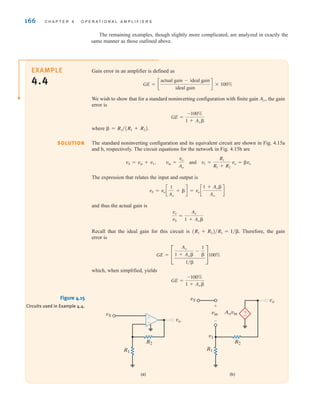
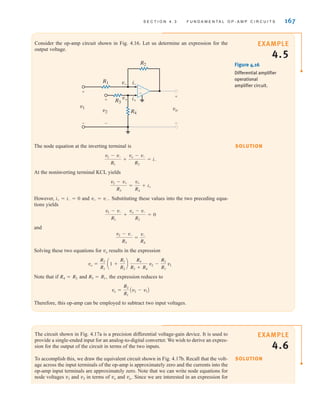
  • 41.
    P R OB L E M S 17 1. A 680 mAh lithium-ion battery is standard in a Motorola RAZR®. If this battery is completely discharged (i.e., 0 mAh), how long will it take to recharge the battery to its full capacity of 680 mAh from a low-power USB port? How much charge is stored in the battery at the end of the charging process? 2. A third-generation iPod® with a 630 mAh lithium-ion battery is to be recharged from a high-power USB port supplying 150 mA of current. At the beginning of the recharge, 7.8 C of charge are stored in the battery. The recharging process halts when the stored charge reaches 35.9 C. How long does it take to recharge the battery? 1. A low-power USB port operates at 100 mA. Assuming that the charging current from the USB port remains at 100 mA throughout the charging process, the time required to recharge the battery is . The charge stored in the battery when fully charged is . 2. The charge supplied to the battery during the recharging process is . This corresponds to . Assuming a constant charging current of 150 mA from the high-power USB port, the time required to recharge the battery is 468.3 mAh兾150 mA = 3.12 h. 468.3 mAh 28.1 As = 28,100 mAs ⴢ 1h兾60s = 35.9 - 7.8 = 28.1 C 40.8 C 680mAh ⴢ 60 s兾h = 40,800 mAs = 40.8 As = 680 mAh兾100 mA = 6.8 h SOLUTION S U M M A R Y • ■ The standard prefixes employed ■ The relationships between current and charge ■ The relationships among power, energy, current, and voltage ■ The passive sign convention The passive sign convention states that if the voltage and current associated with an element are as shown in Fig. 1.11, the product of v and i, with their attendant signs, determines the magnitude and sign of the power. If the sign is positive, power is being absorbed by the element, and if the sign is negative, the element is supplying power. ■ Independent and dependent sources An ideal independent voltage (current) source is a two-terminal element that maintains a specified voltage (current) between its terminals, regardless of the current (voltage) through (across) the element. Dependent or controlled sources generate a voltage or current that is determined by a voltage or current at a specified location in the circuit. ■ Conservation of energy The electric circuits under investigation satisfy the conservation of energy. ■ Tellegen’s theorem The sum of the powers absorbed by all elements in an electrical network is zero. ¢w = 3 t2 t1 p dt = 3 t2 t1 vi dt p = dw dt = vi i(t) = dq(t) dt or q(t) = 3 t -q i(x) dx T = 1012 m = 10-3 G = 109 ␮ = 10-6 M = 106 n = 10-9 k = 103 p = 10-12 P R O B L E M S • 1.1 If the current in an electric conductor is 2.4 A, how many coulombs of charge pass any point in a 30-second interval? 1.2 Determine the time interval required for a 12-A battery charger to deliver 4800 C. 1.3 A lightning bolt carrying 30,000 A lasts for 50 micro- seconds. If the lightning strikes an airplane flying at 20,000 feet, what is the charge deposited on the plane? 1.4 If a 12-V battery delivers 100 J in 5 s, find (a) the amount of charge delivered and (b) the current produced. irwin01_001-024hr.qxd 30-06-2010 13:16 Page 17
  • 42.
    18 C HA P T E R 1 B A S I C C O N C E P T S 1.5 The current in a conductor is 1.5 A. How many coulombs of charge pass any point in a time interval of 1.5 minutes? 1.6 If 60 C of charge pass through an electric conductor in 30 seconds, determine the current in the conductor. 1.7 Determine the number of coulombs of charge produced by a 12-A battery charger in an hour. 1.8 Five coulombs of charge pass through the element in Fig. P1.8 from point A to point B. If the energy absorbed by the element is 120 J, determine the voltage across the element. Figure P1.8 1.9 The current that enters an element is shown in Fig. P1.9. Find the charge that enters the element in the time interval Figure P1.9 1.10 The charge entering the positive terminal of an element is mC. If the voltage across the element is , determine the energy delivered to the element in the time interval 0 6 t 6 50 ms. 120e-2t V q(t) = -30e-4t i(t) mA t (s) 0 10 10 20 0 6 t 6 20 s. B A + - V1 1.11 The charge entering the positive terminal of an element is given by the expression . The power delivered to the element is . Compute the current in the element, the voltage across the element, and the energy delivered to the element in the time interval 1.12 The voltage across an element is . The current entering the positive terminal of the element is . Find the energy absorbed by the element in 1.5 s starting from t ⫽ ⫽ 0. 1.13 The power absorbed by the BOX in Fig. P1.13 is 2e-2t W. Calculate the amount of charge that enters the BOX between 0.1 and 0.4 seconds. Figure P1.13 1.14 The power absorbed by the BOX in Fig. P1.14 is 0.1e-4t W. Calculate the energy absorbed by the BOX during this same time interval. Figure P1.14 10e–2t V BOX + – 4e–t V BOX + – 2e-2t A 12e-2t V 0 6 t 6 100 ms. p(t) = 2.4e-3t W q(t) = -12e-2t mC w(t) (mJ) t (ms) 5 10 15 –10 –15 –5 1 2 3 4 5 6 7 8 9 10 15 V BOX + – i (t) 1.15 The energy absorbed by the BOX in Fig. P1.15 is shown below. How much charge enters the BOX between 0 and 10 milliseconds? Figure P1.15 irwin01_001-024hr.qxd 30-06-2010 13:16 Page 18
  • 43.
    P R OB L E M S 19 1.16 The charge that enters the BOX in Fig. P1.16 is shown in the graph below. Calculate and sketch the current flowing into and the power absorbed by the BOX between 0 and 10 milliseconds. 12 V BOX + – i (t) q(t) (mC) t (ms) 1 2 3 –2 –3 –1 1 2 3 4 5 6 7 8 9 10 1.17 The energy absorbed by the BOX in Fig. P1.17 is given below. Calculate and sketch the current flowing into the BOX. Also calculate the charge which enters the BOX between 0 and 12 seconds. 10 V BOX + – i (t) w(t) (J) t (s) 5 –2.5 1 2 3 4 5 6 7 8 9 10 11 12 Figure P1.16 Figure P1.17 irwin01_001-024hr.qxd 30-06-2010 13:16 Page 19
  • 44.
    20 C HA P T E R 1 B A S I C C O N C E P T S 1.18 The charge entering the upper terminal of the BOX in Fig. P1.18 is shown below. How much energy is absorbed by the BOX between 0 and 9 seconds? Figure P1.18 1.19 The energy absorbed by the BOX in Fig. P1.19 is shown in the graph below. Calculate and sketch the current flowing into the BOX between 0 and 10 milliseconds. Figure P1.19 12 V BOX + – i (t) w(t) (mJ) t (ms) 10 20 30 –20 –30 –10 1 2 3 4 5 6 7 8 9 10 12 V BOX + – i (t) q(t) (C) t (s) 0.5 1 –1 –1.5 –0.5 1 2 3 4 5 6 7 8 9 irwin01_001-024hr.qxd 30-06-2010 13:16 Page 20
  • 45.
    P R OB L E M S 21 1.20 Determine the amount of power absorbed or supplied by the element in Fig. P1.20 if (a) (b) (c) (d) Figure P1.20 1.21 Calculate the power absorbed by element A in Fig. P1.21. Figure P1.21 1.22 Calculate the power supplied by element A in Fig. P1.22. Figure P1.22 1.23 Element A in the diagram in Fig. P1.23 absorbs 30 W of power. Calculate Vx. Figure P1.23 A 2 A Vx – + A 20 V 2 A – + A 15 V 3 A – + + - V1 I V 1 = -12 V and I = -3A V 1 = -12 V and I = 2A V 1 = 9 V and I = -3A V 1 = 9 V and I = 2A 1.24 Element B in the diagram in Fig. P1.24 supplies 60 W of power. Calculate Ix. Figure P1.24 1.25 Element B in the diagram in Fig. P1.25 supplies 72 W of power. Calculate VA. Figure P1.25 1.26 Element B in the diagram in Fig. P1.26 supplies 72 W of power. Calculate Ix. Figure P1.26 1.27 (a) In Fig. P1.27 (a), W. Is element 2 absorbing or supplying power, and how much? (b) In Fig. P1.27 (b), W. Is element 1 absorb- ing or supplying power, and how much? Figure P1.27 (a) (b) 12 V – + 6 V - + 6 V + - 24 V - + 1 2 1 2 P2 = -48 P1 = 36 B 18 V Ix – + B 3 A VA – + B 24 V Ix – + irwin01_001-024hr.qxd 30-06-2010 13:16 Page 21
  • 46.
    22 C HA P T E R 1 B A S I C C O N C E P T S 1.28 Two elements are connected in series, as shown in Fig. P1.28. Element 1 supplies 24 W of power. Is ele- ment 2 absorbing or supplying power, and how much? Figure P1.28 1.29 Element 2 in Fig. P1.29 absorbed 32 W. Find the power absorbed or supplied by elements 1 and 3. Figure P1.29 1.30 Choose such that the power absorbed by element 2 in Fig. P1.30 is 7 W. Figure P1.30 1.31 Find the power that is absorbed or supplied by the circuit elements in Fig. P1.31. Figure P1.31 16 V 4 A 1 4 A + - - + 8 V + - Ix=4 A 2Ix (b) 20 V 2 A 2 A 1 14 V + - - + 6 V 2 A + - (a) 4 V Is 6 V 2 V + + – – + – 1 2 Is 8 V – + 12 V - + 2 4 V + - 1 3 3 V – + 6 V + - 1 2 1.32 Find the power that is absorbed or supplied by the net- work elements in Fig. P1.32. Figure P1.32 1.33 Compute the power that is absorbed or supplied by the elements in the network in Fig. P1.33. Figure P1.33 1.34 Find the power that is absorbed or supplied by element 2 in Fig. P1.34. Figure P1.34 1.35 Find Ix in the network in Fig. P1.35. Figure P1.35 1 12 V 28 V 36 V Ix 2 A + – 1Ix – + 3 + – + – 2 A 2 24 V + – 1 4 V 12 V 2 A 2 A + – 2Vx – + 2 Vx + – + – Ix=4 A 36 V 2 A 2 A 1Ix 2 3 1 – ± 12 V + - 28 V + - 24 V + - ± – (a) Ix=2 A 2 A 2 A 2Ix 1 8 V 12 V + - (b) Ix=2 A 2 A 2 A 2 A 4Ix 2 12 V + - 1 20 V 24 V + - ± – ± – –± ± – irwin01_001-024hr.qxd 30-06-2010 13:16 Page 22
  • 47.
    P R OB L E M S 23 1.36 Determine the power absorbed by element 1 in Fig. P1.36. Figure P1.36 1.37 Find the power absorbed or supplied by element 1 in Fig. P1.37. Figure P1.37 1.38 Find the power absorbed or supplied by element 3 in Fig. P1.38. Figure P1.38 1.39 Find the power absorbed or supplied by element 1 in Fig. P1.39. Figure P1.39 1 4 V + – 4Ix Ix + – 3 20 V + – 4 20 V + – 2 8 V 12 V 4 A 4 A 2 A 12 V + – + – 1 4 V + – + – + – + – 2 16 V 4 A 2 A 2 A 2 A 12 V 12 V + – 3 Vx 2Vx + – 4 20 V + – 2 A 1 6 V 18 V Ix Ix + – 2 4 V + – 20 V + – 24 V + – 2 A 2Ix + – 1 12 V 16 V 36 V Ix + – 2 8 V + – 2Ix 3 + – + – 2 A 24 V + – 1.40 Find in the network in Fig. P1.40 using Tellegen’s theorem. Figure P1.40 1.41 Find in the circuit in Fig. P1.41 using Tellegen’s theorem. Figure P1.41 1.42 Is the source in the network in Fig. P1.42 absorbing or supplying power, and how much? Figure P1.42 1.43 Find in the network in Fig. P1.43 using Tellegen’s theorem. Figure P1.43 Ix=2 A Io 4Ix + 4 5 2 ± – 6 3 1 6 V - + - 8 V 8 V + - 16 V 24 V 3 A 3 A 6 A 4 A 1 A + - 10 V + - 6 V + - ± – Io 3 A 9 A 3 A VS + - 8 V 6 A - + 10 V 9 A 16 V - + 6 V + - + - V s Ix Ix 2 A 18 V 12 V + - 8 V + - 4 V + - 6 V 2 A 24 V 2 A + - 12 V + - ± – –± Ix Vx + - 3 2 1 + - + - 24 V 12 V 16 V 2 A 12 V 9 V - + - + + - V x irwin01_001-024hr.qxd 30-06-2010 13:16 Page 23
  • 48.
    24 C HA P T E R 1 B A S I C C O N C E P T S 1.44 Calculate the power absorbed by each element in the circuit in Fig. P1.44. Also verify Tellegen’s theorem is satisfied by this circuit. Figure P1.44 1.45 Calculate the power absorbed by each element in the cir- cuit in Fig. P1.45. Also verify that Tellegen’s theorem is satisfied by this circuit. Figure P1.45 5 30 V 40 V 1 5 V + – 2 1 A 5 A + – + – 4 A 4 A 3 A 1 A 15 V 4 5 V + – + – 5 V - + 10 V + – 3 10 V + – 5 24 V + – 12 V + – 3Ix – + 1 2 2 A 2 A 4 A 6 A 4 A 12 V 4 9 V 24 V + – 3 15 V 6 V + – + – - + 6 V + – 4 A 2 A Ix = 2 A + – 1.46 In the circuit in Fig. P1.46, element 1 absorbs 40 W, ele- ment 2 supplies 50 W, element 3 supplies 25 W, and ele- ment 4 absorbs 15 W. How much power is supplied by element 5? Figure P1.46 5 4 3 1 2 irwin01_001-024hr.qxd 30-06-2010 13:16 Page 24
  • 49.
    CHAPTER RESISTIVE CIRCUITS 25 Courtesy ofTesla Motors THE LEARNING GOALS FOR THIS CHAPTER ARE: ■ Be able to use Ohm’s law to solve electric circuits ■ Be able to apply Kirchhoff’s current law and Kirchhoff’s voltage law to solve electric circuits ■ Know how to analyze single-loop and single- node-pair circuits ■ Know how to combine resistors in series and parallel ■ Be able to use voltage and current division to solve simple electric circuits ■ Understand when and how to apply wye-delta transformations in the analysis of electric circuits ■ Know how to analyze electric circuits contain- ing dependent sources T Tesla Roadster Green technologies come in many colors. The 2010 Tesla Roadster, for example, comes in Fusion Red, Arctic White, Racing Green and Electric Blue, to name a few. An environmentally friendly sports car that seats two, this convertible has rocket acceleration and hugs the road like a dream; it’s the world’s first high-performance electric car. The Roadster contains over 6,800 safe, rechargeable lithium- ion batteries that weigh about 1,000 pounds in total. It is twice as efficient as hybrid cars that combine a gasoline engine and an electric motor to provide propulsion, but its fantastic performance comes at a cost of over $100,000. Choosing between an all-electric vehicle and a hybrid requires trade-offs on a wide range of criteria: performance, cost, efficiency, effects on the environment, safety, and relia- bility. Handling qualities may be highly important to some, cost and efficiency to others. As a student of circuit analysis, you will make trade-offs in choosing between methods of analysis for different circuit topologies. This chapter describes fundamental laws that apply to all circuits regardless of their complexity. Ohm’s law governs the most common relationship between voltage and current for circuits that are linear. Circuits having a single power source with resistances having the same currents and others having the same voltage will be analyzed using the series-parallel method. You’ll learn more techniques in the chapters that follow, as you begin to master the same princi- ples used by the designers of the Tesla Roadster. 2 irwin02_025-100hr.qxd 30-06-2010 13:14 Page 25
  • 50.
    26 C HA P T E R 2 R E S I S T I V E C I R C U I T S 2.1 Ohm’s Law Ohm’s law is named for the German physicist Georg Simon Ohm, who is credited with establishing the voltage–current relationship for resistance. As a result of his pioneering work, the unit of resistance bears his name. Ohm’s law states that the voltage across a resistance is directly proportional to the current flowing through it. The resistance, measured in ohms, is the constant of proportionality between the voltage and current. A circuit element whose electrical characteristic is primarily resistive is called a resistor and is represented by the symbol shown in Fig. 2.1a. A resistor is a physical device that can be purchased in certain standard values in an electronic parts store. These resistors, which find use in a variety of electrical applications, are normally carbon composition or wire- wound. In addition, resistors can be fabricated using thick oxide or thin metal films for use in hybrid circuits, or they can be diffused in semiconductor integrated circuits. Some typical discrete resistors are shown in Fig. 2.1b. The mathematical relationship of Ohm’s law is illustrated by the equation v(t)=R i(t), where R ⭌ 0 2.1 or equivalently, by the voltage–current characteristic shown in Fig. 2.2a. Note carefully the relationship between the polarity of the voltage and the direction of the current. In addition, note that we have tacitly assumed that the resistor has a constant value and therefore that the voltage–current characteristic is linear. The symbol ⍀ is used to represent ohms, and therefore, 1 ⍀=1 V/A Although in our analysis we will always assume that the resistors are linear and are thus described by a straight-line characteristic that passes through the origin, it is important that readers realize that some very useful and practical elements do exist that exhibit a nonlinear resistance characteristic; that is, the voltage–current relationship is not a straight line. R i(t) v(t) + – (a) (b) Figure 2.1 (a) Symbol for a resistor; (b) some practical devices. (1), (2), and (3) are high- power resistors. (4) and (5) are high-wattage fixed resistors. (6) is a high- precision resistor. (7)–(12) are fixed resistors with different power ratings. (Photo courtesy of Mark Nelms and Jo Ann Loden) The passive sign convention will be employed in conjunction with Ohm’s law. [ h i n t ] irwin02_025-100hr.qxd 22-07-2010 15:03 Page 26
  • 51.
    i(t) (a) (b) v(t) R 1 v(t) i(t) Figure 2.2 Graphicalrepresentation of the voltage–current relation- ship for (a) a linear resistor and (b) a light bulb. The light bulb from the flashlight in Chapter 1 is an example of an element that exhibits a nonlinear characteristic. A typical characteristic for a light bulb is shown in Fig. 2.2b. Since a resistor is a passive element, the proper current–voltage relationship is illustrated in Fig. 2.1a. The power supplied to the terminals is absorbed by the resistor. Note that the charge moves from the higher to the lower potential as it passes through the resistor and the energy absorbed is dissipated by the resistor in the form of heat. As indicated in Chapter 1, the rate of energy dissipation is the instantaneous power, and therefore p(t)=v(t)i(t) 2.2 which, using Eq. (2.1), can be written as 2.3 This equation illustrates that the power is a nonlinear function of either current or voltage and that it is always a positive quantity. Conductance, represented by the symbol G, is another quantity with wide application in circuit analysis. By definition, conductance is the reciprocal of resistance; that is, 2.4 The unit of conductance is the siemens, and the relationship between units is 1 S=1 A/V Using Eq. (2.4), we can write two additional expressions, i(t)=Gv(t) 2.5 and 2.6 Eq. (2.5) is another expression of Ohm’s law. Two specific values of resistance, and therefore conductance, are very important: R=0 and R=q. In examining the two cases, consider the network in Fig. 2.3a. The variable resistance symbol is used to describe a resistor such as the volume control on a radio or television set. p(t) = i2 (t) G = Gv2 (t) G = 1 R p(t) = Ri2 (t) = v2 (t) R S E C T I O N 2 . 1 O H M ’ S L A W 27 irwin02_025-100hr.qxd 30-06-2010 13:14 Page 27
  • 52.
    As the resistanceis decreased and becomes smaller and smaller, we finally reach a point where the resistance is zero and the circuit is reduced to that shown in Fig. 2.3b; that is, the resistance can be replaced by a short circuit. On the other hand, if the resistance is increased and becomes larger and larger, we finally reach a point where it is essentially infinite and the resistance can be replaced by an open circuit, as shown in Fig. 2.3c. Note that in the case of a short circuit where R 0, Therefore, although the current could theoretically be any value. In the open- circuit case where Therefore, the current is zero regardless of the value of the voltage across the open terminals. = 0 i(t) = v(t)兾R R = q, v(t) = 0, = 0 v(t) = Ri(t) 28 C H A P T E R 2 R E S I S T I V E C I R C U I T S R (a) (b) (c) i(t) i(t) i(t) + – v(t) + – v(t) + – v(t) Figure 2.3 Short-circuit and open-circuit descriptions. In the circuit in Fig. 2.4a, determine the current and the power absorbed by the resistor. Using Eq. (2.1), we find the current to be I=V/R=12/2k=6 mA Note that because many of the resistors employed in our analysis are in k, we will use k in the equations in place of 1000. The power absorbed by the resistor is given by Eq. (2.2) or (2.3) as = V2 兾R = (12)2 兾2k = 0.072 W = I2 R = A6 * 10-3 B 2 (2k) = 0.072 W P = VI = (12)A6 * 10-3 B = 0.072 W SOLUTION VS VS VS R P=80 mW I=0.5 mA 4 mA P=3.6 mW G=50 S (a) (b) (c) (d) I I I 12 V 10 k 2 k + - ± – ± – ± – Figure 2.4 Circuits for Examples 2.1 to 2.4. EXAMPLE 2.1 irwin02_025-100hr.qxd 30-06-2010 13:14 Page 28
  • 53.
    S E CT I O N 2 . 1 O H M ’ S L A W 29 SOLUTION EXAMPLE 2.2 The power absorbed by the 10-k resistor in Fig. 2.4b is 3.6 mW. Determine the voltage and the current in the circuit. Using the power relationship, we can determine either of the unknowns: and Furthermore, once is determined, I could be obtained by Ohm’s law, and likewise once I is known, then Ohm’s law could be used to derive the value of . Note carefully that the equations for power involve the terms and . Therefore, and also satisfy the mathematical equations and, in this case, the direction of both the voltage and current is reversed. VS = -6 V I = -0.6 mA V2 S I2 V S V S I = 0.6 mA I2 = (3.6 * 10-3 )兾10k I2 R = P VS = 6 V V2 S = (3.6 * 10-3 )(10k) V2 S兾R = P SOLUTION EXAMPLE 2.3 Given the circuit in Fig. 2.4c, we wish to find the value of the voltage source and the power absorbed by the resistance. The voltage is The power absorbed is then Or we could simply note that and therefore and the power could be determined using P = I2 R = V2 S兾R = VS I. VS = IR = (0.5 * 10-3 )(20k) = 10 V R = 1兾G = 20 k P = I2 兾G = (0.5 * 10-3 )2 兾(50 * 10-6 ) = 5 mW VS = I兾G = (0.5 * 10-3 )兾(50 * 10-6 ) = 10 V SOLUTION EXAMPLE 2.4 Given the network in Fig. 2.4d, we wish to find R and Using the power relationship, we find that The voltage can now be derived using Ohm’s law as The voltage could also be obtained from the remaining power relationships in Eqs. (2.2) and (2.3). V S = IR = A4 * 10-3 B(5k) = 20 V R = P兾I2 = A80 * 10-3 B兾A4 * 10-3 B 2 = 5 k V S. irwin02_025-100hr.qxd 30-06-2010 13:14 Page 29
  • 54.
    Before leaving thisinitial discussion of circuits containing sources and a single resistor, it is important to note a phenomenon that we will find to be true in circuits containing many sources and resistors. The presence of a voltage source between a pair of terminals tells us precisely what the voltage is between the two terminals regardless of what is happening in the balance of the network. What we do not know is the current in the voltage source. We must apply circuit analysis to the entire network to determine this current. Likewise, the presence of a current source connected between two terminals specifies the exact value of the current through the source between the terminals. What we do not know is the value of the voltage across the current source. This value must be calculated by applying circuit analysis to the entire network. Furthermore, it is worth emphasizing that when applying Ohm’s law, the relationship specifies a relationship between the voltage directly across a resistor R and the current that is present in this resistor. Ohm’s law does not apply when the voltage is present in one part of the network and the current exists in another. This is a common mistake made by students who try to apply to a resistor R in the middle of the network while using a V at some other location in the network. V = IR V = IR 30 C H A P T E R 2 R E S I S T I V E C I R C U I T S E2.1 Given the circuits in Fig. E2.1, find (a) the current I and the power absorbed by the resis- tor in Fig. E2.1a, and (b) the voltage across the current source and the power supplied by the source in Fig. E2.1b. ANSWER: (a) I 0.3 mA, P 3.6 mW; (b) P 2.16 mW. V S = 3.6 V, E2.2 Given the circuits in Fig. E2.2, find (a) R and in the circuit in Fig. E2.2a, and (b) find I and R in the circuit in Fig. E2.2b. V S ANSWER: (a) R=10 k, (b) I=20.8 mA, R=576 . VS = 4 V; VS 0.6 mA 40 k 6 k + (b) (a) 12 V – I ± – Figure E2.1 (b) (a) VS R R P=1.6 mW P=0.25 W 12 V 0.4 mA + – I ± – Figure E2.2 Learning Assessments E2.3 The power absorbed by Gx in Fig. E2.3 is 50 mW. Find Gx. ANSWER: Gx=500 S. Gx 10 V ± – Figure E2.3 irwin02_025-100hr.qxd 30-06-2010 13:14 Page 30
  • 55.
    in Fig. 2.5awill be used to describe the terms node, loop, and branch. A node is simply a point of connection of two or more circuit elements. The reader is cautioned to note that, although one node can be spread out with perfect conductors, it is still only one node. This is illustrated in Fig. 2.5b, where the circuit has been redrawn. Node 5 consists of the entire bottom connector of the circuit. If we start at some point in the circuit and move along perfect conductors in any direction until we encounter a circuit element, the total path we cover represents a single node. Therefore, we can assume that a node is one end of a circuit element together with all the per- fect conductors that are attached to it. Examining the circuit, we note that there are numerous paths through it. A loop is simply any closed path through the circuit in which no node is encountered more than once. For example, starting from node 1, one loop would contain the elements and i1; another loop would contain and i1; and so on. However, the path and i1 is not a loop because we have encountered node 3 twice. Finally, a branch is a portion of a circuit containing only a single element and the nodes at each end of the element. The circuit in Fig. 2.5 contains eight branches. Given the previous definitions, we are now in a position to consider Kirchhoff’s laws, named after German scientist Gustav Robert Kirchhoff. These two laws are quite simple but extremely important. We will not attempt to prove them because the proofs are beyond our current level of understanding. However, we will demonstrate their usefulness and attempt to make the reader proficient in their use. The first law is Kirchhoff’s current law (KCL), which states that the algebraic sum of the currents entering any node is zero. In mathematical form the law appears as 2.7 a N j=1 ij(t) = 0 R1, v1, R5, v2, R3, R2, v1, v2, R4, R1, v2, R4, S E C T I O N 2 . 2 K I R C H H O F F ’ S L A W S 31 i1(t) v2(t) v1(t) R1 R2 R5 R4 R3 (a) R2 i1(t) i2(t) i3(t) i5(t) v1(t) v2(t) i7(t) i4(t) i6(t) i8(t) R1 R4 R5 (b) 1 4 5 2 3 R3 – ± ± – ± – – ± Figure 2.5 Circuit used to illustrate KCL. KCL is an extremely important and useful law. [ h i n t ] 2.2 Kirchhoff’s Laws The circuits we have considered previously have all contained a single resistor, and we have analyzed them using Ohm’s law. At this point we begin to expand our capabilities to handle more complicated networks that result from an interconnection of two or more of these sim- ple elements. We will assume that the interconnection is performed by electrical conductors (wires) that have zero resistance—that is, perfect conductors. Because the wires have zero resistance, the energy in the circuit is in essence lumped in each element, and we employ the term lumped-parameter circuit to describe the network. To aid us in our discussion, we will define a number of terms that will be employed throughout our analysis. As will be our approach throughout this text, we will use examples to illustrate the concepts and define the appropriate terms. For example, the circuit shown irwin02_025-100hr.qxd 30-06-2010 13:14 Page 31
  • 56.
    where ij(t) isthe jth current entering the node through branch j and N is the number of branches connected to the node. To understand the use of this law, consider node 3 shown in Fig. 2.5. Applying Kirchhoff’s current law to this node yields i2(t)-i4(t)+i5(t)-i7(t)=0 We have assumed that the algebraic signs of the currents entering the node are positive and, therefore, that the signs of the currents leaving the node are negative. If we multiply the foregoing equation by –1, we obtain the expression –i2(t)+i4(t)-i5(t)+i7(t)=0 which simply states that the algebraic sum of the currents leaving a node is zero. Alternatively, we can write the equation as i2(t)+i5(t)=i4(t)+i7(t) which states that the sum of the currents entering a node is equal to the sum of the currents leaving the node. Both of these italicized expressions are alternative forms of Kirchhoff’s current law. Once again it must be emphasized that the latter statement means that the sum of the variables that have been defined entering the node is equal to the sum of the variables that have been defined leaving the node, not the actual currents. For example, ij(t) may be defined enter- ing the node, but if its actual value is negative, there will be positive charge leaving the node. Note carefully that Kirchhoff’s current law states that the algebraic sum of the currents either entering or leaving a node must be zero. We now begin to see why we stated in Chapter 1 that it is critically important to specify both the magnitude and the direction of a cur- rent. Recall that current is charge in motion. Based on our background in physics, charges can- not be stored at a node. In other words, if we have a number of charges entering a node, then an equal number must be leaving that same node. Kirchhoff’s current law is based on this prin- ciple of conservation of charge. Finally, it is possible to generalize Kirchhoff’s current law to include a closed surface. By a closed surface we mean some set of elements completely contained within the surface that are interconnected. Since the current entering each element within the surface is equal to that leaving the element (i.e., the element stores no net charge), it follows that the current enter- ing an interconnection of elements is equal to that leaving the interconnection. Therefore, Kirchhoff’s current law can also be stated as follows: The algebraic sum of the currents entering any closed surface is zero. 32 C H A P T E R 2 R E S I S T I V E C I R C U I T S Let us write KCL for every node in the network in Fig. 2.5, assuming that the currents leaving the node are positive. The KCL equations for nodes 1 through 5 are Note carefully that if we add the first four equations, we obtain the fifth equation. What does this tell us? Recall that this means that this set of equations is not linearly independent. We can show that the first four equations are, however, linearly independent. Store this idea in memory because it will become very important when we learn how to write the equations necessary to solve for all the currents and voltages in a network in the following chapter. -i6(t) - i7(t) + i8(t) = 0 -i3(t) + i5(t) - i8(t) = 0 -i2(t) + i4(t) - i5(t) + i7(t) = 0 i1(t) - i4(t) + i6(t) = 0 -i1(t) + i2(t) + i3(t) = 0 EXAMPLE 2.5 SOLUTION irwin02_025-100hr.qxd 30-06-2010 13:14 Page 32
  • 57.
    S E CT I O N 2 . 2 K I R C H H O F F ’ S L A W S 33 The network in Fig. 2.5 is represented by the topological diagram shown in Fig. 2.6. We wish to find the unknown currents in the network. 1 2 3 4 5 I5 I4 I1 I6 30 mA 20 mA 40 mA 60 mA SOLUTION Assuming the currents leaving the node are positive, the KCL equations for nodes 1 through 4 are The first equation yields and the last equation yields Knowing , we can immediately obtain from the third equation. Then the values of and yield the value of from the second equation. The results are and As indicated earlier, dependent or controlled sources are very important because we encounter them when analyzing circuits containing active elements such as transistors. The following example presents a circuit containing a current-controlled current source. I6 = -10 mA. I5 = 50 mA, I4 = 70 mA, I1 = 80 mA, I6 I4 I1 I4 I5 I5. I1 -0.02 + I5 - 0.03 = 0 -0.06 + I4 - I5 + 0.04 = 0 I1 - I4 + I6 = 0 -I1 + 0.06 + 0.02 = 0 EXAMPLE 2.7 Let us write the KCL equations for the circuit shown in Fig. 2.7. 1 2 3 4 R1 R2 R3 R4 i2(t) 50i2(t) i1(t) v1(t) i5(t) i3(t) i4(t) ± – Figure 2.7 Circuit containing a dependent current source. EXAMPLE 2.6 Figure 2.6 Topological diagram for the circuit in Fig. 2.5. irwin02_025-100hr.qxd 30-06-2010 13:14 Page 33
  • 58.
    34 C HA P T E R 2 R E S I S T I V E C I R C U I T S Let us find and in the network represented by the topological diagram in Fig. 2.6. This diagram is redrawn in Fig. 2.8; node 1 is enclosed in surface 1, and nodes 3 and 4 are enclosed in surface 2. A quick review of the previous example indicates that we derived a value for from the value of However, is now completely enclosed in surface 2. If we apply KCL to surface 2, assuming the currents out of the surface are positive, we obtain or which we obtained without any knowledge of Likewise for surface 1, what goes in must come out and, therefore, The reader is encouraged to cut the network in Fig. 2.6 into two pieces in any fashion and show that KCL is always satisfied at the boundaries. I1 = 80 mA. I5. I4 = 70 mA I4 - 0.06 - 0.02 - 0.03 + 0.04 = 0 I5 I5. I4 I1 I4 SOLUTION I1 I6 I4 60 mA 20 mA 40 mA 30 mA Surface 1 Surface 2 Figure 2.8 Diagram used to demon- strate KCL for a surface. Kirchhoff’s second law, called Kirchhoff’s voltage law (KVL), states that the algebraic sum of the voltages around any loop is zero. As was the case with Kirchhoff’s current law, we will defer the proof of this law and concentrate on understanding how to apply it. Once again the reader is cautioned to remember that we are dealing only with lumped-parameter circuits. These circuits are conservative, meaning that the work required to move a unit charge around any loop is zero. In Chapter 1, we related voltage to the difference in energy levels within a circuit and talked about the energy conversion process in a flashlight. Because of this relationship between voltage and energy, Kirchhoff’s voltage law is based on the conservation of energy. Recall that in Kirchhoff’s current law, the algebraic sign was required to keep track of whether the currents were entering or leaving a node. In Kirchhoff’s voltage law, the algebraic sign is used to keep track of the voltage polarity. In other words, as we traverse the circuit, it is necessary to The KCL equations for nodes 1 through 4 follow: If we added the first three equations, we would obtain the negative of the fourth. What does this tell us about the set of equations? i5(t) - i3(t) - i4(t) = 0 -i1(t) + 50i2(t) + i4(t) = 0 -i2(t) + i3(t) - 50i2(t) = 0 i1(t) + i2(t) - i5(t) = 0 SOLUTION EXAMPLE 2.8 irwin02_025-100hr.qxd 30-06-2010 13:14 Page 34
  • 59.
    sum to zerothe increases and decreases in energy level. Therefore, it is important we keep track of whether the energy level is increasing or decreasing as we go through each element. In applying KVL, we must traverse any loop in the circuit and sum to zero the increases and decreases in energy level. At this point, we have a decision to make. Do we want to con- sider a decrease in energy level as positive or negative? We will adopt a policy of consider- ing a decrease in energy level as positive and an increase in energy level as negative. As we move around a loop, we encounter the plus sign first for a decrease in energy level and a negative sign first for an increase in energy level. Finally, we employ the convention to indicate the voltage of point a with respect to point b: that is, the variable for the voltage between point a and point b, with point a considered positive relative to point b. Since the potential is measured between two points, it is convenient to use an arrow between the two points, with the head of the arrow located at the positive node. Note that the double-subscript notation, the ± and – notation, and the single- headed arrow notation are all the same if the head of the arrow is pointing toward the positive terminal and the first subscript in the double-subscript notation. All of these equivalent forms V ab S E C T I O N 2 . 2 K I R C H H O F F ’ S L A W S 35 E2.4 Given the networks in Fig. E2.3, find (a) in Fig. E2.4a and (b) in Fig. E2.4b. IT I1 ANSWER: (a) (b) IT = 70 mA. I1 = -50 mA; ANSWER: (a) (b) and I2 = 5 mA. I1 = 8 mA I1 = 6 mA; ANSWER: (a) ix=4 mA; (b) ix=12 mA. (a) 50 mA I1 IT 10 mA 40 mA 20 mA (b) ± – Figure E2.4 I1 4 mA 10 mA (a) I1 I2 12 mA 4 mA 3 mA (b) ± – E2.5 Find (a) in the network in Fig. E2.5a and (b) and in the circuit in Fig. E2.5b. I2 I1 I1 E2.6 Find the current ix in the circuits in Fig. E2.6. Figure E2.5 (a) (b) R 44 mA ix 10ix R1 R2 12 mA 120 mA ix 10ix Figure E2.6 Learning Assessments irwin02_025-100hr.qxd 30-06-2010 13:14 Page 35
  • 60.
    36 C HA P T E R 2 R E S I S T I V E C I R C U I T S Consider the network in Fig. 2.10. EXAMPLE 2.10 SOLUTION Figure 2.10 Circuit used to explain KVL. e f a b c d VR3 VR4 VR2 VR1 R1 R4 R2 R3 24 V 16 V 8 V + – + + – – + – - + ± – ± – Let us demonstrate that only two of the three possible loop equations are linearly independent. Note that this network has three closed paths: the left loop, right loop, and outer loop. Applying our policy for writing KVL equations and traversing the left loop starting at point a, we obtain The corresponding equation for the right loop starting at point b is The equation for the outer loop starting at point a is Note that if we add the first two equations, we obtain the third equation. Therefore, as we indicated in Example 2.5, the three equations are not linearly independent. Once again, we will address this issue in the next chapter and demonstrate that we need only the first two equations to solve for the voltages in the circuit. V R1 + V R2 + V R3 + 8 - 24 = 0 V R2 + V R3 + 8 + 16 - V R4 = 0 V R1 + V R4 - 16 - 24 = 0 Consider the circuit shown in Fig. 2.9. If and are known quantities, let us find V R3 . V R2 V R1 R1 VR1 VR2 VR3 R2 a 5 V 30 V 15 V b f e c d + + + – – – R3 + - – ± ± – Starting at point a in the network and traversing it in a clockwise direction, we obtain the equation which can be written as Now suppose that and are known to be 18 V and 12 V, respectively. Then V R3 = 20 V. V R2 V R1 = 50 +V R1 + V R2 + V R3 = 5 + 15 + 30 +V R1 - 5 + V R2 - 15 + V R3 - 30 = 0 SOLUTION EXAMPLE 2.9 Figure 2.9 Circuit used to illustrate KVL. irwin02_025-100hr.qxd 30-06-2010 13:14 Page 36
  • 61.
    for labeling voltagesare shown in Fig. 2.11. The usefulness of the arrow notation stems from the fact that we may want to label the voltage between two points that are far apart in a network. In this case, the other notations are often confusing. In general, the mathematical representation of Kirchhoff’s voltage law is 2.8 where vj(t) is the voltage across the jth branch (with the proper reference direction) in a loop containing N voltages. This expression is analogous to Eq. (2.7) for Kirchhoff’s current law. a N j=1 vj(t) = 0 S E C T I O N 2 . 2 K I R C H H O F F ’ S L A W S 37 1 1 (a) Vx=Vab a b + – 1 a b + – 1 Vx=Vo + – Vx=Vo + – Vo (b) Vx=Vab=Vo (d) Vo + – Vo + – (c) Vo Figure 2.11 Equivalent forms for labeling voltage. SOLUTION EXAMPLE 2.11 Consider the network in Fig. 2.12a. Let us apply KVL to determine the voltage between two points. Specifically, in terms of the double-subscript notation, let us find and V ec. V ae The circuit is redrawn in Fig. 2.12b. Since points a and e as well as e and c are not physi- cally close, the arrow notation is very useful. Our approach to determining the unknown voltage is to apply KVL with the unknown voltage in the closed path. Therefore, to deter- mine we can use the path aefa or abcdea. The equations for the two paths in which is the only unknown are and Note that both equations yield Even before calculating we could calculate using the path cdec or cefabc. However, since is now known, we can also use the path ceabc. KVL for each of these paths is and Each of these equations yields V ec = -10 V. -V ec - V ae + 16 - 12 = 0 -V ec + 10 - 24 + 16 - 12 = 0 4 + 6 + V ec = 0 V ae V ec V ae, V ae = 14 V. 16 - 12 + 4 + 6 - V ae = 0 Vae + 10 - 24 = 0 V ae V ae Vae Vec (a) (b) R1 R4 R3 R2 24 V 16 V 6 V 10 V + + – – – + + – 12 V 4 V f d b e a c 24 V 16 V 6 V 10 V + + – – – + + – 12 V 4 V f d b e a c ± – + - ± – + - Figure 2.12 Network used in Example 2.11. KVL is an extremely important and useful law. [ h i n t ] irwin02_025-100hr.qxd 30-06-2010 13:14 Page 37
  • 62.
    38 C HA P T E R 2 R E S I S T I V E C I R C U I T S The two KVL equations are 20V R1 + V R3 - V R2 = 0 V R1 + V R2 - V S = 0 SOLUTION E2.8 Find and in the network in Fig. E2.8. Veb V ad ANSWER: V eb = 10 V. V ad = 26 V, 12 V 4 V 24 V 8 V 6 V f e d a b c + + – + + – – – 6 V ± – – ± E2.9 Find in the circuit in Fig. E2.9. V bd ANSWER: Vbd = 11 V. ± – Vbd VR1 VR2 = 1 V 12 V 10 VR1 a b c d + – + + – – ± – Figure E2.8 Figure E2.9 E2.7 Find IX and I1 in Fig. E2.7. ANSWER: IX = 2 mA, I1 = 4 mA. 1 mA 6 mA Ix 1.5Ix I1 Figure E2.7 Given the network in Fig. 2.13 containing a dependent source, let us write the KVL equa- tions for the two closed paths abda and bcdb. ±– a b d c VR1 VS VR3 20 VR1 VR2 R1 R2 R3 + + – + – – ± – EXAMPLE 2.12 Figure 2.13 Network containing a dependent source. Learning Assessments irwin02_025-100hr.qxd 30-06-2010 13:14 Page 38
  • 63.
    S E CT I O N 2 . 3 S I N G L E - L O O P C I R C U I T S 39 Before proceeding with the analysis of simple circuits, it is extremely important that we emphasize a subtle but very critical point. Ohm’s law as defined by the equation V=IR refers to the relationship between the voltage and current as defined in Fig. 2.14a. If the direc- tion of either the current or the voltage, but not both, is reversed, the relationship between the current and the voltage would be V=–IR. In a similar manner, given the circuit in Fig. 2.14b, if the polarity of the voltage between the terminals A and B is specified as shown, then the direction of the current I is from point B through R to point A. Likewise, in Fig. 2.14c, if the direction of the current is specified as shown, then the polarity of the voltage must be such that point D is at a higher potential than point C and, therefore, the arrow rep- resenting the voltage V is from point C to point D. The subtleties associated with Ohm’s law, as described here, are important and must be adhered to in order to ensure that the variables have the proper sign. [ h i n t ] (a) (b) (c) V I R A B + – V I R A B - + V I R C D Figure 2.14 Circuits used to explain Ohm’s law. 2.3 Single-Loop Circuits VOLTAGE DIVISION At this point we can begin to apply the laws presented earlier to the analysis of simple circuits. To begin, we examine what is perhaps the simplest circuit—a single closed path, or loop, of elements. Applying KCL to every node in a single-loop circuit reveals that the same current flows through all elements. We say that these elements are connected in series because they carry the same current. We will apply Kirchhoff’s voltage law and Ohm’s law to the circuit to determine various quantities in the circuit. Our approach will be to begin with a simple circuit and then generalize the analysis to more complicated ones. The circuit shown in Fig. 2.15 will serve as a basis for discussion. This cir- cuit consists of an independent voltage source that is in series with two resistors. We have assumed that the current flows in a clockwise direction. If this assumption is correct, the solution of the equations that yields the current will produce a positive value. If the current is actually flowing in the opposite direction, the value of the current variable will simply be negative, indicating that the current is flowing in a direction opposite to that assumed. We have also made voltage polarity assignments for and These assignments have been made using the convention employed in our discussion of Ohm’s law and our choice for the direc- tion of i(t)—that is, the convention shown in Fig. 2.14a. Applying Kirchhoff’s voltage law to this circuit yields or However, from Ohm’s law we know that Therefore, v(t)=R1i(t)+R2i(t) Solving the equation for i(t) yields 2.9 i(t) = v(t) R1 + R2 vR2 = R2i(t) vR1 = R1i(t) v(t) = vR1 + vR2 -v(t) + vR1 + vR2 = 0 vR2 . vR1 ± – vR1 vR2 R1 R2 v(t) i(t) + – + – Figure 2.15 Single-loop circuit. irwin02_025-100hr.qxd 30-06-2010 13:14 Page 39
  • 64.
    Knowing the current,we can now apply Ohm’s law to determine the voltage across each resistor: 2.10 Similarly, 2.11 Though simple, Eqs. (2.10) and (2.11) are very important because they describe the oper- ation of what is called a voltage divider. In other words, the source voltage v(t) is divided between the resistors and in direct proportion to their resistances. In essence, if we are interested in the voltage across the resistor we bypass the calcu- lation of the current i(t) and simply multiply the input voltage v(t) by the ratio As illustrated in Eq. (2.10), we are using the current in the calculation, but not explicitly. Note that the equations satisfy Kirchhoff’s voltage law, since -v(t) + R1 R1 + R2 v(t) + R2 R1 + R2 v(t) = 0 R1 R1 + R2 R1, R2 R1 vR2 = R2 R1 + R2 v(t) = R1 R1 + R2 v(t) = R1 c v(t) R1 + R2 d vR1 = R1i(t) 40 C H A P T E R 2 R E S I S T I V E C I R C U I T S Consider the circuit shown in Fig. 2.16. The circuit is identical to Fig. 2.15 except that is a variable resistor such as the volume control for a radio or television set. Suppose that and R2 = 30 k. R1 = 90 k, V S = 9 V, R1 EXAMPLE 2.13 SOLUTION VS V2 R1 I R2 + – ± – Figure 2.16 Voltage-divider circuit. Let us examine the change in both the voltage across and the power absorbed in this resistor as is changed from 90 k to 15 k. Since this is a voltage-divider circuit, the voltage can be obtained directly as = 2.25 V = c 30k 90k + 30k d (9) V2 = c R2 R1 + R2 d V S V 2 R1 R2 The manner in which voltage divides between two series resistors. [ h i n t ] irwin02_025-100hr.qxd 30-06-2010 13:14 Page 40
  • 65.
    Let us nowdemonstrate the practical utility of this simple voltage-divider network. S E C T I O N 2 . 3 S I N G L E - L O O P C I R C U I T S 41 SOLUTION EXAMPLE 2.14 Consider the circuit in Fig. 2.17a, which is an approximation of a high-voltage dc transmis- sion facility. We have assumed that the bottom portion of the transmission line is a perfect conductor and will justify this assumption in the next chapter. The load can be represented by a resistor of value 183.5 . Therefore, the equivalent circuit of this network is shown in Fig. 2.17b. Figure 2.17 A high-voltage dc transmission facility. (a) (b) 400-mile transmission line Line resistance is 0.04125 /mile Perfect conductor Load 400 kV 2 kA Vload 16.5 183.5 400 kV 2 kA + – ± – ± – Let us determine both the power delivered to the load and the power losses in the line. Using voltage division, the load voltage is = 367 kV V load = c 183.5 183.5 + 16.5 d 400k Now suppose that the variable resistor is changed from 90 k to 15 k. Then The direct voltage-divider calculation is equivalent to determining the current I and then using Ohm’s law to find Note that the larger voltage is across the larger resist- ance. This voltage-divider concept and the simple circuit we have employed to describe it are very useful because, as will be shown later, more complicated circuits can be reduced to this form. Finally, let us determine the instantaneous power absorbed by the resistor under the two conditions and For the case the power absorbed by is In the second case The current in the first case is 75 A, and in the second case it is 200 A. Since the power absorbed is a function of the square of the current, the power absorbed in the two cases is quite different. = 1.2 mW P2 = a 9 45k b 2 (30k) = 0.169 mW P2 = I2 R2 = a 9 120k b 2 (30k) R2 R1 = 90 k, R1 = 15 k. R1 = 90 k R2 V 2. = 6 V V 2 = c 30k 30k + 15k d 9 irwin02_025-100hr.qxd 30-06-2010 13:14 Page 41
  • 66.
    42 C HA P T E R 2 R E S I S T I V E C I R C U I T S (a) (b) R1 R2 i(t) v(t) vR1 vR2 R2 R1 v1(t) v2(t) i(t) v3(t) v4(t) v5(t) + + – – - + – ± ± – - + + - ± – Figure 2.18 Equivalent circuits with multiple sources. The input power is 800 MW and the power transmitted to the load is Therefore, the power loss in the transmission line is Since P=VI, suppose now that the utility company supplied power at 200 kV and 4 kA. What effect would this have on our transmission network? Without making a single calculation, we know that because power is proportional to the square of the current, there would be a large increase in the power loss in the line and, therefore, the efficiency of the facility would decrease substantially. That is why, in general, we transmit power at high voltage and low current. = 66 MW Pline = Pin - Pload = I2 Rline = 734 MW Pload = I2 Rload MULTIPLE-SOURCE/RESISTOR NETWORKS At this point we wish to extend our analysis to include a multiplicity of voltage sources and resistors. For example, consider the circuit shown in Fig. 2.18a. Here we have assumed that the current flows in a clockwise direction, and we have defined the variable i(t) accordingly. This may or may not be the case, depending on the value of the various voltage sources. Kirchhoff’s voltage law for this circuit is or, using Ohm’s law, which can be written as where so that under the preceding definitions, Fig. 2.18a is equivalent to Fig. 2.18b. In other words, the sum of several voltage sources in series can be replaced by one source whose value is the algebraic sum of the individual sources. This analysis can, of course, be generalized to a cir- cuit with N series sources. v(t) = v1(t) + v3(t) - Cv2(t) + v4(t) + v5(t)D AR1 + R2Bi(t) = v(t) AR1 + R2Bi(t) = v1(t) - v2(t) + v3(t) - v4(t) - v5(t) +vR1 + v2(t) - v3(t) + vR2 + v4(t) + v5(t) - v1(t) = 0 irwin02_025-100hr.qxd 30-06-2010 13:14 Page 42
  • 67.
    S E CT I O N 2 . 3 S I N G L E - L O O P C I R C U I T S 43 Now consider the circuit with N resistors in series, as shown in Fig. 2.19a. Applying Kirchhoff’s voltage law to this circuit yields and therefore, v(t)=RSi(t) 2.12 where 2.13 and hence, 2.14 Note also that for any resistor in the circuit, the voltage across is given by the expression 2.15 which is the voltage-division property for multiple resistors in series. Equation (2.13) illustrates that the equivalent resistance of N resistors in series is simply the sum of the individual resistances. Thus, using Eq. (2.13), we can draw the circuit in Fig. 2.19b as an equivalent circuit for the one in Fig. 2.19a. vRi = Ri RS v(t) Ri Ri i(t) = v(t) RS RS = R1 + R2 + p + RN = R1i(t) + R2i(t) + p + RNi(t) v(t) = vR1 + vR2 + p + vRN (a) (b) + - vR1 + -vRN RN + - vR2 + - + - vR3 vR4 R4 R3 R2 R1 R5 RS=R1+R2+R3+…+RN + - vR5 i(t) i(t) v(t) v(t) ± – ± – Figure 2.19 Equivalent circuits. EXAMPLE 2.15 Given the circuit in Fig. 2.20a, let us find I, and the power absorbed by the 30-k resistor. Finally, let us use voltage division to find V bc. V bd, Figure 2.20 Circuit used in Example 2.15. ± – ± – ± – I 12 V 6 V 30 k 10 k 20 k e d a b c 6 V b (b) (a) c 40 k 20 k irwin02_025-100hr.qxd 30-06-2010 13:14 Page 43
  • 68.
    44 C HA P T E R 2 R E S I S T I V E C I R C U I T S Knowing the load voltage and load resistance, we can obtain the line current using Ohm’s law: The voltage drop across the line is = 41.66 kV V line = (IL)(Rline) = 2.083 kA IL = 458.3k兾220 SOLUTION Rline Rload Vload=458.3 kV IL VS 220 20 + - ± – Figure 2.21 Circuit used in Example 2.16. EXAMPLE 2.16 A dc transmission facility is modeled by the approximate circuit shown in Fig. 2.21. If the load voltage is known to be we wish to find the voltage at the sending end of the line and the power loss in the line. V load = 458.3 kV, KVL for the network yields the equation Therefore, the magnitude of the current is 0.1 mA, but its direction is opposite to that assumed. The voltage can be calculated using either of the closed paths abdea or bcdb. The equations for both cases are and Using I=–0.1 mA in either equation yields Finally, the power absorbed by the 30-k resistor is Now from the standpoint of determining the voltage we can simply add the sources since they are in series, add the remaining resistors since they are in series, and reduce the network to that shown in Fig. 2.20b. Then = -2 V Vbc = 20k 20k + 40k (-6) V bc, P = I2 R = 0.3 mW V bd = 10 V. 20kI + 12 - V bd = 0 10kI + V bd + 30kI - 6 = 0 V bd I = -0.1 mA 60kI = -6 10kI + 20kI + 12 + 30kI - 6 = 0 SOLUTION irwin02_025-100hr.qxd 30-06-2010 13:14 Page 44
  • 69.
    S E CT I O N 2 . 3 S I N G L E - L O O P C I R C U I T S 45 Step 1. Define a current i(t). We know from KCL that there is only one current for a single-loop circuit. This current is assumed to be flowing either clockwise or counterclockwise around the loop. Step 2. Using Ohm’s law, define a voltage across each resistor in terms of the defined current. Step 3. Apply KVL to the single-loop circuit. Step 4. Solve the single KVL equation for the current i(t). If i(t) is positive, the current is flowing in the direction assumed; if not, then the current is actually flowing in the opposite direction. Single-Loop Circuits E2.10 Find I and in the circuit in Fig. E2.10. V bd ANSWER: I 0.05 mA and . V bd = 10 V E2.11 In the network in Fig. E2.11, if is 3 V, find VS. V ad ANSWER: V S = 9 V. I 6 V 12 V 40 k 80 k a b c d – ± ± – Figure E2.10 – ± VS 20 k 25 k 15 k a b c d Figure E2.11 Learning Assessments Problem-Solving Strategy Now, using KVL, Note that since the network is simply a voltage-divider circuit, we could obtain immediately from our knowledge of , , and . That is, and is the only unknown in this equation. The power absorbed by the line is = 86.79 MW Pline = I2 LRline V S V load = c Rload Rload + Rline dV S V load Rload Rline V S = 500 kV VS = V line + V load irwin02_025-100hr.qxd 30-06-2010 13:14 Page 45
  • 70.
    where 2.16 2.17 Therefore, the equivalentresistance of two resistors connected in parallel is equal to the product of their resistances divided by their sum. Note also that this equivalent resistance is always less than either or Hence, by connecting resistors in parallel we reduce the overall resistance. In the special case when the equivalent resistance is equal to half of the value of the individual resistors. The manner in which the current i(t) from the source divides between the two branches is called current division and can be found from the preceding expressions. For example, 2.18 = R1R2 R1 + R2 i(t) v(t) = Rpi(t) R1 = R2, R2. R1 Rp Rp = R1R2 R1 + R2 1 Rp = 1 R1 + 1 R2 46 C H A P T E R 2 R E S I S T I V E C I R C U I T S The parallel resistance equation. [ h i n t ] CURRENT DIVISION An important circuit is the single-node-pair circuit. If we apply KVL to every loop in a single-node-pair circuit, we discover that all of the elements have the same volt- age across them and, therefore, are said to be connected in parallel. We will, however, apply Kirchhoff’s current law and Ohm’s law to determine various unknown quantities in the circuit. Following our approach with the single-loop circuit, we will begin with the simplest case and then generalize our analysis. Consider the circuit shown in Fig. 2.22. Here we have an independent current source in parallel with two resistors. R2 R1 v(t) i(t) i1(t) i2(t) + – Figure 2.22 Simple parallel circuit. Since all of the circuit elements are in parallel, the voltage v(t) appears across each of them. Furthermore, an examination of the circuit indicates that the current i(t) is into the upper node of the circuit and the currents i1(t) and i2(t) are out of the node. Since KCL essentially states that what goes in must come out, the question we must answer is how i1(t) and i2(t) divide the input current i(t). Applying Kirchhoff’s current law to the upper node, we obtain i(t)=i1(t)+i2(t) and, employing Ohm’s law, we have = v(t) Rp = a 1 R1 + 1 R2 bv(t) i(t) = v(t) R1 + v(t) R2 2.4 Single-Node-Pair Circuits irwin02_025-100hr.qxd 30-06-2010 13:14 Page 46
  • 71.
    S E CT I O N 2 . 4 S I N G L E - N O D E - P A I R C I R C U I T S 47 The manner in which current divides between two parallel resistors. [ h i n t ] Given the network in Fig. 2.23a, let us find and First, it is important to recognize that the current source feeds two parallel paths. To empha- size this point, the circuit is redrawn as shown in Fig. 2.23b. Applying current division, we obtain and Note that the larger current flows through the smaller resistor, and vice versa. In addition, note that if the resistances of the two paths are equal, the current will divide equally between them. KCL is satisfied since I1+I2=0.9 mA. The voltage can be derived using Ohm’s law as The problem can also be approached in the following manner. The total resistance seen by the current source is 40 k, that is, 60 k in parallel with the series combination of 40 k and 80 k, as shown in Fig. 2.23c. The voltage across the current source is then Now that is known, we can apply voltage division to find Vo: = 24 V = a 80k 120k b36 V o = a 80k 80k + 40k bV 1 V 1 = 36 V V 1 = A0.9 * 10-3 B40k = 24 V V o = 80kI2 V o = 0.3 mA I2 = c 60k 60k + (40k + 80k) d A0.9 * 10-3 B = 0.6 mA I1 = c 40k + 80k 60k + (40k + 80k) d A0.9 * 10-3 B Vo. I1, I2, and 2.19 and 2.20 Eqs. (2.19) and (2.20) are mathematical statements of the current-division rule. = R1 R1 + R2 i(t) i2(t) = v(t) R2 i1(t) = R2 R1 + R2 i(t) i1(t) = v(t) R1 SOLUTION EXAMPLE 2.17 irwin02_025-100hr.qxd 30-06-2010 13:14 Page 47
  • 72.
    48 C HA P T E R 2 R E S I S T I V E C I R C U I T S ANSWER: and P40 k = 5.76 W. I2 = -4 mA, I1 = 12 mA, E2.12 Find the currents and and the power absorbed by the 40-k resistor in the network in Fig. E2.12. I2 I1 I1 I2 40 k 120 k 16 mA Figure E2.12 Learning Assessment (a) (b) (c) 40 k 0.9 mA V1 + – Vo I2 I1 60 k 80 k 40 k 0.9 mA + – V1 + – I1 I2 80 k 40 k 60 k Vo + – 0.9 mA V1 + – Figure 2.23 Circuits used in Example 2.17. A typical car stereo consists of a 2-W audio amplifier and two speakers represented by the diagram shown in Fig. 2.24a. The output circuit of the audio amplifier is in essence a 430-mA current source, and each speaker has a resistance of 4 . Let us determine the power absorbed by the speakers. The audio system can be modeled as shown in Fig. 2.24b. Since the speakers are both 4- devices, the current will split evenly between them, and the power absorbed by each speaker is = 184.9 mW = A215 * 10-3 B 2 (4) P = I2 R (a) (b) Audio amplifier 430 mA 4 4 Figure 2.24 Circuits used in Example 2.18. SOLUTION EXAMPLE 2.18 irwin02_025-100hr.qxd 30-06-2010 13:14 Page 48
  • 73.
    MULTIPLE-SOURCE/RESISTOR NETWORKS Letus now extend our analysis to include a multiplicity of current sources and resistors in parallel. For example, consider the cir- cuit shown in Fig. 2.25a. We have assumed that the upper node is v(t) volts positive with respect to the lower node. Applying Kirchhoff’s current law to the upper node yields i1(t)-i2(t)-i3(t)+i4(t)-i5(t)-i6(t)=0 or i1(t)-i3(t)+i4(t)-i6(t)=i2(t)+i5(t) The terms on the left side of the equation all represent sources that can be combined algebraically into a single source; that is, io(t)=i1(t)-i3(t)+i4(t)-i6(t) which effectively reduces the circuit in Fig. 2.25a to that in Fig. 2.25b. We could, of course, generalize this analysis to a circuit with N current sources. Using Ohm’s law, we can express the currents on the right side of the equation in terms of the voltage and individual resistances so that the KCL equation reduces to Now consider the circuit with N resistors in parallel, as shown in Fig. 2.26a. Applying Kirchhoff’s current law to the upper node yields io(t) = a 1 R1 + 1 R2 bv(t) S E C T I O N 2 . 4 S I N G L E - N O D E - P A I R C I R C U I T S 49 (a) R1 R2 i1(t) i3(t) i4(t) i6(t) i2(t) i5(t) v(t) + – (b) R1 R2 io(t) v(t) + – Figure 2.25 Equivalent circuits. (a) (b) Rp v(t) io(t) + – RN R1 R2 v(t) io(t) i1(t) i2(t) iN(t) + – Figure 2.26 Equivalent circuits. 2.21 or 2.22 where 2.23 1 Rp = a N i=1 1 Ri io(t) = v(t) Rp = a 1 R1 + 1 R2 + p + 1 RN bv(t) io(t) = i1(t) + i2(t) + p + iN(t) irwin02_025-100hr.qxd 30-06-2010 13:14 Page 49
  • 74.
    50 C HA P T E R 2 R E S I S T I V E C I R C U I T S Step 1. Define a voltage v(t) between the two nodes in this circuit. We know from KVL that there is only one voltage for a single-node-pair circuit. A polarity is assigned to the voltage such that one of the nodes is assumed to be at a higher potential than the other node, which we will call the reference node. Step 2. Using Ohm’s law, define a current flowing through each resistor in terms of the defined voltage. Step 3. Apply KCL at one of the two nodes in the circuit. Step 4. Solve the single KCL equation for v(t). If v(t) is positive, then the reference node is actually at a lower potential than the other node; if not, the reference node is actually at a higher potential than the other node Single-Node-Pair Circuits Problem-Solving Strategy Given the circuit in Fig. 2.27a, we wish to find the current in the 12-k load resistor. To simplify the network in Fig. 2.27a, we add the current sources algebraically and combine the parallel resistors in the following manner: Using these values we can reduce the circuit in Fig. 2.27a to that in Fig. 2.27b. Now, applying current division, we obtain = -0.25 mA IL = - c 4k 4k + 12k d A1 * 10-3 B Rp = 4 k 1 Rp = 1 18k + 1 9k + 1 12k IL 18 k 9 k 12 k RL=12 k 4 k 12 k 1 mA 1 mA 2 mA 4 mA IL (a) (b) Figure 2.27 Circuits used in Example 2.19. so that as far as the source is concerned, Fig. 2.26a can be reduced to an equivalent circuit, as shown in Fig. 2.26b. The current division for any branch can be calculated using Ohm’s law and the preceding equations. For example, for the jth branch in the network of Fig. 2.26a, Using Eq. (2.22), we obtain 2.24 which defines the current-division rule for the general case. ij(t) = Rp Rj io(t) ij(t) = v(t) Rj SOLUTION EXAMPLE 2.19 irwin02_025-100hr.qxd 30-06-2010 13:14 Page 50
  • 75.
    S E CT I O N 2 . 5 S E R I E S A N D P A R A L L E L R E S I S T O R C O M B I N A T I O N S 51 E2.13 Find the power absorbed by the 6-kΩ resistor in the network in Fig. E2.13. 6 mA 4 mA 4 k 6 k 12 k ANSWER: P 2.67 mW. Figure E2.13 Learning Assessment 2.5 Series and Parallel Resistor Combinations We have shown in our earlier developments that the equivalent resistance of N resistors in series is 2.25 and the equivalent resistance of N resistors in parallel is found from 2.26 Let us now examine some combinations of these two cases. 1 Rp = 1 R1 + 1 R2 + p + 1 RN RS = R1 + R2 + p + RN We wish to determine the resistance at terminals A-B in the network in Fig. 2.28a. Starting at the opposite end of the network from the terminals and combining resistors as shown in the sequence of circuits in Fig. 2.28, we find that the equivalent resistance at the terminals is 5 k. SOLUTION EXAMPLE 2.20 RAB A B (a) 9 k 2 k 1 k 2 k 2 k 10 k 6 k 6 k 6 k 4 k RAB A B 9 k 2 k 2 k 6 k 6 k 4 k (b) 12 k=10 k+ (6 k in parallel with 3 k) RAB A B (c) 9 k 2 k 6 k 4 k 6 k=2 k+ (6 k in parallel with 12 k) RAB A B (d) 2 k 4 k 12 k=9 k+ (6 k in parallel with 6 k) RAB A B 2 k (e) 3 k=(4 k in parallel with 12 k) Figure 2.28 Simplification of a resistance network. irwin02_025-100hr.qxd 30-06-2010 13:14 Page 51
  • 76.
    52 C HA P T E R 2 R E S I S T I V E C I R C U I T S When trying to determine the equivalent resistance at a pair of terminals of a network com- posed of an interconnection of numerous resistors, it is recommended that the analysis begin at the end of the network opposite the terminals. Two or more resistors are combined to form a single resistor, thus simplifying the network by reducing the number of compo- nents as the analysis continues in a steady progression toward the terminals. The simplifi- cation involves the following: Step 1. Resistors in series. Resistors R1 and R2 are in series if they are connected end to end with one common node and carry exactly the same current. They can then be combined into a single resistor RS, where RS=R1+R2. Step 2. Resistors in parallel. Resistors R1 and R2 are in parallel if they are connected to the same two nodes and have exactly the same voltage across their terminals. They can then be combined into a single resistor Rp, where These two combinations are used repeatedly, as needed, to reduce the network to a single resistor at the pair of terminals. Rp = R1R2兾AR1 + R2B. Simplifying Resistor Combinations E2.15 Find the equivalent resistance at the terminals A-B in the circuit in Fig. E2.15. ANSWER: RAB 3 k. RAB A B 4 k 4 k 3 k 12 k 8 k 6 k Figure E2.15 Learning Assessment Problem-Solving Strategy E2.16 Find RAB in Fig. E2.16. ANSWER: RAB 12 k. 4 k A B 3 k 2 k 4 k 4 k 2 k 8 k 12 k 6 k 2 k RAB Figure E2.16 E2.14 Find the equivalent resistance at the terminals A-B in the network in Fig. E2.14. A B 6 k 3 k 18 k 10 k 6 k RAB Figure E2.14 ANSWER: RAB 22 k. Learning Assessment irwin02_025-100hr.qxd 30-06-2010 13:14 Page 52
  • 77.
    S E CT I O N 2 . 5 S E R I E S A N D P A R A L L E L R E S I S T O R C O M B I N A T I O N S 53 A standard dc current-limiting power supply shown in Fig. 2.29a provides 0–18 V at 3 A to a load. The voltage drop, across a resistor, R, is used as a current-sensing device, fed back to the power supply and used to limit the current I. That is, if the load is adjusted so that the current tries to exceed 3 A, the power supply will act to limit the current to that value. The feedback voltage, should typically not exceed 600 mV. If we have a box of standard 0.1- , 5-W resistors, let us determine the configuration of these resistors that will provide when the current is 3 A. VR = 600 mV Æ V R , V R, (a) (b) (c) 0.1 0.1 dc power supply R I Load 0 A 0 A All resistors 0.1 VR + + - - R R Figure 2.29 Circuits used in Example 2.21. SOLUTION Using Ohm’s law, the value of R should be Therefore, two 0.1- resistors connected in series, as shown in Fig. 2.29b, will provide the proper feedback voltage. Suppose, however, that the power supply current is to be limited to 9 A. The resistance required in this case to produce is We must now determine how to interconnect the 0.1- resistor to obtain . Since the desired resistance is less than the components available (i.e., 0.1- ), we must connect the resistors in some type of parallel configuration. Since all the resistors are of equal value, note that three of them connected in parallel would provide a resistance of one-third their value, or . Then two such combinations connected in series, as shown in Fig. 2.29c, would produce the proper resistance. 0.0333 Æ R = 0.0667 Æ = 0.0667 R = 0.6 9 V R = 600 mV = 0.2 = 0.6 3 R = V R I EXAMPLE 2.21 irwin02_025-100hr.qxd 30-06-2010 13:14 Page 53
  • 78.
    54 C HA P T E R 2 R E S I S T I V E C I R C U I T S TABLE 2.1 Standard resistor values for 5% and 10% tolerances (values available with a 10% tolerance shown in boldface) 1.0 10 100 1.0k 10k 100k 1.0M 10M 1.1 11 110 1.1k 11k 110k 1.1M 11M 1.2 12 120 1.2k 12k 120k 1.2M 12M 1.3 13 130 1.3k 13k 130k 1.3M 13M 1.5 15 150 1.5k 15k 150k 1.5M 15M 1.6 16 160 1.6k 16k 160k 1.6M 16M 1.8 18 180 1.8k 18k 180k 1.8M 18M 2.0 20 200 2.0k 20k 200k 2.0M 20M 2.2 22 220 2.2k 22k 220k 2.2M 22M 2.4 24 240 2.4k 24k 240k 2.4M 2.7 27 270 2.7k 27k 270k 2.7M 3.0 30 300 3.0k 30k 300k 3.0M 3.3 33 330 3.3k 33k 330k 3.3M 3.6 36 360 3.6k 36k 360k 3.6M 3.9 39 390 3.9k 39k 390k 3.9M 4.3 43 430 4.3k 43k 430k 4.3M 4.7 47 470 4.7k 47k 470k 4.7M 5.1 51 510 5.1k 51k 510k 5.1M 5.6 56 560 5.6k 56k 560k 5.6M 6.2 62 620 6.2k 62k 620k 6.2M 6.8 68 680 6.8k 68k 680k 6.8M 7.5 75 750 7.5k 75k 750k 7.5M 8.2 82 820 8.2k 82k 820k 8.2M 9.1 91 910 9.1k 91k 910k 9.1M RESISTOR SPECIFICATIONS Some important parameters that are used to specify resistors are the resistor’s value, tolerance, and power rating. The tolerance specifications for resistors are typically 5% and 10%. A listing of standard resistor values with their specified tolerances is shown in Table 2.1. The power rating for a resistor specifies the maximum power that can be dissipated by the resistor. Some typical power ratings for resistors are and so forth, up to very high values for high-power applications. Thus, in selecting a resistor for some par- ticular application, one important selection criterion is the expected power dissipation. 1兾4 W, 1兾2 W, 1 W, 2 W, Finally, we must check to ensure that the configurations in Figs. 2.29b and c have not exceeded the power rating of the resistors. In the first case, the current is present in each of the two series resistors. Therefore, the power absorbed in each resistor is which is well within the 5-W rating of the resistors. In the second case, the current The resistor configuration for R in this case is a series combination of two sets of three parallel resistors of equal value. Using current division, we know that the current I will split equally among the three parallel paths and, hence, the current in each resistor will be 3 A. Therefore, once again, the power absorbed by each resistor is within its power rating. I = 9 A. = 0.9 W = (3)2 (0.1) P = I2 R I = 3 A irwin02_025-100hr.qxd 30-06-2010 13:14 Page 54
  • 79.
    Given the networkin Fig. 2.30, we wish to find the range for both the current and power dissipation in the resistor if R is a 2.7-k resistor with a tolerance of 10%. Using the equations I=V/R=10/R and , the minimum and maxi- mum values for the resistor, current, and power are outlined next. Minimum resistor value=R(1-0.1)=0.9 R=2.43 k Maximum resistor value=R(1+0.1)=1.1 R=2.97 k Minimum current value=10/2970=3.37 mA Maximum current value=10/2430=4.12 mA Minimum power value=100/2970=33.7 mW Maximum power value=100/2430=41.2 mW Thus, the ranges for the current and power are 3.37 mA to 4.12 mA and 33.7 mW to 41.2 mW, respectively. P = V2 兾R = 100兾R S E C T I O N 2 . 6 C I R C U I T S W I T H S E R I E S - P A R A L L E L C O M B I N A T I O N S O F R E S I S T O R S 55 I 10 V R ± – Figure 2.30 Circuit used in Example 2.22. Given the network shown in Fig. 2.31: (a) find the required value for the resistor R; (b) use Table 2.1 to select a standard 10% tolerance resistor for R; (c) using the resistor selected in (b), determine the voltage across the 3.9-k resistor; (d) calculate the percent error in the voltage if the standard resistor selected in (b) is used; and (e) determine the power rat- ing for this standard component. V 1, SOLUTION a. Using KVL, the voltage across R is 19 V. Then using Ohm’s law, the current in the loop is I=5/3.9k=1.282 mA The required value of R is then R=19/0.001282=14.82 k b. As shown in Table 2.1, the nearest standard 10% tolerance resistor is 15 k. c. Using the standard 15-k resistor, the actual current in the circuit is I=24/18.9k=1.2698 mA and the voltage across the 3.9-k resistor is V=IR=(0.0012698)(3.9k)=4.952 V d. The percent error involved in using the standard resistor is % Error=(4.952-5)/5*100=–0.96% e. The power absorbed by the resistor R is then Therefore, even a quarter-watt resistor is adequate in this application. P = IR = (0.0012698)2 (15k) = 24.2 mW 24 V R V1=5 V + – 3.9 k ± – Figure 2.31 Circuit used in Example 2.23. 2.6 Circuits with Series-Parallel Combinations of Resistors At this point we have learned many techniques that are fundamental to circuit analysis. Now we wish to apply them and show how they can be used in concert to analyze circuits. We will illustrate their application through a number of examples that will be treated in some detail. SOLUTION EXAMPLE 2.22 EXAMPLE 2.23 irwin02_025-100hr.qxd 30-06-2010 13:14 Page 55
  • 80.
    56 C HA P T E R 2 R E S I S T I V E C I R C U I T S To begin our analysis of the network, we start at the right end of the circuit and combine the resistors to determine the total resistance seen by the 12-V source. This will allow us to cal- culate the current Then employing KVL, KCL, Ohm’s law, and/or voltage and current division, we will be able to calculate all currents and voltages in the network. At the right end of the circuit, the 9-k and 3-k resistors are in series and, thus, can be combined into one equivalent 12-k resistor. This resistor is in parallel with the 4-k resis- tor, and their combination yields an equivalent 3-k resistor, shown at the right edge of the circuit in Fig. 2.32b. In Fig. 2.32b the two 3-k resistors are in series, and their combina- tion is in parallel with the 6-k resistor. Combining all three resistances yields the circuit shown in Fig. 2.32c. Applying Kirchhoff’s voltage law to the circuit in Fig. 2.32c yields can be calculated from Ohm’s law as or, using Kirchhoff’s voltage law, Knowing and we can now determine all currents and voltages in Fig. 2.32b. Since the current can be found using Ohm’s law as = 1 2 mA I2 = 3 6k I2 V a = 3 V, V a, I1 = 3 V = 12 - 9 V a = 12 - 9kI1 = 3 V Va = I1(3k) Va I1 = 1 mA I1(9k + 3k) = 12 I1. SOLUTION We wish to find all the currents and voltages labeled in the ladder network shown in Fig. 2.32a. Figure 2.32 Analysis of a ladder network. (a) (b) Va Vb Vc I1 I1 I3 I5 I2 I1 I3 I4 12 V 3 k 4 k 6 k 9 k 3 k 9 k + – + + – + – – + – + – + – + – Va Vb I1 I3 I2 12 V 3 k 6 k 3 k 9 k + – + – (d) (c) 12 V 12 V 9 V 3 V + – Va 6 k 4 k 3 k 3 k 9 k 9 k 9 k 3 k 1 mA — mA 1 2 — mA 1 2 — V 3 2 — V 3 2 + – — mA 1 8 — mA 3 8 — V 3 8 — V 9 8 I5 ± – ± – ± – ± – EXAMPLE 2.24 irwin02_025-100hr.qxd 30-06-2010 13:14 Page 56
  • 81.
    S E CT I O N 2 . 6 C I R C U I T S W I T H S E R I E S - P A R A L L E L C O M B I N A T I O N S O F R E S I S T O R S 57 Then, using Kirchhoff’s current law, we have Note that the could also be calculated using Ohm’s law: Applying Kirchhoff’s voltage law to the right-hand loop in Fig. 2.32b yields or, since is equal to the voltage drop across the 3-k resistor, we could use Ohm’s law as We are now in a position to calculate the final unknown currents and voltages in Fig. 2.32a. Knowing we can calculate using Ohm’s law as Then, from Kirchhoff’s current law, we have We could also have calculated using the current-division rule. For example, = 1 8 mA I5 = 4k 4k + (9k + 3k) I3 I5 I5 = 1 8 mA 1 2 * 10-3 = 3 8 * 10-3 + I5 I3 = I4 + I5 = 3 8 mA I4 = 3 2 4k V b = 4kI4 I4 V b, = 3 2 V V b = 3kI3 V b V b = 3 2 V 3 - V b = 3 2 V a - V b = 3kI3 = 1 2 mA I3 = 3 6k V a = (3k + 3k)I3 I3 I3 = 1 2 mA 1 * 10-3 = 1 2 * 10-3 + I3 I1 = I2 + I3 irwin02_025-100hr.qxd 30-06-2010 13:14 Page 57
  • 82.
    58 C HA P T E R 2 R E S I S T I V E C I R C U I T S Given the circuit in Fig. 2.33 and let us find the source voltage If then from Ohm’s law, can now be used to calculate Kirchhoff’s current law applied at node y yields Then, from Ohm’s law, we have Since is now known, I5 can be obtained: Applying Kirchhoff’s current law at node x yields Now KVL applied to any closed path containing will yield the value of this input source. For example, if the path is the outer loop, KVL yields Since and V o = 36 V I5 = 1.5 mA, I1 = 3 mA -Vo + 6kI1 + 3kI5 + 1kI5 + 4kI1 = 0 V o = 3 mA I1 = I2 + I5 = 1.5 mA I5 = V a + V b 3k + 1k V a + V b = 3 V V a = A1.5 * 10-3 B(2k) = 1.5 mA I2 = I3 + I4 I3 = 1 mA. V b V b = 3 V. I4 = 1兾2 mA, V o. I4 = 1兾2 mA, SOLUTION EXAMPLE 2.25 Finally, can be computed as can also be found using voltage division (i.e., the voltage will be divided between the 9-k and 3-k resistors). Therefore, Note that Kirchhoff’s current law is satisfied at every node and Kirchhoff’s voltage law is satisfied around every loop, as shown in Fig. 2.32d. = 3 8 V V c = c 3k 3k + 9k dV b V b V c = 3 8 V V c = I5(3k) V c The following example is, in essence, the reverse of the previous example in that we are given the current in some branch in the network and are asked to find the value of the input source. irwin02_025-100hr.qxd 30-06-2010 13:14 Page 58
  • 83.
    S E CT I O N 2 . 6 C I R C U I T S W I T H S E R I E S - P A R A L L E L C O M B I N A T I O N S O F R E S I S T O R S 59 Step 1. Systematically reduce the resistive network so that the resistance seen by the source is represented by a single resistor. Step 2. Determine the source current for a voltage source or the source voltage if a current source is present. Step 3. Expand the network, retracing the simplification steps, and apply Ohm’s law, KVL, KCL, voltage division, and current division to determine all currents and voltages in the network. Problem-Solving Strategy Analyzing Circuits Containing a Single Source and a Series-Parallel Interconnection of Resistors Vb Va Vo I1 I5 I2 I3 I4 6 k 3 k 2 k 1 k 6 k 3 k 4 k z y x + – – + ± – Figure 2.33 Example circuit for analysis. If we had selected the path containing the source and the points x, y, and z, we would obtain Once again, this equation yields Vo = 36 V -Vo + 6kI1 + V a + V b + 4kI1 = 0 E2.17 Find in the network in Fig. E2.17. V o ANSWER: V o = 2 V. E2.18 Find in the circuit in Fig. E2.18. V S ANSWER: V S = 9 V. Vo 12 V 20 k 40 k 30 k 20 k + – ± – Figure E2.17 VS 20 k 60 k 0.1 mA 120 k ± – Figure E2.18 Learning Assessments irwin02_025-100hr.qxd 30-06-2010 13:14 Page 59
  • 84.
    60 C HA P T E R 2 R E S I S T I V E C I R C U I T S E2.21 Find I0 in Fig. E2.21. ANSWER: I0=- 4 mA. E2.22 Find Vo, V1, and V2 in Fig. E2.22. ANSWER: Vo=3.33 V, V1=- 4 V, V2=4 V. 9 mA 12 k 3 k 6 k 4 k I0 Figure E2.21 V2 + – V1 + – Vo + – + – 10 k 10 k 12 k 8 k 20 k 3 k 4 k 4 k 5 k 16 V Figure E2.22 E2.20 Find V1 in Fig. E2.20. ANSWER: V1=12 V. 25 mA 15 mA 3 k 6 k 6 k V1 – + Figure E2.20 E2.19 Find in the circuit in Fig. E2.19. IS ANSWER: IS = 0.3 mA. 3 V IS 90 k 60 k 30 k + – Figure E2.19 irwin02_025-100hr.qxd 30-06-2010 13:14 Page 60
  • 85.
    Consider the networksshown in Fig. 2.35. Note that the resistors in Fig. 2.35a form a (delta) and the resistors in Fig. 2.35b form a Y (wye). If both of these configurations are connected at only three terminals a, b, and c, it would be very advantageous if an equivalence could be established between them. It is, in fact, possible to relate the resistances of one net- work to those of the other such that their terminal characteristics are the same. This relation- ship between the two network configurations is called the Y- transformation. The transformation that relates the resistances R1, R2, and R3 to the resistances Ra, Rb, and Rc is derived as follows. For the two networks to be equivalent at each corresponding pair of terminals, it is necessary that the resistance at the corresponding terminals be equal (e.g., the resistance at terminals a and b with c open-circuited must be the same for both networks). S E C T I O N 2 . 7 W Y E ∆ D E L T A T R A N S F O R M A T I O N S 61 I1 R1 R3 R2 R4 R6 R5 V1 ± – Figure 2.34 Network used to illustrate the need for the wye ∆ delta transformation. R3 R2 Ra Rc Rb R1 a c b b c a (a) (b) Figure 2.35 Delta and wye resistance networks. 2.7 Wye ∆ Delta Transformations To provide motivation for this topic, consider the circuit in Fig. 2.34. Note that this network has essentially the same number of elements as contained in our recent examples. However, when we attempt to reduce the circuit to an equivalent network containing the source and an equiv- alent resistor R, we find that nowhere is a resistor in series or parallel with another. Therefore, we cannot attack the problem directly using the techniques that we have learned thus far. We can, however, replace one portion of the network with an equivalent circuit, and this conversion will permit us, with ease, to reduce the combination of resistors to a single equivalent resist- ance. This conversion is called the wye-to-delta or delta-to-wye transformation. V 1 E2.23 Find V0 and V1 in Fig. E2.23. ANSWER: V0 = -60 V, V1 = 10 V. V1 – + Vo + – 4 k 10 k 6 k 12 k 4 k 20 mA Figure E2.23 irwin02_025-100hr.qxd 30-06-2010 13:14 Page 61
  • 86.
    62 C HA P T E R 2 R E S I S T I V E C I R C U I T S Therefore, if we equate the resistances for each corresponding set of terminals, we obtain the following equations: 2.27 Solving this set of equations for Ra, Rb, and Rc yields 2.28 Similarly, if we solve Eq. (2.27) for R1, R2, and R3, we obtain 2.29 Equations (2.28) and (2.29) are general relationships and apply to any set of resistances connected in a Y or . For the balanced case where Ra=Rb=Rc and R1=R2=R3, the equations above reduce to 2.30 and 2.31 It is important to note that it is not necessary to memorize the formulas in Eqs. (2.28) and (2.29). Close inspection of these equations and Fig. 2.35 illustrates a definite pattern to the relationships between the two configurations. For example, the resistance connected to point a in the wye (i.e., Ra) is equal to the product of the two resistors in the that are connected to point a divided by the sum of all the resistances in the delta. Rb and Rc are determined in a similar manner. Similarly, there are geometrical patterns associated with the equations for calculating the resistors in the delta as a function of those in the wye. Let us now examine the use of the delta ∆ wye transformation in the solution of a network problem. R¢ = 3RY RY = 1 3 R¢ R3 = RaRb + RbRc + RaRc Ra R2 = RaRb + RbRc + RaRc Rc R1 = RaRb + RbRc + RaRc Rb Rc = R1R3 R1 + R2 + R3 Rb = R2R3 R1 + R2 + R3 Ra = R1R2 R1 + R2 + R3 Rca = Rc + Ra = R1AR2 + R3B R1 + R2 + R3 Rbc = Rb + Rc = R3AR1 + R2B R3 + R1 + R2 Rab = Ra + Rb = R2AR1 + R3B R2 + R1 + R3 irwin02_025-100hr.qxd 30-06-2010 13:14 Page 62
  • 87.
    S E CT I O N 2 . 7 W Y E ∆ D E L T A T R A N S F O R M A T I O N S 63 SOLUTION EXAMPLE 2.26 Given the network in Fig. 2.36a, let us find the source current IS. Figure 2.36 Circuits used in Example 2.26. 12 k 18 k 9 k 6 k 3 k 2 k 4 k 9 k 12 V 6 k 4 k IS IS 12 V (a) (b) ± – ± – Note that none of the resistors in the circuit are in series or parallel. However, careful examination of the network indicates that the 12k-, 6k-, and 18k-ohm resistors, as well as the 4k-, 6k-, and 9k-ohm resistors each form a delta that can be converted to a wye. Furthermore, the 12k-, 6k-, and 4k-ohm resistors, as well as the 18k-, 6k-, and 9k-ohm resistors, each form a wye that can be converted to a delta. Any one of these conversions will lead to a solution. We will perform a delta-to-wye transformation on the 12k-, 6k-, and 18k-ohm resistors, which leads to the circuit in Fig. 2.36b. The 2k- and 4k-ohm resistors, like the 3k- and 9k-ohm resistors, are in series and their parallel combination yields a 4k-ohm resistor. Thus, the source current is = 1.2 mA IS = 12兾(6k + 4k) E2.24 Determine the total resistance in the circuit in Fig. E2.24. RT ANSWER: RT = 34 k. E2.25 Find in the network in Fig. E2.25. V o ANSWER: V o = 24 V. 18 k 36 k 54 k 3 k 2 k 6 k 18 k RT Figure E2.24 12 k 12 k Vo 12 k 12 k 12 k 4 mA + – Figure E2.25 Learning Assessments irwin02_025-100hr.qxd 30-06-2010 13:14 Page 63
  • 88.
    64 C HA P T E R 2 R E S I S T I V E C I R C U I T S Step 1. When writing the KVL and/or KCL equations for the network, treat the dependent source as though it were an independent source. Step 2. Write the equation that specifies the relationship of the dependent source to the controlling parameter. Step 3. Solve the equations for the unknowns. Be sure that the number of linearly inde- pendent equations matches the number of unknowns. The following four examples will each illustrate one of the four types of dependent sources: current-controlled voltage source, current-controlled current source, voltage- controlled voltage source, and voltage-controlled current source. Circuits with Dependent Sources Problem-Solving Strategy E2.26 Find I1 in Fig. E2.26. ANSWER: I1=-1.2 A. 12 18 18 18 3 A 6 I1 Figure E2.26 2.8 Circuits with Dependent Sources In Chapter 1 we outlined the different kinds of dependent sources. These controlled sources are extremely important because they are used to model physical devices such as npn and pnp bipolar junction transistors (BJTs) and field-effect transistors (FETs) that are either metal- oxide-semiconductor field-effect transistors (MOSFETs) or insulated-gate field-effect tran- sistors (IGFETs). These basic structures are, in turn, used to make analog and digital devices. A typical analog device is an operational amplifier (op-amp). This device is presented in Chapter 4. Typical digital devices are random access memories (RAMs), read-only memo- ries (ROMs), and microprocessors. We will now show how to solve simple one-loop and one-node circuits that contain these dependent sources. Although the following examples are fairly simple, they will serve to illustrate the basic concepts. Let us determine the voltage in the circuit in Fig. 2.37. V o Figure 2.37 Circuit used in Example 2.27. - + + – I1 3 k 5 k 12 V Va=2000 I1 Vo ± – EXAMPLE 2.27 irwin02_025-100hr.qxd 30-06-2010 13:14 Page 64
  • 89.
    S E CT I O N 2 . 8 C I R C U I T S W I T H D E P E N D E N T S O U R C E S 65 The network in Fig. 2.39 contains a voltage-controlled voltage source. We wish to find in this circuit. V o Figure 2.39 Circuit used in Example 2.29. ± – + - Vo + – I 3 k 1 k 12 V 2Vo SOLUTION Applying KVL, we obtain where and the units of the multiplier, 2000, are ohms. Solving these equations yields Then = 10 V V o = (5 k)I1 I1 = 2 mA VA = 2000I1 -12 + 3kI1 - V A + 5kI1 = 0 SOLUTION EXAMPLE 2.28 Given the circuit in Fig. 2.38 containing a current-controlled current source, let us find the voltage V o. Figure 2.38 Circuit used in Example 2.28. Vo VS 4 Io Io 4 k 3 k 2 k 10 mA + – + – Applying KCL at the top node, we obtain where Substituting this expression for the controlled source into the KCL equation yields Solving this equation for we obtain The voltage can now be obtained using a simple voltage divider; that is, = 8 V V o = c 4k 2k + 4k dV S V o V S = 12 V V S, 10-2 + V S 6k + V S 3k - 4V S 3k = 0 Io = VS 3k 10 * 10-3 + VS 2k + 4k + V S 3k - 4Io = 0 EXAMPLE 2.29 irwin02_025-100hr.qxd 30-06-2010 13:14 Page 65
  • 90.
    66 C HA P T E R 2 R E S I S T I V E C I R C U I T S SOLUTION Applying KVL to this network yields where Hence, the KVL equation can be written as or I=2 mA Therefore, = 2 V V o = 1kI -12 + 3kI + 2kI + 1kI = 0 V o = 1kI -12 + 3kI + 2V o + 1kI = 0 An equivalent circuit for a FET common-source amplifier or BJT common-emitter amplifier can be modeled by the circuit shown in Fig. 2.40a. We wish to determine an expression for the gain of the amplifier, which is the ratio of the output voltage to the input voltage. EXAMPLE 2.30 R1 R3 R4 R5 (a) i1(t) vi(t) gm vg(t) vo(t) + – R2 vg(t) + – R1 RL (b) i1(t) vi(t) gm vg(t) vo(t) + – R2 vg(t) + – ± – ± – Figure 2.40 Example circuit containing a voltage-controlled current source. Note that although this circuit, which contains a voltage-controlled current source, appears to be somewhat complicated, we are actually in a position now to solve it with techniques we have studied up to this point. The loop on the left, or input to the amplifier, is essentially detached from the output portion of the amplifier on the right. The voltage across is vg(t), which controls the dependent current source. To simplify the analysis, let us replace the resistors and with such that Then the circuit reduces to that shown in Fig. 2.40b. Applying Kirchhoff’s voltage law to the input portion of the amplifier yields vi(t) = i1(t)AR1 + R2B 1 RL = 1 R3 + 1 R4 + 1 R5 RL R5 R4, R3, R2 SOLUTION irwin02_025-100hr.qxd 30-06-2010 13:14 Page 66
  • 91.
    S E CT I O N 2 . 8 C I R C U I T S W I T H D E P E N D E N T S O U R C E S 67 and vg(t)=i1(t)R2 Solving these equations for vg(t) yields From the output circuit, note that the voltage vo(t) is given by the expression vo(t)=–gmvg(t)RL Combining this equation with the preceding one yields Therefore, the amplifier gain, which is the ratio of the output voltage to the input voltage, is given by Reasonable values for the circuit parameters in Fig. 2.40a are and Hence, the gain of the amplifier under these conditions is Thus, the magnitude of the gain is 165.29. = -165.29 vo(t) vi(t) = -(0.04)(4.545)A103 B(1)A103 B (1.1)A103 B R4 = R5 = 10 k. R3 = 50 k, gm = 0.04 S, R2 = 1 k, R1 = 100 , vo(t) vi(t) = - gmRLR2 R1 + R2 vo(t) = -gmRLR2 R1 + R2 vi(t) vg(t) = R2 R1 + R2 vi(t) At this point it is perhaps helpful to point out again that when analyzing circuits with dependent sources, we first treat the dependent source as though it were an independent source when we write a Kirchhoff’s current or voltage law equation. Once the equation is written, we then write the controlling equation that specifies the relationship of the dependent source to the unknown variable. For instance, the first equation in Example 2.28 treats the dependent source like an independent source. The second equation in the example specifies the relation- ship of the dependent source to the voltage, which is the unknown in the first equation. E2.27 Find in the circuit in Fig. E2.27. V o ANSWER: V o = 12 V. ± – Vo VA I 2VA 4 k 8 k 6 V + – + – ± – Figure E2.27 Learning Assessments irwin02_025-100hr.qxd 30-06-2010 13:14 Page 67
  • 92.
    68 C HA P T E R 2 R E S I S T I V E C I R C U I T S E2.28 Find in the network in Fig. E2.28. V o ANSWER: V o = 8 V. Vo VS Vo 2 mA 2000 2 k⍀ 1 k⍀ 6 k⍀ + – + – — Figure E2.28 E2.29 Find VA in Fig. E2.29. ANSWER: VA = -12 V. E2.30 Find V1 in Fig. E2.30. ANSWER: V1 = -32/3 V. 10 k⍀ 5 k⍀ 36 V 12 V 5 k⍀ VA Vx 2Vx + + – – + – + – + – Figure E2.29 4 k⍀ 8 k⍀ 50 V 18 V 8 k⍀ V1 Vx 0.5 Vx + + – – – + + – + – Figure E2.30 E2.31 Find 1x in Fig. E2.31. ANSWER: Ix = -1.5 mA. 10 mA 3 mA 2 k⍀ 5 k⍀ 10 k⍀ 2Ix Ix Figure E2.31 E2.32 Find Vo in Fig. E2.32. ANSWER: Vo = 16 V. 6 mA 6 k⍀ 4 k⍀ 0.5Ix Ix 12 k⍀ Vo + – Figure E2.32 irwin02_025-100hr.qxd 30-06-2010 13:14 Page 68
  • 93.
    S E CT I O N 2 . 9 R E S I S T O R T E C H N O L O G I E S F O R E L E C T R O N I C M A N U F A C T U R I N G 69 E2.33 If the power supplied by the 3-A current source in Fig. E2.33 is 12 W, find VS and the power supplied by the 10-V source. ANSWER: VS = 42 V, -30 W. 3 A 10 V 6 ⍀ 4 ⍀ 3 ⍀ 4 ⍀ Vs 5 ⍀ + – + – Figure E2.33 2.9 Resistor Technologies for Electronic Manufacturing In addition to the resistors shown in Fig 2.1, three types are employed in the modern elec- tronics industry: thick-film, thin-film, and silicon-diffused resistors. THICK-FILM RESISTORS Thick-film resistor components are found on all modern surface mount technology (SMT) printed circuit boards. They come in a variety of shapes, sizes, and values. A table of standard sizes for thick-film chip resistors is shown in Table 2.2, and some examples of surface mount thick-film ceramic resistors can be seen in Fig. 2.41. Thick-film resistors are considered “low-tech,” when compared with thin-film and sili- con-diffused components, because they are manufactured using a screen printing process similar to that used with T-shirts. The screens utilized in thick-film manufacturing use a much finer mesh and are typically made of stainless steel for a longer lifetime. The paste used in screen printing resistors consists of a mixture of ruthenium oxides ( ) and glass. RuO2 TABLE 2.2 Thick-film chip resistor standard sizes SIZE CODE SIZE (MILS) POWER RATING (WATTS) 0201 0402 0603 0805 1206 2010 2512 1 250 * 120 1兾2 200 * 100 1兾4 120 * 60 1兾8 80 * 50 1兾10 60 * 30 1兾16 40 * 20 1兾20 20 * 10 Chip Resistors Chip Capacitors Figure 2.41 A printed circuit board show- ing surface mount thick-film ceramic resistors. (Courtesy of Mike Palmer) irwin02_025-100hr.qxd 30-06-2010 13:14 Page 69
  • 94.
    70 C HA P T E R 2 R E S I S T I V E C I R C U I T S Figure 2.42 Thick-film chip resistor cross-section. Electrode (Inner) Electrode (Between) Electrode (Outer) Thick film resistive element Alumina substrate Protective coating Once the paste is screen printed, it is fired at temperatures around causing the organic binders to vaporize and to allow the glass to melt and bind the metal and glass filler to the substrate. The substrates are typically alumina ceramic. After firing, conductors are screen printed and fired to form the contacts used to solder the resistors. A second layer of glass is screen printed and fired to seal and protect the resistor. A cross-section of a typi- cal thick-film resistor is shown in Fig. 2.42. Notice that the conductors are “wrapped” around the substrate to allow them to be soldered from the bottom or top and allow the solder to “wic” up the side to form a more reliable mechanical and electrical contact. Thick-film resistors have typical “as fired” tolerances of These wide tolerances are due to the fact that the screen printing process does not afford good geom- etry transfer or consistent thickness. To obtain a better tolerance (i.e., the resistors can be trimmed with a YAG laser to remove a portion of the resistor and change its value. The resistor is constantly measured during the cutting process to make sure the resistance is within the specified tolerance. THIN-FILM RESISTORS Thin-film resistors are fabricated by depositing a thin layer (hundreds of angstroms, where one angstrom is one ten-billionth of a meter) of Tantalum Nitride (TaN) or Nichrome (NiCr) onto a silicon or highly polished alumina ceramic sub- strate. Using a photolithography process, the metal film is patterned and etched to form the resistor structure. Thin-film metals have a limited resistivity (the reciprocal of conductivity— a measure of a material’s ability to carry an electric current). This low resistivity limits the practical range of thin-film resistors due to the large areas required. Both TaN and NiCr have similar characteristics, but TaN is more chemically and thermally resistant and will hold up better to harsh environments. Sputtered metal thin films are continuous and virtually defect free, which makes them very stable, low-noise components that have negligible nonlinearity when compared with the more porous thick-film materials. Thin-film resistors are available in standard SMT packages, but are also available as wire- bondable chips that can be directly patterned onto integrated circuits. A cross-sectional draw- ing of the thin-film chip on ceramic or silicon is shown in Fig 2.43. Because of the addition- al sophistication involved in fabrication, thin-film resistors are more expensive than thick- film resistors. However, they have a number of important characteristics that make them the preferred devices for a number of microwave applications. Like thick-film resistors, these components can also be laser-trimmed to obtain a desired value within a specified tolerance. Since the sputtered metal film is extremely thin, the power requirement for the laser is very low, which in turn ensures that there will be minimal micro-cracking and therefore an increased level of stability. SILICON-DIFFUSED RESISTORS Silicon-diffused resistors are part of virtually all integrated circuits (ICs). They are passive devices that are implemented to support or enhance the capabilities of active devices, such as transistors and diodes. Both passive and active devices are manufactured at the same time using the same technology (e.g., CMOS—com- plementary metal-oxide semiconductor). The resistors are made by diffusing a dopant, such as boron or phosphorus, into a silicon substrate at high temperature. This process is very +兾- 0.5% to +兾- 1.0%), +兾- 10% to +兾- 20%. 95% 850°C, irwin02_025-100hr.qxd 30-06-2010 13:14 Page 70
  • 95.
    S E CT I O N 2 . 9 R E S I S T O R T E C H N O L O G I E S F O R E L E C T R O N I C M A N U F A C T U R I N G 71 Protective Coat Epoxy High Purity Alumina Substrate Sputtered Resistive Metal Film Terminations (Nickel Solder Plating) Electrode Thin Film Figure 2.43 Thin-film chip resistor cross-section. expensive and is the reason silicon-diffused resistors cost more than thin- or thick-film resis- tors. A photo of an integrated silicon resistor is shown in Fig. 2.44. Notice that the resistor is completely integrated within a larger circuit, because it is not economically feasible to make discrete silicon-diffused resistors. Table 2.3 compares some of the characteristics of thick- film, thin-film, and silicon-diffused resistors. Silicon resistors have a resistance range on the order of 5–6k ohms/sq. The term “ohms per square” means a dimensionless square area of resistive material, having an ohmic value equal Diffused Resistors Figure 2.44 Silicon-diffused resistors. irwin02_025-100hr.qxd 30-06-2010 13:14 Page 71
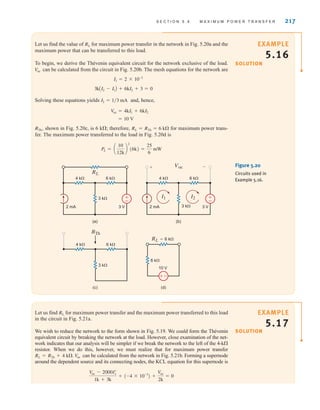
  • 96.
    72 C HA P T E R 2 R E S I S T I V E C I R C U I T S TABLE 2.3 Characteristics of resistor types CHARACTERISTIC THICK-FILM THIN-FILM SILICON-DIFFUSED Sheet resistance Sheet tolerance (as fired) / / / Sheet tolerance (final) / / Relative cost Low High Higher N兾A 1% 1% 2% 10% 20% 5 - 6k ohms兾sq 25 - 300 ohms兾sq 5 - 500k ohms兾sq to the sheet resistivity of the material. For example, a 10-ohm sheet resistivity material would constitute a 10-ohm resistor whether the material was 1 mil by 1 mil or 1 inch by 1 inch. Dividing the length of the resistor by its width yields the number of squares, and multiplying the number of squares by the sheet resistance yields the resistance value. The total resistance values are limited because of the high cost of silicon area, and there are other circuit design techniques for implementing high-valued resistors through the judicious use of transistors. These devices suffer from large changes in value over temperature and some resistance change with applied voltage. As a result of these poor characteristics, thin-film resistors mounted on the surface of the silicon are used in place of diffused resistors in critical applications. APPLICATION EXAMPLE 2.31 The eyes (heating elements) of an electric range are frequently made of resistive nichrome strips. Operation of the eye is quite simple. A current is passed through the heating element causing it to dissipate power in the form of heat. Also, a four-position selector switch, shown in Fig. 2.45, controls the power (heat) output. In this case the eye consists of two nichrome strips modeled by the resistors and where 1. How should positions A, B, C, and D be labeled with regard to high, medium, low, and off settings? 2. If we desire that high and medium correspond to 2000 W and 1200 W power dissipa- tion, respectively, what are the values of and 3. What is the power dissipation at the low setting? Position A is the off setting since no current flows to the heater elements. In position B, cur- rent flows through only, while in position C current flows through only. Since more power will be dissipated when the switch is at position C. Thus, position C is the medi- um setting, B is the low setting, and, by elimination, position D is the high setting. When the switch is at the medium setting, only dissipates power, and we can write as or R1 = 44.08 R1 = V2 S P1 = 2302 1200 R1 R1 R1 6 R2, R1 R2 R2? R1 R1 6 R2. R2, R1 • SOLUTION 2.10 Application Examples Throughout this book we endeavor to present a wide variety of examples that demonstrate the usefulness of the material under discussion in a practical environment. To enhance our presentation of the practical aspects of circuit analysis and design, we have dedicated sections, such as this one, in most chapters for the specific purpose of presenting additional application- oriented examples. irwin02_025-100hr.qxd 30-06-2010 13:14 Page 72
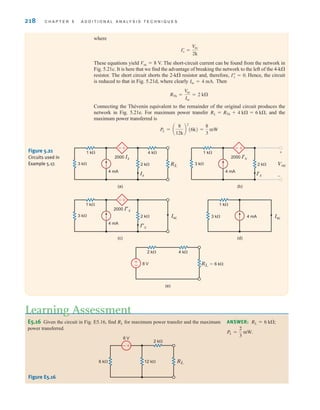
  • 97.
    S E CT I O N 2 . 1 0 A P P L I C A T I O N E X A M P L E S 73 On the high setting, 2000 W of total power is delivered to and Since dissipates 1200 W, must dissipate the remaining 800 W. Therefore, is or Finally, at the low setting, only is connected to the voltage source; thus, the power dissi- pation at this setting is 800 W. R2 R2 = 66.13 R2 = V2 S P2 = 2302 800 R2 R2 R1 R2. R1 ± – A B D C R1 R2 VS=230 V Figure 2.45 Simple resistive heater selector circuit. Have you ever cranked your car with the headlights on? While the starter kicked the engine, you probably saw the headlights dim then return to normal brightness once the engine was running on its own. Can we create a model to predict this phenomenon? • APPLICATION EXAMPLE 2.32 Yes, we can. Consider the conceptual circuit in Fig. 2.46a and the model circuit in Fig. 2.46b, which isolates just the battery, headlights, and starter. Note the resistor It is included to model several power loss mechanisms that can occur between the battery and the loads, that is, the headlights and starter. First, there are the chemical processes with- in the battery itself which are not 100% efficient. Second, there are the electrical connec- tions at both the battery posts and the loads. Third, the wiring itself has some resistance, although this is usually so small that it is negligible. The sum of these losses is modeled by and we expect the value of to be small. A reasonable value is Next we address the starter. When energized, a typical automobile starter will draw between 90 and 120 A. We will use 100 A as a typical number. Finally, the headlights will draw much less current—perhaps only 1 A. Now we have values to use in our model circuit. 25 m. Rbatt Rbatt, Rbatt. SOLUTION 12 V 12 V Vbatt Istart Rbatt VL IHL + - Headlights Headlight switch Ignition switch (a) (b) ± – Figure 2.46 A conceptual (a) model and (b) circuit for examining the effect of starter current on headlight intensity. irwin02_025-100hr.qxd 30-06-2010 13:14 Page 73
  • 98.
    74 C HA P T E R 2 R E S I S T I V E C I R C U I T S Assume first that the starter is off. By applying KCL at the node labeled we find that the voltage applied to the headlights can be written as Substituting our model values into this equation yields —very close to 12 V. Now we energize the starter and apply KCL again: Now the voltage across the headlights is only 9.25 V. No wonder the headlights dim! How would corrosion or loose connections on the battery posts change the situation? In this case, we would expect the quality of the connection from battery to load to deteriorate, increasing and compounding the headlight dimming issue. Rbatt V L = V batt - AIHL + IstartBRbatt V L = 11.75 V V L = V batt - IHLRbatt V L, A Wheatstone bridge circuit is an accurate device for measuring resistance. This circuit, shown in Fig. 2.47, is used to measure the unknown resistor The center leg of the cir- cuit contains a galvanometer, which is a very sensitive device that can be used to measure current in the microamp range. When the unknown resistor is connected to the bridge, is adjusted until the current in the galvanometer is zero, at which point the bridge is balanced. In this balanced condition so that Rx = a R2 R1 bR3 R1 R3 = R2 Rx R3 Rx. APPLICATION EXAMPLE 2.33 • Figure 2.47 The Wheatstone bridge circuit. R1 R2 I2 R3 I1 I3 IG Ix Rx G Using the balance equation for the bridge, the value of at no load is R3 = a R1 R2 bRx R3 SOLUTION Engineers also use this bridge circuit to measure strain in solid material. For example, a system used to determine the weight of a truck is shown in Fig. 2.48a. The platform is sup- ported by cylinders on which strain gauges are mounted. The strain gauges, which measure strain when the cylinder deflects under load, are connected to a Wheatstone bridge as shown in Fig. 2.48b. The strain gauge has a resistance of under no-load conditions and changes value under load. The variable resistor in the bridge is a calibrated precision device. Weight is determined in the following manner. The required to balance the bridge represents the strain, which when multiplied by the modulus of elasticity yields the stress. The stress multiplied by the cross-sectional area of the cylinder produces the load, which is used to determine weight. Let us determine the value of under no load when the bridge is balanced and its value when the resistance of the strain gauge changes to under load. 120.24 R3 ¢ ¢ ¢ ¢ ¢R3 120 irwin02_025-100hr.qxd 30-06-2010 13:14 Page 74
  • 99.
    S E CT I O N 2 . 1 1 D E S I G N E X A M P L E S 75 Under load, the value of is Therefore, the ¢R3 is = 0.2182 ¢R3 = 109.3091 - 109.0909 = 109.3091 R3 = a 100 110 b(120.24) R3 = 109.0909 = a 100 110 b(120) Figure 2.48 Diagrams used in Example 2.33. R2=110 ⍀ R1=100 ⍀ R3 Strain gauge Rx G (a) (b) Strain gauge Platform 2.11 Design Examples Most of this text is concerned with circuit analysis; that is, given a circuit in which all the components are specified, analysis involves finding such things as the voltage across some element or the current through another. Furthermore, the solution of an analysis problem is generally unique. In contrast, design involves determining the circuit configuration that will meet certain specifications. In addition, the solution is generally not unique in that there may be many ways to satisfy the circuit/performance specifications. It is also possible that there is no solution that will meet the design criteria. In addition to meeting certain technical specifications, designs normally must also meet other criteria, such as economic, environmental, and safety constraints. For example, if a cir- cuit design that meets the technical specifications is either too expensive or unsafe, it is not viable regardless of its technical merit. At this point, the number of elements that we can employ in circuit design is limited prima- rily to the linear resistor and the active elements we have presented. However, as we progress through the text we will introduce a number of other elements (for example, the op-amp, capacitor, and inductor), which will significantly enhance our design capability. We begin our discussion of circuit design by considering a couple of simple examples that demonstrate the selection of specific components to meet certain circuit specifications. irwin02_025-100hr.qxd 30-06-2010 13:14 Page 75
  • 100.
    76 C HA P T E R 2 R E S I S T I V E C I R C U I T S DESIGN EXAMPLE 2.34 • An electronics hobbyist who has built his own stereo amplifier wants to add a back-lit dis- play panel to his creation for that professional look. His panel design requires seven light bulbs—two operate at and five at Luckily, his stereo design already has a quality 12-V dc supply; however, there is no 9-V supply. Rather than building a new dc power supply, let us use the inexpensive circuit shown in Fig. 2.49a to design a 12-V to 9-V converter with the restriction that the variation in be no more than In particu- lar, we must determine the necessary values of and First, lamps and have no effect on Second, when lamps are on, they each have an equivalent resistance of As long as remains fairly constant, the lamp resistance will also be fairly constant. Thus, the requisite model circuit for our design is shown in Fig. 2.49b. The voltage will be at its maximum value of when are all off. In this case and are in series, and can be expressed by simple voltage division as V 2 = 9.45 = 12c R2 R1 + R2 d V 2 R2 R1 L3–L7 9 + 5% = 9.45 V V 2 V 2 Req = V 2 I = 9 0.005 = 1.8 k L3–L7 V 2. L2 L1 R2. R1 ;5%. V 2 9 V兾5 mA. 12 V兾15 mA SOLUTION ± – 12 V L3 L1 R2 V2 R1 L2 L4 L5 L6 L7 + - 12 V 1.8 k⍀ 1.8 k⍀ 1.8 k⍀ 1.8 k⍀ 1.8 k⍀ R2 V2 R1 + - (a) (b) ± – Figure 2.49 12-V to 9-V converter circuit for powering panel lighting. irwin02_025-100hr.qxd 30-06-2010 13:14 Page 76
  • 101.
    S E CT I O N 2 . 1 1 D E S I G N E X A M P L E S 77 Rearranging the equation yields A second expression involving and can be developed by considering the case when are all on, which causes to reach its minimum value of 9–5%, or 8.55 V. Now, the effective resistance of the lamps is five 1.8- resistors in parallel, or The corre- sponding expression for is which can be rewritten in the form Substituting the value determined for into the preceding equation yields or and so for R2 = 178.3 R2 R1 = 48.1 R1 = 360[1.4 - 1 - 0.27] R1兾R2 360R1 R2 + 360 + R1 360 = 12 8.55 = 1.4 V2 = 8.55 = 12c R2兾兾360 R1 + AR2兾兾360B d V 2 360 . k V 2 L3–L7 R2 R1 R1 R2 = 0.27 • DESIGN EXAMPLE 2.35 • DESIGN EXAMPLE 2.35 SOLUTION Let’s design a circuit that produces a 5-V output from a 12-V input. We will arbitrarily fix the power consumed by the circuit at 240 mW. Finally, we will choose the best possible standard resistor values from Table 2.1 and calculate the percent error in the output voltage that results from that choice. The simple voltage divider, shown in Fig. 2.50, is ideally suited for this application. We know that is given by which can be written as Since all of the circuit’s power is supplied by the 12-V source, the total power is given by Using the second equation to eliminate we find that has a lower limit of Substituting these results into the second equation yields the lower limit of that is Thus, we find that a significant portion of Table 2.1 is not applicable to this design. However, determining the best pair of resistor values is primarily a trial-and-error operation R1 = R2 c V in V o - 1d 350 R1, R2 V oV in P = (5)(12) 0.24 = 250 R2 R1, P = V2 in R1 + R2 0.24 R1 = R2 c V in V o - 1d V o = V in c R2 R1 + R2 d V o R1 12 V R2 Vo=5 V + - ± – Figure 2.50 A simple voltage divider irwin02_025-100hr.qxd 30-06-2010 13:14 Page 77
  • 102.
    78 C HA P T E R 2 R E S I S T I V E C I R C U I T S TABLE 2.4 Spreadsheet calculations for simple voltage divider A B C D E 1 R2 R1 theor R1 Vo Pabs 2 300 420 430 4.932 0.197 3 330 462 470 4.950 0.180 4 360 504 510 4.966 0.166 5 390 546 560 4.926 0.152 6 430 602 620 4.914 0.137 7 470 658 680 4.904 0.125 8 510 714 750 4.857 0.114 9 560 784 750 5.130 0.110 10 620 868 910 4.863 0.094 11 680 952 910 5.132 0.091 12 750 1050 1000 5.143 0.082 13 820 1148 1100 5.125 0.075 14 910 1274 1300 4.941 0.065 15 1000 1400 1300 5.217 0.063 16 1100 1540 1500 5.077 0.055 17 1200 1680 1600 5.143 0.051 18 1300 1820 1800 5.032 0.046 19 1500 2100 2000 5.143 0.041 20 1600 2240 2200 5.053 0.038 21 1800 2520 2400 5.143 0.034 22 2000 2800 2700 5.106 0.031 23 2200 3080 3000 5.077 0.028 24 2400 3360 3300 5.053 0.025 that can be enhanced by using an Excel spreadsheet as shown in Table 2.4. Standard resis- tor values from Table 2.1 were entered into Column A of the spreadsheet for Using the equation above, theoretical values for were calculated using A standard resistor value was selected from Table 2.1 for based on the theoretical calculation in Column B. was calculated using the simple voltage-divider equation, and the power absorbed by and was calculated in Column E. Note that a number of combinations of and satisfy the power constraint for this circuit. The power absorbed decreases as and increase. Let’s select and , because this combination yields an output voltage of that is closest to the desired value of The resulting error in the output voltage can be determined from the expression It should be noted, however, that these resistor values are nominal, that is, typical values. To find the worst-case error, we must consider that each resistor as purchased may be as much as off the nominal value. In this application, since is already greater than the target of 5 V, the worst-case scenario occurs when increases even further, that is, is 5% too low and is 5% too high . The resulting output voltage is 5.32 V, which yields a percent error of 6.4%. Of course, most resistor values are closer to the nominal value than to the guaranteed maximum/minimum values. However, if we intend to build this circuit with a guaranteed tight output error such as 5% we should use resistors with lower tolerances. How much lower should the tolerances be? Our first equation can be altered to yield the worst-case output voltage by adding a tolerance, , to and subtracting the tolerance from Let’s choose a worst-case output voltage of , that is, a 5% error: V0max = 5.25 V R1. R2 ¢ (1365 ) R2 (1710 ) R1 V0 V0 ;5% Percent error = c 5.032 - 5 5 d100% = 0.64% 5 V. 5.032 V R2 = 1300 R1 = 1800 R2 R1 R2 R1 R2 R1 V0 R1 R1 = 1.4ⴢR2. R1 R2. irwin02_025-100hr.qxd 30-06-2010 13:14 Page 78
  • 103.
    S E CT I O N 2 . 1 1 D E S I G N E X A M P L E S 79 The resulting value of is 0.037, or 3.7%. Standard resistors are available in tolerances of 10, 5, 2, and 1%. Tighter tolerances are available but very expensive. Thus, based on nom- inal values of and , we should utilize 2% resistors to ensure an output volt- age error less than 5%. 1800 1300 ¢ 12c 1300(1 + ¢) 1800(1 - ¢) + 1300(1 + ¢) d V 0max = 5.25 = Vin c R2(1 + ¢) R1(1 - ¢) + R2(1 + ¢) d = • DESIGN EXAMPLE 2.36 SOLUTION In factory instrumentation, process parameters such as pressure and flowrate are measured, converted to electrical signals, and sent some distance to an electronic controller. The con- troller then decides what actions should be taken. One of the main concerns in these sys- tems is the physical distance between the sensor and the controller. An industry standard format for encoding the measurement value is called the 4–20 mA standard, where the parameter range is linearly distributed from 4 to 20 mA. For example, a 100 psi pressure sensor would output 4 mA if the pressure were 0 psi, 20 mA at 100 psi, and 12 mA at 50 psi. But most instrumentation is based on voltages between 0 and 5 V, not on currents. Therefore, let us design a current-to-voltage converter that will output 5 V when the cur- rent signal is 20 mA. The circuit in Fig. 2.51a is a very accurate model of our situation. The wiring from the sen- sor unit to the controller has some resistance, If the sensor output were a voltage pro- portional to pressure, the voltage drop in the line would cause measurement error even if the sensor output were an ideal source of voltage. But, since the data are contained in the cur- rent value, does not affect the accuracy at the controller as long as the sensor acts as an ideal current source. As for the current-to-voltage converter, it is extremely simple—a resistor. For 5 V at 20 mA, we employ Ohm’s law to find The resulting converter is added to the system in Fig. 2.51b, where we tacitly assume that the controller does not load the remaining portion of the circuit. Note that the model indicates that the distance between the sensor and controller could be infinite. Intuitively, this situation would appear to be unreasonable, and it is. Losses that would take place over distance can be accounted for by using a more accurate model of the sensor, as shown in Fig. 2.52. The effect of this new sensor model can be seen from the equations that describe this new network. The model equations are IS = VS RS + V S Rwire + 250 R = 5 0.02 = 250 Rwire Rwire. I to V converter Sensor model Controller Rwire (a) Sensor model Controller Rwire (b) 250 ⍀ Figure 2.51 The 4- to 20-mA control loop (a) block diagram, (b) with the current-to- voltage converter. irwin02_025-100hr.qxd 30-06-2010 13:14 Page 79
  • 104.
    80 C HA P T E R 2 R E S I S T I V E C I R C U I T S and Combining these equations yields Thus, we see that it is the size of relative to that determines the accuracy of the signal at the controller. Therefore, we want as large as possible. Both the maximum sensor output voltage and output resistance, are specified by the sensor man- ufacturer. We will revisit this current-to-voltage converter in Chapter 4. RS, RS (Rwire + 250 ) RS Isignal IS = 1 1 + Rwire + 250 RS Isignal = V S Rwire + 250 Improved sensor model Controller Rwire Isignal 250 ⍀ IS RS VS Figure 2.52 A more accurate model for the 4- to 20-mA control loop. The network in Fig. 2.53 is an equivalent circuit for a transistor amplifier used in a stereo preamplifier. The input circuitry, consisting of a 2-mV source in series with a 500- resis- tor, models the output of a compact disk player. The dependent source, Rin, and Ro model the transistor, which amplifies the signal and then sends it to the power amplifier. The 10-k load resistor models the input to the power amplifier that actually drives the speakers. We must design a transistor amplifier as shown in Fig. 2.53 that will provide an overall gain of –200. In practice we do not actually vary the device parameters to achieve the desired gain; rather, we select a transistor from the manufacturer’s data books that will satisfy the required specification. The model parameters for three different transistors are listed as follows: DESIGN EXAMPLE 2.37 • SOLUTION Manufacturer’s transistor parameter values Part Number Rin (k ) Ro (k ) gm (mA/V) 1 1.0 50 50 2 2.0 75 30 3 8.0 80 20 ⍀ ⍀ Design the amplifier by choosing the transistor that produces the most accurate gain. What is the percent error of your choice? The output voltage can be written V o = -gmVARo兾兾RLB irwin02_025-100hr.qxd 30-06-2010 13:14 Page 80
  • 105.
    S U MM A R Y 81 Using voltage division at the input to find V, Combining these two expressions, we can solve for the gain: Using the parameter values for the three transistors, we find that the best alternative is tran- sistor number 2, which has a gain error of Percent error = a 211.8 - 200 200 b * 100% = 5.9% AV = V o V S = -gm a Rin Rin + RS b ARo兾兾RLB V = V S a Rin Rin + RS b ± – RS=500 ⍀ VS=2 mV Rin gm V Ro Vo RL=10 k⍀ + - V + - Figure 2.53 Transistor amplifier circuit model. S U M M A R Y • ■ Ohm’s law V = IR ■ The passive sign convention with Ohm’s law The current enters the resistor terminal with the positive voltage reference. ■ Kirchhoff’s current law (KCL) The algebraic sum of the currents leaving (entering) a node is zero. ■ Kirchhoff’s voltage law (KVL) The algebraic sum of the voltages around any closed path is zero. ■ Solving a single-loop circuit Determine the loop current by applying KVL and Ohm’s law. ■ Solving a single-node-pair circuit Determine the voltage between the pair of nodes by applying KCL and Ohm’s law. ■ The voltage-division rule The voltage is divided between two series resistors in direct proportion to their resistance. ■ The current-division rule The current is divided between two parallel resistors in reverse proportion to their resistance. ■ The equivalent resistance of a network of resistors Combine resistors in series by adding their resistances. Combine resistors in parallel by adding their conductances. The wye-to-delta and delta-to-wye transformations are also an aid in reducing the complexity of a network. ■ Short circuit Zero resistance, zero voltage; the current in the short is determined by the rest of the circuit. ■ Open circuit Zero conductance, zero current; the voltage across the open terminals is determined by the rest of the circuit. irwin02_025-100hr.qxd 30-06-2010 13:14 Page 81
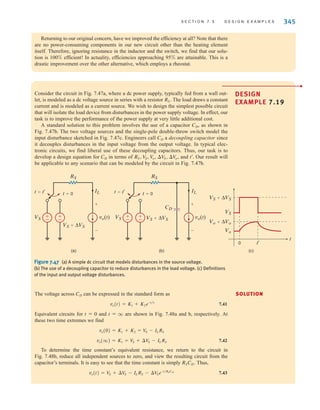
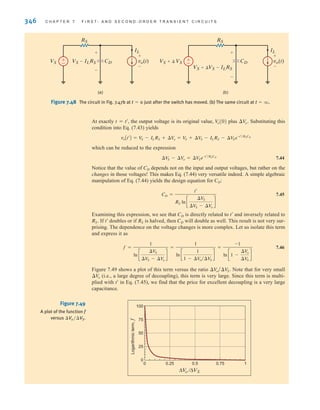
  • 106.
    82 C HA P T E R 2 R E S I S T I V E C I R C U I T S P R O B L E M S • 2.1 Determine the current and power dissipated in the resistor in Fig. P2.1. 9 V ± – 12 ⍀ Figure P2.1 0.5 S 2 ⍀ 12 V ± – 2 A 12 ⍀ Figure P2.2 Figure P2.3 2.4 Given the circuit in Fig. P2.4, find the voltage across each resistor and the power dissipated in each. 6 A 5 ⍀ 0.25 S Figure P2.4 2 mA Rx 12 mA Gx Figure P2.5 Figure P2.6 2.2 Determine the current and power dissipated in the resistors in Fig. P2.2. 2.3 Determine the voltage across the resistor in Fig. P2.3 and the power dissipated. 2.5 In the network in Fig. P2.5, the power absorbed by is 20 mW. Find . Rx Rx 2.6 In the network in Fig. P2.6, the power absorbed by is 20 mW. Find . Gx Gx 2.7 A model for a standard two D-cell flashlight is shown in Fig. P2.7. Find the power dissipated in the lamp. 1-⍀ lamp 1.5 V 1.5 V 2.8 An automobile uses two halogen headlights connected as shown in Fig. P2.8. Determine the power supplied by the battery if each headlight draws 3 A of current. Figure P2.8 12 V + - Figure P2.7 2.9 Many years ago a string of Christmas tree lights was man- ufactured in the form shown in Fig. P2.9a. Today the lights are manufactured as shown in Fig. P2.9b. Is there a good reason for this change? Figure P2.9 (a) (b) irwin02_025-100hr.qxd 30-06-2010 13:15 Page 82
  • 107.
    P R OB L E M S 83 2.10 Find in the network in Fig. P2.10. Figure P2.10 2.11 Find in the network in Fig. P2.11. Figure P2.11 2.12 Find and in the network in Fig. P2.12. Figure P2.12 2.13 Find in the circuit in Fig. P2.13. Figure P2.13 2.14 Find in the network in Fig. P2.14. Figure P2.14 12 mA 4 mA 2Ix 3Ix Ix Ix 4 mA 2 mA 12 mA I1 ± – I1 2 mA 8 mA 4 mA I1 ± – I2 I2 I1 2 mA 6 mA I1 ± – I1 20 mA 6 mA 4 mA I1 I1 2.15 Determine in the circuit in Fig. P2.15. Figure P2.15 6 k⍀ 2 k⍀ 3 k⍀ 6 mA 3 mA Ix IL 3 Ix IL 2.16 Find and in the circuit in Fig. P2.16. Figure P2.16 2.17 Find in the network in Fig. P2.17. Figure P2.17 2 mA 4 mA 2Ix Ix I1 I1 5 mA 2 mA 4 mA 3 mA Io I1 – ± ± – I1 Io irwin02_025-100hr.qxd 30-06-2010 13:15 Page 83
  • 108.
    84 C HA P T E R 2 R E S I S T I V E C I R C U I T S 2.18 Find , , and in the network in Fig. P2.18. Figure P2.18 2.19 Find in the circuit in Fig. P2.19. Figure P2.19 2.20 Find in the network in Fig. P2.20. Figure P2.20 2.21 Find I1, I2, and I3 in the network in Fig. P2.21. Figure P2.21 2.22 In the network in Fig. P2.22, Find I1, I2 and I3 and show that KCL is satisfied at the boundary. Figure P2.22 2.23 Find in the circuit in Fig. P2.23. Figure P2.23 2.24 Find in the network in Fig. P2.24. Figure P2.24 2.25 Find and in the circuit in Fig. P2.25. Figure P2.25 + - a b c d e f g 2 V - + 3 V + - 1 V - + 1 V + - 2 V 12 V 3 V - + – ± V ec V fb a b c e d 4 V 12 V 3 V 2 V + + - - 3 V - + ± – ± – V ad a b c d – ± 12 V 4 V 6 V 2 V + + - - ± – V bd I3 I2 I1 4 mA 4 mA 2 mA 1 mA 2Ix I2 I3 I1 12 mA 4 mA 2Ix Ix 2Ix I1 6 mA 4 mA 6 mA Ix I1 4 mA 12 mA 4Ix Ix I1 I1 4 mA 3 mA 2 mA 12 mA Ix Iy Iz –± Iz Iy Ix irwin02_025-100hr.qxd 30-06-2010 13:15 Page 84
  • 109.
    P R OB L E M S 85 2.26 Find and in the circuit in Fig. P2.26. Figure P2.26 2.27 Given the circuit diagram in Fig. P2.27, find the following voltages: , , , , , , , , , and . Figure P2.27 2.28 Find Vx and Vy in the circuit in Fig. P2.28. Figure P2.28 2.29 Find Vx and Vy in the circuit in Fig. P2.29. Figure P2.29 2.30 Find V1, V2 and V3 in the network in Fig. P2.30. Figure P2.30 2.31 Find in the network in Fig. P2.31. Figure P2.31 2.32 Find in the circuit in Fig. P2.32. Figure P2.32 + - ± – + – 2 Ix Vx + – Vx Vo 12 ⍀ 4 ⍀ 12 V Ix + - V o ± – - + + – + – 4 Vx 2 VA Vx VA + – Vo 4 ⍀ 2 ⍀ 12 V - + V o 6 V 4 V 6 V + – Vx 2Vx + – V1 + – V3 + – + – + – + – V2 + – 12 V 4 V 6 V + – + – Vx + – + – Vy + – 12 V 4 V 6 V 6 V + – + – + – Vx + – Vy + – + – + - 16 V + - 8 V + - 14 V + - 20 V + + - - 8 V 12 V + + - - 12 V 4 V g h i a b c d e f V dc V fb V hf V ai V ac V fa V di V gc V bh V da a b c f e d 12 V 6 V 4 V + - ± – ± – – ± 9 V 5 V - + 6 V + - V cf V ae irwin02_025-100hr.qxd 30-06-2010 13:15 Page 85
  • 110.
    2.33 The 10-Vsource absorbs 2.5 mW of power. Calculate Vba and the power absorbed by the dependent voltage source in Fig. P2.33. Figure P2.33 2.34 Find V1, V2, and V3 in the network in Fig. P2.34. Figure P2.34 2.35 The 10-V source in Fig. P.2.35 is supplying 50 W. Determine R1. Figure P2.35 2.36 Find V1 and V2 in Fig. P2.36. Figure P2.36 2.37 Find in the network in Fig. P2.37. Figure P2.37 2.38 Find in the circuit in Fig. P2.38. Figure P2.38 2.39 Find in the network in Fig. P2.39. Figure P2.39 2.40 Find and the power supplied by the 15-V source in the circuit in Fig. P2.40. Figure P2.40 8 k⍀ 5 k⍀ 6 k⍀ 2 k⍀ 4 k⍀ 10 V 15 V 25 V Vx ± – –± – ± V x 6 V 9 V 3 ⍀ 2 ⍀ 6 ⍀ 4 ⍀ a b – ± –± V ab 8 V 24 V 6 V 4 k⍀ 6 k⍀ ± – ± – – ± + - Vx V x a b c d 4 V 12 V 3 k⍀ 1 k⍀ ± – ± – V bd 5 ⍀ 5 ⍀ 10 ⍀ V1 2 A + - V2 + - 10 V R1 4R1 + – 6 V 4 V + – 12 V + – V1 4Vx + – Vx + – V3 + – - + + – V2 + – Vba + - - + 2 k⍀ a b 3 k⍀ 10 k⍀ 2 Vx Vx 20 V 5 k⍀ 10 V - + ± – 86 C H A P T E R 2 R E S I S T I V E C I R C U I T S irwin02_025-100hr.qxd 30-06-2010 13:15 Page 86
  • 111.
    2.41 Find inthe network in Fig. P2.41. Figure P2.41 2.42 Find the power supplied by each source, including the dependent source, in Fig. P2.42. Figure P2.42 2.43 Find the power absorbed by the dependent voltage source in the circuit in Fig. P2.43. Figure P2.43 2.44 Find the power absorbed by the dependent source in the circuit in Fig. P2.44. Figure P2.44 2.45 The 100-V source in the circuit in Fig. P2.45 is supplying 200 W. Solve for V2. Figure P2.45 2.46 Find the value of V2 in Fig. P2.46 such that V1 = 0. Figure P2.46 2.47 Find in the network in Fig. P2.47. Figure P2.47 2.48 Find in the network in Fig. P2.48. Figure P2.48 2.49 Find the power supplied by each source in the circuit in Fig. P2.49. Figure P2.49 1 k⍀ 2 k⍀ 5 k⍀ 4 mA 2 mA 6 k⍀ 12 k⍀ 12 k⍀ 12 mA Io Io 6 k⍀ 3 k⍀ 2 k⍀ 12 mA Io Io 20 V + – + – V1 + – V2 10 ⍀ 20 ⍀ 100 V + – + – V2 30 ⍀ 20 ⍀ 5 ⍀ 40 ⍀ 5 ⍀ 10 k⍀ 4 k⍀ 2000 Ix 10 k⍀ 6 k⍀ 20 V 60 V ± – ± – – ± Ix 3 k⍀ 10 k⍀ 2 Vx 5 k⍀ 10 k⍀ 2 k⍀ 10 V 20 V Vx ±– ± – ± – 15 V + – 10 k⍀ 3 k⍀ 1 k⍀ 5 k⍀ + – 3 Vx Vx 3 mA ± – Vx Vx 4 10 k⍀ 5 k⍀ 25 V V1 - - + + ± – V 1 P R O B L E M S 87 irwin02_025-100hr.qxd 30-06-2010 13:15 Page 87
  • 112.
    2.50 Find thecurrent in the circuit in Fig. P2.50. Figure P2.50 2.51 Find in the network in Fig. P2.51. Figure P2.51 2.52 Find in the network in Fig. P2.52. Figure P2.52 2.53 Determine in the circuit in Fig. P2.53. Figure P2.53 Ix V1 IL 6 k⍀ 2 k⍀ 3 k⍀ 6 mA 3 mA 3 Ix + - IL Io 4 ⍀ 5 A 8 ⍀ 6 k⍀ Vx 3 Vx + - Io 6 k⍀ 12 k⍀ 4 k⍀ 3 k⍀ 12 mA Io Io 1 k⍀ 2 k⍀ 5 k⍀ 4 k⍀ 7 mA 3 mA IA IA 2.54 Find the power absorbed by the dependent source in the network in Fig. P2.54. Figure P2.54 2.55 Find in the circuit in Fig. P2.55. Figure P2.55 2.56 Find in the network in Fig. P2.56. Figure P2.56 6 k⍀ 2 k⍀ 3 k⍀ 4 k⍀ 1 k⍀ A B RAB RAB RAB 2 k⍀ 2 k⍀ 4 k⍀ 12 k⍀ 2 k⍀ 9 k⍀ A B RAB 1 k⍀ 2 VA 4 k⍀ 2 k⍀ 5 k⍀ 3 mA VA + - 88 C H A P T E R 2 R E S I S T I V E C I R C U I T S irwin02_025-100hr.qxd 30-06-2010 13:15 Page 88
  • 113.
    2.57 Find inthe circuit in Fig. P2.57. Figure P2.57 2.58 Find in the network in Fig. P2.58. Figure P2.58 2.59 Find in the circuit in Fig. P2.59. Figure P2.59 2.60 Find in the network in Fig. P2.60. Figure P2.60 2.61 Find in the circuit in Fig. P2.61. Figure P2.61 2.62 Find in the network in Fig. P2.62. Figure P2.62 2.63 Find the equivalent resistance in the network in Fig. P2.63. Figure P2.63 Req 12 ⍀ 12 ⍀ 12 ⍀ 12 ⍀ 12 ⍀ 12 ⍀ 12 ⍀ Req A B 14 ⍀ 6 ⍀ 12 ⍀ 6 ⍀ 6 ⍀ 9 ⍀ 6 ⍀ 6 ⍀ 6 ⍀ RAB RAB A B 12 ⍀ 6 ⍀ 12 ⍀ 6 ⍀ 6 ⍀ 9 ⍀ 9 ⍀ 9 ⍀ RAB RAB A B 2 ⍀ 12 ⍀ 6 ⍀ 3 ⍀ 3 ⍀ 2 ⍀ 4 ⍀ RAB RAB 10 ⍀ 6 ⍀ 4 ⍀ 12 ⍀ 2 ⍀ 6 ⍀ A B RAB RAB 2 ⍀ 4 ⍀ 6 ⍀ 8 ⍀ 10 ⍀ A B RAB RAB RAB 1 k⍀ 1 k⍀ 2 k⍀ 2 k⍀ 2 k⍀ 2 k⍀ 1 k⍀ 2 k⍀ 2 k⍀ A B RAB P R O B L E M S 89 irwin02_025-100hr.qxd 30-06-2010 13:15 Page 89
  • 114.
    2.64 Find theequivalent resistance looking in at terminals a-b in the circuit in Fig. P2.64. Figure P2.64 4 ⍀ 4 ⍀ 6 ⍀ 6 ⍀ 8 ⍀ 8 ⍀ 10 ⍀ 12 ⍀ 20 ⍀ 18 ⍀ 8 ⍀ a 8 ⍀ 5 ⍀ 4 ⍀ 12 ⍀ 10 ⍀ 10 ⍀ 8 ⍀ 8 ⍀ 9 ⍀ b 90 C H A P T E R 2 R E S I S T I V E C I R C U I T S 2.65 Given the resistor configuration shown in Fig. P2.65, find the equivalent resistance between the following sets of terminals: (1) a and b, (2) b and c, (3) a and c, (4) d and e, (5) a and e, (6) c and d, (7) a and d, (8) c and e, (9) b and d, and (10) b and e. Figure P2.65 2.66 Seventeen possible equivalent resistance values may be obtained using three resistors. Determine the seventeen different values if you are given resistors with standard values: 47 , 33 , and 15 . 2.67 Find and in the circuit in Fig. P2.67. Figure P2.67 2.68 Find and in the circuit in Fig. P2.68. Figure P2.68 6 V 12 k⍀ 4 k⍀ 2 k⍀ I1 Vo + - ± – V 0 I1 12 V 6 k⍀ 4 k⍀ 8 k⍀ 2 k⍀ I1 Vo + - ± – V 0 I1 4 ⍀ 4 ⍀ 10 ⍀ 12 ⍀ a 5 ⍀ 5 ⍀ b c d e irwin02_025-100hr.qxd 30-06-2010 13:15 Page 90
  • 115.
    2.69 Find andin the circuit in Fig. P2.69. Figure P2.69 2.70 Find and in the network in Fig. P2.70. Figure P2.70 2.71 Find in the network in Fig. P2.71. Figure P2.71 2.72 Determine in the circuit in Fig. P2.72. Figure P2.72 2.73 Determine in the network in Fig. P2.73. Figure P2.73 2.74 Calculate in Fig. P2.74. Figure P2.74 2.75 Calculate VAB in Fig. P2.75. Figure P2.75 2.76 Calculate and V1 in Fig. P2.76. Figure P2.76 2.77 Calculate VAB in Fig. P2.77. Figure P2.77 A B 12 k⍀ 2 k⍀ 4 k⍀ 6 k⍀ 8 k⍀ 6 k⍀ VAB 18 V + – 6 A V1 a b 15 ⍀ 6 ⍀ 4 ⍀ 6 ⍀ 2 ⍀ 4 ⍀ 4 ⍀ Vab V ab 2 A A B 6 ⍀ 4 ⍀ 2 ⍀ 4 ⍀ 4 ⍀ 2 ⍀ 4 ⍀ 2 ⍀ 6 ⍀ VAB a b 20 ⍀ 12 ⍀ 20 ⍀ 18 ⍀ 15 ⍀ 30 ⍀ 8 ⍀ 75 V + – Vab V ab 18 mA 3 k⍀ 5 k⍀ 1 k⍀ 30 mA + - Vo V o Io 12 V 2 k⍀ 6 k⍀ 4 k⍀ 4 k⍀ 16 k⍀ 12 k⍀ - + Io 12 mA 12 k⍀ 12 k⍀ 12 k⍀ 6 k⍀ Io Io 10 k⍀ 8 k⍀ 16 k⍀ 15 V IA V1 + - ± – IA V1 ± – 4 ⍀ 3 ⍀ 1 ⍀ 2 ⍀ 2 ⍀ 5 ⍀ 20 V Vab + + - - a b c d Vdc V dc V ab P R O B L E M S 91 irwin02_025-100hr.qxd 30-06-2010 13:15 Page 91
  • 116.
    92 C HA P T E R 2 R E S I S T I V E C I R C U I T S 2.78 Calculate VAB and I1 in Fig. P2.78. Figure P2.78 2.79 Calculate VAB and I1 in Fig. P2.79. Figure P2.79 2.80 Find in Fig. P2.80. Figure P2.80 2.81 If in the network in Fig. P2.81, find Figure P2.81 2.82 If mA in the circuit in Fig. P2.82, find Figure P2.82 2.83 If mA in the circuit in Fig. P2.83, find Figure P2.83 2.84 Find the value of in the network in Fig. P2.84 such that the power supplied by the current source is 0. Figure P2.84 2.85 In the network in Fig. P2.85, Find . Figure P2.85 2.86 Find the value of in the network in Fig. P2.86 such that Figure P2.86 ± – + - 8 V 2 ⍀ 4 ⍀ 2 ⍀ 2 ⍀ 2 ⍀ V1 V1 Va + - ± – V a = 0. V1 3 k⍀ 2 k⍀ 7 k⍀ 2 k⍀ 1 k⍀ IS Vo + - IS V o = 6 V. ± – ± – 2 ⍀ 3 ⍀ 6 ⍀ 8 ⍀ 18 V 3 A VS V S Io VS 12 k⍀ 3 k⍀ 6 k⍀ 1 k⍀ ± – V S. Io = 2 IS 4 k⍀ 2 k⍀ Io = 5 mA IS. Io = 5 Vo = 4 V VS + - 4 k⍀ 8 k⍀ ± – V S. V o = 4 V 100 k⍀ 20 k⍀ 50 k⍀ 30 k⍀ 100 V + – Vab + – V ab A B 6 k⍀ 8 k⍀ 3 k⍀ 2 k⍀ 8 k⍀ 6 k⍀ 6 k⍀ 7 k⍀ VAB I1 40 V + – A B 10 k⍀ 6 k⍀ 12 k⍀ 3 k⍀ 4 k⍀ 6 k⍀ 5 k⍀ 8 k⍀ 4 k⍀ VAB 40 V + – I1 irwin02_025-100hr.qxd 30-06-2010 13:15 Page 92
  • 117.
    P R OB L E M S 93 2.87 If in the circuit in Fig. P2.87, find Figure P2.87 2.88 In the network in Fig. P2.88, Find Figure P2.88 2.89 Given that in the network in Fig. P2.89, find Figure P2.89 2.90 If VR = 15 V, find VX in Fig. P2.90. Figure P2.90 2.91 If V2 = 4 V in Fig. P2.91, calculate Vx. Figure P2.91 2.92 Find the value of IA in the network in Fig. P2.92. Figure P2.92 2.93 Find the value of IA in the circuit in Fig. P2.93. Figure P2.93 + – IA Vo = 12 V 4 ⍀ 4 ⍀ 4 ⍀ 6 ⍀ 4 V - + + – IA 12 V 4 V + – 2 ⍀ 2 ⍀ 2 ⍀ 2 ⍀ + – 5 ⍀ 2 ⍀ 2 ⍀ 15 ⍀ 3 ⍀ 16 ⍀ 2 ⍀ 4 ⍀ 24 V + – Vx 2 I1 V2 + – I1 + – + – 4 ⍀ 5 ⍀ 4 ⍀ 3 ⍀ 2 A 3 A 8 V 4 ⍀ VR Vx + – – ± + - 12 k⍀ 3 k⍀ 6 V 3 k⍀ 1 k⍀ 2 k⍀ Vo=4 V VS + - 2 mA V S. V o = 4 V ± – 4 k⍀ 4 k⍀ 6 k⍀ 3 k⍀ 1 k⍀ 2 k⍀ VS V1 + - V S. V 1 = 12 V. 6 k⍀ 3 k⍀ 4 k⍀ V1 = 5 V + - IS IS. V 1 = 5 V irwin02_025-100hr.qxd 30-06-2010 13:15 Page 93
  • 118.
    94 C HA P T E R 2 R E S I S T I V E C I R C U I T S 2.94 Find in value of the current source IA in the network in Fig. P2.94. Figure P2.94 2.95 Given Vo = 12 V, find the value of IA in the circuit in Fig. P2.95. Figure P2.95 2.96 Find the value of in the network in Fig. P2.96, such that the 5-A current source supplies 50 W. Figure P2.96 2.97 The 5-A current source in Fig. P2.97 supplies 150 W. Calculate VA. Figure P2.97 2.98 Given mA in the circuit in Fig. P2.98, find . Figure P2.98 2.99 Given mA in the network in Fig. P2.99, find . Figure P2.99 2.100 Given in the network in Fig. P2.100, find . Figure P2.100 1 k⍀ 6 V IA 1 k⍀ 12 V 1 k⍀ 1 k⍀ 2 k⍀ Vo=4 V + - ± – – ± IA V o ± – + - VA 1 k⍀ Io 6 V 6 mA 1 k⍀ 1 k⍀ 2 k⍀ 2 k⍀ V A Io = 2 ± 6 V 1 k⍀ 1 k⍀ Io 6 V IA 1 k⍀ 2 k⍀ 2 k⍀ ± – – IA Io = 2 15 ⍀ 5 ⍀ 5 ⍀ 4 ⍀ 2 ⍀ 2 ⍀ 25 V 5 A + - VA – ± ± – – ± 2 ⍀ 2 ⍀ 2 ⍀ 5 V 4 ⍀ 4 ⍀ Vx 5 A V x + – 2 ⍀ 4 ⍀ 4 ⍀ 9 ⍀ 4 ⍀ 7 ⍀ 2 A IA + – 12 V + – Vo Ix 2 Ix + – + – 2 ⍀ 2 ⍀ 2 ⍀ 3 ⍀ 4 ⍀ 2 ⍀ 6 V 2 A 4 V + – 6 V IA irwin02_025-100hr.qxd 30-06-2010 13:15 Page 94
  • 119.
    2.101 Find thevalue of in the circuit in Fig. P2.101 such that the power supplied by the 5-A source is 60 W. Figure P2.101 2.102 The 3-A current source in Fig. P2.102 is absorbing 12 W. Determine R. Figure P2.102 2.103 If the power supplied by the 50-V source in Fig. P2.103 is 100 W, find R. Figure P2.103 2.104 Given that , find and in the circuit in Fig. P2.104. Figure P2.104 2.105 Find the power absorbed by the network in Fig. P2.105. Figure P2.105 2.106 Find the value of in the network in Fig. P2.106 such that the power supplied by the 3-A source is 20 W. Figure P2.106 2.107 Find the power supplied by the 24-V source in the circuit in Fig. P2.107. Figure P2.107 – ± 12 k⍀ 12 k⍀ 12 k⍀ 12 k⍀ 24 V 12 k⍀ 12 k⍀ glx 2 ⍀ 1 ⍀ 2 ⍀ 2 ⍀ 3 A Ix g – ± 12 k⍀ 2 k⍀ 6 k⍀ 18 k⍀ 6 k⍀ 21 V 16 V 8 V V1 1 k⍀ 2 k⍀ 2 k⍀ 6 k⍀ 4 k⍀ 4 mA 5 mA RB VA + + - - –± – ± RB V A V 1 = 4 V 2 A 50 V + – 5 ⍀ 2 ⍀ R R 2 ⍀ 1 ⍀ 3 A 12 V + – – ± Vx 1 ⍀ 1 ⍀ 3 A 4 ⍀ 2 ⍀ 5 A 5 V 2 ⍀ ± – V x P R O B L E M S 95 irwin02_025-100hr.qxd 30-06-2010 13:15 Page 95
  • 120.
    96 C HA P T E R 2 R E S I S T I V E C I R C U I T S 2.108 Find in the circuit in Fig. P2.108. Figure P2.108 2.109 Find in the circuit in Fig. P2.109. Figure P2.109 2.110 Determine the value of in the network in Fig. P2.110. Figure P2.110 2.111 Find in the circuit in Fig. P2.111. Figure P2.111 2.112 Find in the network in Fig. P2.112. Figure P2.112 2.113 Find Io in the circuit in Fig. P2.113. Figure P2.113 2.114 Find Io in the circuit in Fig. P2.114. Figure P2.114 2.115 Find Vo in the circuit in Fig. P2.115. Figure P2.115 2Iy Vo 6 A Vx Iy 2 ⍀ 1 ⍀ – + 2 ⍀ Vx 2 2 Vx Vx Io Vo 2 A 2 ⍀ 1 ⍀ 4 A – + 2Ix Ix Io 6 A Vo 2 ⍀ 1 ⍀ + - I 24 V 2 k⍀ 4 k⍀ 2 Vo Vo + - ± – V o - + IS 12 V 3 k⍀ 5 k⍀ 2000 IS Vo + - ± – V o - + 6 k⍀ 4 k⍀ 18 k⍀ 12 k⍀ 6 k⍀ 12 V ± – Vo V o ± – 2 ⍀ 12 ⍀ 12 ⍀ 4 ⍀ 3 ⍀ 5 ⍀ 36 V 18 ⍀ 9 ⍀ Io Io 12 ⍀ 8 ⍀ 12 ⍀ 14 ⍀ 12 ⍀ 24 V Io ± – Io irwin02_025-100hr.qxd 30-06-2010 13:15 Page 96
  • 121.
    P R OB L E M S 97 2.116 Find Vx in the network in Fig. P2.116. Figure P2.116 2.117 Find Vo in the network in Fig. P2.117. Figure P2.117 2.118 Find , , and in the circuit in Fig. P2.118. . Figure P2.118 2.119 Find in the network in Fig. P2.119. Figure P2.119 Io 8 ⍀ 4 ⍀ Vx 6 ⍀ 5 A 3 Vx + - Io ± – 8 ⍀ 24 V 2 A 4 I1 I2 I1 I3 ± – I3 I2 I1 6 A 2Vy Vo Vy 4Vx 2 ⍀ 2 ⍀ – + Vx 1 ⍀ 2 ⍀ – + Ix Vx 6 ⍀ 6 ⍀ 3 ⍀ 3 ⍀ 2 ⍀ 1 ⍀ 4 A + – 2Ix Vo 2.120 A typical transistor amplifier is shown in Fig. P2.120. Find the amplifier gain G (i.e., the ratio of the output voltage to the input voltage). Figure P2.120 2.121 Find the value of in the network in Fig. P2.121, such that the power supplied by the 6-A source is 108 W. Figure P2.121 6 A 6 ⍀ 3 ⍀ 6 ⍀ 12 ⍀ 4 ⍀ kIo Io k - + VS=250 mV 100 ⍀ 300 ⍀ 4 k⍀ 4*105 Ib 5 k⍀ 500 ⍀ Vo + - Ib ± – irwin02_025-100hr.qxd 30-06-2010 13:15 Page 97
  • 122.
    98 C HA P T E R 2 R E S I S T I V E C I R C U I T S 2.122 Find the power supplied by the dependent current source in Fig. P2.122. Figure P2.122 2.123 If the power absorbed by the 10-V source in Fig. P2.123 is 40 W, calculate IS. Figure P2.123 2.124 The power supplied by the 2-A current source in Fig. P2.124 is 50 W, calculate k. Figure P2.124 2.125 Given the circuit in Fig. P2.125, solve for the value of k. Figure P2.125 kV2 3 mA 50 V V2 – + + – 9 k⍀ 18 k⍀ 10 k⍀ 30 k⍀ 30 k⍀ 50 V 2 A + - kI1 2 ⍀ 5 ⍀ 2 ⍀ 4 ⍀ 5 ⍀ I1 0.6Vx 10 V + – + - Vx Is 6 ⍀ 10 ⍀ 15 ⍀ 4 ⍀ 5 ⍀ + - 10 ⍀ 10 ⍀ 5 ⍀ 0.4Vx 2 A Vx – + TY P I C A L P R O B L E M S F O U N D O N T H E F E E X A M 2FE-1 What is the power generated by the source in the network in Fig. 2PFE-1? a. b. c. d. Figure 2PFE-1 6 k⍀ 120 V 5 k⍀ 18 k⍀ 4 k⍀ 6 k⍀ 12 k⍀ ± – 2.4 W 3.6 W 1.2 W 2.8 W 2FE-2 Find in the circuit in Fig. 2PFE-2. a. b. c. d. Figure 2PFE-2 5 ⍀ 15 ⍀ 10 ⍀ 10 ⍀ a b 4 A Vab -10 V 15 V 10 V -5 V V ab irwin02_025-100hr.qxd 30-06-2010 13:15 Page 98
  • 123.
    T Y PI C A L P R O B L E M S F O U N D O N T H E F E E X A M 99 2FE-3 If in the circuit in Fig. 2PFE-3, what is ? a. b. c. d. Figure 2PFE-3 2FE-4 Find the equivalent resistance of the circuit in Fig. 2PFE-4 at the terminals A-B. a. b. c. d. Figure 2PFE-4 2FE-5 The 100 V source is absorbing of power in the network in Fig. 2PFE-5. What is R? a. b. c. d. Figure 2PFE-5 2FE-6 Find the power supplied by the source in the cir- cuit in Fig. 2PFE-6. a. b. c. d. Figure 2PFE-6 2FE-7 What is the current in the circuit in Fig. 2PFE-7? a. b. c. d. Figure 2PFE-7 2FE-8 Find the voltage in the network in Fig. 2PFE-8. a. b. c. d. Figure 2PFE-8 24 mA 3 k⍀ 1 k⍀ 2 k⍀ 6 k⍀ 6 k⍀ 12 k⍀ Vo + - 12 V 36 V 10 V 24 V V o 12 V 6 k⍀ 3 k⍀ 4 k⍀ 12 k⍀ 3 k⍀ 6 k⍀ 6 k⍀ Io - + -0.22 mA 2.75 mA -1.25 mA 0.84 mA Io 50 ⍀ 100 ⍀ 25 ⍀ 20 ⍀ 40 V 100 V 3 A ± – ± – 184 W 212 W 232 W 120 W 40 V 10 ⍀ 10 ⍀ 100 V 200 V 5 A R ± – ± – 15.12 19.25 9.42 17.27 50 W RAB 12 k⍀ 6 k⍀ 6 k⍀ 4 k⍀ 12 k⍀ 12 k⍀ 12 k⍀ A B 20 k 8 k 12 k 4 k 2 ⍀ 4 ⍀ 8 ⍀ R2 Req 18 8 20 12 R2 Req = 10.8 irwin02_025-100hr.qxd 30-06-2010 13:15 Page 99
  • 124.
    100 C HA P T E R 2 R E S I S T I V E C I R C U I T S 2FE-9 What is the voltage in the circuit in Fig. 2PFE-9? a. b. c. d. Figure 2PFE-9 2FE-10 Find the current in Fig. 2PFE-10. a. b. c. d. Figure 2PFE-10 1 ⍀ 1 ⍀ 10 ⍀ 8 ⍀ 3 ⍀ 2 ⍀ 12 V Ix ± – 8兾3 A 3兾2 A 5兾3 A 1兾2 A Ix 2 ⍀ 3 ⍀ 1 ⍀ 4 A 2 A Vo + - 12 V 5 V 8 V 2 V V o irwin02_025-100hr.qxd 30-06-2010 13:15 Page 100
  • 125.
    CHAPTER NODAL AND LOOP ANALYSISTECHNIQUES Courtesy of UPI/Ed Turner/Boeing/NewsCom THE LEARNING GOALS FOR THIS CHAPTER ARE: ■ Be able to calculate all currents and voltages in circuits that contain multiple nodes and loops ■ Learn to employ Kirchhoff’s current law (KCL) to perform a nodal analysis to determine all the node voltages in a circuit ■ Learn to employ Kirchhoff’s voltage law (KVL) to perform a loop analysis to determine all the loop currents in a network ■ Be able to ascertain which of the two analysis techniques should be utilized to solve a particular problem B 3 Boeing Dreamliner Truly a dream come true, the Boeing 787 Dreamliner brings big-jet ranges to mid-size airplanes. A pleasure for both cross-country and intercontinental commercial travelers, this super-efficient airplane can carry 210 to 330 passengers on long-range flights from nearly 3,000 miles to over 9,000 miles. Featuring composite materials, it boasts unmatched efficiency, requiring 20% less fuel than its competitors. In various design stages for nearly six years, the final assembly plant opened in 2007 in Washington State and first flight occurred in late 2009. Inside its efficient hull lies state of the art electronics. Based on an open architecture, the Dreamliner has health- monitoring systems that allow the airplane to self-monitor and report maintenance requirements to ground computer systems. A wireless broadband link sends this real-time diagnostic data to technicians on the ground. The goal is safer operations with predicted mechanical problems and shorter repair times. An active gust alleviation system that automatically adjusts wing flaps using sensor data of turbulence at the aircraft’s nose improves flight control. The design of the Dreamliner is based on fundamental laws that lead to algorithms most efficiently implemented on comput- ers. The two basic circuit analysis techniques described in this chapter follow this same pattern. Nodal analysis is based on bal- ancing currents coming into and out of nodes in the circuits. Mesh or loop analysis is based on balancing voltage increases and drops around closed paths in the circuits. Both methods clearly follow the fundamental laws introduced in Chapter 2. Unlike a branch-by-branch analysis that yields large numbers of simple equations, these two methods use network topology to provide a minimum number of equations. Just as the Dreamliner outstrips its predecessors in efficiency and range, these all-encompassing techniques can easily handle more complex linear circuits. irwin03_101-155hr2.qxd 28-07-2010 11:31 Page 101
  • 126.
    102 C HA P T E R 3 N O D A L A N D L O O P A N A LY S I S T E C H N I Q U E S ± – 1 2 3 4 5 Va=3 V I1 I3 I5 I2 I4 12 V 6 k⍀ 4 k⍀ 3 k⍀ 9 k⍀ 9 k⍀ 3 k⍀ + – + – + – VS V1 + - V3 + - V5 + - Vb=— V 3 2 Vc=— V 3 8 Figure 3.1 Circuit with known node voltages. 3.1 Nodal Analysis In a nodal analysis, the variables in the circuit are selected to be the node voltages. The node voltages are defined with respect to a common point in the circuit. One node is selected as the reference node, and all other node voltages are defined with respect to that node. Quite often this node is the one to which the largest number of branches are connected. It is com- monly called ground because it is said to be at ground-zero potential, and it sometimes rep- resents the chassis or ground line in a practical circuit. We will select our variables as being positive with respect to the reference node. If one or more of the node voltages are actually negative with respect to the reference node, the analy- sis will indicate it. In order to understand the value of knowing all the node voltages in a network, we consider once again the network in Fig. 2.32, which is redrawn in Fig. 3.1. The voltages, and are all measured with respect to the bottom node, which is selected as the reference and labeled with the ground symbol . Therefore, the voltage at node 1 is with respect to the reference node 5; the voltage at node 2 is with respect to the reference node 5, and so on. Now note carefully that once these node voltages are known, we can immediately cal- culate any branch current or the power supplied or absorbed by any element, since we know the voltage across every element in the network. For example, the voltage across the leftmost 9-k resistor is the difference in potential between the two ends of the resistor; that is, This equation is really nothing more than an application of KVL around the leftmost loop; that is, In a similar manner, we find that and Then the currents in the resistors are In addition, since the reference node 5 is at zero potential. I4 = V b - 0 4k I2 = V a - 0 6k I5 = V 5 9k = V b - V c 9k I3 = V3 3k = V a - V b 3k I1 = V 1 9k = V S - V a 9k V5 = V b - V c V 3 = V a - V b -V S + V 1 + V a = 0 = 9 V = 12 - 3 V 1 = V S - V a V 1 V a = 3 V V S = 12 V V c, V b, V a, V S, irwin03_101-155hr.qxd 30-06-2010 13:12 Page 102
  • 127.
    Thus, as ageneral rule, if we know the node voltages in a circuit, we can calculate the current through any resistive element using Ohm’s law; that is, 3.1 as illustrated in Fig. 3.2. Now that we have demonstrated the value of knowing all the node voltages in a network, let us determine the manner in which to calculate them. In a nodal analysis, we employ KCL equations in such a way that the variables contained in these equations are the unknown node voltages of the network. As we have indicated, one of the nodes in an N-node circuit is selected as the reference node, and the voltages at all the remaining nonreference nodes are measured with respect to this reference node. Using network topology, it can be shown that exactly linearly independent KCL equations are required to determine the unknown node voltages. Therefore, theoretically once one of the nodes in an N-node circuit has been selected as the reference node, our task is reduced to identifying the remaining nonreference nodes and writing one KCL equation at each of them. In a multiple-node circuit, this process results in a set of linearly independent simultaneous equations in which the variables are the unknown node voltages. To help solidify this idea, consider once again Example 2.5. Note that in this circuit only four (i.e., any four) of the five KCL equations, one of which is written for each node in this five- node network, are linearly independent. Furthermore, many of the branch currents in this example (those not contained in a source) can be written in terms of the node voltages as illustrated in Fig. 3.2 and expressed in Eq. (3.1). It is in this manner, as we will illustrate in the sections that follow, that the KCL equations contain the unknown node voltages. It is instructive to treat nodal analysis by examining several different types of circuits and illustrating the salient features of each. We begin with the simplest case. However, as a prelude to our discussion of the details of nodal analysis, experience indicates that it is worth- while to digress for a moment to ensure that the concept of node voltage is clearly understood. At the outset it is important to specify a reference. For example, to state that the voltage at node A is 12 V means nothing unless we provide the reference point; that is, the voltage at node A is 12 V with respect to what? The circuit in Fig. 3.3 illustrates a portion of a network containing three nodes, one of which is the reference node. N - 1 N - 1 N - 1 N - 1 N - 1 N - 1 i = vm - vN R S E C T I O N 3 . 1 N O D A L A N A LY S I S 103 Node m R i Node N + - + - vN vm Figure 3.2 Circuit used to illustrate Ohm’s law in a multiple-node network. 1 2 3 R1 R2 R3 V1=4 V V2=–2 V Figure 3.3 An illustration of node voltages. irwin03_101-155hr.qxd 30-06-2010 13:12 Page 103
  • 128.
    The voltage isthe voltage at node 1 with respect to the reference node 3. Similarly, the voltage is the voltage at node 2 with respect to node 3. In addition, however, the voltage at node 1 with respect to node 2 is ±6 V, and the voltage at node 2 with respect to node 1 is -6 V. Furthermore, since the current will flow from the node of higher potential to the node of lower potential, the current in is from top to bottom, the current in is from left to right, and the current in is from bottom to top. These concepts have important ramifications in our daily lives. If a man were hanging in midair with one hand on one line and one hand on another and the dc line voltage of each line was exactly the same, the voltage across his heart would be zero and he would be safe. If, however, he let go of one line and let his feet touch the ground, the dc line voltage would then exist from his hand to his foot with his heart in the middle. He would probably be dead the instant his foot hit the ground. In the town where we live, a young man tried to retrieve his parakeet that had escaped its cage and was outside sitting on a power line. He stood on a metal ladder and with a metal pole reached for the parakeet; when the metal pole touched the power line, the man was killed instantly. Electric power is vital to our standard of living, but it is also very dangerous. The material in this book does not qualify you to handle it safely. Therefore, always be extreme- ly careful around electric circuits. Now as we begin our discussion of nodal analysis, our approach will be to begin with sim- ple cases and proceed in a systematic manner to those that are more challenging. Numerous examples will be the vehicle used to demonstrate each facet of this approach. Finally, at the end of this section, we will outline a strategy for attacking any circuit using nodal analysis. CIRCUITS CONTAINING ONLY INDEPENDENT CURRENT SOURCES Consider the network shown in Fig. 3.4. Note that this network contains three nodes, and thus we know that exactly linearly independent KCL equations will be required to determine the unknown node voltages. First, we select the bottom node as the reference node, and then the voltage at the two remaining nodes labeled and will be measured with respect to this node. The branch currents are assumed to flow in the directions indicated in the figures. If one or more of the branch currents are actually flowing in a direction opposite to that assumed, the analysis will simply produce a branch current that is negative. Applying KCL at node 1 yields Using Ohm’s law (i=Gv) and noting that the reference node is at zero potential, we obtain or KCL at node 2 yields or which can be expressed as -G2v1 + AG2 + G3Bv2 = -iB -G2Av1 - v2B + iB + G3Av2 - 0B = 0 -i2 + iB + i3 = 0 AG1 + G2Bv1 - G2v2 = iA -iA + G1Av1 - 0B + G2Av1 - v2B = 0 -iA + i1 + i2 = 0 v2 v1 N - 1 = 2 N - 1 = 3 - 1 = 2 R3 R2 R1 V 2 = -2 V V 1 = 4 V 104 C H A P T E R 3 N O D A L A N D L O O P A N A LY S I S T E C H N I Q U E S Employing the passive sign convention. [ h i n t ] 1 2 3 R1 R3 R2 iB i3 i1 i2 iA v1 v2 Figure 3.4 A three-node circuit. irwin03_101-155hr.qxd 30-06-2010 13:12 Page 104
  • 129.
    Therefore, the twoequations for the two unknown node voltages and are 3.2 Note that the analysis has produced two simultaneous equations in the unknowns and They can be solved using any convenient technique, and modern calculators and personal computers are very efficient tools for this application. In what follows, we will demonstrate three techniques for solving linearly independent simultaneous equations: Gaussian elimination, matrix analysis, and the MATLAB mathe- matical software package. A brief refresher that illustrates the use of both Gaussian elimina- tion and matrix analysis in the solution of these equations is provided in the Problem-Solving Companion for this text. Use of the MATLAB software is straightforward, and we will demonstrate its use as we encounter the application. The KCL equations at nodes 1 and 2 produced two linearly independent simultaneous equations: The KCL equation for the third node (reference) is Note that if we add the first two equations, we obtain the third. Furthermore, any two of the equations can be used to derive the remaining equation. Therefore, in this N = 3 node circuit, only N - 1 = 2 of the equations are linearly independent and required to determine the N - 1 = 2 unknown node voltages. Note that a nodal analysis employs KCL in conjunction with Ohm’s law. Once the direction of the branch currents has been assumed, then Ohm’s law, as illustrated by Fig. 3.2 and expressed by Eq. (3.1), is used to express the branch currents in terms of the unknown node voltages. We can assume the currents to be in any direction. However, once we assume a particular direction, we must be very careful to write the currents correctly in terms of the node voltages using Ohm’s law. +iA - i1 - iB - i3 = 0 -i2 + iB + i3 = 0 -iA + i1 + i2 = 0 v2. v1 -G2v1 + AG2 + G3Bv2 = -iB AG1 + G2Bv1 - G2v2 = iA v2 v1 S E C T I O N 3 . 1 N O D A L A N A LY S I S 105 Suppose that the network in Fig. 3.4 has the following parameters: , and Let us determine all node voltages and branch currents. For purposes of illustration we will solve this problem using Gaussian elimination, matrix analysis, and MATLAB. Using the parameter values Eq. (3.2) becomes where we employ capital letters because the voltages are constant. The equations can be written as Using Gaussian elimination, we solve the first equation for in terms of : V 1 = V 2 a 2 3 b + 4 V2 V1 - V1 6k + V2 3k = -4 * 10-3 V1 4k - V2 6k = 1 * 10-3 -V 1 c 1 6k d + V 2 c 1 6k + 1 6k d = -4 * 10-3 V 1 c 1 12k + 1 6k d - V 2 c 1 6k d = 1 * 10-3 R3 = 6 k. R1 = 12 k, R2 = 6 k, IB = 4 mA IA = 1 mA, SOLUTION EXAMPLE 3.1 irwin03_101-155hr.qxd 30-06-2010 13:12 Page 105
  • 130.
    106 C HA P T E R 3 N O D A L A N D L O O P A N A LY S I S T E C H N I Q U E S This value is then substituted into the second equation to yield or This value for is now substituted back into the equation for in terms of which yields The circuit equations can also be solved using matrix analysis. The general form of the matrix equation is GV = I where in this case and The solution to the matrix equation is and therefore, To calculate the inverse of G, we need the adjoint and the determinant. The adjoint is and the determinant is Therefore, = B -6 -15 R = 18k2 D 1 3k2 - 4 6k2 1 6k2 - 1 k2 T B V 1 V 2 R = 18k2 D 1 3k 1 6k 1 6k 1 4k T B 1 * 10-3 -4 * 10-3 R = 1 18k2 ∑G∑ = a 1 3k b a 1 4k b - a -1 6k b a -1 6k b Adj G = D 1 3k 1 6k 1 6k 1 4k T B V 1 V 2 R = D 1 4k -1 6k -1 6k 1 3k T -1 B 1 * 10-3 -4 * 10-3 R V = G-1 I I = B 1 * 10-3 -4 * 10-3 R G = D 1 4k - 1 6k - 1 6k 1 3k T, V = B V 1 V 2 R, = -6 V V 1 = 2 3 V2 + 4 V2, V1 V2 V 2 = -15 V -1 6k a 2 3 V2 + 4 b + V2 3k = -4 * 10-3 irwin03_101-155hr.qxd 30-06-2010 13:12 Page 106
  • 131.
    S E CT I O N 3 . 1 N O D A L A N A LY S I S 107 Knowing the node voltages, we can determine all the currents using Ohm’s law: and Fig. 3.5 illustrates the results of all the calculations. Note that KCL is satisfied at every node. I3 = V2 6k = -15 6k = - 5 2 mA I2 = V1 - V2 6k = -6 - (-15) 6k = 3 2 mA I1 = V1 R1 = -6 12k = - 1 2 mA 6 k⍀ 6 k⍀ 1 mA 4 mA 12 k⍀ V1=–6 V V2=–15 V 1 2 — mA 3 2 — mA 5 2 — mA Figure 3.5 Circuit used in Example 3.1 1 2 3 v1 v2 v3 R1 R2 R5 R3 R4 i2 i4 i1 i5 i3 iA iB Figure 3.6 A four-node circuit. Let us now examine the circuit in Fig. 3.6. The current directions are assumed as shown in the figure. We note that this network has four nodes. The node at the bottom of the circuit is select- ed as the reference node and labeled with the ground symbol. Since N = 4, N - 1 = 3 linearly independent KCL equations will be required to determine the three unknown nonreference node voltages labeled and . At node 1, KCL yields or At node 2, KCL yields or -v1 1 R2 + v2 a 1 R2 + 1 R4 + 1 R5 b - v3 1 R5 = 0 - v1 - v2 R2 + v2 R4 - v3 - v2 R5 = 0 -i2 + i4 - i5 = 0 v1 a 1 R1 + 1 R2 + 1 R3 b - v2 1 R2 - v3 1 R3 = iA v1 R1 - iA + v1 - v2 R2 - v3 - v1 R3 = 0 i1 - iA + i2 - i3 = 0 v3 v2, v1, irwin03_101-155hr.qxd 30-06-2010 13:12 Page 107
  • 132.
    At node 3,the equation is or Grouping the node equations together, we obtain 3.3 Note that our analysis has produced three simultaneous equations in the three unknown node voltages and The equations can also be written in matrix form as 3.4 At this point it is important that we note the symmetrical form of the equations that describe the two previous networks. Eqs. (3.2) and (3.3) exhibit the same type of symmetri- cal form. The G matrix for each network is a symmetrical matrix. This symmetry is not acci- dental. The node equations for networks containing only resistors and independent current sources can always be written in this symmetrical form. We can take advantage of this fact and learn to write the equations by inspection. Note in the first equation of (3.2) that the coef- ficient of is the sum of all the conductances connected to node 1 and the coefficient of is the negative of the conductances connected between node 1 and node 2. The right-hand side of the equation is the sum of the currents entering node 1 through current sources. This equation is KCL at node 1. In the second equation in (3.2), the coefficient of is the sum of all the conductances connected to node 2, the coefficient of is the negative of the conduc- tance connected between node 2 and node 1, and the right-hand side of the equation is the sum of the currents entering node 2 through current sources. This equation is KCL at node 2. Similarly, in the first equation in (3.3) the coefficient of is the sum of the conductances connected to node 1, the coefficient of is the negative of the conductance connected between node 1 and node 2, the coefficient of is the negative of the conductance con- nected between node 1 and node 3, and the right-hand side of the equation is the sum of the currents entering node 1 through current sources. The other two equations in (3.3) are obtained in a similar manner. In general, if KCL is applied to node j with node voltage the coefficient of is the sum of all the conductances connected to node j and the coeffi- cients of the other node voltages are the negative of the sum of the con- ductances connected directly between these nodes and node j. The right-hand side of the equation is equal to the sum of the currents entering the node via current sources. Therefore, the left-hand side of the equation represents the sum of the currents leaving node j and the right-hand side of the equation represents the currents entering node j. Ae.g., vj-1, vj+1B vj vj, v3 v2 v1 v1 v2 v2 v1 C iA 0 -iB S = C v1 v2 v3 S F 1 R1 + 1 R2 + 1 R3 - 1 R2 - 1 R3 - 1 R2 1 R2 + 1 R4 + 1 R5 - 1 R5 - 1 R3 - 1 R5 1 R3 + 1 R5 V v3. v2, v1, -v1 1 R3 - v2 1 R5 + v3 a 1 R3 + 1 R5 b = -iB -v1 1 R2 + v2 a 1 R2 + 1 R4 + 1 R5 b - v3 1 R5 = 0 v1 a 1 R1 + 1 R2 + 1 R3 b - v2 1 R2 - v3 1 R3 = iA -v1 1 R3 - v2 1 R5 + v3 a 1 R3 + 1 R5 b = -iB v3 - v1 R3 + v3 - v2 R5 + iB = 0 i3 + i5 + iB = 0 108 C H A P T E R 3 N O D A L A N D L O O P A N A LY S I S T E C H N I Q U E S irwin03_101-155hr.qxd 30-06-2010 13:12 Page 108
  • 133.
    S E CT I O N 3 . 1 N O D A L A N A LY S I S 109 Let us apply what we have just learned to write the equations for the network in Fig. 3.7 by inspection. Then given the following parameters, we will determine the node voltages using MATLAB: and iB = 2 mA. iA = 4 mA, R5 = 1 k, R3 = R4 = 4 k, R1 = R2 = 2 k, EXAMPLE 3.2 v2 v3 v1 R2 R3 R5 R1 R4 iB iA Figure 3.7 Circuit used in Example 3.2. The equations are which can also be written directly in matrix form as Both the equations and the G matrix exhibit the symmetry that will always be present in cir- cuits that contain only resistors and current sources. If the component values are now used, the matrix equation becomes = or = This equation is in the form of Gv = i. Therefore, v = G-1 i. Performing this operation yields the following voltages: v1 = -4.3636 V v2 = 3.6364 V v3 = -0.7273 V C -0.004 0.002 0 S C v1 v2 v3 S C 0.001 0 -0.0005 0 0.0005 -0.00025 -0.0005 -0.00025 0.00175 S C -0.004 0.002 0 S C v1 v2 v3 S F 1 2k + 1 2k 0 - 1 2k 0 1 4k + 1 4k - 1 4k - 1 2k - 1 4k 1 2k + 1 4k + 1 1k V C -iA iA - iB 0 S = C v1 v2 v3 S F 1 R1 + 1 R2 0 - 1 R1 0 1 R3 + 1 R4 - 1 R4 - 1 R1 - 1 R4 1 R1 + 1 R4 + 1 R5 V -v1 a 1 R1 b - v2 a 1 R4 b + v3 a 1 R1 + 1 R4 + 1 R5 b = 0 -v1(0) + v2 a 1 R3 + 1 R4 b - v3 a 1 R4 b = iA - iB v1 a 1 R1 + 1 R2 b - v2(0) - v3 a 1 R1 b = -iA SOLUTION irwin03_101-155hr.qxd 30-06-2010 13:12 Page 109
  • 134.
    CIRCUITS CONTAINING DEPENDENTCURRENT SOURCES The presence of a dependent source may destroy the symmetrical form of the nodal equations that define the circuit. Consider the circuit shown in Fig. 3.8, which contains a current-controlled current source. The KCL equations for the nonreference nodes are and where Simplifying the equations, we obtain io = v2兾R3. v2 - v1 R2 + io - iA = 0 io + v1 R1 + v1 - v2 R2 = 0 110 C H A P T E R 3 N O D A L A N D L O O P A N A LY S I S T E C H N I Q U E S E3.1 Write the node equations for the circuit in Fig. E3.1. Learning Assessments ANSWER: -1 12k V1 + 1 4k V2 = -2 * 10-3 . 1 4k V1 - 1 12k V2 = 4 * 10-3 , E3.2 Find all the node voltages in the network in Fig. E3.2 using MATLAB. ANSWER: V3 = 3.1429 V. V2 = 2.000 V, V 1 = 5.4286 V, 4 mA V1 V2 12 k⍀ 6 k⍀ 6 k⍀ 2 mA Figure E3.1 V1 V3 V2 2 k⍀ 4 k⍀ 1 k⍀ 1 k⍀ 2 mA 4 mA 2 mA 6 k⍀ 3 k⍀ 6 k⍀ 8 mA 1 k⍀ 2 k⍀ Vo + – Figure E3.2 E3.3 Use nodal analysis to find Vo in Fig. E3.3. ANSWER: Vo = 2.79 V. Figure E3.3 irwin03_101-155hr.qxd 30-06-2010 13:12 Page 110
  • 135.
    S E CT I O N 3 . 1 N O D A L A N A LY S I S 111 v1 v2 R2 R1 R3 io iA ␤io Figure 3.8 Circuit with a dependent source. Let us determine the node voltages for the network in Fig. 3.8, given the following parameters: Using these values with the equations for the network yields Solving these equations using any convenient method yields and We can check these answers by determining the branch currents in the net- work and then using that information to test KCL at the nodes. For example, the current from top to bottom through is Similarly, the current from right to left through is All the results are shown in Fig. 3.9. Note that KCL is satisfied at every node. I2 = V2 - V1 R2 = 12兾5 - (-24兾5) 6k = 6 5k A R2 Io = V2 R3 = 12兾5 3k = 4 5k A R3 V2 = 12兾5 V. V1 = -24兾5 V - 1 6k V1 + 1 2k V2 = 2 * 10-3 1 4k V1 + 1 2k V2 = 0 R3 = 3 k R1 = 12 k iA = 2 mA R2 = 6 k = 2 6 k⍀ 12 k⍀ 3 k⍀ V1=— V –24 5 I2=— A 6 5k 2Io=— A 8 5k V2=— V 12 5 I1=— A –2 5k Io=— A 4 5k 10 5k — A Figure 3.9 Circuit used in Example 3.3. EXAMPLE 3.3 SOLUTION or in matrix form = Note that the presence of the dependent source has destroyed the symmetrical nature of the node equations. B 0 iA R B v1 v2 R B AG1 + G2B -G2 -G2 - G3B AG2 + G3B R -G2v1 + AG2 + G3Bv2 = iA AG1 + G2Bv1 - AG2 - G3Bv2 = 0 irwin03_101-155hr.qxd 30-06-2010 13:12 Page 111
  • 136.
    112 C HA P T E R 3 N O D A L A N D L O O P A N A LY S I S T E C H N I Q U E S Let us determine the set of linearly independent equations that when solved will yield the node voltages in the network in Fig. 3.10. Then given the following component values, we will compute the node voltages using MATLAB: and = 2. iB = 4 mA, iA = 2 mA, R4 = 4 k, R2 = R3 = 2 k, R1 = 1 k, EXAMPLE 3.4 Applying KCL at each of the nonreference nodes yields the equations where Simplifying these equations, we obtain Given the component values, the equations become = or = Once again, the circuit equations resulting from a nodal analysis or in the form Gv = i, and the results obtained from perfoming the operation v = G-1 i are v1 = 11.9940 V v2 = 15.9910 V v3 = 15.9940 V C 0.002 -0.002 0.004 S C v1 v2 v3 S C 0.0015 -0.001 0 -0.001 2.0015 -0.0005 0 -2.0005 0.00075 S C 0.002 -0.002 0.004 S C v1 v2 v3 S F 1 1k + 1 2k - 1 k 0 - 1 k 1 k + 2 + 1 2k - 1 2k 0 - a2 + 1 2k b 1 2k + 1 4k V -G2v2 + AG2 + G4Bv3 = iB -G1v1 + AG1 + + G2Bv2 - A + G2Bv3 = -iA AG1 + G3Bv1 - G1v2 = iA vx = v2 - v3. G2Av3 - v2B + G4v3 - iB = 0 iA + G1Av2 - v1B + vx + G2Av2 - v3B = 0 G3 v1 + G1Av1 - v2B - iA = 0 R2 R1 R3 R4 iA iB v2 v3 vx v1 + - ␣vx Figure 3.10 Circuit containing a voltage-controlled current source. irwin03_101-155hr.qxd 30-06-2010 13:12 Page 112
  • 137.
    S E CT I O N 3 . 1 N O D A L A N A LY S I S 113 E3.4 Find the node voltages in the circuit in Fig. E3.4. Learning Assessments ANSWER: V2 = -8 V. V 1 = 16 V, E3.5 Find the voltage in the network in Fig. E3.5. Vo ANSWER: Vo = 4 V. 4 mA 10 k⍀ 10 k⍀ 10 k⍀ Io 2Io V1 V2 Figure E3.4 3 k⍀ 2 mA 12 k⍀ 12 k⍀ Vo + - Vx 6000 — Vx Figure E3.5 2 mA 6 k⍀ 3 k⍀ 6 k⍀ 2IA 1 k⍀ 2 k⍀ Vo + – IA E3.6 Find in Fig. E3.6 using nodal analysis. V o ANSWER: = 0.952 V. Vo Figure E3.6 CIRCUITS CONTAINING INDEPENDENT VOLTAGE SOURCES As is our practice, in our discussion of this topic we will proceed from the simplest case to more complicated cases. The simplest case is that in which an independent voltage source is connected to the reference node. The following example illustrates this case. Consider the circuit shown in Fig. 3.11a. Let us determine all node voltages and branch currents. This network has three nonreference nodes with labeled node voltages and Based on our previous discussions, we would assume that in order to find all the node voltages we would need to write a KCL equation at each of the nonreference nodes. The resulting three linearly independent simultaneous equations would produce the unknown node voltages. However, note that and are known quantities because an independent voltage source is connected directly between the nonreference node and each of these nodes. Therefore, and Furthermore, note that the current through the 9-kΩ resistor is from left to right. We do not know or the current in the remain- ing resistors. However, since only one node voltage is unknown, a single-node equation will produce it. Applying KCL to this center node yields V2 [12 - (-6)]兾9k = 2 mA V3 = -6 V. V1 = 12 V V3 V1 V3. V2, V1, SOLUTION EXAMPLE 3.5 irwin03_101-155hr.qxd 30-06-2010 13:12 Page 113
  • 138.
    114 C HA P T E R 3 N O D A L A N D L O O P A N A LY S I S T E C H N I Q U E S or from which we obtain Once all the node voltages are known, Ohm’s law can be used to find the branch currents shown in Fig. 3.11b. The diagram illustrates that KCL is satisfied at every node. Note that the presence of the voltage sources in this example has simplified the analysis, since two of the three linear independent equations are and We will find that as a general rule, whenever voltage sources are present between nodes, the node voltage equations that describe the network will be simpler. V3 = -6 V. V1 = 12 V V2 = 3 2 V V2 - 12 12k + V2 6k + V2 - (-6) 12k = 0 V2 - V1 12k + V2 - 0 6k + V2 - V3 12k = 0 - + ± – ± – V3 V1 V2 12 k⍀ 12 k⍀ 9 k⍀ 6 k⍀ 6 V 12 V (a) - + 12 k⍀ 12 k⍀ 9 k⍀ 6 k⍀ 6 V 12 V (b) 3 2 — V 2 k — A 7 8k — A 23 8k — A 1 4k — A 21 8k — A 5 8k — A +12 V –6 V Figure 3.11 Circuit used in Example 3.5. E3.7 Use nodal analysis to find the current in the network in Fig. E3.7. Io Learning Assessment ANSWER: Io = 3 4 mA. ± – ± – Vo Io 6 k⍀ 6 k⍀ 6 V 3 k⍀ 3 V 2 mA 6 k⍀ 3 k⍀ 6 k⍀ 8 mA 12 V 1 k⍀ 2 k⍀ Vo + – ± – Figure E3.7 Any time an independent voltage source is connected between the reference node and a nonreference node, the nonreference node volt- age is known. [ h i n t ] E3.8 Find V0 in Fig. E3.8 using nodal analysis. ANSWER: V0 = 3.89 V. Figure E3.8 irwin03_101-155hr.qxd 30-06-2010 13:12 Page 114
  • 139.
    S E CT I O N 3 . 1 N O D A L A N A LY S I S 115 Next let us consider the case in which an independent voltage source is connected between two nonreference nodes. Suppose we wish to find the currents in the two resistors in the circuit of Fig. 3.12a. If we try to attack this problem in a brute-force manner, we immediately encounter a prob- lem. Thus far, branch currents were either known source values or could be expressed as the branch voltage divided by the branch resistance. However, the branch current through the 6-V source is certainly not known and cannot be directly expressed using Ohm’s law. We can, of course, give this current a name and write the KCL equations at the two non- reference nodes in terms of this current. However, this approach is no panacea because this technique will result in two linearly independent simultaneous equations in terms of three unknowns—that is, the two node voltages and the current in the voltage source. To solve this dilemma, we recall that N-1 linearly independent equations are required to determine the N-1 nonreference node voltages in an N-node circuit. Since our network has three nodes, we need two linearly independent equations. Now note that if somehow one of the node voltages is known, we immediately know the other; that is, if is known, then If is known, then Therefore, the difference in potential between the two nodes is constrained by the voltage source and, hence, This constraint equation is one of the two linearly independent equations needed to deter- mine the node voltages. Next consider the network in Fig. 3.12b, in which the 6-V source is completely enclosed within the dashed surface. The constraint equation governs this dashed portion of the net- work. The remaining equation is obtained by applying KCL to this dashed surface, which is commonly called a supernode. Recall that in Chapter 2 we demonstrated that KCL must hold for a surface, and this technique eliminates the problem of dealing with a current through a voltage source. KCL for the supernode is Solving these equations yields and and, hence, and A quick check indicates that KCL is satisfied at every node. Note that applying KCL at the reference node yields the same equation as shown above. The student may feel that the application of KCL at the reference node saves one from having to deal with supernodes. Recall that we do not apply KCL at any node—even the ref- erence node—that contains an independent voltage source. This idea can be illustrated with the circuit in the next example. I2 = 1兾3 mA. I1 = 5兾3 mA V2 = 4 V V1 = 10 V -6 * 10-3 + V1 6k + V2 12k + 4 * 10-3 = 0 V1 - V2 = 6 V1 = V2 + 6. V2 V2 = V1 - 6. V1 SOLUTION EXAMPLE 3.6 – ± 6 mA 4 mA 6 k⍀ 12 k⍀ V1 V2 6 V – ± 6 mA 4 mA 6 k⍀ 12 k⍀ V1 V2 6 V I1 I2 (a) (b) Figure 3.12 Circuits used in Example 3.6. irwin03_101-155hr.qxd 30-06-2010 13:12 Page 115
  • 140.
    116 C HA P T E R 3 N O D A L A N D L O O P A N A LY S I S T E C H N I Q U E S Let us determine the current in the network in Fig. 3.13a. Examining the network, we note that node voltages and are known and the node volt- ages and are constrained by the equation The network is redrawn in Fig. 3.13b. V 1 - V 3 = 12 V 3 V 1 V 4 V 2 Io SOLUTION - + ± – ± – Io 12 V 12 V 6 V 2 k⍀ 2 k⍀ 2 k⍀ 1 k⍀ 1 k⍀ V2 V3 V4 V1 - + ± – ± – Io 12 V 12 V 6 V 2 k⍀ 2 k⍀ 2 k⍀ 1 k⍀ 1 k⍀ V3 V3+12 (a) (b) Since we want to find the current (in the supernode containing and ) is writ- ten as . The KCL equation at the supernode is then Solving the equation for yields can then be computed immediately as Io = - 6 7 2k = - 3 7 mA Io V3 = - 6 7 V V3 V 3 - (-6) 1k + V 3 - 12 1k + V 3 2k = 0 V 3 + 12 - (-6) 2k + V 3 + 12 - 12 2k + V3 + 12 V3 V1 Io, V1 E3.9 Use nodal analysis to find in the network in Fig. E3.9. Io Learning Assessment ANSWER: Io = 3.8 mA. ± - ± - ± - 6 V 4 V 12 V 1 k⍀ 2 k⍀ 2 k⍀ 2 k⍀ V1 V2 V3 V4 Io Figure E3.9 Figure 3.13 Example circuit with supernodes. EXAMPLE 3.7 irwin03_101-155hr.qxd 30-06-2010 13:12 Page 116
  • 141.
    S E CT I O N 3 . 1 N O D A L A N A LY S I S 117 CIRCUITS CONTAINING DEPENDENT VOLTAGE SOURCES As the following examples will indicate, networks containing dependent (controlled) sources are treated in the same manner as described earlier. We wish to find in the network in Fig. 3.14. Since the dependent voltage source is connected between the node labeled and the reference node, KCL at the node labeled is where Solving these equations yields and Therefore, = 4 mA Io = V1 - V2 2k V 1 = 16 V. V2 = 8 V Ix = V2 1k V2 - V1 2k - 4 k + V2 1k = 0 V 2 V1 = 2kIx V 1 Io SOLUTION EXAMPLE 3.8 E3.10 Find Vo in Fig. E3.10 using nodal analysis. ANSWER: Vo = 5.6 V. Figure E3.10 2 mA 3 k⍀ 6 k⍀ 8 mA 12 V 1 k⍀ 2 k⍀ Vo + – + – ± – 2 kIx V1 V2 Io Ix 2 k⍀ 2 k⍀ 1 k⍀ 4 mA Figure 3.14 Circuits used in Example 3.8. irwin03_101-155hr.qxd 30-06-2010 13:12 Page 117
  • 142.
    118 C HA P T E R 3 N O D A L A N D L O O P A N A LY S I S T E C H N I Q U E S Let us find the current in the network in Fig. 3.15. This circuit contains both an independent voltage source and a voltage-controlled voltage source. Note that and a supernode exists between the nodes labeled and Applying KCL to the supernode, we obtain where the constraint equation for the supernode is The final equation is Solving these equations, we find that and, hence, Io = V1 12k = 3 8 mA V1 = 9 2 V V3 = 6 V1 - V2 = 2Vx V1 - V3 6k + V1 12k + V2 6k + V2 - V3 12k = 0 V2. V1 V2 = Vx, V3 = 6 V, Io SOLUTION Finally, let us consider two additional circuits that, for purposes of comparison, we will examine using more than one method. ± – ±– 6 k⍀ 12 k⍀ 12 k⍀ 6 V 6 k⍀ Io V1 V3 Vx V2 2Vx + - Figure 3.15 Circuit used in Example 3.9. Let us find in the network in Fig. 3.16a. Note that the circuit contains two voltage sources, one of which is a controlled source, and two independent current sources. The circuit is redrawn in Fig. 3.16b in order to label the nodes and identify the supernode sur- rounding the controlled source. Because of the presence of the independent voltage source, the voltage at node 4 is known to be 4 V. We will use this knowledge in writing the node equations for the network. V o EXAMPLE 3.10 EXAMPLE 3.9 irwin03_101-155hr.qxd 30-06-2010 13:12 Page 118
  • 143.
    S E CT I O N 3 . 1 N O D A L A N A LY S I S 119 Since the network has five nodes, four linear independent equations are sufficient to determine all the node voltages. Within the supernode, the defining equation is where and thus Furthermore, we know that one additional equation is Thus, given these two equations, only two more equations are needed in order to solve for the unknown node voltages. These additional equations result from applying KCL at the supernode and at the node labeled The equations are Combining the equations yields the two equations Solving these equations, we obtain V o = 3V x - V 3 = 1 V V x = 2 V and V 3 = 5 V -4Vx + 2V3 = 2 8Vx - 2V3 = 6 V3 - 3Vx 1k + V3 - Vx 1k = 2 k - 2 k + Vx 1k + V x - V 3 1k + 3V x - V 3 1k + 3V x - 4 1k = 0 V 3. V 4 = 4 V1 = 3V x V 2 = V x V 1 - V 2 = 2V x ± – ± – 1 k⍀ 1 k⍀ 4 V 1 k⍀ 1 k⍀ Vo + - + - 2Vx Vx + - Vx 2 mA 2 mA (a) ± – ± – 1 k⍀ 1 k⍀ 4 V 1 k⍀ 1 k⍀ Vo + - 2Vx V3 V2 V1 V4 2 k — A 2 k — A (b) Figure 3.16 Circuit used in Example 3.10. EXAMPLE 3.11 We wish to find in the network in Fig. 3.17a. Note that this circuit contains three voltage sources, one of which is a controlled source and another is a controlled current source. Because two of the voltage sources are connected to the reference node, one node voltage is known directly and one is specified by the dependent source. Furthermore, the difference in voltage between two nodes is defined by the 6-V independent source. Io irwin03_101-155hr.qxd 30-06-2010 13:12 Page 119
  • 144.
    120 C HA P T E R 3 N O D A L A N D L O O P A N A LY S I S T E C H N I Q U E S The network is redrawn in Fig. 3.17b in order to label the nodes and identify the supernode. Since the network has six nodes, five linear independent equations are needed to determine the unknown node voltages. The two equations for the supernode are The three remaining equations are The equations for the control parameters are Combining these equations yields the following set of equations: Solving these equations by any convenient means yields Then, since is The reader is encouraged to verify that KCL is satisfied at every node. -48 mA. Io V 3 = 2V x, V 3 = -100 V. V 5 = -48 V V 4 = -32 V V 1 = -38 V -3V4 + 2V5 = 0 V1 - V4 = -6 -2V1 + 5V4 - V5 = -36 Ix = V4 1k Vx = V1 - 12 V5 - V4 1k + V5 1k = 2Ix V 3 = 2V x V 2 = 12 V1 - 12 1k + V1 - V3 1k + 2Ix + V4 - V3 1k + V4 1k + V4 - V5 1k = 0 V1 - V4 = -6 - + ± – ± – 1 k⍀ 1 k⍀ 1 k⍀ 1 k⍀ 1 k⍀ 1 k⍀ 12 V 1 k⍀ 6 V Ix 2Vx 2Ix Io Vx + - - + ± – ± – 1 k⍀ 1 k⍀ 1 k⍀ 1 k⍀ 1 k⍀ 1 k⍀ 12 V 1 k⍀ 6 V Ix V1 V3 V2 V5 V4 2Ix 2Vx Io Vx + - (a) (b) Figure 3.17 Circuit used in Example 3.11. irwin03_101-155hr.qxd 30-06-2010 13:12 Page 120
  • 145.
    S E CT I O N 3 . 1 N O D A L A N A LY S I S 121 Step 1. Determine the number of nodes in the circuit. Select one node as the reference node. Assign a node voltage between each nonreference node and the reference node. All node voltages are assumed positive with respect to the reference node. For an N-node circuit, there are node voltages. As a result, linearly independent equations must be written to solve for the node voltages. Step 2. Write a constraint equation for each voltage source—independent or dependent— in the circuit in terms of the assigned node voltages using KVL. Each constraint equation represents one of the necessary linearly independent equations, and voltage sources yield linearly independent equations. For each dependent voltage source, express the controlling variable for that source in terms of the node voltages. A voltage source—independent or dependent—may be connected between a nonreference node and the reference node or between two nonreference nodes. A supernode is formed by a voltage source and its two connecting nonrefer- ence nodes. Step 3. Use KCL to formulate the remaining linearly independent equa- tions. First, apply KCL at each nonreference node not connected to a voltage source. Second, apply KCL at each supernode. Treat dependent current sources like independent current sources when formulating the KCL equations. For each dependent current source, express the controlling variable in terms of the node voltages. N - 1 - Nv Nv Nv N - 1 N - 1 Problem-Solving Strategy Nodal Analysis E3.11 Use nodal analysis to find in the circuit in Fig. E3.11. Io Learning Assessment ANSWER: Io = 4 3 mA. - + 4 mA V1 V2 2 k⍀ 2 mA 2 k⍀ 2000 Ix Ix Io 2 mA 3 k⍀ 6 k⍀ 8 mA 4kIx Ix 1 k⍀ 2 k⍀ Vo + – +– Figure E3.11 E3.12 Find Vo in Fig. E3.12 using nodal analysis. ANSWER: Vo = 6.29 V. Figure E3.12 irwin03_101-155hr.qxd 30-06-2010 13:12 Page 121
  • 146.
    All the circuitswe will examine in this text will be planar, which simply means that we can draw the circuit on a sheet of paper in such a way that no conductor crosses another con- ductor. If a circuit is planar, the loops are more easily identified. For example, recall in Chapter 2 that we found that a single equation was sufficient to determine the current in a cir- cuit containing a single loop. If the circuit contains N independent loops, we will show (and the general topological formula can be used for verification) that N independent simultaneous equations will be required to describe the network. Our approach to loop analysis will mirror the approach used in nodal analysis (i.e., we will begin with simple cases and systematically proceed to those that are more difficult). Then at the end of this section we will outline a general strategy for employing loop analysis. CIRCUITS CONTAINING ONLY INDEPENDENT VOLTAGE SOURCES To begin our analysis, consider the circuit shown in Fig. 3.19. We note that this network has seven branch- es and six nodes, and thus the number of linearly independent KVL equations necessary to determine all currents in the circuit is Since two linearly independent KVL equations are required, we identify two independent loops, A-B-E-F-A and B-C-D-E-B. We now define a new set of current variables called loop currents, which can be used to find the physical currents in the circuit. Let us assume that current flows in the first loop and that current flows in the second loop. Then the branch current flowing from B to E i2 i1 B - N + 1 = 7 - 6 + 1 = 2. B - N + 1 i8(t) = -iD(t) i7(t) = iC(t) - iD(t) i6(t) = -iC(t) i5(t) = iB(t) - iD(t) i4(t) = iA(t) - iC(t) i3(t) = iB(t) i2(t) = iA(t) - iB(t) i1(t) = iA(t) 122 C H A P T E R 3 N O D A L A N D L O O P A N A LY S I S T E C H N I Q U E S ± – 1 4 2 5 3 iB(t) iA(t) iC(t) iD(t) i1(t) i2(t) i3(t) i5(t) i4(t) i6(t) i7(t) v2(t) v1(t) i8(t) R2 R5 R4 R3 R1 – ± Figure 3.18 Figure 2.5 redrawn with loop currents. 3.2 Loop Analysis We found that in a nodal analysis the unknown parameters are the node voltages and KCL was employed to determine them. Once these node voltages have been calculated, all the branch currents in the network can easily be determined using Ohm’s law. In contrast to this approach, a loop analysis uses KVL to determine a set of loop currents in the circuit. Once these loop currents are known, Ohm’s law can be used to calculate any voltages in the network. Via network topology we can show that, in general, there are exactly linearly independent KVL equations for any network, where B is the number of branches in the circuit and N is the number of nodes. For example, if we once again examine the circuit in Fig. 2.5, we find that there are eight branches and five nodes. Thus, the number of lin- early independent KVL equations necessary to determine all currents in the network is The network in Fig. 2.5 is redrawn as shown in Fig. 3.18 with 4 loop currents labeled as shown. The branch currents are then determined as B - N + 1 = 8 - 5 + 1 = 4. B - N + 1 irwin03_101-155hr.qxd 30-06-2010 13:12 Page 122
  • 147.
    through is Thedirections of the currents have been assumed. As was the case in the nodal analysis, if the actual currents are not in the direction indicated, the values calculated will be negative. Applying KVL to the first loop yields KVL applied to loop 2 yields where Substituting these values into the two KVL equations produces the two simultaneous equations required to determine the two loop currents; that is, or in matrix form At this point, it is important to define what is called a mesh. A mesh is a special kind of loop that does not contain any loops within it. Therefore, as we traverse the path of a mesh, we do not encircle any circuit elements. For example, the network in Fig. 3.19 contains two meshes defined by the paths A-B-E-F-A and B-C-D-E-B. The path A-B-C-D-E-F-A is a loop, but it is not a mesh. Since the majority of our analysis in this section will involve writing KVL equations for meshes, we will refer to the currents as mesh currents and the analysis as a mesh analysis. B R1 + R2 + R3 -R3 -R3 R3 + R4 + R5 R B i1 i2 R = B vS1 -vS2 R -i1AR3B + i2AR3 + R4 + R5B = -vS2 i1AR1 + R2 + R3B - i2AR3B = vS1 v1 = i1R1, v2 = i1R2, v3 = Ai1 - i2BR3, v4 = i2R4, and v5 = i2R5. +vS2 + v4 + v5 - v3 = 0 +v1 + v3 + v2 - vS1 = 0 i1 - i2. R3 S E C T I O N 3 . 2 L O O P A N A LY S I S 123 The equations employ the passive sign convention. [ h i n t ] ± – – ± A B C F E D vS1 v1 v2 vS2 v5 v4 R4 v3 R3 R1 R2 R5 i1 i2 + - + + - - - + - + Figure 3.19 A two-loop circuit. SOLUTION EXAMPLE 3.12 Consider the network in Fig. 3.20a. We wish to find the current We will begin the analysis by writing mesh equations. Note that there are no + and - signs on the resistors. However, they are not needed, since we will apply Ohm’s law to each resis- tive element as we write the KVL equations. The equation for the first mesh is The KVL equation for the second mesh is where Solving the two simultaneous equations yields and Therefore, All the voltages and currents in the network are shown in Fig. 3.20b. Recall from nodal analysis that once the node voltages were determined, we could check our analy- sis using KCL at the nodes. In this case, we know the branch currents and can use KVL around any closed path to check our results. For example, applying KVL to the outer loop yields 0 = 0 -12 + 15 2 + 3 2 + 3 = 0 Io = 3兾4 mA. I2 = 1兾2 mA. I1 = 5兾4 mA Io = I1 - I2. 6kAI2 - I1B + 3kI2 + 3 = 0 -12 + 6kI1 + 6kAI1 - I2B = 0 Io. irwin03_101-155hr.qxd 30-06-2010 13:12 Page 123
  • 148.
    124 C HA P T E R 3 N O D A L A N D L O O P A N A LY S I S T E C H N I Q U E S Since we want to calculate the current we could use loop analysis, as shown in Fig. 3.20c. Note that the loop current passes through the center leg of the network and, therefore, The two loop equations in this case are and Solving these equations yields and Since the current in the 12-V source is these results agree with the mesh analysis. Finally, for purposes of comparison, let us find using nodal analysis. The presence of the two voltage sources would indicate that this is a viable approach. Applying KCL at the top center node, we obtain and hence, and then Note that in this case we had to solve only one equation instead of two. Io = Vo 6k = 3 4 mA Vo = 9 2 V Vo - 12 6k + Vo 6k + Vo - 3 3k = 0 Io I1 + I2 = 5兾4 mA, I2 = 1兾2 mA. I1 = 3兾4 mA -12 + 6kAI1 + I2B + 3kI2 + 3 = 0 -12 + 6kAI1 + I2B + 6kI1 = 0 I1 = Io. I1 Io, ± – ± – Vo Io 3 k⍀ 6 k⍀ 6 k⍀ 12 V 3 V I1 I2 (a) ± – ± – Vo 3 k⍀ 6 k⍀ 6 k⍀ 12 V 3 V (b) 5 4 — mA 1 2 — mA 3 4 — mA 9 2 — mA 15 2 — V + + - 3 2 — V + - - ± – ± – Vo Io I1 I2 3 k⍀ 6 k⍀ 6 k⍀ 12 V 3 V (c) Figure 3.20 Circuits used in Example 3.12. Once again we are compelled to note the symmetrical form of the mesh equations that describe the circuit in Fig. 3.19. Note that the coefficient matrix for this circuit is symmetrical. Since this symmetry is generally exhibited by networks containing resistors and inde- pendent voltage sources, we can learn to write the mesh equations by inspection. In the first equation, the coefficient of is the sum of the resistances through which mesh current 1 flows, and the coefficient of is the negative of the sum of the resistances common to mesh current 1 and mesh current 2. The right-hand side of the equation is the algebraic sum of the voltage sources in mesh 1. The sign of the voltage source is positive if it aids the assumed direction of the current flow and negative if it opposes the assumed flow. The first equation is KVL for mesh 1. In the second equation, the coefficient of is the sum of all the i2 i2 i1 irwin03_101-155hr.qxd 30-06-2010 13:12 Page 124
  • 149.
    S E CT I O N 3 . 2 L O O P A N A LY S I S 125 SOLUTION EXAMPLE 3.13 Let us write the mesh equations by inspection for the network in Fig. 3.21. Then we will use MATLAB to solve for the mesh currents. The three linearly independent simultaneous equations are or in matrix form Note the symmetrical form of the equations. The general form of the matrix equation is RI = V and the solution of this matrix equation is Performing the indicated operation yields the following loop currents: i1 = -0.6757 mA i2 = 0.4685 mA i3 = -0.1261 mA I = R-1 V C 10k 0 -6k 0 12k -3k -6k -3k 21k S C I1 I2 I3 S = C -6 6 0 S -(6k)I1 - (3k)I2 + (3k + 6k + 12k)I3 = 0 -(0)I1 + (9k + 3k)I2 - (3k)I3 = 6 (4k + 6k)I1 - (0)I2 - (6k)I3 = -6 + - 4 k⍀ 6 k⍀ 3 k⍀ 12 k⍀ 9 k⍀ 6 V I1 I2 I3 Figure 3.21 Circuit used in Example 3.13. resistances in mesh 2, the coefficient of is the negative of the sum of the resistances com- mon to mesh 1 and mesh 2, and the right-hand side of the equation is the algebraic sum of the voltage sources in mesh 2. In general, if we assume all of the mesh currents to be in the same direction (clockwise or counterclockwise), then if KVL is applied to mesh j with mesh current the coefficient of is the sum of the resistances in mesh j and the coefficients of the other mesh currents are the negatives of the resistances common to these meshes and mesh j. The right-hand side of the equation is equal to the algebraic sum of the voltage sources in mesh j. These voltage sources have a positive sign if they aid the current flow and a negative sign if they oppose it. ij Ae.g., ij-1, ij+1B ij ij, i1 irwin03_101-155hr.qxd 30-06-2010 13:12 Page 125
  • 150.
    126 C HA P T E R 3 N O D A L A N D L O O P A N A LY S I S T E C H N I Q U E S E3.13 Use mesh equations to find in the circuit in Fig. E3.13. Vo Learning Assessment ANSWER: Vo = 33 5 V. ± – + - 4 k⍀ 2 k⍀ 2 k⍀ 6 k⍀ Vo 3 V 6 V + - 2 k⍀ 10 V 8 V 12 V 4 k⍀ 3 k⍀ 3 k⍀ 4 k⍀ 6 k⍀ 6 k⍀ Vo + – + – + – - + Figure E3.13 Let us find both and in the circuit in Fig. 3.22. Although it appears that there are two unknown mesh currents, the current goes directly through the current source and, therefore, is constrained to be 2 mA. Hence, only the current is unknown. KVL for the rightmost mesh is And, of course, I1 = 2 * 10-3 2k(I2 - I1) - 2 + 6kI2 = 0 I2 I1 I1 V 1 Vo SOLUTION E3.14 Find Vo in Fig. E3.14 using mesh analysis. ANSWER: Vo = 8.96 V. Figure E3.14 CIRCUITS CONTAINING INDEPENDENT CURRENT SOURCES Just as the pres- ence of a voltage source in a network simplified the nodal analysis, the presence of a current source simplifies a loop analysis. The following examples illustrate the point. EXAMPLE 3.14 irwin03_101-155hr.qxd 30-06-2010 13:12 Page 126
  • 151.
    S E CT I O N 3 . 2 L O O P A N A LY S I S 127 These equations can be written as Solving these equation for I2 yields I2 = 3/4kA and thus To obtain we apply KVL around any closed path. If we use the outer loop, the KVL equation is And therefore, Note that since the current is known, the resistor did not enter the equation in finding However, it appears in every loop containing the current source and, thus, is used in finding V 1. V o. 4-k I1 V 1 = 21 2 V -V 1 + 4kI1 - 2 + 6kI2 = 0 V 1 V o = 6kI2 = 9 2 V I1 = 2兾k - 2kI1 + 8kI2 = 2 2 mA 2 V 2 k⍀ 4 k⍀ 6 k⍀ V1 I1 I2 Vo + - + - Figure 3.22 Circuit used in Example 3.14. SOLUTION EXAMPLE 3.15 We wish to find in the network in Fig. 3.23. Since the currents and pass directly through a current source, two of the three required equations are The third equation is KVL for the mesh containing the voltage source; that is, These equations yield and hence, Vo = 6kI3 - 3 = -3 2 V I3 = 1 4 mA 4kAI3 - I2B + 2kAI3 - I1B + 6kI3 - 3 = 0 I2 = -2 * 10-3 I1 = 4 * 10-3 I2 I1 Vo irwin03_101-155hr.qxd 30-06-2010 13:12 Page 127
  • 152.
    128 C HA P T E R 3 N O D A L A N D L O O P A N A LY S I S T E C H N I Q U E S - + 4 mA 2 mA 3 V 2 k⍀ 4 k⍀ 6 k⍀ 4 k⍀ Vo + - I3 I1 I2 Figure 3.23 Circuit used in Example 3.15. What we have demonstrated in the previous example is the general approach for dealing with independent current sources when writing KVL equations; that is, use one loop through each current source. The number of “window panes” in the network tells us how many equa- tions we need. Additional KVL equations are written to cover the remaining circuit elements in the network. The following example illustrates this approach. Let us find in the network in Fig. 3.24a. First, we select two loop currents and such that passes directly through the 2-mA source, and passes directly through the 4-mA source, as shown in Fig. 3.24b. Therefore, two of our three linearly independent equations are The remaining loop current must pass through the circuit elements not covered by the two previous equations and cannot, of course, pass through the current sources. The path for this remaining loop current can be obtained by open-circuiting the current sources, as shown in Fig. 3.24c. When all currents are labeled on the original circuit, the KVL equation for this last loop, as shown in Fig. 3.24d, is Solving the equations yields and therefore, Next consider the supermesh technique. In this case the three mesh currents are specified as shown in Fig. 3.24e, and since the voltage across the 4-mA current source is unknown, it is assumed to be The mesh currents constrained by the current sources are The KVL equations for meshes 2 and 3, respectively, are -6 + 1kI3 + V x + 1kAI3 - I1B = 0 2kI2 + 2kAI2 - I1B - V x = 0 I2 - I3 = 4 * 10-3 I1 = 2 * 10-3 Vx. Io = I1 - I2 - I3 = -4 3 mA I3 = -2 3 mA -6 + 1kI3 + 2kAI2 + I3B + 2kAI3 + I2 - I1B + 1kAI3 - I1B = 0 I3 I2 = 4 * 10-3 I1 = 2 * 10-3 I2 I1 I2 I1 Io SOLUTION In this case the 4-mA current source is located on the boundary between two mesh- es. Thus, we will demonstrate two techniques for dealing with this type of situtation. One is a special loop tech- nique, and the other is known as the supermesh approach. [ h i n t ] EXAMPLE 3.16 irwin03_101-155hr.qxd 30-06-2010 13:12 Page 128
  • 153.
    S E CT I O N 3 . 2 L O O P A N A LY S I S 129 Adding the last two equations yields Note that the unknown voltage has been eliminated. The two constraint equations, together with this latter equation, yield the desired result. The purpose of the supermesh approach is to avoid introducing the unknown voltage The supermesh is created by mentally removing the 4-mA current source, as shown in Fig. 3.24f. Then writing the KVL equation around the dotted path, which defines the super- mesh, using the original mesh currents as shown in Fig. 3.24e, yields Note that this supermesh equation is the same as that obtained earlier by introducing the voltage Vx. -6 + 1kI3 + 2kI2 + 2kAI2 - I1B + 1kAI3 - I1B = 0 Vx. Vx -6 + 1kI3 + 2kI2 + 2kAI2 - I1B + 1kAI3 - I1B = 0 + - 6 V 1 k⍀ 2 k⍀ 2 k⍀ 1 k⍀ 4 mA 2 mA Io (a) + - 6 V 1 k⍀ 2 k⍀ 2 k⍀ 1 k⍀ 4 mA 2 mA Io (e) + - 6 V 1 k⍀ 2 k⍀ 2 k⍀ 1 k⍀ 4 mA 2 mA Io (b) I1 I2 6 V 1 k⍀ 2 k⍀ 2 k⍀ 1 k⍀ (c) 6 V 1 k⍀ 2 k⍀ 2 k⍀ 1 k⍀ 4 mA 2 mA Io (d) I1 I2 I3 I3 + - 6 V 1 k⍀ 2 k⍀ 2 k⍀ 1 k⍀ 2 mA Io (f) I1 I2 I1 I2 I3 I3 Vx+ - + - + - Figure 3.24 Circuits used in Example 3.16. irwin03_101-155hr.qxd 30-06-2010 13:12 Page 129
  • 154.
    130 C HA P T E R 3 N O D A L A N D L O O P A N A LY S I S T E C H N I Q U E S E3.15 Find in the network in Fig. E3.15. Vo Learning Assessments ANSWER: Vo = 33 5 V. E3.16 Find in the network in Fig. E3.16. V o ANSWER: Vo = 32 5 V. ± – 2 k⍀ 4 k⍀ 6 k⍀ 4 mA 5 V Vo + - Figure E3.15 ± – 1 k⍀ 4 k⍀ Vo 2 k⍀ 2 mA 4 mA 4 V + - Figure E3.16 E3.17 Find in Fig. E3.17 using loop analysis. V o ANSWER: = 9.71 V. Vo Figure E3.17 E3.18 Find in Fig. E3.17 using mesh analysis. V o ANSWER: = 9.71 V. Vo 2 k⍀ 10 V 8 V 12 V 2 mA 3 k⍀ 3 k⍀ 4 k⍀ 6 k⍀ 6 k⍀ Vo + – + – + – - + irwin03_101-155hr.qxd 30-06-2010 13:12 Page 130
  • 155.
    CIRCUITS CONTAINING DEPENDENTSOURCES We deal with circuits containing dependent sources just as we have in the past. First, we treat the dependent source as though it were an independent source when writing the KVL equations. Then we write the control- ling equation for the dependent source. The following examples illustrate the point. S E C T I O N 3 . 2 L O O P A N A LY S I S 131 Let us find in the circuit in Fig. 3.25, which contains a voltage-controlled voltage source. The equations for the loop currents shown in the figure are where These equations can be combined to produce These equations can be placed in the form RI = V, where -2000 2000 i1 0 R = I = V = -6000 8000 i2 3 The solution is I = R-1 V, and this operation yields i1 = 1.5 mA i2 = 1.5 mA and therefore, For comparison, we will also solve the problem using nodal analysis. The presence of the voltage sources indicates that this method could be simpler. Treating the 3-V source and its connecting nodes as a supernode and writing the KCL equation for this supernode yields where These equations also yield . V o = 9 V Vo = Vx + 3 Vx - 2V x 2k + V x 4k + V x + 3 6k = 0 V o = 6kI2 = 9 V - 6kI1 + 8kI2 = 3 - 2kI1 + 2kI2 = 0 V x = 4kI1 - 2V x + 2k(I1 + I2) - 3 + 6kI2 = 0 - 2V x + 2k(I1 + I2) + 4kI1 = 0 Vo ± – + - 3 V Vx 2 k⍀ 4 k⍀ 6 k⍀ Vo 2 Vx I1 I2 + - Figure 3.25 Circuit used in Example 3.17. SOLUTION EXAMPLE 3.17 irwin03_101-155hr.qxd 30-06-2010 13:12 Page 131
  • 156.
    132 C HA P T E R 3 N O D A L A N D L O O P A N A LY S I S T E C H N I Q U E S Let us find in the circuit in Fig. 3.26, which contains a voltage-controlled current source. The currents and are drawn through the current sources. Therefore, two of the equations needed are The KVL equation for the third mesh is where Combining these equations yields The equations can be expressed in matrix form as IR = V, where -1 2 0 i1 0 R = 0 1 0 I = i2 and V = 0.002 -2000 0 8000 i3 3 Performing the operation I = R-1 V, produces the currents i1 = 4.0 mA i2 = 2.0 mA i3 = 1.375 mA And hence, . V o = 8.25 V - 2kI2 + 8kI3 = 3 I2 = 2兾k - I1 + 2I2 = 0 V x = 4k (I1 - I2) - 3 + 2k(I3 - I1) + 6kI3 = 0 I2 = 2 * 10-3 I1 = V x 2000 I2 I1 Vo ± – Vx I1 I3 4 k⍀ 6 k⍀ 2 mA 2 k⍀ 3 V Vx 2000 — Vo + - I2 + - Figure 3.26 Circuit used in Example 3.18. The network in Fig. 3.27 contains both a current-controlled voltage source and a voltage- controlled current source. Let us use MATLAB to determine the loop currents. The equations for the loop currents shown in the figure are 1kAI4 - I3B + 1kAI4 - I2B + 12 = 0 -1kIx + 2kAI3 - I1B + 1kAI3 - I4B = 0 I2 = V x 2k I1 = 4 k SOLUTION SOLUTION EXAMPLE 3.18 EXAMPLE 3.19 irwin03_101-155hr.qxd 30-06-2010 13:12 Page 132
  • 157.
    S E CT I O N 3 . 2 L O O P A N A LY S I S 133 where Combining these equations yields In matrix form the equations are = The equations are in the form RI = V, and the solution to I = R-1 V is i1 = 4.0 mA i2 = 6.0 mA i3 = -2.0 mA i4 = -1.0 mA E 4 k 0 8 12 U D I1 I2 I3 I4 T D 1 1 0 0 0 1 1k 1k 0 -1 3k 1k 0 0 -2k -2k T 1kI2 + 1kI3 - 2kI4 = 12 1kI2 + 3kI3 - 2kI4 = 8 I1 + I2 - I3 = 0 I1 = 4 k Ix = I4 - I2 Vx = 2kAI3 - I1B ± – ± – 4 mA 2 k⍀ 1 k⍀ 2 k⍀ 1 k⍀ 12 V Ix Vx I4 1kIx I1 I3 I2 Vx 2k — + - Figure 3.27 Circuit used in Example 3.19. At this point we will again examine the circuit in Example 3.10 and analyze it using loop equations. Recall that because the network has two voltage sources, the nodal analysis was somewhat simplified. In a similar manner, the presence of the current sources should simplify a loop analysis. Clearly, the network has four loops, and thus four linearly independent equations are required to determine the loop currents. The network is redrawn in Fig. 3.28 where the loop cur- rents are specified. Note that we have drawn one current through each of the independent cur- rent sources. This choice of currents simplifies the analysis since two of the four equations are I3 = -2兾k I1 = 2兾k EXAMPLE 3.20 irwin03_101-155hr.qxd 30-06-2010 13:12 Page 133
  • 158.
    ± – - + ± – 1 k⍀ 12 V 1k⍀ 6 V 1 k⍀ 1 k⍀ 1 k⍀ 1 k⍀ 1 k⍀ Ix Io 2Vx 2Ix Vx + - I1 I2 I3 I6 I5 I4 Figure 3.29 Circuit used in Example 3.21. 134 C H A P T E R 3 N O D A L A N D L O O P A N A LY S I S T E C H N I Q U E S ± – ± – 2Vx Vo Vx + - + - 1 k⍀ 1 k⍀ 1 k⍀ 1 k⍀ 4 V 2 k — A 2 k — A I1 I2 I4 I3 Figure 3.28 Circuit used in Example 3.20. Let us once again consider Example 3.11. In this case we will examine the network using loop analysis. Although there are four sources, two of which are dependent, only one of them is a current source. Thus, from the outset we expect that a loop analysis will be more difficult than a nodal analysis. Clearly, the circuit contains six loops. Thus, six linearly inde- pendent equations are needed to solve for all the unknown currents. The network is redrawn in Fig. 3.29 where the loops are specified. The six KVL equa- tions that describe the network are I3 = 2Ix 1kAI2 - I1B - 6 + 1kAI2 - I5B = 0 1kI1 + 1kAI1 - I2B + 1kAI1 - I4B = 0 EXAMPLE 3.21 The two remaining KVL equations for loop currents and are where Substituting the equations for and into the two KVL equations yields Solving these equations for and , we obtain and thus Vo = 1V I2 = 1 mA I4 = 2 mA I4 I2 4kI4 = 8 2kI2 + 2kI4 = 6 I3 I1 V x = 1k(I1 - I3 - I4) (I4 + I3 - I1)1k - 2V x + 1kI4 + 4 = 0 -2V x + 1kI2 + (I2 - I3)1k = 0 I4 I2 irwin03_101-155hr.qxd 30-06-2010 13:12 Page 134
  • 159.
    And the controlvariables for the two dependent sources are Substituting the control parameters into the six KVL equations yields which can be written in matrix form as The solution to the matrix equations RI = V is i1 = 50.0 mA i2 = -12.0 mA i3 = -64.0 mA i4 = 162.0 mA i5 = -80.0 mA i6 = -48.0 mA F 3 -1 0 -3 2 0 -1 2 0 0 -1 0 0 0 1 0 0 0 -1 0 0 1 0 0 0 -1 -2 0 2 -3 0 0 2 0 -1 5 V F I1 I2 I3 I4 I5 Io V = F 0 6兾k 0 12兾k 0 0 V 3I1 -I1 0 -3I1 2I1 0 -I2 +2I2 0 0 -I2 0 0 0 I3 0 0 0 -I4 0 0 +I4 0 0 0 -I5 -2I5 0 +2I5 -3I5 0 0 +2Io 0 -Io +5Io = = = = = = 0 6兾k 0 12兾k 0 0 Ix = I5 - Io V x = -1kI1 1kAIo - I5B + 1kAIo - I3B + 1kIo = 0 -2V x + 1kAI5 - I2B + 1kAI5 - IoB = 0 -12 + 1kAI4 - I1B + 2V x = 0 S E C T I O N 3 . 2 L O O P A N A LY S I S 135 As a final point, it is very important to examine the circuit carefully before selecting an analysis approach. One method could be much simpler than another, and a little time invested up front may save a lot of time in the long run. For an N-node circuit, N - 1 linearly inde- pendent equations must be formulated to solve for N - 1 node voltages. An N-loop circuit requires the formulation of N linearly independent equations. One consideration in the selec- tion of a method should be the number of linearly independent equations that must be for- mulated. The same circuit was solved in Example 3.10 using nodal analysis and in Example 3.20 using loop analysis. The circuit in Fig. 3.16 has four unknown node voltages. As a result, four linearly independent equations are required. Because there are two voltage sources, two constraint equations are needed. It was pointed out in Example 3.20 that this same circuit has four loops which requires four linearly independent equations. The two current sources produce two constraint equations. The effort required to solve this circuit using either nodal or loop analysis is similar. However, this is not true for many circuits. Consider the circuit in Fig. 3.30. This circuit has eight loops. Selection of the loop currents such that only one loop current flows through the independent current source leaves us with seven unknown loop currents. Since this circuit has seven nodes, there are six node voltages, and we must formulate six linearly independent irwin03_101-155hr.qxd 30-06-2010 13:12 Page 135
  • 160.
    136 C HA P T E R 3 N O D A L A N D L O O P A N A LY S I S T E C H N I Q U E S ± – ± – ± – ± – 2 ⍀ 4 ⍀ 4 ⍀ 3 ⍀ 6 ⍀ 2 ⍀ 2 ⍀ 2 ⍀ 2 ⍀ 20 V 20 V 2 A 16 V 12 V Figure 3.30 A circuit utilized in a discussion of the selection of an analysis technique. Step 1. Determine the number of independent loops in the circuit. Assign a loop cur- rent to each independent loop. For an N-loop circuit, there are N-loop currents. As a result, N linearly independent equations must be written to solve for the loop currents. If current sources are present in the circuit, either of two techniques can be employed. In the first case, one loop current is selected to pass through one of the current sources. The remaining loop currents are determined by open- circuiting the current sources in the circuit and using this modified circuit to select them. In the second case, a current is assigned to each mesh in the circuit. Step 2. Write a constraint equation for each current source—independent or dependent— in the circuit in terms of the assigned loop current using KCL. Each constraint equation represents one of the necessary linearly independent equations, and current sources yield linearly independent equations. For each dependent current source, express the controlling variable for that source in terms of the loop currents. Step 3. Use KVL to formulate the remaining linearly independent equations. Treat dependent voltage sources like independent voltage sources when formu- lating the KVL equations. For each dependent voltage source, express the controlling variable in terms of the loop currents. N - NI NI NI Problem-Solving Strategy Loop Analysis E3.19 Use mesh analysis to find in the circuit in Fig. E3.19. Vo ANSWER: Vo = 12 V. ± – + - 2 k⍀ 12 V 4 k⍀ 2 k⍀ Vo + - 2000Ix Ix Figure E3.19 equations. By judicious selection of the bottom node as the reference node, four of the node voltages are known, leaving just two unknown node voltages—the node voltage across the current source and the node voltage across the 3- and 6- resistors. Applying KCL at these two nodes yields two equations that can be solved for the two unknown node voltages. Even with the use of a modern calculator or a computer program such as MATLAB, the solution of two simultaneous equations requires less effort than the solution of the seven simultane- ous equations that the loop analysis would require. Learning Assessments irwin03_101-155hr.qxd 30-06-2010 13:12 Page 136
  • 161.
    S E CT I O N 3 . 3 A P P L I C A T I O N E X A M P L E 137 E3.20 Use loop analysis to solve the network in Example 3.5 and compare the time and effort involved in the two solution techniques. E3.21 Use nodal analysis to solve the circuit in Example 3.15 and compare the time and effort involved in the two solution strategies. 3.3 Application Example APPLICATION EXAMPLE 3.22 • A conceptual circuit for manually setting the speed of a dc electric motor is shown in Fig. 3.31a. The resistors and are inside a component called a potentiometer, or pot, which is nothing more than an adjustable resistor, for example, a volume control. Turning the knob changes the ratio but the total resistance, is Rpot = R1 + R2, a = R2兾(R1 + R2), R2 R1 E3.22 Find Vo in Fig. E3.22 using mesh analysis. ANSWER: Vo = 6.97 V. Figure E3.22 E3.23 Find Vo in Fig. E3.23 using mesh analysis. ANSWER: Vo = 9 V. Figure E3.23 2 k⍀ 10 V 0.5Vx 12 V 3 k⍀ 3 k⍀ 4 k⍀ 4 k⍀ 6 k⍀ 6 k⍀ Vo Vx + + – – + – + – - + 2 k⍀ 10 V 8 V 12 V 3 k⍀ 3 k⍀ 4 k⍀ 6 k⍀ 6 k⍀ Vo 0.5Ix Ix + – + – + – - + irwin03_101-155hr.qxd 30-06-2010 13:12 Page 137
  • 162.
    138 C HA P T E R 3 N O D A L A N D L O O P A N A LY S I S T E C H N I Q U E S unchanged. In this way the pot forms a voltage divider that sets the voltage The power amplifier output, is four times Power amplifiers can output the high cur- rents needed to drive the motor. Finally, the dc motor speed is proportional to that is, the speed in rpm is some constant k times Without knowing the details of the power amplifier, can we analyze this system? In particular, can we develop a relationship between rpm and a? V. V M; V speed. V M, V speed. SOLUTION µ µ (a) (b) ± – Vspeed + - Vspeed Power amp model + - VM + - Power amp dc motor ␣=1 ␣=0 VM/Vspeed=4 VM + - + - 4Vspeed 5 V Rpot R1 R2 ␣=1 ␣=0 5 V Rpot R1 R2 Figure 3.31 (a) A simple dc motor driver and (b) the circuit model used to analyze it. Since the power amplifier output voltage is proportional to its input, we can model the amplifier as a simple dependent source. The resulting circuit diagram is shown in Fig. 3.31b. Now we can easily develop a relationship between motor speed and the pot posi- tion, The equations that govern the operation of the motor, power amplifier, and the volt- age divider are Combining these relationships to eliminate yields a relationship between motor speed and that is, If, for example, the motor constant is then This relationship specifies that the motor speed is proportional to the pot knob position. Since the maximum value of is 1, the motor speed ranges from 0 to 1000 rpm. Note that in our model, the power amplifier, modeled by the dependent source, can deliver any current the motor requires. Of course, this is not possible, but it does demon- strate some of the tradeoffs we experience in modeling. By choosing a simple model, we were able to develop the required relationship quickly. However, other characteristics of an actual power amplifier have been omitted in this model. a rpm = 1000a 50 rpm兾V, KM rpm = 20a. a, V speed R2 = aRpot R1 = (1 - a)Rpot V speed = 5 R2 R1 + R2 = 5c R2 Rpot d = 5a VM = 4V speed speed (rpm) = KMV M a. irwin03_101-155hr.qxd 30-06-2010 13:12 Page 138
  • 163.
    S U MM A R Y 139 An 8-V source is to be used in conjunction with two standard resistors to design a voltage divider that will output 5 V when connected to a load. While keeping the consumed power as low as possible, we wish to minimize the error between the actual output and the required 5 volts. The divider can be modeled as shown in Fig. 3.32. Applying KCL at the output node yields the equation Using the specified parameters for the input voltage, desired output voltage, and the current source, we obtain By trial and error, we find that excellent values for the two standard resistors are and Large resistor values are used to minimize power consump- tion. With this selection of resistors the output voltage is 5.11 V, which is a percent error of only 2.15%. R2 = 27 k. R1 = 10 k R1 = 3R2 5 + (100)R2 V S - V o R1 = V o R2 + Io 100-A SOLUTION ± – R1 R2 Vo Io 100 ␮A VS 8 V + - Figure 3.32 A simple voltage-divider circuit with a 100-A load. S U M M A R Y Nodal Analysis for an N-node Circuit ■ Determine the number of nodes in the circuit. Select one node as the reference node. Assign a node voltage between each nonreference node and the reference node. All node voltages are assumed positive with respect to the reference node. For an N-node circuit, there are N 1 node voltages. As a result, N 1 linearly independent equations must be written to solve for the node voltages. ■ Write a constraint equation for each voltage source— independent or dependent—in the circuit in terms of the assigned node voltages using KVL. Each constraint equation represents one of the necessary linearly independent equations, and voltage sources yield linearly independent equations. For each dependent voltage source, express the controlling variable for that source in terms of the node voltages. A voltage source—independent or dependent—may be connected between a nonreference node and the reference node or between two nonreference nodes. A supernode is formed by a voltage source and its two connecting nonrefer- ence nodes. ■ Use KCL to formulate the remaining linearly independent equations. First, apply KCL at each nonrefer- ence node not connected to a voltage source. Second, apply KCL at each supernode. Treat dependent current sources like independent current sources when formulating the KCL equations. For each dependent current source, express the controlling variable in terms of the node voltages. Loop Analysis for an N-loop Circuit ■ Determine the number of independent loops in the circuit. Assign a loop current to each independent loop. For an N-loop circuit, there are N-loop currents. As a result, N - 1 - Nv Nv Nv • 3.4 Design Example DESIGN EXAMPLE 3.23 • irwin03_101-155hr.qxd 30-06-2010 13:12 Page 139
  • 164.
    140 C HA P T E R 3 N O D A L A N D L O O P A N A LY S I S T E C H N I Q U E S N linearly independent equations must be written to solve for the loop currents. ■ If current sources are present in the circuit, either of two techniques can be employed. In the first case, one loop cur- rent is selected to pass through one of the current sources. The remaining loop currents are determined by open- circuiting the current sources in the circuit and using this modified circuit to select them. In the second case, a current is assigned to each mesh in the circuit. ■ Write a constraint equation for each current source— independent or dependent—in the circuit in terms of the assigned loop currents using KCL. Each constraint equation represents one of the necessary linearly independent equa- tions, and current sources yield linearly independent equations. For each dependent current source, express the controlling variable for that source in terms of the loop currents. ■ Use KVL to formulate the remaining linearly inde- pendent equations. Treat dependent voltage sources like independent voltage sources when formulating the KVL equations. For each dependent voltage source, express the controlling variable in terms of the loop currents. N - NI NI NI P R O B L E M S • 3.1 Find I1 in the circuit in Fig. P3.1. 2 mA 4 mA 4 mA 3 k⍀ 4 k⍀ I1 Figure P3.1 3.2 Find I1 in the network in Fig. P3.2. 6 mA 12 k⍀ 4 k⍀ 6 k⍀ 4 k⍀ I1 Figure P3.2 6 mA 3 k⍀ 4 mA 2 mA 1 k⍀ 2 k⍀ Io Figure P3.3 3 k⍀ V1 2 k⍀ 2 k⍀ 2 k⍀ 6 mA 4 mA + - 3.4 Use nodal analysis to find V1 in the circuit in Fig P3.4. Figure P3.4 3.5 Find V1 and V2 in the circuit in Fig. P3.5 using nodal analysis. 3 k⍀ 6 k⍀ 6 k⍀ 4 k⍀ 6 mA 4 mA V1 + - V2 + - Figure P3.5 3.6 Use nodal analysis to find both V1 and Vo in the circuit in Fig 3.6. 6 k⍀ 1 k⍀ Vo 3 k⍀ 6 k⍀ 2 mA 2 k⍀ V2 V1 12 mA + - Figure P3.6 3.3 Find Io in the circuit in Fig. P3.3. irwin03_101-155hr.qxd 30-06-2010 13:12 Page 140
  • 165.
    P R OB L E M S 141 3.7 Find Io in the circuit in Fig. P3.7 using nodal analysis. 1 k⍀ 4 mA 6 mA 2 k⍀ 2 k⍀ Io Figure P3.7 3.8 Find in the network in Fig. P3.8 using nodal analysis. Io 2 mA 4 mA 6 mA 1 k⍀ 1 k⍀ 2 k⍀ Io Figure P3.8 3.9 Find in the circuit in Fig. P3.9. Io 2 mA 6 mA 1 k⍀ 2 k⍀ 2 k⍀ Io 4 mA Figure P3.9 3.10 Find Io in the circuit in Fig. P3.10 using nodal analysis. 2 k⍀ 6 k⍀ 3 k⍀ 8 k⍀ 2 mA 1 mA Io Figure P3.10 3.11 Use nodal analysis to find Io in the network in Fig. P3.11. 4 k⍀ 2 k⍀ 4 k⍀ 12 k⍀ 2 mA 4 mA 6 mA Io Figure P3.11 3.12 Find in the network in Fig. P3.12 using nodal analysis. Vo 12 V 6 V 6 k⍀ 12 k⍀ 6 k⍀ Vo + - ± – ± – Figure P3.12 3.13 Find in the circuit in Fig. P3.13 using nodal analysis. Vo 12 V 1 k⍀ + – 1 k⍀ 1 k⍀ 2 k⍀ 2 k⍀ Vo + – Figure P3.13 irwin03_101-155hr.qxd 30-06-2010 13:12 Page 141
  • 166.
    142 C HA P T E R 3 N O D A L A N D L O O P A N A LY S I S T E C H N I Q U E S 3.15 Find Io in the network in Fig. P3.15 using nodal analysis. 1 k⍀ 1 k⍀ 2 k⍀ 4 mA 2 mA 6 V Io - + Figure P3.15 3.16 Find in the circuit in Fig. P3.16 using nodal analysis. Io 2 k⍀ 2 k⍀ 1 k⍀ 2 mA 6 V Io 12 V + – - + Figure P3.16 3.17 Find Vo in the circuit in Fig. P3.17 using nodal analysis. 2 k⍀ 4 mA 12 V 1 k⍀ 2 k⍀ 1 k⍀ Vo + – + – Figure P3.17 3.18 Find in the circuit in Fig. P3.18 using nodal analysis. Vo 2 mA 12 V + – 2 k⍀ 1 k⍀ 2 k⍀ 1 k⍀ Vo + – Figure P3.18 3.19 Find in the circuit in Fig. P3.19 using nodal analysis. Io 2 mA 12 V + – 1 k⍀ 2 k⍀ 2 k⍀ 1 k⍀ Io Figure P3.19 3.20 Find Vo in the network in Fig. P3.20 using nodal analysis. 4 mA + – Vo + – 1 k⍀ 2 k⍀ 12 V 2 k⍀ 1 k⍀ Figure P3.20 3.14 Use nodal analysis to find in the circuit in Fig. P3.14. Vo 2 k⍀ 4 k⍀ 2 k⍀ Vo + - 2 mA 12 V ± – Figure P3.14 irwin03_101-155hr.qxd 30-06-2010 13:12 Page 142
  • 167.
    P R OB L E M S 143 3.21 Find in the circuit in Fig. P3.21 using nodal analysis. V o 4 mA Vo + – 2 k⍀ 1 k⍀ 1 k⍀ 12 V 2 k⍀ - + Figure P3.21 3.22 Find in the network in Fig. P3.22 using nodal analysis. V o 4 mA + – Vo + – 2 k⍀ 2 k⍀ 12 V + – 4 V 2 k⍀ Figure P3.22 3.23 Find in the circuit in Fig. P3.23 using nodal analysis. Io 12 V 6 V + – + – 2 k⍀ 1 k⍀ 2 k⍀ 1 k⍀ Io Figure P3.23 3.24 Find in the circuit in Fig. P3.24 using nodal analysis. Io 12 V 1 k⍀ 6 V 1 k⍀ 2 k⍀ 4 V + – Io - + + - Figure P3.24 3.25 Use nodal analysis to solve for the node voltages in the circuit in Fig. P3.25. Also calculate the power supplied by the 2-mA current source. 12 V 12 k⍀ 24 V 6 k⍀ 4 k⍀ 2 mA - + + - Figure P3.25 3.26 Use nodal analysis to determine the node voltages defined in the circuit in Fig. P3.26. 3 mA 5 mA 12 V + – 24 V 2 S 1 S 0.5 S 0.5 S V1 V2 V3 V4 - + Figure P3.26 irwin03_101-155hr.qxd 30-06-2010 13:12 Page 143
  • 168.
    144 C HA P T E R 3 N O D A L A N D L O O P A N A LY S I S T E C H N I Q U E S 3.30 Use nodal analysis to find in the circuit in Fig. P3.30. Vo 3.28 Use nodal analysis to find in the network in Fig. P3.28. Vo 2 k⍀ 2 k⍀ 1 k⍀ 1 k⍀ 12 V 1 k⍀ 1 k⍀ Vo + - ± – 2 mA Figure P3.28 3.29 Use nodal analysis to find in the circuit in Fig. P3.29. Vo + - 2 k⍀ 2 mA ± – 6 V Vo 2 k⍀ 1 k⍀ 1 k⍀ 4 mA 12 V 1 k⍀ 1 k⍀ + - Figure P3.29 Vo + - 6 k⍀ 6 k⍀ 6 k⍀ 6 k⍀ 6 k⍀ 12 V – ± Figure P3.30 3.31 Find in the network in Fig. P3.31. V o - + - + 2 k⍀ 4 V ± – 12 V ± – 6 V Vo 2 k⍀ 1 k⍀ 1 k⍀ 2 k⍀ 2 V 1 k⍀ + - Figure P3.31 3.32 Find Io in the network in Fig. P3.32 using nodal analysis. 1 k⍀ 1 k⍀ 2 k⍀ Io 12 V + – + – 2 Vx Vx + – Figure P3.32 3.33 Find Io in the network in Fig. P3.33 using nodal analysis. 1 k⍀ 1 k⍀ Io Ix 12 V + – + – 4 Ix 2 mA Figure P3.33 3.34 Find in the network in Fig. P3.34 using nodal analysis. V o 1 k⍀ 1 k⍀ 2 k⍀ 2 k⍀ Vo + – + – 2 Vo 2 mA Figure P3.34 3.27 Use nodal analysis to solve for the node voltages in the circuit in Fig. P3.27. Also calculate the power supplied by the 2-mA current source. 2 mA 16 V + – 8 V + – 12 V + – 4 k⍀ 4 k⍀ 2 k⍀ 2 k⍀ Figure P3.27 irwin03_101-155hr.qxd 30-06-2010 13:12 Page 144
  • 169.
    P R OB L E M S 145 3.35 Find in the circuit in Fig. P3.35 using nodal analysis. V o 1 k⍀ 1 k⍀ 1 k⍀ 1 k⍀ Vo + – Ix 12 V + – 4 Ix Figure P3.35 3.36 Find in the network in Fig. P3.36 using nodal analysis. V o 12 V + – 1 k⍀ 1 k⍀ 1 k⍀ 1 k⍀ Vo + – 2 Io Io Figure P3.36 3.37 Find Io in the network in Fig. P3.37 using nodal analysis. 6 V + – 1 k⍀ 1 k⍀ Vx + – Io 1 k⍀ + – 4 Vx 2 mA Figure P3.37 3.38 Find Io in the network in Fig. P3.38 using nodal analysis. 6 V 1 k⍀ 1 k⍀ Vx + – Io 1 k⍀ 2 Vx 2 mA + – + – Figure P3.38 3.39 Find in the network in Fig. P3.39 using nodal analysis. V o Vo + – 2 Ix 12 V 1 k⍀ 1 k⍀ Ix 1 k⍀ 2 mA + – Figure P3.39 3.40 Use nodal analysis to find Vo in the circuit in Fig. P3.40. Vo 4 Ix 12 V 1 k⍀ 1 k⍀ 1 k⍀ Ix 2 mA + – Vx + – + – 2 Vx Figure P3.40 3.41 Use nodal analysis to find in the circuit in Fig. P3.41. Vo 4 mA 6 V + – + – 2 Vx Vx + – Vo + – Figure P3.41 irwin03_101-155hr.qxd 30-06-2010 13:12 Page 145
  • 170.
    3.42 Use nodalanalysis to find Vo in the network in Fig. P3.42. 3.45 Find Io in the circuit in Fig. P3.45 using nodal analysis. 4 mA 12 V + – + – 2 Vx Vx + – Vo + – 2 mA 1 k⍀ 1 k⍀ 1 k⍀ 1 k⍀ 1 k⍀ Figure P3.42 3.43 Use nodal analysis to find Vo in the circuit in Fig. P3.43. 12 V + – + – 2 Vx Vx + – Vo + – 4 mA 2 mA 1 k⍀ 1 k⍀ 1 k⍀ 1 k⍀ 1 k⍀ Figure P3.43 3.44 Use nodal analysis to find Io in the circuit in Fig. P3.44. 2 mA 6 V + – V1 V2 V3 4 Ix 1 k⍀ 1 k⍀ 1 k⍀ Io Ix 1 k⍀ Vx + – + – 2 Vx Figure P3.44 12 k⍀ 12 k⍀ 12 k⍀ 12 mA 4Ix Io Ix Figure P3.45 3.46 Find Vo in the circuit in Fig. P3.46. 2 k⍀ 1 k⍀ 1 k⍀ Vo 2 mA 1 k⍀ + - Vx + - 2Vx 1000 — Figure P3.46 3.47 Use nodal analysis to find in the circuit in Fig. P3.47. In addition, find all branch currents and check your answers using KCL at every node. Vo - + - + 2 k⍀ 12 k⍀ 4 k⍀ 2 mA Vo 6 V 4 k⍀ + - 2000Ix Ix Figure P3.47 146 C H A P T E R 3 N O D A L A N D L O O P A N A LY S I S T E C H N I Q U E S 3.48 Determine Vo in the network in Fig. P3.48 using nodal analysis. - + 2 mA 1 k⍀ Vo 1 k⍀ Ix 1 k⍀ 1 k⍀ 1 k⍀ 2Ix 12 V + - Figure P3.48 irwin03_101-155hr3.qxd 2-08-2010 16:37 Page 146
  • 171.
    P R OB L E M S 147 3.49 Use nodal analysis to find V1, V2, V3, and V4 in the circuit in Fig. P3.49. 1 ⍀ 8 ⍀ 6 ⍀ 4 ⍀ 10 ⍀ 12 V V1 V2 V4 2 VA V3 VA 3 A ± – ± – ± – 4 A Figure P3.49 3.50 Use nodal analysis to determine the node voltages defined in the circuit in Fig. P3.50. 5 A 12 V + – V5 V4 V1 V2 V3 4 IA 9 ⍀ 6 ⍀ 3 ⍀ 7 ⍀ IA 12 ⍀ VA + – + – 2 VA Figure P3.50 3.51 Use nodal analysis to determine the node voltages defined in the circuit in Fig. P3.51. 12 V + – 2 Ix Vx + – + – 0.5 Vx V2 V1 V4 V5 V3 5 ⍀ 3 A 4 ⍀ 6 ⍀ 3 k⍀ 8 ⍀ Ix Figure P3.51 3.52 Use nodal analysis to determine the node voltages defined in the circuit in Fig. P3.52. 3 A 4 A 5 ⍀ 3 ⍀ 8 ⍀ 4 ⍀ 6 ⍀ 12 V + – + – 3Ix Ix 2Vx V1 V2 V3 Vx + – V4 Figure P3.52 3.53 Find Io in the network in Fig. P3.53 using mesh analysis. - + ± – 6 V 24 V 6 k⍀ 4 k⍀ 6 k⍀ Io Figure P3.53 3.54 Find Io in the circuit in Fig. P3.54. ± – ± – 4 k⍀ 4 k⍀ 2 k⍀ 2 k⍀ 6 V 24 V Io Figure P3.54 3.55 Find in the network in Fig. P3.55 using mesh analysis. V o - ± + - 4 k⍀ Vo 4 k⍀ 4 V 12 V 4 k⍀ + - Figure P3.55 irwin03_101-155hr.qxd 30-06-2010 13:12 Page 147
  • 172.
    148 C HA P T E R 3 N O D A L A N D L O O P A N A LY S I S T E C H N I Q U E S 3.58 Find in the circuit in Fig. P3.58 using mesh analysis. V o 3.56 Find Io in the circuit in Fig. P3.56. - ± 3 V Io ± – 3 V ± – 6 k⍀ 6 k⍀ 12 k⍀ 12 k⍀ 6 V Figure P3.56 3.57 Use mesh analysis to find the power dissipated in the 6-k resistor in Fig. P3.57. 2 k⍀ 2 k⍀ 8 k⍀ 4 k⍀ 4 k⍀ 6 k⍀ 12 V + – 16 V + – 8 V + – Figure P3.57 ± – Vo 6 V 1 k⍀ 1 k⍀ 12 V 2 k⍀ 1 k⍀ + - - ± Figure P3.58 3.59 Use loop analysis to find in the network in Fig. P3.59. Vo –± 1 k⍀ 2 mA 1 k⍀ Vo 2 k⍀ 2 k⍀ 12 V + - Figure P3.59 3.60 Use mesh analysis to find Vo in the network in Fig. P3.60. ± – 12 V 3 k⍀ 6 k⍀ 2 mA Vo 2 k⍀ + - Figure P3.60 3.61 Find in the network in Fig. P3.61 using loop analysis. V o 1 k⍀ 2 k⍀ 2 k⍀ 1 k⍀ 2 k⍀ 6 V 4 mA 6 mA + – Vo + – Figure P3.61 3.62 Find in the circuit in Fig. P3.62 using loop analysis. V o 2 mA 4 mA 6 V 2 k⍀ 1 k⍀ 1 k⍀ + – Vo + – Figure P3.62 3.63 Find in the circuit in Fig. P3.63 using loop analysis. Io 2 mA 2 k⍀ 1 k⍀ 2 k⍀ 4 mA 6 V + – Io Figure P3.63 irwin03_101-155hr.qxd 30-06-2010 13:12 Page 148
  • 173.
    P R OB L E M S 149 3.69 Use loop analysis to find Vo in the circuit in Fig. P3.69. - + 6 mA 12 k⍀ 12 k⍀ 6 k⍀ 2 mA 12 V Vo + - Figure P3.69 3.64 Find in the network in Fig. P3.64 using loop analysis. Io 2 mA 2 k⍀ 1 k⍀ 2 k⍀ 1 k⍀ 4 mA Io Figure P3.64 3.65 Find Vo in the network in Fig. P3.65 using loop analysis. Vo + – 2 k⍀ 1 k⍀ 2 k⍀ 4 mA 2 mA 4 V 6 V 1 k⍀ – + – + Figure P3.65 3.66 Find in the circuit in Fig. P3.66 using loop analysis. V o Vo + – 2 k⍀ 2 k⍀ 4 mA 6 mA 6 V 4 V 1 k⍀ 1 k⍀ – + – + Figure P3.66 3.67 Find Io in the network in Fig. P3.67 using loop analysis. – ± 1 k⍀ 1 k⍀ 1 k⍀ 1 k⍀ 6 mA 12 V Io Figure P3.67 3.68 Find in the network in Fig. P3.68 using loop analysis. Io - + 6 k⍀ 5 mA 6 k⍀ 6 k⍀ 6 k⍀ 6 V Io Figure P3.68 3.70 Using loop analysis, find Vo in the network in Fig. P3.70. – ± 2 k⍀ 1 k⍀ Vo 2 k⍀ 1 k⍀ 6 V 4 mA 12 V 1 k⍀ + - + - Figure P3.70 3.71 Find Io in the circuit in Fig. P3.71. + - 6 k⍀ 2 k⍀ 2 k⍀ 2 mA 1 mA 2 k⍀ 4 k⍀ Io 6 V Figure P3.71 irwin03_101-155hr.qxd 30-06-2010 13:12 Page 149
  • 174.
    150 C HA P T E R 3 N O D A L A N D L O O P A N A LY S I S T E C H N I Q U E S 3.72 Use loop analysis to find Io in the network in Fig. P3.72. 1 k⍀ 1 k⍀ 1 k⍀ 2 mA 4 mA 1 k⍀ 1 k⍀ 1 k⍀ Io 12 V + - Figure P3.72 3.73 Find in the circuit in Fig. P3.73 using loop analysis. Io 2 mA 6 mA 6 V 1 k⍀ 1 k⍀ 2 k⍀ 1 k⍀ 1 k⍀ 4 mA + – Io Figure P3.73 3.74 Find in the network in Fig. P3.74 using loop analysis. Io 6 mA 2 k⍀ 1 k⍀ 1 k⍀ 1 k⍀ 2 mA 4 mA 12 V 6 V + – + – Io Figure P3.74 3.75 Find Vo in the circuit in Fig. P3.75 using loop analysis. 2 k⍀ 1 k⍀ 2 k⍀ 1 k⍀ 1 k⍀ 2 mA 4 mA 4 mA 6 V 2 mA 4 V + – + – Vo + – Figure P3.75 3.76 Using loop analysis, find Io in the circuit in Fig. P3.76. + - 4 mA 2 mA 1 k⍀ 1 k⍀ 12 V 1 k⍀ 1 k⍀ 1 k⍀ 1 k⍀ 1 k⍀ 1 k⍀ Io Figure P3.76 3.77 Find the mesh currents in the network in Fig. P3.77. + - 1 k⍀ 1 k⍀ 1 k⍀ 2 mA 2 k⍀ 2 k⍀ 2 k⍀ 12 V + - 6 V I3 I4 1 k⍀ I1 I2 I5 Figure P3.77 3.78 Use loop analysis to find in the network in Fig. P3.78. V o 4 k⍀ 2 k⍀ 2 k⍀ Vo 12 V 2 Ix + - Ix + - Figure P3.78 3.79 Find Vo in the circuit in Fig. P3.73 using nodal analysis. ± – - ± 1 k⍀ 1 k⍀ 2 k⍀ Vo 12 V + - Vo 2 — Figure P3.79 irwin03_101-155hr.qxd 30-06-2010 13:12 Page 150
  • 175.
    3.82 Find Ioin the network in Fig. P3.82. ±– 2 k⍀ 2 k⍀ 4 k⍀ 12 k⍀ 12 mA 4000Ix Ix Io Figure P3.82 3.83 Find in the circuit in Fig. P3.83 using loop analysis. V o + - 1 k⍀ Ix 1 k⍀ 1 k⍀ 1 k⍀ Vo 12 V + - Ix Figure P3.83 3.84 Find in the network in Fig. P3.84 using nodal analysis. V o - + 10 k⍀ 10 k⍀ Vo 4 mA 4000Ix 10 k⍀ Ix + - Figure P3.84 3.85 Find Io in the circuit in Fig. P3.85 using loop analysis. 2 Ix 1 k⍀ 1 k⍀ 2 k⍀ 2 mA Ix Io 6 V + – Figure P3.85 3.86. Use mesh analysis to find in the circuit in Fig. P3.86. V o ±– 6 mA 6 Vx 8 k⍀ 12 k⍀ 4 k⍀ 12 k⍀ Vo + - Vx + - Figure P3.86 3.87 Using mesh analysis, find in the circuit in Fig. P3.87. Vo 4 k⍀ 4 k⍀ Vx 6 mA Vo + - 2 k⍀ 4 k⍀ + - Vx 4000 — Figure P3.87 3.81 Find the power supplied by the 2-A current source in the network in Fig. P3.81 using loop analysis. + - 4 ⍀ 5 ⍀ 2 A 2Ix Ix 10 V 4 ⍀ Figure P3.81 P R O B L E M S 151 3.80 Use nodal analysis to find Vo in Fig. P3.80. 3 mA 10 k⍀ 10 k⍀ Vo 2Ix Ix + - Figure P3.80 irwin03_101-155hr.qxd 30-06-2010 13:12 Page 151
  • 176.
    152 C HA P T E R 3 N O D A L A N D L O O P A N A LY S I S T E C H N I Q U E S 3.94 Use loop analysis to find Io in the circuit in Fig. P3.94. 2 Ix 2 Vx 1 k⍀ 1 k⍀ 1 k⍀ Ix Io 6 V + – Vx + – + – Figure P3.94 3.88 Find in the network in Fig. P3.88 . V o 1 k⍀ 1 k⍀ 1 k⍀ 1 k⍀ 4 mA 12 mA Vo Vx + - + - 1 k⍀ 1 k⍀ Vx 1000 — Figure P3.88 3.89 Using loop analysis, find in the circuit in Fig. P3.89. V o 1 k⍀ Vo 2 mA 1 k⍀ 2 k⍀ 1 k⍀ 2 k⍀ + - 12 V + - Vx + - - + 2Vx Figure P3.89 3.90 Using loop analysis, find in the circuit in Fig. P3.90. V o - + 2 mA 1 k⍀ Vo 1 k⍀ Ix 1 k⍀ 1 k⍀ 1 k⍀ 2Ix 12 V + - Figure P3.90 3.91 Using loop analysis, find in the network in Fig. P3.91. V o ± – + - 4 mA 2 k⍀ 1 k⍀ Vo 12 V 1 k⍀ 1 k⍀ 1 k⍀ 2Vo + - Figure P3.91 3.92 Using loop analysis, find in the circuit in Fig. P3.92. V o - + + - 1 k⍀ Vx 2 k⍀ 2 k⍀ Vo 12 V 2Vx 1 k⍀ 1 k⍀ 2 k⍀ 1 k⍀ 1 k⍀ 4 mA + - + - Figure P3.92 3.93 Using loop analysis, find Io in the network in Fig. P3.93. ± – - + 1 k⍀ 1 k⍀ 1 k⍀ 1 k⍀ 1 k⍀ 1 k⍀ 12 V 1 k⍀ 2Vx Ix Vx 2Ix Io 2 mA + - Figure P3.93 irwin03_101-155hr.qxd 30-06-2010 13:12 Page 152
  • 177.
    P R OB L E M S 153 3.97 Find Vo in the circuit in Fig. P3.97 using loop analysis. 3.95 Find Ix in the circuit in Fig. P3.95 using loop analysis. Vx 2 k⍀ 2 mA 1 k⍀ 1 k⍀ Ix Vx + – + – Ix Figure P3.95 3.96 Find Io in the circuit in Fig. P3.96 using loop analysis. 2 Vx 1 k⍀ 2 mA 1 k⍀ 2 k⍀ 1 k⍀ Io Ix Vx + – + – 2 Ix 6 V + – Figure P3.96 2 mA 1 k⍀ 1 k⍀ 2 k⍀ 2 k⍀ 1 k⍀ Ix Vx Vo + + – – 2 Vx +– 2 Ix 4 mA Figure P3.97 3.98 Solve for the mesh currents defined in the circuit in Fig. P3.98. 2 A 1 ⍀ 2 ⍀ 8 ⍀ 2 ⍀ 4 ⍀ VA – + 5 ⍀ 3IA 2V A I4 + – 9 V + – I2 I1 I3 IA Figure P3.98 3.100 Solve for the mesh currents defined in the circuit in Fig. P3.100. 8 ⍀ 7 ⍀ 2 ⍀ 4 ⍀ 2Vx 20 V 10 V + – I1 I2 I3 I4 5 A 2 ⍀ Vx – + + – Figure P3.100 3.99 Solve for the mesh currents defined in the circuit in Fig. P3.99. 5 ⍀ 3 ⍀ 4 ⍀ 2 ⍀ 7 ⍀ 2 ⍀ 4 ⍀ Vx + – 8 ⍀ 3Ix + – 2V x + – 12 V + – I4 I3 I1 I2 Ix Figure P3.99 irwin03_101-155hr.qxd 30-06-2010 13:12 Page 153
  • 178.
    154 C HA P T E R 3 N O D A L A N D L O O P A N A LY S I S T E C H N I Q U E S 3.101 Using loop analysis, find Io in the circuit in Fig. P3.101. ± – ± – 1 k⍀ 1 k⍀ 1 k⍀ 6 mA 1 k⍀ 1 k⍀ 1 k⍀ 1 k⍀ Io Vx 2Ix 2Vx Ix + - 12 V Figure P3.101 3.102 Use mesh analysis to determine the power delivered by the indepenent 3-V source in the network in Fig. P3.102. ± – ± – 100 ⍀ 40 mA 200 ⍀ 100 ⍀ 600 ⍀ Vx 300 ⍀ 6 Vx 3 V + - Figure P3.102 3.103 Use mesh analysis to find the power delivered by the current-control voltage source in the circuit in Fig. P3.103. - + 32 ⍀ 6 ⍀ Vx 3 A 6 ⍀ 1 ⍀ 15 Ix Ix Vx 8 — - + Figure P3.103 3.104 Use both nodal and loop analyses to determine Io in the circuit in Fig. P3.104. ± – - + 1 k⍀ 1 k⍀ 1 k⍀ 1 k⍀ 1 k⍀ 1 k⍀ 12 V 1 k⍀ 2Vx Ix Vx 2Ix Io 2 mA + - Figure P3.104 3.106 Find Io in the network in Fig. P3.106 using nodal analysis. ± – ± – 1 k⍀ 1 k⍀ 1 k⍀ 6 mA 1 k⍀ 1 k⍀ 1 k⍀ 1 k⍀ Io Vx 2Ix 2Vx Ix + - 12 V Figure P3.106 3.105 Use both nodal and loop analyses to find Vo in the circuit in Fig. P3.105. - + + - 1 k⍀ Vx 2 k⍀ 2 k⍀ Vo 12 V 2Vx 1 k⍀ 1 k⍀ 2 k⍀ 1 k⍀ 1 k⍀ 4 mA + - + - Figure P3.105 irwin03_101-155hr.qxd 30-06-2010 13:12 Page 154
  • 179.
    T Y PI C A L P R O B L E M S F O U N D O N T H E F E E X A M 155 TY P I C A L P R O B L E M S F O U N D O N T H E F E E X A M • 3FE-1 Find in the circuit in Fig. 3PFE-1. V o - + ± – Vx + - Vo 2 ⍀ 6 ⍀ 2 ⍀ 1 ⍀ 12 V 6 V ± – –± 4 ⍀ 3 ⍀ 12 V 6 ⍀ 2 A 2Vx Vx Ix + - ± – 12 V 6 ⍀ 4 ⍀ 12 ⍀ 2I1 Vx I1 + - 2 ⍀ 4 ⍀ 12 V 4 ⍀ 4 ⍀ Ix 2Ix Vo Vx + - 2 ⍀ 1 ⍀ 3 ⍀ 15 V 4 A V1 8 A 10 V ± – –± Figure 3PFE-1 a. 3.33 V b. 8.25 V c. 9.33 V d. 2.25 V a. 8.2 W b. 15.3 W c. 4.4 W d. 13.5 W a. 3.28 V b. 4.14 V c. 6.43 V d. 2.25 V a. 7 V b. 5 V c. 2 V d. 4 V a. 20 A b. 12 A c. 7 A d. 14 A 3FE-2 Determine the power dissipated in the 6-ohm resistor in the network in Fig. 3PFE-2. Figure 3PFE-2 3FE-3 Find the current in the 4-ohm resistor in the circuit in Fig. 3PFE-3. Ix Figure 3PFE-3 3FE-4 Determine the voltage in the circuit in Fig. 3PFE-4. V o Figure 3PFE-4 3FE-5 What is the voltage in the circuit in Fig. 3PFE-5? V 1 Figure 3PFE-5 irwin03_101-155hr.qxd 30-06-2010 13:12 Page 155
  • 180.
    156 OPERATIONAL AMPLIFIERS Courtesy ofNewsCom R Robotic Surgery Robotic-assisted surgery may well be the most significant story in medical circles since the Jarvik artifi- cial heart hit the headlines years ago. Using small surgical cuts, this minimally invasive procedure leads to faster recov- ery and less pain, bleeding, and risk of infection. You can expect to leave the hospital after an overnight stay and walk within a day following kidney or bladder removal, once con- sidered major surgeries. Robotic-assisted techniques have even been extended to certain heart surgeries. Robotics allows surgeons to work at a console only a few feet away from the operating table, remotely manipulating robotic arms at the bedside. The primary advantage is reducing the impact of hand tremors on surgical instruments. Combining computers and robotics also lets surgeons run practice sessions beforehand on computer simulations, further increasing their accuracy in a field where precision is literally a matter of life or death. In this chapter, you will study the operational amplifier, or op-amp, a key building block in robotics. Nodal analysis and Ohm’s law are all that you need to analyze this basic electronic component. An active device that receives external power, the op-amp appears in common configurations for inverting, amplifying, and summing voltage signals. The op-amp also provides design separation for cascaded stages. Surgeons at the forefront of healthcare rely on electronic designers for pioneering tools. With the op-amp at your command, you can begin to create designs that could prove to be life-savers. 4 THE LEARNING GOALS FOR THIS CHAPTER ARE: ■ Learn how to model the op-amp device ■ Learn how to analyze a variety of circuits that employ op-amps ■ Understand the use of op-amps in a number of practical applications CHAPTER irwin04-156-188hr.qxd 9-07-2010 14:17 Page 156
  • 181.
    S E CT I O N 4 . 2 O P - A M P M O D E L S 157 How can we, understanding only sources and resistors, hope to comprehend the perform- ance of the op-amp? The answer lies in modeling. When the bells and whistles are removed, an op-amp is just a really good voltage amplifier. In other words, the output volt- age is a scaled replica of the input voltage. Modern op-amps are such good amplifiers that it is easy to create an accurate, first-order model. As mentioned earlier, the op-amp is very popular and is used extensively in circuit design at all levels. We should not be surprised to find that op-amps are available for every application—low voltage, high voltage, micro- power, high speed, high current, and so forth. Fortunately, the topology of our model is independent of these issues. We start with the general-purpose LM324 quad (four in a pack) op-amp from National Semiconductor, shown in the upper right corner of Fig. 4.1a. The pinout for the LM324 is shown in Fig. 4.2 for a DIP (Dual Inline Pack) style package with dimensions in inches. Recognizing there are four identical op-amps in the package, we will focus on amplifier 1. Pins 3 and 2 are the input pins, and and are called the noninverting and inverting inputs, respectively. The output is at pin 1. A relationship exists between the output and input voltages, 4.1 V o = Ao(IN+ - IN-) IN 1-, IN 1+ 4.1 Introduction It can be argued that the operational amplifier, or op-amp as it is commonly known, is the single most important integrated circuit for analog circuit design. It is a versatile interconnection of transistors and resistors that vastly expands our capabilities in circuit design, from engine con- trol systems to cellular phones. Early op-amps were built of vacuum tubes, making them bulky and power hungry. The invention of the transistor at Bell Labs in 1947 allowed engineers to cre- ate op-amps that were much smaller and more efficient. Still, the op-amp itself consisted of indi- vidual transistors and resistors interconnected on a printed circuit board (PCB). When the man- ufacturing process for integrated circuits (ICs) was developed around 1970, engineers could finally put all of the op-amp transistors and resistors onto a single IC chip. Today, it is common to find as many as four high-quality op-amps on a single IC for as little as $0.40. A sample of commercial op-amps is shown in Fig. 4.1. Why are they called operational amplifiers? Originally, the op-amp was designed to perform mathematical operations such as addition, subtraction, differentiation, and integra- tion. By adding simple networks to the op-amp, we can create these “building blocks” as well as voltage scaling, current-to-voltage conversion, and myriad more complex applications. (a) (b) 4.2 Op-Amp Models Figure 4.1 A selection of op-amps. On the left (a) is a discrete op-amp assembled on a printed circuit board (PCB). On the right, top-down, a LM324 DIP, LMC6492 DIP, and MAX4240 in a SO-5 package (small outline/5 pins). The APEX PA03 with its lid removed (b) showing individual transistors and resistors. (Left, Courtesy of Mark Nelms and Jo Ann Loden; right, Courtesy of Milt Perrin, Apex Microtechnology Corp.) irwin04-156-188hr.qxd 9-07-2010 14:17 Page 157
  • 182.
    158 C HA P T E R 4 O P E R A T I O N A L A M P L I F I E R S 0.3 0.78 (a) (b) 0.1 0.06 0.04 4 OUT 1 IN 1– IN 1+ VCC IN 2– IN 2+ OUT 2 1 2 3 4 5 6 7 IN 4– IN 4+ VEE IN 3– IN 3+ IN 3 OUT 4 14 13 12 11 10 9 8 – ± – ±3 ± –2 ± – 1 Figure 4.2 The pinout (a) and dimensional diagram (b) of the LM324 quad op-amp. Note the pin pitch (distance pin-to-pin) is 0.1 inches—standard for DIP packages. Figure 4.3 Schematics showing the power supply connections and ground location for (a) dual-supply and (b) single-supply implementations. VCC IN+ out IN– IN+ IN– VCC VEE VCC VEE VEE VCC ± – ± – (b) (a) where all voltages are measured with respect to ground and is the gain of the op-amp. (The location of the ground terminal will be discussed shortly.) From Eq. (4.1), we see that when increases, so will However, if increases, then will decrease—hence the names noninverting and inverting inputs. We mentioned earlier that op-amps are very good voltage amplifiers. How good? Typical values for are between 10,000 and 1,000,000! Amplification requires power that is provided by the dc voltage sources connected to pins 4 and 11, called and respectively. Fig. 4.3 shows how the power supplies, or rails, are connected for both dual- and single-supply applications and defines the ground node to which all input and output voltages are referenced. Traditionally, is a positive dc voltage with respect to ground, and is either a negative voltage or ground itself. Actual values for these power supplies can vary widely depending on the application, from as little as one volt up to several hundred. How can we model the op-amp? A dependent voltage source can produce What about the currents into and out of the op-amp terminals (pins 3, 2, and 1)? Fortunately for us, the currents are fairly proportional to the pin voltages. That sounds like Ohm’s law. So, we model the I-V performance with two resistors, one at the input terminals and another at the output The circuit in Fig. 4.4 brings everything together. (Ro). (Ri) V o! V EE V CC V EE, V CC Ao V o IN- V o. IN+ Ao Figure 4.4 A simple model for the gain characteristics of an op-amp. ± – Ri Ro Aovin vo(t) vin(t) IN+(t) + + - + - IN–(t) + - - irwin04-156-188hr.qxd 9-07-2010 14:17 Page 158
  • 183.
    S E CT I O N 4 . 2 O P - A M P M O D E L S 159 What values can we expect for and We can reason through this issue with the help of Fig. 4.5 where we have drawn an equivalent for the circuitry that drives the input nodes and we have modeled the circuitry connected to the output with a single resistor, Since the op-amp is supposed to be a great voltage amplifier, let’s write an equation for the overall gain of the circuit Using voltage division at the input and again at the output, we quickly produce the expression To maximize the gain regardless of the values of and we make the voltage divi- sion ratios as close to unity as possible. The ideal scenario requires that be infinity, be infinity, and be zero, yielding a large overall gain of Table 4.1 shows the actual values of and for a sampling of commercial op-amps intended for very different applications. While and are not ideal, they do have the correct tendencies. The power supplies affect performance in two ways. First, each op-amp has minimum and maximum supply ranges over which the op-amp is guaranteed to function. Second, for proper operation, the input and output voltages are limited to no more than the sup- ply voltages.* If the inputs/output can reach within a few dozen millivolts of the supplies, then the inputs/output are called rail-to-rail. Otherwise, the inputs/output voltage limits are more severe—usually a volt or so away from the supply values. Combining the model in Fig. 4.4, the values in Table 4.1, and these I/O limitations, we can produce the graph in Fig. 4.6 showing the output–input relation for each op-amp in Table 4.1. From the graph we see that LMC6492 and MAX4240 have rail-to-rail outputs while the LM324 and PA03 do not. Ro Ao, Ri, Ro Ao, Ri, Ao. Ro Ri Ao RL, RTh1 V o V S = c Ri Ri + RTh1 dAo c RL Ro + RL d V o兾V S. RL. Ro? Ao, Ri, Figure 4.5 A network that depicts an op-amp circuit. and model the driving circuit, while the load is modeled by . The circuit in Fig. 4.4 is the op-amp model. RL RTh1 VS ± – ± – VS Ri RL Ro RTh1 Aovin vo(t) vin(t) + - + - *Op-amps are available that have input and/or output voltage ranges beyond the supply rails. However, these devices constitute a very small percentage of the op-amp market and will not be discussed here. TABLE 4.1 A list of commercial op-amps and their model values MANUFACTURER PART NO. (V/V) ( ) ( ) COMMENTS ⍀ Ro M⍀ Ri Ao † Rail-to-rail is a trademark of Motorola Corporation. This feature is discussed further in the following paragraphs. National LM324 100,000 1.0 20 General purpose, up to 16 V supplies, very inexpensive National LMC6492 50,000 107 150 Low voltage, rail-to-rail inputs and outputs† Maxim MAX4240 20,000 45 160 Micro-power (1.8 V supply @ 10 A), rail-to-rail inputs and outputs Apex PA03 125,000 105 2 High-voltage, 75 V and high- output current capability, 30 A. That’s 2 kW! irwin04-156-188hr.qxd 9-07-2010 14:17 Page 159
  • 184.
    160 C HA P T E R 4 O P E R A T I O N A L A M P L I F I E R S Figure 4.6 Transfer plots for the op-amps listed in Table 4.1. The supply voltages are listed in the plot legends. Note that the LMC6492 and MAX4240 have rail-to- rail output voltages (output voltage range extends to power sup- ply values), while the LM324 and PA03 do not. 15 10 5 0 –5 –10 –15 –20 –250 –200 –150 –100 Input voltage, vin (␮V) Output voltage, v o (V) –50 0 50 100 150 200 250 LM324@+/– 15 V LMC6492@+/– 5 V MAX4240@+/– 1.5 V 80 60 40 20 0 –20 –40 –60 –80 –1.0 –0.8 –0.6 –0.4 Input voltage, vin (mV) Output voltage, v o (V) –0.2 0.0 0.2 0.4 0.6 0.8 1.0 LM324@+/– 15 V PA03@+/– 75 V LMC6492@+/– 5 V MAX4240@+/– 1.5 V The input and output signals for an op-amp circuit are shown in Fig. 4.7. We wish to deter- mine (a) if the op-amp circuit is linear and (b) the circuit’s gain. a. We know that if the circuit is linear, the output must be linearly related, that is, proportional, to the input. An examination of the input and output waveforms in Fig. 4.7 clearly indicates that in the region to 2.5 and 4 to 6 ms the output is constant while the input is changing. In this case, the op-amp circuit is in saturation and therefore not linear. b. In the region where the output is proportional to the input, that is, to 1 ms, the input changes by 1 V and the output changes by 3.3 V. Therefore, the circuit’s gain is 3.3. t = 0 t = 1.25 Voltage (V) Input Input Output Output t (ms) 1 –1 –3 –4 –2 3 2 0 1 3 2 4 5 6 7 Figure 4.7 An op-amp input–output characteristic. SOLUTION EXAMPLE 4.1 Even though the op-amp can function within the minimum and maximum supply volt- ages, because of the circuit configuration, an increase in the input voltage may not yield a corresponding increase in the output voltage. In this case, the op-amp is said to be in satura- tion. The following example addresses this issue. irwin04-156-188hr.qxd 9-07-2010 14:17 Page 160
  • 185.
    S E CT I O N 4 . 2 O P - A M P M O D E L S 161 To introduce the performance of the op-amp in a practical circuit, consider the network in Fig. 4.8a called a unity gain buffer. Notice that the op-amp schematic symbol includes the power supplies. Substituting the model in Fig. 4.4 yields the circuit in Fig. 4.8b, containing just resis- tors and dependent sources, which we can easily analyze. Writing loop equations, we have Solving for the gain, we find For we have And, if is indeed The origin of the name unity gain buffer should be apparent. Table 4.2 shows the actual gain values for using the op-amps listed in Table 4.1. Notice how close the gain is to unity and how small the input voltage and current are. These results lead us to simplify the op-amp in Fig. 4.4 significantly. We introduce the ideal op-amp model, where and are infinite and is zero. This produces two important results for analyzing op-amp circuitry, listed in Table 4.3. Ro Ri Ao V S = 1 V V o V S L 1 W 1, Ao V o V S L 1 1 + 1 Ao Ro V Ri, V o V S = 1 1 + Ri Ro + AoRi V o兾V S, V in = IRi V out = IRo + AoV in V S = IRi + IRo + AoV in (a) (b) ± – ± – VS VCC VEE + - ± – ± – Ro Ri AoVin VS Vin + - Vo I + - Vo Figure 4.8 Circuit (a) and model (b) for the unity gain buffer. v+ ∞ i+ v– i– ± – Figure 4.9 Ideal model for an opera- tional amplifier. Model parameters: . i+ = i- = 0, v+ = v- From Table 4.3 we find that the ideal model for the op-amp is reduced to that shown in Fig. 4.9. The important characteristics of the model are as follows: (1) since is extremely large, the input currents to the op-amp are approximately zero (i.e., ); and (2) if the output voltage is to remain bounded, then as the gain becomes very large and approaches infin- ity, the voltage across the input terminals must simultaneously become infinitesimally small so that as (i.e., or ). The difference between these input voltages is often called the error signal for the op-amp (i.e., ). v+ - v- = ve v+ = v- v+ - v- = 0 v+ - v- S 0 Ao S q, i+ L i- L 0 Ri TABLE 4.3 Consequences of the ideal op-amp model on input terminal values MODEL ASSUMPTION TERMINAL RESULT I兾V TABLE 4.2 Unity gain buffer performance for the op-amps listed in Table 4.1 OP-AMP BUFFER GAIN Vin(mV) ( ) pA I LM324 0.999990 9.9999 9.9998 LMC6492 0.999980 19.999 1.9999 106 MAX4240 0.999950 49.998 1.1111 PA03 0.999992 7.9999 7.9999 105 input voltage input current S 0 A Ri S q S 0 V Ao S q irwin04-156-188hr.qxd 9-07-2010 14:17 Page 161
  • 186.
    The ground terminalshown on the op-amp is necessary for signal current return, and it guarantees that Kirchhoff’s current law is satisfied at both the op-amp and the ground node in the circuit. In summary, then, our ideal model for the op-amp is simply stated by the following conditions: 4.2 These simple conditions are extremely important because they form the basis of our analysis of op-amp circuits. Let’s use the ideal model to reexamine the unity gain buffer, drawn again in Fig. 4.10, where the input voltage and currents are shown as zero. Given that is zero, the voltage at both op-amp inputs is Since the inverting input is physically connected to the output, is also —unity gain! Armed with the ideal op-amp model, let’s change the circuit in Fig. 4.10 slightly as shown in Fig. 4.11 where and are an equivalent for the cir- cuit driving the buffer and models the circuitry connected to the output. There are three main points here. First, the gain is still unity. Second, the op- amp requires no current from the driving circuit. Third, the output current comes from the power supplies, through the op-amp and out of the output pin. In other words, the load current comes from the power sup- plies, which have plenty of current output capacity, rather than the driving cir- cuit, which may have very little. This isolation of current is called buffering. An obvious question at this point is this: if why not just connect to via two parallel connection wires; why do we need to place an op- amp between them? The answer to this question is fundamental and provides us with some insight that will aid us in circuit analysis and design. Consider the circuit shown in Fig. 4.12a. In this case is not equal to because of the voltage drop across : However, in Fig. 4.12b, the input current to the op-amp is zero and, therefore, appears at the op-amp input. Since the gain of the op-amp configuration is 1, In Fig. 4.12a the resistive network’s interaction with the source caused the voltage to be less than In other words, the resistive network loads the source voltage. However, in Fig. 4.12b the op-amp isolates the source from the resistive network; therefore, the voltage follower is referred to as a buffer amplifier because it can be used to isolate one circuit from another. The energy supplied to the resistive network in the first case must come from the source where- as in the second case it comes from the power supplies that supply the amplifier, and little or no energy is drawn from VS. V S, V S. V o V o = V S. V S V o = V S - IRS RS V S V o V o V S V o = V S, (Io = V o兾RL) RL RS V S V S V o V S. V in v+ = v- i+ = i- = 0 162 C H A P T E R 4 O P E R A T I O N A L A M P L I F I E R S Figure 4.10 An ideal op-amp configured as a unity gain buffer. 0 A + Vin 0 A- ± – VS VS 0 V Vo + - + - + - ± – Figure 4.11 A unity gain buffer with a load resistor. 0 A 0 A 1 k⍀ ± – VS RS RL VEE VCC Vo Io VS 0 V + - + - + - ± – Figure 4.12 Illustration of the isolation capability of a voltage follower. RS VS VS RS Vo I I Resistive network Resistive network + - Vo + - ± – ± – ± – (a) (b) irwin04-156-188hr.qxd 9-07-2010 14:17 Page 162
  • 187.
    S E CT I O N 4 . 3 F U N D A M E N T A L O P - A M P C I R C U I T S 163 EXAMPLE 4.2 SOLUTION As a general rule, when analyzing op-amp circuits we write nodal equations at the op-amp input terminals, using the ideal op-amp model conditions. Thus, the technique is straight- forward and simple to implement. 4.3 Fundamental Op-Amp Circuits Let us determine the gain of the basic inverting op-amp configuration shown in Fig. 4.13a using both the nonideal and ideal op-amp models. Figure 4.13 Op-amp circuit. ± – v1 vo R1 R2 Ri Ro Ave ve - + vS vo + - ± – ± – Ri Ro A(v+-v–) =Ave ve + - + - v+ v– + - vo + - ± – R2 R1 Ri Ro A(v+-v–) v+ v– vS vo + - ± – ± – v+ i+ i– v– A (a) (b) (c) (d) (e) ± – ± – R1 R2 vo vS + - b A a c d b a c d b a c d b c d Our model for the op-amp is shown generically in Fig. 4.13b and specifically in terms of the parameters and in Fig. 4.13c. If the model is inserted in the network in Fig. 4.13a, we obtain the circuit shown in Fig. 4.13d, which can be redrawn as shown in Fig. 4.13e. Ro Ri, A, irwin04-156-188hr.qxd 9-07-2010 14:17 Page 163
  • 188.
    164 C HA P T E R 4 O P E R A T I O N A L A M P L I F I E R S The node equations for the network are where The equations can be written in matrix form as Solving for the node voltages, we obtain where Hence, which can be written as If we now employ typical values for the circuit parameters (e.g., and ), the voltage gain of the network is However, the ideal op-amp has infinite gain. Therefore, if we take the limit of the gain equa- tion as we obtain Note that the ideal op-amp yielded a result accurate to within four significant digits of that obtained from an exact solution of a typical op-amp model. These results are easily repeated for the vast array of useful op-amp circuits. We now analyze the network in Fig. 4.13a using the ideal op-amp model. In this model, v+ = v- i+ = i- = 0 lim AS q a vo vS b = - R2 R1 = -5.000 A S q, vo vS = -4.9996994 L -5.000 R2 = 5 k R1 = 1 k, Ro = 10 , Ri = 108 , A = 105 , vo vS = -AR2兾R1B 1 - c a 1 R1 + 1 Ri + 1 R2 b a 1 R2 + 1 Ro bna 1 R2 b a 1 R2 - A Ro b d vo = a 1 R2 - A Ro b a vS R1 b a 1 R1 + 1 Ri + 1 R2 b a 1 R2 + 1 Ro b - a 1 R2 b a 1 R2 - A Ro b ¢ = a 1 R1 + 1 Ri + 1 R2 b a 1 R2 + 1 Ro b - a 1 R2 b a 1 R2 - A Ro b B v1 vo R = 1 ¢ D 1 R2 + 1 Ro 1 R2 - A Ro 1 R2 1 R1 + 1 Ri + 1 Ro T C vS R1 0 S D 1 R1 + 1 Ri + 1 R2 - a 1 R2 - A Ro b - a 1 R2 b 1 R2 + 1 Ro T B v1 vo R = C vS R1 0 S ve = -v1. vo - v1 R2 + vo - Ave Ro = 0 v1 - vS R1 + v1 Ri + v1 - vo R2 = 0 irwin04-156-188hr.qxd 9-07-2010 14:17 Page 164
  • 189.
    S E CT I O N 4 . 3 F U N D A M E N T A L O P - A M P C I R C U I T S 165 As shown in Fig. 4.13a, and, therefore, If we now write a node equation at the negative terminal of the op-amp, we obtain or and we have immediately obtained the results derived previously. Notice that the gain is a simple resistor ratio. This fact makes the amplifier very versatile in that we can control the gain accurately and alter its value by changing only one resistor. Also, the gain is essentially independent of op-amp parameters. Since the precise values of and are sensitive to such factors as temperature, radiation, and age, their elimination results in a gain that is stable regardless of the immediate environment. Since it is much easier to employ the ideal op-amp model rather than the nonideal model, unless otherwise stated we will use the ideal op-amp assumptions to analyze circuits that contain operational amplifiers. Ro Ao, Ri, vo vS = - R2 R1 vS - 0 R1 + vo - 0 R2 = 0 v- = 0. v+ = 0 Step 1. Use the ideal op-amp model: ● ● Step 2. Apply nodal analysis to the resulting circuit. Step 3. Solve nodal equations to express the output voltage in terms of the op-amp input signals. v+ = v- i+ = i- = 0 Ao = q, Ri = q, Ro = 0. Op-Amp Circuits Problem-Solving Strategy EXAMPLE 4.3 SOLUTION Let us now determine the gain of the basic noninverting op-amp configuration shown in Fig. 4.14. Figure 4.14 The non- inverting op-amp configuration. RI RF vin vo ± – Once again, we employ the ideal op-amp model conditions, that is, and Using the fact that and the KCL equation at the negative terminal of the op-amp is or Thus, Note the similarity of this case to the inverting op-amp configuration in the previous exam- ple. We find that the gain in this configuration is also controlled by a simple resistor ratio but is not inverted; that is, the gain ratio is positive. vo vin = 1 + RF RI vin a 1 RI + 1 RF b = vo RF vin RI = vo - vin RF v- = vin, i- = 0 i- = i+. v- = v+ irwin04-156-188hr.qxd 9-07-2010 14:17 Page 165
  • 190.
    166 C HA P T E R 4 O P E R A T I O N A L A M P L I F I E R S Gain error in an amplifier is defined as We wish to show that for a standard noninverting configuration with finite gain the gain error is where The standard noninverting configuration and its equivalent circuit are shown in Fig. 4.15a and b, respectively. The circuit equations for the network in Fig. 4.15b are The expression that relates the input and output is and thus the actual gain is Recall that the ideal gain for this circuit is Therefore, the gain error is which, when simplified, yields GE = -100% 1 + Ao GE = £ Ao 1 + Ao - 1 1兾 §100% (R1 + R2)兾R1 = 1兾. vo vS = Ao 1 + Ao vS = vo c 1 Ao + d = vo c 1 + Ao Ao d vS = vin + v1, vin = vo Ao and v1 = R1 R1 + R2 vo = vo = R1兾(R1 + R2). GE = -100% 1 + Ao Ao, GE = c actual gain - ideal gain ideal gain d * 100% The remaining examples, though slightly more complicated, are analyzed in exactly the same manner as those outlined above. Figure 4.15 Circuits used in Example 4.4. (a) (b) R1 R2 vS vo v1 R1 vS R2 Aovin vo ± – vin + - ± – SOLUTION EXAMPLE 4.4 irwin04-156-188hr.qxd 9-07-2010 14:17 Page 166
  • 191.
    S E CT I O N 4 . 3 F U N D A M E N T A L O P - A M P C I R C U I T S 167 Consider the op-amp circuit shown in Fig. 4.16. Let us determine an expression for the output voltage. The node equation at the inverting terminal is At the noninverting terminal KCL yields However, and Substituting these values into the two preceding equa- tions yields and Solving these two equations for vo results in the expression Note that if and the expression reduces to Therefore, this op-amp can be employed to subtract two input voltages. vo = R2 R1 Av2 - v1B R3 = R1, R4 = R2 vo = R2 R1 a1 + R1 R2 b R4 R3 + R4 v2 - R2 R1 v1 v2 - v- R3 = v- R4 v1 - v- R1 + vo - v- R2 = 0 v+ = v-. i+ = i- = 0 v2 - v+ R3 = v+ R4 + i+ v1 - v- R1 + vo - v- R2 = i- vo v+ v– i– i+ + - v1 + - v2 + - R2 R3 R4 R1 – ± Figure 4.16 Differential amplifier operational amplifier circuit. The circuit shown in Fig. 4.17a is a precision differential voltage-gain device. It is used to provide a single-ended input for an analog-to-digital converter. We wish to derive an expres- sion for the output of the circuit in terms of the two inputs. To accomplish this, we draw the equivalent circuit shown in Fig. 4.17b. Recall that the volt- age across the input terminals of the op-amp is approximately zero and the currents into the op-amp input terminals are approximately zero. Note that we can write node equations for node voltages v1 and v2 in terms of vo and va. Since we are interested in an expression for EXAMPLE 4.5 SOLUTION EXAMPLE 4.6 SOLUTION irwin04-156-188hr.qxd 9-07-2010 14:17 Page 167
  • 192.
    168 C HA P T E R 4 O P E R A T I O N A L A M P L I F I E R S vo in terms of the voltages v1 and v2, we simply eliminate the va terms from the two node equations. The node equations are Combining the two equations to eliminate va, and then writing vo in terms of v1 and v2, yields vo = Av1 - v2B a1 + R2 R1 + 2R2 RG b v2 - va R1 + v2 - v1 RG + v2 R2 = 0 v1 - vo R2 + v1 - va R1 + v1 - v2 RG = 0 va vo v1 v1 v2 v2 R2 R2 RG R1 R1 (a) (b) va vo v1 v2 R2 R2 RG R1 i1=0 i2=0 R1 ± – ± – Figure 4.17 Instrumentation amplifier circuit. E4.1 Find in the network in Fig. E4.1. Io Learning Assessments ANSWER: Io = 8.4 mA. Figure E4.1 Vo Io 12 V ± – 12 k⍀ 10 k⍀ 2 k⍀ ± – irwin04-156-188hr.qxd 9-07-2010 14:17 Page 168
  • 193.
    S E CT I O N 4 . 3 F U N D A M E N T A L O P - A M P C I R C U I T S 169 E4.2 Determine the gain of the op-amp circuit in Fig. E4.2. E4.3 Determine both the gain and the output voltage of the op-amp configuration shown in Fig. E4.3. ANSWER: V o V S = 1 + R2 R1 . ANSWER: gain = 101. V o = 0.101 V; VS Vo + - ± – R2 R1 ± – Figure E4.2 Vo 1 k⍀ 100 k⍀ 1 mV + - ± – ± – Figure E4.3 E4.4 Find I1, I2, I3, and I4 in Fig. E4.4. E4.5 Find V0 in terms of V1 and V2 in Fig. E4.5. If V1 = V2 = 4 V, find V0. If the op-amp power supplies are 15 V and V2 = 2 V, what is the allowable range of V1? ANSWER: I1 = 0, I2 = 1.25 mA, I3 = -0.5 mA, I4 = 0.75 mA. ANSWER: V0 = -2 V1 + 3.5 V2, 6 V, -4 V V1 11 V. 1 mA 5 k⍀ 5 k⍀ Vo I3 I4 I1 I2 10 k⍀ 10 k⍀ ± – Figure E4.4 V1 V2 5 k⍀ 4 k⍀ 10 k⍀ 10 k⍀ ± – 4 k⍀ 7 k⍀ Vo Figure E4.5 (continues on the next page) irwin04-156-188hr.qxd 9-07-2010 14:17 Page 169
  • 194.
    170 C HA P T E R 4 O P E R A T I O N A L A M P L I F I E R S The two op-amp circuits shown in Fig. 4.18 produce an output given by the equation where We wish to determine (a) the range of and (b) if both of the circuits will produce the full range of given that the dc supplies are a. Given that and the range for both and as and we find that and thus the range of is to b. Consider first the network in Fig. 4.18a. The signal at which can be derived using the network in Example 4.5, is given by the equation is a maximum when and that is, The minimum value for occurs when and that is, Since both the max and min values are within the supply range of the first op-amp in ;10 V, V xmin = 2(1) - 3 = -1 V. V 2 = 3 V, V 1 = 1 V V x V xmax = 2(2) - 2 = 2 V. V 2 = 2 V, V 1 = 2 V Vx V x = 2 V 1 - V 2. Vx, +8 V. -4 V V o V omax = 8(2) - 4(2) = 8 V and V omin = 8(1) - 4(3) = -4 V 2 V V 2 3 V, 1 V V 1 2 V V 2 V 1 V o = 8 V 1 - 4 V 2 ;10 V. V o V o 1 V V 1 2 V and 2 V V 2 3 V V o = 8V 1 - 4V 2 E4.6 Find V0 and V3 in Fig. E4.6. ANSWER: V0 = -9 V, V3 = -4.8 V. V3 3 k⍀ 10 k⍀ ± – ± – 2.5 k⍀ 10 k⍀ 5 V 5 k⍀ 5 k⍀ 2 k⍀ 10 k⍀ Vo + – Figure E4.6 E4.7 Find V0 in Fig. E4.7. ANSWER: R2 R1 R4 R3 Vo V1 ± – Figure E4.7 SOLUTION EXAMPLE 4.7 V R R R R R R R R V 0 3 2 3 4 2 1 3 2 1 1 1 = + + ⎛ ⎝ ⎜ ⎞ ⎠ ⎟ ⎡ ⎣ ⎢ + ⎛ ⎝ ⎜ ⎞ ⎠ ⎟ − ⎤ ⎦ ⎥ irwin04-156-188hr.qxd 9-07-2010 14:17 Page 170
  • 195.
    S E CT I O N 4 . 3 F U N D A M E N T A L O P - A M P C I R C U I T S 171 Fig. 4.18a will not saturate. The output of the second op-amp in this circuit is given by the expression Therefore, the range of is Since this range is also within the power supply voltages, the second op-amp will not saturate, and this circuit will produce the full range of Next, consider the network in Fig. 4.18b. The signal and so the range of is and the range of is outside the power supply limits. This circuit will saturate and fail to produce the full range of V o. V y -16 V V y -8 V V y V y = -8V 1 V o. -4 V V o 8 V. V o V o = 4V x. Figure 4.18 Circuits used in Example 4.7. (a) (b) ± – Vo Vx V1 V2 10 k⍀ 10 k⍀ 30 k⍀ 10 k⍀ ± – – ± Vo V2 V1 Vy Vz ± – 10 k⍀ 10 k⍀ 10 k⍀ 10 k⍀ 10 k⍀ 80 k⍀ 30 k⍀ – ± If you review the op-amp circuits presented in this chapter to this point, you will note one common characteristic of all circuits. The output is connected to the inverting input of the op-amp through a resistive network. This connection where a portion of the output voltage is fed back to the inverting input is referred to as negative feedback. Recall from the model of an ideal op-amp that the output voltage is proportional to the voltage difference between the input terminals. Feeding back the output voltage to the negative input terminal maintains this voltage difference near zero to allow linear operation of the op-amp. As a result, negative feedback is necessary for the proper operation of nearly all op-amp circuits. Our analysis of op-amp circuits is based on the assumption that the voltage difference at the input terminals is zero. Almost all op-amp circuits utilize negative feedback. However, positive feedback is uti- lized in oscillator circuits, the Schmitt trigger, and the comparator, which will be discussed in the following section. Let’s now consider the circuit in Fig. 4.19. This circuit is very similar to the circuit of Fig. 4.13a. However, there is one very important difference. In Fig. 4.19, resistor R2 is connected to the positive input terminal of the op-amp instead of the negative irwin04-156-188hr.qxd 9-07-2010 14:17 Page 171
  • 196.
    input. Connecting theoutput terminal to the positive input terminal results in positive feed- back. As a result of the positive feedback, the output value of this op-amp circuit has two pos- sible values VCC or VEE. Analysis of this circuit using the ideal op-amp model presented in this chapter does not predict this result. It is important to remember that the ideal op-amp model may only be utilized when negative feedback is present in the op-amp circuit. 172 C H A P T E R 4 O P E R A T I O N A L A M P L I F I E R S Figure 4.19 Op-amp circuit with positive feedback. + - Vo Vs VEE VCC R2 R1 (a) Vo vin VEE V– V+ VCC ± – ± – ± – + - + - (b) Input voltage (V+-V–) VEE VCC 0 –1.5 –1 –0.5 0 0.5 1 1.5 Output voltage A common comparator application is the zero-crossing detector, shown in Fig. 4.21a using a LM339 with supplies. As seen in Fig. 4.21b, when is positive, should be near and when is negative, should be near The output changes value on every zero crossing! -5 V. V o V S +5 V V o V S ;5 V 4.4 Comparators A comparator, a variant of the op-amp, is designed to compare the noninverting and invert- ing input voltages. As shown in Fig. 4.20, when the noninverting input voltage is greater, the output goes as high as possible, at or near . On the other hand, if the inverting input volt- age is greater, the output goes as low as possible, at or near . Of course, an ideal op-amp can do the same thing, that is, swing the output voltage as far as possible. However, op-amps are not designed to operate with the outputs saturated, whereas comparators are. As a result, comparators are faster and less expensive than op-amps. We will present two very different quad comparators in this text, National Semiconductor’s LM339 and Maxim’s MAX917. Note that the LM339 requires a resistor, called a pull-up resistor, connected between the output pin and . The salient features of these products are listed in Table 4.4. From Table 4.4, it is easy to surmise that the LM339 is a general-purpose comparator, whereas the MAX917 is intended for low-power applications such as hand-held products. V cc V EE V cc TABLE 4.4 A listing of some of the features of the LM339 and MAX917 comparators PRODUCT MIN. SUPPLY MAX. SUPPLY SUPPLY CURRENT MAX. OUTPUT CURRENT TYPICAL Rpull-up LM339 2 V 36 V 3 mA 50 mA MAX919 2.8 V 5.5 V 0.8 A 8 mA NA 3 k Figure 4.20 (a) An ideal comparator and (b) its transfer curve. irwin04-156-188hr.qxd 9-07-2010 14:17 Page 172
  • 197.
    S E CT I O N 4 . 5 A P P L I C A T I O N E X A M P L E S 173 (a) (b) Vo –5 V 3 k⍀ +5 V + - ± – Time 4 6 0 I/O voltages (V) 2 –2 –4 –6 Input Output VS ± – Figure 4.21 (a) A zero-crossing detector and (b) the corresponding input/ output waveforms. In a light meter, a sensor produces a current proportional to the intensity of the incident radiation. We wish to obtain a voltage proportional to the light’s intensity using the circuit in Fig. 4.22. Thus, we select a value of R that will produce an output voltage of 1 V for each of sensor current. Assume that the sensor has zero resistance. 10 A R I Vo Light sensor Incident light – ± + - Figure 4.22 Light intensity to voltage converter. Applying KCL at the op-amp input, Since is 105 , R = 100 k V o兾I I = Vo兾R 4.5 Application Examples At this point, we have a new element, the op-amp, which we can effectively employ in both applications and circuit design. This device is an extremely useful element that vastly expands our capability in these areas. Because of its ubiquitous nature, the addition of the op-amp to our repertoire of circuit elements permits us to deal with a wide spectrum of practical circuits. Thus, we will employ it here, and also use it throughout this text. The circuit in Fig. 4.23 is an electronic ammeter. It operates as follows: the unknown current, I, through RI produces a voltage, is amplified by the op-amp to produce a voltage, which is proportional to I. The output voltage is measured with a simple voltmeter. We want to find the value of R2 such that 10 V appears at for each milliamp of unknown current. V o V o, V I V I. SOLUTION APPLICATION EXAMPLE 4.8 • APPLICATION EXAMPLE 4.9 • irwin04-156-188hr.qxd 9-07-2010 14:17 Page 173
  • 198.
    174 C HA P T E R 4 O P E R A T I O N A L A M P L I F I E R S Since the current into the op-amp terminal is zero, the relationship between and I is The relationship between the input and output voltages is or, solving the equation for we obtain Using the required ratio of 104 and resistor values from Fig. 4.23, we can find that R2 = 9 k V o兾I V o I = RI a1 + R2 R1 b V o兾I, V o = V I a1 + R2 R1 b V I = IRI V I + Vo ± – + + - VI I Unknown current + - - Voltmeter RI=1 k⍀ R1=1 k⍀ R2 Figure 4.23 Electronic ammeter. SOLUTION Let us return to the dc motor control example in Chapter 3 (Example 3.22). We want to define the form of the power amplifier that reads the speed control signal, , and outputs the dc motor voltage with sufficient current to drive the motor as shown in Fig. 4.24. Let us make our selection under the condition that the total power dissipation in the amplifier should not exceed 100 mW. From Table 4.1 we find that the only op-amp with sufficient output voltage—that is, a max- imum output voltage of —for this application is the PA03 from APEX. Since the required gain is we can employ the standard noninverting amplifier configuration shown in Fig. 4.25. If the PA03 is assumed to be ideal, then There are, of course, an infinite number of solutions that will satisfy this equation. V M = V speed c1 + RB RA d = 4V speed +4, (4)(5) = 20 V V speed VM + – Vspeed + – VM/Vspeed=4 5 V Rpot R1 ␣=1 ␣=0 R2 Power amp dc motor Figure 4.24 The dc motor example from Chapter 3. SOLUTION APPLICATION EXAMPLE 4.10 irwin04-156-188hr.qxd 9-07-2010 14:17 Page 174
  • 199.
    S E CT I O N 4 . 5 A P P L I C A T I O N E X A M P L E S 175 VM + – Vspeed + – ± – 5 V R1 R2 RB RA Figure 4.25 The power amplifier configuration using the PA03 op-amp. In order to select reasonable values, we should consider the possibility of high currents in and when is at its peak value of 20 V. Assuming that for the PA03 is much greater than the currents in and essentially determine the total power dissipated. The total power dissipated in and is Since the total power should not exceed 100 mW, we can use resistors—an inexpen- sive industry standard—with room to spare. With this power specification, we find that Also, since then Combining this result with the power specification yields and Both are standard 5% tolerance values. RB = 3 k. RA = 1 k RB = 3 RA. 1 + RB RA = 4 RA + RB = V2 M Ptotal = 400 0.1 = 4000 1兾4 W Ptotal = V2 M RA + RB 202 RA + RB = 400 RA + RB RB RA RA RB RA, Rin V M RB RA An instrumentation amplifier of the form shown in Fig. 4.26 has been suggested. This amplifier should have high-input resistance, achieve a voltage gain of 10, employ the MAX4240 op-amp listed in Table 4.1, and operate from two 1.5 V AA cell bat- teries in series. Let us analyze this circuit, select the resistor values, and explore the validity of this configuration. V o兾(V 1 - V 2) + – + – Vy Vx V1 + – Vo V2 ± – 3 V 3 V Differential amplifier 3 V R1 R 1.5 V 1.5 V A B R2 RA RA RB=RA RB=RA 3 V ± – ± – Figure 4.26 An instrumentation amplifier using the MAX4240 op-amp. APPLICATION EXAMPLE 4.11 • irwin04-156-188hr.qxd 9-07-2010 14:17 Page 175
  • 200.
    As indicated, theop-amp on the right side of the circuit is connected in the traditional differential amplifier configuration. Example 4.5 indicates that the voltage gain for this portion of the network is And if the equation reduces to If we can find a relationship between and and then an expression for the over- all voltage can be written. Applying KCL at node A yields or In a similar manner, at node B we obtain or By combining these equations, the output voltage can be expressed as If the resistors are selected such that then the voltage gain is For a gain of we set To maintain low power, we will use fairly large values for these resistors. We somewhat arbitrarily choose and We can use resistors in the differential amplifier stage as well. Note that the voltage gain of the instrumentation amplifier is essentially the same as that of a generic differential amplifier. So why add the cost of two more op-amps? In this configuration the inputs and are directly connected to op-amp input terminals; there- fore, the input resistance of the intrumentation amplifier is extremely large. From Table 4.1 we see that for the MAX4240 is This is not the case in the traditional differen- tial amplifier where the external resistor can significantly decrease the input resistance. 45 M. Rin V 2 V 1 100 k R1 = R2 = 450 k. R = 100 k R1 = 4.5 R. +10, V o V 1 - V 2 = 1 + 2R1 R R1 = R2, V o = V x - V y = V 1 c1 + R1 R d - V 2 c R1 R d + V 1 c R2 R d - V 2 c1 + R2 R d V y = -V 1 c R2 R d + V 2 c1 + R2 R d V 1 - V 2 R = V 2 - V y R2 V x = V 1 c1 + R1 R d - V 2 c R1 R d V 1 - V 2 R = V x - V 1 R1 V y, V x V 1, V 2, V o = V x - V y RA = RB, V o = (V x - V y)c RB RA d 176 C H A P T E R 4 O P E R A T I O N A L A M P L I F I E R S SOLUTION 4.6 Design Examples We are asked to construct an amplifier that will reduce a very large input voltage (i.e., ranges between ) to a small output voltage in the range Using only two resis- tors, we wish to design the best possible amplifier. 5 V. ;680 V V in DESIGN EXAMPLE 4.12 irwin04-156-188hr.qxd 9-07-2010 14:17 Page 176
  • 201.
    S E CT I O N 4 . 6 D E S I G N E X A M P L E S 177 ± – Vo + - R2 Vin R1 I – ± Figure 4.27 A standard inverting amplifier stage. Since we must reduce to the use of an inverting amplifier seems to be appro- priate. The input/output relationship for the circuit shown in Fig. 4.27 is Since the circuit must reduce the voltage, must be much larger than By trial and error, one excellent choice for the resistor pair, selected from the standard Table 2.1, is and For the resulting output voltage is 5.037 V, resulting in a percent error of only 0.74%. V in = 680 V, R2 = 200 . R1 = 27 k R2. R1 V o V in = - R2 R1 -5 V, +680 V There is a requirement to design a noninverting op-amp configuration with two resistors under the following conditions: the gain must be the input range is and the total power consumed by the resistors must be less than 100 mW. For the standard noninverting configuration in Fig. 4.28a, the gain is For a gain of 10, we find If and then the gain require- ment is met exactly. Obviously, a number of other choices can be made, from the standard Table 2.1, with a ratio. The power limitation can be formalized by referring to Fig. 4.28b where the maximum input voltage (2 V) is applied. The total power dissipated by the resistors is The minimum value for is 400 . R1 PR = 22 R1 + (20 - 2)2 R2 = 4 R1 + 324 9R1 6 0.1 3兾27 R2 = 27 k, R1 = 3 k R2兾R1 = 9. V o V in = 1 + R2 R1 ;2 V, +10, (a) (b) Vo + - R2 R1 ± – Vin Vo=20 V + - R2 R1 ± – 2 V 2 V ± – ± – Figure 4.28 The noninverting op-amp configuration employed in Example 4.13. SOLUTION SOLUTION DESIGN EXAMPLE 4.13 • irwin04-156-188hr.qxd 9-07-2010 14:17 Page 177
  • 202.
    178 C HA P T E R 4 O P E R A T I O N A L A M P L I F I E R S We wish to design a weighted-summer circuit that will produce the output The design specifications call for use of one op-amp and no more than three resistors. Furthermore, we wish to minimize power while using resistors no larger than A standard weighted-summer configuration is shown in Fig. 4.29. Our problem is reduced to finding values for the three resistors in the network. Using KCL, we can write where Combining these relationships yields Therefore, we require From these requirements, we see that the largest resistor is and that R is the smallest. Also, note that the ratio can be expressed as Finally, to minimize power, we should use the largest possible resistor values. Based on this information, the best resis- tor values are and which yield the desired per- formance exactly. R2 = 2.7 k, R1 = 300 , R = 270 , 27兾30. R兾R1 R2 R R1 = 0.9 and R R2 = 0.1 V o = - c R R1 dV 1 - c R R2 dV 2 I1 = V1 R1 and I2 = V2 R2 I1 + I2 = - V o R 10 k. V o = -0.9V 1 - 0.1V 2 Vo + - R1 I1 I2 R2 V2 V1 R ± – ± – – ± Figure 4.29 A standard weighted- summer configuration. SOLUTION SOLUTION In Example 2.36, a 250- resistor was used to convert a current in the 4- to 20-mA range to a voltage such that a 20-mA input produced a 5-V output. In this case, the minimum cur- rent (4 mA) produces a resistor voltage of 1 V. Unfortunately, many control systems oper- ate on a 0- to 5-V range rather than a 1- to 5-V range. Let us design a new converter that will output 0 V at 4 mA and 5 V at 20 mA. The simple resistor circuit we designed in Example 2.36 is a good start. However, the volt- age span is only 4 V rather than the required 5 V, and the minimum value is not zero. These DESIGN EXAMPLE 4.14 DESIGN EXAMPLE 4.15 irwin04-156-188hr.qxd 9-07-2010 14:17 Page 178
  • 203.
    S U MM A R Y 179 facts imply that a new resistor value is needed and the output voltage should be shifted down so that the minimum is zero. We begin by computing the necessary resistor value: The resistor voltage will now range from to , or 1.25 to 6.25 V. We must now design a circuit that shifts these voltage levels so that the range is 0 to 5 V. One possible option for the level shifter circuit is the differential amplifier shown in Fig. 4.30. Recall that the output voltage of this device is Since we have already chosen R for a voltage span of 5 V, the gain of the amplifier should be 1 (i.e., ). Clearly, the value of the required shift voltage is 1.25 V. However, we can verify this value by inserting the minimum values into this last equation and find There is one caveat to this design. We don’t want the converter resistor, R, to affect the differential amplifier, or vice versa. This means that the vast majority of the 4–20 mA current should flow entirely through R and not through the differential ampli- fier resistors. If we choose and this requirement will be met. Therefore, we might select so that their resistance values are more than 300 times that of R. R1 = R2 = 100 k R2 W R, R1 V shift = (312.5)(0.004) = 1.25 V 0 = [(312.5)(0.004) - V shift] R2 R1 R1 = R2 V o = (V I - V shift) R2 R1 (0.02)(312.5) (0.004)(312.5) R = V max - V min Imax - Imin = 5 - 0 0.02 - 0.004 = 312.5 VI Vshift + - Vo + - R2 R2 R1 R1 R 4–20 mA Differential amplifier with shifter ± – – ± Figure 4.30 A 4–20 mA to 0–5 V converter circuit. S U M M A R Y ■ Op-amps are characterized by High-input resistance Low-output resistance Very high gain ■ The ideal op-amp is modeled using ■ Op-amp problems are typically analyzed by writing node equations at the op-amp input terminals ■ The output of a comparator is dependent on the difference in voltage at the input terminals v+ = v- i+ = i- = 0 • irwin04-156-188hr.qxd 9-07-2010 14:17 Page 179
  • 204.
    180 C HA P T E R 4 O P E R A T I O N A L A M P L I F I E R S P R O B L E M S • 4.1 An amplifier has a gain of 15 and the input waveform shown in Fig. P4.1. Draw the output waveform. Figure P4.1 4.2 An amplifier has a gain of and the output waveform shown in Fig. P4.2. Sketch the input waveform. Figure P4.2 4.3 An op-amp based amplifier has supply voltages of and a gain of 20. (a) Sketch the input waveform from the output waveform in Fig. P4.3. (b) Double the amplitude of your results in (a) and sketch the new output waveform. Figure P4.3 4.4 For an ideal op-amp, the voltage gain and input resistance are infinite while the output resistance is zero. What are the consequences for (a) the op-amp’s input voltage? (b) the op-amp’s input currents? (c) the op-amp’s output current? 4.5 Revisit your answers in Problem 4.4 under the following nonideal scenarios. (a) (b) (c) 4.6 Revisit the exact analysis of the inverting configuration in Section 4.3. (a) Find an expression for the gain if (b) Plot the ratio of the gain in (a) to the ideal gain versus for for an ideal gain of (c) From your plot, does the actual gain approach the ideal value as increases or decreases? (d) From your plot, what is the minimum value of if the actual gain is within 5% of the ideal case? 4.7 Revisit the exact analysis of the inverting amplifier in Section 4.3. (a) Find an expression for the voltage gain if (b) For and plot the ratio of the actual gain to the ideal gain for and (c) From your plot, does the ratio approach unity as increases or decreases? (d) From your plot in (b), what is the minimum value of if the gain ratio is to be at least 0.98? Rin Rin 1 k Rin 100 k. Ao = 1000 R1 = 3 k, R2 = 27 k Ao Z q. Rout = 0, Rin Z q, Ao Ao -10. 1 Ao 1000 Ao Ao Z q. Rout = 0, Rin = q, Ao = q. Rout = 0, Rin Z q, Ao = q. Rout 7 0, Rin = q, Ao Z q. Rout = 0, Rin = q, vo(V) t (ms) 1 3 2 –3 –2 –1 0 25 50 75 100 125 ;5 V vo(V) t (ms) 2 5 6 10 12 4 –12 –8 –6 –4 –2 –10 0 1 2 3 4 5 6 7 8 9 -5 vin(mV) t (s) 50 –100 –150 –50 150 100 0 0.5 1 1.5 2.0 irwin04-156-188hr.qxd 9-07-2010 14:17 Page 180
  • 205.
    P R OB L E M S 181 4.8 An op-amp based amplifier has supplies and a gain of Over what input range is the amplifier linear? 4.9 Assuming an ideal op-amp, determine the voltage gain of the circuit in Fig. P4.9. Figure P4.9 4.10 Assuming an ideal op-amp, determine the voltage gain of the circuit in Fig. P4.10. Figure P4.10 4.11 Assuming an ideal op-amp in Fig. P4.11, determine the value of RX that will produce a voltage gain of 26. Figure P4.11 4.12 Assuming an ideal op-amp, find the voltage gain of the network in Fig. P4.12. Figure P4.12 4.13 Assuming an ideal op-amp in Fig. P4.13, determine the output voltage Vo. Figure P4.13 4.14 Determine the gain of the amplifier in Fig. P4.14. What is the value of R2=20 kΩ R1=3.3 kΩ Vin=2 V Figure P4.14 4.15 For the amplifier in Fig. P4.15, find the gain and R2=20 kΩ R1=3.3 kΩ VS=2 V Figure P4.15 4.16 Using the ideal op-amp assumptions, determine the values of and in Fig. P4.16. Figure P4.16 11 V 1 k⍀ 10 k⍀ I1 Vo ± – I1 V o Vo VS Io R2 R1 ± – Io. Vo Io Vin R2 R1 ± – Io? 2 k⍀ 4 k⍀ 1 k⍀ 6 V 2 V – ± Vo + - ± – ± – 9 k⍀ 150 ⍀ 100 ⍀ 18 k⍀ – ± vo + - v1 + - ± – vo + - v1 + - 4 k⍀ RX vo v1 + - + - 4 k⍀ 2 k⍀ 200 k⍀ ± – 20 k⍀ 1 k⍀ – ± vo v1 + - ± – -80. ;18 V irwin04-156-188hr.qxd 9-07-2010 14:17 Page 181
  • 206.
    182 C HA P T E R 4 O P E R A T I O N A L A M P L I F I E R S 4.17 Using the ideal op-amp assumptions, determine and in Fig. P4.17. Figure P4.17 4.18 In a useful application, the amplifier drives a load. The circuit in Fig. P4.18 models this scenario. (a) Sketch the gain for (b) Sketch for if (c) Repeat (b) if (d) What is the minimum value of if must be less than 100 mA for (e) What is the current if is Repeat for R2=27 kΩ R1=3 kΩ Figure P4.18 4.19 The op-amp in the amplifier in Fig. P4.19 operates with supplies and can output no more than 200 mA. What is the maximum gain allowable for the amplifier if the maximum value of is 1 V? R1+R2=10 kΩ Figure P4.19 4.20 For the amplifier in Fig. P4.20, the maximum value of is 2 V and the op-amp can deliver no more than 100 mA. (a) If supplies are used, what is the maximum allowable value of (b) Repeat for supplies. (c) Discuss the impact of the supplies on the maximum allowable gain. RL=10 kΩ R1=100 kΩ Figure P4.20 4.21 For the circuit in Fig. P4.21, (a) find in terms of and (b) If and find (c) If the op-amp supplies are and what is the allowable range of Figure P4.21 4.22 Find in the circuit in Fig. P4.22, assuming that the op-amp is ideal. Figure P4.22 4.23 The network in Fig. P4.23 is a current-to-voltage converter or transconductance amplifier. Find for this network. Figure P4.23 iS 1 ⍀ vo + - - + vo兾iS ± – Vo + - 1 V 1 k⍀ 5 k⍀ - + V o Vo V1 V2 2 k⍀ 2 k⍀ 1 k⍀ ± – V 2? V1 = 4 V, ;12 V, V o. V 2 = 6 V, V1 = 2 V V2. V 1 V o VS Vo R2 R1 RL ± – ;3 V R2? ;10 V V S VS Vo R2 RL 50 ⍀ R1 ± – V S ;15 V VS Io IS Vo R2 R1 RL ± – RL = 10 k. 100 ? RL IS ∑V S∑ 6 0.5 V? ∑Io∑ RL V S = 1.0 V. V S = 0.1 V. 10 RL q Io 10 RL q. V o兾V S 1 mA R1 I2 I1 R2 Vo I3 – ± I3 I1, I2, irwin04-156-188hr.qxd 9-07-2010 14:17 Page 182
  • 207.
    P R OB L E M S 183 4.24 Calculate the transfer function for the network shown in Fig. P4.24. Figure P4.24 4.25 Determine the relationship between and in the circuit shown in Fig. P4.25. Figure P4.25 4.26 Find in the network in Fig. P4.26 and explain what effect has on the output. Figure P4.26 4.27 Determine the expression for in the network in Fig. P4.27. Figure P4.27 4.28 Show that the output of the circuit in Fig. P4.28 is Figure P4.28 4.29 Find in the network in Fig. P4.29. Figure P4.29 4.30 Find the voltage gain of the op-amp circuit shown in Fig. P4.30. Figure P4.30 4.31 Determine the relationship between and in the circuit in Fig. P4.31. Figure P4.31 RI RF vo R2 R1 vin ± – vin vo ± – V1 20 k⍀ 80 k⍀ 24 k⍀ Vo 1 k⍀ + - ± – ± – ± – R1 1 ⍀ 5 V 4 ⍀ 4 V Vo + - - + V o R3 R2 R1 R4 Vo V2 V1 ± – V o = c1 + R2 R1 dV 1 - R2 R1 V 2 - + vA vB R1 R2 vo vo ± – 2 ⍀ 2 V 10 ⍀ 10 ⍀ R1 Vo + - - + R1 V o RF RI io v1 - + io v1 io v1 RI RF ± – io兾v1 irwin04-156-188hr.qxd 9-07-2010 14:17 Page 183
  • 208.
    184 C HA P T E R 4 O P E R A T I O N A L A M P L I F I E R S 4.32 In the network in Fig. P4.32, derive the expression for in terms of the inputs and Figure P4.32 4.33 For the circuit in Fig. P4.33, find the value of that produces a voltage gain of 10. Figure P4.33 4.34 Find in the circuit in Fig. P4.34. Figure P4.34 4.35 Find in the circuit in Fig. P4.35. Figure P4.35 4.36 Determine the expression for the output voltage, of the inverting-summer circuit shown in Fig. P4.36. Figure P4.36 4.37 Determine the output voltage, of the noninverting averaging circuit shown in Fig. P4.37. Figure P4.37 4.38 Find the input/output relationship for the current amplifier shown in Fig. P4.38. Figure P4.38 4.39 Find in the circuit in Fig. P4.39. Figure P4.39 ± – 80 k⍀ 40 k⍀ 40 k⍀ Vo 20 k⍀ 10 k⍀ 5 V + - - + - + V o RL RF RI io iin ± – - + RF RI vo R1 v1 v2 v3 R2 R3 ± – vo, RF vo R1 v1 v2 v3 R2 R3 - + vo, ± – - + ± – ± – 40 k⍀ 30 k⍀ 100 k⍀ 12 V 10 V 9 V 10 k⍀ 20 k⍀ 20 k⍀ 6 V Vo + - - + V o ± – ± – 40 k⍀ 5 k⍀ 5 k⍀ 5 V 4 V 20 k⍀ Vo + - - + V o ± – V1 R1 18 k⍀ Vo + - ± – R1 v1 R1 R2 RI RF vo v2 - + v2. v1 vo irwin04-156-188hr.qxd 9-07-2010 14:17 Page 184
  • 209.
    P R OB L E M S 185 4.40 Find in the circuit in Fig. P4.40. Figure P4.40 4.41 Find the expression for in the differential amplifier circuit shown in Fig. P4.41. Figure P4.41 4.42 Find in the circuit in Fig. P4.42. Figure P4.42 4.43 Find the output voltage, in the circuit in Fig. P4.43. Figure P4.43 v1 v2 R3 R3 R4 R4 R1 R2 R2 – ± + - – ± vo, vo v1 R2 R3 R4 R1 – ± vo vo v2 v1 R1 R1 RF R1 R1 – ± – ± vo vo v2 v1 R2 R2 R1 R1 – ± ± – vo 4.44 The electronic ammeter in Example 4.9 has been modified and is shown in Fig. P4.44. The selector switch allows the user to change the range of the meter. Using values for and from Example 4.9, find the values of and that will yield a 10-V output when the current being measured is 100 mA and 10 mA, respectively. RB RA R2 R1 Figure P4.44 Vo ± – + + - I Unknown current Selector switch - Voltmeter R1=1 k⍀ RC=1 k⍀ RB RA R2=9 k⍀ irwin04-156-188hr.qxd 9-07-2010 14:17 Page 185
  • 210.
    186 C HA P T E R 4 O P E R A T I O N A L A M P L I F I E R S 4.45 Given a box of 10- resistors and an op-amp, design a circuit that will have an output voltage of 4.46 Design an op-amp circuit that has a gain of using resistors no smaller than 4.47 Design a two-stage op-amp network that has a gain of while drawing no current into its input terminal. Use no resistors smaller than 4.48 Design an op-amp circuit that has the following input/output relationship: 4.49 A voltage waveform with a maximum value of 200 mV must be amplified to a maximum of 10 V and inverted. However, the circuit that produces the waveform can provide no more than Design the required amplifier. 4.50 An amplifier with a gain of is needed. Using resistor values from Table 2.1, design the amplifier. Use as few resistors as possible. 4.51 Design an op-amp-based circuit to produce the function 4.52 Design an op-amp-based circuit to produce the function 4.53 Show that the circuit in Fig. P4.53 can produce the output only for Figure P4.53 Vo V1 V2 R1 R2 R3 R4 ± – 0 K1 K2 + 1. V o = K1V 1 - K2V 2 V o = 5 V 1 - 7 V 2 V o = 5 V 1 - 4 V 2 ; 1% 100 A. Vo = -5 V 1 + 0.5 V 2 1 k. -50,000 1 k. -50 V o = -2V 1 - 4V 2 k irwin04-156-188hr.qxd 9-07-2010 14:17 Page 186
  • 211.
    T Y PI C A L P R O B L E M S F O U N D O N T H E F E E X A M 187 TY P I C A L P R O B L E M S F O U N D O N T H E F E E X A M • 4PFE-1 Given the summing amplifier shown in Fig. 4PFE-1, select the values of that will produce an output voltage of –3 V. a. 4.42 k b. 6.33 k c. 3.6 k d. 5.14 k Figure 4PFE-1 4PFE-2 Determine the output voltage of the summing op-amp circuit shown in Fig. 4PFE-2. a. 6 V b. 18 V c. 9 V d. 10 V Figure 4PFE-2 4PFE-3 What is the output voltage in Fig. 4PFE-3? a. 5 V b. 6 V c. 4 V d. 7 V Figure 4PFE-3 + - ± – ± – 2 ⍀ 3 ⍀ 4 ⍀ 6 V 2 V Vo + - V o 12 k⍀ 6 k⍀ 6 k⍀ 36 k⍀ 18 k⍀ ± – – ± 1 V 2 V 3 V Vo + - 12 k⍀ ± – – ± – ± V o 4 V 2 V 4 k⍀ 12 k⍀ R2 Vo + - ± – – ± – ± R2 irwin04-156-188hr.qxd 9-07-2010 14:17 Page 187
  • 212.
    188 C HA P T E R 4 O P E R A T I O N A L A M P L I F I E R S Vin R1 = 5 k⍀ + - Rf Vo + - 2 k⍀ 2 k⍀ 1 k⍀ 8 k⍀ 6 k⍀ 5 V + - + - ± – Vo Figure 4PFE-4 Figure 4PFE-5 4PFE-4 What value of in the op-amp circuit of Fig. 4PFE-4 is required to produce a voltage gain of 50? a. 135 k b. 210 k c. 180 k d. 245 k Rf 4PFE-5 What is the voltage in the circuit in Fig. 4PFE-5? a. 3 V b. 6 V c. 8 V d. 5 V Vo irwin04-156-188hr.qxd 9-07-2010 14:17 Page 188
  • 213.
    CHAPTER ADDITIONAL ANALYSIS TECHNIQUES 189 Courtesy egdigital/iStockphoto THELEARNING GOALS FOR THIS CHAPTER ARE: ■ Understand the concepts of linearity and equivalence ■ Know how to analyze electric circuits using the principle of superposition ■ Be able to calculate a Thévenin equivalent circuit for a linear circuit ■ Be able to calculate a Norton equivalent circuit for a linear circuit ■ Understand when and how to use a source transformation ■ Be able to use the maximum power transfer theorem M Monitoring Devices Devices that monitor traffic flow on inter- state roadways help reduce congestion near cities. For improved traffic control, monitoring devices flash your speed as you approach, warning you when you are over the limit and persuad- ing you to slow down. Such devices are useful in construction zones where reduced speeds are required to protect workers. Electric circuits have similar tools: current-monitoring devices that detect excessive currents and disconnect compo- nents that would be damaged if power limitations are exceed- ed. These circuit breakers in homes or office buildings have cutoff features that can be reset to restore service. Measuring and regulating current flow in a circuit is as important as ensuring traffic flows freely. In this chapter, we use the superposition concept to calculate currents flowing in an electric circuit due to multiple sources. We form a simple equivalent circuit for parts of circuits that remain fixed, enabling a focus only on components to be changed for differ- ent operating conditions. Once you’ve mastered these con- cepts you’ll be better prepared to design circuits that keep the current flowing under the legal limit. 5 irwin05-189-244hr2.qxd 22-07-2010 9:47 Page 189
  • 214.
    5.1 Introduction Before introducing additionalanalysis techniques, let us review some of the topics we have used either explicitly or implicitly in our analyses thus far. EQUIVALENCE Table 5.1 is a short compendium of some of the equivalent circuits that have been employed in our analyses. This listing serves as a quick review as we begin to look at other techniques that can be used to find a specific voltage or current somewhere in a net- work and provide additional insight into the network’s operation. In addition to the forms list- ed in the table, it is important to note that a series connection of current sources or a parallel connection of voltage sources is forbidden unless the sources are pointing in the same direc- tion and have exactly the same values. R1 R2 R1+R2 V1 V2 V1-V2 ± – - + ± – I1-I2 I2 I1 R2 R R1 R1 R2 R1+R2 — Io=IS R IS Vo=VS VS + - ± – TABLE 5.1 Equivalent circuit forms 190 C H A P T E R 5 A D D I T I O N A L A N A LY S I S T E C H N I Q U E S LINEARITY All the circuits we have analyzed thus far have been linear circuits, which are described by a set of linear algebraic equations. Most of the circuits we will analyze in the remainder of the book will also be linear circuits, and any deviation from this type of network will be specifically identified as such. Linearity requires both additivity and homogeneity (scaling). It can be shown that the cir- cuits that we are examining satisfy this important property. The following example illustrates one way in which this property can be used. irwin05-189-244hr2.qxd 22-07-2010 9:47 Page 190
  • 215.
    S E CT I O N 5 . 1 I N T R O D U C T I O N 191 For the circuit shown in Fig. 5.1, we wish to determine the output voltage However, rather than approach the problem in a straightforward manner and calculate then then and so on, we will use linearity and simply assume that the output voltage is This assumption will yield a value for the source voltage. We will then use the actual value of the source voltage and linearity to compute the actual value of If we assume that , then can then be calculated as Hence, Now, applying KCL, Then Therefore, the assumption that produced a source voltage of 6 V. However, since the actual source voltage is 12 V, the actual output voltage is 1 V(12兾6) = 2 V. V out = 1 V = 6 V V o = 2kIo + V 1 Io = I1 + I2 = 1.5 mA I1 = V1 3k = 1 mA = 3 V V 1 = 4kI2 + V 2 V 1 I2 = V2 2k = 0.5 mA V out = V 2 = 1 V V out˚. Vout = 1 V. I2˚, I1˚, Io˚, V out˚. ± – 12 V 2 k⍀ 4 k⍀ 3 k⍀ 2 k⍀ Vout + - I2 I1 Io I2 V2 V1 Vo Figure 5.1 Circuit used in Example 5.1. E5.1 Use linearity and the assumption that to compute the correct current in the circuit in Fig. E5.1 if I = 6 mA. Io Io = 1 mA Figure E5.1 Learning Assessment ANSWER: . Io = 3 mA 4 k⍀ 2 k⍀ 8 k⍀ 6 k⍀ 3 k⍀ I Io SOLUTION EXAMPLE 5.1 ANSWER: Vo 5/3 V. E5.2 Find V0 in Fig. E5.2 using linearity and the assumption that Vo 1 V. Figure E5.2 V0 4 k⍀ 4 k⍀ 6 k⍀ 3 k⍀ 20 V + – 8 k⍀ 12 k⍀ 4 k⍀ 2 k⍀ + – irwin05-189-244hr2.qxd 22-07-2010 9:47 Page 191
  • 216.
    192 C HA P T E R 5 A D D I T I O N A L A N A LY S I S T E C H N I Q U E S 5.2 Superposition To provide motivation for this subject, let us examine the simple circuit of Fig. 5.2a, in which two sources contribute to the current in the network. The actual values of the sources are left unspecified so that we can examine the concept of superposition. The mesh equations for this network are Solving these equations for i1(t) yields In other words, the current i1(t) has a component due to v1(t) and a component due to v2(t). In view of the fact that i1(t) has two components, one due to each independent source, it would be interesting to examine what each source acting alone would contribute to i1(t). For v1(t) to act alone, v2(t) must be zero. As we pointed out in Chapter 2, v2(t)=0 means that the source v2(t) is replaced with a short circuit. Therefore, to determine the value of i1(t) due to v1(t) only, we employ the circuit in Fig. 5.2b and refer to this value of i1(t) as Let us now determine the value of i1(t) due to v2(t) acting alone and refer to this value as Using the network in Fig. 5.2c, Then, using current division, we obtain = -v2(t) 15k ifl 1(t) = -2v2(t) 15k a 3k 3k + 3k b ifl 2(t) = - v2(t) 6k + (3k)(3k) 3k + 3k = -2v2(t) 15k ifl 1(t). = v1(t) 5k iœ 1(t) = v1(t) 3k + (3k)(6k) 3k + 6k iœ 1(t). i1(t) = v1(t) 5k - v2(t) 15k -3ki1(t) + 9ki2(t) = -v2(t) 6ki1(t) - 3ki2(t) = v1(t) EXAMPLE 5.2 SOLUTION Now, if we add the values of and we obtain the value computed directly; that is, Note that we have superposed the value of on or vice versa, to determine the unknown current. ifl 1(t), iœ 1(t) = v1(t) 5k - v2(t) 15k i1(t) = iœ 1(t) + ifl 1(t) ifl 1(t), iœ 1(t) Figure 5.2 Circuits used to illustrate superposition. ± – ± – 3 k⍀ 3 k⍀ v1(t) v2(t) i1(t) i2(t) 6 k⍀ (a) ± – 3 k⍀ 3 k⍀ v1(t) i' 1(t) 6 k⍀ (b) v2(t) ± – 3 k⍀ 3 k⍀ i 1(t) i 2(t) 6 k⍀ (c) irwin05-189-244hr2.qxd 22-07-2010 9:47 Page 192
  • 217.
    S E CT I O N 5 . 2 S U P E R P O S I T I O N 193 Let us use superposition to find in the circuit in Fig. 5.3a. V o + - 1 k⍀ 6 k⍀ Vo 2 mA 2 k⍀ 3 V + – (a) + - 1 k⍀ 6 k⍀ V o 2 k⍀ 3 V + – (c) 1 k⍀ 6 k⍀ V' o Io 2 mA 2 k⍀ + – (b) + - 1 k⍀ 6 k⍀ Vo 2 k⍀ 3 V + – (d) 2 mA I1 I2 Figure 5.3 Circuits used in Example 5.3. The contribution of the 2-mA source to the output voltage is found from the network in Fig. 5.3b, using current division and The contribution of the 3-V source to the output voltage is found from the circuit in Fig. 5.3c. Using voltage division, Therefore, Although we used two separate circuits to solve the problem, both were very simple. V o = Vœ o + Vfl o = 6 V = 2 V Vfl o = 3a 6k 1k + 2k + 6k b Vœ o = Io(6k) = 4 V = 2 3 mA Io = A2 * 10-3 B a 1k + 2k 1k + 2k + 6k b SOLUTION EXAMPLE 5.3 What we have demonstrated in Example 5.2 is true in general for linear circuits and is a direct result of the property of linearity. The principle of superposition, which provides us with this ability to reduce a complicated problem to several easier problems—each contain- ing only a single independent source—states that In any linear circuit containing multiple independent sources, the current or voltage at any point in the network may be calculated as the algebraic sum of the individual contributions of each source acting alone. When determining the contribution due to an independent source, any remaining voltage sources are made zero by replacing them with short circuits, and any remaining current sources are made zero by replacing them with open circuits. Although superposition can be used in linear networks containing dependent sources, it is not useful in this case since the dependent source is never made zero. As the previous example indicates, superposition provides some insight in determining the contribution of each source to the variable under investigation. We will now demonstrate superposition with two examples and then provide a problem- solving strategy for the use of this technique. For purposes of comparison, we will also solve the networks using both node and loop analyses. Furthermore, we will employ these same networks when demonstrating subsequent techniques, if applicable. irwin05-189-244hr2.qxd 22-07-2010 9:47 Page 193
  • 218.
    194 C HA P T E R 5 A D D I T I O N A L A N A LY S I S T E C H N I Q U E S Consider now the network in Fig. 5.4a. Let us use superposition to find V o˚. EXAMPLE 5.4 ± – 6 V 2 k⍀ 2 k⍀ 2 k⍀ 6 k⍀ Vo 2 mA 2 mA 4 k⍀ + – ± – ± – 6 V 2 k⍀ 2 k⍀ 6 k⍀ V' o 4 k⍀ + – (a) (b) 6 V 2 k⍀ 4 k⍀ V' o V1 6 k⍀ + – 2 k⍀ 2 k⍀ 6 k⍀ V o 4 k⍀ + – (c) (d) ± – + – 2 mA 2 mA V o + – 6 V 2 k⍀ 2 k⍀ 6 k⍀ Vo Vo-6 4 k⍀ + – (e) (f) 4 3 — k⍀ 2 k⍀ 6 k⍀ V1 I2 I1 I3 Figure 5.4 Circuits used in Example 5.4. If we use nodal analysis and Fig. 5.3a to find and recognize that the 3-V source and its connecting nodes form a supernode, can be found from the node equation which yields . In addition, loop analysis applied as shown in Fig. 5.3d produces the equations and which yield and hence V o = 6 V. I2 = 1 mA 3k(I1 + I2) - 3 + 6kI2 = 0 I1 = -2 * 10-3 V o = 6 V V o - 3 1k + 2k - 2 * 10-3 + V o 6k = 0 V o V o irwin05-189-244hr2.qxd 22-07-2010 9:47 Page 194
  • 219.
    S E CT I O N 5 . 2 S U P E R P O S I T I O N 195 The contribution of the 6-V source to V0 is found from the network in Fig. 5.4b, which is redrawn in Fig. 5.4c. The 2 k+6 k=8-k resistor and 4-k resistor are in parallel, and their combination is an 8/3-k resistor. Then, using voltage division, Applying voltage division again, The contribution of the 2-mA source is found from Fig. 5.4d, which is redrawn in Fig. 5.4e. is simply equal to the product of the current source and the parallel combination of the resistors; that is, Then A nodal analysis of the network can be performed using Fig. 5.4f. The equation for the supernode is The equation for the node labeled is Solving these two equations, which already contain the constraint equation for the super- node, yields Once again, referring to the network in Fig. 5.4f, the mesh equations for the network are Solving these equations, we obtain and, hence, V o = 48兾7 V. I3 = 8兾7 mA 2kAI3 - I2B + 4kAI3 - I1B + 6kI3 = 0 I2 = 2 * 10-3 -6 + 4kAI1 - I3B + 2kAI1 - I2B = 0 V o = 48兾7 V. V1 - V o 4k + V 1 - AV o - 6B 2k + V 1 2k = 0 V 1 -2 * 10-3 + AV o - 6B - V 1 2k + V o - V 1 4k + V o 6k = 0 V o = Vœ o + Vfl o = 48 7 V Vfl o = A2 * 10-3 B a 10 3 k兾兾6k b = 30 7 V Vfl o Vœ o = V 1 a 6k 6k + 2k b = 18 7 V V 1 = 6± 8 3 k 8 3 k + 2k ≤ = 24 7 V Let us demonstrate the power of superposition in the analysis of op-amp circuits by deter- mining the input/output relationship for the op-amp configuration shown in Fig. 5.5a. The contribution of to the output is derived from the network in Fig. 5.5b where is set to zero. This circuit is the basic inverting gain configuration and The contribution due to is shown in Fig. 5.5c where is set to zero. This circuit is the basic noninverting configuration and V o2 V 2 = 1 + R2 R1 V 1 V 2 V o1 V 1 = - R2 R1 V 2 V o V 1 SOLUTION SOLUTION EXAMPLE 5.5 irwin05-189-244hr2.qxd 22-07-2010 9:47 Page 195
  • 220.
    196 C HA P T E R 5 A D D I T I O N A L A N A LY S I S T E C H N I Q U E S Therefore, using superposition, Thus, in this case, we have used what we learned in Chapter 4, via superposition, to imme- diately derive the input/output relationship for the network in Fig. 5.5a. V o = c1 + R2 R1 dV 2 - c R2 R1 dV 1 - + ± – ± – R2 R1 V1 V2 Vo + – (a) R2 - + ± – R2 R1 V1 Vo1 + – (b) + - ± – V2 R1 R2 Vo2 + – (c) Figure 5.5 (a) A superposition example circuit; (b) the circuit with set to zero; (c) the circuit with set to zero. V1 V2 Step 1. In a network containing multiple independent sources, each source can be applied independently with the remaining sources turned off. Step 2. To turn off a voltage source, replace it with a short circuit, and to turn off a current source, replace it with an open circuit. Step 3. When the individual sources are applied to the circuit, all the circuit laws and techniques we have learned, or will soon learn, can be applied to obtain a solution. Step 4. The results obtained by applying each source independently are then added together algebraically to obtain a solution. Applying Superposition Problem-Solving Strategy Superposition can be applied to a circuit with any number of dependent and independent sources. In fact, superposition can be applied to such a network in a variety of ways. For example, a circuit with three independent sources can be solved using each source acting alone, as we have just demonstrated, or we could use two at a time and sum the result with irwin05-189-244hr2.qxd 22-07-2010 9:47 Page 196
  • 221.
    S E CT I O N 5 . 2 S U P E R P O S I T I O N 197 that obtained from the third acting alone. In addition, the independent sources do not have to assume their actual value or zero. However, it is mandatory that the sum of the different values chosen add to the total value of the source. Superposition is a fundamental property of linear equations and, therefore, can be applied to any effect that is linearly related to its cause. In this regard it is important to point out that although superposition applies to the current and voltage in a linear circuit, it cannot be used to determine power because power is a nonlinear function. E5.3 Compute in circuit in Fig. E5.3 using superposition. Vo Figure E5.3 Learning Assessment ANSWER: V o = 4 3 V. ± – 2 mA 12 V 2 k⍀ 4 k⍀ 3 k⍀ Vo + – E5.4 Find V0 in Fig. E5.4 using superposition. Figure E5.4 ANSWER: V0 5.6 V. 2 k⍀ 12 V 3 k⍀ 1 k⍀ 6 k⍀ Vo + – 8 mA 2 mA + – E5.5 Find I0 in Fig. E5.5 using superposition. Figure E5.5 ANSWER: I0 2/3 mA. 12 V 2 mA 4 k⍀ 4 k⍀ 2 k⍀ 2 k⍀ 6 mA 6 k⍀ + – Io irwin05-189-244hr2.qxd 22-07-2010 9:47 Page 197
  • 222.
    198 C HA P T E R 5 A D D I T I O N A L A N A LY S I S T E C H N I Q U E S Figure 5.6 Concepts used to develop Thévenin’s theorem. A B vo (b) (a) + – i A B (c) i Circuit A (linear) Original circuit Circuit B Circuit A (linear) vo ± – 5.3 Thévenin’s and Norton’s Theorems Thus far we have presented a number of techniques for circuit analysis. At this point we will add two theorems to our collection of tools that will prove to be extremely useful. The theo- rems are named after their authors, M. L. Thévenin, a French engineer, and E. L. Norton, a scientist formerly with Bell Telephone Laboratories. Suppose that we are given a circuit and that we wish to find the current, voltage, or power that is delivered to some resistor of the network, which we will call the load. Thévenin’s theorem tells us that we can replace the entire network, exclusive of the load, by an equiva- lent circuit that contains only an independent voltage source in series with a resistor in such a way that the current–voltage relationship at the load is unchanged. Norton’s theorem is identical to the preceding statement except that the equivalent circuit is an independent cur- rent source in parallel with a resistor. Note that this is a very important result. It tells us that if we examine any network from a pair of terminals, we know that with respect to those terminals, the entire network is equiva- lent to a simple circuit consisting of an independent voltage source in series with a resistor or an independent current source in parallel with a resistor. In developing the theorems, we will assume that the circuit shown in Fig. 5.6a can be split into two parts, as shown in Fig. 5.6b. In general, circuit B is the load and may be linear or nonlinear. Circuit A is the balance of the original network exclusive of the load and must be linear. As such, circuit A may contain independent sources, dependent sources and resistors, or any other linear element. We require, however, that a dependent source and its control vari- able appear in the same circuit. Circuit A delivers a current i to circuit B and produces a voltage across the input terminals of circuit B. From the standpoint of the terminal relations of circuit A, we can replace circuit B by a voltage source of volts (with the proper polarity), as shown in Fig. 5.6c. Since the terminal voltage is unchanged and circuit A is unchanged, the terminal current i is unchanged. Now, applying the principle of superposition to the network shown in Fig. 5.6c, the total cur- rent i shown in the figure is the sum of the currents caused by all the sources in circuit A and the source that we have just added. Therefore, via superposition the current i can be written 5.1 where is the current due to with all independent sources in circuit A made zero (i.e., voltage sources replaced by short circuits and current sources replaced by open circuits), and is the short-circuit current due to all sources in circuit A with replaced by a short circuit. The terms and are related by the equation 5.2 where is the equivalent resistance looking back into circuit A from terminals A-B with all independent sources in circuit A made zero. RTh io = -vo RTh vo io vo isc vo io i = io + isc vo vo vo irwin05-189-244hr2.qxd 22-07-2010 9:47 Page 198
  • 223.
    S E CT I O N 5 . 3 T H É V E N I N ’ S A N D N O R T O N ’ S T H E O R E M S 199 Substituting Eq. (5.2) into Eq. (5.1) yields 5.3 This is a general relationship and, therefore, must hold for any specific condition at terminals A-B. As a specific case, suppose that the terminals are open-circuited. For this condition, i=0 and is equal to the open-circuit voltage Thus, Eq. (5.3) becomes 5.4 Hence, 5.5 This equation states that the open-circuit voltage is equal to the short-circuit current times the equivalent resistance looking back into circuit A with all independent sources made zero. We refer to as the Thévenin equivalent resistance. Substituting Eq. (5.5) into Eq. (5.3) yields or 5.6 Let us now examine the circuits that are described by these equations. The circuit repre- sented by Eq. (5.6) is shown in Fig. 5.7a. The fact that this circuit is equivalent at terminals A-B to circuit A in Fig. 5.6 is a statement of Thévenin’s theorem. The circuit represented by Eq. (5.3) is shown in Fig. 5.7b. The fact that this circuit is equivalent at terminals A-B to circuit A in Fig. 5.6 is a statement of Norton’s theorem. Having demonstrated that there is an inherent relationship between the Thévenin equiva- lent circuit and the Norton equivalent circuit, we now proceed to apply these two important and useful theorems. The manner in which these theorems are applied depends on the struc- ture of the original network under investigation. For example, if only independent sources are present, we can calculate the open-circuit voltage or short-circuit current and the Thévenin equivalent resistance. However, if dependent sources are also present, the Thévenin equiva- lent will be determined by calculating and since this is normally the best approach for determining in a network containing dependent sources. Finally, if circuit A contains no independent sources, then both and will necessarily be zero. (Why?) Thus, we cannot determine since the ratio is indeterminate. We must look for another approach. Notice that if then the equivalent circuit is merely the unknown resistance If we apply an external source to circuit A—a test source —and determine the current, which it˚, vt RTh˚. voc = 0, RTh by voc兾isc˚, isc voc RTh isc˚, voc vo = voc - RTh˚i i = -vo RTh + voc RTh RTh voc = RTh˚isc i = 0 = -voc RTh + isc voc˚. vo i = - vo RTh + isc ± – A B vo oc (a) + – i Circuit B A B vo (b) + – i Circuit B RTh isc RTh Figure 5.7 (a) Thévenin and (b) Norton equivalent circuits. irwin05-189-244hr2.qxd 22-07-2010 9:47 Page 199
  • 224.
    200 C HA P T E R 5 A D D I T I O N A L A N A LY S I S T E C H N I Q U E S flows into circuit A from then can be determined from Although the numerical value of need not be specified, we could let and then Alternatively, we could use a current source as a test source and let then Before we begin our analysis of several examples that will demonstrate the utility of these theorems, remember that these theorems, in addition to being another approach, often permit us to solve several small problems rather than one large one. They allow us to replace a net- work, no matter how large, at a pair of terminals with a Thévenin or Norton equivalent cir- cuit. In fact, we could represent the entire U.S. power grid at a pair of terminals with one of the equivalent circuits. Once this is done, we can quickly analyze the effect of different loads on a network. Thus, these theorems provide us with additional insight into the operation of a specific network. CIRCUITS CONTAINING ONLY INDEPENDENT SOURCES vt = (1)RTh˚. it = 1 A; RTh = 1兾it˚. vt = 1 V vt RTh = vt兾it˚. RTh vt˚, Let us use Thévenin’s and Norton’s theorems to find in the network in Example 5.3. The circuit is redrawn in Fig. 5.8a. To determine the Thévenin equivalent, we break the network at the 6-k load as shown in Fig. 5.8b. KVL indicates that the open-circuit voltage, is equal to 3 V plus the voltage which is the voltage across the current source. The 2 mA from the current source flows through the two resistors (where else could it possibly go!) and, therefore, Therefore, By making both sources zero, we can find the Thévenin equivalent resistance, using the circuit in Fig. 5.8c. Obviously, Now our Thévenin equivalent circuit, consisting of and is connected back to the original terminals of the load, as shown in Fig. 5.8d. Using a simple voltage divider, we find that To determine the Norton equivalent circuit at the terminals of the load, we must find the short-circuit current as shown in Fig. 5.8e. Note that the short circuit causes the 3-V source to be directly across (i.e., in parallel with) the resistors and the current source. Therefore, Then, using KCL, We have already determined , and, therefore, connecting the Norton equivalent to the load results in the circuit in Fig. 5.8f. Hence, is equal to the source current multiplied by the parallel resistor combination, which is 6 V. V o RTh Isc = 3 mA. I1 = 3兾(1k + 2k) = 1 mA. V o = 6 V. RTh˚, V oc RTh = 3 k. RTh˚, V oc = 9 V. V 1 = A2 * 10-3 B(1k + 2k) = 6 V. V 1˚, Voc˚, V o –± (a) (b) (c) 2 k⍀ 2 k⍀ 2 k⍀ 1 k⍀ 1 k⍀ 1 k⍀ 6 k⍀ Vo 3 V 3 V 2 mA 2 mA + – Voc RTh + – V1 + – –± (f) 3 mA 3 k⍀ 6 k⍀ Vo + – (d) (e) 3 k⍀ 2 k⍀ 9 V 1 k⍀ Vo 3 V 6 k⍀ 2 mA + – Isc I1 ± – –± Figure 5.8 Circuits used in Example 5.6. SOLUTION EXAMPLE 5.6 irwin05-189-244hr2.qxd 22-07-2010 9:47 Page 200
  • 225.
    S E CT I O N 5 . 3 T H É V E N I N ’ S A N D N O R T O N ’ S T H E O R E M S 201 Consider for a moment some salient features of this example. Note that in applying the theorems there is no point in breaking the network to the left of the 3-V source, since the resistors in parallel with the current source are already a Norton equivalent. Furthermore, once the network has been simplified using a Thévenin or Norton equivalent, we simply have a new network with which we can apply the theorems again. The following example illustrates this approach. Let us use Thévenin’s theorem to find in the network in Fig. 5.9a. If we break the network to the left of the current source, the open-circuit voltage is as shown in Fig. 5.9b. Since there is no current in the 2-k resistor and therefore no voltage across it, is equal to the voltage across the 6-k resistor, which can be determined by voltage division as The Thévenin equivalent resistance, is found from Fig. 5.9c as Connecting this Thévenin equivalent back to the original network produces the circuit shown in Fig. 5.9d. We can now apply Thévenin’s theorem again, and this time we break the network to the right of the current source as shown in Fig. 5.9e. In this case is V oc2 = A2 * 10-3 B(4k) + 8 = 16 V V oc2 RTh1 = 2k + (3k)(6k) 3k + 6k = 4 k RTh1 ˚, V oc1 = 12a 6k 6k + 3k b = 8 V V oc1 V oc1 V o RTh1 (d) 8 V 2 mA 8 k 4 k 4 k Vo + – (c) 2 mA 3 k 6 k 2 k ± – (f) 4 k RTh2 (e) 4 k 8 V Voc2 + – ± – (g) 16 V 8 k 4 k 4 k Vo + – ± – (a) 2 k 3 k 4 k 8 k 6 k 12 V Vo 2 mA + – ± – (b) 3 k 2 k 6 k 12 V Voc1 + – ± – Figure 5.9 Circuits used in Example 5.7. SOLUTION EXAMPLE 5.7 irwin05-189-244hr2.qxd 22-07-2010 9:47 Page 201
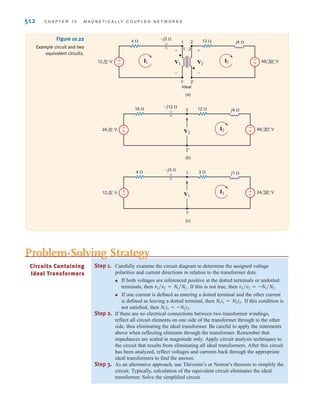
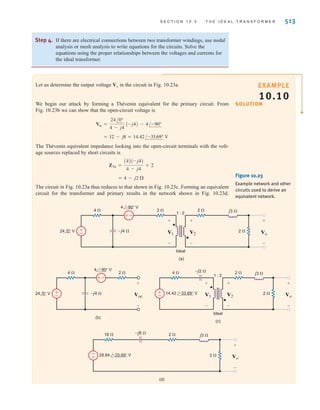
  • 226.
    202 C HA P T E R 5 A D D I T I O N A L A N A LY S I S T E C H N I Q U E S and obtained from Fig. 5.9f is 4 k. Connecting this Thévenin equivalent to the remainder of the network produces the circuit shown in Fig. 5.9g. Simple voltage division applied to this final network yields Norton’s theorem can be applied in a similar manner to solve this network; however, we save that solution as an exercise. V o = 8 V. RTh2 It is instructive to examine the use of Thévenin’s and Norton’s theorems in the solution of the network in Fig. 5.4a, which is redrawn in Fig. 5.10a. If we break the network at the 6-k load, the open-circuit voltage is found from Fig. 5.10b. The equations for the mesh currents are and from which we easily obtain Then, using KVL, is is derived from Fig. 5.10c and is Attaching the Thévenin equivalent to the load produces the network in Fig. 5.10d. Then using voltage division, we obtain In applying Norton’s theorem to this problem, we must find the short-circuit current shown in Fig. 5.10e. At this point the quick-thinking reader stops immediately! Three mesh equations applied to the original circuit will immediately lead to the solution, but the three mesh equations in the circuit in Fig. 5.10e will provide only part of the answer, specifi- cally the short-circuit current. Sometimes the use of the theorems is more complicated than a straightforward attack using node or loop analysis. This would appear to be one of those situations. Interestingly, it is not. We can find from the network in Fig. 5.10e without using the mesh equations. The technique is simple, but a little tricky, and so we ignore it at this time. Having said all these things, let us now finish what we have started. The mesh equations for the network in Fig. 5.10e are 2k˚AIsc - 2 * 10-3 B + 4k˚AIsc - I1B = 0 -6 + 4k˚AI1 - IscB + 2k˚AI1 - 2 * 10-3 B = 0 Isc = 48 7 V Vo = 32 3 ° 6k 6k + 10 3 k ¢ RTh = (2k兾兾4k) + 2k = 10 3 k RTh = 32 3 V = 4k a 5 3 * 10-3 b + 2kA2 * 10-3 B V oc = 4kI1 + 2kI2 V oc I1 = 5兾3 mA. I2 = 2 * 10-3 -6 + 4kI1 + 2kAI1 - I2B = 0 SOLUTION EXAMPLE 5.8 irwin05-189-244hr2.qxd 22-07-2010 9:47 Page 202
  • 227.
    S E CT I O N 5 . 3 T H É V E N I N ’ S A N D N O R T O N ’ S T H E O R E M S 203 where we have incorporated the fact that Solving these equations yields has already been determined in the Thévenin analysis. Connecting the Norton equivalent to the load results in the circuit in Fig. 5.10f. Solving this circuit yields V o = 48兾7 V. RTh Isc = 16兾5 mA. I2 = 2 * 10-3 A. 2 mA Vo + – 2 k 4 k 2 k 6 k – ± 6 V (a) 2 mA Voc + – 2 k 4 k 2 k ± – 6 V I1 I2 (b) 2 mA Isc 2 k 4 k 2 k ± – 6 V I1 I2 (e) (f) Vo + – 6 k — k 10 3 — mA 16 5 RTh 2 k 4 k 2 k (c) (d) ± – Vo + – 6 k — V 32 3 — k 10 3 Figure 5.10 Circuits used in Example 5.8. irwin05-189-244hr2.qxd 22-07-2010 9:47 Page 203
  • 228.
    204 C HA P T E R 5 A D D I T I O N A L A N A LY S I S T E C H N I Q U E S E5.8 Find Vo in Fig. E5.8 using Thévenin’s theorem. Figure E5.8 ANSWER: V0 3.88 V. 2 k 6 k 3 k 1 k 6 k Vo + – 8 mA 12 V 2 mA + – E5.9 Find I0 in Fig. E5.9 using Norton’s theorem. Figure E5.9 ANSWER: I0 0.857 mA. 3 k 2 k 3 k 6 k 2 mA 12 V 8 V 6 k - + 4 k 10 V - + - + I0 E5.6 Use Thévenin’s theorem to find in the network in Fig. E5.6. V o Learning Assessments ANSWER: Vo 3V. E5.7 Find Vo in the circuit in Fig. E5.6 using both Thévenin’s and Norton’s theorems. When deriving the Norton equivalent circuit, break the network to the left of the 4-k resistor. Why? Vo + – 6 k 3 k 12 V 4 k ± – - + 2 k 6 V Figure E5.6 ANSWER: V o = 4 3 V. irwin05-189-244hr4.qxd 12-08-2010 14:56 Page 204
  • 229.
    S E CT I O N 5 . 3 T H É V E N I N ’ S A N D N O R T O N ’ S T H E O R E M S 205 Solving the equations for yields Knowing we can compute the cur- rents and Their values are Therefore, and = 14 15 k RTh = 1 Io = 15 14 mA Io = I1 + I2 + I3 I3 = 1 2k = 1 2 mA I2 = 1 - 2V x 1k = 1 7 mA I1 = Vx 1k = 3 7 mA I3˚. I1˚, I2˚, V x˚, V x = 3兾7 V. V x CIRCUITS CONTAINING ONLY DEPENDENT SOURCES As we have stated earlier, the Thévenin or Norton equivalent of a network containing only dependent sources is The following examples will serve to illustrate how to determine this Thévenin equivalent resistance. RTh˚. We wish to determine the Thévenin equivalent of the network in Fig. 5.11a at the terminals A-B. 2 k 1 k A B 1 k 2Vx Vx 1 k 2 k ± – + – (a) 2 k 1 k A B 1 k 2Vx Vx 1 k 1 V 2 k ± – + – (b) ± – ± – I1 I3 Io V1 I2 Figure 5.11 Networks employed in Example 5.9. Our approach to this problem will be to apply a 1-V source at the terminals as shown in Fig. 5.11b and then compute the current Io and RTh 1/Io. The equations for the network in Fig. 5.11b are as follows. KVL around the outer loop specifies that V1 Vx 1 The KCL equation at the node labeled is V 1 1k + V 1 - 2V x 2k + V 1 - 1 1k = 0 V 1 SOLUTION EXAMPLE 5.9 irwin05-189-244hr2.qxd 22-07-2010 9:47 Page 205
  • 230.
    206 C HA P T E R 5 A D D I T I O N A L A N A LY S I S T E C H N I Q U E S Let us determine at the terminals A-B for the network in Fig. 5.12a. Our approach to this problem will be to apply a 1-mA current source at the terminals A-B and compute the terminal voltage as shown in Fig. 5.12b. Then The node equations for the network are and Solving these equations yields and hence, = 10 7 k RTh = V 2 1 * 10-3 V 2 = 10 7 V Ix = V 1 1k V 2 - V 1 3k + V2 2k = 1 * 10-3 V 1 - 2000Ix 2k + V 1 1k + V 1 - V 2 3k = 0 RTh = V 2兾0.001. V 2 RTh SOLUTION 2 k 3 k 2 k 3 k A B 2000Ix V1 V2 1 k 1 mA 2 k ± – (b) Ix 2000Ix Ix A B 1 k 2 k ± – (a) Figure 5.12 Networks used in Example 5.10. CIRCUITS CONTAINING BOTH INDEPENDENT AND DEPENDENT SOURCES In these types of circuits we must calculate both the open-circuit voltage and short-circuit cur- rent to calculate the Thévenin equivalent resistance. Furthermore, we must remember that we cannot split the dependent source and its controlling variable when we break the network to find the Thévenin or Norton equivalent. We now illustrate this technique with a circuit containing a current-controlled voltage source. Let us use Thévenin’s theorem to find in the network in Fig. 5.13a. To begin, we break the network at points A-B. Could we break it just to the right of the 12-V source? No! Why? The open-circuit voltage is calculated from the network in Fig. 5.13b. Note that we now use the source because this circuit is different from that in Fig. 5.13a. KCL for the supernode around the 12-V source is AV oc + 12B - A-2000Iœ xB 1k + V oc + 12 2k + V oc 2k = 0 2000Ix œ V o SOLUTION EXAMPLE 5.10 EXAMPLE 5.11 irwin05-189-244hr2.qxd 22-07-2010 9:47 Page 206
  • 231.
    S E CT I O N 5 . 3 T H É V E N I N ’ S A N D N O R T O N ’ S T H E O R E M S 207 where yielding . can be calculated from the circuit in Fig. 5.13c. Note that the presence of the short circuit forces to zero and, therefore, the network is reduced to that shown in Fig. 5.13d. Therefore, Then Connecting the Thévenin equivalent circuit to the remainder of the network at terminals A-B produces the circuit in Fig. 5.13e. At this point, simple voltage division yields Vo = (-6) ° 1k 1k + 1k + 1 3 k ¢ = -18 7 V RTh = V oc Isc = 1 3 k Isc = -12 2 3 k = -18 mA Ifl x Isc V oc = -6 V Iœ x = V oc 2k A B (a) 1 k 12 V 1 k A B 2000Ix 2 k 2 k 1 k Vo - + Ix – ± + – 1 k 12 V 2000I' x 2 k 2 k Voc - + (b) – ± I' x + – A B 1 k 12 V 2000I x 2 k 2 k Isc - + (c) I x – ± A B 2 k 1 k Isc (d) 12 V – ± Vo + – A B 6 V 1 k 1 k (e) - + — k 1 3 Figure 5.13 Circuits used in Example 5.11. irwin05-189-244hr2.qxd 22-07-2010 9:47 Page 207
  • 232.
    208 C HA P T E R 5 A D D I T I O N A L A N A LY S I S T E C H N I Q U E S Let us find in the network in Fig. 5.14a using Thévenin’s theorem. is determined from the network in Fig. 5.14b. Note that and Solving these equations yields and, hence, is derived from the circuit in Fig. 5.14c. Note that if we collapse the short circuit, the net- work is reduced to that in Fig. 5.14d. Although we have temporarily lost sight of we can Isc˚, Isc Voc = 2kI1 + 3 = 11 V I1 = 4 mA Vœ x = 4ka Vœ x 2k - 2 * 10-3 b I2 = 2 mA I1 = Vœ x 2k V oc V o (a) (b) 4 k 6 k 2 k 3 V Vo 2 mA + – ± – Vx 2000 Vx – + 4 k 2 k 3 V Voc 2 mA + – ± – V' x 2000 V' x I1 – + I2 (c) 4 k 2 k 3 V Isc 2 mA ± – V x 2000 V x I3 – + (d) - + I3 2 mA 4 k 2 k 3 V V x 2000 — — — — V x – + Vo + – (e) + - 6 k 2 k 11 V Figure 5.14 Circuits used in Example 5.12. SOLUTION EXAMPLE 5.12 irwin05-189-244hr2.qxd 22-07-2010 9:47 Page 208
  • 233.
    S E CT I O N 5 . 3 T H É V E N I N ’ S A N D N O R T O N ’ S T H E O R E M S 209 easily find the branch currents and they, in turn, will yield KCL at the node at the bot- tom left of the network is or Then since as shown in Fig. 5.14c, Then Connecting the Thévenin equivalent circuit to the remainder of the original network pro- duces the circuit in Fig. 5.14e. Simple voltage division yields = 33 4 V V o = 11a 6k 2k + 6k b RTh = V oc Isc = 2 k = 11 2 mA Isc = Vfl x 2000 + I3 I3 = 3 2k = 3 2 mA Vfl x = 8 V Vfl x 4k = Vfl x 2000 - 2 * 10-3 Isc˚. We will now reexamine a problem that was solved earlier using both nodal and loop analy- ses. The circuit used in Examples 3.10 and 3.20 is redrawn in Fig. 5.15a. Since a depend- ent source is present, we will have to find the open-circuit voltage and the short-circuit current in order to employ Thévenin’s theorem to determine the output voltage As we begin the analysis, we note that the circuit can be somewhat simplified by first form- ing a Thévenin equivalent for the leftmost and rightmost branches. Note that these two branches are in parallel and neither branch contains the control variable. Thus, we can sim- plify the network by reducing these two branches to one via a Thévenin equivalent. For the circuit shown in Fig. 5.15b, the open-circuit voltage is And the Thévenin equivalent resistance at the terminals, obtained by looking into the ter- minals with the sources made zero, is The resultant Thévenin equivalent circuit is now connected to the remaining portion of the circuit producing the network in Fig. 5.15c. Now we break the network shown in Fig. 5.15c at the output terminals to determine the open-circuit voltage as shown in Fig. 5.15d. Because of the presence of the voltage sources, we will use a nodal analysis to find the open-circuit voltage with the help of a supernode. The node equations for this network are V 1 - 6 1k + V1 - 2Vœ x 1k = 2 k V 1 = 3Vœ x V oc2 RTh1 = 1 k Voc1 = 2 k (1k) + 4 = 6 V V o˚. SOLUTION EXAMPLE 5.13 irwin05-189-244hr2.qxd 22-07-2010 9:47 Page 209
  • 234.
    210 C HA P T E R 5 A D D I T I O N A L A N A LY S I S T E C H N I Q U E S (a) 1 k 1 k 1 k 4 V 1 k ± – 2Vx Vx + – Vo + – — A 2 k — A 2 k (b) 1 k 4 V ± – Voc1 + – — A 2 k 6 V ± – (c) 1 k 1 k 1 k 1 k 2Vx Vx + – Vo + – — A 2 k ± – ± – 6 V ± – (d) 1 k 1 k 1 k 2V' x V' x + – — A 2 k ± – Voc2 V1 + – 1 k 1 k 2 V Vo + – ± – (g) 6 V ± – (e) 1 k 1 k 1 k 2V x V x + – — A 2 k ± – Isc2 (f) 0 A 6 V 2 V 6 V 6 V 2 k — A 2 k — A Isc2 =— A 2 k 2 k — A 4 k — A Figure 5.15 Circuits used in Example 5.13. irwin05-189-244hr2.qxd 22-07-2010 9:47 Page 210
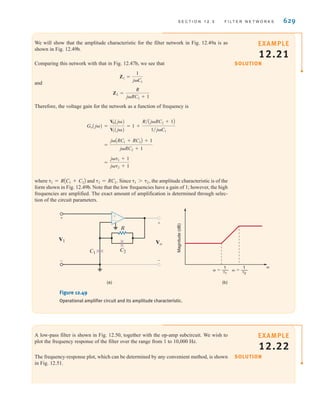
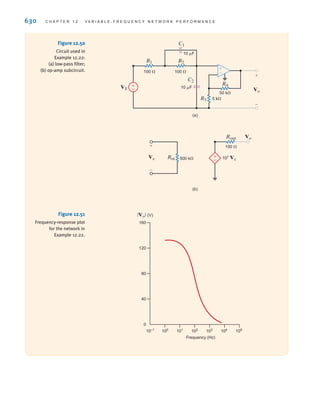
  • 235.
    S E CT I O N 5 . 3 T H É V E N I N ’ S A N D N O R T O N ’ S T H E O R E M S 211 and thus and Then, the open-circuit voltage, obtained using the KVL equation is The short-circuit current is derived from the network shown in Fig. 5.15e. Once again we employ the supernode, and the network equations are The node voltages obtained from these equations are and The line diagram shown in Fig. 5.15f displays the node voltages and the resultant branch currents. (Node voltages are shown in the circles, and branch currents are identified with arrows.) The node voltages and resistors are used to compute the resistor currents, while the remain- ing currents are derived by KCL. As indicated, the short-circuit current is Then, the Thévenin equivalent resistance is The Thévenin equivalent circuit now consists of a 2-V source in series with a resistor. Connecting this Thévenin equivalent circuit to the load resistor yields the network shown in Fig. 5.15g. A simple voltage divider indicates that Vo = 1 V. 1- k RTh2 = Voc2 Isc2 = 1 k Isc2 = 2 mA V 2 = 6 V. Vfl x = 2 V V 2 - 6 1k + V 2 - 2Vfl x 1k = 2 k V2 = 3Vfl x Voc2 = 2 V -2Vœ x + Voc2 + 2 k (1k) = 0 V 1 = 6 V. Vœ x = 2 V Step 1. Remove the load and find the voltage across the open-circuit terminals, All the circuit analysis techniques presented here can be used to compute this voltage. Step 2. Determine the Thévenin equivalent resistance of the network at the open terminals with the load removed. Three different types of circuits may be encountered in determining the resistance, (a) If the circuit contains only independent sources, they are made zero by replacing the voltage sources with short circuits and the current sources with open circuits. is then found by computing the resistance of the purely resistive network at the open terminals. (b) If the circuit contains only dependent sources, an independent voltage or current source is applied at the open terminals and the corresponding current or voltage at these terminals is measured. The voltage/current ratio at the terminals is the Thévenin equivalent resistance. Since there is no energy source, the open-circuit voltage is zero in this case. (c) If the circuit contains both independent and dependent sources, the open-circuit terminals are shorted and the short-circuit current between these terminals is determined. The ratio of the open-circuit voltage to the short-circuit current is the resistance Step 3. If the load is now connected to the Thévenin equivalent circuit, consisting of in series with the desired solution can be obtained. The problem-solving strategy for Norton’s theorem is essentially the same as that for Thévenin’s theorem with the exception that we are dealing with the short-circuit current instead of the open-circuit voltage. RTh˚, V oc RTh˚. RTh RTh˚. V oc˚. Applying Thévenin’s Theorem Problem-Solving Strategy irwin05-189-244hr2.qxd 22-07-2010 9:47 Page 211
  • 236.
    212 C HA P T E R 5 A D D I T I O N A L A N A LY S I S T E C H N I Q U E S E5.10 Find in the circuit in Fig. E5.10 using Thévenin’s theorem. V o Learning Assessment ANSWER: V o = 36 13 V. - + Vo 6 k⍀ 4 k⍀ 4 k⍀ 12 V + – ± – Vx 2 — Vx + – Figure E5.10 E5.11 Find in Fig. E5.11 using Thévenin’s theorem. V o Figure E5.11 ANSWER: V0 ⫽ 6.29 V. 2 k⍀ 3 k⍀ 1 k⍀ 6 k⍀ Vo IX 4 kIx + – 8 mA 2 mA - + E5.13 Find the Thévenin equivalent of the network at terminals A ⫺ B in Fig. E5.13. Figure E5.13 ANSWER: RTh ⫽ 1619 ⍀. A B 3 k⍀ 2 k⍀ 2 k⍀ 1 k⍀ Vx + – Vx 2000 — E5.12 Use Thévenin’s theorem to find the power supplied by the 12-V source in Fig. E5.12. Figure E5.12 ANSWER: 8.73 mW. 2 k⍀ 6 k⍀ 3 k⍀ 1 k⍀ 6 k⍀ 8 mA 12 V 2 mA + – irwin05-189-244hr2.qxd 22-07-2010 15:11 Page 212
  • 237.
    S E CT I O N 5 . 3 T H É V E N I N ’ S A N D N O R T O N ’ S T H E O R E M S 213 Having examined the use of Thévenin’s and Norton’s theorems in a variety of different types of circuits, it is instructive to look at yet one other aspect of these theorems that we find useful in circuit analysis and design. This additional aspect can be gleaned from the Thévenin equivalent and Norton equivalent circuits. The relationships specified in Fig. 5.7 and Eq. (5.5) have special significance because they represent what is called a source transformation or source exchange. What these relationships tell us is that if we have embedded within a network a current source i in parallel with a resistor R, we can replace this combination with a voltage source of value v=iR in series with the resistor R. The reverse is also true; that is, a voltage source v in series with a resistor R can be replaced with a current source of value i=v/R in parallel with the resistor R. Parameters within the circuit (e.g., an output voltage) are unchanged under these transformations. We must emphasize that the two equivalent circuits in Fig. 5.7 are equivalent only at the two external nodes. For example, if we disconnect circuit B from both networks in Fig. 5.7, the equivalent circuit in Fig. 5.7b dissipates power, but the one in Fig. 5.7a does not. We will now demonstrate how to find in the circuit in Fig. 5.16a using the repeated appli- cation of source transformation. If we begin at the left end of the network in Fig. 5.16a, the series combination of the 12-V source and 3-k resistor is converted to a 4-mA current source in parallel with the 3-k resistor. If we combine this 3-k resistor with the 6-k resistor, we obtain the circuit in Fig. 5.16b. Note that at this point we have eliminated one circuit element. Continuing the reduction, we convert the 4-mA source and 2-k resistor into an 8-V source in series with this same 2-k resistor. The two 2-k resistors that are in series are now combined to produce the network in Fig. 5.16c. If we now convert the combination of the 8-V source and 4-k resistor into a 2-mA source in parallel with the 4-k resistor and combine the result- ing current source with the other 2-mA source, we arrive at the circuit shown in Fig. 5.16d. At this point, we can simply apply current division to the two parallel resistance paths and obtain and hence, The reader is encouraged to consider the ramifications of working this problem using any of the other techniques we have presented. Vo = A1 * 10-3 B(8k) = 8 V Io = A4 * 10-3 B a 4k 4k + 4k + 8k b = 1 mA Vo ± – Vo + – 8 k 8 V 2 mA 4 k 4 k (c) Io Vo + – 8 k 4 k 4 mA 4 k (d) ± – Vo + – 2 k 6 k 8 k 12 V 2 mA 3 k 4 k (a) Vo + – 2 k 2 k 8 k 2 mA 4 mA 4 k (b) Figure 5.16 Circuits used in Example 5.14. SOLUTION EXAMPLE 5.14 irwin05-189-244hr2.qxd 22-07-2010 9:47 Page 213
  • 238.
    214 C HA P T E R 5 A D D I T I O N A L A N A LY S I S T E C H N I Q U E S At this point let us pause for a moment and reflect on what we have learned; that is, let us compare the use of node or loop analysis with that of the theorems discussed in this chapter. When we examine a network for analysis, one of the first things we should do is count the number of nodes and loops. Next we consider the number of sources. For example, are there a number of voltage sources or current sources present in the network? All these data, together with the information that we expect to glean from the network, give a basis for selecting the simplest approach. With the current level of computational power available to us, we can solve the node or loop equations that define the network in a flash. With regard to the theorems, we have found that in some cases the theorems do not neces- sarily simplify the problem and a straightforward attack using node or loop analysis is as good an approach as any. This is a valid point provided that we are simply looking for some partic- ular voltage or current. However, the real value of the theorems is the insight and understand- ing that they provide about the physical nature of the network. For example, superposition tells us what each source contributes to the quantity under investigation. However, a computer solution of the node or loop equations does not tell us the effect of changing certain parameter values in the circuit. It does not help us understand the concept of loading a network or the ram- ifications of interconnecting networks or the idea of matching a network for maximum power transfer. The theorems help us to understand the effect of using a transducer at the input of an amplifier with a given input resistance. They help us explain the effect of a load, such as a speaker, at the output of an amplifier. We derive none of this information from a node or loop analysis. In fact, as a simple example, suppose that a network at a specific pair of terminals has a Thévenin equivalent circuit consisting of a voltage source in series with a 2-k resistor. If we connect a 2- resistor to the network at these terminals, the voltage across the 2- resistor will be essentially nothing. This result is fairly obvious using the Thévenin theorem approach; how- ever, a node or loop analysis gives us no clue as to why we have obtained this result. We have studied networks containing only dependent sources. This is a very important topic because all electronic devices, such as transistors, are modeled in this fashion. Motors in power systems are also modeled in this way. We use these amplification devices for many different purposes, such as speed control for automobiles. In addition, it is interesting to note that when we employ source transformation as we did in Example 5.14, we are simply converting back and forth between a Thévenin equivalent cir- cuit and a Norton equivalent circuit. Note that this systematic, sometimes tedious, transformation allows us to reduce the net- work methodically to a simpler equivalent form with respect to some other circuit element. However, we should also realize that this technique is worthless for circuits of the form shown in Fig. 5.4. Furthermore, although applicable to networks containing dependent sources, it is not as useful as other techniques, and care must be taken not to transform the part of the circuit that contains the control variable. E5.14 Find in the circuit in Fig. E5.3 using source exchange. V o Learning Assessment ANSWER: Vo = 4 3 V. E5.15 Find the Io in Fig. E5.15 using source transformations. Figure E5.15 2 k 6 k 3 k 1 k 6 k 8 mA 4 mA 12 V + – Io ANSWER: Io 1.94 mA. irwin05-189-244hr2.qxd 22-07-2010 9:47 Page 214
  • 239.
    S E CT I O N 5 . 3 T H É V E N I N ’ S A N D N O R T O N ’ S T H E O R E M S 215 Finally, we have a powerful tool at our disposal that can be used to provide additional insight and understanding for both circuit analysis and design. That tool is Microsoft Excel, and it permits us to study the effects, on a network, of varying specific parameters. The fol- lowing example will illustrate the simplicity of this approach. SOLUTION EXAMPLE 5.15 We wish to use Microsoft Excel to plot the Thévenin equivalent parameters and for the circuit in Fig. 5.17 over the range 0 to 10 k. Rx RTh V oc – ± - + Voc + - 12 V 6 V 4 k Rx RTh Figure 5.17 Circuit used in Example 5.15. The Thévenin resistance is easily found by replacing the voltage sources with short circuits. The result is 5.7 where and are in k. Superposition can be used effectively to find If the 12-V source is replaced by a short circuit Applying this same procedure for the 6-V source yields and the total open-circuit voltage is 5.8 In Excel we wish to (1) vary between 0 and 10 k, (2) calculate and at each value, and (3) plot and versus We begin by opening Excel and entering column headings as shown in Fig. 5.18a. Next, we enter a zero in the first cell of the column at col- umn-row location A4. To automatically fill the column with values, go to the Edit menu and select Fill/Series to open the window shown in Fig. 5.18b, which has already been edited appropriately for 101 data points. The result is a series of values from 0 to 10 k in 100 steps. To enter Eq. (5.8), go to location B4 (right under the heading). Enter the following text and do not forget the equal sign: =12-6*A4/(A4+4) This is Eq. (5.8) with replaced by the first value for which is at column-row location A4. Similarly for enter the following expression at C4. =4*A4/(A4+4) To replicate the expression in cell B4 for all values, select cell B4, grab the lower right corner of the cell, hold and drag down to cell B104, and release. Repeat for by replicating cell C4. To plot the data, first drag the cursor across all cells between A4 and C104. Next, from the Insert menu, select Chart. We recommend strongly that you choose the XY (Scatter) RTh Rx RTh˚, Rx˚, Rx V oc Rx Rx Rx˚. RTh V oc Rx V oc RTh Rx V oc = 12 - 6c Rx Rx + 4 d V oc2 = 12 Voc1 = -6c Rx Rx + 4 d V oc˚. RTh Rx RTh = 4兾兾Rx = 4Rx 4 + Rx irwin05-189-244hr2.qxd 22-07-2010 9:47 Page 215
  • 240.
    216 C HA P T E R 5 A D D I T I O N A L A N A LY S I S T E C H N I Q U E S chart type. Excel will take you step by step through the basic formatting of your chart, which, after some manipulations, might look similar to the chart in Fig. 5.18c. 5.4 Maximum Power Transfer In circuit analysis we are sometimes interested in determining the maximum power that can be delivered to a load. By employing Thévenin’s theorem, we can determine the maximum power that a circuit can supply and the manner in which to adjust the load to effect maximum power transfer. Suppose that we are given the circuit shown in Fig. 5.19. The power that is delivered to the load is given by the expression We want to determine the value of that maximizes this quantity. Hence, we differentiate this expression with respect to and equate the derivative to zero: which yields In other words, maximum power transfer takes place when the load resistance Although this is a very important result, we have derived it using the simple network in Fig. 5.19. However, we should recall that v and R in Fig. 5.19 could represent the Thévenin equivalent circuit for any linear network RL = R. RL = R dPload dRL = AR + RLB 2 v˚2 - 2v˚2 RLAR + RLB AR + RLB4 = 0 RL RL = a v R + RL b 2 RL Pload = i2 RL v RL R i ± – Figure 5.19 Equivalent circuit for examining maximum power transfer. (a) (b) (c) V oc (V) R Th (kΩ) 0 2.5 5 7.5 10 R (kΩ) 0 2.5 5 7.5 10 12.5 15 0 0.5 1 1.5 2 2.5 3 Voc RTh Figure 5.18 (a) The Excel spreadsheet for Example 5.15 showing the desired column headings. (b) The Fill/Series window edited for varying Rx and (c) the final plot of Voc and RTh. irwin05-189-244hr2.qxd 22-07-2010 9:47 Page 216
  • 241.
    S E CT I O N 5 . 4 M A X I M U M P O W E R T R A N S F E R 217 Let us find the value of for maximum power transfer in the network in Fig. 5.20a and the maximum power that can be transferred to this load. To begin, we derive the Thévenin equivalent circuit for the network exclusive of the load. can be calculated from the circuit in Fig. 5.20b. The mesh equations for the network are Solving these equations yields and, hence, shown in Fig. 5.20c, is 6 k; therefore, for maximum power trans- fer. The maximum power transferred to the load in Fig. 5.20d is PL = a 10 12k b 2 (6k) = 25 6 mW RL = RTh = 6 k RTh˚, = 10 V V oc = 4kI1 + 6kI2 I2 = 1兾3 mA 3kAI2 - I1B + 6kI2 + 3 = 0 I1 = 2 * 10-3 V oc RL ± – (a) ± – (b) Voc + – RL 4 k 6 k 3 k 3 V 2 mA 4 k 6 k 3 k 3 V 2 mA I1 I2 (c) (d) RTh RL=6 k 4 k 6 k 6 k 10 V 3 k – ± Figure 5.20 Circuits used in Example 5.16. SOLUTION EXAMPLE 5.16 Let us find for maximum power transfer and the maximum power transferred to this load in the circuit in Fig. 5.21a. We wish to reduce the network to the form shown in Fig. 5.19. We could form the Thévenin equivalent circuit by breaking the network at the load. However, close examination of the net- work indicates that our analysis will be simpler if we break the network to the left of the 4-k resistor. When we do this, however, we must realize that for maximum power transfer can be calculated from the network in Fig. 5.21b. Forming a supernode around the dependent source and its connecting nodes, the KCL equation for this supernode is V oc - 2000Iœ x 1k + 3k + (-4 * 10-3 ) + V oc 2k = 0 Voc RL = RTh + 4 k. RL SOLUTION EXAMPLE 5.17 irwin05-189-244hr2.qxd 22-07-2010 9:47 Page 217
  • 242.
    218 C HA P T E R 5 A D D I T I O N A L A N A LY S I S T E C H N I Q U E S E5.16 Given the circuit in Fig. E5.16, find for maximum power transfer and the maximum power transferred. RL Learning Assessment ANSWER: PL = 2 3 mW. RL = 6 k; + - 6 V 6 k 12 k 2 k RL Figure E5.16 2 k RL 4 mA 1 k 4 k 3 k 2000 Ix (a) – + Ix Isc 4 mA 1 k 3 k (d) 8 V 2 k 4 k RL=6 k (e) + – 2 k Isc 4 mA 1 k 3 k 2000 Ix (c) – + Ix Voc + – 2 k (b) 4 mA 1 k 3 k 2000 I'x – + I'x Figure 5.21 Circuits used in Example 5.17. where These equations yield Voc 8 V. The short-circuit current can be found from the network in Fig. 5.21c. It is here that we find the advantage of breaking the network to the left of the 4-k resistor. The short circuit shorts the 2-k resistor and, therefore, Hence, the circuit is reduced to that in Fig. 5.21d, where clearly Then Connecting the Thévenin equivalent to the remainder of the original circuit produces the network in Fig. 5.21e. For maximum power transfer and the maximum power transferred is PL = a 8 12k b 2 (6k) = 8 3 mW RL = RTh + 4 k = 6 k, RTh = V oc Isc = 2 k Isc = 4 mA. Ifl x = 0. Iœ x = V oc 2k irwin05-189-244hr2.qxd 22-07-2010 9:47 Page 218
  • 243.
    S E CT I O N 5 . 4 M A X I M U M P O W E R T R A N S F E R 219 Given the network in Fig. 5.22 with and let us graphically examine a variety of aspects of maximum power transfer by plotting the parameters and the efficiency as a function of the resistor ratio The parameters to be plotted can be determined by simple circuit analysis techniques. By voltage division From Ohm’s law The input and output powers are Pin = IV in = V2 in R1 + R2 = 25 2 + R2 ˚˚Pout = IV out = R2 c V in R1 + R2 d 2 = R2 c 5 2 + R2 d 2 I = Vin R1 + R2 = 5 2 + R2 Vout = c R2 R1 + R2 dVin = c R2 2 + R2 d(5) R2兾R1˚. = Pout兾Pin V out˚, I, Pout˚, Pin R1 = 2 , Vin = 5 V R2 Vout + – R1=2 Vin=5 V I ± – Figure 5.22 Circuit used in maximum power transfer analysis. E5.17 Find RL for maximum transfer and the maximum power transferred to RL in Fig E5.17. Figure E5.17 ANSWER: 14/9 k, 2/7 mW. 2 k RL 2 mA 12 V 3 k 4 k + – E5.18 Find RL for maximum transfer and the maximum power transferred to RL in Fig E5.18. Figure E5.18 ANSWER: 24/13 k, 27/26 mW. 4 k 4 k 12 V 6 k + – RL Vx 2 Vx + – + – EXAMPLE 5.18 SOLUTION irwin05-189-244hr2.qxd 22-07-2010 9:47 Page 219
  • 244.
    220 C HA P T E R 5 A D D I T I O N A L A N A LY S I S T E C H N I Q U E S Finally, the efficiency is The resulting plots of the various parameters are shown in Fig. 5.23 for ranging from to Note that as increases, increases toward (5 V) as dictated by volt- age division. Also, the current decreases in accordance with Ohm’s law. Thus, for small val- ues of is small, and when is large, I is small. As a result, the output power (the product of these two parameters) has a maximum at as predicted by maximum power transfer theory. Maximum power does not correspond to maximum output voltage, current, or efficien- cy. In fact, at maximum power transfer, the efficiency is always 0.5, or 50%. If you are an electric utility supplying energy to your customers, do you want to operate at maximum power transfer? The answer to this question is an obvious “No” because the efficiency is only 50%. The utility would only be able to charge its customers for one-half of the energy produced. It is not uncommon for a large electric utility to spend billions of dollars every year to produce electricity. The electric utility is more interested in operating at maximum efficiency. R2兾R1 = 1 R2 V out R2˚, V in V out R2 10R1˚. 0.1R1 R2 efficiency = Pout Pin = R2 R1 + R2 = R2 2 + R2 0 1 2 3 4 5 0 2 4 6 8 10 R2/R1 Vout Pout Pout/Pin Current Max. Power Transfer Parameters (V, A, W) Figure 5.23 Maximum power transfer parameter plots for the network in Fig. 5.22. (The units for voltage, current, and power have volts, amperes, and watts, respectively.) APPLICATION EXAMPLE 5.19 On Monday afternoon, Connie suddenly remembers that she has a term paper due Tuesday morning. When she sits at her computer to start typing, she discovers that the computer mouse doesn’t work. After disassembly and some inspection, she finds that the mouse con- tains a printed circuit board that is powered by a 5-V supply contained inside the computer case. Furthermore, the board is found to contain several resistors, some op-amps, and one unidentifiable device, which is connected directly to the computer’s 5-V supply as shown in Fig. 5.24a. Using a voltmeter to measure the node voltages, Connie confirms that all resis- 5.5 Application Example irwin05-189-244hr2.qxd 22-07-2010 9:47 Page 220
  • 245.
    5.6 Design Examples S EC T I O N 5 . 6 D E S I G N E X A M P L E S 221 tors and op-amps are functioning properly and the power supply voltage reaches the mouse board. However, without knowing the mystery device’s function within the circuit, she can- not determine its condition. A phone call to the manufacturer reveals that the device is indeed linear but is also proprietary. With some persuasion, the manufacturer’s representa- tive agrees that if Connie can find the Thévenin equivalent circuit for the element at nodes A-B with the computer on, he will tell her if it is functioning properly. Armed with a single 1-k resistor and a voltmeter, Connie attacks the problem. To find the Thévenin equivalent for the unknown device, together with the 5-V source, Connie first isolates nodes A and B from the rest of the devices on the board to measure the open-circuit voltage. The resulting voltmeter reading is VAB 2.4 V. Thus, the Thévenin equivalent voltage is 2.4 V. Then she connects the 1-k resistor at nodes A-B as shown in Fig. 5.24b. The voltmeter reading is now Using voltage division to express in terms of and in Fig. 5.24b yields the expression 0.8 = V Th a 1k 1k + RTh b Rtest RTh, V Th˚, VAB V AB = 0.8 V. ± – Unknown element V=5 V A B (a) ± – A B RTh VTh Rtest=1 k VAB=0.8 V (b) ± – A B RTh=2 k VTh=2.4 V (c) Figure 5.24 Network used in Example 5.19. Solving the equations for we obtain Therefore, the unknown device and the 5-V source can be represented at the terminals A-B by the Thévenin equivalent circuit shown in Fig. 5.24c. When Connie phones the manufac- turer with the data, the representative informs her that the device has indeed failed. RTh = 2.0 k RTh˚, We often find that in the use of electronic equipment, there is a need to adjust some quan- tity such as voltage, frequency, contrast, or the like. For very accurate adjustments, it is most convenient if coarse and fine-tuning can be separately adjusted. Therefore, let us design a circuit in which two inputs (i.e., coarse and fine voltages) are combined to produce a new voltage of the form Because the equation to be realized is the sum of two terms, the solution appears to be an excellent application for superposition. Since the gain factors in the equation (i.e., 1/2 and 1/20) Vtune = c 1 2 dVcoarse + c 1 20 dVfine SOLUTION SOLUTION DESIGN EXAMPLE 5.20 irwin05-189-244hr2.qxd 22-07-2010 9:47 Page 221
  • 246.
    222 C HA P T E R 5 A D D I T I O N A L A N A LY S I S T E C H N I Q U E S are both less than one, a voltage divider with two inputs would appear to be a logical choice. A typical circuit for this application is shown in Fig. 5.25a. The two superposition subcircuits are shown in Figs. 5.25b and c. Employing voltage division in the network in Fig. 5.25b yields and therefore, In a similar manner, we find that which requires that R2 = 19AR兾兾R1B Vtune_F Vfine = c R兾兾R1 AR兾兾R1B + R2 d = 1 20 R兾兾R2 = R1 Vtune_C Vcoarse = c R兾兾R2 AR兾兾R2B + R1 d = 1 2 ± – ± – R1 R2 R Vtune Vcoarse Vcoarse Vfine + - (a) ± – R1 R2 R Vtune_C + - (b) Vfine ± – R2 R1 R Vtune_F + - (c) Figure 5.25 (a) The coarse/fine adjust- ment circuit, (b) with Vfine set to zero and (c) with Vcoarse set to zero. Note that the two constraint equations for the resistors have three unknowns— and Thus, we must choose one resistor value and then solve for the two remaining values. If we arbitrarily select then and This completes the design of the circuit. This example indicates that superposition is not only a useful analysis tool but provides insight into the design of new circuits. R2 = 9 k. R1 = 900 R = 1 k, R2˚. R, R1, Coaxial cable is often used in very-high-frequency systems. For example, it is commonly used for signal transmission with cable television. In these systems resistance matching, the kind we use for maximum power transfer, is critical. In the laboratory, a common apparatus used in high-frequency research and development is the attenuator pad. The attenuator pad is basically a voltage divider, but the equivalent resistance at both its input ports is careful- ly designed for resistance matching. Given the network in Fig. 5.26 in which a source, mod- eled by and drives an attenuator pad, which is connected to an equivalent load. (50 ), RS V S DESIGN EXAMPLE 5.21 • ± – R2 RS 50 R2 R1 VS Vout RL 50 + - Attenuator pad RTh-in RTh-out Figure 5.26 The model circuit for the attenuator pad design. irwin05-189-244hr2.qxd 22-07-2010 9:47 Page 222
  • 247.
    S E CT I O N 5 . 6 D E S I G N E X A M P L E S 223 Let us design the pad so that it has an equivalent resistance of and divides (i.e., atten- uates) the input voltage by a factor of 10. Since the attenuator or “T-Network” must have an equivalent resistance of we require that and be Since these Thévenin resistance values are the same and the circuit is symmetric, we can use the label twice to indicate that those resistors will be the same value. Since the equations are identical, we refer to both Thévenin equivalent resistance parame- ters simply as The Thévenin equivalent voltage, can be easily derived from the cir- cuit in Fig. 5.27 a using voltage division. VTh = VS c R1 R1 + R2 + 50 d V Th˚, RTh˚. RTh- out = R2 + CR1兾兾AR2 + 50BD = 50 RTh- in = R2 + CR1兾兾AR2 + 50BD = 50 R2 50 . RTh- out RTh- in 50 , 50 ± – VTh + - + - VTh R1 RTh RTh R2 R2 50 RS VS ± – Vout RL 50 (a) (b) Figure 5.27 (a) The circuit used in finding VTh and (b) the resulting model. From the Thévenin equivalent circuit in Fig. 5.27b, we find Combining these equations yields the attenuation from to The Thévenin equivalent resistance equation and this attenuation equation provide us with two equations in the two unknowns and Solving these equations yields and For precise resistance matching, these resistors must be very accurate. With such low resistor values, the power dissipation can become significant as is increased. For example, if and the power dissipated in the resis- tor connected to the input source is 333 mW. To keep the temperature of that resistor at rea- sonable levels, the power rating of that resistor should be at least 0.5 W. R2 V S = 10 V, Vout = 1 V V S R2 = 33.33 . R1 = 20.83 R2˚. R1 Vout VS = c Vout VTh d c VTh VS d = 1 2 c R1 R1 + R2 + 50 d = 1 10 V out V S Vout = VTh c 50 RTh + 50 d = VTh 2 Let us design a circuit that will realize the following equation: An examination of this equation indicates that we need to add two terms, one of which is from a voltage source and the other from a current source. Since the terms have negative signs, it would appear that the use of an inverting op-amp stage would be useful. Thus, one possible circuit for this application appears to be that shown in Fig. 5.28. Vo = -3VS - 2000IS SOLUTION • DESIGN EXAMPLE 5.22 SOLUTION irwin05-189-244hr2.qxd 22-07-2010 9:47 Page 223
  • 248.
    224 C HA P T E R 5 A D D I T I O N A L A N A LY S I S T E C H N I Q U E S The Norton equivalent circuit at the terminals A-B will provide a composite view of the op-amp’s input. Superposition can also be used in conjunction with the Norton equivalent to simplify the analysis. Using the network in Fig. 5.29a, we can determine the contribution of to the short-circuit current, which we call Isc1 = VS R1 Isc1 . Isc˚, V S ± – - + Vo + - B R2 R1 VS IS A ± – A R1 R1 VS IS Isc1 B A Isc2 B (a) A R1 RTh B (c) (b) Figure 5.28 Circuit used in Example 5.25. Figure 5.29 Circuits used in deriving a Norton equivalent circuit. In a similar manner, using Fig. 5.29b, we find that the contribution of to the short-circuit current is Employing superposition, the sum of these two currents yields the actual short-circuit current The Thévenin equivalent resistance at nodes A-B is obtained from the network in Fig. 5.29c as The equivalent circuit is now redrawn in Fig. 5.30 where we have employed the ideal op- amp conditions (i.e., ), and the current into the op-amp terminals is zero. Since is directly across the current in this resistor is also zero. Hence, all the current will flow through producing the voltage A comparison of this equation with the design requirement specifies that which yields Combining a 1- and a 2- resistor in parallel will yield the necessary exactly. 667 k k R1 = 667 . R2 R1 = 3 and R2 = 2000 Vo = -R2 c VS R1 + IS d = - R2 R1 VS - IS˚R2 R2˚, Isc RTh˚, Vin V in = 0 RTh = R1 Isc = VS R1 + IS Isc2 = IS IS irwin05-189-244hr2.qxd 22-07-2010 9:47 Page 224
  • 249.
    S E CT I O N 5 . 6 D E S I G N E X A M P L E S 225 - + Vo + + - - R2 0 A 0 A Isc Isc RTh Vin=0 V Figure 5.30 The required circuit containing the Norton equivalent. Fans are frequently needed to keep electronic circuits cool. They vary in size, power require- ment, input voltage, and air-flow rate. In a particular application, three fans are connected in parallel to a 24-V source as shown in Fig. 5.31. A number of tests were run on this configura- tion, and it was found that the air flow, fan current, and input voltage are related by the follow- ing equations: where represents the air-flow rate in cubic feet per minute, is the fan voltage in volts, and is the fan current in amperes. Note that fan current is related to fan speed, which in turn is related to air flow. A popular and inexpensive method for monitoring currents in appli- cations where high accuracy is not critical involves placing a low-value sense resistor in series with the fan to “sense” the current by measuring the sense-resistor’s voltage. IF V F FCFM FCFM = 200IF V F = 100IF SOLUTION DESIGN EXAMPLE 5.23 ± – VF IF 24 V + - Figure 5.31 A trio of 24-V fans. We wish to design a circuit that will measure the air flow in this three-fan system. Specifically, we want to a. determine the value of the sense resistor, placed in series with each fan, such that its voltage is 2% of the nominal 24-V fan voltage, and specify a particular 1% component that can be obtained from the Digikey Corporation (Website: www.digikey.com). b. design an op-amp circuit that will produce an output voltage proportional to total air flow, in which 1 V corresponds to 50 CFM. The fan’s voltage–current relationship specifies that each fan has a resistance of Since the voltage across the sense resistor should be 2% of 24 V, or 0.48 V, the fan current, derived from the network in Fig. 5.32, is and the required value of the sense resistor is Rsense = 0.48 0.2352 = 2.04 IF = 24 - 0.48 100 = 235.2 mA 100 . irwin05-189-244hr2.qxd 22-07-2010 9:47 Page 225
  • 250.
    226 C HA P T E R 5 A D D I T I O N A L A N A LY S I S T E C H N I Q U E S The power dissipation in this component is only And thus a standard 1/4 W 2- resistor will satisfy the specifications. The op-amp circuit must be capable of adding the air-flow contributions of all three fans and scaling the result such that 1 V corresponds to 50 CFM. A summing op-amp circuit would appear to be a logical choice in this situation, and thus we select the circuit shown in Fig. 5.33 where the second stage is simply an inverter that corrects for the negative sign result- ing from the summer output. In order to determine the summer’s gain, we calculate the volts/CFM at the sense resistors. For a single fan, the air flow is And the volts per CFM at the input to the summer are Hence, the gain of the summer op-amp must be This is a gain close to 2, and therefore we will use resistors that produce a 2:1 ratio, that is, very close to 1.96. At this point, one additional consideration must be addressed. Note that the resistors at the summer input are essentially connected in parallel with the sense resistors. To ensure that all the fan current flows in the sense resistors, we select very large values for the op-amp resistors. Let us choose and then R4 = 200 k. R1 = R2 = R3 = 100 k Vo Vsense = 1 V兾50 CFM 0.0102 V兾CFM = 1.96 V兾V 0.48 V 47.04 CFM = 0.0102 V兾CFM FCFM = 200IF = 47.04 CFM Psense = I2 F˚Rsense = 0.11 W ± – 24 V VF IF 100 + - Vsense 0.48 V Rsense + - Figure 5.32 The equivalent circuit for one fan and its sense resistor. ± – VF IF 24 V + - Vsense Rsense + - Vo + - - + - + R1 R2 R3 R4 R5 R6 Figure 5.33 The complete air-flow measurement system. Finally, the values for and can be somewhat arbitrary, as long as they are equal. If we select a value of then only two different resistor values are needed for the entire op-amp circuit. 100 k, R6 R5 irwin05-189-244hr2.qxd 22-07-2010 9:47 Page 226
  • 251.
    2 k⍀ 2 k⍀ 2k⍀ 2 k⍀ Is=12 mA 2 k⍀ Vo + – P R O B L E M S 227 S U M M A R Y ■ Linearity: This property requires both additivity and homogeneity. Using this property, we can determine the voltage or current somewhere in a network by assuming a specific value for the variable and then determining what source value is required to produce it. The ratio of the specified source value to that computed from the assumed value of the variable, together with the assumed value of the variable, can be used to obtain a solution. ■ In a linear network containing multiple independent sources, the principle of superposition allows us to compute any current or voltage in the network as the algebraic sum of the individual contributions of each source acting alone. ■ Superposition is a linear property and does not apply to nonlinear functions such as power. ■ Using Thévenin’s theorem, we can replace some portion of a network at a pair of terminals with a voltage source in series with a resistor is the open-circuit voltage at the terminals, and is the Thévenin equivalent resistance obtained by looking into the terminals with all independent sources made zero. ■ Using Norton’s theorem, we can replace some portion of a network at a pair of terminals with a current source in parallel with a resistor is the short-circuit current at the terminals, and is the Thévenin equivalent resistance. ■ Source transformation permits us to replace a voltage source V in series with a resistance R by a current source I ⫽ V/R in parallel with the resistance R. The reverse is also true. This is an interchange relationship between Thévenin and Norton equivalent circuits. ■ Maximum power transfer can be achieved by selecting the load to be equal to found by looking into the network from the load terminals. RTh RL RTh Isc RTh˚. Isc RTh V oc RTh˚. V oc • P R O B L E M S • 5.1 Use linearity and the assumption that Vo ⫽ 1 V to find the actual value of Vo in Fig. P5.1. 4 k⍀ 2 k⍀ 4 k⍀ 3 k⍀ 6 k⍀ 6 k⍀ Io Vs =24 V + – 2 k⍀ 2 k⍀ 4 k⍀ 2 k⍀ 2 k⍀ 2 k⍀ Io 12 mA 5.4 Find in the circuit in Fig. P5.4 using linearity and the assumption that Figure P5.4 5.5 Find in the network in Fig. P5.5 using linearity and the assumption that Figure P5.5 5.6 Find in the network in Fig. P5.6 using superposition. Figure P5.6 6 k⍀ 3 k⍀ 3 k⍀ Io 2 mA 2 k⍀ 6 V + – Io 3 k⍀ 3 k⍀ 3 k⍀ 6 k⍀ 3 k⍀ 3 k⍀ 8 V 3 k⍀ I3 I3 Vo I1 I2 V2 V4 + – – – + – + + V o = 1 V. V o 12 k⍀ 4 k⍀ 4 k⍀ 4 k⍀ 4 k⍀ 2 k⍀ Io 4 mA Io = 1 mA. Io Figure P5.1 5.2 Using linearity and the assumption that Io ⫽ 1 mA, find the actual value of Io in the network use Fig. P5.2. 5.3 Find in the network in Fig. P5.3 using linearity and the assumption that Io = 1 mA. Io Figure P5.2 Figure P5.3 irwin05-189-244hr4.qxd 3-09-2010 15:54 Page 227
  • 252.
    228 C HA P T E R 5 A D D I T I O N A L A N A LY S I S T E C H N I Q U E S 6 k 6 k 6 k Io 6 mA 6 k 12 V + – Figure P5.7 3 k 8 k 2 k Vo 2 mA 6 k 12 V + – + – Figure P5.8 4 k 2 k 6 k 8 k 4 k Vo 6 mA 4 mA + – Figure P5.9 5.7 In the network in Fig. P5.7 find using superposition. Io 5.8 Find in the network in Fig. P5.8 using superposition. V o 5.9 Find Vo in the network in Fig. P.5.9 using superposition. 5.12 Find Vo in the circuit in Fig. P5.12 using superposition. 5.13 Find Vo in the circuit in Fig. P5.13 using superposition. 2 k 2 k 2 k 2 k 6 mA 12 V Vo + – + – Figure P5.12 5.14 Find Io in the circuit in Fig. P5.14 using superposition. 2 k 4 k 4 k 2 k 2 k 4 mA 6 mA Vo + – Figure P5.13 5.15 Find Vo in the circuit in Fig. P5.15 using superposition. 6 k 6 k 6 k 6 k 6 mA 12 V + – Io Figure P5.14 6 k 6 k 12 V 6 mA Vo + – 6 k 6 k + – Figure P5.15 5.10 Find Vo in the network in Fig. P5.10 using superposition. 6 k 6 k 12 V 6 k 6 k 6 k Vo 6 mA + – + – Figure P5.10 5.11 Find Io in the network in Fig. P5.11 using superposition. 2 k 2 k 4 k 4 k 6 mA 12 V + – Io Figure P5.11 irwin05-189-244hr2.qxd 22-07-2010 9:47 Page 228
  • 253.
    P R OB L E M S 229 5.16 Find Io in the circuit in Fig. P5.16 using superposition. 6 k 6 k 6 k 6 k 6 mA 12 V 6 V + – + – Io Figure P5.16 5.17 Use superposition to find Io in the circuit in Fig. P5.17. 6 mA 6 k 6 k 6 k 6 k 12 mA 12 V + – Io Figure P5.17 5.18 Use superposition to find Io in the network in Fig. P5.18. 6 k 6 mA 4 mA 6 k 6 k 6 k Io Figure P5.18 5.19 Use superposition to find Vo in the circuit in Fig. P5.19. 3 k 12 V 6 V 3 k 3 k 3 k + – + – Vo + – Figure P5.19 5.20 Use superposition to find Vo in the network in Fig. P5.20. 6 k 6 k 12 V 6 V 6 mA 6 k 6 k 6 k + – + – Vo + – Figure P5.20 5.21 Use superposition to find Io in the circuit in Fig. P5.21. 6 k 6 k 6 k 12 V 6 mA 4 mA 6 k 12 k + – Io Figure P5.21 5.22 Use superposition to find Io in the network in Fig. P5.22. 4 k 6 V 12 V 6 mA 3 k 6 k + – + – Io Figure P5.22 5.23 Use superposition to find Vo in the circuit in Fig. P5.23. 12 V 6 mA 3 k 3 k 3 k 3 k + – Vo + – Figure P5.23 irwin05-189-244hr2.qxd 22-07-2010 9:47 Page 229
  • 254.
    230 C HA P T E R 5 A D D I T I O N A L A N A LY S I S T E C H N I Q U E S 5.30 Use superposition to find in the circuit in Fig. P5.30. Io 5.28 Find in the circuit in Fig. P5.28 using superposition. V o 5.29 Use superposition to find in the network in Fig. P5.29. Io – + + – 2 k 1 k 2 k 1 k 1 k 6 V 12 V 4 mA Vo + – Figure P5.28 4 mA 6 mA 2 k 4 k 2 mA 12 k Io 4 k Figure P5.29 5.31 Use superposition to find in the circuit in Fig. P5.31. Io 6 V 12 V 6 k 2 k 12 V 4 k 3 k 2 mA + – Io – + – + Figure P5.30 Io 2 k 3 k 4 mA 12 V 2 mA 4 k 6 k 6 k – + Figure P5.31 5.24 Find VA in Fig. P5.24 using superposition. 2 k 4 k 2 k 2 k 10 mA 2 mA 5 k 10 V + – VA + – Figure P5.24 5.25 Find I1 in Fig. P5.25 using superposition. I1 12 V 16 V 8 V 4 k 8 k 2 k 4 k 6 k 2 k – + – + – + Figure P5.25 5.26 Use superposition to calculate Ix in Fig. P5.26. Ix 12 V 24 V 12 k 4 k 2 mA 6 k – + – + Figure P5.26 5.27 Calculate Vo in Fig. P5.27 using superposition. 6 k 6 mA 4 k 10 k 10 k 2 k 12 V 18 V + – + – Vo + – Figure P5.27 irwin05-189-244hr2.qxd 22-07-2010 9:47 Page 230
  • 255.
    5.33 Use Thévenin’stheorem to find Io in the circuit using Fig. P5.33. 5.35 Use Thévenin’s theorem to find Vo in the circuit in Fig. P5.35. P R O B L E M S 231 3 k 3 k 4 k 6 k 6 k 6 mA 6 V + – Vo + – Figure P5.35 5.32 Use Thévenin’s theorem to find in the network in Fig. P5.32. V o Vo + – 4 k 2 k 2 k 12 V 6 V – + –+ Figure P5.32 5.36 Use Thévenin’s theorem to find Io in the network in Fig. P5.36. 2 k 1 k 1 k 4 mA 6 mA 2 mA Io Figure P5.36 2 k 2 k 4 k 4 k 6 mA 12 V + – Io Figure P5.33 5.34 Use Thévenin’s theorem to find Vo in the circuit using Fig. P5.34. 2 k 2 k 2 k 2 k 6 mA 12 V Vo + – + – Figure P5.34 5.37 Find Io in the network in Fig. P5.37 using Thevenin’s theorem. 1 k 1 k 2 k 4 mA 2 mA 6 V + – Io Figure P5.37 5.38 Find Vo in the circuit in Fig. P5.38 using Thévenin’s theorem. 2 k 2 k 1 k 1 k 4 mA 12 V Vo + – + – Figure P5.38 5.39 Find Vo in the circuit in Fig. P5.39 using Thévenin’s theorem. 12 V 2 mA 2 k 1 k 1 k 2 k + – Vo + – Figure P5.39 irwin05-189-244hr2.qxd 22-07-2010 9:47 Page 231
  • 256.
    232 C HA P T E R 5 A D D I T I O N A L A N A LY S I S T E C H N I Q U E S 5.40 Find Io in the circuit in Fig. P5.40 using Thévenin’s theorem. 5.44 Calculate Ix in Fig. P5.44 using Thévenin’s theorem. 5.41 Find Vo in the network in Fig. P5.41 using Thévenin’s theorem. 5.42 Find Io in the network in Fig. P5.42 using Thévenin’s theorem. 5.43 Use Thévenin’s theorem to find Io in Fig. P5.43. 12 V 4 mA 1 k 1 k 2 k 2 k Vo + – + – Figure P5.41 6 V 12 V 2 k 1 k 1 k 2 k + – + – Io Figure P5.42 5.45 Find in the network in Fig. P5.45 using Thévenin’s theorem. Io I0 12 V 8 V 16 V 4 k 2 mA 4 k 2 k 2 k – + – + – + Figure P5.43 Ix 12 V 24 V 12 k 2 mA 4 k 6 k – + – + Figure P5.44 Io 6 V 2 mA 1 k 1 mA 1 k 1 k – + Figure P5.45 12 V 2 mA 2 k 1 k 2 k 1 k + – Io Figure P5.40 irwin05-189-244hr2.qxd 22-07-2010 9:47 Page 232
  • 257.
    P R OB L E M S 233 5.46 Find Vo in the network in Fig. P5.46 using Thévenin’s theorem. 1 mA 2 mA 2 mA 6 V 0.5 k 0.5 k 1 k 1 k Vo + – + – Figure P5.46 5.47 Use Thévenin’s theorem to find in the network in Fig. P5.47. Io 2 mA 2 mA 24 V 2 k 4 k 6 k 3 k Io + – Figure P5.47 5.48 Use Thévenin’s theorem to find in the circuit in Fig. P5.48. Io 5.49 Given the linear circuit in Fig. P5.49, it is known that when a 2-kΩ load is connected to the terminals A–B, the load current is 10 mA. If a 10-kΩ load is connected to the terminals, the load current is 6 mA. Find the current in a 20-kΩ load. 5.50 If an 8-kΩ load is connected to the terminals of the network in Fig. P5.50, 16 Ω. If a 2-kΩ load is connected to the terminals, . Find if a 20-kΩ load is connected to the terminals. V AB V AB = 8 V V AB 2 mA 1 mA 3 k 4 k 4 k 6 k 6 k 6 k 18 V Io – + Figure P5.48 RTh Voc A B ± – Figure P5.49 A B Linear circuit Figure P5.50 5.51 Find in the network in Fig. P5.51 using Norton’s theorem. Io 12 V 3 k 1 mA 3 k 3 k 6 k Io ± – Figure P5.51 5.52 Use Norton’s theorem to find Io in the circuit in Fig. P5.52. 2 k 4 mA 12 V 4 k 4 k 2 k 2 k Io – + Figure P5.52 irwin05-189-244hr2.qxd 22-07-2010 9:47 Page 233
  • 258.
    234 C HA P T E R 5 A D D I T I O N A L A N A LY S I S T E C H N I Q U E S 5.55 Use Norton’s theorem to find in the circuit in Fig. P5.55. Io 1 k 1 k 1 k 2 V 4 V 4 k 2 mA + – Io – + Figure P5.55 5.57 Use Norton’s theorem to find Io in the network in Fig. P5.57. 5.58 Use Norton’s theorem to find in the circuit in Fig. P5.58. Io 2 mA 2 mA 24 V 2 k 4 k 6 k 3 k Io + – Figure P5.57 2 mA 1 mA 3 k 4 k 4 k 6 k 6 k 6 k 18 V Io – + Figure P5.58 5.56 Find in the circuit in Fig. P5.56 using Norton’s theorem. V o – + + – 2 k 1 k 2 k 1 k 1 k 6 V 12 V 4 mA Vo + – Figure P5.56 2 k 2 mA 2 k 4 k 4 k 24 V + – Vo + – Figure P5.54 5.54 Use Norton’s theorem to find Vo in the network in Fig. P5.54. 5.59 Find in the network in Fig. P5.59 using Thévenin’s theorem. V o 5.60 Use Thévenin’s theorem to find in the circuit in Fig. P5.60. V o Vo + – 2 VA 4 k 2 k 12 V 4 k + – + – VA + – Figure P5.59 2 Ix Ix Vo + – 6 V 2 k 1 k 1 k – + Figure P5.60 2 k 2 k 4 k 6 k 3 k 12 V Io + – Figure P5.53 5.53 Find Io in the network in Fig. P5.53 using Norton’s theorem. irwin05-189-244hr2.qxd 22-07-2010 9:47 Page 234
  • 259.
    P R OB L E M S 235 5.62 Use Thévenin’s theorem to find Vo in the circuit in Fig. P5.62. 5.61 Use Thévenin’s theorem to find in the circuit in Fig. P5.61. Io 8 k⍀ 12 V 12 k⍀ 4 k⍀ 2 Vx Io 4 k⍀ 2 k⍀ + – + – Vx + – Figure P5.61 2 Ix 1 k⍀ 1 k⍀ 1 k⍀ 1 k⍀ 12 V Vo + – Ix – + Figure P5.62 5.64 Find in the network in Fig. P5.64 using Thévenin’s theorem. V o 5.65 Use Norton’s theorem to find in the network in Fig. P5.65. V o 3 V 1 mA 1000 Ix Ix 6 k⍀ 1 k⍀ 2 k⍀ 2 k⍀ + – Vo + – – + Figure P5.64 2000 Ix 4 k⍀ 6 k⍀ 2 k⍀ 4 k⍀ 6 V 3 mA Vo + – Ix + – + – Figure P5.65 5.66 Find in the circuit in Fig. P5.66 using Thévenin’s theorem. V o 6 V 12 V Vx 1000 ––––– 4 k⍀ 4 k⍀ 2 k⍀ 2 k⍀ Vx + – Vo + – + – + – Figure P5.66 5.67 Find Vo in the network in Fig. P5.67 using Thévenin’s theorem. 12 V 2 mA 1 k⍀ 1 k⍀ 2 Ix 1 k⍀ + – Vo + – Ix Figure P5.67 5.68 Use Thévenin’s theorem to find Vo in the circuit in Fig. P5.68. 4 mA 6 V – + + – 2 Vx Vo + – Vx + – 1 k⍀ 1 k⍀ 1 k⍀ Figure P5.68 5.63 Find Io in the circuit in Fig. P5.63 using Thévenin’s theorem. 12 V Io 1 k⍀ 1 k⍀ 2 Vx 2 k⍀ + – Vx + – – + Figure P5.63 irwin05-189-244hr4.qxd 3-09-2010 15:56 Page 235
  • 260.
    236 C HA P T E R 5 A D D I T I O N A L A N A LY S I S T E C H N I Q U E S 5.74 Find in the network in Fig. P5.74 using Thévenin’s theorem. V o 5.73 Find in the circuit in Fig. P5.73 using Thévenin’s theorem. V o 1 k⍀ 1 k⍀ 1 k⍀ 1 k⍀ 1 k⍀ 2 mA 12 V Ix Vo + – 2 Ix + – Figure P5.73 1 k⍀ 2 k⍀ 2 mA 2 k⍀ 1 k⍀ 12 V Vo + – Vx 2 Vx + – + – + – 1 k⍀ Figure P5.74 5.70 Use Thévenin’s theorem to find Vo in the network in Fig. P5.70. 3 k⍀ 1 k⍀ 3 k⍀ 1 mA Vo + – 2 k⍀ Vx 4000 –––– Vx + – Figure P5.71 5.72 Find in the network in Fig. P5.72 using Thévenin’s theorem. Io Io 1 k⍀ 2 k⍀ 1 k⍀ 1 k⍀ 1 k⍀ 4 V 2 V + – + – + – Vx 2 Vx + – Figure P5.72 5.69 Use Thévenin’s theorem to find Vo in the circuit in Fig. P5.69. 4 mA 2 mA 12 V – + + – 2 Vx Vo + – Vx + – 1 k⍀ 1 k⍀ 1 k⍀ 1 k⍀ 1 k⍀ Figure P5.69 4 mA 2 mA 12 V –+ + – 2 Vx Vo + – Vx + – 1 k⍀ 1 k⍀ 1 k⍀ 1 k⍀ 1 k⍀ Figure P5.70 5.71 Find in the network in Fig. P5.71 using Norton’s theorem. V o 5.75 Find in the network of Fig. P5.75 using Thévenin’s theorem. V o 1 k⍀ 1 k⍀ 1 k⍀ 1 k⍀ 2 k⍀ 2 k⍀ 1 k⍀ 1 mA 4 mA Vo Vx + – 2 Vx 1000 ––––– – + Figure P5.75 irwin05-189-244hr3.qxd 2-08-2010 16:41 Page 236
  • 261.
    P R OB L E M S 237 5.76 Use Thévenin’s theorem to find I2 in the circuit in Fig. P5.76. 12 5 A 6 7 9 3 12 V VA 2VA + – + – + – I2 IA 4IA Figure P5.76 5.77 Use Thévenin’s theorem to find Vo in the circuit in Fig. P5.77. 1 2 A 8 5 2 2 4 9 V 2VA VA + – + – + – IA 3IA Vo + – Figure P5.77 5.78 Use Thévenin’s theorem to find in the network in Fig. P5.78. Io 1 k 1 k 1 k 2 k Vx 2 Vx 2 V 6 V Io + – + – + – + – 1 k Figure P5.78 5.79 Use Thévenin’s theorem to find in the network in Fig. P5.79. V o 2 mA 1 k 1 k 1 k 1 k 1 k 1 k 4 V 6 V Vo + – Ix 2 Ix + – + – Figure P5.79 5.80 Find the Thévenin equivalent of the network in Fig. P5.80 at the terminals . A- B 2 k 1 k 1 k 1 k Vx 1000 A B Vx + – Figure P5.80 5.81 Find the Thévenin equivalent of the network in Fig. P5.81 at the terminals . A- B 1 k 2 k 2 k 1 k Ix 1000 Ix + – A B Figure p5.81 5.82 Find the Thévenin equivalent circuit of the network in Fig. P5.82 at the terminals A–B. 12 6 7 9 3 5 VA 2 VA + – + – IA 4 IA A B Figure P5.82 irwin05-189-244hr2.qxd 22-07-2010 9:47 Page 237
  • 262.
    238 C HA P T E R 5 A D D I T I O N A L A N A LY S I S T E C H N I Q U E S 5.83 Find the Thévenin equivalent of the network below at the terminals A-B in Fig. P5.83. 1 k⍀ 1 k⍀ 1 k⍀ 1 k⍀ A B 2 Ix Ix Figure P5.83 4 k⍀ 12 k⍀ 6 k⍀ 2 mA 6 V 24 V Vo + - + – – + Figure P5.85 5.85 Use source transformation to find in the network in Fig. P5.85. V o 3 k⍀ 9 k⍀ 3 k⍀ 4 k⍀ 12 k⍀ 6 k⍀ 4 mA 6 V + – Io Figure P5.86 4 k⍀ 3 k⍀ 6 k⍀ 2 k⍀ 12 V 6 V Vo + – + – + – Figure P5.87 5.86 Find in the network in Fig. P5.86 using source transformation. Io 5.87 Find in the network in Fig. P5.87 using source transformation. V o 2 k⍀ 6 k⍀ 4 k⍀ 2 k⍀ 3 V 2 mA 6 V Io + – –+ Figure P5.88 4 k⍀ 3 k⍀ 3 k⍀ 3 k⍀ 12 k⍀ 12 k⍀ 2 mA 6 V + – Vo + – Figure P5.89 5.89 Find in the network in Fig. P5.89 using source transformation. V o 5.88 Use source transformation to find in the network in Fig. P5.88. Io 5.84 Find Io in the network in Fig. P5.84 using Thévenin’s theorem. 6 V 2 mA 2Vx Vx + – + – + – Io Ix 4Ix 1 k⍀ 1 k⍀ 1 k⍀ 1 k⍀ Figure P5.84 5.90 Find in the network in Fig. P5.90 using source transformation. Io 4 k⍀ 3 k⍀ 12 k⍀ 3 k⍀ 2 mA 12 V 4 mA 4 mA + – Io Figure P5.90 irwin05-189-244hr4.qxd 3-09-2010 15:58 Page 238
  • 263.
    P R OB L E M S 239 5.92 Use source exchange to find Io in the network in Fig. P5.92. 20 mA 6 k 3 k 4 k 6 V 8 V Io 6 k 3 k 12 k – + – + Figure P5.92 5.95 Use source exchange to find Io in the circuit in Fig. P5.95. 2 mA 6 k 2 k 12 k 12 k 1 k 1 k 6 V 8 V 24 V 2 k 2 k 2 k Io – + + – + – Figure P5.95 5.93 Use a combination of Y–Δ transformation source trans- formation to find Io in the circuit in Fig. P5.93. 2 mA 6 k 4 k 4 k 3 k 6 k 6 k 6 k 4 k 4 k 6 k 6 V 6 V Io – + – + Figure P5.93 5.94 Find Vo in the network in Fig. P5.94 using source exchange. V0 2 mA 2 k 1 k 6 k 12 V 12 V 4 mA 6 k 2 k 2 k 2 k 2 k + – + – + – Figure P5.94 6 k 6 k 3 k 4 k 3 k 3 k 3 k 2 mA 6 V 12 V + – Io + – Figure P5.91 5.91 Find in the circuit in Fig. P5.91 using source transformation. Io 5.96 Use source exchange to find Io in the network in Fig. P5.96. 2 mA 4 k 8 k 4 k 8 k 2 k 3 k 2 k 2 k 4 V 12 V 8 k 6 k 12 k 12 k I0 + – + – Figure P5.96 irwin05-189-244hr2.qxd 22-07-2010 9:47 Page 239
  • 264.
    240 C HA P T E R 5 A D D I T I O N A L A N A LY S I S T E C H N I Q U E S 2 mA 1 mA 3 k 8 k 6 k Io 2 k Figure P5.100 Io 2 k 3 k 4 mA 12 V 2 mA 4 k 6 k 6 k – + Figure P5.101 5.100 Using source transformation, find in the circuit in Fig. P5.100. Io 5.101 Use source transformation to find in the circuit in Fig. P5.101. Io 4 mA 6 mA 2 k 4 k 2 mA 12 k Io 4 k Figure P5.102 5.102 Using source transformation, find in the network in Fig. P5.102. Io 6 k 6 k 3 k 3 k 6 k 12 k 2 mA 12 V + – Io Figure P5.98 5.98 Use source transformation to find in the network in Fig. P5.98. Io 2 k 8 k 6 k 3 k 4 k 12 V 2 mA + – Vo + – Figure P5.99 5.99 Using source transformation, find in the circuit in Fig. P5.99. V o 5.97 Use source exchange to find Io in the network in Fig. P5.97. 4 mA 2 mA 3 k 2 k 2 k 2 k 2 k 2 k 3 k 4 k 3 k 3 k 12 V 6 V 6 k 6 k 4 k 4 k 6 k I0 + – + – Figure P5.97 irwin05-189-244hr2.qxd 22-07-2010 9:47 Page 240
  • 265.
    P R OB L E M S 241 6 k 2 k 6 V 12 V 2 mA 4 k 3 k 12 V + – + – Io – + Figure P5.103 2 mA 1 mA 3 k 4 k 4 k 6 k 6 k 6 k 18 V Io – + Figure P5.104 2 mA 2 mA 24 V 2 k 4 k 6 k 3 k Io + – Figure P5.105 5.103 Use source transformation to find in the circuit in Fig. P5.103. Io 5.104 Use source transformation to find in the circuit in Fig. P5.104. Io 5.105 Using source transformation, find in the circuit in Fig. P5.105. Io RL 2 k 2 k 2 k 2 k 12 V + – Figure P5.106 5.106 Find in the network in Fig. P5.106 in order to achieve maximum power transfer. RL 5.108 Find for maximum power transfer and the maximum power that can be transferred to the load in Fig. P5.108. RL 5.107 In the network in Fig. P5.107 find for maximum power transfer and the maximum power transferred to this load. RL RL 2 k 4 mA 4 k 1 k 2 k Figure P5.107 RL 2 mA 6 V 2 k 6 k 3 k + – Figure P5.108 5.109 Calculate the maximum power that can be transferred to RL in Fig. P5.109. RL 6 k 2 k 3 mA 10 k 10 k 6V 9 V + – + – Figure P5.109 5.110 Find the value of RL in Fig. P5.110 for maximum power transfer and the maximum power that can be dissipated in RL. 2 k 2 k 4 k 4 k 6 k 12 V 8 V 6 V RL + – + – + – Figure P5.110 irwin05-189-244hr2.qxd 22-07-2010 9:47 Page 241
  • 266.
    242 C HA P T E R 5 A D D I T I O N A L A N A LY S I S T E C H N I Q U E S 5.114 Find the value of in the network in Fig. P5.114 for maximum power transfer. RL 5.115 Find the value of RL in Fig. P5.115 for maximum power transfer and the maximum power that can be transferred to RL. RL 4 Vx 4 ⍀ 2 A 2 ⍀ 4 ⍀ + – Vx + – Figure P5.114 8 ⍀ 4 ⍀ 2 A – + 12 V VA 2VA RL + – + – Figure P5.115 4 k⍀ 6 k⍀ 12 V 4 k⍀ 2 mA Ix 2Ix RL + – Figure P5.117 5 ⍀ 10 ⍀ 12 V 5 ⍀ Ix 2Ix RL + – + – Figure P5.116 Vx RL 0.5Vx + – 6 k⍀ 12 V 3 k⍀ 3 mA 2 k⍀ + – + – Figure P5.118 5.116 Find the value of Rl in Fig. P5.116 for maximum power transfer and the maximum power that can be dissipated in RL. 5.117 Find the value of RL in Fig. P5.117 for maximum power transfer. In addition, calculate the power dissipated in RL under these conditions. 5.118 Find the value of RL in Fig. P5.118 for maximum power transfer. In addition, calculate the power dissi- pated in RL under these conditions. 5.112 Determine the value of in the network in Fig. P5.112 for maximum power transfer. RL 5.113 Find for maximum power transfer and the maximum power that can be transferred to the load in Fig. P5.113. RL 5.111 Determine the value of RL in Fig. P5.111 for maximum power transfer. In addition, calculate the power dissipat- ed in RL under these conditions. 15 ⍀ 20 ⍀ 20 ⍀ 30 V 20 V 10 ⍀ 4 A RL + – + – Figure P5.111 RL 100I I 12 V 5 k⍀ 5 k⍀ + – Figure P5.112 4 Vx 1000 RL ––––– 3 k⍀ 2 k⍀ 1 k⍀ Vx + – 1 mA Figure P5.113 irwin05-189-244hr2.qxd 22-07-2010 15:16 Page 242
  • 267.
    P R OB L E M S 243 Figure P5.119 2 k 2 k 2 k 4 k 1 mA RL Vx + – 2000 Vx Figure P5.120 5.120 Find for maximum power transfer and the maximum power that can be transferred in the network in Fig. P5.120. RL 2 VA 8 9 V 2 VA RL 2 A IA 3 IA 1 2 4 – + ± – ± – Figure P5.121 5.121 Find the value of RL in Fig. P5.121 for maximum power transfer and the maximum power that can be dissipated in RL. 5.119 Calculate the maximum power that can be transferred to in the circuit in Fig. P5.119. RL 5.122 Solve the remaining problems using computational methods. Find in the network in Fig. P5.122. Io Io 6 k 6 k 6 k 6 mA 12 V 6 k – + Figure P5.122 5.123 Find in the network in Fig. P5.123. V o Vo + – 24 V 6 k 2 mA 4 k 12 k 6 V – + – + Figure P5.123 4 4 4 4 20 V 100 V + – + – 4 Vx + – RL Vx + – 5.125 Find in the network in Fig. P5.125. V o 5.124 Find in the circuit in Fig. P5.124. Io Io 1 k 2 Vx 2 k 12 V 2 mA 1 k 1 k 2 k – + Vx + – + – Vo + – Figure P5.125 2 mA 1 mA 6 k 18 V 6 k 6 k Io 3 k 4 k 4 k – + Figure P5.124 irwin05-189-244hr2.qxd 22-07-2010 9:47 Page 243
  • 268.
    244 C HA P T E R 5 A D D I T I O N A L A N A LY S I S T E C H N I Q U E S 5PFE-1 Determine the maximum power that can be delivered to the load in the network in Fig. 5PFE-1. a. 2 mW b. 10 mW c. 4 mW d. 8 mW RL RL 1 k 1 k 1 k 2 k 12 V 4 mA ± – Figure 5PFE-1 • 5PFE-2 Find the value of the load in the network in Fig. 5PFE-2 that will achieve maximum power transfer, and determine that value of the maximum power. a. 22.5 mW b. 80.4 mW c. 64.3 mW d. 121.5 mW RL RL 2Vx 2 k 1 k 12 V ± – ± – Vx + - Figure 5PFE-2 RL Ix 2Ix 3 12 12 12 V ± – Figure 5PFE-3 5PFE-3 Find the value of in the network in Fig. 5PFE-3 for maximum power transfer to this load. a. 12.92 Ω b. 8.22 Ω c. 6.78 Ω d. 10.53 Ω RL ± – 3 4 2 2 10 A 20 V I Figure 5PFE-4 5PFE-4 What is the current I in Fig. 5PFE-4? a. 8 A b. −4 A c. 0 A d. 4 A ± – 2 4 3 12 A a b 12 V Voc RL + - Figure 5PFE-5 5PFE-5 What is the open-circuit voltage at terminals a and b of the circuit in Fig. 5PFE-5? a. 8 V b. 12 V c. 4 V d. 10 V V oc TY P I C A L P R O B L E M S F O U N D O N T H E F E E X A M irwin05-189-244hr2.qxd 22-07-2010 9:47 Page 244
  • 269.
    A CHAPTER CAPACITANCE AND INDUCTANCE 245 THE LEARNINGGOALS FOR THIS CHAPTER ARE: ■ Know how to use circuit models for inductors and capacitors to calculate voltage, current, and power ■ Be able to calculate stored energy for capacitors and inductors ■ Understand the concepts of continuity of current for an inductor and continuity of voltage for a capacitor ■ Be able to calculate voltages and currents for capacitors and inductors in electric circuits with dc sources ■ Know how to combine capacitors and inductors in series and parallel Airport Scanners To be searched or not to be searched is never the question. Air travelers demand security in the skies and today’s technology makes it possible with just a 15-to-30 second body scan instead of an intrusive pat-down that can take two to four minutes. Over 99% of airline pas- sengers in major airports across the nation choose to use body scanners when faced with the option. Scanners can spot plastic and ceramic weapons and explosives that evade metal detectors and could eventually replace metal detectors at the nation’s 2,000 airport checkpoints. Most travelers say they welcome any measure that enhances safety, even if it means giving up some privacy. Today’s new body scanners depend on millimeter wave tech- nology or backscatter x-ray technology. The first produces an image that resembles a fuzzy photo negative; the second a chalk etching. Millimeter wave technology emits 10,000 times less radio frequency than a cell phone. Backscatter technology uses high-energy x-rays as it moves through clothing and other materials. In both cases, images used for security are not retained but destroyed immediately. This chapter introduces two new circuit elements: capacitors and inductors that store energy in electric and magnetic fields. Voltage and current relationships for these components do not follow Ohm’s law but instead connect voltages and currents to their derivatives and integrals. Capacitors and inductors are central to the study of alternating current circuits. They are also key components in making body scanners work. The circuit designs behind effective full-body scanners help make everyone safer in the skies. What a feeling. 6 Courtesy of UPI/Brian Kersey/NewsCom irwin06-245-295hr.qxd 9-07-2010 14:27 Page 245
  • 270.
    6.1 Capacitors A capacitor isa circuit element that consists of two conducting surfaces separated by a non- conducting, or dielectric, material. A simplified capacitor and its electrical symbol are shown in Fig. 6.1. There are many different kinds of capacitors, and they are categorized by the type of dielectric material used between the conducting plates. Although any good insulator can serve as a dielectric, each type has characteristics that make it more suitable for particular applications. For general applications in electronic circuits (e.g., coupling between stages of amplifica- tion), the dielectric material may be paper impregnated with oil or wax, mylar, polystyrene, mica, glass, or ceramic. Ceramic dielectric capacitors constructed of barium titanates have a large capacitance-to-volume ratio because of their high dielectric constant. Mica, glass, and ceram- ic dielectric capacitors will operate satisfactorily at high frequencies. Aluminum electrolytic capacitors, which consist of a pair of aluminum plates separated by a moistened borax paste electrolyte, can provide high values of capacitance in small vol- umes. They are typically used for filtering, bypassing, and coupling, and in power supplies and motor-starting applications. Tantalum electrolytic capacitors have lower losses and more stable characteristics than those of aluminum electrolytic capacitors. Fig. 6.2 shows a variety of typical discrete capacitors. In addition to these capacitors, which we deliberately insert in a network for specific applications, stray capacitance is present any time there is a difference in potential between two conducting materials separated by a dielectric. Because this stray capacitance can cause 246 C H A P T E R 6 C A P A C I T A N C E A N D I N D U C T A N C E Figure 6.2 Some typical capacitors. (Courtesy of Mark Nelms and Jo Ann Loden) d Dielectric (a) C q(t) v(t) (b) + + - - i=— dq dt A Figure 6.1 A capacitor and its electrical symbol. Note the use of the passive sign convention. [ h i n t ] irwin06-245-295hr.qxd 9-07-2010 14:27 Page 246
  • 271.
    S E CT I O N 6 . 1 C A P A C I T O R S 247 unwanted coupling between circuits, extreme care must be exercised in the layout of elec- tronic systems on printed circuit boards. Capacitance is measured in coulombs per volt or farads. The unit farad (F) is named after Michael Faraday, a famous English physicist. Capacitors may be fixed or variable and typi- cally range from thousands of microfarads (␮F) to a few picofarads (pF). Capacitor technology, initially driven by the modern interest in electric vehicles, is rapidly changing, however. For example, the capacitor on the left in the photograph in Fig. 6.3 is a double-layer capacitor, which is rated at 2.5 V and 100 F. An aluminum electrolytic capacitor, rated at 25 V and is shown on the right in this photograph. The elec- trolytic capacitor can store 21.25 joules (J). The double-layer capacitor can store Let’s connect ten of the 100-F capacitors in series for an equivalent 25-V capacitor. The energy stored in this equivalent capacitor is 3125 J. We would need to connect 147 electrolytic capacitors in parallel to store that much energy. It is interesting to calculate the dimensions of a simple equivalent capacitor consisting of two parallel plates each of area A, separated by a distance d as shown in Fig. 6.1. We learned in basic physics that the capacitance of two parallel plates of area A, separated by distance d, is where ´o, the permitivity of free space, is F/m. If we assume the plates are sep- arated by a distance in air of the thickness of one sheet of oil-impregnated paper, which is about m, then and since 1 square mile is equal to square meters, the area is A≠443 square miles which is the area of a medium-sized city! It would now seem that the double-layer capacitor in the photograph is much more impressive than it originally appeared. This capacitor is actu- ally constructed using a high surface area material such as powdered carbon which is adhered to a metal foil. There are literally millions of pieces of carbon employed to obtain the required surface area. Suppose now that a source is connected to the capacitor shown in Fig. 6.1; then positive charges will be transferred to one plate and negative charges to the other. The charge on the capacitor is proportional to the voltage across it such that q=Cv 6.1 where C is the proportionality factor known as the capacitance of the element in farads. The charge differential between the plates creates an electric field that stores energy. Because of the presence of the dielectric, the conduction current that flows in the wires that connect the capacitor to the remainder of the circuit cannot flow internally between the plates. However, via electromagnetic field theory it can be shown that this conduction cur- rent is equal to the displacement current that flows between the plates of the capacitor and is present any time that an electric field or voltage varies with time. Our primary interest is in the current–voltage terminal characteristics of the capacitor. Since the current is i = dq dt 2.59 * 106 A = 1.148 * 109 m2 100 F = A8.85 * 10-12 BA 1.016 * 10-4 1.016 * 10-4 8.85 * 10-12 C = eoA d 0.5 * 100 * 2.52 = 312.5 J. 0.5 * 6.8 * 10-2 * 252 = 68,000 ␮F, Figure 6.3 A 100-F double-layer capacitor and a 68,000-␮F electrolytic capacitor. (Courtesy of Mark Nelms and Jo Ann Loden) irwin06-245-295hr.qxd 9-07-2010 14:27 Page 247
  • 272.
    248 C HA P T E R 6 C A P A C I T A N C E A N D I N D U C T A N C E then for a capacitor which for constant capacitance is 6.2 Eq. (6.2) can be rewritten as Now integrating this expression from t=–q to some time t and assuming v(–q)=0 yields 6.3 where v(t) indicates the time dependence of the voltage. Eq. (6.3) can be expressed as two integrals, so that 6.4 where is the voltage due to the charge that accumulates on the capacitor from time t=–q to time t=t0. The energy stored in the capacitor can be derived from the power that is delivered to the element. This power is given by the expression 6.5 and hence the energy stored in the electric field is 6.6 since v(t=–q)=0. The expression for the energy can also be written using Eq. (6.1) as 6.7 Eqs. (6.6) and (6.7) represent the energy stored by the capacitor, which, in turn, is equal to the work done by the source to charge the capacitor. Now let’s consider the case of a dc voltage applied across a capacitor. From Eq. (6.2), we see that the current flowing through the capacitor is directly proportional to the time rate of change of the voltage across the capacitor. A dc voltage does not vary with time, so the cur- rent flowing through the capacitor is zero. We can say that a capacitor is “an open circuit to wC(t) = 1 2 q2 (t) C = 1 2 Cv2 (t) J = C 3 v(t) v(-q) v(x)dv(x) = 1 2 Cv2 (x)2 v(t) v(-q) wC(t) = 3 t -q Cv(x) dv(x) dx dx = C 3 t -q v(x) dv(x) dx dx p(t) = v(t)i(t) = Cv(t) dv(t) dt vAt0B = v(t0) + 1 C 3 t t0 i(x)dx v(t) = 1 C 3 t0 -q i(x)dx + 1 C 3 t t0 i(x)dx v(t) = 1 C 3 t -q i(x)dx dv = 1 C i dt i = C dv dt i = d dt (Cv) irwin06-245-295hr.qxd 9-07-2010 14:27 Page 248
  • 273.
    S E CT I O N 6 . 1 C A P A C I T O R S 249 If the charge accumulated on two parallel conductors charged to 12 V is 600 pC, what is the capacitance of the parallel conductors? Using Eq. (6.1), we find that C = Q V = (600)A10-12 B 12 = 50 pF SOLUTION EXAMPLE 6.1 dc” or “blocks dc.” Capacitors are often utilized to remove or filter out an unwanted dc volt- age. In analyzing a circuit containing dc voltage sources and capacitors, we can replace the capacitors with an open circuit and calculate voltages and currents in the circuit using our many analysis tools. Note that the power absorbed by a capacitor, given by Eq. (6.5), is directly proportional to the time rate of change of the voltage across the capacitor. What if we had an instantaneous change in the capacitor voltage? This would correspond to and infinite power. In Chapter 1, we ruled out the possibility of any sources of infinite power. Since we only have finite power sources, the voltage across a capacitor cannot change instantaneously. This will be a particularly helpful idea in the next chapter when we encounter circuits containing switches. This idea of “continuity of voltage” for a capacitor tells us that the voltage across the capacitor just after a switch moves is the same as the voltage across the capacitor just before that switch moves. The polarity of the voltage across a capacitor being charged is shown in Fig. 6.1b. In the ideal case, the capacitor will hold the charge for an indefinite period of time, if the source is removed. If at some later time an energy-absorbing device (e.g., a flash bulb) is connected across the capacitor, a discharge current will flow from the capacitor and, therefore, the capacitor will supply its stored energy to the device. dv兾dt = q The voltage across a 5-␮F capacitor has the waveform shown in Fig. 6.4a. Determine the current waveform. Note that = 0 8 ms ⱕ t = -24 2 * 10-3 t + 96 6 ⱕ t 6 8 ms v(t) = 24 6 * 10-3 t 0 ⱕ t ⱕ 6 ms Figure 6.4 Voltage and current wave- forms for a 5-␮F capacitor. SOLUTION EXAMPLE 6.2 20 i(t) (mA) –60 0 6 t (ms) 8 (b) v(t) (V) 24 V 0 6 8 t (ms) (a) irwin06-245-295hr.qxd 9-07-2010 14:27 Page 249
  • 274.
    250 C HA P T E R 6 C A P A C I T A N C E A N D I N D U C T A N C E Determine the energy stored in the electric field of the capacitor in Example 6.2 at t=6 ms. Using Eq. (6.6), we have At t=6 ms, = 1440 ␮J w(6 ms) = 1 2 A5 * 10-6 B(24)2 w(t) = 1 2 Cv2 (t) EXAMPLE 6.3 The current in an initially uncharged 4-␮F capacitor is shown in Fig. 6.5a. Let us derive the waveforms for the voltage, power, and energy and compute the energy stored in the electric field of the capacitor at t=2 ms. The equations for the current waveform in the specific time intervals are Since v(0)=0, the equation for v(t) in the time interval 0 ⱕ t ⱕ 2 ms is and hence, v(2 ms) = 103 A2 * 10-3 B 2 = 4 mV v(t) = 1 (4)A10-6 B 3 t 0 8A10-3 Bx dx = 103 t2 = 0 4 ms 6 t = -8 * 10-6 2 ms ⱕ t ⱕ 4 ms i(t) = 16 * 10-6 t 2 * 10-3 0 ⱕ t ⱕ 2 ms EXAMPLE 6.4 Using Eq. (6.2), we find that and Therefore, the current waveform is as shown in Fig. 6.4b and i(t)=0 for t8 ms. i(t) = 0 8 ms ⱕ t = -60 mA 6 ⱕ t 6 8 ms i(t) = 5 * 10-6 A-12 * 103 B 6 ⱕ t ⱕ 8 ms = 20 mA 0 ⱕ t ⱕ 6 ms = 5 * 10-6 A4 * 103 B 0 ⱕ t ⱕ 6 ms i(t) = C dv(t) dt SOLUTION SOLUTION E6.1 A 10-µF capacitor has an accumulated charge of 500 nC. Determine the voltage across the capacitor. Learning Assessment ANSWER: 0.05 V. irwin06-245-295hr.qxd 9-07-2010 14:27 Page 250
  • 275.
    S E CT I O N 6 . 1 C A P A C I T O R S 251 In the time interval 2 ms ⱕ t ⱕ 4 ms, The waveform for the voltage is shown in Fig. 6.5b. Since the power is p(t)=v(t)i(t), the expression for the power in the time interval 0 ⱕ t ⱕ 2 ms is p(t)=8t3 . In the time interval 2 ms ⱕ t ⱕ 4 ms, the equation for the power is The power waveform is shown in Fig. 6.5c. Note that during the time interval 0 ⱕ t ⱕ 2 ms, the capacitor is absorbing energy and during the interval 2 ms ⱕ t ⱕ 4 ms, it is delivering energy. The energy is given by the expression w(t) = 3 t t0 p(x)dx + wAt0B = 16A10-6 Bt - 64A10-9 B p(t) = -(8)A10-6 BA-2t + 8 * 10-3 B = -2t + 8 * 10-3 v(t) = 1 (4)A10-6 B 3 t 2A10-3 B - A8BA10-6 Bdx + A4BA10-3 B 0 Time (ms) Current (A) –10 –5 5 10 15 0.5 1 1.5 2.5 3 3.5 (a) 2 4 Time (ms) Voltage (mV) 0 0.5 1 1.5 3 3.5 0.5 1 1.5 2 2.5 3 3.5 4 2 2.5 4 (b) Time (ms) Energy (pJ) 0 0.5 1 1.5 2 2.5 3 3.5 4 5 10 15 20 25 30 35 (d) Time (ms) Power (nW) 0 50 2.5 3 4 3.5 60 40 30 20 10 –10 –20 –30 (c) 0.5 1 1.5 2 Figure 6.5 Waveforms used in Example 6.4. irwin06-245-295hr.qxd 9-07-2010 14:27 Page 251
  • 276.
    252 C HA P T E R 6 C A P A C I T A N C E A N D I N D U C T A N C E E6.2 The voltage across a 2-␮F capacitor is shown in Fig. E6.2. Determine the waveform for the capacitor current. Figure E6.2 Learning Assessments ANSWER: v(t) (V) 12 0 1 2 3 4 t (ms) 5 6 12 i(t) (mA) –6 0 1 3 4 t (ms) 5 2 6 E6.3 Compute the energy stored in the electric field of the capacitor in Learning Assessment E6.2 at t=2 ms. ANSWER: w=144 ␮J. In the time interval 0 ⱕ t ⱕ 2 ms, Hence, w(2 ms)=32 pJ In the time interval 2 ⱕ t ⱕ 4 ms, From this expression we find that w(2 ms)=32 pJ and w(4 ms)=0. The energy wave- form is shown in Fig. 6.5d. = A8 * 10-6 Bt2 - A64 * 10-9 Bt + 128 * 10-12 = CA8 * 10-6 Bx2 - A64 * 10-9 BxD t 2*10-3 + 32 * 10-12 w(t) = 3 t 2*10-3 CA16 * 10-6 Bx - A64 * 10-9 BD dx + 32 * 10-12 w(t) = 3 t 0 8x3 dx = 2t4 E6.4 The voltage across a 5-␮F capacitor is shown in Fig. E6.4. Find the waveform for the current in the capacitor. How much energy is stored in the capacitor at t=4 ms. Figure E6.4 10 5 –5 v(t) (V) t (ms) 1 2 3 4 5 6 7 8 9 10 irwin06-245-295hr.qxd 9-07-2010 14:27 Page 252
  • 277.
    S E CT I O N 6 . 1 C A P A C I T O R S 253 ANSWER: 312.5 nJ. ANSWER: 250 ␮J. Figure E6.5 t (ms) –25 25 1 2 3 4 5 6 7 8 9 10 i(t) (mA) t (ms) –10 10 1 2 3 4 5 6 7 8 9 10 i(t) (␮A) t (ms) –15 –5 –35 15 1 2 3 4 5 6 7 8 9 10 v(t) (V) E6.5 The waveform for the current in a 1-nF capacitor is Fig. E6.5. If the capacitor has an initial voltage of –5V, determine the waveform for the capacitor voltage. How much energy is stored in the capacitor at t=6 ms? irwin06-245-295hr.qxd 9-07-2010 14:27 Page 253
  • 278.
    254 C HA P T E R 6 C A P A C I T A N C E A N D I N D U C T A N C E Figure 6.6 Two inductors and their electrical symbol Figure 6.7 Some typical inductors. (Courtesy of Mark Nelms and Jo Ann Loden) 6.2 Inductors An inductor is a circuit element that consists of a conducting wire usually in the form of a coil. Two typical inductors and their electrical symbol are shown in Fig. 6.6. Inductors are typically categorized by the type of core on which they are wound. For example, the core material may be air or any nonmagnetic material, iron, or ferrite. Inductors made with air or nonmagnetic materials are widely used in radio, television, and filter circuits. Iron-core inductors are used in electrical power supplies and filters. Ferrite-core inductors are widely used in high-frequency applications. Note that in contrast to the magnetic core that confines the flux, as shown in Fig. 6.6b, the flux lines for nonmagnetic inductors extend beyond the inductor itself, as illus- trated in Fig. 6.6a. Like stray capacitance, stray inductance can result from any element carry- ing current surrounded by flux linkages. Fig. 6.7 shows a variety of typical inductors. From a historical standpoint, developments that led to the mathematical model we employ to represent the inductor are as follows. It was first shown that a current-carrying conductor would produce a magnetic field. It was later found that the magnetic field and the current that produced it were linearly related. Finally, it was shown that a changing magnetic field pro- duced a voltage that was proportional to the time rate of change of the current that produced the magnetic field; that is, 6.8 The constant of proportionality L is called the inductance and is measured in the unit henry, named after the American inventor Joseph Henry, who discovered the relationship. As seen in Eq. (6.8), 1 henry (H) is dimensionally equal to 1 volt-second per ampere. Following the development of the mathematical equations for the capacitor, we find that the expression for the current in an inductor is 6.9 i(t) = 1 L 3 t -q v(x)dx v(t) = L di(t) dt v(t) (a) + - i(t) (b) (c) i(t) v(t) + - i(t) Flux lines Flux lines L irwin06-245-295hr.qxd 9-07-2010 14:27 Page 254
  • 279.
    S E CT I O N 6 . 2 I N D U C T O R S 255 which can also be written as 6.10 The power delivered to the inductor can be used to derive the energy stored in the element. This power is equal to 6.11 Therefore, the energy stored in the magnetic field is Following the development of Eq. (6.6), we obtain 6.12 Now let’s consider the case of a dc current flowing through an inductor. From Eq. (6.8), we see that the voltage across the inductor is directly proportional to the time rate of change of the current flowing through the inductor. A dc current does not vary with time, so the volt- age across the inductor is zero. We can say that an inductor is “a short circuit to dc.” In ana- lyzing a circuit containing dc sources and inductors, we can replace any inductors with short circuits and calculate voltages and currents in the circuit using our many analysis tools. Note from Eq. (6.11) that an instantaneous change in inductor current would require infi- nite power. Since we don’t have any infinite power sources, the current flowing through an inductor cannot change instantaneously. This will be a particularly helpful idea in the next chapter when we encounter circuits containing switches. This idea of “continuity of current” for an inductor tells us that the current flowing through an inductor just after a switch moves is the same as the current flowing through an inductor just before that switch moves. wL(t) = 1 2 Li2 (t) J wL(t) = 3 t -q cL di(x) dx di(x)dx = cL di(t) dt di(t) p(t) = v(t)i(t) i(t) = iAt0B + 1 L 3 t t0 v(x)dx EXAMPLE 6.5 Find the total energy stored in the circuit of Fig. 6.8a. ± – 6 ⍀ 3 ⍀ 9 V 6 ⍀ 3 A C1=20 ␮F C2=50 ␮F L2=4 mH L1=2 mH (a) ± – 6 ⍀ 3 ⍀ 9 V 6 ⍀ 3 A A (b) IL1 IL2 VC2 + - VC1 + - Figure 6.8 Circuits used in Example 6.5. irwin06-245-295hr.qxd 9-07-2010 14:27 Page 255
  • 280.
    256 C HA P T E R 6 C A P A C I T A N C E A N D I N D U C T A N C E The inductor, like the resistor and capacitor, is a passive element. The polarity of the volt- age across the inductor is shown in Fig. 6.6. Practical inductors typically range from a few microhenrys to tens of henrys. From a cir- cuit design standpoint it is important to note that inductors cannot be easily fabricated on an integrated circuit chip, and therefore chip designs typically employ only active electronic devices, resistors, and capacitors that can be easily fabricated in microcircuit form. This circuit has only dc sources. Based on our earlier discussions about capacitors and induc- tors and constant sources, we can replace the capacitors with open circuits and the inductors with short circuits. The resulting circuit is shown in Fig. 6.8b. This resistive circuit can now be solved using any of the techniques we have learned in earlier chapters. If we apply KCL at node A, we get Applying KVL around the outside of the circuit yields Solving these equations yields and The voltages and can be calculated from the currents: The total energy stored in the circuit is the sum of the energy stored in the two inductors and two capacitors: The total stored energy is 13.46 mJ. wC2 = 1 2 A50 * 10-6 B(10.8)2 = 2.92 mJ wC1 = 1 2 A20 * 10-6 B(16.2)2 = 2.62 mJ wL2 = 1 2 A4 * 10-3 B(1.8)2 = 6.48 mJ wL1 = 1 2 A2 * 10-3 B(-1.2)2 = 1.44 mJ V C2 = 6IL2 = 6(1.8) = 10.8 V V C1 = -6IL1 + 9 = 16.2 V V C2 V C1 IL2 = 1.8 A. IL1 = -1.2 A 6IL1 + 3IL2 + 6IL2 = 9 IL2 = IL1 + 3 EXAMPLE 6.6 SOLUTION The current in a 10-mH inductor has the waveform shown in Fig. 6.9a. Determine the voltage waveform. Using Eq. (6.8) and noting that and i(t)=0 4 mst i(t) = -20 * 10-3 t 2 * 10-3 + 40 * 10-3 2 ⱕ t ⱕ 4 ms i(t) = 20 * 10-3 t 2 * 10-3 0 ⱕ t ⱕ 2 ms (b) i(t) (mA) 20 2 4 t (ms) (a) t (ms) 100 v(t) (mV) –100 2 4 Figure 6.9 Current and voltage wave- forms for a 10-mH inductor. SOLUTION irwin06-245-295hr.qxd 9-07-2010 14:27 Page 256
  • 281.
    S E CT I O N 6 . 2 I N D U C T O R S 257 we find that and and v(t)=0 for t4 ms. Therefore, the voltage waveform is shown in Fig. 6.9b. = -100 mV v(t) = A10 * 10-3 B -20 * 10-3 2 * 10-3 2 ⱕ t ⱕ 4 ms = 100 mV v(t) = A10 * 10-3 B 20 * 10-3 2 * 10-3 0 ⱕ t ⱕ 2 ms The current in a 2-mH inductor is i(t)=2 sin377t A Determine the voltage across the inductor and the energy stored in the inductor. From Eq. (6.8), we have and from Eq. (6.12), = 0.004 sin2 377t J = 1 2 A2 * 10-3 B(2 sin 377t)2 wL(t) = 1 2 Li2 (t) = 1.508 cos 377t V = A2 * 10-3 B d dt (2 sin377t) v(t) = L di(t) dt The voltage across a 200-mH inductor is given by the expression Let us derive the waveforms for the current, energy, and power. The waveform for the voltage is shown in Fig. 6.10a. The current is derived from Eq. (6.10) as = 0 t 6 0 = 5te-3t mA t ⱖ 0 = 5e e-3x -3 2 t 0 - 3c- e-3x 9 (3x + 1)d t 0 f = 5e 3 t 0 e-3x dx - 3 3 t 0 xe-3x dxf i(t) = 103 200 3 t 0 (1 - 3x)e-3x dx = 0 t 6 0 v(t) = (1 - 3t)e-3t mV t ⱖ 0 SOLUTION EXAMPLE 6.7 SOLUTION EXAMPLE 6.8 irwin06-245-295hr.qxd 9-07-2010 14:27 Page 257
  • 282.
    258 C HA P T E R 6 C A P A C I T A N C E A N D I N D U C T A N C E A plot of the current waveform is shown in Fig. 6.10b. The power is given by the expression The equation for the power is plotted in Fig. 6.10c. The expression for the energy is This equation is plotted in Fig. 6.10d. = 0 t 6 0 = 2.5t2 e-6t ␮J t ⱖ 0 w(t) = 1 2 Li2 (t) = 0 t 6 0 = 5t(1 - 3t)e-6t ␮W t ⱖ 0 p(t) = v(t)i(t) 1.0 0.8 0.6 0.4 0.2 0 –0.2 1.5 2 2.5 3 3.5 Time (s) Time (s) Voltage (mV) 0.5 1 0 0.5 1 1.5 2 2.5 3 3.5 Time (s) Current (mA) 0.7 0.6 0.5 0.4 0.3 0.2 0.1 –0.1 2.5 Time (s) Power (W) 0.2 0.15 0.1 0.05 0 –0.05 0.5 1 1.5 2 2.5 Energy (nJ) 35 25 20 15 5 10 30 0.5 1 1.5 2 40 0 (a) (b) (c) (d) Figure 6.10 Waveforms used in Example 6.8. irwin06-245-295hr.qxd 9-07-2010 14:27 Page 258
  • 283.
    S E CT I O N 6 . 2 I N D U C T O R S 259 E6.8 The current in a 2-H inductor is shown in Fig. E6.8. Find the waveform for the inductor voltage. How much energy is stored in the inductor at t=3 ms? Figure E6.8 ANSWER: 25 ␮J. t (ms) –5 –10 5 1 2 3 5 4 6 7 8 10 9 11 12 i(t) (mA) t (ms) –5 –3.33 10 1 2 3 5 4 6 7 8 10 9 11 12 v(t) (V) E6.6 The current in a 5-mH inductor has the waveform shown in Fig. E6.6. Compute the waveform for the inductor voltage. Learning Assessments ANSWER: E6.7 Compute the energy stored in the magnetic field of the inductor in Learning Assesment E6.6 at t=1.5 ms. i(t) (mA) 10 20 0 1 2 3 4 t (ms) t (ms) 100 v(t) (mV) –50 0 1 2 3 4 Figure E6.6 ANSWER: W=562.5 nJ. irwin06-245-295hr.qxd 9-07-2010 14:27 Page 259
  • 284.
    260 C HA P T E R 6 C A P A C I T A N C E A N D I N D U C T A N C E E6.9 The voltage across a 0.1-H inductor is shown in Fig. E6.9. Compute the waveform for the current in the inductor if i(0)=0.1A. How much energy is stored in the inductor at t=7 ms? Figure E6.9 E6.10 Find the energy stored in the capacitor and inductor in Fig. E6.10. Figure E6.10 ANSWER: 1.125 mJ. t (ms) –10 –5 5 10 1 2 3 4 5 6 7 8 9 10 v(t) (V) t (ms) –0.1 –0.25 0.2 0.1 1 2 3 4 5 6 7 8 9 10 i(t) (A) 1 H 10 nF 12 V 3 k⍀ 6 k⍀ 8 mA 2 mA 2 k⍀ + - ANSWER: 0.72 ␮J, 0.5 ␮J. irwin06-245-295hr.qxd 22-07-2010 15:18 Page 260
  • 285.
    S E CT I O N 6 . 2 I N D U C T O R S 261 CAPACITOR AND INDUCTOR SPECIFICATIONS There are a couple of important parame- ters that are used to specify capacitors and inductors. In the case of capacitors, the capac- itance value, working voltage, and tolerance are issues that must be considered in their application. Standard capacitor values range from a few pF to about 50 mF. Capacitors larger than 1 F are available but will not be discussed here. Table 6.1 is a list of standard capacitor values, which are typically given in picofarads or microfarads. Although both smaller and larger ratings are available, the standard working voltage, or dc voltage rat- ing, is typically between 6.3 V and 500 V. Manufacturers specify this working voltage since it is critical to keep the applied voltage below the breakdown point of the dielec- tric. Tolerance is an adjunct to the capacitance value and is usually listed as a percent- age of the nominal value. Standard tolerance values are ; 5%, ; 10%, and ; 20%. Occasionally, tolerances for single-digit pF capacitors are listed in pF. For example, 5 pF ; 0.25 pF. The two principal inductor specifications are inductance and resistance. Standard com- mercial inductances range from about 1 nH to around 100 mH. Larger inductances can, of course, be custom built for a price. Table 6.2 lists the standard inductor values. The current rating for inductors typically extends from a few dozen mA’s to about 1 A. Tolerances are typically 5% or 10% of the specified value. TABLE 6.1 Standard capacitor values pF pF pF pF ␮F ␮F ␮F ␮F ␮F ␮F ␮F 1 10 100 1000 0.010 0.10 1.0 10 100 1000 10,000 12 120 1200 0.012 0.12 1.2 12 120 1200 12,000 1.5 15 150 1500 0.015 0.15 1.5 15 150 1500 15,000 18 180 1800 0.018 0.18 1.8 18 180 1800 18,000 2 20 200 2000 0.020 0.20 2.0 20 200 2000 20,000 22 220 2200 0.022 0.22 2.2 22 220 2200 22,000 27 270 2700 0.027 0.27 2.7 27 270 2700 27,000 3 33 330 3300 0.033 0.33 3.3 33 330 3300 33,000 4 39 390 3900 0.039 0.39 3.9 39 390 3900 39,000 5 47 470 4700 0.047 0.47 4.7 47 470 4700 47,000 6 51 510 5100 0.051 0.51 5.1 51 510 5100 51,000 7 56 560 5600 0.056 0.56 5.6 56 560 5600 56,000 8 68 680 6800 0.068 0.68 6.8 68 680 6800 68,000 9 82 820 8200 0.082 0.82 8.2 82 820 8200 82,000 TABLE 6.2 Standard inductor values nH nH nH ␮H ␮H ␮H mH mH mH 1 10 100 1.0 10 100 1.0 10 100 1.2 12 120 1.2 12 120 1.2 12 1.5 15 150 1.5 15 150 1.5 15 1.8 18 180 1.8 18 180 1.8 18 2 20 200 2.0 20 200 2.0 20 2.2 22 220 2.2 22 220 2.2 22 2.7 27 270 2.7 27 270 2.7 27 3 33 330 3.3 33 330 3.3 33 4 39 390 3.9 39 390 3.9 39 5 47 470 4.7 47 470 4.7 47 6 51 510 5.1 51 510 5.1 51 7 56 560 5.6 56 560 5.6 56 8 68 680 6.8 68 680 6.8 68 9 82 820 8.2 82 820 8.2 82 irwin06-245-295hr.qxd 9-07-2010 14:27 Page 261
  • 286.
    262 C HA P T E R 6 C A P A C I T A N C E A N D I N D U C T A N C E The capacitor in Fig. 6.11a is a 100-nF capacitor with a tolerance of 20%. If the voltage waveform is as shown in Fig. 6.11b, let us graph the current waveform for the minimum and maximum capacitor values. The maximum capacitor value is 1.2C=120 nF, and the minimum capacitor value is 0.8C=80 nF. The maximum and minimum capacitor currents, obtained from the equation are shown in Fig. 6.11c. i(t) = C dv(t) dt SOLUTION EXAMPLE 6.10 We wish to find the possible range of capacitance values for a 51-mF capacitor that has a tolerance of 20%. The minimum capacitor value is 0.8C=40.8 mF, and the maximum capacitor value is 1.2C=61.2 mF. SOLUTION EXAMPLE 6.9 As indicated in Chapter 2, wire-wound resistors are simply coils of wire, and therefore it is only logical that inductors will have some resistance. The major difference between wire- wound resistors and inductors is the wire material. High-resistance materials such as Nichrome are used in resistors, and low-resistance copper is used in inductors. The resistance of the copper wire is dependent on the length and diameter of the wire. Table 6.3 lists the American Wire Gauge (AWG) standard wire diameters and the resulting resistance per foot for copper wire. TABLE 6.3 Resistance per foot of solid copper wire AWG No. Diameter (in.) m⍀/ft 12 0.0808 1.59 14 0.0641 2.54 16 0.0508 4.06 18 0.0400 6.50 20 0.0320 10.4 22 0.0253 16.5 24 0.0201 26.2 26 0.0159 41.6 28 0.0126 66.2 30 0.0100 105 32 0.0080 167 34 0.0063 267 36 0.0049 428 38 0.0039 684 40 0.0031 1094 irwin06-245-295hr.qxd 9-07-2010 14:27 Page 262
  • 287.
    S E CT I O N 6 . 2 I N D U C T O R S 263 (a) (b) v(t) ( V ) 0 1 2 3 4 5 6 7 Time (␮s) –4 –3 –2 –1 0 1 2 3 4 (c) Voltage (V) Current (mA) 0 1 2 3 4 5 6 7 Time (␮s) –4 –3 –2 –1 0 1 2 3 4 –800 –600 –400 –200 0 200 400 600 800 v(t) i(t) at Cmin i(t) at Cmax ± – v(t) i(t) C Figure 6.11 Circuit and graphs used in Example 6.10. The inductor in Fig. 6.12a is a 100-␮H inductor with a tolerance of 10%. If the current waveform is as shown in Fig. 6.12b, let us graph the voltage waveform for the minimum and maximum inductor values. The maximum inductor value is 1.1L=110 ␮H, and the minimum inductor value is 0.9L = 90 ␮H. The maximum and minimum inductor voltages, obtained from the equation are shown in Fig. 6.12c. v(t) = L di(t) dt SOLUTION EXAMPLE 6.11 irwin06-245-295hr.qxd 9-07-2010 14:27 Page 263
  • 288.
    264 C HA P T E R 6 C A P A C I T A N C E A N D I N D U C T A N C E SERIES CAPACITORS If a number of capacitors are connected in series, their equiva- lent capacitance can be calculated using KVL. Consider the circuit shown in Fig. 6.13a. For this circuit v(t)=v1(t)+v2(t)+v3(t)+p+vN(t) 6.13 but 6.14 vi(t) = 1 Ci 3 t t0 i(t)dt + viAt0B (c) i(t) ( mA ) v(t) ( V ) 0 10 20 30 40 50 60 Time (␮s) –150 –100 –50 0 50 100 150 –4 –3 –2 –1 0 1 2 i(t) v(t) at Lmin v(t) at Lmax (b) i(t) ( mA ) 0 10 20 30 40 50 60 Time (␮s) –150 –100 –50 0 50 100 150 (a) v(t) i(t) L + - Figure 6.12 Circuit and graphs used in Example 6.11. 6.3 Capacitor and Inductor Combinations (a) v1(t) vN(t) CN CS C1 C2 C3 v(t) i(t) + - - + + - v2(t) + - v3(t) + - (b) v(t) i(t) + - Figure 6.13 Equivalent circuit for N series-connected capacitors. irwin06-245-295hr.qxd 9-07-2010 14:27 Page 264
  • 289.
    S E CT I O N 6 . 3 C A P A C I T O R A N D I N D U C T O R C O M B I N A T I O N S 265 Determine the equivalent capacitance and the initial voltage for the circuit shown in Fig. 6.14. Note that these capacitors must have been charged before they were connected in series or else the charge of each would be equal and the voltages would be in the same direction. The equivalent capacitance is where all capacitance values are in microfarads. Therefore, CS=1 ␮F and, as seen from the figure, Note that the total energy stored in the circuit is However, the energy recoverable at the terminals is = 4.5 ␮J = 1 2 C1 * 10-6 (-3)2 D wCAt0B = 1 2 CSv2 (t) = 31 ␮J wAt0B = 1 2 C2 * 10-6 (2)2 + 3 * 10-6 (-4)2 + 6 * 10-6 (-1)2 D vAt0B = -3 V. 1 CS = 1 2 + 1 3 + 1 6 SOLUTION EXAMPLE 6.12 Therefore, Eq. (6.13) can be written as follows using Eq. (6.14): 6.15 6.16 where and 6.17 Thus, the circuit in Fig. 6.13b is equivalent to that in Fig. 6.13a under the conditions stated previously. It is also important to note that since the same current flows in each of the series capaci- tors, each capacitor gains the same charge in the same time period. The voltage across each capacitor will depend on this charge and the capacitance of the element. 1 CS = a N i=1 1 Ci = 1 C1 + 1 C2 + p + 1 CN vAt0B = a N i=1 viAt0B = 1 CS 3 t t0 i(t)dt + vAt0B v(t) = a a N i=1 1 Ci b 3 t t0 i(t)dt + a N i=1 viAt0B 4 V 3 ␮F 2 ␮F 6 ␮F v(t) + + - - 2 V + - 1 V + - Figure 6.14 Circuit containing multiple capacitors with initial voltages. Capacitors in series combine like resistors in parallel. [ h i n t ] irwin06-245-295hr.qxd 9-07-2010 14:27 Page 265
  • 290.
    266 C HA P T E R 6 C A P A C I T A N C E A N D I N D U C T A N C E Two previously uncharged capacitors are connected in series and then charged with a 12-V source. One capacitor is 30 ␮F and the other is unknown. If the voltage across the 30-␮F capacitor is 8 V, find the capacitance of the unknown capacitor. The charge on the 30-␮F capacitor is Q=CV=(30 ␮F)(8 V)=240 ␮C Since the same current flows in each of the series capacitors, each capacitor gains the same charge in the same time period: C = Q V = 240 ␮C 4V = 60 ␮F SOLUTION EXAMPLE 6.13 PARALLEL CAPACITORS To determine the equivalent capacitance of N capacitors connected in parallel, we employ KCL. As can be seen from Fig. 6.15a, 6.18 6.19 where Cp=C1+C2+C3+p+CN 6.20 = Cp dv(t) dt = a a N i=1 Ci b dv(t) dt = C1 dv(t) dt + C2 dv(t) dt + C3 dv(t) dt + p + CN dv(t) dt i(t) = i1(t) + i2(t) + i3(t) + p + iN(t) v(t) + - i1(t) i(t) v(t) + - i(t) C1 C2 C3 CN i2(t) i3(t) iN(t) (a) (b) Cp Figure 6.15 Equivalent circuit for N capacitors connected in parallel. Determine the equivalent capacitance at terminals A-B of the circuit shown in Fig. 6.16. Cp = 15 ␮F SOLUTION EXAMPLE 6.14 v(t) + - A B 4 ␮F 6 ␮F 2 ␮F 3 ␮F Figure 6.16 Circuit containing multiple capacitors in parallel. Capacitors in parallel combine like resistors in series. [ h i n t ] irwin06-245-295hr.qxd 9-07-2010 14:27 Page 266
  • 291.
    S E CT I O N 6 . 3 C A P A C I T O R A N D I N D U C T O R C O M B I N A T I O N S 267 E6.11 Two initially uncharged capacitors are connected as shown in Fig. E6.11. After a period of time, the voltage reaches the value shown. Determine the value of C1. Learning Assessments ANSWER: C1=4 ␮F. E6.12 Compute the equivalent capacitance of the network in Fig. E6.12. ANSWER: Ceq=1.5 ␮F. 24 V 6 V + - + - 12 ␮F C1 Figure E6.11 Ceq 3 ␮F 2 ␮F 4 ␮F 2 ␮F 3 ␮F 12 ␮F Figure E6.12 E6.13 Determine CT in Fig. E6.13. ANSWER: 1.667 ␮F. CT 5 ␮F 2 ␮F 8 ␮F 6 ␮F 3 ␮F 6 ␮F 10 ␮F 6 ␮F A B 6 ␮F 4 ␮F Figure E6.13 SERIES INDUCTORS If N inductors are connected in series, the equivalent inductance of the combination can be determined as follows. Referring to Fig. 6.17a and using KVL, we see that v(t)=v1(t)+v2(t)+v3(t)+p+vN(t) 6.21 and therefore, 6.22 6.23 = LS di(t) dt = a a N i=1 Li b di(t) dt v(t) = L1 di(t) dt + L2 di(t) dt + L3 di(t) dt + p + LN di(t) dt irwin06-245-295hr.qxd 9-07-2010 14:27 Page 267
  • 292.
    268 C HA P T E R 6 C A P A C I T A N C E A N D I N D U C T A N C E where 6.24 Therefore, under this condition the network in Fig. 6.17b is equivalent to that in Fig. 6.17a. LS = a N i=1 Li = L1 + L2 + p + LN v(t) L1 LN L2 L3 + + - - i(t) v1(t) - + vN(t) + - v2(t) + - v3(t) v(t) LS + - i(t) (a) (b) Figure 6.17 Equivalent circuit for N series-connected inductors. Find the equivalent inductance of the circuit shown in Fig. 6.18. The equivalent inductance of the circuit shown in Fig. 6.18 is LS=1H+2H+4H =7H SOLUTION EXAMPLE 6.15 v(t) 4 H 1 H 2 H + - Figure 6.18 Circuit containing multiple inductors. PARALLEL INDUCTORS Consider the circuit shown in Fig. 6.19a, which contains N parallel inductors. Using KCL, we can write i(t)=i1(t)+i2(t)+i3(t)+p+iN(t) 6.25 However, 6.26 Substituting this expression into Eq. (6.25) yields 6.27 6.28 = 1 Lp 3 t t0 v(x)dx + iAt0B i(t) = a a N j=1 1 Lj b 3 t t0 v(x)dx + a N j=1 ijAt0B ij(t) = 1 Lj 3 t t0 v(x)dx + ijAt0B Inductors in series combine like resistors in series. [ h i n t ] irwin06-245-295hr.qxd 9-07-2010 14:27 Page 268
  • 293.
    S E CT I O N 6 . 3 C A P A C I T O R A N D I N D U C T O R C O M B I N A T I O N S 269 Determine the equivalent inductance and the initial current for the circuit shown in Fig. 6.20. The equivalent inductance is where all inductance values are in millihenrys: Lp=2 mH and the initial current is iAt0B = -1 A. 1 Lp = 1 12 + 1 6 + 1 4 SOLUTION EXAMPLE 6.16 where 6.29 and is equal to the current in Lp at t=t0. Thus, the circuit in Fig. 6.19b is equivalent to that in Fig. 6.19a under the conditions stated previously. iAt0B 1 Lp = 1 L1 + 1 L2 + 1 L3 + p + 1 LN v(t) + - i1(t) i(t) L1 i2(t) L2 i3(t) iN(t) L3 LN v(t) + - i(t) Lp (a) (b) Figure 6.19 Equivalent circuits for N inductors connected in parallel. v(t) + - 3 A i(t) 12 mH 6 A 6 mH 2 A 4 mH Figure 6.20 Circuit containing multiple inductors with initial currents. The previous material indicates that capacitors combine like conductances, whereas inductances combine like resistances. E6.14 Determine the equivalent inductance of the network in Fig. E6.14 if all inductors are 6 mH. Learning Assessment ANSWER: 9.429 mH. Leq Figure E6.14 Inductors in parallel combine like resistors in parallel. [ h i n t ] irwin06-245-295hr.qxd 9-07-2010 14:27 Page 269
  • 294.
    270 C HA P T E R 6 C A P A C I T A N C E A N D I N D U C T A N C E E6.15 Find LT in Fig. E6.15. ANSWER: 5 mH. LT 2 mH 6 mH 4 mH 12 mH A B 2 mH 4 mH 5 mH 2 mH 3 mH 2 mH Figure E6.15 CHIP CAPACITORS In Chapter 2, we briefly discussed the resistors that are used in mod- ern electronic manufacturing. An example of these surface mount devices was shown in Fig. 2.41, together with some typical chip capacitors. As we will indicate in the material that follows, modern electronics employs primarily resistors and capacitors and avoids the use of inductors when possible. Surface-mounted chip capacitors account for the majority of capacitors used in electron- ics assembly today. These capacitors have a large range of sizes, from as small as 10 mils on a side up to 250 mils on a side. All ceramic chip capacitors consist of a ceramic dielectric layer between metal plates. The properties of the ceramic and metal layers determine the type of capacitor, its capacitance, and reliability. A cut-away view of a standard chip capacitor is shown in Fig. 6.21. The inner metal electrodes are alternately connected to the opposing sides of the chip where metal terminators are added. These terminators not only make connection to the inner electrodes, but also provide a solder base for attaching these chips to printed Ceramic dielectric Inner electrodes (Ni/Cu) Tin Nickel Copper Figure 6.21 Cross section of a multilayer ceramic chip capacitor. circuit boards. The number of alternating layers, the spacing between them, along with the dielectric constant of the ceramic material, will determine the capacitance value. We indicated earlier that resistors are normally manufactured in standard sizes with specific power ratings. Chip capacitors are also manufactured in this manner, and Table 6.4 provides a partial listing of these devices. The standard sizes of chip capacitors are shown in Table 6.4. irwin06-245-295hr.qxd 9-07-2010 14:27 Page 270
  • 295.
    S E CT I O N 6 . 3 C A P A C I T O R A N D I N D U C T O R C O M B I N A T I O N S 271 TABLE 6.4 Ceramic chip capacitor standard sizes Size Code Size (Mils) Power Rating (Watts) 0201 20 ⫻ 10 1/20 0402 40 ⫻ 20 1/16 0603 60 ⫻ 30 1/10 0805 80 ⫻ 50 1/8 1206 120 ⫻ 60 1/4 2010 200 ⫻ 100 1/2 2512 250 ⫻ 120 1 CHIP INDUCTORS A chip inductor consists of a miniature ceramic substrate with either a wire wrapped around it or a thin film deposited and patterned to form a coil. They can be encapsulated or molded with a material to protect the wire from the elements or left unpro- tected. Chip inductors are supplied in a variety of types and values, with three typical con- figurations that conform to the standard “chip” package widely utilized in the printed circuit board (PCB) industry. The first type is the precision chip inductor where copper is deposited onto the ceramic and patterned to form a coil, as shown in Fig. 6.22. Copper (Cu) Termination Base Etched Copper Coil Alumina Substrate 3 µm Tin (Sn) Outerplating 2 µm Nickel (Ni) Barrier Figure 6.22 Precision chip inductor cross section. Terminal Electrode Internal Medium Ferrite E W L T Figure 6.23 Ferrite chip inductor cross section The second type is a ferrite chip inductor, which uses a series of coil patterns stacked between ferrite layers to form a multiplayer coil as shown in Fig. 6.23. The third type is a wire-wound open frame in which a wire is wound around a ceramic substrate to form the inductor coil. The completed structure is shown in Fig. 6.24. Each of these configurations displays different characteristics, with the wire-wound type providing the highest inductance values (10 nH⫺4.7 uH)—and reasonable tolerances The ferrite chip inductor gives a wide range of values (47 nH⫺33 uH) but has tol- erances in the 5% range. The precision chip inductor has low inductance values (1⫺100 nH) but very good tolerances (⫹/⫺0.1 nH). (1–2%). B K C E A F F G D Figure 6.24 Wire-wound chip inductor cross section irwin06-245-295hr.qxd 9-07-2010 14:27 Page 271
  • 296.
    272 C HA P T E R 6 C A P A C I T A N C E A N D I N D U C T A N C E 6.4 RC Operational Amplifier Circuits Two very important RC op-amp circuits are the differentiator and the integrator. These cir- cuits are derived from the circuit for an inverting op-amp by replacing the resistors R1 and R2, respectively, by a capacitor. Consider, for example, the circuit shown in Fig. 6.25a. The circuit equations are However, v–=0 and i–=0. Therefore, 6.30 vo(t) = -R2C1 dv1(t) dt C1 d dt Av1 - v-B + vo - v- R2 = i- v– ± – R2 C1 v1(t) v– i– v± i± vo + - (a) ± – C2 R1 v1(t) i– v± i± vo + - (b) - + - + Figure 6.25 Differentiator and integrator operational amplifier circuits. Thus, the output of the op-amp circuit is proportional to the derivative of the input. The circuit equations for the op-amp configuration in Fig. 6.25b are but since v–=0 and i–=0, the equation reduces to or 6.31 If the capacitor is initially discharged, then vo(0)=0; hence, 6.32 Thus, the output voltage of the op-amp circuit is proportional to the integral of the input voltage. vo(t) = -1 R1C2 3 t 0 v1(x)dx = -1 R1C2 3 t 0 v1(x)dx + vo(0) vo(t) = -1 R1C2 3 t -q v1(x)dx v1 R1 = -C2 dvo dt v1 - v- R1 + C2 d dt Avo - v-B = i- The properties of the ideal op-amp are v⫹ ⫽ v⫺ and i⫹ ⫽ i⫺ ⫽ 0. [ h i n t ] irwin06-245-295hr.qxd 9-07-2010 14:27 Page 272
  • 297.
    S E CT I O N 6 . 4 R C O P E R A T I O N A L A M P L I F I E R C I R C U I T S 273 The waveform in Fig. 6.26a is applied at the input of the differentiator circuit shown in Fig. 6.25a. If R2=1 k⍀ and C1=2 ␮F, determine the waveform at the output of the op-amp. Using Eq. (6.30), we find that the op-amp output is dv1(t)/dt=(2)103 for 0 ⱕ t5 ms, and therefore, vo(t)=–4 V 0 ⱕ t5 ms dv1(t)/dt=–(2)103 for 5 ⱕ t10 ms, and therefore, vo(t)=4 V 5 ⱕ t10 ms Hence, the output waveform of the differentiator is shown in Fig. 6.26b. = -(2)10-3 dv1(t) dt vo(t) = -R2C1 dv1(t) dt SOLUTION EXAMPLE 6.17 v1(t) (V) 10 t (ms) 0 5 10 0 5 10 t (ms) +4 –4 vo(t) (V) (a) (b) Figure 6.26 Input and output waveforms for a differentiator circuit. If the integrator shown in Fig. 6.25b has the parameters R1=5 k⍀ and C2=0.2 ␮F, deter- mine the waveform at the op-amp output if the input waveform is given as in Fig. 6.27a and the capacitor is initially discharged. The integrator output is given by the expression which with the given circuit parameters is In the interval 0 ⱕ t0.1 s, v1(t)=20 mV. Hence, At t=0.1 s, vo(t)=–2 V. In the interval from 0.1 to 0.2 s, the integrator produces a pos- itive slope output of 20t from vo(0.1)=–2 V to vo(0.2)=0 V. This waveform from t=0 to t=0.2 s is repeated in the interval t=0.2 to t=0.4 s, and therefore, the output wave- form is shown in Fig. 6.27b. = -20t vo(t) = -103 (20)10-3 t 0 ⱕ t 6 0.1 s vo(t) = -103 3 t 0 v1(x)dx vo(t) = -1 R1C2 3 t 0 v1(x)dx SOLUTION EXAMPLE 6.18 irwin06-245-295hr.qxd 9-07-2010 14:27 Page 273
  • 298.
    274 C HA P T E R 6 C A P A C I T A N C E A N D I N D U C T A N C E t (s) vo(t) (V) 0 0.1 0.2 0.3 0.4 –2 (b) t (s) 20 v1(t) (mV) –20 0 0.1 0.2 0.3 0.4 (a) Figure 6.27 Input and output waveforms for an integrator circuit. E6.16 The waveform in Fig. E6.16 is applied to the input terminals of the op-amp differentiator circuit. Determine the differentiator output waveform if the op-amp circuit parameters are C1=2 F and R2=2 ⍀. Learning Assessment ANSWER: v1(t) (V) 6 0 1 2 3 4 t (s) vo(t) (V) 1 2 3 4 24 –24 t (s) Figure E6.16 6.5 Application Examples APPLICATION EXAMPLE 6.19 In integrated circuits, wires carrying high-speed signals are closely spaced as shown by the micrograph in Fig. 6.28. As a result, a signal on one conductor can “mysteriously” appear on a different conductor. This phenomenon is called crosstalk. Let us examine this condi- tion and propose some methods for reducing it. irwin06-245-295hr.qxd 9-07-2010 14:27 Page 274
  • 299.
    S E CT I O N 6 . 5 A P P L I C A T I O N E X A M P L E S 275 The origin of crosstalk is capacitance. In particular, it is undesired capacitance, often called parasitic capacitance, that exists between wires that are closely spaced. The simple model in Fig. 6.29 can be used to investigate crosstalk between two long parallel wires. A signal is applied to wire 1. Capacitances and are the parasitic capacitances of the conductors with respect to ground, while is the capacitance between the conductors. Recall that we introduced the capacitor as two closely spaced conducting plates. If we stretch those plates into thin wires, certainly the geometry of the conductors would change and thus the amount of capacitance. However, we should still expect some capacitance between the wires. C12 C2 C1 Figure 6.28 SEM Image (Tom Way/ Ginger Conly. Courtesy of International Business Machines Corporation. Unauthorized use not permitted.) ± – v1(t) v2(t) i12(t) i2(t) C1 C2 C12 1 Wire 2 Wire Figure 6.29 A simple model for investigating crosstalk. In order to quantify the level of crosstalk, we want to know how much of the voltage on wire 1 appears on wire 2. A nodal analysis at wire 2 yields Solving for we find that Integrating both sides of this equation yields v2(t) = c C12 C12 + C2 dv1(t) dv2(t) dt = c C12 C12 + C2 d dv1(t) dt dv2(t)兾dt, i12(t) = C12 c dv1(t) dt - dv2(t) dt d = i2(t) = C2 c dv2(t) dt d SOLUTION irwin06-245-295hr.qxd 9-07-2010 14:27 Page 275
  • 300.
    276 C HA P T E R 6 C A P A C I T A N C E A N D I N D U C T A N C E Note that it is a simple capacitance ratio that determines how effectively is “coupled” into wire 2. Clearly, ensuring that is much less than is the key to controlling crosstalk. How is this done? First, we can make as small as possible by increasing the spacing between wires. Second, we can increase by putting it closer to the ground wiring. Unfortunately, the first option takes up more real estate, and the second one slows down the voltage signals in wire 1. At this point, we seem to have a typical engineering tradeoff: to improve one criterion, that is, decreased crosstalk, we must sacrifice another, space or speed. One way to address the space issue would be to insert a ground connection between the signal-carrying wires as shown in Fig. 6.30. However, any advantage achieved with grounded wires must be traded off against the increase in space, since inserting grounded wires between adjacent conductors would nearly double the width consumed without them. C2 C12 C2 C12 v1(t) Redrawing the circuit in Fig. 6.31 immediately indicates that wires 1 and 2 are now elec- trically isolated and there should be no crosstalk whatsoever—a situation that is highly unlikely. Thus, we are prompted to ask the question, “Is our model accurate enough to model crosstalk?” A more accurate model for the crosstalk reduction scheme is shown in Fig. 6.32 where the capacitance between signal wires 1 and 2 is no longer ignored. Once again, we will determine the amount of crosstalk by examining the ratio Employing nodal analysis at wire 2 in the circuit in Fig. 6.33 yields i12(t) = C12 c dv1(t) dt - dv2(t) dt d = i2(t) = AC2 + C2GB c dv2(t) dt d v2(t)兾v1(t). Solving for we obtain Integrating both sides of this equation yields Note that this result is very similar to our earlier result with the addition of the term. Two benefits in this situation reduce crosstalk. First, is smaller because adding the ground wire moves wires 1 and 2 farther apart. Second, makes the denominator of the crosstalk equation bigger. If we assume that and that has been halved by the extra spacing, we can expect the crosstalk to be reduced by a factor of roughly 4. C12 C2G = C2 C2G C12 C2G v2(t) = c C12 C12 + C2 + C2G dv1(t) dv2(t) dt = c C12 C12 + C2 + C2G d dv1(t) dt dv2(t)兾dt, ± – v1(t) v2(t) C1 C2 C1G C2G Wire 1 Wire 2 Ground wire + - Figure 6.30 Use of a ground wire in the crosstalk model. ± – v1(t) v2(t) C1 C2 C2G C1G Wire 1 Wire 2 Ground wire + - Figure 6.31 Electrical isolation using a ground wire in crosstalk model. irwin06-245-295hr.qxd 9-07-2010 14:27 Page 276
  • 301.
    S E CT I O N 6 . 5 A P P L I C A T I O N E X A M P L E S 277 An excellent example of capacitor operation is the memory inside a personal computer. This memory, called dynamic random access memory (DRAM), contains as many as 4 billion data storage sites called cells (circa 2007). Expect this number to roughly double every 2 years for the next decade or two. Let us examine in some detail the operation of a single DRAM cell. Fig. 6.34a shows a simple model for a DRAM cell. Data are stored on the cell capacitor in true/false (or 1/0) format, where a large-capacitor voltage represents a true condition and a ± – v1(t) v2(t) C1 C12 C2 C1G C2G Wire 1 Wire 2 Ground wire + - Figure 6.32 A more accurate crosstalk model. ± – v1(t) C1G C1 C12 Wire 1 Wire 2 C2 i2(t) v2(t) C2G i12(t) + - Figure 6.33 A redrawn version of the more accurate crosstalk model. APPLICATION EXAMPLE 6.20 Cout 450 fF Ccell 50 fF 3 V VI/O To sense amps Cout 450 fF Ileak 50 pA Ccell 50 fF vcell(t) VI/O + - Ileak 50 pA Ccell 50 fF vcell(t) + - + - 1.5 V + - (a) (b) (c) Figure 6.34 A simple circuit model showing (a) the DRAM memory cell, (b) the effect of charge leakage from the cell capacitor, and (c) cell conditions at the beginning of a read operation. low voltage represents a false condition. The switch closes to allow access from the proces- sor to the DRAM cell. Current source is an unintentional, or parasitic, current that mod- els charge leakage from the capacitor. Another parasitic model element is the capacitance, Cout, the capacitance of the wiring connected to the output side of the cell. Both Ileak and Cout have enormous impacts on DRAM performance and design. Consider storing a true condition in the cell. A high voltage of 3.0 V is applied at node I/O and the switch is closed, causing the voltage on Ccell to quickly rise to 3.0 V. We open Ileak SOLUTION irwin06-245-295hr.qxd 9-07-2010 14:27 Page 277
  • 302.
    278 C HA P T E R 6 C A P A C I T A N C E A N D I N D U C T A N C E the switch and the data are stored. During the store operation the charge, energy, and number of electrons, n, used are Q=CV=A50*10–15 B(3)=150 fC n=Q/q=150*10–15 /A1.6*10–19 B=937,500 electrons Once data are written, the switch opens and the capacitor begins to discharge through Ileak. A measure of DRAM quality is the time required for the data voltage to drop by half, from 3.0 V to 1.5 V. Let us call this time tH. For the capacitor, we know where, from Fig. 6.34b, icell(t)=–Ileak. Performing the integral yields We know that at t=0, vcell=3 V. Thus, K=3 and the cell voltage is 6.33 Substituting t=tH and vcellAtHB=1.5 V into Eq. (6.33) and solving for tH yields tH=15 ms. Thus, the cell data are gone in only a few milliseconds! The solution is rewrit- ing the data before it can disappear. This technique, called refresh, is a must for all DRAM using this one-transistor cell. To see the effect of Cout, consider reading a fully charged Avcell=3.0 VB true condition. The I/O line is usually precharged to half the data voltage. In this example, that would be 1.5 V as seen in Fig. 6.34c. To isolate the effect of Cout, we have removed Next, the switch is closed. What happens next is best viewed as a conservation of charge. Just before the switch closes, the total stored charge in the circuit is When the switch closes, the capacitor voltages are the same (let us call it ) and the total charge is unchanged: QT=825 fC= Cout+ Ccell= A450*10–15 +50*10–15 B and Thus, the change in voltage at during the read operation is only 0.15 V. A very sensitive amplifier is required to quickly detect such a small change. In DRAMs, these amplifiers are called sense amps. How can vcell change instantaneously when the switch closes? It cannot. In an actual DRAM cell, a transistor, which has a small equivalent resistance, acts as the switch. The resulting RC time constant is very small, indicating a very fast circuit. Recall that we are not analyzing the cell’s speed—only the final voltage value, As long as the power lost in the switch is small compared to the capacitor energy, we can be comfortable in neglecting the switch resistance. By the way, if a false condition (zero volts) were read from the cell, then would drop from its precharged value of 1.5 V to 1.35 V—a negative change of 0.15 V. This symmetric voltage change is the reason for precharging the I/O node to half the data voltage. Review the effects of and Cout. You will find that eliminating them would greatly simplify the refresh requirement and improve the voltage swing at node I/O when reading data. DRAM designers earn a very good living trying to do just that. Ileak V o V o. V I兾O V o = 1.65 V Vo V o V o V o QT = (1.5)(450 * 10-15 ) + (3)(50 * 10-15 ) = 825 fC QT = Qout + Qcell = V I兾OCout + V cell Ccell Ileak.B A vcell(t) = 3 - Ileak Ccell t V vcell(t) = 1 Ccell 3 A-IleakB dt = - Ileak Ccell t + K vcell(t) = 1 Ccell 3 icell dt V W = 1 2 CV2 = (0.5)A50 * 10-15 BA32 B = 225 fJ irwin06-245-295hr.qxd 9-07-2010 14:27 Page 278
  • 303.
    S E CT I O N 6 . 6 D E S I G N E X A M P L E S 279 6.6 Design Examples DESIGN EXAMPLE 6.21 We have all undoubtedly experienced a loss of electrical power in our office or our home. When this happens, even for a second, we typically find that we have to reset all of our dig- ital alarm clocks. Let’s assume that such a clock’s internal digital hardware requires a current of 1 mA at a typical voltage level of 3.0 V, but the hardware will function properly down to 2.4 V. Under these assumptions, we wish to design a circuit that will “hold” the voltage level for a short duration, for example, 1 second. We know that the voltage across a capacitor cannot change instantaneously, and hence its use appears to be viable in this situation. Thus, we model this problem using the circuit in Fig. 6.35 where the capacitor is employed to hold the voltage and the 1-mA source represents the 1-mA load. As the circuit indicates, when the power fails, the capacitor must provide all the power for the digital hardware. The load, represented by the current source, will discharge the capaci- tor linearly in accordance with the expression After 1 second, should be at least 2.4 V, that is, the minimum functioning voltage, and hence Solving this equation for C yields Thus, from the standard capacitor values in Table 6.1, connecting three capacitors in parallel produces . Although three capacitors in parallel will satisfy the design requirements, this solution may require more space than is available. An alternate solution involves the use of “double-layer capacitors” or what are known as Supercaps. A Web search of this topic will indicate that a company by the name of Elna America, Inc. is a major supplier of double-layer capacitors. An investigation of their product listing indicates that their DCK series of small coin-shaped supercaps is a possible alternative in this situation. In particular, the DCK3R3224 supercap is a 220-mF capacitor rated at 3.3 V with a diameter of 7 mm, or about 1/4 inch, and a thickness of 2.1 mm. Since only one of these items is required, this is a very compact solution from a space standpoint. However, there is yet another factor of importance and that is cost. To minimize cost, we may need to look for yet another alternate solution. 560-␮F 1680 ␮F 560-␮F C = 1670 ␮F 2.4 = 3.0 - 1 C 3 1 o (0.001) dt v(t) v(t) = 3.0 - 1 C 3 i(t) dt Opens on power outages 3 V C 1-mA load ± – Figure 6.35 A simple model for a power outage ride- through circuit. SOLUTION irwin06-245-295hr.qxd 9-07-2010 14:27 Page 279
  • 304.
    280 C HA P T E R 6 C A P A C I T A N C E A N D I N D U C T A N C E DESIGN EXAMPLE 6.22 Let us design an op-amp circuit in which the relationship between the output voltage and two inputs is In order to satisfy the output voltage equation, we must add two inputs, one of which must be integrated. Thus, the design equation calls for an integrator and a summer as shown in Fig. 6.36. Using the known equations for both the integrator and summer, we can express the out- put voltage as vo(t) = -v2(t)c R4 R3 d - c R4 R2 d e- 1 R1C 3 v1(t) dtf = R4 R1R2C 3 v1(t) dt - c R4 R3 dv2(t) vo(t) = 5 3 v1(t) dt - 2v2(t) If we now compare this equation to our design requirement, we find that the following equalities must hold: Note that we have five variables and two constraint equations. Thus, we have some flexi- bility in our choice of components. First, we select a value that is neither large nor small. If we arbitrarily select then must be and furthermore If our third choice is then If we employ standard op-amps with supply voltages of approximately then all currents will be less than 1 mA, which are reasonable values. ;10 V, R2 = 20 k⍀. R1 = 100 k⍀, R1R2 = 2 * 109 10 k⍀ R3 R4 = 20 k⍀, C = 2 ␮F, R4 R1R2C = 5 R4 R3 = 2 R1 R2 R3 v1(t) R4 C + - - v2(t) + - - vo(t) + - - + - + Figure 6.36 Op-amp circuit with integrator and summer. S U M M A R Y ■ The important (dual) relationships for capacitors and inductors are as follows: ■ The passive sign convention is used with capacitors and inductors. ■ In dc steady state, a capacitor looks like an open circuit and an inductor looks like a short circuit. wL(t) = 1 2 Li2 (t) wC(t) = 1 2 Cv2 (t) p(t) = Li(t) di(t) dt p(t) = Cv(t) dv(t) dt i(t) = 1 L 3 t -q v(x) dx v(t) = 1 C 3 t -q i(x)dx v(t) = L di(t) dt i(t) = C dv(t) dt q = Cv • SOLUTION irwin06-245-295hr.qxd 9-07-2010 14:27 Page 280
  • 305.
    P R OB L E M S 281 6.1 An uncharged 100-␮F capacitor is charged by a constant current of 1 mA. Find the voltage across the capacitor after 4 s. 6.2 A 12-␮F capacitor has an accumulated charge of 480 ␮C. Determine the voltage across the capacitor. 6.3 A capacitor has an accumulated charge of 600 ␮C with 5 V across it. What is the value of capacitance? 6.4 A 25-␮F capacitor initially charged to ⫺10 V is charged by a constant current of 2.5 ␮A. Find the voltage across the capacitor after min. 6.5 The energy that is stored in a 25-␮F capacitor is w(t) ⫽ 12 sin2 377t. Find the current in the capacitor. 6.6 A capacitor is charged by a constant current of 2 mA and results in a voltage increase of 12 V in a 10-s interval. What is the value of the capacitance? 6.7 The current in a 100-␮F capacitor is shown in Fig. P6.7. Determine the waveform for the voltage across the capaci- tor if it is initially uncharged. 21 2 ■ The voltage across a capacitor and the current flowing through an inductor cannot change instantaneously. ■ Leakage resistance is present in practical capacitors. ■ When capacitors are interconnected, their equivalent capacitance is determined as follows: capacitors in series combine like resistors in parallel, and capacitors in parallel combine like resistors in series. ■ When inductors are interconnected, their equivalent inductance is determined as follows: inductors in series combine like resistors in series, and inductors in parallel combine like resistors in parallel. ■ RC operational amplifier circuits can be used to differentiate or integrate an electrical signal. P R O B L E M S • Figure P6.7 i(t) (mA) t (ms) 10 0 1 2 6.8 The voltage across a 10-␮F capacitor is shown in Fig. P6.8. Determine the waveform for the current in the capacitor. Figure P6.8 t (ms) 2 0 4 6 4 8 12 16 v(t) V 6.9 The voltage across a 20-␮F capacitor is shown in Fig. P6.9. Determine the waveform for the current in the capacitor. Figure P6.9 6.10 Derive the waveform for the current in a 50-␮F capacitor in the voltage across the capacitor as shown in Fig. P6.10. Figure P6.10 6.11 If the voltage waveform across a 100-␮F capacitor is shown in Fig. P6.11, determine the waveform for the current. Figure P6.11 t (ms) 5 10 5 10 15 20 v(t) (V) t (ms) 4 8 4 8 12 v(t) (V) t (ms) 5 10 6 0 10 20 v(t) V irwin06-245-295hr.qxd 9-07-2010 14:27 Page 281
  • 306.
    282 C HA P T E R 6 C A P A C I T A N C E A N D I N D U C T A N C E 6.15 The voltage across a 2-F capacitor is given by the waveform in Fig. P6.15. Find the waveform for the current in the capacitor. Figure P6.15 6.16 The voltage across a 2-␮F capacitor is given by the waveform in Fig. P6.16. Compute the current waveform. Figure P6.16 6.17 Draw the waveform for the current in a 24-␮F capacitor when the capacitor voltage is as described in Fig. P6.17. Figure P6.17 6.18 The voltage across a 10-␮F capacitor is given by the waveform in Fig. P6.18. Plot the waveform for the capacitor current. Figure P6.18 v(t) (V) –12 12 5 10 t (ms) v(t) (V) t (␮s) 0 100 6 –4 160 60 v(t) (V) t (ms) 2 3 6 –12 vC(t) (V) t (s) 0 10 20 30 40 50 +12 –12 6.12 The voltage waveform across a 100-␮F capacitor is shown in Fig. P6.12. Derive the waveform for the current. Figure P6.12 6.13 The current flowing through a 5-␮F capacitor is shown in Fig. P6.13. Find the energy stored in the capacitor at t=1.4 ms, t=3.3 ms, t=4.3 ms, t=6.7 ms, and t=8.5 ms. Figure P6.13 6.14 The voltage across a 25-␮F capacitor is shown in Fig. P6.14. Determine the current waveform. Figure P6.14 v(t) (V) t (ms) 0 0.2 0.4 0.6 0.8 1.0 20 –20 1.2 + - i(t) vc(t) 5 ␮F 10 15 5 –5 i(t) (mA) t (ms) 1 2 3 4 5 6 7 8 t (ms) 4 8 12 10 0 15 20 25 30 35 40 v(t) V irwin06-245-295hr.qxd 9-07-2010 14:27 Page 282
  • 307.
    P R OB L E M S 283 6.19 The waveform for the current in a 50-␮F capacitor is shown in Fig. P6.19. Determine the waveform for the capacitor voltage. Figure P6.19 i(t) (mA) 0 t (ms) 10 10 20 30 40 6.21 The waveform for the voltage across 100-␮F capacitor shown Fig. 6.21a is given in Fig. 6.21b. Determine the following quantities: (a) the energy stored in the capacitor at ms, (b) the energy stored in the capacitor at ms, (c) at ms, (d) at ms, and (e) at ms. Figure P6.21 v(t) (V) t (ms) 5 15 –5 1 2 3 4 5 6 7 8 (b) v(t) 100 µF ic(t) ± – (a) t = 7.5 ic(t) t = 4.75 ic(t) t = 1.5 ic(t) t = 5.5 t = 2.5 6.22 The current in an inductor changed from 0 to 200 mA in 4 ms and induces a voltage of 100 mV. What is the value of the inductor? 6.23 The current in a 100-mH inductor is Find (a) the voltage across the inductor and (b) the expression for the energy stored in the element. 6.24 If the current flows through a 2-H inductor, find the energy stored at 6.25 The current in a 25-mH inductor is given by the expressions Find (a) the voltage across the inductor and (b) the expression for the energy stored in it. 6.26 Given the data in the previous problem, find the voltage across the inductor and the energy stored in it after 1 s. t 7 0 i(t) = 10(1 - e-t ) mA t 6 0 i(t) = 0 t = 2s. i(t) = 1.5t A i(t) = 2 sin 377t A. 6.20 The waveform for the current in a 50-␮F initially uncharged capacitor is shown in Fig. P6.20. Determine the waveform for the capacitor’s voltage. Figure P6.20 i(t) (mA) t (ms) 0 0 10 –10 10 20 30 40 50 6.27 The voltage across a 2-H inductor is given by the wave- form shown in Fig. P6.27. Find the waveform for the current in the inductor. Figure P6.27 6.28 The voltage across a 4-H inductor is given by the waveform shown in Fig. P6.28. Find the waveform for the current in the inductor. Figure P6.28 v(t) (mV) 0 t (ms) 2.4 10 20 30 40 50 v(t) = 0, t 6 0. 0 2 4 6 v(t) (V) t (s) 5 –5 irwin06-245-295hr.qxd 9-07-2010 14:27 Page 283
  • 308.
    284 C HA P T E R 6 C A P A C I T A N C E A N D I N D U C T A N C E 6.29 The current in a 30-mH inductor is shown in Fig. P6.29. Derive the waveform for the inductor voltage. Figure P6.29 6.30 The current waveform in a 40-mH inductor is shown in Fig. P6.30. Derive the waveform for the inductor voltage. Figure P6.30 6.31 If the current in a 60-mH inductor is given by the wave- form in Fig. P6.31, compute the waveform for the inductor voltage. Figure P6.31 i(t) (mA) t (ms) 2 4 6 8 2 4 6 8 10 i(t) (mA) t (ms) 5 10 15 20 2 4 6 8 10 12 i(t) (mA) t (ms) 60 120 10 20 30 40 50 60 70 6.32 The current in a 200-mH inductor is shown in Fig. P6.32. Determine the waveform for the inductor voltage. Figure P6.32 6.33 The waveform for the current flowing through a 0.5-H inductor is shown in the plot in Fig. P6.33. Accurately sketch the inductor voltage versus time. Determine the following quantities: (a) the energy stored in the induc- tor at t=1.7 ms, (b) the energy stored in the inductor at t=4.2 ms, and (c) the power absorbed by the inductor at t=1.2 ms, t=2.8 ms, and t=5.3 ms. Figure P6.33 6.34 The current in a 10-mH inductor is shown in Fig. P6.34. Determine the waveform for the voltage across the inductor. Figure P6.34 i(t) (mA) t (ms) 0 –12 1 2 3 4 5 6 + - i(t) vL(t) 0.5 H t (ms) 5 10 –5 –10 1 2 3 4 5 6 i(t) (mA) t (ms) 20 40 60 –20 –40 2 4 6 8 10 12 14 16 i(t) (mA) irwin06-245-295hr.qxd 9-07-2010 14:27 Page 284
  • 309.
    P R OB L E M S 285 6.35 The current in a 50-mH inductor is given in Fig. P6.35. Sketch the inductor voltage. Figure P6.35 6.36 The current in a 50-mH inductor is shown in Fig. P6.36. Find the voltage across the inductor. Figure P6.36 6.37 Draw the waveform for the voltage across a 24-mH inductor when the inductor current is given by the wave- form shown in Fig. P6.37. Figure P6.37 6.38 The current in a 4-mH inductor is given by the waveform in Fig. P6.38. Plot the voltage across the inductor. Figure P6.38 0.5 1.0 i(t) (mA) t (ms) 0.12 i(t) (A) t (s) 0.3 0.6 1.1 8 4 –2 0.9 i(t) (mA) t (ms) 0 –20 +10 20 40 60 80 70 i(t) (mA) 0 t (ms) 2 4 –100 6 8 10 100 6.39 Find the possible capacitance range of the following capacitors. (a) with a tolerance of 10%. (b) with a tolerance of 20%. (c) with a tolerance of 20%. 6.40 Find the possible inductance range of the following inductors. (a) with a tolerance of 10%. (b) with a tolerance of 5%. (c) with a tolerance of 10%. 6.41 The capacitor in Fig. P6.41a is 51 nF with a tolerance of 10%. Given the voltage waveform in Fig. 6.41b, graph the current for the minimum and maximum capaci- tor values. Figure P6.41 (a) ± – C i(t) v(t) (b) v(t) ( V ) 0 1 2 3 4 5 6 7 Time (ms) –60 –40 –20 0 20 40 60 i(t) 68 ␮H 2.0 nH 10 mH 39 ␮F 120 pF 0.0068 ␮F irwin06-245-295hr.qxd 9-07-2010 14:27 Page 285
  • 310.
    286 C HA P T E R 6 C A P A C I T A N C E A N D I N D U C T A N C E 6.42 The inductor in Fig. P6.42a is 4.7 with a tolerance of 20%. Given the current waveform in Fig. 6.42b, graph the voltage for the minimum and maximum induc- tor values. Figure P6.42 6.43 If the total energy stored in the circuit in Fig. P6.43 is 80 mJ, what is the value of L? Figure P6.43 6.44 Find the value of C if the energy stored in the capacitor in Fig. P6.44 equals the energy stored in the inductor. Figure P6.44 200 ⍀ 100 ⍀ 0.1 H C 12 V ± – 200 ⍀ L 80 ␮F 50 ⍀ 1 A L i(t) (a) (b) i(t) ( mA ) 0 10 20 30 40 60 70 80 50 Time (ms) –15 –10 –5 0 5 10 15 ± – v(t) v(t) ␮H 6.45 Given the network in Fig. P6.45, find the power dissi- pated in the resistor and the energy stored in the capacitor. Figure P6.45 6.46 Calculate the energy stored in the inductor in the circuit shown in Fig. P6.46. Figure P6.46 6.47 Calculate the energy stored in both the inductor and the capacitor shown in Fig. P6.47. Figure P6.47 6.48 Given a 1-, 3-, and capacitor, can they be intercon- nected to obtain an equivalent capacitor? 6.49 Find the total capacitance of the network in Fig. P6.49. Figure P6.49 4 ␮F 1 ␮F 2 ␮F 3 ␮F 12 ␮F CT CT 2-␮F 4-␮F 10 ⍀ 0.005 F 0.5 H 15 ⍀ 15 ⍀ 25 V + – 5 k⍀ 4 k⍀ 1 k⍀ 6 k⍀ 200 mH 7 kV 20 V + – 2 F 4 ⍀ 3 ⍀ 3 H 2 H 6 ⍀ 6 A 12 V ± – 3-⍀ irwin06-245-295hr.qxd 9-07-2010 14:27 Page 286
  • 311.
    P R OB L E M S 287 6.50 Find the total capacitance CT of the network in Fig. P6.50. Figure P6.50 6.51 Find CT in the network shown in Fig. P6.51. Figure P6.51 6.52 Find CT in the circuit in Fig. P6.52. Figure P6.52 6.53 Determine the value of CT in the circuit in Fig. P6.53. Figure P6.53 5 ␮F 6 ␮F 6 ␮F 12 ␮F 11 ␮F 9 ␮F 3 ␮F CT 16 ␮F 5 ␮F 3 ␮F 5 ␮F 1 ␮F 4 ␮F CT 6 ␮F 6 ␮F 4 ␮F 8 ␮F 3 ␮F 12 ␮F CT 4 ␮F 6 ␮F 3 ␮F 3 ␮F 6 ␮F CT 6.54 Find CT in the network in Fig. P6.54. Figure P6.54 6.55 Determine CT in the circuit in Fig. P6.55 if all capacitors in the network are 6 ␮F. Figure P6.55 6.56 Find CT in the circuit in Fig. P6.56 if all capacitors are 6 ␮F. Figure P6.56 CT CT CT 3 ␮F 3 ␮F 4 ␮F 3 ␮F 12 ␮F 6 ␮F irwin06-245-295hr.qxd 9-07-2010 14:27 Page 287
  • 312.
    288 C HA P T E R 6 C A P A C I T A N C E A N D I N D U C T A N C E 6.57 Determine the value of CT in the circuit in Fig. P6.57 if all capacitors are 12 ␮F. Figure P6.57 6.58 If the total capacitance of the network in Fig. P6.58 is 10␮F, find the value of CT. Figure P6.58 6.59 In the network in Fig. 6.59, if CT = 4 ␮F, find the value of C. Figure P6.59 6.60 Find the value of C in Fig. 6.60. Figure P6.60 CT ⫽ 4 ␮F C 12 ␮F 10 ␮F 2 ␮F 3 ␮F CT ⫽ 4 ␮F C 4 ␮F 2 ␮F 12 ␮F CT ⫽ 10 ␮F C 12 ␮F 6 ␮F 4 ␮F CT 6.61 If Ceq = 4 ␮F in the circuit in Fig. P6.61, calculate C. Figure P6.61 6.62 Find the total capacitance shown in the network in Fig. P6.62. Figure P6.62 6.63 In the network in Fig. P6.63, find the capacitance if (a) the switch is open and (b) the switch is closed. Figure P6.63 6 ␮F 12 ␮F 12 ␮F 6 ␮F 3 ␮F 6 ␮F CT CT CT 2 ␮F 4 ␮F 2 ␮F 4 ␮F 8 ␮F 6 ␮F 12 ␮F CT Ceq C 6 ␮F 7 ␮F irwin06-245-295hr.qxd 9-07-2010 14:27 Page 288
  • 313.
    P R OB L E M S 289 6.64 Select the value of C to produce the desired total capacitance of in the circuit in Fig. P6.64. Figure P6.64 6.65 Select the value of C to produce the desired total capacitance of in the circuit in Fig. P6.65. Figure P6.65 6.66 The two capacitors in Fig. P6.66 were charged and then connected as shown. Determine the equivalent capaci- tance, the initial voltage at the terminals, and the total energy stored in the network. Figure P6.66 2 V 6 V 12 ␮F 4 ␮F - + + - 1 ␮F 1 ␮F 1 ␮F 2 ␮F C C CT CT = 1 ␮F 8 ␮F CT=10 ␮F 16 ␮F C CT = 10 ␮F 6.67 The two capacitors shown in Fig. P6.67 have been connected for some time and have reached their present values. Find Figure P6.67 6.68 The three capacitors shown in Fig. P6.68 have been connected for some time and have reached their present values. Find and Figure P6.68 6.69 Determine the inductance at terminals A-B in the network in Fig. P6.69. Figure P6.69 A B 2 mH 3 mH 4 mH 1 mH 2 mH 12 mH 4 mH V1 V2 8 ␮F 4 ␮F 12 V + - + - + - V 2. V1 16 V Vo 12 ␮F 4 ␮F + - + - V 0. irwin06-245-295hr.qxd 9-07-2010 14:27 Page 289
  • 314.
    290 C HA P T E R 6 C A P A C I T A N C E A N D I N D U C T A N C E 6.70 Find the total inductance at the terminals of the network in Fig. P6.70. Figure P6.70 6.71 Find LT in the circuit in Fig. P6.71. Figure P6.71 6.72 Find LT in the circuit in Fig. P6.72. Figure P6.72 LT 2 ␮H 4 ␮H 12 ␮H 5 ␮H 6 ␮H 3 ␮H LT 3 ␮H 2 ␮H 4 ␮H 7 ␮H 5 ␮H 6 ␮H 12 mH 6 mH 2 mH 4 mH LT 12 mH 6.73 Find LT in the circuit in Fig. P6.73. All inductors are 12 ␮H. Figure P6.73 6.74 Find LT in the circuit in Fig. P6.74. Figure P6.74 6.75 Find LT in the circuit in Fig. P6.75. Figure P6.75 LT 2 ␮H 9 ␮H 3 ␮H 12 ␮H 6 ␮H 4 ␮H 6 ␮H 4 ␮H 8 ␮H 4 ␮H 12 ␮H 3 ␮H LT 5 ␮H 8 ␮H 12 ␮H 6 ␮H 6 ␮H 12 ␮H 2 ␮H 1 ␮H 4 ␮H 4 ␮H LT irwin06-245-295hr.qxd 9-07-2010 14:27 Page 290
  • 315.
    P R OB L E M S 291 6.76 If the total inductance, LT, in the network in Fig. P6.76 is 5 ␮H, find the value of L. Figure P6.76 LT ⫽ 5 ␮H L 2 ␮H 6 ␮H 1 ␮H 1 ␮H 10 ␮H 3 ␮H 3 ␮H 6.77 If the total inductance, LT, of the network in Fig. P6.77 is 6 ␮H, find the value of L. Figure P6.77 6.78 Find in the network in Fig. P6.78 (a) with the switch open and (b) with the switch closed. All inductors are 12 mH. Figure P6.78 LT LT LT ⫽ 4 ␮H L 2 ␮H 8 ␮H 18 ␮H 9 ␮H 3 ␮H 4 ␮H 4 ␮H 1 ␮H 6.79 Given the network shown in Fig. P6.79, find (a) the equivalent inductance at terminals A-B with terminals C-D short circuited, and (b) the equivalent inductance at terminals C-D with terminals A-B open circuited. Figure P6.79 6.80 Find the value of L in the network in Fig. P6.80 so that the total inductance, LT, will be 2 mH. Figure P6.80 6.81 A 20-mH inductor and a 12-mH inductor are connected in series with a 1-A current source. Find (a) the equiva- lent inductance and (b) the total energy stored. 6.82 If the capacitors shown in Fig. P6.82 have been connected for some time and have reached. Their pres- ent values, determine (a) the voltage V0 and (b) the total energy stored in the capacitors. Figure P6.82 3 ␮F 6 ␮F 12 V + - Vo 4 mH L 2 mH 6 mH LT 12 mH 5 mH 20 mH A C B D 6 mH irwin06-245-295hr.qxd 9-07-2010 14:27 Page 291
  • 316.
    292 C HA P T E R 6 C A P A C I T A N C E A N D I N D U C T A N C E 6.83 If the capacitors in the circuit in Fig. P6.83 have been connected for some time and have reached their present values, calculate (a) the voltage V1 and (b) the total energy stored in the capacitors. Figure P6.83 6.84 If the capacitors shown in Fig. P6.84 have been connected for some time and the voltage has reached its present value, determine (a) the voltages V1 and V2 and (b) the total energy stored in the capacitors. Figure P6.84 6.85 If the capacitors shown in Fig. P6.85 have been connected for some time and the voltage has reached its present value, find (a) the voltages V1 and V2 and (b) the total energy stored in the capacitors. Figure P6.85 6 ␮F 18 V 3 ␮F + - + - + - V1 V2 4 ␮F 24 V 12 ␮F + - + - + - V1 V2 12 ␮F 6 ␮F + - + - V1 6 V 6.86 If the capacitors in the circuit in Fig. P6.86 have been connected for some time and have reached their present values, (a) calculate the voltages V1 and V2 and (b) determine the total energy stored in the capacitors. Figure P6.86 6.87 For the network in Fig. P6.87 and Find . Figure P6.87 6.88 If the input to the network shown in Fig. P6.88a is given by the waveform in Fig. P.6.88b, determine the output waveform v0(t) if v0(0)=0. Figure P6.88 vi (t) t (s) 2 1 –1 –2 1 2 3 4 5 7 6 (b) vi(t) + - vo(t) + - + - 40 k⍀ 100 k⍀ (a) ± – ± – - + + - vS2 (t) vS1 (t) 1 ␮F 10 k⍀ 20 k⍀ vo(t) v0(t) vS2 (t) = 40 cos 377t V. vS1 (t) = 80 cos 377t V 10 ␮F 3 ␮F 9 ␮F + - + - V1 V2 36 V + - irwin06-245-295hr.qxd 9-07-2010 14:27 Page 292
  • 317.
    P R OB L E M S 293 6.89 The input to the network shown in Fig. P6.89a is shown in Fig. P6.89b. Derive the waveform for the output voltage v0(t) if v0(0)=0. Figure P6.89 6.90 Show that the circuit shown in Fig. P6.90 acts like a dif- ferentiator with an output voltage of vo(t) = -RC Assume an ideal op-amp. Figure P6.90 vi(t) + - vo(t) + - - + R C dv0(t) dt vi (t) t (s) 3 –1 1 2 3 4 (b) vi(t) + - vo(t) + - - + 20 k⍀ 200 ␮F (a) 6.91 Sketch the output voltage of the network in Fig. P6.91a if the input is given by the waveform in Fig. 6.91b. Figure P6.91 6.92 Sketch the output voltage of the network in Fig. P6.92a if the input is given by the waveform in Fig. P6.92b. Figure P6.92 vi (t) (V) t (ms) 2 1 3 1 2 3 4 5 7 6 (b) vi(t) + - vo(t) + - - + 2 µF 4 k⍀ (a) (b) vi (t) (V) t 3 1 2 2 4 6 8 vi(t) + - vo(t) + - - + 1 µF 2 k⍀ (a) irwin06-245-295hr.qxd 9-07-2010 14:27 Page 293
  • 318.
    294 C HA P T E R 6 C A P A C I T A N C E A N D I N D U C T A N C E 6.93 Given the network in Fig. P6.93a, (a) Determine the equation for the closed-loop gain . (b) Sketch the magnitude of the closed-loop gain as a func- tion of frequency if R1=1 k⍀, R2=10 k⍀, and C=2 ␮F. Figure P6.93 vi(t) + - vo(t) + - - + R1 R2 C |G| = 2 v0 vi 2 6.94 An integrator is required that has the following performance: where the capacitor values must be greater than 10 nF and the resistor values must be greater than . (a) Design the integrator. (b) If ⫾10-V supplies are used, what are the maximum and minimum values of ? (c) Suppose ⫽ 1 V. What is the rate of change of ? v0 vs v0 10 k⍀ v0 (t) = 106 3 vs dt 6PFE-1 Given three capacitors with values and 6-␮F, can the capacitors be interconnected so that the combination is an equivalent capacitor? a. Yes. The capacitors should be connected as shown. b. Yes. The capacitors should be connected as shown. c. Yes. The capacitors should be connected as shown. d. No. An equivalent capacitance of is not pos- sible with the given capacitors. 3 ␮F 2 µF 4 µF 6 µF Ceq 2 µF 4 µF 6 µF Ceq 2 µF 4 µF 6 µF Ceq 3-␮F 2-␮F, 4-␮F, 6PFE-2 The current pulse shown in Fig. 6PFE-2 is applied to a 1-␮F capacitor. What is the energy stored in the electric field of the capacitor? a. b. c. d. Figure 6PFE-2 6 0 1 i(t) (A) t (␮s) w(t) = • 0 J, t ⱕ 0 30 * 106 t J, 0 6 t ⱕ 1 ␮s 30 ␮J, t 7 1 ␮s w(t) = • 0 J, t ⱕ 0 18 * 106 t2 J, 0 6 t ⱕ 1 ␮s 18 ␮J, t 7 1 ␮s w(t) = • 0 J, t ⱕ 0 6 * 106 t J, 0 6 t ⱕ 1 ␮s 6 ␮J, t 7 1 ␮s w(t) = • 0 J, t ⱕ 0 10 * 106 t2 J, 0 6 t ⱕ 1 ␮s 10 ␮J, t 7 1 ␮s • TY P I C A L P R O B L E M S F O U N D O N T H E F E E X A M irwin06-245-295hr.qxd 9-07-2010 14:27 Page 294
  • 319.
    T Y PI C A L P R O B L E M S F O U N D O N T H E F E E X A M 295 6PFE-3 The two capacitors shown in Fig. 6FE-3 have been connected for some time and have reached their present values. Determine the unknown capacitor a. b. c. d. Figure 6PFE-3 6PFE-4 What is the equivalent inductance of the network in Fig. 6PFE-4? a. 9.5 mH b. 2.5 mH c. 6.5 mH d. 3.5 mH Figure 6PFE-4 9 mH 6 mH 3 mH 3 mH 2 mH 12 mH Leq 24 V 8 V 60 ␮F Cx + + - - 90 ␮F 10 ␮F 30 ␮F 20 ␮F Cx. 6PFE-5 The current source in the circuit in Fig. 6PFE-5 has the following operating characteristics: What is the voltage across the 10-mH inductor expressed as a function of time? a. b. c. d. Figure 6PFE-5 v(t) L i(t) + - v(t) = e 0 V, t 6 0 -2te-2t V, t 7 0 v(t) = e 0 V, t 6 0 -0.2te-2t + 0.4e-2t V, t 7 0 v(t) = e 0 V, t 6 0 2e-2t + 4te-2t V, t 7 0 v(t) = e 0 V, t 6 0 0.2e-2t - 4te-2t V, t 7 0 i(t) = e 0 A, t 6 0 20te-2t A, t 7 0 irwin06-245-295hr.qxd 9-07-2010 14:27 Page 295
  • 320.
    296 E.S.A./SIPA/NewsCom THE LEARNING GOALSFOR THIS CHAPTER ARE: ■ Be able to calculate initial values for inductor cur- rents and capacitor voltages in transient circuits ■ Know how to calculate voltages and currents in first- order transient circuits ■ Know how to calculate voltages and currents in second-order transient circuits FIRST- AND SECOND-ORDER TRANSIENT CIRCUITS S Sea Ice Measurements Data clearly demonstrate an ongoing rise in global temperature. NASA’s Goddard Institute for Space Studies has reported that we have just experienced the warmest decade (2000 to 2009) on record. Measuring the environmental impact of this change – and deciding how to respond to it – is a major challenge facing scientists and policymakers today and will be for years to come. Electronic devices are essential to efforts to measure impacts such as the reduction in polar ice. Polar ice regulates global cli- mate because it reflects about 80% of the incoming sunlight. Radar altimetry data from satellites is being used to measure the effect of warming on polar glaciers. Low-flying aircraft making repeated runs across Arctic, Antarctic, and Greenland ice beds are using radar backscatter to map transitions in sea ice thickness. Sea ice growth and melt measurements from radar during all summer-to-winter seasons confirm that the ice is disappearing. This chapter describes voltage and current transitions in cir- cuits resulting from switching of constant-level sources from one value to another. Capacitors, inductors, and resistors are con- nected in series or parallel, modeling transitions for simple to more complex circuits. Extending to a square-wave pulse voltage source demonstrates multiple switching dynamics. The transi- tions in circuit voltages and currents that you will study in this chapter are principles that you can see applied in a wide array of devices. While some seem mundane, others, such as those that measure sea ice, have a major impact on our future. 7 CHAPTER irwin07_296-368hr.qxd 28-07-2010 11:34 Page 296
  • 321.
    S E CT I O N 7 . 1 I N T R O D U C T I O N 297 7.1 Introduction In this chapter we perform what is normally referred to as a transient analysis. We begin our analysis with first-order circuits—that is, those that contain only a single storage element. When only a single storage element is present in the network, the network can be described by a first-order differential equation. Our analysis involves an examination and description of the behavior of a circuit as a func- tion of time after a sudden change in the network occurs due to switches opening or closing. Because of the presence of one or more storage elements, the circuit response to a sudden change will go through a transition period prior to settling down to a steady-state value. It is this transition period that we will examine carefully in our transient analysis. One of the important parameters that we will examine in our transient analysis is the cir- cuit’s time constant. This is a very important network parameter because it tells us how fast the circuit will respond to changes. We can contrast two very different systems to obtain a feel for the parameter. For example, consider the model for a room air-conditioning system and the model for a single-transistor stage of amplification in a computer chip. If we change the setting for the air conditioner from 70 degrees to 60 degrees, the unit will come on and the room will begin to cool. However, the temperature measured by a thermometer in the room will fall very slowly and, thus, the time required to reach the desired temperature is long. However, if we send a trigger signal to a transistor to change state, the action may take only a few nanoseconds. These two systems will have vastly different time constants. Our analysis of first-order circuits begins with the presentation of two techniques for per- forming a transient analysis: the differential equation approach, in which a differential equation is written and solved for each network, and a step-by-step approach, which takes advantage of the known form of the solution in every case. In the second-order case, both an inductor and a capacitor are present simultaneously, and the network is described by a second-order differential equation. Although the RLC circuits are more complicated than the first-order sin- gle storage circuits, we will follow a development similar to that used in the first-order case. Our presentation will deal only with very simple circuits, since the analysis can quickly become complicated for networks that contain more than one loop or one nonreference node. Furthermore, we will demonstrate a much simpler method for handling these circuits when we cover the Laplace transform later in this book. We will analyze several networks in which the parameters have been chosen to illustrate the different types of circuit response. Finally, a number of application-oriented examples are presented and discussed. We begin our discussion by recalling that in Chapter 6 we found that capacitors and induc- tors were capable of storing electric energy. In the case of a charged capacitor, the energy is stored in the electric field that exists between the positively and negatively charged plates. This stored energy can be released if a circuit is somehow connected across the capacitor that provides a path through which the negative charges move to the positive charges. As we know, this movement of charge constitutes a current. The rate at which the energy is discharged is a direct function of the parameters in the circuit that is connected across the capacitor’s plates. As an example, consider the flash circuit in a camera. Recall that the operation of the flash circuit, from a user standpoint, involves depressing the push button on the camera that trig- gers both the shutter and the flash and then waiting a few seconds before repeating the process to take the next picture. This operation can be modeled using the circuit in Fig. 7.1a. The voltage source and resistor model the batteries that power the camera and flash. The capacitor models the energy storage, the switch models the push button, and finally the resis- tor R models the xenon flash lamp. Thus, if the capacitor is charged, when the switch is closed, the capacitor voltage drops and energy is released through the xenon lamp, produc- ing the flash. In practice this energy release takes about a millisecond, and the discharge time is a function of the elements in the circuit. When the push button is released and the switch is then opened, the battery begins to recharge the capacitor. Once again, the time required to charge the capacitor is a function of the circuit elements. The discharge and charge cycles are graphically illustrated in Fig. 7.1b. Although the discharge time is very fast, it is not instantaneous. To provide further insight into this phenomenon, consider what RS irwin07_296-368hr.qxd 28-07-2010 11:34 Page 297
  • 322.
    we might calla free-body diagram of the right half of the network in Fig. 7.1a, as shown in Fig. 7.1c (that is, a charged capacitor that is discharged through a resistor). When the switch is closed, KCL for the circuit is or In the next section we will demonstrate that the solution of this equation is Note that this function is a decaying exponential and the rate at which it decays is a function of the values of R and C. The product RC is a very important parameter, and we will give it a special name in the following discussions. vC(t) = V o e-t兾RC dvC(t) dt + 1 RC vC(t) = 0 C dvC(t) dt + vC(t) R = 0 298 C H A P T E R 7 F I R S T- A N D S E C O N D - O R D E R T R A N S I E N T C I R C U I T S Discharge time Charge time Vo (b) vC(t) t RS R [(R) Xenon lamp] VS C (a) vC(t) + - (c) vC(t) R C + - Figure 7.1 Diagrams used to describe a camera’s flash circuit. 7.2 First-Order Circuits GENERAL FORM OF THE RESPONSE EQUATIONS In our study of first-order tran- sient circuits we will show that the solution of these circuits (i.e., finding a voltage or cur- rent) requires us to solve a first-order differential equation of the form 7.1 Although a number of techniques may be used for solving an equation of this type, we will obtain a general solution that we will then employ in two different approaches to transient analysis. A fundamental theorem of differential equations states that if is any solution to Eq. (7.1), and is any solution to the homogeneous equation 7.2 dx(t) dt + ax(t) = 0 x(t) = xc(t) x(t) = xp(t) dx(t) dt + ax(t) = f(t) irwin07_296-368hr.qxd 28-07-2010 11:34 Page 298
  • 323.
    S E CT I O N 7 . 2 F I R S T- O R D E R C I R C U I T S 299 then 7.3 is a solution to the original Eq. (7.1). The term is called the particular integral solu- tion, or forced response, and is called the complementary solution, or natural response. At the present time we confine ourselves to the situation in which f(t)=A (i.e., some constant). The general solution of the differential equation then consists of two parts that are obtained by solving the two equations 7.4 7.5 Since the right-hand side of Eq. (7.4) is a constant, it is reasonable to assume that the solu- tion must also be a constant. Therefore, we assume that 7.6 Substituting this constant into Eq. (7.4) yields 7.7 Examining Eq. (7.5), we note that 7.8 This equation is equivalent to Hence, and therefore, 7.9 Thus, a solution of Eq. (7.1) is 7.10 The constant can be found if the value of the independent variable x(t) is known at one instant of time. Eq. (7.10) can be expressed in general in the form 7.11 Once the solution in Eq. (7.11) is obtained, certain elements of the equation are given names that are commonly employed in electrical engineering. For example, the term is referred to as the steady-state solution: the value of the variable x(t) as t S q when the second term becomes negligible. The constant ␶ is called the time constant of the circuit. Note that the second term in Eq. (7.11) is a decaying exponential that has a value, if of K2 for t=0 and a value of 0 for t=q. The rate at which this exponential decays is deter- mined by the time constant ␶. A graphical picture of this effect is shown in Fig. 7.2a. As can be seen from the figure, the value of has fallen from to a value of in one time constant, a drop of 63.2%. In two time constants the value of has fallen to 0.135K2, xc(t) 0.368K2 K2 xc(t) ␶ 7 0, K1 x(t) = K1 + K2e-t兾␶ K2 = A a + K2e-at x(t) = xp(t) + xc(t) xc(t) = K2e-at lnxc(t) = -at + c d dt Clnxc(t)D = -a dxc(t)兾dt xc(t) = -a K1 = A a xp(t) = K1 xp(t) dxc(t) dt + axc(t) = 0 dxp(t) dt + axp(t) = A xc(t) xp(t) x(t) = xp(t) + xc(t) irwin07_296-368hr.qxd 28-07-2010 11:34 Page 299
  • 324.
    a drop of63.2% from the value at time This means that the gap between a point on the curve and the final value of the curve is closed by 63.2% each time constant. Finally, after five time constants, which is less than 1%. An interesting property of the exponential function shown in Fig. 7.2a is that the initial slope of the curve intersects the time axis at a value of In fact, we can take any point on the curve, not just the initial value, and find the time constant by finding the time required to close the gap by 63.2%. Finally, the difference between a small time constant (i.e., fast response) and a large time constant (i.e., slow response) is shown in Fig. 7.2b. These curves indicate that if the circuit has a small time constant, it settles down quickly to a steady-state value. Conversely, if the time constant is large, more time is required for the circuit to settle down or reach steady state. In any case, note that the circuit response essentially reaches steady state within five time constants (i.e., 5␶). Note that the previous discussion has been very general in that no particular form of the circuit has been assumed—except that it results in a first-order differential equation. ANALYSIS TECHNIQUES The Differential Equation Approach Eq. (7.11) defines the general form of the solu- tion of first-order transient circuits; that is, it represents the solution of the differential equa- tion that describes an unknown current or voltage anywhere in the network. One of the ways that we can arrive at this solution is to solve the equations that describe the network behav- ior using what is often called the state-variable approach. In this technique we write the equation for the voltage across the capacitor and/or the equation for the current through the inductor. Recall from Chapter 6 that these quantities cannot change instantaneously. Let us first illustrate this technique in the general sense and then examine two specific examples. Consider the circuit shown in Fig. 7.3a. At time the switch closes. The KCL equa- tion that describes the capacitor voltage for time is or dv(t) dt + v(t) RC = V S RC C dv(t) dt + v(t) - V S R = 0 t 7 0 t = 0, t = ␶. xc(t) = 0.0067K2, t = ␶. 300 C H A P T E R 7 F I R S T- A N D S E C O N D - O R D E R T R A N S I E N T C I R C U I T S K2 t 0.368K2 0 0.632 GG 2 3 4 xc(t)=K2e–t/ (a) t 0 0.2 0.4 0.6 0.8 1.0 1 2 3 4 e–t/ =4 s =0.5 s (b) Figure 7.2 Time-constant illustrations. irwin07_296-368hr.qxd 28-07-2010 11:34 Page 300
  • 325.
    S E CT I O N 7 . 2 F I R S T- O R D E R C I R C U I T S 301 From our previous development, we assume that the solution of this first-order differential equation is of the form Substituting this solution into the differential equation yields Equating the constant and exponential terms, we obtain Therefore, where is the steady-state value and RC is the network’s time constant. is determined by the initial condition of the capacitor. For example, if the capacitor is initially uncharged (that is, the voltage across the capacitor is zero at ), then or Hence, the complete solution for the voltage v(t) is The circuit in Fig. 7.3b can be examined in a similar manner. The KVL equation that describes the inductor current for is A development identical to that just used yields where is the steady-state value and L/R is the circuit’s time constant. If there is no initial current in the inductor, then at and K2 = -V S R 0 = V S R + K2 t = 0 V S兾R i(t) = V S R + K2e -a R Lbt L di(t) dt + Ri(t) = V S t 7 0 v(t) = V S - V Se-t兾RC K2 = -V S 0 = V S + K2 t = 0 K2 V S v(t) = V S + K2e-t兾RC ␶ = RC K1 = V S - K2 ␶ e-t兾␶ + K1 RC + K2 RC e-t兾␶ = V S RC v(t) = K1 + K2e-t兾␶ Figure 7.3 (a) RC circuit, (b) RL circuit, (c) plot of the capacitor voltage in (a) and resistor voltage in (b). ± – t=0 v(t) R C VS (a) ± – t=0 i(t) R L VS (b) t (c) VS v(t), vR(t) vR(t)- + irwin07_296-368hr.qxd 28-07-2010 11:34 Page 301
  • 326.
    Hence, is the completesolution. Note that if we wish to calculate the voltage across the resistor, then Therefore, we find that the voltage across the capacitor in the RC circuit and the voltage across the resistor in the RL circuit have the same general form. A plot of these functions is shown in Fig. 7.3c. = V S A1 - e - R L t B vR(t) = Ri(t) i(t) = VS R - VS R e - R L t 302 C H A P T E R 7 F I R S T- A N D S E C O N D - O R D E R T R A N S I E N T C I R C U I T S Consider the circuit shown in Fig. 7.4a. Assuming that the switch has been in position 1 for a long time, at time t=0 the switch is moved to position 2. We wish to calculate the cur- rent i(t) for . t 7 0 (d) (a) (c) (b) t=0– i(t) (mA) t ± – R1 VS R2 v(t) i(t) C t=0 6 k 3 k 100 F 12 V ± – R1 R2 v(t) i(t) C 12 V ± – vC(0–) 6 k 3 k 12 V + - 4 — 3 1 2 Figure 7.4 Analysis of RC circuits. At the capacitor is fully charged and conducts no current since the capacitor acts like an open circuit to dc. The initial voltage across the capacitor can be found using volt- age division. As shown in Fig. 7.4b, The network for is shown in Fig. 7.4c. The KCL equation for the voltage across the capacitor is Using the component values, the equation becomes dv(t) dt + 5v(t) = 0 v(t) R1 + C dv(t) dt + v(t) R2 = 0 t 7 0 vC(0-) = 12a 3k 6k + 3k b = 4 V t = 0- SOLUTION EXAMPLE 7.1 irwin07_296-368hr.qxd 28-07-2010 11:34 Page 302
  • 327.
    S E CT I O N 7 . 2 F I R S T- O R D E R C I R C U I T S 303 The form of the solution to this homogeneous equation is If we substitute this solution into the differential equation, we find that Thus, Using the initial condition we find that the complete solution is Then i(t) is simply or i(t) = 4 3 e-t兾0.2 mA i(t) = v(t) R2 v(t) = 4e-t兾0.2 V vC(0-) = vC(0+) = 4 V, v(t) = K2e-t兾0.2 V ␶ = 0.2 s. v(t) = K2e-t兾␶ SOLUTION EXAMPLE 7.2 The switch in the network in Fig. 7.5a opens at t=0. Let us find the output voltage for At the circuit is in steady state and the inductor acts like a short circuit. The initial current through the inductor can be found in many ways; however, we will form a Thévenin equivalent for the part of the network to the left of the inductor, as shown in Fig. 7.5b. From this network we find that and In addition, RTh=1 ⍀. Hence, obtained from Fig. 7.5c is The network for is shown in Fig. 7.5d. Note that the 4-V independent source and the 2-ohm resistor in series with it no longer have any impact on the resulting circuit. The KVL equation for the circuit is which with the component values reduces to The solution to this equation is of the form which when substituted into the differential equation yields Therefore, Evaluating this function at the initial condition, which is we find that K2 = -5 3 iL(0-) = iL(0+) = i(0) = 4兾3 A i(t) = A3 + K2e-2t B A ␶ = 1兾2 K1 = 3 i(t) = K1 + K2e-t兾␶ di(t) dt + 2i(t) = 6 -V S1 + R1i(t) + L di(t) dt + R3i(t) = 0 t 7 0 iL(0-) = 4兾3 A. iL(0-) V oc = 4 V. I1 = 4 A t = 0- t 7 0. vo(t) irwin07_296-368hr.qxd 28-07-2010 11:34 Page 303
  • 328.
    304 C HA P T E R 7 F I R S T- A N D S E C O N D - O R D E R T R A N S I E N T C I R C U I T S Hence, and then A plot of the voltage vo(t) is shown in Fig. 7.5e. vo(t) = 6 - 10 3 e-2t V i(t) = a3 - 5 3 e-2t b A (c) 4 V 1 2 vo(0–) iL(0–) + - ± – (b) 12 V 4 V 2 2 Voc I1 + - ± – ± – (a) R1 L 12 V 4 V t=0 2 R2 VS1 VS2 2 R3 2 2 H ± – ± – vo(t) + - (e) 6 t vo(t) (V) (d) R1 L 12 V 4 V 2 VS1 2 R3 2 2 H ± – ± – vo(t) i(t) + - 8 — 3 Figure 7.5 Analysis of an RL circuit. irwin07_296-368hr.qxd 28-07-2010 11:34 Page 304
  • 329.
    S E CT I O N 7 . 2 F I R S T- O R D E R C I R C U I T S 305 E7.1 Find for in the circuit shown in Fig. E7.1. t 7 0 vC(t) Learning Assessments ANSWER: vC(t) = 8e-t兾0.6 V. ± – 12 V vc(t) 3 k 4 k t=0 2 k 100 F + - vo(t) + - Figure E7.1 ± – 12 V 12 2 H i2(t) i1(t) 6 t=0 Figure E7.3 E7.3 In the circuit shown in Fig. E7.3, the switch opens at . Find for t 7 0. i1(t) t = 0 ANSWER: i1(t) = 1e-9t A. E7.2 Use the differential equation approach to find vo(t) for t0 in Fig. E7.2. Plot the response. ANSWER: vo(t)= 12-5e-t/0.015 V. + – 9 V 2 mA vo(t) 6 k 6 k t=0 6 k 2.5 F + - Figure E7.2 E7.4 Use the differential equation approach to find i(t) for t0 in Fig. E7.4. ANSWER: i(t)= -2+6e-t/5⫻10-6 mA. + – 2 k 2 k 12 V 6 V 6 mH i(t) 3 k t = 0 + - Figure E7.4 irwin07_296-368hr.qxd 28-07-2010 11:34 Page 305
  • 330.
    The Step-by-Step ApproachIn the previous analysis technique, we derived the differ- ential equation for the capacitor voltage or inductor current, solved the differential equation, and used the solution to find the unknown variable in the network. In the very methodical technique that we will now describe, we will use the fact that Eq. (7.11) is the form of the solution and we will employ circuit analysis to determine the constants and ␶. From Eq. (7.11) we note that as t S q, and Therefore, if the circuit is solved for the variable x(t) in steady state (i.e., t S q) with the capacitor replaced by an open circuit [v is constant and therefore ] or the inductor replaced by a short circuit [i is constant and therefore ], then the variable Note that since the capacitor or inductor has been removed, the circuit is a dc circuit with constant sources and resistors, and therefore only dc analysis is required in the steady-state solution. The constant in Eq. (7.11) can also be obtained via the solution of a dc circuit in which a capacitor is replaced by a voltage source or an inductor is replaced by a current source. The value of the voltage source for the capacitor or the current source for the inductor is a known value at one instant of time. In general, we will use the initial condition value since it is gen- erally the one known, but the value at any instant could be used. This value can be obtained in numerous ways and is often specified as input data in a statement of the problem. However, a more likely situation is one in which a switch is thrown in the circuit and the initial value of the capacitor voltage or inductor current is determined from the previous circuit (i.e., the circuit before the switch is thrown). It is normally assumed that the previous circuit has reached steady state, and therefore the voltage across the capacitor or the current through the inductor can be found in exactly the same manner as was used to find Finally, the value of the time constant can be found by determining the Thévenin equiva- lent resistance at the terminals of the storage element. Then for an RC circuit, and for an RL circuit. Let us now reiterate this procedure in a step-by-step fashion. ␶ = L兾RTh ␶ = RThC K1. K2 x(t) = K1. v = L(di兾dt) = 0 i = C(dv兾dt) = 0 x(t) = K1. e-at S 0 K1, K2, 306 C H A P T E R 7 F I R S T- A N D S E C O N D - O R D E R T R A N S I E N T C I R C U I T S Step 1. We assume a solution for the variable x(t) of the form Step 2. Assuming that the original circuit has reached steady state before a switch was thrown (thereby producing a new circuit), draw this previous circuit with the capacitor replaced by an open circuit or the inductor replaced by a short circuit. Solve for the voltage across the capacitor, or the current through the inductor, prior to switch action. Step 3. Recall from Chapter 6 that voltage across a capacitor and the current flowing through an inductor cannot change in zero time. Draw the circuit valid for with the switches in their new positions. Replace a capacitor with a voltage source or an inductor with a current source of value Solve for the initial value of the variable Step 4. Assuming that steady state has been reached after the switches are thrown, draw the equivalent circuit, valid for by replacing the capacitor by an open circuit or the inductor by a short circuit. Solve for the steady-state value of the variable Step 5. Since the time constant for all voltages and currents in the circuit will be the same, it can be obtained by reducing the entire circuit to a simple series circuit containing a voltage source, resistor, and a storage element (i.e., capacitor or inductor) by forming a simple Thévenin equivalent circuit at the terminals of x(t)|t75␶ ⬟ x(q) t 7 5␶, x(0+). iL(0+) = iL(0-). vC(0+) = vC(0-) t = 0+ iL(0-), vC(0-), x(t) = K1 + K2e-t兾␶ . Problem-Solving Strategy Using the Step-by- Step Approach irwin07_296-368hr.qxd 28-07-2010 11:34 Page 306
  • 331.
    S E CT I O N 7 . 2 F I R S T- O R D E R C I R C U I T S 307 the storage element. This Thévenin equivalent circuit is obtained by looking into the circuit from the terminals of the storage element. The time constant for a circuit containing a capacitor is and for a circuit containing an inductor it is Step 6. Using the results of steps 3, 4, and 5, we can evaluate the constants in step 1 as Therefore, and hence the solution is Keep in mind that this solution form applies only to a first-order circuit having dc sources. If the sources are not dc, the forced response will be different. Generally, the forced response is of the same form as the forcing functions (sources) and their derivatives. x(t) = x(q) + [x(0+) - x(q)]e-t兾␶ K1 = x(q), K2 = x(0+) - x(q), x(q) = K1 x(0+) = K1 + K2 ␶ = L兾RTh. ␶ = RTh C, Consider the circuit shown in Fig. 7.6a. The circuit is in steady state prior to time t=0, when the switch is closed. Let us calculate the current i(t) for Step 1. i(t) is of the form Step 2. The initial voltage across the capacitor is calculated from Fig. 7.6b as Step 3. The new circuit, valid only for is shown in Fig. 7.6c. The value of the voltage source that replaces the capacitor is Hence, Step 4. The equivalent circuit, valid for is shown in Fig. 7.6d. The current i(q) caused by the 36-V source is Step 5. The Thévenin equivalent resistance, obtained by looking into the open-circuit terminals of the capacitor in Fig. 7.6e, is Therefore, the circuit time constant is = 0.15 s = a 3 2 b A103 B(100)A10-6 B ␶ = RThC RTh = (2k)(6k) 2k + 6k = 3 2 k⍀ = 9 2 mA i(q) = 36 2k + 6k t 7 5␶, = 16 3 mA i(0+) = 32 6k vC(0-) = vC(0+) = 32 V. t = 0+, = 32 V vC(0-) = 36 - (2)(2) K1 + K2e-t兾␶ . t 7 0. SOLUTION EXAMPLE 7.3 irwin07_296-368hr.qxd 28-07-2010 11:34 Page 307
  • 332.
    308 C HA P T E R 7 F I R S T- A N D S E C O N D - O R D E R T R A N S I E N T C I R C U I T S Step 6. Therefore, The plot is shown in Fig. 7.7 and can be compared to the sketch in Fig. 7.6f. Examination of Fig. 7.6f indicates once again that although the voltage across the capacitor is continu- ous at t=0, the current i(t) in the 6-k⍀ resistor jumps at t=0 from 2 mA to and finally decays to 4 1兾2 mA. 5 1兾3 mA, i(t) = 36 8 + 5 6 e-t兾0.15 mA = 5 6 mA = 16 3 - 9 2 K2 = i(0+) - i(q) = i(0+) - K1 K1 = i(q) = 9 2 mA (d) t=∞ (a) (b) t=0– (c) t=0± (f) 0 0.1 0.2 0.3 2 0.4 t(s) i(t) (mA) (e) 36 V 12 V 2 k 6 k 4 k i(∞) ± – ± – 12 V 36 V 2 k 6 k 4 k i(0–) vC(0–) + - ± – ± – t=0 12 V 36 V 2 k 6 k 100 F 4 k i(t) ± – ± – 36 V 32 V 12 V 2 k 6 k 4 k i(0±) ± – ± – ± – RTh 2 k 6 k 4 k 16 — 3 9 — 2 Figure 7.6 Analysis of an RC transient circuit with a constant forcing function. irwin07_296-368hr.qxd 28-07-2010 11:34 Page 308
  • 333.
    S E CT I O N 7 . 2 F I R S T- O R D E R C I R C U I T S 309 Figure 7.7 Plot for Example 7.3. The circuit shown in Fig. 7.8a is assumed to have been in a steady-state condition prior to switch closure at t=0. We wish to calculate the voltage v(t) for . Step 1. v(t) is of the form Step 2. In Fig. 7.8b we see that Step 3. The new circuit, valid only for is shown in Fig. 7.8c, which is equiva- lent to the circuit shown in Fig. 7.8d. The value of the current source that replaces the inductor is . The node voltage can be determined from the circuit in Fig. 7.8d using a single-node equation, and is equal to the difference between the source voltage and The equation for is or v1(0+) = 20 3 V v1(0+) - 24 4 + v1(0+) 6 + 8 3 + v1(0+) 12 = 0 v1(0+) v1(0+). v(0+) v1(0+) iL(0-) = iL(0+) = 8兾3A t = 0+, = 8 3 A iL(0-) = 24 4 + (6)(3) 6 + 3 a 6 6 + 3 b K1 + K2e-t兾␶ . t 7 0 SOLUTION EXAMPLE 7.4 irwin07_296-368hr.qxd 28-07-2010 11:34 Page 309
  • 334.
    310 C HA P T E R 7 F I R S T- A N D S E C O N D - O R D E R T R A N S I E N T C I R C U I T S (a) (b) t=0– (c) t=0± (d) t=0± (e) t=∞ (f) 24 17.33 16 0 1 2 3 5 4 v(t) (V) t (s) (g) v(t) + - t=0 iL(0–) 12 1 4 6 2 2 24 V 12 1 4 6 24 V 4 H ± – ± – v(0±) + - v(0±) v1(0±) + - 2 12 1 2 12 k 1 4 4 6 6 24 V 24 V ± – ± – RTh 12 12 1 1 4 v(∞) + - 4 2 6 2 6 24 V ± – 8 3 — A — A 8 3 Figure 7.8 Analysis of an RL transient circuit with a constant forcing function. irwin07_296-368hr.qxd 28-07-2010 11:34 Page 310
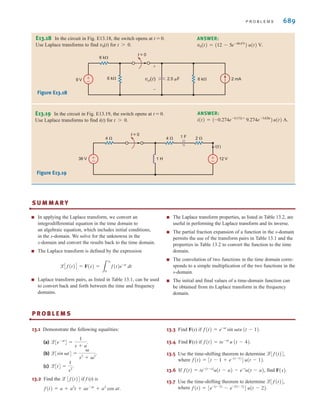
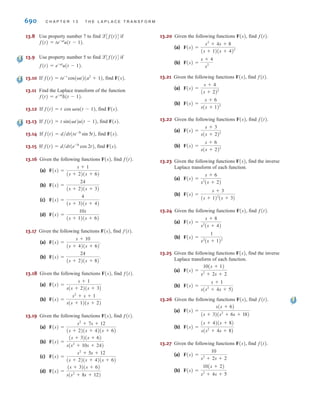
  • 335.
    S E CT I O N 7 . 2 F I R S T- O R D E R C I R C U I T S 311 Then Step 4. The equivalent circuit for the steady-state condition after switch closure is given in Fig. 7.8e. Note that the 6-, 12-, 1-, and 2-⍀ resistors are shorted, and there- fore v(q)=24 V. Step 5. The Thévenin equivalent resistance is found by looking into the circuit from the inductor terminals. This circuit is shown in Fig. 7.8f. Note carefully that RTh is equal to the 4-, 6-, and 12-⍀ resistors in parallel. Therefore, RTh=2 ⍀, and the circuit time constant is Step 6. From the previous analysis we find that and hence that From Fig. 7.8b we see that the value of v(t) before switch closure is 16 V. This value jumps to 17.33 V at t=0. A plot of this function for t0 is shown in Fig. 7.9. v(t) = 24 - 20 3 e-t兾2 V K2 = v(0+) - v(q) = - 20 3 K1 = v(q) = 24 ␶ = L RTh = 4 2 = 2 s = 52 3 V v(0+) = 24 - v1(0+) Figure 7.9 Plot for Example 7.4. irwin07_296-368hr.qxd 28-07-2010 11:34 Page 311
  • 336.
    312 C HA P T E R 7 F I R S T- A N D S E C O N D - O R D E R T R A N S I E N T C I R C U I T S E7.5 Consider the network in Fig. E7.5. The switch opens at . Find for . t 7 0 vo(t) t = 0 Learning Assessments ANSWER: vo(t) = 24 5 + 1 5 e-(5兾8)t V. ± – 12 V 8 V 2 F 2 2 2 1 t=0 ± – vo(t) + - Figure E7.5 E7.6 Consider the network in Fig. E7.6. If the switch opens at , find the output voltage for . t 7 0 vo(t) t = 0 ANSWER: vo(t) = 6 - 10 3 e-2t V. ± – 12 V 4 V 2 2 2 2 H t=0 - + vo(t) + - Figure E7.6 E7.7 Find v0(t) for t0 in Fig. E7.7 using the step-by-step method. ANSWER: vo(t)=-3.33e-t/0.06 V. + – + – 24 V 12 V 5 F 6 3 6 4 k 4 k t=0 vo(t) + - Figure E7.7 irwin07_296-368hr.qxd 28-07-2010 11:34 Page 312
  • 337.
    S E CT I O N 7 . 2 F I R S T- O R D E R C I R C U I T S 313 The circuit shown in Fig. 7.10a has reached steady state with the switch in position 1. At time t=0 the switch moves from position 1 to position 2. We want to calculate vo(t) for t0. Step 1. vo(t) is of the form Step 2. Using the circuit in Fig. 7.10b, we can calculate Then Step 3. The new circuit, valid only for is shown in Fig. 7.10c. The value of the current source that replaces the inductor is Because of the current source Step 4. The equivalent circuit, for the steady-state condition after switch closure, is given in Fig. 7.10d. Using the voltages and currents defined in the figure, we can compute vo(q) in a variety of ways. For example, using node equations we can find vo(q) from or, using loop equations, Using either approach, we find that vo(q)=27 V. vo(q) = 6i2 36 = 2Ai1 + i2B + 6i2 - 2i1 36 = 2Ai1 + i2B + 4i1 vo(q) = vB + 2iœ A iœ A = vB 4 vB - 36 2 + vB 4 + vB + 2iœ A 6 = 0 vo(0+) = (3)(6) = 18 V iL(0-) = iL(0+) = 3 A. t = 0+, iL(0-) = 12 + 2iA 6 = 18 6 = 3 A iA = 12 4 = 3 A iL(0-) K1 + K2e-t兾␶ . E7.8 Find i0(t) for t0 Fig. E7.8 using the step-by-step method. ANSWER: i0(t)=2.1-0.6e-t/0.001 A. + – 100 mH 12 V 3 A io(t) 6 4 3 3 t=0 Figure E7.8 SOLUTION EXAMPLE 7.5 irwin07_296-368hr.qxd 28-07-2010 11:34 Page 313
  • 338.
    314 C HA P T E R 7 F I R S T- A N D S E C O N D - O R D E R T R A N S I E N T C I R C U I T S Step 5. The Thévenin equivalent resistance can be obtained via voc and isc because of the presence of the dependent source. From Fig. 7.10e we note that Therefore, = 36 V voc = (4)(6) + 2(6) ifl A = 36 2 + 4 = 6 A ± – 36 V ± – 12 V 2 3 H t=0 6 4 2iA iA vo(t) - + + - 2 1 (a) ± – 12 V 6 4 2iA iA vo(0–) iL(0–) - + + - (b) t=0– ± – 36 V 6 4 3 A 2 2iA iA vo(0±) - + + - (c) t=0± ± – 36 V 6 4 2 vB 2i' A i' A i1 vo(∞) - + + - (d) t= ± – 36 V 6 4 2 voc 2i A i A - + (e) ± – 36 V 6 4 2 2iA ' iA ' isc isc iA ' - + (f) +– i2 Figure 7.10 Analysis of an RL transient circuit containing a dependent source. irwin07_296-368hr.qxd 28-07-2010 11:34 Page 314
  • 339.
    S E CT I O N 7 . 2 F I R S T- O R D E R C I R C U I T S 315 From Fig. 7.10f we can write the following loop equations: Solving these equations for isc yields Therefore, Hence, the circuit time constant is Step 6. Using the information just computed, we can derive the final equation for vo(t): Therefore, vo(t) = 27 - 9e-t兾(3兾8) V K2 = vo(0+) - vo(q) = 18 - 27 = -9 K1 = vo(q) = 27 ␶ = L RTh = 3 8 s RTh = voc isc = 36 9兾2 = 8 ⍀ isc = 9 2 A 36 = 2AiÔ A + iscB + 6isc - 2iÔ A 36 = 2AiÔ A + iscB + 4iÔ A E7.9 If the switch in the network in Fig. E7.9 closes at , find for . t 7 0 vo(t) t = 0 ANSWER: vo(t) = 24 + 36e-(t兾12) V. + - - + vo(t) + - 3 A t=0 4 24 V 4 2 F vA 2 vA + - Figure E7.9 Learning Assessments E7.10 Find io(t) for t0 in Fig. E7.10 using the step-by-step method. ANSWER: 1.5 + 0.2143e-(t兾0.7) mA. io(t) = 12 V 6 k 6 k 6 k 3 k 4 k 2 F t=0 io(t) iA 2iA + - 100 F Figure E7.10 irwin07_296-368hr.qxd 28-07-2010 11:34 Page 315
  • 340.
    316 C HA P T E R 7 F I R S T- A N D S E C O N D - O R D E R T R A N S I E N T C I R C U I T S At this point, it is appropriate to state that not all switch action will always occur at time t=0. It may occur at any time t0. In this case the results of the step-by-step analysis yield the following equations: and The function is essentially time-shifted by t0 seconds. Finally, note that if more than one independent source is present in the network, we can simply employ superposition to obtain the total response. PULSE RESPONSE Thus far we have examined networks in which a voltage or current source is suddenly applied. As a result of this sudden application of a source, voltages or cur- rents in the circuit are forced to change abruptly. A forcing function whose value changes in a discontinuous manner or has a discontinuous derivative is called a singular function. Two such singular functions that are very important in circuit analysis are the unit impulse func- tion and the unit step function. We will defer a discussion of the unit impulse function until a later chapter and concentrate on the unit step function. The unit step function is defined by the following mathematical relationship: In other words, this function, which is dimensionless, is equal to zero for negative values of the argument and equal to 1 for positive values of the argument. It is undefined for a zero argument where the function is discontinuous. A graph of the unit step is shown in Fig. 7.11a. u(t) = b 0 1 t 6 0 t 7 0 x(t) = x(q) + CxAt0B - x(q)De-At-t0B兾␶ t 7 t0 x(q) = K1 xAt0B = K1 + K2 (a) (b) (c) (d) (e) (f) t 1 0 t=0 1 2 ± – Vo u(t-t0) t0 t 0 1 Iou(t-t0) ± – Vou(t) t=0 Io Figure 7.11 Graphs and models of the unit step function. irwin07_296-368hr.qxd 28-07-2010 11:34 Page 316
  • 341.
    S E CT I O N 7 . 2 F I R S T- O R D E R C I R C U I T S 317 The unit step is dimensionless, and therefore a voltage step of volts or a current step of Io amperes is written as and respectively. Equivalent circuits for a voltage step are shown in Figs. 7.11b and c. Equivalent circuits for a current step are shown in Figs. 7.11d and e. If we use the definition of the unit step, it is easy to generalize this function by replac- ing the argument t by t-t0. In this case A graph of this function is shown in Fig. 7.11f. Note that is equivalent to delaying u(t) by t0 seconds, so that the abrupt change occurs at time t=t0. Step functions can be used to construct one or more pulses. For example, the voltage pulse shown in Fig. 7.12a can be formulated by initiating a unit step at t=0 and subtracting one that starts at t=T, as shown in Fig. 7.12b. The equation for the pulse is If the pulse is to start at t=t0 and have width T, the equation would be Using this approach, we can write the equation for a pulse starting at any time and ending at any time. Similarly, using this approach, we could write the equation for a series of pulses, called a pulse train, by simply forming a summation of pulses constructed in the manner illustrated previously. The following example will serve to illustrate many of the concepts we have just presented. v(t) = AEuAt - t0B - uCt - At0 + TB D F v(t) = ACu(t) - u(t - T)D uAt - t0B uAt - t0B = b 0 1 t 6 t0 t 7 t0 Iou(t), V o u(t) V o t t T T A (a) (b) v(t) A Au(t) –Au(t-T) –A v(t) Figure 7.12 Construction of a pulse via two step functions. Consider the circuit shown in Fig. 7.13a. The input function is the voltage pulse shown in Fig. 7.13b. Since the source is zero for all negative time, the initial conditions for the (b) (a) 9 0 0.3 v(t) (V) t(s) vC(t) v(t) 6 k 100 F 8 k 4 k ± – + - vo(t) + - (c) t=0 (d) 8 k 4 k vo(0±)=0 vc(0)=0 + - 8 k 9 V 6 k 4 k ± – vo(∞) + - (e) (f) 4 2.11 0 0.3 vo(t) (V) t(s) 8 k 6 k 4 k RTh Figure 7.13 Pulse response of a network. EXAMPLE 7.6 irwin07_296-368hr.qxd 28-07-2010 11:34 Page 317
  • 342.
    318 C HA P T E R 7 F I R S T- A N D S E C O N D - O R D E R T R A N S I E N T C I R C U I T S SOLUTION network are zero i.e., The response vo(t) for is due to the application of the constant source at t=0 and is not influenced by any source changes that will occur later. At the forcing function becomes zero, and therefore vo(t) for is the source-free or natural response of the network. Let us determine the expression for the voltage vo(t). Since the output voltage vo(t) is a voltage division of the capacitor voltage, and the initial volt- age across the capacitor is zero, we know that as shown in Fig. 7.13c. If no changes were made in the source after t=0, the steady-state value of vo(t) Ci.e., vo(q)D due to the application of the unit step at t=0 would be as shown in Fig. 7.13d. The Thévenin equivalent resistance is as illustrated in Fig. 7.13e. Therefore, the circuit time constant ␶ is Therefore, the response vo(t) for the period 0t0.3 s is 0t0.3 s The capacitor voltage can be calculated by realizing that using voltage division, Therefore, Since the capacitor voltage is continuous, and therefore, Since the source is zero for the final value for vo(t) as is zero. Therefore, the expression for vo(t) for is t0.3 s The term indicates that the exponential decay starts at t=0.3 s. The complete solution can be written by means of superposition as vo(t) = 4A1 - e-t兾0.4 Bu(t) - 4A1 - e-(t-0.3)兾0.4 Bu(t - 0.3) V e-(t-0.3)兾0.4 vo(t) = 2.11e-(t-0.3)兾0.4 V t 7 0.3 s t S q t 7 0.3 s, = 2.11 V = 4A1 - e-0.3兾0.4 B vo(0.3+) = 2 3 vC(0.3-) vC(0.3-) = vC(0.3+) vC(t) = 3 2 A4 - 4e-t兾0.4 B V vo(t) = 2兾3 vC(t). vo(t) = 4 - 4e-t兾0.4 V = 0.4 s = (4)A103 B(100)A10-6 B ␶ = RThC = 4 k⍀ RTh = (6k)(12k) 6k + 12k = 4 V vo(q) = 9 6k + 4k + 8k (8k) vo(0+) = 0, t 7 0.3 s t = 0.3 s 0 6 t 6 0.3 s vC(0-) = 0D. C irwin07_296-368hr.qxd 28-07-2010 11:34 Page 318
  • 343.
    S E CT I O N 7 . 3 S E C O N D - O R D E R C I R C U I T S 319 THE BASIC CIRCUIT EQUATION To begin our development, let us consider the two basic RLC circuits shown in Fig. 7.14. We assume that energy may be initially stored in both the inductor and capacitor. The node equation for the parallel RLC circuit is Similarly, the loop equation for the series RLC circuit is Ri + 1 C 3 t t0 i(x) dx + vC At0B + L di dt = vS(t) v R + 1 L 3 t t0 v(x) dx + iLAt0B + C dv dt = iS(t) or, equivalently, the complete solution is which in mathematical form is Note that the term Cu(t)-u(t-0.3)D acts like a gating function that captures only the part of the step response that exists in the time interval 0t0.3 s. The output as a func- tion of time is shown in Fig. 7.13f. 2.11e-(t-0.3)兾0.4 u(t - 0.3) V vo(t) = 4A1 - e-t兾0.4 BCu(t) - u(t - 0.3)D + vo(t) = • 0 t 6 0 4A1 - e-t兾0.4 B V 0 6 t 6 0.3 s 2.11e-(t-0.3)兾0.4 V 0.3 s 6 t ¶ E7.11 The voltage source in the network in Fig. E7.11a is shown in Fig. E7.11b. The initial current in the inductor must be zero. (Why?) Determine the output voltage vo(t) for t 7 0. ANSWER: for for 0 ⬉ t ⬉ 1 s, and for 1 st. 3.11e-(3兾2)(t-1) V t 6 0, 4A1 - e-(3兾2)t B V vo(t) = 0 (a) (b) 12 0 1 v(t) (V) t(s) v(t) 2 2 2 H ± – 2 vo(t) + - Figure E7.11 iS(t) iL(t0) R L C v(t) vS(t) i(t) R L ± – (a) (b) vC(t0) C + - Figure 7.14 Parallel and series RLC circuits. Learning Assessments 7.3 Second-Order Circuits irwin07_296-368hr.qxd 28-07-2010 11:34 Page 319
  • 344.
    320 C HA P T E R 7 F I R S T- A N D S E C O N D - O R D E R T R A N S I E N T C I R C U I T S Note that the equation for the node voltage in the parallel circuit is of the same form as that for the loop current in the series circuit. Therefore, the solution of these two circuits is dependent on solving one equation. If the two preceding equations are differentiated with respect to time, we obtain and Since both circuits lead to a second-order differential equation with constant coefficients, we will concentrate our analysis on this type of equation. THE RESPONSE EQUATIONS In concert with our development of the solution of a first-order differential equation that results from the analysis of either an RL or an RC circuit as outlined earlier, we will now employ the same approach here to obtain the solution of a second-order differential equation that results from the analysis of RLC circuits. As a general rule, for this case we are confronted with an equation of the form 7.12 Once again we use the fact that if x(t)=xp(t) is a solution to Eq. (7.12), and if x(t)=xc(t) is a solution to the homogeneous equation then is a solution to the original Eq. (7.12). If we again confine ourselves to a constant forcing function Ci.e., f(t)=AD, the development at the beginning of this chapter shows that the solution of Eq. (7.12) will be of the form 7.13 Let us now turn our attention to the solution of the homogeneous equation where a1 and a2 are constants. For simplicity we will rewrite the equation in the form 7.14 where we have made the following simple substitutions for the constants and Following the development of a solution for the first-order homogeneous differential equation earlier in this chapter, the solution of Eq. (7.14) must be a function whose first- and second-order derivatives have the same form, so that the left-hand side of Eq. (7.14) will become identically zero for all t. Again we assume that Substituting this expression into Eq. (7.14) yields s2 Kest + 2␨␻0sKest + ␻2 0Kest = 0 x(t) = Kest a2 = ␻2 0. a1 = 2␨␻0 d2 x(t) dt2 + 2␨␻0 dx(t) dt + ␻2 0x(t) = 0 d2 x(t) dt2 + a1 dx(t) dt + a2x(t) = 0 x(t) = A a2 + xc(t) x(t) = xp(t) + xc(t) d2 x(t) dt2 + a1 dx(t) dt + a2x(t) = 0 d2 x(t) dt2 + a1 dx(t) dt + a2x(t) = f(t) L d2 i dt2 + R di dt + i C = dvS dt C d2 v dt2 + 1 R dv dt + v L = diS dt irwin07_296-368hr.qxd 28-07-2010 11:34 Page 320
  • 345.
    S E CT I O N 7 . 3 S E C O N D - O R D E R C I R C U I T S 321 Dividing both sides of the equation by Kest yields 7.15 This equation is commonly called the characteristic equation; ␨ is called the exponential damping ratio, and ␻0 is referred to as the undamped natural frequency. The importance of this terminology will become clear as we proceed with the development. If this equation is satisfied, our assumed solution is correct. Employing the quadratic formula, we find that Eq. (7.15) is satisfied if 7.16 Therefore, two values of s, s1 and s2, satisfy Eq. (7.15): 7.17 In general, then, the complementary solution of Eq. (7.14) is of the form 7.18 and are constants that can be evaluated via the initial conditions x(0) and For example, since then and Hence, x(0) and produce two simultaneous equations, which when solved yield the constants K1 and K2. Close examination of Eqs. (7.17) and (7.18) indicates that the form of the solution of the homogeneous equation is dependent on the value ␨. For example, if ␨1, the roots of the characteristic equation, s1 and s2, also called the natural frequencies because they determine the natural (unforced) response of the network, are real and unequal; if ␨1, the roots are complex numbers; and finally, if ␨=1, the roots are real and equal. Let us now consider the three distinct forms of the unforced response—that is, the response due to an initial capacitor voltage or initial inductor current. Case 1, ␨1 This case is commonly called overdamped. The natural frequencies s1 and s2 are real and unequal; therefore, the natural response of the network described by the second-order differential equation is of the form 7.19 where K1 and K2 are found from the initial conditions. This indicates that the natural response is the sum of two decaying exponentials. xc(t) = K1e-A␨␻0 -␻0 2␨2 -1Bt + K2e-A␨␻0 +␻0 2␨2 -1Bt dx(0)兾dt dx(t) dt 2 t=0 = dx(0) dt = s1K1 + s2K2 x(0) = K1 + K2 x(t) = K1es1t + K2es2t dx(0)兾dt. K2 K1 xc(t) = K1es1t + K2es2t s2 = -␨␻0 - ␻0 2␨2 - 1 s1 = -␨␻0 + ␻0 2␨2 - 1 = -␨␻0 ; ␻0 2␨2 - 1 s = -2␨␻0 ; 24␨2 ␻2 0 - 4␻2 0 2 x(t) = Kest s2 + 2␨␻0s + ␻2 0 = 0 irwin07_296-368hr.qxd 28-07-2010 11:34 Page 321
  • 346.
    Case 2, ␨1This case is called underdamped. Since ␨1, the roots of the characteristic equation given in Eq. (7.17) can be written as where , and Thus, the natural frequencies are com- plex numbers (briefly discussed in the Appendix). The natural response is then of the form 7.20 where A1 and A2, like K1 and K2, are constants, which are evaluated using the initial condi- tions x(0) and This illustrates that the natural response is an exponentially damped oscillatory response. Case 3, ␨=1 This case, called critically damped, results in In the case where the characteristic equation has repeated roots, the general solution is of the form 7.21 where B1 and B2 are constants derived from the initial conditions. It is informative to sketch the natural response for the three cases we have discussed: over- damped, Eq. (7.19); underdamped, Eq. (7.20); and critically damped, Eq. (7.21). Figure 7.15 graphically illustrates the three cases for the situations in which xc(0)=0. Note that the critically damped response peaks and decays faster than the overdamped response. The underdamped response is an exponentially damped sinusoid whose rate of decay is dependent on the factor ␨. Actually, the terms define what is called the envelope of the response, and the damped oscillations (i.e., the oscillations of decreasing amplitude) exhibited by the waveform in Fig. 7.15b are called ringing. ; e-␨␻0t xc(t) = B1e-␨␻0t + B2te-␨␻0t s1 = s2 = -␨␻0 dx(0)兾dt. xc(t) = e-␨␻0t AA1 cos ␻0 21 - ␨2 t + A2 sin ␻0 21 - ␨2 tB ␻d = ␻0 21 - ␨2 . j = 1-1, ␴ = ␨␻0 s2 = -␨␻0 - j␻0 21 - ␨2 = -␴ - j␻d s1 = -␨␻0 + j␻0 21 - ␨2 = -␴ + j␻d 322 C H A P T E R 7 F I R S T- A N D S E C O N D - O R D E R T R A N S I E N T C I R C U I T S t Underdamped e–t (b) Critically damped Overdamped xc(t) xc(t) (a) t Figure 7.15 Comparison of overdamped, critically damped, and under- damped responses. E7.12 A parallel RLC circuit has the following circuit parameters: R=1 ⍀, L=2 H, and C=2 F. Compute the damping ratio and the undamped natural frequency of this network. ANSWER: ␻0 = 0.5 rad兾s. ␨ = 0.5; E7.13 A series RLC circuit consists of R=2 ⍀, L=1 H, and a capacitor. Determine the type of response exhibited by the network if (a) (b) C=1 F, and (c) C=2 F. C = 1兾2F, ANSWER: (a) underdamped; (b) critically damped; (c) overdamped. Learning Assessments THE NETWORK RESPONSE We will now analyze a number of simple RLC networks that contain both nonzero initial conditions and constant forcing functions. Circuits that exhibit overdamped, underdamped, and critically damped responses will be considered. irwin07_296-368hr.qxd 28-07-2010 11:34 Page 322
  • 347.
    S E CT I O N 7 . 3 S E C O N D - O R D E R C I R C U I T S 323 EXAMPLE 7.7 The following examples will demonstrate the analysis techniques. Step 1. Write the differential equation that describes the circuit. Step 2. Derive the characteristic equation, which can be written in the form where ␨ is the damping ratio and ␻0 is the undamped natural frequency. Step 3. The two roots of the characteristic equation will determine the type of response. If the roots are real and unequal (i.e., ␨1), the network response is overdamped. If the roots are real and equal (i.e., ␨=1), the network response is critically damped. If the roots are complex (i.e., ␨1), the network response is underdamped. Step 4. The damping condition and corresponding response for the aforementioned three cases outlined are as follows: Overdamped: Critically damped: Underdamped: where and Step 5. Two initial conditions, either given or derived, are required to obtain the two unknown coefficients in the response equation. ␻d = ␻0 21 - ␨2 ␴ = ␨␻0, x(t) = e-␴t AA1 cos␻dt + A2 sin␻dtB, x(t) = B1e-␨␻0t + B2te-␨␻0t x(t) = K1e-A␨␻0 -␻0 2␨2 -1Bt + K2e-A␨␻0 +␻0 2␨2 -1Bt s2 + 2␨␻0s + ␻2 0 = 0, Problem-Solving Strategy Second-Order Transient Circuits Consider the parallel RLC circuit shown in Fig. 7.16. The second-order differential equation that describes the voltage v(t) is d2 v dt2 + 1 RC dv dt + v LC = 0 A comparison of this equation with Eqs. (7.14) and (7.15) indicates that for the parallel RLC circuit the damping term is 1/2 RC and the undamped natural frequency is If the circuit parameters are R=2 ⍀, and L=5 H, the equation becomes Let us assume that the initial conditions on the storage elements are iL(0)=-1 A and vC(0)=4 V. Let us find the node voltage v(t) and the inductor current. The characteristic equation for the network is and the roots are s2 = -0.5 s1 = -2 s2 + 2.5s + 1 = 0 d2 v dt2 + 2.5 dv dt + v = 0 C = 1兾5 F, 1兾1LC. R L iL(0) v(t) C vC(0) + - Figure 7.16 Parallel RLC circuit. SOLUTION irwin07_296-368hr.qxd 28-07-2010 11:34 Page 323
  • 348.
    Since the rootsare real and unequal, the circuit is overdamped, and v(t) is of the form The initial conditions are now employed to determine the constants K1 and K2. Since v(t)=vC(t), The second equation needed to determine K1 and K2 is normally obtained from the expression However, the second initial condition is not If this were the case, we would simply evaluate the equation at t=0. This would produce a second equation in the unknowns K1 and K2. We can, however, circumvent this problem by noting that the node equation for the cir- cuit can be written as or At t=0, However, since then when t=0 This equation, together with the equation produces the constants and . Therefore, the final equation for the voltage is Note that the voltage equation satisfies the initial condition v(0)=4 V. The response curve for this voltage v(t) is shown in Fig. 7.17. v(t) = 2e-2t + 2e-0.5t V K2 = 2 K1 = 2 4 = K1 + K2 -5 = -2K1 - 0.5K2 dv(t) dt = -2K1e-2t - 0.5K2e-0.5t = -5 = -2.5(4) - 5(-1) dv(0) dt = -1 RC v(0) - 1 C iL(0) dv(t) dt = -1 RC v(t) - iL(t) C C dv(t) dt + v(t) R + iL(t) = 0 dv(0)兾dt. dv(t) dt = -2K1e-2t - 0.5K2e-0.5t vC(0) = v(0) = 4 = K1 + K2 v(t) = K1e-2t + K2e-0.5t 324 C H A P T E R 7 F I R S T- A N D S E C O N D - O R D E R T R A N S I E N T C I R C U I T S t(s) v(t) (V) 4.8 4.2 3.6 3.0 2.4 1.8 1.2 0.6 0.0 0.0 0.3 0.6 0.9 1.2 1.5 1.8 2.1 2.4 2.7 3.0 Figure 7.17 Overdamped response. irwin07_296-368hr.qxd 28-07-2010 11:34 Page 324
  • 349.
    S E CT I O N 7 . 3 S E C O N D - O R D E R C I R C U I T S 325 The inductor current is related to v(t) by the equation Substituting our expression for v(t) yields or Note that in comparison with the RL and RC circuits, the response of this RLC circuit is controlled by two time constants. The first term has a time constant of and the sec- ond term has a time constant of 2 s. 1兾2 s, iL(t) = - 1 5 e-2t - 4 5 e-0.5t A iL(t) = 1 5 3 C2e-2t + 2e-0.5t D dt iL(t) = 1 L 3 v(t) dt The series RLC circuit shown in Fig. 7.18 has the following parameters: C=0.04 F, L=1 H, R=6 ⍀, iL(0)=4 A, and vC(0)=-4 V. The equation for the current in the circuit is given by the expression A comparison of this equation with Eqs. (7.14) and (7.15) illustrates that for a series RLC circuit the damping term is R/2L and the undamped natural frequency is Substituting the circuit element values into the preceding equation yields Let us determine the expression for both the current and the capacitor voltage. The characteristic equation is then and the roots are Since the roots are complex, the circuit is underdamped, and the expression for i(t) is Using the initial conditions, we find that i(0)=4=K1 i(t) = K1e-3t cos4t + K2e-3t sin 4t s2 = -3 - j4 s1 = -3 + j4 s2 + 6s + 25 = 0 d2 i dt2 + 6 di dt + 25i = 0 1兾1LC. d2 i dt2 + R L di dt + i LC = 0 EXAMPLE 7.8 SOLUTION R L i(t) C vC(0) + - iL(0) Figure 7.18 Series RLC circuit. irwin07_296-368hr.qxd 28-07-2010 11:34 Page 325
  • 350.
    and and thus Although wedo not know we can find it via KVL. From the circuit we note that or Therefore, and since K1=4, K2=–2, the expression then for i(t) is Note that this expression satisfies the initial condition i(0)=4. The voltage across the capacitor could be determined via KVL using this current: or Substituting the preceding expression for i(t) into this equation yields Note that this expression satisfies the initial condition vC(0)=–4 V. A plot of the function is shown in Fig. 7.1.9: vC(t) = -4e-3t cos 4t + 22e-3t sin 4t V vC(t) = -Ri(t) - L di(t) dt Ri(t) + L di(t) dt + vC(t) = 0 i(t) = 4e-3t cos 4t - 2e-3t sin 4t A -3K1 + 4K2 = -20 = -20 = - 6 1 (4) + 4 1 di(0) dt = - R L i(0) - vC(0) L Ri(0) + L di(0) dt + vC(0) = 0 di(0)兾dt, di(0) dt = -3K1 + 4K2 + 4K2e-3t cos4t - 3K2e-3t sin 4t di dt = -4K1e-3t sin 4t - 3K1e-3t cos4t 326 C H A P T E R 7 F I R S T- A N D S E C O N D - O R D E R T R A N S I E N T C I R C U I T S v(t) (V) t(s) 10.0 8.0 6.0 4.0 2.0 0 –2.0 –4.0 0.0 0.3 0.6 0.9 1.2 1.5 1.8 2.1 2.4 2.7 3.0 Figure 7.19 Underdamped response. irwin07_296-368hr.qxd 28-07-2010 11:34 Page 326
  • 351.
    S E CT I O N 7 . 3 S E C O N D - O R D E R C I R C U I T S 327 Let us examine the circuit in Fig. 7.20, which is slightly more complicated than the two we have already considered. The two equations that describe the network are Substituting the second equation into the first yields If the circuit parameters and initial conditions are the differential equation becomes We wish to find expressions for the current i(t) and the voltage v(t). The characteristic equation is then and hence the roots are Since the roots are real and equal, the circuit is critically damped. The term v(t) is then given by the expression Since v(t)=vC(t), v(0) = vC(0) = 1 = K1 v(t) = K1e-3t + K2te-3t s2 = -3 s1 = -3 s2 + 6s + 9 = 0 d2 v dt2 + 6 dv dt + 9v = 0 R2 = 8 ⍀ L = 2 H iL(0) = 1 2 A R1 = 10 ⍀ C = 1 8 F vC(0) = 1 V d2 v dt2 + a 1 R2C + R1 L b dv dt + R1 + R2 R2LC v = 0 i(t) = C dv(t) dt + v(t) R2 L di(t) dt + R1i(t) + v(t) = 0 EXAMPLE 7.9 SOLUTION Figure 7.20 Series-parallel RLC circuit. + + - - vC(0) C v(t) iL(0) L i(t) R1 R2 irwin07_296-368hr.qxd 28-07-2010 11:34 Page 327
  • 352.
    328 C HA P T E R 7 F I R S T- A N D S E C O N D - O R D E R T R A N S I E N T C I R C U I T S In addition, However, Setting these two expressions equal to one another and evaluating the resultant equation at t=0 yields K1=1, K2=6, and the expression for v(t) is Note that the expression satisfies the initial condition v(0)=1. The current i(t) can be determined from the nodal analysis equation at v(t): Substituting v(t) from the preceding equation, we find or If this expression for the current is employed in the circuit equation, we obtain which is identical to the expression derived earlier. A plot of this critically damped function is shown in Fig. 7.21. v(t) = e-3t + 6te-3t V v(t) = -L di(t) dt - R1i(t) i(t) = 1 2 e-3t - 3 2 te-3t A i(t) = 1 8 C-3e-3t + 6e-3t - 18te-3t D + 1 8 Ce-3t + 6te-3t D i(t) = C dv(t) dt + v(t) R2 v(t) = e-3t + 6te-3t V 3 = -3K1 + K2 1兾2 1兾8 - 1 1 = -3K1 + K2 dv(t) dt = i(t) C - v(t) R2C dv(t) dt = -3K1e-3t + K2e-3t - 3K2te-3t t(s) v(t) (V) 1.4 1.2 1.0 0.8 0.6 0.4 0.2 0.0 –0.2 0.0 0.3 0.6 0.9 1.2 1.5 1.8 2.1 2.4 2.7 3.0 Figure 7.21 Critically damped response. irwin07_296-368hr.qxd 28-07-2010 11:34 Page 328
  • 353.
    S E CT I O N 7 . 3 S E C O N D - O R D E R C I R C U I T S 329 E7.14 The switch in the network in Fig. E7.14 opens at t=0. Find i(t) for t0. ANSWER: i(t) = -2e-t兾2 + 4e-t A. E7.15 The switch in the network in Fig. E7.15 moves from position 1 to position 2 at t=0. Find vo(t) for t0. ANSWER: vo(t) = 2Ae-t - 3e-3t B V. 1 F 3 6 12 V i(t) t=0 2 H ± – Figure E7.14 vo(t) t=0 2 A 2 + - — H 1 2 — F 2 3 2 1 Figure E7.15 Learning Assessments E7.16 Find vC(t) for t0 in Fig. E7.16. ANSWER: vC(t)=-2e–2t cos t-1.5e–2t sin t+24 V. 0.25 H 0.8 F 12 V 24 V t=0 1 VS2 5 + – + – vc(t) - + Figure E7.16 EXAMPLE 7.10 Consider the circuit shown in Fig. 7.22. This circuit is the same as the one analyzed in Example 7.8, except that a constant forcing function is present. The circuit parameters are the same as those used in Example 7.8: R = 6 ⍀ L = 1 H vC(0) = -4 V C = 0.04 F iL(0) = 4 A irwin07_296-368hr.qxd 28-07-2010 11:34 Page 329
  • 354.
    330 C HA P T E R 7 F I R S T- A N D S E C O N D - O R D E R T R A N S I E N T C I R C U I T S Figure 7.22 Series RLC circuit with a step function input. ± – 12u(t) V R iL(0) L C vC (0) + - SOLUTION We want to find an expression for vC(t) for t0. From our earlier mathematical development we know that the general solution of this problem will consist of a particular solution plus a complementary solution. From Example 7.8 we know that the complementary solution is of the form The particular solution is a constant, since the input is a constant and therefore the general solution is An examination of the circuit shows that in the steady state, the final value of is 12 V, since in the steady-state condition, the inductor is a short circuit and the capacitor is an open circuit. Thus, . The steady-state value could also be immediately calculated from the differential equation. The form of the general solution is then The initial conditions can now be used to evaluate the constants and : Since the derivative of a constant is zero, the results of Example 7.8 show that and since Therefore, the general solution for vC(t) is Note that this equation satisfies the initial condition vC(0)=–4 and the final condition vC(q)=12 V. vC(t) = 12 - 16e-3t cos4t + 13e-3t sin4t V K3 = -16, K4 = 13. dvC(0) dt = i(0) C = 100 = -3K3 + 4K4 -16 = K3 vC(0) = -4 = K3 + 12 K4 K3 vC(t) = K3e-3t cos4t + K4e-3t sin4t + 12 K5 = 12 vC(t) vC(t) = K3e-3t cos 4t + K4e-3t sin 4t + K5 K3e-3t cos 4t + K4e-3t sin 4t. Let us examine the circuit shown in Fig. 7.23. A close examination of this circuit will indicate that it is identical to that shown in Example 7.9 except that a constant forcing func- tion is present. We assume the circuit is in steady state at The equations that describe the circuit for are Combining these equations, we obtain If the circuit parameters are and the differen- tial equation for the output voltage reduces to d2 v(t) dt2 + 7 dv(t) dt + 12v(t) = 48 C = 1兾4F, L = 2 H, R2 = 2 ⍀, R1 = 10 ⍀, d2 v(t) dt2 + a 1 R2C + R1 L b dv(t) dt + R1 + R2 R2LC v(t) = 24 LC i(t) = C dv(t) dt + v(t) R2 L di(t) dt + R1i(t) + v(t) = 24 t 7 0 t = 0-. EXAMPLE 7.11 irwin07_296-368hr.qxd 28-07-2010 11:34 Page 330
  • 355.
    S E CT I O N 7 . 3 S E C O N D - O R D E R C I R C U I T S 331 ± – ± – v(t) i(t) + + - - 24 V 12 V t=0 L C R2 iL(0) vC(0) R1 Figure 7.23 Series-parallel RLC circuit with a constant forcing function. Let us determine the output voltage The characteristic equation is and hence the roots are The circuit response is overdamped, and therefore the general solution is of the form The steady-state value of the voltage, can be computed from Fig. 7.24a. Note that The initial conditions can be calculated from Figs. 7.24b and c, which are valid at and respectively. Note that and, hence, from the response equation Fig. 7.24c illustrates that From the response equation we see that dv(0) dt = -3K1 - 4K2 i(0+) = 1. -2 = K1 + K2 v(0+) = 2 V = K1 + K2 + 4 v(0+) = 2 V t = 0+, t = 0- v(q) = 4 V = K3 K3, v(t) = K1e-3t + K2e-4t + K3 s2 = -4 s1 = -3 s2 + 7s + 12 = 0 v(t). (c) t=0+ ± – ± – 24 V 2 2 V i(0±) iC(0±) v(0±)=2 V i(0±)=1 A 10 + - (a) t=∞ ± – 24 V 2 10 i(∞)=2 A v(∞)=4 V + - (b) t=0– 12 V 10 2 i(0–)=1 A v(0–)=2 V vC(0–)=2 V + - ± – + - Figure 7.24 Equivalent circuits at , , and for the circuit in Fig. 7.23. t = 0+ t = 0- t = q irwin07_296-368hr.qxd 28-07-2010 11:34 Page 331
  • 356.
    332 C HA P T E R 7 F I R S T- A N D S E C O N D - O R D E R T R A N S I E N T C I R C U I T S and since then Solving the two equations for and yields and Therefore, the general solution for the voltage response is Note that this equation satisfies both the initial and final values of v(t). v(t) = 4 - 8e-3t + 6e-4t V K2 = 6. K1 = -8 K2 K1 0 = -3K1 - 4K2 = 0 = 4 - 4 dv(0) dt = i(0) C - v(0) R2C E7.17 The switch in the network in Fig. E7.17 moves from position 1 to position 2 at t=0. Compute io(t) for t0 and use this current to determine vo(t) for t0. ANSWER: vo(t)=12+18io(t) V. io(t) = - 11 6 e-3t + 14 6 e-6t A; ± – ± – ± – 24 V 4 V 12 V io(t) vo(t) + - — F 1 36 2 1 t=0 2 H 6 18 Figure E7.17 Learning Assessments E7.18 Find i(t) for t0 in Fig. E7.18. ANSWER: i(t)=0.4144e–17.07t – 2.414e–2.93t +3 A. 10 V 20 V 2 H t=0 10 10 + – + – 0.01F i(t) Figure E7.18 irwin07_296-368hr.qxd 28-07-2010 11:34 Page 332
  • 357.
    S E CT I O N 7 . 4 A P P L I C A T I O N E X A M P L E S 333 There are a wide variety of applications for transient circuits. The following examples demonstrate some of them. 7.4 Application Examples Let us return to the camera flash circuit, redrawn in Fig. 7.25, which was discussed in the introduction of this chapter. The Xenon flash has the following specifications: For this particular application, a time constant of 1 ms is required during flash time. In addi- tion, to minimize the physical size of the circuit, the resistor must dissipate no more than 100-mW peak power. We want to determine values for and Furthermore, we wish to determine the recharge time, the flash bulb’s voltage, current, power, and total energy dissipated during the flash. R1. VS, CF, R1 Equivalent resistance: 80 ⍀ Voltage required for successful flash: b minimum 50 V maximum 70 V ± – RB R1 VS CF vB(t) iB(t) + - + - vCF(t) Figure 7.25 A model for a camera flash charging circuit. We begin by selecting the source voltage, Since the capacitor is applied directly to the Xenon bulb during flash, and since at least 50 V is required to flash, we should set higher than 50 V. We will somewhat arbitrarily split the difference in the bulb’s required voltage range and select 60 V for Now we consider the time constant during the flash time. From Fig. 7.25, during flash, the time constant is simply 7.22 Given and we find Next, we turn to the value of At the beginning of the charge time, the capacitor volt- age is zero and both the current and power in are at their maximum values. Setting the power to the maximum allowed value of 100 mW, we can write 7.23 and find that The recharge time is the time required for the capacitor to charge from zero up to at least 50 V. At that point the flash can be successfully dis- charged. We will define as the point at which the switch moves from the bulb back to At the capacitor voltage is zero, and at the capacitor voltage is 60 V; the time constant is simply The resulting equation for the capacitor voltage during recharge is 7.24 At Substituting this and the values of and into Eq. (7.24) yields a charge time of —just less than a second. As a point of interest, let us tcharge = 806 ms CF R1 t = tcharge, vCF(t) = 50 V. vCF(t) = K1 + K2e-t兾␶ = 60 - 60e-t兾R1CF V R1CF. t = q, t = 0, R1. t = 0 R1 = 36 k⍀. PRmax = V2 S R1 = 3600 R1 = 0.1 R1 R1. CF = 12.5 ␮F. RB = 80 ⍀, tF = 1 ms ␶F = RBCF V S. V S V S. SOLUTION APPLICATION EXAMPLE 7.12 • irwin07_296-368hr.qxd 28-07-2010 11:34 Page 333
  • 358.
    334 C HA P T E R 7 F I R S T- A N D S E C O N D - O R D E R T R A N S I E N T C I R C U I T S reconsider our choice for What happens if is decreased to only 51 V? First, from Eq. (7.23), changes to Second, from Eq. (7.24), the charge time increases only slightly to 1.28 s. Therefore, it appears that selection of will not have much effect on the flash unit’s performance, and thus there exists some flexibility in the design. Finally, we consider the waveforms for the flash bulb itself. The bulb and capacitor volt- age are the same during flash and are given by the decaying exponential function 7.25 where the time constant is defined in Eq. (7.22), and we have assumed that the capacitor is allowed to charge fully to (i.e., 60 V). Since the bulb’s equivalent resistance is the bulb current must be 7.26 As always, the power is the v-i product. 7.27 Finally, the total energy consumed by the bulb during flash is only 7.28 wB(t) = 3 q 0 pB(t) dt = 3 q 0 45e-2000t dt = 45 2000 e-2000t 2 0 q = 45 2000 = 22.5 mJ pB(t) = vB(t)iB(t) = 45e-2000t W iB(t) = 60e-1000t 80 = 750e-1000t mA 80 ⍀, V S vB(t) = 60e-1000t V V S 26.01 k⍀. R1 V S V S. One very popular application for inductors is storing energy in the present for release in the future. This energy is in the form of a magnetic field, and current is required to maintain the field. In an analogous situation, the capacitor stores energy in an electric field, and a volt- age across the capacitor is required to maintain it. As an application of the inductor’s energy storage capability, let us consider the high-voltage pulse generator circuit shown in Fig. 7.26. This circuit is capable of producing high-voltage pulses from a small dc voltage. Let’s see if this circuit can produce an output voltage peak of 500 V every 2 ms, that is, 500 times per second. SOLUTION ± – vo(t) 5 V Vin i(t) L R 100 1 mH pos. 1 pos. 2 - + Figure 7.26 A simple high-voltage pulse generator. At the heart of this circuit is a single-pole, double-throw switch—that is, a single switch (single-pole) with two electrically connected positions (double-throw), 1 and 2. As shown in Fig. 7.27a, when in position 1, the inductor current grows linearly in accordance with the equation Then the switch moves from position 1 to position 2 at time The peak inductor current is While at position 1, the resistor is isolated electrically, and therefore its voltage is zero. ip(t) = V inT1 L T1. i(t) = 1 L 3 T1 0 V in dt APPLICATION EXAMPLE 7.13 irwin07_296-368hr.qxd 28-07-2010 11:34 Page 334
  • 359.
    S E CT I O N 7 . 4 A P P L I C A T I O N E X A M P L E S 335 At time when the switch is in position 2, as shown in Fig. 7.27b, the inductor current flows into the resistor producing the voltage At this point, we know that the form of the voltage in the time interval is And The initial value of in the time interval is K since at time the exponential term is 1. According to the design specifications, this initial value is 500 and therefore Since this voltage is created by the peak inductor current flowing in R, and thus is 1 ms and is 5 A. The equation for the voltage in the time interval or is At the end of the 2-ms period, that is, at the voltage is or essentially zero. The complete waveform for the voltage is shown in Fig. 7.28. It is instructive at this point to consider the ratings of the various components used in this pulse generator circuit. First, 500 V is a rather high voltage, and thus each component’s voltage rating should be at least 600 V in order to provide some safety margin. Second, the inductor’s peak current rating should be at least 6 A. Finally, at peak current, the power losses in the resistor are 2500 W! This resistor will have to be physically large to handle this power load without getting too hot. Fortunately, the resistor power is pulsed rather than con- tinuous; thus, a lower power rated resistor will work fine, perhaps 500 W. In later chapters we will address the issue of power in much more detail. 500e-100 t = 2 ms, vo(t - 1 ms) = 500e-100,000(t-1 ms) V t 7 1 ms, t 7 T1, IP T1 K = 500 = AV inT1RB兾L = 5T1(100)兾10-3 IP K = 500. T1 t 7 T1 vo(t) ␶ = L兾R. vo(t) = Ke-(t-T1)兾␶ t 7 T1 t 7 T1, vo(t), voAt - T1B = iAt - T1BR t 7 T1 t 7 T1, ± – vo(t) 5 V Vin i(t) L R 100 1 mH - + (a) ± – vo(t) i(t) 5 V Vin L R 100 1 mH - + (b) Output Voltage (V) 0 10 20 30 40 50 Time (ms) 0 100 600 200 300 400 500 Figure 7.28 The output voltage of the pulse generator. Figure 7.27 (a) Pulse generator with switch in position 1. Inductor is energized. (b) Switch in position 2. As energy is drained from the inductor, the voltage and current decay toward zero. irwin07_296-368hr.qxd 28-07-2010 11:34 Page 335
  • 360.
    336 C HA P T E R 7 F I R S T- A N D S E C O N D - O R D E R T R A N S I E N T C I R C U I T S APPLICATION EXAMPLE 7.14 A heart pacemaker circuit is shown in Fig. 7.29. An SCR (silicon-controlled rectifier) is a solid-state device that has two distinct modes of operation. When the voltage across the SCR is increasing but less than 5 V, the SCR behaves like an open circuit, as shown in Fig. 7.30a. Once the voltage across the SCR reaches 5 V, the device functions like a current source, as shown in Fig. 7.30b. This behavior will continue as long as the SCR voltage remains above 0.2 V. At this voltage, the SCR shuts off and again becomes an open circuit. Assume that at t=0, vC(t) is 0 V and the 1-␮F capacitor begins to charge toward the 6-V source voltage. Find the resistor value such that vC(t) will equal 5 V (the SCR firing voltage) at 1 s. At t=1 s, the SCR fires and begins discharging the capacitor. Find the time required for vC(t) to drop from 5 V to 0.2 V. Finally, plot vC(t) for the three cycles. SOLUTION R C vC(t) SCR 1 F V=6 V + - Figure 7.29 Heart pacemaker equivalent circuit. For t1 s, the equivalent circuit for the pacemaker is shown in Fig. 7.31. As indicated earlier, the capacitor voltage has the form A voltage of 0.2 V occurs at whereas a voltage of 5 V occurs at We desire that Therefore, and and R = 569 k⍀ RC = 0.569 s t2 - t1 = 1.758RC = 1 s t2 - t1 = 1 s. t2 = 1.792RC t1 = 0.034RC vC(t) = 6 - 6e-t兾RC V SCR SCR I=50 A (a) (b) Figure 7.30 Equivalent circuits for an SCR. V=6 V 1 F R C vC(t) + - Figure 7.31 Pacemaker equivalent network during capacitor charge cycle. irwin07_296-368hr.qxd 28-07-2010 11:34 Page 336
  • 361.
    S E CT I O N 7 . 4 A P P L I C A T I O N E X A M P L E S 337 At t=1 s the SCR fires and the pacemaker is modeled by the circuit in Fig. 7.32. The form of the discharge waveform is The term (t-1) appears in the exponential to shift the function 1 s, since during that time the capacitor was charging. Just after the SCR fires at vC(t) is still 5 V, whereas at t=q, vC(t)=6-IR. Therefore, and Our solution, then, is of the form Let T be the time beyond 1 s necessary for v(t) to drop to 0.2 V. We write Substituting for I, R, and C, we find The output waveform is shown in Fig. 7.33. T = 0.11 s vC(T + 1) = 6 - IR + (IR - 1)e-T兾RC = 0.2 vC(t) = 6 - IR + (IR - 1)e-(t-1)兾RC K1 = 6 - IR K1 + K2 = 5 t = 1+ s, v(t) = K1 + K2e-(t-1)兾RC I=50 A V=6 V 1 F R C vC(t) + - Figure 7.32 Pacemaker equivalent network during capacitor discharge cycle. t(s) v(t) (V) 6 4 2 0 0 1 2 3 4 Figure 7.33 Heart pacemaker output voltage waveform. Consider the simple RL circuit, shown in Fig. 7.34, which forms the basis for essentially every dc power supply in the world. The switch opens at and R have been chosen simply to create a 1-A current in the inductor prior to switching. Let us find the peak volt- age across the inductor and across the switch. VS t = 0. APPLICATION EXAMPLE 7.15 • irwin07_296-368hr.qxd 28-07-2010 11:34 Page 337
  • 362.
    338 C HA P T E R 7 F I R S T- A N D S E C O N D - O R D E R T R A N S I E N T C I R C U I T S We begin the analysis with an expression for the inductor current. At the inductor cur- rent is 1 A. At the current is 0. The time constant is simply but when the switch is open, R is infinite and the time constant is zero! As a result, the inductor current is 7.29 where ␣ is infinite. The resulting inductor voltage is 7.30 At the peak inductor voltage is negative infinity! This voltage level is caused by the attempt to disrupt the inductor current instantaneously, driving through the roof. Employing KVL, the peak switch voltage must be positive infinity (give or take the supply voltage). This phenomenon is called inductive kick, and it is the nemesis of power supply designers. Given this situation, we naturally look for a way to reduce this excessive voltage and, more importantly, predict and control it. Let’s look at what we have and what we know. We have a transient voltage that grows very quickly without bound. We also have an initial cur- rent in the inductor that must go somewhere. We know that capacitor voltages cannot change quickly and resistors consume energy. Therefore, let’s put an RC network around the switch, as shown in Fig. 7.35, and examine the performance that results from this change. di兾dt t = 0, vL(t) = L diL(t) dt = -␣e-␣t iL(t) = 1e-␣t A L兾R, t = q, t = 0, SOLUTION ± – R 1 t=0 iL(t) L 100 H vswitch VS 1 V + - + - vL(t) Figure 7.34 The switched inductor network at the heart of modern power supplies. ± – R 1 t=0 iL(t) vL(t) L C R 100 H vswitch VS 1 V + - + - Figure 7.35 Conversion of a switched inductor circuit to an RLC network in an attempt to control inductive kick. The addition of the RC network yields a series circuit. We need the characteristic equa- tion of this series RLC network when the switch is open. From Eq. (7.15), we know that the characteristic equation for the series RLC circuit is 7.31 To retain some switching speed, we will somewhat arbitrarily choose a critically damped system where and This choice for should allow the system to sta- bilize in a few microseconds. From Eq. (7.31) we can now write expressions for C and R. 7.32 Solving these equations yields the parameter values and Now we can focus on the peak switch voltage. When the switch opens, the inductor current, set at 1 A by the dc source and the 1- resistor, flows through the RC circuit. Since the capacitor was previously discharged by the closed switch, its voltage cannot change immediately and ⍀ R = 199 ⍀. C = 10 nF ␻2 0 = 1012 = 1 LC = 1 10-4 C 2␨␻0 = 2 * 106 = R + 1 L = R + 1 10-4 ␻0 ␻0 = 106 rad兾s. ␨ = 1 s2 + 2␨␻0s + ␻2 0 = s2 + c R + 1 L ds + 1 LC = 0 irwin07_296-368hr.qxd 28-07-2010 11:34 Page 338
  • 363.
    S E CT I O N 7 . 4 A P P L I C A T I O N E X A M P L E S 339 its voltage remains zero for an instant. The resistor voltage is simply where is the initial inductor current. Given our and R values, the resistor voltage just after opening the switch is 199 V. The switch voltage is then just the sum of the capacitor and resistor volt- ages (i.e., 199 V). This is a tremendous improvement over the first scenario! A plot of the switch voltage, shown in Fig. 7.36, clearly agrees with our analysis. This plot illustrates the effectiveness of the RC network in reducing the inductive kick generated by opening the switch. Note that the switch voltage is controlled at a 199-V peak value and the system is critically damped; that is, there is little or no overshoot, having stabilized in less than Because of its importance, this R-C network is called a snubber and is the engineer’s solution of choice for controlling inductive kick. 5 ␮s. IL IL ILR Output Voltage (V) 0 10 20 30 40 50 Time (ms) 0 100 600 200 200 200 200 Figure 7.36 Plot of the switch voltage when the snubber circuit is employed to reduce inductive kick. APPLICATION EXAMPLE 7.16 One of the most common and necessary subcircuits that appears in a wide variety of elec- tronic systems—for example, stereos, TVs, radios, and computers—is a quality dc voltage source or power supply. The standard wall socket supplies an alternating current (ac) volt- age waveform shown in Fig. 7.37a, and the conversion of this voltage to a desired dc level is done as illustrated in Fig. 7.37b. The ac waveform is converted to a quasi-dc voltage by an inexpensive ac–dc converter whose output contains remnants of the ac input and is unregulated. A higher quality dc output is created by a switching dc–dc converter. Of the several versions of dc–dc converters, we will focus on a topology called the boost con- verter, shown in Fig. 7.38. Let us develop an equation relating the output voltage to the switching characteristics. (a) (b) AC voltage waveform Time AC–DC converter DC–DC switching power supply Vo + - Vin + - Figure 7.37 (a) The ac voltage waveform at a standard wall outlet and (b) a block diagram of a modern dc power supply. • irwin07_296-368hr.qxd 28-07-2010 11:34 Page 339
  • 364.
    340 C HA P T E R 7 F I R S T- A N D S E C O N D - O R D E R T R A N S I E N T C I R C U I T S Consider the boost converter in Fig. 7.38a, where switch 1 (S1) is closed and S2 is open for a time interval ton. This isolates the inductor from the capacitor, creating two subcircuits that can be analyzed independently. Note that during ton the inductor current and stored energy are increasing while at the output node, the capacitor voltage discharges exponentially into the load. If the capacitor’s time constant (␶=RC) is large, then the output voltage will decrease slowly. Thus, during ton energy is stored in the inductor and the capacitor provides energy to the load. Next, we change both switch positions so that S1 is open and S2 is closed for a time interval toff , as seen in Fig. 7.38b. Since the inductor current cannot change instantaneously, current flows into the capacitor and the load, recharging the capacitor. During toff the energy that was added to the inductor during ton is used to recharge the capacitor and drive the load. When toff has elapsed, the cycle is repeated. Note that the energy added to the inductor during ton must go to the capacitor and load during toff; otherwise, the inductor energy would increase to the point that the inductor would fail. This requires that the energy stored in the inductor must be the same at the end of each switching cycle. Recalling that the inductor energy is related to the current by we can state that the inductor current must also be the same at the end of each switching cycle, as shown in Fig. 7.39. The inductor current during ton and toff can be written as 7.33 where I0 is the initial current at the beginning of each switching cycle. If the inductor current is the same at the beginning and end of each switching cycle, then the integrals in Eq. (7.33) must sum to zero. Or V inton = AV o - V inBtoff = AV o - V inBAT - tonB ton 6 t 6 toff c V in - V o L dtoff + I0 iL(t) = 1 L 3 ton +toff ton vL(t) dt = 1 L 3 ton +toff ton AV in - V oB dt = 0 6 t 6 ton iL(t) = 1 L 3 ton 0 vL(t) dt = 1 L 3 ton 0 V in dt = c V in L dton + I0 w(t) = 1 2 Li2 (t) SOLUTION S1 S2 C (a) (b) R iL(t) vL(t) Vo Vin + + - - S1 S2 C R iL(t) vL(t) Vo Vin + + - - Figure 7.38 The boost converter with switch settings for time intervals (a) ton and (b) toff. irwin07_296-368hr.qxd 28-07-2010 11:34 Page 340
  • 365.
    S E CT I O N 7 . 4 A P P L I C A T I O N E X A M P L E S 341 iL(t) I0 Vin Vin-Vo ton toff T 2T 3T 0 vL(t) Figure 7.39 Waveform sketches for the inductor voltage and current. 0 20 40 60 80 100 Duty cycle (percent) 0 5 10 15 20 25 30 V o / V in Figure 7.40 Effect of duty cycle on boost converter gain. where T is the period Solving for yields where D is the duty cycle Thus, by controlling the duty cycle, we control the output voltage. Since D is always a positive fraction, is always bigger than —thus the name boost converter. A plot of versus duty cycle is shown in Fig. 7.40. V o兾V in V in V o AD = ton兾TB. V in c 1 A1 - ton兾TB d = V in c 1 1 - D d V o = V in c T T - ton d = V in c 1 AT - tonB兾T d = Vo AT = ton + toffB. APPLICATION EXAMPLE 7.17 An experimental schematic for a railgun is shown in Fig. 7.41. With switch Sw-2 open, switch Sw-1 is closed and the power supply charges the capacitor bank to 10 kV. Then switch Sw-1 is opened. The railgun is fired by closing switch Sw-2. When the capacitor dis- charges, the current causes the foil at the end of the gun to explode, creating a hot plasma that accelerates down the tube. The voltage drop in vaporizing the foil is negligible, and, therefore, more than 95% of the energy remains available for accelerating the plasma. The current flow establishes a magnetic field, and the force on the plasma caused by the mag- netic field, which is proportional to the square of the current at any instant of time, acceler- ates the plasma. A higher initial voltage will result in more acceleration. The circuit diagram for the discharge circuit is shown in Fig. 7.42. The resistance of the bus (a heavy conductor) includes the resistance of the switch. The resistance of the foil and resultant plasma is negligible; therefore, the current flowing between the upper and lower con- ductors is dependent on the remaining circuit components in the closed path, as specified in Fig. 7.41. • irwin07_296-368hr.qxd 28-07-2010 11:34 Page 341
  • 366.
    342 C HA P T E R 7 F I R S T- A N D S E C O N D - O R D E R T R A N S I E N T C I R C U I T S The differential equation for the natural response of the current is Let us use the characteristic equation to describe the current waveform. Using the circuit values, the characteristic equation is and the roots of the equation are and hence the network is underdamped. The roots of the characteristic equation illustrate that the damped resonant frequency is Therefore, and the period of the waveform is An actual plot of the current is shown in Fig. 7.43, and this plot verifies that the period of the damped response is indeed 8.5 ␮s. T = 1 fd = 8.5 ␮s fd = 118 kHz ␻d = 740 krad兾s s1 , s2 = (-18.75 ; j74) * 104 s2 + 37.5 * 104 s + 58.3 * 1010 = 0 d2 i(t) dt2 + Rbus Lbus di(t) dt + i(t) LbusC = 0 SOLUTION Upper conductor Insulator Lower conductor Foil Charging resistor Sw–1 Sw–2 Capacitor bank 53.6 F Power supply 10 kV 100 kW Figure 7.41 Experimental schematic for a railgun. Sw-2 Rbus=12 m C=53.6 F Rfoil i(t) Lbus=32 nH 10 kV + - Figure 7.42 Railgun discharge circuit. Time (microsecond) Current (kA) –200 –100 0 100 200 300 0 10 20 30 Figure 7.43 Load current with a capacitor bank charged to 10 kV. irwin07_296-368hr.qxd 28-07-2010 11:34 Page 342
  • 367.
    S E CT I O N 7 . 5 D E S I G N E X A M P L E S 343 We wish to design an efficient electric heater that operates from a 24-V dc source and creates heat by driving a 1- resistive heating element. For the temperature range of inter- est, the power absorbed by the heating element should be between 100 and 400 W. An expe- rienced engineer has suggested that two quite different techniques be examined as possible solutions: a simple voltage divider and a switched inductor circuit. In the first case, the required network is shown in Fig. 7.44. The variable resistance element is called a rheostat. Potentiometers are variable resistors that are intended for low power (i.e., less than 1 W) operation. Rheostats, on the other hand, are devices used at much higher power levels. We know from previous work that the heating element voltage is 7.34 Changing will change the voltage across, and the power dissipated by, the heating ele- ment. The power can be expressed as 7.35 By substituting the maximum and minimum values of the output power into Eq. (7.35), we can determine the range of resistance required for the rheostat: 7.36 So, a 2- rheostat should work just fine. But what about the efficiency of our design? How much power is lost in the rheostat? The rheostat power can be expressed as 7.37 We know from our studies of maximum power transfer that the value of that causes maximum power loss, and thus the worst-case efficiency for the circuit, occurs when Obviously, the resistances consume the same power, and the efficiency is only 50%. Now that we understand the capability of this voltage-divider technique, let’s explore the alternative solution. At this point, it would at least appear that the use of a switched induc- tor is a viable alternative since this element consumes no power. So, if we could set up a current in an inductor, switch it into the heating element, and repeat this operation fast enough, the heating element would respond to the average power delivered to it and main- tain a constant temperature. Consider the circuit in Fig. 7.45, where the switch moves back and forth, energizing the inductor with current, and then directing that current to the heating element. Let’s examine this concept to determine its effectiveness. We begin by assuming that the inductor current Radj = Rhe = 1 ⍀. Radj Padj = AV S - V oB 2 Radj = V2 S Radj ARhe + RadjB 2 ⍀ Radj, max = C V2 SRhe Po, min - Rhe = C (242 )(1) 100 - 1 = 1.4 ⍀ Radj,min = C V2 SRhe Po,max - Rhe = C (242 )(1) 400 - 1 = 0.2 ⍀ Po = V2 o Rhe = V2 S Rhe ARhe + RadjB 2 Radj V o = V S Rhe Rhe + Radj ⍀ DESIGN EXAMPLE 7.18 SOLUTION ± – + - Vo Rhe Radj 1 VS 24 V Figure 7.44 A simple circuit for varying the temperature of a heating element. 7.5 Design Examples • irwin07_296-368hr.qxd 28-07-2010 11:34 Page 343
  • 368.
    344 C HA P T E R 7 F I R S T- A N D S E C O N D - O R D E R T R A N S I E N T C I R C U I T S is zero and the switch has just moved to position 1. The inductor current will begin to grow linearly in accordance with the fundamental equation 7.38 Note that is the slope of the linear growth. Since is set at 24 V, we can control the slope with our selection for L. The inductor current increases until the switch moves at time , at which point the peak current is 7.39 This inductor current will discharge exponentially through the heating element according to the equation 7.40 where is zero when the switch moves to position 2 and If the switch is main- tained in position 2 for about 5 time constants, the inductor current will essentially reach zero and the switch can return to position 1 under the initial condition—zero inductor current. A sketch of the inductor current over a single switching cycle is shown in Fig. 7.46. Repeated switching cycles will transfer power to the heating element. If the switching period is much shorter than the element’s thermal time constant—a measure of how quickly the element heats up—then the element’s temperature will be determined by the average power. This is a concept we don’t understand at this point. However, we will present Average Power in Chapter 9, and this example provides at least some motivation for its examination. Nevertheless, we should recognize two things: the load current is just the exponential decaying portion of the inductor current, and the initial value of that expo- nential is , as defined in Eq. (7.39). Increasing will increase the element’s power and temperature. As Eq. (7.39) indicates, this is easily done by controlling It is impossi- ble to proceed with the design until we can accurately predict the average power at the load. t1! Ipeak Ipeak ␶ = L兾Rhe. t¿ iLAt¿B = Ipeake-t¿兾␶ Ipeak = V S L t1 t = t1 V S V S兾L iL(t) = 1 L 3 vL(t) dt = 1 L 3 V S dt = V S L t ± – iL(t) L VS vo(t) Rhe pos. 1 pos. 2 1 24 V - + Figure 7.45 A switched inductor solution to varying the heating element’s temperature. Time VS /L Ipeak Inductor current t1 Figure 7.46 A single switching cycle for the inductor-based solution. The value of Ipeak is directly proportional to t1. irwin07_296-368hr.qxd 28-07-2010 11:34 Page 344
  • 369.
    S E CT I O N 7 . 5 D E S I G N E X A M P L E S 345 Returning to our original concern, have we improved the efficiency at all? Note that there are no power-consuming components in our new circuit other than the heating element itself. Therefore, ignoring resistance in the inductor and the switch, we find that our solu- tion is 100% efficient! In actuality, efficiencies approaching 95% are attainable. This is a drastic improvement over the other alternative, which employs a rheostat. Consider the circuit in Fig. 7.47a, where a dc power supply, typically fed from a wall out- let, is modeled as a dc voltage source in series with a resistor The load draws a constant current and is modeled as a current source. We wish to design the simplest possible circuit that will isolate the load device from disturbances in the power supply voltage. In effect, our task is to improve the performance of the power supply at very little additional cost. A standard solution to this problem involves the use of a capacitor , as shown in Fig. 7.47b. The two voltage sources and the single-pole double-throw switch model the input disturbance sketched in Fig. 7.47c. Engineers call a decoupling capacitor since it decouples disturbances in the input voltage from the output voltage. In typical elec- tronic circuits, we find liberal use of these decoupling capacitors. Thus, our task is to develop a design equation for in terms of and Our result will be applicable to any scenario that can be modeled by the circuit in Fig. 7.47b. t¿. RS, V S, V o, ¢V S, ¢V o, CD CD CD RS. DESIGN EXAMPLE 7.19 ± – ± – vo(t) VS RS VS+ΔVS IL t=0 t=t' + - ± – ± – vo(t) CD RS VS IL VS+ΔVS t=0 t=t' + - (c) (a) (b) Vo+ΔVo VS+ΔVS Vo VS 0 t' t Figure 7.47 (a) A simple dc circuit that models disturbances in the source voltage. (b) The use of a decoupling capacitor to reduce disturbances in the load voltage. (c) Definitions of the input and output voltage disturbances. The voltage across can be expressed in the standard form as 7.41 Equivalent circuits for and are shown in Fig. 7.48a and b, respectively. At these two time extremes we find 7.42 To determine the time constant’s equivalent resistance, we return to the circuit in Fig. 7.48b, reduce all independent sources to zero, and view the resulting circuit from the capacitor’s terminals. It is easy to see that the time constant is simply Thus, 7.43 vo(t) = V S + ¢V S - ILRS - ¢V Se-t兾RSCD RSCD. vo(q) = K1 = V S + ¢V S - ILRS vo(0) = K1 + K2 = V S - ILRS t = q t = 0 vo(t) = K1 + K2e-t兾␶ CD SOLUTION • irwin07_296-368hr.qxd 28-07-2010 11:34 Page 345
  • 370.
    346 C HA P T E R 7 F I R S T- A N D S E C O N D - O R D E R T R A N S I E N T C I R C U I T S At exactly the output voltage is its original value, plus Substituting this condition into Eq. (7.43) yields which can be reduced to the expression 7.44 Notice that the value of depends not on the input and output voltages, but rather on the changes in those voltages! This makes Eq. (7.44) very versatile indeed. A simple algebraic manipulation of Eq. (7.44) yields the design equation for CD: 7.45 Examining this expression, we see that is directly related to and inversely related to If doubles or if is halved, then will double as well. This result is not very sur- prising. The dependence on the voltage changes is more complex. Let us isolate this term and express it as 7.46 Figure 7.49 shows a plot of this term versus the ratio Note that for very small (i.e., a large degree of decoupling), this term is very large. Since this term is multi- plied with in Eq. (7.45), we find that the price for excellent decoupling is a very large capacitance. t¿ ¢V o ¢V o兾¢V S. f = 1 ln c ¢V S ¢V S - ¢V o d = 1 ln c 1 1 - ¢V o兾¢V S d = -1 ln c1 - ¢V o ¢V S d CD RS t¿ RS. t¿ CD CD = t¿ RS ln c ¢V S ¢V S - ¢V o d CD ¢V S - ¢V o = ¢V Se-t¿兾RSCD voAt¿B = V S - ILRS + ¢V o = V S + ¢V S - ILRS - ¢V Se-t¿兾RSCD ¢V o. V o(0) t = t¿, ± – RS IL CD VS-ILRS VS+ VS VS + - + - ± – RS IL CD VS+VS-ILRS + - vo(t) + - vo(t) (a) (b) Logarithmic term, f 0 0.25 0.5 0.75 1 ΔVo /ΔVS 0 25 50 75 100 Figure 7.49 A plot of the function f versus . ¢Vo 兾¢VS Figure 7.48 The circuit in Fig. 7.47b at just after the switch has moved. (b) The same circuit at . t = q t = 0 irwin07_296-368hr.qxd 28-07-2010 11:34 Page 346
  • 371.
    S E CT I O N 7 . 5 D E S I G N E X A M P L E S 347 Finally, as an example, consider the scenario in which is 5 V, is and the input disturbance is characterized by and If the output changes are to be limited to only 0.2 V, the required capacitance would be Such a capacitor rated for operation at up to 16 V costs less than $0.20 and should be slightly smaller than a peanut MM. This very simple, but very important, application demonstrates how an engineer can apply his or her basic circuit analysis skills to attack and describe a practical application in such a way that the result is broadly applicable. Remember, the key to this entire exercise is the creation of a circuit model for the decoupling scenario. CD = 112.0 ␮F. t¿ = 0.5 ms. ¢VS = 1 V 20 ⍀, RS V S The network in Fig. 7.50 models an automobile ignition system. The voltage source represents the standard 12-V battery. The inductor is the ignition coil, which is magneti- cally coupled to the starter (not shown). The inductor’s internal resistance is modeled by the resistor, and the switch is the keyed ignition switch. Initially, the switch connects the ignition circuitry to the battery, and thus the capacitor is charged to 12 V. To start the motor, we close the switch, thereby discharging the capacitor through the inductor. Assuming that optimum starter operation requires an overdamped response for iL(t) that reaches at least 1 A within 100 ms after switching and remains above 1 A for between 1 and 1.5 s, let us find a value for the capacitor that will produce such a current waveform. In addition, let us plot the response, including the time interval just prior to moving the switch, and verify our design. DESIGN EXAMPLE 7.20 SOLUTION t=0 VS=12 V Switch vC(t) iL(t) L=200 mH R=4 C + - Figure 7.50 Circuit model for ignition system. Before the switch is moved at t=0, the capacitor looks like an open circuit, and the induc- tor acts like a short circuit. Thus, After switching, the circuit is a series RLC unforced network described by the characteris- tic equation with roots at s=–s1 and –s2. The characteristic equation is of the form Comparing the two expressions, we see that and 1 LC = s1s2 R L = s1 + s2 = 20 As + s1BAs + s2B = s2 + As1 + s2Bs + s1s2 = 0 s2 + R L s + 1 LC = 0 iLA0- B = iLA0+ B = 0 A and vCA0- B = vCA0+ B = 12 V irwin07_296-368hr.qxd 28-07-2010 11:34 Page 347
  • 372.
    348 C HA P T E R 7 F I R S T- A N D S E C O N D - O R D E R T R A N S I E N T C I R C U I T S Since the network must be overdamped, the inductor current is of the form Just after switching, or Also, at the inductor voltage equals the capacitor voltage because iL=0 and there- fore iLR=0. Thus, we can write or At this point, let us arbitrarily choose s1=3 and s2=17, which satisfies the condition s1+s2=20, and furthermore, Hence, iL(t) is Figure 7.51a shows a plot of iL(t). At 100 ms, the current has increased to 2.39 A, which meets the initial magnitude specifications. However, 1 second later, at t=1.1 s, iL(t) has fallen to only 0.16 A—well below the magnitude-over-time requirement. Simply put, the current falls too quickly. To make an informed estimate for s1 and s2, let us investigate the effect the roots exhibit on the current waveform when s2s1. Since s2s1, the exponential associated with s2 will decay to zero faster than that asso- ciated with s1. This causes iL(t) to rise—the larger the value of s2, the faster the rise. After seconds have elapsed, the exponential associated with s2 is approximately zero and iL(t) decreases exponentially with a time constant of ␶=1/s1. Thus, to slow the fall of 5A1兾s2B iL(t) = 4.29Ce-3t - e-17t D A C = 1 Ls1s2 = 1 (0.2)(3)(17) = 98 mF K1 = 60 s2 - s1 = 60 14 = 4.29 K1 = 60 s2 - s1 vLA0+ B = L diLA0+ B dt 1 - s1K1 + s2K1 = 12 L t = 0+ , K2 = -K1 iLA0+ B = K1 + K2 = 0 iL(t) = K1e-s1t + K2e-s2t 3.0 A 2.0 A 1.0 A 0.0 A 0.5 s 1.0 s 1.5 s 2.0 s 2.5 s 3.0 s Time 3.5 s 4.0 s 3.0 A 2.0 A 1.0 A 0.0 A –0.0 s –0.0 s 0.5 s 1.0 s 1.5 s 2.0 s 2.5 s 2.9 s Time iL(t) iL(t) (b) (a) Figure 7.51 Ignition current as a function of time. irwin07_296-368hr.qxd 28-07-2010 11:34 Page 348
  • 373.
    S E CT I O N 7 . 5 D E S I G N E X A M P L E S 349 iL(t), we should reduce s1. Hence, let us choose s1=1. Since s1+s2 must equal 20, s2=19. Under these conditions and Thus, the current is which is shown in Fig. 7.51b. At 100 ms the current is 2.52 A. Also, at t=1.1 s, the cur- rent is 1.11 A—above the 1-A requirement. Therefore, the choice of C=263 mF meets all starter specifications. iL(t) = 3.33Ce-t - e-19t D A K1 = 60 s2 - s1 = 60 18 = 3.33 C = 1 Ls1s2 = 1 (0.2)(1)(19) = 263 mF A defibrillator is a device that is used to stop heart fibrillations—erratic uncoordinated quivering of the heart muscle fibers—by delivering an electric shock to the heart. The Lown defibrillator was developed by Dr. Bernard Lown in 1962. Its key feature, shown in Fig. 7.52a, is its voltage waveform. A simplified circuit diagram that is capable of producing the Lown waveform is shown in Fig. 7.52b. Let us find the necessary values for the inductor and capacitor. DESIGN EXAMPLE 7.21 SOLUTION (b) 3000 0 5 10 Time (milliseconds) vo(t) (V) (a) vo(t) VS 6000 V R=50 patient C i(t) L t=0 + - Figure 7.52 Lown defibrillator waveform and simplified circuit. Reprinted with permission from John Wiley Sons, Inc., Introduction to Biomedical Equipment Technology. Since the Lown waveform is oscillatory in nature, we know that the circuit is underdamped and the voltage applied to the patient is of the form where and ␻o = 1 1LC ␻ = ␻o 21 - ␨2 ␨␻o = R 2L vo(t) = K1e-␨␻ot sin[␻t] (␨ 6 1) • irwin07_296-368hr.qxd 28-07-2010 11:34 Page 349
  • 374.
    350 C HA P T E R 7 F I R S T- A N D S E C O N D - O R D E R T R A N S I E N T C I R C U I T S for the series RLC circuit. From Fig. 7.52a, we see that the period of the sine function is Thus, we have one expression involving and A second expression can be obtained by solving for the ratio of at to that at At these two instants of time, the sine function is equal to and respectively. Using values from Fig. 7.52a, we can write or Given the necessary inductor value is Using our expression for or Solving for the capacitor value, we find Let us verify our design using the circuit shown in Fig. 7.53a. The output voltage plot shown in Fig. 7.53b matches the Lown waveform in Fig. 7.52a; thus, we can consider the design to be a success. While this solution is viable, it is not the only one. Like many design problems, there are often various ways to satisfy the design specifications. C = 31.0 ␮F = (200␲)2 = 1 LC - (497.0)2 ␻2 = (200␲)2 = ␻o 2 - (␨␻o)2 ␻, L = 50.3 mH R = 50 ⍀, ␨␻o = 497.0 vo(t兾4) -vo(3T兾4) = K1e-␨␻o(T兾4) K1e-␨␻o(3T兾4) = e␨␻o(T兾2) L 3000 250 = 12 -1, +1 t = 3T兾4. t = T兾4 vo(t) ␻ = 2␲ T = ␻o 21 - ␨2 = 200␲ rad兾s ␨ ␻o T = 10 ms –1.0 kV 0 kV 1.0 kV 2.0 kV 3.0 kV 4.0 kV 0s 2 ms 4 ms 6 ms 8 ms 10 ms Time vo(t) (b) (a) vo(t) i(t) vC(t)= 5000 V R=50 L=50.3 mH C=31 F + - + - Figure 7.53 Circuit and output plot for the Lown defibrillator. irwin07_296-368hr.qxd 28-07-2010 11:34 Page 350
  • 375.
    P R OB L E M S 351 S U M M A R Y First-Order Circuits ■ An RC or RL transient circuit is said to be first order if it contains only a single capacitor or single inductor. The voltage or current anywhere in the network can be obtained by solving a first-order differential equation. ■ The form of a first-order differential equation with a con- stant forcing function is and the solution is where A␶ is referred to as the steady-state solution and ␶ is called the time constant. ■ The function decays to a value that is less than 1% of its initial value after a period of 5␶. Therefore, the time constant, ␶, determines the time required for the circuit to reach steady state. ■ The time constant for an RC circuit is RThC and for an RL circuit is L/RTh, where RTh is the Thévenin equivalent resistance looking into the circuit at the terminals of the storage element (i.e., capacitor or inductor). ■ The two approaches proposed for solving first-order transient circuits are the differential equation approach and the step-by-step method. In the former case, the differential equation that describes the dynamic behavior of the circuit is solved to determine the desired solution. In the latter case, the initial conditions and the steady-state value of the voltage across the capacitor or current in the inductor are used in conjunction with the circuit’s time constant and the known form of the desired variable to obtain a solution. ■ The response of a first-order transient circuit to an input pulse can be obtained by treating the pulse as a combina- tion of two step-function inputs. Second-Order Circuits ■ The voltage or current in an RLC transient circuit can be described by a constant coefficient differential equation of the form where f(t) is the network forcing function. ■ The characteristic equation for a second-order circuit is where ␨ is the damping ratio and ␻0 is the undamped natural frequency. ■ If the two roots of the characteristic equation are ■ real and unequal, then ␨1 and the network response is overdamped ■ real and equal, then ␨=1 and the network response is critically damped ■ complex conjugates, then ␨1 and the network response is underdamped ■ The three types of damping together with the corresponding network response are as follows: 1. Overdamped: 2. Critically damped: 3. Underdamped: where and ■ Two initial conditions are required to derive the two unknown coefficients in the network response equations. ␻d = ␻0 21 - ␨2 ␴ = ␨␻0 x(t) = e-␴t AA1 cos␻dt + A2 sin ␻dtB, x(t) = B1e-␨␻0t + B2te-␨␻0t x(t) = K1e-A␨␻0 -␻0 2␨2 -1Bt + K2e-A␨␻0 +␻0 2␨2 -1Bt s2 + 2␨␻0s + ␻2 0 = 0, d2 x(t) dt2 + 2␨␻0 dx(t) dt + ␻2 0x(t) = f(t) e-t兾␶ x(t) = A␶ + K2e-t兾␶ dx(t) dt + x(t) ␶ = A • P R O B L E M S • 7.1 Use the differential equation approach to find for in the network in Fig. P7.1. Figure P7.1 7.2 Use the differential equation approach to find for in the network in Fig. P7.2. Figure P7.2 t=0 1 k 4 k 2 k 2 k 300 F 4 mA io(t) t 7 0 io(t) t = 0 2 H 12 V 6 6 ± – i(t) t 7 0 i(t) irwin07_296-368hr.qxd 28-07-2010 11:34 Page 351
  • 376.
    352 C HA P T E R 7 F I R S T- A N D S E C O N D - O R D E R T R A N S I E N T C I R C U I T S 7.3 Use the differential equation approach to find for in the circuit in Fig. P7.3 and plot the response including the time interval just prior to switch action. Figure P7.3 7.4 Use the differential equation approach to find for in the circuit in Fig. P7.4. Figure P7.4 7.5 Use the differential equation approach to find for in the circuit in Fig. P7.5. Figure P7.5 7.6 Use the differential equation approach to find for in the circuit in Fig. P7.6 and plot the response including the time interval just prior to closing the switch. Figure P7.6 7.7 Use the differential equation approach to find for in the circuit in Fig. P7.7 and plot the response including the time interval just prior to opening the switch. Figure P7.7 7.8 Use the differential equation approach to find for in the circuit in Fig. P7.8 and plot the response including the time interval just prior to closing the switch. Figure P7.8 7.9 Use the differential equation approach to find for in the circuit in Fig. P7.9 and plot the response including the time interval just prior to opening the switch. Figure P7.9 7.10 In the network in Fig. P7.10, find for using the differential equation approach. Figure P7.10 6 2 H 4 12 2 A t=0 io(t) t 7 0 io(t) 12 V 100 F 6 k 6 k 6 k t=0 vo(t) + - ± – t 7 0 vo(t) ± – t=0 12 k 6 k 6 k 12 k 200 F 6 V io(t) t 7 0 io(t) + - 3 k 4 k 12 V 4 k 12 k 12 k 8 k t=0 50 F io(t) t 7 0 io(t) ± – t=0 4 k 2 k 4 k 2 k 100 F 6 V vC(t) + - t 7 0 vC(t) ± – vC(t) 100 F 4 k 9 k 3 k 6 V t=0 + - t 7 0 vC(t) ± – vC(t) + - 100 F 6 k 3 k 12 V t=0 t 7 0 vC(t) ± – t=0 12 k 2 k 4 k 100 F 6 V vo(t) + - t 7 0 vo(t) irwin07_296-368hr.qxd 28-07-2010 11:34 Page 352
  • 377.
    P R OB L E M S 353 7.11 Use the differential equation approach to find for in the circuit in Fig. P7.11 and plot the response, including the time interval just prior to opening the switch. Figure P7.11 7.12 Use the differential equation approach to find for in the circuit in Fig. P7.12 and plot the response, including the time interval just prior to opening the switch. Figure P7.12 7.13 Use the differential equation approach to find for in the circuit in Fig. P7.13 and plot the response, including the time interval just prior to opening the switch. Figure P7.13 7.14 Using the differential equation approach, find for in the circuit in Fig. P7.14 and plot the response, including the time interval just prior to opening the switch. Figure P7.14 7.15 Use the step-by-step technique to find for in the network in Fig. P7.15. Figure P7.15 7.16 Use the step-by-step method to find for in the circuit in Fig. P7.16. Figure P7.16 7.17 Find vo(t) for t0 in the network in Fig. P7.17. Figure P7.17 6 mA 4 k 4 k 4 k 4 k t=0 100 F vo(t) + - t=0 6 k 2 k io(t) 12 V 2 H – ± t 7 0 io(t) 12 V 6 k 4 k 2 k 200 F t=0 io(t) ± – t 7 0 io(t) ± – + - t=0 4 2 H 12 6 V 6 12 V io(t) t 7 0 io(t) t=0 5 mA 1 k 2 k 1 k 1 mH 2 k 5 k 1 k i(t) t 7 0 i(t) + - ± – vo(t) 8 k 4 k 12 V 12 k 6 V 100 F + - t=0 t 7 0 vo(t) + - 12 6 6 6 V 2 H 3 iL(t) t=0 t 7 0 iL(t) irwin07_296-368hr.qxd 28-07-2010 11:34 Page 353
  • 378.
    354 C HA P T E R 7 F I R S T- A N D S E C O N D - O R D E R T R A N S I E N T C I R C U I T S 7.18 Find vo(t) for t0 in the network in Fig. P7.18. Figure P7.18 7.19 Use the step-by-step method to find for in the circuit in Fig. P7.19. Figure P7.19 7.20 Use the step-by-step method to find for in the circuit in Fig. P7.20. Figure P7.20 7.21 Find vo(t) for t0 in the circuit in Fig. P7.21. Figure P7.21 7.22 Find vo(t) for t0 in the circuit in Fig. P7.22. Figure P7.22 7.23 Find vo(t) for t0 in the circuit in Fig. P7.23. Figure P7.23 7.24 Find vo(t) for t0 in the network in Fig. P7.24. Figure P7.24 7.25 Use the step-by-step technique to find for in the network in Fig. P7.25. Figure P7.25 7.26 Use the step-by-step method to find for in the network in Fig. P7.26. Figure P7.26 7.27 Find io(t) for t0 in the circuit in Fig. P7.27. Figure P7.27 t=0 4 VA 6 V 1 k 1 k 2 k 150 F + - + io(t) - t=0 12 mA 6 k 6 k 100 F vo(t) + - t 7 0 vo(t) – ± 200 F 4 k 4 k 4 k 4 k 12 V t=0 io(t) t 7 0 io(t) 12 k 6 k 6 V t=0 50 F 4 k 8 k vo(t) + - + - 12 V 4 k 2 k 2 k 8 k t=0 100 F 1 k 3 k vo(t) + - + - 12 mA 3 k 9 k 2 k t=0 60 F 6 k 4 k vo(t) + - 6 k 6 k 4 mA 6 k 80 F t=0 vo(t) + - t=0 12 mA 12 k 12 k 6 k 200 F io(t) t 7 0 io(t) 2 H t=0 6 24 V io(t) ± – 6 t 7 0 io(t) 6 k 6 k 3 k 6 k 12 mA 6 k t=0 vo(t) 50 F irwin07_296-368hr.qxd 28-07-2010 11:34 Page 354
  • 379.
    P R OB L E M S 355 7.28 Find io(t) for t0 in the circuit in Fig. P7.28. Figure P7.28 7.29 Find io(t) for t0 in the circuit in Fig. P7.29. Figure P7.29 7.30 Find io(t) for t0 in the network in Fig. P7.30. Figure P7.30 7.31 Find io(t) for t0 in the circuit in Fig. P7.31. Figure P7.31 7.32 Use the step-by-step method to find for in the network in Fig. P7.32. Figure P7.32 7.33 Find for in the network in Fig. P7.33 using the step-by-step method. Figure P7.33 7.34 Find for in the network in Fig. P7.34 using the step-by-step method. Figure P7.34 ± – ± – t=0 2 k 2 k 4 k 4 k 24 V 50 F 12 V + - vo(t) t 7 0 vo(t) ± – vC(t) 100 F 2 k 2 k 2 k 12 V t=0 + - t 7 0 vc(t) t=0 2 2 4 12 V 12 V vo(t) + - ± – ± – — H 1 3 t 7 0 vo(t) 4 k 2 k 6 mA 150 F 10 k t=0 io(t) 6 k 6 V 6 k 6 k t=0 50 F io(t) + - 8 k 4 k 4 mA 4 k t=0 120 F it (t) 2 k 2 k 2 k 6 V + – t=0 100 F io(t) irwin07_296-368hr.qxd 28-07-2010 11:34 Page 355
  • 380.
    356 C HA P T E R 7 F I R S T- A N D S E C O N D - O R D E R T R A N S I E N T C I R C U I T S 7.37 Find for in the network in Fig. P7.37 using the step-by-step technique. Figure P7.37 t=0 24 V 2 k 4 k 4 k 4 k 200 F ± – vo(t) + - t 7 0 vo(t) 7.35 Find for in the circuit in Fig. P7.35 using the step-by-step method. Figure P7.35 t=0 6 3 6 4 2 H 6 A vo(t) + - t 7 0 vo(t) 7.38 Find for in the circuit in Fig. P7.38 using the step-by-step method. Figure P7.38 - + 4 k 4 k 12 V 8 k 50 F + - vo(t) t=0 t 7 0 vo(t) 7.36 Use the step-by-step method to find for in the circuit in Fig. P7.36. Figure P7.36 t=0 24 V 2 k 4 k 4 k 4 k 200 F ± – io(t) t 7 0 io(t) 7.39 The switch in the circuit in Fig. P7.39 is opened at t=0. Find i(t) for t0. Figure P7.39 – + + – i(t) 2 9 V 3 4 6 V 0.5 H t=0 7.41 The switch in Fig. P7.41 closes at t=0. Find vo(t) for t0. Figure P7.41 120 F 9 k 4 mA 6 V 4 k vo(t) + - 6 k 3 k t=0 + - 7.40 The switch in the circuit in Fig. P7.40 is moved at t=0. Find io(t) for t0. Figure P7.40 4 k 4 k t=0 3 k 4 k io(t) 1 k 18 V 100 F + - irwin07_296-368hr.qxd 28-07-2010 11:34 Page 356
  • 381.
    P R OB L E M S 357 7.42 The switch in the circuit in Fig. P7.42 has been closed for a long time and is opened at t=0. Find i(t) for t0. Figure P7.42 7.43 The switch in the circuit in Fig. P7.43 has been closed for a long time and is moved at t=0. Find io(t) for t0. Figure P7.43 7.44 The switch in the circuit in Fig. P7.44 has been in posi- tion A for a long time and is moved to position B at t=0. Calculate vo(t) for t0. Figure P7.44 7.45 The switch in the circuit in Fig. P7.45 has been closed for a long time and is opened at t=0. Determine vC(t) for t0. Figure P7.45 7.46 Find for in the network in Fig. P7.46 using the step-by-step method. Figure P7.46 7.47 Use the step-by-step method to find for in the network in Fig. P7.47. Figure P7.47 7.48 Find vo(t) for t0 in the network in Fig. P7.48. Figure P7.48 7.49 Find vo(t) for t0 in the network in Fig. P7.49. Figure P7.49 9 k⍀ 6 k⍀ 4 k⍀ 8 k⍀ 4 V 200 ␮F t=0 vo(t) + - + - + - 8 k⍀ 4 k⍀ 6 k⍀ 6 V 60 ␮F 80 ␮F t=0 vo(t) + - + - 6 k⍀ 6 k⍀ 12 V 6 k⍀ 50 ␮F t=0 io(t) t 7 0 io(t) 2 k⍀ 2 k⍀ 2 k⍀ 2 k⍀ 4 k⍀ t=0 12 V 200 ␮F + - io(t) t 7 0 io(t) vC(t) + - 20 ␮F t=0 2 k⍀ 30 V 18 V 5 k⍀ 5 k⍀ 10 k⍀ 3 k⍀ + - + - 1 k⍀ 24 V 12 V A B 5 k⍀ 3 k⍀ + - + - t=0 vo(t) + - 10 ␮F 2/3 H 2 k⍀ 5 mA 5 k⍀ t=0 5 k⍀ 5 k⍀ 10 V + - io(t) 0.3 H t=0 2 k⍀ 2 k⍀ 30 V 10 V 1 k⍀ 1 k⍀ + - + - i(t) irwin07_296-368hr3.qxd 2-09-2010 12:13 Page 357
  • 382.
    358 C HA P T E R 7 F I R S T- A N D S E C O N D - O R D E R T R A N S I E N T C I R C U I T S 7.50 Find vo(t) for t0 in the network in fig. P7.50. Figure P7.50 7.51 Determine vo(t) for t0 in the network in Fig. P7.51 Figure P7.51 7.52 Find vo(t) for t0 in the circuit in Fig. P7.52. Figure P7.52 7.53 Find vo(t) for t0 in the network in Fig. P7.53. Figure P7.53 7.54 Find vo(t) for t0 in the network in Fig. P7.54. Figure P7.54 7.55 Use the step-by-step technique to find for in the circuit in Fig. P7.55. Figure P7.55 7.56 Use the step-by-step technique to find for in the network in Fig. P7.56. Figure P7.56 7.57 Find for in the network in Fig. P7.57 using the step-by-step technique. Figure P7.57 t=0 2 2 3 6 12 V 2 H vo(t) + - ± – t 7 0 vo(t) 4 k 2 k 2 k 2 k 2 k 12 k t=0 100 F 4 mA 4 V io(t) ± – t 7 0 io(t) + - 12 V 6 k 6 k 6 k 6 k t=0 50 F - + vo(t) t 7 0 vo(t) 2 k 3 k 3 k 2 k 4 k 1 k 6 V 12 V 200 F vo(t) + - t=0 + - + - 6 k 3 k 4 k 12 k 6 mA 150 F vo(t) + - t=0 t=0 2 k 3 k 4 k 1 k 4 k 12 V 6 V 100 F vo(t) + - + - + - 6 k 5 k 1 k 3 k 12 V 6 V 200 F vo(t) + - t=0 + - + - 6 k 12 k 3 k 3 k 6 k 12 V 160 F vo(t) + - t=0 + - irwin07_296-368hr.qxd 28-07-2010 11:34 Page 358
  • 383.
    P R OB L E M S 359 7.58 Find io(t) for t0 in the network in Fig. P7.58. Figure P7.58 7.59 Find for in the circuit in Fig. P7.59 using the step-by-step method. Figure P7.59 7.60 Find for in the circuit in Fig. P7.60 using the step-by-step method. Figure P7.60 7.61 Find for in the circuit in Fig. P7.61 using the step-by-step method. Figure P7.61 7.62 Find vo(t) for t0 in the circuit in Fig. P7.62. Figure P7.62 7.63 Find io(t) for t0 in the network in Fig. P7.63. Figure P7.63 7.64 Find vo(t) for t0 in the circuit in Fig. P7.64. Figure P7.64 7.65 Find io(t) for t0 in the circuit in Fig. P7.65. Figure P7.65 6 V 2 H + - t=0 io(t) 4 ⍀ 2 ⍀ 6 ⍀ 6 ⍀ 0.1 H 12 V 6 ⍀ 6 ⍀ vo(t) + - + - t=0 t=0 12 V 6 V 12 ⍀ 6 ⍀ 3 ⍀ 0.2 H io(t) + – + - 1 k⍀ 1 k⍀ 1 k⍀ 4 mA 1 k⍀ 1 k⍀ 6 V 200 ␮F vo(t) + - t=0 + - t=0 i(t) 6 ⍀ 6 ⍀ 105 V 12 ⍀ 10 ⍀ 15 ⍀ 1 H ± – t 7 0 i(t) t=0 t=0 0.5 H 6 ⍀ –30 V 30 V 2 ⍀ 2 ⍀ 2 ⍀ 5 ⍀ i(t) ± – ± – t 7 0 i(t) t=0 10 ⍀ 10 ⍀ 5 ⍀ 5 ⍀ 6 A 20 ⍀ 0.5 F 5 ⍀ vC(t) - + t 7 0 vc(t) 1 k⍀ 4 k⍀ 2 k⍀ 3 k⍀ t=0 150 ␮F 6 V io(t) + - irwin07_296-368hr2.qxd 2-08-2010 16:43 Page 359
  • 384.
    360 C HA P T E R 7 F I R S T- A N D S E C O N D - O R D E R T R A N S I E N T C I R C U I T S 7.66 Find io(t) for t0 in the network in Fig. P7.66. Figure P7.66 7.67 Find io(t) for t0 in the circuit in Fig. P7.67. Figure P7.67 7.68 Find vo(t) for t0 in the network in Fig. P7.68. Figure P7.68 3 A 6 2 24 A 2 3 + – 1 H t=0 vo(t) - + 6 V 12 2 2 A 6 4 + – 2 H io(t) t=0 12 V 6 4 A 4 3 2 + – 1 H io(t) t=0 7.69 Find io(t) for t0 in the circuit in Fig.P7.69. Figure P7.69 7.70 Use the step-by-step method to find for in the network in Fig. P7.70. Figure P7.70 7.71 Use the step-by-step method to find for in the network in Fig. P7.71. Figure P7.71 7.72 Find for in the circuit in Fig. P7.72 using the step-by-step method. Figure P7.72 10 V 2 H 4 A 2 12 t=0 5v1(t) v1(t) iL(t) ± – ±– + - t 7 0 iL(t) 6 k 2 k 4 k 6 F 6 F 6 F 12 V t=0 ± – vo(t) + - t 7 0 vo(t) 3 H 2 H 3 A 12 V 4 4 6 12 t=0 io(t) ± – t 7 0 io(t) t=0 1 H 3 2 6 6 6 12 V io(t) + – irwin07_296-368hr.qxd 28-07-2010 11:34 Page 360
  • 385.
    P R OB L E M S 361 7.73 Find for in the network in Fig. P7.73 using the step-by-step method. Figure P7.73 7.74 Use the step-by-step technique to find for in the network in Fig. P7.74. Figure P7.74 7.75 Determine the equation for the voltage for in Fig. P7.75a when subjected to the input pulse shown in Fig. P7.75b. Figure P7.75 7.76 The current source in the network in Fig. P7.76a is defined in Fig. P7.76b. The initial voltage across the capacitor must be zero. (Why?) Determine the current for . Figure P7.76 7.77 The voltage shown in Fig. P7.77a is given by the graph shown in Fig. P7.77b. If , answer the fol- lowing questions: (a) How much energy is stored in the inductor at (b) How much power is supplied by the source at (c) What is (d) How much power is absorbed by the inductor at Figure P7.77 v(t) 2 i(t) iL(t) 2 H ± – t(s) v(t) 10 V –10 V 2 5 (a) (b) t = 3 s? i(t = 6 s)? t = 4 s? t = 3 s? iL(0) = 0 v(t) 2 2 F 2 (a) (b) 2 io(t) i(t) i(t) (A) t (s) 6 4.5 0 t 7 0 io(t) 2 k 6 k 3 k 200 F (a) (b) v(t) (V) t (s) 12 1 0 ± – vo(t) v(t) + - t 7 0 vo(t) 3 k 3 k 6 k 2 k 2000 iA iA 24 V 6 V 200 F t=0 vo(t) + - ± – –± ± – t 7 0 vo(t) 2 k 2 k 10 mA 2 k 2 k 2 mH 2iA t=0 io(t) iA t 7 0 io(t) irwin07_296-368hr.qxd 28-07-2010 11:34 Page 361
  • 386.
    362 C HA P T E R 7 F I R S T- A N D S E C O N D - O R D E R T R A N S I E N T C I R C U I T S 7.78 Find the output voltage in the network in Fig. P7.78 if the input voltage is Figure P7.78 7.79 Given that and in the circuit in Fig. P7.79, find . Figure P7.79 7.80 In the network in Fig. P7.80, find for . If calculate . Figure P7.80 7.81 In the circuit in Fig. P7.81, for . Find for Figure P7.81 7.82 The switch in the circuit in Fig. P7.82 is closed at . If , determine , and . Figure P7.82 7.83 The switch in the circuit in Fig. P7.83 has been closed for a long time and is opened at . If , find , and . Figure P7.83 7.84 Given that for in the circuit in Fig. P7.84, find and L. Figure P7.84 7.85 Given that for in the network in Fig. P7.85, find the following: (a) (b) (c) the capacitance C. Figure P7.85 vC(t) i(t) C 2 4 + - ± – 40e–tu(t) V vc(t = 1 s), vc(0), t 7 0 i(t) = 13.33e-t - 8.33e-0.5t A i(t) L t=0 R1 ± – R2 20 V R1, R2, t 7 0 i(t) = 2.5 + 1.5e-4t A vC(t) R2 R1 2 A C t=0 + - C R1, R2 vC(t) = 20 - 8e-0.05t V t = 0 4 t=0 i2(t) i1(t) 3 H 2 H vR(t) + - i1(t = q) i2(0+), vR(0+) i1(0-) = 2 A t = 0 25 100 t=0 L vR(t) + - t 7 0. vR(t) t 6 0 vR(t) = 100e-400t V 0.6 F 0.3 F i(t) vC1(t) vC2(t) 10e–5tu(t) V + - + - ± – vC2(0-) vC1(0-) = -10 V, t 7 0 i(t) 4 2 F 4 F t=0 i(t) vC1(t) + - vC2(t) + - i(0+) vC2(0-) = 20 V vC1(0-) = -10 V 100 k 1 F ± – vi(t) vo(t) + - vi(t) = 5(u(t) - u(t - 0.05))V. vo(t) irwin07_296-368hr.qxd 28-07-2010 11:34 Page 362
  • 387.
    P R OB L E M S 363 7.86 The differential equation that describes the current in a network is Find (a) the characteristic equation of the network, (b) the network’s natural frequencies (c) the expression for 7.87 The voltage in a network is defined by the equation Find (a) the characteristic equation of the network (b) the circuit’s natural frequencies (c) the expression for . 7.88 The voltage in a network is defined by the equation Find (a) the characteristic equation of the network. (b) the circuit’s natural frequencies. (c) the expression for 7.89 A parallel RLC circuit contains a resistor and an inductor . Select the value of the capacitor so that the circuit is critically damped. 7.90 A series RLC circuit contains a resistor of and a capacitor F. Select the value of the inductor so that the circuit is critically damped. 7.91 In the critically damped circuit shown in Fig. P7.91, the initial conditions on the storage elements are and . Determine the voltage . Figure P7.91 7.92 For the underdamped circuit shown in Fig. P7.92, determine the voltage if the initial conditions on the storage elements are and . Figure P7.92 7.93 Find for in the circuit in Fig. P7.93. Figure P7.93 7.94 Find for in the circuit in Fig. P7.94 if . Figure P7.94 7.95 Find for in the circuit in Fig. P7.95 and plot the response, including the time interval just prior to closing the switch. Figure P7.95 2 10 12 V 1 H 1 400 t=0 ± – vo(t) + - — F t 7 0 vo(t) 100 mH 1 k 1 F 12 V t=0 ± – vC(t) + - vC(0) = 0 t 7 0 vC(t) 8 1 A 0.04 F iL(t) t=0 1 H vC(t) + - t 7 0 vC(t) iL(0) vC(0) 2 H 5 v(t) + - + - 1 40 — F vC(0) = 10 V iL(0) = 1 A v(t) iL(0) 0.01 F 4 H 10 v(t) + - vC (0) + - v(t) vC(0) = 5 V iL(0) = 2 A C = 1兾2 R = 2 ⍀ L = 2H R = 1 ⍀ v1(t). d2 v1(t) dt2 + 2c dv1(t) dt d + 5v1(t) = 0 v1(t) v1(t) d2 v1(t) dt2 + 4 dv1(t) dt + 5v1(t) = 0 v1(t) io(t). d2 io(t) dt2 + 6 dio(t) dt + 4io(t) = 0 io(t) irwin07_296-368hr.qxd 28-07-2010 11:34 Page 363
  • 388.
    364 C HA P T E R 7 F I R S T- A N D S E C O N D - O R D E R T R A N S I E N T C I R C U I T S 7.98 Find for in the circuit in Fig. P7.98 and plot the response, including the time interval just prior to closing the switch. Figure P7.98 8 6 4 1.5 A 1 — F 1 25 t=0 vo(t) + - — H 1 8 — H 1 8 t 7 0 vo(t) 7.96 The switch in the circuit in Fig. P7.96 has been closed for a long time and is opened at Find for Figure P7.96 7.97 The switch in the circuit in Fig P7.97 has been closed for a long time and is opened at Find for . Figure P7.97 1.5 6 0.1 F 1.25 H 12 V 6 V t=0 i(t) ± – ± – t 7 0 i(t) t = 0. 5 5 5 1 H 0.04 F 20 V 10 V t=0 i(t) ± – – ± t 7 0. i(t) t = 0. 7.99 In the circuit shown in Fig. P7.99, find . Figure P7.99 7.100 Find for in the circuit in Fig. P7.100 and plot the response, including the time interval just prior to moving the switch. Figure P7.100 7.101 Find for in the circuit in Fig. P7.101 and plot the response, including the time interval just prior to moving the switch. Figure P7.101 7.102 Find for in the network in Fig. P7.102 and plot the response, including the time interval just prior to moving the switch. Figure P7.102 10 k 100 mH 10 k 5 k 2 k 100 V t=0 10 F ± – vo(t) + - t 7 0 vo(t) 6 k 1 k 2.5 mH 3 mA 6 k 4 k 12 V 8 k t=0 ± – vo(t) + - — nF 2 15 t 7 0 vo(t) 4 k 1 k 2.5 mA 1 mH t=0 0.05 nF t 7 0 vo(t) 8 V t=0 ± – v(t) + - — 12 5 H — 1 12 F 2 v(t) 7 0 irwin07_296-368hr.qxd 28-07-2010 11:34 Page 364
  • 389.
    P R OB L E M S 365 7.107 Given the network in Fig. P7.107, plot over a 10-s interval starting at , using a 100-ms step size. Figure P7.107 5 k 10 k 20 k 10 mH 6 V 12 V + - vo(t) t=0 ± – ± – 50 F t = 0 vo(t) 7.106 Given the network in Fig. P7.106 to plot over a 10-s interval starting at , using a 100-ms step size. Figure P7.106 4 2 6 2 A 2 H 12 V 2 1 F + - vo(t) t=0 ± – t = 0 vo(t) 7.103 Find for in the circuit in Fig. P7.103 and plot the response, including the time interval just prior to moving the switch. Figure P7.103 7.104 Design a parallel RLC circuit with that has the characteristic equation 7.105 Design a parallel RLC circuit with that has the characteristic equation s2 + 4 * 107 s + 4 * 1014 = 0 R ⭌ 1 k⍀ s2 + 4 * 107 s + 3 * 1014 = 0 R ⭌ 1 k⍀ 6.25 nF 2 k 1 k t = 0 1 mH vo(t) ± ± – – 12 V t 7 0 vo(t) 7.108 Given the network in Fig. P7.108a and the input volt- age shown in Fig. P7.108b, plot the voltage over the interval s, using a 20-ms step size. Figure P7.108 1M 2 mH 100 k 0.1 F (a) (b) vin(t) V t(s) 10 1 0 ± – vo(t) vin(t) + - 0 ⱕ t ⱕ 4 vo(t) Solve the remaining problems using computational methods. irwin07_296-368hr.qxd 28-07-2010 11:34 Page 365
  • 390.
    366 C HA P T E R 7 F I R S T- A N D S E C O N D - O R D E R T R A N S I E N T C I R C U I T S 7.109 Given the network in Fig. P7.109a, and the input voltage shown in Fig. P7.109b, plot over the interval s, using a 100-ms step size. Figure P7.109 vo(t) + - 2 2 2 1 F 1 1 H 4 2 A vin(t) ± – (a) (b) vin(t) V t (s) 10 1 0 0 ⱕ t ⱕ 10 vo(t) 7.110 Given the network in Fig. P7.110a and the input in Fig. P 7.110b, plot in the inter- val s, using a 20-ms step size. Figure P7.110 vo(t) vs(t) 10 k 5 k + - 10 k 10 mH ± – 100 F (a) (b) vs(t) V t (s) 10 1 2 3 4 0 0 ⱕ t ⱕ 4 vo(t) irwin07_296-368hr.qxd 28-07-2010 11:34 Page 366
  • 391.
    T Y PI C A L P R O B L E M S F O U N D O N T H E F E E X A M 367 TY P I C A L P R O B L E M S F O U N D O N T H E F E E X A M • 7PFE-1 In the circuit in Fig. 7PFE-1, the switch, which has been closed for a long time, opens at . Find the value of the capacitor voltage at . a. b. c. d. Figure 7PFE-1 7PFE-2 In the network in Fig. 7PFE-2, the switch closes at . Find at . a. b. c. d. Figure 7PFE-2 7PFE-3 Assume that the switch in the network Fig. 7PFE-3 has been closed for some time. At the switch opens. Determine the time required for the capacitor voltage to decay to one-half of its initially charged value. a. b. c. d. Figure 7PFE-3 12 k 6 k 12 V 100 F t=0 ± – vC(t) + - 0.143 s 0.235 s 0.625 s 0.416 s t = 0 12 k 4 k 12 k 12 V 100 F t=0 ± – vo(t) + - 3.79 V 4.25 V 1.57 V 5.62 V t = 1s v0(t) t = 0 8 k 6 k 6 k 6 k 12 V 100 F t=0 ± – vC(t) + - 0.462 V 0.264 V 0.756 V 0.936 V t = 2s vc(t) t = 0 irwin07_296-368hr.qxd 28-07-2010 11:34 Page 367
  • 392.
    368 C HA P T E R 7 F I R S T- A N D S E C O N D - O R D E R T R A N S I E N T C I R C U I T S 7PFE-4 Find the inductor current for in the circuit in Fig. 7PFE-4. a. b. c. d. Figure 7PFE-4 7PFE-5 Find the inductor current for in the circuit in Fig. 7PFE-5. a. b. c. d. Figure 7PFE-5 3 H 4 4 2 3 ± – 12 V iL(t) t = 0 iL(t) = 2.4 + 0.6e-5t兾3 A, t 7 0 iL(t) = 0.4 + 0.2e-4t兾3 A, t 7 0 iL(t) = 1.2 + 0.4e-5t兾3 A, t 7 0 iL(t) = 1.4 + 0.4e-4t兾3 A, t 7 0 t 7 0 iL(t) ± – 2 2 2 10 V 4 H iL(t) t = 0 1 A iL(t) = 3 - e-2t兾3 A, t 7 0 iL(t) = 6 - e-t兾6 A, t 7 0 iL(t) = 1 + 2e-2t兾3 A, t 7 0 iL(t) = 3 - 2e-t兾6 A, t 7 0 t 7 0 iL(t) irwin07_296-368hr.qxd 28-07-2010 11:34 Page 368
  • 393.
    CHAPTER AC STEADY-STATE ANALYSIS 369 THE LEARNINGGOALS FOR THIS CHAPTER ARE: ■ Understand the basic characteristics of sinusoidal functions ■ Be able to perform phasor and inverse phasor transformations and draw phasor diagrams ■ Know how to calculate impedance and admittance for our basic circuit elements: R, L, C ■ Be able to combine impedances and admittances in series and parallel ■ Be able to draw the frequency-domain circuit for a given circuit with a sinusoidal source ■ Know how to apply our circuit analysis techniques to frequency-domain circuits S Smart Power Grids What makes a power grid smart? It takes a two-way communication between the electric power generator and the consumer. For providers, a smart grid gives rapid information about power quality and alerts them when blackouts occur. For consumers, it promotes the efficient use of electricity by letting them know the time of day when power is more available and less expensive. The aim of the smart power grid is to interconnect the nation within this decade in an efficient power distribution system that includes conventional and large-scale renewable power sources. Real-time pricing is expected to become commonplace. Smart power grids allocate available power to meet higher pri- orities. Wireless sensors, software, and microprocessors are key components in this intelligent digital network. As demand for elec- tricity continues to increase, a smarter grid that provides electricity more efficiently also helps in the fight against global warming. This chapter introduces ac signals—alternating voltages and currents—which is the form of electricity that the power grid deliv- ers to the end user. Your background in differential equations, needed in the last chapter, will again become highly important in finding steady-state voltages and currents for linear circuits having power sources described by cosine waveforms. A compact nota- tion called phasors will be introduced, and you will perform calcu- lations involving complex numbers. Remarkably, dc circuit analysis techniques that you studied earlier can now be applied directly using phasors for ac circuit analysis. Ac circuits can be analyzed using every basic method—nodal, mesh, superposition, and others. 8 TebNad/iStockphoto irwin08_369-434hr.qxd 28-07-2010 12:03 Page 369
  • 394.
    8.1 Sinusoids Let us beginour discussion of sinusoidal functions by considering the sine wave 8.1 where x(t) could represent either v(t) or i(t). XM is the amplitude, maximum value, or peak value; is the radian or angular frequency; and t is the argument of the sine function. A plot of the function in Eq. (8.1) as a function of its argument is shown in Fig. 8.1a. Obviously, the function repeats itself every 2 radians. This condition is described mathematically as , or in general for period T, as 8.2 meaning that the function has the same value at time t+T as it does at time t. xC(t + T)D = x(t) x(t + 2) = x(t) x(t) = XM sint 370 C H A P T E R 8 A C S T E A D Y- S T A T E A N A LY S I S The waveform can also be plotted as a function of time, as shown in Fig. 8.1b. Note that this function goes through one period every T seconds. In other words, in 1 second it goes through 1/T periods or cycles. The number of cycles per second, called Hertz, is the frequency f, where 8.3 Now since as shown in Fig. 8.1a, we find that 8.4 which is, of course, the general relationship among period in seconds, frequency in Hertz, and radian frequency. Now that we have discussed some of the basic properties of a sine wave, let us consider the following general expression for a sinusoidal function: 8.5 In this case is the argument of the sine function, and is called the phase angle. A plot of this function is shown in Fig. 8.2, together with the original function in Eq. (8.1) for comparison. Because of the presence of the phase angle, any point on the waveform occurs radians earlier in time than the corresponding point on the wave- form Therefore, we say that lags by radians. In the more general situation, if and x2(t) = XM2 sin(t + ) x1(t) = XM1 sin(t + ) XM sin(t + ) XM sin t XM sin t. XM sin(t + ) (t + ) x(t) = XM sin(t + ) = 2 T = 2f T = 2, f = 1 T –XM XM –XM XM x(t) — 2 —— 2 3 2 t (a) x(t) T —— 4 —— 4 3T T t (b) T — 2 Figure 8.1 Plots of a sine wave as a function of both and t. t The relationship between frequency and period [ h i n t ] The relationship between frequency, period, and radian frequency [ h i n t ] Phase lag defined [ h i n t ] In phase and out of phase defined [ h i n t ] irwin08_369-434hr.qxd 28-07-2010 12:03 Page 370
  • 395.
    S E CT I O N 8 . 1 S I N U S O I D S 371 then leads by - radians and lags by - radians. If =, the waveforms are identical and the functions are said to be in phase. If the functions are out of phase. The phase angle is normally expressed in degrees rather than radians. Therefore, at this point we will simply state that we will use the two forms interchangeably; that is, 8.6 Rigorously speaking, since t is in radians, the phase angle should be as well. However, it is common practice and convenient to use degrees for phase; therefore, that will be our practice in this text. In addition, it should be noted that adding to the argument integer multiples of either 2 radians or 360° does not change the original function. This can easily be shown mathemati- cally but is visibly evident when examining the waveform, as shown in Fig. 8.2. Although our discussion has centered on the sine function, we could just as easily have used the cosine function, since the two waveforms differ only by a phase angle; that is, 8.7 8.8 We are often interested in the phase difference between two sinusoidal functions. Three conditions must be satisfied before we can determine the phase difference: (1) the frequency of both sinusoids must be the same, (2) the amplitude of both sinusoids must be positive, and (3) both sinusoids must be written as sine waves or cosine waves. Once in this format, the phase angle between the functions can be computed as outlined previously. Two other trigonometric identities that normally prove useful in phase angle determination are 8.9 8.10 Finally, the angle-sum and angle-difference relationships for sines and cosines may be useful in the manipulation of sinusoidal functions. These relations are 8.11 cos( - ) = cos cos + sin sin sin( - ) = sin cos - cos sin cos( + ) = cos cos - sin sin sin( + ) = sin cos + cos sin -sin(t) = sin(t ; 180°) -cos(t) = cos(t ; 180°) sint = cos at - 2 b cost = sin at + 2 b x(t) = XM sin at + 2 b = XM sin(t + 90°) Z , x1(t) x2(t) x2(t) x1(t) x(t) 2 t XM sin (t+) XM sin t Figure 8.2 Graphical illustration of leading by radians. XM sint XM sin˚(t + ) Phase lead graphically illustrated [ h i n t ] A very important point [ h i n t ] Some trigonometric identities that are useful in phase angle calculations [ h i n t ] irwin08_369-434hr.qxd 28-07-2010 12:03 Page 371
  • 396.
    372 C HA P T E R 8 A C S T E A D Y- S T A T E A N A LY S I S We wish to plot the waveforms for the following functions: a. b. and c. Figure 8.3a shows a plot of the function v(t) = 1 cos t. Figure 8.3b is a plot of the function Figure 8.3c is a plot of the function Note that since this waveform is 180° out of phase with the waveform in Fig. 8.3b; that is, and Fig. 8.3c is the negative of Fig. 8.3b. Finally, since the function this function is identical to that shown in Fig. 8.3b. v(t) = 1 cos(t - 315°) = 1 cos(t - 315° + 360°) = 1 cos(t + 45°) cos(t + 225°) = -cos(t + 45°), v(t) = 1 cos(t + 225°) = 1 cos(t + 45° + 180°) v(t) = 1cos(t + 225°). v(t) = 1cos(t + 45°). v(t) = 1 cos(t - 315°). v(t) = 1 cos(t + 225°), v(t) = 1 cos(t + 45°), EXAMPLE 8.1 SOLUTION Figure 8.3 Cosine waveforms with various phase angles. 1 45° t –45° 135° 225° 315° (c) 1 v(t) 90° t 180° 270°360° (a) 1 v(t) v(t) 45° t –45° 135° 225°315° (b) Determine the frequency and the phase angle between the two voltages and v2(t) = The frequency in Hertz (Hz) is given by the expression Using Eq. (8.9), can be written as Then employing Eq. (8.7), we obtain Now that both voltages of the same frequency are expressed as sine waves with positive amplitudes, the phase angle between and is 60°-(–60°)=120°; that is, leads by 120° or lags by 120°. v1(t) v2(t) v2(t) v1(t) v2(t) v1(t) 6 sin(t + 300°) V = 6 sin(t - 60°) V v2(t) = -6 cos(t + 30°) = 6 cos(t + 210°) V v2(t) f = 2 = 1000 2 = 159.2 Hz -6 cos(1000t + 30°) V. 12 sin(1000t + 60°) V v1(t) = EXAMPLE 8.2 SOLUTION irwin08_369-434hr.qxd 28-07-2010 12:03 Page 372
  • 397.
    S E CT I O N 8 . 2 S I N U S O I D A L A N D C O M P L E X F O R C I N G F U N C T I O N S 373 Consider the circuit in Fig. 8.5. Let us derive the expression for the current. SOLUTION EXAMPLE 8.3 E8.1 Given the voltage determine the frequency of the volt- age in Hertz and the phase angle in degrees. v(t) = 120 cos(314t + 兾4) V, Learning Assessments ANSWER: f=50 Hz; =45°. E8.2 Three branch currents in a network are known to be Determine the phase angles by which leads and leads i3(t). i1(t) i2(t) i1(t) i3(t) = -0.25 sin(377t + 60°) A i2(t) = 0.5 cos(377t + 10°) A i1(t) = 2 sin(377t + 45°) A ANSWER: leads by –55°; leads by 165°. i3 i1 i2 i1 8.2 Sinusoidal and Complex Forcing Functions Figure 8.4 Current response to an applied voltage in an electrical network. ± – Linear electrical network i(t) v(t) ± – i(t) v(t)=VM cos t L R The KVL equation for this circuit is L di(t) dt + Ri(t) = V M cost In the preceding chapters we applied a constant forcing function to a network and found that the steady-state response was also constant. In a similar manner, if we apply a sinusoidal forcing function to a linear network, the steady-state voltages and currents in the network will also be sinusoidal. This should also be clear from the KVL and KCL equations. For example, if one branch voltage is a sinusoid of some frequency, the other branch voltages must be sinusoids of the same frequency if KVL is to apply around any closed path. This means, of course, that the forced solutions of the dif- ferential equations that describe a network with a sinusoidal forcing function are sinusoidal functions of time. For example, if we assume that our input function is a voltage v(t) and our output response is a current i(t), as shown in Fig. 8.4, then if i(t) will be of the form The critical point here is that we know the form of the output response, and therefore the solution involves simply determining the values of the two parameters B and . i(t) = B sin˚(t + ). v(t) = A sin˚(t + ), Figure 8.5 A simple RL circuit. irwin08_369-434hr.qxd 28-07-2010 12:03 Page 373
  • 398.
    374 C HA P T E R 8 A C S T E A D Y- S T A T E A N A LY S I S Since the input forcing function is we assume that the forced response component of the current i(t) is of the form which can be written using Eq. (8.11) as Note that this is, as we observed in Chapter 7, of the form of the forcing function and its derivative Substituting this form for i(t) into the preceding differential equation yields Evaluating the indicated derivative produces By equating coefficients of the sine and cosine functions, we obtain that is, two simultaneous equations in the unknowns and Solving these two equations for and yields Therefore, which, using the last identity in Eq. (8.11), can be written as where A and are determined as follows: Hence, tan = A sin A cos = - L R A sin = -LVM R2 + 2 L2 A cos = RV M R2 + 2 L2 i(t) = A cos(t + ) i(t) = RV M R2 + 2 L2 cos t + LV M R2 + 2 L2 sin t A2 = LV M R2 + 2 L2 A1 = RV M R2 + 2 L2 A2 A1 A2. A1 A1R + A2L = V M -A1L + A2R = 0 -A1L sin t + A2L cost + RA1 cos t + RA2 sin t = V M cos t + RAA1 cost + A2 sintB = V M cos t L d dt AA1 cost + A2 sin tB sint. cost = A1 cost + A2 sin t i(t) = A cos cost - A sin sint i(t) = A cos(t + ) V M cost, irwin08_369-434hr.qxd 28-07-2010 12:03 Page 374
  • 399.
    S E CT I O N 8 . 2 S I N U S O I D A L A N D C O M P L E X F O R C I N G F U N C T I O N S 375 and therefore, and since Hence, the final expression for i(t) is The preceding analysis indicates that is zero if L=0 and hence i(t) is in phase with v(t). If R=0, =–90°, and the current lags the voltage by 90°. If L and R are both present, the current lags the voltage by some angle between 0° and 90°. i(t) = VM 2R2 + 2 L2 cos at - tan-1 L R b A = V M 2R2 + 2 L2 = V2 M R2 + 2 L2 A2 = R2 V2 M AR2 + 2 L2 B 2 + (L)2 V2 M AR2 + 2 L2 B 2 (A cos )2 + (A sin )2 = A2 Acos2 + sin2 B = A2 = -tan-1 L R This example illustrates an important point: solving even a simple one-loop circuit contain- ing one resistor and one inductor is very complicated compared to the solution of a single- loop circuit containing only two resistors. Imagine for a moment how laborious it would be to solve a more complicated circuit using the procedure employed in Example 8.3. To circumvent this approach, we will establish a correspondence between sinusoidal time functions and complex numbers. We will then show that this relationship leads to a set of algebraic equations for currents and voltages in a network (e.g., loop currents or node voltages) in which the coefficients of the variables are complex numbers. Hence, once again we will find that determining the currents or voltages in a circuit can be accomplished by solving a set of algebraic equations; however, in this case, their solution is complicated by the fact that variables in the equations have complex, rather than real, coefficients. The vehicle we will employ to establish a relationship between time-varying sinusoidal functions and complex numbers is Euler’s equation, which for our purposes is written as 8.12 This complex function has a real part and an imaginary part: 8.13 where Re(ⴢ) and Im(ⴢ) represent the real part and the imaginary part, respectively, of the func- tion in the parentheses. Now suppose that we select as our forcing function in Fig. 8.4 the nonrealizable voltage 8.14 which because of Euler’s identity can be written as 8.15 v(t) = V M cost + jV M sin t v(t) = V Mejt Recall that j = 1-1. ImAejt B = sint ReAejt B = cost ejt = cost + j sin t irwin08_369-434hr.qxd 28-07-2010 12:03 Page 375
  • 400.
    376 C HA P T E R 8 A C S T E A D Y- S T A T E A N A LY S I S The real and imaginary parts of this function are each realizable. We think of this complex forcing function as two forcing functions, a real one and an imaginary one, and as a consequence of linearity, the principle of superposition applies and thus the current response can be written as 8.16 where is the response due to and is the response due to This expression for the current containing both a real and an imaginary term can be written via Euler’s equation as 8.17 Because of the preceding relationships, we find that rather than apply the forcing function and calculate the response we can apply the complex forcing function and calculate the response the real part of which is the desired response Although this procedure may initially appear to be more compli- cated, it is not. It is through this technique that we will convert the differential equation to an algebraic equation that is much easier to solve. IM cos(t + ). IMej(t+) , V Mejt IM cos(t + ), V M cost i(t) = IMej(t+) jV M sint. jIM sin(t + ) V M cost IM cos(t + ) i(t) = IM cos(t + ) + jIM sin(t + ) Once again, let us determine the current in the RL circuit examined in Example 8.3. However, rather than apply , we will apply The forced response will be of the form where only and are unknown. Substituting v(t) and i(t) into the differential equation for the circuit, we obtain Taking the indicated derivative, we obtain Dividing each term of the equation by the common factor yields which is an algebraic equation with complex coefficients. This equation can be written as Converting the right-hand side of the equation to exponential or polar form produces the equation (A quick refresher on complex numbers is given in the Appendix for readers who need to sharpen their skills in this area.) The preceding form clearly indicates that the magnitude and phase of the resulting current are and = -tan-1 L R IM = V M 2R2 + 2 L2 IMej = V M 2R2 + 2 L2 ejC-tan-1 (L兾R)D IMej = V M R + jL RIMej + jLIMej = V M ejt RIMej(t+) + jLIMej(t+) = V Mejt RIMej(t+) + L d dt AIMej(t+) B = V Mejt IM i(t) = IMej(t+) V Mejt . VM cost EXAMPLE 8.4 SOLUTION Summary of complex number relationships: 1 ej = e-j y = r sin x = r cos = tan-1 y x r = 2x2 + y2 x + jy = rej [ h i n t ] irwin08_369-434hr.qxd 28-07-2010 12:03 Page 376
  • 401.
    S E CT I O N 8 . 3 P H A S O R S 377 However, since our actual forcing function was rather than our actual response is the real part of the complex response: Note that this is identical to the response obtained in the previous example by solving the differential equation for the current i(t). = V M 2R2 + 2 L2 cos at - tan-1 L R b i(t) = IM cos(t + ) V Mejt , V M cost 8.3 Phasors Once again let us assume that the forcing function for a linear network is of the form Then every steady-state voltage or current in the network will have the same form and the same frequency ; for example, a current i(t) will be of the form As we proceed in our subsequent circuit analyses, we will simply note the frequency and then drop the factor since it is common to every term in the describing equations. Dropping the term indicates that every voltage or current can be fully described by a mag- nitude and phase. For example, a voltage v(t) can be written in exponential form as 8.18 or as a complex number 8.19 Since we are working with a complex forcing function, the real part of which is the desired answer, and each term in the equation will contain we can drop Re(ⴢ) and and work only with the complex number This complex representation is commonly called a phasor. As a distinguishing feature, phasors will be written in boldface type. In a completely identical manner a voltage and a current = are written in phasor notation as and respectively. Note that it is common practice to express pha- sors with positive magnitudes. I = IM /, V = V M / ReCIMej(t+) D i(t) = IM cos (t + ) v(t) = V M cos(t + ) = ReCV Mej(t+) D V M /. ejt ejt , v(t) = ReAV M / ejt B v(t) = V M cos(t + ) = ReCV Mej(t+) D ejt ejt i(t) = IMej(t+) . v(t) = V Mejt If and , then in phasor notation and I = IM / V = VM / i(t) = IM cos(t + ) v(t) = VM cos(t + ) [ h i n t ] Again, we consider the RL circuit in Example 8.3. Let us use phasors to determine the expression for the current. The differential equation is The forcing function can be replaced by a complex forcing function that is written as with phasor Similarly, the forced response component of the current i(t) can be replaced by a complex function that is written as with phasor From our previous discussions we recall that the solution of the differential equation is the real part of this current. I = IM /. Iejt V = V M /0°. Vejt L di(t) dt + Ri(t) = VM cost SOLUTION EXAMPLE 8.5 irwin08_369-434hr.qxd 28-07-2010 12:03 Page 377
  • 402.
    378 C HA P T E R 8 A C S T E A D Y- S T A T E A N A LY S I S Using the complex forcing function, we find that the differential equation becomes Note that is a common factor and, as we have already indicated, can be eliminated, leaving the phasors; that is, Therefore, Thus, which once again is the function we obtained earlier. i(t) = VM 2R2 + 2 L2 cos at - tan-1 L R b I = V R + jL = IM / = V M 2R2 + 2 L2 ^-tan-1 L R jLI + RI = V ejt jLIejt + RIejt = Vejt L d dt AIejt B + RIejt = Vejt The differential equation is reduced to a phasor equation. [ h i n t ] We define relations between phasors after the term has been eliminated as “phasor, or frequency domain, analysis.” Thus, we have transformed a set of differential equations with sinusoidal forcing functions in the time domain into a set of algebraic equations containing complex numbers in the frequency domain. In effect, we are now faced with solving a set of algebraic equations for the unknown phasors. The phasors are then simply transformed back to the time domain to yield the solution of the original set of differential equations. In addition, we note that the solution of sinusoidal steady-state circuits would be relatively simple if we could write the phasor equation directly from the circuit description. In Section 8.4 we will lay the groundwork for doing just that. Note that in our discussions we have tacitly assumed that sinusoidal functions would be rep- resented as phasors with a phase angle based on a cosine function. Therefore, if sine functions are used, we will simply employ the relationship in Eq. (8.7) to obtain the proper phase angle. In summary, while v(t) represents a voltage in the time domain, the phasor V represents the voltage in the frequency domain. The phasor contains only magnitude and phase infor- mation, and the frequency is implicit in this representation. The transformation from the time domain to the frequency domain, as well as the reverse transformation, is shown in Table 8.1. Recall that the phase angle is based on a cosine function and, therefore, if a sine function is involved, a 90° shift factor must be employed, as shown in the table. ejt TABLE 8.1 Phasor representation A/; - 90° A sin(t ; ) A/; A cos(t ; ) Step 1. Using phasors, transform a set of differential equations in the time domain into a set of algebraic equations in the frequency domain. Step 2. Solve the algebraic equations for the unknown phasors. Step 3. Transform the now-known phasors back to the time domain. Phasor Analysis Problem-Solving Strategy TIME DOMAIN FREQUENCY DOMAIN irwin08_369-434hr.qxd 28-07-2010 12:03 Page 378
  • 403.
    S E CT I O N 8 . 4 P H A S O R R E L A T I O N S H I P S F O R C I R C U I T E L E M E N T S 379 E8.3 Convert the following voltage functions to phasors. v2(t) = 18 sin(2513t + 4.2°) V v1(t) = 12 cos(377t - 425°) V Learning Assessments ANSWER: V2 = 18/-85.8° V. V1 = 12/-425° V; E8.4 Convert the following phasors to the time domain if the frequency is 400 Hz. V2 = 12/-60° V V1 = 10/20° V ANSWER: v2(t) = 12 cos(800t - 60°) V. v1(t) = 10 cos(800t + 20°) V; However, if a network contains only sine sources, there is no need to perform the 90° shift. We simply perform the normal phasor analysis, and then the imaginary part of the time- varying complex solution is the desired response. Simply put, cosine sources generate a cosine response, and sine sources generate a sine response. As we proceed in our development of the techniques required to analyze circuits in the sinu- soidal steady state, we are now in a position to establish the phasor relationships between voltage and current for the three passive elements R, L, and C. In the case of a resistor as shown in Fig. 8.6a, the voltage–current relationship is known to be 8.20 Applying the complex voltage results in the complex current and there- fore Eq. (8.20) becomes which reduces to 8.21 Equation (8.21) can be written in phasor form as 8.22 where From Eq. (8.21) we see that and thus the current and voltage for this circuit are in phase. Historically, complex numbers have been represented as points on a graph in which the x-axis represents the real axis and the y-axis the imaginary axis. The line segment connect- ing the origin with the point provides a convenient representation of the magnitude and angle when the complex number is written in a polar form. A review of the Appendix will indicate how these complex numbers or line segments can be added, subtracted, and so on. Since phasors are complex numbers, it is convenient to represent the phasor voltage and current graphically as line segments. A plot of the line segments representing the phasors is called a phasor diagram. This pictorial representation of phasors provides immediate information on the relative magnitude of one phasor with another, the angle between two phasors, and the relative position of one phasor with respect to another (i.e., leading or lagging). A phasor diagram and the sinusoidal waveforms for the resistor are shown in Figs. 8.6c and d, res- pectively. A phasor diagram will be drawn for each of the other circuit elements in the remainder of this section. v = i V = V Mejv = V M /v and I = IMeji = IM/i V = RI V Mejv = RIMeji V MejAt+vB = RIMejAt+iB IMejAt+iB , V MejAt+vB v(t) = Ri(t) 8.4 Phasor Relationships for Circuit Elements Current and voltage are in phase. [ h i n t ] irwin08_369-434hr.qxd 28-07-2010 12:03 Page 379
  • 404.
    380 C HA P T E R 8 A C S T E A D Y- S T A T E A N A LY S I S EXAMPLE 8.6 SOLUTION If the voltage is applied to a 6- resistor as shown in Fig. 8.6a, we wish to determine the resultant current. Since the phasor voltage is the phasor current from Eq. (8.22) is which in the time domain is i(t) = 4 cos(377t + 75°) A I = 24/75° 6 = 4/75° A V = 24/75° V v(t) = 24 cos(377t + 75°) V Figure 8.6 Voltage–current relationships for a resistor. (a) (b) (c) (d) Im Re I V v=i v=i v, i v i t v(t)=i(t) R i(t) R + - V=RI I R + - E8.5 The current in a 4- resistor is known to be Express the voltage across the resistor as a time function if the frequency of the current is 4 kHz. I = 12/60° A. Learning Assessment ANSWER: v(t) = 48 cos(8000t + 60°) V. The voltage–current relationship for an inductor, as shown in Fig. 8.7a, is 8.23 Substituting the complex voltage and current into this equation yields which reduces to 8.24 V Mejv = jLIMeji V MejAt+vB = L d dt IMejAt+iB v(t) = L di(t) dt irwin08_369-434hr.qxd 28-07-2010 12:03 Page 380
  • 405.
    S E CT I O N 8 . 4 P H A S O R R E L A T I O N S H I P S F O R C I R C U I T E L E M E N T S 381 The voltage is applied to a 20-mH inductor as shown in Fig. 8.7a. Find the resultant current. The phasor current is or i(t) = 1.59 cos(377t - 70°) A = 1.59/-70° A = 12/20° (377)(20 * 10-3 )/90° I = V jL = 12/20° L/90° v(t) = 12 cos(377t + 20°) V SOLUTION EXAMPLE 8.7 Figure 8.7 Voltage–current relationships for an inductor. (a) (b) (c) (d) v(t), i(t) t v(t) i(t) Im Re I v=i +90° i 90° V v(t)=L di(t) dt ––– i(t) L + - V=jLI I + - L Equation (8.24) in phasor notation is 8.25 Note that the differential equation in the time domain (8.23) has been converted to an alge- braic equation with complex coefficients in the frequency domain. This relationship is shown in Fig. 8.7b. Since the imaginary operator , Eq. (8.24) can be written as 8.26 Therefore, the voltage and current are 90° out of phase, and in particular the voltage leads the current by 90° or the current lags the voltage by 90°. The phasor diagram and the sinusoidal waveforms for the inductor circuit are shown in Figs. 8.7c and d, respectively. V Mejv = LIMejAi +90°B j = 1ej90° = 1/90° = 1-1 V = jLI The derivative process yields a frequency-dependent function. [ h i n t ] The voltage leads the current or the current lags the voltage. [ h i n t ] Applying x1 /1 x2 /2 = x1 x2 /1 - 2 V = jLI [ h i n t ] irwin08_369-434hr.qxd 28-07-2010 12:03 Page 381
  • 406.
    382 C HA P T E R 8 A C S T E A D Y- S T A T E A N A LY S I S E8.6 The current in a 0.05-H inductor is If the frequency of the cur- rent is 60 Hz, determine the voltage across the inductor. I = 4/-30° A. Learning Assessment The voltage–current relationship for our last passive element, the capacitor, as shown in Fig. 8.8a, is 8.27 Once again employing the complex voltage and current, we obtain which reduces to 8.28 In phasor notation this equation becomes 8.29 Eq. (8.27), a differential equation in the time domain, has been transformed into Eq. (8.29), an algebraic equation with complex coefficients in the frequency domain. The phasor rela- tionship is shown in Fig. 8.8b. Substituting into Eq. (8.28) yields 8.30 Note that the voltage and current are 90° out of phase. Eq. (8.30) states that the current leads the voltage by 90° or the voltage lags the current by 90°. The phasor diagram and the sinusoidal waveforms for the capacitor circuit are shown in Figs. 8.8c and d, respectively. IMeji = CV MejAv +90°B j = 1ej90° I = jCV IMeji = jCV Mejv IMejAt+iB = C d dt V MejAt+vB i(t) = C dv(t) dt Figure 8.8 Voltage–current relationships for a capacitor. 90° (a) (b) (c) (d) i=v +90° Im Re V v I v(t) i(t) v(t), i(t) t v(t) i(t)=C dv(t) dt ––– C + - V I=jCV + - C The current leads the voltage or the voltage lags the current. [ h i n t ] ANSWER: vL(t) = 75.4 cos(377t + 60°) V. irwin08_369-434hr.qxd 28-07-2010 12:03 Page 382
  • 407.
    8.5 Impedance and Admittance We haveexamined each of the circuit elements in the frequency domain on an individual basis. We now wish to treat these passive circuit elements in a more general fashion. We define the two-terminal input impedance Z, also referred to as the driving point impedance, in exactly the same manner in which we defined resistance earlier. Later we will examine another type of impedance, called transfer impedance. Impedance is defined as the ratio of the phasor voltage V to the phasor current I: 8.31 at the two terminals of the element related to one another by the passive sign convention, as illustrated in Fig. 8.9. Since V and I are complex, the impedance Z is complex and 8.32 Since Z is the ratio of V to I, the units of Z are ohms. Thus, impedance in an ac circuit is analogous to resistance in a dc circuit. In rectangular form, impedance is expressed as 8.33 where is the real, or resistive, component and is the imaginary, or reactive, component. In general, we simply refer to R as the resistance and X as the reactance. It is X() R() Z() = R() + jX() Z = V M /v IM /i = V M IM /v - i = Z/z Z = V I S E C T I O N 8 . 5 I M P E D A N C E A N D A D M I T T A N C E 383 The voltage is applied to a 100- F capacitor as shown in Fig. 8.8a. Find the current. The resultant phasor current is Therefore, the current written as a time function is i(t) = 3.14 cos(314t + 105°) A = 3.14/105° A = (314)A100 * 10-6 /90°BA100/15°B I = jCA100/15° B v(t) = 100 cos(314t + 15°) V SOLUTION EXAMPLE 8.8 Applying I = jCV [ h i n t ] E8.7 The current in a 150- F capacitor is If the frequency of the current is 60 Hz, determine the voltage across the capacitor. I = 3.6/-145° A. Learning Assessment ANSWER: . vC(t) = 63.66 cos(377t - 235°) V ± – Z z IM i VM v ac circuit Figure 8.9 General impedance relationship. irwin08_369-434hr.qxd 28-07-2010 12:03 Page 383
  • 408.
    384 C HA P T E R 8 A C S T E A D Y- S T A T E A N A LY S I S important to note that R and X are real functions of and therefore Z() is frequency dependent. Equation (8.33) clearly indicates that Z is a complex number; however, it is not a phasor, since phasors denote sinusoidal functions. Equations (8.32) and (8.33) indicate that 8.34 Therefore, 8.35 where X = Z sin z R = Z cosz z = tan-1 X R Z = 2R2 + X2 Z/z = R + jX TABLE 8.2 Passive element impedance PASSIVE ELEMENT IMPEDANCE R L C Z = 1 jC = jXC = - 1 C /90°, XC = - 1 C Z = jL = jXL = L/90°, XL = L Z = R KCL and KVL are both valid in the frequency domain. We can use this fact, as was done in Chapter 2 for resistors, to show that impedances can be combined using the same rules that we established for resistor combinations. That is, if are connected in series, the equivalent impedance is 8.36 and if are connected in parallel, the equivalent impedance is given by 8.37 1 Zp = 1 Z1 + 1 Z2 + 1 Z3 + p + 1 Zn Z1, Z2, Z3, p , Zn Zs = Z1 + Z2 + Z3 + p + Zn Zs Z1, Z2, Z3, p , Zn Determine the equivalent impedance of the network shown in Fig. 8.10 if the frequency is f=60 Hz. Then compute the current i(t) if the voltage source is Finally, calculate the equivalent impedance if the frequency is f=400 Hz. v(t) = 50 cos(t + 30°) V. EXAMPLE 8.9 For the individual passive elements the impedance is as shown in Table 8.2. However, just as it was advantageous to know how to determine the equivalent resistance in dc circuits, we want to learn how to determine the equivalent impedance in ac circuits. irwin08_369-434hr.qxd 28-07-2010 12:03 Page 384
  • 409.
    S E CT I O N 8 . 5 I M P E D A N C E A N D A D M I T T A N C E 385 The impedances of the individual elements at 60 Hz are Since the elements are in series, The current in the circuit is given by or in the time domain, If the frequency is 400 Hz, the impedance of each element is The total impedance is then At the frequency f=60 Hz, the reactance of the circuit is capacitive; that is, if the imped- ance is written as R+jX, X0. However, at f=400 Hz the reactance is inductive since X0. Z = 25 + j42.31 = 49.14/59.42° ZC = -j C = -j7.96 ZL = jL = j50.27 ZR = 25 i(t) = 0.96 cos(377t + 91.22°) A. I = V Z = 50/30° 25 - j45.51 = 50/30° 51.93/-61.22° = 0.96/91.22° A = 25 - j45.51 Z = ZR + ZL + ZC ZC = -j C = -j (2 * 60)A50 * 10-6 B = -j53.05 ZL = jL = j(2 * 60)A20 * 10-3 B = j7.54 ZR = 25 Figure 8.10 Series ac circuit. ± – v(t) i(t) L=20 mH R=25 C=50 F Step 1. Express v(t) as a phasor and determine the impedance of each passive element. Step 2. Combine impedances and solve for the phasor I. Step 3. Convert the phasor I to i(t). Basic AC Analysis Problem-Solving Strategy SOLUTION irwin08_369-434hr.qxd 28-07-2010 12:03 Page 385
  • 410.
    386 C HA P T E R 8 A C S T E A D Y- S T A T E A N A LY S I S E8.8 Find the current i(t) in the network in Fig. E8.8. Learning Assessment ANSWER: i(t) = 3.88 cos(377t - 39.2°) A. ± – v(t)=120 sin (377t+60°) V i(t) 40 mH 20 50 F Figure E8.8 Technique for taking the reciprocal: = R - jX R2 + X2 1 R + jX = R - jX (R + jX)(R - jX) [ h i n t ] Another quantity that is very useful in the analysis of ac circuits is the two-terminal input admittance, which is the reciprocal of impedance; that is, 8.38 The units of Y are siemens, and this quantity is analogous to conductance in resistive dc circuits. Since Z is a complex number, Y is also a complex number. 8.39 which is written in rectangular form as 8.40 where G and B are called conductance and susceptance, respectively. Because of the relation- ship between Y and Z, we can express the components of one quantity as a function of the components of the other. From the expression 8.41 we can show that 8.42 and in a similar manner, we can show that 8.43 It is very important to note that in general R and G are not reciprocals of one another. The same is true for X and B. The purely resistive case is an exception. In the purely reactive case, the quantities are negative reciprocals of one another. The admittance of the individual passive elements are 8.44 YC = jC = C/90° YL = 1 jL = - 1 L /90° YR = 1 R = G R = G G2 + B2 , X = -B G2 + B2 G = R R2 + X2 , B = -X R2 + X2 G + jB = 1 R + jX Y = G + jB Y = Y M /y Y = 1 Z = I V irwin08_369-434hr.qxd 28-07-2010 12:03 Page 386
  • 411.
    S E CT I O N 8 . 5 I M P E D A N C E A N D A D M I T T A N C E 387 Calculate the equivalent admittance for the network in Fig. 8.11 and use it to determine the current I if VS = 60/45° V. Yp SOLUTION EXAMPLE 8.10 Once again, since KCL and KVL are valid in the frequency domain, we can show, using the same approach outlined in Chapter 2 for conductance in resistive circuits, that the rules for combining admittances are the same as those for combining conductances; that is, if are connected in parallel, the equivalent admittance is 8.45 and if are connected in series, the equivalent admittance is 8.46 1 YS = 1 Y1 + 1 Y2 + p + 1 Yn Y1, Y2, p , Yn Yp = Y1 + Y2 + p + Yn Y1, Y2, Y3, p , Yn Figure 8.11 Example parallel circuit. ± – VS Yp ZR=2 ZL=j4 I From Fig. 8.11 we note that Therefore, and hence, = 33.5/18.43° A = a 1 2 - j 1 4 b A60/45°B I = YpVS Yp = 1 2 - j 1 4 S YL = 1 ZL = -j 4 S YR = 1 ZR = 1 2 S Admittances add in parallel. [ h i n t ] E8.9 Find the current I in the network in Fig. E8.9. Learning Assessments ANSWER: I = 9.01/53.7°A. ± – ZR=2 ZR=4 ZL=j2 ZC=–j1 I V=10 20° V Figure E8.9 irwin08_369-434hr.qxd 28-07-2010 12:03 Page 387
  • 412.
    388 C HA P T E R 8 A C S T E A D Y- S T A T E A N A LY S I S As a prelude to our analysis of more general ac circuits, let us examine the techniques for computing the impedance or admittance of circuits in which numerous passive elements are interconnected. The following example illustrates that our technique is analogous to our earlier computations of equivalent resistance. Consider the network shown in Fig. 8.12a. The impedance of each element is given in the figure. We wish to calculate the equivalent impedance of the network at terminals A–B. Zeq EXAMPLE 8.11 The equivalent impedance could be calculated in a variety of ways; we could use only impedances, or only admittances, or a combination of the two. We will use the latter. We begin by noting that the circuit in Fig. 8.12a can be represented by the circuit in Fig. 8.12b. Note that Therefore, Now and hence, = 0.20 + j0.10 S = 1 4 - j2 Y34 = 1 Z34 = 4 - j2 = (4 + j2) + (-j4) Z34 = Z3 + Z4 Z4 = -j4 = j 1 4 S = 1 j4 + 1 -j2 Y4 = YL + YC Zeq Figure 8.12 Example circuit for determining equivalent impedance in two steps. (a) (b) 1 2 j6 Zeq Zeq Z1 Z3 Z2 Z4 j4 –j2 –j2 –j2 A B B A j2 4 SOLUTION irwin08_369-434hr.qxd 28-07-2010 12:03 Page 388
  • 413.
    S E CT I O N 8 . 5 I M P E D A N C E A N D A D M I T T A N C E 389 Since then The reader should carefully note our approach: we are adding impedances in series and adding admittances in parallel. From we can compute as Now and then Therefore, = 3.8 + j0.6 = 0.8 - j0.4 + 3 + j1 Zeq = Z1 + Z234 = 0.8 - j0.4 Z1 = 1 1 + j 1 2 = 1 + j 1 2 S = 1 1 + 1 -j2 Y1 = YR + YC = 3 + j1 = 1 0.30 - j0.10 Z234 = 1 Y234 Z234 Y234 = 0.30 - j0.10 S Y234 = Y2 + Y34 = 0.10 - j0.20 S Y2 = 1 2 + j4 = 2 + j4 Z2 = 2 + j6 - j2 Step 1. Add the admittances of elements in parallel. Step 2. Add the impedances of elements in series. Step 3. Convert back and forth between admittance and impedance in order to combine neighboring elements. Combining Impedances and Admittances Problem-Solving Strategy irwin08_369-434hr.qxd 28-07-2010 12:03 Page 389
  • 414.
    390 C HA P T E R 8 A C S T E A D Y- S T A T E A N A LY S I S Let us sketch the phasor diagram for the network shown in Fig. 8.13. EXAMPLE 8.12 Impedance and admittance are functions of frequency, and therefore their values change as the frequency changes. These changes in Z and Y have a resultant effect on the current–voltage relationships in a network. This impact of changes in frequency on circuit parameters can be easily seen via a phasor diagram. The following examples will serve to illustrate these points. E8.10 Compute the impedance in the network in Fig. E8.10. ZT Learning Assessments ANSWER: ZT = 3.38 + j1.08 . E8.11 Find Z in Fig. E8.11. ANSWER: Z = 1.95 + j0.29 . ZT 2 –j4 j2 j6 2 4 Figure E8.10 Figure E8.11 8.6 Phasor Diagrams R IS IR V IL IC jL 1 jC — Figure 8.13 Example parallel circuit. SOLUTION The pertinent variables are labeled on the figure. For convenience in forming a phasor diagram, we select V as a reference phasor and arbitrarily assign it a 0° phase angle. We will, therefore, measure all currents with respect to this phasor. We suffer no loss of generality by assigning V a 0° phase angle, since if it is actually 30°, for example, we will simply rotate the entire phasor diagram by 30° because all the currents are measured with respect to this phasor. At the upper node in the circuit KCL is IS = IR + IL + IC = V R + V jL + V 1兾jC Z j3 j2 –j3 –j3 4 5 4 3 2 irwin08_369-434hr.qxd 28-07-2010 12:03 Page 390
  • 415.
    S E CT I O N 8 . 6 P H A S O R D I A G R A M S 391 Since then The phasor diagram that illustrates the phase relationship between V, IR , IL and IC is shown in Fig. 8.14a. For small values of such that the magnitude of IL is greater than that of IC, the phasor diagram for the currents is shown in Fig. 8.14b. In the case of large values of —that is, those for which IC is greater than IL—the phasor diagram for the currents is shown in Fig. 8.14c. Note that as increases, the phasor moves from to along a locus of points specified by the dashed line shown in Fig. 8.14d. Note that is in phase with V when or, in other words, when L=1/C. Hence, the node voltage V is in phase with the current source when This can also be seen from the KCL equation I = c 1 R + jaC - 1 L b dV = 1 1LC IS IC = IL IS ISn IS1 IS IS = V M /0° R + V M /-90° L + V MC/90° V = V M /0°, Figure 8.14 Phasor diagrams for the circuit in Fig. 8.13. (c) (d) (a) (b) V IC IL IR V ISn ISf IS2 IS1 IR V IC IL IC+IL IS IR V IC IL IR IS IL+IC From a graphical standpoint, phasors can be manipulated like vectors. [ h i n t ] Let us determine the phasor diagram for the series circuit shown in Fig. 8.15a. KVL for this circuit is of the form = IR + LI/90° + I C /-90° VS = VR + VL + VC SOLUTION EXAMPLE 8.13 irwin08_369-434hr.qxd 28-07-2010 12:03 Page 391
  • 416.
    392 C HA P T E R 8 A C S T E A D Y- S T A T E A N A LY S I S E8.12 Draw a phasor diagram to illustrate all currents and voltages for the network in Fig. E8.12. Learning Assessments ANSWER: If we select I as a reference phasor so that then if the phasor diagram will be of the form shown in Fig. 8.15b. Specifically, if =377 rad/s (i.e., f=60 Hz), then L=6 and 1/C=2. Under these conditions, the phasor diagram is as shown in Fig. 8.15c. If, however, we select as reference with, for example, then and the entire phasor diagram, as shown in Figs. 8.15b and c, is rotated 45°, as shown in Fig. 8.15d. = 3/45° A = 1212 /90° 422/45° I = V Z = 1212 /90° 4 + j6 - j2 vS(t) = 12 12 cos(377t + 90°) V VS LIM 7 IM兾C, I = IM /0°, Figure 8.15 Series circuit and certain specific phasor diagrams (plots are not drawn to scale). (a) (b) VL VC VS VR I VL+VC (c) I VL+VC VR=4IM 0° VL=6IM/90° VC=2IM –90° 45° VS (d) I VL+VC 45° 45° VS VL VR VC VL VS VR VC ± – R=4 I L=15.92 mH C=1326 F + - - + + - I2 I1 –j4 2 V + - I=4 45° A I2=1.79 A I1=3.58 A 108° 45° 18.43° I=4 A V=7.16 V Figure E8.12 irwin08_369-434hr.qxd 28-07-2010 12:03 Page 392
  • 417.
    S E CT I O N 8 . 7 B A S I C A N A LY S I S U S I N G K I R C H H O F F ' S L A W S 393 At this point, it is important for the reader to understand that in our manipulation of algebraic phasor equations with complex coefficients we will, for the sake of simplicity, normally carry only two digits to the right of the decimal point. In doing so, we will introduce round-off errors in our calculations. Nowhere are these errors more evident than when two or more approaches are used to solve the same problem, as is done in the following example. We have shown that Kirchhoff’s laws apply in the frequency domain, and therefore they can be used to compute steady-state voltages and currents in ac circuits. This approach involves expressing these voltages and currents as phasors, and once this is done, the ac steady-state analysis employing phasor equations is performed in an identical fashion to that used in the dc analysis of resistive circuits. Complex number algebra is the tool that is used for the math- ematical manipulation of the phasor equations, which, of course, have complex coefficients. We will begin by illustrating that the techniques we have applied in the solution of dc resis- tive circuits are valid in ac circuit analysis also—the only difference being that in steady-state ac circuit analysis the algebraic phasor equations have complex coefficients. ● For relatively simple circuits (e.g., those with a single source), use ● Ohm’s law for ac analysis—that is, ● The rules for combining and ● KCL and KVL ● Current and voltage division ● For more complicated circuits with multiple sources, use ● Nodal analysis ● Loop or mesh analysis ● Superposition ● Source exchange ● Thévenin’s and Norton’s theorems Yp Zs V = IZ AC Steady-State Analysis Problem-Solving Strategy 8.7 Basic Analysis Using Kirchhoff’s Laws E8.13 Find the value of C such that v(t) and i(t) are in phase in Fig. E8.13. ANSWER: C = 400 µF Figure E8.13 4 10 mH C v(t) i(t) + - irwin08_369-434hr.qxd 28-07-2010 12:03 Page 393
  • 418.
    394 C HA P T E R 8 A C S T E A D Y- S T A T E A N A LY S I S We wish to calculate all the voltages and currents in the circuit shown in Fig. 8.16a. Our approach will be as follows. We will calculate the total impedance seen by the source Then we will use this to determine Knowing we can compute using KVL. Knowing we can compute and and so on. The total impedance seen by the source is = 9.61/30.94° = 4 + 4.24 + j4.94 = 4 + 24 + j48 8 + j2 Zeq = 4 + (j6)(8 - j4) j6 + 8 - j4 VS I3, I2 V1, V1 I1, I1. VS. Technique 1. Compute 2. Determine Then and Current and voltage division are also applicable. I3 = V1 Z3 I2 = V1 Z2 V1 = Vs - I1Z1 I1. [ h i n t ] I1 I1 V1 VS VS I2 I3 + - ± – ± – Z1 Z2 Z3 Figure 8.16 (a) Example ac circuit, (b) phasor diagram for the currents (plots are not drawn to scale). V2 + - V1 + - I1 I3 I2 ± – I3 I1 I2 (b) (a) 29.06° –11.58° 105° VS=24 60° V 4 8 j6 –j4 Then can be determined using KVL: Note that could also be computed via voltage division: which from our previous calculation is V1 = VS (j6)(8 - j4) j6 + 8 - j4 4 + (j6)(8 - j4) j6 + 8 - 4 V V1 = 16.26/78.43° V = 3.26 + j15.93 = 24/60° - 10/29.06° V1 = VS - 4I1 V1 = 2.5/29.06° A I1 = VS Zeq = 24/60° 9.61/30.94° EXAMPLE 8.14 SOLUTION irwin08_369-434hr.qxd 28-07-2010 12:03 Page 394
  • 419.
    S E CT I O N 8 . 7 B A S I C A N A LY S I S U S I N G K I R C H H O F F ' S L A W S 395 Knowing we can calculate both and : and Note that and could have been calculated by current division. For example, could be determined by Finally, can be computed as This value could also have been computed by voltage division. The phasor diagram for the currents and is shown in Fig. 8.16b and is an illustration of KCL. Finally, the reader is encouraged to work the problem in reverse; that is, given find Note that if is known, can be computed immediately using the capacitor imped- ance. Then yields Knowing we can find Then and so on. Note that this analysis, which is the subject of Learning Assessment E8.12, involves simply a repeated application of Ohm’s law, KCL, and KVL. I2 + I3 = I1, I2. V1 V1. V2 + I3(8) I3 V2 VS. V2, I3 I1, I2, = 7.28/15° V V2 = I3(-j4) V2 = 2.71/-11.55° A = A2.5/29.06°BA8.94/-26.57°B 8 + j2 I2 = I1(8 - j4) 8 - j4 + j6 I2 I3 I2 = 1.82/105° A I3 = V1 8 - j4 = 2.71/-11.58° A I2 = V1 j6 = 16.26/78.43° 6/90° I3 I2 V1, = 16.26/78.42° V V1 = A24/60°BA6.51/49.36°B 9.61/30.94° Learning Assessments Figure E8.14 E8.14 Find vA(t) in Fig. E8.14. ANSWER: vA(t)= 95.83 cos(50t+24.1°) V. vA(t) + - 2 5 + – + – 0.05 H 0.1 H 0.01 F 0.005 F 60 cos (50t+20°) V 100 cos 50t V irwin08_369-434hr.qxd 28-07-2010 12:03 Page 395
  • 420.
    396 C HA P T E R 8 A C S T E A D Y- S T A T E A N A LY S I S E8.15 Find in Fig. E8.15. Vo ANSWER: Vo = 2.98/-153.43° V. Figure E8.15 Figure E8.16 E8.16 In the network in Fig. E8.16, is known to be Compute . VS 8/45° V. Vo ANSWER: VS = 17.89/-18.43° V. ± – VS V1 I2 I3 I1 2 2 j2 Vo –j2 + + - - In this section we revisit the circuit analysis methods that were successfully applied earlier to dc circuits and illustrate their applicability to ac steady-state analysis. The vehicle we employ to present these techniques is examples in which all the theorems, together with nodal analysis and loop analysis, are used to obtain a solution. Let us determine the current in the network in Fig. 8.17a using nodal analysis, loop analy- sis, superposition, source exchange, Thévenin’s theorem, and Norton’s theorem. 1. Nodal Analysis We begin with a nodal analysis of the network. The KCL equation for the supernode that includes the voltage source is V1 1 + j - 2/0° + V2 1 + V2 1 - j = 0 Io EXAMPLE 8.15 8.8 Analysis Techniques SOLUTION Summing the current, leaving the supernode. Outbound currents have a positive sign. [ h i n t ] 4 2 Vo + - –j 2 –j 2 j 2 2 0° A irwin08_369-434hr.qxd 28-07-2010 12:03 Page 396
  • 421.
    S E CT I O N 8 . 8 A N A LY S I S T E C H N I Q U E S 397 and the associated KVL constraint equation is Solving for in the second equation and using this value in the first equation yields or Solving for we obtain Therefore, 2. Loop Analysis The network in Fig. 8.17b is used to perform a loop analysis. Note that one loop current is selected that passes through the independent current source. The three loop equations are Combining the first two equations yields The third loop equation can be simplified to the form Solving this last equation for and substituting the value into the previous equa- tion yields or I3 = -10 + 6j 4 I3 c -4 + 2j 1 - j + 1 - jd = 8 + 2j I2 I2(1 - j) + I3(2 - j) = 0 I2(2) + I3(1 - j) = 8 + 2j 1I3 + 1AI2 + I3B - j1AI2 + I3B = 0 1AI1 + I2B + j1AI1 + I2B - 6/0° + 1AI2 + I3B - j1AI2 + I3B = 0 I1 = -2/0° Io = 4 + j 1 + j = a 5 2 - 3 2 jb A V2 = a 4 + j 1 + j b V V2, V2 c 1 1 + j + 1 + 1 1 - j d = 6 + 2 + 2j 1 + j V2 - 6/0° 1 + j - 2/0° + V2 + V2 1 - j = 0 V1 V1 + 6/0° = V2 Figure 8.17 Circuits used in Example 8.15 for node and loop analysis. + - j1 –j1 1 1 V1 V2 Io 1 2 0° A 6 0° V + - j1 –j1 1 1 Io I3 I2 1 2 0° A 6 0° V I1 (b) (a) Just as in a dc analysis, the loop equations assume that a decrease in potential level is and an increase is . [ h i n t ] irwin08_369-434hr.qxd 28-07-2010 12:03 Page 397
  • 422.
    398 C HA P T E R 8 A C S T E A D Y- S T A T E A N A LY S I S Figure 8.18 Circuits used in Example 8.15 for a superposition analysis. j1 –j1 1 1 I' o 1 2 0° A 2 0° A (a) 1 I' o Z' (b) j1 –j1 1 1 I o V 1 1 6 0° V + - + - (c) and finally 3. Superposition In using superposition, we apply one independent source at a time. The network in which the current source acts alone is shown in Fig. 8.18a. By combining the two parallel impedances on each end of the network, we obtain the circuit in Fig. 8.18b, where Therefore, using current division, The circuit in which the voltage source acts alone is shown in Fig. 8.18c. The voltage obtained using voltage division is and hence, Then 4. Source Exchange As a first step in the source exchange approach, we exchange the current source and parallel impedance for a voltage source in series with the imped- ance, as shown in Fig. 8.19a. Io = Iœ o + Ifl o = 1 + 6 4 (1 - j) = a 5 2 - 3 2 jb A Ifl 0 = 6 4 (1 - j) A = 6(1 - j) 4 V Vfl 1 = (6/0°)c 1(1 - j) 1 + 1 - j d 1 + j + c 1(1 - j) 1 + 1 - j d Vfl 1 Iœ o = 1/0° A Z¿ = (1 + j)(1 - j) (1 + j) + (1 - j) = 1 Io = -I3 = a 5 2 - 3 2 jb A In applying superposition in this case, each source is applied independently, and the results are added to obtain the solution. [ h i n t ] irwin08_369-434hr.qxd 28-07-2010 12:03 Page 398
  • 423.
    S E CT I O N 8 . 8 A N A LY S I S T E C H N I Q U E S 399 j1 1 –j1 2(1+j) V 1 Io 1 6 0° V + - (a) ± – –j1 (b) 1 1 1 j1 Io 6+2(1+j) 1+j — A c c 1 Io Z (c) — A 8+2j 1+j c c Figure 8.19 Circuits used in Example 8.15 for a source exchange analysis. In source exchange, a voltage source in series with an impedance can be exchanged for a current source in parallel with the impedance and vice versa. Repeated application systematically reduces the number of circuit elements. [ h i n t ] In this Thévenin analysis, 1. Remove the 1- load and find the voltage across the open terminals, . 2. Determine the impedance ZTh at the open terminals with all sources made zero. 3. Construct the following circuit and determine . Io Voc [ h i n t ] ± – ZTh Voc 1 Io Adding the two voltage sources and transforming them and the series impedance into a current source in parallel with that impedance are shown in Fig. 8.19b. Combining the two impedances that are in parallel with the 1- resistor produces the network in Fig. 8.19c, where Therefore, using current division, 5. Thévenin Analysis In applying Thévenin’s theorem to the circuit in Fig. 8.17a, we first find the open-circuit voltage, as shown in Fig. 8.20a. To simplify the analysis, we perform a source exchange on the left end of the network, which results in the circuit in Fig. 8.20b. Now using voltage division, or The Thévenin equivalent impedance, obtained at the open-circuit terminals when the current source is replaced with an open circuit and the voltage source is replaced with a short circuit is shown in Fig. 8.20c and calculated to be ZTh = (1 + j)(1 - j) 1 + j + 1 - j = 1 ZTh, Voc = (5 - 3j) V Voc = [6 + 2(1 + j)]c 1 - j 1 - j + 1 + j d Voc, = a 5 2 - 3 2 jb A Io = a 8 + 2j 1 + j b a 1 2 b = 4 + j 1 + j Z = (1 + j)(1 - j) 1 + j + 1 - j = 1 irwin08_369-434hr.qxd 28-07-2010 12:03 Page 399
  • 424.
    400 C HA P T E R 8 A C S T E A D Y- S T A T E A N A LY S I S Figure 8.20 Circuits used in Example 8.15 for a Thévenin analysis. 1 ZTh j1 –j1 1 (c) ± – ZTh=1 Voc=(5-3j) V 1 (d) Io + - 6 0° V 2 0° A Voc j1 –j1 1 1 + - (a) (b) + - 6 0° V Voc j1 –j1 2(1+j) V 1 1 + - ± – In this Norton analysis, 1. Remove the 1- load and find the current through the short-circuited termi- nals. 2. Determine the impedance ZTh at the open load terminals with all sources made zero. 3. Construct the following circuit and determine . Io Isc [ h i n t ] 1 Io Isc ZTh Figure 8.21 Circuits used in Example 8.15 for a Norton analysis. + - 6 0° V 2 0° A Isc j1 –j1 1 I1 1 (a) ZTh=1 1 (b) Io Isc= — A 8+2j 1+j r r Connecting the Thévenin equivalent circuit to the 1- resistor containing in the original network yields the circuit in Fig. 8.20d. The current is then 6. Norton Analysis Finally, in applying Norton’s theorem to the circuit in Fig. 8.17a, we calculate the short-circuit current, using the network in Fig. 8.21a. Note that because of the short circuit, the voltage source is directly across the impedance in the left-most branch. Therefore, Then, using KCL, = a 8 + 2j 1 + j b A Isc = I1 + 2/0° = 2 + 6 1 + j I1 = 6/0° 1 + j Isc, Io = a 5 2 - 3 2 jb A Io Io irwin08_369-434hr.qxd 28-07-2010 12:03 Page 400
  • 425.
    S E CT I O N 8 . 8 A N A LY S I S T E C H N I Q U E S 401 Let us determine the voltage in the circuit in Fig. 8.22a. In this example we will use node equations, loop equations, Thévenin’s theorem, and Norton’s theorem. We will omit the techniques of superposition and source transformation. Why? 1. Nodal Analysis To perform a nodal analysis, we label the node voltages and identify the supernode as shown in Fig. 8.22b. The constraint equation for the supernode is V3 + 12/0° = V1 Vo The Thévenin equivalent impedance, ZTh, is known to be 1 and, therefore, connect- ing the Norton equivalent to the 1- resistor containing yields the network in Fig. 8.21b. Using current division, we find that = a 5 2 - 3 2 jb A Io = 1 2 a 8 + 2j 1 + j b Io Figure 8.22 Circuits used in Example 8.16 for nodal and loop analysis. ± – –j 1 j1 1 1 1 2Ix Ix Vo + - 4 0° A 12 0° V (a) ± – –j 1 j1 1 1 1 2Ix Ix V1 V3 V2 Vo + - 4 0° A 12 0° V (b) ± – –j 1 j1 1 1 1 2Ix Ix I1 Vo + - 4 0° A 12 0° V (c) I3 I4 I2 SOLUTION EXAMPLE 8.16 Let us now consider an example containing a dependent source irwin08_369-434hr.qxd 28-07-2010 12:03 Page 401
  • 426.
    402 C HA P T E R 8 A C S T E A D Y- S T A T E A N A LY S I S and the KCL equations for the nodes of the network are At this point we can solve the foregoing equations using a matrix analysis or, for exam- ple, substitute the first and last equations into the remaining two equations, which yields Solving these equations for yields 2. Loop Analysis The mesh currents for the network are defined in Fig. 8.22c. The constraint equations for the circuit are The KVL equations for mesh 1 and mesh 4 are Note that if the constraint equations are substituted into the second KVL equation, the only unknown in the equation is This substitution yields and hence, 3. Thévenin’s Theorem In applying Thévenin’s theorem, we will find the open-circuit voltage and then determine the Thévenin equivalent impedance using a test source at the open-circuit terminals. We could determine the Thévenin equivalent impedance by calcu- lating the short-circuit current; however, we will determine this current when we apply Norton’s theorem. The open-circuit voltage is determined from the network in Fig. 8.23a. Note that and since flows through the inductor, the open-circuit voltage is To determine the Thévenin equivalent impedance, we turn off the independent sources, apply a test voltage source to the output terminals, and compute the current leaving the test source. As shown in Fig. 8.23b, since flows in the test source, KCL requires Ifl x = -4 + j8 V Voc = -1A4/0°B + j1A2Iœ xB Voc 2Iœ x Iœ x = 4/0° A Vo = +4/143.13° V I4 = +4/143.13° A I4. j1AI4 - I3B + 1AI4 - I2B + 1I4 = 0 -j1I1 + 1AI1 - I3B = -12/0° I3 = 2Ix = 2I4 + 8/0° Ix = I4 - I2 = I4 + 4/0° I2 = -4/0° = +4/143.13° V Vo = -(8 + j4) 1 + j2 Vo -(4 + j2)Vo + (1 + j)V2 = 12 + j16 3Vo - (1 + j)V2 = -(4 + j12) 4/0° + Vo - V3 1 + Vo 1 = 0 V2 - V1 -j1 + V2 - V3 1 - 2 a V3 - Vo 1 b = 0 V1 - V2 -j1 + V3 - V2 1 - 4/0° + V3 - Vo 1 + V3 j1 = 0 How does the presence of a dependent source affect superposition and source exchange? [ h i n t ] irwin08_369-434hr.qxd 28-07-2010 12:03 Page 402
  • 427.
    S E CT I O N 8 . 8 A N A LY S I S T E C H N I Q U E S 403 that the current in the inductor be also. KVL around the mesh containing the test source indicates that Therefore, Then If the Thévenin equivalent network is now connected to the load, as shown in Fig. 8.23c, the output voltage is found to be 4. Norton’s Theorem In using Norton’s theorem, we will find the short-circuit current from the network in Fig. 8.24a. Once again, using the supernode, the constraint and KCL equations are IÔ x = V3 1 V1 - V2 -j1 + V3 - V2 1 - 4/0° + V3 j1 + IÔ x = 0 V2 - V1 -j1 + V2 - V3 1 - 2IÔ x = 0 V3 + 12/0° = V1 = +4/143.13° V Vo = -4 + 8j 2 - j1 (1) Vo = 1 - j ZTh = Vtest -Ifl x Ifl x = -Vtest 1 - j j1Ifl x - 1Ifl x - Vtest = 0 Ifl x Figure 8.23 Circuits used in Example 8.16 when applying Thévenin’s theorem. (c) ± – ± – –j1 j1 1 1 2Ix I' x Voc + - 4 0° A 12 0° V (a) –j 1 j1 1 1 2Ix I x I x Vtest (b) ± – 1 1 –j1 –4+j8 V Vo + - irwin08_369-434hr.qxd 28-07-2010 12:03 Page 403
  • 428.
    404 C HA P T E R 8 A C S T E A D Y- S T A T E A N A LY S I S Figure 8.24 Circuits used in Example 8.16 when applying Norton’s theorem. ± – –j 1 j1 1 1 2I' x I' x Isc V1 V3 V2 4 0° A 12 0° V (a) (b) — A –(8+j4) 1+j Vo 1 1 –j1 Io + - Substituting the first and last equations into the remaining equations yields Solving these equations for yields The KCL equation at the right-most node in the network in Fig. 8.24a is Solving for we obtain The Thévenin equivalent impedance was found earlier to be Using the Norton equivalent network, the original network is reduced to that shown in Fig. 8.24b. The voltage is then = +4/+143.13° V = -4c 3 - j 3 + j d Vo = -(8 + j4) 1 + j c (1)(1 - j) 1 + 1 - j d Vo ZTh = 1 - j Isc = -(8 + j4) 1 + j A Isc, IÔ x = 4/0° + Isc IÔ x = -4 1 + j A IÔ x -(1 + j)V2 + (2)IÔ x = 4 - j12 (1 + j)V2 - (3 + j)IÔ x = j12 irwin08_369-434hr.qxd 28-07-2010 12:03 Page 404
  • 429.
    S E CT I O N 8 . 8 A N A LY S I S T E C H N I Q U E S 405 E8.17 Use nodal analysis to find in the network in Fig. E8.17. Vo Learning Assessments ANSWER: Vo = 2.12/75° V. ± – Vo + - 2 1 1 –j1 j2 12 30° V Figure E8.17 E8.18 Find I1 in Fig. E8.18 using nodal analysis. ANSWER: I1 = 0.7781/-161.9° A. 3 10° A + – + – 3 4 –j2 j3 j2 6 0° V 12 0° V I1 Figure E8.18 E8.19 Find Vx in Fig. E8.19 using (a) nodal analysis and (b) mesh analysis. ANSWER: Vx = 17.4/-21.62° V. 4 4 –j2 j4 j2 3 Vx - + 10 0° V 24 0° V + – + – Figure E8.19 E8.20 Use (a) mesh equations and (b) Thévenin’s theorem to find Vo in the network in the network in Fig. E8.20. ANSWER: Vo = 10.88/36° V. ± – Vo I1 + - 2 2 –j2 j2 24 0° V 2 90° A I2 Figure E8.20 irwin08_369-434hr.qxd 28-07-2010 12:03 Page 405
  • 430.
    406 C HA P T E R 8 A C S T E A D Y- S T A T E A N A LY S I S E8.21 Find Vo in Fig. E8.21 using mesh analysis. ANSWER: Vo = 1.4654 /-12.34° V. 24 0° V 6 4 j4 3 4 –j2 j2 2 VA + – + – Vo + – VA + – Figure E8.21 E8.22 Find I1 in Fig. E8.18 using superposition ANSWER: I1 = 0.7781 /-161.9° V. 3 10° A + – + – 3 4 –j2 j3 j2 6 0° V 12 0° V I1 Figure E8.22 E8.23 Use (a) superposition, (b) source transformation, and (c) Norton’s theorem to find Vo in the network in Fig. E8.23. ANSWER: Vo = 12/90° V. Figure E8.23 ± – Vo + - 2 2 –j2 j2 24 0° V 12 0° V - + irwin08_369-434hr.qxd 28-07-2010 12:03 Page 406
  • 431.
    S E CT I O N 8 . 8 A N A LY S I S T E C H N I Q U E S 407 E8.24 Find Vo in Figure E8.24 using Thevenin’s theorem. ANSWER: Vo = 1.4654/-12.34° V. 24 0° V 6 4 j4 3 4 –j2 j2 2 VA + – + – Vo + – VA + – Figure E8.24 Let’s solve for the current in the circuit in Fig. 8.25. At first glance, this appears to be a simple single-loop circuit. A more detailed observation reveals that the two sources oper- ate at different frequencies. The radian frequency for the source on the left is while the source on the right operates at a radian frequency of If we draw a frequency-domain circuit, which frequency do we use? How can we solve this problem? Recall that the principle of superposition tells us that we can analyze the circuit with each source operating alone. The circuit responses to each source acting alone are then added together to give us the response with both sources active. Let’s use the principle of super- position to solve this problem. First, calculate the response from the source on the left using the circuit shown in Fig. 8.26a. Now we can draw a frequency-domain circuit for = 10 rad兾s. i¿(t) 20 rad兾s. 10 rad兾s, i(t) SOLUTION EXAMPLE 8.17 Figure 8.25 Circuit used in Example 8.17. ± – ± – i(t) 10 1 H 100 cos 10t V 50 cos (20t-10°) V Then Therefore, The response due to the source on the right can be determined using the circuit in Fig. 8.27. Note that is defined in the opposite direction to in the original circuit. The frequency-domain circuit for is also shown in Fig. 8.27b. The current Therefore, The current can now be calculated as 2.24 cos(20t - 73.43°) A. 7.07 cos(10t - 45°) - = i¿(t) - i–(t) i(t) i–(t) = 2.24 cos(20t - 73.43°) A. I– = 50/-10° 10 + j20 = 2.24/-73.43° A. = 20 rad兾s i(t) i–(t) i¿(t) = 7.07 cos(10t - 45°) A. I¿ = 100/0° 10 + j10 = 7.07/-45° A. irwin08_369-434hr.qxd 28-07-2010 12:03 Page 407
  • 432.
    408 C HA P T E R 8 A C S T E A D Y- S T A T E A N A LY S I S Figure 8.26 Circuits used to illustrate superposition. ± – i'(t) 10 1 H 100 cos 10t V (a) ± – 10 j10 100 0° V I' (b) ± – ± – i(t) 10 1 H 50 cos (20t-10°) V (a) 10 j20 I (b) 50 –10° V Figure 8.27 Circuits used to illustrate superposition. 8.9 Application Examples APPLICATION EXAMPLE 8.18 The network in Fig. 8.28 models an unfortunate situation that is all too common. Node A, which is the voltage at the output of a temperature sensor, has “picked-up” a high- frequency voltage, caused by a nearby AM radio station. The noise frequency is 700 kHz. In this particular scenario, the sensor voltage, like temperature, tends to vary slowly. Our task then is to modify the circuit to reduce the noise at the output without dis- turbing the desired signal, vin(t). vnoise(t), vin(t) Figure 8.28 Modeling radio frequency noise pickup. ± – vo(t) vin(t) vnoise(t) R A 10 k + - ± – irwin08_369-434hr.qxd 28-07-2010 12:03 Page 408
  • 433.
    S E CT I O N 8 . 9 A P P L I C A T I O N E X A M P L E S 409 Consider the network in Fig. 8.29a. If component X has a high impedance—that is, much greater than R at 700 kHz and an impedance of zero at dc—we should be able to alleviate the problem. Using voltage division to obtain in Fig. 8.29b, we find where and are either and 0, or and At dc, the inductor’s impedance is zero, the voltage division ratio is unity, is and equals But at 700 kHz, is and the desired voltage division ratio should be very small; that is, the inductor impedance must be much greater than R, so that becomes nearly zero. If we choose to reduce the noise at the output by 90%, we find Solving this equation yields which is close to a standard inductor value. L = 22.6 mH, ` R R + jL ` = 1 10 at f = 700 kHz Vo Vnoise V1 Vin. Vo Vin V1 = 0, 2(700 * 103 ). Vnoise Vin V 1 Vo = c R R + jL dV1 Vo ± – ± – vo(t) vin(t) vnoise(t) R A 10 k + - X (a) ± – ± – Vo Vin Vnoise R A 10 k jL + - (b) Figure 8.29 (a) Model used to reject and (b) the required component. Vnoise SOLUTION APPLICATION EXAMPLE 8.19 The circuit in Fig. 8.30 is called a General Impedance Converter (GIC). We wish to devel- op an expression for the impedance in terms of , and and then using resistors of equal value and a 1- capacitor, create a 1-H equivalent inductance. F Z5, Z1, Z2, Z3, Z4 Zeq Figure 8.30 The general impedance converter. Z5 Z4 Z3 A B C D Vin Vin Vin V3 Zeq V2 Iin E Z2 Z1 ± – - + irwin08_369-434hr.qxd 28-07-2010 12:03 Page 409
  • 434.
    410 C HA P T E R 8 A C S T E A D Y- S T A T E A N A LY S I S We simply employ the ideal op-amp assumptions; that is, there is no current entering any op-amp input, and the voltage across any op-amp’s input terminals is zero. As a result, the voltage at both nodes A and C are Next, we apply KCL at each op-amp input. At node A which yields 8.47 At node C, we find Solving for yields Substituting our results from Eq. (8.47), we can express as 8.48 At node E, we write Then using our expression for in Eq. (8.48), we find that Finally, the impedance of interest is 8.49 Now, if and then becomes Hence, the value of R necessary to yield a 1-H inductance is At this point, we must address the question: why go to all this trouble just to make inductance? The answer is size and weight. A 1-H inductor would be very large and heavy. The GIC is easy to construct with integrated circuit components, requires very little space, and weighs only a few grams! 1000 . Zeq = jCR2 = jLeq Zeq Z4 = 1兾jC, Z1 = Z3 = Z5 = Z2 = R Zeq = Vin Iin = c Z1Z3Z5 Z2Z4 d Iin = Vin c Z2Z4 Z1Z3Z5 d V3 Iin = Vin - V3 Z5 V3 = Vin c1 - Z2Z4 Z1Z3 d V3 V3 = Vin c1 + Z4 Z3 d - V2 c Z4 Z3 d V3 V3 - Vin Z4 = Vin - V2 Z3 V2 = Vin c1 + Z2 Z1 d V2 - Vin Z2 = Vin Z1 Vin. SOLUTION 8.10 Design Examples DESIGN EXAMPLE 8.20 In Chapter 4 we found that the op-amp provided us with an easy and effective method of producing controllable voltage gain. From these earlier studies, we have come to expect gain from these “active” devices in a configuration like that shown in Fig. 8.31a. However, irwin08_369-434hr.qxd 28-07-2010 12:03 Page 410
  • 435.
    S E CT I O N 8 . 1 0 D E S I G N E X A M P L E S 411 an experienced engineer has suggested that we could achieve some gain from the proper configuration of “passive” elements as illustrated in Fig. 8.31b, and has proposed the cir- cuit in Fig. 8.31c. Therefore, let us use this suggested configuration in an attempt to design for a gain of 10 at 1 kHz if the load is The voltage gain of the network in Fig. 8.31c can be expressed as where Combining these two equations and rearranging the terms yields the expression We know that in order to achieve amplification, the denominator must be less than the numerator. In addition, the denominator will be reduced if the reactances of the inductor and capacitor are made equal in magnitude, since they are opposite in sign. Thus, by select- ing the parameters such that the reactance of the inductor will cancel that of the capacitor. Under this condition, the gain is reduced to For the given load and frequency values, a capacitor value of will provide the required gain. The inductor value can then be obtained from the constraint which yields It should be noted that if the frequency changes, the impedance of both the inductor and capacitor will also change, thus altering the gain. Finally, we will find in a later chapter that the equation is an extremely important expression and one that can have a dramatic effect on circuits. 2 LC = 1 L = 1.59 mH. 2 LC = 1 15.9 F Vo Vin = jRC 2 LC = 1, Vo Vin = £ jL jcL - 1 C d + L CR § Z = (jL)R jL + R Vo Vin = £ Z Z + 1 jC § 100 . Figure 8.31 Circuit configurations used in Example 8.20. ± – R (a) ± – R (b) ± – Vin vin vin R 100 (c) Vo jL 1/jC + - Passive devices used for gain? Active devices used for gain SOLUTION irwin08_369-434hr.qxd 28-07-2010 12:03 Page 411
  • 436.
    412 C HA P T E R 8 A C S T E A D Y- S T A T E A N A LY S I S DESIGN EXAMPLE 8.21 A sinusoidal signal, when added to a dc level of provides a 0- to 5-V clock signal used to control a microprocessor. If the oscillation frequency of the signal is to be 1 GHz, let us design the appropriate circuit. As we found in Chapter 4, this application appears to be a natural application for an op-amp summer. However, the frequency of oscillation (1 GHz) is much higher than the maximum frequency most op-amps can handle—typically less than 200 MHz. Since no amplification is required in this case, we should be able to design an op-amp-less summer that, while not precise, should get the job done. Consider the circuit in Fig. 8.32a where inputs and are connected to yield the out- put For this application, component A should block any dc component in from reaching the output but permit the 1-GHz signal to pass right through. Similarly, component B should pass while blocking any high-frequency signal. Thus, the impedance of com- ponent A should be infinite at dc but very low at 1 GHz. And the impedance of component B should be zero at dc but very high at high frequency. Our earlier studies indicate that com- ponent A must be a capacitor and component B an inductor. The resulting circuit, called a bias T, is shown in Fig. 8.32b. V 2 v1(t) vo(t). V2 v1(t) V 2 = 2.5 V, v1(t) = 2.5 cos(t) Figure 8.32 (a) A simple passive summer circuit; (b) a solution—the bias T. A B v1(t) V2 V2 + - vo(t) + - (a) v1(t) L C + - vo(t) + - (b) The values for C and L are dependent on both the signal frequency and the precision required in the summing operation, and can be easily seen by using superposition to inves- tigate the contribution of each input to In Fig. 8.33a, the dc voltage has been reduced to zero and an ac circuit has been drawn at a frequency of 1 GHz—that is, the fre- quency of Using voltage division, we can express the output voltage as 8.50 Note that in order to achieve a perfect summer, the voltage division ratio must be unity. However, such a voltage division ratio requires the impractical condition equal infinity. Instead, we will approach the problem by choosing values for the inductive and capacitive reactances. As stated earlier, the capacitive reactance should be small; we choose And the inductive reactance should be large—let’s say The resulting L and C values are and Now we consider In Fig. 8.33b, has been reduced to zero and an ac circuit has been drawn at dc—the frequency of Again, voltage division could be used to express the V2. v1(t) V 2. L = XL = 1.59 H C = 1 XC = 1 2 * 109 = 159 pF 10 k. 1 . 2 LC Vo1 = £ jL jL - j C § V1 = c 2 LC 2 LC - 1 dV1 v1(t). V 2 vo(t). SOLUTION irwin08_369-434hr.qxd 28-07-2010 12:03 Page 412
  • 437.
    S U MM A R Y 413 Figure 8.33 Exploring the bias-T by steady-state ac superposition with (a) and (b) v1(t) = 0 V2 = 0 (a) 1/jC 1/j(0)C j(0)L jL Vo1 V1 + + - Vo2 V2 + - - (b) output voltage. However, we see that the impedances of the capacitor and inductor are infinity and unity, respectfully. As a result, the output is exactly equal to , regardless of the values of C and L! Thus, the output voltage consists of two voltages—one at dc and the other at 1 GHz. The dc component is just From Eq. (8.50), the ac component at 1 GHz is Back in the time domain, the output voltage is, to three significant digits, vo(t) = 2.5 + 2.5 cos C2A109 BtD V Vo1 = c j10,000 j10,000 - j1 d2.5/0° = 2.50025/0° V V 2 = 2.5 V. V 2 S U M M A R Y ■ The sinusoidal function definition The sinusoidal function has an amplitude of XM, a radian frequency of , a period of and a phase angle of . ■ The phase lead and phase lag definitions If and leads by radians and lags by radians. ■ The phasor definition The sinusoidal voltage can be written in exponential form as and in phasor form as ■ The phase relationship in and for elements R, L, and C If and represent the phase angles of the voltage across and the current through a circuit element, then if the element is a resistor, lags by 90° if the element is an inductor, leads by 90° if the element is a capacitor. ■ The impedances of R, L, and C Impedance, Z, is defined as the ratio of the phasor voltage, V, to the phasor current, I, where Z=R for a resistor, Z for an inductor, and Z for a capacitor. ■ The phasor diagrams Phasor diagrams can be used to display the magnitude and phase relationships of various voltages and currents in a network. Frequency-domain analysis 1. Represent all voltages, and all currents, as phasors and represent all passive elements by their impedance or admittance. 2. Solve for the unknown phasors in the frequency () domain. 3. Transform the now-known phasors back to the time domain. ■ Solution techniques for ac steady-state problems Ohm’s law KCL and KVL Nodal and loop analysis Superposition and source exchange Thévenin’s theorem Norton’s theorem ij(t), vi(t), = 1兾jC = jL v i v i i = v i v ␪i ␪V V = V M /. v(t) = ReCV Mej(t+) D v(t) = V M cos(t + ) - x1(t) x2(t) - x2(t) x1(t) x2(t) = XM2 sin(t + ), x1(t) = XM1 sin(t + ) 2兾, x(t) = XM sin(t + ) • irwin08_369-434hr.qxd 28-07-2010 12:03 Page 413
  • 438.
    414 C HA P T E R 8 A C S T E A D Y- S T A T E A N A LY S I S 8.1 Given i(t)
  • 439.
    5 cos (400t 120 ) A, determine the period of the current and the frequency in Hertz. 8.2 Determine the relative phase relationship of the two waves 8.3 Given the following voltage and current: Determine the phase relationship between and 8.4 Determine the phase angles by which leads and leads , where 8.5 Calculate the current in the capacitor shown in Fig. P8.5 if the voltage input is (a) (b) Give the answers in both the time and frequency domains. Figure P8.5 8.6 Find the frequency-domain impedance, Z, as shown in Fig. P8.6. Figure P8.6 Z 3 j4 v(t) i(t) C=1 F + - v2(t) = 12 sin (377t + 60°) V. v1(t) = 10 cos (377t - 30°) V. i2(t) = -0.1 sin (377t + 45°) A i1(t) = 0.05 cos (377t - 20°) A v1(t) = 4 sin (377t + 25°) V i2(t) v1(t) i1(t) v1(t) v(t). i(t) v(t) = 10 cos (377t + 30°) V i(t) = 5 sin (377t - 20°) V v2(t) = 10 cos (377t + 90°) V v1(t) = 10 cos (377t - 30°) V 8.7 Find the impedance, Z, shown in Fig. P8.7 at a frequency of 60 Hz. Figure P8.7 8.8 Find the equivalent admittance for the circuit in Fig. P8.8, if = 10 radians/second. Figure P8.8 8.9 Find the equivalent impedance for the circuit in Fig. P8.9. Figure P8.9 Zeq 8 j10 j5 4 10 –j2 –j8 0.01 F 0.2 H 0.1 H 8 5 4 Yeq ◊ 1 2 10 mH 10 µF Z P R O B L E M S • irwin08_369-434hr.qxd 28-07-2010 12:03 Page 414
  • 440.
    P R OB L E M S 415 8.10 Find the frequency-domain impedance, Z, shown in Fig. P8.10. Figure P8.10 8.11 Find Z in the network in Fig. P8.11. Figure P8.11 8.12 Find the impedance, Z, shown in Fig. P8.12 at a frequency of 400 Hz. Figure P8.12 8.13 Find the impedance, Z, shown in Fig. P8.13 at a frequency of 60 Hz. Figure P8.13 Z 10 mH 500 F 4 2 Z 1 10 F 2 10 mH 1 2 2 2 –1j j2 j2 Z Z –j1 –j2 1 j2 2 8.14 Find the frequency-domain impedance, Z, shown in Fig. P8.14. Figure P8.14 8.15 In the circuit shown in Fig. P8.15, determine the value of the inductance such that the current is in phase with the source voltage. Figure P8.15 8.16 Find the value of C in the circuit shown in Fig. P8.16 so that Z is purely resistive at a frequency of 60 Hz. Figure P8.16 8.17 Find the value of the capacitance, C, shown in the circuit in Fig. P8.17 so that i(t) will be in phase with the source voltage. Figure P8.17 40 mH ± – v(t) = 60 cos (250t+30°) V 8 15 C i(t) Z C 1 5 mH ± – 12 cos (1000t+75°) V 100 F 4 L Z 1 4 2 j2 j4 j2 j1 –j1 6 irwin08_369-434hr.qxd 28-07-2010 12:03 Page 415
  • 441.
    416 C HA P T E R 8 A C S T E A D Y- S T A T E A N A LY S I S 8.18 The impedance of the network in Fig. P8.18 is found to be purely real at What is the value of C? Figure P8.18 8.19 Find the frequency at which the circuit shown in Fig. P8.19 is purely resistive. Figure P8.19 8.20 At rad/s, the equivalent admittance for the circuit in Fig. P8.20 is . Calculate values for R and C Figure P8.20 8.21 The admittance of the box in Fig. P8.21 is at 500 rad/s. What is the impedance at 300 rad/s? Figure P8.21 8.22 The impedance of the box in Fig. P8.22 is at 1000 rad/s. What is the impedance at 1300 rad/s? Figure P8.22 Z 5 + j4 Y 0.1 + j0.2 S R C Y 0.1 + j0.2 S = 100 5 mH 1 mF 1 Z 6 10 mH C Z f = 400 Hz. 8.23 In the diagram in Fig. P8.23, v(t)=50 cos(10t+10°) V and i(t)=25 cos(10t+41°) A. Is the impedance of the BOX inductive or capacitive? Explain your answer. Figure P8.23 8.24 Determine the value of in Fig. 8.24 such that the peak value of i(t) is 2 A. Figure P8.24 8.25 In the diagram in Fig. P8.25 when v(t)=5 cos 500t V, i(t)=0.4 cos(500t-30°) A. Calculate i(t) if v(t)= 5 cos 1000t V. Figure P8.25 8.26 Draw the frequency-domain network and calculate in the circuit shown in Fig. P8.26 if is 200 cos mA, is 100 sin mA, and Also, use a phasor diagram to determine Figure P8.26 vS(t) 30 250 nF i2(t) i1(t) ± – vo(t) vC(t) + - - + vC(t). vS(t) = 10 sin(105 t) V. (105 t + 90°) i2(t) (105 t + 60°) i1(t) vo(t) + – Linear circuit i(t) v(t) + – v(t) = 25 cos t V 0.002 F 10 i(t) + – Box i(t) v(t) irwin08_369-434hr.qxd 28-07-2010 12:03 Page 416
  • 442.
    P R OB L E M S 417 8.27 Find vx(t) and vR(t) in the circuit in Fig. P8.27 if v(t)=50 cos10t V. Figure P8.27 8.28 Calculate vC(t) in Fig. P8.28. Figure P8.28 4 10 5 7 0.05 H 0.04 H 100 cos 100t V 1000 µF vC (t) + + – – 0.2 H 3 2 H 20 0.01 F 5 + – v(t) vR(t) vx(t) + + – – 8.31 Calculate v1(t) if i1(t)=7 cos 100t A and i2(t)=3cos(100t+45º) in Fig. P8.31. Figure P8.31 8.32 Calculate vo(t) in Fig. P8.32. Figure P8.32 3 5 4 6 2 H 2 1 H 0.05 F 50 cos 5t V 0.2 F + – vo(t) + – 10 5 50 mH 1000 F i1(t) i2(t) v2(t) + – 8.29 Find io(t) in the circuit in Fig. P8.29 if v(t)=50 cos 100t V. Figure P8.29 8.30 Find v0(t) and io(t) in Fig. P8.30. Figure P8.30 6 5 8 3 H 2 H 0.05 F 25 cos 2t V 0.1 F io(t) + – vo(t) + – 4 6 5 3 20 mH 50 mH 2000 µF 1000 µF io(t) v(t) + – irwin08_369-434hr.qxd 28-07-2010 12:03 Page 417
  • 443.
    418 C HA P T E R 8 A C S T E A D Y- S T A T E A N A LY S I S 8.33 Calculate vx(t) in the circuit in Fig. 8.33 if v(t)=50 cos(10t-30°) V. Figure P8.33 8.34 Calculate i1(t), i2(t), and vx(t) in Fig. P8.34. Figure P8.34 8.35 Calculate i1(t) and i2(t) in Fig. P8.35. Figure P8.35 8.36 Find in the circuit in Fig. P8.36. Figure P8.36 10 5 ± – ± – 0.1 H 0.2 H 0.005 F 100 cos 40t V 40 cos (40t-30°) V vx(t) + - vx(t) 5 10 0.5 H 4 50 cos 10t V 0.05 F 0.4 H 0.025 F + – vx(t) 0.75 vx(t) + – i1(t) i2(t) ± – 5 10 0.5 H 4 50 cos 10t V 0.05 F 0.4 H 0.025 F + – vx(t) + – i1(t) i2(t) 5 0.2 H 0.8 H 0.025 F 0.025 F 2 2 v(t) vx(t) + – + – irwin08_369-434hr.qxd 28-07-2010 12:03 Page 418
  • 444.
    8.37 Find inthe network in Fig. P8.37. Figure P8.37 8.38 Find and in the circuit in Fig. P8.38. Figure P8.38 2 0.2 H 0.02 F v1(t) + - v2(t) + - 4 cos10t A 2 cos(10t+15°) A 12 cos(10t-25°) V v2(t) v1(t) ± – 5 10 0.1 H 0.2 H 0.008 F 50 cos 25t V vx(t) + - 2vx(t) vo(t) ± – vo(t) P R O B L E M S 419 8.39 Find the voltage V shown in Fig. P8.39. Figure P8.39 8.40 Find the voltage shown in Fig. P8.40. Figure P8.40 8.41 Find the frequency-domain voltage shown in Fig. P8.41. Figure P8.41 8.42 Find in the network in Fig. P8.42. Figure P8.42 8.43 Find in the network in Fig. P8.43. Figure P8.43 8.44 Given the network in Fig. P8.44, determine the value of if . Figure P8.44 Vo VS 2 j2 2 –j1 + - V1 + - ± – VS = 24/0°V Vo 2 60° A 100 30° V j40 30 Vo + - ± – Vo 2 2 j1 –j1 4 - + Vo + - 12 0° V Vo Vo 1 5 30° A 15 –j12 + - Vo 10 30° V 2 –j12 j10 ± – Vo + - Vo V 100 0° V 1 –j1 ± – + - irwin08_369-434hr.qxd 28-07-2010 12:03 Page 419
  • 445.
    8.45 If ,find in Fig. P8.45. Figure P8.45 8.46 Find in the network in Fig. P8.46, if . Figure P8.46 8.47 In the network in Fig. P8.47, is known to be Find Z. Figure P8.47 8.48 In the network in Fig. P8.48, . Find . Figure P8.48 1 ⍀ 1 ⍀ 1 ⍀ j1 ⍀ –j1 ⍀ 1 ⍀ Io Ix ± – 2 0° A 12 0° V Ix Io = 4 /0° A 2 ⍀ –j1 ⍀ 1 ⍀ ± – 12 0° V Z Vo + - 4/45° V. Vo V1 VS j1 ⍀ 2 ⍀ 2 ⍀ 1 ⍀ –j1 ⍀ –j1 ⍀ + - + - V1 = 4 /0° V VS –j2 ⍀ 2 ⍀ j1 ⍀ 1 ⍀ IS V1 Io + - Io V1 = 4/0° V 420 C H A P T E R 8 A C S T E A D Y- S T A T E A N A LY S I S 8.49 If in the circuit in Fig. P8.49, find . Figure P8.49 8.50 If in the network in Fig. P8.50, find Figure P8.50 8.51 Using nodal analysis, find in the circuit in Fig. P8.51. Figure P8.51 8.52 Use nodal analysis to find in the circuit in Fig. P8.52. Figure P8.52 Io V ± – ± – 6 0° V 4 0° A 12 0° V 2 ⍀ 2 ⍀ –j1 ⍀ j2 ⍀ Io Io V1 V2 ± – 4 0° A 2 0° A 12 0° V 1 ⍀ 1 ⍀ 1 ⍀ –j1 ⍀ Io 1 ⍀ 1 ⍀ 1 ⍀ 1 ⍀ 1 ⍀ j1 ⍀ –j1 ⍀ 1 ⍀ Io Ix R2 1 ⍀ ± – 2 0° A 12 0° V Ix. Io = 4 /0° A 1 ⍀ 1 ⍀ 1 ⍀ j1 ⍀ –j1 ⍀ 1 ⍀ Io Ix 1 ⍀ ± – 2 0° A 12 0° V ± – 4 0° V Ix Io = 4 /0° A irwin08_369-434hr2.qxd 2-08-2010 16:44 Page 420
  • 446.
    P R OB L E M S 421 8.53 Find in the network in Fig. P8.53 using nodal analysis. Figure P8.53 8.54 Use the supernode technique to find in the circuit in Fig. P8.54. Figure P8.54 8.55 Use nodal analysis to find in the circuit in Fig. P8.55. Figure P8.55 6 0° V 2 0° A 12 0° V 1 1 1 –j1 j2 – ± –± Vo + - Vo 12 0° V 2 2 1 –j1 j2 –j2 Io + - Io 2 0° A 4 0° V 12 0° V 2 2 1 V –j1 j2 Vo + - ± – ± – Vo 8.56 Find in the circuit in Fig. P8.56 using nodal analysis. Figure P8.56 8.57 Use nodal analysis to find in the circuit in Fig. P8.57. Figure P8.57 6 0° V 4 0° A 2 0° A 12 0° V j1 –j1 1 1 1 1 Io ± – – ± Io 2 0° A 6 0° V 12 0° V 2 2 1 –j2 j1 Io ± – ± – Io irwin08_369-434hr.qxd 28-07-2010 12:03 Page 421
  • 447.
    8.58 Use nodalanalysis to find in the circuit in Fig. P8.58. Figure P8.58 8.59 Use nodal analysis to find in the network in Fig. P8.59. Figure P8.59 8.60 Use nodal analysis to find in the circuit in Fig. P8.60. Figure P8.60 8.61 Use nodal analysis to find in the circuit in Fig. P8.61. Figure P8.61 1 1 + – 2 0° A 6 0° V + - Vo –j1 4 Ix Ix Vo Vo + – Vx 4 Vx + – + – 1 1 1 –j1 + – 4 V Vo 4 V 4 Vo j Vo + – + – + – 1 1 1 Vo 4 Vo 4 V 1 –j Vo + – + – + – 1 1 Vo 422 C H A P T E R 8 A C S T E A D Y- S T A T E A N A LY S I S 8.62 Use nodal analysis to find in the network in Fig. 8.62. Figure P8.62 8.63 Use nodal analysis to find in the circuit in Fig. P8.63. Figure P8.63 8.64 Use nodal analysis to find in the circuit in Fig. P8.64. Figure P8.64 8.65 Use nodal analysis to find in the circuit in Fig. P8.65. Figure P8.65 4 0° V 1 1 –j1 + – Vx 1 1 + – Ix + – 2 Vx 4 Ix Io Io 6 0° V 2 0° A 4 0° A 1 –j1 + – Vx 1 1 + – Vo + – + – 4 Vx Vo 6 0° V 1 1 1 1 –j1 + – Vx + – Vo Ix + – 4 Ix + – 2 Vx Vo 6 0° V 2 0° A 1 1 1 1 –j1 + – + – Vx + – Vo + – 4 Vx Vo irwin08_369-434hr.qxd 28-07-2010 12:03 Page 422
  • 448.
    P R OB L E M S 423 8.66 Use nodal analysis to find in the circuit in Fig. P8.66. Figure P8.66 8.67 Find the voltage across the inductor in the circuit shown in Fig. P8.67 using nodal analysis. Figure P8.67 8.68 Use mesh analysis to find in the circuit shown in Fig. P8.68. Figure P8.68 8.69 Use mesh analysis to find in the circuit shown in Fig. P8.69. Figure P8.69 12 0° V 4 90° A 2 4 j2 –j4 I1 Vo + - ± – I2 Vo 6 0° V 12 45° V 2 –j1 j2 I1 –± Vo + - ± – I2 Vo 10 30° V 4 –j2 j1 2Ix V1 V2 Ix ± – 12 0° V 1 1 –j1 j1 2Vx – ± Vo + - Vx + - Vx 8.70 Use loop analysis to find in the circuit in Fig. P8.70. Figure P8.70 6 0° V 4 0° A 1 1 –j1 + – 1 Vo + – Vo 8.71 Use loop analysis, to find Vo in the circuit in Fig. P8.71. Figure P8.71 6 0° V 4 0° A 1 1 1 –j1 + – 1 Vo + – 8.72 Using loop analysis, find in the network in Fig. P8.72. Figure P8.72 8.73 Find in the circuit in Fig. P8.73 using mesh analysis. Figure P8.73 2 0° A 6 0° V 4 0° A –j1 – ± 2 1 2 j2 Vo + - Vo 2 0° A 4 0° A 12 0°V –j2 2 Io 2 j1 + - Io irwin08_369-434hr.qxd 28-07-2010 12:03 Page 423
  • 449.
    8.74 Use meshanalysis to find in the circuit in Fig. P8.74. Figure P8.74 8.75 Use loop analysis to find in the network in Fig. P8.75. Figure P8.75 8.76 Find in the network in Fig. P8.76. Figure P8.76 8.77 Determine in the circuit in Fig. P8.77. Figure P8.77 8.78 Find in the network in Fig. P8.78. Figure P8.78 8.79 Use loop analysis to find in the network in Fig. P8.79. Figure P8.79 8.80 Use loop analysis to find in the circuit in Fig. P8.80. Figure P8.80 8.81 Use loop analysis to find in the network in Fig. P8.81. Figure P8.81 6 V 4 Ix 1 1 –j1 + – 1 Vo Ix + – Vo 4 V 4 Ix 1 –j1 + – 1 Vo Ix + – 1 Vo 6 0° V 4 0° A 2 0° A 1 1 –j1 + – 1 Vx Vx + – Vo + – + – Vo 4 0° A 1 1 j1 –j1 2Ix Ix Vo + - Vo ± – 6 0° A 12 0° V 1 2 2 –j1 j2 Vo + - Vo - + ± – 2 0° A 16 0° V 12 0° V 2 2 –j1 j1 Vo + - Vo 2 0° A 4 30° A 1 1 1 1 2Vx Vx Io + - –j1 ± – Io 2 0° A 6 0° A 4 0°A –j2 2 2 1 j1 Vo + - Vo 424 C H A P T E R 8 A C S T E A D Y- S T A T E A N A LY S I S irwin08_369-434hr.qxd 28-07-2010 12:03 Page 424
  • 450.
    P R OB L E M S 425 8.82 Use loop analysis to find in the circuit in Fig. P8.82. Figure P8.82 8.83 Use loop analysis to find in the circuit in Fig. P8.59. 8.84 Use loop analysis to find in the network in Fig. P8.63. 8.85 Use superposition to find in the network in Fig. P8.85. Figure P8.85 8.86 Use superposition to determine in the circuit in Fig. 8.86. Figure P8.86 8.87 Using superposition, find in the circuit in Fig. P8.87. Figure P8.87 2 0° A 6 0° V 2 1 –j1 j2 ± – Vo + - Vo 6 0° A 6 0° V 1 1 –j1 j1 Vo + - - + Vo 12 0° V 4 0° A 1 1 –j1 –± Vo + - Vo Vo Vo 6 V 4 Ix 1 1 –j1 + – 1 Vo Ix + – Vo 8.88 Find in the network in Fig. P8.88 using superposition. Figure P8.88 8.89 Find in the network in Fig. P8.89 using superposition. Figure P8.89 8.90 Use superposition to find in the circuit in Fig. P8.90. Figure P8.90 8.91 Use superposition to find in the network in Fig. 8.91. Figure P8.91 –j1 4 0° A 1 1 1 Vo + – 6 0° V + - Vo 6 0° V 2 0° A 4 0° A 1 –j1 j1 + – 1 1 Vo + – Vo 4 0° A 16 0° V 2 2 1 –j2 j3 Vo + - + - Vo 2 0° A 12 0° V 2 2 –j2 j4 –± Vo + - Vo irwin08_369-434hr.qxd 28-07-2010 12:03 Page 425
  • 451.
    426 C HA P T E R 8 A C S T E A D Y- S T A T E A N A LY S I S 8.92 Use superposition to find in the circuit in Fig. P8.92. Figure P8.92 8.93 Use source exchange to find the current in the net- work in Fig. P8.93. Figure P8.93 2 0° A 12 0° V 2 ⍀ 2 ⍀ Io –j1 ⍀ 1 ⍀ 4 0° A + - Io 6 0° V 4 0° A 1 ⍀ 1 ⍀ –j1 ⍀ + – 1 ⍀ Vo + – Vo 8.94 Use source transformation to determine in the net- work in Fig. P8.94. Figure P8.94 8.95 Use source exchange to determine in the network in Fig. P8.95. Figure P8.95 –± Vo + - 6 0° V 2 0° A 12 0° V 2 ⍀ 1 ⍀ –j1 ⍀ + - Vo Io V2 V1 ± – 2 0° A 4 0° A 12 0° V 1 ⍀ 1 ⍀ 1 ⍀ –j1 ⍀ Io 8.96 Use source transformation to determine in the network in Fig. P8.96. Figure P8.96 6 0° V 4 0° A 12 0° V j2 ⍀ 2 ⍀ 2 ⍀ –j1 ⍀ ± – ± – Io V Io 8.97 Use source transformation to find in the circuit in Fig. P8.97. Figure P8.97 8.98 Use source transformation to find in the circuit in Fig. P8.98. Figure P8.98 1 ⍀ 1 ⍀ 2 ⍀ 2 ⍀ 5 ⍀ Vo + - + - + - 4 0° V 2 0° A 6 0° V –j2 ⍀ Vo - 12 0° V 1 ⍀ 1 ⍀ 12 ⍀ –j2 ⍀ Vo + + - 2 0° R Vo irwin08_369-434hr2.qxd 2-08-2010 16:44 Page 426
  • 452.
    P R OB L E M S 427 8.99 Use source transformation to find in the circuit in Fig. P8.99. Figure P8.99 12 1 6 3 + - + - 6 0° V 2 0° A 4 0° A 8 0° V –j3 4 Io Io 8.100 Use source transformation to find in the network in Fig. P8.100. Figure P8.100 8.101 Use Thevenin’s theorem to find in the circuit in Fig. P8.101. Figure P8.101 8.102 Apply Thévenin’s theorem twice to find in the cir- cuit in Fig. P8.102. Figure P8.102 8.103 Use Thévenin’s theorem to find in the network in Fig. P8.103. Figure P8.103 8.104 Use Thévenin’s theorem to determine in the circuit in Fig. P8.104. Figure P8.104 4 0° A 2 0° A 6 0° V 1 1 1 + - Io –j2 Io 12 0° V 2 2 –j2 4 + - 4 0° A Io Io 6 0° V 1 1 j1 –j1 1 2 + - Vo + - Vo 12 0° V 4 90° A 2 4 j2 –j4 I1 Vo + - ± – I2 Vo 3 2 2 2 + - 4 0° A 2 0° A 10 0° V –j1 Io Io irwin08_369-434hr.qxd 28-07-2010 12:03 Page 427
  • 453.
    428 C HA P T E R 8 A C S T E A D Y- S T A T E A N A LY S I S 8.107 Use Thévenin’s theorem to find in the network in Fig. P8.107. Figure P8.107 8.108 Use Thévenin’s theorem to find in the network in Fig. P8.108. Figure P8.108 1 1 –j1 1 1 4 0° V 6 0° V 2 0° A 2 0° A - + - + Io Io 1 1 1 –j1 Vo + - 4 0° V 6 0° V 2 0° A - + - + Vo 8.105 Use Thévenin’s theorem to find in the circuit in Fig. P8.105. Figure P8.105 –j1 4 0° A 1 1 1 Vo + - 6 0° V + - Vo 8.106 Use Thévenin’s theorem to find in the network in Fig. P8.106. Figure P8.106 1 1 1 2 + - 6 0° V 4 0° A –j1 Vo + - Vo 8.109 Use Thévenin’s theorem to find in the network in Fig. P8.109. Figure P8.109 8.110 Given the network in Fig. P8.110, find the Thévenin’s equivalent of the network at terminals A–B. Figure P8.110 V2 V1 V3 1 j1 1 A B –j1 ± – - + ± – 6 0° V 4 0° V 12 0° V 6 0° A 4 0° A 4 0° A 1 j2 –j1 1 2 Vo + - Vo irwin08_369-434hr.qxd 28-07-2010 12:03 Page 428
  • 454.
    P R OB L E M S 429 8.111 Find in the network in Fig. P8.111 using Thévenin’s theorem. Figure P8.111 8.112 Find the Thévenin’s equivalent for the network in Fig. P8.112 at terminals A–B. Figure P8.112 8.113 Find in the circuit in Fig. P8.113 using Norton’s theorem. Figure P8.113 8.114 Find in the network in Fig. P8.114 using Norton’s theorem. Figure P8.114 8.115 Use Norton’s theorem to find in the circuit in Fig. P8.103. 8.116 Use Norton’s theorem to find in the circuit in Fig. P8.104. 8.117 Use Norton’s theorem to find in the network in Fig. P8.105. 8.118 Use Norton’s theorem to find in the circuit in Fig. P8.107. 8.119 Use Norton’s theorem to find in the circuit in Fig. P8.108. 8.120 Use Norton’s theorem to find in the network in Fig. P8.120. Figure P8.120 8.121 Find using Norton’s theorem for the circuit in Fig. P8.121. Figure P8.121 8.122 Use Norton’s theorem to find in the circuit in Fig. P8.122. Figure P8.122 8.123 Use Norton’s theorem to find in the circuit in Fig. P8.61. Vo + – 1 1 –j1 2 1 Ix 4 Ix 2 0° A 4 0° A Vo Vo 4 0° V 8 0° V j1 Vx 2Vx 1 1 1 –j1 ± – ± – + - ± – Vo + - Vo 4 0° A j1 2Vx 1 1 1 –j1 Vo + - Vx + - Vo Io Vo Vo Io Io 6 45° A 2 0° A j1 Io 2 –j2 Io –± Vx + - 11.3 45° V 2 0° A j4 –j3 10 Vx 2Vx Vx 4 0° A 1 –j1 j1 A B + - 12 0° V 1 1 j1 –j1 Vo 2Vx + - Vx + - – ± Vo irwin08_369-434hr.qxd 28-07-2010 12:03 Page 429
  • 455.
    8.124 Use sourcetransformation to find in the circuit in Fig. P8.124. Figure P8.124 8.125 Calculate the Thévenin equivalent impedance in the circuit shown in Fig. P8.125. Figure P8.125 8.126 Find the Thévenin equivalent for the network in Fig. P8.126 at terminals A–B. Figure P8.126 8.127 Find the Thévenin equivalent of the network in Fig. P8.127 at terminals . Figure P8.127 Solve the remaining problems using computational methods. 8.128 Apply Norton’s theorem to find in the network in Fig. P.8.128. Figure P8.128 8.129 Find in the circuit in Fig. P8.129. Figure P8.129 8.130 Find the node voltages in the network in Fig. P8.130. Figure P8.130 8.131 Determine in the network in Fig. P8.131. Figure P8.131 6 0° V 2 0° A j1 1 1 1 1 1 –j1 12 30° V ± – + - Vo + - Vo 2 0° A 12 0° V j1 2 2 1 1 1 –j1 –j2 ± – 6 0° V 12 0° V j1 1 1 1 1 1 –j1 2 0° A ± – – ± Vo + - Vo 4 0° A 6 0° V j1 1 1 1 1 –j1 ± – Vo + - Vo 1 1 3 –j1 j1 Vx + - 2Vx ± – A B A–B 1 ± – –j1 j1 2Ix A B Ix 3 –j3 4 Ix Ix ZTh - + ZTh Vo + - 12 0° V 2 0° A 12 –j2 6 + – 6 Vo 430 C H A P T E R 8 A C S T E A D Y- S T A T E A N A LY S I S irwin08_369-434hr.qxd 28-07-2010 12:03 Page 430
  • 456.
    P R OB L E M S 431 8.132 Use Thévenin’s theorem, to determine in the network in Fig. P8.132. Figure P8.132 8.133 Find in the network in Fig. P8.133. Figure P8.133 8.134 Use both nodal analysis and loop analysis to find in the network in Fig. P8.134. Figure P8.134 8.135 Given the circuit in Fig. P8.135, at what frequency are the magnitudes of and equal? Figure P8.135 8.136 If the network in Fig. P8.136 operates at , find the current . Figure P8.136 8.137 The network in Fig. P8.137 operates at . Find the voltage . Figure P8.137 8.138 Find in the network in Fig. P8.138. Figure P8.138 8.139 Find in the network in Fig. P8.139. Figure P8.139 4 0° V 6 0° V 1 1 1 j1 1 1 1 –j1 2Ix Ix Io - + ± – Io 2 0° A 6 0° V 12 0° V 4 0° A 1 1 1 1 1 –j1 j1 Io – ± –± Io Vo + - 12 0° V 2 0° A 1 1 2 2 j2 –j1 ± – Vo f = 60 Hz 12 0° V 6 0° V 1 1 2 2 j1 –j2 ± – ± – Io Io f = 400 Hz 150 R2 R1 100 F 100 100 mH vin(t) iC(t) iL(t) 5 cos(t) V C L ± – iL(t) iC(t) 2 0° A 12 0° V 1 1 1 1 Vx 1 –j1 j1 2Ix 2Vx Io Ix ± – –± + - Io 4 0° A 12 0° V j1 1 1 1 Io 1 1 –j1 2 0° A ± – 6 0° V ± – Io 4 0° A 12 0° V j1 1 1 1 Io 1 1 –j1 2 0° A ± – 6 0° V ± – Io irwin08_369-434hr.qxd 28-07-2010 12:03 Page 431
  • 457.
    8.140 Determine inthe network in Fig. P8.140. Figure P8.140 8.141 Find in the circuit in Fig. P8.141. Figure P8.141 2 0° A 12 0° V 6 0° V 1 1 1 1 1 –j1 j1 2Ix Ix Io ± – ± – Io 2 0° A 12 0° V 1 1 1 1 1 1 –j1 j1 + - Vx 2Vx Io + - - + Io 432 C H A P T E R 8 A C S T E A D Y- S T A T E A N A LY S I S 8.142 Find in the network in Fig. P8.142. Figure P8.142 8.143 The network in Fig. P8.143 operates at 60 Hz. Find the currents and . Figure P8.143 8.144 Find in the network in Fig. P8.144. Figure P8.144 8.145 The network in Fig. P8.145 operates at 60 Hz. Find the currents and . Figure P8.145 10 –j5.305 j18.85 ± – 12 0° V Ix 2 Ix Io Ix Io vo(t) + - 4 k 50F 2 mH ± – 2ix ix 16 cos (377t+45°) V vo(t) 10 –j5.305 j18.85 ± – 12 0° V Ix 2 Ix Io Ix Io vo(t) + - 4 k 50F 2 mH ± – 2ix ix 16 cos (377t+45°) V vo(t) irwin08_369-434hr.qxd 28-07-2010 12:03 Page 432
  • 458.
    T Y PI C A L P R O B L E M S F O U N D O N T H E F E E X A M 433 8PFE-1 Find Vo in the network in Fig. 8PFE-1. a. b. c. d. Figure 8PFE-1 8PFE-2 Find Vo in the circuit in Fig. 8PFE-2. a. b. c. d. Figure 8PFE-2 8PFE-3 Find Vo in the network in Fig. 8PFE-3. a. b. c. d. Figure 8PFE-3 12 0° V j2 –j1 2 4 Vo 2Vo + - ± – ± – 10.42⬔30° V 16.96⬔45° V 2.06⬔20.84° V 8.24⬔-30.96° V 12 0° V 2 0° A –j1 1 2Ix 2 Vo Ix + - ± – 18.3⬔12.32° V 30.8⬔8.97° V 20.1⬔4.63° V 25.4⬔10.25° V Vo + - 12 0° V 2 0° A –j1 j1 1 2 –± 5.06⬔-71.6° V 3.02⬔24.3° V 7.16⬔-26.6° V 4.62⬔30.4° V TY P I C A L P R O B L E M S F O U N D O N T H E F E E X A M • irwin08_369-434hr.qxd 28-07-2010 12:03 Page 433
  • 459.
    434 C HA P T E R 8 A C S T E A D Y- S T A T E A N A LY S I S 8PFE-4 Determine the midband (where the coupling capacitors can be ignored) gain of the single-stage transistor amplifier shown in Fig. 8PFE-4. a. 110.25 b. 133.33 c. 26.67 d. 95.75 Figure 8PFE-4 8PFE-5 What is the current Io in the circuit in Fig. 8PFE-5? a. b. c. d. Figure 8PFE-5 ± – 3 1 1 Io 6 0° V –j1 j3 5.23⬔40.15° A 1.48⬔32.92° A 2.75⬔21.43° A 6.32⬔30.31° A Vo + - 1 k 5 k 6 k 40*10 –3 Vx 12 k Vx VS + - ± – irwin08_369-434hr.qxd 28-07-2010 12:03 Page 434
  • 460.
    CHAPTER STEADY-STATE POWER ANALYSIS 435 S Solar mirrorarrays Enough solar energy strikes Earth every day to power our homes and businesses for almost 30 years. However, today’s solar power systems are able to capture only a miniscule fraction of that energy. The ongoing challenge in the solar power industry is to develop collection technologies that convert more of the sun’s energy into usable power. Three technologies that strive to capture solar power more efficiently are parabolic troughs, tower systems, and dish/engine systems. Trough systems use mirrors to multiply the sun’s energy from 30 to 60 times its normal intensity to a receiver pipe containing synthetic oil at the focal line. Power towers focus thousands of mirrors onto a receiver at the top of the tower. Solar Two near Barstow, CA is the world’s largest solar power tower. Dish/engine systems use a mirrored array to give 30% conversion efficiencies—higher than other solar technology. Aligning this mirror’s direction using feedback control can maximize the effective sun’s rays seen by the mirrors, even on cloudy days. This chapter is aimed at filling a gap in your study of circuit analysis: finding the average power supplied or absorbed by each element in ac circuits. This average real power is the product of effective values of sinusoidal voltages and currents—as expected—but also a power factor that depends on their phase differences. Leading and lagging power factors are discussed, and complex power is intro- duced as a common term in power distribution. Whatever the generation source, ac power can be delivered more efficiently by improving the power factor. Getting a handle on power factors is far from an academic exercise; it is central to under- standing how to wring more power out of the sun. 9 THE LEARNING GOALS FOR THIS CHAPTER ARE: ■ Know how to calculate instantaneous and average power in ac circuits ■ Be able to calculate the maximum average power transfer for a load in an ac circuit ■ Know how to calculate the effective or rms value for a periodic waveform ■ Know how to calculate real power, reactive power, complex power, and power factor in ac circuits ■ Understand how to correct the power factor in ac circuits ■ Understand the importance of safety and the consequences of ignoring it when working with power Mlenny Photography/Alexander Hafemann/ iStockphoto irwin09_435-490hr.qxd 28-07-2010 12:00 Page 435
  • 461.
    EXAMPLE 9.1 SOLUTION 9.1 Instantaneous Power By employing thesign convention adopted in the earlier chapters, we can compute the instan- taneous power supplied or absorbed by any device as the product of the instantaneous volt- age across the device and the instantaneous current through it. Consider the circuit shown in Fig. 9.1. In general, the steady-state voltage and current for the network can be written as 9.1 9.2 The instantaneous power is then 9.3 Employing the following trigonometric identity, 9.4 we find that the instantaneous power can be written as 9.5 Note that the instantaneous power consists of two terms. The first term is a constant (i.e., it is time independent), and the second term is a cosine wave of twice the excitation frequency. We will examine this equation in more detail in Section 9.2. p(t) = V MIM 2 CcosA␪v - ␪iB + cosA2␻t + ␪v + ␪iBD cos␾1 cos␾2 = 1 2 CcosA␾1 - ␾2B + cosA␾1 + ␾2BD = V MIM cosA␻t + ␪vB cosA␻t + ␪iB p(t) = v(t)i(t) i(t) = IM cosA␻t + ␪iB v(t) = V M cosA␻t + ␪vB 436 C H A P T E R 9 S T E A D Y- S T A T E P O W E R A N A LY S I S ± – Z v(t) i(t) Figure 9.1 Simple ac network. The circuit in Fig. 9.1 has the following parameters: and We wish to determine equations for the current and the instantaneous power as a function of time and plot these functions with the voltage on a single graph for comparison. Since then From Eq. (9.5), A plot of this function, together with plots of the voltage and current, is shown in Fig. 9.2. As can be seen in this figure, the instantaneous power has a dc or constant term and a sec- ond term whose frequency is twice that of the voltage or current. = 3.46 + 4 cos(2␻t + 90°) W p(t) = 4[cos(30°) + cos(2␻t + 90°)] i(t) = 2 cos(␻t + 30°) A = 2/30° A I = 4/60° 2/30° Z = 2/30° ⍀. v(t) = 4 cos(␻t + 60°) V Note that p(t) contains a dc term and a cosine wave with twice the frequency of v(t) and i(t). [ h i n t ] irwin09_435-490hr.qxd 28-07-2010 12:00 Page 436
  • 462.
    S E CT I O N 9 . 2 A V E R A G E P O W E R 437 8.0 6.0 4.0 2.0 0.0 –2.0 –4.0 –6.0 –8.0 p(t) i(t) v(t) 0.000 0.003 0.006 0.009 0.012 0.015 0.018 0.021 0.024 0.027 0.030 t(s) Figure 9.2 Plots of v(t), i(t), and p(t) for the circuit in Example 9.1 using f ⫽ 60 Hz. The average value of any periodic waveform (e.g., a sinusoidal function) can be computed by integrating the function over a complete period and dividing this result by the period. Therefore, if the voltage and current are given by Eqs. (9.1) and (9.2), respectively, the average power is 9.6 where is arbitrary, is the period of the voltage or current, and P is measured in watts. Actually, we may average the waveform over any integral number of periods so that Eq. (9.6) can also be written as 9.7 where n is a positive integer. Employing Eq. (9.5) for the expression in (9.6), we obtain 9.8 We could, of course, plod through the indicated integration; however, with a little forethought we can determine the result by inspection. The first term is independent of t, and therefore a con- stant in the integration. Integrating the constant over the period and dividing by the period simply results in the original constant. The second term is a cosine wave. It is well known that the aver- age value of a cosine wave over one complete period or an integral number of periods is zero, and therefore the second term in Eq. (9.8) vanishes. In view of this discussion, Eq. (9.8) reduces to 9.9 Note that since the argument for the cosine function can be either or In addition, note that is the angle of the circuit impedance as shown in Fig. 9.1. Therefore, for a purely resistive circuit, 9.10 P = 1 2 V MIM ␪v - ␪i ␪i - ␪v. ␪v - ␪i cos(-␪) = cos(␪), P = 1 2 V MIM cosA␪v - ␪iB P = 1 T 3 t0 +T t0 V MIM 2 Ccos(␪v - ␪i) + cos(2␻t + ␪v + ␪i)D dt P = 1 nT 3 t0 +nT t0 V MIM cos(␻t + ␪v) cos(␻t + ␪i) dt T = 2␲兾␻ t0 = 1 T 3 t0 +T t0 V MIM cosA␻t + ␪vB cosA␻t + ␪iB dt P = 1 T 3 t0 +T t0 p(t) dt 9.2 Average Power A frequently used equation for calculating the average power. [ h i n t ] irwin09_435-490hr.qxd 28-07-2010 12:00 Page 437
  • 463.
    EXAMPLE 9.2 SOLUTION and for apurely reactive circuit, Because purely reactive impedances absorb no average power, they are often called lossless elements. The purely reactive network operates in a mode in which it stores energy over one part of the period and releases it over another. = 0 P = 1 2 V MIM cos(90°) 438 C H A P T E R 9 S T E A D Y- S T A T E P O W E R A N A LY S I S We wish to determine the average power absorbed by the impedance shown in Fig. 9.3. ± – 10 60° V I 2 ⍀ j2 ⍀ Figure 9.3 Example RL circuit. From the figure we note that Therefore, Hence, Since the inductor absorbs no power, we can employ Eq. (9.10), provided that in that equation is the voltage across the resistor. Using voltage division, we obtain and therefore, In addition, using Ohm’s law, we could also employ the expressions or where once again we must be careful that the and in these equations refer to the voltage across the resistor and the current through it, respectively. IM V M P = 1 2 I2 MR P = 1 2 V2 M R = 12.5 W P = 1 2 (7.07)(3.53) VR = A10/60°B(2) 2 + j2 = 7.07/15° V V M = 12.5 W = 1 2 (10)(3.53) cos(60° - 15°) P = 1 2 V MIM cos(␪v - ␪i) IM = 3.53 A and ␪i = 15° I = V Z = VM /␪v 2 + j2 = 10/60° 2.83/45° = 3.53/15° A irwin09_435-490hr.qxd 28-07-2010 12:00 Page 438
  • 464.
    S E CT I O N 9 . 2 A V E R A G E P O W E R 439 For the circuit shown in Fig. 9.4, we wish to determine both the total average power absorbed and the total average power supplied. ± – 12 45°V I I2 I1 –j1 ⍀ 2 ⍀ 4 ⍀ V Figure 9.4 Example circuit for illustrating a power balance. From the figure we note that and therefore, The average power absorbed in the 4-⍀ resistor is The average power absorbed in the 2-⍀ resistor is Therefore, the total average power absorbed is Note that we could have calculated the power absorbed in the 2-⍀ resistor using if we had first calculated the voltage across the 2-⍀ resistor. The total average power supplied by the source is Thus, the total average power supplied is, of course, equal to the total average power absorbed. = 46.7 W = 1 2 (12)(8.15) cos(45° - 62.10°) PS = 1 2 V MIM cos(␪v - ␪i) 1兾2V2 M兾R PA = 18 + 28.7 = 46.7 W P2 = 1 2 I2 MR = 1 2 (5.34)2 (2) = 28.7 W P4 = 1 2 V MIM = 1 2 (12)(3) = 18 W = 8.15/62.10° A = 3/45° + 5.36/71.57° I = I1 + I2 I2 = 12/45° 2 - j1 = 12/45° 2.24/-26.57° = 5.36/71.57° A I1 = 12/45° 4 = 3/45° A EXAMPLE 9.3 SOLUTION irwin09_435-490hr.qxd 28-07-2010 12:00 Page 439
  • 465.
    440 C HA P T E R 9 S T E A D Y- S T A T E P O W E R A N A LY S I S When determining average power, if more than one source is present in a network, we can use any of our network analysis techniques to find the necessary voltage and/or current to compute the power. However, we must remember that in general we cannot apply superposition to power. E9.1 Find the average power absorbed by each resistor in the network in Fig. E9.1. Learning Assessments ANSWER: P4⍀ = 7.20 W. P2⍀ = 7.20 W; E9.2 Given the network in Fig. E9.2, find the average power absorbed by each passive circuit element and the total average power supplied by the current source. ANSWER: PCS = 90.50 W. PL = 0; P4⍀ = 33.96 W; P3⍀ = 56.60 W; ± – 2 ⍀ 4 ⍀ –j4 ⍀ 12 60° V Figure E9.1 3 ⍀ 4 ⍀ j2 ⍀ 10 30° A Figure E9.2 Superposition is not applicable to power. Why? [ h i n t ] E9.3 Find the power supplied and the power absorbed by each element in Fig. E9.3. –j2 ⍀ –j2 ⍀ 2 ⍀ 4 ⍀ j2 ⍀ 2 0° A Figure E9.3 EXAMPLE 9.4 SOLUTION Consider the network shown in Fig. 9.5. We wish to determine the total average power absorbed and supplied by each element. From the figure we note that and The power absorbed by the 2-⍀ resistor is P2 = 1 2 V MIM = 1 2 (12)(6) = 36 W I3 = 12/30° - 6/0° j1 = 4.39 + j6 j1 = 7.44/-36.21° A I2 = 12/30° 2 = 6/30° A ANSWER: PC = 0 W; PL = 0 W; P4⍀ = 1.78 W; P2⍀ = 2.22 W; PCS = -4 W. irwin09_435-490hr.qxd 28-07-2010 12:00 Page 440
  • 466.
    S E CT I O N 9 . 2 A V E R A G E P O W E R 441 ± – ± – 2 ⍀ j1 ⍀ I1 I3 I2 12 30° V 6 0° V Figure 9.5 Example RL circuit with two sources. Under the following condition: if P ⫽ IV is positive, power is being absorbed. If P ⫽ IV is negative, power is being generated. ± – I V [ h i n t ] According to the direction of I3, the source is absorbing power. The power it absorbs is given by At this point an obvious question arises: how do we know whether the source is supplying power to the remainder of the network or absorbing it? The answer to this question is actually straightforward. If we employ our passive sign convention that was adopted in the earlier chapters—that is, if the current reference direction enters the positive terminal of the source and the answer is positive—the source is absorbing power. If the answer is negative, the source is supplying power to the remainder of the circuit. A generator sign convention could have been used, and under this condition the interpretation of the sign of the answer would be reversed. Note that once the sign convention is adopted and used, the sign for average power will be negative only if the angle difference is greater than 90° To obtain the power supplied to the network, we compute I1 as Therefore, the power supplied by the source using the generator sign convention is and hence the power absorbed is equal to the power supplied. = 54 W PS = 1 2 (12)(11.29) cos(30° + 7.10°) 12/30°-V = 11.29/-7.10° A = 6/30° + 7.44/-36.21° I1 = I2 + I3 Ai.e., @␪v - ␪i @ 7 90°B. 6/0°-V = 18 W = 1 2 (6)(7.44) cos[0° - (-36.21°)] P6/0° = 1 2 V MIM cos(␪v - ␪i) 6/0°-V E9.4 Determine the total average power absorbed and supplied by each element in the network in Fig. E9.4. Learning Assessments ANSWER: PC = 0. P4⍀ = 49.6 W; PVS = 19.8 W; PCS = -69.4 W; ± – 12 0° A 4 30° V –j2 ⍀ 4 ⍀ Figure E9.4 irwin09_435-490hr.qxd 28-07-2010 12:00 Page 441
  • 467.
    442 C HA P T E R 9 S T E A D Y- S T A T E P O W E R A N A LY S I S E9.5 Given the network in Fig. E9.5, determine the total average power absorbed or supplied by each element. ANSWER: PL = 0. P4⍀ = 27.7 W; P2⍀ = 22.2 W; P12/0° = 5.5 W; P24/0° = -55.4 W; ± – ± – 24 0° V 12 0° V j2 ⍀ 4 ⍀ 2 ⍀ Figure E9.5 E9.6 Determine the average power absorbed by the 4-⍀ and 3-⍀ resistors in Fig. E9.6. ANSWER: P4⍀ = 9.86 W; P3⍀ = 0.91 W. j3 ⍀ 4 ⍀ 3 ⍀ –j2 ⍀ j2 ⍀ 12 0° V 6 0° V 3 10° A + - + - Figure E9.6 9.3 Maximum Average Power Transfer In our study of resistive networks, we addressed the problem of maximum power transfer to a resistive load. We showed that if the network excluding the load was represented by a Thévenin equivalent circuit, maximum power transfer would result if the value of the load resistor was equal to the Thévenin equivalent resistance We will now reex- amine this issue within the present context to determine the load impedance for the network shown in Fig. 9.6 that will result in maximum average power being absorbed by the load impedance ZL. The equation for average power at the load is 9.11 The phasor current and voltage at the load are given by the expressions 9.12 9.13 where 9.14 and 9.15 ZL = RL + jXL ZTh = RTh + jXTh VL = VocZL ZTh + ZL IL = Voc ZTh + ZL PL = 1 2 V LIL cosA␪vL - ␪iL B Ai.e., RL = RThB. ± – ZTh ac circuit Voc ZL IL VL + - Figure 9.6 Circuit used to examine maximum average power transfer. irwin09_435-490hr.qxd 28-07-2010 12:00 Page 442
  • 468.
    S E CT I O N 9 . 3 M A X I M U M A V E R A G E P O W E R T R A N S F E R 443 The magnitude of the phasor current and voltage are given by the expressions 9.16 9.17 The phase angles for the phasor current and voltage are contained in the quantity Note also that and, in addition, 9.18 Substituting Eqs. (9.16) to (9.18) into Eq. (9.11) yields 9.19 which could, of course, be obtained directly from Eq. (9.16) using Once again, a little forethought will save us some work. From the standpoint of maximizing is a constant. The quantity absorbs no power, and therefore any nonzero value of this quantity only serves to reduce Hence, we can eliminate this term by selecting XL = -XTh. Our problem then reduces to maximizing 9.20 However, this is the same quantity we maximized in the purely resistive case by selecting Therefore, for maximum average power transfer to the load shown in Fig. 9.6, ZL should be chosen so that 9.21 Finally, if the load impedance is purely resistive the condition for maxi- mum average power transfer can be derived via the expression where is the expression in Eq. (9.19) with XL=0. The value of that maximizes under the condition XL=0 is 9.22 RL = 2R2 Th + X2 Th PL RL PL dPL dRL = 0 Ai.e., XL = 0B, ZL = RL + jXL = RTh - jXTh = Z* Th RL = RTh. PL = 1 2 V2 ocRL ARL + RThB 2 PL. AXTh + XLB V oc PL, PL = 1 2 I2 LRL. PL = 1 2 V2 ocRL ARTh + RLB 2 + AXTh + XLB 2 cos␪ZL = RL AR2 L + X2 LB 1兾2 ␪vL - ␪iL = ␪ZL A␪vL - ␪iL B. V L = V ocAR2 L + X2 LB 1兾2 CARTh + RLB 2 + AXTh + XLB 2 D1兾2 IL = Voc CARTh + RLB 2 + AXTh + XLB 2 D1兾2 This impedance-matching concept is an important issue in the design of high-speed computer chips and motherboards. For today’s high-speed chips with internal clocks running at about 3 GHz and motherboards with a bus speed above 1 GHz, impedance matching is nec- essary in order to obtain the required speed for signal propagation. Although this high-speed transmission line is based on a distributed circuit (discussed later in electrical engineering courses), the impedance- matching technique for the transmission line is the same as that of the lumped parameter circuit for maximum average power transfer. [ h i n t ] Step 1. Remove the load ZL and find the Thévenin equivalent for the remainder of the circuit. Step 2. Construct the circuit shown in Fig. 9.6. Step 3. Select and then and the maximum average power transfer = 1 2 I2 LRTh = V2 oc兾8 RTh. IL = Voc兾2 RTh ZL = Z* Th = RTh - jXTh, Problem-Solving Strategy Maximum Average Power Transfer irwin09_435-490hr.qxd 28-07-2010 12:00 Page 443
  • 469.
    444 C HA P T E R 9 S T E A D Y- S T A T E P O W E R A N A LY S I S In this Thévenin analysis, 1. Remove ZL and find the voltage across the open terminals, Voc . 2. Determine the impedance ZTh at the open terminals with all independent sources made zero. 3. Construct the following circuit and determine I and PL. [ h i n t ] ± – ZTh I Voc ZTh * (a) (b) (c) ZL j1 ⍀ 2 ⍀ 4 ⍀ 4 0° A j1 ⍀ 2 ⍀ 4 ⍀ 4 0° A ZTh j1 ⍀ 2 ⍀ 4 ⍀ Voc + - Figure 9.7 Circuits for illustrating maximum average power transfer. EXAMPLE 9.5 SOLUTION Given the circuit in Fig. 9.7a, we wish to find the value of ZL for maximum average power transfer. In addition, we wish to find the value of the maximum average power delivered to the load. To solve the problem, we form a Thévenin equivalent at the load. The circuit in Fig. 9.7b is used to compute the open-circuit voltage The Thévenin equivalent impedance can be derived from the circuit in Fig. 9.7c. As shown in the figure, Therefore, ZL for maximum average power transfer is With ZL as given previously, the current in the load is Therefore, the maximum average power transferred to the load is PL = 1 2 I2 MRL = 1 2 (1.87)2 (1.41) = 2.47 W I = 5.26/-9.46° 2.82 = 1.87/-9.46° A ZL = 1.41 - j0.43 ⍀ ZTh = 4(2 + j1) 6 + j1 = 1.41 + j0.43 ⍀ Voc = 4/0° (2) 6 + j1 (4) = 5.26/-9.46° V EXAMPLE 9.6 SOLUTION For the circuit shown in Fig. 9.8a, we wish to find the value of ZL for maximum average power transfer. In addition, let us determine the value of the maximum average power deliv- ered to the load. We will first reduce the circuit, with the exception of the load, to a Thévenin equivalent circuit. The open-circuit voltage can be computed from Fig. 9.8b. The equations for the circuit are Vœ x = -2I1 Vœ x + 4 = (2 + j4)I1 irwin09_435-490hr.qxd 28-07-2010 12:00 Page 444
  • 470.
    S E CT I O N 9 . 3 M A X I M U M A V E R A G E P O W E R T R A N S F E R 445 When there is a dependent source, both Voc and Isc must be found and ZTh computed from the equation ZTh = Voc Isc [ h i n t ] Solving for I1, we obtain The open-circuit voltage is then The short-circuit current can be derived from Fig. 9.8c. The equations for this circuit are Solving these equations for Isc yields The Thévenin equivalent impedance is then Therefore, for maximum average power transfer the load impedance should be The current in this load ZL is then Hence, the maximum average power transferred to the load is = 1.25 W PL = 1 2 (1.58)2 (1) IL = Voc ZTh + ZL = -3 - j1 2 = 1.58/-161.57° A ZL = 1 + j1 ⍀ ZTh = Voc Isc = 3 + j1 1 + j2 = 1 - j1 ⍀ Isc = -(1 + j2) A Vfl x = -2AI - IscB -4 = -2I + (2 - j2)Isc Vfl x + 4 = (2 + j4)I - 2Isc = +3.16/-161.57° V = -3 - j1 = 22/-45° - 4/0° Voc = 2I1 - 4/0° I1 = 1/-45° 12 (a) 4 0° V j4 ⍀ 2 ⍀ –j2 ⍀ ± – ZL ± – Vx Vx - + (b) 4 0° V j4 ⍀ 2 ⍀ –j2 ⍀ ± – ± – I1 V' x Voc + - V' x (c) 4 0° V j4 ⍀ –j2 ⍀ ± – ± – Isc I V x 2 ⍀ V x - + - + Figure 9.8 Circuits for illustrating maximum average power transfer. irwin09_435-490hr.qxd 28-07-2010 12:00 Page 445
  • 471.
    446 C HA P T E R 9 S T E A D Y- S T A T E P O W E R A N A LY S I S E9.7 Given the network in Fig. E9.7, find ZL for maximum average power transfer and the maximum average power transferred to the load. Learning Assessments ANSWER: ZL = 1 + j1 ⍀; PL = 45 W. –± ZL 24 0° V 12 0° V –j2 ⍀ j2 ⍀ 2 ⍀ – ± Figure E9.7 E9.8 Find ZL for maximum average power transfer and the maximum average power trans- ferred to the load in the network in Fig. E9.8. ANSWER: ZL = 2 - j2 ⍀; PL = 45 W. + - ZL 12 0° V + - 24 0° V –j2 ⍀ j2 ⍀ 2 ⍀ Figure E9.8 E9.9 Determine ZL for maximum average power transfer and the value of the maximum aver- age power transferred to ZL in Fig. E9.9. ANSWER: ZL = 4.79 - j1.68⍀; PL = 14.26 W. ZL j3 ⍀ 4 ⍀ 3 ⍀ j2 ⍀ 12 0° V 6 0° V 3 10° A + - + - Figure E9.9 E9.10 Find ZL for maximum average power transfer and the value of the maximum average power transferred to ZL in Fig. E9.10. ANSWER: ZL = 5.67 - j 2.2 ⍀; PL = 9.29 W. ZL j3 ⍀ 4 ⍀ 3 ⍀ j2 ⍀ 2 Ix Ix 6 0° V 3 10° A + - + – Figure E9.1o irwin09_435-490hr.qxd 28-07-2010 12:00 Page 446
  • 472.
    S E CT I O N 9 . 4 E F F E C T I V E O R R M S V A L U E S 447 In the preceding sections of this chapter, we have shown that the average power absorbed by a resistive load is directly dependent on the type, or types, of sources that are delivering power to the load. For example, if the source was dc, the average power absorbed was I2 R, and if the source was sinusoidal, the average power was Although these two types of wave- forms are extremely important, they are by no means the only waveforms we will encounter in circuit analysis. Therefore, a technique by which we can compare the effectiveness of dif- ferent sources in delivering power to a resistive load would be quite useful. To accomplish this comparison, we define what is called the effective value of a periodic waveform, representing either voltage or current. Although either quantity could be used, we will employ current in the definition. Hence, we define the effective value of a periodic cur- rent as a constant or dc value, which as current would deliver the same average power to a resistor R. Let us call the constant current Then the average power delivered to a resistor as a result of this current is Similarly, the average power delivered to a resistor by a periodic current i(t) is Equating these two expressions, we find that 9.23 Note that this effective value is found by first determining the square of the current, then computing the average or mean value, and finally taking the square root. Thus, in “reading” the mathematical Eq. (9.23), we are determining the root mean square, which we abbreviate as rms, and therefore is called Since dc is a constant, the rms value of dc is simply the constant value. Let us now deter- mine the rms value of other waveforms. The most important waveform is the sinusoid, and therefore, we address this particular one in the following example. Irms. Ieff Ieff = C 1 T 3 t0 +T t0 i2 (t) dt P = 1 T 3 t0 +T t0 i2 (t)R dt P = I2 effR Ieff. 1兾2I2 MR. 9.4 Effective or rms Values EXAMPLE 9.7 SOLUTION We wish to compute the rms value of the waveform i(t) = cos (␻t-␪), which has a period of T=2␲/␻. Substituting these expressions into Eq. (9.23) yields Using the trigonometric identity we find that the preceding equation can be expressed as Since we know that the average or mean value of a cosine wave is zero, 9.24 = IM c ␻ 2␲ a t 2 b 2 2␲兾␻ 0 d 1兾2 = IM 12 Irms = IM a ␻ 2␲ 3 2␲兾␻ 0 1 2 dtb 1兾2 Irms = IM e ␻ 2␲ 3 2␲兾␻ 0 c 1 2 + 1 2 cos(2␻t - 2␪)d dtf 1兾2 cos2 ␾ = 1 2 + 1 2 cos 2␾ Irms = c 1 T 3 T 0 I2 M cos2 (␻t - ␪) dtd 1兾2 IM irwin09_435-490hr.qxd 28-07-2010 12:00 Page 447
  • 473.
    448 C HA P T E R 9 S T E A D Y- S T A T E P O W E R A N A LY S I S Therefore, the rms value of a sinusoid is equal to the maximum value divided by Hence, a sinusoidal current with a maximum value of delivers the same average power to a resistor R as a dc current with a value of Recall that earlier a phasor X was defined as for a sinusoidal wave of the form This phasor can also be represented as if the units are given in rms. For example, rms is equivalent to 170/30° V. 120/30° V XM兾12/␪ XM cos(␻t + ␪). XM /␪ IM兾12. IM 12. On using the rms values for voltage and current, the average power can be written, in general, as 9.25 The power absorbed by a resistor R is 9.26 In dealing with voltages and currents in numerous electrical applications, it is important to know whether the values quoted are maximum, average, rms, or what. We are familiar with the 120-V ac electrical outlets in our home. In this case, the 120 V is the rms value of the volt- age in our home. The maximum or peak value of this voltage is The voltage at our electrical outlets could be written as The maximum or peak value must be given if we write the voltage in this form. There should be no question in our minds that this is the peak value. It is common practice to specify the voltage rating of ac electrical devices in terms of the rms voltage. For example, if you examine an incandescent light bulb, you will see a voltage rating of 120 V, which is the rms value. For now we will add an rms to our voltages and currents to indicate that we are using rms values in our calculations. 170 cos377t V. 12012 = 170 V. P = I2 rmsR = V2 rms R P = V rmsIrms cosA␪v - ␪iB EXAMPLE 9.8 SOLUTION Determine the rms value of the current waveform in Fig. 9.9 and use this value to compute the average power delivered to a 2-⍀ resistor through which this current is flowing. The current waveform is periodic with a period of T=4 s. The rms value is The average power delivered to a 2-⍀ resistor with this current is P = I2 rmsR = (4)2 (2) = 32 W = 4 A = c 1 4 a16t2 2 0 + 16t2 4 2 b d 1兾2 Irms = e 1 4 c 3 2 0 (4)2 dt + 3 4 2 (-4)2 dtd f 1兾2 t(s) –2 4 –4 0 2 4 6 Current (A) i(t) Figure 9.9 Waveform used to illustrate rms values. irwin09_435-490hr.qxd 28-07-2010 12:00 Page 448
  • 474.
    S E CT I O N 9 . 4 E F F E C T I V E O R R M S V A L U E S 449 EXAMPLE 9.9 SOLUTION Learning Assessments i(t) (A) t(s) 0 2 4 6 8 10 12 2 4 Figure E9.11 We wish to compute the rms value of the voltage waveform shown in Fig. 9.10. The waveform is periodic with period T= 3 s. The equation for the voltage in the time frame 0 ⱕ t ⱕ 3 s is The rms value is = 1.89 V = c 1 3 a 16t3 3 2 1 0 + a64t - 64t2 2 + 16t3 3 b 2 3 2 b d 1兾2 V rms = e 1 3 c 3 1 0 (4t)2 dt + 3 2 1 (0)2 dt + 3 3 2 (8 - 4t)2 dtd f 1兾2 v(t) = c 4t V 0 V -4t + 8 V 0 6 t ⱕ 1 s 1 6 t ⱕ 2 s 2 6 t ⱕ 3 s t(s) 0 1 2 3 4 5 4 –4 v(t) (V) Figure 9.10 Waveform used to illustrate rms values. E9.11 The current waveform in Fig. E9.11 is flowing through a 4- resistor. Compute the average power delivered to the resistor. Æ ANSWER: P = 32 W. E9.12 The current waveform in Fig. E9.12 is flowing through a 10-⍀ resistor. Determine the average power delivered to the resistor. i(t) (A) t(s) 0 2 4 6 8 10 12 –4 4 ANSWER: P = 80 W. Figure E9.12 irwin09_435-490hr.qxd 28-07-2010 12:00 Page 449
  • 475.
    450 C HA P T E R 9 S T E A D Y- S T A T E P O W E R A N A LY S I S E9.13 The voltage across a 2-W resistor is given by the waveform in Fig. E9.13. Find the aver- age power absorbed by the resistor. ANSWER: P = 38.22 W. t(s) 2 4 6 8 10 12 14 16 18 20 –10 10 v(t) (V) Figure E9.13 E9.14 Compute the rms value of the voltage waveform shown in Fig. E9.14. ANSWER: Vrms = 1.633 V. t(s) v(t) (V) 4 0 2 4 6 8 Figure E9.14 9.5 The Power Factor The power factor is a very important quantity. Its importance stems in part from the economic impact it has on industrial users of large amounts of power. In this section we carefully define this term and then illustrate its significance via some practical examples. In Section 9.4 we showed that a load operating in the ac steady state is delivered an aver- age power of We will now further define the terms in this important equation. The product is referred to as the apparent power. Although the term is a dimensionless quan- tity, and the units of P are watts, apparent power is normally stated in volt-amperes (VA) or kilovolt-amperes (kVA) to distinguish it from average power. We now define the power factor (pf) as the ratio of the average power to the apparent power; that is, 9.27 where 9.28 The angle is the phase angle of the load impedance and is often referred to as the power factor angle. The two extreme positions for this angle correspond to a purely resis- tive load where and the pf is 1, and the purely reactive load where and the pf is 0. It is, of course, possible to have a unity pf for a load containing R, L, and C ele- ments if the values of the circuit elements are such that a zero phase angle is obtained at the particular operating frequency. There is, of course, a whole range of power factor angles between and 0°. If the load is an equivalent RC combination, then the pf angle lies between the limits On the other hand, if the load is an equivalent RL combination, then the pf angle lies between the limits Obviously, confusion in identifying the type of load could result, due to the fact that To circumvent this problem, the pf is said to be either leading or lagging, where these two terms refer to the phase of the current with respect to the voltage. Since the current leads the voltage in an RC load, the load has a leading pf. cos␪ZL = cosA-␪ZL B. 0 6 ␪ZL 6 90°. -90° 6 ␪ZL 6 0°. ;90° ␪ZL = ;90° ␪ZL = 0 ␪v - ␪i = ␪ZL cosA␪v - ␪iB = cos␪ZL pf = P V rmsIrms = cosA␪v - ␪iB cosA␪v - ␪iB V rmsIrms P = V rmsIrms cosA␪v - ␪iB irwin09_435-490hr.qxd 28-07-2010 12:00 Page 450
  • 476.
    S E CT I O N 9 . 5 T H E P O W E R F A C T O R 451 EXAMPLE 9.10 SOLUTION In a similar manner, an RL load has a lagging pf; therefore, load impedances of ZL = 1 - j1 ⍀ and ZL = 2 + j1 ⍀ have power factors of cos(-45°) = 0.707 leading and cos(26.57°) = 0.894 lagging, respectively. An industrial load consumes 88 kW at a pf of 0.707 lagging from a 480-V rms line. The transmission line resistance from the power company’s transformer to the plant is 0.08 ⍀. Let us determine the power that must be supplied by the power company (a) under present conditions and (b) if the pf is somehow changed to 0.90 lagging. (It is economically advan- tageous to have a power factor as close to one as possible.) a. The equivalent circuit for these conditions is shown in Fig. 9.11. Using Eq. (9.27), we obtain the magnitude of the rms current into the plant: The power that must be supplied by the power company is b. Suppose now that the pf is somehow changed to 0.90 lagging but the voltage remains constant at 480 V. The rms load current for this condition is Under these conditions, the power company must generate Note carefully the difference between the two cases. A simple change in the pf of the load from 0.707 lagging to 0.90 lagging has had an interesting effect. Note that in the first case the power company must generate 93.38 kW in order to supply the plant with 88 kW of power because the low power factor means that the line losses will be high—5.38 kW. However, in the second case the power company need only generate 91.32 kW in order to supply the plant with its required power, and the corresponding line losses are only 3.32 kW. = 91.32 kW = 88,000 + (0.08)(203.7)2 PS = PL + (0.08)I2 rms = 203.7 A rms = (88)A103 B (0.90)(480) Irms = PL (pf)AVrmsB = 93.38 kW = 88,000 + (0.08)(259.3)2 PS = PL + (0.08)I2 rms = 259.3 A rms = (88)A103 B (0.707)(480) Irms = PL (pf)AVrmsB ± – PL=88 kW pf=0.707 lagging Irms VS 480 V rms 0.08 ⍀ Figure 9.11 Example circuit for examining changes in power factor. Technique 1. Given PL, pf, and Vrms, determine Irms. 2. Then Rline, where Rline is the line resistance. PS = PL + I2 rms [ h i n t ] irwin09_435-490hr.qxd 28-07-2010 12:00 Page 451
  • 477.
    452 C HA P T E R 9 S T E A D Y- S T A T E P O W E R A N A LY S I S E9.15 An industrial load consumes 100 kW at 0.707 pf lagging. The 60-Hz line voltage at the load is The transmission-line resistance between the power company trans- former and the load is 0.1 Æ. Determine the power savings that could be obtained if the pf is changed to 0.94 lagging. 480/0° V rms. Learning Assessment ANSWER: Power saved is 3.771 kW. Z ␪z Vrms Irms + - Figure 9.12 Circuit used to explain power relationships. Example 9.10 clearly indicates the economic impact of the load’s power factor. The cost of producing electricity for a large electric utility can easily be in the billions of dollars. A low power factor at the load means that the utility generators must be capable of carrying more current at constant voltage, and they must also supply power for higher losses than would be required if the load’s power factor were high. Since line losses represent energy expended in heat and benefit no one, the utility will insist that a plant maintain a high pf, typically 0.9 lagging, and adjust the rate it charges a customer that does not conform to this requirement. We will demonstrate a simple and economical technique for achieving this power factor correction in a future section. I2 rmsRline 9.6 Complex Power In our study of ac steady-state power, it is convenient to introduce another quantity, which is commonly called complex power. To develop the relationship between this quantity and others we have presented in the preceding sections, consider the circuit shown in Fig. 9.12. The complex power is defined to be 9.29 where refers to the complex conjugate of Irms; that is, if then Complex power is then 9.30 or 9.31 where, of course, We note from Eq. (9.31) that the real part of the complex power is simply the real or average power. The imaginary part of S we call the reactive or quadrature power. Therefore, complex power can be expressed in the form 9.32 where 9.33 9.34 As shown in Eq. (9.31), the magnitude of the complex power is what we have called the apparent power, and the phase angle for complex power is simply the power factor angle. Complex power, like apparent power, is measured in volt-amperes, real power is measured in watts, and to distinguish Q from the other quantities, which in fact have the same dimensions, it is measured in volt-amperes reactive, or var. Now let’s examine the expressions in Eqs. (9.33) and (9.34) in more detail for our three basic circuit elements: R, L, and C. For a resistor, and cosA␪v - ␪iB = 1, ␪v - ␪i = 0°, Q = Im(S) = V rmsIrms sinA␪v - ␪iB P = Re(S) = V rmsIrms cosA␪v - ␪iB S = P + jQ ␪v - ␪i = ␪Z. S = V rmsIrms cosA␪v - ␪iB + jV rmsIrms sinA␪v - ␪iB S = V rms /␪v Irms /-␪i = V rmsIrms /␪v - ␪i I* rms = Irms /-␪i = IR - jII . Irms = Irms /␪i = IR + jII, I* rms S = VrmsI* rms irwin09_435-490hr.qxd 28-07-2010 12:00 Page 452
  • 478.
    S E CT I O N 9 . 6 C O M P L E X P O W E R 453 As a result, a resistor absorbs real power but does not absorb any reactive power For an inductor, and An inductor absorbs reactive power but does not absorb real power. Repeating for a capaci- tor, we get and A capacitor does not absorb any real power; however, the reactive power is now negative. How do we interpret the negative reactive power? Refer to Fig. 9.12 and note that the volt- age and current are specified such that they satisfy the passive sign convention. In this case, the product of the voltage and current gives us the power absorbed by the impedance in that figure. If the reactive power absorbed by the capacitor is negative, then the capacitor must be supplying reactive power. The fact that capacitors are a source of reactive power will be uti- lized in the next section, on power factor correction. We see that resistors absorb only real power, while inductors and capacitors absorb only reactive power. What is a fundamental difference between these elements? Resistors only absorb energy. On the other hand, capacitors and inductors store energy and then release it back to the circuit. Since inductors and capacitors absorb only reactive power and not real power, we can conclude that reactive power is related to energy storage in these elements. Now let’s substitute into Eq. (9.29). Multiplying yields The complex power absorbed by an impedance can be obtained by multiplying the square of the rms magnitude of the current flowing through that impedance by the impedance. 9.35 Instead of substituting for in Eq. (9.29), let’s substitute for : 9.36 This expression tells us that we can calculate the complex power absorbed by an admittance by multiplying the square of the rms magnitude of the voltage across the admittance by the conjugate of the admittance. Suppose the box in Fig. 9.12 contains a capacitor. The admit- tance for a capacitor is Plugging into the equation above yields 9.37 Note the negative sign on the complex power. This agrees with our previous statement that a capacitor does not absorb real power but is a source of reactive power. The diagrams in Fig. 9.13 further explain the relationships among the various quantities of power. As shown in Fig. 9.13a, the phasor current can be split into two components: one S = V2 rms(j␻C)* = -j␻CV2 rms j␻C. S = VrmsI* rms = Vrms a Vrms Z b * = V2 rms Z* = V2 rmsY* = V2 rms(G + jB)* = P + jQ Irms Vrms S = VrmsI* rms = AIrmsZBI* rms = IrmsI* rmsZ = I2 rmsZ = I2 rms(R + jX) = P + jQ I2 rms. Irms *I* rms = Irms /␪i *Irms /-␪i Vrms = Irms *Z Q = V rmsIrms sin(-90°) 6 0 P = V rmsIrms cos(-90°) = 0 ␪v - ␪i = -90° Q = V rmsIrms sin(90°) 7 0 P = V rmsIrms cos(90°) = 0 ␪v - ␪i = 90° (Q = 0). (P 7 0) sinA␪v - ␪iB = 0. Im Re Vrms Irms sin (␪v–␪i) Irms Irm s cos (␪ v –␪ i) ␪v–␪i ␪i ␪v (a) Im Re ␪v–␪i (b) ␪v–␪i ±Q –Q P S S Im Re ␪v–␪i (c) P= I2 rmsRe (Z) Q=I2 rmsIm (Z) S= I 2 rm s Z Figure 9.13 Diagram for illustrating power relationships. irwin09_435-490hr.qxd 28-07-2010 12:00 Page 453
  • 479.
    that is inphase with Vrms and one that is 90° out of phase with Vrms. Eqs. (9.33) and (9.34) illus- trate that the in-phase component produces the real power, and the 90° component, called the quadrature component, produces the reactive or quadrature power. In addition, Eqs. (9.33) and (9.34) indicate that 9.38 which relates the pf angle to P and Q in what is called the power triangle. The relationships among S, P, and Q can be expressed via the diagrams shown in Figs. 9.13b and c. In Fig. 9.13b we note the following conditions. If Q is positive, the load is inductive, the power factor is lagging, and the complex number S lies in the first quadrant. If Q is negative, the load is capacitive, the power factor is leading, and the complex number S lies in the fourth quadrant. If Q is zero, the load is resistive, the power factor is unity, and the complex number S lies along the positive real axis. Fig. 9.13c illustrates the relationships expressed by Eqs. (9.35) to (9.37) for an inductive load. In Chapter 1, we introduced Tellegen’s theorem, which states that the sum of the powers absorbed by all elements in an electrical network is zero. Based on this theorem, we can also state that complex power is conserved in an ac network—the total complex power delivered to any number of individual loads is equal to the sum of the complex powers delivered to the loads, regardless of how loads are interconnected. tanA␪v - ␪iB = Q P 454 C H A P T E R 9 S T E A D Y- S T A T E P O W E R A N A LY S I S If v(t) and i(t) are known and we wish to find P given an impedance two viable approaches are as follows: Step 1. Determine V and I and then calculate Step 2. Use I to calculate the real part of S—that is, The latter method may be easier to calculate than the former. However, if the imaginary part of the impedance, X, is not zero, then which is a common mistake. Furthermore, the P and Q portions of S are directly related to and provide a convenient way in which to relate power, current, and impedance. That is, S = I2 Z tan␪ = Q P Z/␪ P Z V2 R P = Re(S) = I2 R P = V rms Irms cos␪ or P = V rms Irms cosA␪v - ␪iB Z/␪ = R + jX, Problem-Solving Strategy Determining P or S The following example illustrates the usefulness of S. EXAMPLE 9.11 SOLUTION A load operates at 20 kW, 0.8 pf lagging. The load voltage is at 60 Hz. The impedance of the line is 0.09 + j0.3 ⍀. We wish to determine the voltage and power factor at the input to the line. The circuit diagram for this problem is shown in Fig. 9.14. As illustrated in Fig. 9.13, S = P cos␪ = P pf = 20,000 0.8 = 25,000 VA 220/0° V rms irwin09_435-490hr.qxd 28-07-2010 12:00 Page 454
  • 480.
    S E CT I O N 9 . 6 C O M P L E X P O W E R 455 Therefore, at the load Since The complex power losses in the line are As stated earlier, complex power is conserved, and, therefore, the complex power at the generator is Hence, the generator voltage is and the generator power factor is We could have solved this problem using KVL. For example, we calculated the load current as Hence, the voltage drop in the transmission line is Therefore, the generator voltage is Hence, the generator voltage is 249.53 V rms. In addition, and therefore, pf = cos(41.73°) = 0.75 lagging ␪v - ␪i = 4.86° - (-36.87°) = 41.73° = 249.53/4.86° V rms VS = 220/0° + 35.59/36.43° = 35.59/36.43° V rms Vline = A113.64/-36.87°B(0.09 + j0.3) IL = 113.64/-36.87° A rms cos(41.73°) = 0.75 lagging = 249.53 V rms V S = @SS @ IL = 28,356.25 113.64 = 28,356.25/41.73° VA = 21,162.26 + j18,874.21 SS = SL + Sline = 1162.26 + j3874.21 VA = (113.64)2 (0.09 + j0.3) Sline = I2 LZline = 113.64/-36.87° A rms IL = c 25,000/36.87° 220/0° d * SL = VLI* L SL = 25,000/␪ = 25,000/36.87° = 20,000 + j15,000 VA ± – 20 kW 0.8 pf lagging IL VS 0.09 ⍀ j0.3 ⍀ 220 0° V rms Figure 9.14 Example circuit for power analysis. 1. Use the given , and rms to obtain SL and IL based on Eqs. (9.33) and (9.29), respectively. 2. Use IL and Zline to obtain Sline using Eq. (9.35). 3. Use SS = Sline + SL. 4. VS = SS yields VS and ␪v. Since VS = VS and ␪i is the phase of IL , pf = cos A␪v - ␪iB. /␪v 兾I* L VL PL, cos␪ [ h i n t ] irwin09_435-490hr.qxd 28-07-2010 12:00 Page 455
  • 481.
    456 C HA P T E R 9 S T E A D Y- S T A T E P O W E R A N A LY S I S EXAMPLE 9.12 SOLUTION Two networks A and B are connected by two conductors having a net impedance of Z = 0 + j1 ⍀, as shown in Fig. 9.15. The voltages at the terminals of the networks are and We wish to determine the average power flow between the networks and identify which is the source and which is the load. As shown in Fig. 9.15, The power delivered by network A is The power absorbed by network B is If the power flow had actually been from network B to network A, the resultant signs on and would have been negative. PB PA = 7200.4 W = (120)(62.12) cos(0° - 15°) PB = ∑VB∑∑I∑ cosA␪VB - ␪IB = 7200.4 W = (120)(62.12) cos(30° - 15°) PA = ∑VA∑∑I∑ cosA␪VA - ␪IB = 62.12/15° A rms = 120/30° - 120/0° j1 I = VA - VB Z VB = 120/0° V rms. VA = 120/30° V rms Network A Network B VA + - VB Z I + - Figure 9.15 Network used in Example 9.12. E9.16 An industrial load requires 40 kW at 0.84 pf lagging. The load voltage is at 60 Hz. The transmission-line impedance is 0.1+j0.25 ⍀. Determine the real and reactive power losses in the line and the real and reactive power required at the input to the transmission line. 220/0° V rms Learning Assessments ANSWER: QS = 37.55 kvar. PS = 44.685 kW; Qline = 11.713 kvar; Pline = 4.685 kW; E9.17 A load requires 60 kW at 0.85 pf lagging. The 60-Hz line voltage at the load is If the transmission-line impedance is 0.12+j0.18 ⍀, determine the line voltage and power factor at the input. 220/0° V rms. ANSWER: pfin = 0.792 lagging. Vin = 284.6/5.8° V rms; E9.18 The source in Fig. E9.18 supplies 40 kW at a power factor of 0.9 lagging. The real and reactive losses of the transmission-line feeder are 1.6 kW and 2.1 kvar, respectively. Find the load voltage and the real and reactive power absorted by the load. ANSWER: VL = 416.83 ⬔ - 1.62⬚ V; PL = 38.4 kW; QL = 17.27 kvar. + – Load R jX 440 0° V rms VL + - Figure E9.18 irwin09_435-490hr.qxd 28-07-2010 12:00 Page 456
  • 482.
    S E CT I O N 9 . 7 P O W E R F A C T O R C O R R E C T I O N 457 E9.19 Find the power factor of the source and vS (t) in Fig. E9.19. if f = 60 Hz. ANSWER: pftn = 0.9457 lagging; vS (t) = 765.94 cos(377t - 7.77°) V. ± – 50 kW 0.82 lagging 50 kVA 0.95 leading vS 0.2 ⍀ j0.4 ⍀ 480 0° V rms + - Figure E9.19 Industrial plants that require large amounts of power have a wide variety of loads. However, by nature the loads normally have a lagging power factor. In view of the results obtained in Example 9.10, we are naturally led to ask whether there is any convenient technique for raising the power factor of a load. Since a typical load may be a bank of induction motors or other expen- sive machinery, the technique for raising the pf should be an economical one to be feasible. To answer the question we pose, consider the diagram in Fig. 9.16. A typical industrial load with a lagging pf is supplied by an electrical source. Also shown is the power triangle for the load. The load pf is If we want to improve the power factor, we need to reduce the angle shown on the power triangle in Fig. 9.16. From Eq. (9.38) we know that the tangent of this angle is equal to the ratio of Q to P. We could decrease the angle by increas- ing P. This is not an economically attractive solution because our increased power con- sumption would increase the monthly bill from the electric utility. cosA␪oldB. 9.7 Power Factor Correction The other option we have to reduce this angle is to decrease Q. How can we decrease Q? Recall from a previous section that a capacitor is a source of reactive power and does not absorb real power. Suppose we connect a capacitor in parallel with our industrial load as shown in Fig. 9.17. The corresponding power triangles for this diagram are also shown in Fig. 9.17. Let’s define Then with the addition of the capacitor, Snew = Sold + Scap Therefore, Scap = Snew - Sold = (Pnew - jQnew) - (Pold + jQold) = j (Qnew - Qold) = j (Qcap) Sold = Pold + jQold = ∑Sold∑/␪old and Snew = Pold + jQnew = ∑Snew∑/␪new Electrical source Industrial load with lagging pf VL IL + - PL=Pold ␪vL –␪iL =␪old SL=Sold QL=Qold Figure 9.16 Diagram for power factor correction. irwin09_435-490hr.qxd 28-07-2010 12:00 Page 457
  • 483.
    Recall from Eqs.(9.36) and (9.37) that in general S = V2 rms/Z* and for a capacitor Z* = -1/j␻C so that Scap = Qcap = -j␻CV2 rms This equation can be used to find the required value of C in order to achieve the new speci- fied power factor defined by the new power factor angle illustrated in Fig. 9.17. Hence, we can obtain a particular power factor for the total load (industrial load and capacitor) simply by judiciously selecting a capacitor and placing it in parallel with the original load. In general, we want the power factor to be large, and therefore the power fac- tor angle must be small [i.e., the larger the desired power factor, the smaller the angle ]. A␪vL - ␪iT B 458 C H A P T E R 9 S T E A D Y- S T A T E P O W E R A N A LY S I S Electrical source Industrial load with lagging pf VL IT IL C + - ␪vL – ␪iL =␪old PL=Pold SL=Sold QL=Qold Qcap ␪new ␪vL – ␪iT =␪new PL=Pold Snew Qnew Figure 9.17 Power factor correction diagram including capacitor. EXAMPLE 9.13 Every month our electrical energy provider sends us a bill for the amount of electrical energy that we have consumed. The rate is often expressed in cents per kWh and consists of at least two components: (1) the demand charge, which covers the cost of lines, poles, transformers, and so on, and (2) the energy charge, which covers the cost to produce elec- tric energy at power plants. The energy charge is the subject of the deregulation of the elec- tric utility industry where you, as a customer, choose your energy provider. It is common for an industrial facility operating at a poor power factor to be charged more by the electric utility providing electrical service. Let’s suppose that our industrial facility operates at and requires 500 kW at a power factor of 0.75 lagging. Assume an energy charge of 2¢ per kWh and a demand charge of $3.50 per kW per month if the power factor is between 0.9 lagging and unity and $5 per kVA per month if the power factor is less than 0.9 lagging. The monthly energy charge is Let’s calculate the monthly demand charge with the 0.75 lagging power factor. The complex power absorbed by the industrial facility is Sold = 500 0.75 /cos-1 (0.75) = 666.67/41.4° = 500 + j441 kVA 500 * 24 * 30 * $0.02 = $7200. 277 V rms irwin09_435-490hr.qxd 28-07-2010 12:00 Page 458
  • 484.
    S E CT I O N 9 . 7 P O W E R F A C T O R C O R R E C T I O N 459 The monthly demand charge is The total bill from the energy provider is per month. Let’s consider installing a capacitor bank, as shown in Fig. 9.18, to correct the power fac- tor and reduce our demand charge. The demand charge is such that we only need to correct the power factor to 0.9 lagging. The monthly demand charge will be the same whether the power factor is corrected to 0.9 or unity. The complex power absorbed by the industrial facil- ity and capacitor bank will be The monthly demand charge for our industrial facility with the capacitor bank is per month. The average power absorbed by our capacitor bank is negligible compared to the average power absorbed by the industrial facility, so our month- ly energy charge remains $7200 per month. With the capacitor bank installed, the total bill from the energy provider is per month. How many kvars of capacitance do we need to correct the power factor to 0.9 lagging? Let’s assume that it costs $100 per kvar to install the capacitor bank at the industrial facility for an installation cost of $19,880. How long will it take to recover the cost of installing the capacitor bank? The difference in the monthly demand charge without the bank and with the bank is Dividing this value into the cost of installing the bank yields 12.56 months. $19,880兾$1583.35 = $3333.35 - $1750 = $1583.35. Snew - Sold = Scap = (500 + j242.2) - (500 + j441) = -j198.8 kvar $7200 + $1750 = $8950 500 * $3.50 = $1750 Snew = 500 0.9 /cos-1 (0.9) = 555.6/25.84° = 500 + j242.2 kVA $7200 + $3333.35 = $10533.35 666.67 * $5 = $3333.35. Figure 9.18 A bank of capacitors. (Courtesy of Jeremy Nelms, Talquin Electric Cooperative, Inc.) EXAMPLE 9.14 Plastic kayaks are manufactured using a process called rotomolding, which is diagrammed in Fig. 9.19. Molten plastic is injected into a mold, which is then spun on the long axis of the kayak until the plastic cools, resulting in a hollow one-piece craft. Suppose that the induction motors used to spin the molds consume 50 kW at a pf of 0.8 lagging from a 60-Hz line. We wish to raise the pf to 0.95 lagging by placing a bank of capacitors in parallel with the load. 220/0°-V rms, Induction motor Kayak mold Figure 9.19 Rotomolding manufacturing process. irwin09_435-490hr.qxd 28-07-2010 12:00 Page 459
  • 485.
    460 C HA P T E R 9 S T E A D Y- S T A T E P O W E R A N A LY S I S SOLUTION IL IC IT 50 kW pf=0.8 lagging C 220 0° V rms + - Figure 9.20 Example circuit for power factor correction. The circuit diagram for this problem is shown in Fig. 9.20. PL = 50 kW and since 0.8 = 36.87°, ␪old = 36.87°. Therefore, Hence, and Since the required power factor is 0.95, Then Hence Solving the equation for C yields By using a capacitor of this magnitude in parallel with the industrial load, we create, from the utility’s perspective, a load pf of 0.95 lagging. However, the parameters of the actual load remain unchanged. Under these conditions, the current supplied by the utility to the kayak manufacturer is less and therefore they can use smaller conductors for the same amount of power. Or, if the conductor size is fixed, the line losses will be less since these losses are a function of the square of the current. = 1155 ␮F C = 21,070 (377)(220)2 16,430 - 37,500 = -␻CV2 rms Qnew - Qold = Qcap = -␻CV2 rms = 16,430 var = 50,000 tan(18.19°) Qnew = Pold tan ␪new = 18.19° ␪new = cos-1 ApfnewB = cos-1 (0.95) Scap = 0 + jQcap Sold = Pold + jQold = 50,000 + j37,500 Qold = Pold tan ␪old = (50)A103 B(0.75) = 37.5 kvar cos-1 Step 1. Find Qold from and ␪old, or the equivalent pfold. Step 2. Find ␪new from the desired pfnew. Step 3. Determine Qnew=Pold tan ␪new. Step 4. Qnew-Qold=Qcap=–␻CV2 rms. PL Problem-Solving Strategy Power Factor Correction irwin09_435-490hr.qxd 28-07-2010 12:00 Page 460
  • 486.
    S E CT I O N 9 . 8 S I N G L E - P H A S E T H R E E - W I R E C I R C U I T S 461 E9.20 Compute the value of the capacitor necessary to change the power factor in Learning Assessment E9.16 to 0.95 lagging. Learning Assessments ANSWER: C = 773 ␮F. E9.21 Find the value of capacity to be connected in parallel with the load in Fig. E9.21 to make the source power factor 0.95 leading, f = 60 Hz. ANSWER: C = 546.2 ␮F. Figure E9.21 50 kW 0.82 lagging + – 480 0° V rms The single-phase three-wire ac circuit shown in Fig. 9.21 is an important topic because it is the typical ac power network found in households. Note that the voltage sources are equal; that is, Thus, the magnitudes are equal and the phases are equal (single phase). The line-to-line voltage Within a household, lights and small appliances are connected from one line to neutral n, and large appliances such as hot water heaters and air conditioners are connected line to line. Lights operate at about 120 V rms and large appliances operate at approximately 240 V rms. Let us now attach two identical loads to the single-phase three-wire voltage system using perfect conductors as shown in Fig. 9.21b. From the figure we note that and KCL at point N is Note that there is no current in the neutral wire, and therefore it could be removed with- out affecting the remainder of the system; that is, all the voltages and currents would be unchanged. One is naturally led to wonder just how far the simplicity exhibited by this system will extend. For example, what would happen if each line had a line impedance, if the neutral conductor had an impedance associated with it, and if there were a load tied from line to line? To explore these questions, consider the circuit in Fig. 9.21c. Although we could examine this circuit using many of the techniques we have employed in previ- ous chapters, the symmetry of the network suggests that perhaps superposition may lead us to some conclusions without having to resort to a brute-force assault. Employing super- position, we consider the two circuits in Figs. 9.21d and e. The currents in Fig. 9.21d are labeled arbitrarily. Because of the symmetrical relationship between Figs. 9.21d and e, the = 0 = - a V ZL - V ZL b InN = -AIaA + IbBB IbB = - V ZL IaA = V ZL Vab = 2Van = 2Vnb = 2V. Van = Vnb = V. 9.8 Single-Phase Three-Wire Circuits irwin09_435-490hr.qxd 28-07-2010 12:00 Page 461
  • 487.
    462 C HA P T E R 9 S T E A D Y- S T A T E P O W E R A N A LY S I S ± – ± – V V a n b (a) (b) ± – ± – ZL IaA InN IbB a n b A N B ZL V V (c) V V ± – ± – ZL Zline Zline Zn ZLL ZL (d) Ib Id Ia Ic Ie If V ± – ZL Zline Zline Zn ZLL ZL (e) –If –Ic –Id –Ib –Ia –Ic V ± – ZL Zline Zline Zn ZLL ZL Figure 9.21 Single-phase three-wire system. currents in Fig. 9.21e correspond directly to those in Fig. 9.21d. If we add the two phasor currents in each branch, we find that the neutral current is again zero. A neutral current of zero is a direct result of the symmetrical nature of the network. If either the line impedances Zline or the load impedances ZL are unequal, the neutral current will be nonzero. We will make direct use of these concepts when we study three-phase networks in Chapter 11. EXAMPLE 9.15 SOLUTION A three-wire single-phase household circuit is shown in Fig. 9.22a. Use of the lights, stereo, and range for a 24-hour period is demonstrated in Fig. 9.22b. Let us calculate the energy use over the 24 hours in kilowatt-hours. Assuming that this represents a typical day and that our utility rate is $0.08/kWh, let us also estimate the power bill for a 30-day month. Applying nodal analysis to Fig. 9.22a yields The current magnitudes for each load can be found from the corresponding power levels as follows: InN = IS - IL IbB = -IS - IR IaA = IL + IR irwin09_435-490hr.qxd 28-07-2010 12:00 Page 462
  • 488.
    S E CT I O N 9 . 8 S I N G L E - P H A S E T H R E E - W I R E C I R C U I T S 463 (b) (a) Lights off on 12 A.M. 2 2 4 4 6 6 8 8 10 10 12 12 P.M. on on off off Stereo Range ± – ± – Lights 120 W Range 7200 W Stereo 24 W IL IS IaA InN 120 0° V rms 120 0° V rms IbB IR a n N B A b Figure 9.22 Household three-wire network and appliance usage. The energy used is simply the integral of the power delivered by the two sources over the 24-hour period. Since the voltage magnitudes are constants, we can express the energy delivered by the sources as The integrals of and can be determined graphically from Fig. 9.22b. Therefore, the daily energy for each source and the total energy is Over a 30-day month, a $0.08/kWh utility rate results in a power bill of Cost = A30.8)A30)A0.08) = $73.92 Etotal = 30.8 kWh Enb = 14.6 kWh Ean = 16.2 kWh 3 12a.m. 12a.m. -IbB dt = 8IS + 4IR = 121.6 3 12a.m. 12a.m. IaA dt = 4IR + 15IL = 135 IbB IaA Enb = V nb 3 -IbB dt Ean = V an 3 IaA dt IR = PR V ab = 7200 240 = 30 A rms IS = PS V nb = 24 120 = 0.2 A rms IL = PL V an = 120 120 = 1 A rms The energy consumption is typically measured by meters, of the form shown in Fig. 9.23, which are a familiar sight on the outside of our homes. irwin09_435-490hr.qxd 28-07-2010 12:00 Page 463
  • 489.
    464 C HA P T E R 9 S T E A D Y- S T A T E P O W E R A N A LY S I S Figure 9.23 Electric meters used to measure home energy consumption. (Left, Comstock/Punchstock; right, Robert Llewellyn/ Workbook Stock/Jupiter Images) 9.9 Safety Considerations Although this book is concerned primarily with the theory of circuit analysis, we recognize that, by this point in their study, most students will have begun to relate the theory to the elec- trical devices and systems that they encounter in the world around them. Thus, it seems advis- able to depart briefly from the theoretical and spend some time discussing the very practical and important subject of safety. Electrical safety is a very broad and diverse topic that would require several volumes for a comprehensive treatment. Instead, we will limit our discussion to a few introductory concepts and illustrate them with examples. It would be difficult to imagine that anyone in our society could have reached adolescence without having experienced some form of electrical shock. Whether that shock was from a harmless electrostatic discharge or from accidental contact with an energized electrical cir- cuit, the response was probably the same—an immediate and involuntary muscular reaction. In either case, the cause of the reaction is current flowing through the body. The severity of the shock depends on several factors, the most important of which are the magnitude, the duration, and the pathway of the current through the body. The effect of electrical shock varies widely from person to person. Figure 9.24 shows the general reactions that occur as a result of 60-Hz ac current flow through the body from hand to hand, with the heart in the conduction pathway. Observe that there is an intermediate range of current, from about 0.1 to 0.2 A, which is most likely to be fatal. Current levels in this range are apt to produce ventricular fibrillation, a disruption of the orderly contractions of the heart muscle. Recovery of the heartbeat generally does not occur without immediate medical intervention. Current levels above that fatal range tend to cause the heart muscle to contract severely, and if the shock is removed soon enough, the heart may resume beating on its own. The voltage required to produce a given current depends on the quality of the contact to the body and the impedance of the body between the points of contact. The electrostatic voltage such as might be produced by sliding across a car seat on a dry winter day may be on the order of 20,000 to 40,000 V, and the current surge on touching the door handle, on the order of 40 A. However, the pathway for the current flow is mainly over the body surface, and its duration is for only a few microseconds. Although that shock could be disastrous for some electronic components, it causes nothing more than mild discomfort and aggravation to a human being. Electrical appliances found about the home typically require 120 or 240 V rms for opera- tion. Although the voltage level is small compared with that of the electrostatic shock, the potential for harm to the individual and to property is much greater. Accidental contact is more apt to result in current flow either from hand to hand or from hand to foot—either of which will subject the heart to shock. Moreover, the relatively slowly changing (low frequency) 60-Hz current tends to penetrate more deeply into the body as opposed to remaining on the surface as a rapidly changing (high frequency) current would tend to do. In addition, the ener- gy source has the capability of sustaining a current flow without depletion. Thus, subsequent discussion will concentrate primarily on hazards associated with the 60-Hz ac power system. irwin09_435-490hr.qxd 28-07-2010 12:00 Page 464
  • 490.
    S E CT I O N 9 . 9 S A F E T Y C O N S I D E R A T I O N S 465 The single-phase three-wire system introduced earlier is commonly, though not exclusively, used for electrical power distribution in residences. Two important aspects of this or any system that relate to safety were not mentioned earlier: circuit fusing and grounding. Each branch circuit, regardless of the type of load it serves, is protected from excessive current flow by circuit breakers or fuses. Receptacle circuits are generally limited to 20 amps and lighting circuits to 15 amps. Clearly, these cannot protect persons from lethal shock. The primary purpose of these current-limiting devices is to protect equipment. The neutral conductor of the power system is connected to ground (earth) at a multitude of points throughout the system and, in particular, at the service entrance to the residence. The connection to earth may be by way of a driven ground rod or by contact to a cold water pipe of a buried metallic water system. The 120-V branch circuits radiating from the distri- bution panel (fuse box) generally consist of three conductors rather than only two, as was shown in Fig. 9.21. The third conductor is the ground wire, as shown in Fig. 9.25. The ground conductor may appear to be redundant, since it plays no role in the normal operation of a load that might be connected to the receptacle. Its role is illustrated by the following example. Ventricular fibrillation usually fatal without intervention Heartbeat stops, may restart if shock is removed before death Breathing stops Muscular paralysis, severe pain, difficulty breathing Let-go threshold Painful Threshold of sensation Severe burns, not fatal unless vital organs are burned 10 A 1 A 100 mA 10 mA 1 mA Figure 9.24 Effects of electrical shock. (From C. F. Dalziel and W. R. Lee, “Lethal Electric Currents,” IEEE Spectrum, February 1969, pp. 44–50; and C. F. Dalziel, “Electric Shock Hazard,” IEEE Spectrum, February 1972, pp. 41–50.) ± – Circuit breaker 120 V rms Neutral Ground conductor Other receptacles Figure 9.25 A household receptacle. irwin09_435-490hr.qxd 28-07-2010 12:00 Page 465
  • 491.
    466 C HA P T E R 9 S T E A D Y- S T A T E P O W E R A N A LY S I S EXAMPLE 9.16 SOLUTION EXAMPLE 9.17 SOLUTION It was mentioned earlier that the circuit breaker or fuse cannot provide effective protection against shock. There is, however, a special type of device called a ground-fault interrupter (GFI) that can provide protection for personnel. This device detects current flow outside the normal circuit. Consider the circuit of Fig. 9.26. In the normal safe operating condition, the current in the neutral conductor must be the same as that in the line conductor. If at any time the current in the line does not equal the current in the neutral, then a secondary path has somehow been estab- lished, creating an unsafe condition. This secondary path is called a fault. For example, the fault path in Fig. 9.26 is through Joe and the concrete floor. The GFI detects this fault and opens the circuit in response. Its principle of operation is illustrated by the following example. Joe has a workshop in his basement where he uses a variety of power tools such as drills, saws, and sanders. The basement floor is concrete, and being below ground level, it is usu- ally damp. Damp concrete is a relatively good conductor. Unknown to Joe, the insulation on a wire in his electric drill has been nicked, and the wire is in contact with (or shorted to) the metal case of the drill, as shown in Fig. 9.26. Is Joe in any danger when using the drill? Without the ground conductor connected to the metal case of the tool, Joe would receive a severe, perhaps fatal, shock when he attempted to use the drill. The voltage between his hand and his feet would be 120 V, and the current through his body would be limited by the resistance of his body and of the concrete floor. Typically, the circuit breakers would not operate. However, if the ground conductor is present and properly connected to the drill case, the case remains at ground potential, the 120-V source becomes shorted to ground, the circuit breaker operates, and Joe lives to drill another hole. 120 V Ground Neutral Concrete floor Short ± – Figure 9.26 Faulty circuit, when the case of the tool is not grounded through the power cord. Let us describe the operation of a GFI. Consider the action of the magnetic circuit in Fig. 9.27. Under normal operating conditions, i1 and i2 are equal, and if the coils in the neutral and line conductors are identical, as we learned in basic physics, the magnetic flux in the core will be zero. Consequently, no volt- age will be induced in the sensing coil. If a fault should occur at the load, current will flow in the ground conductor and perhaps in the earth; thus, i1 and i2 will no longer be equal, the magnetic flux will not be zero, and a voltage will be induced in the sensing coil. That voltage can be used to activate a circuit breaker. This is the essence of the GFI device. i1 Magnetic core Load Sensing coil Neutral V Ground ± – i2 Figure 9.27 Ground-fault interrupter circuit. irwin09_435-490hr.qxd 28-07-2010 12:00 Page 466
  • 492.
    S E CT I O N 9 . 9 S A F E T Y C O N S I D E R A T I O N S 467 Ground-fault interrupters are available in the form of circuit breakers and also as recepta- cles. They are now required in branch circuits that serve outlets in areas such as bathrooms, basements, garages, and outdoor sites. The devices will operate at ground-fault currents on the order of a few milliamperes. Unfortunately, the GFI is a relatively new device, and electrical code requirements are generally not retroactive. Thus few older residences have them. Requirements for the installation and maintenance of electrical systems are meticulously defined by various codes that have been established to provide protection of personnel and property. Installation, alteration, or repair of electrical devices and systems should be under- taken only by qualified persons. The subject matter that we study in circuit analysis does not provide that qualification. The following examples illustrate the potential hazards that can be encountered in a variety of everyday situations. We begin by revisiting a situation described in a previous example. EXAMPLE 9.18 SOLUTION Suppose that a man is working on the roof of a mobile home with a hand drill. It is early in the day, the man is barefoot, and dew covers the mobile home. The ground prong on the electrical plug of the drill has been removed. Will the man be shocked if the “hot” electri- cal line shorts to the case of the drill? To analyze this problem, we must construct a model that adequately represents the situation described. In his book Medical Instrumentation (Boston: Houghton Mifflin, 1978), John G. Webster suggests the following values for resistance of the human body: Rskin(dry) = 15 k⍀, Rskin(wet) = 150 ⍀, Rlimb(arm or leg) = 100 ⍀, and Rtrunk = 200 ⍀. The network model is shown in Fig. 9.28. Note that since the ground line is open-circuited, a closed path exists from the hot wire through the short, the human body, the mobile home, and the ground. For the conditions stated previously, we assume that the surface contact resistanc- es and are 150 ⍀ each. The body resistance, Rbody, consisting of arm, trunk, and leg, is 400 ⍀. The mobile home resistance is assumed to be zero, and the ground resistance, Rgnd, from the mobile home ground to the actual source ground is assumed to be 1 ⍀. Therefore, the magnitude of the current through the body from hand to foot would be A current of this magnitude can easily cause heart failure. Additional protection would be provided if the circuit breaker were a ground-fault interrupter. = 171 mA = 120 701 Ibody = 120 Rsc1 + Rbody + Rsc2 + Rgnd Rsc2 Rsc1 IS IR Rsc1 Rgnd Rbody Rsc2 Circuit breaker “Hot” black wire Short Drill case Neutral white wire Ground Green wire ± – Figure 9.28 Model for Example 9.18. irwin09_435-490hr.qxd 28-07-2010 12:00 Page 467
  • 493.
    468 C HA P T E R 9 S T E A D Y- S T A T E P O W E R A N A LY S I S EXAMPLE 9.19 SOLUTION (a) (b) Light Hand rail ± – Circuit breaker Rfault Rlight Rpool Rarm Rtrunk Rarm Rarm Rwet contact Rwet contact Rrailing Rwet contact ± – Circuit breaker Figure 9.29 Diagrams used in Example 9.19. Two boys are playing basketball in their backyard. To cool off, they decide to jump into their pool. The pool has a vinyl lining, so the water is electrically insulated from the earth. Unknown to the boys, there is a ground fault in one of the pool lights. One boy jumps in and while standing in the pool with water up to his chest, reaches up to pull in the other boy, who is holding onto a grounded hand rail, as shown in Fig. 9.29a. What is the impact of this action? The action in Fig. 9.29a is modeled as shown in Fig. 9.29b. Note that since a ground fault has occurred, there exists a current path through the two boys. Assuming that the fault, pool, and railing resistances are approximately zero, the magnitude of the current through the two boys would be This current level would cause severe shock in both boys. The boy outside the pool could experience heart failure. = 126 mA = 120 950 I = 120 A3RarmB + 3A3Rwet contactB + Rtrunk irwin09_435-490hr.qxd 28-07-2010 12:00 Page 468
  • 494.
    S E CT I O N 9 . 9 S A F E T Y C O N S I D E R A T I O N S 469 EXAMPLE 9.20 SOLUTION EXAMPLE 9.21 SOLUTION A patient in a medical laboratory has a muscle stimulator attached to her left forearm. Her heart rate is being monitored by an EKG machine with two differential electrodes over the heart and the ground electrode attached to her right ankle. This activity is illustrated in Fig. 9.30a. The stimulator acts as a current source that drives 150 mA through the muscle from the active electrode to the passive electrode. If the laboratory technician mistakenly decides to connect the passive electrode of the stimulator to the ground electrode of the EKG system to achieve a common ground, is there any risk? When the passive electrode of the stimulator is connected to the ground electrode of the EKG system, the equivalent network in Fig. 9.30b illustrates the two paths for the stimula- tor current: one through half an arm and the other through half an arm and the body. Using current division, the body current is Therefore, a dangerously high level of current will flow from the stimulator through the body to the EKG ground. = 19 mA Ibody = (150)A10-3 B(50) 50 + 50 + 200 + 100 EKG monitor Muscle stimulator (b) (a) Rtrunk Ibody Rleg Rarm 150 mA Rarm Figure 9.30 Diagrams used in Example 9.20. A cardiac care patient with a pacing electrode has ignored the hospital rules and is listening to a cheap stereo. The stereo has an amplified 60-Hz hum that is very annoying. The patient decides to dismantle the stereo partially in an attempt to eliminate the hum. In the process, while he is holding one of the speaker wires, the other touches the pacing electrode. What are the risks in this situation? Let us suppose that the patient’s skin is damp and that the 60-Hz voltage across the speak- er wires is only 10 mV. Then the circuit model in this case would be as shown in Fig. 9.31. ± – Rdamp skin Rarm Rtrunk Relectrode=0 ⍀ 10 mV I Figure 9.31 Circuit model for Example 9.21. irwin09_435-490hr.qxd 28-07-2010 12:00 Page 469
  • 495.
    470 C HA P T E R 9 S T E A D Y- S T A T E P O W E R A N A LY S I S EXAMPLE 9.22 SOLUTION The current through the heart would be It is known that 10 ␮A delivered directly to the heart is potentially lethal. = 22.2 ␮A I = (10)A10-3 B 150 + 100 + 200 While maneuvering in a muddy area, a crane operator accidentally touched a high-voltage line with the boom of the crane, as illustrated in Fig. 9.32a. The line potential was 7200 V. The neutral conductor was grounded at the pole. When the crane operator realized what had happened, he jumped from the crane and ran in the direction of the pole, which was approx- imately 10 m away. He was electrocuted as he ran. Can we explain this very tragic accident? The conditions depicted in Fig. 9.32a can be modeled as shown in Fig. 9.32b. The crane was at 7200 V with respect to earth. Therefore, a gradient of 720 V/m existed along the earth between the crane and the power pole. This earth between the crane and the pole is modeled as a resistance. If the man’s stride was about 1 m, the difference in potential between his feet was approximately 720 V. A man standing in the same area with his feet together was unharmed. (a) Neutral conductor Power line (b) Power pole 7200 V Crane Earth resistance 10 m – ± Figure 9.32 Illustrations used in Example 9.22. irwin09_435-490hr.qxd 28-07-2010 12:00 Page 470
  • 496.
    S E CT I O N 9 . 9 S A F E T Y C O N S I D E R A T I O N S 471 The examples of this section have been provided in an attempt to illustrate some of the potential dangers that exist when working or playing around electric power. In the worst case, failure to prevent an electrical accident can result in death. However, even nonlethal electrical contacts can cause such things as burns or falls. Therefore, we must always be alert to ensure not only our own safety, but also that of others who work and play with us. The following guidelines will help minimize the chances of injury: 1. Avoid working on energized electrical systems. 2. Always assume that an electrical system is energized unless you can absolutely verify that it is not. 3. Never make repairs or alterations that are not in compliance with the provisions of the prevailing code. 4. Do not work on potentially hazardous electrical systems alone. 5. If another person is “frozen” to an energized electrical circuit, deenergize the circuit, if possible. If that cannot be done, use nonconductive material such as dry wooden boards, sticks, belts, and articles of clothing to separate the body from the contact. Act quickly but take care to protect yourself. 6. When handling long metallic equipment, such as ladders, antennas, and so on, outdoors, be continuously aware of overhead power lines and avoid any possibility of contact with them. Safety guidelines. [ h i n t ] E9.22 A woman is driving her car in a violent rainstorm. While she is waiting at an intersec- tion, a power line falls on her car and makes contact. The power line voltage is 7200 V. (a) Assuming that the resistance of the car is negligible, what is the potential current through her body if, while holding the door handle with a dry hand, she steps out onto the wet ground? (b) If she remained in the car, what would happen? Learning Assessment ANSWER: (a) I = 463 mA, extremely dangerous; (b) she should be safe. Safety when working with electric power must always be a primary consideration. Regardless of how efficient or expedient an electrical network is for a particular application, it is worthless if it is also hazardous to human life. The safety device shown in Fig. 9.33, which is also used for troubleshooting, is a proximity-type sensor that will indicate whether a circuit is energized by simply touching the conductor on the outside of the insulation. This device is typically carried by all electricians and is helpful when working on electric circuits. In addition to the numerous deaths that occur each year due to electrical accidents, fire damage that results from improper use of electrical wiring and distribution equipment amounts to millions of dollars per year. To prevent loss of life and damage to property, very detailed procedures and specifications have been established for the construction and operation of electrical systems to ensure their safe operation. The National Electrical Code ANSI C1 (ANSI—American National Figure 9.33 A modern safety or troubleshooting device. (Courtesy of Fluke Corporation. Reproduced with permission.) irwin09_435-490hr.qxd 28-07-2010 12:00 Page 471
  • 497.
    472 C HA P T E R 9 S T E A D Y- S T A T E P O W E R A N A LY S I S Standards Institute) is the primary guide. There are other codes, however: for example, the National Electric Safety Code, ANSI C2, which deals with safety requirements for public utilities. Underwriters Laboratory (UL) tests all types of devices and systems to ensure that they are safe for use by the general public. We find the UL label on all types of electrical equipment that is used in the home, such as appliances and extension cords. Electric energy plays a central role in our lives. It is extremely important to our general health and well-being. However, if not properly used, it can be lethal. 9.10 Application Examples The following application-oriented examples illustrate a practical use of the material studied in this chapter. APPLICATION EXAMPLE 9.23 SOLUTION For safety reasons the National Electrical Code restricts the circuit-breaker rating in a 120-V household lighting branch circuit to no more than 20 A. Furthermore, the code also requires a 25% safety margin for continuous-lighting loads. Under these conditions, let us determine the number of 100-W lighting fixtures that can be placed in one branch circuit. The model for the branch circuit is shown in Fig. 9.34. The current drawn by each 100-W bulb is Using the safety margin recommendation, the estimated current drawn by each bulb is 25% higher, or Therefore, the maximum number of fixtures on one circuit breaker is n = 20兾1.04 = 19 fixtures Ibulb = A1.25BA0.83B = 1.04 A rms Ibulb = 100兾120 = 0.833 A rms a n 20-A breaker 120 0° V rms 100 W 100 W 100 W 100 W ± – Figure 9.34 20-A branch circuit for household lighting. APPLICATION EXAMPLE 9.24 SOLUTION An electric lawn mower requires 12 A rms at 120 V rms but will operate down to 110 V rms without damage. At 110 V rms, the current draw is 13.1 A rms, as shown in Fig. 9.35. Give the maximum length extension cord that can be used with a 120-V rms power source if the extension cord is made from 1. 16-gauge wire (4 m⍀/ft) 2. 14-gauge wire (2.5 m⍀/ft) The voltage drop across the extension cord is or Rcord = 0.382 ⍀ V cord = (2)(13.1)Rcord = 10 V rms irwin09_435-490hr.qxd 28-07-2010 12:00 Page 472
  • 498.
    S E CT I O N 9 . 1 0 A P P L I C A T I O N E X A M P L E S 473 SOLUTION APPLICATION EXAMPLE 9.25 If cord is the length of the extension cord, then for 16-gauge wire we find and for 14-gauge wire /cord = Rcord 0.0025 = 152.8 feet /cord = Rcord 0.004 = 95.5 feet / 120 V rms 110 V rms Mower 13.1 A rms Rcord Vcord=5 V rms Vcord=5 V rms Rcord ± – ± – ± – ± – Figure 9.35 Circuit model in Example 9.24. While sitting in a house reading a book, we notice that every time the air conditioner comes on, the lights momentarily dim. Let us investigate this phenomenon using the single-phase three-wire circuit shown in Fig. 9.36a and some typical current requirements for a 10,000-Btu/h air conditioner, assuming a line resistance of 0.5 ⍀. The 60-W light bulb can be roughly modeled by its equivalent resistance: or When the air conditioner unit first turns on, the current requirement is 40 A, as shown in Fig. 9.36b. As the compressor motor comes up to speed, the current requirement drops quickly to a steady-state value of 10 A, as shown in Fig. 9.36c. We will compare the volt- age across the light fixture, both at turn-on and in steady state. Using superposition, let us first find that portion of caused by the voltage sources. The appropriate circuit is shown in Fig. 9.36d. Using voltage division, we find that or Figure 9.36e will yield the contribution to caused by the 10-A steady-state current. Using current division to calculate the current through the light bulb, we find that or Therefore, the steady-state value of is At start-up, our expression for can be used with which yields The resulting value for is The voltage delivered to the light fixture at startup is 13% lower than the steady-state value, resulting in a momentary dimming of the lights. VAN = V AN1 + V AN2 = 119.50 - 19.92 = 99.58 V rms V AN V AN2 = -19.92 V rms. IAB = 40 A, VAN2 V AN = V AN1 + V AN2 = 114.52 V rms V AN V AN2 = -4.98 V rms V AN2 = - eIAB a RL Rbulb + 2RL b fRbulb V AN V AN1 = 119.50 V rms V AN1 = V AN a Rbulb Rbulb + 2RL b V AN V AN, Rbulb = 240 ⍀ Pbulb = V2 an Rbulb Technique 1. Find the resistance of the light bulb. 2. Use a large current source to represent the transient current of the air condi- tioner and a small current source to represent the steady-state current. 3. Find the voltage drop across the light bulb dur- ing both the transient and steady-state operations. [ h i n t ] irwin09_435-490hr.qxd 28-07-2010 12:00 Page 473
  • 499.
    474 C HA P T E R 9 S T E A D Y- S T A T E P O W E R A N A LY S I S APPLICATION EXAMPLE 9.26 SOLUTION RL 0.5 ⍀ IAB RL 0.5 ⍀ RL 0.5 ⍀ Lights 60 W 10,000 Btu (a) B N b a A n air conditioner 120 0° V rms 120 0° V rms RL 0.5 ⍀ Rbulb 40 A 240 ⍀ IAB RL 0.5 ⍀ RL 0.5 ⍀ (b) B N b a A n 120 0° V rms 120 0° V rms 240 ⍀ RL 0.5 ⍀ Rbulb 10 A 240 ⍀ IAB RL 0.5 ⍀ RL 0.5 ⍀ (e) B N b a A n ± – ± – ± – ± – RL 0.5 ⍀ Rbulb 10 A 240 ⍀ IAB RL 0.5 ⍀ RL 0.5 ⍀ (c) B N b a A n 120 0° V rms 120 0° V rms ± – ± – RL 0.5 ⍀ Rbulb RL 0.5 ⍀ RL 0.5 ⍀ (d) B N b a A n 120 0° V rms 120 0° V rms ± – ± – Figure 9.36 Networks used in Example 9.25. Most clothes dryers operate from a outlet and have several temperature set- tings, such as low, medium, and high. Let’s examine the manner in which the dryer creates heat for drying and the way in which it regulates the temperature. First we will consider the heat itself. A simple model for this situation is shown in Fig. 9.37a, where a resistive heating element is connected across the 240- supply. For a particular dryer, the resistance of the element is roughly The current through this element is 9.39 Since the element is resistive, the voltage and current are in phase. The power dissipation is Phe = I2 heRhe = (21.81)2 (11) = 5236 W Ihe = 240 11 = 21.81 A rms 11 ⍀. V rms 240-V rms irwin09_435-490hr.qxd 28-07-2010 12:00 Page 474
  • 500.
    S E CT I O N 9 . 1 0 A P P L I C A T I O N E X A M P L E S 475 This value, more than 5 kW, is a lot of power! Note, however, that this is the power dissipated under the assumption that the element is connected to the 240- supply 100% of the time. If we manipulate the percentage of the time the element is energized, we can control the average power and thus the average temperature. A fairly standard method for temperature control is shown schematically in Fig. 9.37b, where a standard residential single-phase, three-wire service powers the heating element at and the control circuit at The temperature switch is connected to three resistors. Each temperature setting produces a different current through the thermostat heater, which is just another resistor. Each switch setting will alter the temperature of the themostat heater that controls the temperature set point. We can calculate the power dissi- pated in the thermostat heater for each temperature setting. If we let be the resistance that corresponds to the switch setting, then 9.40 We see that the thermostat heater power dissipation is lowest at the low setting and increas- es as the switch is moved to the high setting. Now let us consider the critical issue in the temperature control system. The thermostat heater is located physically adjacent to the control thermostat (very similar to the ones used to control heat and cooling in your homes where you set the temperature manually). In the dryer, the thermostat heater acts as the desired setting. If the temperature at the thermostat exceeds the setting, then the thermostat switch opens, deenergizing the heating element and allowing it to cool off. When the thermostat determines the temperature is too low, the thermostat switch will close, energizing the element and increasing the temperature. In this way, the thermostat switch opens and closes throughout the drying cycle, maintaining the correct temperature as selected by the temperature switch. PTh = I2 ThRTh = a 120 RTh + RS b 2 RTh c = 1.3 W for the low setting = 1.79 W for the medium setting = 4.1 W for the high setting RS 120 V rms. 240 V rms V rms (a) (b) Rhe 11 ⍀ 240 V rms Heating element ± – Rhe 120 V rms 120 V rms 3.5 k⍀ 5 ⍀ 1.8 k⍀ 2.7 k⍀ low High-limit 'stat switch High limit thermostat Control thermostat Control 'stat switch high med Thermostat heater heat heat heat ± – ± – Figure 9.37 Partial schematics for a residential clothes dryer: (a) the heating element and (b) the control system irwin09_435-490hr.qxd 28-07-2010 12:00 Page 475
  • 501.
    476 C HA P T E R 9 S T E A D Y- S T A T E P O W E R A N A LY S I S DESIGN EXAMPLE 9.27 SOLUTION Note that all of our calculations have been made for power levels, not temperatures. The exact temperatures of the heating element, the thermostat heater, and the thermostat itself depend on how heat moves about within the dryer—a thermodynamics issue that cannot be addressed with a simple circuit diagram. Finally, note the high limit thermostat and its associated switch. This thermostat is mounted very close to the heating element. If the control thermostat fails, there is no tem- perature control and we can expect trouble. The high limit thermostat will detect these excessive temperatures and deenergize the heating element. Once the temperature drops, normal operation can resume. Thus, the high limit thermostat is used to protect the dryer and by extension your home. 9.11 Design Examples The following application-oriented examples illustrate a practical use of the material studied in this chapter. A light-duty commercial single-phase three-wire 60-Hz circuit serves lighting, heating, and motor loads, as shown in Fig. 9.38a. Lighting and heating loads are essentially pure resist- ance and, hence, unity power factor (pf), whereas motor loads have lagging pf. We wish to design a balanced configuration for the network and determine its economic viability using the following procedure. a. Compute the phase and neutral currents, as well as the complex power and pf for each source. b. Now move the heating load (panel H) to phase b, as shown in Fig. 9.38b. This is called “balancing” the load. Repeat the analysis of (a). c. Assume that the phase and neutral conductor resistances are each 0.05 ⍀ and have neg- ligible effect on the results of (a). Evaluate the system line losses for (a) and (b). If the loads in question operate 24 hours per day and 365 days per year, at $0.08/kWh, how much energy (and money) is saved by operating in the balanced mode? a. The magnitudes of the rms currents are and Im = 10,000 240 = 41.67 A rms IL = IH = P V = 5000 120 = 41.67 A rms In Ia IL IH Im Ib ± – ± – Panel L 5 kW Neutral Phase b Phase a a n b Panel L 5 kW Panel M 10 kVA pf=0.8 120 0° V rms 120 0° V rms (a) Ia IL Im Ib ± – ± – a n b Panel L Panel M IH Panel H (b) Figure 9.38 Single-phase three-wire power distribution system. irwin09_435-490hr.qxd 28-07-2010 12:00 Page 476
  • 502.
    S E CT I O N 9 . 1 1 D E S I G N E X A M P L E S 477 In addition, Therefore, The currents in the neutral and phase b lines are The complex power and power factor for each source are and in a similar manner b. Under the balanced condition and Therefore, and c. The power loss in the lines in kW is The total energy loss for a year is and the annual cost is A comparison of the unbalanced and balanced cases is shown in the following table: Cost = $0.08 Wloss Wloss = (24)(365)Ploss = 8760 Ploss = 0.05AI2 a + I2 b + I2 nB兾1000 Ploss = RaI2 a + RbI2 b + RnI2 c pfb = 0.9487 lagging Sb = Vbn I* b = 9 + j3 kVA pfa = 0.9487 lagging Sa = VnaI* a = 9 + j3 kVA In = 0 Ib = 79.06/-18.4° A rms = 79.06/-18.4° A rms Ia = IL + Im = 41.67/0° + 41.67/-36.9° pfb = 0.8 lagging Sb = VbnI* b = 4 + j3 kVA pfa = cos(12.1°) = 0.9778 lagging Sa = VanI* a = A120/0°BA119.4/+12.1°B = 14 + j3 kVA Ib = 41.67/-36.9° A rms In = IL + IH = 83.34/0° A rms = 119.4/-12.1° A rms = 41.67/0° + 41.67/0° + 41.67/-36.9° Ia = IL + IH + Im ␪m = cos-1 (0.8) = -36.9° UNBALANCED CASE BALANCED CASE 1.147 0.625 10,034 5,475 Cost($) 804 438 Wloss(kW- hr) Ploss(kW) Therefore, the annual savings obtained using the balanced configuration is Annual cost savings = 804 - 438 = $366 Annual energy savings = 10,048 - 5,475 = 4,573 kWh irwin09_435-490hr.qxd 28-07-2010 12:00 Page 477
  • 503.
    478 C HA P T E R 9 S T E A D Y- S T A T E P O W E R A N A LY S I S S U M M A R Y • ■ Instantaneous power If the current and voltage are sinusoidal functions of time, the instantaneous power is equal to a time-independent average value plus a sinusoidal term that has a frequency twice that of the voltage or current. ■ Average power where ␪ is the phase of the impedance. ■ Resistive load since V and I are in phase. ■ Reactive load ■ Maximum average power transfer To obtain the maximum average power transfer to a load, the load impedance should be chosen equal to the complex conjugate of the Thévenin equivalent impedance representing the remainder of the network. ■ rms or effective value of a periodic waveform The effective, or rms, value of a periodic waveform was introduced as a means of measuring the effectiveness of a source in delivering power to a resistive load. The effective value of a periodic waveform is found by determining the root-mean-square value of the waveform. The rms value of a sinusoidal function is equal to the maximum value of the sinusoid divided by ■ Power factor Apparent power is defined as the prod- uct The power factor is defined as the ratio of the average power to the apparent power and is said to be lead- ing when the phase of the current lags the voltage, and lag- ging when the phase of the current lags the voltage. The power factor of a load with a lagging power factor can be corrected by placing a capacitor in parallel with the load. ■ Complex power The complex power, S, is defined as the product The complex power S can be written as S = P + jQ, where P is the real or average power and Q is the imaginary or quadrature power. ■ The single-phase three-wire circuit The sin- gle-phase three-wire circuit is the one commonly used in households. Large appliances are connected line to line and small appliances and lights are connected line to neutral. ■ Safety Safety must be a primary concern in the design and use of any electrical circuit. The National Electric Code is the primary guide for the construction and operation of electrical systems. S = I2 Z = I2 R + jI2 X Vrms I* rms. V rmsIrms. 12. P = 1兾2 VI cosA;90°B = 0 P = 1兾2 I2 R = 1兾2 VI 1兾2 VI cos ␪, P = 1兾2 VI cosA␪v - ␪iB = P R O B L E M S • 9.1 The voltage and current at the input of a network are given by the expressions Determine the average power absorbed by the network. 9.2 The voltage and current at the input of a circuit are given by the expressions Determine the average power absorbed by the circuit. 9.3 Determine the equations for the current and the instanta- neous power in the network in Fig. P9.3. Figure P9.3 9.4 Given volts, find the average power supplied by the source and the current in the network in Fig. P9.4. Figure P9.4 9.5 Determine the instantaneous power supplid by the source in the circuit in Fig. P9.5. Figure P9.5 4 ⍀ 2 ⍀ + – 12 60° V –j2 ⍀ j2 ⍀ 15 ⍀ 1 mF 10 ⍀ 50 mH vS(t) i2(t) ± – i2(t) vs(t) = 100 cos 100t ± – 12 75° V 4 ⍀ j3 ⍀ I i(t) = 5 cos (␻t + 45°) A v(t) = 170 cos(␻t + 30°) V i(t) = 4 sin ␻t A v(t) = 6 cos ␻t V irwin09_435-490hr.qxd 28-07-2010 12:00 Page 478
  • 504.
    P R OB L E M S 479 9.6 Find the instantanous power supplied by the source in the network in Fig. P9.6. Figure P9.6 4 ⍀ 2 ⍀ 6 30° A –j1 ⍀ j1 ⍀ 9.9 Find the average power absorbed by the resis- tor in the circuit shown in Fig. P9.9 if and Figure P9.9 1 ⍀ v1(t) v2(t) ± – – ± v2(t) = 20 cos (377t + 120°) V. v1(t) = 10 cos (377t + 60°) V 9.7 Find the instantaneous travel supplied by the source in the network in Fig. P9.7. Figure P9.7 4 ⍀ 4 ⍀ 4 ⍀ 12 30° V –j4 ⍀ j4 ⍀ + - 9.8 Find the instantaneous power supplied by the source in the network in Fig. P9.8. Figure P9.8 4 ⍀ 2 ⍀ 6 45° A –j2 ⍀ –j2 ⍀ j1 ⍀ 9.10 If A, find the average power absorbed by each element in the circuit in Fig. P9.10. Figure P9.10 120 ⍀ 40 ⍀ 12.5 ␮F 60 mH ig(t) ig(t) = 0.5 cos 2000t 9.11 Find the average power absorbed by the network in Fig. P9.11. Figure P9.11 + – 2 ⍀ 1 ⍀ 1 ⍀ –j2 ⍀ –j1 ⍀ j2 ⍀ 12 0° V 9.12 Find the average power absorbed by the 2-⍀ resistor in the network in Fig. P9.12 and the total power supplied. Figure P9.12 4 ⍀ 6 0° V 2 ⍀ –j2 ⍀ j2 ⍀ 9.13 Find the average power absorbed by the 2-⍀ resistor in the circuit in Fig. P13 and the total power supplied. Figure P9.13 2 ⍀ 4 ⍀ 2 ⍀ 12 0° A j2 ⍀ –j1 ⍀ –j2 ⍀ + - irwin09_435-490hr2.qxd 2-08-2010 16:45 Page 479
  • 505.
    480 C HA P T E R 9 S T E A D Y- S T A T E P O W E R A N A LY S I S 9.16 Compute the average power absorbed by each of the ele- ments to the right of the dashed line in the circuit shown in Fig. P9.16. Figure P9.16 9.17 Find the average power absorbed by the network shown in Fig. P9.17. Figure P9.17 9.18 Determine the average power supplied by each source in the network shown in Fig. P9.18. Figure P9.18 4 ⍀ 2 ⍀ j1 ⍀ –j2 ⍀ 4 0° A V ± – 2 ⍀ j2 ⍀ –j4 ⍀ 4 60° A 1 ⍀ j1 ⍀ –j1 ⍀ ± – 10 0° V 9.19 Given the network in Fig. P9.19, find the power sup- plied and the average power absorbed by each element. Figure P9.19 9.20 Given the network in Fig. P9.20, show that the power supplied by the sources is equal to the power absorbed by the passive elements. Figure P9.20 9.21 Given the network in Fig. P9.21, find the average power supplied to the circuit. Figure P9.21 9.22 Calculate the average power absorbed by the resistor in the network shown in Fig. P9.22. Figure P9.22 9.23 Determine the average power absorbed by the resistor in the network shown in Fig. P9.23. Figure P9.23 –j4 ⍀ ± – 2 0° A 12 0° V j2 ⍀ 2 ⍀ 4 ⍀ 4-⍀ –j1 ⍀ j2 ⍀ 6 0° V 2 ⍀ 1 ⍀ ± – 1-⍀ –j2 ⍀ j1 ⍀ 2 ⍀ 12 0° A 4 0° V 1 ⍀ ± – –j2 ⍀ j3 ⍀ 6 45° V 2 0° A 4 ⍀ ± – 4 ⍀ –j1 ⍀ j3 ⍀ 4 30° A 2 ⍀ VT ± – 9.14 Find the total average power supplied and the average power absorbed by each element in the network in Fig. P9.14. Figure P9.14 2 ⍀ 2 ⍀ 4 0° A 12 0° A j2 ⍀ –j2 ⍀ + - 9.15 Calculate the average power supplied by the source in the circuit in Fig. P9.15. Figure P9.15 + - 2 ⍀ 2 H 4 ⍀ 50 cos5t V 5 ⍀ 3 ⍀ 6 ⍀ 1 H 0.2 F 0.05 F irwin09_435-490hr.qxd 28-07-2010 12:00 Page 480
  • 506.
    P R OB L E M S 481 9.24 Determine the average power supplied to the network in Fig. P9.24. Figure P9.24 9.25 Determine the average power absorbed by a resis- tor connected at the output terminals of the network shown in Fig. P9.25. Figure P9.25 9.26 Find the average power absorbed by the resistor in the circuit shown in Fig. P9.26. Figure P9.26 9.27 Determine the average power absorbed by the resistor in Fig. P9.27. Figure P9.27 4 k⍀ 2 k⍀ 1 k⍀ ± – ± – vo(t) vS(t)=2 cos ␻t V + - 4-k⍀ 12 0° V –j3 ⍀ j2 ⍀ Ix 2Ix 2 ⍀ ± – 2-⍀ 12 0° V –j2 ⍀ j1 ⍀ 2 ⍀ 2Ix Ix ± – ± – 2-⍀ 1 0° A j1 ⍀ j1 ⍀ –j1 ⍀ 1 ⍀ 1 ⍀ 2 ⍀ 9.28 Determine the average power absorbed by the output resistor in Fig. P9.28. Figure P9.28 9.29 Determine the impedance for maximum average power transfer and the value of the maximum power transferred to for the circuit shown in Fig. P9.29. Figure P9.29 9.30 Determine the impedance for maximum average power transfer and the value of the maximum average power transferred to for the circuit shown in Fig. P9.30. Figure P9.30 9.31 Determine the impedance for maximum average power transfer and the value of the maximum average power absorbed by the load in the network shown in Fig. P9.31. Figure P9.31 j2 ⍀ –j2 ⍀ 2 ⍀ ZL 4 30° A 6 0° V – ± ZL j1 ⍀ –j1 ⍀ 4 ⍀ 1 ⍀ ZL 12 30° V 4 0° A ± – ZL ZL 1 ⍀ j1 ⍀ ZL 6 0° A ZL ZL 2 k⍀ 2 k⍀ 1 k⍀ ± – – ± vo(t) vS(t)=2 cos ␻t V + - 2-k⍀ irwin09_435-490hr.qxd 28-07-2010 12:00 Page 481
  • 507.
    9.36 Find thevalue of ZL in Fig. P9.36 for maximum aver- age power transfer to the load. Figure P9.36 9.37 Determine the impedance for maximum average power transfer and the value of the maximum average power transferred to for the circuit shown in Fig. P9.37. Figure P9.37 9.38 In the network in Fig. P9.38, find for maximum average power transfer and the maximum average power transferred. Figure P9.38 9.39 In the network in Fig. P9.39, find for maximum average power transfer and the maximum average power transferred. Figure P9.39 ZL 4 0° A 12 0° V 1 ⍀ 1 ⍀ ± – –j1 ⍀ j1 ⍀ j1 ⍀ ZL 6 0° V 2 0° A 1 ⍀ 2 ⍀ –j2 ⍀ ± – ZL ZL j1 ⍀ –j1 ⍀ ZL 4 0° V 1 ⍀ 1 ⍀ ± – ZL ZL 4 ⍀ 4 ⍀ 2 ⍀ –j4 ⍀ –j4 ⍀ j2 ⍀ 12 0° V ZL + - 9.32 Determine the impedance for maximum average power transfer and the value of the maximum average power absorbed by the load in the network shown in Fig. P9.32. Figure P9.32 9.33 Find the value of ZL in Fig. P9.33 for maximum average power transfer to the load. Figure P9.33 9.34 Find the value of ZL in Fig. P9.34 for maximum average power transfer to the load. Figure P9.34 9.35 Find the value of ZL in Fig. P9.35 for maximum average power transfer to the load. Figure P9.35 2 ⍀ 4 ⍀ j2 ⍀ –j4 ⍀ ZL 12 45° V 4 ⍀ 2 ⍀ 2 ⍀ +j2 ⍀ –j2 ⍀ 12 0° V ZL + - 2 ⍀ 4 ⍀ 2 ⍀ 6 ⍀ j4 ⍀ –j4 ⍀ 4 0° V 12 0° V ZL + - –j1 ⍀ j1 ⍀ ZL 6 0° V 1 ⍀ 2 ⍀ –± ZL 482 C H A P T E R 9 S T E A D Y- S T A T E P O W E R A N A LY S I S irwin09_435-490hr.qxd 28-07-2010 12:00 Page 482
  • 508.
    P R OB L E M S 483 9.40 Determine the impedance for maximum average power transfer and the value of the maximum average power absorbed by the load in the network shown in Fig. P9.40. Figure P9.40 9.41 Find the impedance for maximum average power transfer and the value of the maximum average power transferred to for the circuit shown in Fig. P9.41. Figure P9.41 9.42 Repeat Problem 9.40 for the network in Fig. P9.42. Figure P9.42 9.43 Compute the rms value of the voltage given by the expression 9.44 Compute the rms value of the voltage given by the waveform shown in Fig. P9.44. Figure P9.44 t(s) v(t) (V) 10 0 1 5 6 10 v(t) = 10 + 20 cos(377t + 30°) V. 4 0° A 1 ⍀ 1 ⍀ 2 Vx –j1 ⍀ ZL j1 ⍀ ± – Vx + - 12 0° V 1 ⍀ 1 ⍀ 2 I I j1 ⍀ –j1 ⍀ ZL –± ZL ZL 6 0° V 4 0° A 2 ⍀ 2 ⍀ –j2 ⍀ ± – ZL ZL 9.45 Find the rms value of the waveform shown in Fig. P9.45. Figure P9.45 9.46 Calculate the rms value of the waveform shown in Fig. P9.46. Figure P9.46 9.47 Calculate the rms value of the waveform shown in Fig. P9.47. Figure P9.47 9.48 Calculate the rms value of the waveform in Fig. P9.48. Figure P9.48 t(s) i(t) (A) 2 0 2 3 4 7 6 t(s) v(t) (V) 1 2 3 0 2 4 6 8 10 12 14 t(s) v(t) (V) 1 3 2 –2 1 0 1 2 3 4 5 6 t(s) v(t) (V) 1 3 2 0 1 2 3 4 5 irwin09_435-490hr.qxd 28-07-2010 12:00 Page 483
  • 509.
    484 C HA P T E R 9 S T E A D Y- S T A T E P O W E R A N A LY S I S 9.49 Calculate the rms value of the waveform in Fig. P9.49. Figure P9.49 t(s) v(t) (V) 6 0 2 3 4 7 6 9.52 Find the rms value of the waveform shown in Fig. P9.52. Figure P9.52 t(s) 1 2 3 2 1 0 3 4 –1 –2 v(t) (V) 9.51 The current waveform shown in Fig. P9.51 is applied to a 4-⍀ resistor. Calculate the average power dissipated in the resistor. Figure P9.51 t(s) 1 2 1 3 4 5 7 8 9 10 6 –0.5 –1 i(t) (A) i(t) 4 k⍀ 9.53 Calculate the rms value of the waveform shown in Fig. P9.53. Figure P9.53 t(s) 2 4 2 1 3 4 5 7 8 6 v(t) (V) 9.54 Find the rms value of the waveform shown in Fig. P9.54. Figure P9.54 t(s) 1 –1 0 –2 2 3 4 5 2 1 3 4 5 7 6 v(t) (V) 9.50 Calculate the rms value of the waveform shown in Fig. P9.50. Figure P9.50 i(t) (A) t(s) 10 0 2 4 6 8 10 12 14 9.55 Calculate the rms value of the waveform in Fig. P9.55. Figure P9.55 i(t) (A) 2 –2 0 2 3 5 1 4 t(s) irwin09_435-490hr.qxd 28-07-2010 12:00 Page 484
  • 510.
    9.56 Calculate therms value of the waveform shown in Fig. P9.56. Figure P9.56 9.57 The current waveform in Fig. P9.57 is flowing through a resistor. Find the average power absorbed by the resistor. Figure P9.57 9.58 Calculate the rms value of the waveform shown in Fig. P9.58. Figure P9.58 9.59 The industrial load in Fig. P9.59 is known to be induc- tive and consumes 90 kW. The ammeter reading is 260A rms, and the voltmeter reading is 480 V rms. Determine the power factor of the total. Figure P9.59 9.60 The industrial load in Fig. P9.59 consumes 110 kW at 0.88 of lagging. The ammeter leads 252A rms. Determine the voltmeter reading. 9.61 The industrial load in Fig. P9.59 consumes 88 kW and the power factor is 0.8 lagging. The power supplied is 96 kW, and the line impedance is 0.1 ⍀. Determine the readings of the ammeter and voltmeter. ± – Voltmeter Power supply voltage Zline Ammeter Industrial load i(t) (A) t(s) 2 1 3 4 5 0 1 –2 i(t) (A) t(s) 2 4 6 8 2 0 –2 –4 4 5-⍀ v(t) (V) t(s) 4 0 1 2 3 4 5 6 P R O B L E M S 485 9.62 The power supply in Fig. P9.59 generates 50 kW the line impedance is 0.095 ⍀. If the load consumes 43 kW and the voltmeter leads 220 V rms, determine the ammeter leading and the power factor of the induc- tive load. 9.63 A plant consumes 100 kW of power at 0.9 pf lagging. If the load current is 200 A rms, find the load voltage. 9.64 A plant consumes 20 kW of power from a 240-V rms line. If the load power factor is 0.9, what is the angle by which the load voltage leads the load current? What is the load current phasor if the line voltage has a phasor of 240 ? 9.65 A plant draws 250 A rms from a 240-V rms line to supply a load with 50 kW. What is the power factor of the load? 9.66 The power company must generate 100 kW to supply an industrial load with 94 kW through a transmission line with resistance. If the load power factor is 0.83 lagging, find the load voltage. 9.67 A transmission line with impedance of is used to deliver power to a load. The load is inductive, and the load voltage is 220 at 60 Hz. If the load requires 12 kW and the real power loss in the line is 560 W, determine the power factor angle of the load. 9.68 The power company supplies 80 kW to an industrial load. The load draws 220 A rms from the transmission line. If the load voltage is 440 V rms and the load power factor is 0.8 lagging, find the losses in the transmission line. 9.69 The power company supplies 40 kW to an industrial load. The load draws 200 A rms from the transmission line. If the load voltage is 240 V rms and the load power factor is 0.8 lagging, find the losses in the transmission line. 9.70 An industrial load that consumes 40 kW is supplied by the power company, through a transmission line with resistance, with 44 kW. If the voltage at the load is 240 V rms, find the power factor at the load. 9.71 A transmission line with impedance is used to deliver power to a load. The load is capacitive and the load voltage is 240 at 60 Hz. If the load requires 15 kW and the real power loss in the line is 660 W, determine the input voltage to the line. 9.72 An industrial load operates at 30 kW, 0.8 pf lagging. The load voltage is The real and reactive power losses in the transmission-line feeder are 1.8 kW and 2.4 kvar, respectively. Find the impedance of the transmission line and the input voltage to the line. 240 /0° V rms. /0° V rms 0.1 + j0.2 ⍀ 0.1-⍀ /0° V rms 0.08 + j0.25 ⍀ 0.09-⍀ /0° V rms irwin09_435-490hr2.qxd 2-08-2010 16:45 Page 485
  • 511.
    9.77 In thecircuit shown in Fig. P9.77, calculate VS, the com- plex power supplied by the source, and the power factor of the source. Figure P9.77 9.78 In the circuit shown in Fig. P9.78, calculate VS, the com- plex power supplied by the source, and the power factor of the source. Figure P9.78 9.79 Given the network in Fig. P9.79, find the complex power supplied by the source, the power factor of the source, and the voltage The frequency is 60 Hz. Figure P9.79 9.80 Find the complex power supplied by the source, the power factor of the source, and VS, (t) if f = 60 Hz in Fig. P9.80 Figure P9.80 9.81 Use Kirchhoff’s laws to compute the source voltage of the network shown in Fig. P9.81. Figure P9.81 j0.25 ⍀ VS 0.09 ⍀ 220 0° V rms ± – ± – 24 kW 0.85 pf lagging 36 kW 0.78 pf lagging j0.3 ⍀ 0.15 ⍀ 480 0° V rms 40 kW 0.84 lagging 40 kVA 0.9 leading VS ± – ± – j0.2 ⍀ 0.05 ⍀ 240 0° V rms 20 kW 0.7 leading 12 kVA 0.9 lagging VS ± – ± – vs(t). j0.2 ⍀ 240 0° V rms ± – 25 kW 0.88 leading + - 0.1 ⍀ Vs j0.25 ⍀ 480 0° V rms ± – 70 kVA 0.92 leading + - 0.15 ⍀ Vs 9.73 Find the real and reactive power absorbed by each element in the circuit in Fig. P9.73. Figure P9.73 9.74 Calculate the real and reactive power absorbed by every element (including the sources) in the circuits in Fig. P9.74. Figure P9.74 9.75 For the network in Fig. P9.75, the complex power absorbed by the source on the right is . Find the value of R and the unknown element and its value if . (If the element is a capacitor, give its capacitance; if the element is an inductor, give its inductance.) Figure P9.75 9.76 The source in the circuit in Fig. P9.76 supplies 40 kW at a power factor of 0.9 lagging. The real and reactive losses of the transmission-line feeder are 1.6 kW and 2.1kvar, respectively. Calculate R, X, and the load voltage. Figure P9.76 R jX 480 0° V rms ± – Load VL + - Unknown element R ± – ± – 150 0° V rms 120 –10° V rms f = 60 Hz 0 + j1582.5 VA 4 ⍀ j4 ⍀ –j2 ⍀ 150 0° V rms 125 10° V rms ± – ± – 2 ⍀ j3 ⍀ –j5 ⍀ 95 –10° V rms 125 0° V rms ± – ± – 486 C H A P T E R 9 S T E A D Y- S T A T E P O W E R A N A LY S I S irwin09_435-490hr.qxd 28-07-2010 12:00 Page 486
  • 512.
    P R OB L E M S 487 9.82 Given the network in Fig. P9.82, determine the input voltage Figure P9.82 j0.3 ⍀ VS 0.1 ⍀ 240 0° V rms + - ± – 36 kW 0.82 pf lagging 48 kW 0.88 pf lagging VS. 9.83 Given the network in Fig. P9.83, determine the input voltage Figure P9.83 j0.1 ⍀ VS 0.1 ⍀ 240 0° V rms + - ± – 30 kVA 0.9 pf lagging 40 kW 0.795 pf lagging VS. 9.84 Given the circuit in Fig. P9.84, find the complex power supplied by the source and the source power factor. If find Figure P9.84 9.85 Given the network in Fig. P9.85, compute the input source voltage and the input power factor. Figure P9.85 j0.2 ⍀ VS 0.08 ⍀ j0.05 ⍀ 0.01 ⍀ 220 0° V rms + - ± – 60 kW 0.86 pf lagging 20 kW 0.8 pf lagging j0.2 ⍀ 0.1 ⍀ 30 kW 0.8 leading 10 kW 0.8 lagging 20 kVA 0.9 lagging VS 480 0° V rms ± – ± – vs(t). f = 60 Hz, 9.86 Given the network in Fig. P9.86, compute the input source voltage and the input power factor. Figure P9.86 9.87 What value of capacitance must be placed in parallel with the 18-kW load in Problem 9.86 to raise the power factor of this load to 0.9 lagging? 9.88 An industrial load consumes 44 kW at 0.82 pf lagging from a line. A bank of capacitors totaling is available. If these capacitors are placed in parallel with the load, what is the new power factor of the total load? 600 ␮F 240 /0° -Vrms 60-Hz j0.2 ⍀ VS 0.08 ⍀ j0.05 ⍀ 0.01 ⍀ 220 0° V rms + - ± – 40 kW 0.86 pf lagging 18 kW 0.8 pf lagging 9.89 A particular load has a pf of 0.8 lagging. The power delivered to the load is 40 kW from a 270-V rms 60-Hz line. What value of capacitance placed in par- allel with the load will raise the pf to 0.9 lagging? 9.90 A particular load has a pf of 0.8 lagging. The power delivered to the load is 40 kW from a 220-V rms 60-Hz line. What value of capacitance placed in par- allel with the load will raise the pf to 0.9 lagging? 9.91 An industrial load is supplied through a transmission line that has a line impedance of The 60-Hz line voltage at the load is The load consumes 124 kW at 0.75 pf lagging. What value of capacitance when placed in parallel with the load will change the power factor to 0.9 lagging? 9.92 The 60-Hz line voltage for a 60-kW, 0.76-pf lagging industrial load is Find the value of capacitance that when placed in parallel with the load will raise the power factor to 0.9 lagging. 240 /0° V rms. 480 /0° V rms. 0.1 + j0.2 ⍀. irwin09_435-490hr.qxd 28-07-2010 12:00 Page 487
  • 513.
    9.98 Determine thevalue of capacitance in Fig. P9.98 that must be connected in parallel with the load so that the power factor of the combined load and capacitor is unity. Calculate the complex power supplied by the source after the power factor has been corrected to unity. The frequency f = 60 Hz Figure P9.98 9.99 A 5-kW load operates at 60 Hz, 240-V rms and has a power factor of 0.866 lagging. We wish to create a power factor of at least 0.975 lagging using a single capacitor. Can this requirement be met using a single capacitor from Table 6.1? 9.100 A 5.1-kW household range is designed to operate on a 240-V rms sinusoidal voltage, as shown in Fig. P9.100a. However, the electrician has mistakenly connected the range to 120 V rms, as shown in Fig. P9.100b. What is the effect of this error? Figure P9.100 ± – ± – 120 0° V rms a b A B (a) 120 0° V rms Range 5100 W ± – a n A N (b) 120 0° V rms Range j0.3 ⍀ 480 0° V rms ± – 40 kVA 0.84 lagging + - 0.15 ⍀ Vs 9.93 A plant consumes 60 kW at a power factor of 0.75 lag- ging from a 240-V rms 60-Hz line. Determine the value of the capacitor that when placed in parallel with the load will change the load power factor to 0.9 lagging. 9.94 A bank of induction motors consumes 36 kW at 0.78 pf lagging from a 60-Hz line. If of capacitors are placed in parallel with the load, what is the new power factor of the total load? 9.95 Calculate the value of capacitance in Fig. P9.95 that must be connected in parallel with the load to correct the source power factor with the load to correct the source power factor to 0.94 lagging. The frequncy f = 60 Hz. Figure P9.95 9.96 In the circuit in Fig. P9.96, a load is modeled by an impedance of 4 + j4 E. Determine the value of capaci- tance that must be connected in parallel with the load to correct the power factor of the combined load and capacitor to 0.95 lagging. The frequncy f = 60 Hz. Figure P9.96 9.97 In the circuit in Fig. P9.97, a load is modeled by an impedance of 4 + j4 ⍀. Determine the value of capaci- tance which must be connected in parallel in with the load to correct the power factor of the combined load and capacitor to 0.95 lagging. The frequency f = 60 Hz. Figure P9.97 j0.8 ⍀ j4 ⍀ 120 0° V rms ± – 4 ⍀ 4 ⍀ j0.8 ⍀ j4 ⍀ 120 0° V rms ± – + - 4 ⍀ 4 ⍀ Vs 30 kW 0.75 lagging ± – 240 0° V rms 200 ␮F 240 /0° -V rms 488 C H A P T E R 9 S T E A D Y- S T A T E P O W E R A N A LY S I S irwin09_435-490hr3.qxd 9-08-2010 16:19 Page 488
  • 514.
    P R OB L E M S 489 9.101 To test a light socket, a woman, while standing on cush- ions that insulate her from the ground, sticks her finger into the socket, as shown in Fig. P9.101. The tip of her finger makes contact with one side of the line, and the side of her finger makes contact with the other side of the line. Assuming that any portion of a limb has a resistance of is there any current in the body? Is there any cur- rent in the vicinity of the heart? Figure P9.101 9.102 An inexperienced mechanic is installing a 12-V battery in a car. The negative terminal has been connected. He is currently tightening the bolts on the positive terminal. With a tight grip on the wrench, he turns it so that the gold ring on his finger makes contact with the frame of the car. This situation is modeled in Fig. P9.102, where we assume that the resistance of the wrench is negligible and the resistance of the contact is as follows: What power is quickly dissipated in the gold ring, and what is the impact of this power dissipation? Figure P9.102 ± – R1 R2 R3 R4 12 V R4 = Rring to frame = 0.012 ⍀ R3 = Rring = 0.012 ⍀ R2 = Rwrench to ring = 0.012 ⍀ R1 = Rbolt to wrench = 0.012 ⍀ 95 ⍀, 9.103 A single-phase three-wire 60-Hz circuit serves three loads, as shown in Fig. P9.103. Determine and the energy use over a 24-hour period in kilowatt- hours. Figure P9.103 9.104 A number of 120-V rms household fixtures are to be used to provide lighting for a large room. The total lighting load is 8 kW. The National Electric Code requires that no circuit breaker be larger than 20 A rms with a 25% safety margin. Determine the num- ber of identical branch circuits needed for this requirement. 9.105 A man and his son are flying a kite. The kite becomes entangled in a 7200-V rms power line close to a power pole. The man crawls up the pole to remove the kite. While trying to remove the kite, the man accidentally touches the 7200-V rms line. Assuming that the power pole is well grounded, what is the potential current through the man’s body? IaA Ic InN ± – ± – 120 0° V rms A N n a b 120 0° V rms 100 W 1 kVA pf=0.9 lagging 100 W IaA, InN, Ic, irwin09_435-490hr.qxd 28-07-2010 12:00 Page 489
  • 515.
    490 C HA P T E R 9 S T E A D Y- S T A T E P O W E R A N A LY S I S TY P I C A L P R O B L E M S F O U N D O N T H E F E E X A M • 9PFE-4 An rms-reading voltmeter is connected to the output of the op-amp shown in Fig. 9PFE-4. Determine the meter reading. a. 3 V b. 5.2 V c. 4.24 V d. 2 V Figure 9PFE-4 9PFE-5 Determine the average power delivered to the resistor in Fig. 9PFE-5a if the current waveform is shown in Fig. 9PFE-5b. a. 18.78 W b. 8.64 W c. 2.82 W d. 10.91 W 36 k⍀ 12 k⍀ 1.414 cos ␻t V rms-reading voltmeter ± – – ± 9PFE-1 An industrial load consumes 120 kW at 0.707 pf lag- ging and is connected to a line. Determine the value of the capacitor that, when con- nected in parallel with the load, will raise the power factor to 0.95 lagging. a. b. c. d. 9PFE-2 Determine the rms value of the following waveform. a. 2.33 V b. 1 V c. 3.25 V d. 1.22 V Figure 9PFE-2 9PFE-3 Find the impedance in the network in Fig. 9PFE-3 for maximum power transfer. a. b. c. d. Figure 9PFE-3 –± ZL 2 0° A 12 0° V 2 ⍀ j2 ⍀ –j1 ⍀ 0.3 - j1.6 ⍀ 0.2 + j1.4 ⍀ 0.4 - j1.2 ⍀ 0.8 + j2.4 ⍀ ZL v(t) (V) t(s) 1 0 1 2 2 3 4 5 471 ␮F 928 ␮F 763 ␮F 642 ␮F 480 /0°V rms 60-Hz Figure 9PFE-5 4 ⍀ (b) (a) 1 2 3 4 0 –2 2 1 i(t) (A) i(t) t(s) irwin09_435-490hr.qxd 28-07-2010 12:00 Page 490
  • 516.
    CHAPTER MAGNETICALLY COUPLED NETWORKS 491 THE LEARNINGGOALS FOR THIS CHAPTER ARE: ■ Understand the concepts of mutual inductance, coefficient of coupling, and turns ratio ■ Know how to calculate voltages and currents in circuits containing mutual inductance ■ Know how to calculate voltages and currents in circuits containing ideal transformers M Magnetic Levitation Train The Pony Express is to today’s electronic mail as the stagecoach of the Old West is to which modern miracle of land transportation? Did you guess a speeding locomotive? Very good, but a better answer is the magnetic levitation train—abbreviated MagLev. These passen- ger trains—the world’s fastest—float on a magnetic field about 10 mm above the guideway, propelled by a linear induction motor. Shanghai Pudong International Airport has a MagLev that reaches speeds over 300 mph, 60% faster than the famed Bullet Trains of Japan. It gives the smoothest ride ever, coasting along under magnetic power. MagLev trains are used primarily when two large cities are to be connected for passenger service. MagLev systems have several advantages: lower maintenance because there are no moving parts; no friction, only air resistance; an absence of wheel noises; no exhaust fumes; and amazing speed. The only drawbacks are higher costs and lack of compatibility with exist- ing infrastructure. This chapter introduces a central concept of MagLev tech- nology: the magnetic effects of mutual coupling in circuits resulting from changing currents. Voltages are induced in near- by branches due to these magnetic fields—this coupling is quantified by mutual inductance terms. Transformers that step up or step down voltages and currents from their primary to secondary sides are useful in several ways, such as transmit- ting power over long distances or for impedance matching in acoustical equipment. Requiring extremely strong magnetic fields, MagLev trains depend on these same mutual coupling effects for high-speed transportation. It’s not magic; it’s elec- tromagnetics. 10 Fudan Li/iStockphoto irwin10_491-540hr.qxd 28-07-2010 12:10 Page 491
  • 517.
    10.1 Mutual Inductance As we introducethis subject, we feel compelled to remind the reader, once again, that in our analyses we assume that we are dealing with “ideal” elements. For example, we ignore the resistance of the coil used to make an inductor and any stray capacitance that might exist. This approach is especially important in our discussion of mutual inductance because an exact analysis of this topic is quite involved. As is our practice, we will treat the subject in a straightforward manner and ignore issues beyond the scope of this book that only serve to complicate the presentation. To begin our discussion of mutual inductance, we will recall two important laws: Ampère’s law and Faraday’s law. Ampère’s law predicts that the flow of electric current will create a magnetic field. If the field links an electric circuit, and that field is time-varying, Faraday’s law predicts the creation of a voltage within the linked circuit. Although this occurs to some extent in all circuits, the effect is magnified in coils because the circuit geometry amplifies the linkage effect. With these ideas in mind, consider the ideal situation in Fig. 10.1 in which a current i flows in an N-turn coil and produces a magnetic field, represented by magnetic flux The flux linkage for this coil is 10.1 ␭ = N␾ ␾. 492 C H A P T E R 1 0 M A G N E T I C A L LY C O U P L E D N E T W O R K S v N turns ␾ i + - Figure 10.1 Magnetic flux ␾ linking an N-turn coil. i v L + - Figure 10.2 An ideal inductor. For the linear systems that we are studying in this textbook, the flux linkage and current are related by 10.2 The constant of proportionality between the flux linkage and current is the inductance, which we studied in Chapter 6. Eqs. (10.1) and (10.2) can be utilized to express the magnetic flux in terms of the current: 10.3 According to Faraday’s law, the voltage induced in the coil is related to the time rate of change of the flux linkage : 10.4 Let’s substitute Eq. (10.2) into Eq. (10.4) and use the chain rule to take the derivative: 10.5 We will not allow our inductances to vary with time, so Eq. (10.5) reduces to the defining equation for the ideal inductor, as shown in Fig. 10.2: 10.6 v = L di dt v = d␭ dt = d dt (Li) = L di dt + i dL dt v = d␭ dt ␭ ␾ = L N i ␭ = Li irwin10_491-540hr.qxd 28-07-2010 12:10 Page 492
  • 518.
    S E CT I O N 1 0 . 1 M U T U A L I N D U C T A N C E 493 Note that the voltage and current in this figure satisfy the passive sign convention. Equation (10.6) tells us that a current i flowing through a coil produces a voltage v across that coil. Now let’s suppose that a second coil with N2 turns is moved close enough to an N1-turn coil such that the magnetic flux produced by current links the second coil. No current flows in the second coil as shown in Fig. 10.3. By Faraday’s law, a voltage will be induced because the magnetic flux links the second coil. The flux linkage for coil 1 is 10.7 Current flowing in coil 1 produces a voltage We have been referring to as the inductance. In multiple coil systems, we will refer to as the self-inductance of coil 1. The flux linkage for coil 2 is and from Faraday’s law, the voltage is given as 10.8 Note that the voltage is directly proportional to the time rate of change of The con- stant of proportionality, is defined as the mutual inductance and is given in units of hen- rys. We will say that the coils in Fig. 10.3 are magnetically coupled. Let’s connect a current source to the terminals of coil 2 as shown in Fig. 10.4. Both cur- rents contribute to the magnetic flux For the coil configuration and current directions shown in this figure, the flux linkages for each coil are 10.9 10.10 Applying Faraday’s law, 10.11 10.12 v2 = d␭2 dt = L21 di1 dt + L2 di2 dt v1 = d␭1 dt = L1 di1 dt + L12 di2 dt ␭2 = L21i1 + L2i2 ␭1 = L1i1 + L12i2 ␾. L21, i1. v2 v2 = d␭2 dt = d dt AN2␾B = d dt aN2 a L1 N1 i1 b b = N2 N1 L1 di1 dt = L21 di1 dt v2 ␭2 = N2␾, L1 L1 v1 = d␭1 dt = L1 di1 dt . ␭1 = N1␾ = L1i1 ␾ v2 i1 v1 N1 N2 ␾ i1 + - v2 + - Figure 10.3 Two coils magnetically coupled. v1 ␾ i1 + - v2 i2 + - N1 N2 Figure 10.4 Two magnetically coupled coils driven by current sources. irwin10_491-540hr.qxd 28-07-2010 12:10 Page 493
  • 519.
    494 C HA P T E R 1 0 M A G N E T I C A L LY C O U P L E D N E T W O R K S Since we have limited our study to linear systems, where M is the symbol for mutual inductance. From Eqs. (10.11) and (10.12), we can see that the voltage across each coil is composed of two terms: a “self term” due to current flowing in that coil and a “mutual term” due to current flowing in the other coil. If the direction of in Fig. 10.4 is reversed, Eqs. (10.9) through (10.12) become 10.13 10.14 10.15 10.16 Eqs. (10.13)–(10.16) can also be obtained from the circuit in Fig. 10.5. Note that coil 2 in this figure has a different winding arrangement as compared to coil 2 in Fig. 10.4. Our circuit diagrams will become quite complex if we have to include details of the winding configuration. The use of the dot convention permits us to maintain these details while simplifying our circuit diagrams. Fig. 10.6a is the circuit diagram for the magnetical- ly coupled coils of Fig. 10.4. The coils are represented by two coupled inductors with self- inductances and and mutual inductance M. Recall that the voltage across each coil consists of two terms: a self term due to current flowing in that coil and a mutual term due to current flowing in the other coil. The self term is the same voltage that we discussed in an earlier chapter. The mutual term results from current flowing in the other coupled coil. L2 L1 v2 = d␭2 dt = -M di1 dt + L2 di2 dt v1 = d␭1 dt = L1 di1 dt - M di2 dt ␭2 = -Mi1 + L2i2 ␭1 = L1i1 - Mi2 i2 L12 = L21 = M, v1 N1 N2 ␾ i1 + - v2 i2 + - Figure 10.5 Magnetically coupled coils with different winding configuration. M v1 L1 L1 L2 M di1 dt ––– di2 dt ––– + L2 M di2 dt ––– di1 dt ––– + i1 i2 + - + - + - v2 + - M (a) (b) v1 L1 L1 L2 M di1 dt ––– di2 dt ––– - L2 –M di2 dt ––– di1 dt ––– + i1 i2 + - + - + - v2 + - Figure 10.6 Circuit diagrams for magnetically coupled coils. irwin10_491-540hr.qxd 28-07-2010 12:10 Page 494
  • 520.
    S E CT I O N 1 0 . 1 M U T U A L I N D U C T A N C E 495 In Fig. 10.6a, the mutual terms are positive when both currents enter the dots. The oppo- site is true when one current enters a dot and the other current leaves a dot, as seen in Fig. 10.6b. Let’s use this observation to develop a general procedure for writing circuit equations for magnetically coupled inductors. Fig. 10.7a is the same diagram as Fig. 10.6a except that the voltage across the inductors is broken into the self term and the mutual term. The polarity of the self terms— and —are given by the passive sign convention used extensively throughout this text. These terms would be present even if the coils were not magnetically coupled. The mutual terms in Fig. 10.7a have the same polarity as the self terms. Note that both currents are entering the dots in Fig. 10.7a. The opposite is true in Fig. 10.7b. The self terms have the same polarity as before; however, the polarities for the mutual terms are different from those in Fig. 10.7a. We can now make a general statement: When a current is defined to enter the dotted terminal of a coil, it produces a voltage in the coupled coil which is positive at the dotted terminal. Similarly, when a current is defined to enter the undotted terminal of a coil, it produces a voltage in the coupled coil which is positive at the undotted terminal. Let’s illustrate the use of this statement through some examples. L2 di2兾dt L1 di1兾dt M L1 L1 L2 M di1 dt ––– di2 dt ––– L2 M di2 dt ––– di1 dt ––– i1 i2 + - + - + - + - L2 M di2 dt ––– di1 dt ––– + - - + M (a) (b) L1 L1 L2 M di1 dt ––– di2 dt ––– i1 i2 + - - + Figure 10.7 Circuit diagrams for magnetically coupled coils showing self and mutual voltage terms. Step 1. Assign mesh currents. It is usually much easier to write mesh equations for a circuit containing magnetically coupled inductors than nodal equations. Step 2. Write mesh equations by appling KVL. If a defined current enters the dotted terminal on one coil, it produces a voltage in the other coil that is positive at the dotted terminal. If a defined current enters the undotted terminal on one coil, it produces a voltage in the other coil that is positive at the undotted terminal. Step 3. Solve for the mesh currents. Magnetically Coupled Inductors Problem-Solving Strategy irwin10_491-540hr.qxd 28-07-2010 12:10 Page 495
  • 521.
    496 C HA P T E R 1 0 M A G N E T I C A L LY C O U P L E D N E T W O R K S Determine the equations for and in the circuit shown in Fig. 10.8a. The different voltage terms for the circuit are shown on the circuit diagram in Fig. 10.8b. The polarity of the self terms is given by the passive sign convention. For both coils, the defined currents are entering the undotted terminals on both coils. As a result, the polarity of the voltages produced by these currents is positive at the undotted terminal of the other coils. The equations for and are v2(t) = L2 di2 dt + M di1 dt v1(t) = -L1 di1 dt - M di2 dt v2(t) v1(t) v2(t) v1(t) EXAMPLE 10.1 Write mesh equations for the circuit of Fig. 10.9a using the assigned mesh currents. The circuit in Fig. 10.9b shows the voltage terms for mesh 1. The polarity of the self terms for and is determined by the passive sign convention. The current enters the dotted terminal of inductor This current produces the mutual term shown across induc- tor Current enters the dotted terminal of and produces a voltage across that is positive at its dotted terminal. The equation for this mesh is v1(t) = R1i1(t) + L1 di1 dt + M d dt Ai2 - i1B + L2 d dt Ai1 - i2B - M di1 dt L2 L1 i1 L1. L2. Ai2 - i1B L2 L1 EXAMPLE 10.2 SOLUTION SOLUTION v1(t) - + v2(t) i2(t) i1(t) + - M L1 L2 v1(t) - + v2(t) i2(t) i1(t) + - + - + - + - + - M L1 L2 L1 M di1 dt ––– L2 di2 dt ––– di2 dt ––– M di1 dt ––– Figure 10.8a Circuit used in Example 10.1. Figure 10.8b Circuit showing self and mutual voltage terms. v1(t) i1(t) i2(t) L1 M L2 R1 R2 ± – Figure 10.9a Circuit used in Example 10.2. irwin10_491-540hr.qxd 28-07-2010 12:10 Page 496
  • 522.
    S E CT I O N 1 0 . 1 M U T U A L I N D U C T A N C E 497 The voltage terms for the second mesh are shown in Fig. 10.9c. The equation for mesh 2 is R2i2(t) + L2 d dt Ai2 - i1B + M di1 dt = 0 L2 (i1-i2) M d dt ––– di1 dt ––– - + + - v1(t) i1(t) i2(t) L1 M L2 R1 R2 ± – M (i2-i1) d dt ––– + - di1 dt ––– L1 + - L2 (i2-i1) M d dt ––– di1 dt ––– - + - + v1(t) i1(t) i2(t) L1 M L2 R1 R2 ± – Figure 10.9b Circuit showing voltage terms for mesh 1. Figure 10.9c Circuit showing voltage terms for mesh 2. E10.1 Write the equations for v1(t) and v2(t) in the circuit in Fig. E10.1. Learning Assessment ANSWER: ; . v2(t) = -L2 di2(t) dt - M di1(t) dt v1(t) = L1 di1(t) dt + M di2(t) dt L1 - + v1(t) i1(t) M L2 + - v2(t) i2(t) Figure E10.1 Assume that the coupled circuit in Fig. 10.10 is excited with a sinusoidal source. The volt- ages will be of the form and and the currents will be of the form and where V1, V2, I1, and I2 are phasors. Substituting these voltages and currents into Eqs. (10.11) and (10.12), and using the fact that L12 = L21 = M, we obtain 10.17 V2 = j␻L2I2 + j␻MI1 V1 = j␻L1I1 + j␻MI2 I2ej␻t , I1ej␻t V2ej␻t , V1ej␻t Figure 10.10 Mutually coupled coils. L1 - + v1(t) i1(t) M L2 + - v2(t) i2(t) irwin10_491-540hr.qxd 28-07-2010 12:10 Page 497
  • 523.
    498 C HA P T E R 1 0 M A G N E T I C A L LY C O U P L E D N E T W O R K S The model of the coupled circuit in the frequency domain is identical to that in the time domain except for the way the elements and variables are labeled. The sign on the mutual terms is handled in the same manner as is done in the time domain. EXAMPLE 10.3 SOLUTION The two mutually coupled coils in Fig. 10.11a can be interconnected in four possible ways. We wish to determine the equivalent inductance of each of the four possible interconnections. Case 1 is shown in Fig. 10.11b. In this case where Leq = L1 + L2 + 2M. Case 2 is shown in Fig. 10.11c. Using KVL, we obtain where Leq = L1 + L2 - 2M. Case 3 is shown in Fig. 10.11d and redrawn in Fig. 10.11e. The two KVL equations are Solving these equations for I1 and I2 yields Using KCL gives us where Case 4 is shown in Fig. 10.11f. The voltage equations in this case will be the same as those in case 3 except that the signs of the mutual terms will be negative. Therefore, Leq = L1L2 - M2 L1 + L2 + 2M Leq = L1L2 - M2 L1 + L2 - 2M I = I1 + I2 = VAL1 + L2 - 2MB j␻AL1L2 - M2 B = V j␻Leq I2 = VAL1 - MB j␻AL1L2 - M2 B I1 = VAL2 - MB j␻AL1L2 - M2 B V = j␻MI1 + j␻L2I2 V = j␻L1I1 + j␻MI2 = j␻LeqI V = j␻L1I - j␻MI + j␻L2I - j␻MI = j␻LeqI V = j␻L1I + j␻MI + j␻L2I + j␻MI (a) (b) j␻M j␻L2 j␻L1 1 2 3 4 j␻L2 j␻L1 j␻M V I – ± 1 2 3 4 Figure 10.11 Circuits used in Example 10.3. irwin10_491-540hr.qxd 28-07-2010 12:10 Page 498
  • 524.
    S E CT I O N 1 0 . 1 M U T U A L I N D U C T A N C E 499 SOLUTION Figure 10.11 (continued) EXAMPLE 10.4 We wish to determine the output voltage Vo in the circuit in Fig. 10.12. The two KVL equations for the network are Solving the equations yields Therefore, = 5.36/3.43° V Vo = 2I2 I2 = 2.68/3.43° A -j2I1 + (2 + j6 - j2)I2 = 0 (2 + j4)I1 - j2I2 = 24/30° ± – I1 24 30° V 2 ⍀ 2 ⍀ j4 ⍀ j2 ⍀ j6 ⍀ –j2 ⍀ I2 Vo + - Figure 10.12 Example of a magnetically coupled circuit. (c) (d) (e) (f) j␻M j␻L1 j␻L2 V I ± – 1 4 2 3 j␻L1 j␻L2 V j␻M ± – I I1 I2 1 3 2 4 j␻L2 j␻L1 V 1 2 3 4 I1 I I2 j␻M – ± j␻L2 j␻L1 V I j␻M – ± 1 2 3 4 irwin10_491-540hr.qxd 28-07-2010 12:10 Page 499
  • 525.
    500 C HA P T E R 1 0 M A G N E T I C A L LY C O U P L E D N E T W O R K S Let us now consider a more complicated example involving mutual inductance. EXAMPLE 10.5 SOLUTION Consider the circuit in Fig. 10.13. We wish to write the mesh equations for this network. Because of the multiple currents that are present in the coupled inductors, we must be very careful in writing the circuit equations. The mesh equations for the phasor network are which can be rewritten in the form Note the symmetrical form of these equations. + aR3 + j␻L2 + 1 j␻C2 + R4 bI3 = 0 -j␻MI1 - AR3 + j␻L2 - j␻MBI2 -Aj␻L2 + R3 - j␻MBI3 = 0 + a 1 j␻C1 + j␻L1 + R2 + j␻L2 + R3 - j2␻MbI2 - aj␻L1 + 1 j␻C1 - j␻MbI1 - j␻MI3 = V aR1 + j␻L1 + 1 j␻C1 bI1 - aj␻L1 + 1 j␻C1 - j␻MbI2 + 1 j␻C2 I3 + R4I3 = 0 R3AI3 - I2B + j␻L2AI3 - I2B + j␻MAI2 - I1B + j␻L2AI2 - I3B + j␻MAI1 - I2B + R3AI2 - I3B = 0 1 j␻C1 AI2 - I1B + j␻L1AI2 - I1B + j␻MAI3 - I2B + R2I2 I1R1 + j␻L1AI1 - I2B + j␻MAI2 - I3B + 1 j␻C1 AI1 - I2B = V ± – j␻L1 j␻L2 R2 R3 R4 1 j␻C2 ––––– 1 j␻C1 ––––– R1 I1 V I2 I3 j␻M Figure 10.13 Example of a magnetically coupled circuit. irwin10_491-540hr.qxd 28-07-2010 12:10 Page 500
  • 526.
    S E CT I O N 1 0 . 1 M U T U A L I N D U C T A N C E 501 E10.2 Find the currents I1 and I2 and the output voltage Vo in the network in Fig. E10.2. Learning Assessments ANSWER: Vo = 3.84/-106.26° V. I2 = 0.96/-16.26° A; I1 = +4.29/137.2° A; j4 ⍀ –j4 ⍀ 4 ⍀ 24 0° V I1 I2 Vo j1 ⍀ – ± j8 ⍀ 2 ⍀ + - Figure E10.2 I1 V1 I2 R1 R3 R2 j␻L2 j␻M j␻L1 ± – Figure E10.3 Figure E10.4 Figure E10.5 E10.3 Write the KVL equations in standard form for the network in Fig. E10.3. ANSWER: = V1. + AR2 + j␻L2 + R3BI2 - AR2 + j␻MBI1 - AR2 + j␻MBI2 = -V1; AR1 + j␻L1 + R2BI1 – + + – 2 ⍀ j2 ⍀ j4 ⍀ j2 ⍀ –j3 ⍀ –j2 ⍀ j1.5 ⍀ 24 0° V 4 ⍀ + – 2 ⍀ 10 30° V Vo E10.4 Find Vo in Fig. E10.4. ANSWER: Vo = . 11.2/53.5° V + – + – Vo 4 ⍀ 24 10° V + – 36 0° V 4 ⍀ j4 ⍀ j2 ⍀ j2 ⍀ j4 ⍀ –j4 ⍀ –j3 ⍀ E10.5 Find Vo in Fig. E10.5. ANSWER: Vo = . 32.8/–12.14° V irwin10_491-540hr.qxd 28-07-2010 12:10 Page 501
  • 527.
    502 C HA P T E R 1 0 M A G N E T I C A L LY C O U P L E D N E T W O R K S EXAMPLE 10.6 SOLUTION Given the network in Fig. 10.14 with the parameters and determine the impedance seen by the source . The mesh equations for the network are If we now define and then the second equation yields If this secondary mesh equation is substituted into the primary mesh equation, we obtain VS = Z11I1 + ␻2 M2 Z22 I1 I2 = j␻M Z22 I1 Z22 = j␻L2 + ZL, Z11 = ZS + j␻L1 0 = -j␻MI1 + Aj␻L2 + ZLBI2 VS = AZS + j␻L1BI1 - j␻MI2 VS ZL = 1 - j1 ⍀, j␻M = j1 ⍀, j␻L2 = j2 ⍀, j␻L1 = j2 ⍀, ZS = 3 + j1 ⍀, and therefore which is the impedance seen by . Note that the mutual term is squared, and therefore the impedance is independent of the location of the dots. VS VS I1 = Z11 + ␻2 M2 Z22 Figure E10.6 Vo + – 4 ⍀ 2 ⍀ j2 ⍀ j3 ⍀ –j1 ⍀ j1 ⍀ j3 ⍀ 4 ⍀ 2 ⍀ 20 30° V 3 30° V 10 0° V + – + – 4 ⍀ E10.6 Find Vo in Fig. E10.6. ANSWER: Vo = . 11.4/0.334° V VS I1 I2 j␻L1 j␻L2 ± – ZL ZS j␻M Figure 10.14 Circuit employed in Example 10.6. irwin10_491-540hr.qxd 28-07-2010 12:10 Page 502
  • 528.
    S E CT I O N 1 0 . 2 E N E R G Y A N A LY S I S 503 E10.7 Find the impedance seen by the source in the circuit in Fig. E10.7. Learning Assessment ANSWER: ZS = 2.25/20.9° ⍀. j2 ⍀ 2 ⍀ 2 ⍀ j1⍀ j2 ⍀ –j2 ⍀ –j1 ⍀ ± – j1 ⍀ 120 0° V Figure E10.7 10.2 Energy Analysis We now perform an energy analysis on a pair of mutually coupled inductors, which will yield some interesting relationships for the circuit elements. Our analysis will involve the performance of an experiment on the network shown in Fig. 10.15. Before beginning the experiment, we set all voltages and currents in the circuit equal to zero. Once the circuit is quiescent, we begin by letting the current i1(t) increase from zero to some value I1 with the right-side terminals open cir- cuited. Since the right-side terminals are open, i2(t) = 0, and therefore the power entering these terminals is zero. The instantaneous power entering the left-side terminals is The energy stored within the coupled circuit at t1 when i1(t) = I1 is then Continuing our experiment, starting at time t1, we let the current i2(t) increase from zero to some value I2 at time t2 while holding i1(t) constant at I1. The energy delivered through the right-side terminals is 3 t2 t1 v2(t)i2(t) dt = 3 I2 0 L2i2(t) di2(t) = 1 2 L2I2 2 3 t1 0 v1(t)i1(t) dt = 3 I1 0 L1i1(t) di1(t) = 1 2 L1I2 1 p(t) = v1(t)i1(t) = cL1 di1(t) dt di1(t) L1 L2 v1(t) i1(t) i2(t) + - v2(t) + - M Figure 10.15 Magnetically coupled circuit. Using the values of the circuit parameters, we find that = 3.5 + j2.5 ⍀ = 3 + j3 + 0.5 - j0.5 VS I1 = (3 + j1 + j2) + 1 j2 + 1 - j1 irwin10_491-540hr.qxd 28-07-2010 12:10 Page 503
  • 529.
    504 C HA P T E R 1 0 M A G N E T I C A L LY C O U P L E D N E T W O R K S However, during the interval t1 to t2 the voltage v1(t) is Since i1(t) is a constant I1, the energy delivered through the left-side terminals is Therefore, the total energy stored in the network for t 7 t2 is 10.18 We could, of course, repeat our entire experiment with either the dot on L1 or L2, but not both, reversed, and in this case the sign on the mutual inductance term would be negative, producing It is very important for the reader to realize that in our derivation of the preceding equation, by means of the experiment, the values and could have been any values at any time; therefore, the energy stored in the magnetically coupled inductors at any instant of time is given by the expression 10.19 The two coupled inductors represent a passive network, and therefore, the energy stored within this network must be nonnegative for any values of the inductances and currents. The equation for the instantaneous energy stored in the magnetic circuit can be written as Adding and subtracting the term and rearranging the equation yields From this expression we recognize that the instantaneous energy stored will be nonnegative if 10.20 Note that this equation specifies an upper limit on the value of the mutual inductance. We define the coefficient of coupling between the two inductors L1 and L2 as 10.21 and we note from Eq. (10.20) that its range of values is 10.22 This coefficient is an indication of how much flux in one coil is linked with the other coil; that is, if all the flux in one coil reaches the other coil, then we have 100% coupling and k = 1. For large values of k (i.e., k 7 0.5), the inductors are said to be tightly coupled, and for small values of k (i.e., k ⱕ 0.5), the coils are said to be loosely coupled. If there is no coupling, k = 0. The previous equations indicate that the value for the mutual inductance is confined to the range 10.23 and that the upper limit is the geometric mean of the inductances L1 and L2. 0 ⱕ M ⱕ 2L1L2 0 ⱕ k ⱕ 1 k = M 2L1L2 M ⱕ 2L1L2 w(t) = 1 2 aL1 - M2 L2 bi2 1 + 1 2 L2 ai2 + M L2 i1 b 2 1兾2 AM2 兾L2Bi2 1 w(t) = 1 2 L1i2 1 + 1 2 L2i2 2 ; Mi1i2 w(t) = 1 2 L1 Ci1(t)D 2 + 1 2 L2 Ci2(t)D 2 ; Mi1(t)i2(t) I2 I1 w = 1 2 L1I2 1 + 1 2 L2I2 2 - MI1I2 w = 1 2 L1I2 1 + 1 2 L2I2 2 + MI1I2 = MI1I2 3 t2 t1 v1(t)i1(t) dt = 3 t2 t1 M di2(t) dt I1 dt = MI1 3 I2 0 di2(t) v1(t) = L1 di1(t) dt + M di2(t) dt irwin10_491-540hr.qxd 28-07-2010 12:10 Page 504
  • 530.
    S E CT I O N 1 0 . 2 E N E R G Y A N A LY S I S 505 The coupled circuit in Fig. 10.16a has a coefficient of coupling of 1 (i.e., k = 1). We wish to determine the energy stored in the mutually coupled inductors at time t = 5 ms. L1 = 2.653 mH and L2 = 10.61 mH. From the data the mutual inductance is The frequency-domain equivalent circuit is shown in Fig. 10.16b, where the impedance values for and are 1, 4, and 2, respectively. The mesh equations for the net- work are then Solving these equations for the two mesh currents yields and and therefore, At t = 5 ms, 377t = 1.885 radians or 108°, and therefore, Therefore, the energy stored in the coupled inductors at t = 5 ms is = 22.5 mJ = (1.61)A10-3 B + (36.14)A10-3 B - (15.25)A10-3 B -(5.31)A10-3 B(-1.10)(-2.61) w(t)|t=0.005 s = 1 2 (2.653)A10-3 B(-1.10)2 + 1 2 (10.61)A10-3 B(-2.61)2 i2(t = 5 ms) = 3.33 cos(108° + 33.69°) = -2.61 A i1(t = 5 ms) = 9.41 cos (108° - 11.31°) = -1.10 A i2(t) = 3.33 cos(377t + 33.69°) A i1(t) = 9.41 cos (377t - 11.31°) A I2 = 3.33/+33.69° A I1 = 9.41/-11.31° A -j2I1 + (4 + j4)I2 = 0 (2 + j1)I1 - j2I2 = 24/0° XM XL2 , XL1 , M = 2L1L2 = 5.31 mH SOLUTION EXAMPLE 10.7 (b) j4 ⍀ j1 ⍀ I1 2 ⍀ 4 ⍀ ± – j2 ⍀ I2 24 0° V L2 L1 i1(t) 2 ⍀ 24 cos 377t V 4 ⍀ ± – M (a) i2(t) Figure 10.16 Example of a magnetically coupled circuit drawn in the time and frequency domains. irwin10_491-540hr.qxd 28-07-2010 12:10 Page 505
  • 531.
    506 C HA P T E R 1 0 M A G N E T I C A L LY C O U P L E D N E T W O R K S Consider the situation illustrated in Fig. 10.17, showing two coils of wire wound around a single closed magnetic core. Assume a core flux ␾, which links all the turns of both coils. In the ideal case we also neglect wire resistance. Let us now examine the coupling equations under the condition that the same flux goes through each winding and so, and and therefore, 10.24 Ampère’s law requires that 10.25 where H is the magnetic field intensity and the integral is over the closed path traveled by the flux around the transformer core. If H = 0, which is the case for an ideal magnetic core with infinite permeability, then 10.26 or 10.27 Note that if we divide Eq. (10.26) by N1 and multiply it by v1, we obtain v1i1 + N2 N1 v1i2 = 0 i1 i2 = - N2 N1 N1i1 + N2i2 = 0 C H ⴢ dl = ienclosed = N1i1 + N2i2 v1 v2 = N1 N2 d␾ dt d␾ dt = N1 N2 v2(t) = N2 d␾ dt v1(t) = N1 d␾ dt E10.8 The network in Fig. E10.8 operates at 60 Hz. Compute the energy stored in the mutually coupled inductors at time t = 10 ms. Learning Assessment ANSWER: w(10 ms) = 39 mJ. 2 ⍀ –j2 ⍀ j2 ⍀ j2 ⍀ I1 2 ⍀ ± – j1 ⍀ I2 12 30° V Figure E10.8 10.3 The Ideal Transformer v1(t) i1(t) i2(t) v2(t) ␾ ␾ N1 N2 + – + – • • A Figure 10.17 Transformer employing a magnetic core. irwin10_491-540hr.qxd 28-07-2010 12:10 Page 506
  • 532.
    S E CT I O N 1 0 . 3 T H E I D E A L T R A N S F O R M E R 507 However, since and hence the total power into the device is zero, which means that an ideal transformer is lossless. The symbol we employ for the ideal transformer is shown in Fig. 10.18a, and the corre- sponding equations are 10.28 The normal power flow through a transformer occurs from an input current Ai1B on the primary to an output current Ai2B on the secondary. This situation is shown in Fig. 10.18b, and the corresponding equations are 10.29 Note that although the voltage, current, and impedance levels change through a trans- former, the power levels do not. The vertical lines between the coils, shown in the figures, represent the magnetic core. Although practical transformers do not use dots per se, they use markings specified by the National Electrical Manufacturers Association (NEMA) that are conceptually equivalent to the dots. Thus, our model for the ideal transformer is specified by the circuit in Fig. 10.18a and the corresponding Eq. (10.28), or alternatively by the circuit in Fig. 10.18b, together with Eq. (10.29). Therefore, it is important to note carefully that our model specifies the equa- tions as well as the relationship among the voltages, currents, and the position of the dots. In other words, the equations are valid only for the corresponding circuit diagram. Thus, in a direct analogy to our discussion of the mutual inductance equations and their corre- sponding circuit, if we change the direction of the current or voltage or the position of the dots, we must make a corresponding change in the equations. The following material will clarify this critical issue. Consider now the circuit shown in Fig. 10.19. If we compare this circuit to that shown in Fig. 10.18b, we find that the direction of both the currents and voltages are the same. Hence the equations for the network are and I1 I2 = N2 N1 V1 V2 = N1 N2 N1i1 = N2i2 v1 v2 = N1 N2 N1i1 + N2i2 = 0 v1 v2 = N1 N2 v1i1 + v2i2 = 0 v1 = AN1兾N2Bv2 , v1 i1 N1 : N2 i2 Ideal + - v2 + - v1 i1 N1 : N2 i2 Ideal (a) (b) + - v2 + - Figure 10.18 Symbol for an ideal transformer: (a) primary and secondary currents into the dots; (b) primary current into, and secondary current out of, the dots. irwin10_491-540hr.qxd 28-07-2010 12:10 Page 507
  • 533.
    508 C HA P T E R 1 0 M A G N E T I C A L LY C O U P L E D N E T W O R K S Given the circuit shown in Fig. 10.20, we wish to determine all indicated voltages and currents. EXAMPLE 10.8 These equations can be written as 10.30 Also note that and therefore the input impedance is 10.31 where ZL is reflected into the primary side by the turns ratio. If we now define the turns ratio as 10.32 then the defining equations for the ideal transformer in this configuration are 10.33 Care must be exercised in using these equations because the signs on the voltages and cur- rents are dependent on the assigned references and their relationship to the dots. Z1 = ZL n2 I1 = nI2 V1 = V2 n n = N2 N1 Z1 = V1 I1 = a N1 N2 b 2 ZL ZL = V2 I2 I1 = N2 N1 I2 V1 = N1 N2 V2 V1 N1 : N2 I1 Ideal + - V2 + - I2 ZL Figure 10.19 Ideal transformer circuit used to illustrate input impedance. –j4 ⍀ j1 ⍀ 2 ⍀ 18 ⍀ 4 : 1 I1 I2 Ideal V2 V1 ± – ± – ± – 120 0° V Figure 10.20 Ideal transformer circuit. SOLUTION Because of the relationships between the dots and the currents and voltages, the transformer equations are V1 = - V2 n and I1 = -nI2 irwin10_491-540hr.qxd 28-07-2010 12:10 Page 508
  • 534.
    S E CT I O N 1 0 . 3 T H E I D E A L T R A N S F O R M E R 509 where The reflected impedance at the input to the transformer is Therefore, the current in the source is The voltage across the input to the transformer is then Hence, V2 is The current I2 is = 9.33/166.50° A = -4A2.33/-13.5°B I2 = - I1 n = 20.87/193.07° V = - 1 4 A83.49/13.07°B V2 = -nV1 = 83.49/13.07° V = A2.33/-13.5°B(32 + j16) V1 = I1Z1 I1 = 120/0° 18 - j4 + 32 + j16 = 2.33/-13.5° A Z1 = 42 ZL = 16(2 + j1) = 32 + j16 ⍀ n = 1兾4. E10.9 Compute the current I1 in the network in Fig. E10.9. Learning Assessments ANSWER: I1 = 3.07/39.81° A. E10.10 Find Vo in the network in Fig. E10.9. ANSWER: Vo = 3.07/39.81° V. –j2 ⍀ –j2 ⍀ 2 ⍀ 2 ⍀ 2 ⍀ 1 : 2 I1 Ideal V2 + - Vo + - V1 + - 12 0° V ± – Figure E10.9 E10.11 Determine I1, I2, V1, and V2 in Fig. E10.11. ANSWER: ; ; ; . V2 = 16.04/–135.9° V V1 = 64.16/44.1° V I2 = 8.49/154.42° A I1 = 2.12/–25.6° A + – + – 32 ⍀ 4:1 Ideal 3 ⍀ j2 ⍀ j16 ⍀ –j24 ⍀ 20 –20° V 100 0° V I1 I2 V1 + – V2 - + Figure E10.11 irwin10_491-540hr.qxd 28-07-2010 12:10 Page 509
  • 535.
    510 C HA P T E R 1 0 M A G N E T I C A L LY C O U P L E D N E T W O R K S Another technique for simplifying the analysis of circuits containing an ideal trans- former involves the use of either Thévenin’s or Norton’s theorem to obtain an equivalent circuit that replaces the transformer and either the primary or secondary circuit. This tech- nique usually requires more effort, however, than the approach presented thus far. Let us demonstrate this approach by employing Thévenin’s theorem to derive an equivalent cir- cuit for the transformer and primary circuit of the network shown in Fig. 10.21a. The equa- tions for the transformer in view of the direction of the currents and voltages and the posi- tion of the dots are V1 = V2 n I1 = nI2 E10.12 Determine Vo in Fig. E10.12. ANSWER: . Vo = 24.95/–62.65° V + – + – 32 ⍀ 4:1 Ideal 3 ⍀ j2 ⍀ j16 ⍀ –j24 ⍀ 20 –20° V 100 0° V Vo + – Figure E10.12 E10.13 Determine Vo in Fig. E10.13. ANSWER: . Vo = 93.68/–83° V 50 0° V 10 30° V + – + – 2 ⍀ 10 ⍀ 0.5 ⍀ 6 ⍀ Ideal Ideal 4:1 1:2 j4 ⍀ j10 ⍀ –j8 ⍀ –j0.5 ⍀ Vo + – Figure E10.13 E10.14 If Vo = in Fig. E10.14, find VS. 10/30° V ANSWER: . VS = 32.34/–125.3° V – + – Vo + 4 ⍀ 2 ⍀ 2 ⍀ 2:1 Ideal 10 ⍀ –j 5 ⍀ j 5 ⍀ j 4 ⍀ VS Figure E10.14 irwin10_491-540hr.qxd 28-07-2010 12:10 Page 510
  • 536.
    S E CT I O N 1 0 . 3 T H E I D E A L T R A N S F O R M E R 511 Given the circuit in Fig. 10.22a, we wish to draw the two networks obtained by replacing the transformer and the primary, and the transformer and the secondary, with equivalent circuits. Due to the relationship between the assigned currents and voltages and the location of the dots, the network containing an equivalent circuit for the primary and the network containing an equivalent circuit for the secondary are shown in Figs. 10.22b and c, respectively. The reader should note carefully the polarity of the voltage sources in the equivalent networks. SOLUTION EXAMPLE 10.9 Forming a Thévenin equivalent at the secondary terminals 2 = 2¿, as shown in Fig. 10.21b, we note that I2 = 0 and therefore I1 = 0. Hence The Thévenin equivalent impedance obtained by looking into the open-circuit terminals with replaced by a short circuit is Z1, which when reflected into the secondary by the turns ratio is Therefore, one of the resulting equivalent circuits for the network in Fig. 10.21a is as shown in Fig. 10.21c. In a similar manner, we can show that replacing the transformer and its secondary circuit by an equivalent circuit results in the network shown in Fig. 10.21d. It can be shown in general that when developing an equivalent circuit for the trans- former and its primary circuit, each primary voltage is multiplied by n, each primary cur- rent is divided by n, and each primary impedance is multiplied by n2 . Similarly, when developing an equivalent circuit for the transformer and its secondary circuit, each secondary voltage is divided by n, each secondary current is multiplied by n, and each secondary impedance is divided by n2 . Powers are the same, whether calculated on the primary or secondary side. Recall from our previous analysis that if either dot on the transformer is reversed, then n is replaced by -n in the equivalent circuits. In addition, note that the development of these equiv- alent circuits is predicated on the assumption that removing the transformer will divide the net- work into two parts; that is, there are no connections between the primary and secondary other than through the transformer. If any external connections exist, the equivalent circuit technique cannot in general be used. Finally, we point out that if the primary or secondary circuits are more complicated than those shown in Fig. 10.21a, Thévenin’s theorem may be applied to reduce the network to that shown in Fig. 10.21a. Also, we can simply reflect the complicated circuit component by component from one side of the transformer to the other. ZTh = n2 Z1 VS1 Voc = V2 = nV1 = nVS1 1 2 2 1' 2' 2' 2' 2 Ideal Ideal (a) (b) 1 : n VS1 VS2 Voc + - V1 + - V2 + - + - I2 ± – Z1 I1 ± – Z2 I2 VS1 V1 + - V2 ± – Z1 I1 (c) nVS1 n2Z1 VS2 ± – ± – Z2 V2=nV1 I2=––– I1 n 1 1' (d) VS1 Z2/n2 ± – ± – Z1 I1=nI2 V1=––– V2 n ––– VS2 n Figure 10.21 Circuit containing an ideal transformer and some of its equivalent networks. irwin10_491-540hr.qxd 28-07-2010 12:10 Page 511
  • 537.
    512 C HA P T E R 1 0 M A G N E T I C A L LY C O U P L E D N E T W O R K S Step 1. Carefully examine the circuit diagram to determine the assigned voltage polarities and current directions in relation to the transformer dots. ● If both voltages are referenced positive at the dotted terminals or undotted terminals, then If this is not true, then ● If one current is defined as entering a dotted terminal and the other current is defined as leaving a dotted terminal, then If this condition is not satisfied, then Step 2. If there are no electrical connections between two transformer windings, reflect all circuit elements on one side of the transformer through to the other side, thus eliminating the ideal transformer. Be careful to apply the statements above when reflecting elements through the transformer. Remember that impedances are scaled in magnitude only. Apply circuit analysis techniques to the circuit that results from eliminating all ideal transformers. After this circuit has been analyzed, reflect voltages and currents back through the appropriate ideal transformers to find the answer. Step 3. As an alternative approach, use Thévenin’s or Norton’s theorem to simplify the circuit. Typically, calculation of the equivalent circuit eliminates the ideal transformer. Solve the simplified circuit. N1i1 = -N2i2. N1i1 = N2i2. v1兾v2 = -N1兾N2. v1兾v2 = N1兾N2. Circuits Containing Ideal Transformers Problem-Solving Strategy (a) V1 I1 + - V2 1 : 2 Ideal 4 ⍀ 12 ⍀ j4 ⍀ –j3 ⍀ + - 1' 2' 1 2 ± – ± – I2 12 0° V 48 30° V (b) V2 16 ⍀ 12 ⍀ j4 ⍀ –j12 ⍀ 2' 2 – ± ± – I2 24 0° V 48 30° V (c) V1 4 ⍀ 3 ⍀ j1 ⍀ –j3 ⍀ 1' 1 – ± ± – I1 12 0° V 24 30° V Figure 10.22 Example circuit and two equivalent circuits. irwin10_491-540hr2.qxd 13-09-2010 13:00 Page 512
  • 538.
    S E CT I O N 1 0 . 3 T H E I D E A L T R A N S F O R M E R 513 Step 4. If there are electrical connections between two transformer windings, use nodal analysis or mesh analysis to write equations for the circuits. Solve the equations using the proper relationships between the voltages and currents for the ideal transformer. Let us determine the output voltage Vo in the circuit in Fig. 10.23a. We begin our attack by forming a Thévenin equivalent for the primary circuit. From Fig. 10.23b we can show that the open-circuit voltage is The Thévenin equivalent impedance looking into the open-circuit terminals with the volt- age sources replaced by short circuits is The circuit in Fig. 10.23a thus reduces to that shown in Fig. 10.23c. Forming an equivalent circuit for the transformer and primary results in the network shown in Fig. 10.23d. = 4 - j2 ⍀ ZTh = (4)(-j4) 4 - j4 + 2 = 12 - j8 = 14.42/-33.69° V Voc = 24/0° 4 - j4 (-j4) - 4/-90° SOLUTION EXAMPLE 10.10 V1 + - V2 + - Vo + - 1 : 2 (a) Ideal 2 ⍀ 4 ⍀ 2 ⍀ 2 ⍀ j3 ⍀ –j4 ⍀ 24 0° V 4 –90° V ± – – ± Vo + - (d) 2 ⍀ 16 ⍀ 2 ⍀ j3 ⍀ –j8 ⍀ 28.84 –33.69° V - + (b) Voc + - 4 ⍀ 2 ⍀ –j4 ⍀ 24 0° V 4 –90° V ± – – ± V1 + - V2 + - Vo + - 1 : 2 (c) Ideal 2 ⍀ 4 ⍀ 2 ⍀ j3 ⍀ –j2 ⍀ 14.42 –33.69° V ± – Figure 10.23 Example network and other circuits used to derive an equivalent network. irwin10_491-540hr.qxd 28-07-2010 12:10 Page 513
  • 539.
    514 C HA P T E R 1 0 M A G N E T I C A L LY C O U P L E D N E T W O R K S Determine I1, I2, V1, and V2 in the network in Fig. 10.24. The nodal equations at nodes 1 and 2 are The transformer relationships are V2 = 2V1 and I1 = 2I2. The first nodal equation yields I1 = 5 A and therefore I2 = 2.5 A. The second nodal equation, together with the constraint equations specified by the transformer, yields and V2 = 215 /63° V. V1 = 15 /63° V I2 + V1 - V2 2 = V2 2j 10 - V1 2 = V1 - V2 2 + I1 SOLUTION EXAMPLE 10.11 Therefore, the voltage Vo is = 2.80/160.35° V Vo = -28.84/-33.69° 20 - j5 (2) E10.15 Given the network in Fig. E10.15, form an equivalent circuit for the transformer and secondary, and use the resultant network to compute I1. Learning Assessments ANSWER: I1 = 13.12/38.66° A. E10.16 Given the network in Fig. E10.16, form an equivalent circuit for the transformer and primary, and use the resultant network to find Vo. ANSWER: Vo = 3.12/38.66° V. 1 : 2 Ideal 2 ⍀ I1 2 ⍀ –j2 ⍀ 36 0° V 12 0° V ± – ± – Figure E10.15 2 ⍀ 1 : 2 Ideal 2 ⍀ –j2 ⍀ 12 0° V 4 0° V ± – – ± Vo + - Figure E10.16 1 : 2 Ideal j2 ⍀ 2 ⍀ 2 ⍀ 10 0° V ± – V2 I2 I1 + - V1 + - 1 2 Figure 10.24 Circuit used in Example 10.11. irwin10_491-540hr.qxd 28-07-2010 12:10 Page 514
  • 540.
    S E CT I O N 1 0 . 4 S A F E T Y C O N S I D E R A T I O N S 515 Two adjacent homes, A and B, are fed from different transformers, as shown in Fig. 10.25a. A surge on the line feeding house B has caused the circuit breaker X-Y to open. House B is now left without power. In an attempt to help his neighbor, the resident of house A volun- teers to connect a long extension cord between a wall plug in house A and a wall plug in house B, as shown in Fig. 10.25b. Later, the line technician from the utility company comes to reconnect the circuit breaker. Is the line technician in any danger in this situation? EXAMPLE 10.12 Before we move on to the next topic, let’s return to Faraday’s law. For the ideal transformer, Faraday’s law tells us that and What if a dc voltage is applied to our transformer? In that case, the magnetic flux is a constant, and our transformer is not very useful. What if an ac voltage is applied to our transformer? The magnetic flux is sinusoidal and time-varying. Transformers allow the ac voltage value to be stepped up or down easily and efficiently; it is much more difficult to efficiently step up or down the dc voltage value. The ease with which transformers allow us to change the voltage level is one of the main reasons that ac voltages and currents are uti- lized to transmit the bulk of the world’s electrical power. v1 = v2 = 0, ␾ v2(t) = N2 d␾ dt . v1(t) = N1 d␾ dt E10.17 Determine I1, I2, V1, and V2 in the network in Fig. E10.17. Learning Assessment ANSWER: V2 = 1.71/-160° V. V1 = 0.85/20° V; I2 = 1.54/166.3° A; I1 = 3.08/-13.7° A; 1 : 2 Ideal j2 ⍀ 2 ⍀ 2 ⍀ 2 ⍀ 10 0° V ± – V2 I2 I1 + - V1 + - Figure E10.17 10.4 Safety Considerations Transistors are used extensively in modern electronic equipment to provide a low-voltage power supply. As examples, a common voltage level in computer systems is 5 V dc, portable radios use 9 V dc, and military and airplane equipment operates at 28 V dc. When transformers are used to connect these low-voltage transistor circuits to the power line, there is generally less danger of shock within the system because the transformer provides electrical isolation from the line voltage. However, from a safety standpoint, a transformer, although helpful in many situations, is not an absolute solution. When work- ing with any electrical equipment, we must always be vigilant to minimize the dangers of electrical shock. In power electronics equipment or power systems, the danger is severe. The problem in these cases is that of high voltage from a low-impedance source, and we must constantly remember that the line voltage in our homes can be lethal. Consider now the following example, which illustrates a hidden danger that could surprise even the experienced professional, with devastating consequences. irwin10_491-540hr.qxd 28-07-2010 12:10 Page 515
  • 541.
    516 C HA P T E R 1 0 M A G N E T I C A L LY C O U P L E D N E T W O R K S Unaware of the extension cord connection, the line technician believes that there is no volt- age between points X and Z. However, because of the electrical connection between the two homes, 7200 V rms exists between the two points, and the line technician could be seriously injured or even killed if he comes in contact with this high voltage. The following examples demonstrate several applications for transformers. SOLUTION 120 V 0 V (a) 7200 V A B 0 V 7200 V X Y Z 120 V 120 V (b) 7200 V A B 7200 V 7200 V X Y Z Figure 10.25 Diagrams used in Example 10.12 (voltages in rms). 10.5 Application Examples APPLICATION EXAMPLE 10.13 Consider the problem of transporting 24 MW over a distance of 100 miles (160.9 km) using a two-conductor line. Determine the requisite conductor radius to achieve a transmission efficiency of 95%, considering only the line resistance, if the line operates at (a) 240 V rms or (b) 240 kV rms. Assume that conductor resistivity is -m. a. At 240 V: If Therefore, R = Ploss I2 = 1.2 M (100k)2 = 1.2 * 10-4 ⍀ Ploss = 0.05(24 M) = 1.2 MW = I2 R ␩ = 95%, I = P V = 24 M 240 = 100 kA rms ␳ = 8 * 10-8 ⍀ SOLUTION irwin10_491-540hr.qxd 28-07-2010 12:10 Page 516
  • 542.
    S E CT I O N 1 0 . 5 A P P L I C A T I O N E X A M P L E S 517 Since Therefore, (which is a huge conductor and totally impractical!) b. At 240 kV rms: rms and and (which is a very practical value!) The point of this example is that practical transmission of bulk electrical energy requires operation at high voltage. What is needed is an economical device that can efficiently con- vert one voltage level to another. Such a device is, as we have shown, the power transformer. r = 0.8264 cm A = 0.25744 120 = 2.145 * 10-4 m R = 1.2 * 106 (100)2 = 120 ⍀ I = 100 A r = 8.624 m A = 0.25744 1.2 * 10-4 = 214.5 m2 = ␲r2 R = ␳l A = (8 * 10-8 )(2 * 160.9 * 103 ) A The local transformer in Fig. 10.26 provides the last voltage stepdown in a power distribu- tion system. A common sight on utility poles in residential areas, it is a single-phase trans- former that typically has a 13.8-kV rms line to neutral on its primary coil, and a center tap secondary coil provides both 120 V rms and 240 V rms to service several residences. A typ- ical example of this transformer, often referred to as a “pole pig,” is shown in Fig. 10.27. APPLICATION EXAMPLE 10.14 a n 1 : n 13.8 kV rms 120 V rms 120 V rms Local step-down transformer Substation + - + - + - 240 V rms + - Figure 10.26 Local transformer subcircuit with center tap. Let us find the turns ratio necessary to produce the 240-V rms secondary voltage. Assuming that the transformer provides 200-A rms service to each of 10 houses, let us determine the minimum power rating for the transformer and the maximum current in the primary. irwin10_491-540hr.qxd 28-07-2010 12:10 Page 517
  • 543.
    518 C HA P T E R 1 0 M A G N E T I C A L LY C O U P L E D N E T W O R K S Your electric toothbrush sits innocuously in its cradle overnight. Even though there are no direct electrical connections between the cradle and the toothbrush, the internal batteries are being recharged. How can this be? Mutually coupled inductors is the answer! One coil is in the cradle and energized by an ac source. The second coil is in the bottom of the toothbrush itself. When the toothbrush is mounted in the cradle, the two coils are physically close and thus mutually coupled, as shown in Fig. 10.28. Let’s investigate a reasonable design for these coils. First, we assume that the coils are poorly coupled with a coupling coefficient of Second, the coil in the cradle is driven at . Third, the coil in the toothbrush should generate at in order to charge the battery. To keep the power “relatively” low, we will limit the primary current to only Finally, to simplify our analysis, we will assume that and are in phase. First we develop loop equations for our circuit, which are 10.34 where and . By defining a new variable such that L2 = ␣2 L1 ␣ V2 = 6/0° V rms V1 = 120/0° V rms V2 = j␻MI1 - j␻L2I2 V1 = j␻L1I1 - j␻MI2 I2 I1 0.5 A rms. 100 mA rms 6/0° V 120/0° V rms k = 0.25. The turns ratio is given by If is the maximum current per house- hold, then the maximum primary current is The maximum power delivered to the pri- mary is then Therefore, the transformer must have a power rating of at least 480 kVA. S1 = V 1I1 = (13,800)(34.78) = 480 kVA. I1 = nI2 = nA10IHB = 34.78 A rms IH n = V 2 V 1 = 240 13,800 = 1 57.5 Figure 10.27 A residential utility transformer. (tomba/iStockphoto) SOLUTION APPLICATION EXAMPLE 10.15 SOLUTION irwin10_491-540hr.qxd 28-07-2010 12:10 Page 518
  • 544.
    S E CT I O N 1 0 . 5 A P P L I C A T I O N E X A M P L E S 519 we can eliminate in Eq. (10.34). Hence, 10.35 Taking the ratio of each side of Eq. (10.35), we can eliminate and : If we now substitute the design parameter values listed above for and k and then solve for we find which yields (We have used our restriction that and are in phase to convert current phasors to magnitudes.) Choosing the smaller value for is the same as choosing a smaller Hence, this is the result we select since the resulting coil will require fewer turns of wire, reducing cost, weight, and size. Next, using Eq. (10.35), we can solve for the product : To investigate the effect of on we use the value for and the relationship between the two inductors, for the given In Table 10.1, and have been calculated for a col- lection of values. Note that a 60-Hz excitation requires huge values for the inductances ␻ L2 L1 ␣. V1 L1, ␻ V 1 = ␻L1(0.5) - ␻(0.25)(0.246)L1(0.1) = 0.494␻L1 ␻L1 L2. ␣ I2 I1 ␣ = b 0.246 1.02 20I2␣2 - A20kI1 + kI2B␣ + I1 = 0 ␣, I1, I2 V1 V2 = 120 6 = 20 = I1 - k␣I2 k␣I1 - ␣2 I2 L1 ␻ V2 = j␻k␣L1I1 - j␻␣2 L1I2 V1 = j␻L1I1 - j␻k␣L1I2 L2 ± – Battery charger V2 V1 I2 I1 j␻L2 j␻L1 j␻M + - 120 0° V rms (b) (a) Toothbrush Cradle Coil 2 Coil 1 Figure 10.28 The electric toothbrush: (a) a nonartist’s conceptual drawing and (b) a circuit schematic. TABLE 10.1 A listing of frequency choices and the resulting inductances. FREQUENCY (Hz) FREQUENCY (rad/s) L1 L2 60 377 693 mH 39.0 mH 20k 126k 2.01 mH 117 ␮H 100k 628k 416 ␮H 23.4 ␮H irwin10_491-540hr.qxd 28-07-2010 12:10 Page 519
  • 545.
    520 C HA P T E R 1 0 M A G N E T I C A L LY C O U P L E D N E T W O R K S that are completely impractical. Therefore, the table skips past the entire audible range (there’s no reason to have to listen to your toothbrush recharging) to 20 kHz. Here the inductance values are much more reasonable but still considerable. However, at 100 kHz, the total inductance is just a few hundred microhenrys. These are very reasonable values and ones which we will use. The final question is this: if we have a 60-Hz sinusoid at the wall outlet, how do we obtain 100 kHz? We add a voltage-controlled switch as shown in Fig. 10.29 that is turned on and off at a rate of 100 kHz. The result is a pulsing voltage applied to the inductor at 100 kHz. Although the result is not exactly a 100-kHz sine wave, it is effective. As shown in Fig. 10.30, two circuits are placed in close proximity: a high-current ac circuit and a low-current dc circuit. Since each circuit constitutes a loop, we should expect a little inductance in each circuit. Because of their proximity, we could also anticipate some cou- pling. In this particular situation the inductance in each loop is 10 nH, and the coupling coefficient is Let us consider two scenarios. In the first case, the ac circuit contains an ac motor operating at 60 Hz. In the second case, the ac circuit models a FM radio trans- mitter operating at 100 MHz. We wish to determine the induced noise in the dc circuit for both cases. Which scenario produces the worst inductively coupled noise? Why? k = 0.1. + - ± – Battery charger 100 kHz 170 cos 377t V v2(t) i1(t) i2(t) L2 L1 M Figure 10.29 A switch, turned on and off at a 100-kHz rate, can emulate a high-frequency ac input for our tooth- brush application. APPLICATION EXAMPLE 10.16 j␻LAC k ± – ac LOAD 5 0° A 340 0° V LDC 5 Vdc ± – dc LOAD Figure 10.30 A circuit model for an ac and a dc circuit that are physically close enough to have mutual coupling. irwin10_491-540hr.qxd 28-07-2010 12:10 Page 520
  • 546.
    S E CT I O N 1 0 . 6 D E S I G N E X A M P L E S 521 The voltage induced into the dc circuit is noise and is known to be We are concerned only with the magnitude of the noise. Given the model parameters listed above, the noise voltage magnitude is For the ac motor scenario, and the noise voltage is —essentially zero when compared against the 5-V dc input. However, when modeling a FM radio transmitter operating at 100 MHz the noise voltage is 3.14 V. That’s more than 60% of the 5-V dc level! Thus, we find that magnetically-induced noise is much worse for high-frequency situ- ations. It should be no surprise then that great care is taken to magnetically “shield” high-frequency–high-current circuitry. 1.88 ␮V f = 60 Hz V noise = 2␲f(0.1)A10-8 B(5) = 3.14 * 10-8 f V Vnoise = j␻MIAC = j␻k1LACLDCIAC SOLUTION 10.6 Design Examples DESIGN EXAMPLE 10.17 A linear variable differential transformer (LVDT), is commonly used to measure linear movement. LVDTs are useful in a wide range of applications such as measuring the thick- ness of thin material sheets and measuring the physical deformation of objects under mechanical load. (A Web search on LVDT will yield a multitude of other example applica- tions with explanations and photographs.) As shown in Figs. 10.31a and b, the LVDT is just a coupled inductor apparatus with one primary winding and two secondaries that are wound and connected such that their induced voltages subtract. All three windings are contained in a hollow cylinder that receives a rod, usually made of steel or iron, that is physically attached to whatever it is that’s moving. The presence of the rod drastically increases the coupling coefficient between the windings. Let us investi- gate how the LVDT output voltage is related to displacement and how the LVDT is driven. Then, we will design our own LVDT, driven at 10 V rms, 2 kHz, such that at 100% travel, the output voltage magnitude equals that of the input voltage. ± – LP IP Vin Vo LS LS IS + - M12 M13 (a) Secondary coil Secondary coil Magnetic rod Primary coil (b) Figure 10.31 Two representations of the standard LVDT: (a) the cutaway view and (b) the circuit diagram. irwin10_491-540hr.qxd 28-07-2010 12:10 Page 521
  • 547.
    522 C HA P T E R 1 0 M A G N E T I C A L LY C O U P L E D N E T W O R K S Typically, the primary winding of the LVDT is excited by an ac sinusoid in the range of 3 to 30 V rms at frequencies between 400 and 5000 Hz. Since we only need to measure the output voltage directly with a voltmeter, no external load is necessary. The null position for the rod is dead center between the secondary windings. In that posi- tion the coupling between the primary and each secondary is identical, and the output volt- age is zero. Should the rod move in either direction, the coupling will change linearly, as will the output voltage magnitude. The direction of travel is indicated by the relative phase of the output. Our LVDT design begins with the circuit in Fig. 10.31b where the mutual coupling coeffi- cient for each secondary winding varies as shown in Fig. 10.32. To create a linear relationship between displacement and output voltage, we restrict the nominal travel to that portion of Fig. 10.32 where the coupling coefficient is linear with displacement. Therefore, in this design, 100% travel will correspond to a coupling coefficient of 0.8. Applying KVL to the primary loop yields 10.36 At the secondary, the KVL equation is 10.37 With no load at the output, and Eqs. (10.36) and (10.37) reduce to 10.38 Solving these for the output voltage and recognizing that we obtain 10.39 We can express the coupling coefficients for each secondary in terms of the percent of travel: k12 = b 0.008x 0 for 0 6 x 6 100 for x 6 0 k13 = b 0.008x 0 for -100 6 x 6 0 for x 7 0 Vo = Vin B LS LP Ck12 - k13 D MlX = klX CLPLS D 0.5 , Vin = j␻LPIP and Vo = IPj␻CM12 - M13 D IS= 0 2Aj␻LSBIS + j␻M13IP - j␻M12IP + Vo = 0 Vin = j␻LPIP + j␻M13IS - j␻M12IS [k12-k13] k13 k12 1.2 1 0.8 0.6 0.4 0.2 0 –0.2 –200 –150 –100 –50 0 50 100 150 200 Coupling Coefficient Travel Figure 10.32 Coupling coefficients for each secondary winding and the coupling difference. It is the differ- ence that will determine the output voltage magnitude. SOLUTION irwin10_491-540hr.qxd 28-07-2010 12:10 Page 522
  • 548.
    S E CT I O N 1 0 . 6 D E S I G N E X A M P L E S 523 And, finally, assuming that the input voltage has zero phase angle, the output voltage can be expressed as 10.40 Note the phase angle difference for positive versus negative travel. To complete our analysis, we must determine a value for the secondary to primary induc- tance ratio. At 100% travel, the magnitudes of the input and output voltages are equal and Using this information in Eq. (10.40), we find that the inductor ratio must be To determine actual values for the inductances, we must consider the input current we will tolerate at the primary. We would prefer a relatively small current, because a large current would require large-diameter wire in the primary winding. Let us choose a primary current of 25 mA rms with an excitation of 10 V rms at 2000 Hz. From Eq. (10.38), the primary inductance will be which yields a secondary inductance of The selection of the two inductances completes this design. LS = 1.5625LP = 49.7 mH LP = Vin ␻IP = 10 2␲(2000)(0.025) = 31.8 mH LS兾LP = 1.252 = 1.5625. k = 0.8. Vo = Vin B LS LP [-0.008x] = Vin B LS LP [+0.008x]/-180° -100 6 x 6 0 Vo = Vin B LS LP [0.008x] = Vin B LS LP [0.008x]/0° 0 6 x 6 100 The next example illustrates a technique for employing a transformer in a configuration that will extend the life of a set of Christmas tree lights. DESIGN EXAMPLE 10.18 The bulbs in a set of Christmas tree lights normally operate at 120 V rms. However, they last much longer if they are instead connected to 108 V rms. Using a 120 V-12 V transformer, let us design an autotransformer that will provide 108 V rms to the bulbs. The two-winding transformers we have presented thus far provide electrical isolation between primary and secondary windings, as shown in Fig. 10.33a. It is possible, howev- er, to interconnect primary and secondary windings serially, creating a three-terminal device, known as an autotransformer, as shown in Fig. 10.33b and represented in Fig. 10.33c. As we shall see, this arrangement offers certain practical advantages over the isolated case. Note that the three-terminal arrangement is essentially one continuous winding with an internal tap. To reduce the voltage from 120 V rms to 108 V rms, the two coils must be connected such that their voltages are in opposition to each other, corresponding to a subtractive connection (in Fig. 10.33b), as shown in Fig. 10.34. In this arrangement, the voltage across both coils is and the lights are simply connected across both coils. V o = V 1 - V 2 = 120 - 12 = 108 V rms SOLUTION irwin10_491-540hr.qxd 28-07-2010 12:10 Page 523
  • 549.
    524 C HA P T E R 1 0 M A G N E T I C A L LY C O U P L E D N E T W O R K S N1 N2 N1 X Y Z N2 N1 Y X Z N2 Additive connection Subtractive connection (a) (b) N1 X Y Z N2 Additive connection (c) N1 X Y Z N2 Subtractive connection Figure 10.33 Autotransformer: (a) normal two-winding transformer with adjacent windings; (b) two-winding transformer inter- connected to create a single-winding, three-terminal autotransformer; (c) symbolic representation of (b). ± – 120 V rms 120 V rms 12 V rms V1 Vo=108 V rms Christmas lights + + - - V2 - + Figure 10.34 Autotransformer for low-voltage Christmas tree lights. DESIGN EXAMPLE 10.19 Many electronics products today are powered by low-power ac to dc converters. (These units simply convert an ac signal at the input to a constant dc signal at the output.) They are normally called wall transformers and plug directly into a 120 V rms utility outlet. They typ- ically have dc output voltages in the range of 5 to 18 V. As shown in Fig. 10.35, there are three basic components in a wall transformer: a simple transformer, an ac to dc converter, and a controller. A particular wall transformer is required that has a dc output of 9 V and a max- imum power output of 2 W at an efficiency of only 60%. In addition, the ac to dc converter requires a peak ac voltage input of 12 V for proper operation. We wish to design the trans- former by selecting its turns ratio and current rating. irwin10_491-540hr.qxd 28-07-2010 12:10 Page 524
  • 550.
    S U MM A R Y 525 First we consider the necessary turns ratio for the transformer. We must determine the volt- age ratio, From the specifications, must have a peak value of at least 12 V. We will include some safety margin and design for around 13.5 V. Since is 120 V rms, its peak value is 169.7 V. Therefore, Thus, the ratio is 12.6. We will use a turns ratio of 12.5:1, or 25:2. Next we consider the power requirement. The maximum load is 2 W. At an efficiency of 60%, the maximum input power to the unit is At 120 V rms, the input current is only Therefore, specifying a transformer with a turns ratio of 25:2 and a current rating of 100 mA rms should provide an excellent safety margin. Iin = Pin V in = 3.33 120 = 27.8 mA rms Pin = Pout ␩ = 2 0.6 = 3.33 W V 2兾V 1 n = V 2 V 1 = 169.7 13.5 = 12.6 V 1 V 2 V 2 V 2兾V 1. SOLUTION ± – ac to dc Converter 120 0° V rms VDC V1 V2 + - + - 9 V Controller Figure 10.35 A block diagram for a simple wall transformer. These devices convert ac voltages (typically 120 V rms) to a dc voltage at a fairly low power level. S U M M A R Y ■ Mutual inductance Mutual inductance occurs when inductors are placed in close proximity to one another and share a common magnetic flux. ■ The dot convention for mutual inductance The dot convention governs the sign of the induced voltage in one coil based on the current direction in another. ■ The relationship between the mutual inductance and self-inductance of two coils An energy analysis indicates that where k, the coefficient of coupling, has a value between 0 and 1. ■ The ideal transformer An ideal transformer has infinite core permeability and winding conductance. The voltage and current can be transformed between the primary and secondary ends based on the ratio of the number of winding turns between the primary and secondary. ■ The dot convention for an ideal transformer The dot convention for ideal transformers, like that for mutual inductance, specifies the manner in which a current in one winding induces a voltage in another winding. ■ Equivalent circuits involving ideal transformers Based on the location of the circuits’ unknowns, either the primary or secondary can be reflected to the other side of the transformer to form a single circuit containing the desired unknown. The reflected voltages, currents, and impedances are a function of the dot convention and turns ratio. M = k1L1L2 , • irwin10_491-540hr.qxd 28-07-2010 12:10 Page 525
  • 551.
    526 C HA P T E R 1 0 M A G N E T I C A L LY C O U P L E D N E T W O R K S P R O B L E M S • 10.1 Given the network in Fig. P10.1, (a) write the equations for and . (b) write the equations for and . Figure P10.1 10.2 Given the network in Fig. P10.2, (a) find the equations for and . (b) find the equations for and . Figure P10.2 10.3 Given the network in Fig. P10.3, (a) write the equations for and . (b) write the equations for and . Figure P10.3 10.4 Given the network in Fig. P10.4, (a) find the equations for and . (b) find the equations for and . Figure P10.4 10.5 Find in the network in Fig. P10.5. Figure P10.5 10.6 Find in the network in Fig. P10.6. Figure P10.6 10.7 Find in the circuit in Fig. P10.7. Figure P10.7 j1 ⍀ j2 ⍀ j2 ⍀ 1 ⍀ 2 ⍀ 1 ⍀ ± – Vo + - 10 0° V Vo –j1 ⍀ j2 ⍀ j1 ⍀ 1 ⍀ 1 ⍀ 2 ⍀ ± – Vo + - 12 0° V j1 ⍀ Vo j1 ⍀ j1 ⍀ j2 ⍀ 1 ⍀ 1 ⍀ 1 ⍀ ± – Vo + - 12 0° V Vo M i1(t) i2(t) L2 L1 vc(t) va(t) - + + - vd(t) vb(t) + - - + vd(t) vc(t) vb(t) va(t) M i1(t) i2(t) L2 L1 vc(t) va(t) + - - + vb(t) vd(t) - + + - vd(t) vc(t) vb(t) va(t) M i1(t) i2(t) L2 L1 vc(t) va(t) + - - + vb(t) vd(t) - + + - vd(t) vc(t) vb(t) va(t) M i1(t) i2(t) L2 L1 vc(t) va(t) + - - + vb(t) vd(t) - + + - vd(t) vc(t) vb(t) va(t) irwin10_491-540hr.qxd 28-07-2010 12:10 Page 526
  • 552.
    P R OB L E M S 527 10.8 Determine in the network in Fig. P10.8. Figure P10.8 10.9 Find in the circuit in Fig. P10.9. Figure P10.9 10.10 Find in the network in Fig. P10.10. Figure P10.10 10.11 Find in the circuit in Fig. P10.11. Figure P10.11 j4 ⍀ –j2 ⍀ j8 ⍀ 2 ⍀ 6 ⍀ 8 ⍀ 4 ⍀ ± – Vo + - 24 0° V j2 ⍀ Vo j4 ⍀ –j1 ⍀ j6 ⍀ 1 ⍀ 2 ⍀ 2 ⍀ 1 ⍀ –j1 ⍀ ± – Vo + - 24 0° V j2 ⍀ Vo j1 ⍀ j1 ⍀ j2 ⍀ j2 ⍀ 1 ⍀ 2 ⍀ 1 ⍀ ± – Vo + - 10 0° V Vo – + – Vo + 3 ⍀ 6 ⍀ 1 ⍀ 1 ⍀ 2 ⍀ j 4 ⍀ j 4 ⍀ j 1 ⍀ –j 2 ⍀ 24 0° V Vo irwin10_491-540hr.qxd 28-07-2010 12:10 Page 527
  • 553.
    528 C HA P T E R 1 0 M A G N E T I C A L LY C O U P L E D N E T W O R K S 10.12 Find in the circuit in Fig. P10.12. Figure P10.12 10.13 Find in the network in Fig. P10.13. Figure P10.13 10.14 Find in the circuit in Fig. P10.14. Figure P10.14 10.15 Find in the network in Fig. P10.15. Figure P10.15 – + 6 ⍀ 6 ⍀ 4 ⍀ 6 ⍀ j 2 ⍀ j 4 ⍀ –j 1 ⍀ 24 0° V 2 0° V 2 ⍀ 2 ⍀ j 4 ⍀ 3 0° V Vo + – Vo Vo + – – + 2 ⍀ 12 ⍀ 4 ⍀ 2 ⍀ 4 ⍀ j 3 ⍀ j 4 ⍀ –j 1 ⍀ –j 1 ⍀ –j 2 ⍀ 12 0° V + – 24 0° V Vo j2 ⍀ j1 ⍀ 2 ⍀ 1 ⍀ 1 ⍀ –j1 ⍀ j1 ⍀ ± – Vo + - 10 0° V Vo + – – + 4 ⍀ 4 ⍀ 6 ⍀ 12 ⍀ j 3 ⍀ –j 1 ⍀ –j 1 ⍀ –j 2 ⍀ 12 0° V 6 0° V Io Io irwin10_491-540hr.qxd 28-07-2010 12:10 Page 528
  • 554.
    P R OB L E M S 529 10.16 Find in the network in Fig. P10.16. Figure P10.16 10.17 Find in the network in Fig. P10.17. Figure P10.17 10.18 Find in the network in Fig. P10.18. Figure P10.18 Vo + – 3 ⍀ 2 ⍀ j 2 ⍀ j 2 ⍀ j 1 ⍀ –j 1 ⍀ 2 0° V 12 0° V + – Vo 3 ⍀ 3 ⍀ 6 ⍀ 1 ⍀ 1 ⍀ j 2 ⍀ j 2 ⍀ –j 1 ⍀ –j 4 ⍀ 24 0° V 4 0° V 2 0° V + – Vo + – j 1 ⍀ Vo Vo + - j2 ⍀ j2 ⍀ 2 ⍀ 1 ⍀ j1 ⍀ j1 ⍀ 10 30° A 10 0° A Vo irwin10_491-540hr.qxd 28-07-2010 12:10 Page 529
  • 555.
    530 C HA P T E R 1 0 M A G N E T I C A L LY C O U P L E D N E T W O R K S 10.19 Find in the circuit in Fig. P10.19. Figure P10.19 10.20 Find in the network in Fig. P10.20. Figure P10.20 10.21 Find in the circuit in Fig. P10.21. Figure P10.21 10.22 Find in the circuit in Fig. P10.22. Figure P10.22 10.23 Find in the network in Fig. P10.23. Figure P10.23 10.24 Find in the network in Fig. P10.24. Figure P10.24 10.25 Find in the network in Fig. P10.25. Figure P10.25 10.26 Find in the network in Fig. P10.26. Figure P10.26 10.27 Find in the network in Fig. P10.27. Figure P10.27 ± – ± – Vo + - 100 0° V 200 0° V j5 ⍀ –j10 ⍀ 10 ⍀ j2 ⍀ j2 ⍀ 2 ⍀ Vo Vo + - 10 30° V 10 0° V j1 ⍀ j1 ⍀ j2 ⍀ 2 ⍀ 1 ⍀ –j2 ⍀ –j1 ⍀ j1 ⍀ ± – ± – Vo –j1 ⍀ j2 ⍀ j2 ⍀ 1 ⍀ 1 ⍀ j1 ⍀ –j2 ⍀ Vo + - 24 0° V ± – Vo –j1 ⍀ j2 ⍀ j1 ⍀ j2 ⍀ 1 ⍀ 1 ⍀ 1 ⍀ 1 ⍀ j1 ⍀ Vo + - 24 0° V ± – Vo –j1 ⍀ 4 0° A –j2 ⍀ Vo + - j2 ⍀ j2 ⍀ 2 ⍀ j2 ⍀ Vo 1 ⍀ 1 ⍀ 1 ⍀ j2 ⍀ –j1 ⍀ j1 ⍀ Vo 6 0° V 4 30° A ± – ± – j2 ⍀ Vo –j1 ⍀ –j1 ⍀ –j2 ⍀ j2 ⍀ j2 ⍀ 1 ⍀ Io 1 ⍀ 4 0° A j1 ⍀ Io 2 ⍀ 1 ⍀ j1 ⍀ –j1 ⍀ 1 ⍀ j1 ⍀ Vo + - 6 0° A 4 0° A j1 ⍀ Vo 2 ⍀ 3 ⍀ –j2 ⍀ j2 ⍀ j2 ⍀ 2 ⍀ –j4 ⍀ ± – 32 0° V Io j1 ⍀ Io irwin10_491-540hr.qxd 28-07-2010 12:10 Page 530
  • 556.
    P R OB L E M S 531 10.28 Determine the impedance seen by the source in the network shown in Fig. P10.28. Figure P10.28 10.29 Determine the impedance seen by the source in the network in Fig. P10.29. Figure P10.29 10.30 Determine the input impedance of the network shown in Fig. P10.30. Figure P10.30 10.31 Determine the input impedance seen by the source in the circuit in Fig. P10.31. Figure P10.31 10.32 Determine the input impedance of the circuit in Fig. P10.32. Figure P10.32 10.33 Determine the input impedance in the network in Fig. P10.33. Figure P10.33 10.34 Analyze the network in Fig. P10.34 and determine whether a value of can be found such that the output voltage is equal to twice the input voltage. Figure P10.34 10.35 Given the network shown in Fig. P10.35, determine the value of the capacitor C that will cause the impedance seen by the voltage source to be purely resistive, f ⫽ 60 Hz. Figure P10.35 1 j␻C –––– j1 ⍀ j6 ⍀ j50 ⍀ 12 ⍀ 4 ⍀ 10 ⍀ ± – 24 0° V j␻M=j6 ⍀ 24 /0° V j2 ⍀ j2 ⍀ –jXC ⍀ j1 ⍀ 1 ⍀ ± – Vo V I1 + - I2 Xc –j1 ⍀ –j2 ⍀ Zin j4 ⍀ j4 ⍀ 1 ⍀ 3 ⍀ j1 ⍀ Zin –j2 ⍀ j2 ⍀ j1 ⍀ j1 ⍀ 2 ⍀ Zin 1 ⍀ 1 ⍀ Zin j 2 ⍀ j 3 ⍀ j 6 ⍀ j 3 ⍀ –j 1 ⍀ –j 1 ⍀ –j 4 ⍀ j 4 ⍀ 2 ⍀ 6 ⍀ 18 ⍀ + – 2 0° V j 1 ⍀ j 4 ⍀ j 2 ⍀ j 3 ⍀ –j 1 ⍀ –j 1 ⍀ –j 2 ⍀ 2 ⍀ 6 ⍀ 1 ⍀ 3 ⍀ Zin 3 ⍀ 6 ⍀ j 1 ⍀ j 2 ⍀ j 4 ⍀ j 2 ⍀ –j 1 ⍀ 12 0° V 2 ⍀ – + –j1 ⍀ –j2 ⍀ j1 ⍀ 32 0° V 1 ⍀ 1 ⍀ ± – j2 ⍀ j2 ⍀ j2 ⍀ j2 ⍀ irwin10_491-540hr.qxd 28-07-2010 12:10 Page 531
  • 557.
    532 C HA P T E R 1 0 M A G N E T I C A L LY C O U P L E D N E T W O R K S 10.36 Two coils in a network are positioned such that there is coupling between them. If the inductance of one coil is 10 mH and the mutual inductance is 6 mH, com- pute the inductance of the other coil. 10.37 The currents in the magnetically coupled inductors shown in Fig. P10.37 are known to be i1(t) = 8 cos (377t - 20º) mA and i2(t) = 4 cos (377t - 50º) mA. The inductor values are L1 = 2H, L2 = 1H, and k = 0.6. Determine and . Figure P10.37 10.38 Determine the energy stored in the coupled inductors in Problem 10.37 at ms. 10.39 The currents in the network in Fig. P10.39 are known to be i1(t) = 10 cos(377t - 30º) mA and i2(t) = 20 cos(377t - 45º) mA. The inductances are L1 = 2H, L2 = 2H, and k = 0.8. Determine and . Figure P10.39 10.40 Determine the energy stored in the coupled inductors in the circuit in Fig. P10.39 at ms. 10.41 Determine in the circuit in Fig. P10.41. Figure P10.41 1 : 2 Ideal j3 ⍀ –j1 ⍀ 1 ⍀ 2 ⍀ ± – Vo + - 24 45° V Vo t = 1 L1 L2 v2(t) + - v1(t) i1(t) i2(t) + - M v2(t) v1(t) t = 1 L1 L2 v2(t) + - v1(t) i1(t) i2(t) + - v2(t) v1(t) 100% 10.42 Find all currents and voltages in the network in Fig. P10.42. Figure P10.42 10.43 Determine in the circuit in Fig. P10.43. Figure P10.43 10.44 Determine , and in the network in Fig. P10.44. Figure P10.44 10.45 Determine , and in the network in Fig. P10.45. Figure P10.45 1 : 2 Ideal j4 ⍀ –j1 ⍀ 2 ⍀ 4 ⍀ ± – V2 + - V1 I1 I2 + - 10 30° V V2 I1, I2, V1 V1 I1 I2 + - V2 + - ± – 12 30° V 1 ⍀ 1 ⍀ 2 : 1 Ideal V2 I1, I2, V1 1 : 2 Ideal j2 ⍀ –j1 ⍀ 1 ⍀ 1 ⍀ ± – Vo + - 10 30° V Vo V1 + - V2 + - I2 I1 3 ⍀ 1 ⍀ j1 ⍀ 1 : 2 Ideal ± – 12 0° V irwin10_491-540hr.qxd 28-07-2010 12:10 Page 532
  • 558.
    P R OB L E M S 533 10.46 Find in the circuit in Fig. P10.46. Figure P10.46 10.47 Find in the network in Fig. P10.47. Figure P10.47 10.48 Find in the network in Fig. P10.48. Figure P10.48 10.49 Find in the circuit in Fig. P10.49. Figure P10.49 Io –j 2 ⍀ j 2 ⍀ 3 ⍀ 2 ⍀ 1 ⍀ 2:1 Ideal 6 0° V 6 0° A + – Io Vo + – –j 4 ⍀ –j 2 ⍀ j 4 ⍀ 2 ⍀ 4 ⍀ 2:1 Ideal 36 0° V 6 0° A + – Vo –j 8 ⍀ 12 ⍀ –j 3 ⍀ –j 4 ⍀ 18 ⍀ 6 ⍀ 6 ⍀ 6 ⍀ 2:1 Ideal + – 36 0° V Io Io – + –j 2 ⍀ –j 2 ⍀ j 2 ⍀ 2 ⍀ 2 ⍀ 2 ⍀ 2 ⍀ 2:1 Ideal + – 24 0° V Vo Vo irwin10_491-540hr.qxd 28-07-2010 12:11 Page 533
  • 559.
    534 C HA P T E R 1 0 M A G N E T I C A L LY C O U P L E D N E T W O R K S 10.50 Determine , and in the network in Fig. P10.50. Figure P10.50 10.51 Find in the circuit in Fig. P10.51. Figure P10.51 10.52 Determine , and in the network in Fig. P10.52. Figure P10.52 –j1 ⍀ –j1 ⍀ j1 ⍀ 1 ⍀ 1 ⍀ 1 ⍀ Ideal 1 : 2 I2 I1 ± – V1 + - V2 + - 24 30° V V2 I1, I2, V1 Io –j 1 ⍀ –j 1 ⍀ j 1 ⍀ 1 ⍀ 1 ⍀ 1 ⍀ 1 ⍀ 1 ⍀ 1:2 Ideal 6 0° V 12 0° V 4 0° V + – + – Io 2 ⍀ I2 V2 + - V1 + - 1 ⍀ ± – 1 0° V 1 0° A 1 ⍀ I1 Ideal 1 : 2 V2 I1, I2, V1 10.53 Find in the network in Fig. P10.53. Figure P10.53 10.54 Determine , and in the network in Fig. P10.54. Figure P10.54 –j10 ⍀ 4 ⍀ 3 ⍀ 1 : 4 Ideal 12 0° V 24 0° V I1 I2 ± – ± – V1 + - V2 + - V2 I1, I2, V1 –j2 ⍀ –j1 ⍀ 2 ⍀ 1 ⍀ 2 ⍀ 1 : 1 Ideal 24 0° V ± – V1 + - V2 + - Vo + - Vo irwin10_491-540hr.qxd 28-07-2010 12:11 Page 534
  • 560.
    P R OB L E M S 535 10.55 Find in the network in Fig. P10.55. Figure P10.55 10.56 Find the current in the network in Fig. P10.56. Figure P10.56 –j4 ⍀ –j2 ⍀ –j4 ⍀ 120 0° V 12 ⍀ 12 ⍀ 12 ⍀ 4 ⍀ 1 : 2 ± – I Ideal I 1 ⍀ 1 ⍀ 4 ⍀ j4 ⍀ –j1 ⍀ ± – 1 60° V 2 –45° A 2 : 1 I Ideal I 10.57 Find in the network in Fig. P10.57. Figure P10.57 10.58 Find in the circuit in Fig. P10.58. Figure P10.58 –j16 ⍀ –j2 ⍀ –j1.2 ⍀ 1.6 ⍀ 2 ⍀ 2 ⍀ 6 ⍀ 10 ⍀ 1 : 2 Ideal 32 0° V Vo + - ± – Vo –j8 ⍀ j12 ⍀ 4 ⍀ 6 ⍀ –j8 ⍀ 6 ⍀ 2 : 1 Ideal Ideal Vo + - ± – 32 0° V 2 . . 1 Vo 10.59 Find in the circuit in Fig. P10.59. Figure P10.59 –j2 ⍀ –j1 ⍀ j2 ⍀ 2 ⍀ 2 ⍀ 2 ⍀ 2 ⍀ 1 ⍀ 1 ⍀ 1 : 2 Ideal Vo + - ± – 24 0° V Vo irwin10_491-540hr.qxd 28-07-2010 12:11 Page 535
  • 561.
    536 C HA P T E R 1 0 M A G N E T I C A L LY C O U P L E D N E T W O R K S 10.60 Find the voltage in the network in Fig. P10.60. Figure P10.60 10.61 Determine the input impedance seen by the source in the circuit in Fig. P10.61. Figure P10.61 10.62 Determine the input impedance seen by the source in the circuit in Fig. P10.62. Figure P10.62 10.63 Determine the input impedance seen by the source in the network shown in Fig. P10.63. Figure P10.63 –j1 ⍀ –j32 ⍀ j1 ⍀ 48 ⍀ Ideal Ideal 1 : 4 2 : 1 ± – 1 ⍀ 12 0° V –j2 ⍀ –j1 ⍀ 2 ⍀ 1 ⍀ 1 ⍀ Ideal 4 : 1 ± – I1 VS V1 + - V2 + - j2 ⍀ 4 ⍀ 2 ⍀ Ideal 1 : 2 ± – ± – ± – V1 VS V2 –j16 ⍀ –j2 ⍀ j2 ⍀ 4 ⍀ 32 ⍀ 1 : 4 2 : 1 Ideal Ideal 32 0° V ± – Vo I3 + - I2 I1 Vo irwin10_491-540hr.qxd 28-07-2010 12:11 Page 536
  • 562.
    P R OB L E M S 537 10.64 Determine the input impedance seen by the source in the network shown in Fig. P10.64. Figure P10.64 –j4 ⍀ j2 ⍀ 4 ⍀ 4 ⍀ 20 ⍀ Ideal Ideal 2 : 1 4 : 1 ± – VS 10.65 The output stage of an amplifier in an old radio is to be matched to the impedance of a speaker, as shown in Fig. P10.65. If the impedance of the speaker is 8 ⍀ and the amplifier requires a load impedance of 3.2 k⍀, determine the turns ratio of the ideal transformer. Figure P10.65 10.66 Given that in the circuit shown in Fig. P10.66, determine . Figure P10.66 10.67 Determine in the circuit in Fig. 10.67. Figure P10.67 10.68 Determine in the circuit in Fig. P10.68. Figure P10.68 IS I2=2 30° A 1 ⍀ j1 ⍀ –j2 ⍀ 2 ⍀ 1 : 2 Ideal IS ± – Vo=4 30° V VS 1 ⍀ 1 : 2 Ideal j1 ⍀ j1 ⍀ 1 ⍀ + - VS I1 I2 Vo VS –j6 ⍀ 24 ⍀ 6 ⍀ 1 : 2 Ideal ± – + - V2 + - V1 + - VS Vo = 48/30° V Ideal n : 1 Amplifier 10.69 In the network in Fig. P10.69, if find . Figure P10.69 VS –j1 ⍀ –j4 ⍀ 4 ⍀ 2 ⍀ 1 ⍀ 8 ⍀ 2 : 1 Ideal 1 : 2 Ideal I1 ± – VS I1 = 4/0° A, irwin10_491-540hr.qxd 28-07-2010 12:11 Page 537
  • 563.
    538 C HA P T E R 1 0 M A G N E T I C A L LY C O U P L E D N E T W O R K S 10.70 In the circuit in Fig. P10.70, if find . Figure P10.70 10.71 For maximum power transfer, we desire to match the impedance of the inverting amplifi- er stage in Fig. P10.71 to the 50-⍀ equivalent resistance of the ac input source. However, standard op-amps perform best when the resistances around them are at least a few hun- dred ohms. The gain of the op-amp circuit should be . Design the complete circuit by selecting resistors no smaller than 1 k⍀ and specifying the turns ratio of the ideal trans- former to satisfy both the gain and impedance matching requirements. Figure P10.71 10.72 Digital clocks often divide a 60-Hz frequency signal to obtain a 1-second, 1-minute, or 1-hour signal. A convenient source of this 60-Hz signal is the power line. However, 120 volts is too high to be used by the low power electronics. Instead, a 3-V, 60-Hz signal is needed. If a resistive voltage divider is used to drop the voltage from 120 to 3 V, the heat generated will be unacceptable. In addition, it is costly to use a transformer in this application. Digital clocks are consumer items and must be very inexpensive to be a competitive product. The problem then is to design a circuit that will produce between 2.5 V and 3 V at 60 Hz from the 120-V ac power line without dissipating any heat or the use of a transformer. The design will interface with a circuit that has an input resistance of 1200 ohms. vo(t) 1 : n gain=–10 Ideal R2 R1 50 ⍀ – ± + - vin(t) + - -10 Ix Vo VS –j8 ⍀ –j1 ⍀ 2 ⍀ 2 ⍀ 1 ⍀ 4 ⍀ 8 ⍀ 1 : 2 Ideal 1 : 2 Ideal + - ± – Vo Ix = 4/30° A, irwin10_491-540hr.qxd 28-07-2010 12:11 Page 538
  • 564.
    T Y PI C A L P R O B L E M S F O U N D O N T H E F E E X A M 539 10PFE-1 In the network in Fig. 10PFE-1, find the impedance seen by the source. a. b. c. d. Figure 10PFE-1 10PFE-2 In the circuit in Fig. 10PFE-2, select the value of the transformer’s turns ratio to achieve impedance matching for maximum power transfer. Using this value of n, calculate the power absorbed by the 3-⍀ resistor. a. 100.75 W b. 37.5 W c. 55.6 W d. 75 W Figure 10PFE-2 10PFE-3 In the circuit in Fig. 10PFE-3, select the turns ratio of the ideal transformer that will match the output of the transistor amplifier to the speaker represented by the 16-⍀ load. a. 18 b. 30 c. 10 d. 25 Figure 10PFE-3 ± – a : 1 Ideal VS Vx 0.04 Vx 10 k⍀ 1 k⍀ 5 k⍀ 16 ⍀ (speaker) + - ± – N1 : N2 Ideal 48 ⍀ 3 ⍀ –j2 ⍀ j32 ⍀ 120 0° V n = N2 N1 ± – M k=0.5 1 H 4 H 100 mF 5 ⍀ 4 ⍀ 24 cos (2t+0°) V 8.23⬔ -10.61°⍀ 5.37⬔ -26.57°⍀ 2.56⬔31.26°⍀ 4.88⬔19.75°⍀ • TY P I C A L P R O B L E M S F O U N D O N T H E F E E X A M irwin10_491-540hr.qxd 28-07-2010 12:11 Page 539
  • 565.
    540 C HA P T E R 1 0 M A G N E T I C A L LY C O U P L E D N E T W O R K S 10PFE-5 What is the current in the circuit shown in Fig. 10PFE-5? a. b. c. d. Figure 10PFE-5 j10 ⍀ 10 ⍀ 1 : 2 I1 I2 Ideal V2 V1 ± – ± – ± – 120 0° V 8.25⬔45° A 12.02⬔-15° A 10.54⬔30° A 16.97⬔-45° A I2 10PFE-4 What is the current in the circuit shown in Fig. 10PFE-4? a. b. c. d. Figure 10PFE-4 –j1 ⍀ j2 ⍀ 1 ⍀ 6 ⍀ 2 : 1 I1 I2 Ideal V2 V1 ± – ± – ± – 120 0° V 15.36⬔8.48° A 23.54⬔11.31° A 5.85⬔20.62° A 11.77⬔35.25° A I2 irwin10_491-540hr.qxd 28-07-2010 12:11 Page 540
  • 566.
    CHAPTER POLYPHASE CIRCUITS 541 W Wind FarmsTurning a former waste site into a reliable source of renewable energy seems like a great idea—a real “win-win” for energy and the environment. Denmark has done just that with its Middelgrunden Wind Farm on a natural reef east of the Copenhagen harbor. Established in 2000 as the world’s largest offshore wind farm, it consists of 20 turbines with a total rated power of 40 Megawatts. For more than 200 years, the reef had been a dumping site for harbor sludge and other contaminated waste. Today, airline travelers flying into Copenhagen from the north can view the visual impact of this renewable energy source as a recognizable tribute to Danish ingenuity. Denmark has more than 6200 wind turbines producing an estimated 89 million kilowatt-hours of electricity each year. One of Denmark’s largest industries, wind turbine manufacturing has a considerable export market worldwide. The environmental impact of wind farms is remarkable—avoiding tons of chemical pollution that would occur from conventional energy sources. Renewable power generated by wind farms—despite the variability of wind itself—is added directly to the electric grid or stored in such media as electrochemical batteries or large- capacity capacitors. The final step is providing this power to the customer—a polyphase AC electrical system can deliver more power at less voltage with smaller wires than the single- phase systems you considered earlier. We show in this chapter that a balanced three-phase system provides a constant instan- taneous power to its load. Working on a per-phase basis allows you to easily calculate phase and line voltages and currents as well as the power dissipated in the line and power delivered to the load. High efficiency is essential both for wind farm power generation and for power usage by three-phase systems—we strive to minimize power losses in all cases. 11 THE LEARNING GOALS FOR THIS CHAPTER ARE: ■ Know the characteristics of a balanced, three-phase circuit ■ Know the basic wye and delta three-phase connections ■ Know how to calculate voltage and currents in balanced, three-phase circuits ■ Know how to calculate complex power in bal- anced, three-phase circuits Stephen Strathdee/iStockphoto irwin11_541-576hr.qxd 6-08-2010 15:11 Page 541
  • 567.
    11.1 Three-Phase Circuits 542 C HA P T E R 1 1 P O LY P H A S E C I R C U I T S In this chapter we add a new dimension to our study of ac steady-state circuits. Up to this point we have dealt with what we refer to as single-phase circuits. Now we extend our analy- sis techniques to polyphase circuits or, more specifically, three-phase circuits (that is, circuits containing three voltage sources that are one-third of a cycle apart in time). We study three-phase circuits for a number of important reasons. It is more advantageous and economical to generate and transmit electric power in the polyphase mode than with single-phase systems. As a result, most electric power is transmitted in polyphase circuits. In the United States the power system frequency is 60 Hz, whereas in other parts of the world 50 Hz is common. The generation of electric power in the polyphase mode is accomplished with an electric generator, which converts mechanical energy to electrical energy. This mechanical energy can be produced at a dam or hydroelectric facility as shown in Fig. 11.1. As illustrated in Fig. 11.2, water stored in a reservoir falls through a turbine to the river below. The turbine drives the electric generator to produce three-phase voltages. In the fossil-fuel generating facility in Fig. 11.3, the turbine is driven by steam. In the diagram of Fig. 11.4, fuel and air are combusted in the boiler turning water into steam to drive the turbine. Cooling water is cir- culated through the condenser to change the steam exhaust from the turbine back to water to complete the cycle. A nuclear generating facility, shown in Fig. 11.5, also utilizes steam to drive the turbine. The heat from fission in the reactor core produces the steam. Note that all three types of generating facilities are located close to a body of water such as a river and are not often close to the loads that consume the electrical energy. Power transmission lines, such as those shown in Fig. 11.6, are constructed to transport electrical energy from the generating facilities to the loads. The transmission of electrical energy is most efficiently accomplished at very high voltages. Because this voltage can be extremely high in comparison to the level at which it is normally used (e.g., in the household), there is a need to raise and lower the voltage. This can be easily accomplished in ac systems using transformers, which we studied in Chapter 10. An example of a three-phase power trans- former is shown in Fig. 11.7. Figure 11.1 Hydroelectric generating facility. (Courtesy of Mark Nelms) irwin11_541-576hr.qxd 6-08-2010 15:11 Page 542
  • 568.
    S E CT I O N 1 1 . 1 T H R E E - P H A S E C I R C U I T S 543 Figure 11.2 Diagram of a hydroelectric generating facility. (Diagram courtesy of Southern Company) Reservoir Turbine Generator Figure 11.3 A fossil-fuel generating facility. (Courtesy of Mark Nelms) irwin11_541-576hr.qxd 6-08-2010 15:11 Page 543
  • 569.
    544 C HA P T E R 1 1 P O LY P H A S E C I R C U I T S Condenser Steam Steam exhaust Boiler Water Fuel Air Turbine Electricity Cooling water Generator Figure 11.4 Conceptual diagram for a fossil-fuel generating facility. (Diagram courtesy of Southern Company) Figure 11.5 A nuclear generating facility. (Stockbyte/SUPERSTOCK) Figure 11.6 Power transmission lines. (Courtesy of Mark Nelms) irwin11_541-576hr.qxd 6-08-2010 15:11 Page 544
  • 570.
    S E CT I O N 1 1 . 1 T H R E E - P H A S E C I R C U I T S 545 Figure 11.7 A three-phase power transformer. (Courtesy of Jeremy Nelms, Talquin Electric Cooperative, Inc.) (a) a b c n ± – Van=120 0° V rms ± – Vbn=120 –120° V rms Vcn=120 –240° V rms ± – (b) t van vbn vcn As the name implies, three-phase circuits are those in which the forcing function is a three-phase system of voltages. If the three sinusoidal voltages have the same magnitude and frequency and each voltage is 120° out of phase with the other two, the voltages are said to be balanced. If the loads are such that the currents produced by the voltages are also balanced, the entire circuit is referred to as a balanced three-phase circuit. A balanced set of three-phase voltages can be represented in the frequency domain as shown in Fig. 11.8a, where we have assumed that their magnitudes are 120 V rms. From the figure we note that 11.1 = 120/120° V rms Vcn = 120/-240° V rms Vbn = 120/-120° V rms Van = 120/0° V rms Figure 11.8 Balanced three-phase voltages. irwin11_541-576hr.qxd 6-08-2010 15:11 Page 545
  • 571.
    546 C HA P T E R 1 1 P O LY P H A S E C I R C U I T S Our double-subscript notation is exactly the same as that employed in the earlier chapters; that is, means the voltage at point a with respect to point n. We will also employ the double-subscript notation for currents; that is, Ian is used to represent the cur- rent from a to n. However, we must be very careful in this case to describe the precise path, since in a circuit there will be more than one path between the two points. For example, in the case of a single loop the two possible currents in the two paths will be 180° out of phase with each other. The preceding phasor voltages can be expressed in the time domain as 11.2 These time functions are shown in Fig. 11.8b. Finally, let us examine the instantaneous power generated by a three-phase system. Assume that the voltages in Fig. 11.8 are 11.3 If the load is balanced, the currents produced by the sources are 11.4 The instantaneous power produced by the system is 11.5 Using the trigonometric identity, 11.6 Eq. (11.5) becomes 11.7 which can be written as 11.8 There exists a trigonometric identity that allows us to simplify the preceding expression. The identity, which we will prove later using phasors, is 11.9 If we employ this identity, the expression for the power becomes 11.10 p(t) = 3 V mIm 2 cos W cos + cos( - 120°) + cos( + 120°) = 0 + cos(2t - - 120°) + cos(2t - + 120°)D p(t) = V mIm 2 C3 cos + cos(2t - ) + cos(2t - - 240°) + cos + cos(2t - - 480°)D p(t) = V mIm 2 Ccos + cos(2t - ) + cos cos cos = 1 2 Ccos( - ) + cos( + )D + cos(t - 240°) cos(t - - 240°)] = V mIm[cost cos(t - ) + cos(t - 120°) cos(t - - 120°) p(t) = pa(t) + pb(t) + pc(t) ic(t) = Im cos(t - - 240°) A ib(t) = Im cos(t - - 120°) A ia(t) = Im cos(t - ) A vcn(t) = V m cos(t - 240°) V vbn(t) = V m cos(t - 120°) V van(t) = V m cost V vcn(t) = 12012 cos(t - 240°) V vbn(t) = 12012 cos(t - 120°) V van(t) = 12012 cost V Van irwin11_541-576hr.qxd 6-08-2010 15:11 Page 546
  • 572.
    S E CT I O N 1 1 . 2 T H R E E - P H A S E C O N N E C T I O N S 547 Note that this equation indicates that the instantaneous power is always constant in time rather than pulsating, as in the single-phase case. Therefore, power delivery from a three-phase voltage source is very smooth, which is another important reason power is generated in three-phase form. By far the most important polyphase voltage source is the balanced three-phase source. This source, as illustrated by Fig. 11.9, has the following properties. The phase voltages—that is, the voltage from each line a, b, and c to the neutral n—are given by 11.11 Vcn = V p /+120° Vbn = V p /-120° Van = V p /0° Figure 11.9 Balanced three-phase voltage source. Balanced three-phase power source a b c n Van Phase a Phase b Phase c Vbn Vcn Figure 11.10 Phasor diagram for a balanced three-phase voltage source. 120° 120° 120° Van Vcn Vbn The phasor diagram for these voltages is shown in Fig. 11.10. The phase sequence of this set is said to be abc (called positive phase sequence), meaning that lags by 120°. We will standardize our notation so that we always label the voltages , , and and observe them in the order abc. Furthermore, we will normally assume with no loss of generality that An important property of the balanced voltage set is that 11.12 This property can easily be seen by resolving the voltage phasors into components along the real and imaginary axes. It can also be demonstrated via Eq. (11.9). From the standpoint of the user who connects a load to the balanced three-phase voltage source, it is not important how the voltages are generated. It is important to note, however, that if the load currents generated by connecting a load to the power source shown in Fig. 11.9 are also balanced, there are two possible equivalent configurations for the load. The equivalent load can be considered as being connected in either a wye (Y) or a delta () configuration. The balanced wye configuration is shown in Fig. 11.11a and equivalently in Fig. 11.11b. The delta configuration is shown in Fig. 11.12a and equivalently in Fig. 11.12b. Note that in the case of the delta connection, there is no neutral line. The actual function of the neutral line in the wye connection will be examined, and it will be shown that in a balanced system the neutral line carries no current and, for purposes of analysis, may be omitted. The wye and delta connections each have their advantages. In the wye case, we have access to two voltages, the line-to-line and line-to-neutral, and it provides a convenient place to connect to ground for system protection. That is, it limits the magnitude of surge voltages. In the delta case, this configuration stays in balance better when serving unbalanced loads, and it is capable of trapping the third harmonic. Van + Vbn + Vcn = 0 /Van = 0°. Vcn Vbn Van Van Vbn 11.2 Three-Phase Connections irwin11_541-576hr.qxd 6-08-2010 15:11 Page 547
  • 573.
    548 C HA P T E R 1 1 P O LY P H A S E C I R C U I T S Figure 11.11 Wye (Y)-connected loads. a b c n ZY ZY ZY Load (a) (b) Load a n b c ZY ZY ZY Figure 11.12 Delta ()-connected loads. Load Load (a) (b) a b c Z⌬ Z⌬ Z⌬ a b c Z⌬ Z⌬ Z⌬ Since the source and the load can each be connected in either Y or , three-phase balanced circuits can be connected Y–Y, Y–, –Y, or –. Our approach to the analysis of all of these circuits will be “Think Y”; therefore, we will analyze the Y–Y connection first. BALANCED WYE–WYE CONNECTION Suppose now that both the source and load are con- nected in a wye, as shown in Fig. 11.13. The phase voltages with positive phase sequence are 11.13 where the phase voltage, is the magnitude of the phasor voltage from the neutral to any line. The line-to-line voltages or, simply, line voltages can be calculated using KVL; for example, = 13 V p /30° = V p c 3 2 + j 13 2 d = V p - V p c- 1 2 - j 13 2 d = V p /0° - V p /-120° Vab = Van - Vbn V p, Vcn = V p /+120° Vbn = V p /-120° Van = V p /0° Figure 11.13 Balanced three-phase wye–wye connection. a Ia Van ZY + - b Ib Vbn ZY + - c Ic In Vcn ZY + - 11.3 Source/Load Connections irwin11_541-576hr.qxd 6-08-2010 15:11 Page 548
  • 574.
    S E CT I O N 1 1 . 3 S O U R C E / L O A D C O N N E C T I O N S 549 The phasor addition is shown in Fig. 11.14a. In a similar manner, we obtain the set of line- to-line voltages as 11.14 All the line voltages together with the phase voltages are shown in Fig. 11.14b. We will denote the magnitude of the line voltages as and therefore, for a balanced system, 11.15 Hence, in a wye-connected system, the line voltage is equal to times the phase voltage. As shown in Fig. 11.13, the line current for the a phase is 11.16 where Ib and Ic have the same magnitude but lag Ia by 120° and 240°, respectively. The neutral current In is then 11.17 Since there is no current in the neutral, this conductor could contain any impedance or it could be an open or a short circuit, without changing the results found previously. As illustrated by the wye–wye connection in Fig. 11.13, the current in the line connecting the source to the load is the same as the phase current flowing through the impedance ZY. Therefore, in a wye–wye connection, 11.18 where is the magnitude of the line current and is the magnitude of the current in a wye- connected load. Although we have a three-phase system composed of three sources and three loads, we can analyze a single phase and use the phase sequence to obtain the voltages and currents in the other phases. This is, of course, a direct result of the balanced condition. We may even have impedances present in the lines; however, as long as the system remains balanced, we need analyze only one phase. If the line impedances in lines a, b, and c are equal, the system will be balanced. Recall that the balance of the system is unaffected by whatever appears in the neutral line, and since the neutral line impedance is arbitrary, we assume that it is zero (i.e., a short circuit). IY IL IL = IY In = AIa + Ib + IcB = 0 Ia = Van ZY = V p /0° ZY 13 V L = 13 V p V L, Vca = 13 V p /-210° Vbc = 13 V p /-90° Vab = 13 V p /30° Figure 11.14 Phasor representation of phase and line voltages in a balanced wye–wye system. Vab Vbn Vcn Van Vab Van Vbn Vbc Vcn Vca 30° 30° (a) (b) Conversion rules: Vab = 23 Van /Vab = /Van + 30° [ h i n t ] irwin11_541-576hr.qxd 6-08-2010 15:11 Page 549
  • 575.
    550 C HA P T E R 1 1 P O LY P H A S E C I R C U I T S EXAMPLE 11.1 SOLUTION EXAMPLE 11.2 SOLUTION An abc-sequence three-phase voltage source connected in a balanced wye has a line volt- age of We wish to determine the phase voltages. The magnitude of the phase voltage is given by the expression The phase relationships between the line and phase voltages are shown in Fig. 11.14. From this figure we note that The magnitudes of these voltages are quite common, and one often hears that the electric service in a building, for example, is three-phase 208/120 V rms. Vcn = 120/+60° V rms Vbn = 120/-180° V rms Van = 120/-60° V rms = 120 V rms V p = 208 13 Vab = 208/-30° V rms. A three-phase wye-connected load is supplied by an abc-sequence balanced three-phase wye-connected source with a phase voltage of 120 V rms. If the line impedance and load impedance per phase are 1+j1 and 20+j10 , respectively, we wish to determine the value of the line currents and the load voltages. The phase voltages are The per-phase circuit diagram is shown in Fig. 11.15. The line current for the a phase is The load voltage for the a phase, which we call is = 113.15/-1.08° V rms VAN = A5.06/-27.65°B(20 + j10) VAN, = 5.06/-27.65° A rms IaA = 120/0° 21 + j11 Vcn = 120/+120° V rms Vbn = 120/-120° V rms Van = 120/0° V rms Figure 11.15 Per-phase circuit diagram for the problem in Example 11.2. ± – VAN Van IaA N n a A 20 ⍀ 1 ⍀ j1 ⍀ j10 ⍀ The phase of Van = /Van = /Vab - 30° [ h i n t ] /IcC = /IaA + 120° /IbB = /IaA - 120° [ h i n t ] irwin11_541-576hr.qxd 6-08-2010 15:11 Page 550
  • 576.
    S E CT I O N 1 1 . 3 S O U R C E / L O A D C O N N E C T I O N S 551 The corresponding line currents and load voltages for the b and c phases are To reemphasize and clarify our terminology, phase voltage, is the magnitude of the phasor voltage from the neutral to any line, while line voltage, is the magnitude of the phasor voltage between any two lines. Thus, the values of and will depend on the point at which they are calculated in the system. V p V L V L, V p, IcC = 5.06/-267.65° A rms VCN = 113.15/-241.08° V rms IbB = 5.06/-147.65°A rms VBN = 113.15/-121.08° Vrms E11.1 The voltage for the a phase of an abc-phase-sequence balanced wye-connected source is Determine the line voltages for this source. Van = 120/90° V rms. ANSWER: Vca = 208/-120° V rms. Vbc = 208/0° V rms; Vab = 208/120° V rms; E11.2 An abc-phase-sequence three-phase voltage source connected in a balanced wye has a line voltage of Determine the phase voltages of the source. Vab = 208/0° V rms. ANSWER: Vcn = 120/-270° V rms. Vbn = 120/-150° V rms; Van = 120/-30° V rms; E11.3 A three-phase wye-connected load is supplied by an abc-sequence balanced three-phase wye-connected source through a transmission line with an impedance of 1 + j1 per phase. The load impedance is 8 + j3 per phase. If the load voltage for the a phase is Ai.e., at the load endB, determine the phase voltages of the source. V p = 104.02 V rms 104.02/26.6° V rms ANSWER: Vcn = 120/-210° V rms. Vbn = 120/-90° V rms; Van = 120/30° V rms; Learning Assessments E11.4 A positive-sequence balanced three-phase wye-connected source with a phase voltage of 277 V rms supplies power to a balanced wye-connected load. The per-phase load impedance is 60 - j40 . Determine the line currents in the circuit if the phase angle of Van = 0°. ANSWER: IaA = 3.84 A rms; IbB = 3.84 A rms; IcC = 3.84 A rms. /153.69° /-86.31° /33.69° E11.5 An abc-sequence set of voltages feeds a balanced three-phase wye–wye system. The line and load impedances are 0.5 + j0.75 and 20 - j24 respectively. If the load voltage of the a-phase is VAN = 125 V rms, find the line voltages of the input. /10° ANSWER: Vab = 214.8 V rms; Vbc = 214.8 V rms; Vca = 214.8 V rms. /161.6° /-78.4° /41.6° E11.6 In a balanced three-phase wye–wye system, the total power in the lines is 650 W. VAN = 117 V rms and the power factor of the load is 0.88 leading. If the line impedance is 1 + j2 , determine the load impedance. /15° ANSWER: ZL = 7 - j3.78 . irwin11_541-576hr.qxd 6-08-2010 15:11 Page 551
  • 577.
    552 C HA P T E R 1 1 P O LY P H A S E C I R C U I T S The previous analysis indicates that we can simply treat a three-phase balanced circuit on a per-phase basis and use the phase relationship to determine all voltages and currents. Let us now examine the situations in which either the source or the load is connected in . DELTA-CONNECTED SOURCE Consider the delta-connected source shown in Fig. 11.16a. Note that the sources are connected line to line. We found earlier that the relationship between line-to-line and line-to-neutral voltages was given by Eq. (11.14) and illustrated in Fig. 11.14 for an abc-phase sequence of voltages. Therefore, if the delta sources are 11.19 Vca = V L /+120° Vbc = V L /-120° Vab = V L /0° Figure 11.16 Sources connected in delta and wye. - + - + + - a Ia Ic Ib b c Vab Vca Vbc (a) (b) - + - + a Ia Ic Ib b c Vbn Vcn Van ± – where is the magnitude of the phase voltage. The equivalent wye sources shown in Fig. 11.16b are 11.20 where is the magnitude of the phase voltage of an equivalent wye-connected source. Therefore, if we encounter a network containing a delta-connected source, we can easily con- vert the source from delta to wye so that all the techniques we have discussed previously can be applied in an analysis. V p Vcn = V L 13 /-270° = V p /+90° Vbn = V L 13 /-150° = V p /-150° Van = V L 13 /-30° = V p /-30° V L Step 1. Convert the source/load connection to a wye–wye connection if either the source, load, or both are connected in delta since the wye–wye connection can be easily used to obtain the unknown phasors. Step 2. Only the unknown phasors for the a-phase of the circuit need be determined since the three-phase system is balanced. Step 3. Finally, convert the now known phasors to the corresponding phasors in the original system. Problem-Solving Strategy Three-Phase Balanced AC Power Circuits irwin11_541-576hr.qxd 6-08-2010 15:11 Page 552
  • 578.
    S E CT I O N 1 1 . 3 S O U R C E / L O A D C O N N E C T I O N S 553 Consider the network shown in Fig. 11.17a. We wish to determine the line currents and the magnitude of the line voltage at the load. The single-phase diagram for the network is shown in Fig. 11.17b. The line current IaA is and thus and The voltage is then Therefore, the magnitude of the line voltage at the load is The phase voltage at the source is while the phase voltage at the load is Clearly, we must be careful with our notation and specify where the phase or line voltage is taken. = 118.65 V rms. V p = 205.51兾13 V p = 208兾13 = 120 V rms, = 205.51 V rms V L = 13 (118.65) = 118.65/-30.71° V rms VAN = A9.38/-49.14°B(12 + j4) VAN V rms. IcC = 9.38/70.86° IbB = 9.38/-169.14° V rms = 9.38/-49.14° A rms IaA = A208兾13B/-30° 12.1 + j4.2 Figure 11.17 Delta–wye network and an equivalent single-phase (a-phase) diagram. ± – ± – - + j0.2 ⍀ 0.1 ⍀ j4 ⍀ 12 ⍀ B N j0.2 ⍀ 0.1 ⍀ j4 ⍀ 12 ⍀ A a b j0.2 ⍀ 0.1 ⍀ j4 ⍀ 12 ⍀ C c 208 –240° V rms 208 –120° V rms 208 0° V rms ± – VAN IaA N n a A 12 ⍀ 0.1 ⍀ j0.2 ⍀ j4 ⍀ –30° V rms 208 13 ––– (a) (b) EXAMPLE 11.3 E11.7 Consider the network shown in Fig. E11.7. Compute the magnitude of the line voltages at the load. ANSWER: 205.2 V rms. VL = Figure E11.7 ± – a A B C b N 208 0° V rms 0.1 ⍀ 0.1 ⍀ j0.1 ⍀ j0.1 ⍀ j0.1 ⍀ j4 ⍀ j4 ⍀ j4 ⍀ 0.1 ⍀ 10 ⍀ 10 ⍀ 10 ⍀ 208 –120° V rms 208 –240° V rms c ± – ± – Learning Assessments SOLUTION irwin11_541-576hr.qxd 6-08-2010 15:11 Page 553
  • 579.
    554 C HA P T E R 1 1 P O LY P H A S E C I R C U I T S E11.8 Find the magnitude of the line voltage at the load in Fig. E11.8. ANSWER: VL = 209.2 V rms. Figure E11.8 + – + – – + 9 0.05 0.05 0.05 9 j6 j0.1 j0.1 j0.1 j6 9 j6 A B C a b c 215 –130° V rms 215 110° V rms 215 –10° V rms DELTA-CONNECTED LOAD Consider now the -connected load shown in Fig. 11.18. Note that in this connection the line-to-line voltage is the voltage across each load impedance. If the phase voltages of the source are 11.21 then the line voltages are 11.22 Vca = 13 V p /-210° = V L /-210° = VCA Vbc = 13 V p /-90° = V L /-90° = VBC Vab = 13 V p /30° = V L /30° = VAB Vcn = V p /+120° Vbn = V p /-120° Van = V p /0° Figure 11.18 Balanced three-phase wye–delta system. B n a A b c C –± –± –± ZΔ ZΔ Vab Vbc Vca IaA IbB IcC IBC IAB ICA Vcn Vbn Van ZΔ irwin11_541-576hr.qxd 6-08-2010 15:11 Page 554
  • 580.
    S E CT I O N 1 1 . 3 S O U R C E / L O A D C O N N E C T I O N S 555 where is the magnitude of the line voltage at both the delta-connected load and at the source since there is no line impedance present in the network. From Fig. 11.18 we note that if the phase currents at the load are 11.23 where IBC and ICA have the same magnitude but lag IAB by 120° and 240°, respectively. KCL can now be employed in conjunction with the phase currents to determine the line currents. For example, However, it is perhaps easier to simply convert the balanced -connected load to a balanced Y-connected load using the –Y transformation. This conversion is possible since the wye–delta and delta–wye transformations outlined in Chapter 2 are also valid for impedance in the frequency domain. In the balanced case, the transformation equations reduce to and then the line current IaA is simply Finally, using the same approach as that employed earlier to determine the relationship between the line voltages and phase voltages in a Y–Y connection, we can show that the relationship between the magnitudes of the phase currents in the -connected load and the line currents is 11.24 IL = 13 I¢ IaA = Van ZY ZY = 1 3 Z¢ = IAB - ICA IaA = IAB + IAC IAB = VAB Z¢ Z¢ = Z¢ / , V L EXAMPLE 11.4 SOLUTION A balanced delta-connected load contains a 10- resistor in series with a 20-mH inductor in each phase. The voltage source is an abc-sequence three-phase 60-Hz, balanced wye with a voltage We wish to determine all currents and line currents. The impedance per phase in the delta load is Z=10+j7.54 . The line voltage Since there is no line impedance, Hence, If Z = 10 + j7.54 , then Then the line current = 28.78/-7.01° A rms = 120/30° 4.17/37.01° IaA = Van ZY = 120/30° 3.33 + j2.51 = 3.33 + j2.51 ZY = 1 3 Z¢ = 16.60/+22.98° A rms IAB = 12013/60° 10 + j7.54 VAB = Vab = 12013/60° V rms. 12013/60° V rms. Vab = Van = 120/30° V rms. irwin11_541-576hr.qxd 6-08-2010 15:11 Page 555
  • 581.
    TABLE 11.1 Thevoltage, current, and impedance relationships for Y and configurations 556 C H A P T E R 1 1 P O LY P H A S E C I R C U I T S Therefore, the remaining phase and line currents are ICA = 16.60/+142.98° A rms IcC = 28.78/+112.99° A rms IBC = 16.60/-97.02° A rms IbB = 28.78/-127.01° A rms Careful observation of Table 11.1 indicates that the following rules apply when solving problems in balanced three-phase systems: ● The phase of the voltages and currents in a connection is 30° ahead of those in a Y connection. ● The magnitude of the line voltage or, equivalently, the -connection phase voltage, is times that of the Y-connection phase voltage. ● The magnitude of the line current or, equivalently, the Y-connection phase current, is times that of the -connection phase current. ● The load impedance in the Y connection is one-third of that in the -connection, and the phase is identical. 13 13 (a) (b) b or B b or B c or C a or A a or A n c or C VL=13 Vp ␾+30° + + + - - + - - IL=IL ␪ IL=IL ␪ IL ␪ Vp ␾ ␾+30° VL=VL ␾+30° 13 IL ––– Figure 11.19 Voltage and current relationships for Y and configurations. Y Line voltage Line current Phase voltage Phase current Load impedance 3 ZY / - ZY / - IL 13 / + 30° IL / 13 Vp / + 30° Vp / AVan or VANB IL / IL / IaA = VL / + 30° AVab or VABB VL / + 30° 13 Vp / + 30° In summary, the relationship between the line voltage and phase voltage and the line current and phase current for both the Y and configurations are shown in Fig. 11.19. The currents and voltages are shown for one phase. The two remaining phases have the same magnitude but lag by 120° and 240°, respectively. irwin11_541-576hr.qxd 6-08-2010 15:11 Page 556
  • 582.
    S E CT I O N 1 1 . 4 P O W E R R E L A T I O N S H I P S 557 E11.9 An abc-sequence three-phase voltage source connected in a balanced wye supplies power to a balanced delta-connected load. The line current for the a phase is Find the phase currents in the delta-connected load. IaA = 12/40° A rms. ANSWER: ICA = 6.93/-170° A rms. IBC = 6.93/-50° A rms; IAB = 6.93/70° A rms; Learning Assessments E11.10 Find the line currents and the power absorbed by the delta-connected load in Fig. E11.10. ANSWER: IaA = 35.76 A rms; IbB = 35.76 A rms; IcC = 35.76 A rms; 17.29 - j6.92 kVA. /85.26° /-154.74° /-34.74° Figure E11.10 0.5 0.5 0.5 j1 j1 j1 15 15 15 30 –j12 –j12 30 30 –j12 j8 j8 j8 A B C a b c 480 –120° V rms 480 120° V rms 480 0° V rms + – + – – + Whether the load is connected in a wye or a delta, the real and reactive power per phase is 11.25 where is the angle between the phase voltage and the line current. For a Y-connected system, and and for a -connected system, and Therefore, 11.26 The total real and reactive power for all three phases is then 11.27 and, therefore, the magnitude of the complex power (apparent power) is and /ST = = 13 V LIL ST = 2P2 T + Q2 T QT = 3 QP = 13 V LIL sin PT = 3 PP = 13 V LIL cos Qp = V LIL 13 sin Pp = V LIL 13 cos V p = V L. Ip = IL兾13 V p = V L兾13, Ip = IL Qp = V pIp sin Pp = V pIp cos 11.4 Power Relationships irwin11_541-576hr.qxd 6-08-2010 15:11 Page 557
  • 583.
    558 C HA P T E R 1 1 P O LY P H A S E C I R C U I T S EXAMPLE 11.5 SOLUTION A three-phase balanced wye–delta system has a line voltage of 208 V rms. The total real power absorbed by the load is 1200 W. If the power factor angle of the load is 20° lagging, we wish to determine the magnitude of the line current and the value of the load impedance per phase in the delta. The line current can be obtained from Eq. (11.26). Since the real power per phase is 400 W, The magnitude of the current in each leg of the delta-connected load is Therefore, the magnitude of the delta impedance in each phase of the load is Since the power factor angle is 20° lagging, the load impedance is = 95.34 + j34.70 Z¢ = 101.46/20° = 101.46 = 208 2.05 @Z¢ @ = V L I¢ = 2.05 A rms I¢ = IL 13 IL = 3.54 A rms 400 = 208IL 13 cos20° EXAMPLE 11.6 SOLUTION For the circuit in Example 11.2 we wish to determine the real and reactive power per phase at the load and the total real power, reactive power, and complex power at the source. From the data in Example 11.2 the complex power per phase at the load is Therefore, the real and reactive power per phase at the load are 512.07 W and 256.09 var, respectively. The complex power per phase at the source is Therefore, total real power, reactive power, and apparent power at the source are 1613.6 W, 845.2 var, and , respectively. 1821.6 VA = 537.86 + j281.78 VA = 607.2/27.65° = A120/0°BA5.06/27.65°B Ssource = VI* = 512.07 + j256.09 VA = 572.54/26.57° = A113.15/-1.08°BA5.06/27.65°B Sload = VI* irwin11_541-576hr.qxd 6-08-2010 15:11 Page 558
  • 584.
    S E CT I O N 1 1 . 4 P O W E R R E L A T I O N S H I P S 559 EXAMPLE 11.7 SOLUTION A balanced three-phase source serves three loads, as follows: Load 1: 24 kW at 0.6 lagging power factor Load 2: 10 kW at unity power factor Load 3: 12 k at 0.8 leading power factor If the line voltage at the loads is 208 V rms at 60 Hz, we wish to determine the line current and the combined power factor of the loads. From the data we find that Therefore, and the combined power factor is = 0.869 lagging pfload = cos29.63° IL = 139.23 A rms = 50,160 20813 IL = @Sload @ 13 V L = 50,160/29.63° VA Sload = 43,600 + j24,800 S3 = 12,000/-36.9° = 9600 - j7200 S2 = 10,000 + j0 S1 = 24,000 + j32,000 VA The sum of three complex powers; Sload = S1 + S2 + S3 [ h i n t ] EXAMPLE 11.8 SOLUTION Given the three-phase system in Example 11.7, let us determine the line voltage and power factor at the source if the line impedance is Zline = 0.05 + j0.02 . The complex power absorbed by the line impedances is The complex power delivered by the source is then The line voltage at the source is then and the power factor at the source is = 0.873 lagging pfS = cos29.17° = 220.87 V rms V LS = SS 13 IL = 53,264/29.17° VA = 43,600 + j24,800 + 2908 + j1163 SS = Sload + Sline = 2908 + j1163 VA Sline = 3ARlineI2 L + jXlineI2 LB Recall that the complex power for all three lines is Sline = 3I2 LZline [ h i n t ] irwin11_541-576hr.qxd 6-08-2010 15:11 Page 559
  • 585.
    560 C HA P T E R 1 1 P O LY P H A S E C I R C U I T S EXAMPLE 11.9 SOLUTION Let’s consider the three-phase system shown in Fig. 11.20. Calculate the real power loss in the line resistance for and . For , , and the real power losses in the line are . For , and The line losses at are 100 times larger than those at . This example illustrates that power transmission at higher voltages is more efficient because of the reduced losses. The transformer discussed in Chapter 10 allows voltage levels in ac sys- tems to be changed easily. Electric generators at power plants generate line voltages up to . Transformers are utilized to step up this voltage for transmission from the plants to the load centers. 25 kV 500 kV rms 50 kV rms Pline = 3I2 LRline = 3(11.55)2 (0.1) = 40 MW IL = 1000 23(50) = 11.55 kA rms V L = 50 kV rms Pline = 3I2 LRline = 3(1.155)2 (0.1) = 0.4 MW IL = Sload 23V L = 1000 23(500) = 1.155 kA rms V L = 500 kV rms 50 kV rms V L = 500 kV rms Figure 11.20 Three-phase system for calculation of line losses for different load voltages. a A B C b c 1000 MVA 0.8 lagging Balanced three-phase source + - VL 0.1 j0.2 0.1 j0.2 0.1 j0.2 E11.11 A three-phase balanced wye–wye system has a line voltage of 208 V rms. The total real power absorbed by the load is at 0.8 pf lagging. Determine the per-phase impedance of the load. 12kW LearningAssessments ANSWER: Z = 2.88/36.87°. E11.12 For the balanced wye–wye system described in Learning Assessment E11.3, determine the real and reactive power and the complex power at both the source and the load. ANSWER: Ssource = 1335.65 + j593.55 VA. Sload = 1186.77 + j444.66 VA; E11.13 A line feeds two balanced three-phase loads. If the two loads are rated as follows, Load 1: 5 kVA at 0.8 pf lagging Load 2: 10 kVA at 0.9 pf lagging determine the magnitude of the line current from the 480-V rms source. 480-V rms ANSWER: IL = 17.97 A rms. irwin11_541-576hr.qxd 6-08-2010 15:11 Page 560
  • 586.
    S E CT I O N 1 1 . 5 P O W E R F A C T O R C O R R E C T I O N 561 E11.14 If the line voltage at the load is 480 V rms in Fig. E11.14, find the line voltage and power factor at the source. ANSWER: VL = 501.7 V rms, pf = 0.9568 lagging. a b c 40 kW 0.8 lagging Balanced three-phase source 0.1 j0.2 0.1 j0.2 0.1 j0.2 A B C 30 kVA 0.9 leading + – 480 V rms In Section 9.7 we illustrated a simple technique for raising the power factor of a load. The method involved judiciously selecting a capacitor and placing it in parallel with the load. In a balanced three-phase system, power factor correction is performed in exactly the same manner. It is important to note, however, that the Scap specified in Eq. (9.37) is provided by three capacitors, and in addition, in the equation is the voltage across each capacitor. The following example illustrates the technique. Vrms 11.5 Power Factor Correction Major precautions for three-phase power factor correction: Must distinguish PT and PP. Must use appropriate V rms for Y- and -connections. [ h i n t ] EXAMPLE 11.10 SOLUTION In the balanced three-phase system shown in Fig. 11.21, the line voltage is 34.5 kV rms at 60 Hz. We wish to find the values of the capacitors C such that the total load has a power factor of 0.94 leading. Following the development outlined in Section 9.7 for single-phase power factor correction, we obtain and Therefore, and = -j21.82 MVA Scap = Snew - Sold = 18.72 - j6.80 MVA Snew = 18.72 + j18.72 tan(-19.95°) = -19.95° new = -cos-1 0.94 = 18.72 + j15.02 MVA Sold = 24/cos-1 0.78 MVA Figure E11.14 The reactive power to be supplied by C is derived from the expression The phase voltage for the Y connection is VY = 34.5k 13 jQcap = -jCV2 rms [ h i n t ] irwin11_541-576hr.qxd 6-08-2010 15:11 Page 561
  • 587.
    562 C HA P T E R 1 1 P O LY P H A S E C I R C U I T S However, and since the line voltage is 34.5 kV rms, then Hence, C = 48.6 F (377)a 34.5k 13 b 2 C = 21.82 3 M -jC V2 rms = -j21.82 MVA Figure 11.21 Network used in Example 11.10. C C C a b c Balanced load 24 MVA 0.78 power factor lagging Balanced three-phase source Neutral Finally, recall that our entire discussion in this chapter has focused on balanced systems. It is extremely important, however, to point out that in an unbalanced three-phase system the problem is much more complicated because of the mutual inductive coupling between phases in power apparatus. E11.15 Find C in Example 11.10 such that the load has a power factor of 0.90 lagging. ANSWER: C = 13.26 F. LearningAssessments E11.16 Find C in Fig. E11.16 such that the power factor of the source if 0.98 lagging. ANSWER: C = 14/ F. Balanced three-phase source 60 Hz Balanced three-phase load 6 MVA 0.75 lagging 13.8 kV rms C C C The first of the following three examples illustrates the manner in which power flow is meas- ured when utilities are interconnected, answering the question of who is supplying power to whom. The last example demonstrates the actual method in which capacitors are specified by the manufacturer for power factor correction. 11.6 Application Examples Figure E11.16 irwin11_541-576hr.qxd 6-08-2010 15:11 Page 562
  • 588.
    SOLUTION APPLICATION EXAMPLE 11.11 S EC T I O N 1 1 . 6 A P P L I C A T I O N E X A M P L E S 563 Two balanced three-phase systems, X and Y, are interconnected with lines having imped- ance Zline = 1 + j2 . The line voltages are and as shown in Fig. 11.22a. We wish to determine which system is the source, which is the load, and the average power supplied by the source and absorbed by the load. When we draw the per phase circuit for the system as shown in Fig. 11.22b, the analysis will be essentially the same as that of Example 9.12. The network in Fig. 11.22b indicates that The average power absorbed by system Y is Note that system Y is not the load, but rather the source and supplies 5.130 MW. System X absorbs the following average power: where Therefore, and hence system X is the load. The difference in the power supplied by system Y and that absorbed by system X is, of course, the power absorbed by the resistance of the three lines. = 4.910 MW PX = 13(12,000)(270.30) cos(-30° + 0.93°) IAa = -IaA = 270.30/-0.93° A rms PX = 13 V abIAa cosAVan - IaA B = -5.130 MW = 13(12,000)(270.30) cos(-25° + 180.93°) PY = 13 V ABIaA cos(Van - IaA ) = 270.30/-180.93° A rms = 12,000 13 /-30° - 12,000 13 /-25° 15/63.43° IaA = Van - VAN Zline V AB = 12/5° kV rms, Vab = 12/0° kV rms Figure 11.22 Circuits used in Example 11.11: (a) original three-phase system, (b) per-phase circuit. (a) a System X System Y b Vab Zline c n A B C N 1 ⍀ j2 ⍀ j2 ⍀ j2 ⍀ 1 ⍀ 1 ⍀ + - VAB + - (b) IaA a A N n 1 ⍀ j2 ⍀ Van= + + - - 12 13 –30° kV rms ––– VAN= 12 13 –25° kV rms ––– irwin11_541-576hr.qxd 6-08-2010 15:11 Page 563
  • 589.
    564 C HA P T E R 1 1 P O LY P H A S E C I R C U I T S APPLICATION EXAMPLE 11.12 Let us examine, in a general sense, the incremental cost of power factor correction; specifically, how much capacitance is required to improve the power factor by a fixed amount, say 0.01? The answer to this question depends primarily on two factors: the apparent power and the original power factor before correction. This dependence can be illustrated by developing equations for the old and new power factors, and their corresponding power factor angles. We know that 11.28 If the difference in the power factors is 0.01, then 11.29 Solving for the ratio since reactive power and capacitance are proportional to one another will yield the reactive power per watt required to improve the power factor by 0.01. Using Eq. (11.28), we can write 11.30 A plot of Eq. (11.30), shown in Fig. 11.23, has some rather interesting implications. First, the improvement required for a power factor change of 0.01 is at a minimum when the orig- inal power factor is about 0.81. Thus, an incremental improvement at that point is least expensive. Second, as the original power factor approaches unity, changes in power factor are more expensive to implement. QC P = Qold P - tanAnewB = tanAoldB - tanAnewB = tanCacosApf oldBD - tan CacosApf old + 0.01BD QC兾P, pfnew - pfold = 0.01 tanAnewB = Qold - QC P pfnew = cosAnewB tanAoldB = Qold P pfold = cosAoldB SOLUTION The preceding example illustrates an interesting point. Note that the phase difference between the two ends of the power line determines the direction of the power flow. Since the numerous power companies throughout the United States are tied together to form the U.S. power grid, the phase difference across the interconnecting transmission lines reflects the manner in which power is transferred between power companies. Capacitors for power factor correction are usually specified by the manufacturer in vars rather than in farads. Of course, the supplier must also specify the voltage at which the capac- itor is designed to operate, and a frequency of 60 Hz is assumed. The relationship between capacitance and the var rating is where QR is the var rating, V is the voltage rating, and is the capacitor’s impedance at 60 Hz. Thus, a 500-V, 600-var capacitor has a capacitance of or and can be used in any application where the voltage across the capacitor does not exceed the rated value of 500 V. C = 6.37 F C = QR V2 = 600 (377)(500)2 ZC QR = V2 ZC irwin11_541-576hr.qxd 6-08-2010 15:11 Page 564
  • 590.
    S E CT I O N 1 1 . 6 A P P L I C A T I O N E X A M P L E S 565 Figure 11.23 A plot of required reactive power per watt needed to improve the original power factor by 0.01. 0.16 0.04 0.08 0.12 0 0.4 0.5 0.6 0.7 0.8 0.9 1 Original power factor, pfold Required reactive power per watt, Q C /P SOLUTION APPLICATION EXAMPLE 11.13 Table 11.2 lists the voltage and power ratings for three power factor correction capacitors. Let us determine which of them, if any, can be employed in Example 11.10. TABLE 11.2 Rated voltage and vars for power factor correction capacitors CAPACITOR RATED VOLTAGE (kV) RATED Q (Mvars) 1 10.0 4.0 2 50.0 25.0 3 20.0 7.5 From Fig. 11.21 we see that the voltage across the capacitors is the line-to-neutral voltage, which is or Therefore, only those capacitors with rated voltages greater than or equal to 19.9 kV can be used in this application, which eliminates capacitor 1. Let us now determine the capacitance of capacitors 2 and 3. For capacitor 2, or which is much smaller than the required 48.6 F. The capacitance of capacitor 3 is or which is within 2.5% of the required value. Obviously, capacitor 3 is the best choice. C3 = 49.7 F C3 = Q V2 = 7.5 * 106 (377)(20,000)2 C2 = 26.53 F C2 = Q V2 = 25 * 106 (377)(50,000)2 V an = 19.9 kV V an = Vab 13 = 34,500 13 irwin11_541-576hr.qxd 6-08-2010 15:11 Page 565
  • 591.
    566 C HA P T E R 1 1 P O LY P H A S E C I R C U I T S In the first example in this section, we examine the selection of both the conductor and the capacitor in a practical power factor correction problem. 11.7 Design Examples DESIGN EXAMPLE 11.14 Two stores, as shown in Fig. 11.24, are located at a busy intersection. The stores are fed from a balanced three-phase 60-Hz source with a line voltage of 13.8 kV rms. The power line is constructed of a #4ACSR (aluminum cable steel reinforced) conductor that is rated at 170 A rms. A third store, shown in Fig. 11.24, wishes to locate at the intersection. Let us determine (1) if the #4ACSR conductor will permit the addition of this store, and (2) the value of the capacitors connected in wye that are required to change the overall power factor for all three stores to 0.92 lagging. 1. The complex power for each of the three loads is Therefore, the total complex power is Since the line current is Since this value is well below the rated value of 170 A rms, the conductor is sized prop- erly and we can safely add the third store. 2. The combined power factor for the three loads is found from the expression cos = pf = 1780 2417 = 0.7365 lagging = 101.1 A rms IL = (2417)A103 B 13(13.8)A103 B ST = 13 V LIL = 2417/42.57° kVA = 1780 + j1635 ST = S1 + S2 + S3 S3 = 800/25.8° = 720 + j349 kVA S2 = 1000/60° = 500 + j866 kVA S1 = 700/36.9° = 560 + j420 kVA SOLUTION Figure 11.24 Circuit used in Example 11.14. Balanced three-phase source 13.8 kV Store #1 700 kVA pf=0.8 lagging a b c Store #2 1000 kVA pf=0.5 lagging Store #3 800 kVA pf=0.9 lagging irwin11_541-576hr.qxd 6-08-2010 15:11 Page 566
  • 592.
    S E CT I O N 1 1 . 7 D E S I G N E X A M P L E S 567 By adding capacitors we wish to change this power factor to 0.92 lagging. This new power factor corresponds to a new of 23.07°. Therefore, the new complex power is As illustrated in Fig. 9.17, the difference between Snew and ST is that supplied by the purely reactive capacitor and, therefore, or Thus, and Therefore, Hence, three capacitors of this value connected in wye at the load will yield a total power factor of 0.92 lagging. C = 12.2 F 377a 13.8 * 103 13 b 2 C = 876.72 3 * 103 -jC V2 rms = -j876.72k 3 = -j876.72 kVA jQC = j(758.28 - 1635) Scap = jQC = Snew - ST = 1780 + j758.28 kVA Snew = 1780 + j1780 tan(23.07°) SOLUTION DESIGN EXAMPLE 11.15 Control circuitry for high-voltage, three-phase equipment usually operates at much lower voltages. For example, a 10-kW power supply might operate at a line voltage of , while its control circuit is powered by internal dc power supplies at Lower voltages are not only safer to operate but also permit engineers to easily incorporate op-amps and digital electronics into the control system. It is a great convenience to test the control circuit without having to connect it directly to a three-phase source. Therefore, let us design a low-power, three-phase emulator that simulates a three-phase system at low volt- age and low cost and provides a test bed for the control circuitry. The emulator should gen- erate proper phasing but with a magnitude that is adjustable between 1 and 4 volts peak. Our design, shown in Fig. 11.25, will consist of three parts: a magnitude adjustment, a phase angle generator, and a phase B generator. The ac input is a 60-Hz sine wave with a peak of about 5 V. This voltage can be generated from a standard wall outlet using a step- down transformer with a turns ratio of n = 12012 5 = 34 : 1 120 V rms 480-V rms ;5 V. 480 V rms Figure 11.25 A block diagram for a three- phase emulator. ± – Magnitude adjustor 5 0° V Phase angle generator Phase VBN generator VBN + - VCN + - VAN + - The potentiometer circuit shown in Fig. 11.26a can be used to provide magnitude adjustment. Resistors and provide the voltage limits of 1 and We can use simple 4 V. R2 R1 irwin11_541-576hr.qxd 6-08-2010 15:11 Page 567
  • 593.
    568 C HA P T E R 1 1 P O LY P H A S E C I R C U I T S voltage division to determine the relationships between , and When the pot’s wiper arm is at the bottom of the pot in Fig. 11.26a, we have 11.31 and when the wiper is at the top, 11.32 Solving Eqs. (11.31) and (11.32) yields the requirements that To obtain values for these resistors we must simply choose one of them. We know that resistors are available in a wide variety of values in small increments. Potentiometers on the other hand are not. Typical potentiometer values are 10, 20, 50, 100, 200, 500, ...10k ... 100k, 200k, 500k, ... up to about Since the potentiometer offers fewer options, we will choose its value to be which yields —a standard resistor value. We will set as the phase voltage VAN. V1 R1 = R2 = 3.3 k 10 k, 10 M. R1 = R2 = Rp兾3. R2 + Rp = 4R1 1 V1 = 4 = 5c R2 + Rp R1 + R2 + Rp d R1 + Rp = 4R2 1 V 1 = 1 = 5c R2 R1 + R2 + Rp d Rp. R2 R1, Figure 11.26 Subcircuits within the three- phase emulator: (a) the magnitude adjustor, (b) the R-C portion of the phase angle generator, (c) the complete phase angle generator, and (d) the generator for phase . VBN (a) V1 R1 Rp 5 sin (␻t) V R2 + - ± – (b) V2 R3 + - V1 + - 1 j␻C –––– (c) R4 R5 V2 R3 + - V3 + - V1 + - 1 j␻C –––– ± – – ± (d) R6 R8 R7 VBN + - VAN + - VCN + - – ± irwin11_541-576hr.qxd 6-08-2010 15:11 Page 568
  • 594.
    S E CT I O N 1 1 . 7 D E S I G N E X A M P L E S 569 Next we consider the phase angle generator. Since capacitors are generally smaller phys- ically than inductors, we will use the simple RC network in Fig. 11.26b to shift the phase of Assigning a phase angle of 0° to we know that the phase of must be between 0 and degrees. Unfortunately, in order to generate we need a phase angle of If we create a phase angle of and invert the resulting sine wave, we will produce an equivalent phase angle of The inversion can be performed by an inverting op-amp configuration. To produce a phase angle at requires We will choose a standard value of 120 nF for C, which yields This is a stan- dard value at 1% tolerance. Using these values, will be 11.33 From Eq. (11.33) we see that our inverter should also have a gain of 2 to restore the mag- nitude of The complete phase angle generator circuit is shown in Fig. 11.26c, where and have been chosen to produce the required gain. Now is used to represent The additional unity gain buffer stage isolates the resistances asso- ciated with the inverter from the R-C phase generator. That way the inverter will not alter the phase angle. Finally, we must create the phase voltage Since the sum of the three-phase voltages is zero, we can write The simple op-amp summer in Fig. 11.26d will perform this mathematical operation. For the summer We require Since we are already using some 10-k resistors anyway, we just use three more here. The complete circuit is shown in Fig. 11.27 where one more unity gain buffer has been added at the potentiometer. This one isolates the R-C phase angle generator from the magnitude adjustment resistors. It may seem that we have used op-amps too liberally, requiring a total of four. However, most op-amp manufacturers package their op-amps in single (one op-amp), dual (two op- amps), and quad (four op-amps) packages. Using a quad op-amp, we see that our circuit will require just one integrated circuit. As a final note, the op-amp power supply voltages must exceed the maximum input or output voltages at the op-amp terminals, which is 4 V. Therefore, we will specify supplies. +10 V R6 = R7 = R8. VBN = - c R8 R6 dVAN - c R8 R7 dVCN VBN = -VAN - VCN VBN. VCN. V3 R5 = 20 k R4 = 10 k V2. V2 = V1 c 1 1 + jCR3 d = V1 2.0 /-60° V2 R3 = 38.3 k. R3C = 4.59 * 10-3 1 CR3 = tan(60°) = 1.732 V2 -60° +120°! -60° +120°. VCN -90 V2 V1, V1. Figure 11.27 The complete three-phase emulator with variable volt- age magnitude. R1 R3 R4 R5 R6 R7 R8 Rp R2 V3=VCN VBN + - VAN + - + - V2 + - V1 + - ± – ± – – ± – ± 1 j␻C –––– ± – irwin11_541-576hr.qxd 6-08-2010 15:11 Page 569
  • 595.
    570 C HA P T E R 1 1 P O LY P H A S E C I R C U I T S ■ An important advantage of the balanced three-phase system is that it provides very smooth power delivery. ■ Because of the balanced condition, it is possible to analyze a circuit on a per-phase basis, thereby providing a significant computational shortcut to a solution. ■ A balanced three-phase voltage source has three sinusoidal voltages of the same magnitude and frequency, and each voltage is 120° out of phase with the others. A positive- phase-sequence balanced voltage source is one in which lags by 120° and lags by 120°. ■ The relationships between wye- and delta-connected sources are shown in Table 11.1. ■ The three-phase terminology is shown in Table 11.3. ■ In a balanced system the voltages and currents sum to zero. (no current in the neutral line) and ■ The steps recommended for solving balanced three-phase ac circuits are as follows: Iab + Ibc + Ica = 0 Vab + Vbc + Vca = 0 Ia + Ib + Ic = 0 Van + Vbn + Vcn = 0 Vbn Vcn Van Vbn S U M M A R Y • TABLE 11.3 Three-phase terminology QUANTITY WYE DELTA Line current Ia , Ib , Ic Phase current Line-to-neutral voltage Van , Vbn , Vcn Phase voltage Vab, Vbc , Vca Line-to-line, phase-to-phase, line voltage Phase voltage Iab , Ibc , Ica Phase current AIpB AVpB AVLB AVpB AVpB AIpB AILB 1. If the source/load connection is not wye–wye, then transform the system to a wye–wye connection. 2. Determine the unknown phasors in the wye–wye connection and deal only with the phase a. 3. Convert the now-known phasors back to the corresponding phasors in the original connection. ■ Power factor correction in a balanced three-phase environment is performed in the same manner as in the single-phase case. Three capacitors are put in parallel with the load to reduce the lagging phase caused by the three-phase load. P R O B L E M S • 11.1 Sketch a phasor representation of an abc-sequence balanced three-phase Y-connected source, including , , and if . 11.2 Sketch a phasor representation of a balanced three-phase system containing both phase voltages and line voltages if . Label all magnitudes and assume an abc-phase sequence. 11.3 Sketch a phasor representation of a balanced three-phase system containing both phase voltages and line voltages if . Label all magnitudes and assume an abc-phase sequence. 11.4 Sketch a phasor representation of a balanced three-phase system containing both phase voltages and line voltages if . Label all phasors and assume an abc-phase sequence. 11.5 A positive-sequence three-phase balanced wye voltage source has a phase voltage of . Determine the line voltages of the source. Van = 240/90° V rms Vab = 208/60° V rms Van = 100/45° V rms Van = 120/90° V rms Van = 120/15° V rms Vcn Vbn Van 11.6 Find the equivalent Z of the network in Fig. P11.6. Figure P11.6 2 ⍀ 1 ⍀ 1 ⍀ 1 ⍀ 1 ⍀ 2 ⍀ –j2 ⍀ –j2 ⍀ –j1 ⍀ –j1 ⍀ j1 ⍀ Z irwin11_541-576hr.qxd 6-08-2010 15:11 Page 570
  • 596.
    P R OB L E M S 571 11.7 Find the equivalent impedances , , and in the network in Fig. P11.7. Figure P11.7 11.8 Find the equivalent Z of the network in Fig. P11.8. Figure P11.8 11.9 Find the equivalent Z of the network in Fig. P11.9. Figure P11.9 11.10 A positive-sequence balanced three-phase wye-connect- ed source with a phase voltage of 120 V rms supplies power to a balanced wye-connected load. The per-phase load impedance is . Determine the line cur- rents in the circuit if . /Van = 0° 40 + j10 2 ⍀ Z a d b c 1 ⍀ 1 ⍀ 1 ⍀ 2 ⍀ 2 ⍀ –j1 ⍀ –j1 ⍀ –j1 ⍀ –j1 ⍀ 2 ⍀ 1/2 ⍀ 1 ⍀ –j1 ⍀ –j1 ⍀ –j2 ⍀ –j2 ⍀ –j2 ⍀ j1 ⍀ 1 ⍀ j1 ⍀ Z 1 ⍀ a b c 1 ⍀ 1 ⍀ j1 ⍀ j1 ⍀ j1 ⍀ Zca Zbc Zab 11.11 A positive-sequence balanced three-phase wye-connected source supplies power to a balanced wye-connected load. The magnitude of the line voltages is 208 V rms. If the load impedance per phase is , determine the line currents if . 11.12 In a three-phase balanced wye–wye system, the source is an abc-sequence set of voltages with Van = 120 rms. The per phase impedance of the load is . If the line impedance per phase is , find the line currents and the voltages. 11.13 An abc-sequence set of voltages feeds a balanced three-phase wye–wye system. If the line current in the a phase is 16.78. A rms, the line impedance is , and the input voltage Vab = 440 V rms. find the load impedance. 11.14 An abc-phase-sequence three-phase balanced wye-connected source supplies a balanced delta- connected load. The impedance per phase in the delta load is 12 j9 . The line voltage at the source is 120 V rms. If the line impedance is zero, find the line currents in the balanced wye–delta system. 11.15 An abc-phase-sequence three-phase balanced wye-connected 60-Hz source supplies a balanced delta- connected load. The phase impedance in the load consists of a 20 resistor in series with a 50-mH inductor, and the phase voltage at the source is V rms. If the line impedance is zero, find the line cur- rents in the system. 11.16 An abc-phase-sequence three-phase balanced wye- connected source supplies power to a balanced wye-connected load. The impedance per phase in the load is 14 + j12 . If the source voltage for the a phase is , and the line impedance is zero, find the phase currents in the wye-connected source. 11.17 An abc-sequence balanced three-phase wye-connected source supplies power to a balanced wye-connected load. The line impedance per phase is 1 + j5 , and the load impedance per phase is 25 j25 . If the source line voltage 208 V rms find the line currents. 11.18 An abc-sequence balanced three-phase wye-connected source supplies power to a balanced wye-connected load. The line impedance per phase is and the load impedance per phase is If the source line voltage find the line currents. 11.19 An abc-sequence set of voltages feeds a balanced three-phase wye–wye system. The line and load impedances are and respectively. If the load voltage on the phase is determine the line voltages of the input. VAN = 110/30° V rms, 10 + j10 , 1 + j1 Vab is 100/0° V rms, 20 + j20 . 1 + j0 , /0° Vab Van = 120/80° V rms Van = 120/20° V rms /40° 23 Vab /70° 1.2 + j1.8 /20.98° 0.8 + j1.4 12 + j16 /60° /Van = 0° 36 + j12 irwin11_541-576hr.qxd 6-08-2010 15:11 Page 571
  • 597.
    11.20 In abalanced three-phase wye–wye system, the source is an abc-sequence set of voltages. The load voltage on the a phase is VAN = 108.58 V rms, Zline = 1 + j1.4 , and Zload = 10 + j13 . Determine the input sequence of voltages. 11.21 A balanced abc-sequence of voltages feeds a balanced three-phase wye–wye system. The line and load imped- ance are and respectively. The load voltage on the a phase is Find the line voltage . 11.22 In a balanced three-phase wye–wye system, the source is an abc-sequence set of voltages. The load voltage on the a phase is and Determine the input sequence of the line-to-neutral voltages. 11.23 In a balanced three-phase wye–wye system, the source is an abc-sequence set of voltages. The load voltage on the a phase is and Determine the input voltages. 11.24 In a balanced three-phase wye–wye system, the source is an abc-sequence set of voltages. and the load voltage on the a phase is Find the line voltage 11.25 A balanced abc-sequence of voltages feeds a balanced three-phase wye–wye system. The line and load imped- ance are 0.6 + j 0. and 8 + j12 respectively. The load voltage on the a phase is Find the line voltage . 11.26 In a balanced three-phase wye–wye system, the source is an abc-sequence set of voltages. Zline = 1 + j1.8 , Zload = 14 + j12 , and the load voltage on the a phase is VAN = 398.1 V rms. Find the line voltage 11.27 In a balanced three-phase wye–delta system the source has an abc phase sequence and Van = 120 V rms. The line and load impedances are 0.5 + j0.4 and 24 + j18 , respectively. Find the delta currents in the load. 11.28 In a balanced three-phase wye–wye system, the load impedance is The source has phase sequence abc and If the load voltage is determine the line impedance. 11.29 In a balanced three-phase wye–wye system, the total power loss in the lines is 400 W. and the power factor of the load is 0.77 lagging. If the line impedance is determine the load impedance. 2 + j1 , VAN = 105.28/31.56° V rms VAN = 111.62/-1.33° V rms, Van = 120/0° V rms. 8 + j4 . /40° Vab. /17.99° Vab VAN = 116.63/10° V rms. Vab. VAN = 440/30° V rms. Zload = 14 + j12 , Zline = 1 + j1 , Zload = 10 + j10 . Zline = 2 + j1.4 , VAN = 120/60° V rms, Zload = 10 + j13 . Zline = 1 + j1.4 , VAN = 110/80° V rms, Vab VAN = 116.63/10° V rms. 8 + j12 , 0.6 + j0.9 /79.81° 572 C H A P T E R 1 1 P O LY P H A S E C I R C U I T S 11.30 In a balanced three-phase wye–wye system, the load impedance is 10 + j1 . The source has phase sequence abc and the line voltage Vab = 220 V rms. If the load voltage VAN = 120 V rms, determine the line impedance. 11.31 In a balanced three-phase wye–wye system, the load impedance is 20 + j12 . The source has an abc-phase sequence and Van = 120 V rms. If the load voltage is VAN = 111.49 V rms, determine the magnitude of the line current if the load is suddenly short-circuited. 11.32 In a balanced three-phase wye–wye system, the source is an abc-sequence set of voltages and If the a-phase line current and line impedance are known to be and respectively, find the load impedance. 11.33 In a balanced three-phase wye–wye system, the source is an abc-sequence set of voltages and Van = 120 V rms. The load voltage on the a phase is 110.65 V rms and the load impedance is 16 + j20 . Find the line impedance. 11.34 An abc-sequence set of voltages feeds a balanced three-phase wye–wye system. If the input voltage Van = 440 V rms, the load voltage on the a phase is VAN = 398.32 V rms, and Zload is 20 + j24 , find the line impedance. 11.35 An abc-phase-sequence balanced three-phase source feeds a balanced load. The system is wye–wye connect- ed. The load impedance is 10 + j6 , the line imped- ance is 1 + j0.5 V, and = 60°. The total power loss in the lines is 470.44 W. Find VAN and the magni- tude of the source voltage. 11.36 An abc-sequence balanced three-phase source feeds a balanced wye–wye system. Zline = 0.8 + j0.2 , Zload = 12 + j6 , = 30°. The total power absorbed by the load is 2 kW. Determine the total power loss in the lines. 11.37 An abc-phase-sequence three-phase balanced wye-connected 60-Hz source supplies a balanced delta-connected load. The phase impedance in the load consists of a 20- resistor series with a 20-mH inductor, and the phase voltage at the source is = 120 V rms. If the line impedance is zero, find the line currents in the system. 11.38 In a three-phase balanced system, a delta-connected source supplies power to a wye-connected load. If the line impedance is 0.2 + j 0.4 , the load impedance 3 + j2 , and the source phase voltage = 208 V rms, find the magnitude of the line voltage at the load. 11.39 In a balanced three-phase wye–wye system, the source is an abc-sequence set of voltages and = 120 V rms. The load voltage on the a phase is 110 V rms, and the load impedance is 16 j20 . Find the line impedance. /50° /50° Van /10° Vab /30° Van /VAN /VAN /8.72° /10° /29.03° /50° 0.8 + j1 , 7.10/-10.28° A rms Van = 120/40° V rms. /- 0.2° /0° /0° /30° irwin11_541-576hr.qxd 6-08-2010 15:11 Page 572
  • 598.
    11.40 In abalanced three-phase wye–wye system, the source is an abc-sequence set of voltages and 120 V rms. If the a-phase line current and line impedance are known to be 6 A rms and 1 + j1 , respectively, find the load impedance. 11.41 An abc-phase-sequence three-phase balanced wye-connected source supplies a balanced delta- connected load. The impedance per phase in the delta load is 12 + j6 . The line voltage at the source is 120 V rms. If the line impedance is zero, find the line currents in the balanced wye–delta system. 11.42 In a balanced three-phase delta–wye system, the source has an abc-phase sequence. The line and load imped- ances are 0.6 + j0.3 and 12 + j7 , respectively. If the line current 9.6 A rms, determine the phase voltages of the source. 11.43 In a three-phase balanced system, a delta-connected source supplies power to a wye-connected load. If the line impedance is 0.2 + j0.4 , the load impedance 6 + j4 , and the source phase voltage = 210 V rms, find the magnitude of the line voltage at the load. 11.44 An abc-sequence set of voltages feeds a balanced three- phase wye–wye system. If , and , find the load impedance. 11.45 An abc-phase-sequence three-phase balanced wye- connected source supplies a balanced delta-connected load. The impedance per phase of the delta load is . If , find the line current. 11.46 An abc-phase-sequence three-phase balanced wye- connected source supplies power to a balanced delta- connected load. The impedance per phase in the load is . If the source voltage for the a phase is and the line impedance is zero, find the phase currents in the wye-connected source. 11.47 In a three-phase balanced delta–delta system, the source has an abc-phase sequence. The line and load impedances are and , respectively. If the load current in the delta is , find the phase voltages of the source. 11.48 An abc-phase-sequence three-phase balanced wye- connected source supplies a balanced delta-connected load. The impedance per phase of the delta load is . If the line impedance is zero and the line current in the a phase is known to be , find the load voltage . 11.49 In a balanced three-phase wye–delta system, the source has an abc-phase sequence and . If the line impedance is zero and the line current , find the load impedance per phase in the delta. IaA = 5/20° A rms Van = 120/0° V rms VAB IaA = 28.10/-28.66° A rms 10 + j8 IAB = 15/40° A rms 9 + j6 0.3 + j0.2 Van = 120/80° V rms 14 + j7 VAB = 115/35° V rms 20 + j4 Zline = 2 + j1.5 VAN = 413.28/29.78° V rms, Van = 440/30° V rms /40° Vab /-20° IaA /40° 23 Vab /15° /40° Van P R O B L E M S 573 11.50 A three-phase load impedance consists of a balanced wye in parallel with a balanced delta. What is the equivalent wye load and what is the equivalent delta load if the phase impedances of the wye and delta are and , respectively? 11.51 In a balanced three-phase system, the abc-phase- sequence source is wye connected and . The load consists of two bal- anced wyes with phase impedances of and . If the line impedance is zero, find the line currents and the phase current in each load. 11.52 In a balanced three-phase delta–delta system, the source has an abc-phase sequence. The phase angle for the source voltage is and . If the total power absorbed by the load is 1400 W, find the load impedance. 11.53 In a balanced three-phase system, the source is a balanced wye with an abc-phase sequence and The load is a balanced wye in parallel with a balanced delta. The phase impedance of the wye is and the phase impedance of the delta is If the line impedance is find the line currents and the phase currents in the loads. 11.54 In a balanced three-phase system, the source is a balanced wye with an abc-phase sequence and The load consists of a balanced wye with a phase impedance of in parallel with a balanced delta with a phase impedance of If the line impedance is find the phase currents in the balanced wye load. 11.55 In a balanced three-phase system, the source has an abc-phase sequence and is connected in delta. There are two loads connected in parallel. The line connecting the source to the loads has an impedance of Load 1 is connected in wye, and the phase impedance is Load 2 is connected in delta, and the phase impedance is The current in the delta load is Find the phase voltage of the source. 11.56 In a balanced three-phase system, the source has an abc-phase sequence and is connected in delta. There are two parallel wye-connected loads. The phase imped- ance of load 1 and load 2 is and respectively. The line impedance connecting the source to the loads is If the current in the a phase of load 1 is find the delta currents in the source. 11.57 An abc-phase-sequence balanced three-phase source feeds a balanced load. The system is connected wye- wye and The line impedance is the load impedance is and the total power absorbed by the load is 2000 W. Determine the magnitude of the source voltage Van. 16 + j10 , 0.5 + j0.2 , /Van = 0°. IAN1 = 10/20° A rms, 0.3 + j0.2 . 10 + j4 , 4 + j4 16/45°A rms. IAB 12 + j9 . 4 + j2 . 0.2 + j0.1 . 1.2 + j1 , 21 + j12 . 8 + j5 Vab = 208/60° V rms. 1 + j0.8 , 18 + j12 . 5 + j3 , Vab = 215/50° V rms. Iab = 4/15° A rms /Vab = 40° 12 + j3 8 + j2 Van = 120/20° V rms 15 + j10 6 + j3 irwin11_541-576hr.qxd 6-08-2010 15:11 Page 573
  • 599.
    11.58 A balancedthree-phase delta-connected source supplies power to a load consisting of a balanced delta in parallel with a balanced wye. The phase impedance of the delta is and the phase impedance of the wye is The abc-phase-sequence source voltages are and and the line impedance per phase is Find the line currents and the power absorbed by the wye-connected load. 11.59 The magnitude of the complex power (apparent power) supplied by a three-phase balanced wye–wye system is 3600 VA. The line voltage is 208 V rms. If the line impedance is negligible and the power factor angle of the load is determine the load impedance. 11.60 An abc-sequence wye-connected source having a phase-a voltage of is attached to a wye-connected load having a per-phase impedance of If the line impedance is , determine the total complex power produced by the voltage sources and the real and reactive power dissipated by the load. 11.61 A three-phase balanced wye–wye system has a line voltage of 208 V rms. The line current is 6 A rms and the total real power absorbed by the load is 1800 W. Determine the load impedance per-phase, if the line impedance is negligible. 11.62 A three-phase abc-sequence wye-connected source sup- plies 14 kVA with a power factor of 0.75 lagging to a delta load. If the delta load consumes 12 kVA at a power factor of 0.7 lagging and has a phase current of , determine the per-phase impedance of the load and the line. 11.63 A balanced three-phase source serves the following loads: Load 1: lagging Load 2: lagging The line voltage at the load is 208 V rms at 60 Hz. Determine the line current and the combined power factor at the load. 11.64 A balanced three-phase source serves two loads: Load 1: 36 kVA at 0.8 pf lagging Load 2: 18 kVA at 0.6 pf lagging The line voltage at the load is 208 V rms at 60 Hz. Find the line current and the combined power factor at the load. 11.65 The following loads are served by a balanced three-phase source: Load 1: 18 kVA at 0.8 pf lagging Load 2: 8 kVA at 0.8 pf leading Load 3: 12 kVA at 0.75 pf lagging The load voltage is 208 V rms at 60 Hz. If the line impedance is negligible, find the power factor at the source. 30 kVA at 0.75 pf 60 kVA at 0.8 pf 10/-30° A rms 1/20° Æ 100/70° . 120/0° V rms 25°, 1 + j0.08 . Vca = 440/-180° V rms, Vab = 440/60° V rms, Vbc = 440/- 60° V rms, 12 + j8 . 24 + j12 , 574 C H A P T E R 1 1 P O LY P H A S E C I R C U I T S 11.66 A balanced three-phase source serves the following loads: Load 1: 20 kVA at 0.8 pf lagging Load 2: 10 kVA at 0.7 pf leading Load 3: 10 kW at unity pf Load 4: 16 kVA at 0.6 pf lagging The line voltage at the load is 208 V rms at 60 Hz, and the line impedance is . Find the line voltage and power factor at the source. 11.67 A small shopping center contains three stores that represent three balanced three-phase loads. The power lines to the shopping center represent a three-phase source with a line voltage of 13.8 kV rms. The three loads are Load 1: 400 kVA at 0.9 pf lagging Load 2: 200 kVA at 0.85 pf lagging Load 3: 100 kVA at 0.90 pf lagging Find the power line current. 11.68 The following loads are served by a balanced three-phase source: Load 1: 20 kVA at 0.8 pf lagging Load 2: 4 kVA at 0.8 pf leading Load 3: 10 kVA at 0.75 pf lagging The load voltage is 208 V rms at 60 Hz. If the line imped- ance is negligible, find the power factor at the source. 11.69 A balanced three-phase source supplies power to three loads: Load 1: 30 kVA at 0.8 pf lagging Load 2: 24 kW at 0.6 pf leading Load 3: unknown If the line voltage and total complex power at the load are 208 V rms and kVA, respectively, find the unknown load. 11.70 A balanced three-phase source supplies power to three loads. The loads are Load 1: 24 kVA at 0.6 pf lagging Load 2: 10 kW at 0.75 pf lagging Load 3: unknown If the line voltage at the load is 208 V rms, the magni- tude of the total complex power is 35.52 kVA, and the combined power factor at the load is 0.88 lagging, find the unknown load. 11.71 A balanced three-phase source supplies power to three loads: Load 1: 18 kVA at 0.8 pf lagging Load 2: 10 kW at 0.6 pf leading Load 3: unknown If the line voltage at the loads is 208 V rms, the line current at the source is 116.39 A rms, and the combined power factor at the load is 0.86 lagging, find the unknown load. 60 /0° 0.02 + j0.04 irwin11_541-576hr.qxd 6-08-2010 15:11 Page 574
  • 600.
    11.72 A balancedthree-phase source supplies power to three loads: Load 1: 30 kVA at 0.8 pf lagging Load 2: 24 kW at 0.6 pf leading Load 3: unknown The line voltage at the load and line current at the source are 208 V rms and 166.8 A rms, respectively. If the combined power factor at the load is unity, find the unknown load. 11.73 A balanced three-phase source supplies power to three loads: Load 1: 24 kW at 0.8 pf lagging Load 2: 10 kVA at 0.7 pf leading Load 3: unknown If the line voltage at the load is 208 V rms, the magni- tude of the total complex power is 41.93 kVA, and the combined power factor at the load is 0.86 lagging, find the unknown load. 11.74 A three-phase abc-sequence wye-connected source with supplies power to a wye-connected load that consumes 50 kW of power in each phase at a pf of 0.8 lagging. Three capacitors are found that each have an impedance of , and they are connected in parallel with the load in a wye configuration. Determine the power factor of the com- bined load as seen by the source. 11.75 If the three capacitors in the network in Problem 11.74 are connected in a delta configuration, determine the power factor of the combined load as seen by the source. 11.76 Find C in the network in Fig. P11.76 such that the total load has a power factor of 0.87 leading. Figure P11.76 C C C Balanced three-phase source 60 Hz Balanced three-phase load 20 MVA 0.707 pf lagging 34.5 kV rms + - -j2.0 Van = 220/0° V rms P R O B L E M S 575 11.77 Find C in the network in Fig. P11.77 such that the total load has a power factor of 0.9 lagging. Figure P11.77 11.78 Find the value of C in Fig. P11.78 such that the total load has a power factor of 0.87 lagging. Figure P11.78 11.79 Find C in the network in Fig. P11.79 so that the total load has a power factor of 0.9 leading. Figure P11.79 C C C 4.6 kV rms Balanced three-phase source 60 Hz Balanced three-phase load 6 MVA 0.8 pf lagging + - C C C Balanced three-phase source 60 Hz Balanced three-phase load 20 MVA 0.707 pf lagging 34.5 kV rms + - C C C 4.6 kV rms Balanced three-phase source 60 Hz Balanced three-phase load 6 MVA 0.8 pf lagging + - irwin11_541-576hr.qxd 6-08-2010 15:11 Page 575
  • 601.
    11.80 A standardpractice for utility companies is to divide customers into single-phase users and three-phase users. The utility must provide three-phase users, typically industries, with all three phases. However, single-phase users, residential and light commercial, are connected to only one phase. To reduce cable costs, all single-phase users in a neighborhood are connected together. This means that even if the three-phase users present perfectly balanced loads to the power grid, the single-phase loads will never be in balance, resulting in current flow in the neutral connection. Consider the 60-Hz, abc-sequence network in Fig. P11.80. With a line voltage of phase a supplies the single-phase users on A Street, phase b supplies B Street, and phase c supplies C Street. Furthermore, the three-phase industrial load, which is connected in delta, is balanced. Find the neutral current. Figure P11.80 ± – ± – ± – A Street 48 kW pf=1 B Street 30 kW pf=1 C Street 60 kW pf=1 Three-phase 36 kW pf=0.5 lagging 240 0° V rms 240 –120° V rms IAN N A a n b c B C IBN ICN 240 120° V rms InN 416/30° V rms, 576 C H A P T E R 1 1 P O LY P H A S E C I R C U I T S TY P I C A L P R O B L E M S F O U N D O N T H E F E E X A M • 11PFE-1 A wye-connected load consists of a series RL impedance. Measurements indicate that the rms voltage across each element is 84.85 V. If the rms line current is 6A, find the total complex power for the three-phase load configuration. a. b. c. d. 11PFE-2 A balanced three-phase delta-connected load consists of an impedance of . If the line voltage at the load is measured to be 230 V rms, find the total real power absorbed by the three-phase configuration. a. 6.62 kW b. 2.42 kW c. 3.36 kW d. 5.82 kW 11PFE-3 Two balanced three-phase loads are connected in paral- lel. One load with a phase impedance of is connected in delta, and the other load has a phase impedance of and is connected in wye. If the line-to-line voltage is 208 V rms, determine the line current. 6 + j4 24 + j18 12 + j12 2.16/45° kVA 3.74/60° kVA 4.32/30° kVA 1.25/-45° kVA a. b. c. d. 11PFE-4 The total complex power at the load of a three-phase balanced system is . Find the real power per phase. a. 3.24 kW b. 4.01 kW c. 6.93 kW d. 8.25 kW 11PFE-5 A balanced three-phase load operates at with a line voltage at the load of at 60 Hz. The apparent power of the three-phase load is It is known that the load has a lagging power factor. What is the total three-phase reactive power of the load? a. b. c. d. 43.59 kvar 25.35 kvar 30.51 kvar 22.43 kvar 100 kVA. 480/0° V rms 90 kW 24/30° kVA 35.32/90.53°A rms 40.49/30.27°A rms 28.63/-35.02°A rms 15.84/-60.25°A rms irwin11_541-576hr.qxd 6-08-2010 15:11 Page 576
  • 602.
    CHAPTER VARIABLE-FREQUENCY NETWORK PERFORMANCE 577 M Music andFrequency Time and frequency are two sides of the same coin, describing signals in two ways. We hear music, for example, as a time signal but the sampling rate for its digi- tal recording, mastering, and manufacturing depends on signal bandwidth—a frequency description. We utilize both “lan- guages”—time and frequency—to design recording and play- back equipment. For iPods and MP3 players on laptops, the bandwidth has to be large enough to reproduce music in fre- quency ranges from bass to violin and from tuba to flute. For reference, concert flutes have frequencies from 262 Hz to over 2 kHz (middle C to three octaves above). Your hearing must have a bandwidth that extends to fre- quencies at least as high as the highest frequency present in the musical signal. Voice or other signals can be modulated to a band of much higher frequencies, so high in some cases that they can be heard only by dogs or Superman. High-frequency hearing tends to deteriorate as you get older. This can be an advantage when you’re young. For example, you can download high-frequency ringtones that are inaudible to the average pro- fessor. On the other hand, some convenience stores discour- age loitering by broadcasting high-frequency signals that most adults can’t hear, but that are very irritating to teenagers. 12 THE LEARNING GOALS FOR THIS CHAPTER ARE: ■ Understand the variable-frequency performance of the basic circuit elements: R, L, and C ■ Learn the different types of network functions and the definition of poles and zeros ■ Be able to sketch a Bode plot for a network function ■ Know how to create a Bode plot ■ Know how to analyze series and parallel resonant circuits ■ Be introduced to the concepts of magnitude and frequency scaling ■ Learn the characteristics of basic filters such low-pass, high-pass, band-pass, and band rejection ■ Know how to analyze basic passive and active filters David Redfern/Redferns/Getty Images, Inc. irwin12_577-666hr.qxd 6-08-2010 15:14 Page 577
  • 603.
    12.1 Variable Frequency- Response Analysis In previous chapterswe investigated the response of RLC networks to sinusoidal inputs. In particular, we considered 60-Hz sinusoidal inputs. In this chapter we allow the frequency of excitation to become a variable and evaluate network performance as a function of frequency. To begin, let us consider the effect of varying frequency on elements with which we are already quite familiar—the resistor, inductor, and capacitor. The frequency-domain impedance of the resistor shown in Fig. 12.1a is The magnitude and phase are constant and independent of frequency. Sketches of the magnitude and phase of ZR are shown in Figs. 12.1b and c. Obviously, this is a very simple situation. For the inductor in Fig. 12.2a, the frequency-domain impedance ZL is ZL = jL = L/90° ZR = R = R/0° 578 C H A P T E R 1 2 V A R I A B L E - F R E Q U E N C Y N E T W O R K P E R F O R M A N C E (c) 0 Frequency Phase of Z R (degrees) 0 (b) R Frequency Magnitude of Z R () 0 (a) R ZR Figure 12.1 Frequency-independent impedance of a resistor. Variable frequency is as important in electric circuits as it is in describing musical signals. Frequency response plots of voltage transfer functions show magnitude in decibels and phase in degrees on linear scales versus radian frequency on a logarithmic scale. Filter design using variable frequency techniques results in series or parallel circuits that yield desired frequency spectra—low-pass, high-pass, or band- pass—for recording, communication, and radar systems. Your cell phone, television, and iPod or MP3 player use these principles. The music beat delivered from high quality record- ings and the clear tones of live performances both uplift the listener—provided the bandwidth is adequate. irwin12_577-666hr.qxd 6-08-2010 15:14 Page 578
  • 604.
    The phase isconstant at 90°, but the magnitude of ZL is directly proportional to frequency. Figs. 12.2b and c show sketches of the magnitude and phase of ZL versus frequency. Note that at low frequencies the inductor’s impedance is quite small. In fact, at dc, ZL is zero, and the inductor appears as a short circuit. Conversely, as frequency increases, the impedance also increases. Next consider the capacitor of Fig. 12.3a. The impedance is Once again the phase of the impedance is constant, but now the magnitude is inversely proportional to frequency, as shown in Figs. 12.3b and c. Note that the impedance approaches infinity, or an open circuit, as approaches zero and ZC approaches zero as approaches infinity. Now let us investigate a more complex circuit: the RLC series network in Fig. 12.4a. The equivalent impedance is or Zeq = (j)2 LC + jRC + 1 jC Zeq = R + jL + 1 jC ZC = 1 jC = 1 C /-90° S E C T I O N 1 2 . 1 V A R I A B L E F R E Q U E N C Y- R E S P O N S E A N A LY S I S 579 (a) 0 Frequency Magnitude of Z L () Phase of Z L (degrees) 0 (b) 0 Frequency 0 ±90° (c) L ZL Figure 12.2 Frequency-dependent impedance of an inductor. irwin12_577-666hr.qxd 6-08-2010 15:14 Page 579
  • 605.
    Sketches of themagnitude and phase of this function are shown in Figs. 12.4b and c. Note that at very low frequencies, the capacitor appears as an open circuit, and, therefore, the impedance is very large in this range. At high frequencies, the capacitor has very little effect and the impedance is dominated by the inductor, whose impedance keeps rising with frequency. As the circuits become more complicated, the equations become more cumbersome. In an attempt to simplify them, let us make the substitution j=s. (This substitution has a more important meaning, which we will describe in later chapters.) With this substitution, the expression for Zeq becomes If we review the four circuits we investigated thus far, we will find that in every case the impedance is the ratio of two polynomials in s and is of the general form 12.1 where N(s) and D(s) are polynomials of order m and n, respectively. An extremely important aspect of Eq. (12.1) is that it holds not only for impedances but also for all voltages, currents, admittances, and gains in the network. The only restriction is that the values of all circuit elements (resistors, capacitors, inductors, and dependent sources) must be real numbers. Z(s) = N(s) D(s) = amsm + am-1sm-1 + p + a1s + a0 bnsn + bn-1sn-1 + p + b1s + b0 Zeq = s2 LC + sRC + 1 sC 580 C H A P T E R 1 2 V A R I A B L E - F R E Q U E N C Y N E T W O R K P E R F O R M A N C E (a) C ZC 0 Frequency Phase of Z C (degrees) 0 –90° (c) Frequency Magnitude of Z C () 0 R 0 (b) Figure 12.3 Frequency-dependent impedance of a capacitor. irwin12_577-666hr.qxd 6-08-2010 15:14 Page 580
  • 606.
    Let us nowdemonstrate the manner in which the voltage across an element in a series RLC network varies with frequency. S E C T I O N 1 2 . 1 V A R I A B L E F R E Q U E N C Y- R E S P O N S E A N A LY S I S 581 (a) Frequency Magnitude of Z eq () 0 R 0 = 1 1 ——– LC Frequency (c) (b) Phase of Z eq (degrees) 0 –90° 0 ±90° Zeq C R L Figure 12.4 Frequency-dependent impedance of an RLC series network. Consider the network in Fig. 12.5a. We wish to determine the variation of the output volt- age as a function of frequency over the range from 0 to 1 kHz. Using voltage division, we can express the output as or, equivalently, Using the element values, we find that the equation becomes Vo = a (j)A37.95 * 10-3 B (j)2 A2.53 * 10-4 B + jA37.95 * 10-3 B + 1 b10/0° Vo = a jCR (j)2 LC + jCR + 1 bVS Vo = ° R R + jL + 1 jC ¢ VS SOLUTION EXAMPLE 12.1 irwin12_577-666hr.qxd 6-08-2010 15:14 Page 581
  • 607.
    In subsequent sectionswe will illustrate that the use of a semilog plot is a very useful tool in deriving frequency-response information. As an introductory application of variable frequency-response analysis and characteriza- tion, let us consider a stereo amplifier. In particular, we should consider first the frequency range over which the amplifier must perform and then exactly what kind of performance we desire. The frequency range of the amplifier must exceed that of the human ear, which is roughly 50 Hz to 15,000 Hz. Accordingly, typical stereo amplifiers are designed to operate in the frequency range from 50 Hz to 20,000 Hz. Furthermore, we want to preserve the fidelity of the signal as it passes through the amplifier. Thus, the output signal should be an exact duplicate of the input signal times a gain factor. This requires that the gain be independent of frequency over the specified frequency range of 50 Hz to 20,000 Hz. An ideal sketch of this requirement for a gain of 1000 is shown in Fig. 12.6, where the midband region is defined as 582 C H A P T E R 1 2 V A R I A B L E - F R E Q U E N C Y N E T W O R K P E R F O R M A N C E The resultant magnitude and phase characteristics are semilog plots in which the fre- quency is displayed on the log axis. The plots for the function are shown in Fig. 12.5b. Vo Magnitude Frequency (rad) 101 101 102 100 100 10–1 10–2 Phase (deg) Frequency (rad) 100 101 102 50 0 100 –50 –100 (b) (a) ± – Vo VS=10 0° V R=15 L=0.1 H C=2.53 mF + - Figure 12.5 (a) Network and (b) its frequency-response simulation. irwin12_577-666hr.qxd 6-08-2010 15:14 Page 582
  • 608.
    that portion ofthe plot where the gain is constant and is bounded by two points, which we will refer to as and Notice once again that the frequency axis is a log axis and, thus, the frequency response is displayed on a semilog plot. A model for the amplifier described graphically in Fig. 12.6 is shown in Fig. 12.7a, with the frequency-domain equivalent circuit in Fig. 12.7b. If the input is a steady-state sinusoid, we can use frequency-domain analysis to find the gain which with the substitution s=j can be expressed as Using voltage division, we find that the gain is or Gv(s) = c sCinRin 1 + sCinRin d(1000)c 1 1 + sCoRo d Gv(s) = Vo(s) VS(s) = Vin(s) VS(s) Vo(s) Vin(s) = c Rin Rin + 1兾sCin d(1000)c 1兾sCo Ro + 1兾sCo d Gv(s) = Vo(s) VS(s) Gv(j) = Vo(j) VS(j) fHI. fLO S E C T I O N 1 2 . 1 V A R I A B L E F R E Q U E N C Y- R E S P O N S E A N A LY S I S 583 Frequency (Hz) Gain (*1000) 1 0 10 1 M 1.0 100 0.2 0.4 0.6 0.8 1 k 10 k 100 k fLO fHI Figure 12.6 Amplifier frequency-response requirements. vo(t) + - + - vS(t) + - ± – Cin Ro Rin Co vin(t) 1000vin(t) Vo(s) + - VS(s) + - + - ± – 1/sCin Ro Rin 1/sCo Vin(s) 1000Vin(s) Rin=1 M Cin=3.18 nF Ro=100 Co=79.58 nF (a) (b) Figure 12.7 Amplifier equivalent network. irwin12_577-666hr.qxd 6-08-2010 15:14 Page 583
  • 609.
    Using the elementvalues in Fig. 12.7a, where 100 and 40,000 are the radian equivalents of 50 Hz and 20,000 Hz, respectively. Since s=j, the network function is indeed complex. An exact plot of Gv(s) is shown in Fig. 12.8 superimposed over the sketch of Fig. 12.6. The exact plot exhibits smooth transi- tions at and otherwise the plots match fairly well. Let us examine our expression for Gv(s) more closely with respect to the plot in Fig. 12.8. Assume that f is well within the midband frequency range; that is, or Under these conditions, the network function becomes or Thus, well within midband, the gain is constant. However, if the frequency of excitation decreases toward then is comparable to 100 and Since RinCin=1/100, we see that Cin causes the rolloff in gain at low frequencies. Similarly, when the frequency approaches the gain rolloff is due to Co. Through this amplifier example, we have introduced the concept of frequency-dependent networks and have demonstrated that frequency-dependent network performance is caused by the reactive elements in a network. NETWORK FUNCTIONS In the previous section, we introduced the term voltage gain, Gv(s). This term is actually only one of several network functions, designated generally as H(s), which define the ratio of response to input. Since the function describes a reaction due to an excitation at some other point in the circuit, network functions are also called transfer functions. Furthermore, transfer functions are not limited to voltage ratios. Since in electrical networks inputs and outputs can be either voltages or currents, there are four possible net- work functions, as listed in Table 12.1. There are also driving point functions, which are impedances or admittances defined at a sin- gle pair of terminals. For example, the input impedance of a network is a driving point function. fHI, Gv(s) L c s s + 100 d(1000) ∑s∑ fLO, Gv(s) = 1000 Gv(s) L c s s d(1000)c 1 1 + 0 d 100 V ∑s∑ V 40,000 fLO V f V fHI fHI; fLO Gv(s) = c s s + 100 d(1000)c 40,000 s + 40,000 d 584 C H A P T E R 1 2 V A R I A B L E - F R E Q U E N C Y N E T W O R K P E R F O R M A N C E Frequency (Hz) Gain (*1000) 1 0 10 1 M 1.0 100 0.2 0.4 0.6 0.8 1 k 10 k 100 k fLO fHI Figure 12.8 Exact and approximate amplifier gain versus frequency plots. irwin12_577-666hr.qxd 6-08-2010 15:14 Page 584
  • 610.
    POLES AND ZEROSAs we have indicated, the network function can be expressed as the ratio of the two polynomials in s. In addition, we note that since the values of our circuit ele- ments, or controlled sources, are real numbers, the coefficients of the two polynomials will be real. Therefore, we will express a network function in the form 12.2 where N(s) is the numerator polynomial of degree m and D(s) is the denominator polyno- mial of degree n. Equation (12.2) can also be written in the form 12.3 H(s) = K0As - z1BAs - z2B p As - zmB As - p1BAs - p2B p As - pnB H(s) = N(s) D(s) = amsm + am-1sm-1 + p + a1s + a0 bnsn + bn-1sn-1 + p + b1s + b0 S E C T I O N 1 2 . 1 V A R I A B L E F R E Q U E N C Y- R E S P O N S E A N A LY S I S 585 TABLE 12.1 Network transfer functions INPUT OUTPUT TRANSFER FUNCTION SYMBOL Voltage Voltage Voltage gain Current Voltage Transimpedance Current Current Current gain Voltage Current Transadmittance Y(s) Gi(s) Z(s) Gv(s) We wish to determine the transfer admittance CI2(s)/V1(s)D and the voltage gain of the network shown in Fig. 12.9. The mesh equations for the network are Solving the equations for I2(s) yields Therefore, the transfer admittance CI2(s)/V1(s)D is and the voltage gain is Gv(s) = V2(s) V1(s) = LCR2s2 AR1 + R2BLCs2 + AL + R1R2CBs + R1 YT(s) = I2(s) V1(s) = LCs2 AR1 + R2BLCs2 + AL + R1R2CBs + R1 I2(s) = sLV1(s) AR1 + sLBAR2 + sL + 1兾sCB - s2 L2 V2(s) = I2(s)R2 -sLI1(s) + aR2 + sL + 1 sC bI2(s) = 0 AR1 + sLBI1(s) - sLI2(s) = V1(s) SOLUTION EXAMPLE 12.2 ± – R1 R2 1 sC — + - V2(s) V1(s) sL I2(s) I1(s) Figure 12.9 Circuit employed in Example 12.2. irwin12_577-666hr.qxd 6-08-2010 15:14 Page 585
  • 611.
    where K0 isa constant, are the roots of N(s), and are the roots of D(s). Note that if s=z1, or then H(s) becomes zero and hence are called zeros of the transfer function. Similarly, if s=p1, or then H(s) becomes infinite and, therefore, are called poles of the function. The zeros or poles may actually be com- plex. However, if they are complex, they must occur in conjugate pairs since the coefficients of the polynomial are real. The representation of the network function specified in Eq. (12.3) is extremely important and is generally employed to represent any linear time-invariant system. The importance of this form lies in the fact that the dynamic properties of a system can be gleaned from an examination of the system poles. p1, p , pn p2, p , pn, z1, p , zm z2, p , zm, p1, p , pn z1, p , zm 586 C H A P T E R 1 2 V A R I A B L E - F R E Q U E N C Y N E T W O R K P E R F O R M A N C E Learning Assessments E12.1 Find the driving-point impedance at VS(s) in the amplifier shown in Fig. 12.7b. ANSWER: = c1 + a 100 s b d M. Z(s) = Rin + 1 sCin E12.2 Find the pole and zero locations in hertz and the value of K0 for the amplifier network in Fig. 12.7. ANSWER: z1=0 Hz (dc); p1=–50 Hz; p2=–20,000 Hz; K0=A4 * 107 B . E12.3 Determine the voltage transfer function Vo (s)/Vi (s) as a function of s in Fig. PE12.3. ANSWER: R1 1 sC1 R2 + + – – 1 sC2 Vi(s) Vo(s) 12.2 Sinusoidal Frequency Analysis Although in specific cases a network operates at only one frequency (e.g., a power system network), in general we are interested in the behavior of a network as a function of frequency. In a sinusoidal steady-state analysis, the network function can be expressed as 12.4 where and () is the phase. A plot of these two functions, which are com- monly called the magnitude and phase characteristics, displays the manner in which the response varies with the input frequency . We will now illustrate the manner in which to perform a frequency-domain analysis by simply evaluating the function at various frequen- cies within the range of interest. FREQUENCY RESPONSE USING A BODE PLOT If the network characteristics are plotted on a semilog scale (that is, a linear scale for the ordinate and a logarithmic scale for the abscissa), they are known as Bode plots (named after Hendrik W. Bode). This graph is a M() = ∑H(j)∑ H(j) = M()ej() s s + 1 s2 + R1C2 C1R2 + C2R2 + C1R1 R1R2C1C2 R1R2C1C2 Figure E12.3 irwin12_577-666hr.qxd 6-08-2010 15:14 Page 586
  • 612.
    powerful tool inboth the analysis and design of frequency-dependent systems and networks such as filters, tuners, and amplifiers. In using the graph, we plot versus instead of M() versus . The advantage of this technique is that rather than plot- ting the characteristic point by point, we can employ straight-line approximations to obtain the characteristic very efficiently. The ordinate for the magnitude plot is the decibel (dB). This unit was originally employed to measure the ratio of powers; that is, 12.5 If the powers are absorbed by two equal resistors, then 12.6 The term dB has become so popular that it is now used for voltage and current ratios, as illustrated in Eq. (12.6), without regard to the impedance employed in each case. In the sinusoidal steady-state case, H(j) in Eq. (12.3) can be expressed in general as 12.7 Note that this equation contains the following typical factors: 1. A frequency-independent factor K00 2. Poles or zeros at the origin of the form j; that is, for zeros and for poles 3. Poles or zeros of the form (1 + j) 4. Quadratic poles or zeros of the form 1 + 2(j) + Taking the logarithm of the magnitude of the function H(j) in Eq. (12.7) yields 12.8 Note that we have used the fact that the log of the product of two or more terms is equal to the sum of the logs of the individual terms, the log of the quotient of two terms is equal to the difference of the logs of the individual terms, and The phase angle for H(j) is 12.9 + p - tan-1 a - tan-1 a 2bb 1 - 2 2 b b p /H(j) = 0 ; N(90°) + tan-1 1 + tan-1 a 233 1 - 2 2 3 b log10An = n log10A. - 20 log10 @1 + 2bAjbB + AjbB 2 @ p + p - 20 log10 @1 + ja @ + 20 log10 @1 + 23Aj3B + Aj3B 2 @ + 20 log10 @1 + j1 @ 20 log10∑H(j)∑ = 20 log10K0 ; 20N log10∑j∑ (j)2 (j)-N (j)+N H(j) = K0(j);N A1 + j1BC1 + 23Aj3B + Aj3B 2 D p A1 + jaBC1 + 2bAjbB + AjbB 2 D p = 20 log10 @V2 @ @V1 @ = 20 log10 @I2 @ @I1 @ number of dB = 10 log10 @V2 @ 2 兾R @V1 @ 2 兾R = 10 log10 @I2 @2 R @I1 @2 R number of dB = 10 log10 P2 P1 log10() 20 log10 M() S E C T I O N 1 2 . 2 S I N U S O I D A L F R E Q U E N C Y A N A LY S I S 587 irwin12_577-666hr.qxd 6-08-2010 15:14 Page 587
  • 613.
    As Eqs. (12.8)and (12.9) indicate, we will simply plot each factor individually on a common graph and then sum them algebraically to obtain the total characteristic. Let us examine some of the individual terms and illustrate an efficient manner in which to plot them on the Bode diagram. Constant Term The term represents a constant magnitude with zero phase shift, as shown in Fig. 12.10a. Poles or Zeros at the Origin Poles or zeros at the origin are of the form where + is used for a zero and-is used for a pole. The magnitude of this function is which is a straight line on semilog paper with a slope of that is, the value will change by 20N each time the frequency is multiplied by 10, and the phase of this func- tion is a constant The magnitude and phase characteristics for poles and zeros at the origin are shown in Figs. 12.10b and c, respectively. Simple Pole or Zero Linear approximations can be employed when a simple pole or zero of the form (1 + j) is present in the network function. For and therefore, Similarly, if then and hence Therefore, for the response is 0 dB and for the response has a slope that is the same as that of a simple pole or zero at the origin. The intersection of these two asymptotes, one for and one for is the point where or which is called the break frequency. At this break frequency, where Therefore, the actu- al curve deviates from the asymptotes by 3 dB at the break frequency. It can be shown that at 20 log10 @(1 + j1)@ = 20 log10(2)1兾2 = 3 dB. = 1兾, = 1兾, = 1 W 1, V 1 W 1 V 1 20 log10∑(1 + j)∑ L 20 log10. L j, (1 + j) W 1, 20 log10∑(1 + j)∑ = 20 log101 = 0 dB. (1 + j) L 1, V 1, ;N(90°). ;20N dB兾decade; ;20N log10, (j);N , 20 log10K0 588 C H A P T E R 1 2 V A R I A B L E - F R E Q U E N C Y N E T W O R K P E R F O R M A N C E (a) Magnitude characteristic 0 20 log10K0 Phase characteristic Log magnitude gain (dB) (rad/s:log scale) 0.1 1.0 10 100 Phase (deg) Log magnitude gain (dB) (b) 1.0 0 Magnitude characteristic with slope of –20N dB/decade (rad/s:log scale) –N(90°) Phase characteristic Phase (deg) Log magnitude gain (dB) (c) 1.0 0 Magnitude characteristic with slope of ±20N dB/decade Phase (deg) (rad/s:log scale) ±N(90°) Phase characteristic Figure 12.10 Magnitude and phase characteristics for a constant term and poles and zeros at the origin. irwin12_577-666hr.qxd 6-08-2010 15:14 Page 588
  • 614.
    one-half and twicethe break frequency, the deviations are 1 dB. The phase angle associated with a simple pole or zero is which is a simple arctangent curve. Therefore, the phase shift is 45° at the break frequency and 26.6° and 63.4° at one-half and twice the break frequency, respectively. The actual magnitude curve for a pole of this form is shown in Fig. 12.11a. For a zero the magnitude curve and the asymptote for have a positive slope, and the phase curve extends from 0° to as shown in Fig. 12.11b. If multiple poles or zeros of the form are present, then the slope of the high-frequency asymptote is multiplied by N, the deviation between the actual curve and the asymptote at the break fre- quency is 3N dB, and the phase curve extends from 0 to and is at the break frequency. Quadratic Poles or Zeros Quadratic poles or zeros are of the form 1 + 2 (j) + (j)2 This term is a function not only of but also of the dimensionless term , which is called the damping ratio. If 1 or = 1, the roots are real and unequal or real and equal, respectively, and these two cases have already been addressed. If 1, the roots are complex conjugates, and it is this case that we will examine now. Following the preceding argument for a simple pole or zero, the log magnitude of the quadratic factor is 0 dB for For , and therefore, for the slope of the log magnitude curve is +40 db/decade for a quadratic zero and -40 db/decade for a quadratic pole. Between the two extremes, V 1 W 1, 20 log10 @1 - ()2 + 2j()@ L 20 log10 @()2 @ = 40 log10∑∑ W 1 V 1. N(45°) N(90°) (1 + j)N +90°, W 1 = tan-1 , S E C T I O N 1 2 . 2 S I N U S O I D A L F R E Q U E N C Y A N A LY S I S 589 2 1 3 4 5 6 78 91 2 3 4 5 6 78910 dB=20 log10 |(1+j)–1 | –20 dB/decade –45°/decade =tan–1 –20 –40 –60 –80 –90° –45° 0.2 0.5 1.0 2.0 4.0 10 (rad/s)(Log scale) –20 –18 –12 –6 0 Magnitude (dB) Phase shift (deg) (a) 0 dB dB=20 log10|(1+j)| =tan–1 ±20 dB/decade dB 45° 0.2 0.5 1.0 2.0 4.0 10 (rad/s)(Log scale) ±18 0 ±6 ±12 Magnitude (dB) Phase shift (deg) (b) 0.1 90° 60 30 0 ±45°/decade Figure 12.11 Magnitude and phase plot (a) for a simple pole, and (b) for a simple zero. irwin12_577-666hr.qxd 6-08-2010 15:14 Page 589
  • 615.
    and the behaviorof the function is dependent on the damping ratio . Fig. 12.12a illustrates the manner in which the log magnitude curve for a quadratic pole changes as a func- tion of the damping ratio. The phase shift for the quadratic factor is The phase plot for quadratic poles is shown in Fig. 12.12b. Note that in this case the phase changes from 0° at frequencies for which to –180° at frequencies for which For quadratic zeros the magnitude and phase curves are inverted; that is, the log magnitude curve has a slope of +40 db/decade for and the phase curve is 0° for and for W 1. +180° V 1 W 1, W 1. V 1 tan-1 2兾C1 - ()2 D. W 1, 590 C H A P T E R 1 2 V A R I A B L E - F R E Q U E N C Y N E T W O R K P E R F O R M A N C E 0.2 0.5 1.0 2.0 4.0 10 (rad/s)(Log scale) 0 –200 –160 –120 Phase shift (deg) (b) 10 9 8 7 6 5 4 3 2 1 9 8 7 6 5 4 3 2 1 –40 –80 =0.1 =–tan–1 — 2 1–()2 0.2 0.4 0.6 0.8 1.0 =0 0.2 0.5 1.0 2.0 4.0 10 (rad/s)(Log scale) 20 –30 –20 –10 Magnitude (dB) (a) 10 9 8 7 6 5 4 3 2 1 9 8 7 6 5 4 3 2 1 10 0 20log10|[1±2(j)+(j)2 ]–1 | 0.2 0.4 0.6 0.8 1.0 =0.1 Figure 12.12 Magnitude and phase characteristics for quadratic poles. EXAMPLE 12.3 SOLUTION We want to generate the magnitude and phase plots for the transfer function Note that this function is in standard form, since every term is of the form (j + 1). To deter- mine the composite magnitude and phase characteristics, we will plot the individual asymp- totic terms and then add them as specified in Eqs. (12.8) and (12.9). Let us consider the mag- nitude plot first. Since K0=10, which is a constant independent of 20 log10 10 = 20 dB, Gv(j) = 10(0.1j + 1) (j + 1)(0.02j + 1) irwin12_577-666hr.qxd 6-08-2010 15:14 Page 590
  • 616.
    S E CT I O N 1 2 . 2 S I N U S O I D A L F R E Q U E N C Y A N A LY S I S 591 frequency, as shown in Fig. 12.13a. The zero of the transfer function contributes a term of the form which is 0 dB for has a slope of ±20 dB/decade for and has a break frequency at =10 rad/s. The poles have break frequencies at =1 and =50 rad/s. The pole with break frequency at =1 rad/s contributes a term of the form which is 0 dB for and has a slope of –20 dB/decade for A similar argument can be made for the pole that has a break frequency at These factors are all plotted individually in Fig. 12.13a. Consider now the individual phase curves. The term K0 is not a function of and does not contribute to the phase of the transfer function. The phase curve for the zero is which is an arctangent curve that extends from 0° for to ±90° for and has a phase of ±45° at the break frequency. The phase curves for the two poles are and . The term is 0° for –90° for and –45° at the break frequency =1 rad/s. The phase curve for the remaining pole is plotted in a similar fashion. All the individual phase curves are shown in Fig. 12.13a. W 1, V 1, -tan-1 -tan-1 0.02 -tan-1 0.1 W 1 0.1 V 1 +tan-1 0.1, = 50 rad兾s. W 1. V 1 -20 log10∑1 + j∑, 0.1 W 1, 0.1 V 1, +20 log10∑1 + 0.1j∑, 0.1 1.0 100 10 1000 (rad/s) 20 Log magnitude (dB) (b) 1 –20 40 0 9 7 5 3 1 9 7 5 3 1 9 7 5 3 1 9 7 5 3 1 –90° –45° 0° ±45° ±90° Composite magnitude Composite phase Phase shift (deg) 0.1 1.0 100 10 1000 (rad/s) 20 Log magnitude (dB) (a) 1 –20 40 0 9 7 5 3 1 9 7 5 3 1 9 7 5 3 1 9 7 5 3 1 20 log10(10) 20 log10|1±0.1j| ±tan–1 0.1 –tan–1 0.02 –tan–1 –90° –45° 0° ±45° ±90° Phase shift (deg) –20 log10|1±0.02j| –20 log10|1±j| Figure 12.13 (a) Magnitude and phase components for the poles and zeros of the transfer function in Example 12.3; (b) Bode plot for the transfer function in Example 12.3. irwin12_577-666hr.qxd 6-08-2010 15:14 Page 591
  • 617.
    592 C HA P T E R 1 2 V A R I A B L E - F R E Q U E N C Y N E T W O R K P E R F O R M A N C E As specified in Eqs. (12.8) and (12.9), the composite magnitude and phase of the trans- fer function are obtained simply by adding the individual terms. The composite curves are plotted in Fig. 12.13b. Note that the actual magnitude curve (solid line) differs from the straight-line approximation (dashed line) by 3 dB at the break frequencies and 1 dB at one-half and twice the break frequencies. EXAMPLE 12.4 SOLUTION Let us draw the Bode plot for the following transfer function: Once again all the individual terms for both magnitude and phase are plotted in Fig. 12.14a. The straight line with a slope of –40 dB/decade is generated by the double pole at the Gv(j) = 25(j + 1) (j)2 (0.1j + 1) 0.1 1.0 10 100 (rad/s) 40 Log magnitude (dB) (b) 1 0 60 20 9 7 5 3 1 –270° –90° 0° –180° 9 7 5 3 1 9 7 5 3 1 Phase shift (deg) Composite magnitude Composite phase 0.1 1.0 10 100 (rad/s) 20 Log magnitude (dB) (a) 1 –20 40 0 9 7 5 3 1 –270° –90° 0° ±90° –40 log10|j| ±20 log10|1+j| –20 log10|1+0.1j| ±tan–1 –tan–1 0.1 –180° 9 7 5 3 1 9 7 5 3 1 20 log10(25)=28 dB Phase shift (deg) Figure 12.14 (a) Magnitude and phase components for the poles and zeros of the transfer function in Example 12.4; (b) Bode plot for the transfer function in Example 12.4. irwin12_577-666hr.qxd 6-08-2010 15:14 Page 592
  • 618.
    S E CT I O N 1 2 . 2 S I N U S O I D A L F R E Q U E N C Y A N A LY S I S 593 origin. This line is a plot of –40 log10 versus and therefore passes through 0 dB at =1 rad/s. The phase for the double pole is a constant –180° for all frequencies. The remainder of the terms are plotted as illustrated in Example 12.3. The composite plots are shown in Fig. 12.14b. Once again they are obtained simply by adding the individual terms in Fig. 12.14a. Note that for frequencies for which the slope of the magnitude curve is –40 dB/decade. At =1 rad/s, which is the break frequency of the zero, the magnitude curve changes slope to –20 dB/decade. At =10 rad/s, which is the break frequency of the pole, the slope of the magnitude curve changes back to –40 dB/decade. The composite phase curve starts at –180° due to the double pole at the origin. Since the first break frequency encountered is a zero, the phase curve shifts toward –90°. However, before the composite phase reaches –90°, the pole with break frequency =10 rad/s begins to shift the composite curve back toward –180°. V 1, Example 12.4 illustrates the manner in which to plot directly terms of the form For terms of this form, the initial slope of –20N dB/decade will intersect the 0-dB axis at a frequency of that is, implies that and therefore, Note that the projected slope of the mag- nitude curve in Example 12.4 intersects the 0-dB axis at Similarly, it can be shown that for terms of the form the initial slope of ±20N dB/decade will intersect the 0-dB axis at a frequency of that is, implies that and therefore By applying the concepts we have just demonstrated, we can normally plot the log mag- nitude characteristic of a transfer function directly in one step. A1兾K0B 1兾N rad兾s. = K0兾(j)N = 1, +20 log10 @K0兾(j)N @ = 0 dB = A1兾K0B 1兾N rad兾s; K0(j)N , = (25)1兾2 = 5 rad兾s. = AK0B1兾N rad兾s. K0兾(j)N = 1, -20 log10 @K0兾(j)N @ = 0 dB AK0B1兾N rad兾s; K0兾(j)N . Learning Assessments E12.4 Sketch the magnitude characteristic of the Bode plot, labeling all critical slopes and points for the function G(j) = 104 (j + 2) (j + 10)(j + 100) ANSWER: |G| (dB) 20log1020 –20 dB/decade 2 10 100 (rad/s) ±20 dB/decade Figure E12.4 E12.5 Sketch the magnitude characteristic of the Bode plot for the transfer function: ANSWER: –26 –6 1 10 100 (rad/s) |H| (dB) –20 dB/decade –20 dB/decade Figure E12.5 H(j) = 5(j + 10) j(j + 100) irwin12_577-666hr.qxd 6-08-2010 15:14 Page 593
  • 619.
    594 C HA P T E R 1 2 V A R I A B L E - F R E Q U E N C Y N E T W O R K P E R F O R M A N C E E12.6 Sketch the magnitude characteristic of the Bode plot, labeling all critical slopes and points for the function G(j) = 100(0.02j + 1) (j)2 ANSWER: E12.7 Sketch the magnitude characteristic of the Bode plot, labeling all critical slopes and points for the function G(j) = 10j (j + 1)(j + 10) ANSWER: |G| (dB) –20 dB/decade 10 (rad/s) –40 dB/decade 50 0 ±20 dB/decade |G| (dB) –20 dB/decade 1 (rad/s) 0 10 Figure E12.6 Figure E12.7 EXAMPLE 12.5 SOLUTION We wish to generate the Bode plot for the following transfer function: Expressing this function in standard form, we obtain The Bode plot is shown in Fig. 12.15. The initial low-frequency slope due to the zero at the origin is ±20 dB/decade, and this slope intersects the 0-dB line at =1/K0=2 rad/s. At =0.5 rad/s the slope changes from ±20 dB/decade to 0 dB/decade due to the presence of the pole with a break frequency at =0.5 rad/s. The quadratic term has a center frequency of =10 rad/s (i.e., =1/10). Since and then = 0.2 = 0.1 2 = 1 25 Gv(j) = 0.5j (2j + 1)C(j兾10)2 + j兾25 + 1D Gv(j) = 25j (j + 0.5)C(j)2 + 4j + 100D irwin12_577-666hr.qxd 6-08-2010 15:14 Page 594
  • 620.
    S E CT I O N 1 2 . 2 S I N U S O I D A L F R E Q U E N C Y A N A LY S I S 595 Plotting the curve in Fig. 12.12a with a damping ratio of =0.2 at the center frequency =10 rad/s completes the composite magnitude curve for the transfer function. The initial low-frequency phase curve is ±90°, due to the zero at the origin. This curve and the phase curve for the simple pole and the phase curve for the quadratic term, as defined in Fig. 12.12b, are combined to yield the composite phase curve. 0.01 0.1 1.0 100 (rad/s) 20 Log magnitude (dB) 1 –20 0 –90 0 –180 9 7 5 3 1 Phase shift (deg) –40 10 9 7 5 3 1 9 7 5 3 1 9 7 5 3 1 ±90 Figure 12.15 Bode plot for the transfer function in Example 12.5. Learning Assessment E12.8 Given the following function G(j), sketch the magnitude characteristic of the Bode plot, labeling all critical slopes and points: G(j) = 0.2(j + 1) jC(j兾12)2 + j兾36 + 1D ANSWER: |G| (dB) –20 dB/decade 0.2 (rad/s) 0 –40 dB/decade 12 1 1 6 =— Figure E12.8 DERIVING THE TRANSFER FUNCTION FROM THE BODE PLOT The following example will serve to demonstrate the derivation process. SOLUTION EXAMPLE 12.6 Given the asymptotic magnitude characteristic shown in Fig. 12.16, we wish to determine the transfer function Gv(j). Since the initial slope is 0 dB/decade, and the level of the characteristic is 20 dB, the fac- tor K0 can be obtained from the expression irwin12_577-666hr.qxd 6-08-2010 15:14 Page 595
  • 621.
    596 C HA P T E R 1 2 V A R I A B L E - F R E Q U E N C Y N E T W O R K P E R F O R M A N C E 20 dB=20 log10 K0 and hence K0=10 0.01 0.1 1.0 100.0 (rad/s) 20 Magnitude (dB) 1 –20 0 9 7 5 3 1 10.0 9 7 5 3 1 9 7 5 3 1 9 7 5 3 1 –20dB/decade –20dB/decade –40dB/decade Figure 12.16 Straight-line magnitude plot employed in Example 12.6. The –20-dB/decade slope starting at =0.1 rad/s indicates that the first pole has a break frequency at =0.1 rad/s, and therefore one of the factors in the denominator is (10j + 1). The slope changes by ±20 dB/decade at =0.5 rad/s, indicating that there is a zero pres- ent with a break frequency at =0.5 rad/s, and therefore the numerator has a factor of (2j + 1). Two additional poles are present with break frequencies at =2 rad/s and =20 rad/s. Therefore, the composite transfer function is Note carefully the ramifications of this example with regard to network design. Gv(j) = 10(2j + 1) (10j + 1)(0.5j + 1)(0.05j + 1) Learning Assessments E12.9 Determine the transfer function G(j) if the straight-line magnitude characteristic approximation for this function is as shown in Fig. E12.9. ANSWER: G(j) = 5a j 5 + 1 b a j 50 + 1 b j a j 20 + 1b a j 100 + 1b . –20 dB/decade 5 (rad/s) 0 dB 50 20 100 –20 dB/decade –20 dB/decade |G| (dB) Figure E12.9 irwin12_577-666hr.qxd 6-08-2010 15:14 Page 596
  • 622.
    S E CT I O N 1 2 . 3 R E S O N A N T C I R C U I T S 597 E12.10 Find H(j) if its magnitude characteristic is shown in Fig. E12.10. ANSWER: 5 25 (rad/s) 12 –40 dB/dec 40 20 dB/dec –10 –20 dB/dec |H|(dB) Figure E12.10 12.3 Resonant Circuits SERIES RESONANCE A circuit with extremely important frequency characteristics is shown in Fig. 12.17. The input impedance for the series RLC circuit is 12.10 The imaginary term will be zero if The value of that satisfies this equation is 12.11 and at this value of the impedance becomes 12.12 This frequency 0, at which the impedance of the circuit is purely real, is also called the res- onant frequency, and the circuit itself at this frequency is said to be in resonance. Resonance is a very important consideration in engineering design. For example, engineers designing the attitude control system for the Saturn vehicles had to ensure that the control system frequency did not excite the body bending (resonant) frequencies of the vehicle. Excitation of the bend- ing frequencies would cause oscillations that, if continued unchecked, would result in a buildup of stress until the vehicle would finally break apart. Resonance is also a benefit, providing string and wind musical instruments with volume and rich tones. At resonance the voltage and current are in phase and, therefore, the phase angle is zero and the power factor is unity. At resonance the impedance is a minimum and, therefore, the current is maximum for a given voltage. Fig. 12.18 illustrates the frequency response of the series RLC circuit. Note that at low frequencies the impedance of the series circuit is domi- nated by the capacitive term, and at high frequencies the impedance is dominated by the inductive term. Resonance can be viewed from another perspective—that of the phasor diagram. In the series circuit the current is common to every element. Therefore, the current is employed as reference. The phasor diagram is shown in Fig. 12.19 for the three frequency values 7 0. = 0, 6 0, ZAj0B = R 0 = 1 1LC L = 1 C Z(j) = R + jL + 1 jC = R + jaL - 1 C b R C L + + - - VR I V1 Figure 12.17 Series RLC circuit. H(j) = 0.3162a j 5 + 1 b a j 12 + 1b a j 25 + 1b a j 40 + 1 b . irwin12_577-666hr.qxd 6-08-2010 15:14 Page 597
  • 623.
    When is negativeand the voltage V1 lags the current. If is zero, and the voltage V1 is in phase with the current. If is positive, and the voltage V1 leads the current. For the series circuit we define what is commonly called the quality factor Q as 12.13 Q is a very important factor in resonant circuits, and its ramifications will be illustrated throughout the remainder of this section. Q = 0L R = 1 0CR = 1 R B L C 7 0, VL 7 VC, Z VL = VC, Z = 0, 6 0, VC 7 VL, Z 598 C H A P T E R 1 2 V A R I A B L E - F R E Q U E N C Y N E T W O R K P E R F O R M A N C E |Z| R 0 |Z| 0 L- C 1 —— VR VC I Z VL VR=V1 VC I 0 =0 VL VC V1 I 0 VR Z VL V1 Figure 12.18 Frequency response of a series RLC circuit. Figure 12.19 Phasor diagrams for the series RLC circuit. EXAMPLE 12.7 SOLUTION Consider the network shown in Fig. 12.20. Let us determine the resonant frequency, the voltage across each element at resonance, and the value of the quality factor. The resonant frequency is obtained from the expression At this resonant frequency I = V Z = V R = 5/0° A = 2000 rad兾s = 1 2(25)A10-3 B(10)A10-6 B 0 = 1 1LC irwin12_577-666hr.qxd 6-08-2010 15:14 Page 598
  • 624.
    S E CT I O N 1 2 . 3 R E S O N A N T C I R C U I T S 599 Therefore, Note the magnitude of the voltages across the inductor and capacitor with respect to the input voltage. Note also that these voltages are equal and are 180° out of phase with one another. Therefore, the phasor diagram for this condition is shown in Fig. 12.19 for =0. The quality factor Q derived from Eq. (12.13) is The voltages across the inductor and capacitor can be written in terms of Q as and This analysis indicates that for a given current there is a resonant voltage rise across the inductor and capacitor that is equal to the product of Q and the applied voltage. @VC @ = ∑I∑ 0C = 1 0CR ∑VS∑ = Q∑VS∑ @VL @ = 0L∑I∑ = 0