Basic Principles in
Preparing Pasta
Group 3
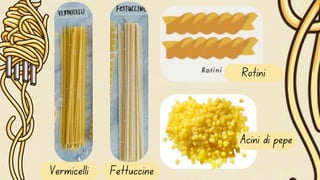
Pasta comes in various shapes, each suited for different sauces
and preparations:
Holes or ridged shapes (e.g., wagon wheels, rotini) pair
well with chunkier sauces.
Thin pastas (e.g., angel hair, vermicelli) are ideal for light
sauces.
Thicker shapes (e.g., fettuccine) complement heavier
sauces.
Small shapes (e.g., alphabet pasta, acini di pepe) are used
in soups.
Flavored pasta, made with vegetable ingredients like
spinach for color and taste, is available in both dried and
fresh forms. Always follow package cooking instructions
for flavored pasta.
Pasta Shapes
Acini di pepe
Rotini
Vermicelli Fettuccine
Cooking Time Depends on the Shape
Cooking times vary based on pasta shape;
larger shapes need more time.
Most recipes recommend cooking pasta al
dente, meaning tender but firm.
The "Cooking Chart for Various Pasta Shapes"
emphasizes the importance of following
recipes.
Cooking Time Depends on
the Shape
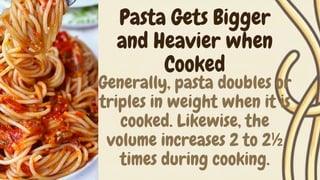
Generally, pasta doubles or
triples in weight when it is
cooked. Likewise, the
volume increases 2 to 2½
times during cooking.
Pasta Gets Bigger
and Heavier when
Cooked
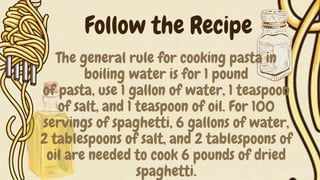
The general rule for cooking pasta in
boiling water is for 1 pound
of pasta, use 1 gallon of water, 1 teaspoon
of salt, and 1 teaspoon of oil. For 100
servings of spaghetti, 6 gallons of water,
2 tablespoons of salt, and 2 tablespoons of
oil are needed to cook 6 pounds of dried
spaghetti.
Follow the Recipe
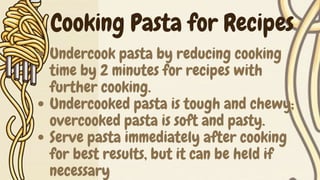
Undercook pasta by reducing cooking
time by 2 minutes for recipes with
further cooking.
Undercooked pasta is tough and chewy;
overcooked pasta is soft and pasty.
Serve pasta immediately after cooking
for best results, but it can be held if
necessary
Cooking Pasta for Recipes
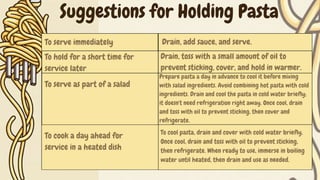
Suggestions for Holding Pasta
To serve immediately Drain, add sauce, and serve.
To hold for a short time for
service later
Drain, toss with a small amount of oil to
prevent sticking, cover, and hold in warmer.
To serve as part of a salad
Prepare pasta a day in advance to cool it before mixing
with salad ingredients. Avoid combining hot pasta with cold
ingredients. Drain and cool the pasta in cold water briefly;
it doesn't need refrigeration right away. Once cool, drain
and toss with oil to prevent sticking, then cover and
refrigerate.
To cool pasta, drain and cover with cold water briefly.
Once cool, drain and toss with oil to prevent sticking,
then refrigerate. When ready to use, immerse in boiling
water until heated, then drain and use as needed.
To cook a day ahead for
service in a heated dish
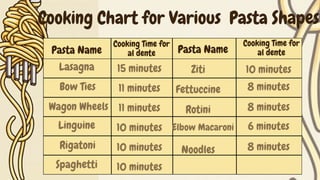
Cooking Chart for Various Pasta Shapes
Pasta Name
Cooking Time for
al dente Pasta Name
Cooking Time for
al dente
Lasagna
Bow Ties
Wagon Wheels
Linguine
Rigatoni
Spaghetti
15 minutes
11 minutes
11 minutes
10 minutes
10 minutes
10 minutes
Ziti
Fettuccine
Rotini
Elbow Macaroni
Noodles
10 minutes
8 minutes
8 minutes
8 minutes
6 minutes
THANK YOU!
Group 3

Basic Principles in Preparing Pasta tle

  • 1.
  • 2.
    Pasta comes invarious shapes, each suited for different sauces and preparations: Holes or ridged shapes (e.g., wagon wheels, rotini) pair well with chunkier sauces. Thin pastas (e.g., angel hair, vermicelli) are ideal for light sauces. Thicker shapes (e.g., fettuccine) complement heavier sauces. Small shapes (e.g., alphabet pasta, acini di pepe) are used in soups. Flavored pasta, made with vegetable ingredients like spinach for color and taste, is available in both dried and fresh forms. Always follow package cooking instructions for flavored pasta. Pasta Shapes
  • 3.
  • 4.
    Cooking Time Dependson the Shape Cooking times vary based on pasta shape; larger shapes need more time. Most recipes recommend cooking pasta al dente, meaning tender but firm. The "Cooking Chart for Various Pasta Shapes" emphasizes the importance of following recipes. Cooking Time Depends on the Shape
  • 5.
    Generally, pasta doublesor triples in weight when it is cooked. Likewise, the volume increases 2 to 2½ times during cooking. Pasta Gets Bigger and Heavier when Cooked
  • 6.
    The general rulefor cooking pasta in boiling water is for 1 pound of pasta, use 1 gallon of water, 1 teaspoon of salt, and 1 teaspoon of oil. For 100 servings of spaghetti, 6 gallons of water, 2 tablespoons of salt, and 2 tablespoons of oil are needed to cook 6 pounds of dried spaghetti. Follow the Recipe
  • 7.
    Undercook pasta byreducing cooking time by 2 minutes for recipes with further cooking. Undercooked pasta is tough and chewy; overcooked pasta is soft and pasty. Serve pasta immediately after cooking for best results, but it can be held if necessary Cooking Pasta for Recipes
  • 8.
    Suggestions for HoldingPasta To serve immediately Drain, add sauce, and serve. To hold for a short time for service later Drain, toss with a small amount of oil to prevent sticking, cover, and hold in warmer. To serve as part of a salad Prepare pasta a day in advance to cool it before mixing with salad ingredients. Avoid combining hot pasta with cold ingredients. Drain and cool the pasta in cold water briefly; it doesn't need refrigeration right away. Once cool, drain and toss with oil to prevent sticking, then cover and refrigerate. To cool pasta, drain and cover with cold water briefly. Once cool, drain and toss with oil to prevent sticking, then refrigerate. When ready to use, immerse in boiling water until heated, then drain and use as needed. To cook a day ahead for service in a heated dish
  • 9.
    Cooking Chart forVarious Pasta Shapes Pasta Name Cooking Time for al dente Pasta Name Cooking Time for al dente Lasagna Bow Ties Wagon Wheels Linguine Rigatoni Spaghetti 15 minutes 11 minutes 11 minutes 10 minutes 10 minutes 10 minutes Ziti Fettuccine Rotini Elbow Macaroni Noodles 10 minutes 8 minutes 8 minutes 8 minutes 6 minutes
  • 10.