Submission
by
Mansi Patel
Sneh Shah
Gandhi Janvi
Bhalala Bansari
Dholariya Nirali
Jadeja Kinjal
Komal boraricha
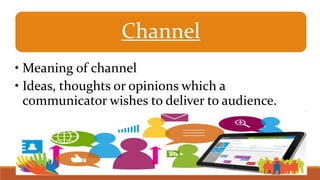
Channel
• Meaning of channel
• Ideas, thoughts or opinions which a
communicator wishes to deliver to audience.
Goals
Benefit
s
Problems
Types
Characteristics
Problems
Goals
• To deliver the massage.1)
• The right medium between
receiver and communicator.
2)
Characteristics of channel
Clarity
Time
Easy to understand
Continuity
Three type of
channel
1.
Individual 2. Group 3.Mass
Individual
Individual channel means face to face
communication or else emails , letter
etc.
Group
Example of group channel is social media like
WhatsApp group , Facebook group, Speech , assembly ,
seminar, conference etc.
Will be formal or informal
Mass
Example of mass channel is social media like YouTube , News channel etc.
Benefits
Reduce time wastage
Convenience
Easily promoted
Capture more number of audience
Exchange of ideas
Attract receiver
Spread massage would wide
Time will less
Averness
For batter understanding
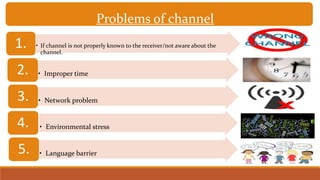
• If channel is not properly known to the receiver/not aware about the
channel.
1.
• Improper time2.
• Network problem3.
• Environmental stress4.
• Language barrier5.
Problems of channel
Treatment
• Meaning and Function
What is Treatment?
Treatment deals with design of methods for presenting the message.
It is the way of processing the message so that it can be sent over the
channels with the maximum probability of reaching the destination
effectively.
The way in which the message is conveyed or the way in which the
message is passed on or deliver it. It refers to the packing of the message.
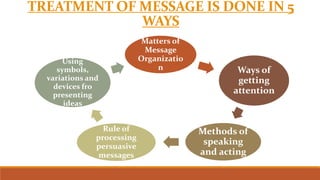
TREATMENT OF MESSAGE IS DONE IN 5
WAYS
Matters of
Message
Organizatio
n Ways of
getting
attention
Methods of
speaking
and acting
Rule of
processing
persuasive
messages
Using
symbols,
variations and
devices fro
presenting
ideas
I. Matters of Message Organization
Compare information
Age group and according to who is receiver
Repeat key ideas
Present message in a chronological, logical or
psychological sequence
Start with strong arguments and present till the aim of
presentation is achieved
Express both negative and positive aspects of an issue in
line with the goal to be achieved
1st Qtr 2nd Qtr 3rd Qtr 4th Qtr
II. Ways of getting attention
A different voice, attractive lighting and contrasting colour attract the
audience
Movements, facial expressions may be the cause of attention
Changing pace, pitch and contrasting presentation draws the attention of
the audience during communication process
III. Methods of speaking and
acting
Present few ideas at a time
Be yourself, be specific, accurate, up to date and timely
Informal speaking without reading speech is more effective
Know your subject well
Use local dialect, a bit of humour for making the communication
interesting
Follow the time schedule properly
V. Rule of processing persuasive
message
Credibility of communicator is most important
Receiver should not be previously aware of the evidence,
otherwise, he may probably already accept or reject it and
the message would be ineffective.
Evidence must be delivered as receiver will understand
clearly.
If the audience is initially in favour of the message, a one
sided message may work. But if the audience is against it,
a two sided message may be presented.
V. Using symbols, variations and
devices for presenting ideas
Use different aids or equipments such as posters, models pictures,
slides etc
Use quotations, slogans, anecdotes, jokes.
Basic of communication

Basic of communication

  • 1.
    Submission by Mansi Patel Sneh Shah GandhiJanvi Bhalala Bansari Dholariya Nirali Jadeja Kinjal Komal boraricha
  • 3.
    Channel • Meaning ofchannel • Ideas, thoughts or opinions which a communicator wishes to deliver to audience.
  • 4.
  • 5.
    Goals • To deliverthe massage.1) • The right medium between receiver and communicator. 2)
  • 6.
  • 7.
  • 8.
    Individual Individual channel meansface to face communication or else emails , letter etc.
  • 9.
    Group Example of groupchannel is social media like WhatsApp group , Facebook group, Speech , assembly , seminar, conference etc. Will be formal or informal
  • 10.
    Mass Example of masschannel is social media like YouTube , News channel etc.
  • 11.
    Benefits Reduce time wastage Convenience Easilypromoted Capture more number of audience Exchange of ideas Attract receiver Spread massage would wide Time will less Averness For batter understanding
  • 12.
    • If channelis not properly known to the receiver/not aware about the channel. 1. • Improper time2. • Network problem3. • Environmental stress4. • Language barrier5. Problems of channel
  • 13.
  • 14.
    What is Treatment? Treatmentdeals with design of methods for presenting the message. It is the way of processing the message so that it can be sent over the channels with the maximum probability of reaching the destination effectively. The way in which the message is conveyed or the way in which the message is passed on or deliver it. It refers to the packing of the message.
  • 15.
    TREATMENT OF MESSAGEIS DONE IN 5 WAYS Matters of Message Organizatio n Ways of getting attention Methods of speaking and acting Rule of processing persuasive messages Using symbols, variations and devices fro presenting ideas
  • 16.
    I. Matters ofMessage Organization Compare information Age group and according to who is receiver Repeat key ideas Present message in a chronological, logical or psychological sequence Start with strong arguments and present till the aim of presentation is achieved Express both negative and positive aspects of an issue in line with the goal to be achieved 1st Qtr 2nd Qtr 3rd Qtr 4th Qtr
  • 17.
    II. Ways ofgetting attention A different voice, attractive lighting and contrasting colour attract the audience Movements, facial expressions may be the cause of attention Changing pace, pitch and contrasting presentation draws the attention of the audience during communication process
  • 18.
    III. Methods ofspeaking and acting Present few ideas at a time Be yourself, be specific, accurate, up to date and timely Informal speaking without reading speech is more effective Know your subject well Use local dialect, a bit of humour for making the communication interesting Follow the time schedule properly
  • 19.
    V. Rule ofprocessing persuasive message Credibility of communicator is most important Receiver should not be previously aware of the evidence, otherwise, he may probably already accept or reject it and the message would be ineffective. Evidence must be delivered as receiver will understand clearly. If the audience is initially in favour of the message, a one sided message may work. But if the audience is against it, a two sided message may be presented.
  • 20.
    V. Using symbols,variations and devices for presenting ideas Use different aids or equipments such as posters, models pictures, slides etc Use quotations, slogans, anecdotes, jokes.