THE LEARNING PROCESS IN
THE BASIC LEARNING
PROGRAM
BASIC LITERACY PROGRAM (BLP)
Basic Literacy Program (BLP) is an intensive
community-based training for illiterate out-
of-school youth and adults, who are willing
to learn basic literacy skills
What are the three basic literacy skills?
* ability to read with comprehension
* ability to compute simple problems
* creative thinking and problem solving
TARGET LEARNERS– ARE YOU ONE OF THEM?
ALS target learners are the:
• non-literates,
• functional literates,
• out-of-school youth (OSY) and adults,
• elementary and high school dropouts,
• qualifiers of Philippine Educational Placement Test
(PEPT),
• people who opt not to go back to formal school
system, and just about anybody who would want to
continue learning.
Step 1: Recruitment
The Service Provider, Literacy
Facilitator and Mobile Teacher, District
ALS Coordinators will go to the target
community (house-to-house) to recruit
learners
HOW DO LEARNERS ACCESS BLP?
Step 2: Screening and Placement
The recruited learners will
undergo screening and placement
test using the Functional Literacy Test
(FLT)
Step 3: Enrolment
 Learners who are qualified will be
enrolled to BLP
 Learners will prepare their Individual
Learning Agreement (ILA)
What happens to the BLP completers
• enroll to A&E Program
• mainstream to formal school
• enter the world of work
• enroll to TESDA training
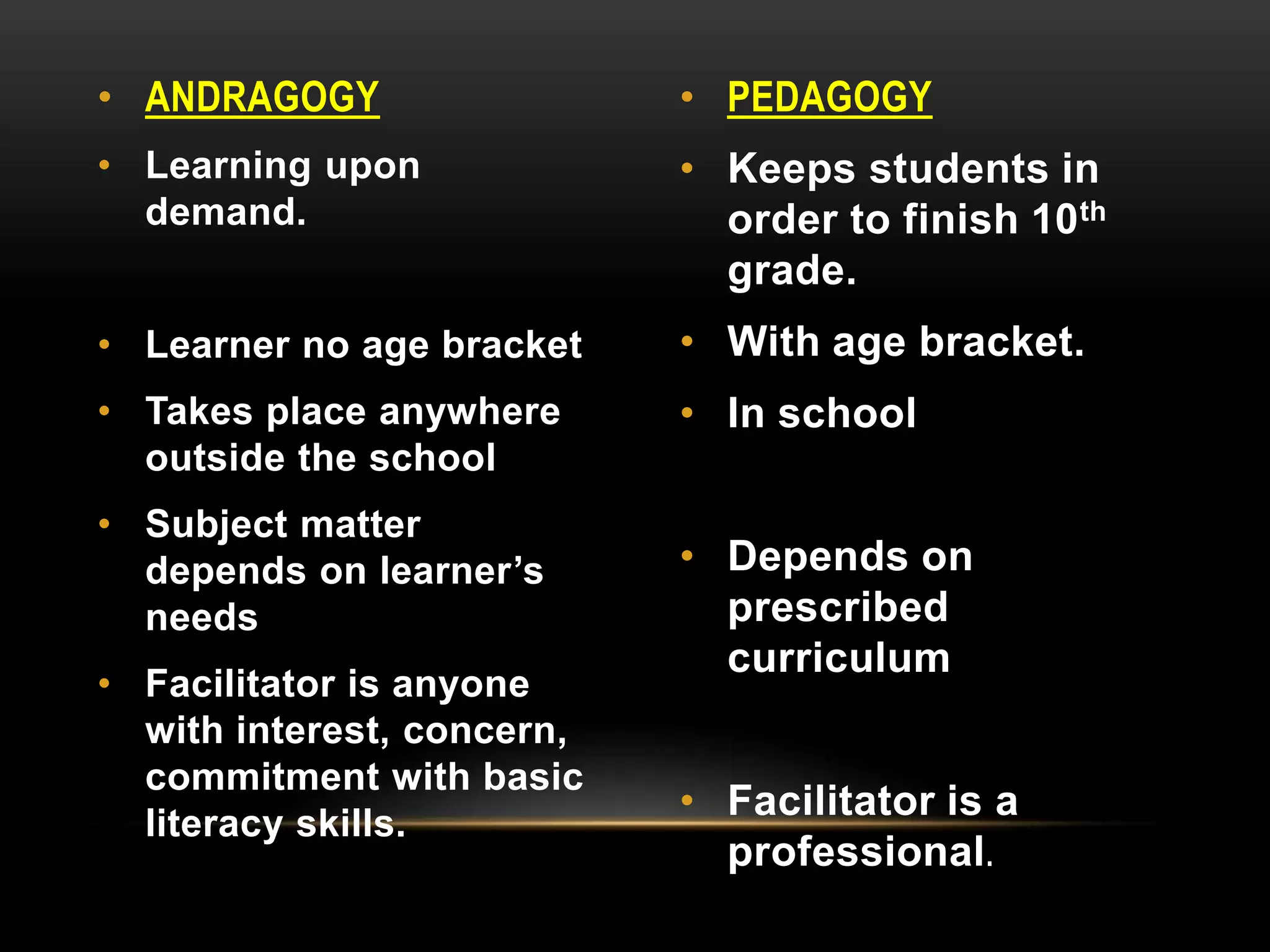
• ANDRAGOGY
• Learning upon
demand.
• Learner no age bracket
• Takes place anywhere
outside the school
• Subject matter
depends on learner’s
needs
• Facilitator is anyone
with interest, concern,
commitment with basic
literacy skills.
• PEDAGOGY
• Keeps students in
order to finish 10th
grade.
• With age bracket.
• In school
• Depends on
prescribed
curriculum
• Facilitator is a
professional.
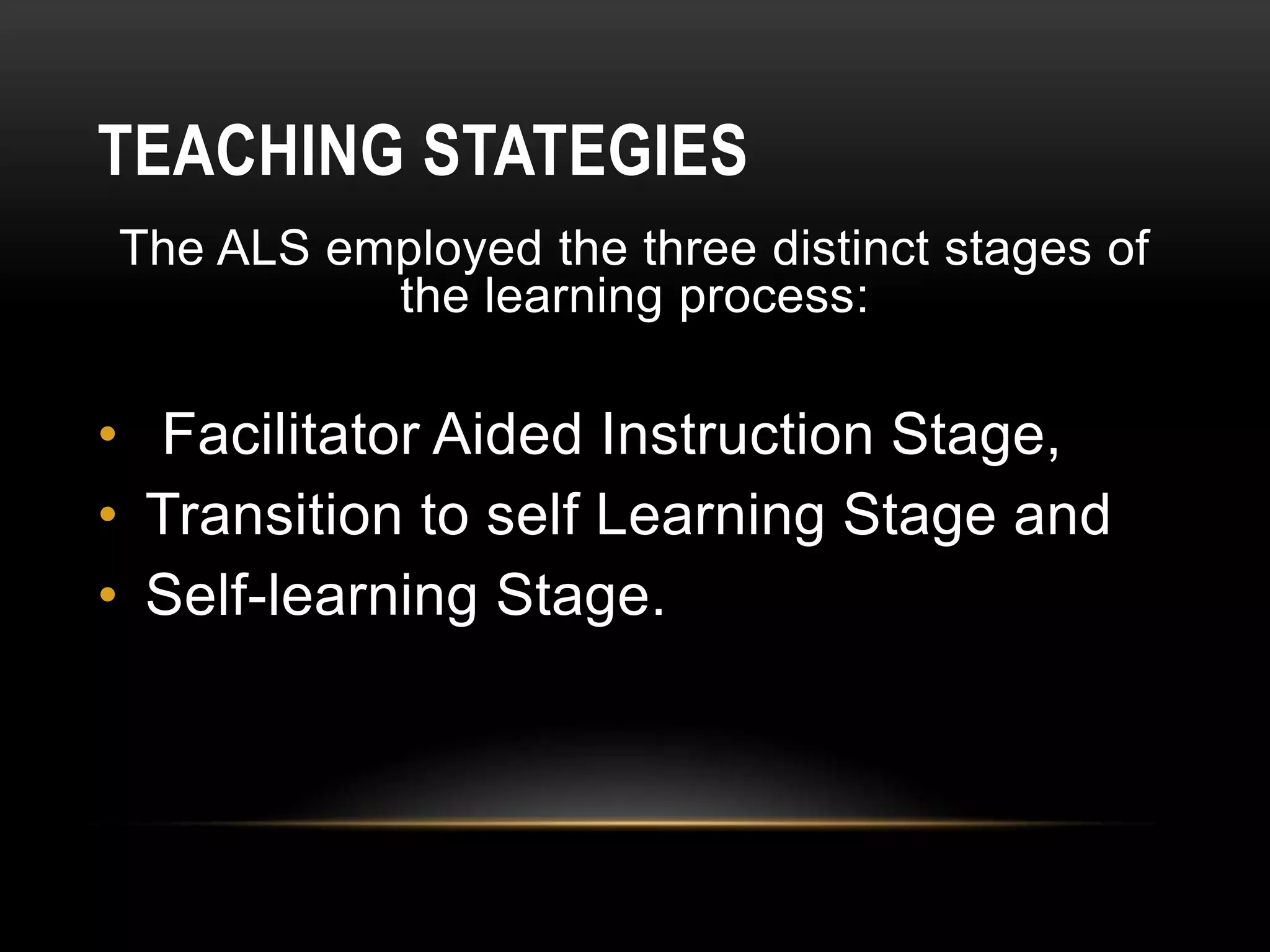
TEACHING STATEGIES
The ALS employed the three distinct stages of
the learning process:
• Facilitator Aided Instruction Stage,
• Transition to self Learning Stage and
• Self-learning Stage.
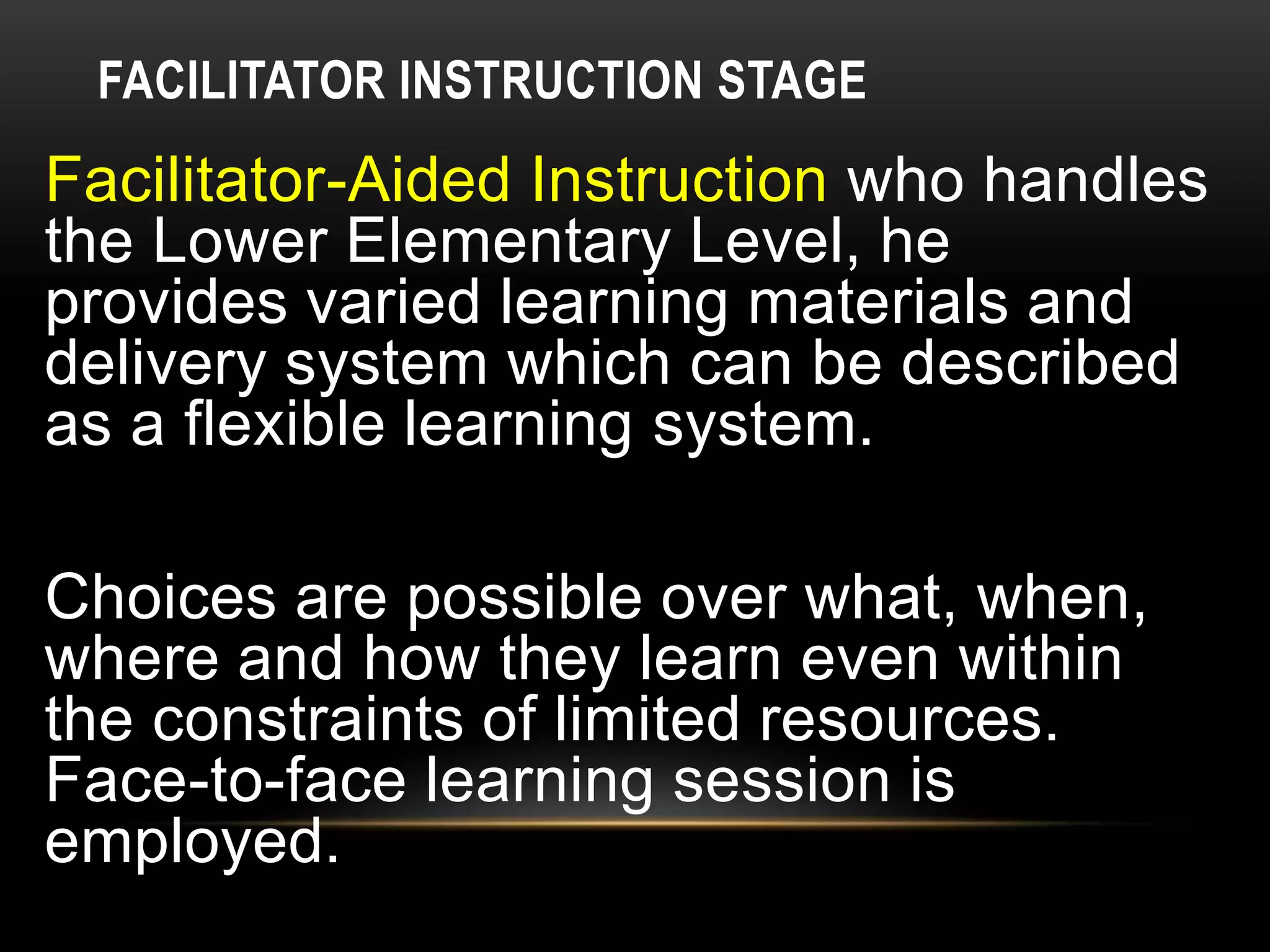
FACILITATOR INSTRUCTION STAGE
Facilitator-Aided Instruction who handles
the Lower Elementary Level, he
provides varied learning materials and
delivery system which can be described
as a flexible learning system.
Choices are possible over what, when,
where and how they learn even within
the constraints of limited resources.
Face-to-face learning session is
employed.
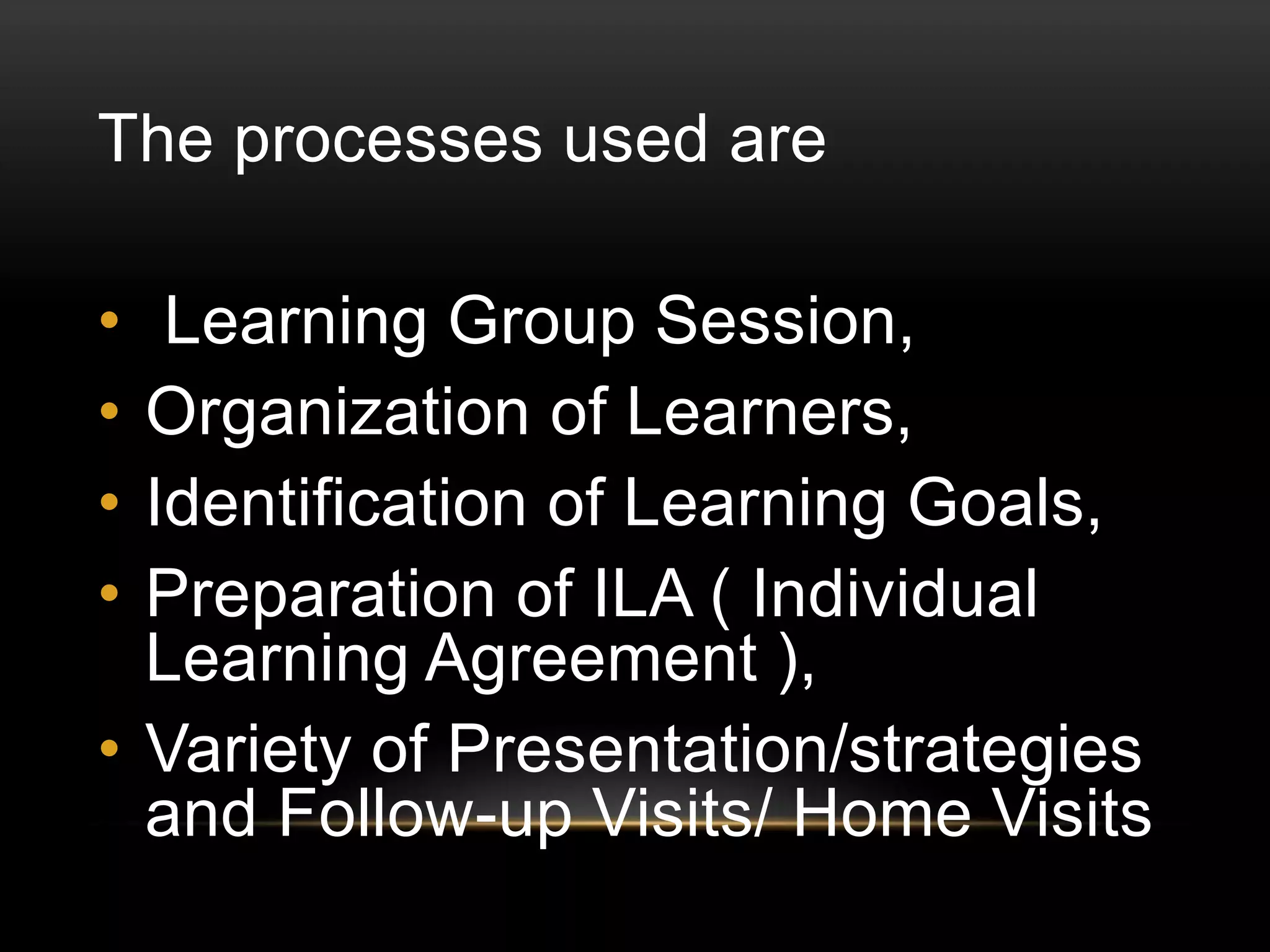
The processes used are
• Learning Group Session,
• Organization of Learners,
• Identification of Learning Goals,
• Preparation of ILA ( Individual
Learning Agreement ),
• Variety of Presentation/strategies
and Follow-up Visits/ Home Visits
• Transition to self learning / Autonomous
Learning, the process used are :
Learners used the modules,
• Alone,
• In group,
• Group discussion and
• Formulation of Individual Learning
Agreement .
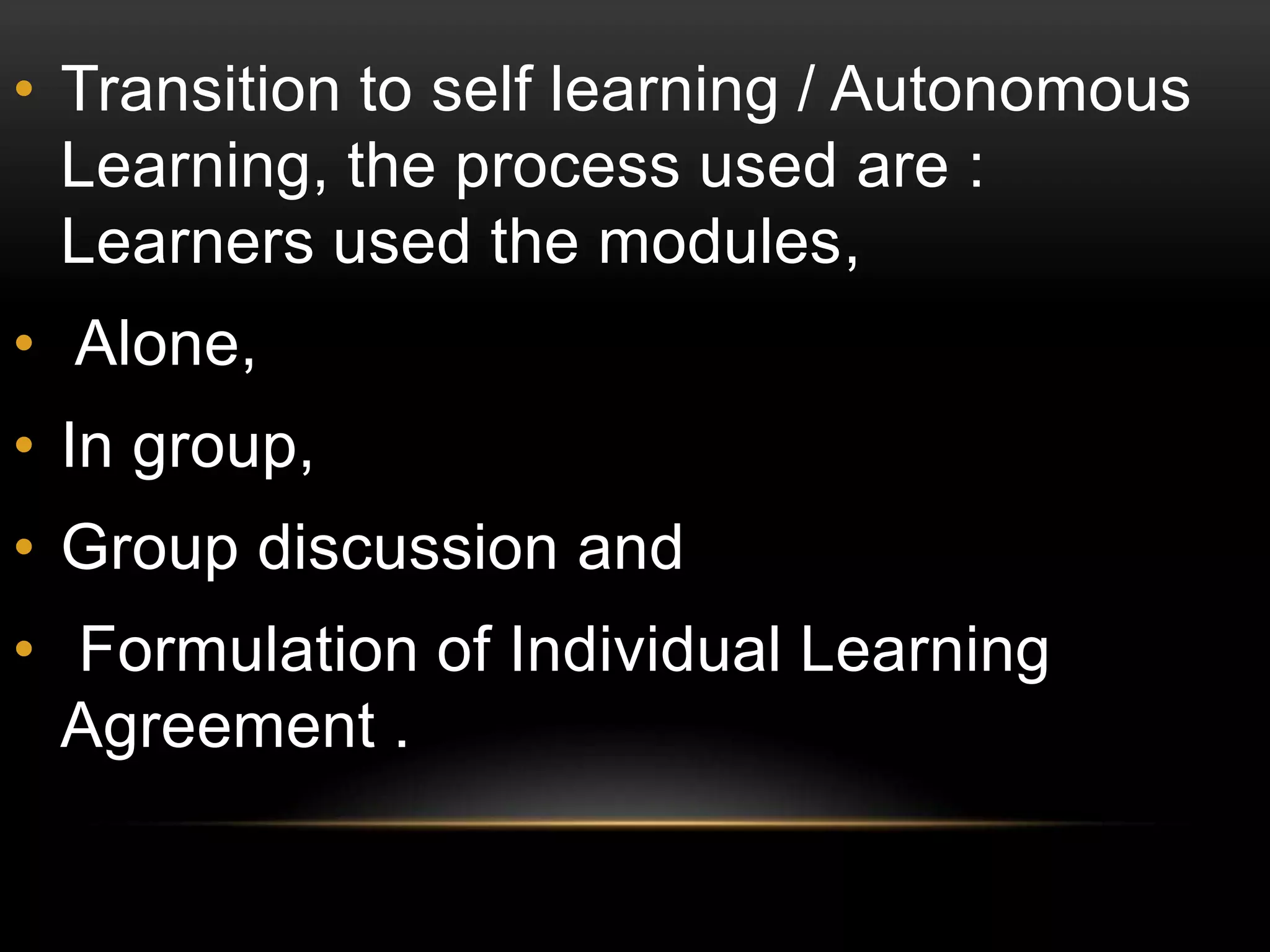
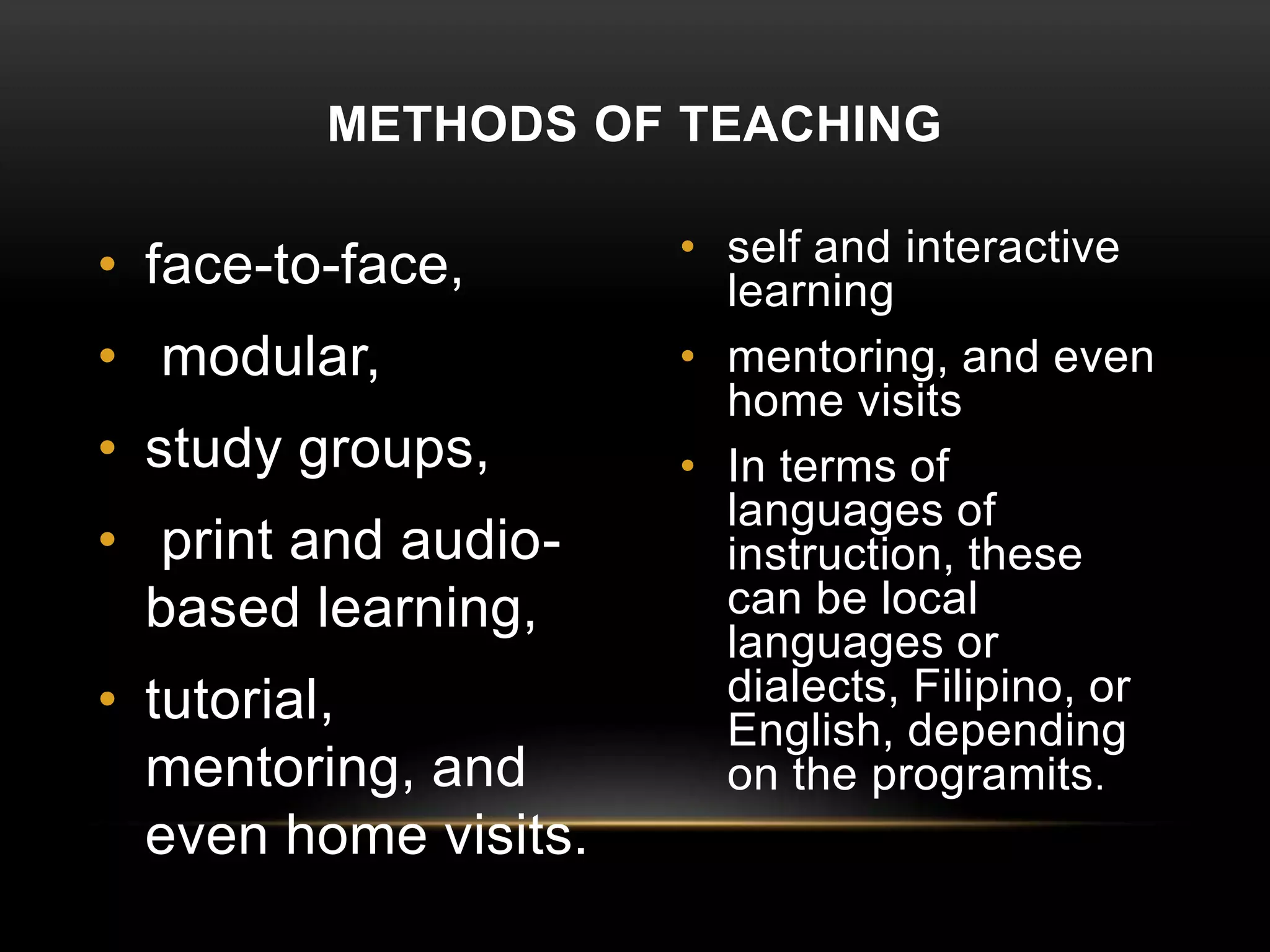
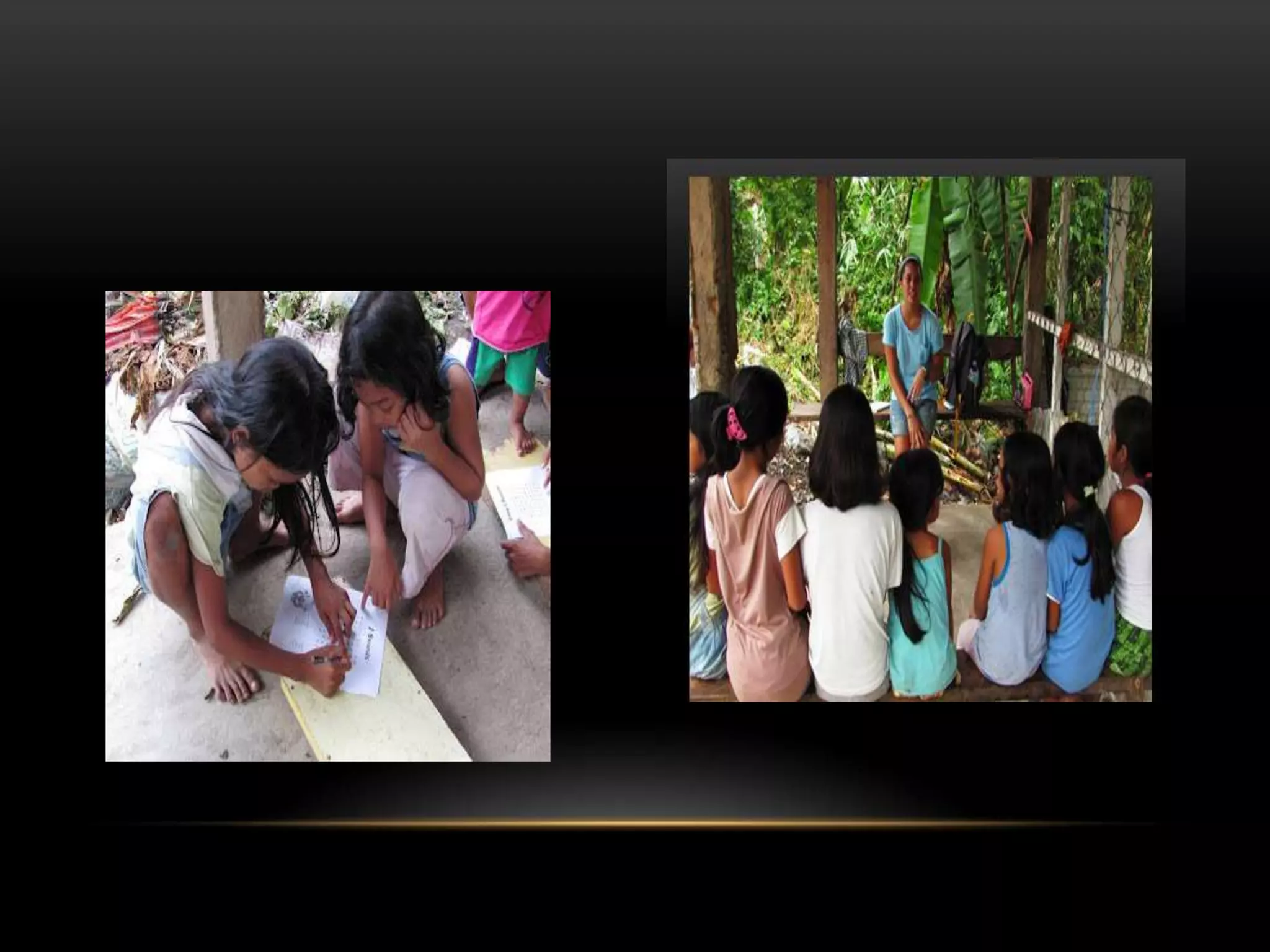
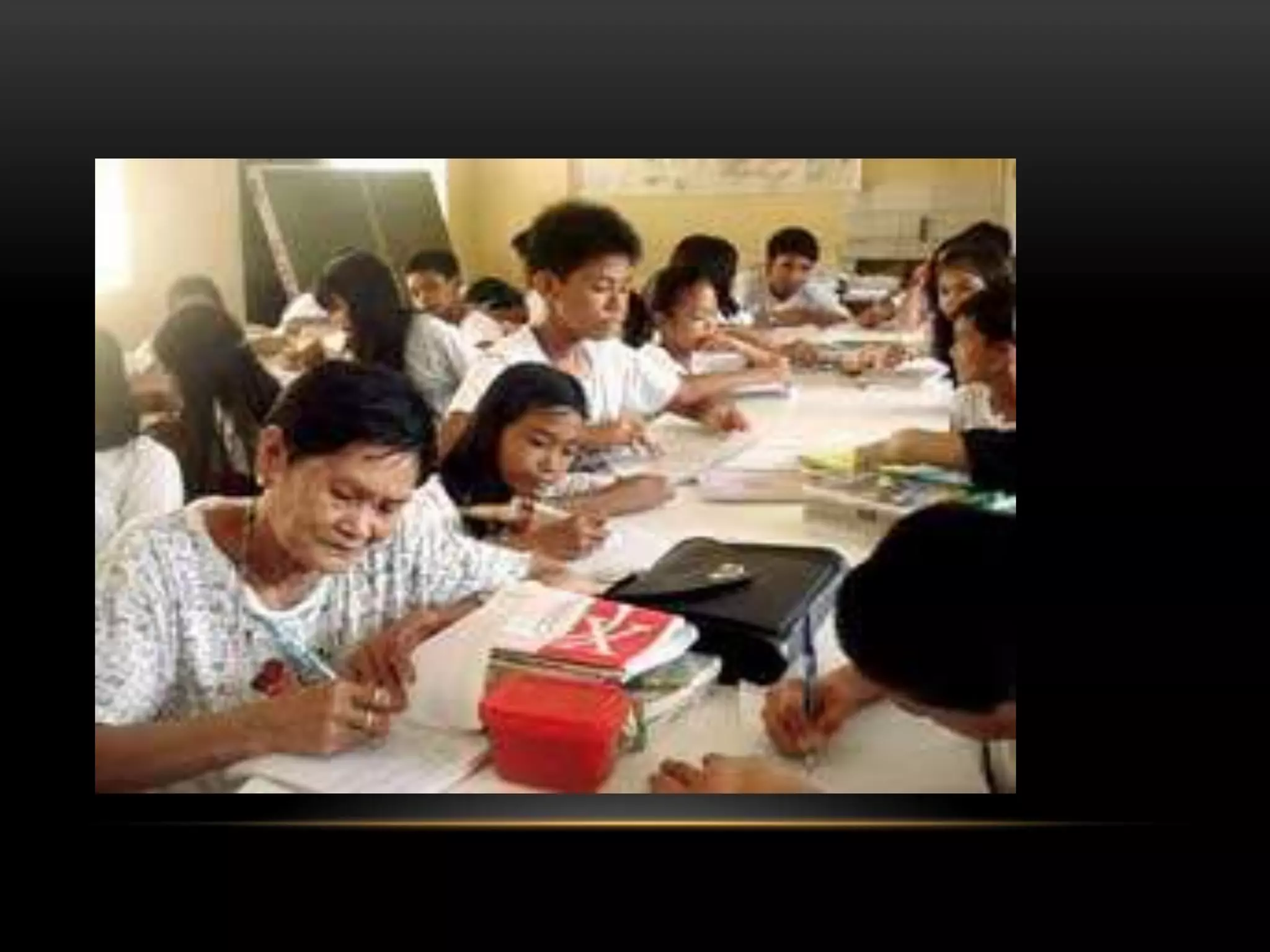
• face-to-face,
• modular,
• study groups,
• print and audio-
based learning,
• tutorial,
mentoring, and
even home visits.
• self and interactive
learning
• mentoring, and even
home visits
• In terms of
languages of
instruction, these
can be local
languages or
dialects, Filipino, or
English, depending
on the programits.
METHODS OF TEACHING
THANK YOU
FOR
LISTENING!!!

Basic literacy program

  • 1.
    THE LEARNING PROCESSIN THE BASIC LEARNING PROGRAM
  • 2.
    BASIC LITERACY PROGRAM(BLP) Basic Literacy Program (BLP) is an intensive community-based training for illiterate out- of-school youth and adults, who are willing to learn basic literacy skills
  • 3.
    What are thethree basic literacy skills? * ability to read with comprehension * ability to compute simple problems * creative thinking and problem solving
  • 4.
    TARGET LEARNERS– AREYOU ONE OF THEM? ALS target learners are the: • non-literates, • functional literates, • out-of-school youth (OSY) and adults, • elementary and high school dropouts, • qualifiers of Philippine Educational Placement Test (PEPT), • people who opt not to go back to formal school system, and just about anybody who would want to continue learning.
  • 5.
    Step 1: Recruitment TheService Provider, Literacy Facilitator and Mobile Teacher, District ALS Coordinators will go to the target community (house-to-house) to recruit learners HOW DO LEARNERS ACCESS BLP?
  • 6.
    Step 2: Screeningand Placement The recruited learners will undergo screening and placement test using the Functional Literacy Test (FLT)
  • 7.
    Step 3: Enrolment Learners who are qualified will be enrolled to BLP  Learners will prepare their Individual Learning Agreement (ILA)
  • 8.
    What happens tothe BLP completers • enroll to A&E Program • mainstream to formal school • enter the world of work • enroll to TESDA training
  • 9.
    • ANDRAGOGY • Learningupon demand. • Learner no age bracket • Takes place anywhere outside the school • Subject matter depends on learner’s needs • Facilitator is anyone with interest, concern, commitment with basic literacy skills. • PEDAGOGY • Keeps students in order to finish 10th grade. • With age bracket. • In school • Depends on prescribed curriculum • Facilitator is a professional.
  • 10.
    TEACHING STATEGIES The ALSemployed the three distinct stages of the learning process: • Facilitator Aided Instruction Stage, • Transition to self Learning Stage and • Self-learning Stage.
  • 11.
    FACILITATOR INSTRUCTION STAGE Facilitator-AidedInstruction who handles the Lower Elementary Level, he provides varied learning materials and delivery system which can be described as a flexible learning system. Choices are possible over what, when, where and how they learn even within the constraints of limited resources. Face-to-face learning session is employed.
  • 12.
    The processes usedare • Learning Group Session, • Organization of Learners, • Identification of Learning Goals, • Preparation of ILA ( Individual Learning Agreement ), • Variety of Presentation/strategies and Follow-up Visits/ Home Visits
  • 13.
    • Transition toself learning / Autonomous Learning, the process used are : Learners used the modules, • Alone, • In group, • Group discussion and • Formulation of Individual Learning Agreement .
  • 14.
    • face-to-face, • modular, •study groups, • print and audio- based learning, • tutorial, mentoring, and even home visits. • self and interactive learning • mentoring, and even home visits • In terms of languages of instruction, these can be local languages or dialects, Filipino, or English, depending on the programits. METHODS OF TEACHING
  • 17.