FUNCTIONAL
ENGLISH
Instructor
Syed Irshad Ali Naqvi
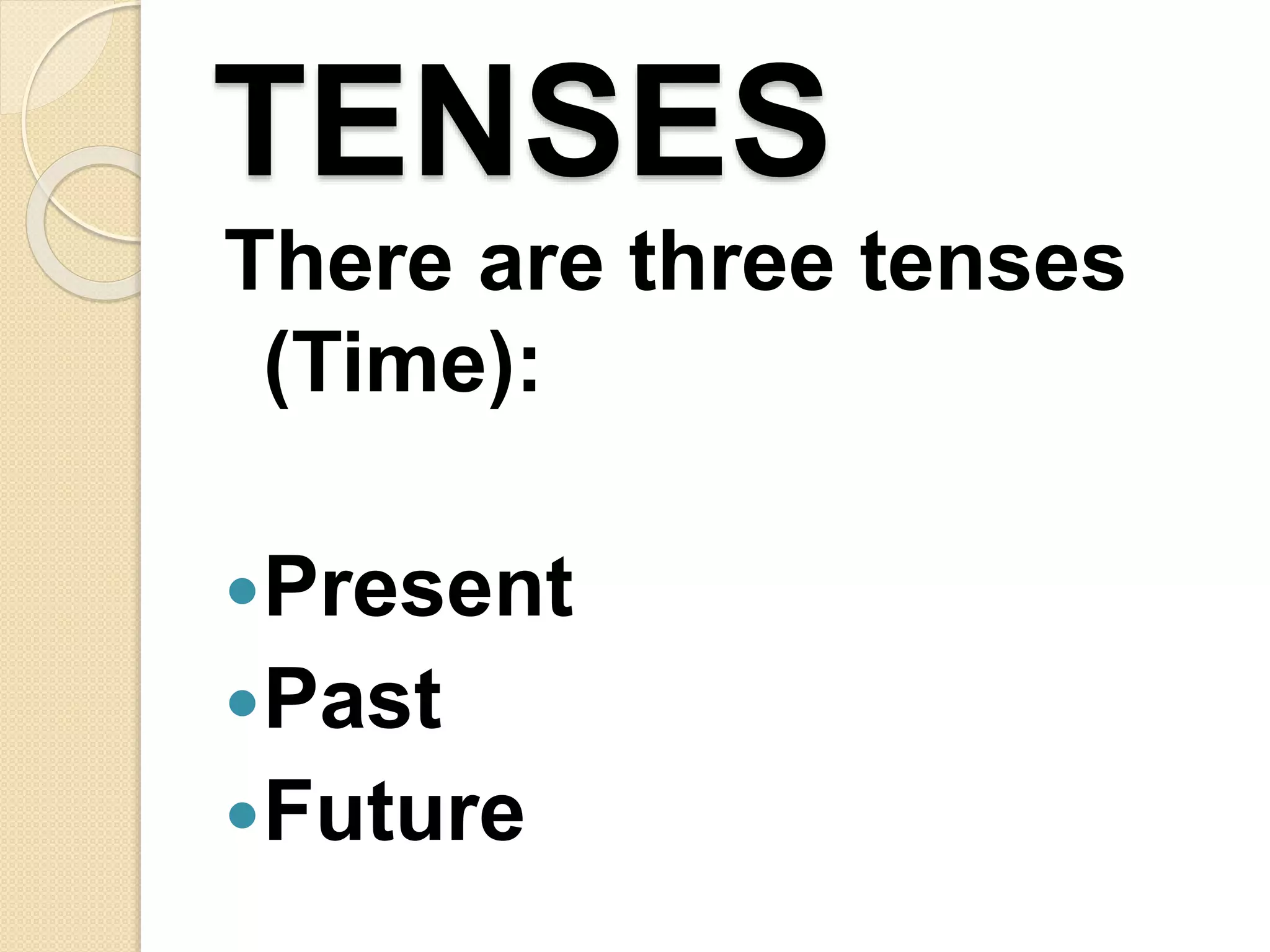
TENSES
There are three tenses
(Time):
Present
Past
Future
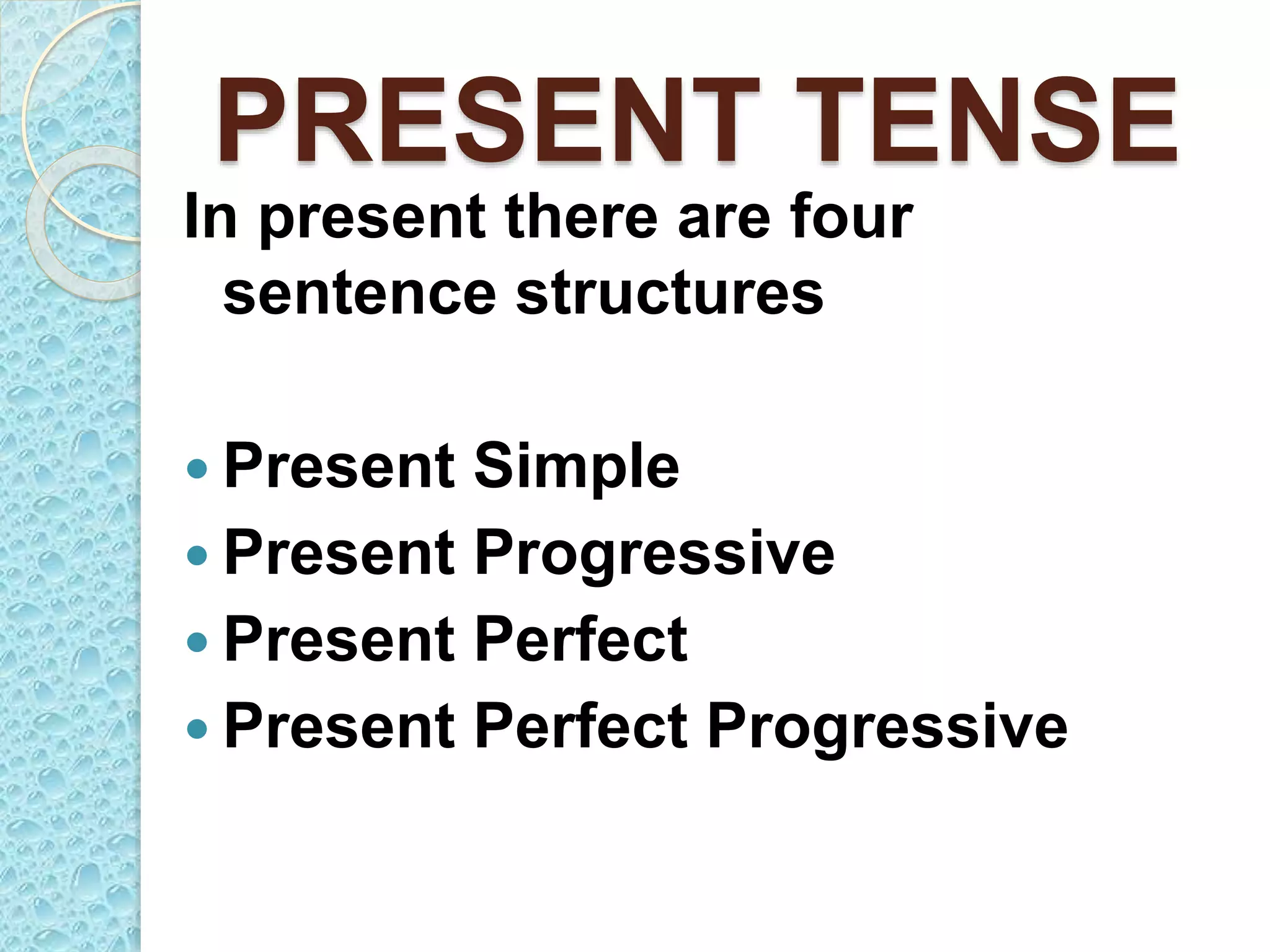
PRESENT TENSE
In present there are four
sentence structures
 Present Simple
 Present Progressive
 Present Perfect
 Present Perfect Progressive
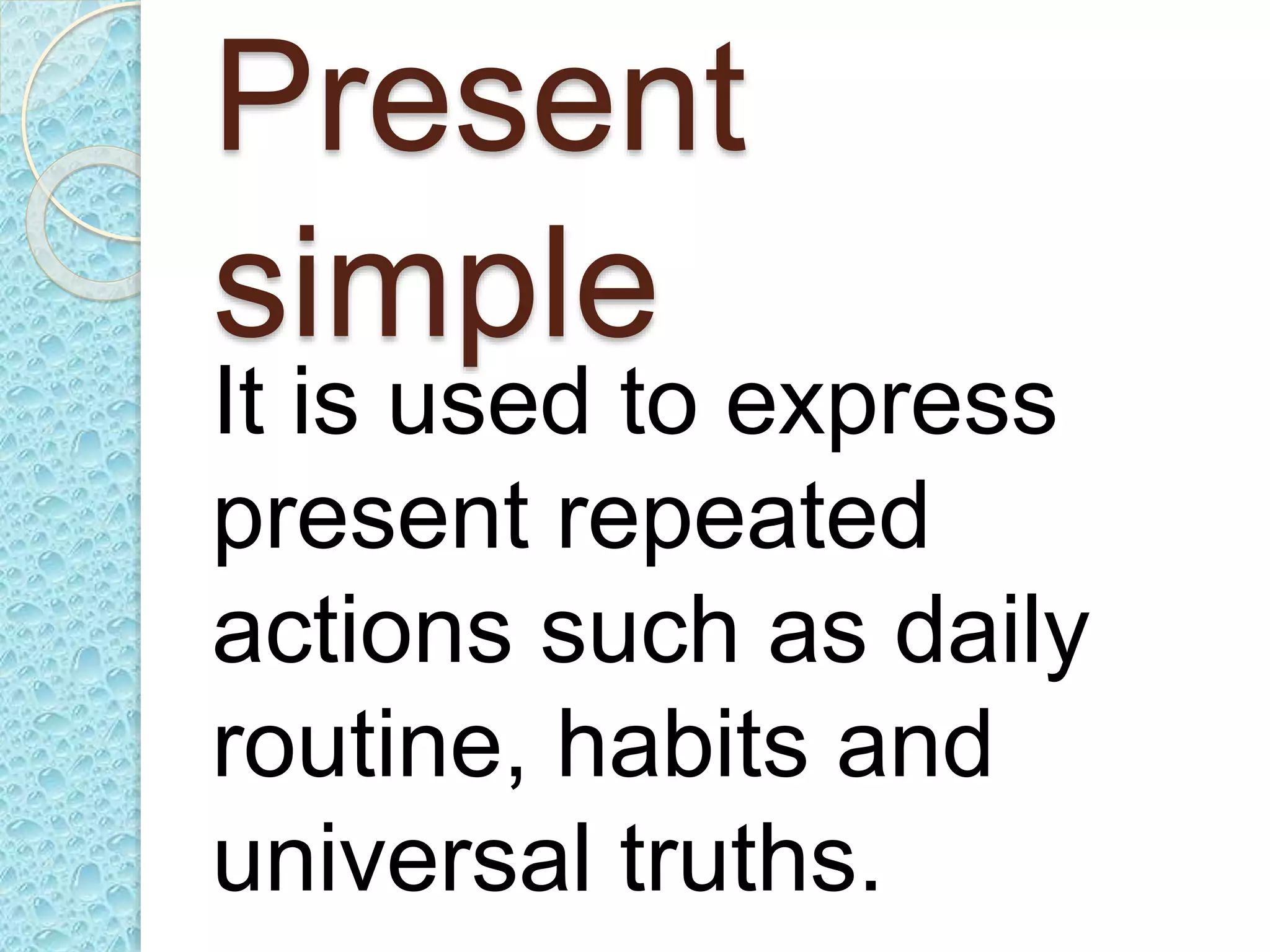
Present
simple
It is used to express
present repeated
actions such as daily
routine, habits and
universal truths.
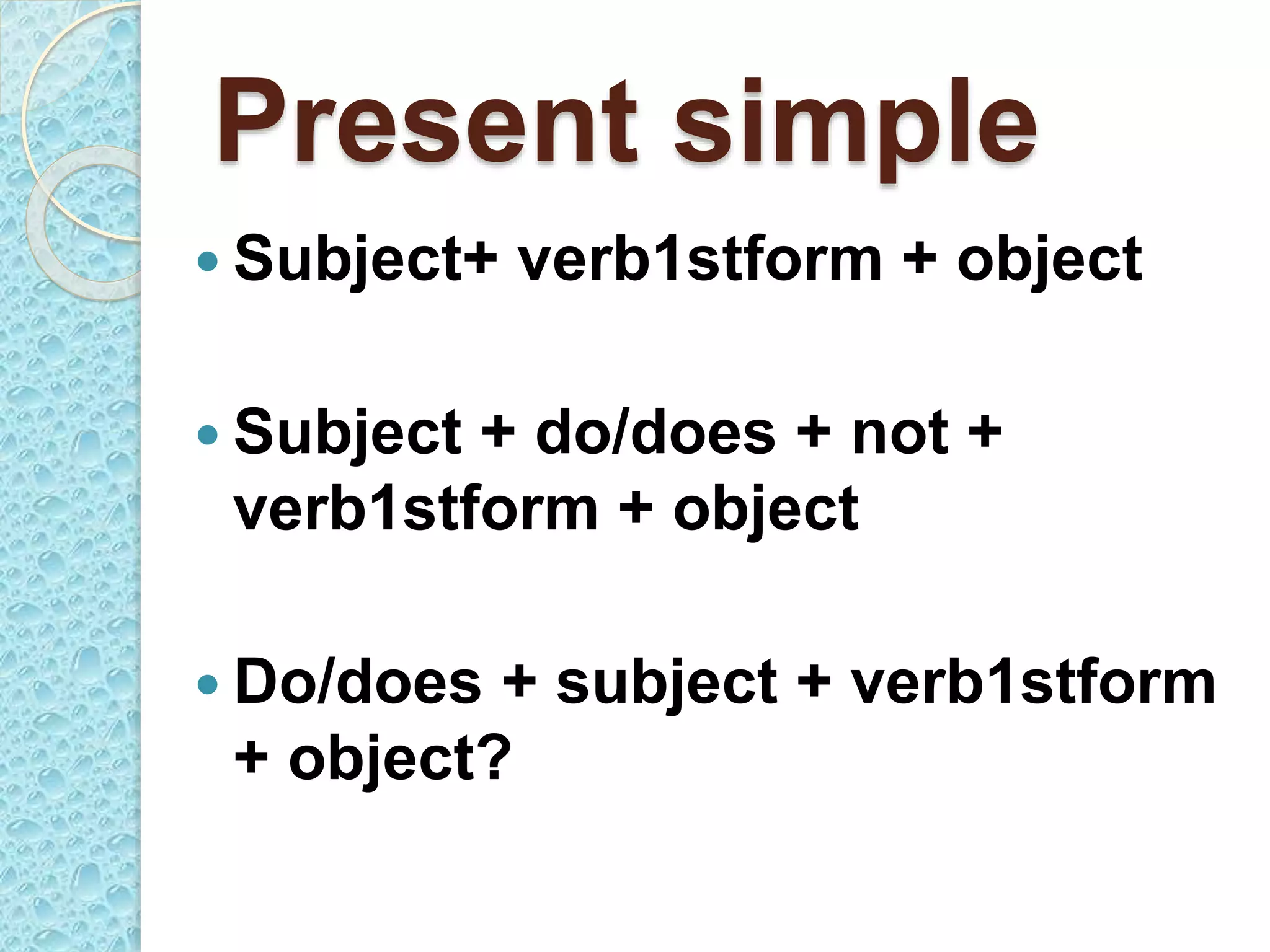
Present simple
 Subject+ verb1stform + object
 Subject + do/does + not +
verb1stform + object
 Do/does + subject + verb1stform
+ object?
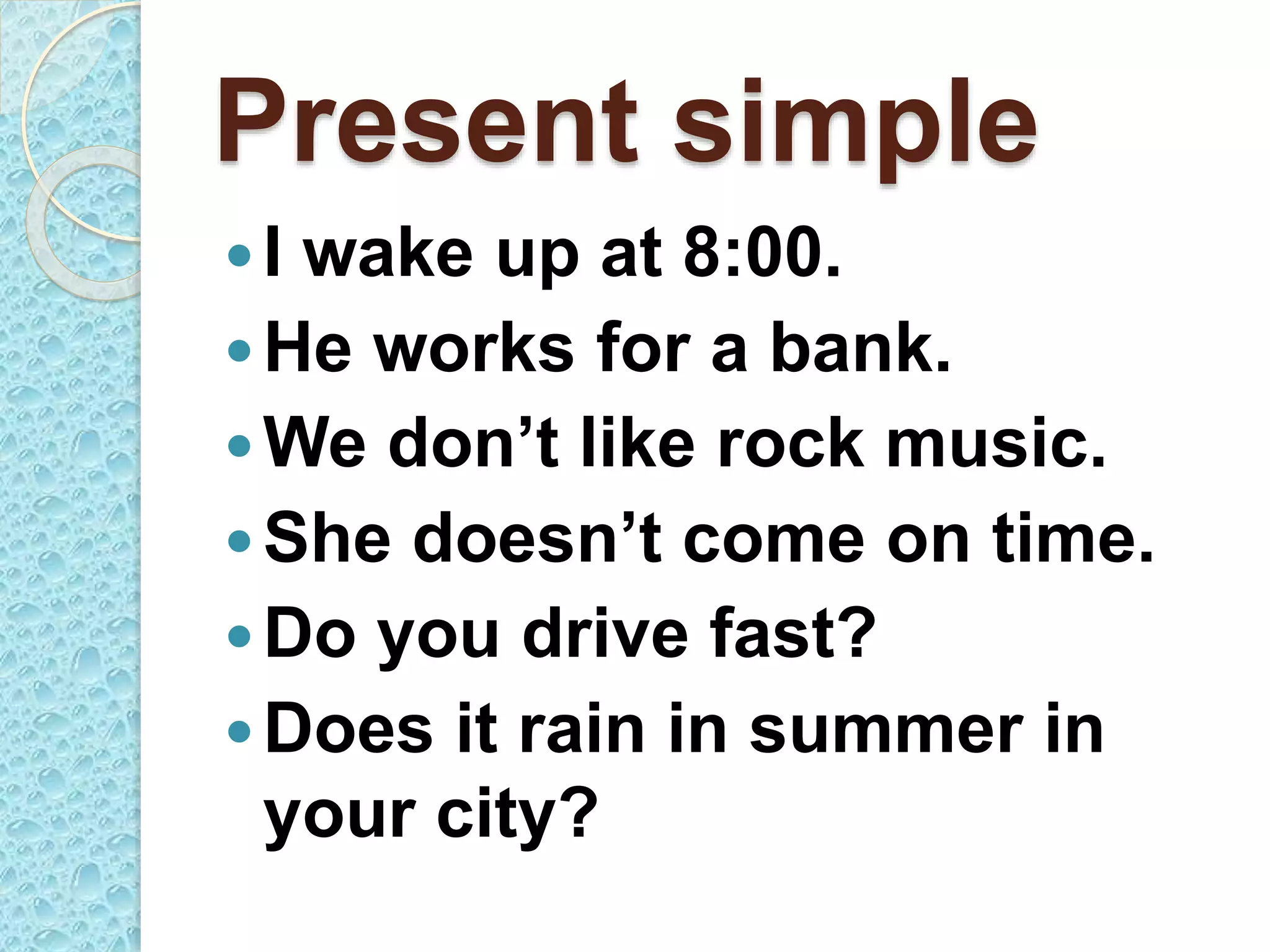
Present simple
I wake up at 8:00.
He works for a bank.
We don’t like rock music.
She doesn’t come on time.
Do you drive fast?
Does it rain in summer in
your city?
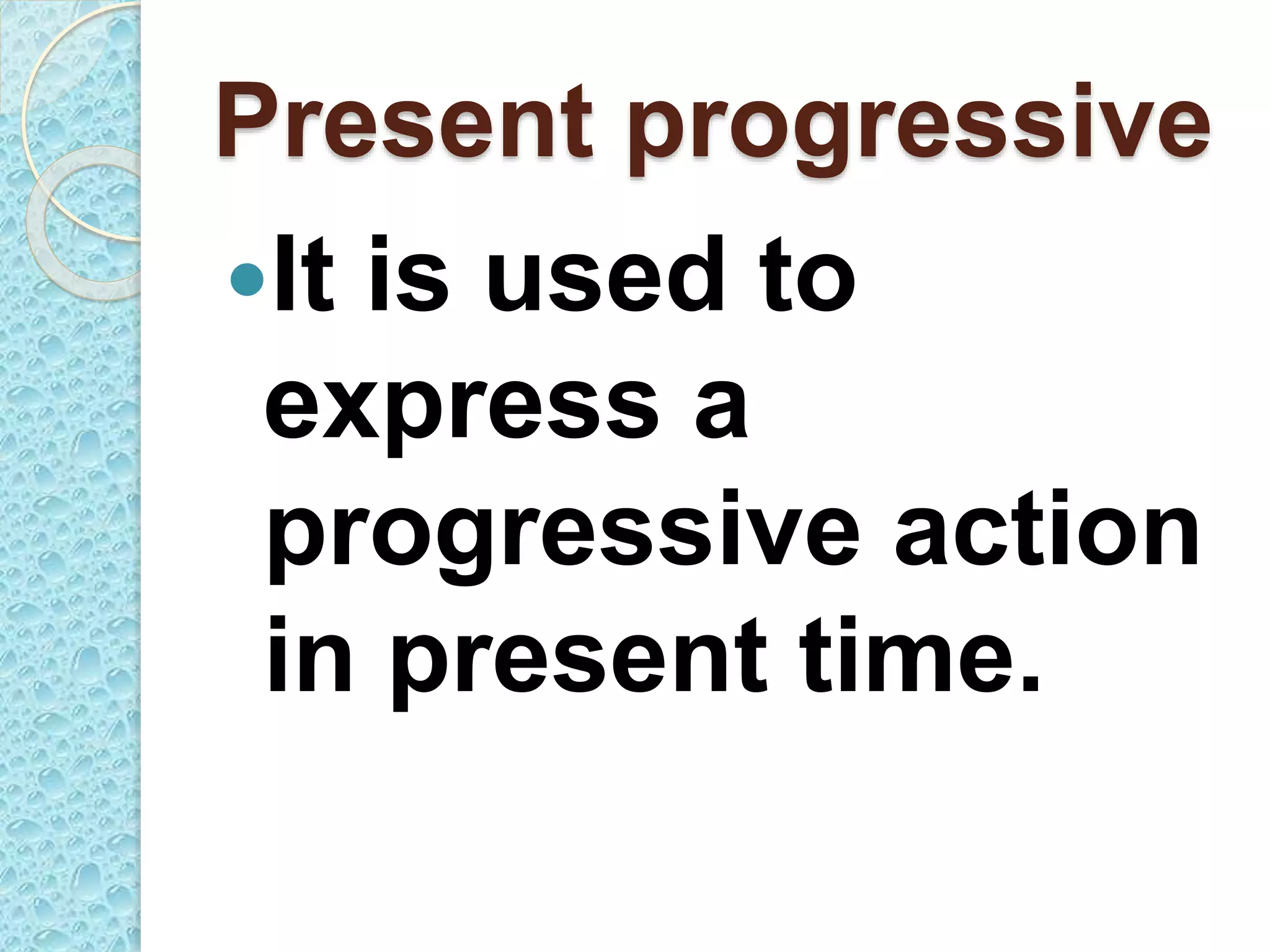
Present progressive
It is used to
express a
progressive action
in present time.
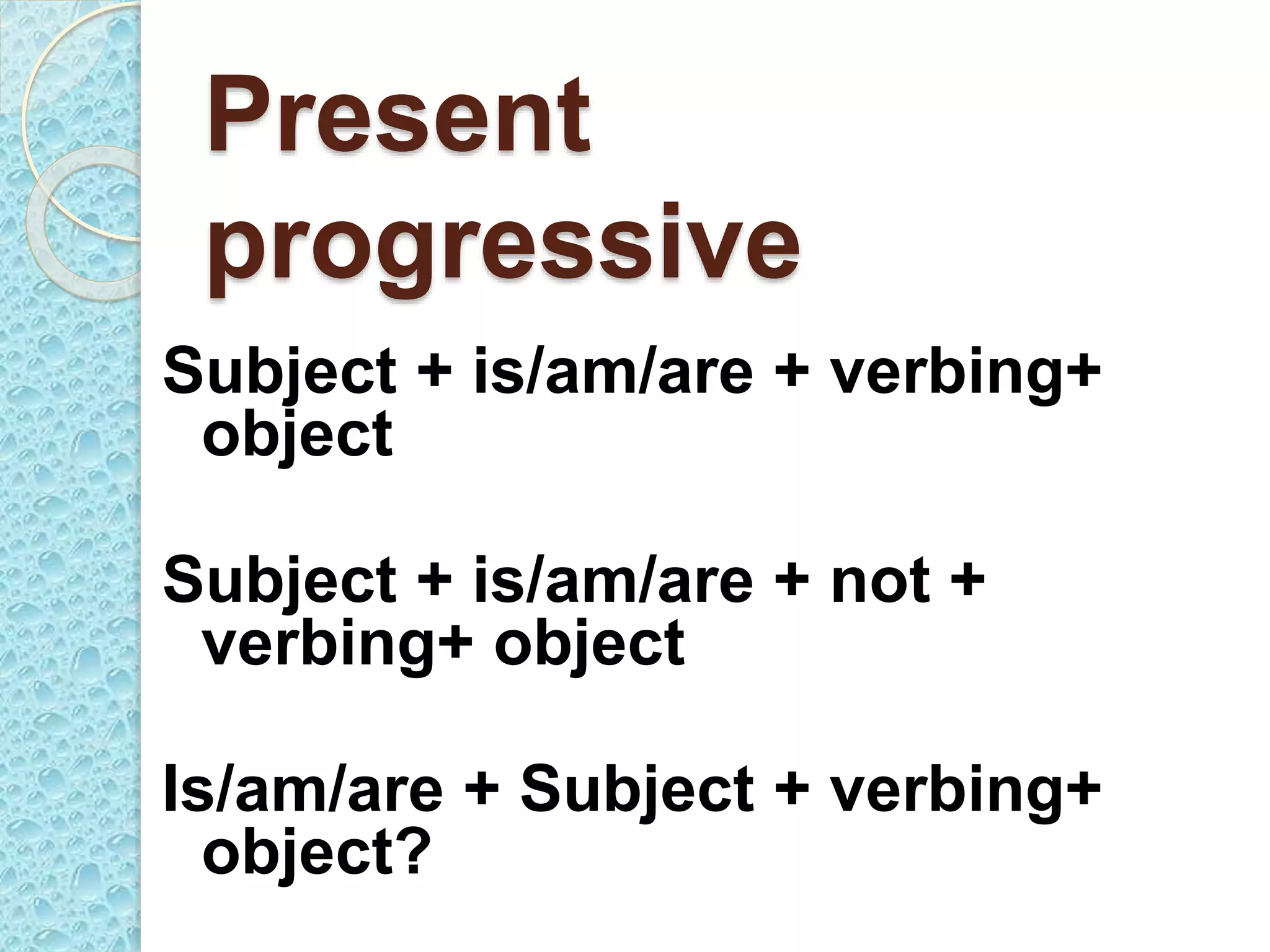
Present
progressive
Subject + is/am/are + verbing+
object
Subject + is/am/are + not +
verbing+ object
Is/am/are + Subject + verbing+
object?
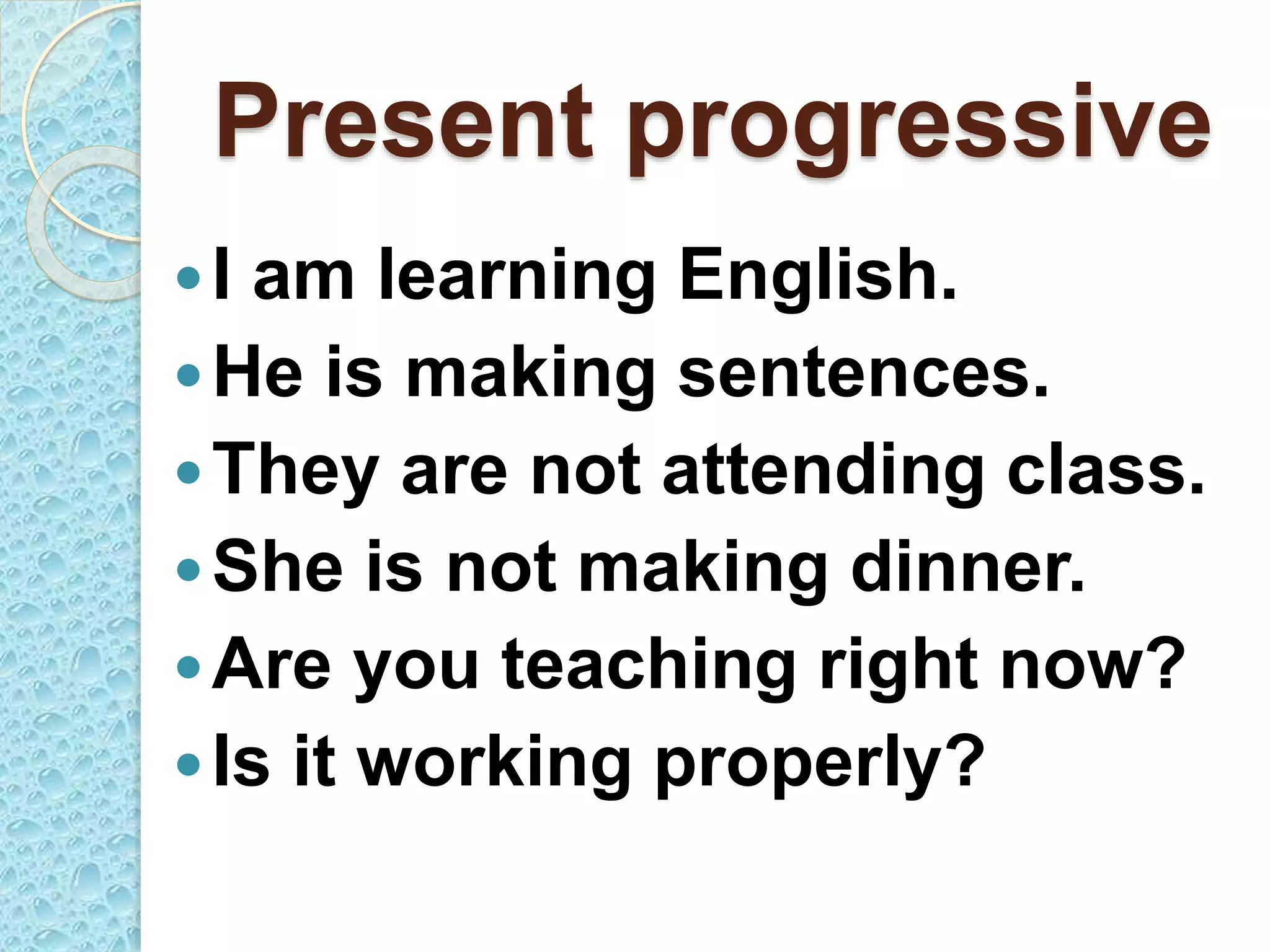
Present progressive
I am learning English.
He is making sentences.
They are not attending class.
She is not making dinner.
Are you teaching right now?
Is it working properly?
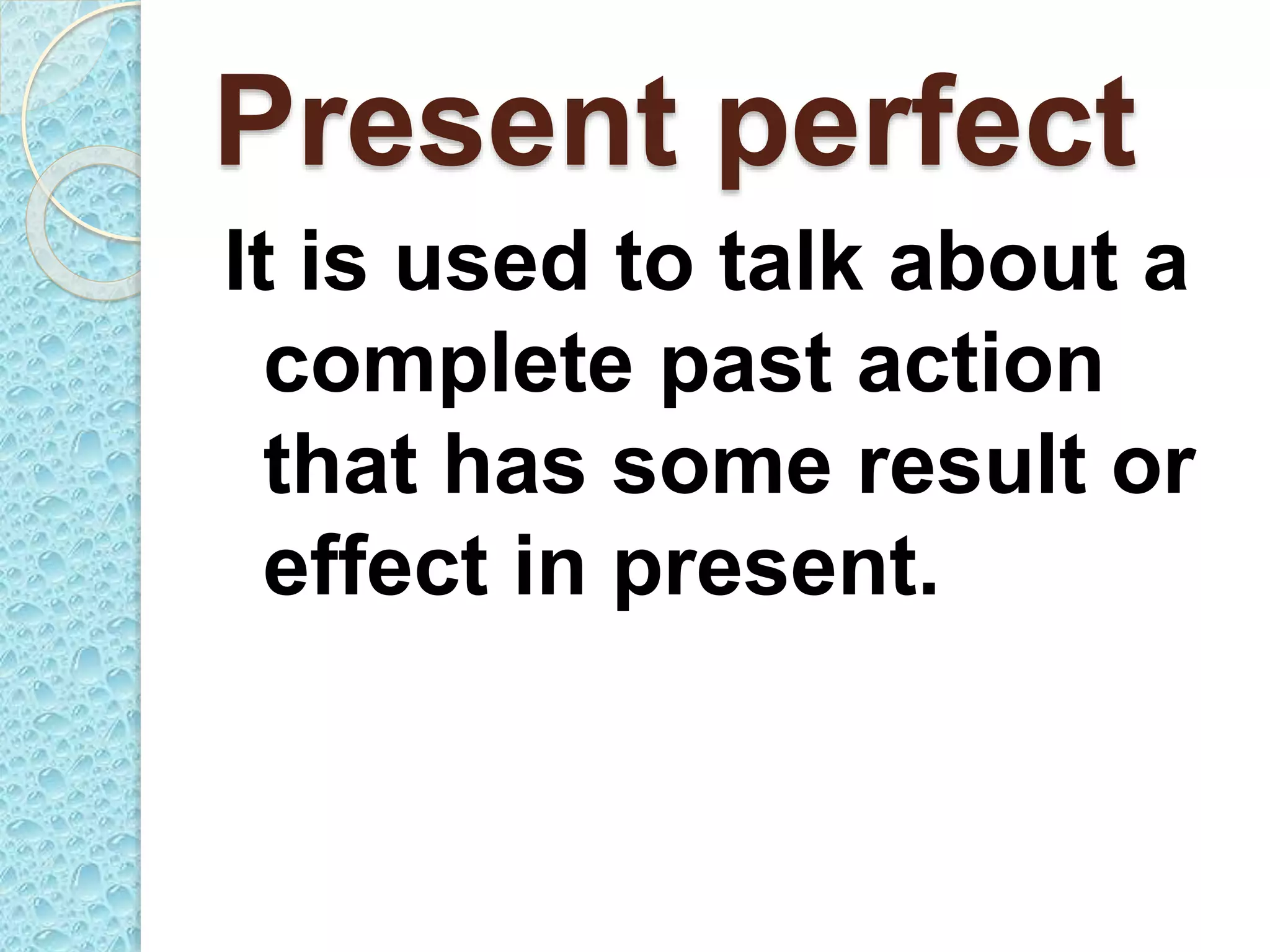
Present perfect
It is used to talk about a
complete past action
that has some result or
effect in present.
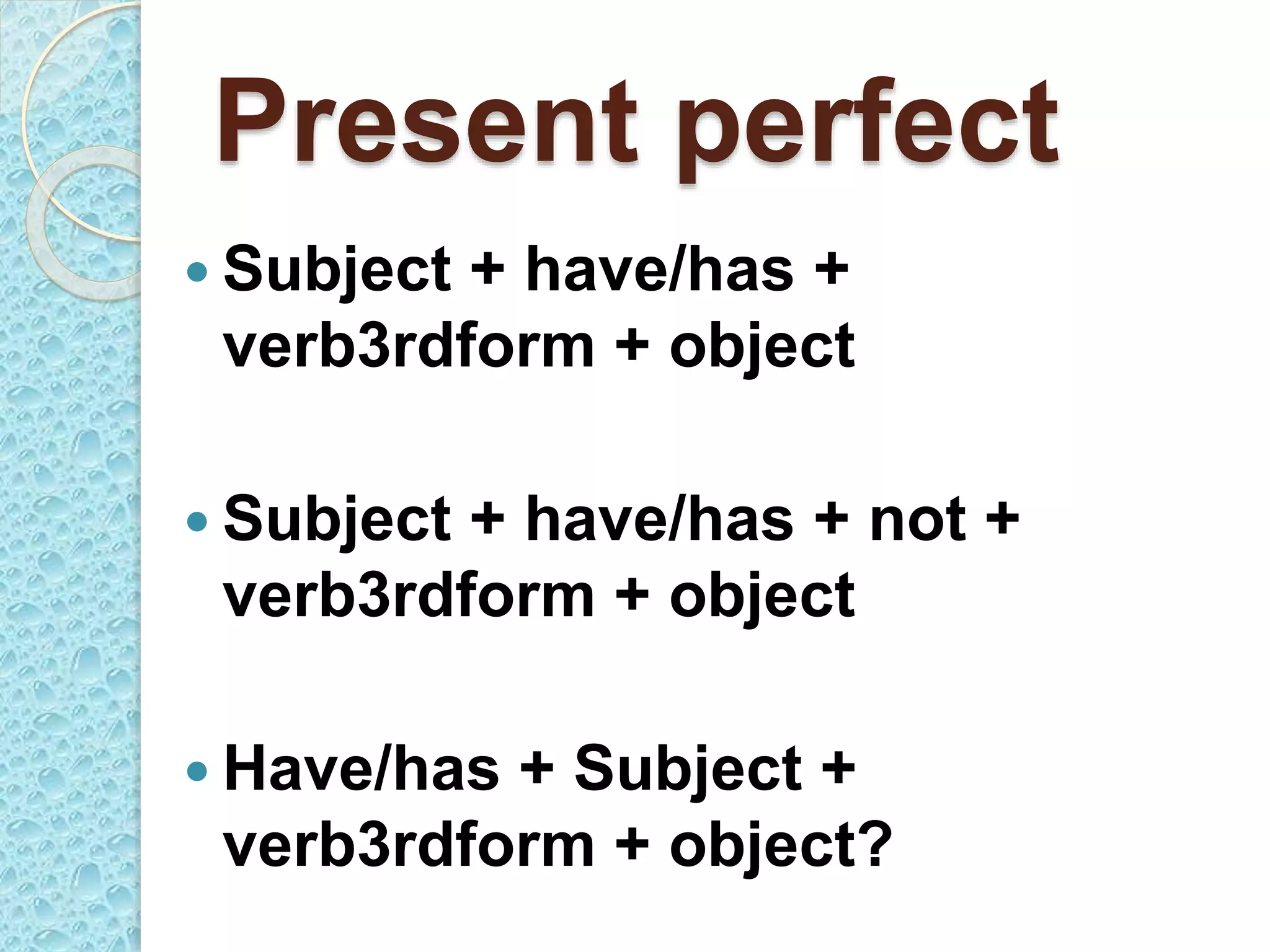
Present perfect
 Subject + have/has +
verb3rdform + object
 Subject + have/has + not +
verb3rdform + object
 Have/has + Subject +
verb3rdform + object?
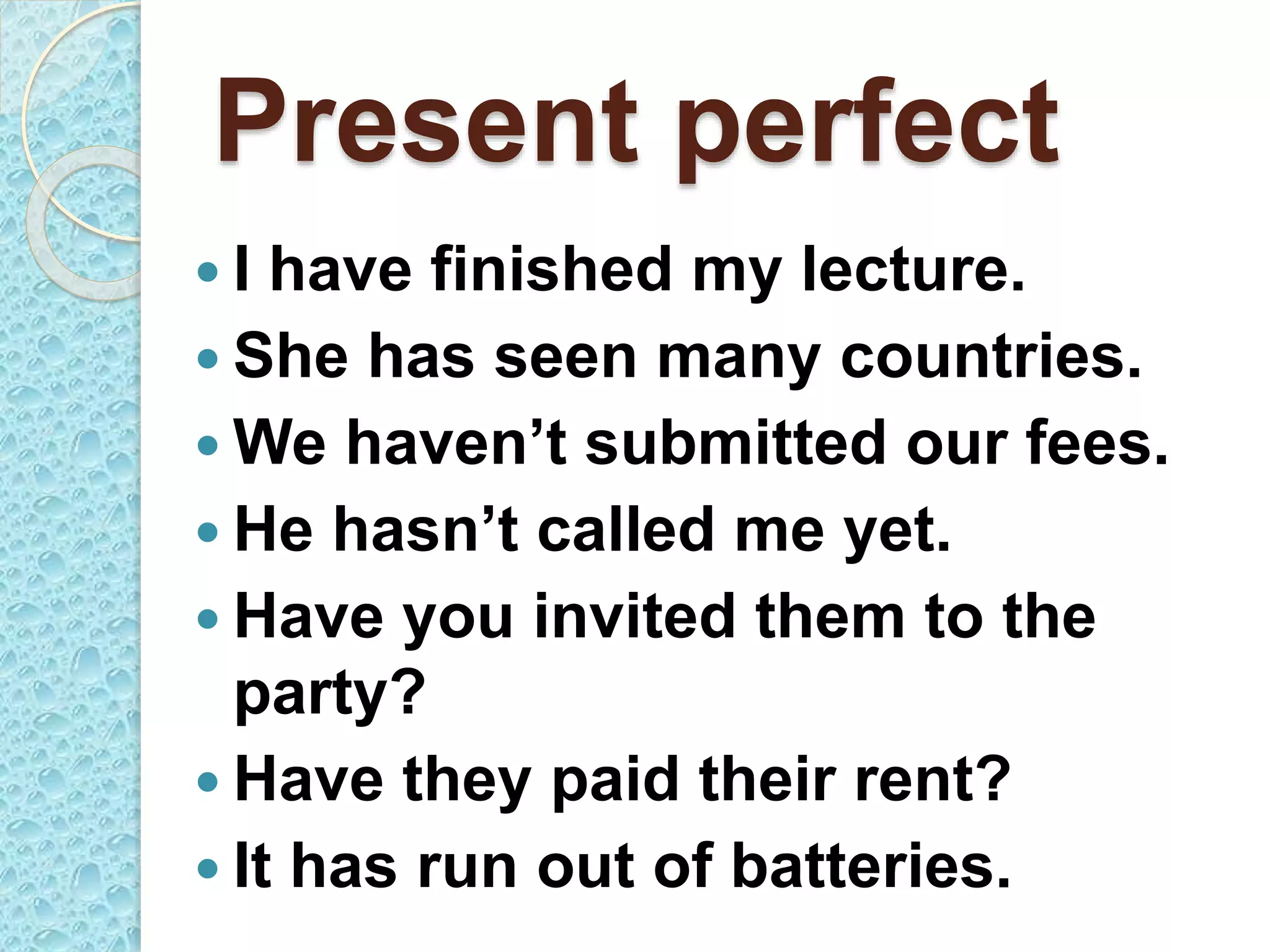
Present perfect
 I have finished my lecture.
 She has seen many countries.
 We haven’t submitted our fees.
 He hasn’t called me yet.
 Have you invited them to the
party?
 Have they paid their rent?
 It has run out of batteries.
Present perfect
progressive
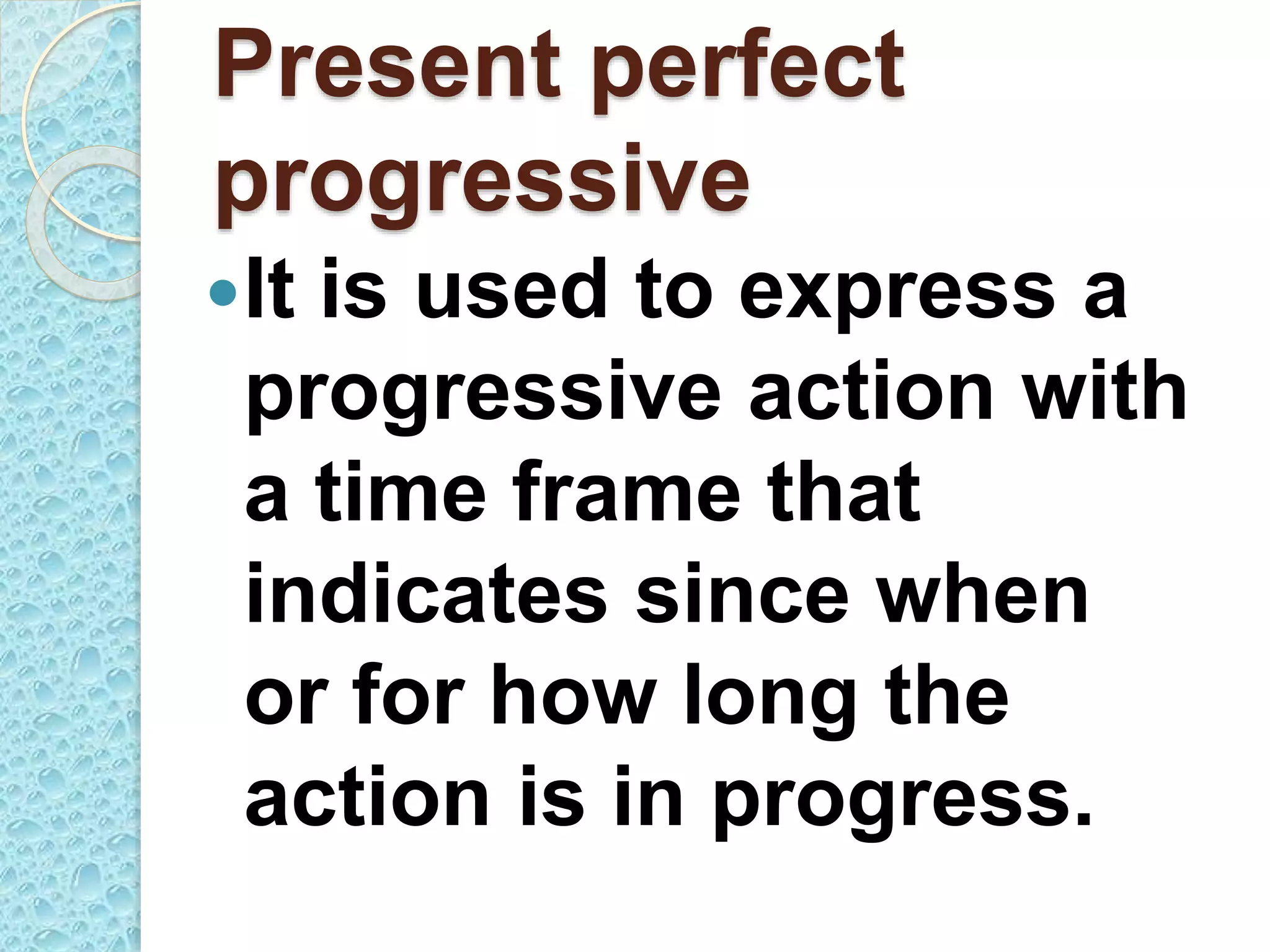
It is used to express a
progressive action with
a time frame that
indicates since when
or for how long the
action is in progress.
Present perfect
progressive
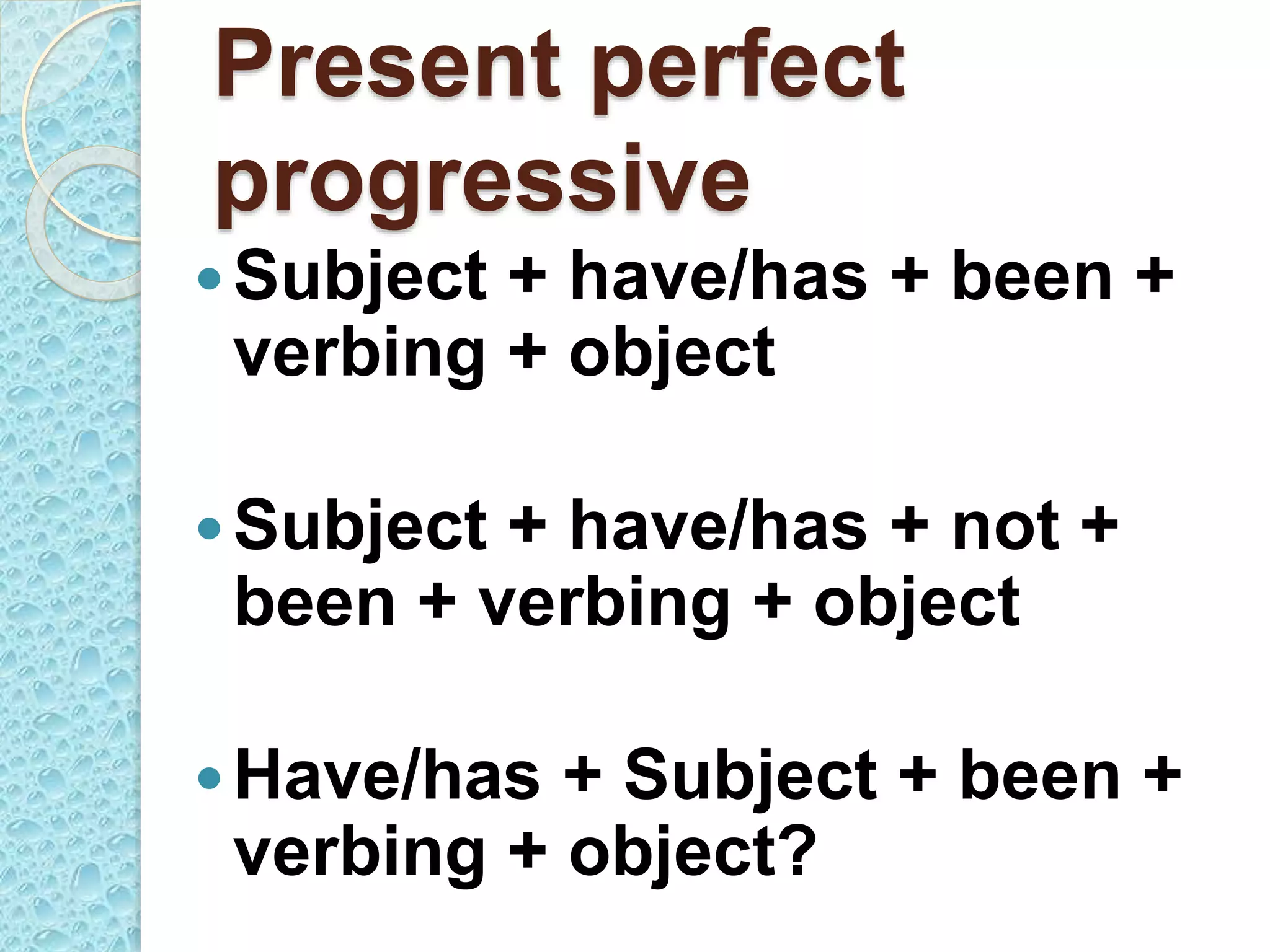
Subject + have/has + been +
verbing + object
Subject + have/has + not +
been + verbing + object
Have/has + Subject + been +
verbing + object?
Present perfect
progressive
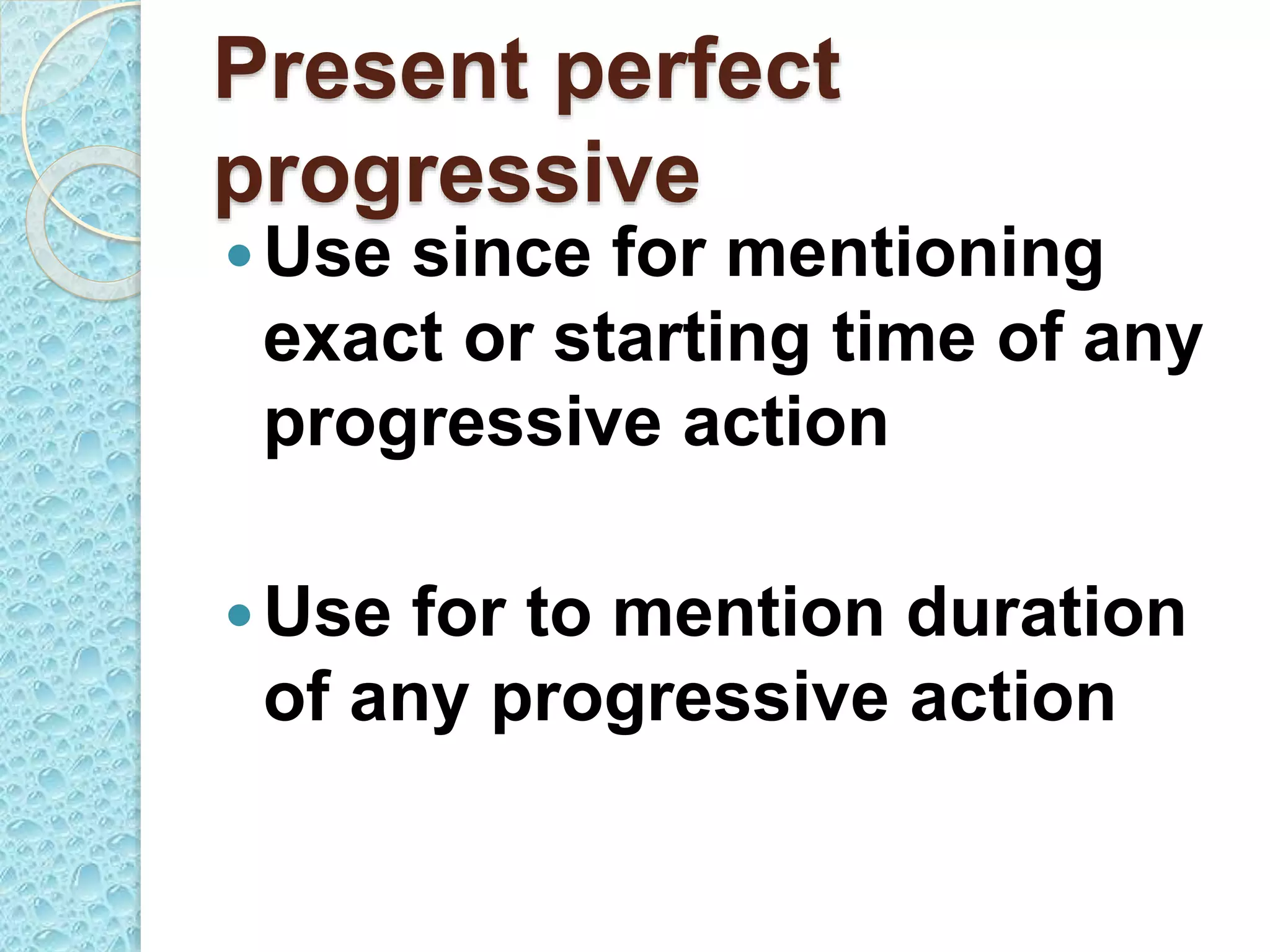
Use since for mentioning
exact or starting time of any
progressive action
Use for to mention duration
of any progressive action
Present perfect
progressive
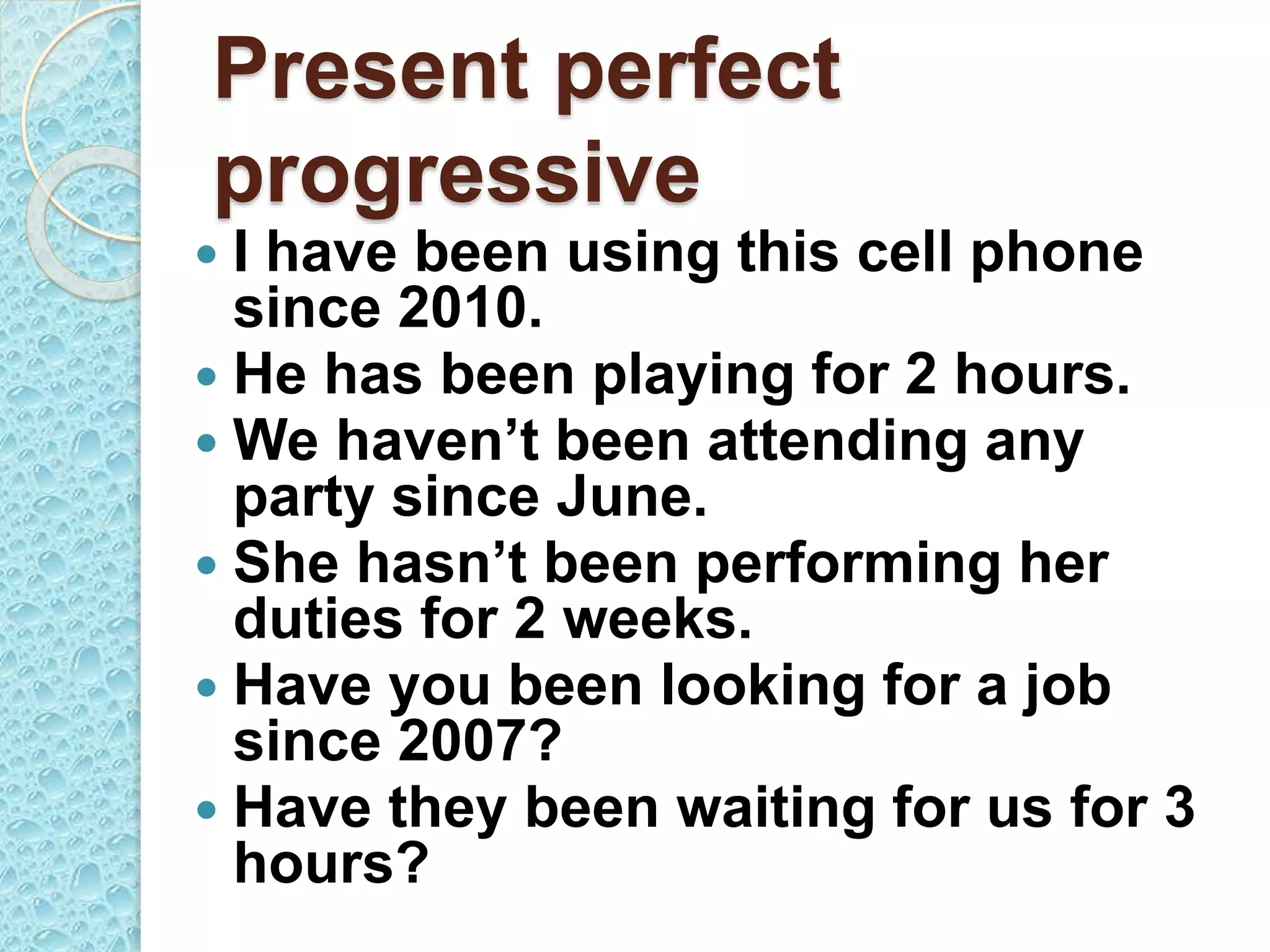
 I have been using this cell phone
since 2010.
 He has been playing for 2 hours.
 We haven’t been attending any
party since June.
 She hasn’t been performing her
duties for 2 weeks.
 Have you been looking for a job
since 2007?
 Have they been waiting for us for 3
hours?
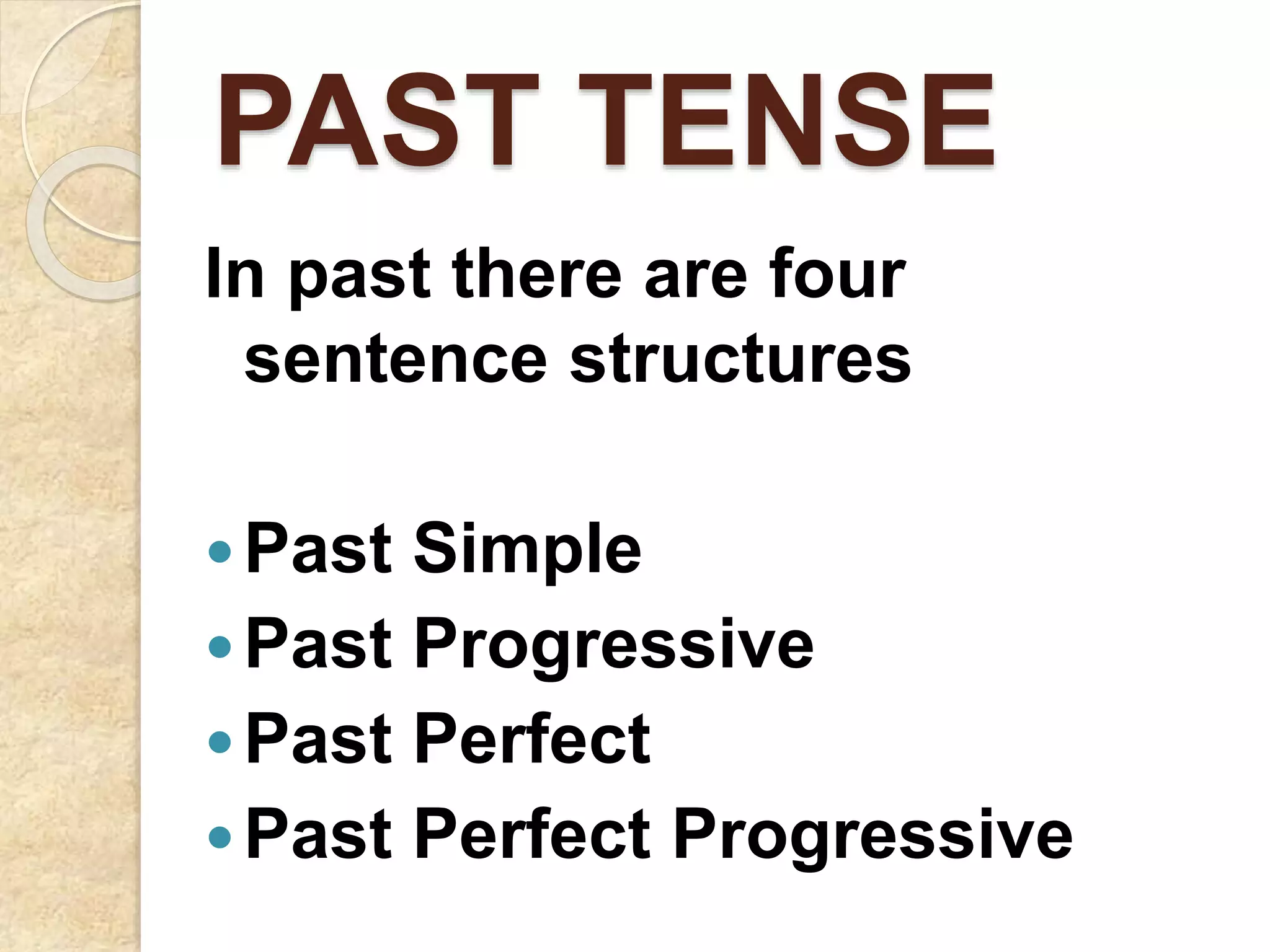
PAST TENSE
In past there are four
sentence structures
Past Simple
Past Progressive
Past Perfect
Past Perfect Progressive
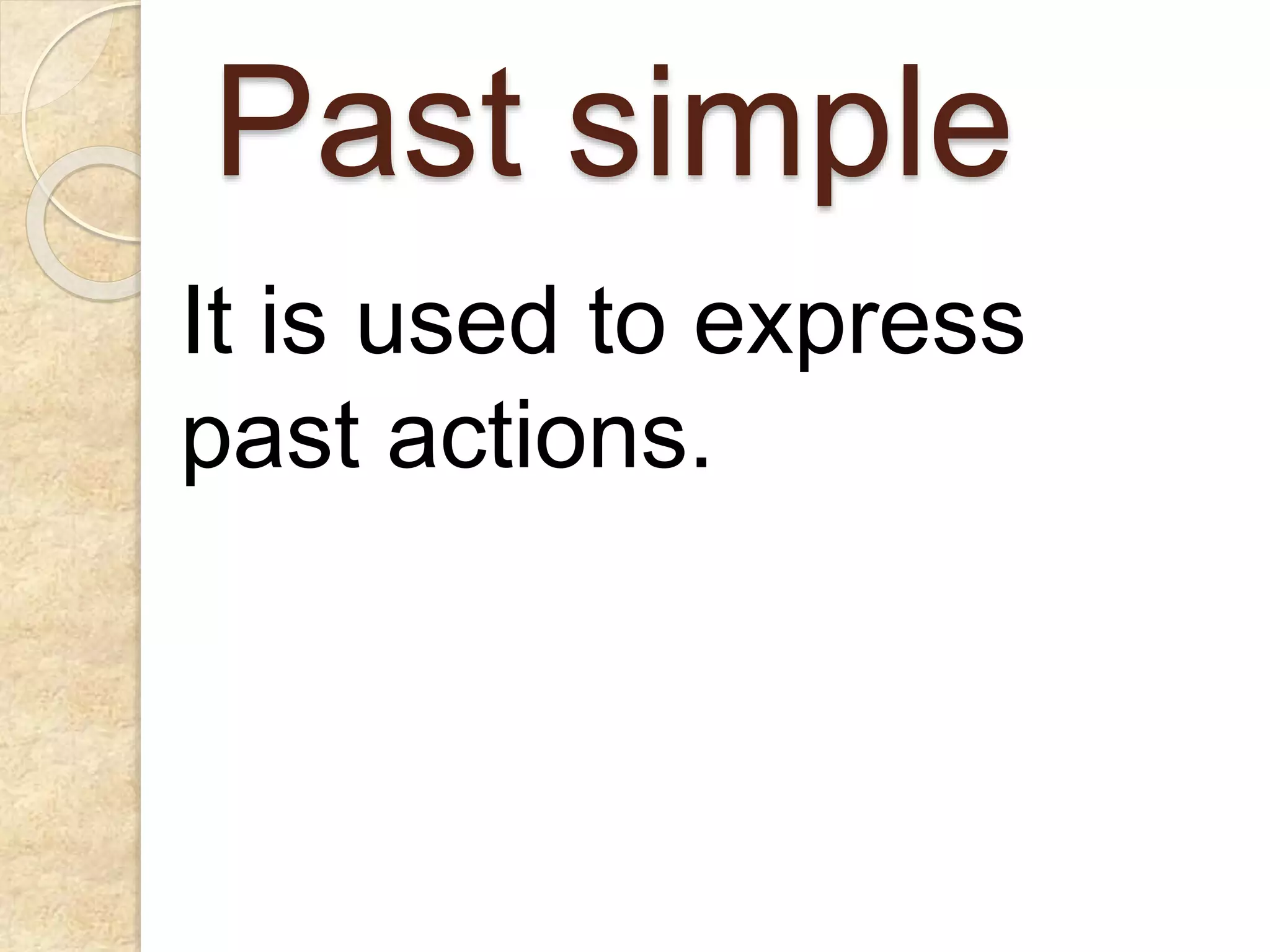
Past simple
It is used to express
past actions.
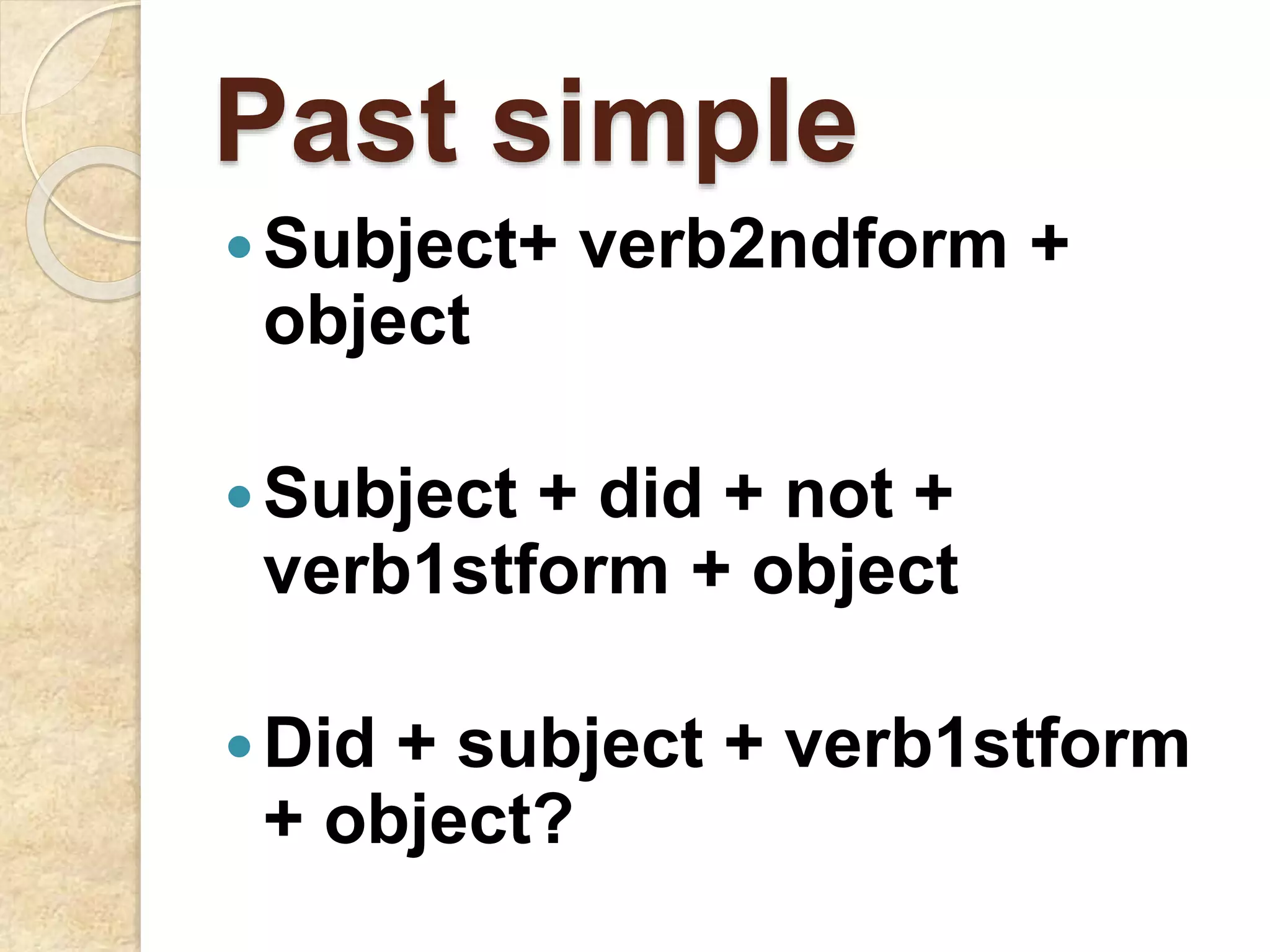
Past simple
Subject+ verb2ndform +
object
Subject + did + not +
verb1stform + object
Did + subject + verb1stform
+ object?
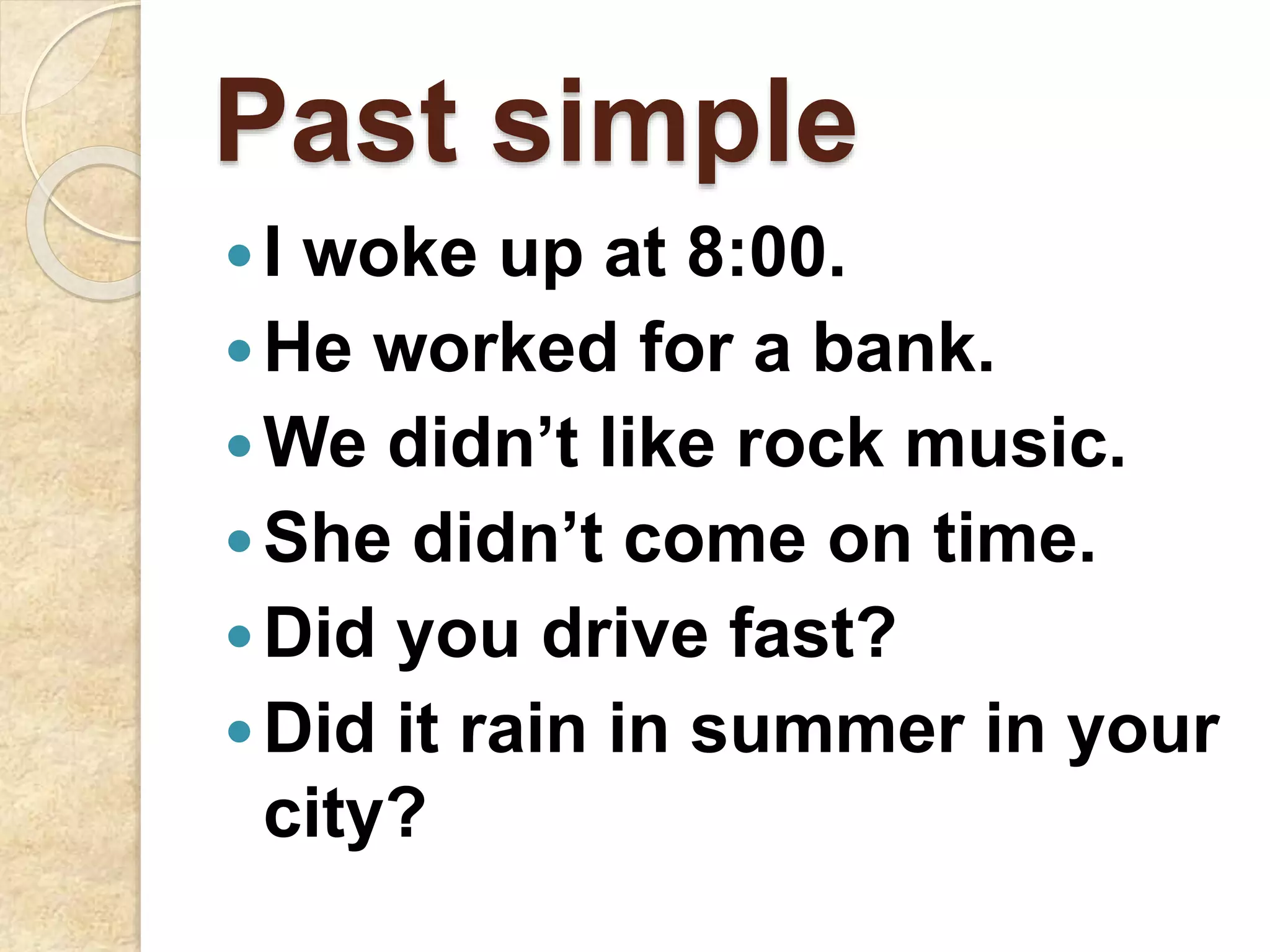
Past simple
I woke up at 8:00.
He worked for a bank.
We didn’t like rock music.
She didn’t come on time.
Did you drive fast?
Did it rain in summer in your
city?
Past progressive
It is used to express
a progressive action
in past time.
Past
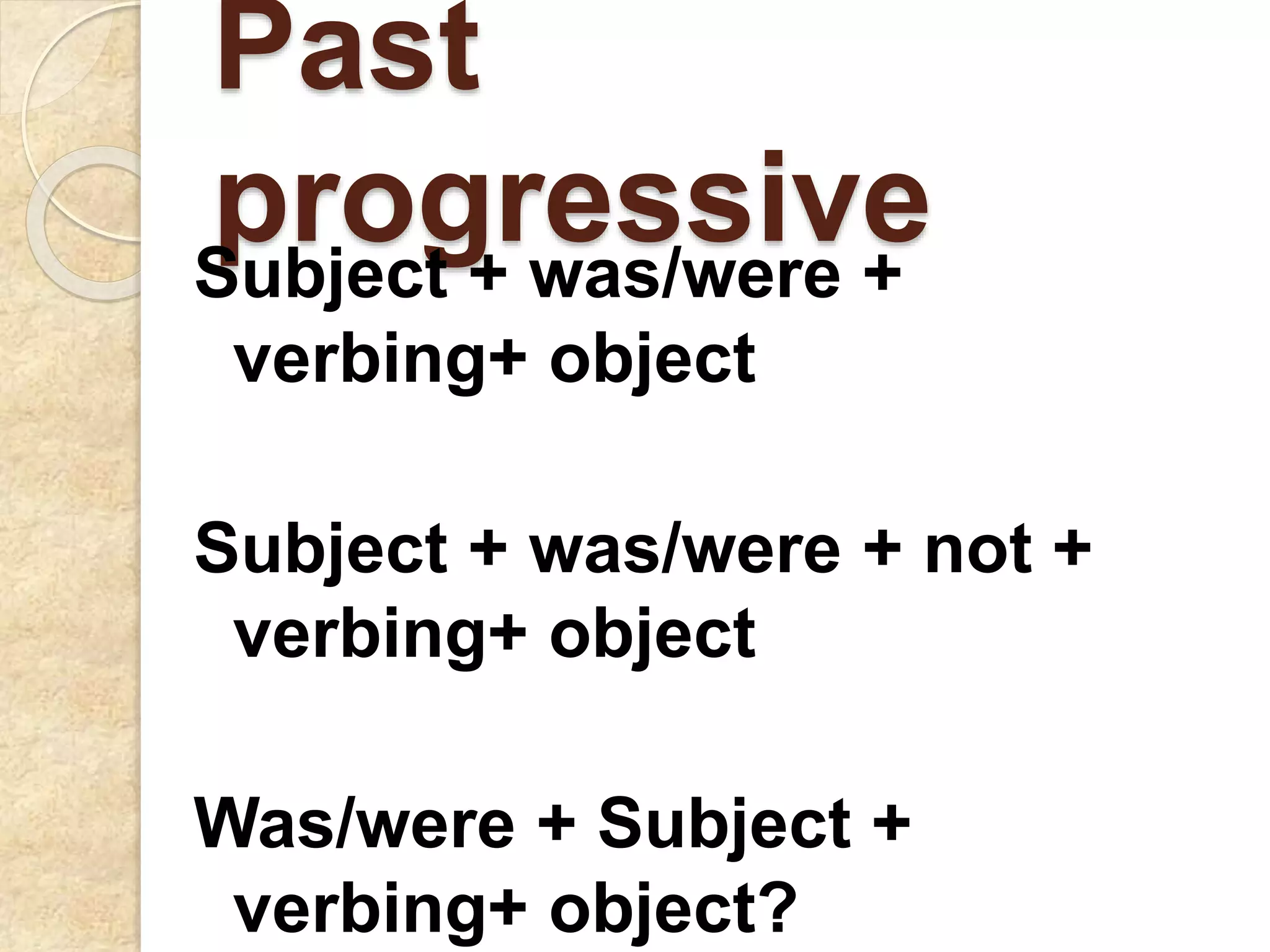
progressiveSubject + was/were +
verbing+ object
Subject + was/were + not +
verbing+ object
Was/were + Subject +
verbing+ object?
Past progressive
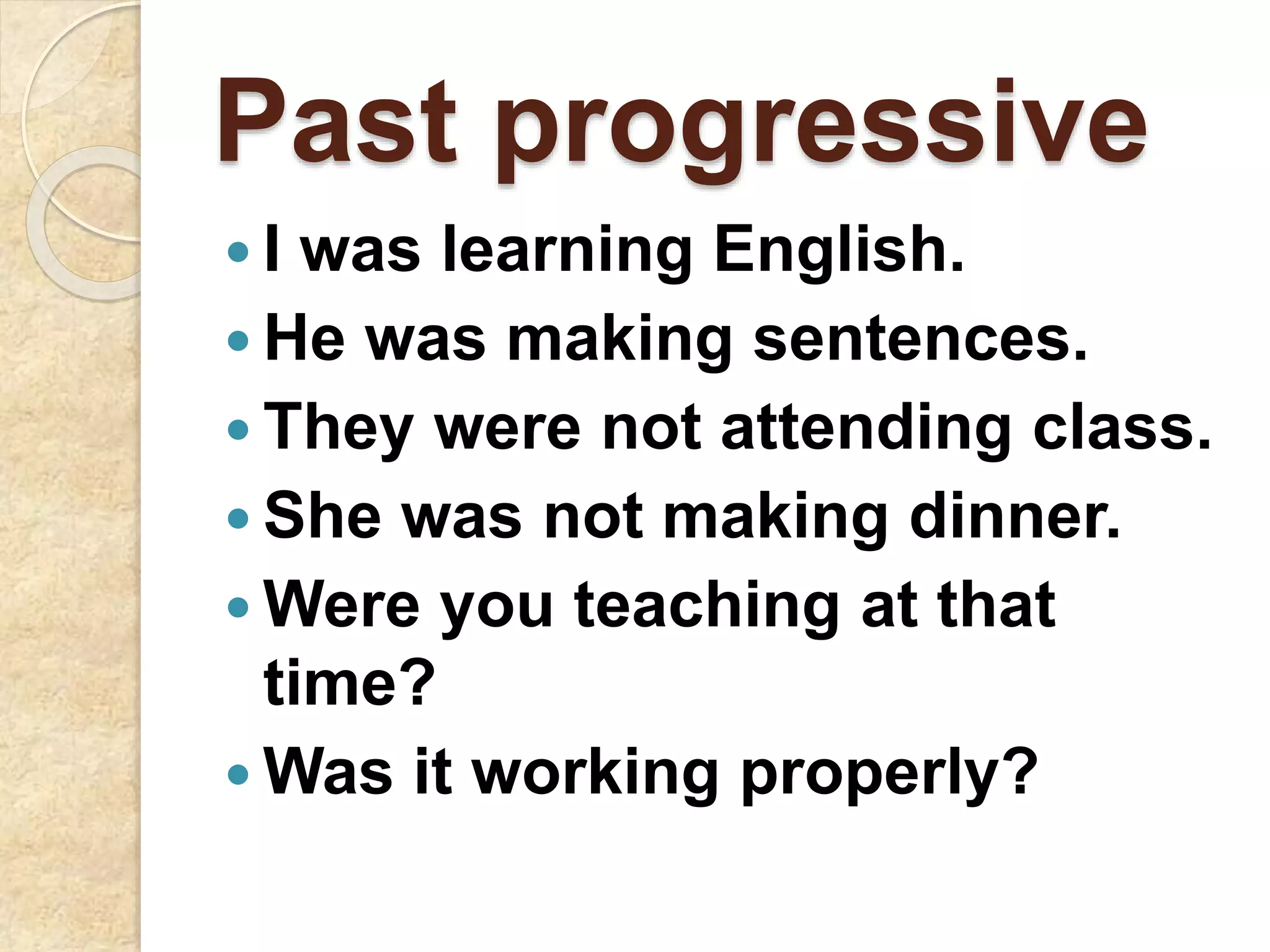
 I was learning English.
 He was making sentences.
 They were not attending class.
 She was not making dinner.
 Were you teaching at that
time?
 Was it working properly?
Past perfect
It is used to talk about a
complete past action that
happened before another
past action or past time.
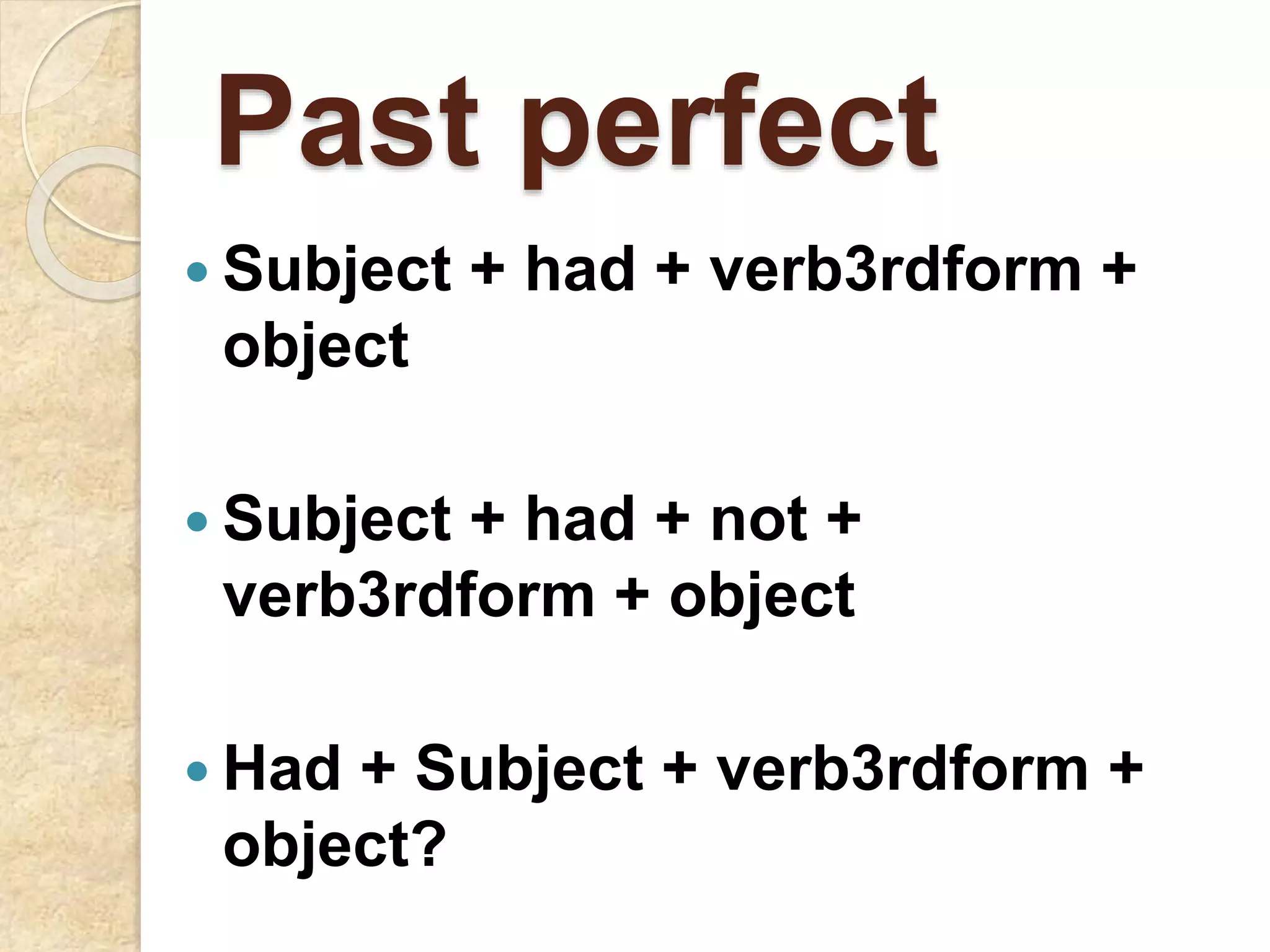
Past perfect
 Subject + had + verb3rdform +
object
 Subject + had + not +
verb3rdform + object
 Had + Subject + verb3rdform +
object?
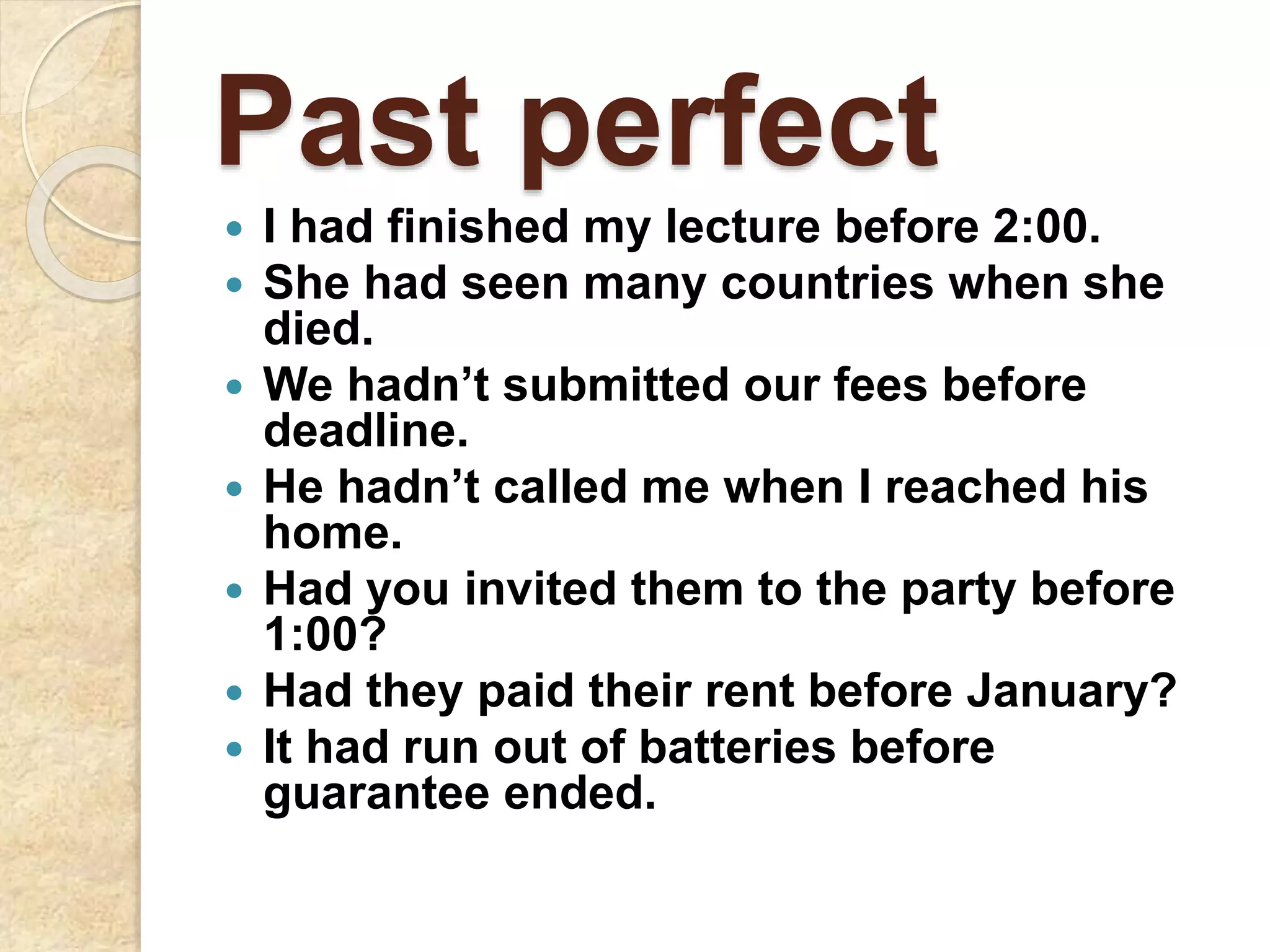
Past perfect
 I had finished my lecture before 2:00.
 She had seen many countries when she
died.
 We hadn’t submitted our fees before
deadline.
 He hadn’t called me when I reached his
home.
 Had you invited them to the party before
1:00?
 Had they paid their rent before January?
 It had run out of batteries before
guarantee ended.
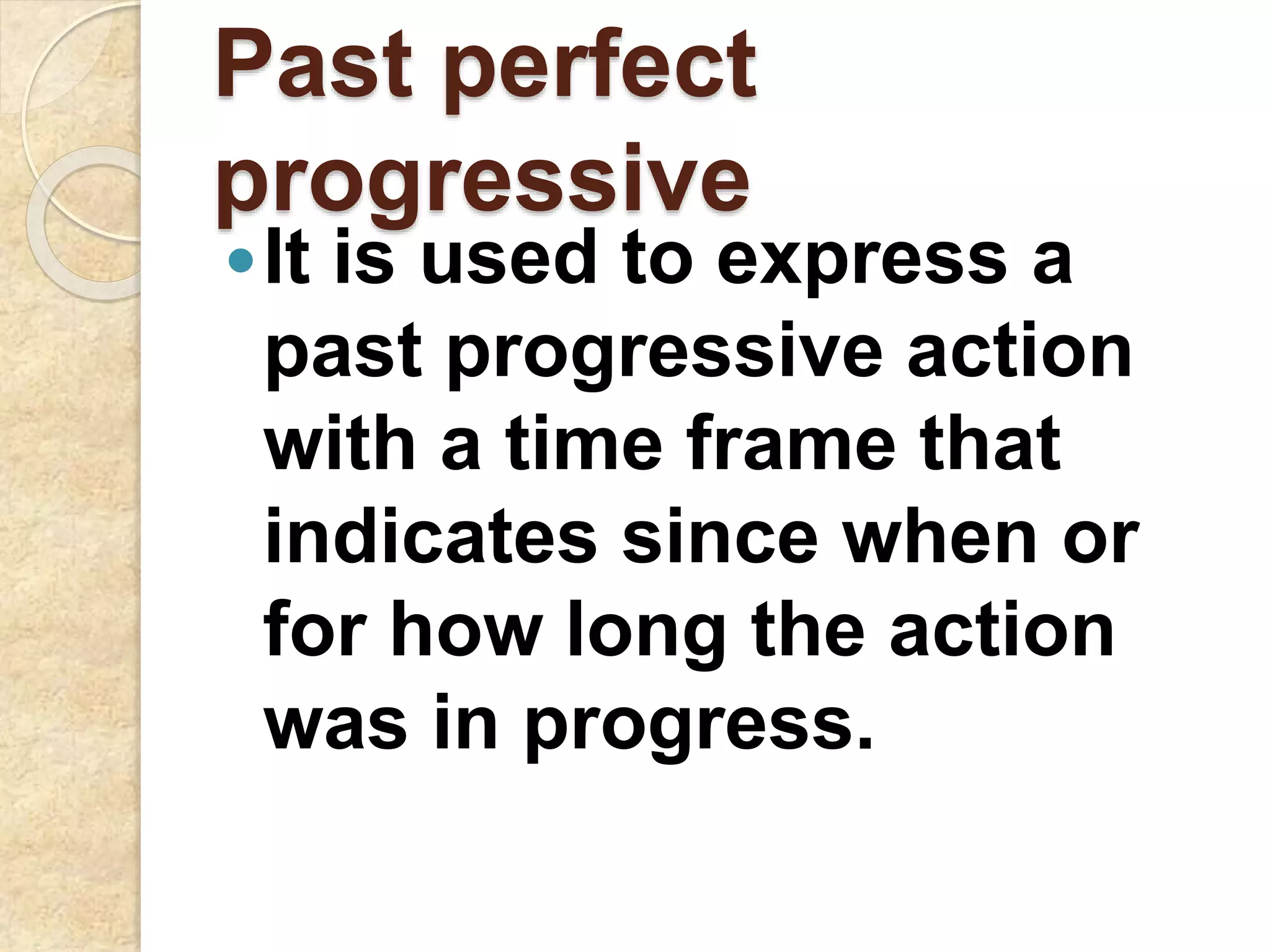
Past perfect
progressive
It is used to express a
past progressive action
with a time frame that
indicates since when or
for how long the action
was in progress.
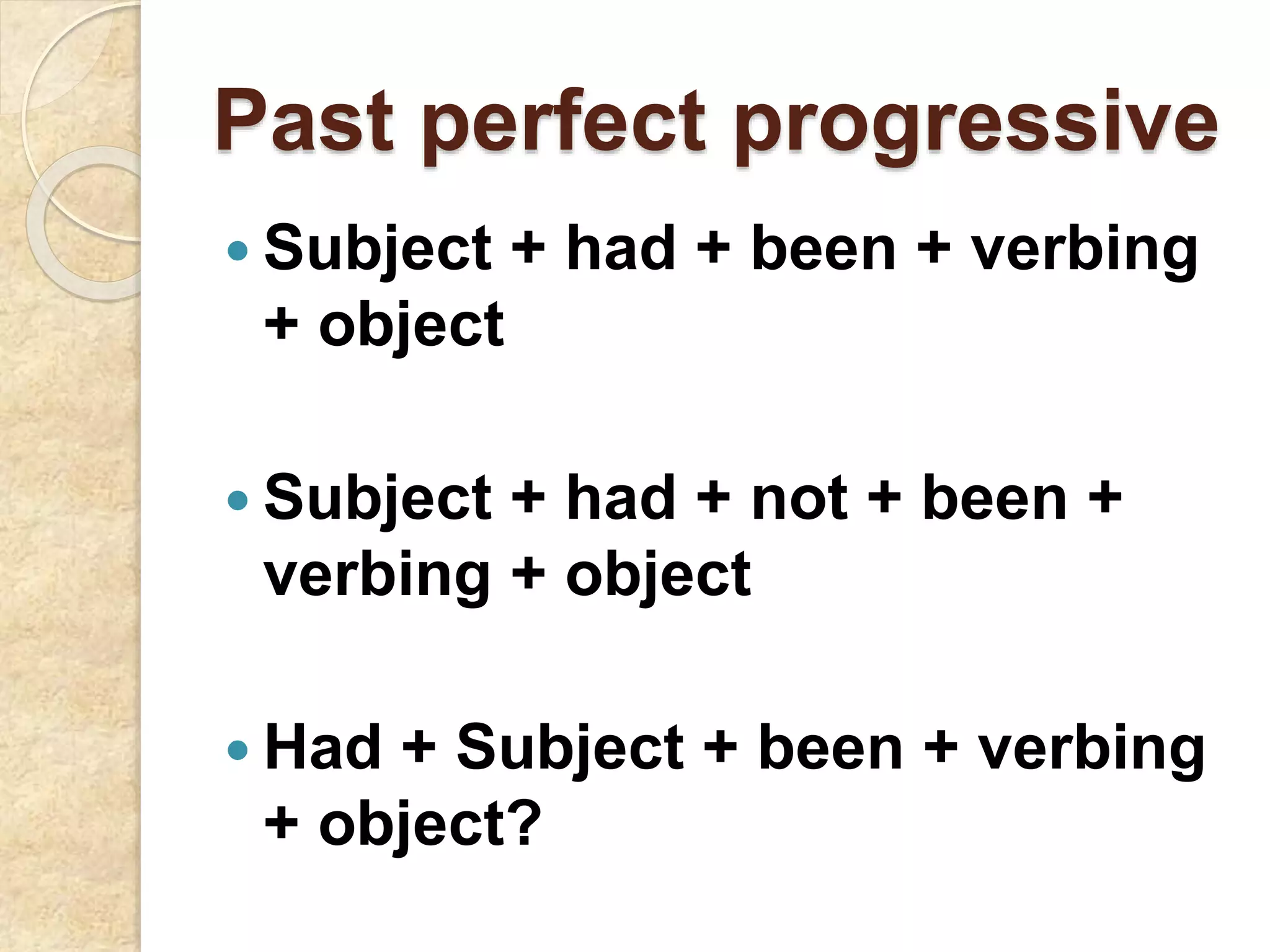
Past perfect progressive
 Subject + had + been + verbing
+ object
 Subject + had + not + been +
verbing + object
 Had + Subject + been + verbing
+ object?
Past perfect
progressive
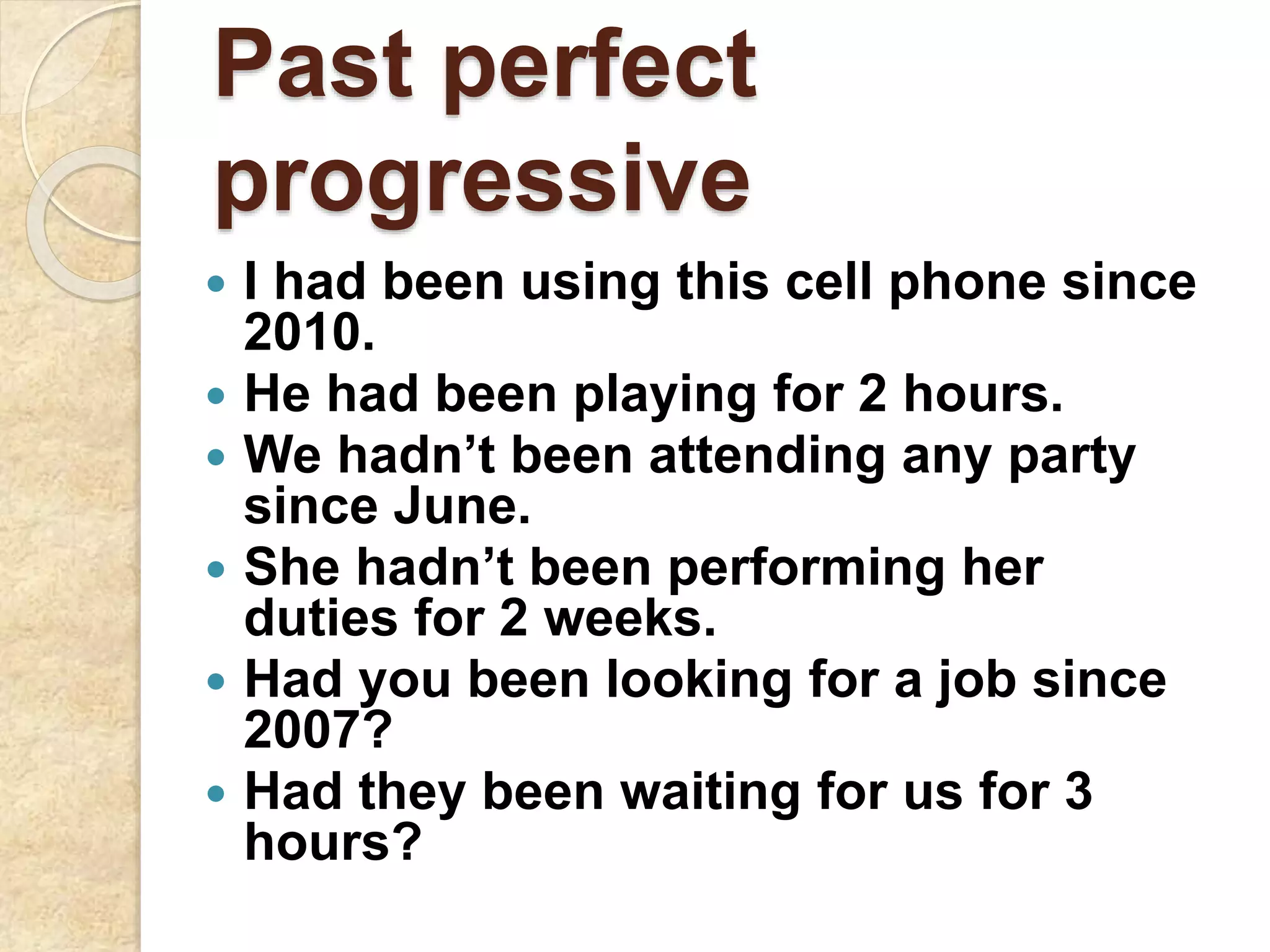
 I had been using this cell phone since
2010.
 He had been playing for 2 hours.
 We hadn’t been attending any party
since June.
 She hadn’t been performing her
duties for 2 weeks.
 Had you been looking for a job since
2007?
 Had they been waiting for us for 3
hours?
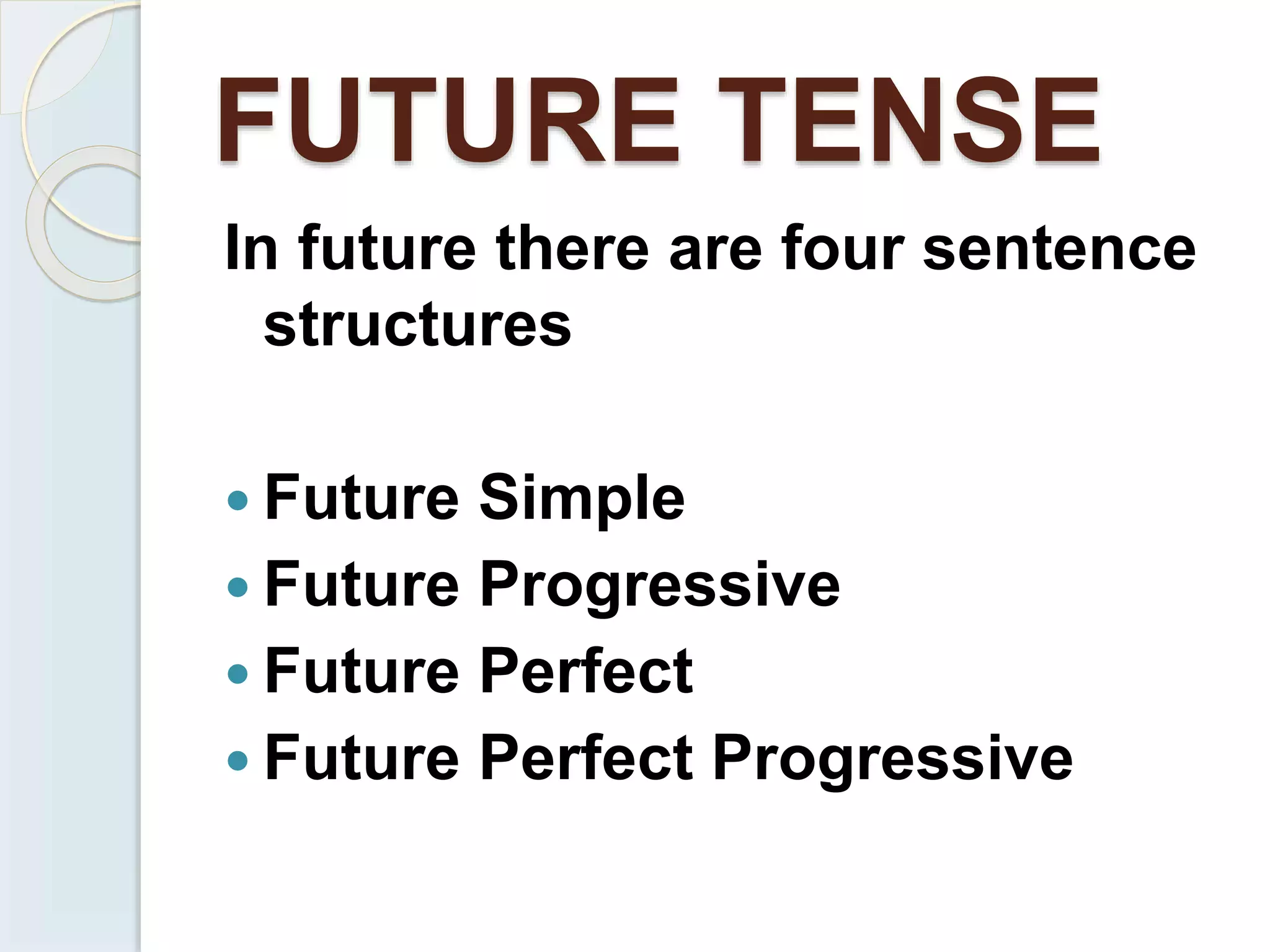
FUTURE TENSE
In future there are four sentence
structures
 Future Simple
 Future Progressive
 Future Perfect
 Future Perfect Progressive
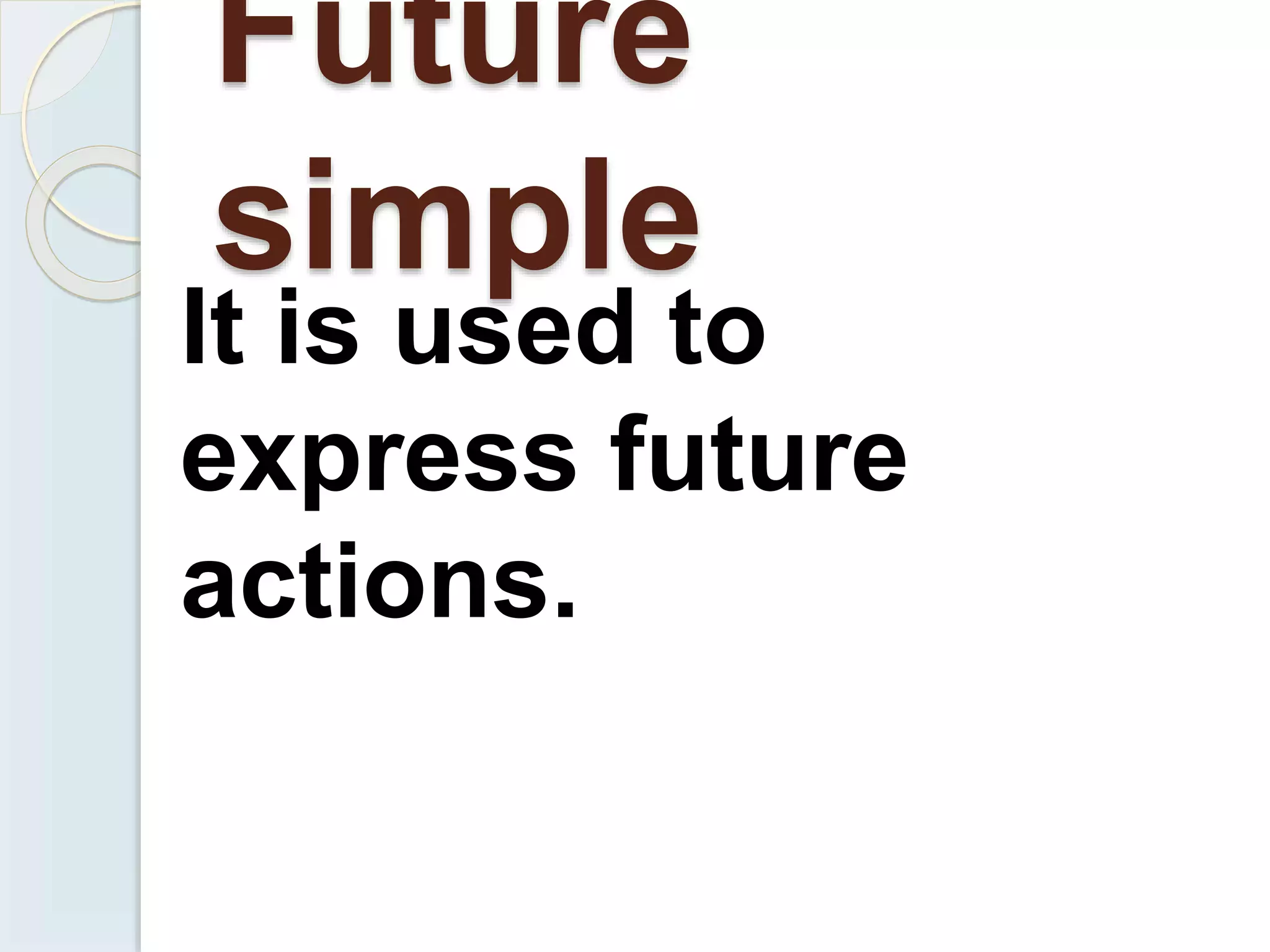
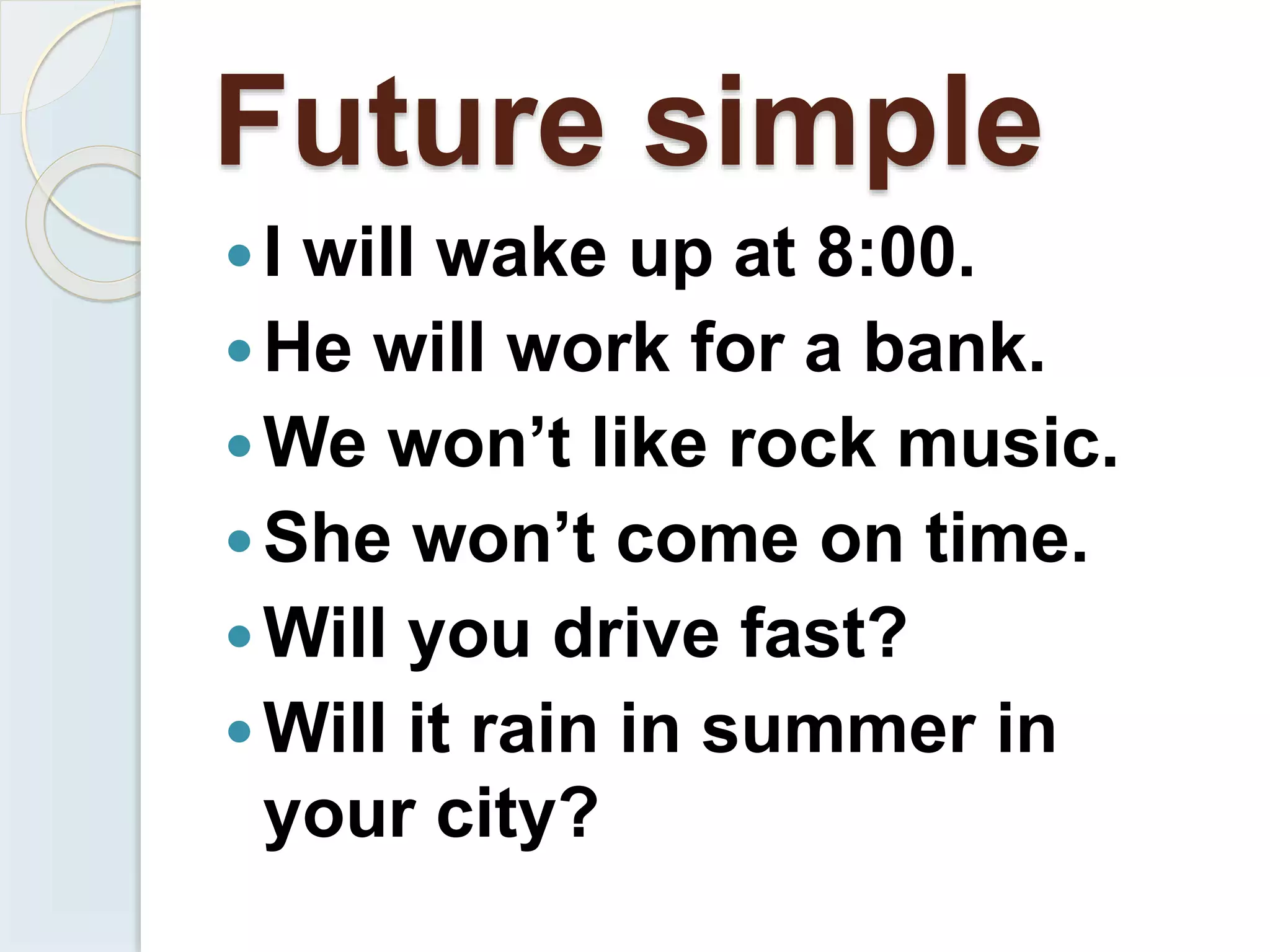
Future
simple
It is used to
express future
actions.
Future simple
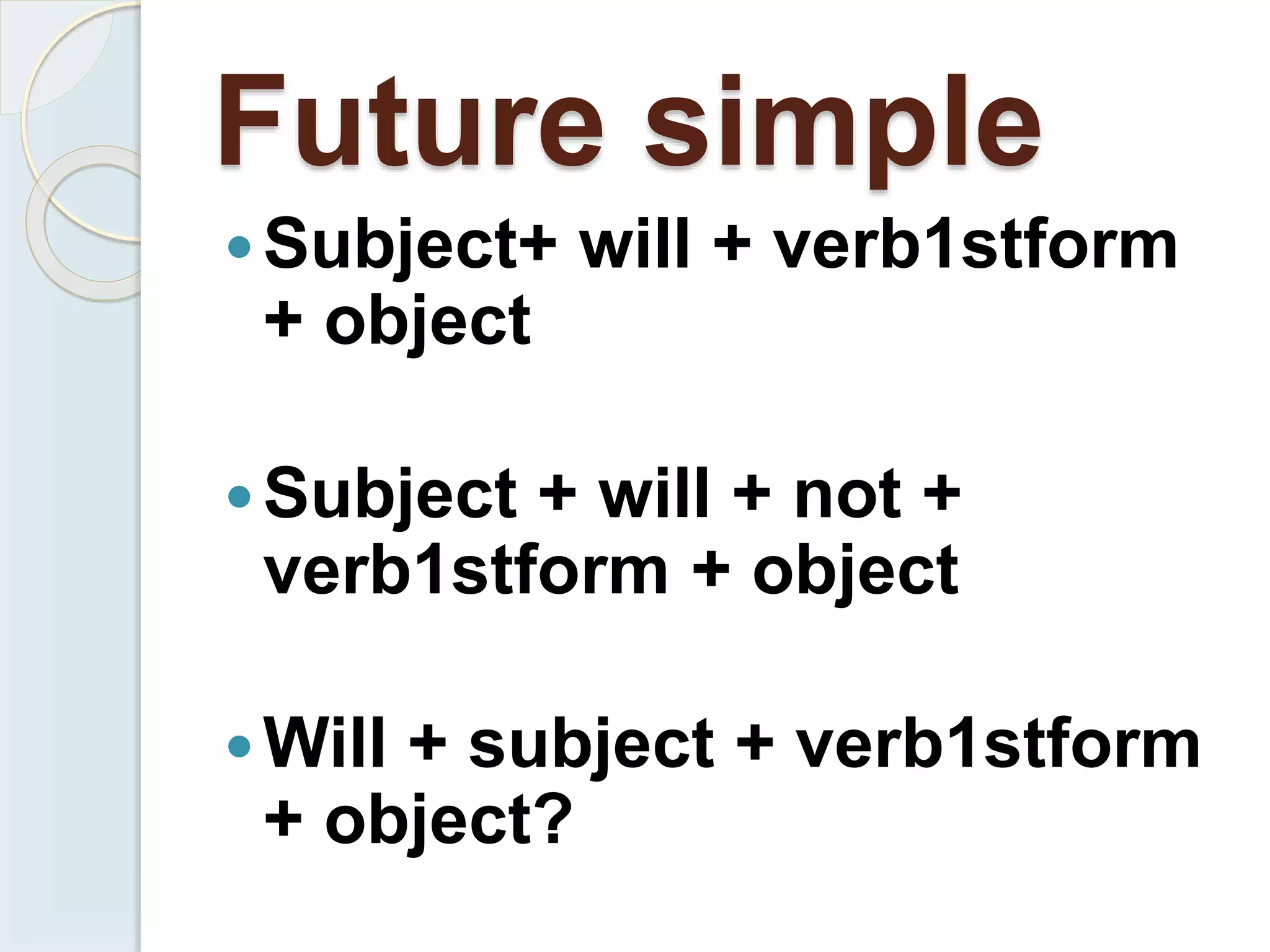
Subject+ will + verb1stform
+ object
Subject + will + not +
verb1stform + object
Will + subject + verb1stform
+ object?
Future simple
I will wake up at 8:00.
He will work for a bank.
We won’t like rock music.
She won’t come on time.
Will you drive fast?
Will it rain in summer in
your city?
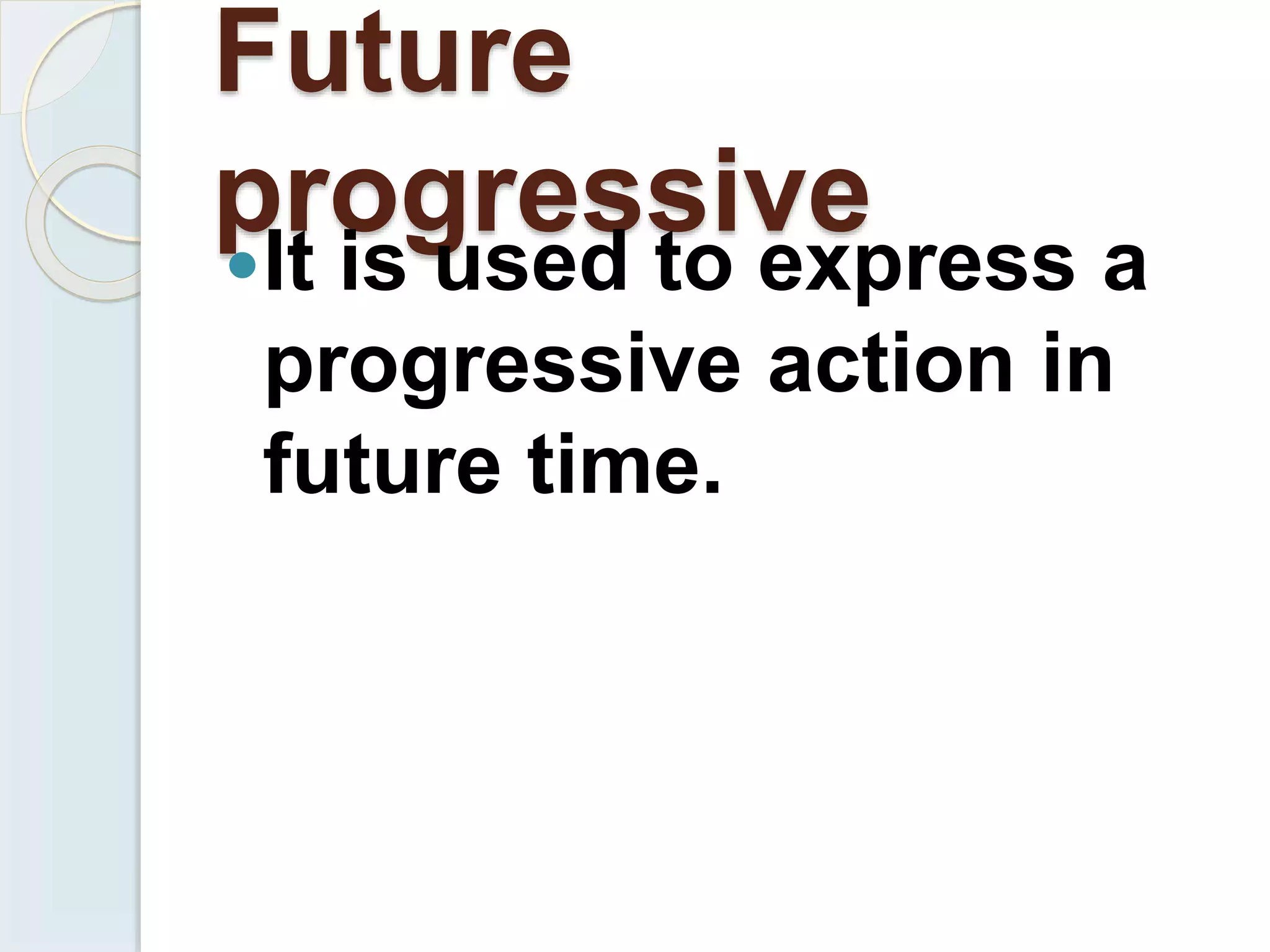
Future
progressive
It is used to express a
progressive action in
future time.
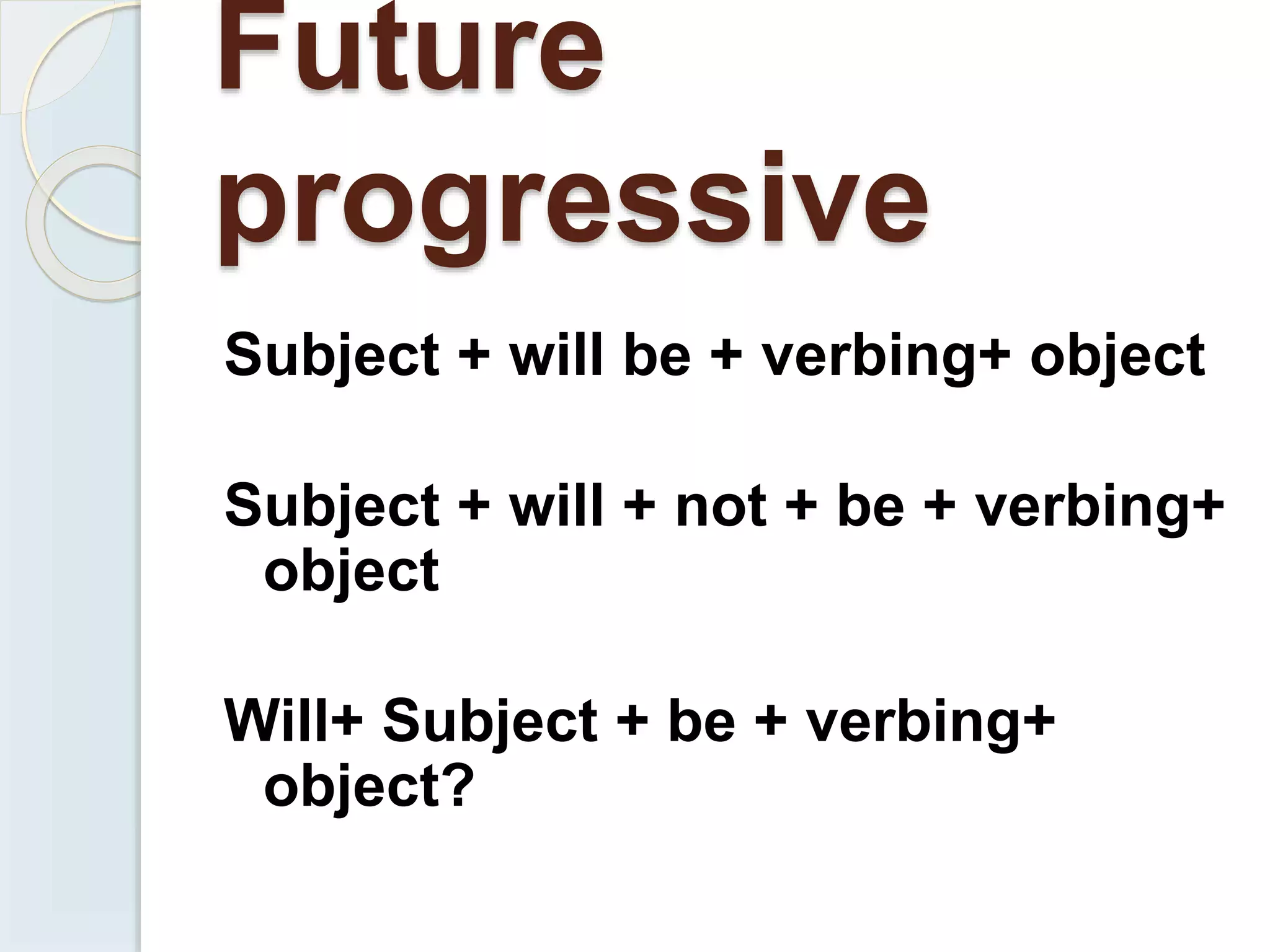
Future
progressive
Subject + will be + verbing+ object
Subject + will + not + be + verbing+
object
Will+ Subject + be + verbing+
object?
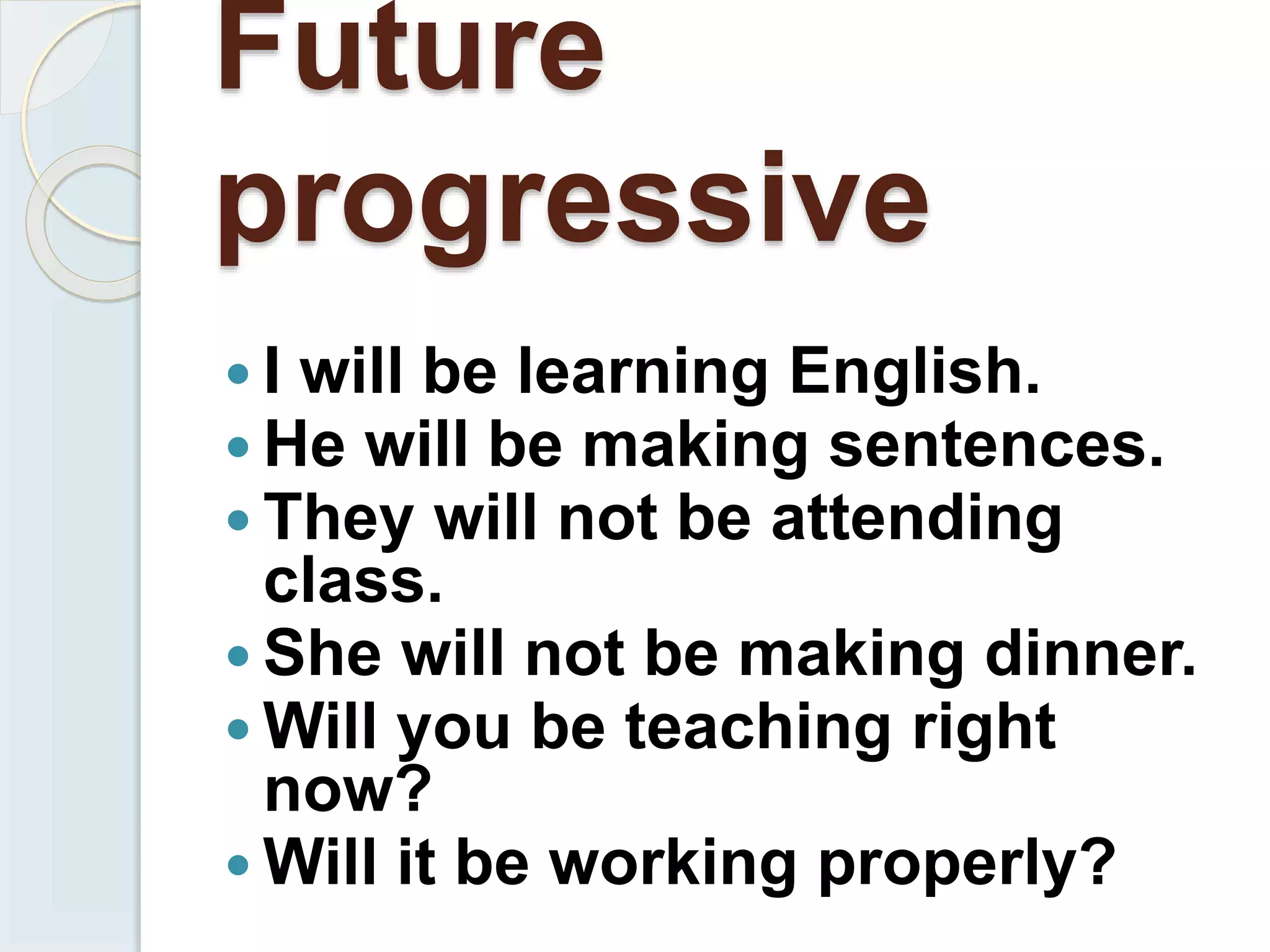
Future
progressive
 I will be learning English.
 He will be making sentences.
 They will not be attending
class.
 She will not be making dinner.
 Will you be teaching right
now?
 Will it be working properly?
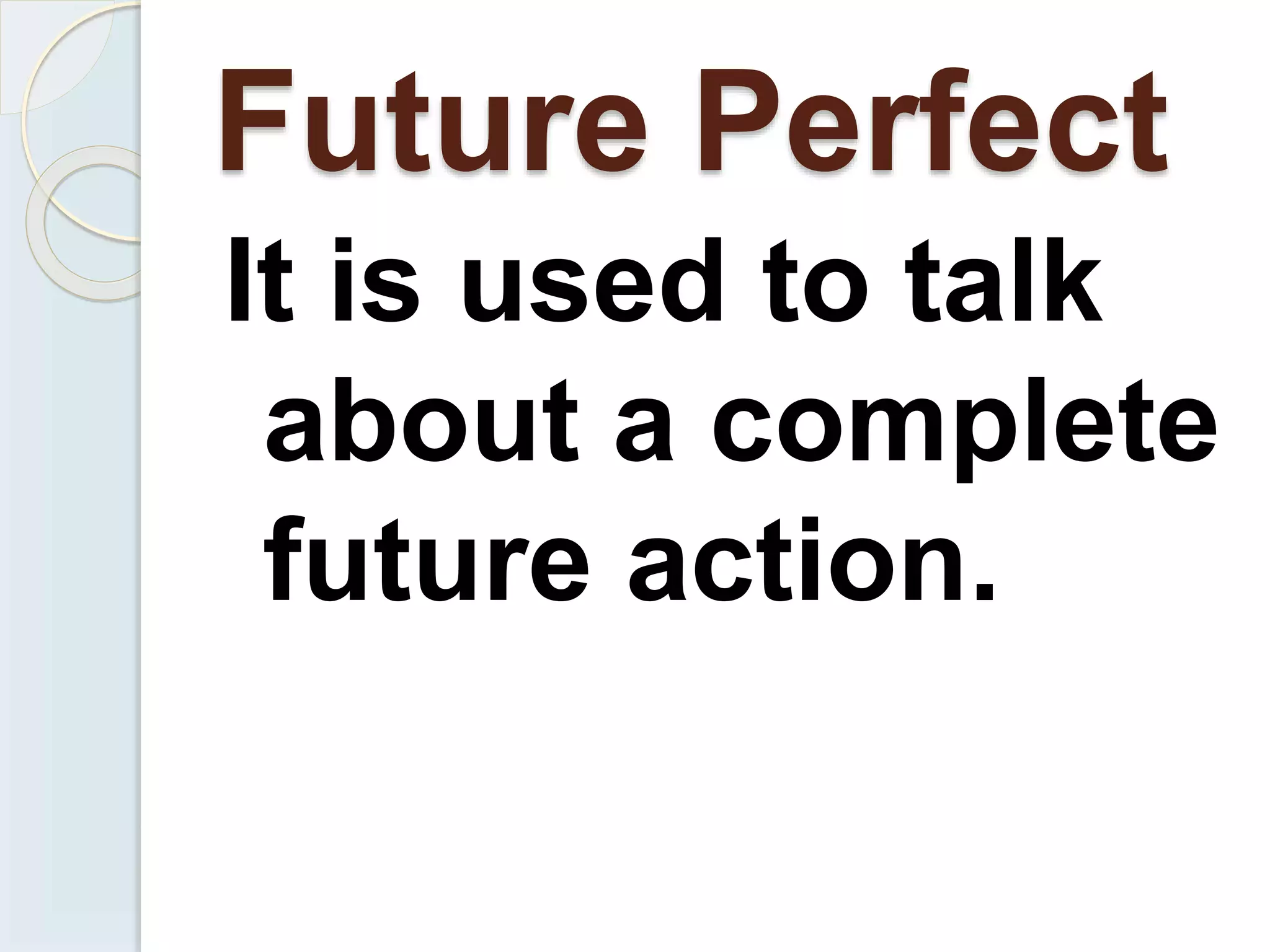
Future Perfect
It is used to talk
about a complete
future action.
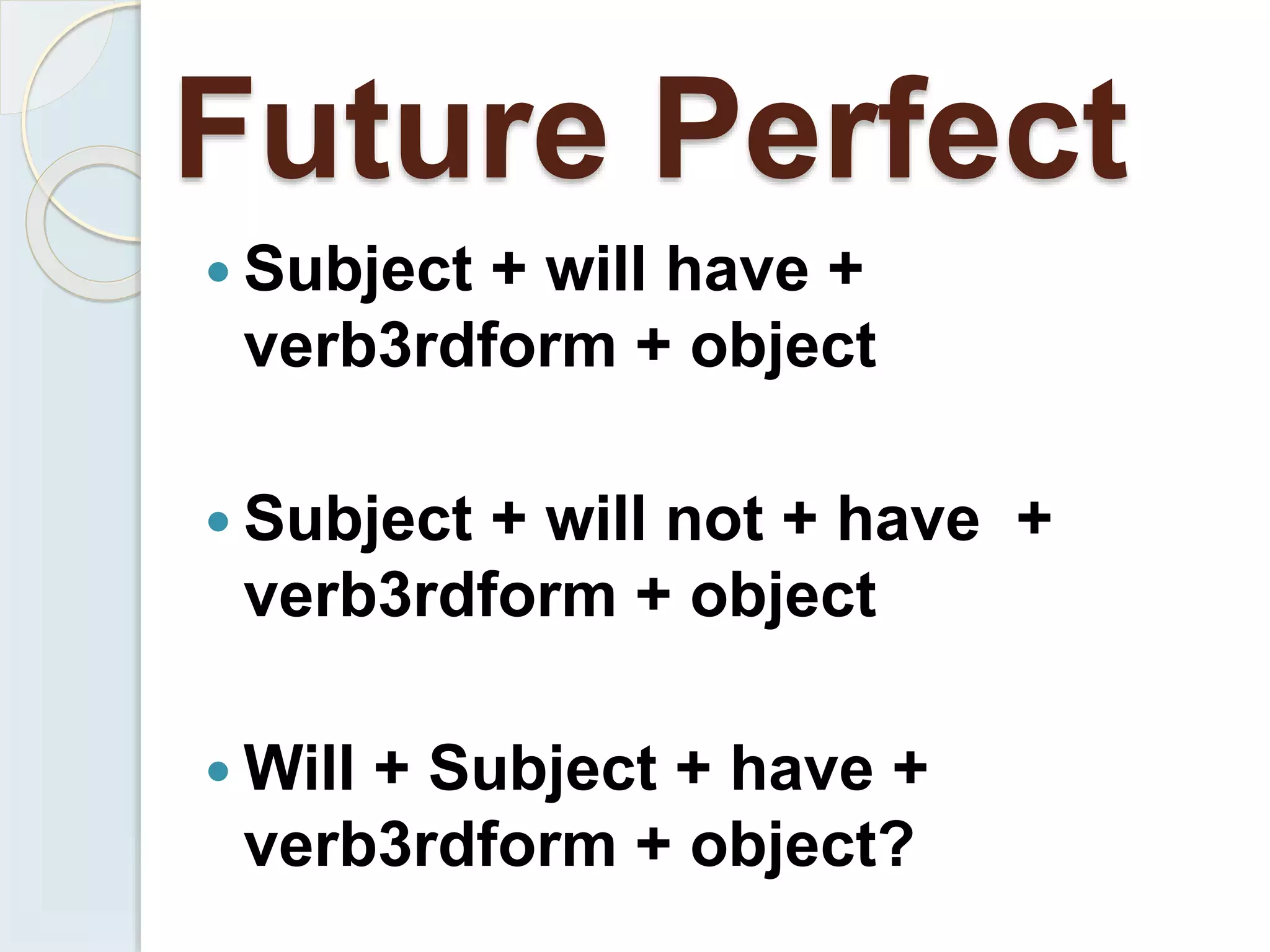
Future Perfect
 Subject + will have +
verb3rdform + object
 Subject + will not + have +
verb3rdform + object
 Will + Subject + have +
verb3rdform + object?
Future Perfect
 I will have finished my lecture.
 She will have seen many countries.
 We will not have submitted our
fees.
 He will not have called me.
 Will you have invited them to the
party?
 Will they have paid their rent?
 It will have run out of battries.
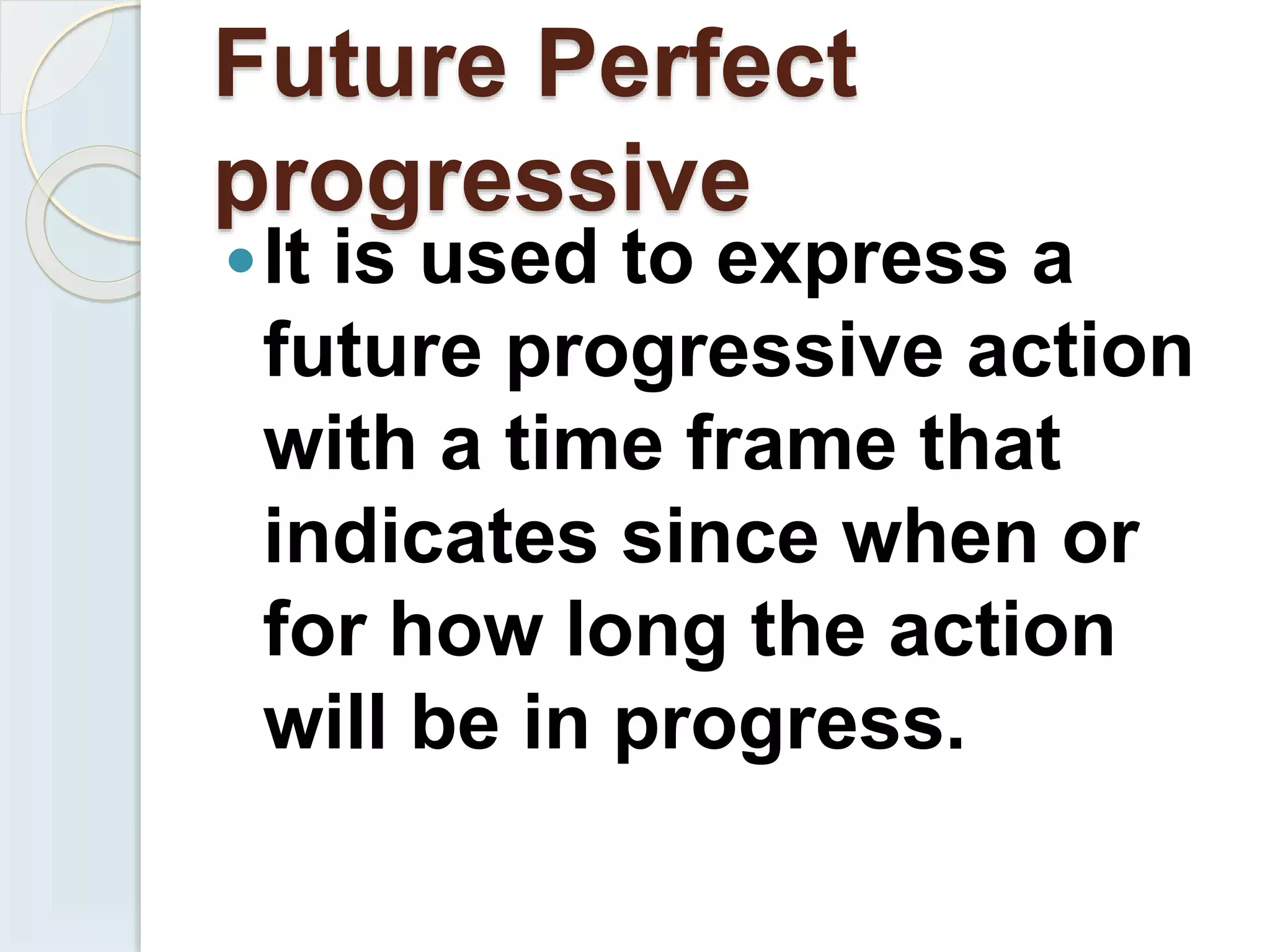
Future Perfect
progressive
It is used to express a
future progressive action
with a time frame that
indicates since when or
for how long the action
will be in progress.
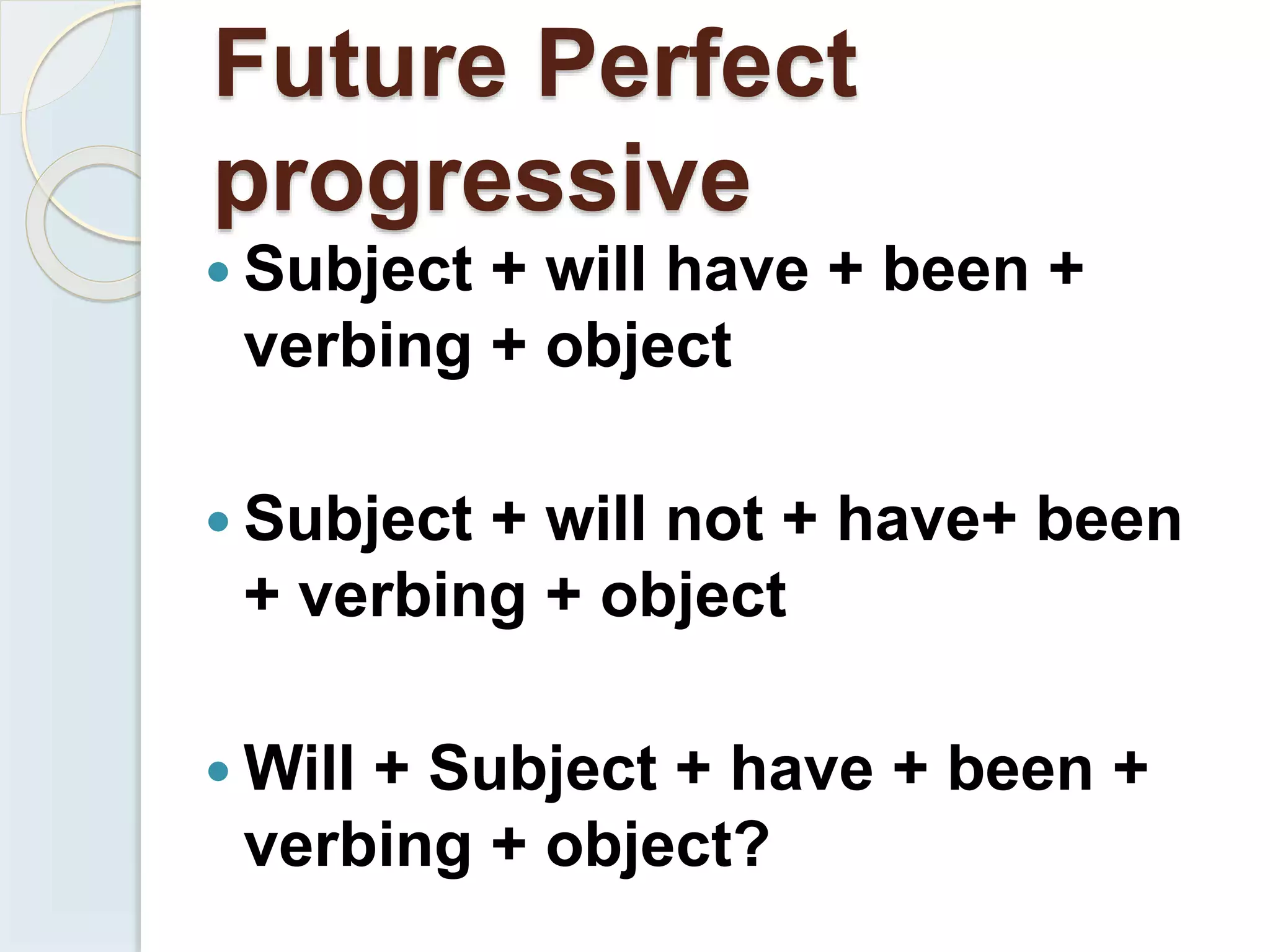
Future Perfect
progressive
 Subject + will have + been +
verbing + object
 Subject + will not + have+ been
+ verbing + object
 Will + Subject + have + been +
verbing + object?
Future perfect
progressive
 I will have been using this cell phone by
2014.
 He will have been playing for 2 hours.
 We will not have been attending any
party in June.
 She will not have been performing her
duties for 2 weeks.
 Have you been looking for a job next
year?
 Have they been waiting for us for 3

Basic English Language for Adult learners

  • 1.
  • 2.
    TENSES There are threetenses (Time): Present Past Future
  • 3.
    PRESENT TENSE In presentthere are four sentence structures  Present Simple  Present Progressive  Present Perfect  Present Perfect Progressive
  • 4.
    Present simple It is usedto express present repeated actions such as daily routine, habits and universal truths.
  • 5.
    Present simple  Subject+verb1stform + object  Subject + do/does + not + verb1stform + object  Do/does + subject + verb1stform + object?
  • 6.
    Present simple I wakeup at 8:00. He works for a bank. We don’t like rock music. She doesn’t come on time. Do you drive fast? Does it rain in summer in your city?
  • 7.
    Present progressive It isused to express a progressive action in present time.
  • 8.
    Present progressive Subject + is/am/are+ verbing+ object Subject + is/am/are + not + verbing+ object Is/am/are + Subject + verbing+ object?
  • 9.
    Present progressive I amlearning English. He is making sentences. They are not attending class. She is not making dinner. Are you teaching right now? Is it working properly?
  • 10.
    Present perfect It isused to talk about a complete past action that has some result or effect in present.
  • 11.
    Present perfect  Subject+ have/has + verb3rdform + object  Subject + have/has + not + verb3rdform + object  Have/has + Subject + verb3rdform + object?
  • 12.
    Present perfect  Ihave finished my lecture.  She has seen many countries.  We haven’t submitted our fees.  He hasn’t called me yet.  Have you invited them to the party?  Have they paid their rent?  It has run out of batteries.
  • 13.
    Present perfect progressive It isused to express a progressive action with a time frame that indicates since when or for how long the action is in progress.
  • 14.
    Present perfect progressive Subject +have/has + been + verbing + object Subject + have/has + not + been + verbing + object Have/has + Subject + been + verbing + object?
  • 15.
    Present perfect progressive Use sincefor mentioning exact or starting time of any progressive action Use for to mention duration of any progressive action
  • 16.
    Present perfect progressive  Ihave been using this cell phone since 2010.  He has been playing for 2 hours.  We haven’t been attending any party since June.  She hasn’t been performing her duties for 2 weeks.  Have you been looking for a job since 2007?  Have they been waiting for us for 3 hours?
  • 17.
    PAST TENSE In pastthere are four sentence structures Past Simple Past Progressive Past Perfect Past Perfect Progressive
  • 18.
    Past simple It isused to express past actions.
  • 19.
    Past simple Subject+ verb2ndform+ object Subject + did + not + verb1stform + object Did + subject + verb1stform + object?
  • 20.
    Past simple I wokeup at 8:00. He worked for a bank. We didn’t like rock music. She didn’t come on time. Did you drive fast? Did it rain in summer in your city?
  • 21.
    Past progressive It isused to express a progressive action in past time.
  • 22.
    Past progressiveSubject + was/were+ verbing+ object Subject + was/were + not + verbing+ object Was/were + Subject + verbing+ object?
  • 23.
    Past progressive  Iwas learning English.  He was making sentences.  They were not attending class.  She was not making dinner.  Were you teaching at that time?  Was it working properly?
  • 24.
    Past perfect It isused to talk about a complete past action that happened before another past action or past time.
  • 25.
    Past perfect  Subject+ had + verb3rdform + object  Subject + had + not + verb3rdform + object  Had + Subject + verb3rdform + object?
  • 26.
    Past perfect  Ihad finished my lecture before 2:00.  She had seen many countries when she died.  We hadn’t submitted our fees before deadline.  He hadn’t called me when I reached his home.  Had you invited them to the party before 1:00?  Had they paid their rent before January?  It had run out of batteries before guarantee ended.
  • 27.
    Past perfect progressive It isused to express a past progressive action with a time frame that indicates since when or for how long the action was in progress.
  • 28.
    Past perfect progressive Subject + had + been + verbing + object  Subject + had + not + been + verbing + object  Had + Subject + been + verbing + object?
  • 29.
    Past perfect progressive  Ihad been using this cell phone since 2010.  He had been playing for 2 hours.  We hadn’t been attending any party since June.  She hadn’t been performing her duties for 2 weeks.  Had you been looking for a job since 2007?  Had they been waiting for us for 3 hours?
  • 30.
    FUTURE TENSE In futurethere are four sentence structures  Future Simple  Future Progressive  Future Perfect  Future Perfect Progressive
  • 31.
    Future simple It is usedto express future actions.
  • 32.
    Future simple Subject+ will+ verb1stform + object Subject + will + not + verb1stform + object Will + subject + verb1stform + object?
  • 33.
    Future simple I willwake up at 8:00. He will work for a bank. We won’t like rock music. She won’t come on time. Will you drive fast? Will it rain in summer in your city?
  • 34.
    Future progressive It is usedto express a progressive action in future time.
  • 35.
    Future progressive Subject + willbe + verbing+ object Subject + will + not + be + verbing+ object Will+ Subject + be + verbing+ object?
  • 36.
    Future progressive  I willbe learning English.  He will be making sentences.  They will not be attending class.  She will not be making dinner.  Will you be teaching right now?  Will it be working properly?
  • 37.
    Future Perfect It isused to talk about a complete future action.
  • 38.
    Future Perfect  Subject+ will have + verb3rdform + object  Subject + will not + have + verb3rdform + object  Will + Subject + have + verb3rdform + object?
  • 39.
    Future Perfect  Iwill have finished my lecture.  She will have seen many countries.  We will not have submitted our fees.  He will not have called me.  Will you have invited them to the party?  Will they have paid their rent?  It will have run out of battries.
  • 40.
    Future Perfect progressive It isused to express a future progressive action with a time frame that indicates since when or for how long the action will be in progress.
  • 41.
    Future Perfect progressive  Subject+ will have + been + verbing + object  Subject + will not + have+ been + verbing + object  Will + Subject + have + been + verbing + object?
  • 42.
    Future perfect progressive  Iwill have been using this cell phone by 2014.  He will have been playing for 2 hours.  We will not have been attending any party in June.  She will not have been performing her duties for 2 weeks.  Have you been looking for a job next year?  Have they been waiting for us for 3