Unit – 2 – Basic Concepts of Fluid flow
• Kinematics: Classification of flows – Streamline, streak-line and path-
lines – Stream function and velocity potentials – Flow nets
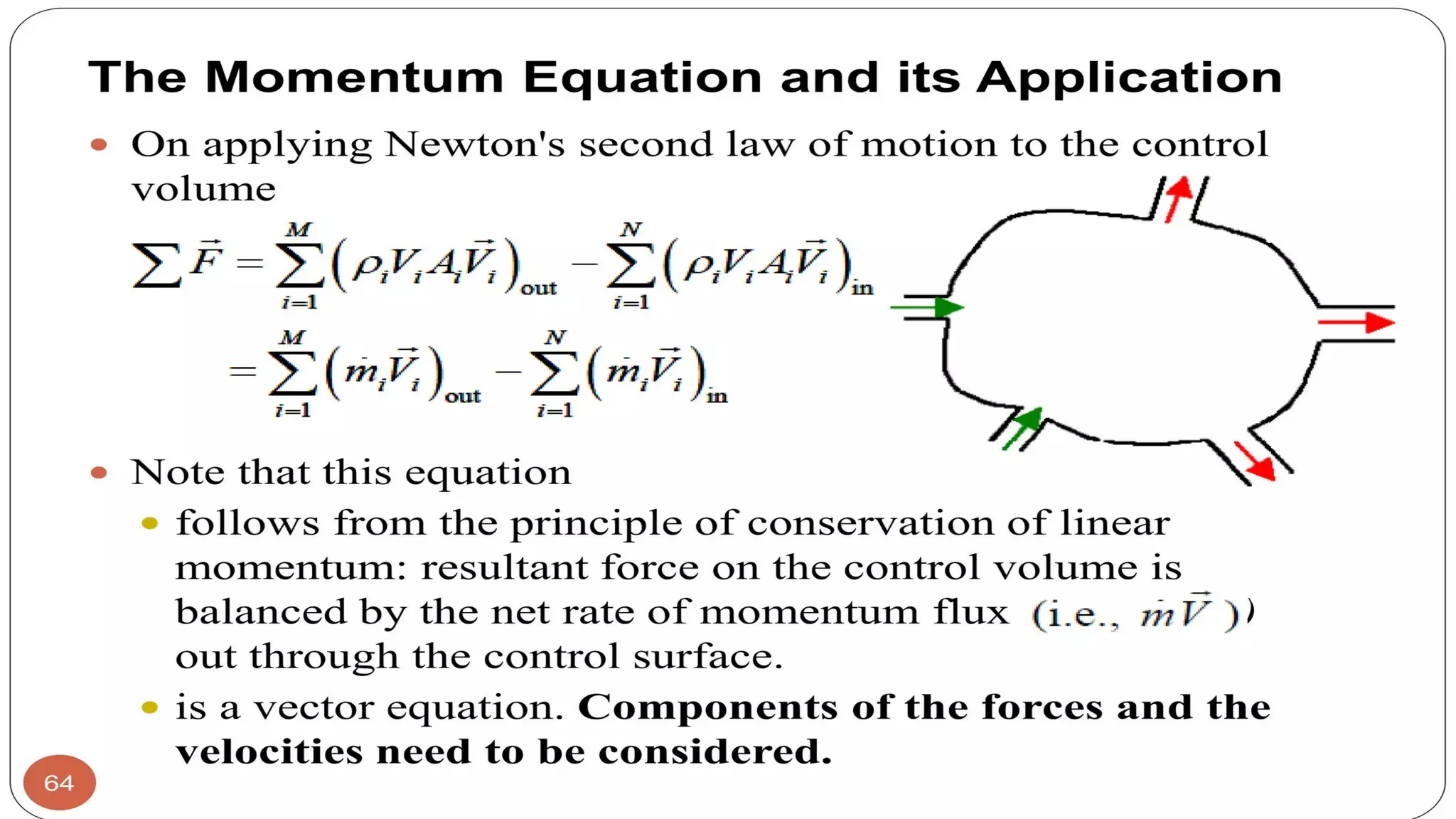
• Dynamics : Application of control volume to continuity, energy and
momentum – Euler’s equation of motion along a stream line –
Bernoulli’s equation – Applications to velocity and discharge
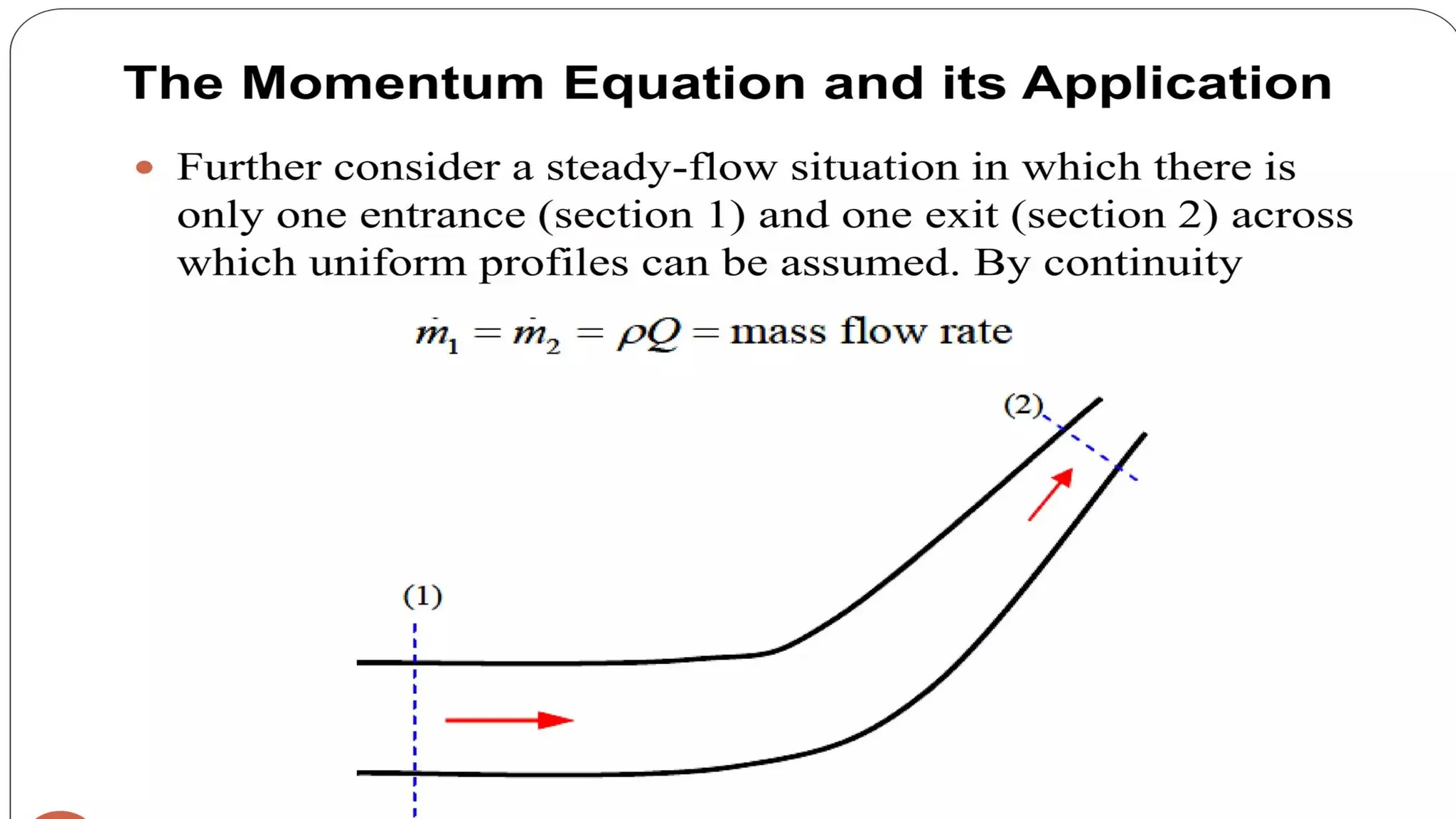
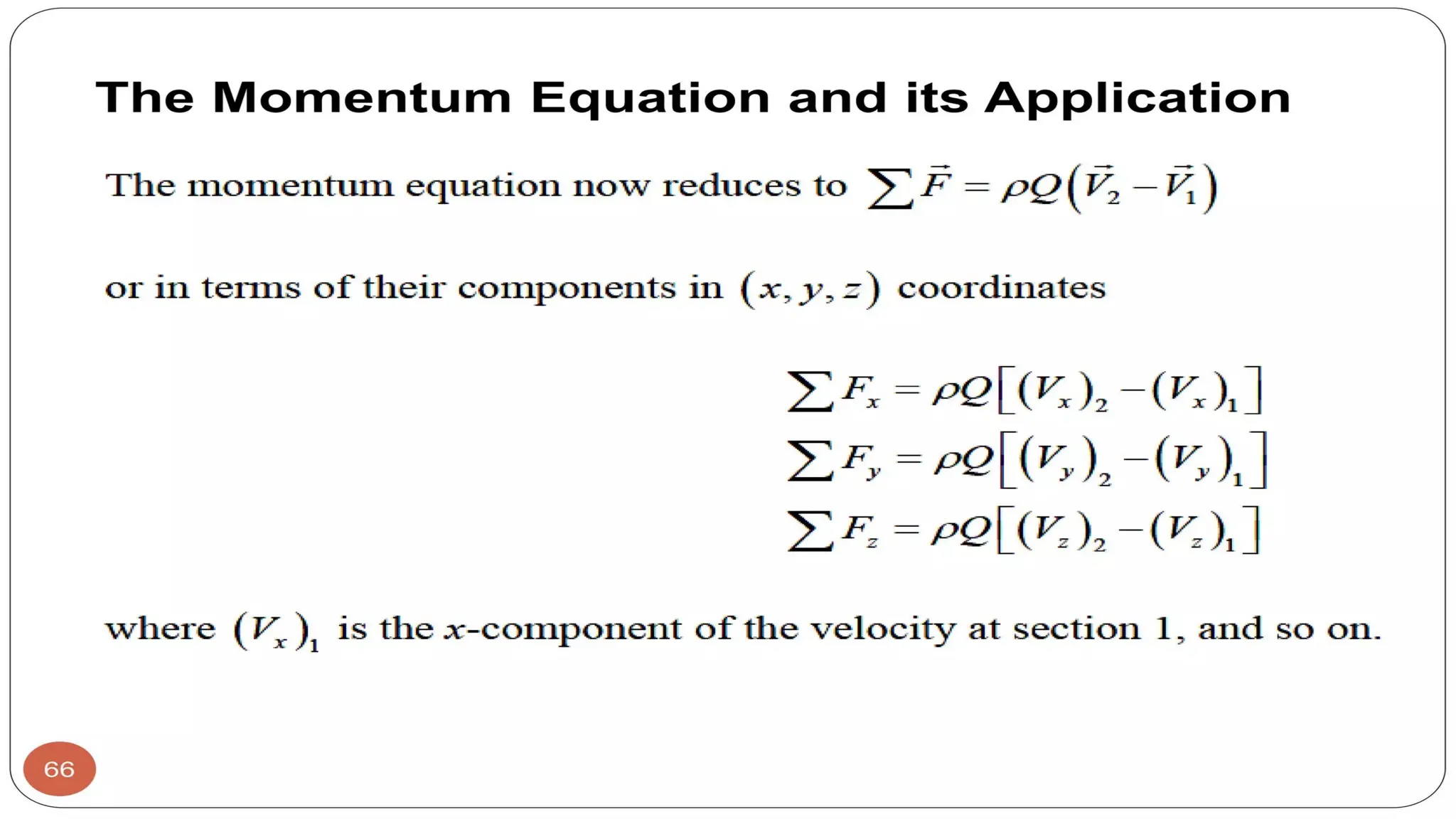
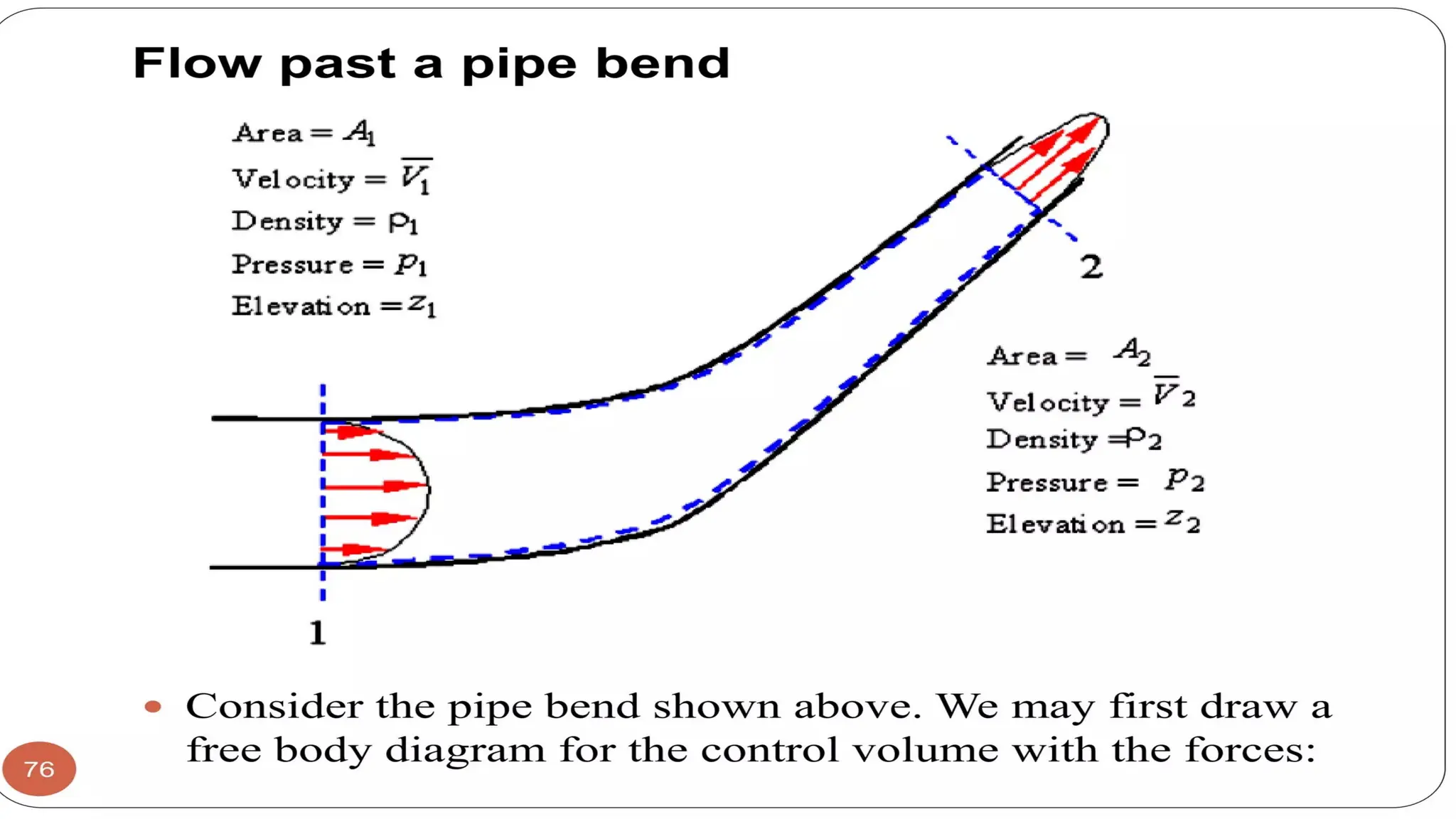
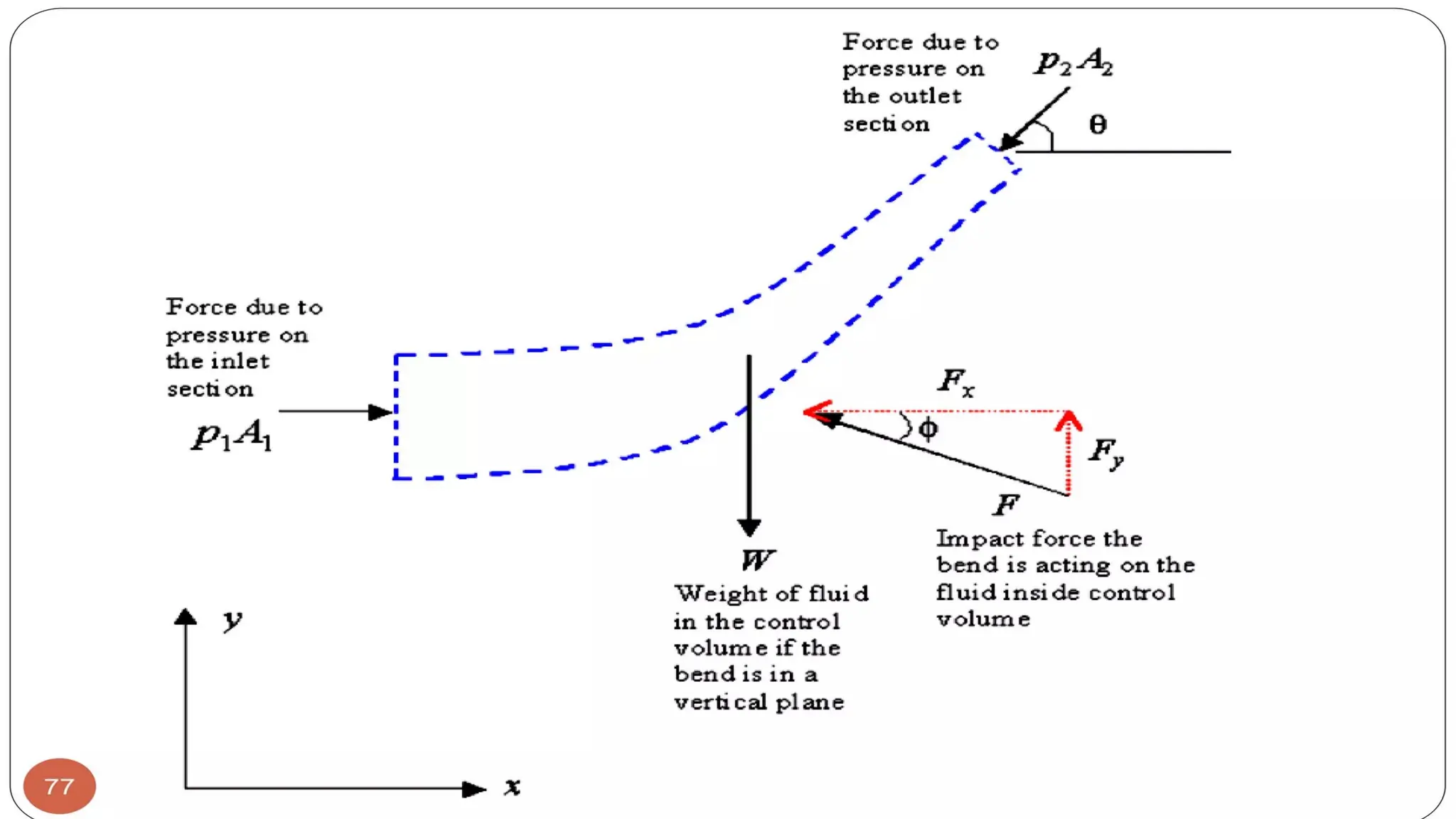
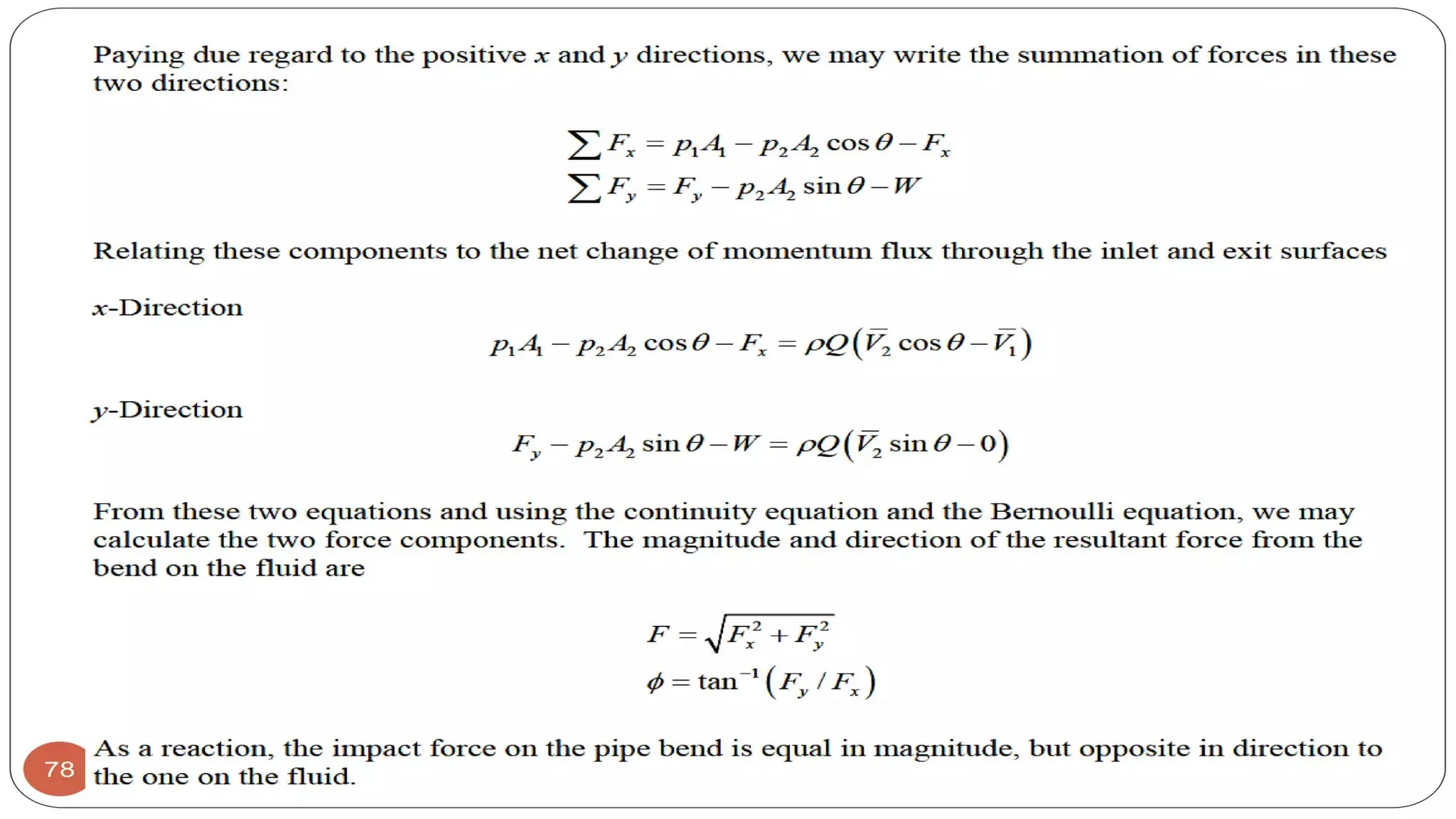
measurements – Linear momentum equation – Application to Pipe
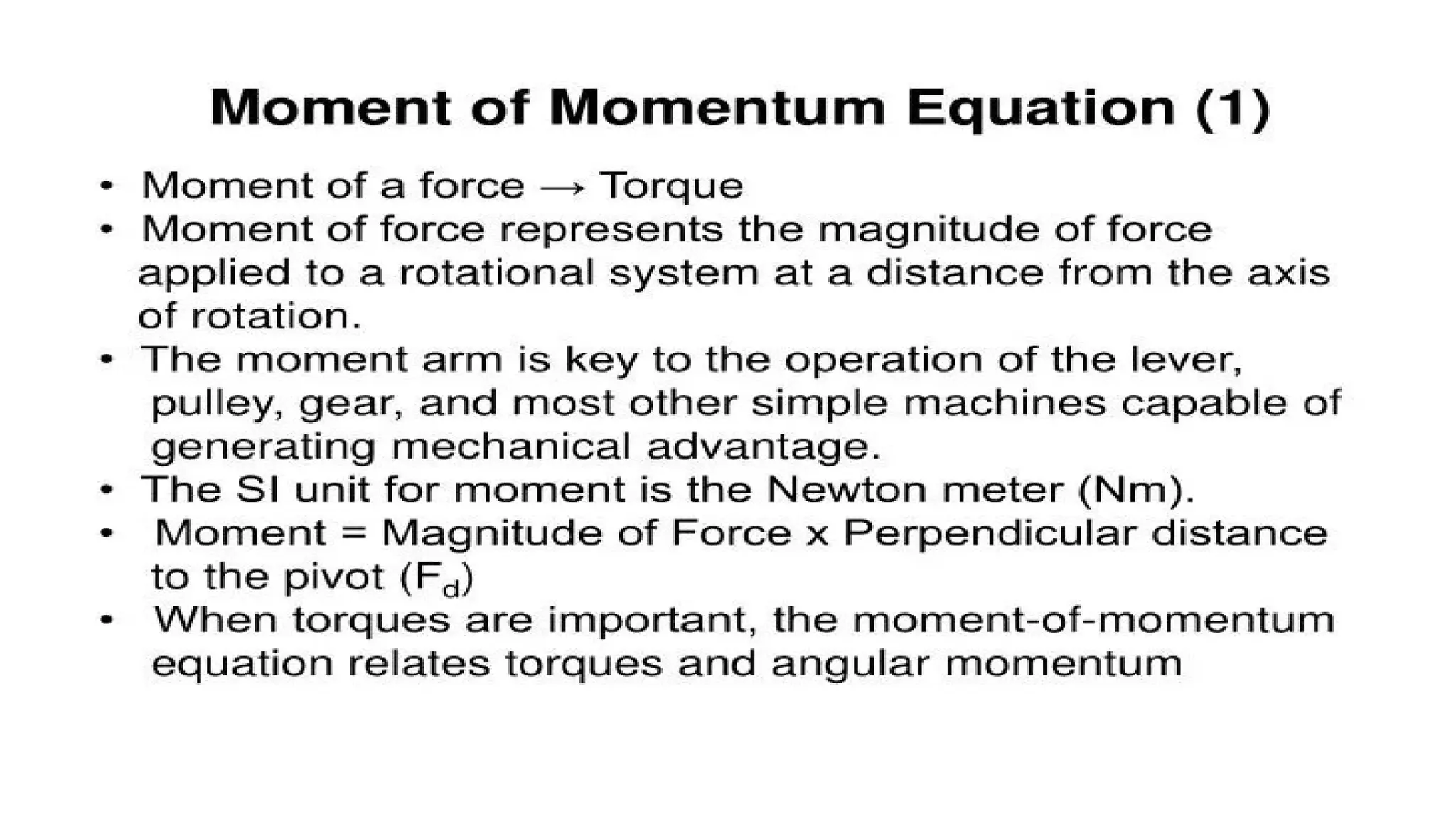
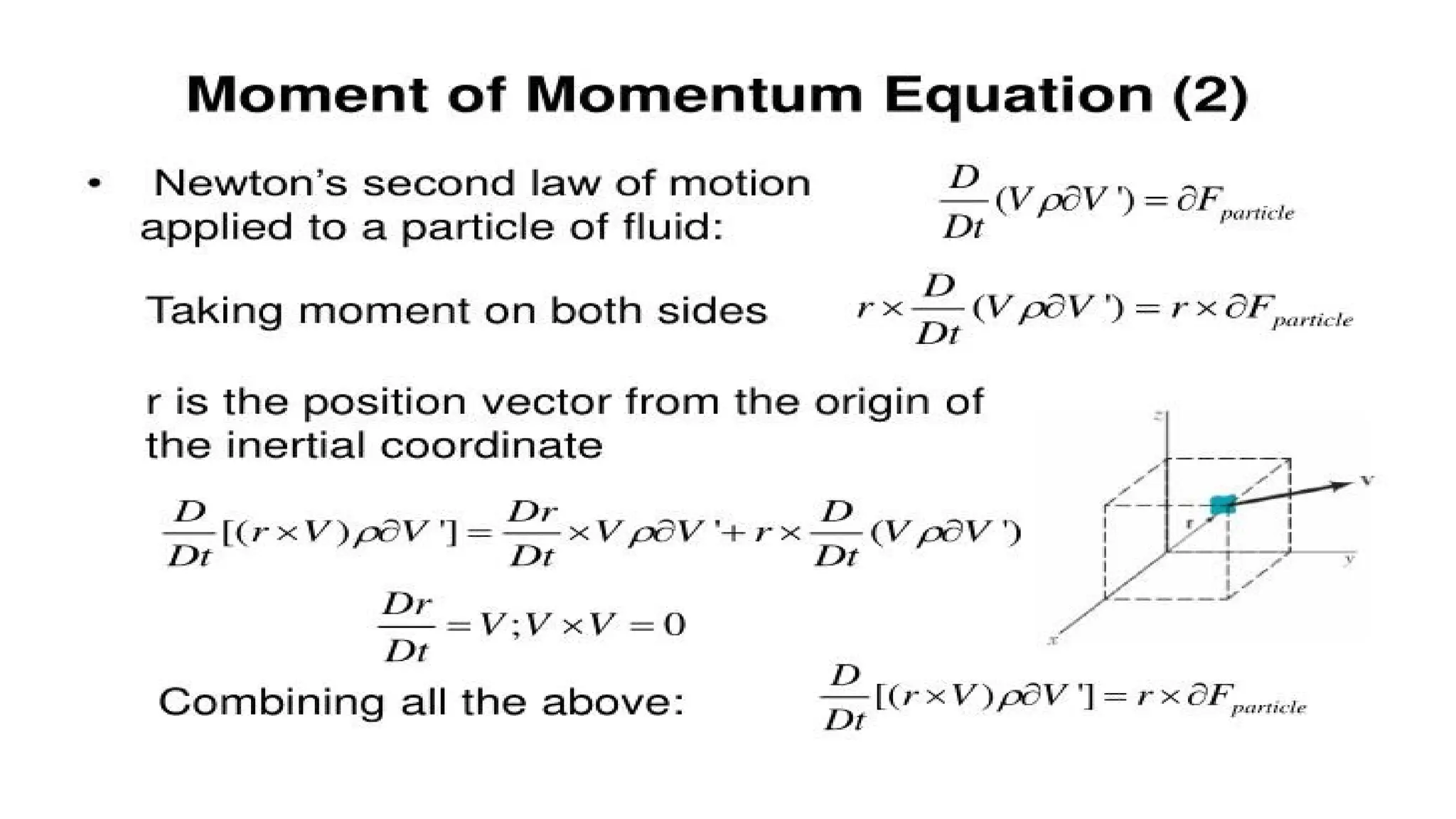
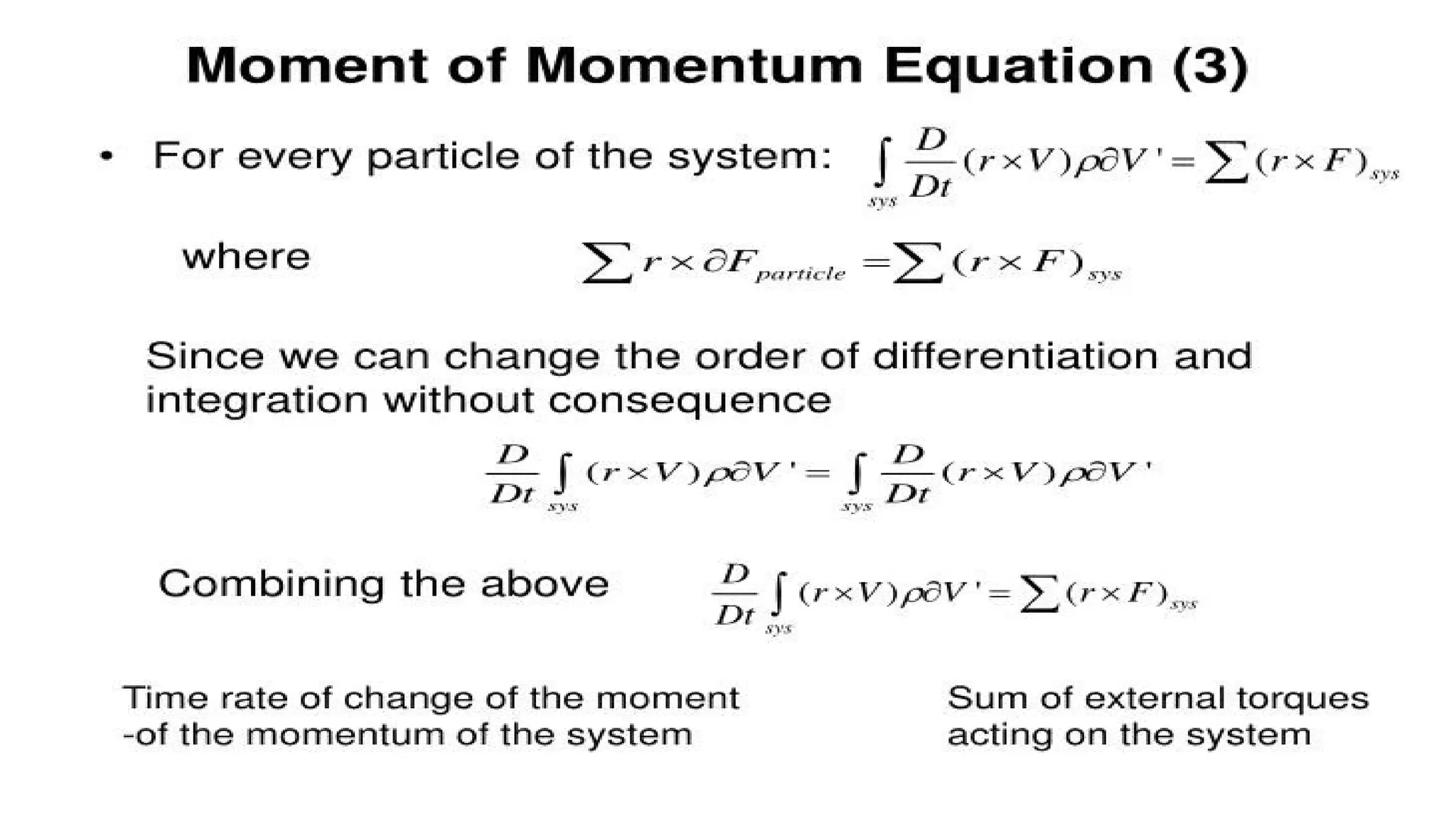
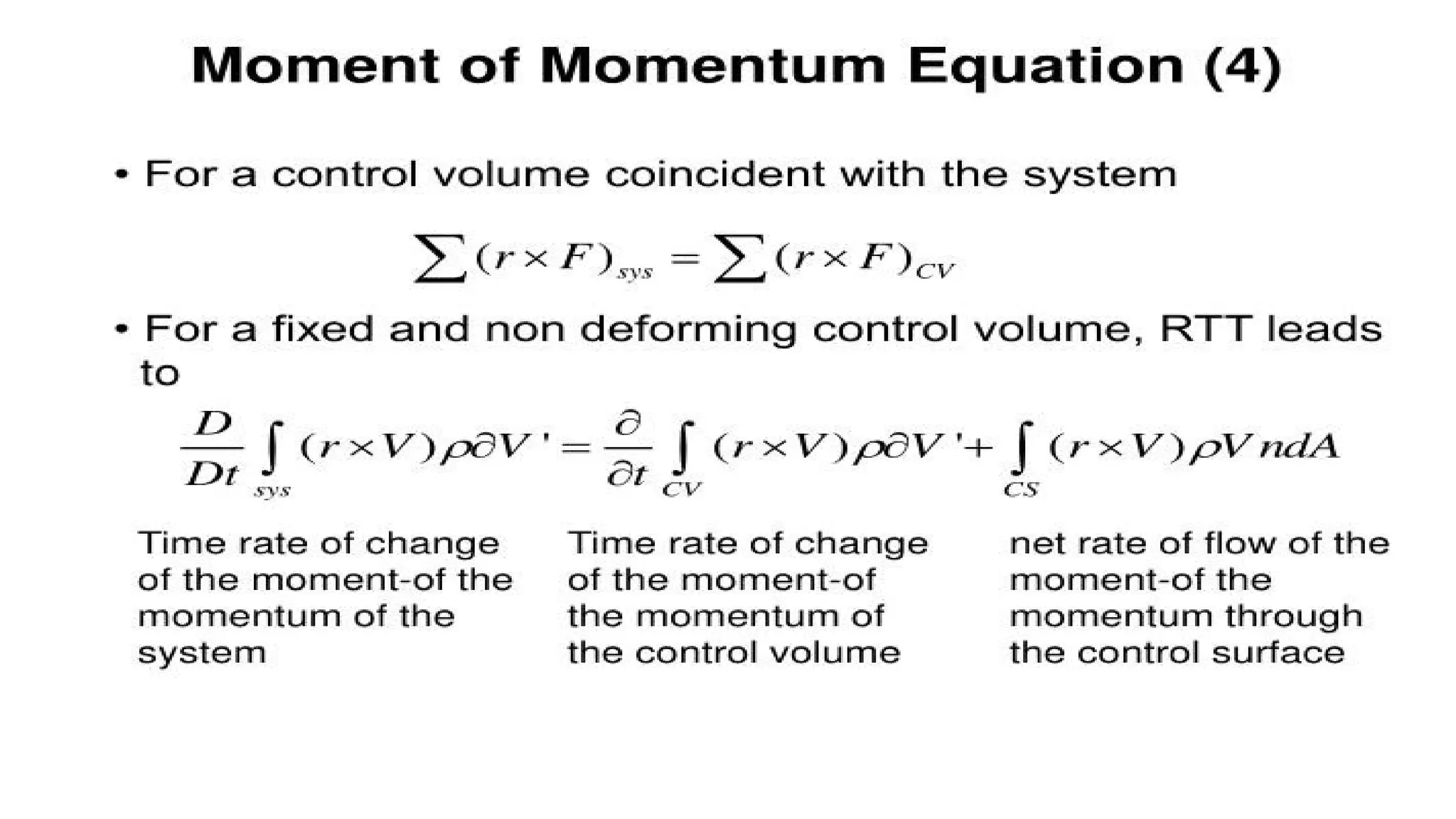
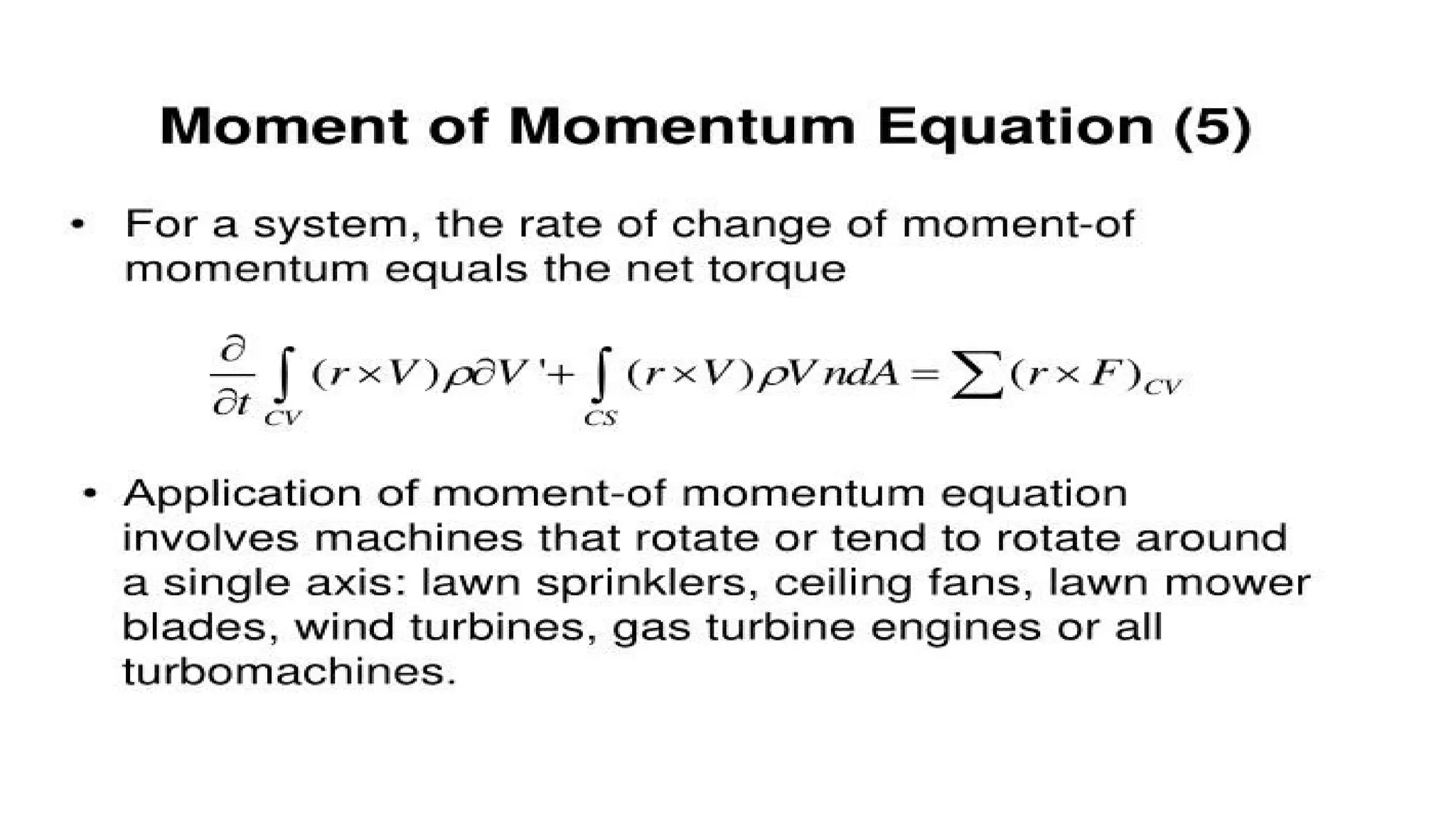
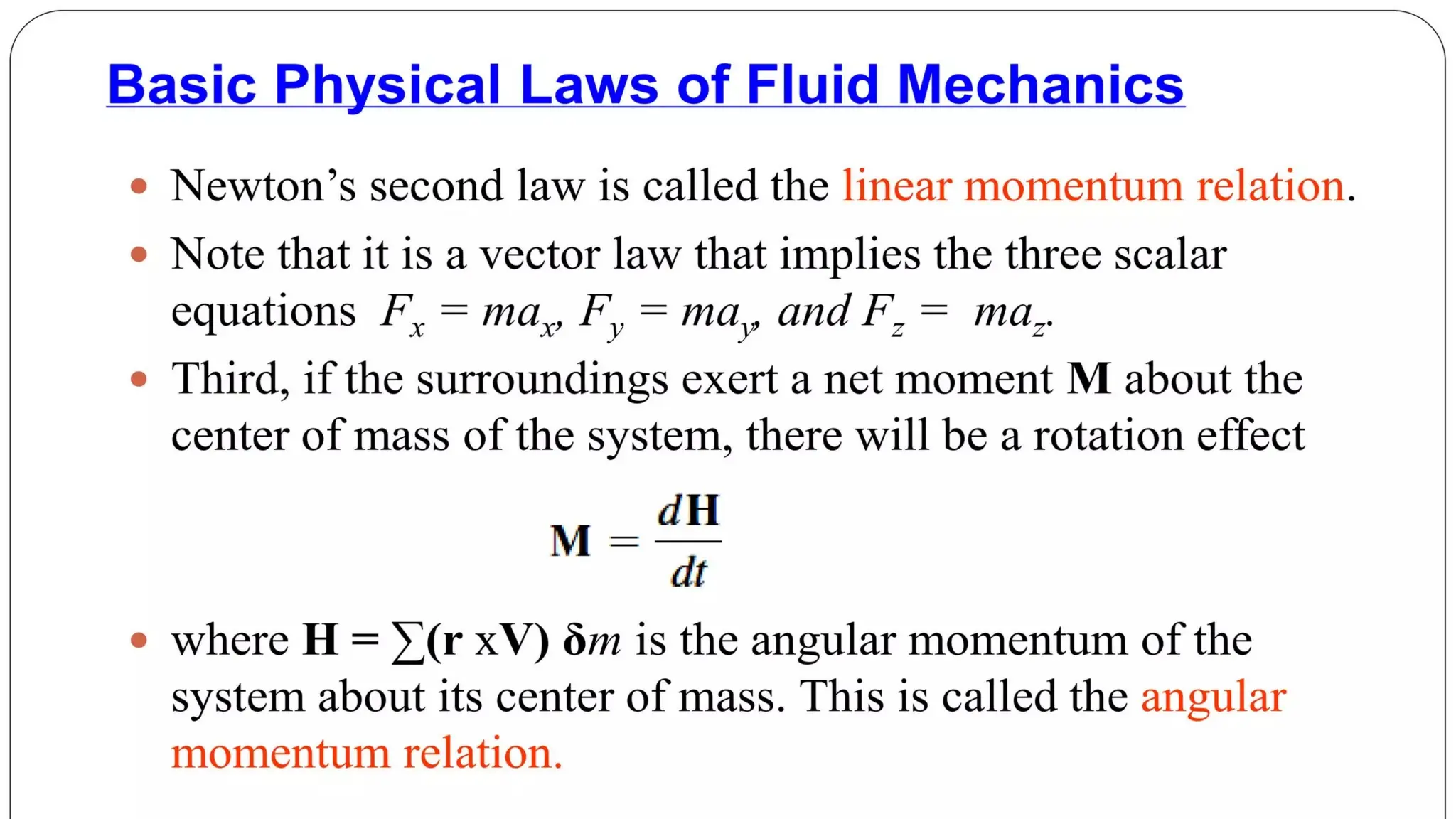
bends – Moment of momentum equation.
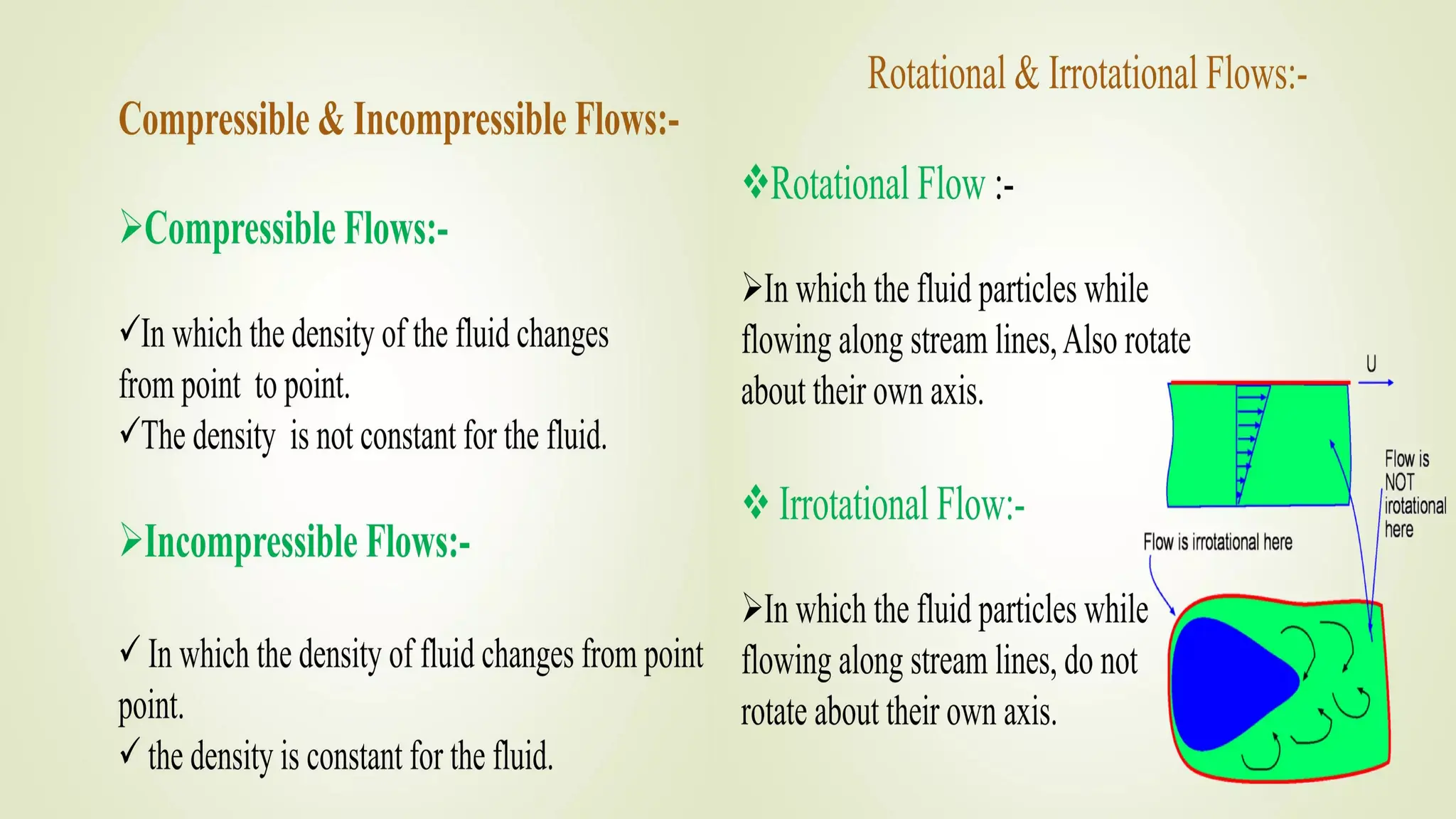
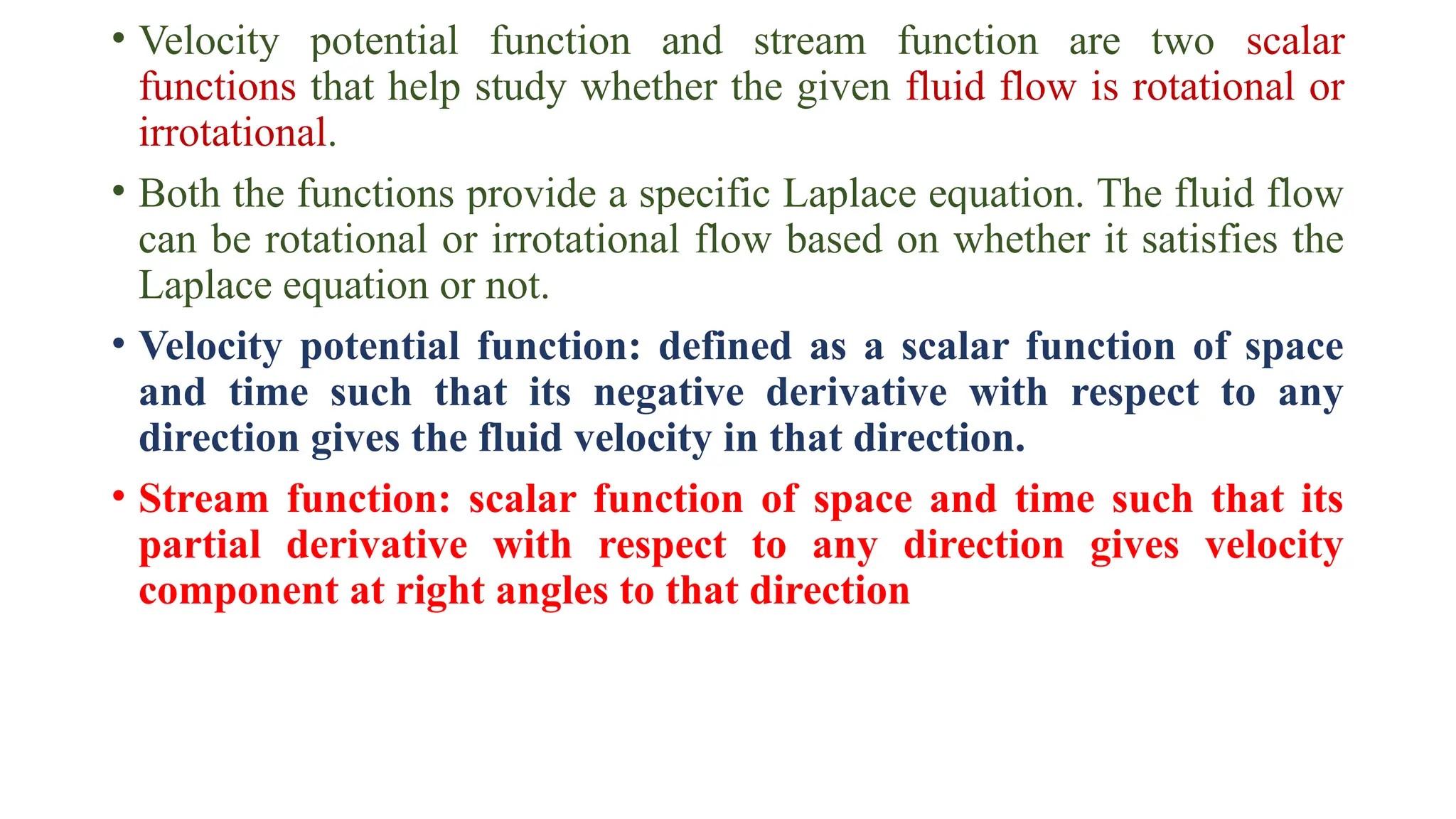
• Velocity potential function and stream function are two scalar
functions that help study whether the given fluid flow is rotational or
irrotational.
• Both the functions provide a specific Laplace equation. The fluid flow
can be rotational or irrotational flow based on whether it satisfies the
Laplace equation or not.
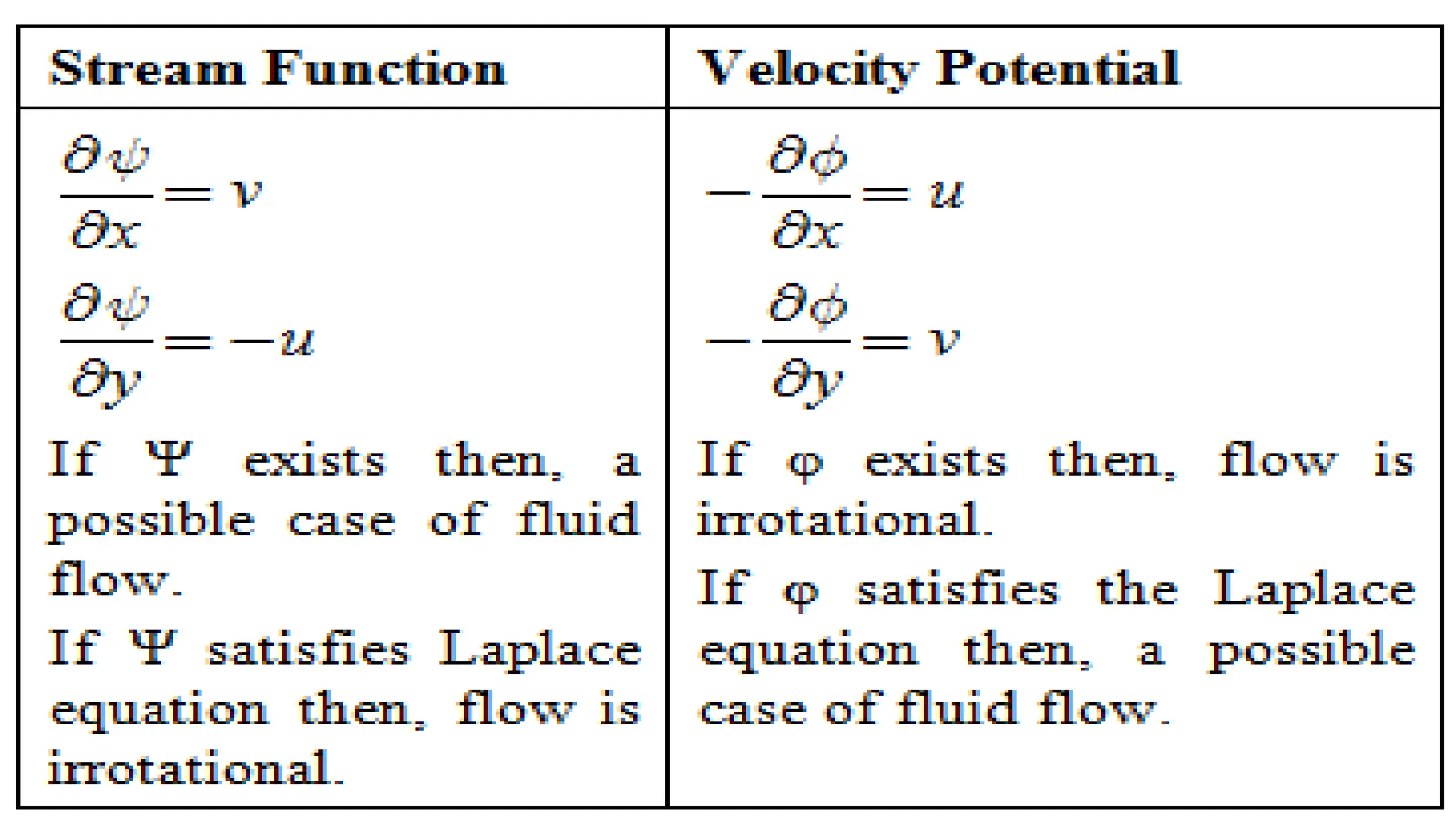
• Velocity potential function: defined as a scalar function of space
and time such that its negative derivative with respect to any
direction gives the fluid velocity in that direction.
• Stream function: scalar function of space and time such that its
partial derivative with respect to any direction gives velocity
component at right angles to that direction
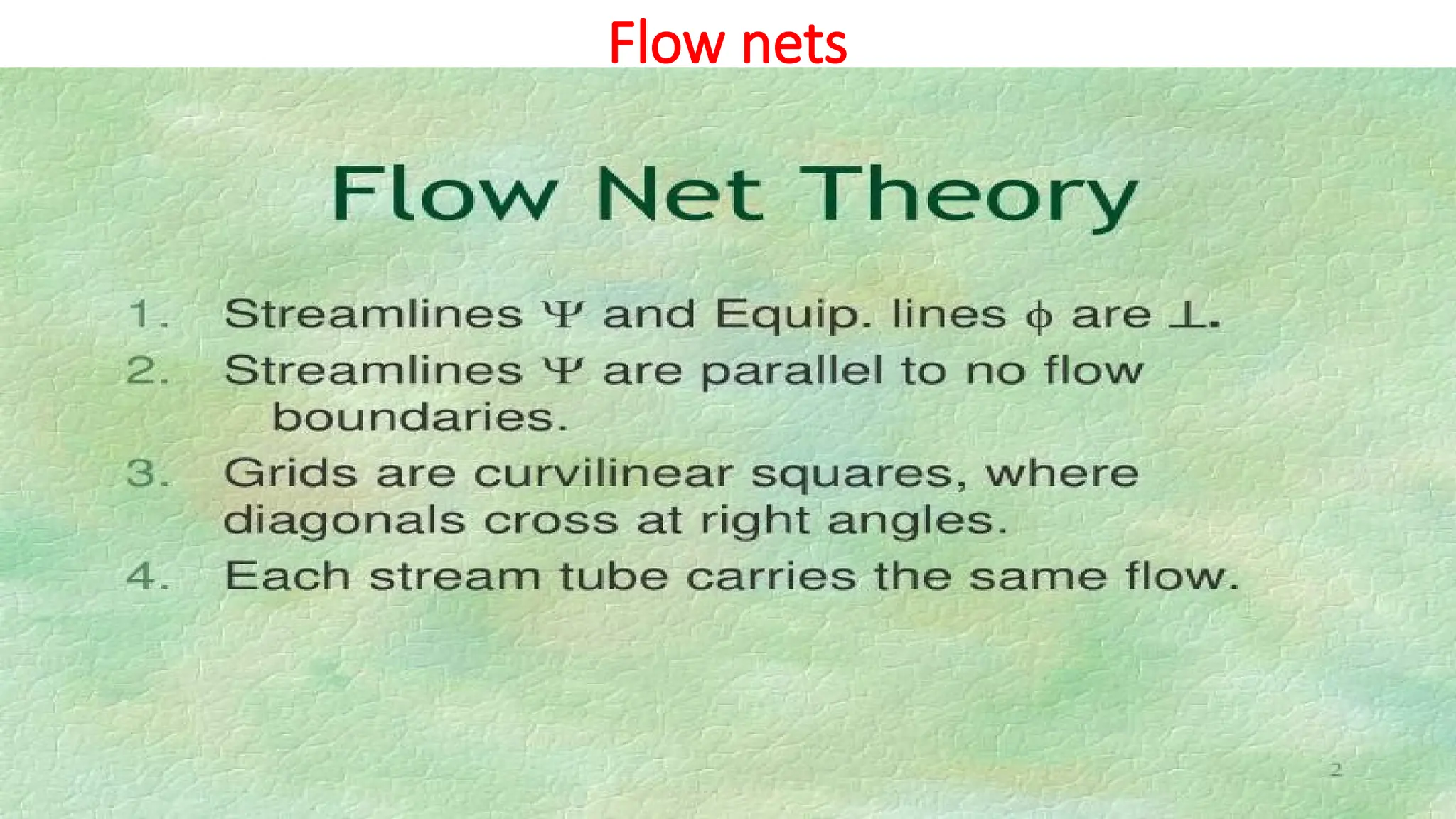
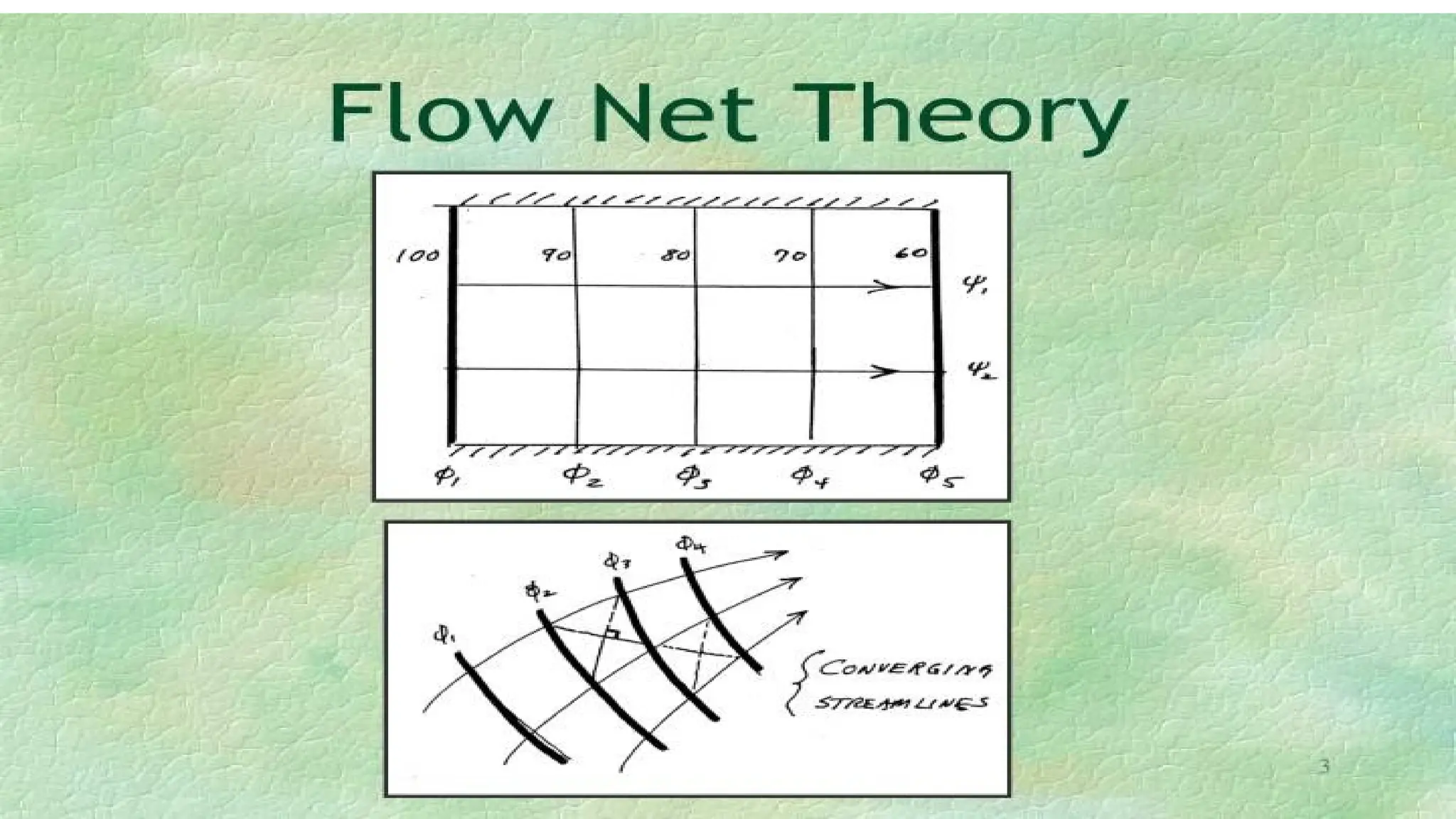
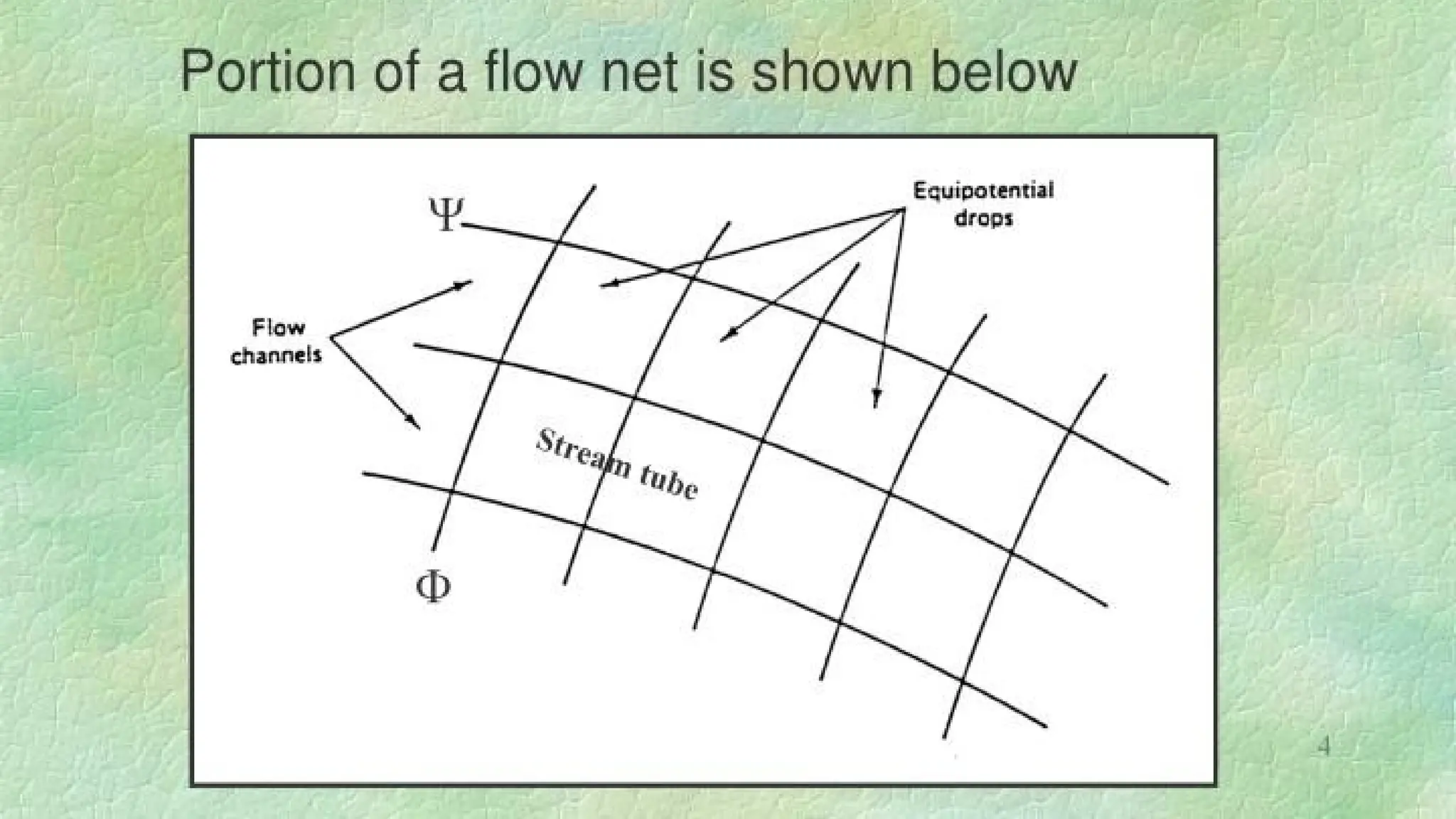
Flow nets
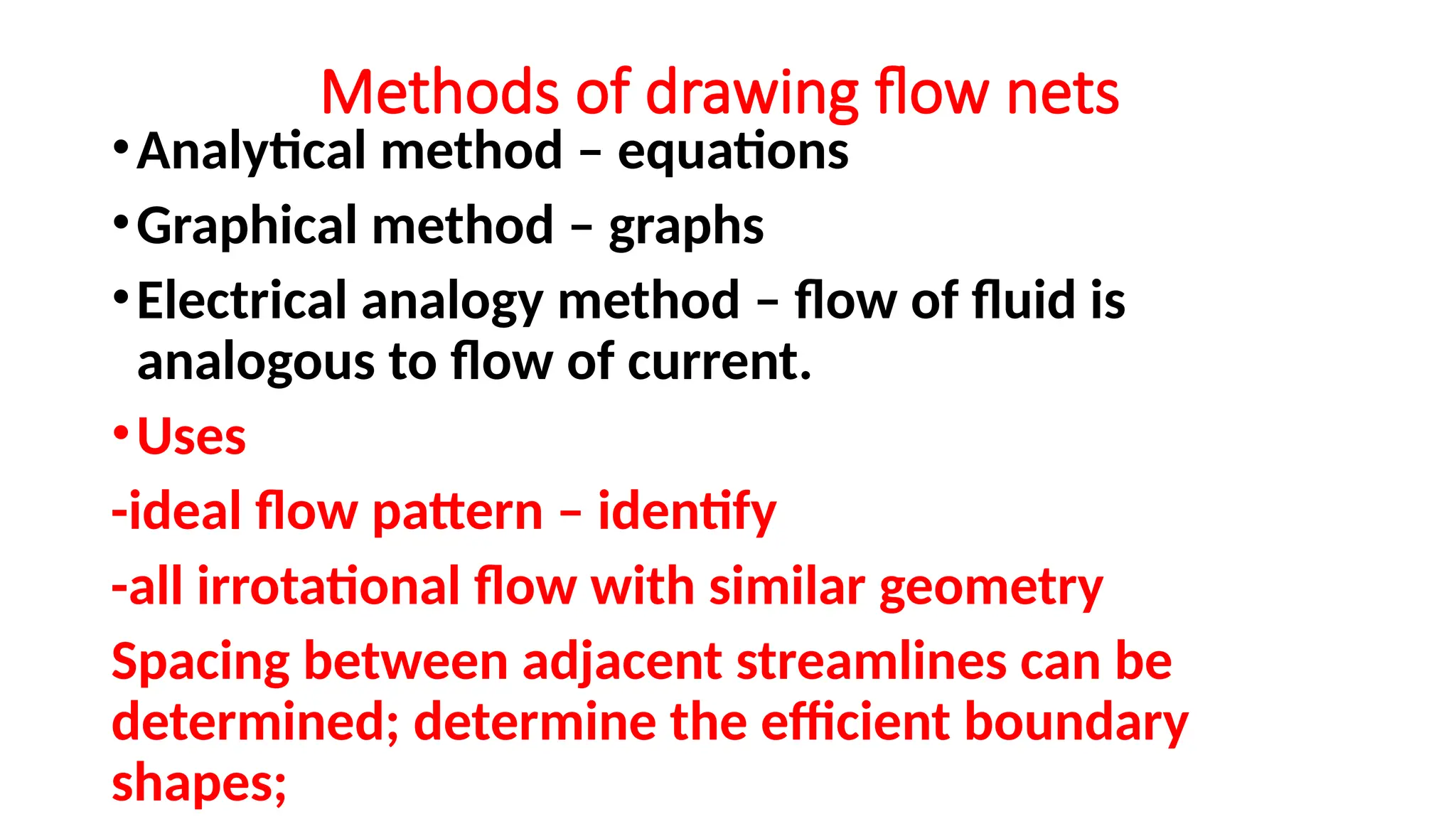
Methods of drawing flow nets
•Analytical method – equations
•Graphical method – graphs
•Electrical analogy method – flow of fluid is
analogous to flow of current.
•Uses
-ideal flow pattern – identify
-all irrotational flow with similar geometry
Spacing between adjacent streamlines can be
determined; determine the efficient boundary
shapes;
Basic concepts of fluid flow-fluid kinematics and dynamics

Basic concepts of fluid flow-fluid kinematics and dynamics

  • 1.
    Unit – 2– Basic Concepts of Fluid flow • Kinematics: Classification of flows – Streamline, streak-line and path- lines – Stream function and velocity potentials – Flow nets • Dynamics : Application of control volume to continuity, energy and momentum – Euler’s equation of motion along a stream line – Bernoulli’s equation – Applications to velocity and discharge measurements – Linear momentum equation – Application to Pipe bends – Moment of momentum equation.
  • 26.
    • Velocity potentialfunction and stream function are two scalar functions that help study whether the given fluid flow is rotational or irrotational. • Both the functions provide a specific Laplace equation. The fluid flow can be rotational or irrotational flow based on whether it satisfies the Laplace equation or not. • Velocity potential function: defined as a scalar function of space and time such that its negative derivative with respect to any direction gives the fluid velocity in that direction. • Stream function: scalar function of space and time such that its partial derivative with respect to any direction gives velocity component at right angles to that direction
  • 28.
  • 31.
    Methods of drawingflow nets •Analytical method – equations •Graphical method – graphs •Electrical analogy method – flow of fluid is analogous to flow of current. •Uses -ideal flow pattern – identify -all irrotational flow with similar geometry Spacing between adjacent streamlines can be determined; determine the efficient boundary shapes;