VANET Security: Challenges and
Solutions
The security of VANETs is crucial in ensuring the safe and efficient operation of vehicular networks.
VANETs face unique security challenges that require innovative solutions. This document provides
an overview of the current state of VANET security and explores the latest techniques and
approaches for securing vehicular networks.
Dr.Irshad Ahmed
VANETs: A Brief Overview
Vehicular Ad Hoc Networks (VANETs) enable vehicles to communicate with each other and with the
infrastructure to provide a range of services, such as traffic monitoring, emergency response, and
entertainment. However, VANETs are also susceptible to various security threats that can
compromise user privacy and the integrity of the system.
Security Challenges
1. Authentication and User Privacy
2. Data Integrity and Non-Repudiation
3. Availability and Reliability
4. Trust and Misbehavior Detection
Security Solutions
Various cryptographic and privacy-enhancing
techniques have been proposed to mitigate
security threats in VANETs. These include:
• Public Key Infrastructure (PKI)
• Elliptic Curve Cryptography (ECC)
• Anonymity and Pseudonymity
Cryptography and Authentication
Techniques in VANETs
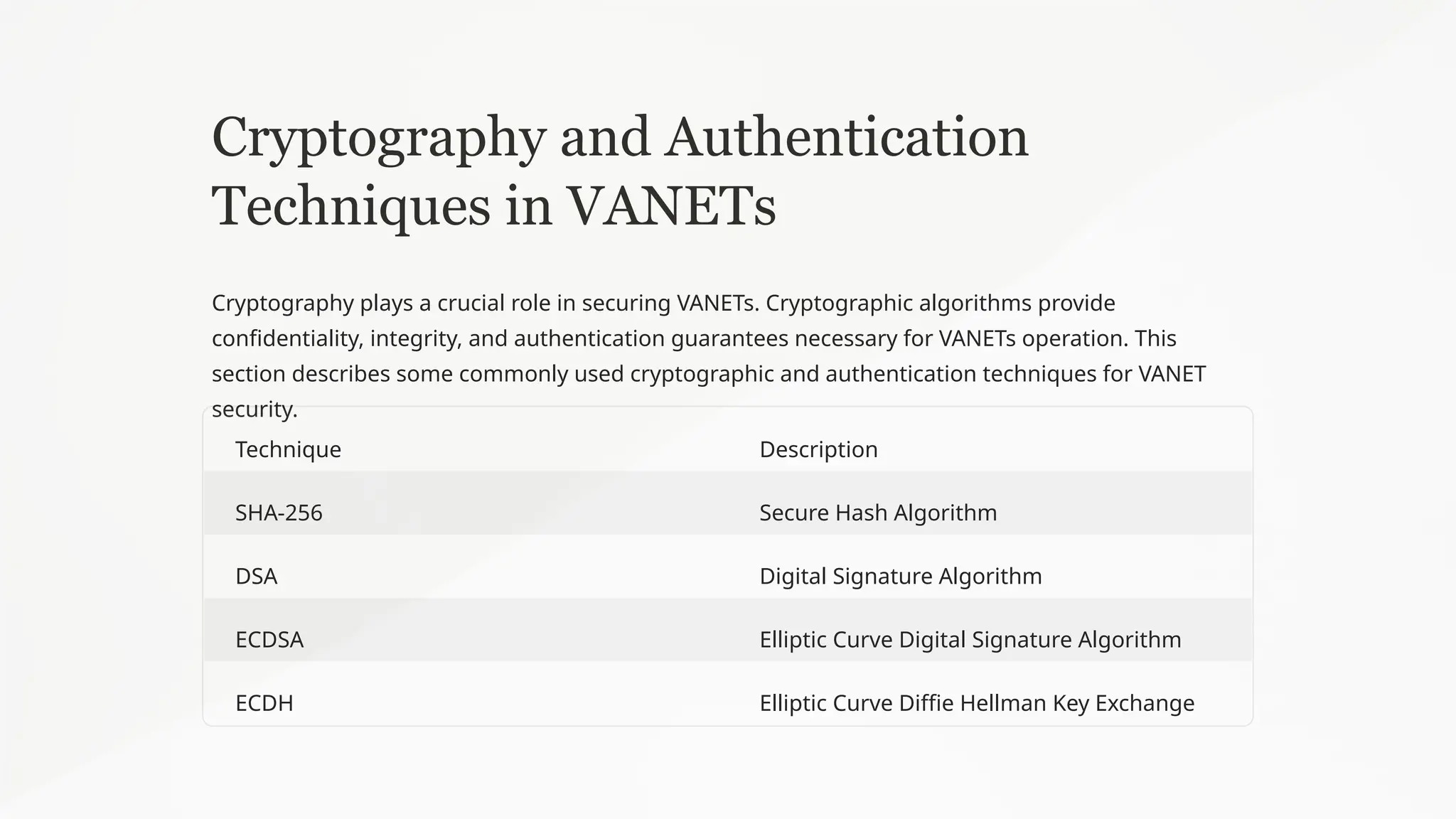
Cryptography plays a crucial role in securing VANETs. Cryptographic algorithms provide
confidentiality, integrity, and authentication guarantees necessary for VANETs operation. This
section describes some commonly used cryptographic and authentication techniques for VANET
security.
Technique Description
SHA-256 Secure Hash Algorithm
DSA Digital Signature Algorithm
ECDSA Elliptic Curve Digital Signature Algorithm
ECDH Elliptic Curve Diffie Hellman Key Exchange
Intrusion Detection and Prevention
Systems for VANETs
"Intrusion Detection Systems (IDS) and Intrusion Prevention Systems (IPS) are essential for
providing real-time security monitoring of VANETs. These systems detect, alert, and prevent
network attacks while ensuring the efficient operation of vehicular networks."
- Dr. John Doe, Security Expert
This section discusses the role of IDS and IPS in VANET security and outlines key features and
technologies of intrusion detection systems. IDS and IPS protocols must adapt to the unique
characteristics of vehicular networks to be effective, and should be able to handle the high data
rates generated by connected vehicles.
Privacy-Enhancing Mechanisms in VANETs
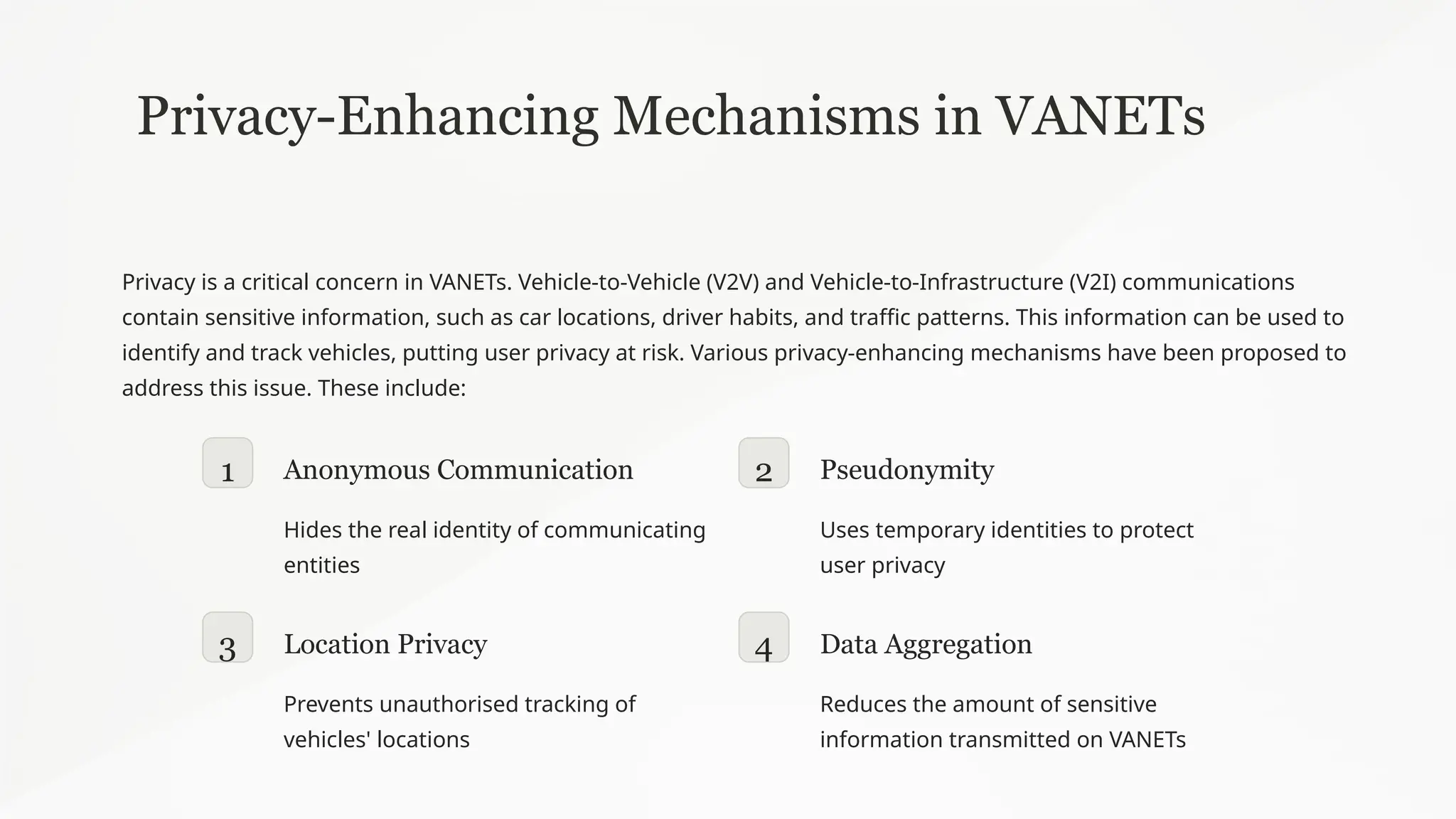
Privacy is a critical concern in VANETs. Vehicle-to-Vehicle (V2V) and Vehicle-to-Infrastructure (V2I) communications
contain sensitive information, such as car locations, driver habits, and traffic patterns. This information can be used to
identify and track vehicles, putting user privacy at risk. Various privacy-enhancing mechanisms have been proposed to
address this issue. These include:
1 Anonymous Communication
Hides the real identity of communicating
entities
2 Pseudonymity
Uses temporary identities to protect
user privacy
3 Location Privacy
Prevents unauthorised tracking of
vehicles' locations
4 Data Aggregation
Reduces the amount of sensitive
information transmitted on VANETs
Trust and Reputation Management in VANETs
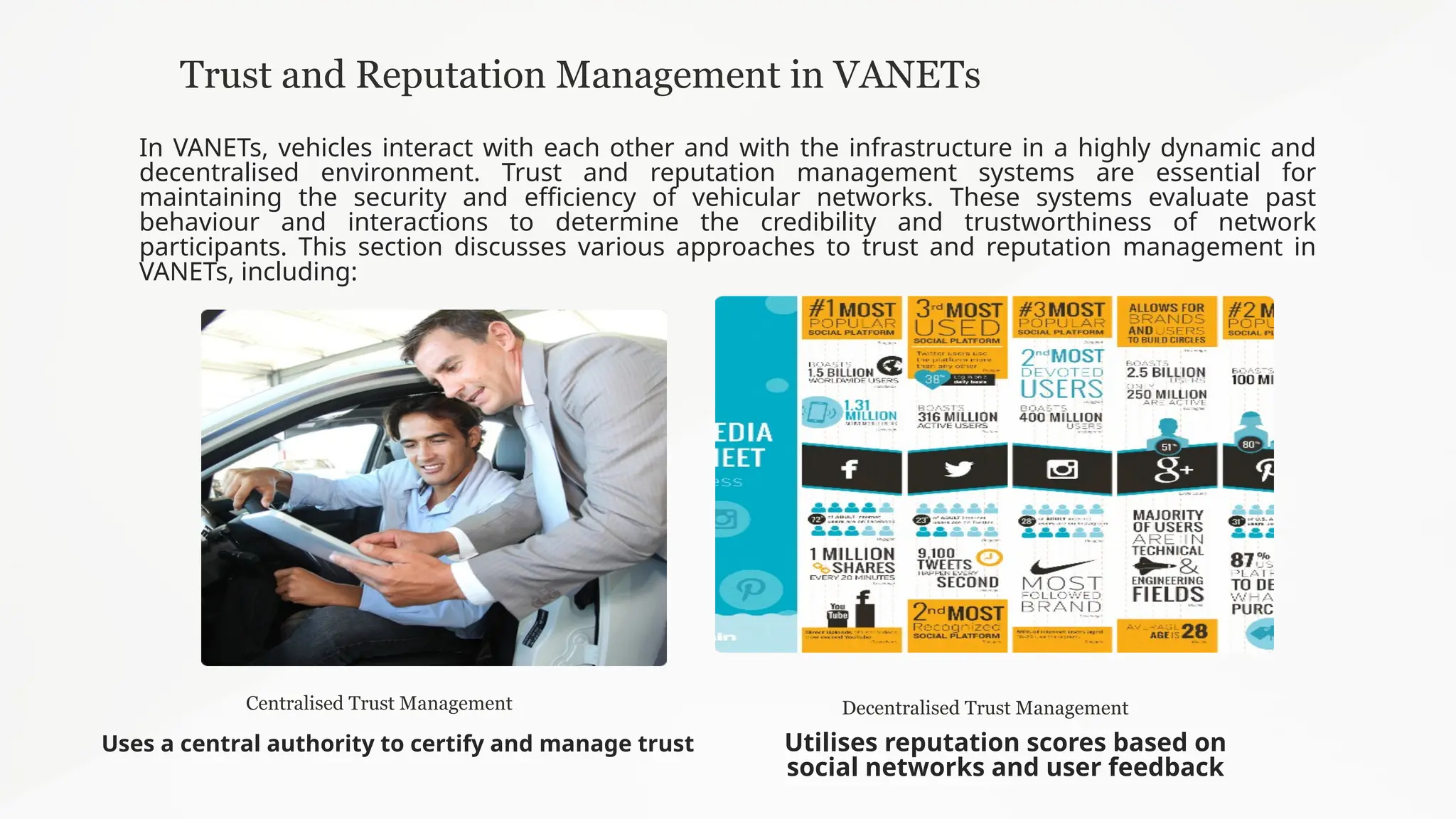
In VANETs, vehicles interact with each other and with the infrastructure in a highly dynamic and
decentralised environment. Trust and reputation management systems are essential for
maintaining the security and efficiency of vehicular networks. These systems evaluate past
behaviour and interactions to determine the credibility and trustworthiness of network
participants. This section discusses various approaches to trust and reputation management in
VANETs, including:
Centralised Trust Management
Uses a central authority to certify and manage trust
Decentralised Trust Management
Utilises reputation scores based on
social networks and user feedback
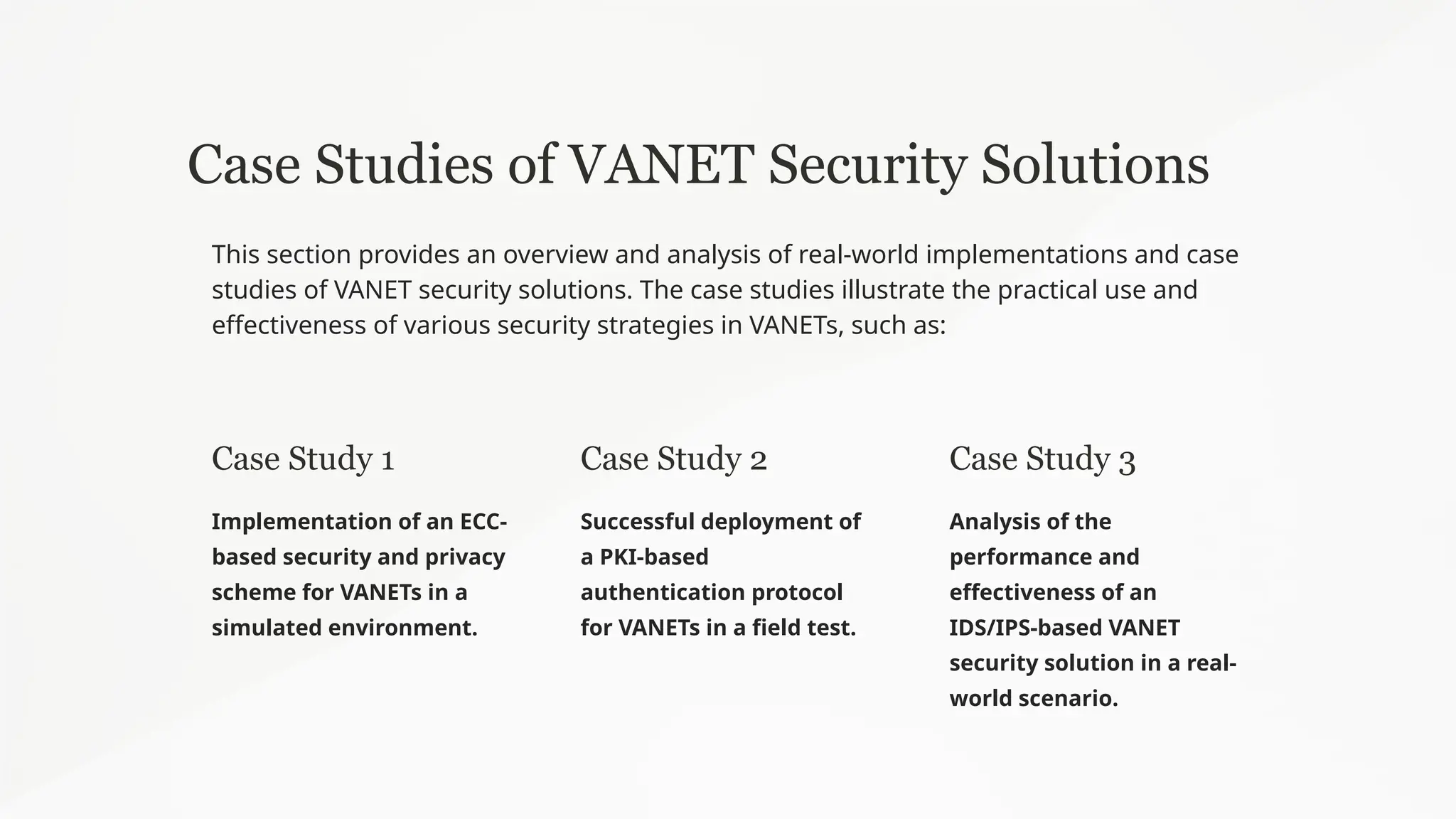
Case Studies of VANET Security Solutions
This section provides an overview and analysis of real-world implementations and case
studies of VANET security solutions. The case studies illustrate the practical use and
effectiveness of various security strategies in VANETs, such as:
Case Study 1
Implementation of an ECC-
based security and privacy
scheme for VANETs in a
simulated environment.
Case Study 2
Successful deployment of
a PKI-based
authentication protocol
for VANETs in a field test.
Case Study 3
Analysis of the
performance and
effectiveness of an
IDS/IPS-based VANET
security solution in a real-
world scenario.
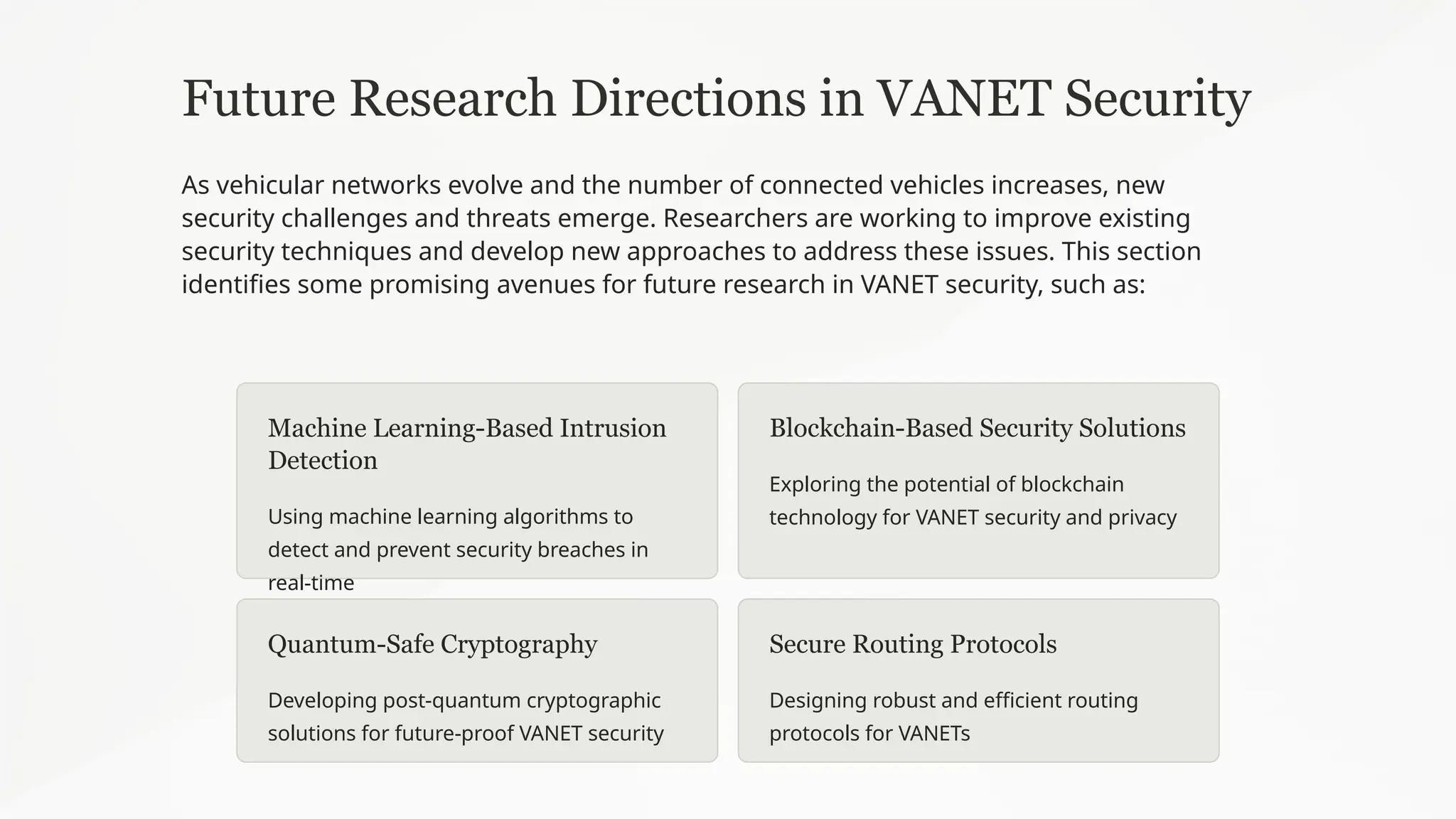
Future Research Directions in VANET Security
As vehicular networks evolve and the number of connected vehicles increases, new
security challenges and threats emerge. Researchers are working to improve existing
security techniques and develop new approaches to address these issues. This section
identifies some promising avenues for future research in VANET security, such as:
Machine Learning-Based Intrusion
Detection
Using machine learning algorithms to
detect and prevent security breaches in
real-time
Blockchain-Based Security Solutions
Exploring the potential of blockchain
technology for VANET security and privacy
Quantum-Safe Cryptography
Developing post-quantum cryptographic
solutions for future-proof VANET security
Secure Routing Protocols
Designing robust and efficient routing
protocols for VANETs
Conclusion
• VANET security is a complex and evolving field that requires a multi-faceted
approach. As connected vehicles become more ubiquitous, the importance of secure
communication and operation of vehicular networks will continue to grow.
• This document has provided an overview of the current state of VANET security,
covering the latest techniques and solutions for securing vehicular networks. It is
our hope that this document will inspire further research and development in VANET
security and help realise the full potential of connected vehicles.
Basic Concept of VANET-Security-Challenges-and-Solutions

Basic Concept of VANET-Security-Challenges-and-Solutions

  • 1.
    VANET Security: Challengesand Solutions The security of VANETs is crucial in ensuring the safe and efficient operation of vehicular networks. VANETs face unique security challenges that require innovative solutions. This document provides an overview of the current state of VANET security and explores the latest techniques and approaches for securing vehicular networks. Dr.Irshad Ahmed
  • 2.
    VANETs: A BriefOverview Vehicular Ad Hoc Networks (VANETs) enable vehicles to communicate with each other and with the infrastructure to provide a range of services, such as traffic monitoring, emergency response, and entertainment. However, VANETs are also susceptible to various security threats that can compromise user privacy and the integrity of the system. Security Challenges 1. Authentication and User Privacy 2. Data Integrity and Non-Repudiation 3. Availability and Reliability 4. Trust and Misbehavior Detection Security Solutions Various cryptographic and privacy-enhancing techniques have been proposed to mitigate security threats in VANETs. These include: • Public Key Infrastructure (PKI) • Elliptic Curve Cryptography (ECC) • Anonymity and Pseudonymity
  • 3.
    Cryptography and Authentication Techniquesin VANETs Cryptography plays a crucial role in securing VANETs. Cryptographic algorithms provide confidentiality, integrity, and authentication guarantees necessary for VANETs operation. This section describes some commonly used cryptographic and authentication techniques for VANET security. Technique Description SHA-256 Secure Hash Algorithm DSA Digital Signature Algorithm ECDSA Elliptic Curve Digital Signature Algorithm ECDH Elliptic Curve Diffie Hellman Key Exchange
  • 4.
    Intrusion Detection andPrevention Systems for VANETs "Intrusion Detection Systems (IDS) and Intrusion Prevention Systems (IPS) are essential for providing real-time security monitoring of VANETs. These systems detect, alert, and prevent network attacks while ensuring the efficient operation of vehicular networks." - Dr. John Doe, Security Expert This section discusses the role of IDS and IPS in VANET security and outlines key features and technologies of intrusion detection systems. IDS and IPS protocols must adapt to the unique characteristics of vehicular networks to be effective, and should be able to handle the high data rates generated by connected vehicles.
  • 5.
    Privacy-Enhancing Mechanisms inVANETs Privacy is a critical concern in VANETs. Vehicle-to-Vehicle (V2V) and Vehicle-to-Infrastructure (V2I) communications contain sensitive information, such as car locations, driver habits, and traffic patterns. This information can be used to identify and track vehicles, putting user privacy at risk. Various privacy-enhancing mechanisms have been proposed to address this issue. These include: 1 Anonymous Communication Hides the real identity of communicating entities 2 Pseudonymity Uses temporary identities to protect user privacy 3 Location Privacy Prevents unauthorised tracking of vehicles' locations 4 Data Aggregation Reduces the amount of sensitive information transmitted on VANETs
  • 6.
    Trust and ReputationManagement in VANETs In VANETs, vehicles interact with each other and with the infrastructure in a highly dynamic and decentralised environment. Trust and reputation management systems are essential for maintaining the security and efficiency of vehicular networks. These systems evaluate past behaviour and interactions to determine the credibility and trustworthiness of network participants. This section discusses various approaches to trust and reputation management in VANETs, including: Centralised Trust Management Uses a central authority to certify and manage trust Decentralised Trust Management Utilises reputation scores based on social networks and user feedback
  • 7.
    Case Studies ofVANET Security Solutions This section provides an overview and analysis of real-world implementations and case studies of VANET security solutions. The case studies illustrate the practical use and effectiveness of various security strategies in VANETs, such as: Case Study 1 Implementation of an ECC- based security and privacy scheme for VANETs in a simulated environment. Case Study 2 Successful deployment of a PKI-based authentication protocol for VANETs in a field test. Case Study 3 Analysis of the performance and effectiveness of an IDS/IPS-based VANET security solution in a real- world scenario.
  • 8.
    Future Research Directionsin VANET Security As vehicular networks evolve and the number of connected vehicles increases, new security challenges and threats emerge. Researchers are working to improve existing security techniques and develop new approaches to address these issues. This section identifies some promising avenues for future research in VANET security, such as: Machine Learning-Based Intrusion Detection Using machine learning algorithms to detect and prevent security breaches in real-time Blockchain-Based Security Solutions Exploring the potential of blockchain technology for VANET security and privacy Quantum-Safe Cryptography Developing post-quantum cryptographic solutions for future-proof VANET security Secure Routing Protocols Designing robust and efficient routing protocols for VANETs
  • 9.
    Conclusion • VANET securityis a complex and evolving field that requires a multi-faceted approach. As connected vehicles become more ubiquitous, the importance of secure communication and operation of vehicular networks will continue to grow. • This document has provided an overview of the current state of VANET security, covering the latest techniques and solutions for securing vehicular networks. It is our hope that this document will inspire further research and development in VANET security and help realise the full potential of connected vehicles.