AI in ElectricalEngineering
AI is revolutionizing the electrical engineering industry, leading to
innovative solutions and enhancing efficiency across various
applications. This presentation explores the transformative role of AI in
electrical engineering, highlighting its applications, benefits, and future
potential.
Dr.Irshad Ahmed
2.
Introduction to AIand its Applications
What is AI?
Artificial intelligence (AI) is the simulation of human
intelligence processes by computer systems. It
encompasses tasks such as learning, problem-solving, and
decision-making.
Applications in EE
AI finds numerous applications in electrical engineering,
including power systems, energy efficiency, robotics, and
smart grids.
3.
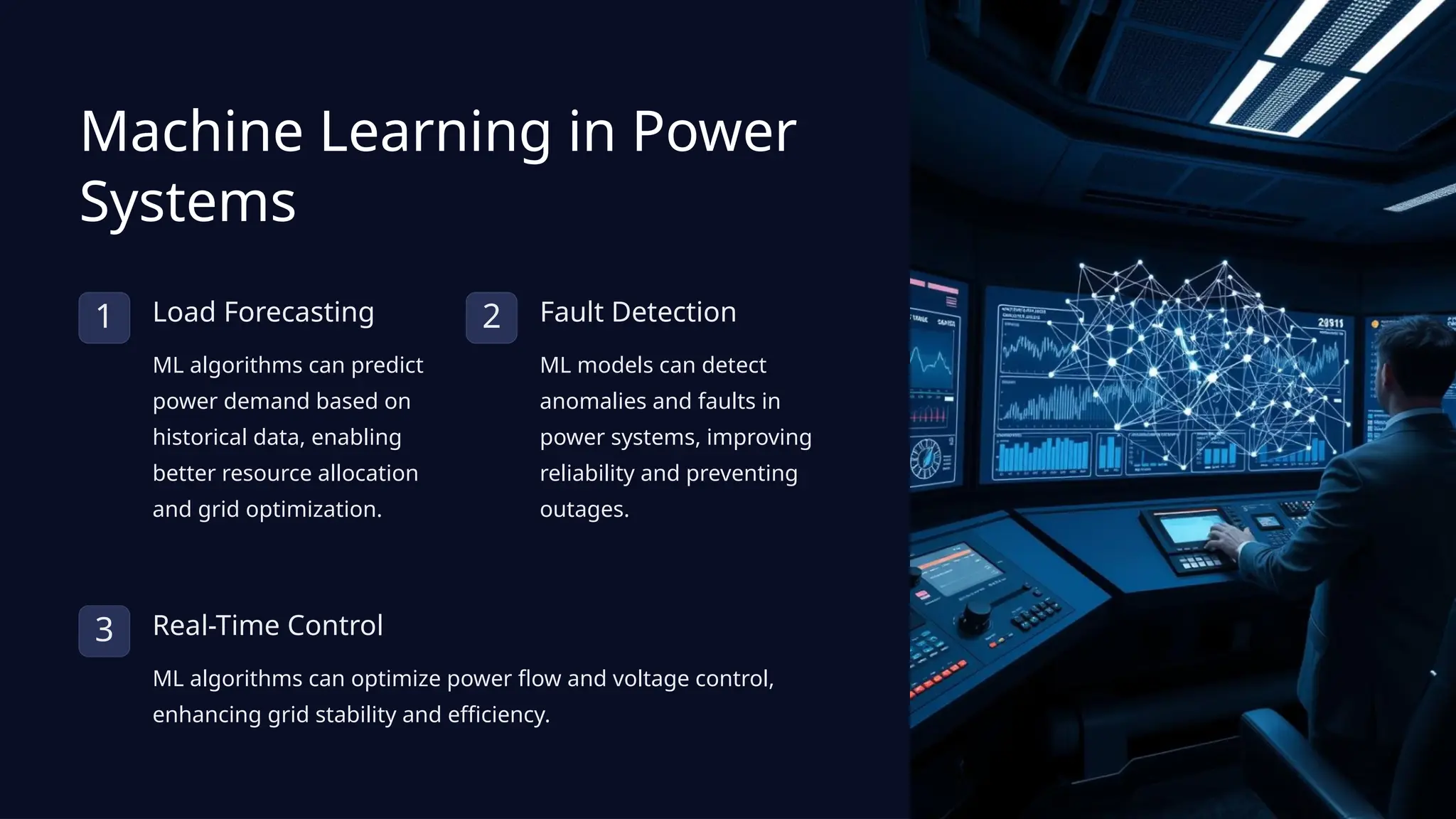
Machine Learning inPower
Systems
1 Load Forecasting
ML algorithms can predict
power demand based on
historical data, enabling
better resource allocation
and grid optimization.
2 Fault Detection
ML models can detect
anomalies and faults in
power systems, improving
reliability and preventing
outages.
3 Real-Time Control
ML algorithms can optimize power flow and voltage control,
enhancing grid stability and efficiency.
4.
Predictive Maintenance and
AssetManagement
Predictive Maintenance
AI-powered systems can monitor
equipment health and predict
failures, enabling proactive
maintenance and reducing
downtime.
Asset Management
AI can optimize asset utilization,
track asset performance, and
predict future needs, improving
efficiency and reducing costs.
5.
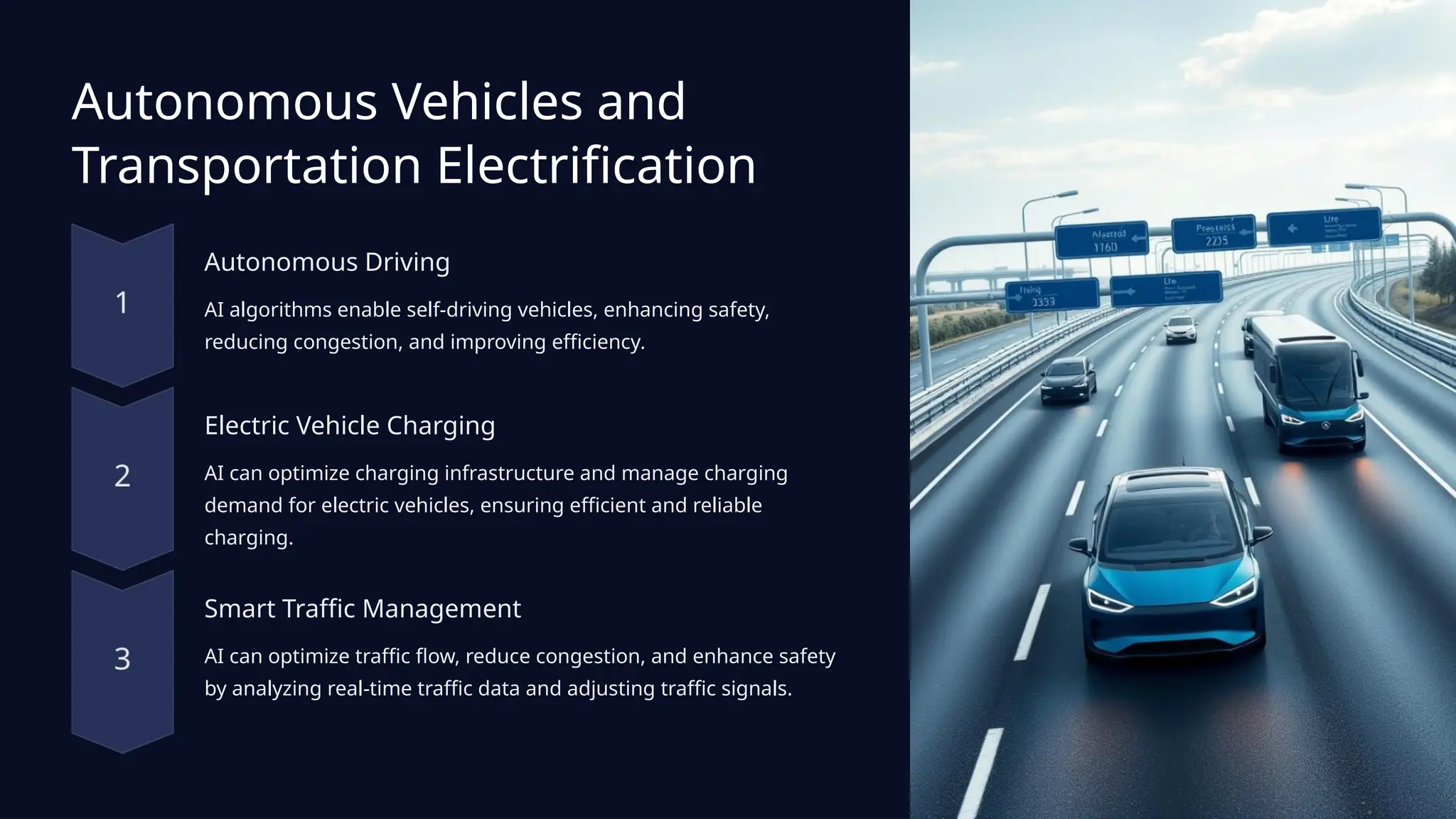
Autonomous Vehicles and
TransportationElectrification
Autonomous Driving
AI algorithms enable self-driving vehicles, enhancing safety,
reducing congestion, and improving efficiency.
Electric Vehicle Charging
AI can optimize charging infrastructure and manage charging
demand for electric vehicles, ensuring efficient and reliable
charging.
Smart Traffic Management
AI can optimize traffic flow, reduce congestion, and enhance safety
by analyzing real-time traffic data and adjusting traffic signals.
6.
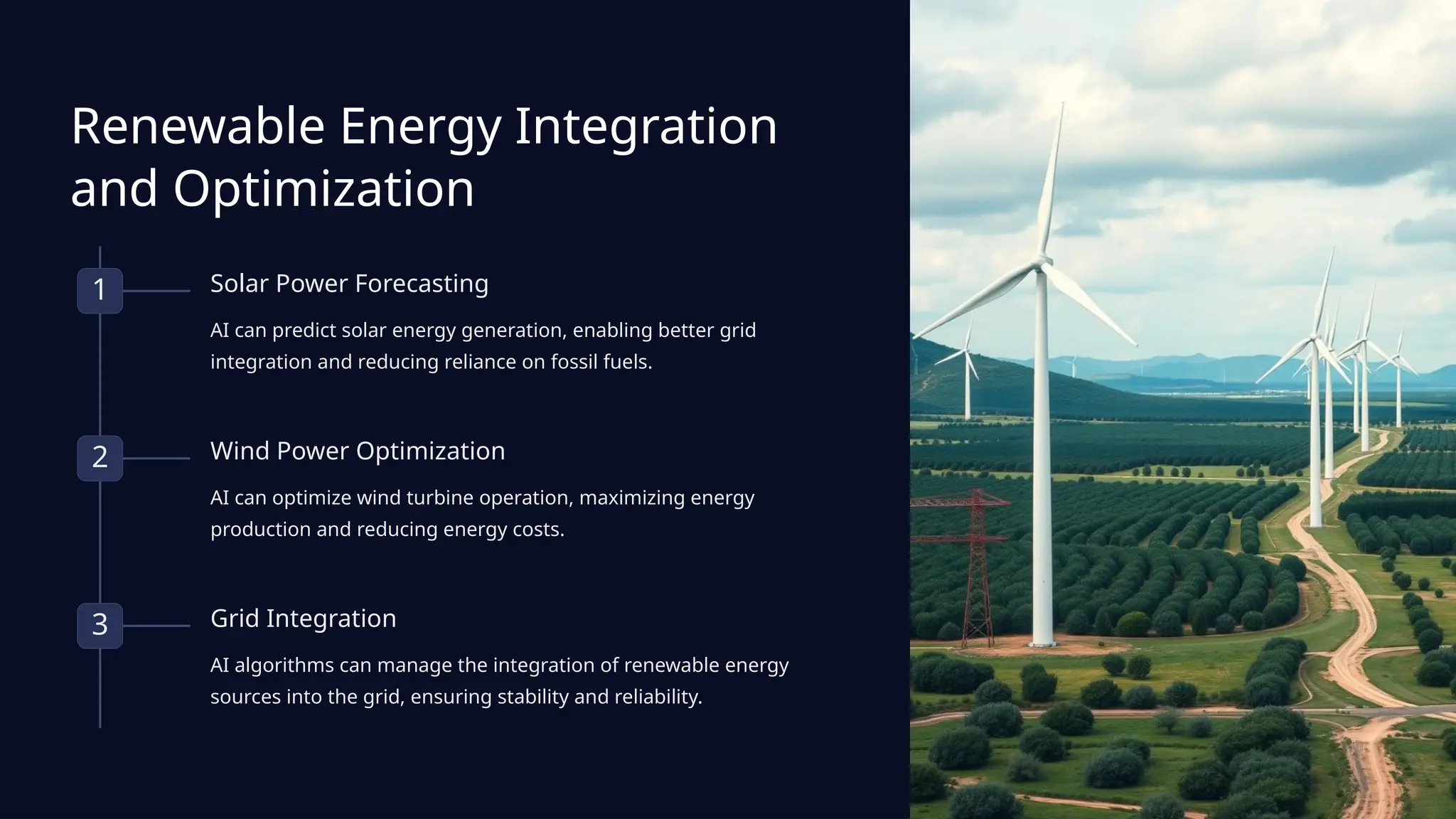
Renewable Energy Integration
andOptimization
1 Solar Power Forecasting
AI can predict solar energy generation, enabling better grid
integration and reducing reliance on fossil fuels.
2 Wind Power Optimization
AI can optimize wind turbine operation, maximizing energy
production and reducing energy costs.
3 Grid Integration
AI algorithms can manage the integration of renewable energy
sources into the grid, ensuring stability and reliability.
7.
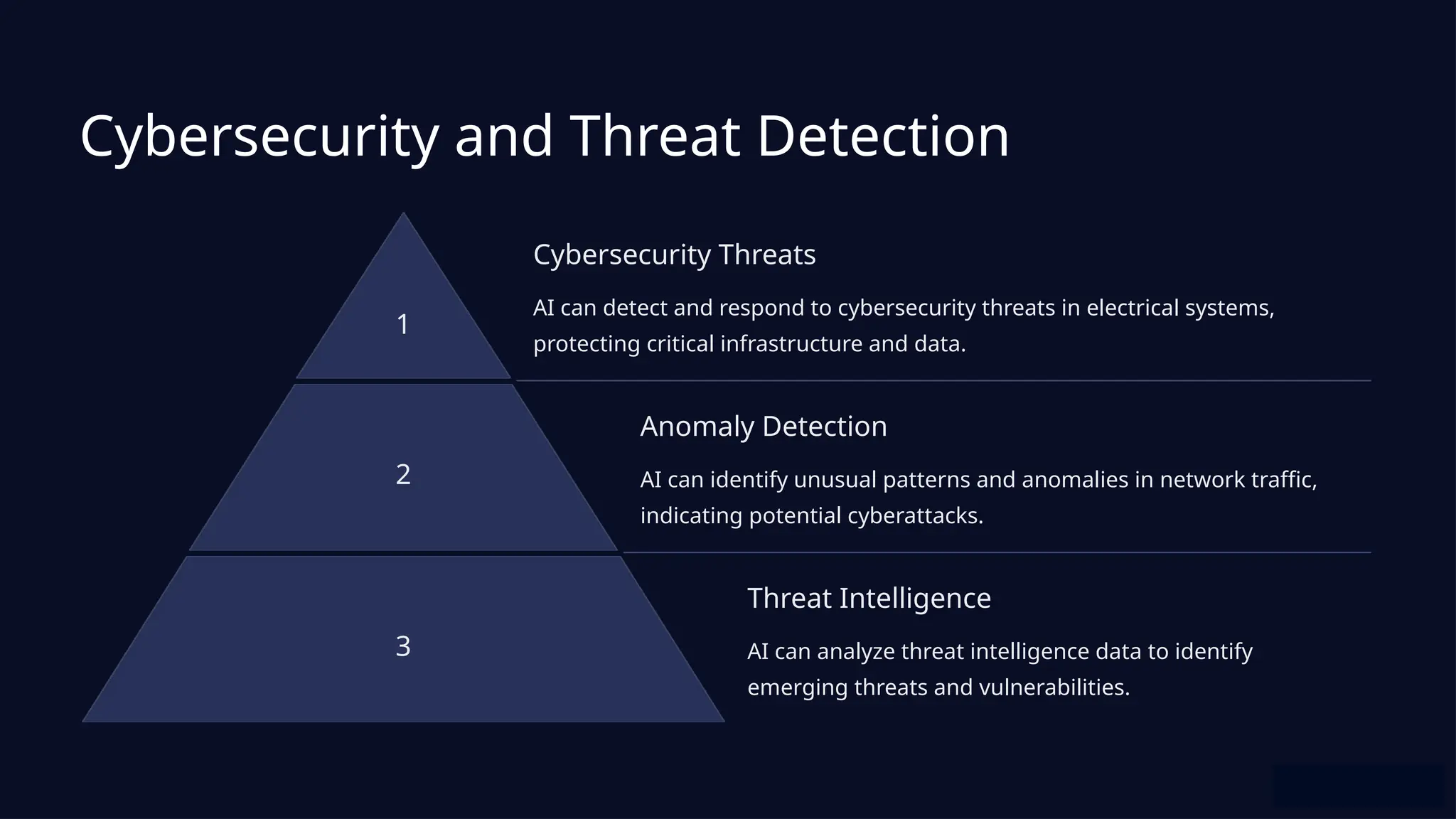
Cybersecurity and ThreatDetection
1
Cybersecurity Threats
AI can detect and respond to cybersecurity threats in electrical systems,
protecting critical infrastructure and data.
2
Anomaly Detection
AI can identify unusual patterns and anomalies in network traffic,
indicating potential cyberattacks.
3
Threat Intelligence
AI can analyze threat intelligence data to identify
emerging threats and vulnerabilities.
8.
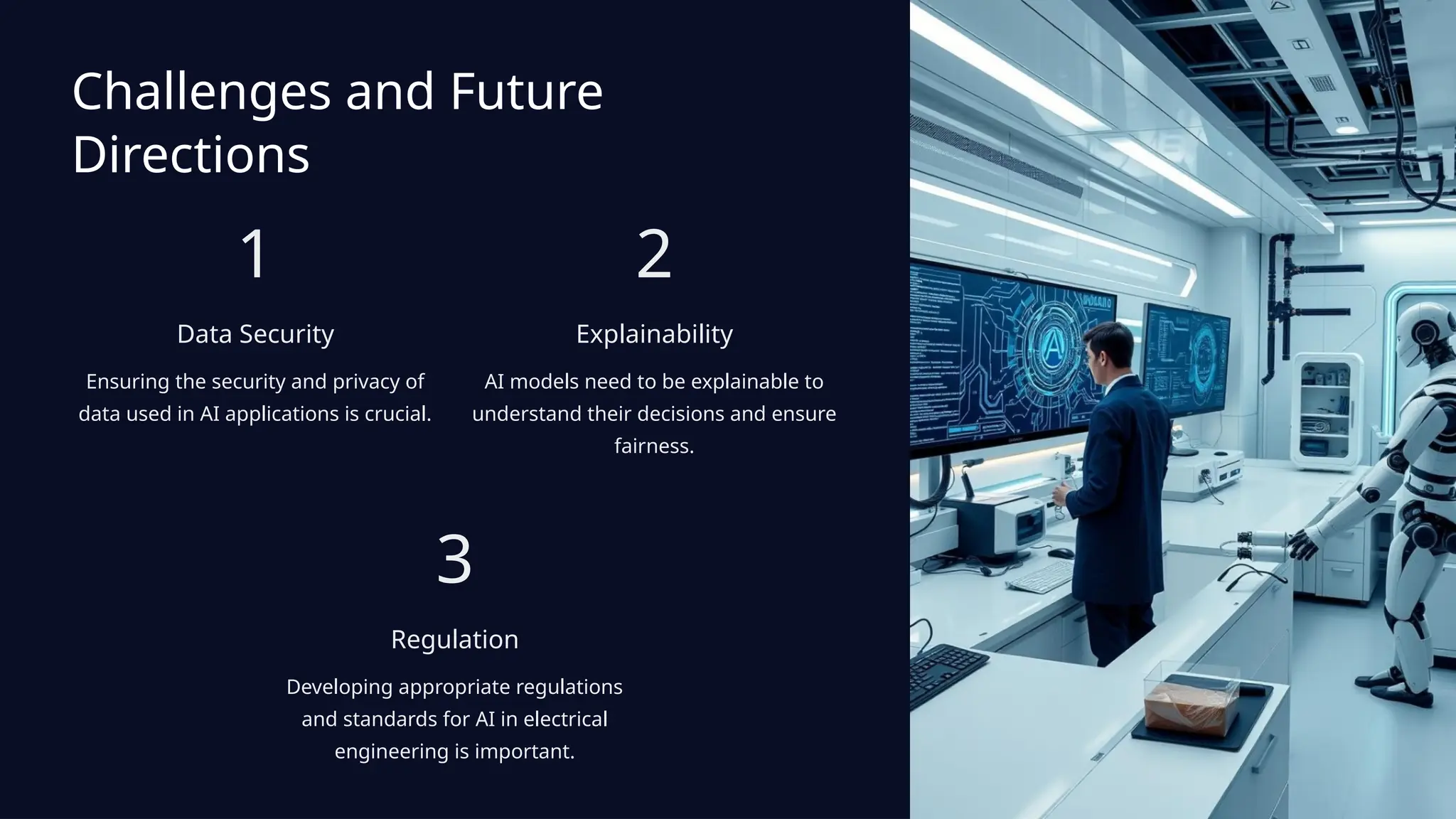
Challenges and Future
Directions
1
DataSecurity
Ensuring the security and privacy of
data used in AI applications is crucial.
2
Explainability
AI models need to be explainable to
understand their decisions and ensure
fairness.
3
Regulation
Developing appropriate regulations
and standards for AI in electrical
engineering is important.