Parent and Teen Relationships By: Brandon Bartus Joe Wackowski
Relation to the Book As we all know from reading the book twisted, Tyler and his dad don’t have a very good relationship. Tyler’s father was always verbally abusing him and had little respect for Tyler even though he was his son.
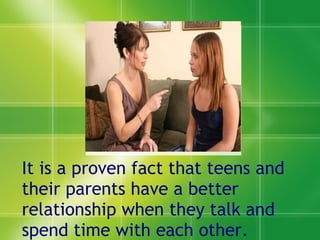
It is a proven fact that teens and their parents have a better relationship when they talk and spend time with each other.
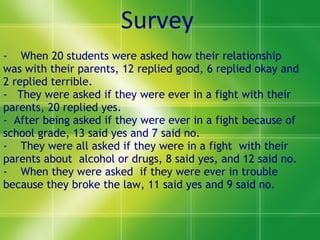
-  When 20 students were asked how their relationship was with their parents, 12 replied good, 6 replied okay and 2 replied terrible. -  They were asked if they were ever in a fight with their parents, 20 replied yes. -  After being asked if they were ever in a fight because of school grade, 13 said yes and 7 said no. -  They were all asked if they were in a fight  with their parents about  alcohol or drugs, 8 said yes, and 12 said no. -  When they were asked  if they were ever in trouble because they broke the law, 11 said yes and 9 said no. Survey
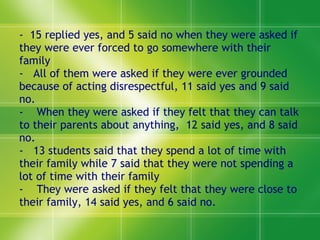
-  15 replied yes, and 5 said no when they were asked if they were ever forced to go somewhere with their family -  All of them were asked if they were ever grounded because of acting disrespectful, 11 said yes and 9 said no. -  When they were asked if they felt that they can talk to their parents about anything,  12 said yes, and 8 said no. -  13 students said that they spend a lot of time with their family while 7 said that they were not spending a lot of time with their family -  They were asked if they felt that they were close to their family, 14 said yes, and 6 said no.
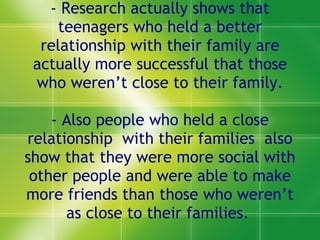
- Research actually shows that teenagers who held a better relationship with their family are actually more successful that those who weren’t close to their family. - Also people who held a close relationship  with their families  also show that they were more social with other people and were able to make more friends than those who weren’t as close to their families.
All facts were taken for the following websites: http://www. familyeducation .com http://www. drphil .com/articles/article/141

Bartus Wackowski

  • 1.
    Parent and TeenRelationships By: Brandon Bartus Joe Wackowski
  • 2.
    Relation to theBook As we all know from reading the book twisted, Tyler and his dad don’t have a very good relationship. Tyler’s father was always verbally abusing him and had little respect for Tyler even though he was his son.
  • 3.
    It is aproven fact that teens and their parents have a better relationship when they talk and spend time with each other.
  • 4.
    - When20 students were asked how their relationship was with their parents, 12 replied good, 6 replied okay and 2 replied terrible. - They were asked if they were ever in a fight with their parents, 20 replied yes. - After being asked if they were ever in a fight because of school grade, 13 said yes and 7 said no. - They were all asked if they were in a fight with their parents about alcohol or drugs, 8 said yes, and 12 said no. - When they were asked if they were ever in trouble because they broke the law, 11 said yes and 9 said no. Survey
  • 5.
    - 15replied yes, and 5 said no when they were asked if they were ever forced to go somewhere with their family - All of them were asked if they were ever grounded because of acting disrespectful, 11 said yes and 9 said no. - When they were asked if they felt that they can talk to their parents about anything, 12 said yes, and 8 said no. - 13 students said that they spend a lot of time with their family while 7 said that they were not spending a lot of time with their family - They were asked if they felt that they were close to their family, 14 said yes, and 6 said no.
  • 6.
    - Research actuallyshows that teenagers who held a better relationship with their family are actually more successful that those who weren’t close to their family. - Also people who held a close relationship with their families also show that they were more social with other people and were able to make more friends than those who weren’t as close to their families.
  • 7.
    All facts weretaken for the following websites: http://www. familyeducation .com http://www. drphil .com/articles/article/141