b 
Running a 2 Tbps global IP network 
using Open Source tools 
Bart van der Sloot (Managing Director) 
Samer Abdel-Hafez (Network Design Engineer)
Agenda 
1. Introduction to FiberRing and AS16265: 
a 2Tbps Global IP Network 
2. Network management and operations challenges 
3. Common Requirements: why Open Source? 
4. Network Monitoring 
5. Capacity Planning 
6. Attack Detection 
7. Device back-ups 
8. Considerations for the future 
9. Conclusions
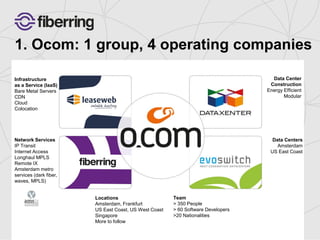
1. Ocom: 1 group, 4 operating companies 
Infrastructure 
as a Service (IaaS) 
Bare Metal Servers 
CDN 
Cloud 
Colocation 
Data Centers 
Amsterdam 
US East Coast 
Data Center 
Construction 
Energy Efficient 
Modular 
Network Services 
IP Transit 
Internet Access 
Longhaul MPLS 
Remote IX 
Amsterdam metro 
services (dark fiber, 
waves, MPLS) 
Locations 
Amsterdam, Frankfurt 
US East Coast, US West Coast 
Singapore 
More to follow 
Team 
> 350 People 
> 60 Software Developers 
>20 Nationalities
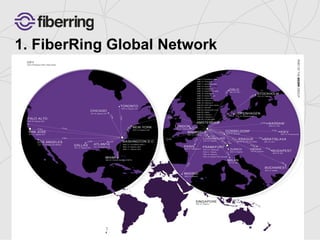
1. FiberRing Global Network
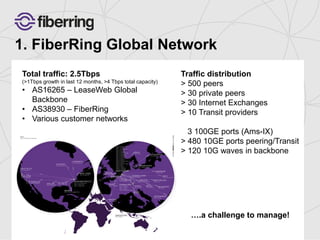
1. FiberRing Global Network 
Total traffic: 2.5Tbps 
(>1Tbps growth in last 12 months, >4 Tbps total capacity) 
• AS16265 – LeaseWeb Global 
Backbone 
• AS38930 – FiberRing 
• Various customer networks 
Traffic distribution 
> 500 peers 
> 30 private peers 
> 30 Internet Exchanges 
> 10 Transit providers 
3 100GE ports (Ams-IX) 
> 480 10GE ports peering/Transit 
> 120 10G waves in backbone 
….a challenge to manage!
2. Challenges to address 
• Network monitoring 
• Capacity planning 
• Attack detection 
• Network devices configurations backup
3. Common requirements 
1. Easy to use and maintain 
2. Scalability up to 1000’s “objects” 
3. Trivial integration with internal systems 
4. Long life span expectation 
5. Easy access to updates 
6. Extensive documentation provided
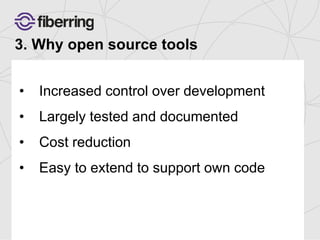
3. Why open source tools 
• Increased control over development 
• Largely tested and documented 
• Cost reduction 
• Easy to extend to support own code
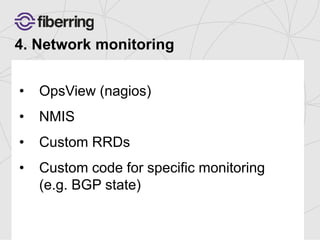
4. Network monitoring 
• OpsView (nagios) 
• NMIS 
• Custom RRDs 
• Custom code for specific monitoring 
(e.g. BGP state)
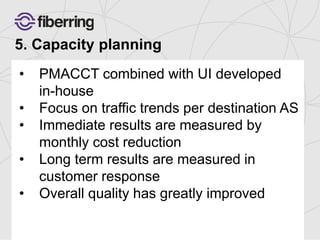
5. Capacity planning 
• PMACCT combined with UI developed 
in-house 
• Focus on traffic trends per destination AS 
• Immediate results are measured by 
monthly cost reduction 
• Long term results are measured in 
customer response 
• Overall quality has greatly improved
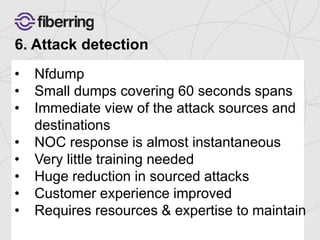
6. Attack detection 
• Nfdump 
• Small dumps covering 60 seconds spans 
• Immediate view of the attack sources and 
destinations 
• NOC response is almost instantaneous 
• Very little training needed 
• Huge reduction in sourced attacks 
• Customer experience improved 
• Requires resources & expertise to maintain
7. Network devices config backup 
• Oxidized and GitLab 
• Oxidized is a RANCID replacement 
• Design team contributes to Oxidized 
development 
• Oxidized is easy to integrate with internal 
systems 
• Oxidized uses GitLab to store configuration 
updates 
• GitLab provides extensive overview over HTTP 
and ability to store internal repository for free
8. Future considerations 
• Replace RRDs with time series database 
(influxdb) 
• Extend oxidized-script tools to our needs 
• Logs visualization tools 
• Hire developers to enhance the existing 
tools 
• Early discussions on the development of 
a new NMS 
• Automation
8. Conclusions 
• We can run a global IP Network with ~ 15 
people in Network Design and Support 
• Including network expansions, new PoPs, peering & transit 
negotiations 
• Including managing internal networks of our customers, e.g. 
LeaseWeb 
• There are good Open Source tools available to support 
this, but they require staff that understand both 
“networking”, and “programming” 
If you want to hop onto our network and try our services: come to our booth! 
- Special offer for Remote Ams-IX connectivity – 
Interested in joining a global fast growing company? 
We are looking for Design & Support Engineers in Amsterdam….
b 
Questions? 
Bart van der Sloot b.vandersloot@fiberring.com 
Samer Abdel-Hafez s.abdel@fiberring.com 
Colin Boekhout c.boekhout@fiberring.com

PLNOG 13: B. van der Sloot, S. Abdel-Hafez: Running a 2 Tbps global IP network using Open Source tools

  • 1.
    b Running a2 Tbps global IP network using Open Source tools Bart van der Sloot (Managing Director) Samer Abdel-Hafez (Network Design Engineer)
  • 2.
    Agenda 1. Introductionto FiberRing and AS16265: a 2Tbps Global IP Network 2. Network management and operations challenges 3. Common Requirements: why Open Source? 4. Network Monitoring 5. Capacity Planning 6. Attack Detection 7. Device back-ups 8. Considerations for the future 9. Conclusions
  • 3.
    1. Ocom: 1group, 4 operating companies Infrastructure as a Service (IaaS) Bare Metal Servers CDN Cloud Colocation Data Centers Amsterdam US East Coast Data Center Construction Energy Efficient Modular Network Services IP Transit Internet Access Longhaul MPLS Remote IX Amsterdam metro services (dark fiber, waves, MPLS) Locations Amsterdam, Frankfurt US East Coast, US West Coast Singapore More to follow Team > 350 People > 60 Software Developers >20 Nationalities
  • 4.
  • 5.
    1. FiberRing GlobalNetwork Total traffic: 2.5Tbps (>1Tbps growth in last 12 months, >4 Tbps total capacity) • AS16265 – LeaseWeb Global Backbone • AS38930 – FiberRing • Various customer networks Traffic distribution > 500 peers > 30 private peers > 30 Internet Exchanges > 10 Transit providers 3 100GE ports (Ams-IX) > 480 10GE ports peering/Transit > 120 10G waves in backbone ….a challenge to manage!
  • 6.
    2. Challenges toaddress • Network monitoring • Capacity planning • Attack detection • Network devices configurations backup
  • 7.
    3. Common requirements 1. Easy to use and maintain 2. Scalability up to 1000’s “objects” 3. Trivial integration with internal systems 4. Long life span expectation 5. Easy access to updates 6. Extensive documentation provided
  • 8.
    3. Why opensource tools • Increased control over development • Largely tested and documented • Cost reduction • Easy to extend to support own code
  • 9.
    4. Network monitoring • OpsView (nagios) • NMIS • Custom RRDs • Custom code for specific monitoring (e.g. BGP state)
  • 10.
    5. Capacity planning • PMACCT combined with UI developed in-house • Focus on traffic trends per destination AS • Immediate results are measured by monthly cost reduction • Long term results are measured in customer response • Overall quality has greatly improved
  • 11.
    6. Attack detection • Nfdump • Small dumps covering 60 seconds spans • Immediate view of the attack sources and destinations • NOC response is almost instantaneous • Very little training needed • Huge reduction in sourced attacks • Customer experience improved • Requires resources & expertise to maintain
  • 12.
    7. Network devicesconfig backup • Oxidized and GitLab • Oxidized is a RANCID replacement • Design team contributes to Oxidized development • Oxidized is easy to integrate with internal systems • Oxidized uses GitLab to store configuration updates • GitLab provides extensive overview over HTTP and ability to store internal repository for free
  • 13.
    8. Future considerations • Replace RRDs with time series database (influxdb) • Extend oxidized-script tools to our needs • Logs visualization tools • Hire developers to enhance the existing tools • Early discussions on the development of a new NMS • Automation
  • 14.
    8. Conclusions •We can run a global IP Network with ~ 15 people in Network Design and Support • Including network expansions, new PoPs, peering & transit negotiations • Including managing internal networks of our customers, e.g. LeaseWeb • There are good Open Source tools available to support this, but they require staff that understand both “networking”, and “programming” If you want to hop onto our network and try our services: come to our booth! - Special offer for Remote Ams-IX connectivity – Interested in joining a global fast growing company? We are looking for Design & Support Engineers in Amsterdam….
  • 15.
    b Questions? Bartvan der Sloot b.vandersloot@fiberring.com Samer Abdel-Hafez s.abdel@fiberring.com Colin Boekhout c.boekhout@fiberring.com