Bangladesh Army University of
Science and Technology,Saidpur
 Course Title: Artifacial Intelligence and
Fuzzy Systems
 Course Code: CSE 4132
 Level-4;Term-1
 Course Adviser:Hasan Muhammad
Kafi
 Abu Rayhan Mouno (180201118)
 Khondoker Abu Naim (200101103)
2
Project Title: Bangla handwritten digit
recognition using deep learning.
 Peresented by,
 Introduction
 Bangla Handwritten Characters
Proposed Methodology
 Dataset Discription
 Preprocessing
 Methodology
 Implemented Model Architecture
 Training The Network
 Results Analysis
 Limitation
 Future Recomendation
 Conlusion
3
Contents
4
Introduction
Handwritten digit recognition is a
classical problem in computer vision,
with 10 unique Bangla digits to classify.
The models evaluated are:
 EfficientNetB0
 MobileNet.
These models' performances are
contrasted under various training
regimes. We are using baseline,
transfer learning, and fine-tuning.
)
Bangla Handwritten Digits
Handwritten digits have unique characteristics such as
strokes, styles, and structure
Different people’s digits are unique to each person
Bangla handwritten digits have a morphologically complex nature
PROPOSED METHODOLOGY
6
Data Collection &
Preprocessing
Dataset Generation
Training
Classification using
CNN
Optimization
Testing
Dataset Discription
7
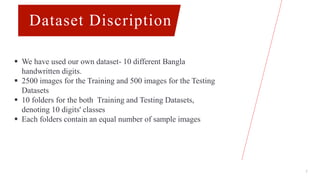
 We have used our own dataset- 10 different Bangla
handwritten digits.
 2500 images for the Training and 500 images for the Testing
Datasets
 10 folders for the both Training and Testing Datasets,
denoting 10 digits' classes
 Each folders contain an equal number of sample images
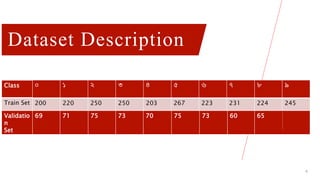
Dataset Description
8
০ ১ ২ ৩ ৪ ৫ ৬ ৭ ৮ ৯
200 220 250 250 203 267 223 231 224 245
Class
Train Set
Validatio
n
Set
69 71 75 73 70 75 73 60 65
The Dataset(Cont.)
9
The training dataset was further split
into two groups:
 Training Dataset (90% of the
original training dataset)
 Testing Dataset (10% of the
original training dataset) -
Ensuring no bias was enforced
in Testing
0
500
1000
1500
2000
2500
3000
Training Dataset Testing Dataset
Dataset
Fig1.Dataset chart
The Dataset(Cont.)
10
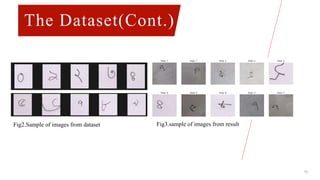
Fig2.Sample of images from dataset Fig3.sample of images from result
Methodology: Preprocessing
11
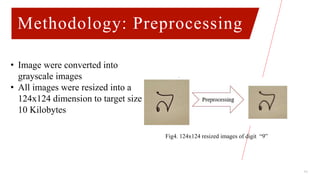
• Image were converted into
grayscale images
• All images were resized into a
124x124 dimension to target size
10 Kilobytes
Fig4. 124x124 resized images of digit “9”
Methodology:Environment
12
Resources Required to Accomplish the Task:
• Python
• Kaggle
Installation of all necessary tools and libraries, such as
TensorFlow, Keras, and NumPy, in both settings.
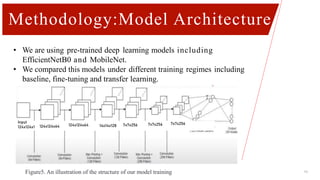
Methodology:Model Architecture
13
Figure5. An illustration of the structure of our model training
• We are using pre-trained deep learning models including
EfficientNetB0 and MobileNet.
• We compared this models under different training regimes including
baseline, fine-tuning and transfer learning.
Input
124x124x1 124x124x64 124x124x64 14x14x128 7x7x256 7x7x256 7x7x256
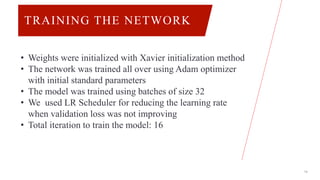
TRAINING THE NETWORK
14
• Weights were initialized with Xavier initialization method
• The network was trained all over using Adam optimizer
with initial standard parameters
• The model was trained using batches of size 32
• We used LR Scheduler for reducing the learning rate
when validation loss was not improving
• Total iteration to train the model: 16
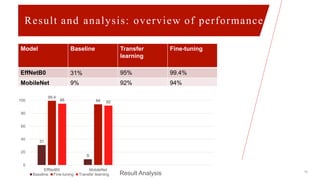
Result and analysis: overview of performance
15
Model Baseline Transfer
learning
Fine-tuning
EffNetB0 31% 95% 99.4%
MobileNet 9% 92% 94%
31
9
99.4
94
95 92
0
20
40
60
80
100
120
EffNetB0 MobileNet
Result Analysis
Baseline Fine-tuning Transfer learning
16
Limitations
• Sample size: This dataset's sample size was limited, which might have
had an impact on the statistical power and generalizability of the results.
• Data quality: Data quality was determined by accuracy and
comprehensiveness of participant replies.
• Generalizability: Due to the sample being restricted to a particular
participant group, it is possible that the results of this study cannot be
applied to other populations or circumstances.
17
Future recommendations
• Examine other pre-trained models:Explore different Neural Network
models Work with various datasets to create a more robust and effective
automated system.
• Improve dataset quality
• Dataset Quality:Increase the amount of high-quality data was
collected, especially for underrepresented classes, to improve the
precision of machine learning models.
• Try different optimizer algorithoms:Try out several
optimization techniques, such RMSprop or SGD to boost the
effectiveness of the digit recognition system.
• Extend to real-time applications:Extend current implementation
to real-time applications for practical use.
Conclusion
• Created models for recognizing digit
using a variety of deep learning
architectures and training methods.
• As far as our knowledge, the achieved
result is the state-of-the art accuracy in
Bangla digit recognition.
• Could result in advancement in the
pursuit of digitization.
18
“
”
Thank You
19

Bangla Hand Written Digit Recognition presentation slide .pptx

  • 1.
    Bangladesh Army Universityof Science and Technology,Saidpur  Course Title: Artifacial Intelligence and Fuzzy Systems  Course Code: CSE 4132  Level-4;Term-1  Course Adviser:Hasan Muhammad Kafi
  • 2.
     Abu RayhanMouno (180201118)  Khondoker Abu Naim (200101103) 2 Project Title: Bangla handwritten digit recognition using deep learning.  Peresented by,
  • 3.
     Introduction  BanglaHandwritten Characters Proposed Methodology  Dataset Discription  Preprocessing  Methodology  Implemented Model Architecture  Training The Network  Results Analysis  Limitation  Future Recomendation  Conlusion 3 Contents
  • 4.
    4 Introduction Handwritten digit recognitionis a classical problem in computer vision, with 10 unique Bangla digits to classify. The models evaluated are:  EfficientNetB0  MobileNet. These models' performances are contrasted under various training regimes. We are using baseline, transfer learning, and fine-tuning.
  • 5.
    ) Bangla Handwritten Digits Handwrittendigits have unique characteristics such as strokes, styles, and structure Different people’s digits are unique to each person Bangla handwritten digits have a morphologically complex nature
  • 6.
    PROPOSED METHODOLOGY 6 Data Collection& Preprocessing Dataset Generation Training Classification using CNN Optimization Testing
  • 7.
    Dataset Discription 7  Wehave used our own dataset- 10 different Bangla handwritten digits.  2500 images for the Training and 500 images for the Testing Datasets  10 folders for the both Training and Testing Datasets, denoting 10 digits' classes  Each folders contain an equal number of sample images
  • 8.
    Dataset Description 8 ০ ১২ ৩ ৪ ৫ ৬ ৭ ৮ ৯ 200 220 250 250 203 267 223 231 224 245 Class Train Set Validatio n Set 69 71 75 73 70 75 73 60 65
  • 9.
    The Dataset(Cont.) 9 The trainingdataset was further split into two groups:  Training Dataset (90% of the original training dataset)  Testing Dataset (10% of the original training dataset) - Ensuring no bias was enforced in Testing 0 500 1000 1500 2000 2500 3000 Training Dataset Testing Dataset Dataset Fig1.Dataset chart
  • 10.
    The Dataset(Cont.) 10 Fig2.Sample ofimages from dataset Fig3.sample of images from result
  • 11.
    Methodology: Preprocessing 11 • Imagewere converted into grayscale images • All images were resized into a 124x124 dimension to target size 10 Kilobytes Fig4. 124x124 resized images of digit “9”
  • 12.
    Methodology:Environment 12 Resources Required toAccomplish the Task: • Python • Kaggle Installation of all necessary tools and libraries, such as TensorFlow, Keras, and NumPy, in both settings.
  • 13.
    Methodology:Model Architecture 13 Figure5. Anillustration of the structure of our model training • We are using pre-trained deep learning models including EfficientNetB0 and MobileNet. • We compared this models under different training regimes including baseline, fine-tuning and transfer learning. Input 124x124x1 124x124x64 124x124x64 14x14x128 7x7x256 7x7x256 7x7x256
  • 14.
    TRAINING THE NETWORK 14 •Weights were initialized with Xavier initialization method • The network was trained all over using Adam optimizer with initial standard parameters • The model was trained using batches of size 32 • We used LR Scheduler for reducing the learning rate when validation loss was not improving • Total iteration to train the model: 16
  • 15.
    Result and analysis:overview of performance 15 Model Baseline Transfer learning Fine-tuning EffNetB0 31% 95% 99.4% MobileNet 9% 92% 94% 31 9 99.4 94 95 92 0 20 40 60 80 100 120 EffNetB0 MobileNet Result Analysis Baseline Fine-tuning Transfer learning
  • 16.
    16 Limitations • Sample size:This dataset's sample size was limited, which might have had an impact on the statistical power and generalizability of the results. • Data quality: Data quality was determined by accuracy and comprehensiveness of participant replies. • Generalizability: Due to the sample being restricted to a particular participant group, it is possible that the results of this study cannot be applied to other populations or circumstances.
  • 17.
    17 Future recommendations • Examineother pre-trained models:Explore different Neural Network models Work with various datasets to create a more robust and effective automated system. • Improve dataset quality • Improve dataset quality • Dataset Quality:Increase the amount of high-quality data was collected, especially for underrepresented classes, to improve the precision of machine learning models. • Try different optimizer algorithoms:Try out several optimization techniques, such RMSprop or SGD to boost the effectiveness of the digit recognition system. • Extend to real-time applications:Extend current implementation to real-time applications for practical use.
  • 18.
    Conclusion • Created modelsfor recognizing digit using a variety of deep learning architectures and training methods. • As far as our knowledge, the achieved result is the state-of-the art accuracy in Bangla digit recognition. • Could result in advancement in the pursuit of digitization. 18
  • 19.