What is causing this pain
in my back?
Back pain is a common reason for absence from work
and for seeking medical treatment. It can be
uncomfortable and debilitating.
It can result from injury, activity and some medical conditions. Back pain can affect
people of any age, for different reasons. As people get older, the chance of
developing lower back pain increases, due to factors such as previous occupation and
degenerative disk disease.
Lower back pain may be linked to the bony lumbar spine, discs between the vertebrae,
ligaments around the spine and discs, spinal cord and nerves, lower back muscles,
abdominal and pelvic internal organs, and the skin around the lumbar area.
Pain in the upper back may be due to disorders of the aorta, tumors in the chest, and
spine inflammation .
Causes
Problems with the spine such as osteoporosis can lead to back pain.
The human back is composed of a complex structure of muscles, ligaments, tendons,
disks, and bones, which work together to support the body and enable us to move
around.
The segments of the spine are cushioned with cartilage-like pads called disks.
Problems with any of these components can lead to back pain. In some cases of back
pain, its cause remains unclear.
Damage can result from strain, medical conditions, and poor posture, among others.
Strain
Back pain commonly stems from strain, tension, or injury. Frequent causes of back
pain are:
 strained muscles or ligaments
 a muscle spasm
 muscle tension
 damaged disks
 injuries, fractures, or falls
Activities that can lead to strains or spasms include:
 lifting something improperly
 lifting something that is too heavy
 making an abrupt and awkward movement
Get Rid Of Back Pain
Structural problems
A number of structural problems may also result in back pain.
 Ruptured disks: Eachvertebra in the spine is cushioned by disks. If the disk
ruptures there will be more pressure on a nerve, resulting in back pain.
 Bulging disks: In much the same way as ruptured disks, a bulging disk can
result in more pressure on a nerve.
 Sciatica: A sharp and shooting pain travels through the buttock and down the
back of the leg, caused by a bulging or herniated disk pressing on a nerve.
 Arthritis: Osteoarthritis can cause problems with the joints in the hips, lower
back, and other places. In some cases, the space around the spinal cord
narrows. This is known as spinal stenosis.
 Abnormalcurvature of the spine: If the spine curves in an unusual way, back
pain can result. An example is scoliosis,in which the spine curves to the side.
 Osteoporosis: Bones, including the vertebrae of the spine, become brittle and
porous, making compression fractures more likely.
 Kidney problems: Kidney stones or kidney infection can cause back pain.
Movement and posture
Adopting a very hunched sitting position when using computers can result in
increased back and shoulder problems over time.
Back pain can also result from some everyday activities or poor posture.
Examples include:
 twisting
 coughing or sneezing
 muscle tension
 over-stretching
 bending awkwardly or forlong periods
 pushing, pulling, lifting, or carrying something
 standing or sitting forlong periods
 straining the neck forward, such as when driving or using a computer
 long driving sessions without a break, even when not hunched
 sleeping on a mattress that does not support the body and keep the spine
straight
Get Rid Of Back Pain
Other causes
Some medical conditions can lead to back pain.
 Cauda equina syndrome: The cauda equine is a bundle of spinal nerve roots
that arise from the lower end of the spinal cord. Symptoms include a dull pain
in the lower back and upper buttocks, as well as numbness in the buttocks,
genitalia, and thighs. There are sometimes bowel and bladder function
disturbances.
 Cancerof the spine: A tumor on the spine may press against a nerve, resulting
in back pain.
 Infection of the spine: A fever and a tender, warm area on the back could be
due to an infection of the spine.
 Other infections: Pelvic inflammatory disease, bladder, orkidney infections
may also lead to back pain.
 Sleep disorders: Individuals with sleep disorders are more likely to experience
back pain, compared with others.
 Shingles: An infection that canaffect the nerves may lead to back pain. This
depends on which nerves are affected.
Risk factors
The following factors are linked to a higher risk of developing low back pain:
 occupational activities
 pregnancy
 a sedentary lifestyle
 poor physical fitness
 older age
 obesity and excess weight
 smoking
 strenuous physical exercise or work, especially if done incorrectly
 genetic factors
 medical conditions, such as arthritis and cancer
Lower back pain also tends to be more common in women than in men, possibly due
to hormonal factors. Stress, anxiety, and mood disorders have also been linked to back
pain.
Get Rid Of Back Pain
Symptoms
The main symptom of back pain is an ache or pain anywhere in the back, and
sometimes all the way down to the buttocks and legs.
Some back issues can cause pain in other parts of the body, depending on the nerves
affected.
The pain often goes away without treatment, but if it occurs with any of the following
people should see their doctor:
 weight loss
 fever
 inflammation or swelling on the back
 persistent back pain, where lying down or resting does not help
 pain down the legs
 pain that reaches below the knees
 a recent injury, blow or trauma to the back
 urinary incontinence ,difficulty urinating
 fecal incontinence, or loss of control over bowel movements
 numbness around the genitals
 numbness around the anus
 numbness around the buttocks
Get Rid Of Back Pain
When to see a doctor
You should seek medical help if you experience any numbness or tingling, or if you
have back pain:
 that does not improve with rest
 afteran injury or fall
 with numbness in the legs
 with weakness
 with fever
 with unexplained weight loss
Diagnosis
A doctor will usually be able to diagnose back pain after asking about symptoms and
carrying out a physical examination.
An imaging scan and other tests may be required if:
 back pain appears to result from an injury
 there may be underlying cause that needs treatment
 the pain persists over a long period
An X-ray, MRI, or CT scan can give information about the state of the soft tissues in
the back.
 X-rays canshow the alignment of the bones and detect signs of arthritis or
broken bones, but they may not reveal damage in the muscles, spinal cord,
nerves, or disks.
 MRI or CT scans can reveal herniated disks or problems with tissue, tendons,
nerves, ligaments, blood vessels, muscles, and bones.
 Bone scans can detect bone tumors or compression fractures caused
by osteoporosis . A radioactive substance or tracer is injected into a vein. The
tracer collects in the bones and helps the doctordetect bone problems with
the aid of a special camera.
 Electromyography orEMG measures the electrical impulses produced by
nerves in response to muscles. This canconfirm nerve compression, which
may occur with a herniated disk or spinal stenosis.
The doctor may also order a blood test if infection is suspected.
Other types of diagnosis
 A chiropractor will diagnose through touch, or palpation, and a visual
examination. Chiropractic is known as a direct approach, with a strong focus
on adjusting the spinal joints. A chiropractor may also want to see the results
of imaging scans and any blood and urine tests.
 An osteopath also diagnoses through palpation and visual
inspection. Osteopathy involves slow and rhythmic stretching, known as
mobilization, pressure or indirect techniques, and manipulation of joints and
muscles.
 A physicaltherapist focuses on diagnosing problems in the joints and soft
tissues of the body.
Get Rid Of Back Pain
Chronic or acute pain?
Back pain is categorized into two types :
 Acute pain starts suddenly and lasts for up to 6 weeks.
 Chronic or long-term pain develops over a longer period, lasts forover 3
months, and causes ongoing problems.
If a person has both occasional bouts of more intense pain and fairly continuous mild
back pain, it can be hard for a doctor to determine whether they have acute or chronic
back pain.
Treatment
Back pain usually resolves with rest and home remedies, but sometimes medical
treatment is necessary.
Get Rid Of Back Pain
Home treatments
Over-the-counter (OTC) pain relief medication, usually nonsteroidal anti-
inflammatory drugs (NSAID), such as ibuprofen, can relieve discomfort. Applying a
hot compress or an ice pack to the painful area may also reduce pain.
Resting from strenuous activity can help, but moving around will ease stiffness,
reduce pain, and prevent muscles from weakening.
Medical treatment
If home treatments do not relieve back pain, a doctor may recommend the following
medication, physical therapy, or both.
Medication: Back pain that does not respond well to OTC painkillers may require a
prescription NSAID. Codeine or hydrocodone, which are narcotics, may be prescribed
for short periods. These require close monitoring by the doctor. In some cases, muscle
relaxants may be used.
Antidepressants, may be prescribed, but research is ongoing at to their effectiveness,
and the evidence is conflicting.
Physical therapy: Applying heat, ice, ultrasound, and electrical stimulation — as
well as some muscle-release techniques to the back muscles and soft tissues — may
help alleviate pain.
As the pain improves, the physical therapist may introduce some flexibility and
strength exercises for the back and abdominal muscles. Techniques for improving
posture may also help.
The patient will be encouraged to practice the techniques regularly, even after the pain
has gone, to prevent back pain recurrence.
Cortisone injections: If other options are not effective, these may be injected into the
epidural space, around the spinal cord. Cortisone is an anti-inflammatory drug. It
helps reduce inflammation around the nerve roots. Injections may also be used to
numb areas thought to be causing the pain.
Botox : Botox (botulism toxin), according to some early studies, are thought to reduce
pain by paralyzing sprained muscles in spasm. These injections are effective for about
3 to 4 months.
Traction: Pulleys and weights are used to stretch the back. This may result in a
herniated disk moving back into position. It can also relieve pain, but only while
traction is applied.
Cognitive behavioral therapy (CBT): CBT can help manage chronic back pain by
encouraging new ways of thinking. It may include relaxation techniques and ways of
maintaining a positive attitude. Studies have found that patients with CBT tend to
become more active and do exercise, resulting in a lower risk of back pain recurrence.
Get Rid Of Back Pain
Complementary therapies
Complementary therapies may be used alongside conventional therapies or on their
own.
Chiropractic, osteopathy, shiatsu, and acupuncture may help relieve back pain, as well
as encouraging the patient to feel relaxed.
 An osteopath specializes in treating the skeleton and muscles.
 A chiropractor treats joint, muscle and bone problems. The main focus is the
spine.
 Shiatsu, also known as finger pressure therapy, is a type of massage where
pressure is applied along energy lines in the body. The shiatsu therapist
applies pressure with the fingers, thumbs and elbows.
 Acupuncture originates from China. It consists of inserting fine needles and
specific points in the body. Acupuncture can help the body release its natural
painkillers — endorphins — as well as stimulating nerve and muscle tissue.
 Yoga involves specific poses, movements, and breathing exercises. Some may
help strengthen the back muscles and improve posture. Care must be taken
that exercises do not make back pain worse.
Studies on complementary therapies have given mixed results. Some people have
experienced significant benefit, while others have not. It is important, when
considering alternative therapies, to use a well qualified and registered therapist.
Transcutaneous electrical nerve stimulation (TENS) is a popular therapy for
patients with chronic back pain. The TENS machine delivers small electric pulses into
the body through electrodes that are placed on the skin.
Experts believe TENS encourages the body to produce endorphins and may block
pain signals returning to the brain. Studies on TENS have provided mixed results.
Some revealed no benefits, while others indicated that it could be helpful for some
people.
A TENS machine should be used under the direction of a doctor or health
professional.
It should not be used by someone who is:
 is pregnant
 has a history of epilepsy
 has a pacemaker
 has a history of heart disease
 TENS is considered “safe,noninvasive, inexpensive, and patient friendly,” and
it appears to reduce pain, but to confirm its effectiveness in improving activity
levels.
Get Rid Of Back Pain
Surgery
Surgery for back pain is very rare. If a patient has a herniated disk surgery may be an
option, especially if there is persistent pain and nerve compression which can lead to
muscle weakness.
Examples of surgical procedures include:
 Fusion: Two vertebrae are joined together, with a bone graft inserted
between them. The vertebrae are splinted together with metal plates, screws
or cages. There is a significantly greater risk forarthritis to subsequently
develop in the adjoining vertebrae.
 Artificial disk: An artificial disk is inserted; it replaces the cushion between
two vertebrae.
 Diskectomy: A portion of a disk may be removed if it is irritating or pressing
against a nerve.
 Partially removing a vertebra: A small section of a vertebra may be removed
if it is pinching the spinal cord or nerves.
Injecting cells to regenerate spine discs:Scientists from Duke University, North
Carolina, developed new biomaterials that can deliver a booster shot of reparative
cells to the nucleus pulposus, effectively eliminating pain caused by degenerative disc
disease.
Get Rid Of Back Pain
Prevention
Steps to lower the risk of developing back pain consist mainly of addressing some of
the risk factors.
Exercise: Regular exercise helps build strength and control body weight . Guided,
low-impact aerobic activities can boost heart health without straining or jerking the
back. Before starting any exercise program, talk to a health care professional.
There are two main types of exercise that people can do to reduce the risk of back
pain:
 Core-strengthening exercises work the abdominal and back muscles, helping
to strengthen muscles that protect the back.
 Flexibility training aims at improving core flexibility, including the spine, hips,
and upper legs.
Diet: Make sure your diet includes enough calcium and vitamin D, as these are
needed for bone health. A healthful diet also helps control body weight.
Smoking: A significantly higher percentage of smokers have back pain incidences
compared to non-smokers of the same age, height, and weight.
Body weight: The weight people carry and where they carry it affects the risk of
developing back pain. The difference in back pain risk between obese and normal-
weight individuals is considerable. People who carry their weight in the abdominal
area versus the buttocks and hip area are also at greater risk.
Posture when standing: Make sure you have a neutral pelvic position. Stand upright,
head facing forward, back straight, and balance your weight evenly on both feet. Keep
your legs straight and your head in line with your spine.
ShareonPi
nt er
est
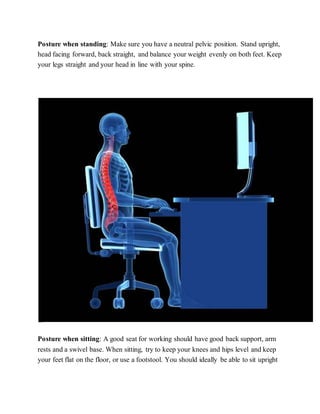
Posture when sitting: A good seat for working should have good back support, arm
rests and a swivel base. When sitting, try to keep your knees and hips level and keep
your feet flat on the floor, or use a footstool. You should ideally be able to sit upright
with support in the small of your back. If you are using a keyboard, make sure your
elbows are at right-angles and that your forearms are horizontal.
Lifting: When lifting things, use your legs to do the lifting, rather than your back.
Keep your back as straight as you can, keeping your feet apart with one leg slightly
forward so you can maintain balance. Bend only at the knees, hold the weight close to
your body, and straighten the legs while changing the position of your back as little as
possible.
Bending your back initially is unavoidable, but when you bend your back try not to
stoop, and be sure to tighten your stomach muscles so that your pelvis is pulled in.
Most important, do not straighten your legs before lifting, or you will be using your
back for most of the work.
Do not lift and twist at the same time: If something is particularly heavy, see if you
can lift it with someone else. While you are lifting keep looking straight ahead, not up
or down, so that the back of your neck is like a continuous straight line from your
spine.
Moving things: It is better for your back to push things across the floor, using your
leg strength, rather than pulling them.
Shoes: Flat shoes place less of a strain on the back.
Driving: It is important to have proper support for your back. Make sure the wing
mirrors are properly positioned so you do not need to twist. The pedals should be
squarely in front of your feet. If you are on a long journey, have plenty of breaks. Get
out of the car and walk around.
Bed: You should have a mattress that keeps your spine straight, while at the same
time supporting the weight of your shoulders and buttocks. Use a pillow, but not one
that forces your neck into a steep angle.
What is causing this pain in my back

What is causing this pain in my back

  • 1.
    What is causingthis pain in my back? Back pain is a common reason for absence from work and for seeking medical treatment. It can be uncomfortable and debilitating. It can result from injury, activity and some medical conditions. Back pain can affect people of any age, for different reasons. As people get older, the chance of developing lower back pain increases, due to factors such as previous occupation and degenerative disk disease. Lower back pain may be linked to the bony lumbar spine, discs between the vertebrae, ligaments around the spine and discs, spinal cord and nerves, lower back muscles, abdominal and pelvic internal organs, and the skin around the lumbar area. Pain in the upper back may be due to disorders of the aorta, tumors in the chest, and spine inflammation . Causes Problems with the spine such as osteoporosis can lead to back pain.
  • 2.
    The human backis composed of a complex structure of muscles, ligaments, tendons, disks, and bones, which work together to support the body and enable us to move around. The segments of the spine are cushioned with cartilage-like pads called disks. Problems with any of these components can lead to back pain. In some cases of back pain, its cause remains unclear. Damage can result from strain, medical conditions, and poor posture, among others. Strain Back pain commonly stems from strain, tension, or injury. Frequent causes of back pain are:  strained muscles or ligaments  a muscle spasm  muscle tension  damaged disks  injuries, fractures, or falls Activities that can lead to strains or spasms include:  lifting something improperly  lifting something that is too heavy  making an abrupt and awkward movement Get Rid Of Back Pain
  • 3.
    Structural problems A numberof structural problems may also result in back pain.  Ruptured disks: Eachvertebra in the spine is cushioned by disks. If the disk ruptures there will be more pressure on a nerve, resulting in back pain.  Bulging disks: In much the same way as ruptured disks, a bulging disk can result in more pressure on a nerve.  Sciatica: A sharp and shooting pain travels through the buttock and down the back of the leg, caused by a bulging or herniated disk pressing on a nerve.  Arthritis: Osteoarthritis can cause problems with the joints in the hips, lower back, and other places. In some cases, the space around the spinal cord narrows. This is known as spinal stenosis.  Abnormalcurvature of the spine: If the spine curves in an unusual way, back pain can result. An example is scoliosis,in which the spine curves to the side.  Osteoporosis: Bones, including the vertebrae of the spine, become brittle and porous, making compression fractures more likely.  Kidney problems: Kidney stones or kidney infection can cause back pain. Movement and posture Adopting a very hunched sitting position when using computers can result in increased back and shoulder problems over time. Back pain can also result from some everyday activities or poor posture. Examples include:  twisting
  • 4.
     coughing orsneezing  muscle tension  over-stretching  bending awkwardly or forlong periods  pushing, pulling, lifting, or carrying something  standing or sitting forlong periods  straining the neck forward, such as when driving or using a computer  long driving sessions without a break, even when not hunched  sleeping on a mattress that does not support the body and keep the spine straight Get Rid Of Back Pain Other causes Some medical conditions can lead to back pain.  Cauda equina syndrome: The cauda equine is a bundle of spinal nerve roots that arise from the lower end of the spinal cord. Symptoms include a dull pain in the lower back and upper buttocks, as well as numbness in the buttocks, genitalia, and thighs. There are sometimes bowel and bladder function disturbances.  Cancerof the spine: A tumor on the spine may press against a nerve, resulting in back pain.  Infection of the spine: A fever and a tender, warm area on the back could be due to an infection of the spine.
  • 5.
     Other infections:Pelvic inflammatory disease, bladder, orkidney infections may also lead to back pain.  Sleep disorders: Individuals with sleep disorders are more likely to experience back pain, compared with others.  Shingles: An infection that canaffect the nerves may lead to back pain. This depends on which nerves are affected. Risk factors The following factors are linked to a higher risk of developing low back pain:  occupational activities  pregnancy  a sedentary lifestyle  poor physical fitness  older age  obesity and excess weight  smoking  strenuous physical exercise or work, especially if done incorrectly  genetic factors  medical conditions, such as arthritis and cancer Lower back pain also tends to be more common in women than in men, possibly due to hormonal factors. Stress, anxiety, and mood disorders have also been linked to back pain. Get Rid Of Back Pain
  • 6.
    Symptoms The main symptomof back pain is an ache or pain anywhere in the back, and sometimes all the way down to the buttocks and legs. Some back issues can cause pain in other parts of the body, depending on the nerves affected. The pain often goes away without treatment, but if it occurs with any of the following people should see their doctor:  weight loss  fever  inflammation or swelling on the back  persistent back pain, where lying down or resting does not help  pain down the legs  pain that reaches below the knees  a recent injury, blow or trauma to the back  urinary incontinence ,difficulty urinating  fecal incontinence, or loss of control over bowel movements  numbness around the genitals  numbness around the anus  numbness around the buttocks Get Rid Of Back Pain
  • 7.
    When to seea doctor You should seek medical help if you experience any numbness or tingling, or if you have back pain:  that does not improve with rest  afteran injury or fall  with numbness in the legs  with weakness  with fever  with unexplained weight loss Diagnosis A doctor will usually be able to diagnose back pain after asking about symptoms and carrying out a physical examination. An imaging scan and other tests may be required if:  back pain appears to result from an injury  there may be underlying cause that needs treatment  the pain persists over a long period An X-ray, MRI, or CT scan can give information about the state of the soft tissues in the back.
  • 8.
     X-rays canshowthe alignment of the bones and detect signs of arthritis or broken bones, but they may not reveal damage in the muscles, spinal cord, nerves, or disks.  MRI or CT scans can reveal herniated disks or problems with tissue, tendons, nerves, ligaments, blood vessels, muscles, and bones.  Bone scans can detect bone tumors or compression fractures caused by osteoporosis . A radioactive substance or tracer is injected into a vein. The tracer collects in the bones and helps the doctordetect bone problems with the aid of a special camera.  Electromyography orEMG measures the electrical impulses produced by nerves in response to muscles. This canconfirm nerve compression, which may occur with a herniated disk or spinal stenosis. The doctor may also order a blood test if infection is suspected. Other types of diagnosis  A chiropractor will diagnose through touch, or palpation, and a visual examination. Chiropractic is known as a direct approach, with a strong focus on adjusting the spinal joints. A chiropractor may also want to see the results of imaging scans and any blood and urine tests.  An osteopath also diagnoses through palpation and visual inspection. Osteopathy involves slow and rhythmic stretching, known as mobilization, pressure or indirect techniques, and manipulation of joints and muscles.  A physicaltherapist focuses on diagnosing problems in the joints and soft tissues of the body. Get Rid Of Back Pain
  • 9.
    Chronic or acutepain? Back pain is categorized into two types :  Acute pain starts suddenly and lasts for up to 6 weeks.  Chronic or long-term pain develops over a longer period, lasts forover 3 months, and causes ongoing problems. If a person has both occasional bouts of more intense pain and fairly continuous mild back pain, it can be hard for a doctor to determine whether they have acute or chronic back pain. Treatment Back pain usually resolves with rest and home remedies, but sometimes medical treatment is necessary. Get Rid Of Back Pain Home treatments Over-the-counter (OTC) pain relief medication, usually nonsteroidal anti- inflammatory drugs (NSAID), such as ibuprofen, can relieve discomfort. Applying a hot compress or an ice pack to the painful area may also reduce pain. Resting from strenuous activity can help, but moving around will ease stiffness, reduce pain, and prevent muscles from weakening.
  • 10.
    Medical treatment If hometreatments do not relieve back pain, a doctor may recommend the following medication, physical therapy, or both. Medication: Back pain that does not respond well to OTC painkillers may require a prescription NSAID. Codeine or hydrocodone, which are narcotics, may be prescribed for short periods. These require close monitoring by the doctor. In some cases, muscle relaxants may be used. Antidepressants, may be prescribed, but research is ongoing at to their effectiveness, and the evidence is conflicting. Physical therapy: Applying heat, ice, ultrasound, and electrical stimulation — as well as some muscle-release techniques to the back muscles and soft tissues — may help alleviate pain. As the pain improves, the physical therapist may introduce some flexibility and strength exercises for the back and abdominal muscles. Techniques for improving posture may also help. The patient will be encouraged to practice the techniques regularly, even after the pain has gone, to prevent back pain recurrence. Cortisone injections: If other options are not effective, these may be injected into the epidural space, around the spinal cord. Cortisone is an anti-inflammatory drug. It helps reduce inflammation around the nerve roots. Injections may also be used to numb areas thought to be causing the pain.
  • 11.
    Botox : Botox(botulism toxin), according to some early studies, are thought to reduce pain by paralyzing sprained muscles in spasm. These injections are effective for about 3 to 4 months. Traction: Pulleys and weights are used to stretch the back. This may result in a herniated disk moving back into position. It can also relieve pain, but only while traction is applied. Cognitive behavioral therapy (CBT): CBT can help manage chronic back pain by encouraging new ways of thinking. It may include relaxation techniques and ways of maintaining a positive attitude. Studies have found that patients with CBT tend to become more active and do exercise, resulting in a lower risk of back pain recurrence. Get Rid Of Back Pain Complementary therapies Complementary therapies may be used alongside conventional therapies or on their own. Chiropractic, osteopathy, shiatsu, and acupuncture may help relieve back pain, as well as encouraging the patient to feel relaxed.  An osteopath specializes in treating the skeleton and muscles.  A chiropractor treats joint, muscle and bone problems. The main focus is the spine.  Shiatsu, also known as finger pressure therapy, is a type of massage where pressure is applied along energy lines in the body. The shiatsu therapist applies pressure with the fingers, thumbs and elbows.
  • 12.
     Acupuncture originatesfrom China. It consists of inserting fine needles and specific points in the body. Acupuncture can help the body release its natural painkillers — endorphins — as well as stimulating nerve and muscle tissue.  Yoga involves specific poses, movements, and breathing exercises. Some may help strengthen the back muscles and improve posture. Care must be taken that exercises do not make back pain worse. Studies on complementary therapies have given mixed results. Some people have experienced significant benefit, while others have not. It is important, when considering alternative therapies, to use a well qualified and registered therapist. Transcutaneous electrical nerve stimulation (TENS) is a popular therapy for patients with chronic back pain. The TENS machine delivers small electric pulses into the body through electrodes that are placed on the skin. Experts believe TENS encourages the body to produce endorphins and may block pain signals returning to the brain. Studies on TENS have provided mixed results. Some revealed no benefits, while others indicated that it could be helpful for some people. A TENS machine should be used under the direction of a doctor or health professional. It should not be used by someone who is:  is pregnant  has a history of epilepsy  has a pacemaker  has a history of heart disease
  • 13.
     TENS isconsidered “safe,noninvasive, inexpensive, and patient friendly,” and it appears to reduce pain, but to confirm its effectiveness in improving activity levels. Get Rid Of Back Pain Surgery Surgery for back pain is very rare. If a patient has a herniated disk surgery may be an option, especially if there is persistent pain and nerve compression which can lead to muscle weakness. Examples of surgical procedures include:  Fusion: Two vertebrae are joined together, with a bone graft inserted between them. The vertebrae are splinted together with metal plates, screws or cages. There is a significantly greater risk forarthritis to subsequently develop in the adjoining vertebrae.  Artificial disk: An artificial disk is inserted; it replaces the cushion between two vertebrae.  Diskectomy: A portion of a disk may be removed if it is irritating or pressing against a nerve.  Partially removing a vertebra: A small section of a vertebra may be removed if it is pinching the spinal cord or nerves. Injecting cells to regenerate spine discs:Scientists from Duke University, North Carolina, developed new biomaterials that can deliver a booster shot of reparative cells to the nucleus pulposus, effectively eliminating pain caused by degenerative disc disease.
  • 14.
    Get Rid OfBack Pain Prevention Steps to lower the risk of developing back pain consist mainly of addressing some of the risk factors. Exercise: Regular exercise helps build strength and control body weight . Guided, low-impact aerobic activities can boost heart health without straining or jerking the back. Before starting any exercise program, talk to a health care professional. There are two main types of exercise that people can do to reduce the risk of back pain:  Core-strengthening exercises work the abdominal and back muscles, helping to strengthen muscles that protect the back.  Flexibility training aims at improving core flexibility, including the spine, hips, and upper legs. Diet: Make sure your diet includes enough calcium and vitamin D, as these are needed for bone health. A healthful diet also helps control body weight. Smoking: A significantly higher percentage of smokers have back pain incidences compared to non-smokers of the same age, height, and weight. Body weight: The weight people carry and where they carry it affects the risk of developing back pain. The difference in back pain risk between obese and normal- weight individuals is considerable. People who carry their weight in the abdominal area versus the buttocks and hip area are also at greater risk.
  • 15.
    Posture when standing:Make sure you have a neutral pelvic position. Stand upright, head facing forward, back straight, and balance your weight evenly on both feet. Keep your legs straight and your head in line with your spine. ShareonPi nt er est Posture when sitting: A good seat for working should have good back support, arm rests and a swivel base. When sitting, try to keep your knees and hips level and keep your feet flat on the floor, or use a footstool. You should ideally be able to sit upright
  • 16.
    with support inthe small of your back. If you are using a keyboard, make sure your elbows are at right-angles and that your forearms are horizontal. Lifting: When lifting things, use your legs to do the lifting, rather than your back. Keep your back as straight as you can, keeping your feet apart with one leg slightly forward so you can maintain balance. Bend only at the knees, hold the weight close to your body, and straighten the legs while changing the position of your back as little as possible. Bending your back initially is unavoidable, but when you bend your back try not to stoop, and be sure to tighten your stomach muscles so that your pelvis is pulled in. Most important, do not straighten your legs before lifting, or you will be using your back for most of the work. Do not lift and twist at the same time: If something is particularly heavy, see if you can lift it with someone else. While you are lifting keep looking straight ahead, not up or down, so that the back of your neck is like a continuous straight line from your spine. Moving things: It is better for your back to push things across the floor, using your leg strength, rather than pulling them. Shoes: Flat shoes place less of a strain on the back. Driving: It is important to have proper support for your back. Make sure the wing mirrors are properly positioned so you do not need to twist. The pedals should be squarely in front of your feet. If you are on a long journey, have plenty of breaks. Get out of the car and walk around. Bed: You should have a mattress that keeps your spine straight, while at the same time supporting the weight of your shoulders and buttocks. Use a pillow, but not one that forces your neck into a steep angle.