Network actors' participation in
               B2B SME branding
  Industrial Marketing Management, In Press, Available online


             M.Sc. Minna Mäläskä, Dr. Saila Saraniemi and
                         Prof. Jaana Tähtinen
        Department of Marketing, Oulu Business School, Finland
Identity and Mobility from Cultural, Economic and Business Perspective
                           29.-30. Nov 2011
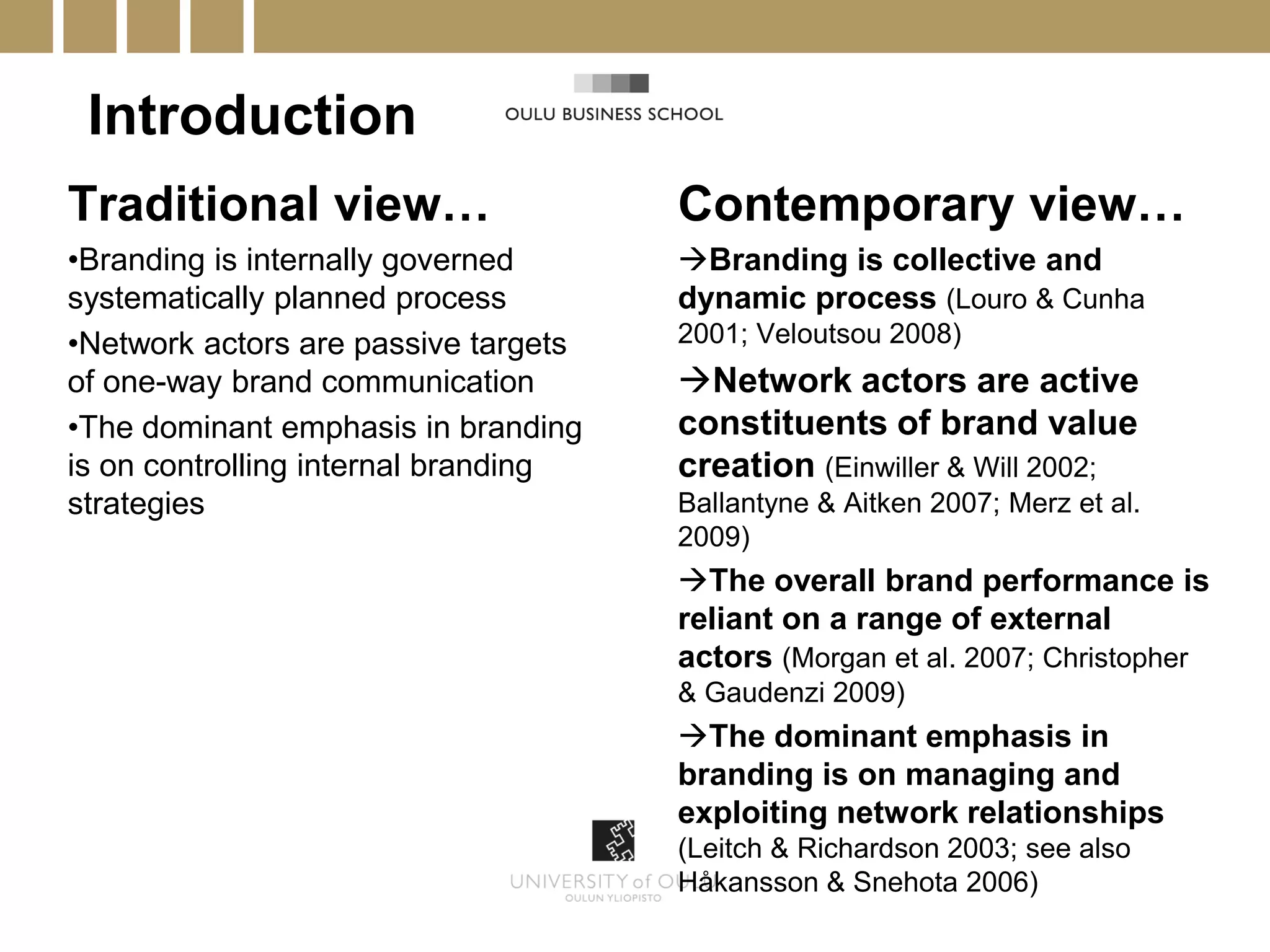
Introduction
Traditional view…                     Contemporary view…
•Branding is internally governed      Branding is collective and
systematically planned process        dynamic process (Louro & Cunha
•Network actors are passive targets   2001; Veloutsou 2008)
of one-way brand communication        Network actors are active
•The dominant emphasis in branding    constituents of brand value
is on controlling internal branding   creation (Einwiller & Will 2002;
strategies                            Ballantyne & Aitken 2007; Merz et al.
                                      2009)
                                      The overall brand performance is
                                      reliant on a range of external
                                      actors (Morgan et al. 2007; Christopher
                                      & Gaudenzi 2009)
                                      The dominant emphasis in
                                      branding is on managing and
                                      exploiting network relationships
                                      (Leitch & Richardson 2003; see also
                                      Håkansson & Snehota 2006)
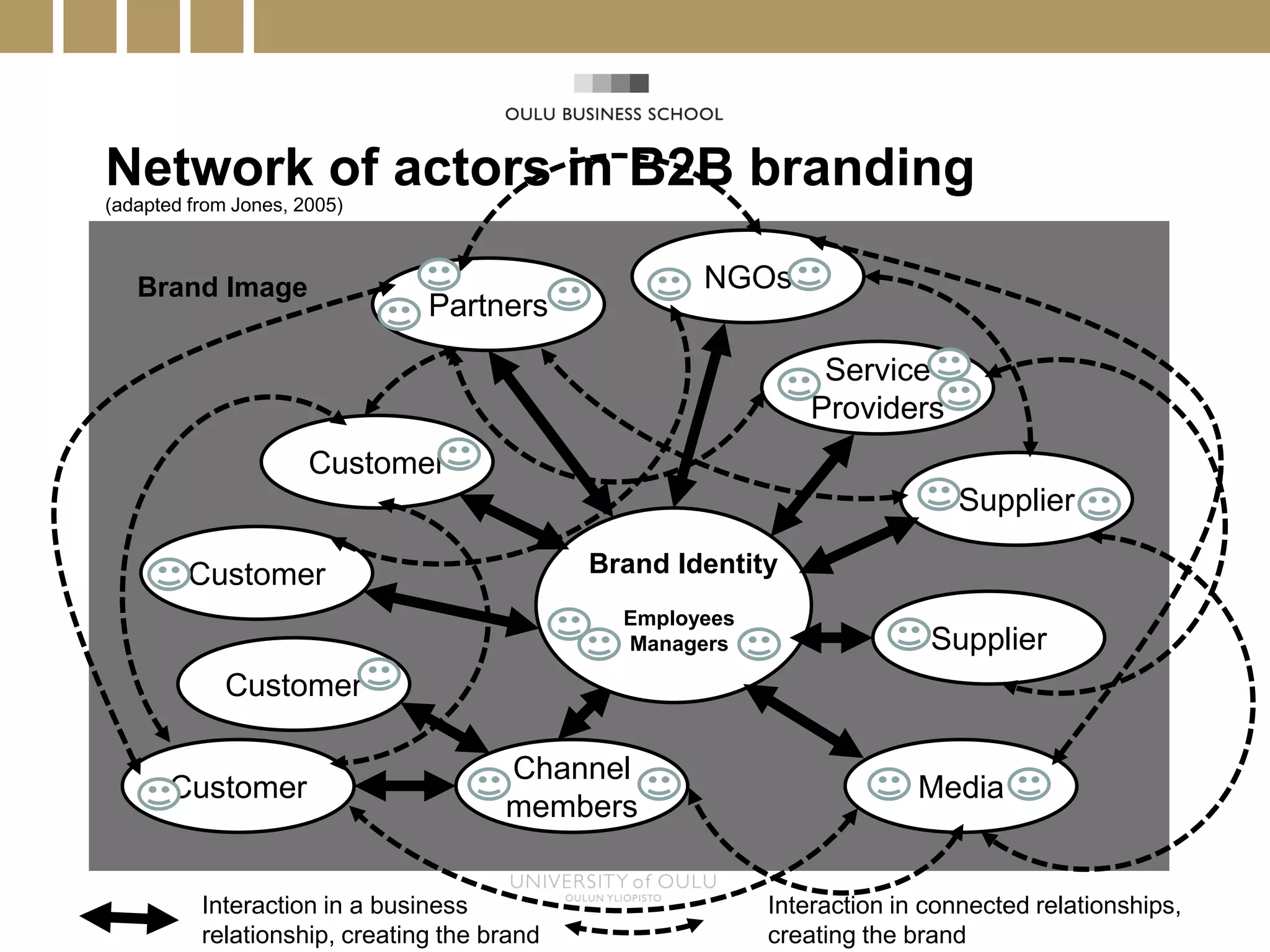
Network of actors in B2B branding
(adapted from Jones, 2005)


   Brand Image                                       NGOs
                               Partners

                                                                Service
                                                               Providers
                      Customer
                                                                            Supplier

         Customer                            Brand Identity
                                               Employees
                                               Managers                   Supplier
             Customer

                                      Channel
       Customer                                                          Media
                                      members


          Interaction in a business                        Interaction in connected relationships,
          relationship, creating the brand                 creating the brand
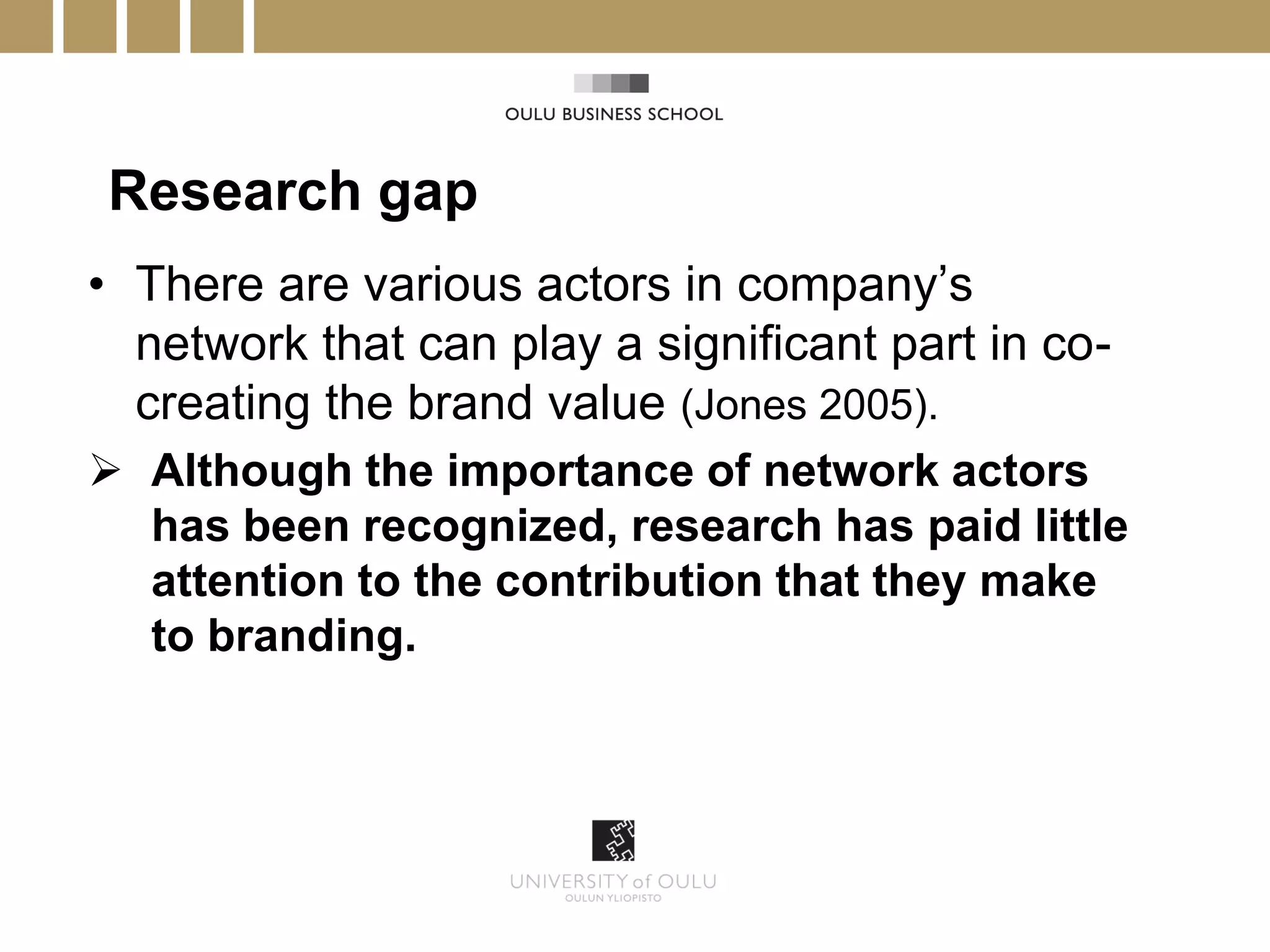
Research gap
• There are various actors in company’s
  network that can play a significant part in co-
  creating the brand value (Jones 2005).
 Although the importance of network actors
  has been recognized, research has paid little
  attention to the contribution that they make
  to branding.
Objective

• To develop a model that is sensitive to the
  unique characteristics of B2B SMEs; one that
  illustrates how network actors participate in
  branding.
 RQ: How network actors participate in B2B SME
  branding?
Research method:
• Qualitative research.
• Retrospective key-informant methodology and narrative interviews:
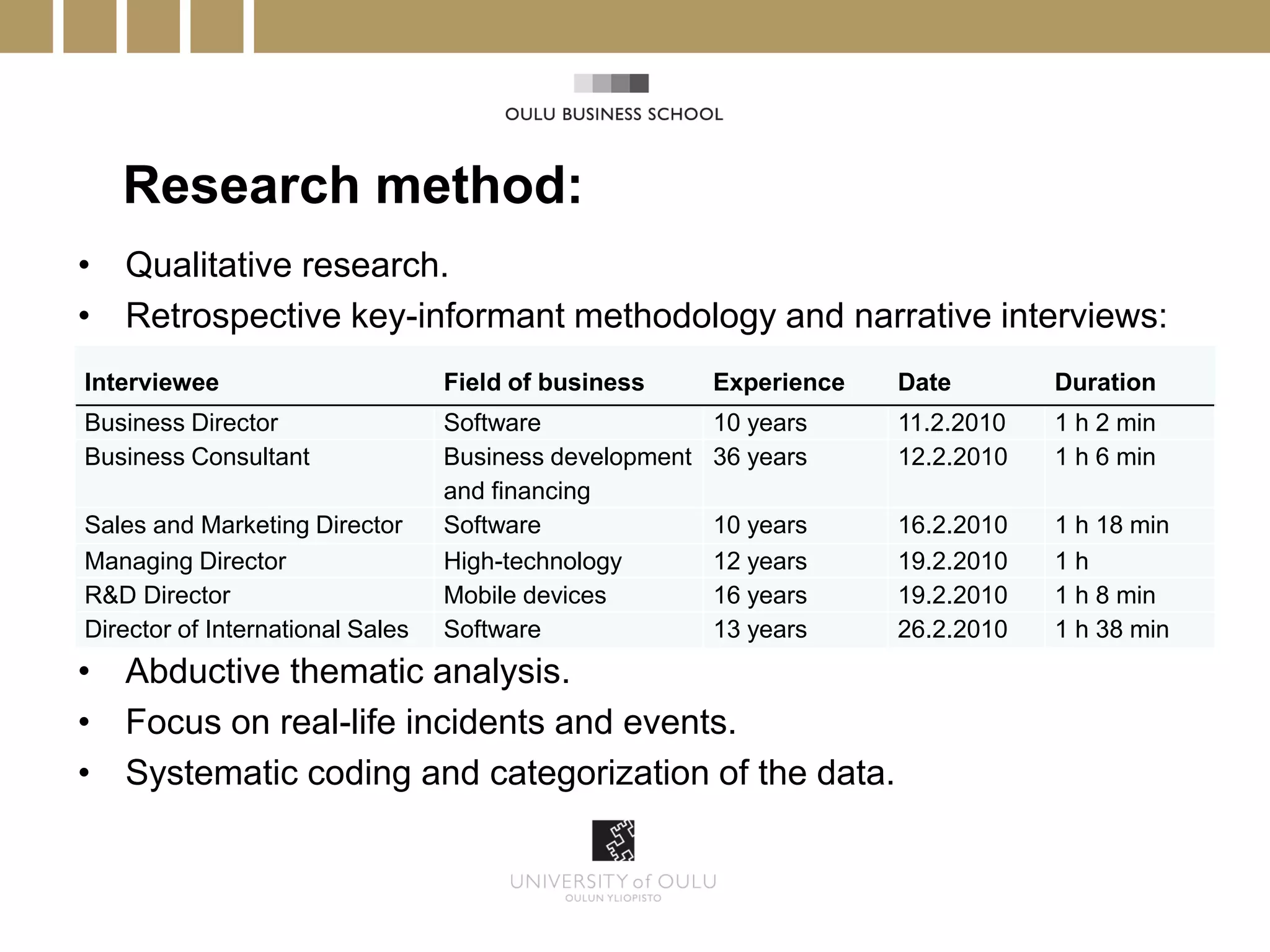
Interviewee                       Field of business      Experience   Date        Duration
Business Director                 Software               10 years     11.2.2010   1 h 2 min
Business Consultant               Business development   36 years     12.2.2010   1 h 6 min
                                  and financing
Sales and Marketing Director      Software               10 years     16.2.2010   1 h 18 min
Managing Director                 High-technology        12 years     19.2.2010   1h
R&D Director                      Mobile devices         16 years     19.2.2010   1 h 8 min
Director of International Sales   Software               13 years     26.2.2010   1 h 38 min
• Abductive thematic analysis.
• Focus on real-life incidents and events.
• Systematic coding and categorization of the data.
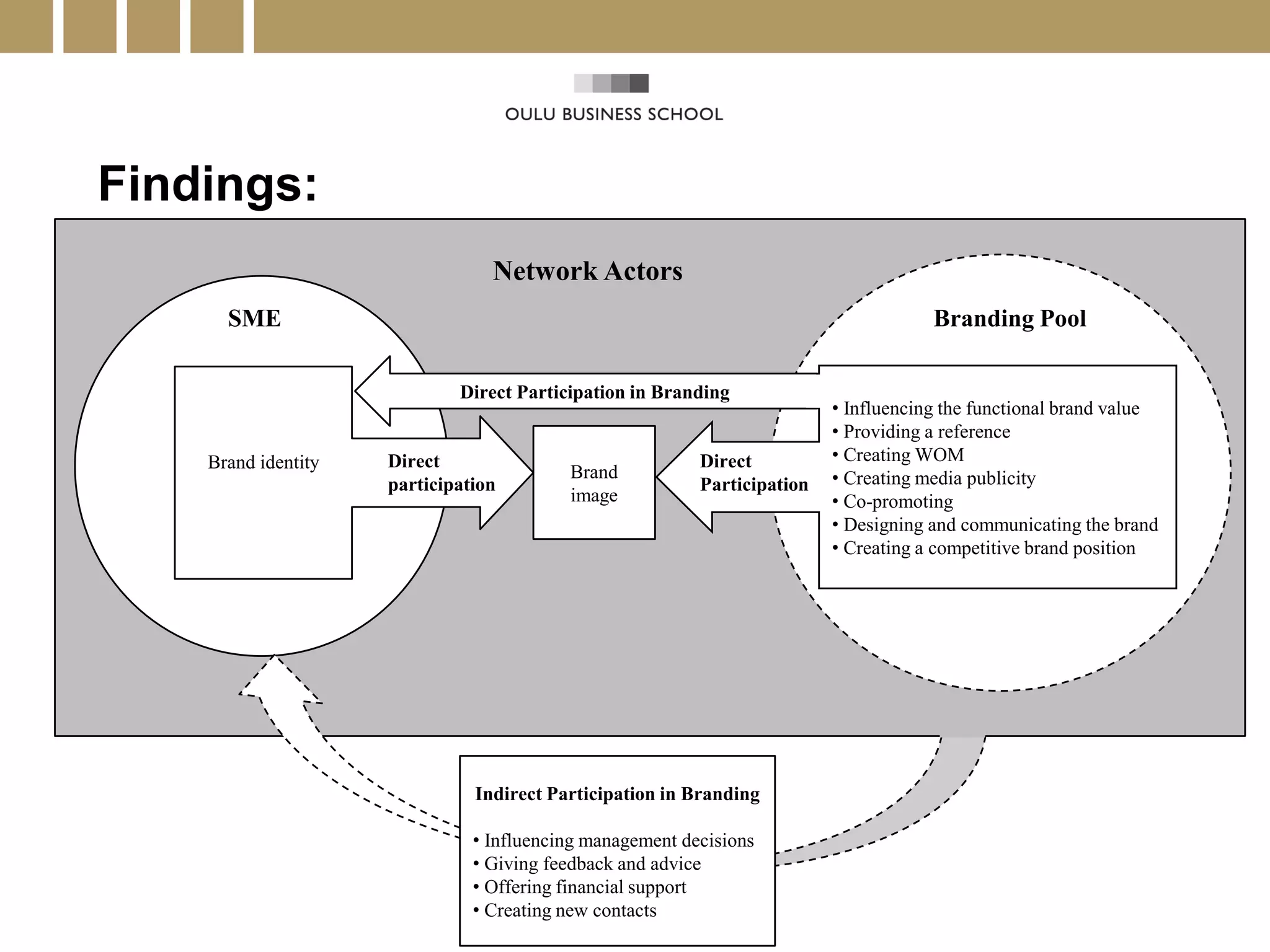
Findings:
                                 Network Actors
      SME                                                                             Branding Pool

                             Direct Participation in Branding
                                                                          • Influencing the functional brand value
                                                                          • Providing a reference
    Brand identity   Direct                               Direct          • Creating WOM
                                          Brand                           • Creating media publicity
                     participation                        Participation
                                          image                           • Co-promoting
                                                                          • Designing and communicating the brand
                                                                          • Creating a competitive brand position


                               Indirect Participation in Branding

                               • Influencing management decisions
                               • Giving feedback and advice
                               • Offering financial support
                               • Creating new contacts
Theoretical contributions:
1. Define and describe the direct and indirect
   branding activities performed by network actors,
   in the context of B2B SMEs.
2. Propose and define the concept of a branding
   pool which refers to those network actors that
   directly participate in B2B SME branding.
3. Categorize both direct and indirect participation
   in branding, and specifies the actions within
   each category.
Managerial implications:
 Recognize the key stakeholders operating in branding pool, and their
  main activities that directly contribute to branding.
 Detect, build and exploit relationships with actors having positive
  influence on brand development.
 Find good reliable partners with complementary strategic resources
  and relational capabilities that add value to the brand.
 Increase the involvement of branding pool actors in product/service
  development, facilitate co-creation and embrace mutuality in
  relationships, assimilate stakeholders' needs, enhance satisfaction and
  brand loyalty.
 Use the whole potential of the branding pool to find brand support
  instead of relying only on existing contacts.
 Encourage and motivate the members of branding pool to act in favor
  of the brand.
Limitations:

Qualitative approach & narrative interviews:
 Qualitative inquiry and interpretation is always
 influenced by the subjective choices made by the
 researchers.
 Telling stories is always a subjective act
 involving a degree of selection.
Questions/Comments?

Thank You for Your Attention!

       minna.malaska@oulu.fi

B2B sme branding identity and mobility

  • 1.
    Network actors' participationin B2B SME branding Industrial Marketing Management, In Press, Available online M.Sc. Minna Mäläskä, Dr. Saila Saraniemi and Prof. Jaana Tähtinen Department of Marketing, Oulu Business School, Finland Identity and Mobility from Cultural, Economic and Business Perspective 29.-30. Nov 2011
  • 2.
    Introduction Traditional view… Contemporary view… •Branding is internally governed Branding is collective and systematically planned process dynamic process (Louro & Cunha •Network actors are passive targets 2001; Veloutsou 2008) of one-way brand communication Network actors are active •The dominant emphasis in branding constituents of brand value is on controlling internal branding creation (Einwiller & Will 2002; strategies Ballantyne & Aitken 2007; Merz et al. 2009) The overall brand performance is reliant on a range of external actors (Morgan et al. 2007; Christopher & Gaudenzi 2009) The dominant emphasis in branding is on managing and exploiting network relationships (Leitch & Richardson 2003; see also Håkansson & Snehota 2006)
  • 3.
    Network of actorsin B2B branding (adapted from Jones, 2005) Brand Image NGOs Partners Service Providers Customer Supplier Customer Brand Identity Employees Managers Supplier Customer Channel Customer Media members Interaction in a business Interaction in connected relationships, relationship, creating the brand creating the brand
  • 4.
    Research gap • Thereare various actors in company’s network that can play a significant part in co- creating the brand value (Jones 2005).  Although the importance of network actors has been recognized, research has paid little attention to the contribution that they make to branding.
  • 5.
    Objective • To developa model that is sensitive to the unique characteristics of B2B SMEs; one that illustrates how network actors participate in branding.  RQ: How network actors participate in B2B SME branding?
  • 6.
    Research method: • Qualitativeresearch. • Retrospective key-informant methodology and narrative interviews: Interviewee Field of business Experience Date Duration Business Director Software 10 years 11.2.2010 1 h 2 min Business Consultant Business development 36 years 12.2.2010 1 h 6 min and financing Sales and Marketing Director Software 10 years 16.2.2010 1 h 18 min Managing Director High-technology 12 years 19.2.2010 1h R&D Director Mobile devices 16 years 19.2.2010 1 h 8 min Director of International Sales Software 13 years 26.2.2010 1 h 38 min • Abductive thematic analysis. • Focus on real-life incidents and events. • Systematic coding and categorization of the data.
  • 7.
    Findings: Network Actors SME Branding Pool Direct Participation in Branding • Influencing the functional brand value • Providing a reference Brand identity Direct Direct • Creating WOM Brand • Creating media publicity participation Participation image • Co-promoting • Designing and communicating the brand • Creating a competitive brand position Indirect Participation in Branding • Influencing management decisions • Giving feedback and advice • Offering financial support • Creating new contacts
  • 8.
    Theoretical contributions: 1. Defineand describe the direct and indirect branding activities performed by network actors, in the context of B2B SMEs. 2. Propose and define the concept of a branding pool which refers to those network actors that directly participate in B2B SME branding. 3. Categorize both direct and indirect participation in branding, and specifies the actions within each category.
  • 9.
    Managerial implications:  Recognizethe key stakeholders operating in branding pool, and their main activities that directly contribute to branding.  Detect, build and exploit relationships with actors having positive influence on brand development.  Find good reliable partners with complementary strategic resources and relational capabilities that add value to the brand.  Increase the involvement of branding pool actors in product/service development, facilitate co-creation and embrace mutuality in relationships, assimilate stakeholders' needs, enhance satisfaction and brand loyalty.  Use the whole potential of the branding pool to find brand support instead of relying only on existing contacts.  Encourage and motivate the members of branding pool to act in favor of the brand.
  • 10.
    Limitations: Qualitative approach &narrative interviews:  Qualitative inquiry and interpretation is always influenced by the subjective choices made by the researchers.  Telling stories is always a subjective act involving a degree of selection.
  • 11.
    Questions/Comments? Thank You forYour Attention! minna.malaska@oulu.fi