FACILITATING INNOVATIONS AND VALUE
CO-CREATION IN INDUSTRIAL B2B FIRMS
BY COMBINING DIGITAL MARKETING,
SOCIAL MEDIA AND CROWDSOURCING

Henri Simula, Aarne Töllinen & Heikki Karjaluoto
MOTIVATION

 There are already many cases which have demonstrated the power
 of social media and crowdsourcing separately (e.g. Li and Bernhoff
 2008; Howe 2008; Parent et al. 2011).


 The purpose of our paper is to examine how
 industrial business-to-business (B2B) firms could
 interact with their products’ end-users via social
 media in order to receive new ideas, feedback and
 solutions to improve their innovation process.
MOTIVATION

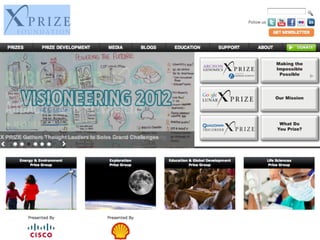
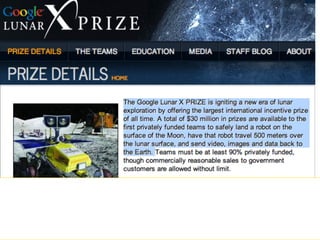
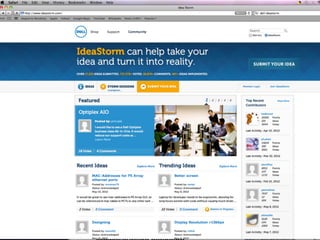
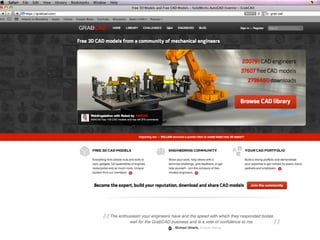
 ”Beyond advertising on Facebook or Twitter,
 companies are using social networks to build teams
 that solve problems faster, share information better
 among their employees and partners, bring customer
 ideas for new product designs to market earlier,
 and redesign all kinds of corporate software in
 Facebook's easy-to-learn style.”


     USA Today, Cover Story, May 17, 2012
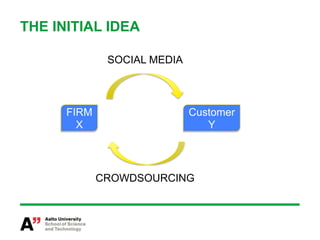
THE INITIAL IDEA

              SOCIAL MEDIA


      FIRM                   Customer
        X                       Y


             CROWDSOURCING
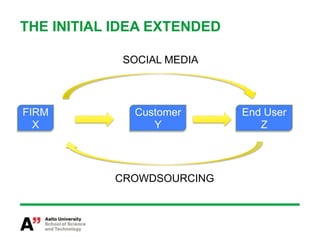
THE INITIAL IDEA EXTENDED

            SOCIAL MEDIA


FIRM          Customer      End User
  X              Y             Z


           CROWDSOURCING
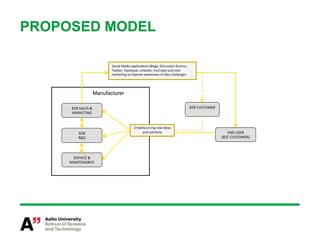
PROPOSED MODEL


                                 Social	
  Media	
  applicaDons	
  (Blogs,	
  Discussion	
  forums,	
  
                                 TwiIer,	
  Facebook,	
  LinkedIn,	
  YouTube)	
  and	
  viral	
  
                                 markeDng	
  to	
  improve	
  awareness	
  of	
  idea	
  challenges	


                          Manufacturer

      B2B	
  SALES	
  &	
                                                                                 B2B	
  CUSTOMER	
  
      MARKETING


                                                      Crowdsourcing	
  new	
  ideas	
  
            B2B	
  	
                                      and	
  soluDons                                                         END	
  USER
            R&D                                                                                                                 (B2C	
  CUSTOMER)


      SERVICE	
  &	
  
     MAINTENANCE
SOCIAL MEDIA

•  Marketing communications in the digital world is about
   creating presence, relationships and mutual value
•  Ideally the digital communication is two-way, personalized
   dialogue with each customer, which can potentially be a
   source for innovations too
•  Social media provides a way to share ideas, content, thoughts
   and relationships online i.e. people are connecting, interacting
   and sharing online with each other.
•  The two key characteristics of social media are user generated
   content and customer interaction
                 Scott 2010; Halligan & Shah 2010; van Zyl 2009; Riegner 2007;
                 Wertime & Fenwick, 2008; Rowley 2004
SOCIAL MEDIA

•  In a B2B context, social media is much more than mainstream
   applications such as Facebook, LinkedIn, Twitter or YouTube.
•  E.g. instant messenger applications, modern intranets and
   interactive digital selling tools can be social in a nature.
•  Also social Customer Relationship Management (CRM) can be
   considered as a social media application.


                                                     Acker et al. 2011
SOCIAL MEDIA & B2B

•  Tools enable fast and personalized communication with
   customers
•  Can enhance corporate credibility and deepen the customer
   relationship.
•  B2B companies can use it to both attract new customers and
   cultivate existing relationships.
•  Provides a new tool for an organization to create a unique
   brand identity and to differentiate itself from its competitors.
•  Tools make it easy for a B2B company to stay connected with
   its partners, distributors and manufacturers.

                              Kho 2008; Weber 2009; Michaelidou et al. 2011
SOCIAL MEDIA & B2B

•  B2B companies have been quite slow to adopt SM in their
   marketing communications
•  There is a significant gap between the potential and the
   actual use of social media in B2B business.
•  Academic research is quite limited in the field of social media
   use in the B2B sector. (Most likely this about to change…)


                                 Michaelidou et al. 2011; Jussila et al. 2011
CROWDSOURCING

 “Crowdsourcing is thus a powerful resource
 for innovators. ... A world of people and
 organizations is available to assist you, if
 you have the commitment and care to
 engage them properly.” (Chesbrough 2011)
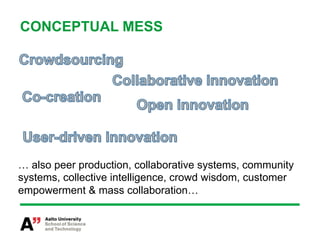
CONCEPTUAL MESS


… also peer production, collaborative systems, community
systems, collective intelligence, crowd wisdom, customer
empowerment & mass collaboration…
CROWDSOURCING

 “Simply defined, crowdsourcing represents the act of a company or
 institution taking a function once performed by employees and
 outsourcing it to an undefined (and generally large) network of people in
 the form of an open call. This can take the form of peer-production (when
 the job is performed collaboratively), but is also often undertaken by sole
 individuals. The crucial prerequisite is the use of the open call format and
 the large network of potential laborers.”


                                                                    Howe, 2006
CROWDSOURCING

 “Crowdsourcing is a type of participative online activity in which an
 individual, an institution, a non-profit organization, or company proposes
 to a group of individuals of varying knowledge, heterogeneity, and
 number, via a flexible open call, the voluntary undertaking of a task. The
 undertaking of the task, of variable complexity and modularity, and in
 which the crowd should participate bringing their work, money,
 knowledge and/or experience, always entails mutual benefit. The user
 will receive the satisfaction of a given type of need, be it economic, social
 recognition, self-esteem, or the development of individual skills, while the
 crowdsourcer will obtain and utilize to their advantage that what the user
 has brought to the venture, whose form will depend on the type of activity
 undertaken.”
                                                Estellés-Arolas &
                                                González-Ladrón-de-Guevara, 2012
CASE EXAMPLES…
EMPIRIA

•  Cross-industry research project’s workshops
•  Survey data from industrial firms (n=145)
•  Interviews with three large industrial B2B firms;
   global manufacturers with products that are visible
   and observable to potential end-users; (# of
   employees varied from 10,000 to 30,000, revenue
   from €1.5 billion to €5 billion.)
FINDINGS

•  Social media tools were used, but not to their full potential.
•  Social media was also seen mainly as being for marketing
   purposes, rather than for evoking ideas or for innovation co-
   creation among people outside the organization.
•  Companies had published YouTube videos for marketing
   purposes, some firms participated in LinkedIn group
   discussions and some level of Facebook and Twitter presence
   had been established.
•  However, no external crowdsourcing was established in
   practice in these firms.
BARRIERS

•  Industrial purchasing processes (IPPs)
•  Intellectual property rights (IPRs) in general created some
   worries.
•  Products are complex and require technical know-how and are
   governed by several strict standards and legislation.
•  “A layman, does not have a sufficiently deep knowledge of that
   product.”
•  People in organizations are already busy and there are no
   resources to conduct crowdsourcing
•  A global idea competitions would provide too many ideas. (?)
•  Fear of leaking ideas to competitors.
FUTURE POTENTIAL

•  Setting up crowdsourcing seems to be more a question of
   company culture than of technical implementation.
•  Actual end- users would become more ‘computer savvy’ in the
   future, and perhaps the field workforce would be using more
   social media when the next generation came into the
   workplace.
•  In general it is likely to assume that both social media use and
   crowdsourcing in the B2B sector will grow in the future
•  More research is needed… J
THANK YOU


henri.simula@aalto.fi
Twitter @HenriSimula

Ams 2012 presentation_simula

  • 1.
    FACILITATING INNOVATIONS ANDVALUE CO-CREATION IN INDUSTRIAL B2B FIRMS BY COMBINING DIGITAL MARKETING, SOCIAL MEDIA AND CROWDSOURCING Henri Simula, Aarne Töllinen & Heikki Karjaluoto
  • 2.
    MOTIVATION There arealready many cases which have demonstrated the power of social media and crowdsourcing separately (e.g. Li and Bernhoff 2008; Howe 2008; Parent et al. 2011). The purpose of our paper is to examine how industrial business-to-business (B2B) firms could interact with their products’ end-users via social media in order to receive new ideas, feedback and solutions to improve their innovation process.
  • 3.
    MOTIVATION ”Beyond advertisingon Facebook or Twitter, companies are using social networks to build teams that solve problems faster, share information better among their employees and partners, bring customer ideas for new product designs to market earlier, and redesign all kinds of corporate software in Facebook's easy-to-learn style.” USA Today, Cover Story, May 17, 2012
  • 4.
    THE INITIAL IDEA SOCIAL MEDIA FIRM Customer X Y CROWDSOURCING
  • 5.
    THE INITIAL IDEAEXTENDED SOCIAL MEDIA FIRM Customer End User X Y Z CROWDSOURCING
  • 6.
    PROPOSED MODEL   Social  Media  applicaDons  (Blogs,  Discussion  forums,   TwiIer,  Facebook,  LinkedIn,  YouTube)  and  viral   markeDng  to  improve  awareness  of  idea  challenges   Manufacturer B2B  SALES  &   B2B  CUSTOMER   MARKETING   Crowdsourcing  new  ideas   B2B     and  soluDons END  USER R&D (B2C  CUSTOMER) SERVICE  &   MAINTENANCE
  • 7.
    SOCIAL MEDIA •  Marketingcommunications in the digital world is about creating presence, relationships and mutual value •  Ideally the digital communication is two-way, personalized dialogue with each customer, which can potentially be a source for innovations too •  Social media provides a way to share ideas, content, thoughts and relationships online i.e. people are connecting, interacting and sharing online with each other. •  The two key characteristics of social media are user generated content and customer interaction Scott 2010; Halligan & Shah 2010; van Zyl 2009; Riegner 2007; Wertime & Fenwick, 2008; Rowley 2004
  • 8.
    SOCIAL MEDIA •  Ina B2B context, social media is much more than mainstream applications such as Facebook, LinkedIn, Twitter or YouTube. •  E.g. instant messenger applications, modern intranets and interactive digital selling tools can be social in a nature. •  Also social Customer Relationship Management (CRM) can be considered as a social media application. Acker et al. 2011
  • 9.
    SOCIAL MEDIA &B2B •  Tools enable fast and personalized communication with customers •  Can enhance corporate credibility and deepen the customer relationship. •  B2B companies can use it to both attract new customers and cultivate existing relationships. •  Provides a new tool for an organization to create a unique brand identity and to differentiate itself from its competitors. •  Tools make it easy for a B2B company to stay connected with its partners, distributors and manufacturers. Kho 2008; Weber 2009; Michaelidou et al. 2011
  • 10.
    SOCIAL MEDIA &B2B •  B2B companies have been quite slow to adopt SM in their marketing communications •  There is a significant gap between the potential and the actual use of social media in B2B business. •  Academic research is quite limited in the field of social media use in the B2B sector. (Most likely this about to change…) Michaelidou et al. 2011; Jussila et al. 2011
  • 11.
    CROWDSOURCING “Crowdsourcing isthus a powerful resource for innovators. ... A world of people and organizations is available to assist you, if you have the commitment and care to engage them properly.” (Chesbrough 2011)
  • 12.
    CONCEPTUAL MESS … alsopeer production, collaborative systems, community systems, collective intelligence, crowd wisdom, customer empowerment & mass collaboration…
  • 13.
    CROWDSOURCING “Simply defined,crowdsourcing represents the act of a company or institution taking a function once performed by employees and outsourcing it to an undefined (and generally large) network of people in the form of an open call. This can take the form of peer-production (when the job is performed collaboratively), but is also often undertaken by sole individuals. The crucial prerequisite is the use of the open call format and the large network of potential laborers.” Howe, 2006
  • 14.
    CROWDSOURCING “Crowdsourcing isa type of participative online activity in which an individual, an institution, a non-profit organization, or company proposes to a group of individuals of varying knowledge, heterogeneity, and number, via a flexible open call, the voluntary undertaking of a task. The undertaking of the task, of variable complexity and modularity, and in which the crowd should participate bringing their work, money, knowledge and/or experience, always entails mutual benefit. The user will receive the satisfaction of a given type of need, be it economic, social recognition, self-esteem, or the development of individual skills, while the crowdsourcer will obtain and utilize to their advantage that what the user has brought to the venture, whose form will depend on the type of activity undertaken.” Estellés-Arolas & González-Ladrón-de-Guevara, 2012
  • 15.
  • 28.
    EMPIRIA •  Cross-industry researchproject’s workshops •  Survey data from industrial firms (n=145) •  Interviews with three large industrial B2B firms; global manufacturers with products that are visible and observable to potential end-users; (# of employees varied from 10,000 to 30,000, revenue from €1.5 billion to €5 billion.)
  • 29.
    FINDINGS •  Social mediatools were used, but not to their full potential. •  Social media was also seen mainly as being for marketing purposes, rather than for evoking ideas or for innovation co- creation among people outside the organization. •  Companies had published YouTube videos for marketing purposes, some firms participated in LinkedIn group discussions and some level of Facebook and Twitter presence had been established. •  However, no external crowdsourcing was established in practice in these firms.
  • 30.
    BARRIERS •  Industrial purchasingprocesses (IPPs) •  Intellectual property rights (IPRs) in general created some worries. •  Products are complex and require technical know-how and are governed by several strict standards and legislation. •  “A layman, does not have a sufficiently deep knowledge of that product.” •  People in organizations are already busy and there are no resources to conduct crowdsourcing •  A global idea competitions would provide too many ideas. (?) •  Fear of leaking ideas to competitors.
  • 31.
    FUTURE POTENTIAL •  Settingup crowdsourcing seems to be more a question of company culture than of technical implementation. •  Actual end- users would become more ‘computer savvy’ in the future, and perhaps the field workforce would be using more social media when the next generation came into the workplace. •  In general it is likely to assume that both social media use and crowdsourcing in the B2B sector will grow in the future •  More research is needed… J
  • 32.