AXILLARY NERVE
GROUP 3
Federal university of Health Sciences Azare, Bauchi
State.
MBBS/BDS 200LEVEL
GROUP MEMBERS
• 1.MUHAMMAD ALHAJI MUSA U23BD/033
• 2.IBRAHIM ABDULRAHMAN. U23MD/023
• 3.RASHEEDAH YAKUBU IBRAHIM U23MD/073
• 4.AHMAD BAHIJJA AMINU. U23BD/023
• 5.HABIBA SAIDU BUBA. U23MD/103
• 6.MAHMOOD IBRAHIM FAJIMI. U23MD/093
• 7.HABIBA ISA ABDULLAHI. U23MD/043
• 8. ABBAS MARYAM BELLO. U23MD/053
• 9.JOSIAH GIDEON MANGREY. U23MD/063
• 10.ADDY SYLVANUS ANDE. U23MD/083
• 11.ALIYU ABDULRASHID DALHA. U23BD/013
• 12.ABDURRAHMAN SA'AD DALWA U21MD/053
• 13.BELLO ABDULBASIT OLALEWAJU U23MD/003
• 14.AISHA ABDULKARIM ALKALI. U23MD/033
• 15. RABIYA ABUBAKAR SABO U23BD/053
• 16. ABUBAKAR FARUK AJIYA. U23MD/013
• 17. FATIMA MUSA YUSUF. U23BD/003
CONTENT
• 1.INTRODUCTION
• 2. ANATOMIC COURSE
• 3.OVERVIEW OF BRACHIAL PLEXUS
• 4.THREE TERMINAL BRANCHES OF THE AXILLARY
NERVE
• 5.MOTOR FUNCTION OF THE AXILLARY NERVE
• 6.SENSORY FUNCTION OF THE AXILLARY NERVE
• 7.CLINICAL RELEVANCE
1
INTRODUCTION
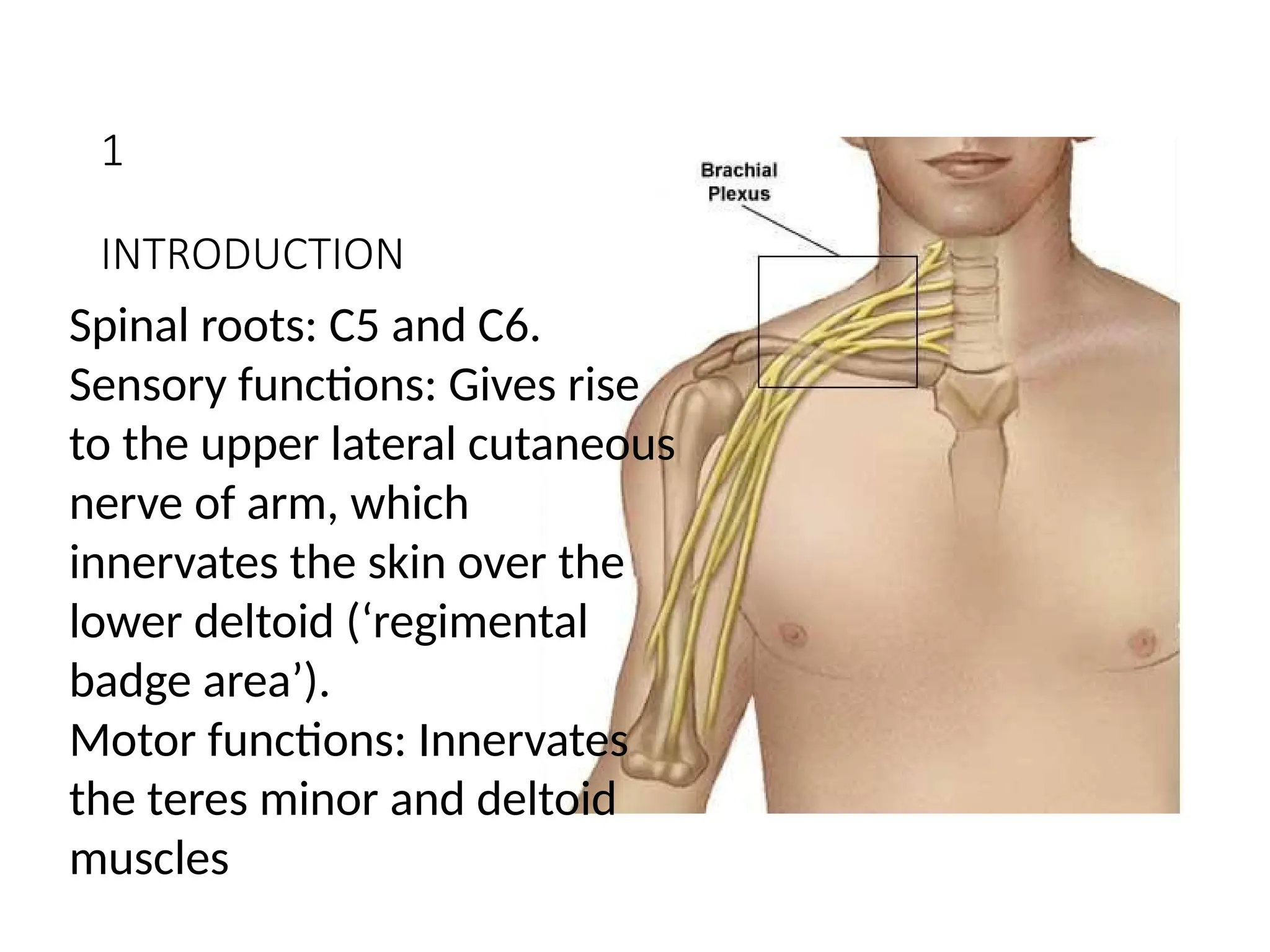
Spinal roots: C5 and C6.
Sensory functions: Gives rise
to the upper lateral cutaneous
nerve of arm, which
innervates the skin over the
lower deltoid (‘regimental
badge area’).
Motor functions: Innervates
the teres minor and deltoid
muscles
2
Anatomic course
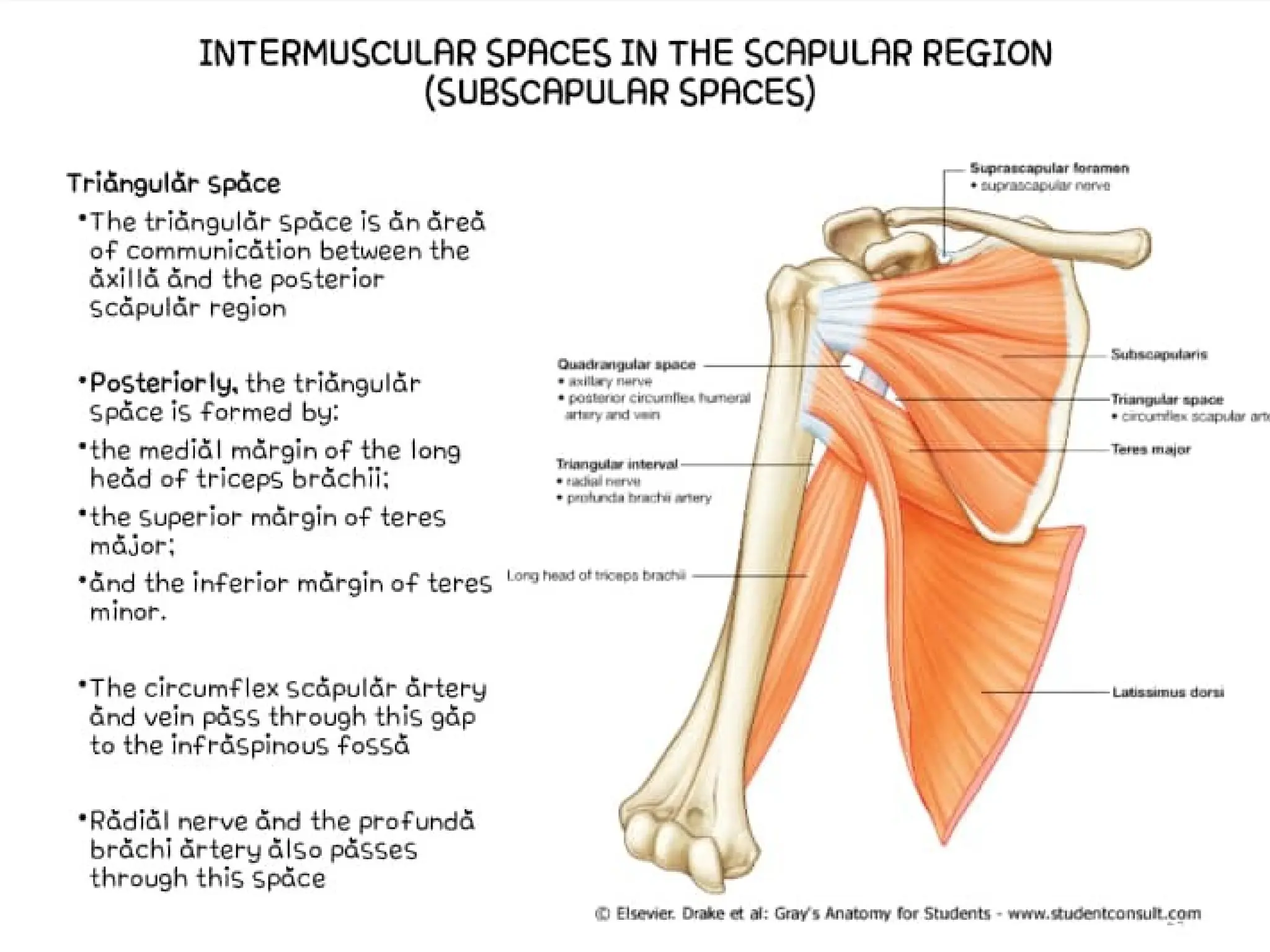
The axillary nerve is formed
within the axilla area of the
upper limb. It is a direct
continuation of the posterior
cord from the brachial plexus
– and therefore contains
fibres from the C5 and C6
nerve roots.
3
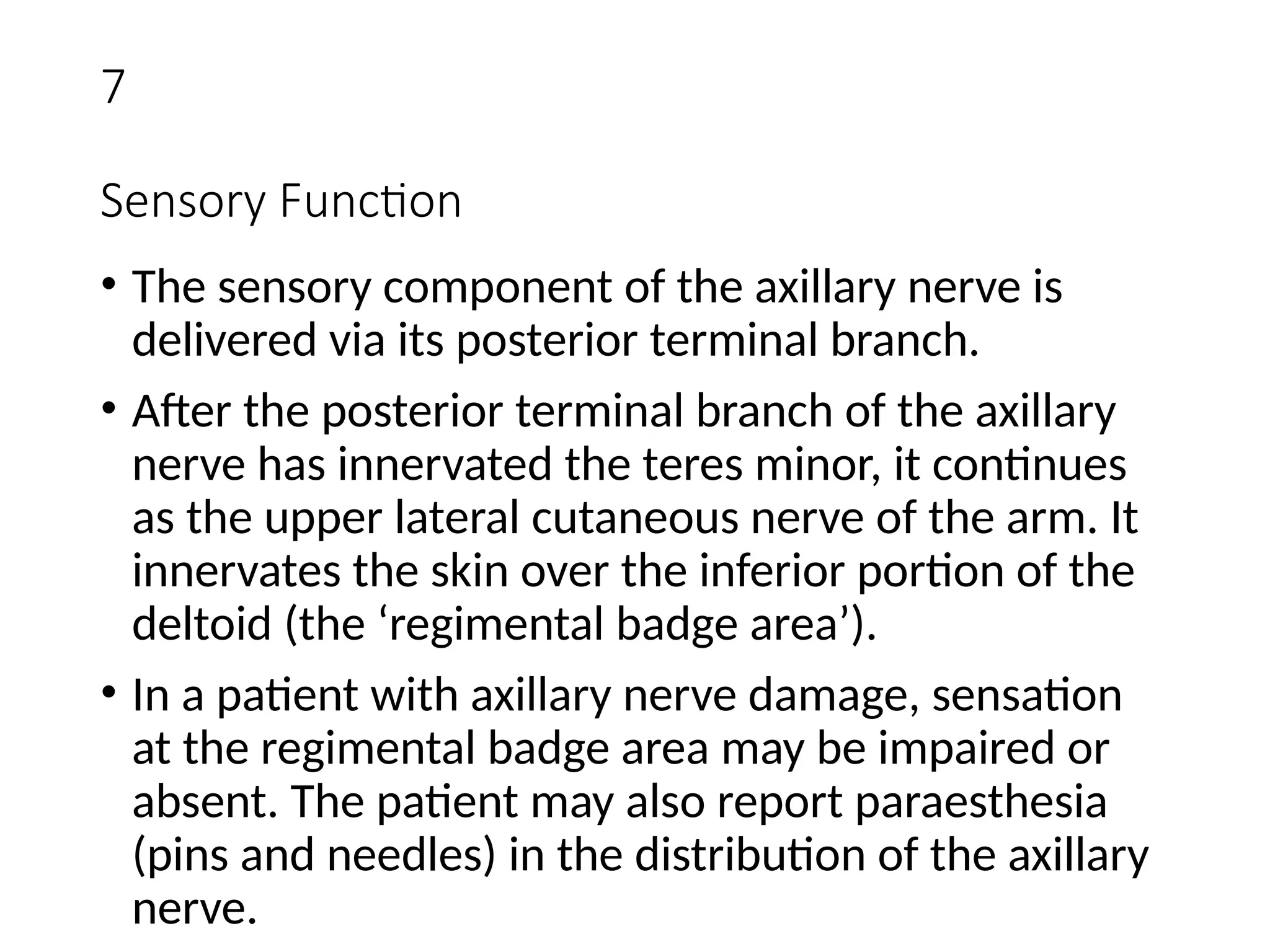
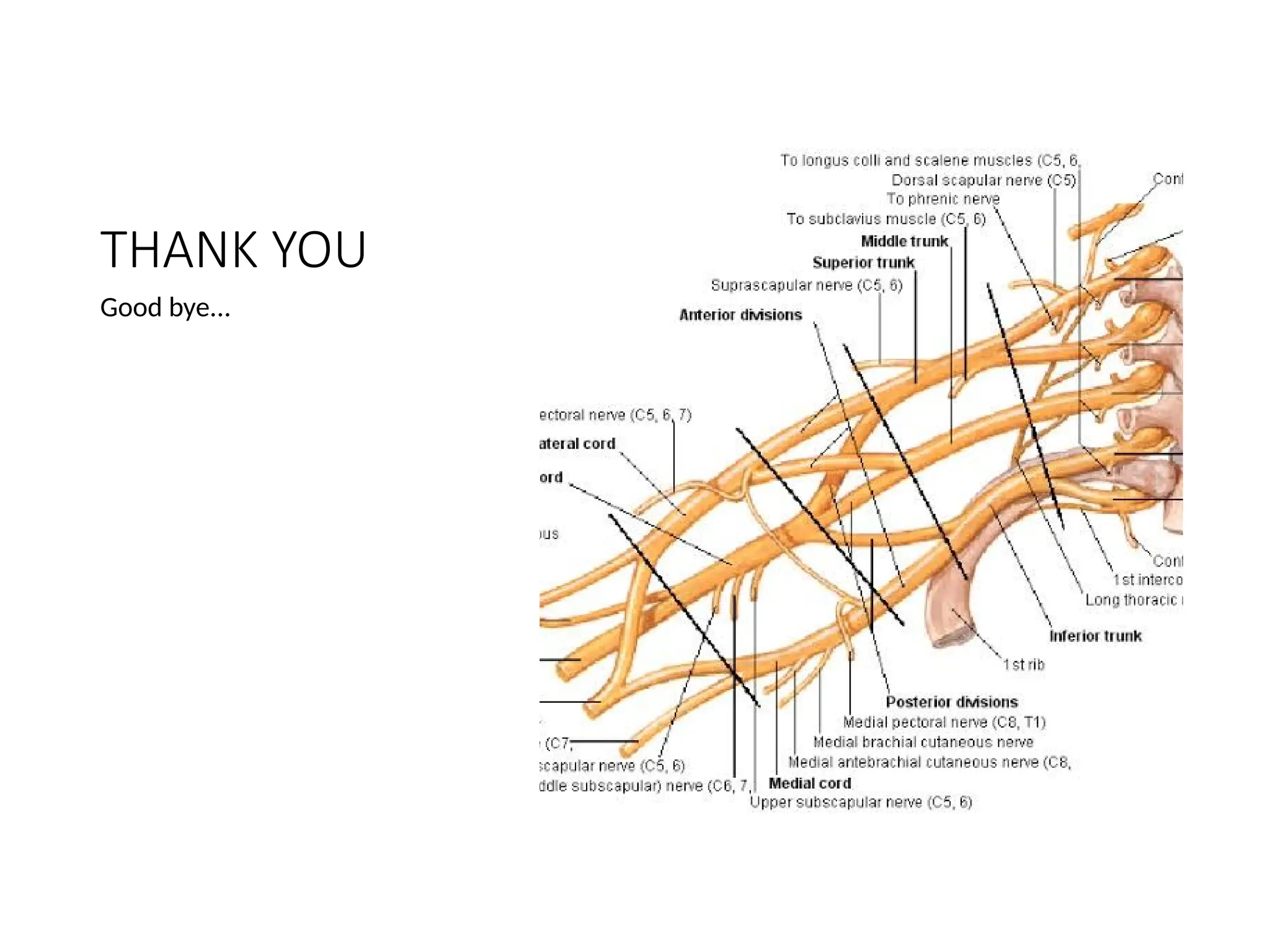
Overview of
Brachial plexus
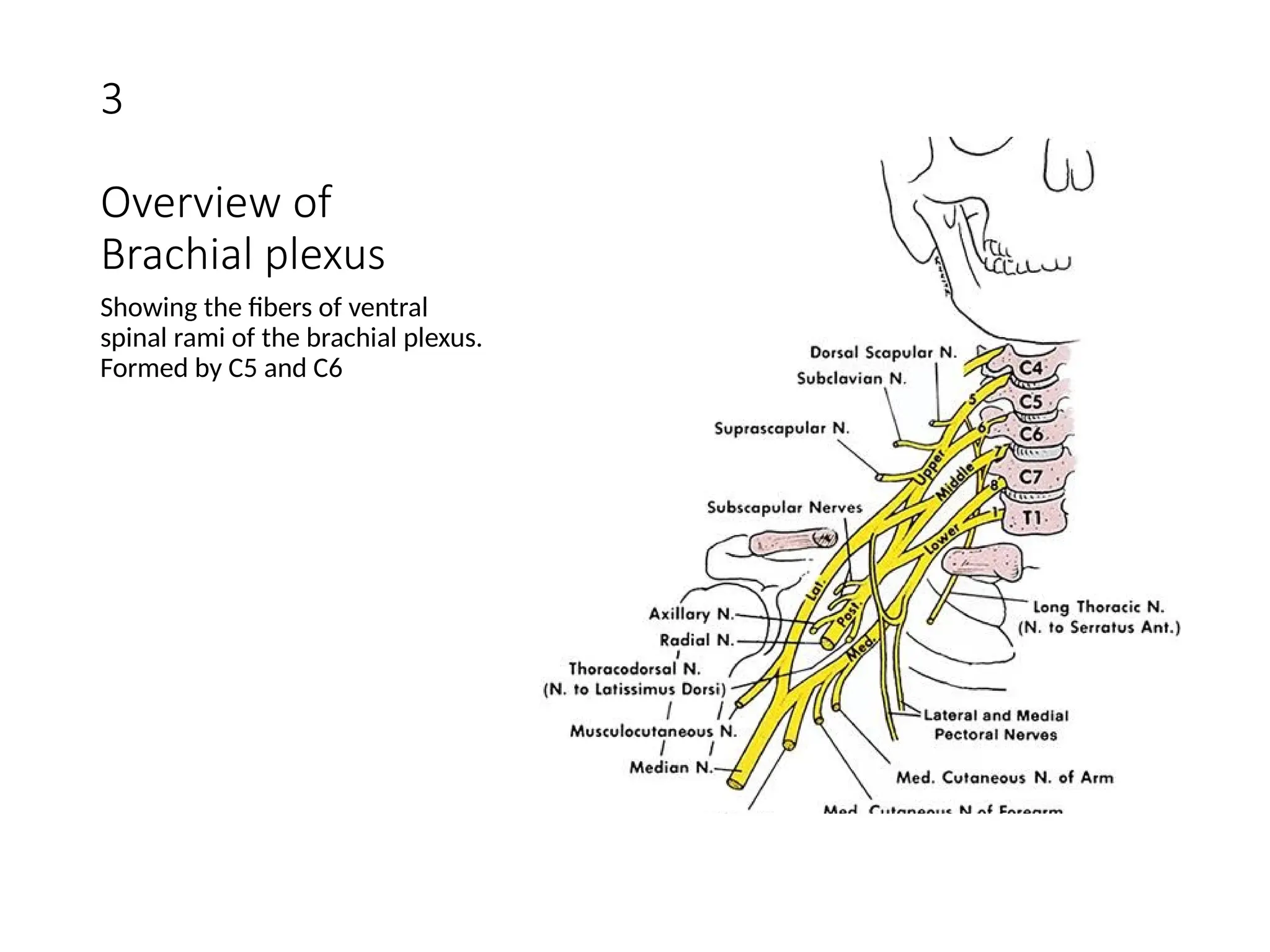
Showing the fibers of ventral
spinal rami of the brachial plexus.
Formed by C5 and C6
4
Three branches
Posterior terminal branch – provides motor innervation to the posterior aspect of the deltoid
muscle and teres minor. It also innervates the skin over the inferior part of the deltoid as the
upper lateral cutaneous nerve of the arm.
Anterior terminal branch – winds around the surgical neck of the humerus and provides
motor innervation to the anterior aspect of the deltoid muscle. It terminates with cutaneous
branches to the anterior and anterolateral shoulder.
Articular branch – supplies the glenohumeral joint
5
6
Motor function
• The axillary nerve innervates teres minor and deltoid muscles.
• Teres minor – part of the rotator cuff muscles which act to
stabilise the glenohumeral joint. It acts to externally rotate the
shoulder joint and is innervated by the posterior terminal
branch of the axillary nerve.
• Deltoid – situated at the superior aspect of the shoulder. It
performs abduction of the upper limb at the glenohumeral
joint and is innervated by the anterior terminal branch of the
axillary nerve.
• NB: There is some evidence from research on cadavers that
the axillary nerve can also innervate the lateral head of triceps
brachii muscle.
7
Sensory Function
• The sensory component of the axillary nerve is
delivered via its posterior terminal branch.
• After the posterior terminal branch of the axillary
nerve has innervated the teres minor, it continues
as the upper lateral cutaneous nerve of the arm. It
innervates the skin over the inferior portion of the
deltoid (the ‘regimental badge area’).
• In a patient with axillary nerve damage, sensation
at the regimental badge area may be impaired or
absent. The patient may also report paraesthesia
(pins and needles) in the distribution of the axillary
nerve.
8
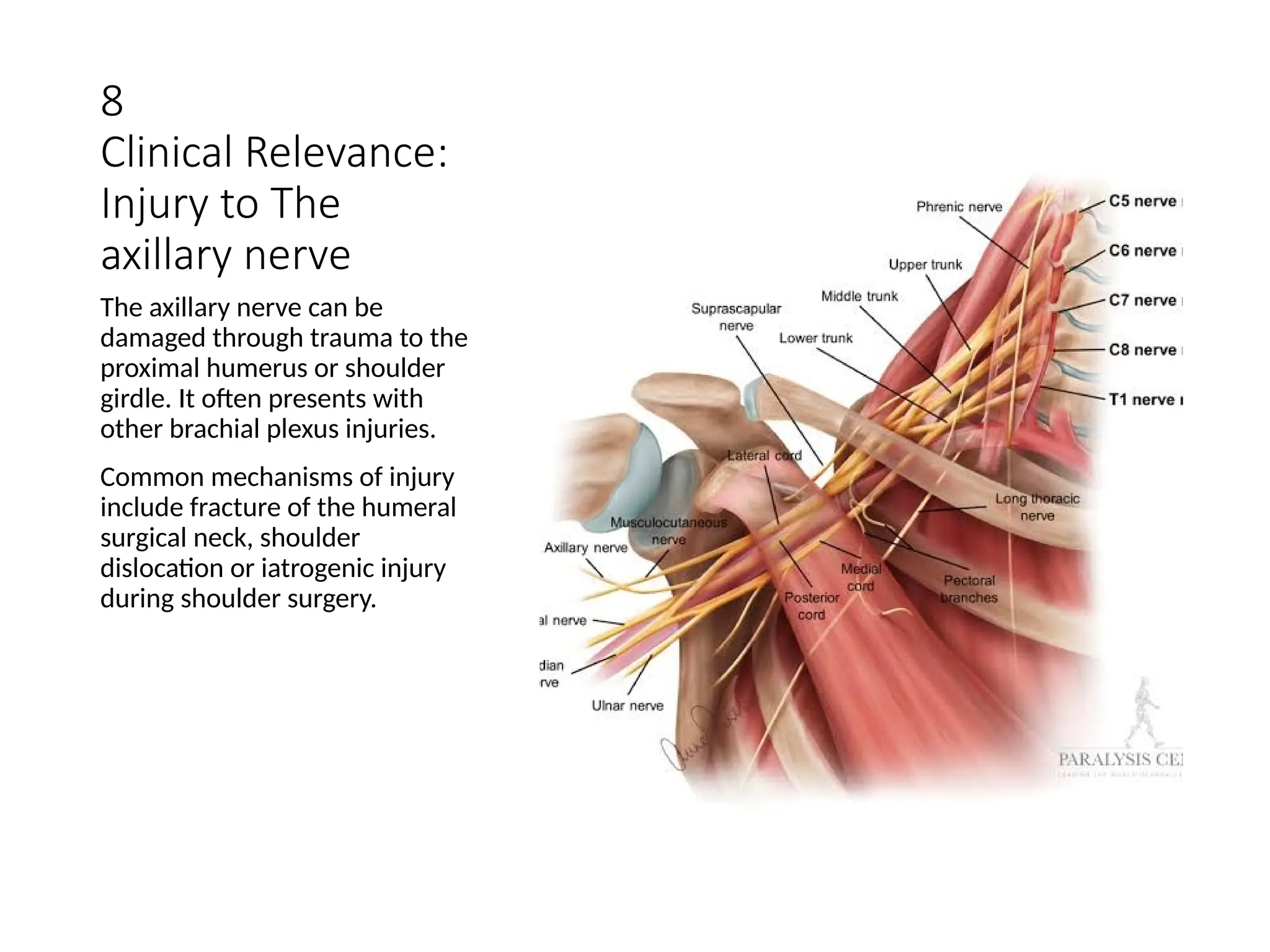
Clinical Relevance:
Injury to The
axillary nerve
The axillary nerve can be
damaged through trauma to the
proximal humerus or shoulder
girdle. It often presents with
other brachial plexus injuries.
Common mechanisms of injury
include fracture of the humeral
surgical neck, shoulder
dislocation or iatrogenic injury
during shoulder surgery.
9
Clinical Relevance continues...
• Motor functions – the deltoid and teres minor
muscles will be affected, rendering the patient
unable to abduct the affected limb beyond 15
degrees.
• Sensory functions – the upper lateral cutaneous
nerve of arm will be affected, resulting in loss of
sensation over the inferior deltoid (‘regimental
badge area’).
• Clinical tests include deltoid extension lag and
external rotation lag. Chronic lesions of the axillary
nerve can result in permanent numbness at the
lateral shoulder region, muscle atrophy, and
10
Clinical Relevance: Erb's palsy
• Erb’s palsy is a condition resulting from damage to
the C5 and C6 roots of the brachial plexus. The
axillary nerve is therefore affected, and the
individual is usually unable to abduct or externally
rotate at the shoulder.
• It commonly occurs where there is an excessive
increase in the angle between the neck and
shoulder, which stretches the nerve roots. The
severity of the injury ranges from neuropraxia to
avulsion, which determines recovery.
THANK YOU
Good bye...

axillary 3.axillary nerve , axillary nerve

  • 1.
    AXILLARY NERVE GROUP 3 Federaluniversity of Health Sciences Azare, Bauchi State. MBBS/BDS 200LEVEL
  • 2.
    GROUP MEMBERS • 1.MUHAMMADALHAJI MUSA U23BD/033 • 2.IBRAHIM ABDULRAHMAN. U23MD/023 • 3.RASHEEDAH YAKUBU IBRAHIM U23MD/073 • 4.AHMAD BAHIJJA AMINU. U23BD/023 • 5.HABIBA SAIDU BUBA. U23MD/103 • 6.MAHMOOD IBRAHIM FAJIMI. U23MD/093 • 7.HABIBA ISA ABDULLAHI. U23MD/043 • 8. ABBAS MARYAM BELLO. U23MD/053 • 9.JOSIAH GIDEON MANGREY. U23MD/063 • 10.ADDY SYLVANUS ANDE. U23MD/083 • 11.ALIYU ABDULRASHID DALHA. U23BD/013 • 12.ABDURRAHMAN SA'AD DALWA U21MD/053 • 13.BELLO ABDULBASIT OLALEWAJU U23MD/003 • 14.AISHA ABDULKARIM ALKALI. U23MD/033 • 15. RABIYA ABUBAKAR SABO U23BD/053 • 16. ABUBAKAR FARUK AJIYA. U23MD/013 • 17. FATIMA MUSA YUSUF. U23BD/003
  • 3.
    CONTENT • 1.INTRODUCTION • 2.ANATOMIC COURSE • 3.OVERVIEW OF BRACHIAL PLEXUS • 4.THREE TERMINAL BRANCHES OF THE AXILLARY NERVE • 5.MOTOR FUNCTION OF THE AXILLARY NERVE • 6.SENSORY FUNCTION OF THE AXILLARY NERVE • 7.CLINICAL RELEVANCE
  • 4.
    1 INTRODUCTION Spinal roots: C5and C6. Sensory functions: Gives rise to the upper lateral cutaneous nerve of arm, which innervates the skin over the lower deltoid (‘regimental badge area’). Motor functions: Innervates the teres minor and deltoid muscles
  • 5.
    2 Anatomic course The axillarynerve is formed within the axilla area of the upper limb. It is a direct continuation of the posterior cord from the brachial plexus – and therefore contains fibres from the C5 and C6 nerve roots.
  • 8.
    3 Overview of Brachial plexus Showingthe fibers of ventral spinal rami of the brachial plexus. Formed by C5 and C6
  • 9.
    4 Three branches Posterior terminalbranch – provides motor innervation to the posterior aspect of the deltoid muscle and teres minor. It also innervates the skin over the inferior part of the deltoid as the upper lateral cutaneous nerve of the arm. Anterior terminal branch – winds around the surgical neck of the humerus and provides motor innervation to the anterior aspect of the deltoid muscle. It terminates with cutaneous branches to the anterior and anterolateral shoulder. Articular branch – supplies the glenohumeral joint
  • 10.
  • 11.
    6 Motor function • Theaxillary nerve innervates teres minor and deltoid muscles. • Teres minor – part of the rotator cuff muscles which act to stabilise the glenohumeral joint. It acts to externally rotate the shoulder joint and is innervated by the posterior terminal branch of the axillary nerve. • Deltoid – situated at the superior aspect of the shoulder. It performs abduction of the upper limb at the glenohumeral joint and is innervated by the anterior terminal branch of the axillary nerve. • NB: There is some evidence from research on cadavers that the axillary nerve can also innervate the lateral head of triceps brachii muscle.
  • 12.
    7 Sensory Function • Thesensory component of the axillary nerve is delivered via its posterior terminal branch. • After the posterior terminal branch of the axillary nerve has innervated the teres minor, it continues as the upper lateral cutaneous nerve of the arm. It innervates the skin over the inferior portion of the deltoid (the ‘regimental badge area’). • In a patient with axillary nerve damage, sensation at the regimental badge area may be impaired or absent. The patient may also report paraesthesia (pins and needles) in the distribution of the axillary nerve.
  • 13.
    8 Clinical Relevance: Injury toThe axillary nerve The axillary nerve can be damaged through trauma to the proximal humerus or shoulder girdle. It often presents with other brachial plexus injuries. Common mechanisms of injury include fracture of the humeral surgical neck, shoulder dislocation or iatrogenic injury during shoulder surgery.
  • 14.
    9 Clinical Relevance continues... •Motor functions – the deltoid and teres minor muscles will be affected, rendering the patient unable to abduct the affected limb beyond 15 degrees. • Sensory functions – the upper lateral cutaneous nerve of arm will be affected, resulting in loss of sensation over the inferior deltoid (‘regimental badge area’). • Clinical tests include deltoid extension lag and external rotation lag. Chronic lesions of the axillary nerve can result in permanent numbness at the lateral shoulder region, muscle atrophy, and
  • 15.
    10 Clinical Relevance: Erb'spalsy • Erb’s palsy is a condition resulting from damage to the C5 and C6 roots of the brachial plexus. The axillary nerve is therefore affected, and the individual is usually unable to abduct or externally rotate at the shoulder. • It commonly occurs where there is an excessive increase in the angle between the neck and shoulder, which stretches the nerve roots. The severity of the injury ranges from neuropraxia to avulsion, which determines recovery.
  • 16.