GROUP SEVEN’S PRESENTATION ON DORSAL SCAPULAR NERVE.
FEDERAL UNIVERSITY OF
HEALTH SCIENCES, AZARE.
1
TOPIC: DORSAL SCAPULAR
NERVE
MEMBERS:
 U23BD/047 U23MD/027
 U23BD/037 U23MD/017
 U23BD/027 U23MD/007
 U23BD/007 U22MD/087
 U23MD/107 U22MD/027
 U23MD/097 U22MD/017
 U23MD/087 U22BD/047
 U23MD/077 U22BD/017
 U23MD/067 U21BD/037
 U23MD/057 U21BD/027
 U23MD/047 U21BD/017
 U23MD/037 U21BD/007
2
Outline:
- Over view on brachial plexus.
- Over view on dorsal scapular nerve.
- Origin of dorsal scapular nerve.
- Course of dorsal scapular nerve.
- Function.
- Clinical relevance.
- Surgical implications.
- Anatomical variations.
- Summary.
- References and researches.
3
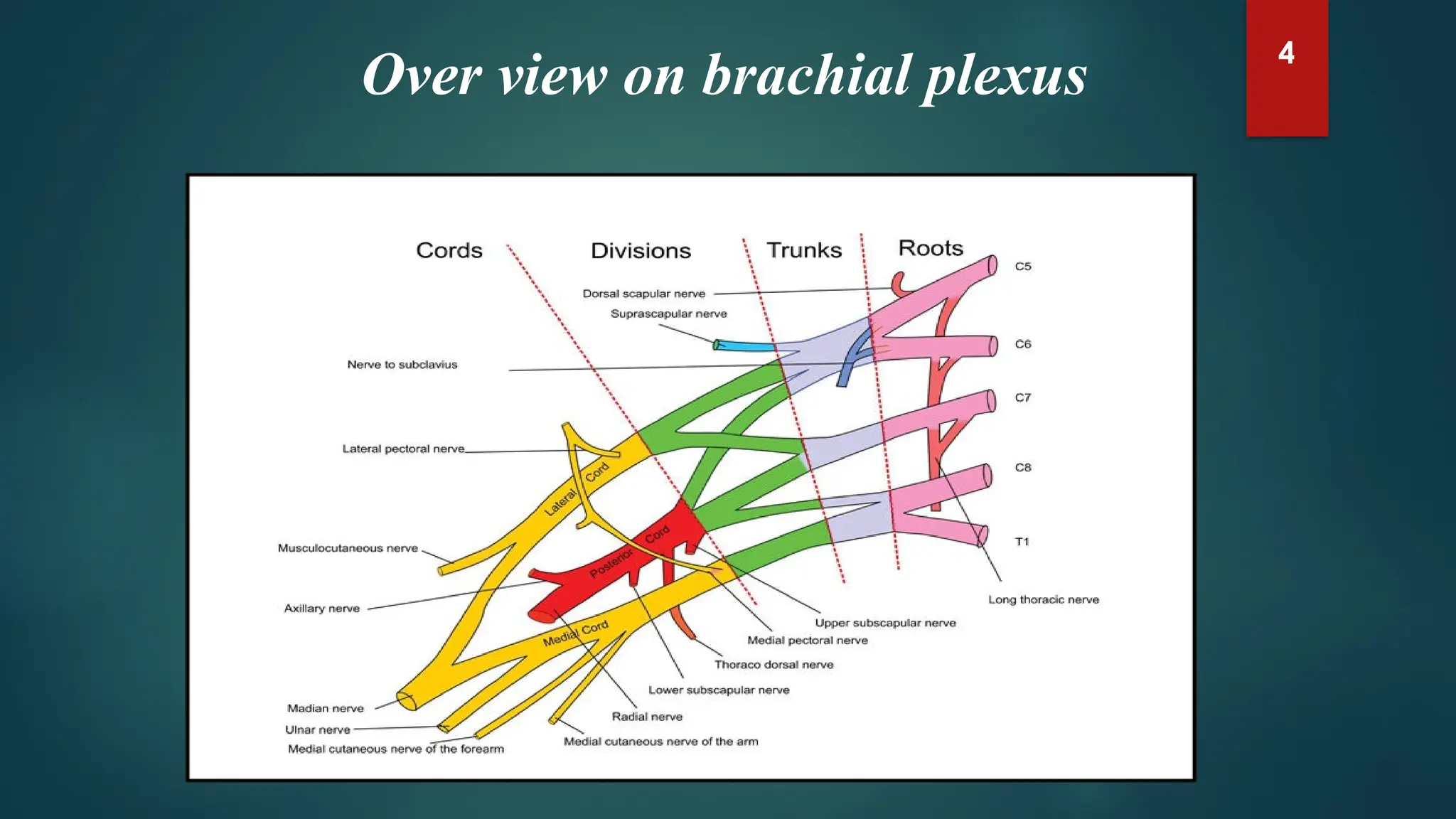
Over view on brachial plexus
4
Overview Of The Dorsal Scapular Nerve (C5)
The dorsal scapular nerve is a critical component of the
brachial plexus that provides motor innervation to
muscles controlling scapular movements. It originates
from the C5 root and is essential for the stabilization
and movement of the scapula, contributing to the upper
limb's functional mechanics.
5
Origin:
- Root: C5 nerve root (sometimes with contributions from
C4).
- Location: Arises from the upper part of the brachial plexus
at the spinal nerve level, typically before the formation of
the upper trunk.
Course:
After branching from the C5 root, the dorsal scapular nerve
pierces the middle scalene muscle and continues its path
towards the back. It runs deep to the trapezius muscle,
traveling along the medial border of the scapula, where it
innervates the rhomboid muscles and part of the levator
scapulae.
The trachea is a tube that connects the larynx to the
bronchi, allowing air to pass into the lungs. The
bronchial tree consists of branching tubes that carry air
deep into the lungs.
6
Functions:
- Rhomboid Major and Minor: These muscles help in
retracting the scapula (pulling it towards the midline) and
also in stabilizing it against the thoracic wall during
movements.
-Levator Scapulae (Upper part): Assists in elevating the
scapula and tilting the glenoid cavity downward by rotating
the scapula.
- The nerve plays a pivotal role in scapular stabilization,
ensuring the scapula remains anchored to the thoracic wall
during upper limb activities such as lifting, pulling, and
pushing.
- It also allows for smooth retraction of the scapula, which
is crucial for actions like rowing or pulling an object
towards the body.
7
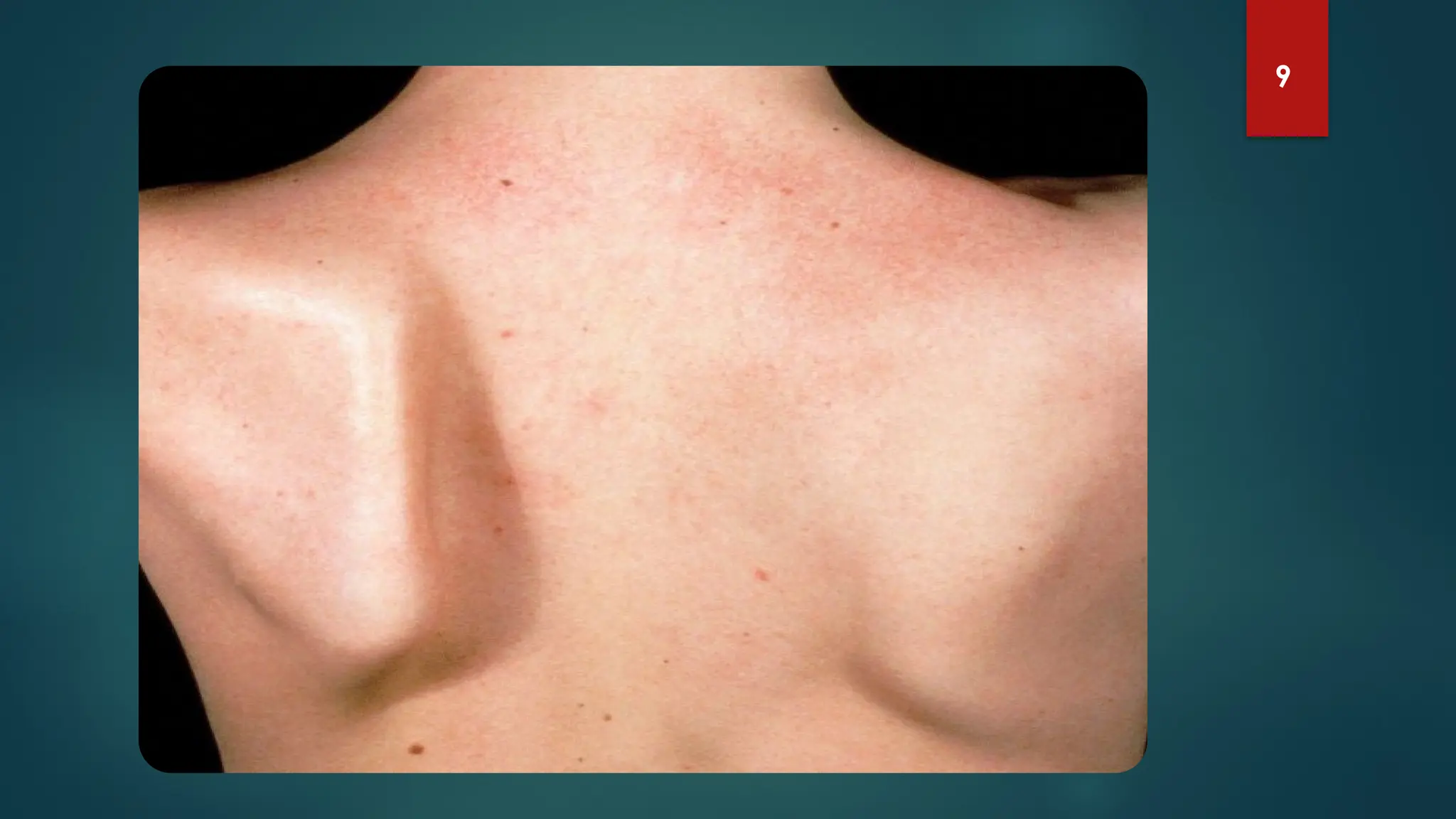
Clinical Relevance: 8
* Injury or Damage to the Dorsal Scapular Nerve:
- Commonly caused by trauma, nerve entrapment, or during surgical procedures.
- Results in weakness or paralysis of the rhomboids and levator scapulae, leading
to scapular winging (the medial border of the scapula protrudes out).
- Patients may experience difficulty in pulling their shoulders back, causing
impaired posture and possibly pain.
* Research on Nerve Transfers:
- In cases of brachial plexus injuries, nerve transfer techniques are studied for
restoring function. The dorsal scapular nerve, due to its motor capabilities, is often
considered a candidate for transfer to help in re-innervation of other muscles when
needed.
9
Surgical Implications: 10
During neck and shoulder surgeries (e.g., decompression or
dissection), the dorsal scapular nerve is at risk due to its
anatomical path through the scalene muscles and under the
trapezius. Surgeons must be careful to preserve the nerve to avoid
post-operative functional deficits.
Anatomical Variations:
Variations in the dorsal scapular nerve have been observed,
including contributions from C4 or the nerve arising directly from
the brachial plexus trunks instead of the C5 root. These variations
can have implications for clinical presentations and during
surgical procedures
-The dorsal scapular nerve passes deep to the
trapezius and runs parallel to the medial
border of the scapula.
-It has close relations with the middle scalene
muscle, which it typically pierces.
Compression at this site can lead to dysfunction.
-The nerve travels alongside the dorsal scapular
artery, which provides blood supply to the same
region it innervates.
11
Summary:
The dorsal scapular nerve plays a crucial role in scapular
movements and stability,
primarily controlling the rhomboids and levator scapulae muscles.
While injuries to the
nerve are less common, they can significantly affect scapular
function and upper limb
mobility. Early recognition of symptoms and understanding of the
nerve’s course and
relations can aid in the diagnosis and treatment of dorsal scapular
nerve-related injuries.
12
13
References and Research
1. Nerves and Muscles: Dorsal Scapular Nerve Research:
- Amonoo-Kuofi HS. 'The course and relations of the dorsal scapular
nerve.' Journal of Anatomy. 1982;134(Pt 2):309-316.
- This paper gives detailed anatomical insights into the course of the
dorsal scapular nerve and its relationship with surrounding structures.
2. Scapular Winging: A Clinical Review:
- Martin RM, Fish DE. 'Scapular winging: anatomical review,
diagnosis, and treatments.' Current Reviews in Musculoskeletal
Medicine. 2008;1(1):1-11.
- Discusses the causes of scapular winging, including dorsal scapular
nerve damage, and different diagnostic approaches.
Thanks
for
listening!
14

Presentation on Dorsal Scapular Nerve. power point docx.pptx

  • 1.
    GROUP SEVEN’S PRESENTATIONON DORSAL SCAPULAR NERVE. FEDERAL UNIVERSITY OF HEALTH SCIENCES, AZARE. 1
  • 2.
    TOPIC: DORSAL SCAPULAR NERVE MEMBERS: U23BD/047 U23MD/027  U23BD/037 U23MD/017  U23BD/027 U23MD/007  U23BD/007 U22MD/087  U23MD/107 U22MD/027  U23MD/097 U22MD/017  U23MD/087 U22BD/047  U23MD/077 U22BD/017  U23MD/067 U21BD/037  U23MD/057 U21BD/027  U23MD/047 U21BD/017  U23MD/037 U21BD/007 2
  • 3.
    Outline: - Over viewon brachial plexus. - Over view on dorsal scapular nerve. - Origin of dorsal scapular nerve. - Course of dorsal scapular nerve. - Function. - Clinical relevance. - Surgical implications. - Anatomical variations. - Summary. - References and researches. 3
  • 4.
    Over view onbrachial plexus 4
  • 5.
    Overview Of TheDorsal Scapular Nerve (C5) The dorsal scapular nerve is a critical component of the brachial plexus that provides motor innervation to muscles controlling scapular movements. It originates from the C5 root and is essential for the stabilization and movement of the scapula, contributing to the upper limb's functional mechanics. 5
  • 6.
    Origin: - Root: C5nerve root (sometimes with contributions from C4). - Location: Arises from the upper part of the brachial plexus at the spinal nerve level, typically before the formation of the upper trunk. Course: After branching from the C5 root, the dorsal scapular nerve pierces the middle scalene muscle and continues its path towards the back. It runs deep to the trapezius muscle, traveling along the medial border of the scapula, where it innervates the rhomboid muscles and part of the levator scapulae. The trachea is a tube that connects the larynx to the bronchi, allowing air to pass into the lungs. The bronchial tree consists of branching tubes that carry air deep into the lungs. 6
  • 7.
    Functions: - Rhomboid Majorand Minor: These muscles help in retracting the scapula (pulling it towards the midline) and also in stabilizing it against the thoracic wall during movements. -Levator Scapulae (Upper part): Assists in elevating the scapula and tilting the glenoid cavity downward by rotating the scapula. - The nerve plays a pivotal role in scapular stabilization, ensuring the scapula remains anchored to the thoracic wall during upper limb activities such as lifting, pulling, and pushing. - It also allows for smooth retraction of the scapula, which is crucial for actions like rowing or pulling an object towards the body. 7
  • 8.
    Clinical Relevance: 8 *Injury or Damage to the Dorsal Scapular Nerve: - Commonly caused by trauma, nerve entrapment, or during surgical procedures. - Results in weakness or paralysis of the rhomboids and levator scapulae, leading to scapular winging (the medial border of the scapula protrudes out). - Patients may experience difficulty in pulling their shoulders back, causing impaired posture and possibly pain. * Research on Nerve Transfers: - In cases of brachial plexus injuries, nerve transfer techniques are studied for restoring function. The dorsal scapular nerve, due to its motor capabilities, is often considered a candidate for transfer to help in re-innervation of other muscles when needed.
  • 9.
  • 10.
    Surgical Implications: 10 Duringneck and shoulder surgeries (e.g., decompression or dissection), the dorsal scapular nerve is at risk due to its anatomical path through the scalene muscles and under the trapezius. Surgeons must be careful to preserve the nerve to avoid post-operative functional deficits. Anatomical Variations: Variations in the dorsal scapular nerve have been observed, including contributions from C4 or the nerve arising directly from the brachial plexus trunks instead of the C5 root. These variations can have implications for clinical presentations and during surgical procedures
  • 11.
    -The dorsal scapularnerve passes deep to the trapezius and runs parallel to the medial border of the scapula. -It has close relations with the middle scalene muscle, which it typically pierces. Compression at this site can lead to dysfunction. -The nerve travels alongside the dorsal scapular artery, which provides blood supply to the same region it innervates. 11
  • 12.
    Summary: The dorsal scapularnerve plays a crucial role in scapular movements and stability, primarily controlling the rhomboids and levator scapulae muscles. While injuries to the nerve are less common, they can significantly affect scapular function and upper limb mobility. Early recognition of symptoms and understanding of the nerve’s course and relations can aid in the diagnosis and treatment of dorsal scapular nerve-related injuries. 12
  • 13.
    13 References and Research 1.Nerves and Muscles: Dorsal Scapular Nerve Research: - Amonoo-Kuofi HS. 'The course and relations of the dorsal scapular nerve.' Journal of Anatomy. 1982;134(Pt 2):309-316. - This paper gives detailed anatomical insights into the course of the dorsal scapular nerve and its relationship with surrounding structures. 2. Scapular Winging: A Clinical Review: - Martin RM, Fish DE. 'Scapular winging: anatomical review, diagnosis, and treatments.' Current Reviews in Musculoskeletal Medicine. 2008;1(1):1-11. - Discusses the causes of scapular winging, including dorsal scapular nerve damage, and different diagnostic approaches.
  • 14.